Feeds:
Posts
Comments

Archive for November, 2016

Chilli con carne

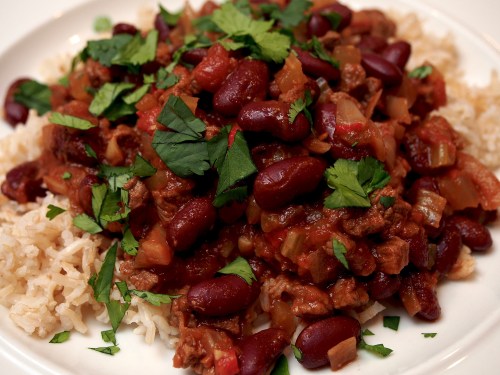
Oh yes, another chilli recipe. This one is interesting though as it uses braising steak instead of mince. We loved it!

Wine Suggestion: A juicy red with a bit of spice is our choice for this dish especially those with a good dollop of Grenache in them. First choice might be a good Cotes du Rhone, but venturing a bit from the tried and trusted we found a Spanish Garnacha made by Bodegas Monfil. An inexpensive wine from the Cariñena region is Spain with bags of flavour but also open, round and juicy; perfect for a Chilli!

Chilli Con Carne – serves 4

  • olive oil
  • 2 medium onions, finely chopped
  • 2 celery sticks, finely chopped
  • 400g braising steak, trimmed and cut into very small pieces
  • 3 garlic cloves, chopped
  • 1 red chilli, chopped
  • 1 heaped tsp ground cumin
  • 1 heaped tsp paprika
  • 1 tin of plum tomatoes
  • 1 beef stock cube
  • ½-1 tsp dried chilli flakes
  • 1 small square 85% cocoa dark chocolate (optional)
  • tin red kidney beans, drained
  • sour cream, to serve
  • chopped coriander, to serve
  • cooked brown rice, to serve

Heat 1 tbsp oil in a casserole dish over a low heat. Fry the celery and onions over a gentle heat until softened and translucent.

Add the garlic & chilli and fry until the garlic is cooked, then add the cumin and paprika and cook stirring for another 30 seconds. Remove this mixture from the pan and set aside. Add another tbsp of oil to the pan, turn up the heat, and quickly fry the meat in batches to brown it.

Return the onions to the pan and add the tin of tomatoes, breaking the tomatoes up with the back of a spoon. Crumble the stock cube into the tomato tin, fill with water and tip into the pan. Add the chilli flakes and simmer gently for 2 hours, or until thick and glossy, stirring now and then.

Add the chocolate and stir in, then stir in the kidney beans and heat through.

Serve with brown rice, coriander & sour cream.

(Original recipe by Victoria Moore in BBC Olive Magazine, April 2013.)

Read Full Post »

Garlic sauce

This is a great sauce for a beef or lamb steak. Don’t be put off by the amount of garlic; the poaching process takes away any harshness from the garlic and results in a sweet and delicious sauce.

Wine Suggestion: While your choice of wine might be determined somewhat by the type of meat you have, with the garlic sauce the key is to choose something robust, not delicate. For this steak we had an old vine Carignan (with a touch of Grenache and Syrah in the blend) from Domaine Roc des Anges in Roussillon. Their “Reliefs” cuvée is one of the best we’ve tasted of this grape variety. It is smooth and sophisticated and yet down deep it seems informed by a rustic prehistoric core.  Supple, deep and fleshy with sheets of shimmering tannin, great driving depth, cherry and dark chocolate flavours and a full, juicy and balanced finish.

Poached Garlic Sauce – serves 4

  • 3 garlic bulbs
  • milk
  • 3 tsps extra virgin olive oil
  • ½-¾ tablespoon sherry vinegar

Break up the garlic bulbs and throw away the woody roots. Put the garlic cloves, skins on, into a small saucepan and cover with milk by at least 3cm. Bring the milk and garlic to a simmer and cook gently for about 20 minutes or until the garlic is soft. Reserve 6 tablespoons of the poaching milk and discard the rest. Either put the garlic through a mouli or squeeze the soft garlic out of each skin and mash to a puree. Add the reserved milk to thin it slightly , then stir in the olive oil and sherry vinegar. Season well with salt and black pepper.

(Original recipe from Moro: The Cookbook by Sam & Sam Clark, Ebury Press, 2001.)

Read Full Post »

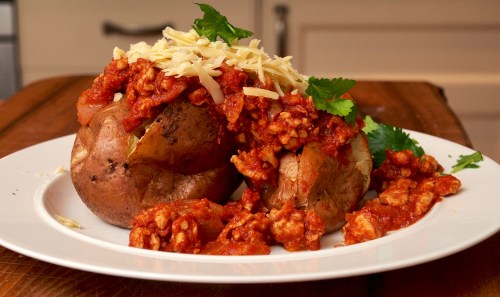
Turkey Chilli with jacket potatoes

This is a good chilli for mid-week. It uses turkey mince which is lean, and easy to pick up now in supermarkets. It’s not lacking in flavour and we will definitely be doing it again.

Wine Suggestion: a lighter Spanish red is the trick here; make sure it doesn’t have too many tannins. Our find of the moment is a rarity from Teruel, in Aragon which has a harsh climate of hot summers and very bitterly cold winters. From a resurrected-reinvented vineyard the Jesus Romero Rubus is an unoaked blend of Garnacha, Tempranillo and Syrah. The beauty of this wine is the purity of fruit that sings and layers itself across the palate and has a very long finish. Never heavy, yet full of life. That said, it’s mid-week, so go for it, have whatever is open and it’ll be grand!

Turkey Chilli Jacket Potatoes – serves 4

  • 4 large baking potato
  • 1 tbsp olive oil
  • 1 onion, chopped
  • 1 garlic clove, crushed
  • 300g turkey mince
  • 1 tbsp smoked paprika
  • 1 tbsp ground cumin
  • 1 tbsp cider vinegar
  • 1 tbsp soft light brown sugar
  • 350ml passata
  • cheddar cheese, grated, to serve
  • 4 scallions, chopped, to serve

Heat oven to 220ºC.

Prick the potatoes all over with a fork. Rub with a little oil, and bake for 20 mins, then turn the oven down to 200ºC and cook for 45 mins-1 hour depending on the size of your spuds.

Meanwhile, heat the remaining oil in a large frying pan over a medium heat. Add the onion, garlic and some seasoning, and cook for 5 mins until soft. Add the turkey mince and season again, then increase the heat and break up the mince with the back of your spoon. When it’s cooked through, add the spices, vinegar, sugar and passata. Reduce to a simmer and cook for 10 mins or until the liquid has reduced.

Cut a cross in the potatoes and serve filled with the chilli, some chopped scallions and grated cheese.

(Original recipe from BBC Good Food)

Read Full Post »

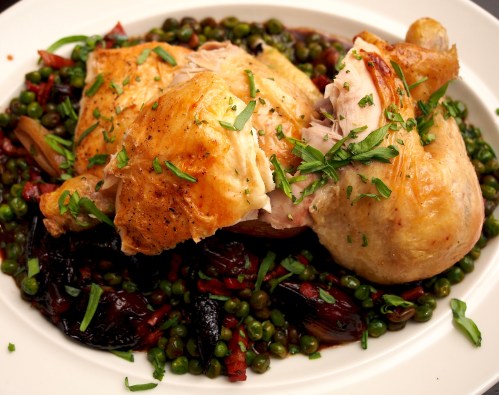
Herb roast chicken

This is an easy solution for feeding a crowd and almost everyone likes roast chicken. All you need is some new potatoes or creamy mash on the side. We love the fresh tarragon with the peas but you could use mint if you prefer. The combination of the peas, shallots, herbs and pancetta really add extra depth to the chicken and lift even ordinary chickens to feast-like levels. Of course, if the budget allows, get a good, free-range one as the extra flavour is really worth it.

Wine Suggestion: As this dish is a bit richer than your standard roast chicken it demands more than most white wines can deliver. We find Pinot Noir a good choice. This time we chose the Justin Girardin Santenay 1er Clos Rousseau and the earthy flavours danced with the salty, crispy pancetta and sweet peas. The tarragon made it all the more reminiscent of holidays in France.

Herb-Roast Chicken – serves 8-10 (easily halved)

  • 200g cubetti di pancetta
  • 800g shallots, trimmed
  • 2 tbsp olive oil
  • 2 chickens (about 1.5kg each)
  • 500ml hot chicken stock
  • 800g peas (frozen will be fine)
  • small pack tarragon, roughly chopped

Heat oven to 190C/170C/gas 5.

Fry the pancetta gently in a heavy frying pan until crisp – if you start with a cold pan you shouldn’t need to add any oil. Remove with a slotted spoon and set aside. Add the shallots to the pan and fry in the pancetta fat for 10-15 minutes or until golden and starting to soften. Tip the shallots into a very large roasting tin.

Rub the olive oil over the chickens and season well with salt and pepper, then place the chickens into the roasting tin with the shallots. Roast for about 1 hour 20 minutes or until golden and cooked through. Remove the chickens from the tin and cover with foil.

Put the roasting tin directly onto the hob and stir in the stock. Bubble for a few minutes and scrape any sticky bits off the bottom of the tin with a wooden spoon. Add the peas, pancetta and most of the tarragon to the stock and bubble for a few minutes or until the peas are cooked, then season.

Meanwhile carve the chicken into large pieces. Transfer the peas to a warm serving platter and serve the chicken on top with the rest of the tarragon sprinkled over.

(Original recipe from BBC Good Food Magazine, April 2010.)

Read Full Post »

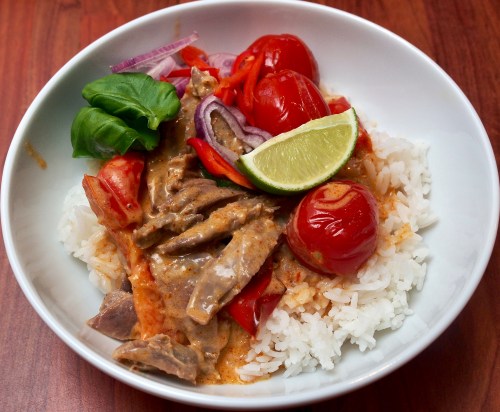
Ripped red pepper duck curry

Ripped red pepper duck curry

The addition of fresh red peppers and cherry tomatoes gives this curry a really fresh and summery feel. Perfect for when you fancy something spicy on a warm evening. It is also equally at home as the nights draw in, like the moment in Dublin and you fancy an open fire to cosy up to.

Wine Suggestion: A good Gewürztraminer makes a surprisingly brilliant match for this dish with enough weight for the richness and texture and plenty of aromatics to compliment the flavours. Our choice this time was the excellent Cave de Turckheim’s Reserve Gewürz, an off-dry wine that balanced perfectly with the heat of the red curry paste.

Ripped Red Pepper Duck Curry – serves 4

  • 4 duck legs
  • 1 tbsp fish sauce
  • 1 stick lemongrass, finely chopped
  • 2 large cloves of garlic, crushed
  • vegetable oil
  • 2 red peppers, deseeded and sliced lengthway
  • 5 tbsp Thai red curry paste
  • 2 x 400ml tins coconut milk
  • 3 tsp sugar
  • juice of ½ a lime, plus wedges for serving
  • 12 baby plum tomatoes
  • a handful of Thai or regular basil
  • red chilli and shallots, sliced finely to serve
  • steamed rice, to serve

Preheat the oven to 200ºC/180ºC fan/Gas 6.

Rub the duck legs with some salt and pepper, 1 tbsp of the fish sauce, lemongrass, crushed garlic and 2 tbsp of oil. Place in a roasting tin, cover with foil and bake for 1 hour. Remove the foil and add the sliced red peppers to the tin, tossing them in a little of the duck fat. Turn up the oven to 220ºC/200ºC fan/Gas 7 and roast uncovered for another 15 minutes or until the duck skin has crisped and the pepper slices are blistered. Remove the peppers and keep to one side. Pull the duck meat and skin from the bones and keep to one side.

Simmer the bones in 500ml water for about 30 minutes to make a stock.

In a saucepan, fry the curry paste in the oil until darkened in colour. Stir in the coconut milk, then add the stock, fish sauce and sugar and simmer for about 20 minutes or until it has thickened slightly. Squeeze in the lime juice. Stir in the strips of pepper, baby plum tomatoes and the shredded duck – reserving some crispy-skinned pieces for serving – and gently simmer for about 3 minutes or until heated through.

Remove from the heat and stir in a small handful of basil leaves. Ladle into bowls, piling on top the reserved crispy duck, some extra basil and shredded chilli and shallots to taste. Serve with lime wedges and steamed rice.

(Original recipe by Alastair Hendy in BBC Olive Magazine, August, 2014.)


Read Full Post »

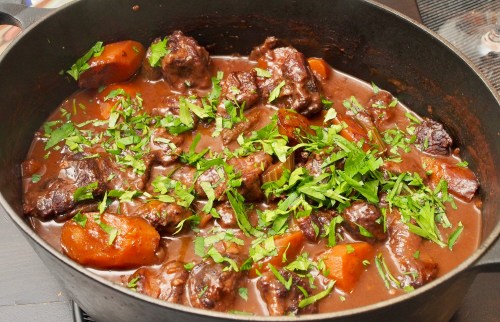
Daube of Beef

Daube of Beef

This dish was traditionally cooked in a glazed clay pot. However these have successfully been replaced by cast-iron casseroles, like our favourite oval shaped one from le Creuset. It keeps the heat stable which makes it perfect for the long and slow cooking required for this dish. Very like our Chianti Beef recipe but with a few French touches.

Wine Suggestion: with a nod to the French origins of this dish we’d suggest a good Gigondas from the Rhone to match. With rich brambly fruit, good spicy tannins and a touch of elegant leathery development the Grapillon d’Or Gigondas was immensely enjoyed last time we cooked this, but other GSM (Grenache-Syrah-Mourvedre) blends from around the world would work well too.

Daube of Beef – serves 6

  • 1.2kg shin of beef, cut into large pieces
  • 4 tbsp plain flour, well seasoned
  • oil for frying
  • 200g smoked bacon lardons
  • 2 onions, diced
  • 2 celery sticks, sliced thickly on a diagonal
  • 4 carrots, sliced thickly on a diagonal
  • 4 cloves of garlic, crushed
  • 750ml red wine
  • 2 tbsp tomato purée
  • 2 cloves, ground
  • 2 bay leaves
  • 2 strips of orange peel
  • flat-leaf parsley, to serve

Heat the oven to 150ºC/Fan 130ºC/Gas 2.

Toss the beef in the seasoned flour (we shake them together in a large freezer bag).

Heat 2 tbsp of oil in a large non-stick frying pan and brown the beef in batches before transferring with a slotted spoon to a large casserole dish with a lid. Add the bacon to the frying pan and cook until brown and crispy, then scoop out and add to the casserole with the beef. Cook the onions until golden and caramelised then add these to the beef. Finally fry the carrot and celery until just starting to colour. Add the garlic and cook for a minute then add to the beef. Add a splash of wine to the frying pan to deglaze, stirring to scrape any crusty bits from the bottom of the pan, then tip into the casserole. Add the rest of the wine to the casserole and bring to a simmer. Stir in the tomato purée, cloves, bay leaves and orange peel.

Transfer the casserole to the oven and cook for 2½ hours or until the meat is very tender – leave the lid off for a while at the end if you want the sauce to thicken to bit. Scatter with the parsley to finish.

(Original recipe by Lulu Grimes in BBC Olive Magazine, September, 2012).


Read Full Post »

Salmon Teriyaki

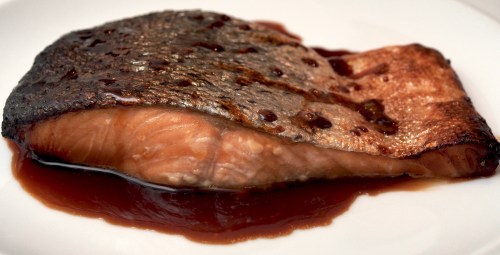
Really delicious salmon with crispy skin and a rich sauce. Serve with rice and some asian greens.

Wine Suggestion: Soy sauce accentuates tannins in wine so we’d suggest avoiding reds for this dish. With ingredients that include Sake, Mirin/Sherry and sugar there are two options that we find work really well, and in a contrasting way. Firstly a non-dry, slightly sweet Oloroso sherry, like the Valdespino 1842 VOS Oloroso, will work with the umami savoury characters and compliment the rich sweetness. Alternately play with a bit of contrast and pick a good Rosé Champagne, like Billecart-Salmon’s benchmark example; this plays with the senses and adds an extra vibrancy to a dish already replete with flavour.

Salmon Teriyaki – serves 4

  • 250ml light soy sauce
  • 125ml sake or rice wine
  • 125ml mirin or dry sherry
  • 100g caster sugar
  • 4 salmon fillets, skin-on
  • 1 tbsp sunflower oil

Mix the first 4 ingredients together and stir until the sugar has dissolved to make a teriyaki sauce. Marinade the salmon in half of the sauce for at least 3 hours. Pour the rest of the sauce into a saucepan and bubble gently on a low heat for 30 minutes or until reduced and thickened.

Heat the oven to as high as it goes, then put the drained salmon fillets in an ovenproof dish, skin upwards. Cut small squares of foil to cover the salmon skin and stop it burning.

Bake for 5-6 minutes, then remove the foil and brush oil over the skin. Return to the oven for another 5-6 minutes or until the skin is crispy and starting to char.

Pour some of the reduced sauce onto each plate and sit the salmon on top to serve.

(Original recipe by Reiko Hashimoto-Lamber IN: BBC Good Food Magazine, April 2008.)

Read Full Post »

Spicy Prawns

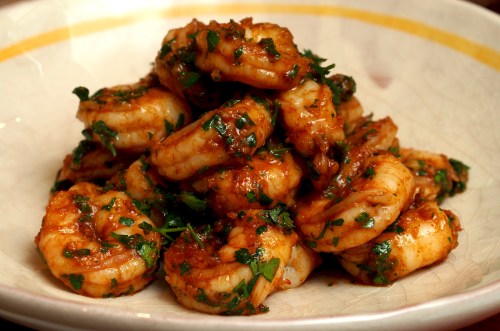
These prawns, flavoured with lots of garlic and warm spices, make a simple but really tasty starter. Serve with plenty of bread for mopping up the juices.

Wine Suggestion: We really like unoaked, slightly lighter, Spanish reds with this dish especially with 30 minutes in the fridge to give a cool edge to them. A newish find has been the Jesus Romero “Rubus”, a delicious blend of Garnacha, Tempranillo and Syrah which has a purity and persistence of fruit that charms us every time.

Spicy Prawns – serves 4

  • 300g raw peeled king prawns
  • 4tbsp olive oil
  • 4 garlic cloves, crushed
  • 2 tsp paprika
  • 1½ tsp ground cumin
  • ¾ tsp ground ginger
  • a good pinch of cayenne pepper or chilli powder
  • 5 tbsp chopped coriander or parsley

Heat the oil with the garlic and spices in a large frying pan. Keep stirring until aromatic, then throw in the prawns and fry quickly over a medium heat until pink – about a minute. Stir in the coriander or parsley and serve.

(Original recipe from Foolproof Mediterranean Cookery by Claudia Roden, BBC Worldwide Ltd., 2003.)

Read Full Post »