Feeds:
Posts
Comments

Archive for September, 2017

Courgette lasagne

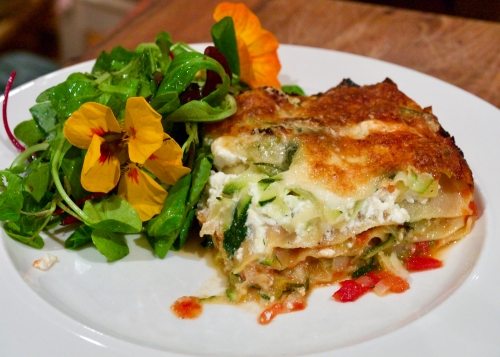
It’s the season where vegetables seem to come in waves of excess. Here’s a nice weekday lasagne for any of you that are still harvesting courgettes.  Our friend Nicola also dropped by with some home-grown salad ingredients including these pretty nasturtiums.

Wine Suggestion: We think fresh, crisp whites work with courgettes really well and when combined with pasta and cheese naturally lean towards young Semillon, Chenin Blanc or Chablis. To mix it up a bit, however, we tried the Villa Sparina Gavi di Gavi from Piedmont in Italy, another good option.

Courgette Lasagne – serves 6

  • 8 plum tomatoes, halved
  • 2 garlic cloves, lightly bashed
  • 1 tbsp olive oil
  • 1 sprig of rosemary
  • ½ tbsp golden caster sugar
  • 2 leeks, sliced into rings
  • 20g unsalted butter
  • 100g baby spinach
  • 500g courgettes, grated
  • 10 lasagne sheets
  • 250g tub of ricotta
  • 125g mozzarella, torn
  • 50g Parmesan, grated

Heat the oven to 200C/180 fan/gas 6.

Put the halved tomatoes onto a baking tray with the garlic, oil, rosemary and season well. Bake for 25-30 minutes or until soft, then discard the rosemary and remove the skin from the garlic. Put the tomatoes and garlic in a blender and blitz a few times to make a chunky sauce.

Meanwhile, put the leeks in a pan over a low heat, add the butter, season and cook for about 10 minutes or until soft. Add the spinach and grated courgettes, and continue to cook for another couple of minutes to wilt and soften. Set aside.

Layer the ingredients in a large ovenproof dish starting with a layer of tomato sauce, then some pasta, followed by ricotta and vegetables. Repeat until all the ingredients are used, finishing with a vegetable layer. Scatter over the mozzarella and Parmesan, then bake for 40 to 45 minutes or until golden brown and bubbling.

(Original recipe by John Torode in BBC Good Food Magazine, August 2016.)


Read Full Post »

Pasta with red peppers and sausages

We love dishes like this! So cheap and easy yet tastes of Italian holidays. Try and find some good Italian sausages as they tend to be really well flavoured.

Wine Suggestion: the fresh and pure fruited Rocca delle Macie Chianti Vernaiolo was our successful match with this. With no oak this is a delicious expression of cherry fruited flavours that celebrates the freshness of the dish at the same time.

  • 1 small red onion, finely sliced
  • 3 red peppers, deseeded and cut into 2cm squares
  • 4 pork sausages – try and get your hands on some Italian ones if possible
  • 6 tbsp olive oil
  • a couple of pinches of salt and chilli flakes
  • 5 ripe tomatoes, peeled and roughly chopped (cover with hot water for a minute to make them easier to peel)
  • 400g pasta, we used rigatoni but use any short pasta variety
  • plenty of freshly grated Parmesan, to serve

Run a sharp knife down each sausage and remove the meat from inside the casing. Crumble roughly with your fingers to break it up a bit and set aside.

Over a medium-low heat, fry the onion in the olive oil with a small pinch of salt until soft but not browned. Add the chilli and sausage meat, crumbling it with your fingers, then fry, breaking the pieces up with the back of a wooden spoon until the meat is no longer pink. Add the peppers, another pinch of salt and cook, stirring every now and then, for another 10 minutes.

Add the tomatoes to the pan and cook for another 15 minutes or until the sauce is rich and thick and the peppers are very soft.

Meanwhile, cook the pasta in  boiling salty water until al dente. Warm a large bowl, then mix the cooked pasta with the sauce and the grated Parmesan before serving.

(Original recipe published in The Guardian 18th July 2017.)


Read Full Post »

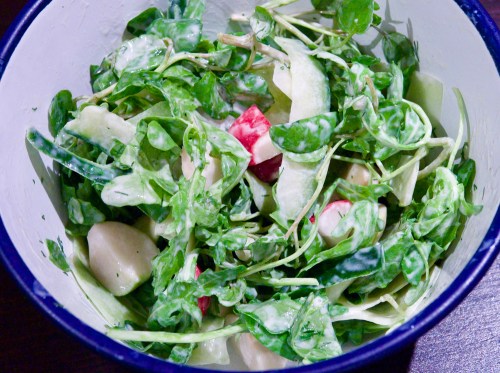
Watercress, cucumber & radish salad A lovely later summer salad. We used mixed radishes from our garden – red, white and everything in between. Freshly picked they had a wonderful peppery kick that we never seem to get from shop bought radishes.
Watercress, cucumber & radish salad – serves 8

  • 1 cucumber
  • 200g watercress
  • 300g baby radishes, halved if large

FOR THE DRESSING:

  • 6 tbsp natural yoghurt
  • 1 tbsp white wine vinegar
  • 1 tsp Dijon mustard
  • 1 garlic cloves, crushed
  • 1 sprig of dill, leaves only, chopped

Whisk all of the dressing ingredients together in a bowl, then season.

Peel the cucumber into long, thin strips using a vegetable peeler. Discard the seedy part.

Toss the watercress, cucumber and radishes together in a serving bowl and toss with the dressing.

(Original recipe from BBC Good Food.)

Read Full Post »

Summer berry jam

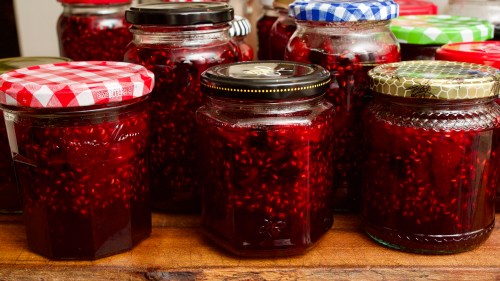
Now’s the time to make a big batch of jam with the last of the summer berries. It’s worth seeking out jam berries which tend to be odd shapes and sizes and are sold off cheap. We used a mixture of strawberries, blackberries, raspberries & aronia berries – small black berries that look a bit like currants and are apparently very good for us.

Summer Berry Jam – about 8 jam jars

  • 1.8 kg mixed summer berries (see our suggestion above)
  • 1.5 kg jam sugar with pectin
  • juice and pips of 1 lemon
  • tiny knob of butter

Start the night before by layering the berries and sugar together in a very large bowl, then cover and leave at room temperature. Stir the fruit in the morning, then leave until you are ready to cook.

Put a small saucer in the freezer before you start. Tip the berries and any sugar into a large wide-based pan or preserving pan. Stir in the lemon juice, then collect the pips and put into a muslin cloth or tea-leaf strainer before adding to the pan.

Put the pan over a gentle heat until the sugar has completely dissolved, then bring to the boil and simmer for 5 minutes. Turn off the heat and put a teaspoon of jam onto the chilled saucer. Wait for it to cool, then push with your finger – if it wrinkles it’s ready. If it’s too runny, put the pan back over the heat and boil for another 2-3 minutes before checking again. Continue like this until the jam wrinkles. If you have a jam thermometer you should wait until the jam reaches 105ºC.

Skim the scum off the top of the jam, then stir in a very small knob of butter (this will help to dissolve any remaining scum). Leave the jam for 15 minutes before ladling into sterilised jars.

(Original recipe from BBC Good Food.)

Read Full Post »


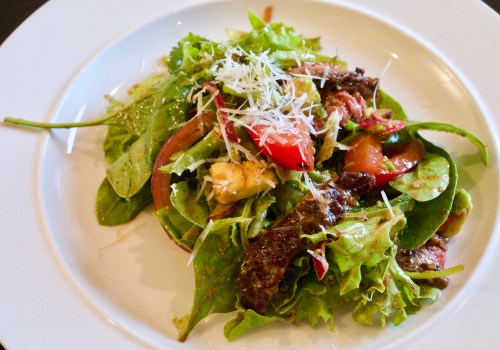
Skirt steak salad w. tomatoes & chipotle

A warm main course salad for two with a very spicy dressing. Season the steak well before cooking and serve with some crusty bread.

Wine Suggestion: this dish has a bite with the chipotle so tread carefully and don’t pick a wine that is too dry (white) or tannic (red). A medium bodied, juicy red was our pick with the Giulio Straccali “Galileo” Vino Rosso d’Italia, a multi region blend of Sangiovese, Syrah and Primitivo. This is really clever by playing of the strengths of each grape and is really more than just the sum of its parts. Fresh, juicy, long and complex, especially considering its inexpensive price.

Warm skirt steak salad with tomatoes & chipotle dressing – serves 2 as a main course

  • 400g skirt steak
  • 2 garlic cloves, finely chopped
  • 60ml beef stock/water
  • 120g tinned chipotle chillies in adobo sauce
  • 60ml lime juice
  • half a small frisée lettuce/other lettuce variety
  • 30g baby spinach leaves
  • 1 tomato, chopped
  • 2 radishes, thinly sliced
  • ¼ small red onion, thinly sliced
  • 1 avocado, diced
  • a small handful of coriander leaves
  • 30g pecorino cheese

Warm 1 tbsp of olive oil in a heavy frying man over a medium-high heat. Season the steak generously with salt and black pepper. Fry the steak in the oil, turning once, until both sides are well browned and it is cooked how you like it – we cooked ours for 3 minutes on each side. Remove the steak from the pan and set aside to rest.

Reduce the heat under the frying pan and sauté the garlic for a few minutes. Pour in the beef stock or water and use to deglaze the pan, scraping any sticky bits off the bottom with a wooden spoon. Turn the heat off completely and add the chipotle chillies, lime juice and enough olive oil to make a dressing (a few tablespoons). Season to taste.

Cut the steak across the grain into ½ cm thick strips.

Shred the lettuce leaves into bite-sized pieces and tip into a bowl with the spinach, tomatoes, radishes, onion, avocado & coriander. Add the steak and the chipotle dressing. Divide between 2 plates and grate some pecorino cheese over the top.

(Original recipe from Good Cooking by Neil Perry, Murdoch Books, 2016.)

Read Full Post »

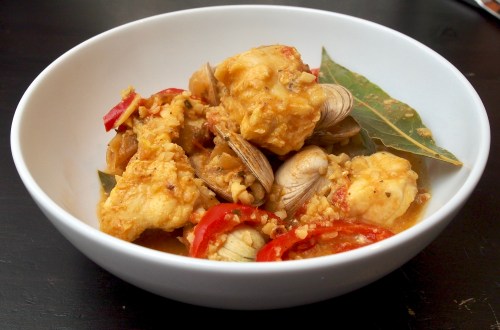
Romesco de peix

We’re still trying to get in the last of the summery dishes before we succumb to roasts and pies! Season this well and add plenty of parsley at the end; a lift that can’t be understated.

Wine suggestion: cross the border for this and go to Portugal for an oaked and aged Alvarinho (there may be some similar oaked/aged Albariño from Rias Baixias in Spain but I haven’t found the right ones yet). Quinta de Soalheiro make a Reserva Alvarinho that with 12 months extra ageing from release makes a perfect match.

Fish Stew with Peppers, Almonds & Saffron – serves 4

  • 6 tbsp olive oil
  • 1 large Spanish onion, roughly chopped
  • 2 garlic cloves, thinly sliced
  • 2 dessertspoons of finely chopped rosemary
  • 3 fresh bay leaves
  • 2 red peppers, thinly sliced
  • ½ tsp sweet smoked Spanish paprika
  • 1 tin of plum tomatoes, drain of the juice and roughly chop
  • 150ml white wine
  • 100ml hot fish stock
  • 50 saffron strands infused in 4 tbsp boiling water
  • 150g whole blanched almonds, lightly toasted and roughly ground
  • 650g monkfish fillets, cut into chunks
  • 500g clams, rinsed well

Heat the oil in a large saucepan, over a medium heat. Add the onion and a pinch of salt, then cook for 15-20 minutes or until golden. Add the garlic, rosemary, bay leaves and red pepper. Soften for 10 minutes, then add the white wine and allow to bubble for a couple of minutes before adding the fish stock and saffron water. Add the crushed almonds and season to taste.

When almost ready to eat, add the monkfish and clams, put a lid over the pan and simmer until the fish is cooked through and the clams are open – about 5 minutes.

Serve with new potatoes.

(Original recipe from Moro the Cookbook by Sam & Sam Clark, Ebury Press, 2001.)

Read Full Post »

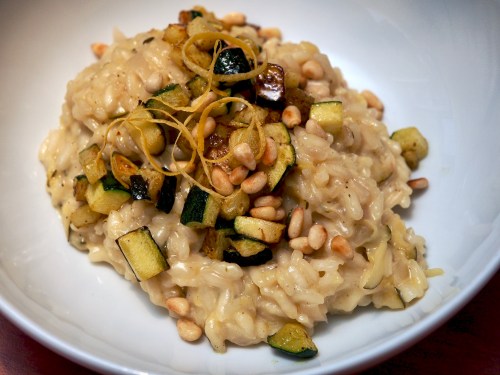
Courgette RisottoWe loved this simple risotto with toasted pine nuts and little pieces of fried courgette. Definitely special enough to serve to friends for dinner.
Wine Suggestion: this risotto demands a waxy, nutty white and what better than an excellent Soave made by Graziano Pra. His Soave Classico “Otto” is fresh and a delight with jasmine and hawthorn aromas, but if you can step up to the “Monte Grande” cuvée then you get extra depth and greater layers of almonds and nuts that complement the pine nuts perfectly.

Courgette Risotto – serves 3-4

  • 50g butter, plus a bit extra to finish
  • 1 small onion, finely chopped
  • 250g courgettes, 140g coarsely grated, dice the rest
  • 175g risotto rice
  • 1 lemon, zest and juice
  • 1.2 litres of veg stock (or chicken stock) kept hot over a low heat
  • 25g parmesan, grated
  • 2 heaped tbsp mascarpone
  • 1 heaped tbsp toasted pine nuts

Melt the butter in a heavy frying pan then gently fry the onions until softened. Stir in the grated courgettes and the rice, then increase the heat and stir for 1-2 minutes.

Add the lemon juice and a ladleful of the hot stock. Stir continuously over a medium-high heat. Keep stirring until the liquid is almost absorbed, then add another ladleful of stock. Continue like this for until the rice is just tender and has a creamy texture, about 20-30 minutes. Stir in the Parmesan, mascarpone and some salt and black pepper, then cover with a lid and set aside for 5 minutes while you fry rest of the courgettes.

Heat the rest of the butter with a splash of oil in a small frying pan. Add the diced courgettes and fry over a high heat for 2-3 minutes until golden & softened. Divide the risotto between plates, then scatter with the diced courgettes and any buttery juice from the pan, the pine nuts & a few pinches of lemon zest.

(Original recipe from BBC Good Food)

Read Full Post »

Makshi, stuffed peppers with beef & rice

This is delicious. You will need a very big pot and small peppers to fit them all in. Yet again Honey & Co have not let us down with this fab recipe.

Wine Suggestion: try not to drink too heavy a wine with this as it might fight with the spices and red pepper flavours. We found a northern Italian Pinot Nero from Alto Adige / Südtirol made by Cantina Colterenzio was a good match. It provided a delightful play of cherry fruit and earthiness while balancing the freshness with youthful acidity.

Makshi – stuffed peppers with beef & rice – serves 4

  • 8 small red peppers
  • 1 lemon, sliced
  • 1 tomato, sliced

FOR THE FILLING:

  • 1 large onion, finely diced
  • 4 garlic cloves, crushed
  • 2 tbsp olive oil
  • 250g beef mince
  • 2 tsp salt
  • 2 tsp ground allspice
  • 2 tsp paprika
  • 2 tsp ground cumin
  • ½ tsp cayenne pepper
  • 90g basmati rice
  • 2 tomatoes, diced (about 200g)
  • 1 small bunch of parsley, chop the leaves and reserve the stalks

FOR THE COOKING LIQUOR:

  • 70g tomato purée
  • 3 bay leaves
  • 4 garlic cloves, peeled

Cut around the top of each pepper, about 1 cam below the stalk, and take the top section off but don’t throw it away. Remove the seeds and white membrane from the inside of the peppers.

Arrange the peppers upright in a pan that can hold them snugly so they don’t topple over. Push the lemon and tomato wedges in around them to hold them in place. Also add the reserved parsley stalks.

Fry the onion and garlic in the oil over a medium heat until softened, then add the beef mince, breaking it up with a wooden spoon until it has lost any pinkness and has gone crumbly. Add the salt and spices and mix well, then tip in the rice and fry for a minute. Add the diced tomato & chopped parsley. Take off the heat and mix well. Spoon this mixture into the peppers but don’t press it down too much as the rice will expand as it cooks.

Put the cooking liquor ingredients into a saucepan with 1 litre of water and bring to the boil. Pour the hot liquid over the pepper filled peppers, making sure some liquid gets into each one (we used a plastic funnel to do this). Put the pot containing the peppers over a high heat and bring to the boil, then immediately reduce the heat and cook for 30 minutes at a gentle simmer.

Check how much liquid is left in the pan (it should be about three-quarters full – if not top it up with more water). Baste the peppers with the cooking liquid and put the lid back on. Simmer for a further 20 minutes, then serve or keep for the following day (when they will taste even better). They reheat well in the microwave.

Read Full Post »

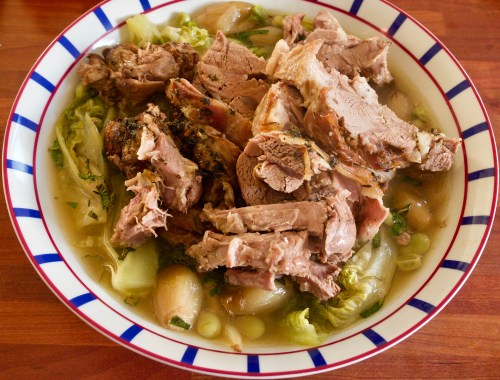
Three hour shoulder of lamb

A delicious summer roast with meltingly tender lamb and so simple to prepare. Serve with a fresh mint sauce and some steamed new potatoes.

Wine Suggestion: We tried two wines with great success: the Rustenberg Chardonnay from South Africa, and the Chateau du Hureau “Fevettes” Saumur-Champigny. Both had the needed structure, or bones, to stand up to the rich lamb, but also played a delightful fresh mid-weight tune with the summer veg.

Three hour shoulder of lamb – serves 4

  • 2 garlic cloves, finely chopped
  • 1 tbsp oregano, roughly chopped
  • 1 tbsp olive oil
  • 1 shoulder of lamb, boned and tied, approx 1½ kg
  • 400g pearl onions or shallots
  • 250ml lamb stock
  • 100g fresh/frozen peas
  • 100g fresh/frozen broad beans
  • 2 Little Gem lettuces, cut into quarters
  • juice 1 lemon
  • small handful mint or coriander, roughly chopped

Preheat your oven to 140C/120C fan/gas 1.

Mix the garlic, oregano and olive oil with some salt and pepper. Make cuts all over the the lamb with a sharp knife and rub the mixture into the meat. Put into a deep casserole dish with the onions and pour over the stock, cover with a tight-fitting lid and cook 3 hrs.

Remove the lamb from the pot and stir through the peas and broad beans. Sit the lamb back on top of the vegetables and return to the oven. Increase temperature to 180C/160C fan/gas 4 and roast, uncovered, for another 20-30 mins until the lamb is browned, adding the lettuce for the final 5 mins. Allow to rest for 20 mins, then add the lemon juice and mint to the cooking juices. Carve into thick slices and lay them back on top of the veg to serve.

(Original recipe from BBC Good Food)


Read Full Post »