Feeds:
Posts
Comments

Archive for January, 2019

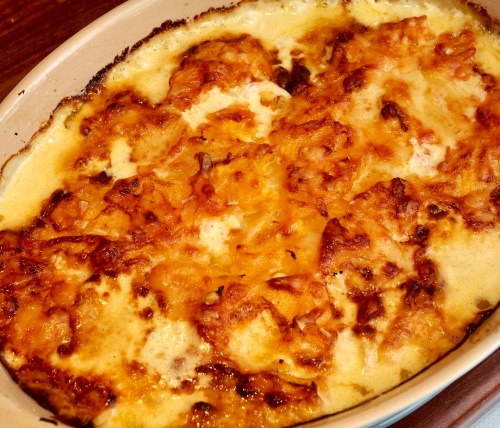
Turnip & Gruyere Gratin

Turnip (or swede as some of you call it) gets a lot of bad press but we absolutely love it and even more so when cooked with lots of cream and cheese. Jono has declared this his favourite turnip dish and has demanded we cook it again.

Gruyère and turnip gratin – serves 4

  • 700g turnip/swede (the large, orange-fleshed variety)
  • 300ml double cream
  • 1 tbsp dijon mustard
  • 1 clove of garlic, crushed
  • 100g gruyère, grated

Heat the oven to 180C/fan 160C/gas4.

Peel and thinly slice the turnip – a mandolin or food processor works really well for this.

Bring a pan of salted water to the boil then add the turnip and cook for 4 minutes. Drain really well.

Whisk the cream, mustard and garlic together and season. Layer the turnip and mustardy cream alternately and sprinkle in half the cheese. Sprinkle the rest of the cheese over the top.

Bake for 40-50 minutes, or until very tender, browned and bubbling.

(Original recipe by Janine Ratcliffe, Olive Magazine, January 2017)

Read Full Post »

Smoked Mackerel Loaded Leaves

This is the kind of nibble we like before dinner. Really tasty but light so it won’t spoil your appetite. Radicchio and/or chicory leaves are preferable but if you can’t find these you can substitute Little Gem lettuce – as we did.

Wine Suggestion: Your choice of bubbles, whether it’s Prosecco, Cremant, Cava or Champagne

Smoked Mackerel Loaded Leaves – serves 4-8

  • 200g smoked mackerel fillets, skin removed and flaked
  • 4 tbsp crème fraîche
  • juice and zest of ½ lemon
  • small bunch of chives, snipped
  • small handful of dill, chopped
  • 1 small radicchio, separated into leaves
  • 1-2 chicory heads separated into leaves

Gently mix the mackerel with the crème fraîche, lemon juice, half the herbs and some pepper. Chill until ready to serve.

Spoon generous amounts of the mackerel mixture into each leaf and arrange on a plates or a platter. Sprinkle over the remaining herbs and the lemon zest.

(Original recipe from BBC Good Food)

Read Full Post »

Spiced Lamb Hotpot

We love this spiced hotpot from Sabrina Ghayour’s fabulous book, Feasts. All the work is done at the start, and isn’t particularly onerous, so it’s a great dish for guests and the house smells good when they arrive. We served with big dishes of cauliflower cheese and greens.

Wine suggestion: You need a red with some guts to stand up to these flavours, but don’t go OTT as it also requires subtlety and finess too. Our friend Miriam had found a 9 yo Bordeaux made from 100% merlot in her cellar and we’re glad she shared it with us.

Spiced Lamb Hotpot – serves 4-6

  • 1 tbsp cumin seeds
  • 6 cardamom pods, lightly cracked
  • vegetable oil
  • 2 large onions, thinly sliced
  • 900g diced leg of lamb
  • 1 large garlic bulb, cloves peeled and left whole
  • 8 shallots, peeled and left whole
  • 2 large carrots, peeled and cut into 1cm dice
  • 1 tsp ground cumin
  • 1 tsp ground ginger
  • 1 tsp ground cinnamon
  • ½ tsp cayenne pepper
  • 1 tsp English mustard powder
  • 2 tbsp plain flour
  • 500ml chicken, lamb or vegetable stock
  • 700-750g red potatoes, unpeeled, thinly sliced – a mandolin is good for this
  • 50g unsalted butter, melted
  • sprinkling of thyme leaves

Preheat the oven to 170C/150C fan/Gas 3½.

Heat a large flameproof casserole over a medium heat. Add the cumin seeds and cardamom pods to the hot pan and dry-toast for about 2 minutes, stirring occasionally, until they smell aromatic.

Pour in oil to coat the base of the pan. When the oil is heated, add the onions and fry for 6-8 minutes, or until softened and starting to brown at the edges. Add the meat and cook for a few minutes, stirring to coat in the cumin seeds. Add the garlic cloves, shallots and carrots and stir for a couple of minutes. Add the ground cumin, ginger, cinnamon, cayenne pepper, mustard powder and flour. Season with salt and pepper and mix well before adding the stock.

Arrange the potato slices on top of the meat, slightly overlapping them. Brush with the melted butter, sprinkle with the thyme and season again. Cover with a lid and transfer to the oven for 1½ hours.

Remove the hotpot from the oven and take off the lid. Turn the oven up to 220C/200C fan/Gas 7.

Put the casserole back into the oven and cook for another 30-40 minutes, or until the potatoes are golden brown.

(Original recipe from Feasts by Sabrina Ghayour, Mitchell Beazley, 2017.)

Read Full Post »
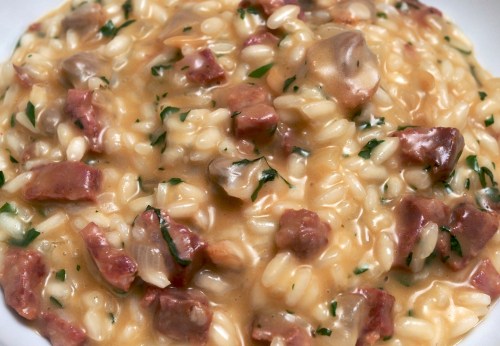
Cockle & Chorizo Risotto

We couldn’t find clams in Dublin the day we cooked this and had to substitute cockles. Still very delicious, but make sure you wash them thoroughly in cold running water to get rid of any sand.

Wine Suggestion: The zing of a good Picpoul de Pinet was our choice and it was a very good match indeed; clean, fresh and appley. Picpoul is often drunk with lighter dishes as it’s such an easy drinking wine, but this is a shame as Picpoul comes into it’s own with a richer dish like this.

Clam & Chorizo Risotto – serves 4

  • 1kg fresh clams, rinsed well in running water for a few minutes to remove any sand (or you can use cockles)
  • 200ml dry white wine
  • 2 tbsp olive oil
  • 1 small onion, finely chopped
  • 1 garlic cloves, finely chopped
  • 2 spicy cooking chorizos, finely diced (we used one big one)
  • a bay leaf
  • 300g carnaroli rice
  • 1.5 litres chicken stock
  • 50g Parmesan, grated
  • 50g butter
  • 2 tbsp chopped basil
  • 2 tbsp chopped flat-leaf parsley

Heat a large casserole dish on a high heat and add the clams. Throw in half the wine, cover with a lid, and cook for 2 minutes or until the clams open. Drain and set aside, reserving the liquor. Remove the clams from their shells when cool enough to handle.

Heat the olive oil in a medium saucepan, add the onion and garlic and sweat for 5 minutes, until translucent. Add the chorizo and bay leaf and cook for a few minutes. Add the rice and toast for a couple of minutes, then add the rest of the wine and turn up the heat to evaporate.

Add the reserved cooking liquor, then start adding the chicken stock a ladle at a time, stirring. Add another ladle only when the previous ladle of stock has been absorbed. Continue until the rice is almost cooked, about 15-20 minutes.

Remove the pan from the heat and beat in the Parmesan, butter and herbs. Add the clams and stir to heat through. Taste and season with salt if needed, then serve.

(Original recipe from The Skills by Monica Galetti, Quadrille, 2016.)

Read Full Post »

Pea & Mint Soup

It’s getting close to that time of year when we start to really crave some daylight and spring veg. Fresh peas are a long way off yet but this hearty pea and mint soup is full of promise. Leave out the swirl of cream to keep it vegan.

Pea & Mint Soup – serves 4 generously

  • 80g yellow split peas
  • 1 tbsp olive oil
  • 2 large onions, finely diced
  • 3 garlic cloves, finely chopped
  • 1.2 litres vegetable stock
  • 700g frozen peas
  • 2 handfuls of mint leaves, roughly chopped
  • 4 tsp single cream (optional to garnish)

Put the split peas into a saucepan and add 800ml of water. Bring to the boil, then lower the heat and simmer for 30-45 minutes, or until just tender. Remove any scum from the surface as they cook.

10 minutes before the split peas are cooked, heat the oil in a large saucepan over a medium heat. Add the onions and cook for 5 minutes to soften, add a splash of water if they start to stick. Add the garlic and cook for another 2 minutes.

Drain the split peas and add to the onions along with the vegetable stock. Bring the boil, then simmer gently for 5 minutes.

Stir in the frozen peas and chopped mint and season with salt and black pepper. Simmer for another 5 minutes, then remove from the heat.

Whizz the soup with a blender until smooth (or smoothish if you prefer) – you might have to do this in batches.

Ladle into warm bowls and drizzle with cream if you like.

(Original recipe from Lose Weight for Good by Tom Kerridge, Absolute Press, 2017.)

Read Full Post »

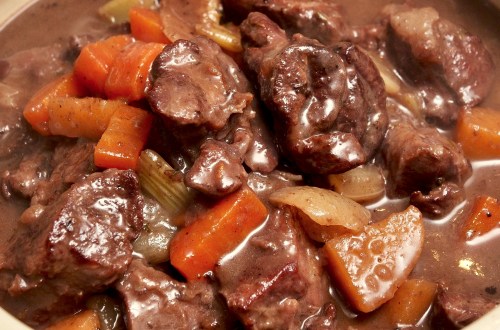
braised-venison.jpg

A little nod to game season and a great winter stew. Don’t be tempted to buy anything too lean as you need the fat to stop the venison becoming dry when slow-cooking.

Wine Suggestion: This dish needs a juicy red wine with structure, but not too many dry tannins. Tonight we tried Domaine Rochette’s Morgon, a good cru Beaujolais, and were delighted how well it worked.

Braised Venison – serves 8

  • 2 carrots, roughly chopped
  • 140g turnip/swede, roughly chopped
  • 2 onions, roughly chopped
  • 3 celery sticks, roughly chopped
  • olive oil and butter, for frying
  • 1 garlic clove, crushed
  • 1kg boned haunch or shoulder of venison cut into large chunks
  • 5 tbsp plain flour, seasoned with salt and pepper
  • 2 tbsp redcurrant jelly
  • 450ml dry red wine e.g. Rioja
  • 450ml beef stock
  • 2 sprigs of thyme
  • 1 bay leaf

Heat the oven to 180C/Fan 160C/Gas 4.

Fry the vegetable in a little oil or butter in a heavy casserole for about 5 minutes or until golden. Add the garlic and fry for a further minute, then set aside.

Put the venison into a plastic bag with the seasoned flour and shake to coat. Add a little oil and butter to a large frying pan and fry the venison over a high heat until well browned. Scoop out with a slotted spoon and add to the casserole with the vegetables. You will need to do this in batches so you don’t overcrowd the pan. Add a little more oil and butter with each batch if needed.

Add the redcurrant jelly and wine to the frying pan and bring to the boil, scraping any crusty bits from the bottom of the pan. Add the wine mixture to the casserole dish, then add the beef stock, thyme, and bay leaf. Season and bring to the boil, then cover and cook in the oven for 1½ hours or until tender. Check the seasoning before serving. We enjoyed ours with some dauphinoise potatoes and green cabbage.

(Original recipe from BBC Good Food)


Read Full Post »

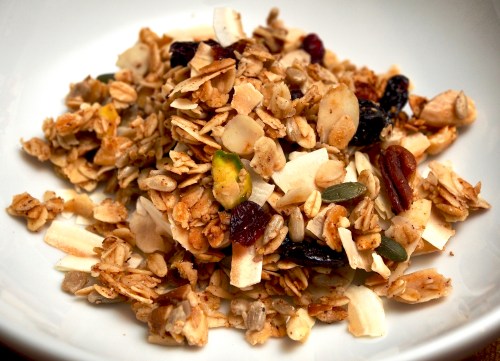
Jules' granola

We love granola but often find it too sweet. This home-made version by Tom Kerridge is a super-flavoursome breakfast option. Serve with plain yoghurt and fresh fruit.

Homemade Granola 

  • 300g rolled oats
  • 100g mixed seeds -e.g. pumpkin, sunflower and sesame seeds
  • 50g hazelnuts, roughly chopped
  • 50g pecans, roughly chopped
  • 50g pistachios, roughly chopped
  • 50g flaked almonds
  • 4 tbsp coconut oil
  • 125ml maple syrup
  • 50ml honey
  • 2 tbsp vanilla extract
  • ½ tsp ground cardamom
  • ½ tsp ground ginger
  • 1 tsp ground cinnamon
  • 1 tsp sea salt flakes
  • 50g coconut flakes
  • 150g mixed dried fruits e.g. cranberries, chopped apricots, chopped dried apple, raisins

Preheat the oven to 170C/Fan 150C/Gas 3.

Line two baking trays with baking parchment.

Mix the oats, seeds, chopped nuts and flaked almonds together in a big bowl.

Put the coconut oil, maple syrup, honey, vanilla and spices into a small saucepan and heat gently, stirring, until the coconut oil has melted. Pour over the oat mixture, add the salt and mix well.

Spread the mixture out in a thin layer on the baking trays and bake for 15 minutes. Add the coconut flakes and dried fruit. Mix well and bake for a further 8-10 minutes or until the coconut flakes have browned. Remove from the oven and leave aside to cool.

Store in an airtight container and serve with yoghurt and fresh fruit.

(Original recipe from Tom Kerridge’s Fresh Start, Bloomsbury Publishing, 2018.)

Read Full Post »

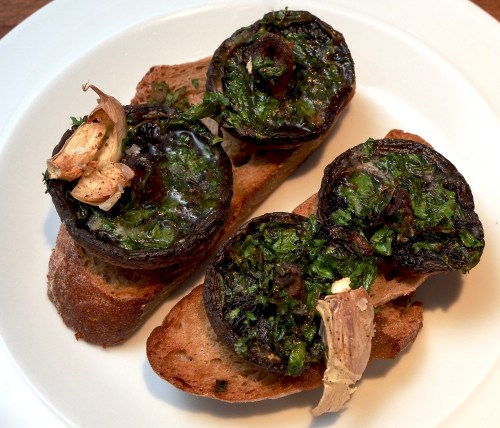
Mushrooms baked on toast with herbs, butter & garlic

Roasting this entire dish in the oven is such a good idea. The mushroom juice soaks into the toast and it all comes together in a truly magical way. Yet more breakfast inspiration from Gill Meller.

Mushrooms baked on toast with garden herbs, butter & garlic – serves 5

  • 5 slices of good country-style bread or sourdough
  • 10 large open-cap mushrooms e.g. Portobello
  • 50g cold butter
  • 5 thyme sprigs
  • a small bunch of parsley, leaves finely chopped
  • ½ a small bunch of chives, finely chopped
  • 5 garlic cloves, skin on and bashed with the flat of a knife
  • 2 tbsp extra-virgin olive oil, plus extra to serve

Heat the oven to 190C/375F/Gas 6½.

Arrange the bread on a large baking tray. Put the mushrooms on top; no matter if they hang over the edges.

Slice the butter thinly and put pieces on each mushroom. Scatter over the herbs and garlic. Season generously with salt and pepper and drizzle with oil.

Bake the mushrooms for 15-20 minutes or until the mushrooms are completely soft and the toast is crunchy at the edges.

(Original recipe from Time by Gill Meller, Quadrille, 2018.)

Read Full Post »

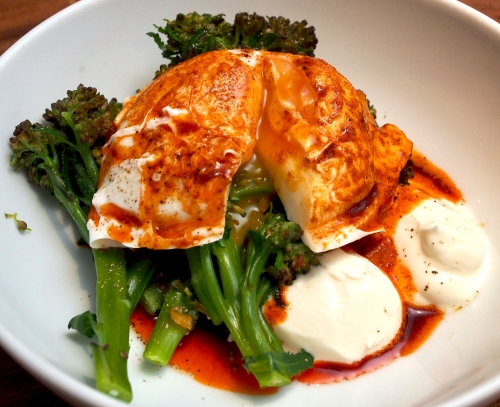
Purple sprouting broccoli with smoked paprika, yoghurt & eggs

We’re trying to make more of an effort at breakfast time. This dish by Gill Meller of River Cottage is more suited to a weekend when you have a bit more time but it’s worth it as the flavours are great. The vegetable shop can get a bit boring at this time of year but then arrives Purple Sprouting Broccoli to keep us in good spirits.

Serve this with some toasted brown bread for mopping up the hot, smoky butter.

Purple Sprouting Broccoli with Smoked Paprika, Yoghurt & Eggs – serves 2

  • 2 eggs
  • 250g purple sprouting broccoli
  • 50g butter
  • 1 garlic clove, thinly sliced
  • 1 rosemary sprig
  • 2 tsp sweet smoked paprika
  • 4 tbsp natural yoghurt
  • toasted brown bread, to serve

Start by poaching the eggs and keeping them warm.

Bring a large pan of salted water to the boil and simmer the purple sprouting broccoli for a few minutes until tender. Drain and allow to steam dry.

Meanwhile, melt the butter in a small pan until sizzling then add the garlic, rosemary and smoked paprika. Cook for about a minute or until the garlic is softened but not browned, then remove from the heat.

Divide the yoghurt between two warmed bowls. Lay the broccoli in the bowls with the poached eggs. Season everything with salt and pepper and spoon over the smoky butter. Serve immediately with plenty of toast.

(Original recipe from Time by Gill Meller, Quadrille, 2018.)


Read Full Post »

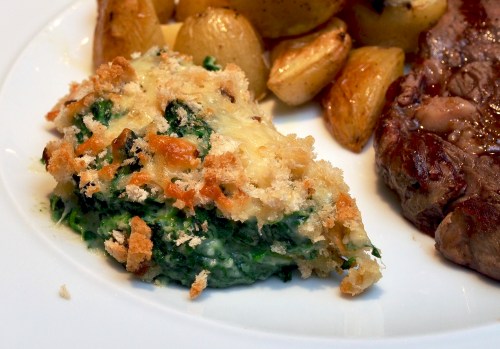
Creamed Spinach

This is creamed spinach, not that bizarre idea of serving spinach with runny cream, and it truly is the best accompaniment to a barbecued ribeye steak. Our dinner for two on New Year’s Eve.

Creamed spinach – serves 2

  • 300ml whole milk
  • ½ onion, thinly sliced
  • 1 clove of garlic, bashed
  • 2 bay leaves, torn
  • 500g main crop spinach
  • 50g butter, plus a bit extra
  • 40g plain flour
  • nutmeg, for grating
  • a large handful of coarse white breadcrumbs
  • a large handful of finely grated Cheddar cheese

Heat the oven to 180C/350F/Gas 6.

Pour the milk into a medium-sized saucepan and put over a medium-high heat. Add the onion, garlic and bay leaves and bring to a gentle simmer. Take the pan off the heat and leave to infuse for 15-20 minutes.

Meanwhile, drop the spinach into a large pan of boiling water and cook for 1-2 minutes, until wilted. Drain and cool until you can squeeze the excess liquid out with your hands. Roughly chop and set aside.

Heat a medium-sized saucepan over a medium heat and add the butter. When it starts to bubble, add the flour and cook and stir for 1 minute before pouring in the infused milk (strain it through a sieve first and discard the onion and herbs). Whisk for 1-2 minutes to make a thick white sauce. Season well with salt and pepper and a good grating of nutmeg, then remove from the heat and fold in the chopped spinach. Spoon the mixture into a small ovenproof dish.

Mix the breadcrumbs with the grated cheese and scatter over the dish. Dot with a little butter and bake for 8-10 minutes, or until crisp, golden and bubbling.

(Original recipe from Time by Gill Meller, Quadrille, 2018.)

Read Full Post »

Crab linguine with chilli & parsley

A fresh tasting seafood pasta dish.

Wine Suggestion: We’re not huge fans of Prosecco generally as there’s an awful lot of very ordinary stuff being sold. However, if you have a good one to hand, like the Nino Franco Rustico, then you’ve found your crab linguine match.

Crab Linguine with Chilli & Parsley – serves 4

  • 400g linguine
  • 4 tbsp olive oil
  • 1 red chilli, deseeded and chopped
  • 2 cloves of garlic, finely chopped
  • 1 whole cooked crab, picked, or about 100g brown crabmeat and 200g fresh white crabmeat
  • 5 tbsp white wine
  • a small squeeze of lemon
  •  a large handful parsley leaves, very finely chopped

Bring a large pot of salted water to the boil and cook the linguine for a minute less than indicated on the pack.

Meanwhile, gently heat 3 tbsp of olive oil with the chilli and garlic in a large wide pan. Cook the chilli and garlic very gently until they start to sizzle, then turn up the heat and add the white wine. Simmer until the wine and olive oil come together. Then take off the heat and add the brown crabmeat, using a wooden spoon to mash it up to make a thick sauce.

When the pasta is ready, turn off the heat. Place the crab sauce over a very low heat and use a pair of kitchen tongs to lift the pasta from the water into the sauce.

Remove the pan from the the heat and add the white crabmeat and parsley to the pasta with a sprinkling of sea salt. Stir everything together, adding a drop of pasta water if needed to loosen. Taste for seasoning and add a small squeeze of lemon. Serve immediately drizzled with the remaining oil.

(Original recipe from BBC Good Food)

Read Full Post »

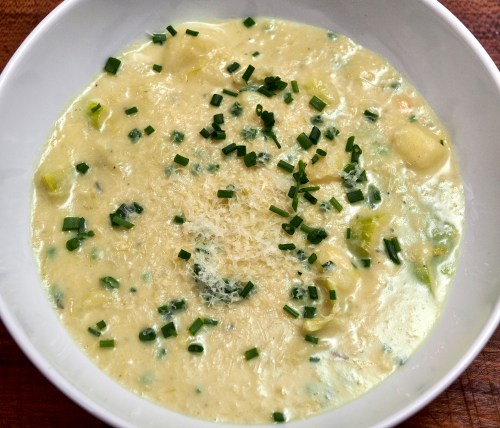
Potato & leek soup with smoked Gubbeen cheese & chives

This is no ordinary leek and potato soup but rich and complex with a subtle smoky flavour from the cheese. We’ve been cooking from Gill Meller’s latest book, Time, and the recipes are stunning.

This is the kind of soup that goes well with Northern Irish Wheaten Bread.

Leek & Potato Soup with Smoked Gubbeen & Chives – serves 4

  • 1 litre of vegetable stock or chicken stock
  • 3 floury white potatoes (about 350g), peeled and cut into 1-2cm cubes
  • 3 medium-large leeks, sliced into 1cm rounds
  • 25g butter
  • 1 tbsp olive oil
  • 2 shallots or 1 onion, thinly sliced
  • 2 garlic cloves, peeled and thinly sliced
  • 2 or 3 thyme sprigs, leaves stripped
  • 100ml double cream
  • 50g smoked Gubbeen (Gill suggests smoked Cheddar or goat’s cheese), grated, plus extra to serve
  • a small bunch of chives, finely chopped

Bring the stock to the boil in a large heavy pan. Add just a third of the potato, bring the stock back to a simmer and cook, uncovered, for 6-8 minutes, or until the potato cubes are tender. Add a third of the leeks and cook for a few minutes to soften, then drain the vegetables in a colander set over a bowl to catch the stock.

Return the pan to a medium heat and heat the butter and olive oil. When bubbling, add the onion, garlic and thyme leaves. Cook, stirring, for 4-5 minutes, then add the remaining leeks and potato to the pan, seasoning well with salt and pepper. Cook gently for 3-4 minutes, then add the reserved stock and bring to a gentle simmer.

Cook the soup for about 15 minutes or until the leeks and potatoes are tender. Remove from the heat and blend until smooth.

Return the soup to the pan. Add the cooked leeks and potatoes from earlier, along with the cream, grated cheese and chopped chives. Season again, then put back on the heat and bring slowly to a simmer. Stir well, remove from the heat, and stand for 5 minutes before serving. Garnish with some extra cheese, chives and seasoning.

(Original recipe from Time: A Year & a Day in the Kitchen by Gill Meller, Quadrille, 2018.)

Read Full Post »

Cheeseboard soufflé

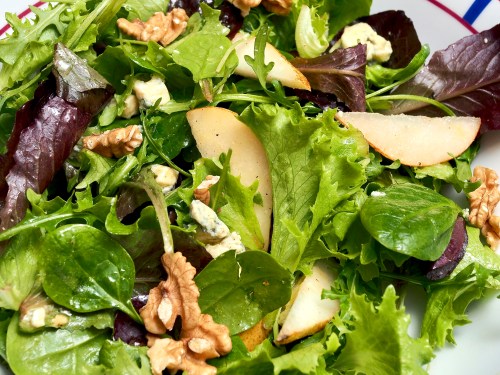
Another useful recipe for all the leftover cheese following the holidays. The soufflé is deliciously light and the pear and walnut salad (scroll down for recipe) is the perfect accompaniment.

Wine Suggestion: a classic, and to our mind excellent wine match is bubbly, and at the moment we’ve been exploring the different Cremant’s found around France. Tonight it was the Domaine Manciat-Poncet Cremant de Bourgogne from the Maçonnais (chosen and provided by our friend Michelle), and a good choice indeed.

Cheeseboard Soufflé – serves 4

  • 50g butter
  • 25g plain flour, plus extra for dusting
  • 200ml milk
  • 300g hard cheese, cut into chunks (we used Comté, Cheddar & Parmesan)
  • 100ml double cream or crème fraîche
  • 4 eggs, separated
  • grating of nutmeg
  • pinch of cayenne pepper

Heat the oven to 200C/180C fan/gas 6.

Melt the butter in a saucepan. Brush a 20cm soufflé dish with a little of the melted butter, then dust with flour.

Stir the rest of the flour into the melted butter in the saucepan, then bubble together for 1 minute. Gradually pour in the milk to make a white sauce, then add two-thirds of the cheese and continue to stir over the heat to melt.

Leave to cool slightly, then mix in the rest of the cheese, the cream and the egg yolks. Season and add the nutmeg and cayenne pepper.

In a clean bowl, whisk the egg whites until stiff. Fold into the cheese sauce, then carefully transfer into the soufflé dish. Bake for 25 minutes or until puffed up and golden.

Serve with the winter salad below.

Winter seasonal salad

Pear, blue cheese & walnut salad – serves 4

  • 110g bag of mixed salad leaves
  • 100g blue or goat’s cheese, crumbled
  • 50g shelled nuts – we used walnuts
  • 1 pear, sliced
  • 3 tbsp of salad dressing

Toss the salad ingredients together. Once the soufflé is cooked, dress the salad and serve.

Cheese board soufflé 2

Read Full Post »

Wheaten bread

A Northern Irish classic, wheaten bread is also the classic plain soda bread from further south in Ireland. As Jules grew up near Belfast and went to the same school as Trish Deseine (who knew?), our inspiration for this recipe, we call it “Wheaten”. Whatever you call it, this is an Irish classic and intrinsic to Irish food culture. So simple to make, tasty and versatile, this should be part of any cooks repertoire. We like it with a bowl of soup for lunch and toasted for breakfast the day after.

Northern Irish Wheaten Bread – makes 1 loaf

  • 250g plain flour
  • 250g wholemeal flour
  • 1 barely round tsp baking soda
  • 1 tsp salt
  • 450-475ml buttermilk

Preheat the oven to 225C.

Mix the flours in a large, wide bowl, add the salt and sieved baking soda. Run the mixture through your fingers to distribute everything evenly.

Make a well in the centre and pour in the buttermilk. Stir the mixture in circles with outstretched fingers starting from the centre of the bowl and working outwards. It shouldn’t take long for the dough to almost come together. Give it a very quick knead in the bowl to make sure all the flour is incorporated.

Turn the dough out onto a floured work surface.

Sprinkle a little flour on your hands and gently tidy the dough into a round and transfer to an oven tray. Tuck the edges underneath with your hands, then gently pat with your fingers into a loaf about 4cm thick.

Cut a deep cross into the bread and prick the centre of the four sections with a fork.

Bake in the oven for 15 minutes, then turn the heat down to 200C for a further 15minutes. Turn the bread upside down and continue to cook for 5-10 minutes or until done – you can tell as it will sound hollow when tapped on the bottom. Cool on a wire rack.

(Original recipe from Trish Deseine’s ‘Home: Recipes from Ireland, Hatchette Livre, 2015.)

Read Full Post »

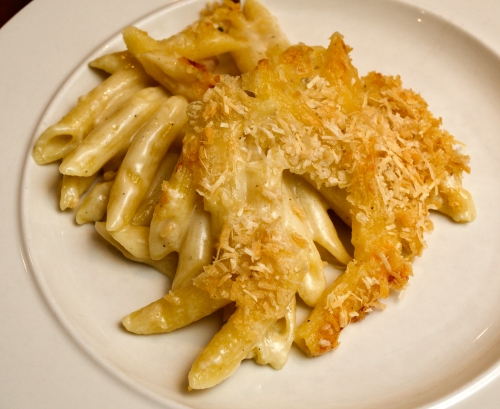
Penne baked with three cheeses

There is a never-ending supply of leftover cheese in our fridge but never more so than at this time of year. This is a super-easy pasta dish which will help to use up the cheeseboard leftovers.

Penne baked with three cheeses – serves 2

  • 200g penne
  • 25g butter
  • 25g plain flour
  • 350ml milk
  • 75g hard cheese e.g. cheddar/gruyère, grated
  • 50g blue cheese e.g. stilton/gorgonzola/roquefort, crumbled
  • a handful of breadcrumbs (we used panko)
  • 1 tbsp grated Parmesan

Heat the oven to 200C/Fan 180C/Gas 6.

Cook the pasta until al dente then rinse under cold water to stop it cooking any further and drain.

Melt the butter in a saucepan, then stir in the flour and cook for a couple of minutes. Gradually stir in the milk, stirring continuously, to make a white sauce. When the sauce has thickened and is starting to bubble, add the hard and blue cheese and stir until melted. Season to taste, then mix with the cooked pasta and pour into an ovenproof dish.

Mix the breadcrumbs and Parmesan together and sprinkle over the top, then bake in the oven for about 20 minutes or until golden and bubbling.

(Original Recipe from BBC Olive Magazine, December 2009.)

Read Full Post »