Feeds:
Posts
Comments

Archive for September, 2023

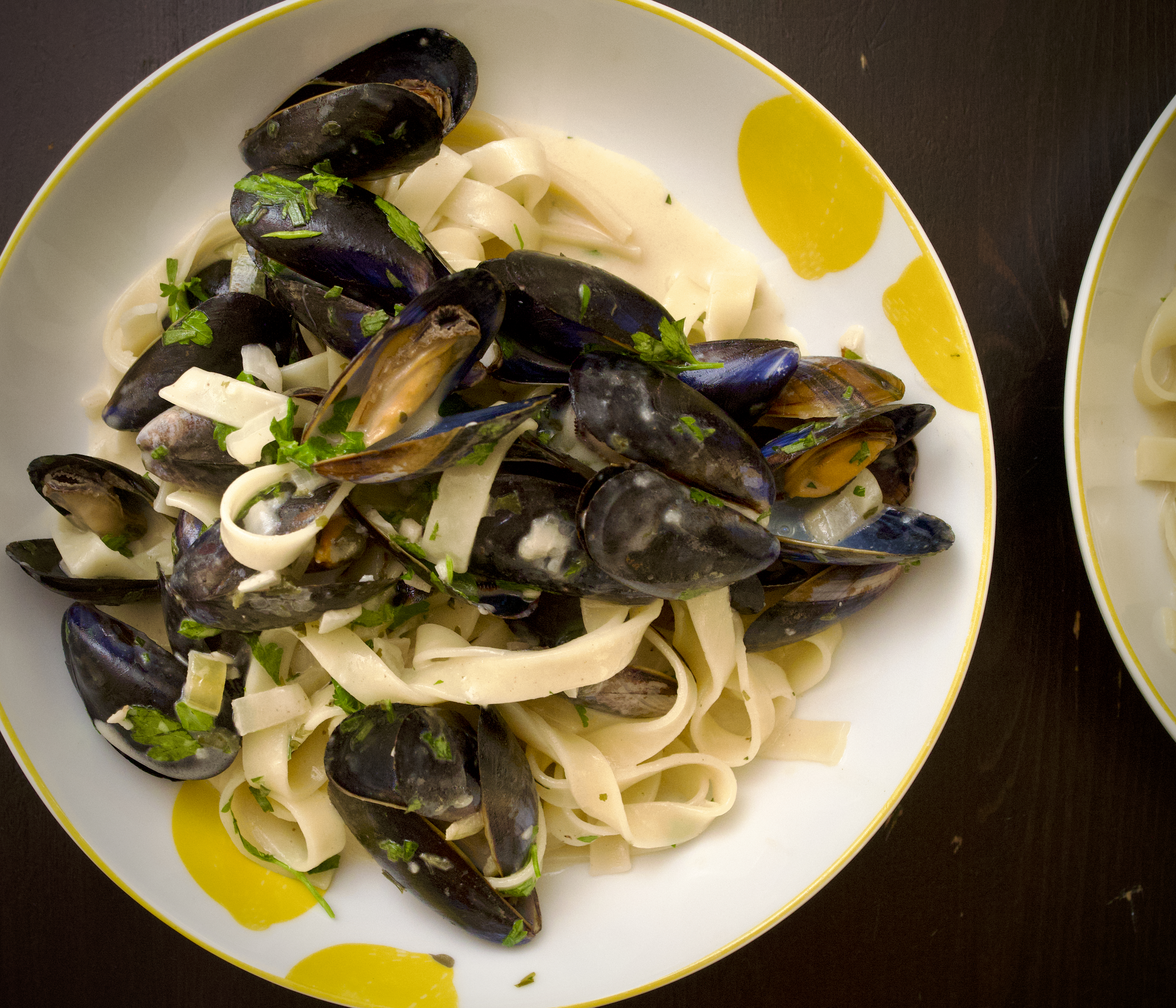
This is made with packets of mussels in garlic butter sauce which you can easily pick up in the supermarket on your way home – no need to make it in time for the fish shop and no fiddly prep. You might want a bit of crusty bread to mop up the sauce.

Wine Suggestion: We couldn’t go past a good Muscadet and with ever greater choices out there we’d recommend you explore beyond some of the classic cuvées being offered. Jérémie Huchet’s Clos les Montys is an unique terroir with some very old vines. Not within the Sévre et Maine appelation this could easily be overlooked, but you get something special in the glass: aromas of lemon, jasmine, and pears with hints of a fresh herb. Juicy, well-balanced and elegant, it finishes very long and refreshing.

Tagliatelle with mussels & crème fraîche – serves 4 (easily halved)

  • 300g dried tagliatelle
  • 1 large onion, finely chopped
  • 2 tbsp olive oil
  • 150ml dry white wine
  • 200ml crème fraîche
  • 2 x 450g packs mussels in garlic sauce (we used Carr & Sons from Dunnes)
  • a good handful of flat leaf parsley, roughly chopped
  • 2 tbsp chopped tarragon

Heat the olive oil in a deep frying pan, then add the onion and cook gently for about 10 minutes until softened and starting to colour. Pour in the wine, turn up the heat and bubble until it has almost evaporated.

Meanwhile, bring a large pan of salty water to the boil and cook the pasta according to the timings on the pack.

Add the crème fraîche to the onions and bring to the boil, then tip in the mussels and cook for about 5 minutes until piping hot and open (chuck any that don’t open away). Drain the pasta and return to the pan and tip in the mussel mixture. Stir in the herbs and serve with some crusty bread if you like.

(Original recipe from BBC Good Food)
Read Full Post »

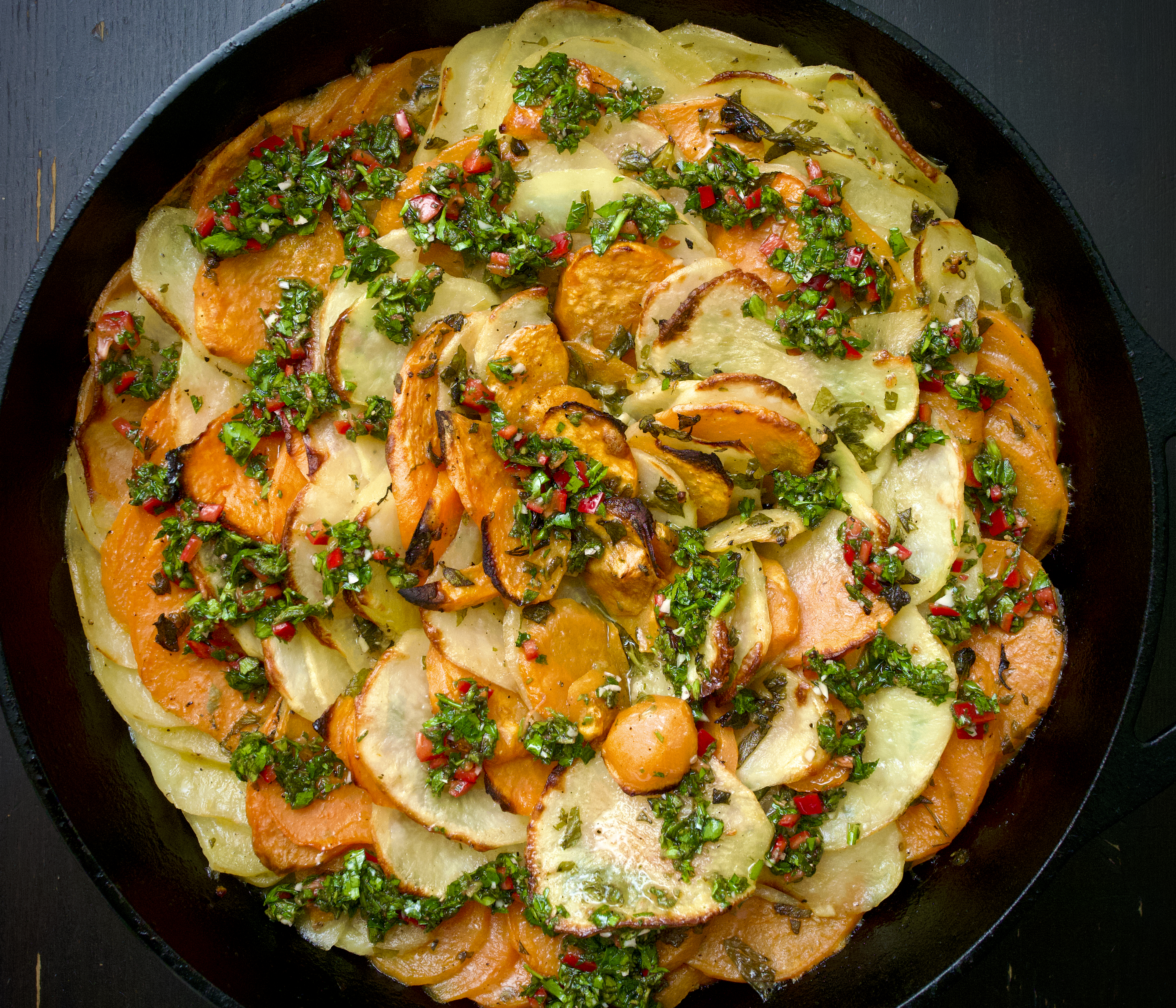
Such a tasty side dish! We served with a roast chicken but it will go with pretty much anything.

Potatoes with chimichurri – serves 6 as a side dish

  • 800g waxy potatoes
  • 600g sweet potatoes
  • 5g oregano leaves, roughly chopped
  • 5g parsley, roughly chopped
  • 4 garlic cloves, peeled and crushed
  • 5 tbsp olive oil, plus extra for greasing the pan
  • 250ml chicken stock or vegetable stock

FOR THE CHIMICHURRI:

  • 10g parsley, finely chopped
  • 5g oregano leaves, finely chopped
  • 1 garlic clove, peeled and finely chopped
  • 1 mild red chilli, finely chopped (seeds in or out as you wish)
  • 2 tbsp red wine vinegar
  • 4 tbsp olive oil

Heat the oven to 180C fan.

Peel the potaotes, then slice the waxy sort using a mandolin. Use a sharp knife to slice the sweet potatoes finely – they should be slightly thicker than the regular potatoes.

Put both sorts of potatoes into a large bowl and add the garlic, herbs, 3 tbsp of the oil, 1½ tsp salt and plenty of black pepper. Toss gently with your hands to combine but make sure you don’t break the potatoes.

Lightly grease a large ovenproof cast-iron frying pan or a round baking dish – about 23cm in diameter. Start at the edge and arrange the potatoes in overlapping circles until you reach the middle. Pour the stock over the top. Lightly grease a piece of foil and cover the dish tightly with it. Bake in the oven for 35 minutes.

Remove the pan from the oven and turn the heat up to 220C. Remove the foil from the pan and drizzle over the last 2 tbsp of olive oil. Return to the oven for 20 minutes, or until nicely browned. Remove from the oven and leave to cool slightly, for about 15 minutes.

Meanwhile, make the chimichurri sauce. Put all of the ingredients into a bowl with ¼ tsp of salt and plenty of black pepper. Mix well to combine.

When you’re ready to serve, spoon the chimichurri over the top of the potatoes.

(Original recipe from Ottolenghi Test Kitchen: Extra Good Things by Noor Murad & Yotam Ottolenghi, Ebury Press, 2022.)

Read Full Post »

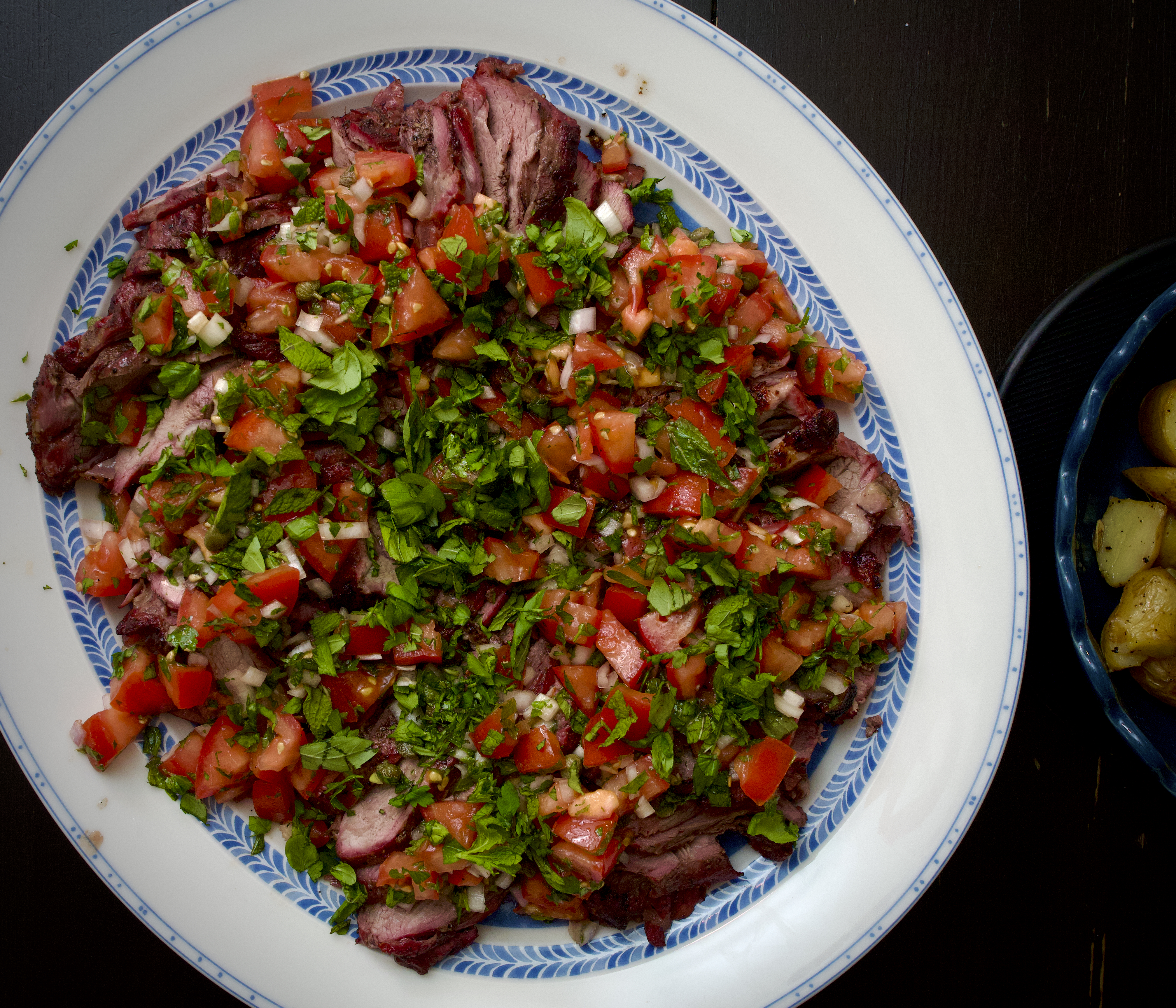
It’s last chance saloon if you want to cook this dish before both the tomatoes and weather turn rubbish. The marinade is added after you cook the lamb.

Wine Suggestion: We think barbecued lamb goes really nicely with Cabernet Franc, so a good excuse to open a bottle of our favourite wine: Chateau du Hureau’s Saumur-Champigny “Tuffe”.

Barbecue Lamb with Tomato & Capers – serves 6

  • 1.5kg butterflied leg of lamb

FOR THE MARINADE:

  • 3 tomatoes, diced
  • 2 large shallots, finely chopped
  • 1 tbsp capers, rinsed
  • a small bunch of parsley, chopped
  • a small bunch of mint, chopped
  • a small bunch of basil, chopped
  • 1 lemon, juiced
  • 2 tbsp olive oil

Mix the ingredients for the marinade together, keeping a small handful of herbs aside to garnish at the end.

Get your barbecue going and wait until the flames have died down. Move the coals to the sides and put a drip-tray in the middle, then BBQ the lamb for 20 minutes on each side.

When the lamb is cooked to your liking, set it on a platter and spoon over the marinade. Cover loosely with foil and leave to rest for 20 minutes. Slice and serve with the marinade and the rest of the herbs.

(Original recipe by Adam Bush & Janine Ratcliffe, Olive Magazine, August 2017.)

Read Full Post »

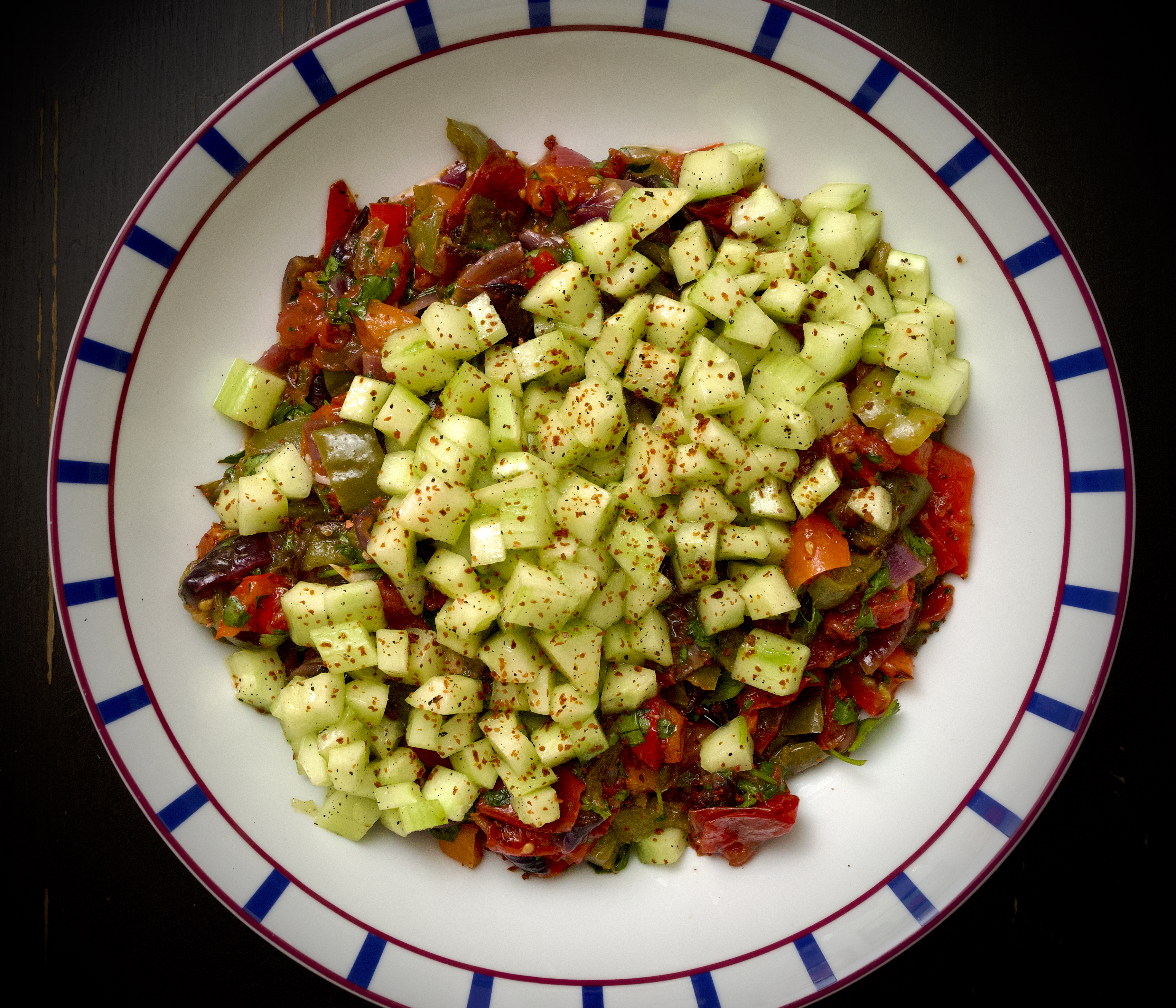
You can prep this salad in advance and serve warm or at room temperature. Jam-packed with flavour and a great side dish for a barbecue or roast meat.

Roasted pepper salad with cucumber and herbs – serves 4 as a side dish

  • 4 green peppers (600g), cut into 4cm pieces
  • 2 red peppers (300g), cut into 4cm pieces
  • 4 vine tomatoes (400g), quartered
  • 2 small red onions (200g), roughly cut into 3cm pieces
  • 1 green chilli, stem removed and left whole
  • 6 large cloves of garlic, peeled
  • 6 tbsp olive oil
  • 1½ tbsp lemon juice
  • 10g parsley, roughly chopped
  • 10g coriander, roughly chopped
  • 1 cucumber, peeled, deseeded and cut into 1cm cubes
  • ¾ tsp Urfa chilli flakes

Heat the oven to 230C fan.

Put the peppers, tomatoes, red onion, chilli and garlic into a large bowl. Add 4 tbsp olive oil, ¾ tsp of salt and plenty of black pepper. Toss well to combine.

Line to large baking sheets with baking parchment. Spread the vegetables out over the trays and roast for about 30 minutes, stirring once or twice, until softened and charred.

When cool enough to handle, roughly chop the vegetables and transfer to a bowl with the lemon juice, herbs and ½ tsp salt and plenty of black pepper.

In a separate bowl, toss the cucumber with 2 tbsp of oil, ¼ tsp of salt and plenty of black pepper.

Spread the roasted pepper mixture out over a platter. Spoon over the cucumber and sprinkle with the chilli.

(Original recipe from Ottolenghi Test Kitchen: Shelf Love, Ebury Press, 2021.)

Read Full Post »

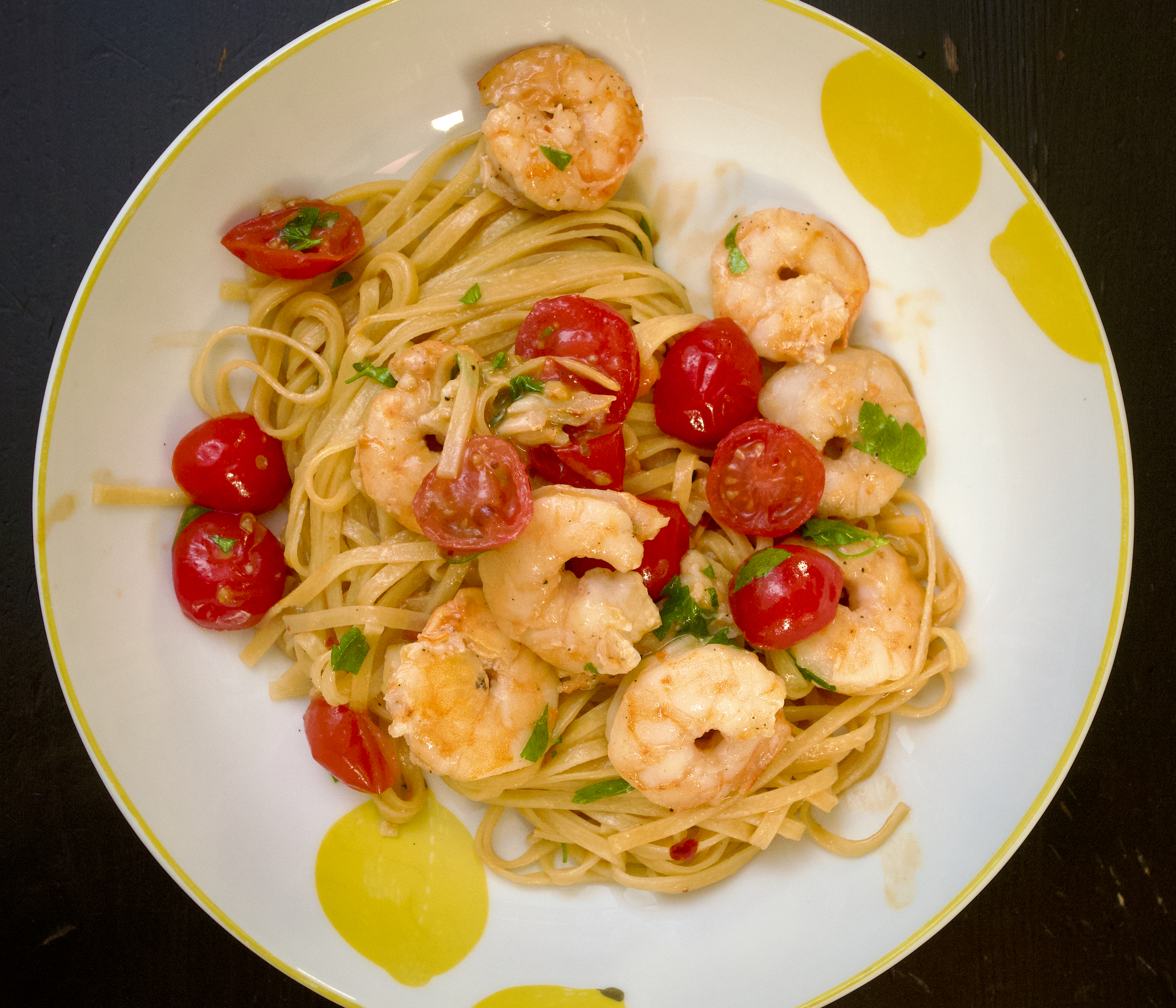
This is not your average prawn linguine and you do need to make a shellfish stock BUT we did this on a Tuesday night after work so you can too!! The photo really doesn’t do justice to how deep and complex the flavours are.

Wine Suggestion: A southern Italian white like Michele Biancardi’s Solo Fiano from Puglia where it has perfume and stone fruits bursting from the glass. A rich and round palate counter-balanced with a fresh, textural acidity completes the wine; like warm sunshine in a glass tempered by fresh breezes off the Adriatic Sea.

Prawn linguine – serves 2

  • 350g whole prawns, you need to peel and devein them yourself and keep the shells and the heads
  • 160g linguine
  • 2 tbsp extra virgin olive oil
  • 1 large clove of garlic, crushed
  • ¼ tsp dried chilli flakes
  • 8 cherry tomatoes, halved
  • 1 tbsp roughly chopped parsley

FOR THE PRAWN STOCK:

  • 1 tbsp extra virgin olive oil
  • 1 clove of garlic, roughly chopped
  • 1 shallot, roughly chopped
  • 2 tinned anchovies
  • 1 bay leaf
  • shells and heads from the peeled prawns (see above)
  • 125ml white wine
  • 375ml chicken stock

You need to start with the stock. Heat the oil in a medium saucepan over a medium-high heat and cook the garlic, shallot, anchovies and bay leaf for a few minutes, mashing the anchovies up as you go. Add the prawn heads and shells and cook, stirring, for 4 minutes.

Add the wine and turn the heat up high and simmer for a couple of minutes or until almost evaporated. Add the stock and ½ tsp salt, bring to the boil, then simmer gently for 25 minutes. Crush the prawn heads with a potato masher a couple of times as the stock simmers. Strain the stock through a fine sieve into a jug, pressing down hard on the shells to extract all the flavour. Throw away the solids and hang on to the delicious stock.

Toss the now peeled prawns with salt and black pepper. Heat 1 tbsp of the olive oil in a large, non-stick frying pan over a medium heat. Cook the prawns for about 1 minute on each side, or until opaque, then transfer to a plate.

Heat another tbsp of oil in the same frying pan and cook the garlic and chilli flakes for 15 seconds or until the garlic is just golden. Add the prawn stock and turn the heat up high. Simmer rapidly, stirring to scrape any tasty bits from the bottom of the pan, until the liquid has reduced to about 125ml. Turn off the heat and leave aside while you cook the pasta.

Bring a large pot of salty water to the boil and cook the linguine for 1 minute less than the timing suggested on the pack. When the pasta is almost cooked put the shellfish stock back over a high heat. Transfer the pasta directly from the pot of water to the stock with some tongs, it will bring some pasta cooking liquid with it. Add the cherry tomatoes and toss for a couple of minutes with two wooden spoons until the sauce coats the pasta and no longer sits in a puddle at the bottom of the pan. If it starts to clag add a little more pasta water.

Toss the prawns and parsley through the pasta and divide between two bowls.

(Original recipe from Recipetin Eats Dinner by Nagi Maehashi, Pan Macmillan, 2022.)

Read Full Post »

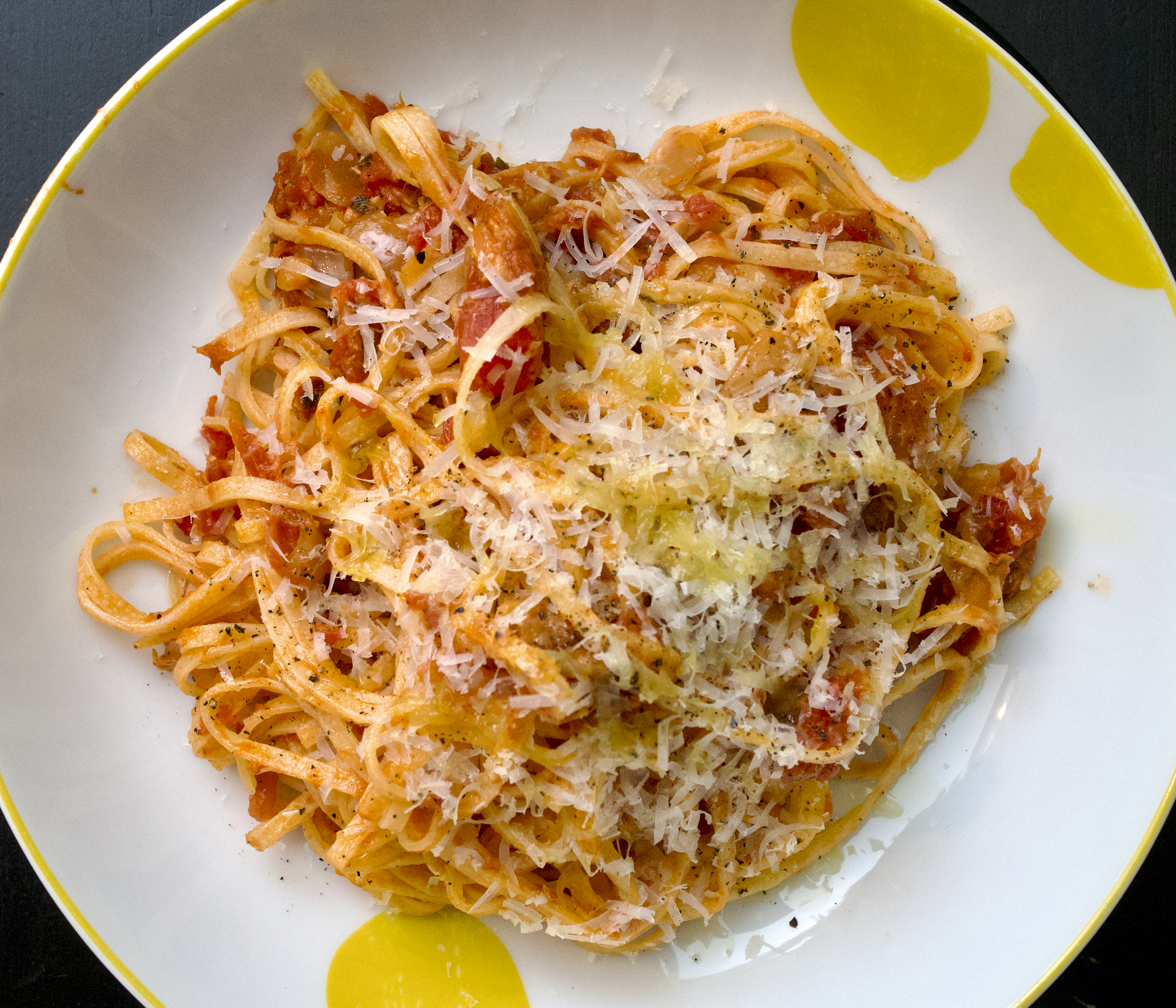
We are never without tins of tuna – Ortiz or Shines are great – and always in olive oil. This sauce takes a while but it’s easy and tastes delicious. The sauce is flavoured with a parmesan rind – you should always keep these as they freeze well and add great savoury flavours to dishes like this, a meaty ragú, or soups.

Wine Suggestion: A little left field and possibly only available when visiting the winery: Chateau du Hureau Blanc de Noirs 2022. A white made from 100% Cabernet Franc from Saumur because the usual vineyard of Chenin Blanc was hit by bad frosts, and the owner Philippe wanted some white to drink … plus he couldn’t resist having a play in the winery at the same time. Fresh but with a real texture with hints of phenolics. Hints of yellow plum, lightly floral, slightly nutty and touches of apple. It really came into it’s own with the food.

Linguine con tonno – serves 4 to 5

  • 60ml extra virgin olive oil, plus extra to serve
  • 1 onion, diced
  • 3 cloves of garlic, finely chopped
  • 1 Parmesan rind
  • 1 tsp dried oregano
  • 1 tbsp tomato purée
  • 2 x 400g tins chopped tomatoes
  • 300g tinned tuna, well drained
  • 500g dried linguine
  • freshly grated Parmesan, to serve

Put the olive oil in a large pan over a medium heat. Add the onion and some salt, then allow to soften for about 5 minutes without colouring. Add the garlic, Parmesan rind and oregano. Cook for another 2 to 3 minutes, then add the tomato purée and cook for another minute.

Add the tinned tomatoes, season with more salt and bring to the boil, turn the heat down as low as it will go and cook for a couple of hours, stirring every 20 minutes or so. If the sauce starts to stick add a splash of water.

Add the tuna to the tomato sauce, then cook the linguine in lots of salty boiling water. Drain the pasta and return it to the pan. Tip in the tuna sauce and mix through. Serve drizzled with your best olive oil and sprinked with grated Parmesan and black pepper.

(Original recipe from Rick Steain at Home, BBC Books, Penguin, 2021.)

Read Full Post »

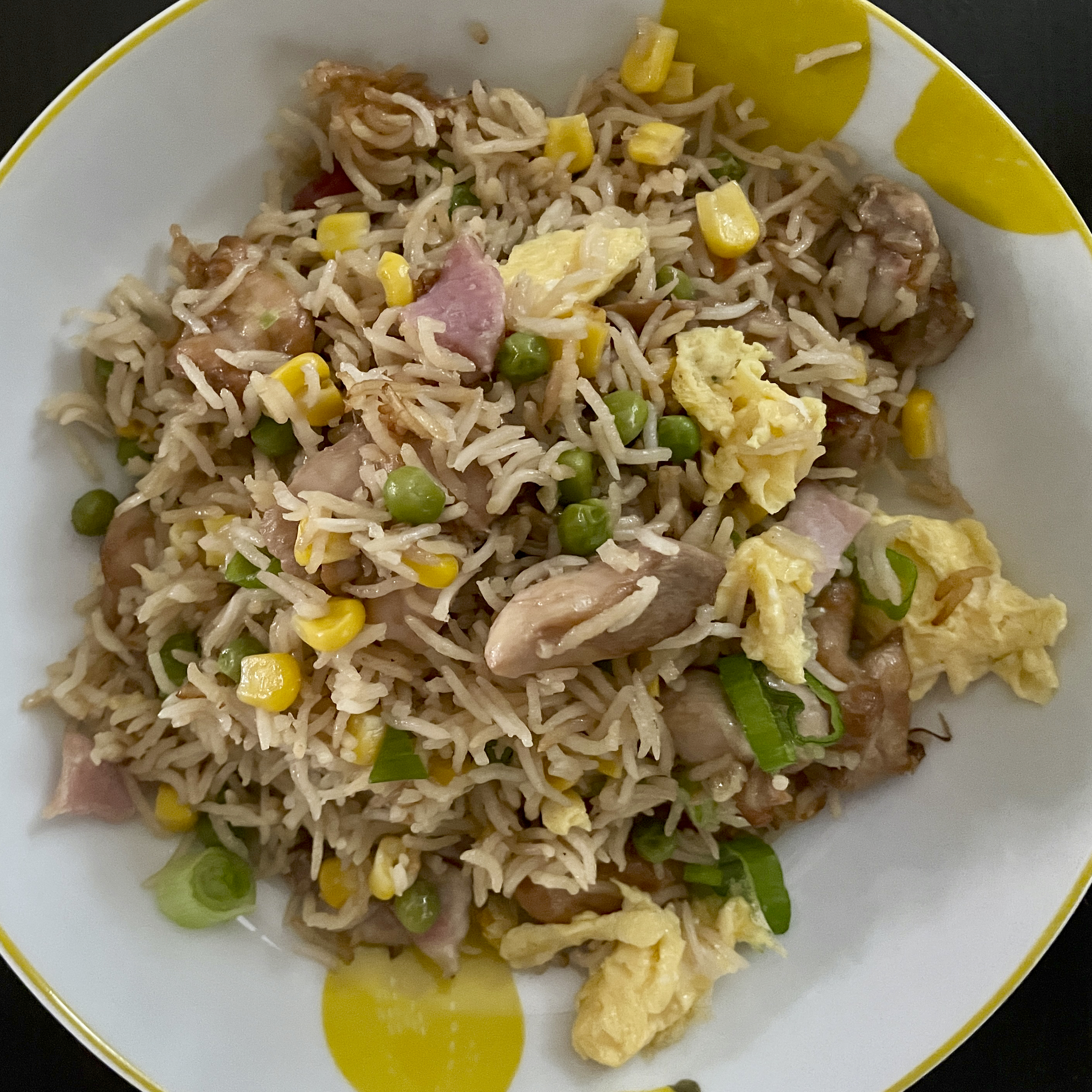
A ‘magic’ recipe inspired by the lovely book Recipetineats Dinner by Nagi Maehashi. The magic is that you bake the whole thing in one tray and it tastes just like any excellent chicken fried rice. Give it a go.

Wine Suggestion: This dish was well enjoyed with an Au Bon Climat Pinot Gris/Pinot Blanc from Santa Barbara in California, though we suspect a good Alsace Pinto Gris, or German Grauburgunder will work just as well. A generosity and breadth in the palate, underscored by a lovely texture allowing this wine to work with, but not overpower.

Chicken fried rice – serves 4

  • 300g basmati rice (or long-grain rice)
  • 400ml chicken stock (from a stock pot will be fine)
  • 2 ½ tbsp light soy sauce
  • 2 tbsp Shaoxing wine
  • 3 garlic cloves, crushed (save 1 to add a bit later)
  • ¼ tsp white pepper
  • 100g frozen peas
  • 100g frozen sweetcorn
  • 100g bacon lardons, or chop up some bacon yourself
  • 500g chicken thigh fillets, cut into small pieces – about 1.5cm
  • 1 tbsp oyster sauce
  • 4 tsp sesame oil
  • 2 eggs, scrambled
  • 1 scallion, finely chopped

You will need a deep metal roasting tin – about 23 x 33cm.

Heat the oven to 200C/180C fan.

Put the rice, chicken stock, 1 tbsp light soy sauce, 1 tbsp Shaoxing wine, 2 of the crushed garlic cloves, and the white pepper into the roasting tin. Give the tin a gentle shake to make sure the rice is distributed evenly and that it’s submerged in the stock. Sprinkle the frozen peas and sweetcorn over the top in an even layer, then sprinkle the bacon on top of that. Cover tightly with foil and bake in the oven for 25 minutes.

Meanwhile, put the chicken into a bowl and add 1 tbsp oyster sauce, 1 tbsp Shaoxing wine, 1 tbsp light soy sauce, 2 tsp of sesame oil and the last clove of crushed garlic. Stir to combine then set aside to marinate.

Remove the tray from the oven after the initial 25 minutes, gently remove the tinfoil and set it aside for later.

Spread the chicken in an even layer over the contents of the baking tray, then return to the oven and bake for another 20 minutes, uncovered.

Remove the tray from the oven and cover with the reserved tin foil. Leave to rest for 10 minutes.

Gently break up the rice with a wooden spoon and mix with the other ingredients.

Add the scrambled egg and sprinkle with 2 tsp sesame oil and the chopped scallion, then gently toss again before serving.

(Original recipe from Recipetineats Dinner by Nagi Maehashi, Bluebird, 2023.)

Read Full Post »

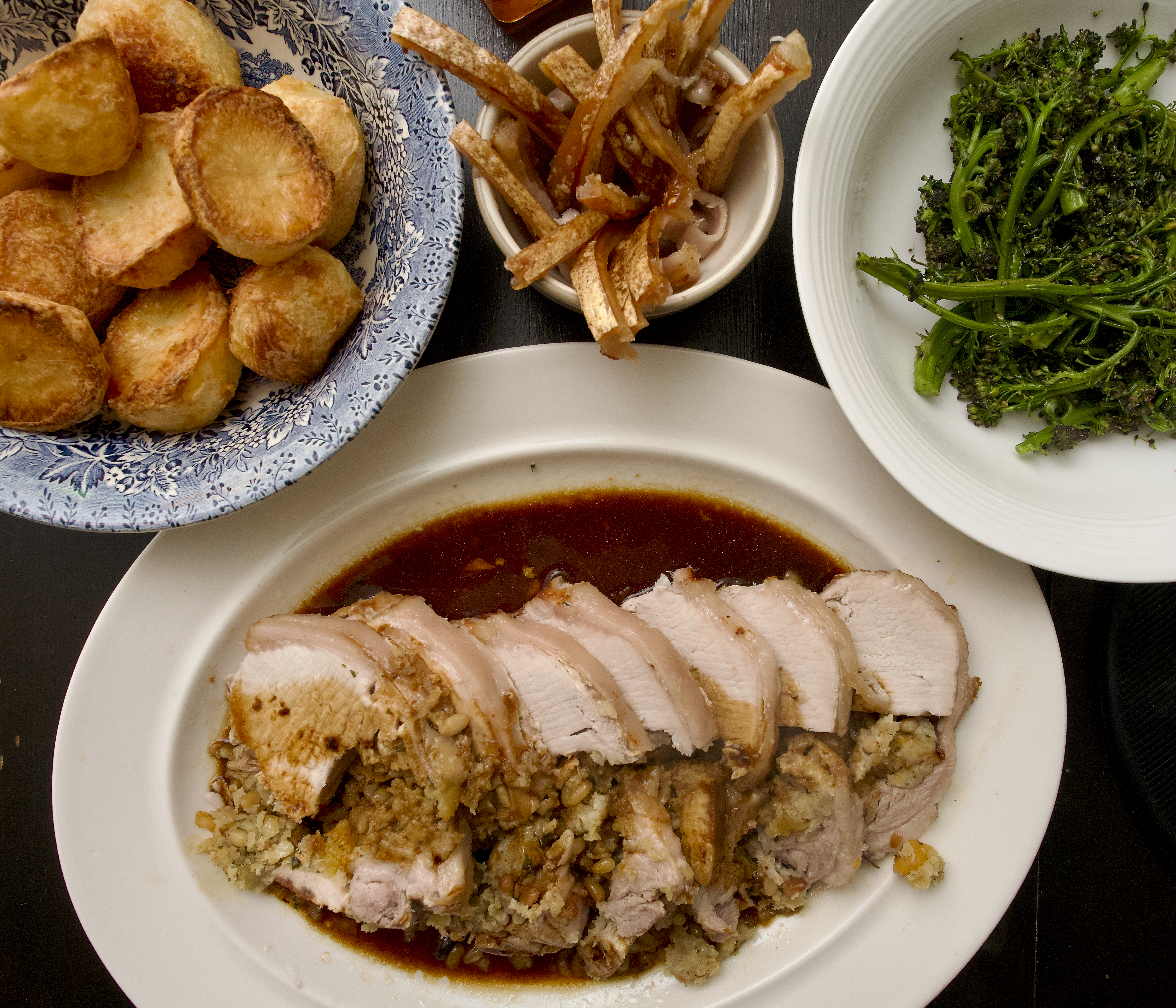
Pork is great value and this recipe will feed many people. Serve with roast potatoes and veg. To make sure you get good crackling, leave the pork, skin-side up, on a plate in the fridge for a day to dry out.

Wine Suggestion: An indulgence we know, but it was a roast dinner with friends; Domaine Jamet’s Condrieu Vernillon. A fairly new wine to this domaine, but one that echos the wonderful reds by being expressive and textural, with a vibrant core of freshness and savouriness.

Roast pork with apricot and pine nut stuffing – serves 6 to 8

  • 75g butter
  • 1 onion, finely chopped
  • 1 clove of garlic, crushed
  • 50g pine nuts
  • 175g day-old, fresh white breadcrumbs
  • 50g dried apricots, roughly chopped
  • 1 tbsp roughly choppd parsley
  • 1 tsp fresh thyme leaves
  • 1.75kg boneless pork loin, skin scored at 5mm intervals, tell your butcher you plan to stuff it
  • 2 tbsp olive oil

FOR THE GRAVY:

  • 1 tbsp plain flour
  • 3 tbsp ruby red port or red wine
  • 1 tbsp clear honey
  • 4 whole cloves
  • 600ml beef stock

Remove the pork from the fridge about an hour before you plan to put it into the oven.

Make the stuffing by melting the butter in a large frying pan, then add the onion and garlic and cook for a few minutes until softened but not coloured.

Meanwhile, toast the pine nuts in a separate dry fring pan, watch them carefull so they don’t burn.

Stir the breadcrumbs into the onion mixture with the apricots, parsley and thyme, then stir in the toasted pine nuts and season. Remove from the heat and leave to cool.

Heat the oven to 200C/400F/Gas 6.

When the stuffing is cooled, place the pork skin-side down on a board. Spoon the cooled stuffing along the centre, roll up the joint and tie with string at intervals to secure.

Put the pork into a large roasting tin and pat the skin dry with kitchen paper. Rub the skin with olive oil and plenty of sea salt. Cover with foil and roast for 20 minutes. Reduce the heat to 180C/350F/Gas 4 and roast for another 15 minutes. Remove the foil and cook for another hour and 15 minutes or until the pork is tender and you have crispy crackling (if the crackling hasn’t crisped by the time the pork is cooked you can remove and snip it into strips with scissors and crisp it under the grill).

Transfer the pork to a warm serving plate and rest for about 15 minutes while you make the gravy.

Pour most of the fat from the roasting tin and put over a gentle heat. Stir in the flour and cook for 2 minutes, stirring. Slowly pour in the port and then add the honey and cloves, stirring to combine. Gradually add the stock, stirring continuously until it comes to the boil. Reduce the heat and simmer for 10 minutes until reduced and thickened, stirring occasionally. Season to taste.

Cut the string from the pork and cut through the fat just underneath the crackling. Remove and cut into pieces (you will have to eat a few), then carve the pork into thick slices.

Serve the pork on a platter with lots of roast potatoes, gravy and veg.

(Original recipe from Neven Maguire’s Cookery Collection, Poolbeg Press Ltd., 2005.)

Read Full Post »