Feeds:
Posts
Comments

Archive for the ‘Gluten-free’ Category

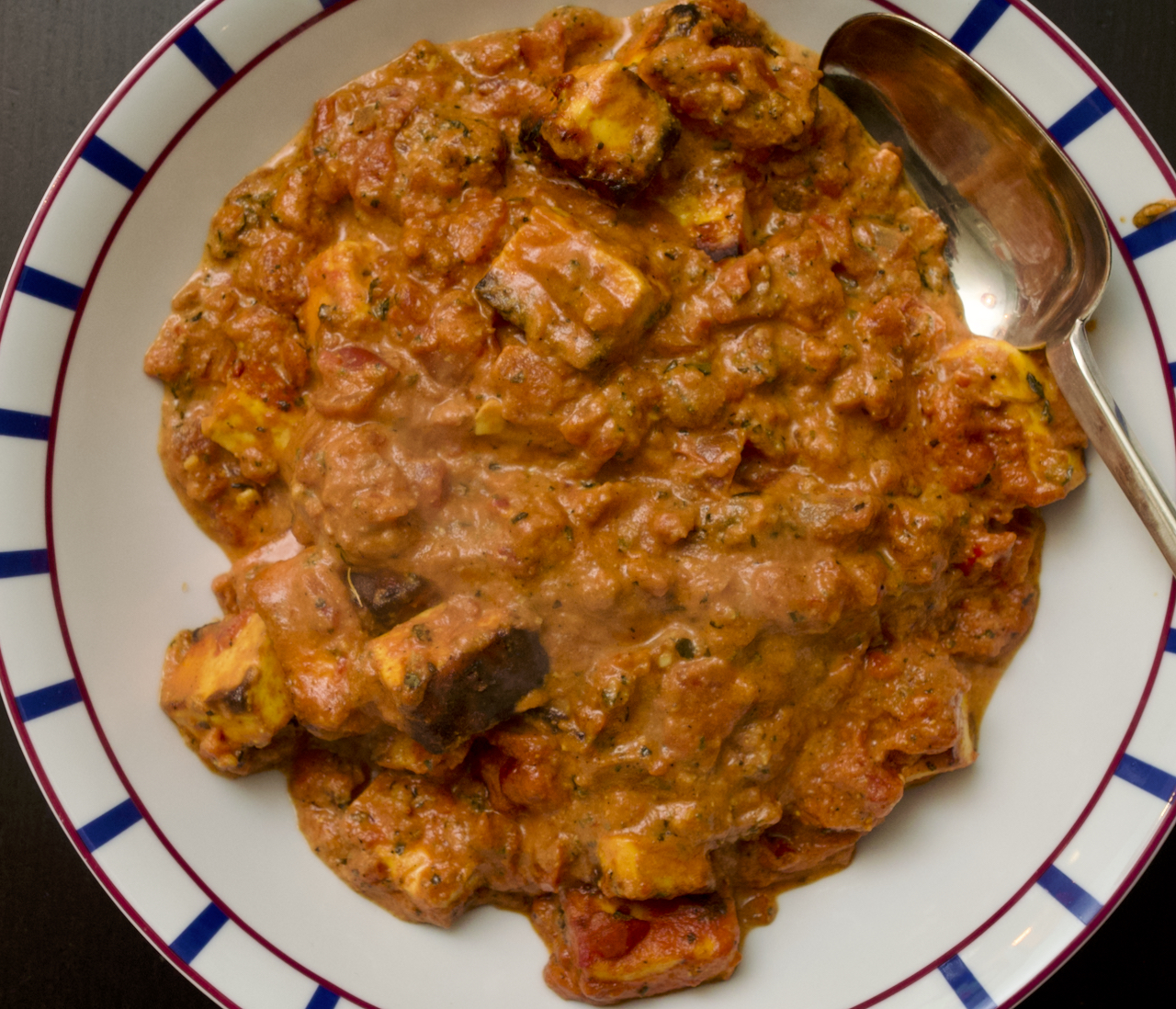
This is baked in the oven and couldn’t be easier to make. Serve with naan breads.

Butter Paneer – serves 4

FOR THE PANEER:

  • rapeseed oil
  • 600g hard paneer, cut into large cubes
  • 6 cloves of garlic, crushed
  • 2cm x 2cm ginger, finely grated
  • 1 tsp Kashmiri chilli powder
  • ½ tbsp lemon juice
  • ¾ tsp salt
  • ½ tsp ground turmeric
  • 5 tbsp Greek yoghurt

FOR THE BUTTER SAUCE:

  • 1 tsp Kashmiri chilli powder
  • 1 tsp garam masala
  • 1 tsp ground cumin
  • ½ tsp ground cardamom
  • ¾ tsp salt
  • 2 tbsp runny honey
  • 2 x 400g tins finely chopped tomatoes
  • 150ml double cream
  • 1½ tbsp kasoori methi
  • a slab of butter

Preheat the oven to 200C fan/ 220C/ gas 7.

Line a large, deep baking tray with non-stick baking paper and brush it lightly with oil.

Put the panneer cubes into a large bowl and add half the garlic, half the ginger, the chilli powder, lemon, salt, turmeric and yoghurt. Mix well to coat the paneer, then tip into the lined tray.

Bake the panner in the oven for 25 minutes or until it’s starting to blacken at the edges.

Take the tray out of the oven and stir in 3 tbsp of oil and the rest of the garlic and ginger, then add the spices for the sauce, the salt and the honey. Stir to mix well, then add the tomatoes, making sure the paneer is completely covered. Return to the oven for another 30 minutes.

Remove the tray from the oven and stir through the cream, crumble over the kasoori methi, then stir again and put back in the oven for another 10 minutes. Remove the tray from the oven and stir in the butter. Serve with hot naan breads.

(Original recipe from Dinner by Meera Sodha, Penguin: Fig Tree, 2024.)

Read Full Post »

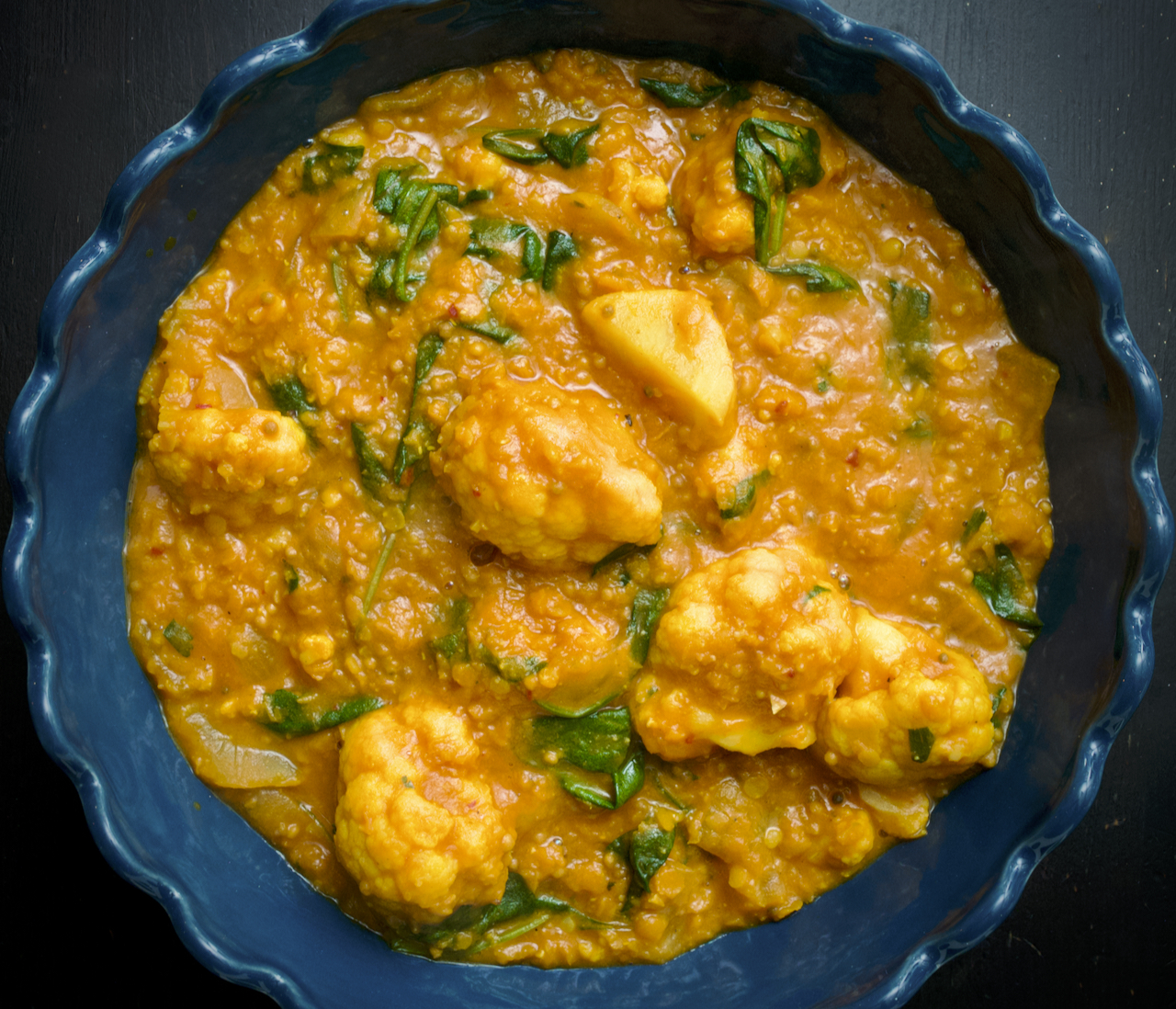
There is one person in our household of 3 who has decided to be a vegetarian for January. We’re not all joining in as there was far too much other stuff in the freezer but we’re trying to batch cook things like this to keep her going for the month and to avoid her living on koka noodles. This is a simple and lovely dahl. Serve with rice and naan or flatbreads. It is also suitable for those doing veganuary.

Wine Suggestion: We quite like an earthy dahl with a beer and chose a local brew, the Barrelhead Hopsburgh Helles, a creamy pale golden German style lager that’s lovely and smooth.

Cauliflower, lentil & coconut dahl – serves 4 to 6

  • 4 tbsp coconut oil
  • 2 tbsp mustard seeds
  • 1 large onion, diced
  • 4 cloves of garlic, finely chopped
  • 2 tsp ground coriander
  • 2 tsp ground turmeric
  • 1 tsp ground cumin
  • ½ to 1 tsp chilli flakes, to taste
  • 1 medium head of cauliflower, cut into bite-size pieces
  • 180g dried red lentils
  • 1 x 400ml tin coconut milk
  • 400ml tomato passata
  • 600ml water
  • 75g baby spinach
  • 2 tbsp chopped coriander
  • juice of 1 lemon

Melt the coconut oil in a large heavy-based saucepan over a medium heat. Add the mustard seeds and cook until they start to pop.

Add the onion with a large pinch of salt and cook for 10 minutes, until softened but not browned. Add the garlic and cook for a further minute, then add the ground coriander, turmeric, cumin and chilli flakes and cook for another minute.

Add the cauliflower, lentils, coconut milk, tomato passata and water. Stir well and bring to the boil, then reduce the heat and simmer for 20 to 25 minutes or until the lentils and cauliflower are cooked. Give it a stir occasionally to prevent it sticking.

Add the spinach, coriander and lemon juice and season well with salt and pepper.

Serve with rice and daal or flatbreads.

(Original recipe from Avoca at Home, Penguin Random House, 2022.)

Read Full Post »

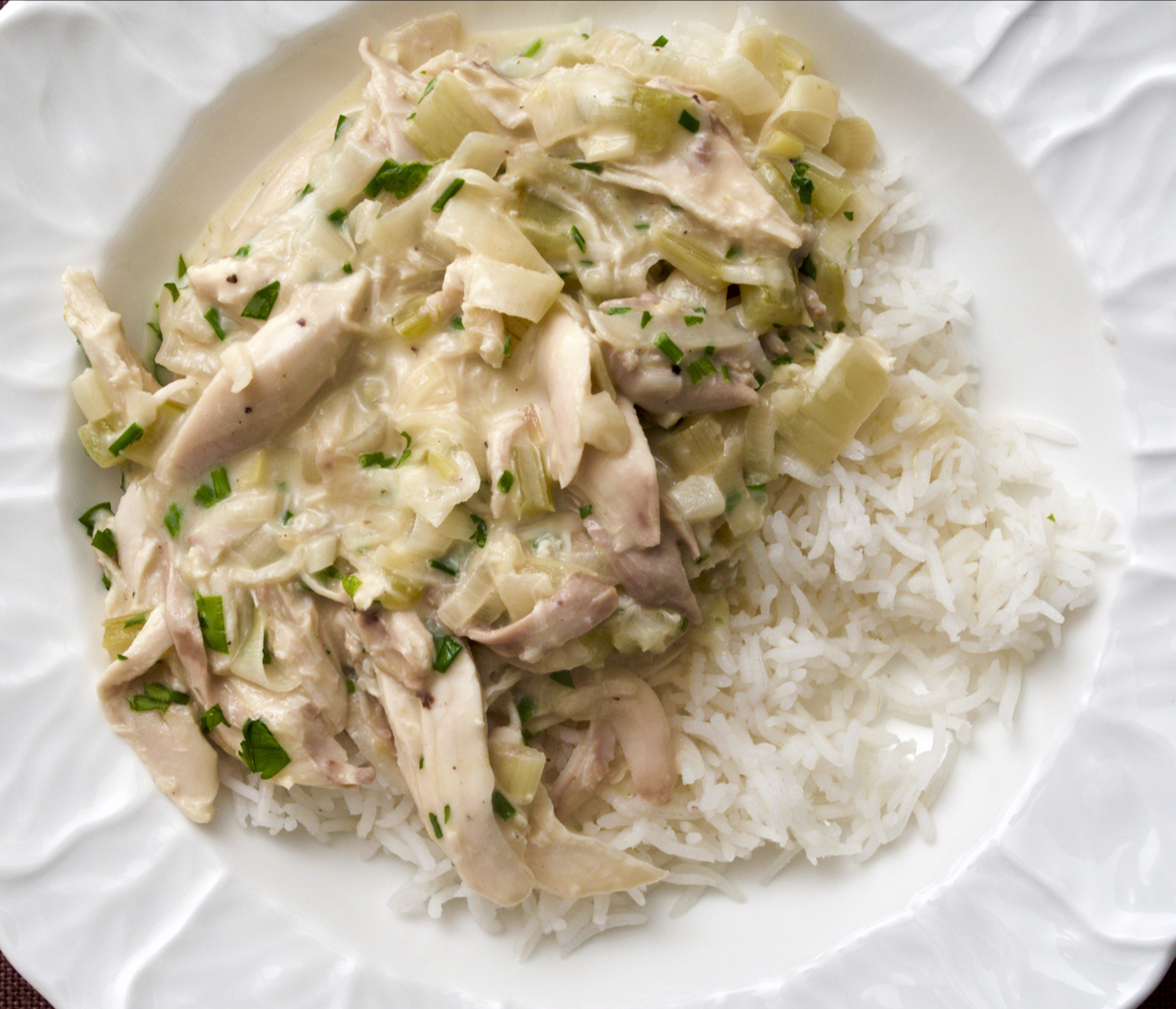
So simple and yet so lovely. The bit that takes time can be done earlier in the day and it’s fairly easy to finish off later. Serve with rice or whatever you fancy.

Wine Suggestion: We like how the stonefruit characters, mixed with slightly lower acidity from a southern Rhône white goes with the gentle and elegant nature of this dish. The Grapillon d’Or Vacqueyras white is a good example and it’s fleshy character and minerally/nutty textures are just perfect.

Chicken Fricassee – serves 6 to 8

  • 2kg whole chicken

FOR THE POACHING LIQUID:

  • 750ml chicken stock
  • 2 banana shallots, sliced
  • 2 celery sticks, sliced
  • 8 tsp black peppercorns
  • ½ lemon
  • a large bulb of garlic, cut in half horizontallly

FOR THE SAUCE:

  • a large knob of butter
  • 500g banana shallots, thinly sliced
  • 3 sticks celery, finely diced
  • 200ml double cream
  • 3 tbsp chopped chives
  • 3 tbsp chopped flatleaf parsley

Put the whole chicken into a large, deep saucepan. Add all of the poaching liquid ingredients and bring to the boil. Cover and simmer very gently for 1 hour, or until the chicken is cooked. Remove from the heat and allow to cool in the liquid.

When the chicken is cold, take the chicken out and remove the meat from the carcass – discard the bones and skin. Tear the meat into large pieces and set aside. Strain the poaching liquid through a sieve into a large jug. Squeeze the garlic from the skin into a small bowl and mash with a fork. Discard the poaching veg, lemon and peppercorns.

To make the sauce, melt the butter in a large frying pan over a medium heat. Add the shallots and celery and cook for about 10 minutes or until soft. Add the mashed garlic and fry for 10 seconds, then pour in the vermouth and boil to reduce by half. Add 600ml of the poaching liquid, bring to the boil and boil hard for 3 minutes.

Add 2 tbsp of the remaining poaching liquid to the cornflour and stir until smooth. Add this to the pan and cook until the sauce has thickened. Add the cream and cooked chicken and gently reheat until hot. Add the fresh herbs and season well with salt and black pepper.

(Original recipe from Mary’s Foolproof Dinners, BBC Books, 2024.)

Read Full Post »

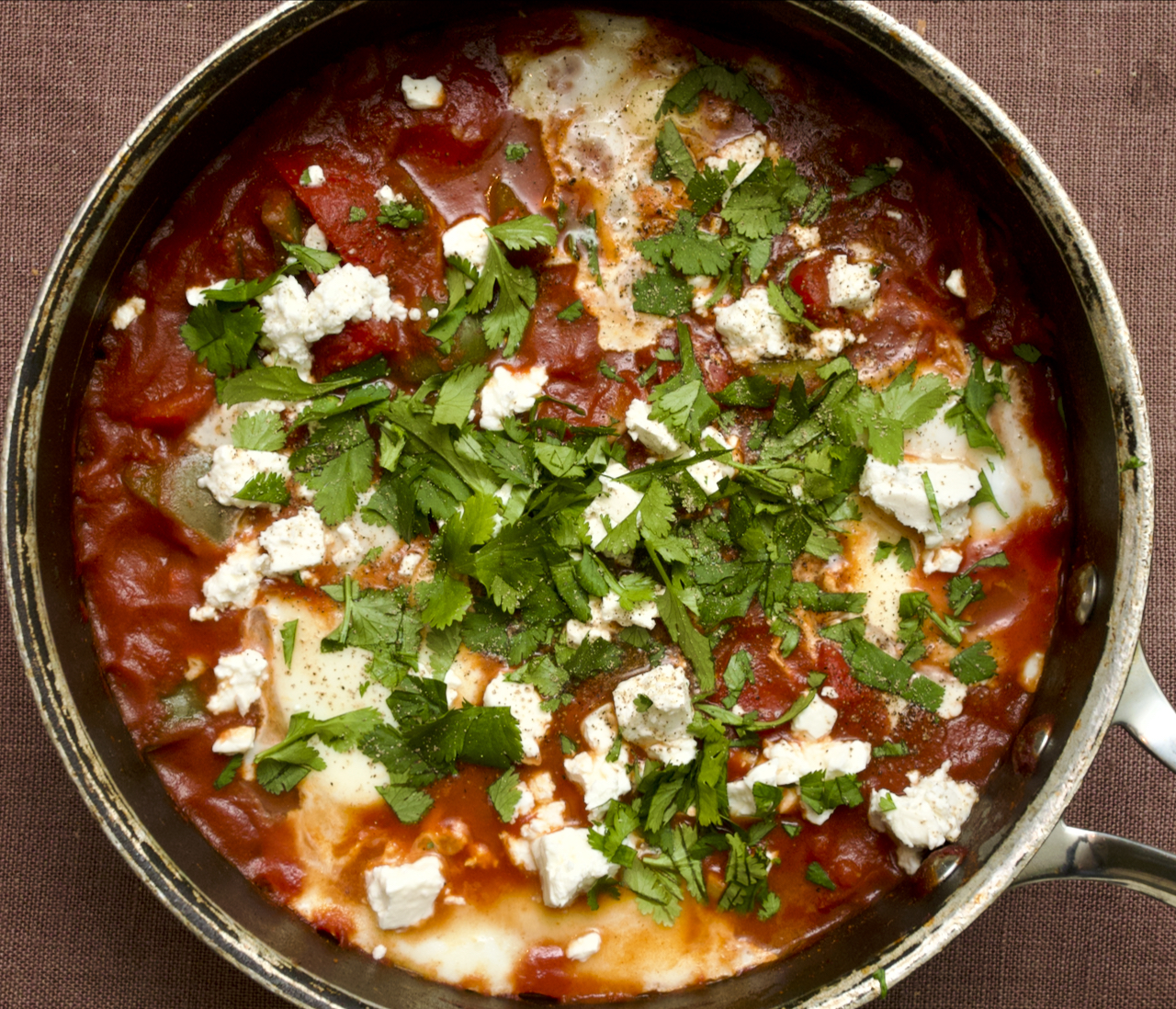
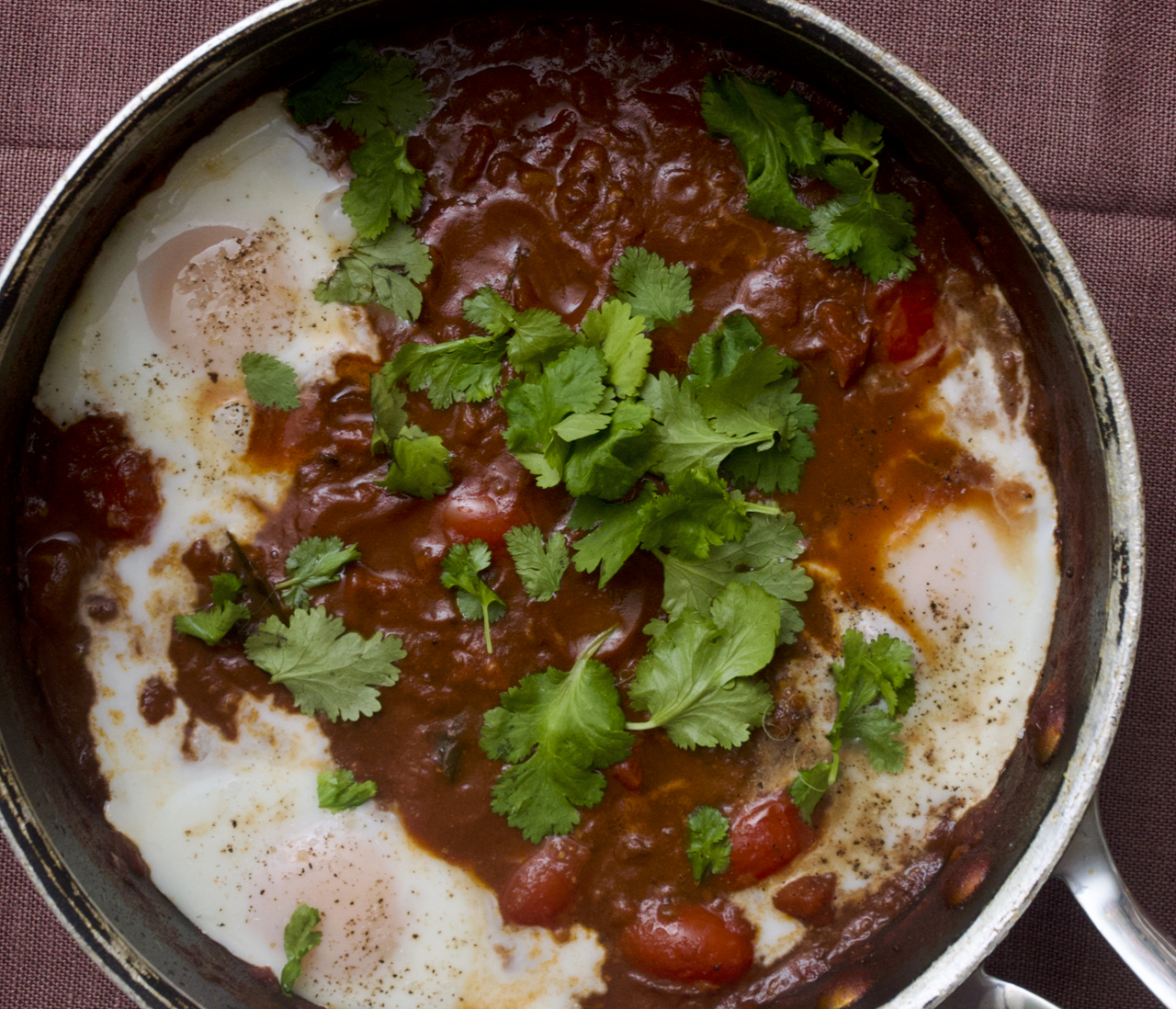
We usually have shakshuka at breakfast time but this shakshuka-style dish works well for dinner with some steamed basmati. We did crack an extra egg into the leftover sauce the following morning though.

Egg Sambal Shakshuka – serves 4

  • 1½ tsp fennel seeds
  • 2 cloves
  • seeds from 2 cardamom pods
  • ½  tsp ground cinnamon
  • 1½  tbsp medium curry powder
  • 60ml olive oil
  • ½ tsp black mustard seeds
  • 20 curry leaves
  • 1 red onion, halved and thinly sliced
  • 10g ginger, peeled and finely grated
  • 5 cloves of garlic, crushed
  • 10g coriander, stalks finely chopped and leave to serve
  • 150g datterini or cherry tomatoes
  • 2 tsp sambal oelek
  • 1 x 400g tin crushed tomatoes
  • 100ml tamarind concentrate
  • 300ml water
  • 15g palm sugar or light brown soft sugar
  • 5 eggs

Put the fennel seeds, cloves and cardamom into a small dry frying pan and toast lightly for a couple of minutes or until fragrant, then grind to a powder in a pestle and mortar. Add the cinnamon and curry powder and set aside.

Put 3 tbsp of the oil into a large sauté pan and place on a medium heat. Add the mustard seeds and 10 curry leaves and cook for 1 minute, until the seeds start to pop. Add the onion and cook for about 7 minutes, until starting to colour. Add the ginger, garlic, coriander stalks and fresh tomatoes, cook for another 5 minutes, then add the fennel spice mix. Cook for 2 minutes, then add the sambal oelek, tinned tomatoes, tamarind, water, sugar and 1½  tsp of salt. Stir and bring to a simmer. Reduce the heat to meidum-low and cook for 20-25 mintues, until thickened.

Crack the eggs into the sambal and sprinkle them with salt and pepper. Cover the pan and cook for 7-8 minutes, until the egg whites are cooked and the yolks just soft.

Meanwhile, put 3 tbsp of the oil into a small pan over a medium heat. Add the rest of the curry leaves, cook for about a minute or until very fragrant. Remove from the heat and drizzle the oil and curry leaves over the eggs and scatter over the coriander, leaves. Serve.

(Original recipe from Ottolenghi Comfort by Yotam Ottolenghi, Helen Goh, Verena Lochmuller and Tara Wigley, Ebury Press, 2024.)

Read Full Post »

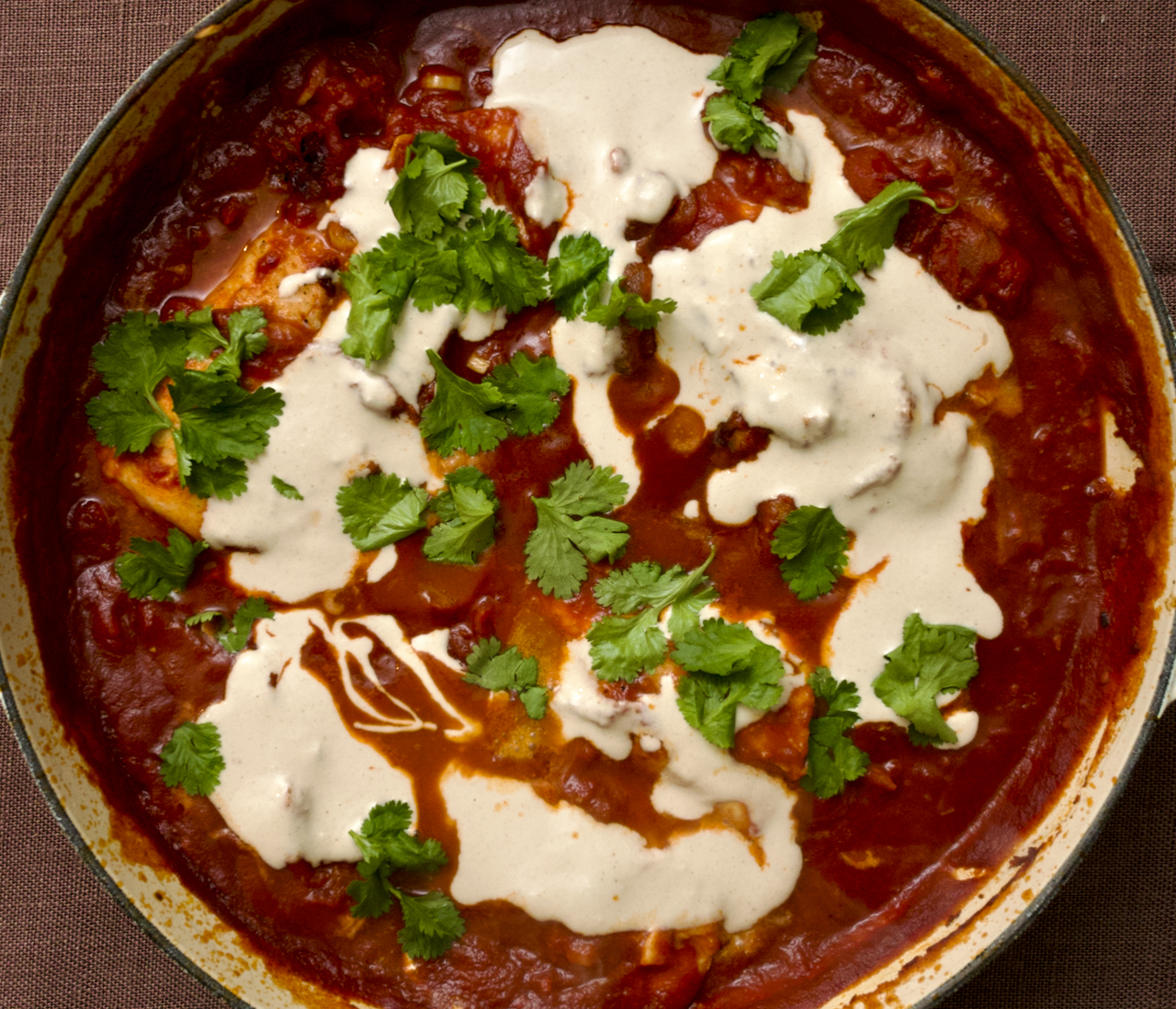
Two delicious sauces combine to really highlight the fish in this North African inspired dish. We used hake but you can of course use other white fish fillets. Serve with couscous and pitta breads.

Wine Suggestion: it is quite a complex challenge to balance the spices, tomatoes and creamy tahini, but we think this works great with Mediterranean inspired blends that include a bit of Tempranillo like Parker Estate Favourite Son Shiraz-Tempranillo. Despite this being a bigger red and this being a fish dish there’s a certain freshness from Coonawarra that comes through and very complimentary spices that make this work.

Fish cooked in tomato sauce with tahini – serves 4

  • 4 tbsp olive oil
  • 1 onion, finely sliced
  • 5 cloves of garlic, finely sliced
  • 2 tbsp smoked paprika
  • 1 tsp ground cumin
  • a pinch of chilli flakes
  • 2 tbsp tomato purée
  • 2 x 400g tins plum tomatoes
  • 1 preserved lemon
  • 4 fillets of hake (or other white fish)
  • fresh coriander, to serve

FOR THE TAHINI SAUCE:

  • 1 clove of garlic
  • half a lemon
  • 80g tahini
  • 5-6 tbsp ice-cold water
  • a pinch of ground cumin

Warm the olive oil in a large sauté pan, then cook the onion with a pinch of salt until soft. Add the garlic and spices and continue frying for another minute or two, then add the tomato purée and cook for another couple of minutes.

Add the tinned tomatoes, then rinse the tins with a little water and add that too. Break the tomatoes up with a wooden spoon and simmer for 10-15 minutes to thicken the sauce. Quarter and deseed the preserved lemon, then chop into small pieces and add to the sauce.

Meanwhile, make the tahini sauce. Grate the garlic into a bowl, then squeeze over the juice of the half lemon, mix together and set aside for 5 minutes. Add the tahini to the garlic and lemon and whisk together, then add 1 tbsp of the cold water at a time, whisking until you have a smooth, runny sauce. Season with a pinch of salt and a pinch of cumin.

Season the fish, then nestle it into the tomato sauce. Cook for 5-10 minutes, or until just cooked (a thermometer will help if you have one). Serve with the tahini sauce and coriander over the top and with some couscous and pitta breads.

(Original recipe from The Farm Table by Julius Roberts, Ebury Press, 2023.)

Read Full Post »

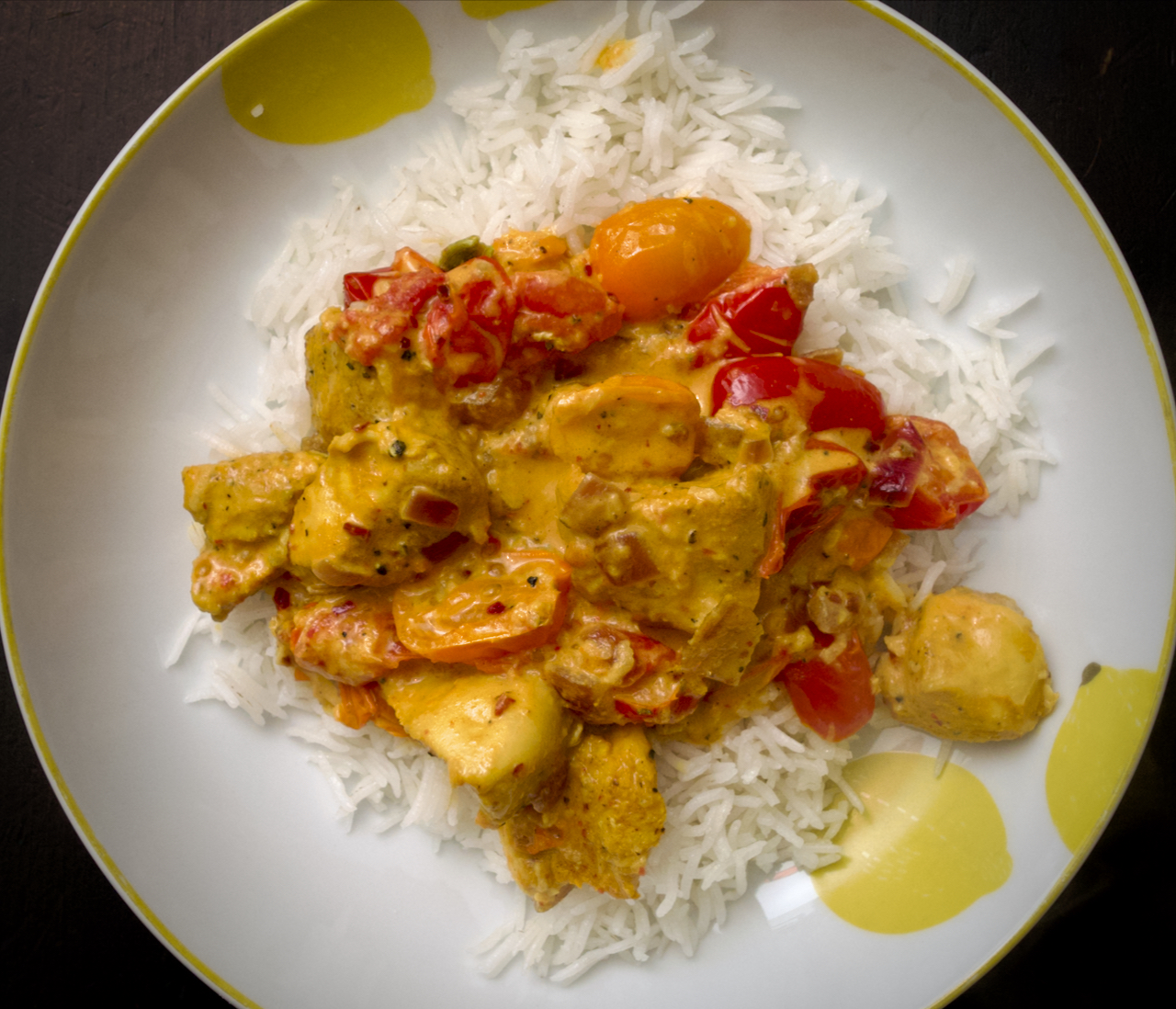
An easy but very tasty curry for two.

Wine Suggestion: we would keep this very easy and open an Asahi, a dry and savoury lager that quenches the thirst and makes a refreshing match for the curry.

Black pepper & bay leaf curry – serves 2

  • 3 cloves of garlic, 2 peeled and grated
  • 2 tbsp neutral oil
  • 1 cinnamon stick
  • 4 cloves
  • 4 green cardamom pods
  • 2 bay leaves
  • 1 large red onion, peeled and finely diced
  • 1 tsp ground turmeric
  • 1 tsp ground cumin
  • 1 tsp chilli flakes
  • 1 tsp black peppercorns, finely ground
  • 300g chicken breast, cut into 4cm pieces
  • 5cm piece of ginger, peeled and grated
  • 250g vine cherry tomatoes, halved
  • 100ml single cream
  • juice of ½ lemon

Put the oil in a large frying pan over a medium heat, then add the cinnamon stick, cloves, cardamom and bay and stir for 30 seconds. Add the onion and cook for 7 minutes or until golden brown.

Meanwhile mix the turmeric, cumin, chilli, ground peppercorns and a tsp of salt in a large bowl. Add the chicken and toss to coat.

Add the grated garlic and ginger to the pan, and stir-fry for 30 seconds. Add the spiced chicken, fry for 2 minutes on each side, then add the tomatoes and cook for 5-6 minutes or until they’ve broken down. Add the cream, simmer for a couple of minutes, then check the chicken is cooked through.

Remove from the heat, squeeze in the lemon juice, taste for salt and serve with rice.

(Original recipe by Rukmini Iyer in The Guardian)

Read Full Post »

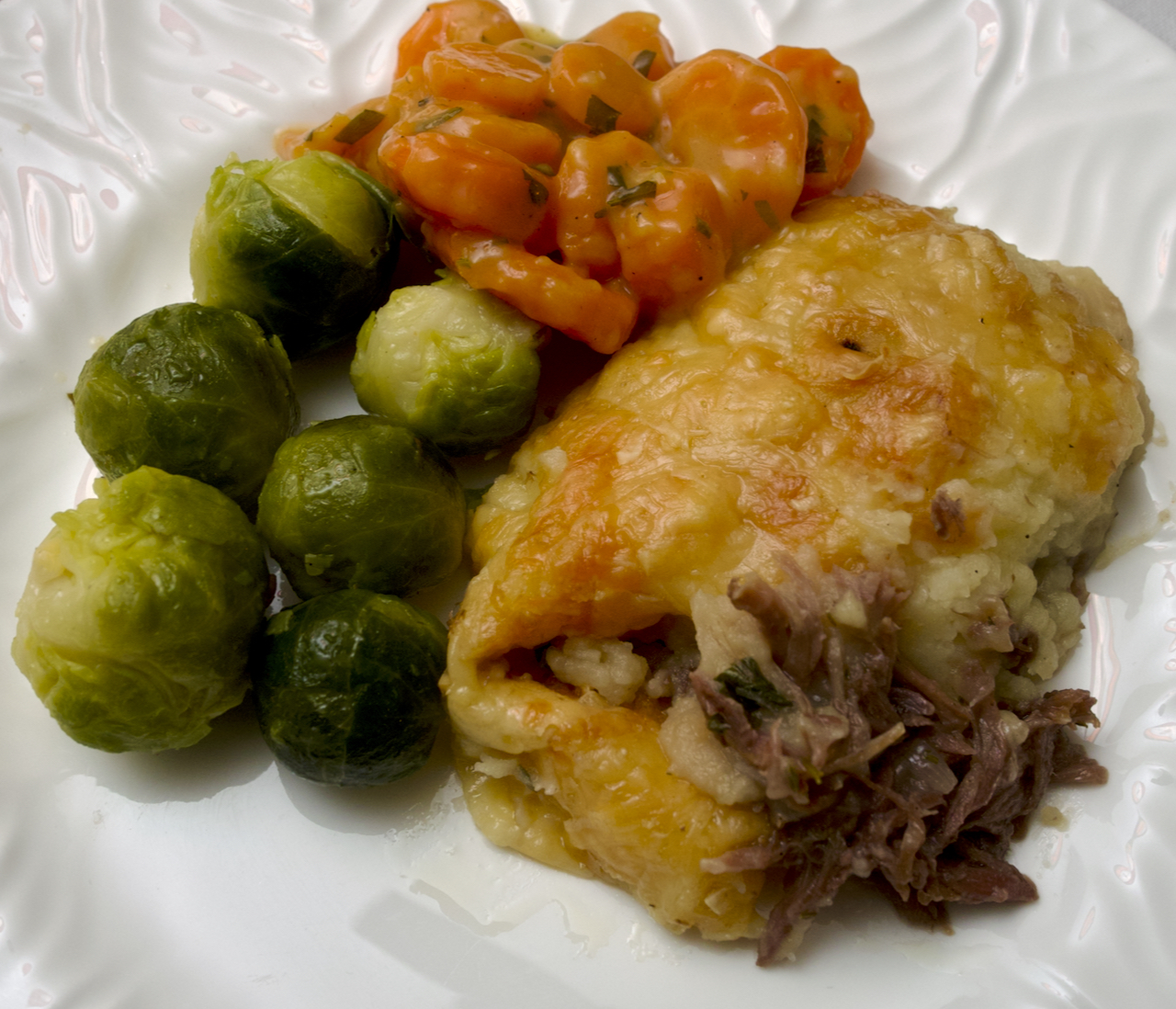
You can buy duck confit in tins locally but they tend to be much cheaper in France so if you’re lucky enough to go there (or know someone else who is going), stock up! You will have the prep done for many delicious dishes, like this one.

Wine Suggestion: A classic French dish needs a classic French wine. We suspect red Burgundy would be great, however we didn’t have any to hand so instead opened a bottle of Chateau Lascaux Pic St Loup “les Nobles Pierres”. A classic Syrah-Grenache blend but from prime vineyards in the Languedoc where Duck dishes reign supreme. Juicy, brambly and layered with velvety and characterful tannins.

Parmentier de Confit de Canard – serves 4 to 6

  • 4 Confit duck legs (1 large tin – it says on the tin how many legs are inside)
  • 4 shallots, chopped
  • a few fresh thyme sprigs, leaves stripped
  • 175ml red wine
  • 200ml chicken stock
  • a handful of flatleaf parsley
  • 800g potatoes, cut into 5cm chunks
  • 100-125ml warm milk
  • 150g-200g Comté cheese, grated

Warm the confit duck legs over a gentle heat to release the fat, then pour the fat into clean jam jars for future roast potatoes. You will need to keep 2 tbsp aside for this dish.

Remove the skin from the duck legs and discard. Remove the meat from the bones and shred it with two forks, discarding any bones and gristle.

Heat 2 tbsp of the duck fat in a pan, add the shallots, thyme and plenty of black pepper. Allow the shallots to brown gently, then add the wine and stock, then bring to the boil. Cook for a few minutes, then add the duck meat and chopped parsley. Stir and set aside.

Heat the oven to 210C/Fan 190C.

Boil the potatoes in salty water until tender. Drain them well, then add the warm milk and mash until smooth. Season with salt and a big pinch of black pepper.

Grease a 18 x 28cm baking dish with a little duck fat, then pile in the meat and cover with the mashed potato. Sprinkle the grated cheese on top and bake for about 25 minutes or until browned and bubbling.

Serve with carrots and greens.

(Original recipe from Rick Stein’s Secret France, BBC Books, 2019.)

Read Full Post »

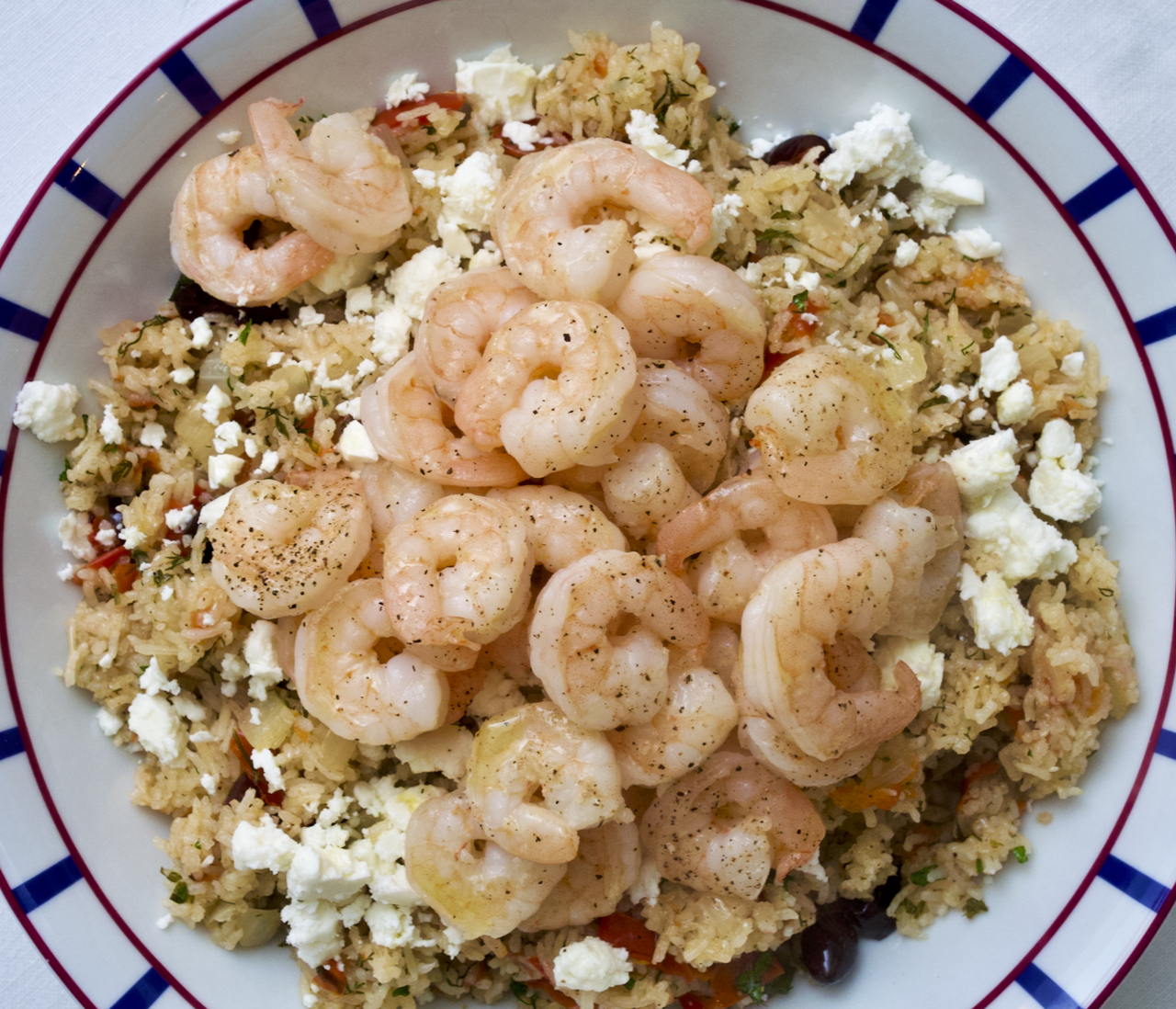
Prawns actually pair very well with feta, which is always a bit suprising to us. It’s nice to have a lighter dish amongst all the winter soups and stews.

Wine Suggestion: we think this suits a white grown somehwere around the Mediterranean, like tonight’s choice of the Hatzidakis Santorini Cuvée 15, a wonderfully fresh and complex Assyrtiko with honeysuckle and herbs on the nose followed by a textured, almost salty palate.

Prawn & feta pilaf – serves 4

  • 225g basmati rice
  • 15g unsalted butter
  • 2 tbsp olive oil, plus a bit extra to
  • 1 onion, finely chopped
  • 1 clove of garlic, crushed
  • 275g tomatoes, deseeded and roughly chopped
  • a big bunch of dill, chopped
  • a big bunch of flat leaf parsley, leaves chopped
  • a handful of mint leaves, chopped
  • 400ml fish stock or light chicken stock
  • 350g raw prawns, shelled and deveined
  • juice of ½ lemon, plus lemon wedges to serve
  • 55g black kalamata olives, pitted and roughly chopped
  • 75g feta cheese, crumbled

Rince the rice in a sieve under cold running water until the water runs clear. Leave to soak for an hour if you have the time, then rinse again.

Heat the butter and 2 tbsp of olive oil in a saucepan and cook the onion until it starts to soften. Add the garlic and tomatoes and continue to cook, stirring now and then, until the onion is cooked and the tomatoes have softened. Stir in the rice and half the herbs, season well, then pour in the stock and bring to the boil. Boil hard until the rice starts to look pitted, with little holes in the service and it seems like the liquid has disapeared.

Wrap a clean tea towel around the lid of the pan and cover the pan. Reduce the heat to low and leave to cook for 20 minutes.

When the rice is almost ready, dry the prawns on kitchen paper and quickly sauté in a little olive oil over a high heat. Squeeze over the lemon juice and season with black pepper and salt.

When the rice is cooked, fork through the olives, remaining herbs and lemon juice with a good glug of your best extra virgin olive oil. Transfer to a serving platter, then scatter over the feta and mound the prawns on top. Drizzle again with olive oil and serve with lemon wedges.

(Original recipe from Crazy Water, Pickled Lemons by Diana Henry, Aster*, 2024.)

Read Full Post »

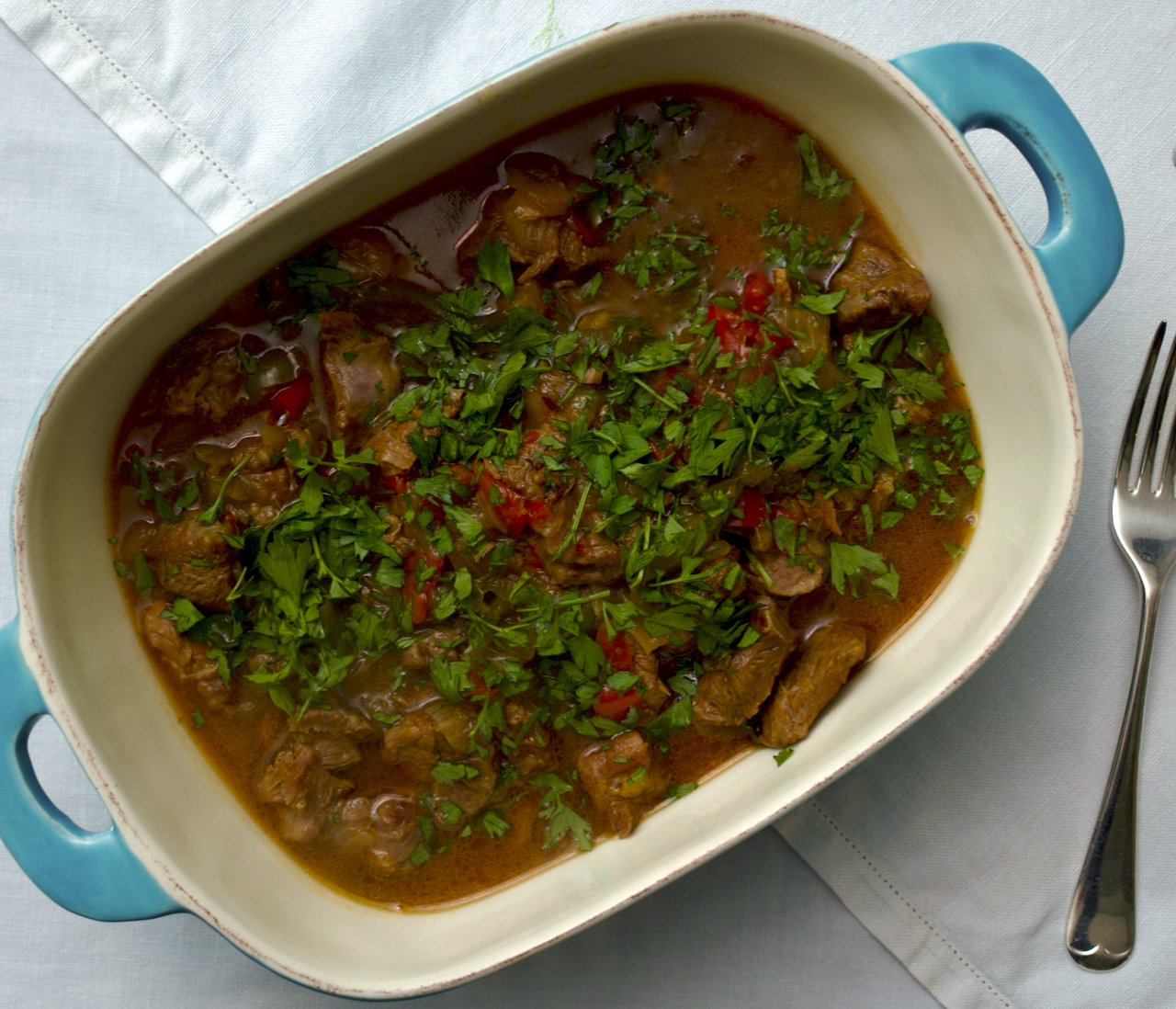
This is delicious and goes perfectly with a bowl of warm couscous. It’s better to ask for the meat in one piece so you can cut it into big chunks yourself – the pre-cubed stuff is usually cut too small and will disappear into the sauce.

Wine Suggestion: If you’d like to keep to the theme a good, dry Oloroso sherry works well, but if you’d rather a red like we did tonight, something from a warm vineyard region may hit the mark … just make sure it’s balanced and not too hot from alcohol. Our choice was a treasured bottle brought from OZ many years ago of Hanging Rock’s Heathcote Shiraz. Dense and textured in youth this opens up and retains a freshness and layered velvetiness over many years of cellar aging too.

Spanish lamb with sherry – serves 4

  • 1kg lamb shoulder, trimmed of excess fat, then cubed
  • 1½ tbsp olive oil
  • 1 large onion, roughly chopped
  • 1 red pepper, deseeded and sliced
  • 1 yellow pepper, deseeded and sliced
  • 1 green pepper, deseeded and sliced
  • 2 cloves of garlic, finely grated
  • ½ tsp paprika
  • 250ml medium sherry
  • 250ml lamb stock
  • generous pinch of saffron threads
  • 1 tbsp sherry vinegar
  • 1½ tbsp honey
  • 1 tbsp finely chopped parsley
  • couscous, to serve

Heat 1 tbsp of the olive oil in a large casserole and brown the lamb in batches, then set aside.

Add the ½ tbsp of oil to the casserole, then add the onions and peppers and cook until the onions are golden and the peppers have softened. Add the garlic and paprika and stir for a minutes, then add the sherry and bring to a simmer.

Return the lamb to the casserole, along with the stock, saffron, sherry vinegar and honey. Season and bring to just under the boil. Turn the heat down, cover the pan with a lid and cook very gently for 1½ hours, stirring occasionally.

Remove the lid from the casserole and continue to cook for another 30 minutes to reduce the liquid to a gravy-like consistency and the lamb should be very tender.

Serve with some warm couscous.

(Original recipe by Diana Henry in BBC Good Food Magazine, October, 2017.)

Read Full Post »

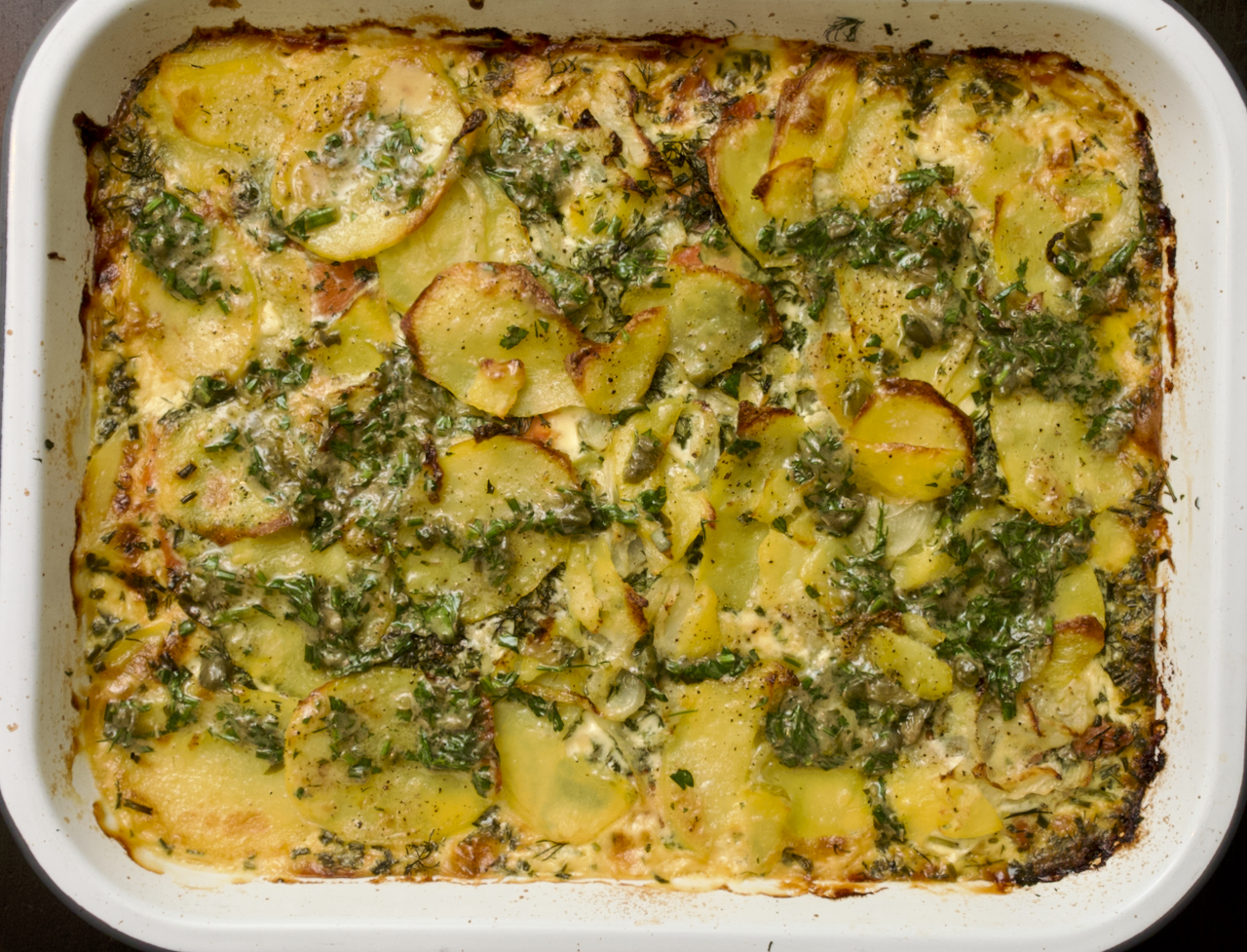
Such a lovely recipe, and you can of course use smoked salmon. We like smoked trout from Goatsbridge which is a local supplier. Recipe inspiration from the new Ottolenghi book – Comfort. You must have a green salad and a glass of white wine to serve. If you have a mandolin it will cut the potatoes and fennel just right.

Wine Suggestion: We served an oddity/one-off from Chateau Hureau from Saumur in the Loire. They grew a low quantity of Chenin Blanc grapes in 2022 due to frost so decided to make a Blanc de Noirs from Cabernet Franc for a bit of fun. Only available at cellar door it’s both crisp and fresh, but significantly has bags of texture which this dish needs. Look for whites with a touch of skin contact, or aged on lees as a substitute.

Potato, fennel & smoked trout bake – serves 4

  • 200ml milk
  • 425ml double cream
  • 2 anchovies, finely chopped
  • 3 cloves of garlic, lightly smashed with skin on
  • 1 lemon, skin finely shaved into strips
  • 2 tsp fennel seeds, finely ground
  • 850g Yukon gold or red potatoes, peeled and sliced into ½ cm thick slices
  • 1-2 large fennel bulbs, thinly sliced
  • 4 egg yolks
  • 10g dill fronds, roughly chopped
  • 20g chives, finely chopped
  • 20g parsley leaves, finely chopped
  • 1½ tbsp unsalted butter, softened
  • 200g smoked trout (or smoked salmon) slices, roughly torn

for the lemon butter sauce:

  • 2 tbsp lemon juice
  • 2 tsp capers, roughly chopped
  • 40g unsalted butter, fridge cold and roughly chopped

Heat the oven to 170C fan.

Put the milk, cream, anchovies, garlic, lemon strips and ground fennel into a small saucepan. Place over a low heat and warm for 10 minutes, making sure it never comes to the boil. Give it a stir now and then and press on the solids to get plenty of flavour out of them. Remove from the heat.

Put the potato and fennel slices into a saucepan and cover with cold, salted water. Bring to the boil and cook for 6-7 minutes or until just tender. Drain and set aside.

Whisk the egg yolks with ¾ tsp of salt and a good grind of pepper in a large bowl. Strain the infused milk into the eggs, pressing on the solids against the sieve. Whisk to combine.

Combine all the herbs in bowl. Measure out 2 tbsp and reserve for the butter sauce.

Grease an ovenproof dish with ½ tbsp of the butter. Spoon a third of the potato and fennel over the base and grind over some pepper. Sprinkle over half the herbs and lay half the smoked trout over the top. Repeat with half the remaining potatoes and fennel, season with pepper, then add all the remanining trout and the rest of the herbs. Arrange a final layer of potato and fennel on top and carefully pour over the egg mixture. Grind over some more pepper and dot over the remaining butter. Bake for 45 minutes or until set and just golden. Remove from the oven and rest for 10 minutes.

Meanwhile make the lemon butter sauce. Put the lemon juice into a small saucepan on a medium-high heat and bring to a bubble. Allow to bubble for 1 minute, then add the capers and butter, a few pieces at a time. Whisk until smooth and creamy, then remove from the heat and stir in the reserved herbs and some more pepper. Spoon over the dish and serve warm with a green salad.

(Original recipe from Ottolenghi Comfort by Yotam Ottolenghi, Helen Goh, Verena Lochmuller & Tara Wigley, Ebury Press, 2024.)

Read Full Post »

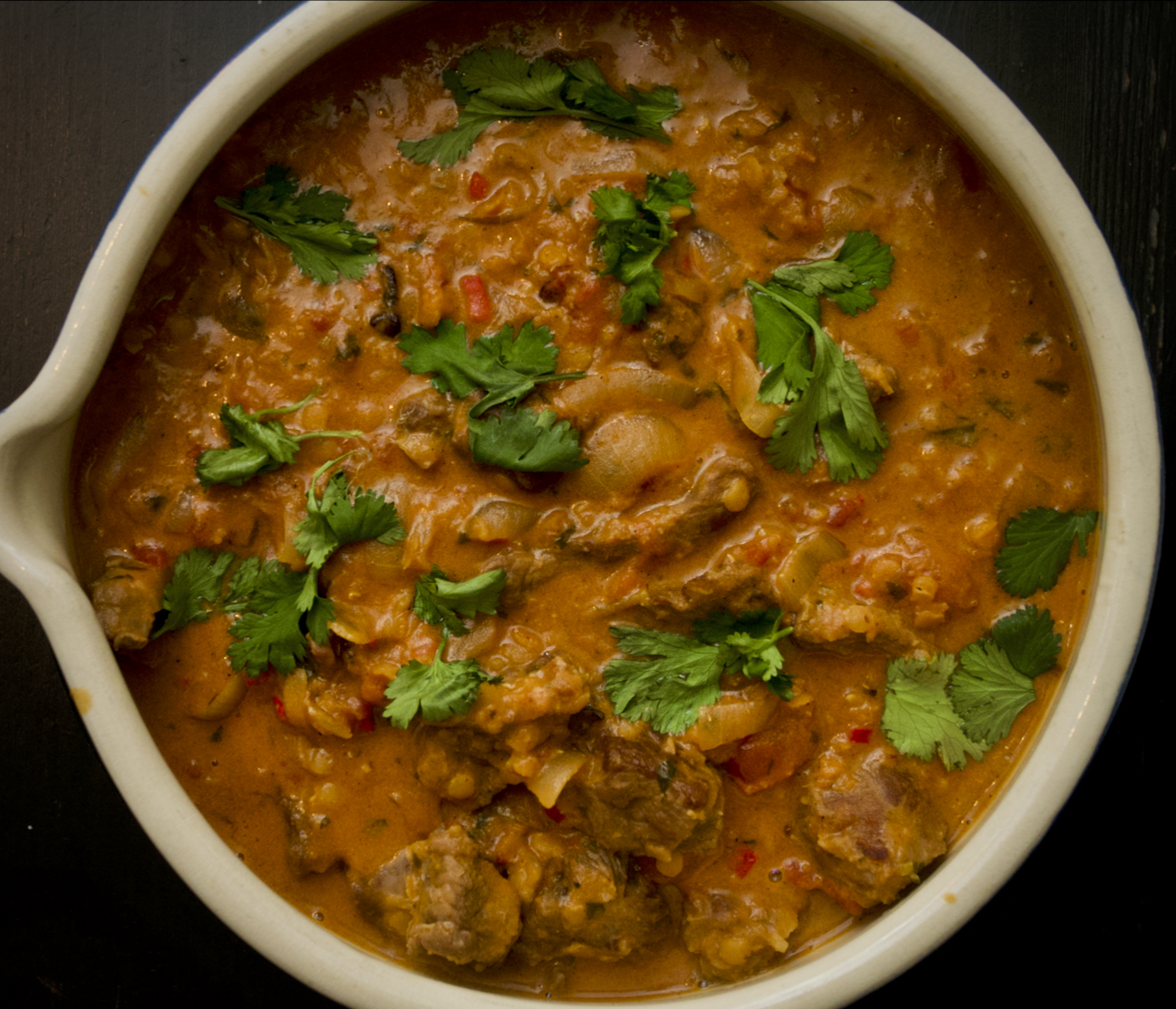
This has lovely flavours and best cooked a couple of days in advance. Make sure to cook the lamb until it is really soft and tender.

Wine Suggestion: this dish works great with Aussie Shiraz, like Kilikanoon’s excellent Killerman’s Run which has the obligatory pluminess over a very refined and fresh backbone with gentle pepper spices.

Lamb Rogan Josh – serves 4

  • 4 tbsp rapeseed oil
  • 700g lamb neck, cut into bite-sized pieces
  • 6 whole cloves
  • 1 small cinnamon stick
  • 2 bay leaves
  • 2 large onions, thinly sliced
  • 4 cloves of garlic, crushed
  • 1 red chilli, deseeded and finely chopped
  • 5cm piece of ginger, peeled and finely grated
  • 1 tbsp of ground coriander
  • 2 tsp ground cumin
  • 2 tsp paprika
  • ¼ tsp ground cardamom
  • 15g bunch of fresh coriander, finely chopped
  • 200ml thick Greek yoghurt, plus extra to serve
  • 1 x 400g tin of chopped tomatoes
  • 100g red lentils
  • 300ml chicken stock
  • steamed rice, to serve
  • mango chutney, to serve
  • extra fresh coriander, to serve

Heat 2 tbsp of the oil in a large pan. Add the lamb in batches and fry until well browned, then set aside.

Add another 2 tbsp of olive oil to the pan, then fry the cloves, cinnamon stick and bay leaves for a few seconds. Add the onions and stir-fry for 6-7 minutes, until browned. Add the garlic, chilli and ginger and fry for 2 minutes, then add the ground spices with the fresh coriander and fry for another minute, stirring.

Add the yoghurt, 1 tbsp at a time, frying for about 30 seconds between each addition and stirring constantly.

Tip the lamb back into the pan and stir in the tomatoes with the lentils and stock. Season to taste, then cover and simmer gently for 2 hours or until very soft and tender. The sauce should have reduced and thickened.

Serve the lamb with steamed rice, mango chutney and some fresh coriander.

(Original recipe from Neven Maguire’s Comple Family Cookbook, Gill Books, 2016.)

Read Full Post »

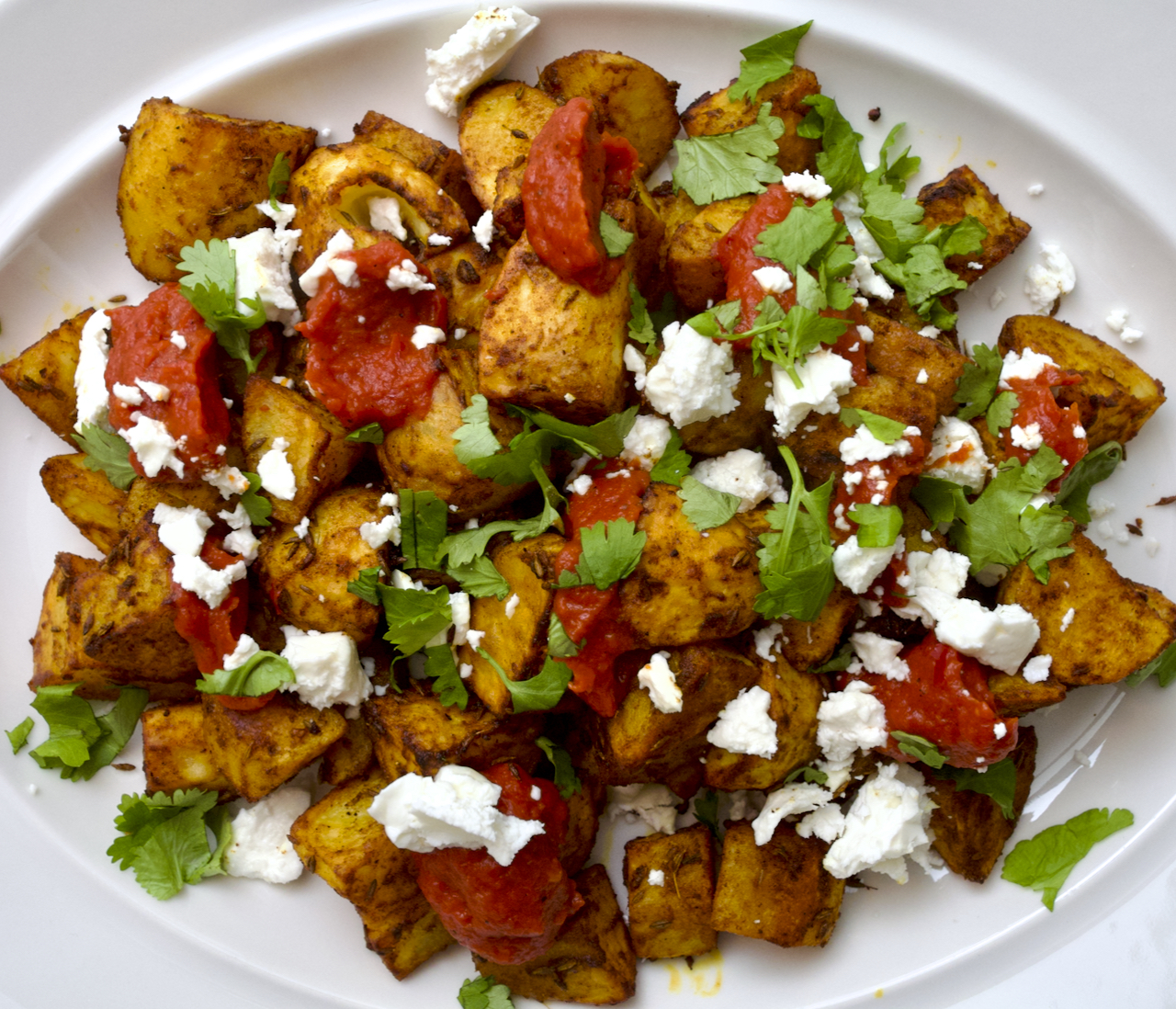
A tasty side dish that is similar to Spanish Patatas Bravas but with the flavours changed up. Usefully you can make the sauce in advance and re-heat just before serving.

Spicy Roast Potatoes with Tomato, Pepper & Harissa Sauce – serves 6

  • 1kg potatoes, peeled and cut into 2.5cm chunks
  • 2 tsp paprika
  • 2 tsp ground turmeric
  • 2 tsp cumin seeds
  • 3 tbsp garlic oil
  • a handful of fresh coriander leaves, chopped, to serve
  • crumbled feta, to serve

FOR THE SAUCE:

  • olive oil
  • 2 garlic cloves, bashed and thinly sliced
  • 250g (drained weight) roasted red peppers from a jar, roughly chopped
  • 400g tin chopped tomatoes
  • 1 heaped tbsp rose harissa
  • 1 tbsp caster sugar

Heat the oven to 220C/200C fan/Gas 7.

Line a baking tray with paper. Mix the spices with the garlic oil. Put the potatoes into a large bowl, pour over the spice mixture and toss to coat. Spread them out evenly on the tray, season with some salt and pepper and roast for 30 minutes or until crispy and cooked through.

To make the sauce, drizzle some olive oil into a saucpean, add the garlic and cook over a medium heat for a couple of minutes. Add the peppers, tomatoes and harissa and season well with salt. Cook for another couple of minutes. Stir in the sugar and cook over a medium heat for 20 minutes, stirring regularly. Remove from the heat and whizz until smooth, then taste and adjust the seasoning.

Serve the potatoes on a platter with the sauce poured over and feta and coriander scattered over the top.

(Original recipe from Flavour by Sabrina Ghayour, Aster*, 2023.)

Read Full Post »

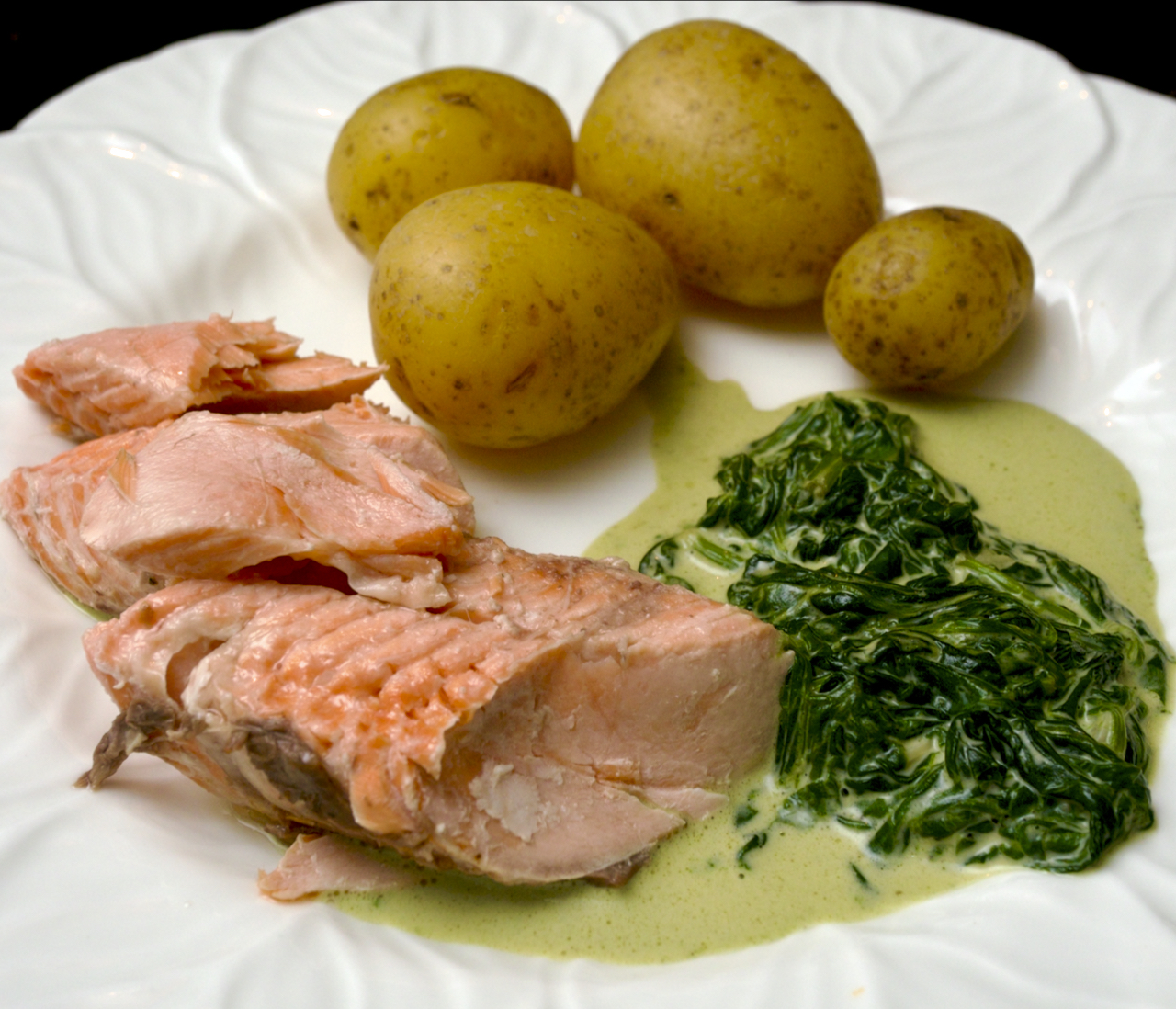
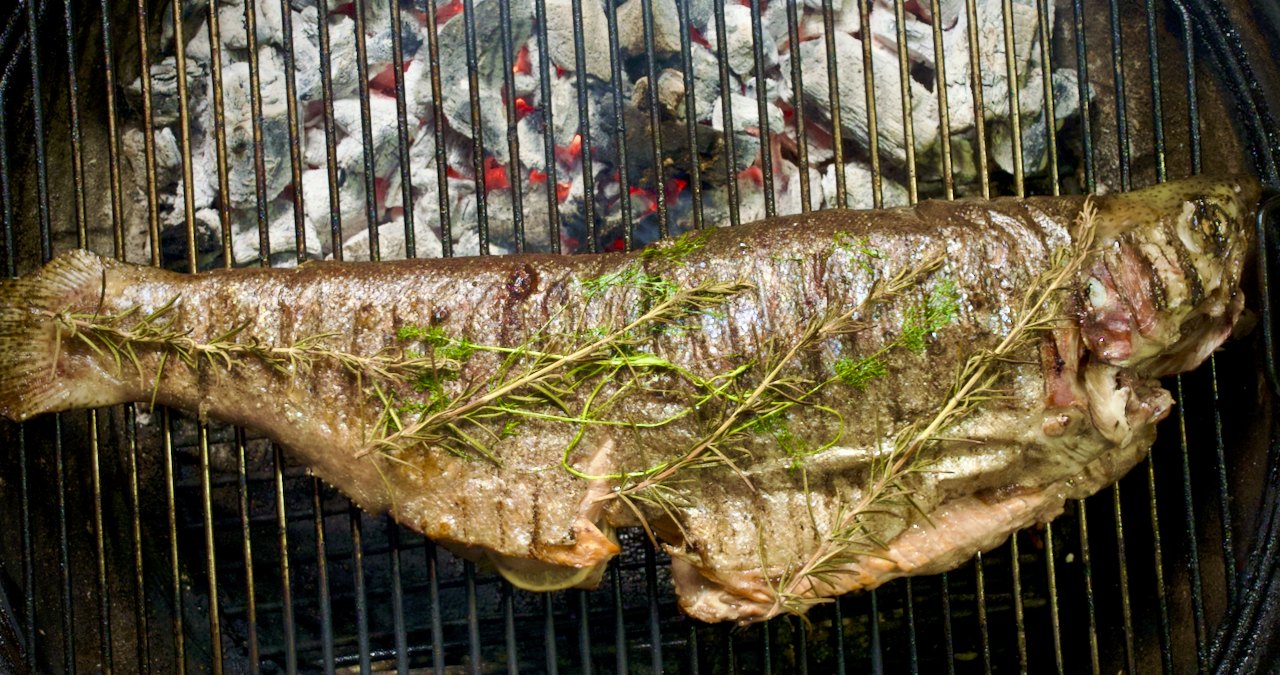
This recipe works well using fillets that have been grilled with fennel seeds and a bit of dill rubbed into the oiled sides before putting on the barbecue. However as we had a whole fish we adapted cooked it whole with some rosemary and lemon. Either way it’s handy to have a temperature probe to make sure the fish is up to 60C and therefore cooked. You can of course pop a pan on your hot barbecue and cook the spinach on there too, we usually cook the sauce indoors.

Serve with steamed, waxy (or baby) potatoes. And a big shout-out to Goatsbridge trout farm for the magnificent fish we bought online from them; superb!

Wine suggestion: Oaky Chardonnay all the way with this, so choose what ever is best in your local wine merchant.

BBQ trout with spinach & cream, serves 4 (depending on the size of the fish … our left-overs lasted all week)

  • 1 large trout (1.5-2kg), scaled and gutted
  • 2 tbsp extra virgin olive oil
  • 6 bay leaves
  • 2 garlic cloves, bashed
  • 1 lemon, sliced into rounds
  • a few springs of rosemary, fennel or marjoram

For the spinach & cream:

  • a knob of butter
  • 1 garlic clove, thinly sliced
  • 250g spinach, washed and thick stalks discarded
  • 150ml double cream
  • a small pinch of freshly grated nutmeg

Take the fish out of the fridge at least an hour before you want to cook it.

Light your barbecue, you will need a gentle heat to cook the fish through. Scrub the bars of the grill with a wire brush so it’s nice and clean, then lightly oil the bars. Let the grill get really hot before you put the fish onto it so the skin doesn’t skick and crisps up.

When the barbecue is ready to cook on, rub the olive oil all over the fish and season all over with salt and pepper. Put the bay leaves, garlic and lemom slices into the fish belly. Lay the fish onto the hot grill and cook for 2 to 3 minutes – then check the underside to ensure it’s not cooking too fast or burning – if it looks ok, continue to cook for 12-15 minutes on the first side, then use a couple of spatulas to turn the fish over, don’t worry too much if the skin tears a bit. Scatter over the herbs, then cook on the other side for the same amount of time. The fish is cooked when the the flesh flakes away easily from the bone – we find a temperature probe helpful too.

Gently lift the fish off the grill and serve with buttery new potatoes and the spinach with cream below.

FOR THE SPINACH & CREAM:

Put a large frying pan over a medium-high heat and add the butter. When the butter bubbles, add the garlic and allow it to sizzle for about a minute, without colouring.

Roughly chop the spinach if needed, then stir it into the garlicky butter until it wilts right down. Add the cream, nutmeg andn plenty of salt and pepper, then stir until thickened.

(Original recipes from Outside by Gill Meller, Hardie Grant Quadrille, 2022.)

Read Full Post »

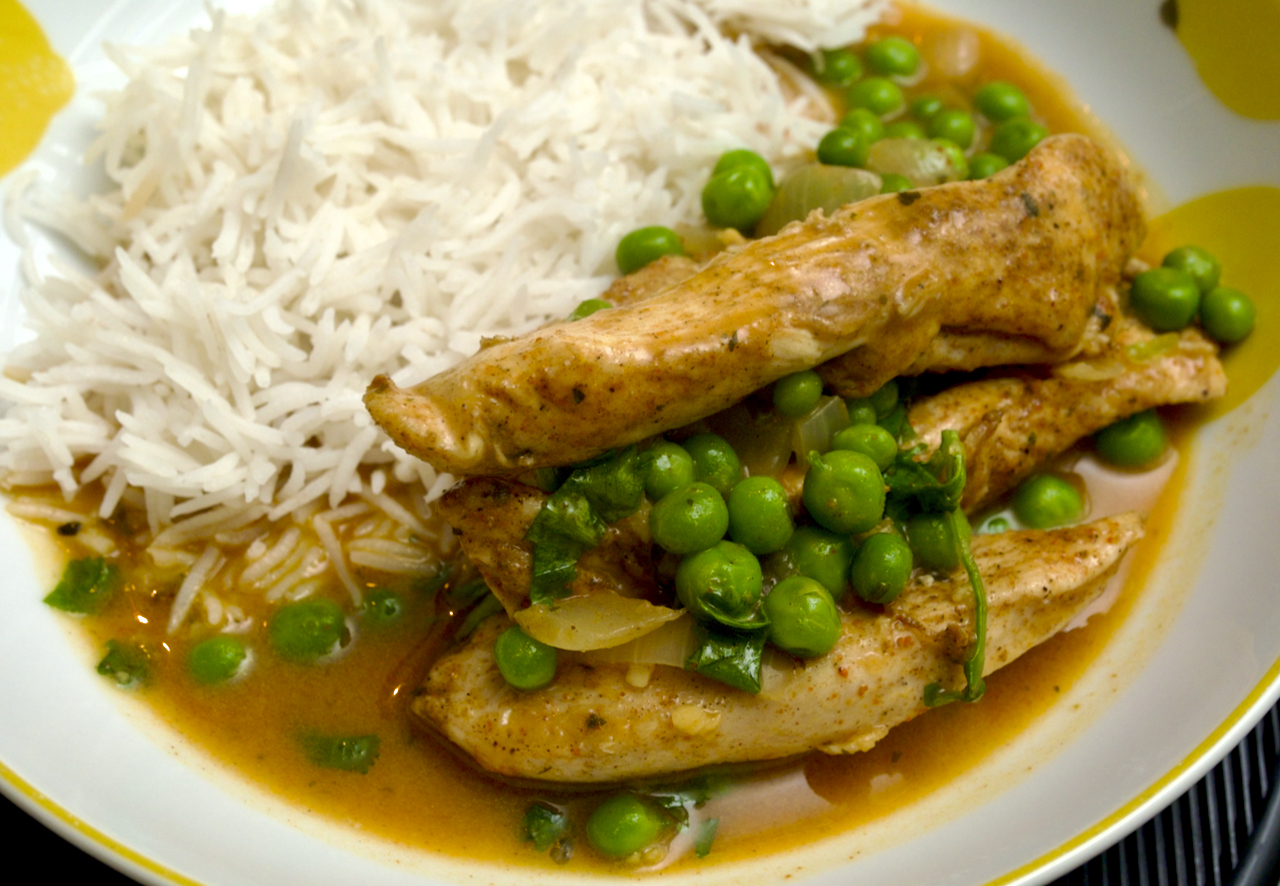
This is a very tasty curry despite the short list of ingredients. Even though it’s simple, it’s perfect for a weeknight and not too spicy for children or other sensitive palates.

Wine Suggestion: We usually find most Pinot Grigio’s a bit nondescript for our tastes, but have been exploring and enjoying a number from Trentino and Friuli recently and think they go quite well with mild curries like this. Zuani make their Sodevo Pinot Grigio in a fairly standard way, though from well tended and lower yielding vineyards. The big difference is both the soils, and keeping it on the fine lees after fermentation. Look out for this last step and you should find a wine that stands out amongst the sea of ordinary Piont Grigios.

Easiest ever chicken curry – serves 4

  • 2  tbsp vegetable oil
  • 2 cloves of garlic, crushed
  • 2 tsp finely grated ginger
  • 1 small onion, finely chopped
  • 500g chicken breasts, cut into strips
  • 2½  tbsp curry powder, plus an extra 2 tsp
  • 1 x 400ml full fat coconut milk
  • 375ml chicken stock
  • ½  tsp salt
  • 200ml frozen peas
  • a large handful of coriander, chopped

Sprinkle the chicken with the 2 extra tsp of curry powder and some salt and pepper.

Heat a splash of oil in a large, deep frying pan, the remove and set aside.

Add the rest of the vegetable oil to the pan and cook the garlic, ginger and onion over a medium-high heat for a few minutes. Add the 2½  tbsp curry powder and continue to cook for another 2 minutes.

Add the coconut milk and chicken stock to the pan, then simmer rapidly for about 20 minutes or until reduced and thickened. Add the chicken back in towards the end to cook it through.

Add the peas and salt to the curry and cook for 2 minutes, season again to taste and sprinkle over the coriander.

Serve with steamed basmati rice.

(Original recipe from RecipeTinEats)

Read Full Post »

Everyone loves a piece of barbecued chicken. This was has a tasty herb marinade.

Wine Suggestion: to hand a bottle of Domaine Gayda “Sphere” Chardonnay and we were pleased with the match. Southern French sunshine, organic vineyards, cooling mountains behind, limestone soils, wild ferment and aging on lees in a mix of concrete tanks and barrels.

Barbecued Chicken – serves 6

  • 3-4 tbsp olive oil
  • ½ tsp English mustard
  • 3 tbsp of chopped herbs – we used parsley chives and tarragon (you could also use thyme)
  • a little grated lemon zest
  • a squeeze of lemon juice
  • a small garlic clove, very finely chopped
  • 1 chicken, jointed

Combine the oil, mustard, herbs, lemon zest and juice, garlic and plenty of black pepper in a large bowl. Slash the chicken in a few places, then toss the pieces in the marinade and leave in the fridge for at least an hour or up to 4 hours.

Get your barbecue fired up.

Before cooking, pat away any excess oil, then seasson with salt. Grill on a moderately hot barbecue, turning often, until cooked through (best to use a meat thermometer and check for 74C). The breast pieces should take about 15 minutes on the hotter part of the barbecue and legs and wings on a cooler part for at least 25 minutes.

Transfer to a warm dish, sprinkle with a little more seasoning and leave to rest for 5-10 minutes before serving.

(Original recipe from River Cottage Everyday by Hugh Fearnley-Whittingstall, Bloomsbury, 2009.)

Read Full Post »

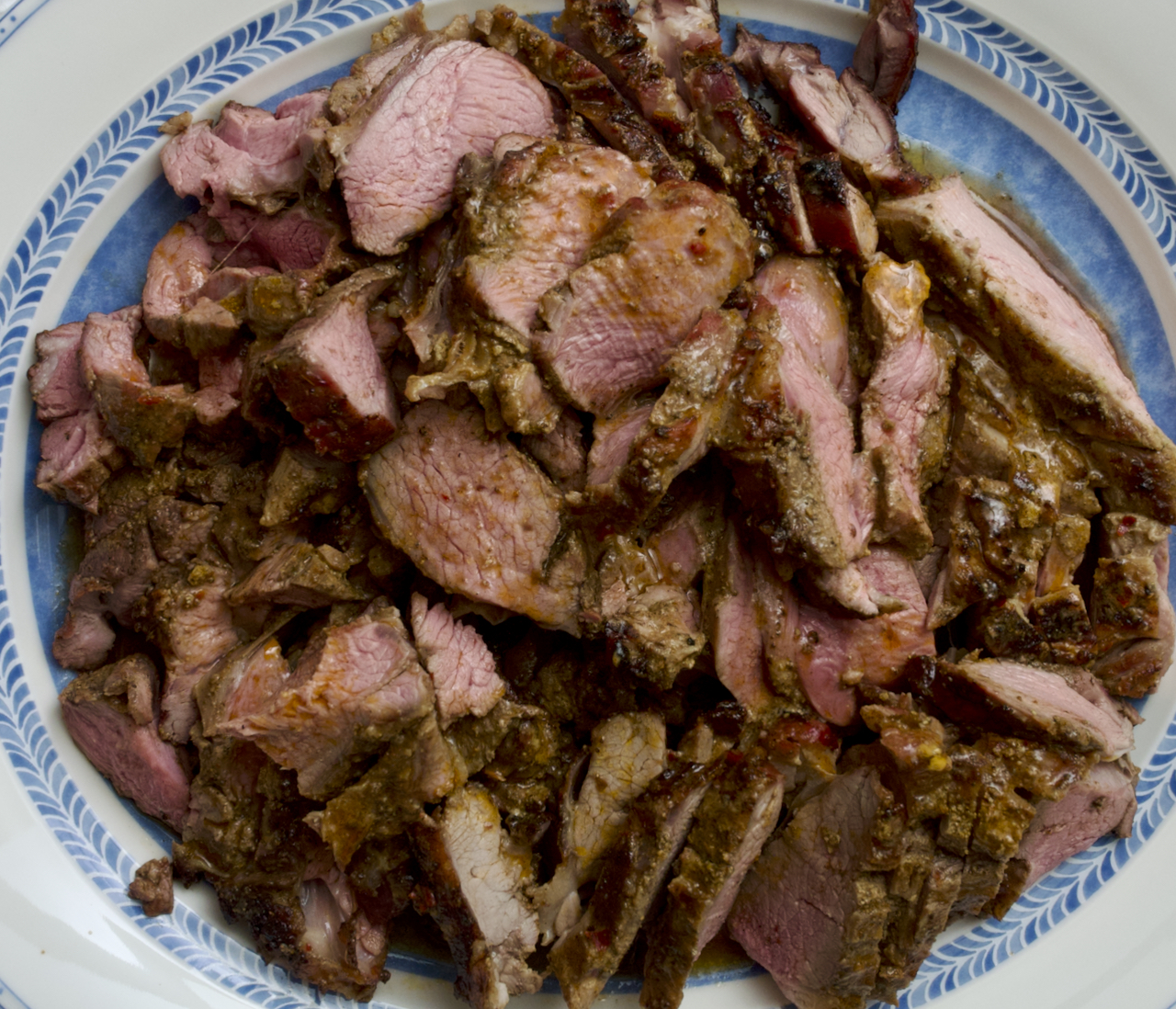
Just look at that stack of barbecued lamb … and it tasted fantastic! We can’t recommend this recipe highly enough. Served successfully with this chopped salad.

Wine Suggestion: We’re enjoying the wines from Portugal at the moment and for this chose the Quinta de la Rosa Tinto. From quite a special part of the Douro this wine has evolved over the past 30 years, ever since the winery pioneered dry Douro wines, into an elegant and sophisticated red with spices, dark fruits and a lovely minerality and freshness.

Barbecued spiced leg of lamb & harissa butter – serves 4 (or more if you get a leg of lamb the size of our one)

  • 1 tsp ground cumin
  • 1 tsp ground coriander
  • 1 tsp hot smoked paprika
  • 1 tsp sumac
  • ½ tsp ground cinnamon
  • 2 tsp ras el hanout
  • 8 tbsp Greek yoghurt
  • 1kg boneless leg of lamb, butterflied

FOR THE SPICED BUTTER:

  • 100g butter, softened
  • 1 tbsp rose harissa
  • ½ lemon, juiced
  • 1 tsp ground cumin

Make the spiced butter by mixing the butter with the harissa, lemon juice, cumin and a pinch of salt. Set aside.

Mix the spices and yoghurt with a pinch of salt and some pepper. Lay the lamb on a tray and spread the yoghurt mixture over both sides. Leave to marinate for at least 20 minutes at room temperature or chill to marinate for longer.

Get your barbecue going and wait until the coals turn ashen, then lay the lamb on the grill and cook for 15 minutes on each side for pink or longer for well done – we recommend a meat thermometer to get your barbecued meat cooked how you like it.

Lift the lamb onto a platter and spoon over the harissa butter, then leave to rest for 10-15 minutes.

Carve the lamb on a board, then serve with the butter juices spoon over.

(Original recipe by Tom Kerridge in BBC Good Food Magazine, August, 2024.)

Read Full Post »

We buy the most amazing goat from a farm in Northern Ireland where they raise the kid goats not being used for milk. We think it’s such a delicious meat and so underused. After picking up a shoulder from the farm we just had to try this Spanish stew by José Pizarro and were rewarded amply.

Wine Suggestion: If you can find some, we’d suggest trying a Douro red with this dish. They’re full of flavour and usually not shy on tannins; this dish need both body and tannin to match. Pushing the boat out a bit, but as we had company and it was a weekend we opened something special, Wine & Soul’s Pintas Character red. Made from an old-vine field blend of 30 different indigenous grapes this has bags of personality, style, depth and character (excuse the pun!).

Braised goat with aubergines – serves 6

  • 5 tbsp olive oil
  • 1.5kg goat shoulder, diced into 5cm chunks
  • 1 large onion, finely sliced
  • 2 tsp cumin seeds
  • 1 tsp coriander seeds
  • 2 cloves
  • 1 heaped tsp fennel seeds
  • 2 tsp sweet smoked paprika
  • 1 garlic bulb, halved horizontally
  • 1 tbsp tomato purée
  • 450ml red wine
  • 500ml fresh chicken stock
  • 2 aubergines, cut into 3cm cubes
  • boiled potatoes or crusty bread to serve

Heat 2 tbsp of the oil in a deep casserole dish over a medium-high heat. Season the goat meat , then add to the hot pan in batches and sear until well-browned. Set aside.

Add another tbsp of oil to the pan and gently fry the onion for 10 minutes until very soft. Add the spices and garlic and cook for a couple of minutes.

Return the meat to the pan and add the tomato purée and red wine. Let it bubble up for a few minutes, then add the stock. Cover and bring to the boil, then turn the heat down low and cook gently for 2½ -3 hours.

Heat 2 tbsp of oil in a large frying pan and brown the aubergine all over. Season, then add to the goat and continue cooking for another 30 minutes. The meat should now be very tender and almost falling apart.

Serve with boiled potatoes or crusty bread.

(Original recipe from The Spanish Home Kitchen by José Pizarro, Hardie Grant Books, 2022.)

Read Full Post »

A dish full of all the flavours we love!

Wine Suggestion: Choose a white with a definite Mediterranean aspect. We opened a bottle of Domaine Ventenac’s “Dissidents” Cassandre. Made from Vermentino which is found in quite a few countries around Europe under a load of names. This was dry and tasting of grapefruits with hints of apricot and a really nutty, textural oiliness that matched the olives in this dish. Sunshine with substance in a glass.

Chicken with olives and lemon – serves 3

  • 6 skin-on chicken thighs
  • 2 onions, chopped
  • 1 lemon, thinly sliced
  • a good pinch of saffron strands
  • a handful of green olives
  • a handful of coriander, roughly chopped
  • olive oil

FOR THE SPICE PASTE:

  • 3 cloves of garlic
  • a few pinches of smoked paprika
  • 1 tbsp ground turmeric
  • 1 tsp cumin seeds
  • olive oil

Make the spice paste first by crushing the garlic with a good pinch of sea salt using a pestle and mortar. Add the smoked paprika, turmeric and cumin seeds and grind to a paste, then mix in a couple of tbsps of olive oil or enough to make a paste that will coat the chicken.

Put the chicken thighs in a bowl, then add the spice paste and toss to coat. Cover with cling film and leave to marinate at room temperature for an hour or overnight in the fridge.

Heat a splash of olive oil in a large, shallow pan. Add the onions and soften a little, before adding the chicken thighs and cooking until coloured lightly on both sides.

Add the lemon to the pan and enough water to come halfway up the chicken pieces. Stir in the saffron, season well, then cover with a lid and simmer for 25 minutes, or until the chicken is cooked through. Add the olives and coriander and serve.

(Original recipe from The Kitchen Diaries II by Nigel Slater, Fourth Estate, 2012.)

Read Full Post »

This recipe comes from Rick Stein’s Simple Suppers and it is indeed a simple and easy recipe. Ready in minutes and deeply satisfying!

Wine Suggestion: the creamy beans need a buttery Chardonnay, and likewise this works with the prawns too. Pick you own style, or whatever is at hand. For us we were lucky to have Au Bon Climat’s Santa Barbara County Chardonnay which is Californian sunshine in a glass tempered by the cooling breezes and fogs of this part of the world. Full and deep, but fleet of foot and minerally fresh.

Garlic & chilli prawns on puréed butter beans – serves 2

FOR THE BUTTER BEAN PURÉE:

  • 1 tbsp olive oil
  • 1 clove of garlic, chopped
  • 400g tin of butter beans, drained
  • juice of ½ lemon

FOR THE PRAWNS:

  • 2 cloves of garlic, peeled
  • a handful of flatleaf parsley
  • 50ml olive oil
  • ¼ tsp chilli flakes
  • 225g peeled raw prawns

Heat the oil for the butterbeans in a pan and add the garlic. Cook for a minute, then add the butter beans and cook for 3-4 minutes or until warmed through. Add the lemon juice and a couple of tablespoons of water, then whizz in a blender or food processor. Return to the pan and keep warm, you might need to add a little more water if it’s too thick.

Chop the garlic and parsley for the prawns together to get a coarse paste. Pour the oil into a frying pan and when hot, add the chilli flakes and garlic mixture. Cook over a gently heat for a minute until sizzling, then increase the heat a little, add the prawns and stir-fry for a few minutes or until pink and cooked through.

Divide the purée between two warm bowls and spoon the prawns and garlicky oil over the top.

(Original recipe from Rick Stein’s Simple Suppers, BBC Books, 2023.)

Read Full Post »

We love barbecuing our food and when a bunch of plums came our way just had to give this a go. We made too much plum sauce and it was lovely at breakfast with our granola, and then with some sausages another night as well. You can make both sauces in advance.

Wine suggestion: we think this worked really well with Domaine Ventenac’s “les Dissidents” Paria, which is a charming Grenache from the south of France near Carcassonne. Bright and minerally, this is perfectly ripe, but steps lightly with a mineral freshness and effortless weight.

Tahini lamb chops with plum sauce – serves 4 to 6

  • 2 racks of lamb, divided into 12-14 single chops
  • 100g lamb’s lettuce or baby chard or similar
  • 4 plums, halved and stones removed

FOR THE TAHINI BBQ SAUCE:

  • 150g tahini paste
  • 1 clove of garlic, crushed
  • 2 salted anchovies, chopped
  • 1 tsp pul biber
  • 2 tbsp pomegranate molasses
  • 100ml water, plus more if needed
  • 1 tsp flaky sea salt

FOR THE PLUM SAUCE:

  • 6 plums, cut into eighths and stones removed
  • 50g sugar
  • 1 clove of garlic
  • 1 whole dried chilli, cracked in half and seed discarded
  • 1 tsp Szechuan pepper
  • 1 bay leaf
  • 3 tbsp pomegranate molasses
  • ½  tsp flaky sea salt
  • 1 tbsp red wine vinegar

Put all of the tahini bbq sauce ingredients into a small food processor and blitz to a smooth thick paste, you might need a little water.

Put the plum wedges, sugar, garlic, spices, bay leaf and pomegranate molasses into a small frying pan, place over a high heat and bring to the boil. Cook for 5 minutes until the plums soften and start to fall apart, then remove from the heat and stir in the salt and vinegar.

When the barbecue is ready to cook on. Brush both sides of the chops with about half of the bbq sauce. Grill the chops for a couple of minutes, then turn them and brush with more sauce. Grill for another 2 minutes then turn and baste again. Repeat this until the chops have been cooking for 6 minutes on each side, then remove and set aside.

Put the plum halves on the barbecue, cut-side down. Grill for about a minute to just warm a little, then remove.

Scatter the lettuce over a large platter and top with the chops and plums. Serve with the plum sauce on the side.

(Original recipe from Chasing Smoke by Sarit Packer and Itamar Srulovich, Pavilion, 2021.)

Read Full Post »

« Newer Posts - Older Posts »