Feeds:
Posts
Comments

Archive for the ‘Food’ Category

Crab linguine with chilli & parsley

A fresh tasting seafood pasta dish.

Wine Suggestion: We’re not huge fans of Prosecco generally as there’s an awful lot of very ordinary stuff being sold. However, if you have a good one to hand, like the Nino Franco Rustico, then you’ve found your crab linguine match.

Crab Linguine with Chilli & Parsley – serves 4

  • 400g linguine
  • 4 tbsp olive oil
  • 1 red chilli, deseeded and chopped
  • 2 cloves of garlic, finely chopped
  • 1 whole cooked crab, picked, or about 100g brown crabmeat and 200g fresh white crabmeat
  • 5 tbsp white wine
  • a small squeeze of lemon
  •  a large handful parsley leaves, very finely chopped

Bring a large pot of salted water to the boil and cook the linguine for a minute less than indicated on the pack.

Meanwhile, gently heat 3 tbsp of olive oil with the chilli and garlic in a large wide pan. Cook the chilli and garlic very gently until they start to sizzle, then turn up the heat and add the white wine. Simmer until the wine and olive oil come together. Then take off the heat and add the brown crabmeat, using a wooden spoon to mash it up to make a thick sauce.

When the pasta is ready, turn off the heat. Place the crab sauce over a very low heat and use a pair of kitchen tongs to lift the pasta from the water into the sauce.

Remove the pan from the the heat and add the white crabmeat and parsley to the pasta with a sprinkling of sea salt. Stir everything together, adding a drop of pasta water if needed to loosen. Taste for seasoning and add a small squeeze of lemon. Serve immediately drizzled with the remaining oil.

(Original recipe from BBC Good Food)
Read Full Post »

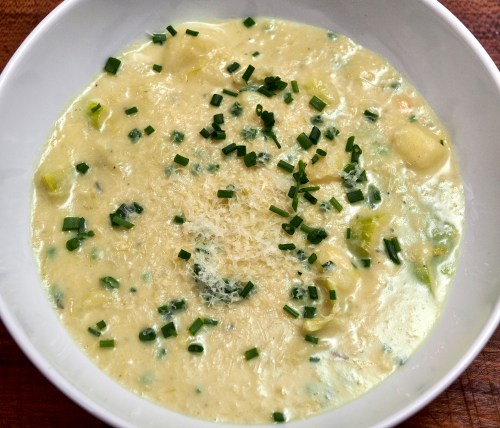
Potato & leek soup with smoked Gubbeen cheese & chives

This is no ordinary leek and potato soup but rich and complex with a subtle smoky flavour from the cheese. We’ve been cooking from Gill Meller’s latest book, Time, and the recipes are stunning.

This is the kind of soup that goes well with Northern Irish Wheaten Bread.

Leek & Potato Soup with Smoked Gubbeen & Chives – serves 4

  • 1 litre of vegetable stock or chicken stock
  • 3 floury white potatoes (about 350g), peeled and cut into 1-2cm cubes
  • 3 medium-large leeks, sliced into 1cm rounds
  • 25g butter
  • 1 tbsp olive oil
  • 2 shallots or 1 onion, thinly sliced
  • 2 garlic cloves, peeled and thinly sliced
  • 2 or 3 thyme sprigs, leaves stripped
  • 100ml double cream
  • 50g smoked Gubbeen (Gill suggests smoked Cheddar or goat’s cheese), grated, plus extra to serve
  • a small bunch of chives, finely chopped

Bring the stock to the boil in a large heavy pan. Add just a third of the potato, bring the stock back to a simmer and cook, uncovered, for 6-8 minutes, or until the potato cubes are tender. Add a third of the leeks and cook for a few minutes to soften, then drain the vegetables in a colander set over a bowl to catch the stock.

Return the pan to a medium heat and heat the butter and olive oil. When bubbling, add the onion, garlic and thyme leaves. Cook, stirring, for 4-5 minutes, then add the remaining leeks and potato to the pan, seasoning well with salt and pepper. Cook gently for 3-4 minutes, then add the reserved stock and bring to a gentle simmer.

Cook the soup for about 15 minutes or until the leeks and potatoes are tender. Remove from the heat and blend until smooth.

Return the soup to the pan. Add the cooked leeks and potatoes from earlier, along with the cream, grated cheese and chopped chives. Season again, then put back on the heat and bring slowly to a simmer. Stir well, remove from the heat, and stand for 5 minutes before serving. Garnish with some extra cheese, chives and seasoning.

(Original recipe from Time: A Year & a Day in the Kitchen by Gill Meller, Quadrille, 2018.)

Read Full Post »

Cheeseboard soufflé

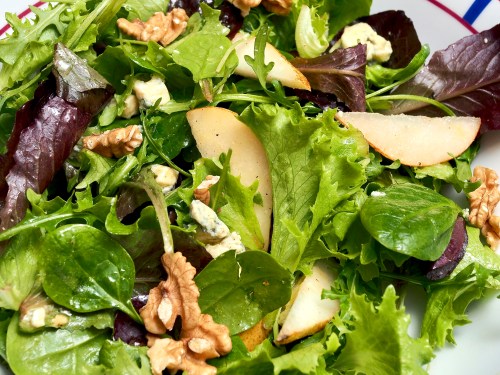
Another useful recipe for all the leftover cheese following the holidays. The soufflé is deliciously light and the pear and walnut salad (scroll down for recipe) is the perfect accompaniment.

Wine Suggestion: a classic, and to our mind excellent wine match is bubbly, and at the moment we’ve been exploring the different Cremant’s found around France. Tonight it was the Domaine Manciat-Poncet Cremant de Bourgogne from the Maçonnais (chosen and provided by our friend Michelle), and a good choice indeed.

Cheeseboard Soufflé – serves 4

  • 50g butter
  • 25g plain flour, plus extra for dusting
  • 200ml milk
  • 300g hard cheese, cut into chunks (we used Comté, Cheddar & Parmesan)
  • 100ml double cream or crème fraîche
  • 4 eggs, separated
  • grating of nutmeg
  • pinch of cayenne pepper

Heat the oven to 200C/180C fan/gas 6.

Melt the butter in a saucepan. Brush a 20cm soufflé dish with a little of the melted butter, then dust with flour.

Stir the rest of the flour into the melted butter in the saucepan, then bubble together for 1 minute. Gradually pour in the milk to make a white sauce, then add two-thirds of the cheese and continue to stir over the heat to melt.

Leave to cool slightly, then mix in the rest of the cheese, the cream and the egg yolks. Season and add the nutmeg and cayenne pepper.

In a clean bowl, whisk the egg whites until stiff. Fold into the cheese sauce, then carefully transfer into the soufflé dish. Bake for 25 minutes or until puffed up and golden.

Serve with the winter salad below.

Winter seasonal salad

Pear, blue cheese & walnut salad – serves 4

  • 110g bag of mixed salad leaves
  • 100g blue or goat’s cheese, crumbled
  • 50g shelled nuts – we used walnuts
  • 1 pear, sliced
  • 3 tbsp of salad dressing

Toss the salad ingredients together. Once the soufflé is cooked, dress the salad and serve.

Cheese board soufflé 2

Read Full Post »

Wheaten bread

A Northern Irish classic, wheaten bread is also the classic plain soda bread from further south in Ireland. As Jules grew up near Belfast and went to the same school as Trish Deseine (who knew?), our inspiration for this recipe, we call it “Wheaten”. Whatever you call it, this is an Irish classic and intrinsic to Irish food culture. So simple to make, tasty and versatile, this should be part of any cooks repertoire. We like it with a bowl of soup for lunch and toasted for breakfast the day after.

Northern Irish Wheaten Bread – makes 1 loaf

  • 250g plain flour
  • 250g wholemeal flour
  • 1 barely round tsp baking soda
  • 1 tsp salt
  • 450-475ml buttermilk

Preheat the oven to 225C.

Mix the flours in a large, wide bowl, add the salt and sieved baking soda. Run the mixture through your fingers to distribute everything evenly.

Make a well in the centre and pour in the buttermilk. Stir the mixture in circles with outstretched fingers starting from the centre of the bowl and working outwards. It shouldn’t take long for the dough to almost come together. Give it a very quick knead in the bowl to make sure all the flour is incorporated.

Turn the dough out onto a floured work surface.

Sprinkle a little flour on your hands and gently tidy the dough into a round and transfer to an oven tray. Tuck the edges underneath with your hands, then gently pat with your fingers into a loaf about 4cm thick.

Cut a deep cross into the bread and prick the centre of the four sections with a fork.

Bake in the oven for 15 minutes, then turn the heat down to 200C for a further 15minutes. Turn the bread upside down and continue to cook for 5-10 minutes or until done – you can tell as it will sound hollow when tapped on the bottom. Cool on a wire rack.

(Original recipe from Trish Deseine’s ‘Home: Recipes from Ireland, Hatchette Livre, 2015.)

Read Full Post »

Penne baked with three cheeses

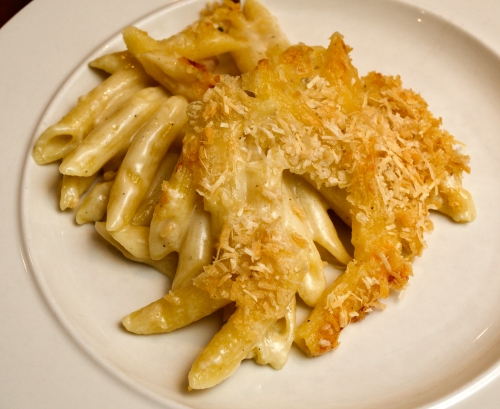
There is a never-ending supply of leftover cheese in our fridge but never more so than at this time of year. This is a super-easy pasta dish which will help to use up the cheeseboard leftovers.

Penne baked with three cheeses – serves 2

  • 200g penne
  • 25g butter
  • 25g plain flour
  • 350ml milk
  • 75g hard cheese e.g. cheddar/gruyère, grated
  • 50g blue cheese e.g. stilton/gorgonzola/roquefort, crumbled
  • a handful of breadcrumbs (we used panko)
  • 1 tbsp grated Parmesan

Heat the oven to 200C/Fan 180C/Gas 6.

Cook the pasta until al dente then rinse under cold water to stop it cooking any further and drain.

Melt the butter in a saucepan, then stir in the flour and cook for a couple of minutes. Gradually stir in the milk, stirring continuously, to make a white sauce. When the sauce has thickened and is starting to bubble, add the hard and blue cheese and stir until melted. Season to taste, then mix with the cooked pasta and pour into an ovenproof dish.

Mix the breadcrumbs and Parmesan together and sprinkle over the top, then bake in the oven for about 20 minutes or until golden and bubbling.

(Original Recipe from BBC Olive Magazine, December 2009.)

Read Full Post »

Smoked salmon & crab timbales with cucumber parpadelle

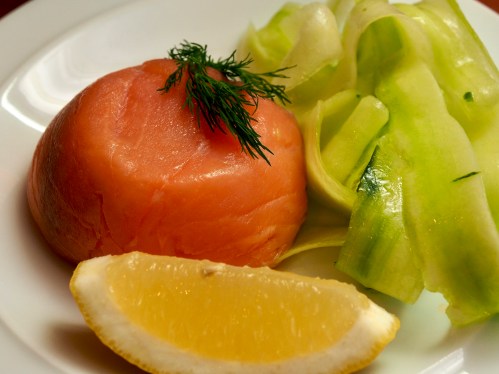
This luxurious starter of smoked salmon timbales filled with creamy crab can be made up to a day ahead. You do need to find big slices of smoked salmon as you need to completely line the moulds to stop the filling leaking out.

Wine Suggestion: as befits the occasion these go great with bubbly. We love good Champagne, but have recently been sampling various Cremants from around France and enjoying the variation and character each brings. With this we served the Manciat Poncet Cremant de Bourgogne which our friend brought along to dinner.

Smoked salmon timbales with cucumber pappardelle – serves 8

  • 12 large slices of smoked salmon
  • 225g full-fat soft cheese
  • 100-150ml sour cream
  • 100g white crab meat
  • 2 tsp chopped fresh dill, plus some sprigs to garnish
  • lemon wedges, to garnish

FOR THE CUCUMBER PAPPARDELLE:

  • 1 tbsp caster sugar
  • finely grated zest and juice of 1 lemon
  • 150ml olive oil
  • a few black peppercorns
  • 1-2 tsp white wine vinegar
  • 1 large cucumber peeled

Line eight 100ml ramekins with the smoked salmon making sure there are not gaps and hanging it well over the sides.

Beat the cheese to soften and mix in 100ml soured cream – loosen with a little more cream if still too firm to spoon.

Pick over the crab and remove any tiny bits of shell. Stir into the cheese with the chopped dill and season. Spoon into the moulds and fold over the overhanging salmon, then cover with cling film and chill in the fridge for 2 hours (you can do this up to a day ahead).

Make the dressing for the cucumber. Put the sugar and 3 tbsp of water int a small saucepan and bring quickly to a simmer. Add the lemon zest and juice, oil and peppercorns, then taste and add 1-2 tsp of vinegar. Season with salt. Return to the boil, then cool (this can also be made up to a day ahead).

Use a swivel peeler to shave long strips of cucumber until you get to the seeds. Discard the centre. Don’t do this any more than 30 minutes beforehand or it will go soggy.

To serve, unwrap and run a knife between the salmon and the ramekins to pop them out onto plates. Strain the dressing through a sieve, mix a few tablespoons with the cucumber and arrange next to the timbales. Garnish with lemon wedges and dill and drizzle over some more dressing.

(Original recipe by Gary Rhodes in BBC Good Food Magazine, December 2004.)

Read Full Post »

Chickpea and spinach curry

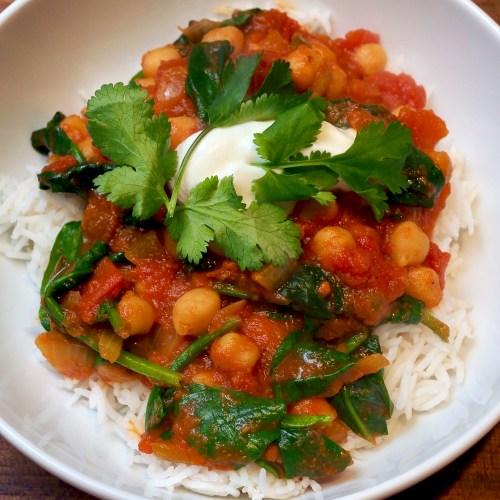
We don’t know about you lot but our bellies are crying out for a rest and we haven’t even got to New Year’s yet. This is a lightweight curry suitable for veggies and vegans (if you don’t serve with yoghurt) and it’s also substantial enough to serve as it is without any rice. The spices are very gentle as confirmed by our 5 year old who has developed a recent aversion to anything ‘too spicy!!’.

Chickpea & spinach curry – serves 4

  • 1 tbsp vegetable oil
  • 2 medium onions, finely chopped
  • 6 garlic cloves, finely grated
  • 6cm piece of ginger, finely grated
  • 2 long green chillies, finely chopped
  • 1 tsp ground cumin
  • 1 tsp ground coriander
  • 2 tsp garam masala
  • 1 tsp ground turmeric
  • 1 tsp sea salt flakes
  • 2 tbsp tomato purée
  • 2 x 400g tins chopped tomatoes
  • 400ml vegetable stock
  • 2 x 400g tins chickpeas, rinsed and drained
  • 150g baby spinach
  • 4 tbsp natural yoghurt (optional to serve)
  • Sprigs of coriander (to serve)

Heat the oil in a large non-stick pan over a high heat. Add the onions and cook for 5 minutes or until starting to brown, add a splash of water if they stick.

Add the garlic, ginger and chillies and cook for a couple of minutes. Add the spices and salt and stir for a minute, then add the tomato purée and cook for another minute.

Add the tinned tomatoes, stock and chickpeas, then bring to a simmer and cook for 20-30 minutes or until the sauce thickens.

When ready to serve, stir through the spinach and cook briefly until just wilted.

Divide between bowls (on top of some steamed rice if you like) and top with a spoon of yoghurt and some coriander.

(Original recipe from Lose Weight for Good by Tom Kerridge, Absolute Press, 2017.)

Read Full Post »

Buttered Sprouts with Chestnuts & Bacon

Sprouts are not just for Christmas and indeed should be eaten throughout the frosty months in our opinion. We particularly like this recipe with butter, bacon bits and chestnuts – a sprout-lovers dream!

Buttered sprouts with chestnuts & bacon – serves 8 (easily halved)

  • 1.25kg Brussels sprouts, trimmed
  • 6 rashers streaky smoked bacon cut into bit-sized pieces or cubes of pancetta
  • 200g vacuum-packed chestnuts
  • 50g butter

Bring a large pan of salted water to the boil and tip in the sprouts. Return to the boil and cook for 5 minutes, then drain and run under the cold tap until cold, then drain again.

Heat a large frying pan, add the bacon and gently fry for 10 minutes until crispy. Scoop the bacon out of the pan with a slotted spoon and leave the fat behind, then add the chestnuts and fry over a high heat for about 5 minutes until they have darkened in places, then tip out of the pan.

Put the sprouts into the frying pan with a splash of water, then cover the pan with a lid and finish cooking over a medium heat for about 5 minutes or until just tender. Remove the cover, turn up the heat, then add most of the butter and sauté the sprouts for another 2 minutes. Tip in the bacon and chestnuts, season generously, then serve with the last bit of butter on top.

(Original recipe from BBC Good Food Magazine, December 2009.)

Read Full Post »


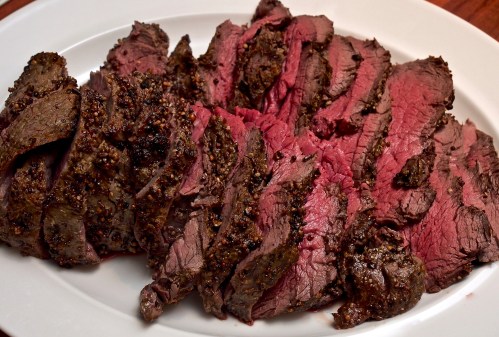
Spiced Roast Beef with Red Wine Gravy

Fillet of beef is not a cut we usually go for but we thought we’d try it as it seems fittingly festive and a bit extravagant. This is a pricey cut but it melts in the mouth and cuts out so beautifully.

Wine Suggestion: This is the type of dish that deserves something extra special to accompany it so we dipped into our cellar to revisit the Chateau Capbern Gasquetton 2009 and while still very youthful was a great match. Other Cabernet Sauvignon wines and blends would be our first choice, but if you’re looking for something different we also think a good cru from Beaujolais, like Domaine Rochette’s Morgon, would go alongside this just as well.

Spiced roast beef with red wine gravy – serves 6

  • 2 tbsp mixed peppercorns
  • 2 tbsp mustard seeds
  • 2 tsp fennel seeds
  • 1.5kg fillet of beef
  • 2 tbsp olive oil
  • 1 tbsp wholegrain or English mustard
  • 3 red onions, skins left on, thickly sliced into rounds
  • a few thyme leaves, to serve (only if you have them)

FOR THE GRAVY

  • 2 tbsp olive oil
  • 1½-2 tbsp cornflour
  • 2 beef stock cubes
  • 3-4 tbsp redcurrant jelly
  • 400ml red wine

Up to 2 days beforehand you can crush the peppercorns and seeds together using a pestle and mortar. Brush the beef all over with the mustard, then roll in the peppercorn mixture to coat. Cover and chill.

Remove the beef from the fridge 2 hours before you want to start cooking it to allow it to come to room temperature.

Heat the oven to 200C/180C Fan/Gas 6.

Heat the oil in a pan big enough to hold the beef and brown it all over, seasoning with salt.

Scatter the onions over the base of a roasting tin and set the beef on top. Roast for 20 minutes for rare, 25 minutes for medium, and 35 minutes for well-done. You need your instincts a bit here – we like our beef rare but our fillet was kind of fat rather than long and thin and so it took 30 minutes to get it cooked just how we like it. If you have a meat thermometer this is where it excels, and they aren’t expensive so are a very useful addition to any kitchen.

Lift the beef out of the tin and rest on a warm platter, covered with foil, for about 30 minutes.

Put the roasting tin onto the hob and stir in the oil, cornflour and crumbled stock cubes. Stir in the jelly, then gradually add the wine and 400ml boiling water, scraping the sticky bits from the bottom of the tin. Simmer for 15 minutes until reduced a bit. Season, then sieve into a clean pan to keep warm, discard the onions.

Slice the beef, scatter over some thyme leaves (if using) and serve with the gravy.

(Original recipe from BBC Good Food)

Read Full Post »

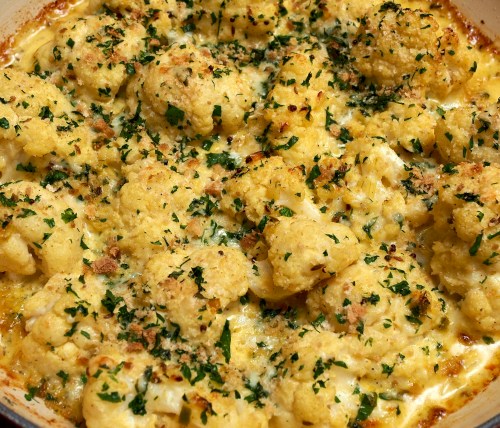
Mustardy Cauliflower Cheese

We love cauliflower cheese and are rarely tempted to tamper with the traditional dish of steamed cauliflower smothered in cheesy béchamel sauce and well-browned under the grill. We suspected we might be safe however in the hands of Yotam Ottolenghi. This version is spicy and has loads of flavours going on. We thought it would be great with roast chicken or lamb or something off the barbecue.

Yotam helpfully suggests that you can make this up to the point of baking and keep in the fridge for up to a day.

Mustardy Cauliflower Chicken – serves 4

  • 1 large cauliflower, broken into roughly 4cm florets
  • 30g unsalted butter
  • 1 small onion, finely diced
  • 1½ tsp cumin seeds
  • 1 tsp medium curry powder
  • 1 tsp mustard powder
  • 2 green chillies, deseeded and finely chopped
  • ¾ tsp black mustard seeds
  • 200ml double cream
  • 120g mature Cheddar, coarsely grated
  • 15g fresh white breadcrumbs
  • 5g parsley, finely chopped

Preheat the oven to 180C fan.

Steam the cauliflower for about 5 minutes or until starting to soften. Remove and set aside to cool a bit.

Put the butter into a 24cm round casserole dish and put over a medium heat. Sauté the onion for about 8 minutes or until golden. Add the cumin seeds, curry powder, mustard powder and chillies and cook for 4 minutes, stirring occasionally. Add the mustard seeds, cook for another minute, then pour in the cream. Add 100g of the Cheddar and ½ tsp of salt, then simmer for 2-3 minutes to thicken. Add the cauliflower, stir gently, and simmer for another minute before removing from the heat.

Mix the rest of the Cheddar with the breadcrumbs and parsley, then sprinkle over the cauliflower. Wipe the inside of the pan clean to stop the cream from burning and place in the oven. Bake for about 8 minutes or until the sauce is bubbling and the cauliflower is hot. Turn the grill to high and grill to brown the top for 4 minutes. Remove from the heat and allow to cook for 5 minutes before serving.

(Original recipe from Ottolenghi Simple by Yotam Ottolenghi with Tara Wigley & Esme Howarth, Ebury Press, 2018.)

Read Full Post »

Spiced Garlic Savoy Cabbage

It’s nice to do something different with greens now and then. This rich, garlicky and full of flavour cabbage dish goes really well with lamb. We also liked it served with a few other veggie dishes. You could of course use other varieties of green cabbage.

Spiced Garlic Savoy Cabbage – serves 4 to 6

  • 1 large head of Savoy cabbage, halved, core removed and leaves cut into ribbons
  • 2 tsp cumin seeds
  • 2 tsp coriander seeds
  • 2 tsp mustard seeds
  • 2 tsp nigella seeds
  • 1-2 tsp nigella seeds
  • 1 tsp chilli flakes
  • 1 whole head of garlic, cloves bashed and thinly sliced
  • 50g unsalted butter, cut into cubes
  • 6 tbsp Greek yoghurt

Wash and drain the cabbage but don’t bother to shake off the water as this will be used to steam it.

Heat a large frying pan over a medium-high heat, add the spices and dry-roast for a minute, shaking, until they smell aromatic and are starting to brown.

Add enough olive oil to just coat the base of the pan. Add the garlic and fry for a minute, then put half the cabbage into the pan. Season with a little salt and pepper and stir well before adding the rest of the cabbage and seasoning lightly again. Drizzle over a little oil, then cover with a lid and cook for 3-4 minutes or until tender.

Stir the cabbage well to coat in the spices, then add the butter and stir. Check the seasoning, then take the pan off the heat and stir through the yoghurt.

(Original recipe from Feasts by Sabrina Ghayour, Mitchell Beazley, 2017.)

Read Full Post »

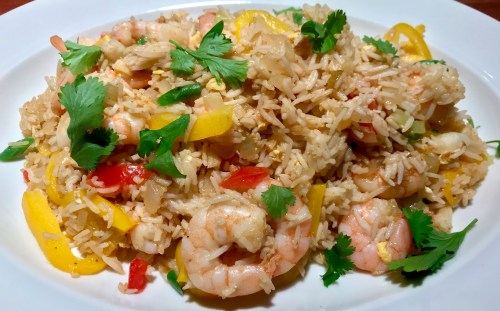
Thai Fried Rice - Khao Pad

We have an Australian cookbook called Thai Cooking that was originally published in 1994. Jono remembers it from home in Melbourne and we know other members of his family who also have a well-used copy. After much searching we managed to pick up a second-hand copy in Books for Cooks in Fitzroy. It’s full of reliable dishes like this simple Thai fried rice. You could have it as a side dish but we prefer to eat a big bowl by itself with some sriracha hot chilli sauce (our own addition!).

Thai Fried Rice – Khao Pad – serves 4

  • 100ml vegetable oil
  • 3 medium onions, finely chopped
  • 3 cloves of garlic, finely chopped
  • 1 tsp sugar
  • 1 tbsp Thai red curry paste
  • 500g cooked peeled prawns, beef, pork, chicken or ham (any combination)
  • 3 eggs, lightly beaten
  • 880g cooked rice, cooked the day before and chilled
  • 2 tbsp fish sauce
  • 1 pepper, sliced
  • 50g green beans, finely sliced
  • 1 tomato, chopped
  • 2 tbsp chopped scallions
  • coriander leaves (to garnish)
  • sriracha hot chilli sauce, to serve (optional)

Heat the oil in a large wok or frying pan over a medium heat. Stir-fry the onions and garlic until the garlic is golden. Add the sugar and stir to dissolve, then stir in the curry paste. Stir in the prawns and meat pieces and push to one side.

Add the beaten eggs. Wait to let them set a little, then slightly scramble.

Add the rice. Stir-fry until heated through. Sprinkle with fish sauce, then add the pepper, green beans, tomato and spring onions. Stir-fry briefly to heat through but don’t overcook.

Taste and add some extra fish sauce or sugar if needed. Serve garnished with coriander leaves and a drizzle of sriracha hot chilli sauce if that’s your thing.

(Original recipe from Thai Cooking Class by Sami Anuntra Miller & Patricia Lake, Bay Books, 1994.)

Read Full Post »


Roasted Beetroot Salad with Burnt Chestnuts

We can’t help but associate chestnuts with December when everyone’s in holiday mood. This side dish would complement any banquet and would even work well on the big day as an alternative to carrots and sprouts (not that there’s anything wrong with them). Another great idea from Sabrina Ghayour.

Roasted Beetroot Salad with Burnt Chestnuts, Tahini Yoghurt & Herb Oil – serves 4

  • 1.5kg beetroot, roasted and peeled, quartered (roast beetroots wrapped in foil for between 45 to 90 minutes or until soft when pierced with a knife)
  • 200g vacuum packed cooked chestnuts

FOR THE YOGHURT SAUCE

  • 3 tbsp tahini
  • 100g Greek-style yoghurt
  • 2-3 tbsp olive oil
  • 1-2 tbsp warm water

FOR THE HERB OIL

  • 15g dill
  • 15g coriander
  • a good squeeze of lemon juice
  • finely grated zest of 1 lemon
  • 5 tbsp olive oil

TO GARNISH

  • toasted sesame seeds
  • toasted nigella seeds

Arrange the beetroot quarters over a large platter.

Heat a large frying pan over a high heat, then dry fry the chestnuts for a couple of minutes on each side or until slightly blackened. Arrange the chestnuts on the platter with the beetroot.

Make the herb oil by pouring boiling water into a bowl and immersing the dill and coriander in it. Leave to blanch for 1 minutes before draining and then cool the herbs by running under cold water.

Blitz the herbs in a blender with the squeeze of lemon juice, the lemon zest, olive oil and some salt and pepper. Blend to a smooth mixture, adding more oil to loosen if needed. Adjust the seasoning and set aside.

Combine the ingredients for the yoghurt sauce together and add enough warm water to make a smooth sauce. Drizzle the yoghurt sauce over the beetroot. Spoon over the herb oil and sprinkle with the toasted seeds to garnish.

(Original recipe from Feasts by Sabrina Ghayour, Mitchell Beazley, 2017.)

Read Full Post »

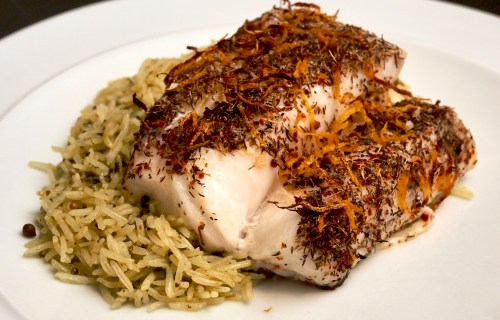
Roasted Cod with Wild Thyme & Pul Biber

Thick pieces of cod look so pretty when scattered with dried herbs and chilli flakes. Also an opportunity to use our new fish bone tweezers – interesting what excites us as we get older! This is a simple but very tasty idea from Sabrina Ghayour’s book ‘Feasts’.

We served this with some rice, greens and lemon wedges for squeezing over.

Wine Suggestion: this dish begs for a Greek Assyrtiko from the island of Santorini. A white that should always have a savoury profile, stony minerality and citrus freshness and a complimentary nature with the thyme and Aleppo pepper. If you’re fortunate to find one with “Nykteri” mentioned on it then this should be just as fresh as it is picked at night, and yet with a few months in oak fuller and deeper in flavour.

Roasted Cod Loins with Wild Thyme & Pul Biber – serves 4

  • 4 cod loins (about 200g each)
  • garlic oil
  • 4 tsp dried wild thyme
  • 2 tsp pul biber chilli flakes (Aleppo pepper)
  • finely grated zest of 2 unwaxed lemons

Preheat the oven to 220C/200C Fan/Gas 7.

Line a baking tray with baking paper.

Put the fish fillets onto the paper and coat each piece generously with garlic oil. Sprinkle over the wild thyme, pul biber, lemon zest and plenty of sea salt flakes and black pepper.

Roast for 8-12 minutes depending on how thick your fish is, or until cooked through. Serve immediately.

(Original recipe from Feasts by Sabrina Ghayour, Mitchell Beazley, 2017.)


Read Full Post »

Veg Stew with saffron, curry & parmesan cream

It’s not too often that we taste something that is nothing like anything we’ve had before but that’s what happened with this dish. A deeply savoury, packed with umami flavours, and very satisfying veggie dish. We were a bit suspicious of the Parmesan cream but it’s exactly what the stew needs to enrich it. Great stuff!

Wine Suggestion: This is a great match for a dry Oloroso Sherry with it’s nuttiness and umami characters playing an extra chorus alongside these interesting flavours in the stew. If Sherry is not your thing look for a good northern-Rhône white; our current favourite is the Domaine Coursodon Etincelle, an unclassified Roussanne-Viognier blend that is textured, purfumed and complex.

Vegetable stew with saffron, curry & Parmesan cream – serves 4

  • 4 cloves of garlic, save one clove and finely chop the rest
  • 1 onion, diced
  • olive oil or butter for frying
  • 200g celeriac, peeled and diced into 1cm cubes
  • 3 potatoes, peeled and diced into 1cm cubes
  • a pinch of saffron
  • 2 tsp medium curry powder
  • 2 x 400g tins cherry tomatoes
  • Parmesan rind
  • 400g tin butter beans, rinsed and drained
  • 4 slices of multigrain bread
  • a handful of mixed herbs, e.g. flat-leaf parsley, basil or dill, chopped
  • 1 tbsp miso
  • 1 tsp runny honey
  • a pinch of dried chilli flakes

FOR THE PARMESAN CREAM

  • 100g mayonnaise
  • 4 tbsp finely grated Parmesan

Fry the onion in the oil or butter over a low-medium heat for 5 minutes or until soft. Add the celeriac and chopped garlic, turn up the heat and fry for a few minutes.

Add the potatoes, spices, tomatoes, cheese rind, 600ml of water and plenty of seasoning. Cover with a lid and simmer for 10-15 minutes. Add the beans and simmer for another 10-15 minutes or until the potatoes are tender.

Meanwhile, cut the garlic clove in half and rub the cut edges on the slices of bread. Sprinkle the herbs on top and fry in oil and/or butter in a frying pan until golden.

Combine the mayonnaise and Parmesan in a bowl to make the Parmesan cream.

Remove the cheese rind from the stew and season with the miso, honey, chilli flakes and check for seasoning.

Serve the stew with the fried bread and Parmesan cream on the side.

(Original recipe by Ylva Bergqvist in Olive magazine, Christmas 2018.)

Read Full Post »

Cheesy Jacket Potatoes with Sweetcorn & Roasted Peppers

Weeknight dinners in our house largely consist of dishes constructed from whatever happens to be lying in the fridge after the weekend. We rarely go shopping mid-week and consequently rarely waste food. This week we had some tinned El Navarrico Piquillo peppers which we had used in a paella. These are fabulous, but not cheap, and don’t keep for long once opened. We used them to stuff some jacket potatoes with a bit of cheddar cheese, the last of the chives in the garden and the dregs from a tin of sweetcorn leftover from sandwich filling for school lunchboxes. Serve with any salad leaves you have in the fridge drawer. Also a suitable filling for a quesadilla!

Wine Suggestion: a juicy Garnacha from Spain to match the mid-week casual dinner and the smoky Piquillo peppers

Cheesy jacket potatoes with sweetcorn and roasted peppers – serves 4

  • 4 x 200g floury potatoes – roosters work well
  • 175g mature Cheddar cheese, grated
  • 100g sweetcorn, either defrosted if frozen of drained if from a tin
  • 1 roasted red pepper (from a jar or tin), diced
  • 1 tbsp snipped chives
  • lightly dressed green salad, to serve

Preheat the oven to 200C/400F/Gas 6.

Pierce the potatoes a couple of times with a fork and rub all over with a little olive oil and salt. Bake for about 1 hour, until soft.

Taking care not to burn yourself, cut the potatoes in half. Use a spoon to scoop out the potato from the middle but don’t break the skins. Put the scooped out potato into a bowl.

Use a fork to mash the potatoes, then add 100g of the cheese with the sweetcorn and roasted pepper and mix well. Season to taste and stir in the chives.

Arrange the potato skins on a baking tray and scoop the potato mixture into them. Sprinkle over the rest of the cheese and bake for 15-20 minutes, until golden.

Serve with some extra chives over the top and a green salad on the side.

(Original recipe from Nevan Maguire’s Complete Family Cookbook, Gill Books, 2016.)

Read Full Post »

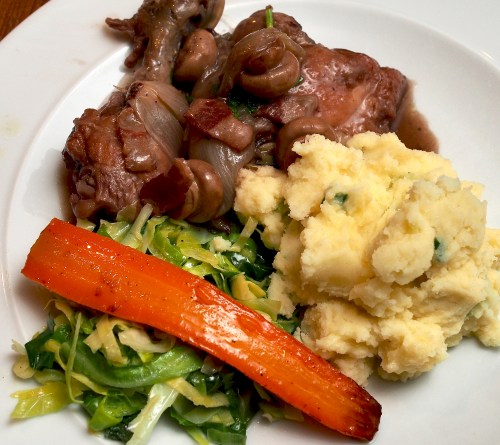
Coq au Vin

Coq au Vin

Coq au vin was on every restaurant menu when we were kids. Not so much now, but still a much-loved French classic.  You can also still find it on many set menus in France – La Formule – and rightly so.

Wine Suggestion: As this is a classic French dish we would suggest going French with the wine too. For something decadent, a good red Burgundy, our choice would be Gevrey-Chambertin; for the thoughtful choice a really good Beaujolais, like Domaine Rochette’s Morgon Côte du Py; or something a little rustic and country: Côtes du Rhône. This last was our choice tonight with the excellent Coste-Chaude Madrigal CdR Villages Visan.

Coq au Vin – serves 4

  • 4 tbsp olive oil
  • 100g pancetta cubes
  • 150g small button mushrooms
  • 12 small pickling onions or small shallots
  • 4 tbsp plain flour
  • 8 chicken pieces (a mixture of thighs & drumsticks), bone-in but skin removed
  • 4 tbsp brandy
  • 300ml red wine
  • 300ml chicken stock
  • 1 tbsp redcurrant jelly
  • 1 bouquet garni

Heat 2 tbsp of the oil over a medium heat in a large, deep, frying pan. Fry the pancetta, mushrooms and onions for 5 minutes, or until golden brown. Remove from the pan.

Heat the remaining 2 tbsp of oil in the same pan. Season 1 tbsp of the flour and put onto a plate. Dust the chicken pieces with the flour and shake of any excess. Fry the chicken for 3-5 minutes on each side or until golden brown. Do this in batches so you don’t overcrowd the pan. Add the brandy, take off the heat, and light with a match to cook off the alcohol.

Remove the chicken from the pan and add to the vegetables and pancetta. Add the remaining 3tbsp of flour to the pan and stir for 1 minute. Add the wine, stock, redcurrant jelly and bouquet garni. If it seems too thick you can add a little more water.

Return the chicken, pancetta and veg to the pan, and bring to the boil. Reduce to a simmer, then cover and cook for 40-45 minutes, until the chicken is cooked through.

Serve with potatoes and seasonal veg.

(Original recipe from Family Kitchen Cookbook by Caroline Bretherton, DK, 2013.)


Read Full Post »

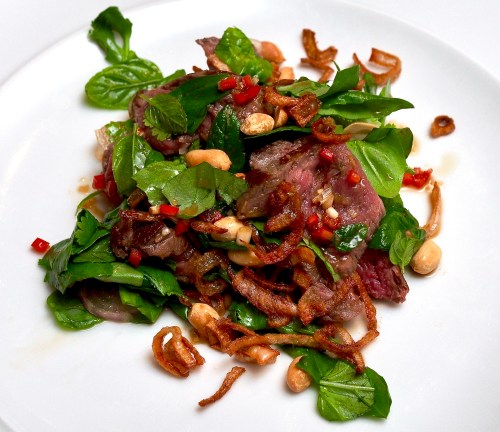
Thai beef saladMid-week celebrations can be a bit tricky, especially when work and life are busy. This was Jules’ choice for birthday dinner on a Tuesday in November and we would recommend it for a mid-week birthday at any time of year.
Wine Suggestion: We opened something a bit special given the occassion, the Tyler Dierberg Block 5 Pinot Noir from Santa Barbara county in California. Despite the umami/savoury, hot/spicy, salty and sweet flavours of the salad this was an excellent match providing layers of excitement and flavour.

Thai Beef Salad – serves 4

  • 1-2 tbsp sunflower oil
  • 500g fillet steak

FOR THE DRESSING:

  • 2 garlic cloves
  • 1 cm piece of fresh ginger
  • 1 lemongrass stalk
  • 1 red chilli
  • 2 limes
  • 3 tbsp nam pla (fish sauce)
  • 2 tbsp caster sugar

FOR THE SALAD:

  • 3 shallots
  • large handful of Thai basil
  • large handful of coriander
  • large handful of mint

TO SERVE:

  • 5 tbsp roasted unsalted peanuts
    • Roast the peanuts on a baking tray for 8-10 minutes at 190ºC until golden, then tip into a bowl to cool.
  • 3 tbsp fried shallots (see below)
    • Finely slice the shallots and fry in a wok or frying pan, in 5mm to 1cm of oil, over a medium heat, until golden. Remove with a slotted spoon and transfer onto kitchen paper to cool and crisp up.

To make the dressing: peel and crush the garlic and peel and finely grate the ginger, reserving the juice. Remove the outer leaf of the lemongrass stalk and trim the ends, leaving the tender middle section; very finely chop this. Halve, deseed and finely dice the chilli. Squeeze the juice from the the limes to give 4 tbsp.

Put the lime juice, nam pla and sugar in a large bowl and stir until the sugar dissolves. Add the garlic, ginger and its juice, lemongrass and chilli and stir again.

For the salad: halve and very finely slice the shallots. Pick the herb leaves and leave whole.

Heat enough oil to cover the base of a heavy frying pan over a medium-high heat. Add the steak and cook for 1-2 minutes per side, then remove and rest for 5 minutes.

Put the raw shallots and herbs into a large bowl. Finely slice the steak across the grain and add to the salad. Add half the dressing and toss to coat everything. Transfer to a serving dish and scatter with the peanuts and fried shallots. Serve the rest of the dressing on the side.

(Original recipe from Leiths How to Cook, Quadrille, 2014.)

Read Full Post »

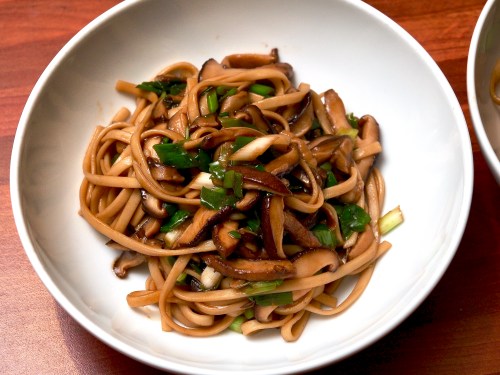
Noodles with shiitake mushrooms & scallions

We can think of nothing nicer to eat than a bowl of slurpy noodles. Perfect for a speedy lunch or snack.

Wine Suggestion: a friend has suggested that there are brilliant saki matches for dishes like this that play with the umami but we’ve not tasted enough to suggest which one. However, we really liked a couple of wine options: a Lustau dry Oloroso, a Deux Montille Rully Blanc or a Tyler Pinot Noir from California. In each case they have a wonderful textural vibrancy that this dish needs.

Udon noodles with shiitake mushrooms and spring onions – serves 2

  • 125g dried egg noodles
  • 1½ tbsp sesame oil
  • 1½ tbsp groundnut oil
  • 200g shiitake mushrooms, finely sliced
  • 6 scallions, finely sliced on the diagonal
  • few coriander springs, leaves picked
  • 2½ tbsp nam pla (fish sauce)
  • 2½ tbsp soy sauce

Bring a large saucepan of water to the boil, salt generously and cook the noodles for the time given on the pack. Drain and run under cold water, then stir through a few drops of sesame oil and groundnut oil to stop them from sticking.

Heat the oils over a high heat in a wok or frying pan. Add the mushrooms and cook until starting to soften. Add the scallions, nam pla, soy sauce and noodles. Heat stirring until the noodles are glazed with the sauce.

Serve sprinkled with the coriander.

(Original recipe from Leiths How to Cook by Claire Macdonald and Jenny Stringer, Quadrille, 2013.)

Read Full Post »

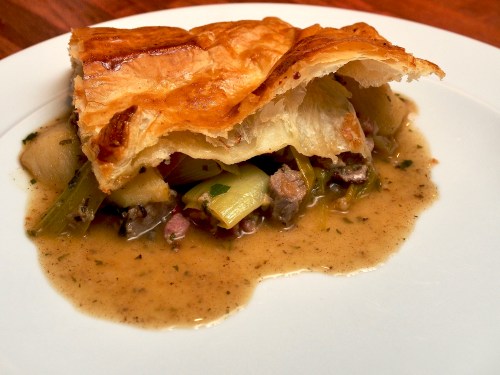
Leftover Pork Pie

We love a Sunday roast but when it’s just the three of us we often end up with heaps of leftovers. Diana Henry has a book called Food from Plenty which not only contains recipes for roasts but lots of ideas for what to do with the excess. We made this pie with leftover Mallorcan Spiced Pork. Serve with a green salad or buttery cabbage.

Wine Suggestion: as this is a very down to earth dish the wines that work have a grounded earthiness. A well made, terroir driven Chardonnay or Pinot Noir would be our choice. Tonight is was the Deux Montille Rully Chaponniere which was floral, citrus and pear aromas on the nose, but sappy, earthy and textural on the palate. Pure, fresh and engaging; a good combo.

Leftover Pork Pie – serves 6

  • 2 leeks, trimmed and cut into 3cm lengths
  • 25g unsalted butter
  • 1 onion, roughly chopped
  • 6 streaky bacon rashers, chopped
  • 2 small or 1 medium eating apple such as Cox, halved, cored & sliced
  • 450g leftover cooked pork, cut into chunks
  • 200ml cider or apple juice
  • 300ml chicken stock
  • 2 tsp Dijon mustard
  • 3 tbsp flat leaf parsley, chopped
  • 25g brown or white breadcrumbs
  • 350g puff pastry
  • plain flour, to dust
  • 1 egg, lightly beaten

Melt the butter in a sauté pan and cook the leeks, onions and bacon over a medium heat until starting to brown. Add the apple slices and cook until they too have coloured slightly.

Add the pork to the pan with the cider or juice, stock and mustard. Season and bring to the boil. Reduce the heat, add the parsley and breadcrumbs and stir.

Preheat the oven to 200C/400F/gas mark 6.

Put the pork mixture into a pie dish and leave to cool a bit. Roll out the pastry on a lightly floured surface. Cut strips off the pastry to stick round the edge of the pie dish. Lightly wet one side of the pastry strips and press down on the rim of the dish. Lay the remaining pastry on top and press down. Trim off the excess pastry and crimp the edges. Use any leftovers to decorate the top. Make a few slits in the centre with a sharp knife. Use a blunt knife to knock up the sides of the pastry all the way round to help it rise. Brush with egg and bake for 20 minutes or until golden and puffed up.

(Original recipe from Food from Plenty by Diana Henry, Mitchell Beazley, 2010.)

Read Full Post »

« Newer Posts - Older Posts »