Feeds:
Posts
Comments

Archive for the ‘Pasta’ Category

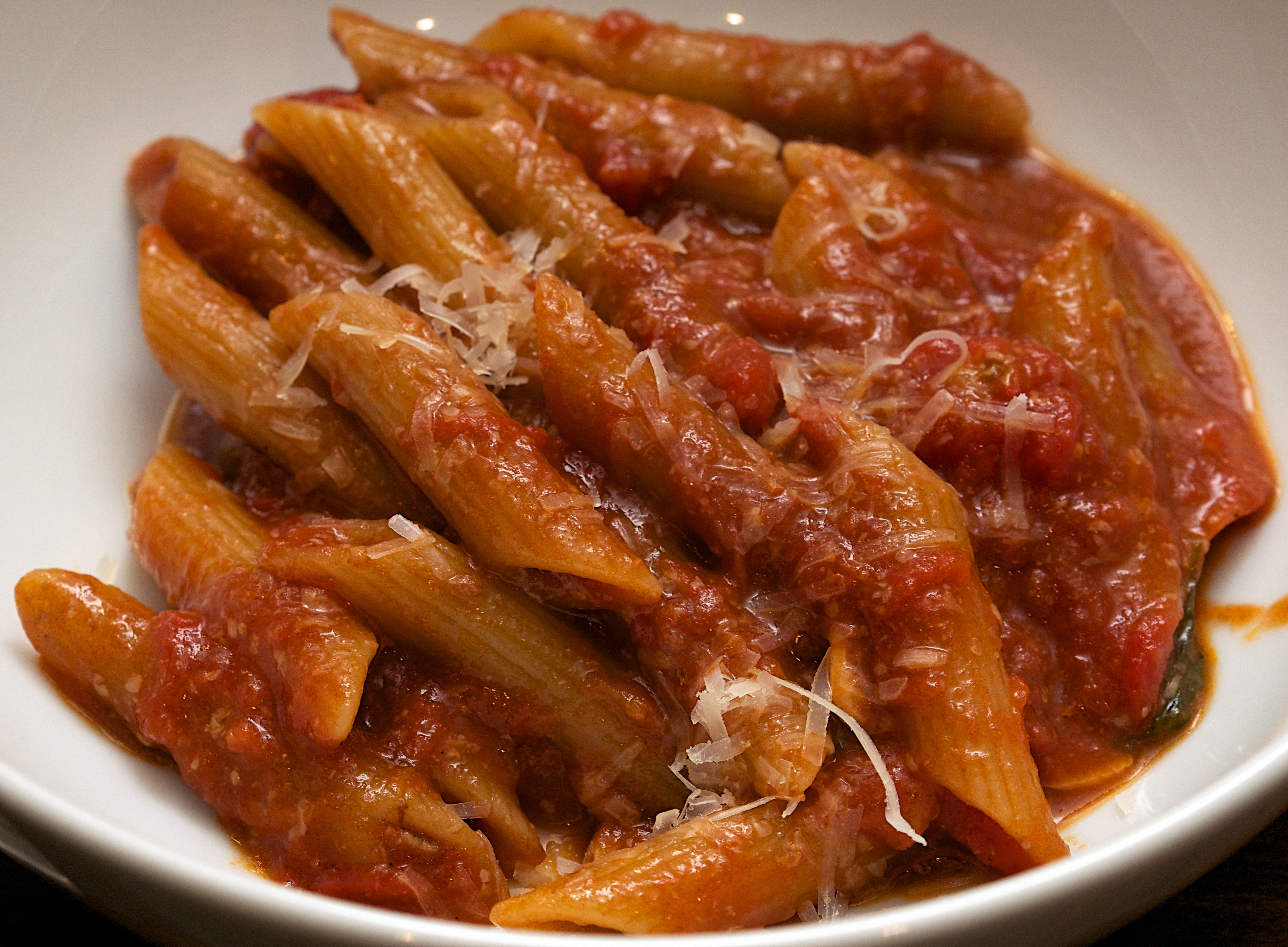
This is one of our favourite pasta sauces. Bucatini (long spaghetti-like tubes) is traditionally used but penne works well too and tends to be easier to find at the shops. Makes a great Friday night supper with a matching glass of something equally red and Italian.

The recipe below makes 6 little portions that you might serve as a first course. You will need to adjust accordingly if you’re serving it as a main meal – we half the quantities below to serve the two of us.

Wine Suggestion: An Italian Sangiovese is the obvious match which complements the acidity in this tomato-based sauce. We drank a Rocca delle Macie Chianti; an excellent match.

Penne all’ Amatriciana – serves 6 

  • 250g pancetta, cut into matchsticks
  • 2 tbsp olive oil
  • 2 dried chillies, crumbled
  • 2 red onions, peeled and finely chopped
  • 150ml red wine
  • 2 x 400g tins peeled plum tomatoes, drained if very liquid (look for Italian brands)
  • 2 tbsp rosemary
  • 250g penne
  • 100g Parmesan, grated
  • A handful of fresh oregano (don’t panic if you don’t have this)

Put the pancetta, oil and chillies into a large saucepan, heat and fry until the pancetta becomes crisp.

Add the onions and rosemary and keep frying until they have also turned light brown and crisp.

Add the red wine and let it reduce before adding the tomatoes, then season with the oregano and some black pepper.

Bring to the boil, lower the heat and simmer for at least 45 minutes, until thick and almost dry. Check for seasoning.

Cook the penne in a generous amount of boiling salted water, then drain. Add to the sauce, mix and serve with Parmesan.

(Original recipe from The River Café Cookbook by Ruth Rogers and Rose Gray, Ebury Press, 1995.)

Read Full Post »

This is a really good first-course pasta which has a richness of flavour without being heavy. Use a good quality, aged balsamic vinegar (if you don’t you might need to use a bit extra).

Penne with Tomato & Balsamic Vinegar – to serve 6

  • 2 tbsp olive oil
  • 2 garlic cloves, peeled and sliced finely
  • a handful of fresh basil
  • 2 x 400g tins of peeled plum tomatoes (Italian brands are usually the best quality)
  • 250g penne rigate
  • 75g butter, cut into pieces
  • 4 tbsp aged balsamic vinegar
  • 120g Pecorino cheese, grated

Heat the oil in a large pan and gently fry the garlic until light brown. Add a few basil leaves and then the tomatoes. Stir and cook gently for 30-40 minutes or until the sauce is reduced and thick. Season with salt and pepper and add the rest of the basil.

Cook the penne in lots of salted boiling water , drain thoroughly and return to the saucepan with the butter. When this has melted, add the balsamic vinegar and toss over a gentle heat for a few seconds until the penne are brown. Throw in a handful of the Pecorino, then stir in the tomato sauce. Serve with more Pecorino.

Wine Suggestion: Pairing a wine with this dish is not as straight forward as it may seem as you need a wine to balance the rich flavours, acidic tomatoes and sweet and sour vinegar. One option is something from the Marche with a combination of Montepulciano and Sangiovese. Alternately look for a very good Valpolicella or Ripasso, but make sure it is one with a bit of freshness, tannins and elegance.  Another option, which we tried to good effect, is Barbera where the fresh acidity and softer tannins complemented the dish excellently.

(Original recipe from the River Café by Ruth Rogers & Rose Gray, Ebury House, 1995.)

Read Full Post »

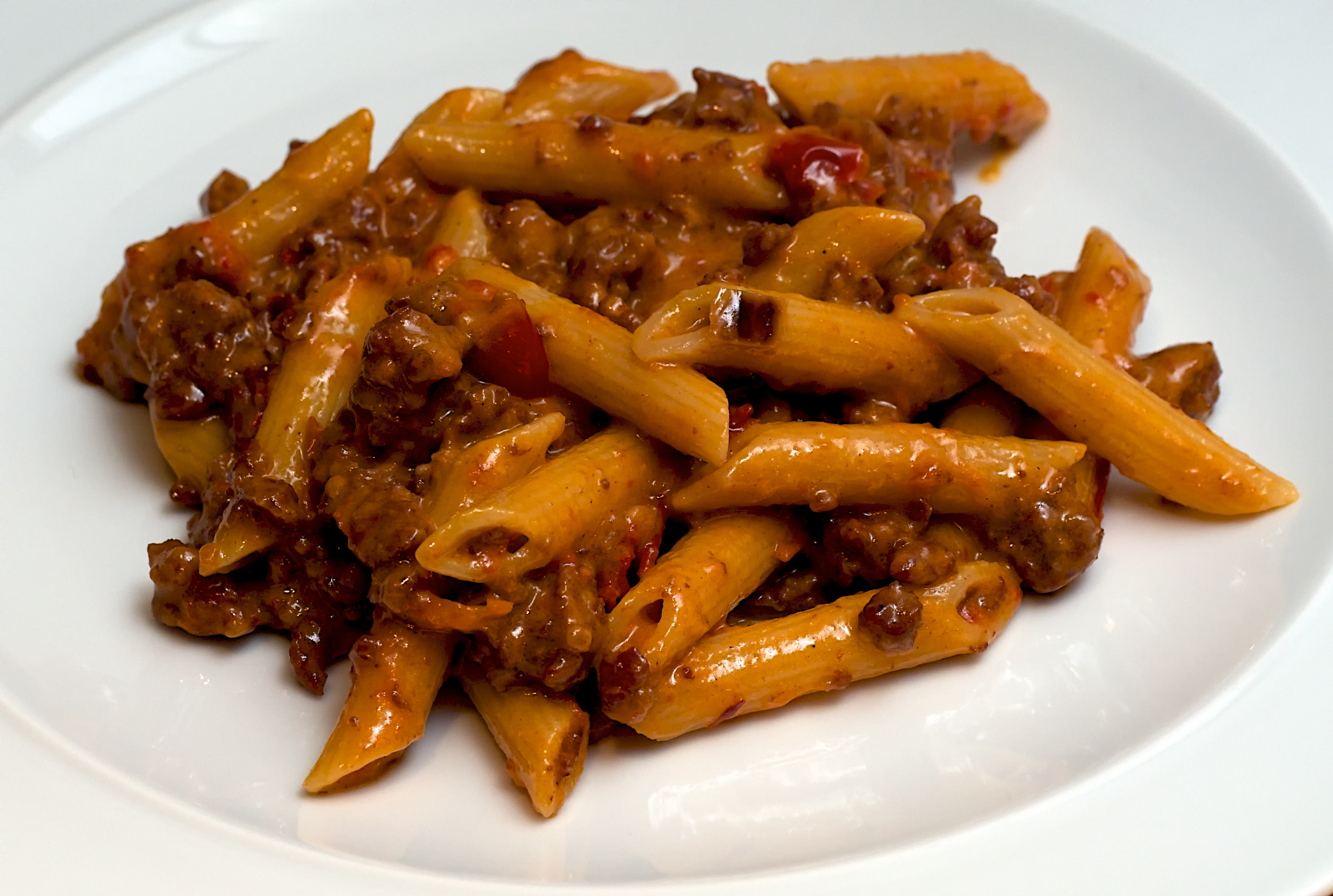
Really rich, this dish packs a punch of flavour so it’s perfect for a small starter.

Penne con Sugo di Salsiccie – serves 6-8 as a starter

  • 2 tbsp olive oil
  • 8 Italian spiced, fresh pork sausages, meat removed from skins and crumbled
  • 2 small red onions, chopped
  • 2 garlic cloves, finely chopped
  • 2 small dried chillies, crumbled (or you could use chilli flakes)
  • 2 bay leaves
  • 1/3 bottle red wine (preferably something Italian, like a Chianti)
  • 2 x 400g tins peeled plum tomatoes, drained
  • ½ nutmeg, freshly grated
  • 120g Parmesan, freshly grated
  • 150ml double cream
  • 250g penne rigate

Heat the oil in a large pan and fry the sausagemeat, stirring and breaking it up, until the juice from the meat has evaporated and the fat has started to run.

Add the onion, garlic, chilli and bay leaves and cook gently for about 30 minutes or until the onions are brown.

Pour in the wine, increase the heat and cook until it has evaporated.

Add the tomatoes, lower the heat, and simmer gently until you have a thick sauce, about 45-60 minutes. Season with nutmeg, salt and pepper, then add the Parmesan and cream.

Cook the penne in lots of salted water, drain well, and add to the sauce.

Wine Suggestion: We drank a delightful Langhe Nebbiolo from the Produttori del Barbaresco which went well. We’d suggest finding a red wine with a bit of acidity to cut through the richness, good tannins to counteract the protein richness, and yet not too much weight. Nebbiolo or Sangiovese …

(Original recipe from The River Café Cookbook by Ruth Rogers and Rose Gray, Ebury Press, 1995.)

Read Full Post »

Cooked on an afternoon off and then shared with friends … perfect. This takes some time, particularly as you need to roast the duck first, but it is worth it.

Slow-roasted Duck Ragú – serves 4 to 6

  • 1 Duck, try to get a Gressingham or at least free-range for extra flavour
  • 2 oranges, 1 quartered – the other zested & juiced
  • 6 slices Pancetta, diced
  • 1 red onion, diced
  • 2 carrots, peeled & chopped
  • 2 sticks celery, diced
  • 6 sprigs rosemary, leaves picked and chopped
  • 1 stick cinnamon
  • 4 cloves garlic, finely sliced
  • 2 x 400g tins plum tomatoes
  • 1/2 bottle fruity red wine, we used a Chianti
  • 500ml Chicken Stock
  • a handful of sultanas
  • a handful of pinenuts
  • 600g Rigatoni, or other large tubular pasta
  • 2 knobs butter
  • large handful Parmesan, grated
  • small bunch parsley, chopped
  • red wine vinegar

Preheat the oven to 180 C. Rub duck all over with olive oil and season generously with salt and pepper.

Push the orange quarters inside the cavity and place the duck breast-side down in a roasting tray. Cook for 2 hours, turning it every 30 minutes until the skin goes thin and crispy and the meat is tender and fragrant with the oranges.

Remove the duck from the tray and pour the fat into a jar, making sure you avoid the meat juice the fat is floating upon. This fat can be used to roast potatoes another day.

Leave the duck to cool slightly then pull all the meat from the bones and shred it.

Pour a tablespoon of olive oil into a large pot and fry the pancetta on a medium heat until lightly golden. Add the onion, carrots, celery, rosemary, garlic and cinnamon and fry gently for 10 minutes until soft.

Add the tomatoes and red wine and simmer slowly for 25 minutes.

Add the duck meat and some chicken stock (if the sauce is a little dry) and simmer for another 30 minutes.

Remove the cinnamon stick, taste for seasoning and throw in the sultanas and pinenuts.

Cook the pasta according to instructions. Reserve some cooking water, then drain in colander and add to the sauce.

Remove from the heat and stir in the butter, Parmesan, parsley, orange zest and juice plus a good splash of vinegar.

Check for seasoning again and loosen with the reserved cooking water if necessary. Serve and enjoy!

Wine suggestion: A perfect match for a deep and profound Brunello di Montalcino or your favourite Tuscan red. Alternately look out for a good Bandol or Mourvedre based wine where the earthiness will also compliment the duck and pasta.

(Original recipe from Cook by Jamie Oliver, Penguin Books, 2009.)

Read Full Post »

Wholesome and earthy, obviously don’t try this if you don’t like liver. We do and it was delicious.

Pappardelle with Chicken Liver Ragù – to serve 2 as a main or 4 as a starter

  • 200g dried pappardelle 
  • Freshly grated Parmesan, to serve

FOR THE RAGU: 

  • 200g chicken livers
  • 4 tbsp extra virgin olive oil
  • ½ small onion, chopped
  • 1 celery stalk, chopped
  • 1 garlic clove, chopped
  • 150ml dry Marsala
  • 100ml white wine
  • 1 tbsp chopped rosemary
  • 2 tbsp chopped flat-leaf parsley
  • 40g butter

Heat a wide frying pan over a high heat until super hot and smoking. Toss the chicken livers in a bowl with 1 tbsp of the oil and some salt and pepper, then pour into the hot pan in a single layer. Fry for a couple of minutes without moving, until well browned on one side. Turn and fry the second side for 2 minutes, then transfer to a plate to cool. When cool enough to handle, chop the livers finely, reserving any juices.

Fry the onion, celery and garlic in the rest of the oil with salt and pepper in a small saucepan over a lowish heat. When very soft (about 10 minutes), add the chopped liver and its juices and fry for a couple of minutes until heated through. Add the Marsala and wine and cook at a very gentle simmer until the sauce is very thick (almost like a pâté) with a little oil risen to the surface, at least an hour. Add about 100ml of water during the cooking if it starts to dry out. Stir in the rosemary and remove from the heat.

Cook the pasta according to the pack and re-heat the sauce in a wide frying pan. Add a splash of water to the sauce if you need to thin it slightly (the liquid part should be creamy). Drain the pasta and add to the sauce with the parsley and butter. Cook together for a few minutes or until the butter has melted and the pasta is well coated in the sauce. Serve with the Parmesan.

Wine Suggestion: Chicken livers have a really strong and rich flavour which should pair well with a good quality Rioja with a little age, such as one of  La Rioja Alta Gran Reservas.

(Original recipe from Bocca Cookbook by Jacob Kennedy, Bloomsbury, 2011.)

Read Full Post »

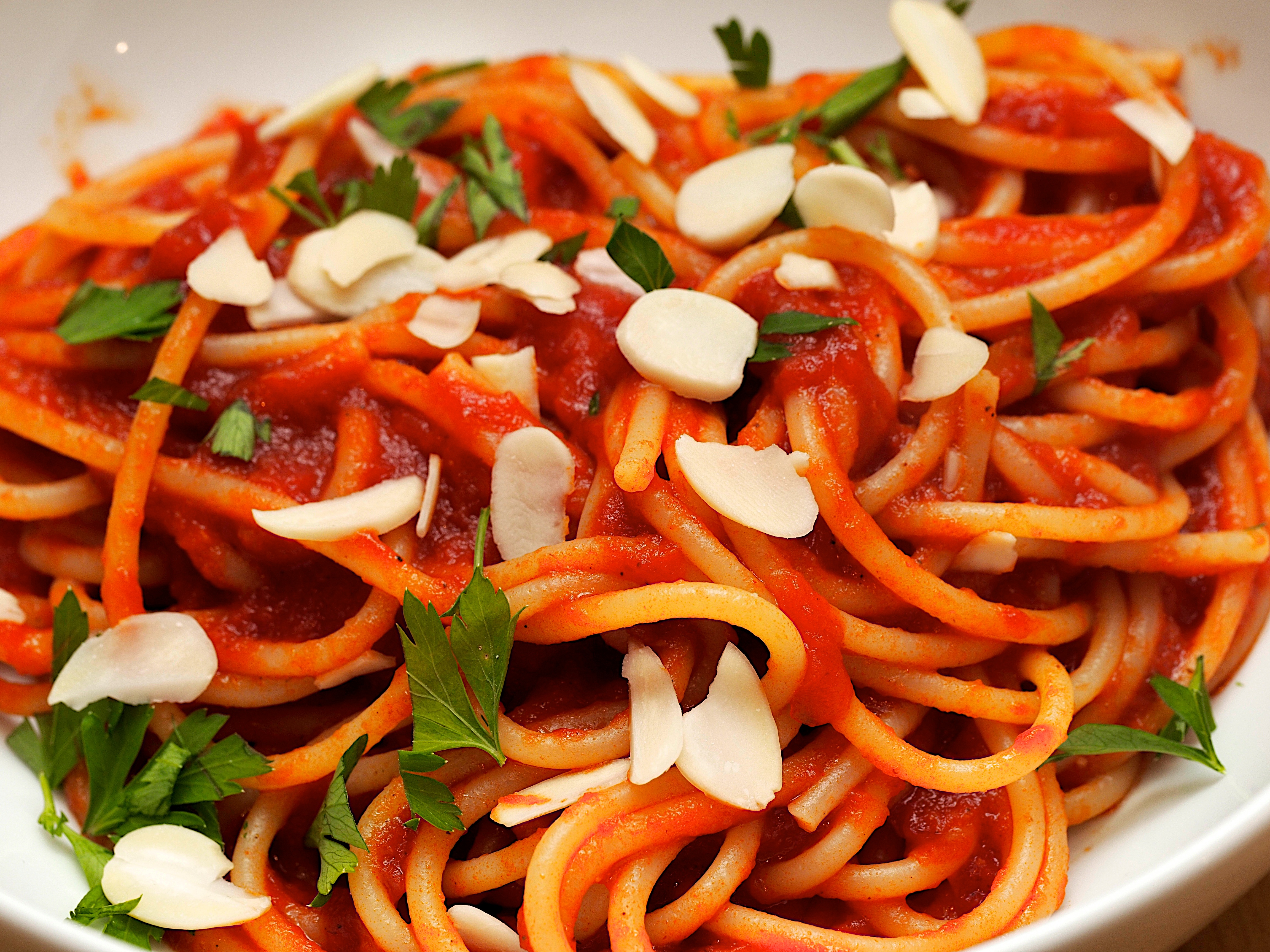
A Lebanese twist to tomato sauce with gentle spices and almonds; a lovely variation on a theme. The proportion of sauce to spaghetti is also very different to how the Italian’s make pasta so there is a lot of sauce for this dish. This worked for us but you could use the same amount of sauce for a greater quantity of pasta and therefore serve more people if you’d like.

The spices are subtle and warming and the pinches can be generous if you like.

Spaghetti with a Rich Tomato Sauce & Toasted Almonds – serves 2 generously

  • 2 x 400g tins chopped tomatoes
  • 2 tbsp tomato purée
  • 3 garlic cloves, grated
  • 1 tsp brown sugar
  • 1 tbsp olive oil
  • pinch ground cinnamon
  • pinch ground allspice
  • pinch grated nutmeg
  • 1/2 tsp salt
  • pinch ground pepper
  • 200g spaghetti
  • 50g flaked almonds, toasted
  • 2 tbsp chopped parsley

Put the tomatoes, tomato purée, garlic and sugar into a pan and simmer over a low heat. Stir frequently and simmer for 30 minutes.

Stir in the olive oil, cinnamon, allspice, nutmeg, salt and pepper and cook for a further 20 minutes.

Meanwhile bring a large pot of salted water to a boil, add the spaghetti and cook according to packet instructions (usually between 10-12 minutes). Reserve 3 tablespoons of the cooking water and then drain the cooked spaghetti.

Return the spaghetti to the cooking pot with the reserved cooking water and the tomato sauce.

Toss well and then serve sprinkled with the almonds and parsley.

Wine Suggestion: we drank a Valpolicella Ripasso with this dish and the ripe, juicy spices went well with the warming spices of the sauce.

(Original recipe from The Lebanese Kitchen by Salma Hage, Phaidon, 2012.)

Read Full Post »

This pasta dish has really strong and delicious flavours. We don’t recommend trying it on your non-anchovy loving friends.

Ditaline rigati con acciughe e pomodori secchi – to serve 4

  • 6 anchovies in oil
  • 120g dried breadcrumbs*
  • 4 tbsp olive oil
  • 1 tsp garlic oil**
  • 12 sun-dried tomatoes in oil, drained and chopped
  • 120 ml white wine
  • a pinch of dried chilli flakes
  • 400g ditalini rigate 
  • 1 tbsp parsley and garlic ***
  • 60g pecorino cheese, grated

Drain the anchovies, and cut 3 of the fillets into long strips.

Toast the breadcrumbs in a dry pan over a medium heat, until they are a good dark golden brown but be careful that they don’t burn.

Heat the olive oil and garlic oil in a large pan over a medium heat, add the 3 whole anchovy fillets and cook very gently, stirring, for a minute, to break them up and melt them a bit. Stir in the tomatoes, then add the wine and bubble up so it evaporates. Add the chilli flakes.

Bring a large pan of water to the boil, add plenty of salt, and put in the pasta. Cook for about a minute less than the advice on the pack, so that it is al dente. Drain, reserving some of the cooking water, add to the anchovy and tomato sauce and toss together, adding a spoon of the cooking water if needed to loosen. Add the parsley and garlic and toss again. Serve sprinkled with the toasted breadcrumbs, the cheese, and the strips of anchovy.

* You need to use good quality bread to make good breadcrumbs (so stay clear of the sliced white stuff). Cut the crusts off your stale bread, cut it into slices, put it on a baking tray and bake at 80ºC for an hour. When the bread has dried out, grate it (or use a food processor if you prefer) to make breadcrumbs. Keep in a sealed jar until you need them.

** To make garlic oil: mix 2 finely chopped garlic cloves with 50ml olive oil and leave for a day in the fridge before using. It will keep in the fridge for up to 3 days.

*** Use 1 garlic clove and about 4 handfuls of flat-leaf parsley. Crush the garlic with the flat of a kitchen knife to make a paste. Put the parsley on top and chop it finely.

Wine Suggestion: Try a textural southern white like Greco di Tufo or a Grillo from Sicily.

(Original recipe from Georgio Locatelli’s Made in Sicily, Fourth Estate, 2011.)

Read Full Post »

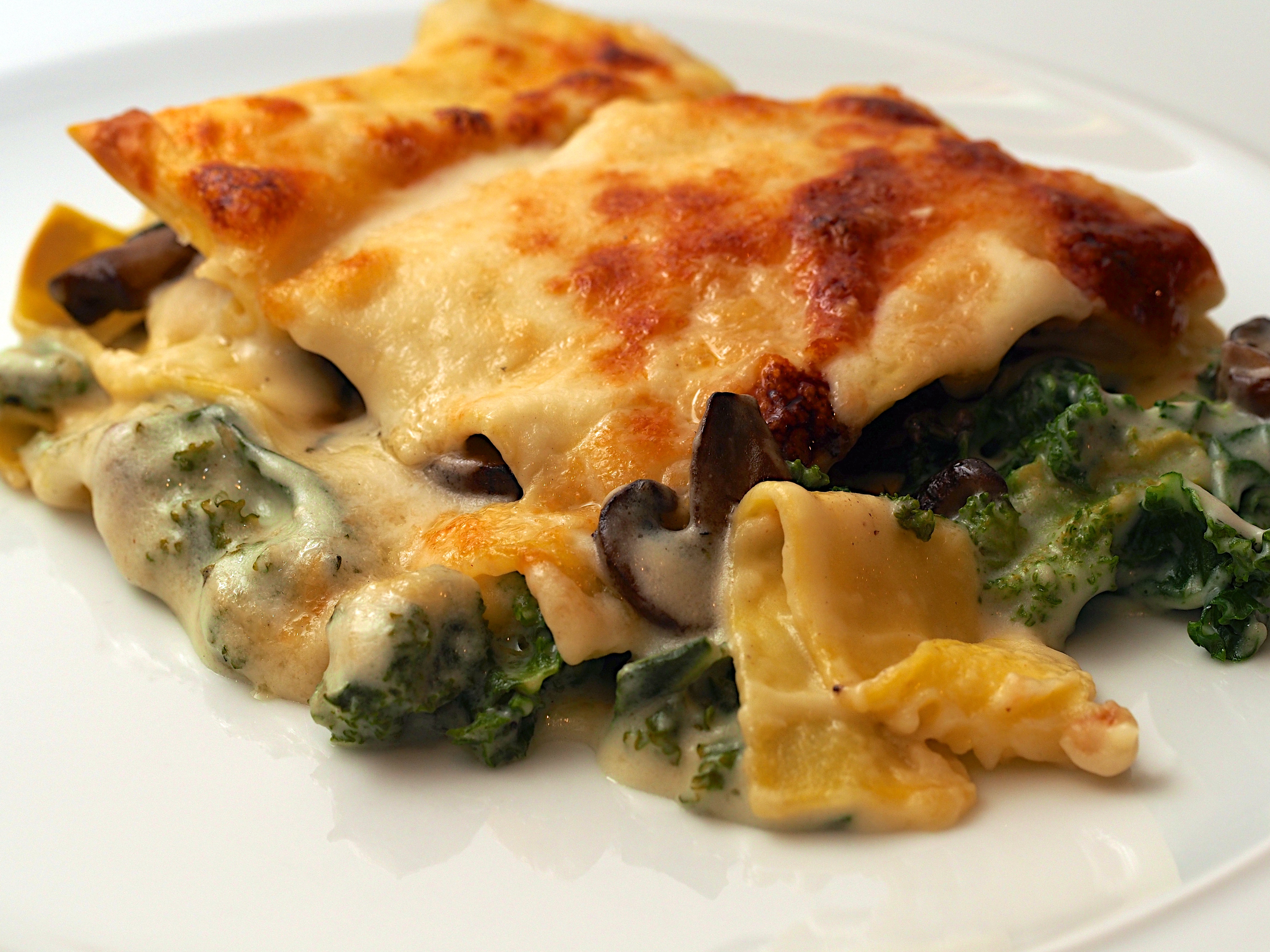
This is a really good veggie lasagne filled with curly kale and garlicky mushrooms – delicious! It is also much easier to put together than the usual meaty version and tastes much more luxurious.

Kale and mushroom lasagne – to serve 6

  • 300g curly kale, stalks removed
  • 30g butter
  • 500g mushrooms, sliced
  • 2 garlic cloves, finely chopped
  • a few sprigs of thyme, leaves only, chopped
  • 175g lasagne sheets (fresh if possible)
  • 20g Parmesan, grated
  • olive oil

For the béchamel sauce 

  • 750ml full-fat milk
  • 1 bay leaf
  • 1 onion, roughly chopped
  • 1 celery stalk, roughly chopped
  • a few black peppercorns
  • 50g unsalted butter
  • 50g plain flour
  • 2 tsp Dijon mustard

Heat the oven to 180°C/Gas Mark 4. Heat the milk with the bay leaf, onion, celery and peppercorns until almost simmering. Take off the heat and leave aside to infuse.

Roughly shred the kale. Put into a large saucepan and just cover with cold water. Add salt. Bring to the boil, reduce the heat and simmer for a few minutes, or until just tender. Drain well and set aside.

Heat half the butter in a large frying pan over a medium heat. Add half the mushrooms and season. Increase the heat and fry, stirring, until the liquid released has evaporated and the mushrooms are starting to brown and caramelise. Stir in half the garlic and half the thyme, cook for another minute, then remove to a bowl. Repeat with the rest of the mushrooms, garlic and thyme and set aside.

Gently reheat the milk, then strain. Heat the butter for the béchamel in a large saucepan. Stir in the flour and cook gently for a couple of minutes. Take off the heat. Add about a quarter of the hot milk and beat vigorously until smooth. Add the rest of the milk in about 3 batches, until you have a smooth sauce. Put the pan back on the heat and cook for  a few minutes, stirring and allowing the sauce to bubble gently, until thickened. Stir in the mustard, then season well.

Stir roughly half of the béchamel sauce into the kale.

Spread half the remaining sauce over the bottom of an ovenproof dish (approx. 28 x 22cm). Layer a third of the lasagne sheets in the dish, then spoon the kale over the top. Add another layer of lasagne, then add the mushrooms,. Finish with a final layer of pasta and the rest of the sauce.

Scatter the cheese over the top and add a trickle of oil. Bake for about 30 minutes until golden. Serve right away.

Wine Suggestion: We went for a red Burgundy from a lesser appellation (Santenay) in Burgundy with five years of age. It had a delightful earthiness and red forest fruit character which really complemented the flavours of the mushroom and kale.

(Original recipe from Hugh Fearnley-Whittingstall’s River Cottage Veg Everyday!, Bloomsbury Publishing, 2011.)

Read Full Post »

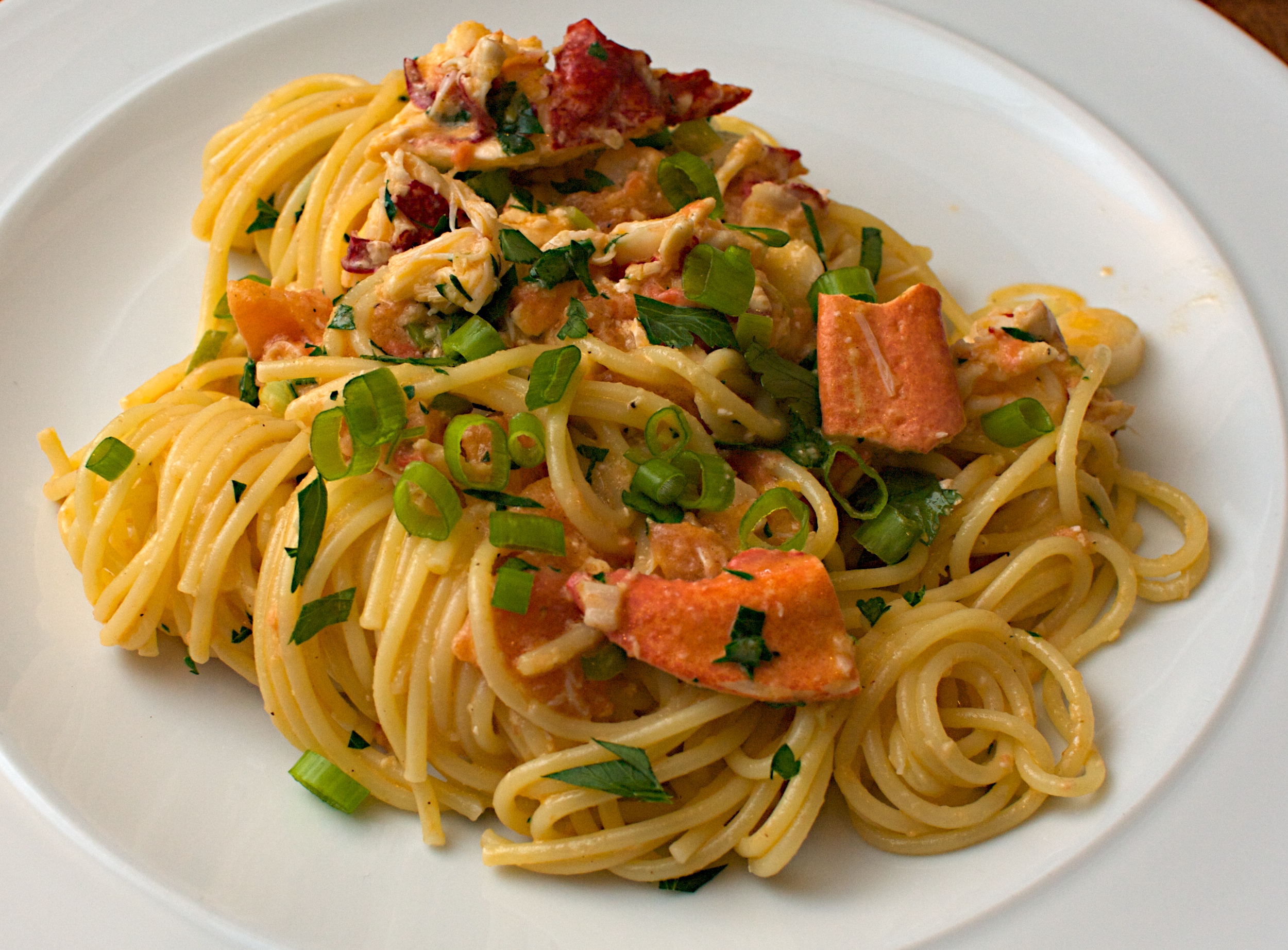
Lobster Spaghetti

Lobsters are really plentiful at the moment which makes the prices really low… woohoo!

Lobster Spaghetti – to serve 2 generously

  • 500g vine-ripened tomatoes
  • 1 cooked lobster
  • 100ml extra virgin olive oil
  • 2 garlic cloves, finely chopped
  • 5cm piece fresh ginger, finely grated
  • 50ml dry white wine
  • 60ml double cream
  • finely grated zest of half a lemon
  • 1 tbsp lemon juice
  • 4 scallions, thinly sliced
  • 2 tbsp finely chopped flat-leaf parsley
  • 250g spaghetti

Cut a small cross in the base of each tomato and put in a bowl. Pour over boiling water to cover and leave for 1 minute, then drain and refresh in cold water. Peel the tomatoes, then scoop out the seeds and roughly chop.

Cut the lobster in half, then scoop out all the meat and cut into bit-sized chunks.

Heat the oil in a frying pan over a medium heat. Add the garlic and cook, stirring for about 30 seconds. Add the ginger and white wine and cook for another few minutes until most the wine has evaporated. Add the tomato, season well and cook, stirring occasionally, until the tomato breaks down into the sauce. Reduce the heat to low, then add the lobster meat, cream, lemon zest and juice, and most of the scallions, stirring to warm through. Take the sauce off the heat, then stir in most of the parsley and season.

Meanwhile, cook the spaghetti until al dente, then drain.

Toss the pasta with the lobster sauce and divide among bowls. Garnish with the rest of the scallions and parsley, then serve.

Wine Suggestion: Go for a rosé but make sure it has a bit of body. A Provencal rosé would be good or if you can find it a Cerasuolo di Vittoria from Sicily.

Read Full Post »

A fresh weeknight meal that’s ready in 15 minutes.

Lemon, pecorino and pine nut tagliatelle – to serve 2

  • 150g tagliatelle
  • 1 lemon, juiced and zested
  • 2 tbsp pine nuts, toasted
  • 2tbsp finely grated pecorino or parmesan
  • olive oil
  • a small bunch of flat-leaf parsley, chopped

Cook the tagliatelle. Mix the lemon juice and zest, pine nuts, pecorino, 2 tbsp olive oil and parsley and season really well. Drain the tagliatelle, reserving two tablespoons of the pasta cooking water. Tip everything into a bowl (including the water) and toss.

Wine Suggestion: Go for a light Italian white such as a Friulano or Verdicchio.

Read Full Post »

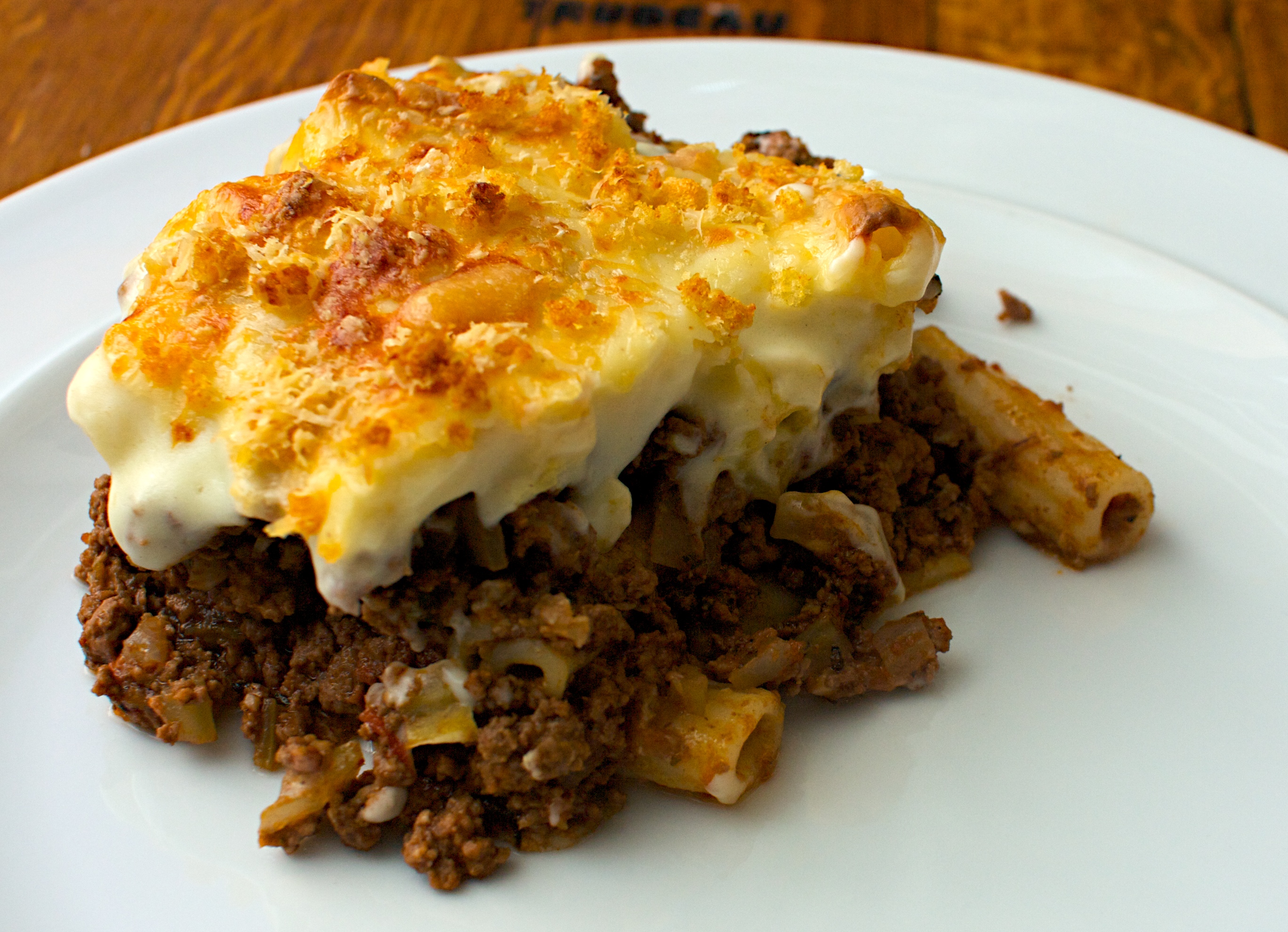
This is a bit like lasagne but easier to make and you can have it all done in advance, ready to throw in the oven when your guests arrive.

Pastitsio (beef and macaroni pie with cinnamon, red wine and cheese) –  generously serves 8-10

  • 500g pasta tubes (we used big macaroni or rigatoni would be good)
  • 2 eggs, lightly beaten
  • 50g finely grated Parmesan
  • 2 tbsp melted butter
  • 10g fresh white breadcrumbs

FOR THE WHITE SAUCE:

  • 115g butter
  • 115g plain flour
  • 1.2 litres full-cream milk
  • ½ tsp freshly grated nutmeg

FOR THE MEAT SAUCE

  • 4 tbsp olive oil
  • 1 medium onion, finely chopped
  • 4 garlic cloves, finely chopped
  • 2 celery sticks, finely chopped
  • 1 kg lean minced beef
  • 200ml red wine
  • 400g chopped tomatoes
  • 2 tbsp tomato purée
  • 10cm piece cinnamon stick
  • ¼ tsp ground cloves
  • 1 tbsp dried oregano
  • 2 tbsp fresh chopped oregano
  • 3 fresh bay leaves

For the meat sauce, heat the oil in a large pan, add the onion, garlic, and celery, and fry until starting to brown. Add the mince and fry over a high heat for about 4 minutes, breaking up the lumps. Add the red wine, tomatoes, tomato purée, cinnamon stick, ground cloves, dried and fresh oregano, bay leaves, 100ml water, 1½ tsp salt and some black pepper, and simmer for about 30-40 minutes, stirring occasionally, until the sauce has thickened but is still nice and moist. Throw away the cinnamon stick and bay leaves.

Bring a large saucepan of water to the boil and add plenty of salt. Cook the pasta for a minute less than it says on the pack (as it will cook a bit more in the oven). Drain well, transfer to a large bowl and leave to cool a little.

For the white sauce, melt the butter in a non-stick saucepan, add the flour and cook, stirring, over a medium heat, for 1 minute. Gradually beat in the milk, then bring to the boil, stirring, lower the heat and leave to simmer for 5-7 minute, stirring occasionally. Season with nutmeg and some salt and pepper.

Stir 250ml (about one-fifth) of the white sauce into the warm pasta with the beaten eggs and half the grated cheese. Keep the rest of the sauce warm over a low heat, stirring now and then and adding a bit more milk if it gets too thick.

Use the melted butter to grease a large, ovenproof dish (about 23 x 33 cm across and 7 cm deep) or baking tray. Spread one-third of the pasta over the base of the dish and cover with half the meat sauce. Add another third of the pasta, then the rest of the meat sauce, then cover with a final layer of pasta. Spoon the rest of the white sauce over. Mix the remaining cheese with the breadcrumbs and sprinkle this over the top.

The dish is now ready for the oven. When you’re ready, bake it in a preheated oven at 180ºC/Gas Mark 4 for 40 minutes or until bubbling hot and nicely browned.

Serve with some salad.

Drink with: a glass of good Bordeaux but from a warmer vintage, like the atypical 2003. One of our guests kindly brought an ’03 Domaine de Chevalier.

(Original recipe from Rick Stein’s Mediterranean Escapes, BBC Books, 2007.)

Read Full Post »

With a small tub of cooked prawns we were able to use up left over ingredients from the weekend with this fresh and summery Linguine. Tasty food doesn’t need many ingredients, just good quality ones.

Creamy Prawn Linguine – to serve 2

  • 200g linguine
  • 100g cooked prawns (defrosted if frozen)
  • 2 tbsp crème fraîche
  • handful of grated Parmesan

Cook the linguine according to the pack instructions. Scoop out a little of the cooking water and reserve, then throw in the prawns before draining, just to heat them through.

Return the pasta and prawns to the pan, then add the rest of the ingredients and season well. Add a bit of the pasta cooking water if it looks dry. Serve with some extra Parmesan.

Drink with: a wine as straightforward and easy as the dish – we’d go for a light and uncomplicated Frascati from the Lazio/Rome area. Also a good match for football 🙂

Read Full Post »

Jono’s boss grows his own courgettes and they’re coming out his ears at the moment, so we are happily helping him eat them!

Courgette & Lemon Linguine – to serve 4

  • 300g linguine
  • 3 courgettes, grated
  • 1 tbsp olive oil
  • 1 garlic clove, crushed
  • 1 tsp chilli flakes
  • zest of 1 lemon
  • handful of basil leaves, torn

Bring a large pot of salted water to the boil and cook the linguine according to the pack instructions.

Meanwhile, heat the oil and fry the courgettes over a high heat for a few minutes. Add the garlic and chilli and cook for another minute or so.

Drain the pasta and tip into the courgettes, then add the lemon zest. Season, drizzle with some extra olive oil and scatter over the basil.

Drink with: a glass of Italian Pinot Grigio. Try and find one of the more aromatic versions from Friuli, the Alto Adige or a Riserva from the Veneto.

Read Full Post »

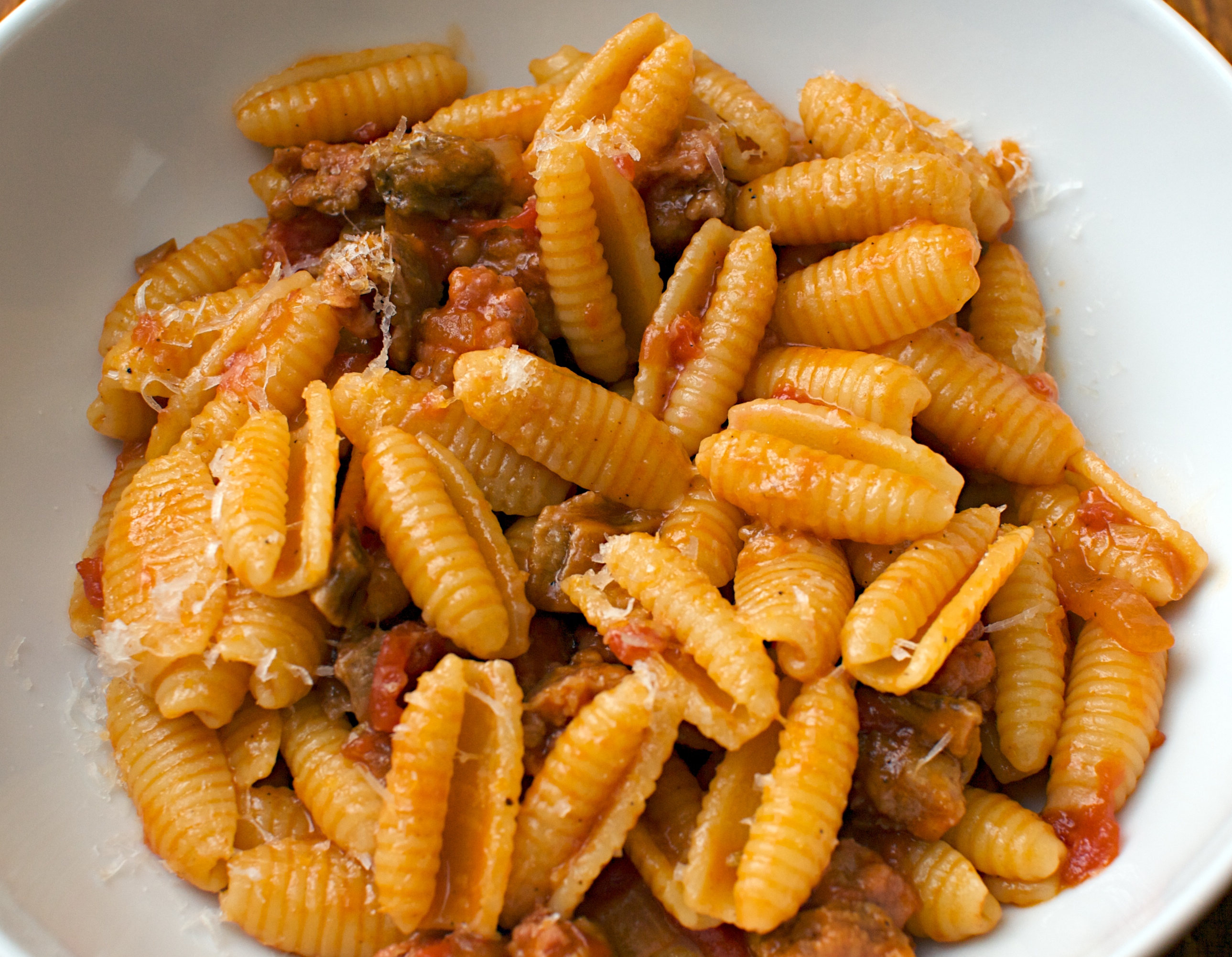
Gnochetti sardi is a Sardinian pasta shape which is shaped like gnocchi but made of durum wheat semolina and no eggs. It is a staple in Sardinia and usually prepared with a heavy tomato based  ragù or sauce made with beef, lamb or sausage. The ragù clings to the heavy ridged pasta shape.

If you can’t find gnochetti sardi then another short pasta shape, like penne, will do. This will serve 4 as a main course but stretches to many more as a first course which is how we like to serve it.

Sardinian Pasta with Sausage and Tomato Sauce – to serve 4

  • 500g bag of gnocchetti sardi pasta
  • 15g dried porcini
  • 3 tbsp extra virgin olive oil
  • 1 onion, finely chopped
  • ½ tsp crushed dried chillies
  • 1 tsp fennel seeds, lightly crushed
  • 350g Italian sausages or other meaty pork sausages
  • 120 ml dry white wine
  • 400g tin chopped tomatoes
  • Pecorino or Parmesan to serve

Soak the porcini mushrooms in 100ml of boiling water for about 30 minutes. Drain the mushrooms and chop but don’t throw away the soaking liquid as you’ll need it later.

Bring a really large pan of salted water to the boil. Meanwhile, skin the sausages and break the meat up into little pieces.

Heat the oil in a large frying pan, then add the onion, garlic, chilies and fennel seeds and fry gently until nicely coloured.

Add the sausagemeat and mushrooms and continue to fry for another 5 minutes. Add the wine and bubble for a couple of minutes to reduce, then add the tomatoes and mushroom soaking liquid. Season well with salt and pepper. Leave the sauce to simmer for about half an hour.

Cook the pasta according to the pack, then drain and add to the sauce. Pass around the cheese and let people help themselves.

Drink with: the Sardinian red wines would work a treat, especially the ones made from Cannonau or Carignano. These two grape varieties are better known as Grenache and Carignan, so if there are no Sardinian gems in the local, find something made from these grapes and you’ll have a match.

Read Full Post »

There is huge quantity of cherry tomatoes in this but they break down into a great pasta sauce. You can serve this as a main course for 4 people or a starter for 6-8. It’s really quick and easy to throw together.

Roast tomato & basil orecchiette – to serve 4 (or 6-8 as a starter)

  • 1.3kg cherry tomatoes
  • 4 garlic cloves, sliced thinly
  • olive oil
  • 500g dried orecchiette
  • 30 large basil leaves
  • 4 tbsp double cream
  • grated Parmesan or pecorino
Pre-heat the grill.
Put the tomatoes in a single layer in a large roasting tray. Scatter the sliced garlic over the tomatoes and drizzle with olive oil. Put the tomatoes under the grill and leave until starting to burst and turning black in places. Meanwhile, cook the pasta according to the packet.
Crush the tomatoes with a fork, then stir in the basil leaves. Stir in the cream and a handful of grated Parmesan or pecorino. Season to taste and serve with more cheese for people to add themselves.
Drink with: a light Chianti Rufina.

(Original recipe from Nigel Slater: the kitchen diaries, Fourth Estate, 2005.)

Read Full Post »

This is a classic Sicilian dish. Casarecce is the pasta shown in the picture but you can use penne if you can’t find it. You can roast the pistachio’s in advance but don’t chop them until you are ready to make the pesto as they will go rancid very quickly once their oils are released.

Casarecce con pesto di pistacchio – to serve 4

  • 70g shelled pistachios
  • 2 garlic cloves
  • 40g fresh basil
  • 200ml extra virgin olive oil
  • 30g pecorino cheese, grated, plus a bit extra to serve
  • 400g casarecce (or penne)

Heat the oven to 180C/350F/gas 4. Spread the pistachios out on a baking tray in a single layer and roast for about 8 minutes. Check them near the end to ensure they don’t burn.

Chop the pistachios. Take ¾ of the pistachios and the garlic and pound to a paste with a pestle and mortar. Pound the basil into the paste, then gradually add the olive oil.  Add the remaining pistachios and the pecorino and pound just briefly to make sure you keep some pieces of pistachio. Season.

Cook the pasta in lots of boiling salted water until al dente. Drain and put the pasta back in the pan, reserve a little of the cooking water. Toss the pasta with the pesto and add a bit of the cooking water to loosen if necessary. Grate over some more pecorino to serve.

Drink with: We tried a Vermentino from Colli di Luni DOC (Hills of the Moon) in the hills of Liguria in Italy which worked very well and is a classic partner for Pesto dishes. To be even more authentic to the dish we would suggest something Sicilian made from Grillo; you need minerality, nuttiness, fresh acidity and fruitiness wrapped in a medium bodied wine.

(Original recipe from Georgio Locatelli’s Made in Sicily, Fourth Estate, 2011.)

Read Full Post »

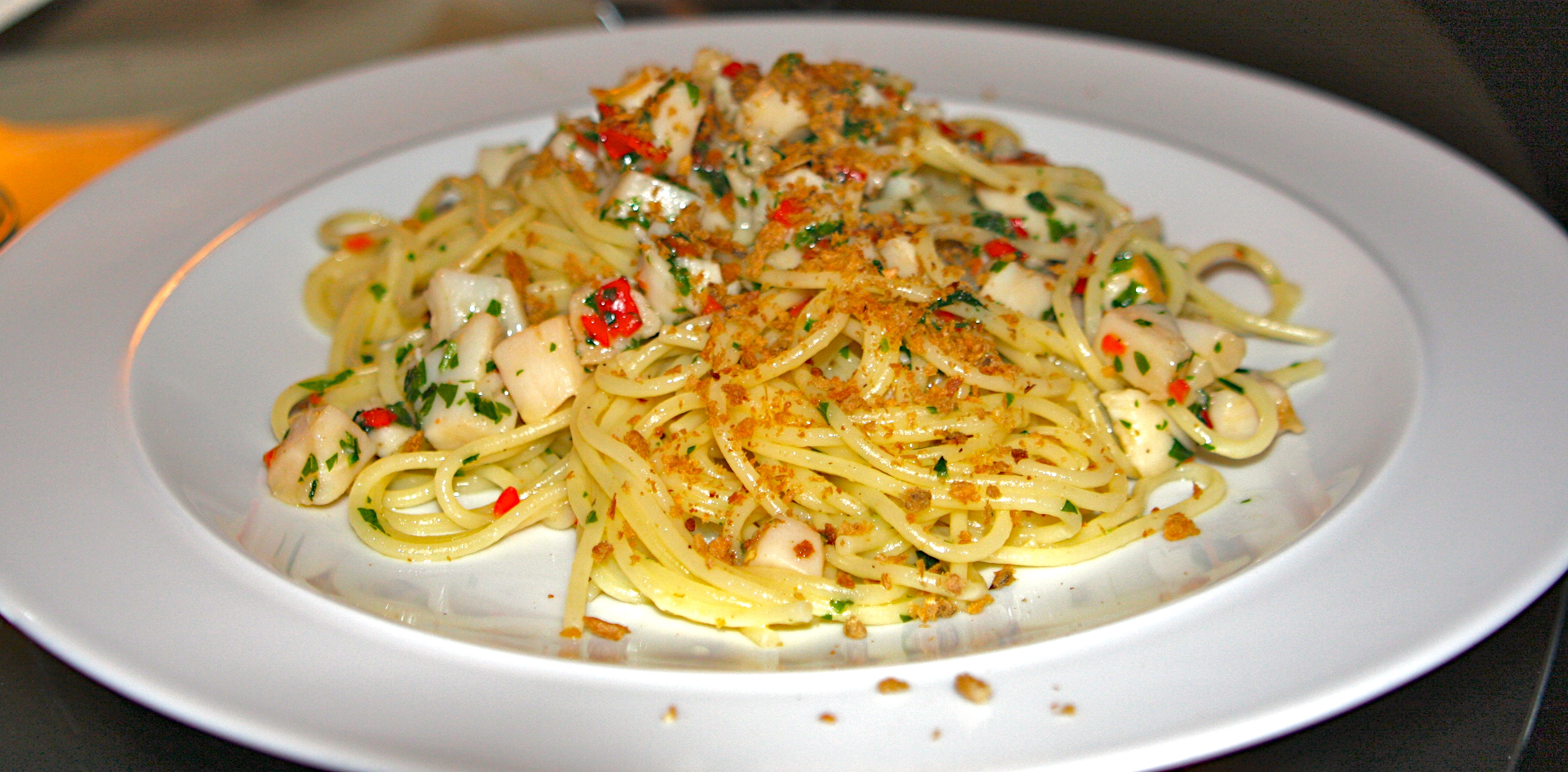
This is a delicious recipe from Marcella Hazan’s The Essentials of Classic Italian Cooking. Marcella recommends using canestrelli which are tiny little sweet scallops which are also know as Queen Scallops or Queenies. We didn’t have canestrelli to hand when we made this but achieved a similar effect by chopping up larger scallops so there are lots of little pieces through the dish. Serve the sauce with spaghettini if you can get it, but thicker spaghetti will work too.

Scallop Sauce with Olive Oil Garlic and Hot Pepper – to serve 6

  • 450g fresh queen or deep-sea scallops
  • 8 tbsp extra-virgin olive oil
  • 1 tbsp very finely chopped garlic
  • 2 tbsp chopped parsley
  • chopped hot red chilli pepper, to taste
  • salt
  • 450-675g pasta
  • 45g dry breadcrumbs, lightly toasted in the oven or a dry pan

Wash the scallops in cold water, pat dry with a tea towel and cut into little pieces about 9mm thick.

Put the olive oil and garlic in a saucepan, turn the heat to medium and cook until the garlic becomes pale gold, add the parsley and chilli. Stir and add the scallops and a couple of large pinches of salt. Turn the heat to high, and cook for about 90 seconds, stirring often, until the scallops become opaque and loose their shine. Careful not to overcook them or they will be tough. Taste and adjust the seasoning. If there is a lot of liquid in the pan, remove the scallops with a slotted spoon, and boil down the watery juices. Return the scallops to the pan, turn quickly, then take off the heat.

Toss well with the cooked spaghettini, add the breadcrumbs and toss again.

Drink with: An easy, simple and fruity Grüner Veltliner (GV) works well by not overwhelming this delicate sauce and the spicy white pepper spices in GV complement the spices and chilli in the dish. Don’t spoil the balance by getting a powerful and complex GV.

Read Full Post »

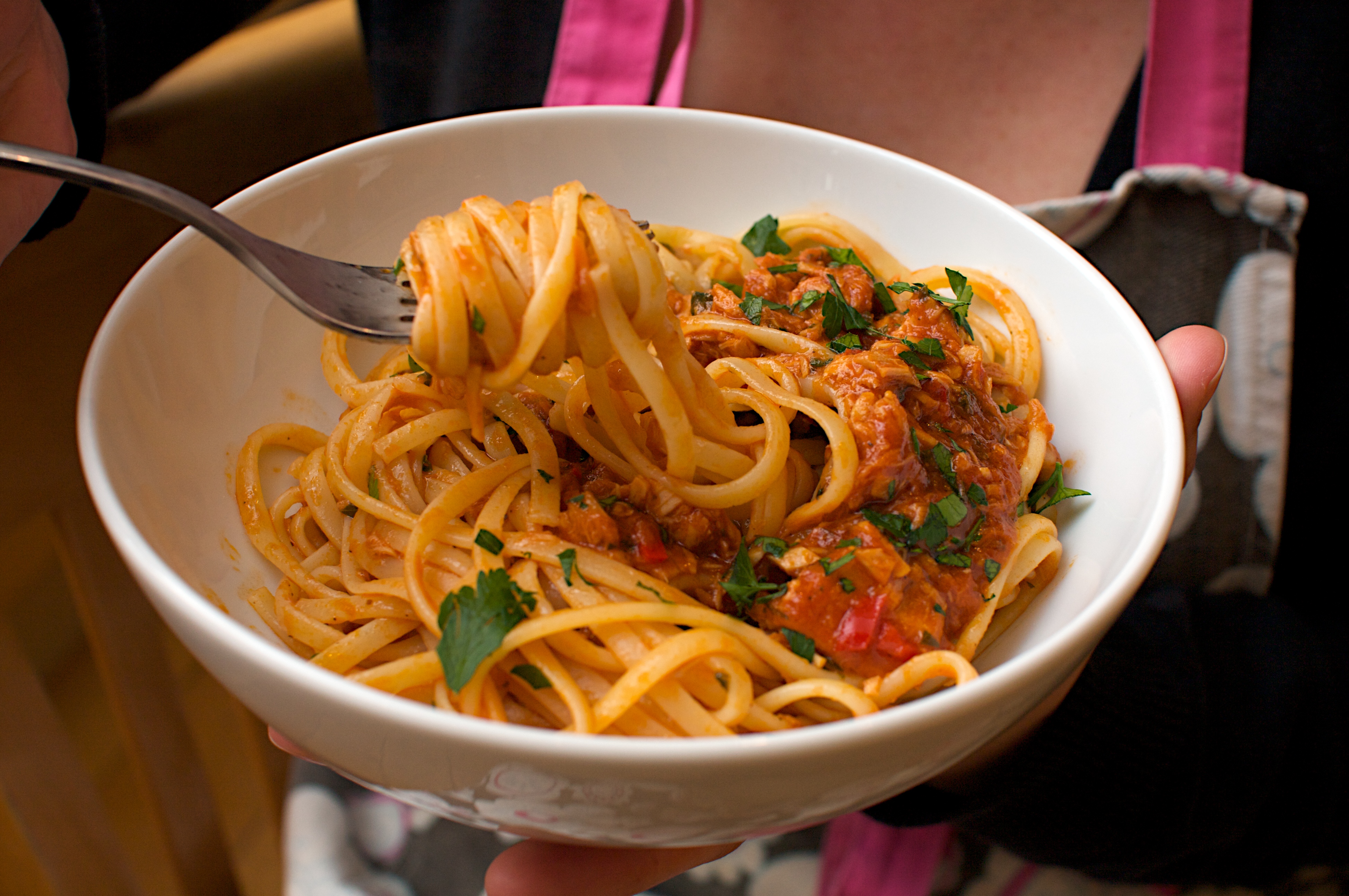
This is so delicious!!! Make sure you use top quality tuna in olive oil (we like Ortiz). It’s really healthy too. What more can we say?

Note to Cara – Jono reckons Cian will like this one 😉

Linguine with tuna sauce – to serve 4

  • 4 tbsp extra virgin olive oil
  • 3 tbsp fresh flat leaf parsley, chopped
  • 2 garlic cloves, finely chopped
  • 1 red chilli, deseeded and finely chopped
  • 1 cm fresh ginger, peeled and finely chopped
  • 450g creamed tomatoes (passata)
  • 2 x 200g cans tuna in olive oil, drained and flaked
  • 375g linguine

Heat the oil in a medium pan. Toss in 2 tbsp of the parsley, the garlic, chilli and ginger and fry for a few minutes until starting to soften. Add the tomatoes and cook for another few minutes. Fold in the tuna and season generously. Leave the sauce to simmer for 10 minutes.

Meanwhile, cook the pasta, then drain and return to the pan. Pour the tuna sauce into the pasta and toss well. Sprinkle over the rest of the parsley and serve.

Wine Suggestions: We think a light Italian red would be good here. Try a Langhe Nebbiolo or something from Basilicata if you fancy going south.

(Original recipe from BBC Good Food.)

Read Full Post »

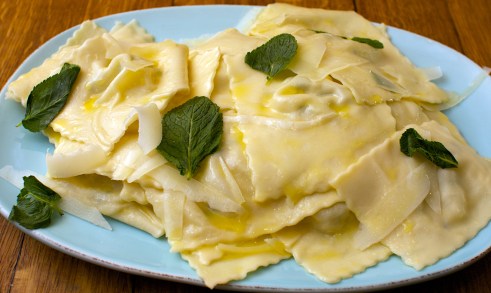
Jono hasn’t made fresh pasta since he broke his hand and we’ve missed the lightness and texture it has. Now he’s better we had to make this minty Spring Ravioli. Needless to say we made masses, but despite the quantity they just slipped down so easily and disappeared in a flash. Fresh pasta is a bit of a labour of love but if you give yourself plenty of time it’s not that difficult and you feel very smug and clever afterwards.

Ravioli of pecorino, potato and mint – serves 6

  • pasta dough (see below)
  • 500g floury potatoes
  • 100g butter, plus a bit more
  • 1-2 handfuls of grated pecorino, plus a bit extra
  • nutmeg for grating
  • zest of 1 lemon
  • a bunch of fresh mint

For the pasta dough

  • 600g tipo 00 flour
  • 6 large eggs

First make the pasta:

Throw the flour and eggs into a food processor and whiz until it looks like breadcrumbs, then tip out and bring together with your hands.

Knead the pasta dough until it feels smooth and silky (your hands should be aching!). Wrap it in clingfilm and rest in the fridge for at least half an hour.

For the filling:

Preheat the oven to 200C/400F/gas 6. Prick the potatoes with a fork, then roll them in some sea salt and bake for about an hour. Cool, cut them in half, and scoop the potato into a bowl, discarding the skins.

Pick your mint leaves and finely chop half. Add the butter, pecorino, nutmeg, lemon zest and the chopped mint and mash well with the potato. Taste and add more  seasoning if it doesn’t taste absolutely delicious.

For the ravioli:

Dust the work surface with flour. Take a quarter of the pasta dough (keep the rest wrapped well in the fridge) and press out flat with your fingers. Set your pasta machine to the widest setting – and roll the pasta dough through. Lightly dust with flour if it sticks.  Click the machine down a setting and roll through again. Fold the pasta in half, click the machine back to the widest setting and roll through again. Repeat this process 5 or 6 times. The pasta will eventually become smooth and silky.

Now roll the dough through all the settings on the machine, from the widest to the narrowest. Keep lightly dusting both sides with flour as you go. When you’ve got down to the narrowest setting, fold the pasta in half lengthways and then in half again, then in half once more until you have a kind of square. Turn it 90 degrees and feed through the machine again at the widest setting. Roll the pasta through each setting for the last time. For ravioli you need to keep going until you can clearly see your hand through the pasta.

Now you need to work quickly to make your ravioli before your pasta dries out. You can cover with a damp tea towel to protect it if necessary.

Cut the pasta into a 5 x 15 cm strips.

Place 4 tsp of filling along the strip and lightly brush the pasta with water.

Put another strip over and mould carefully around the filling on the bottom sheet, pushing out any air bubbles.

Cut into squares with a crinkle cutter or into circles with a pastry cutter.

To cook the ravioli: 

Bring a pot of salted water to the boil and cook the ravioli for about 3½ minutes.

While it is cooking, put a couple of knobs of butter in a frying pan and heat gently. Drain the ravioli with a slotted spoon, reserving a little bit of pasta water. Add the ravioli to the melted butter with a little of the cooking water and lightly simmer until you have a sauce that coats the pasta lightly. Serve on a platter and sprinkle with mint, some pepper and shavings of pecorino.

Aren’t you clever!

Wine Suggestion: We went with the suggestion in the recipe book which was the Italian white, Arneis. Ours was by a producer called Ascheri from Alba and was very nice indeed.

(Original recipe from Jamie Oliver’s Cook with Jamie, Penguin Books, 2006.)

Read Full Post »

We’re always on the lookout for a vegetarian lasagne and this one worked well and tasted great. It’s rich so a salad on the side is all that’s needed. Make on the weekend when you’re in no hurry.

Mushroom lasagne – to serve 8

MUSHROOMS:

  • 35g dried porcini mushrooms
  • 400ml lukewarm water
  • 60g unsalted butter
  • 1 tbsp thyme leaves
  • 800g mixed fresh mushrooms, sliced if large
  • 2 tbsp chopped tarragon
  • 4 tbsp chopped parsley

LASAGNE

  • 60g unsalted butter
  • 1 small shallot, chopped
  • 60g plain flour
  • 550ml milk
  • 375g ricotta
  • 1 large free-range egg
  • 150g feta, crumbled
  • 170g Gruyère, grated
  • 400g lasagne verde
  • 150g fontina cheese (or mozzarella), granted
  • 50g Parmesan, grated
  • salt and white pepper

Preheat the oven to 180ºC/Gas Mark 4. Cover the porcini with the lukewarm water and leave to soak for 5 minutes. Drain and reserve the liquid.

Melt the butter in a large heavy-based saucepan. When foaming add the thyme, porcini and fresh mushrooms. Cook for 4 minutes, or until softened and have released their juice, stirring now and then. Take off the heat and stir in the tarragon, parsley and some salt and pepper. Tip into a bowl and set aside.

Use the same pan to make a béchamel. Put the butter and shallot in the pan and cook over a medium heat for about a minute. Add the flour and cook, stirring constantly, for about 2 minutes; the mix will turn into a paste but shouldn’t take on much colour. Gradually whisk in the milk and porcini soaking liquid, leaving any grit behind. Add ½ tsp salt and keep whisking until boiling. Simmer on a low heat, don’t stop stirring, for about 10 minutes, or until thickish. Take off the heat.

In a small bowl mix the ricotta with the egg, then fold in 3 tbsp of the béchamel and the feta. Add the Gruyère to the remaining béchamel in the pan and stir well to get your main sauce.

Pour boiling water over the lasagne leaves (a few at a time so they don’t stick together) and soak for 2 minutes; remove and dry on a tea towel.

To build the lasagne, pour one-fifth of the sauce over the bottom of an ovenproof dish (about 25 x 35 cm). Cover with lasagne leaves. Spread ¼ of the ricotta mix on top, scatter over ¼ of the mushrooms and sprinkle with ¼ of the fontina. Make three more layers like this, then finish with a layer of pasta covered with sauce.

Sprinkle the Parmesan on top and cover loosely with foil (so it’s not touching the sauce). Bake for 40 minutes, or until the sauce is bubbling up around the sides. Lift off the foil and bake for another 10 minutes, or until golden. Leave to rest for 10 minutes before serving.

Wine Suggestion: You’ve plenty of choices here. You could go for a Chardonnay to complement the rich mushroom sauce or if you prefer red go for something earthy like a Barbera.

(Original recipe from Yotam Ottolenghi’s Plenty, Ebury Press, 2010.)

Read Full Post »

« Newer Posts - Older Posts »