Feeds:
Posts
Comments

Archive for the ‘Pasta’ Category

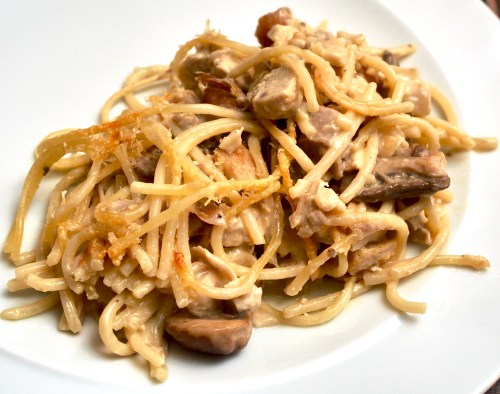
Turkey Tetrazzini

A creamy turkey and mushroom pasta bake for the inevitable leftovers. Tetrazzini was created by Italian immigrants to the USA adapting family recipes to local conditions and evolving tradition. We like this.

Wine Suggestion: Given this is American in origin we opened a Californian Chardonnay, the Cline Chardonnay from the Sonoma Coast. The richness of fruit and hints of oak were a great match.

Turkey Tetrazzini – serves 4

  • 200g chestnut mushrooms, sliced
  • 200g spaghetti
  • 50g butter plus a bit extra for frying the mushrooms
  • 2tbsp flour
  • 250ml hot chicken stock
  • a few drops of Tabasco
  • 1 egg yolk
  • 1 tbsp dry sherry
  • 3 tbsp single cream
  • 300g cooked turkey
  • 4 tbsp grated Parmesan

Preheat the oven to 180C.

Start by frying the mushrooms in a little butter until softened and browned. Remove from the heat and set aside.

Cook the spaghetti in a large pan of boiling salted water for the time indicated on the pack.

Meanwhile, make your white sauce. Melt the butter in a saucepan, add the flour and stir and cook for a minutes or so. Gradually whisk in the hot chicken stock until smooth and thickened. Remove from the heat and whisk in the tabasco, egg yolk, sherry and cream, then stir in the cooked turkey and mushrooms.

Layer the cooked spaghetti with the turkey mixture in a ovenproof dish, finishing with a layer of spaghetti and the Parmesan sprinkled over.

Bake in the oven for 25 minutes or until piping hot and bubbling. Put briefly under a hot to crisp up the spaghetti on top if needed.

Serve with a green salad.

(Original recipe by Lulu Grimes in Olive Magazine, January 2008)

Read Full Post »

We’re all about creamy sauces, gratins and roasts at this time of the year. This is a great Friday night pasta dish by Nigel Slater with all the roast chicken flavour but quick to put together.

Wine suggestion: this really needs a full bodied white wine with texture. We naturally fall towards Chardonnay when thinking this, but the Languedoc one we had in the fridge we knew was easy drinking but not able to stand up to the food despite it being fuller bodied. Luckily we also had Vouvray made by Vincent and Tania Carême from our holidays earlier this year, and despite it being “tendre” or off-dry, it was a delight and an excellent match. The key was the texture even with the residual sugars left in the wine.

Roast chicken pasta – serves 4 generously

  • 4 sprigs of rosemary, leaves stripped
  • 8 black peppercorns
  • 4 tbsp olive oil
  • 1 kg chicken thighs
  • 300g fusilli or trofie pasta
  • 7g tarragon, leaves stripped and chopped
  • 10g parsley, leaves stripped and chopped
  • zest of 1 lemon, grated
  • 75g pine nuts, toasted
  • 500ml double cream

Preheat the oven to 200°C/Gas 6.

Bash the rosemary, peppercorns and a tsp of sea salt in a pestle and mortar until you have a coarse powder, then blend in the olive oil.

Put the chicken thighs in a roasting tin, then pour over the rosemary mixture and rub to coat all over. Put into the oven and roast for 35 to 40 minutes. Remove from the oven and leave to rest for 10 minutes.

Cook the pasta in plenty of salty water according to the timings on the pack.

Remove the chicken from the bones, keeping it in large chunks if you can and catching any meaty juices.

Mix the tarragon, parsley, lemon and toasted pine nuts together.

Put the roasting tin over a medium heat, add the cream to the tin and stir to scrape all the crusty bits off the tin. When the cream starts to bubble, add the cooked pasta and chicken. Season with black pepper.

Serve the pasta in bowls with the pine nut and herb mixture scattered over the top.

(Original recipe by Nigel Slater in The Guardian, Sunday 1st December 2019)

Read Full Post »

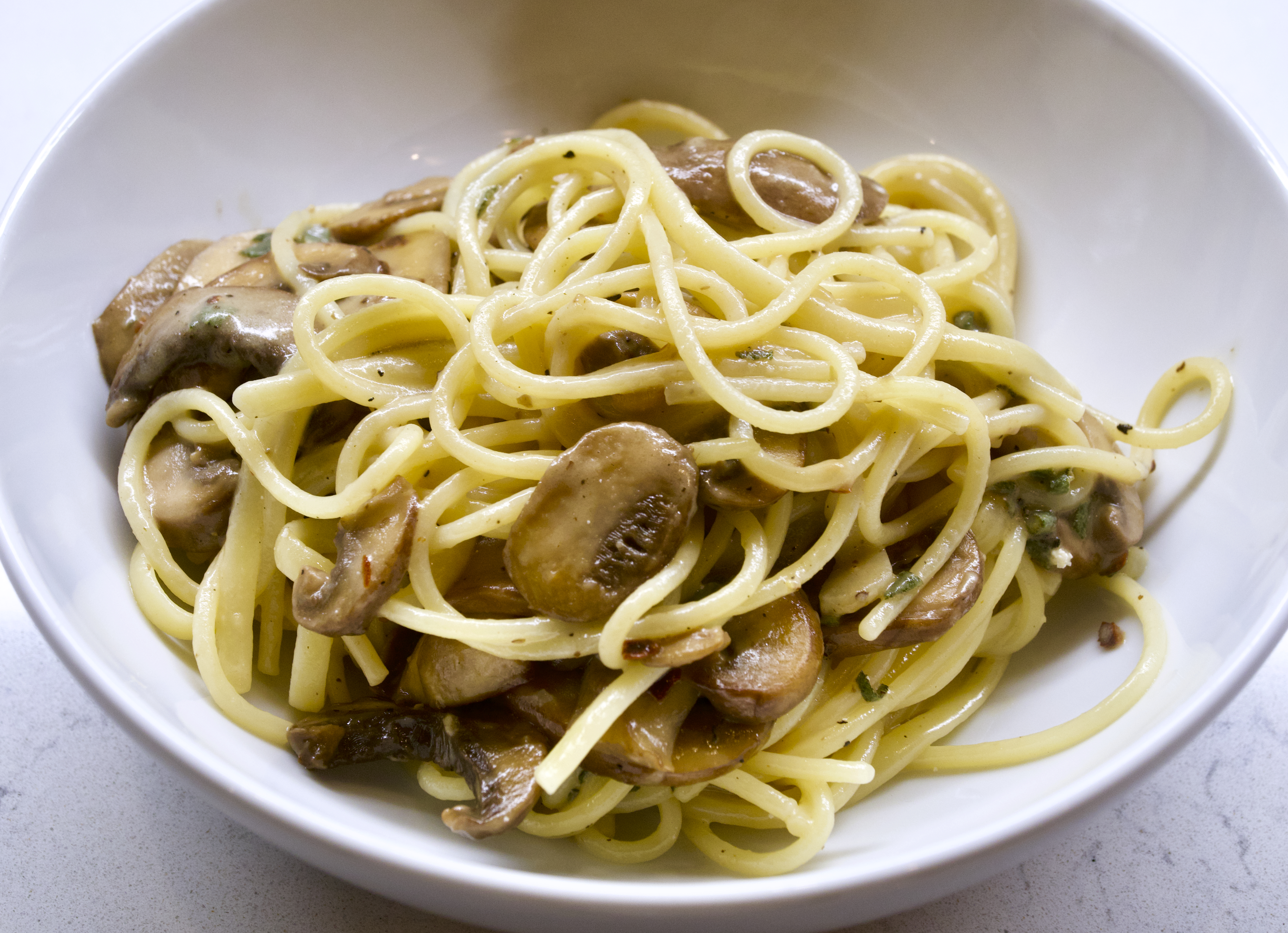
Linguine with garlic mushrooms & sage

Nothing fancy here but might be the break you need from all the Christmas festivities. Minimal effort required!

Wine Suggestion: a light red wine was our choice today; the Domaine Bellier Cheverny Rouge, a blend of Pinot Noir and Gamay from the Loire in France. Earthy and fresh plums and cherry flavours with fine, light tannins.

Linguine with garlic mushrooms & sage – serves 2

  • 150g linguine
  • 25g butter
  • 250g chestnut mushrooms, sliced
  • 1 clove of garlic, crushed
  • a good pinch of chilli flakes
  • a handful of sage leaves, chopped
  • juice of ½ a lemon
  • 50g Parmesan, finely grated

Cook the linguine in loads of salty water according to the timings on the pack.

Meanwhile, heat the butter in a frying pan and fry the mushrooms until very soft and golden and the any liquid has pretty much disappeared.

Add the garlic and chilli and cook for 2 to 3 minutes, then stir in the sage and cook for another minute. Season generously.

Drain the pasta but reserve some of the cooking liquid. Add the cooked pasta to the mushroom pan with the lemon juice, Parmesan and enough of the reserved water to make a sauce. Toss everything together until the pasta is coated.

Serve with a bit of extra Parmesan over the top if you like.

(Original recipe by Janine Ratcliffe in Olive Magazine, November 2015)

Read Full Post »

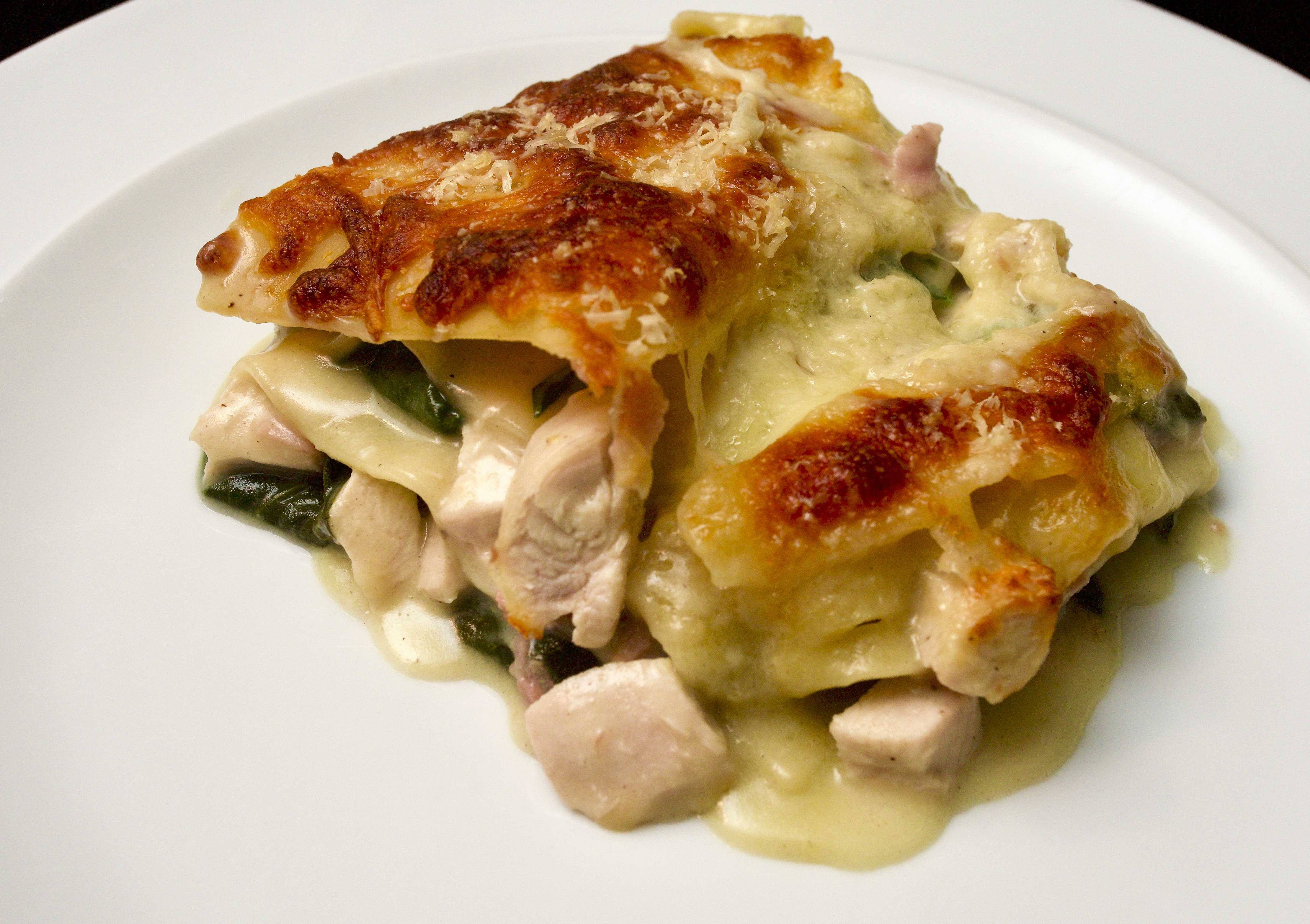
Chicken & Ham Lasagne

This is a good crowd pleaser and you can also freeze it so if you are fewer in number make two lasagnes in smaller dishes and save one for later.

Wine Suggestion: Rich and savoury; this goes really well with southern Rhône whites and our favourite, value option is the Chateau Pesquié Terrasses Blanc, a blend of Viognier, Roussanne, Clairette & Grenache Blanc. With floral hints, layers of citrus and a backbone of stonefruit flavours this is round, rich and fresh in equal measures; just what this dish needs.

Chicken & Ham Lasagne – serves 8

  • 6 boneless, skinless chicken breasts
  • ½ a medium onion, sliced
  • 2 bay leaves
  • 200ml white wine
  • 100g butter
  • 100g plain flour
  • 500ml semi-skimmed milk
  • 140g sliced smoked ham, cut into strips
  • 200g young spinach leaves
  • no pre-cook dried lasagne sheets
  • 200g ready-grated mozzarella
  • 25g Parmesan, finely grated

Put the chicken in a medium saucepan with the onion, bay leaves and wine. Pour over just enough water to cover, about 200ml. Put a lid on the pan and bring to a gentle simmer, then poach gently for 15 minutes or until the chicken is just cooked. Lift the chicken out onto a board and strain the liquid into a jug.

Melt the butter in a large saucepan over a medium heat. Stir in the flour with a wooden spoon and cook for a minute. Gradually add the milk, a little at a time, stirring well between each addition to keep the sauce smooth. When all the milk has been added, continue with the chicken cooking liquid. When all the liquid is added, continue to cook and stir for a few minutes or until thickened. Add salt and pepper to taste.

Heat the oven to 200C/180C fan/gas 6.

Cut the chicken into small chunks and stir into the sauce. Add the ham and spinach and cook until the spinach has wilted. Spoon a third of the mixture into the bottom of a 3-litre lasagne dish. Top with lasagne sheets, then repeat the layers twice more, ending with lasagne. Scatter over the mozzarella and Parmesan and season with black pepper. Bake for about 25 minutes or until the lasagne is soft and the topping well browned.

TO FREEZE: Assemble the dish but don’t bake it. Leave to cool and cover with a double layer of foil, then freeze for up to 2 months.

TO COOK AFTER FREEZING: Remove the foil and cover with cling film. Thaw overnight in the fridge. Remove the cling film, cover with foil and bake for about 40 minutes, then remove the foil and bake for another 10 or until browned and bubbling.

(Original recipe from BBC Good Food)

Read Full Post »

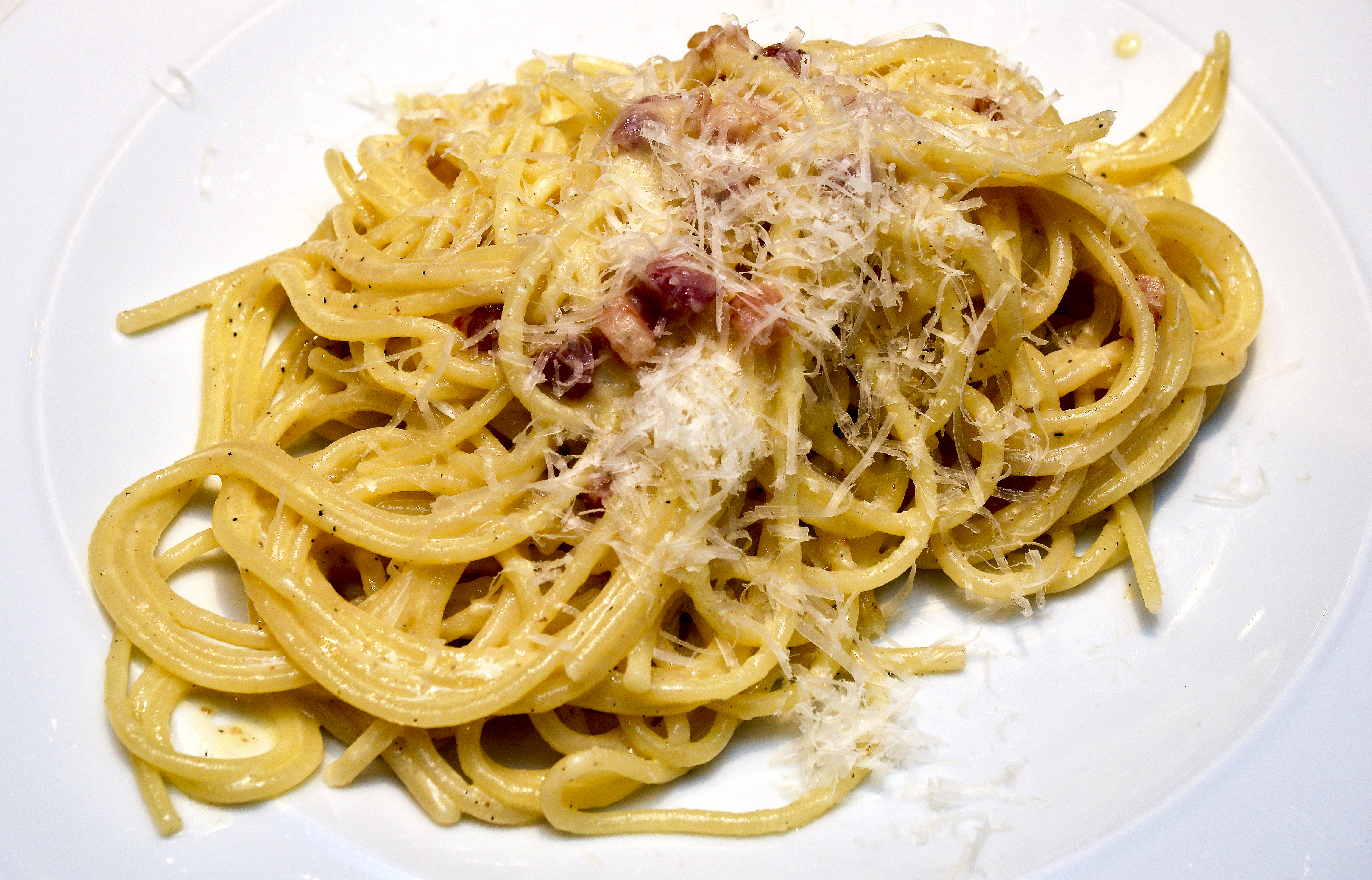
Spaghetti Carbonara

We’re not in the least offended by a splash of cream in a carbonara but this is the traditional version made with nothing but eggs, pecorino and pancetta. The quality really matters when you’re using just a few ingredients so definitely go for the best you can find or afford.

Wine Suggestion: An Italian white like a Pecorino from the Marches springs to mind, but some of the fuller textured wines from Lugana or Friuli from the North, or a Greco from the South make a good alternative; a layered texture and freshness is what your looking for to match this dish.

Spaghetti all carbonara – serves 4

  • 400g spaghetti
  • 100g pancetta lardons or guanciale
  • butter
  • 1 clove of garlic, halved
  • 4 eggs
  • 100g pecorino (or Parmesan), grated

Cook the pasta, according to the timings on the pack, in plenty of salty water.

Meanwhile, put the pancetta into a cold frying pan and bring slowly up to a high heat. When the pancetta has started to release its fat, add a knob of butter and the garlic, then turn down to medium. Fry until the pancetta is browned but not too crispy or it will harden. Discard the garlic and keep the pan warm.

Beat the eggs with most of the cheese. When the pasta is done, drain it, and keep a few tablespoons of cooking water. Tip the pasta back into the hot pasta pan, but off the heat. Add the egg mixture and pancetta and toss everything together quickly. Season with plenty of black pepper and add a bit of water to loosen the sauce if needed. Serve sprinkled with the remaining cheese.

(Original recipe by Lulu Grimes in Olive Magazine, October 2011.)

Read Full Post »

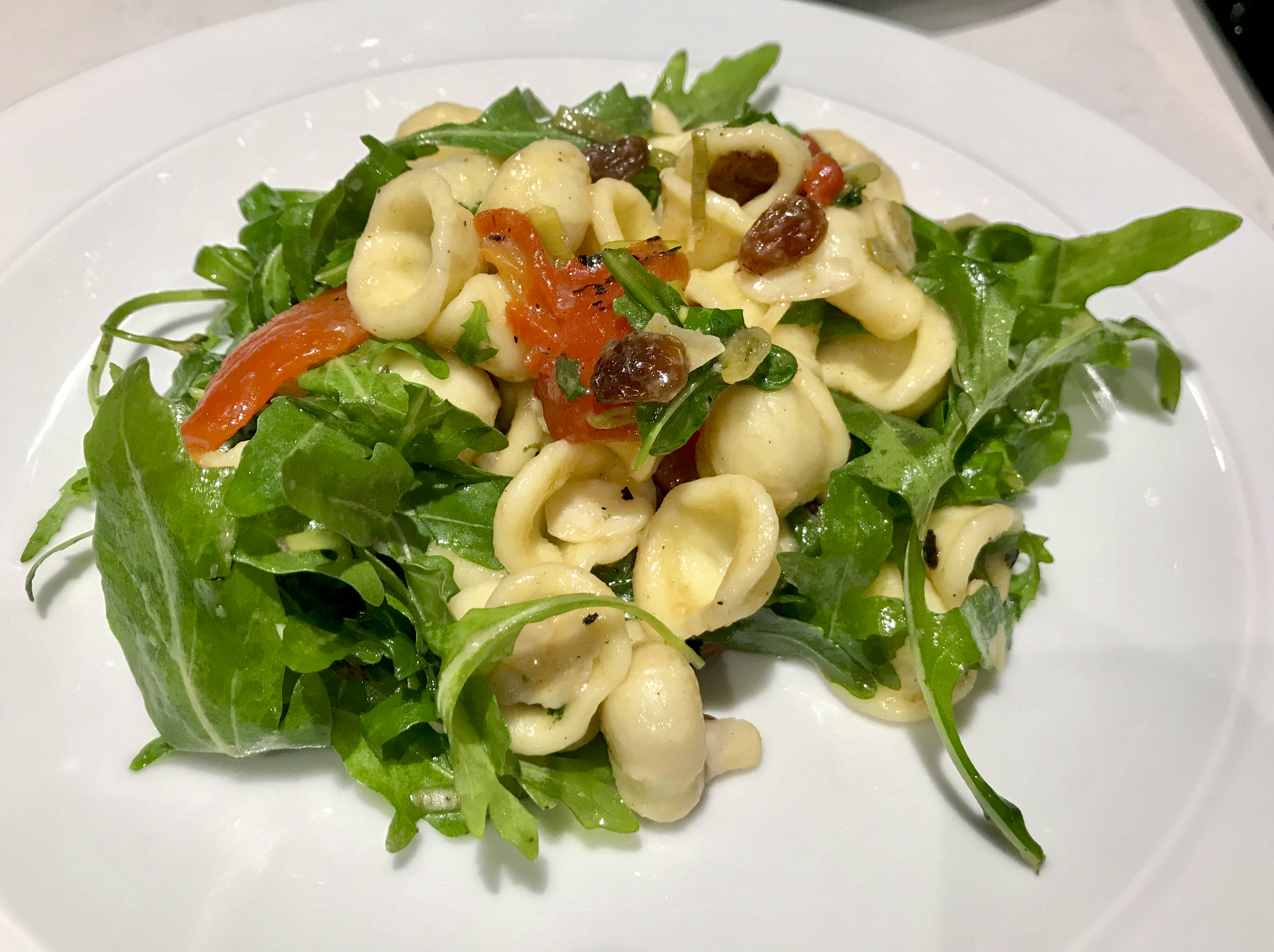
Orecchiette with Peppers, Raisins & Almonds

This is almost like a warm pasta salad. It’s delicious and really easy to put together.

Wine suggestion: if you feel like a glass of wine we’d suggest a Grüner Veltliner which compliments the sourness of vinegar, peppery rocket and other flavours in this dish.

Orecchiette with peppers, raisins & almonds – serves 2

  • 150g orecchiette
  • 100g roasted red peppers from a jar
  • 2 tbsp golden raisins/sultanas
  • 2 tbsp flaked almonds (toast them in a dry pan if you like)
  • 50g rocket

FOR THE DRESSING:

  • 2 tbsp sherry vinegar
  • 2 tbsp olive oil
  • 2 scallions, finely chopped

Whisk the dressing ingredients together and set aside.

Cook the pasta in loads of salty water according to the timings on the pack.

Drain the pasta and toss with the dressing, sultanas and peppers. Leave for 5 minutes then add the almonds and rocket  and toss together with a bit of seasoning if needed.

(Original recipe by Janine Ratcliffe in BBC Olive Magazine, October 2012)

Read Full Post »

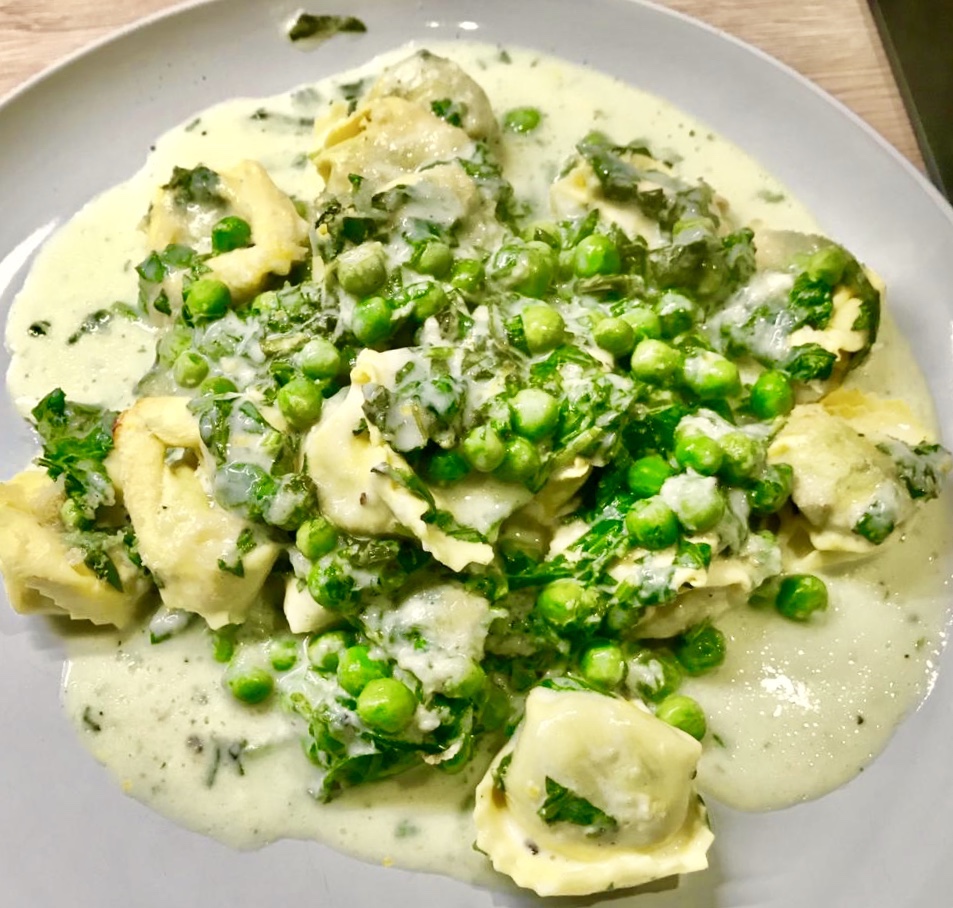
This veggie pasta dish uses shop-bought ravioli and the whole thing cooks in one pan in the oven. Couldn’t be simpler and really tasty on a night when time is short (which is every night for us at the minute).

Wine Suggestion: a lemony, fresh white like the Umani Ronchi Ca’Sal di Serra Verdicchio which is crisp and pure with lovely vibrant fruit. It tastes of summer which we’ve had a reprise of these last few days.

Creamy Lemon & Spinach Ravioli – serves 2

  • 250g pack spinach & ricotta ravioli (or another flavour if you prefer)
  • 100g frozen peas
  • 100g baby spinach, chopped
  • 200ml hot vegetable stock
  • 4 tbsp soft cheese, we used Philadelphia
  • 1 lemon, zested and juiced
  • 50g Parmesan, grated

Heat the oven to 200C/fan 180C/gas 6.

Spread the ravioli over a baking dish and scatter over the peas and spinach.

Whisk the hot stock, soft cheese, lemon zest and juice and half the Parmesan together in a jug. Season well, then pour over the ravioli. Cover the dish with foil and bake for 10 minutes.

Remove the foil, scatter over the rest of the cheese, then bake for another 5 minutes before serving.

(Original recipe by Janine Ratcliffe in Olive Magazine, September 2019)

Read Full Post »

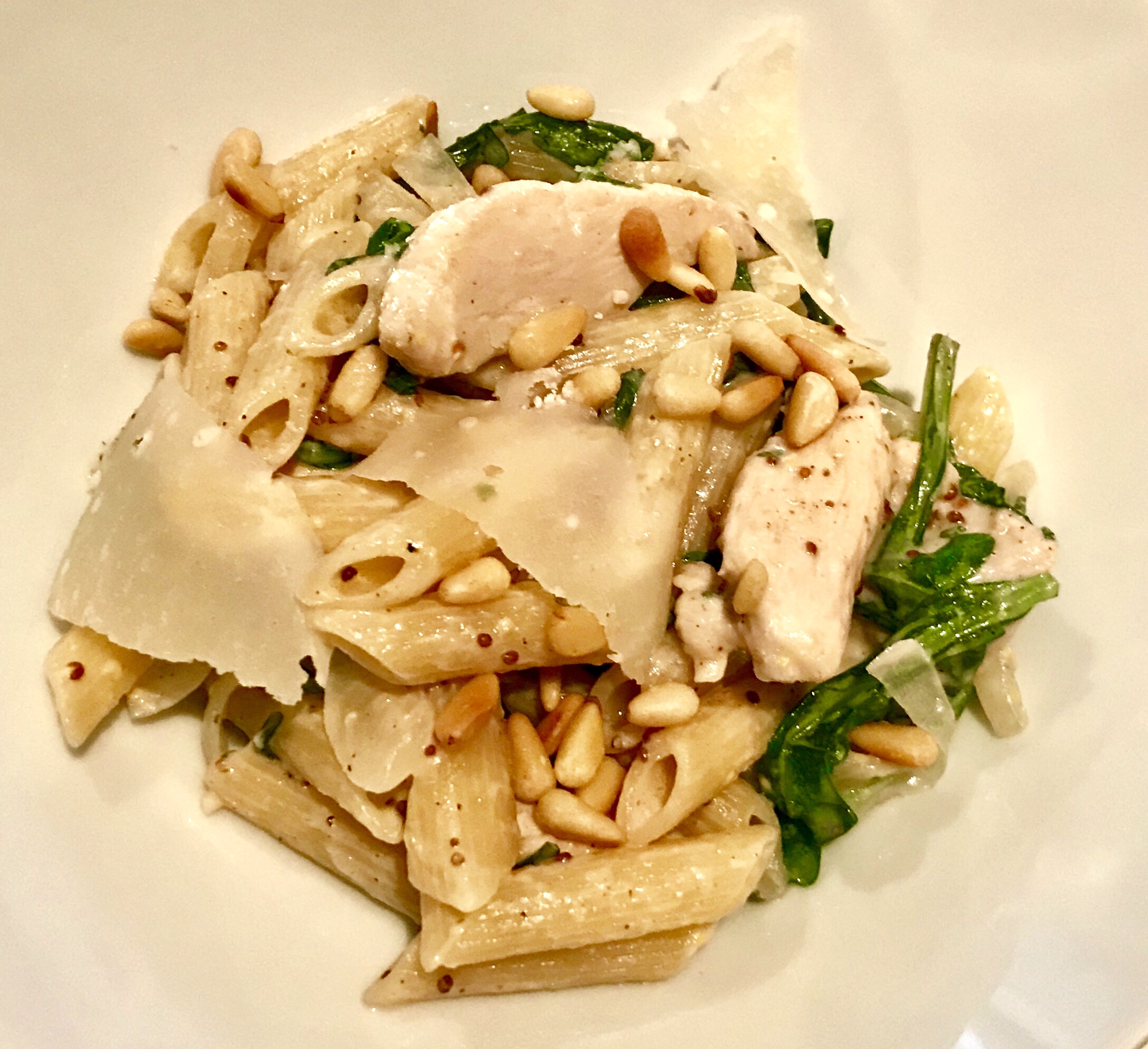
We’re back from our holidays and sadly no longer living on a diet of bread, cheese & wine (bread, cheese & ice cream for Orlaith – age 5). This is a nice simple pasta dish for a Friday night.

Wine Suggestion: our choice is a fresh Chenin blanc, the Chateau Hureau Argile which has a crisp freshness as well as great depth matching the creamy chicken.

Chicken, Rocket & Pine Nut Pasta – serves 4 to 6

  • 450g penne pasta
  • 6 tbsp pine nuts
  • 2 tbsp olive oil
  • 1 large onion, thinly sliced
  • 2 garlic cloves, crushed
  • 1 tsp fresh thyme leaves
  • 4 large chicken breast fillets, sliced into thin strips
  • 4 tbsp crème fraîche
  • 1 tbsp wholegrain mustard
  • 100g rocket or watercress, remove any tough stalks
  • Parmesan shavings, to serve

Cook the pasta in lots of boiling salty water until al dente.

Heat a frying pan and lightly toast the pine nuts, then set aside.

Add 1 tbsp of oil to the pan and sauté the onion, garlic & thyme for a few minutes, then tip into a bowl and set aside.

Add another tbsp of oil to the pan and cook the chicken strips for 2-3 minutes and season lightly, then turn and cook for another few minutes, until cooked through and lightly browned. Return the onion mixture and stir to combine. Stir in the crème fraíche and mustard, then bring to a gentle simmer but don’t let it boil.

Drain the pasta and return to the pan, then pour in the creamy chicken and add the rocket or watercress. Toss lightly to combine and season.

Divide between warm bowls and garnish with the toasted pine nuts and some Parmesan shavings.

(Original recipe from Neven Maguire’s Complete Family Cookbook, Gill Books, 2016.)

Read Full Post »

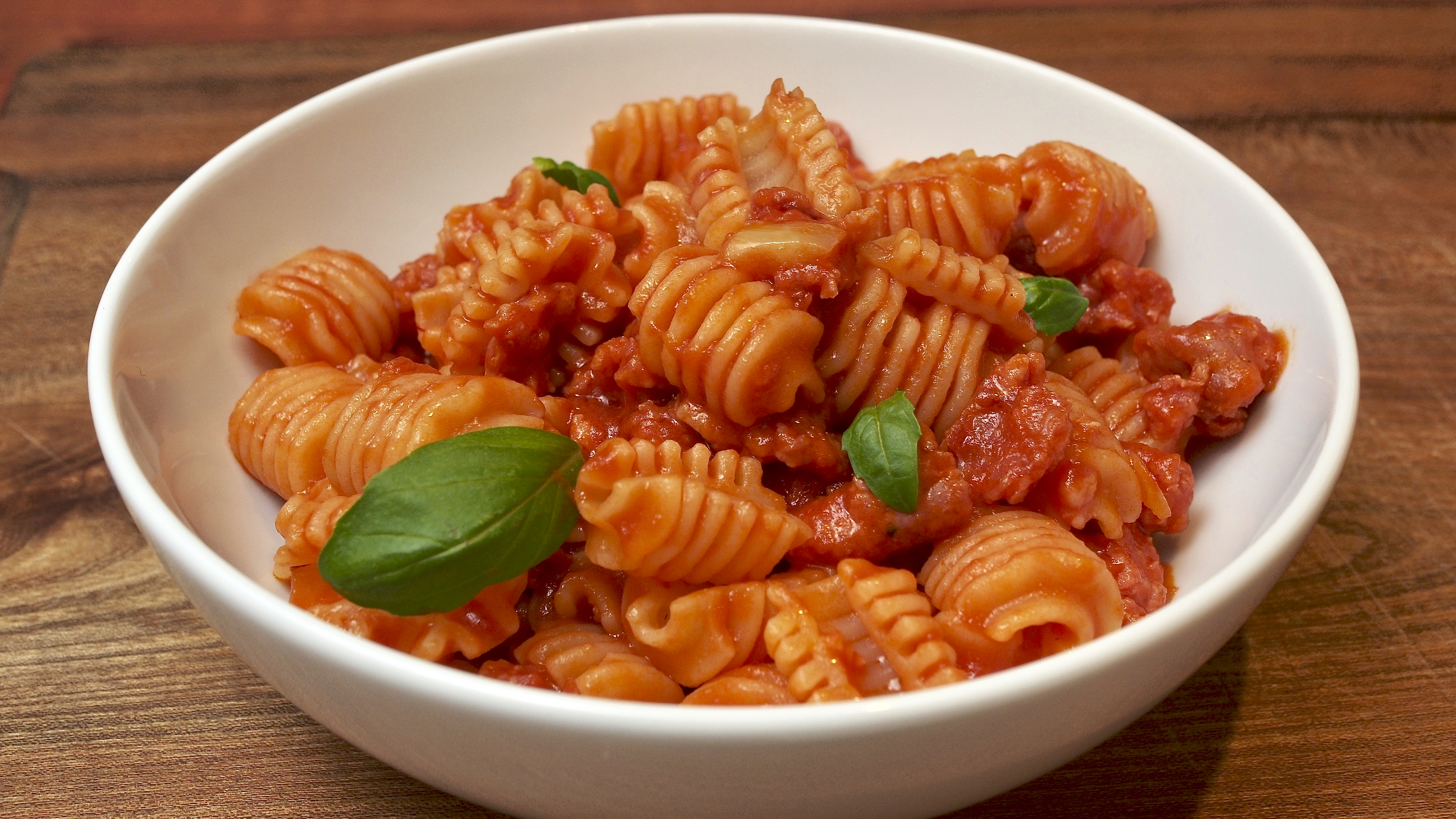
Radiatori with Sausage & Saffron

We’re getting a new kitchen and currently trying to clear the cupboards of as many ingredients as possible to save us having to pack them away. I don’t know why we bought a bag of radiatori pasta, maybe we just liked the look of it, but a quick flick of the books turned up the perfect recipe. Do find Italian sausages if you can (we used luganega but you can often find good pork and fennel ones too) as they’re a lot denser than our traditional sausages. Gone are the days when we used to beg Italian restaurants to sell us some!

Wine suggestion: the saffron gives this dish a refinement and character a little different to some other Italian / pasta recipes and we think that the newly classic wines of the Tuscan coast, specifically Bolgheri and northern Maremma suit the dish really well. For sheer value we’d open a bottle Argentiera’s Poggio ai Ginepri which is Cabernet Sauvignon led. However, if you can stretch further then the Cabernet Franc led wines of Biserno, like their il Pino would make this dish feel like a proper event – as all Friday night dishes should be!

Radiatori with Sausage & Saffron – serves 4 to 6

  • 3 tbsp olive oil
  • a large onion, roughly chopped
  • 500g Italian sausages, remove the skins and break up the meat with your hands
  • ¼ tsp of saffron threads
  • 600ml passata
  • 500g radiatori pasta
  • basil & grated pecorino (to serve)

Warm the oil in a heavy casserole. Add the onion with a pinch of sea salt and cook over a medium-low heat for about 10 minutes or until softened.

Turn the heat up, then add the sausagemeat, keep breaking it up with your spoon if needed, and stir until it loses its raw appearance, then add the saffron and passata. Bring to a bubble and turn the heat down low and simmer gently for 40 minutes.

Place a lid on the casserole and turn off the heat, then cook the pasta in lots of boiling, salty water for the time on the packet. Reserve a few ladlefuls of pasta water before you drain it.

Tip the pasta into the sauce and toss together, adding a bit of pasta water to help it come together if needed. Serve sprinkled with basil and pecorino.

(Original  recipe from At My Table by Nigella Lawson, Chatto & Windus, 2017.)

Read Full Post »

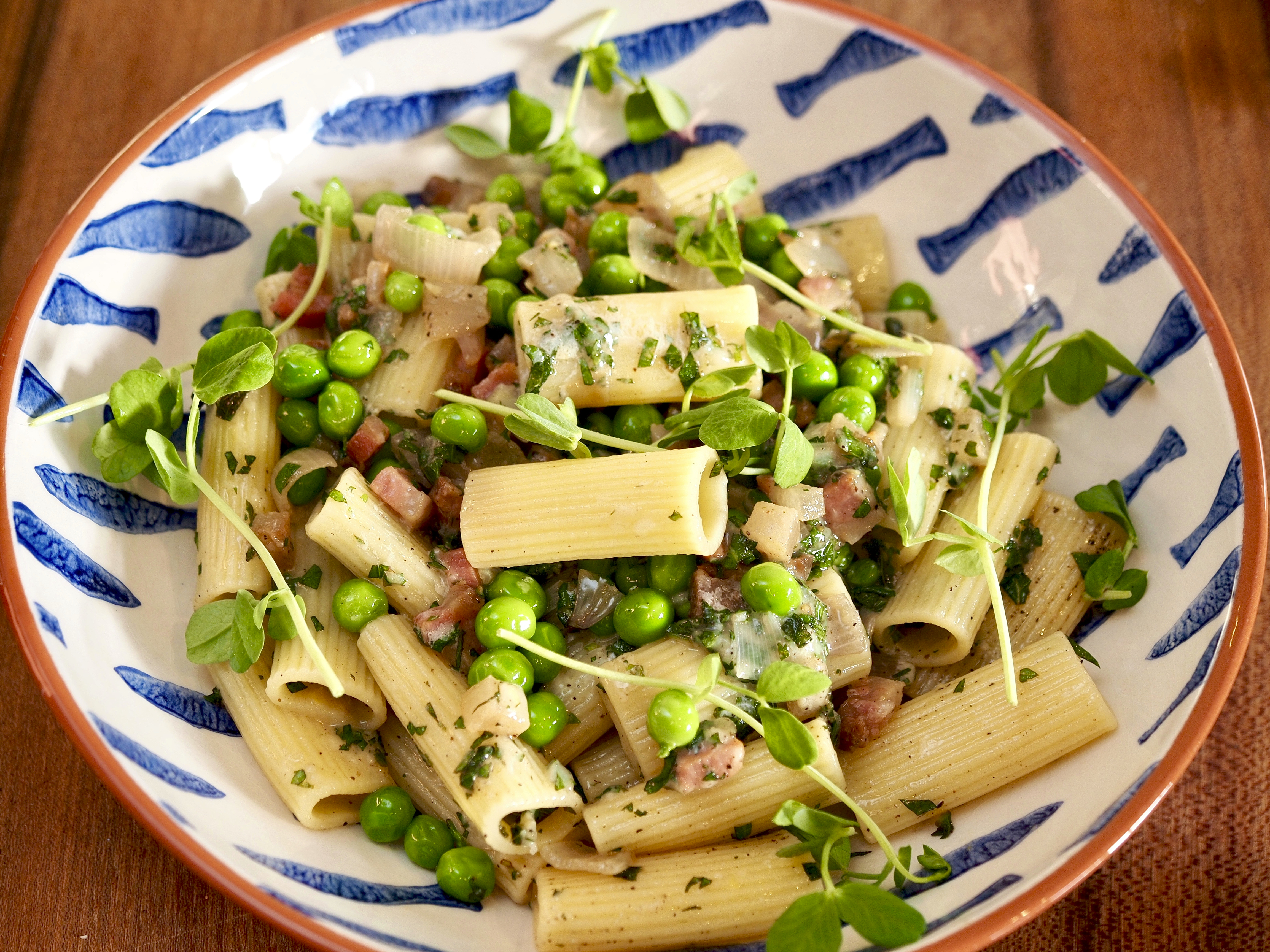
Pasta with Fresh Peas, Guanciale, Mint & Pecorino

We hardly ever buy fresh peas in the pods as they rarely taste as good as frozen peas (must be Birdseye!), frozen the minute they are picked and therefore guaranteed fresh. Of course if you can pick your own that’s a different matter. We took a chance on some peas in their pods in our local veg shop to make this, but if you’re fortunate to be growing them yourself you have no such worries. The pea shoots are a really nice addition if you can find them.

Wine Suggestion: Our choice tonight is a Gavi di Gavi made by Pico Maccario in the Piedmont and the lemony edge to the wine added a nice extra dimension.

Pasta with fresh peas, guanciale, mint & pecorino – serves 2

  • 350g fresh peas, in their pods
  • 80g piece of guanciale (cured pig’s cheek) or smoked pancetta, finely diced
  • 150g dried rigatoni or similar
  • 2 shallots, peeled and roughly chopped
  • ½ a lemon
  • 15g of fresh mint, leaves stripped and finely chopped
  • 30g pecorino cheese, finely grated,  plus extra to serve
  • peas shoots, to serve (optional)

Pod the peas and put the pods in a pot of boiling salted water for 5 minutes, then scoop the pods out and discard (don’t discard the water).

Meanwhile, tip the guanciale into a large cold non-stick frying pan and put over a medium heat to render the fat, tossing often.

Cook the pasta in the pea pod flavoured water according to the timings on the pack.

Add the shallots to the guanciale pan and cook for 5 minutes or until lightly golden. Add the peas and a good splash of water, then finely grate in the lemon zest. Cover and cook gently for 5 minutes, tossing occasionally.

Drain the pasta but reserve a mugful of the cooking water. Tip the pasta into the frying pan, then remove from the heat and toss well. Stir in the mint and pecorino, shaking the pan. Loosen with a little pasta water if needed, then season and serve with extra pecorino, a drizzle of good olive oil, a squeeze of lemon and a few pea shoots.

(Original recipe from Jamie Cooks Italy by Jamie Oliver, Michael Joseph, 2018.)


Read Full Post »

Lobster & Pasta

This is inspired by a Rick Stein recipe in his Mediterranean Escapes book called Lobster & Pasta Chez Jen Jen from Corsica. We cooked this on a weeknight and cheated a bit with the lobster by using frozen lobster tails. We thought you could use raw prawns to good effect too.

Wine Suggestion: We made this on a celebratory evening so pushed the boat out with the wine and had the best English Sparkling we’ve tasted to date: the Dermot Sugrue “The Trouble with Dreams” from Sussex. It had a driving purity and vibrancy that makes it feel alive. For years we often compared English sparkling to Champagne without recognising it to have a unique character and with this wine we fully realised this.

Lobster & Spaghetti – serves 2

  • 2 x frozen lobster tails
  • 200g spaghetti
  • 100ml extra virgin olive oil
  • a garlic clove, finely chopped
  • ¼ tsp curry powder
  • 20ml Cognac
  • 50ml dry white wine
  • 200ml passata
  • 1 tsp dried herbes de Provence
  • salt and cayenne pepper

Defrost the lobster tails by putting them into a deep bowl of cold water and leaving for 30 minutes. You’ll know they are defrosted when they feel a bit flexible.

Bring a large pan of water to the boil and gently lower in the lobster tails. Cook for 3½ minutes, then scoop out with a spoon. Leave to cool slightly, then slice into the soft side to check that the meat is white and therefore cooked through. If it looks grey you need to return to the water again until cooked.

Carefully cut down the soft side of the lobster tails and remove flesh from the shell in one piece, it should come away very easily.

Cook the spaghetti in a large pan of very salty water according to the timings on the pack.

Meanwhile, heat the olive oil in a large frying pan with the curry powder and garlic. When the garlic starts to sizzle, add the lobster, flesh-side down. Pour over the Cognac and flambé to burn off the alcohol. Add the white wine, passata, and herbes de Provence, then cover and simmer for 5 minutes or until the lobster is heated through.

Drain the spaghetti. Lift the lobster tails out of the pan and onto warm plates. Season the sauce to taste with salt and cayenne pepper, add the spaghetti and toss well with the sauce. Spoon alongside the lobster and serve.

(Original recipe from Rick Stein’s Mediterranean Escapes, BBC Books, 2007.)

Read Full Post »

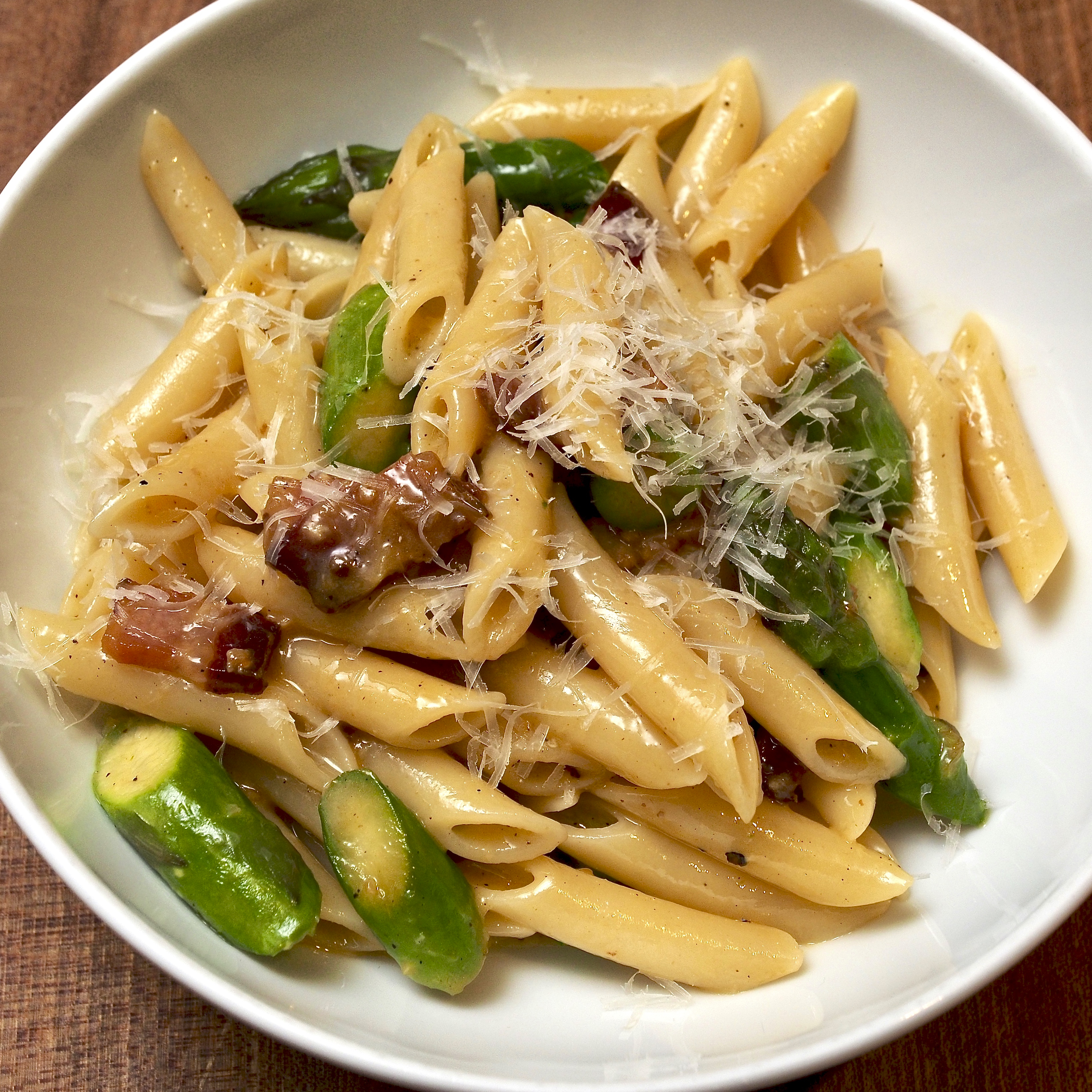
Asparagus Carbonara

Classic carbonara is in no way sullied by the addition of asparagus and in our house at the moment it’s asparagus with everything!!

Wine Suggestion: A difficult decision given the awkwardness of asparagus and wine, plus the creamy richness of the sauce. We settled on the delightful Chateau les Charmes Godard, a Sauvignon (Blanc & Gris) and Semillon blend from Bordeaux and were reminded why we love whites from this region, especially with food.

Asparagus Carbonara – serves 4

  • 200g pancetta or streaky bacon, cut into bite-sized pieces
  • 350g pasta
  • 2 bunches of thin asparagus, trimmed and cut into bite-size pieces
  • 2 cloves of garlic, finely chopped
  • 3 eggs
  • a large handful of grated Parmesan, plus extra to serve

Heat some olive oil in a frying pan over a moderate heat. Add the pancetta and fry for about 5 minutes, or until turning crispy.

Meanwhile, bring a large pan of salty water to the boil. Boil the pasta until al dente, then drain and reserve some of the pasta cooking water.

Add the asparagus and garlic to the pan with the bacon. Season with lots of black pepper and cook for 4-5 minutes or until the asparagus is cooked (it will take a bit longer if your asparagus is thick).

Break the eggs into a small bowl and whisk with the Parmesan and a splash of the cooking water.

Add the cooked pasta to the asparagus pan, then remove from the heat and stir in the egg mixture to combine. Add another splash of cooking water if needed to make a sauce.

Serve right away with extra Parmesan.

(Original recipe from New Kitchen Basics by Claire Thomson, Quadrille, 2019.)

Read Full Post »

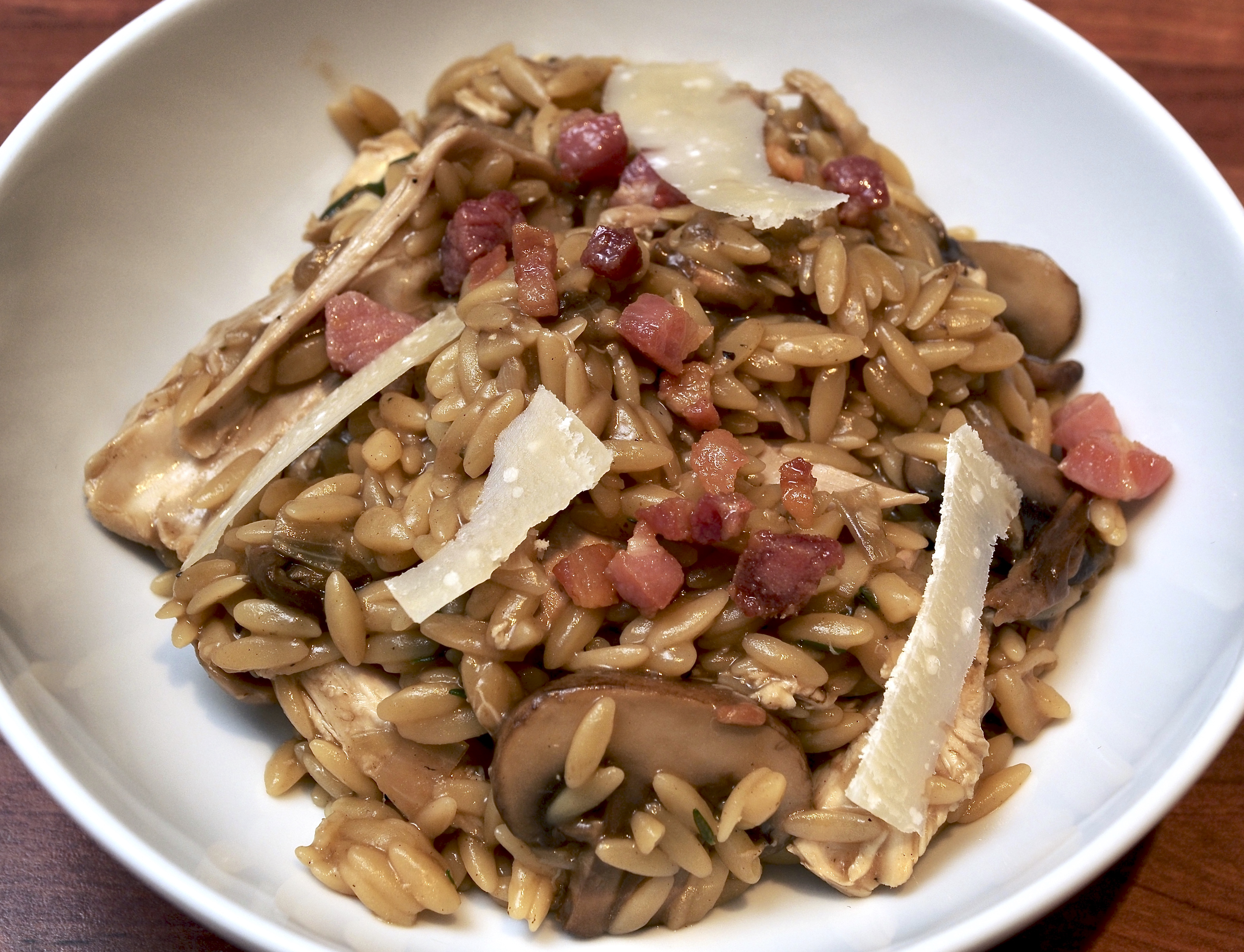
Roast Chicken, Pancetta & Mushroom Orzo

We really liked this easy recipe for leftover roast chicken, a very tasty dish for midweek.

Wine Suggestion: mid-week, or weekend, this works great with a Pinot Noir-Gamay blend like you can find in Cheverny in the Loire; freshness from Pinot and smoothness from the Gamay … both earthy and the right flavours for this dish. Our choice tonight was an old favourite Domaine Bellier.

Roast chicken, pancetta & mushroom orzo – serves 4

  • 15g porcini mushrooms
  • 30g pancetta cubes
  • 2 shallots, finely chopped
  • 2 garlic cloves, crushed
  • 50g chestnut mushrooms, sliced
  • 50g button mushrooms, sliced
  • 300g orzo
  • 2 sprigs of thyme, leaves stripped
  • 1 litre chicken stock
  • 300g roast chicken, skin removed and shredded
  • Parmesan, shaved to serve

Soak the porcini mushrooms in a small bowl of boiling water for 15 minutes.

Heat 2tbsp of olive oil in a large heavy-based frying pan. Cook the pancetta until golden, then scoop out with a slotted spoon.

In the same pan, cook the shallots and garlic until softened. Add the fresh mushrooms and fry until golden. Add the drained porcini, reserving the liquid, and cook for a minute.

Add the orzo and thyme and stir to coat in the oil, then add the porcini’s liquid and enough stock to cover. Simmer gently for 10-12 minutes, adding stock as needed, until tender.

Add the chicken and heat through, then serve with the pancetta and some Parmesan shavings sprinkled over.

(Original recipe by Justin Turner in Olive Magazine, April 2012.)

Read Full Post »

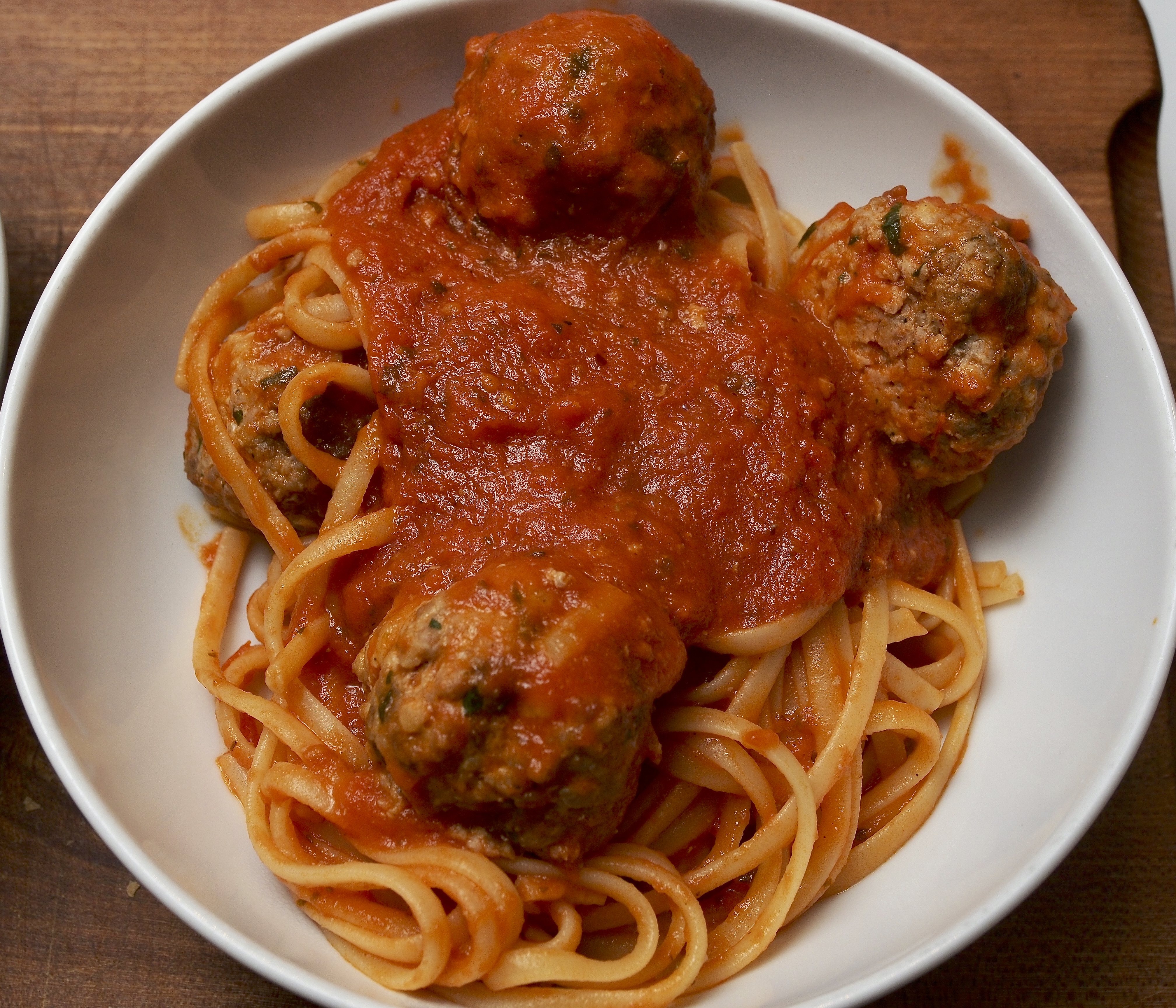
Pork & Beef Polpette with Tomato Sauce

This is a great tomato sauce and of course can be made without meatballs and used in all sorts of things. We like to make the entire recipe and freeze the leftover meatballs in the sauce for tasty meals for kids or when we don’t have time to cook. They’re good served with linguine –  toss the pasta with the meatballs and sauce before serving with some grated Parmesan.

Wine Suggestion: with the higher proportion of pork in the meatballs we think a medium bodied red works better than richer, fuller-bodied wines with this. We went with a Chateau Manoir du Gravoux from Castillon in Bordeaux. A Merlot, Cabernet Franc blend with a lovely freshness and pure, mineral character made a good match.

Pork & Beef Polpette with Tomato Sauce – makes about 40 meatballs and 1.5 litres of sauce

FOR THE TOMATO SAUCE:

  • 100ml extra virgin olive oil
  • 1 onion, finely sliced
  • 1 garlic clove, chopped
  • scant ½ tbsp fine salt
  • ¾ tsp black pepper
  • small pinch of chilli flakes
  • 750g fresh tomatoes, quartered
  • 3 x 400g tins of chopped tomatoes
  • 1 small handful of oregano, chopped
  • caster sugar, if needed

FOR THE POLPETTE:

  • 1kg minced pork
  • 500g minced beef
  • 3 medium eggs
  • scant ½ tbsp fine salt
  • 1 tsp black pepper
  • 150g breadcrumbs
  • small pinch of dried chilli flakes
  • 3 garlic cloves, finely chopped
  • ½ handful of flat-leaf parsley leaves, chopped
  • cooked linguine pasta and grated Parmesan cheese, to serve

Heat half the oil in a saucepan on a medium-low heat and sweat the onion, garlic, salt, pepper and chilli for 15 minutes. Add the fresh tomatoes and the rest of the oil and cook gently for another 15 minutes.

Add the tinned tomatoes and simmer on a very low heat for an hour.

Remove the pan from the heat and add the oregano. Season with a little sugar if needed, then whizz using a hand-blender or food processor for a few minutes.

Preheat the oven to 220°C/Gas 7.

Combine all of the meatball ingredients and mix together well with your hands, then roll into golf ball sized meatballs. They should weigh about 45g each. Place on a large greased baking tray and roast for 10 minutes, turning once, until starting to brown.

Add the meatballs to the hot sauce and poach for 10 minutes with the lid on.

Serve with linguine and grated Parmesan.

(Original recipe from Polpo by Russell Norman, Bloomsbury, 2012.)


Read Full Post »

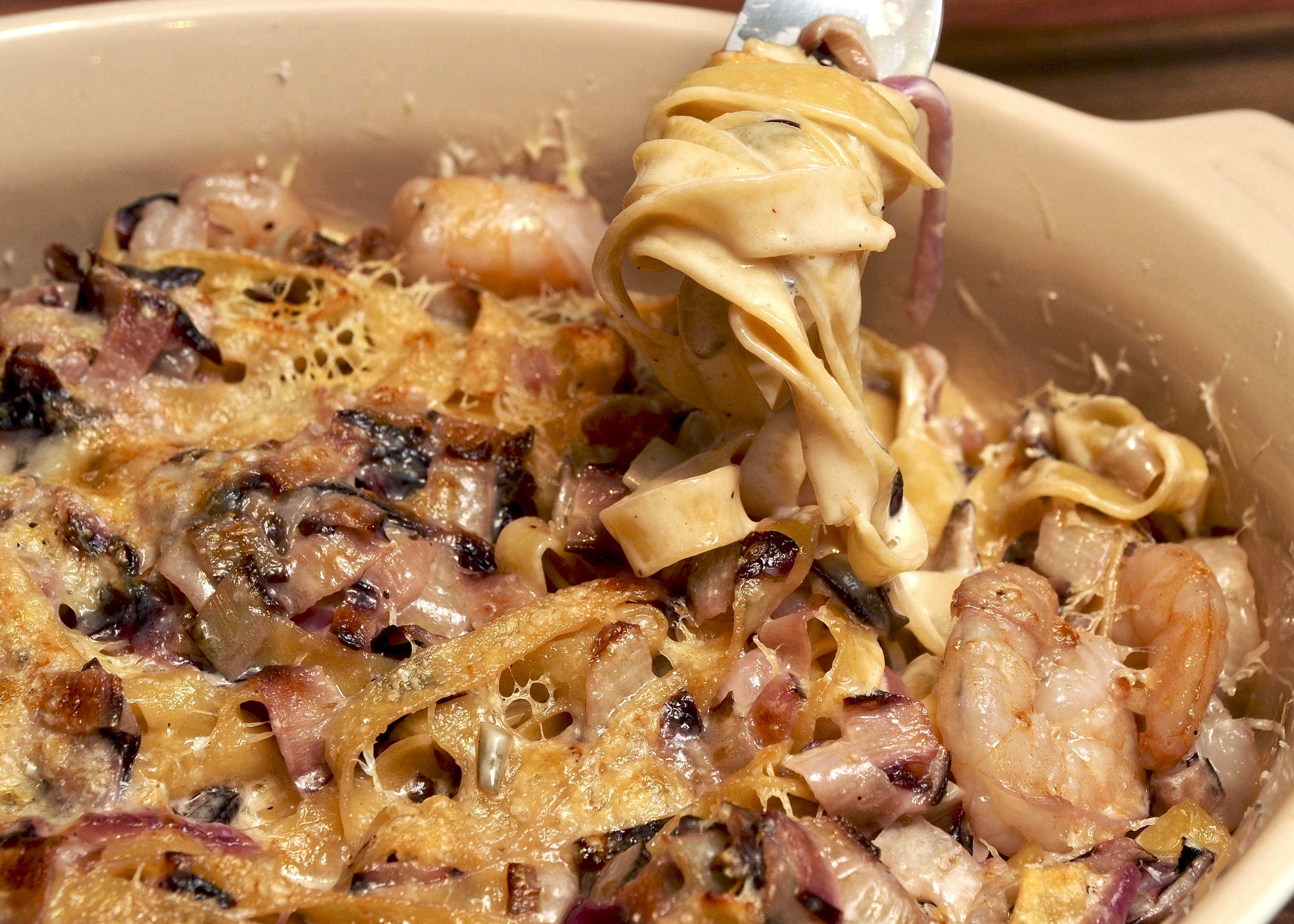
Tagliolini au Gratin with Prawns & Treviso

This baked pasta dish from Jacob Kennedy’s fabulous Bocca cookbook is truly delicious. Quick to cook and an excellent treat for a Friday night when energy levels are low. We find radicchio di Treviso hard to resist with its pretty dark purple leaves. They’re in season and in shops now and we’ve had our eyes on this dish for a while, we weren’t disappointed.

Wine Suggestion: While not our first thought we had a bottle of the Altos de Torona Albariño from northern Spain in the fridge and it proved a delightful match.

Tagliolini au Gratin with Prawns and Treviso – serves 2 as a main, 4 to 6 as a starter

  • 120g dried tagliolini
  • 50g butter
  • ½ a small red onion or 1 shallot, thinly sliced across the grain
  • 1 medium head Radicchio di Treviso, shredded 3-5mm
  • 200g peeled raw prawns
  • 60ml white wine
  • 200ml double cream
  • 4 tbsp grated Parmesan

Melt the butter over a medium heat. Add the onion and a pinch of salt and fry for a few minutes, then add the radicchio and sauté gently for 4-5 minutes or until wilted. Add the prawns, then the wine and let it boil for a couple of minutes or until the liquid has almost evaporated. Add the cream and at the same time put the tagliolini into a pan of boiling, salted water. Boil both until the tagliolini is undercooked (about half the recommended time) and the sauce just runnier than cream.

Drain the pasta and add to the sauce. Toss over the heat for a minute to coat the pasta with the cream, then season with salt and pepper and transfer to a baking dish (or divide between a number of smaller dishes). Sprinkle with the Parmesan and brown the top under a hot grill. Serve immediately.

(Original recipe from Jacob Kennedy’s ‘Bocca Cookbook’, Bloomsbury, 2011.)

Read Full Post »

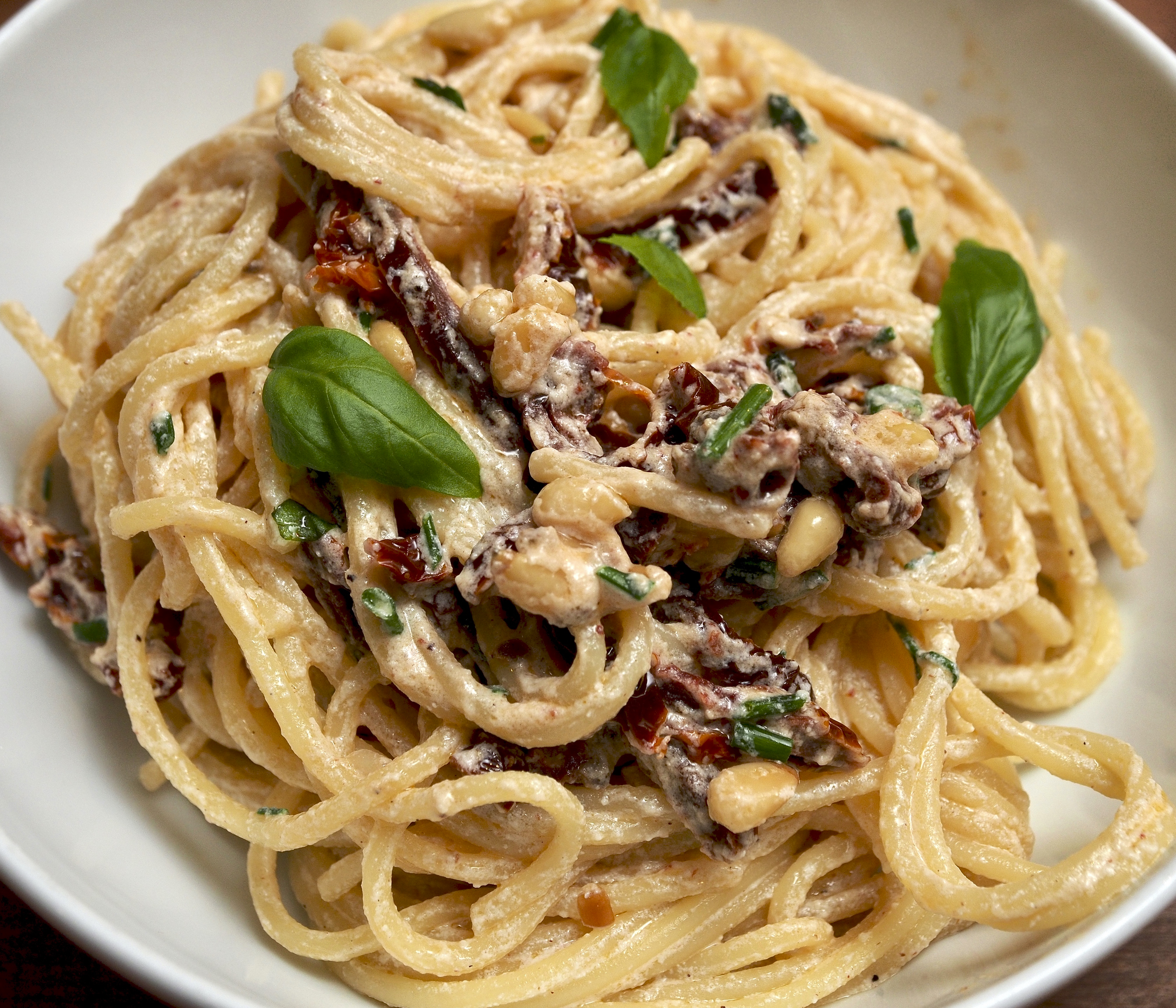
Spaghetti with Ricotta & Toasted Pine Nuts

Mondays are all about leftovers in our house and we’re determined to use all bits and pieces hanging around after the weekend. This pasta dish helped us out with the remains of a jar of sundried tomatoes and some ricotta cheese. Also great to use the chives that have recently sprouted up in the garden – a positive sign of things to come.

Wine Suggestion: Look for a good Verdicchio with a fuller body, but still fresh and balanced. Tonight an old favourite, the Sartarelli Tralivio.

Spaghetti with Ricotta Cheese & Toasted Pine Nuts – serves 4 (easily halved)

  • 6 tbsp pine nuts
  • 250g ricotta cheese
  • 100g sundried tomatoes in oil, drained and sliced into thin strips
  • ¼ tsp freshly grated nutmeg
  • 10 fresh basil leaves, chopped, plus extra to garnish
  • 4 tbsp extra virgin olive oil
  • 2 tbsp hot water
  • 500g spaghetti

Toast the pine nuts in a dry frying pan until golden brown, then set aside.

Put the ricotta cheese, sundried tomatoes, chives, nutmeg, pine nuts and basil into a large bowl. Pour over the oil and hot water, season with salt and pepper, and mix together. Leave to rest at room temperature while you cook the pasta.

Cook the spaghetti in a large saucepan of boiling salty water until al dente. Drain and tip into the bowl with the ricotta mixture (don’t be too particular when draining as a little water will help to loosen the sauce). Gently fold everything together for 30 seconds to combine. Serve with the extra basil.

(Original recipe from Gino’s Pasta by Gino D’Acampo, Kyle Books, 2010.)

Read Full Post »

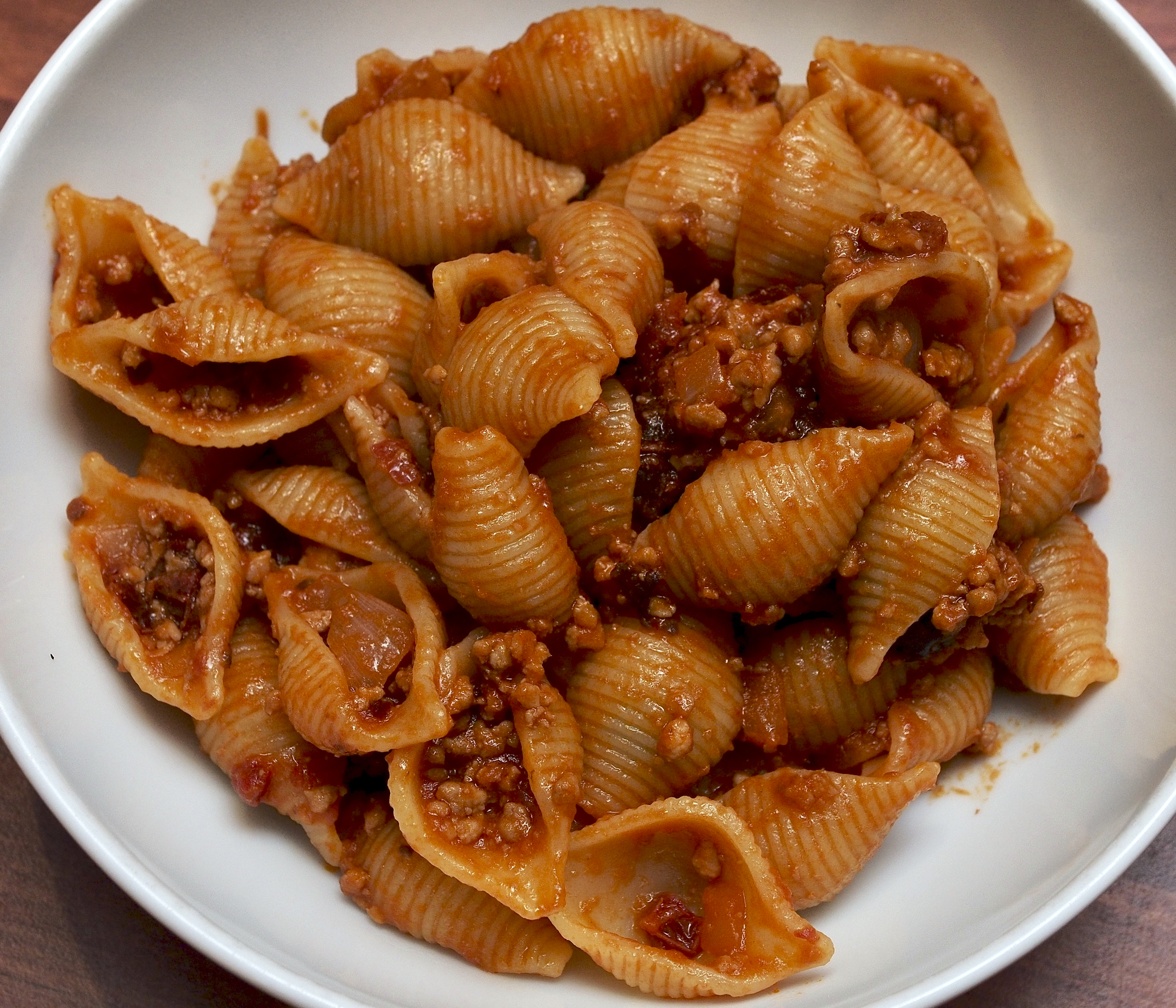
Conchiglie Rigate Piccanti

This pasta sauce is rich and full of flavour and works best without cheese, so don’t be tempted to add any. A new favourite for us and great for using up sun-dried tomatoes.

Wine Suggestion: Pico Maccario make some delicious Barbera and their entry “Lavignone” is a benchmark for the Asti region (Piedmont). Not only does it work with this dish, but we’d suggest versatile for many other dishes and occasions; a crowd pleaser and very food friendly.

Conchiglie Rigate Piccanti – serves 4

  • 5 tbsp olive oil
  • 1 onion, finely chopped
  • 80g pitted Kalamata olives, halved
  • 1 hot red chilli, deseeded and finely chopped
  • 80g sun-dried tomatoes in oil, drained and finely chopped
  • 300g pork mince
  • 300g passata
  • 400g conghiglie rigate (medium shell pasta)

Heat the oil in a medium saucepan over a medium heat and fry the onion and olives for a couple of minutes, stirring now and then.

Add the chilli, sun-dried tomatoes and the pork mince and continue frying for another 6 minutes.

Stir in the passata and gently simmer, uncovered, for 15 minutes. Keep stirring every couple of minutes. Season with salt and remove from the heat.

Meanwhile, cook the pasta in plenty of salty water according the timings on the pack. Drain and tip back into the saucepan.

Pour the sauce into the pasta pan and stir over a low heat for 30 seconds to combine.

(Original recipe from Gino’s Pasta by Gino D’Acampo, Kyle Books, 2010.)

Read Full Post »

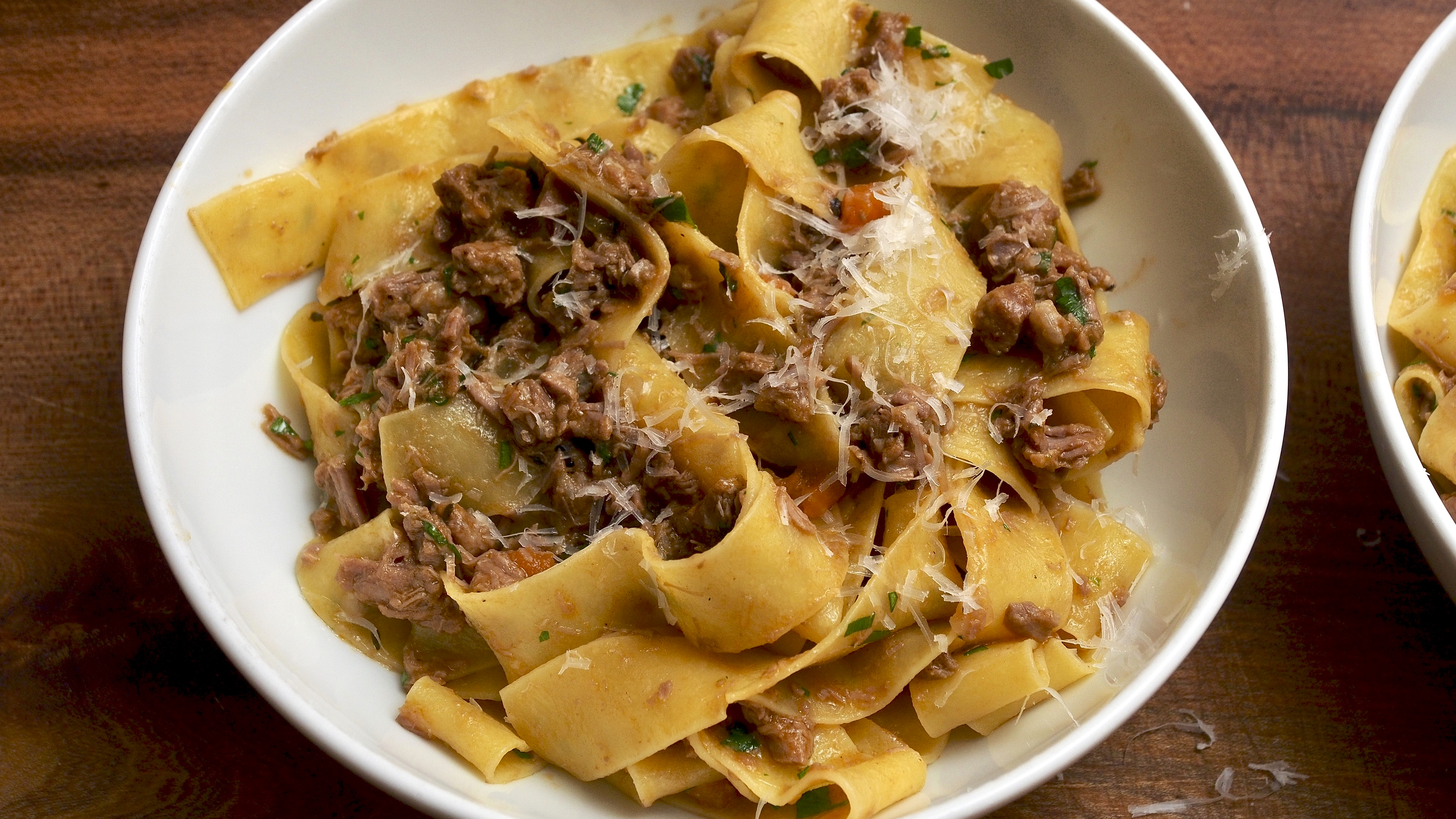
Lamb Ragoût

Lamb ragoût with fresh pasta

This lamb ragoût really reminds of holidays in Italy. Really simple but with a great concentrated flavour. No doubt it would be fab with some freshly made pappardelle, but dried was all we could muster on this occasion.

Wine Suggestion: While a red is often the first thought when matching a Ragoût, an oaked white would also work just as well with this dish. The Zuani Riserva from Collio in north eastern Italy would be a good choice. Delicately toasty with vanilla and touch of tropical fruit and some creamy, ripe stone-fruits. Broad and rich, creamy, thick fruit texture, peach and yellow plum with a long and gently spicy finish.

However if you feel like red, like Jules did tonight, then an elegant Sangiovese makes a good option and the Selvapiana Bucerchiale Chianti Rufina is a favourite of ours. Always superb.

Lamb Ragoût – serves 4 to 6

  • 3 tbsp olive oil
  • 2 onions, finely diced
  • 2 celery stalks, finely diced
  • 1 carrot, finely diced
  • 3 garlic cloves, chopped
  • 2 fresh or dried bay leaves
  • 1 thyme sprig
  • 1kg lamb shoulder, cut into small dice
  • 1 tbsp tomato purée
  • 125ml white wine
  • 500ml lamb stock
  • fresh or dried pappardelle pasta
  • chopped flat-leaf parsley, to serve
  • grated Parmesan, to serve

Heat the oil in a large casserole dish, add the onions, celery and carrot and sweat until translucent. Add the garlic, baby leaves and thyme. Add the lamb and season well with salt and pepper, sweat, then add the tomato purée.

Cook for a few minutes, then deglaze with the wine. Add the lamb stock and simmer for 3 hours, covered, until reduced – add more stock or water if it becomes too dry.

Cook the pasta until al dente. Drain and stir into the ragoût with the parsley and Parmesan.

(Original recipe from The Skills by Monica Galetti, Quadrille, 2016.)

Read Full Post »

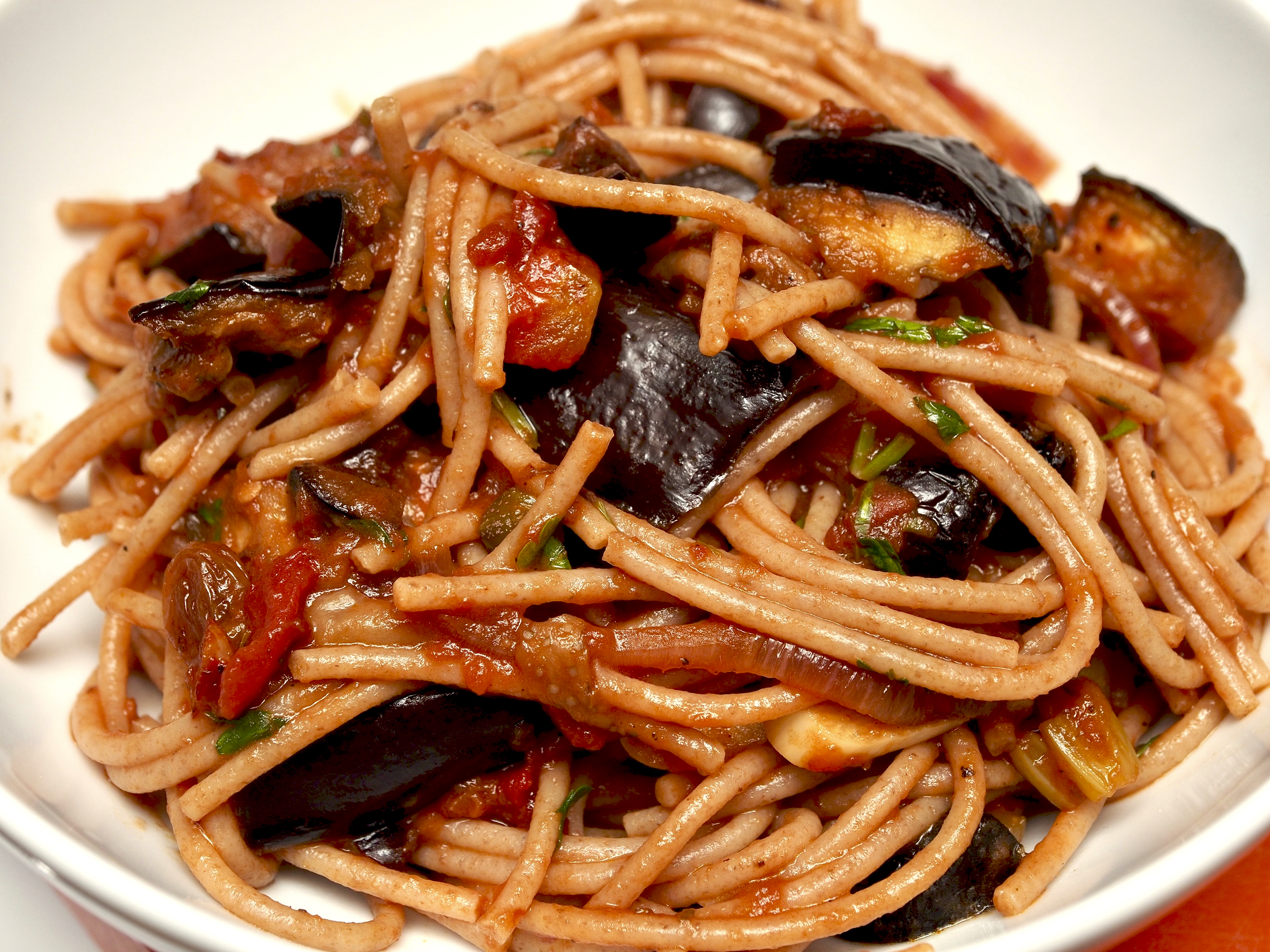
Caponata Spaghetti

A really healthy mid-week pasta dish but with heaps of flavour. Don’t be tempted to use  more oil than specified, as you really don’t miss it in this dish.

Caponata Spaghetti – serves 4

  • 2 aubergines, cut into 3cm cubes
  • 4 tsp vegetable oil
  • ½ red onion, sliced
  • 2 sticks of celery, sliced
  • 2 cloves of garlic, sliced
  • 1 tsp dried oregano
  • 400g tin chopped tomatoes
  • a small handful of raisins
  • 1 tsp capers
  • a handful of kalamata olives, pitted and chopped
  • 2 tbsp red wine vinegar
  • 300g wholewheat spaghetti
  • a small bunch of parsley, chopped

Heat the oven to 220C/fan 200C/gas 7.

Toss the aubergine with 2tsp of oil and a little seasoning and tip into a large non-stick baking tray. Roast for 20 minutes or until charred and soft.

Meanwhile, heat the rest of the oil in a large pan and cook the red onion and celery with a large pinch of salt for 10 minutes or until softening and caramelised a little. Add the garlic and oregano, and cook for a minute before adding the tomatoes and 100ml water. Tip in the roasted aubergine and simmer for 15 minutes.

Add the raisins, capers, olives and red wine vinegar, and season. Keep on a low heat while you cook the pasta.

Cook the pasta according to the time on the pack, then drain, reserving a mug of the water. Tip the pasta into the caponata with the parsley, add a splash of water to loosen if needed. Stir well and serve.

(Original recipe by Adam Bush in Olive Magazine, February 2019)

Read Full Post »

Crab linguine with chilli & parsley

A fresh tasting seafood pasta dish.

Wine Suggestion: We’re not huge fans of Prosecco generally as there’s an awful lot of very ordinary stuff being sold. However, if you have a good one to hand, like the Nino Franco Rustico, then you’ve found your crab linguine match.

Crab Linguine with Chilli & Parsley – serves 4

  • 400g linguine
  • 4 tbsp olive oil
  • 1 red chilli, deseeded and chopped
  • 2 cloves of garlic, finely chopped
  • 1 whole cooked crab, picked, or about 100g brown crabmeat and 200g fresh white crabmeat
  • 5 tbsp white wine
  • a small squeeze of lemon
  •  a large handful parsley leaves, very finely chopped

Bring a large pot of salted water to the boil and cook the linguine for a minute less than indicated on the pack.

Meanwhile, gently heat 3 tbsp of olive oil with the chilli and garlic in a large wide pan. Cook the chilli and garlic very gently until they start to sizzle, then turn up the heat and add the white wine. Simmer until the wine and olive oil come together. Then take off the heat and add the brown crabmeat, using a wooden spoon to mash it up to make a thick sauce.

When the pasta is ready, turn off the heat. Place the crab sauce over a very low heat and use a pair of kitchen tongs to lift the pasta from the water into the sauce.

Remove the pan from the the heat and add the white crabmeat and parsley to the pasta with a sprinkling of sea salt. Stir everything together, adding a drop of pasta water if needed to loosen. Taste for seasoning and add a small squeeze of lemon. Serve immediately drizzled with the remaining oil.

(Original recipe from BBC Good Food)

Read Full Post »

« Newer Posts - Older Posts »