12 May 2012 by jonoandjules
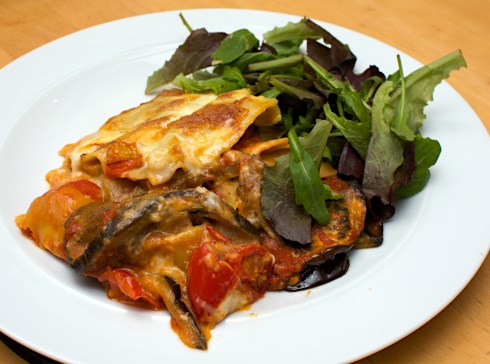
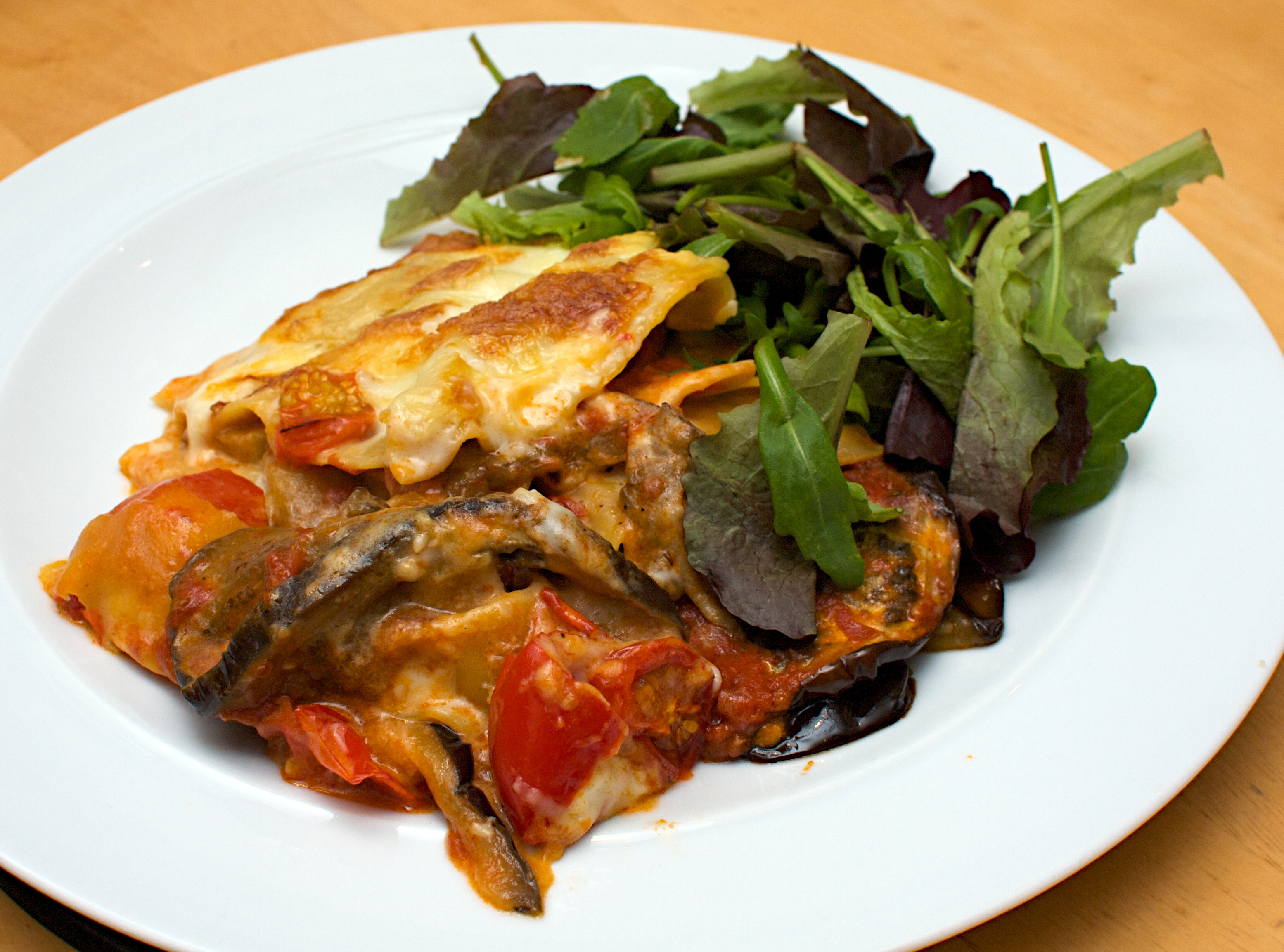
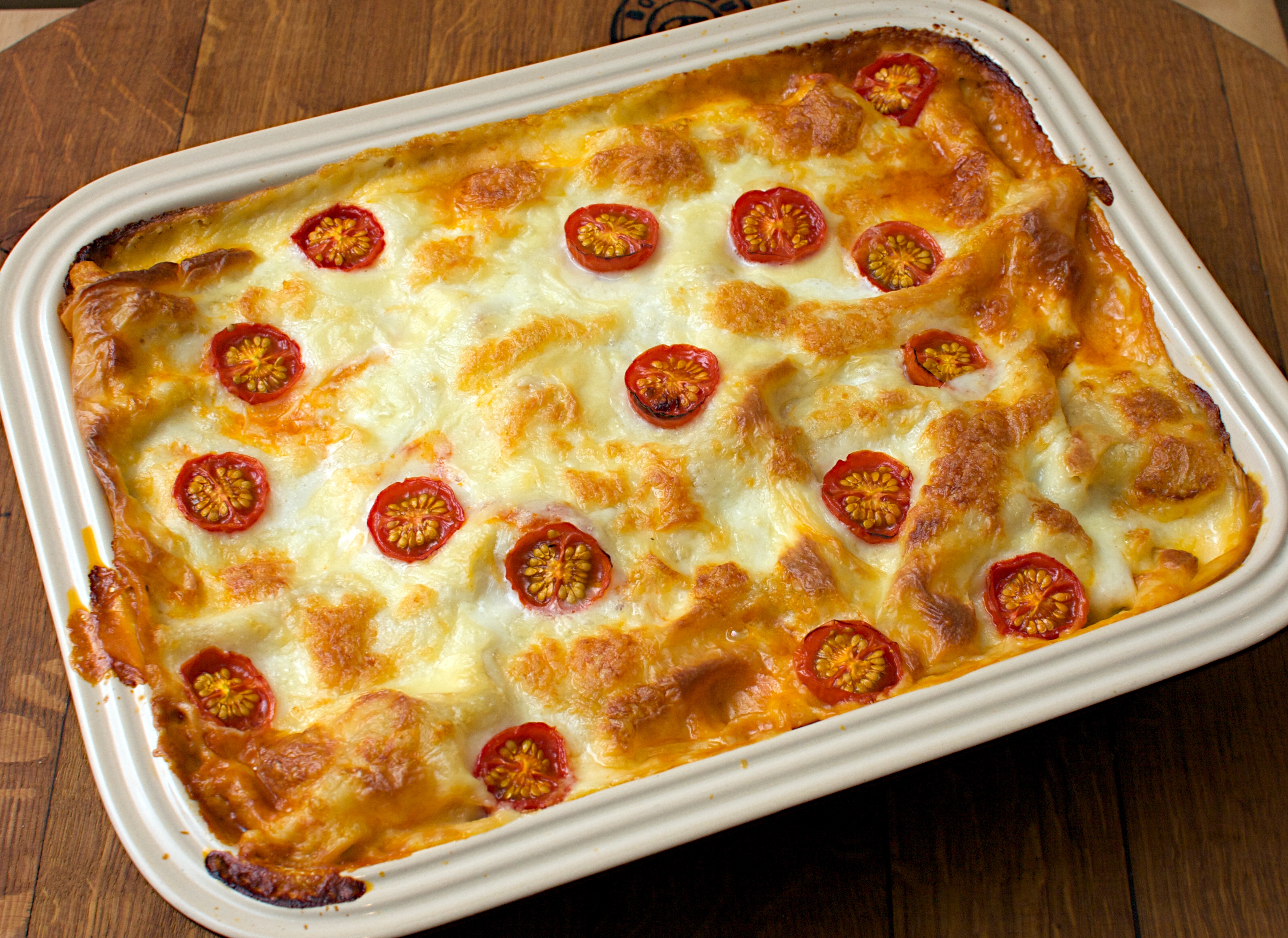
We’ve made many veggie lasagnes but this is definitely our favourite; really tasty, moist and not too rich or heavy. We had to stop ourselves eating the 6 portions all at once despite only the two of us for dinner. We managed to resist, but only just! Serve with a green salad.
(Apologies for the imperial measurements – Julie doesn’t know the metric recipe for béchamel.)
Roasted Veggie Lasagne – to serve 6
- 1 pint / 600ml homemade tomato sauce – make your own or use our favourite
- 3 red peppers
- 2 aubergines
- 8 tbsp olive oil
- dried lasagne sheets
- handful cherry tomatoes, halved
- 125g ball mozzarella, torn
FOR THE BÉCHAMEL
- 2 oz butter
- 2 oz flour
- 1 pint milk
Heat the oven to 200ºC/fan 180ºC. Cut the peppers into large chunks and thinly slice the aubergines. Lightly grease two large baking trays with olive oil. Put the peppers and aubergines on the greased trays and toss with the olive oil and plenty of seasoning. Roast for about 25 minutes or until lightly browned.
Meanwhile make your béchamel sauce. Melt the butter in a saucepan, stir in the flour, then cook for a couple of minutes. Gradually add the milk, stirring continuously stirring. When all the milk is added, keep stirring until the sauce comes to the boil. Turn the heat down and cook until the sauce has started to thicken.
Reduce the oven to 180ºC/fan 160ºC and lightly oil a large ovenproof dish (ours is 20 x 27cm and it fits perfect). Layer a third of the roasted veg on the bottom of the dish. Cover with a third of the tomato sauce. Top with a layer of lasagne sheets (break them to fit – don’t overlap them), then drizzle just less than third of the bechamel sauce over. Repeat until you have used 3 layers of lasagne.
Spoon the remaining sauce over the top, making sure that the surface is totally covered. Scatter the cherry tomatoes and mozzarella over the top. Bake for about 45 minutes or until bubbling and golden brown.
Wine Suggestion: The tomato sauce is acidic so you need to balance this with the wine. Perhaps a light and fruity white with good acidity – we had an off-dry Riesling from Western Australia already open and it worked surprisingly well.

Posted in Food, Vegetarian | Tagged Cooking, Food, Lasagne, Recipe, Vegetarian | 1 Comment »
10 May 2012 by jonoandjules
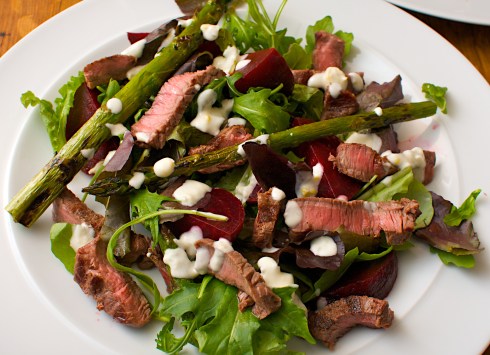
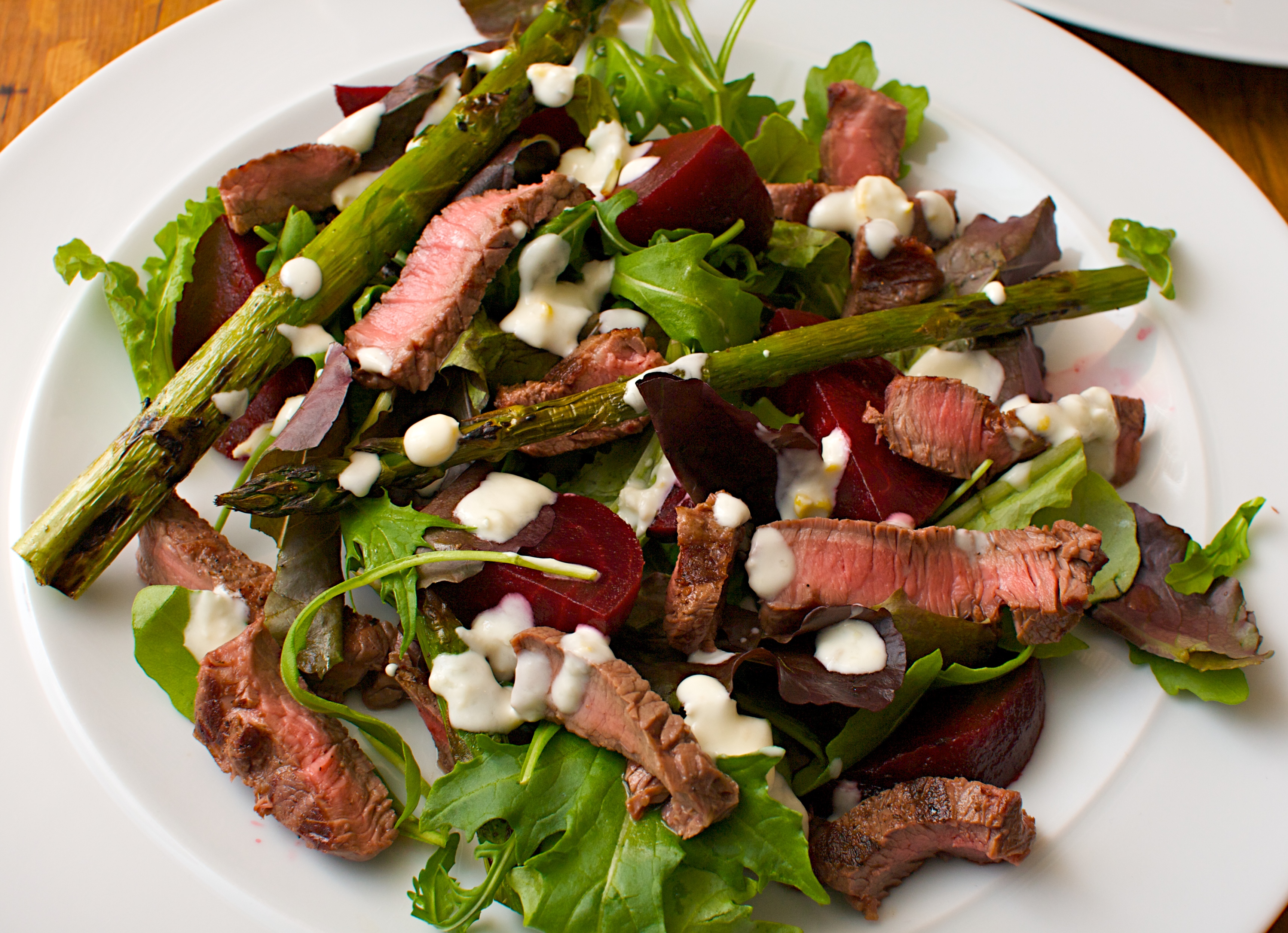
Who says you can’t eat steak on a diet? This is a delicious midweek salad which is low fat and less than 300 calories. Perfect for a sunny evening (here’s hoping we see one soon!).
Steak, beetroot and asparagus salad – to serve 2
- 250g rump steak, all fat removed
- 6 asparagus spears
- 50g wild rocket
- 4 small cooked beetroot, cut into wedges
DRESSING:
- 1 tbsp horseradish cream
- 2 tbsp half-fat crème fraîche
- 1 lemon, juiced and zested
Season the meat well. You can cook it either in a non-stick frying pan for about 3-4 mintues each side (depending on how thick it is) or cook it on a barbecue as we did for even more favour. Allow to rest for 10 minutes, then slice thinly.
Blanch or barbecue the asparagus spears.
Whisk the horseradish, crème fraîche and lemon juice together and season.
Assemble the plates with the beef slices, asparagus, rocket and beetroot and spoon over the dressing. Sprinkle the lemon zest over to serve.
Wine Suggestion: A a nice, young, uncomplicated Syrah from the northern Rhône went really well here. We had Pierre Gaillard’s Syrah 2011 (just arrived at Mitchell & Son) which was delicious.
(Original recipe from BBC Good Food)
Posted in Beef, Food, Healthy | Tagged Cooking, Easy, Food, Healthy, Recipe, Salad | 1 Comment »
9 May 2012 by jonoandjules

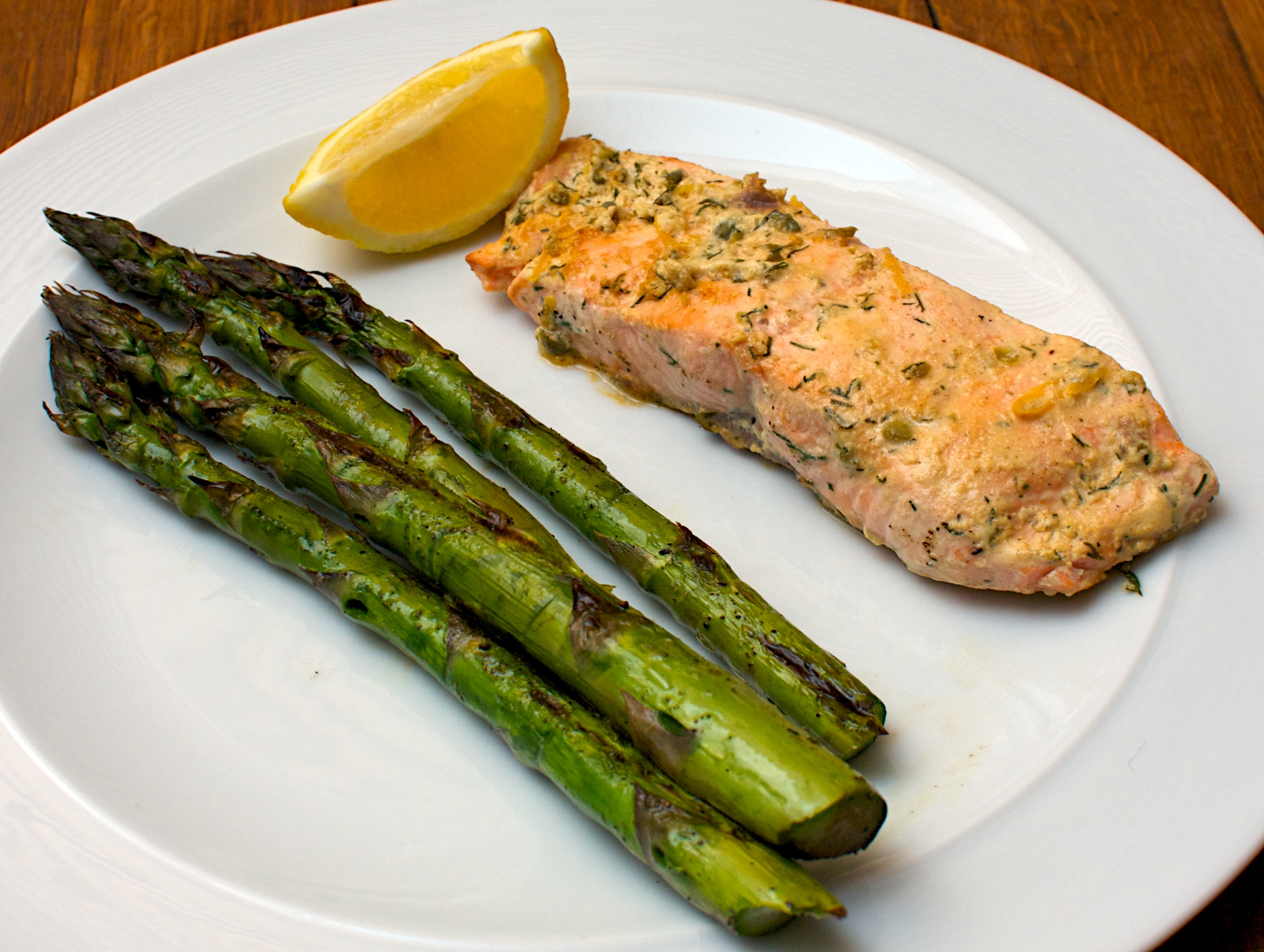
Low calorie and really good for you. The salmon stays lovely and moist. Serve with asparagus and new potatoes.
Salmon with Dill & Capers – to serve 8 (but easy to adapt for less)
- 140g Greek yogurt
- 2 tbsp Dijon mustard
- zest 1 lemon
- 1 tbsp chopped dill
- 1 tbsp small capers, lightly chopped
- 8 portions of fresh salmon, scaled
- lemon wedges to serve
Mix the yogurt, mustard, lemon zest, dill and capers together and season with pepper. Use this mixture to coat the salmon really well.
Either grill the salmon on foil for 6-8 minutes (no need to turn) or barbecue for 3-4 minutes on each side (we recommend a fish grill).
Serve with the lemon wedges and some green veg and salad.
Wine Suggestion: This would work with a medium-bodied unoaked Chardonnay, like a Macon-Villages from Burgundy. Nothing too complex as you don’t want to overwhelm the flavours of the delicate salmon.
(Original recipe from BBC Good Food)
Posted in Barbecue, Fish, Food, Healthy | Tagged Cooking, Easy, Fish, Food, Healthy, Recipe | 1 Comment »
8 May 2012 by jonoandjules

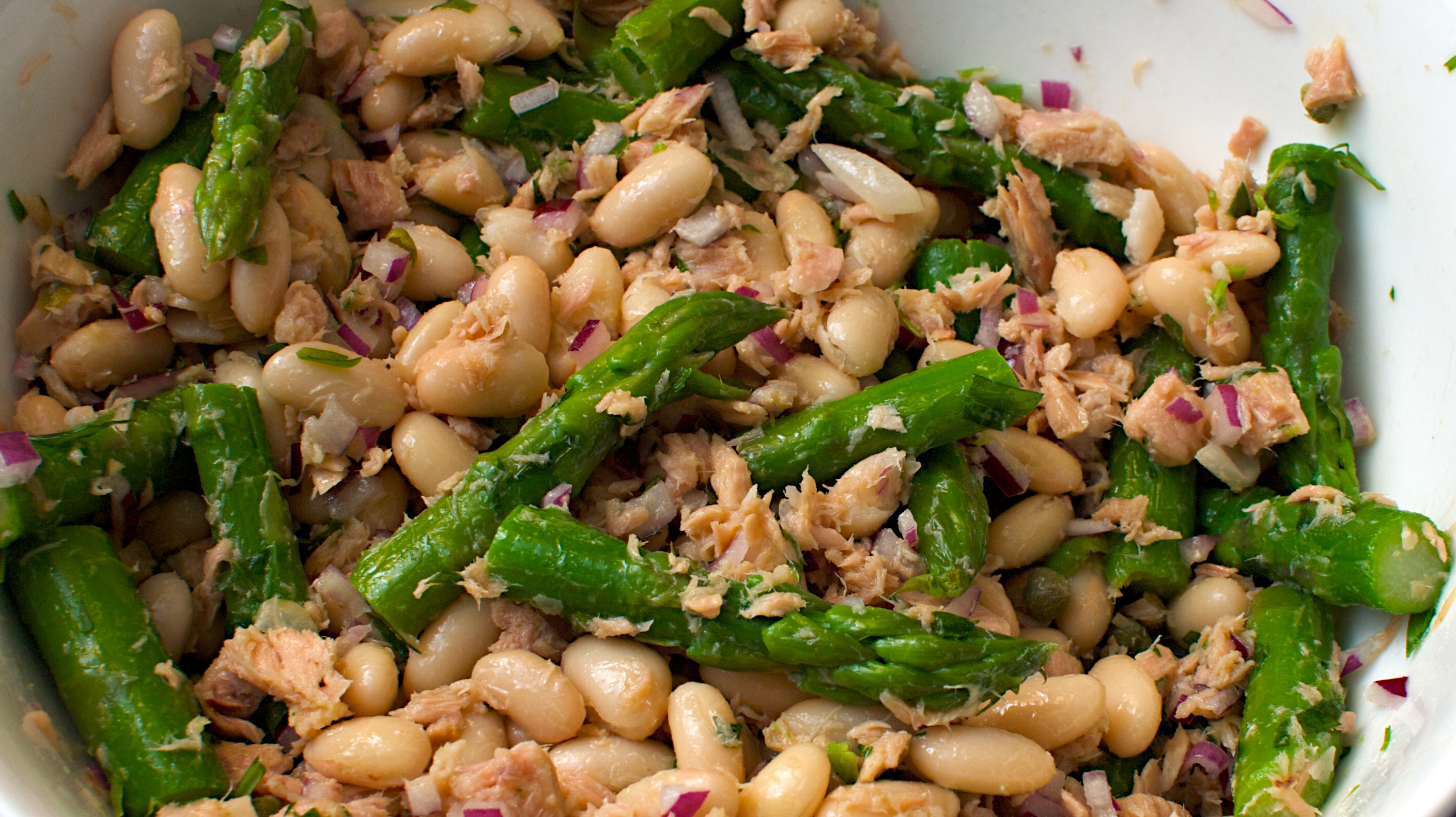
We take our lunch to work every day and often run out of inspiration. This healthy and filling salad made a pleasant change from yet another tortilla wrap. Make it while asparagus season lasts!
Tuna, asparagus & bean salad – to serve 4
- 1 large bunch of asparagus
- 2 x 200g tins tuna, drained (we like Ortiz)
- 2 x 400g tins cannellini beans, drained
- 1 red onion, very finely chopped
- 2 tbsp capers
- 1 tbsp olive oil
- 1 tbsp red wine vinegar
- 2 tbsp tarragon, finely chopped
Cook the asparagus in boiling salted water for 4-5 minutes or until tender. Drain well and cool under running water, then cut into pieces.
Toss the cooked asparagus with everything else and keep in the fridge until lunchtime.
Posted in Food, Healthy | Tagged Cooking, Food, Lunchbox, Recipe | Leave a Comment »
7 May 2012 by jonoandjules
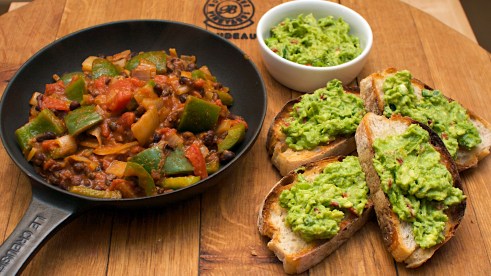
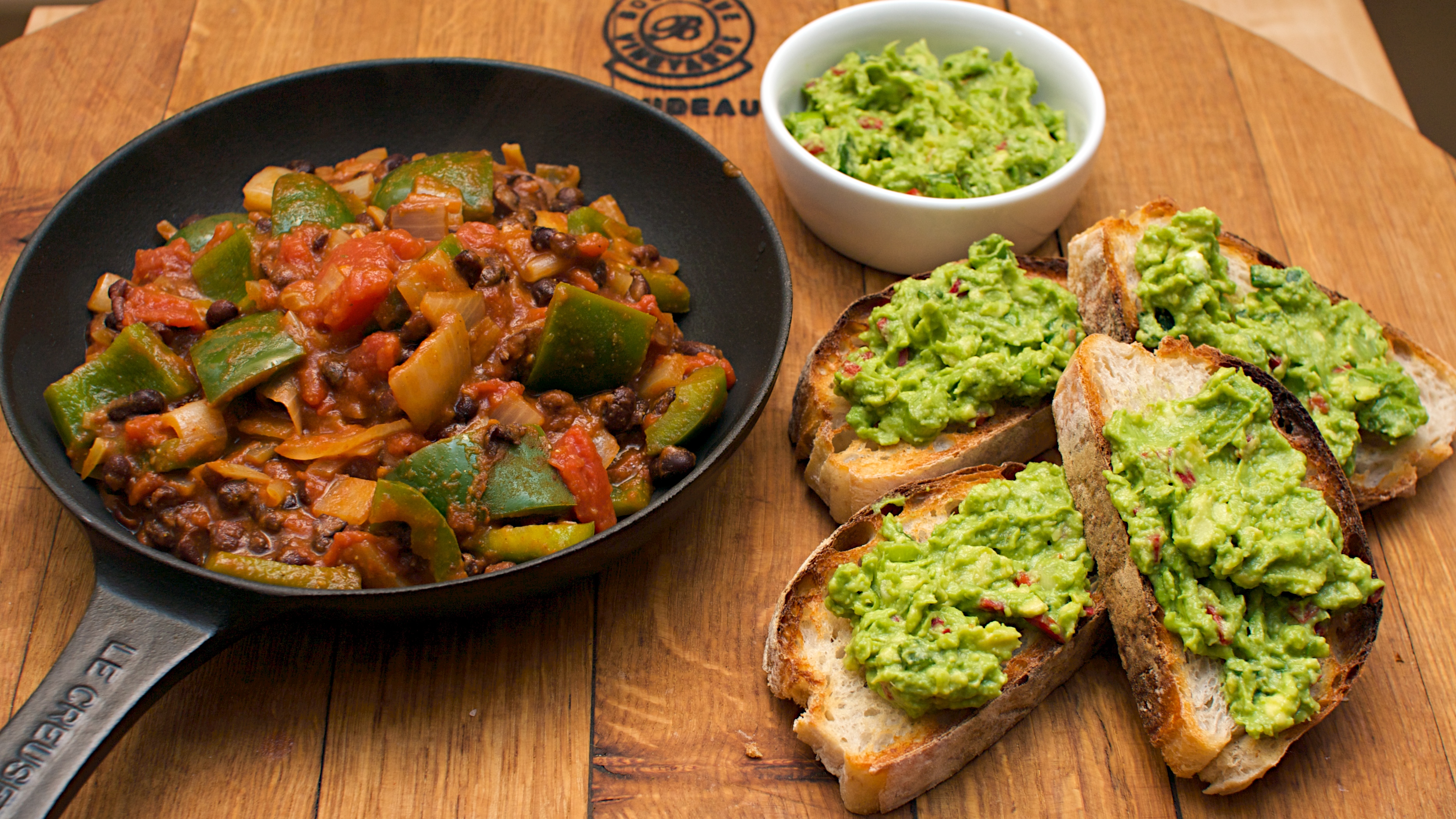
We love finding new variations of Chilli and this one has made our list of repeatable recipes. This is really filling and at less than 500 calories per portion also suitable for us dieters. We promise we’ll go back to normal in a few weeks time!
Black bean chilli with guacamole and garlic ciabatta – to serve 4
- olive oil
- 2 onions, chopped
- 3 cloves garlic, 2 crushed and 1 left whole
- 2 green peppers, chopped
- 2 tbsp ground cumin
- 2 tsp chilli powder
- 2 x 400g tins black beans, drained
- 2 x 400g tins chopped tomatoes
- 200ml vegetable stock
- 2 large avocados
- 2 limes, zested and juiced
- 4 scallions, chopped
- 1 red chilli, finely chopped
- 8 slices ciabatta, toasted
Heat a tbsp of oil in a wide pan. Add the onions, crushed garlic and peppers, and cook for 10 minutes or until softened. Add the spices and some salt and cook for another minute. Tip in the beans, tomatoes and stock. Simmer for 15 minutes.
Remove the flesh form the avocados with a spoon into a bowl. Add the lime zest and juice, scallions, chilli and seasoning, and mix with a fork to lightly mash the avocado.
Cut the whole garlic clove in half and use it to rub all over the ciabatta toasts. Drizzle with olive oil and pile the guacamole onto the toasts.
Serve the guacamole and garlic ciabatta with the chilli.
Wine Suggestion: We really like beer with chilli. If your not a fan of beer a light, fruity Grenache would work.
(Original recipe from BBC Good Food)
Posted in Food, Vegetarian | Tagged Chilli, Cooking, Easy, Food, Recipe, Vegetarian | 3 Comments »
6 May 2012 by jonoandjules
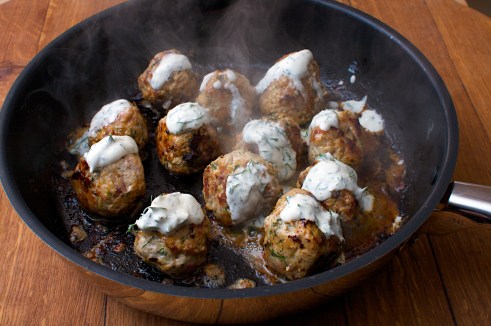
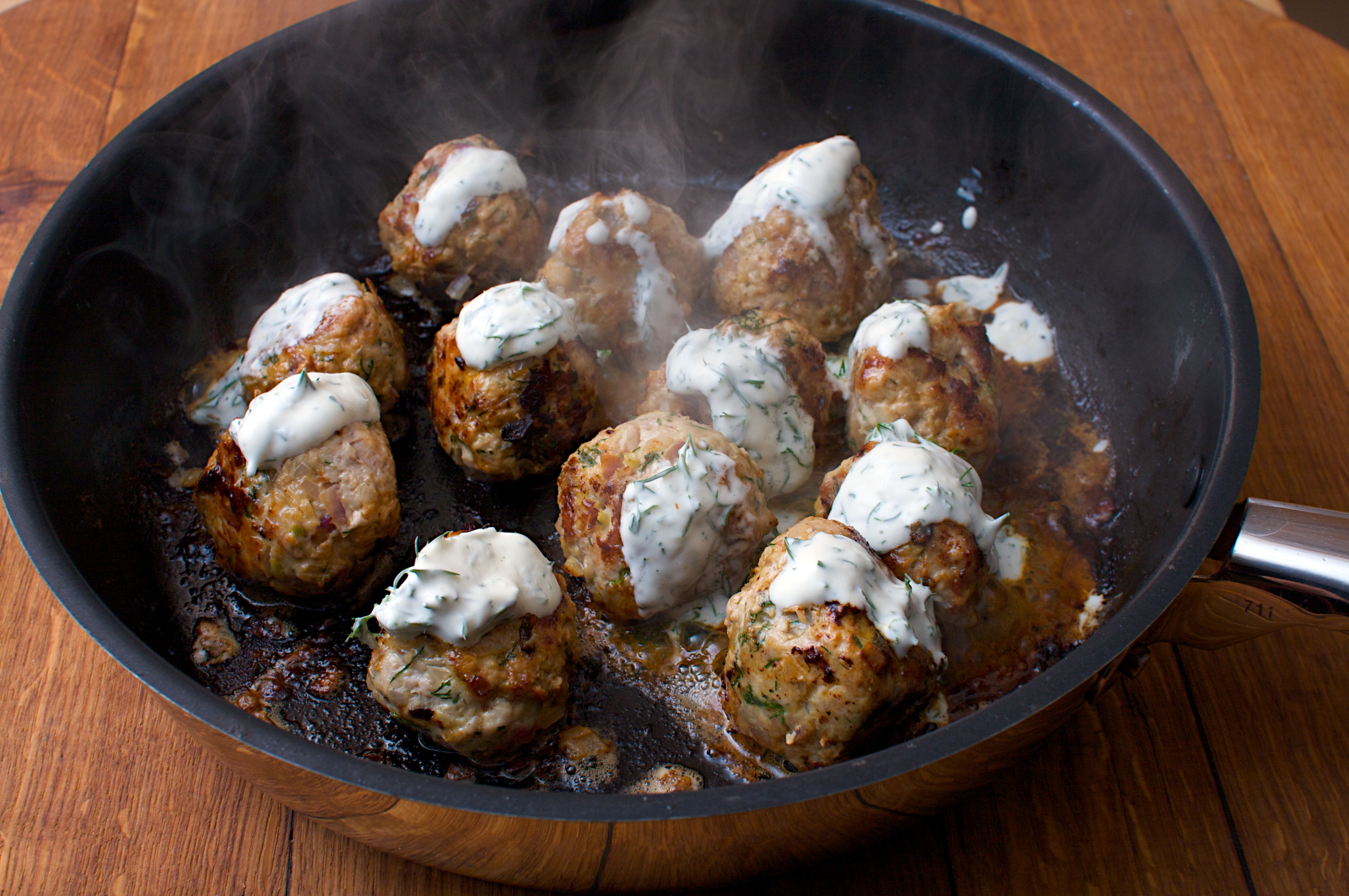
These are lovely and low-calorie (just 236 calories per serving to be exact). The creamy sauce gives them a nice richness too. Great with tagliatelle for a mid-week meal.
Creamy Swedish Meatballs – to serve 4
- 1 onion, finely chopped
- 450g lean minced pork
- 1 egg yolk
- 3 sprigs dill, finely chopped
- 1 tbsp vegetable oil
- 3-4 tbsp soured cream
Mix the onion, pork, egg yolk and half the dill in a bowl and season well. Lightly wet your hands, then make 12 golf-ball sized meatballs.
Heat the oil in a large frying pan and fry the meatballs, turning often, for about 12-15 minutes or until nicely coloured all over. Mix together the sour cream and the rest of the dill and spoon over the meatballs.
Serve with tagliatelle or mashed potato.
Wine Suggestion: We’d probably go for a light red here, perhaps a Dolcetto from north-west Italy or a light Zinfandel/Primativo.
(Original recipe from BBC Good Food)
Posted in Food, Healthy, Pork | Tagged Cooking, Easy, Food, Healthy, Meatballs, Pork, Recipe | 4 Comments »
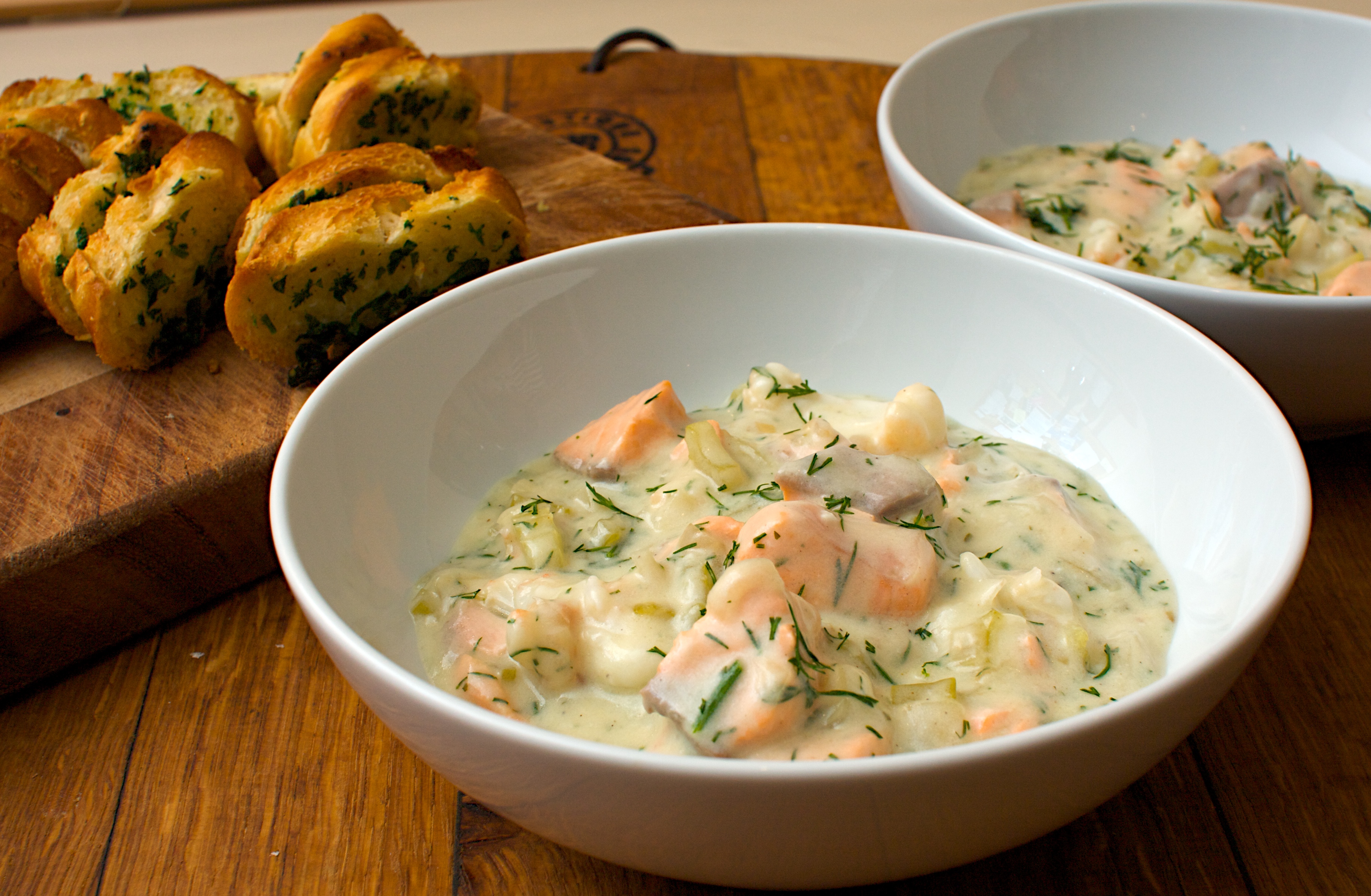
5 May 2012 by jonoandjules
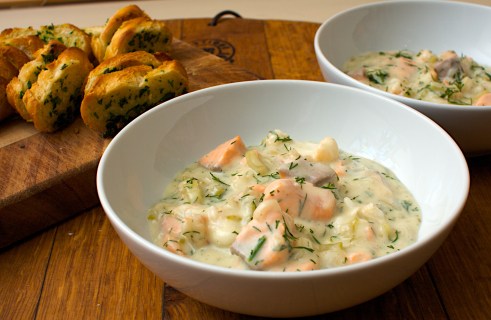
This is a lovely, warming dish, despite being both low-fat and low-calorie. The garlic bread works a treat so don’t leave it out.
Creamy seafood stew – to serve 4
- 1 tbsp olive oil
- 1 onion, chopped
- 2 celery sticks, chopped
- 1 garlic clove, crushed
- 175ml white wine
- 300ml chicken stock
- 1 tbsp cornflour, mixed to a paste with 1 tbsp cold water
- 400g mixed seafood, we used some defrosted prawns and some cubed salmon but frozen mixed seafood would work well
- small bunch dill, chopped
- 5 tbsp half-fat crème fraîche
- garlic bread, to serve
Heat the oil in a large frying pan and cook the onion and celery for about 10 minutes, until soft but not coloured. Add the garlic and cook for another minute. Pour in the wine and simmer on a high heat until it has almost evaporated.
Pour in the stock and cornflour mix and simmer for 5-10 minutes, stirring regularly until thickened. Season and add the seafood and most of the dill. Simmer for a few minutes until piping hot, then stir in the crème fraîche.
Meanwhile, cook your garlic bread according to the pack. We find shop bought garlic bread way to garlicky so we buy a part-baked baguette and make our own garlic butter. Just mix some softened butter with one crushed garlic clove and lots of chopped parsley and some seasoning. Cut slices into the baguette and stuff in the butter. Bake in the oven according to the pack.
Serve the stew in bowls and scatter with the rest of the dill. Serve with the garlic bread.
Wine Suggestion: Careful not to go for anything too light and crisp with this dish as it is quite creamy and rich. We had a chardonnay which worked really well.
Posted in Fish, Food, Healthy, Shellfish | Tagged Cooking, Easy, Food, Healthy, Recipe, Seafood | 1 Comment »
5 May 2012 by jonoandjules

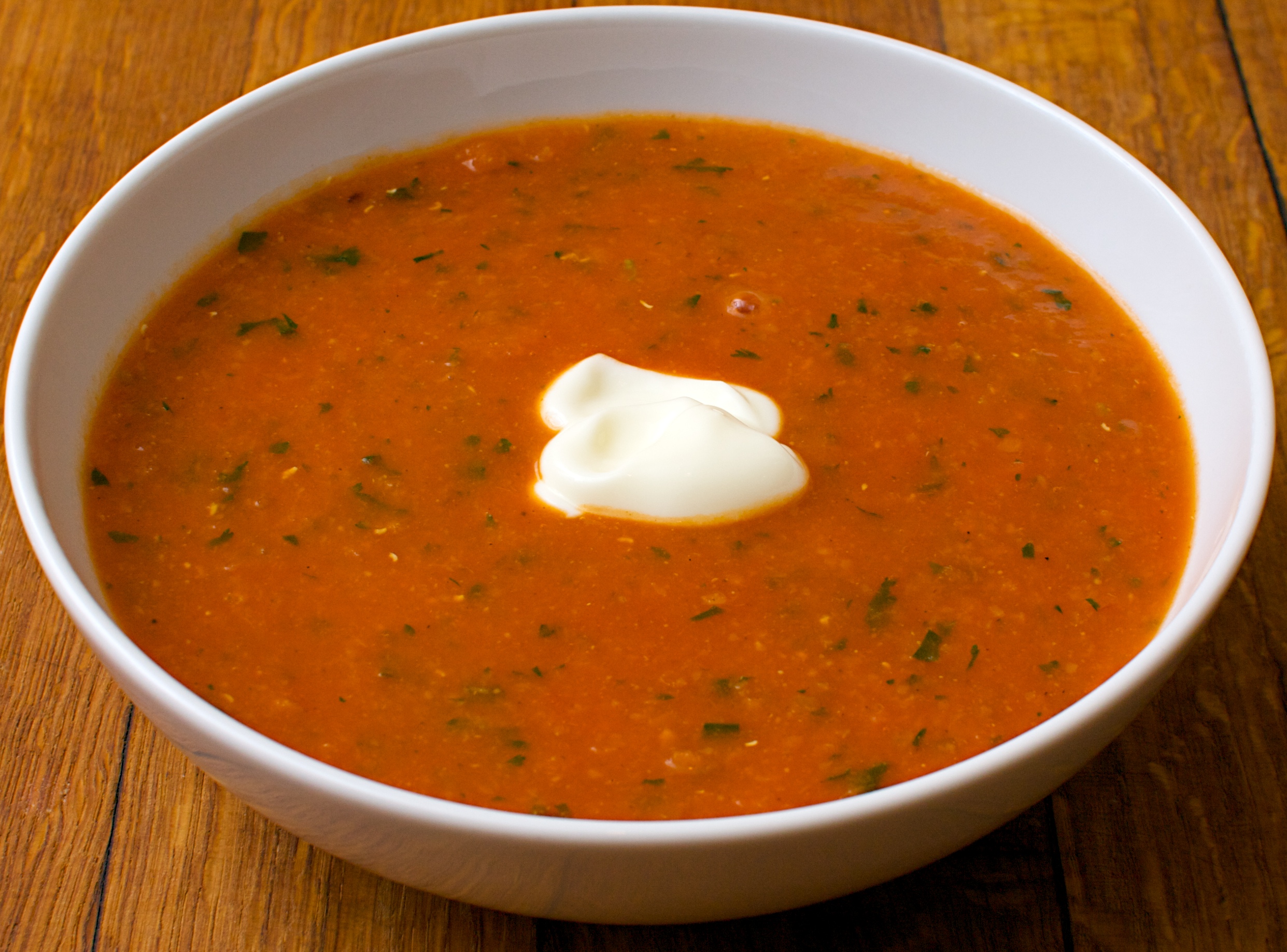
We’re officially on a diet 😦 but we’re trying to turn it into an opportunity and cook lots of tasty, healthy stuff. We can’t back out either as we’re in a little competition with some of our friends… a bit like weight watchers, just as humiliating but not as expensive! So for the next 6 weeks you can expect lots of low-calorie recipes. If you’re also struggling to fit into your summer clothes you might like to join us.
Spicy tomato soup – to serve 2
- 1 onion, roughly chopped
- 2 tsp garam masala
- a pinch of chilli flakes
- 2 tbsp red lentils
- 400g tin chopped tomatoes
- 500ml chicken stock
- large handful of coriander, chopped
- natural yoghurt, to serve (only if you have some)
Put all the ingredients (except the coriander and yoghurt) in a pot, bring to a simmer and cook for 20 minutes until the lentils are soft. Add the coriander and cook for a minute. Use a stick blender to roughly whizz together. Stir in a little natural yoghurt to serve if you like that sort of thing.
(Original recipe from BBC Good Food)
Posted in Food, Healthy, Soup, Vegetarian | Tagged Cooking, Easy, Food, Recipe, Soup, Vegetarian | Leave a Comment »
2 May 2012 by jonoandjules
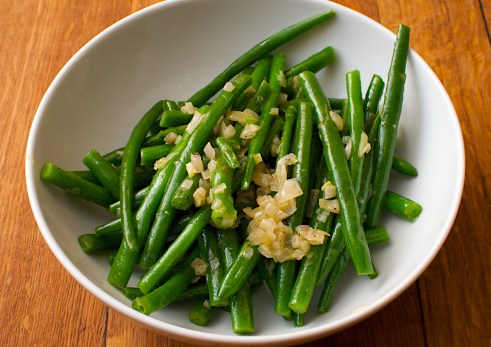
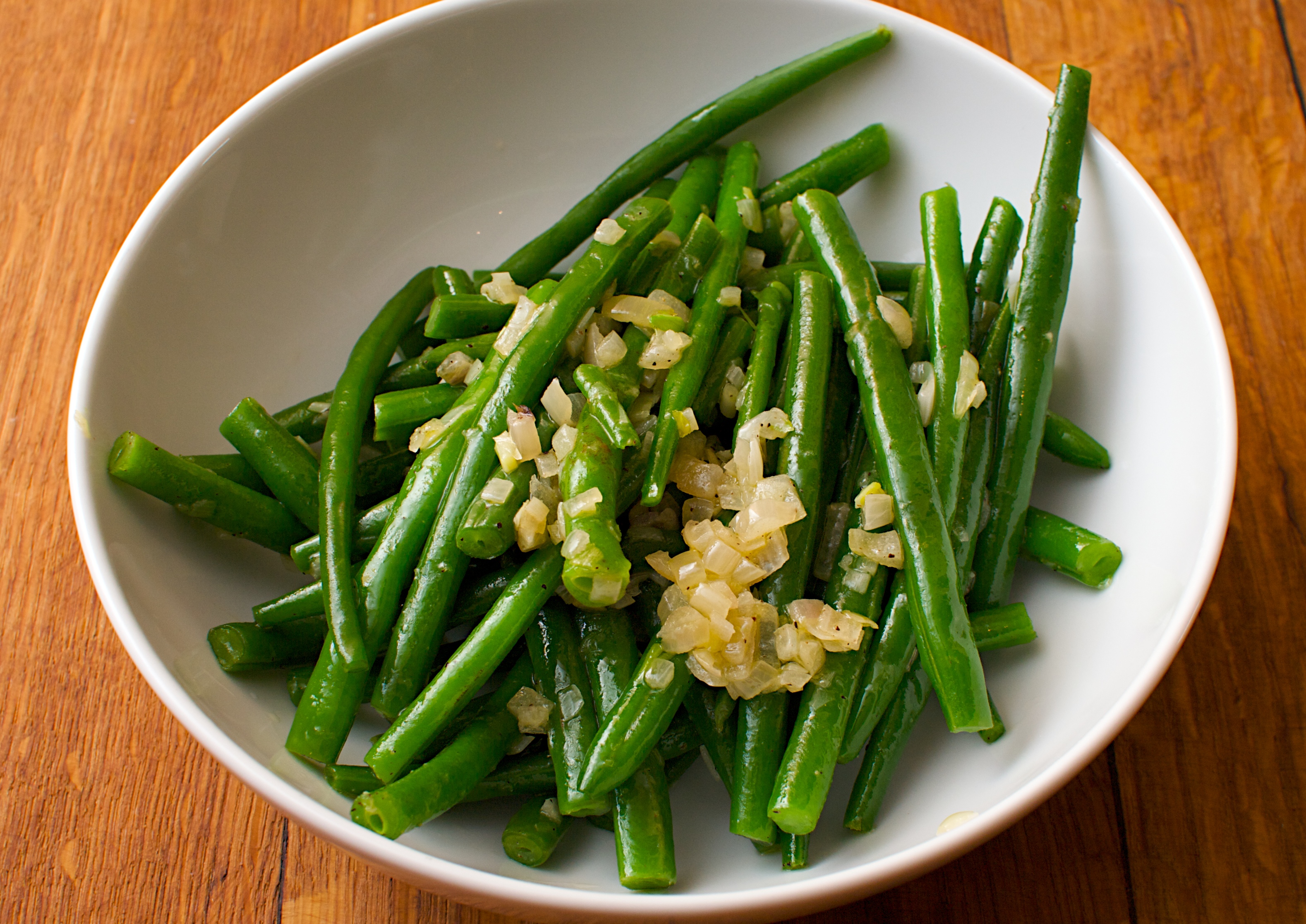
This is an easy and absolutely delicious way to serve green beans. It even perked up ones that had flown from very far away as our local shop hasn’t got the new season ones yet…any day now we hope!
Green beans with shallots – to serve 6 as a side dish
- 400g green beans
- 25g butter
- 3 shallots, finely chopped
Cook the green beans in boiling, salted water for a few minutes, until just tender. Drain and cool under cold running water. (You can do this up to a day before and keep them in a plastic bag in the fridge).
Heat the butter in a large frying pan until foaming, add the shallots and cook for 4-5 minutes, until soft but not coloured. Throw in the beans and toss to coat, then cook for a final couple of minutes until heated through, then season.
(Original recipe from BBC Good Food)
Posted in Food, Healthy, Side dish, Vegetarian | Tagged Cooking, Easy, Food, Healthy, Recipe, side dish, Vegetarian | Leave a Comment »
1 May 2012 by jonoandjules

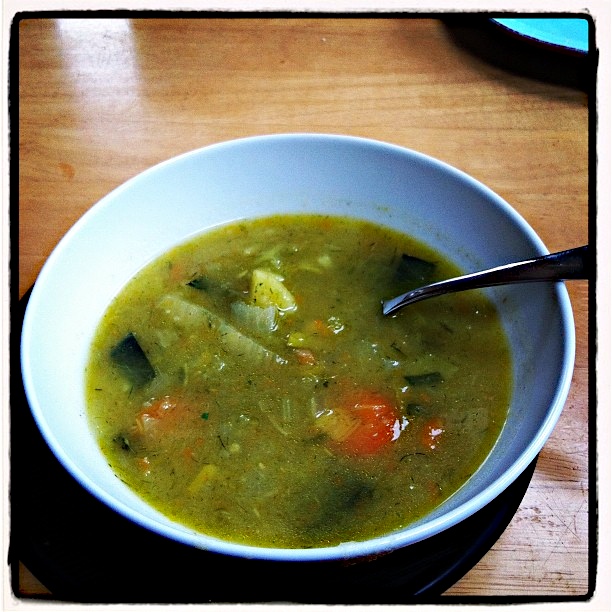
Wholesome and heart warming lunch when family drop by. We like to only partially blend or soups sometimes as it gives a great smooth consistency and keeps some of the flavoursome lumps.
Leek and potato soup – serves 6-8
- 2 carrots
- 2 sticks of celery
- 2 medium onions
- 400g leeks
- 2 cloves of garlic
- 400g potatoes
- olive oil
- 2 chicken or vegetable stock cubes
Peel and roughly chop the carrots and onions and slice the celery and garlic. Quarter the leeks lengthways and cut into 1cm slices.
Put a large pot over a high heat and add 2 tbsp of olive oil. Add all the chopped and sliced ingredients and mix well, then cook for 10 to 15 minutes, partially covered, until the carrots have softened and the onions have started to turn golden.
Peel the potatoes and cut into 1 cm dice. Add 1.8 litres of boiling water to the stock cubes, then add to the vegetables along with the potatoes.
Bring to the boil, reduce the heat and simmer for 10 minutes with the lid on.
Season and serve or blend until smooth, or give it a half-hearted whizz like we did.
(Original recipe from Jamie’s Ministry of Food by Jamie Oliver, Penguin 2008.)
Posted in Food, Irish Food, Potato, Soup | Tagged Cooking, Food, Irish, Recipe, Soup, Vegetarian | 1 Comment »
28 April 2012 by jonoandjules
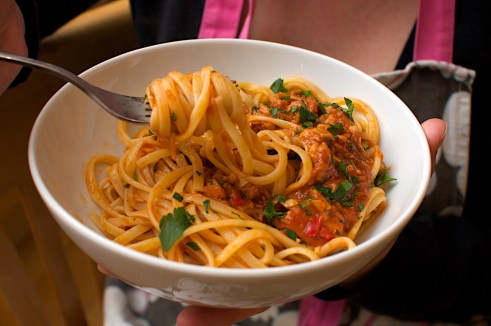
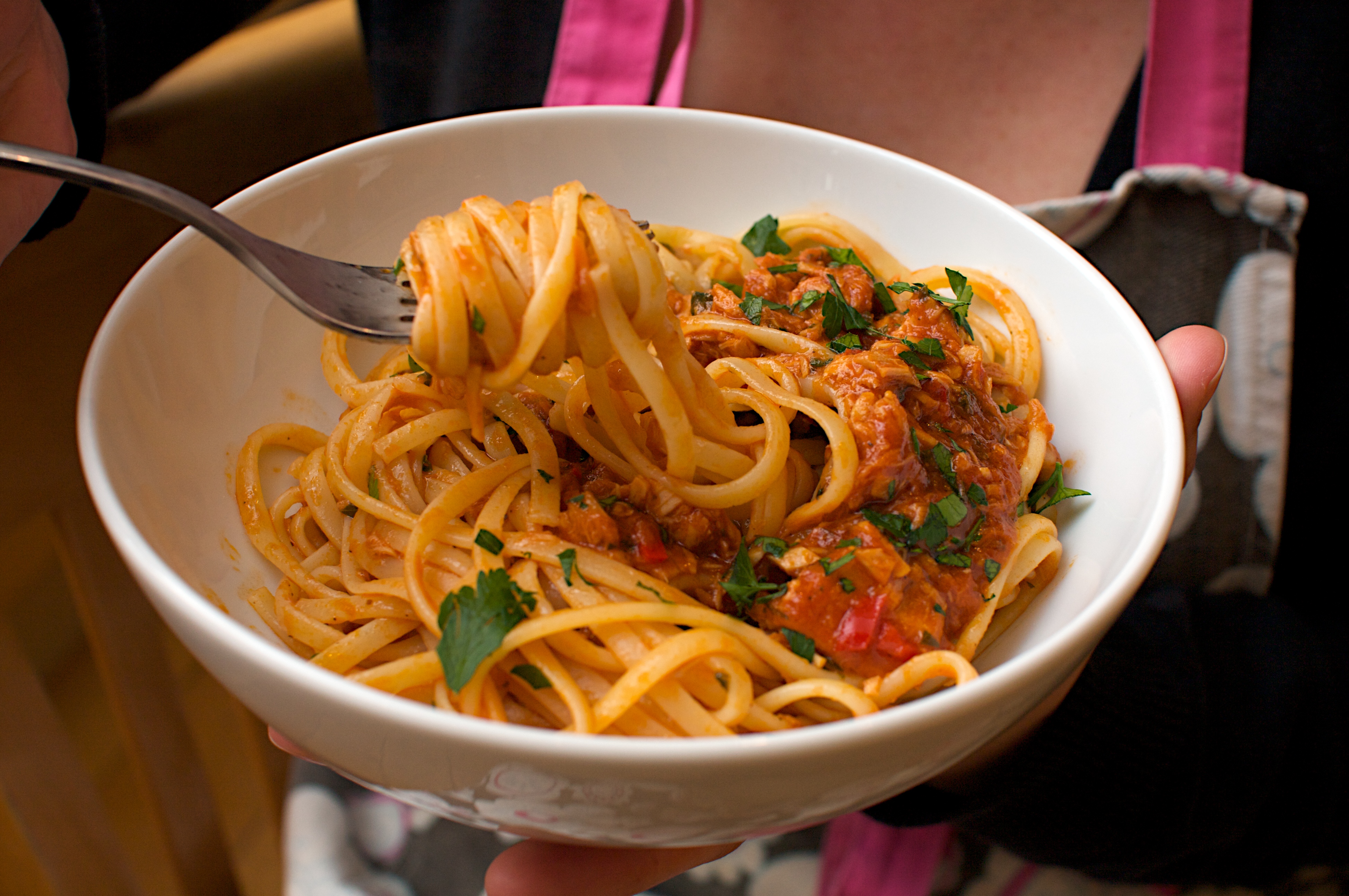
This is so delicious!!! Make sure you use top quality tuna in olive oil (we like Ortiz). It’s really healthy too. What more can we say?
Note to Cara – Jono reckons Cian will like this one 😉
Linguine with tuna sauce – to serve 4
- 4 tbsp extra virgin olive oil
- 3 tbsp fresh flat leaf parsley, chopped
- 2 garlic cloves, finely chopped
- 1 red chilli, deseeded and finely chopped
- 1 cm fresh ginger, peeled and finely chopped
- 450g creamed tomatoes (passata)
- 2 x 200g cans tuna in olive oil, drained and flaked
- 375g linguine
Heat the oil in a medium pan. Toss in 2 tbsp of the parsley, the garlic, chilli and ginger and fry for a few minutes until starting to soften. Add the tomatoes and cook for another few minutes. Fold in the tuna and season generously. Leave the sauce to simmer for 10 minutes.
Meanwhile, cook the pasta, then drain and return to the pan. Pour the tuna sauce into the pasta and toss well. Sprinkle over the rest of the parsley and serve.
Wine Suggestions: We think a light Italian red would be good here. Try a Langhe Nebbiolo or something from Basilicata if you fancy going south.
(Original recipe from BBC Good Food.)
Posted in Fish, Food, Healthy, Italian, Pasta | Tagged Cooking, Easy, Fish, Food, Healthy, Italian, Pasta, Recipe | 2 Comments »
26 April 2012 by jonoandjules

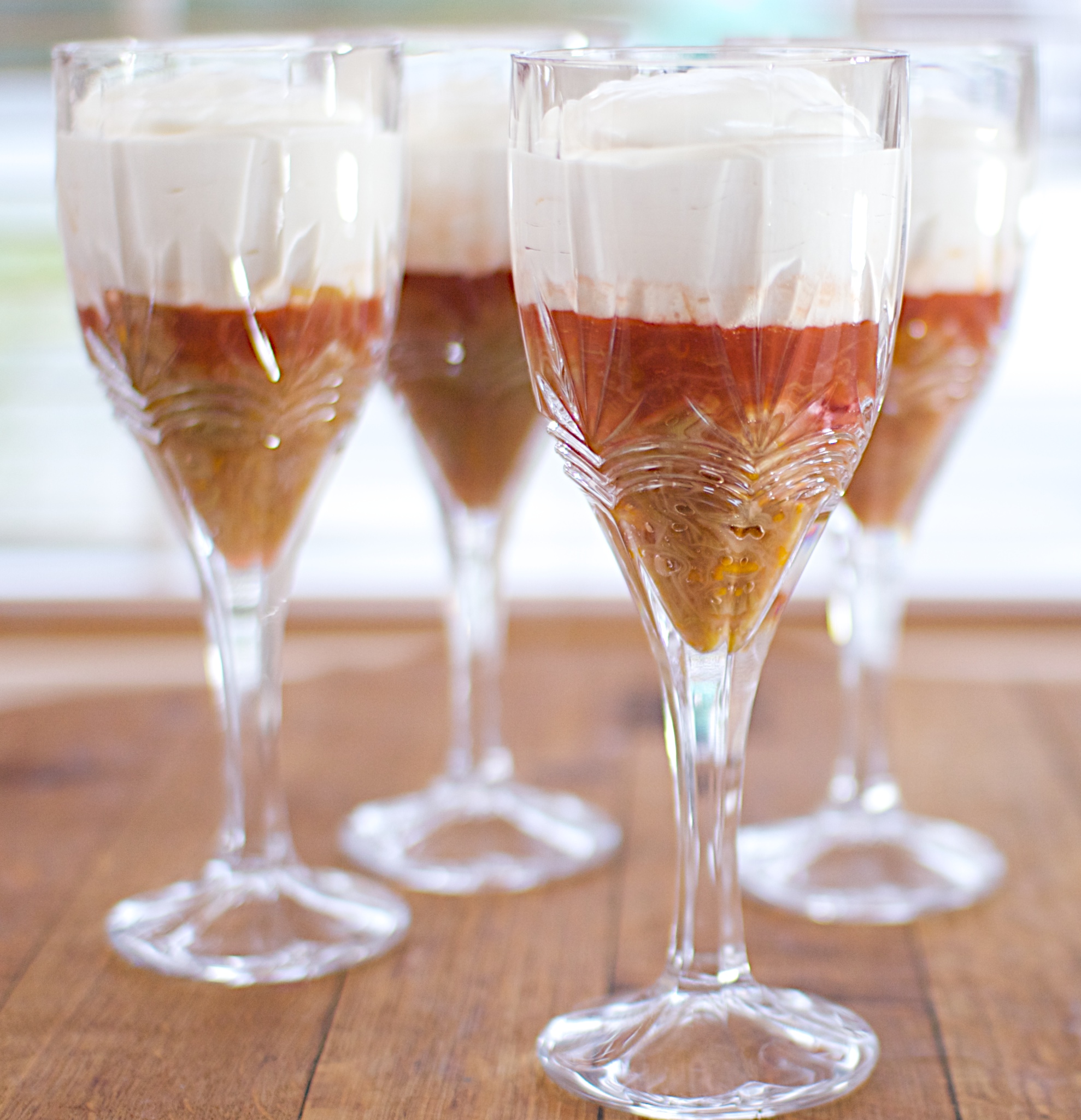
We don’t do many desserts but we do love Rhubarb which is in all the shops for spring. This is easy to make and nice and light.
Rhubarb syllabub – to serve 6
- grated zest and juice 1 orange
- 100g caster sugar
- 6 stems young pink rhubarb, about 500g
- 2 cardamom pods
- 2 star anise
For the syllabub
- 280ml double cream
- zest and juice 1 large lemon
- 3-4 tbsp Grand Marnier or dry sherry
- 100g caster sugar
Heat oven to 190C/fan 170C/gas 5. Warm the orange juice in a pan and dissolve the sugar in it. Cut the rhubarb into thumb-length segments and cook in the orange juice with the zest, cardamom and star anise for 8-10 minutes, then cool.
To make a syrup, lift out the rhubarb pieces and boil up the juice until it thickens.
To make the syllabub, put the cream, lemon zest and juice, alcohol and sugar into a bowl and beat for a few minutes until the mixture becomes thick and light. Remove the cardamom pods and star anise from the syrup. Put the rhubarb into individual glasses, spoon over some of the syrup, then the syllabub mixture over the top and chill for a few hours before serving.
(Original recipe from Sarah Raven’s Garden Cookbook, Bloomsbury.)
Posted in Dessert, Food | Tagged Cooking, Dessert, Food, Recipe, Rhubarb | Leave a Comment »
24 April 2012 by jonoandjules

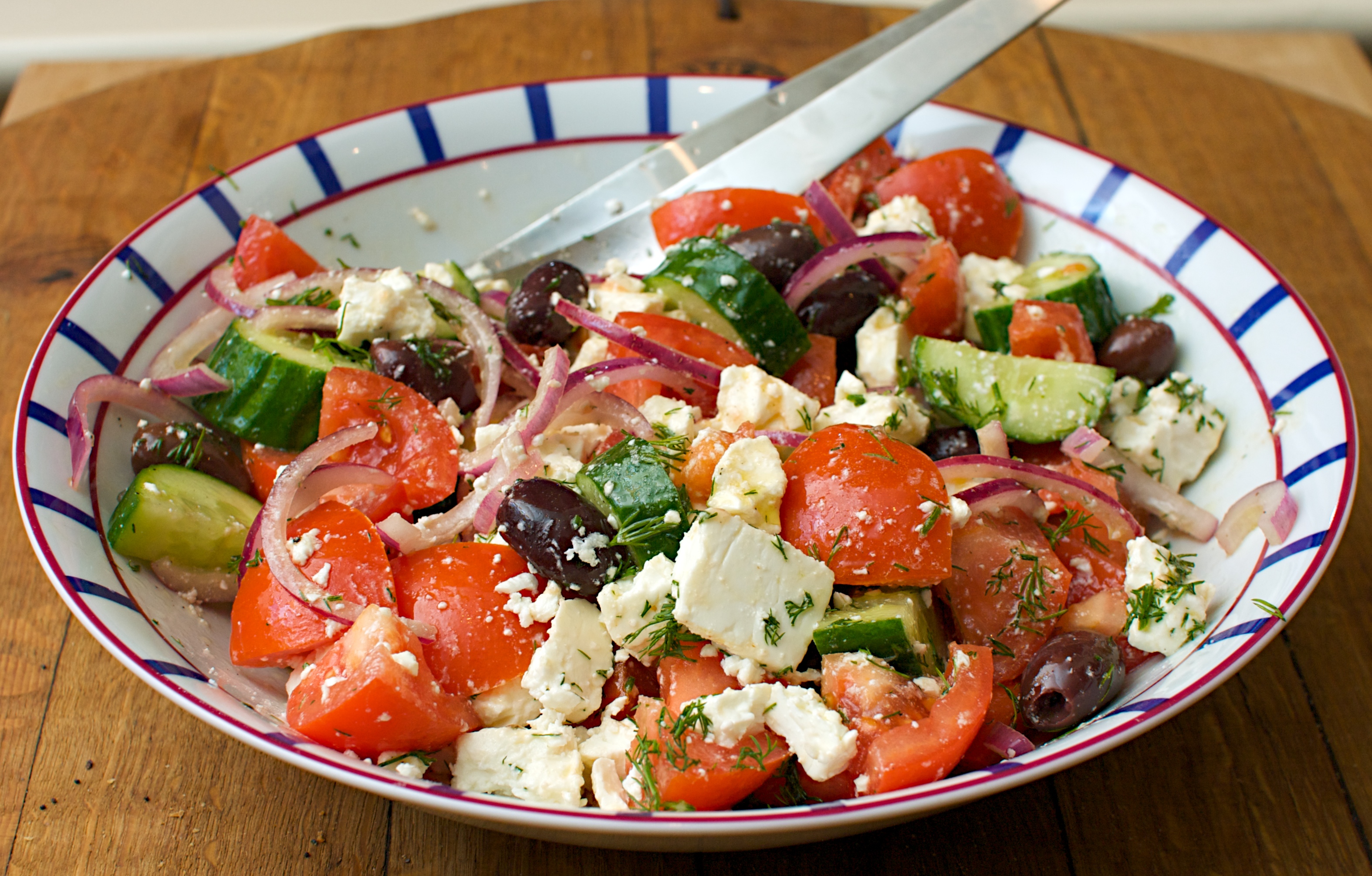
We hadn’t thought of using Pernod or ouzo in a salad until Rick Stein inspired us in his Mediterranean Escapes book. Good enough to make twice in two weeks.
Salata Horiatiki (Greek salad with tomato, cucumber, olives, dill and feta cheese) – to serve 4
- 450g ripe, red, tasty tomatoes
- ½ cucumber
- 1 red onion
- 200g Greek feta cheese
- 4½ tbsp extra virgin olive oil, plus a bit extra to serve
- 1 tbsp red wine vinegar
- 1 tsp ouzo or Pernod
- 2 tbsp chopped dill
- 20 small black olives
- Large pinch of dried oregano
- Salt and freshly ground black pepper
- Crusty fresh bread, to serve
Cut the tomatoes into chunks, and cut the cucumber in half lengthways and then across into thick slices. Very thinly slice the red onion. Crumble the feta cheese into small chunks.
Put the olive oil, ½ tsp salt, the red wine vinegar, ouzo and some black pepper into a large salad bowl and whisk. Add the tomatoes, cucumber and onions and toss gently. Add the feta, dill and olives and mix briefly, then divide onto plates.
Drizzle the salad with a bit more oil, sprinkle with the dried oregano and a little coarsely ground pepper, and serve with crusty bread.
Wine Suggestion: If you were on a Greek island you would be sipping ouzo or retsina… not sure that we’d recommend either. Maybe try a Vermentino, which is still from the Mediterranean (Sardinia or the Italian coast), a fresh white wine that has a bit of texture to it.
Posted in Food, Greek | Tagged Cooking, Food, Greek, Recipe, Salad | 3 Comments »
22 April 2012 by jonoandjules
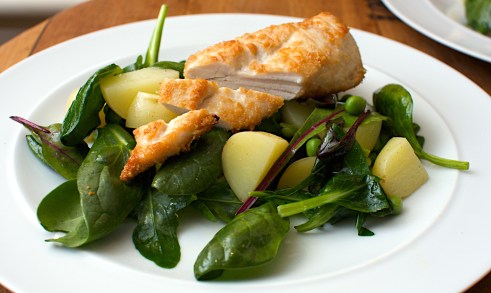
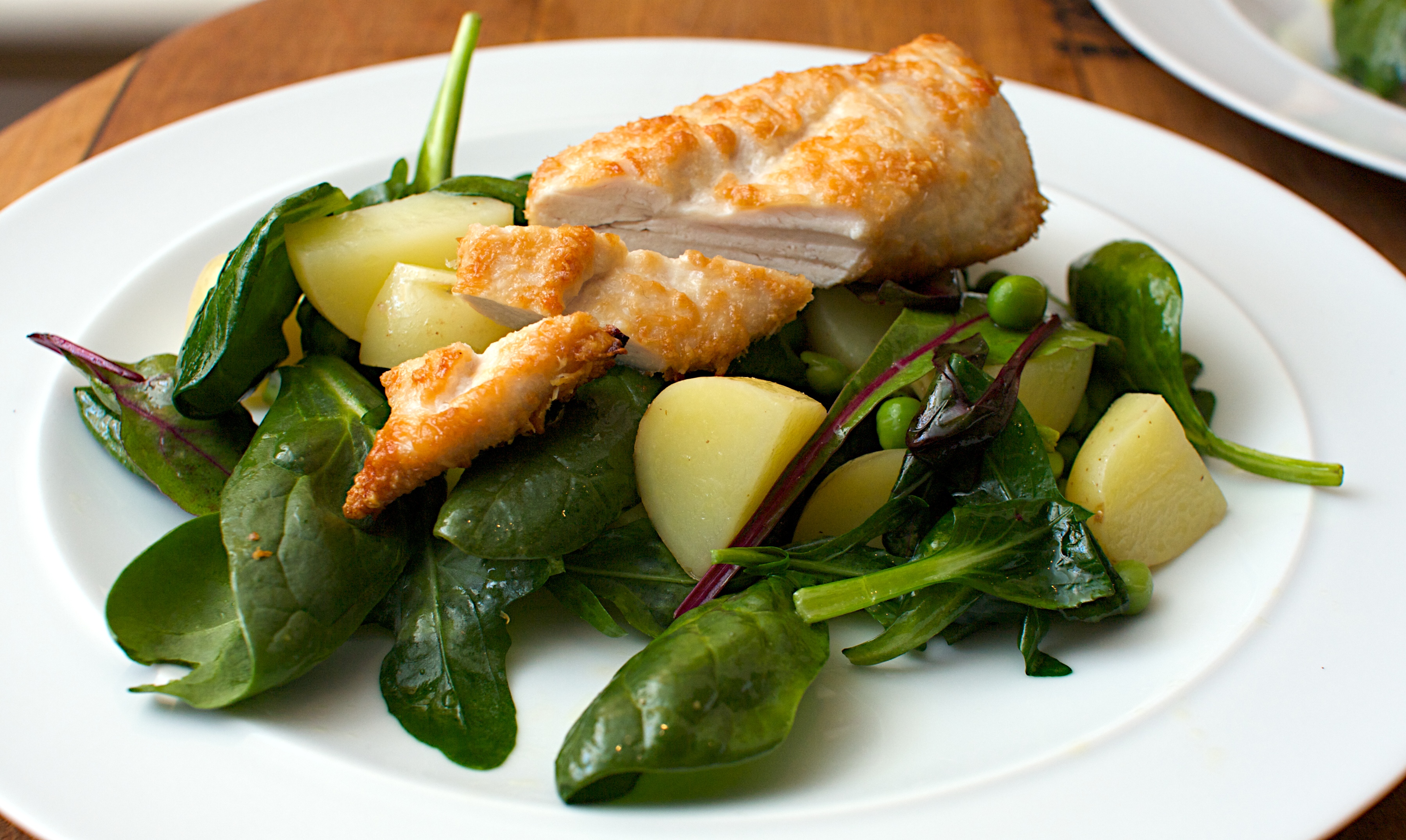
This is a quick and easy week night supper with great spring flavours and nice moist chicken. Perfect now we’re into the long nights, even if they’re somewhat frosty still.
Parmesan spring chicken – to serve 4
- 1 egg white
- 5 tbsp finely grated Parmesan
- 4 boneless, skinless chicken breasts
- 400g new potatoes, cut into small cubes
- 140g frozen peas
- good handful baby spinach leaves
- 1 tbsp white wine vinegar
- 2 tbsp olive oil
Heat the grill to medium and line the grill pan with foil. Beat the egg white on a plate with some seasoning. Tip the Parmesan onto another plate. Dunk the chicken in the egg white, then the cheese. Grill the chicken for 10-12 minutes, turning once until brown and crispy.
Meanwhile, boil the potatoes for 10 minutes, adding the peas for the final 3 minutes, then drain. Toss the vegetables with the spinach leaves, vinegar, oil and seasoning to taste. Divide between warm plates and serve with the chicken.
Wine Suggestion: Any light white you have in the fridge would go great here. If you’re going out to buy it try a Rhône varietal, like Roussane or Marsanne.
(Original recipe from BBC Good Food)
Posted in Chicken, Food, Healthy | Tagged Chicken, Cooking, Food, Healthy, Recipe, Spiring | Leave a Comment »
20 April 2012 by jonoandjules
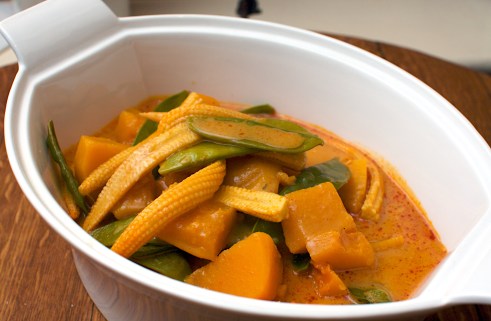
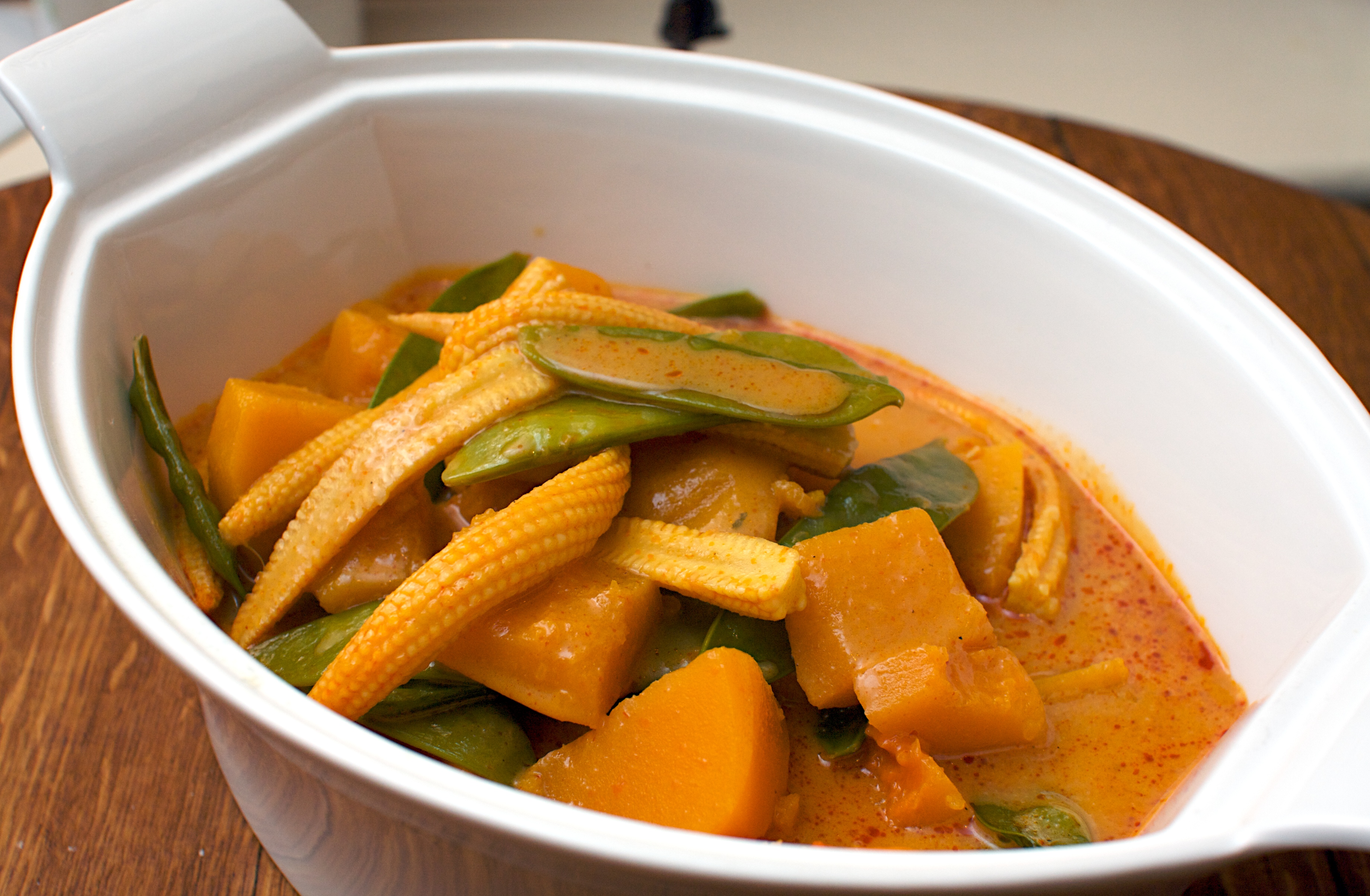
This is not a sophisticated Thai curry but is absolutely perfect for a quick mid-week meal. We loved it! We’ve been avoiding butternut squash this year it seems, which is no reflection on how yum it is. Serve with basmati or jasmine rice.
Thai red squash curry – to serve 4
- 1 small butternut squash, about 700g
- 200g pack mixed mangetout and baby corn
- 2 tbsp sunflower oil
- 1-2 tbsp Thai red curry paste
- 400ml can coconut milk
- 150ml vegetable stock
- 2 tbsp soy sauce
- 1 tbsp light muscovado sugar
- juice of ½ lime
Cut the end off the squash and quarter lengthways, scoop out the seeds, peel, then cut into smallish chunks. Halve the baby corn lengthways.
Heat the oil in a saucepan. Fry the paste gently for 1-2 minutes. Add the coconut milk, stock, soy sauce and sugar. Bring to the boil.
Add the squash and baby corn. Simmer, covered, for about 10-12 minutes. Add the lime juice and mangetout and simmer for one more minute.
Wine Suggestion: We didn’t have anything to drink with this (except water) but if we did it would probably have been a beer!
(Original recipe from BBC Good Food Magazine, April 2001.)
Posted in Asian, Food, Healthy, Vegetarian | Tagged Cooking, Easy, Food, Recipe, Thai, Vegetarian | Leave a Comment »
18 April 2012 by jonoandjules
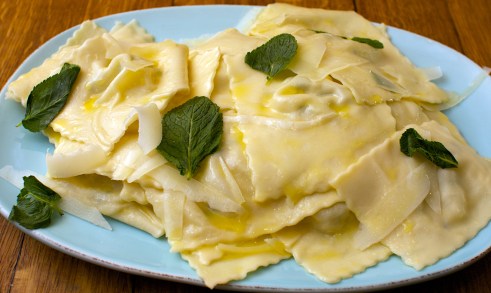
Jono hasn’t made fresh pasta since he broke his hand and we’ve missed the lightness and texture it has. Now he’s better we had to make this minty Spring Ravioli. Needless to say we made masses, but despite the quantity they just slipped down so easily and disappeared in a flash. Fresh pasta is a bit of a labour of love but if you give yourself plenty of time it’s not that difficult and you feel very smug and clever afterwards.
Ravioli of pecorino, potato and mint – serves 6
- pasta dough (see below)
- 500g floury potatoes
- 100g butter, plus a bit more
- 1-2 handfuls of grated pecorino, plus a bit extra
- nutmeg for grating
- zest of 1 lemon
- a bunch of fresh mint
For the pasta dough
- 600g tipo 00 flour
- 6 large eggs
First make the pasta:
Throw the flour and eggs into a food processor and whiz until it looks like breadcrumbs, then tip out and bring together with your hands.
Knead the pasta dough until it feels smooth and silky (your hands should be aching!). Wrap it in clingfilm and rest in the fridge for at least half an hour.
For the filling:
Preheat the oven to 200C/400F/gas 6. Prick the potatoes with a fork, then roll them in some sea salt and bake for about an hour. Cool, cut them in half, and scoop the potato into a bowl, discarding the skins.
Pick your mint leaves and finely chop half. Add the butter, pecorino, nutmeg, lemon zest and the chopped mint and mash well with the potato. Taste and add more seasoning if it doesn’t taste absolutely delicious.
For the ravioli:
Dust the work surface with flour. Take a quarter of the pasta dough (keep the rest wrapped well in the fridge) and press out flat with your fingers. Set your pasta machine to the widest setting – and roll the pasta dough through. Lightly dust with flour if it sticks. Click the machine down a setting and roll through again. Fold the pasta in half, click the machine back to the widest setting and roll through again. Repeat this process 5 or 6 times. The pasta will eventually become smooth and silky.
Now roll the dough through all the settings on the machine, from the widest to the narrowest. Keep lightly dusting both sides with flour as you go. When you’ve got down to the narrowest setting, fold the pasta in half lengthways and then in half again, then in half once more until you have a kind of square. Turn it 90 degrees and feed through the machine again at the widest setting. Roll the pasta through each setting for the last time. For ravioli you need to keep going until you can clearly see your hand through the pasta.
Now you need to work quickly to make your ravioli before your pasta dries out. You can cover with a damp tea towel to protect it if necessary.
Cut the pasta into a 5 x 15 cm strips.
Place 4 tsp of filling along the strip and lightly brush the pasta with water.
Put another strip over and mould carefully around the filling on the bottom sheet, pushing out any air bubbles.
Cut into squares with a crinkle cutter or into circles with a pastry cutter.
To cook the ravioli:
Bring a pot of salted water to the boil and cook the ravioli for about 3½ minutes.
While it is cooking, put a couple of knobs of butter in a frying pan and heat gently. Drain the ravioli with a slotted spoon, reserving a little bit of pasta water. Add the ravioli to the melted butter with a little of the cooking water and lightly simmer until you have a sauce that coats the pasta lightly. Serve on a platter and sprinkle with mint, some pepper and shavings of pecorino.
Aren’t you clever!
Wine Suggestion: We went with the suggestion in the recipe book which was the Italian white, Arneis. Ours was by a producer called Ascheri from Alba and was very nice indeed.
(Original recipe from Jamie Oliver’s Cook with Jamie, Penguin Books, 2006.)
Posted in Food, Italian, Pasta, Vegetarian | Tagged Cooking, Food, Italian, Pasta, Recipe | 4 Comments »
16 April 2012 by jonoandjules
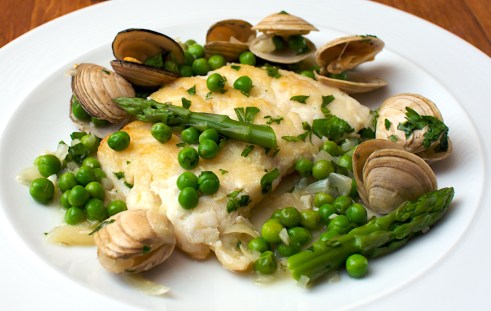
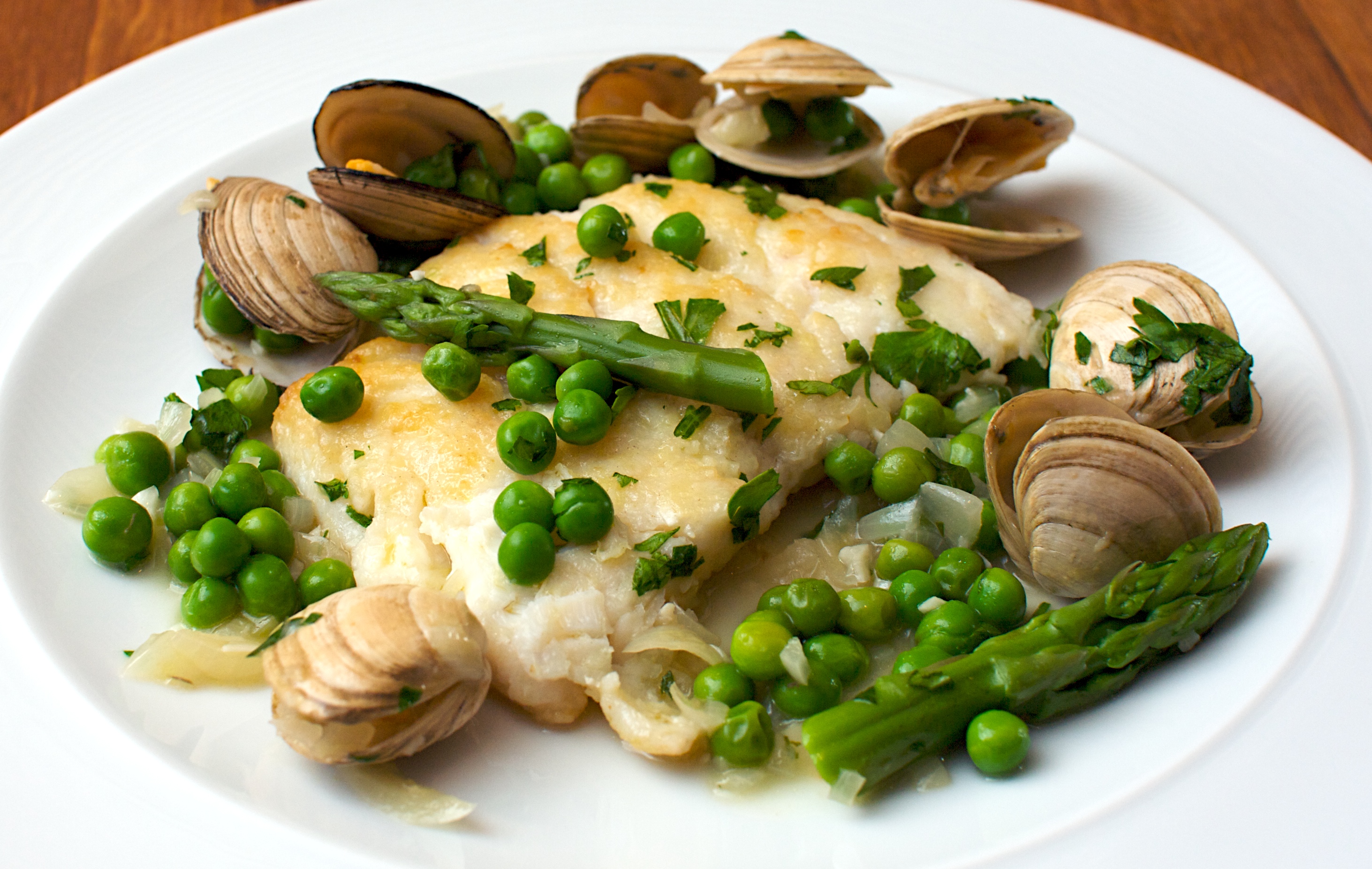
We have been waiting for asparagus season to start and this dish seemed an appropriate celebration. Basque inspiration but completely at home in Ireland with every ingredient in season and locally sourced which we are passionately in favour of.
This recipe uses the tips of asparagus but we suggest buying the whole thing and cutting the tips off at home (instead of the pre pack tips). The remaining asparagus stalks are great steamed or blanched the next day for breakfast with a nice boiled or poached egg 🙂
Merluza a la koxkera – serves 4
- 4 x 175-200g pieces of skinned hake fillet, 2 – 2.5cm thick
- 200g asparagus tips (8cm long)
- 250g peas
- plain flour for dusting + 1 tbsp for the sauce
- 6 tbsp olive oil
- 4 cloves garlic, finely chopped
- 100g shallot, finely chopped
- 175ml dry white wine
- 100ml fish stock
- 250g small clams (or a few extra of your pot will fit them)
- 1 tbsp flat-leaf parsley, chopped
Season both sides of the hake pieces generously with salt and set aside for 10-15 minutes.
Meanwhile drop the asparagus tips into a pan of boiling, salted water and cook for 2 minutes. Add the peas and when it reaches the boil again drain and refresh under cold water. Leave to drain.
Pat hake pieces to remove excess moisture and then dust with flour and shake off any excess. Heat 4 tablespoons of olive oil over a medium-high heat in a large frying pan (big enough to fit your 4 hake pieces). Add hake and fry for 2-3 minutes on each side until golden brown on outside, but not quite cooked through. Lift out onto a plate and set aside.
Wipe frying pan clean and add 2 tablespoons of oil, the garlic and shallots. Fry over a medium heat for 3 minutes, or until soft and lightly golden. Stir in the 1 tablespoon of flour and then gradually stir in the wine and stock to make a smooth sauce.
Bring to a simmer and return the hake to the pan and cook for 1 minute. Add the clams, cover and cook for 2-3 minutes until all the clams are opened and the fish is cooked through. Uncover and scatter over the asparagus, peas and parsley. Simmer for a minute or two until the vegetables are warmed through. Taste for seasoning and serve.
Wine suggestion: As this is of Basque origin we could suggest a Txakoli, a Basque white wine. If this is difficult to find try a Semillon-Sauvignon Blanc blend, like from Bordeaux which has good freshness and crispness but also the body and structure to stand up to the flavours of the dish.
Inspiration from: Rick Stein’s Spain, BBC Books 2011
Posted in Fish, Food, Shellfish, Uncategorized, Wine | Tagged Asparagus, Cooking, Fish, Food, Recipe | 1 Comment »
14 April 2012 by jonoandjules
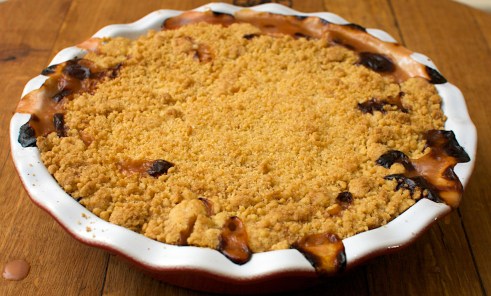
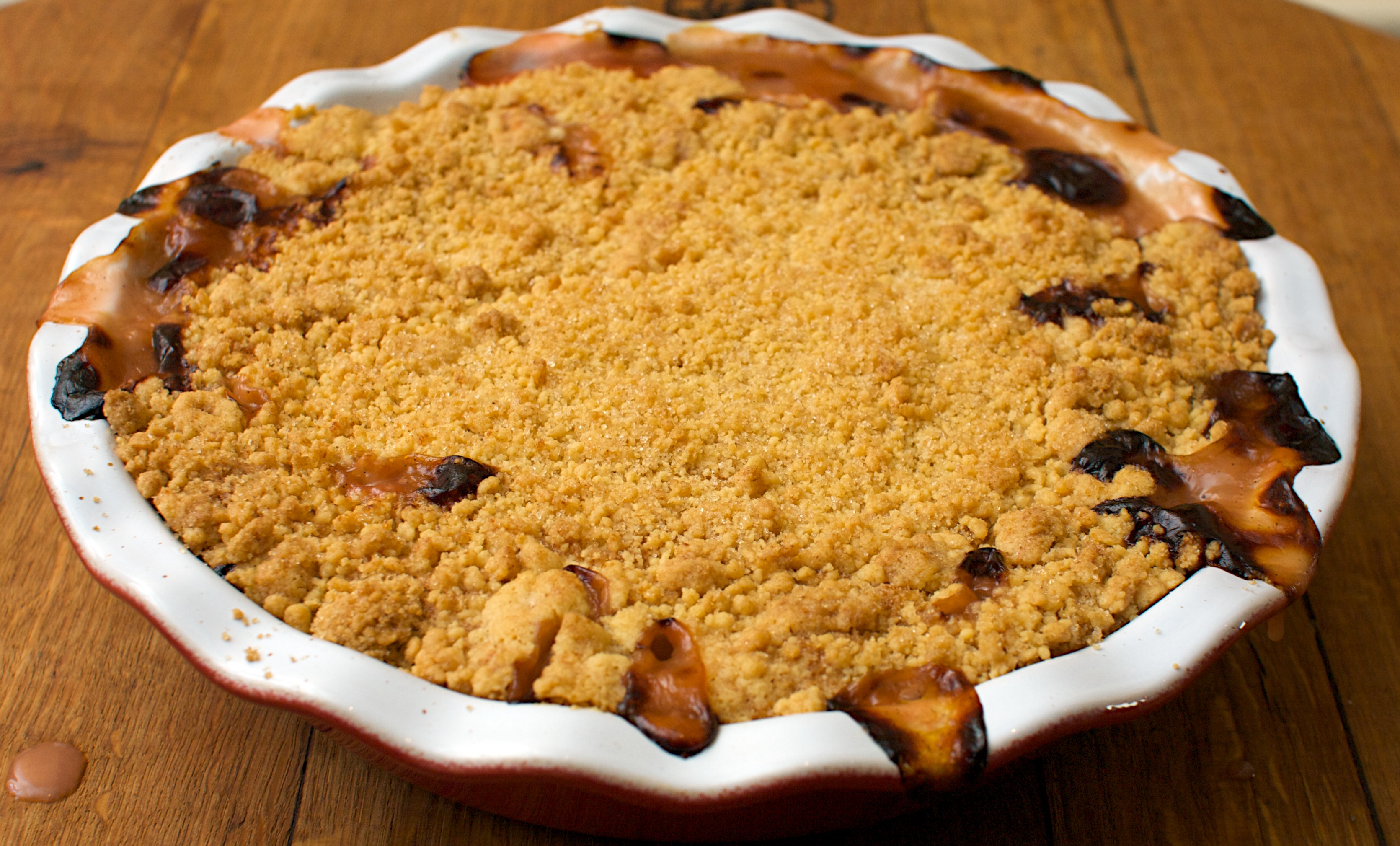
Perhaps we don’t need to tell you how to make crumble but as we always use a Nigella recipe, we thought we’d share it with you. It looks particularly good if you use the bright pink forced rhubarb, available early in the year. You can make this well in advance but don’t put the crumble on top of the rhubarb until you are ready to cook it.
Rhubarb Crumble
- 1kg rhubarb, chopped into 1 cm pieces
- 50g caster sugar
- 1 tbsp butter
- 1 tbsp vanilla extract
- 1 tbsp cornflour
FOR THE CRUMBLE
- 150g plain flour
- 1 tsp baking powder
- 110g unsalted butter, cold and diced
- 3 tbsp sugar
- 3 tbsp Demerara sugar
Preheat the oven to gas mark 5/190ºC, and put in a baking sheet .
Toss the rhubarb in a pan on the heat with the sugar, butter, vanilla and cornflour for about 5 minutes, or until the butter has melted and everything has come together. Tip into a pie dish (about 24cm wide and 4cm deep).
Put the flour and baking powder into a bowl and rub in the cold, diced butter. It should look like rough oatmeal.
Stir in the sugars with a fork and pour over the rhubarb, cover completely so it doesn’t all bubble up through the crumbs too much. Bake for 35-45 minutes on the baking sheet. Some juice will bubble up and the top should be nice and brown.
Serve with cream, ice-cream or custard.
Wine suggestion: This works well with a sweet white wine able to complement the vanilla flavours running through crumble. If you can plump for a good Sauternes, a Tokaji aszu or botritis Semillon that has been aged in oak and has a few years in bottle then we think you’ll find a match made in heaven.
(Original recipe from Nigella Lawson’s Feast, Random House, 2004.)

Posted in Food | Tagged Cooking, Dessert, Food, Recipe, Rhubarb, Vegetarian | Leave a Comment »
13 April 2012 by jonoandjules

We’re always on the lookout for a vegetarian lasagne and this one worked well and tasted great. It’s rich so a salad on the side is all that’s needed. Make on the weekend when you’re in no hurry.
Mushroom lasagne – to serve 8
MUSHROOMS:
- 35g dried porcini mushrooms
- 400ml lukewarm water
- 60g unsalted butter
- 1 tbsp thyme leaves
- 800g mixed fresh mushrooms, sliced if large
- 2 tbsp chopped tarragon
- 4 tbsp chopped parsley
LASAGNE
- 60g unsalted butter
- 1 small shallot, chopped
- 60g plain flour
- 550ml milk
- 375g ricotta
- 1 large free-range egg
- 150g feta, crumbled
- 170g Gruyère, grated
- 400g lasagne verde
- 150g fontina cheese (or mozzarella), granted
- 50g Parmesan, grated
- salt and white pepper
Preheat the oven to 180ºC/Gas Mark 4. Cover the porcini with the lukewarm water and leave to soak for 5 minutes. Drain and reserve the liquid.
Melt the butter in a large heavy-based saucepan. When foaming add the thyme, porcini and fresh mushrooms. Cook for 4 minutes, or until softened and have released their juice, stirring now and then. Take off the heat and stir in the tarragon, parsley and some salt and pepper. Tip into a bowl and set aside.
Use the same pan to make a béchamel. Put the butter and shallot in the pan and cook over a medium heat for about a minute. Add the flour and cook, stirring constantly, for about 2 minutes; the mix will turn into a paste but shouldn’t take on much colour. Gradually whisk in the milk and porcini soaking liquid, leaving any grit behind. Add ½ tsp salt and keep whisking until boiling. Simmer on a low heat, don’t stop stirring, for about 10 minutes, or until thickish. Take off the heat.
In a small bowl mix the ricotta with the egg, then fold in 3 tbsp of the béchamel and the feta. Add the Gruyère to the remaining béchamel in the pan and stir well to get your main sauce.
Pour boiling water over the lasagne leaves (a few at a time so they don’t stick together) and soak for 2 minutes; remove and dry on a tea towel.
To build the lasagne, pour one-fifth of the sauce over the bottom of an ovenproof dish (about 25 x 35 cm). Cover with lasagne leaves. Spread ¼ of the ricotta mix on top, scatter over ¼ of the mushrooms and sprinkle with ¼ of the fontina. Make three more layers like this, then finish with a layer of pasta covered with sauce.
Sprinkle the Parmesan on top and cover loosely with foil (so it’s not touching the sauce). Bake for 40 minutes, or until the sauce is bubbling up around the sides. Lift off the foil and bake for another 10 minutes, or until golden. Leave to rest for 10 minutes before serving.
Wine Suggestion: You’ve plenty of choices here. You could go for a Chardonnay to complement the rich mushroom sauce or if you prefer red go for something earthy like a Barbera.
(Original recipe from Yotam Ottolenghi’s Plenty, Ebury Press, 2010.)
Posted in Food, Pasta, Vegetarian | Tagged Cooking, Food, Lasagne, Mushrooms, Recipe, Vegetarian | 5 Comments »
11 April 2012 by jonoandjules
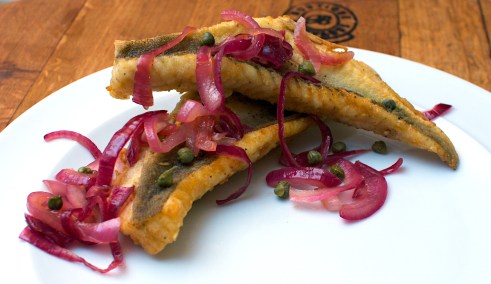
A great balance between the meaty and oily Gurnard and the sweet onions, salty capers and vinegar. You want the onions to be al dente so don’t cook them too long.
Fried Gurnard with Sweet & Sour Red Onions – to serve 4
- olive oil, for shallow frying
- 8 x 75g fillets of gurnard
- 50g plain flour
- 1 tsp small capers, to garnish
For the sweet and sour onions
- 50ml extra virgin olive oil
- 2 medium red onions, halved and thinly sliced
- 2 tbsp red wine vinegar
- 2 tbsp clear honey
Cook the sweet and sour onions first. Heat the olive oil in a frying pan, then add the onions, honey, ½ tsp salt and some pepper and cook gently for 10 minutes, stirring occasionally, until they are soft but still have a bit of a bite, but don’t let them brown. Keep warm.
Pour the olive oil into a wide shallow pan to a depth of 1cm and heat to 180ºC (buy a cheap jam thermometer in a cook shop for this). Season the fish fillets on both sides, coat in the plain flour and knock off the excess. Lower the heat slightly and add the fish and cook for 1 minute on each side until lightly golden and cooked through. Lift onto kitchen paper and drain briefly.
Serve the fish on warm plates and spoon some of the sweet and sour onions over. Scatter with capers and serve.
Wine Suggestion: Acidity is important here we’d recommend a white Inzolia or Grillo from Sicily.
(Original recipe from Rick Stein’s Mediterranean Escapes, BBC Books, 2007.)
Posted in Fish, Food, Italian | Tagged Cooking, Fish, Food, Recipe | Leave a Comment »
« Newer Posts - Older Posts »



 Jono & Jules do food & wine