22 January 2012 by jonoandjules
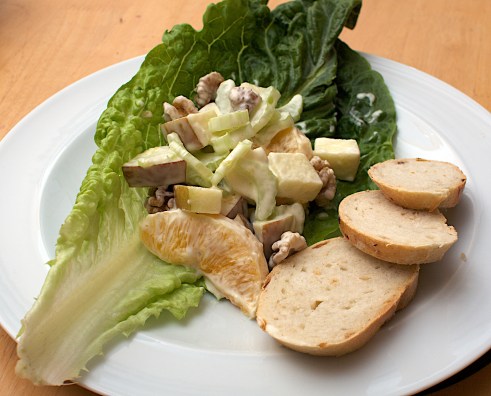
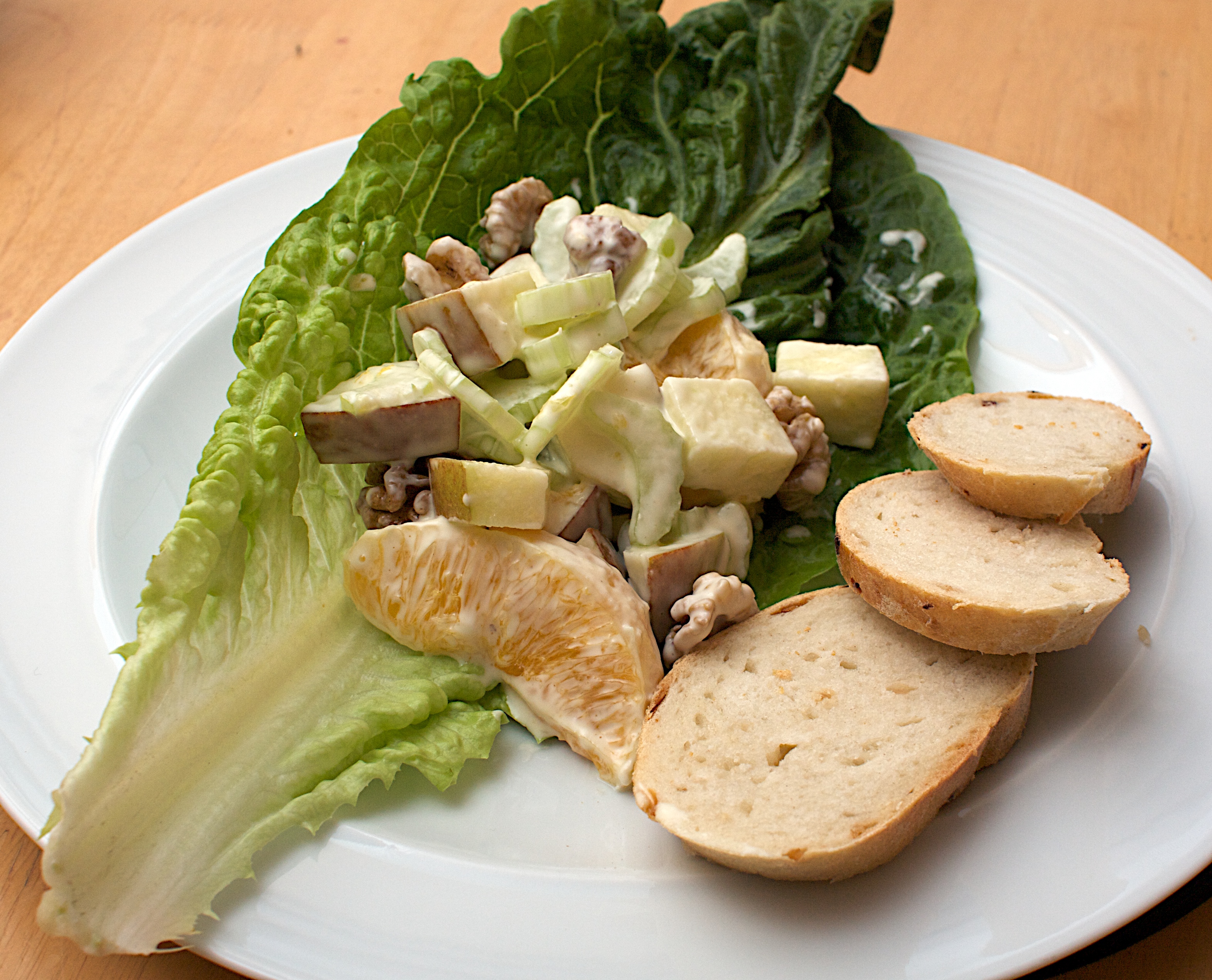
Remember this? It made a fab lunch with some bacon and onion bread and lettuce.
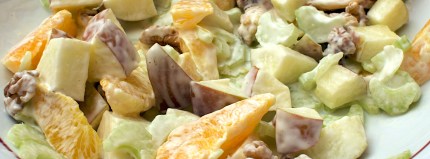
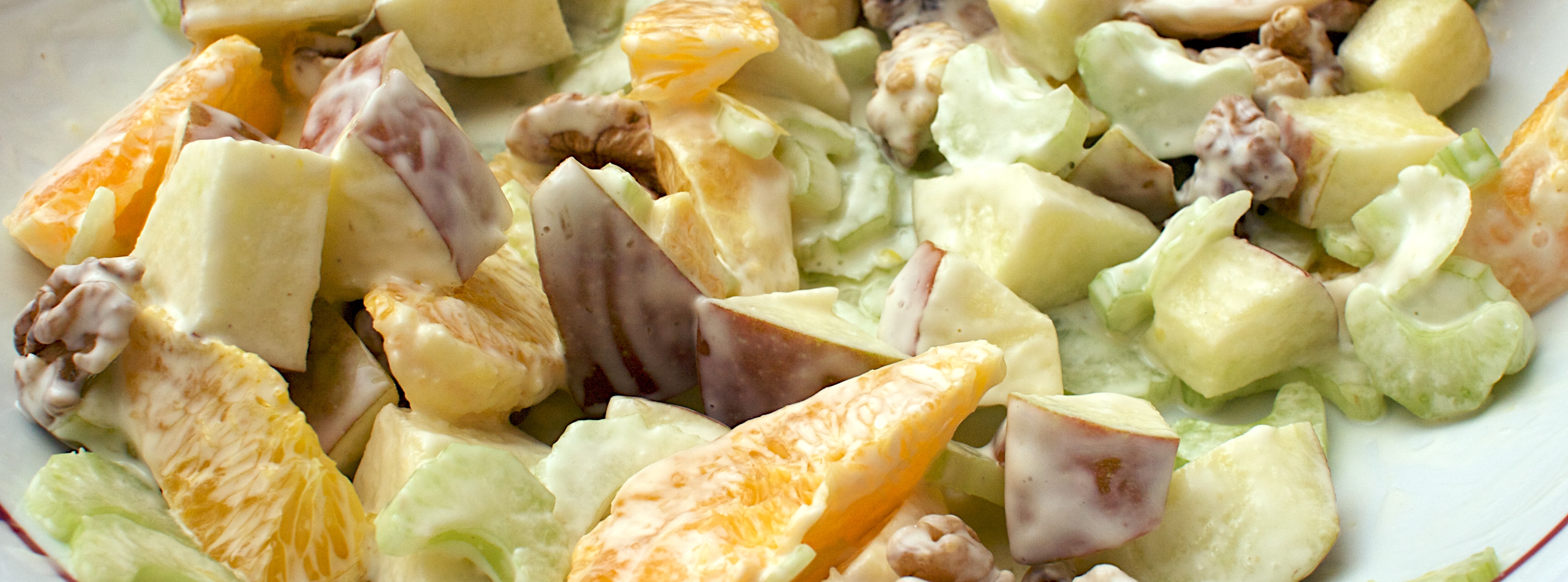
Waldorf Salad – a big bowl
- 1 apple, cut into bite-size chunks
- 1 large orange, cut into segments
- 2 sticks celery, chopped
- a handful of walnuts
- mayonnaise
Throw all of the above into a big bowl and give it a stir! Serve in a cos lettuce leaf with some nice bread.
Posted in Food, Side dish, Vegetarian | Tagged Cooking, Food, Recipe, Salad, Vegetarian | Leave a Comment »
21 January 2012 by jonoandjules
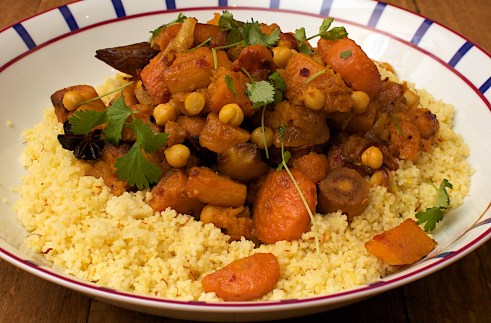
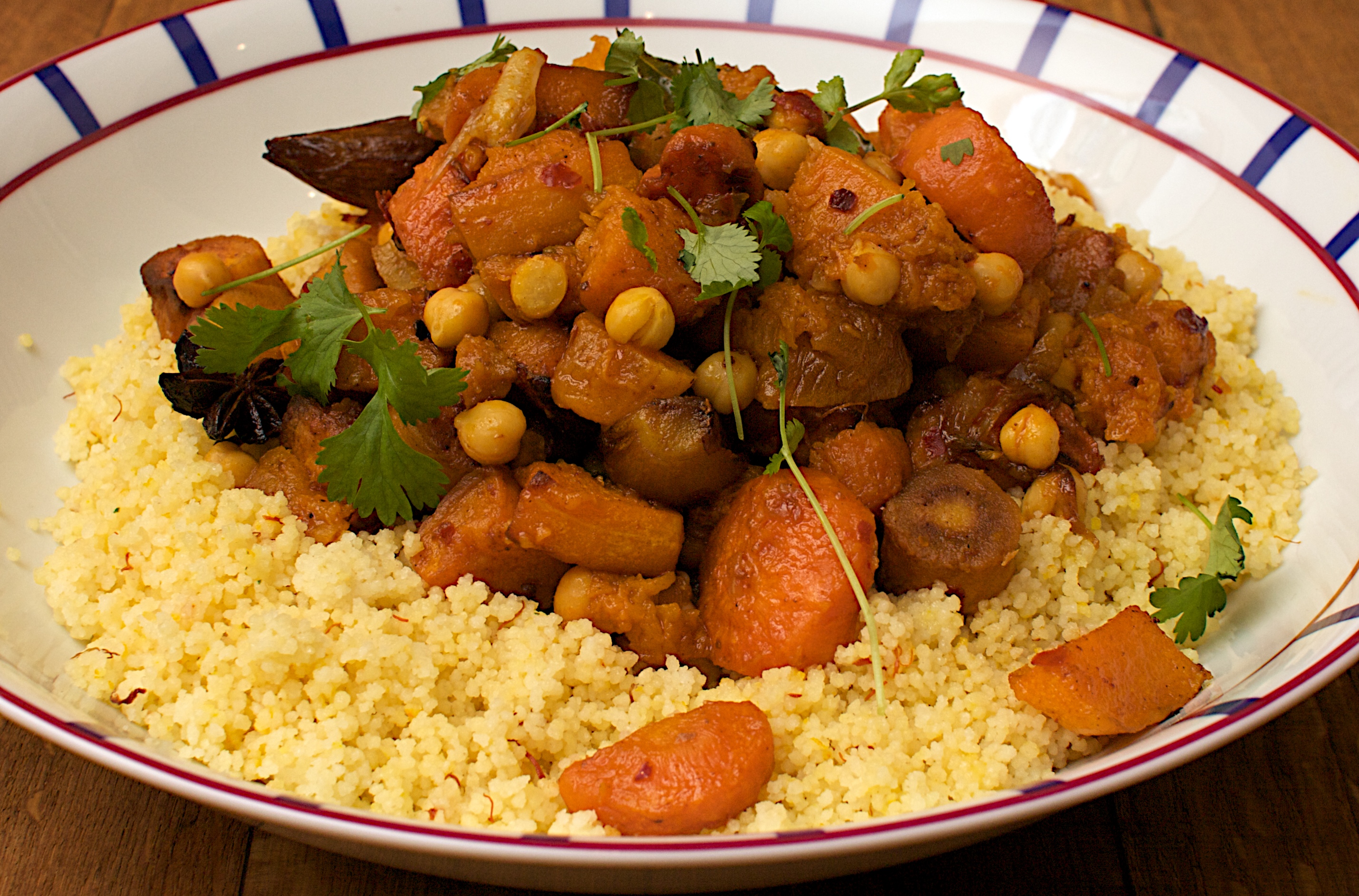
Another fantastic vegetarian recipe by Yotam Ottolenghi with fabulous flavours and interesting textures. This was so good we made it twice in one week.
The ultimate winter couscous – to serve 4
- 2 medium carrots, peeled and cut into 2 cm chunks
- 2 medium parsnips, peeled and cut into 2cm chunks
- 8 shallots, peeled
- 2 cinnamon sticks
- 4 star anise
- 3 bay leaves
- 5 tbsp olive oil
- 1/2 tsp ground ginger
- 1/4 tsp ground turmeric
- 1/4 tsp hot paprika
- 1/4 tsp chilli flakes
- 300g pumpkin or butternut squash, peeled and cut into 2 cm chunks
- 75g dried apricots, roughly chopped
- 200g chickpeas (tinned are fine)
- 350ml water
- 170g couscous
- large pinch saffron threads
- 260ml boiling vegetable stock
- 20g butter, cut into pieces
- 25g harissa paste
- 25g preserved lemon skin, finely chopped
- 30g coriander
- salt
Preheat the oven to 190ºC/Gas Mark 5. Put the carrots, parsnips and shallots in a large ovenproof dish. Add the cinnamon sticks, star anise, bay leaves, 4 tbsp of the oil, 3/4 tsp salt and all the other spices and mix well. Put in the oven and cook for 15 minutes.
Add the pumpkin, stir and return to the oven. Cook for another 35 minutes or until the vegetables are soft but still have a bit of a bite. Add the apricots and the chickpeas and water. Put it back into the oven for another 10 minutes or until hot.
About 15 minutes before the vegetables are done, put the couscous in a large heatproof bowl with the last tablespoon of olive oil, the saffron and 1/2 tsp of salt. Pour the boiling stock over the couscous. Cover the bowl with cling film and leave for about 10 minutes. Then add the butter and fluff with a fork until it has melted in. Cover again and keep warm until the vegetables are ready.
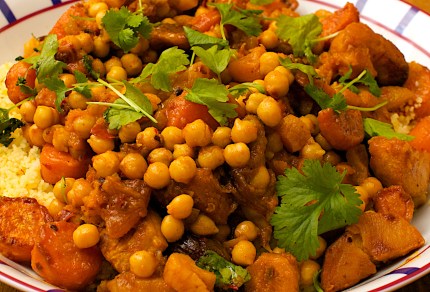
To serve, spoon the couscous into a deep plate or bowl. Stir the harissa and preserved lemon into the vegetables; season with salt if necessary. Spoon the vegetables onto the centre of the couscous and finish with lots of coriander.
Wine Suggestion: While spices are usually hard to pair with wine, the aromatic quality of this dish would work well with a good, off-dry Pinot Gris from Alsace (the good producers put a handy sweetness scale on the side of their bottles). Alternately a juicy grenache with softer, ripe tannins and a velvety spice would taste good too if you’d like a red. Try to find a grenache based Priorat from Spain if you want to push the boat out a bit!
(Original recipe from Yotam Ottolenghi’s Plenty, Ebury Press 2010.)
Posted in Food, Vegetarian | Tagged Cooking, Couscous, Food, Recipe, Vegetarian | 1 Comment »
15 January 2012 by jonoandjules

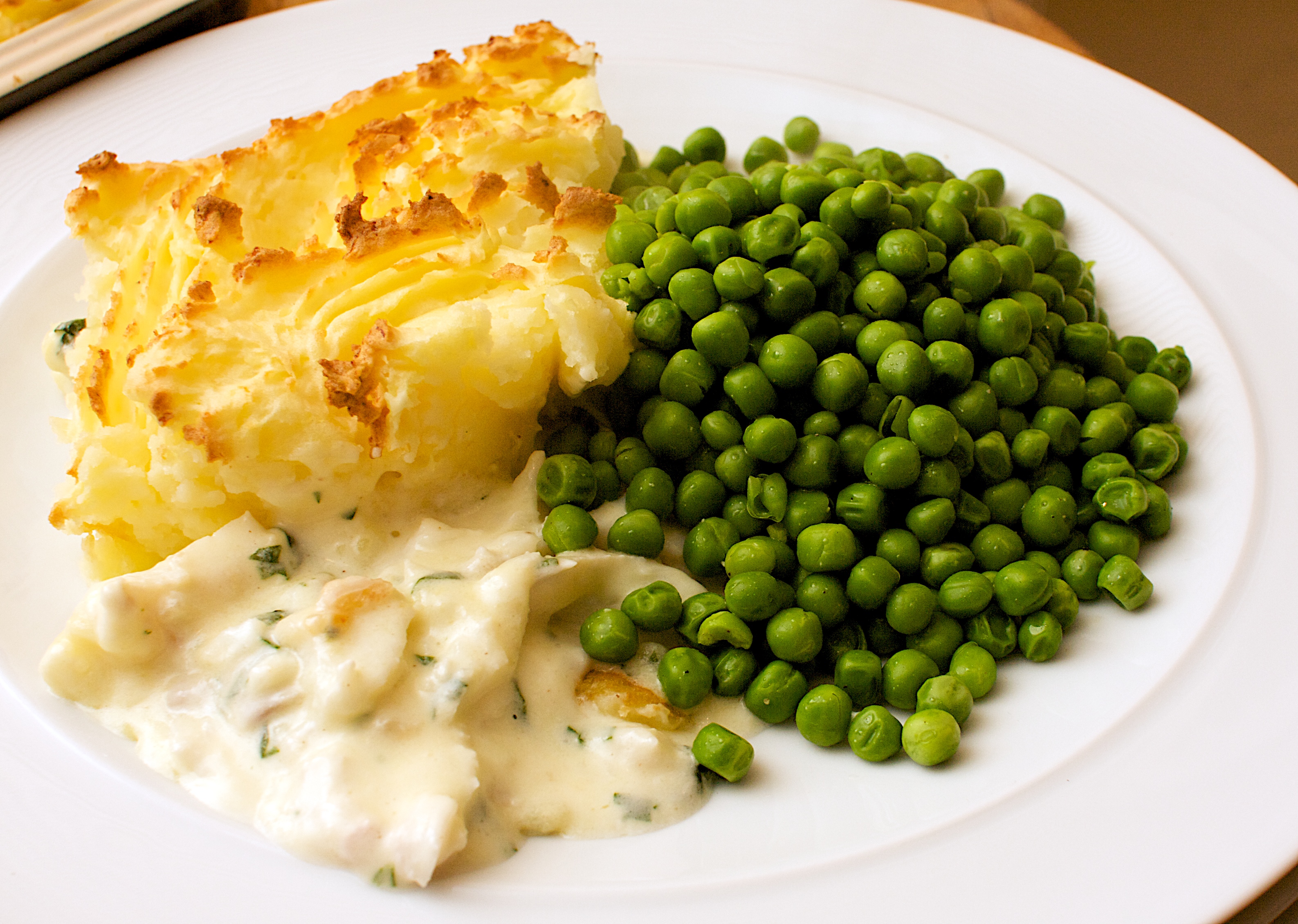
Sometimes the less complicated recipes are the best. Our fish pies usually have all sorts of stuff inside but this white fish, egg and parsley sauce combo was delicious. Perfect comfort food.
Fish Pie – to serve 4
- 1 small onion, thickly sliced
- 2 cloves
- 1 bay leaf
- 600ml milk
- 300ml double cream
- 450g unskinned cod or haddock fillet
- 225g undyed smoke cod or haddock fillet
- 4 eggs
- 100g butter
- 45g plain flour
- 5 tbsp chopped flat-leaf parsley
- freshly grated nutmeg
- 1.25kg floury potatoes, peeled
- 1 egg yolk
- salt and freshly ground white pepper
Push the cloves into a couple of the onion slices. Put the onion into a large pan with a bay leaf, 450ml of the milk, all of the cream, and fish. Bring just to a boil and them simmer gently for 8 minutes. Lift the fish out with a slotted spoon and strain the cooking liquid into a jug. When the fish is cool enough to handle, break it into big flakes, discarding the skin and any bones. Sprinkle the fish over the base of a shallow 1.75 litre ovenproof dish.
Hard-boil the eggs for 8 minutes, then drain and leave to cool in cold water (so you don’t get ugly black rings). Peel and cut into chunky slices and arrange then on top of the fish.
Melt 50g of the butter in a pan, add the flour and cook for 1 minute. Take the pan off the heat and gradually stir in the reserved liquid. Return it to the heat and bring to the boil slowly, stirring all the time. Leave it to simmer gently for 10 minutes to thicken and cook out the flour. Remove from the heat again, stir in the parsley and season with nutmeg, salt and white pepper. Pour the sauce over the fish and leave to cool. Chill in the fridge for 1 hour.
Boil the potatoes until tender. Drain, mash and add the rest of the butter and the egg yolk. Season with salt and white pepper and beat in enough of the milk to form a soft mash that you can spread.
Pre-heat the oven to 200ºC/400ºF/Gas 6. Spoon the potato over the filling and mark the surface with a fork. Bake for 35-40 minutes, until piping hot and golden brown.
Wine Suggestion: keep it simple and try a dry and minerally Muscadet. There are some great examples of Muscadet around at the moment and for not much money so it’s worth a try with any other seafood too.
(Original recipe from Rick Stein’s Seafood, BBC Books, 2001.)

Posted in Fish, Food | Tagged Cooking, Fish, Food, Pie, Recipe | Leave a Comment »
13 January 2012 by jonoandjules

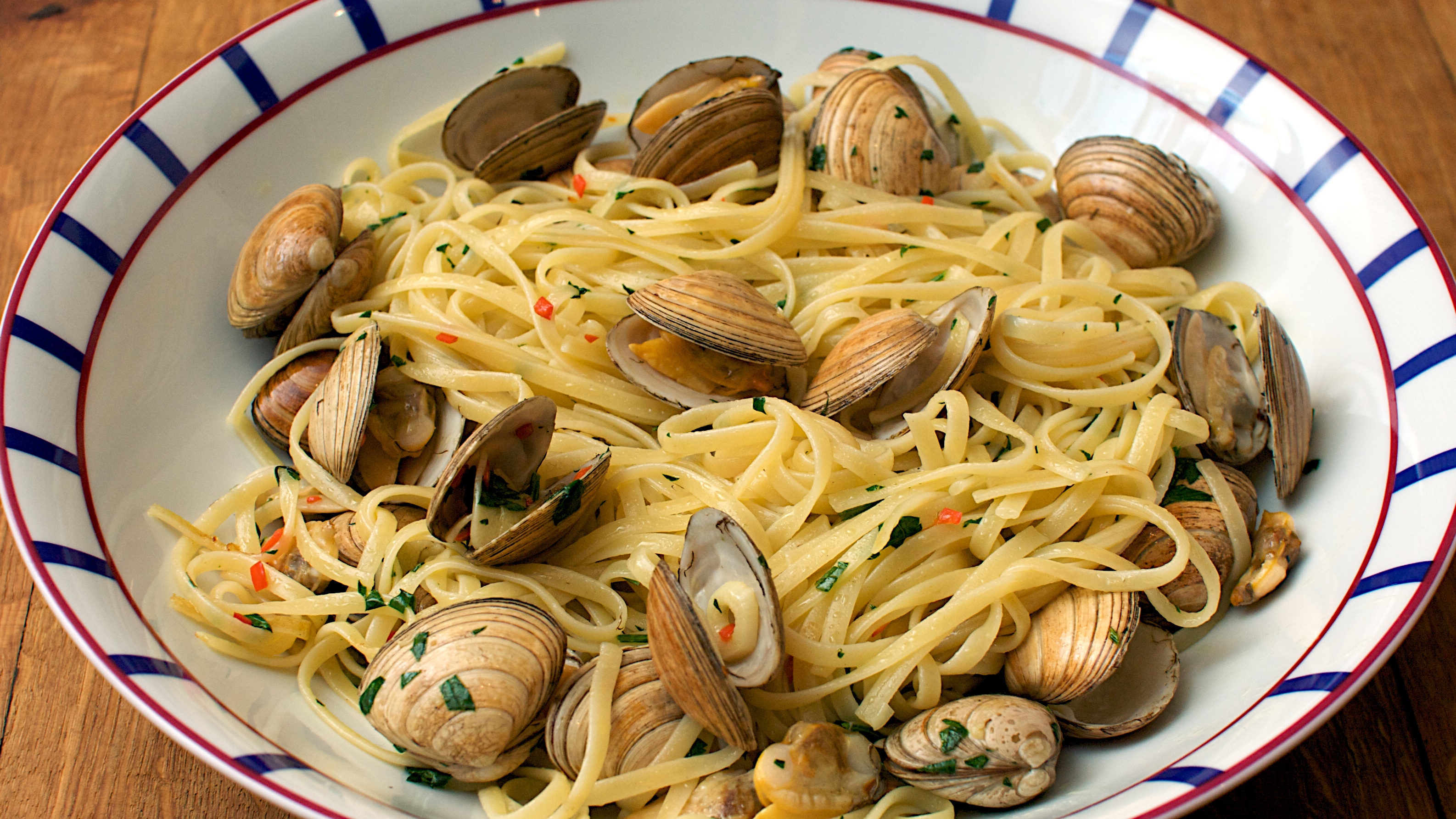
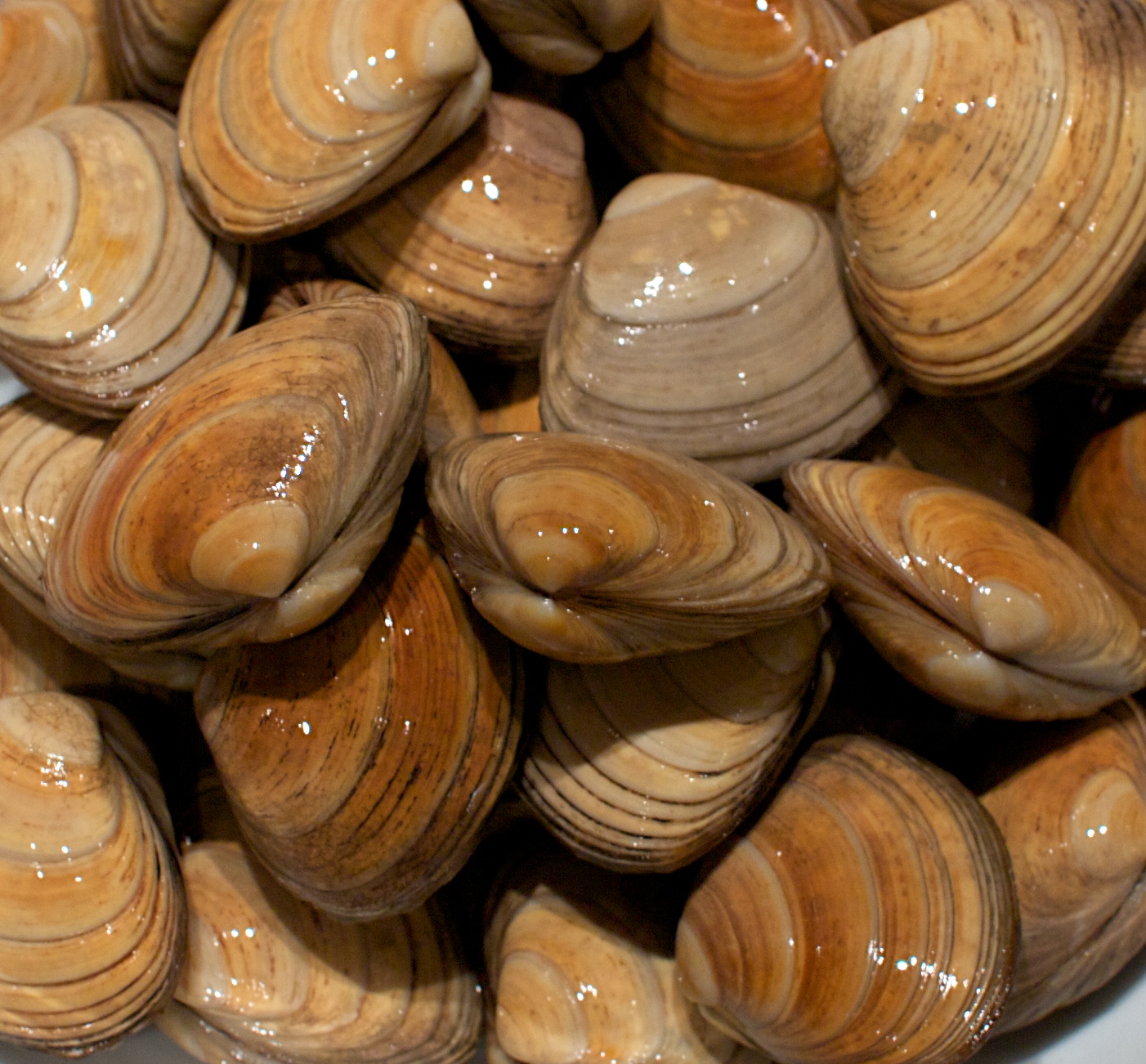
It’s shellfish season so grab some clams and make some vongole! Obey the chilli quantities – we didn’t and burnt the lips off ourselves!
Linguine alle vongole (clams with linguine, garlic, parsley and white wine) – to serve 4
- 350g dried linguine
- 50ml extra virgin olive oil
- 4 garlic cloves, thinly sliced
- 1/2 a medium-hot red Dutch chilli, seeded and finely chopped
- 3 tbsp chopped flat-leaf parsley
- 900g small clams, washed
- 2 tbsp dry white wine
Cook the linguine in a large pan of well-salted boiling water for just 5 minutes.
Meanwhile, heat the olive oil, garlic and chilli in a small pan until the garlic starts to sizzle. Reduce the heat and cook gently for a couple of minutes to soften the garlic. Add the parsley and take off the heat.
Drain the pasta. Put the empty pan back onto a high heat and add the clams, the white wine and the par-cooked linguine. Cover and cook over a high heat, shaking occasionally, for about 3 minutes or until the clams have opened.
Take the lid off the pan and add the olive oil mixture. Simmer for another couple of minutes, if necessary, until the linguine is tender.
Wine Suggestion: Because it is Italian, we’ll stick to form and suggest either a herbally Inzolia from Sicily, or a more nutty Verdicchio. You need something light and fresh with a little minerality. Muscadet would also work a treat.
(Original recipe from Rick Stein’s Seafood, BBC Books, 2001.)

Posted in Food, Shellfish | Tagged Clams, Cooking, Food, Italian, Pasta, Recipe | 10 Comments »
10 January 2012 by jonoandjules
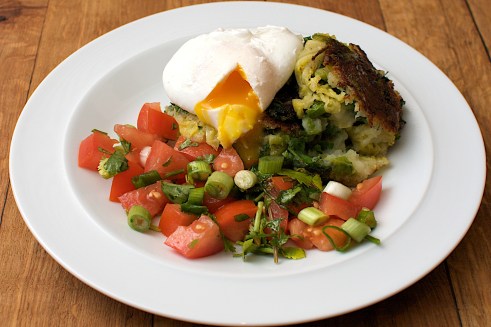
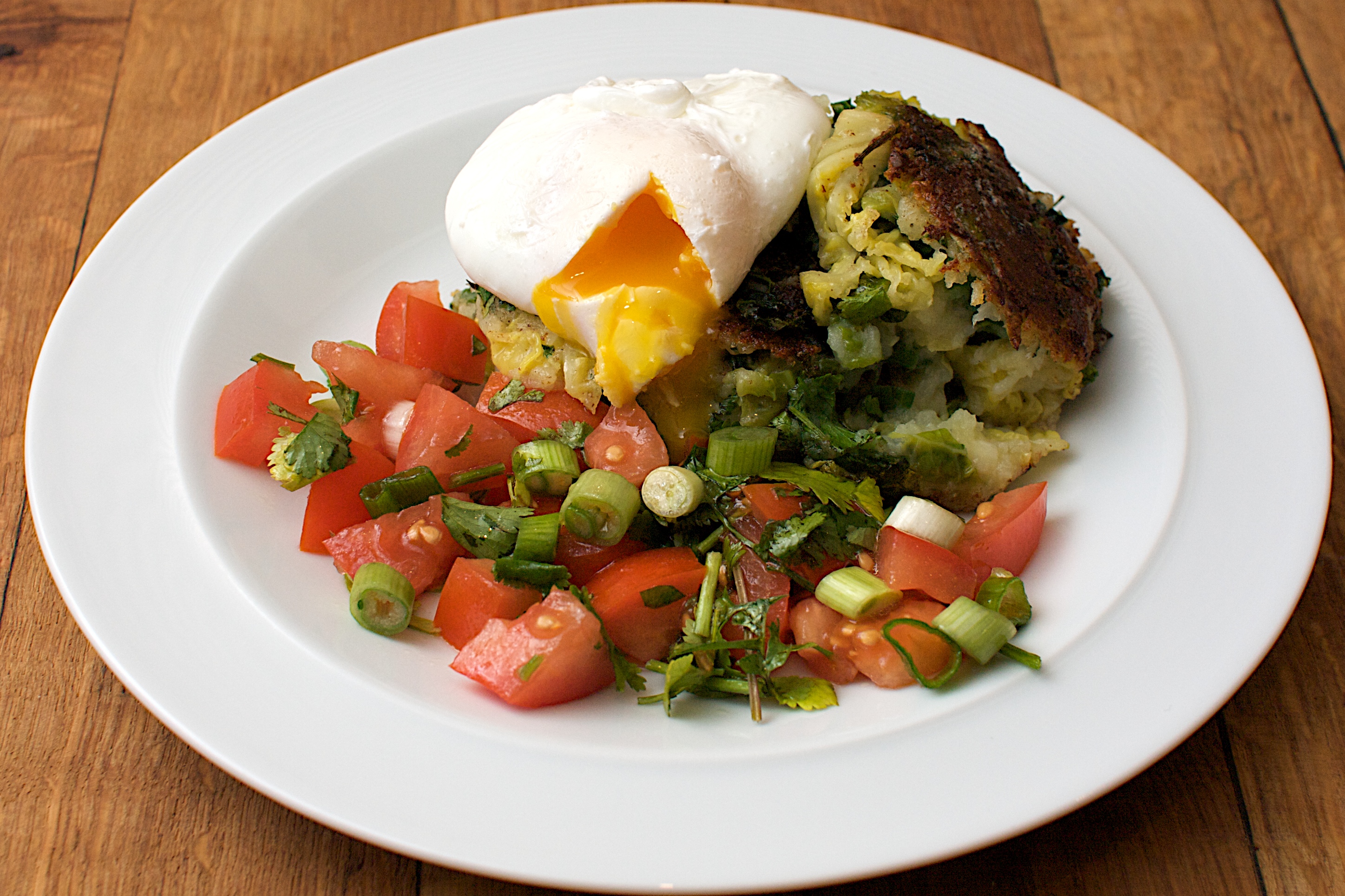
This is a doddle of a weeknight meal and handily uses up the sort of leftovers and bits and pieces we often have in the fridge i.e. leftover mash, half a cabbage, scallions, coriander…
Bubble & Squeak Cakes with Tomato Salsa – to serve 2
- 1 bunch of scallions, sliced
- butter
- 200g potatoes, peeled, cooked and roughly mashed
- 100g of shredded and cooked cabbage, greens or brussels sprouts
- small bunch of coriander, chopped
- 2 tomatoes, diced
- olive oil
- 1 tbsp red wine vinegar
- 2 poached eggs
Cook half the scallions in a bit of butter until soft, then mix with the potatoes, cabbage and half the coriander. Season really well and form into 4 small cakes.
Make the salsa by mixing together the rest of the coriander and scallions and the tomatoes, with 1tbsp olive oil and the vinegar.
Fry the cakes in a bit more butter for about 5 minutes each side, on not too high a heat, until nice and crispy. Top with a poached egg and serve with the salsa on the side.
Wine Suggestion: Go for something light and fresh e.g. a Vermentino from Italy or a Gascogny white blend.
Posted in Food, Vegetarian | Tagged Cooking, Food, Recipe, Vegetarian | Leave a Comment »
9 January 2012 by jonoandjules

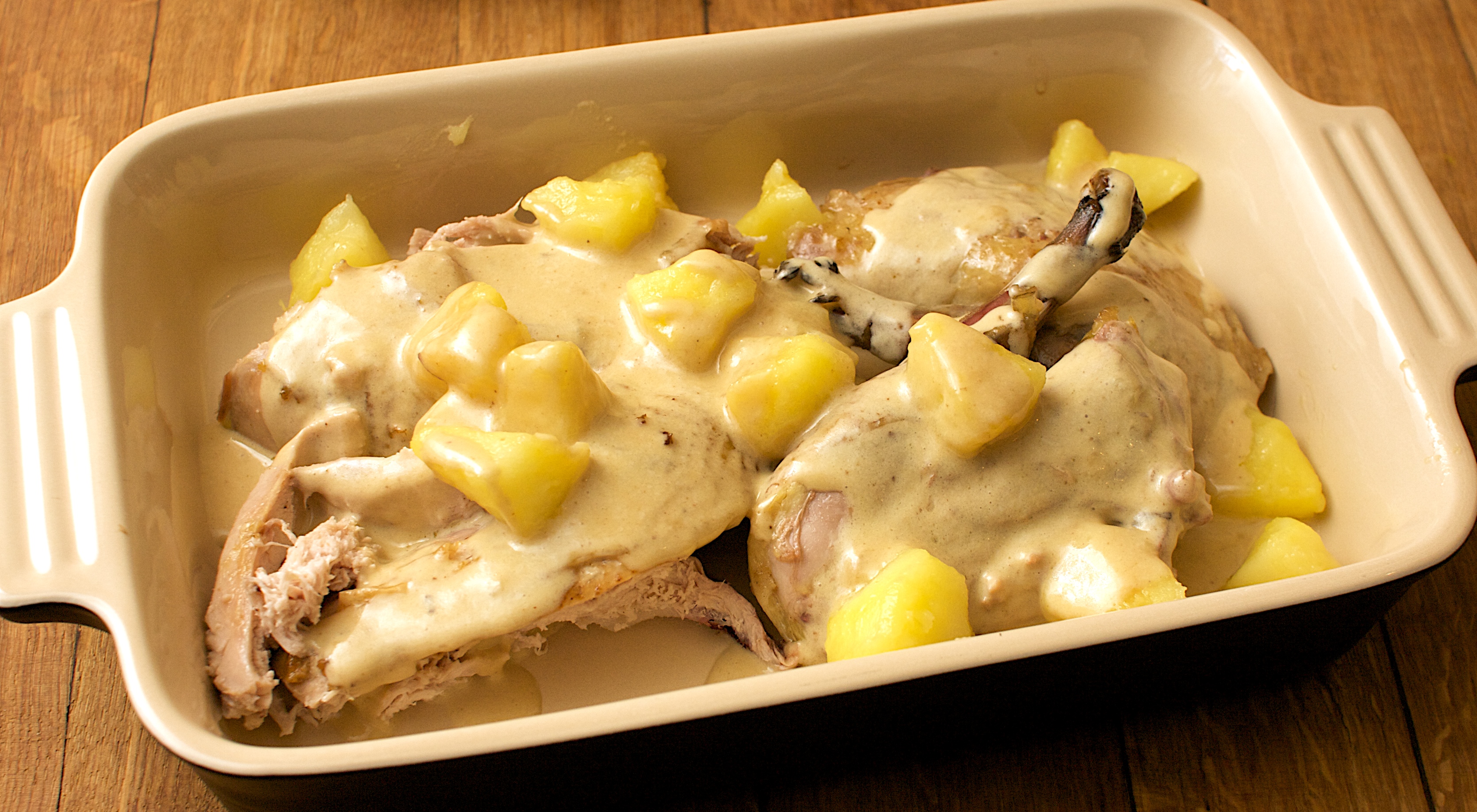
We made this as a Sunday night dinner for two and it is rich and packed full of flavour. Pheasant is appropriately in season in Ireland at the moment, as are apples, so a perfect choice.
Roast Pheasant with Apple and Calvados – to serve 2-3
- 1 plump young pheasant, about 725-900g
- 10g butter
- 4-5 tbsp Calvados
- 225ml cream or 125ml cream and 125ml chicken stock
- 25g butter
- 2 desserts apples
Preheat the oven to 180ºC/350ºF/gas 4.
Heat a casserole, just large enough to fit the pheasant. Season the cavity and spread the 10g of butter over the breast and leg. Place breast-side down in the casserole and allow to brown over a gentle heat, then turn over and season. Cover with a tight lid and cook for 40-45 minutes in the oven.
To check if it is cooked, poke a fork between the leg and the breast, the juices should be completely clear with no pink.Transfer to a serving dish and keep warm.
Carefully strain and de-grease the casserole juices. Bring to the boil, add the Calvados and carefully light with a match. Shake the pan and when the flames have gone out, add the cream (or stock and cream). Reduce by boiling until the sauce thickens, stirring now and then, taste for seasoning.
Peel, core and dice the apples and fry in the 25g of butter until golden. Carve the pheasant and arrange on a hot serving dish or on individual plates. Cover with the sauce and serve with the apple. We also had some colcannon on the side.
Wine Suggestion: You need a powerful and earthy red, balanced with good acidity for this dish. We drank a 2005 Cornu Corton-Bressandes Grand Cru 2005 on the inspiration of one of Jono’s customers who was looking for an opinion; we heartily endorse it as it had the depth and personality to stand up to the rich and powerful flavours with it’s own power, depth and freshness. Superb. Burgundy and game work really well.
(Original recipe from Darina Allen’s Ballymaloe Cookery Course, Kyle Cathie Limited, 2001.)
Posted in Food | Tagged Apple, Cooking, Food, Game, Pheasant, Recipe | Leave a Comment »
7 January 2012 by jonoandjules
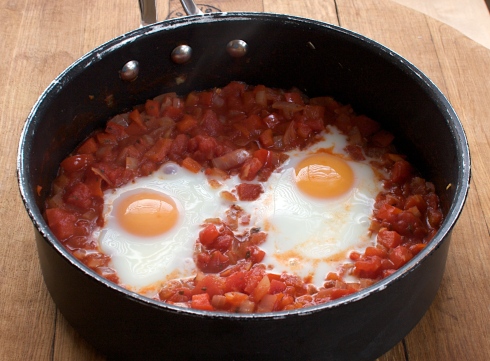
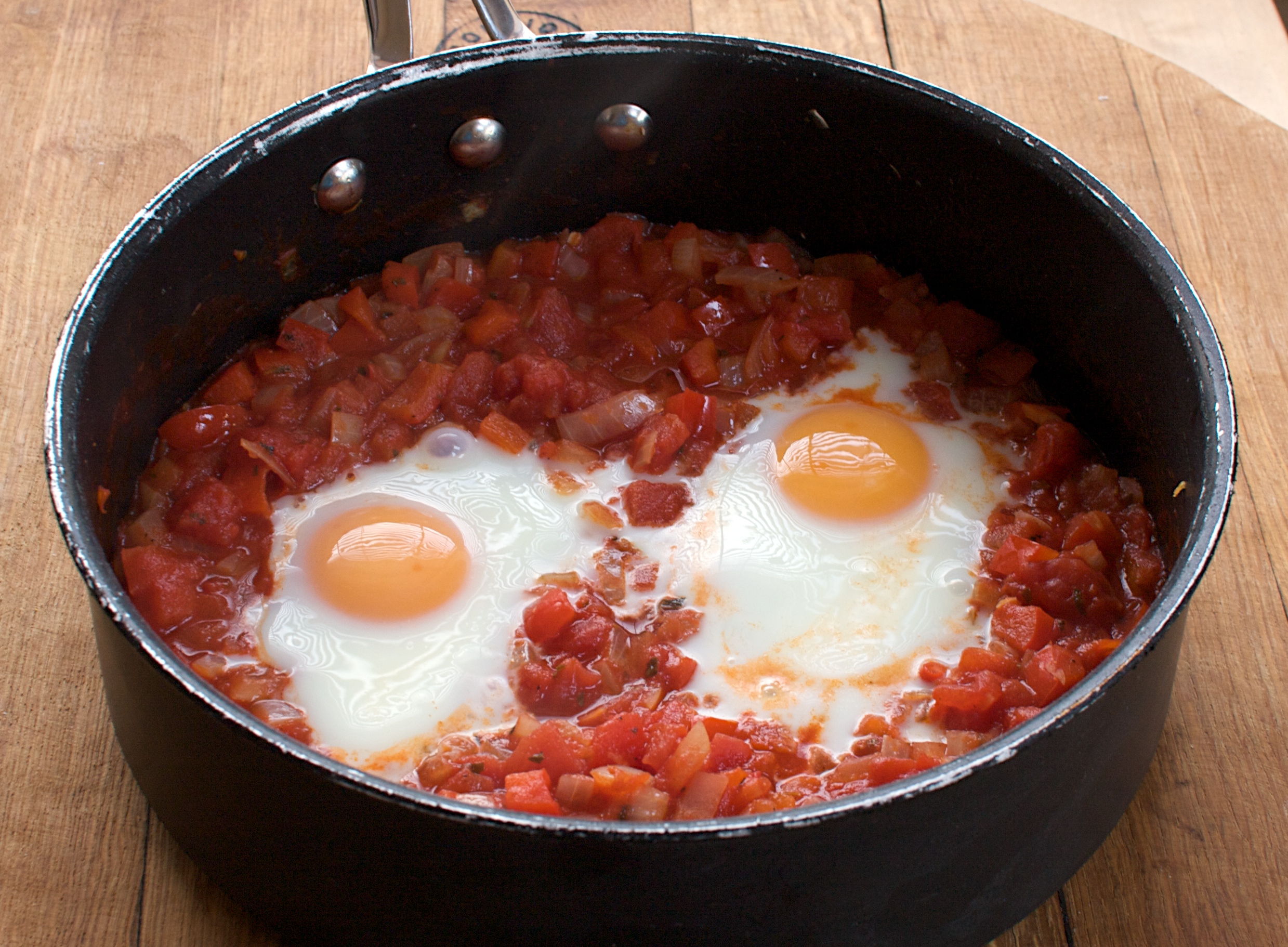
Eggs and hot salsa – we could eat this any time of day!
Huevos rancheros – to serve 2
- 1 onion, finely chopped
- 1 red pepper, finely chopped
- 1 red chilli, finely chopped
- 1 clove of garlic, crushed
- 1/2 tsp dried or fresh oregano
- 2 eggs
- tortilla or pitta bread to serve
Heat 1 tbsp of olive oil in a frying pan with a lid and gently fry the onions, peppers, chilli, garlic and oregano for about 5 minutes or until softened. Add the tomatoes and continue cooking for another 5 minutes (if it starts to look dry add a splash of water). Season well and make 2 hollows in the mixture, break in the eggs, cover and cook on a low heat for about 5 minutes or until the eggs are set. Traditionally served with tortillas but we had warm pitta bread. (Too early for a wine suggestion!)
(Original recipe from BBC Good Food)
Posted in Brunch, Food, Healthy, Vegetarian | Tagged Breakfast, Brunch, Cooking, Eggs, Food, Mexican, Recipe | Leave a Comment »
6 January 2012 by jonoandjules
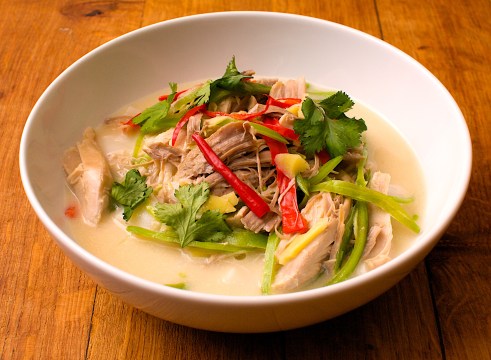
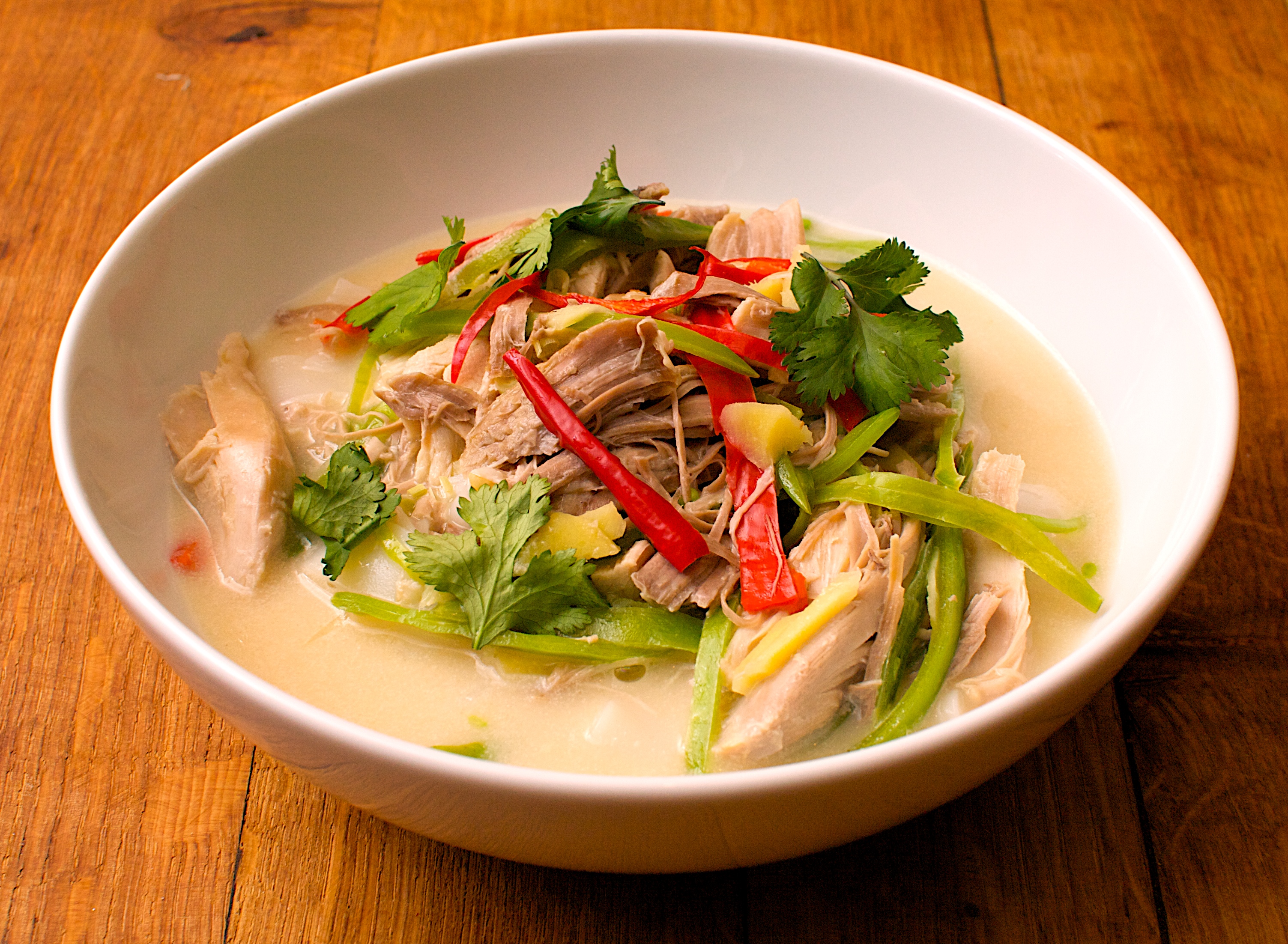
So we’ve started on our stock of turkey leftovers from the freezer. Last year we made a clear Vietnamese broth so this year we thought we’d try a creamy coconut tom ka gai to ring the changes. This is delicious!
Turkey tom ka gai – to serve 2
- 50g flat rice noodles
- 1 x 400ml tin half-fat coconut milk
- 300ml chicken stock
- a small chunk of ginger, shredded
- 1 stalk lemongrass, discard the woody outer leaves and chop
- 1 red chilli, shredded
- 200g cooked turkey
- 50g mangetout, shredded
- 1 lime, juiced
- 1 tsp brown sugar
- 1 tbsp fish sauce
- a handful of coriander leaves
Cook the noodles according to the pack, then drain and rinse with cold water. Bring the coconut milk and stock to a simmer, add the ginger, lemongrass and half the chilli and simmer for a few minutes. Add the turkey and mangetout and simmer for another couple of minutes to heat through. Stir in the lime, sugar and fish sauce, divide the noodles between two warm bowls, ladle over the soup, then scatter the rest of the chilli and coriander over the top.
Wine Suggestion: This works superbly with a good Riesling from the Mosel which combines a sweetness, pure fruit flavours, acidity to balance and a lovely lightness to both the alcohol and body … you want to match the chilli with sweetness and complement the clear and defined flavours of the soup without overwhelming it! Our choice of the evening is the Max Richter (the maker) Wehlener Sonnenuhr (the vineyard) Riesling (the grape) Spätlese (the ripeness at harvest) from the Mosel in Germany. The German naming system may seem impenetrable and intimidating but don’t be put off, the wines are usually fantastic, as long as you spend a bit more than the big brands!
(Original recipe from BBC Good Food)
Posted in Asian, Food | Tagged Cooking, Food, Leftovers, Recipe, Soup, Thai, Turkey | Leave a Comment »
5 January 2012 by jonoandjules
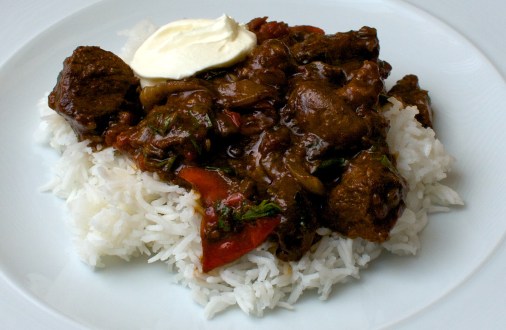
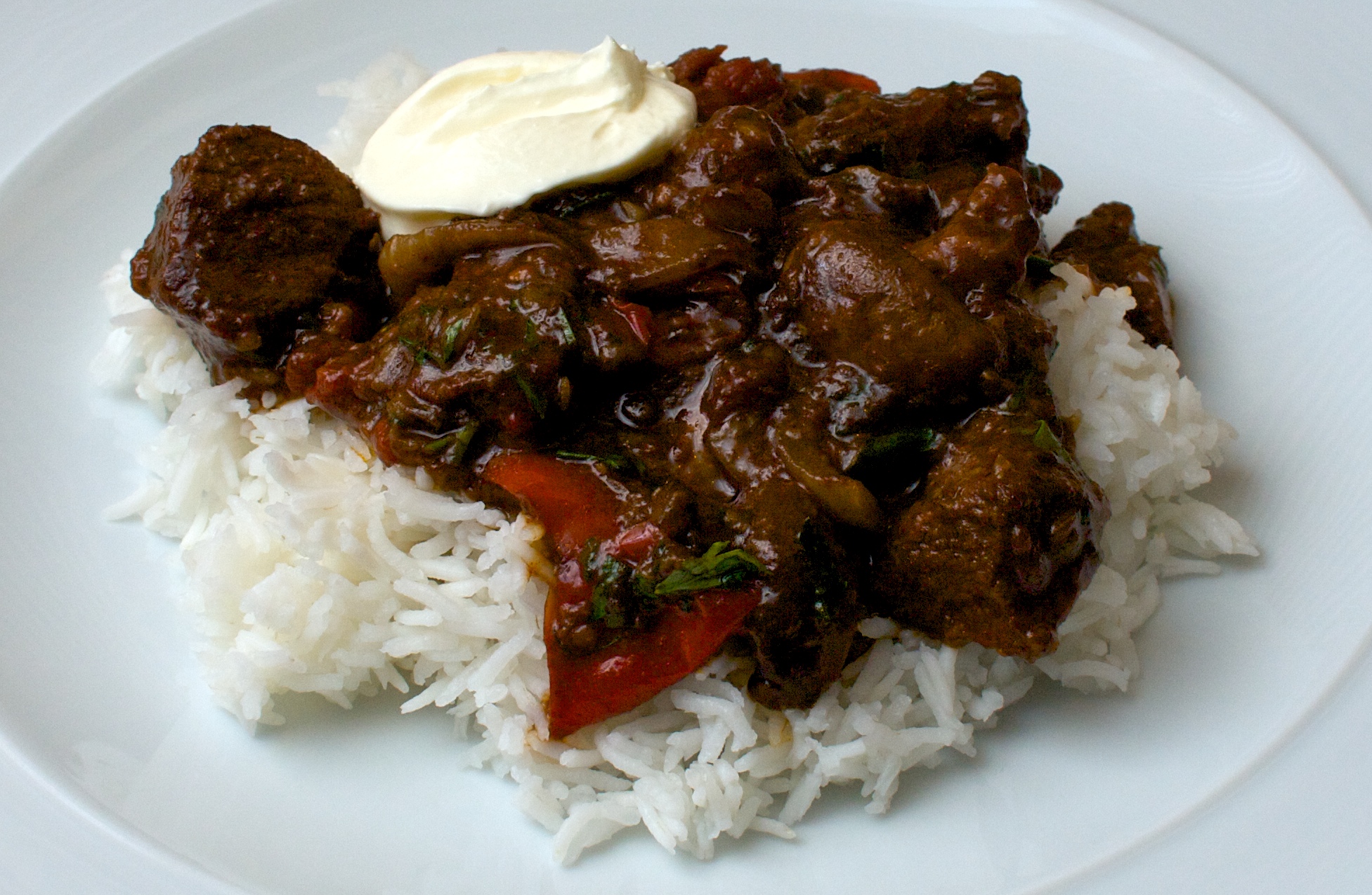
Jono went to Hungary a year and a half ago and picked some authentic Hungarian paprika. If you’re not planning a trip to Hungary you should be able to pick up some online – it makes a real difference to dishes like this. We like the hot variety though the sweet version will work well too. Whatever you do don’t use the smoked version which will be much too strong for this dish! This takes a few hours but only a few minutes work.
Beef Parikash – to serve 4
- 500g braising beef , cut into large chunks
- 1 tbsp flour, seasoned really well
- 1 large onion, halved and sliced
- 2 garlic cloves, crushed
- 250g chestnut mushrooms, halved
- 1 red pepper, sliced
- 1 tbsp paprika (see introduction)
- 2 tsp caraway seeds
- 1 x 400g tin chopped tomatoes
- 300ml beef stock
- a small bunch of parsley, chopped
- basmati rice and soured cream to serve
Heat the oven to 180C/160C fan/gas 4. Toss the beef with the flour and brown in 1 tbsp oil in a large ovenproof dish with a lid.
Scoop out the meat, then add the onions and cook until soft and browned at the edges. Add the garlic, mushrooms and pepper and cook for 5 minutes until softened.
Return the beef to the dish and add the spices, tomatoes and beef stock. Bring to a simmer, put on the lid and transfer to the oven and cook for about 2 hours. Check near the end of the cooking time – the beef should be really tender and the sauce thickened – if not cook for another half hour.
Stir in the parsley and serve with rice and soured cream.
Wine Suggestion: Something rich, red and spicy would be good here. We had a Sierra Cantabria Colección Privada, 2007 from O’Brien’s, courtesy of our friend Thonya – thanks chick 😉
(Original recipe from BBC Good Food)
Posted in Beef, Food | Tagged Beef, Cooking, Food, Hungarian, Paprikash, Recipe | Leave a Comment »
4 January 2012 by jonoandjules
If you have access to an Asia market or Indian grocer then they will sell poppadoms (they look like packets of very fine wafers) that are much superior to the already puffed ones you get in ordinary supermarkets. You can fry them in oil or just cook them in a microwave for 60 seconds.

Cucumber & Mint Raita – to serve 4
This is really light and refreshing and would also work well with a barbecue or on baked potatoes. Measure the mint so it doesn’t overpower the dish.
- 200g cucumber
- 400g thick plain yogurt
- 8g mint leaves, shredded
- 3/4 tsp roasted cumin powder (You can make this by roasting cumin seeds in a small dry pan for about 40 seconds, stirring constantly, until they darken, then grind to a fine powder)
Grate the cucumber on coarse side of a grater. Squeeze out the excess water and put it in a large bowl.
Add the rest of the ingredients and season to taste with salt and black pepper. Stir well and serve cold.
(Original recipe from Anjum Anand’s I ♥ Curry, Quadrille, 2010.)

Bengali-style Tomato Chutney – makes about 350ml
This is great with poppadoms or served alongside a curry. It keeps for several months in the fridge and would also be nice with burgers, chicken, lamb or even in your sandwiches!
- 2tbsp oil
- 1/2 tsp whole cumin seeds
- 1/2 tsp whole brown or yellow mustard seeds
- 1/4 tsp whole fennel seeds
- 475ml tomato passata
- 1 1/2 tsp peeled and very finely grated ginger
- 175ml cider vinegar
- 200g caster sugar
- 3/4 tsp red pepper flakes
- 1 1/4 tsp salt
- 2 tbsp sultanas
Pour the oil into a heavy-based, medium stainless-steel pan and put over a medium-high heat. When hot add the cumin and mustard seeds. As soon as they start to pop add the fennel seeds. A few seconds later, put in the tomato passata, ginger, vinegar, sugar, pepper flakes and salt. Stir and bring to a simmer, then lower the heat and simmer, uncovered, for about 50 minutes, stir now and again. Add the sultanas and cook for another 10 minute by which time it should be thick and look glazed.
Spoon into a steralised jar, leave to cool, screw on the lid and keep in the fridge.
(Original recipe from Madhur Jaffrey’s Curry Easy, Ebury Press, 2010.)
Posted in Asian, Food, Indian, Vegetarian | Tagged Cooking, Food, Indian, Recipe, Starter, Vegetarian | Leave a Comment »
3 January 2012 by jonoandjules
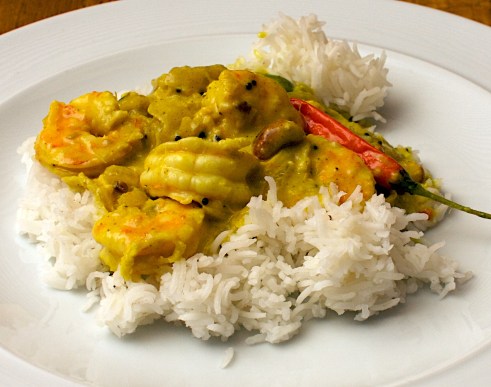
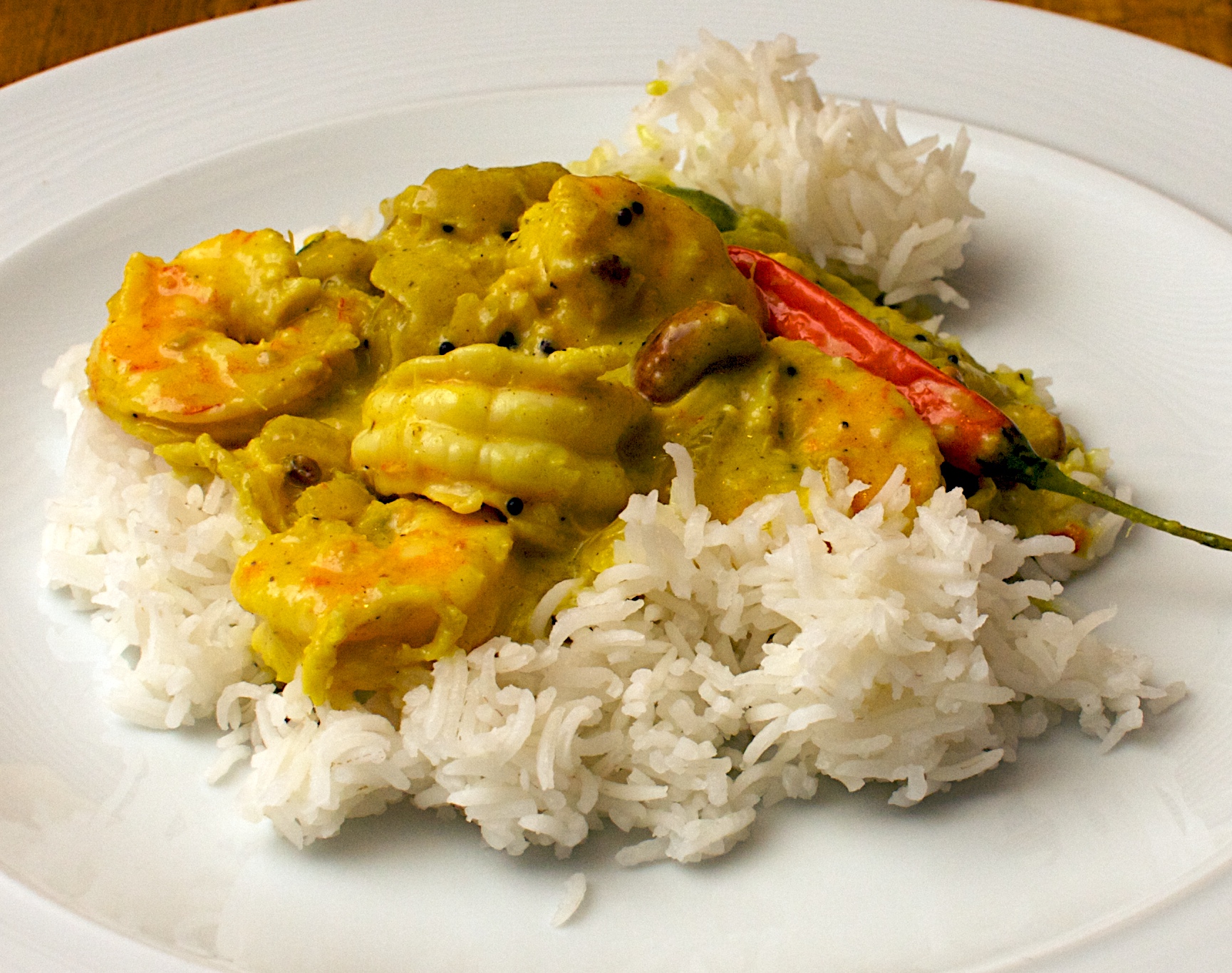
A really nice, mild prawn curry (if you don’t chew the chillies) and one we’ll do again as it was so tasty. Serve with some plain basmati rice.
Prawn and Cashew Nut Curry – to serve 4
- 30g peeled fresh root ginger, roughly chopped
- 6 fat garlic cloves, halved
- 5 tbsp vegetable oil
- 60g raw cashew nuts
- scant 1/2 tsp fenugreek seeds
- scant 1 tsp mustard seeds
- 1 onion, sliced
- 1 rounded tbsp ground coriander
- 3/4 tsp turmeric
- generous 3/4-1 tsp ground black pepper
- 1 tsp ground cumin
- 4-6 red or green chillies, or to taste, leave them whole or slit them for more heat
- 400ml creamy coconut milk
- 2 tbsp white wine vinegar
- 350g large raw prawns shelled, deveined and rinsed
Blend the ginger and garlic to a fine paste, adding a bit of water to help (we used a stick blender). Heat 1 tsp of the oil in a non-stick saucepan; add the nuts and stir-fry until golden. Remove with a slotted spoon, toss in little salt and set aside.
Add the remaining oil to the pan and when hot add the fenugreek and mustard seeds. Let them pop for a minute and add the onion when they start to calm down, cook gently until soft. Add the ginger and garlic paste and cook until any excess moisture is gone, then reduce the heat to low and stir for a couple of minutes until the garlic smells cooked.
Add the spices and chillies, some salt and a splash of water. When the water has dried up add 250ml of the thinner part of the coconut milk (skim off the creamier stuff at the top of the can and keep for later), 100ml water and the vinegar.
Bring to a boil and simmer for 10 minutes. Taste and adjust seasoning – if the garlic still tastes raw then leave for another 5 minutes before checking again.
Add the prawns and cook until opaque; about 3 minutes should do it. Stir in the remaining, thicker coconut milk and the nuts.
Wine Suggestion: Indian food is notoriously difficult to pair wine with, a Pinot Blanc or Pinot Gris should give nice pure fruit with not too high acidity and it should match the aromatic flavours in the curry – maybe avoid the whole chillies!
(Original recipe from Anjum Anand’s I ♥ Curry, Quadrille, 2010.)
Posted in Food, Indian, Shellfish | Tagged Cooking, Curry, Food, prawns, Recipe | Leave a Comment »
31 December 2011 by jonoandjules
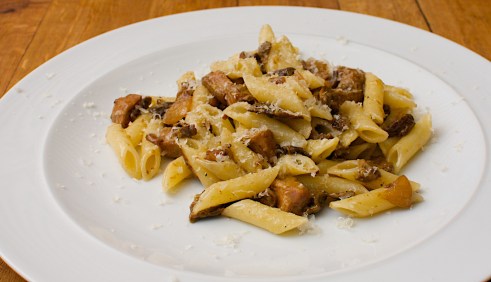
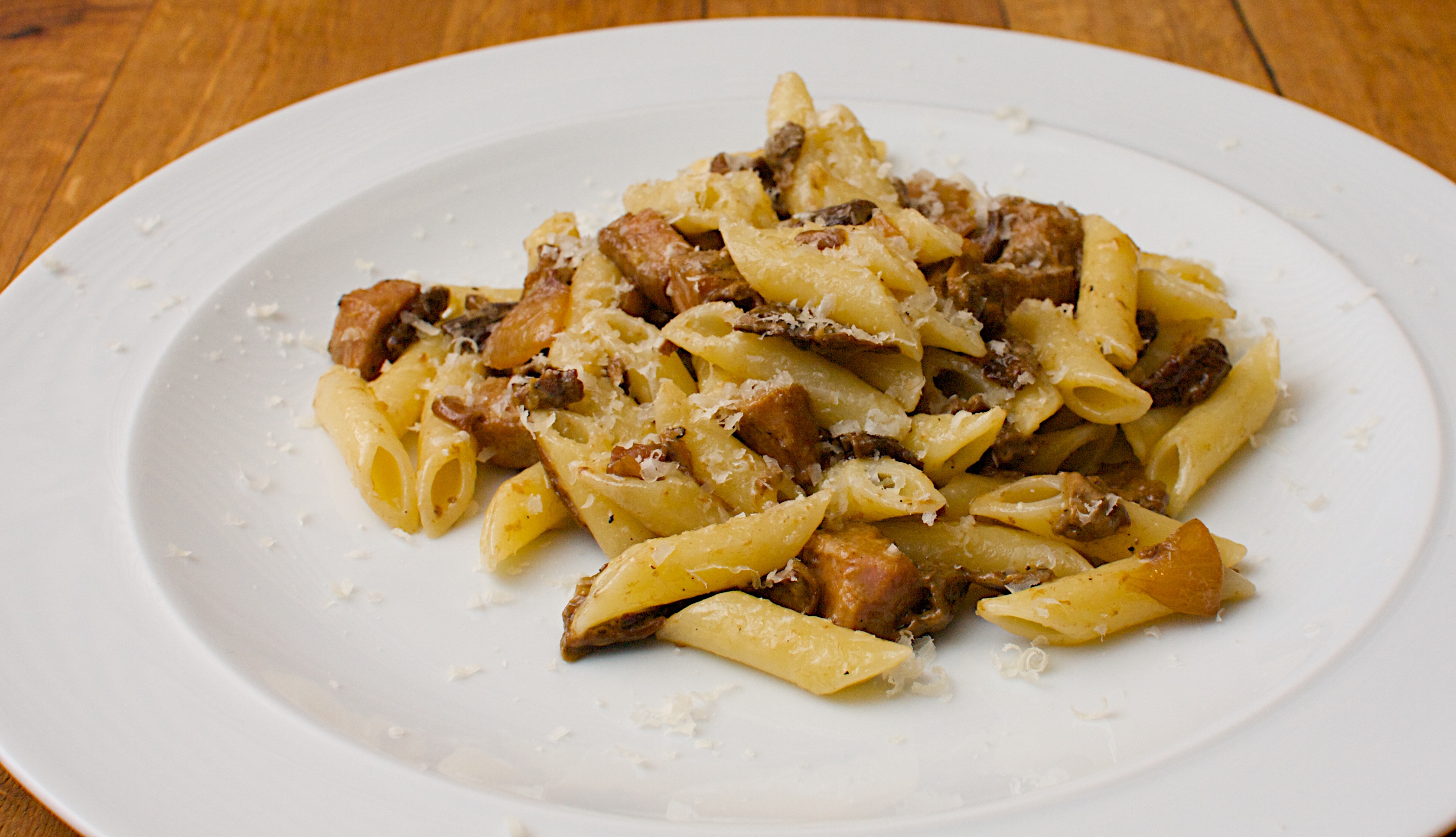
Another great pasta dish from The Silver Spoon: Pasta, Italy’s pasta bible. This has lovely earthy flavours.
Penne Al Prosciutto E Funghi – to serve 4
- 50g dried mushrooms
- 25g butter
- 2 tbsp olive oil
- 1 onion
- 50g cooked ham, diced
- 100ml dry white wine
- 350g penne
- 4-5 tbsp vegetable stock
- 3 tbsp double cream
- 40g Parmesan cheese, grated
Put the mushrooms in a bowl and cover with lukewarm water. Leave to soak for about 20 minutes then drain, squeeze out the excess liquid and slice. Melt the butter with the oil in a saucepan. Add the onion and cook over a low heat, stirring now and then, for 8-10 minutes or until lightly browned. Add the mushrooms and ham and cook for a few minutes, then pour in the wine and cook until the alcohol has evaporated. Season and leave to simmer for 20 minutes, adding stock when necessary to prevent it from sticking. Stir in the cream and heat for another few minutes. Meanwhile, cook the penne according to the pack instructions. Combine the sauce and pasta and serve with the Parmesan sprinkled over the top.
Wine Suggestion: A nice rich Chardonnay is a good match for the cream and suitably savoury to complement the ham and mushrooms.
Posted in Food, Italian | Tagged Cooking, Food, Italian, Pasta, Recipe | Leave a Comment »
29 December 2011 by jonoandjules

Using our friend Barbara’s recipe for pizza dough (we are trying to perfect and find our favourite pizza dough recipe). It worked really well especially if you can get the bases really thin – if not they’ll be too doughy. We are still searching, though for that crispness but a touch more freshness and lightness to the dough.
For the Pizza dough (makes 4 x 27cm/11 inch pizzas):
- 600g plain white flour
- 7g sachet of fast-acting, freeze dried yeast
- pinch salt
- 300ml warm water
- 2 tbsp olive oil
Make a mountain of the flour on a clean working surface and make a good well in the middle.
Dissolve the yeast in the water and add the salt and olive oil. Add drop by drop into the centre of the flour while mixing with your hands. Knead until the dough is a smooth texture and roll into a ball. The dough should be really silky at this stage, but I would suggest rubbing a little olive oil over the ball before resting as this will help prevent it drying out.
Place dough into a large bowl, cover with a linen tea towel and rest for 1 hour in a warm spot (no less than 20C/68F). After this hour the dough should have tripled in size.
Cut dough into four and roll into a ball. On a lightly floured working surface gently press the dough into shape using the heel of your hand and thumbs. Try starting in the middle and pushing outwards. It may help to turn the dough over a few times but this process should be easy enough – we got it into a lovely thin base.
Top with your favourite ingredients – this time we used our trusty tomato sauce, some sausage meat broken up and fried with fennel seeds and some mozzarella which worked a treat.
Wine suggestion: A red wine with Sangiovese in it, or a Barbera. Straightforward and tasty.
Posted in Food, Italian | Tagged Cooking, Food, Italian, Pizza, Recipe | Leave a Comment »
28 December 2011 by jonoandjules
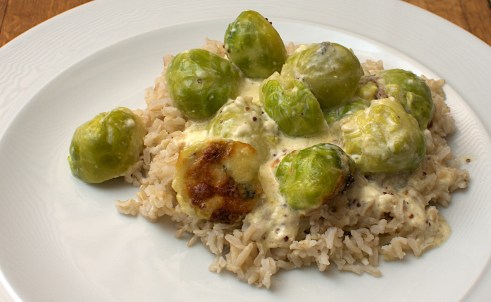
As this was our most viewed post over Christmas we thought we’d revisit this recipe. We really didn’t need much of an excuse as we’d enjoyed it so much the first time we’d cooked it, but it over-delivered. Yum! We’re also adding a great method for cooking brown rice as the two pair very well.
Plain brown rice – to serve 3-4
- a 250ml measure of brown rice
- 1/2 tsp salt
Put the rice, 475ml water and salt in a small, heavy-based pan with a tight-fitting lid (if the lid’s not tight just put a layer of tinfoil between the pot and the lid to keep the steam in) and bring to the boil. Cover tightly, turn the heat down to very, very low and cook for 45 minutes. This is easy to do if you have gas but harder with electric so we recommend using two rings so you can get the heat to low quickly.
Leave the pan off the heat, still covered with the lid, for 10 minutes before you serve it.
(Method by Madhur Jaffrey, Curry Easy, Ebury Press, 2010).
Wine suggestion: There’s a lot going on in this dish: cream, salty cheese, earthy Brussel Sprouts … you need some acidity to counter the richness and cream; a touch of sweetness, or round fruitiness to balance the salty Stilton; and an earthiness to compliment the lot. We drank a New Zealand Chardonnay which went well, but we think a Chardonnay from the Jura, a Sylvaner from Alsace or a very well made Aligote from Burgundy would work even better.

Posted in Food, Vegetarian | Tagged Brown Rice, Cooking, Food, Recipe, Vegetarian | Leave a Comment »
27 December 2011 by jonoandjules
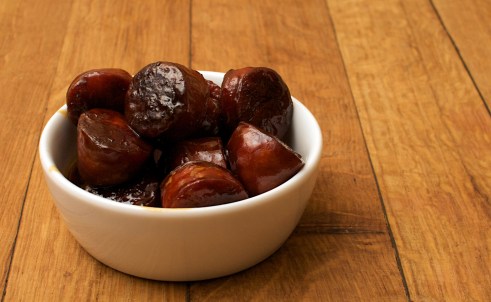
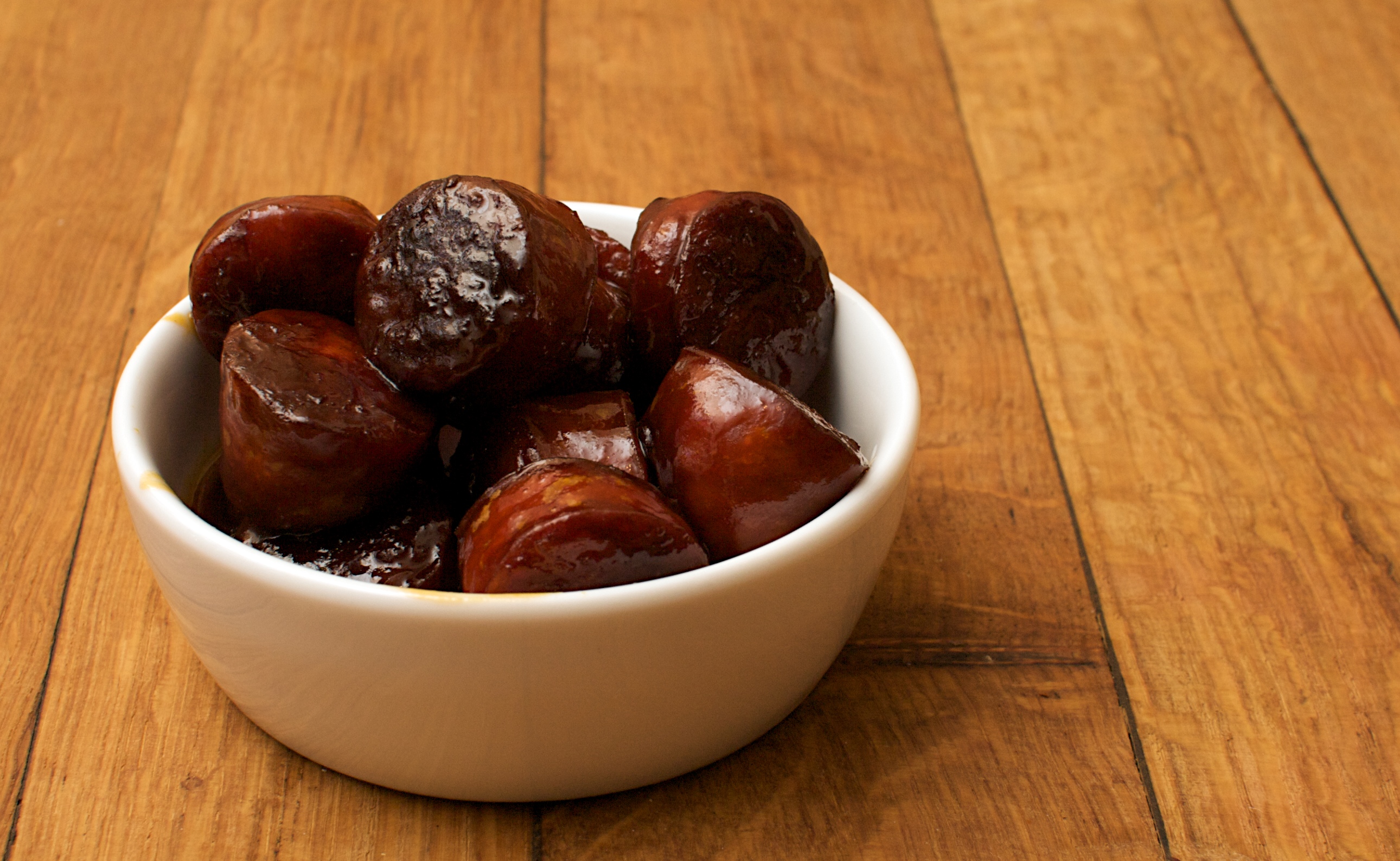
This dish delivers bags of flavour and yet is simple to make – great for a crowd, or on an evening when you are craving something tasty and yet quick and easy. This idea comes from the Tapas Feast in Jamie’s 30-minute meals.
Glazed Chorizo – to serve 6 as a tapas
- 250g good-quality whole chorizo
- 2 cloves of garlic
- 4 tbsp red wine vinegar
- 1 tbsp runny honey
Slice the chorizo into 2cm chunks. Fry in a small frying pan with a little olive oil and toss now and then until the chunks are crispy and golden. Lightly bash the 2 unpeeled garlic cloves and add to the pan. After a minute drain away most of the fat so you are left with about 1 tbsp. Add the vinegar and honey and leave it to reduce to a sticky glaze. Keep shaking the pan to make sure the sauce doesn’t stick.
Serve with chunks of bread to mop up the sauce and a glass of Fino Sherry (we like Lustau).
(Original recipe from Jamie’s 30-Minute Meals by Jamie Oliver, Penguin, 2010.)
Posted in Food, Party Food, Spanish | Tagged Chorizo, Cooking, Food, Recipe, Tapas | Leave a Comment »
21 December 2011 by jonoandjules
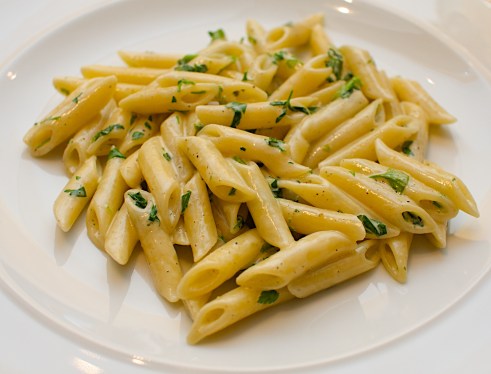
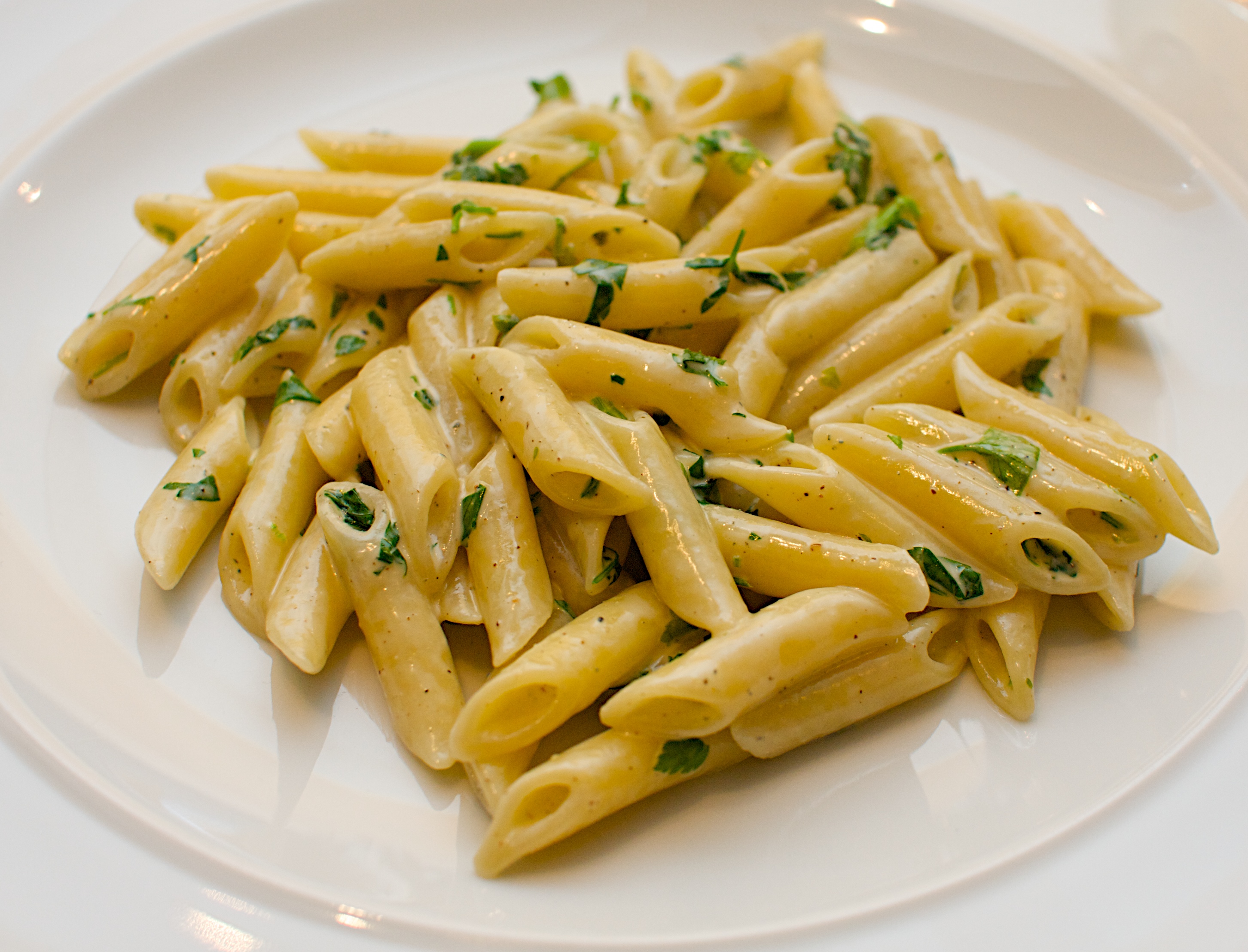
When stuck with too much leftover blue cheese (Stilton in this case) we whipped up a quick mid-week pasta dish.
Pasta with Blue Cheese Cream – serves 4
- 350g short pasta (we used penne)
- approx. 175g Stilton or other blue cheese, cut up small
- 150ml double cream
- pinch of sugar
- chopped parsley or sage
Cook the pasta according to the instructions on the pack. Drain the cooked pasta and put it back in the pot it was cooked in. Add the cheese, cream, sugar, lots of black pepper and parsley. Stir gently over a medium heat until the pasta is coated with the sauce. Taste for seasoning and add salt if needed.
Wine Suggestion: This is quite a rich dish and so needs an equal pairing like Pinot Gris, the slight sweetness of which will also work with the salty blue cheese (similar to the effect of adding a pinch of sugar to the sauce).
Posted in Food, Vegetarian | Tagged Blue cheese, Cooking, Food, Pasta, Recipe | 2 Comments »
20 December 2011 by jonoandjules
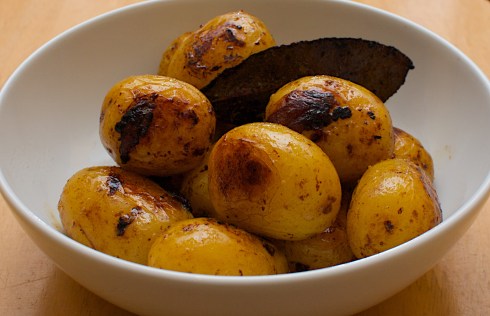
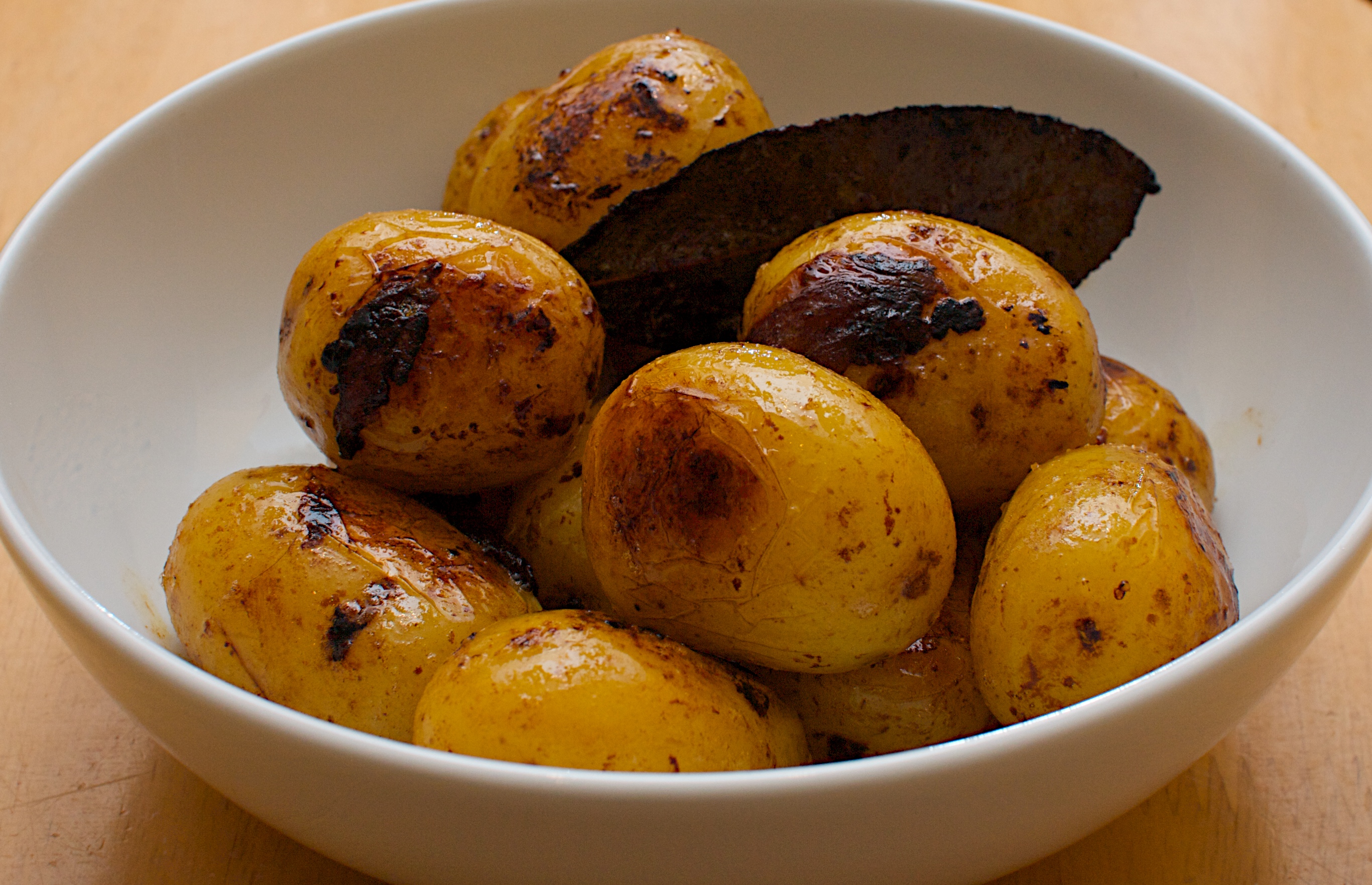
Jules made a fab dish that we’ll definitely do again! She says she was all inspired by Masterchef where they never have time to cook them through properly. Cook these when you’re not in a hurry.
Baby Potato Fondants – to serve 8
- 1kg baby potatoes
- 1 whole garlic clove, smashed once
- 2 bay leaves
- 200ml dry white wine
- 50g butter
Put the potatoes, garlic and bay leaves in a large sauté pan with a lid. Add the wine and butter and put the lid on. Simmer for about an hour or until the wine has evaporated and the potatoes are coated in buttery juices.
Turn the heat down to low and sizzle the potatoes in the butter, shaking and turning them until completely cook through and crispy and brown on the outside (like the pic). Serve with a bit of sea salt over the top and whatever else you’ve cooked.
(Original recipe from BBC Good Food Magazine, December 2011.)
Posted in Food, Side dish, Vegetarian | Tagged Cooking, Food, Potato Fondant, Recipe, side dish | Leave a Comment »
19 December 2011 by jonoandjules

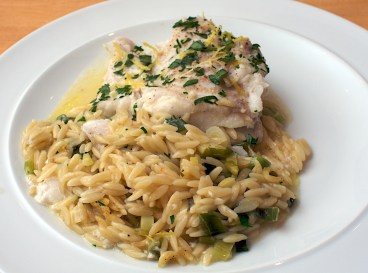
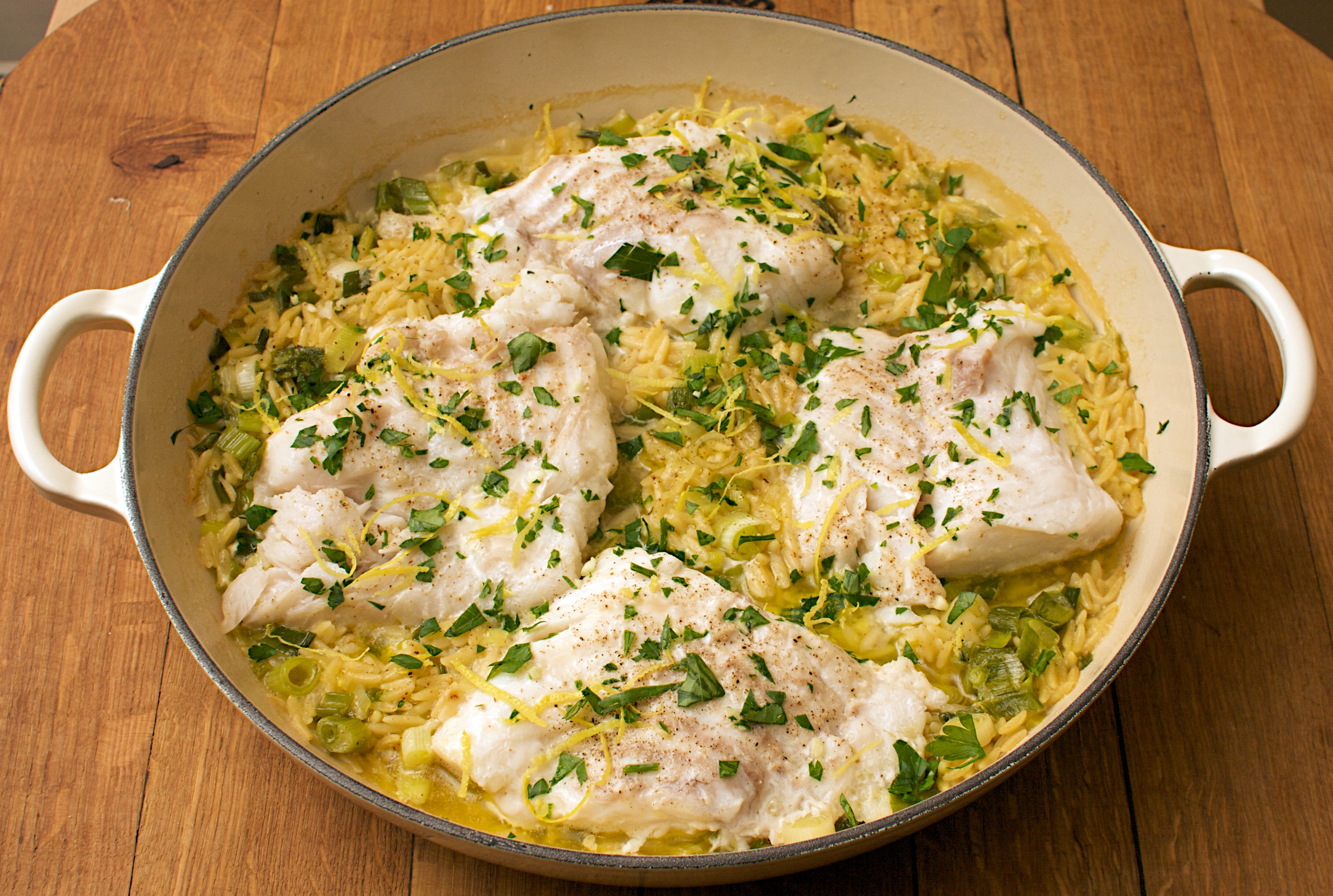
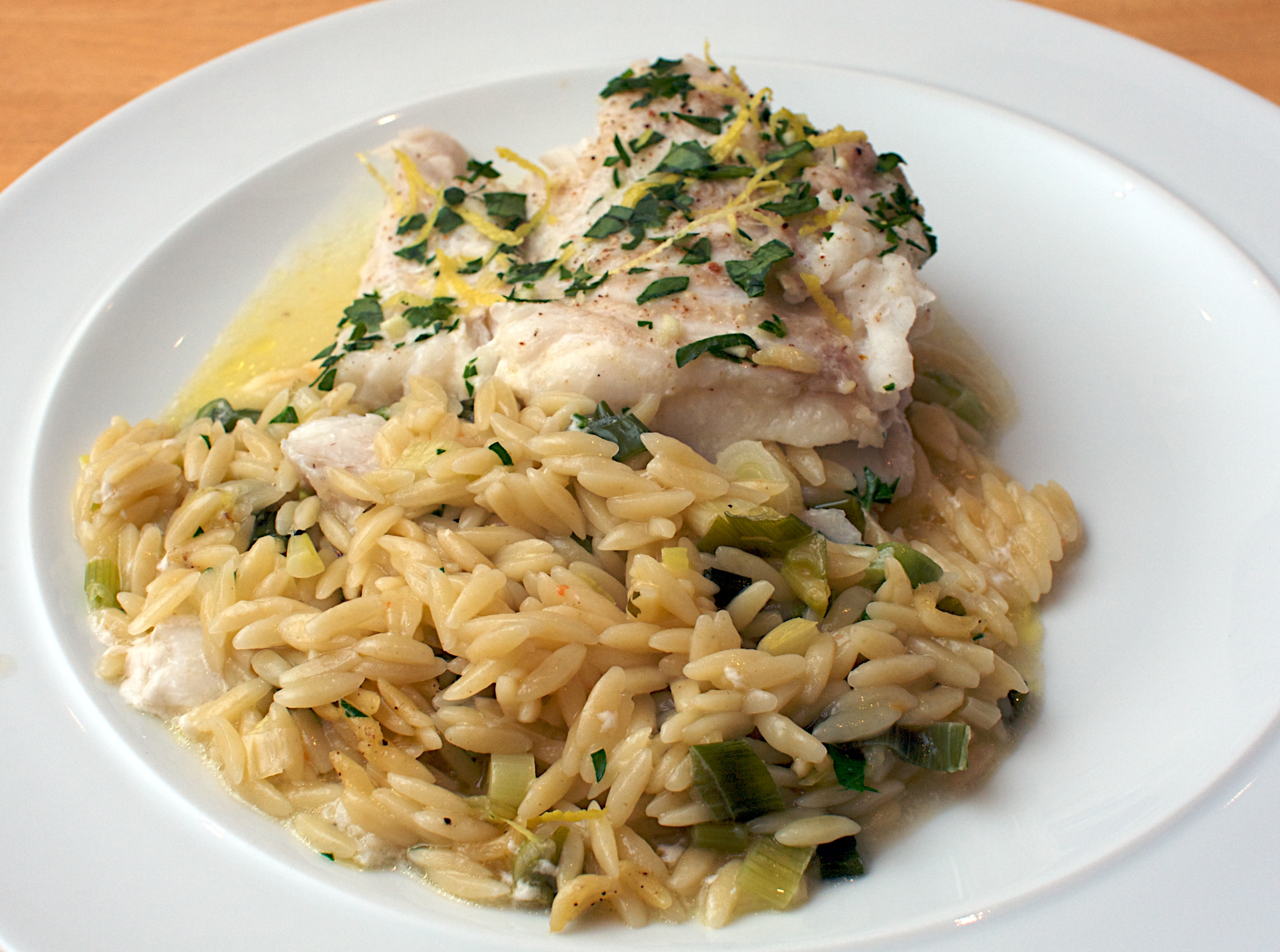
A much needed bit of lightness in the midst of all the Christmas festivities. This is really nice and we got to use our new shallow casserole – not sure how we ever survived without one. The fish steams lightly in the oven which keeps it really moist and you’ve much less chance of over-cooking.
Baked fish with orzo and gremolata – to serve 4
- 25g butter
- 1 bunch scallions, chopped
- 500ml chicken stock
- 200g orzo
- 4 thick skinless pieces of haddock or cod
- a small bunch of flat-leaf parsley, chopped
- 1 lemon, zested
- 1/2 a garlic clove, finely chopped
Heat the oven to 190C/fan 170C/gas 5. Heat the butter in a non-stick shallow oven-proof pan. Slowly cook the scallions until soft and then add the orzo and chicken stock. Simmer for a few minutes, until the orzo is almost cooked. Lay the fish on top, season, cover with a lid and put in the oven. Cook for 15-20 minutes or until your fish is cooked through – it will flake easily when pushed with a fork.
Mix the parsley, lemon and garlic and sprinkle over the top.
(Original recipe from BBC Good Food)
Wine Suggestion: Go for something simple, light and lemony – like a Verdicchio or a light and dry Riesling. Nothing too complicated is required here.
Posted in Fish, Food, Healthy | Tagged Cod, Cooking, Fish, Food, Healthy, Orzo, Recipe, Wine suggestion | 3 Comments »
18 December 2011 by jonoandjules
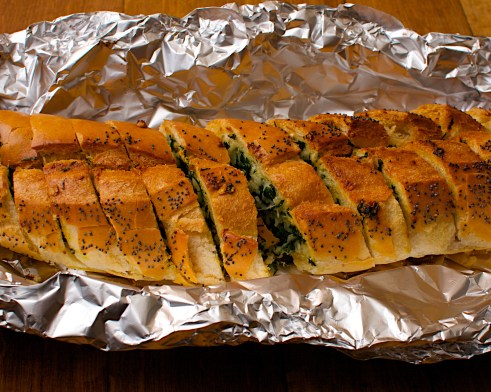
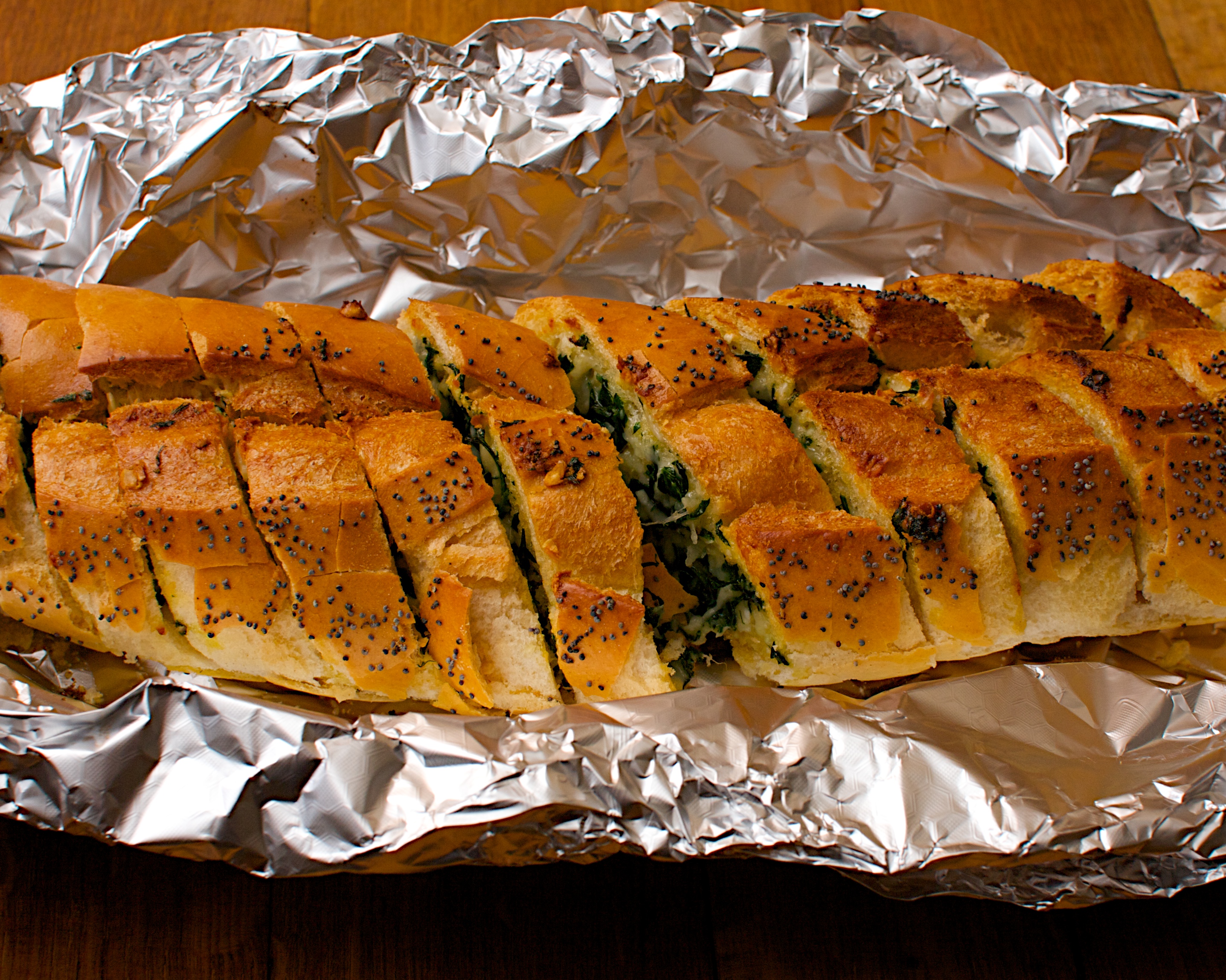
Totally garlic infused and encrusted … yum! Best served in the foil to tear and share – the cheese goes stringy as you rip it apart. Best not to eat before a first date but good to share on a second!
Parmesan Garlic Bread – to serve 4
- 100g softened butter
- 2/3 garlic cloves, crushed
- a handful of chopped parsley
- 50g coarsely grated Parmesan
- a small baguette
Preheat the oven to 220°C/Gas 7.
Mash the butter in a bowl until creamy then mix in the garlic, parsley and Parmesan.
Cut slices into the baguette but make sure you don’t slice the whole way through. Put the baguette on a large piece of tinfoil.
Stuff the garlic butter between the slices. Wrap the bread loosely and bake in the oven for 20 minutes. Open the foil up to expose the bread and bake for another 5 minutes so it’s crunchy on top and drenched with cheesy garlic butter. Heaven!
(Original recipe from Nigel Slater Real Food, Fourth Estate, 1998.)
Posted in Food, Side dish | Tagged Cooking, Food, Garlic Bread, Recipe | Leave a Comment »
16 December 2011 by jonoandjules

We thought this was unusual until we found out you can get sugo from Italy with vodka already added! The pasta doesn’t taste like vodka but it gives a kind of glycerous texture. We’re going to cook another pasta with vodka to try and understand the effect better. This recipe is kind of old fashioned – my Granny never cooked pasta but if she did she probably would have done a sauce like this (only without the vodka). That’s not a criticism – it’s the pasta version of a good stew!
Penne Rigate Alla Vodka – to serve 4
- 50g butter
- 1 thick slice cooked ham, diced
- 2 tbsp tomato purée
- 1 tbsp chopped flat-leaf parsley
- 5 tbsp double cream
- 3 tbsp vodka
- 350g penne rigate
Melt the butter in a pan, add ham, tomato purée and parsley, season and cook, stirring now and then, for about 10 minutes. Stir in the cream and vodka and cook until the vodka has evaporated and it doesn’t smell so alcoholic. Cook the penne in salted boiling water according to the pack, then drain. Tip it back into the pan and stir through the sauce.
(Original recipe from Silver Spoon Pasta, Phaidon, 2009).
Wine Suggestion: Try a white from Southern Italy like a Greco di Tufo which is minerally, fresh and relatively full-bodied.
Posted in Food, Italian, Pasta | Tagged Cooking, Food, Italian, Pasta, Recipe, Vodka | 2 Comments »
« Newer Posts - Older Posts »








 Jono & Jules do food & wine