Feeds:
Posts
Comments

Posts Tagged ‘Coconut’

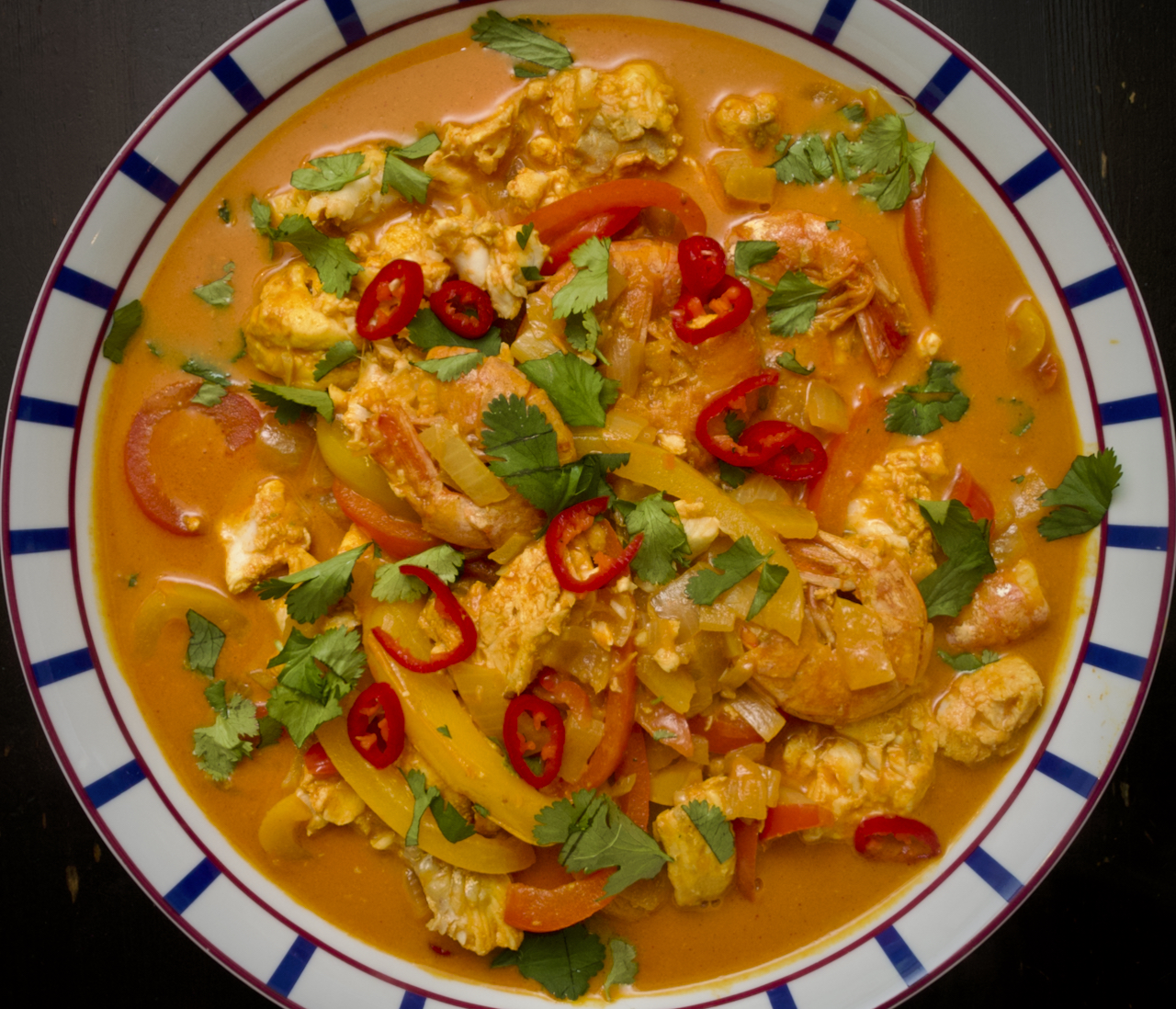
We don’t cook many Brazilian dishes but perhaps we should make more as this one was delicious! Serve with rice or crusty bread.

Wine Suggestion: we had to guess a bit with what to open with this, so chose a warmer climate white with some white flower amd stonefruit characters; dry but with softer fruitiness. So tonight the charming Dominio de Tares Godello La Sonrisa and it was a very pleasant match indeed.

Brazilian seafood moqueca – serves 4 to 6

  • 650g firm white fish fillets (we used hake)
  • 400g whole shell-on prawns (about 12)
  • 3 limes, zested to make 1 tsp, juiced to make 6 tbsp, plus a little extra lime zest to serve
  • 2 tsp sweet paprika
  • 2 tsp ground cumin
  • 2 medium onions, diced
  • 4 fat garlic cloves, crushed
  • 1 large red pepper, cut into strips
  • 1 large yellow pepper, cut into strips
  • 2 tsp coriander seeds, crushed
  • 1 tsp ground turmeric
  • 4 tbsp tomato purée
  • 400ml coconut milk
  • coriander, chopped, to garnish
  • red chilli, sliced, to garnish
  • white rice or crusty bread, to serve

Cut the fish fillets into chunky pieces and de-vein the prawns but leave the shells on (either use a very sharp knife or pointy scissors).

Mix the lime zest, 4 tbsp of the lime juice, 1 tsp of the paprika, 1 tsp of the cumin and 1 tsp of fine salt in a large bowl. Add the fish and prawns and toss gently to coat, then cover and leave aside for 15 minutes.

Heat the oil in a large deep pan and cook the onions for 5 minutes. Add the garlic, peppers and crushed coriander seeds and cook for another 5 minutes.

Add the turmeric, 1 tsp of paprika, 1 tsp of cumin, the tomato purée and a splash of water, then mix well to coat the onions. Add the coconut milk with 200ml of water, then simmer over a medium heat for 8 to 10 minutes. Add 1 tsp of fine salt.

Gently add the fish and prawns to the sauce along with any marinade. The seafood needs to be completely covered so add a little more water if needed. Cover with a lid and simmer for 8-10 minutes or until the seafood is cooked through.

Check the seasoning and add more salt if needed. Stir throught the rest of the lime juice and serve garnished with coriander and chilli.

(Original recipe by Gurdeep Loyal in Olive Magazine, May 2025.)
Read Full Post »

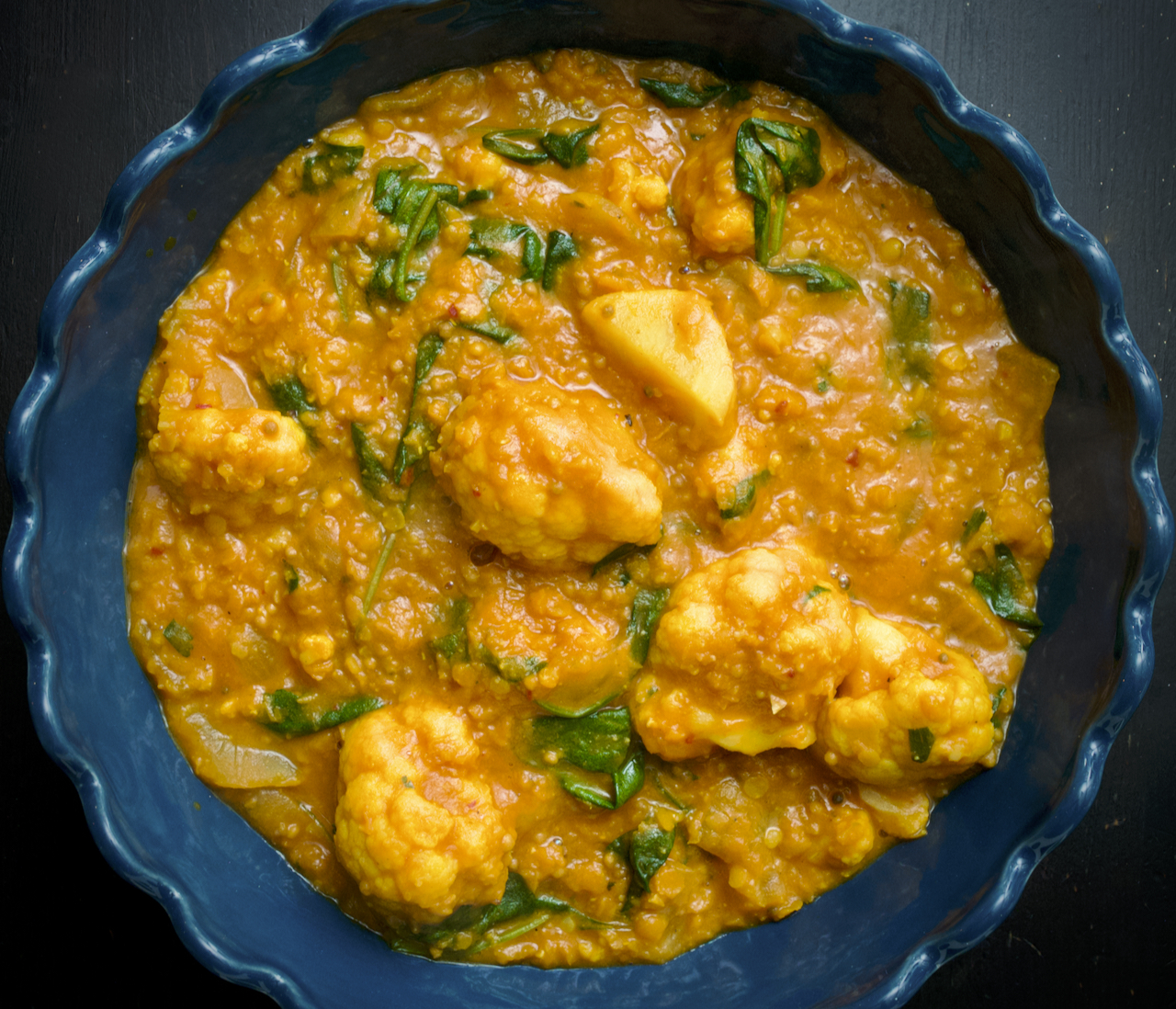
There is one person in our household of 3 who has decided to be a vegetarian for January. We’re not all joining in as there was far too much other stuff in the freezer but we’re trying to batch cook things like this to keep her going for the month and to avoid her living on koka noodles. This is a simple and lovely dahl. Serve with rice and naan or flatbreads. It is also suitable for those doing veganuary.

Wine Suggestion: We quite like an earthy dahl with a beer and chose a local brew, the Barrelhead Hopsburgh Helles, a creamy pale golden German style lager that’s lovely and smooth.

Cauliflower, lentil & coconut dahl – serves 4 to 6

  • 4 tbsp coconut oil
  • 2 tbsp mustard seeds
  • 1 large onion, diced
  • 4 cloves of garlic, finely chopped
  • 2 tsp ground coriander
  • 2 tsp ground turmeric
  • 1 tsp ground cumin
  • ½ to 1 tsp chilli flakes, to taste
  • 1 medium head of cauliflower, cut into bite-size pieces
  • 180g dried red lentils
  • 1 x 400ml tin coconut milk
  • 400ml tomato passata
  • 600ml water
  • 75g baby spinach
  • 2 tbsp chopped coriander
  • juice of 1 lemon

Melt the coconut oil in a large heavy-based saucepan over a medium heat. Add the mustard seeds and cook until they start to pop.

Add the onion with a large pinch of salt and cook for 10 minutes, until softened but not browned. Add the garlic and cook for a further minute, then add the ground coriander, turmeric, cumin and chilli flakes and cook for another minute.

Add the cauliflower, lentils, coconut milk, tomato passata and water. Stir well and bring to the boil, then reduce the heat and simmer for 20 to 25 minutes or until the lentils and cauliflower are cooked. Give it a stir occasionally to prevent it sticking.

Add the spinach, coriander and lemon juice and season well with salt and pepper.

Serve with rice and daal or flatbreads.

(Original recipe from Avoca at Home, Penguin Random House, 2022.)

Read Full Post »

We made these noodles on the day we got our new puppy, Remy. We can barely remember what they tasted like as we were too busy congratulating ourselves on picking the best little dog ever. However we wrote, usefully, on the recipe that they tasted very good indeed … so we’ll go with that.

Wine Suggestion: The coconut and turmeric elements to this dish work really well with an off-dry Riesling, like those from the Mosel in Germany. The Dr Loosen “L” Riesling is an inexpensive, but very well made option with charming fruit and a very good balance, finishing clean and fresh.

Spicy Coconut and Chicken Noodles – serves 4

  • vegetable oil
  • 2 onions, roughly chopped
  • 600g boneless and skinless chicken thighs
  • 4 green cardamom pods, lightly crushed
  • 1 tsp cumin seeds
  • 2 tsp ground turmeric
  • 2 tbsp rose harissa
  • 400ml tin coconut milk
  • 300g medium egg noodles

TO SERVE:

  • a handful of bean sprouts
  • lime wedges
  • coriander leaves, roughly chopped

Put a large saucepan over a medium-high heat, drizzle in some vegetable oil and fry the onions until soft. Add the chicken and dry spices along with lots of salt and pepper and stir to coat the chicken in the mixture, then stir-fry for a few minutes. Add the harrisa and stir-fry for a few more minutes.

Reduce the heat to medium, then pour in the coconut milk and some water so that the chicken is just covered. Stir, then cover the pan with a lid and cook gently for an hour, stirring now and then to make sure it hasn’t stuck. You can top up the liquid a little if needed.

Cook the noodles according to the pack instructions, then drain and divide between 4 bowls.

Pour the chicken over the cooked noodles, then add the bean sprouts, lime wedges and coriander.

(Original recipe from Flavour by Sabrina Ghayour, Aster*, 2023.)

Read Full Post »

Cooking a whole chicken on the barbecue can be a bit tricky but it is much easier if you spatchcock the chicken. This is quite easy and we do this ourselves; cutting out the backbone with poultry shears and then turning over and flattening out by pushing down on the breast. There are plenty of videos online to help, or just ask your butcher to do it, they never mind.

A temperature probe is also an essential piece of kit when barbecuing all meat as its the best way of determing if the meat is cooked underneath any charring. They are relatively inexpensive, but a worthwhile investment. There’s a reason professionals use them and they help remove the risk of being under-done. Cooking over fire (or gas) is inexact and using the probe has meant that any timings are just a guide; sometimes the dish is done early as it’s hotter than last time, or takes more time than planned. The probe can help you get this right.

We served this sesame sticky rice and and a Thai salad.

Wine Suggestion: As it’s summer barbecue time, a good Provençal rosé, the Love by Léoube, was opened to great success. With the thai aromatic flavours and chilli you need to avoid to much tannin especially, but with charry barbecue chicken a bit of body is still needed which these rosés give, despite their light colour and freshness. The hints of gentle strawberry and raspberry flavours really picked up on the mint and lime too.

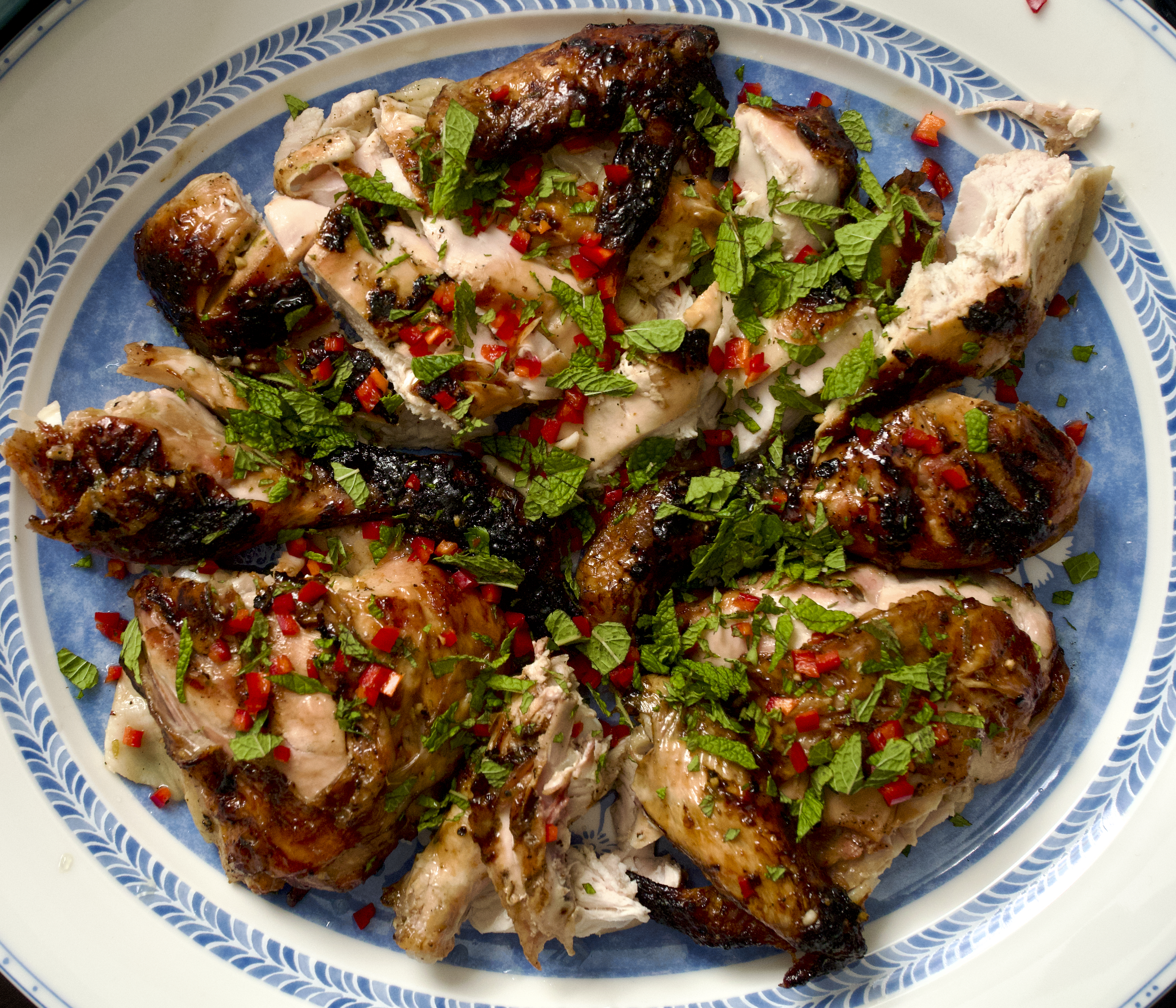
Barbecued chicken with coconut & soy – serves 4

  • 2kg free-range chicken
  • 1 tbsp olive oil
  • 200g tin coconut milk (you can buy little tins or just use half a regular tin and freeze the rest for later)
  • 1 clove of garlic, finely chopped
  • 2 tbsp soft brown sugar
  • 2 tbsp soy sauce
  • 1 tbsp fish sauce
  • zest and juice of 1 lime
  • a few sprigs of mint, leaves chopped
  • 2 red chillies, chopped

You need to get your barbecue ready for both direct and indirect cooking (i.e. hot coals on one side only).

Slash the breast and legs of the chicken with a sharp knife.

Rub the chicken with olive oil and season well with salt and pepper.

Lay the chicken on the indirect side of the barbeuce. Put something heavy on top to weight it down, we used a cast-iron frying pan, then shut the lid and leave to cook for 45 minutes. Rotate the chicken a couple of times to make sure it cooks evenly but keep the skin-side up.

Mix the coconut milk, garlic, sugar, soy sauce, fish sauce and lime zest together to make a baste for the chicen.

Once the initial 45 mintues is up, turn the chicken skin-side down and cook for another 10 minutes, with the lid on.

Now move the chicken over the coals to cook over a direct heat and start basting with the coconut mixture. Keep basting and turning for 10 to 15 minutes or until nicely browned and cooked through. A probe should read 74C.

Chop the cooked chicken into large pieces, then squeeze over the lime and scatter over the mint and chilli.

(Recipe inspiration from Foolproof BBQ by Genevieve Taylor, Hardie Grant: Quadrille, 2021.)

Read Full Post »

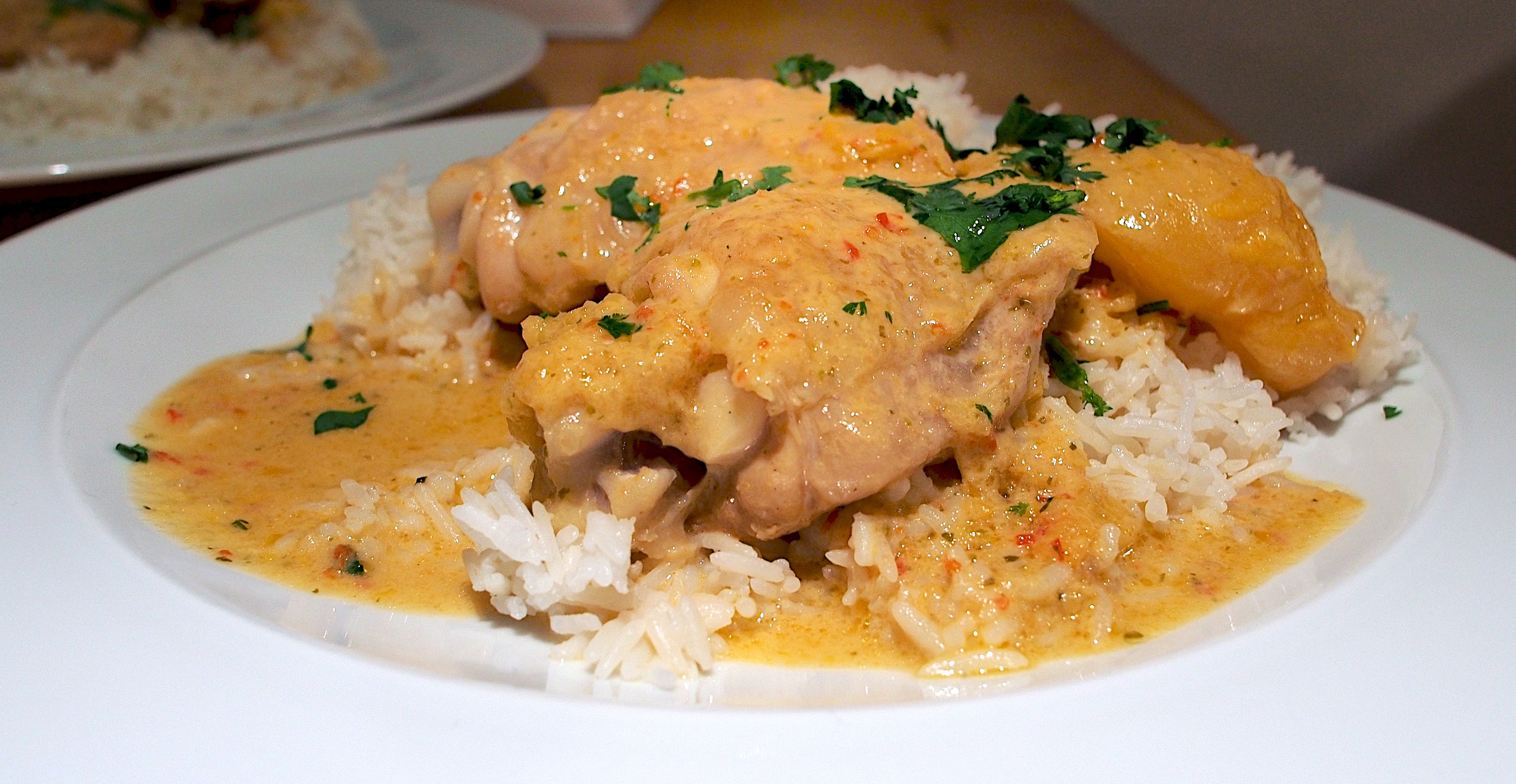
This is creamy, salty and tangy with little jewels of soft juicy apricots. Definitely the best cookers of the soft summer fruits.

You will have too much spice paste but it will keep (covered with a film of oil) in the fridge for a week.

Wine Suggestion:  A Pinot Gris will give you hints of sweetness to complement the heat from the chillies and enough weight to balance the rich coconut milk. It will also be slightly aromatic to match the lime and coriander on the nose.

Chicken with apricots and coconut milk – to serve 4

  • 3 short stalks lemongrass
  • 50g ginger
  • 2 small hot red chillies
  • 2 cloves garlic, peeled
  • a bunch of coriander
  • 2 limes, zested and juiced
  • 1 tbsp groundnut oil, plus extra for the paste
  • 200g tomatoes, roughly chopped
  • 1 tbsp fish sauce
  • 2 tbsp dark soy sauce
  • 8 chicken thighs
  • 8 apricots, halved and stoned
  • 400ml tin coconut milk

Peel the outer leaves of the lemongrass and discard. Cut into short lengths and put into a food processor. Peel the ginger, slice into thin pieces and add to the lemongrass. Chop the chillies and add to the ginger with the garlic and roughly chopped stems and half the leaves of the coriander. Add the lime zest, then chop everything to a coarse paste, adding a little oil. Add the tomatoes, fish sauce and soy sauce and continue to blitz.

Warm the oil in a deep pan over a high-ish heat and brown the chicken pieces lightly. Lift the chicken out and pour away most of the oil, leaving about a tablespoon.

Add half the spice paste and fry over a low to moderate heat for a couple of minutes or until fragrant, then return the chicken to the pan. Pour in the coconut milk and leave to simmer gently over a low heat for 10 minutes.

Add the apricots and cook for another 10 minutes or until soft.

Check that the chicken is cooked, then add the lime juice and the remaining coriander, roughly chopped. Season to taste with salt and serve with rice.

(Original recipe from Nigel Slater’s The Kitchen Diaries II, Fourth Estate, 2012.)

Read Full Post »

We’re always on the lookout for low-calorie dishes for weeknights (so we can afford to redress the balance at the weekend!) This one was tasty and helpfully used up some of the bits and pieces we had in the fridge.

Coconut, noodle & vegetable soup – to serve 4

  • 1-2 tbsp Thai curry paste (use whatever colour you’ve got)
  • 1 tsp groundnut (or other flavourless oil)
  • 700ml vegetable stock
  • 300ml reduced-fat coconut milk
  • 200g thick-rice noodles
  • 200g chestnut mushrooms, sliced
  • 140g sugar snap peas, halved
  • 100g beansprouts
  • 1½ tbsp Thai fish sauce
  • juice of 1 lime
  • 3 scallions shredded
  • some mint and coriander leaves to serve (if you have some)

Put a large pot over a medium heat. Cook the curry paste in the oil for a minute until it starts to release its aroma. Add the stock and coconut milk and bring to the boil. Reduce the heat to a simmer and stir in the noodles. Simmer for 7 minutes, then stir in the mushrooms and sugar snaps. Cook for another 3 minutes, then add the beansprouts, fish sauce and lime juice. Take the pan off the heat.

Serve in bowls with some scallions, mint and coriander.

(Original recipe from BBC Good Food)

Read Full Post »

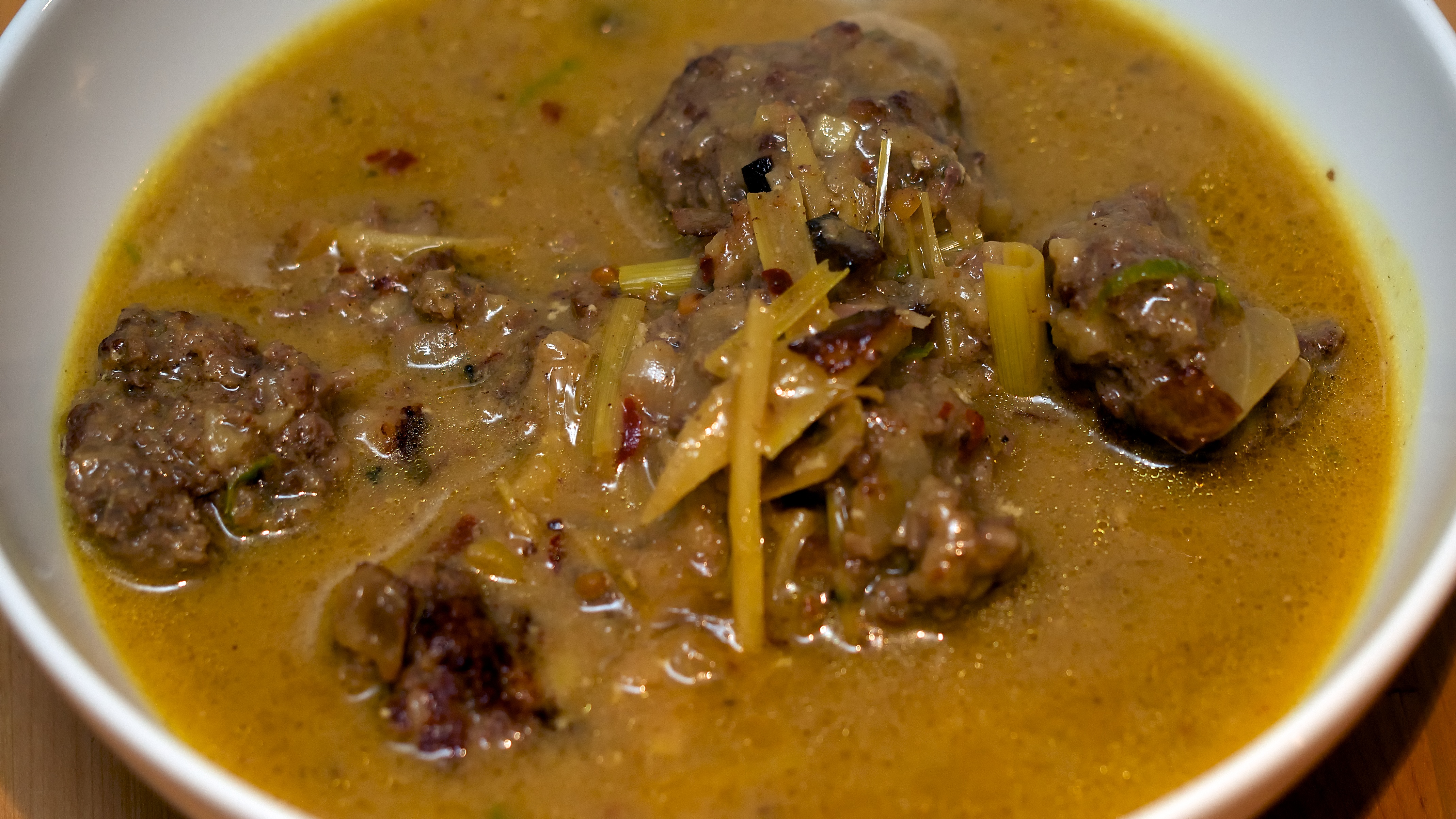
These meatballs are melt in the mouth. Don’t make them too big (no bigger than golf ball size) or they will dry out.

Meatballs in Fragrant Coconut Broth – serves 2-3

  • 2tsp coriander seeds
  • 4 cardamom pods, lightly crushed
  • 1 tsp ground turmeric
  • ½ tsp ground cinnamon
  • 1 tsp dried chilli flakes
  • 2 lemongrass stalks, trimmed, bashed and cut in half
  • 5cm piece of fresh root ginger, peeled and sliced
  • 400ml chicken stock
  • 1 x 400ml tin coconut  milk
  • zest and juice of 1 lime

FOR THE MEATBALLS: 

  • 1 small onion, peeled and finely sliced
  • 2 garlic cloves, peeled and finely sliced
  • olive oil
  • 1 tsp dried chilli flakes
  • 500g minced beef
  • 75g fresh breadcrumbs
  • 3-4 tbsp milk

First make the meatballs. Sauté the onion and garlic and some seasoning in a hot frying pan in a little oil for about 5 minutes or until soft and lightly coloured, adding the chilli flakes after a couple of minutes. Put the mince in a large bowl and season. Put the breadcrumbs in a separate bowl and moisten with the milk. Add seasoning, then stir the breadcrumbs and onion mixture into the mince and combine well. With wet hands, shape the mince mixture into golf-size balls. Transfer to a lightly greased plate or tray and chill for 30 minutes until firm.

Brown the meatballs in a clean oiled pan for 4-5 minutes, turning until brown on all sides.

Add the coriander seeds, cardamom, turmeric, cinnamon, chilli flakes, lemongrass and ginger. Heat through, stirring, until aromatic, then add the stock and coconut milk and bring to a gentle simmer. Taste and adjust the seasoning as necessary. Simmer for 8-12 minutes until the sauce has a good flavour and has thickened and the meatballs are cooked through.

Add the lime zest and juice and serve hot.

Wine Suggestion: this is a rich and bold dish and requires a fuller bodied white wine with texture and savouriness. We would suggest a good Grand Cru Pinot Gris from Alsace (a drier version) or a Condrieu from the Northern Rhone. The wines would ideally have a couple of years development in the bottle to enable the overt fruitiness to mature and the savoury flavours to come to the fore.

(Original recipe from Gordon Ramsey’s Ultimate Cookery Course, Hodder & Stoughton, 2012.)

Read Full Post »