Feeds:
Posts
Comments

Posts Tagged ‘Kebabs’

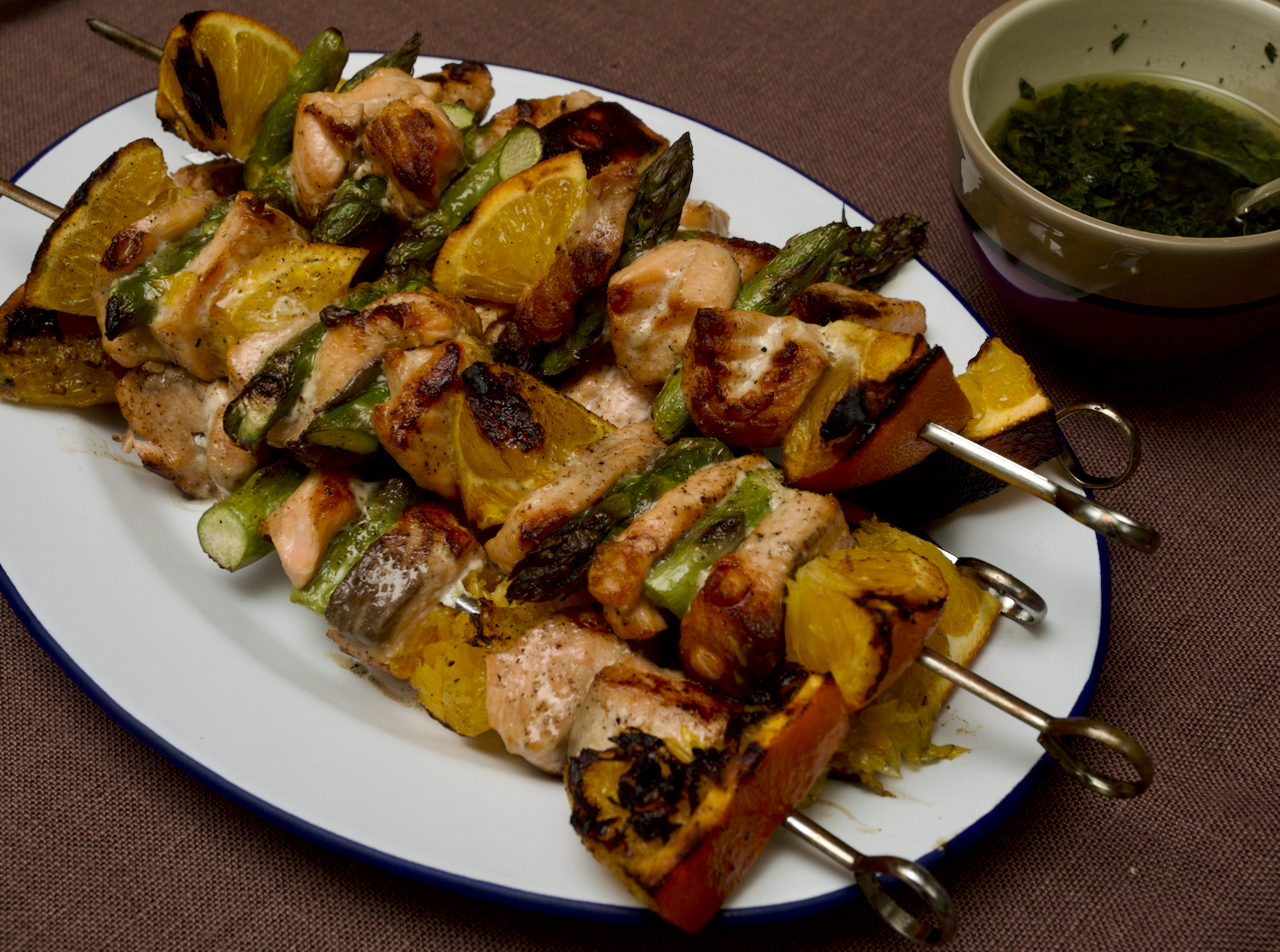
A bit late in the season to post these lovely trout and asparagus kebabs but we couldn’t leave them out.

Wine Suggestion: A bottle from a familiar winery, but one we picked up in Spain as this particular cuvée doesn’t currently make it into Ireland. Bodegas Castro Martin’s A-2-O, a fresh and elegant Albariño from the Val de Salnés in Rías Baíxas.

Trout and Asparagus Kebabs – serves 4

  • 600g trout fillet, without skin – try and get a chunky piece, cut into 3cm pieces
  • 200g asparagus – snap off the ends and slice into short lengths
  • 1 orange, quarter, then slice into small pieces
  • 2 tbsp olive oil

FOR THE HERB OIL:

  • about 15g of mint leaves, finely chopped
  • 100ml olive oil
  • 1 clove of garlic, crushed
  • 2 tsp red wine vinegar

Thread the trout, asparagus and orange pieces onto 4 metal skewers. If your fish pieces are a bit skinny just fold them over and thread them on to make a chunkier piece.

Drizzle with olive oil and season well.

Heat the barbecue for driect grilling and ideally use a grill tray.

To make the herb oil, put the chopped mint into a small bowl, then stir in the olive oil, garlic, red wine vinegar and seasoning.

Cook the skewers on the hot grill tray (if you have one) for a couple of minutes on each side or until the fish is crispy. Don’t be tempted to turn them too quickly or they might stick.

Serve with the mint oil.

(Original recipe from Scorched by Genevieve Taylor, Hardie Grant: Quadrille, 2024.)

Read Full Post »

After such a long, cool and wet Spring we are finally having sunny weather in Ireland and so we’re cooking anything over fire … on sticks … and lots of salads. Long may it last!

Wine Suggestion: If you’re having this as a starter we’d highly recommend a good, dry Oloroso like the Bodegas Hidalgo Oloroso Faraon which is nutty, smokey, round and honeyed on the nose, but with an enveloping roundness and richness on the palet, despite being bone dry. Very savoury and great with food.

Pork and Asparagus Kebabs – serves 4

  • 500g pork fillet, cut across the grain into ½ cm thick slices
  • 1 clove of garlic, finely chopped
  • 1-2 tsp smoked paprika
  • 3 tbsp olive oil
  • 250g asparagus, woody ends snapped off and cut into thirds (don’t buy the very skinny stuff for this as it will be difficult to thread onto the skewers)
  • 1 bunch of scallions, sliced into thirds

Put the pork into a large bowl, then add the garlic, smoked paprika, olive oil and sherry vinegar, then stir well to coat. Cover and put into the fridge for an hour or two, then stir in the asparagus and scallions to coat in the marinade.

Thread pieces of pork, aspargus and scallion onto skewers.

Prepare your barbecue for direct cooking, then place the skewers directly over the heat and cook for about 10 minutes, turning a couple of times to ensure they brown and cook through.

(Original recipe from Foolproof BBQ by Genevieve Taylor, Hardie Grant: Quadrille, 2021.)

Read Full Post »

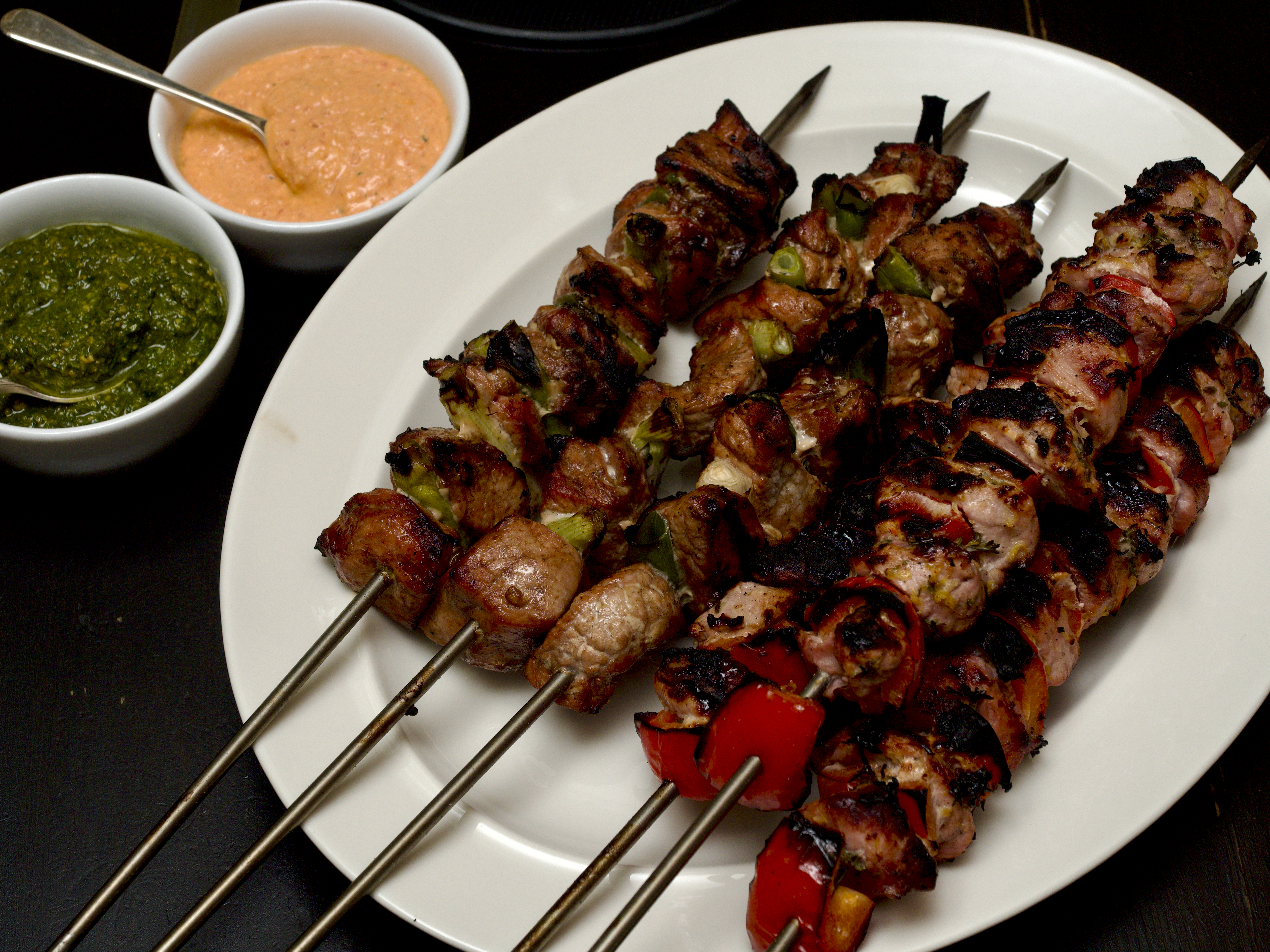
Two kebabs for the barbecue with their respective sauces. We couldn’t decide which one to do, so we halved each recipe and made both. A meat probe is great for checking that barbecued meat is cooked – you are looking for 63C for medium or 71C for well done. You can buy a good-quality pesto if you don’t want to make your own.

Lemony pork kebabs with feta & pepper sauce, makes 6-8 kebabs

  • zest and juice of 2 lemons
  • 4 tbsp olive oil
  • 2 cloves of garlic, crushed
  • a handful of thyme sprigs, roughly chopped
  • 1.2kg pork leg, diced
  • 2 red peppers, diced

FOR THE FETA AND RED PEPPER SAUCE:

  • 2 red peppers
  • 200g feta
  • ½-1 tsp chilli flakes
  • 3 tbsp olive oil

Mix the lemon zest and juice, olive oil, garlic and thyme together. Sesaon with salt and pepper, then add the pork and stir well. Cover and refrigerate for 12-24 hours.

When ready to cook get a barbecue ready for both direct and indirect cooking.

Put the whole peppers for the sauce directly over the fire and char the skins all over until blackened. Transfer to a bowl and cover with cling film, then leave for a few minutes or until cool enough to handle. Rub off the skin and discard the stems and seeds. Put the pepper flesh into a food processor with the feta, chilli flakes and olive oil, season, then blend to a purée. Transfer into a bowl and set aside.

Thread the pork and pepper pieces onto skewers. Set onto the barbecue, slightly away from the fire so they cook over a medium heat for 15-20 minutes.

Serve with the feta and red pepper sauce.

Balsamic pork kebabs with pesto dressing, makes 8 kebabs

  • 4 tbsp balsamic vinegar
  • 3 tbsp olive oil
  • 1 tbsp brown sugar
  • 3 cloves of garlic, crushed
  • 1 tsp smoked paprika
  • 1.2kg pork leg, diced
  • a bunch of scallions, cut into 4cm lengths

FOR THE PESTO (or use good-quality shop-bought pesto)

  • 50g pine nuts, toasted
  • 30g basil, leaves and stems, roughly torn
  • 40g Parmesan, grated
  • 6 tbsp olive oil
  • juice of ½ lemon
  • 1 clove of garlic, crushed

Mix the balsamic, olive oil, brown sugar, garlic and smoked paprika together in a bowl. Season with salt and pepper, then stir in the pork pieces. Cover and put into the fridge for 12-24 hours.

To make the pesto, tip the pine nuts, basil, Parmesan, olive oil, lemon juice, garlic and a little salt into a food processor and blend to a purée. Scrape the pesto into a bowl and set aside.

When ready to cook get the barbecue prepped for direct and indirect cooking.

Thread the pork and scallions on to skewers. Set onto the barbecue, slightly away from the fire so they cook over a medium heat for 15-20 minutes.

Serve with the pesto on the side.

(Original recipes from Seared by Genevieve Taylor, Hardie Grant: Quadrille, 2022).

Read Full Post »

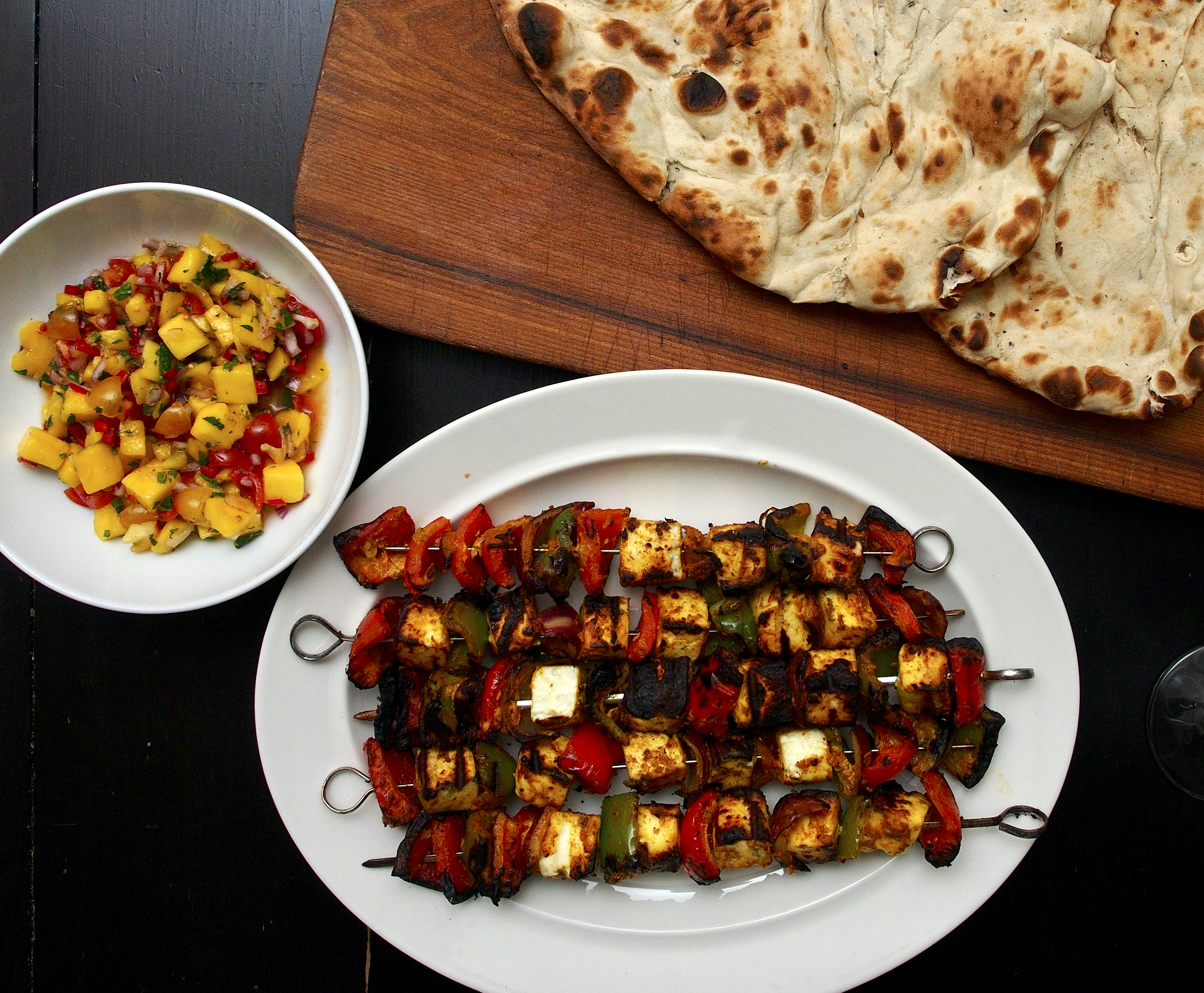
A great combination and nice to cook something meat-free on the barbecue. Serve with naan breads – we get ours from the local takeaway. You need to get started a few hours ahead.

Wine Suggestion: Nothing complex or too heavy with this so focus on pleasurable fruit and balance. For us tonight Umani Ronchi’s organic Serrano. A Montepulciano – Sangiovese blend from Rosso Conero, in the Marches. Youthful and vibrant which suited us perfectly for a summer barbecued dinner.

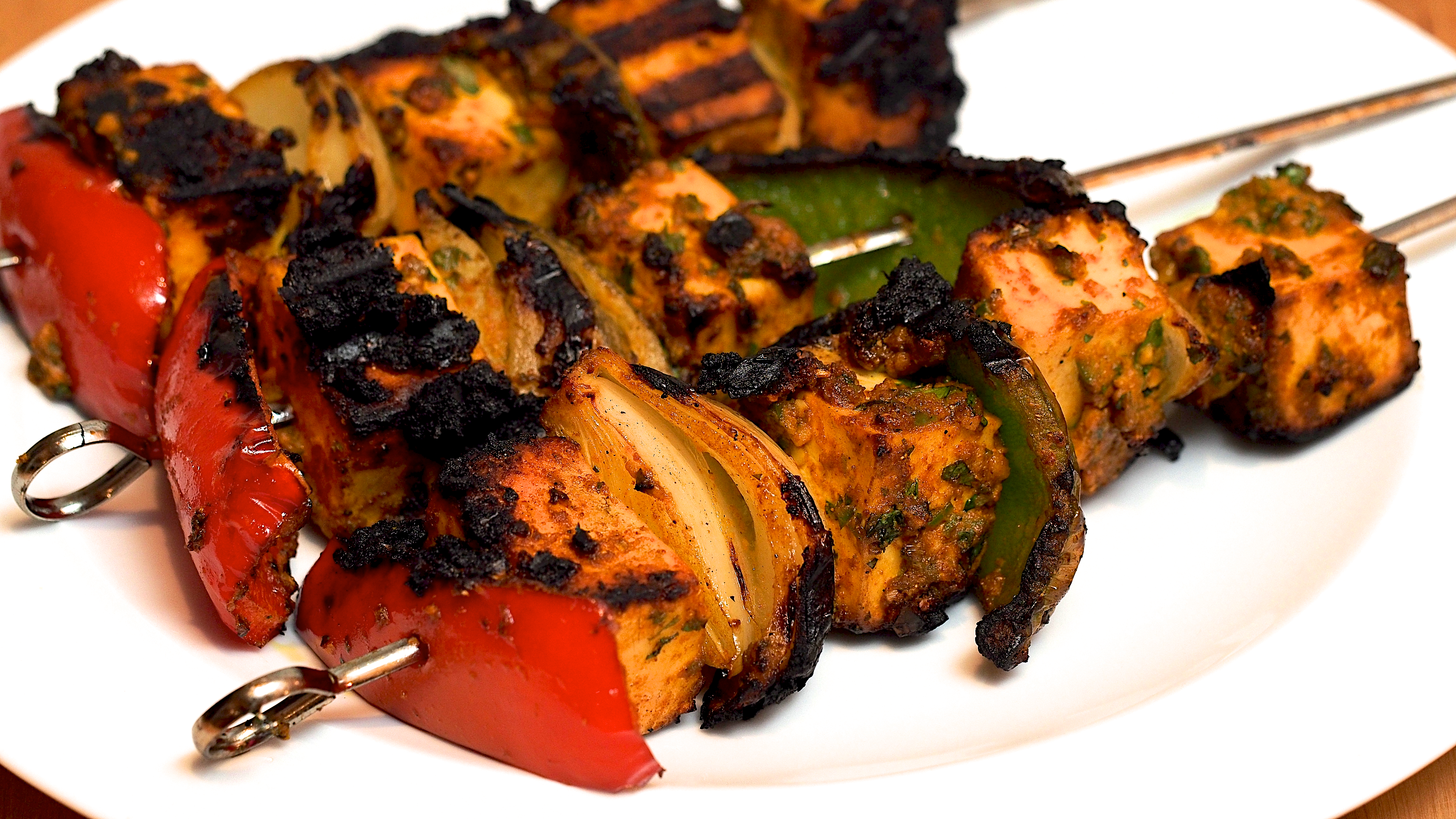
Barbecued tikka paneer with fresh mango chutney – serves 4

  • 150g natural yoghurt
  • 3 tbsp tikka curry paste, we use Patak’s
  • 2 cloves of garlic, crushed
  • 3 cm piece of ginger, finely grated
  • 300g paneer, cut into 18 cubes
  • 1 green pepper, cut into 18 pieces
  • 1 red pepper, cut into 18 pieces
  • 1 red onion, cut into 6 wedges
  • vegetable oil, for brushing the grill
  • a small handful of coriander leaves, roughly chopped
  • naan breads, to serve

FOR THE FRESH MANGO CHUTNEY:

  • left over red onion from the kebabs (see below)
  • 1 large mango, finely diced
  • 150g cherry tomatoes, finely diced
  • 1-2 red chillies, finely chopped
  • a few sprigs of mint, leaves finely chopped
  • 1 tsp caster sugar
  • juice of half a lemon

Put the yoghurt, curry paste, garlic, and ginger into a large bowl, season with salt and pepper and mix together. Add the paneer and peppers. Peel off the outer 2-3 layers of each onion wedge and add these too (keep the rest for the chutney), then fold everything together gently. Cover and put into the fridge for a few hours, or if short of time leave at room temperature for an hour.

To make the mango chutney, finely chop the leftover onion and put into a bowl with the mango, tomatoes, chillies and mint and stir to mix. Stir in the sugar and lemon juice to taste, then set aside.

Get your barbecue on and hot, then brush the grill with vegetable oil to prevent the kebabs from sticking.

Thread the paneer, peppers and onions onto kebab skewers and cook for 12-15 minutes or until lightly charred.

Sprinkle coriander over the skewers and serve with the mango chutney and naan breads.

(Original recipe from Charred by Genevieve Taylor, Hardie Grant: Quadrille, 2019.)

Read Full Post »

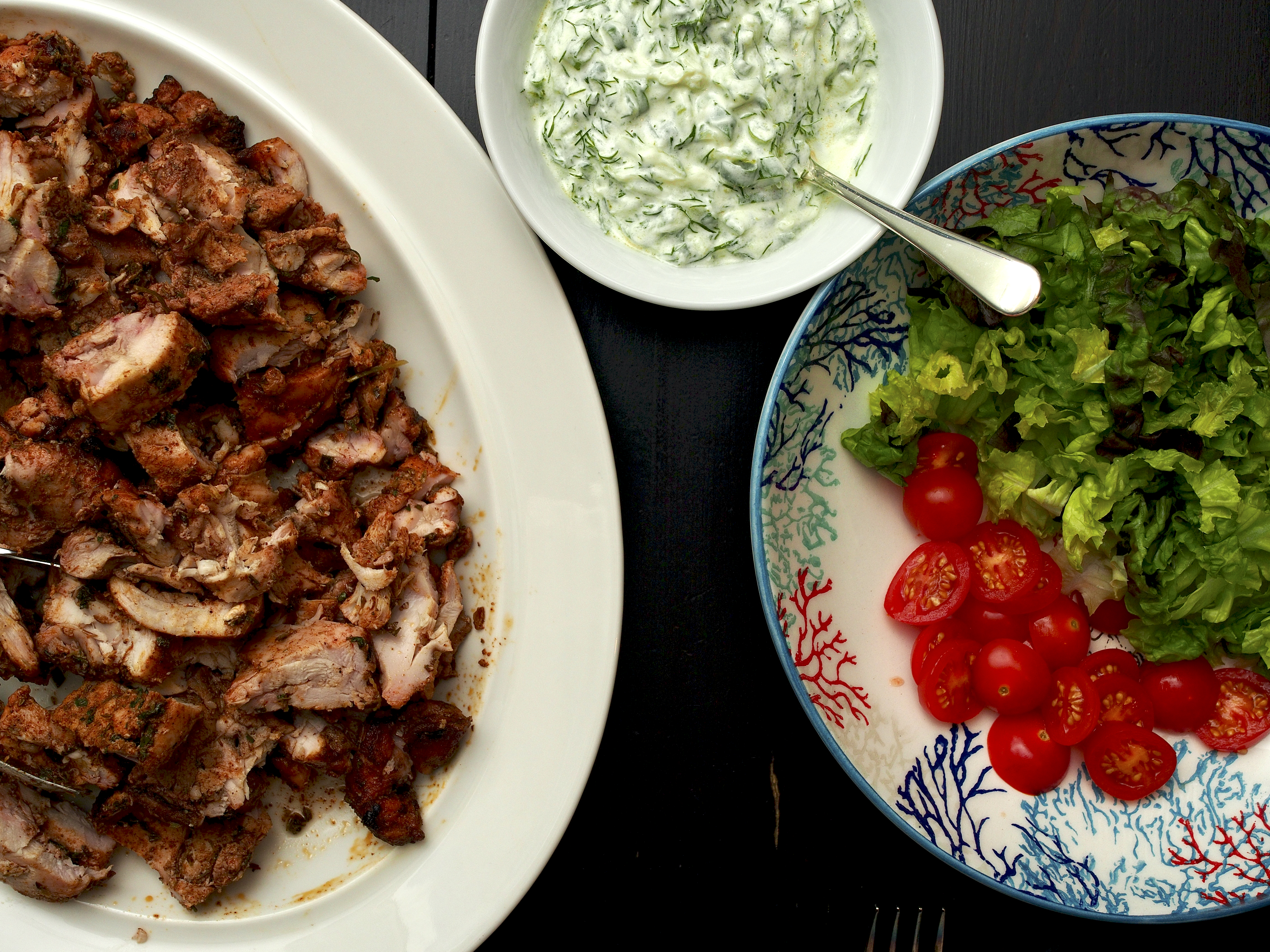
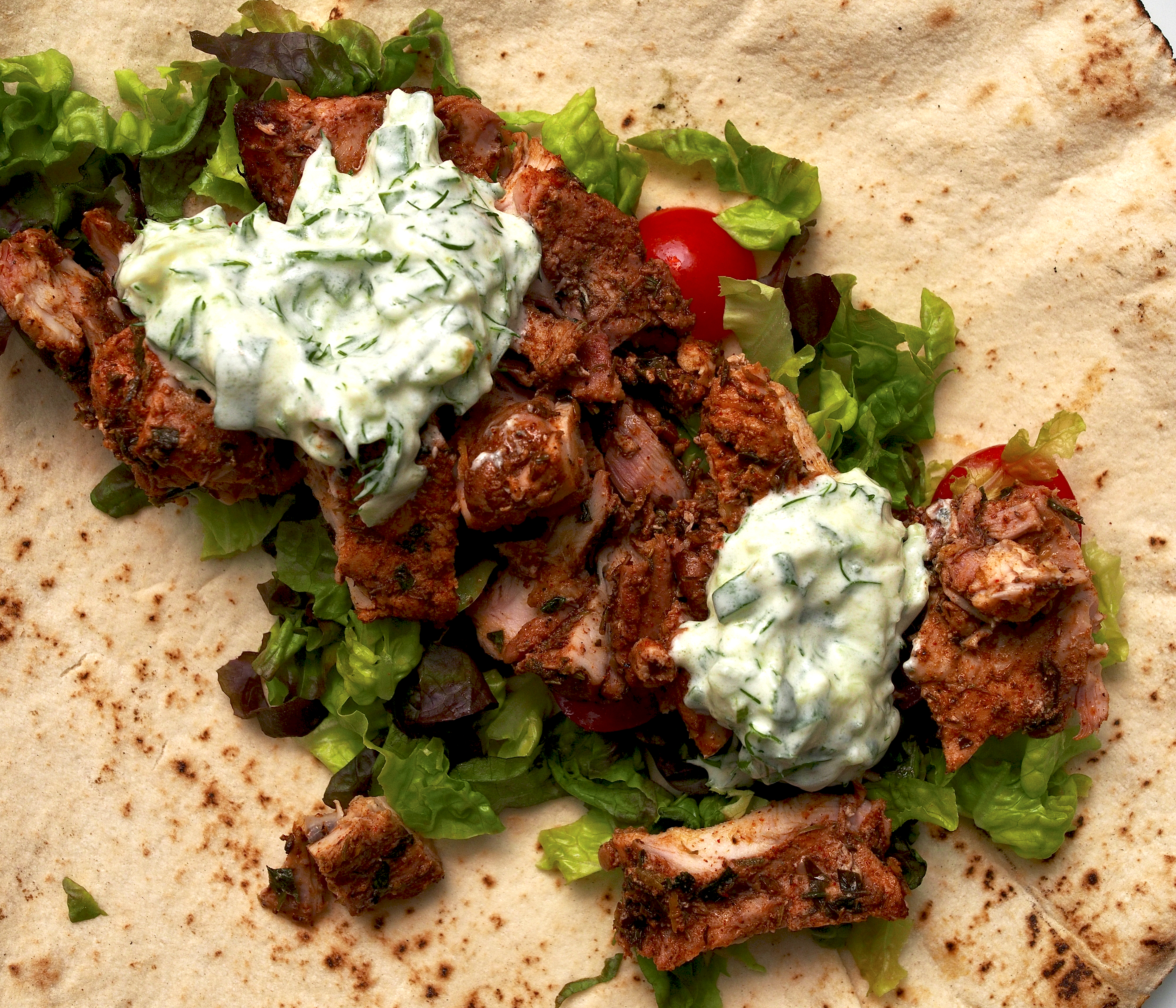
We’re trying to get the most out of our barbecue while the evenings are still bright. This is based on Greek gyro chicken kebabs and it tastes great with some salad and flatbreads. We added some tzatziki too but plain yoghurt would also be good. You need to get started with the marinade the day before.

We cooked these on a charcoal barbecue with a lid, using the indirect heat method which we’ve explained below. If that’s not your thing you can cook in a hot oven (200C/180C fan/gas 6) on a wire rack over a roasting tin for 45-55 minutes.

Wine Suggestion: We recommend a white with a bit of phenolic texture and body or a mid-weight red with a fresh crispness. Thymiopoulos’ Xinomavro Jeunes Vignes is a current favourite that falls into the latter camp. From north-eastern Greece we think this grape needs to be better known.

Greek Chicken Kebabs – serves 6

  • 12 boneless, skinless chicken thighs
  • flat breads, salad and yoghurt or tzatziki to serve.

FOR THE MARINADE:

  • 2 cloves of garlic, crushed
  • 1 lemon, zested and juiced
  • 1 tsp ground cinnamon
  • 1 tsp ground allspice
  • 1 tbsp dried oregano
  • 2 tsp paprika
  • 4 tbsp olive oil
  • a small bunch of parsley, finely chopped

Mix all of the marinade ingredients together in a large bowl and season. Add the chicken thighs and mix together well, then cover and chill overnight.

Light a lidded barbecue and let the flames die down. When the coals have turned ashen, mound them up on side.

Thread the chicken thighs onto 2 metal skewers – both skewers need to go through every piece of meat. Push the thighs down well to make sure the meat is well compacted.

Put the chicen kebab onto the side of the barbecue without any coals underneath. Cover with the lid and cook for 45-55 minutes, turning regularly, or until cooked through. You can pull apart a few chicken pieces in the centre to check or much easier is to check with a meat probe – a barbecue essential in our opinion.

Remove the chicken from the barbecue, cover with foil and leave to rest for 20 minutes before slicing.

Slice strips of chicken from the kebab and stuff into pittas or flatbreads, that have been warmed on the barbecue, with some salad and yoghurt or tzatziki.

(Original recipe from BBC Good Food)

Read Full Post »

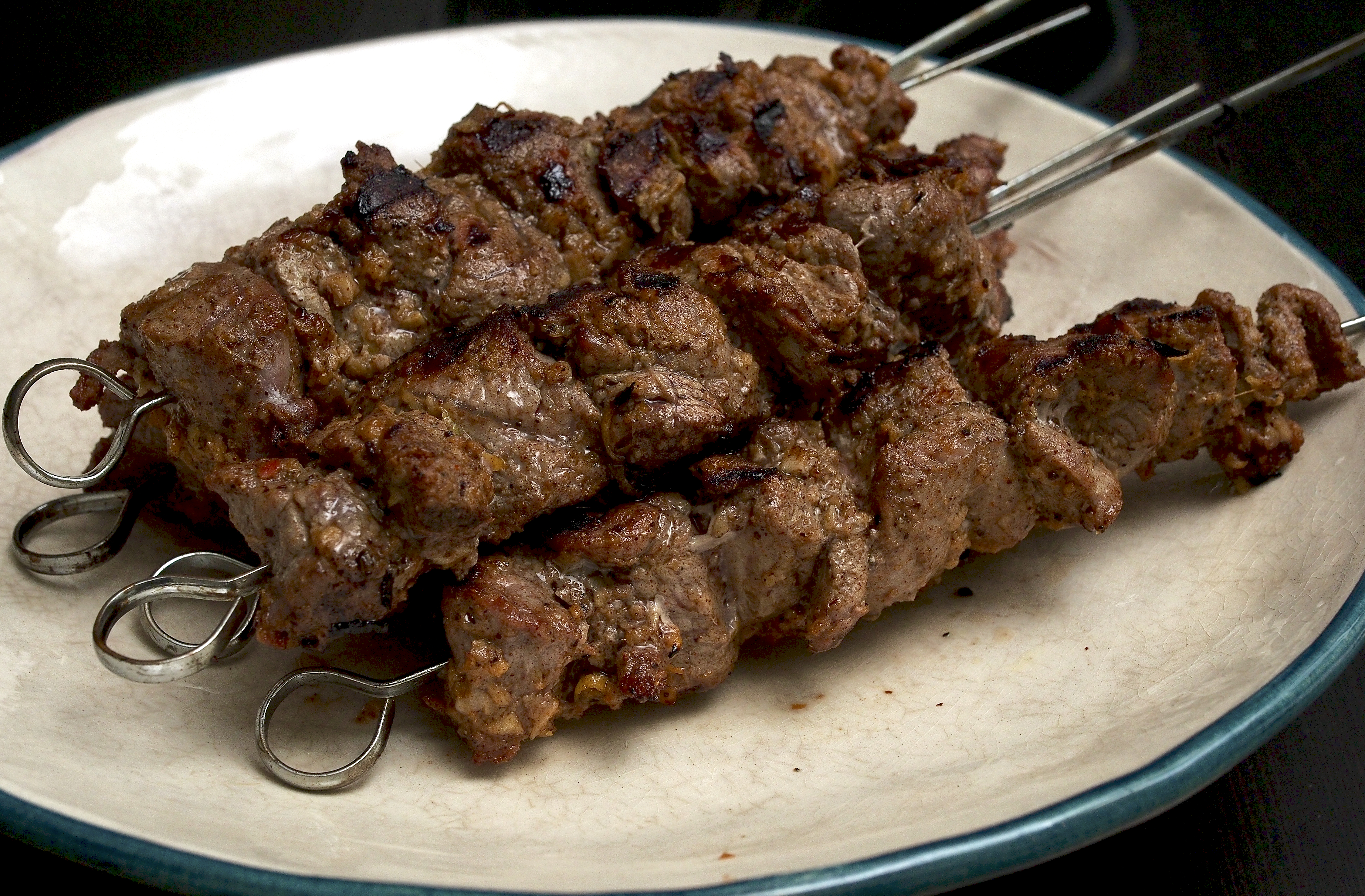
Lamb kebabs with cumin & coriander

Delicious Indian kebabs cooked over charcoal. We’ve had an Indian theme going on all week at our house. Serve these with raita and naan breads.

Wine Suggestion: a juicy, easy red with an open texture and something with Syrah/Shiraz and or Grenache strikes a good balance with spices that match the smokey, warmly spiced kebabs. Tonight was the Secateurs Red, a Cinsault Shiraz Grenache blend from Swartland which we’ve not had for a while and I’m not sure why, it was delicious.

Lamb kebabs with cumin & coriander – serves 4

  • 600g lamb shoulder, trimmed and cut into bite-sized pieces
  • 3½ cm piece of ginger, peeled and roughly chopped
  • 3 garlic cloves, roughly chopped
  • 3 tbsp rapeseed oil
  • 1½ tsp ground cumin
  • 1½ tsp ground coriander
  • ½ tsp chilli powder
  • 1 tsp ground cinnamon
  • zest of a lemon
  • 1 tbsp lemon juice

Bash the garlic and ginger in a pestle and mortar with a pinch of salt to make a paste.

In another bowl mix the oil with the ginger and garlic paste, the spices, 1 tsp of salt and the lemon zest and juice. Pour this marinade over the lamb and mix well.

Thread the lamb onto skewers and barbecue for about 10-12 minutes. Rest for a few minutes before serving.

(Original recipe from Made in India by Meera Sodha, Fig Tree, 2014.)

Read Full Post »

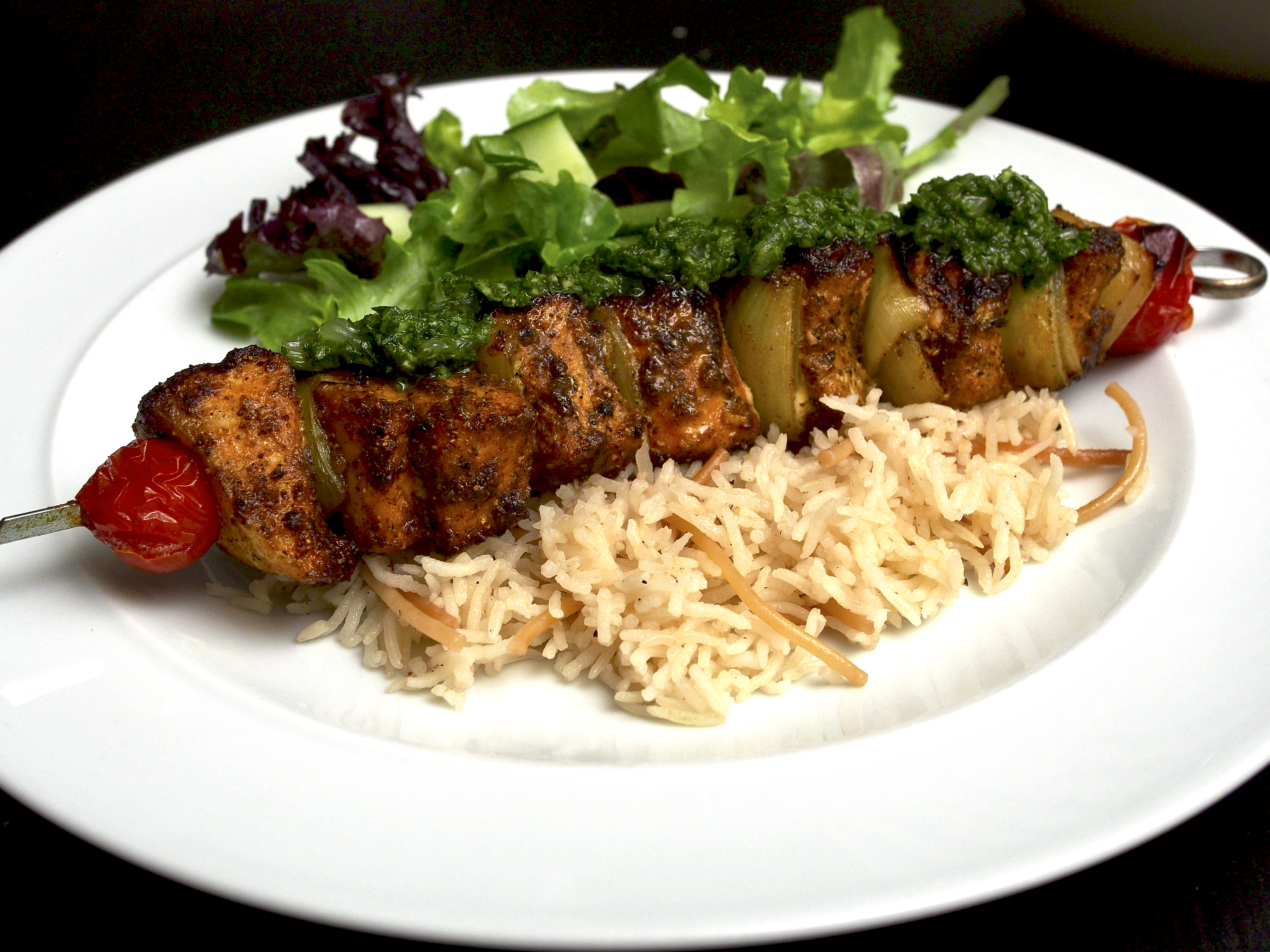
Spiced Salmon Skewers with Parsley Oil

We started these kebabs from the Falastin cookbook on the barbecue and then finished in the oven. Oh my goodness, they’re delicious. This is the best cookbook we’ve bought in ages!! You can make the parsley oil and marinade the salmon well in advance.

Wine Suggestion: to avoid fighting the spices we opened a La Source de Chateau Vignelaure Blanc from Provence. A blend of Vermentino, Semillon and Sauvignon it was uncomplicated joy in a glass; pure freshness with light fruits and a textured core.

Spiced salmon skewers with parsley oil – serves 4

  • 800g salmon fillet (no skin & bones), cut into 4cm chunks
  • 1 tsp ground cardamom
  • 1 tsp ground cumin
  • ½ tsp paprika
  • 1 tsp ground turmeric
  • 2 tsp sumac
  • 3½ tbsp olive oil
  • 2 onions, halved lengthways, then each half quartered into 4 chunks
  • 12 cherry tomatoes
  • 1 lemon, quartered into wedges, to serve

PARSLEY OIL:

  • 40g parsley
  • 1 garlic clove, finely chopped
  • 90ml olive oil
  • 1 lemon, cut off the ends, then remove the skin and cut between the membranes to release the segments

Put the chunks of salmon into a large bowl with the cardamom, cumin, paprika, turmeric, sumac, 2 tbsp of the olive oil, ¾ tsp salt and plenty of black pepper. Mix to coat the fish, then leave in the fridge for at least an hour but it will be fine made earlier in the day and cooked when you need.

Put 1½ tbsp of olive oil into a large sauté pan over a medium-high heat. Add the onions and cook for about 5 minutes, until softened but not coloured, they’ll fall apart and that’s fine. Scoop them out of the pan and set aside.

To make the parsley oil whizz the parsley, garlic, oil, ¼ tsp of salt and plenty of pepper in the small bowl of a food processor for about a minute, or until, smooth. Add the lemon segments and set aside.

Preheat the oven to 230ºC and get your barbecue going (if you don’t want to barbecue you can use a well-greased griddle pan).

Put a tomato onto 4 long metal skewers, then alternate chunks of salmon with pieces of onion. Finish with another tomato at the end.

When the barbecue (or griddle) is smoking hot, add the skewers and grill for 3-4 minutes, turning so they’re charred on all sides. Transfer to a baking tray lined with parchment and put into the preheated oven for 6-7 minutes, or until the salmon is just cooked.

Drizzle over the parsley oil and serve the lemon wedges on the side.

(Original recipe from Falastin by Sami Tamimi and Tara Wigley, Ebury Press, 2020)


Read Full Post »

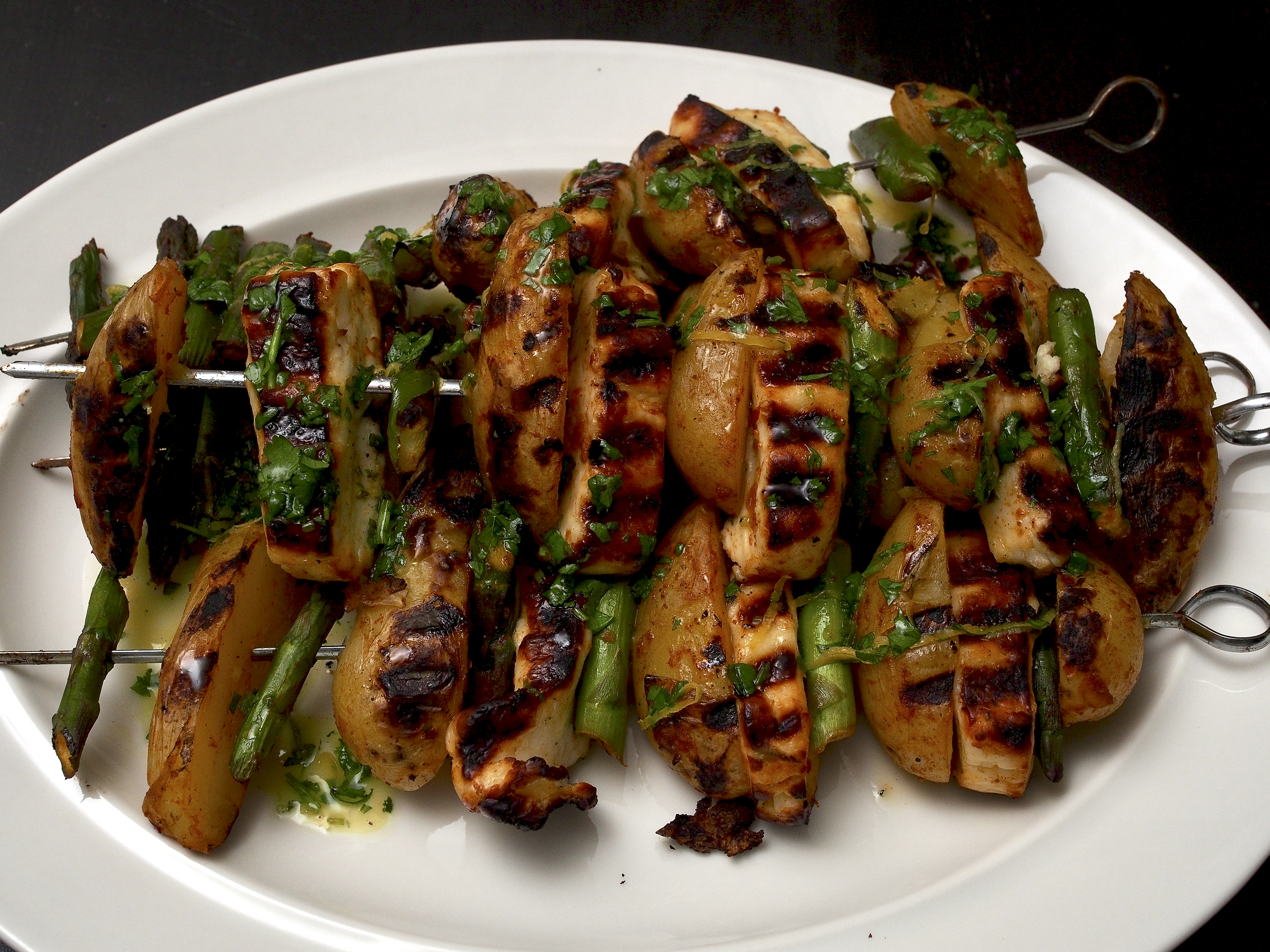
Harissa Potato, Halloumi & Asparagus with Coriander and Lemon Oil

Genevieve Taylor has written a delicious book of vegetarian recipes for the barbecue, and the season has arrived to spend more time outdoors! This is the first recipe we’ve tried and it was really good. Serve with a green salad on the side or as a veggie side with barbecued meat.

Wine Suggestion: A light red wine is what you need here; think a Cabernet Franc, Pinot Noir or something similar. Tonight our choice was an Aussie Pinot, from Pike & Joyce in the Adelaide Hills. Delightful fruit, an earthiness and hints of smoke that compliment the cooking process.

Harissa potato, halloumi and asparagus with coriander and lemon oil – makes 6 skewers

  • 500g salad potatoes e.g. Charlotte, sliced in half lengthways
  • 250g asparagus, snap off the woody end, then cut each spear in 3
  • 2 x 250g packs of halloumi, cut into finger-thick wedges
  • 2 tbsp rose harissa paste

FOR THE CORIANDER AND LEMON OIL:

  • 75ml extra virgin olive oil
  • a small bunch of coriander, leaves finely chopped
  • zest and juice of 1 lemon
  • ½ – 1 tsp caster sugar

Bring a pan of salted water to the boil, add the potato halves and cook until just tender – about 10 minutes. Add the asparagus pieces for the last 30 seconds, just to blanch.

Drain the potatoes and asparagus and return to the pan. Add the halloumi and harissa and stir gently until everything is evenly coated.

Thread onto metal kebab sticks (wooden ones will do but you need to soak them for 20 minutes before using and don’t overload them as these are heavy).

Cook the kebabs on the barbecue over a medium-high heat for about 15 minutes, turning once.

Make the coriander and lemon oil by whisking all the ingredients together with some seasoning.

When the kebabs are cooked transfer to a plate and drizzle over the oil.

(Original recipe from Charred by Genevieve Taylor, Hardie Grant: Quadrille, 2019.)


Read Full Post »

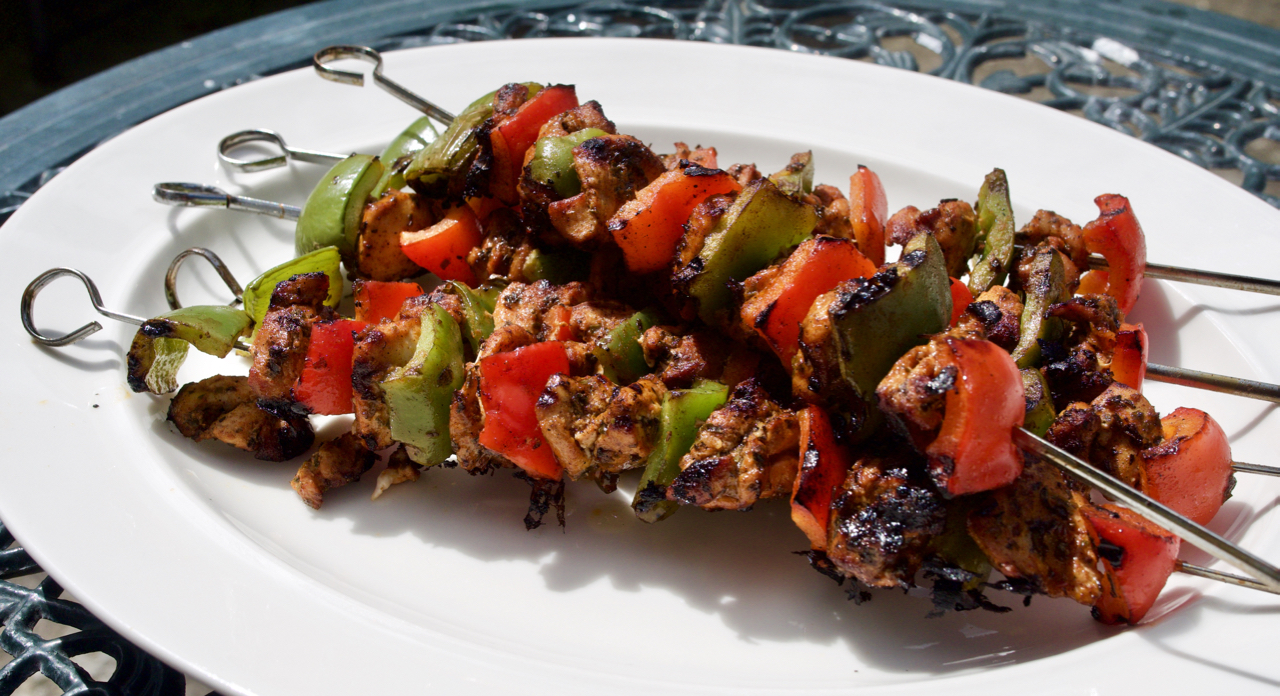
Chicken skewers with oregano

Tastes like Summer! Use chicken thigh fillets if you can rather than chicken breasts as they don’t dry out as easily. Serve with baked potatoes and salads for an easy barbecue for friends.

Wine Suggestion: We’ve found that a little known, but classic combination of Sauvignon Blanc and Chardonnay from Cheverny in the Loire is the perfect match for this. We want to try this with some Greek white’s too being inspired by the dried oregano.

Chicken skewers with oregano – serves 4

  • 8 boneless, skinless chicken thighs
  • 1 red pepper, cut into squares
  • 1 green pepper, cut into squares

FOR THE MARINADE:

  • 2 tbsp olive oil
  • zest and juice of 1 lemon
  • 1 tsp honey
  • 1 tbsp dried oregano
  • 1 tbsp sweet smoked paprika
  • ½ tsp cinnamon

Cut the chicken thighs into 4, trimming off any larger bits of fat.

For the marinade, whisk the olive oil, lemon zest and juice and the honey in a bowl until the honey is dissolved. Add the oregano, paprika, cinnamon and plenty of seasoning. Add the chicken and stir to coat. Cover and leave in the fridge for at least 3 hours or ideally overnight.

Remove the chicken from the fridge 30 minutes before you want to cook. Thread the chicken pieces onto skewers, alternating with the pepper pieces.

Heat the barbecue until very hot, then grill the skewers for 15 to 20 minutes or until cooked through. Baste with the leftover marinade as they cook. Serve with a few lemon wedges if you like.

(Original recipe from The Hairy Bikers’ Mediterranean Adventure by Si King & Dave Myers, Seven Dials, 2017.)

Read Full Post »

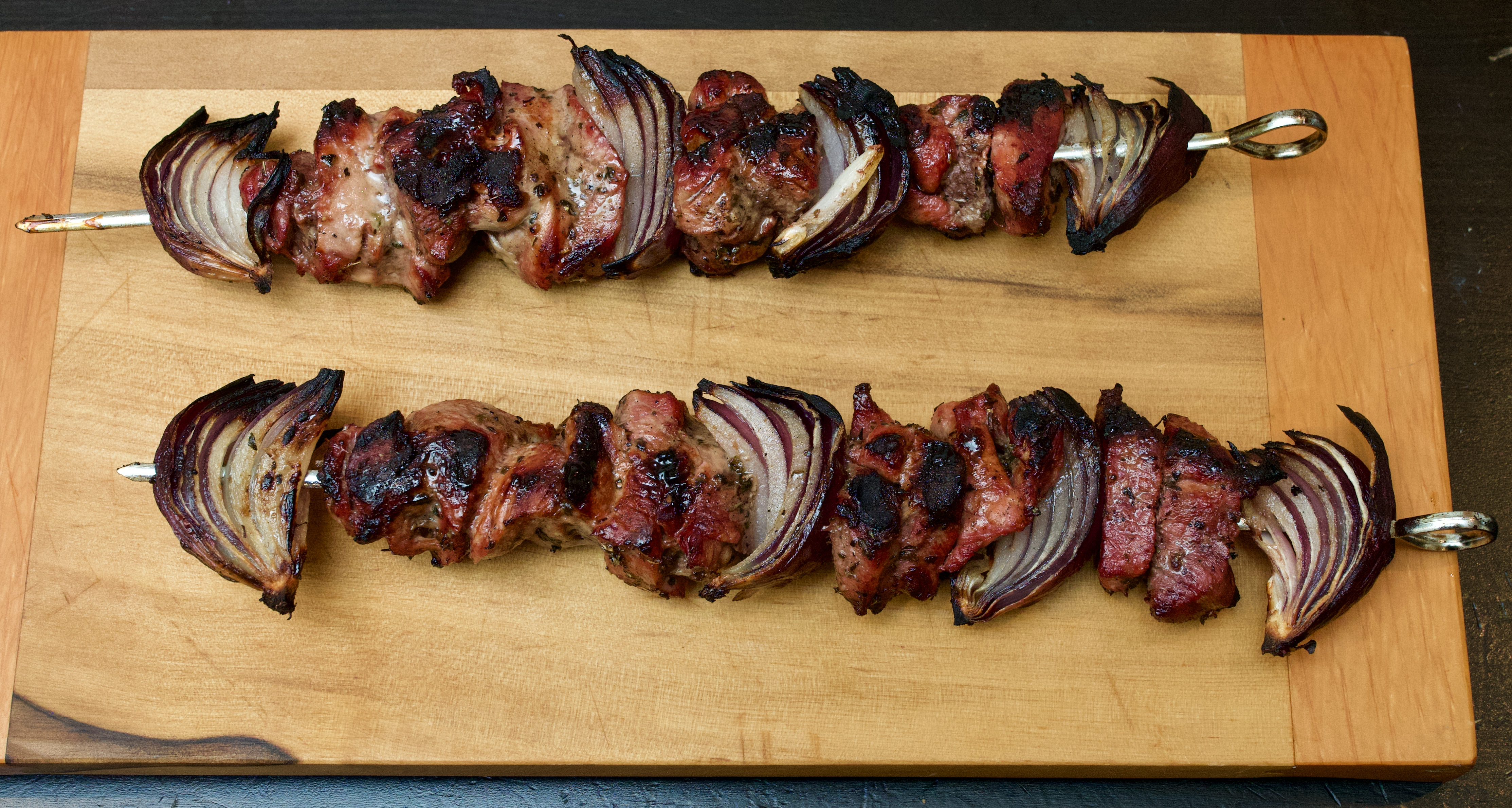
Easy lamb kebabs

These definitely taste best off a barbecue but if you’re not up for that in February then you could cook them on a griddle pan instead. Marinade the lamb up to a day in advance if you can.

Wine Suggestion: A juicy Californian Zinfandel or Italian Primitivo; cheers!

Easiest ever lamb kebabs – serves 4

  • 600g lamb neck fillet, cut into 2cm chunks
  • 2 tbsp olive oil
  • 1 tsp dried oregano
  • 2 red onions, cut into small wedges

Heat the barbecue or griddle pan.

Put the lamb into a large bowl and toss with the oil and oregano. Season with salt and pepper, then set aside for as long as you can (overnight ideally).

Thread alternate pieces of lamb and onions onto metal skewers (you can use wooden skewers either but you need to soak them in cold water for about 20 minutes so they don’t catch fire).

Cook the skewers for about 8 minutes, turning regularly.


Read Full Post »

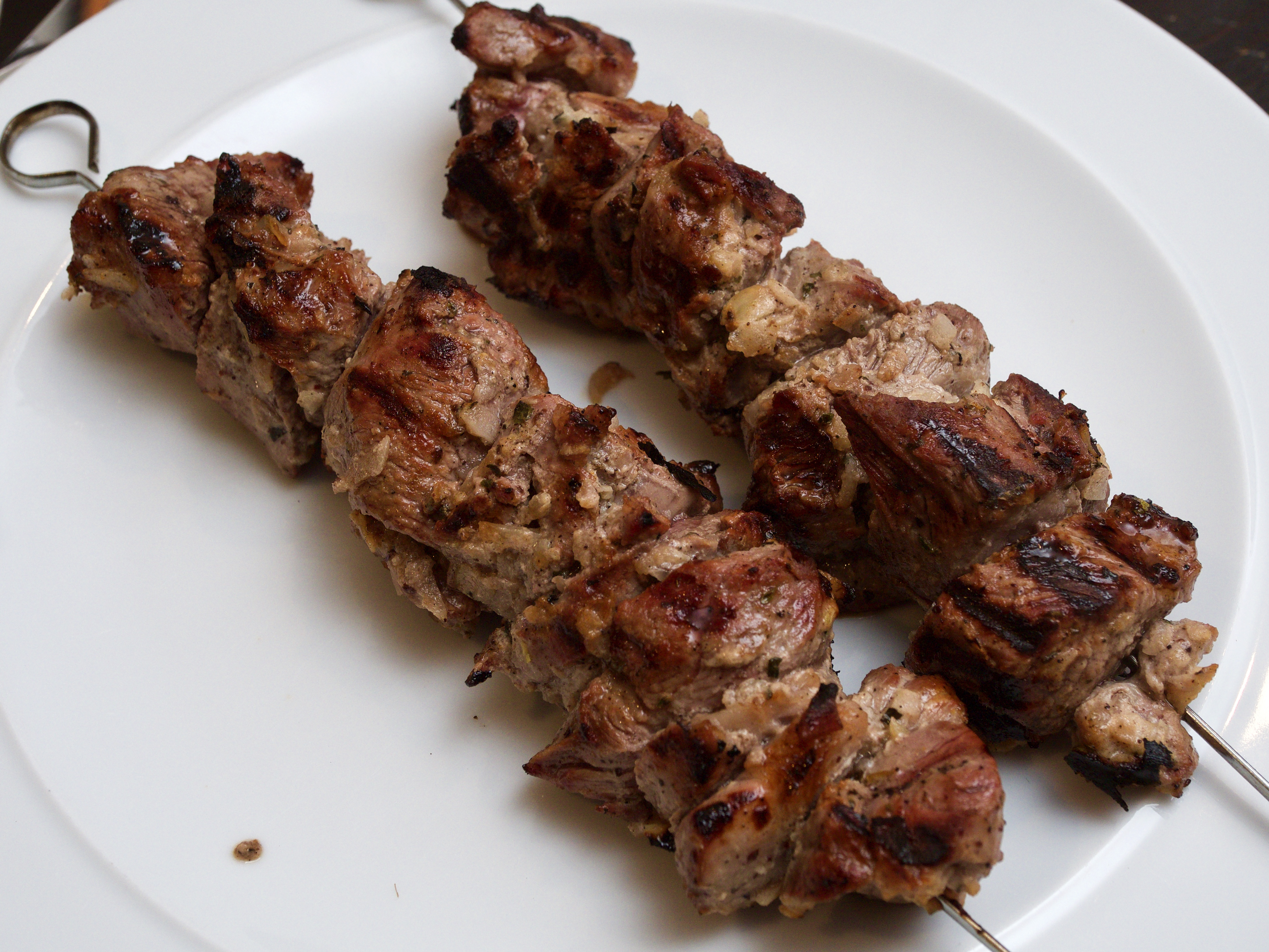
Lamb shoulder kebabs

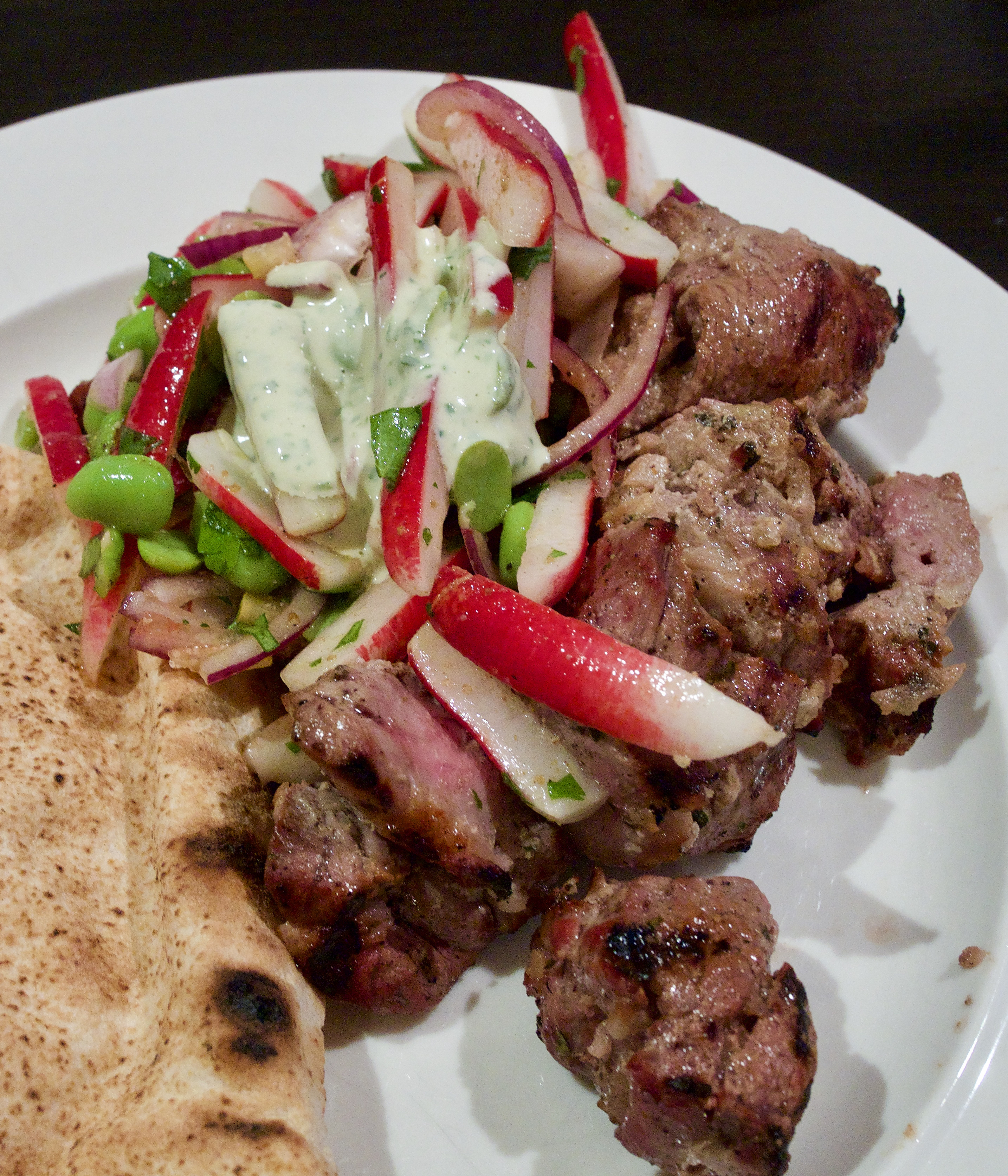
These lamb kebabs from The Saffron Tales by Yasmin Khan are fabulous cooked over hot coals. Ask your butcher for lamb neck, it’s cheap and really tasty. Good served with saffron rice, herby salad and yoghurt with cucumber and mint. They were also good stuffed into some warm flatbreads with a radish and broad bean salad (see pic below).

Wine Suggestion: We chose the Poggio ai Ginepri which is a Cabernet, Syrah & Merlot blend from Bolgheri in Tuscany. The classic Bordeaux blend with the infusion of Syrah creates a balance of power and juiciness that works with the BBQ smokiness and the moist lamb with a good earthy spice that compliments the herbs and spices in the marinade.

Dr Asaf’s Juicy Lamb Kebabs – serves 4

  • 4 tbsp natural yoghurt
  • 1 small onion, finely grated
  • 1 garlic clove, crushed
  • ½ tsp oregano
  • 1 tbsp olive oil
  • ¾ tsp sumac, plus extra to garnish
  • a generous pinch of cayenne pepper
  • 1¼ tsp sea salt
  • 1 tsp black pepper
  • 800g lamb neck fillet, cut into 2.5 cubes
  • 4 tomatoes, halved

Mix the yoghurt, onion, garlic, oregano, oil, sumac, salt and pepper together in a large bowl. Stir in the lamb pieces until well coated then cover with cling film and leave to marinade in the fridge for 2-3 hours. Don’t skip this as it will make the meat nice and tender.

Preheat the barbecue. Thread the lamb onto metal or wooden skewers (wooden ones need to be soaked for about 20 minutes before using). Cook the lamb kebabs and the tomato halves on the barbecue for 5-7 minutes or until cooked through.

Rest the meat for a few minutes and sprinkle with some more sumac before serving.

(Original recipe from The Saffron Tales by Yasmin Khan, Bloomsbury, 2016.)

Lamb kebabs with radish salad

Read Full Post »

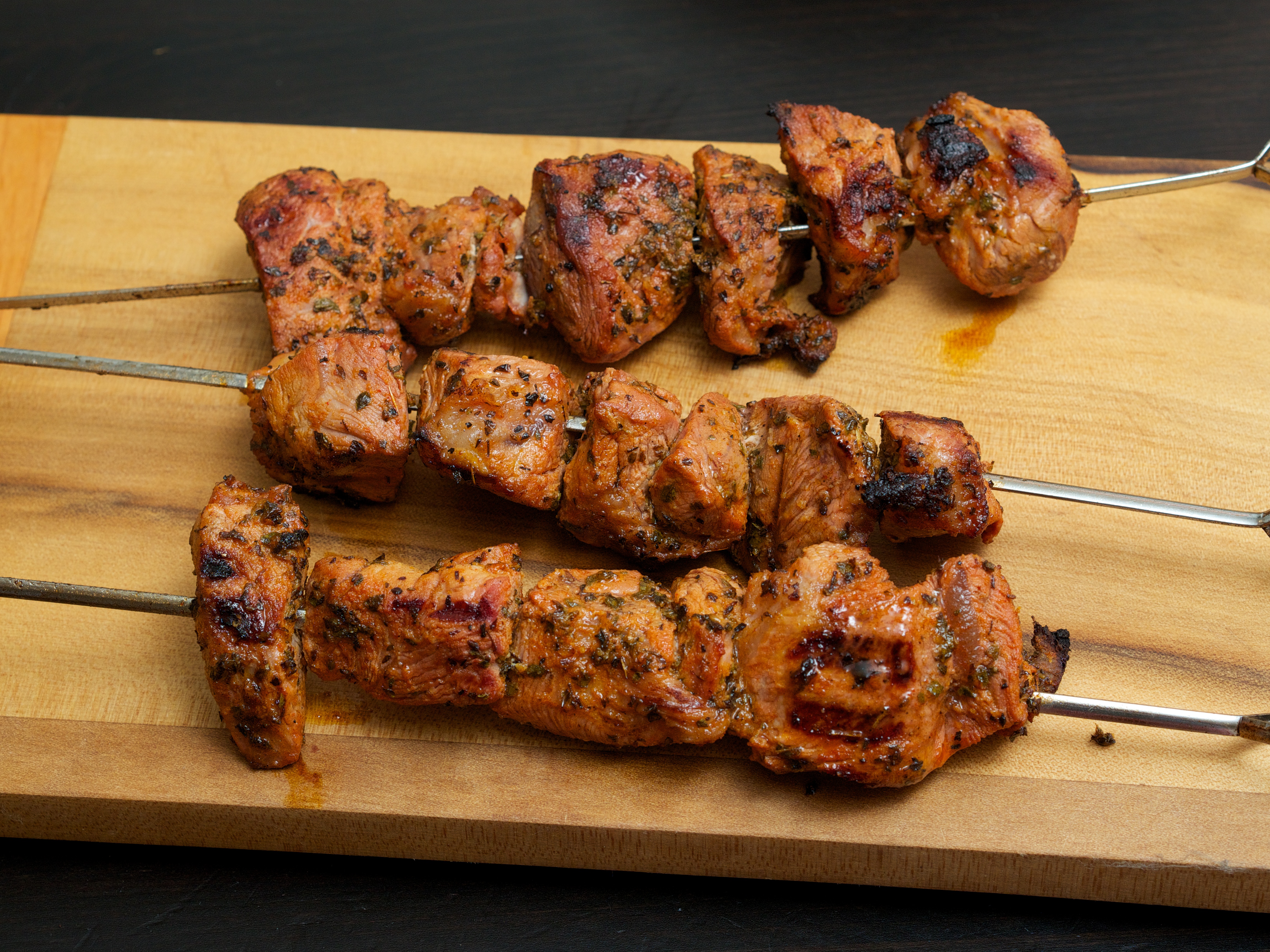
Pork Souvlaki with oregano

Have you got your barbecue out yet? We’ve had a few sunny days in Dublin and the cold breeze is gradually starting to ease; the clocks have gone forward and we’re looking forward to much more time spent outside. We have to confess to using the barbecue all year round and have been caught out in the snow or rain grilling up a feast and this is one of our favourite ideas. Nothing beats some good chips with your souvlaki.

Wine Suggestion: to celebrate the Spring sunshine we broke out a Provence rosé from Chateau Vignelaure, a lovely and serious wine that delivers a great texture and structure as well as summer fruit flavours to inspire us.

Pork Souvlaki with Oregano – serves 4

  • 400g pork shoulder, cut into 3 cm cubes
  • 30ml lemon juice
  • 2 tbsp olive oil
  • 2 tsp dried oregano
  • ½ tsp ground cumin
  • ½ tsp cayenne pepper
  • 1 tsp smoked paprika
  • 1 small garlic clove, grated
  • ½ tsp salt

Mix all the marinade ingredients in a bowl and add the meat. Marinate for an hour or so, then thread onto skewers. Cook on a preheated barbecue for about 10-12 minutes.

(Original recipe from Venice to Istanbul by Rick Stein, BBC Books, 2015.)


Read Full Post »

We recently acquired a recipe book called Prashad: Indian Vegetarian Cooking (thanks Mum). You might remember Prashad as Gordon Ramsay’s best restaurant runner-up on TV a couple of years ago. This is the first recipe we tried from the book and is guaranteed to make your veggie friends happy at your next summer barbecue. Vegetarians often get a bum deal at barbecues, palmed off with a few peppers and onions skewered on a stick. These should right all your past wrong-doings.

Paneer is an Indian unsalted white cheese with a crumbly texture and mild taste that  goes really well with strong flavours and marinades. You can buy it in supermarkets as well as specialist Asian shops.

These are very easy to make but you need to marinade the night before!

Drinks Suggestion: We enjoyed this with both a lager and a citrus-laden Blonde Ale; fresh and summery.

Paneer Tikka – makes 6 skewers 

  • 2 x 250 blocks of paneer cheese
  • 1 medium red pepper,cut into 6 chunky pieces
  • 1 medium green pepper, cut into 6 chunky pieces
  • 1 medium onion, cut into 6 wedges
  • 2 lemons, quartered to serve

MARINADE: 

  • 2-3 green chillies, seeds left in
  • 4-8 garlic cloves
  • 2 handfuls of fresh coriander, chopped fine
  • 2 tsp ground coriander
  • 2 tsp garam masala 
  • 1½ tsp salt
  • 1 tsp trumeric
  • 2 tbsp plain live yogurt
  • 100ml sunflower oil

Finely chop the chillies and garlic then tip into a large bowl and add the other marinade ingredients.

Cut each block of cheese into 9 equal-sized cubes and add to the marinade along with the pepper and onion pieces. Stir to coat, then cover and leave in the fridge overnight.

Thread 6 skewers with 3 pieces of cheese seperated by pieces of pepper and onion. Cook the skewers over a hot barbecue for 20 minutes, until slightly charred, turning every 4-5 minutes.

Serve with the lemon quarters, a green salad and some cucumber and yogurt dip.

(Original recipe from Kaushy Patel’s Prashad: Indian Vegetarian Cooking, Saltyard Books 2012.)

Read Full Post »

This is a Basque inspired dish where fresh fish is cooked really simply over hot coals. Firm fish like Monkfish, or Grouper, will not fall apart as easily so make them perfect for barbecuing. Serve with a green salad and some bread.

Barbecue Monkfish Kebabs – to serve 4

  • 1 kg monkfish fillets, cut into large chunks
  • 12 tbsp olive oil
  • 3 large garlic cloves, thinly sliced
  • 1 tsp dried chilli flakes
  • 4 tbsp white wine vinegar
  • 1 tbsp finely chopped parsley
  • 3 tbsp lemon juice

Light the barbecue and wait until it is really hot before you start cooking.

Thread the monkfish onto 4 metal skewers. Make a marinade using 6 tbsp of the olive oil, the lemon juice, 3 tbsp of the white wine vinegar and 1 tsp salt. Brush this lightly over the kebabs and barbecue until the fish is browned and cooked through. Keep brushing with the marinade as the fish cooks.

Put 6 tbsp olive oil, the garlic and chilli flakes into a small pan and heat over a high heat until the garlic turns golden (but don’t let it go brown as it will turn bitter). Take off the heat and stir in the parsley, 1 tbsp white wine vinegar and ½ tsp salt. Drizzle over the fish and serve.

Drink with: a chilled glass of Txakoli if you can find it. This Basque speciality is hard to find outside Spain but an Albarino from Galicia makes a more than satisfactory substitute.

Read Full Post »