Feeds:
Posts
Comments

Posts Tagged ‘Lamb’

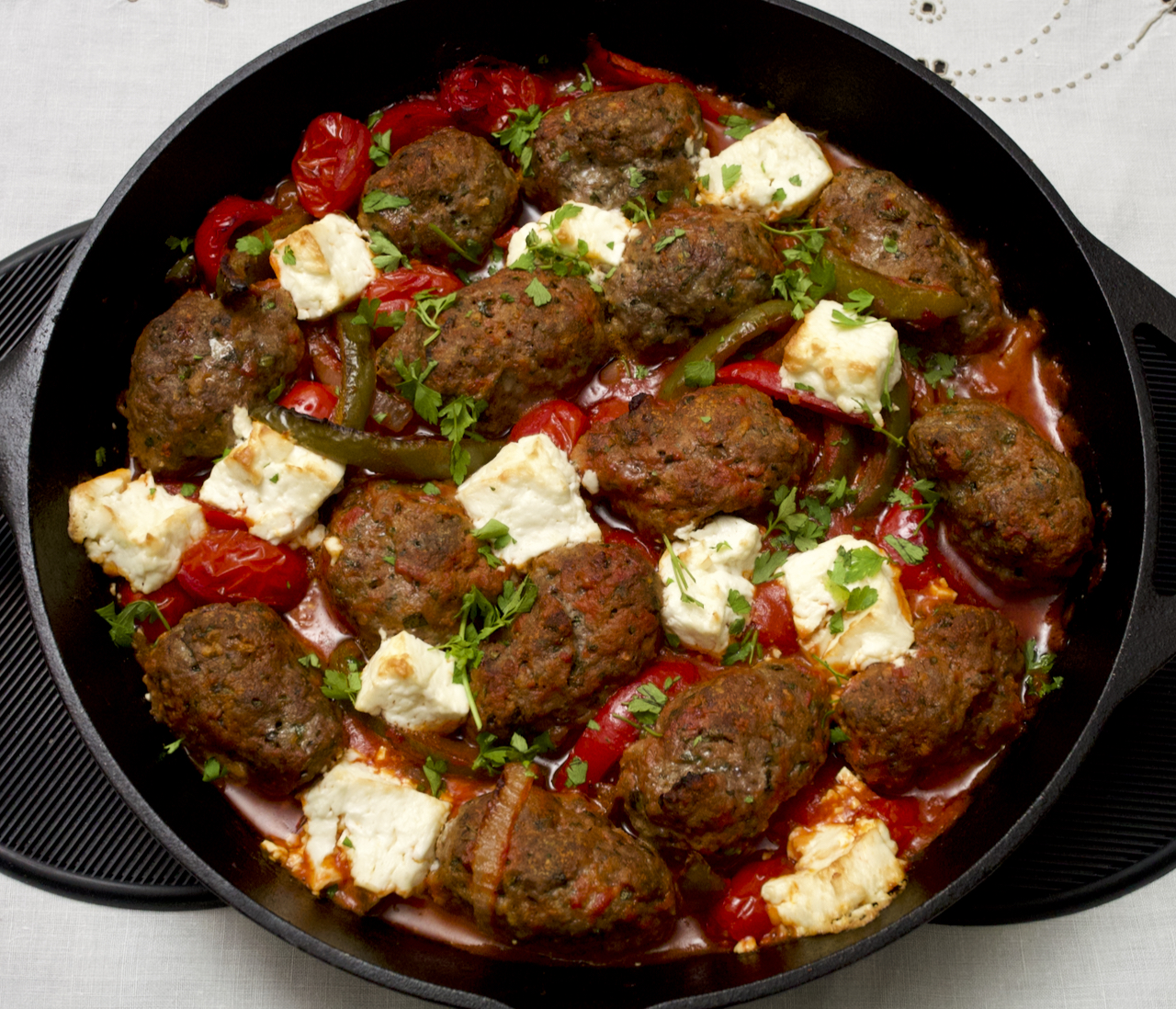
Some bold and tasty flavours in this dish by Noor Murad — lamb koftas baked with sweet peppers, salty feta, and oregano. This is minimal fuss for maximum payoff. Another standout from Noor’s beautiful new book, Lugma, a collection we’re really enjoying cooking from.

Wine Suggestion: Grenache all the way with this one. Tonight, we opened a rare treat, the Edetaria La Personal made from old-vine Garnacha Peluda. You won’t find this particular clone outside of Terra Alta, and we think it’s one to watch in a warming climate. The fine hairs on the backs of the vine leaves help trap humidity and conserve moisture, a clever natural adaptabion. It’s also delicious with the lamb and feta.

Lamb koftas with peppers and feta – serves 4

  • 1 large onion, sliced
  • 1 green pepper, sliced
  • 1 red pepper, sliced
  • 1 tbsp fresh thyme leaves
  • 3 tbsp olive oil, plus a bit extra
  • 1½ tsp sweet paprika
  • 200g Datterini or cherry tomatoes
  • 150g passata
  • 2 tbsp apple cider vinegar
  • ¾ tbsp maple syrup
  • 150g feta, broken into large chunks

FOR THE KOFTAS:

  • 500g lamb mince
  • 40g panko breadcrumbs
  • 20g parsley, leaves and soft stems finely chopped, plus a bit extra to serve
  • 10g oregano leaves, finely chopped, plus a bit extra to serve
  • 3 cloves of garlic, crushed
  • 1 tsp ground cinnamon
  • 1 tsp ground cumin
  • ¼ bicarbonate of soda
  • 1 onion, halved
  • 1 large ripe plum tomato

Heat the oven to 200C fan.

Make the koftas first by adding the lamb mince, panko, herbs, garlic, spices, bicarbonate of soda, 1 tsp of salt and plenty of black pepper to a large bowl. Grate the onion halves on the coarse side of a grater and squeeze out the excess liquid with your hands (it’s easiest in a clean teatowel). Add this to the bowl, then grate the tomato in the same way, straning off the juice through a sieve. Add this to the bowl too.

Grease your hands with a little olive oil and knead the meat mixture for about 4 minutes, then set aside to rest for 20 minutes.

Meanwhile, add the sliced onion, peppers, thyme, 2 tbsp of the oil and ½ tsp salt to a large cast-iron frying pan and mix to combine. Bake for 15 minutes or until starting to brown, then remove from the oven and turn the temperature up to 220C fan.

Divide the meat mixture into 12 pieces, about 55-60g each, and form into torpedo-shaped koftas with oiled hands.

Stir the paprika and the tomatoes into the frying pan.

Whisk the passata, vinegar, maple syrup and ¼ tsp of salt together in a jug, then pour this into the pan.

Add the koftas, then drizzle over the final tbsp of oil.

Return to the oven for 8 minutes, then turn each kofta over. Dot with the feta and bake for 12 minutes or until the feta is nicely browned and the dish is bubbling.

Sprinkle over the extra herbs to finish.

(Original recipe from Lugma by Noor Murad, Quadrille, 2025.)
Read Full Post »

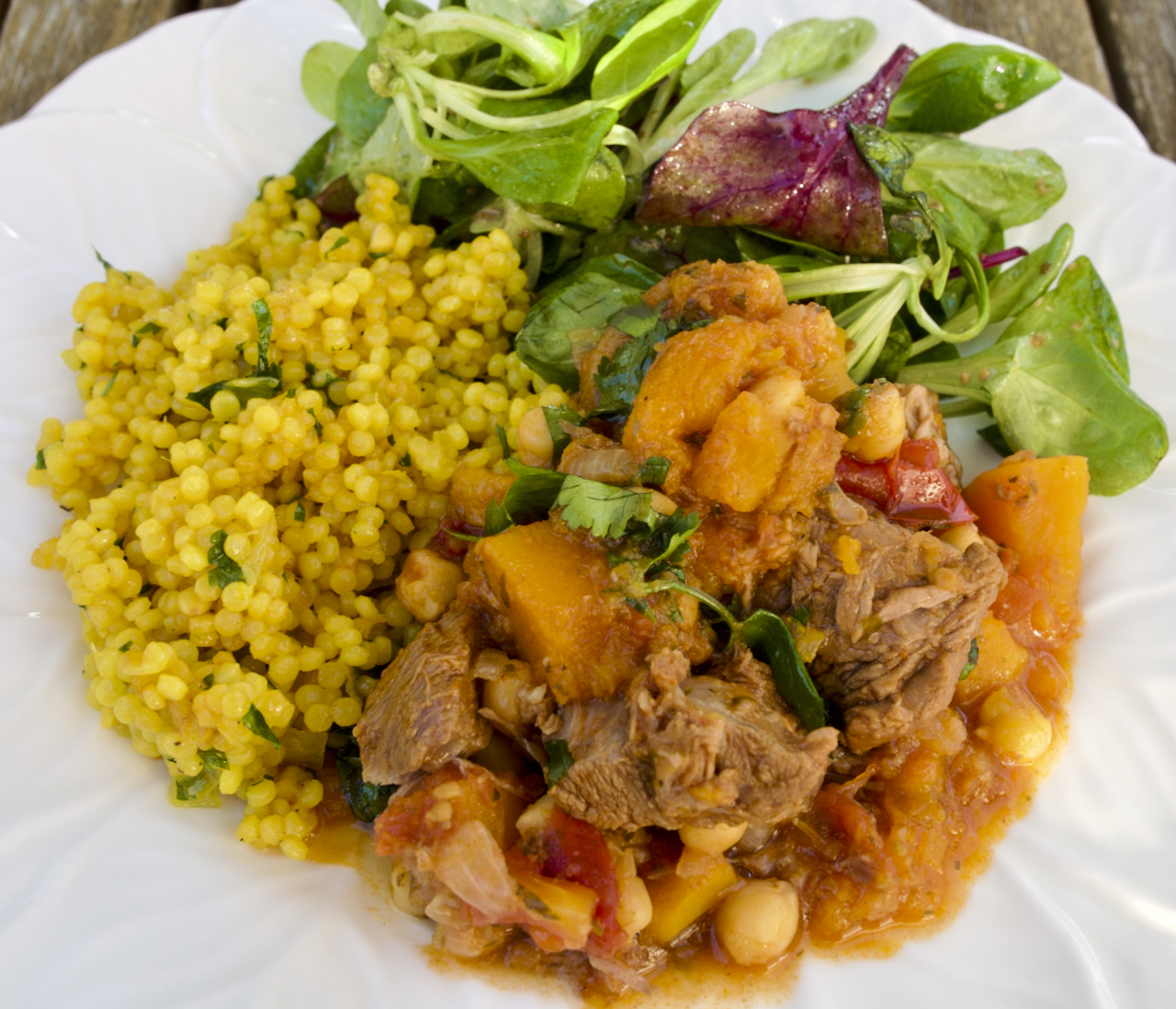
A few fresh apricots during their short season really enhance this lamb tagine. We served with giant couscous cooked with shallot, turmeric, parsley, lemon zest and pine nuts. You need to marinade the lamb overnight (or for at least 2 hours).

Wine Suggestion: we think tagines go well with Grenache based wines, either white or red, and so opened the Edetària via Edetana White which is old vine Garnacha Blanca from unique vineyards in Terra Alta. It combines both power and an undercurrent of fresh salty mineral texture. There’s always a plush, velvety nature to this grape that makes it feel sophisticated. We keep on saying we should put this wine into our cellar and find out what happens with a few years age … but it we haven’t yet had the patience to find out.

Lamb and Apricot Tagine – serves 4

  • olive oil
  • 1 red onion, halved and sliced
  • 600g lamb neck fillet, cut into chunks
  • 1 tbsp tomato purée
  • 3 ripe tomatoes, chopped
  • 10 soft dried apricots
  • 300g butternut squash, cut into chunks (not too big)
  • a small jar of chickpeas, drained and rinsed
  • 2 apricots, stoned and cut into wedges
  • coriander, to serve

FOR THE MARINADE:

  • a small bunch of coriander, finely chopped
  • 1 tsp hot smoked paprika
  • 1 tsp ground cumin
  • 2 tsp ground coriander
  • ½ tsp ground cinnamon
  • 1 lemon, juiced
  • 2 cloves of garlic, crushed
  • a small knob of ginger, finely grated

Mix the ingredients for the marinade together in a large bowl. Season, then add the lemon and toss well to coat. Cover and chill overnight or for at least 2 hours.

Heat the oven to 180C/160C fan/gas 4.

Heat a splash of olive oil in a pan and cook the onion over a low-medium heat until very soft. Add the lamb and all of the marinade and cook, stirring, for 5 minutes.

Add the tomato purée, tomatoes and dried apricots, plus 350ml of water. Bring to a simmer then cover and cook for 1 an hour in the oven.

Add the chickpeas and cook for another hour, adding the apricots for the last 10 minutes. Serve with giant or regular couscous and sprinkle with the coriander.

(Original recipe by Janine Ratcliffe in Olive Magazine, June 2025.)

Read Full Post »

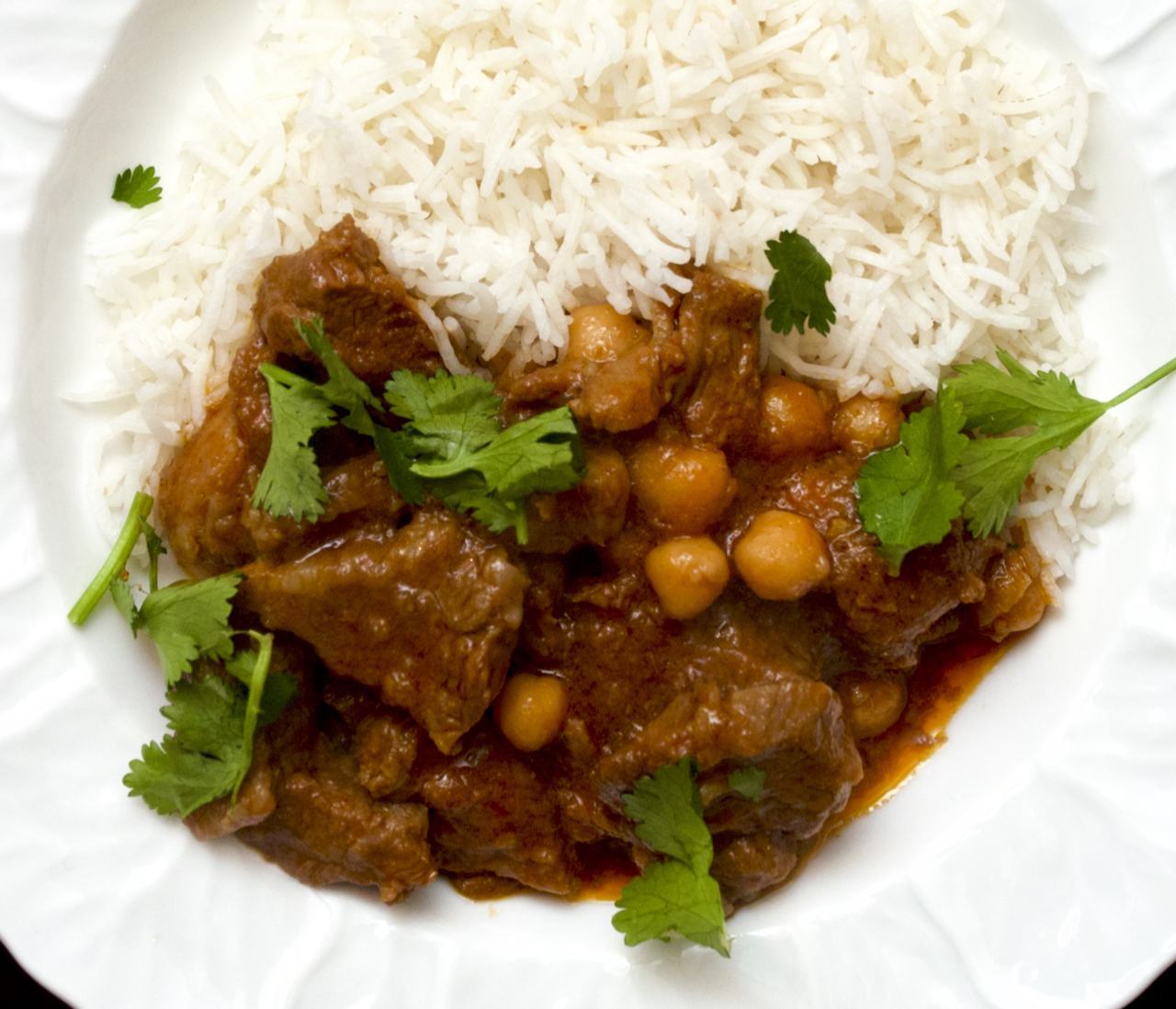
We love a lamb curry and this one uses lamb neck fillet which is a cut that doesn’t take too long to cook and is meltingly tender. Serve with steamed basmati rice.

Wine Suggestion: A juicy red with velvety tannins like Kilikanoon’s Covenant Shiraz which balances ripe plummy fruits with real elegance and finesse.

Lamb and Chickpea Curry – serves 4

  • 1kg lamb neck fillet, cut into large chunks
  • 3 tbsp veg oil
  • 2 large onions, finely diced
  • 4 garlic cloves, finely grated
  • 7.5cm piece of ginger, finely grated
  • 1 cinnamon stick
  • 5 cardamom pods
  • 5 cloves
  • 1 tsp cumin seeds
  • 1 tbsp ground coriander
  • 2 tbsp garam masala
  • 1 tsp Kashmiri chilli powder
  • 2 tsp salt
  • 2 tbsp tomato purée
  • 400g tin chickpeas, drained
  • coriander leaves, to serve

Heat the oil in a a large casserole over a medium-high heat. Add the onions and cook for at least 10 minutes or until softened and turning deep golden brown.

Turn the heat down a bit and add the garlic and ginger. Stir for 2 minutes, then add the whole and ground spices and the salt. Cook for another 2 minutes before stirring in the the tomato purée and cooking for 2 minutes more.

Add the lamb with 250ml water and bring to a simmer. Reduce the heat and cover with a lid. Cook gently for 15 minutes, then remove the lid and stir. Cook, uncovered, for 30 minutes more, stirring every 10 minutes.

Add the chickpeas and cook for another 15 minutes or until the lamb is very tender. Season to taste.

Serve with steamed rice and the coriander sprinkled over.

(Original recipe from Tom Kerridge Cooks Britain, Bloomsbury Publishing, 2024.)

Read Full Post »

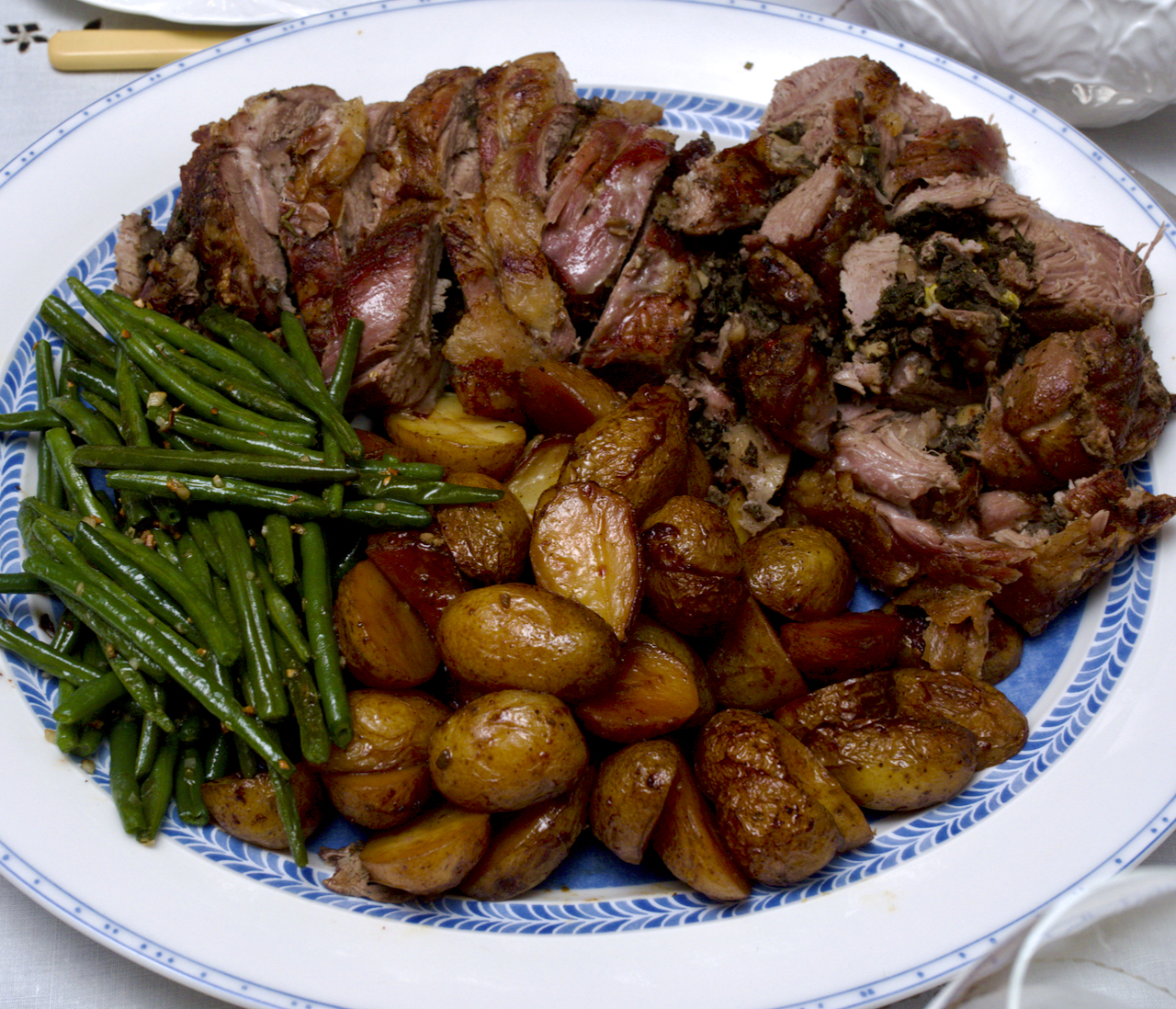
You freeze the stuffing here before rolling up with the the lamb and tying with string – genius! Pretty much a one pot-dish then and you can easily get your beans ready in advance and re-heat with the garlic to serve.

Wine Suggestion: The combination of lamb, nuts and mushrooms lends itself to a good old-vine northern Rhône Syrah like Domain Coursodon’s Olivaie, a St Joseph from one of the best vineyards in this appellation. We opened one 5 years old and it had come together nicely with a rich and velvety texture, hints of plum, raspberries and olives on the nose and a charming length and balance.

Lamb shoulder with potatoes and garlicky green beans – serves 4 with leftovers

  • 1.5kg boneless lamb shoulder
  • 1½ tsp fine sea salt
  • 1 tsp freshly ground black pepper
  • 2 tsp extra virgin olive oil

FOR THE STUFFING:

  • 1 tbsp unsalted butter
  • 2 shallots, finely chopped
  • 3 cloves of garlic, crushed
  • 300g button mushrooms
  • 100g baby spinach, roughly chopped
  • 3 tbsp skinned hazelnuts
  • 3 tbsp pistachios (plus some extra chopped to serve)
  • 1½ tbsp finely chopped parsley
  • 1½ tsp finely chopped rosemary
  • 1 tbsp lemon zest

FOR THE POTATOES:

  • 1kg baby potatoes, halved or quartered if large
  • 1 tbsp extra virgin olive oil

FOR THE GRAVY:

  • 2 tbsp flour
  • 375ml beef stock
  • ¼ tsp dark soy sauce

FOR THE GREEN BEANS:

  • 500 green beans, trimmed
  • 2 tsp fine sea salt
  • 2 tbsp olive oil
  • 4 cloves of garlic, crushed

You need to make the stuffing first and it can be done well in advance and needs to go in the freezer for at least 3 hours.

Heat the oven to 180C/160C fan, then roast the hazelnuts for 8 minutes. Leave them to cool, then roughly chop.

Put the mushrooms in a food processor and whizz until finely chopped.

Melt the butter in a frying pan over a high heat. Add the shallots, garlic and mushrooms and cook for 5 minutes or until any liquid produced by the mushrooms has gone. Add the spinach and stir until just wilted.

Transfer the mushroom mixture to a bowl and allow to cool for 20 minutes, then stir in the remaining stuffing ingredients and season with salt and pepper.

Pile the stuffing onto a piece of cling film, then shape into a long log (about the length of a 30cm ruler). Roll up tightly with the cling film then put into the freezer for at least 3 hours (this can be done a couple of days in advance).

Take your lamb shoulder and place fat-side down . Cover with cling film and use a rolling pin to pound it into a rectangle (roughly 40cm x 22cm) and try to make it as even thickness as possible.

Sprinkle the lamb with salt and pepper, then unwrap the frozen stuffing and roll it up tightly with the lamb, finishing with the seam down.

Secure the lamb with kitchen string every 2cm (ours looked pretty terrible at this point but don’t fear, it will look perfect when cut out at the end).

Heat the oven to 220C/200C fan.

Rub the lamb roll with the olive oil and sprinkle over some salt and pepper.

Toss the potatoe with salt, pepper, and olive oil in a large roasting pan, then place the stuffed lamb on top.

Roast for 30 minutes, then turn the heat down to 160C/140C fan and cook for 2½ hours, or until the meat can be pulled apart easily with a fork.

When the lamb is close to ready, cook the beans. Bring a large saucepan of water to the boil with 1 tsp of salt. Add the beans and cook for 4 minutes, then drain and rinse under the cold tap and drain well.

Remove the lamb and potatoes and loosely cover with foil, while you make the gravy.

Discard all but 3 tbsp of the fat from the pan, you can add a bit of butter if there isn’t enough fat.

Put the roasting tin on the hob over a medium heat. When the fat is hot, stir in the flour for 1 minute.

Keep stirring while you slowly add the stock. Add the soy sauce and stir continuously until it thickens to a gravy-like consistency. Taste and season to taste.

Finish your green beans by heating the oil in a large frying pan over a medium heat. Add the green beans and garlic and stir for 2 minutes until the garlic is cooked and the beans warmed through. Season with salt and pepper.

Remove the string from the lamb and cut into thick slices.

Serve the lamb on a platter with the gravy, potatoes and garlicky green beans.

(Original recipe from recipetineats)

Read Full Post »

Winter Lamb

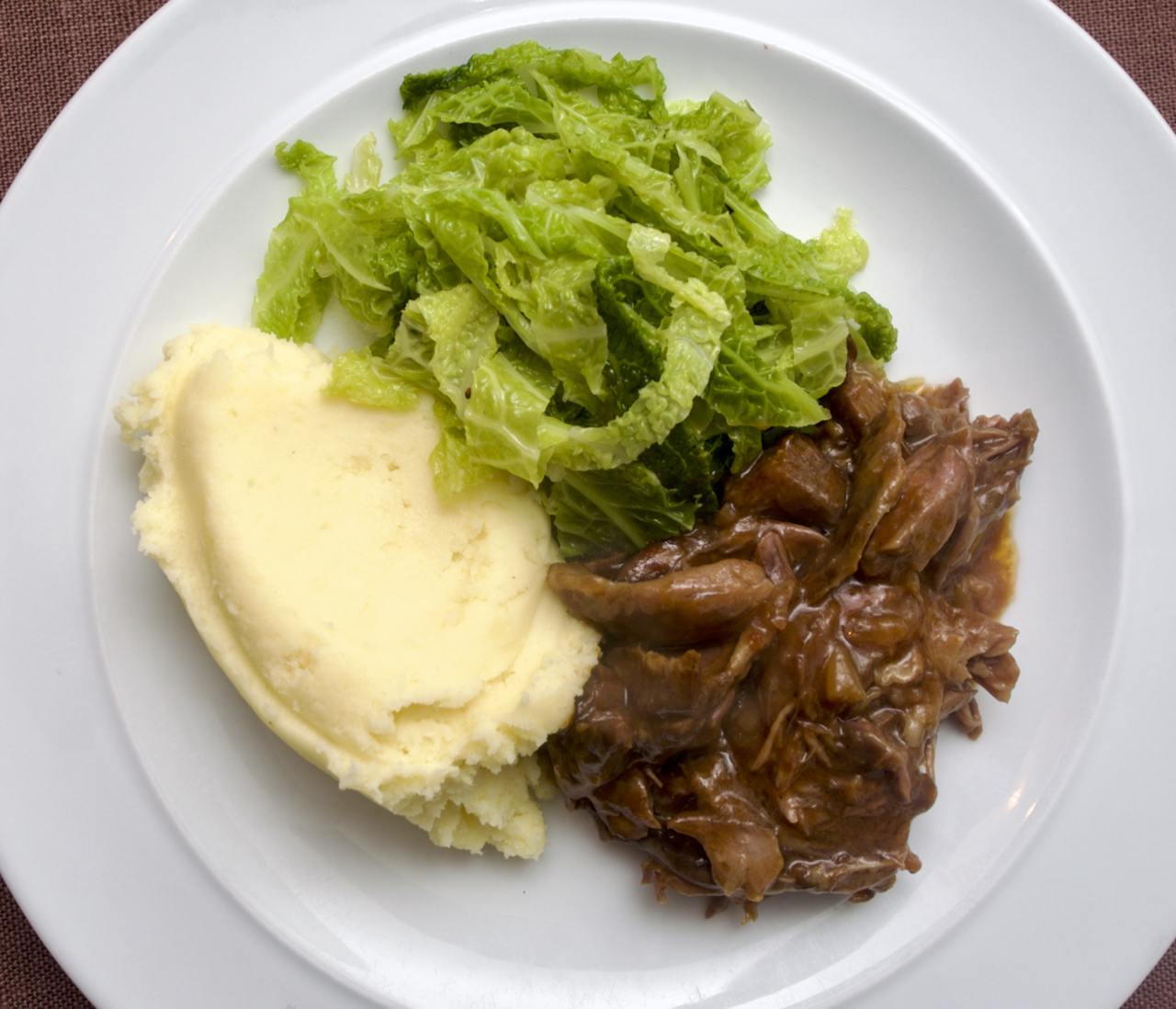
There truly is only one season for this dish. It takes forever, and is best made the day before, but the ultimate comfort food when it’s time to eat.

Wine Suggestion: A good southern Rhône blend will have the muscle and richness to match this without being to heavy or tannic. A firm favourite, though we’ve not opened one for a while (I blame an inquisitive palate) is Domaine du Grapillon d’Or’s Gigondas which is mostly Grenache with a touch of Syrah at it’s core. Brambly red fruits, with both a juiciness and powerful structure in abundance, while remaining elegant and poised.

Winter Lamb – serves 6

  • 2 tbsp olive oil
  • 6 lamb shanks, trimmed of excess fat
  • 2 medium onions, thinly sliced
  • 3 cloves of garlic, crushed
  • 50g plain flour
  • 600ml cold chicken stock
  • 3 tbsp sun-dried tomato paste
  • 150ml red wine or Port
  • 3 tbsp soy sauce
  • 1 tbsp chopped thyme leaves
  • 1½ tbsp balsamic vinegar

Ideally start the day before and heat the oven to 160C/140C fan.

Heat half the oil in a large, deep, ovenproof saucepan or casserole. Brown the shanks all over, you will probably need to do this in batches. Remove and set aside.

Add the rest of the oil to the pan, then add the onions and garlic, and cook over a high heat for about 5 minutes or until starting to soften. Put the flour into a jug and slowly whisk in the cold stock until smooth. Add to the onion pan with the tomato paste and red wine or Port and bring to the boil.

Return the lamb to the pan, add the soy sauce and thyme, and season with salt and pepper. Stir well, then cover with a lid, and transfer to the oven for 3-4 hours or until the meat is tender and starting to fall off the bone. Stir in the vinegar.

Remove the shanks from the sauce, wrap in foil, and set aside to cool. Pour the sauce into a shallow ovenproof dish, cool, and cover with foil. When the sauce and shanks are completely cool, transfer to the fridge and leave overnight if you can.

To serve, heat the oven to 180C/160C fan. Remove any fat from the surface of the sauce with a spoon and discard. Remove the meat from the bone and leave in chunky pieces. Add the meat to the sauce and cover with foil.

Reheat in the oven for 45-50 minutes or until piping hot.

(Original recipe from Mary Berry Cooks Up a Feast with Lucy Young, DK: Penguin Random House, 2019.)

Read Full Post »

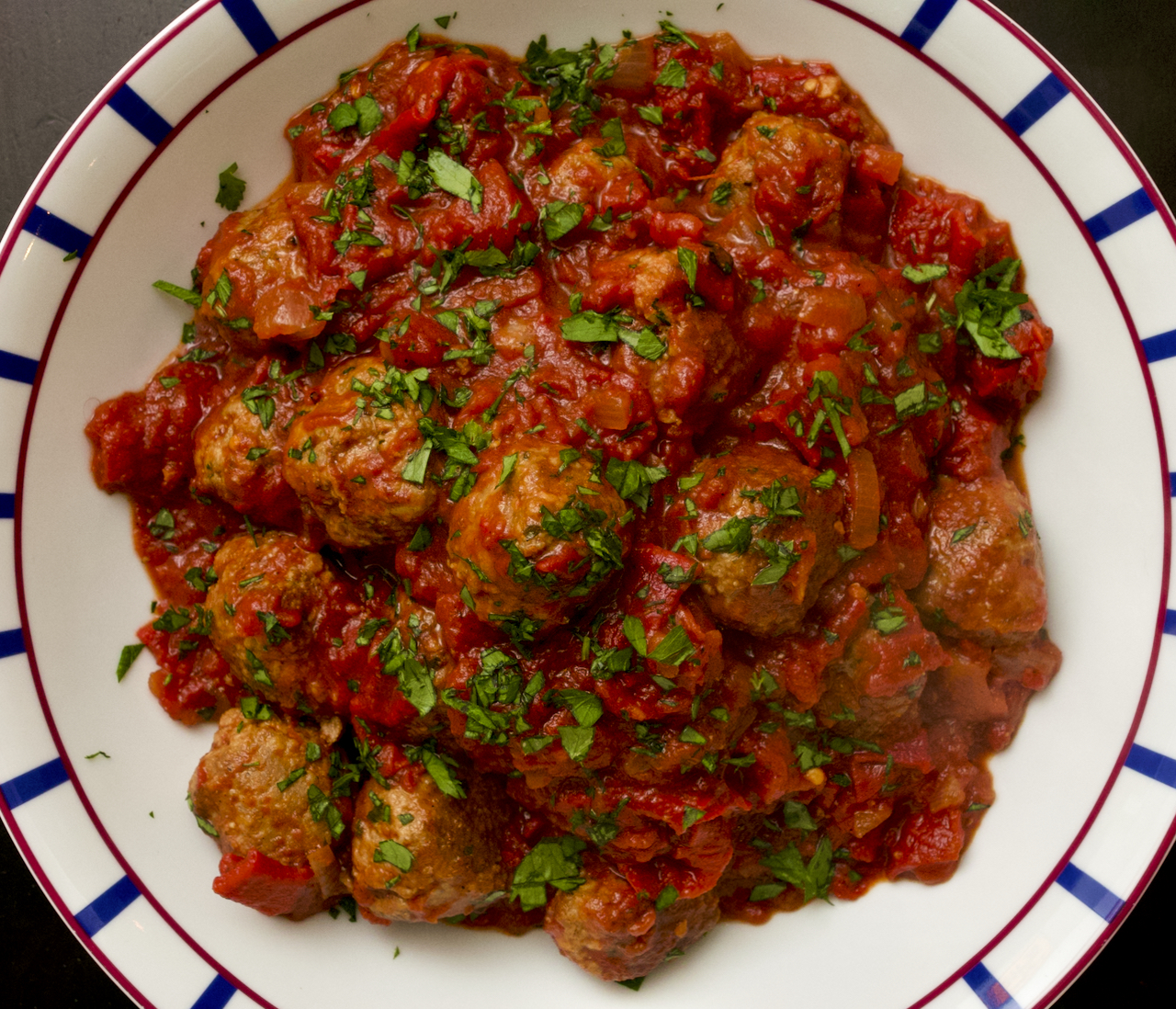
Delicious lamb meatballs with oloroso sherry and piquillo peppers – you need to buy the expensive ones by El Navarrico. Comforting, quick and easy to make. Serve as a sharing dish with crusty bread.

Wine Suggestion: Kimera“, which we picked up in Pamplona earlier this year is a gem made by Luis Moya Tortosa. Old vine Garnatxa which has both depth, refinement and an effortless weight. We once thought Grenache tended to be heavy and alcoholic, but have been proved so wrong as we’ve explored more of this grape the past few years.

Lamb albondigas – serves 4

  • 500g lamb mince
  • 30g fresh white breadcrumbs
  • 2 cloves of garlic, peeled and crushed
  • 1 tsp sweet smoked pimentón de la vera
  • 3 tbsp finely chopped flat-leaf parsley
  • 1 tbsp finely chopped fresh oregano
  • finely grated zest of 1 lemon
  • 1 egg,
  • 1 tbsp olive oil
  • 1 onion, peeled and finely chopped
  • 150ml oloroso sherry
  • 2 x 400g tins chopped tomatoes
  • 2 tsp sherry vinegar
  • 1 x 240g jar piquillo peppers, drained and sliced
  • crusty bread, to serve

Put the lamb mince, breadcrumbs, garlic, pimentón, a third of the parsley, the oregano, lemon zest and egg in a large bowl. Season well, mix with your hands to combine, then shape into 20 small meatballs.

Put the oil into a large frying pan over a medium-high heat, then fry the meatballs, turning often, for about 5 mintues or until browned all over. Transfer to a plate with a slotted spoon.

Add the onion to the pan and cook for 10 minutes, until softened, then add the sherry and bubble until reduced by half. Add the tomatoes, season generously and leave to bubble for 10 minutes. Stir in the vinegar, then return the meatballs to the pan along with the peppers and leave to cook for 15 minutes, stirring occasionally, until the sauce has thickened.

Scatter over the rest of the chopped parsley and serve with the crusty bread.

(Original recipe by José Pizzaro in The Guardian).

Read Full Post »

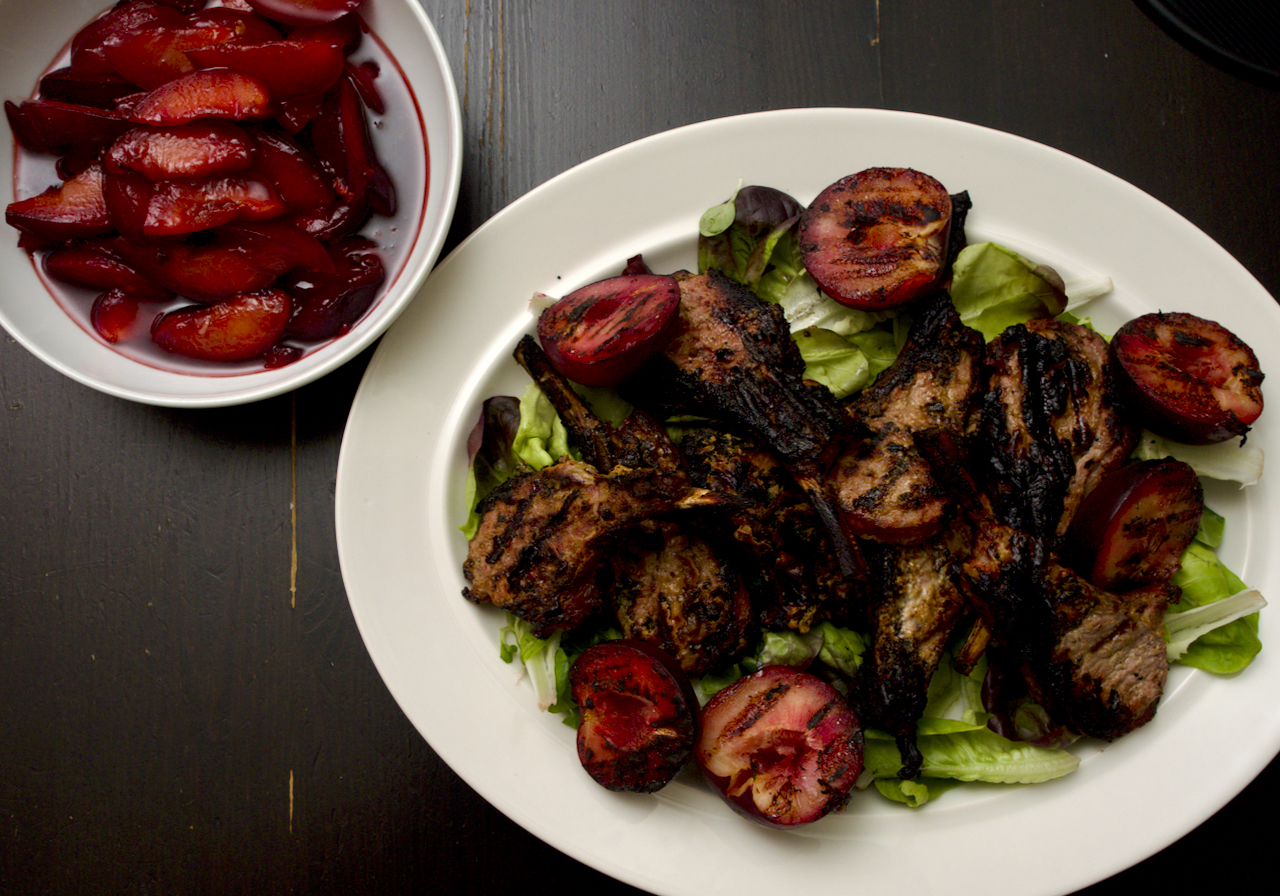
We love barbecuing our food and when a bunch of plums came our way just had to give this a go. We made too much plum sauce and it was lovely at breakfast with our granola, and then with some sausages another night as well. You can make both sauces in advance.

Wine suggestion: we think this worked really well with Domaine Ventenac’s “les Dissidents” Paria, which is a charming Grenache from the south of France near Carcassonne. Bright and minerally, this is perfectly ripe, but steps lightly with a mineral freshness and effortless weight.

Tahini lamb chops with plum sauce – serves 4 to 6

  • 2 racks of lamb, divided into 12-14 single chops
  • 100g lamb’s lettuce or baby chard or similar
  • 4 plums, halved and stones removed

FOR THE TAHINI BBQ SAUCE:

  • 150g tahini paste
  • 1 clove of garlic, crushed
  • 2 salted anchovies, chopped
  • 1 tsp pul biber
  • 2 tbsp pomegranate molasses
  • 100ml water, plus more if needed
  • 1 tsp flaky sea salt

FOR THE PLUM SAUCE:

  • 6 plums, cut into eighths and stones removed
  • 50g sugar
  • 1 clove of garlic
  • 1 whole dried chilli, cracked in half and seed discarded
  • 1 tsp Szechuan pepper
  • 1 bay leaf
  • 3 tbsp pomegranate molasses
  • ½  tsp flaky sea salt
  • 1 tbsp red wine vinegar

Put all of the tahini bbq sauce ingredients into a small food processor and blitz to a smooth thick paste, you might need a little water.

Put the plum wedges, sugar, garlic, spices, bay leaf and pomegranate molasses into a small frying pan, place over a high heat and bring to the boil. Cook for 5 minutes until the plums soften and start to fall apart, then remove from the heat and stir in the salt and vinegar.

When the barbecue is ready to cook on. Brush both sides of the chops with about half of the bbq sauce. Grill the chops for a couple of minutes, then turn them and brush with more sauce. Grill for another 2 minutes then turn and baste again. Repeat this until the chops have been cooking for 6 minutes on each side, then remove and set aside.

Put the plum halves on the barbecue, cut-side down. Grill for about a minute to just warm a little, then remove.

Scatter the lettuce over a large platter and top with the chops and plums. Serve with the plum sauce on the side.

(Original recipe from Chasing Smoke by Sarit Packer and Itamar Srulovich, Pavilion, 2021.)

Read Full Post »

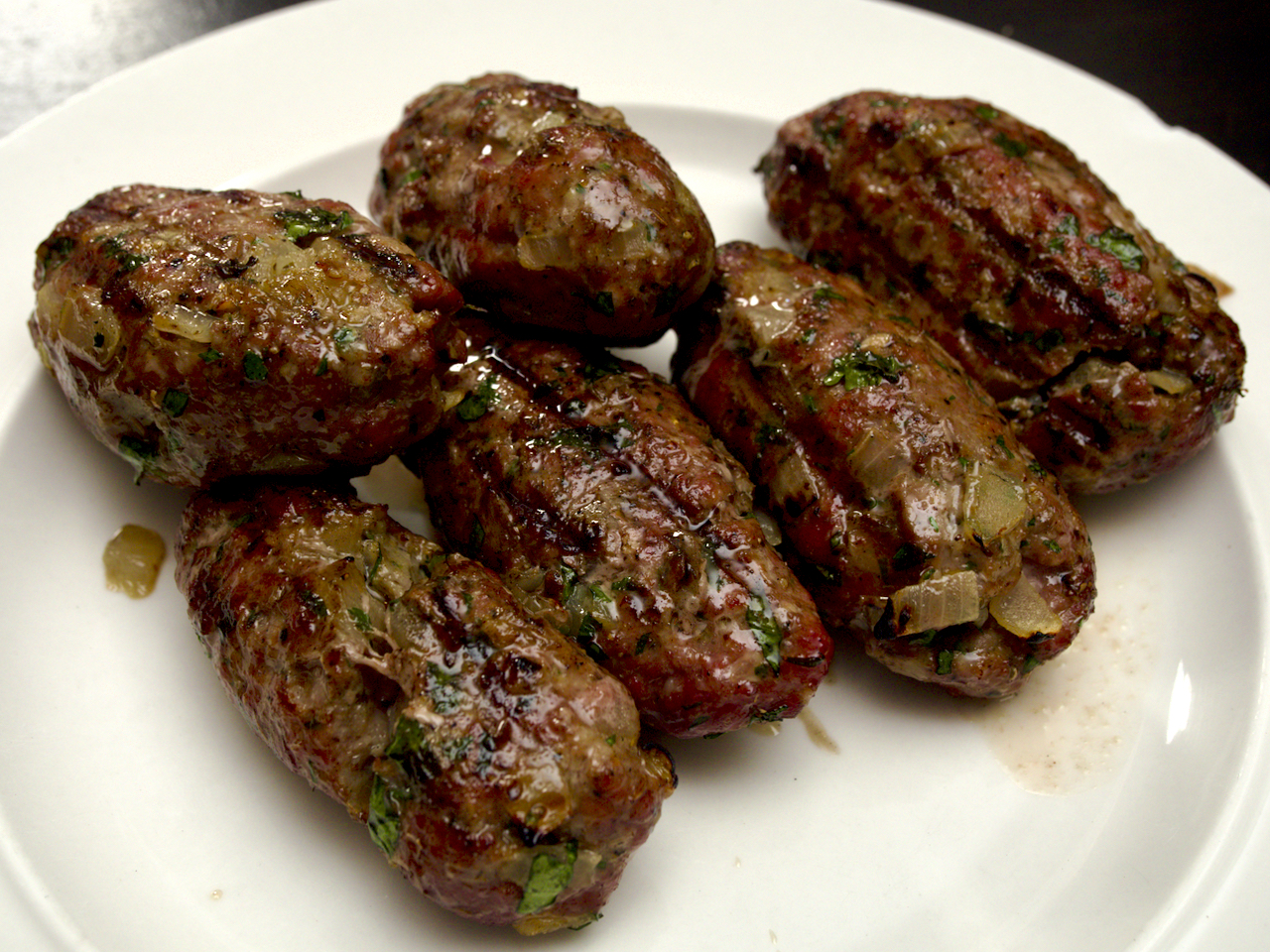
It’s been a funny year for the barbecue, lots of bad weather and then when it turns nice it’s often not in the forecast. Surely, we are due some nice back to school weather and you’ll have the opportunity to cook these tasty koftas.

Wine Suggestion: From an incredibly awarded, but always under the radar Clare Valley winery is Kilikanoon’s Killermans Run GSM. We’re always amazed at the amount of depth and finesse this wine has. With a full-body, but complete balance, this finishes superbly long and weightless. Bravo!

Lamb koftas – serves 4

  • a little vegetable oil
  • 1 onion, chopped
  • 1 tsp cumin seeds, toasted
  • 1 tsp coriander seeds
  • 2 tsp cracked black pepper
  • 2 tsp salt
  • 800g lamb belly, minced
  • 4 cloves of garlic, finely grated
  • 1 tsp ras el hanout
  • 1 tsp ready-made mint sauce
  • finely grated zest of 1 lemon
  • 2 tbsp chopped parsley
  • 1 tbsp chopped coriander
  • lemon wedges and coriander leaves, to serve

Heat the oil in a frying pan on the hob and fry the onion over a medium heat for 8-10 minutes or until soft. Remove the onion from the heat and leave to cool.

Meanwhile, grind the spices and salt together using a pestle and mortar until you have a fine powder.

Put the lamb into a big bowl with the cool onion, garlic, ground spice mix, ras el hanout, mint sauce, lemon zest and herbs. Mix well with your hands.

Divide the mixture into 8 and roll each piece into a sausage-shaped kofta. Lay the koftas on a lined tray and chill in the fridge for an hour to firm them up.

Meanwhile, get your barbecue fired up and ready to cook on.

Place the koftas on the edges of the barbecue so they are over a medium heat – if you put them over the direct flame you might create a blaze when the fat drips off. Cook for about 8 minutes, turning regularly.

When the koftas are cooked, serve them on a platter with some lemon wedges and coriander leaves.

(Original recipe from Tom Kerridge: Outdoor Cooking, Bloomsbury Absolute, 2021.)

Read Full Post »

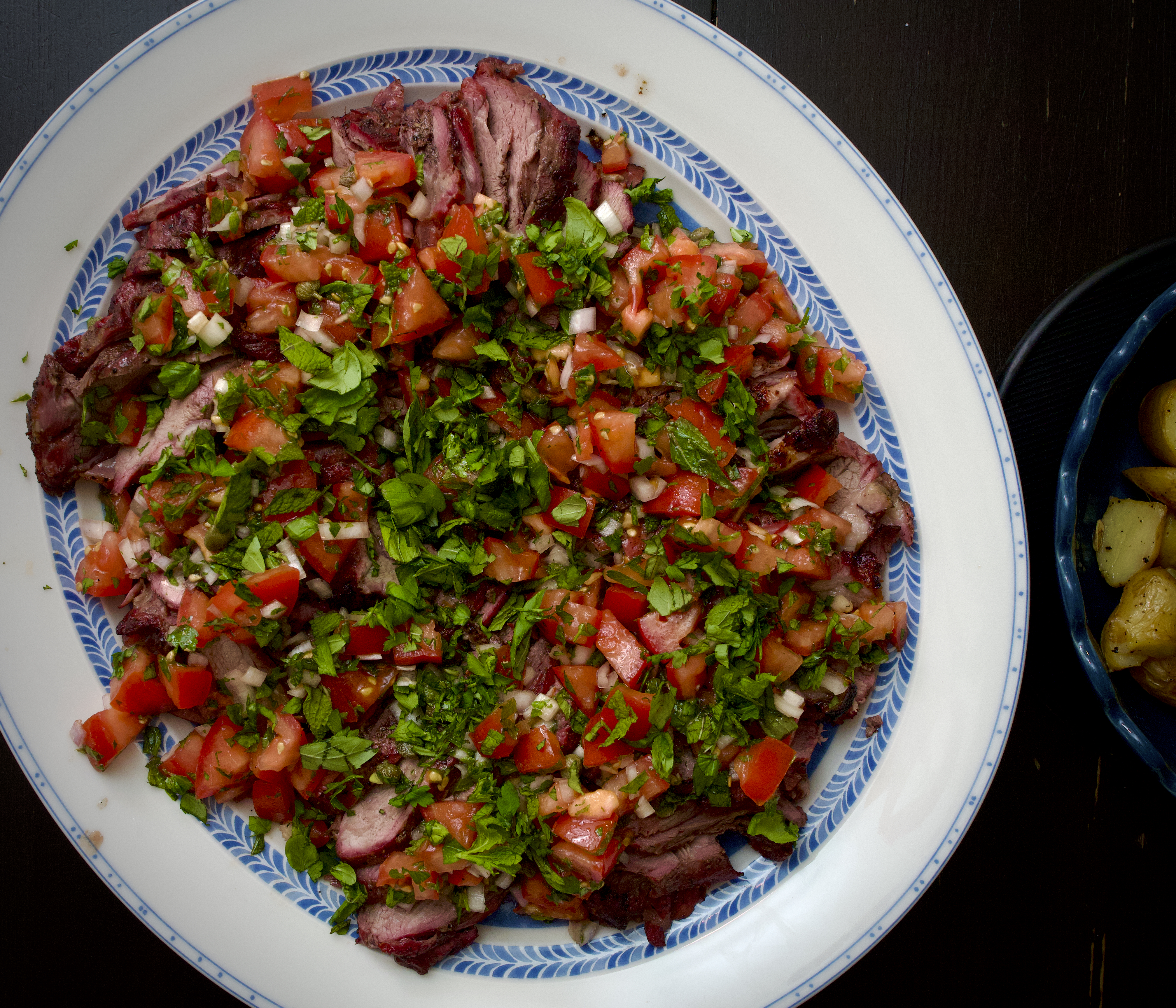
It’s last chance saloon if you want to cook this dish before both the tomatoes and weather turn rubbish. The marinade is added after you cook the lamb.

Wine Suggestion: We think barbecued lamb goes really nicely with Cabernet Franc, so a good excuse to open a bottle of our favourite wine: Chateau du Hureau’s Saumur-Champigny “Tuffe”.

Barbecue Lamb with Tomato & Capers – serves 6

  • 1.5kg butterflied leg of lamb

FOR THE MARINADE:

  • 3 tomatoes, diced
  • 2 large shallots, finely chopped
  • 1 tbsp capers, rinsed
  • a small bunch of parsley, chopped
  • a small bunch of mint, chopped
  • a small bunch of basil, chopped
  • 1 lemon, juiced
  • 2 tbsp olive oil

Mix the ingredients for the marinade together, keeping a small handful of herbs aside to garnish at the end.

Get your barbecue going and wait until the flames have died down. Move the coals to the sides and put a drip-tray in the middle, then BBQ the lamb for 20 minutes on each side.

When the lamb is cooked to your liking, set it on a platter and spoon over the marinade. Cover loosely with foil and leave to rest for 20 minutes. Slice and serve with the marinade and the rest of the herbs.

(Original recipe by Adam Bush & Janine Ratcliffe, Olive Magazine, August 2017.)

Read Full Post »

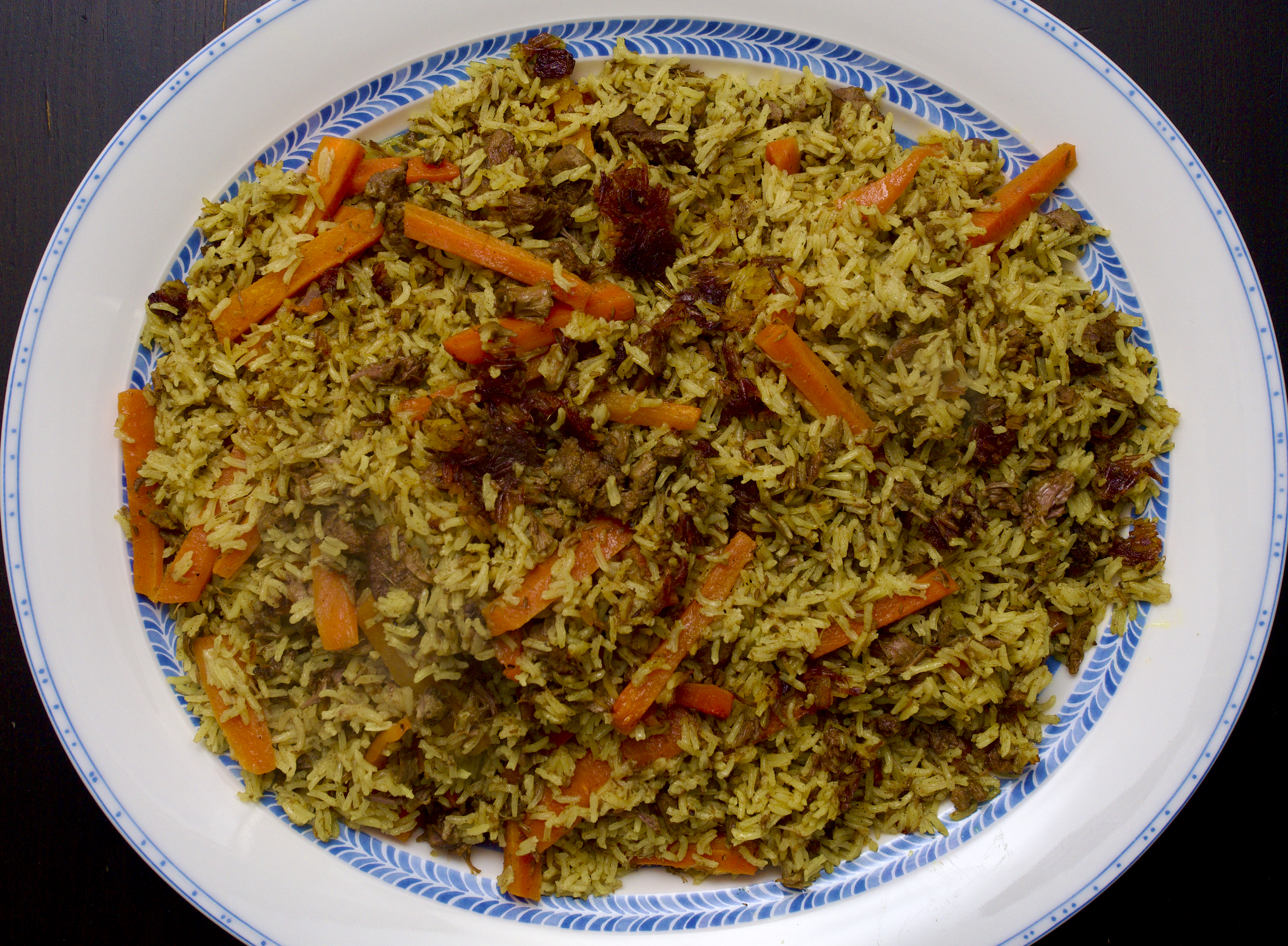
This dish takes hours and it’s kind of hard to know if it’s all going to plan. We kept the faith and had delicious fluffy rice with tender lamb and carrots and a delicious crust on the buttom. Serve with some Greek yoghurt and pickles.

Wine Suggestion: This works well with an earthier red, either lighter and gentle, or an older richer style with a few years in the bottle. If you can fine Domaine Bargylus from Syria then you are in for a treat. The current vintage we have is 2014 (in 2022) and has beautiful rich core with layers of tertiary, warm spices.

Lamb, carrot & cumin rice – serves 6

  • vegetable oil for frying
  • 1 large onion, thinly sliced
  • 700g lamb neck fillet, sliced 1cm thick
  • 2 tbsp cumin seeds
  • 3 tsp ground cinnamon
  • 2 tsp turmeric
  • 1 tsp ground ginger
  • 1 tsp ground cumin
  • 1 tsp cayenne pepper
  • 3 large carrots, peeled and cut into batons
  • 500g basmati rice

Heat a large saucepan over a medium heat and pour in enough oil to cover the base. Sauté the onion until starting to brown at the edges. Stir in the sliced lamb, then add the cumin seeds and other dried spices. Stir to coat the meat in the mixture. Pour in enough boiling water to just cover the meat, then cover with a lid, reduce the heat to low and cook for 2 hours. Remove the lid and cook for another 30 minutes or until cooking. You will need to stir occasionally and add a little more water if needed to stop the meat sticking. Remove from the heat, stir in the carrots and set aside.

Heat a large saucepan over a high heat, fill with boiling water and add lots of salt. Add the rice and parboil for 6 minutes. Empty the rice into a sieve and wash it with cold water until rinsed of starch and cold. Drain well and leave to stand for 10 minutes. Tip into a large bowl.

Rinse and dry the rice pan. Scrunch a large piece of baking paper into a ball, then open it out and use to line the sides and base of the clean pan. Drizzle in enough vegetable oil to generously coat the base of the pan and season the oil with salt.

Add the meat and carrot mixture to the rice, season generously with about 1 tbsp of sea salt flakes and black pepper, then fold together to combine. Gently pile the mixture into the lined pan in a mountain shape. Use the handle of a wooden spoon to to stab a series of holes that go right down to the base of the pan. Wrap the lid in a tea towel, then cover the pan and cook over the lowest possible temperature if using gas and medium-low for electric, for 45-60 minutes. If you have a diffuser for your gas hob you should use it and double the cooking time.

(Original recipe from Sirocco by Sabrina Ghayour, Mitchell Beazley, 2016.)

Read Full Post »

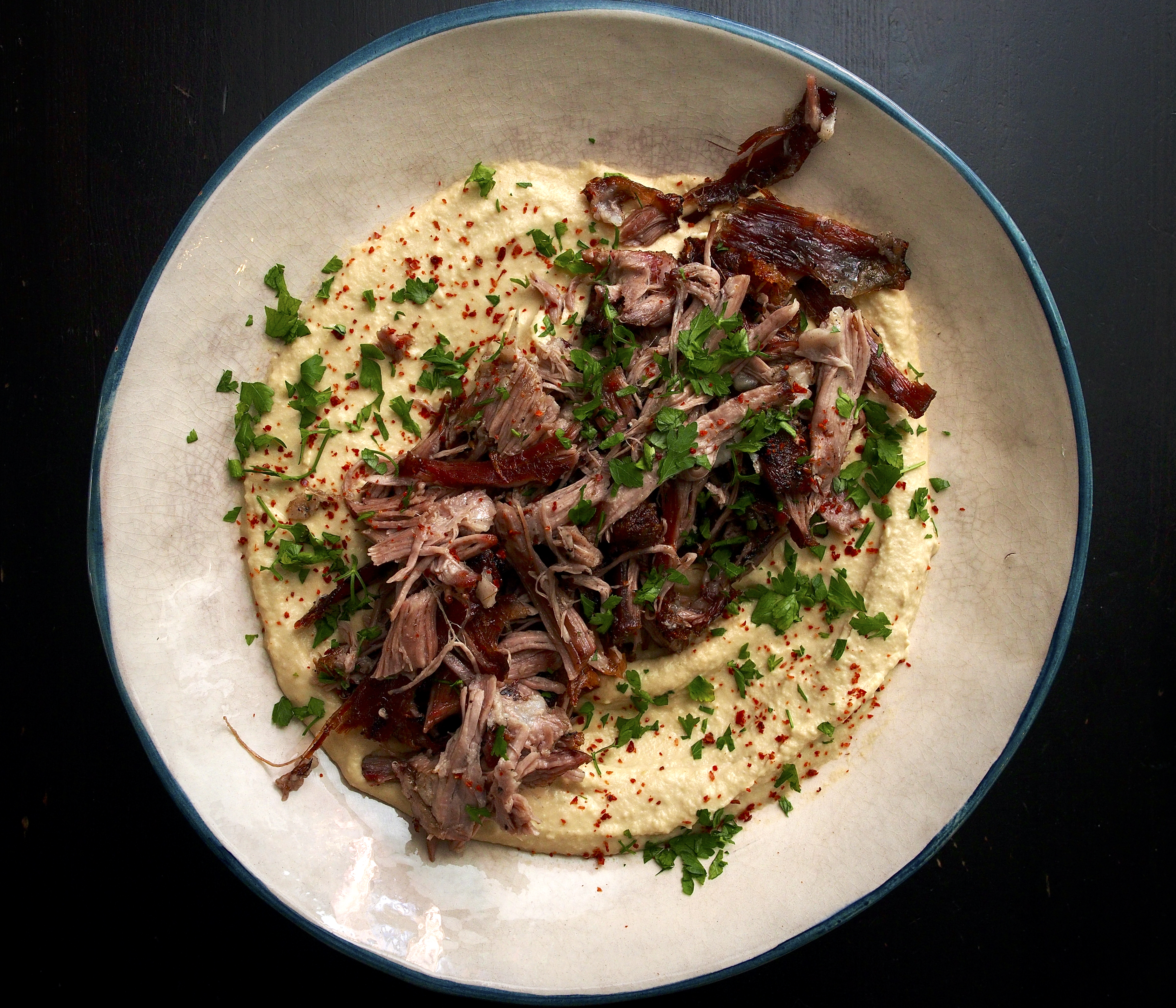
This recipe comes from Chasing Smoke by Sarit Packer and Itamar Srulovich of Honey & Co. in London. This is hands-down the best hummus we’ve ever made (and we’ve made lots) and the crispy lamb belly (poached then finished over charcoal) is fatty but fabulous. It’s good with a simple salad (we went for cucumbers, tomatoes, scallions & Baby gem dressed with olive oil, lemon juice and sumac) and lots of warm pittas. You need to soak the chickpeas the night before.

Wine Suggestion: Anything with a hint of middle-eastern spices or warm sunshine. A Garnacha, or maybe a Tempranillo. Tonight the classic Massaya le Colombier from the Beqaa Valley in Lebanon. A lot has happened in this part of the world and we’re glad to support the friends we’ve met still trying to make great wine despite all the challenges. Well done Sami and Ramzi, bravo!

Crispy lamb on creamy hummus – serves 4 (generously)

FOR THE LAMB:

  • 1 lamb breast on the bone, about 1.5kg
  • 1 tbsp table salt
  • 1 tbsp cumin seeds
  • 1 tsp black peppercorns
  • 2 onions, quartered
  • 1 litre of water

FOR THE HUMMUS:

  • 200g dried chickpeas, soaked overnight in lots of water
  • 1 tsp bicarbonate of soda
  • 1 clove of garlic, peeled
  • 1 tsp table salt
  • 250g tahini paste
  • ½ tsp ground cumin
  • 2 tbsp lemon juice

TO SERVE:

  • a small handful of parsley, chopped
  • 1 tsp biber chilli flakes (or Allepo)
  • pitta breads
  • salad (see suggestion above

Rub the lamb all over with the salt, cumin seeds and peppercorns, then leave in the fridge for a couple of hours. Put the lamb in a large pan with the onions and water. Bring to the boil, then cover with a lid, reduce the heat to low, and simmer slowly for about 1½ hours.

Make the hummus while the lamb is cooking. Drain the soaked chickpeas, then place in large saucepan and cover with plenty of cold water. Bring to the boil and skim off the foam. Allow to boil for 5 minutes, then skim again.

Add the bicarbonate of soda and mix well. Skim it really well this time then simmer for 30-40 minutes, skimming regularly, until the chickpeas are very soft – they should melt in your mouth.

Drain the chickpeas into a colander over a bowl so you can reserve the cooking liquid. You need to finish the hummus now while everything is still hot. Pour 250ml of the cooking liquid over the chickpeas and add the garlic. Now whizz using a stick blender or food processor until really smooth. It will be pretty thick at this stage but not to worry.

Add the salt, tahini, cumin and lemon juice and whizz again until well combined. Give it a taste and add more salt or lemon juice if you like. Cover the surface with cling film to stop a skin forming and set aside. It will be quite liquid but it will thicken as it cools.

Lift the lamb out of the cooking water, keep a few spoonfuls of liquid for serving. The meat should be completely soft and easy to pull from the bones. Carefully (so it doesn’t fall apart altogether) lift it onto a hot charcoal barbecue and cook for about 10 minutes. Turn it over and cook for 10 minutes on the other side. You need to do this over indirect heat or it will burn or catch fire as there is a lot of fat.

To cook over indirect heat pile the charcoal to one side and with the lid on cook the meat on the other side. Despite no direct flames underneath the meat cooks a treat – slower, but no less effectively.

Take the cooked meat off onto a chopping board and shred it with two forks – like crispy duck.

Spread the hummus on a serving platter and top with the lamb and a drizzle of the cooking liquid. Sprinkle with the chopped parsley and chilli flakes and serve with lots of pitta and a salad if you like.

(Original recipe from Chasing Smoke: Cooking over fire around the Levant by Sarit Packer and Itamar Srulovich, Pavilion, 2021.)

Read Full Post »

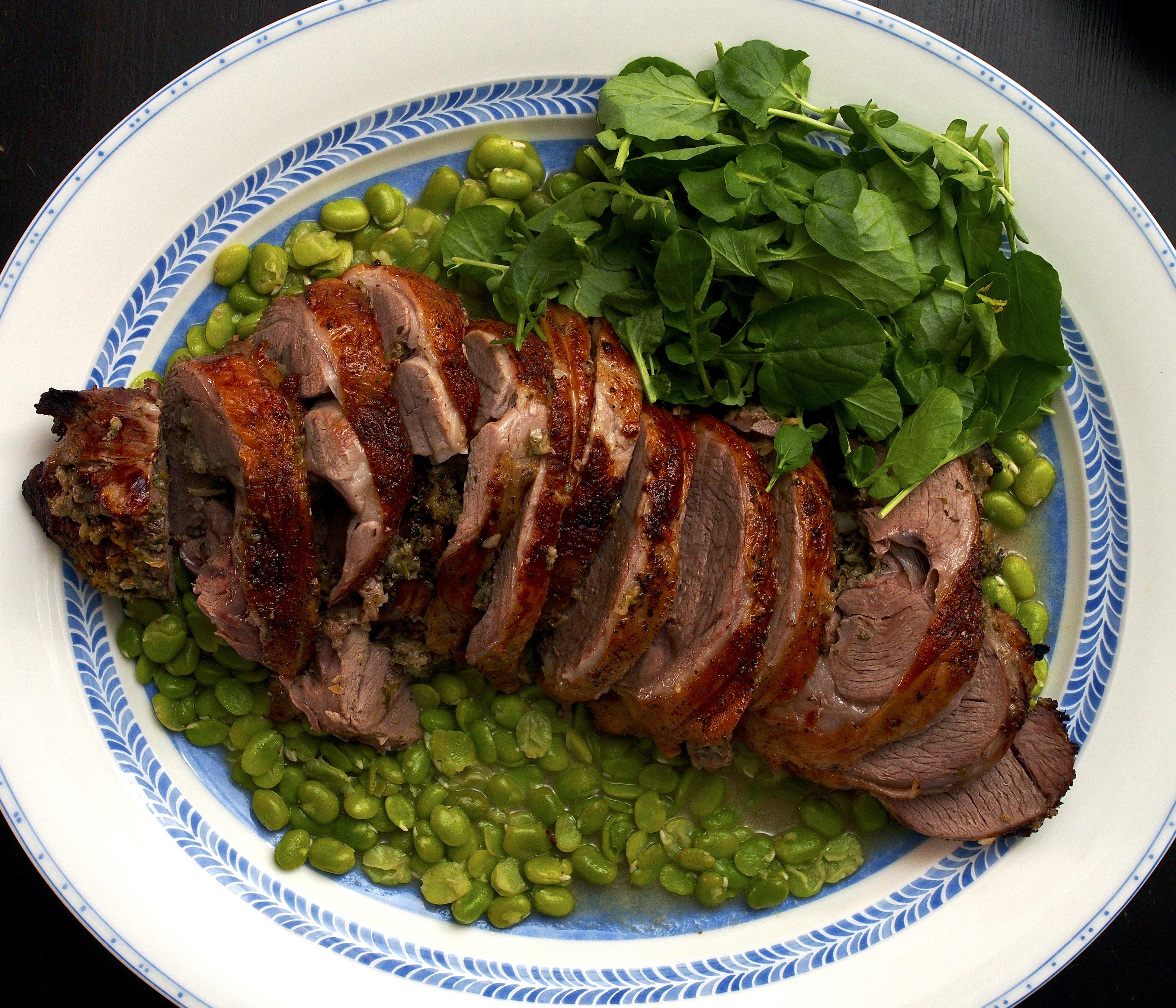
This roast is relatively simple because all the effort is at the start. Choose some handy sides, like some roasted carrots and potatoes which can cook while the meat rests.

Wine Suggestion: A classic match with Bordeaux, or similar from around the world. Tonight a very youthful Château Puygueraud, from the Côtes de Francs which we pulled from our cellar (under the bed) to check progress. Many years ahead of it, but tonight was a joy nonetheless.

Rolled leg of lamb with salsa verde stuffing – serves 4

  • 1.5kg leg of lamb, bone removed and butterflied (ask your butcher to do this for you)
  • 200ml white wine
  • 3 sprigs of rosemary
  • 3 cloves of garlic, bashed
  • 1 onion, roughly chopped
  • 2 bay leaves
  • 50ml olive oil, plus 2 tbsp extra
  • 200ml chicken stock
  • 400g broad beans, double podded (blanch for 2 minutes in boiling water and they will easily pop out of their skins)
  • a handful of watercress, to serve

FOR THE STUFFING:

  • a large bunch of flat-leaf parsley, including stalks
  • a small bunch of mint, leaves picked
  • 6 brown anchovies
  • 4 tbsp capers, drained
  • 1 lemon, zested and juiced
  • 1 tbsp white wine vinegar
  • 2 long shallots, finely chopped
  • 25g panko breadcrumbs

Put the lamb, skin-side down, on a chopping board. Make slashes all over the meat with a sharp knife but be careful not to cut the whole way through. Season all over.

Transfer the lamb to a large sealable food bag or container, scored-side down. Pour over the wine, then add the rosemary, garlic, onion, bay and 50ml of olive oil. Seal the bag and massage the marinade into the meat. Chill for 24 hours but bring out of the fridge at least an hour before cooking.

Make the stuffing while the meat is coming up to room temperature.

Put the parsley, mint, anchovies and capers into a food processor and pulse until finely chopped (you can also do this by hand), then tip into a bowl and stir in the lemon zest and juice, the vinegar and shallots. Season well. Spoon 3 tbsp of the salsa verde into a small bowl. Add the panko breadcrumbs to the larger bowl of salsa verde and stir 2 tbsp of olive oil into the smaller one – set the smaller one aside to serve later.

Take the lamb out of the marinade, then add about 50ml of the marinade to the large bowl of stuffing to soak into the breadcrumbs and bind the mixture (you might not need as much as 50ml). Keep any remaining marinade for later.

Heat the oven to 200C/180C fan/gas 6.

Pat the lamb dry with kitchen paper and lay on a chopping board, skin-side down. Spread the stuffing over the meat in an even layer. Start from one of the short sides and fold the meat over the stuffing, rolling and tucking it in to seal. Tie in about 6 places with kitchen string to hold it together. Transfer to a roasting tin and drizzle with olive oil. Roast for 1 hour – 1 hour and 20 minutes or until 60-65C on a meat thermometer for medium or 70C for well done. If you don’t have a meat thermometer insert a metal skewer into the centre and if it comes out hot, the meat is ready. Cover loosely with foil and set aside to rest for 30 minutes.

Put the reserved marinade into a saucepan with the stock and simmer for 5 minutes. Discard any rosemary, garlic, onion and bay, then add the broad beans and simmer for 4-6 minutes or until the stock has reduced. Transfer the beans and juice to a warm serving platter and serve along with the lamb, the reserved salsa verde and some watercress.

(Original recipe by Anna Glover in Olive Magazine, April 2022.)

Read Full Post »

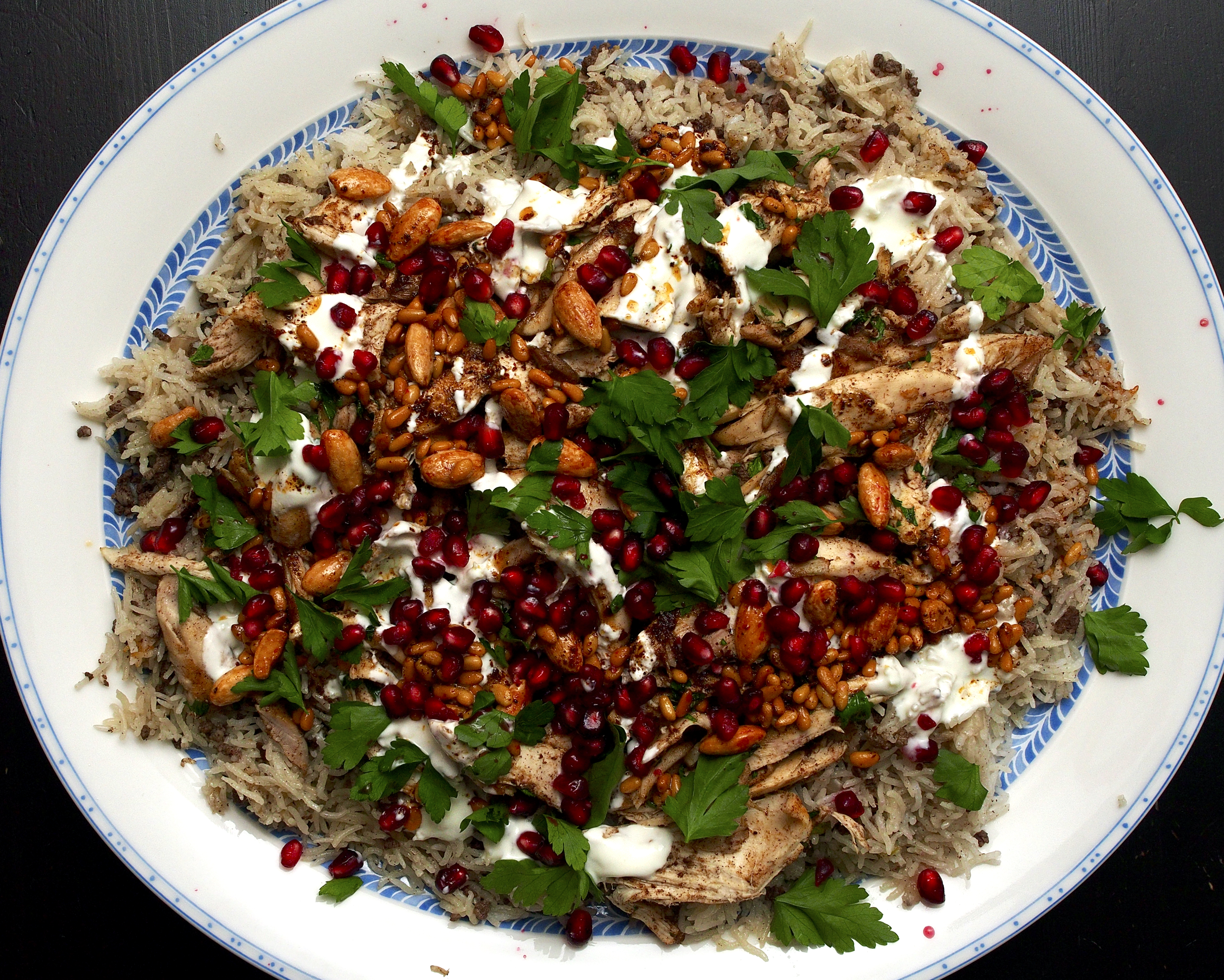
This takes a long time so the trick is to poach the chicken the day beforehand and store the torn chicken and stock separately in the fridge. Everything else is fairly easy to put together on the day. A feast!

Celebration Rice – serves 8

  • 1 small chicken, about 1.4kg
  • 2 cinnamon sticks
  • 1 onion, cut into 6 wedges
  • 1 bulb of garlic, skin on and halved widthways
  • 1 tsp ground cumin
  • 1 tsp ground cinnamon
  • 2 tbsp olive oil
  • 1 ½ tbsp lemon juice
  • 5g parsley leaves, roughly chopped

FOR THE RICE:

  • 2 tbsp olive oil
  • 40g unsalted butter
  • 1 onion, finely chopped
  • 300g lamb mince
  • 3 cloves of garlic, finely chopped
  • 1 ½ tsp ground cinnamon
  • 1 tsp ground allspice
  • 400g basmati rice, washed, soaked in cold water for at least 1 hour and then drained

FOR THE GARLIC YOGHURT:

  • 500g Greek yoghurt
  • 2 clove of garlic, crushed

FOR THE GARNISH:

  • 50g unsalted butter
  • 30g blanched almonds
  • 30g pine nuts
  • ¾ tsp Aleppo chilli flakes or ½ tsp regular chilli flakes
  • 4 tbsp pomegranate seeds

Put the chicken into a large saucepan with the cinnamon sticks, onion, garlic, 2 litres of water and 2 tsp of salt. Bring to the boil, then turn the heat to medium-low and simmer, covered, for 70 minutes, or until cooked through. Lift the chicken out and tear into large bite-size chunks when cool enough to handle. Put the chicken into a bowl with the ground cumin and cinnamon and set aside. Strain the stock through a sieve and discard the solids. Measure out 850ml of the stock and keep warm (keep the rest for something else). If you are doing this part a day ahead you will need to reheat the stock and put the spices on the chicken when ready to cook.

For the rice, put the oil and half the butter into a large saucepan, and place on a medium-high heat. Add the onion and cook for 7 minutes, stirring, until lightly golden. Add the lamb, garlic and spices and cook for a couple of minutes, stirring, until the lamb has lost its pinkness. Add the rice, 700ml of the warm stock, 1 ¾ tsp of salt and plenty of black pepper. Bring to the boil, then reduce the heat to low, cover with a lid and cook for 15 minutes. Take off the heat and allow to sit, covered, for another 15 minutes. Add the remaining butter and set aside.

Meanwhile, make the yoghurt sauce by whisking the yoghurt, garlic, ¾ tsp of salt and the remaining 150ml of warm stock in a medium bowl.

Put 2 tbsp of oil in to a large sauté pan on a medim-high heat. Add the chicken pieces and cook for 5 minute, to warm through. Remove from the heat and stir in the lemon juice and parsley, then set aside.

Make the garnish by putting the butter into a small frying pan over a medium-high heat. Add the almonds and cook for 3 minutes, stirring, until lightly coloured. Add the pine nuts and cook for another 2 minutes, until golden. Remove from the heat and add the chilli flakes.

Spread the rice over a large serving platter. Top with the chicken, then pour over half the garlic yoghurt. Finish with the nuts and butter, followed by the parsley leaves and pomegranate seeds. Serve the rest of the yoghurt alongside.

(Original recipe by Ottolenghi Test Kitchen: Shelf Love by Noor Murad & Yotam Ottolenghi, Ebury Press, 2021.)

Read Full Post »

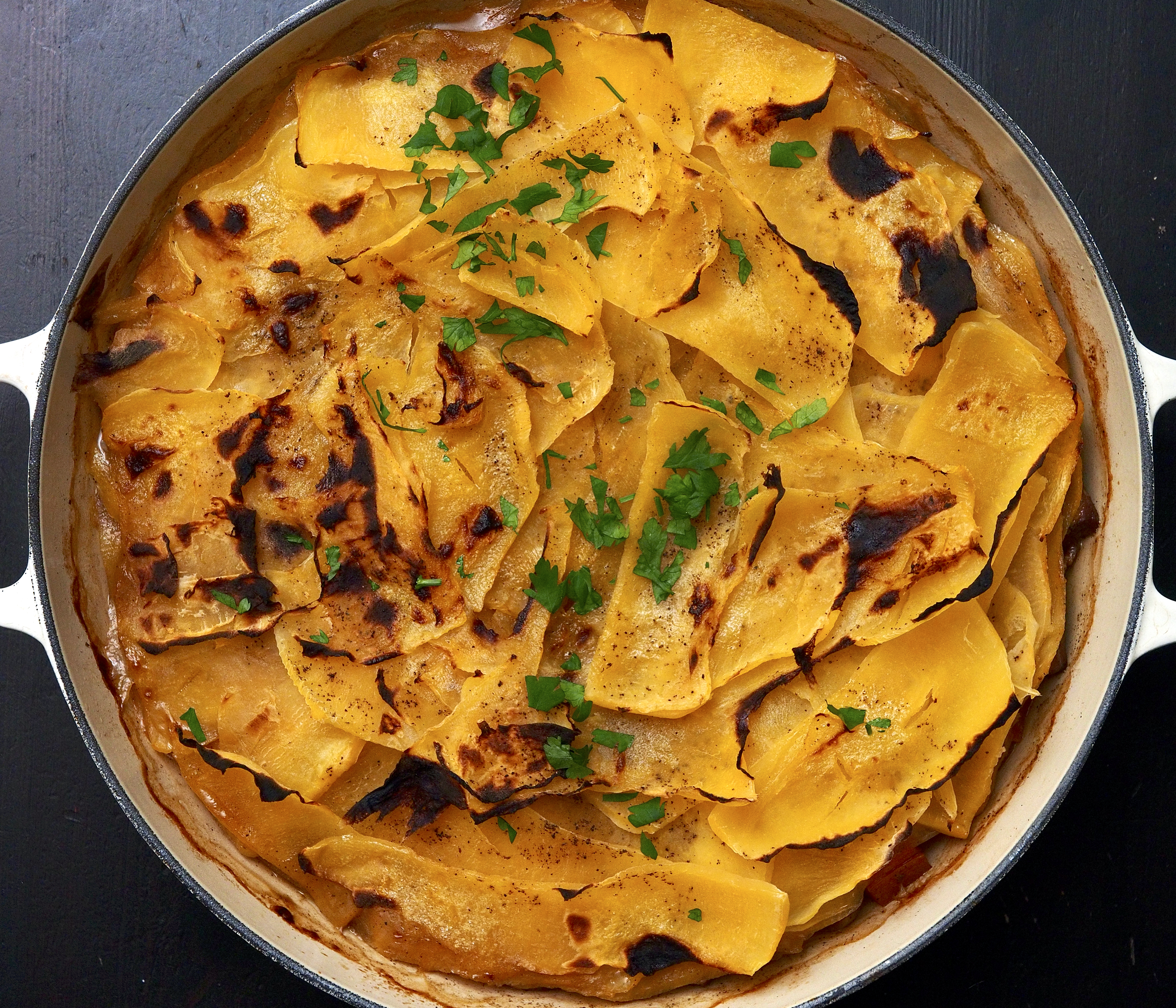
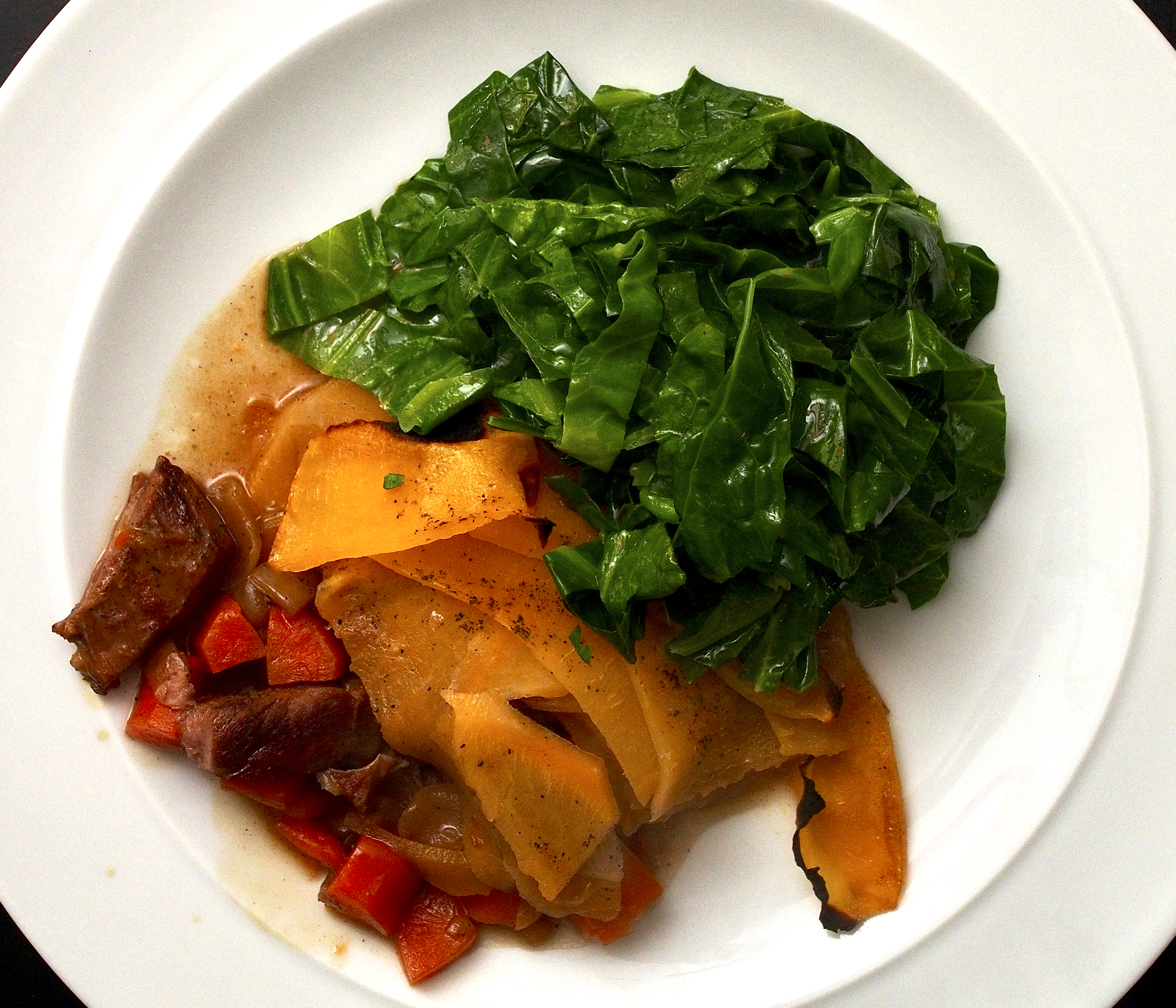
Our rather generous Burns Supper for two. We had a bumpy start that evening and didn’t get to enjoy this until all hours but it was worth the wait! Use a mandoline or food processor to slice the swede into very thin slices, otherwise they will take an age to cook. Serve with some nice greens on the side.

Wine Suggestion: Given that it was Burns night we poured a wee dram of Scotch Whisky from the Kilchoman distillery on Islay. Rich and smooth due to the sherry and bourbon casks with a fiery core of peaty smoke. Alongside the hotpot it was delicious and warmed our hearts. We’ll definitely remember this match for future hotpots.

Lamb hotpot with turnip topping – serves 6

  • 1kg best end of neck or diced stewing lamb, seasoned generously with salt and black pepper
  • olive oil
  • 2 onions, chopped
  • 2 carrots, chopped into rough 2cm pieces
  • 2 tbsp plain flour
  • 2 bay leaves
  • 500ml lamb stock
  • Worcestershire sauce
  • 1 swede, peeled, quartered and very finely sliced (use a mandoline or a food processor if possible)
  • butter
  • parsely, chopped, to serve

Heat a little oil in a large frying pan and brown the lamb in batches, then transfer to a deep ovenproof frying pan with a lid.

Brown the onions in a little more oil, followed by the carrots and add these to the lamb. Tuck in the bay leaves.

Pour the lamb stock into the pan used to brown everything and slowly bring to the boil, use wooden spoon to release any sticky bits from the bottom of the pan. When the stock is nearly simmering, put the flour into a small bowl. Add a little of the warm stock and stir to make a smooth paste. Stir this paste into the simmering stock and keep stirring until boiling and starting to thicken. Add a few shakes of Worcestershire sauce, then pour over the lamb and vegetables.

Put the pan over the heat and allow to come to a simmer, then cover and simmer gently for 1½ hours. Remove the lid and carefully layer the sliced swede on top, seasoning as you go. Dot the top of the swede all over with little pieces of butter. Replace the lid and cook for 20-30 minutes or until the swede is completely tender. Brown the top under a hot grill, then sprinkle with parsley to serve.

(Original recipe by Lulu Grimes in Olive Magazine, January 2014.)

Read Full Post »

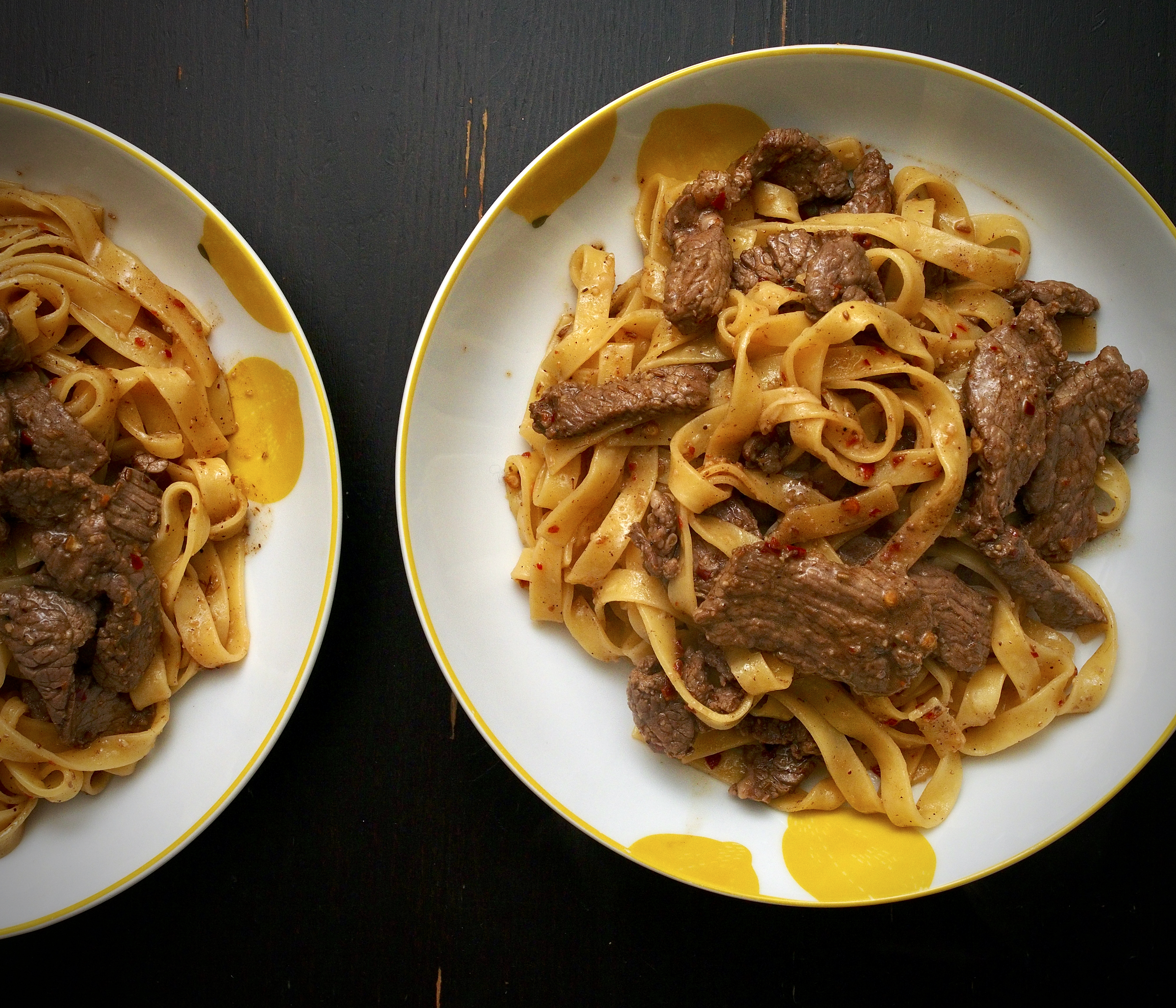
Tender lamb and a sauce rich with cumin and warm spices. Certainly not a combination we’re used to but one that works very well. Do remember to put the lamb in the marinade when you get home from work, don’t skimp on the butter, and don’t be tempted to use any cheese on the pasta, it is not required!

Wine Suggestion: warm, red and spicy; like a good Primitivo (Zinfandel), Monastrell (juicy Mourvedre) or Shiraz. Our choice tonight was Finca Bacara’s Crazy Grapes Monastrell from Jumilla in Spain; juicy, brambly and velvety tannins.

Lamb & Cumin Pasta – serves 4

  • 500g lamb leg steaks
  • 1 tbsp garlic granules
  • 2 tbsp cumin seeds, toasted and ground
  • 1 tbsp chilli flakes
  • 1 tsp ground cinnamon
  • 1 tsp ground coriander
  • 3 tbsp olive oil
  • 1 tsp toasted sesame oil
  • 4 tbsp light soy sauce
  • 1 tsp rice vinegar
  • 250g tagliatelle
  • 50g butter

Put the lamb between sheets of cling film and bash with a rolling pin to flatten. Thinly slice the lamb into strips about ½ cm thick and put them into a non-reactive bowl. Add the garlic granules, spices, olive oil, sesame oil, soy sauce, vinegar and plenty of seasoning and mix well. Cover the bowl and leave to marinate at room temperature for at least an hour.

Cook the pasta in lots of salty water, then drain but keep the cooking water.

Meanwhile, heat a wok over a high heat. When hot, add the lamb and the marinade, cook until seared all over, this shouldnt take more than a few minutes, avoid stirring constantly to allow it to sear.

Remove the wok from the heat and add the butter. Check the seasoning, then add the cooked pasta with a little cooking water to loosen. Serve straightaway.

(Original recipe from Simply by Sabrina Ghayour, Mitchell Beazley, 2020.)

Read Full Post »

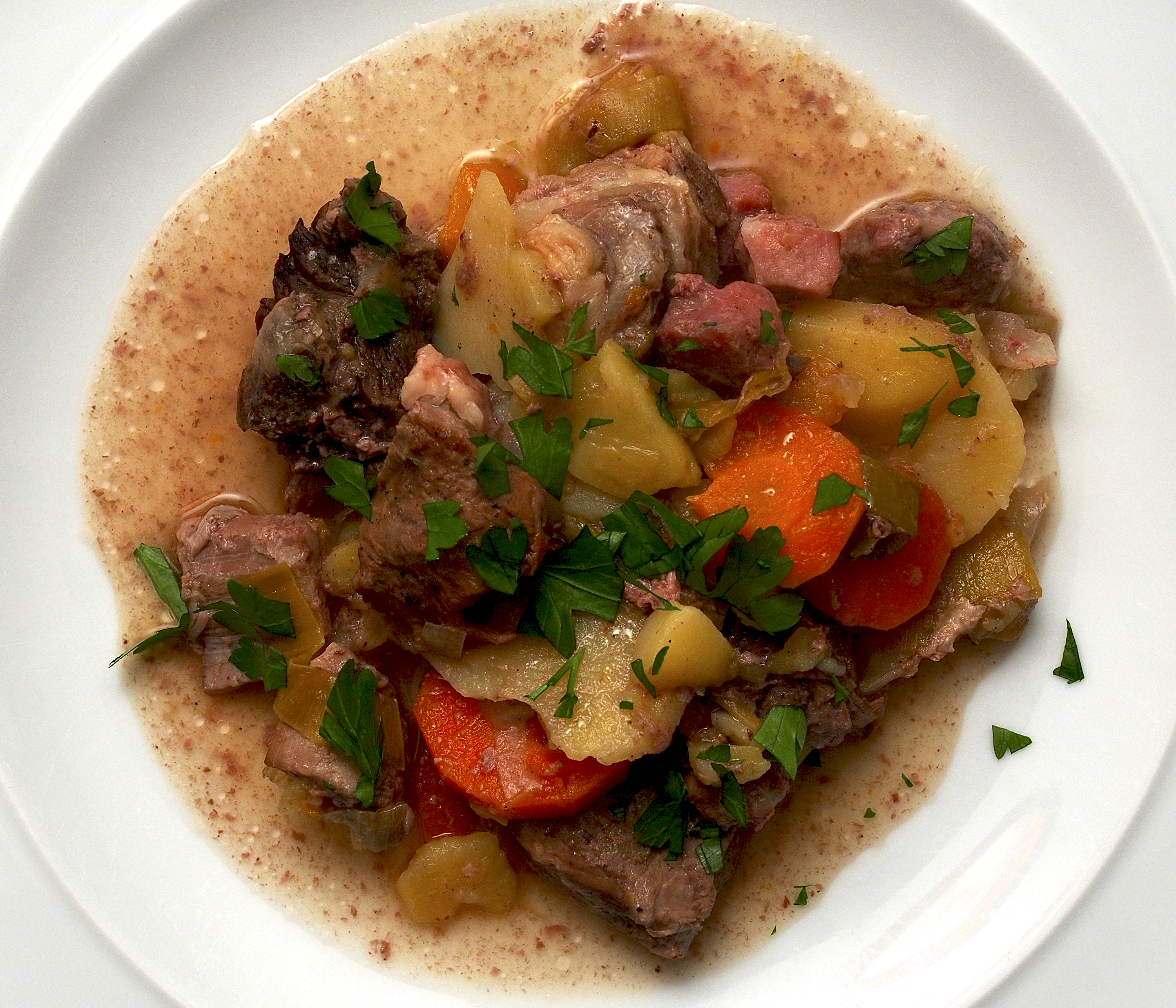
We were initially attracted to this as it is marinated in Riesling, a favoured grape in our house, plus the unusual combination of three meats plus bacon. Classically country French in style, this has no airs or graces in appearance, but is jam packed full of flavour and richness. It serves loads of people and we’d suggest having a side of greens. Also, like many other long cooked stews this tastes great the following day and freezes well.

Wine Suggestion: Courtesy of a very generous friend who came to dinner, we were treated to a delightful comparison of two old bottles of Rene Rostaing’s Côte Rôtie: the La Landonne and Côte Blonde. Both an excellent match to the dish and lovely wines. The Côte Blond was the favoured bottle, but both showed very well. We’d recommend searching for a good Syrah if something of this calibre doesn’t come to hand. Thanks David for these bottles!

Alsatian beef, lamb and pork stew – serves 8-10

  • 750g boneless pork belly, cut into 4cm cubes
  • 750g boneless lamb shoulder, cut into 4cm cubes
  • 750g chuck steak, cut into 4cm cubes
  • 2 onions, sliced
  • 250g carrots, sliced
  • 2 leeks, cut in half lengthways, washed and sliced
  • 500ml Sylvaner or Riesling white wine
  • 2 kg potatoes, sliced into 5mm thick rounds
  • 100g unsmoked bacon, cut into 1cm pieces
  • 250ml beef stock
  • a handful of flatleaf parsley, roughly chopped, to garnish

Place all of the meat (but not the bacon), onions, carrots and leeks in a large non-metallic bowl and pour over the wine. Cover and leave in the fridge overnight.

Heat the oven to 190C/Fan 170C.

Arrange a quarter of the sliced potatoes over the base of a very large casserole dish.

Drain the meat and veg in a colander over a bowl and reserve the liquid.

Scatter some veg over the potatoes, then add som bacon pieces and chunks of meat. Season with salt and black pepper, then add another layer of potato, more veg, bacon, meat and seasoning. Keep layering like this and finsih with a final layer of potatoes. Don’t be tempted to hold back on the salt as the dish needs liberal seasoning (about 2tsp in total).

Pour over the reserved marinade juices and beef stock, then cover the casserole with a tight lid and put in the oven.

Bake for about 3 hours or until the meat is tender. Garnish with chopped parsley and serve.

(Original recipe from Rick Stein’s Secret France, BBC Books, 2019.)

Read Full Post »

We’ve been cooking from a new book, Camper Van Cooking by Claire Thompson and Matt Williamson. Every summer we’re usually off camping in a tent in France but not this year unfortunately. Still, we’ve had some amazing Irish sunshine so we’re making a big effort to cook and eat outside as much as possible. These chops were lovely with some flatbreads warmed on the barbecue alongside a herby couscous, and a tomato and cucumber salad.

Wine Suggestion: A barbecue Cotes du Rhone red comes to the rescue here; medium weight with gentle, warming spices. Jean-Paul Daumen’s version in the glass tonight and we can almost picture us sipping this in France.

Lamb Chops with Cumin and Sumac with Tahini Sauce – serves 4

  • 2 cloves of garlic, finely chopped
  • 2 tsp ground cumin
  • 1-2 tsp chill flakes/aleppo chilli flakes/urfa chilli flakes
  • 1 tbsp sumac
  • 2 tbsp olive oil
  • 12 lamb cutlets
  • ½ lemon

FOR THE TAHINI SAUCE:

  • 1 small garlic clove, crushed to a paste with a little salt
  • 3 tbsp tahini
  • juice of ½ lemon

Mix the garlic, cumin, chilli flakes and half the sumac with the oil in a bowl. Season the chops with salt and pepper, then rub them all over with the spicy oil and put them in the fridge. You need to leave them for at least half an hour or longer if you can. Bring them back to room temperature before cooking.

To make the sauce, put the garlic and tahini in a bowl. Stir in the lemon juice and a splash of cold water, you want a smooth sauce with the consistency of double cream. Season to taste.

Heat a barbecue until very hot and cook the chops for a few minutes on each side or until nicely charred on the outside and however you like them in the middle. Grill the lemon half at the same time. Allow the chops to rest off the heat for a few minutes, then serve drizzled with the tahini and sprinkled with the rest of the sumac and a good squeeze of the barbecued lemon.

(Original crecipe from Camper Van Cooking by Claire Thompson & Matt Williamson,

Read Full Post »

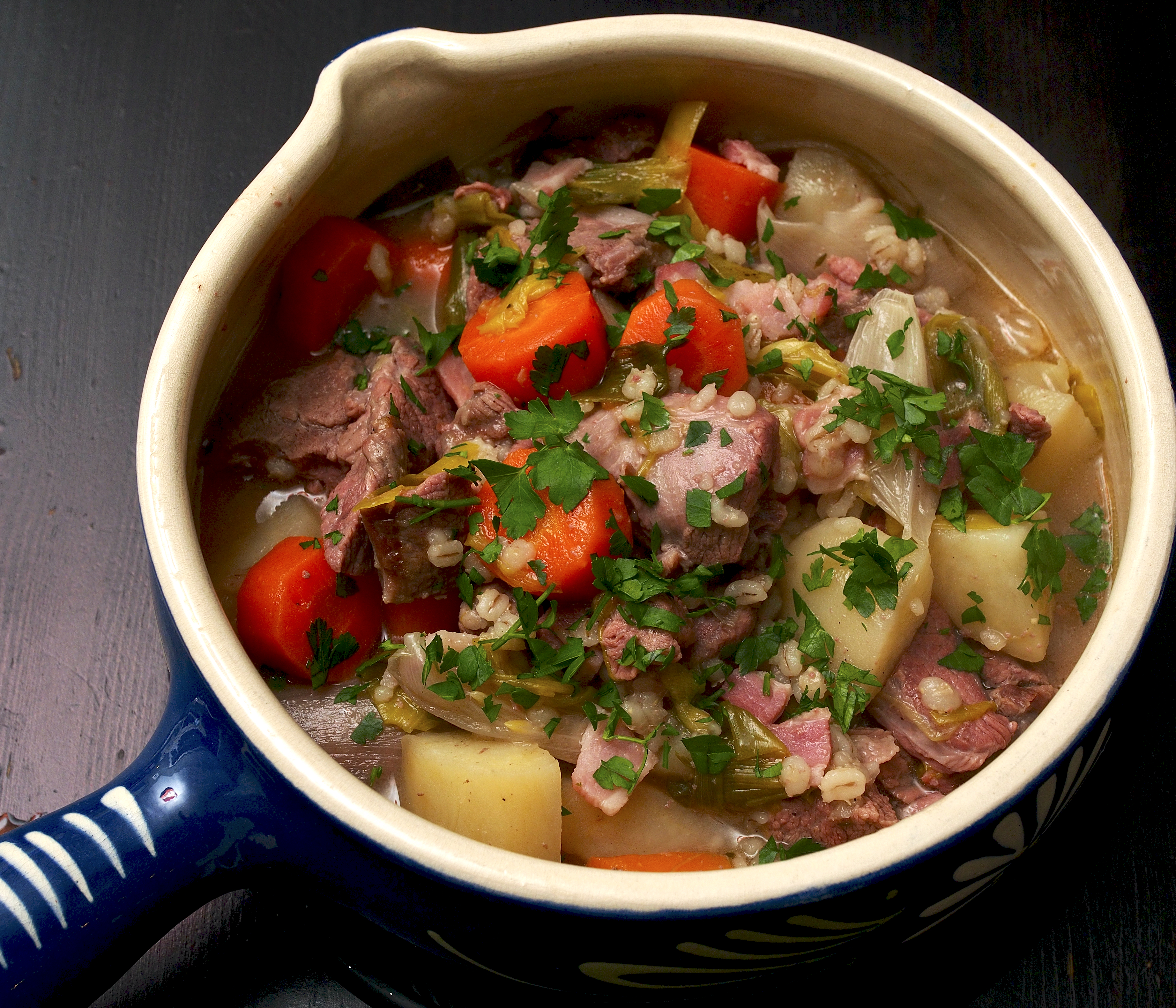
This is a classic for a reason and you really shouldn’t wait until St Patrick’s day to make it; although for some reason that’s what we do every year. It’s a meal in a bowl but if you want to go all out you can serve it with colcannon and turnip mash with bacon and onions. Beware… we kept on taking seconds … and thirds…

Wine Suggestion: The Irish have a great affinity with Spanish wine, so we picked a Mencia from Bierzo, the Dominio de Tares “Baltos” which was full of flavour as well as vibrantly fresh with resolved and mildly spice tannins.

Irish Stew – serves 6 to 8

  • 900g boneless lamb neck or shoulder, trimmed and cut into cubes
  • 900ml lamb or chicken stock, home-made preferably
  • 50g pearl barley, washed
  • 225g potatoes, cut into chunks
  • 225g carrots, thickly sliced
  • 225g leeks, well trimmed and thickly sliced
  • 225g pearl onions, peeled (if you can’t get these you can use halved shallots)
  • 100g smoked bacon, diced
  • 2 sprigs of thyme
  • chopped flat-leaf parsley to garnish

Put the lamb pieces into a large flameproof casserole and pour over the stock.

Bring to the boil, then skim off any scum from the surface and stir in the barley. Reduce the heat and simmer gently for 50 minutes, until slightly reduced and the lamb should be almost tender.

Add the potatoes, carrots, leeks, pearl onions, smoked bacon and thyme and simmer for 30 minutes or until the lamb and vegetables are completely tender but not falling apart. Season to taste with salt and pepper. Scatter the parsley over the top and serve.

(Original recipe from Neven Maguire’s Complete Family Cookbook, Gill Books, 2016.)

Read Full Post »

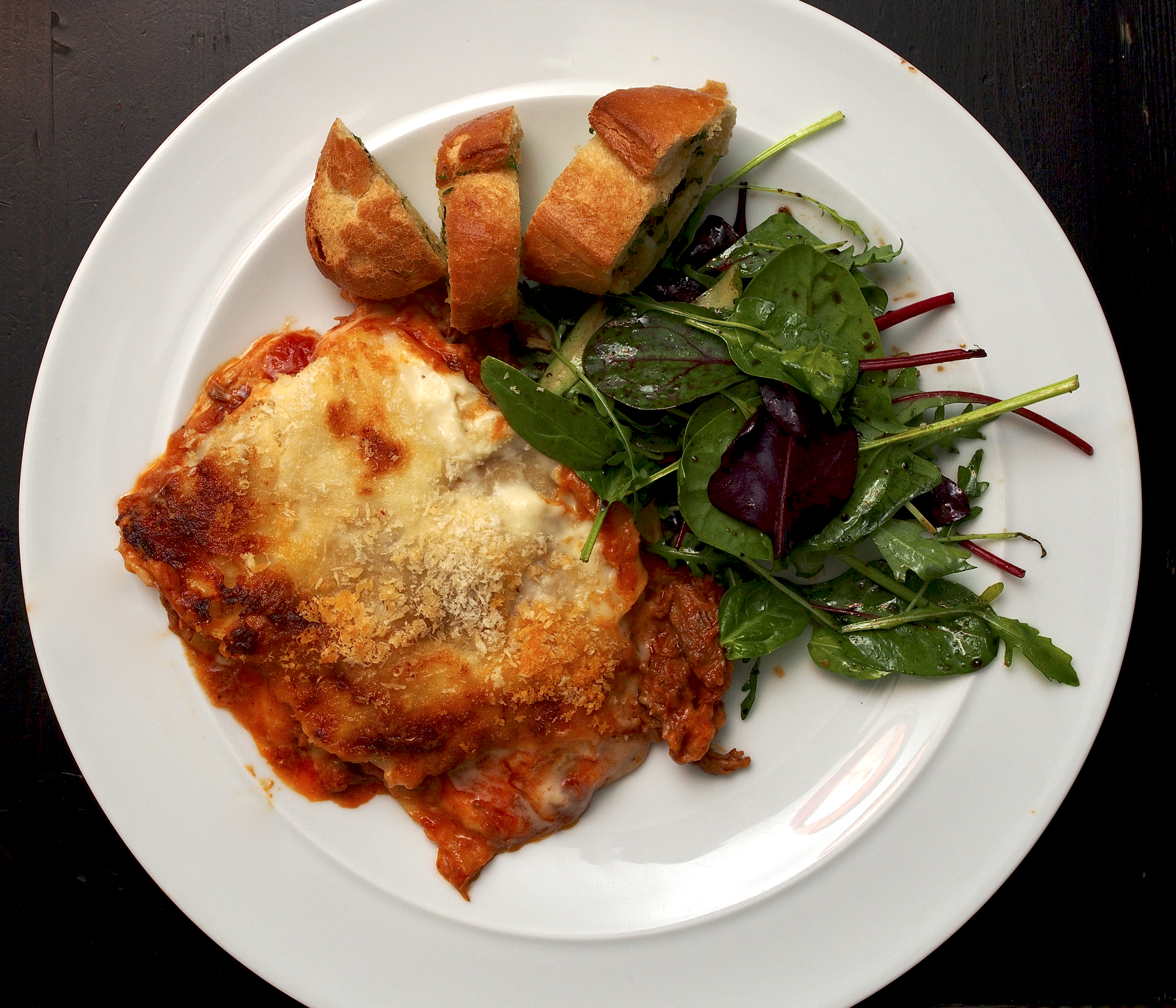
Who knew this was a thing? The ragu is made from whole lamb neck fillets which are cooked in a low oven for many hours and then shredded into the sauce. The result is absolutely delicious and much less laborious than our traditional version. You can make the lamb layer well in advance and keep it in the fridge or freezer until needed.

Wine Suggestion: to match the rich lamb and cheese we opened a Ramos Pinto Duas Quintas from the Douro. We’d kept this a few years from release and the layers of gentle spices had grown, the tannins softened to a back note, and the fruit had somehow got richer without adding any weight. A beautiful wine and an equitable accompaniment to a dish like this.

Braised lamb lasagne – serves 4

  • 1 tbsp olive oil
  • lamb neck fillets, about 400g in total
  • 1 clove of garlic
  • 1 sprig of rosemary
  • 500g carton passata
  • 500ml full-fat milk
  • 50g unsalted butter
  • 50g plain flour
  • 70g Parmesan, grated
  • 6 lasagne sheets
  • 2 mozzarella balls, torn into thin strips
  • 2 tbsp panko breadcrumbs
  • dressed salad and garlic bread to serve

Heat the oven to 130C/110C fan/gas 1.

Heat the oil in a heavy-based casserole, season the lamb generously, then fry until well browned all over, about 5 minutes. Add the garlic and rosemary and cook for another minute, then pour over the passata. Rinse out the carton with a splash of water and add this too. Season again, then cover tightly with foil, followed by the lid. Cook in the oven for at least 3½ or up to 4 hours by which time is should be very easy to shred. Leave it to cool a bit, then use a couple of forks to shred the lamb into the sauce.

Heat the milk in a saucepan until just simmering. Melt the butter in another saucepan, then stir in the flour to form a paste. Gradually whisk in the hot milk until you have a smooth glossy sauce. Stir in half the Parmesan and season.

Meanwhile, soak the lasagne sheets in just-boiled water to soften, then drain.

Heat the oven to 180C/160C fan/gas 4.

Spread a thin layer of lamb sauce on the bottom of a small lasagne dish (it should fit two lasagne sheets without overlapping). Top with two lasagne sheets, then cover with a third of the béchamel and a third of the mozzarella. Add half of the remaining lamb sauce, then top this with 2 lasagne sheets and another third of the béchamel and mozzarella. Repeat once more, then sprinkle over the rest of the Parmesan and the panko breadcrumbs.

Bake for 35 minutes, then turn the oven up to 190C/170C fan/gas 5. Bake for another 10 minutes to brown the top, then leave to rest for 10 minutes before serving.

(Original recipe from BBC Good Food)

Read Full Post »

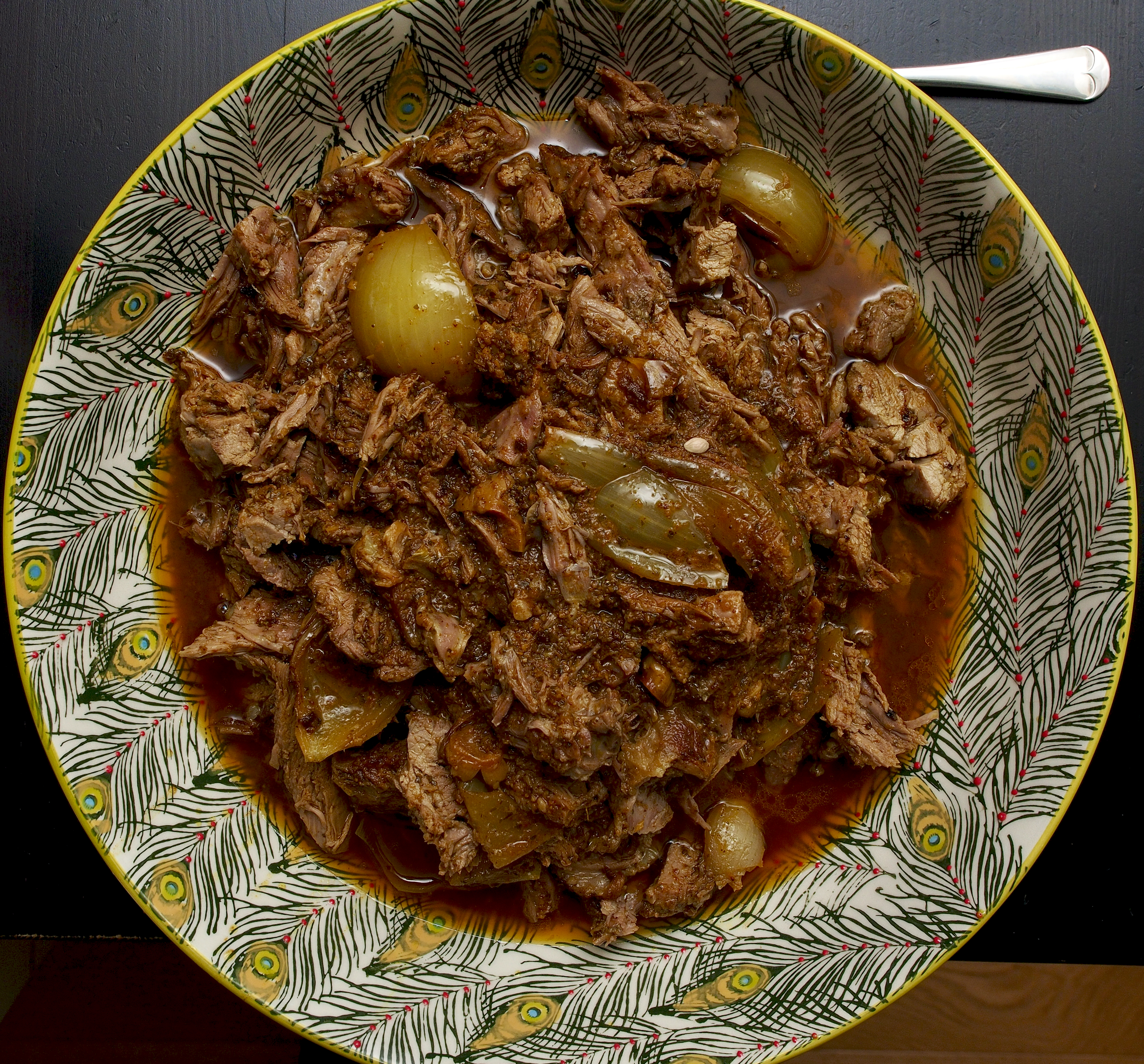
This was our last feast of 2020, the year that we cooked more than any other. It helped us to have a shared interest and something to entertain us in the evenings when we couldn’t do anything else. We miss sharing our food with friends and family but we’re hoping it will return before too long. We served this with Muhammara (a roasted red pepper and walnut dip), sumac yoghurt (see below) and a rice dish. You need to start a day ahead and in fact it works well if you cook the whole thing in advance and reheat to serve. 

Wine Suggestion: A gem of a discovery in 2020 after reading an article by Jancis Robinson was the Thymiopoulos, Jeunes Vignes de Xinomavro. A vibrant and exciting red from Náoussa in Greece this grape we’ll be exploring more as we found it had elegance, hints of Mediterranean sunshine and gentle, middle eastern spices.

Pulled lamb shawarma – serves 8

  • 3 onions, 1 roughly chopped and the other 2 cut into wedges
  • 2 heads of garlic, 1 cut in half horizontally, and 8 cloves from the other roughly chopped
  • 25g piece of ginger, peeled and roughly chopped
  • 20g parsley, roughly chopped
  • 1½ tbsp ground cumin
  • 1½ tbsp ground coriander
  • 2 tsp smoked paprika
  • 2 tsp ground cinnamon
  • ¼ tsp ground cloves
  • 3 tbsp cider vinegar
  • 60ml olive oil
  • 2-2.5kg lamb shoulder, on the bone
  • 700ml chicken stock
  • ½ a lemon
  • salt and black pepper

FOR THE SUMAC YOGHURT:

  • 200g Greek-style yoghurt
  • 60g tahini
  • 1½ tbsp lemon juice
  • 2 tsp sumac

Make the spice paste by putting the chopped onion into a food processor with the chopped garlic and ginger. Pulse until finely minced, then add the parsley and spices. Pulse for another few seconds, until just combined. Scrape down the sides, then add the vinegar, oil, 2¼ tsp of salt and plenty of black pepper. Pulse again to form a coarse paste, then transfer to a non-metallic container that can hold the lamb. 

Pat the lamb dry and pierce all over with a small, sharp knife. Put the lamb into the dish with the spice paste and coat generously in the mixture, so that it is covered on all sides. Cover with foil and leave to marinate in the fridge overnight. 

Take the lamb out of the fridge an hour before you start cooking so it comes to room temperature. 

Preheat the oven to 140C fan. 

Put the onion wedges and the halved garlic bulb into the centre of a large roasting tray and pour over the chicken stock. Sit the lamb on top of the veg, then cover tightly with foil and bake for 4 hours. Remove from the oven, discard the foil and continue to bake for another 90 minutes, increasing the temperature to 160C for the last 30 minutes. The lamb should be very soft and come away easily from the bone. Leave to cool for about 15 minutes, then shred the lamb directly into the pan juices. Transfer the lamb with the pan juices, onions and garlic cloves to a large serving bowl and squeeze over the lemon juice.

To make the sumac yoghurt, put the yoghurt, tahini, lemon juice, 2 tbsp water, the sumac and ¼ tsp of salt into a bowl and whisk well to combine.

Serve the lamb with the yoghurt alongside. We served with a rice dish and a dip but you can also serve with pitta breads, sliced tomatoes, red onions and herbs – a lamb shawarma sandwich.

(Original recipe from Falastin by Sami Tamimi and Tara Wigley, Ebury Press, 2020.) 

Read Full Post »

Older Posts »