These make a lovely side for a barbecue with a great smoky flavour and a delicious dressing.
Barbecue potato salad – serves 4
800g new potatoes, boiled until tender, then halved
4 garlic cloves, bashed
3 sprigs of rosemary, leaves picked
2 tbsp good quality olive oil
FOR THE DRESSING:
1 tbsp English mustard
1 tbsp runny honey
2 tbsp chopped chives
2 tbsp good olive oil
Put the potatoes, garlic and rosemary onto a large sturdy baking tray. Season well and trickle over the olive oil, then toss together.
Put the tray onto a hot barbecue and cook the potatoes for about 3 mintues, then shake and cook for another 3 minutes or until hot through. Remove from the barbecue and set aside while you make the dressing.
Whisk the dressing ingredients together in a small bowl.
Pick the rosemary and garlic out of the tray and discard. Trickle the dressing over the hot potatoes and toss well to coat, leave to stand for 5 minutes, then serve warm.
(Original recipe from Tom Kerridge Outdoor Cooking, Bloomsbury Absolute, 2021.)
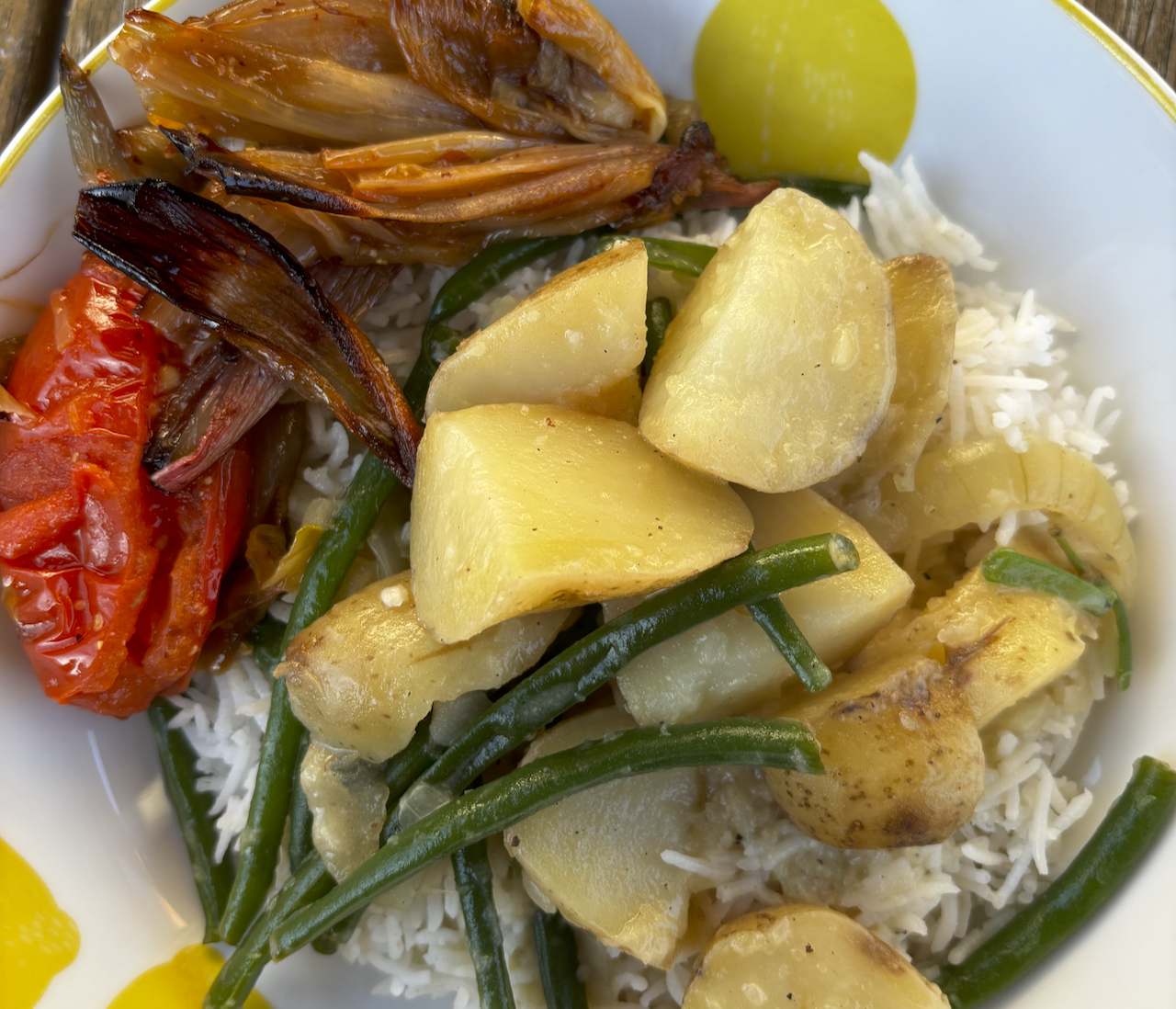
A gently spiced curry that reaches new heights when served with tamarind shallots. We’ll be making it again.
Wine Suggestion: We think this goes really well with a slightly honeyed, just off-dry Chenin Blanc like the Domaine Aubuisieres Vouvray Silex. With a touch of residual sugar this is rounded and smooth. And with the tart tamarind and sweet shallots it’s a joy.
New potato & green bean istoo with tamarind shallots – serves 4
2 tbsp rapeseed oil
10 fresh curry leaves (we buy them in the Asia market and freeze them)
4cm cinnamon stick, broken in two
1 medium onion, sliced
2cm fresh ginger, peeled and finely grated
4 cloves of garlic, crushed
1 green finger chilli, slit
650g baby new potatoes, quartered
1 tsp each of salt and freshly ground black pepper
1 x 400ml tin of coconut milk
250g green beans, trimmed
cooked basmati rice, to serve
FORT THE TAMARIND SHALLOTS:
800g banana shallots
400g vine tomatoes
1 tsp cumin seeds
½ tsp black mustard seeds
5 tbsp rapeseed oil
¾ tsp salt
2 tsp tamarind paste
8 fresh curry leaves
1 green finger chilli, slit
Heat the oil for the istoo over a medium heat in a large casserole dish. Once hot, add the curry leaves, cinnamon stick and onion. Cook for 8-10 mintues or until the onion is very soft but not coloured. Stir in the ginger, garlic and chilli and cook for another 2 minutes.
Add the potatoes, salt and pepper, then stir in the coconut milk. Fill the empty can with 100ml of water and add to the casserole. The potatoes need to be just covered so add a little more water if you need. Bring to the boil over a medium heat, then turn down and simmer for 10 minutes.
Add the green beans, then cover and simmer until the beans and potatoes are tender – about 5-6 minutes.
FOR THE TAMARIND SHALLOTS:
Preheat the oven to 180C fan/200C/gas 6 and line two large baking trays with foil.
Top and tail the shallots, then cut them in half lengthways and peel off the skin. Put the shallots onto one of the two lined trays, breaking them up a little as you go – they should be in a single layer. Halve the tomatoes and place these on the other tray.
Grind the cumin and mustard seeds together in a pestle and mortar to a coarse powder. Add the oil and salt, then pour over the shallots and tomatoes, mixing with your hands to coat the shallots.
Bake for 25 minutes, turning the trays halfway, then remove from the oven and tip the tomatoes onto the shallot tray and add the tamarind, curry leaves and chilli. Carefully mix with a wooden spoon, then bake for another 5-8 minutes, until they are starting to char here and there. Transfer to a bowl and serve with the istoo and cooked basmati rice.
(Original recipe from East by Meera Sodha, Penguin: Random House, 2019.)
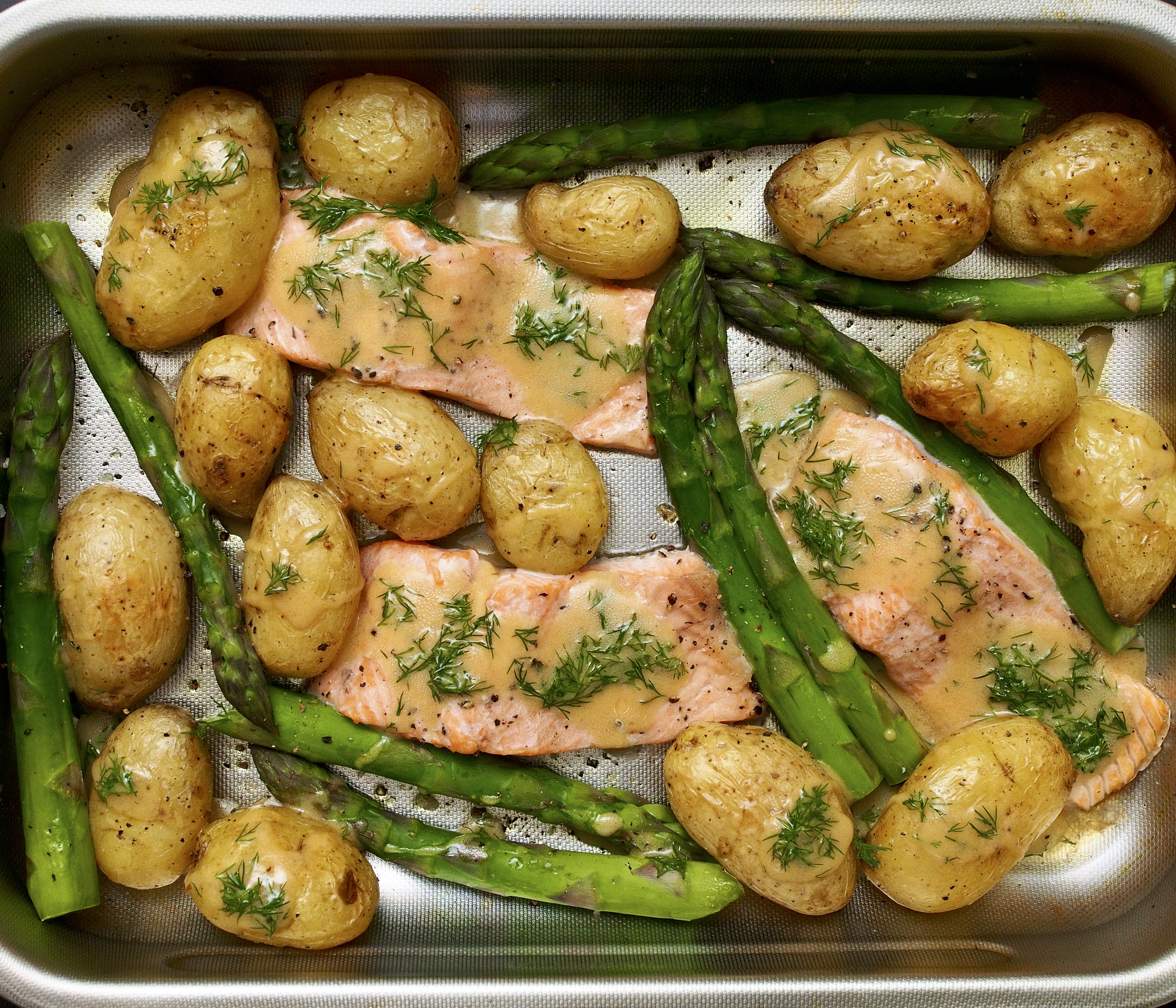
This dish couldn’t be easier and is all cooked in the one tray; a great spring celebration. It helped that we were able to source all of the ingredients locally, always makes us feel good about what we’re eating.
Wine Suggestion: Simple, but fresh and asparagus friendly Sauvignon Blanc from the Loire Valley, in this case blended with a touch of Chardonnay from the Cheverny appelation. Pascal Bellier produces a charmer.
Sea trout, new potatoes and asparagus with a dill & mustard sauce – serves 4
1kg baby new potatoes, we used Jersey Royals
400g asparagus
2 tbsp olive oil
4 fillets of sea trout (or you could use salmon)
FOR THE SAUCE:
2 tbsp Dijon mustard
1 tbsp soft light brown sugar
2 tbsp white wine vinegar
4 tbsp groundnut oil
2 tbsp chopped dill, plus a bit extra to serve
Heat the oven to 200C/fan 180C/gas 6.
Cook the potatoes in salty water for about 3 minutes, then add the asparagus and cook for a further 2 minutes. Drain well and and run the asparagus under cold running water to stop it cooking any further.
Put the potatoes into a large non-stick baking tray, toss with the olive oil and season well with salt and pepper. Put into the oven for 15-20 minutes or until starting to brown.
Tuck the trout and asparagus in and around the potatoes and season these too. Roast again for 10-12 minutes or until the trout is just cooked.
Meanwhile, whisk the mustard, sugar, vinegar and oil together to make the dressing. Stir through the dill just before you’re ready to serve. Drizzle the sauce over the dish and scatter with some more dill if you like.
(Original recipe by Janine Ratcliffe and Adam Bush in Olive Magazine, May 2019.)
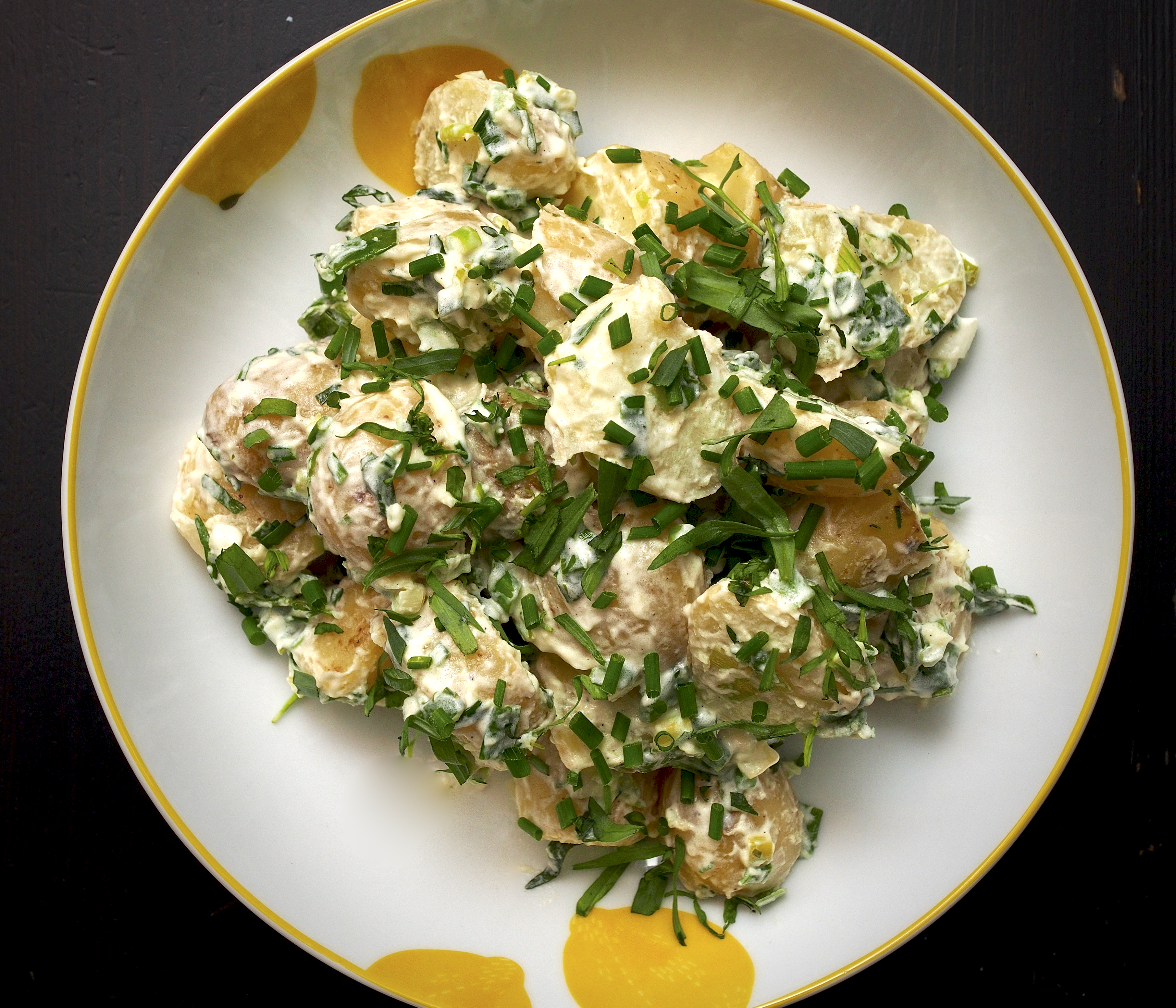
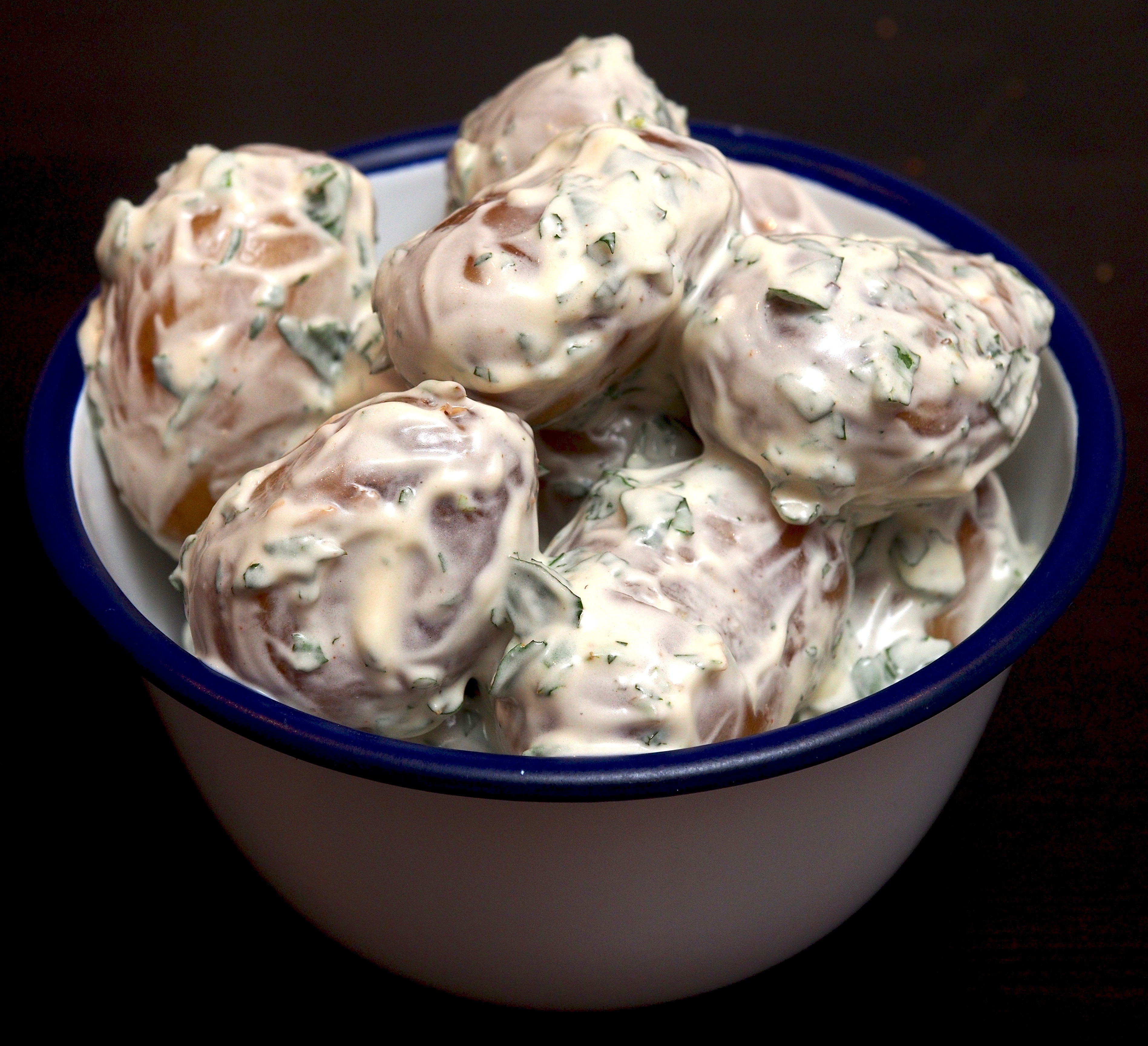
Cut the potatoes into small chunks. Bring a large pan of salty water to the boil, add the poatoes, and simmer for 10 minutes or until just cooked. Drain well in a colander, then transfer to a large bowl.
Meanwhile, mix the mayonnaise, yoghurt, crème fraîche, mustard and milk together, then stir through the onions and most of the chives and tarragon. Season with salt and pepper.
Spoon the dressing over the potatoes while still warm and toss gently to coat. Transfer to a serving bowl and scatter over the reminaing herbs. Serve at room temperature.
(Original recipe by Angela Nilsen in BBC Good Food Magazine, September 2012.)
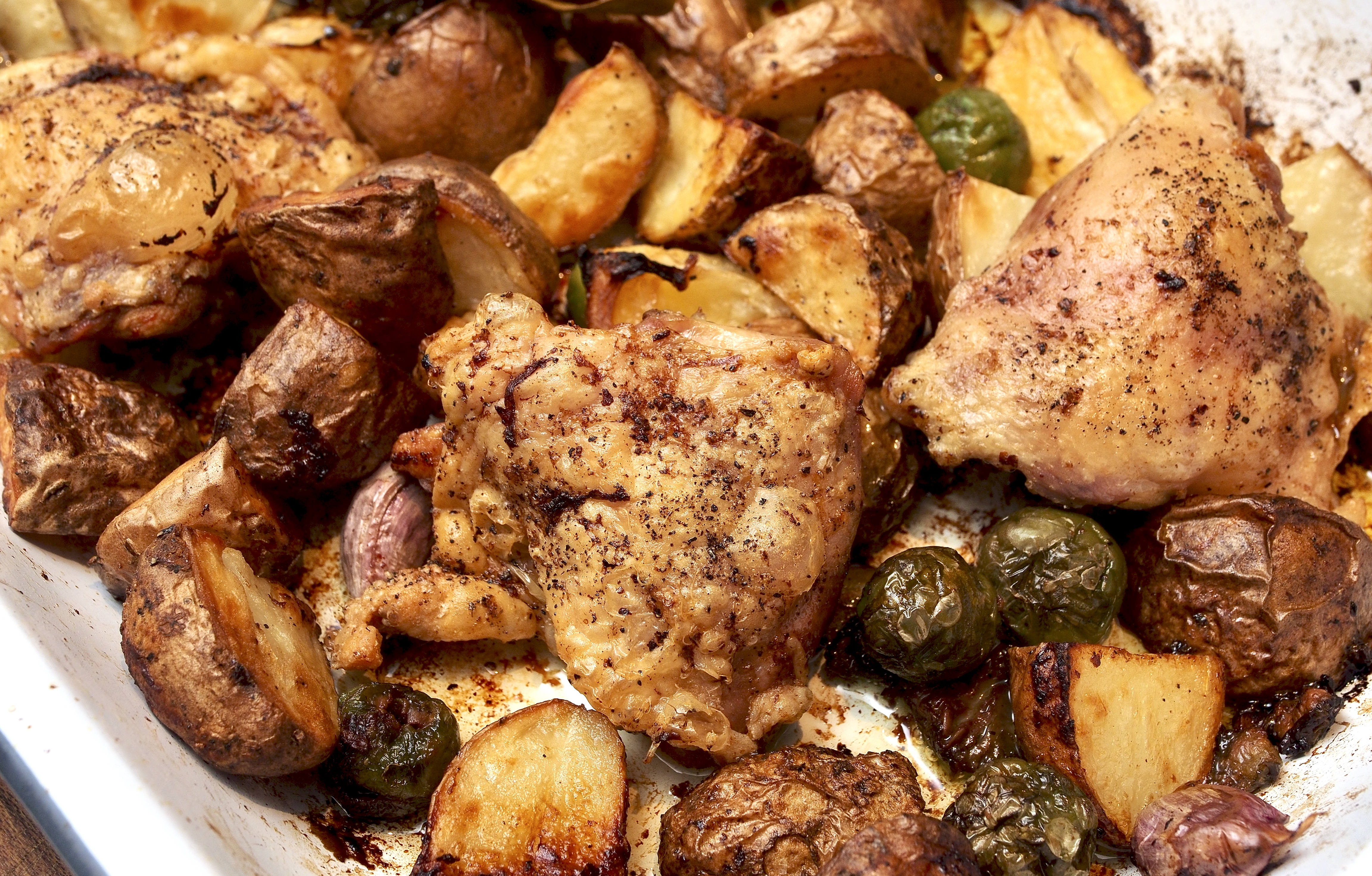
This really couldn’t be easier, everything in the one pan and shoved in the oven. New potatoes haven’t quite landed in Ireland yet but we chopped up some waxy ones which worked pretty well. Lemon, olives, bay, chicken & garlic – made for each other! Serve with a green salad.
Wine Suggestion: a joyously inexpensive southern French white, the Les Terrasses de la Negly, a Sauvignon Blanc, Muscat Petit Grains and Muscat d’Alexandria blend. One highly popular grape with two that are deeply out of fashion. The wine: easy, fruity, fresh and with texture to work with the food.
Chicken & new potato traybake – serves 2
3 tbsp olive oil
500g new potatoes
140g large pitted green olives
1 lemon, quartered
8 fresh bay leaves
6 garlic cloves, unpeeled
4 large chicken thighs
Heat the oven to 200C/180C fan/Gas 6.
Pour the olive oil into a large roasting tray, then add the potatoes, olives, lemon, bay leaves, and garlic. Toss to coat everything in the oil, then nestle in the chicken thighs, skin-side up of course, and season well.
Put the dish in the oven and cook for an hour, basting half-way through. Check the chicken and potatoes are cooked, then return to the oven for a final 15 minutes to crispy up the chicken skin.
Remove the tin from the oven and squash the roasted garlic, discard the papery skin and stir the garlic into juices. Serve with a green salad, we had peppery watercress.
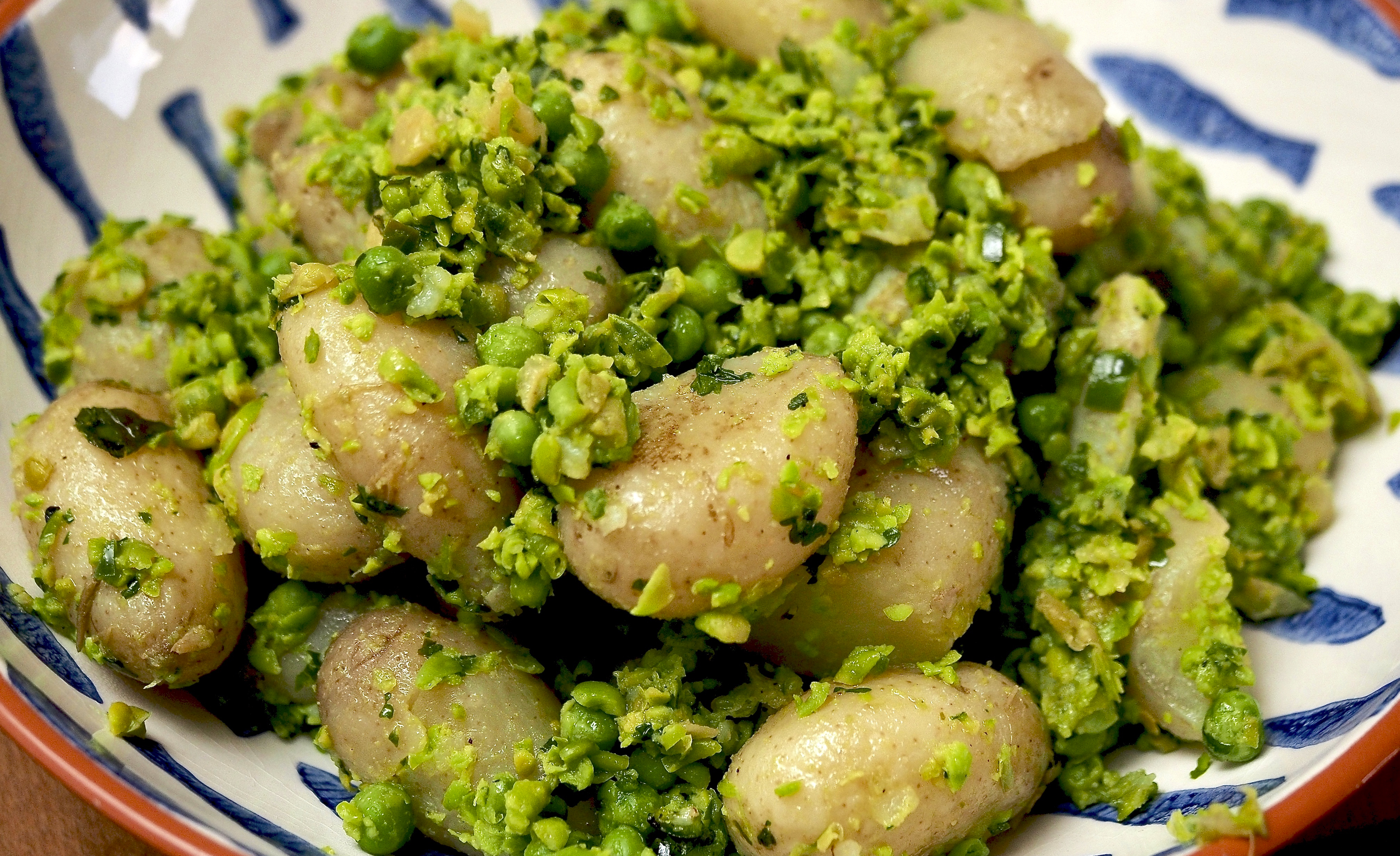
We’ve just had a sunny Easter weekend, so we cooked lots of Spring side dishes from Ottolenghi Simple. These potatoes are lovely and fresh and tasted good with some barbecued lamb gigot chops. We’re binge eating Jersey Royals while we can get them.
New potatoes with peas & coriander – serves 4
300g fresh or frozen peas
2 green chillies, finely chopped
1 small preserved lemon, pips discarded
15g coriander, roughly chopped, plus an extra 5g leaves to garnish
60ml olive oil
1 small lemon, finely grate the zest, then juice to give 1 tsp
750g new potatoes, halved if large
Blanch the peas in a saucepan of boiling water for 1 minute, then drain and set a third of them aside.
Put the remaining peas in a food processor with the chillies, preserved lemon, coriander, olive oil, lemon zest, ½ tsp of salt and plenty of pepper. Blitz to a rough paste and set aside.
Cook the potatoes in a large pan of boiling salty water for about 15 minutes or until soft. Drain and steam dry in the warm pot.
Roughly crush the potatoes, leaving about a third of them whole. Add the reserved peas, the pea mixture, the lemon juice and the coriander leaves. Gently stir and serve warm (though we found the leftovers were quite nice cold the following day).
(Original recipe from Ottolgenghi Simple by Yotam Ottolenghi with Tara Wigley & Esme Howarth, Ebury Press, 2018.)
This is a bit different and perfect when you’ve got over the initial excitement of new potatoes and feel like doing something other than steaming them and covering them with butter. Jersey Royals are nice if you can find them. We served these with some salmon and herby mayonnaise.
Crispy new potatoes with olives, capers & herbs – serves 4
1kg Jersey Royal potatoes or other small new potatoes
handful small capers
2 handfuls stoned black olives
1 tbsp thyme leaves
small bunch rosemary, broken into sprigs
6 tbsp extra virgin olive oil
1 tbsp white wine vinegar
Heat oven to 240C/Fan 220C/Gas 9.
Boil the potatoes until almost cooked – about 12 minutes. Drain, then slice and put into a large bowl. Tip in the capers, olives and herbs, then add most of the olive oil and season. Gently mix together, lightly crushing the potatoes as you go.
Line a medium Swiss roll tin with baking parchment, leaving some overhanging. Tip the potatoes into the tray and spread to flatten. Mix the vinegar with the rest of the oil and drizzle over. Bake for 40 minutes or until crisp and golden.
Nothing beats minty new potatoes. We like to make this in May when the Jersey Royals arrive and the promise of summer is just around the corner but of course it’s good all summer long.
Potato & mint salad – serves 4
900g small new potatoes
2 tbsp French dressing (see recipe below)
6 tablespoons mayonnaise
2 tbsp plain yoghurt
a large bunch of mint, chopped
Put the potatoes in a pan of salted water and bring to the boil. Simmer for about 15 minutes or until tender, then drain and put into a bowl with the French dressing and leave to cool.
Mix the mayonnaise, yoghurt and mint together and toss with the potatoes. Season really well with salt and pepper.
French Dressing: Blend 200ml red/white wine vinegar, 200ml extra virgin olive oil, 400ml sunflower oil, 1 garlic clove, peeled and finely chopped, 3 tbsp wholegrain mustard, and 1-2 tbsp honey and season with salt and pepper. This makes 800ml of dressing and will keep in the fridge for a few weeks.
(Original recipe from Avoca Salads by Hugo Arnold, Avoca Ltd., 2007.)
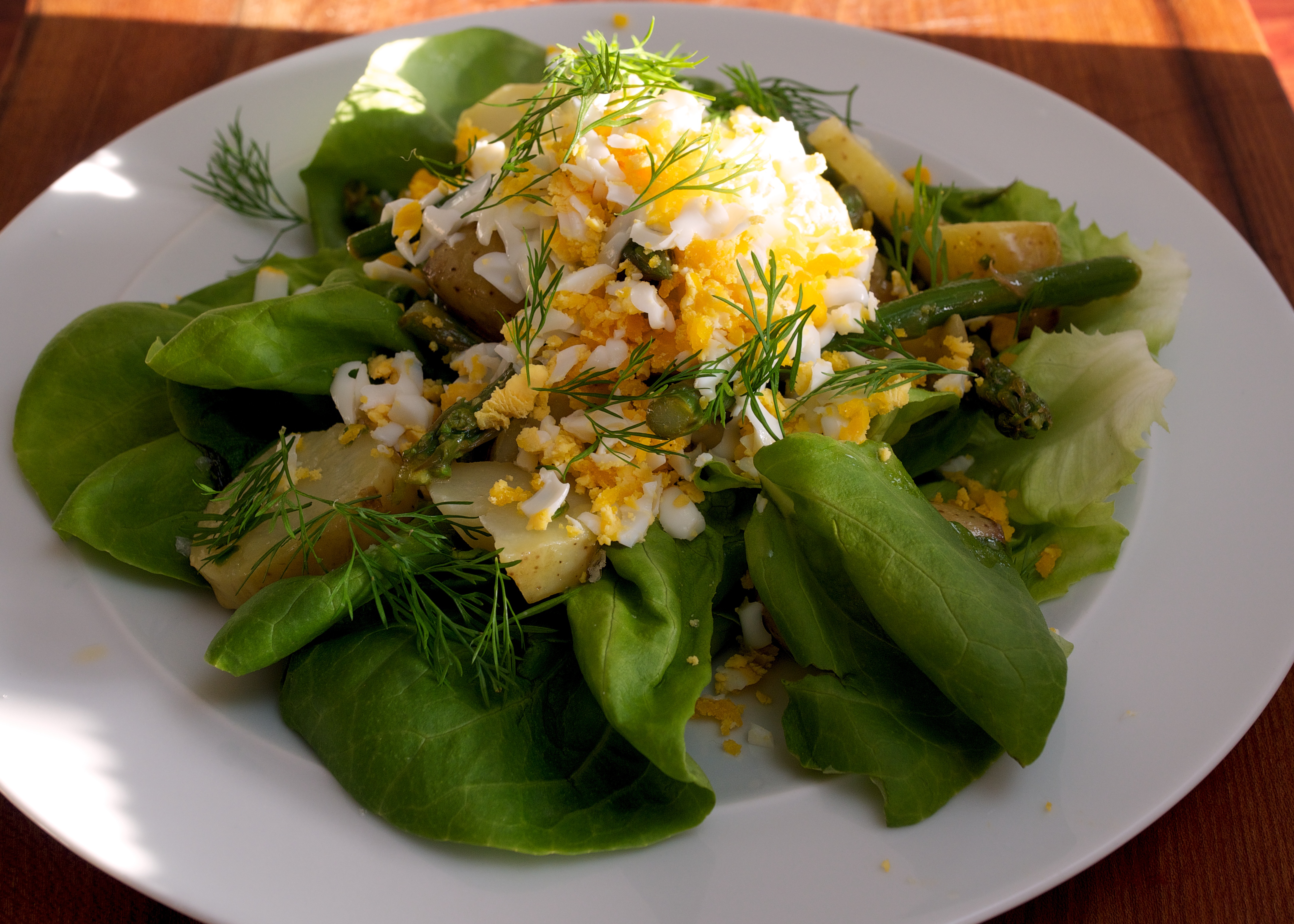
We made this back in June when local asparagus was available, but have been very lax getting posts up on the blog (must do better!). We really enjoyed the combination here and the addition of our own, home-grown mint, dill and chives really made the dish sing.
Warm Asparagus & New Potato Salad – serves 4
350g small Jersey potatoes, scrubbed or peeled if you prefer
salt
2 large mint sprigs
25g unsalted butter
250g asparagus tips
hearts of 2 round lettuces, leaves separated, washed and dried
Maldon salt
2 hard-boiled eggs, shelled
handful of chervil sprigs – we used dill
FOR THE BUTTER SAUCE:
juice of 1 lemon
pinch of caster sugar
75g cold unsalted butter, cut into small chunks
freshly ground white pepper
1 tbsp snipped chives
Simmer the potatoes in lightly salted water, with the mint, until tender. Drain over a bowl and reserve the cooking water. Return the potatoes to the pan with the butter, stir together and keep warm.
For the sauce, use a large shallow stainless steel or enamel saucepan and squeeze in the lemon juice. Add 6 tbsp of the potato cooking water and the sugar, then simmer until reduced by half. Slowly incorporate the butter, a chunk at a time, whisking over a very low heat until homogenous (you’re aiming for a light butter sauce). Season with white pepper and keep warm.
Peel the asparagus tips from just below the bud and slice in half lengthways. Add to a pan of boiling well-salted water and boil for about 1-2 minutes – you want them just tender but not raw, then drain.
Slice the warm potatoes and add them, along with the asparagus, to the butter sauce. Turn gently with the chives, until everything is nicely coated.
Arrange the lettuce on 4 plates and divide the asparagus and potatoes between them. Sprinkle with Maldon salt and grate over the egg. Generously scatter with the chervil or dill.
(Original recipe from The Vegetarian Option by Simon Hopkinson, Quadrille, 2009.)
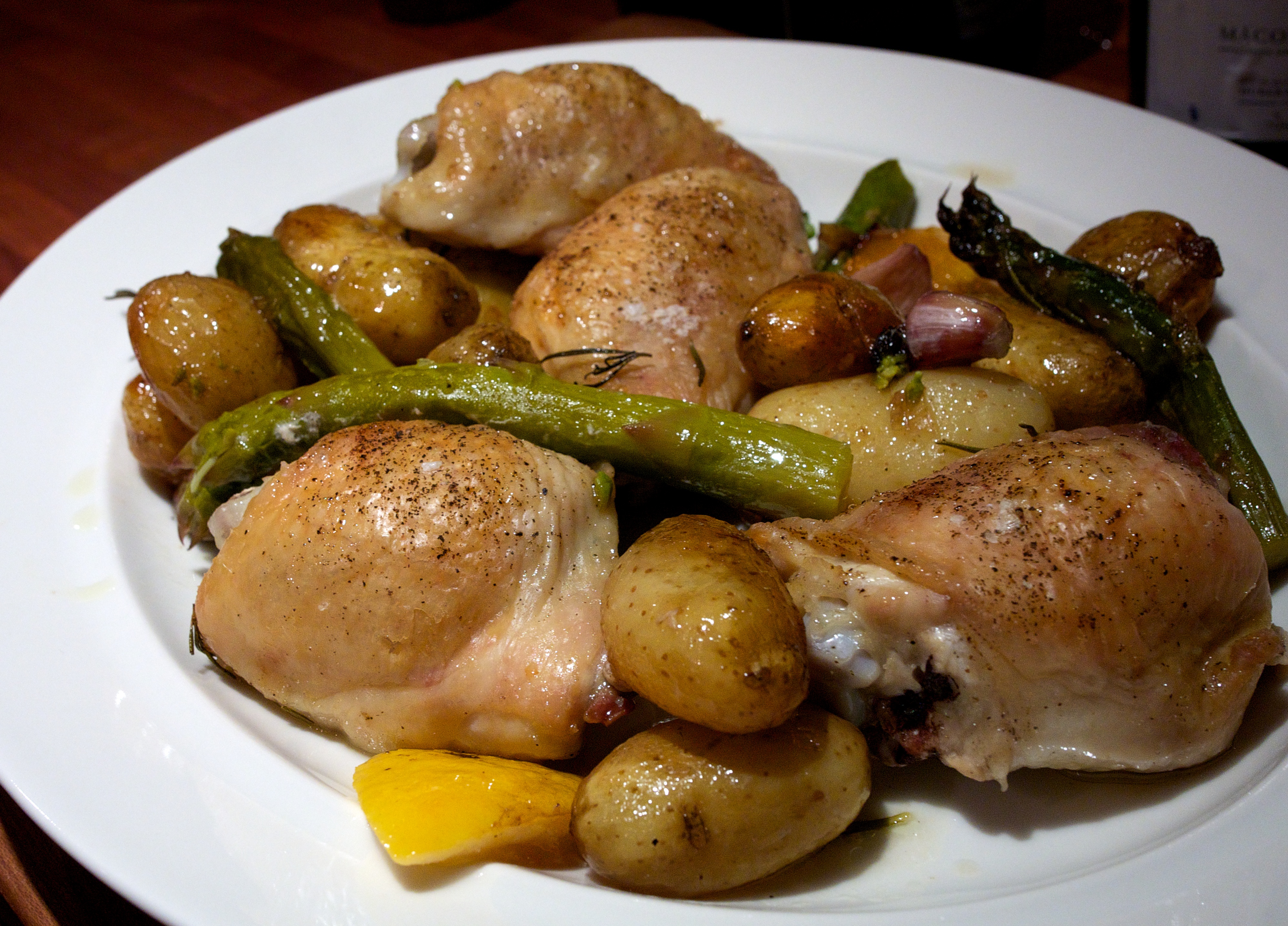
Rosemary roast chicken thighs, asparagus & new potatoes
A weeknight treat to celebrate the new season’s bounty.
Wine Suggestion: We had a glass of the Domaine St Denis Macon-Lugny, a superb chardonnay from the Mâconnais in Burgundy and from the only grower-winemaker in this village (the rest goes to the co-op). Excellent flavours and a nutty depth marry well with the fresh, new season flavours and roasted chicken; a good choice.
Rosemary Roast Chicken Thighs with Asparagus & New Potatoes – serves 4
750g small new potatoes, halved
2 large bunches of asparagus, discard the woody ends
1 whole bulb of garlic, cloves separated
1 tbsp olive oil
1 lemon, halved
small handful of rosemary sprigs
8 chicken thighs
Heat the oven to 200C/180C fan/gas 6.
Put the potatoes, asparagus, garlic cloves and olive oil into a large roasting tray and season well. Squeeze over the juice from the lemon halves, then cut into chunks and add to the tray. Toss together well, cover with foil and roast for about 15 minutes.
Remove the foil and stir through the rosemary.
Season the chicken thighs and arrange in the dish in a single layer.
Now roast for 30-50 minutes or until the potatoes are tender and the chicken is crisp and cooked through (this will depend on the size of your potatoes and chicken thighs).
My Dad keeps talking about these potatoes that I made before which he says I squashed a bit and then put them in the oven to crisp up. I had no recollection of these squashed, crispy potatoes until I came across these. Is this them Dad? If so I’ll make them for you next time I see you.
Crispy New Potatoes – to serve 4
16 smallish new potatoes, leave the skins on
2 tbsp olive oil
paprika
Heat oven to 200C/fan 180C/gas 6. Boil the potatoes for 10 minutes, drain and then put back on the warm ring to dry off. Spread the potatoes out on a baking tray and squash them a bit using a potato masher. Be careful here as you only want them a bit squashed and not completely smashed (though I smashed one or two and it just made them even more crispy so don’t worry too much).
Drizzle with the olive oil and sprinkle over a little paprika, salt and pepper. Now roast in the oven for about 20 minutes or until nice and crispy.
We like leftovers and at the same time we don’t cause it means we don’t get to cook anything new for dinner. Our way around this is to cook some tasty side dishes which we often neglect in favour of the main event.
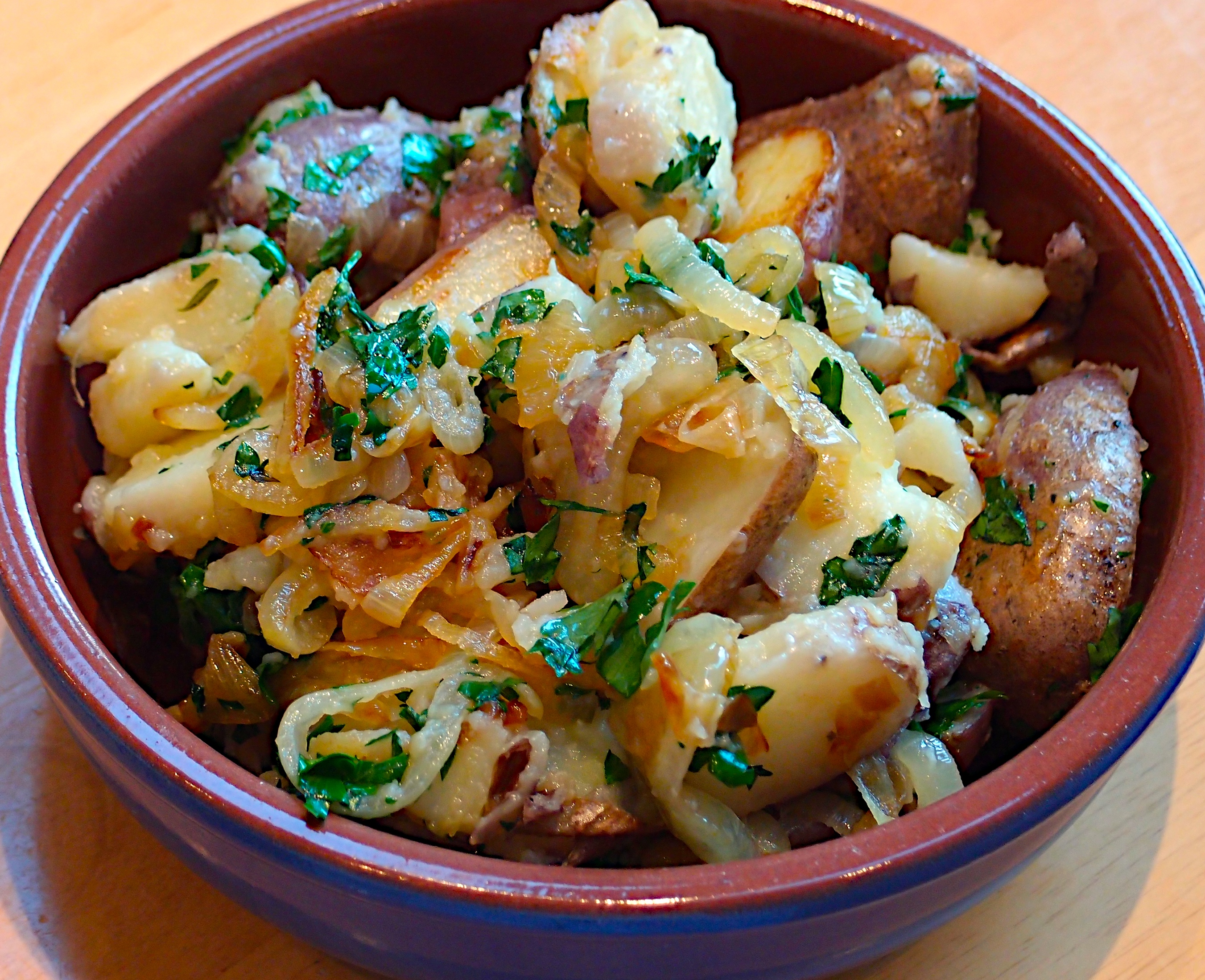
We picked up some new season ‘blue danube’ potatoes, carrot, chard (or Silverbeet as Jono would say), and onions at the market on Sunday and made two tasty treats to brighten up the leftover peposo (see post below).
New potatoes and onions – to serve 2
15g butter
2 onions, halved and sliced fine
a big sprig of thyme
2 bay leaves
1 tbsp olive ol
3oog cooked new potatoes, cooled and sliced thick
a large handful of flat-leaf parsley, chopped fine
Heat the butter in a shallow pan and cook the onions on low, with the thyme and bay leaves, for 20 minutes or until very soft.
Turn the heat up to medium and cook for another 5 minutes or so to make the onions golden and sticky.
Add olive oil and add the sliced potatoes. Fry for 10 minutes until golden (they won’t crisp up much because of the onions but they’ll taste good).
Rinse the chard and remove the stalks. Chop the stalks coarsely and cut the chard into ribbons, as you would cabbage.
Simmer some chopped carrots in a small amount of water and a good knob of butter for about 10 minutes. Add the chard stalks and cook for another 7 minutes. Add the ribbons of chard for the last 3-4 minutes. Season well and drain off any excess liquid.

 We’ve just had a sunny Easter weekend, so we cooked lots of Spring side dishes from Ottolenghi Simple. These potatoes are lovely and fresh and tasted good with some barbecued lamb gigot chops. We’re binge eating Jersey Royals while we can get them.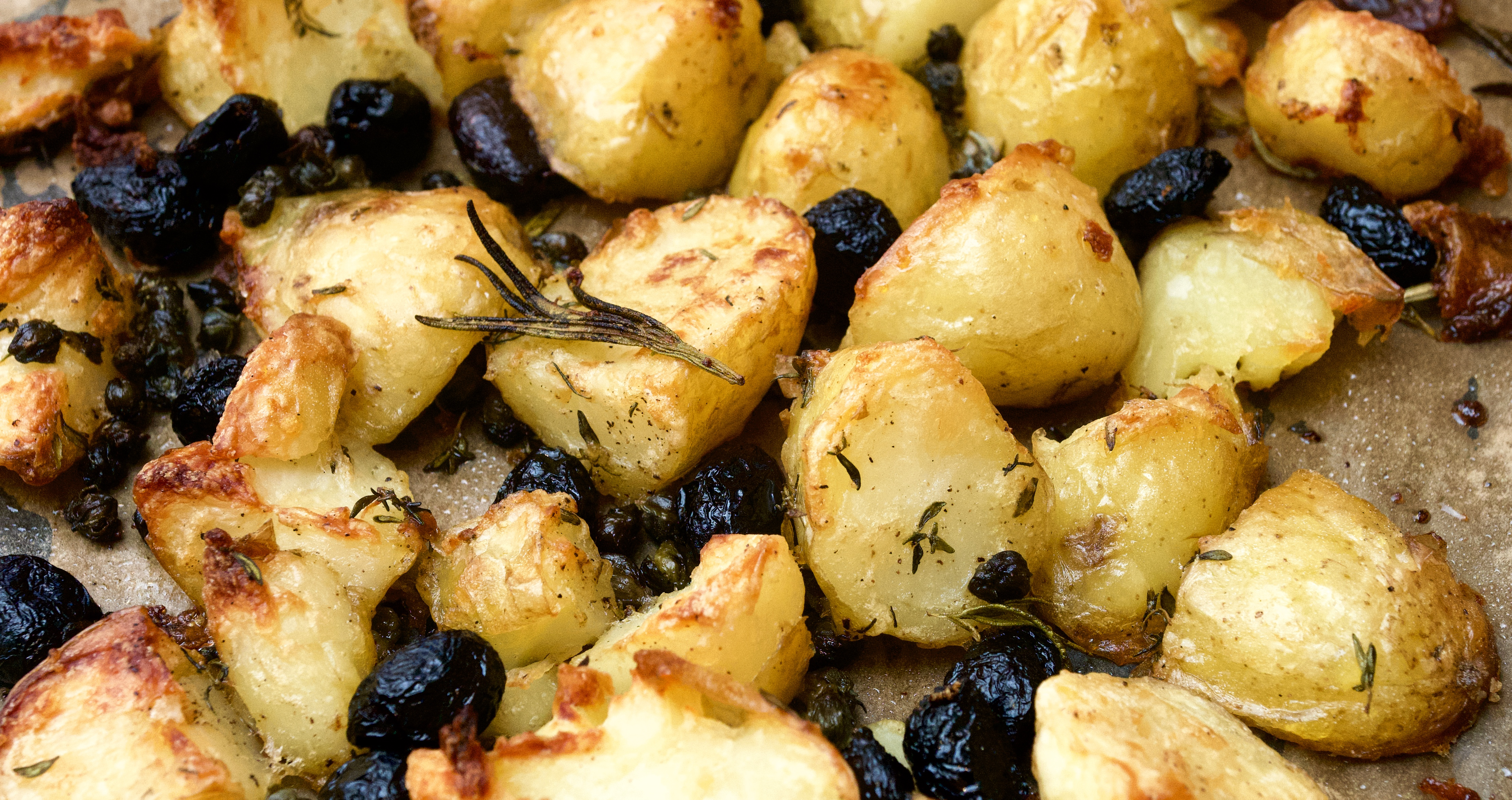



 Jono & Jules do food & wine