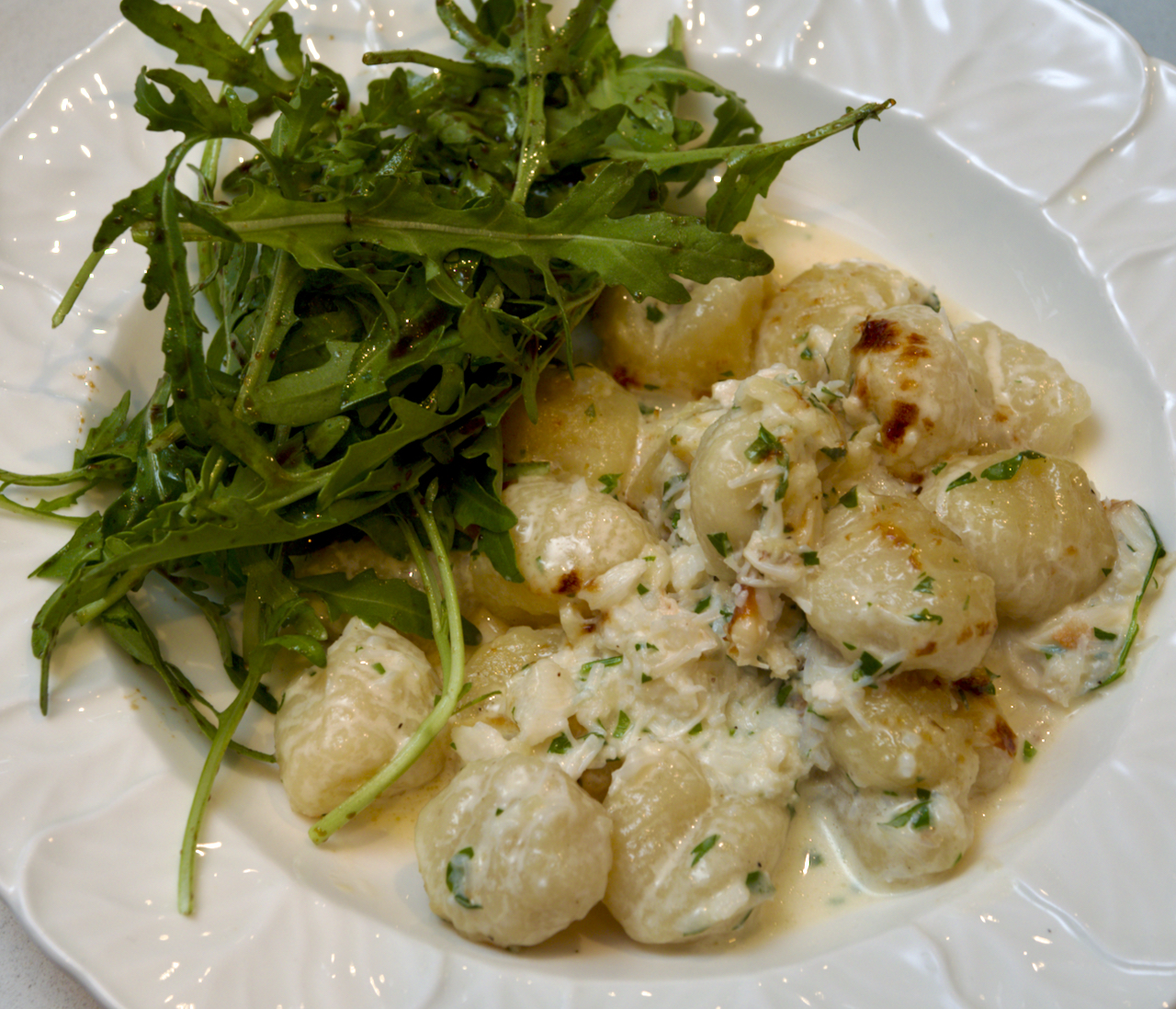
We buy big tubs of Lambay Island white crabmeat and freeze it in small portions so we can have weeknight dishes like this one. Really simple but tastes luxurious.
Wine Suggestion: This demands a richer white, but with a core of minerality, texture and acidity. Tonight we opened a La Clef du Recit Sancerre Le Chêne Fourchu … an uncommonly oaked Sauvignon Blanc which, when handled deftly like this, adds layers and structure. We love how this has hints of tropical fruits, lemon and mandarin.
Baked crab and lemon gnocchi – serves 2
1 pack of pre-made gnocchi – about 400g – go for a good quality one
150ml double cream
30g Parmesan, finely grated, plus a bit extra
juice of ½ lemon
100g white crabmeat
a handful of flatleaf parsley, chopped
dressed green salad, to serve
Cook the gnocchi in boiling salty water until if floats to the top, then scoop it out and set aside.
Heat the cream in a large pan, then add the Parmesan and lemon juice. Let it bubble up, then turn off the heat and add the crab, parsley and gnocchi. Sesson well with black pepper, then tip it all into a baking dish.
Sprinkle over some more Parmesan and place under a hot grill for a few minutes or until brown and bubbling.
(Original recipe by Janine Ratcliffe in Olive Magazine, August, 2016.)
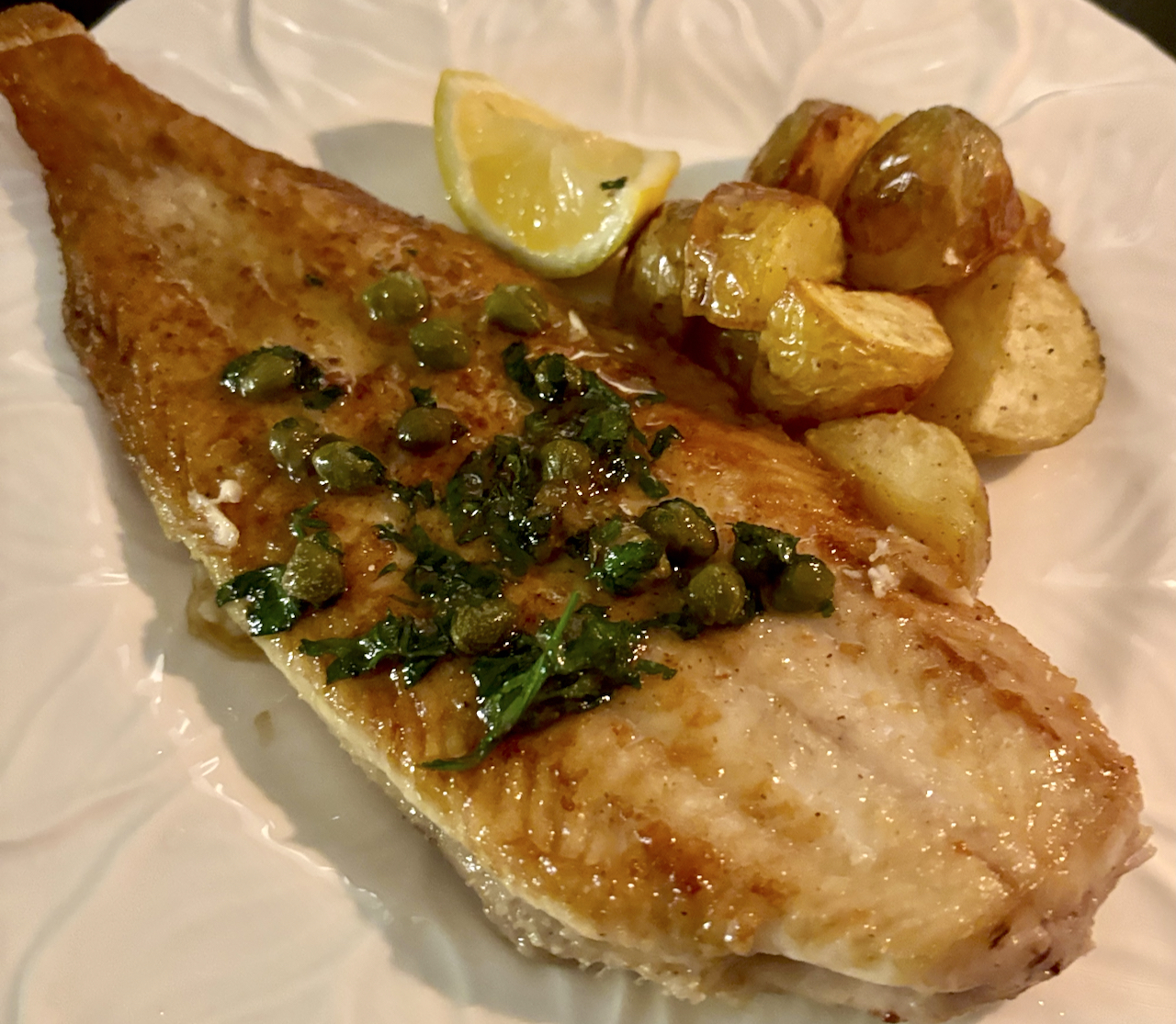
This might just be our favourite fish dish — and honestly, we can’t believe it took us this long to realise how utterly simple it is to cook. Dover sole (also known as black sole here in Ireland) is a truly special fish: delicate, buttery, and elegant with very little effort required in the kitchen. Since subscribing to a fish box from Urban Monger, we’ve been pushed out of our comfort zone and into cooking more seafood. This recipe is a great confidence booster: classic, quick, and very satisfying.
Wine Suggestion: Such a lovely fish needs respect, so don’t skimp on quality and look for a crisp, dry white with depth and personality. We chose a Chablis from Nathalie & Gilles Fèvre which is made in stailess steel, but left on its fine lees to add texture to an already layered, pure fruited wine: white stonefruit, a lemony twist and a limestone backbone.
Dover sole à la meunière – serves 2
2 x 400-450g Dover soles trimmed and skinned (the ones we had were labelled black sole in Ireland but they are the same thing)
25g plain flour
4 tbsp flour
50g unsalted butter
2 tsp lemon juice
1 tbsp chopped parsley
2 tsp capers
lemon wedges, to serve
roast baby potatoes, to serve
If you need to trim the fish yourself, take a pair of scissors and cut the frilly fins and the fleshy bones off both sides. You will be removing about 4 cm off all around so you are left with just the 4 fillets on the backbone.
Season the fish with salt and white pepper, then dip both sides into the flour and pat off any excess.
Heat the oil in a non-stick for well-seasoned frying pan. Add one of the soles, lower the heat slightly and add a small piece of the butter. Fry over a moderate heat for 4-5 minutes until golden brown and cooked through. Transfer to a plate and keep warm while you cook the second fish.
Pour off the frying oil and discard. Add the rest of the butter to the pan and allow to melt over a moderate heat. When it starts to smell nutty and turn brown, add the lemon juice, parsley, capers and some seasoning. Pour some of the beurre noisette over each fish and serve with the lemon wedges and some roast baby potatoes.
(Original recipe from Rick Stein’s Food Stories, BBC Books, Penguin Random House, 2024.)
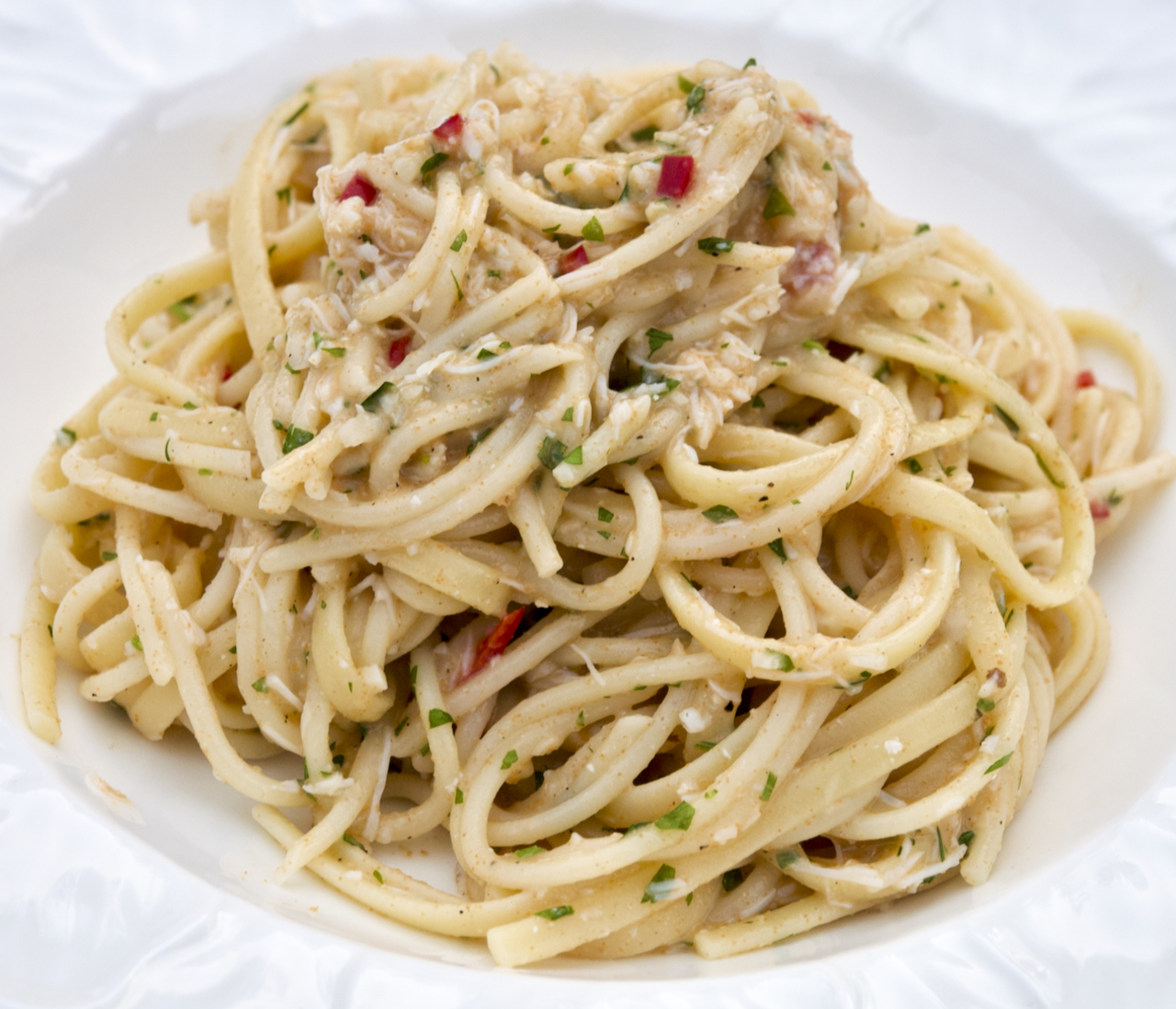
This is super simple which is just the treatment that you want to give delicious Lambay Island Crab.
Wine Suggestion: We’re planning a trip to Galicia so are getting in the mood and trying a few Albariños. Tonight somethin a little special, the Pazo Señorans Colección which is 5 years old and all the better for it. Bone dry, but with a depth of fruit and a saline minerality reflecting both sunshine and the Atlantic weather. A delightful match with crab.
Crab linguine – serves 4
400g linguine
4 tbsp extra virgin olive oil
1 red chilli, deseeded and chopped
2 cloves of garlic, finely chopped
100g brown crabmeat
200g white crabmeat
about 5 tbsp white wine
small squeeze of lemon
a large handful of flat-leaf parsley leaves, very finely chopped
Bring a large pan of salty water to the boil and cook the linguine for 1 minutes less than it says on the packet.
Meanwhile, gently heat 3 tbsp of the olive oil with the chilli and garlic in a large pan. Cook very gently until they start to sizzle, then turn up the heat and add the white wine. Simmer until the wine and olive oil come together, then remove from the heat and add the brown crabmeat. Use a wooden spoon to mash it into the olive oil to make a thick sauce.
When the pasta is cooked, turn off the heat. Place the sauce over a very low heat and use tongs to lift the pasta from the water into the crab sauce.
Remove the sauce from the heat and add the white crabmeat and parsley to the pasta with a little sea salt. Stir really well, adding a drop of pasta water if needed. Taste for seasoning and add a small squeeze of lemon. Serve immediately drizzle with some more olive oil.
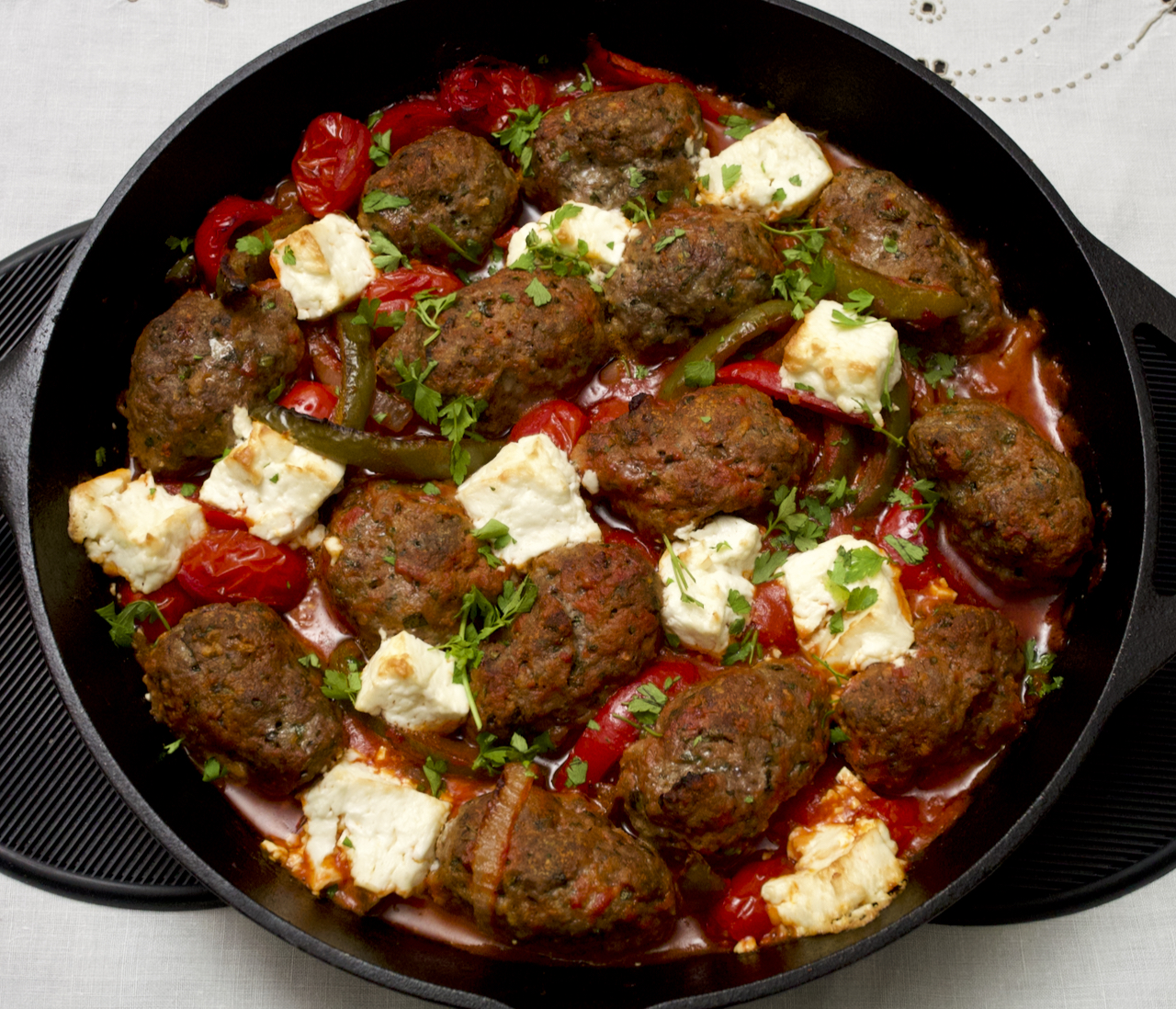
Some bold and tasty flavours in this dish by Noor Murad — lamb koftas baked with sweet peppers, salty feta, and oregano. This is minimal fuss for maximum payoff. Another standout from Noor’s beautiful new book, Lugma, a collection we’re really enjoying cooking from.
Wine Suggestion: Grenache all the way with this one. Tonight, we opened a rare treat, the Edetaria La Personal made from old-vine Garnacha Peluda. You won’t find this particular clone outside of Terra Alta, and we think it’s one to watch in a warming climate. The fine hairs on the backs of the vine leaves help trap humidity and conserve moisture, a clever natural adaptabion. It’s also delicious with the lamb and feta.
Lamb koftas with peppers and feta – serves 4
1 large onion, sliced
1 green pepper, sliced
1 red pepper, sliced
1 tbsp fresh thyme leaves
3 tbsp olive oil, plus a bit extra
1½ tsp sweet paprika
200g Datterini or cherry tomatoes
150g passata
2 tbsp apple cider vinegar
¾ tbsp maple syrup
150g feta, broken into large chunks
FOR THE KOFTAS:
500g lamb mince
40g panko breadcrumbs
20g parsley, leaves and soft stems finely chopped, plus a bit extra to serve
10g oregano leaves, finely chopped, plus a bit extra to serve
3 cloves of garlic, crushed
1 tsp ground cinnamon
1 tsp ground cumin
¼ bicarbonate of soda
1 onion, halved
1 large ripe plum tomato
Heat the oven to 200C fan.
Make the koftas first by adding the lamb mince, panko, herbs, garlic, spices, bicarbonate of soda, 1 tsp of salt and plenty of black pepper to a large bowl. Grate the onion halves on the coarse side of a grater and squeeze out the excess liquid with your hands (it’s easiest in a clean teatowel). Add this to the bowl, then grate the tomato in the same way, straning off the juice through a sieve. Add this to the bowl too.
Grease your hands with a little olive oil and knead the meat mixture for about 4 minutes, then set aside to rest for 20 minutes.
Meanwhile, add the sliced onion, peppers, thyme, 2 tbsp of the oil and ½ tsp salt to a large cast-iron frying pan and mix to combine. Bake for 15 minutes or until starting to brown, then remove from the oven and turn the temperature up to 220C fan.
Divide the meat mixture into 12 pieces, about 55-60g each, and form into torpedo-shaped koftas with oiled hands.
Stir the paprika and the tomatoes into the frying pan.
Whisk the passata, vinegar, maple syrup and ¼ tsp of salt together in a jug, then pour this into the pan.
Add the koftas, then drizzle over the final tbsp of oil.
Return to the oven for 8 minutes, then turn each kofta over. Dot with the feta and bake for 12 minutes or until the feta is nicely browned and the dish is bubbling.
Sprinkle over the extra herbs to finish.
(Original recipe from Lugma by Noor Murad, Quadrille, 2025.)
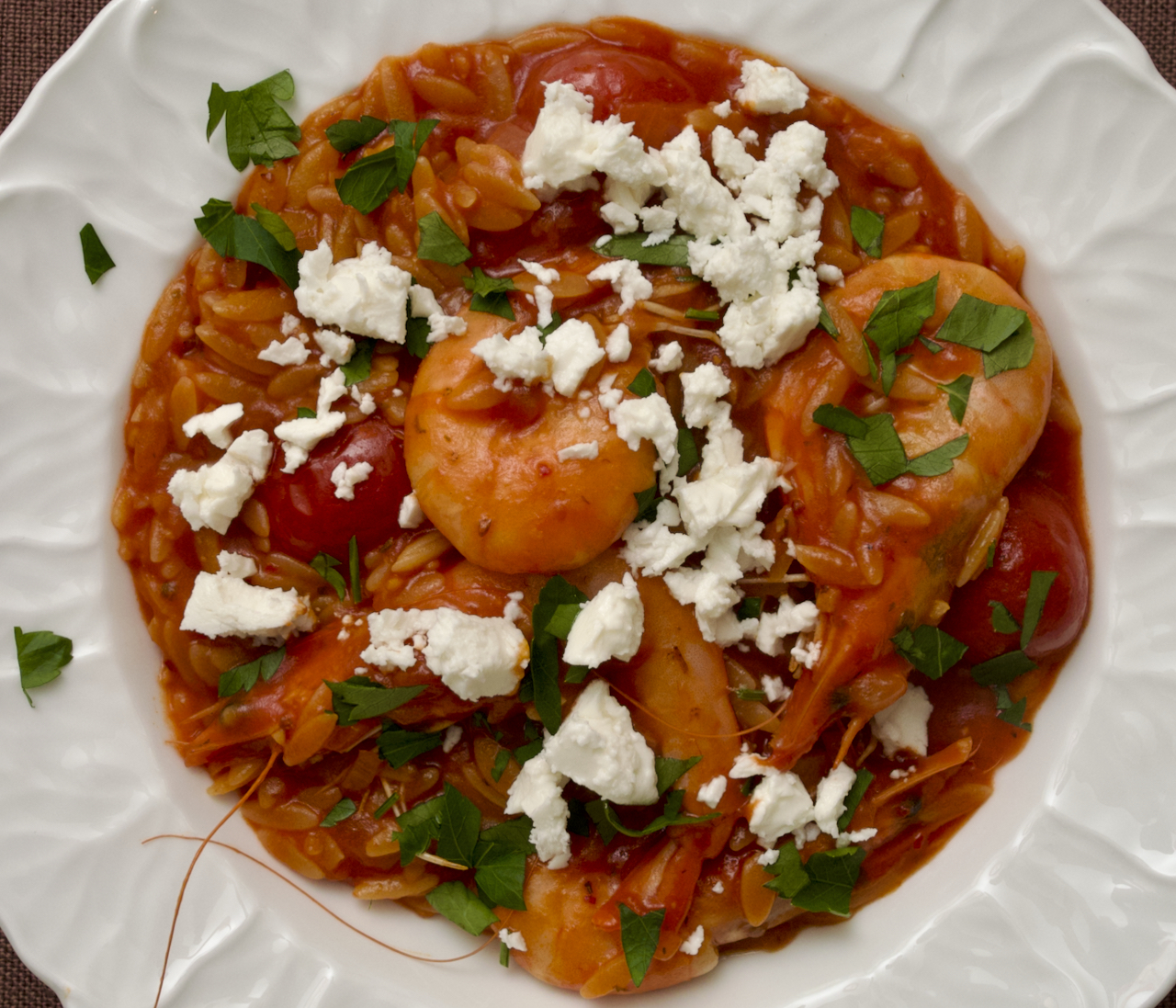
Inspired by the classic Greek saganaki this dish bring together juicy king prawns, bright cherry tomatoes, orzo simmered in wine and stock, a drizzle of lemon and a scatter of feta and parsley. Perfect when you want something that’s quick, feels indulgent, but still very satisfying.
Wine Suggestion: We followed the time-honoured rule of “what grows together, goes together” and opened a bottle of Tetramythos Roditis from the Peloponnese. This dry Greek white is crisp and appley, with a soft, rounded texture through the mid-palate and a clean, saline finish. It worked perfectly with the prawns and the tomato base, echoing the citrusy notes of the lemon while balancing the heat from the chilli. No, we weren’t eating this by the sea in Greece but it certainly felt like we could have been.
Saganaki-style orzo with prawns – serves 4
2 tbsp olive oil
1 large onion, finely chopped
5 cloves of garlic, finely chopped
1 tsp chilli flakes
2 tsp dried oregano
2 tbsp tomato purée
200ml white wine
2 x 400g tin cherry tomatoes
300g orzo
500ml hot chicken stock
350g raw king prawns
a small handful of parsley, finely chopped
50g feta, crumbled
half a lemon, cut into wedges
toasted ciabatta, to serve
Heat the oil in a wide frying pan over a medium heat, then fry the onion with a pinch of salt for a few minutes or until slightly softened.
Add the garlic, chilli, oregano and tomato purée and cook for another couple of minutes.
Turn the heat up high, then add the wine and leave until reduced by half, about 3-5 minutes.
Stir in the cherry tomatoes, orzo and stock, bring to a simmer and cook, stirring occasionally for 5-7 minutes or until the orzo is almost tender.
Stir in the prawns and cook for 2-3 minutes or until cooked through. Season and scatter over the parsley and feta. Serve with lemon wedges for squeezing over.
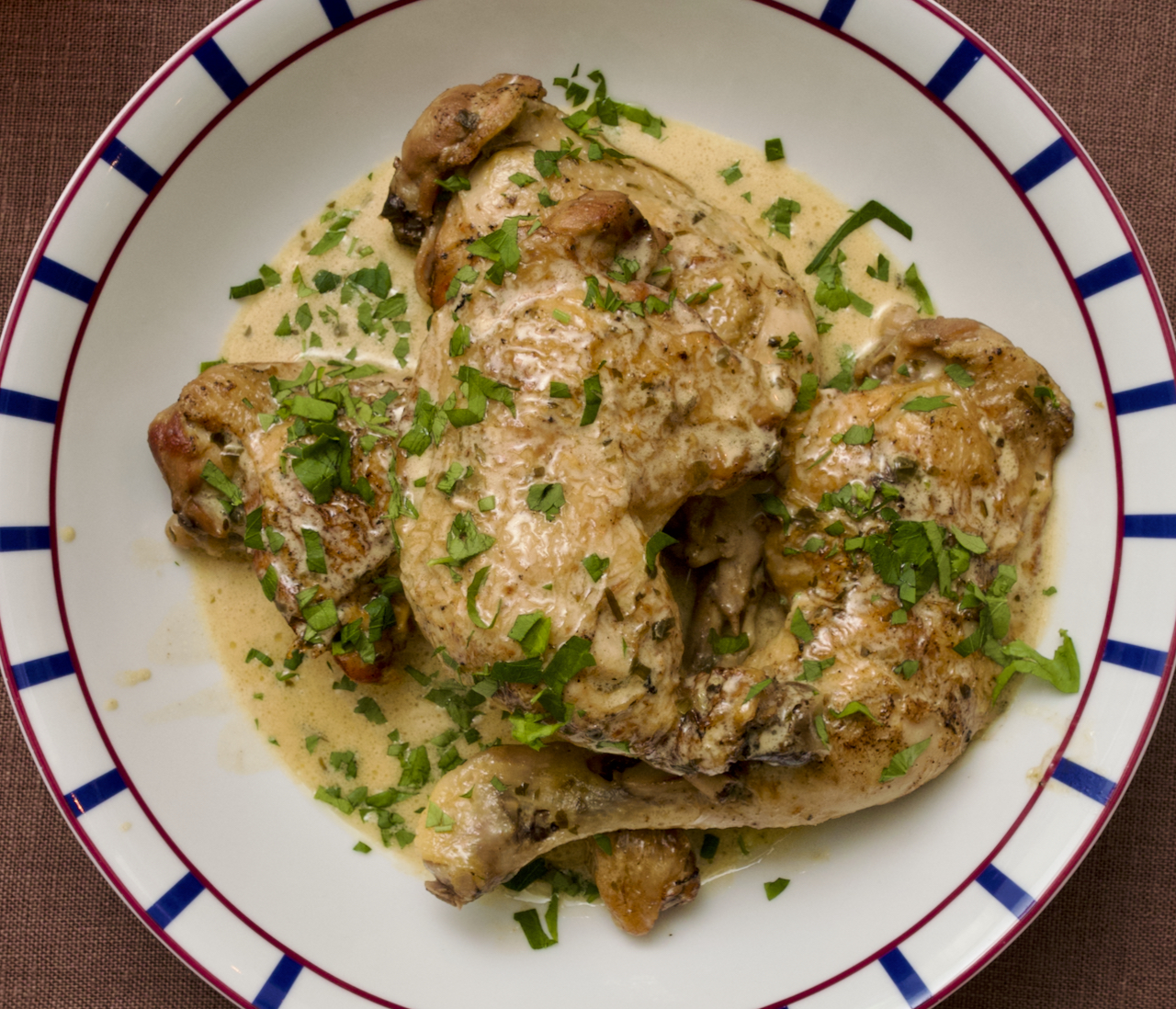
While rummaging through a relative’s bookshelf, we stumbled upon an old cookbook called Cooking with Katie Stewart and took a few recipes along on a recent trip to France — and we’re so glad we did. With some cuisses de poulet from a local butcher and the basic equipment in a holiday kitchen, we cooked a simple tarragon chicken that was so delicious, we made it again as soon as we got home. Proof that sometimes the best recipes are the ones you nearly overlook.
Wine Suggestion: Go classic and open a Chardonnay with a bit of oak — I dare you. It works so well with the tarragon and chicken. Tonight, we went with an old favourite: the Neudorf Tiritiri Chardonnay. Done.
Tarragon Chicken – serves 6
4 tsp dried tarragon
2 tbsp lemon juice
6 chicken joints (we used legs)
50g butter
300ml hot chicken stock
300ml double cream
a handful of flatleaf parsley, roughly chopped
Put the dried tarragon into a small bowl and pour over the lemon juice, then leave to soak for 30 minutes.
Season the chicken with salt and black pepper.
Melt the butter in a large saucepan, then add the chicken pieces and slowly brown them on all sides (this may be easier in two batches). When the chicken is browned all over, about 15 minutes, put all of the chicken into the pan.
Season the chicken again and pour over the tarragon and lemon juice mixture, then add the hot stock and cream. Cover with a lid and simmer gently for about 45 minutes or until the chicken is really tender.
Lift the chicken on to a serving plate and pour over the sauce (you can strain it if you have a sieve). Sprinkle with the chopped parsley and serve.
(Original recipe from Cooking with Katie Steward, Hamlyn, 1974).
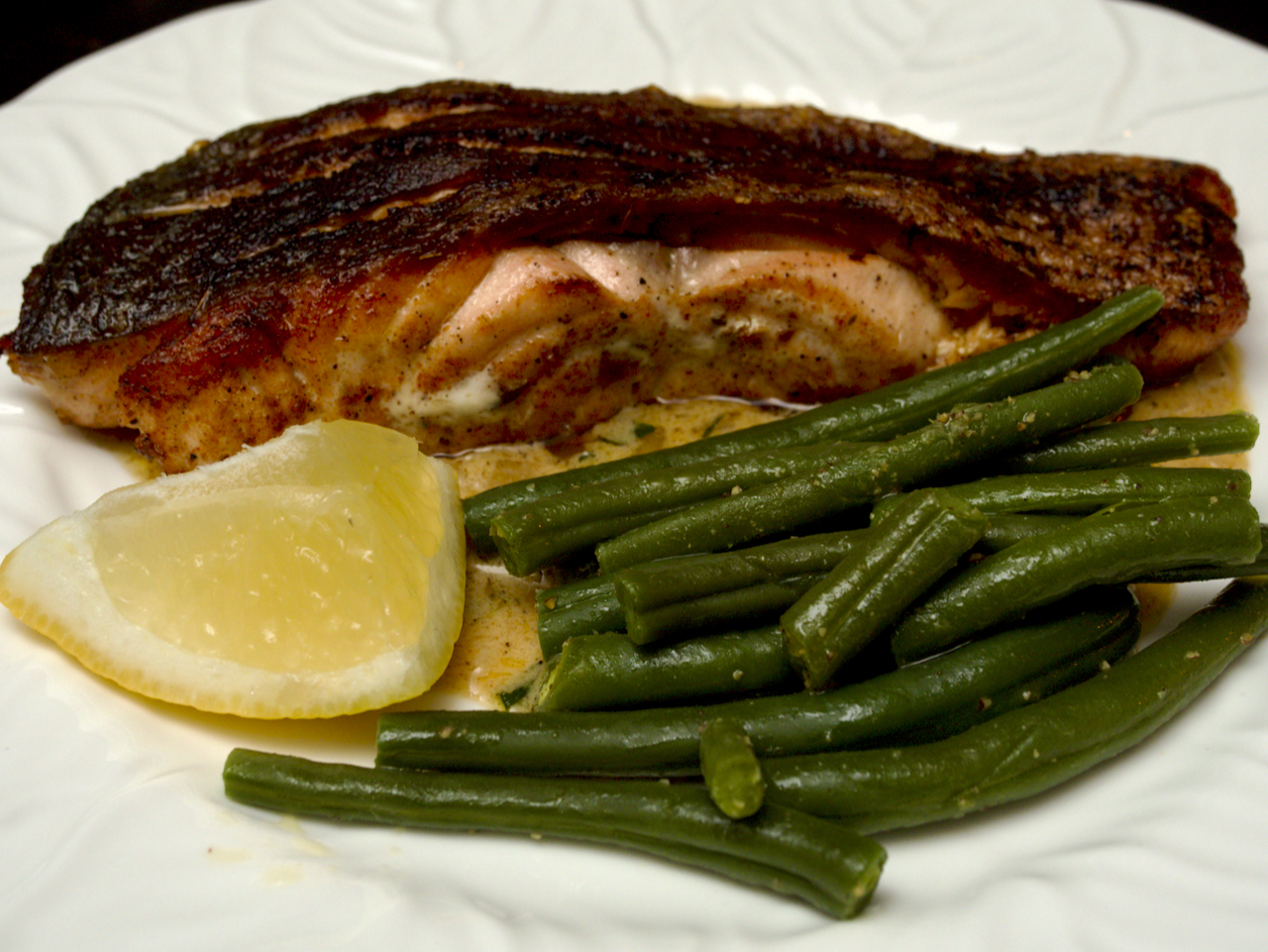
Salmon is one of the most popular dishes in our house so it’s nice to find a recipe with some different flavours.
Wine Suggestion: double down on the citrussy aspect when choosing a wine so for this we headed to a Loire Sauvignon Blanc, but not from one of the “big two”, rather an under-rated Menetou Salon made by Anthony Girard at La Clef du Recit. A touch more grapefruit and orange, but with hints of lemon, the freshness really worked well with the salmon.
Salmon with Cajun spices – serves 2
2 salmon fillets, skin on
2 tsp Cajun spice blend
1-2 tbsp olive oil
30g butter
lemon wedges, to serve
FOR THE SAUCE:
1 tbsp olive oil
2 banana shallots, finely diced
2 cloves of garlic, finely diced
½ tsp Cajun spice blend
150ml fish stock
150ml crème fraîche
juice of 1 lemon
1 tbsp finely chopped flat-leaf parsley
Score the skin of the salmon with a sharp knife, then sprinkle both sides with the Cajun spice mix and a little salt. Heat the olive oil over a medium heat in a frying pan.
Add the salmon to the hot oil, skin side down, pressing the fillets down with a fish slice. Cook for a few minutes on each side, then remove the pan from the heat.
Add the butter to the pan and baste the salmon with it as it melts. Transfer the salmon to a warm plate and leave to rest while you make the sauce.
Put the frying pan back over a medium-high heat and add the olive oil. Add the shallots and cook for a few minutes, then add the garlic and Cajun spice blend and cook for a couple of minutes.
Add the stock to the pan and let it bubble until reduced by half. Stir in the crème fraîche and cook for a minute or two until the sauce thickens. Season and add the lemon juice to taste. Remove from the heat and stir through the parsley.
Spoon the sauce onto warmed serving plates and top with the salmon. Serve with lemon wedges and green beans.
(Original recipe from Tom Kerridge Cooks Britain, Bloomsbury, 2024.)
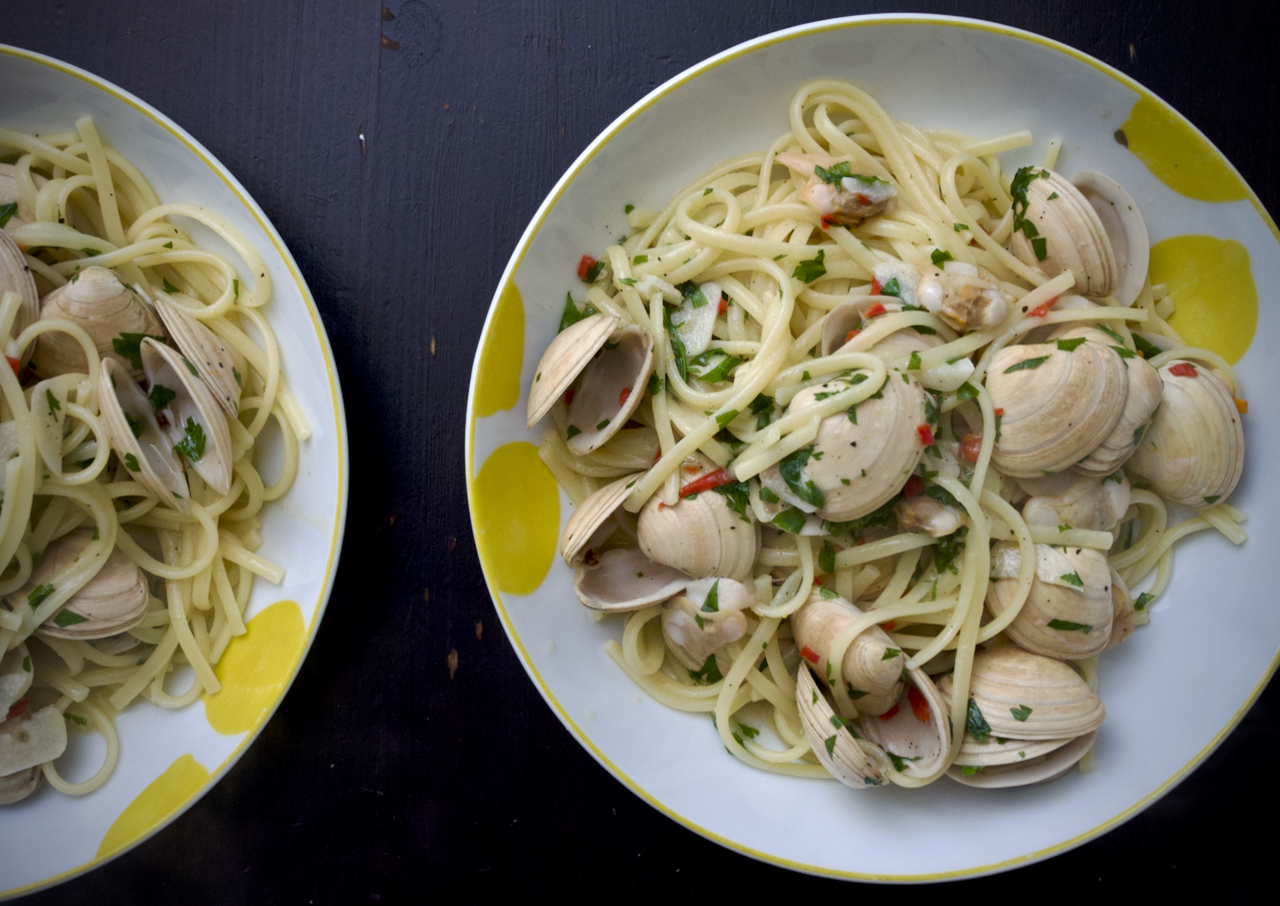
Linguine vongole – possibly the most perfect pasta dish. Lots of garlic and fresh salty clams – delicious!
Wine suggestion: working well with this dish is the under-rated grape from the south of Italy: Fiano. We’d highly recommend seeking it out as it has the beguiling fresh, almost crisp stonefruit character and some sort of citrus twist depending on where it comes from. While most is grown in Campagnia and the south of Italy it’s now being found successfully in Argentina and Australia, like Pikes “Luccio” from the Clare Valley … where the citrus twist is lime and delicious at that.
Linguine Vongole – serves 4
1kg fresh clams
400g linguine
4 tbsp olive oil
6 cloves of garlic, sliced very thinly
1 large red chilli, finely chopped
100ml white wine
30g unsalted butter
20g flatleaf parsley, finely chopped
1 large lemon
Put the clams in a sinkful of water with a decent handful of salt, then discard any that don’t close.
Bring a large pan of salty water to the boil and cook the pasta according to the timings on the pack.
Meanwhile, put the olive oil, garlic and chilli into another large pan, then turn on the heat and allow them to cook gently for a few minutes but without taking on any colour. When it smells really good, add the wine and cover the pan. Turn the heat up high and when the wine is steaming, add the clams. Clamp the lid back on and give the pan a shake, then leave for a few minutes.
Reserve a large mug of the pasta water, then drain the pasta and add it to the pot of cooked clams. Add a good splash of pasta water, the butter and parsley. Mix and toss well to make a sauce that coats the pasta. Squeeze in the juice from half the lemon and grate in some lemon zest. Mix again, then season if needed. Serve with a drizzle of your best olive oil.
(Original recipe from The Farm Table by Julius Roberts, Ebury Press, 2023.)
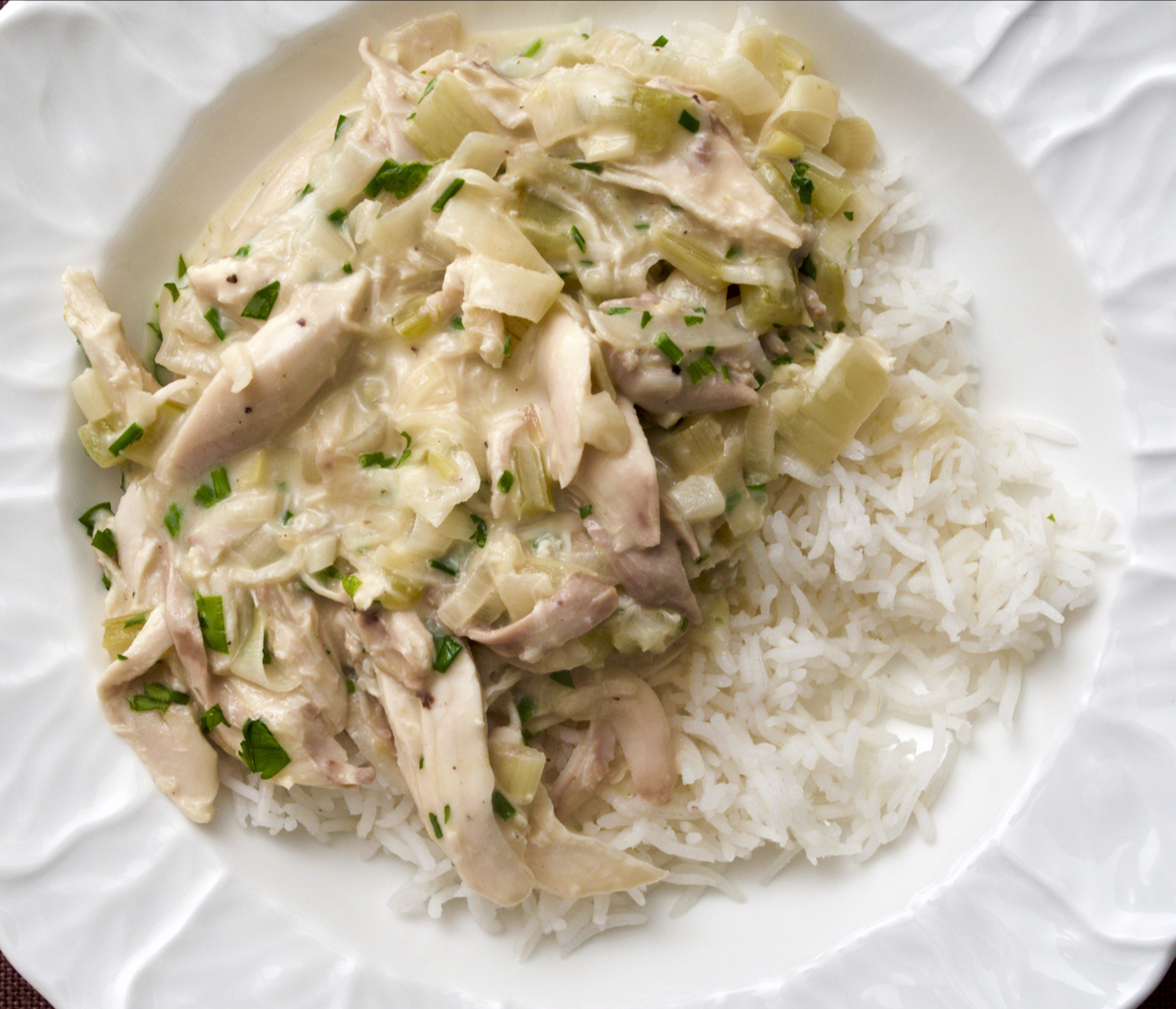
So simple and yet so lovely. The bit that takes time can be done earlier in the day and it’s fairly easy to finish off later. Serve with rice or whatever you fancy.
Wine Suggestion: We like how the stonefruit characters, mixed with slightly lower acidity from a southern Rhône white goes with the gentle and elegant nature of this dish. The Grapillon d’Or Vacqueyras white is a good example and it’s fleshy character and minerally/nutty textures are just perfect.
Chicken Fricassee – serves 6 to 8
2kg whole chicken
FOR THE POACHING LIQUID:
750ml chicken stock
2 banana shallots, sliced
2 celery sticks, sliced
8 tsp black peppercorns
½ lemon
a large bulb of garlic, cut in half horizontallly
FOR THE SAUCE:
a large knob of butter
500g banana shallots, thinly sliced
3 sticks celery, finely diced
200ml double cream
3 tbsp chopped chives
3 tbsp chopped flatleaf parsley
Put the whole chicken into a large, deep saucepan. Add all of the poaching liquid ingredients and bring to the boil. Cover and simmer very gently for 1 hour, or until the chicken is cooked. Remove from the heat and allow to cool in the liquid.
When the chicken is cold, take the chicken out and remove the meat from the carcass – discard the bones and skin. Tear the meat into large pieces and set aside. Strain the poaching liquid through a sieve into a large jug. Squeeze the garlic from the skin into a small bowl and mash with a fork. Discard the poaching veg, lemon and peppercorns.
To make the sauce, melt the butter in a large frying pan over a medium heat. Add the shallots and celery and cook for about 10 minutes or until soft. Add the mashed garlic and fry for 10 seconds, then pour in the vermouth and boil to reduce by half. Add 600ml of the poaching liquid, bring to the boil and boil hard for 3 minutes.
Add 2 tbsp of the remaining poaching liquid to the cornflour and stir until smooth. Add this to the pan and cook until the sauce has thickened. Add the cream and cooked chicken and gently reheat until hot. Add the fresh herbs and season well with salt and black pepper.
(Original recipe from Mary’s Foolproof Dinners, BBC Books, 2024.)
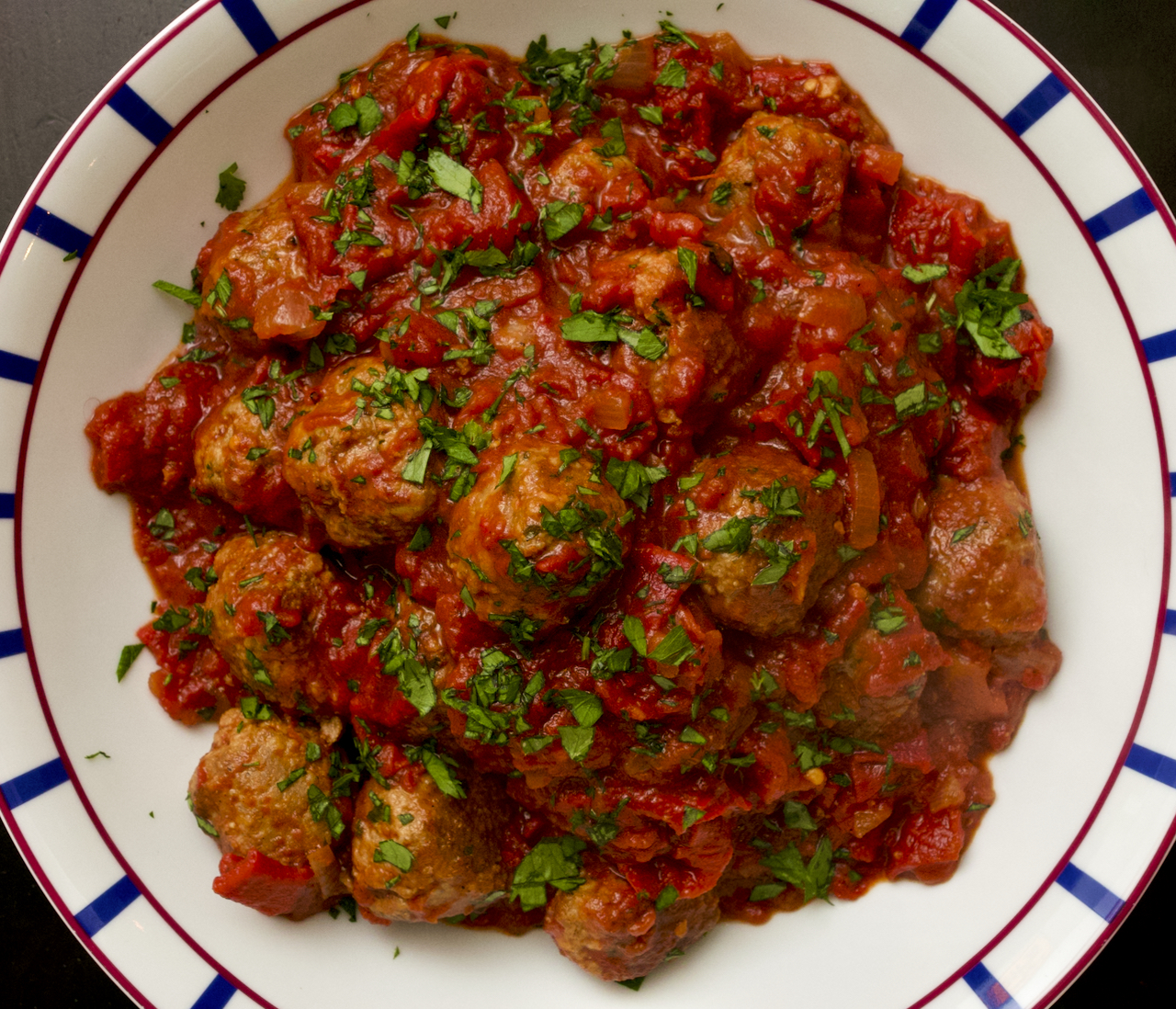
Delicious lamb meatballs with oloroso sherry and piquillo peppers – you need to buy the expensive ones by El Navarrico. Comforting, quick and easy to make. Serve as a sharing dish with crusty bread.
Wine Suggestion: “Kimera“, which we picked up in Pamplona earlier this year is a gem made by Luis Moya Tortosa. Old vine Garnatxa which has both depth, refinement and an effortless weight. We once thought Grenache tended to be heavy and alcoholic, but have been proved so wrong as we’ve explored more of this grape the past few years.
Lamb albondigas – serves 4
500g lamb mince
30g fresh white breadcrumbs
2 cloves of garlic, peeled and crushed
1 tsp sweet smoked pimentón de la vera
3 tbsp finely chopped flat-leaf parsley
1 tbsp finely chopped fresh oregano
finely grated zest of 1 lemon
1 egg,
1 tbsp olive oil
1 onion, peeled and finely chopped
150ml oloroso sherry
2 x 400g tins chopped tomatoes
2 tsp sherry vinegar
1 x 240g jar piquillo peppers, drained and sliced
crusty bread, to serve
Put the lamb mince, breadcrumbs, garlic, pimentón, a third of the parsley, the oregano, lemon zest and egg in a large bowl. Season well, mix with your hands to combine, then shape into 20 small meatballs.
Put the oil into a large frying pan over a medium-high heat, then fry the meatballs, turning often, for about 5 mintues or until browned all over. Transfer to a plate with a slotted spoon.
Add the onion to the pan and cook for 10 minutes, until softened, then add the sherry and bubble until reduced by half. Add the tomatoes, season generously and leave to bubble for 10 minutes. Stir in the vinegar, then return the meatballs to the pan along with the peppers and leave to cook for 15 minutes, stirring occasionally, until the sauce has thickened.
Scatter over the rest of the chopped parsley and serve with the crusty bread.
(Original recipe by José Pizzaro in The Guardian).
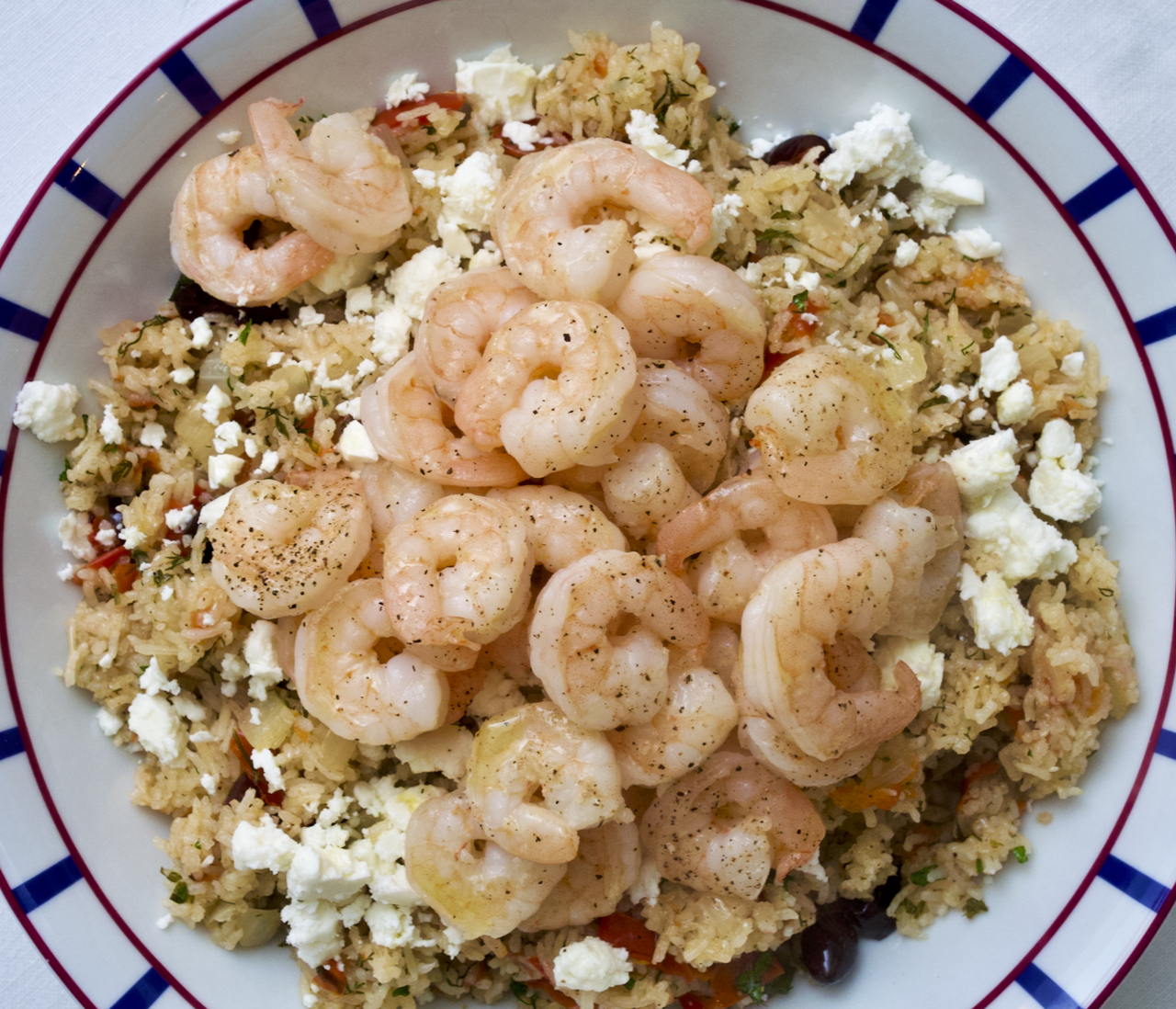
Prawns actually pair very well with feta, which is always a bit suprising to us. It’s nice to have a lighter dish amongst all the winter soups and stews.
Wine Suggestion: we think this suits a white grown somehwere around the Mediterranean, like tonight’s choice of the Hatzidakis Santorini Cuvée 15, a wonderfully fresh and complex Assyrtiko with honeysuckle and herbs on the nose followed by a textured, almost salty palate.
Prawn & feta pilaf – serves 4
225g basmati rice
15g unsalted butter
2 tbsp olive oil, plus a bit extra to
1 onion, finely chopped
1 clove of garlic, crushed
275g tomatoes, deseeded and roughly chopped
a big bunch of dill, chopped
a big bunch of flat leaf parsley, leaves chopped
a handful of mint leaves, chopped
400ml fish stock or light chicken stock
350g raw prawns, shelled and deveined
juice of ½ lemon, plus lemon wedges to serve
55g black kalamata olives, pitted and roughly chopped
75g feta cheese, crumbled
Rince the rice in a sieve under cold running water until the water runs clear. Leave to soak for an hour if you have the time, then rinse again.
Heat the butter and 2 tbsp of olive oil in a saucepan and cook the onion until it starts to soften. Add the garlic and tomatoes and continue to cook, stirring now and then, until the onion is cooked and the tomatoes have softened. Stir in the rice and half the herbs, season well, then pour in the stock and bring to the boil. Boil hard until the rice starts to look pitted, with little holes in the service and it seems like the liquid has disapeared.
Wrap a clean tea towel around the lid of the pan and cover the pan. Reduce the heat to low and leave to cook for 20 minutes.
When the rice is almost ready, dry the prawns on kitchen paper and quickly sauté in a little olive oil over a high heat. Squeeze over the lemon juice and season with black pepper and salt.
When the rice is cooked, fork through the olives, remaining herbs and lemon juice with a good glug of your best extra virgin olive oil. Transfer to a serving platter, then scatter over the feta and mound the prawns on top. Drizzle again with olive oil and serve with lemon wedges.
(Original recipe from Crazy Water, Pickled Lemons by Diana Henry, Aster*, 2024.)
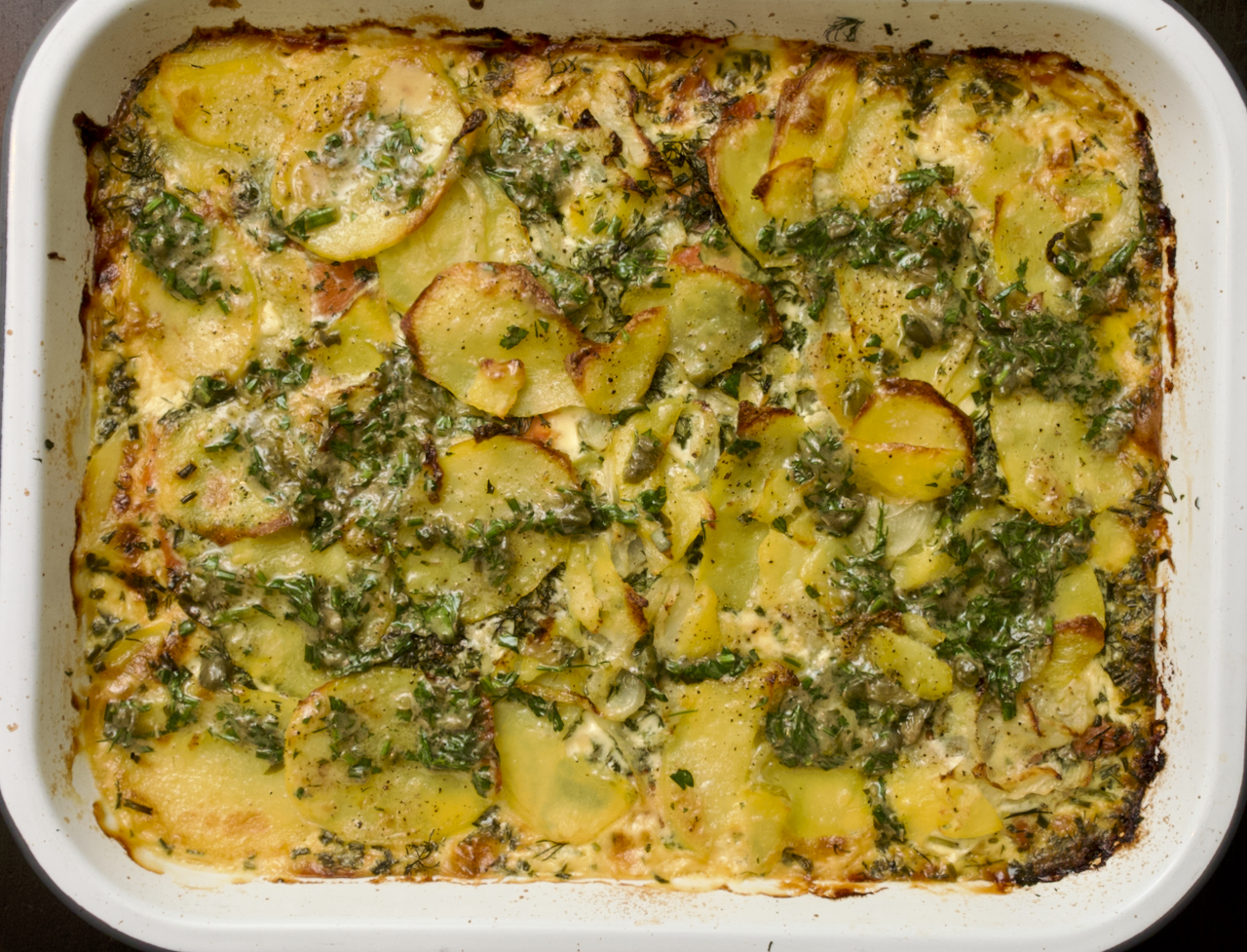
Such a lovely recipe, and you can of course use smoked salmon. We like smoked trout from Goatsbridge which is a local supplier. Recipe inspiration from the new Ottolenghi book – Comfort. You must have a green salad and a glass of white wine to serve. If you have a mandolin it will cut the potatoes and fennel just right.
Wine Suggestion: Weserved an oddity/one-off from Chateau Hureau from Saumur in the Loire. They grew a low quantity of Chenin Blanc grapes in 2022 due to frost so decided to make a Blanc de Noirs from Cabernet Franc for a bit of fun. Only available at cellar door it’s both crisp and fresh, but significantly has bags of texture which this dish needs. Look for whites with a touch of skin contact, or aged on lees as a substitute.
Potato, fennel & smoked trout bake – serves 4
200ml milk
425ml double cream
2 anchovies, finely chopped
3 cloves of garlic, lightly smashed with skin on
1 lemon, skin finely shaved into strips
2 tsp fennel seeds, finely ground
850g Yukon gold or red potatoes, peeled and sliced into ½ cm thick slices
1-2 large fennel bulbs, thinly sliced
4 egg yolks
10g dill fronds, roughly chopped
20g chives, finely chopped
20g parsley leaves, finely chopped
1½ tbsp unsalted butter, softened
200g smoked trout (or smoked salmon) slices, roughly torn
for the lemon butter sauce:
2 tbsp lemon juice
2 tsp capers, roughly chopped
40g unsalted butter, fridge cold and roughly chopped
Heat the oven to 170C fan.
Put the milk, cream, anchovies, garlic, lemon strips and ground fennel into a small saucepan. Place over a low heat and warm for 10 minutes, making sure it never comes to the boil. Give it a stir now and then and press on the solids to get plenty of flavour out of them. Remove from the heat.
Put the potato and fennel slices into a saucepan and cover with cold, salted water. Bring to the boil and cook for 6-7 minutes or until just tender. Drain and set aside.
Whisk the egg yolks with ¾ tsp of salt and a good grind of pepper in a large bowl. Strain the infused milk into the eggs, pressing on the solids against the sieve. Whisk to combine.
Combine all the herbs in bowl. Measure out 2 tbsp and reserve for the butter sauce.
Grease an ovenproof dish with ½ tbsp of the butter. Spoon a third of the potato and fennel over the base and grind over some pepper. Sprinkle over half the herbs and lay half the smoked trout over the top. Repeat with half the remaining potatoes and fennel, season with pepper, then add all the remanining trout and the rest of the herbs. Arrange a final layer of potato and fennel on top and carefully pour over the egg mixture. Grind over some more pepper and dot over the remaining butter. Bake for 45 minutes or until set and just golden. Remove from the oven and rest for 10 minutes.
Meanwhile make the lemon butter sauce. Put the lemon juice into a small saucepan on a medium-high heat and bring to a bubble. Allow to bubble for 1 minute, then add the capers and butter, a few pieces at a time. Whisk until smooth and creamy, then remove from the heat and stir in the reserved herbs and some more pepper. Spoon over the dish and serve warm with a green salad.
(Original recipe from Ottolenghi Comfort by Yotam Ottolenghi, Helen Goh, Verena Lochmuller & Tara Wigley, Ebury Press, 2024.)
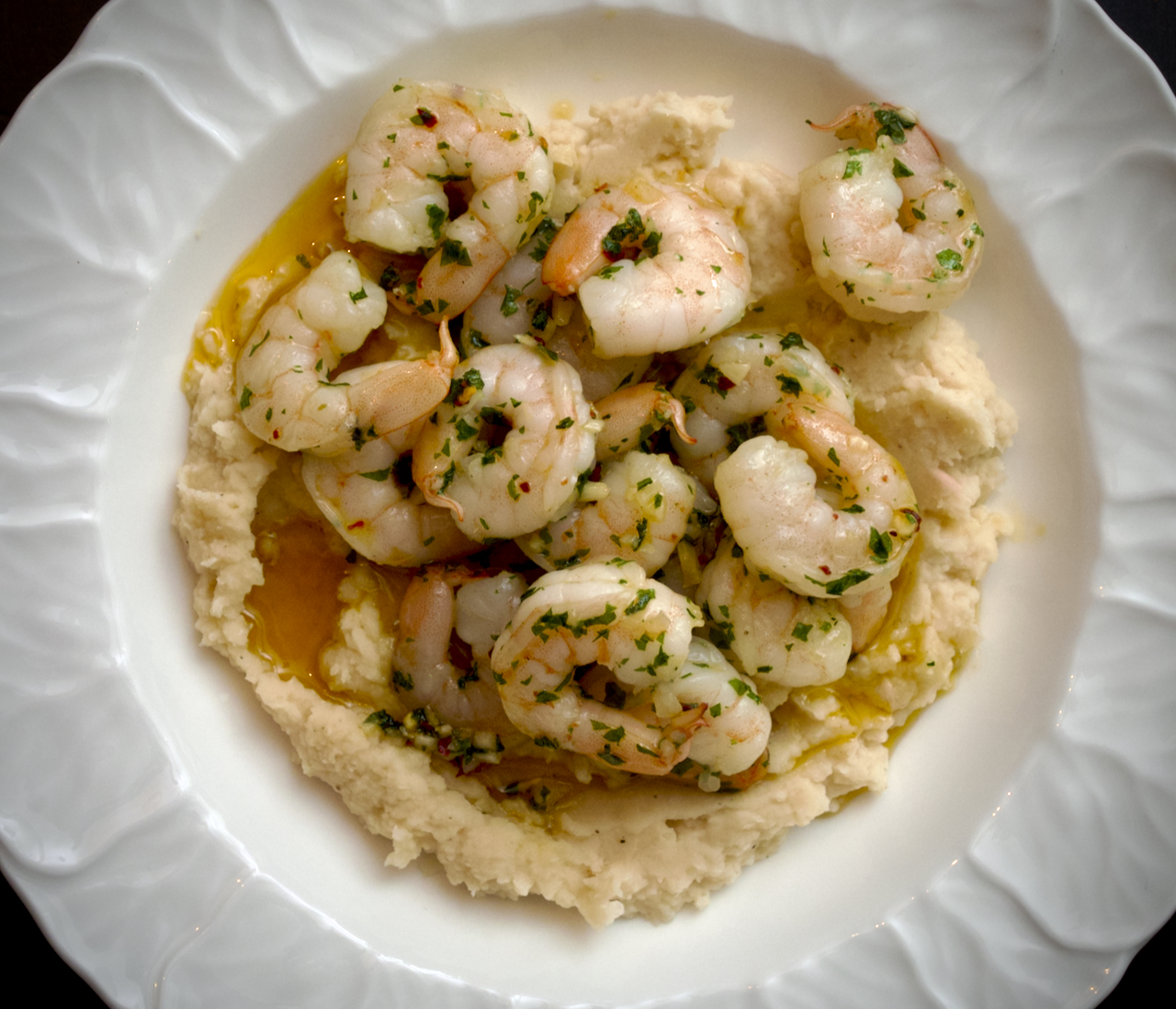
This recipe comes from Rick Stein’s Simple Suppers and it is indeed a simple and easy recipe. Ready in minutes and deeply satisfying!
Wine Suggestion: the creamy beans need a buttery Chardonnay, and likewise this works with the prawns too. Pick you own style, or whatever is at hand. For us we were lucky to have Au Bon Climat’s Santa Barbara County Chardonnay which is Californian sunshine in a glass tempered by the cooling breezes and fogs of this part of the world. Full and deep, but fleet of foot and minerally fresh.
Heat the oil for the butterbeans in a pan and add the garlic. Cook for a minute, then add the butter beans and cook for 3-4 minutes or until warmed through. Add the lemon juice and a couple of tablespoons of water, then whizz in a blender or food processor. Return to the pan and keep warm, you might need to add a little more water if it’s too thick.
Chop the garlic and parsley for the prawns together to get a coarse paste. Pour the oil into a frying pan and when hot, add the chilli flakes and garlic mixture. Cook over a gently heat for a minute until sizzling, then increase the heat a little, add the prawns and stir-fry for a few minutes or until pink and cooked through.
Divide the purée between two warm bowls and spoon the prawns and garlicky oil over the top.
(Original recipe from Rick Stein’s Simple Suppers, BBC Books, 2023.)
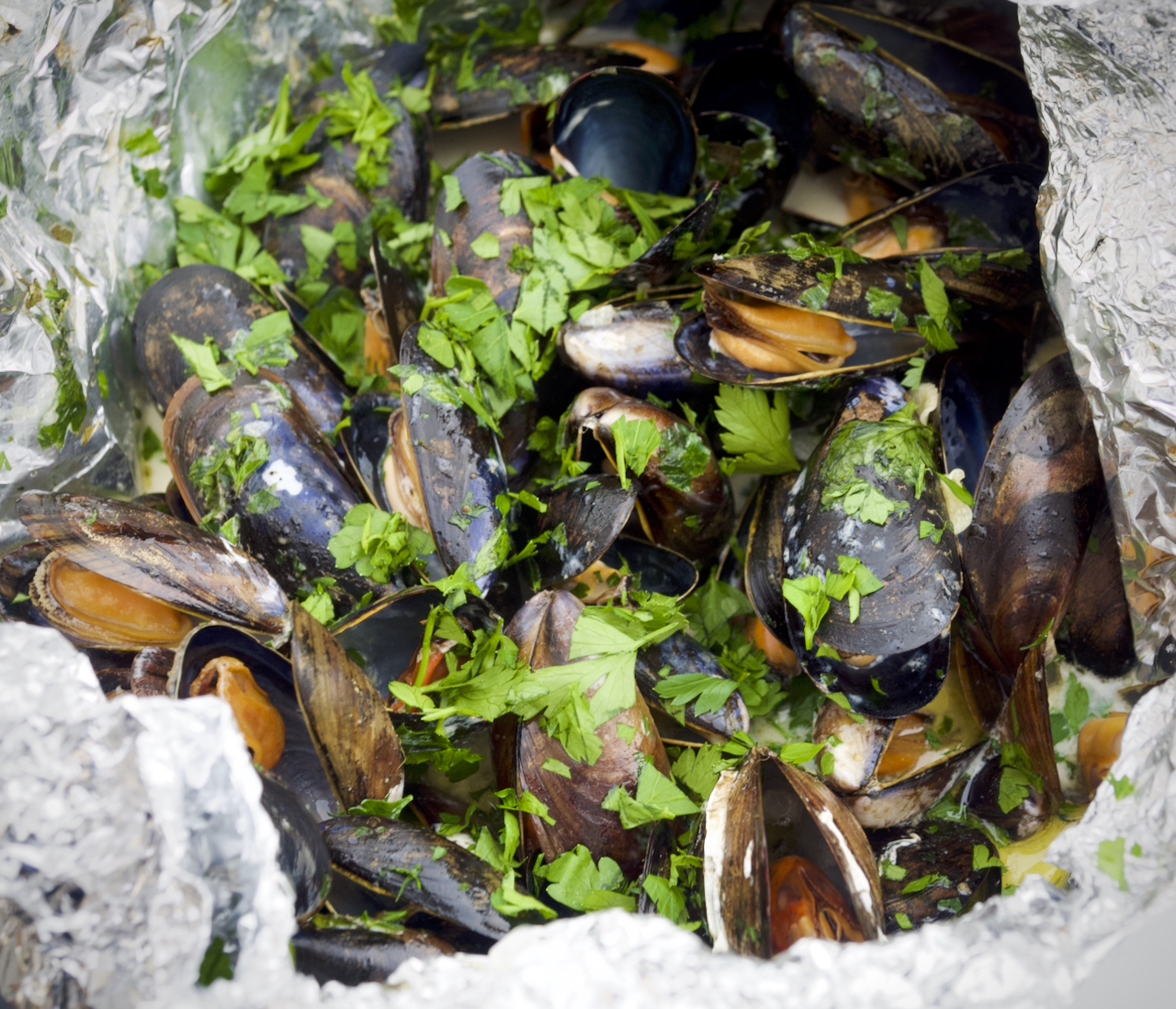
We’ll cook anything on the barbecue and these mussels come highly recommended! Serve in the foil package with plenty of crusty bread.
Wine Suggestion: Muscadet all the way, but given you get a little more with the smokey barbecue flavours coming through we’d suggest one with a bit more oomph like Jérémy Huchet’s Clos les Montys which is grown on a very particular blue-green bedrock giving the wine depth and substance.
Mussels on the barbecue – serves 2
50g softened butter
2 cloves of garlic, finely sliced
2 shallots, finely sliced
1 kg mussels
1 small pack parsley, roughly chopped
125ml white wine
100ml double cream
crusty bread, to serve
Mix the butter and garlic with a big pinch of salt.
Heat the barbecue until the coals are white. Lay a sheet of tin foil, about 60cm long on the work surface, then put another sheet the same size on to, then add a third sheet about 30cm long acorss the middle to form a cross shape. Spread the shallots in the middle of the foil, pile the mussels on top, dot the garlic butter all over, then scatter over half the parsley. Season, then fold the foil in at the sides to create a bowl.
Pour the wine into the foil bowl and then seal it securely by scrunching the foil together at the top. If you need an extra sheet of foil to encase the whole parcel at this stage then do so.
Carefully place the parcel on the barbecue coals and cook for 10 minutes. Carefully open the parcel and check the mussels have opened. Pour in the cream, then cover the barbecue with a lid to cook for a few more minutes.
Sprinkle with the remaining parsley and serve with crusty bread.
Tonnato is one of our favourite sauces and it works amazingly well with soft-boiled eggs and jacket potatoes. We take this back; Tonnato is Jules’ absolute favourite sauce … so we just had to try this dish!
You can make the sauce earlier in the day and leave it in the fridge.
Wine Suggestion: taking us back to our honeymoon when we stayed at the winery is Felsina’s “I Sistri” Chardonnay and a good match indeed with the nutty, toasty character really complementing the fresh capers, rich egg and velvety sauce.
Jacket Potatoes with Tonnato Sauce – serves 4
4 large baking potatoes
olive oil
4 large eggs, soft-boiled (cook in already boiling water for 6½ minutes, then run under cold water) and peeled
FOR THE TONNATO SAUCE:
2 large egg yolks
3 tbsp lemon juice
25g parsley, roughly chopped
120g good quality tinned tuna in oil, we like Ortiz or Shines
20g baby capers (or chop larger ones)
2 anchovy fillets in oil, rinsed and patted dry
1 garlic clove, crushed
180ml olive oil
Heat the oven to 220C fan.
Rub the jacket potatoes with a little olive oil and sprinkle with flaky sea salt. Put them on a tray and bake for 20 minutes, then reduce the oven temperature to 200C fan and cook for another hour.
Meanwhile, make the sauce. Put the egg yolks in the bowl of a food processor with the lemon juice, 20g of the parsley, the tuna, half the capers, the anchovies and the garlic. Blitz to a rough paste, then scrape down the sides with a spatula. Now keep the machine running while you slowly trickle in the olive oil in a steady stream, the consistency should be like thin mayonnaise. Put this in the fridge until you’re ready to eat.
When ready to serve, slice the potatoes down the middle and sprinkle inside with a little salt (we also add some butter but you don’t have to). Spoon the sauce over the potatoes and top with a halved egg. Sprinkle over the rest of the capers and parsley, then serve.
(Original recipe from Ottolenghi Simple by Yotam Ottolenghi, Tara Wigley and Esme Howarth, Ebury Press, 2018.)
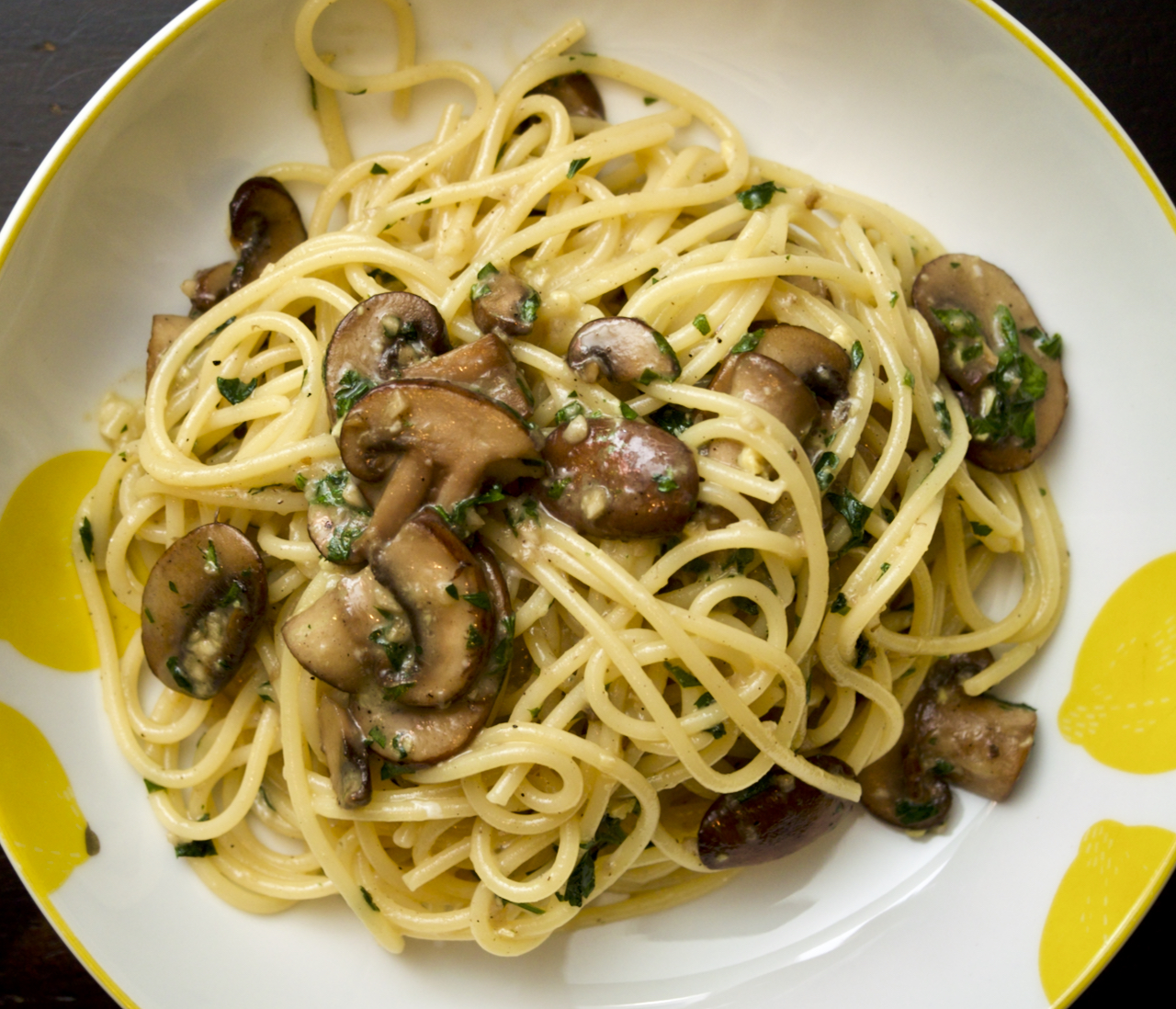
A great weeknight pasta dish with mushrooms instead of the traditional pancetta.
Wine Suggestion: this works really well with fuller-bodied dry whites, like a good Chardonnay. Tonight the Domaine de la Rochette Mont Sard Mâcon-Bussières was full of joyful apple and citrus fruits with layers of gentle smoky and creamy oak.
Mushroom Carbonara – serves 2
200g spaghetti
2 tbsp extra virgin olive oil
150g chestnut mushrooms, sliced
2 cloves of garlic, finely chopped
a handful of flatleaf parsley, chopped
2 eggs, beaten
40g Pecorino cheese, finely grated
Bring a large pan of water to the boil, add plenty of salt and cook the spaghetti according to the timings on the pack.
Heat a large, deep frying pan over a medium-high heat, add the oil and mushrooms and fry until lightly golden. Add the garlic and parsley and cook for a few seconds, then remove the pan from the heat.
Drain the spaghetti, then tip into the frying pan with the mushrooms. Add the beaten eggs and two-thirds of the cheese and toss well.
Season to taste with salt and plenty of black pepper and serve in warm bowls with the extra cheese.
(Original recipe from Rick Stein’s Simple Suppers, Penguin: Random House, 2023.)
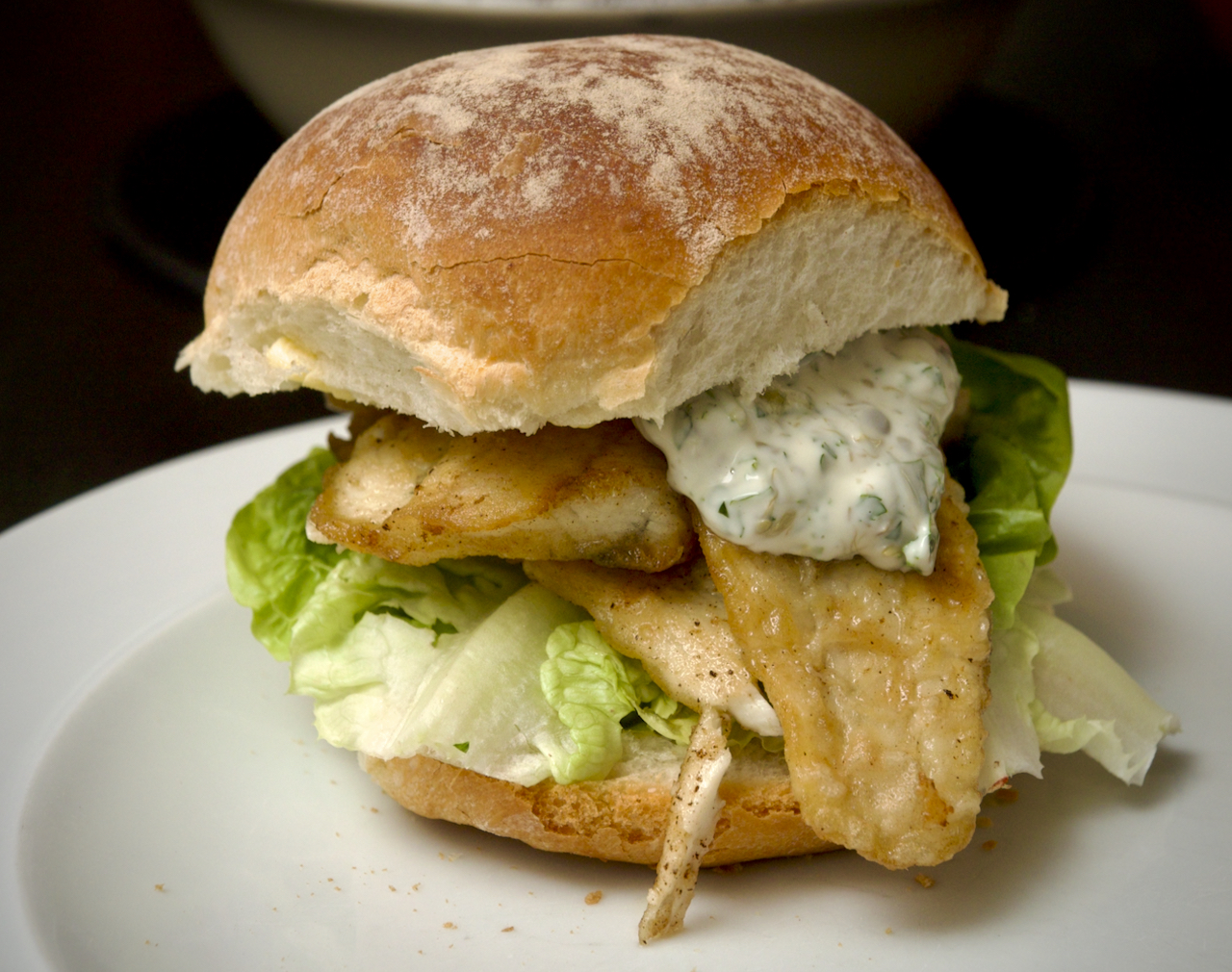
Fish in a bap with caper mayonnaise because most things taste good in a bap.
Wine Suggestion: We went Portuguese and chose an Arinto-Verdelho blend from near Lisbon: the Mar de Lisboa white, made by Quinta de Chocapalha. Lemon flavours with hints of passionfruit felt the perfect addition to this dish and the minerally, zip added a freshness that really matched the caper mayonnaise.
Fish in a bap – serves 1(easily multiplied)
2 skinless fillets of dab or other flat fish – we used plaice
butter
1 tbsp sunflower or groundnut oil
2 tbsp plain flour
a fresh white bap
a squeeze of lemon & a dash of tabasco, to serve
For the caper mayonnaise:
2 tbsp good mayo
2 tsp capers, drained and finely chopped
1 tbsp chopped parsley
lemon juice
Make the mayonnaise first by combining the mayonnaise, capers, parsley and a squeeze of lemon juice (to taste). Set aside.
Heat the the oil and a knob of butter in a non-stick frying pan over a medium heat. Spread the flour out on a plate and season it well. Dust the fish fillets with the flour, shaking off any excess, then fry for 2 minutes on each side.
Slice the bap in half and butter it generously. Add a few lettuce leaves and put the cooked fish on top, seasoning with lemon juice and tabasco. Add a good blob of the caper mayonnaise, the close the bap and eat it.
(Original recipe from River Cottage Everyday by Hugh Fearnley-Whittingstall, Bloomsbury, 2009.)
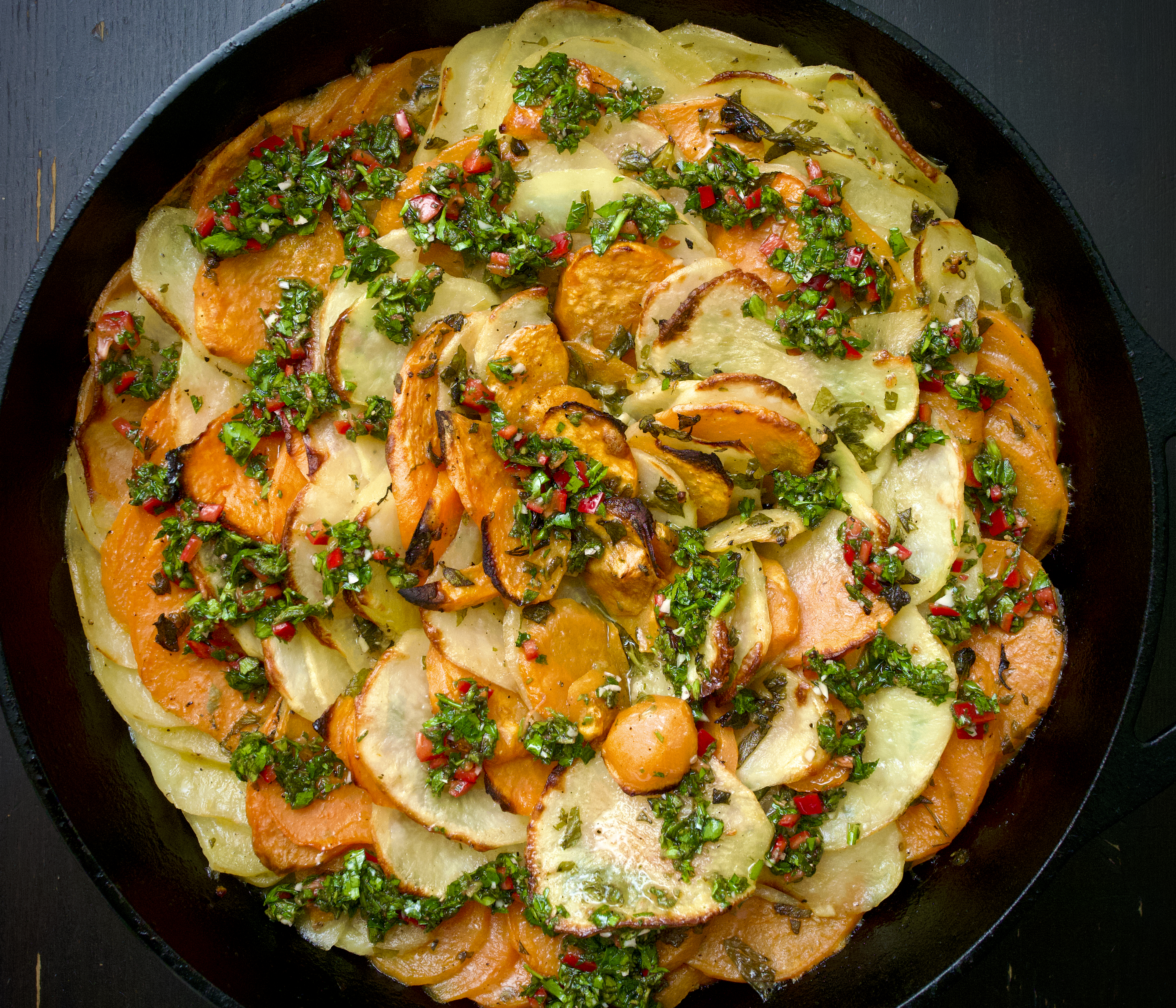
Such a tasty side dish! We served with a roast chicken but it will go with pretty much anything.
Potatoes with chimichurri – serves 6 as a side dish
800g waxy potatoes
600g sweet potatoes
5g oregano leaves, roughly chopped
5g parsley, roughly chopped
4 garlic cloves, peeled and crushed
5 tbsp olive oil, plus extra for greasing the pan
250ml chicken stock or vegetable stock
FOR THE CHIMICHURRI:
10g parsley, finely chopped
5g oregano leaves, finely chopped
1 garlic clove, peeled and finely chopped
1 mild red chilli, finely chopped (seeds in or out as you wish)
2 tbsp red wine vinegar
4 tbsp olive oil
Heat the oven to 180C fan.
Peel the potaotes, then slice the waxy sort using a mandolin. Use a sharp knife to slice the sweet potatoes finely – they should be slightly thicker than the regular potatoes.
Put both sorts of potatoes into a large bowl and add the garlic, herbs, 3 tbsp of the oil, 1½ tsp salt and plenty of black pepper. Toss gently with your hands to combine but make sure you don’t break the potatoes.
Lightly grease a large ovenproof cast-iron frying pan or a round baking dish – about 23cm in diameter. Start at the edge and arrange the potatoes in overlapping circles until you reach the middle. Pour the stock over the top. Lightly grease a piece of foil and cover the dish tightly with it. Bake in the oven for 35 minutes.
Remove the pan from the oven and turn the heat up to 220C. Remove the foil from the pan and drizzle over the last 2 tbsp of olive oil. Return to the oven for 20 minutes, or until nicely browned. Remove from the oven and leave to cool slightly, for about 15 minutes.
Meanwhile, make the chimichurri sauce. Put all of the ingredients into a bowl with ¼ tsp of salt and plenty of black pepper. Mix well to combine.
When you’re ready to serve, spoon the chimichurri over the top of the potatoes.
(Original recipe from Ottolenghi Test Kitchen: Extra Good Things by Noor Murad & Yotam Ottolenghi, Ebury Press, 2022.)
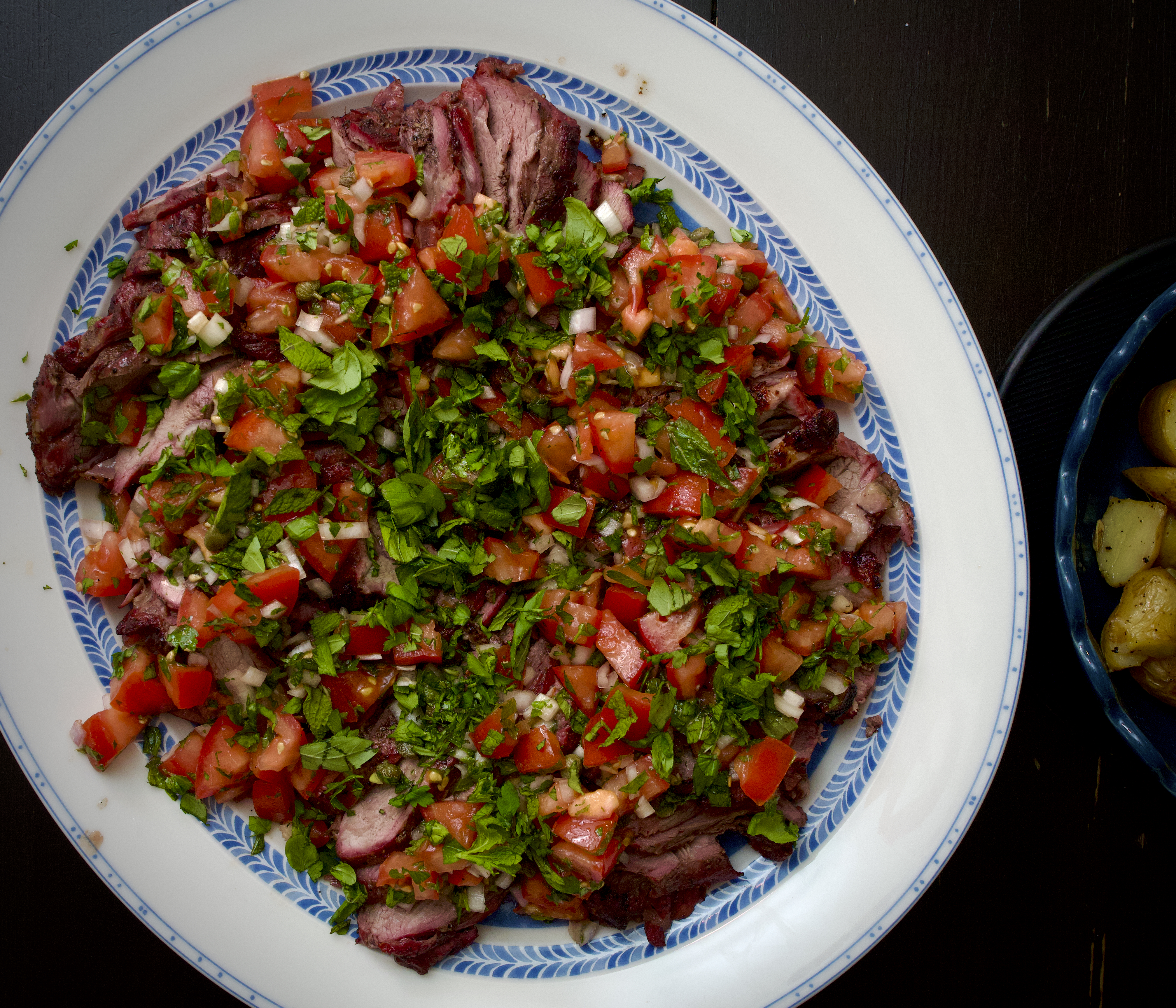
It’s last chance saloon if you want to cook this dish before both the tomatoes and weather turn rubbish. The marinade is added after you cook the lamb.
Wine Suggestion: We think barbecued lamb goes really nicely with Cabernet Franc, so a good excuse to open a bottle of our favourite wine: Chateau du Hureau’s Saumur-Champigny “Tuffe”.
Barbecue Lamb with Tomato & Capers – serves 6
1.5kg butterflied leg of lamb
FOR THE MARINADE:
3 tomatoes, diced
2 large shallots, finely chopped
1 tbsp capers, rinsed
a small bunch of parsley, chopped
a small bunch of mint, chopped
a small bunch of basil, chopped
1 lemon, juiced
2 tbsp olive oil
Mix the ingredients for the marinade together, keeping a small handful of herbs aside to garnish at the end.
Get your barbecue going and wait until the flames have died down. Move the coals to the sides and put a drip-tray in the middle, then BBQ the lamb for 20 minutes on each side.
When the lamb is cooked to your liking, set it on a platter and spoon over the marinade. Cover loosely with foil and leave to rest for 20 minutes. Slice and serve with the marinade and the rest of the herbs.
(Original recipe by Adam Bush & Janine Ratcliffe, Olive Magazine, August 2017.)
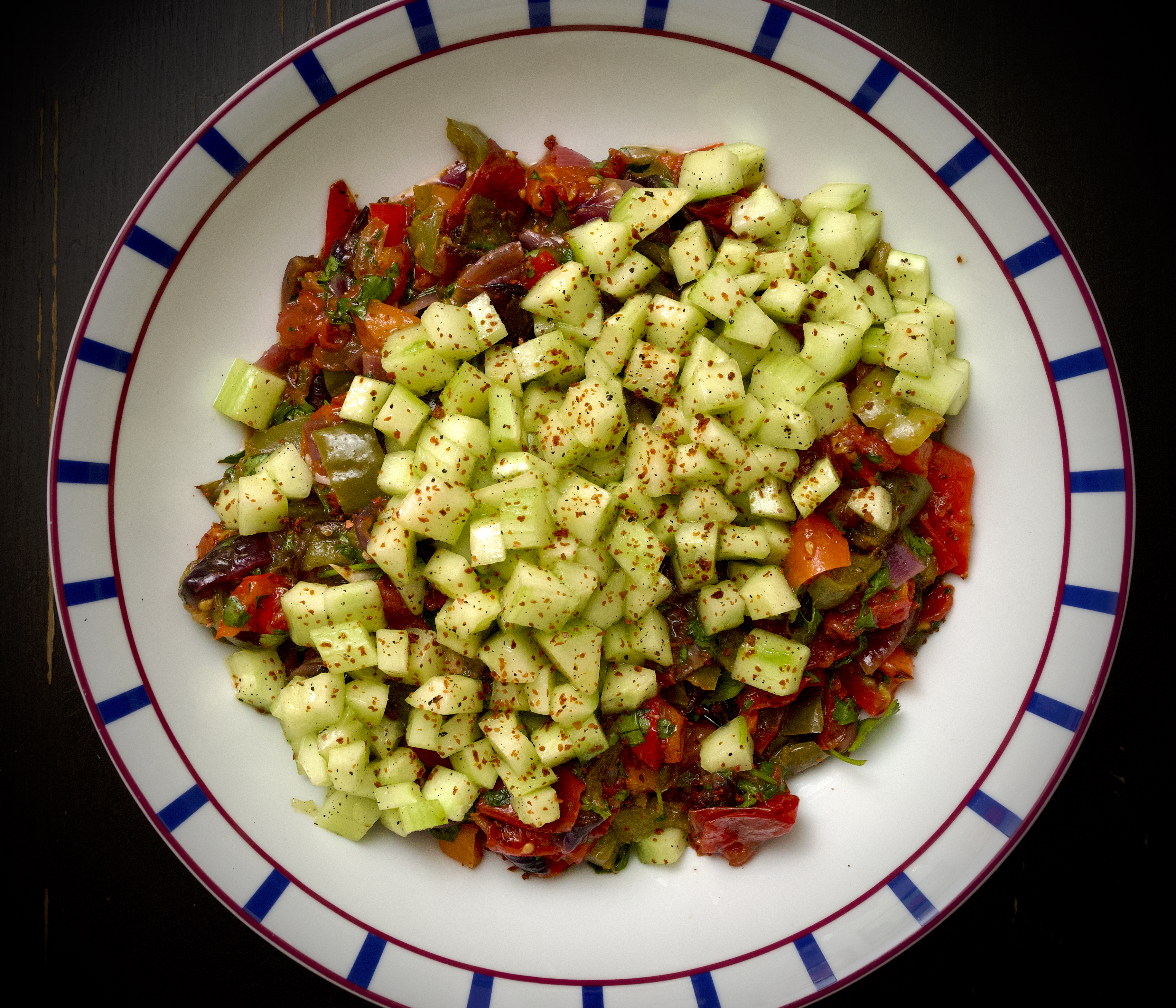
You can prep this salad in advance and serve warm or at room temperature. Jam-packed with flavour and a great side dish for a barbecue or roast meat.
Roasted pepper salad with cucumber and herbs – serves 4 as a side dish
4 green peppers (600g), cut into 4cm pieces
2 red peppers (300g), cut into 4cm pieces
4 vine tomatoes (400g), quartered
2 small red onions (200g), roughly cut into 3cm pieces
1 green chilli, stem removed and left whole
6 large cloves of garlic, peeled
6 tbsp olive oil
1½ tbsp lemon juice
10g parsley, roughly chopped
10g coriander, roughly chopped
1 cucumber, peeled, deseeded and cut into 1cm cubes
¾ tsp Urfa chilli flakes
Heat the oven to 230C fan.
Put the peppers, tomatoes, red onion, chilli and garlic into a large bowl. Add 4 tbsp olive oil, ¾ tsp of salt and plenty of black pepper. Toss well to combine.
Line to large baking sheets with baking parchment. Spread the vegetables out over the trays and roast for about 30 minutes, stirring once or twice, until softened and charred.
When cool enough to handle, roughly chop the vegetables and transfer to a bowl with the lemon juice, herbs and ½ tsp salt and plenty of black pepper.
In a separate bowl, toss the cucumber with 2 tbsp of oil, ¼ tsp of salt and plenty of black pepper.
Spread the roasted pepper mixture out over a platter. Spoon over the cucumber and sprinkle with the chilli.
(Original recipe from Ottolenghi Test Kitchen: Shelf Love, Ebury Press, 2021.)


 Jono & Jules do food & wine