Feeds:
Posts
Comments

Posts Tagged ‘Pasta’

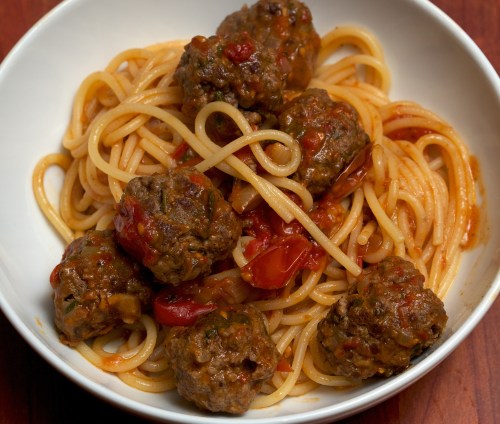
Spiced Meatballs in tomato sauce

We weren’t so sure about the cinnamon in this meatball recipe but it added a delicious warmth so don’t be tempted to leave it out or reduce the quantity. Much satisfied slurping!

Wine Suggestion: Tuscany beckons for this dish and the juicy red fruits of Morellino won this time to good effect. The MorisFarms (Spanish heritage but longtime settled in the Maremma in Tuscany) Morellino for our mind hits the spot and has an honesty and vitality of winemakers clearly part of their landscape. Bright red fruits and a delightful juiciness that only coastal Tuscany can deliver.

Spiced meatballs in tomato sauce – serves 6

FOR THE SAUCE:

  • 2 x 400g tins cherry tomatoes
  • 1 onion, finely chopped
  • 2 garlic cloves, crushed
  • 4 oregano sprigs, strip off the leaves and discard the stalks
  • ½ tbsp tomato purée
  • 3 tbsp olive oil
  • 1 tbsp soft light brown sugar

FOR THE MEATBALLS:

  • 3 tbsp olive oil
  • 1 onion, finely chopped
  • 4 garlic cloves, crushed
  • 1 red chilli, deseeded and chopped
  • 900g beef mince
  • 1 tbsp ground cinnamon
  • 1 tsp freshly grated nutmeg
  • 2 tsp ground mixed spice
  • 3 tbsp finely chopped parsley
  • Cooked pasta to serve (allow 100g per person) .

Make the sauce first. Put all the ingredients into a saucepan together and bring to the boil. Reduce to a simmer and cook for 30 minutes. Stir occasionally and add a bit of water if necessary. Taste and season.

For the meatballs, heat 1 tbsp of oil in a pan and cook the onion until soft and pale gold. Add the garlic and chilli, and cook for another 90 seconds or so. Put the cooked onion mixture into a bowl with the beef, spices and parsley and season really well. Use wet hands to form the mince into pingpong ball sized meatballs.

Heat the rest of the oil in a frying pan and brown the meatballs in batches. They don’t need to be cooked the whole way through at this stage just nicely browned on the outside. Return all the meatballs to the pan, add the tomato sauce and cook for 10-15 minutes.

Stir the cooked pasta and meatballs together in a warm shallow bowl and serve.

(Original recipe from Food From Plenty by Diana Henry, Mitchell Beazley, 2010.)

Read Full Post »

OLYMPUS DIGITAL CAMERA

A classic recipe that we always find full of flavour and very satisfying. A good veggie dish for a cold night.

Spinach & ricotta cannelloni – serves 4

  • 60g butter, plus a bit extra
  • 300g spinach
  • 2 garlic cloves, finely chopped
  • 425g ricotta cheese, drained
  • ½ tsp grated nutmeg
  • 16 dried cannelloni tubes
  • 45g plain flour
  • 450ml whole milk
  • 40g Grana Padano cheese (or use Parmesan)

Preheat the oven to 180C/350F/Gas 4.

Grease a medium-sized, shallow, oven-proof dish with a little butter.

Bring a large pan, containing 1cm depth of water, to the boil, add the spinach, and stir until wilted. Drain and press out the excess water, then chop.

Melt 15g of the butter in a medium pan and sauté the garlic for a couple of minutes. Stir in the spinach and season well. Take off the heat and stir in the ricotta cheese and nutmeg. Fill the cannelloni with the spinach mixture and arrange the tubes in a single layer in your buttered dish (use both ends of a teaspoon to help fill the tubes).

Meanwhile, melt the remaining 45g of butter in a large pan. Whisk in the flour over a low heat and cook for a couple of minutes. Remove the pan from the heat and gradually whisk in the milk. Return to the heat and cook, stirring, until thickened.

Reduce the heat to low and continue to cook for another 5 minutes, stirring occasionally. Season the sauce generously with salt and pepper and pour over the filled cannelloni tubed. Sprinkle the cheese over the top, place on a baking tray and bake for 30 minutes.

(Original recipe from Family Kitchen Cookbook by Caroline Bretherton, DK, 2013.)

Read Full Post »

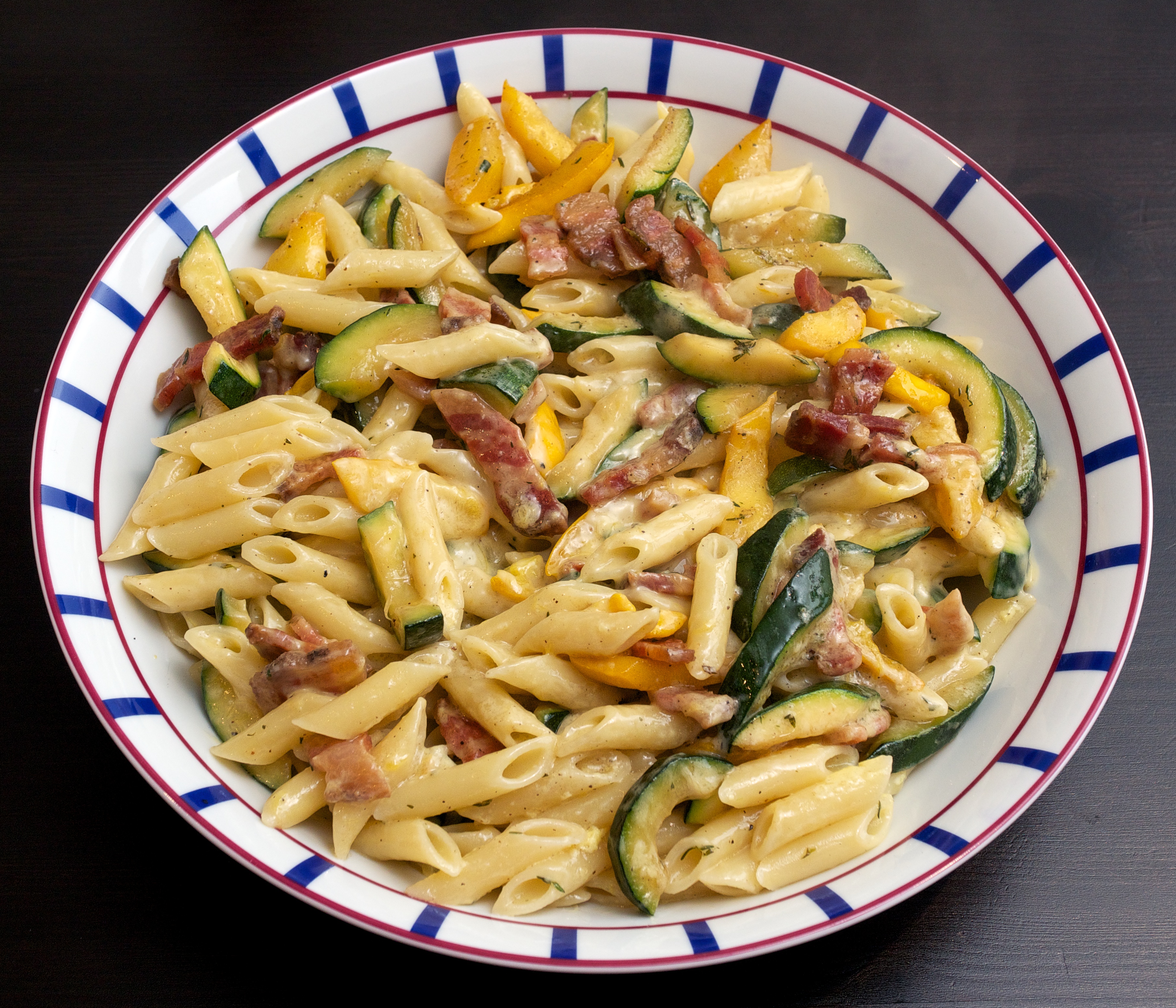
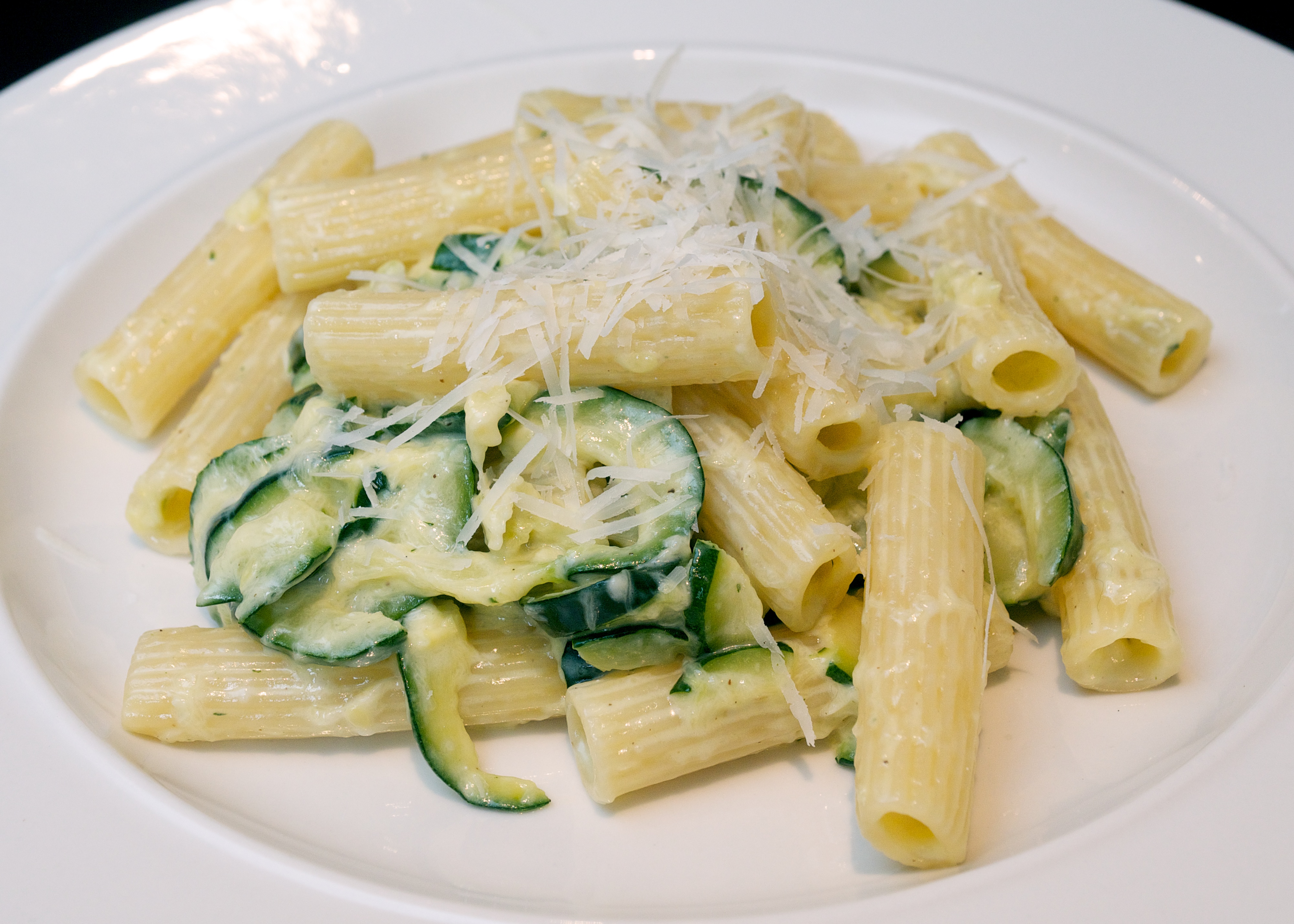
Courgette Carbonara

We are getting close to the last courgettes for the season and what a way to celebrate this humble vegetable … delicious!

Wine Suggestion: We drank an Aligote from Jean Fournier in Burgundy. Aligote is completely underrated and we don’t see it often, but this example shows why we should: fresh, rich and full of fruit but with a core of crisp acidity and earthiness that makes it sing alongside the eggy cream, add layers to the pancetta and parmesan and make the courgettes even more silky.

Courgette Carbonara – serves 6 generously

  • 6 medium green & yellow courgettes
  • 500g penne pasta
  • 4 large egg yolks
  • 100ml double cream
  • 2 big handfuls of freshly grated Parmesan cheese
  • olive oil
  • 12 thick slices of pancetta or smoked streaky bacon, cut into chunky lardons
  • small bunch of fresh thyme, leaves picked and chopped

Bring a large pan of water to the boil.

Halve and quarter the courgettes lengthways. Discard any fluffy bits from the middle and slice at an angle into similar sized shapes to the penne. If you have small courgettes you can just slice them finely.

Cook the penne according to the pack instructions.

While the pasta is cooking, put the egg yolks into a bowl and add the cream and half the Parmesan. Mix with a fork. Season lightly and set aside.

Heat a very large frying pan, add a splash of olive oil and fry the pancetta/bacon until dark brown & crispy. Add the courgette slices and a very generous grind of black pepper. Add the thyme leaves, and stir to make sure the courgettes are well coated with the bacony oil, then fry until turning lightly golden and starting to soften.

Drain the pasta and reserve the cooking water. Immediately toss the pasta into the courgette pan, then take off the heat and add a ladleful of the reserved pasta water and your creamy sauce. Stir together quickly but don’t put back on the heat.

Add the rest of the Parmesan, and a bit more cooking water if needed, to give you a silky sauce. Taste for seasoning and serve immediately.

(Original recipe from Jamie at Home by Jamie Oliver, Penguin, 2007.)

Read Full Post »

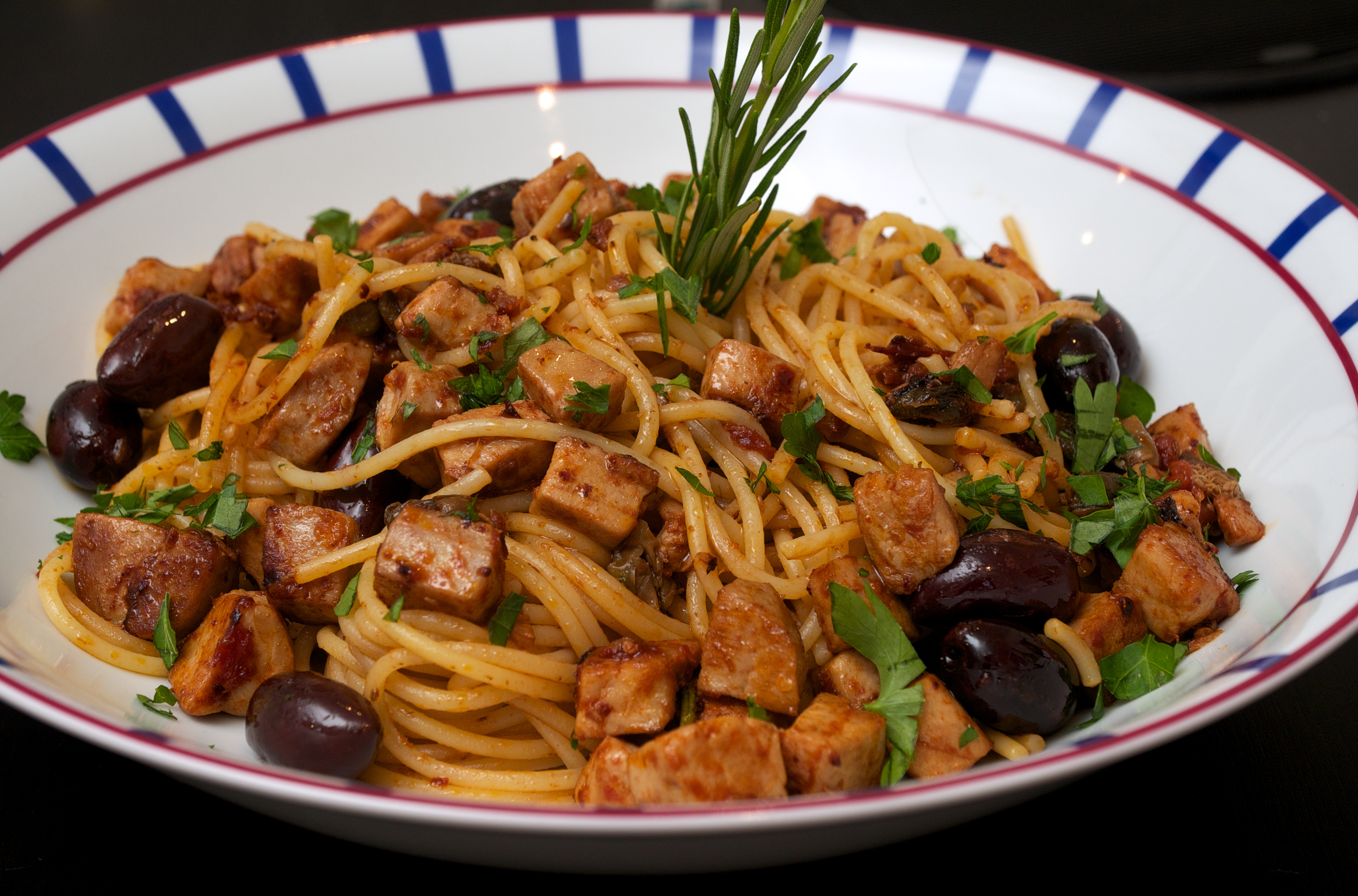
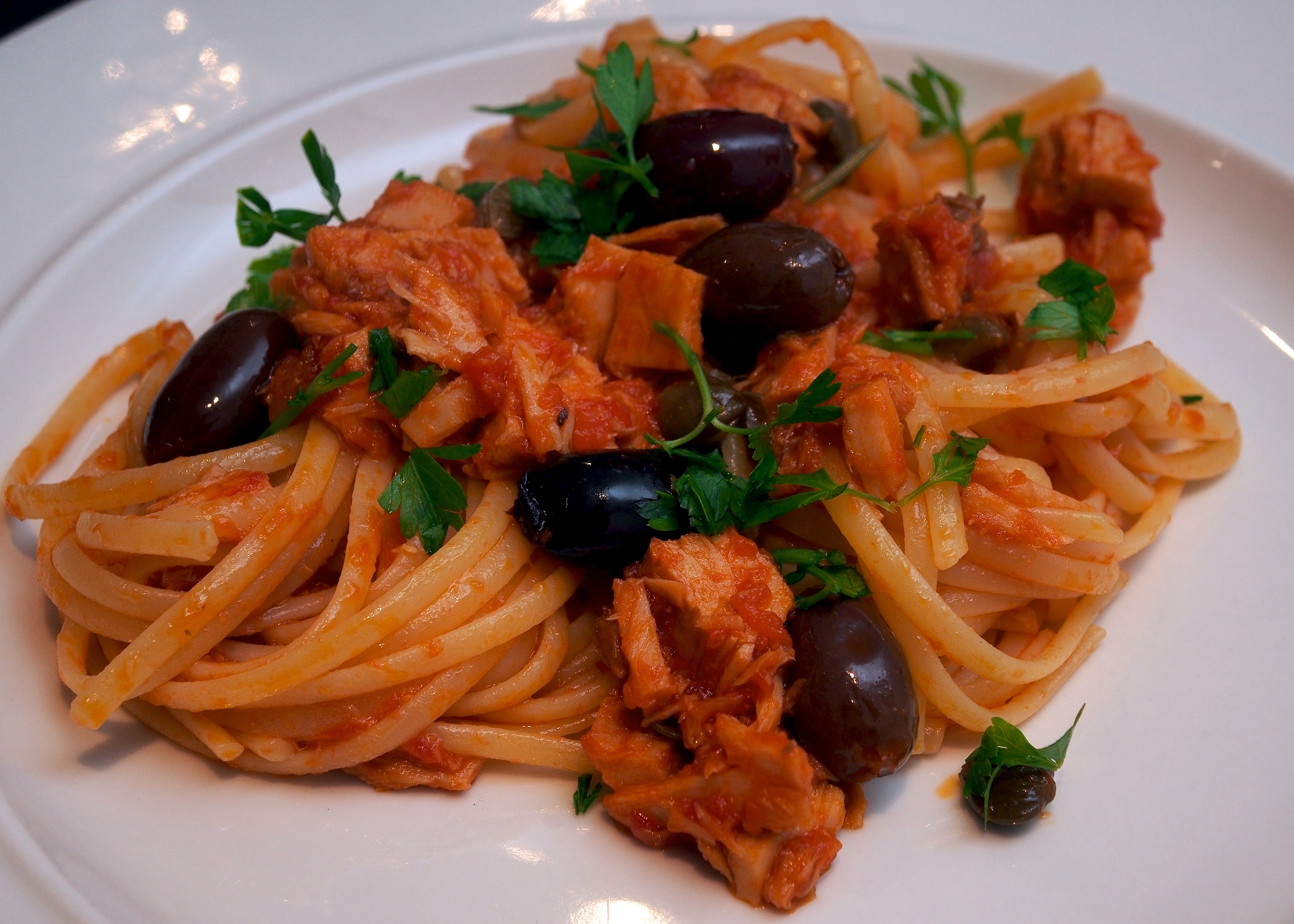
Fresh tuna spaghetti

We’ve made this recipe before using good-quality tinned tuna, which was delicious, but this time we’ve used fresh tuna and it really sings.

Wine Suggestion: Classic Italian matches for tuna depend on the region. If you are in Sicily a great match is their native Grillo grape, a textural, slightly salty and mineral wine with good body but not weighty. For this dish though we drank a Vermentino, made by Morisfarms, from the Tuscan coast. It has a great vinous texture and savoury character which combined with fresh fruit and minerality matches this Tuscan combination of tuna, tomatoes and olives.

Linguine with Fresh Tuna – serves 4-6

  • 2 tins top quality plum tomatoes (the Italian brands are good)
  • 500g fresh yellowfin tuna
  • 4 tbsp extra-virgin olive oil, plus a bit extra
  • 2 sprigs rosemary
  • a pinch of chilli flakes
  • 80ml white wine
  • 30g salted capers, soaked and drained
  • 100g pitted black olives (Gaeta or Kalamata)
  • 500g linguine
  • chopped fresh parsley to serve

Drain the tinned tomatoes and cut into strips.

Cut the tuna into 2cm cubes. Heat the oil in a pan and sauté with 1 sprig of rosemary and the chilli flakes.

Add the wine and simmer until it evaporates, then add the capers.

Add the olives and tomatoes and cook over a high heat for 15 minutes.

Cook the linguine until al dente, then drain and add to the pan of tuna sauce. Toss gently.

Sprinkle on the parsley, drizzle with some more olive oil, and garnish with the remaining rosemary.

(Original recipe from Obicà: Mozzerella Bar, Pizza e Cucina, Rizzoli, 2014.)

Read Full Post »

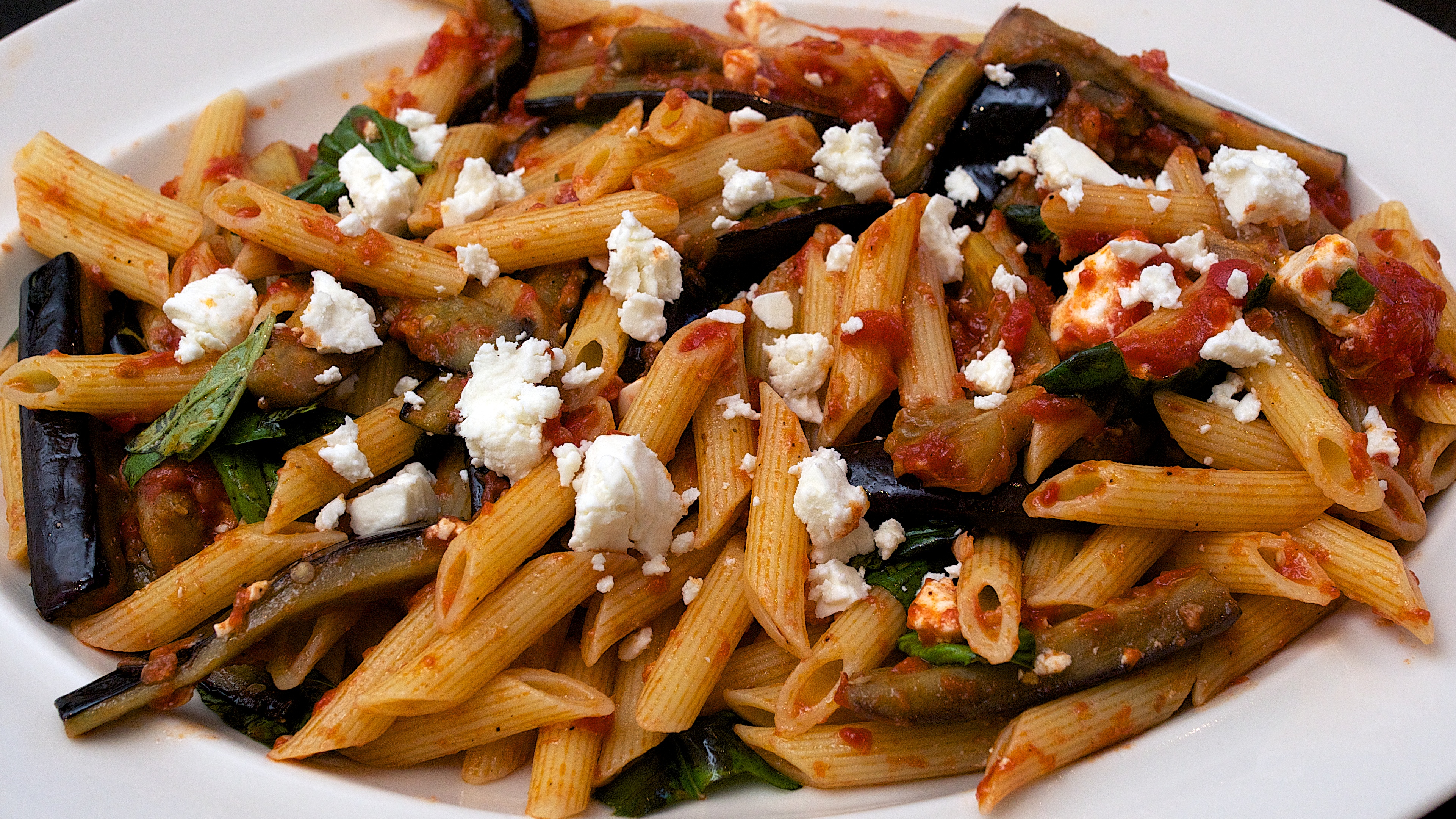
Penne alla norma

We love Rick Stein’s recipes as everything seems to come from true inspiration and has been tested in a real world kitchen so it all works. This recipe is no exception and delivers in flavour and balance perfectly.

Pasta alla Norma is traditionally made with spaghetti but worked just as well penne pasta as a substitute.

Wine Suggestions: Aubergine tends to work with Southern Italian reds really well, but we had an unexpected burst of sunshine so opened a Provençal rosé, Chateau Vignelaure La Source, which is an old favourite. It worked a treat and  will definitely try it again with other aubergine dishes.

Pasta alla Norma – Pasta with Aubergines, Tomatoes, Chilli & Cheese – serves 4

  • 500g aubergines (2 large ones)
  • 500g well-flavoured tomatoes or top quality tinned plum tomatoes, drained (Italian brands are best)
  • 6 tbsp extra virgin olive oil
  • 400g dried spaghetti
  • 4 garlic cloves, crushed
  • ¼ tsp crushed dried chillies
  • A large handful of fresh basil leaves, torn into small pieces
  • 100g finely grated ricotta salata or crumbled feta cheese

Trim the aubergines and cut into two across the middle, then cut each piece lengthways into chip-sized sticks. Toss with 1 tsp of salt and set in a colander over a bowl to drain for 30-40 minutes.

Meanwhile, if using fresh tomatoes, squeeze them over the sink to get rid of most of the juice and seeds. Roughly chop the tomatoes and set aside.

Bring a large pan of water to the boil (about 4.5 litres) and season generously with salt (about 8 teaspoons).

Pat the aubergines dry with kitchen paper to remove the salt and any liquid. Heat 4 tbsp of the frying pan, add half the aubergines and fry until lightly golden. Lift onto a plate lined with kitchen paper  and leave to drain while you fry the next batch. After removing the second batch of aubergine, leave the oil in the frying pan to cool.

Put the spaghetti into the boiling water and cook according to the packet or until al dente. 

Before the pasta is ready, add the remaining oil and the garlic to the cooled frying pan and return to the heat. When the garlic begins to sizzle gently, add the crushed chillies and the tomatoes and cook over a high heat for a few minutes or until they have broken down into a sauce. Season well and stir in the aubergines.

Drain the pasta and add to the sauce with the torn basil and half the cheese, then toss well. Divide between warm bowls and serve sprinkled with the remaining cheese.

(Original recipe from Rick Stein’s Mediterranean Escapes, BBC Books, 2007.)

Read Full Post »

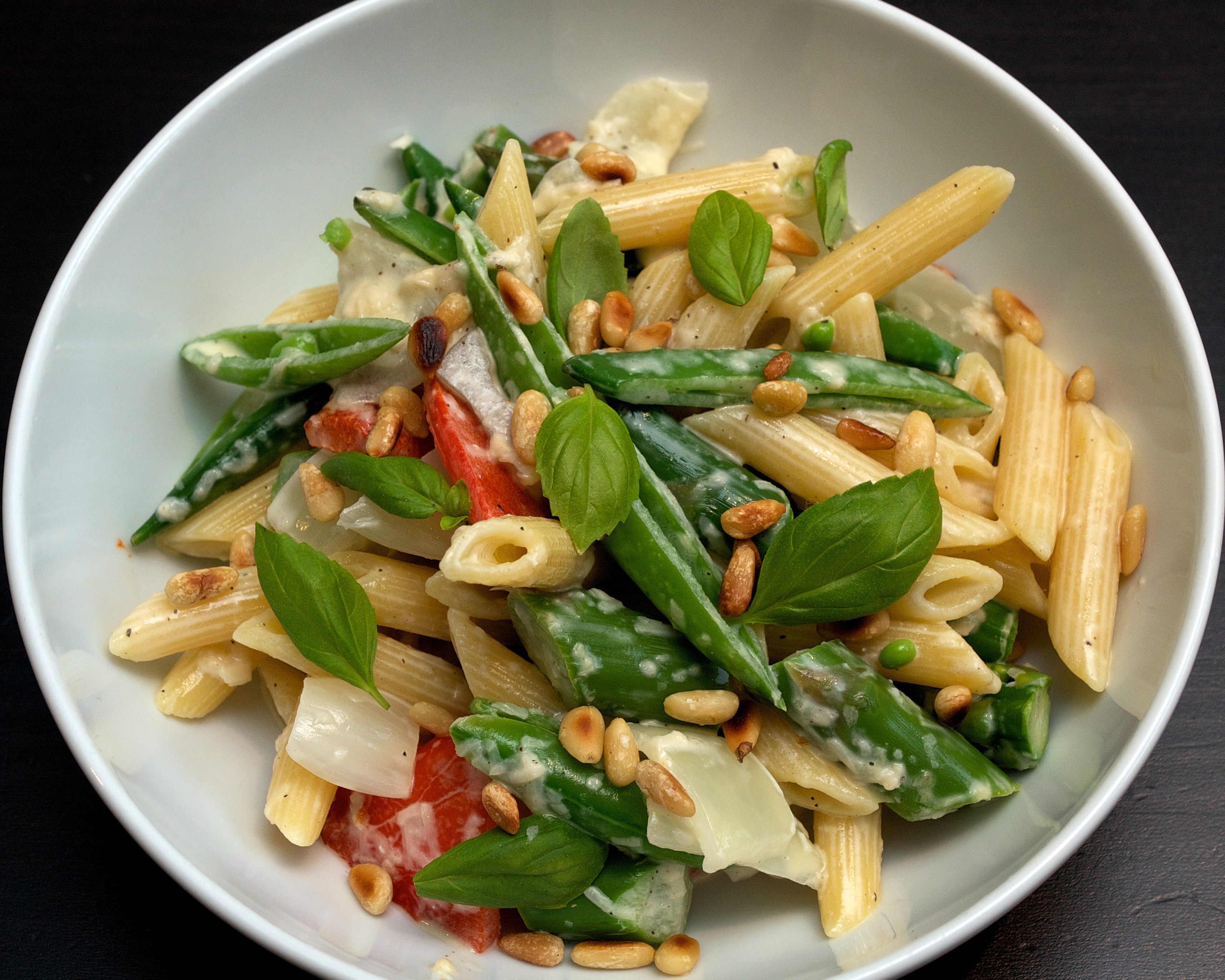
Pasta Primavera

This was tasty. We were a bit concerned about the boiled onion at first but it gives a nice onion flavour without any fried taste which isn’t required here with the light creamy sauce. Good for a weeknight or weekend lunch.

Pasta Primavera – serves 4-6

  • 1 red pepper, halved and deseeded
  • 1 large onion, roughly chopped
  • 225g asparagus, trimmed and cut into 2.5cm lengths
  • 100g sugarsnap peas, sliced in half lengthways
  • 300g dried penne
  • 100ml double cream
  • 60g Parmesan cheese, coarsely grated
  • juice of ½ lemon
  • 25g toasted pine nuts
  • 1 tbsp torn fresh basil leaves

Put the pepper halves under a hot grill, skin side up, for around 10 minutes or until the skin is completely charred. Seal in a plastic bag and leave to cool, then peel and discard the skin. Slice the flesh into large pieces.

Cook the chopped onion in a pan of salted boiling water for 9 minutes, then add the asparagus. Cook for another minute before adding the sugarsnaps and continue to boil for another 2 minutes. Drain and rinse in cold water.

Cook the penne in a large pan of salted boiling water for the recommended time on the pack, then return to the pan with the cooled vegetables. Add the roasted pepper, cream and cheese and stir over a gentle heat to warm through. Season well with sea salt and black pepper.

Squeeze over the lemon and scatter over the pine nuts and basil to serve.

(Original recipe from Mary Berry’s Cookery Course, DK, 2013.)

Read Full Post »

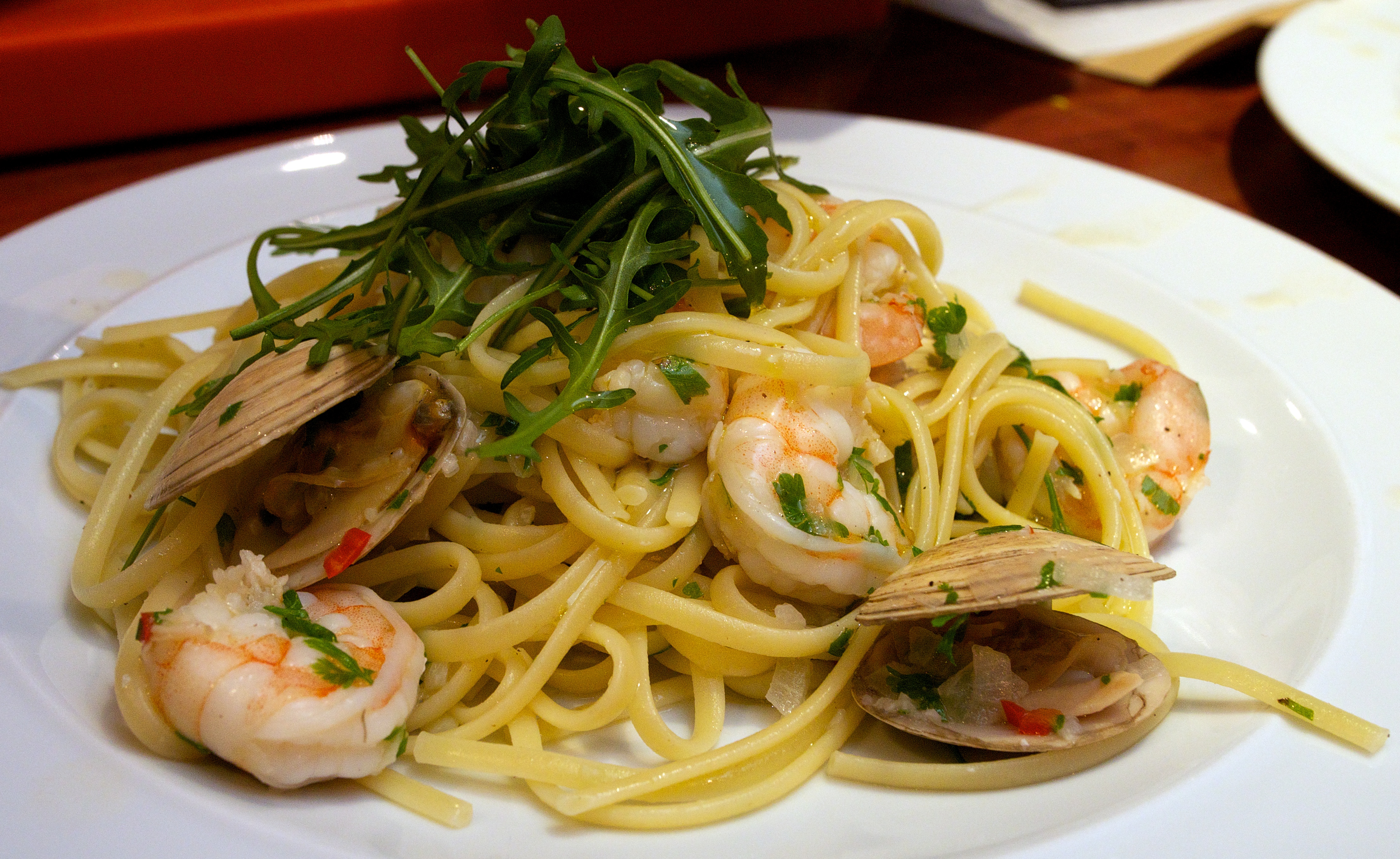
Prawn & clam linguine


We recently got a new cookbook by Lorraine Pascale and have been impressed by the recipes so far. This one we made for Valentines Day, just the two of us with a bottle of vintage Champagne from the cellar. A very nice evening.

Linguine with prawns, clams, garlic & chilli – serves 4

  • 350g dried linguine
  • 3tbsp extra virgin olive oil
  • 2 large banana shallots, finely diced
  • 3 garlic cloves, very finely chopped
  • 2 red chillies, finely chopped
  • 400g raw peeled tiger prawns, de-veined
  • 400g clams, washed (soak in cold water for an hour to get rid of any sand then discard any that stay open when sharply tapped)
  • 150-200ml white wine
  • 3 tbsp roughly chopped parsley
  • 70g rocket
  • 1 small lemon, cut into wedges

Cook the pasta according to the packet until al dente.

Meanwhile, heat the oil in a large saucepan, with a tight-fitting lid, over a medium heat. Add the shallots and sweat for about 10 minutes or until softened. Add the garlic and chilli and cook for another couple of minutes.

Add the prawns and cook for 1 minutes, stirring. Then add the clams and white wine, bring to the boil and cover with the lid. Cook for 4-5 minutes or until all the clam shells have opened (discard any that don’t) and the prawns have turned pink.

Drain the pasta well and tip onto the cooked shellfish and toss together. Add the chopped parsley and season.

Pile into bowls, drizzle with your best extra-virgin olive oil, scatter with rocket and serve with a lemon wedge.

(Original recipe from How to be a Better Cook by Lorraine Pascale, HarperCollins, 2014.)

Read Full Post »

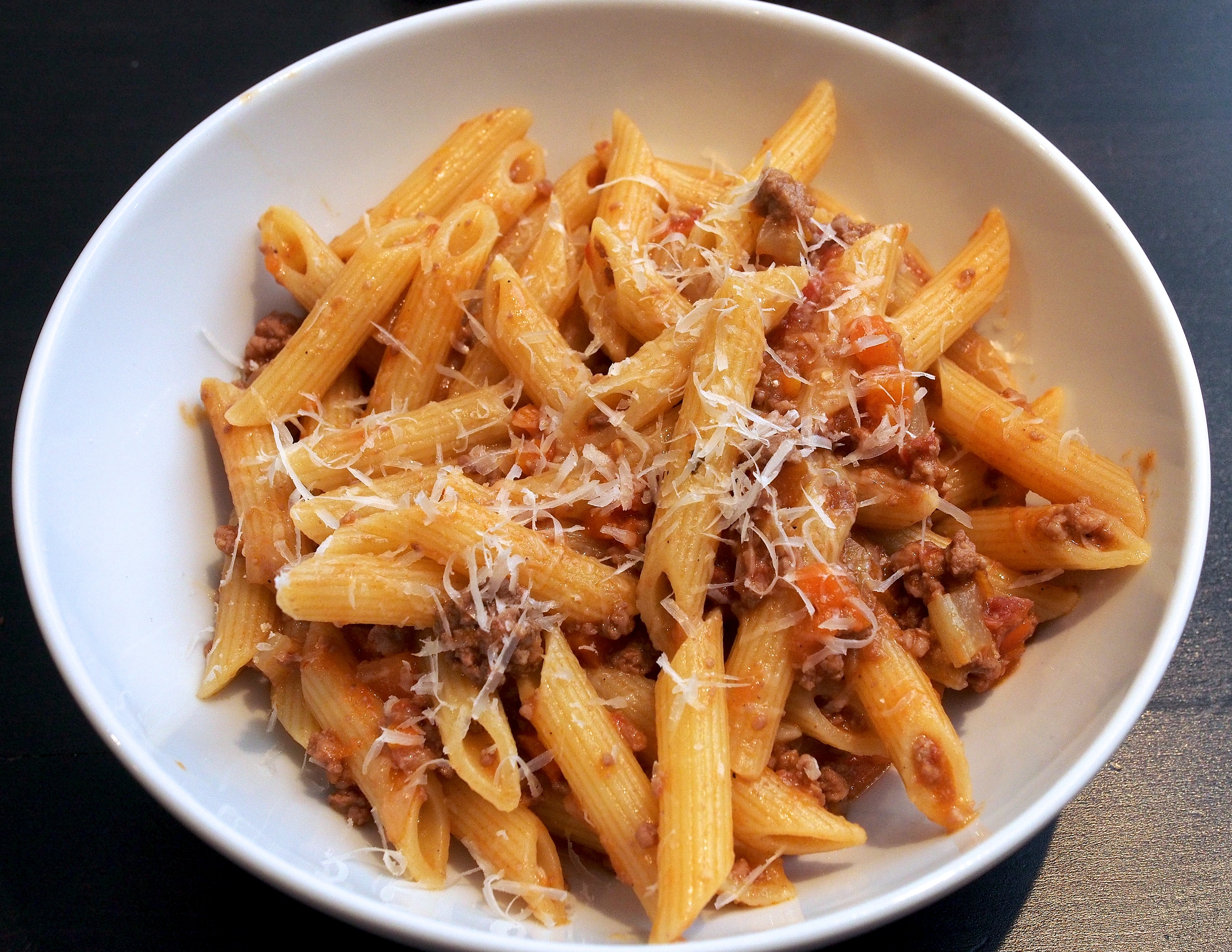
Bolognese

This is our go-to recipe when we want a Bolognese ragú to go with pasta like penne (as opposed to in a lasagne). We’ve done many variations over the years and even though this isn’t entirely traditional it’s ease and relative speed, alongside a great flavour, mean that we make this more often than any other.

Pasta Bolognese – serves 6

  • 1 onion, finely chopped
  • 2 carrots, finely chopped
  • 2 celery sticks, finely chopped
  • 100g pancetta, finely chopped
  • 1 tbsp olive oil
  • 1 tbsp butter
  • 3 garlic cloves, crushed
  • 250g beef mince
  • 250g pork mince
  • 1 sprig of fresh thyme
  • 100ml red wine
  • 1 x 400g tin chopped tomatoes
  • 1 tbsp tomato puree
  • 250ml chicken stock
  • 250ml milk
  • salt and black pepper
  • 400g dried pasta
  • Grated Parmesan to serve

Cook the onion, carrot, celery and pancetta in the oil and butter in a heavy-based saucepan over a medium heat for about 10 minutes or until soft. Add the garlic and cook for another minute before turning up the heat and adding the mince and thyme.

Brown the meat for a few minutes until it loses its raw appearance, then add the wine. Stir and reduce for a few minutes.

Add the other ingredients and season well. Bring to the boil, then simmer for an hour.

Cook the pasta according to the pack and toss with the hot sauce and parmesan.

(Original recipe by Jane Baxter in The Guardian, 31st May 2014.)

Read Full Post »

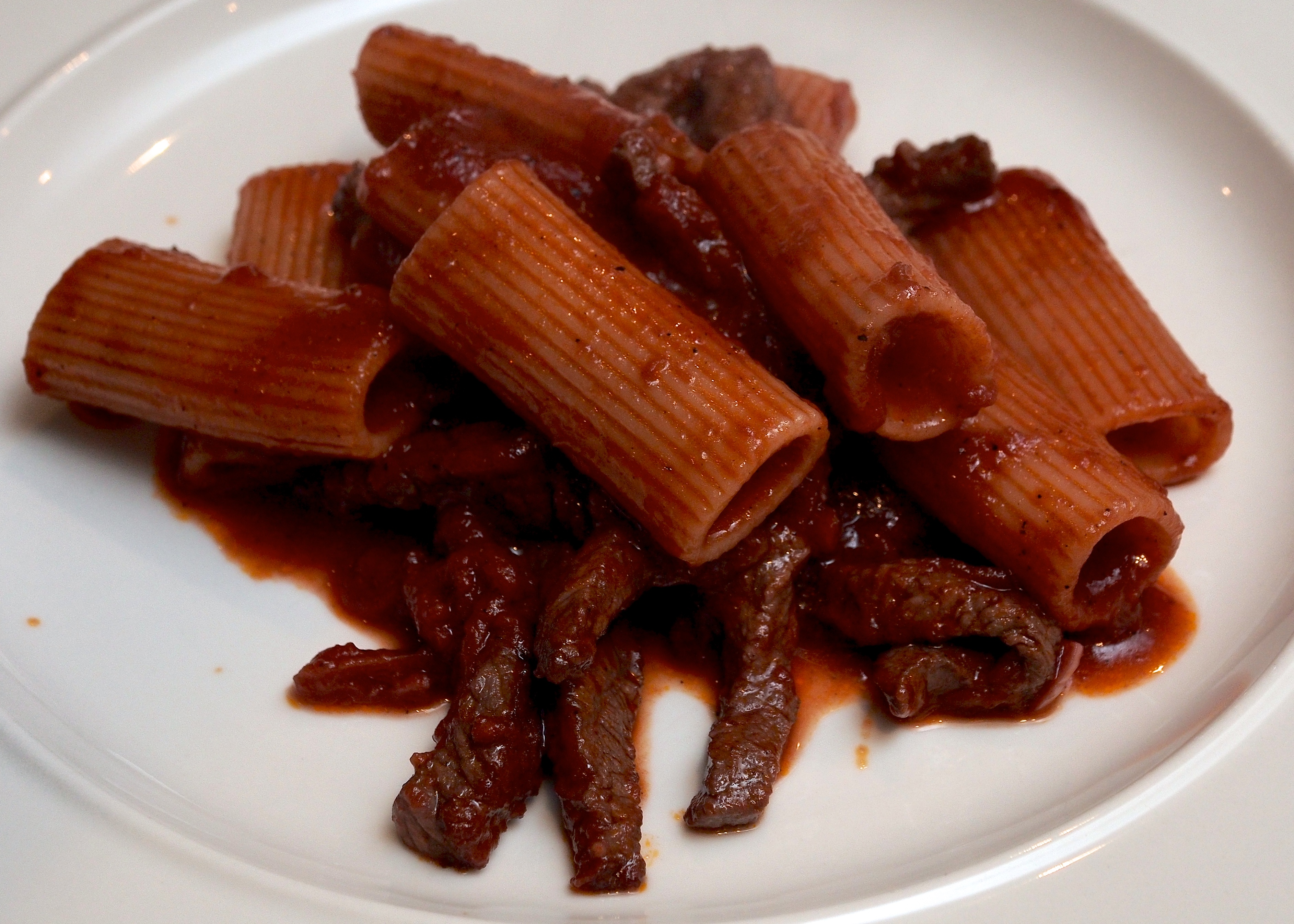
Chianti Beef


The technique used to cook the meat is quite clever as the amount of beef is small and is only quickly, flash fried which keeps the juiciness, adds the caramelisation flavours and gives great depth to the whole dish. It’s an expensive cut but the quantity required is so small that it won’t break the bank. It’s hard to believe a dish with so much flavour takes such a short time to prepare.

Wine Suggestion: we drank one of our favourite Tuscan wines: the Selvapiana Chianti Rufina which is refined and elegant and complements the beef fillet and provides a foil to the rustic black pepper background in this dish.

Rigatoni, tomato, beef and red wine – serves 4

  • 320g rigatoni
  • 200g beef fillet
  • 4 garlic cloves, sliced
  • 50g Parmesan, grated
  • 100g unsalted butter
  • 600g top quality tinned tomatoes
  • 350ml Chianti wine
  • 1tbsp ground black pepper
  • 3tbsp extra virgin olive oil

Trim the beef fillet and cut across into 5mm slices. Cut the slices into 1cm strips.

Heat the butter in a thick-bottomed pan, add the garlic and fry gently until brown. Add the tomatoes and season. Cook over a high heat for 5 minutes, stirring to break up the tomatoes, then add half the red wine. Continue to cook on quite a high heat, adding more wine as the sauce reduces. Cook for 15 minutes in total, using up all the wine, then stir in the pepper.

Heat the olive oil in a frying pan until very hot. Add the beef pieces and fry very briefly, just to brown each piece on both sides. Stir the beef into the sauce with any juices from the pan.

Cook the rigatoni in boiling salted until al dente. Drain and add to the sauce.

Serve with the Parmesan.

(Original recipe from Italian Two Easy: Simple Recipes from the London River Cafe by Rose Gray and Ruth Rogers, Random House, 2006.)

Read Full Post »

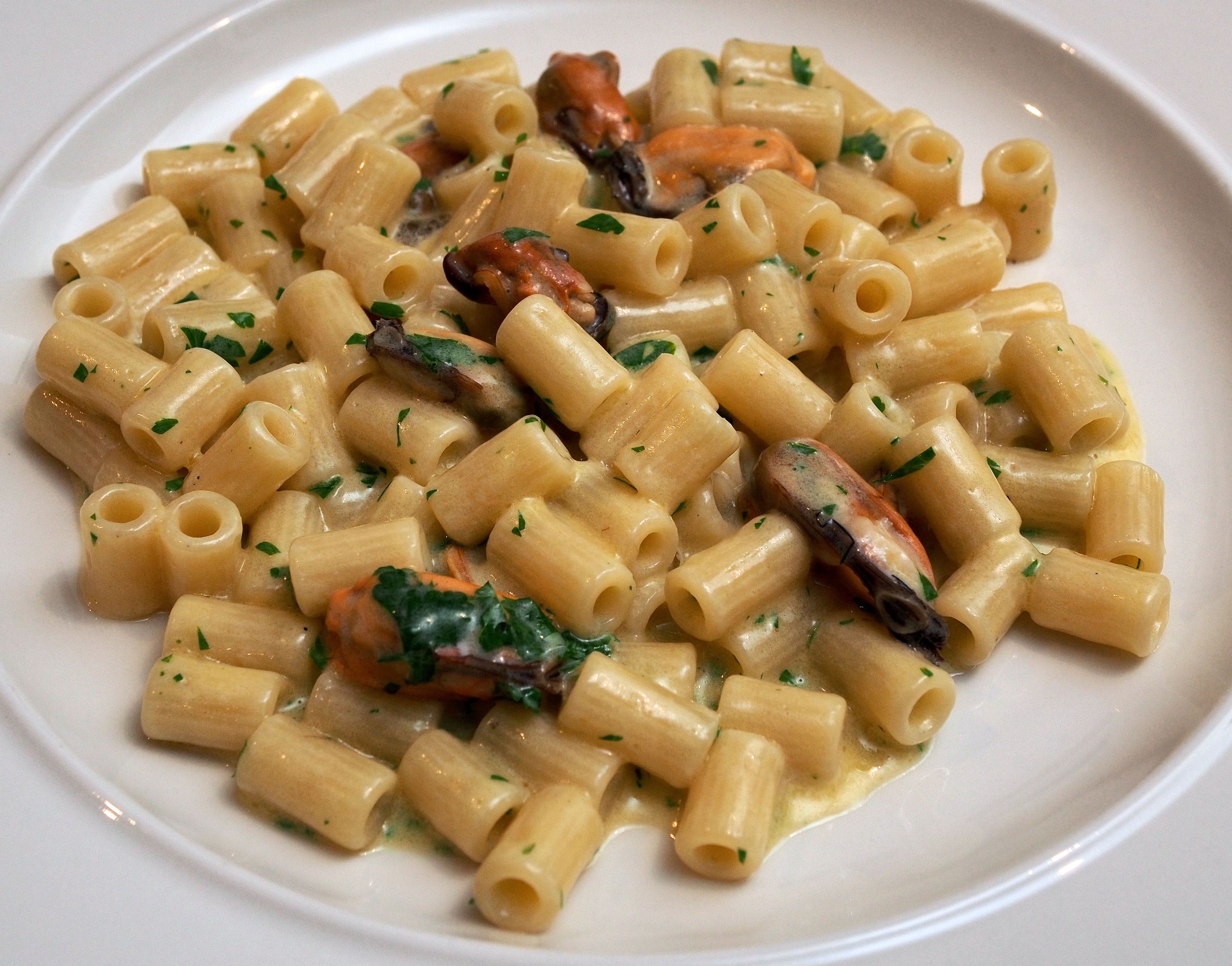
Ditaloni, mussels & white wine

A scrumptious and deliciously rich pasta dish that works perfectly as a starter.

Wine Suggestion: A textured white works best here; old-world minerality rather than bright fruit-forward styles. The Casal di Serra Verdicchio from Umani Ronchi in the Marche (central Italy) combines stonefruit flavours, hints of wild-flowers on the nose and a crisp yellow apple finish and goes with the richness and depth of the pasta.

Ditaloni, mussels & white wine – serves 4

  • 1kg small mussels, scrubbed
  • 2 garlic cloves, finely chopped
  • 4 tbsp flat-leaf parsley leaves, finely chopped
  • 200g unsalted butter
  • 1 tbsp extra virgin oil
  • 125ml white wine
  • 165ml double cream
  • 300g ditaloni (or similar) pasta

Heat half the butter with the oil, then add the garlic and mussels. Pour in the wine; season, then cover and cook over a high heat until the mussels have opened. Drain the mussels and reserve the cooking liquid. Remove the mussels from the shells; discard the shells and any mussels that haven’t opened.

Heat the rest of the butter in a pan and add the mussel juices and the cream. Cook gently to reduce to a rich and creamy sauce. Then add the mussels and parsley.

Cook the pasta according to the packet instructions, then drain and add to the sauce. Toss together over a low heat, and serve.

(Original recipe from Italian Two Easy by Rose Gray and Ruth Rogers, Clarkson Potter, 2006.)

Read Full Post »

OLYMPUS DIGITAL CAMERA

From the geniuses at River Café is this deeply delicious and flavoursome pasta which keeps on reprising itself on our menus. We love that the ingredients list is simple and short and yet the dish is packed full of flavour and style. Don’t shy away from the generous quantity of butter – it’s what gives the dish its richness.

We’ve given a separate recipe for the tomato sauce. You will have too much for this recipe but it’s good served as it is with some tagliatelle and freezes well.

Wine suggestion: earthy, medium bodied red wines work well with this and we returned to an old favourite, the very smooth Selvapiana Chianti Rufina which is pure elegance in a glass. Really fine and supple tannins make this sing with a freshness that adds depth to the food.

Penne, tomato and dried porcini – serves 4 

  • 320g penne
  • 40g dried porcini
  • 2 garlic cloves, finely sliced
  • 1 tbsp flat-leaf parsley leaves, chopped
  • 50g Parmesan, grated
  • 5 tbsp tomato sauce (see below)
  • 100g unsalted butter
  • extra virgin olive oil

Soak the porcini in 200ml boiling water for 10 minutes.

Drain the porcini, straining the liquid through muslin or a paper towel, reserving the water. Rinse the porcini and chop coarsely.

In a thick-bottomed saucepan, melt the butter and add the garlic. Add the porcini and fry until soft. Add a little of the porcini liquid and simmer until absorbed. Stir in the parsley. Add the tomato sauce and season.

Cook the penne in plenty of boiling salted water until al dente. Drain and stir into the pasta sauce.

Drizzle with olive oil and serve with the Parmesan

Tomato sauce – serves 4

  • 2 garlic cloves, sliced
  • 1 tbsp olive oil
  • 2 x 400g tinned tomatoes

Heat the oil in a thick-bottomed pan and fry the garlic until soft but not coloured. Add the tomatoes and season. Cook over a medium heat for 20-30 minutes or, until the sauce is very thick and the oil comes to the top.

(Original recipes from Italian Two Easy: Simple Recipes from the London River Cafe by Rose Gray and Ruth Rogers, Random House, 2006.)

Read Full Post »

Obica: Linguine with Yellowfin Tuna

A simple but delicious dish from a cool restaurant called Obicà that we found on our last trip to Florence. They insist that it’s best made with fresh tuna (and they’re probably right) but we made it with top quality tinned tuna and it worked for us.

Wine Suggestion: Classic Italian matches for tuna depend on the region. If you are in Sicily a great match is their native Grillo grape, a textural, slightly salty and mineral wine with good body but not weighty. For this dish though we drank a Vermentino, made by Morisfarms, from the Tuscan coast. It has a great vinous texture and savoury character which combined with fresh fruit and minerality matches this Tuscan combination of tuna, tomatoes and olives.

Linguine with Yellowfish Tuna – serves 4-6

  • 2 tins top quality plum tomatoes (the Italian brands are good)
  • 500g yellowfin tuna
  • 4 tbsp extra-virgin olive oil, plus a bit extra
  • 2 sprigs rosemary
  • a pinch of chilli flakes
  • 80ml white wine
  • 30g salted capers, soaked and drained
  • 100g pitted black olives (Gaeta or Kalamata)
  • 500g linguine
  • chopped fresh parsley to serve

Drain the tinned tomatoes and cut into strips.

Cut the tuna into 2cm cubes. Heat the oil in a pan and sauté with 1 sprig of rosemary and the chilli flakes.

Add the wine and simmer until it evaporates, then add the capers.

Add the olives and tomatoes and cook over a high heat for 15 minutes.

Cook the linguine until al dente, then drain and add to the pan of tuna sauce. Toss gently.

Sprinkle on the parsley, drizzle with some more olive oil, and garnish with the remaining rosemary.

(Original recipe from Obicà: Mozzerella Bar, Pizza e Cucina, Rizzoli, 2014.)

Read Full Post »

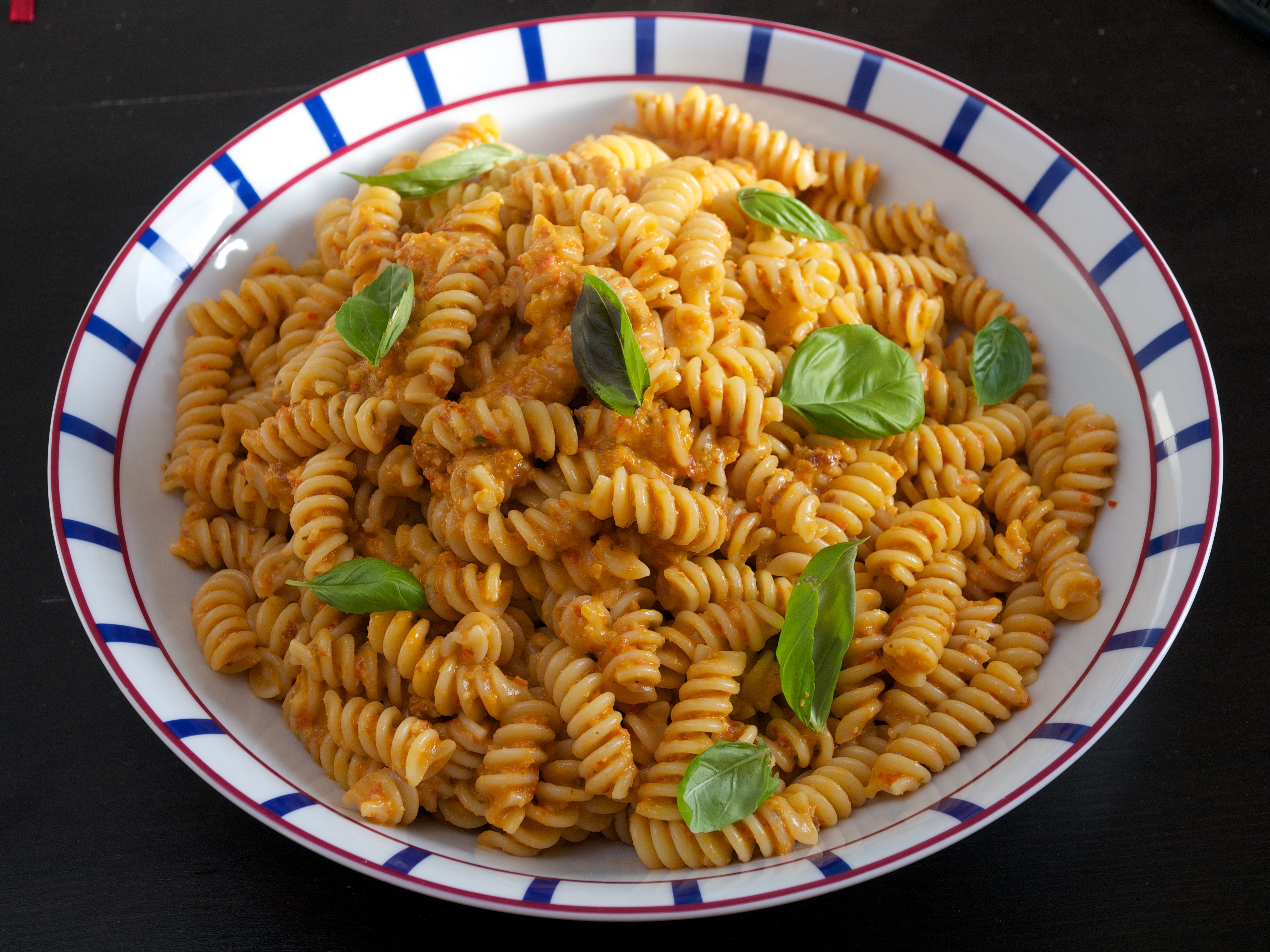
Sicilian fusilli with tomato, garlic & almond

We love the combination of anchovies and almonds in this pasta sauce – a Sicilian-style pesto. It also reinforces our desire to go to Sicily.

Wine Suggestion: A fresh and dry Italian white is a must for this dish with numerous choices working well. If you can find one match it with a white from the slopes of Mt Etna which will be minerally and savoury, or if not a dry Vermentino from the Tuscan coast. We drink a glass of the Morisfarms Vermentino which was both minerally and nutty with fresh citrus flavours. Morisfarms add 10% Viognier to this wine which gives it an added exotic lift and roundness to the wine. With the complex savoury notes of the dish the savoury and nutty wine worked a treat.

Sicilian pasta with tomatoes, garlic & almonds – serves 6

  • 500g fusilli lunghi (long spiral pasta) or other pasta – we used regular fusilli
  • 250g cherry tomatoes
  • 6 anchovy fillets
  • 25g golden sultanas
  • 2 cloves garlic, peeled
  • 2 x 15ml tbsp capers, drained
  • 50g blanched almonds
  • 60ml extra-virgin olive oil
  • leaves from a small bunch of basil (about 20g) to serve

Cook the pasta in plenty of boiling salted water according to the pack instructions.

Make the sauce as the pasta cooks by putting all the ingredients, except the basil, into a processor and blitzing until you have a textured sauce.

Drain the pasta, reserving a mugful of the cooking water and add 2 tbsp of the water to the processor as you pulse the sauce.

Tip the drained pasta into a warmed serving bowl. Pour over the sauce and toss to coat – add a bit more pasta cooking water if needed and scatter with basil leaves.

(Original recipe from Nigellissima by Nigella Lawson, Chattos & Windus, 2012.)

Read Full Post »

Courgette Pasta

This dish is so simple, and yet completely satisfying and delicious. It features regularly on our table during the summer months and has also become our daughter, Orlaith’s, favourite dish alongside Moussaka.

Wine Suggestion: A lovely and fresh wine but with depth and reasonable body works well with tis; something like a very good Verdicchio – try Sartarelli’s Talivio or Umani Ronchi’s Casal di Sera. If you feel like a red try a Cabernet Franc from the Loire, like the thoughtful and expressive Chinon’s by Charles Joguet.

Courgette Sauce for Pasta – serves 4

  • 1kg courgettes, thinly sliced
  • 3 tbsp olive oil
  • 3 garlic cloves, crushed
  • 2 tbsp of cream
  • 50g freshly grated Parmesan, plus extra to serve
  • pasta of your choice (long or short works), 75-100g per person

Heat the oil in a large saucepan, add the garlic and courgettes, and a pinch of salt.Cook gently to soften without browning. Continue to cook until the courgettes are completely soft and almost all of their water has evaporated (20-30 minutes). Then bash the courgette mixture to a rough purée with a wooden spoon or masher.

Stir in the cream and Parmesan and allow to bubble for a minute or so until the cream has reduced a bit.

Meanwhile, cook the pasta in salted water until al dente.

Serve with extra Parmesan.

(Original recipe from The River Cottage Cookbook by Hugh Fearnley-Whittingstall, Collins, 2001.)

Read Full Post »

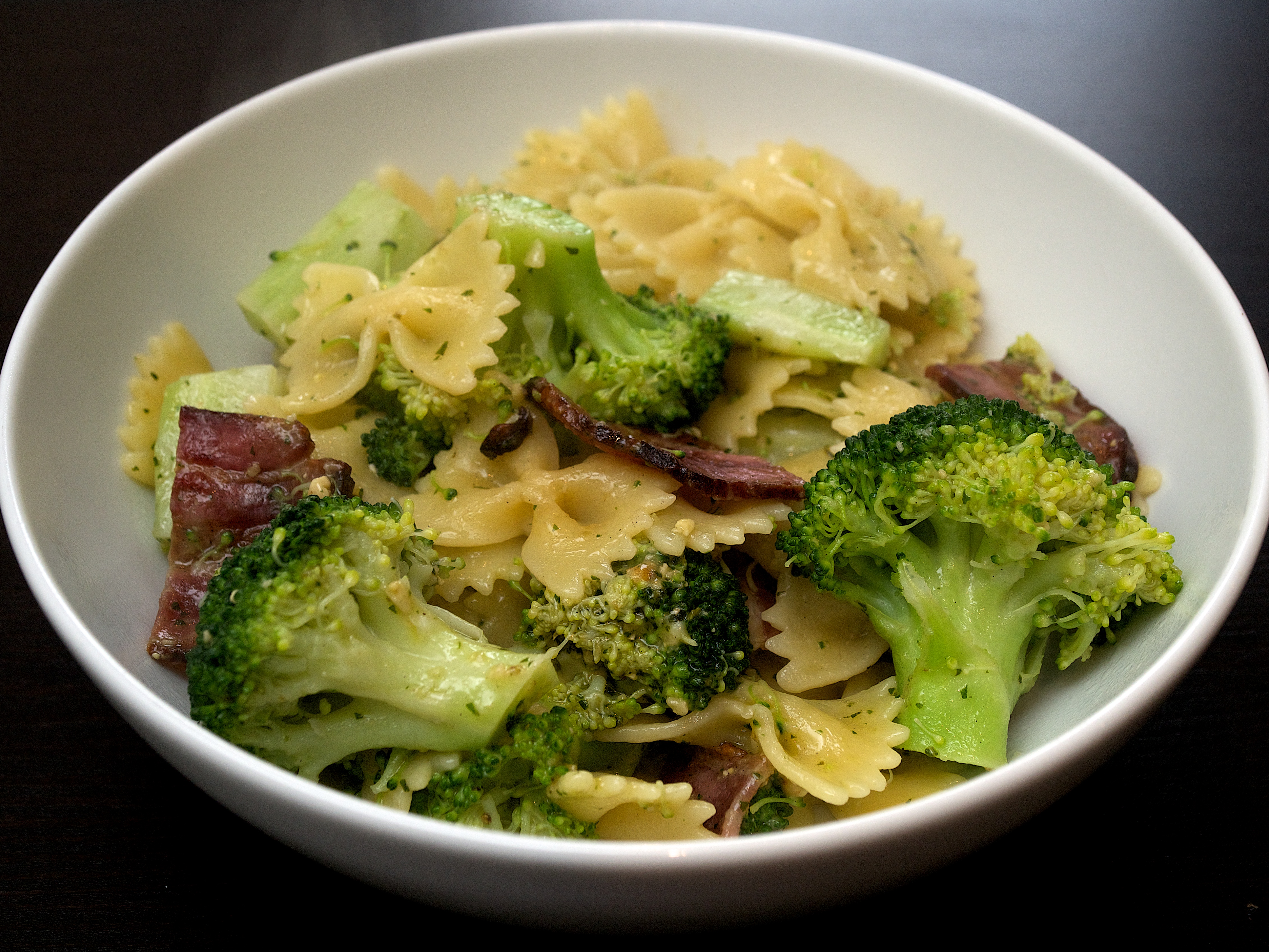
Bacon, Broccoli & Pesto Pasta

We like simple pasta dishes for when we’re feeling tired and uninspired. You can easily get the ingredients for this on your way home.

Wine Suggestion: A Chianti, as we felt like it and it worked really well with the combination of flavours.

Pasta with Bacon, Broccoli & Pesto – serves 4

  • 300-400g short pasta shapes (depending on how hungry you are)
  • 1 head of broccoli, cut into small florets
  • 8 rashers of smoked bacon
  • 5 tbsp pesto
  • grated Parmesan, to serve

Cook the pasta according to the pack and add the broccoli about 3 minutes before the end of the cooking time.

When cooked, drain but keep a cup of the cooking water.

Grill the bacon until crisp (we use a gas barbecue for less mess), then cut into bite-size pieces.

Tip everything into the pasta pan, toss together and loosen with a little bit of pasta water if you like.

Sprinkle over the Parmesan to serve.

Read Full Post »

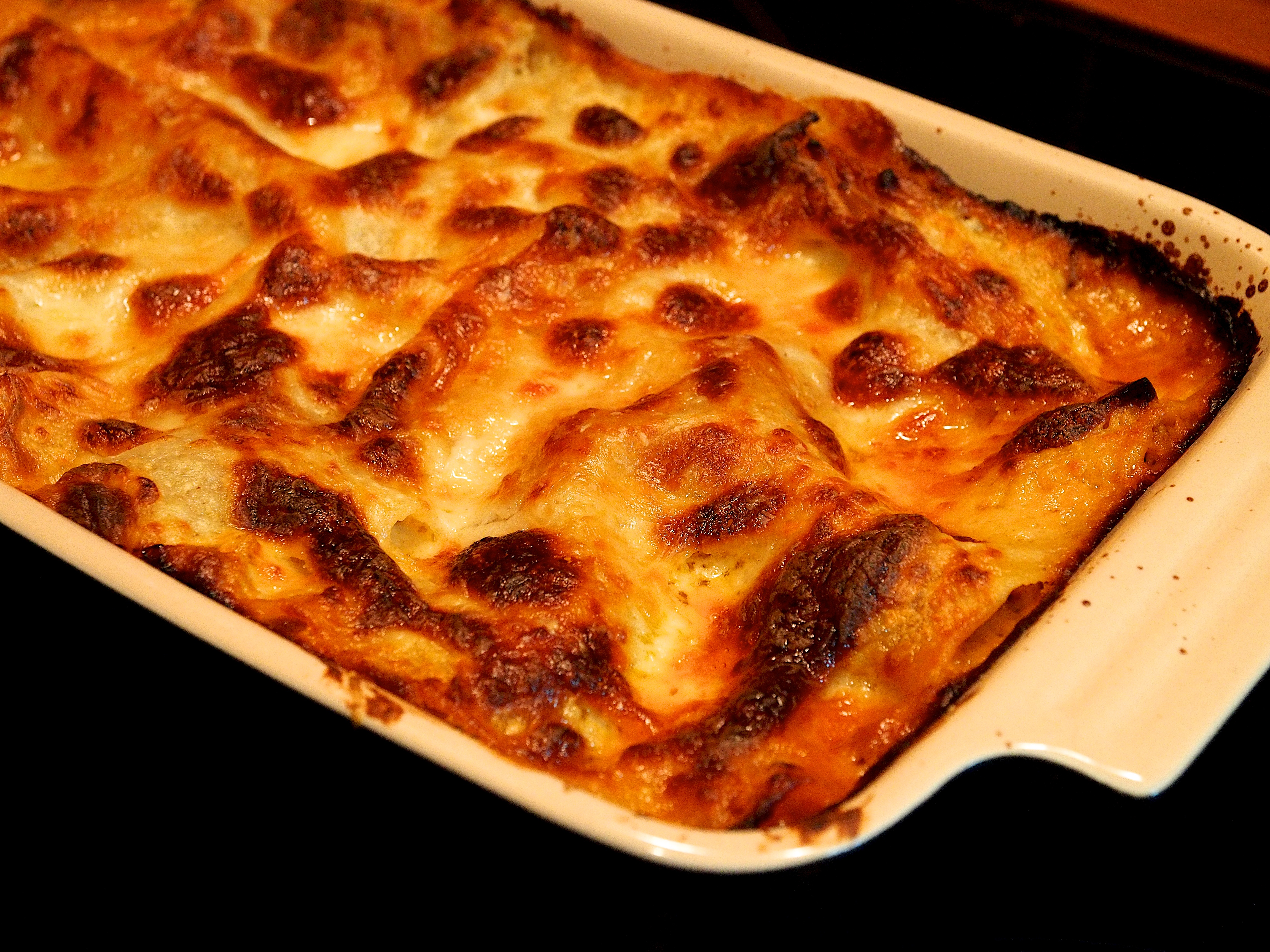
This recipe comes in two parts, with the first an easy to make a Bolognese Ragù which tastes good but is not really exciting or flavour-packed like we like. When created into a lasagne, however, it really sings with a perfect balance of flavour.

The recipe takes a while, but is actually quite easy, especially if you make the ragù the day before. We made two lasagne this time which served eight people over two days amply. Alternately, make a big tray of it for a larger crowd.

Ragù – serves 6-8

  • 3 tbsp olive oil
  • 1 large onion, finely diced
  • 3 cloves of garlic, crushed
  • 3 sticks of celery, finely diced
  • 1 leek, finely diced
  • 1 kg minced beef/pork (or half and half)
  • 1 bay leaf
  • 2 x 400g tins chopped tomatoes
  • 2 tbsp tomato purée
  • 200ml white or red wine
  • 2-3 tbsp sugar

Preheat the oven to 150ºC/300°F/Gas mark 2.

Put a large ovenproof casserole on a medium heat and heat the olive oil. Tip in the onion, garlic, celery and leek. Season with salt and pepper and cook for 8-10 minutes or until softened. Turn the heat to high, add the meat and stir to break up, cooking until there are no longer any pink bits.

Add the bay leaf with the chopped tomatoes, tomato purée, wine and sugar, and bring to the boil. Cover with a lid and cook for about 1 hour in the oven. Season to taste.

Lasagne – serves 6-8

  • 1 quantity of cooked ragù
  • 12-16 sheets of pre-cooked dried lasagne
  • 100g Cheddar cheese, grated
  • 50g Parmesan, grated

FOR THE CHEESE SAUCE 

  • 70g butter
  • 70g plain flour
  • 1 litre milk
  • 200g Cheddar cheese, grated
  • 1 tsp Dijon mustard

Preheat the oven to 180°C/350°F/Gas mark 4.

First make the cheese sauce. Melt the butter in a saucepan over a medium heat, then whisk in the flour and cook, stirring often, for 1 minute. Gradually pour in the milk and bring to the boil, whisking continuously until the sauce is thickened. Remove from the heat and whisk in the cheese and mustard, seasoning with salt and pepper, then set aside.

Put a thin layer of ragù in the bottom of an ovenproof dish (20 x 30cm), cover with a layer of the cheese sauce, then add lasagne sheets to cover, in a single layer. Repeat this process, finishing with a layer of pasta topped with cheese sauce only.

Sprinkle over both cheeses and bake in the oven for 45-50 minutes or until golden brown and bubbling.

(Original recipe from Rachel’s Everyday Kitchen by Rachel Allen, HarperCollins, 2013.)

Read Full Post »

Marscapone & Marsala Fettucini

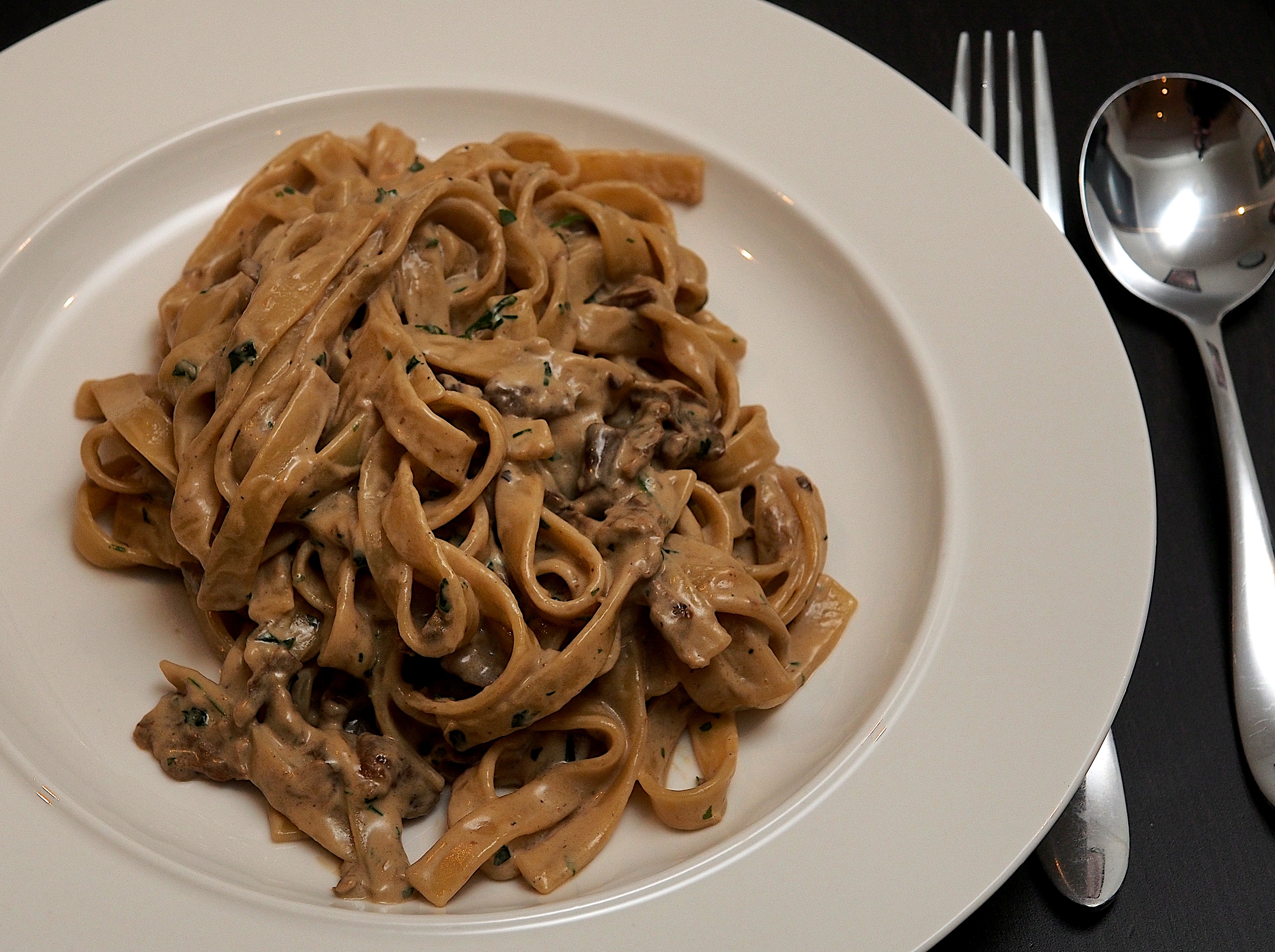
A rich and indulgent pasta dish and quite a hefty portion but as Nigella points out there is little point in leaving 50g of fettuccine in the box for another time!

Fettuccine with Mushrooms, Marsala & Mascarpone – serves 2

  • 15g dried porcini
  • 60ml Marsala
  • 125g mascarpone
  • freshly grated nutmeg
  • ground pepper
  • 2 tbsp chopped parsley plus more to serve
  • 250g  fettuccine (or tagliatelle)
  • 1 tbsp unsalted butter
  • small clove of garlic, crushed
  • 4 tbsp grated Parmesan

Measure the porcini into a very small saucepan, cover with the Marsala and 60ml water, put on the heat and bring to the boil. As soon as it starts to boil, turn off the heat and leave to stand for 10 minutes.

Put the mascarpone into a bowl with a good grating of fresh nutmeg and ground pepper. When the porcini have finished soaking, strain the liquid into the bowl and fork together to combine.

Squeeze the porcini out over the bowl, then chop on a board along with the parsley.

Cook the fettuccine in a large pan of boiling salted water.

Melt the butter in a large pan and add the garlic, stirring over the heat for a minute, then add the porcini and parsley mixture and cook for a couple of minutes. Whisk in the mascarpone and stir until the sauce bubbles, then turn the heat off.

Reserve a small cup of the pasta cooking water before draining and tipping the pasta into the sauce. Add a little pasta water to loosen as it will thicken on standing.

Add the Parmesan and check the seasoning before serving with some extra parsley.

(Original recipe from Nigella Lawson’s Nigellissima, Chatto & Windus, 2012).

Read Full Post »

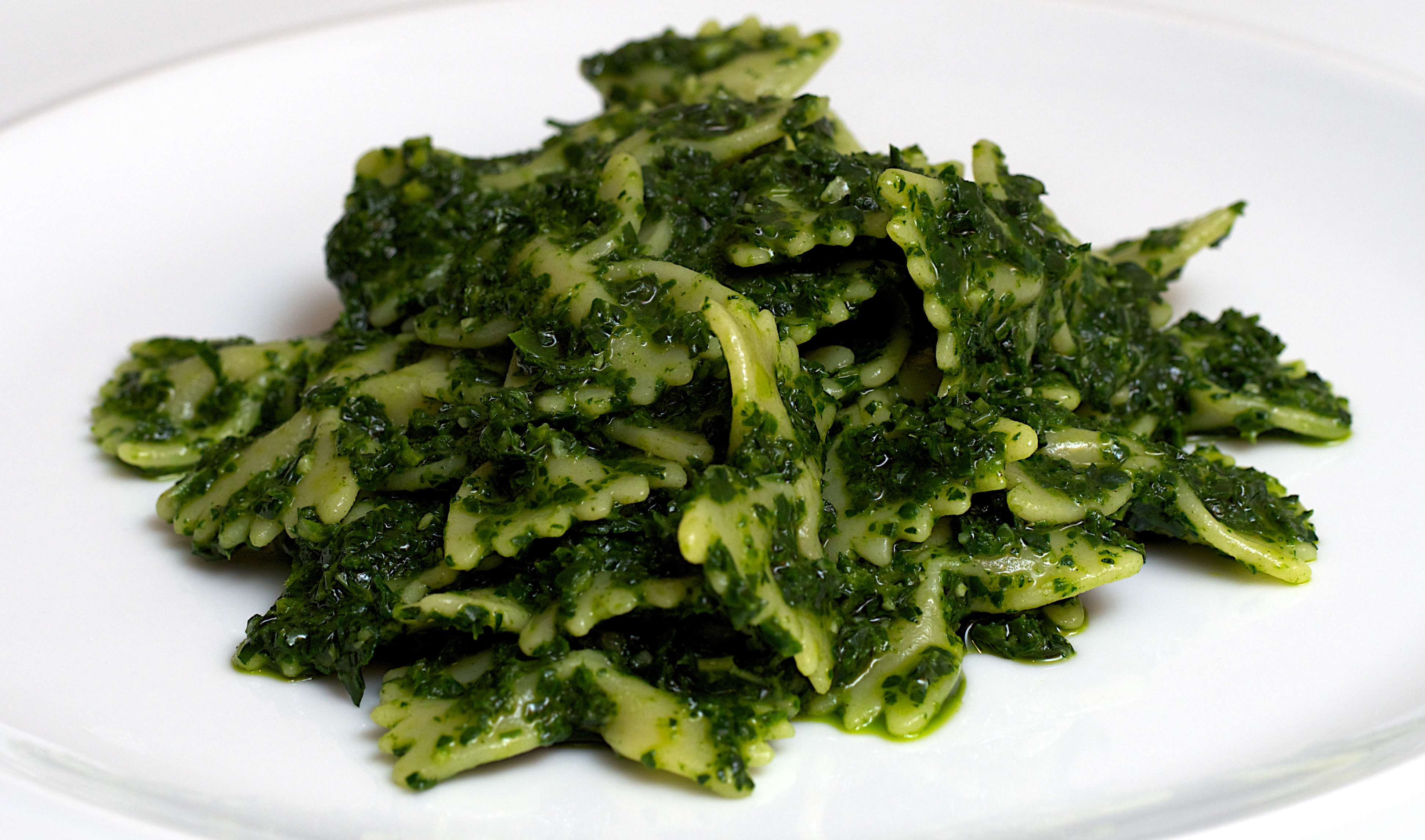
This works really well as a starter portion for 6 people. Make sure you use top quality fresh extra virgin olive oil from the most recent vintage. We buy fresh olive oil made by the Tuscan wineries Capezzana and Selvepiana. They’re not cheap but they taste fabulous when only the best olive oil will do.

Wine Suggestion: The iron rich Cavolo Nero requires something minerally and iron rich too, but you need to avoid wines with too much weight. We’d suggest trying the Gulfi Cerasuolo di Vittoria, a red from Sicily that is a blend of Frappatto and Nero d’Avola which combines an earthiness and power with a joyful fruit and fresh acidity giving the wine personality and depth without excess weight.

Farfalle al Cavolo Nero con Olio Nuovo – serves 6

  • 1.1kg cavolo nero leaves
  • sea salt and black pepper
  • 4 garlic cloves, peeled
  • 250ml extra virgin olive oil (see comment above)
  • 250g farfalle
  • Parmesan

Remove the stalks from the cavolo nero but keep the leaves whole. Blanch the leaves in a generous amount of boiling salted water along with 2 of the garlic cloves for just a few minutes. Put the blanched garlic and cavolo nero in a food processor and pulse to a coarse purée. In the last few seconds, pour in around 75ml of the oil to make a fairly liquid purée.

Crush the rest of the garlic with 1 tsp sea salt and stir into the purée with another 75ml of oil. Season to taste.

Cook the the farfalle in plenty of salted water, then drain. Add the pasta to the purée and stir until evenly coated. Pour in the remaining olive oil and serve with some grated Parmesan.

(Original recipe from The River Café by Rose Gray and Ruth Rogers, Ebury Press, 1995.)

Read Full Post »

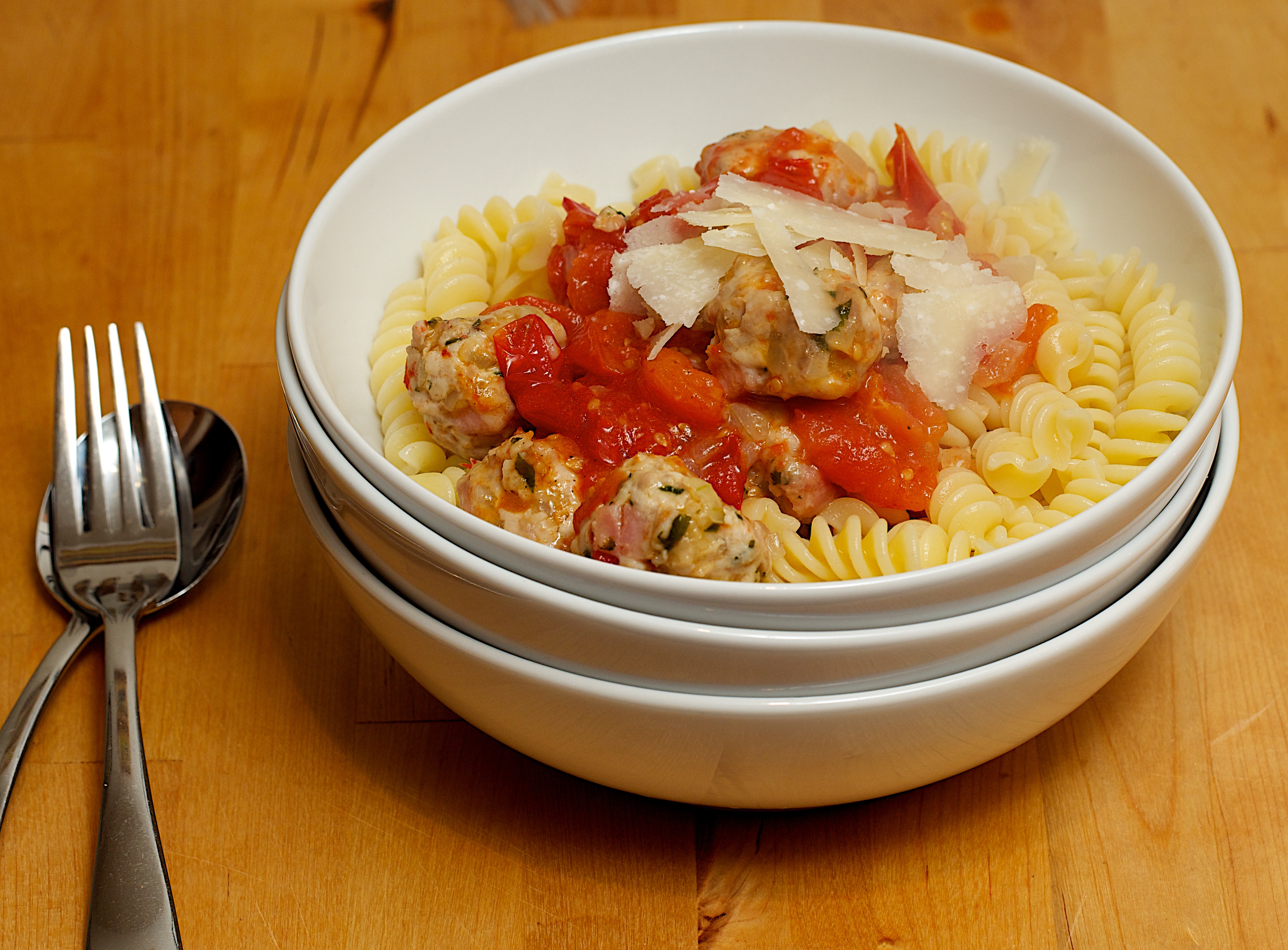
We found these to be a surprisingly tasty alternative to traditional spaghetti and meatballs. We loved these for their freshness and verve; it really hit the spot for a weeknight dinner. It was also usefully quick and easy as well as being very cost effective.

Wine Suggestion: try some of Italy’s thoroughly modern whites that are being rejuvenated and reinvented. If you can find a good Pecorino from the Marche you’ll be in for a treat. We had a glass of Umani Ronchi’s Vellodoro which had good freshness of fruit and terrific depth of minerality and nutty savouriness; showing what can be done with a forgotten grape variety when love and attention are given.

Spicy Chicken Meatballs – to serve 4

  • 3 tbsp olive oil
  • 1 small onion, finely chopped
  • 2 cloves of garlic, crushed
  • ½ tsp ground coriander
  • 1 red chilli, thinly sliced
  • 500g chicken mince
  • 3 tbsp fresh breadcrumbs
  • 50g pancetta, chopped
  • 2 tbsp flat-leaf parsley, chopped
  • 500g cherry tomatoes, halved
  • 125ml chicken stock
  • 500g fusilli  pasta, cooked, to serve
  • Parmesan

Preheat the oven to 200ºC/400ºF/Gas 6. Heat 1 tbsp of the oil in a saucepan over medium-high heat. Add the onion and garlic and cook for 5 minutes, or until softened. Add the coriander and chilli and cook for another minute.

Put the chicken in a bowl with the breadcrumbs, pancetta, parsley and some salt. Add the spiced onion and mix well with your hands. Refrigerate for 30 minutes, then wet your hands with cold water and roll the mixture into small meatballs.

Put the cherry tomatoes on a baking tray lined with baking paper, drizzle with 1 tbsp olive oil and season. Put the meatballs on another lined tray and drizzle with the remaining oil. Roast the tomatoes and meatballs for 15-20 minute, or until the meatballs are golden and the tomatoes are starting to burst.

Put the stock and tomatoes in a saucepan and add the meatballs. Simmer for 5 minutes and season.

Serve with the cooked pasta and some Parmesan shavings.

(Original recipe from Bill Granger Every Day, Murdoch Books, 2006)

Read Full Post »

This is one of our favourite pasta sauces. Bucatini (long spaghetti-like tubes) is traditionally used but penne works well too and tends to be easier to find at the shops. Makes a great Friday night supper with a matching glass of something equally red and Italian.

The recipe below makes 6 little portions that you might serve as a first course. You will need to adjust accordingly if you’re serving it as a main meal – we half the quantities below to serve the two of us.

Wine Suggestion: An Italian Sangiovese is the obvious match which complements the acidity in this tomato-based sauce. We drank a Rocca delle Macie Chianti; an excellent match.

Penne all’ Amatriciana – serves 6 

  • 250g pancetta, cut into matchsticks
  • 2 tbsp olive oil
  • 2 dried chillies, crumbled
  • 2 red onions, peeled and finely chopped
  • 150ml red wine
  • 2 x 400g tins peeled plum tomatoes, drained if very liquid (look for Italian brands)
  • 2 tbsp rosemary
  • 250g penne
  • 100g Parmesan, grated
  • A handful of fresh oregano (don’t panic if you don’t have this)

Put the pancetta, oil and chillies into a large saucepan, heat and fry until the pancetta becomes crisp.

Add the onions and rosemary and keep frying until they have also turned light brown and crisp.

Add the red wine and let it reduce before adding the tomatoes, then season with the oregano and some black pepper.

Bring to the boil, lower the heat and simmer for at least 45 minutes, until thick and almost dry. Check for seasoning.

Cook the penne in a generous amount of boiling salted water, then drain. Add to the sauce, mix and serve with Parmesan.

(Original recipe from The River Café Cookbook by Ruth Rogers and Rose Gray, Ebury Press, 1995.)

Read Full Post »

« Newer Posts - Older Posts »