Feeds:
Posts
Comments

Posts Tagged ‘Potatoes’

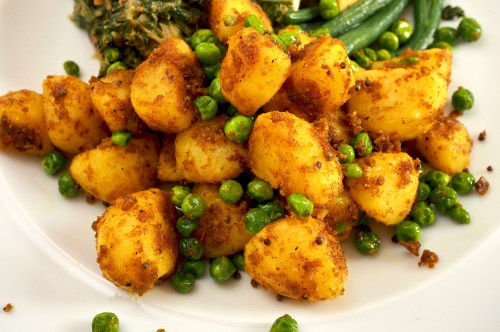
Spicy potatoes

We loved these Indian spiced potatoes and they were great for bulking out some leftover saag paneer that definitely would not have satisfied our hungry bellies.

Spicy Potatoes – serves 4

  • 800g potatoes, peeled and cut into small chunks
  • 2 tbsp olive oil
  • 1 tsp mustard seeds
  • 1 tsp turmeric
  • 2 tsp garam masala
  • 140g frozen peas

Cover the potatoes in cold salted water and bring to the boil. Simmer for 5 mins or until just tender, then drain and allow to steam dry for a few mins.

Heat the oil in a frying pan and fry the spices for a minute until fragrant. Throw in the potatoes and toss well so they are coated in the spices. Gently fry for 5-10 mins until golden, then add peas, mix well and cook for another 3-4 minutes. Season well before serving.

(Original recipe from BBC Good Food)

Read Full Post »

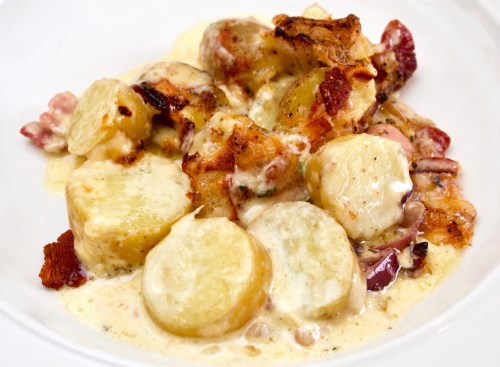
Friday Night Tartiflette

Reblochon season begins in May so it’s time to indulge in a Tartiflette. If you want to try a sophisticated version then we recommend the Chicken Tartiflette we posted this time last year but it does take a bit of time and effort. This one is much quicker and almost as tasty.

Wine Suggestion: We’d suggest an oaked Chardonnay that has a good balance between fruit and texture, but not too tropical or oily. We quite often go for the Rustenberg from Stellenbosch, or one of the Javillier Bourgogne Blancs as we have good access to these and they over-deliver in quality, but there are many other options you could choose.

Tartiflette – serves 4

  • 500g new potatoes, sliced into 1cm thick slices
  • 200g rindless streaky bacon, cut into 2 cm cubes
  • 1 tbsp olive oil
  • 1 red onion, finely sliced
  • 1 clove of garlic, crushed
  • 100g cheddar or gruyere, grated
  • a couple of sprigs of thyme, leaves removed and chopped
  • 200ml cream
  • 200g Reblochon cheese, sliced into thin wedges

Preheat the oven to 220C.

Cook the potato slices in boiling salted water until tender – start checking after 10 minutes, then drain.

Heat the olive oil in a frying pan and fry the bacon bits until light brown and crispy. Remove with a slotted spoon and set aside.

Cook the onion in the bacon fat for a few minutes until softened then add the garlic and cook for another minute.

Spread the cooked potatoes over the bottom of a baking dish. Scatter over the onion and garlic, then the cheddar cheese, thyme and bacon. Pour over the cream, season, and top with the slices of Reblochon.

Bake in the hot oven for 15-20 minute or until browned and bubbling.

Serve with a green salad.


Read Full Post »

Wild Garlic Mash

Wild garlic has a short season in April and most years we make all kinds of things with it. This April we only managed some mashed potato – but very delicious mashed potato it was!

Wild Garlic Mash- serves 2 generously

  • 700g floury potatoes
  • 25-50g butter
  • 25g wild garlic, roughly chopped
  • 100ml double cream

Peel the potatoes and cut into same-sized chunks. Boil until completely tender.

Dry the potatoes off in the hot pan, then mash until smooth.

Meanwhile, melt a generous slab of butter in a small frying pan. Add the wild garlic and cook for a minute or two until softened. Pour the melted butter and wild garlic into the mashed potatoes.

Pour the cream into the same frying pan and bring to a bubble, then pour into the potatoes. Season well with salt and freshly ground white pepper, then beat the mash with a wooden spoon until smooth and fluffy.


Read Full Post »

Spicy Syrian Potatoes

These spicy Syrian potatoes are really delicious and we’re going to be cooking them with lots of dishes. A great alternative to roast potatoes.

Spicy Syrian Potatoes (Batata Harra) – serves 4

  • 4 potatoes, peeled and cut into 1-2 cm cubes
  • olive oil, for roasting
  • 3 garlic cloves, finely chopped
  • 2 chillies, deseeded and finely chopped
  • a bunch of coriander, chopped
  • 1 tbsp Aleppo pepper

Heat the oven to 200C/400F/Gas 6.

Roast the potatoes with olive oil and salt for about 30 minutes or until nicely browned.

Meanwhile, quickly fry the garlic, chillies and half the coriander. When the potatoes are ready, mix the fried ingredients with the potatoes, ground Aleppo pepper and the rest of the coriander.

(Original recipe from Syria: Recipes from Home by Itab Azzam and Dina Mousawi, Trapeze, 2017.)

Read Full Post »

Dill potatoes

We’re always banging on about food waste but can honestly say that at least half the recipes we try, are chosen solely on the basis that they use an ingredient left over from another dish. This is precisely how we came to try this potato dish from Caroline Eden & Eleanor Ford’s beautiful book, Samarkand. Dill is one of the herbs we find most difficult to use up and it’s also one we haven’t had a lot of success growing ourselves. Never again will we shy away from recipes using fresh dill, instead we will look forward to melting potatoes with dill the following day.

Melting Potatoes with Dill – serves 4

  • 50g butter
  • 2 tbsp olive oil
  • 2 onions, sliced
  • 500g waxy potatoes, unpeeled and cut into 1cm slices
  • 3 garlic cloves, finely sliced
  • 1 tsp cracked black peppercorns
  • a small handful of dill fronds, chopped

Heat the butter and oil in a large frying pan and cook the onions very slowly until soft and golden. Add the potato slices and garlic and stir into the buttery onions. Season well with salt and cover with a lid.

Cook the potatoes over a very low heat, stirring occasionally, for about 45 minutes. Stir through the peppercorns and a handful of fresh dill before serving.

(Original recipe from Samarkand by Caroline Eden & Eleanor Ford, Kyle Books, 2016.)

Read Full Post »

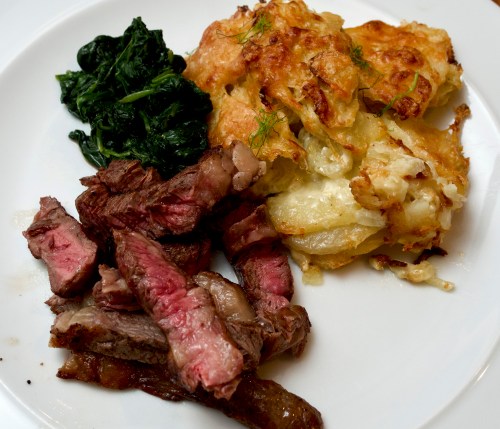
Fennel & Potato Gratin

Fennel makes a great addition to a classic dauphinoise. We served with chargrilled steak and spinach but it would also be great with venison.

Fennel Dauphinoise – serves 2

  • 225g medium potatoes, very thinly sliced (a mandolin works best for this)
  • 1 small fennel bulb, sliced (reserve the fronds)
  • 1 garlic clove, finely chopped
  • 75ml whole milk
  • 100ml double cream
  • 2 tbsp finely grated Parmesan
  • butter

Heat the oven to 180C/160C fan/gas 4.

Put the potatoes, fennel and garlic in a medium non-stick pan. Pour in the milk and cream, season well and simmer gently, covered, for 10 minutes, stirring halfway through, until the potatoes are just tender.

Divide the mixture between 2 small (about 150ml) buttered ramekins and sprinkle with the Parmesan.

Bake for 40 minutes or until the potatoes are golden and tender when pierced with a knife. Snip the fennel fronds over before serving.

(Original recipe from BBC Good Food)

Read Full Post »

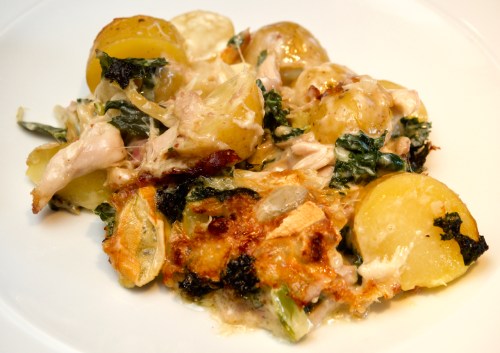
Chicken Tartiflette

Reblochon cheese from the Alps arrives in the cheese shops from May and reminds us to make tartiflette, the famous dish from France’s Haute-Savoie region made with cheese, bacon, potatoes and onions.  This version also has chicken and kale and it needs no accompaniment. It makes a hefty portion but it’s hard not to go back for more.

Wine Suggestion: We would suggest finding a white from the Jura, usually made from Savagnin, Chardonnay, or a blend of the two. Even better try to find a Vin Jaune, which is aged in oak under a Voile, similar to the Flor of sherry, and with similar characteristics. We had a beautiful Côtes du Jura, the Cuvée de Garde by Anne & Jean-François Ganevat. An equal blend of the two grapes and held under voile for 48 months (not long enough to classify as a Vin Jaune) which allowed the fruit to sing alongside the nutty, voile aromas.

Chicken tartiflette – serves 4 (generously)

FOR THE CHICKEN:

  • 2 tbsp olive oil
  • 1 medium chicken, about 1.5kg, jointed into 8 pieces (we used 8 chicken thighs)
  • 1 onion, sliced
  • 1 head of garlic, cut in half horizontally
  • 200ml white wine
  • 2 litres chicken stock
  • 1 sprig of thyme
  • 2 bay leaves

FOR THE TARTIFLETTE:

  • 1kg waxy potatoes, like Charlotte, sliced 1cm thick
  • 2 tbsp olive oil
  • 200g smoked bacon lardons
  • 1 large onion, thinly sliced
  • 3 garlic cloves, finely chopped
  • 50g plain flour
  • 300ml double cream
  • 400g curly kale, blanched in boiling water for 3 minutes and roughly chopped (discard any thick stalks)
  • 400g Reblochon cheese, broken or cut into pieces

Start by cooking the chicken. Heat a large sauté pan over a high heat, add the olive oil and the chicken pieces – skin side down to start. Cook until browned all over, about 5 to 10 minutes. Remove the chicken from the pan then add the onion and garlic and sweat until the onion has softened. Add the white wine and reduce until almost evaporated. Add the chicken stock, thyme and bay, then season with salt and pepper and bring to a very gentle simmer (you might need to transfer to a large pot to fit it all in).

Return the chicken pieces to the pan and cook very gently until just cooked – about 10 minutes for the breasts. Remove any breast pieces from the pan with some of the broth and leave to cool in the broth. Continue to cook the leg meat for another 30 minutes, then take off the heat and leave to cool in the broth.

When cooled take the chicken out of the broth, remove the skin and bones and cut into large pieces. Strain the broth and reserve for later.

Preheat the oven to 200C/400F/Gas 6.

Simmer the potato slices in boiling, salted water until almost tender, then drain and set aside.

Heat the olive oil in a pan, add the bacon lardons and cook until coloured, then remove from the pan and add the onion. Cook until the onion is translucent, then stir in the garlic. Add the flour and cook for another 2 minutes. Add the cream with 200ml of the reserved strained chicken braising liquid and slowly bring to a simmer, stirring. Remove from the heat and season.

Fold the chicken and bacon through the cream mixture, along with the kale, 300g of the cheese and the potatoes. Pour into a large baking dish and top with the remaining 100g of cheese, then bake until golden brown (about 20 to 30 minutes).

(Original recipe from The Skills by Monica Galetti, Quadrille, 2016.)

Read Full Post »
Potato Pie with Beaufort Cheese

What can we tell you about this pie? Well first of all it doesn’t look remotely like the picture in the book and there were a few moments of panic when the cream started to run out the sides. Despite our wholly inadequate pastry skills and some last minute patching to stop the leaks, it tasted pretty good and didn’t look half as bad when it came out of the oven as it did going in. If you have a similar leak we advise remaining calm and sticking some pastry over the hole – pronto!

If you have trouble finding Beaufort,  Gruyere is a good substitute. Serve with a green salad.

Wine Suggestion:  an oaked white with a good freshness and texture is the best match for both the cheese and pastry. If you can find a white from Jura or Savoie you’re in for a treat but otherwise there are plenty of options. For something a little different we tried both the Sartarelli Balciana Verdicchio from the Marche in Italy and the Soalheiro Alvarinho Reserva from the Melgaço in Portugal and had a great match with both.

Potato pie with Beaufort cheese – serves 4 

  • 500g medium-sized waxy potatoes – we used Charlotte
  • 100ml double cream
  • 2 cloves of garlic, lightly bruised
  • 25g-30g butter
  • 375g ready-made puff pastry in 2 sheets
  • 75g Beaufort cheese, very thinly sliced (a vegetable peeler works well)
  • ½ tsp thyme leaves
  • 1 egg beaten, to glaze

Preheat the oven to 200C/Fan 180C/Gas 6.

Steam the potatoes until tender, then cool and peel. Slice moderately thickly and set aside.

Put the cream into a small saucepan with the garlic and bring to the boil, then take off the heat, cover and leave to infuse.

Lightly smear a baking sheet with some of the butter. Roll out 1 pastry sheet thinly (about 2-3mm) and lay onto the baking sheet. Mark a circle on the pastry about 20cm in diameter. Cover the circle with half of the potatoes, arranging in a slightly overlapping layer. Season with salt and pepper then cover with half the cheese and thyme leaves, adding a few flecks of butter. Repeat these layers, then brush the pastry edges with beaten egg.

Roll out the other sheet and place over the filling. Clamp down the edges with your fingers and either trim to a round or if it’s easier fold in the extra pastry to create a thicker edge.

Brush the pastry all over with the egg and decorate with a fork (the decorating was beyond us and may have caused the hole so skip this step if you like). Make a hole in the centre of the pie about 5mm in diameter. Remove the garlic from the cream, then slowly pour into the pie using a small funnel. Do this slowly and allow the cream to settle before adding more. Stop when no more will fit – you might have a bit left over.

Put the pie into the oven and bake for 20 minutes, then turn the oven down to 180C/Fan 160C/Gas 4. Continue to bake for a further 20 minutes – cover loosely with foil if the pastry browns too quickly.

Remove from the oven and allow to stand for 10 minutes before serving in wedges with some dressed salad leaves.

(Original recipe from The Vegetarian Option by Simon Hopkinson, Quadrille Publishing Ltd, 2012.)

Read Full Post »

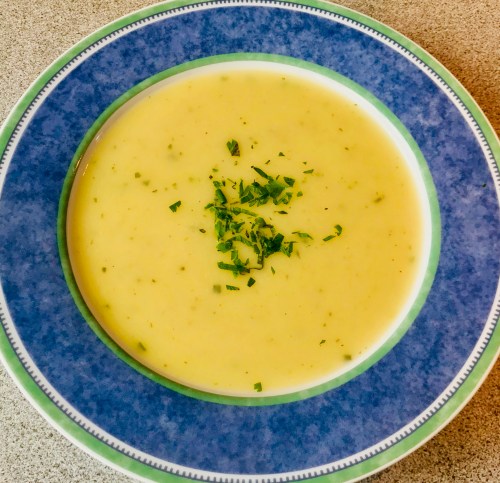
Potato soup

An invaluable recipe especially in Ireland as we always seem to have surplus potatoes lying around. This is what we cook when ‘there’s no food in the house’ and it’s pretty good.

Potato and fresh herb soup – serves 6

  • 50g butter
  • 425g potatoes, peeled and cut into 1cm cubes
  • 110g onions, cut into 1cm cubes
  • 1 tsp salt
  • 1 tbsp chopped herbs: parsley, thyme, chives
  • 850ml chicken or vegetable stock
  • 125ml creamy milk

Melt the butter in a heavy saucepan. Wait until it starts to foam, then add the potatoes and onions and stir to coat in the butter. Add the salt and some black pepper. Cover with a butter wrapper or some greaseproof paper and the saucepan lid. Sweat gently for about 10 minutes while you bring the stock to the boil in a separate pan.

When the vegetables are softened but not coloured, add the herbs and stock, then continue to cook until the vegetables are completely soft. Whizz the soup until smooth and season to taste. Thin with some creamy milk if necessary and garnish with some more herbs.

(Original recipe from Darina Allen’s Ballymaloe Cookery Course, Kyle Cathie Ltd., 2001.)

Read Full Post »

Creamy parsnip mash

We’ve no time for Christmas until the first of December and the snow starts falling on our blog. As soon at that happens we’re in a frenzy of Christmas cake baking (meant to do it November but didn’t happen) and experimenting with possible dishes for the big day. We know not everyone is a fan of parsnips but if you’re a parsnip-loving family we highly recommend this easy variation on ordinary mash. The parsnips give the mash a lovely earthy flavour and it tasted great with our wintry beef & Guinness stew. The Northern Irish contingent in this household insists on the obligatory garnish of a generous blob of salted Irish butter.

Creamy parsnip mash – serve 4 (or more if you have lots of other side dishes too)

  • 900g potatoes, quartered (or halved if small)
  • 3 parsnips, chopped
  • 4 tbsp double cream

Boil the potatoes and parsnips until tender, then drain and mash with a large knob of butter and the double cream. Season well with salt and pepper.


Read Full Post »

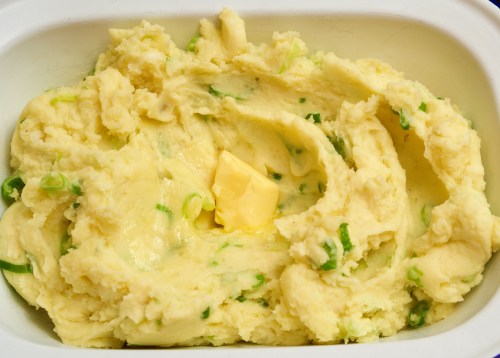
Champ

This is how Julie’s Granny served champ, with a great big lump of Irish butter in the middle!

Irish Champ – serves 4 as a side or 2 on it’s own

  • 700g potatoes – it helps if they are roughly the same size
  • salt and white pepper (no black pepper please)
  • 6 tbsp milk
  • 4 scallions, finely chopped
  • 50g butter (plus extra to serve)

Put the potatoes (unpeeled) in a pot and cover with cold water and a good pinch of salt. Bring to the boil, then simmer until completely tender (usually about 20 minutes but keep checking and don’t let them go to mush).

Heat the milk with the scallions for about 5 minutes.

Drain the potatoes and peel while still hot. If you have a potato ricer you could use that but we tend to use a standard masher.

Beat the butter into the mashed potato with a wooden spoon, then stir in the warm milk and scallions. Season well with salt and white pepper.

Serve the potatoes in a warm bowl. Make a dip in the middle with the back of a spoon and add a lump of good quality (preferably Irish) salted butter.


Read Full Post »

Kassler roasted with cabbage & potatoes

Our mate Brett got us this genuine Kassler, a pork loin expertly cured and lightly smoked by Ed Hicks in Dun Laoghaire. If you can’t find Kassler use a smoked bacon loin or rack and prepare yourself for the best bacon & cabbage ever.

Wine Suggestion: We chose a classic white Burgundy, 100% Chardonnay made in oak from a winemaker in Meursault, Patrick Javillier. He makes a couple of Bourgogne Blanc’s from a couple of very particular sites in Meursault and boy are they good. This time we chose his Cuvée Oligocene which is a vineyard partly in Meursault and partly in the ordinary Burgundy classification (despite it being the same soils and aspect). This makes this wine a bargain and we love it.

Roast Bacon with Cabbage & Potatoes – serves 6-8

  • 1kg potatoes, peeled and quartered
  • 450g savoy cabbage, cored and roughly chopped
  • 1kg boned kassler/smoked bacon loin or rack
  • 2 tbsp unsalted butter

For the Sauce

  • 25g unsalted butter
  • 1 tbsp plain flour
  • 600ml chicken stock
  • 50ml Madeira or Port
  • 1-3 tbsp Dijon mustard

Pre-heat the oven to 200C/400F/Gas 6.

Put the potatoes into a large saucepan, cover with cold salted water, bring to the boil and simmer for 5 minutes, then drain.

Par-boil the cabbage in another large pan of lightly salted water for 2 minutes. Drain into a colander and refresh with cold water, then use your hands to squeeze out the excess water.

Put the bacon into a large roasting tray and place in the oven. Roast for 10 minutes before adding the butter. When the butter has melted, add the potatoes and roast together for 20 minutes, turning the bacon & potatoes in the butter now and then.

Now push the potatoes and bacon to one side and add the cabbage. Season the potatoes and cabbage with salt and roast for another 10 minutes, turning everything in the smoky butter.

Meanwhile, make the sauce by melting the butter in a small pan and adding the flour. Cook for 2 minutes, stirring occasionally, then take off the heat and whisk in the chicken stock until smooth. Place back on the heat and simmer for 20 minutes, stirring occasionally.

After 40 minutes in total remove the bacon from the oven and check that the potatoes and cabbage are cooked. Transfer the vegetables to a warm serving platter, then slice the bacon and arrange on top. Keep warm.

To finish the sauce, de-glaze the juices in the roasting tin with the Maderia or Port and add to the sauce. Whisk in the mustard and season to taste with salt and pepper.

(Original recipe by Paul Rankin.)

Read Full Post »

Spiced yoghurt roast chicken

Our local butcher, Brady’s, stocks excellent free-range chickens which are juicier and have more flavour than most super-market offerings. Being a very cheap meat overall we think it is worth spending a bit more as the benefits far outweigh the cost difference.

We never tire of roast chicken recipes as they’re usually straight forward and provide lots of leftovers. We challenge you to resist the skin on this one!

Wine Suggestion: we felt like a red so went for the Chateau de Beauregard Fleurie as it has a lighter body and a lower acidity than a Pinot Noir which matched this dish really well. The chicken was moist, but not fatty so the medium acidity was a perfect foil and neither wine nor food overwhelmed the other.

Spiced-yoghurt Roast Chicken with Potatoes – serves 4

  • 1 whole chicken, approximately 1.5kg
  • salad potatoes e.g. Charlotte
  • 1 tsp cumin seeds
  • a pinch of chilli flakes
  • 2 tbsp olive oil

For the marinade:

  • small chunk of ginger, finely grated
  • 2 cloves of garlic, crushed
  • 1 green chilli, finely chopped
  • 2 tsp ground cumin
  • 2 tsp ground coriander
  • 1 tsp ground turmeric
  • 1 lemon, zested and juiced, keep the squeezed out halves to put inside the chicken
  • 100g natural yoghurt

Heat the oven to 190C/Fan 170C/Gas 5.

Mix all of the marinade ingredients together and season with some salt and pepper.

Put the chicken into a large roasting tray and rub the marinade all over the skin with your hands. Put the squeezed lemon halves inside the cavity and roast for 1 hour 30 minutes, then rest for 20 minutes under some foil before carving.

Cut the potatoes in half and toss with the cumin seeds, chilli flakes, 2 tbsp olive oil and plenty of salt and pepper. Tip into a shallow roasting tray and put in the oven above the chicken for the last 20 minutes. Turn over once during cooking and continue to cook for a further 20 minutes while the chicken is resting.

Delicious served with some coleslaw on the side.

(Original recipe from BBC Olive Magazine, December 2016.)

Read Full Post »

Chive Mash

Everyone loves mash in our house especially with lots of cream and butter added. Chives from the garden are also a popular addition.

Chive Mash – serves 6 generously

  • 1kg potatoes, peeled and cut into chunks
  • 8 tbsp double cream
  • 50g butter
  • 6 tbsp snipped chives

Cover the potatoes with cold water and a good pinch of salt and bring to the boil. Cook for 15-20 minutes or until tender, then drain in a colander and return to the warm pan to dry.

Gently heat the cream in a small saucepan, then add the butter and pour over the potatoes. Season with salt and freshly ground white pepper. Add the chives and beat with a wooden spoon until fluffy.


Read Full Post »

Roast BeefHow to make friends and influence people – serve them roast beef! We love it rare.
Wine Suggestion: a classic dish requires a classic match; good red Bordeaux. Specifically we love left-bank Bordeaux from a good vintage which has all the power but is never heavy; we don’t want to overwhelm the beef as it should be the star. 2009 and 2010 are surprisingly drinking very well and show how good they are but we’ve found the 2005’s are only just opening up. Interestingly we prefer more youthful vintages with this dish and think that the joy of primary fruit with just a little development makes a better match. For this meal we dug into the cellar and pulled out a Chateau Chasse-Spleen 2005 which was still quite tight and structured but the load of tannin in the wine worked perfectly with the proteins in the beef.

Rare roast beef with rosemary, bay & shallots – serves 4

  • rolled sirloin joint, about 1.1kg
  • 1 tbsp Dijon mustard
  • 4 sprigs rosemary
  • 3 bay leaves
  • 16 shallots
  • 500g baby new potatoes
  • olive oil

Preheat the oven to 220ºC/Fan 200ºC/Gas 7.

Make a bed with the rosemary and bay leaves in the bottom of a large roasting tin.

Smear the beef with mustard, salt and pepper and set on top of the bed of herbs. Make sure the herbs are well tucked in to prevent them burning.

Put the shallots and potatoes around the beef. Drizzle olive oil over the potatoes and shallots and toss with your hands to coat.

Roast the beef in the oven for 20 minutes, then turn down to 190ºC/Fan 170ºC/Gas 5. Cook for a further 20-25 minutes, then remove from the oven and rest for 10 minutes while keeping the potatoes & shallots warm.

(Original recipe in BBC Olive Magazine, March 2011.)

Read Full Post »

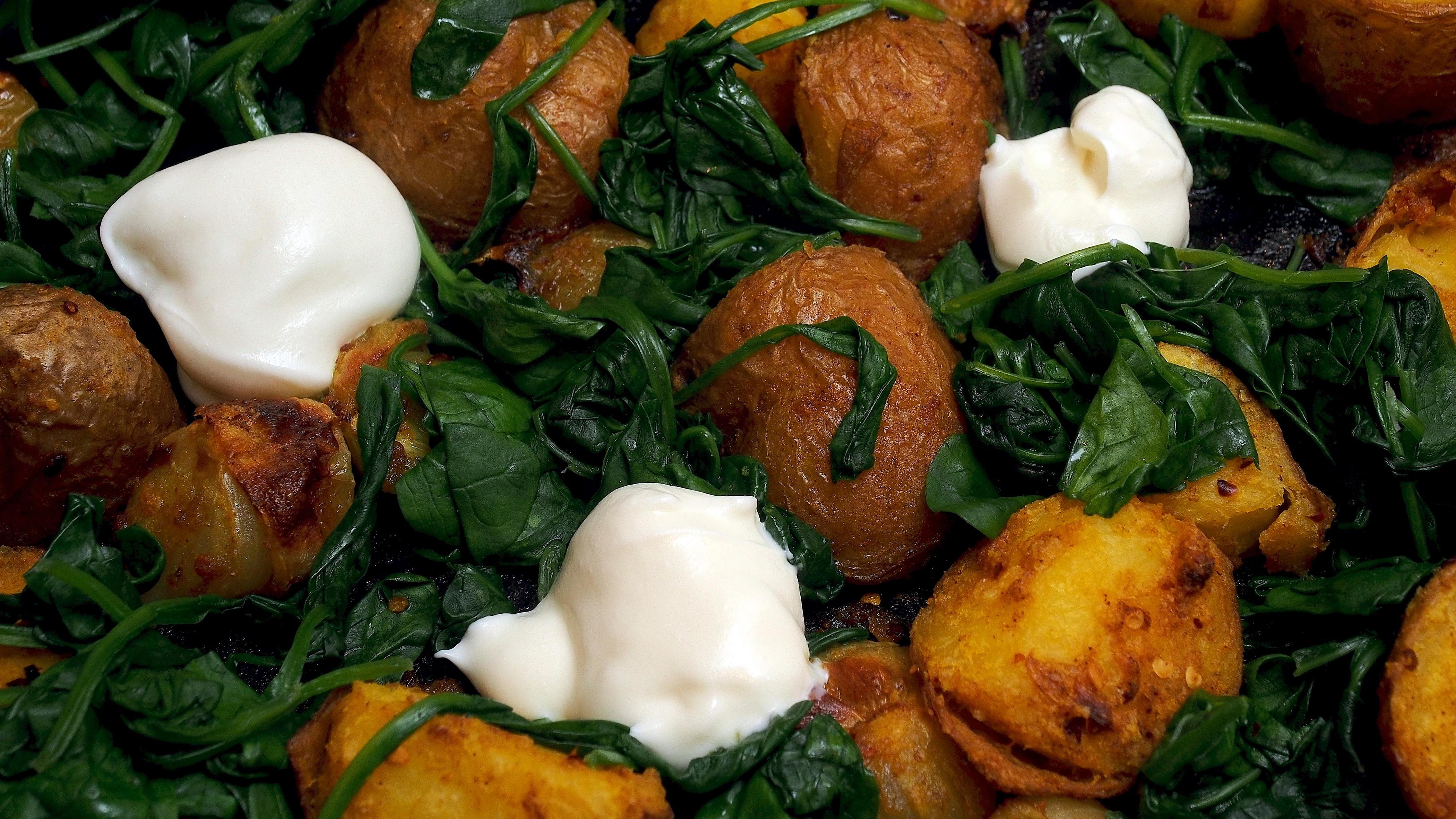
Spiced Potatoes with Spinach

This is a great Friday or week-night dish which you can easily eat on it’s own, preferably in front of the TV!

Potatoes with Spices & Spinach – serves 3

  • 800g large floury potatoes, cut into large pieces
  • 5 banana shallots, peeled and halved lengthways
  • 1/2 tsp cayenne pepper
  • 1 tsp dried chilli flakes
  • 1 tsp of crushed garlic
  • 1 tsp ground cumin
  • 1 tsp turmeric
  • 2 tsps sea salt flakes
  • 4 tbsp groundnut oil
  • a couple of large handfuls spinach
  • plain yoghurt
  • fresh coriander

Preheat the oven to 200°C/Gas 6.

Cook the potatoes in plenty of salted boiling water for about 15 minutes or until almost tender.

Drain the potatoes and put them in a bowl. Add the shallots and toss with the cayenne, chilli flakes, garlic, cumin and turmeric. Add the salt and oil, then tip into a roasting tin and bake for about 30 minutes or until crisp.

Wash the spinach leaves and put into a pan over a moderate heat, cover with a lid and leave for a couple of minutes to wilt.

Toss the spinach with the potatoes and garnish with a little yoghurt and coriander.

(Original recipe from Eat by Nigel Slater, Fourth Estate, 2013.)

Read Full Post »

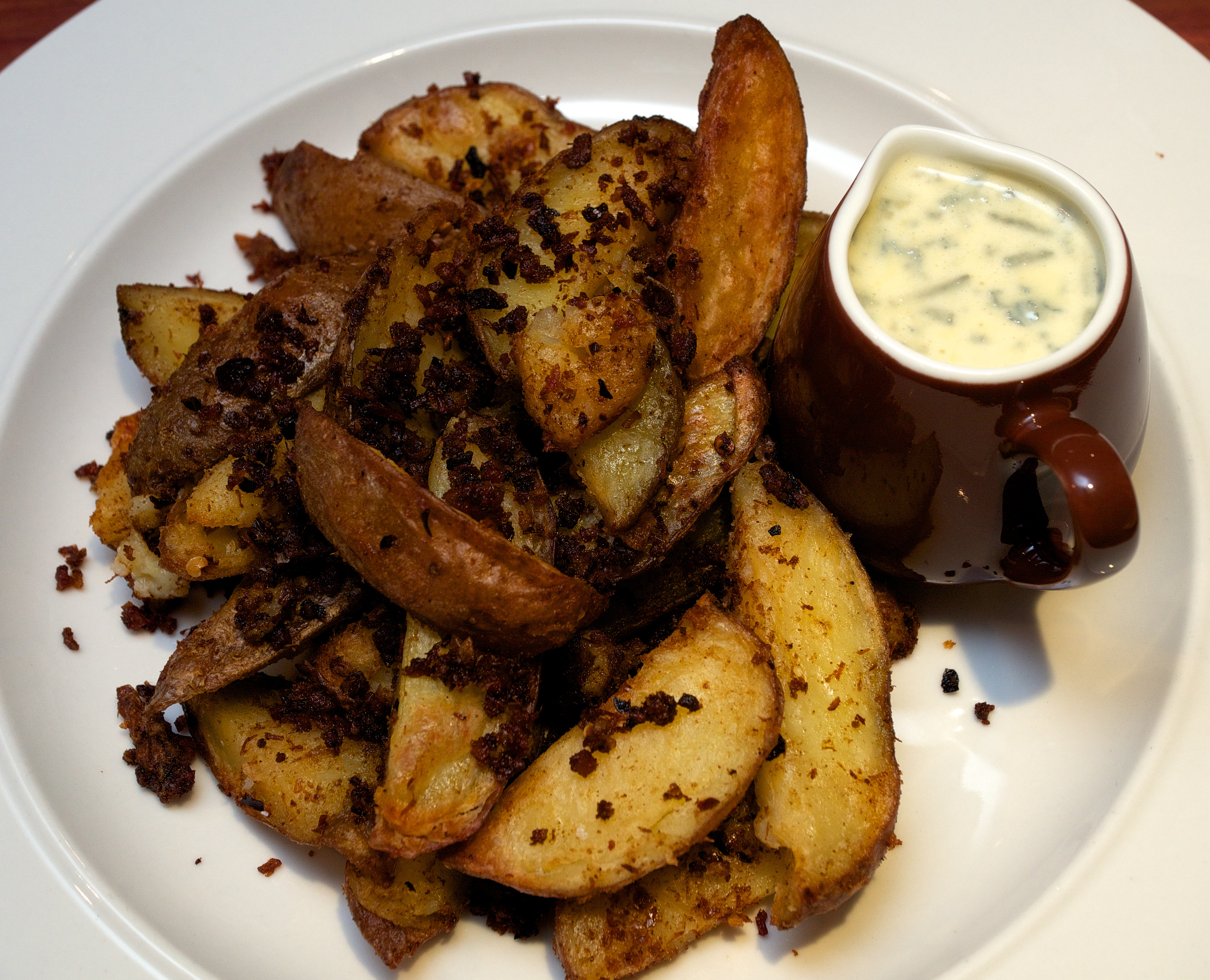
Wedges with bacon “soil” and gorgonzola

These are very delicious and perfect to share out of a big bowl in front of the TV on a Friday night – or at least that’s what we did. The bacony crumbs are a revelation! We expected the bacon to be problematic and to dry out in the oven but not in the slightest, the cooking just seems to intensify the flavours a bit and the “crumb” texture spreads through the dish perfectly.

Potato Wedges with Gorgonzola Sauce – serves 4

  • 1 kg medium floury potatoes
  • 8 smoked streaky bacon rashers
  • 1 tbsp dried chilli flakes
  • 4 tbsp groundnut oil
  • 1 tbsp smoked paprika
  • 250ml double cream
  • 150g Gorgonzola cheese, crumbled

Preheat the oven to 200°C/Gas 6.

Scrub the potatoes and leave the skins on. Cut them in half lengthways, then into chunky wedges. Cook in boiling salted water for 15 minutes or until getting close to tender. Drain and tip into a roasting tin.

Fry the streaky bacon in a little oil until very crisp or barbecue them like we did. Put the cooked bacon into a food processor with the chilli flakes, groundnut oil and smoked paprika and whizz until it looks like very fine crumbs. Tip the crumbs over the wedges and toss gently to coat. Bake for about an hour or until crispy and sizzling.

Warm 250ml double cream in a small non-stick pan, add the Gorgonzola and stir gently until melted. Trickle the warm sauce over the wedges to serve or serve on the side as dip.

(Original recipe from Eat by Nigel Slater, Fourth Estate, 2013.)

Read Full Post »

We made this with red onions as we had no Spanish onions to hand which worked well; if you have the Spanish onions it works even better!

New potatoes Lyonnaise – to serve 6 as a side dish

  • 50g unsalted butter
  • 4 tbsp olive oil
  • 3 large Spanish onions, sliced
  • 2 garlic cloves, sliced
  • 1 tbsp thyme leaves
  • 1kg large new potatoes, halved

Heat the butter in a large pan until foaming. Add 2 tbsp of the olive oil and the onions and cook on a fairly low heat until soft and golden, about 30 minutes. When the onions have softened, stir in the garlic and thyme and set aside.

Heat the oven to 200C/180 fan/gas 6. Bring a large pan of salted water to the boil, add the potatoes and boil for 5 minutes, then drain well.

Mix the potatoes with the rest of the oil and some seasoning in a large roasting tin. Roast for 30 minutes, tossing halfway, until golden. Stir in the onion mixture and roast for a further 10 minutes.

(Original recipe from BBC Good Food)

Read Full Post »

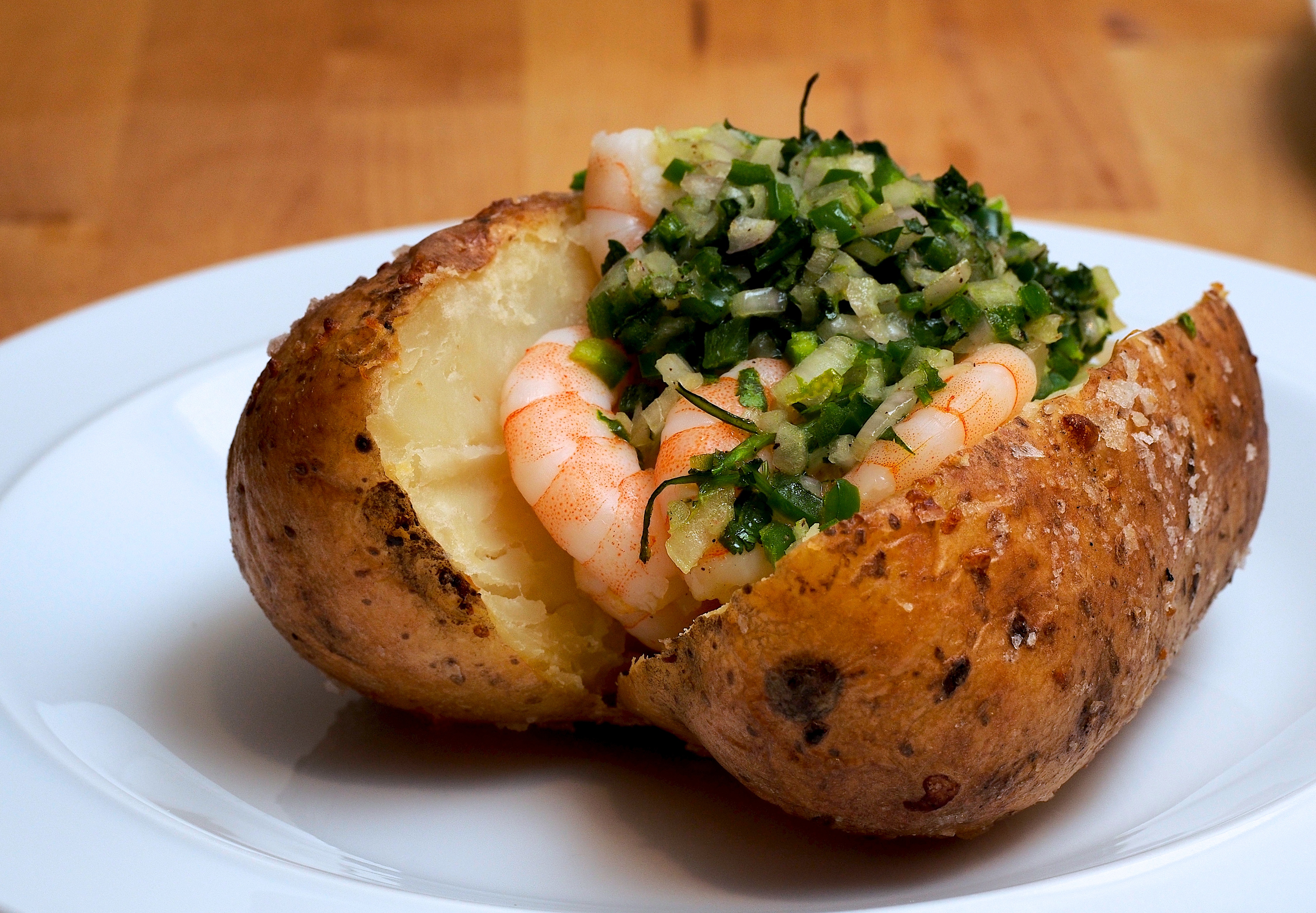
OLYMPUS DIGITAL CAMERA

A weeknight feast; perfect after a long day at work and a cold, wet Winters’ day. We weren’t too sure about the recipe at first but it’s definitely a keeper!

Salt-baked Potatoes with Prawns, Jalapeño & Coriander Butter – to serve 4

  • oil 
  • 4 baking potatoes
  • 1 tbsp sea salt flakes
  • 75g butter, softened
  • 2 shallots, finely chopped
  • 2 garlic cloves, crushed
  • 2 tbsp chopped jalapeño peppers
  • 1 lime, zest and juice
  • small bunch of coriander, chopped
  • 175g cooked prawns

Heat the oven to 220C/fan 200/gas 7.

Rub a little oil over the potatoes and prick them all over with a fork, sprinkle with the salt and put on the top shelf of the oven.

Bake for 20 minutes, then turn the oven down to 190C/fan 170/gas 5 and bake for about an hour or until the skin is crispy and the potatoes are soft inside.

Beat the butter until creamy, then stir in the shallots and garlic. Add the jalapeño peppers, lime zest, coriander and some seasoning.

Split the cooked potatoes, divide the prawns between them and spoon the butter on top. Put back into the oven for a few minutes and squeeze over the lime juice before serving.

Wine Suggestion: A fresh white, like an Albariño from the Rías Baixas DO,in Spain.

(Original recipe from BBC Good Food)

Read Full Post »

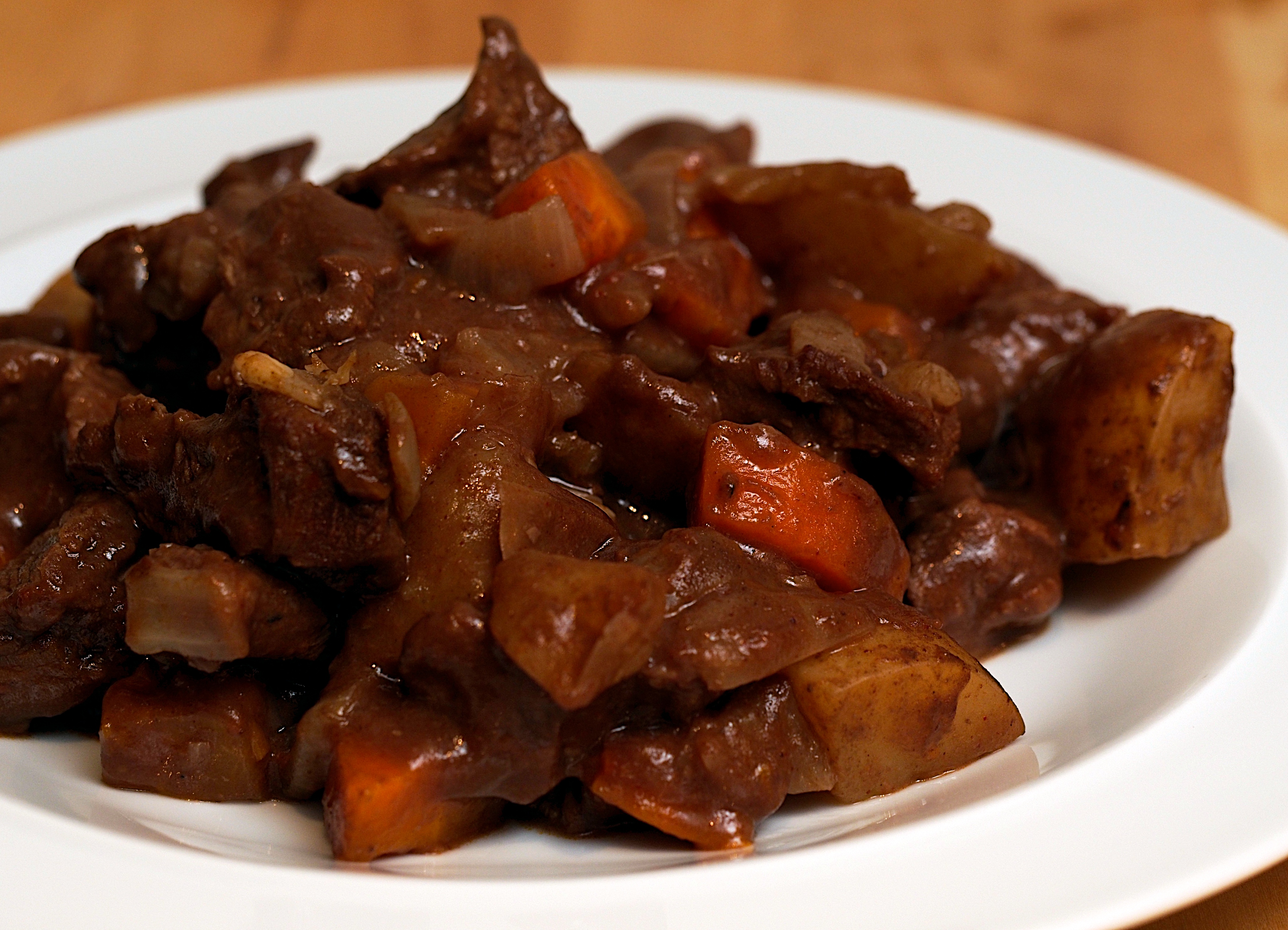
This really is the easiest beef stew ever and can be made successfully by anyone. It’s also very tasty and great for feeding a crowd. Just fling everything together and chuck it in the oven.

The Easiest Ever Beef Stew – to serve 6

  • 1.5g stewing steak, cut into chunks
  • 60g plain flour
  • 2 tsp good-quality paprika
  • 400g tin of tomatoes
  • 1 glass of wine (red or white will do)
  • 2 onions, chopped
  • 2 cloves garlic, sliced
  • 1 stick celery, finely sliced
  • 3 carrots, peeled and cut into chunks
  • 3 potatoes, cut into chunks

Heat the oven to 180ºC.

Put the flour and paprika into a large plastic bag. Add the beef and shake to coat.

Put the beef into a cast-iron casserole.

Whizz the tomatoes and their juice in a food processor, or roughly crush with a wooden spoon, and add to the meat.

Add all of the other ingredients and stir.

Press a piece of baking paper over the stew and cover the casserole with a lid.

Cook in the oven for 2 hours. Taste for seasoning. Check if the meet is tender and cook for a bit longer if necessary.

Wine Suggestion: A rustic red is all that’s needed here and you may as well finish the bottle you opened for this recipe. Something from the Languedoc should fit the bill.

(Original recipe from The Cook’s Companion by Stephanie Alexander, Penguin Books, 2004.)

Read Full Post »

« Newer Posts - Older Posts »