These make a lovely side for a barbecue with a great smoky flavour and a delicious dressing.
Barbecue potato salad – serves 4
800g new potatoes, boiled until tender, then halved
4 garlic cloves, bashed
3 sprigs of rosemary, leaves picked
2 tbsp good quality olive oil
FOR THE DRESSING:
1 tbsp English mustard
1 tbsp runny honey
2 tbsp chopped chives
2 tbsp good olive oil
Put the potatoes, garlic and rosemary onto a large sturdy baking tray. Season well and trickle over the olive oil, then toss together.
Put the tray onto a hot barbecue and cook the potatoes for about 3 mintues, then shake and cook for another 3 minutes or until hot through. Remove from the barbecue and set aside while you make the dressing.
Whisk the dressing ingredients together in a small bowl.
Pick the rosemary and garlic out of the tray and discard. Trickle the dressing over the hot potatoes and toss well to coat, leave to stand for 5 minutes, then serve warm.
(Original recipe from Tom Kerridge Outdoor Cooking, Bloomsbury Absolute, 2021.)
This is a really lovely salad! We served with some barbecued lamb but it would be great with loads of things.
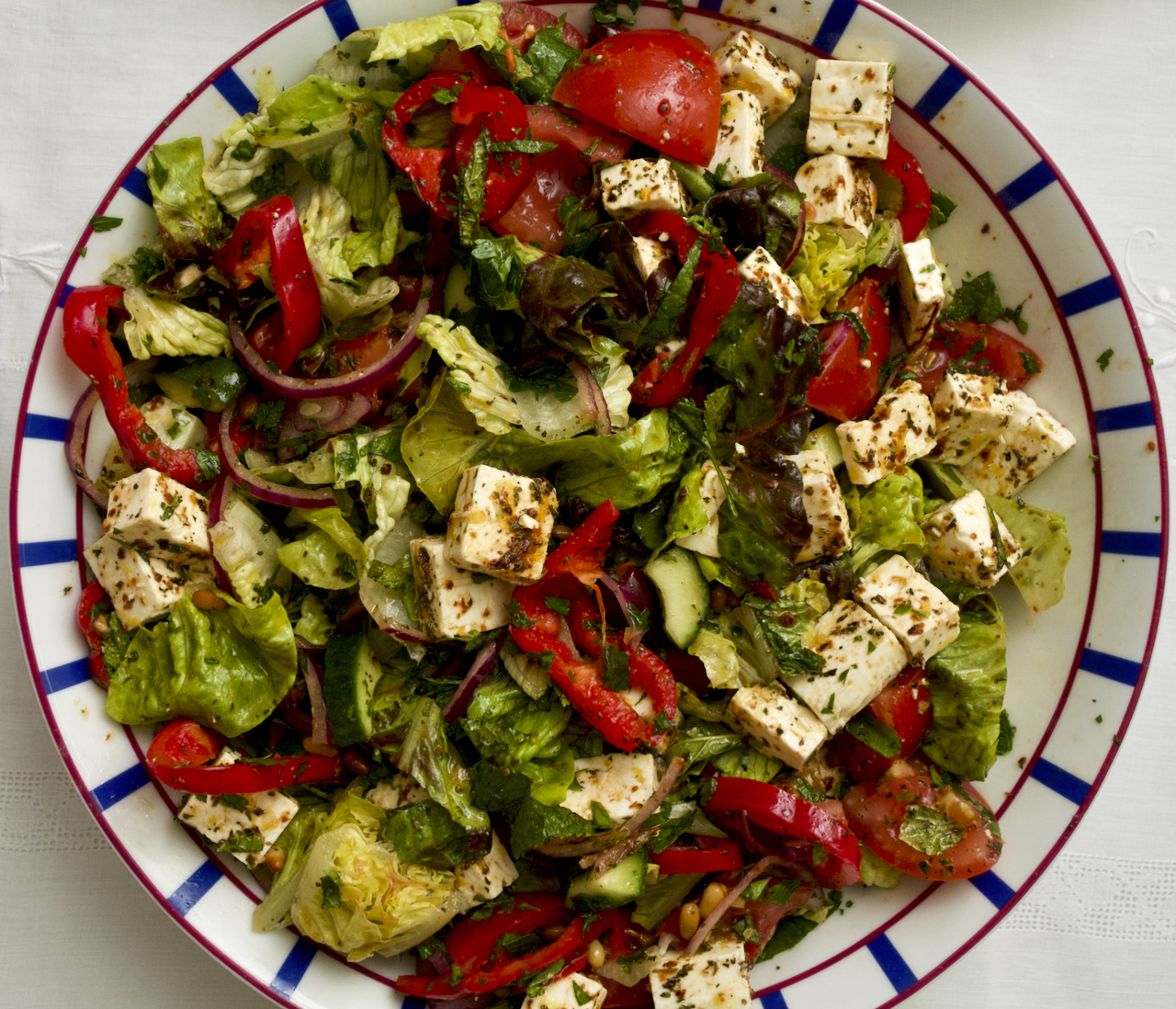
Turkish chopped salad – serves4 to 6
5 tbsp extra virgin olive oil
50g pine nuts
250g feta, cut into 2cm cubes
2 tsp dried mint
1 tsp pul biber
1 lemon, finely zested and juiced
3 large, ripe tomatoes, roughly chopped
¼ cucumber, deseeded and chopped
1 red romano pepper, deseeded and sliced finely into rings
1 Cos or Little Gem lettuce, roughly chopped
10g mint leaves, roughly chopped
25g parsley leaves, finely chopped
2 tbsp white wine vinegar
1 red onion, finely sliced
50g pitted black olives
Drizzle 1 tbsp of the oil in a small frying pan and fry the pine nuts for a couple of minutes until golden brown, then set aside.
Mix the cheese cubes in a bowl with 2 tbsp of the olive oil, 1 tsp of the dried mint, the pul biber, ¼ tsp of coarse black pepper and the lemon zest. Set aside.
Put the tomatoes, cucumber, pepper, lettuce, fresh mint and parsley in a large bowl and toss well with 1 tbsp of the lemon juice and all the white wine vinegar.
Drizzle the last 2 tbsp of oil over the salad and toss well, then add the red onion, black olives, toasted pine nuts, 1 tsp of dried mint and toss again. Add the cheese and toss gently before serving.
(Original recipe from Good Food Magazine, August 2024.)
How can it be soup season already?? This is a good transition recipe made with summer veg and herbs. Don’t leave out the feta and lemon zest garnish as it really makes it sing.
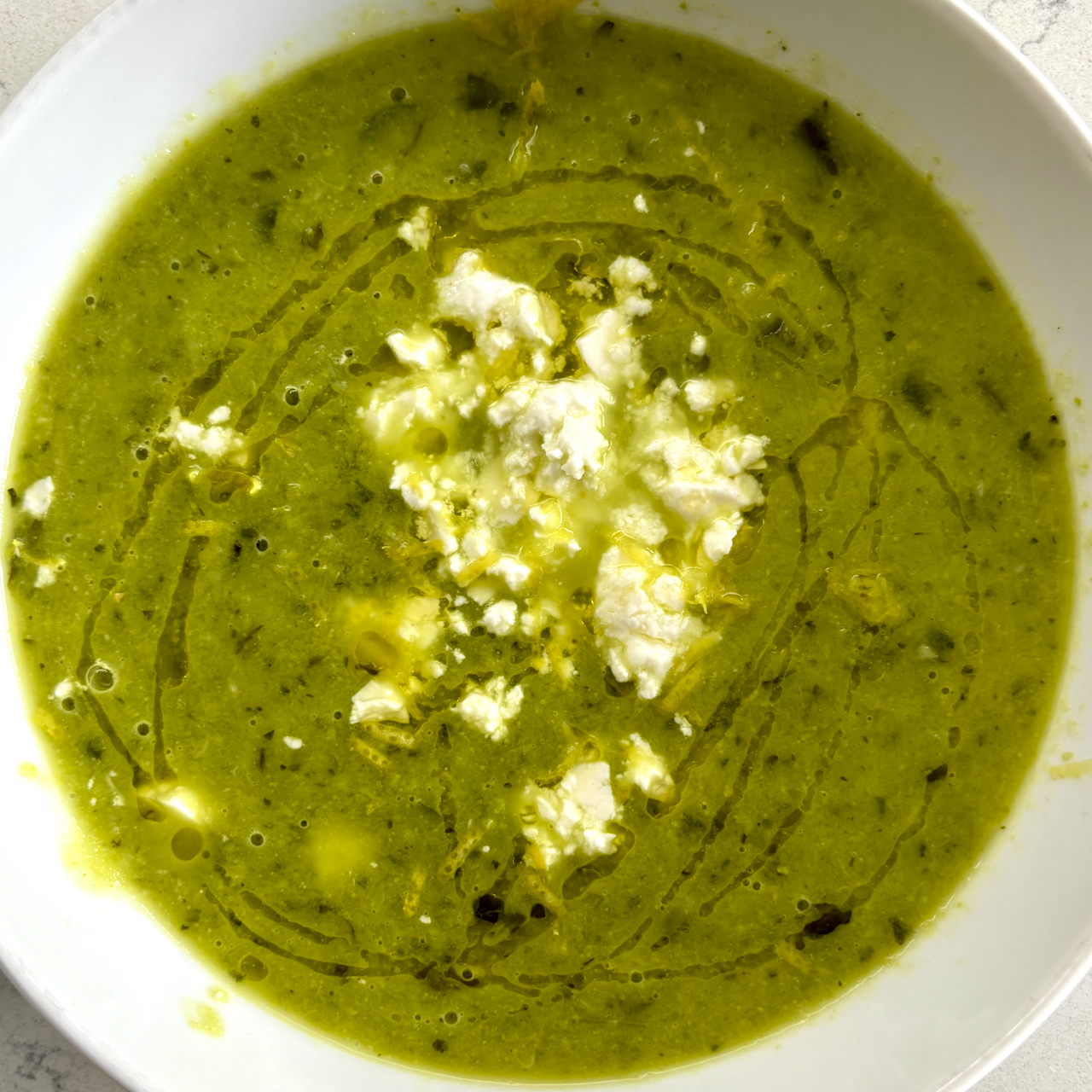
Courgette, pea and basil soup – serves 8
75ml olive oil, plus extra to serve
1 bulb of garlic, cloves separated and peeled
about 1.3kg of courgettes, cut into 3 cm thick slices
1 litre veg stock
500g frozen peas
50g basil leaves
200g feta, crumbled into pieces
1 lemon, finely grate the zest
Heat the olive oil in a large saucepan over a medium heat. Add the garlic cloves and fry for a few minutes or until turning golden. Add the courgettes, 2 tsp of salt and plenty of black pepper and keep cooking for about 3 minutes, stirring all the time, until the courgettes are starting to brown. Pour in the stock and 500ml of water, then bring to the boil over a high heat. Cook for 7 minutes, until the courgettes are softened.
Add the peas, stir through for 1 minute, then add the basil. Remove the soup from the heat and whizz using a stick blender or liquidiser until smooth.
Serve the soup in bowls with crumbled feta, some lemon zest and a drizzle of good olive oil.
(Original recipe from Ottolenghi Simple by Yotam Ottolenghi with Tara Wigley and Esme Howarth, Ebury Press, Penguin: Random House, 2018.)
This vegan curry caught our eye on The Guardian website and we’re glad we tried it. Courgettes are in-season and if you like beans and pulses like we do then this is a great combination. We’ll definitely do this one again.
Drink suggestion: we had this with a glass of Asahi Super Dry Lager which we find works better with more foods than other brands. We know it’s not as trendy as craft beer, but it’s a good recipe and has a good ability to work with food.
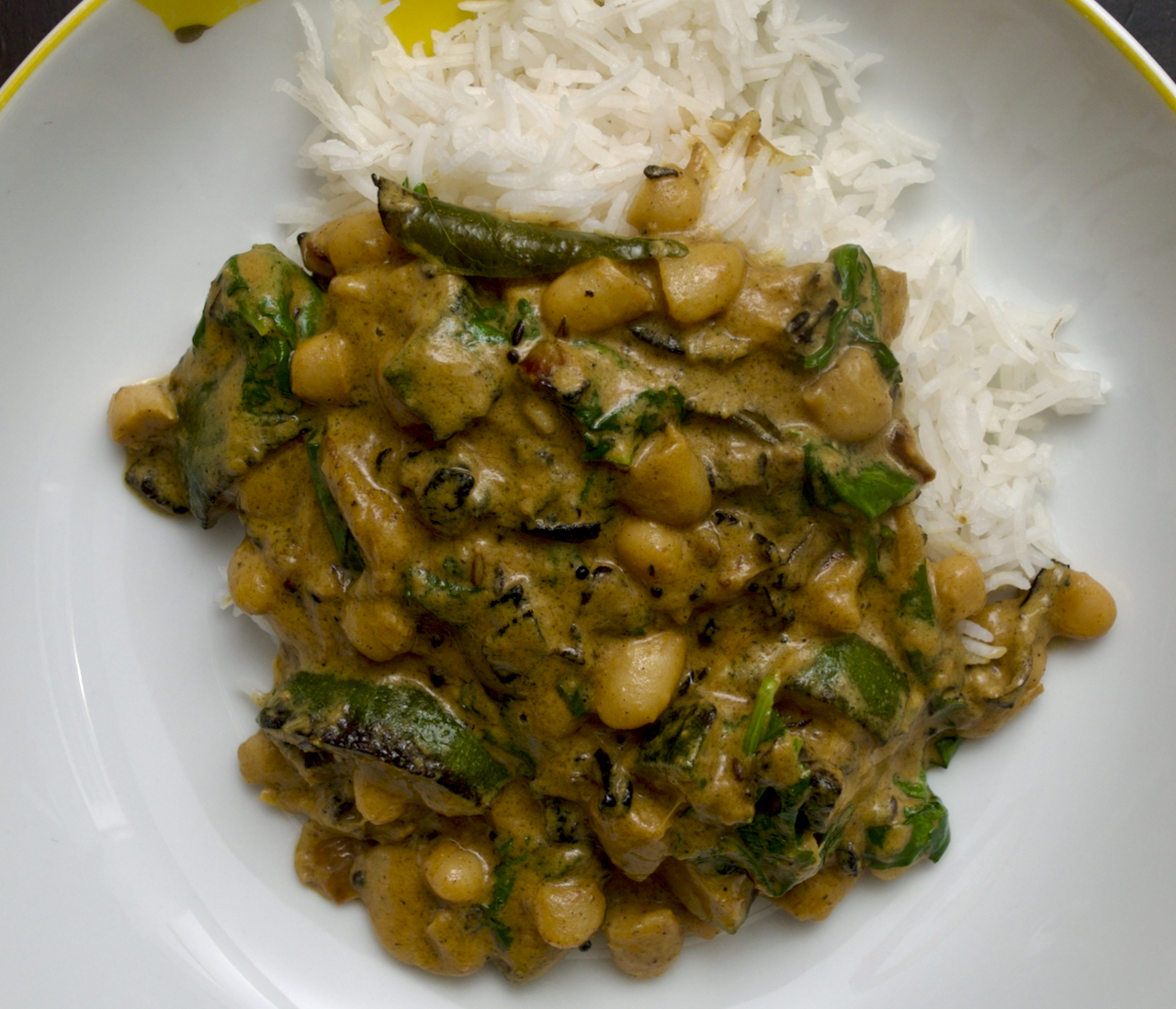
Courgette & white bean curry – serves 4
5 tbsp rapeseed oil
20 fresh or frozen curry leaves
2 tsp cumin seeds
1 tbsp black mustard seeds
1 onion, peeled and finely chopped
4 cloves of garlic, peeled and very finely sliced
2 green finger chillies, sliced lenthways
500g courgettes, halved lengthways and cut into short pieces
1 tsp ground turmeric
1½ tsp fine sea salt
¼ tsp coarsely ground black pepper
2 x 400g tins coconut milk
2 x 400g tins cannellini beans
40g fresh coriander, leaves and stems sliced
juice of ½ lemon
steamed basmati rice, to serve
Put the oil in a large sauté pan over a high heat. When very hot, add the curry leaves, cumin seeds and mustard seeds and stir. Next, add the onion, garlic, chillies and courgettes and cook for a couple of minutes. Add the turmeric, salt and pepper, and continue cooking for another 4 minutes.
Add the coconut milk and beans, and cook, still on a fast boil, for another 5 minutes, or until the courgettes are tender. Stir in the coriander, then add the lemon juice a tsp at a time until it tastes right.
Serve with basmati rice.
(Original recipe by Meera Sodha in The Guardian, 30th May 2024.)
So much more than avocado on toast. A delicious recipe from Ottolenghi Simple.
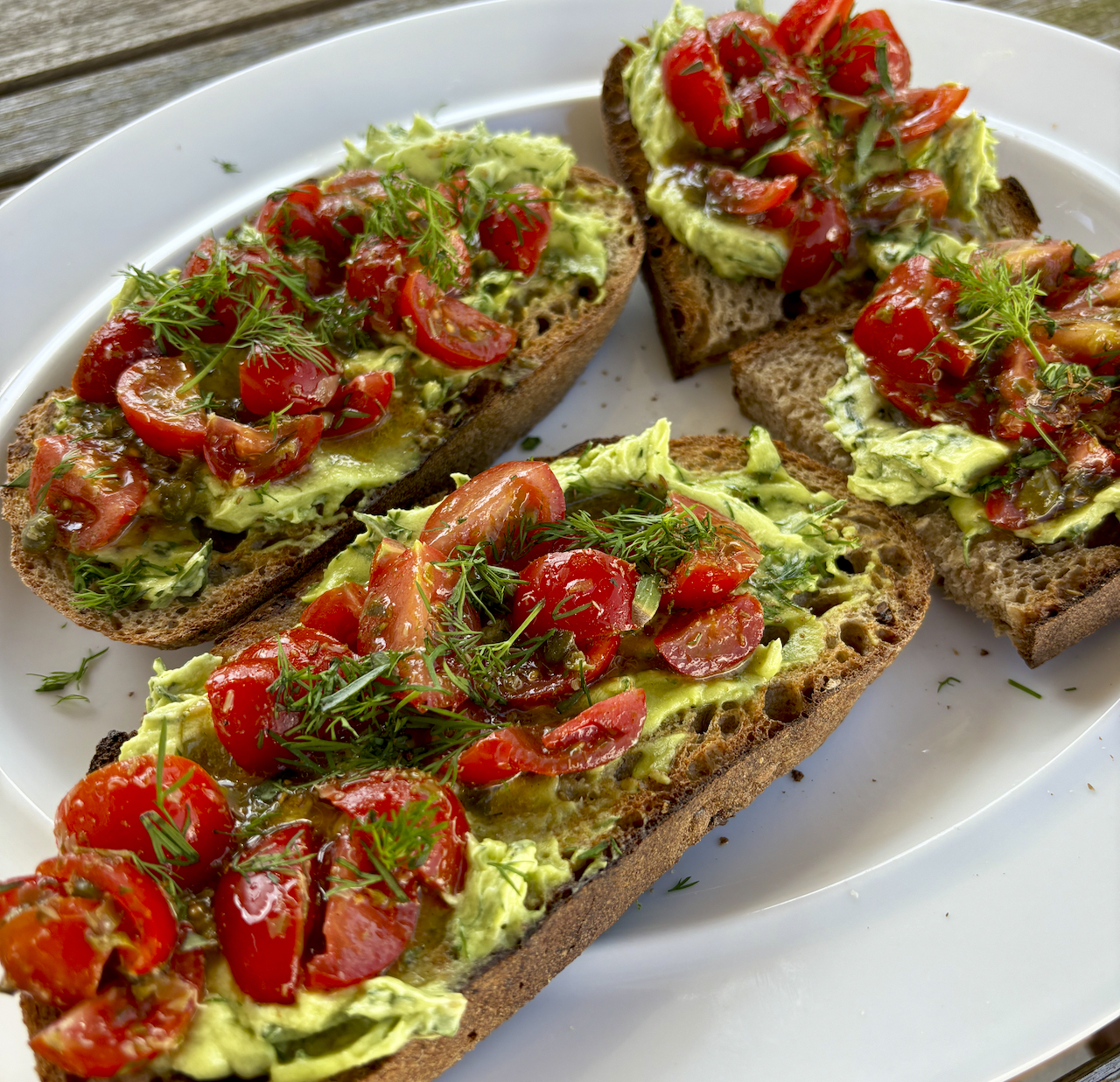
Avocado butter on toast with tomato salsa – serves 4
2-3 ripe avocados, you want about 250g of scooped out avocado
60g unsalted butter, softened and cut into cubes
3 limes, you need 1½ tbsp finely grated lime zest and 1½ tbsp lime juice
10g tarragon leaves, roughly chopped
10g dill, roughly chopped
200g cherry tomatoes, quartered
2 tsp capers, finely chopped
2 tbsp olive oil
4 slices of sourdough
1 small garlic clove, halved
¼ tsp cumin seeds, toasted and crushed
Put the avocado flesh, butter, half the lime zest, half the lime juice and ½ tsp salt into a blender or small bowl of a food processor. Whizz until smooth, then transfer to a bowl along with two-thirds of the herbs. Fold the herbs through then put into the fridge for 10 minutes.
Mix the tomatoes, capers, remaining lime zest & juice and the olive oil with plenty of black pepper. Set aside.
Toast the bread and rub one side with the garlic. Leave the bread to cool slightly then spread each slice with avocado butter and top with the tomato salsa. Sprinkle over the remaining herbs and the crushed cumin.
(Original recipe from Ottolenghi Simple by Yotam Ottolenghi, Tara Wrigley & Esme Howarth, Ebury Press, 2018.)
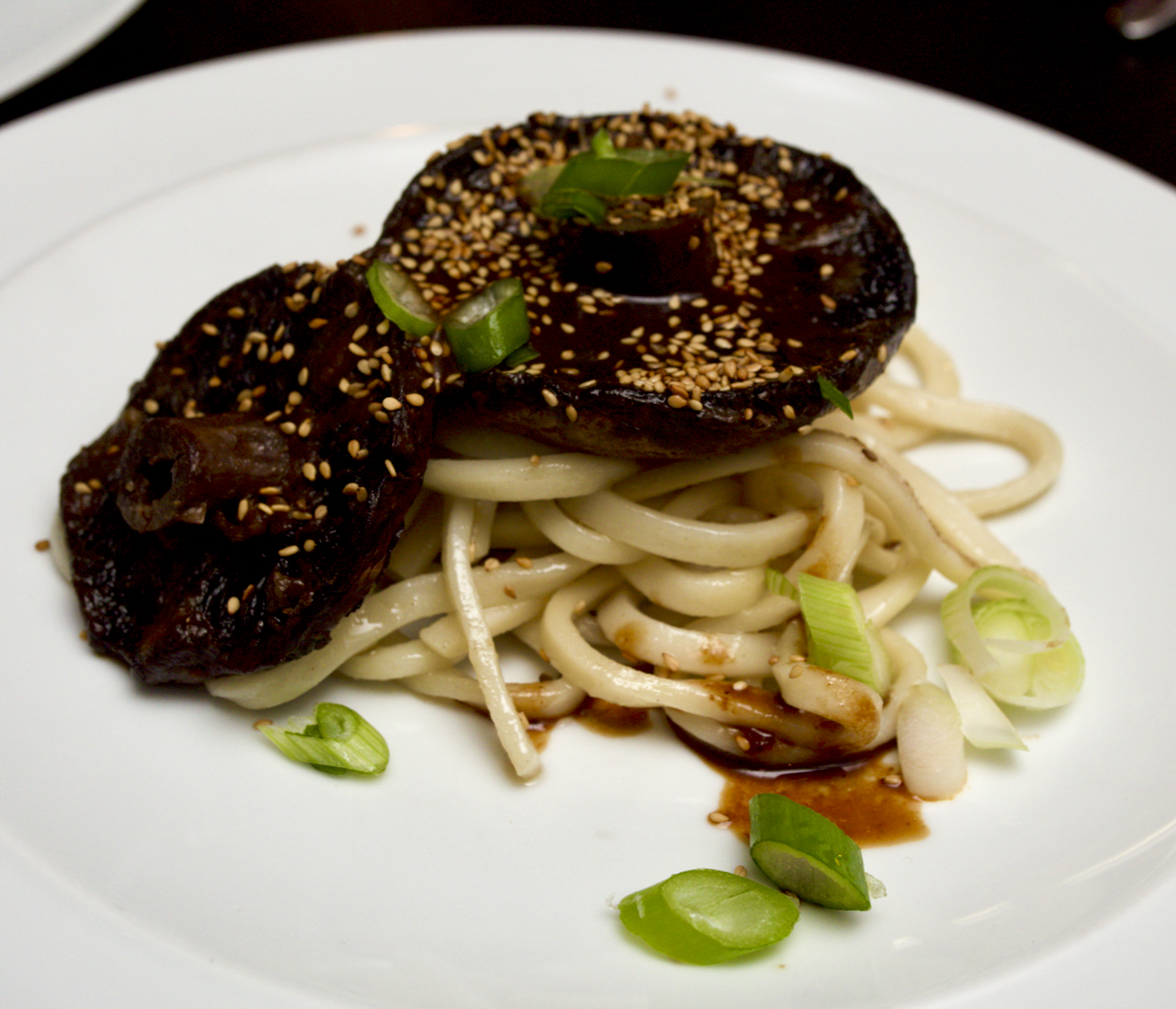
A great weeknight veggie dish with big flavours and minimal effort. While it doen’t look like much the udon noodles provide a wonderful counter-balance to the rich, salty, umami packed mushrooms, soy and sesame.
Wine Suggestion: This was a tough one to match and while we would have loved to try a Pinot based Champagne, like Laurent Lequart’s Blanc de Meunier, it was a weeknight and thought this was a bit much. However an excellent value northern Rhône, the Domaine Gerin La Champine Syrah, came to the rescue with an earthy, leathery character full of complementary pepper and pure fruit flavours.
Miso mushrooms with udon noodles – serves 4
3 tbsp miso paste
3 tbsp mirin
3 tbsp soy sauce
2 cloves of garlic, crushed
1 tbsp sesame oil
4 large portobello mushrooms
450g straight-to-wok udon noodles
1 tbsp toasted sesame seeds
4 scallions, finely sliced
Heat the oven to 180C.
Place the mushrooms on a large sheet of tin foil on a baking tray. Scrunch up the sides to create a sort of bag.
Mix the miso, mirin, soy, garlic and half the sesame oil together until smooth. Pour over the mushrooms and turn them over to coat in the mixture. Scrunch the tin foil to close the packet and bake for 30 minutes.
Just before the mushrooms are ready, get your wok on and heat the remaining splash of sesame oil. Toss the udon noodles in the wok until hot, then divide between 4 bowls. Spoon over the mushrooms and sauce and serve sprinkled with sesame seeds and scallions.
Oh so very good and with superb flavours! A proper hefty burger with a fabulous butter for basting – none of that mushy stuff that veggie burgers are often made of.
5g mushroom powder or dried porcini mushrooms, ground to a powder
½ tsp dried chilli flakes
2 large garlic cloves, finely grated
finely grated zest of ½ lemon
TO SERVE:
4 brioche burger buns, split
4 tbsp sweet chilli sauce or hot chilli sauce
4 tbsp mayonnaise
4 handfuls of rocket
Get your barbecue on and ready for cooking.
Cut the halloumi blocks in half horizontally to creat 4 flat pieces of halloumi.
To make the butter, put all the ingredients into a bowl and mix to combine, seasoning with salt (not too much) and pepper.
Brush the mushrooms on one side with the butter and put them onto a medium-hot barbecue, buttered side down. Brush plenty of butter on the other side. After a few minutes turn the mushrooms over and add the halloumi to the barbecue. Brush the halloumi with the butter too. Keep brushing the mushrooms and halloumi with the butter as they cook.
When the mushrooms and halloumi are almost done, toast the burger buns on the barbecue. Brush any remaining butter onto the toasted buns.
To assemble, put a mushroom on each burger bun base. Top with a piece of halloumi and add a spoon of sweet or hot chilli sauce. Pile a handful of rocket on top, then spread some mayonnaise on the bun lids and sandwich together.
(Original recipe from Tom Kerridge’s Outdoor Cooking, Bloomsbury Absolute, 2021.)
We make a lot of spring risottos and we think this one might be the best. We miss Russell Norman.
Wine Suggestion: Verdicchio all the way with this, and from a winery obsessed with this grape: Sartarelli. Their Miletta is a little bit special coming from a select vineyard and treated with extra care. It’s almost a contradiction in taste by being both full bodied, round and textured as well as elegant, flinty and ethereal. Hawthorn and almond flavours with apricots and a creamy nuttiness, plus a salty freshness tying it all together.
Asparagus & saffron risotto – serves 4
1 litre vegetable stock (we used Marigold Swiss Bouillon)
3 tbsp extra virgin olive oil
1 large white onion, very finely diced
320g Carnaroli rice
200ml dry vermouth
12 spears of asparagus, woody stems snapped off, sliced lengthways, then cut into 2 cm pieces
1 scant tsp saffron
80g unsalted butter
80g grated Parmesan, plus some extra for the table if you like
Heat the vegetable stock in a large pan on the back of the hob and keep hot.
Pour the extra virgin olive oil into a large, heavy-based saucepan and put over a low-medium heat. Add the onion and cook slowly for 10 minutes, making sure it doesn’t brown.
Add the rice and stir to make sure every grain is coated, then add a large pinch of flaky sea salt. When the mixture looks dry, add the vermouth. Keep stirring until the vermouth has been absorbed, then add a ladle of hot stock and stir again.
Over the next 20 minutes continue to add a little more stock every time the risotto has absorbed the previous ladleful. After 10 minutes, stir in the asparagus and saffron, then continue gradually adding the stock.
Test the rice after 20 minutes, it should not be too firm. When it’s done, turn up the heat, add the butter and stir until it has melted. Take the pan off the heat and allow to rest for a minute, then gently stir in the Parmesan. Serve on warm plates with extra Parmesan and black pepper.
(Origianl recipe from Brutto by Russell Norman, Ebury Press, 2023.)
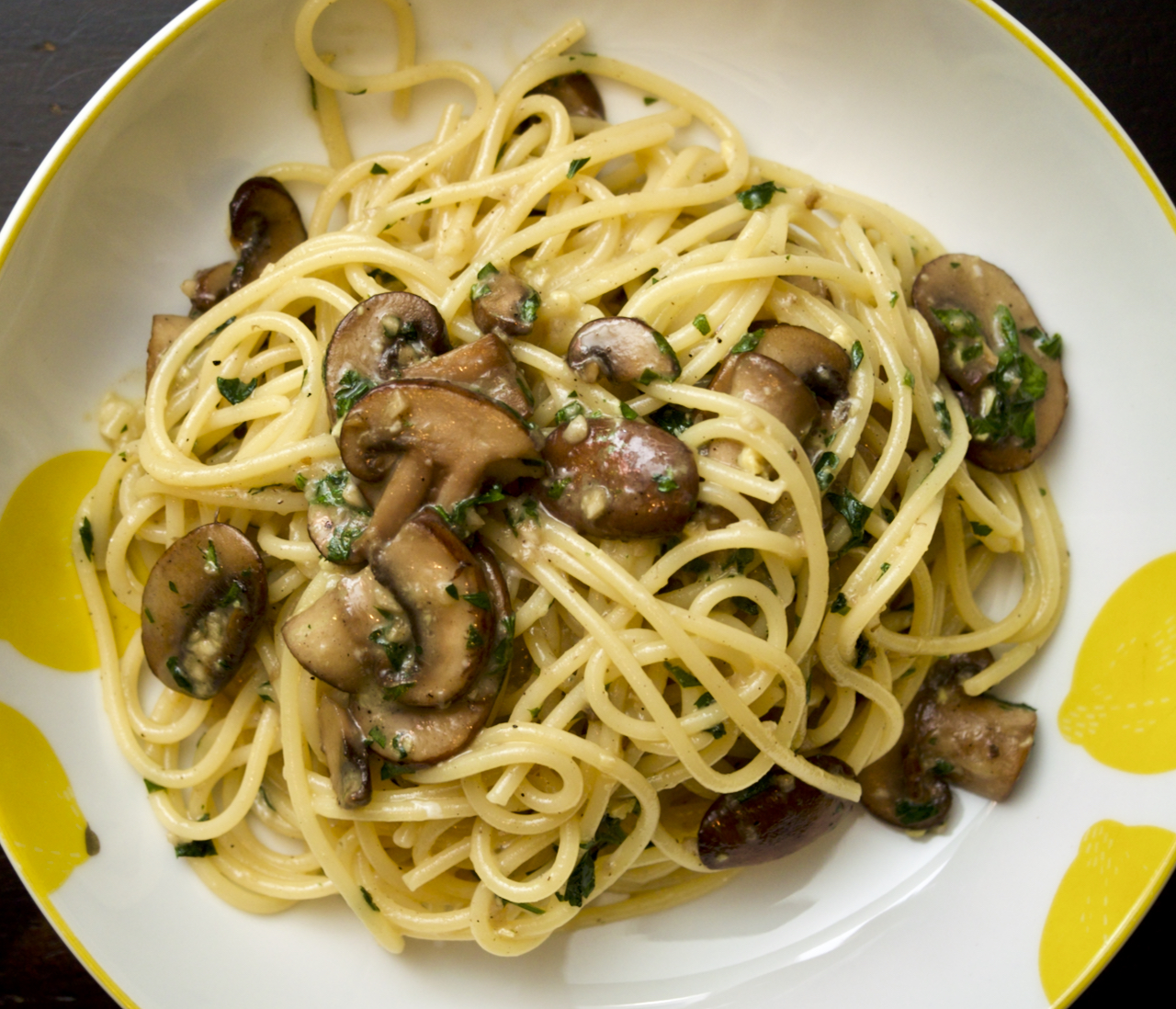
A great weeknight pasta dish with mushrooms instead of the traditional pancetta.
Wine Suggestion: this works really well with fuller-bodied dry whites, like a good Chardonnay. Tonight the Domaine de la Rochette Mont Sard Mâcon-Bussières was full of joyful apple and citrus fruits with layers of gentle smoky and creamy oak.
Mushroom Carbonara – serves 2
200g spaghetti
2 tbsp extra virgin olive oil
150g chestnut mushrooms, sliced
2 cloves of garlic, finely chopped
a handful of flatleaf parsley, chopped
2 eggs, beaten
40g Pecorino cheese, finely grated
Bring a large pan of water to the boil, add plenty of salt and cook the spaghetti according to the timings on the pack.
Heat a large, deep frying pan over a medium-high heat, add the oil and mushrooms and fry until lightly golden. Add the garlic and parsley and cook for a few seconds, then remove the pan from the heat.
Drain the spaghetti, then tip into the frying pan with the mushrooms. Add the beaten eggs and two-thirds of the cheese and toss well.
Season to taste with salt and plenty of black pepper and serve in warm bowls with the extra cheese.
(Original recipe from Rick Stein’s Simple Suppers, Penguin: Random House, 2023.)
We can’t get enough of roasted cauliflower and it’s at it’s best in this recipe with caramelised onions and smothered in tahini dressing.
Wine Suggestion: We’re mad for Loire Cabernet Franc and found a new vigneron on our last trip to Saumur: Domaine Théo Blet. We picked up his Saumur Rouge “les Fabureaux” and were completely charmed. Plus it went delightfully with this dish, complementing the spices and earthy tahini.
Cauliflower ‘shawarma’ – serves 2 as a main or more as a side or starter
1 medium cauliflower, leaves attached
2 tbsp olive oil
3 tbsp baharat spice mix
1 tsp sea salt
FOR THE CARAMELISED ONIONS:
2 large onions, peeled and sliced
1 tbsp olive oil
½ tsp salt
1 tsp sugar
FOR THE TAHINI DRESSING:
1 lemon
125g tahini paste
a pinch of salt
100-130ml water
FOR THE GARNISH:
2 tbsp roasted pine nuts
1 tsp sumac
pittas or crispy pitta shards, to serve
Preheat the oven to 200C/180C Fan/Gas mark 6.
Put the whole cauliflower, including the leaves, into an ovenproof saucepan that it fits in snugly. Fill the pan with enough water to just cover the stem and leaves. Drizzle the oil all over the florets and sprinkle with the baharat spice mix and sea salt – it will seem like a lot but go with it. Put the pan into the oven and roast for 1-1½ hours. It is ready when you can easily insert a small knife right down the stem.
Meanwhile, put the onions in a frying pan with the oil and salt and fry over a low heat until soft and golden. Add the sugar and cook until the onions are caramelised and brown, then remove from the heat.
Mix the tahini paste in a small bowl with the juice of half the lemon and the salt. Add 100ml water and mix well. Keep stirring and gradually adding water until the paste has a loose creamy texture.
Lift the cooked cauliflower out of the water and cut into thick slices, including the stems and leaves. Divide between plates, then squeeze over the other half of the lemon and top with the caramelised onions and tahini paste. Garnish with pine nuts and sumac and serve with warm pittas or crispy flatbread.
(Original recipe from Honey & Co. Food from the Middle East by Sarit Packer & Itamar Srulovich, Saltyard Books, 2014.)
We initially made this on the first day of Spring, just as the wild garlic arrived and we had a big dump of snow … Irish weather! The wild garlic has lasted quite a while this year which has meant this has been easily reprised, and enjoyed.
Wine Suggestion: we think that wines that work well with asparagus also do great with wild garlic, so opted for Höpler’s Grüner Veltliner from Burgenland, Austria. With a fresh, zippiness and citrus twist it was charming and helped us to imagine sunny weather just around the corner.
Wild garlic, broad bean & leek risotto – serves 4
300g frozen broad beans, defrosted
60g buter
1 leek, halved lengthways and finely sliced
300g Arborio rice
100ml white wine
1-1.2 litres hot vegetable stock
a handful of wild garlic, chopped
60g Parmesan, grated
Blanch the beans in boiling water for a minute, then drain and pop them out of their skins.
Melt half the butter in a large pan and sweat the leek for 3-4 minutes or until soft, then stir in the rice. When the rice is glistening, add the white wine and allow to boil and bubble up.
Gradually add the hot stock, a ladleful at a time, stirring until absorbed before adding the next. Continue until you have only a few ladlefuls left, then stir in the broad beans and the rest of the stock.
Remove the pan from the heat and stir in the wild garlic, three-quarters of the Parmesan and the rest of the butter. Season with salt and pepper and serve with the rest of the Parmesan.
(Original recipe from Rick Stein’s Simple Suppers, BBC Books, 2023.)
We were not disappointed with this on a Saturday night but it is so simple you could easily manage it on a weeknight. Serve with yoghurt, lime pickle and naan bread from the takeaway.
Wine Suggestion: Chenin Blanc for the depth of fruit and roundness on the palate, but a minerally backbone of acidity. It lifts this dish and adds and extra element. Tonight Domaine des Aubuisieres le Marigny; dry and expressive but with layers of yellow and red apples on top.
Paneer Jalfrezi – serves 3
200g block of paneer, cut into 2cm cubes
2 red peppers, cut into strips
1 red onion, peeled and cut into wedges
3 large tomatoes, chopped
2 tbsp pomegranate molasses
300g baby potatoes, halved or quartered
5cm piece of ginger
2 cloves of garlic, grated
½ tsp ground turmeric
¼ tsp cayenne
1 tsp ground cinnamon
1 tsp cumin seeds
2 tbsp olive oil
¾ tsp salt
a handful of coriander, roughly chopped, to serve
yoghurt, lime pickle and naan bread, to serve
Heat the oven to 200C.
Put all of the ingredients into a large roasting tin, then put some disposable gloves on and gently toss everything together.
Put the tin into the hot oven and bake for 30-40 minutes or until the potatoes are soft and the paneer is well browned.
Serve sprinkled with the coriander.
(Original reicpe from The Secret of Cooking by Bee Wilson, 4th Estate, 2023.)
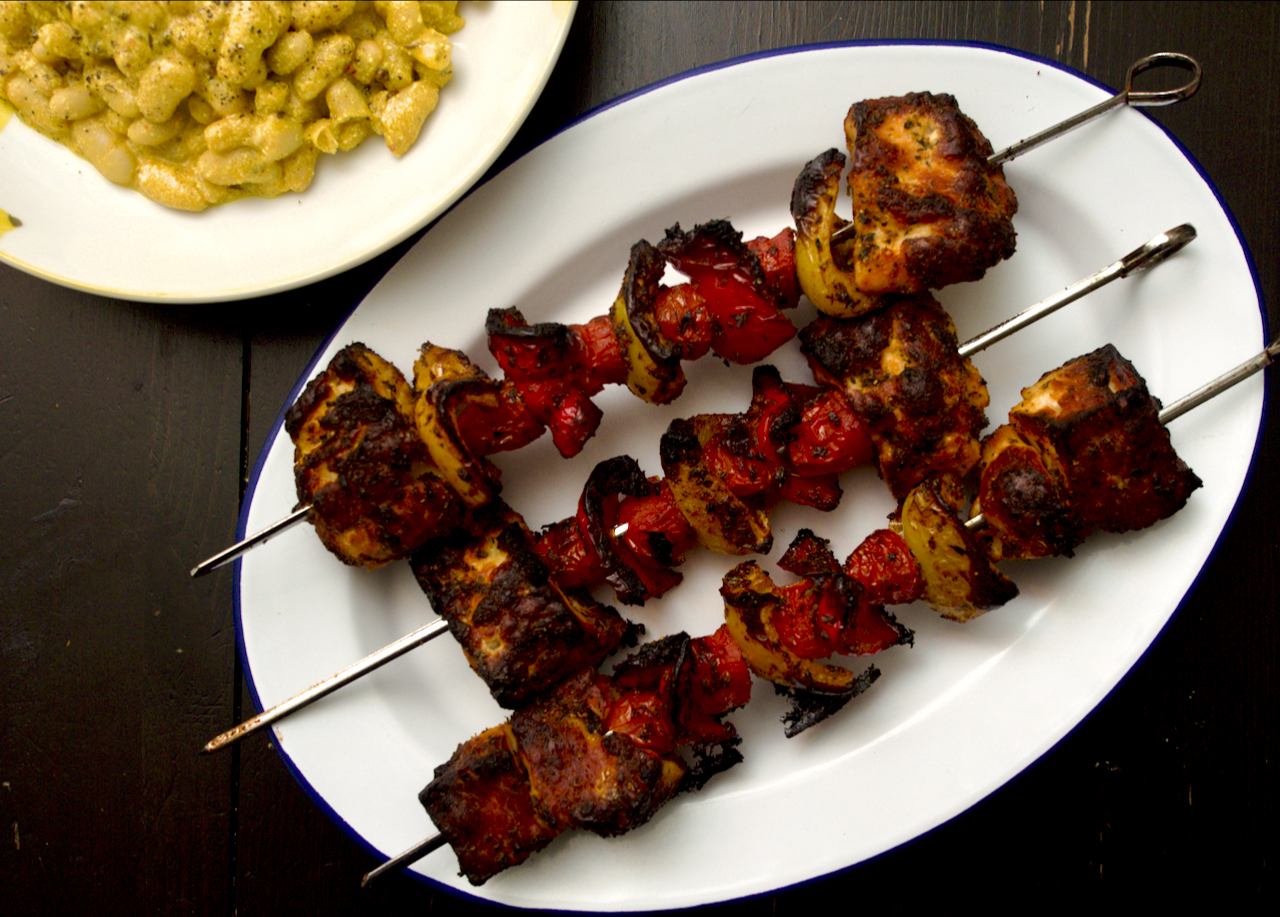
Paneer is the typical cheese for curry but halloumi works as well if this is what’s to hand. Plus this is the perfect weeknight dish as it’s so easy; we made it between two after-school activities! Serve with rice or naan bread.
Wine Suggestion: This dish works well with white wines with a degree of plushness; dry but not too crisp. Unusually, as we find most of them a little boring, we went with a Pinot Grigio. Perusini’s version though is from Collio and not the characterless Veneto versions found most commonly. Peach and tangerine flavours with a pleasant herbal spice and medium-full body, combined with good freshness and a minerally saline undercurrent.
Creamy halloumi curry – serves 2 to 3
225g halloumi, cut into bite-sized pieces
2 tbsp vegetable oil
1 large onion, chopped
2 cloves of garlic, crushed
a thumb-sized piece of ginger, grated
2 tsp ground cumin
2 tsp ground coriander
1 tsp turmeric
400g tin chopped tomatoes
100ml double cream
80g fresh or frozen spinach
2 tsp sugar
1 tbsp garam masala
1 tsp nigella seeds
Heat 1 tbsp of the oil in a large pan over a medium heat. Add the onion and cook for 5 to 10 minutes or until softened.
Add the garlic and ginger and cook for another 2 minutes, then stir in the cumin, coriander and turmeric and cook for a couple of minutes more. Stir in the tomatoes and simmer for 5-7 minutes or until thickened.
Reduce the heat and add the cream, then simmer gently for another 3 to 4 minutes.
Meanwhile, heat another tbsp of oil in a frying pan over a medium-high heat. Fry the halloumi for a few minutes or until browned on all sides.
Add the browned halloumi to the curry sauce along with the spinach, sugar and garam masala and stir to combine. Simmer gently for 5 minutes or until the spinach and wilted or defrosted. Add a splash of water or extra cream if the sauce seems a bit thick, then serve with the nigella seeds sprinkled over.
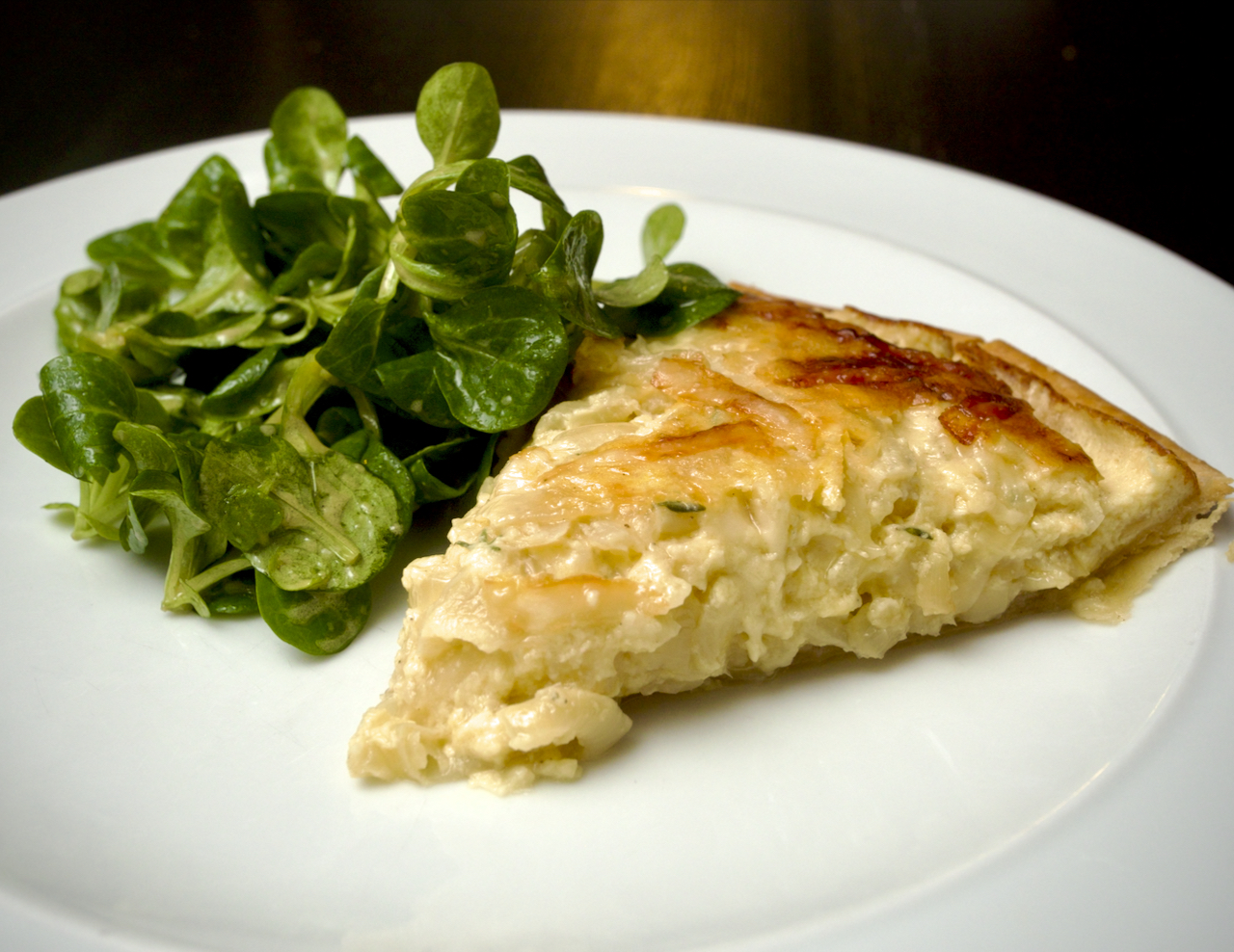
Our new year’s resolution is to make more tarts and conquer our pastry fear which is largely due to lack of practice. We’ve started with this tart filled with melting onions and cheese. Serve with a green salad.
Wine Suggestion: we paired this with a wine that opitimises a balance between freshness, richness, minerailty and fruit: Soalheiro’s Alvarinho. Fresh and elegant with tropical fruit flavours cut with a minerally saltiness balances the cheese. Plus the sweetness to the slowly cooked onions complements the richly layered fruits in the wine.
Cheese & Onion Tart – serves 6
a sheet of short-crust pastry (we were so enthusiastic that we made our own but really no need)
1 egg, beaten
FOR THE FILLING:
5 large brown onions
50g butter
a small glass of white wine
a few sprigs of thyme, leaves picked
120g cheese, the original recipe suggests Comté (we used a mix of Comté, Cheddar & Gruyère), coarsely grated
150ml full-cream milk
3 eggs
Thinly slice the onions and add to a pan with the butter, seasoning well with salt. Cover with a lid and cook slowly for 30 minutes, stirring regularly, until sweet and very tender. It’s find to let them caramelise a little but don’t let them burn. If there is a lot of liquid in the pan, remove the lid and allow this to bubble off. Add the wine, allow to cook off, then turn the heat off and allow to cool.
Lightly flour a cold surface and roll the pastry out to 3mm thick. Lift into a 25cm loose-bottom tart tin and use a little piece of dough to press the pastry into the tin and leave an overhang around the sides. Prick the base with a fork and chill in the freezer for 20 minutes.
Preheat the oven to 170C fan.
Line the pastry with baking parchment and fill with baking beans or rice. Put the tin onto a baking tray and bake for 15-20 minutes or until the pastry is firm. Remove the beans and paper, brush with egg and return to the oven for another 10 minutes, until golden. Trim off any excess pastry with a knife.
Put 100g of the cheese into a bowl with the milk, cream, eggs and thyme and mix together. Season well, then add the onions and mix again. Pour most of the mixture into the pastry case but dont fill all the way to the top. Make sure the onion is evenly spread, then place into the oven. Carefully pour in the remaining mixture, making sure it doesnt overflow. Sprinkle with the reserved cheese and bake for 30 minutes or until the top is caramelised and the middle has set. Leave to cool for 15 minutes before serving.
(Original recipe from The Farm Table by Julius Roberts, Ebury Press, 2023.)
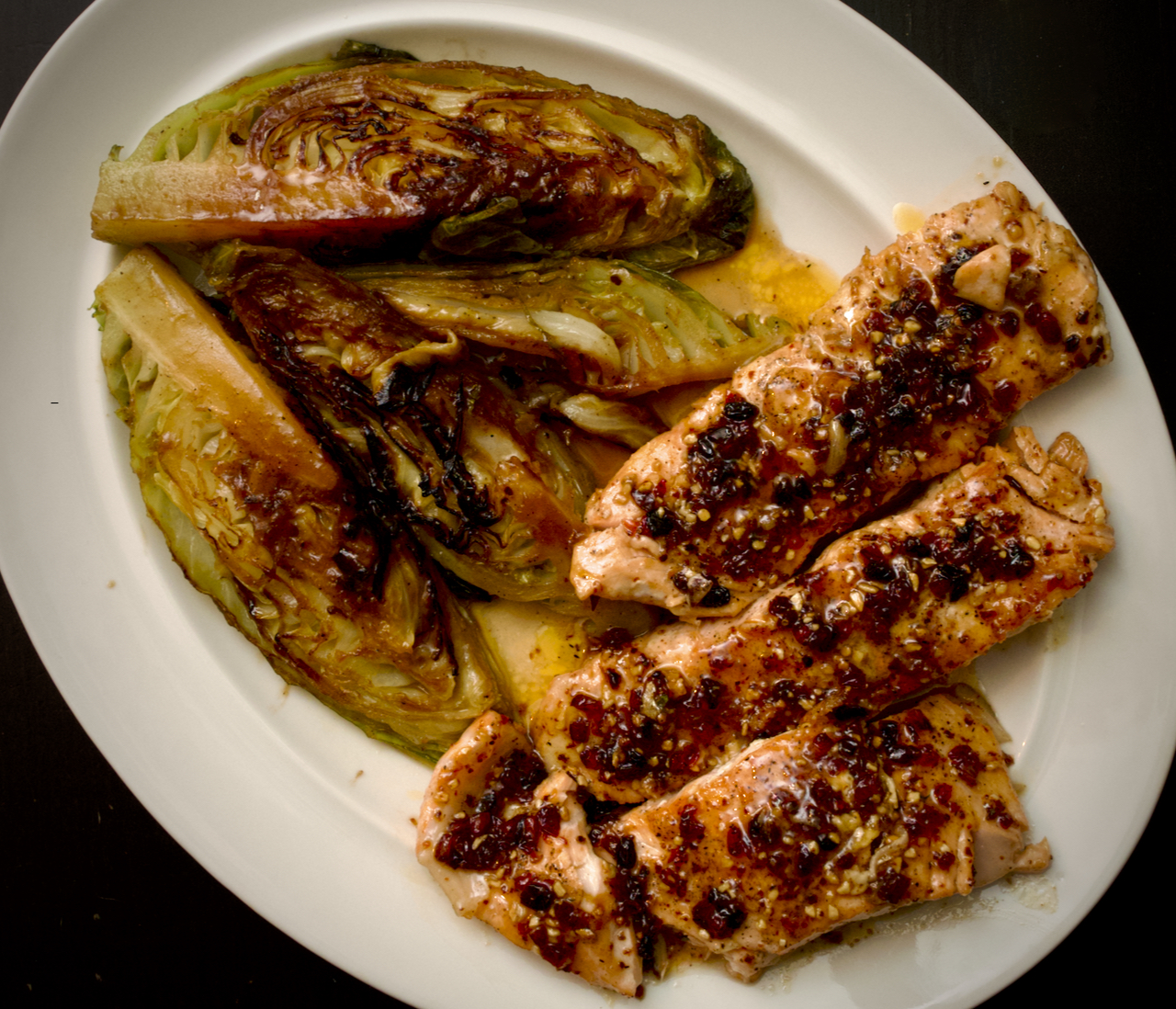
We have fallen in love with this buttery cabbage dish which we served tonight alongside some salmon with barberries. This is seriously pimped up cabbage and would be delicious with anything! Both recipes are from Flavour by Sabrina Ghayour.
Wine suggestion: we thought the tamarind would be a hard match, so opened a wine we didn’t know, the Lyrarakis Liatiko from Crete, and were delighted when this obscure wine was a total gem. A light, juicy cherry flavoured wine with wild berry and gentle herbs and a cedary spice. We’ll be looking out for this again.
Cabbage with tamarind, maple & black pepper butter – serves 2 to 4
olive oil
1 large head of sweetheart cabbage, quartered
100ml cold water
50g butter
1 heaped tbsp tamarind paste
2 tbsp maple syrup
1 tsp coarse freshly ground black pepper
Put a large frying pan over a medium heat and add some olive oil. Arrange the cabbage wedges in the pan, sitting on one cut side and the stalk ends in the centre of the pan, and fry for 5 minutes. Pour in the cold water, then increase the heat and cover the pan with a lid. Cook for 6-7 minutes or until the water has evaporated.
Take the lid off the pan and turn the cabbage wedges onto the other side for 3-4 minutes, uncovered. Add the butter, then mix the tamarind, maple syrup and pepper together and add to the pan with a good seasoning of salt. Stir to melt the butter – making sure it doesn’t burn. Baste the cabbage with the butter, then turnover onto the other side and continue basting for a few more minutes. Serve with any butter left in the pan drizzled over.
(Original recipe from Flavour by Sabrina Ghayour, Aster*, 2023.)
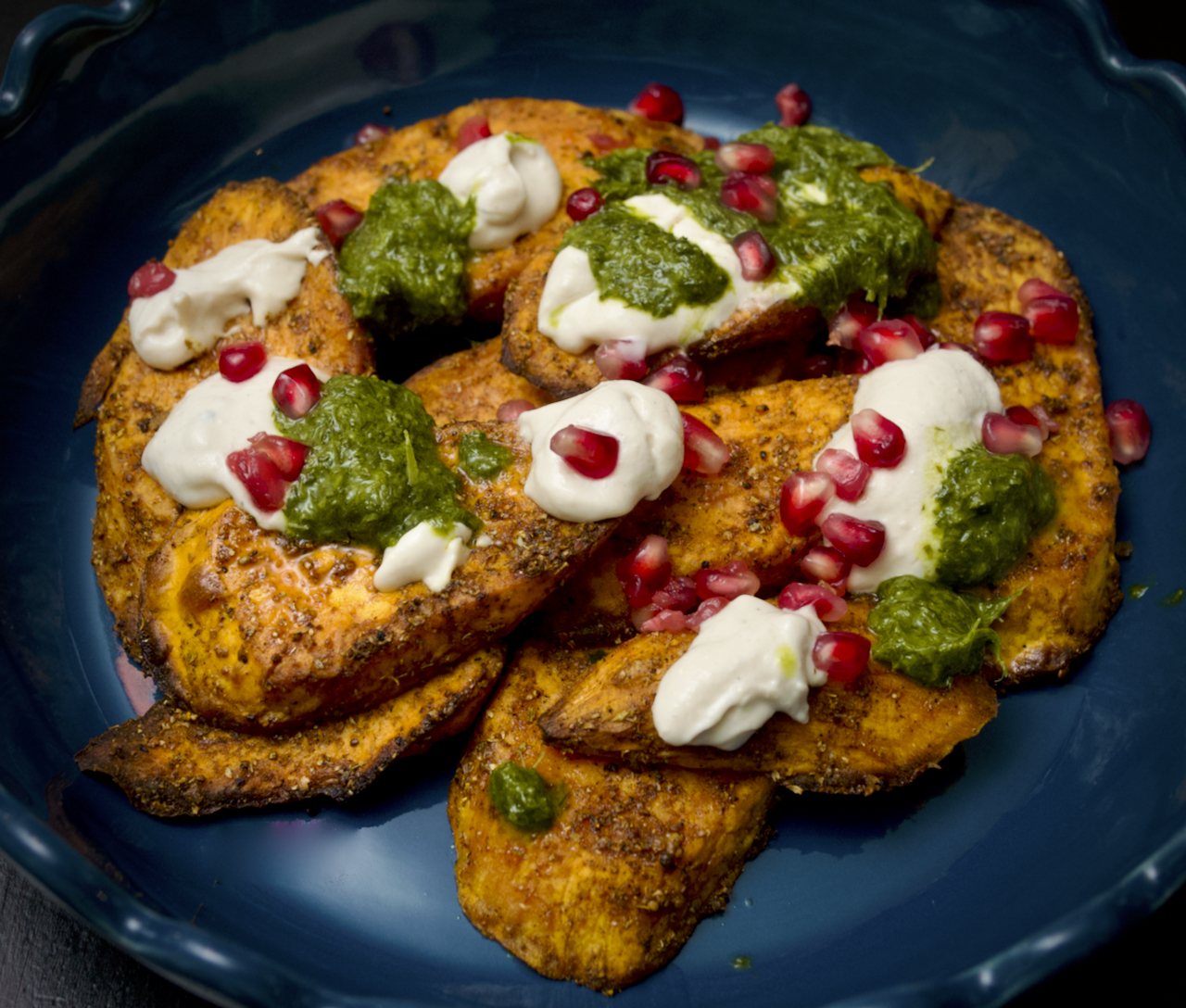
This is such a good side dish. We served it with roast lamb this time, but it would easily complement so many other dishes and can see us doing it alongside some grilled halloumi next time – highly recommended.
Sweet potatoes with tahini yoghurt & herb oil – serves 4 to 6
4 sweet potatoes, peeled and cut into 1.5cm slices
4 tbsp olive oil
2 heaped tbsp ras el hanout
2 tbsp pine nuts
a good handful of pomegranate seeds
FOR THE HERB OIL:
15g flat leaf parsley
15g dill
15g coriander
juice of ½ lemon
3-4 tbsp olive oil
FOR THE TAHINI YOGHURT:
6 tbsp Greek-style yoghurt
4 tbsp tahini
Preheat the oven to 220C, Gas Mark 7 and line a large tray with baking paper.
Put the sweet potato slices onto the tray. Drizzzle over the olive oil, sprinkle with the ras el hanout and add plenty of salt, then use your hands to coat the sweet potatoes in the mixture. Spread out in a single layer and roast for 30 minutes or until cooked through.
Meanwhile, make a herb oil by putting the herbs, lemon juice, olive oil (enough to allow the mixture to spin) and seasoning in a blender and whizz until smooth.
Mix the yoghurt with the tahini and season with salt and pepper.
Transfer the cooked sweet potatoes to a platter and pour over the tahini yoghurt followed by the herb oil, then scatter over the pine nuts and pomegrante seeds.
(Original recipe from Flavour by Sabrina Ghayour, Aster*, 2023.)
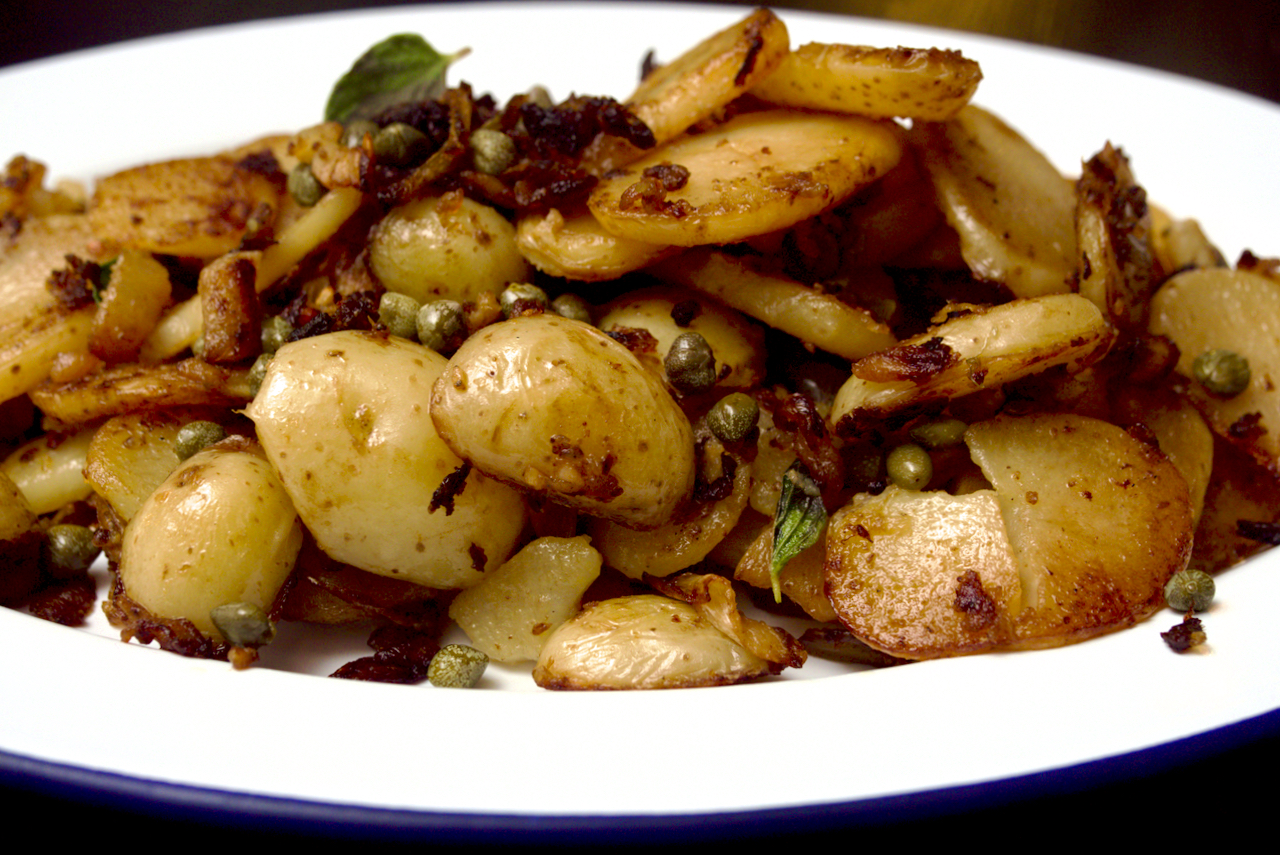
A tasty side dish to get us out our potato rut of baby roast or dauphinoise. These went spectacularly well with roast chicken.
Patatas a lo pobre – serves 4
600g waxy potatoes e.g. Charlottes
1 bulb of fennel, cut into quarters lengthways and shred into 5mm slices
75ml olive oil
2 cloves of garlic, finely chopped
2 tbsp sherry vinegar
2 tbsp capers, rinsed
a few sprigs of fresh oregano
Slice the potatoes into 5mm rounds.
Heat the olive oil in a large, heavy-based pan and add the potatoes and fennel. Cook over a medium heat until the potatoes are tender and starting to brown about 10-15 minutes. Keep tossing gently so it all cooks evenly.
When the potatoes are almost ready, add the garlic and sherry vinegar. Keep cooking for another 5 to 10 minutes or until the liquid has been absorbed and the potatoes are completely soft. Stir in the capers and oregano leaves and season with salt and pepper.
(Original recipe from The Hairy Bikerrs Mediterranean Adventure, Si King & Dave Myers, Seven Dials, 2017.)
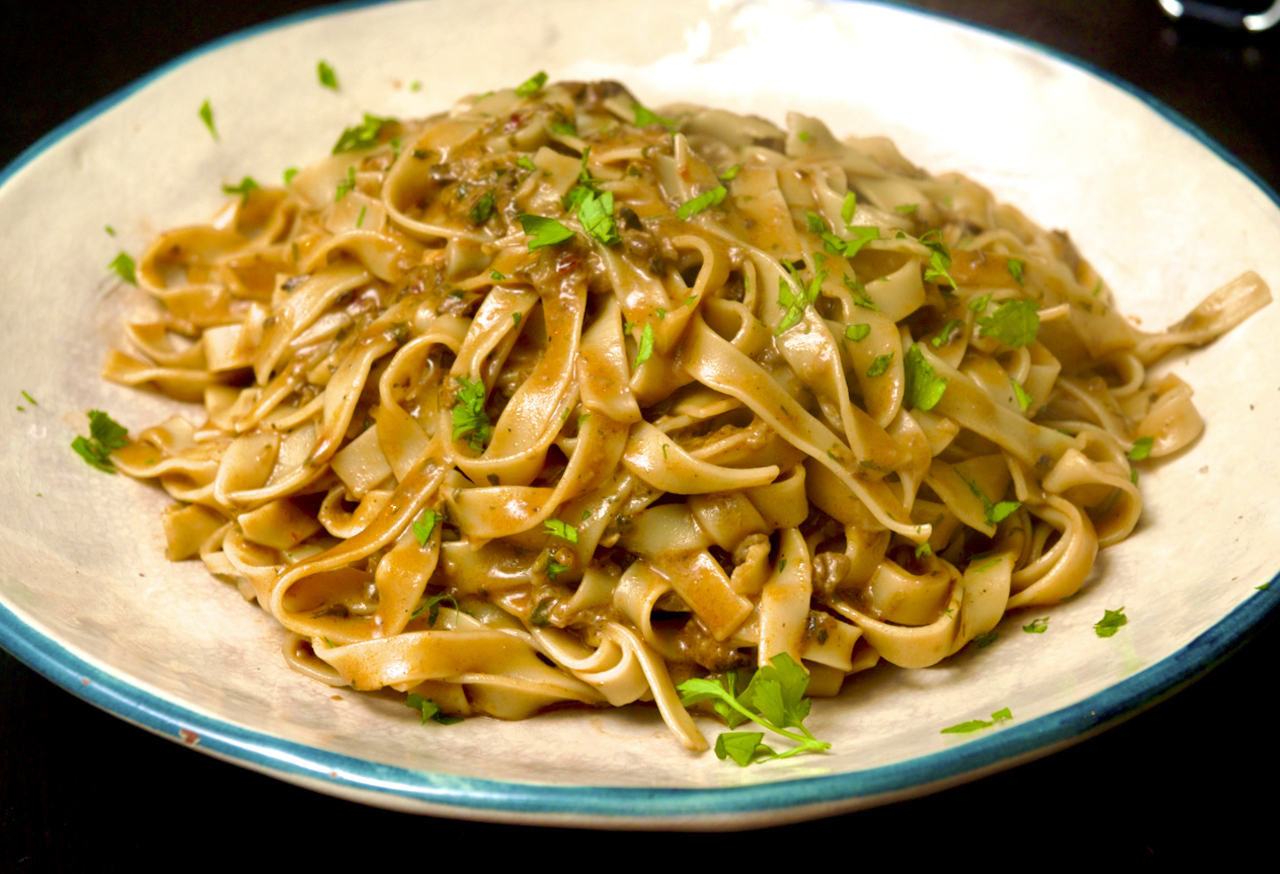
This has a surprising umaminess given the short cooking time. A dish for mushroom lovers.
Wine Suggestion: We enjoy pairing mushroom dishes with Nebbiolo and really enjoy stepping outside the box to find versions made outside it’s native Piedmont. Tonight a glass of Clendenen Family Vineyards (Au Bon Climat) “Pip” from the Santa Maria Valley in California, which despite it getting some of the famous sunshine, is also a very cool area with fog … just like Piedmont. We liked it a lot.
Porcini sauce for tagliatelle – serves 2
40g dried porcini
4 tbsp olive oil
3 cloves of garlic, very finely chopped
½ tsp chilli flakes
10g fresh parsley (stalks and leaves), finely chopped, plus extra to serve
a big pinch of fine sea salt
1½ tbsp tomato purée
about 50 twists of freshly ground black pepper
250g dried tagliatelle
40g Parmesan, very finely grated, plus extra to serve
3 tbsp double cream
Put the dried porcini into a bowl and cover with boiling water, then leave to soak for 10 minutes. Drain, reserving 75g of the soaking liquid. Very finely chop the porcini so it is like the consistency of mince, then set aside.
Put the oil, garlic, chilli flakes, parsley and fine salt into a large sauté pan, then place over a medium-low heat. Fry very gently for 5 minutes or until soft, taking care that the garlic doesn’t turn brown.
Increase the heat, then add the chopped porcini, tomato purée and the pepper. Stir-fry for a few minutes, then set the pan aside while you cook the tagliatelle.
Cook the pasta in boiling salty water until al dente, then drain and reserve 350g of the pasta water.
Return the sauté pan to a medium-high heat, then add the reserved porcini and pasta water. Bring to a simmer and leave to bubble for a few minutes. Add half the Parmesan, stir until melted before adding the rest. Lower the heat, then stir in the cream, followed by the cooked pasta. Toss over the heat for a minute or two until the sauce comes together.
Remove from the heat and serve with more Parmesan and olive oil.
(Original recipe from Mezcla by Ixta Belfrage, Ebury Press, 2022.)
Rajma or spiced kidney beans from Dishoom. Delicious with rice and raita.
Wine Suggestion: We found the rich, mealy textured beans paired well with Luigi Pira’s Langhe Nebbiolo. The fruity, spice and lighter nature wasn’t too serious for this dish, and the oomph from the tannins was a good counterpoint to the richness and depth in the beans.
Rajma – serves 2 to 4
35ml vegetable oil
5g ginger paste (see recipe below)
5g garlic paste (see recipe below)
1 black cardamom pod
1 bay leaf
1 cinnamon stick
1 tsp ground cumin
¼ tsp deggi mirch chilli powder
15g tomato purée
1g fine salt
100g onion-tomato masala (see recipe below)
400g tin kidney beans
½ tsp garam masala
50g tomatoes, chopped
a good handful of coriander leaves, chopped
25g butter
TO SERVE:
red onion, finely sliced
ginger matchsticks
coriander leaves, roughly torn
lime wedges
Warm the oil in a medium saucepan over a medium heat. Add the ginger and garlic pastes and cook for a few minutes, stirring, until no longer raw.
Add the cardmamom pod, bay leaf and cinnamon stick and cook for 1 minute. Add the ground cumin, chilli powder, tomato purée and salt and cook for a few minutes, or until the oil starts to separate.
Add the onion-tomato masala and bring to a simmer, stirring, then add the kidney beans along with their liquid. Simmer for 15 minutes or until reduced and thickened.
Add the garam masala, tomatoes, chopped coriander and ginger and simmer for 2-3 minutes. Stir in the butter.
Serve garnished with the red onion, ginger and coriander and with lime wedges for squeezing over.
Onion-tomato masala – makes about 450g
300ml vegetable oil
1.2kg Spanish white onions, finely diced
35g garlic paste (see recipe below)
30g ginger paste (see recipe below)
1¾ tsp deggi mirch chilli powder
30g tomato purée
2 tsp fine sea salt
600g good quality tinned tomatoes
Warm a deep, heaving frying pan over a medium heat. Add the oil and warm before adding the onions. Let the onions caramelise to a deep brown, stirring regularly. Add a splash of water if they are at risk of burning. This should take 25-30 minutes.
Add the garlic and ginger paste and sauté until light golden brown, stirring all the time.
Add the chilli powder, tomato purée and salt, then sauté for 2 minutes.
Add the chopped tomatoes, stir well and cook for about 20 minutes, stirring often. The tomatoes should break down completely and caramelise a bit in the oil, you can add a splash of water if it starts to dry up.
Freeze any masala that you are not using.
Ginger and Garlic Pastes – makes about 170g (keep in the fridge covered with oil for 10 days)
3 bulbs of garlic or 180g fresh root ginger
25ml vegetable oil, plus extra to store
Peel the garlic or ginger and roughly chop.
Whizz the garlic or ginger with with the oil to make a smooth paste.
Store in a sterilized jar covered with oil in the fridge.
(Original recipes from Dishoom by Shamil Thakrar, Kavi Thakrar & Naved Nasir, Bloomsbury, 2019.)







 Jono & Jules do food & wine