Feeds:
Posts
Comments

Archive for the ‘Asian’ Category

Howrah Express

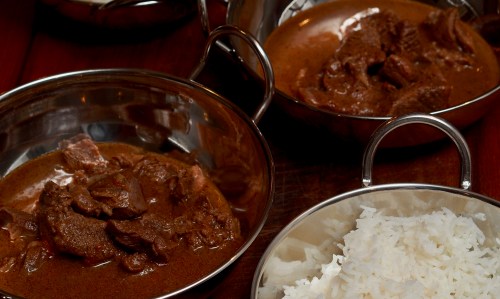
Brown food is just not photogenic but this really is a delicious lamb curry. Lamb neck is one of our favourite cuts; cheap and meltingly tender when cooked slowly.

Wine Suggestion: We’ve yet to find a wine that we think works with the intense flavours in this dish. Try an Indian beer such as Singah.

Cinnamon Lamb Curry – serves 8

  • 4 tbsp rapeseed oil
  • 2 large onions, finely chopped
  • 8 cloves of garlic, finely chopped
  • 1 x 400g tin of plum tomatoes
  • 1½ tsp garam masala
  • 1¼ tsp chilli powder
  • 2 tsp ground cumin
  • 1½ tbsp ground cinnamon
  • 1½ tsp salt
  • 1.2kg lamb neck fillet, chopped into chunks
  • 150ml full-fat yoghurt, whisked

Heat the oil in a large, heavy casserole dish over a medium heat. Add the onions when the oil is hot and fry until golden, about 8-10 minutes, then add the garlic and stir-fry for another couple of minutes.

Pour the tinned tomatoes into a bowl and crush a little with your hands before adding to the casserole. Cook for about 6 minutes or until the sauce has thickened.

Add the garam masala, chilli powder, cumin, cinnamon and salt, and mix. Add the lamb and cook until sealed all over. Add the yoghurt one spoon at a time while slowly stirring (to prevent splitting) and then add 200ml of warm water – you want it to just cover the lamb.

Bring the mixture to the boil, then cover and turn the heat to low. Simmer for 1½ hours or until the lamb is soft and falling apart. Take the lid off the pan and reduce the sauce to a consistency you like, then remove from the heat. Season to taste and serve with naan breads or steamed rice.

(Original recipe from Made in India by Meera Sodha, Penguin, 2014.)

Read Full Post »

Tandoori pork burgers

This was such a tasty weeknight dinner inspired by a half-used jar of tandoori curry paste and a packet of supermarket naan breads. Ditch the naans for gluten-free burgers.

Wine Suggestion: A juicy Spanish, or Spanish varietal, should work here. There are some great and good value Garnacha’s, like one made by Bodegas Monfil, which are perfect when on a budget. If you want to push the boat out choose a ripe and juicy Ribera del Duero made from Tempranillo. Our favourite of the moment is the Carmelo Rodero and try their 9 Mesas for the juicy youthful fruit. Older and more concentrated Crianza’s and Reserva’s would overwhelm the dish.

Tandoori pork burgers with tomato & coriander raita – serves 4

  • 500g lean pork mince
  • 1 red onion, grated
  • 2 tbsp tandoori curry paste (we like Patak’s)
  • a small bunch of coriander, chopped
  • 150ml natural yoghurt
  • 2 tomatoes, chopped
  • 4 scallions, sliced
  • naan breads, to serve
  • Little Gem or Cos lettuce, to serve

Put the mince, onion, curry paste and half the coriander in a bowl, season with mix well, then form into 4 burgers.

Barbecue the burgers for 4-5 minutes on each side or until cooked through. Meanwhile, mix the rest of the coriander with the yoghurt, tomatoes & scallions.

Serve the burgers in some warm naan breads (we toasted ours on the barbecue) with the crispy lettuce and raita.

(Original recipe by Janine Ratcliffe in BBC Olive Magazine, August 2009.)

Read Full Post »

Thai pumpkin & chickpea curry

Thai pumpkin & chickpea curry

A really good veggie curry and yet another use for the never-ending tub of Thai red curry paste. We’re very excited for pumpkin season and not because we want to make lanterns.

Pumpkin & chickpea curry – serves 4

  • 1 tbsp sunflower oil
  • 3 tbsp Thai red or yellow curry paste
  • 2 onions, finely chopped
  • 3 stalks lemongrass, bashed with the back of a knife
  • 6 cardamom pods
  • 1 tbsp mustard seeds
  • 1 piece pumpkin or a small squash (about 1kg)
  • 250ml vegetable stock
  • 400ml can reduced-fat coconut milk
  • 400g tin chickpeas, drained and rinsed
  • 2 limes
  • large handful mint leaves
  • steamed rice and/or naan bread, to serve

Heat the oil in a sauté pan and gently fry the curry paste with the onions, lemongrass, cardamom and mustard seeds for a few minutes or until fragrant. Stir the pumpkin or squash into the pan and stir to coat in the paste, then pour in the stock and coconut milk. Bring to a simmer, add the chickpeas, then cook for about 10 mins until the pumpkin is tender.

Squeeze the juice of one lime into the curry, then cut the other lime into wedges to serve on the side. Tear over mint leaves to garnish and serve with steamed rice or warm naan bread.

(Original recipe from BBC Good Food)

Read Full Post »

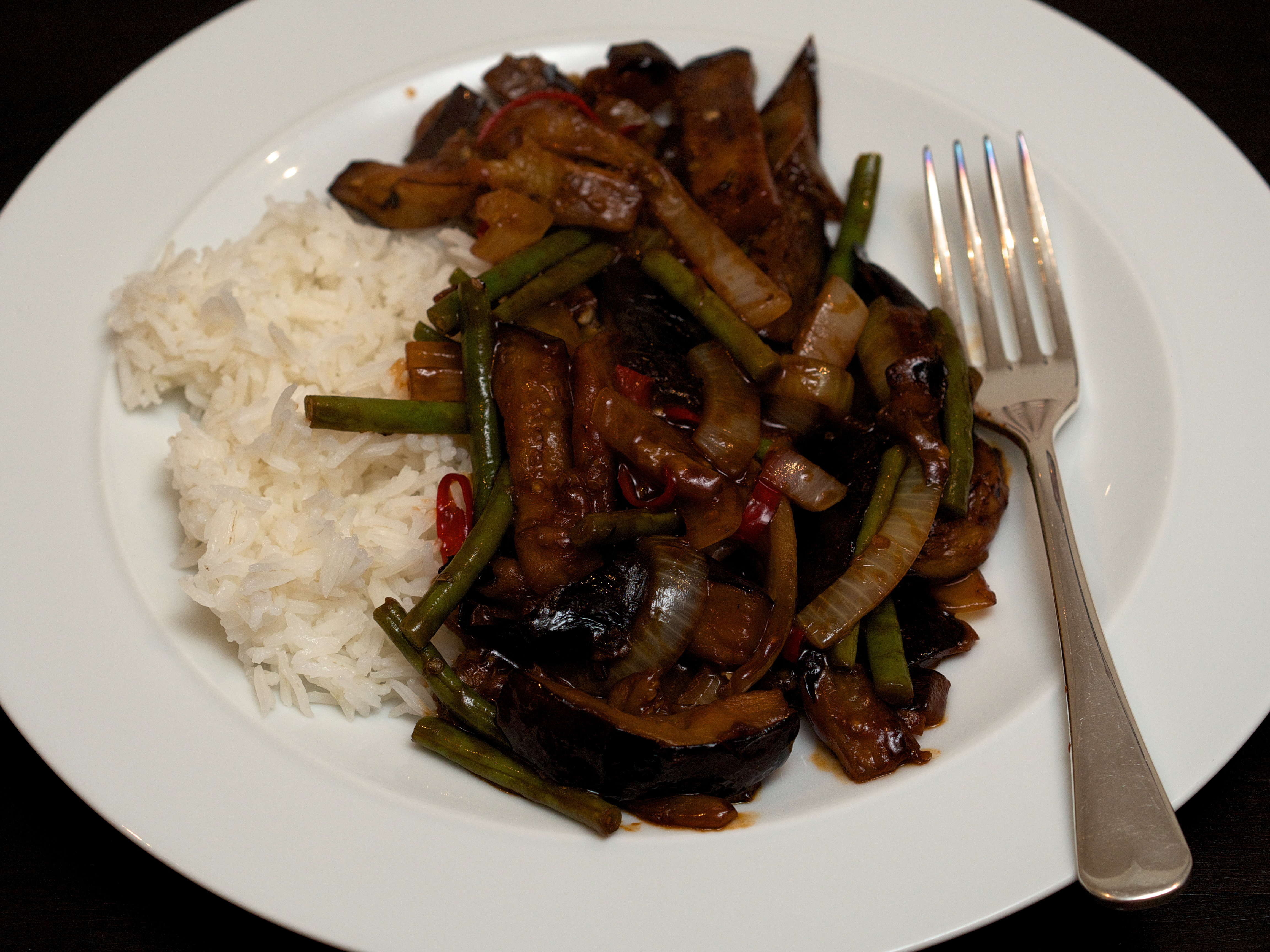
Hot & Sour Aubergine

This photo is a bit dark in colour but the flavours are vibrant and delicious and we’re now converts to soaking aubergine in brine before stir-frying to give a soft, velvety texture.

Hot & Sour Aubergine – serves 2

  • 1 large or 2 medium aubergines, cut into long batons
  • 100g green beans, halved
  • 2 tbsp vegetable oil
  • 1 large onion, thickly sliced
  • 1 red chilli, deseeded and thinly sliced

FOR THE SAUCE:

  • 2 tbsp light soy sace
  • 2 tbsp dark soy sauce
  • 1 tbsp tomato purée
  • 2 tbsp Chinese black vinegar or balsamic vinegar
  • 1 tbsp golden caster sugar
  • 1 tsp cornflour dissolved in 2 tbsp water
  • cooked rice, to serve

Put the aubergine slices into a bowl of lightly salted water and leave to soak for 30 minutes, then drain and pat dry.

Blanch the green beans in boiling water for a minute, then rinse in cold water and drain.

Combine all of the sauce ingredients in a small bowl and set aside.

Heat the oil in a large frying pan or wok over a medium-high heat, then cook the aubergine until well browned on all sides. When the aubergine is starting to take on a good colour, add the onion and chilli and continue to stir-fry for 4 minutes or until soft.

Add the sauce and green beans, cover with a lid, then turn down the heat and simmer for 2 minutes or until the aubergine is soft. Serve with rice.

(Original recipe from BBC Good Food)

Read Full Post »

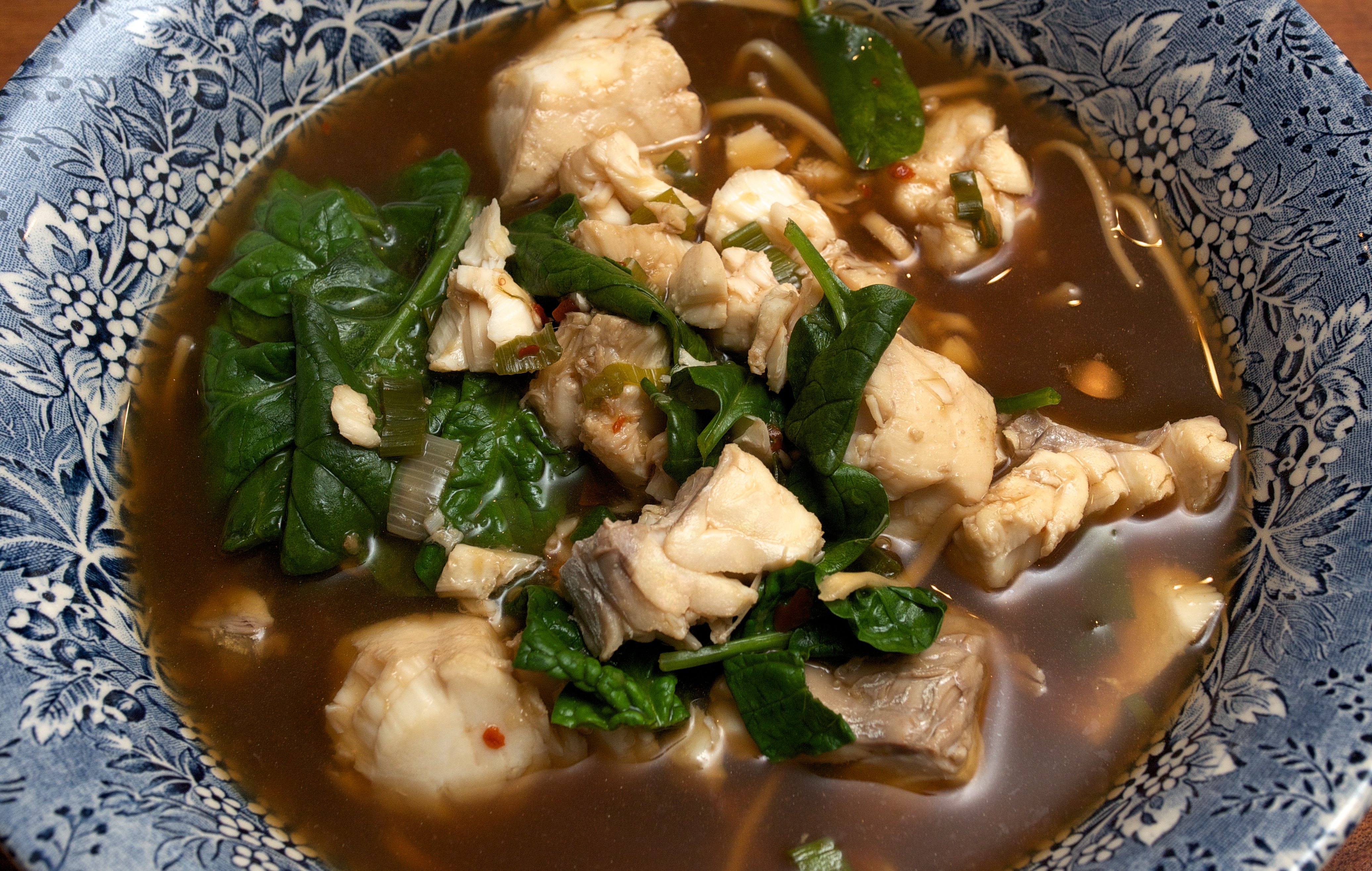
Hot & sour fish soup

This is a quick and very low-calorie but very tasty soup. Buy some really fresh fish – we used hake. Hot & Sour Fish Soup – Serves 2

  • 2tbsp grated ginger
  • 1 dried red chilli (or use a small tsp of chilli flakes)
  • 2 scallions, thinly sliced
  • 1 stem lemongrass, lightly bashed
  • 700ml chicken or fish stock
  • 3 tbsp soy sauce
  • 2 tbsp rice vinegar
  • 400g skinless white fish fillets, cut into big chunks
  • 2 handfuls baby spinach
  • 2 tsp fish sauce
  • cooked noodles

Put the ginger, chilli, scallions, lemongrass and stock in a saucepan and bring to a simmer. Cook for 5 minutes, then add the soy sauce, vinegar and fish, and simmer for a couple of minutes. Stir in the spinach and season with the fish sauce. Adjust the vinegar and soy sauce to your own taste. Put the cooked noodles into soup bowls, discard the lemongrass and dried chilli from the soup, then pour over the noodles and serve. (Original recipe by Lulu Grimes and Janine Ratcliffe in BBC Olive February 2015.)

Read Full Post »

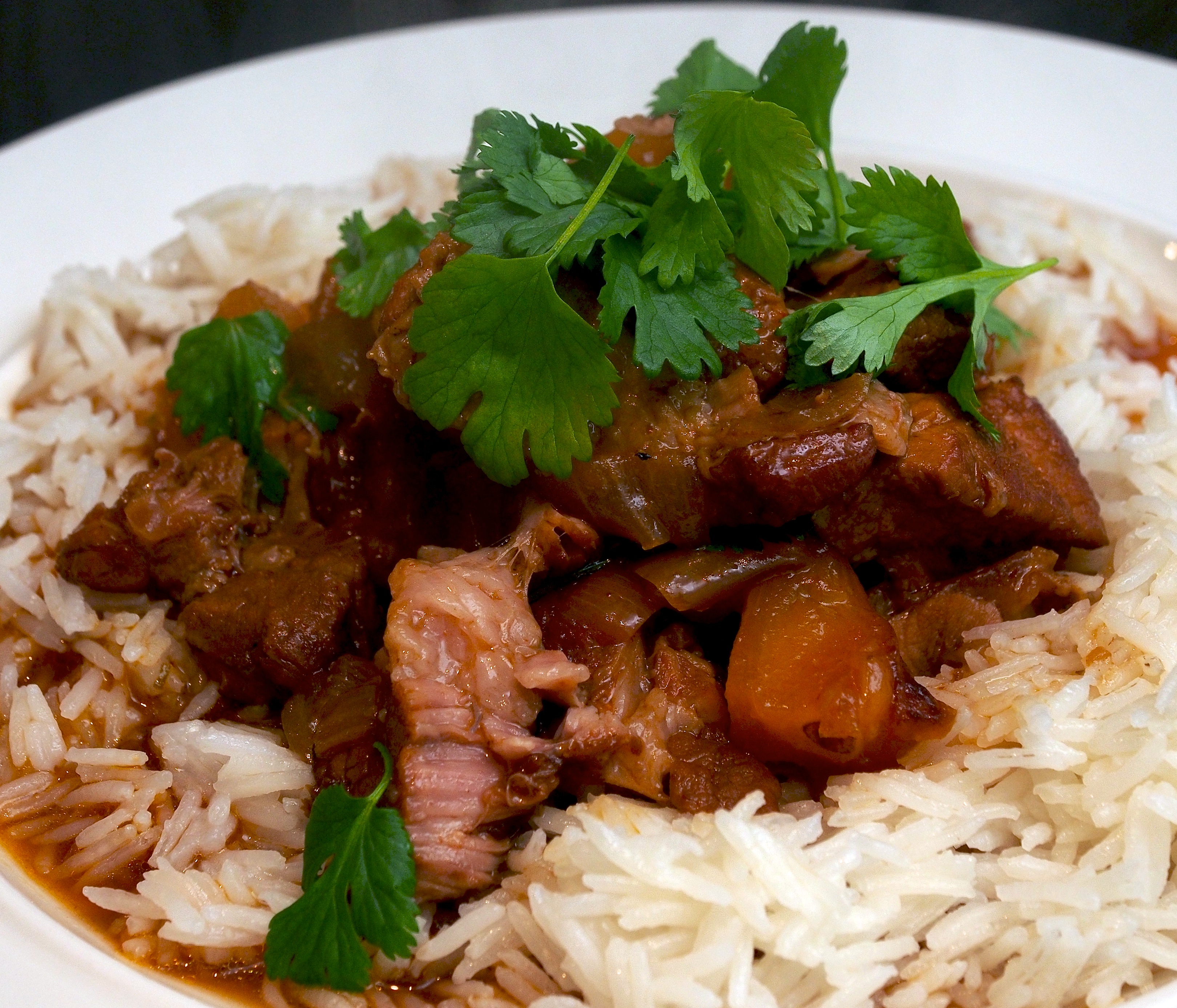
Pork & Pineapple


A classic sweet and sour combination but with a few modern twists. The pork ends up meltingly tender and there is no ketchup required!

Wine Suggestion: This was a hard match given the spices, sweetness and sourness which really fights the components of many wines but the solution is a good, dry Riesling which will cut through the fat, complement the spices and balance the sweetness of pineapple. The aromatics in Riesling also add new layers of flavour to the meal. We drank a superb Dönnhoff QbA dry Riesling (their entry level dry wine) which just hit the mark in terms of weight, poise and flavour.

Sticky Pork & Pineapple – serves 8

  • 1 tbsp vegetable oil
  • 1½ kg pork shoulder steaks, each cut into 4 thick strips
  • 3 onions, roughly chopped
  • 4 garlic cloves, finely sliced
  • small bunch coriander, stalks finely chopped and leaves reserved
  • 3 Thai red chillies, 2 sliced, 1 left whole and pricked
  • 3 star anise
  • 100g dark soft brown sugar
  • 2 tbsp tomato puree
  • 2 tbsp fish sauce
  • 600ml chicken stock
  • 350g fresh pineapple, cut into chunks

Heat oven to 160C/140C fan/gas 3.

Heat the oil in a large flameproof casserole. Season the pork and brown in batches for about 5 minutes or until golden. Set aside.

Stir the onions into the remaining fat, then cover and allow to soften for 5 minutes.

Add the garlic, coriander stalks, chillies and star anise to the dish, sizzle for 1 minute, stirring often, then mix in the sugar and tomato puree. When they have melted, return the pork and any juices to the dish and add the fish sauce and stock. Tuck the pineapple chunks in.

Bring to a simmer, then cover the pot but leave a small gap for steam to escape, and put in the oven for 2 hours. When there is 30 minutes to go, skim some of the fat off the top and return to the oven.

If you want to thicken the sauce a bit you can remove the pork to a warm dish and simmer the sauce on the hob until slightly thickened. Leave to cool for 5 minutes, then season to taste and pour over the pork.

Garnish with the coriander leaves and serve with rice.

(Original recipe from BBC Good Food)

Read Full Post »

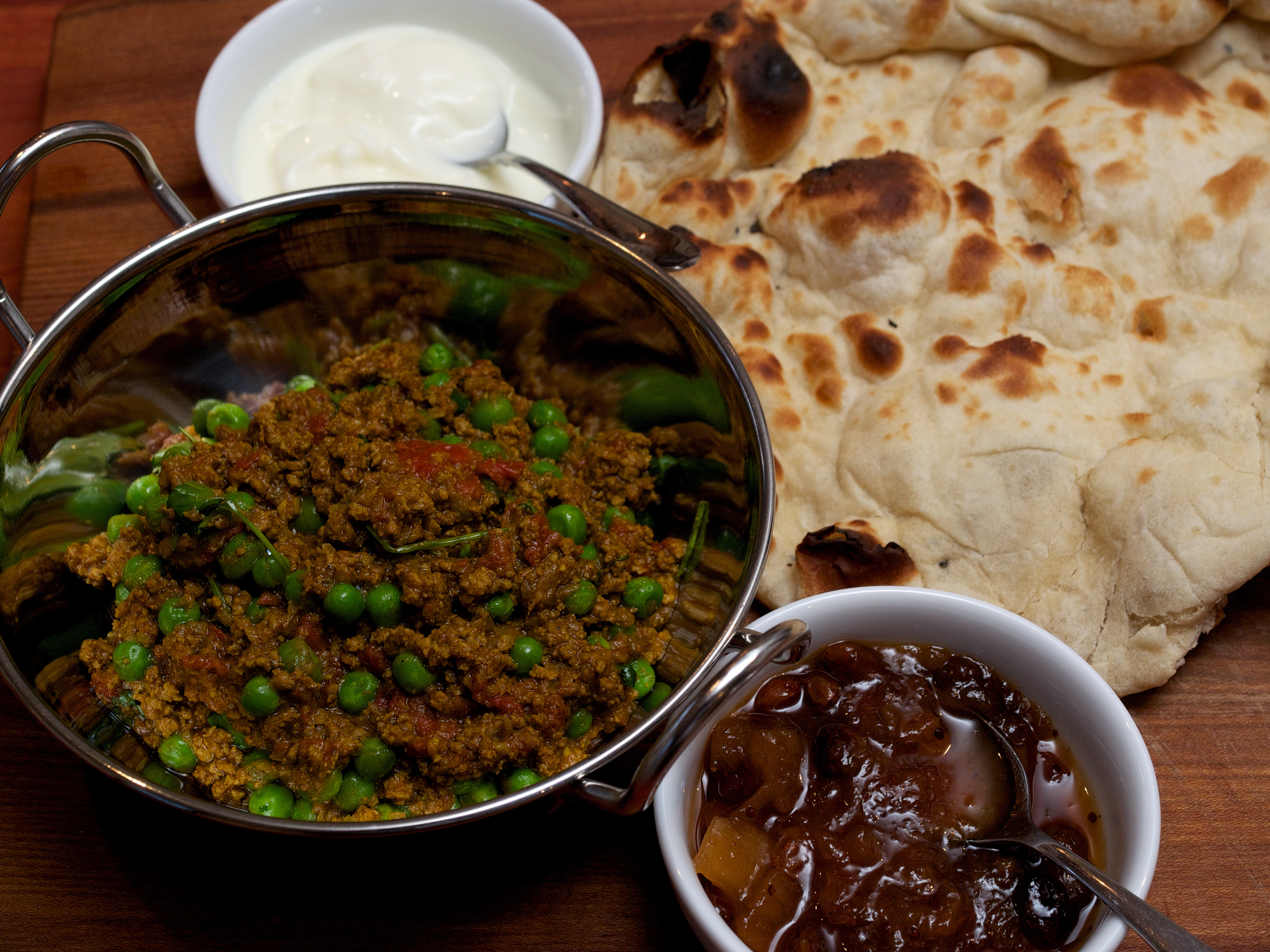
Keema with Peas

Keema with peas

This is a simple and cheap curry to whip up and it’s full of flavour. Grab some naan breads from your local takeaway and serve with some mango chutney and extra yogurt.

Keema with Peas – to serve 4

  • 1 large onion, chopped
  • 2 garlic cloves, chopped
  • 4cm piece ginger, grated
  • 2 green chillies
  • 3 tbsp oil
  • 500g lamb mince
  • 2 tbsp garam masala
  • 2 tsp turmeric
  • 200g chopped tomatoes (from a can or use 2 medium fresh tomatoes)
  • 2 tbsp natural yogurt
  • 200g frozen peas
  • 1 small bunch coriander, chopped

Chop the onion, garlic, ginger and chillies in a food processor.

Heat the oil in a large frying pan and fry the mixture until very fragrant. Add the mince and fry until starting to brown, stirring to break up the lumps.

Add the spices and fry for a minute before adding the tomatoes. Bring to a simmer, cook for a minute, then stir in the yogurt and some salt and pepper. Add a splash of water if the mixture looks dry, then cook for half an hour.

Add the frozen peas and cook for 5 minutes, then stir in the coriander.

(Original recipe from BBC Good Food)

Read Full Post »

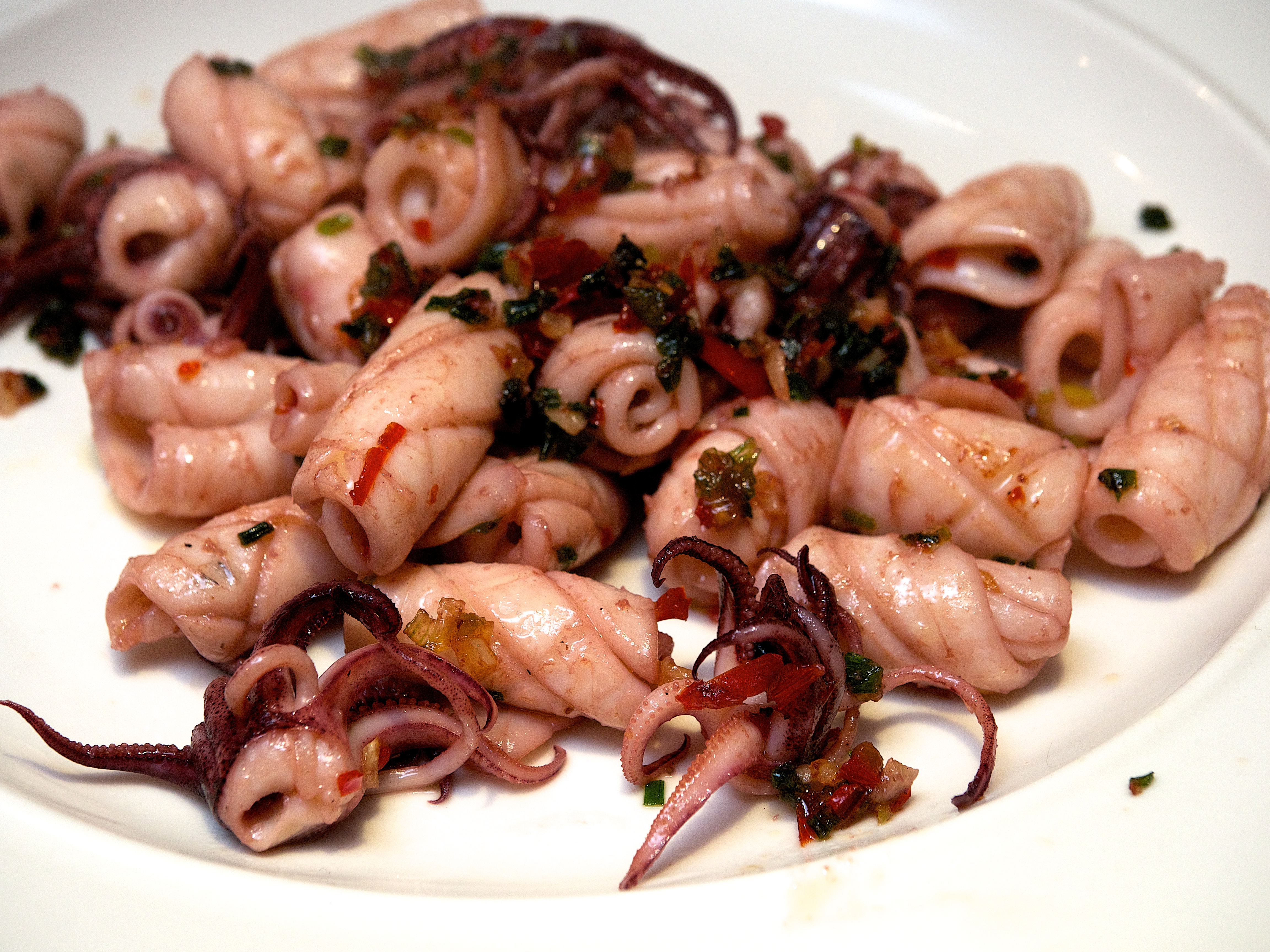
Chilli & Salt Squid

Inspired by Gok Wan, this works a treat. We always found that getting fresh squid was difficult until we found great frozen ones: flash frozen as soon as they’ve been caught. A spanish chef Jono knows swears by them and we do too! This is a healthier take on the deep-fried salt chilli squid you get in restaurants.

Wine Suggestion: A fresh, light to medium-bodied white with good fruit works a treat here, but just make sure it’s not bone dry as you need to balance the chilli. We’d suggest either a good Albariño / Alvarinho [we drank the Saolheiro Alvarinho from Portugal) which complements the saltiness or a dry German Riesling from a good producer like Leitz in the Rheingau or Dönnhoff in the Nahe which will carry a good level of fruit and taste dry. These really balance fruit with acidity for perception as opposed to an Australian Riesling which really is bone dry and will fight with the chilli.

Chilli & Salt Squid with Cucumber Salad – serves 2

  • 2 medium squid (tubes and tentacles), cleaned – we used 500g baby squid
  • 2 spring onions, finely chopped
  • 2 tbsp groundnut oil
  • ½ a red chilli, finely chopped
  • 3 cloves of garlic, finely chopped
  • salt and ground white pepper

For the cucumber salad: 

  • ½ a cucumber, deseeded and sliced into thin ribbons
  • 4 tbsp rice vinegar
  • a pinch of caster sugar

Put the cucumber into a serving dish. Pour over the vinegar and sugar and set aside.

Slice the squid tubes in half lengthways and lay out flat with the inside facing up. Score the tubes at an angle about 5mm apart but take care not to slice the whole way through. Turn the squid 45 degrees and score again at that angle. Once scored slice the squid into 2cm wide strips. Cut large tentacles in half and leave small ones whole.

Heat a wok over a medium to high heat and add the oil. Add the chilli, garlic and spring onions and fry for 4-5 minutes, or until starting to dry out – take care not to burn the garlic. Remove from the pan and drain on kitchen paper.

Put the wok back on the heat and, when hot, add a splash of oil. Wait for the oil to smoke, then add the squid and stir-fry for a minute, or until half cooked and starting to char at the edges. Put the garlic/chilli/spring onion mix back into the pan and stir through, tossing over the heat until cooked through. Taste and adjust the seasoning.

Serve with the cucumber.

(Original recipe from Gok Cooks Chinese by Gok Wan, Penguin Books, 2012.)

Read Full Post »

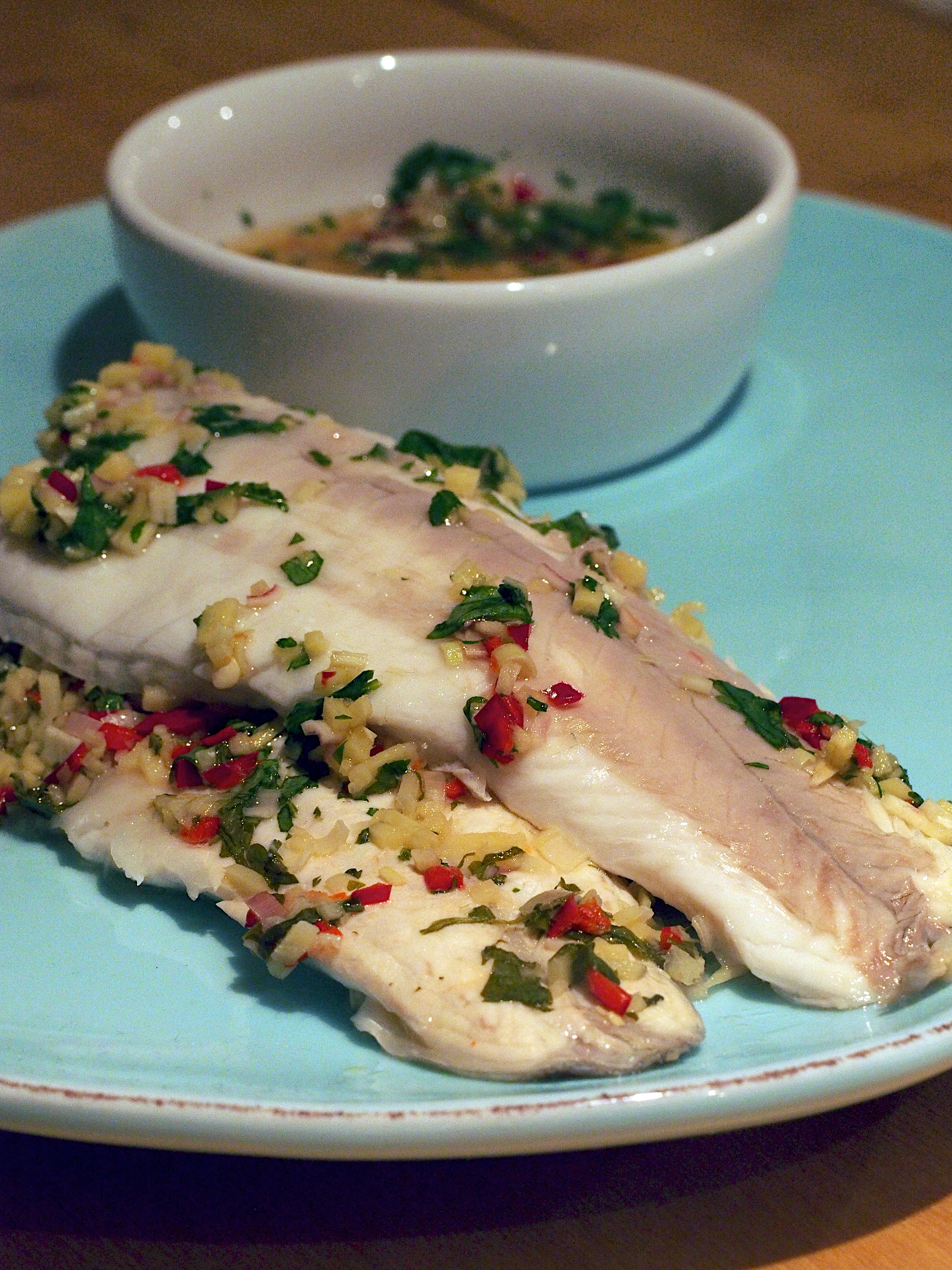
This is a really simple fish dish that was a delight to eat; it tastes delicious and is also very healthy. Trout or snapper would also work well if you prefer. The skin was left behind in the tinfoil when we went to serve it which was fine by us (it’s crispy skin or no skin as far as we’re concerned).

Wine Suggestion: this dish begs for a charming Riesling from Germany – look out for ones that are a drier style but without the weight of a Grosses Gewachs (great growth). If you can find one of the estate QbA’s from Helmut Dönnhoff in the Nähe or Johannes Leitz from the Rhinegau you can’t go wrong.

Thai Baked Fish – to serve 4

  • 4 seabass fillets, about 200g each
  • 1 stalk lemongrass, finely chopped
  • small knob ginger, peeled and finely chopped
  • 1 red chilli, seeded and finely chopped
  • 1 garlic clove, finely chopped
  • 1 tbsp fish sauce
  • juice of 2 limes
  • 1 tsp golden caster sugar
  • handful coriander, roughly chopped

Heat the oven to 200C/fan 180C/gas 6.

Take 2 large sheets of tinfoil. Place one fish fillet, skin-side down, in the centre of each sheet.

Make a sauce using the remaining ingredients. Spoon half the sauce of the fillets on the tinfoil and set the rest aside.

Sandwich the other 2 fish fillets on top, skin-side up, then tightly seal the foil to create 2 pouches. Bake in the oven for 12-15 minutes (depending how big your fish are). Serve with the rest of the sauce.

(Original recipe by Gizzi Erskine for BBC Good Food Magazine, June 2005).)

Read Full Post »

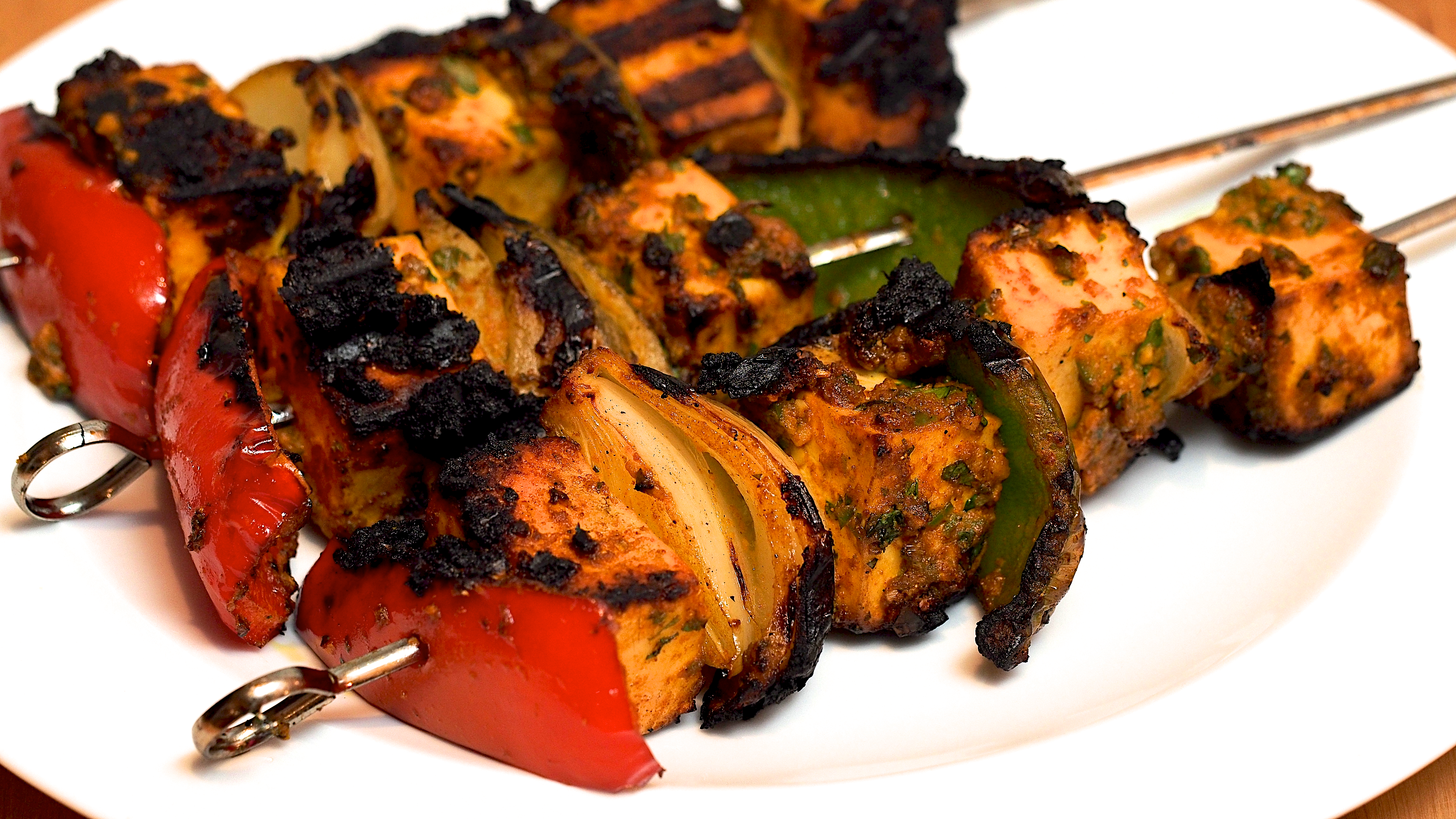
We recently acquired a recipe book called Prashad: Indian Vegetarian Cooking (thanks Mum). You might remember Prashad as Gordon Ramsay’s best restaurant runner-up on TV a couple of years ago. This is the first recipe we tried from the book and is guaranteed to make your veggie friends happy at your next summer barbecue. Vegetarians often get a bum deal at barbecues, palmed off with a few peppers and onions skewered on a stick. These should right all your past wrong-doings.

Paneer is an Indian unsalted white cheese with a crumbly texture and mild taste that  goes really well with strong flavours and marinades. You can buy it in supermarkets as well as specialist Asian shops.

These are very easy to make but you need to marinade the night before!

Drinks Suggestion: We enjoyed this with both a lager and a citrus-laden Blonde Ale; fresh and summery.

Paneer Tikka – makes 6 skewers 

  • 2 x 250 blocks of paneer cheese
  • 1 medium red pepper,cut into 6 chunky pieces
  • 1 medium green pepper, cut into 6 chunky pieces
  • 1 medium onion, cut into 6 wedges
  • 2 lemons, quartered to serve

MARINADE: 

  • 2-3 green chillies, seeds left in
  • 4-8 garlic cloves
  • 2 handfuls of fresh coriander, chopped fine
  • 2 tsp ground coriander
  • 2 tsp garam masala 
  • 1½ tsp salt
  • 1 tsp trumeric
  • 2 tbsp plain live yogurt
  • 100ml sunflower oil

Finely chop the chillies and garlic then tip into a large bowl and add the other marinade ingredients.

Cut each block of cheese into 9 equal-sized cubes and add to the marinade along with the pepper and onion pieces. Stir to coat, then cover and leave in the fridge overnight.

Thread 6 skewers with 3 pieces of cheese seperated by pieces of pepper and onion. Cook the skewers over a hot barbecue for 20 minutes, until slightly charred, turning every 4-5 minutes.

Serve with the lemon quarters, a green salad and some cucumber and yogurt dip.

(Original recipe from Kaushy Patel’s Prashad: Indian Vegetarian Cooking, Saltyard Books 2012.)

Read Full Post »

We’re always on the lookout for low-calorie dishes for weeknights (so we can afford to redress the balance at the weekend!) This one was tasty and helpfully used up some of the bits and pieces we had in the fridge.

Coconut, noodle & vegetable soup – to serve 4

  • 1-2 tbsp Thai curry paste (use whatever colour you’ve got)
  • 1 tsp groundnut (or other flavourless oil)
  • 700ml vegetable stock
  • 300ml reduced-fat coconut milk
  • 200g thick-rice noodles
  • 200g chestnut mushrooms, sliced
  • 140g sugar snap peas, halved
  • 100g beansprouts
  • 1½ tbsp Thai fish sauce
  • juice of 1 lime
  • 3 scallions shredded
  • some mint and coriander leaves to serve (if you have some)

Put a large pot over a medium heat. Cook the curry paste in the oil for a minute until it starts to release its aroma. Add the stock and coconut milk and bring to the boil. Reduce the heat to a simmer and stir in the noodles. Simmer for 7 minutes, then stir in the mushrooms and sugar snaps. Cook for another 3 minutes, then add the beansprouts, fish sauce and lime juice. Take the pan off the heat.

Serve in bowls with some scallions, mint and coriander.

(Original recipe from BBC Good Food)

Read Full Post »

Another on a light theme: in calories again not flavour.

Cauliflower & Potato Curry – to serve 4

  • 2 tbsp vegetable oil
  • 1 large onion, chopped
  • large piece ginger, grated
  • 3 garlic cloves, finely chopped
  • ½ tsp turmeric
  • 1 tsp ground cumin
  • 1 tsp curry powder
  • tin chopped tomatoes, drained
  • ½ tsp sugar
  • 1 cauliflower, cut into florets
  • 2 potatoes, cut into chunks
  • 1 green chilli, halved lengthways
  • squeeze of lemon juice
  • handful coriander, roughly chopped, to serve
  • natural yogurt to serve

Heat the oil in a saucepan and cook the onion for about 10 minutes or until soft. Add the ginger, garlic, turmeric, cumin, and curry powder and cook for a further minute. Stir in the tomatoes and sugar. Add the cauliflower, potatoes, and split chilli along with some salt and pepper. Cover and cook gently for about half an hour or more, stirring occasionally until the vegetables are tender. You can add a drop of water if you need to but this is a dry curry.

When the vegetables are soft, add a squeeze of lemon juice and scatter with coriander. Serve with natural yogurt.

(Original recipe from BBC Good Food)

Read Full Post »

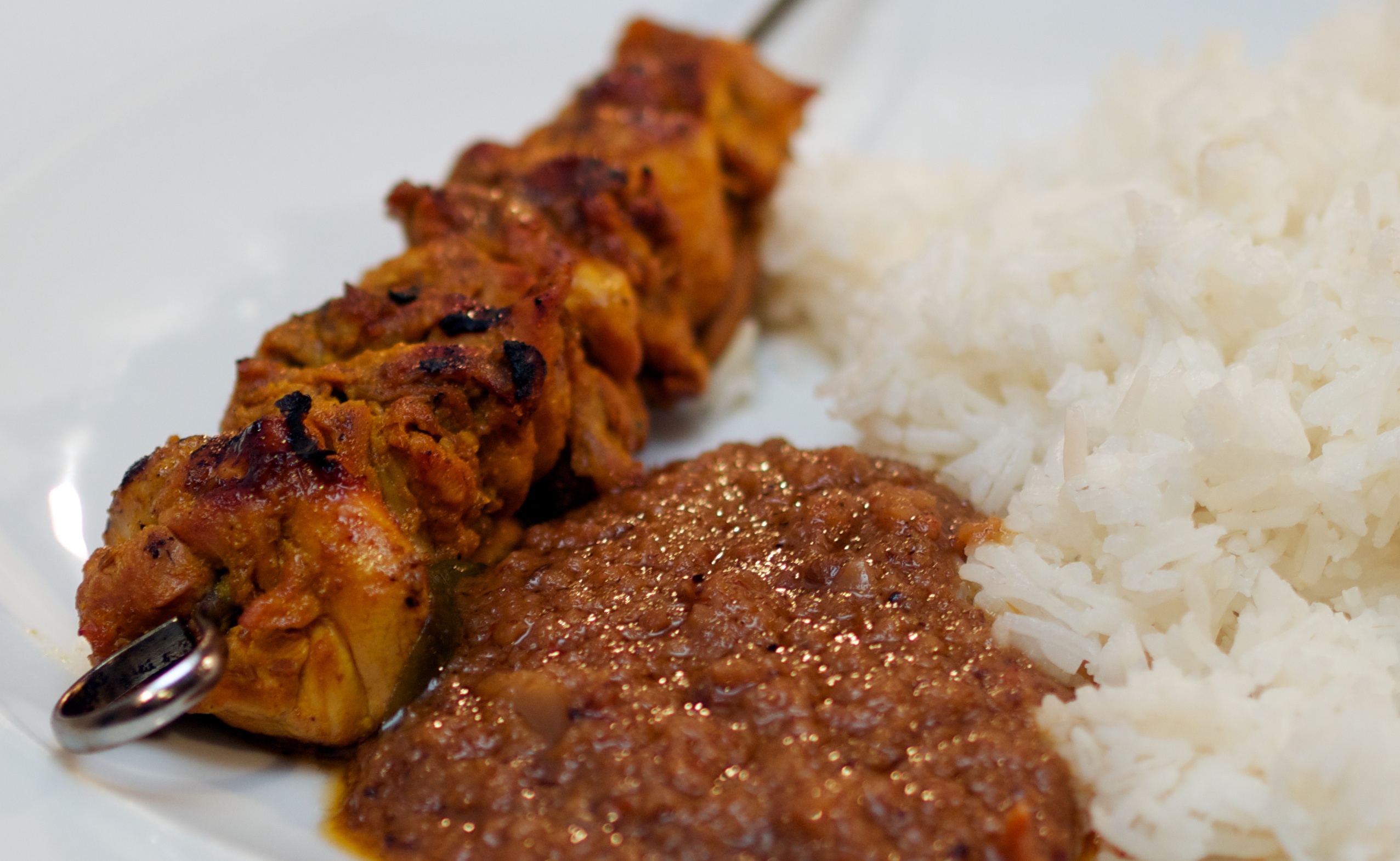
This chicken marinade is great for the barbecue as it really tenderises the meat. You should serve these satay skewers with some peanut sauce. The sauce in the picture is our friend Thaiba’s satay sauce that she kindly sent home with us in a takeaway box last time we were over. This is a secret family recipe, but we are very glad she makes it for us!

Barbecue Satay Skewers – to serve 8

  • 450g chicken meat, skinned and boned
  • 2 tsp ground turmeric
  • ½ tsp garam masala
  • 1 tsp freshly ground cumin
  • 1 tsp salt
  • 1 tbsp brown sugar
  • juice of 1 lemon

Mix all the ingredients (except the chicken) together in a large bowl. Cut the chicken into cubes and add to the bowl. Marinate overnight.

Thread the meat onto skewers and cook on a hot barbecue.

Serve with peanut sauce and rice.

Wine Suggestion: balance the bold flavours and richness with a bold Greco di Tufo from southern Italy. We love the minerality and freshness combined with the body and weight of a good example. We drank one made by Vesevo recently which was very good but look out for Mastroberardino, who helped save the appellation and grape.

(Original recipe from Darina Allen’s Ballymaloe Cookery Course, Kyle Cathie Limied, 2001.)

Read Full Post »

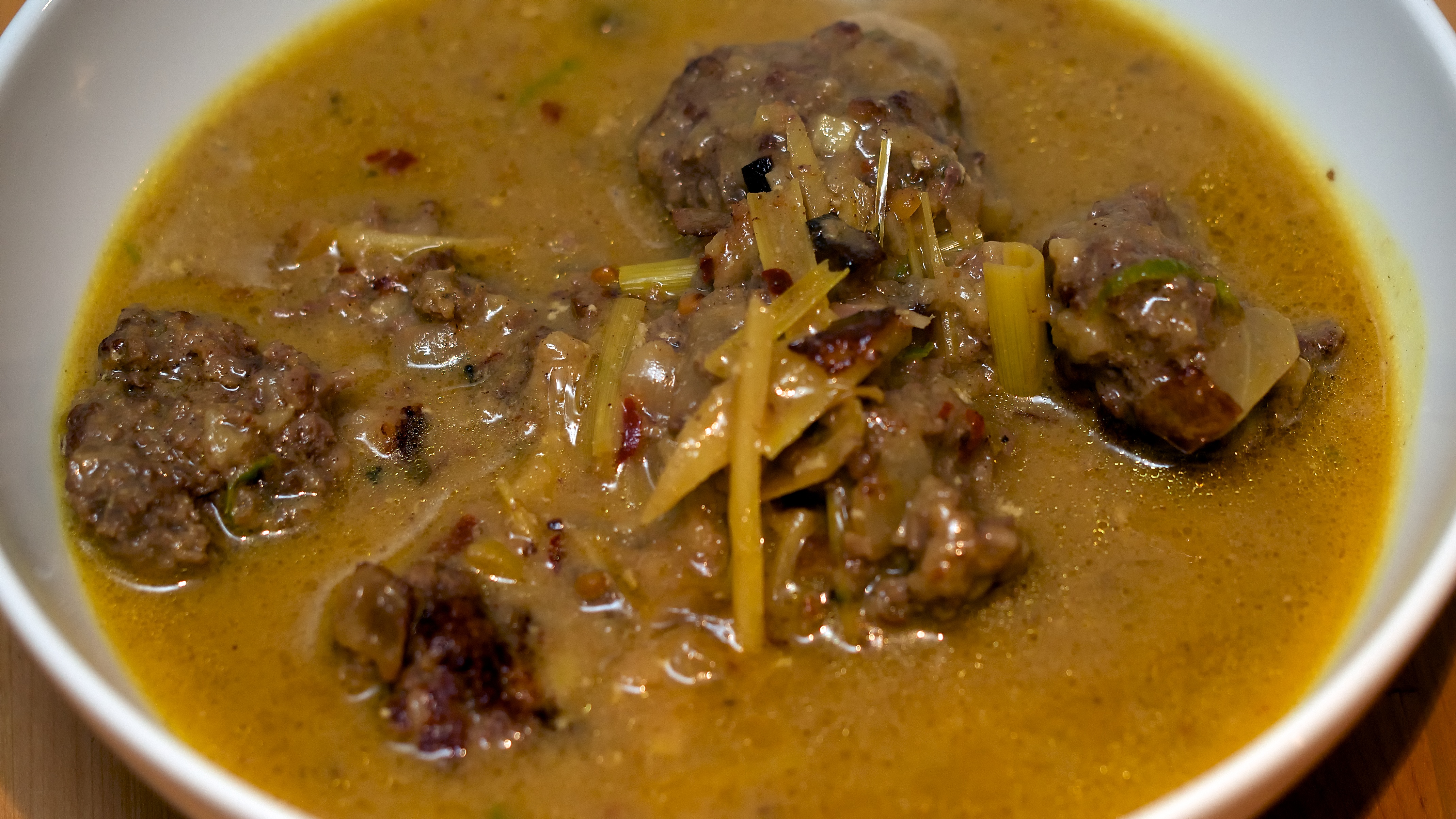
These meatballs are melt in the mouth. Don’t make them too big (no bigger than golf ball size) or they will dry out.

Meatballs in Fragrant Coconut Broth – serves 2-3

  • 2tsp coriander seeds
  • 4 cardamom pods, lightly crushed
  • 1 tsp ground turmeric
  • ½ tsp ground cinnamon
  • 1 tsp dried chilli flakes
  • 2 lemongrass stalks, trimmed, bashed and cut in half
  • 5cm piece of fresh root ginger, peeled and sliced
  • 400ml chicken stock
  • 1 x 400ml tin coconut  milk
  • zest and juice of 1 lime

FOR THE MEATBALLS: 

  • 1 small onion, peeled and finely sliced
  • 2 garlic cloves, peeled and finely sliced
  • olive oil
  • 1 tsp dried chilli flakes
  • 500g minced beef
  • 75g fresh breadcrumbs
  • 3-4 tbsp milk

First make the meatballs. Sauté the onion and garlic and some seasoning in a hot frying pan in a little oil for about 5 minutes or until soft and lightly coloured, adding the chilli flakes after a couple of minutes. Put the mince in a large bowl and season. Put the breadcrumbs in a separate bowl and moisten with the milk. Add seasoning, then stir the breadcrumbs and onion mixture into the mince and combine well. With wet hands, shape the mince mixture into golf-size balls. Transfer to a lightly greased plate or tray and chill for 30 minutes until firm.

Brown the meatballs in a clean oiled pan for 4-5 minutes, turning until brown on all sides.

Add the coriander seeds, cardamom, turmeric, cinnamon, chilli flakes, lemongrass and ginger. Heat through, stirring, until aromatic, then add the stock and coconut milk and bring to a gentle simmer. Taste and adjust the seasoning as necessary. Simmer for 8-12 minutes until the sauce has a good flavour and has thickened and the meatballs are cooked through.

Add the lime zest and juice and serve hot.

Wine Suggestion: this is a rich and bold dish and requires a fuller bodied white wine with texture and savouriness. We would suggest a good Grand Cru Pinot Gris from Alsace (a drier version) or a Condrieu from the Northern Rhone. The wines would ideally have a couple of years development in the bottle to enable the overt fruitiness to mature and the savoury flavours to come to the fore.

(Original recipe from Gordon Ramsey’s Ultimate Cookery Course, Hodder & Stoughton, 2012.)

Read Full Post »

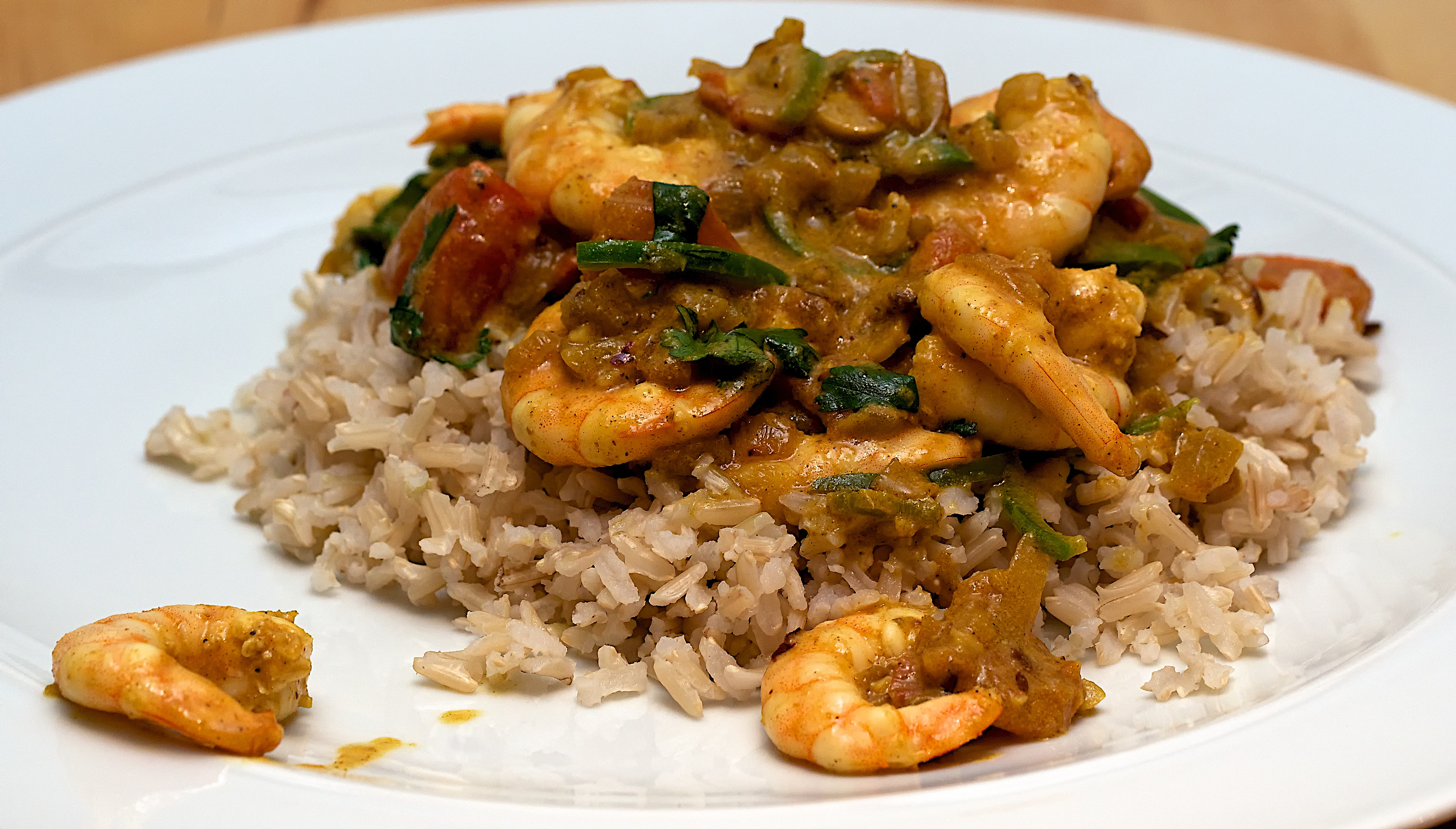
This is a simple curry but you need to marinate the prawns overnight in the fridge. The flavour builds up as the spices are gradually added and the sauce becomes really tasty. Serve with some plain basmati rice for a healthy dinner.

Hot Punjabi king prawn curry – to serve 4 

FOR THE MARINADE:

  • 600g raw king prawns, peeled and de-veined
  • 6 tbsp full-fat natural yogurt
  • 2 hot green chillies, finely sliced

FOR THE CURRY: 

  • 4 tbsp olive or sunflower oil
  • ½ tsp cumin seeds
  • 2 medium onions, finely chopped
  • 1 tbsp finely chopped or crushed garlic
  • 1 tsp turmeric
  • 2-3 hot green chillies, finely sliced
  • 2 tsp garam masala
  • 2 medium tomatoes, roughly chopped
  • ½ tsp chilli flakes
  • 4 tsp finely chopped coriander leaves

Rinse and drain the prawns. Pat them dry and put into a ceramic bowl. Add the yogurt, chillies and ½ tsp salt. Mix well, cover and leave overnight in the fridge.

When ready to cook the curry, pour the oil into a wok, and put on a medium heat.

Spoon in the cumin seeds and brown for 10 seconds then add the onions and sauté for about 10 minutes, or until or until brown all over.

Add the garlic, reduce the heat to low, and fry for 2 minutes.

Mix in the turmeric and stir for 1 minute.

Add the green chillies, increase the heat to medium and stir for 1 minute.

Mix in 1½ tsp of the garam masalsa ands stir for 1 minute.

Add ¼ tsp salt, the tomatoes and chilli flakes and cook for 2 minutes.

Add 125ml of boiling water and stir to make a thick sauce. Simmer for 3 minutes, then add ¼ tsp salt.

Stir in the prawns and marinade and cook over a medium heat until just opaque and cooked through.

Sprinkle the rest of the garam masala over the top and stir. Fold in the chopped coriander to serve.

(Original recipe by Madhur Jaffrey in BBC Good Food Magazine, March 2013.)

Read Full Post »

Pork with Cashews, Lime & Mint

A cracking stir-fry from one of Nigel Slater’s older books. The key to stir-frying is to crank up the heat and keep it there for the entire cooking time. It seems a bit scary at first but it’s the only way to guarantee everything is cooked through and the whole thing doesn’t end up soggy.

Pork with cashews, lime and mint – to serve 2

  • 400g pork fillet/steak, sliced into short bite-size strips
  • 6 tbsp groundnut or other flavourless oil
  • 90g unsalted cashew nuts, chopped fairly fine
  • 4 scallions, finely chopped
  • 4 cloves of garlic, finely chopped
  • a 4cm piece of ginger, peeled and finely shredded
  • 4 small, hot red chillies, seeded and finely chopped
  • zest and juice of 3 big, fat limes
  • 2 tbsp nam pla (Thai fish sauce)
  • a handful of mint leaves, chopped
  • a handful of basil leaves, torn

Get your wok really hot over the highest heat, then add 3 tbsp of the oil. When the oil crackles add the pork and cook for 3-4 minutes, or until sealed and golden in parts. Stir not and then as is cooks. If you end up with a load of juice your pan is not hot enough but you can just pour it off and carry on cooking. Don’t be tempted to turn the heat down.

When the meat is browned and sizzling, tip it on to a warm plate along with any juices. Get the wok really hot again before adding the rest of the oil, then add the scallions, garlic, ginger and chillies and stir-fry for a couple of minutes.

Add the nuts, fry for another couple of minutes, then return the meat and its juices to the pan. Stir in the lime zest and juice and the nam pla and fry for two more minutes, then stir in the mint and basil. Serve right away with some fried rice.

Wine Suggestion: The trickiest flavour to match here is the lime so it’s probably best to work with it rather than against it. Perhaps an Australian Riesling such as Petaluma or a Pewsey Vale.

(Original recipe from Nigel Slater Real Food, Fourth Estate, 1998.)

Read Full Post »

Crab & Sweetcorn Soup

This soup is absolutely delicious and super simple to throw together. We made a main meal out of it by serving it with some shop-bought spring rolls. Try and use freshly ground white peppercorns if you can as they give a subtle spiciness that works really well with the aromatic ginger.

Crab & Sweetcorn soup – to serve 4

  • 125g white crabmeat
  • 2 egg whites
  • 1 tbsp cornflour, mixed with 2 tbsp water
  • 1.2 litres chicken stock
  • 2.5cm knob of fresh root ginger, peeled and grated
  • 225g tinned sweetcorn, pulsed to a rough purée in a food processor
  • sea salt and freshly ground white pepper
  • 2 scallions, finely sliced

Lightly beat the egg whites until frothy. Add the egg whites to the crabmeat along with the blended cornflour and stir well.

Put the stock and ginger into a large saucepan and bring to a simmer. Add the sweetcorn and bring back to the boil. Reduce the heat slightly and simmer for a few minutes. Add the crabmeat mixture and some seasoning. Let it simmer gently and keep stirring for a few minutes until the soup has thickened. Taste and add more seasoning if necessary. Serve in warm bowls with the scallions scattered over the top.

Wine Suggestion: We didn’t actually try this but, having discussed it at length, we reckon an Austrian Grüner Veltliner might work here. Grüner has a savoury peppery character which should complement the peppery flavour of the soup. You don’t want it to be too heavy though so go for one that is no higher than 12.5% alcohol.

(Original recipe from Gordon Ramsay’s World Kitchen: Recipes From the F Word, Quadrille.)

Read Full Post »

Tom Yam Gai

We highly recommended this hot, sour and fragrant soup for head colds and other ailments. It probably won’t cure you but it will make you feel better for a short while.

Tom yam gai – to serve 2

  • 1 skinless chicken breast
  • 1 litre fresh chicken stock
  • 4 scallions, finely chopped
  • 2 cloves of garlic, peeled and finely chopped
  • 1 stalk of lemongrass, chopped into short lengths and slightly crushed
  • 3 small red chillies, seeded and thinly sliced
  • 4 lime leaves
  • 1 tbsp nam pla (Thai fish sauce)
  • 1 tsp sugar
  • 1 tbsp fresh lime juice
  • 1 tbsp chopped coriander leaves

Bring the chicken breast to the boil in the stock, then turn the heat down to simmer. Cook for about 10 minutes or until the chicken is cooked, then remove, shred and set aside.

Add the scallions, garlic, lemongrass, chillies and lime leaves to the broth and simmer gently for 10 minutes. Add the fish sauce, sugar and shredded chicken and keep cooking for another 3-4 minutes. Stir in the lime juice and adjust the seasoning. Make sure the soup is piping hot and stir in the coriander just before serving.

(Original recipe from Nigel Slater’s Real Food, Fourth Estate, 1998.)

Read Full Post »

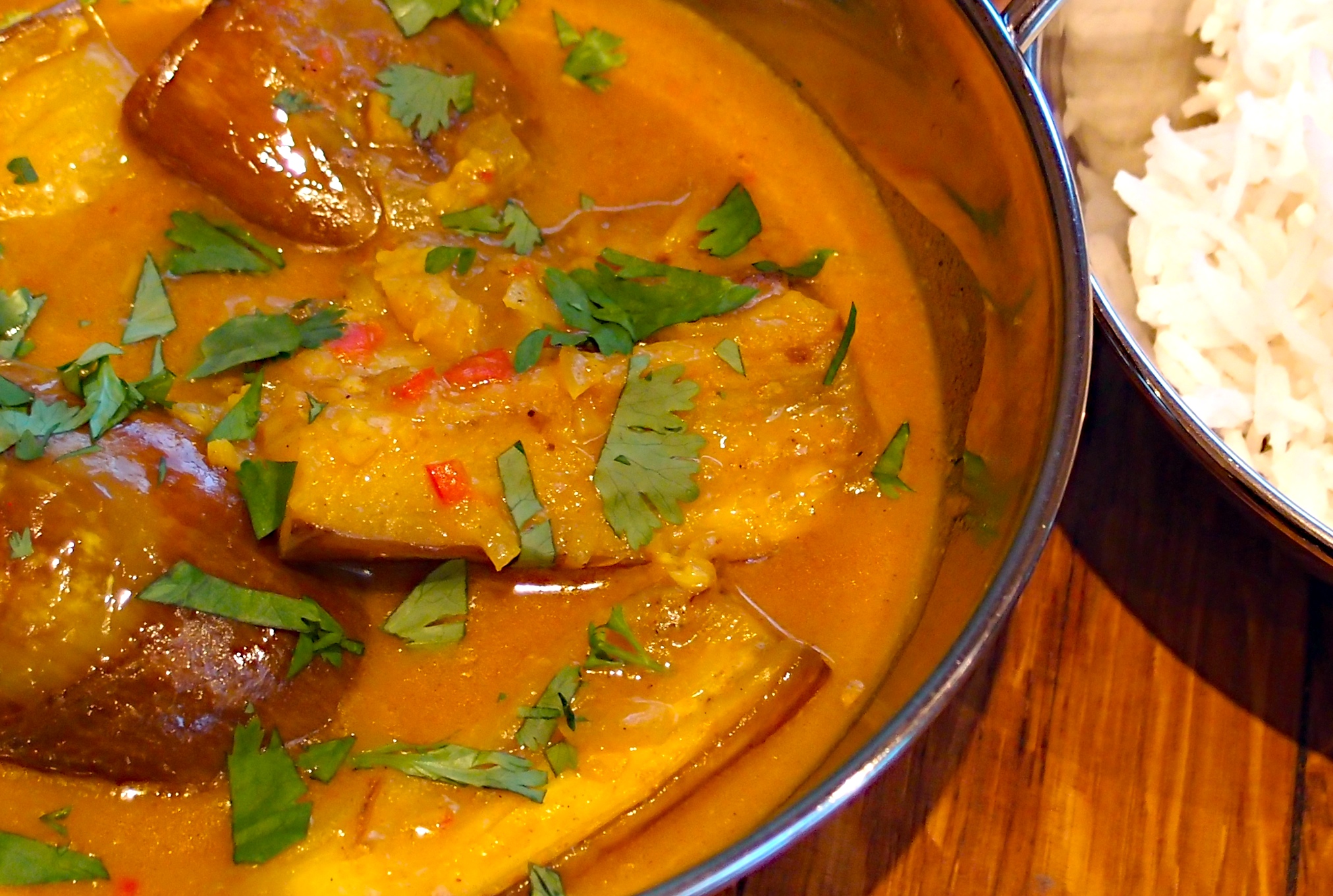
This is a really straightforward curry and we are glad to say it didn’t disappoint. The aubergine melts in the mouth and the spices are lovely and fresh as well as warming and comforting. Also takes no time at all to make.

Aubergine Curry with Lemongrass & Coconut Milk – serves 4

  • 3 large chillies, deseeded and chopped
  • 6 garlic cloves, roughly chopped
  • knob of fresh ginger, peeled and chopped
  • 2 lemongrass stalks, peeled and chopped
  • 2 tbsn ground turmeric
  • 1 tsp chilli powder
  • 2-3 aubergine (approx 600g) quartered lengthways then halved
  • 1 tbsp olive oil
  • 1 tbsp sugar
  • 6 shallots, finely chopped
  • 1 tbsp Fish Sauce (nam pla)
  • 400ml can coconut milk
  • 400ml vegetable stock
  • small bunch coriander, roughly chopped

Pulse  to a coarse paste chillies, garlic, ginger and lemongrass in a food processor. Set aside

Mix the turmeric and chilli powder together and rub it all over the aubergine wedges. Don’t worry if it look like a lot of spices – it works!

Heat olive oil in frying pan and brown aubergine in batches, setting the aubergine aside when done. Add the paste, sugar and shallots to pan and cook for a few minutes until the shallots and garlic soften.

Return aubergine to pan. Add fish sauce, coconut milk and stock, mix well and bring to the boil. Reduce heat and cook gently for about 15 minutes and until aubergine is tender but not mushy. Season and sprinkle coriander on top.

Serve hot with steamed rice.

Drink with: a aged Clare Valley riesling (at least 5 or six years old) or a fruity young Mosel Riesling.

Read Full Post »

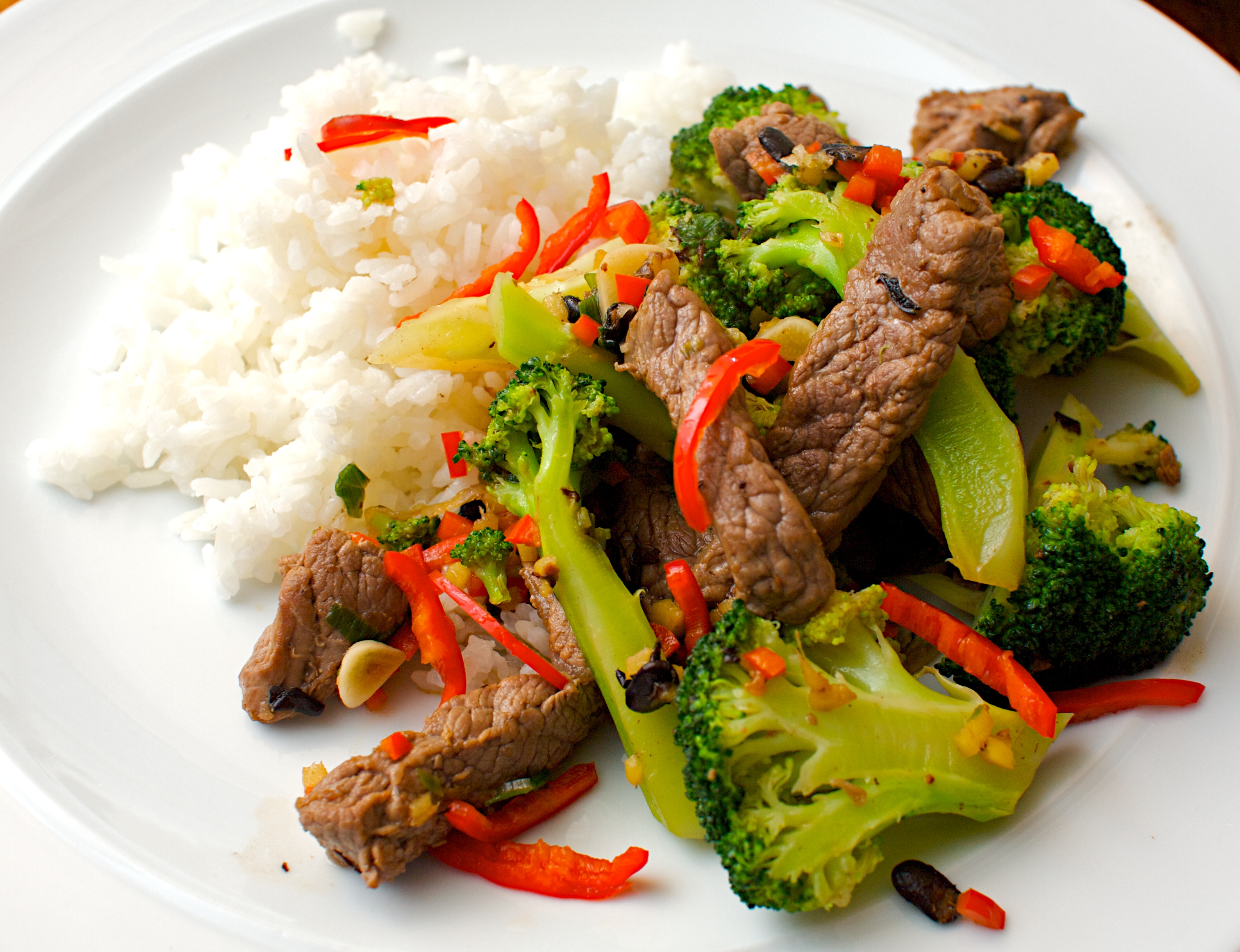
Gok Wan has reinvigorated our enjoyment of Chinese food. This is not the black-bean sauce we have been used to getting in restaurants and manages to be both light and have great depth with very distinctive Chinese flavours and aromas. Don’t be tempted to omit the pickled chilli as it really makes the dish.

Warning: this is nothing like the gloopy stuff you get from the Chinese take-away. Just so you know.

Beef in Fragrant Black Bean Sauce – to serve 2

  • 250g broccoli, cut into small florets
  • 3 tsp sesame oil
  • 1 tbsp groundnut oil
  • a 2cm pice of fresh ginger, peeled and finely chopped
  • 2/3 cloves of garlic, thinly sliced
  • 1 scallion, finely chopped
  • 1 tbsp fermented black beans, soaked for 5 minutes in warm water and drained
  • 250 sirloin steak, fat removed and sliced into strips
  • 1 fresh red chilli, deseeded and finely chopped
  • ground white pepper
  • 1 tbsp Shaoxing rice wine or dry sherry
  • light soy sauce, to taste

FOR THE QUICK PICKLED CHILLI

  • 1 red chilli, sliced into long diagonal strips
  • 2 tbsp rice wine vinegar
  • 1-2 tsp caster sugar

Firs make the pickled chilli by putting the strips of chilli into a bowl and cover with rice vinegar. Sprinkle with the caster sugar and leave to soak.

Blanch the broccoli in salted water for 2 minutes, then drain and season with a drizzle of sesame oil and some salt.

Heat a wok over a high heat and add a good splash of oil. Add the ginger, garlic and scallion and stir-fry for about 10 seconds, just to soften the garlic. Add the black beans and cook for 20 seconds more.

Add the steak and cook for 2-3 minutes, or until sealed on all sides. Add the chilli, blanched broccoli and some salt and white pepper, along with the Shaoxing rice wine, 1 tsp of soy sauce and 1 tbsp water. Toss together, then taste and adjust the seasoning if necessary.

Drain the pickled chilli and serve with the beef and some rice.

(Original recipe from Gok Cooks Chinese, Penguin, 2012.)


Read Full Post »

« Newer Posts - Older Posts »