Feeds:
Posts
Comments

Archive for the ‘Gluten-free’ Category

You will need a wide heavy-based casserole dish for this as you ideally want the cabbage rolls in one layer. Make sure you season every component generously as you go. If you follow the suggestion of putting just 50g of the filling in each cabbage leaf (as you should or they will be impossible to roll), you will have too much. You can either stuff a few extra leaves or put the stuffing in the freezer for another day, which is what we did. This is a traditional Ukranian dish from Mamushka by Olia Hercules. The barberries are optional and we couldn’t find them so made the dish without, still delicious!

Wine Suggestion: We couldn’t pass up a hearty red for this dish, and a new favourite, the Parker Coonawarra Shiraz; full bodied and yet elegant and effortless with that characteristic eucalyptus twist, well recommended.

Stuffed Cabbage Leaves – serves 4 to 6

  • 2 tbsp sunflower oil
  • 1 large onion, finely diced
  • 1 carrot, peeled and grated
  • 1 tsp caster sugar
  • 1 tbsp tomato purée
  • 1 fresh bay leaf
  • 400g tin chopped tomatoes
  • 400ml water
  • 1 Savoy cabbage, 12 leaves separated, cut out the thicker part of the spine with a sharp knife or scissors
  • 250g beef mince
  • 250g pork mince
  • 160g white long-grain rice, parboiled for 5 minutes and drained
  • 40g barberries (optional)
  • a small bunch of dill, chopped, to serve
  • 100ml sour cream, to serve

Heat the sunflower oil in a large heavy-based casserole dish. Add half the chopped onion and all of the grated carrot and cook over a medium heat for 5-10 minutes until soft. Add the sugar and tomato purée and cook for 1 minute. Add the bay leaf, tomatoes and water, then season well with salt and pepper. You can turn it off at this point while you prepare the cabbage leaves but bring it back up to a simmer when you’re ready to add the cabbage to the dish.

Blanch the cabbage leaves in lots of boiling salty water for 2 minutes, then refresh in cold water and drain well on kitchen paper. It’s easier to do this in a few batches.

Mix the beef mince, pork mince, parboiled rice, barberries (if using), plenty of salt and pepper and the rest of the onion together in a bowl. Put 50g of the filling on each cabbage leaf and fold up into a parcel.

Lay the parcels on top of the sauce with the folded side facing down. You want them to fit quite snugly so they don’t unravel. Cover and cook over a low heat for about 45 minutes or until cooked through. You can leave the lid off at the end to reduce the sauce a bit if you like.

Serve with chopped dill and sour cream.

(Original recipe from Mamushka by Olia Hercules, Mitchell Beazley, 2015.)
Read Full Post »

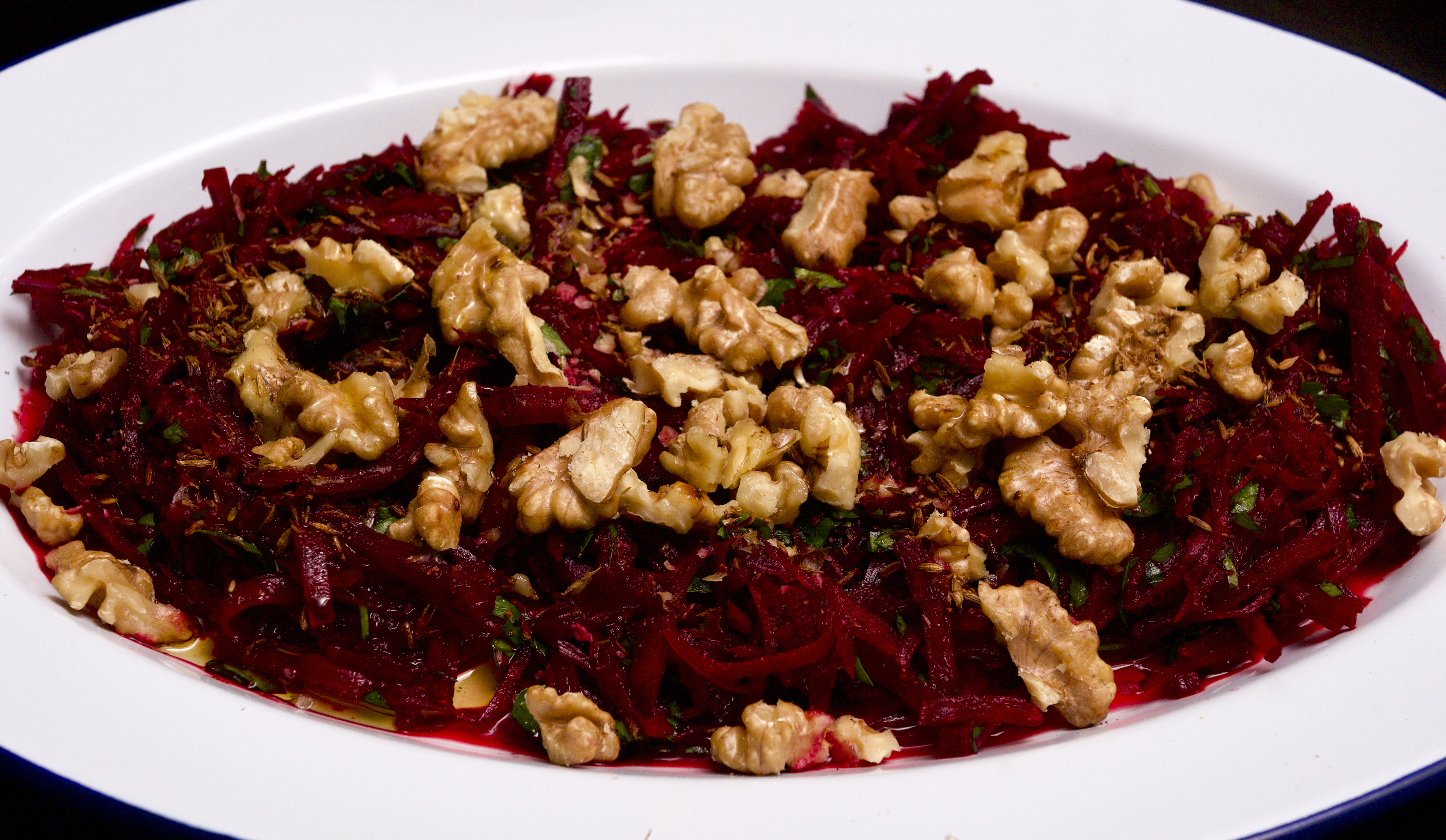
A nice salad using raw beetroot. It tastes really fresh and good for you. 

Beetroot with walnuts and cumin – serves 4

  • 75g walnuts
  • 1 tsp cumin seeds
  • about 400g beetroot
  • a handful of parsley, chopped
  • juice of 1 small orange
  • a squeeze of lemon juice
  • 2 tbsp rapeseed oil

Heat a dry frying pan over a medium heat and gently toast the walnuts for a few minutes, until toasted and starting to colour. Remove from the pan and add the cumin seeds. Toast these for 1-2 minutes, until fragrant, then tip onto a plate. 

Peel the beetroot and grate it coarsely into a bowl. Add the parsley, orange juice and a squeeze of lemon juice, 1 tbsp rapeseed oil and salt and pepper. Mix and season again to taste. Leave for 20 minutes or so to marinate and soften. 

Spread the beetroot over a serving dish. Bash the toasted walnuts roughly and scatter over the beetroot. Bash the toasted cumin seeds too, then scatter over the salad. 

Finish with another drizzle of oil. 

(Original recipe from River Cottage Veg Everyday! by Hugh Fearnley-Whittingstall, Bloomsbury, 2011.)

Read Full Post »

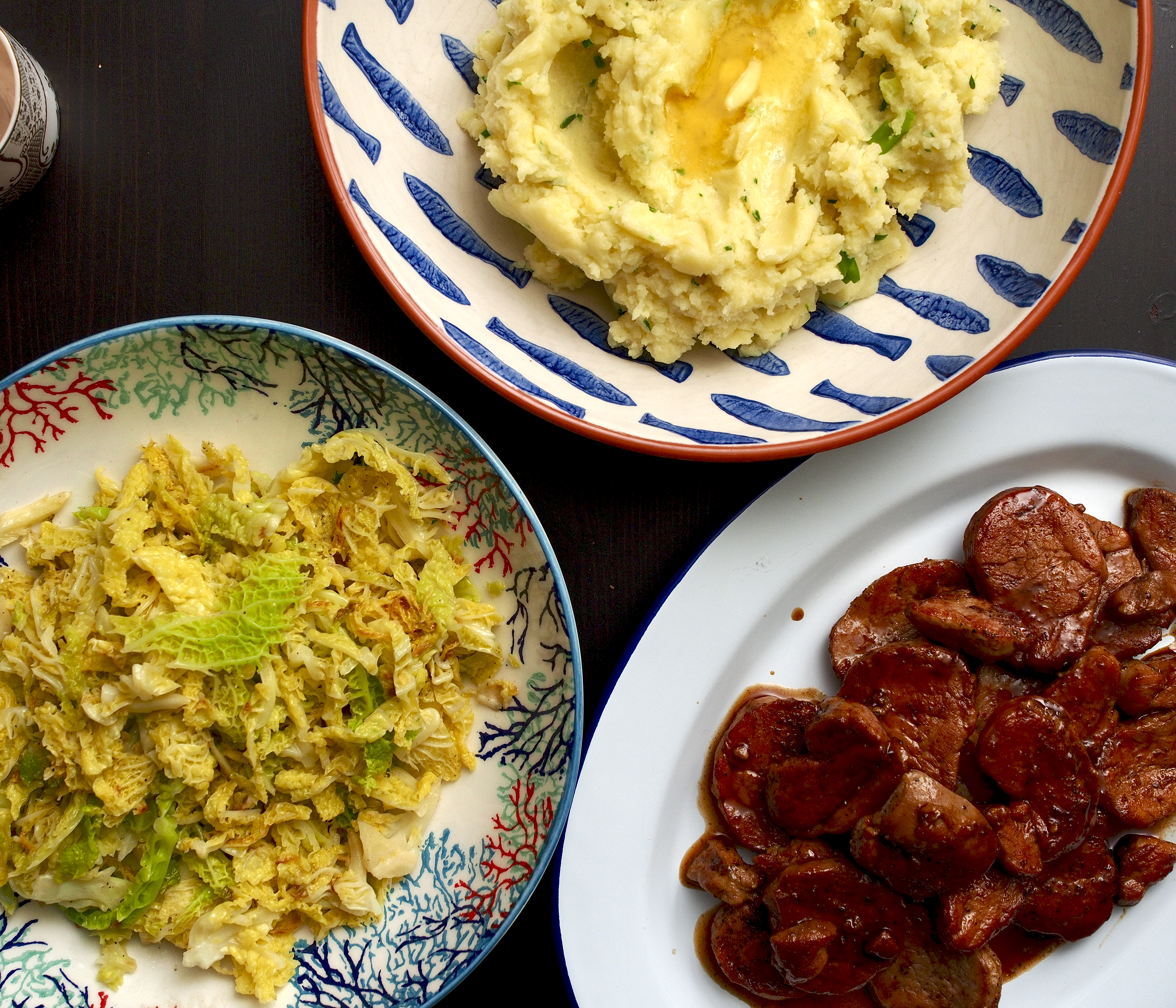
We don’t often cook dishes more than once but we always make a note on the recipe, telling us when we cooked it and what we thought of it. The last time we cooked this, or Jules did, was on the 16th August 2005. She thought it was very good then, and we both thought it was very good this time round too. We served with champ and sautéed cabbage.

Wine Suggestion: Despite Marsala hailing from Sicily we quite like a nice red Côtes du Rhône or similar with this dish. If you’re fortunate to find Domaine Jamet’s version made with 100% Syrah then snap up a bottle and then make this.

Sautéed pork medallions with Marsala – serves 4

  • 2 pork fillets, about 1kg in total
  • 4 tbsp sunflower oil
  • 150ml sweet Marsala

Cut the pork into medallions, about 1cm thick. Season with salt and pepper.

Heat the sunflower oil in a large frying pan, add the pork and sauté quickly over a high heat to brown on both sides. We find it’s much easier to do this in a few batches.

Return all the pork to the pan, add another bit of seasoning, then pour in the Marsala. Cook for a few minutes, or until the meat is cooked through and the liquid slightly reduced. Keep an eye on it as it the sauce will reduce quickly.

(Original recipe from Foolproof Mediterranean Cookery by Claudia Roden, BBC Worldwide Ltd, 2003.)

Read Full Post »

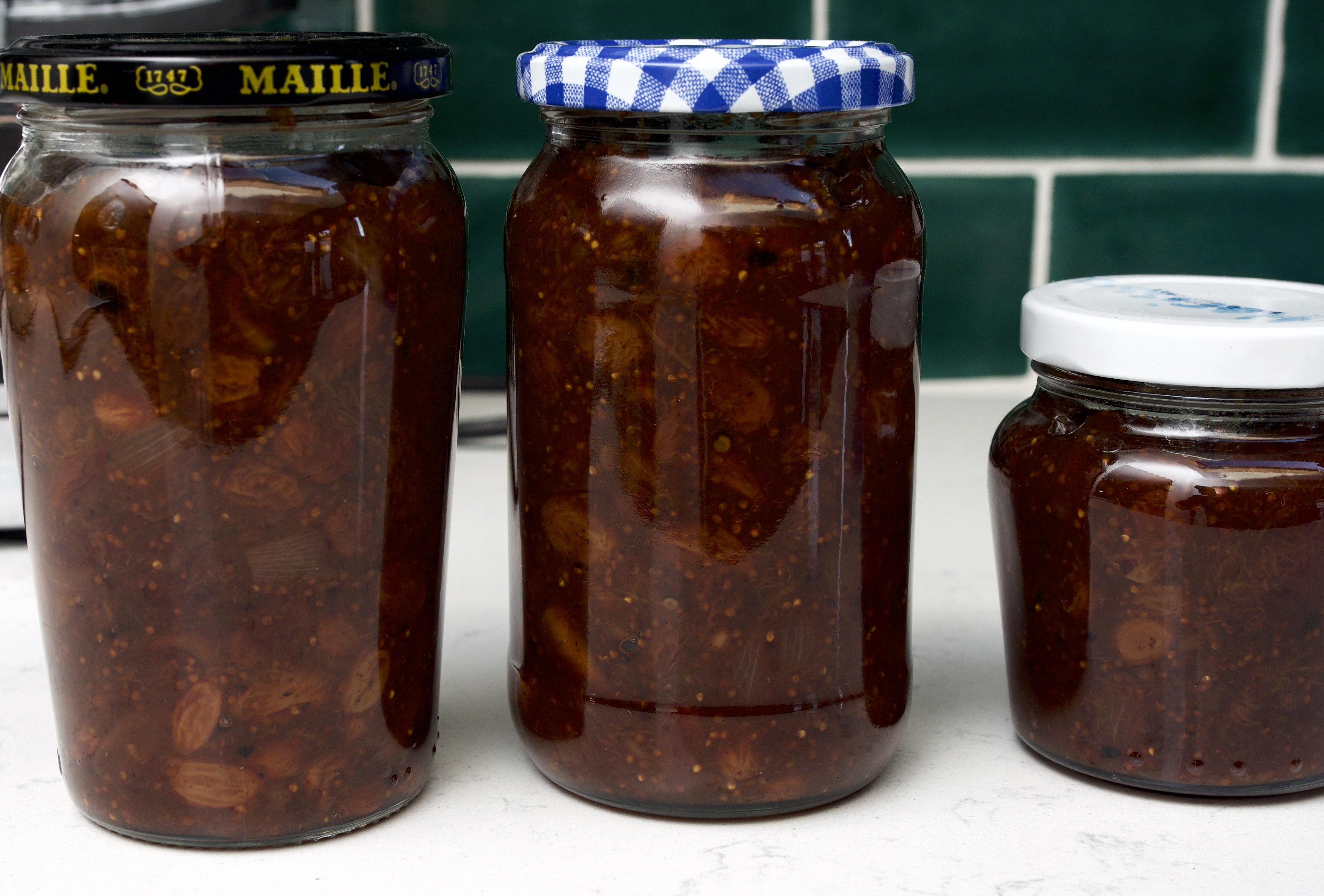
This is Nigel Slater’s dark and sticky fruit chutney from Kitchen Diaries II. The chutney is nice with cheese or cold cuts. Figs are expensive but they don’t keep for long so you often find them reduced to clear in shops. 

A dark and stick fruit chutney – makes a few jars

  • 250g soft brown sugar
  • 8 large figs, about 1kg, roughly chopped and stalks removed
  • 150ml malt vinegar
  • 150ml cider vinegar
  • 250g chopped onions
  • 250g sultanas
  • 1 tsp salt
  • 1 tsp allspice
  • half a tsp black peppercorns, cracked
  • 1 tsp coriander seeds

Warm the sugar in a bowl in a low oven. 

Put the chopped figs into a large, stainless steel or enamelled saucepan. Add the vinegars, onions, sultanas, salt, allspice, cracked peppercorns and coriander seeds, then bring to the boil. Simmer for 30 minutes, until the onions and fruit are soft. 

Stir in the sugar. Bring slowly to the boil, then turn the heat down and allow to bubble very gently. Cook for 10-15 minutes, stirring now and then to prevent it sticking, until thick and jam consistency. Bottle while hot and seal. 

(Original recipe from The Kitchen Diaries II by Nigel Slater, Fourth Estate, 2012.)

Read Full Post »

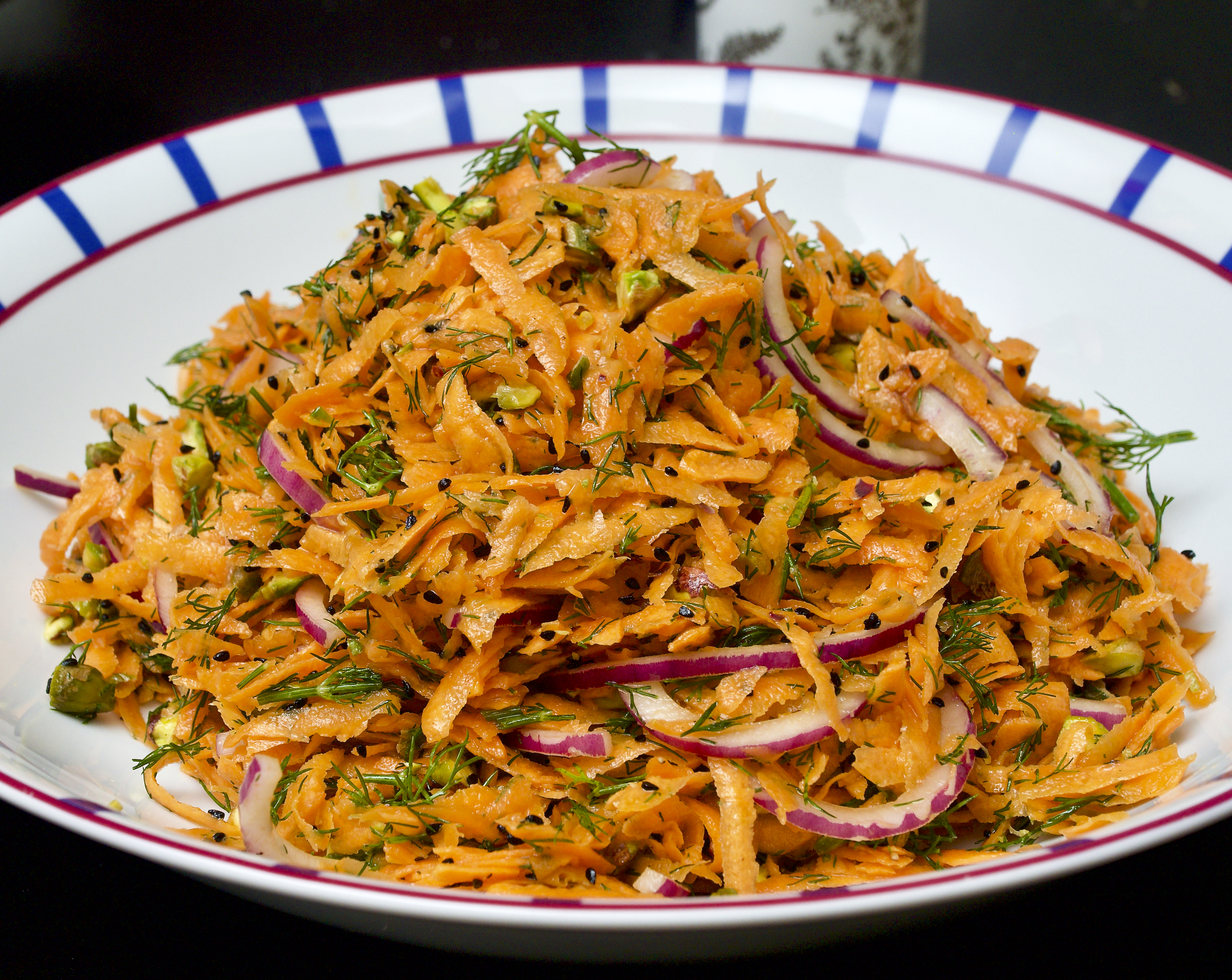
This is a good side dish to serve with richer dishes. It’s light and zingy which is just what’s needed sometimes. Another great combination of flavours suggested by Sabrina Ghayour. 

Carrot, pistachio & dill salad with lime & honey dressing – serves 4 to 6

  • 500g carrots, coarsely grated
  • ½ a small red onion, thinly sliced
  • 75g pistachio nuts, roughly chopped
  • about 30g of dill, finely chopped
  • 2 tsp nigella seeds

FOR THE DRESSING: 

  • 2 tbsp olive oil
  • finely grated zest and juice of 1 lime
  • 1 generous tbsp of runny honey

Mix all the dressing ingredients together and season well with sea salt and black pepper.

Put the other ingredients into a large bowl. Add the dressing when you’re ready to serve and toss gently to coat. Check the seasoning and serve. 

(Original recipe from Simply by Sabrina Ghayour, Mitchell Beazley, 2020.)

Read Full Post »

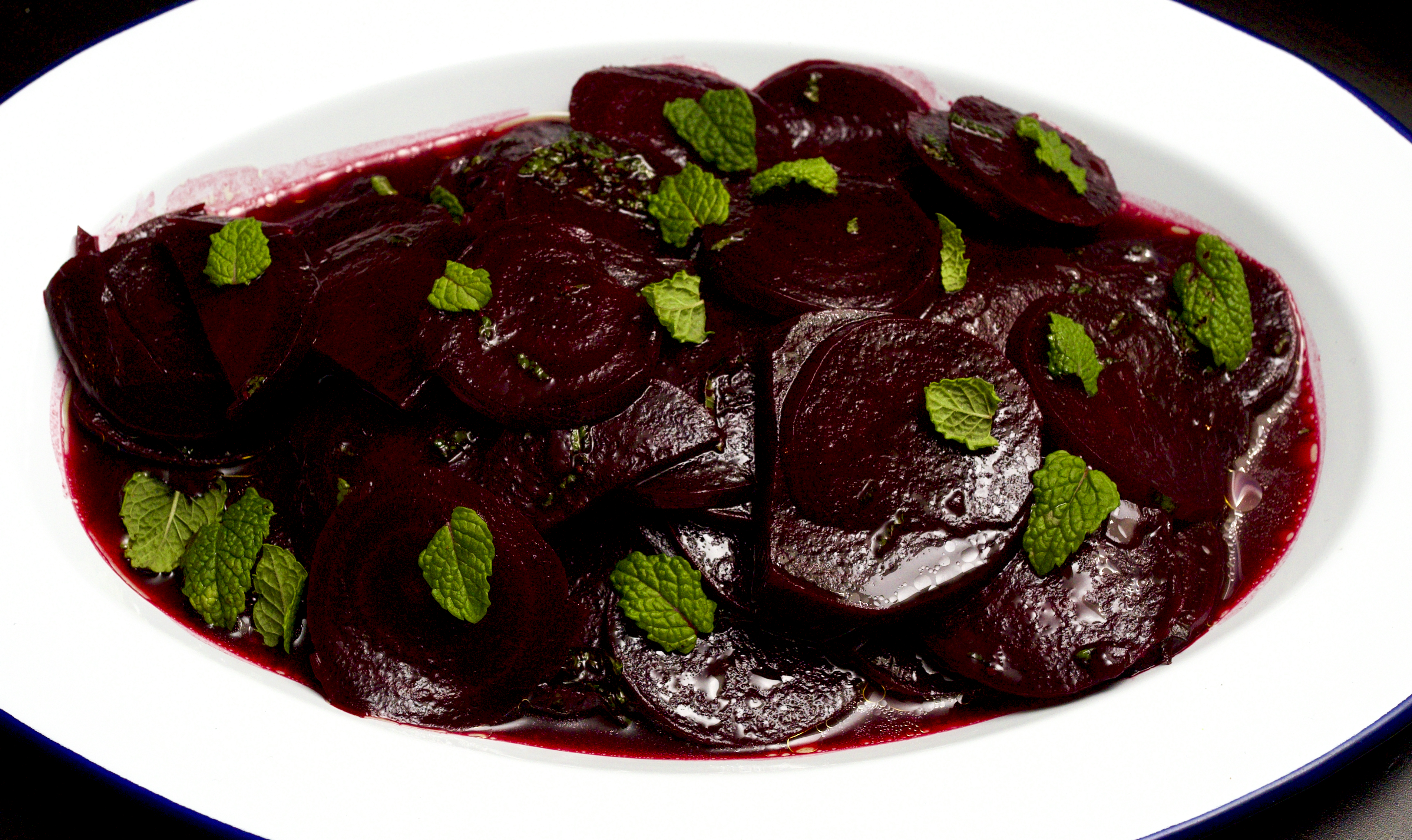
You need cooked beetroots for this. You can of course buy them pre-cooked in vac packs but they’re much nicer when you cook them fresh. Just give them a good scrub, dry with paper and wrap in tin foil. Roast for about an hour (or as long as it takes) at 200ºC. Let them cool before making the salad. We served this with roast chicken and the next day with a ham salad. Make this up at least an hour in advance to allow the flavours to mingle.

Beetroot & mint salad – serves 4 to 6

  • 4 tsp caster sugar
  • 4 tbsp balsamic vinegar
  • juice of 2 lemons
  • 4 tbsp extra virgin olive oil
  • 12 cooked beetroots, finely sliced into rounds
  • a small bunch of mint leaves

Whisk the sugar, vinegar, lemon juice, olive oil and a pinch of salt in a small bowl.

Put the sliced beetroot into a bowl. Roughly chop half the mint leaves, and add to the beetroots before pouring over the  dressing. Leave in the fridge for an hour or so.

To serve, drain off some of the marinade, arrange the slices on a platter and scatter over the rest of the mint.

(Original recipe from Skye McAlpine’s A Table for Friends: The Art of Cooking for Two or Twenty, Bloomsbury, 2020.)

Read Full Post »

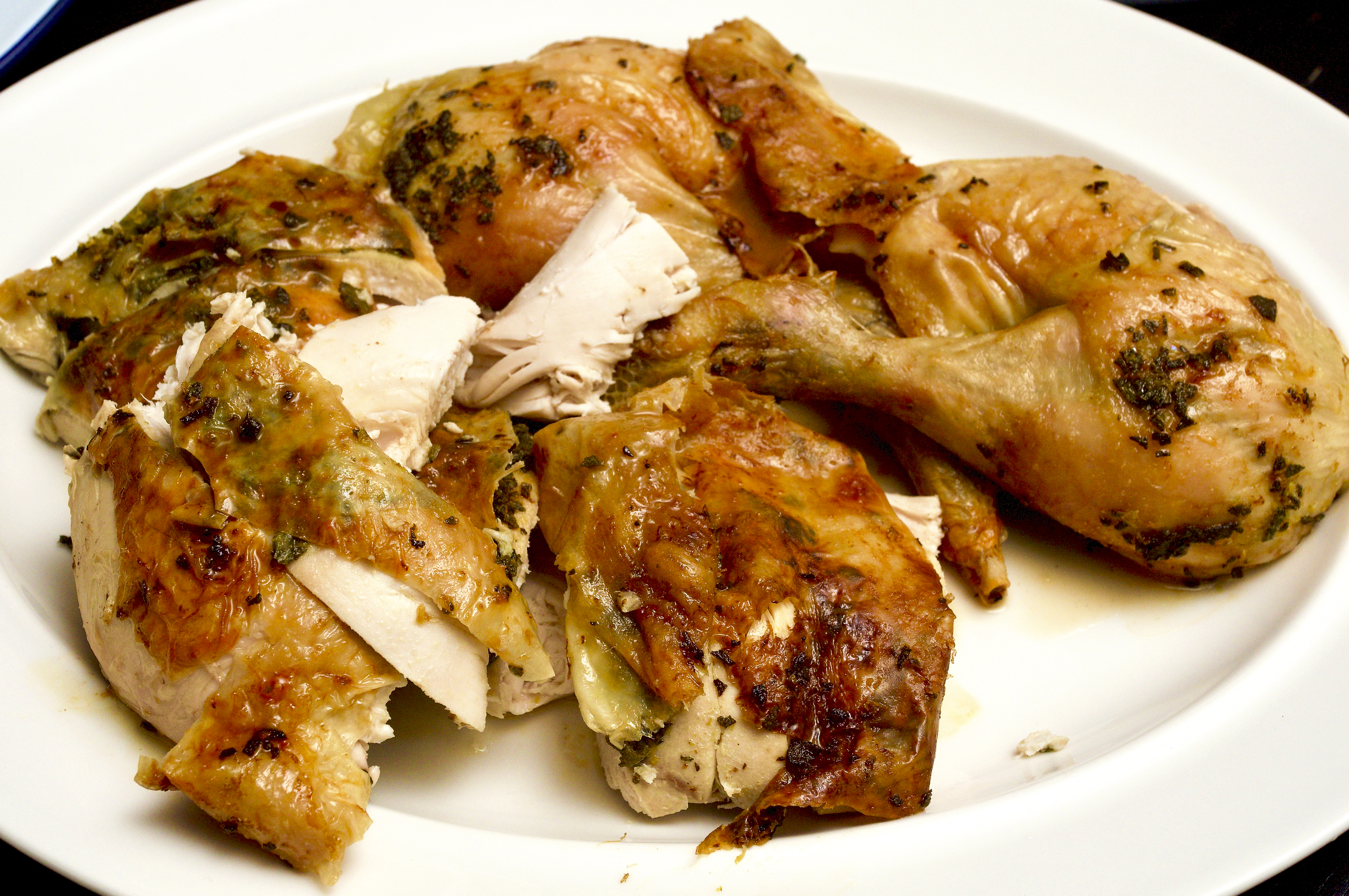
We recently bought Skye McAlpine’s book, A Table for Friends, which has lovely menus for each season. We’re well and truly into Autumn now and the farm shop is full of potatoes, pumpkins and beetroots. Tonight we made Skye’s suggested autumn menu of buttery lemon roast chicken, beetroot & mint salad, butter & sage roast pumpkin and roast potatoes. A perfect combination of dishes and all can be prepped in advance. Unfortunately we were minus the friends but hopefully those days will be back again before too long. 

We ignore all timings for roast chicken these days and stick to Diana Henry’s failsafe instructions to roast for 20 minutes at 190C for each 500g plus an extra 10 minutes. 

Wine Suggestion: Quite often with roast chicken we lean towards oaked Chardonnay as it’s such a classic match but tonight we remembered that another great match is good red Bordeaux from the Left Bank, so Cabernet Sauvignon dominant, and also with a little age, but not too much. We continued our lockdown habit of dipping into the cellar once a week and pulled out a Domaine de Chevalier red from 2010. It still has years, if not a couple of decades of life ahead of it but at 10 years old it still has a spriteliness of youth while all components have come together harmoniously into a smooth, elegant wine.

Buttery Lemon Roast Chicken – serves 4

  • a large bunch of sage
  • 1 lemon, finely zested
  • 50g butter, softened
  • 1 tsp sea salt flakes
  • 1 free-range chicken

You can prep the chicken early in the day and keep in the fridge but make sure you take it out an hour or two before you want to put it into the oven so it’s at room temperature.

Heat the oven to 190C.

Finely chop half the sage and mash in a bowl with the butter, lemon zest and salt.

Put the chicken into a roasting tray. Cut the lemon in half and squeeze some of the juice into the cavity, then stuff the halves into the chicken with the remaining sage.

Gently lift the skin over the breast and smear a quarter of the butter mixture under the skin over each breast. You should be able to push the butter quite far down with your fingers, but careful not tear the skin. Rub the rest of the butter over the chicken and sprinkle with some extra salt.

Roast the chicken according to the timings given above. When cooked the legs should feel loose and the juice should run clear when you pierce a thick bit with a sharp knife.

Leave to rest for 10 minutes before carving and served with some of the juices spooned over.

(Original recipe from A Table for Friends: The Art of Cooking for Two or Twenty by Skye McAlpine, Bloomsbury, 2020.)

Read Full Post »

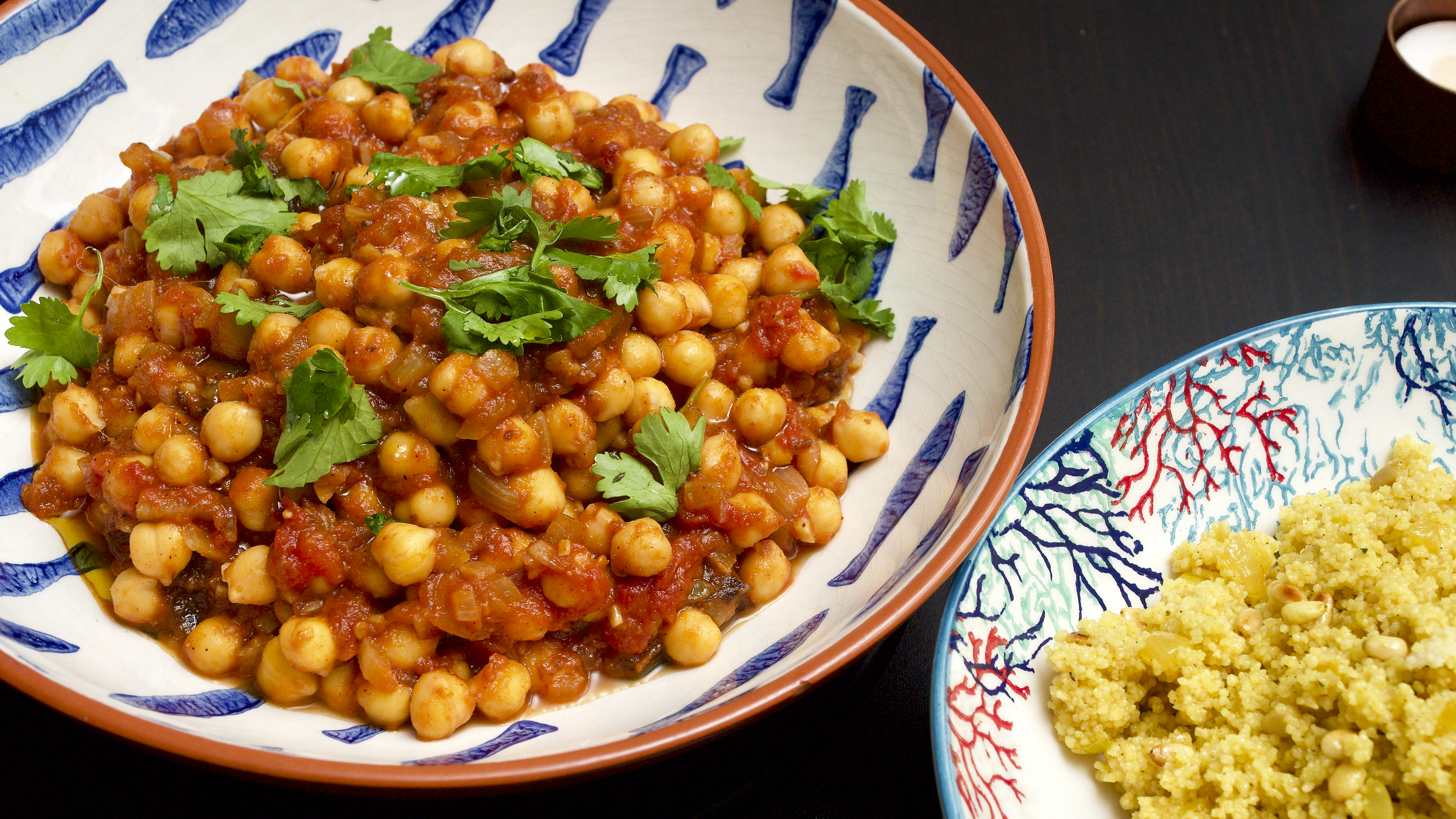
We made this by accident having planned to do a different tagine from a magazine, only to realised that it required a slow-cooker, so this was a last-minute substitute. It is really and truly delicious, so you must try making this dish at some stage. You can serve with plain couscous but it’s particularly good with this. If chickpeas don’t float your boat as a main course for Sunday lunch both dishes would be excellent with some roast lamb. 

Wine Suggestion: this is great with a juicy, brambly Grenache, or a blend with this in it. We had the joyful Les Dissidents “le Paria” made by Domaine Ventenac from 100% Grenache and made without sulphur; fresh, juicy and minerally.

Tomato, date & chickpea tagine – serves 4

  • 2 tbsp olive olive oil or unsalted butter
  • 1 large onion, finely chopped
  • 1 x 400g tin plum tomatoes
  • 120g pitted dates, halved
  • 4 cloves of garlic, finely chopped
  • a small bunch of coriander, leaves roughly chopped and stalks reserved
  • 1 tsp ground cumin
  • 1 tsp ground coriander
  • 1 tsp ground ginger
  • ½ tsp ground cinnamon or 1 cinnamon stick
  • 2 strips of lemon zest and the juice of ½ a lemon
  • 2 x 400g tins of chickpeas, drained and rinsed

FOR THE SEASONED YOGHURT

  • 200g natural yoghurt
  • juice of ½ a lemon

Heat the oil or butter in a frying pan over a medium heat, then add the onion and fry for 8-10 minutes, until soft. 

Whizz half the tomatoes with half of the dates, then add the rest of the tomatoes to the mixture and set aside. 

Add the garlic, coriander stalks and all of the spices to the cooked onions, stir and cook for 1 minute. Add the tomato mixture, the lemon zest and 100ml of water, season well with salt and pepper, then cook for 10 minutes or until rich and thickened. 

Meanwhile, make the seasoned yoghurt. Mix the yoghurt with the lemon juice and a good pinch of salt in a bowl, then set aside. 

Stir the chickpeas and the rest of the dates into the tomato mixture and cook for 5 minutes to heat through. Add the lemon juice and check the seasoning. Discard the pieces of lemon zest, then remove the dish from the heat. 

Stir in the coriander leaves and serve with some seasoned yoghurt and golden couscous. 

(Original recipe from New Kitchen Basics by Claire Thompson, Quadrille, 2019.)

Read Full Post »

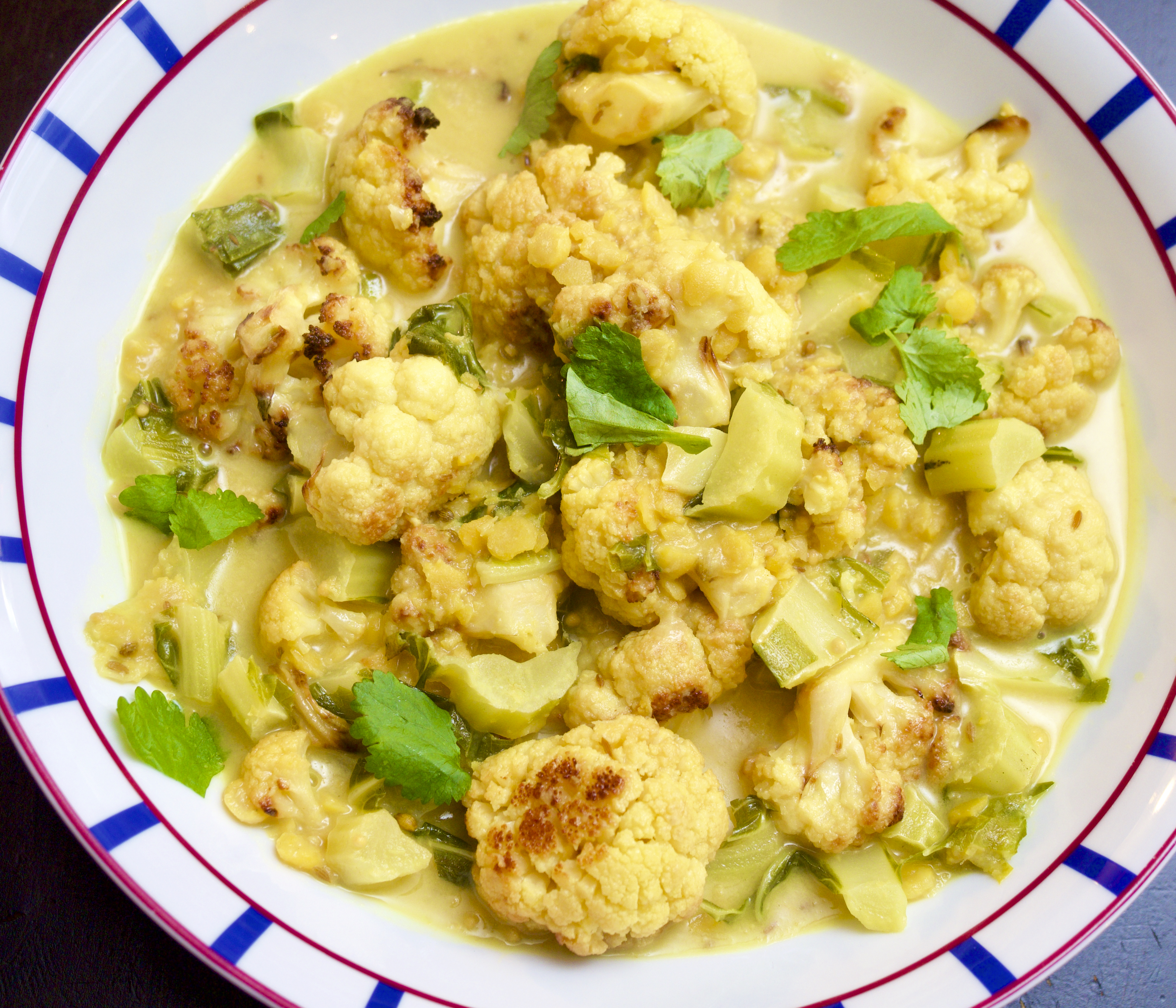
We’ve been looking for recipes that use fresh turmeric but you can also use ground turmeric for this dish. This cauliflower curry is really nice and also uses the cauliflower leaves, genius! Serve with rice. 

Wine Suggestion: This dish cries out for a white from warmer or sunnier climates where there are hints of tropical fruits in the flavours. Tonight’s choice was the superlative Kilikanoon Pierce Road Semillon; an oak aged semillon from the Clare Valley. Rich and layered with buttery, toasty hints of the barrel fermentation carried through with a wonderful, lemony, citrus backbone of acidity. Youthful but poised and balanced.

Cauliflower and yellow split pea curry – serves 4

  • 1 large cauliflower, with leaves, cut the cauliflower into bite-sized pieces and the cut the leaves across the spine into 1cm-thick strips
  • 2 tbsp vegetable oil
  • 180g yellow split peas, rinsed
  • 1 x 400ml tin coconut milk

FOR THE CURRY BASE:

  • 6 cardamom pods, crushed
  • 2 cinnamon sticks
  • 1 tsp cumin seeds
  • 1 tsp coriander seeds
  • 1 tsp mustard seeds
  • 2 tbsp vegetable oil
  • 1 onion, finely diced
  • 3 cloves of garlic, finely grated
  • 4cm piece of ginger, peeled and finely grated
  • 4cm piece of fresh turmeric, peeled and finely grated (or you can use 1 tbsp ground turmeric)
  • 1 green chilli, finely diced
  • 2 bay leaves
  • a bunch of coriander, chop the stalks finely and the leaves roughly

Preheat the oven to 220C/200C/gas 7.

Toss the cauliflower pieces in the vegetable oil and season generously with salt. Place in a roasting tray and roast for 30-35 minutes or until deep golden. Toss them halfway through. 

Meanwhile, put the crushed cardamom pods, cinnamon sticks, cumin, coriander and mustard seeds in a medium saucepan. Put over a medium heat and toast until fragrant. Add the vegetable oil, then the rest of curry base ingredients, including the coriander stalks but not the leaves. Season well with salt and cook for 5 minutes.

Add the split peas and 700ml warm water. Stir, then cover and simmer over a low heat for 40 minutes, stirring often and adding a little more water if needed. Add the coconut milk and cook for another 5 minutes. 

Add the cauliflower and the cauliflower leaves, then cover and cook for a few minutes until the leaves have wilted. Remove from the heat and garnish with the chopped coriander. 

Serve with rice and anything else you like with you curry. 

(Original recipe from Marcus Everyday by Marcus Wareing, HarperCollinsPublishers, 2019.)

Read Full Post »

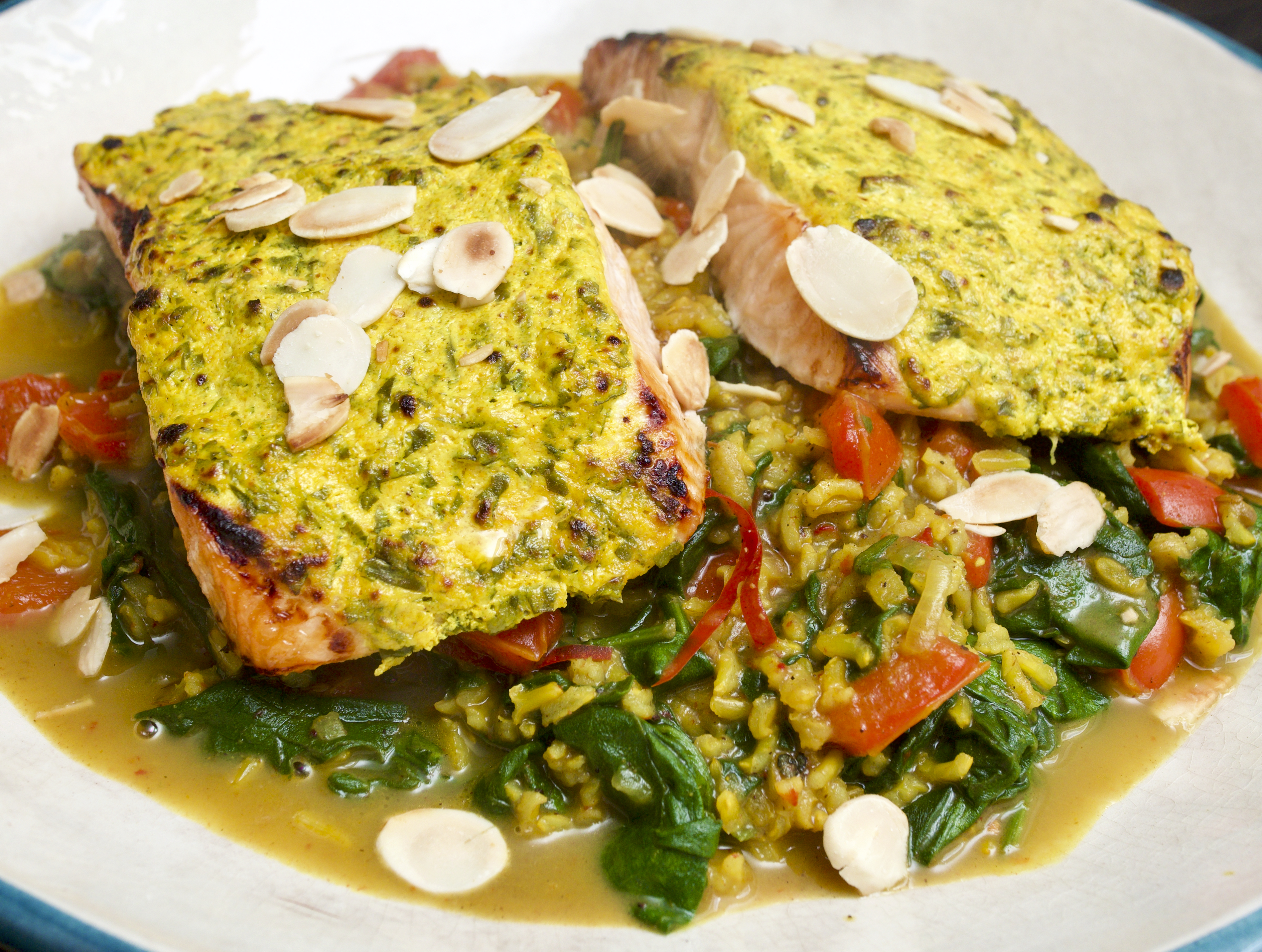
This is full of warm spices, healthy and very satisfying. A great meal for mid-week.

Wine Suggestion: This goes beautifully with elegant Grenache, like Roc des Anges’ Unic from Roussillon in the south of France; quite ethereal and fresh, particularly given the warm sourthern France location. Almost like a warmly spiced Burgundy. If you can’t find something like this then a lightly oaked Chardonnay comes a good second best.

Spinach rice with spiced salmon – serves 2

  • 2 tsp rapeseed oil
  • 1 large onion, sliced
  • a thumb-sized piece of ginger, finely chopped
  • ½ tsp cumin seeds
  • ½ tsp ground cinnamon
  • 6-8 cardamom pods, seeds crushed
  • 1 tsp ground turmeric
  • 1 tsp ground coriander
  • 1 red chilli, deseeded and sliced
  • 1 clove of garlic, finely chopped
  • 1 large red pepper, roughly chopped
  • 70g brown basmati rice
  • 375ml vegetable stock, made with 2 tsp of bouillon powder
  • 160g baby spinach, roughly chopped

FOR THE SALMON:

  • ½ turmeric
  • ½ ground coriander
  • 3 tbsp natural yoghurt
  • 1 tbsp finely chopped coriander (or mint)
  • 2 skinless salmon fillets
  • 1 tbsp toasted almonds

Heat the oil in a large frying pan, then fry the onion and ginger for 5 minutes or until soft. Stir in the spices and cook for 30 seconds, then add the chilli, garlic, pepper and rice. Stir briefly, then pour in the stock. Cover and simmer for 35 minutes or until the rice is tender and the stock absorbed. If there’s liquid left simmer without the lid for a few minutes to let it evaporate. Add the spinach, cover and cook for 3 minutes, or until wilted.

Meanwhile, line a baking sheet with foil and heat the grill.

Mix yoghurt with the turmeric, ground coriander and fresh coriander. Spread this mixture over the salmon and transfer to the foil-covered sheet. Grill for 8-10 minutes or until the fish flakes easily. Top the rice with the salmon fillets and scatter over the almonds to serve.

(Original recipe from BBC Good Food)

Read Full Post »

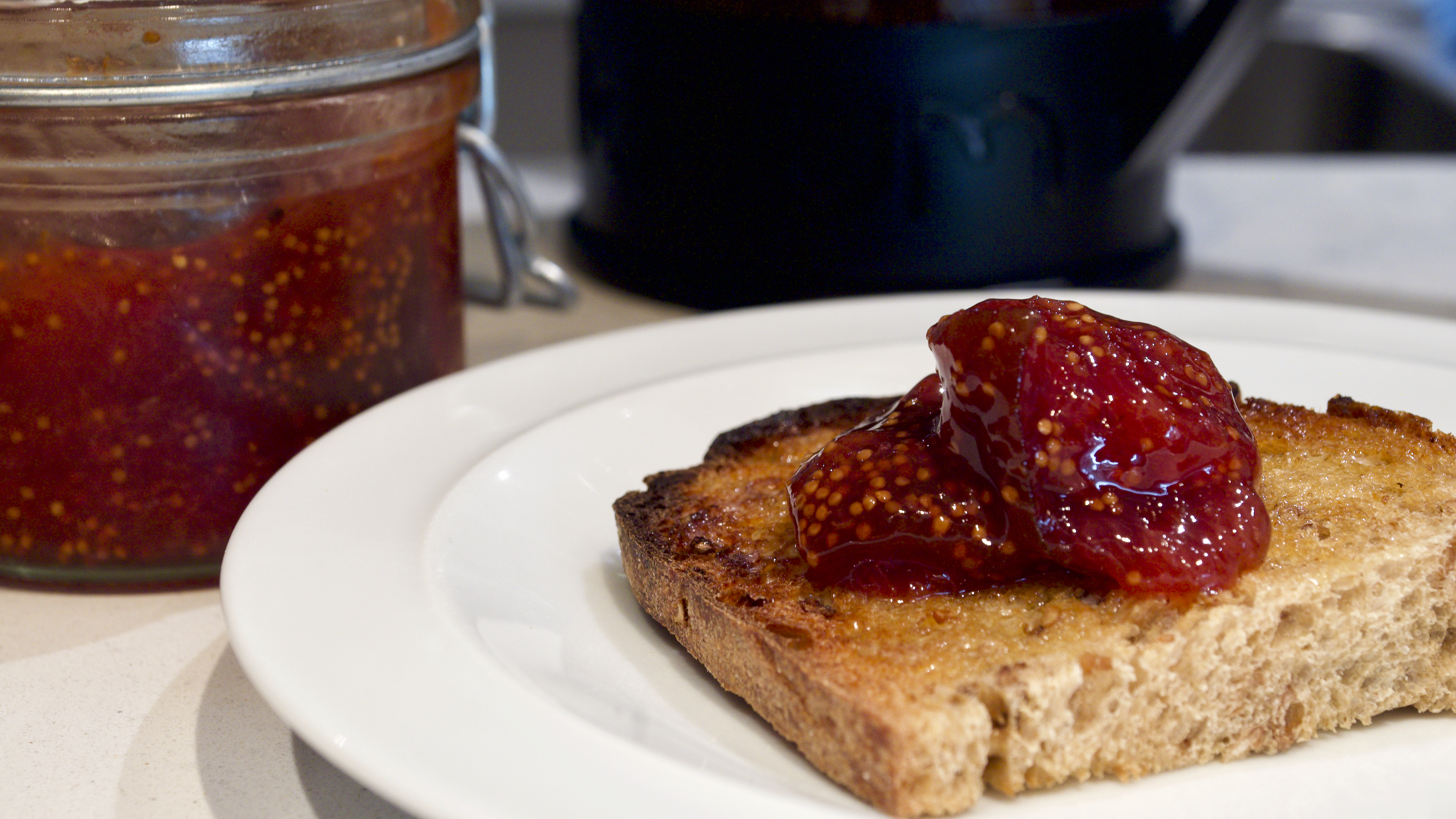
Jono acquired five trays of figs from one of his customers, much to the approbation of Jules who said he had to find something to do with them! This fig jam used most of them and there was a smaller batch of rather good chutney. A good call too, as we’ve had repeat requests for jam from friends who’ve been given a jar. It is easily scalable, so while the recipe is for 1kg of figs, we used 4kg to make just over 5kg of jam.

Jono now believes he is allowed to get loads of figs when there is a glut again next year.

Fig Jam – makes roughly 1.3kg of jam

  • 1kg figs, remove the stalks at the top and roughly chop
  • 2 fig leaves, cleaned (we took two from a neighbour’s garden – with permission)
  • 500g jam sugar (with pectin)

Put the ingredients into a large saucepan and stir well to combine. Put the pan over a low heat and let the sugar dissolve, then increase the heat slightly and bring to a gentle simmer. 

When the liquid starts to be released from the figs, turn the heat up a little again and stir often to stop the jam sticking to the bottom of the pan. Simmer rapidly until the jam reaches 105°C (You will need a jam thermometer to check this. If you don’t have one the other option is to put a few saucers in the freezer. To check if the jam is ready, put a tiny spoonful onto the cold plate and see if it runs. If it doesn’t, it’s ready. If it does try again using another cold plate in a few minutes). 

Remove the fig leaves and pour the jam into sterilised jars. Cover immediately with the lids. The jam will now keep for up to a year, but it’s highly unlikely to last that long!

(Original recipe from Marcus Everyday by Marcus Wareing, HarperCollins Publishing, 2019.)


Read Full Post »

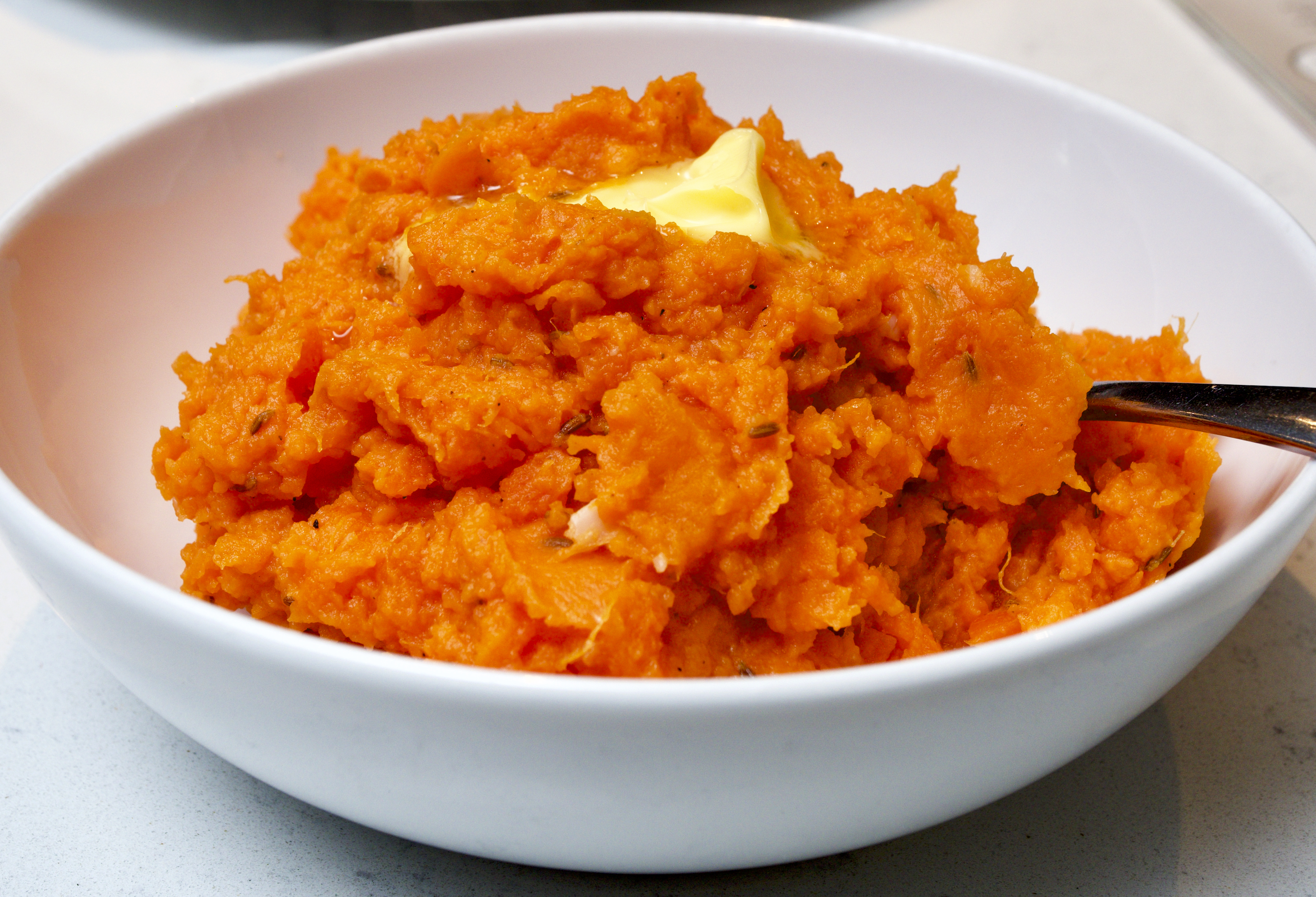
Yes it really is this vibrant in colour. This dish marries a sweetness from the two vegetables with a contrasting and complimentary earthiness from the cumin and pungent garlic to form a harmonious whole; neither sweet, nor overtly earthy. We like it a lot.

Sweet Potato & Carrot Mash – serves 4

  • 500g sweet potatoes, chopped
  • 500g carrots, chopped
  • 3 cloves of garlic, bashed
  • 1 tsp cumin seeds, toasted
  • 25g butter

Put the sweet potatoes, carrots and garlic into a large pan of salty water, bring to the boil and cook for 12 minutes or until tender. Drain.

Add the toasted cumin seeds, butter and seasoning and roughly mash. 

(Original recipe from BBC Good Food)

Read Full Post »

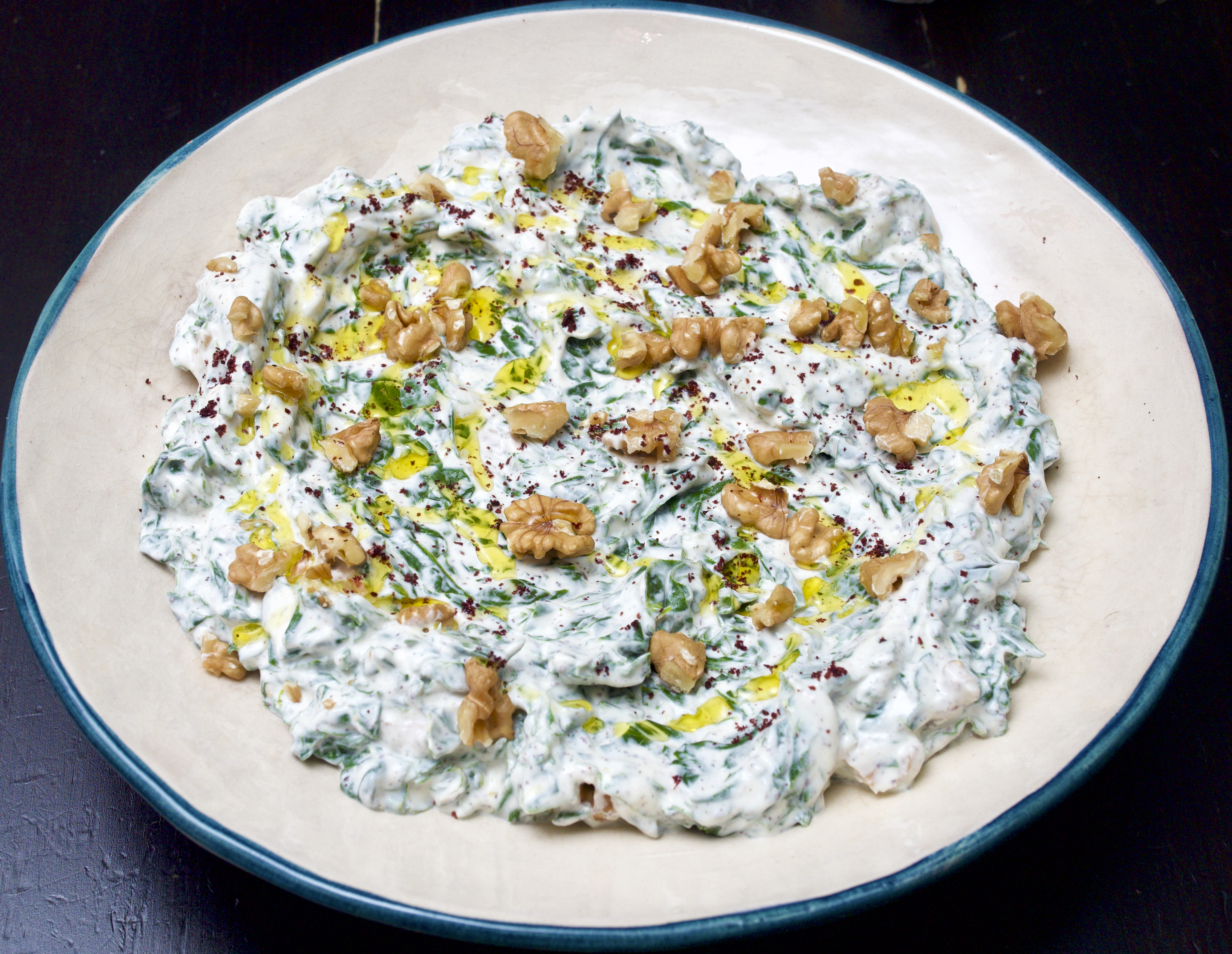
This is a delicious Persian accompaniment that goes with almost anything. We know that as we initially served it as a starter with pitta breads, then proceeded to have it on the side with the main course, and for lunch the following day with something else. It’s hard to describe how good it is. 

Spinach & yoghurt with walnuts – Maast-o-esfenaj – serves 6 to 8

  • 250g spinach leaves (cut off any chunky stalks)
  • 500g thick Greek yoghurt
  • 1 large clove of garlic, crushed
  • 2 big handfuls of walnuts, roughly chopped
  • 2 tsp sumac, plus a bit extra to garnish
  • best olive oil, for drizzling
  • flatbread, to serve

Simmer the spinach in a saucepan of boiling water for 2-3 minutes until wilted. Drain and immediately transfer to a bowl of iced water to stop the cooking. When cooled, drain well and chop finely. 

Put the spinach into a large bowl with the yoghurt, garlic and walnuts (keep a few for decorating), sumac, a small drizzle of olive oil and plenty of sea salt and black pepper. Mix well. 

Serve the mixture on a flat plate, drizzle with more olive oil and sprinkle over some extra sumac and the reserved walnuts. 

(Original recipe from Simply by Sabrina Ghayour, Mitchell Beazley, 2020)

Read Full Post »

Turmeric & black pepper braised lamb

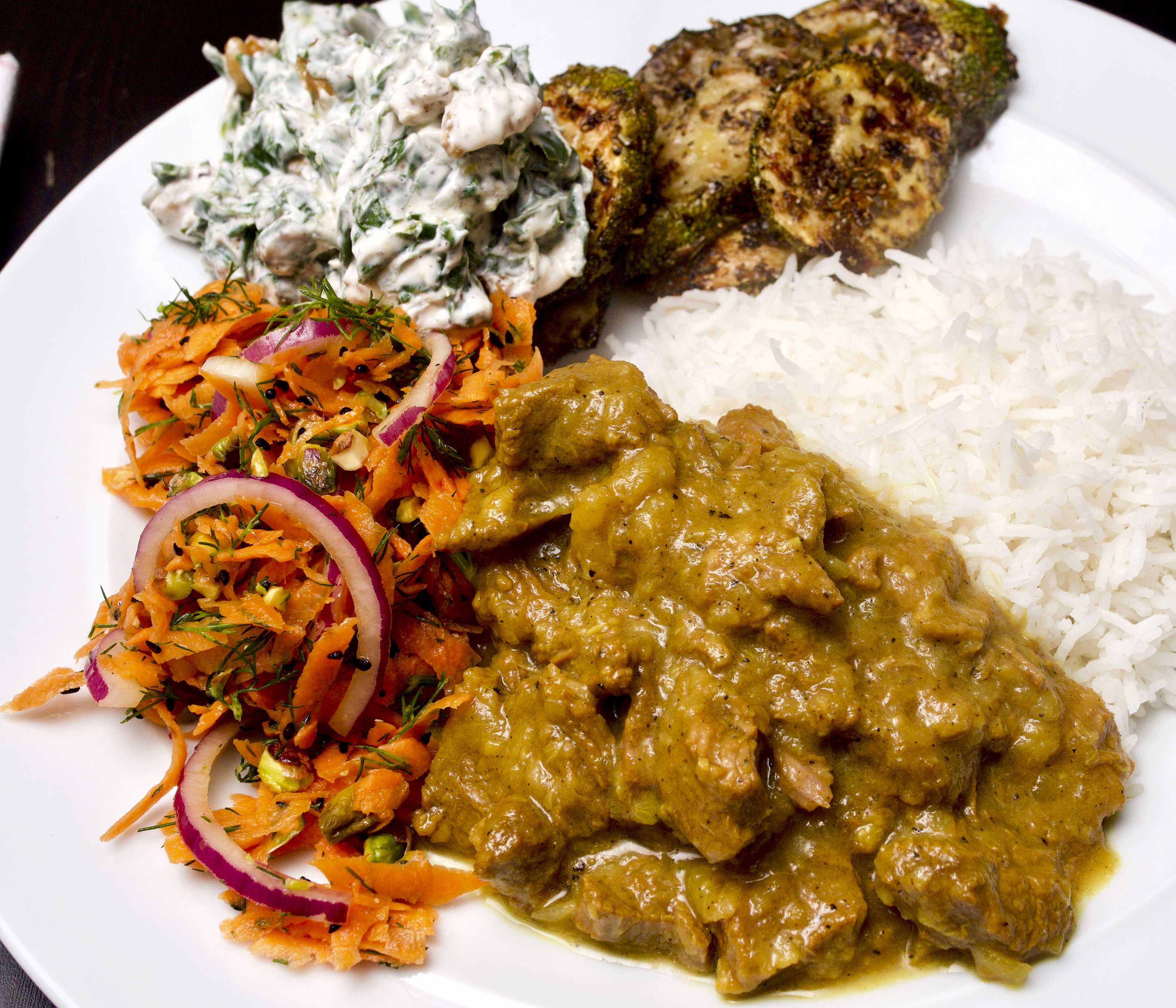
This is a whole plateful of deliciousness form Sabrina Ghayour’s new book, Simply. We have loved all of her books but we’ve already cooked more out of this one than any of the others. The recipes are simple but truly delicious. This is great just served with rice.

Wine Suggestion: this dish really suits a velvety, medium bodied red with a few warm spices on the nose: Rioja, or similar made from Tempranillo makes a fine candidate. If you can find a good one and cellar it for a number of years (or be lucky enough to find one in a wine shop with age) then you’ve got your match. A hidden gem that always surprises in it’s value is the Dehesa la Granja from Castilla in Spain. The winemaker usually releases what they consider a Crianza at between 7 to 9 years of age .. and it’s a bargain.

Turmeric & black pepper braised lamb neck – serves 4-6

  • veg oil, for frying
  • 2 large onions, finely sliced
  • 4 big cloves of garlic, bashed and finely sliced
  • 800g lamb neck fillets, cut into bite-sized chunks
  • 2 heaped tsp ground turmeric
  • 1 heaped tsp coarsely ground black pepper
  • 2 heaped tsp Maldon sea salt flakes, crushed

Put a large saucepan over a medium-high heat and pour in vegetable oil to coat the base. Add the onions and cook for a few minutes until softened, but not coloured, then add the garlic and cook for another few minutes.

Add the lamb, turmeric and pepper and stir to coat. Make sure the meat is sealed on all sides but you don’t need to brown it.

Add the salt, then pour in boiling water to just cover everything. Put a lid on the pan and cook over a low heat for 2½ hours. Stir occasionally and add more water to keep it barely covered if needed. You want the sauce to thicken and reduce by the end. 30 minutes before the end, taste and season with  more salt if needed.

Serve with rice.

(Original recipe from Simply by Sabrina Ghayour, Mitchell Beazley, 2020.)

Read Full Post »

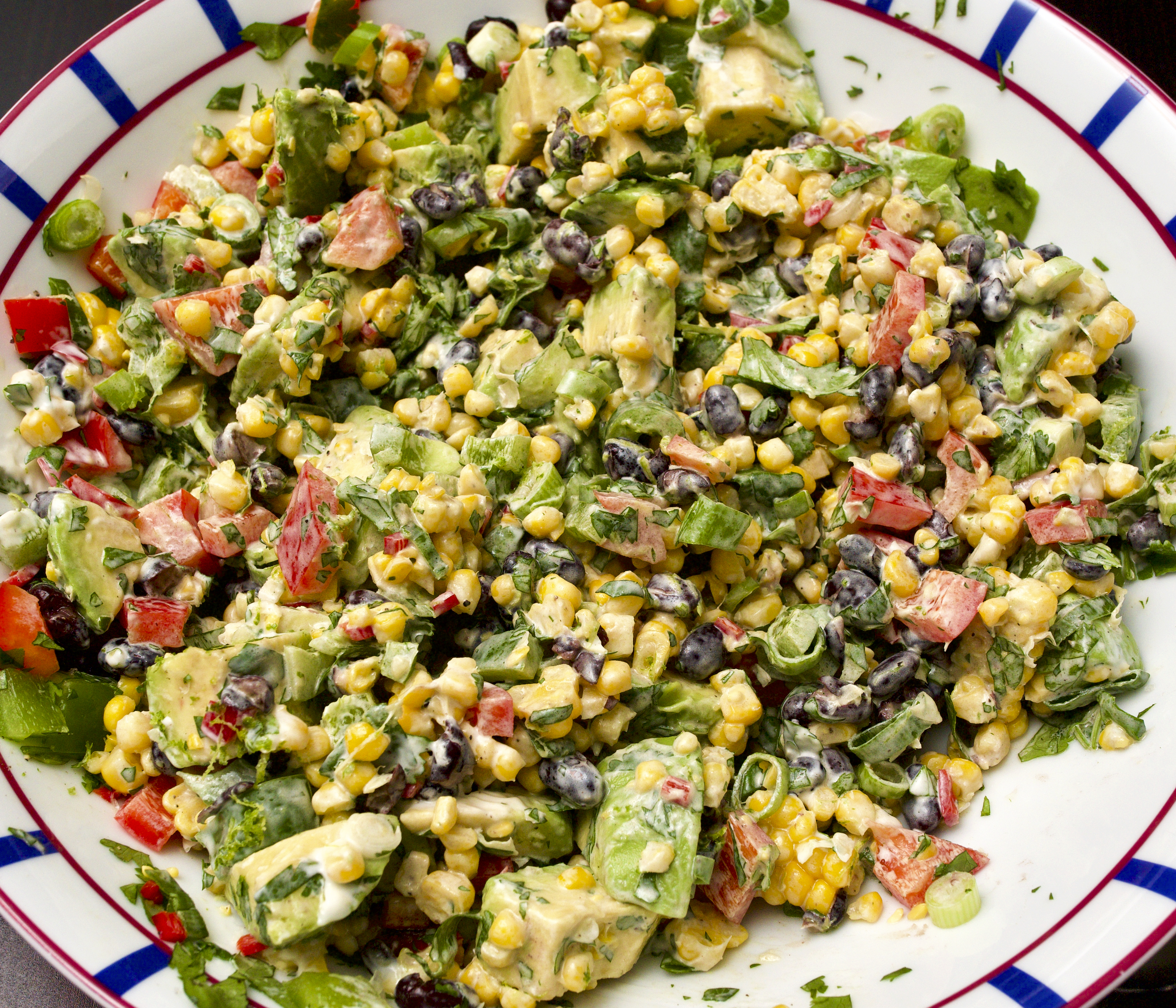
Sweetcorn, Black Bean & Avocado Salad

A lovely salad which is perfect for using the fresh corn cobs that are in the shops around now. We served with barbecued chicken but it would be great with loads of things. Another great idea by Sabrina Ghayour.

Sweetcorn, black bean & avocado salad – serves 5 to 6

  • 3 fresh corn cobs
  • 1 avocado, diced
  • ½ a 400g tin black beans, drained and rinsed
  • 2 kaffir lime leaves, very finely chopped (we didn’t have these but we added some lime zest instead)
  • 2 scallions, thinly sliced
  • ½ a small red pepper, finely diced
  • ½ a small green pepper, finely diced
  • 1 long red chilli, deseeded and finely chopped
  • about 30g of fresh coriander, finely chopped
  • 1 heaped tbsp of mayonnaise
  • a drizzle of olive oil

Cook the corn cobs in lots of boiling salty water for about 10 minutes or until tender. Drain and rinse under cold water to cool, then drain again.

Use a sharp knife to cut the kernels off the cobs in strips.

Put the corn in a large bowl with all of the other ingredients and season well with Maldon sea salt and black pepper.

(Original recipe from Simply by Sabrina Ghayour, Mitchell Beazley, 2020)

Read Full Post »

Pan-fried Figs in Parma Ham

Jono bought a ridiculous amount of figs this week. He got a “good deal” and so we’ve spent all weekend trying to use them. There is lots of fig jam and chutney but we also loved this little starter by Sabrina Ghayour.

Wine Suggestion: this is such a good tapas dish with the play of salty ham, sweet fruitiness and a layer of rich fat. To match we went with a Sanchez Romate Fino someone had given us and were very happy indeed.

Pan-fried figs in Parma ham – makes 16

  • 2 tbsp olive oil, plus extra for frying
  • finely grated zest of 1 lemon
  • 4 large figs, quartered
  • 1 heaped tbsp za’atar
  • 8 slices of Parma ham (or Serrano ham), halved lengthways into long strips
  • top quality balsamic vinegar

Put the oil in a small bowl and stir in the lemon zest and heaps of freshly ground black pepper. Rub this oil on the cut sides of each piece of fig. Sprinkle the za’atar over the figs, then wrap a pieces of ham around each one, overlap so that the pieces are almost covered by the ham.

Heat a large frying pan over a high heat. Drizzle in a little olive oil and fry the figs on both cut sides for about a minute or until the ham crisps up and browns. Serve on plates with some aged balsamic vinegar drizzled over.

(Original recipe from Sirocco by Sabrina Ghayour, Mitchell Beazley, 2016.)

Read Full Post »

Fresh Tomato Soup

The perfect soup for a glut of ripe tomatoes, there’s not much point otherwise as the forced imported ones won’t have enough flavour.

Fresh tomato soup – serves 4

  • 1 large onion, chopped
  • 1 carrot, finely chopped
  • 1 celery, finely chopped
  • 50g butter
  • 3 sprigs of thyme
  • 2 bay leaves
  • 500g very ripe tomatoes
  • 850ml chicken stock
  • 4 tbsp crème fraîche, plus extra to serve if you like
  • a few basil leaves (only if you have them!)

Melt the butter in a large saucepan, then add the onion, carrot and celery and cook for about 15 minutes or until very soft.

Add the thyme and bay leaves and cook for a minute, then add the tomatoes,  chicken stock and some seasoning. Simmer for 30 minutes.

Discard the herbs, add the crème fraîche and whizz until smooth. Check the seasoning and serve with some extra crème fraîche if you like and a few basil leaves.

(Original recipe by Janine Ratcliffe in Olive Magazine, September 2016.)

Read Full Post »

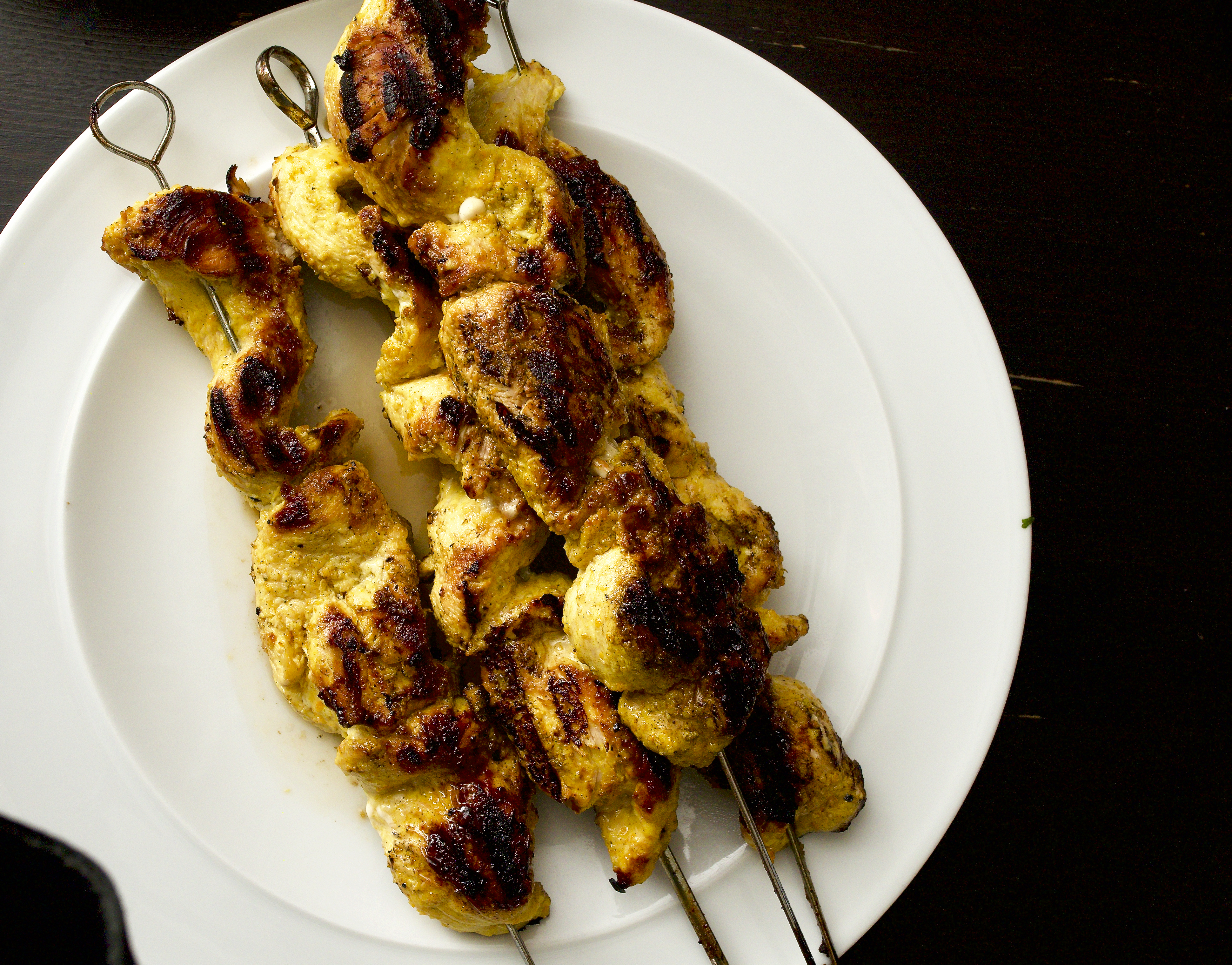
Turmeric Chicken KebabsWe’re total suckers for a new cookbook and therefore just couldn’t live without Simply by Sabrina Ghayour. We cooked a few dishes last weekend and they were all great. It’s an Indian summer in Ireland too, so it was great to do barbecue and drinks in the sunshine. We’re now on the hunt for more recipes using fresh turmeric.

Wine Suggestion: This works perfectly with a goood Rioja Reserva, especially if it has a few extra years in the bottle. There is something about how Tempranillo becomes all velvety and aromatic with a few years aged in oak, plus a few extra in the bottle that really works for warm spices and smoky barbecue flavours. Our treat was the Muga Reserva from 2001 which was excellent but it doesn’t need as much age as this, just nice fruit so choose what is at hand.

Turmeric Chicken Kebabs – serves 4 to 6

  • 4 chicken breasts
  • sweet chilli sauce, to serve

FOR THE MARINADE:

  • 5cm piece of fresh turmeric, scrubbed and grated (wear gloves!)
  • 1 tbsp garlic granules
  • finely grated zest and juice of 1 lime
  • 2 tbsp natural yoghurt
  • 1 generous tbsp clear honey
  • 1 tbsp olive oil

Put all the of the ingredients for the marinade in a container and mix together. Do be careful as the turmeric is bright yellow and will stain anything it comes in contact with.

Cut the chicken breasts lengthways into 3 long strips. Stir into the marinade, then cover the container with a lid and put into the fridge. We did this in the morning and the chicken was really delicious by the time we cooked it that evening. Sabrina suggests 30 minutes to an hour or overnight, so no panic if you’re short on time or want to get ahead.

Get your barbecue going and get it nice and hot.

Thread the chicken onto kebab skewers, we prefer to use metal ones but wooden ones are fine, just make sure you soak them for 20 minutes before using. You can thread individual pieces onto short skewers or put a few onto a longer skewer.

Cook the chicken over a high heat for 3-4 minutes on each side or until browned and cooked through (alternatively you can cook these in the oven on a tray lined with baking paper at the highest setting for 10-12 minutes or until cooked). Serve with the sweet chilli sauce on the side.

(Original recipe from Simply by Sabrina Ghayour, Mitchell Beazley, 2020.)


Read Full Post »

Marinated Figs with Mozzarella & Prosciutto

A fig salad for lunch; tasty indeed. It’s fig season, so they shouldn’t cost the earth and this is a great combination.

Marinated figs with mozzarella & prosciutto – serves 2

  • 4-6 figs, quartered
  • 2 tbsp sherry vinegar
  • ½ tsp Dijon mustard
  • 3 tbsp olive oil
  • 1 tsp runny honey
  • 50g rocket
  • 1 ball mozzarella, torn into pieces
  • 6 slices prosciutto
  • a small handful of basil leaves

Whisk the vinegar with the mustard, then gradually whisk in the olive oil, honey and seasoning. Put the figs on a plate and spoon over the dressing, then leave aside for 20 minutes.

Spread the rocket, mozzarella and prosciutto over a platter. Spoon over the figs and the dressing and finish with the basil leaves.

(Original recipe by Janine Ratcliffe in Olive Magazine, September 2018)


Read Full Post »

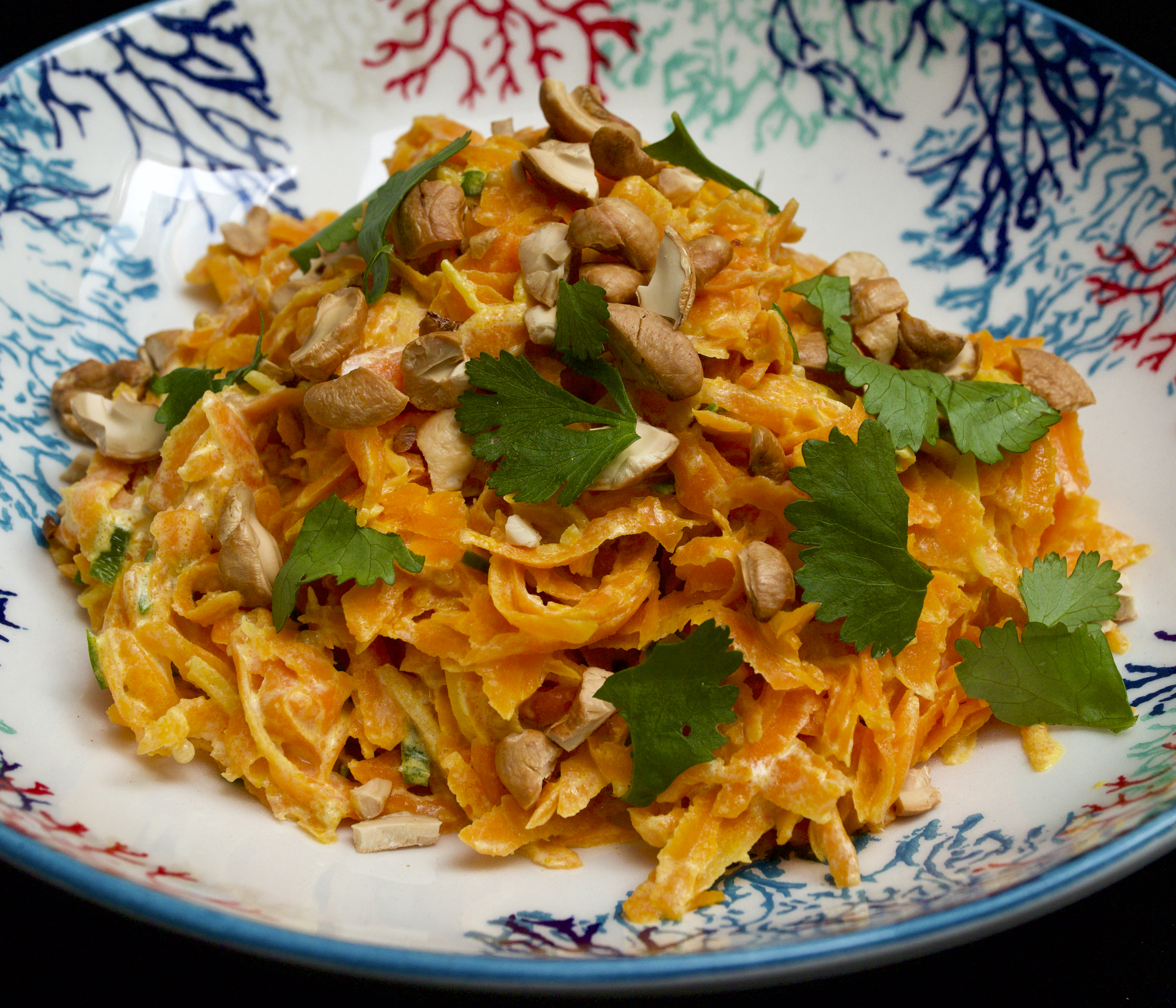
Creamed Carrots

This is a lovely side dish to serve alongside lamb koftas or something similar. We had it for dinner with just some brown rice and that was surprisingly good too.

Creamed Carrots – serves 4

  • 400g carrots, coarsely grated
  • 2 garlic cloves, crushed
  • a thumb-sized piece of ginger, finely shredded
  • 3-4 small, hot green chillies, finely chopped
  • a thick slice of butter
  • 1 tsp yellow mustard seeds
  • 2 tbsp cashew nuts, toasted in a dry pan or in the oven, roughly chopped
  • 4 tbsp double cream
  • 4 heaped tbsp natural yoghurt
  • a good handful of coriander leaves
  • a squeeze of lime

Melt the butter in a frying pan, then add the garlic, ginger and mustard seeds and cook for a minute before adding the chopped chillies. Stir together for a minute then add the carrots and cook for 3-4 minutes.

Stir the cream and yoghurt together and fold into the hot carrots with some seasoning. Immediately tip into a serving dish and top with the cashew nuts, coriander leaves and lime.

(Original recipe from Tender Volume I  by Nigel Slater, Fourth Estate, 2009)

Read Full Post »

« Newer Posts - Older Posts »