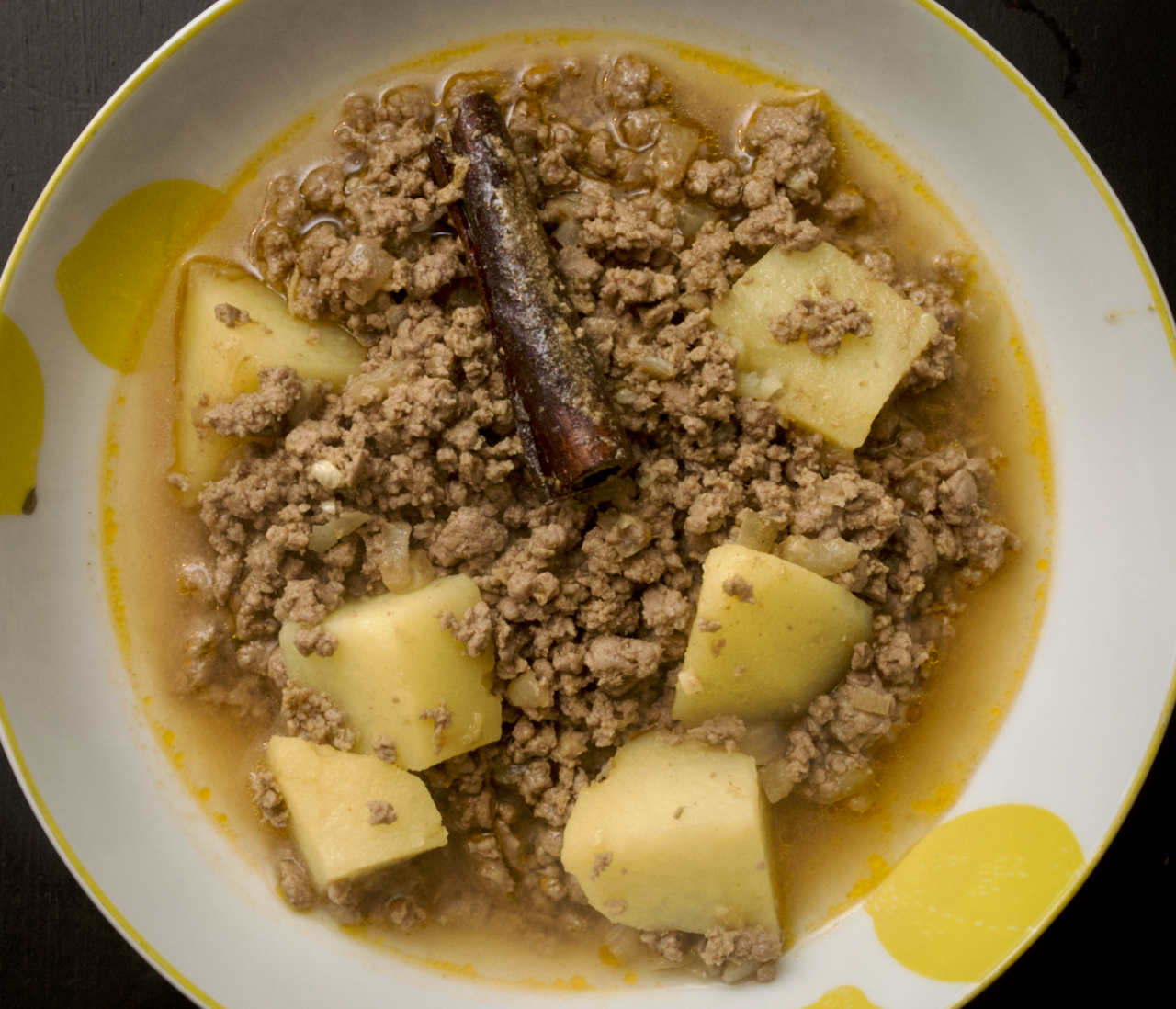
This is not unlike our typical Irish mince and potatoes but it’s lightly spiced and has no carrots. Good with Indian chutney and pickles on the side.
Wine Suggestion: we thought this went delightfully with a find from a recent holiday in Spain, the Kimera Garnatxa from Navarra which was super balanced and minerally wrapped in gentle layers of warm spices.
Indian minced lamb with potatoes – serves4 to 6
3 tbsp olive oil or rapeseed oil
2 cinnamon sticks
1 onion, finely chopped
1 tsp finely grated ginger
3 cloves of garlic, finely chopped
900g lamb mince
3 tbsp natural yoghurt
3 tbsp tomato passata
1 tsp ground cumin
2 tsp ground coriander
¼ tsp cayenne pepper
¼ tsp ground turmeric
2 tsp salt
300g potatoes, peeled and cut into 2 cm cubes
Put the oil into a large frying pan and put over a medium-high heat. When hot, add the cinnamon sticks and let them sizzle for a few seconds.
Add the onion, stir and fry until it starts to brown at the edges, then add the ginger and garlic and stir for 1 minute.
Add the lamb, stirring and breaking it up with a wooden spoon. Keep going until the meat has no pink bits.
Add the yoghurt, tomato, passata, cumin, coriander, cayenne pepper and turmeric. Stir for 1 minute, then add the salt, potatoes and 475ml of water. Stir and bring to the boil, then cover and lower the heat. Cook gently for 30 minutes.
(Original recipe from Curry Easy by Madhur Jaffrey, Ebury Press, 2010.)
We were not disappointed with this on a Saturday night but it is so simple you could easily manage it on a weeknight. Serve with yoghurt, lime pickle and naan bread from the takeaway.
Wine Suggestion: Chenin Blanc for the depth of fruit and roundness on the palate, but a minerally backbone of acidity. It lifts this dish and adds and extra element. Tonight Domaine des Aubuisieres le Marigny; dry and expressive but with layers of yellow and red apples on top.
Paneer Jalfrezi – serves 3
200g block of paneer, cut into 2cm cubes
2 red peppers, cut into strips
1 red onion, peeled and cut into wedges
3 large tomatoes, chopped
2 tbsp pomegranate molasses
300g baby potatoes, halved or quartered
5cm piece of ginger
2 cloves of garlic, grated
½ tsp ground turmeric
¼ tsp cayenne
1 tsp ground cinnamon
1 tsp cumin seeds
2 tbsp olive oil
¾ tsp salt
a handful of coriander, roughly chopped, to serve
yoghurt, lime pickle and naan bread, to serve
Heat the oven to 200C.
Put all of the ingredients into a large roasting tin, then put some disposable gloves on and gently toss everything together.
Put the tin into the hot oven and bake for 30-40 minutes or until the potatoes are soft and the paneer is well browned.
Serve sprinkled with the coriander.
(Original reicpe from The Secret of Cooking by Bee Wilson, 4th Estate, 2023.)
This is almost like a biryani but with gentle Iranian spices and it makes a great centre piece. You can serve with yoghurt if you like and we missed a side of greens or salad.
Wine Suggestion: This suits a rich and broad white like Domaine Manciat-Poncet’s Pouilly-Vinzelles. With a lovely mix of stonefruit flavours and grapefruit this has a zip as well as the breadth that compliments the prawns as opposed to fighting or overwhelming them.
Spicy prawn rice – serves 6
500g basmati rice
6 fat cloves of garlic
7cm piece of fresh ginger, peeled and finely grated
1 tsp ground ginger
2 tsp ground cumin
1 heaped tsp ground fenugreek leaves
½ tsp ground cinnamon
½ tsp dried chilli flakes
600g large peeled prawns
60g butter
Bring a large pot of water to the boil and add a big handful of crumbled sea salt. Boil the rice for 6-8 minutes or until the grains are bright white and slightly elongated. They should be just starting to soften.
Drain the rice and rinse under cold water for a couple of minutes, until cool.
Line the bottom of the rice pot with some nonstick baking paper and set aside.
Put a large frying pan over a medium heat. Drizzle in a generous amount of olive oil (or vegetable oil) and fry the garlic for 30 seconds, then add the grated ginger, ground ginger, cumin, fenugreek and chilli flakes, and stir. Add the prawns and cook for under a minute, or until just starting to turn pink, then remove the pan from the heat and season generously with salt and pepper.
Put the paper-lined pot back over the heat and pour in a generous drizzle of olive oil and the butter. Sprinkle in some sea salt, then scatter in enough rice to cover the base of the pan.
Layer the prawn mixture and rice into the pan, finishing with a thin layer of rice. Use the long handle of a wooden spoon to poke about 5 holes into the rice, right down to the base of the pan.
Wrap the lid of the pan in a tea towel, then cover the pan and cook over the lowest temperature for about 40 mintues.
Check the rice is cooked, then remove it from the pan. If you’re brave you can place a platter over the pan and flip the rice out onto it. Scrape out any crispy tahdig (the crispy rice on the base) from the bottom of the pan and serve on top of the rice.
(Original recipe from Persiana by Sabrina Ghayour, Mitchelle Beazley, 2014.)
A recipe from Ixta Belfrage’s excellent book, Mezcla. Pinapple has developed a bad reputation in savoury dishes but we love it … including on pizzas sometimes. Serve some steamed white rice on the side.
Wine Suggestion: we’re having an Italian moment, so chose the La Pruina Salice Salentino to go with this dish. A blend of Negroamaro and Malvasia Negra it had a suprising elegance and didn’t overwhelm the flavours despite an obvious juiciness to the fruit. Balanced and surprisingly medium bodied; we’ll be revisitng this wine again.
Chicken with pineapple and ‘nduja – serves 4
4 chicken thighs, at room temperature
4 cloves of garlic, crushed
1 medium onion, halved and very thinly sliced, ideally with a mandoline if you have one
300g fresh pineapple, peeled, cut into rounds, then quartered and hard core removed
4 tangerines or 2 oranges, squeezed to give 100g of juice
100g chicken stock
2 tbsp double cream
5g coriander
1 lime, cut into wedges
FOR THE ‘NDUJA AND CHIPOTLE PASTE:
50g ‘nduja paste
2 tbsp olive oil
2 tsp tomato purée
½ tsp chipotle flakes
½ tsp paprika
¾ tsp fine salt
20 twists of black pepper
Heat the oven to 200C/180C fan.
Put the ingredients for the ‘nduja and chipotle paste into a large bowl and mix together. Add the chicken thighs, garlic, and about ¾ of the onion and mix together well. Tip everything into a large oven-proof cast-iron frying pan or a baking dish. Make sure the chicken is skin-side up on top of the onions and garlic.
Add the pineapple to the mixing bowl and toss in any leftover paste, then arrange around the chicken.
Pour the orange juice around the chicken but make sure you don’t pour it over the chicken skin, then bake for 20 minutes. Remove from the oven and pour in the chicken stock – again avoiding the chicken skin. Put back into the oven for another 20-25 minutes, or until the chicken is cooked through and the skin is browned and crispy.
Rest the dish for 5-10 minutes, then drizzle over the cream. Toss the coriander with the rest of the sliced onion and a little oil and salt, then sprinkle over the top. Serve with lime wedges.
(Original recipe from Mezlca by Ixta Belfrage, Ebury Press, 2022.)
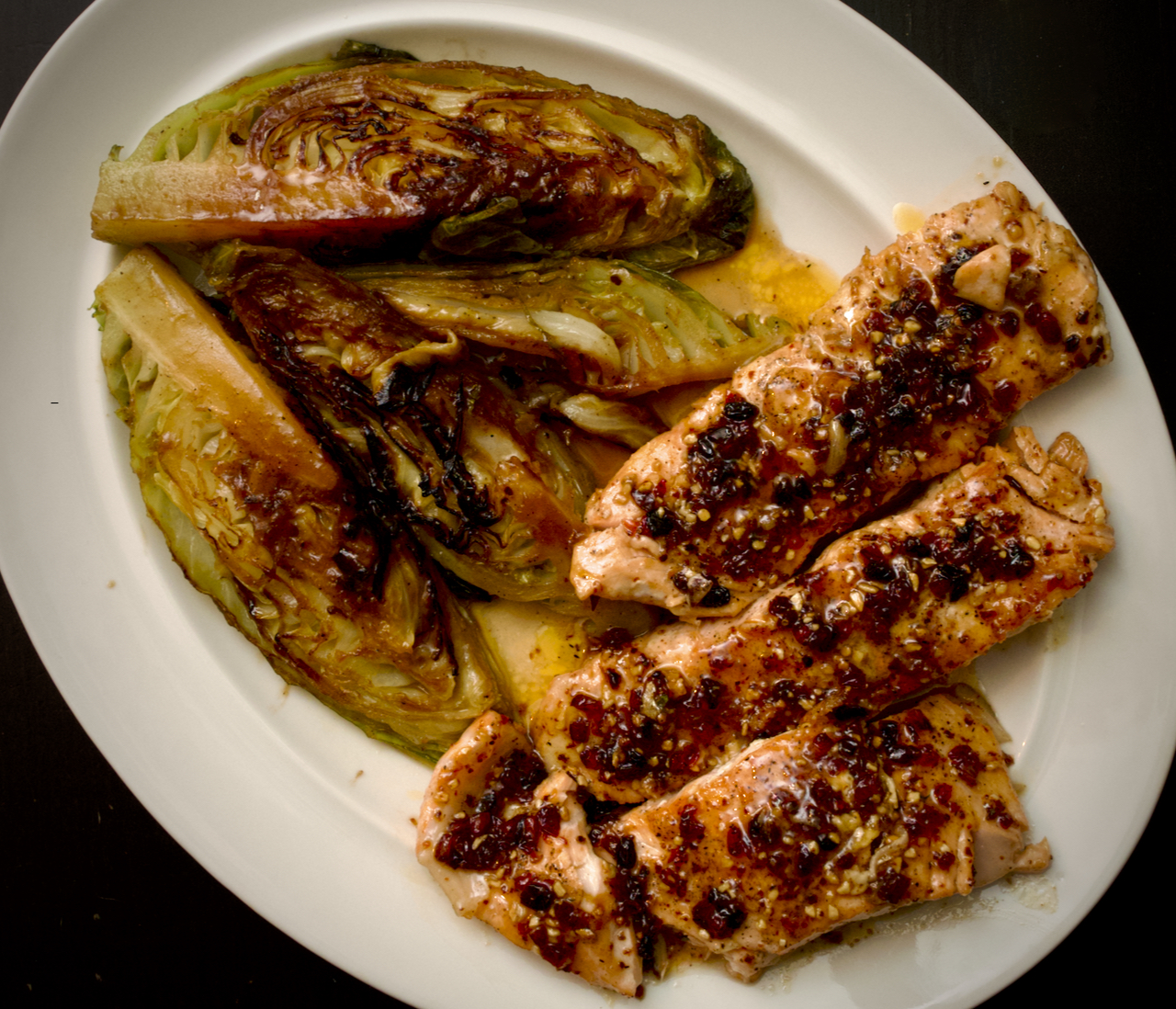
Salmon is very popular in our house and we particulary like this recipe with a delicious barbery butter.
Wine Suggestion: we like dry Rosé with barberry dishes and chose the Quinta de la Rosa Rosé this time as it has great depth and poise alongside the refreshing red berried flavours.
Salmon with barberry butter – serves 4
olive oil
4 salmon fillets, skinned
FOR THE BARBERRY BUTTER:
75g softened butter
2 tbsp dried barberries, finely chopped
1 tsp pul biber
1 tsp garlic granules
1 tsp clear honey
Put the ingredients for the barberry butter into a bowl with plenty of salt and black pepper and mix well.
Heat a large frying pan over a medium-high heat and add a little olive oil. Season the salmon fillets on the skinned side, then put skinned-side down into the pan. Cook for a couple of minutes, then turn over and add the butter. When the butter has melted, start basting the salmon. You need to go quite quickly so the butter doesn’t burn. Keep basting for a couple of minutes or until the salmon is just cooked through.
Serve and spoon the butter over.
(Original recipe from Flavour by Sabrina Ghayour, Aster*, 2023.)
We’ve cooked this easy Indian salmon a load of times now. The salmon is really soft and tender and the flavours are fab! Nice with potatoes and a green salad or with other Indian dishes.
Grilled masala salmon – serves 2
⅛ tsp salt
¼ tsp ground cumin
⅛ tsp ground coriander
⅛ tsp ground turmeric
¼ tsp ground cayenne pepper
340g skinned salmon fillet
2 tbsp Dijon mustard
1 tbsp olive or rapeseed oil
2 tsp lemon juice
2 tbsp finely chopped fresh coriander
Mix the salt, cumin, coriander, turmeric and cayenne pepper together, then rub all over the salmon fillet. Cover and leave in the fridge for 1-4 hours.
Heat the oven to 180C/Gas 4, and heat the grill to it’s highest setting.
Mix the mustard, oil and lemon juice together and add the chopped coriander. Rub this all over the fish and place under the grill until the top has slightly browned, about 4 minutes. Transfer the fish to the oven and bake for about 10 minute or until cooked through.
(Original recipe from Curry Easy by Madhur Jaffrey, Ebury Press, 2010.)
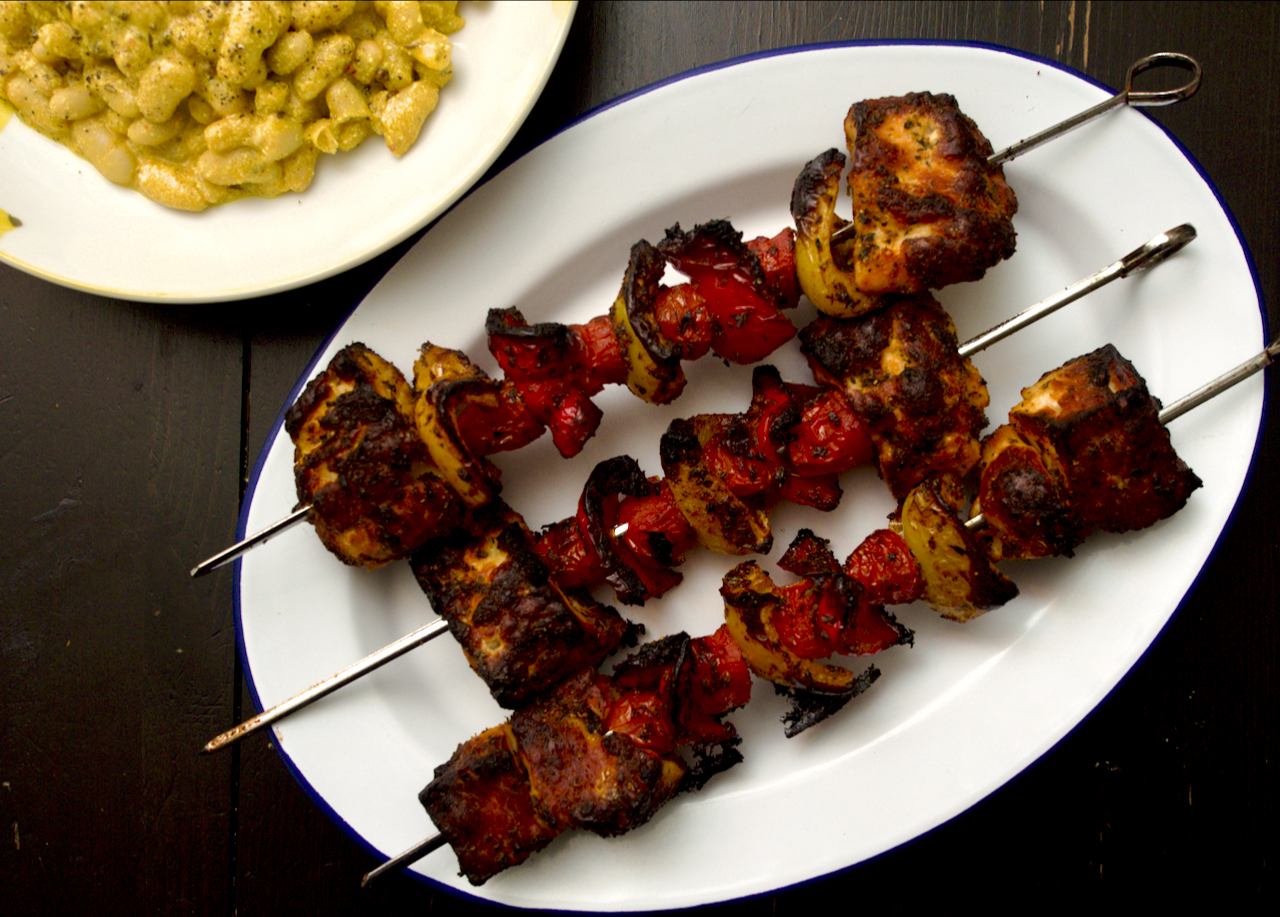
Paneer is the typical cheese for curry but halloumi works as well if this is what’s to hand. Plus this is the perfect weeknight dish as it’s so easy; we made it between two after-school activities! Serve with rice or naan bread.
Wine Suggestion: This dish works well with white wines with a degree of plushness; dry but not too crisp. Unusually, as we find most of them a little boring, we went with a Pinot Grigio. Perusini’s version though is from Collio and not the characterless Veneto versions found most commonly. Peach and tangerine flavours with a pleasant herbal spice and medium-full body, combined with good freshness and a minerally saline undercurrent.
Creamy halloumi curry – serves 2 to 3
225g halloumi, cut into bite-sized pieces
2 tbsp vegetable oil
1 large onion, chopped
2 cloves of garlic, crushed
a thumb-sized piece of ginger, grated
2 tsp ground cumin
2 tsp ground coriander
1 tsp turmeric
400g tin chopped tomatoes
100ml double cream
80g fresh or frozen spinach
2 tsp sugar
1 tbsp garam masala
1 tsp nigella seeds
Heat 1 tbsp of the oil in a large pan over a medium heat. Add the onion and cook for 5 to 10 minutes or until softened.
Add the garlic and ginger and cook for another 2 minutes, then stir in the cumin, coriander and turmeric and cook for a couple of minutes more. Stir in the tomatoes and simmer for 5-7 minutes or until thickened.
Reduce the heat and add the cream, then simmer gently for another 3 to 4 minutes.
Meanwhile, heat another tbsp of oil in a frying pan over a medium-high heat. Fry the halloumi for a few minutes or until browned on all sides.
Add the browned halloumi to the curry sauce along with the spinach, sugar and garam masala and stir to combine. Simmer gently for 5 minutes or until the spinach and wilted or defrosted. Add a splash of water or extra cream if the sauce seems a bit thick, then serve with the nigella seeds sprinkled over.
We have fallen in love with this buttery cabbage dish which we served tonight alongside some salmon with barberries. This is seriously pimped up cabbage and would be delicious with anything! Both recipes are from Flavour by Sabrina Ghayour.
Wine suggestion: we thought the tamarind would be a hard match, so opened a wine we didn’t know, the Lyrarakis Liatiko from Crete, and were delighted when this obscure wine was a total gem. A light, juicy cherry flavoured wine with wild berry and gentle herbs and a cedary spice. We’ll be looking out for this again.
Cabbage with tamarind, maple & black pepper butter – serves 2 to 4
olive oil
1 large head of sweetheart cabbage, quartered
100ml cold water
50g butter
1 heaped tbsp tamarind paste
2 tbsp maple syrup
1 tsp coarse freshly ground black pepper
Put a large frying pan over a medium heat and add some olive oil. Arrange the cabbage wedges in the pan, sitting on one cut side and the stalk ends in the centre of the pan, and fry for 5 minutes. Pour in the cold water, then increase the heat and cover the pan with a lid. Cook for 6-7 minutes or until the water has evaporated.
Take the lid off the pan and turn the cabbage wedges onto the other side for 3-4 minutes, uncovered. Add the butter, then mix the tamarind, maple syrup and pepper together and add to the pan with a good seasoning of salt. Stir to melt the butter – making sure it doesn’t burn. Baste the cabbage with the butter, then turnover onto the other side and continue basting for a few more minutes. Serve with any butter left in the pan drizzled over.
(Original recipe from Flavour by Sabrina Ghayour, Aster*, 2023.)
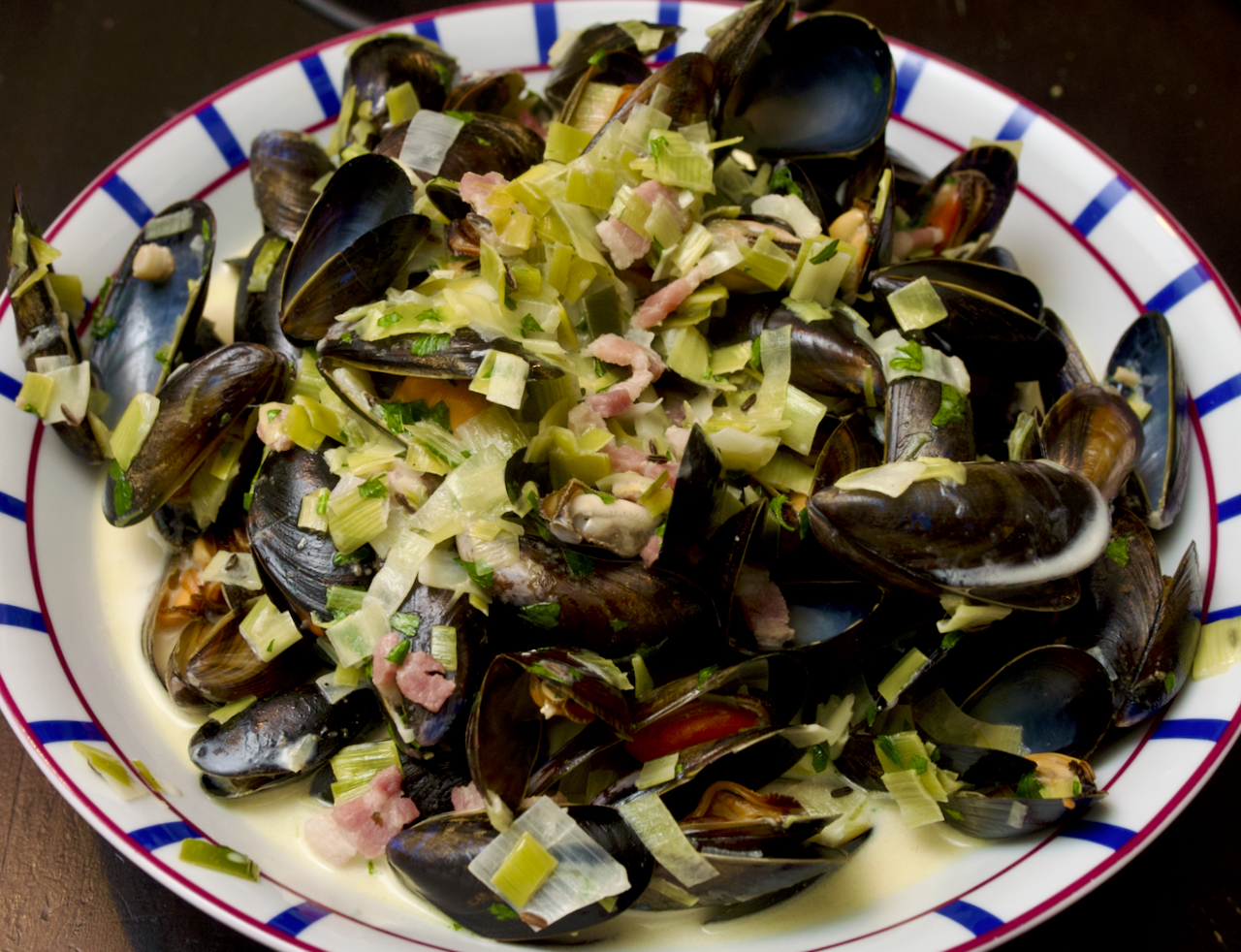
Mussels are our favourite Friday night treat and they taste amazing with this creamy leek and cider sauce. You will need a top quality baguette on the side.
Wine suggestion: we’re just loving Domaine de la Chauviniere’s Muscadet Sevre et Maine sur lie at the moment and think that Jeremie Huchet just has his vineyards in such balance that he delivers delicious wines year after year. Minerally, salty, fresh and with a rounded appley fruit that just works (or of course you could just buy some extra cider).
Mussels with leeks, bacon & cider – serves 2 to 3
200g smoked streaky bacon
1 tbsp olive oil
3 cloves of garlic, thinly sliced
1 tsp fennel seeds
400g leeks, finely chopped
1kg mussels, cleaned
a large glass of dry cider
150ml double cream
a handful of finely chopped flat-leaf parsley
baguette, to serve
Warm a little olive oil in a large saucepan and fry the bacon until the fat renders, then add the garlic and fennel seeds and cook gently for a few minutes. Add the leeks and season well with salt, then let the leeks cook until they are very soft and tender but not taking on any colour. Add a splash of water if they start to catch.
Turn the heat up and add the cider to the leeks to create plenty of steam. Add the mussels and cover with a lid. After two minutes, shake the pan well or give the mussels a toss with a spoon, then cook for another minute or two – they are ready as soon as all the shells are open (chuck any that don’t open).
Pour in the cream, add the parsley and season with lots of black pepper and a little more salt, though taste first. Give everything a final toss, then serve in big bowls with baguette and a glass of cold white wine or cider.
(Original recipe from The Farm Table by Julius Roberts, Ebury Press, 2023.)
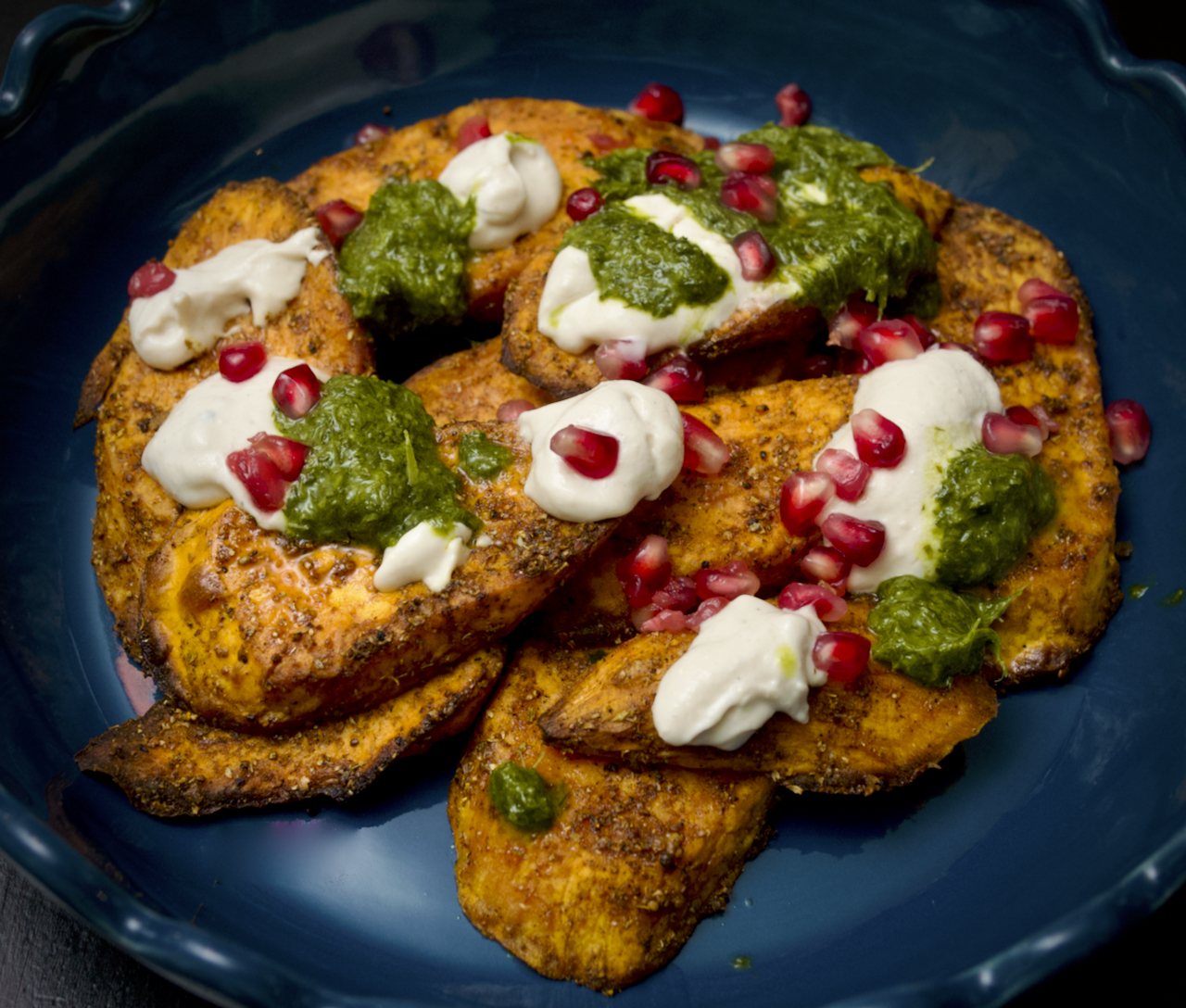
This is such a good side dish. We served it with roast lamb this time, but it would easily complement so many other dishes and can see us doing it alongside some grilled halloumi next time – highly recommended.
Sweet potatoes with tahini yoghurt & herb oil – serves 4 to 6
4 sweet potatoes, peeled and cut into 1.5cm slices
4 tbsp olive oil
2 heaped tbsp ras el hanout
2 tbsp pine nuts
a good handful of pomegranate seeds
FOR THE HERB OIL:
15g flat leaf parsley
15g dill
15g coriander
juice of ½ lemon
3-4 tbsp olive oil
FOR THE TAHINI YOGHURT:
6 tbsp Greek-style yoghurt
4 tbsp tahini
Preheat the oven to 220C, Gas Mark 7 and line a large tray with baking paper.
Put the sweet potato slices onto the tray. Drizzzle over the olive oil, sprinkle with the ras el hanout and add plenty of salt, then use your hands to coat the sweet potatoes in the mixture. Spread out in a single layer and roast for 30 minutes or until cooked through.
Meanwhile, make a herb oil by putting the herbs, lemon juice, olive oil (enough to allow the mixture to spin) and seasoning in a blender and whizz until smooth.
Mix the yoghurt with the tahini and season with salt and pepper.
Transfer the cooked sweet potatoes to a platter and pour over the tahini yoghurt followed by the herb oil, then scatter over the pine nuts and pomegrante seeds.
(Original recipe from Flavour by Sabrina Ghayour, Aster*, 2023.)
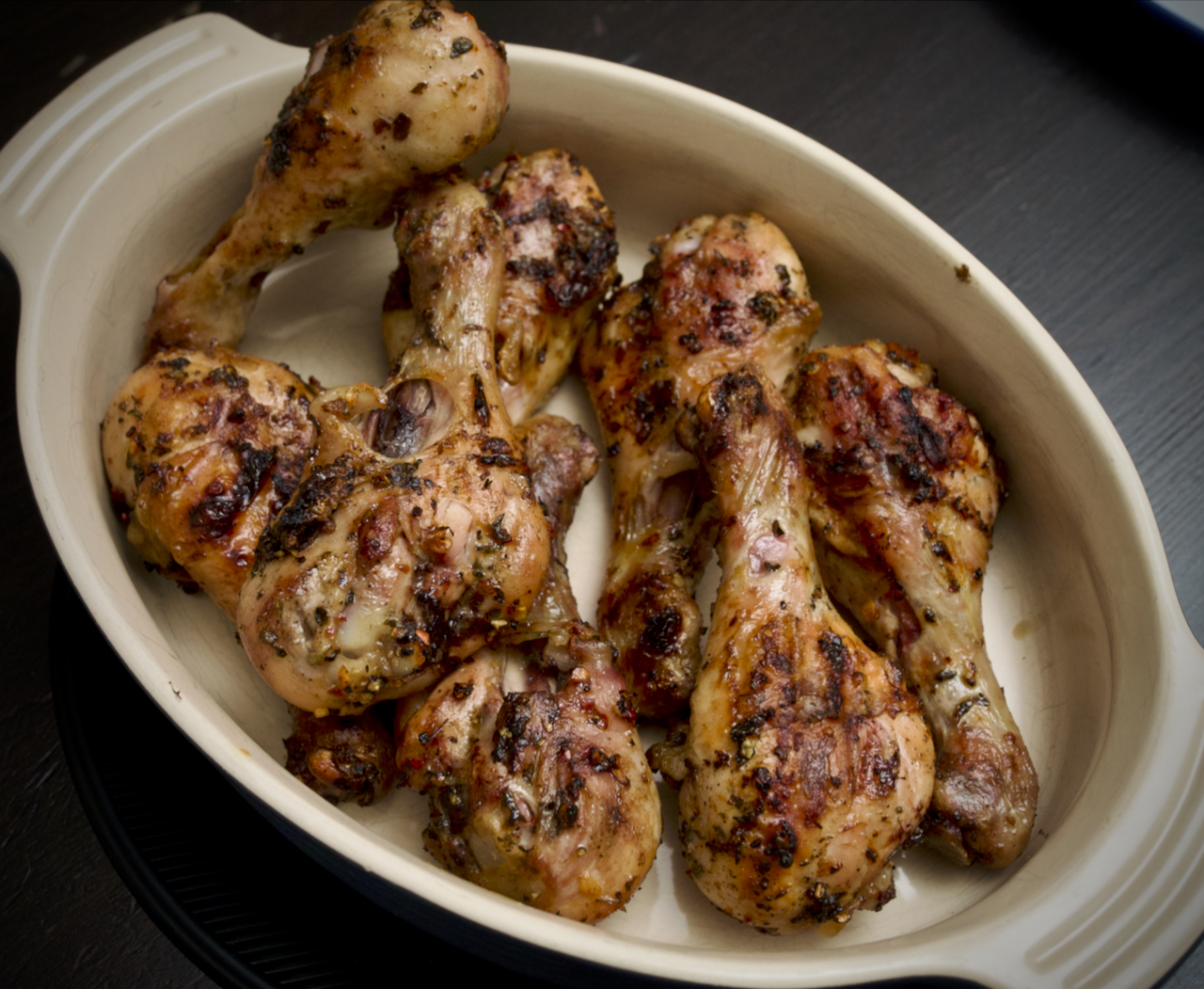
Who doesnt love a chicken drumstick? These ones have a delicious Spanish inspired marinade. Serve with some alioli if you like.
Wine suggestion: when choosing wines to go with dishes we often start with the idea that the origin of the dish lends itself to similar wines, in this case Spain. So on this note we went for Edetària’s via Edetana Red which is a joyful and deep expression of Garnacha Fina and Garnatxa Peluda, two very closely related varieties of Grenache. It has both a purity and freshness alongside an earthiness and rounded, velvety spices; medium bodied so it didn’t overwhelm the chicken and worked alongside the marinade. An interesting aside, the very rare Garnatxa Peluda found only in Terra Alta is also called “Hairy Grenache” as the leaves are velvety.
BBQ Drumsticks – serves 4
8 chicken drumsticks
lemon wedges, to serve
For the marinade:
50ml olive oil
4 cloves of garlic, crushed
4 bay leaves
1 tsp dried oregano
1 tsp chilli flakes
1 tsp black peppercorns, lightly crushed
100ml fino sherry
salt
Mix all the marinade ingredients together and add plenty of salt.
Add the drumsticks and rub the marinade in with your hands. Cover and leave in the fridge overnight or for at least 3 hours.
Remove the chicken from the fridge an hour before you want to cook it. Brush the marinade off the chicken and reserve it for later.
Prep your barbecue to allow for indirect and direct cooking. Put the chicken pieces over the indirect heat to start and cover with a lid. Allow to cook for 30 minutes, turning regularly.
Move the chicken onto the direct heat and cook for another 15-20 minutes until cooked through and nicely charred. Baste often with the reserved marinade.
Serve with the lemon wedges and some alioli if you like.
(Original recipe from The Hairy Bikers’ Mediterranean Adventure by Si King & Dave Myers, Seven Dials, 2017.)
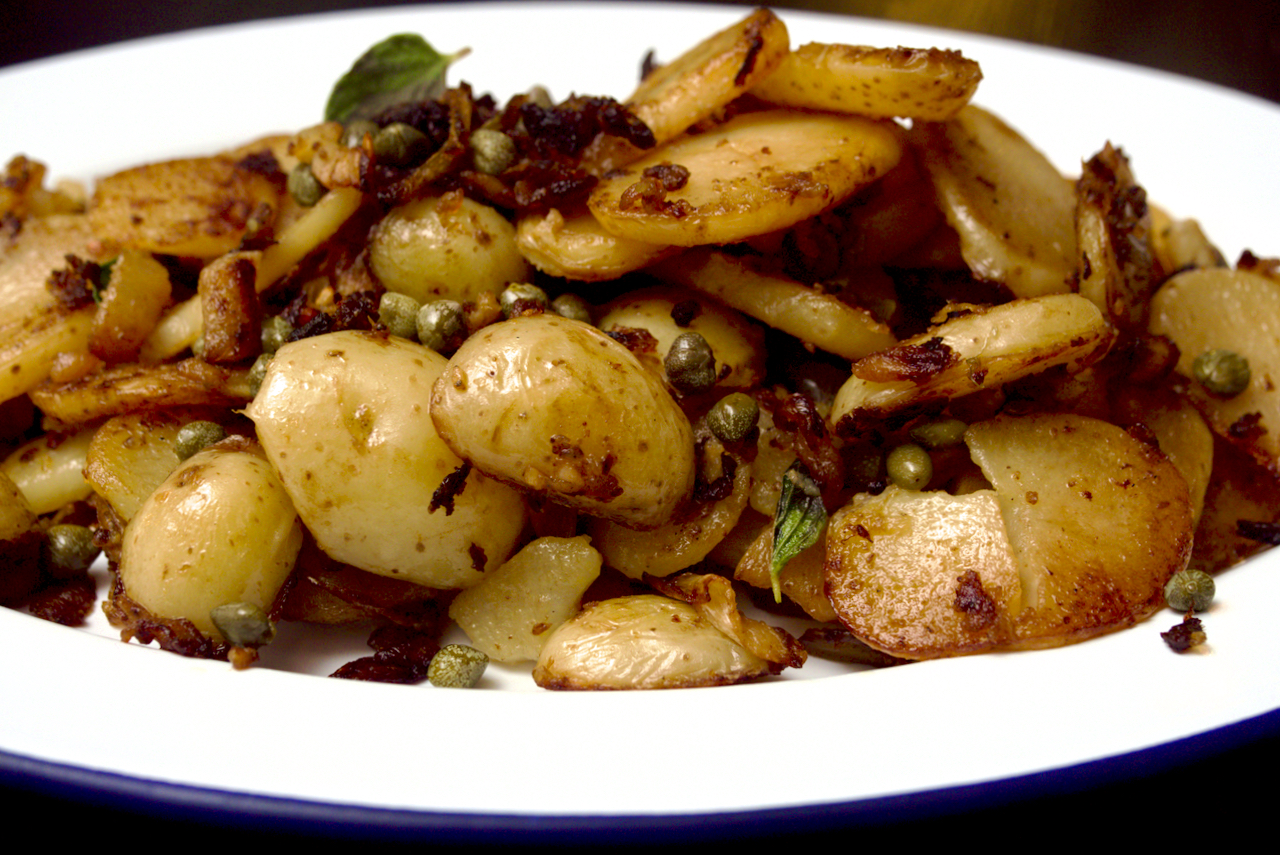
A tasty side dish to get us out our potato rut of baby roast or dauphinoise. These went spectacularly well with roast chicken.
Patatas a lo pobre – serves 4
600g waxy potatoes e.g. Charlottes
1 bulb of fennel, cut into quarters lengthways and shred into 5mm slices
75ml olive oil
2 cloves of garlic, finely chopped
2 tbsp sherry vinegar
2 tbsp capers, rinsed
a few sprigs of fresh oregano
Slice the potatoes into 5mm rounds.
Heat the olive oil in a large, heavy-based pan and add the potatoes and fennel. Cook over a medium heat until the potatoes are tender and starting to brown about 10-15 minutes. Keep tossing gently so it all cooks evenly.
When the potatoes are almost ready, add the garlic and sherry vinegar. Keep cooking for another 5 to 10 minutes or until the liquid has been absorbed and the potatoes are completely soft. Stir in the capers and oregano leaves and season with salt and pepper.
(Original recipe from The Hairy Bikerrs Mediterranean Adventure, Si King & Dave Myers, Seven Dials, 2017.)
Rajma or spiced kidney beans from Dishoom. Delicious with rice and raita.
Wine Suggestion: We found the rich, mealy textured beans paired well with Luigi Pira’s Langhe Nebbiolo. The fruity, spice and lighter nature wasn’t too serious for this dish, and the oomph from the tannins was a good counterpoint to the richness and depth in the beans.
Rajma – serves 2 to 4
35ml vegetable oil
5g ginger paste (see recipe below)
5g garlic paste (see recipe below)
1 black cardamom pod
1 bay leaf
1 cinnamon stick
1 tsp ground cumin
¼ tsp deggi mirch chilli powder
15g tomato purée
1g fine salt
100g onion-tomato masala (see recipe below)
400g tin kidney beans
½ tsp garam masala
50g tomatoes, chopped
a good handful of coriander leaves, chopped
25g butter
TO SERVE:
red onion, finely sliced
ginger matchsticks
coriander leaves, roughly torn
lime wedges
Warm the oil in a medium saucepan over a medium heat. Add the ginger and garlic pastes and cook for a few minutes, stirring, until no longer raw.
Add the cardmamom pod, bay leaf and cinnamon stick and cook for 1 minute. Add the ground cumin, chilli powder, tomato purée and salt and cook for a few minutes, or until the oil starts to separate.
Add the onion-tomato masala and bring to a simmer, stirring, then add the kidney beans along with their liquid. Simmer for 15 minutes or until reduced and thickened.
Add the garam masala, tomatoes, chopped coriander and ginger and simmer for 2-3 minutes. Stir in the butter.
Serve garnished with the red onion, ginger and coriander and with lime wedges for squeezing over.
Onion-tomato masala – makes about 450g
300ml vegetable oil
1.2kg Spanish white onions, finely diced
35g garlic paste (see recipe below)
30g ginger paste (see recipe below)
1¾ tsp deggi mirch chilli powder
30g tomato purée
2 tsp fine sea salt
600g good quality tinned tomatoes
Warm a deep, heaving frying pan over a medium heat. Add the oil and warm before adding the onions. Let the onions caramelise to a deep brown, stirring regularly. Add a splash of water if they are at risk of burning. This should take 25-30 minutes.
Add the garlic and ginger paste and sauté until light golden brown, stirring all the time.
Add the chilli powder, tomato purée and salt, then sauté for 2 minutes.
Add the chopped tomatoes, stir well and cook for about 20 minutes, stirring often. The tomatoes should break down completely and caramelise a bit in the oil, you can add a splash of water if it starts to dry up.
Freeze any masala that you are not using.
Ginger and Garlic Pastes – makes about 170g (keep in the fridge covered with oil for 10 days)
3 bulbs of garlic or 180g fresh root ginger
25ml vegetable oil, plus extra to store
Peel the garlic or ginger and roughly chop.
Whizz the garlic or ginger with with the oil to make a smooth paste.
Store in a sterilized jar covered with oil in the fridge.
(Original recipes from Dishoom by Shamil Thakrar, Kavi Thakrar & Naved Nasir, Bloomsbury, 2019.)
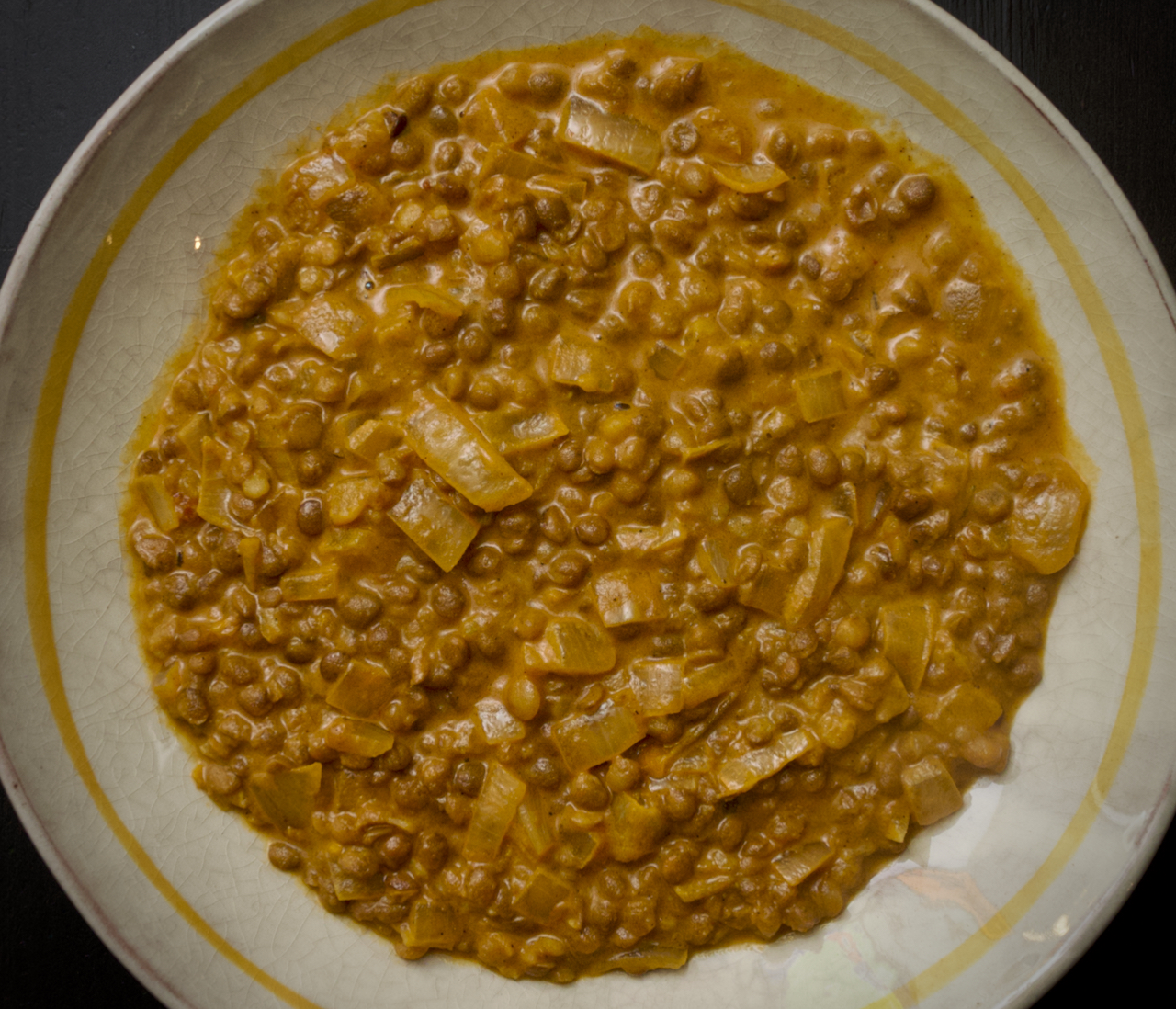
We love dhal and this cheat’s version is delicious! It’s similar to a dhal makhani but a fraction of the effort to make. We will never be without 2 tins of lentils again! Serve with rice or naan of course.
Wine Suggestion: a regular grenache, Domaine Ventenac’s “les Dissidents” Paria because it has an effortless freshness and gentle plummy, warm spices of a juicy core of red fruit.
Cheat’s Dhal – serves 4 to 6
2-3 tbsp vegetable oil
1 large onion, finely chopped
1 tsp ground cumin
1 tsp ground turmeric
1 tsp ground coriander
½ tsp ground cinnamon
½ tsp chilli flakes
3 tbsp tomato purée
2 x 400g tins green lentils, drained
50g butter
150ml double cream
300ml boiling water
Heat a large heavy saucepan over a medium-high heat. Add the vegetable oil and the onion and stir-fry until softened and starting to brown at the edges.
Stir in the spices until the onions are coated, then add the tomato purée and cook for 2 minutes. Stir in the lentils, then the butter and stir until melted. Pour in the cream and season generously, then pour in the water and stir again.
Reduce the heat and simmer gently for 30 minutes, stirring occasionally, until thick and creamy. Season to taste and serve.
(Original recipe from Persiana Everyday by Sabrina Ghayour, Aster, 2022.)
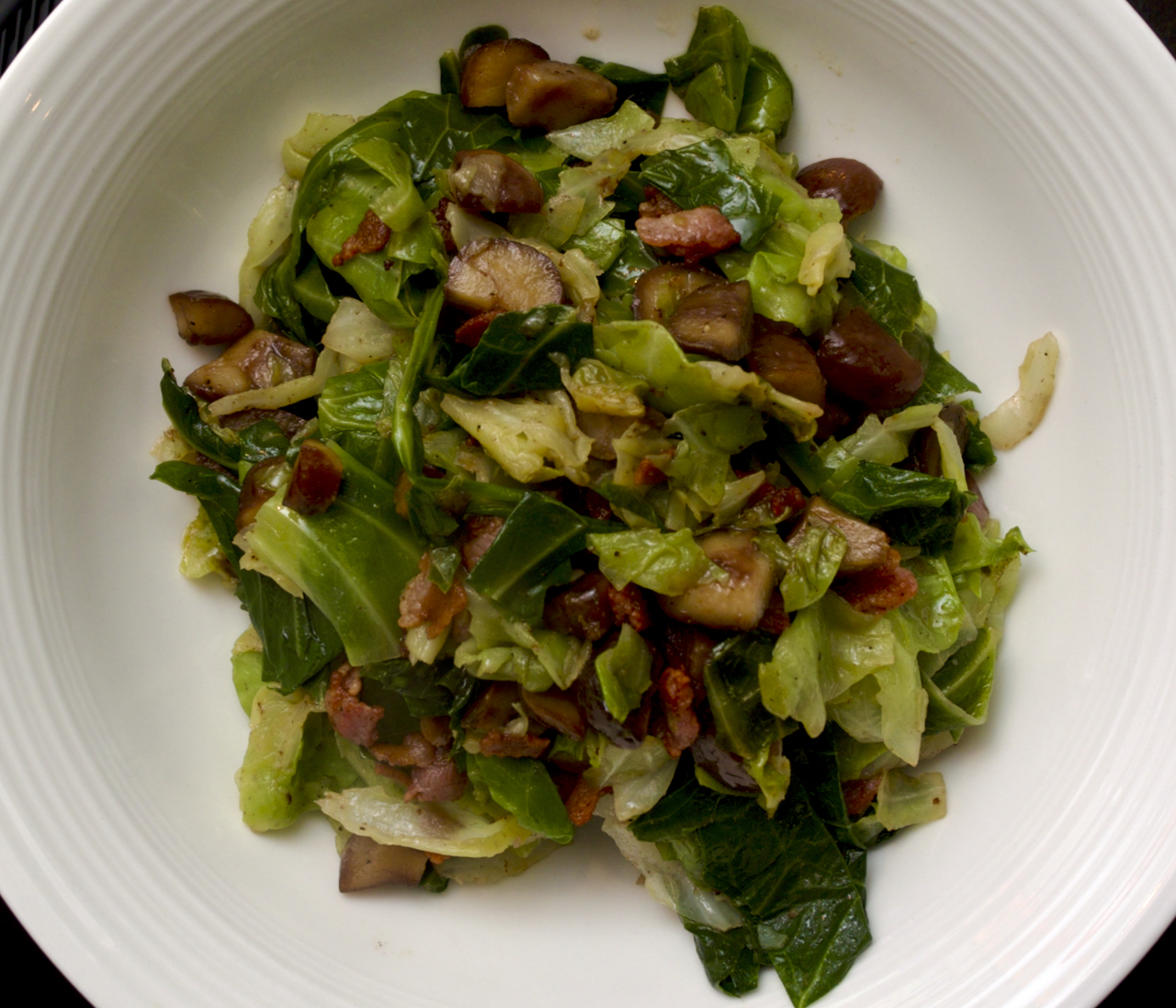
This would be nice on the big day or any other day.
Cabbage with bacon & chestnuts – serves 6
700g winter cabbage
2 tbsp olive oil
200g streaky bacon, finely chopped
200g vacuum-packed chestnuts, roughly chopped
butter
Remove the stalks from the cabbage and roughly chop.
Bring a large pan of salty water to the boil and cook the cabbage for 3-4 minutes or until tender, then drain and leave to dry in the pan.
Meanwhile, heat the oil in a large frying pan and cook the bacon over a medium heat until starting to get crispy. Add the chestnuts to the bacon and stir so they absorb the bacon fat. Add the cooked cabbage, a knob of butter and seasoning. Toss together and serve.
It’s the classic roast chicken but this time with fresh and preserved lemon. Yummy!
Wine Suggestion: We have a bit of a thing for dry Loire Chenin Blanc and were fortunate to visit Jacky Blot from Domaine de la Taille aux Loups earlier this year. Although he passed away not long after our visit, being able to taste the results of his work in a glass really keeps his memory alive. We opened a bottle of his Vin de France “Clos de la Bretonniere” with this dinner and were transported back to the tasting room and the couple of hours we spent with Jacky. A vibrantly dry Vouvray with tension and tautness in abundance and layers of minerally fruit, it paired beautifully with the roast chicken. Salut Jacky!
Roast chicken with preserved lemon – serves 4
70g butter, softened
3 tbsp thyme leaves
3 cloves of garlic, crushed
1 small preserved lemon, pips discarded and flesh and skin roughly chopped
1 lemon, zest finely grated, plus 1½ tbsp of juice
1 whole chicken
Heat the oven to 190C fan.
Put the butter, thyme, garlic, preserved lemon, lemon zest, ¼ tsp of salt and plenty of black pepper in a food proessor and blitz to combine.
Loosen the chicken skin over the breasts (careful not to tear it) and spread most of the butter mixture underneath. Spread the rest over the legs.
Put the chicken into a roasting tin and drizzle with the lemon juice and sprinkle over ½ tsp of salt and plenty of black pepper.
Roast the chicken for 20 minutes per 500g plus an extra 10 minutes, until the skin is golden brown and the juices run clear. Baste every 20 minutes as it cooks.
Remove from the oven and leave to rest for 10 minutes before serving.
(Original recipe from Ottolenghi Simple by Yotam Ottolenghi, Tara Wigley and Esme Howarth, Ebury Press, 2018.)
Typing this recipe to the sound of lashing rain and howling wind but better weather is coming and you might be inspired to barbecue a cabbage. You will be very glad you did.
Barbecued cabbage with chilli and garlic butter – serves 2 as a side
1 pointed/hispi cabbage, cut into 4 wedges
2 tbsp olive oil
FOR THE DRESSING:
1 long shallot, peeled and finely chopped
1 red chilli, halved, desseded and finely sliced
3 cloves of garlic, peeled and crushed
50g butter
½ tsp flaky sea salt
a small bunch of dill, fronds roughly chopped
Brush the cut surfaces of the cabbage wedges with the olive oil, then set them cut-side down on a very hot barbecue to char for about 4 minutes. Turn to char the other cut surface for 4 minutes, then set the wedges on the rounded sides for a final 4 minutes. Remove to a platter and sprinkle with flaky sea salt.
Meanwhile, combine the shallots, chilli and garlic with the butter and put over a low heat to melt the butter and lightly cook the vegetables. Cook for about 12-14 minutes or until the shallots are soft and translucent. Remove from the heat and mix in the salt and chopped dill. Pour the butter dressing over the warm cabbage and serve.
(Original recipe from Chasing Smoke: Cooking Over Fire Around the Levant by Sarit Packer and Itamar Srulovich, Pavilion, 2021.)
Such a tasty side dish! We served with a roast chicken but it will go with pretty much anything.
Potatoes with chimichurri – serves 6 as a side dish
800g waxy potatoes
600g sweet potatoes
5g oregano leaves, roughly chopped
5g parsley, roughly chopped
4 garlic cloves, peeled and crushed
5 tbsp olive oil, plus extra for greasing the pan
250ml chicken stock or vegetable stock
FOR THE CHIMICHURRI:
10g parsley, finely chopped
5g oregano leaves, finely chopped
1 garlic clove, peeled and finely chopped
1 mild red chilli, finely chopped (seeds in or out as you wish)
2 tbsp red wine vinegar
4 tbsp olive oil
Heat the oven to 180C fan.
Peel the potaotes, then slice the waxy sort using a mandolin. Use a sharp knife to slice the sweet potatoes finely – they should be slightly thicker than the regular potatoes.
Put both sorts of potatoes into a large bowl and add the garlic, herbs, 3 tbsp of the oil, 1½ tsp salt and plenty of black pepper. Toss gently with your hands to combine but make sure you don’t break the potatoes.
Lightly grease a large ovenproof cast-iron frying pan or a round baking dish – about 23cm in diameter. Start at the edge and arrange the potatoes in overlapping circles until you reach the middle. Pour the stock over the top. Lightly grease a piece of foil and cover the dish tightly with it. Bake in the oven for 35 minutes.
Remove the pan from the oven and turn the heat up to 220C. Remove the foil from the pan and drizzle over the last 2 tbsp of olive oil. Return to the oven for 20 minutes, or until nicely browned. Remove from the oven and leave to cool slightly, for about 15 minutes.
Meanwhile, make the chimichurri sauce. Put all of the ingredients into a bowl with ¼ tsp of salt and plenty of black pepper. Mix well to combine.
When you’re ready to serve, spoon the chimichurri over the top of the potatoes.
(Original recipe from Ottolenghi Test Kitchen: Extra Good Things by Noor Murad & Yotam Ottolenghi, Ebury Press, 2022.)
It’s last chance saloon if you want to cook this dish before both the tomatoes and weather turn rubbish. The marinade is added after you cook the lamb.
Wine Suggestion: We think barbecued lamb goes really nicely with Cabernet Franc, so a good excuse to open a bottle of our favourite wine: Chateau du Hureau’s Saumur-Champigny “Tuffe”.
Barbecue Lamb with Tomato & Capers – serves 6
1.5kg butterflied leg of lamb
FOR THE MARINADE:
3 tomatoes, diced
2 large shallots, finely chopped
1 tbsp capers, rinsed
a small bunch of parsley, chopped
a small bunch of mint, chopped
a small bunch of basil, chopped
1 lemon, juiced
2 tbsp olive oil
Mix the ingredients for the marinade together, keeping a small handful of herbs aside to garnish at the end.
Get your barbecue going and wait until the flames have died down. Move the coals to the sides and put a drip-tray in the middle, then BBQ the lamb for 20 minutes on each side.
When the lamb is cooked to your liking, set it on a platter and spoon over the marinade. Cover loosely with foil and leave to rest for 20 minutes. Slice and serve with the marinade and the rest of the herbs.
(Original recipe by Adam Bush & Janine Ratcliffe, Olive Magazine, August 2017.)