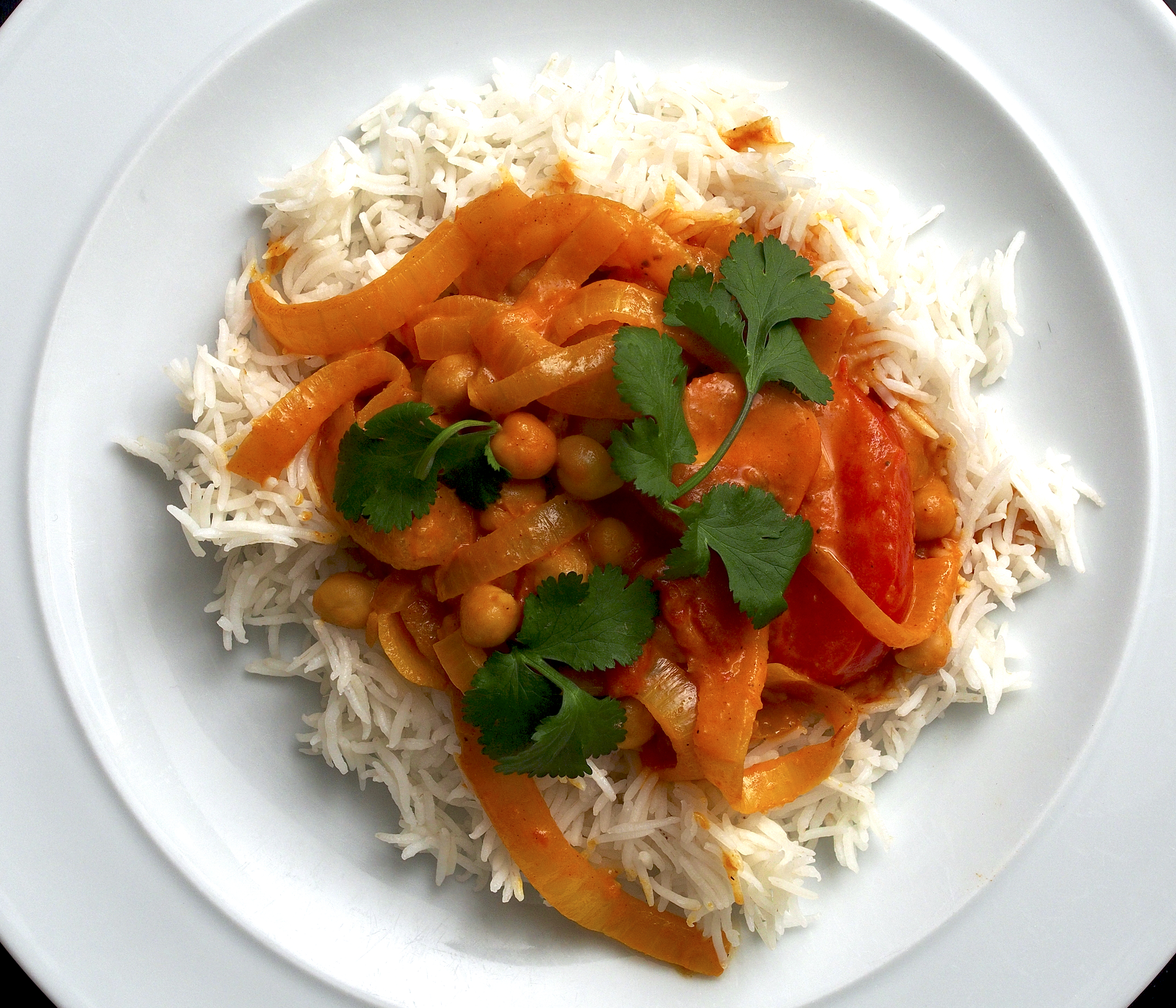
A few tins and some spices and you’re pretty much sorted for this tasty weeknight curry. We served this with rice the first night, and chips the second. We also know it’s not tomato season at present but the fresh tomatoes are really more for texture than flavour here.
Tomato & chickpea curry – serves 4
1 tbsp olive oil
2 onions, finely sliced
2 cloves of garlic, crushed
1 tsp garam masala
1 tsp turmeric
1 tsp ground coriander
1 x 400g tin plum tomatoes
1 x 400ml tin coconut milk
1 x 400g tin chickpeas, drained and rinsed
2 large tomatoes, quartered
a small bunch of coriander, roughly chopped
Heat the oil in a large pan and cook the onions for about 10 minutes or until softened.
Add the garlic and spices and keep cooking for another minute or two.
Add the tin of tomatoes, breaking them up with a spoon, then simmer for 10 minutes.
Add the coconut milk and season generously. Bring to the boil and simmer for a further 10-15 minutes or until thickened.
Add the chickpeas and fresh tomatoes and allow to warm through. Serve with some steamed rice and the coriander scattered over.
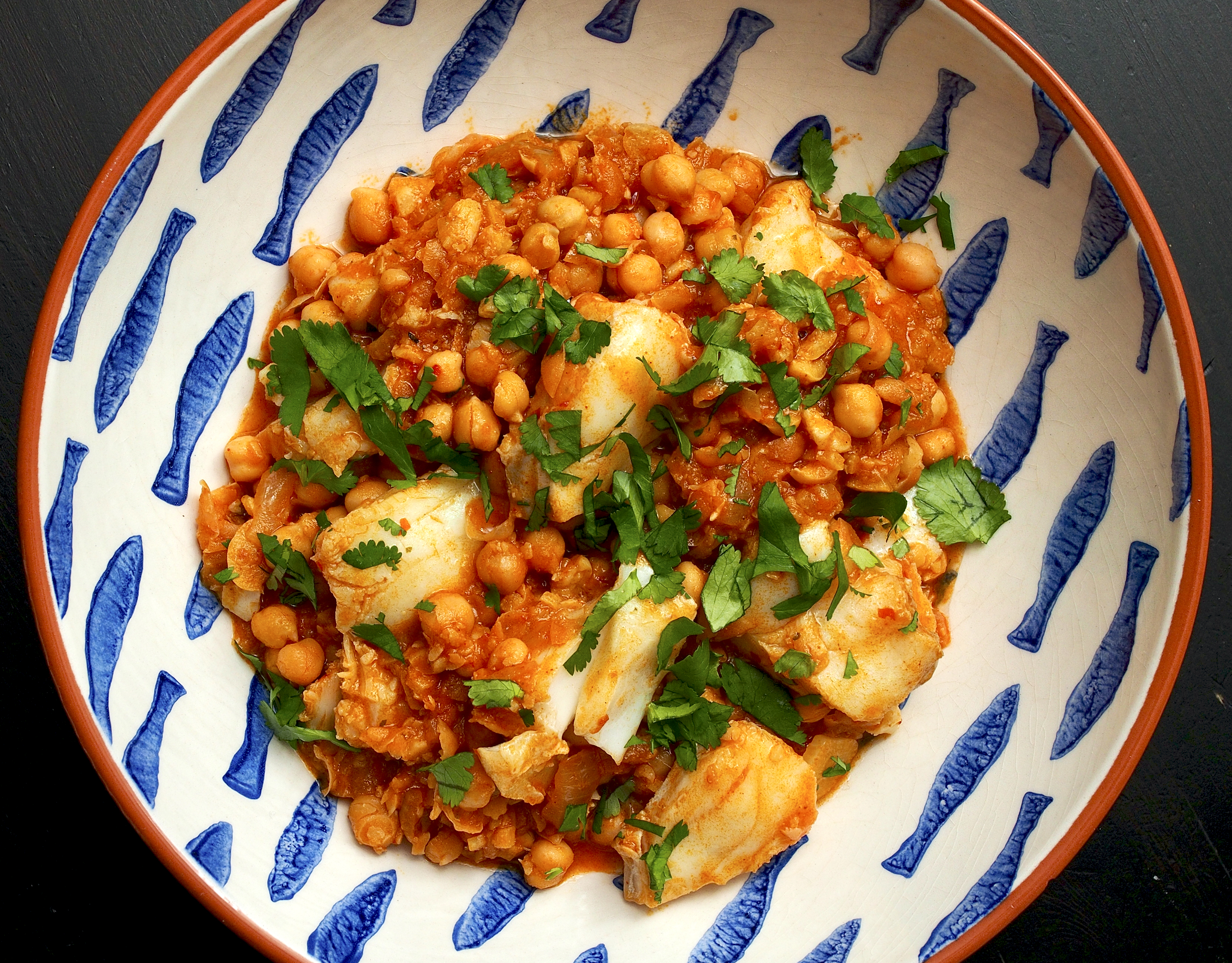
This is really a dish for sharing but we ate the lot with some crusty bread. Fabulous and intense flavours of lemon and harissa.
Wine Suggestion: Given this dish has a lot of strong, savoury flavours, including heat from the harissa and sour from the lemon, we had to choose Grüner Veltliner. Tonight’s choice is by Höpler from Burgenland in Austria and it was a pure and elegant wine with an appetising freshness and zesty finish. This stood it’s own ground against the big flavours in the food, was nice as an apertif and a wonderful palate cleanser after we’d finished; versatile indeed.
Harissa chickpeas with flaked cod – serves 4 as a starter
200g skinless cod, remove the bones and cut into 3cm pieces
olive oil
1/3 tsp ground cumin
2 cloves of garlic, one crushed and one finely sliced
½ an onion, finely sliced
2 cardamom pods, bashed
1 tbsp harissa, rose harissa if you can get it
2 tsp tomato purée
1½ small preserved lemons, skin finely chopped (discard the flesh)
1 x 400g tin chickpeas, drained and rinsed
200ml vegetable stock
5g coriander, roughly chopped
Put the cod into a bowl with 1½ tsp of olive oil, the cumin, crushed garlic and a pinch of salt. Mix gently, then set aside for 15 minutes.
Heat 2 tbsp of olive oil in a large sauté pan, then add the onion and fry for 4-5 minutes, until soft and golden-brown. Add the sliced garlic and cook for another minute over a gentle heat. Add the cardamom, harissa, tomato purée, preserved lemon, chickpeas and ¼ tsp of salt. Stir for a minute, then add the stock and heat for a few minutes, crushing some of the chickpeas with the back of a spoon to thicken the sauce.
Add the fish and gently stir, then cook for 3-4 minutes, turning half-way through, until cooked and easy to flake. Discard the cardamom pods, sprinkle with the coriander and serve.
(Original recipe from Ottolenghi Simple by Yotam Ottolenghi, Tara Wigley & Esme Howarth, Ebury Press, 2018.)
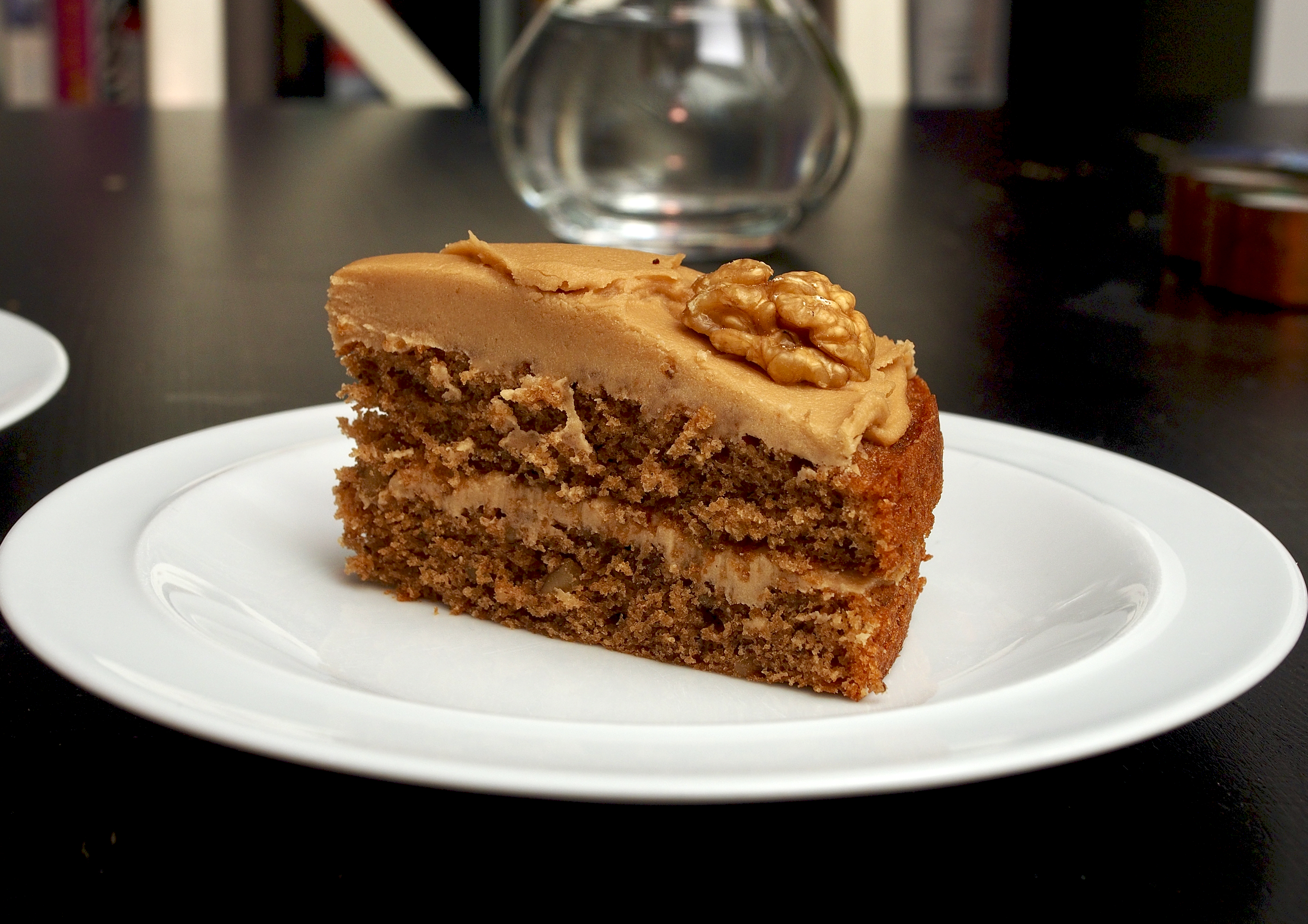
We don’t do much baking but we’ve managed more than usual with all of these lockdowns. This old-fashioned coffee and walnut cake is a favourite of Jules’ and was really straightforward to make – even for us baking novices.
Coffee & Walnut Cake
100g softened butter
100g caster sugar
2 large eggs
100g self-raising flour
1 level tsp baking powder
50g chopped walnuts
1 tbsp coffee extract (or 2 tsp instant coffee granules mixed with 1 tbsp hot water. Use a bit more in the cake mix than in the icing)
FOR THE ICING:
75g softened butter
225g sifted icing sugar
2 tsp milk
2 tsp coffee extract
8 walnut halves, to decorate
Heat the oven to 160C/Gas 4.
Grease two 18cm sandwich tins and line the base of each with baking paper.
Put all the cake ingredients into a bowl and beat until well blended and smooth.
Divide the cake mix between the sandwich tins and level the surface. Bake for 20-25 minutes or until well risen and the top springs back when pressed lightly with a finger. Leave to cool in the tins for a few minutes, then turn out, peel off the paper and finish cooling on a wire rack.
To make the icing, beat the butter, sifted icing sugar, milk and coffee essence in a bowl until smooth.
When the cakes are completely cold sandwich them together with half the icing and use the rest for the top. Decorate with the walnuts.
(Original recipe from Mary Berry’s Baking Bible, BBC Books, 2009.)
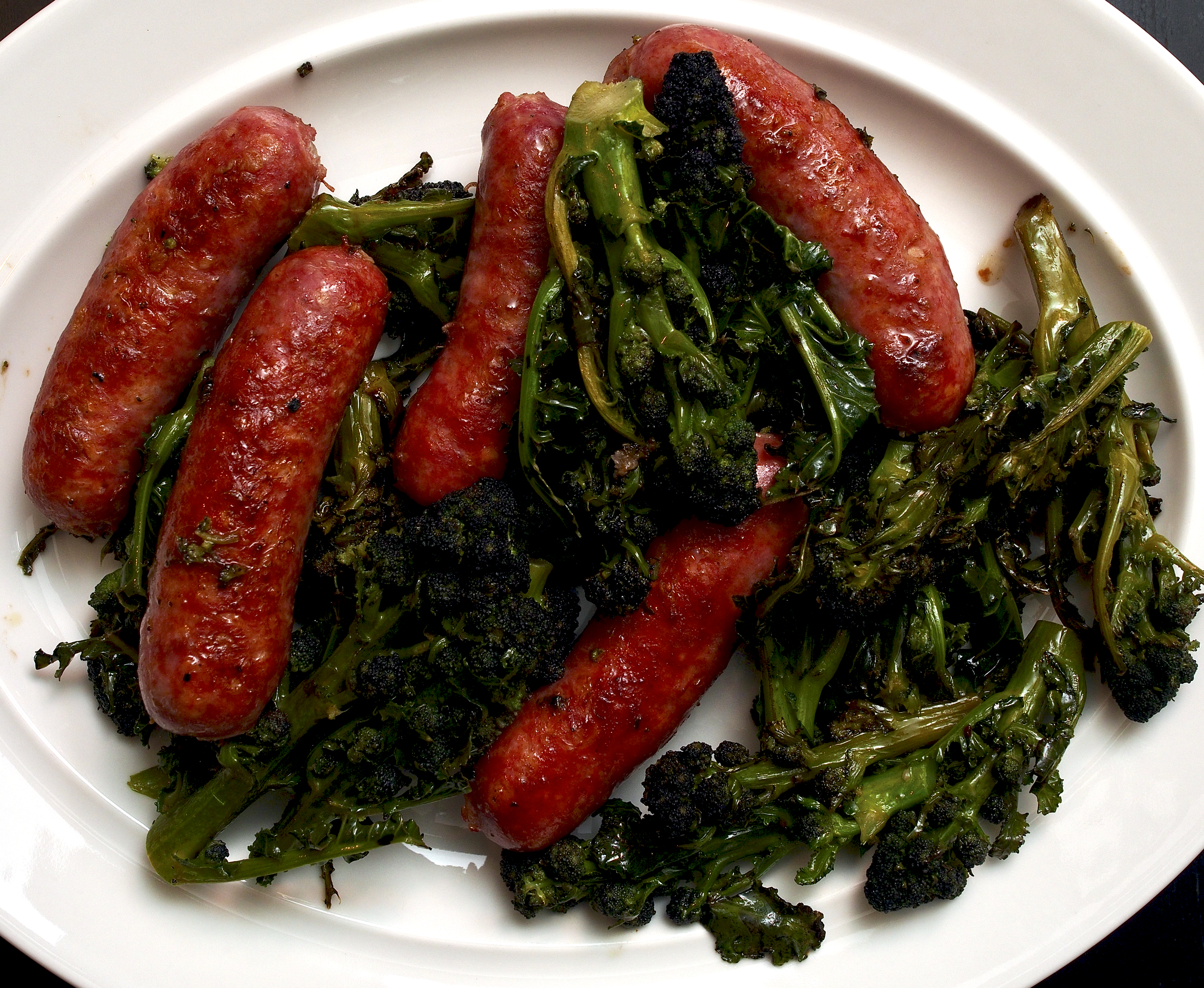
A recipe from Southern Italian Cooking by Valentina Harris. There is no better vehicle to showcase purple sprouting broccoli, which is in season right now. You need top quality ingredients as they will shine in this simple dish. The sausages were Italian with fennel and the PSB our friends at McNally Family Farm.
Wine Suggestion: There’s a certain honest rusticity to this dish which we think suits Nebbiolo or similar, but not the heady heights of Barolo, look for a lesser known area. We went for the lesser known Freisa grape, also from Piedmont. A bottle of the Olim Bauda Freisa and it tasted of roses and raspberry’s with a decent whack of smooth, honest tannins; satisfying and generous alongside the food.
Salsicce con Broccoletti – serves 4
1 tbsp lard (we used a mix of olive oil and butter)
2 cloves of garlic, crushed
1 dried red chilli pepper
500g Italian sausages (you need top quality Italian sausages which have a much coarser texture than regular butchers sausages)
750g purple sprouting broccoli, rinsed and trimmed
A large shallow casserole dish works well for this. Melt the lard and fry the garlic and chilli pepper over a gentle heat for 5 minutes. Add the sausages and brown all over (you might want to do this in a frying pan so you don’t burn the garlic, if you do, make sure that the tip all the oil that comes out of the sausages back into the pan).
Once browned all over, turn the heat down and cook the sausages gently for 5 minutes. Add the broccoli and season with a little salt. Stir everything to coat in the fat.
Cover the pan and simmer for 20 minutes, a splash of water will help steam the broccoli and stop the dish drying out.
(Original recipe from Southern Italian Cooking by Valentina Harris, Pavilion Books Limited, 1993.)
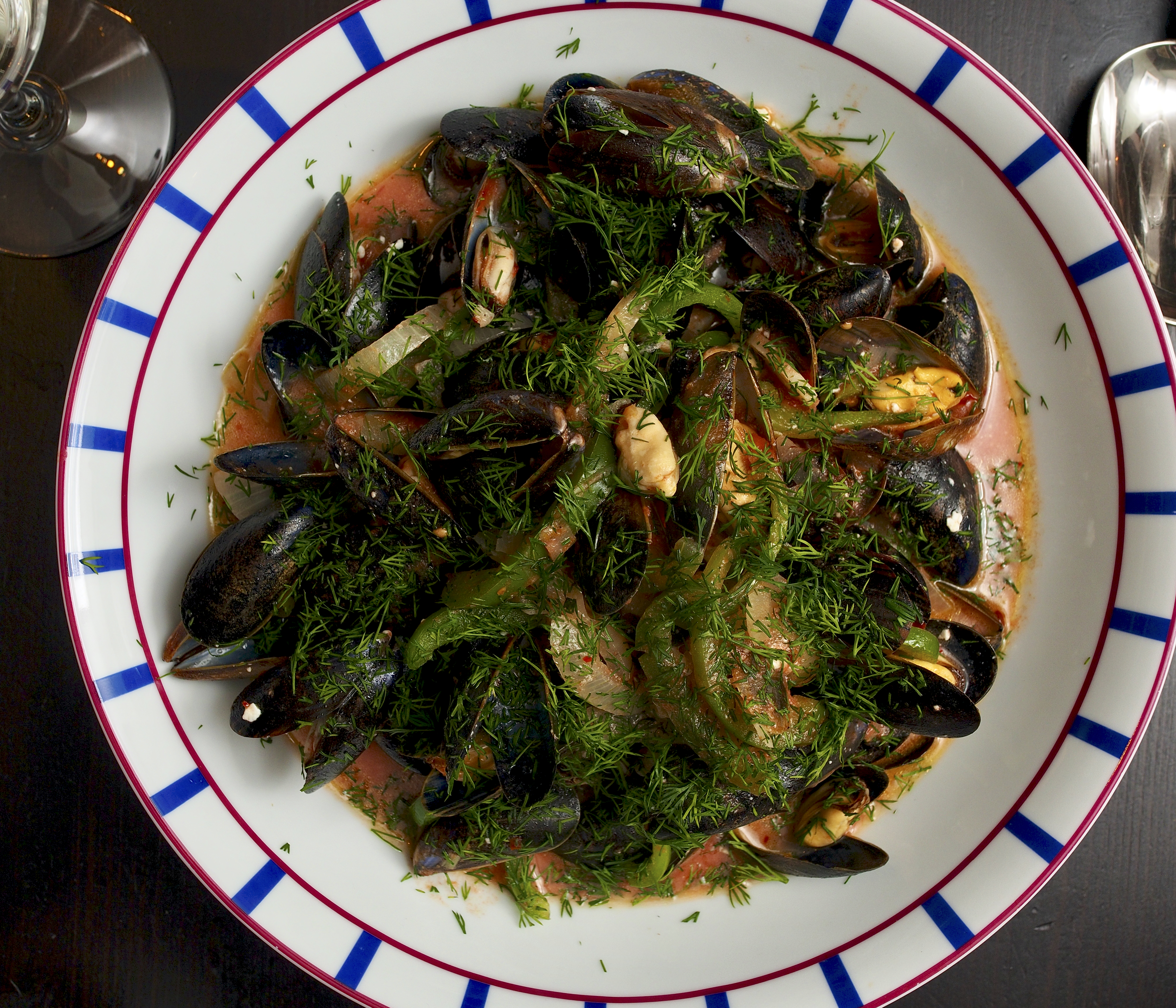
Mussels with green pepper, Pernod, tomatoes, feta and dill. This is an Albanian recipe that we found in Venice to Istanbul by Rick Stein. We don’t agree with the seafood and cheese rule anyway and this dish proves that it can work. Serve with crusty bread.
Wine Suggestion: Match with a white with a bit of body, but no oak. We chose an underrated Sylvaner by Sipp Mack in Alsace which was fresh with stone fruits and a racy minerality in the glass
Butrint Mussels – serves 2
3 tbsp olive oil
1 small onion, sliced
1 clove of garlic, sliced
1 small green pepper, sliced
30ml of ouzo/Pastis (we used Pernod)
600g mussels, scrubbed
150ml passata
75g feta cheese
½ tsp chilli flakes
½ tsp salt
a small handful of dill, chopped
Heat the oil in a large pan over a medium heat and sweat the onion, garlic and green pepper for 5 minutes.
Add the Pernod and the mussels, then cover with a lid and cook for about 5 minutes or until the mussels are starting to open.
Add the passata and feta and season with the chilli flakes, salt and some black pepper. Heat through for a minute or two, then serve scattered with the dill.
(Original recipe from Venice to Istanbul by Rick Stein, BBC Books, 2015.)
A genius combination by Gill Meller, unusual and totally delicious. Gill deep fries the artichoke skins and some extra nori sheets as a garnish, which looks fab but too much for us to manage on our lunch break.
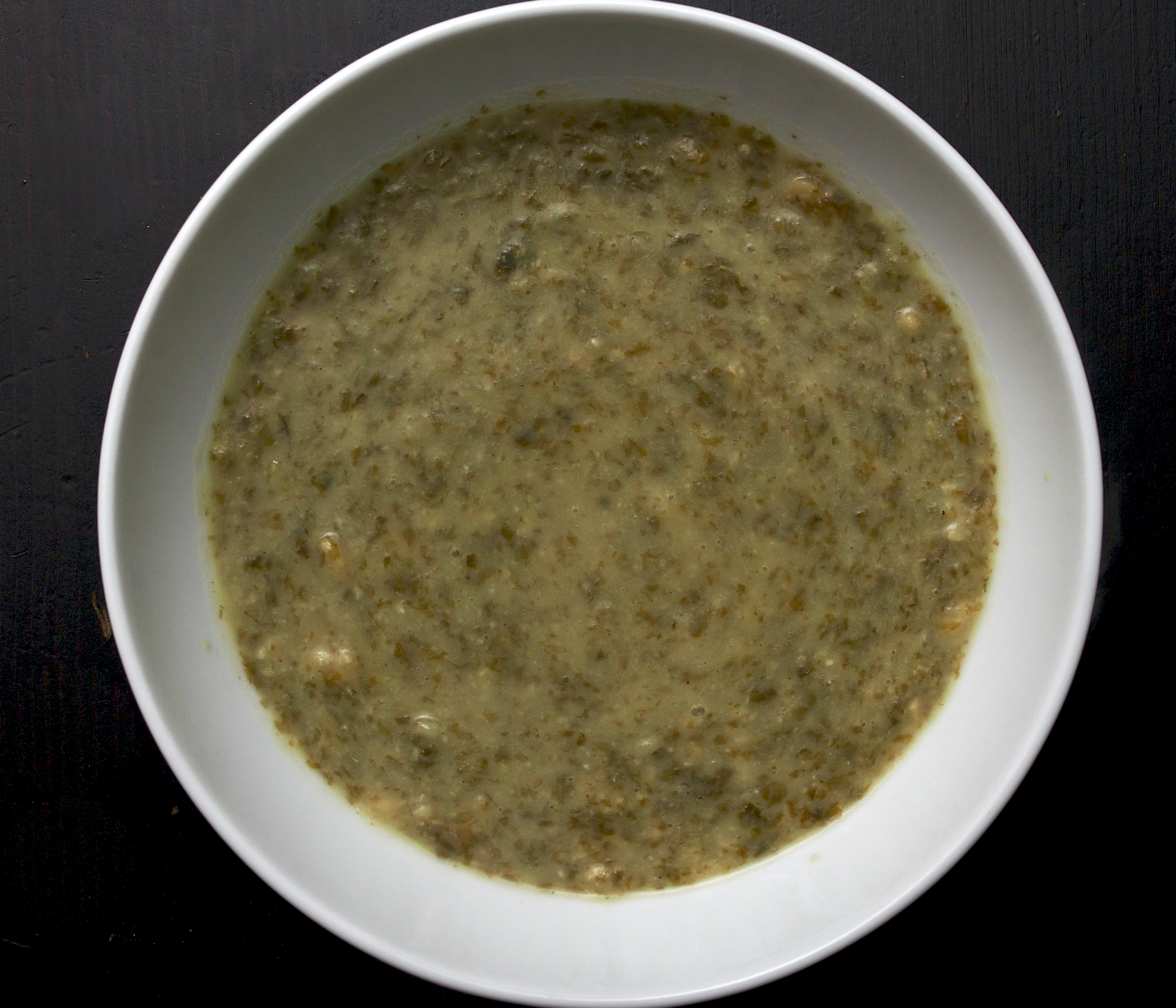
Jerusalem artichoke, almond and seaweed soup – serves 4
500g Jerusalem artichokes, peeled and finely sliced
1 tbsp extra-virgin olive oil, plus extra to serve
1 onion, thinly sliced
1 leek, thinly sliced
2 cloves of garlic, sliced
100g whole almonds, soaked overnight in water
2 nori seaweed sheets
1.2 litres of vegetable stock
Put a large heavy-based pan over a medium heat, then heat the olive oil. Add the artichoke slices, the onion, leek, garlic and soaked nuts. Season generously, then cook, stirring often for 8-10 minutes.
Tear the nori sheets into the pan and add the stock. Bring to a simmer, then cook gently for 20-30 minutes or until the artichokes are soft.
Whizz the soup to a smooth purée, then season again. Leave to stand for a few minutes before serving in warm bowls with some of your best olive oil drizzled over.
(Original recipe from Root Stem Leaf Flower by Gill Meller, Hardie Grant, Quadrille, 2020.)
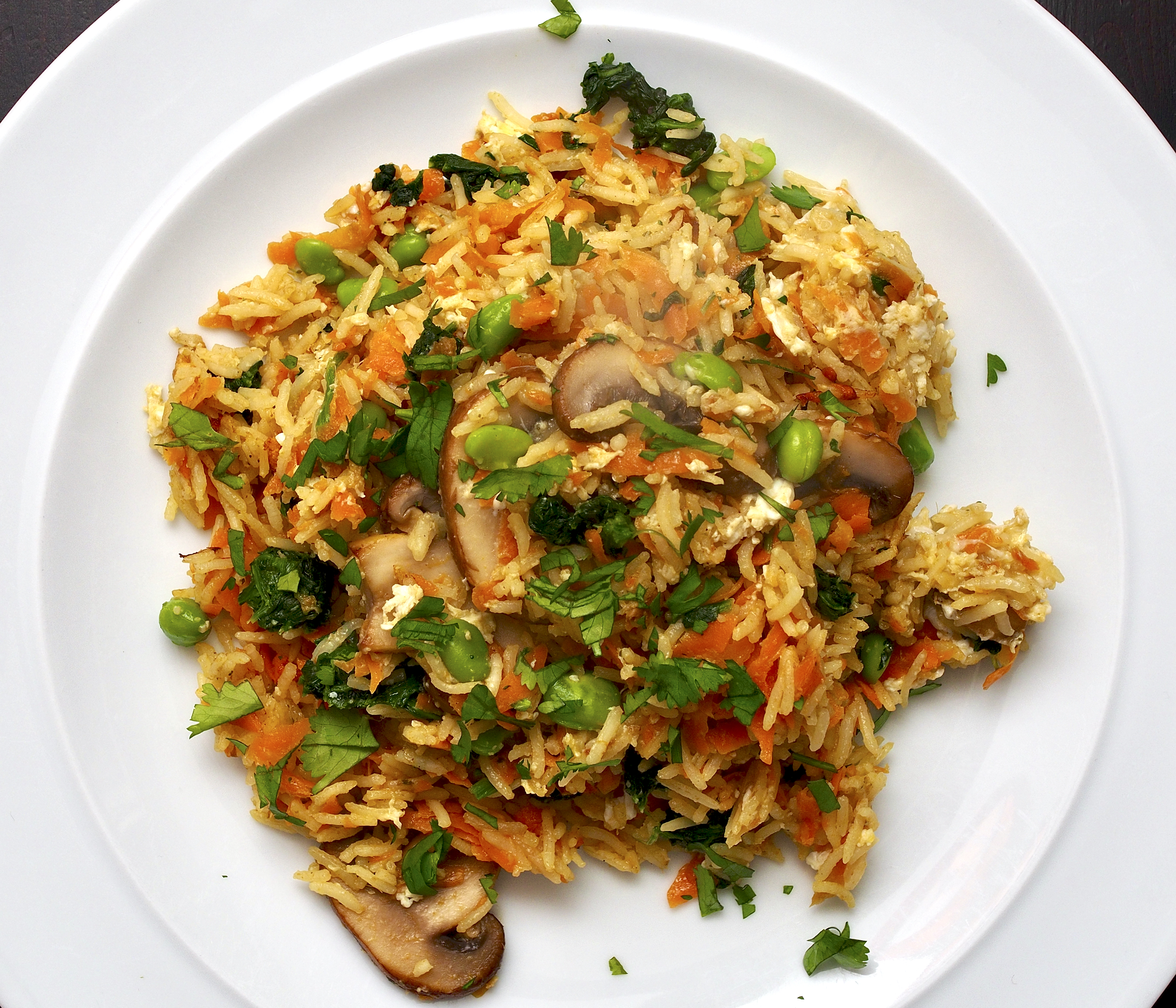
We love recipes like this; perfect for using up bits and pieces and super tasty.
Wine Suggestion: There’s a vibrancy to this food and we matched it with Ventenac’s “Dissidents” le Paria, a fresh-fruited, minerally grenache. Lovely light spices, a stony core of texture and bright plums and cherry flavours.
Green Spiced Rice – serves 2-3
150g frozen broad beans
400ml vegetable stock
2 tbsp Thai green curry paste
200g basmati rice
a slice of butter
a few sliced mushrooms
a large carrot, coarsely grated
3 eggs, lightly beaten
a handful of coriander, roughly chopped
a few handfuls of spinach
Cook the broad beans in boiling water for 2 minutes, then drain and pop them out of the skins.
Wilt the spinach is a saucepan, then leave to cool. Squeeze out any excess liquid if necessary and chop.
Pour the vegetable stock into a saucepan, then add the curry paste and the rice. Bring to the boil, then cover and simmer for 10 minutes or until almost tender and most of the liquid absorbed.
Melt the butter in a large frying pan, then fry the mushrooms until lightly coloured. Add the rice and carrot to the pan with the broad beans. Stir until the rice is moist but no longer wet, then add the eggs and season. Keep cooking, stirring now and then to break up the egg, until it is lightly cooked. Fold through the chopped spinach and coriander, then serve.
(Original recipe from Eat by Nigel Slater, Fourth Estate, 2013.)
These have been part of my life as long as I can remember. There are different ways of making them, and I’m not sure if this is how I made them with my Mum when I was a kid, but this version is really crunchy and keeps well … if you can resist.
ANZAC stands for the Australian and New Zealand Army Corps which first fought in Gallipoli in WWI. It was this conflict that defined both nations by giving them a distinct voice as countries, and no longer colonies of Britain. After this war both nations were equal member of the Treaty of Versailles despite their distance and size, and thus included as nations in their own right. This hadn’t really happened before this date, so a defining moment that allowed them both to develop independently.
ANZAC day is always 25 April and is used to remember all who served and died in all wars, conflicts, and peacekeeping operations.
ANZAC Biscuits – makes up to 45 depending on size
150g butter
1 tbsn golden syrup
175g granulated sugar
75g self-raising flour
75g dessicated coconut
100g porridge oats
Pre-heat the oven to 180C and lightly grease two baking trays
Put the butter, golden syrup and sugar into a saucepan and heat gently until butter has melted and sugar has dissolved. Stir in the flour, coconut and oats and mix well.
Place large teaspoons of the mix onto the baking trays, well spread out. Flatten slightly. You may need to make two batches.
Bake for 8-10 minutes until they have spread out a little and are lightly browned at the edges. Leave to cool on the trays for 5 minutes before removing with a pallet knife and cooling fully on a wire rack. Store in an airtight container.
(Original recipe from Mary Berry’s Baking Bible, BBC Books, 2009.)
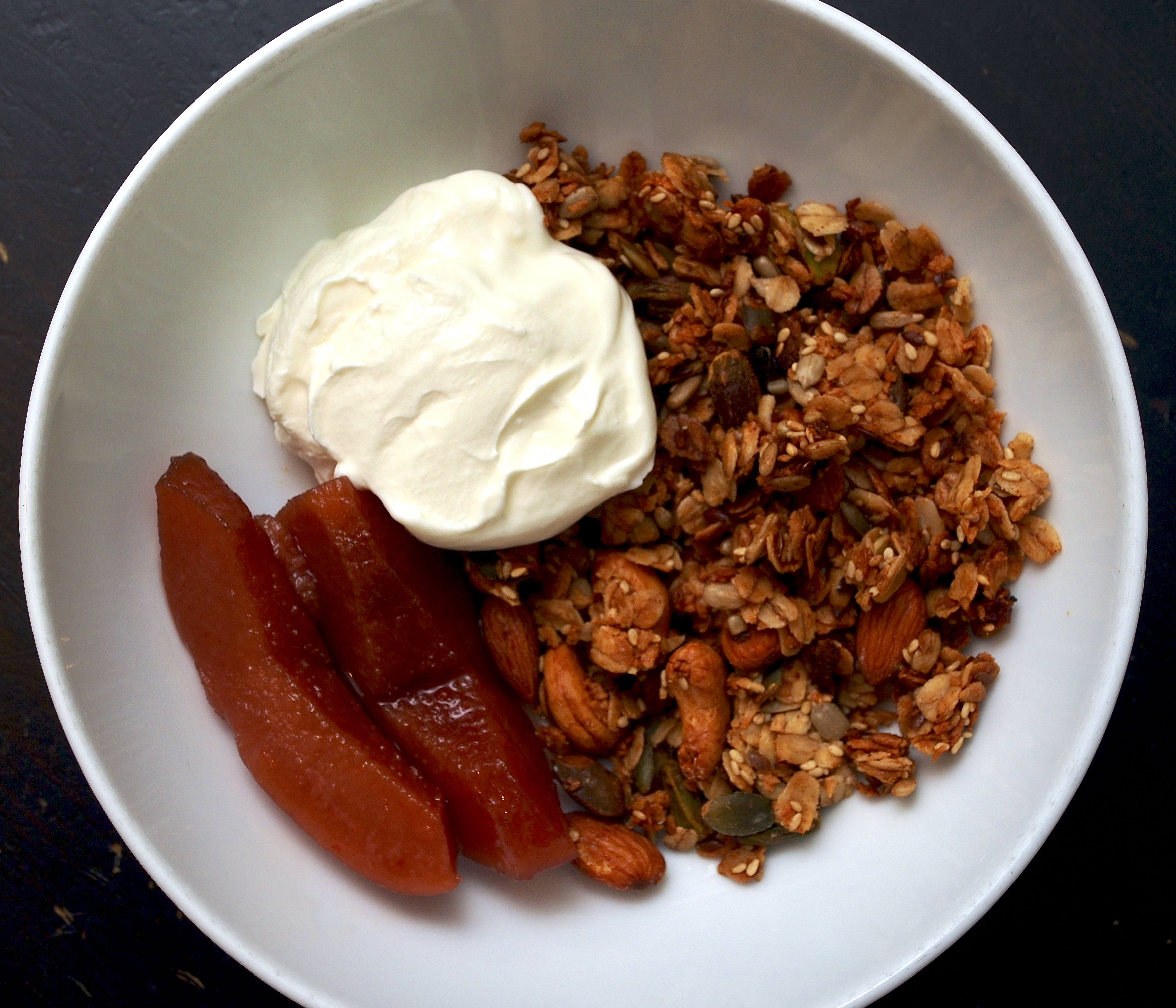
This granola from Dishoom has only a hint of sweetness and is much more nutty with hints of butter and spice so it makes a great foil to any fresh or poached fruit (here with Nigella’s pomegranate-poached quinces). It’s also great with just some creamy yoghurt, we loved it. The kitchen smells incredible as it toasts!
Dishoom Granola – makes 10-12 portions
200g rolled oats
100g almonds
80g cashew nuts
75g pistachio nuts
45g desiccated coconut
70g sunflower seeds
70g pumpkin seeds
20g sesame seeds
100g acacia honey
100g unsalted butter
1 tsp ground cinnamon
Heat the oven to 210C/190C fan/Gas 6-7.
Line two large baking trays with baking parchment.
Mix the oats, nuts, desiccated coconut and seeds together in a big bowl.
Put the honey, butter and ground cinnamon into a small saucepan and heat gently until the butter is just melted. Pour over the dry ingredients in the bowl and mix well.
Divide the mixture between the baking trays and spread evenly, just a wooden spoon to pat it down. Put one tray in the oven and bake for 10 minutes. Remove the tray from the oven and mix well, then press it down again. Bake for another 5 minutes, then remove from the oven and allow to cool completely before you stir or move it. Repeat with the other tray.
Store in an airtight container and use within a month.
(Original recipe from Dishoom by Shamil Thakrar, Kavi Thakrar & Naved Nasir, Bloomsbury Publishing, 2019.)
These are flavour-packed and great to serve with drinks … cannot wait to have someone over for drinks!
Wine Suggestion: despite the spice in this dish we think these go great with a good sparkling, particularly one made using the Champagne method of double fermentation in the bottle. A touch of dosage, creamy mousse and the lift of naturally acidic grapes both lift the flavours and the mood.
Gochujang Chicken Skewers – serves 4 or more as a bite-sized canapé
500g chicken thigh fillets, cut into small bite-size pieces
sesame seeds, to serve
scallions, finely sliced to serve
FOR THE MARINADE:
2 cloves of garlic, grated
a thumb-sized piece of ginger, grated
2 tbsp soy sauce
1 tsp sesame oil
1 tbsp white wine vinegar
1 tbsp clear honey, plus a bit extra
1 heaped tsp gochujang paste
Mix all of the marinade ingredients together in a large bowl. Add the chicken pieces and leave to marinate for no more than 30 minutes.
Heat the oven to 190C/170C Fan/Gas 5.
Put pieces of chicken onto cocktail sticks or small skewers and put onto an oiled baking tray (keep the marinade). Cook for 10-12 minutes.
Meanwhile, put the marinade into a small pan over a low-medium heat and reduce for a few minutes, you can add a bit of extra honey if you like.
Take the chicken out of the oven and brush with the reduced marinade, then sprinkle the scallions and sesame seeds over the top.
(Original recipe by Milli Taylor in Olive Magazine, Christmas 2014)
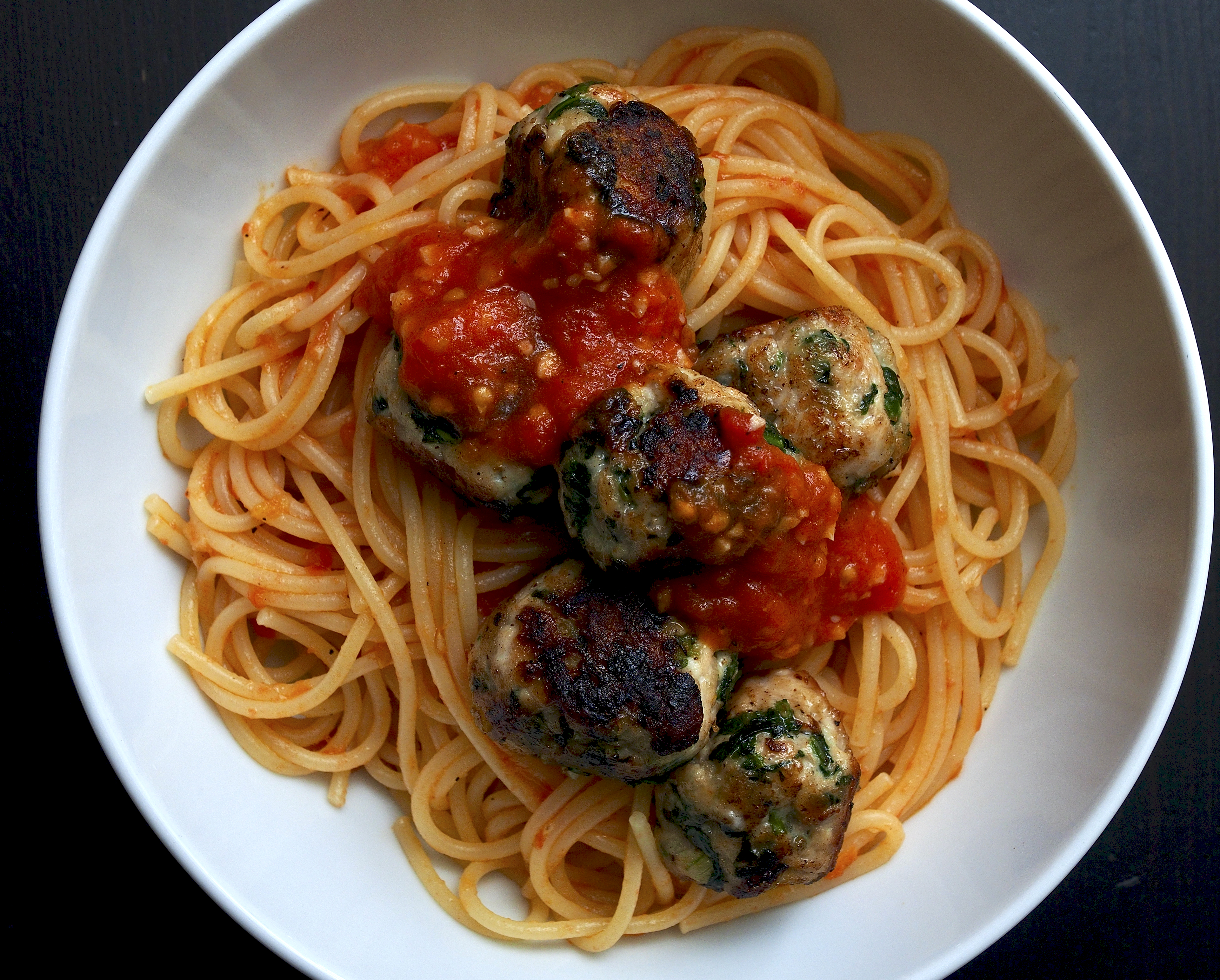
We loved these little meatballs by Diana Henry. Super tasty and very popular with our 7 year old. We served them with spaghetti and some home-made tomato sauce but we also like Diana’s suggestion of stuffing them into a wrap with some lettuce, tomato and mayonnaise. Will definitely be trying this suggestion next time.
Wine Suggestion: We think that Sangiovese plays a wonderful balance of power without weight, especially when it avoids too much extraction or oak. A new find, courtesy of an old friend is the Tenuta di Carleone Chianti Classico. Quite new, in the scheme of things but an old property and vineyard, this is biodynamic and delicious.
Chicken, spinach and cheese polpette – serves 6
500g minced chicken
50g fresh breadcrumbs
20g grated Parmesan
60g grated Gruyère
2-3 tbsp olive oil
½ onion, or a small onion, very finely chopped
2 cloves of garlic, crushed
200g spinach (discard any thick stems)
leaves from 3 sprigs of thyme
a generous grating of nutmeg
finely grated zest of 1 lemon
Put the chicken mince into a large bowl with the breadcrumbs and grated cheese.
Heat 1 tbsp of olive oil in a frying and sauté the onion gently until soft but not coloured. Add the garlic and cook for another 2 minutes, then set aside to cool.
Put the spinach into a large pan with couple of tbsp of water and cover with a lid. Put over a low heat until wilted, about 4 minutes. Drain and leave to cool.
Add the cooled onion to the chicken with the thyme, nutmeg, lemon zest and lots of seasoning.
Squeeze the spinach with your hands to remove the water, then finely chop. Add this to the bowl with everything else and mix well with your hands.
Wet your hands, form the mixture into little meatballs and place on a baking tray. Diana suggests the size of a walnut in its shell which should give about 50 meatballs. I think we only got to about 36 so ours must of been a bit bigger – no matter.
Cover the tray and put the meatballs into the fridge for half an hour or so to allow them to firm up.
Heat 1 tbsp of olive oil in a large frying pan and cook the polpette in batches over a medium heat, until they have turned crusty brown all over. Return them all to the pan, lower the heat, and continue to cook for about 7 minute or until cooked through. You can cut into one to check there’s no pink.
(Original recipe from A Bird in the Hand by Diana Henry, Mitchell Beazley, 2015.)
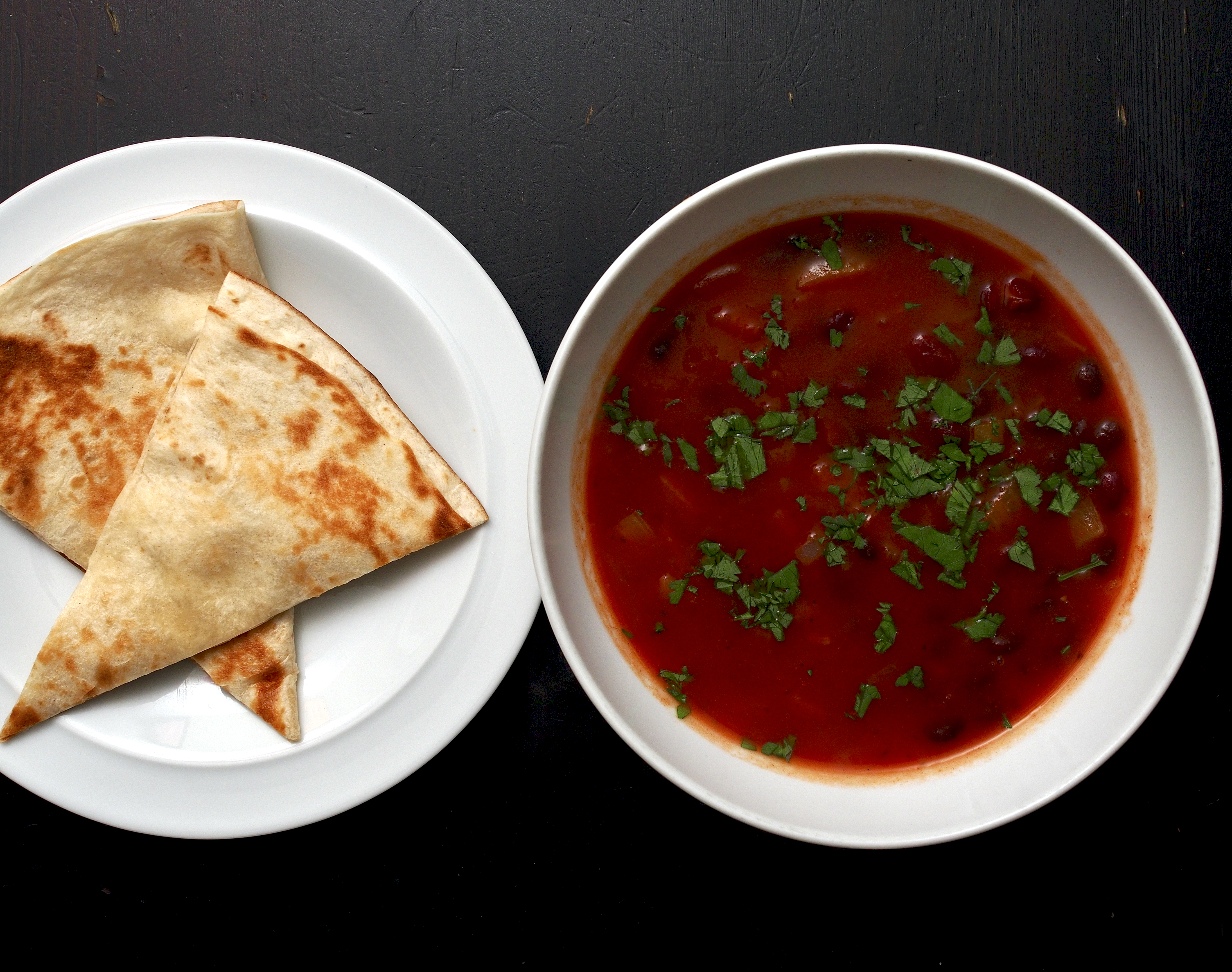
This soup is super simple but it’s really good with the toasted feta tortillas on the side for a weekday lunch.
Bean soup with feta tortillas – serves 4
1 tbsp vegetable oil
1 onion, chopped
1 heaped tbsp chipotle paste
500g carton passata
500ml vegetable stock
1 x 400g tin of red kidney beans, drained and rinsed
1 x 400g tin of black beans, drained and rinsed
200g feta
4 large soft flour tortillas
a handful of coriander, roughly chopped
sour cream or yoghurt to serve
Heat the oil in a large saucepan and cook the onion over a medium-low heat for about 10 minutes, or until soft.
Add the chipotle paste, passata, stock and beans. Season, bring to the boil, then reduce the heat and simmer for 5 minutes.
Meanwhile, crumble the feta over one half of each of the tortillas, then sprinkle with the chopped coriander and season with black pepper. Fold the uncovered side over and press together. Heat a dry frying pan and cook the tortillas for a minute on each side or until crispy and the cheese has melted.
Serve the soup in warm bowls with a dollop of sour cream or yoghurt if you have it and the feta tortillas on the side.
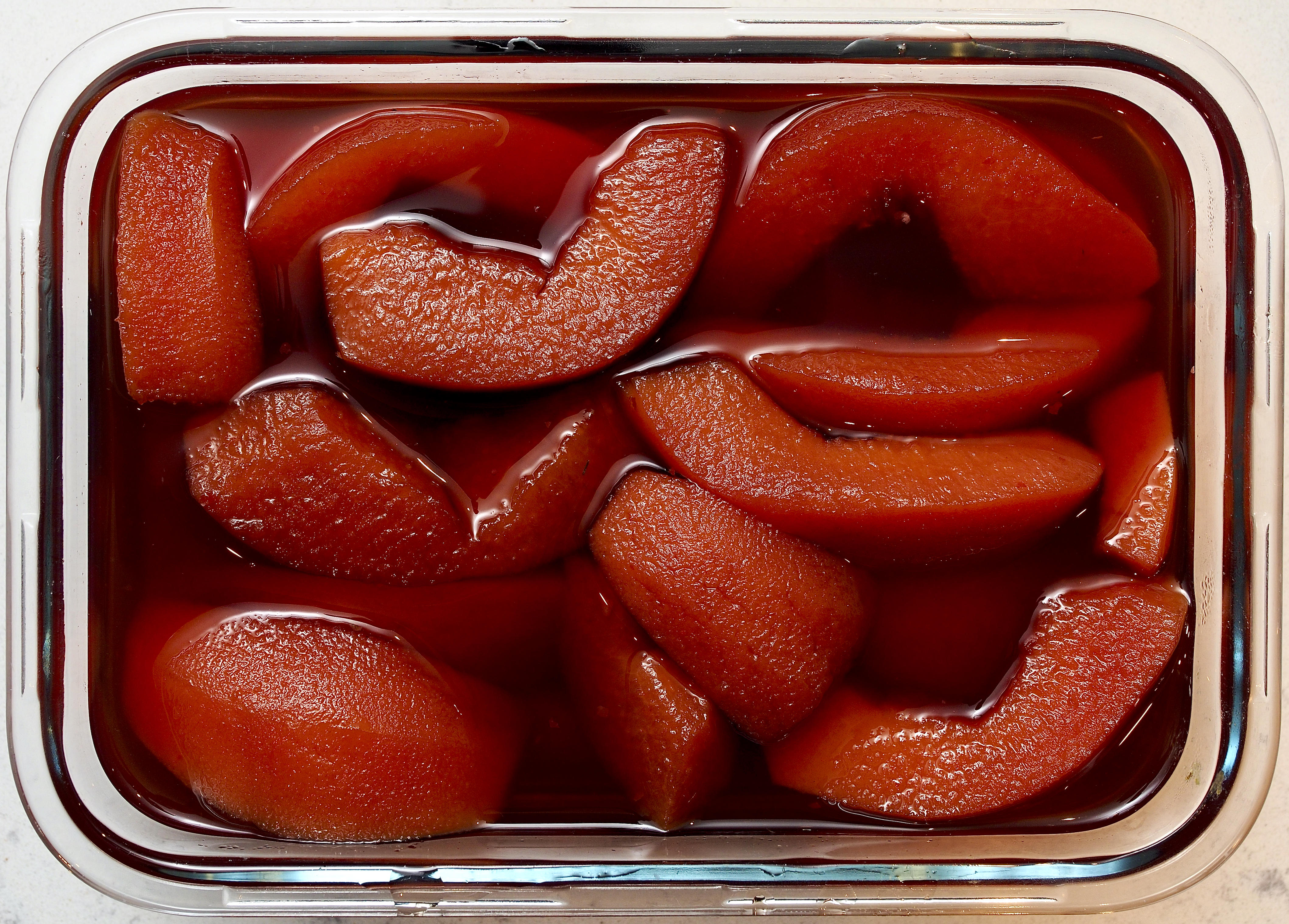
You could have these for dessert with some crème fraîche but we like them for breakfast with yoghurt and granola.
Pomegranate-poached quinces – serves 6
700ml pure pomegranate juice
300ml cold water
350g caster sugar
3 fresh bay leaves
1 tsp pink peppercorns
a few sprigs of thyme
pomegranate seeds, to serve (we skipped these)
Heat the oven to 160C/140C fan.
Put the pomegranate juice, water and sugar into a heavy casserole with a lid. Stir well, then add the bay leaves, peppercorns and thyme. Put the casserole over a low heat and leave to warm gently.
Peel, quarter and core the quinces and add to the pan with the pomegranate juice.
Bring to the boil, then scrunch up a piece of baking paper, slightly bigger than the pan, then unscrunch again and press down on top of the quinces, tucking it in and up the sides of the pan. Cover with the lid and place in the oven.
Cook for 1½-2 hours or until tender. Remove the lid and baking paper, then scoop out the quinces with a spoon. Strain the liquid, then return to the heat and bubble until reduced by half. Pour the liquid back over the quinces and leave to cool. Keep in the fridge until ready to eat, they keep well for a few days.
(Original recipe from Cook, Eat, Repeat by Nigella Lawson, Chatto & Windus, 2020)
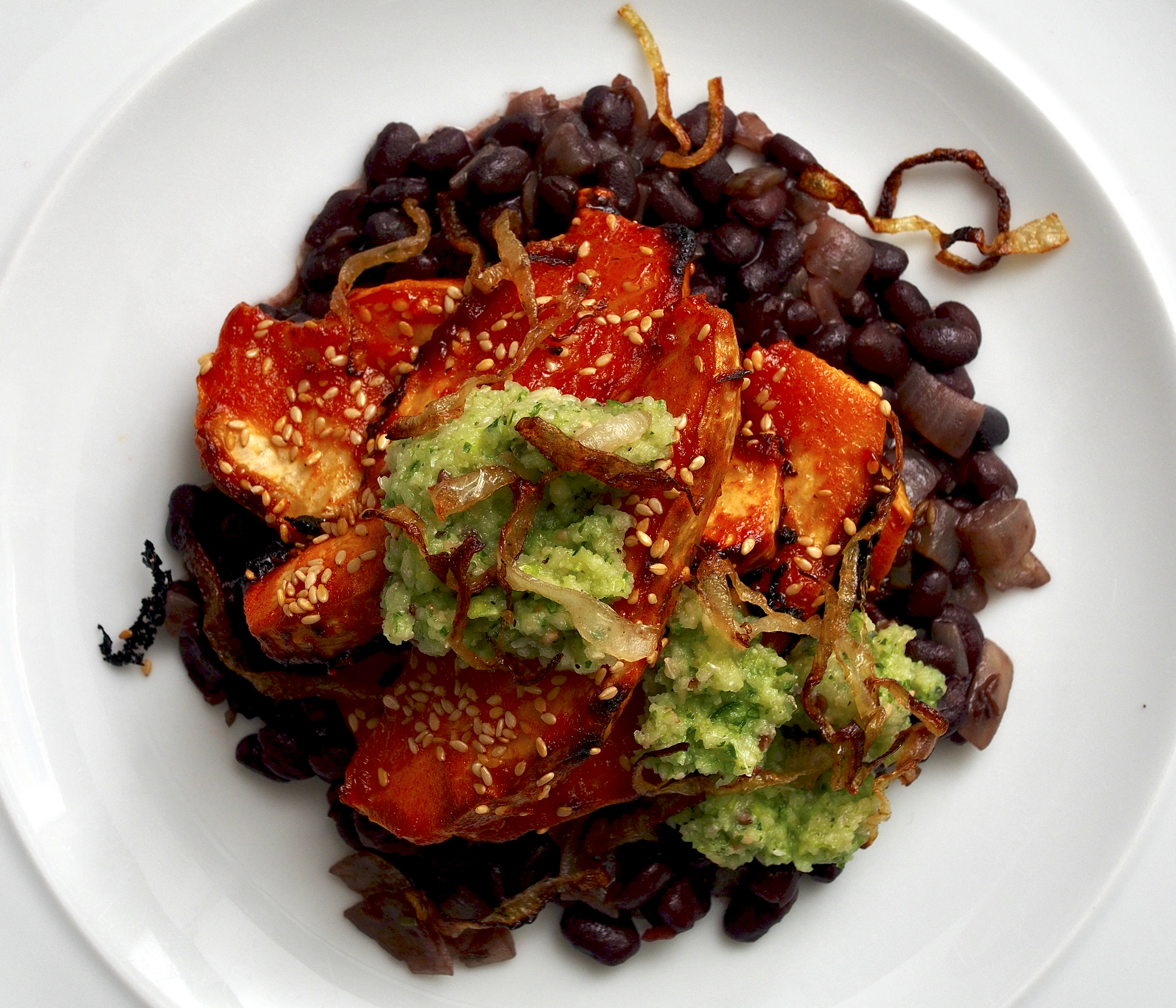
It’s difficult to know how to introduce this recipe by Rosie Birkett. It is far from shy in terms of flavour, bursting with it in fact, and we’d suggest you have to be a bit adventurous, as it has so many punchy layers. Great to see celeriac getting the attention it deserves.
The recipe is not difficult, but it does take a little effort to make all of the separate components.
Wine Suggestion: to match such a punchy, savoury dish you can go all out with a wine to match these levels of flavour, or go light to be complimentary. We went the latter route and opened an easy, dry Rosé. Tonight a bottle from a friend, the Domaine le Novi Côté Levant Rosé, which tasted of fresh red berries, hints of citrus and light tannins, finishing zesty and minerally.
Gochujang-glazed celeriac with black beans, green salsa & crispy shallots – serves 2
about 25g of sea salt flakes
1 medium celeriac, about 750g, peeled, halved and cut into 3cm thick wedges
sunflower oil, for frying
1-2 shallots, finely sliced
FOR THE GLAZE:
2 tbsp gochujang paste
50g salted butter
3 tsp honey
1 orange, juiced
2 tsp cornflour
1 tbsp sesame seeds
FOR THE BLACK BEANS:
2 tbsp olive oil
½ tsp cumin seeds
1 bay leaf
1 onion, chopped
a small bunch of coriander, stems finely chopped and leaves reserved
a pinch of ground coriander
400g tin of black beans, don’t drain them as you need the liquid
½ lime, juiced (you will need the other half for the salsa)
FOR THE GREEN SALSA:
1 green apple, roughly chopped
½ green chilli, deseeded
1 tbsp pumpkin seeds, toasted
½ lime, juiced
1 tbsp olive oil
Heat the oven to 200C/180C fan/gas 6.
Line a tray with baking paper and sprinkle the salt over the top. Put the celeriac slices on top of the salt, then roast for 15 minutes at the top of the oven.
Make the glaze while the celeriac is baking. Put the gochujang, butter, honey, a pinch of salt, 1 tbsp water, the orange juice and cornflour in a pan. Cook, stirring, for a few minutes or until smooth, then set aside.
Leave the celeriac to cool slightly, then remove any excess salt and toss each piece in the glaze. Discard the salt from the tray, return the wedges to it and roast for another 10 minutes. Glaze again and scatter over the sesame seeds, then roast for a final 10-20 minutes or until sticky and caramelised (turn the oven up a bit if you need).
Meanwhile, make the beans. Heat the oil in a heavy frying pan over a medium heat. Fry the cumin and bay leaf until sizzling, then add the onion, coriander stems, ground coriander and a good pinch of salt. Fry, stirring, for about 8 minutes or until golden and soft. Add the beans with their liquid and a pinch of salt, then bring to the boil. Simmer for 5-8 minutes, stirring, until the beans look creamy and the liquid and almost gone. Remove the bay leaf, stir in the lime juice, then set aside and keep warm.
To make the salsa, put the apple, chilli, pumpkin seeds, lime juice and reserved coriander leaves in a food processor and whizz until combined but chunky. Add the oil and whizz again, then season to taste.
To make the crispy shallots, heat the sunflower oil in a small frying pan and fry the shallots over a low-medium heat for 15 minutes or until golden and crispy. Drain on a plate lined with kitchen paper and season.
Serve the beans on warm plates, topped with the celeriac, salsa and crispy shallots.
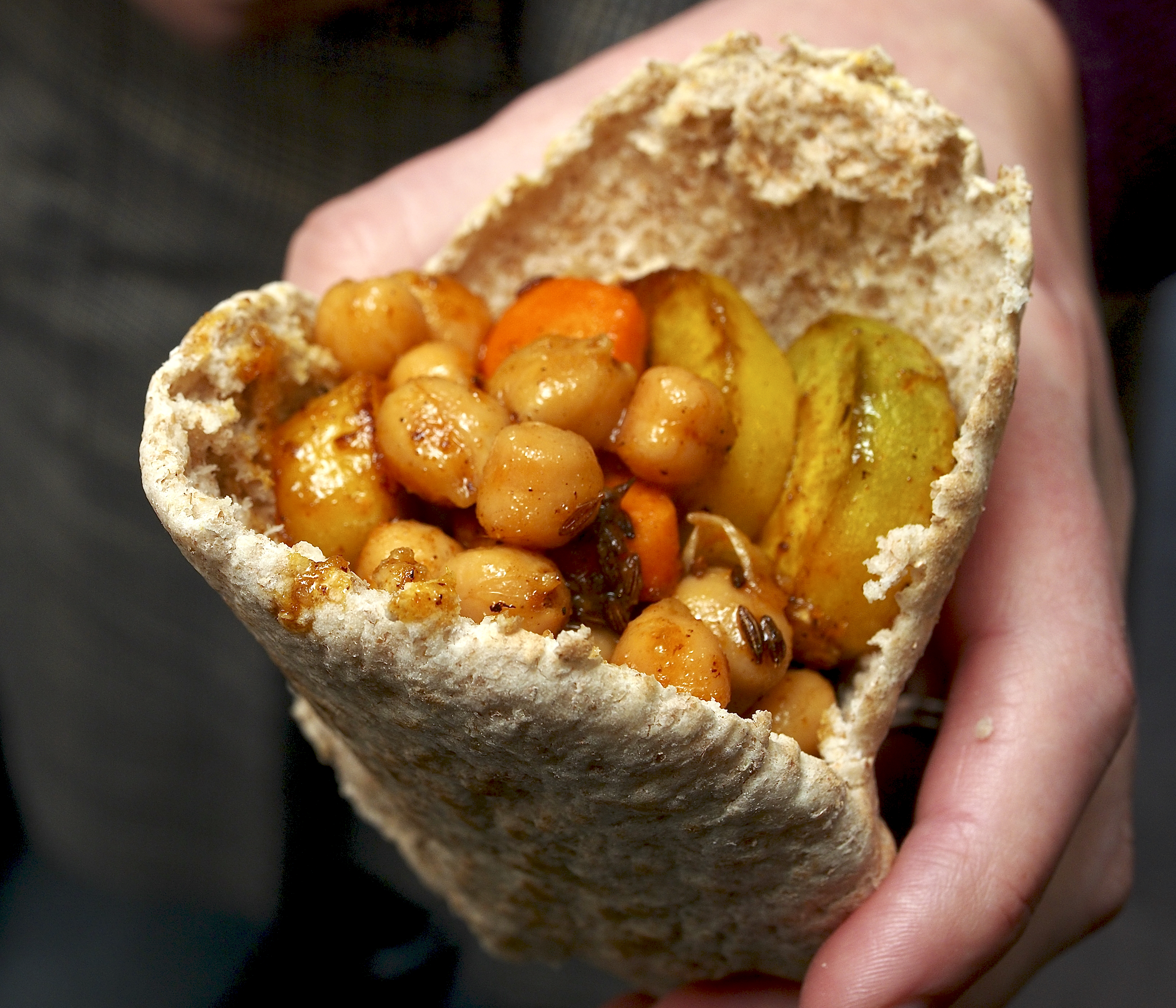
Our default lockdown lunch is soup, it helps with the heating bills! We ran out of soup last week and found this recipe when looking for lunch inspiration that would use the only ingredient left in the fridge – carrots. It was really very nice.
Spicy Carrot & Chickpea Pitta – serves 4
50g butter
1 tbsp olive oil
1 heaped tsp of cumin seeds
4 large carrots, cut into 2cm thick rounds
1 large garlic clove, finely sliced
finely grated zest of an orange, plus a good squeeze of the juice
1 tsp hot smoked paprika
400g tin chickpeas, drained and rinsed
4 pitta breads
yoghurt or sour cream to serve
Heat the butter and oil in a frying pan over a medium heat. Add the cumin seeds and fry for a couple of minutes, then add the carrots and fry for 8-10 minutes. The carrots should be tender and starting to brown, but still with a bit of bite.
Add the garlic, orange zest, paprika, and chickpeas and cook until the chickpeas are hot. Remove from the heat, season well with salt, pepper and a good squeeze of orange juice.
Warm the pitta breads in a toaster or under the grill, then stuff the mixture into the pockets and top with yoghurt or sour cream.
(Original recipe from River Cottage Veg Everyday! by Hugh Fearnley-Whittingstall, Bloomsbury, 2011.)
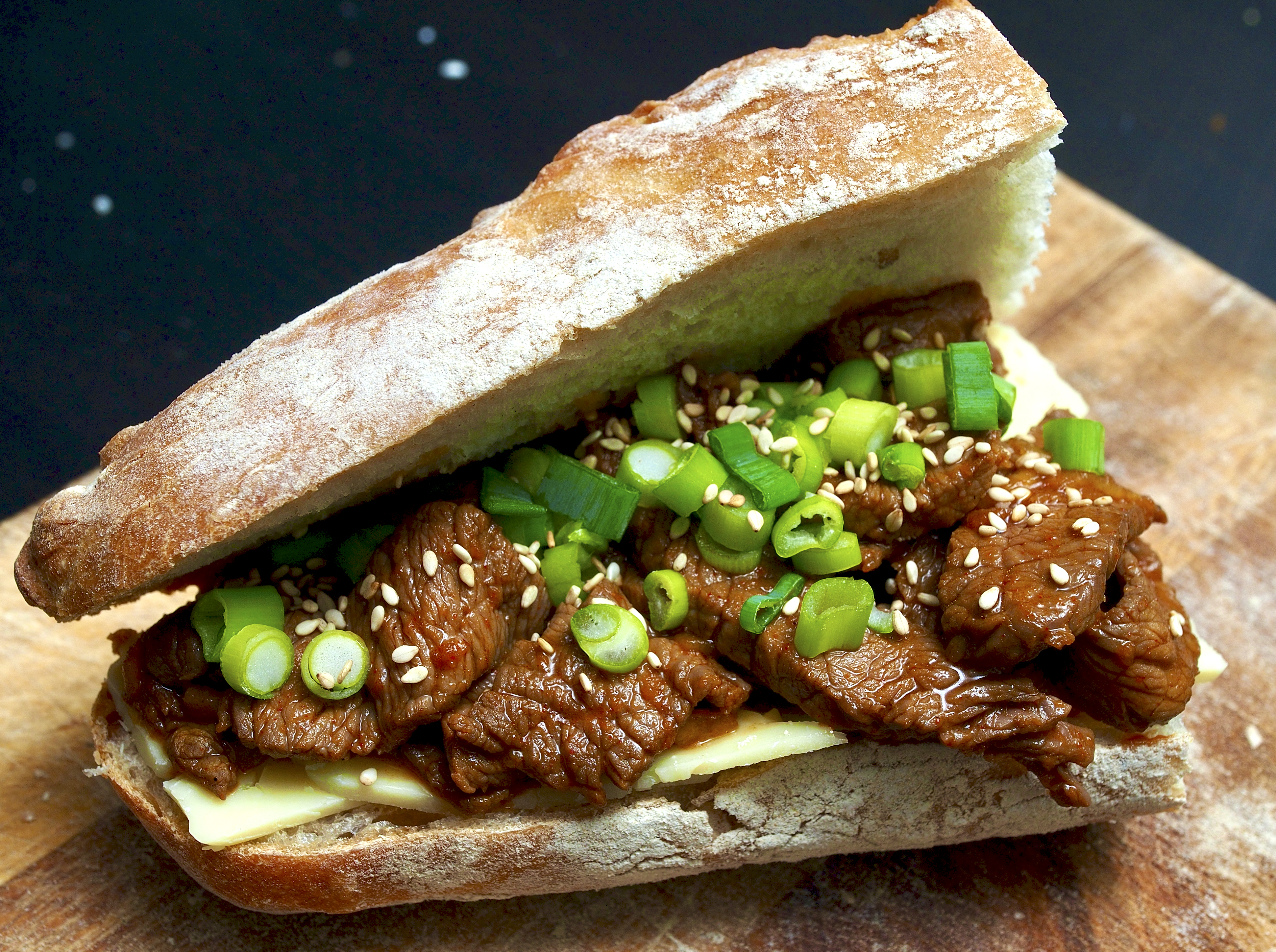
You can’t beat a steak sandwich and this one is super spicy and extra tasty! It certainly brightened up an otherwise uneventful Saturday for us.
Bulgogi cheese steak sandwich – serves 4
1 tsp grated ginger
1 clove of garlic, grated
1 tsp light brown soft sugar
2 tbsp gochujang paste
4 tbsp soy sauce
2 tbsp sesame oil
1 tbsp rice vinegar
½ pear, peeled and cubed
2 sirloin steaks, trimmed of fat and very finely sliced (this is easier if you freeze for 20 minute before slicing)
1 baguette, cut into 4
mild cheddar cheese
2 scallions, finely chopped
sesame seeds
Mix the ginger, garlic, sugar, gochujang, soy sauce, sesame oil and rice vinegar together in a large bowl, then mash in the pear. Add the steak and leave to marinate for an hour.
Halve the pieces of baguettte and add a layer of cheese.
Heat a wok over a high heat. Add the beef and marinade, bring to a simmer and stir until the meat is cooked through.
Spoon the meat into the baguettes and sprinkle with scallions and sesame seeds.
(Original recipe from Lulu Grimes and Anna Glover in Olive Magazine, January 2016.)
It’s about this time of year when we usually get a bit tired of root veg and starting craving food more associated with Spring. Not so this year and largely due to Gill Meller who can do wonders with winter veg. Baked potatoes stuffed with celeriac didn’t sound super appealing to us but we can assure you these are delicious!
Wine Suggestion: a winter white called tonight: Jean-Michel Gerin’s La Champine Viognier from a young vineyard near their Côte-Rôtie and Condrieu vineyards. Great value from this top maker and while not as rich as their Condrieu it has charming fruit and a fresh purity.
Celeriac baked potatoes – serves 4
4 large baking potatoes
50g unsalted butter
1 onion, thinly sliced
4 cloves of garlic, thinly sliced
1 small celeriac, peeled and cut into 2cm dice
a handful of dried ceps (or any dried mushrooms)
100ml double cream
100ml full-cream milk
1 tsp dried seaweed flakes (these are optional but we used Dulse Flakes from Aran Islands Seaweed which you can buy online)
a handful of flat-leaf parsley, leaves picked and chopped
a handful of grated cheddar cheese
Start by baking the potatoes. We like to scrub them, then rub in a little olive oil and sprinkle over some salt. Bake at 220C for 20 minutes then turn the heat down to 200C and cook for 40-60 minutes, or until cooked through.
Remove the potatoes from the oven, cut them in half and scoop out the flesh, taking care not to damage the skins. Return the empty shells to the oven for 10 minutes to crisp up.
Meanwhile, heat a heavy pan over a medium-low heat. Add the butter and allow it to melt and start to bubble, then add the onion, garlic, celeriac and dried mushrooms. Season with salt and black pepper. Cook for 25-30 minutes, stirring often, until the celeriac is soft. If it starts to catch just add a splash of water and lower the heat. When the celeriac is nice and soft, add the cream, milk, scooped out potato flesh, seaweed flakes and parsley. Stir to combine and season again if needed.
Stuff the crispy potato skins with the celeriac mixture, then place on a baking tray and scatter over the grated cheese. Return to the oven for 12-15 minutes or until hot. Serve with a dressed green salad.
(Original recipe from Root Stem Leaf Flower by Gill Meller, Hardie Grant: Quadrille, 2020.)
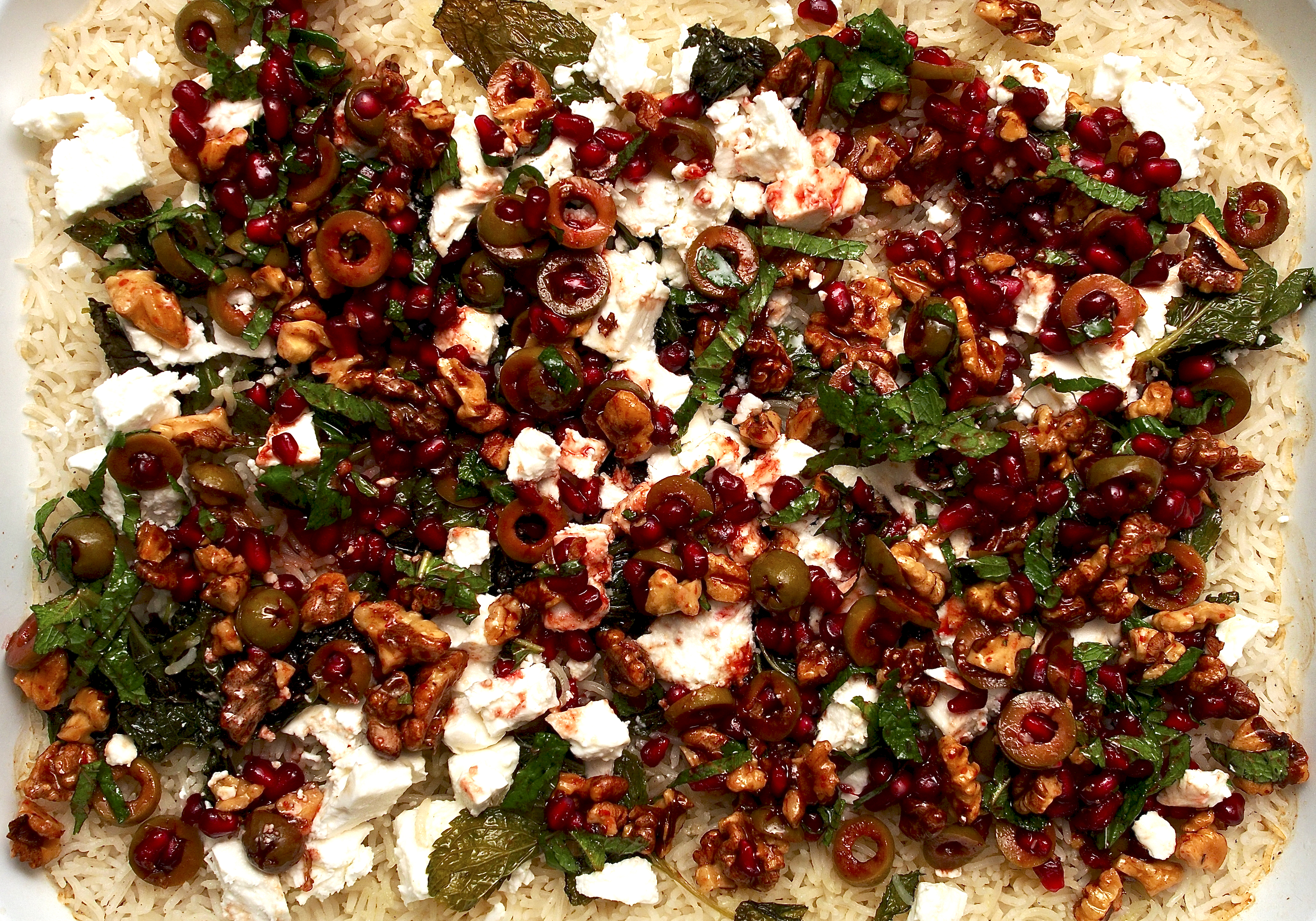
Such a simple and foolproof way of cooking rice from Ottolgenghi Simple. This gives a lovely texture and the salsa is delicious. We served with pulled lamb shawarma but it would be great with all sorts of dishes.
Baked mint rice with pomegranate and olive salsa – serves 6
400g basmati rice
50g unsalted butter, melted
800ml boiling water
50g mint (leave 40g on the springs and shred the leaves of the remaining 10g for the salsa)
150g feta, crumbled into 1-2cm pieces
FOR THE SALSA:
40g pitted green olives, thinly sliced
seeds from a small pomegranate
50g walnut halves, lightly roasted and roughly broken
3 tbsp olive oil
1 tbsp pomegranate molasses
1 small clove of garlic, crushed
Preheat the oven to 230C fan or as high as your oven goes.
Put the rice into a high-sided roasting tin, about 20 x 30cm. Season with ¾ tsp of salt and plenty of pepper, then pour over the melted butter and boiling water. Top with the mint sprigs and cover tightly with foil. Bake for 25 minutes, until the rice is fluffy and the liquid absorbed.
Meanwhile, mix all of the salad ingredients, except the mint leaves, together in a bowl with ¼ tsp of salt. Mix well and set aside.
When the rice is ready, pull the leaves off the mint sprigs and scatter them over the rice, then sprinkle over the feta. Just before serving, stir the shredded mint into the salsa and spoon over the rice.
(Original recipe from Ottolenghi Simple, Ebury Press, 2018.)
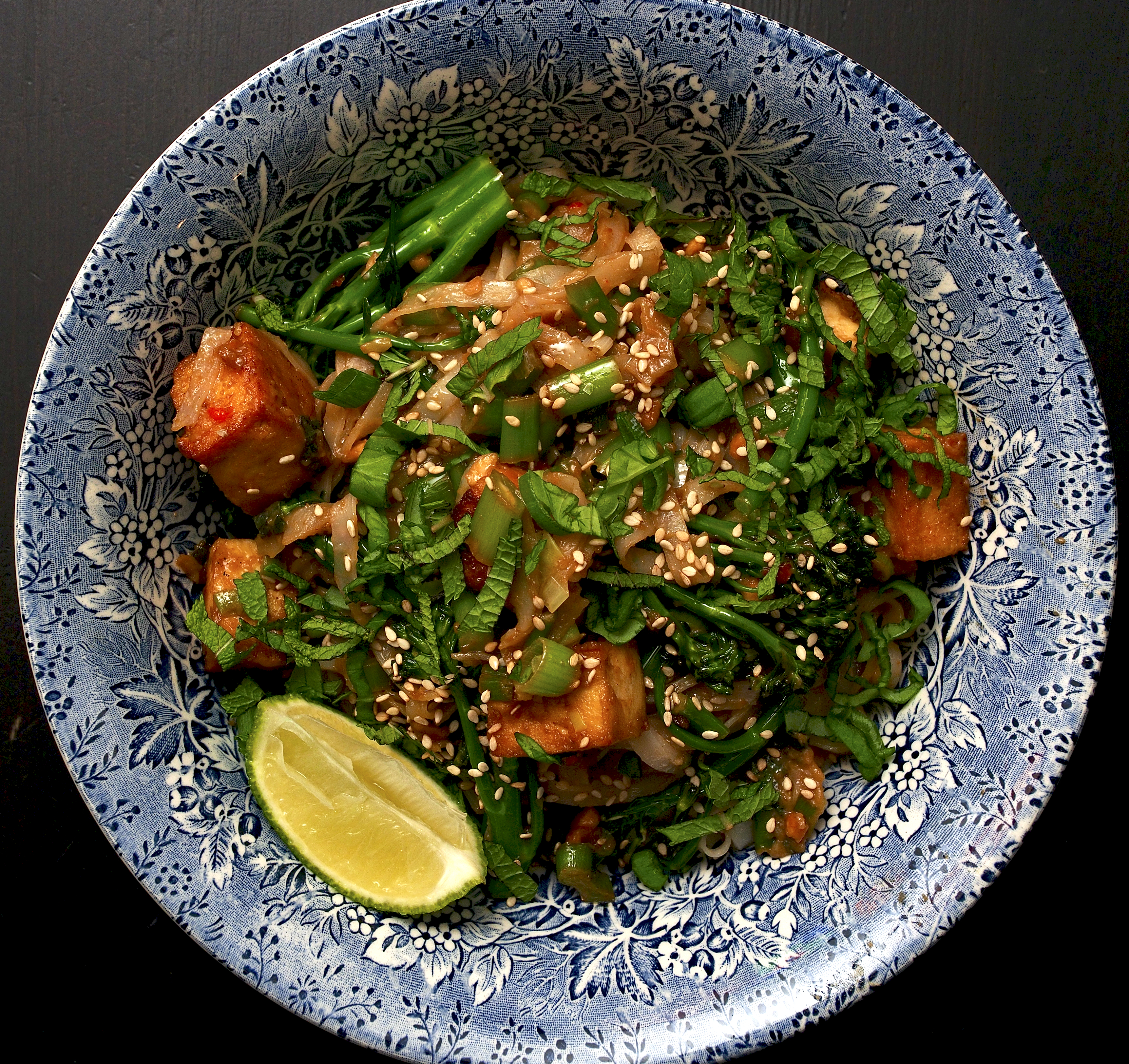
It’s about this time of year when purple sprouting broccoli arrives and saves us from the monotony of root veg. We’ve yet to be rescued and therefore had to use some imported tenderstem instead, which was fine, but definitely inferior to the local purple variety.
Wine Suggestion: We think this goes really well with Viognier. A richer, more aromatic white with a bit of phenolic grip as opposed to acidity and compliments the richness and body of the food. This wouldn’t work if the acidity was too high. A good, well-priced suggestion is the Cline Cellars North Coast Viognier, from a selection of well sited organic vineyards on the Sonoma coast in California. Well judged and avoids some of the OTT characters other Californian wines can exhibit.
Peanut Butter and Broccoli Pad Thai – serves 4
FOR THE SAUCE:
6 tbsp crunchy peanut butter
2 tbsp tamarind paste
3 tbsp runny honey
4 tbsp soy sauce
3 tbsp fresh lime juice
FOR THE TOFU & BROCCOLI:
450g purple sprouting broccoli or other long-stemmed broccoli, put the florets to one side and cut the stalks into 1cm pieces
3 cloves of garlic, crushed
1.5cm ginger, peeled and grated
2 bird’s eye chillies, finely chopped
225g firm tofu, drained and cubed
250g flat folded rice noodles
rapeseed oil
6 scallions, finely chopped
a handful of sesame seeds
a handful of Thai basil leaves, shredded (use regular basil if you have to)
a handful of fresh mint leaves, shredded
1 lime, cut into 4 wedges
Make the sauce by mixing the peanut butter, tamarind paste and honey in a bowl, then slowly mix in the soy sauce, lime juice and 4 tbsp of water.
Cook the noodles according the instructions on the pack, then rinse under cold water, drain, and drizzle with a tbsp of rapeseed oil. Toss gently with your hands.
Heat 2tbsp of rapeseed oil, over a medium-high heat, in a large non-stick pan or wok with a lid. Fry the tofu for 5 minutes, turning every minute, until pale golden. Add the ginger, garlic and chilli and cook for 2 minutes, then add the broccoli stalks and 4 tbsp of water. Cover the pan and steam for 2 minutes or until the stalks are tender. Add the broccoli florets, the sauce and scallions (reserving a few to garnish), stir to combine, then cover again and leave for 2 minutes.
Turn the heat down to the lowest setting, then add the noodles a handful at a time, mixing them in gently to coat with the sauce, then turn off the heat.
Divide the noodles between 4 bowls, sprinkle with sesame seeds and scallions, then drizzle over some sesame oil and scatter over the herbs. Add a generous squeeze of lime and serve.
(Original recipe from East by Meera Sodha, Fig Tree: Penguin Books, 2019.)
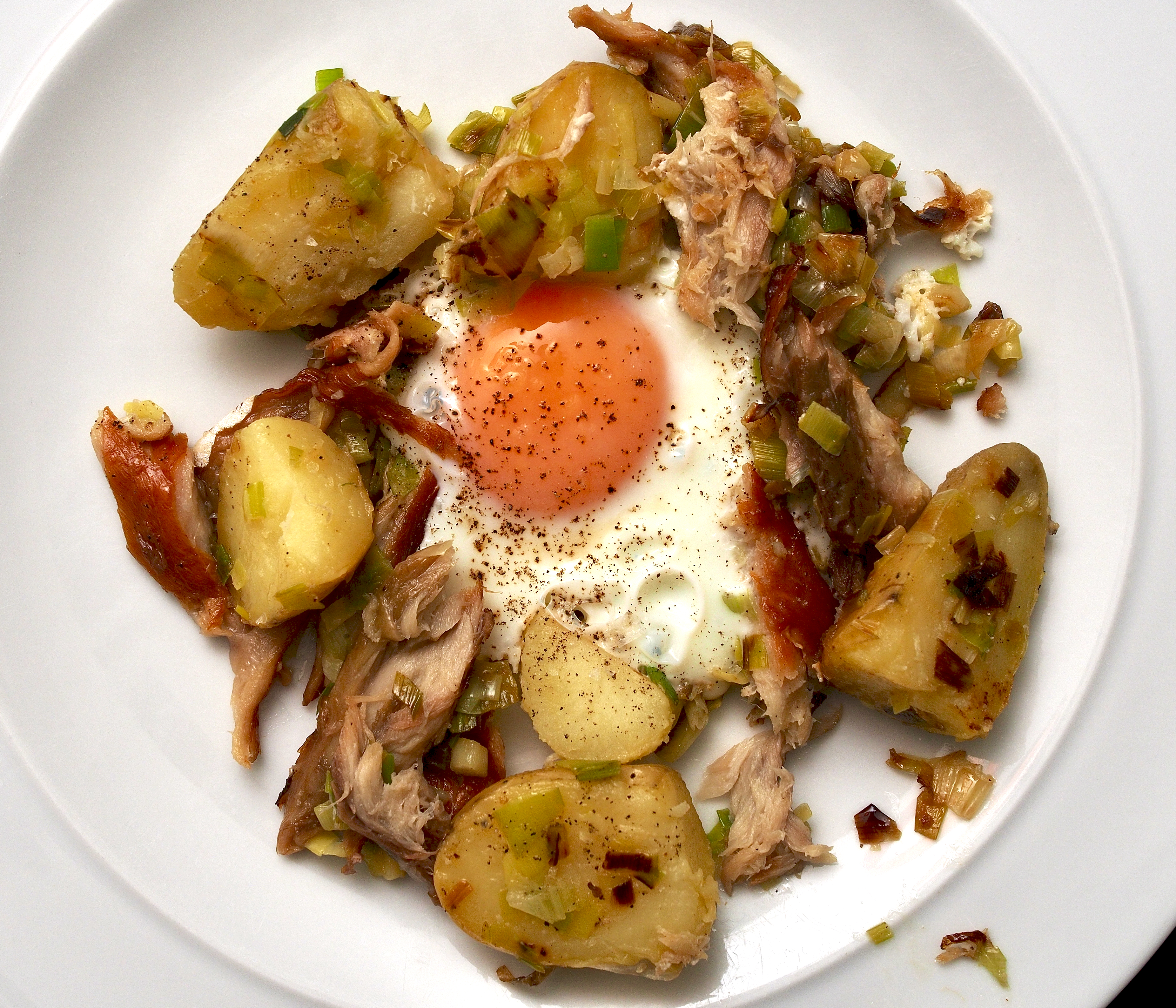
Thanks to a kind and generous birthday gift from friends we have been endowed with lovely smoked fish from the Connemara Smokehouse. The smoked mackerel made a lovely weekend brunch.
Smoked mackerel & leek hash with horseradish – serves 2
250g new or salad potatoes, halved
2 tbsp oil
2 large leeks, thinly sliced
2-4 eggs
100g peppered mackerel, skin removed (we used regular smoked mackerel and that was good too)
2 tbsp creamed horseradish
Steam the potatoes until tender.
Meanwhile, heat the oil in a large frying pan over a medium heat, then add the leeks and a pinch of salt. Cook for about 10 minutes, or until softened. You will need to stir now and then to stop them sticking.
Add the cooked potatoes, then turn up the heat and fry for a couple of minutes so they start to crisp and brown a bit, then flake through the mackerel.
Make some holes for the eggs in the mixture, then crack an egg into each, season, then cover the pan and cook for 6-8 minutes. You’re looking for set whites and runny yolks. Serve the horseradish sauce on the side.




 Jono & Jules do food & wine