Feeds:
Posts
Comments

Archive for the ‘Food’ Category

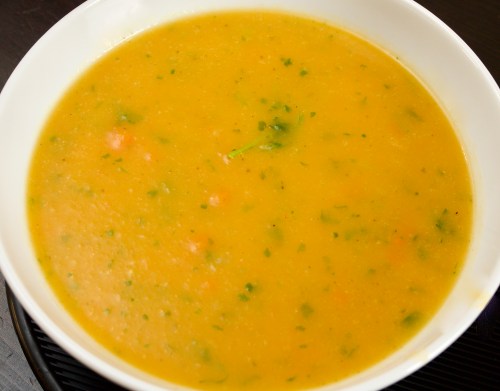
Carrot & cumin soup

It seems to be getting more and more difficult to buy a carrot, with supermarkets in particular insisting that you buy a huge bag. Why can’t we be like France and just have troughs of veg for us to pick what we need from? This is a suitable end for almost a whole bag of carrots.

Carrot & Cumin Soup – serves 6

  • 35g butter
  • 600g carrots, chopped
  • 110g onion, chopped
  • 150g potatoes, peeled and cut into 1cm cubes
  • 2 tsp freshly roasted and crushed cumin seeds
  • pinch of sugar
  • 1.2 litres light chicken or vegetable stock
  • a little creamy milk (optional)
  • crème fraîche or yoghurt (to garnish)
  • coriander leaves, chopped

Melt the butter until foaming, then add the chopped vegetables. Season with salt, pepper and sugar and add the crushed cumin. Cover with a butter paper and a tight fitting lid. Leave to sweat over a low heat for about 10 minutes.

Remove the lid, add the stock and boil until the vegetables or soft – about 5 to 8 minutes, then purée the soup until smooth. Taste and adjust the seasoning.

Serve in warm bowls with a swirl of crème fraîche or yoghurt if you like and some freshly chopped coriander.

(Original recipe from Darina Allen’s Ballymaloe Cookery Course, Kyle Cathie Ltd., 2001.)

Read Full Post »

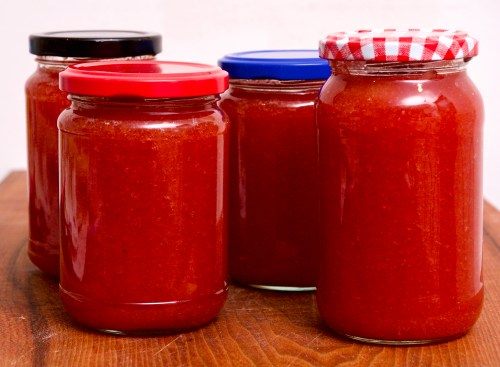
Quince Jam

Quince jam

Not as solid and refined as Membrillo/Quince paste, but with all the taste and flavour. Plus it couldn’t be easier to make – just boil up the quinces and sieve into sterilised jars. Serve with cheese and anything else you fancy.

Quince Jam – makes about 4 jars

  • 1kg quince, chopped into chunks (no need to discard pips/stalks etc)
  • 1kg granulated sugar

Put the chopped quince and sugar into a saucepan. Add water to cover. Bring to the boil, reduce the heat and simmer for 1½ – 1¾ hours, mashing the fruit after the first 45 minutes. Cook until the liquid has evaporated but keep stirring as it gets close to stop it burning on the bottom of the pan. Push through a sieve into a large bowl, then pour into sterilised jars.


Read Full Post »

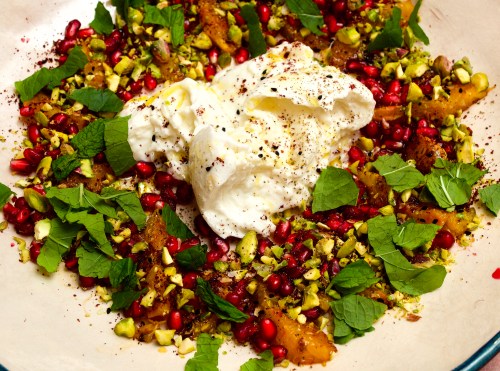
Burrata with burnt orange, pistachio and pomegranate

A dish of vibrant colours and flavours that may not be for everyone as the texture of the nuts and pomegranate is a little unusual (a bit like rubble); we ate everything on the plate with gusto and wished we had more.

Wine Suggestion: we picked the Biancardi Insolito which is made from the rare Minutolo grape. This grape had for years been mistaken for Fiano but has been proven to be a distinct variety, so if you can’t find this exact wine/grape try a good Fiano instead. Full of pear, green apple, citrus and floral characters it is as fresh as the sea breezes that cool it’s vineyards and made a good match.

Burrata & Brunt Oranges with Pistachios & Pomegranate – serves 4 as a starter

  • 1 orange or blood orange, cut into segments
  • extra virgin olive oil
  • 200g ball of burrata
  • 60g pomegranate seeds
  • 25g pistachio nuts, roughly chopped
  • 2 pinches of nigella seeds
  • ½ tsp sumac
  • a handful of mint leaves, torn
  • maldon sea salt flakes and black pepper

Use a blow torch to burn the orange segments or heat a frying pan on the highest heat until hot, brush a little bit of oil on to the segments and cook for 1 minute on each side, or until starting to blacken.

Place the burrata in the centre of the serving plate. Arrange the burnt orange around the cheese and scatter over the pomegranate seeds, pistachios, nigella seeds and sumac. Drizzle generously with some nice olive oil, season with salt and pepper and scatter over the mint.

(Original recipe from Feasts by Sabrina Ghayour, Mitchell Beazley, 2017.)

Read Full Post »

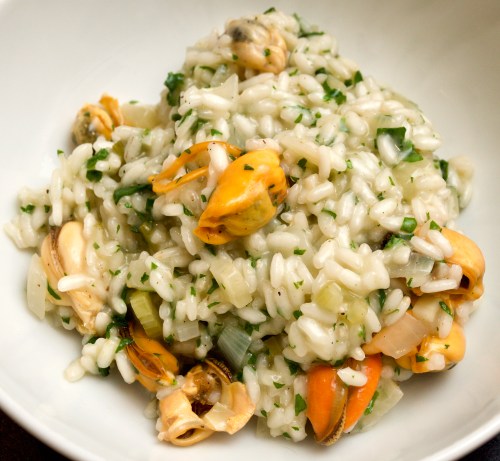
Mussel & fennel risottoWe really liked this tasty risotto made with delicious stock from the mussels. Jules bought half the quantity of mussels (in error!) but it was no worse for it. The sort of thing we like to eat on a Friday night with a glass of something bubbly.

Wine Suggestion: As we have a few bottles of Sparkling Saumur lying around after our summer holiday to the Loire this year, we automatically gravitated to this and found it a good match. This time we opened the Bouvet-Ladubay Trésor blanc, a blend of mostly Chenin Blanc with some Chardonnay. Fresh and vibrant but with the quality of fruit to stand up to the food. Cost aside, we don’t know why more sparkling wines aren’t matched with food.

Mussel & fennel risotto – serves 4

  • 1.75kg mussels, cleaned thoroughly (discard any that don’t close when you hit them off the side of the sink)
  • 250ml dry white wine
  • a few parsley stalks
  • 6 black peppercorns
  • 1 onion, finely chopped
  • 3 garlic cloves, chopped
  • ½ fennel bulb, trimmed & diced
  • 300g risotto rice
  • 50ml dry vermouth
  • 4 tbsp finely chopped parsley
  • a squeeze of lemon juice

Put the mussels into a large saucepan over a medium heat with the white wine, parsley stalks and peppercorns. Cover and cook for 4 to 6 minutes or until opened. Shake the pan a couple of times as they cook.

Strain over a bowl to catch the cooking liquor and remove the mussels from their shells. Throw away any that haven’t opened.

Strain the liquor through a sieve lined with muslin to catch any grit, then heat until simmering gently.

Heat 5 tbsp olive oil in a heavy pan and sauté the onion, garlic and fennel over a medium heat until the onion is soft but not coloured. Stir in the risotto rice. Pour on the vermouth, then add the mussel liquor a ladleful at a time, stirring continuously. The rice should be cooked after about 20 minutes. Add some water if you run out of mussel liquor.

Stir in the mussels, parsley, lemon juice and seasoning to taste.

(Original recipe from Food from Plenty by Diana Henry, Mitchell Beazley, 2010.)

Read Full Post »

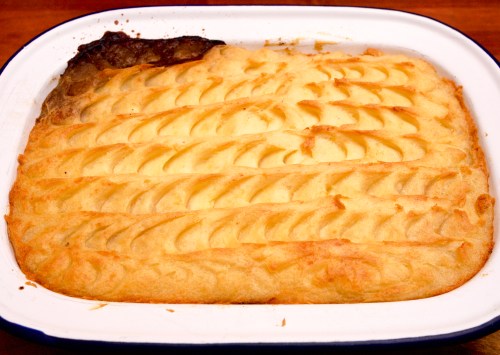
Beef Bourguignon Pie whole

Beef Bourguignon Pie whole

One of Jules’ classic dishes that combines Beef Bourguignon with a mash potato top. Old-fashioned in many ways but a great crowd pleaser and you can prep it all in advance. Some veg on the side is all you need for a hearty dinner.

A red Burgundy is not necessary for cooking, rather look for a juicy and easy red. Make sure it is decent though as it will still contribute to the flavours and quality of the dish. Having trialled relatively expensive Burgundy (to really find out!) in dishes like this though, we think it makes the dish unnecessarily expensive without adding anything extra over a decent, juicy, but cheaper red.

Wine Suggestion: If tempted to drink a red Burgundy with this dish, and want to impress, pick a fulsome appellation from the Cote d’Or if you can. Even if you pick a Bourgogne rouge make sure it has class and character as very easy, commercial examples are just a bit bland for the dish. This time we chose a northern Rhône, the J-M Gerin Côte Rôtie Champin de Seigneur which rivals good Burgundy for price but also matches it for aromatic thrill and velvety, earthy core with the same medium weight and great freshness.

Beef Bourguignon Cottage Pie – serves 6

FOR THE BOURGUIGNON BASE:

  • 1 tbsp sunflower oil/veg oil
  • 200g pack bacon lardons
  • 900g braising steak, cut into 3cm chunks
  • 225g button mushrooms
  • 225g button onions or small shallots, peeled
  • 2 garlic cloves, crushed
  • 1 tbsp demerara sugar
  • 600ml red wine
  • 400g tin beef consommé or 400ml of beef stock
  • 1 to 2 tbsp cornflour, loosened with 1-2 tbsp red wine or water

FOR THE MASH TOPPING:

  • 1.5 kg floury potatoes e.g. Maris Piper
  • 50g unsalted butter
  • 100ml milk

Heat the oil in a large pan and fry the bacon lardons over a high heat until well browned. Remove from the pan with a slotted spoon and drain on kitchen paper. Season the beef, then fry in the bacon fat until coloured. Add all the remaining ingredients, except the cornflour and bacon, and bring to a simmer. Partly cover the pan with a lid and cook for 2-2½ hours or until the beef is tender.

When the beef is cooked, tip the contents of the pan into a colander set over another pan to catch the sauce. Tip the contents of the colander into a large pie or casserole dish along with the reserved bacon. Boil the sauce and season to taste. Thicken with the loosened cornflour until you have a sauce that coats the back of a spoon. Spoon enough of the sauce over the beef to barely cover and loosen it (don’t be tempted to add too much), then stir. You can freeze or refrigerate the sauce and offer it on the side when you serve the pie.

Boil the potatoes until tender, about 15-20 minutes. Drain and replace the lid, then give the pan a good shake to break them up a bit. Add the butter and milk gradually as you mash, then season well.

Spoon the potatoes over the meat and use a knife or spoon to mark a pattern over the top. You can cool the pie at this stage and freeze if you like before baking as below.

Heat the oven to 180C/fan 160C/gas 4.

Bake the pie for 50 minutes to 1 hour or until golden. Increase the heat to 200C/fan 180C/gas 6 for the final 10 minutes to get it nicely browned on top.

(Original recipe by Gary Rhodes for BBC Good Food Magazine, November 2005.)
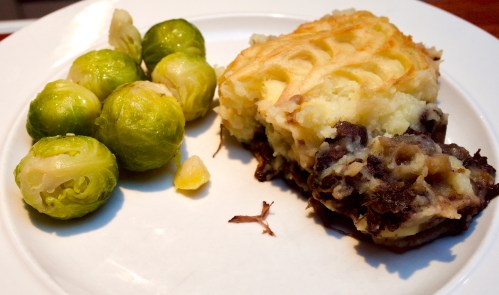
Beef Bourguignon Pie

Beef Bourguignon Pie

Read Full Post »

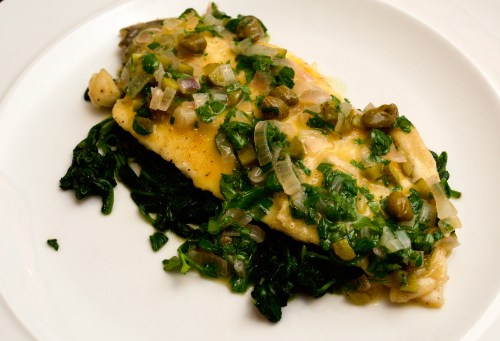
Plaice with warm tartare butter sauce

We loved this piquant sauce with the delicate fish and served on top of heaps of spinach – delish!

Wine Suggestion: This was a tricky match because of the iron-y spinach, piquant caper/cornichon combo and elegant plaice. We tossed up between light reds and Alsace whites but ended up with the Ch Hureau “Argile” Saumur blanc, a wine that balances both fruit and a textural, challenging stoniness without overwhelming the fish.

Plaice with Tartare Butter Sauce – serves 2

  • 2 large or 4 small plaice fillets
  • 3 tbsp plain flour, well seasoned
  • 200g spinach

TARTARE BUTTER SAUCE:

  • 40g butter
  • 2 shallots, finely chopped
  • 50ml white wine
  • 50ml chicken stock
  • 1 tbsp finely chopped cornichons
  • 1 tbsp baby capers
  • a handful of flat-leaf parsley, chopped

Start by making the sauce. Heat half the butter in a small pan and cook the shallots until softened. Add the wine and stock, and boil until reduced by half. Stir in the cornichons, capers and the rest of the butter, then remove from the heat.

Dust the fish in the seasoned flour and shake off any excess. Heat a knob of butter and a splash of oil in a non-stick frying pan and fry the fish fillets over a medium heat for about 3 minutes or until a good golden colour underneath. Flip them over and cook for a minute on the other side.

Wilt the spinach with a knob of butter and some seasoning in a small pan.

Reheat the sauce and stir in the parsley. Divide the spinach between warmed plates, top with the fish and spoon over the sauce.

(Original recipe from BBC Olive Magazine, October 2017.)

Read Full Post »

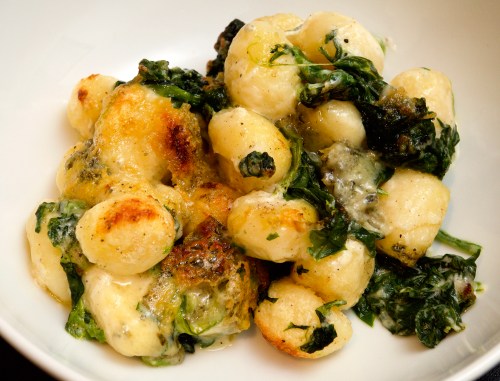
Blue cheese gnocchi

We’ve been seeing more good quality pre-prepared fresh gnocchi around and it’s really handy for a quick dinner. Here’s how to make it tasty with some blue cheese and spinach.

Wine Suggestion: this was a little tricky given blue cheese’s affinity for sweet wine, and we didn’t want this with our meal. A glass of Oloroso sherry was considered but we ended up with a Puglian Primitivo-Nero do Troia blend from Michele Biancardi which is both savoury and fruity. The fruity, plummy sweetness was the foil for the cheese and the savoury tannins played a dance with the gnocchi and spinach.

Blue Cheese Gnocchi – serves 4

  • 500g fresh gnocchi
  • 250g bag baby spinach
  • 100ml/3½ fl oz crème fraîche
  • 4 tbsp grated parmesan
  • 100g blue cheese – a soft variety would be good but use whatever you have

Cook the gnocchi in a large pan of boiling salted water according to the timings on the pack. Stir the spinach into the pan with the gnocchi, then immediately drain in a colander and shake well to get rid of the water.

Put the crème fraîche and grated Parmesan into a small ovenproof dish. Add the hot, drained gnocchi and spinach and stir. Crumble the blue cheese over and season with black pepper.

Put the dish under a hot grill until the cheese is bubbling and golden.

(Original recipe from BBC Good Food)

Read Full Post »

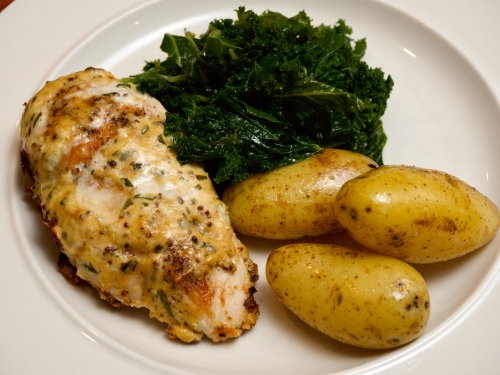
Chicken with creme fraiche & tarragon

Try this easy chicken dish for something tasty mid-week.

Wine Suggestion: we naturally lean towards a lightly oaked Chardonnay for this dish with sensitive, light oak as you need a wine with good body to match the flavours. For a mid-week meal the Mácon-Charnay by Domaine Manciat Poncet has the balance of flavours, fruit and texture, but if you want to step it up try some of Patrick Javillier’s Bourgogne Blanc cuvée’s (Oligocene is our pick) or for a real treat his Meursault which is outstanding and a real play of light and shadow; complex, fresh and vibrant.

Creamy mustard & tarragon chicken – serves 4

  • 1 tbsp sunflower oil
  • 4 boneless, skinless chicken breasts (or you could use thighs)
  • 200ml tub half-fat crème fraîche (full-fat is fine too)
  • ½ tbsp each Dijon and wholegrain mustard
  • ¼ tbsp dried tarragon, or 2 sprigs of fresh if you have it

Heat your oven to 200C/fan 180/gas 6.

Heat the oil in an ovenproof frying pan. Season the chicken breasts well with salt and black pepper. Brown the chicken in the oil for about a minute on each side, then remove from the pan.

Add the crème fraîche, Dijon & wholegrain mustards, and tarragon to the pan and stir together. Bring to a simmer before returning the chicken to the pan and spooning some of the sauce over them. Put the pan into the hot oven and bake for 20 minutes or until the chicken is cooked and the sauce is bubbling.

Serve with rice or new potatoes and greens.

(Original recipe from BBC Good Food).

Read Full Post »

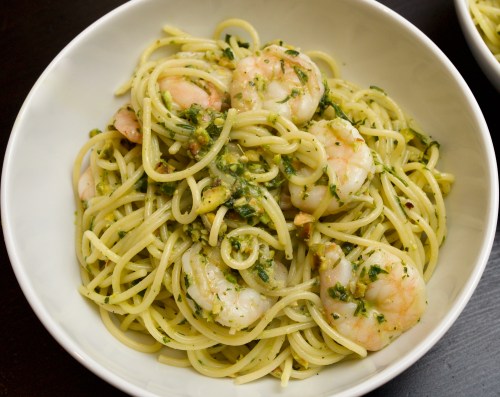
Spaghettini w. prawns basil parsley and pistachios

We know it’s Sunday and it’s getting colder and the clocks have changed, so we should really be posting a nice roast. However, we figure you probably have dinner sorted for today and you might like something to inspire you later in the week.

Wine Suggestion: the fresh, zesty Staforte Soave from Gaziano Prà would be a great match for this. Made from 100% Garganega it has apricot, peach and apple fruit flavours with touches of camomile and white flowers; followed by a textural finish. We would also try southern Italian Greco di Tufo and Falanghina’s with this dish; try to look for something with crispness, mid-weight and mineral texture and it should work.

Spaghettini with prawns, basil, parsley & pistachios – serves 4

  • 1 clove of garlic
  • ½ tsp sea salt
  • a large handful of basil leaves
  • a large handful of flat-leaf parsley leaves
  • a large handful of mint leaves
  • 75g roasted unsalted pistachio nuts
  • 1 tbsp finely grated parmesan
  • 1 tbsp lemon juice
  • 60ml extra virgin olive oil
  • 400g dried spaghettini
  • 500g raw peeled king prawns

Pound the garlic and half the sea salt to a paste with a pestle and mortar. Add the basil, parsley and mint and keep pounding together to make a thick paste. Add half the pistachios and grind them into the paste to get a creamy texture. Roughly chop the rest of the pistachios and stir into the paste with the Parmesan, lemon juice and 2 tbsp of the olive oil. Season with some more salt if needed and black pepper.

Meanwhile, bring a large saucepan of salty water to the boil and cook the pasta until al dente.

Put a heavy-based frying pan over a high heat and add the rest of the olive oil. Fry the prawns for a minutes on each side, then season with the remaining ¼ tsp of sea salt. Remove from the heat.

Drain the pasta and keep a little of the cooking water. Immediately tip the pasta back into the pot, then toss together with the herb paste and cooked prawns. Add a little of the pasta cooking water if necessary to loosen. Serve immediately on warm plates.

(Original recipe from Neil Perry’s Good Cooking, Murdoch Books, 2016.)


Read Full Post »

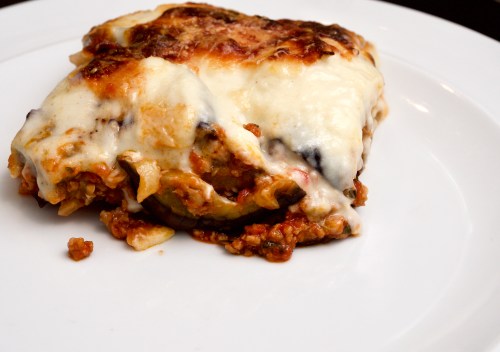
Moussaka

A rich, show-stopper version of a favourite dish. We remain torn between the richness of this version by Neil Perry and the fresh elegance of this Moussaka by Tamasin Day-Lewis. We love both.

Wine Suggestion: As this is a rich dish we looked for a similarly rich, but not too heavy wine and liked the Insoglio del Cinghiale, a Syrah, Cabernet Franc, Merlot and Petit Verdot blend from Bolgheri. It was nice and lifted with dark fruit, blackberries, plums and hints of spice. The key was the medium weight with a youthful freshness, fine rounded tannins and a smooth finish. We suspect a nice earthy and voluptuous red Burgundy would also do very or a top quality Chianti.

Moussaka – serves 4 (generously)

  • 2 large aubergines, cut into 5 mm slices
  • 2 tbsp olive oil, plus a bit extra for brushing the slices of aubergine
  • 2 small onions, finely chopped
  • 4 cloves of garlic, finely chopped
  • 500g lamb mince
  • 90g tomato purée
  • 1 tin of chopped tomatoes
  • 1 cinnamon stick
  • 1 tsp sugar
  • a large handful of flat-leaf parsley leaves, chopped
  • 40g grated Parmesan cheese

FOR THE BÉCHAMEL SAUCE

  • 50g butter
  • 50g flour
  • 500ml warmed milk
  • 80g finely grated parmesan

Salt the aubergine slices on both sides and leave aside for an hour. Rinse the slices under running water and pat dry with kitchen paper. Brush lightly with olive oil and cook in a non-stick frying pan over a medium-high heat for a few minutes on each side or until golden. Set the aubergine slices aside and wipe out the pan with some kitchen paper.

Heat 2 tbsp of olive oil in the frying pan and cook the onions over a low heat for about 5 minutes. Add the garlic and continue to cook until the onions have softened. Add the lamb, then turn up the heat and stir-fry until browned. Season with salt, then add the tomato purée and cook for a couple of minutes. Stir in the tomatoes, the cinnamon stick and the sugar. Bring to the boil, then reduced the heat, cover and simmer for about 20 minutes. Remove the lid and simmer for a few more minutes to thicken slightly if needed. Remove the cinnamon stick and fold through the chopped parsley.

To make the béchamel, melt the butter in a saucepan, add the flour and stir over a low heat for a few minutes or until the mixture is bubbling.Gradually pour in the warm milk, stirring continuously, and cook until the sauce starts to boil and thicken. Stir in the Parmesan and season with salt and freshly grated white pepper if you have it.

Preheat the oven to 180ºC/350ºF.

Layer the lamb and fried aubergine slices two or three times in a large ovenproof dish, starting and finishing with a layer of aubergine if you can manage it. Spread the béchamel over the top and sprinkle with the Parmesan.

Bake for 25-35 minutes or until hot through and golden brown on top. Leave to settle for 5 to 10 minutes before serving with a green salad.

(Original recipe from Neil Perry’s Good Cooking, Murdoch Books, 2016.)

Read Full Post »

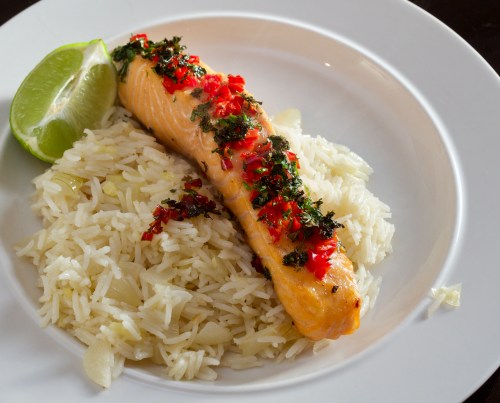
Grilled chilli & coriander salmon w. ginger rice

This is a bit of a fall back recipe for us on weeknights. It’s super simple and pretty healthy but there’s also something really nice and tasty about it. We think you should try this one! We grill an extra salmon fillet for our 3 year old (without the chillies) and she loves it with the ginger rice.

Wine Suggestion: Riesling, pure and simple. Try the vibrant Weingut Korrell “Slice of Paradise” dry Riesling from the Nahe in Germany, or if you want to push the boat out their Kreuznach Paradies Riesling, a full-throttle, powerful and dry Riesling with delicacy and a light touch despite the power and body. Even better if you can hang on to it for a few years and get the benefit of development in the bottle.

Grilled Chilli & Coriander with Ginger Rice – serves 2

  • 2 skinless salmon fillets, about 140g each
  • 1 red chilli, deseeded and finely chopped
  • small bunch coriander, chopped
  • 1 lime, halved

FOR THE RICE:

  • 2 tbsp olive oil
  • 1 onion, chopped
  • small piece fresh root ginger, finely chopped
  • 1 garlic clove, thinly sliced
  • 100g basmati rice

Heat a tbsp of the oil in a pan and fry the onion for a few mins until lightly browned. Stir in the ginger and garlic, fry for another minute, then stir in the rice. Add 300ml boiling water and a little salt, then bring to the boil. Cover and cook for 10-12 mins or until the rice is tender.

Meanwhile, heat the grill to medium. Brush a baking tray with a little oil and place the salmon fillets on top. Grill for about 4 minutes, then scatter with the chilli, coriander, the other tbsp of olive oil and some seasoning. Return to the grill for another 4 minutes or until the salmon is cooked through.

Serve the salmon on top of the rice with a piece of lime to squeeze over.

(Original recipe from BBC Good Food)

Read Full Post »

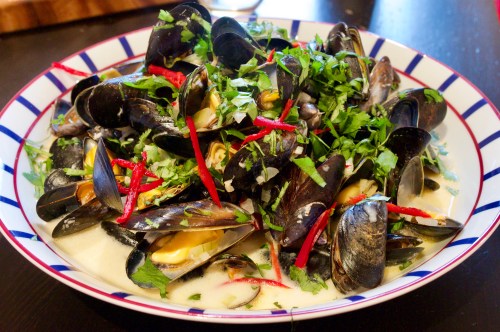
Thai mussels with coconut, chilli & lime

Mussels are a frequent Friday night feature in our house. This Thai inspired method tastes great and it looks very pretty too.

Wine Suggestion: this works with light, fruity and gently aromatic whites and our choice this evening was the Colterenzio Gewürztraminer from the Alto Adige in north-eastern Italy. A dry style but with lovely delicate fruit and subtle aromatics showing its cooler climate roots.

Thai mussels with coconut, chilli & lime – serves 4

  • 2kg mussels
  • 1½ tbsp groundnut oil
  • 1 onion finely chopped
  • 2 cloves of garlic, finely chopped
  • 2 cm piece of fresh ginger, peeled and finely chopped
  • 2 red chillies, deseeded and sliced finely into long strips
  • 2 x 400ml tins coconut milk
  • juice of 1 lime
  • ½ tbsp soft light brown sugar
  • 2 kaffir lime leaves, cut into strips (or grated zest of a lime)

TO SERVE:

  • 2 kaffir lime leaves, cut into strips (or grated zest of a lime)
  • 4 tbsp roughly chopped coriander
  • ½ a red chilli, deseeded and shredded

Wash the mussels in a few changes of cold water and remove any beards and barnacles. Discard any that don’t close when you tap them on the side of the sink.

Heat the oil in a large saucepan. Add the onion, garlic, ginger & chillies. Cook over a medium heat until the onion is soft. Add the coconut milk, lime juice, sugar & lime leaves. Bring almost to the boil, then add the mussels.

Cover and cook for 4 minutes or until the mussels have opened, give the pan a good shake now and then. Throw away any mussels that haven’t opened and serve in a large bowl with the lime leaves, coriander and chilli scattered over the top.

(Original recipe from Food from Plenty by Diana Henry, Mitchell Beazley, 2011)

Read Full Post »

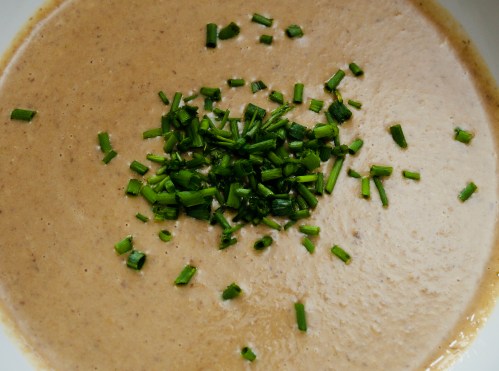
Wild mushroom soup

Make this with wild mushrooms while you get them but it also works well with ordinary chestnut mushrooms.

Wine Suggestion: an old favourite with mushrooms for us is complex and nutty Oloroso sherry. The best are round and rich while remaining dry but if you have one with a touch of sweetness it should work just as well too.

If sherry is not your style then a lighter, earthy red like the Höpler Pannonica red, a blend of Zweigelt, Blaufrankisch and Pinot Noir from Burgenland in Austria is a good pick. Earthy and spices this wine has character and presence while remaining medium bodied and fresh.

Creamy Mushroom Soup – serves 4

  • 25g dried porcini (ceps)
  • 50g butter
  • 1 onion, finely chopped
  • 1 clove of garlic, thinly sliced
  • thyme sprigs
  • 400g mixed wild mushrooms or chestnut mushrooms
  • 850ml vegetable stock
  • 200ml tub crème fraîche
  • 4 slices white bread, about 100g, cubed
  • chopped chives

Put the dried porcini in a bowl and pour over boiling water to just cover.

Heat 25g of the butter in a saucepan and gently cook the onion, garlic & thyme for about 5 minutes or until softened and starting to brown.

Drain the porcini (keep the liquid) then add to the onion along with the fresh mushrooms. Leave to cook for another 5 minutes. Add the stock and the reserved mushroom juice (discard any grit at the bottom), bring to the boil, then simmer for 20 minutes. Add the crème fraîche and simmer for another few minutes then whizz with a hand blender (or similar device) before passing through a fine sieve.

Heat the remaining butter in a frying pan, fry the bread cubes until golden, then drain on kitchen paper. Ladle the soup into bowls and sprinkle over the croûtons and chives.

(Original recipe from BBC Good Food)


Read Full Post »

Shepherds pie

We made this from left-over slow roast lamb that we’d cooked for Sunday lunch. If you haven’t made Shepherd’s pie with cooked roast lamb we highly recommend it. Really comforting and delicious – there’s no better way to treat your leftovers!

Wine Suggestion: we opened a Domaine de Boède La Pavillon which is made by Chateau de la Negly close to Narbonne in the Languedoc. This wine may be just an IGP (the old Vin de Pays) but you can tell that just as much care has gone into this as the Chateau’s AC wines.  Juicy raspberry and cassis aromas with a touch of black pepper and cinnamon. A  round and generous palate is followed with silky tannins and hints of liquorice. Aim for a juicier style of wine with a medium body.

Shepherd’s Pie – serves 4 to 6

  • 25g butter
  • 2 onions, diced
  • 2 cloves of garlic, crushed
  • 500g cooked lamb, cut into roughly 1 cm pieces
  • 25g plain flour
  • 500ml chicken stock
  • 1 tbsp tomato purée
  • 2 tbsp chopped chives
  • 700g mashed potato (made with some milk and butter)

Preheat the oven to 180C/350F/gas 4.

Melt the butter in a saucepan over a medium heat until foaming, then add the onions and garlic and cook for about 5 minutes or until soft but not browned.

Stir in the flour and cook for a minute, then add the stock and tomato purée, bring to the boil and season with salt and pepper. Stir in the lamb and the chopped chives.

Pour the lamb mixture into an ovenproof dish and cover with the mashed potato.

Bake in the oven for 30 to 40 minutes or until golden brown and bubbling. Serve with some veg on the side.

(Original recipe from Rachel’s Everyday Kitchen, by Rachel Allen, HarperCollins, 2013.)

Read Full Post »

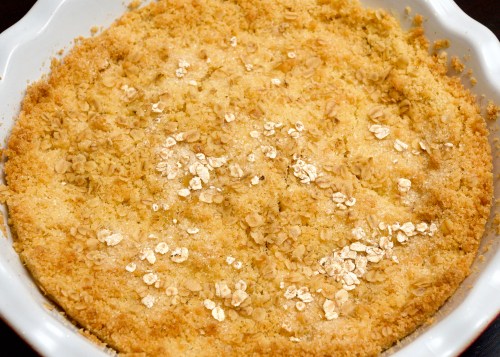
Apple crumble

A classic that can be pre-baked ahead of time and warmed in the oven when you need it … useful for entertaining and when someone gives you a bag of apples.

Wine Suggestion: Dessert wines often go really well with cooked apples. If you have some Sauternes, Monbazilllac or other late harvest or bortytised dessert wine lying around now’s the time to crack it open.

Classic Apple Crumble – serves 4

  • 3 medium-sized Bramley apples – peeled, cored & sliced into 1cm thick slices
  • 2 tbsp golden caster sugar

FOR THE CRUMBLE:

  • 175g plain flour
  • 110g golden caster sugar
  • 110g cold butter, diced
  • 1 tbsp rolled oats (optional)

Heat the oven to 190C/170 fan/gas 5.

Put the flour and 110g of sugar into a large bowl with the diced butter. Rub the mixture with your fingers until it resembles breadcrumbs or put the ingredients in a food processor and process until sandy.

Put the apples into a pie dish and toss with the 2 tbsp of sugar. Spread the crumbs over the top and spread out to the edges. Sprinkle the oats over the top if using.

Put the crumble in the oven on a baking tray for 35-40 minutes.

Serve with cream or custard.

(Original recipe from BBC Good Food)


Read Full Post »

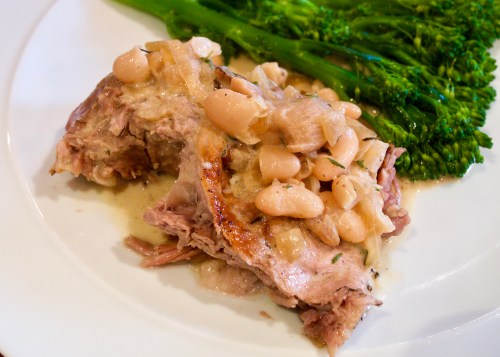
Slow roast lamb with beans

Lamb cooked long and slow is really delicious and lamb shoulder is the perfect cut for feeding lots of people. It’s also much cheaper than lamb leg. We loved the creamy beans flavoured with the lamb juices and onions, perfect for Sunday lunch. We definitely recommend soaking and cooking dried beans for this (and most other) dishes but tinned beans will work fine too. Leftover lamb can be used in a really good Shepherd’s pie.

Wine Suggestion: cool climate Syrah is our pick and a very good example is the André Perret Saint Joseph which was fresh and lively with really juicy cherry and raspberry fruit and racy,  velvety spices. We tasted the 2015 which was joyfully youthful and should have years ahead of it. We may buy a few more bottles of this to put away for future lamb dishes.

Slow-roasted lamb with beans – serves 8 to 12

  • 50ml olive oil
  • 500g onions, peeled and sliced
  • 2kg shoulder of lamb, boned, rolled and tied
  • 6 sprigs of thyme and 2 tbsp chopped thyme leaves
  • 4 cloves of garlic
  • 2 x tins of cannellini beans, drained and rinsed or 250g dried cannellini beans – soaked and cooked (soak the dried beans in lots of cold water overnight. Drain and put in a large saucepan of fresh water. Bring to the boil, then reduce the heat and simmer for 45 minutes – 1 hour or until tender. Drain in a colander and allow to cool).
  • 200ml cream

Preheat the oven to 110 C/225 F/Gas ¼.

Put a large casserole dish on a low heat and heat 3 tbsp of the olive oil. Add the onions and season with salt and pepper, then cook very gently until soft and caramelised.

Meanwhile, put a large frying pan on a high heat and add the remaining oil. Season the lamb really well with salt and black pepper, then cook for 10 minutes, turning now and then, until the well-browned.

Put the lamb on top of the caramelised onions, add the thyme sprigs and garlic, cover with a lid and cook in the oven for about 6 hours or until very tender.

Remove the lamb to a warm plate and keep warm wrapped in some foil.

Drain the onions, thyme and garlic in a sieve set over a bowl. Leave the liquid to sit until the fat rises to the surface, then spoon it off (we have a separating jug which makes this job very easy!).

Discard the thyme sprigs and return the onions and garlic to the casserole dish. Stir in the beans, cream and chopped thyme and simmer for about 5 minutes. Season again with salt and pepper to taste.

Carve the lamb into thick slices and serve with the beans and some green veg.

(Original recipe from Rachel’s Everyday Kitchen, HarperCollins, 2013.)

Read Full Post »

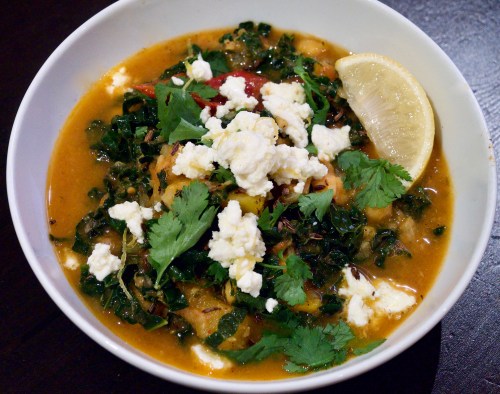
Maroccan kale, chickpea and squash stew

So here we are in October which in our house means thoughts are turning towards Autumn veg, warm casseroles and roast dinners. Here’s a really delicious, but healthy, idea for your first butternut squash.

Wine Suggestion: A little tricky this match but we have two suggestions: a juicy and spicy, Californian Zinfandel – get a good one if you can, like Cline or Ridge; or the Altos de Torona Albariño, a richly fruited white with spices and textures to complement the spices in the dish.

Moroccan chickpea, squash & cavolo nero stew – serves 4

  • 4 tomatoes, halved
  • 5 tbsp olive oil
  • 250g butternut squash, peeled and chopped into large chunks
  • 1 tbsp thyme leaves
  • 1 garlic clove, crushed
  • 1 onion, sliced
  • 2 x 400g tins chickpeas, drained
  • 1 bay leaf
  • 1 tbsp ground cumin
  • 1 tsp ground cinnamon
  • ½ tsp turmeric
  • 1 tbsp harissa
  • 1 litre vegetable stock
  • 100g feta, crumbled
  • 1 lemon, zested and cut into wedges
  • 2 tsp fennel seeds, toasted in a dry pan and lightly crushed
  • 1 tsp ground coriander
  • 200g cavolo nero, shredded
  • a handful fresh coriander leaves, to serve

Heat oven to 200C/180C fan/gas 6.

Put the tomatoes on a baking tray lined with baking parchment, drizzle over 2 tbsp olive oil, season well and roast in the oven about 20 minutes.

Meanwhile, pour 2 tbsp oil into a large saucepan and add the squash, thyme, garlic and onion. Season well and cook over a low heat for about 15 minutes or until the vegetables start to soften.Add the tomatoes, chickpeas, bay leaf, cumin, cinnamon, turmeric and harissa. Season and pour in the stock. Bring to the boil, then simmer for 30-35 minutes or  until the liquid has reduced.

Mix the feta with the last tbsp of olive oil and the lemon zest in a small bowl.

Add the ground coriander and cavolo nero to the stew and cook for a couple of minutes. Put the stew into bowls and top with feta, some coriander leaves and fennel seeds, and some seasoning. Serve with the lemon wedges.

(Original recipe by Romilly Newman for BBC Good Food)

Read Full Post »

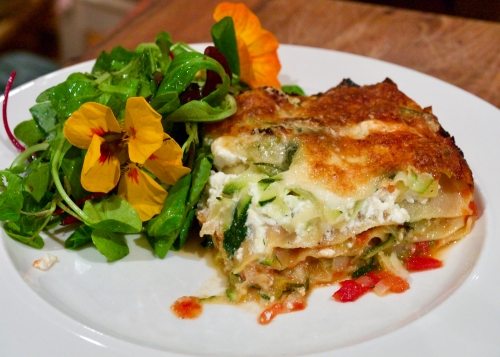
Courgette lasagne

It’s the season where vegetables seem to come in waves of excess. Here’s a nice weekday lasagne for any of you that are still harvesting courgettes.  Our friend Nicola also dropped by with some home-grown salad ingredients including these pretty nasturtiums.

Wine Suggestion: We think fresh, crisp whites work with courgettes really well and when combined with pasta and cheese naturally lean towards young Semillon, Chenin Blanc or Chablis. To mix it up a bit, however, we tried the Villa Sparina Gavi di Gavi from Piedmont in Italy, another good option.

Courgette Lasagne – serves 6

  • 8 plum tomatoes, halved
  • 2 garlic cloves, lightly bashed
  • 1 tbsp olive oil
  • 1 sprig of rosemary
  • ½ tbsp golden caster sugar
  • 2 leeks, sliced into rings
  • 20g unsalted butter
  • 100g baby spinach
  • 500g courgettes, grated
  • 10 lasagne sheets
  • 250g tub of ricotta
  • 125g mozzarella, torn
  • 50g Parmesan, grated

Heat the oven to 200C/180 fan/gas 6.

Put the halved tomatoes onto a baking tray with the garlic, oil, rosemary and season well. Bake for 25-30 minutes or until soft, then discard the rosemary and remove the skin from the garlic. Put the tomatoes and garlic in a blender and blitz a few times to make a chunky sauce.

Meanwhile, put the leeks in a pan over a low heat, add the butter, season and cook for about 10 minutes or until soft. Add the spinach and grated courgettes, and continue to cook for another couple of minutes to wilt and soften. Set aside.

Layer the ingredients in a large ovenproof dish starting with a layer of tomato sauce, then some pasta, followed by ricotta and vegetables. Repeat until all the ingredients are used, finishing with a vegetable layer. Scatter over the mozzarella and Parmesan, then bake for 40 to 45 minutes or until golden brown and bubbling.

(Original recipe by John Torode in BBC Good Food Magazine, August 2016.)


Read Full Post »

Pasta with red peppers and sausages

We love dishes like this! So cheap and easy yet tastes of Italian holidays. Try and find some good Italian sausages as they tend to be really well flavoured.

Wine Suggestion: the fresh and pure fruited Rocca delle Macie Chianti Vernaiolo was our successful match with this. With no oak this is a delicious expression of cherry fruited flavours that celebrates the freshness of the dish at the same time.

  • 1 small red onion, finely sliced
  • 3 red peppers, deseeded and cut into 2cm squares
  • 4 pork sausages – try and get your hands on some Italian ones if possible
  • 6 tbsp olive oil
  • a couple of pinches of salt and chilli flakes
  • 5 ripe tomatoes, peeled and roughly chopped (cover with hot water for a minute to make them easier to peel)
  • 400g pasta, we used rigatoni but use any short pasta variety
  • plenty of freshly grated Parmesan, to serve

Run a sharp knife down each sausage and remove the meat from inside the casing. Crumble roughly with your fingers to break it up a bit and set aside.

Over a medium-low heat, fry the onion in the olive oil with a small pinch of salt until soft but not browned. Add the chilli and sausage meat, crumbling it with your fingers, then fry, breaking the pieces up with the back of a wooden spoon until the meat is no longer pink. Add the peppers, another pinch of salt and cook, stirring every now and then, for another 10 minutes.

Add the tomatoes to the pan and cook for another 15 minutes or until the sauce is rich and thick and the peppers are very soft.

Meanwhile, cook the pasta in  boiling salty water until al dente. Warm a large bowl, then mix the cooked pasta with the sauce and the grated Parmesan before serving.

(Original recipe published in The Guardian 18th July 2017.)


Read Full Post »

Watercress, cucumber & radish salad A lovely later summer salad. We used mixed radishes from our garden – red, white and everything in between. Freshly picked they had a wonderful peppery kick that we never seem to get from shop bought radishes.

Watercress, cucumber & radish salad – serves 8

  • 1 cucumber
  • 200g watercress
  • 300g baby radishes, halved if large

FOR THE DRESSING:

  • 6 tbsp natural yoghurt
  • 1 tbsp white wine vinegar
  • 1 tsp Dijon mustard
  • 1 garlic cloves, crushed
  • 1 sprig of dill, leaves only, chopped

Whisk all of the dressing ingredients together in a bowl, then season.

Peel the cucumber into long, thin strips using a vegetable peeler. Discard the seedy part.

Toss the watercress, cucumber and radishes together in a serving bowl and toss with the dressing.

(Original recipe from BBC Good Food.)

Read Full Post »

« Newer Posts - Older Posts »