Feeds:
Posts
Comments

Archive for the ‘Food’ Category

OLYMPUS DIGITAL CAMERA

We love Tom Kerridge’s food but find his recipes can require a lot of work. Not so with these sticky drumsticks but you will need to find some malt extract to go in the marinade. We got ours in a good deli but health food shops should also stock it. We’re confident you’ll like the drumsticks enough to make them again and use it up.

Beer Suggestion: to complement the malt extract it makes sense to try a malty beer and we suggest searching out one of the many craft beers in your area. Our pick this time was the Five Lamps Dublin Lager which is a pilsner style but with a malty kick.

Sticky drumsticks – serves 4

  • 12 chicken drumsticks
  • 2 garlic cloves, grated
  • 3cm piece of ginger, peeled and grated
  • 2 tbsp sesame oil
  • 3 tbsp sesame seeds, toasted lightly in a dry frying pan
  • 1 bunch scallions, trimmed and finely sliced
  • 1 green chilli, finely sliced (seeds left in)

For the marinade: 

  • 160g runny honey
  • 160ml dark soy sauce
  • 300ml chicken stock
  • 120g malt extract

Pour the honey for the marinade into a small stainless steal pan and warm on a medium-high heat. Continue to cook until it starts to turn a deep shade of amber (easier to spot if you have a pot with a light coloured interior), then pour in the soy sauce and chicken stock to stop it cooking further. Bring the mixture to the boil and whisk in the malt extract. Take off the heat and allow to cool.

Put the drumsticks in a bowl and pour over the marinade. Mix in the garlic and ginger, cover the bowl with cling film and leave to marinate in the fridge for 2 hours at least or overnight if you can.

Preheat the oven to 170C/Gas 3.

Put the drumsticks in a roasting tin with their marinade. Cook for 45-50 minutes, basting a few times, until the chicken is cooked through and the meat comes off the bone easily. The drumsticks should be glossy and sticky.

Remove the tray from the oven and immediately drizzle with the sesame oil and toss in the sesame seeds. Throw in the scallions and the chilli. Roll the drumsticks around in the dish to make sure they are evenly coated.

Serve hot or cold.

(Original recipe from Tom Kerridge’s Best Ever Dishes, Absolute Press, 2014.)

Read Full Post »

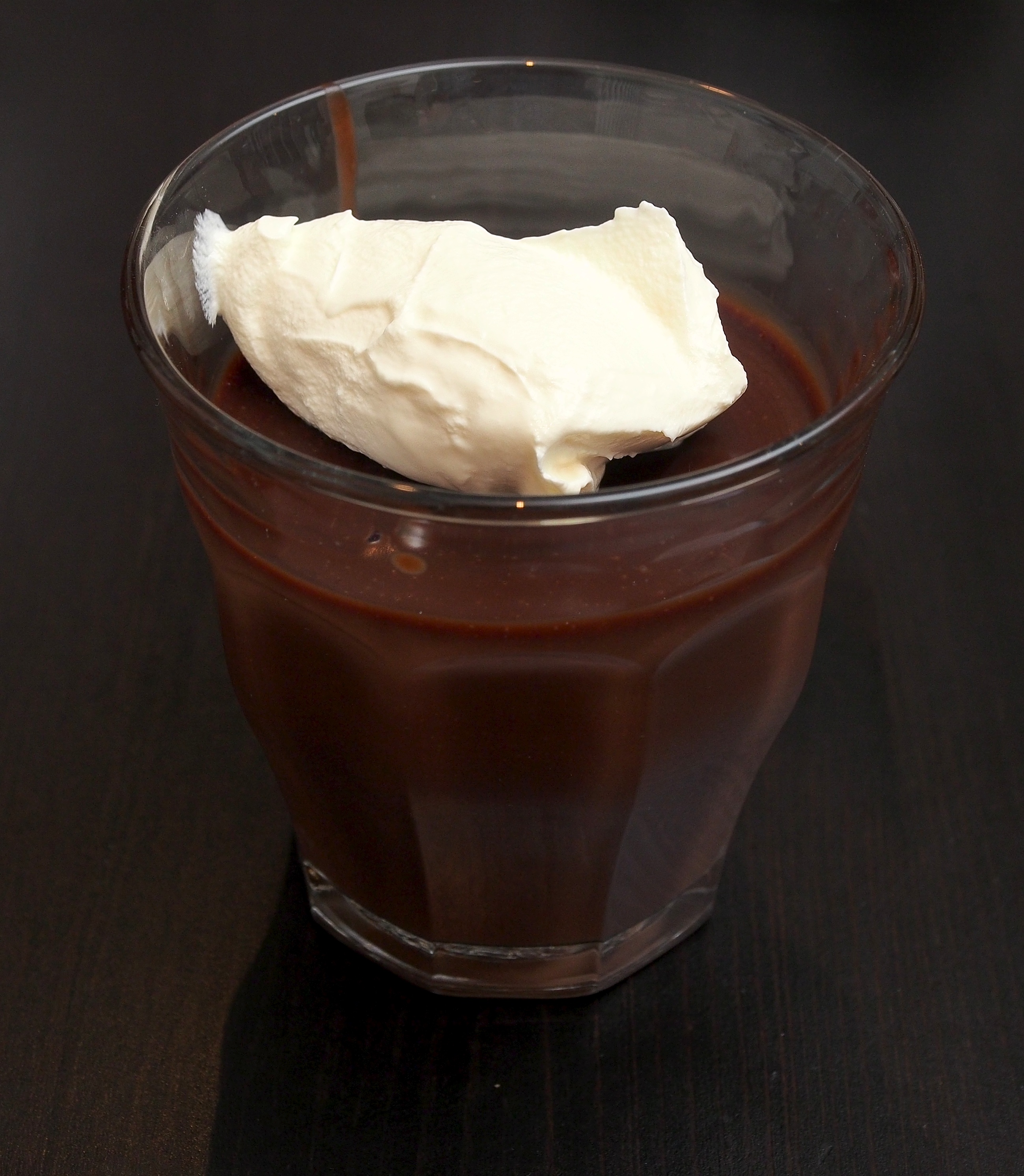
Petit pots au chocolat

We find Rick Stein exceptionally reliable and when we needed a dessert for entertaining thought we’d give his recipe a go. Unsurprisingly they worked a treat and the result was a silkly, rich, and indulgent pot of chocolate to finish a meal with friends.

Wine Suggestion: Chocolate is notoriously difficult to pair with wine so we’d probably skip the wine altogether and go for a liqueur to complement this dish – Grand Marnier, Cointreau, Whiskey… choose your poison.

Petit pots au chocolate – makes 6

  • 225g plain chocolate, minimum 60% coco solids
  • 15g soft butter
  • 4 egg yolks
  • 150ml double cream
  • 150ml full-cream milk
  • 50g caster sugar
  • 6 tsp crème fraîche and a little cocoa powder, to decorate

Break the chocolate into a heatproof bowl and melt over a pan of just-simmering water. Remove and stir until smooth, then stir in the softened butter and egg yolks.

Put the cream, milk and sugar into a small pan, bring to the boil and then stir into the chocolate.

Pour the mix into six 100ml receptacles (we used small glasses but you could also use espresso cups or ramekins) and leave somewhere cold to set, but don’t refrigerate.

Decorate the pots with a little quenelle of crème fraîche and dust with cocoa powder to serve.

(Original recipe from Rick Stein’s French Odyssey, BBC Books, 2005)

Read Full Post »

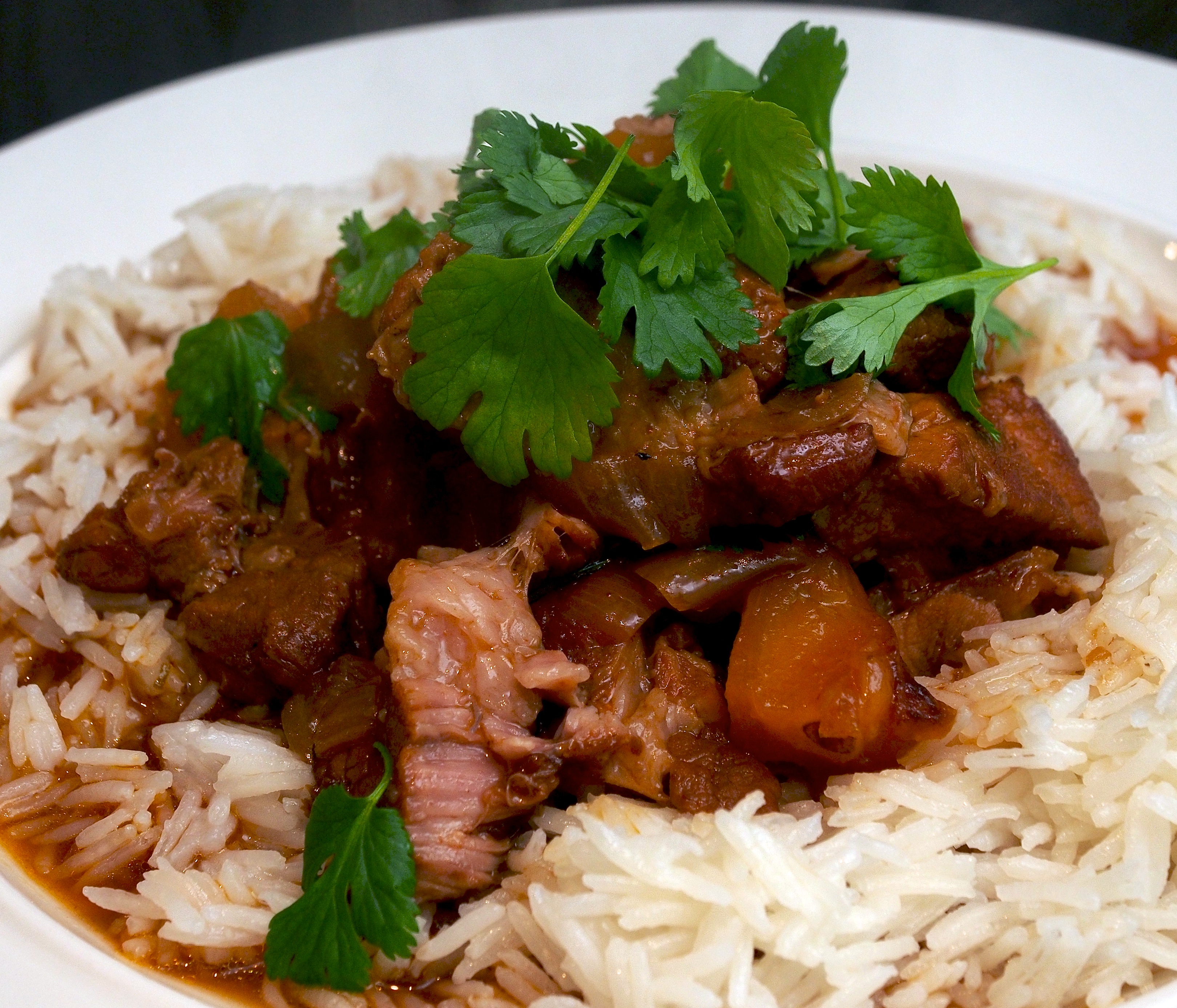
Pork & Pineapple


A classic sweet and sour combination but with a few modern twists. The pork ends up meltingly tender and there is no ketchup required!

Wine Suggestion: This was a hard match given the spices, sweetness and sourness which really fights the components of many wines but the solution is a good, dry Riesling which will cut through the fat, complement the spices and balance the sweetness of pineapple. The aromatics in Riesling also add new layers of flavour to the meal. We drank a superb Dönnhoff QbA dry Riesling (their entry level dry wine) which just hit the mark in terms of weight, poise and flavour.

Sticky Pork & Pineapple – serves 8

  • 1 tbsp vegetable oil
  • 1½ kg pork shoulder steaks, each cut into 4 thick strips
  • 3 onions, roughly chopped
  • 4 garlic cloves, finely sliced
  • small bunch coriander, stalks finely chopped and leaves reserved
  • 3 Thai red chillies, 2 sliced, 1 left whole and pricked
  • 3 star anise
  • 100g dark soft brown sugar
  • 2 tbsp tomato puree
  • 2 tbsp fish sauce
  • 600ml chicken stock
  • 350g fresh pineapple, cut into chunks

Heat oven to 160C/140C fan/gas 3.

Heat the oil in a large flameproof casserole. Season the pork and brown in batches for about 5 minutes or until golden. Set aside.

Stir the onions into the remaining fat, then cover and allow to soften for 5 minutes.

Add the garlic, coriander stalks, chillies and star anise to the dish, sizzle for 1 minute, stirring often, then mix in the sugar and tomato puree. When they have melted, return the pork and any juices to the dish and add the fish sauce and stock. Tuck the pineapple chunks in.

Bring to a simmer, then cover the pot but leave a small gap for steam to escape, and put in the oven for 2 hours. When there is 30 minutes to go, skim some of the fat off the top and return to the oven.

If you want to thicken the sauce a bit you can remove the pork to a warm dish and simmer the sauce on the hob until slightly thickened. Leave to cool for 5 minutes, then season to taste and pour over the pork.

Garnish with the coriander leaves and serve with rice.

(Original recipe from BBC Good Food)

Read Full Post »

OLYMPUS DIGITAL CAMERA

From the geniuses at River Café is this deeply delicious and flavoursome pasta which keeps on reprising itself on our menus. We love that the ingredients list is simple and short and yet the dish is packed full of flavour and style. Don’t shy away from the generous quantity of butter – it’s what gives the dish its richness.

We’ve given a separate recipe for the tomato sauce. You will have too much for this recipe but it’s good served as it is with some tagliatelle and freezes well.

Wine suggestion: earthy, medium bodied red wines work well with this and we returned to an old favourite, the very smooth Selvapiana Chianti Rufina which is pure elegance in a glass. Really fine and supple tannins make this sing with a freshness that adds depth to the food.

Penne, tomato and dried porcini – serves 4 

  • 320g penne
  • 40g dried porcini
  • 2 garlic cloves, finely sliced
  • 1 tbsp flat-leaf parsley leaves, chopped
  • 50g Parmesan, grated
  • 5 tbsp tomato sauce (see below)
  • 100g unsalted butter
  • extra virgin olive oil

Soak the porcini in 200ml boiling water for 10 minutes.

Drain the porcini, straining the liquid through muslin or a paper towel, reserving the water. Rinse the porcini and chop coarsely.

In a thick-bottomed saucepan, melt the butter and add the garlic. Add the porcini and fry until soft. Add a little of the porcini liquid and simmer until absorbed. Stir in the parsley. Add the tomato sauce and season.

Cook the penne in plenty of boiling salted water until al dente. Drain and stir into the pasta sauce.

Drizzle with olive oil and serve with the Parmesan

Tomato sauce – serves 4

  • 2 garlic cloves, sliced
  • 1 tbsp olive oil
  • 2 x 400g tinned tomatoes

Heat the oil in a thick-bottomed pan and fry the garlic until soft but not coloured. Add the tomatoes and season. Cook over a medium heat for 20-30 minutes or, until the sauce is very thick and the oil comes to the top.

(Original recipes from Italian Two Easy: Simple Recipes from the London River Cafe by Rose Gray and Ruth Rogers, Random House, 2006.)

Read Full Post »

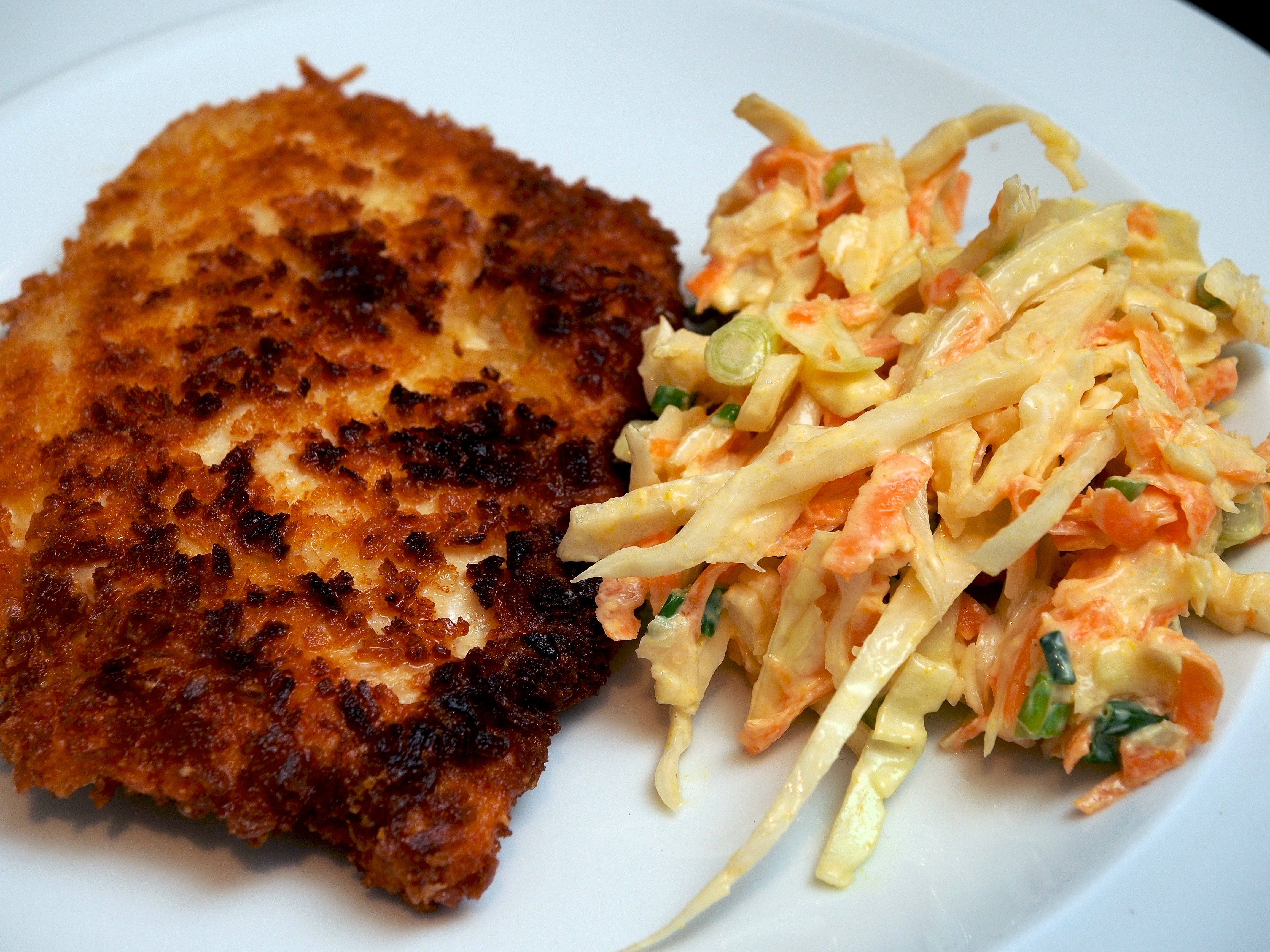
Chicken Schnitzel with an apple slaw

Wine Suggestion: Whatever you happen to have in the fridge will do nicely.

We liked the apple coleslaw which made this simple schnitzel dish really fresh and tasty. Great mid-week meal.

Chicken schnitzel with apple coleslaw – serves 4

  • 4 small chicken breasts
  • 3tbsp grated Parmesan
  • 100g flour
  • 1 large egg, beaten
  • 75g dried breadcrumbs – we always use panko
  • 75ml vegetable oil

FOR THE COLESLAW:

  • 300g white cabbage, shredded
  • 1 large carrot, peeled and grated
  • 6 scallions, sliced diagonally
  • 1 red-skinned apple, grated
  • 150g pot natural yogurt
  • juice half lemon
  • 2 tsp English mustard

Mix all the coleslaw ingredients together in a large bowl and season.

Put the chicken fillets between two pieces of cling film and bash with a rolling pin until they are an even thickness of about 2-3mm.

Put the flour on a plate and season, then put the egg on another plate. Coat the chicken in the flour first, shake of the excess, then coat with the egg.

Mix together the Parmesan and breadcrumbs in a shallow dish. Dip the chicken in the mixture until completely coated in crumbs. You can put the schnitzel in the fridge now until you’re ready to cook them.

Heat the oil in a large frying pan over a fairly high heat and cook the schnitzels two at a time. Cook for 2-3 minutes on each side or until completely golden, then drain on kitchen paper. Keep warm in a warm oven while you cook the rest.

Serve with the coleslaw.

(Original recipe from BBC Good Food)


Read Full Post »

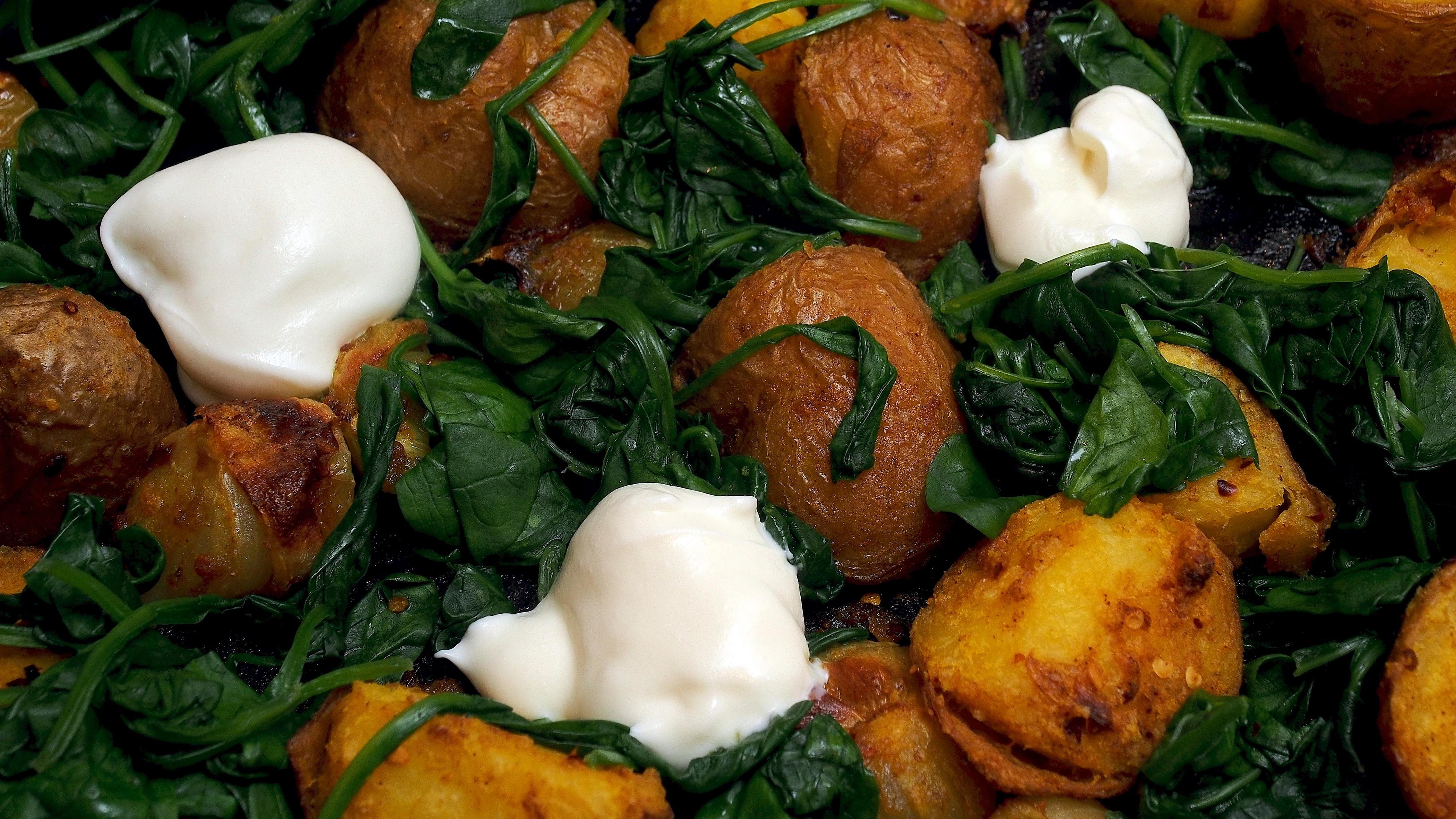
Spiced Potatoes with Spinach

This is a great Friday or week-night dish which you can easily eat on it’s own, preferably in front of the TV!

Potatoes with Spices & Spinach – serves 3

  • 800g large floury potatoes, cut into large pieces
  • 5 banana shallots, peeled and halved lengthways
  • 1/2 tsp cayenne pepper
  • 1 tsp dried chilli flakes
  • 1 tsp of crushed garlic
  • 1 tsp ground cumin
  • 1 tsp turmeric
  • 2 tsps sea salt flakes
  • 4 tbsp groundnut oil
  • a couple of large handfuls spinach
  • plain yoghurt
  • fresh coriander

Preheat the oven to 200°C/Gas 6.

Cook the potatoes in plenty of salted boiling water for about 15 minutes or until almost tender.

Drain the potatoes and put them in a bowl. Add the shallots and toss with the cayenne, chilli flakes, garlic, cumin and turmeric. Add the salt and oil, then tip into a roasting tin and bake for about 30 minutes or until crisp.

Wash the spinach leaves and put into a pan over a moderate heat, cover with a lid and leave for a couple of minutes to wilt.

Toss the spinach with the potatoes and garnish with a little yoghurt and coriander.

(Original recipe from Eat by Nigel Slater, Fourth Estate, 2013.)

Read Full Post »

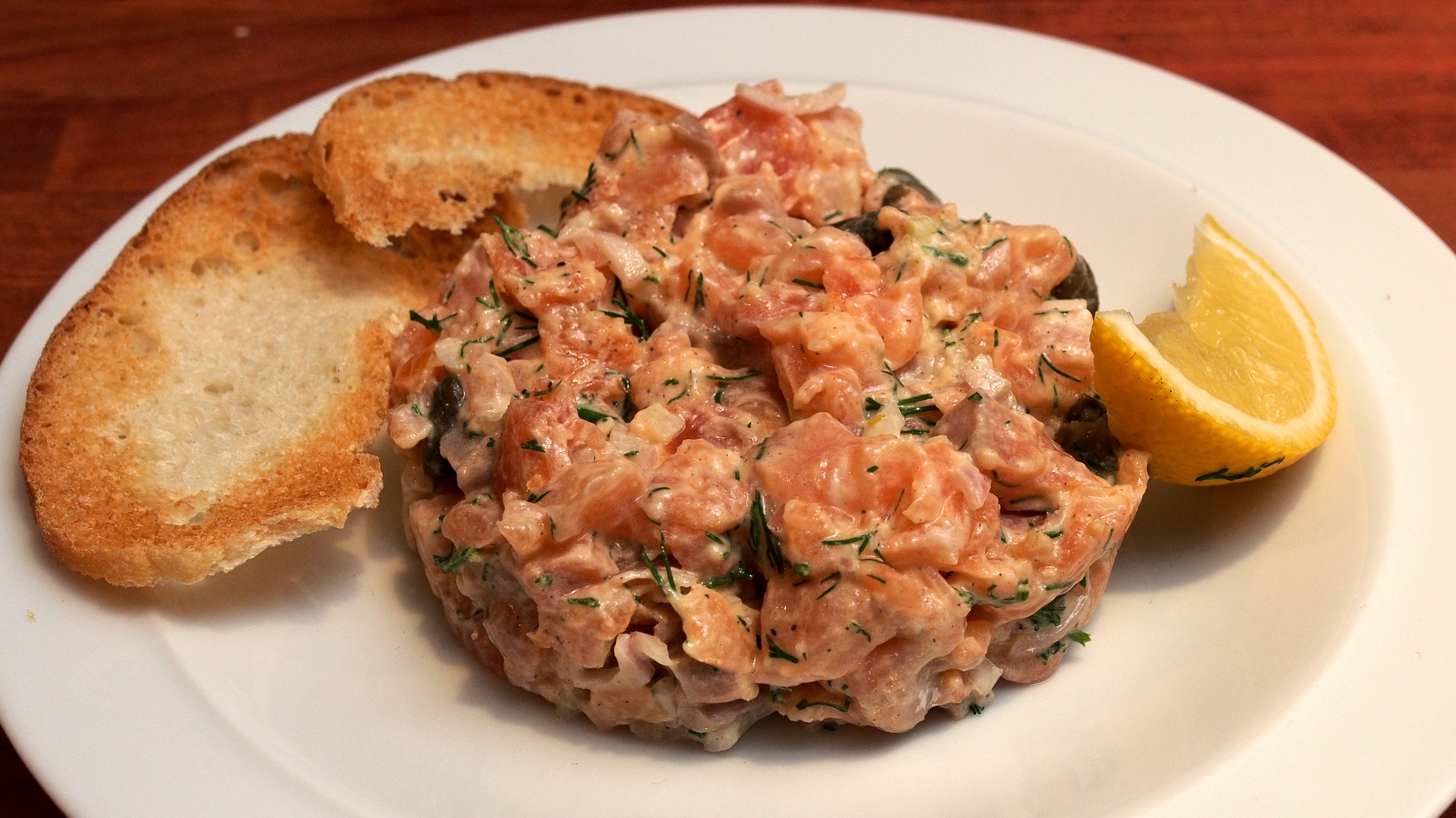
Salmon Tartare

A perfect starter for the festive season. Get the freshest and best salmon you can as it will make all the difference; ours was meltingly tender while cutting it up and we were rewarded with a melt in the mouth starter.

Wine suggestion: Try an appropriately festive and indulgent Vintage Champagne like the Billecart-Salmon Blanc de Blanc which has a richness and depth alongside a minerally freshness and great purity of fruit. Alternately if on a budget, but another classic match, would be a zippy and herbaceous Sauvignon Blanc or for a bit of a lemony twist a Verdejo from Rueda in Spain.

Smoky salmon tartare with lemon and capers – serves 6

  • 1 shallot, finely diced
  • 2 lemons, 1 juiced and 1 cut into wedges
  • 400g skinless salmon fillet
  • 200g smoked salmon
  • 2 tbsp chopped dill
  • 2 tbsp small capers
  • 1 tbsp Dijon mustard
  • 1 tbsp crème fraîche
  • olive oil
  • melba toast, to serve

Put the shallot into the lemon juice and leave to soak.

Cut the salmon into tiny cubes and finely chop the smoked salmon. Put all of the fish into a bowl, add the dill, capers, mustard, crème fraîche, 1 tbsp olive oil and the shallot and juice. Fold together gently and season with salt and black pepper.

Serve in rounds with the melba toast and a drizzle of olive oil.

(Original recipe from BBC Olive Magazine, December 2014)

Read Full Post »

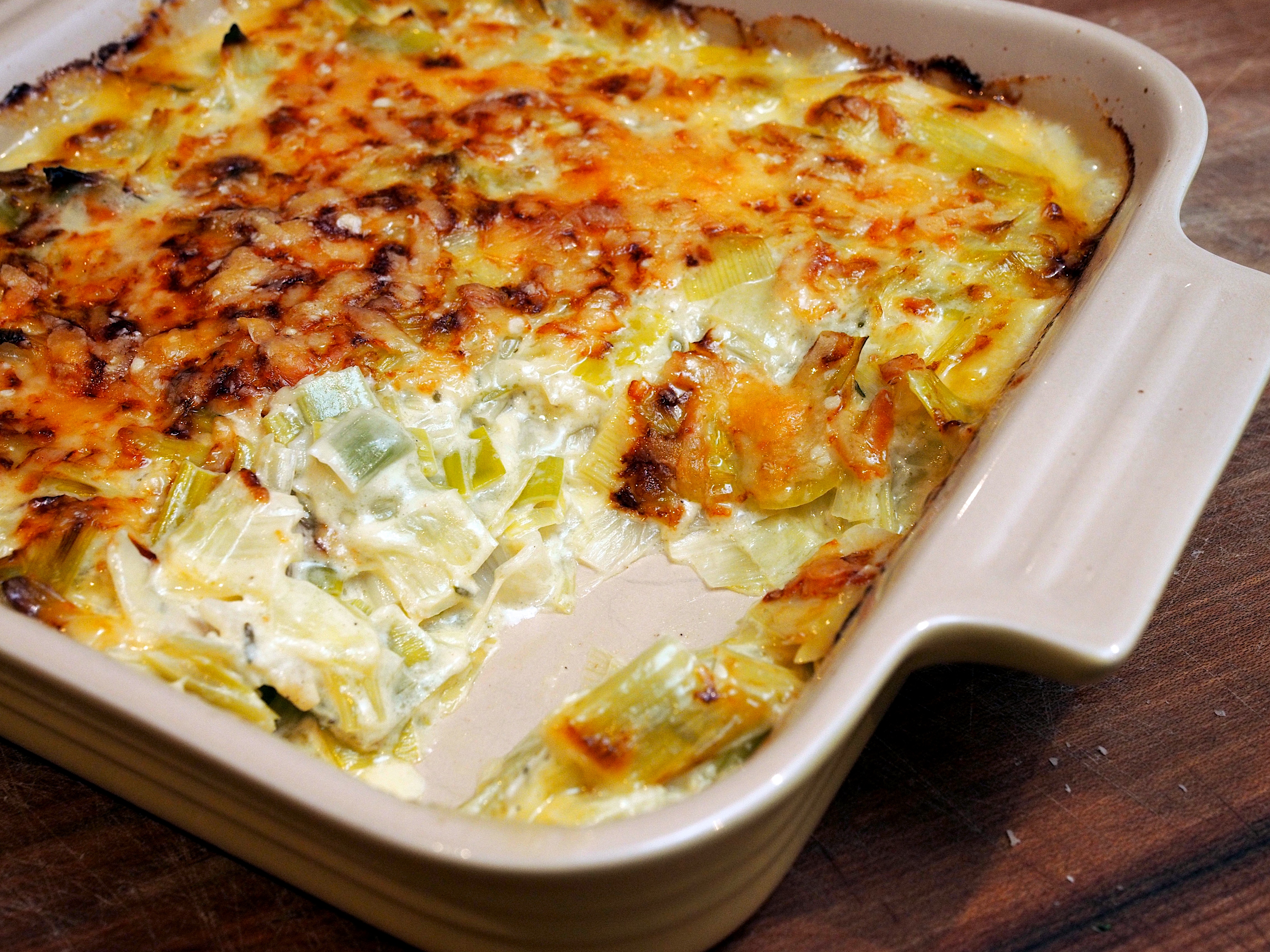
Leek Gratin


A true comfort food if there ever was one, and a versatile side for simply barbecued meats, roast chicken and a whole host of mains. It’s fairly rich so a little goes a long way.

Baked Creamy Leeks – serves 6 as a side dish

  • 800g leeks, roughly chopped and rinsed well in a sieve
  • 2 garlic cloves, finely sliced
  • 2 knobs of butter
  • olive oil
  • 6 sprigs of fresh thyme, leaves picked
  • 100g Cheddar cheese, grated
  • 200ml single cream

Preheat the oven to 200°C/400°C/gas 6.

Warm a large frying pan over a medium heat and add the butter with a splash of olive oil and the garlic.

As soon as the garlic starts to colour, add the leeks and thyme leaves and stir. Turn up the heat and continue to cook for about 10 minutes or until the leeks have softened.

Remove from the heat and season with salt and pepper. Add the cream and half the cheese. Mix well in a suitably sized baking dish (you want a layer about 2.5cm thick). Sprinkle over the remaining cheese and bake for about 20 minutes or until brown and bubbling.

(Original recipe from Jamie’s Ministry of Food, Penguin, 2008.)

Read Full Post »

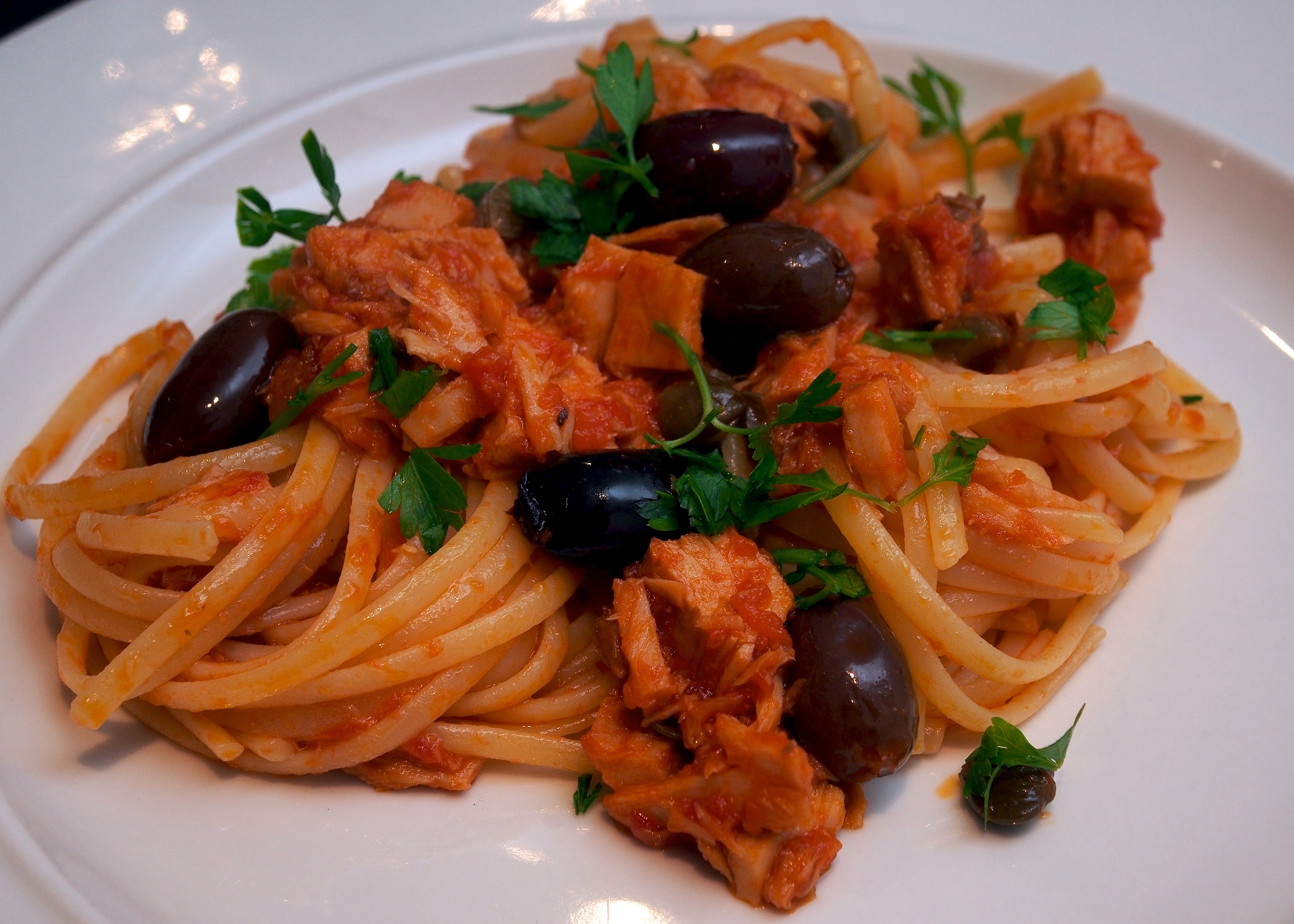
Obica: Linguine with Yellowfin Tuna

A simple but delicious dish from a cool restaurant called Obicà that we found on our last trip to Florence. They insist that it’s best made with fresh tuna (and they’re probably right) but we made it with top quality tinned tuna and it worked for us.

Wine Suggestion: Classic Italian matches for tuna depend on the region. If you are in Sicily a great match is their native Grillo grape, a textural, slightly salty and mineral wine with good body but not weighty. For this dish though we drank a Vermentino, made by Morisfarms, from the Tuscan coast. It has a great vinous texture and savoury character which combined with fresh fruit and minerality matches this Tuscan combination of tuna, tomatoes and olives.

Linguine with Yellowfish Tuna – serves 4-6

  • 2 tins top quality plum tomatoes (the Italian brands are good)
  • 500g yellowfin tuna
  • 4 tbsp extra-virgin olive oil, plus a bit extra
  • 2 sprigs rosemary
  • a pinch of chilli flakes
  • 80ml white wine
  • 30g salted capers, soaked and drained
  • 100g pitted black olives (Gaeta or Kalamata)
  • 500g linguine
  • chopped fresh parsley to serve

Drain the tinned tomatoes and cut into strips.

Cut the tuna into 2cm cubes. Heat the oil in a pan and sauté with 1 sprig of rosemary and the chilli flakes.

Add the wine and simmer until it evaporates, then add the capers.

Add the olives and tomatoes and cook over a high heat for 15 minutes.

Cook the linguine until al dente, then drain and add to the pan of tuna sauce. Toss gently.

Sprinkle on the parsley, drizzle with some more olive oil, and garnish with the remaining rosemary.

(Original recipe from Obicà: Mozzerella Bar, Pizza e Cucina, Rizzoli, 2014.)

Read Full Post »

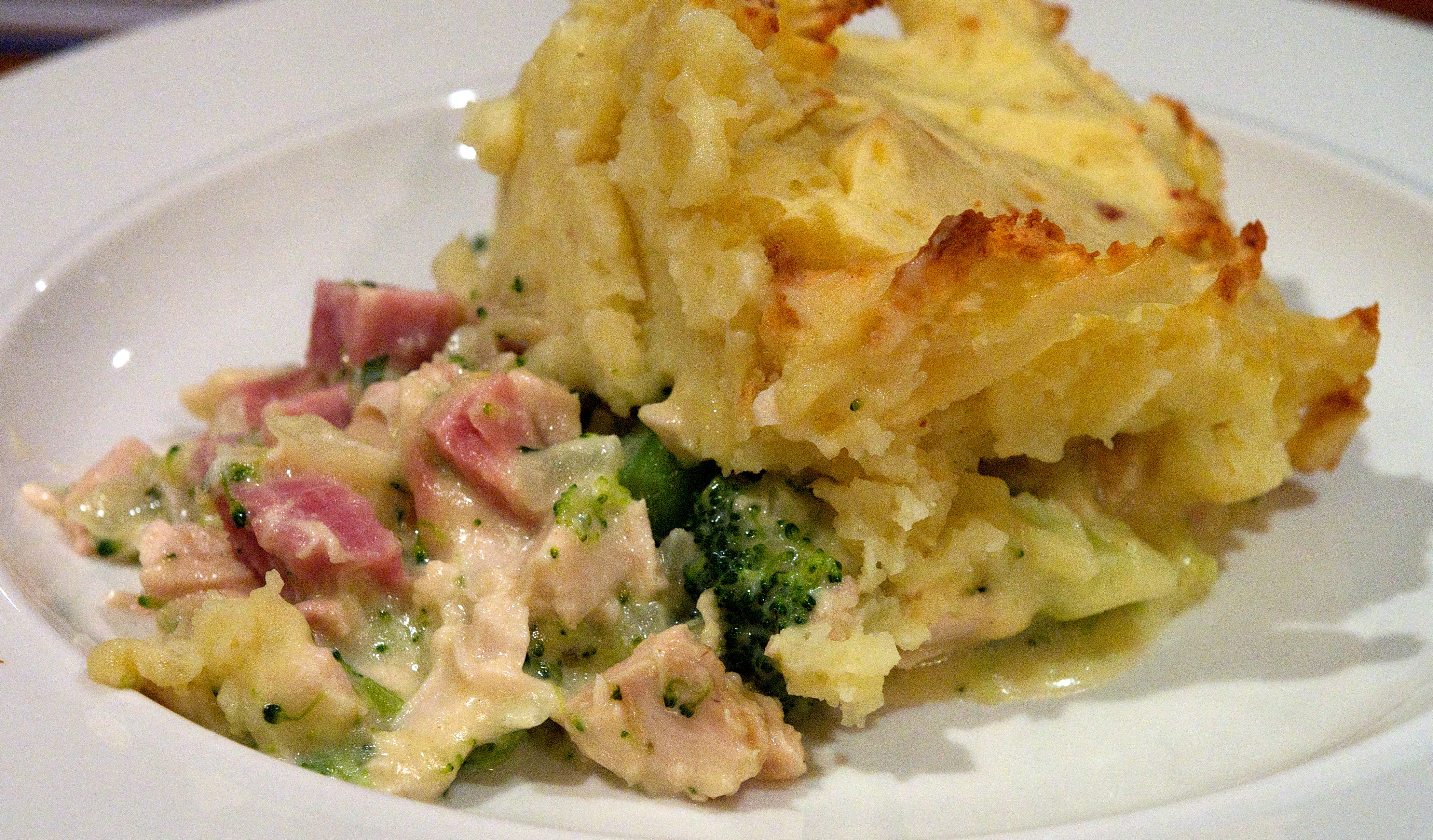
Chicken & Ham Pie

This is a great way to use up leftover roast chicken (or dare we say turkey?) and ham. Almost as good as the roast chicken dinner itself and we are definitely considering this as a dish to use Christmas leftovers.

Wine Suggestion: This dish works well with a rich white wine. We tried it with an oaked Semillon, which on it’s own was delicious but with the pie the crisp acidity made it fall a bit flat. We’d suggest a good, oaked chardonnay instead which has much better weight in the mid-palate to work with the rich creamy chicken and ham. Yum.

Leftover Chicken & Ham Pie – serves 6-8

  • 25g butter
  • 1 onion, peeled and finely chopped
  • 400g broccoli florets
  • 25g plain flour
  • 225ml cream
  • 225ml chicken stock
  • 675g cooked chicken and ham, cut into 2cm chunks
  • 1 tbsp chopped tarragon or marjoram
  • mashed potato (made from 1kg of potatoes)

Preheat the oven to 180ºC, Gas mark 4.

Melt the butter in a large saucepan over a medium heat, add the onion and fry gently for 8-10 minutes or until completely soft.

Put a saucepan of water over a high heat and add a good pinch of salt. When the water boils, add the broccoli florets and cover until the water comes back to the boil. Remove the lid as soon as the water boils and cook the broccoli for 2-4 minutes or until just tender.

Add the flour to the onion and whisk for 1 minutes, then pour in the cream and stock, whisking all the time. Bring to the boil, then simmer for a minute or two until slightly thickened.

Stir the chicken, ham, herbs and broccoli in to the sauce and season with salt and pepper. Pour into an ovenproof dish (approx. 20 x 30 cm) and top with mashed potato.

Bake for 25-30 minutes or until golden brown and bubbling.

(Original recipe from Rachel’s Everyday Kitchen by Rachel Allen, Harper Collins, 2013.)


Read Full Post »

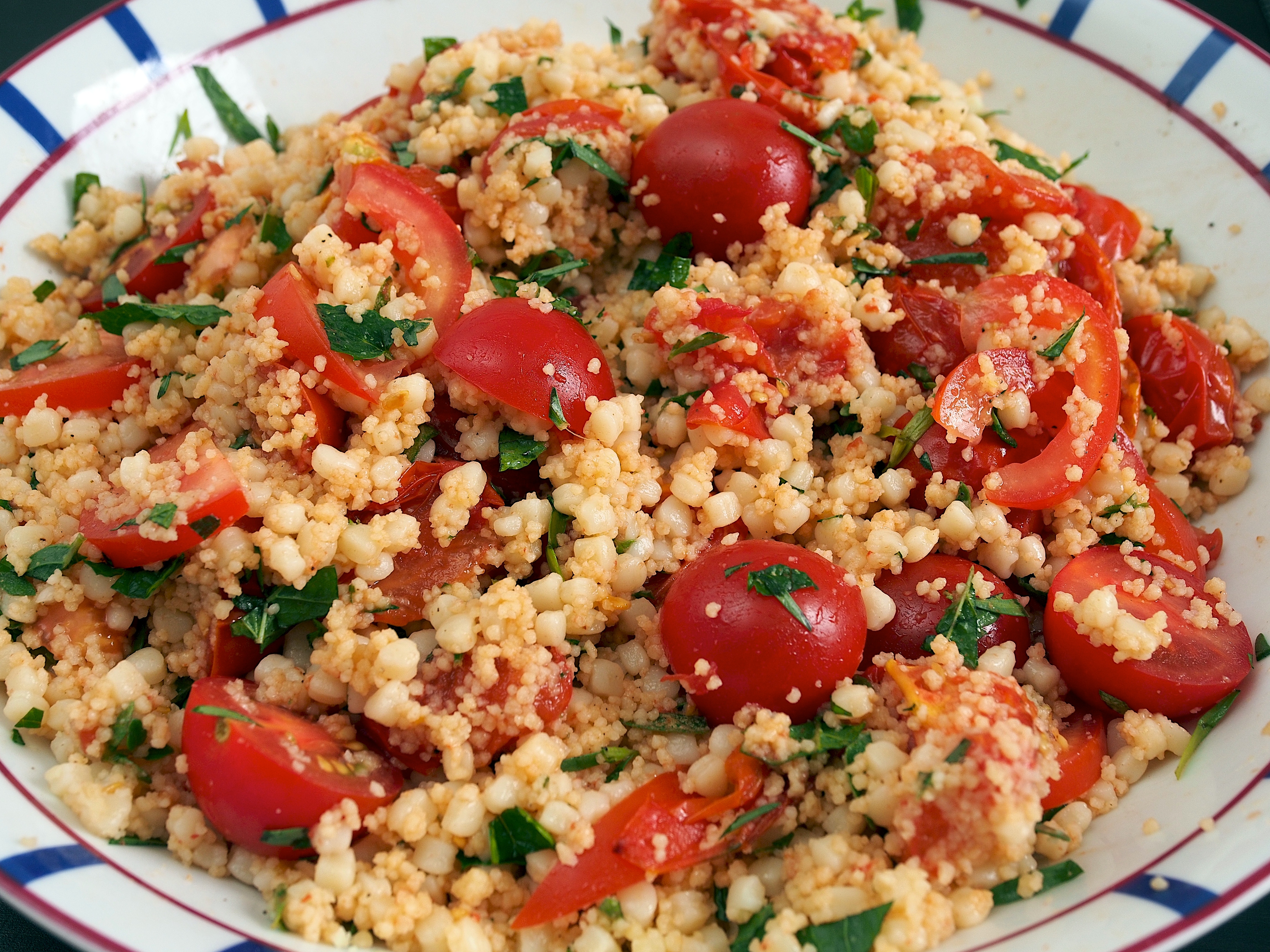
Tomato party

This dish celebrates all the juicy tomatoes we’re picking in our garden at the moment. We only had red ones when we made this but a week before we had a glut of yellow toms too. It doesn’t matter which you use, they’ll all taste great.

Wine suggestions: We have tried a couple of very successful wines with this dish, but the trick is to make sure the wine has a slightly higher acidity and good minerality; try smaller, quality winemakers and this will be a good guide. Successful wine matches have been Umani Ronchi’s Vellodoro Pecorino and Casal di Sera Verdicchio – both great matches, Joguet’s Chinon Cuvée Terroir (delicious Cabernet Franc), and the Gulfi Cerasuolo from Sicily.

Tomato Couscous – serves 4

  • 125g couscous
  • olive oil
  • 150ml boiling water
  • 150g fregola (giant couscous)
  • 300g medium vine-ripened tomatoes, quartered
  • ¾ tsp brown sugar
  • 1 tsp balsamic vinegar
  • 150g yellow cherry tomatoes, halved
  • 2 tbsp roughly chopped oregano
  • 2 tbsp roughly chopped mint
  • 1 garlic clove, crushed
  • 1 small green tomato, cut into thin wedges
  • 100g tomberries or halved cherry tomatoes
  • salt and black pepper

Preheat the oven to 170°C/Gas Mark 3.

Put the couscous in a bowl with a pinch of salt and drizzle of oil. Pour over the boiling water, stir and cover the bowl with cling film. Set aside for 12 minutes, then remove the cling film, separate with a fork and leave to cool.

Put the fregola in a pan of boiling salted water and simmer for 18 minutes, or until al dente. Drain in a colander and rinse under cold water. Leave to dry completely.

Meanwhile, spread the quartered vine tomatoes over half of a large baking tin and sprinkle with the sugar and some salt and pepper. Drizzle the balsamic vinegar and some oil over the top. Place in the oven. After about 20 minutes take the tomatoes out of the oven and increase the temperature to 200ºC/Gas Mark 6.

Spread the yellow tomatoes over the empty side of the baking tin. Season with salt and pepper and drizzle with oil. Return the tin to the oven and roast for 12 minutes, then remove and allow to cool.

Mix the couscous and fregola in a large bowl. Add the herbs, garlic, cooked tomatoes with all their juices, the green tomato and tomberries. Very gently mix everything with your hands. Taste for seasoning and add salt, pepper and olive oil as needed.

(Original recipe from Plenty by Yotam Ottolenghi, Ebury Press, 2010.)

Read Full Post »

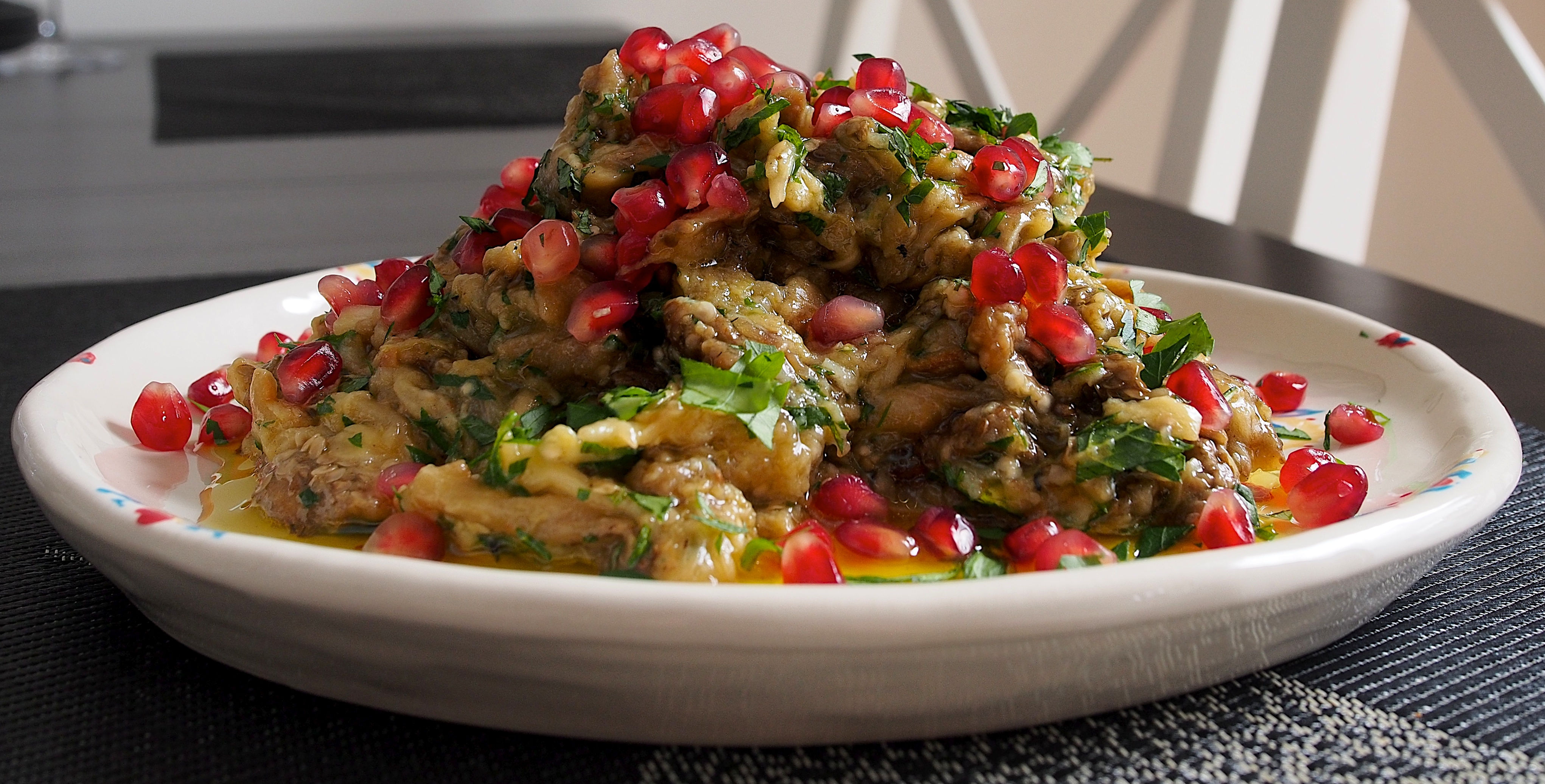
Burnt Aubergine salad

Not quite a Baba Ghanoush, but you can drizzle on some tahini paste to make it one. This was really delicious and we loved the freshness from the lemons and the burst of fruity pomegranate. You need to start this many hours in advance but the process is very straightforward and the result is worth it.

Burnt aubergine with garlic, lemon & pomegranate seeds – serves 4 as a meze plate

  • 4 large aubergines (about 1.5kg before cooking)
  • 2 garlic cloves, crushed
  • grated zest of 1 lemon and 2 tbsp lemon juice
  • 5 tbsp olive oil
  • 2 tbsp chopped flat-leaf parsley
  • 2 tbsp chopped mint
  • 80g of pomegranate seeds (about ½ a large pomegranate)

If using a gas hob, line the base with foil and keep only the burners exposed. Put the aubergines on 4 separate moderate flames and roast for about 15-18 minutes or until the skin is burnt and flaky and the flesh is soft. Use metal tongs to turn them now and then.

Alternatively, score the aubergines with a knife in a few places, a couple of centimetres deep, and place on a baking tray under a hot grill for about an hour (we do ours on a gas barbecue). Turn them every 20 minutes or so and continue to cook even if they burst.

Allow the aubergines to cool slightly, then cut along each one and scoop out the flesh and divide it into long strips with your hands. Throw away the skin. Drain the flesh in a colander for at least an hour or longer if possible to get rid of as much water as possible.

Put the aubergine in a medium bowl and add the garlic, lemon zest and juice, olive oil, ½ a teaspoon of salt and a good grind of black pepper. Stir and allow the aubergine to marinate at room temperature for at least an hour.

When ready to serve, mix in most of the herbs and adjust the seasoning. Pile onto a serving plate, scatter on the pomegranate seeds and garnish with the rest of the herbs.

We served ours with some barbecued flatbreads.

(Original recipe from Yotam Ottolenghi and Sami Tamimi’s Jerusalem, Ebury Press, 2012.)

Read Full Post »

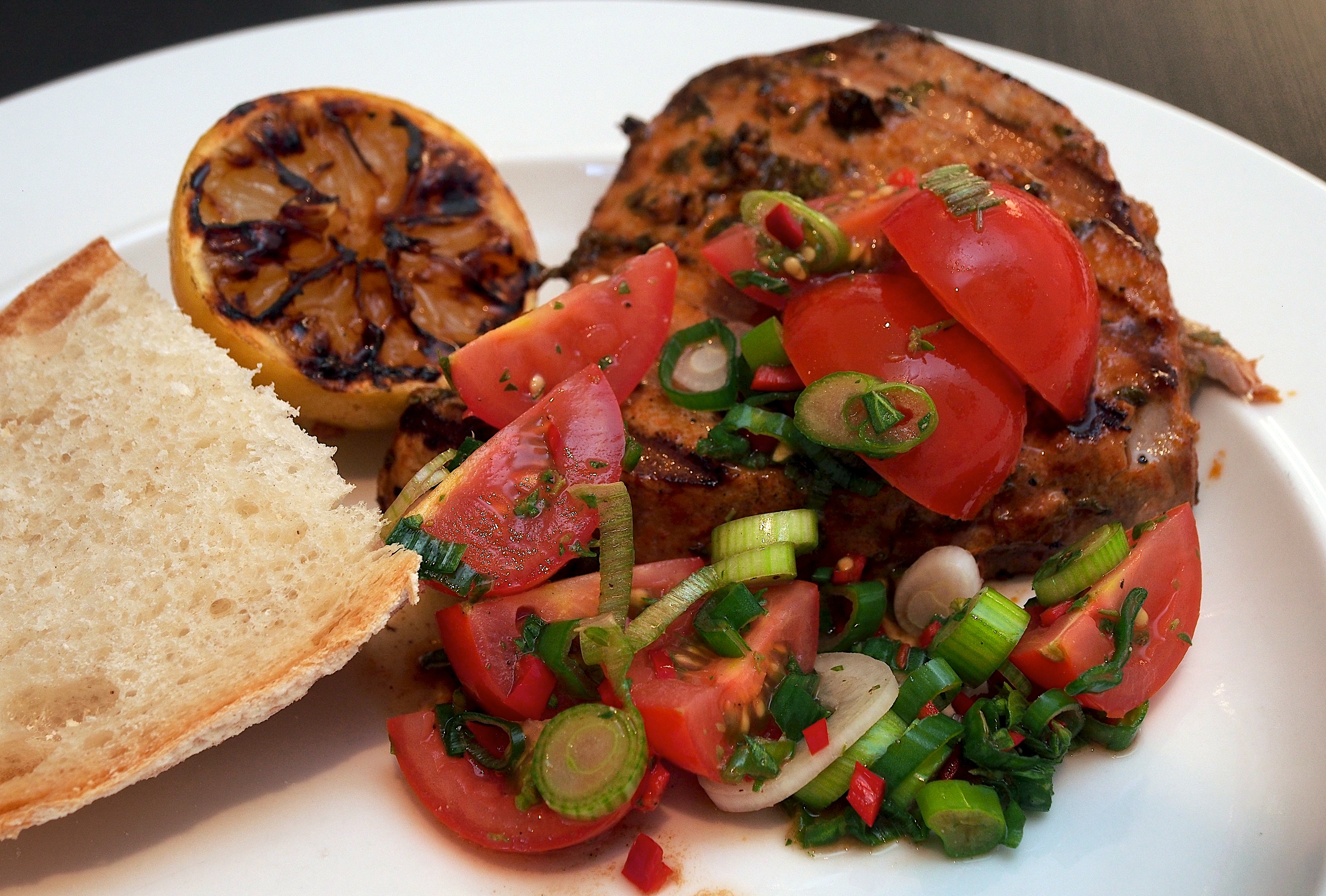
Marinated Tuna with Cherry tomato salsa

Tuna steaks are definitely at their best when seared on a hot barbecue. The marinade would also work well with other firm fish fillets such as swordfish or kingfish.

Wine suggestion: we think a light bodied red would be a treat here which goes against traditional pairings. The trick is to get a lighter body and lower tannins. We drank a Beaujolais-Villages from Domaine Rochette, a delightful wine which balances it’s lightness with an obvious care from the winemaker and good fruit from the vineyards; polished and elegant as well as joyfully youthful.

Paprika- and Oregano-Marinated Tuna with Cherry Tomato Salsa – serves 4

  • 4 x 150g fillets of fresh tuna
  • juice of 1 lemon
  • 3 tbsp olive oil, plus extra for cooking
  • 2 garlic cloves, crushed
  • 2 tbsp chopped fresh oregano
  • 1 tsp paprika
  • 1 tsp smoked spanish paprika
  • lemon wedges, to serve

For the Cherry Tomato Salsa: 

  • 250g cherry tomatoes, quartered
  • 4 scallions, thinly sliced
  • 1 tbsp chopped fresh oregano
  • 1 long red chilli, seeded and finely chopped
  • 1 tbsp sherry or red wine vinegar
  • sea salt and black pepper

Put the fish in a shallow non-metallic dish. Mix together the lemon juice, olive oil, garlic, oregano and paprika. Pour this over the fish, cover with cling-film and refrigerate for half an hour.

Preheat the barbecue to high and brush lightly with olive oil. Barbecue the fish for a couple of minutes on each side (longer if you prefer the fish well done).

Toss all of the ingredients for the cherry tomato salsa together and season well with sea salt and freshly ground black pepper.

Serve the fish with some salsa over the top and a lemon wedge.

Read Full Post »


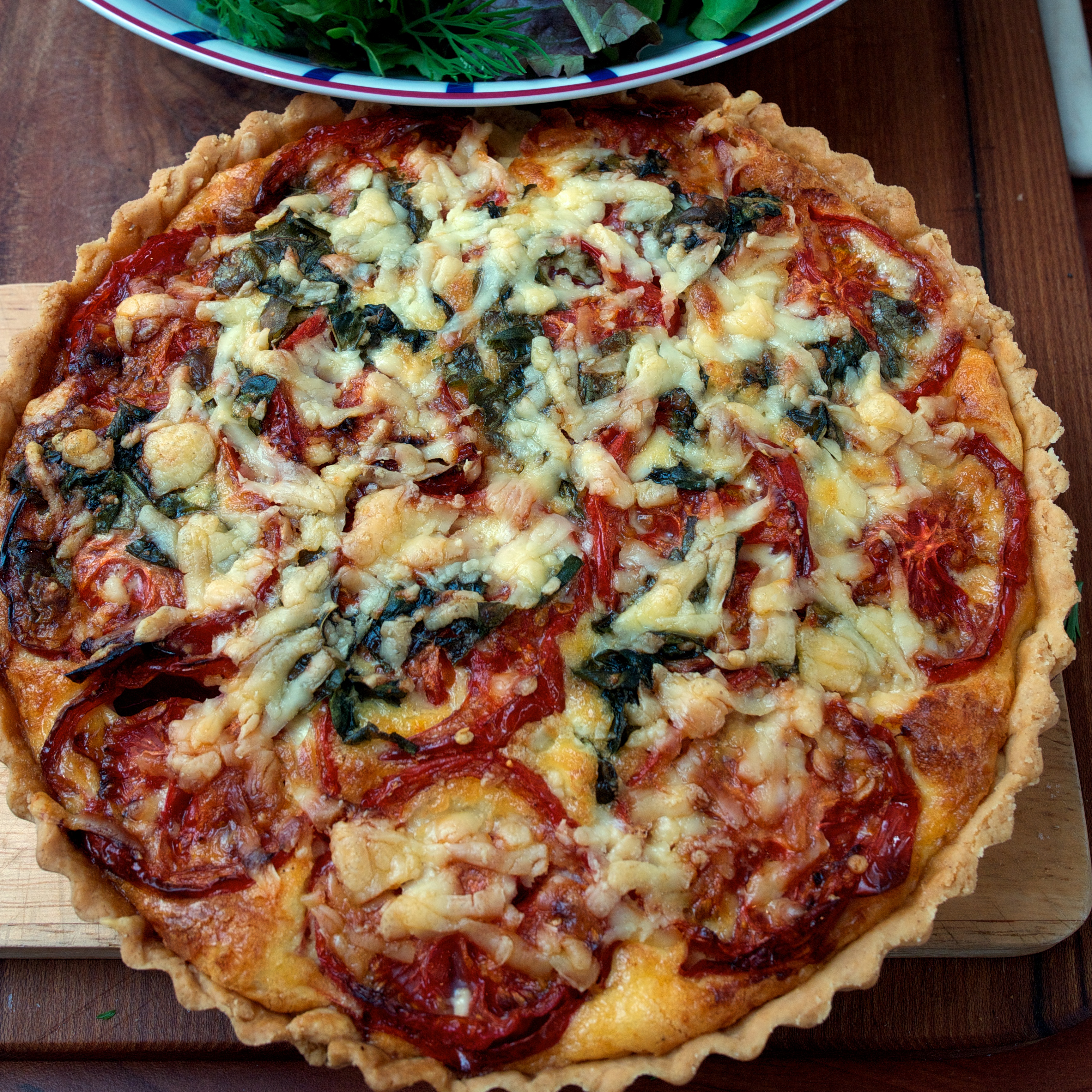
Tomato & cheese tart

One of those easy dishes that just bursts with fresh flavours and vitality. It really sings at the end of  summer with fully ripe and juicy tomatoes just picked and wonderful. Delicious served warm or at room temperature.

Wine Suggestion: We’d serve a classic chianti where the acidity of the Sangiovese grape works really well with the tomatoes but isn’t too heavy a red for the dish (don’t bother with the Riserva).

Cheese, Tomato & Basil Tart – serves 4-6

  • 1 shortcrust pastry case, cooked ‘blind’

FOR THE FILLING: 

  • 10 ripe tomatoes, halved widthways
  • 2 tbsp olive oil
  • ½ tsp sugar
  • 25g butter
  • 1 onion, peeled and finely chopped
  • 2 eggs
  • 200ml double or regular cream
  • 2 tbsp torn or sliced basil
  • 150g Cheddar cheese, grated

Preheat the oven to 180°C (350°F), Gas mark 4.

Put the tomatoes on a baking tray, drizzle with the olive oil and sprinkle with the sugar and ½ tsp salt. Bake for about 45 minutes or until completely soft and browning at the edges. Allow to cool.

Meanwhile, heat a frying pan over a medium heat and add the butter. When the butter is foaming, add the onion and cook for about 10 minutes or until golden. Take off the heat and set aside to cool.

Whisk the eggs and cream together in a bowl, stir in the basil, and season with salt and pepper.

Spread out the fried onion in a layer in the tart case. Top with two-thirds of the cheese, then arrange the cooked tomatoes on top. Pour in the egg mixture and top with the remaining cheese. Bake for 30-40 minutes or until golden brown on top and just set in the centre.

(Original recipe from Rachel’s Everyday Kitchen by Rachel Allen, Harper Collins, 2013.)

Read Full Post »

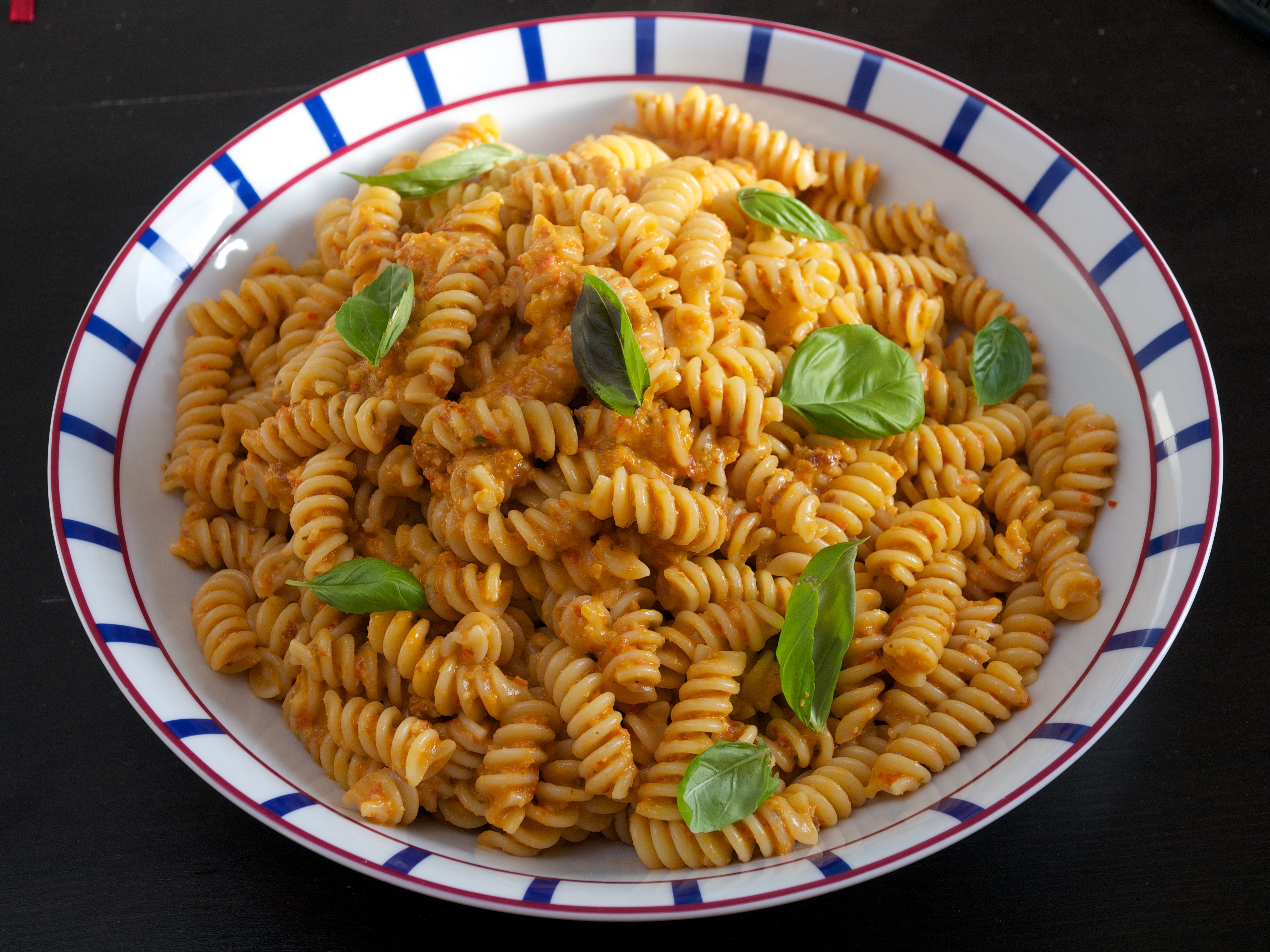
Sicilian fusilli with tomato, garlic & almond

We love the combination of anchovies and almonds in this pasta sauce – a Sicilian-style pesto. It also reinforces our desire to go to Sicily.

Wine Suggestion: A fresh and dry Italian white is a must for this dish with numerous choices working well. If you can find one match it with a white from the slopes of Mt Etna which will be minerally and savoury, or if not a dry Vermentino from the Tuscan coast. We drink a glass of the Morisfarms Vermentino which was both minerally and nutty with fresh citrus flavours. Morisfarms add 10% Viognier to this wine which gives it an added exotic lift and roundness to the wine. With the complex savoury notes of the dish the savoury and nutty wine worked a treat.

Sicilian pasta with tomatoes, garlic & almonds – serves 6

  • 500g fusilli lunghi (long spiral pasta) or other pasta – we used regular fusilli
  • 250g cherry tomatoes
  • 6 anchovy fillets
  • 25g golden sultanas
  • 2 cloves garlic, peeled
  • 2 x 15ml tbsp capers, drained
  • 50g blanched almonds
  • 60ml extra-virgin olive oil
  • leaves from a small bunch of basil (about 20g) to serve

Cook the pasta in plenty of boiling salted water according to the pack instructions.

Make the sauce as the pasta cooks by putting all the ingredients, except the basil, into a processor and blitzing until you have a textured sauce.

Drain the pasta, reserving a mugful of the cooking water and add 2 tbsp of the water to the processor as you pulse the sauce.

Tip the drained pasta into a warmed serving bowl. Pour over the sauce and toss to coat – add a bit more pasta cooking water if needed and scatter with basil leaves.

(Original recipe from Nigellissima by Nigella Lawson, Chattos & Windus, 2012.)

Read Full Post »


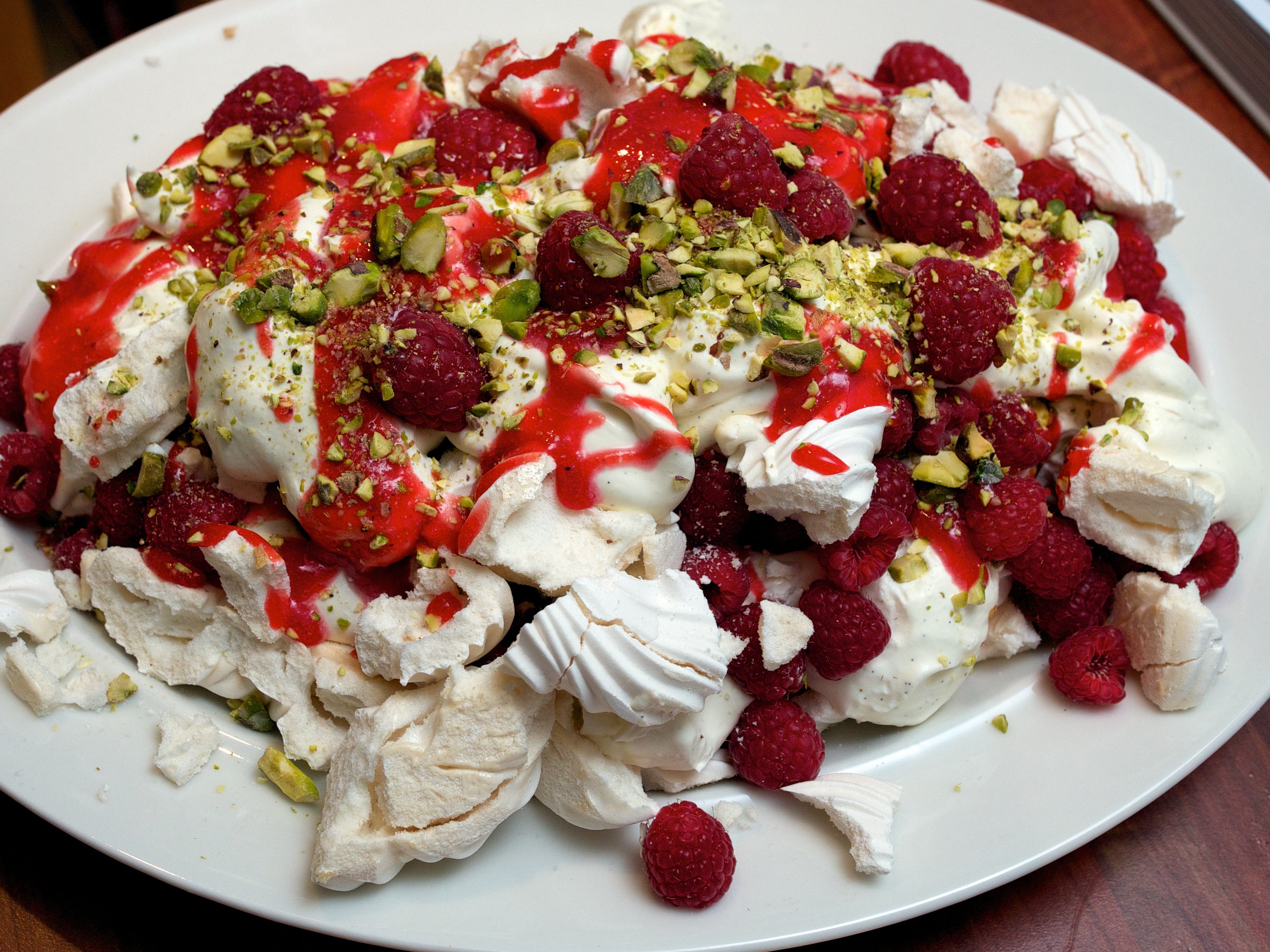
Eastern Mess

Still an Eton Mess really but the rosewater, pistachio, raspberry and basil combination is delicious!

Eastern Mess – serves 6

  • 600ml double cream
  • 3 tbsp icing sugar
  • the seeds scraped from 1 vanilla pod
  • 2 tbsp rosewater
  • 6 ready-made meringue nests, broken into large pieces
  • 450g raspberries
  • handful of basil leaves, torn
  • 75g pistachio nuts, chopped

For the raspberry sauce: 

  • 225g raspberries
  • 1 tbsp icing sugar (or more if your raspberries are very tart)
  • 1 tbsp rosewater
  • squeeze of lemon juice

Whip the double cream, icing sugar, vanilla seeds and rosewater together in a mixing bowl until you have soft peaks (about 3 minutes but watch it carefully).

To make the sauce, mash the raspberries to a purée with the icing sugar, rose water and lemon juice in a bowl until the mixture is totally smooth. Pass through a sieve to remove the seeds.

Layer the cream, meringues and raspberries on a large serving plate, drizzling the sauce and scattering over the basil and pistachios as you go. Decorate the top with a drizzle of sauce, and a final scatter of basil and pistachios. Serve immediately.

(Original recipe from Persiana by Sabrina Ghayour, Mitchell Beazley, 2014.)

Read Full Post »

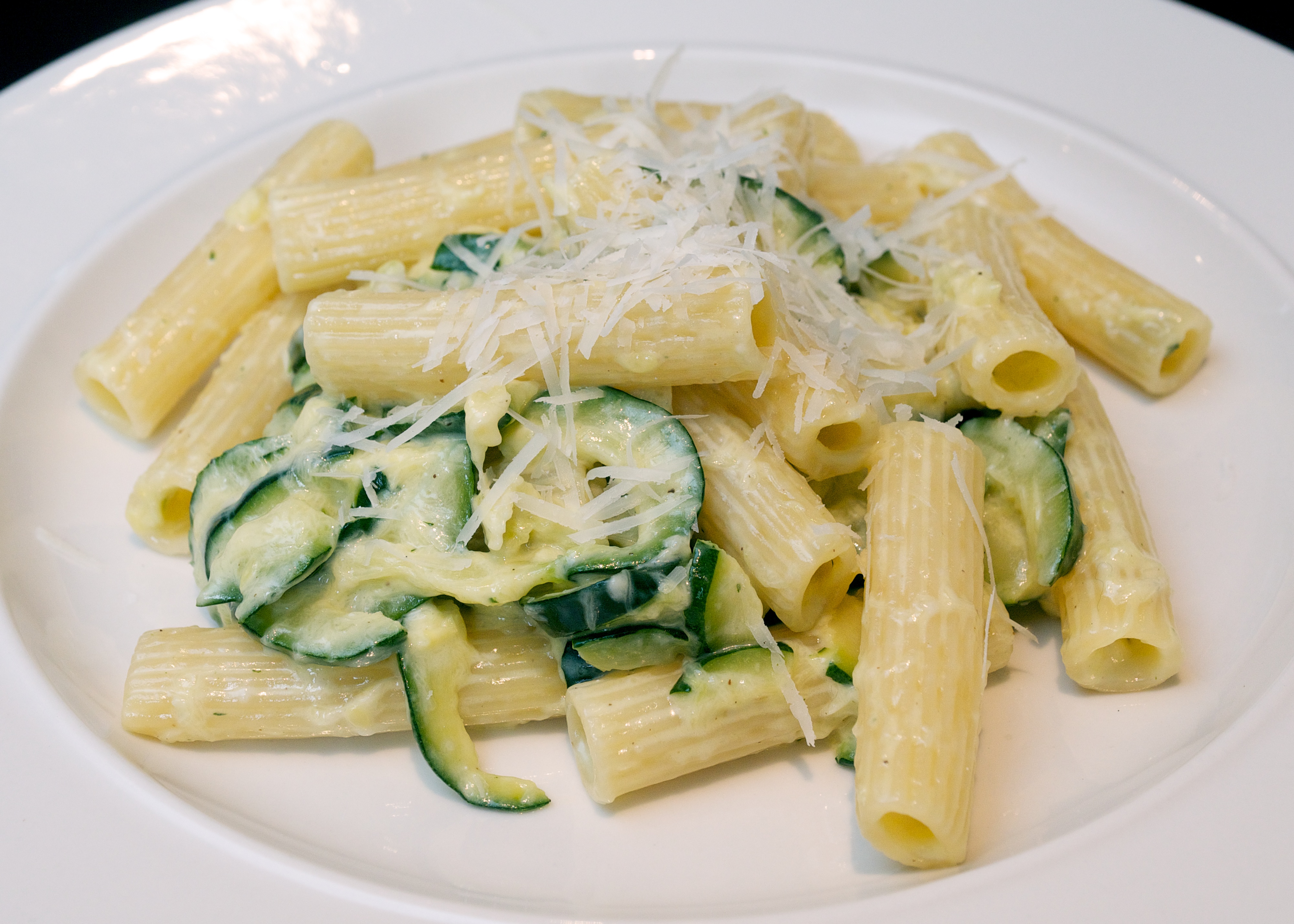
Courgette Pasta

This dish is so simple, and yet completely satisfying and delicious. It features regularly on our table during the summer months and has also become our daughter, Orlaith’s, favourite dish alongside Moussaka.

Wine Suggestion: A lovely and fresh wine but with depth and reasonable body works well with tis; something like a very good Verdicchio – try Sartarelli’s Talivio or Umani Ronchi’s Casal di Sera. If you feel like a red try a Cabernet Franc from the Loire, like the thoughtful and expressive Chinon’s by Charles Joguet.

Courgette Sauce for Pasta – serves 4

  • 1kg courgettes, thinly sliced
  • 3 tbsp olive oil
  • 3 garlic cloves, crushed
  • 2 tbsp of cream
  • 50g freshly grated Parmesan, plus extra to serve
  • pasta of your choice (long or short works), 75-100g per person

Heat the oil in a large saucepan, add the garlic and courgettes, and a pinch of salt.Cook gently to soften without browning. Continue to cook until the courgettes are completely soft and almost all of their water has evaporated (20-30 minutes). Then bash the courgette mixture to a rough purée with a wooden spoon or masher.

Stir in the cream and Parmesan and allow to bubble for a minute or so until the cream has reduced a bit.

Meanwhile, cook the pasta in salted water until al dente.

Serve with extra Parmesan.

(Original recipe from The River Cottage Cookbook by Hugh Fearnley-Whittingstall, Collins, 2001.)

Read Full Post »

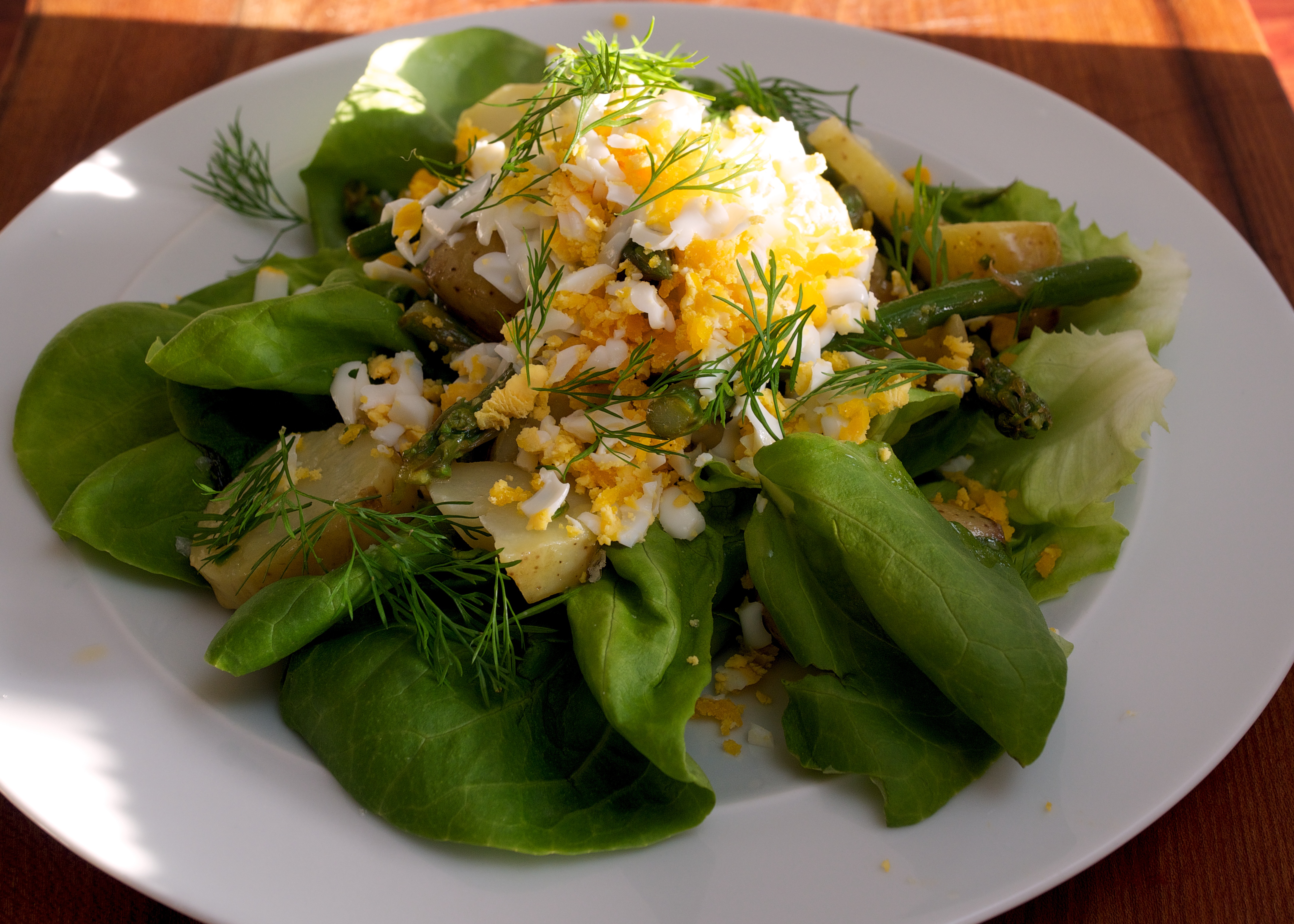
Warm asparagus & new potato salad

We made this back in June when local asparagus was available, but have been very lax getting posts up on the blog (must do better!). We really enjoyed the combination here and  the addition of our own, home-grown mint, dill and chives really made the dish sing.

Warm Asparagus & New Potato Salad – serves 4

  • 350g small Jersey potatoes, scrubbed or peeled if you prefer
  • salt
  • 2 large mint sprigs
  • 25g unsalted butter
  • 250g asparagus tips
  • hearts of 2 round lettuces, leaves separated, washed and dried
  • Maldon salt
  • 2 hard-boiled eggs, shelled
  • handful of chervil sprigs – we used dill

FOR THE BUTTER SAUCE: 

  • juice of 1 lemon
  • pinch of caster sugar
  • 75g cold unsalted butter, cut into small chunks
  • freshly ground white pepper
  • 1 tbsp snipped chives

Simmer the potatoes in lightly salted water, with the mint, until tender. Drain over a bowl and reserve the cooking water. Return the potatoes to the pan with the butter, stir together and keep warm.

For the sauce, use a large shallow stainless steel or enamel saucepan and squeeze in the lemon juice. Add 6 tbsp of the potato cooking water and the sugar, then simmer until reduced by half. Slowly incorporate the butter, a chunk at a time, whisking over a very low heat until homogenous (you’re aiming for a light butter sauce). Season with white pepper and keep warm.

Peel the asparagus tips from just below the bud and slice in half lengthways. Add to a pan of boiling well-salted water and boil for about 1-2 minutes – you want them just tender but not raw, then drain.

Slice the warm potatoes and add them, along with the asparagus, to the butter sauce. Turn gently with the chives, until everything is nicely coated.

Arrange the lettuce on 4 plates and divide the asparagus and potatoes between them. Sprinkle with Maldon salt and grate over the egg. Generously scatter with the chervil or dill.

(Original recipe from The Vegetarian Option by Simon Hopkinson, Quadrille, 2009.)

Read Full Post »

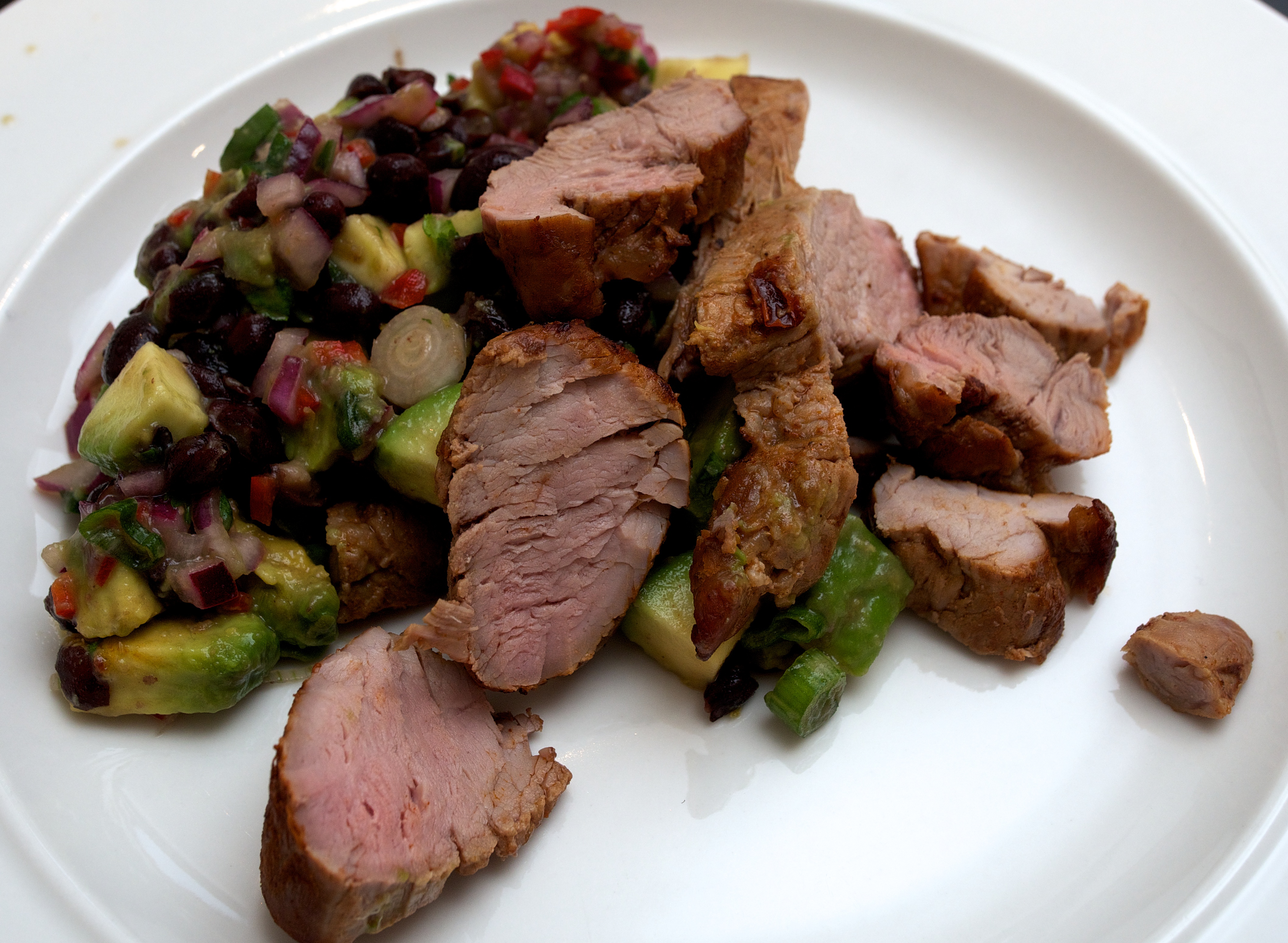
Chipotle roast pork with black bean salsa

We often pick up a pork fillet at the butcher’s as they are cheap and versatile.  Make the salsa before you start cooking the pork so the flavours have time to develop.

Chipotle Roasted Pork with Avocado & Black Bean Salsa – serves 4

  • 2 pork tenderloins/fillets, about 250-350g each
  • 1 tsp coarse sea salt
  • 1 tsp chipotle paste
  • ½ tsp olive oil

FOR THE SALSA: 

  • ½ small red onion
  • 2 limes
  • 1 red chilli
  • few coriander sprigs
  • 1-2 tbsp olive oil
  • 1 ripe but firm avocado
  • ½ x 400g tin black beans, drained and rinsed
  • 1 spring onion

Prepare the pork by removing the sinew from the surface. Cut each fillet in half.

Mix the salt, chipotle paste, olive oil and some freshly ground black pepper in a small bowl. Rub the marinade all over the pork pieces. Leave in the fridge to marinate for at least half an hour, or up to a few hours.

Heat the oven to 170ºC/gas mark 3.

Put a non-stick frying pan over a medium heat, brown the pork evenly all over. Transfer to a roasting tin and roast in the oven for 20-25 minutes or until cooked but still juicy. Test by inserting a skewer into the thickest part for 10 seconds, then rest it on your inner wrist; it should feel hot.

Remove from the oven and leave to rest for 5 minutes before carving on the diagonal into 7-8mm thick slices. Spoon the salsa onto a platter and top with the pork.

TO MAKE THE SALSA: 

Peel and finely dice the red onion and put into a bowl. Finely grate the zest from one of the limes and squeeze the juice from both. Add the lime zest and half the juice to the onion, saving the rest for seasoning at the end.

Cut the avocado into even dice and thinly slice the spring onion. Coarsely chop the coriander leaves.

Stir the avocado, black beans, spring onion, and coriander into the onion and lime mixture. Stir in the olive oil and season well with salt and more lime juice if needed. Leave to stand for 30 minute for the flavours to develop.

(Original recipe from Leith’s How to Cook, Quadrille Publishing, 2013.)

Read Full Post »

Saffron & cardamom poached pears

This is a touch of luxury, truly delicious, impressive, and yet very simple to do. Eat with a spoon of crème fraîche. The perfect ending to a Middle Eastern inspired meal.

Poached pears in white wine & cardamom – serves 4

  • 500ml dry white wine
  • 1½ tbsp lemon juice
  • 150g caster sugar
  • 15 cardamom pods, lightly crushed
  • ½ tsp saffron threads
  • pinch of salt
  • 4 firm pears, peeled
  • crème fraîche or thick double cream to serve

Pour the wine and lemon juice into a medium saucepan and add the sugar, cardamom, saffron and salt. Bring to a light simmer and place the pears in the liquid. Make sure the pears are immersed by adding a bit of water if necessary. Cover the surface with a disc of greaseproof paper and simmer until the pears are cooked through but not mushy, about 15-25 minutes. Turn the pears around every now and again as they cook. When a knife goes into the flesh smoothly, the pears are done.

Remove from the liquid and transfer into four dishes. Increase the heat and reduce the liquid by about two-thirds, or until thick and syrupy. Pour over the pears and leave to cool. Serve cold or at room temperature with the crème fraîche.

(Original recipe from Jerusalem by Yotam Ottololenghi and Sami Tamimi, Ebury Press, 2012.)

Read Full Post »

« Newer Posts - Older Posts »