Feeds:
Posts
Comments

Archive for the ‘Food’ Category

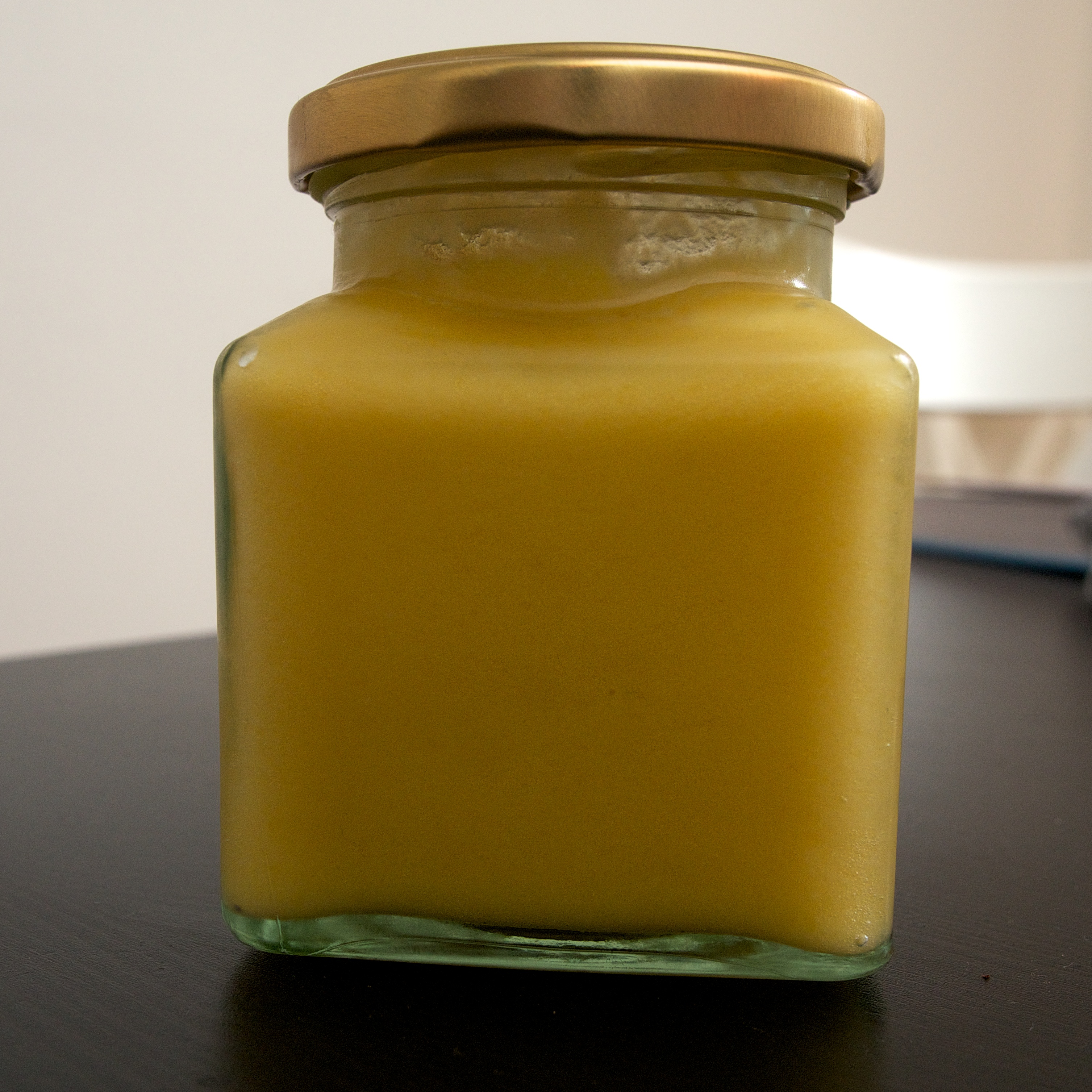
Lemon Curd

OLYMPUS DIGITAL CAMERA

When we make pavlova we are stuck with 4 egg yolks and always wonder what to do with them. There are a few recipes that we have at our fingertips, but this lemon curd is one of the best and easiest ways of using the yolks. It makes a nice sized jar and from experience, never lasts very long once made. Spread it on toast and scones or to sandwich together a sponge cake.

Lemon Curd 

  • 4 egg yolks
  • 167ml caster sugar (or 2/3 of an Australian cup measure)
  • 60g unsalted butter
  • 2 tsp grated lemon zest
  • 100ml lemon juice

Whisk the egg yolks and sugar until well combined but not too frothy.

Tip into a heavy-based and non-reactive saucepan, then add the butter, zest and juice.

Bring to simmering point over a medium-heat, stirring constantly (about 5 minutes).

As soon as you see bubbles, remove from the heat, still stirring.

Allow to cool. Transfer to sterilised jars and seal.

(Original recipe from The Cook’s Companion by Stephanie Alexander, Lantern, 2004.)


Read Full Post »

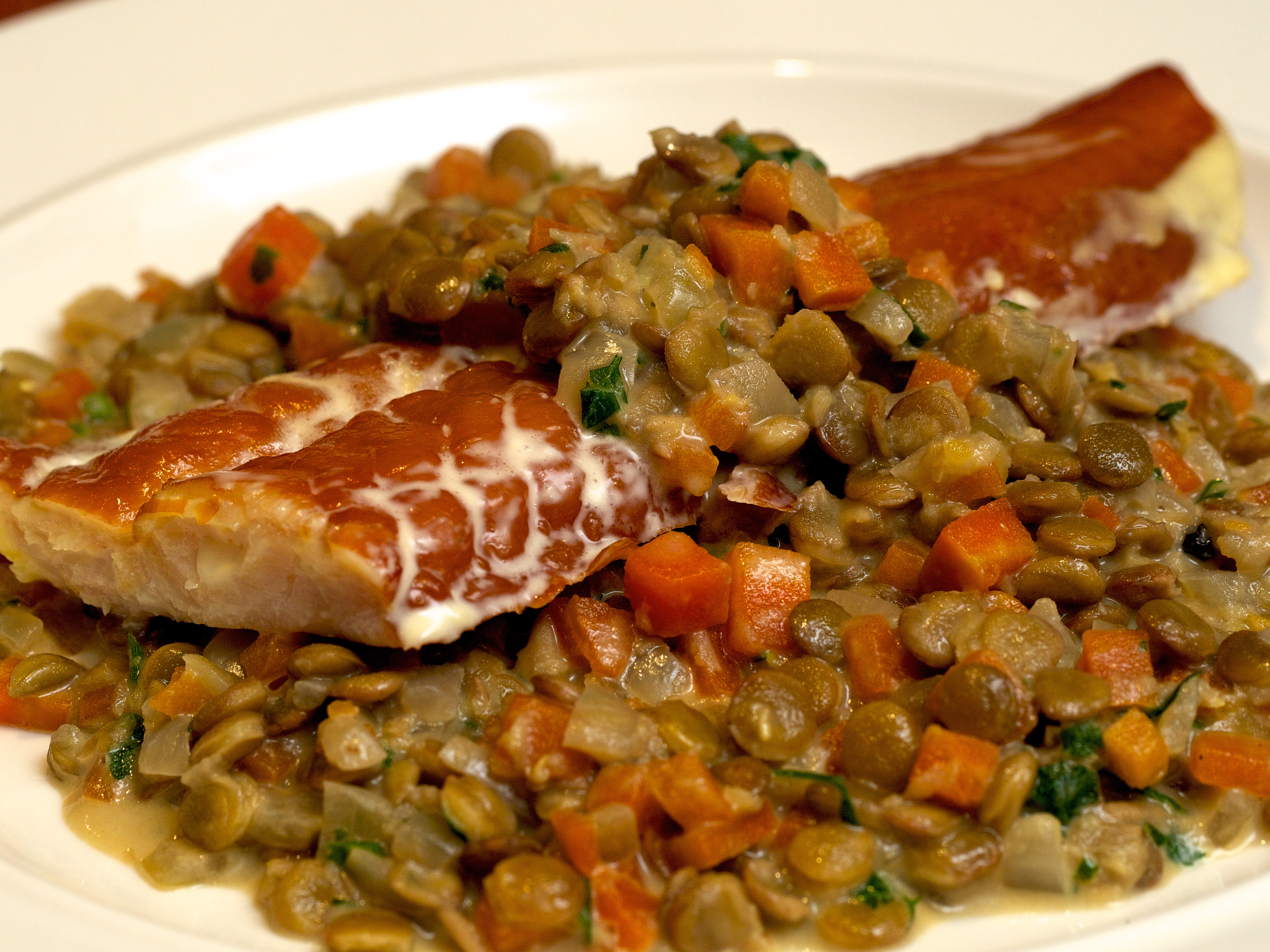
Smoked Haddock witha creamy green lentil stew

The pictures just don’t do justice with how delicious this dish tasted; highly recommended!

Wine Suggestion: Try complementing the smoky fish with an oaked white such as a New World Chardonnay.

Smoked haddock with lentils – serves 2

  • 250ml double cream
  • 350g piece of smoked haddock, skin removed
  • 6 black peppercorns
  • 3 bay leaves
  • 2 medium carrots, finely diced
  • 1 onion, finely diced
  • a thick slice of butter
  • 150g green lentils
  • 400ml vegetable stock
  • a large handful of chopped parsley

Put the cream in a shallow pan. Add the haddock, peppercorns and bay leaves. Bring to the boil, then turn off and cover with a lid.

Melt the butter in a saucepan over a moderate heat. Cook the carrot and onion in the butter for about 5 minutes, then add the lentils and vegetable stock. Bring to the boil, then turn the heat down and simmer for about 20 minutes or until the lentils are almost soft, then stir in the cream from the fish. Continue cooking until the liquid has reduced to just cover the lentils.

Add the parsley and season. Divide the lentils between two dishes and serve the haddock on top.

(Original recipe from Nigel Slater’s Eat: The little book of fast food, Fourth Estate, 2013.)


Read Full Post »

Easy Chunky Chilli

This recipe uses a couple of cheat ingredients (kidney beans in chilli sauce and chipotle paste) with great results – very little effort but tonnes of flavour!

Wine Suggestion: We’d go for something juicy, fruity and red. Perhaps a Spanish Garnacha or a lighter Zinfandel where the tannins aren’t too high and dry and won’t conflict with the heat in the chilli.

Easy Chunky Chilli – to serve 4

  • olive oil
  • 400g diced stewing beef
  • 1 onion, finely chopped
  • 2 garlic cloves, finely chopped
  • 1½ tsp ground cumin
  • 1-2 tbsp chipotle paste (depending on how spicy you like it)
  • 400g can kidney beans in chilli sauce
  • 400g can chopped tomatoes
  • 1 lime, zested and cut into wedges
  • handful of coriander leaves
  • rice, to serve

Heat a couple of tablespoons of oil in a large pan and cook the beef pieces until browned all over. Remove with a slotted spoon and set aside.

Add the onion to the pan and cook until softened. Add the garlic, cumin and chipotle paste and cook for one minute.

Sieve the kidney beans but reserve the sauce. Add this sauce, along with the tomatoes and a can full of water, to the pan. Stir well and return the meat to the pan. Bring to a simmer, then cook covered for about 2 hours or until the beef is tender (you can also bake in the oven for 3 hours at 160C/140C fan/gas 3).

Add the kidney beans and lime zest, season and warm through. Serve with the coriander leaves, lime wedges and rice.

(Original recipe from BBC Good Food)

Read Full Post »

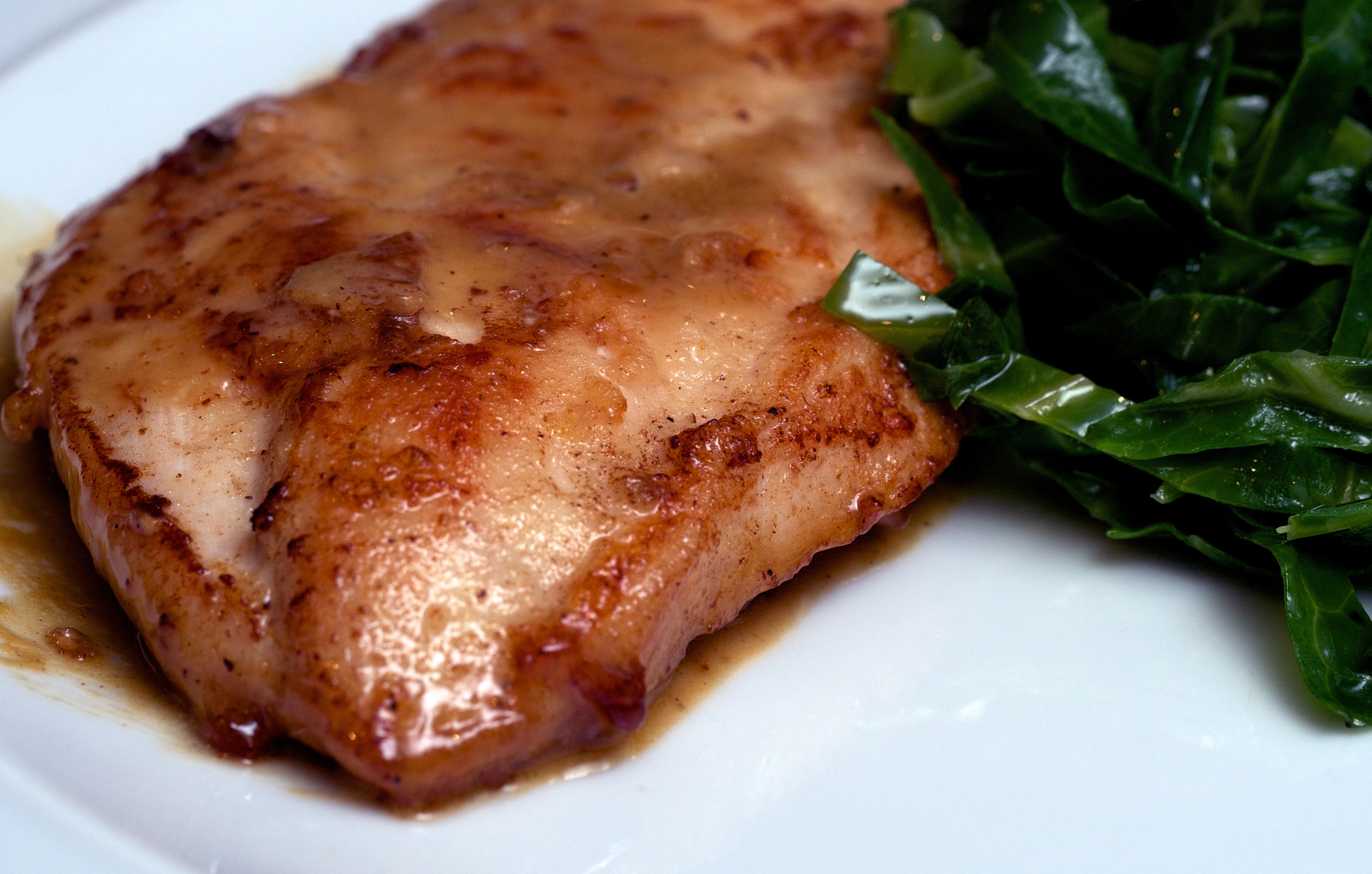
Creamy Madeira Chicken

The inspiration for this dish comes from Nigel Slater who has written a book full of ideas with very few ingredients and lots of flavour.

Wine suggestion: Madeira is a fortified Portuguese which tends to have good levels of acidity and is noted for lasting forever, even when open. This is a wine which is also nice to drink and would pair well with this dish, otherwise we would try a southern white Burgundy for a round, richer touch, or a very good New World Chardonnay where the ripeness and balance is is in great harmony.

Creamy Madeira Chicken – to serve 2

  • 2 chicken breasts
  • a little seasoned flour
  • a thick slice of butter
  • a glass of Madeira
  • 4 tbsp double cream

Place the chicken breasts between two sheets of cling film and bash with a rolling pin, or similar weapon, to flatten.

Dust the chicken with the seasoned flour.

Melt the butter in a shallow pan, add the chicken and cook briefly on both sides until golden. Remove the chicken from the pan and set aside.

Add the Madeira to the pan and let it bubble while you scrape any chicken residue from the bottom of the pan. When the liquid has reduced by half, stir in the double cream, then season and simmer briefly.

(Original recipe from Eat: the little book of fast food by Nigel Slater, Fourth Estate, 2013.)

Read Full Post »

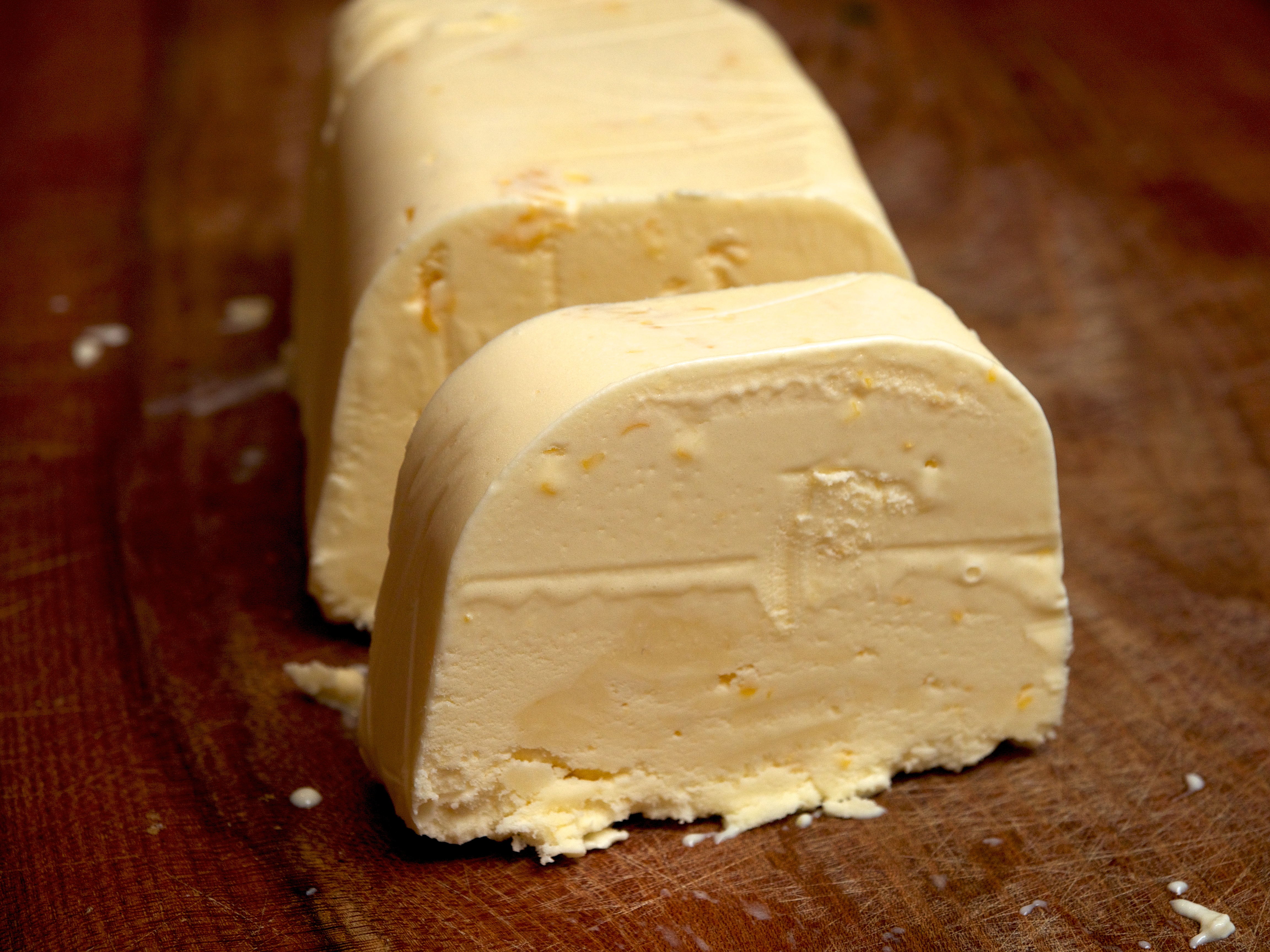
Lemon Curd Ice cream

Delicious, smooth and creamy ice cream.

Lemon curd yoghurt ice cream – to serve 4

For the lemon curd: 

  • 2 small lemons
  • 120g caster sugar
  • 50g unsalted butter
  • 2 eggs

For the ice cream

  • 400g Greek yoghurt

Finely grate the zest of the lemons and squeeze the juice. Put the juice in a saucepan with the sugar and butter. Beat the eggs to break them up and add them to the pan.

Stir the mixture over a low to medium heat until the sugar and butter have melted, then increase the heat. Bring just to the boil, stirring constantly, them take off the heat. Strain through a sieve into a bowl and stir in the lemon zest. Set aside to cool completely.

Once, cool, stir this lemon curd into the yoghurt and churn using an ice-cream machine. Transfer to a loaf tin lined with cling film, then cover and freeze. Slice with a hot knife as soon as you take it out of the freezer.

(Original recipe from Leiths How to Cook, Quadrille, 2013)

Read Full Post »

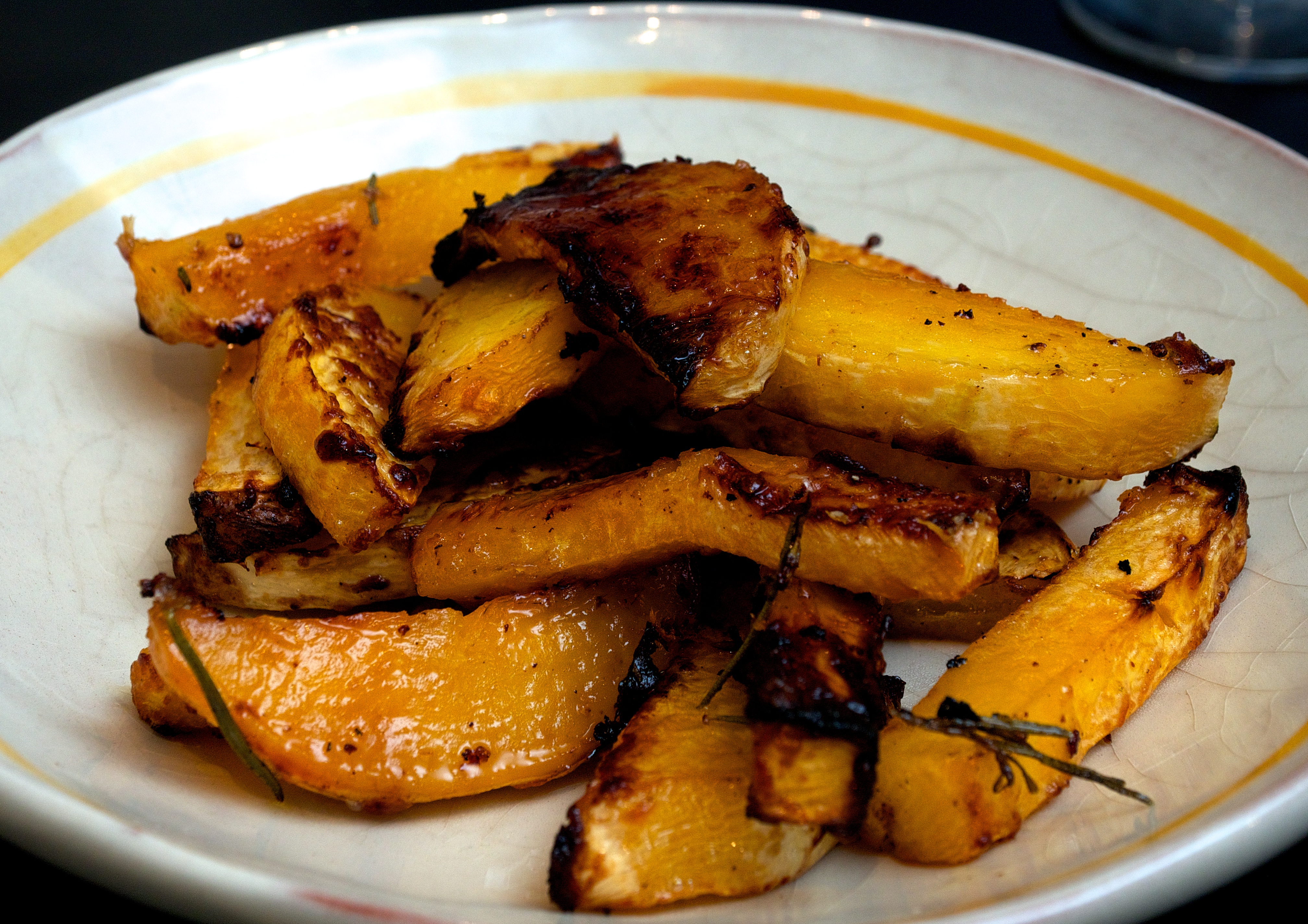
Parmesan Turnip / Swede

We insist on calling swede turnip in Ireland which can lead to confusion. To be clear we mean the large yellow-fleshed sort as opposed to the smaller, white-fleshed turnips.

We like both versions, but particularly the larger ones, and this is a great side dish which makes a change from mash.

Roasted turnip-swede with Parmesan – to serve 4

  • 1 large swede/turnip, peeled and cut into chips
  • 1 tbsp olive oil
  • 50g Parmesan, grated
  • 1 tbsp rosemary leaves
  • knob of butter
  • 2 garlic cloves, peeled

Heat oven to 220C/fan 200C/gas 7.

Put the turnip, olive oil, almost all of the Parmesan, and the rosemary leaves into a shallow roasting tin. Season, toss well, and arrange in a single layer.

Sprinkle over the remaining Parmesan, dot with butter and add the garlic cloves.

Roast for 35-40 minutes, turning halfway, until golden and cooked through.

(Original recipe from BBC Good Food)

Read Full Post »


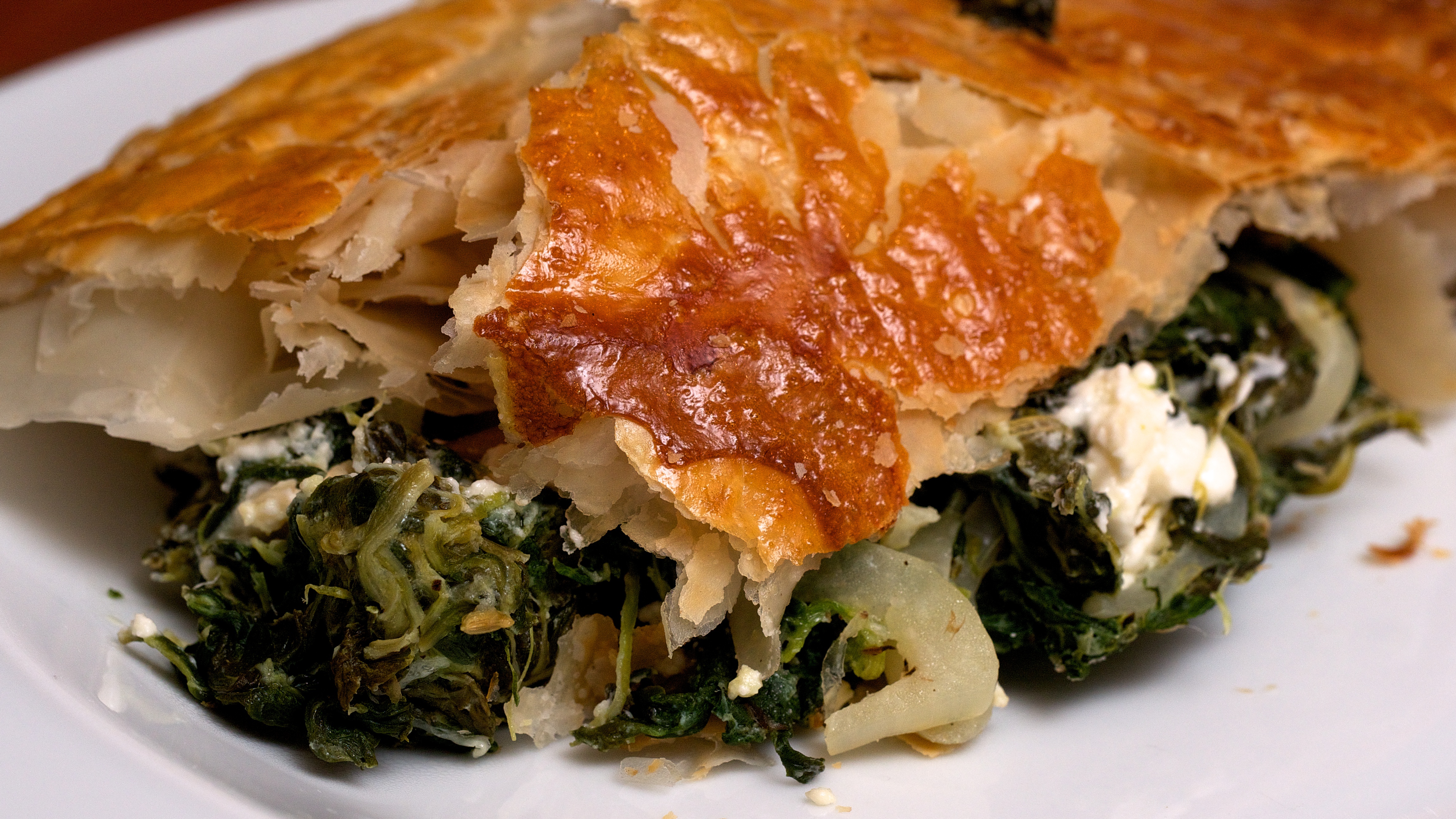
Easy Spanakopita

Inspired by Spanakopita, this is a simple recipe that’s easy to throw together when time is short and requires very little shopping.

Easy Spinach & Feta Pie (Cheat’s Spanakopita) – to serve 4

  • 1kg frozen whole-leaf spinach
  • 2 tbsp olive oil
  • 1 tsp cumin, fennel or caraway seeds (use what you have)
  • 1 large onion, finely sliced
  • ½ tsp dried thyme or a few sprigs of fresh thyme, leaves only, chopped
  • a squeeze of lemon juice
  • 2 large eggs, lightly beaten
  • 100g feta or soft goats cheese, broken into small chunks
  • 35g pine nuts, toasted or roughly chopped cashew nuts (we used a mix of both)
  • 375g all-butter, ready-rolled puff pastry

Heat the oven to 200°C /Gas Mark 6.

Put the frozen spinach into a saucepan with a splash of water. Cover and heat gently, stirring occasionally, until totally defrosted. Drain in a sieve, pressing with a wooden spoon.

Meanwhile, heat the olive oil in a frying pan over a medium heat. Add the spice seeds and cook for a couple of minutes, then add the onion and sauté until soft and golden. Add the thyme.

When the spinach has cooled a bit, squeeze as much liquid out of it as you can with your hands, then roughly chop. Mix with the onion, a squeeze of lemon juice and plenty of seasoning. Keep a few tablespoons of the egg for glazing and stir the rest into the spinach and onion mixture.

Spoon half the spinach mixture into an ovenproof dish (around 25 x 20 cm). Scatter over the cheese and pine nuts or cashews, and top with the remaining spinach. Brush a little beaten egg around the rim of the dish.

Lay the pastry over the dish and trim. Press the edge down on the rim of the dish so that it sticks. Brush with the rest of the beaten egg and bake for about 25 minutes or until the pastry is puffed up and golden brown.

(Original recipe from River Cottage Veg Everyday! by Hugh Fearnley-Whittingstall, Bloomsbury, 2011.)

Read Full Post »

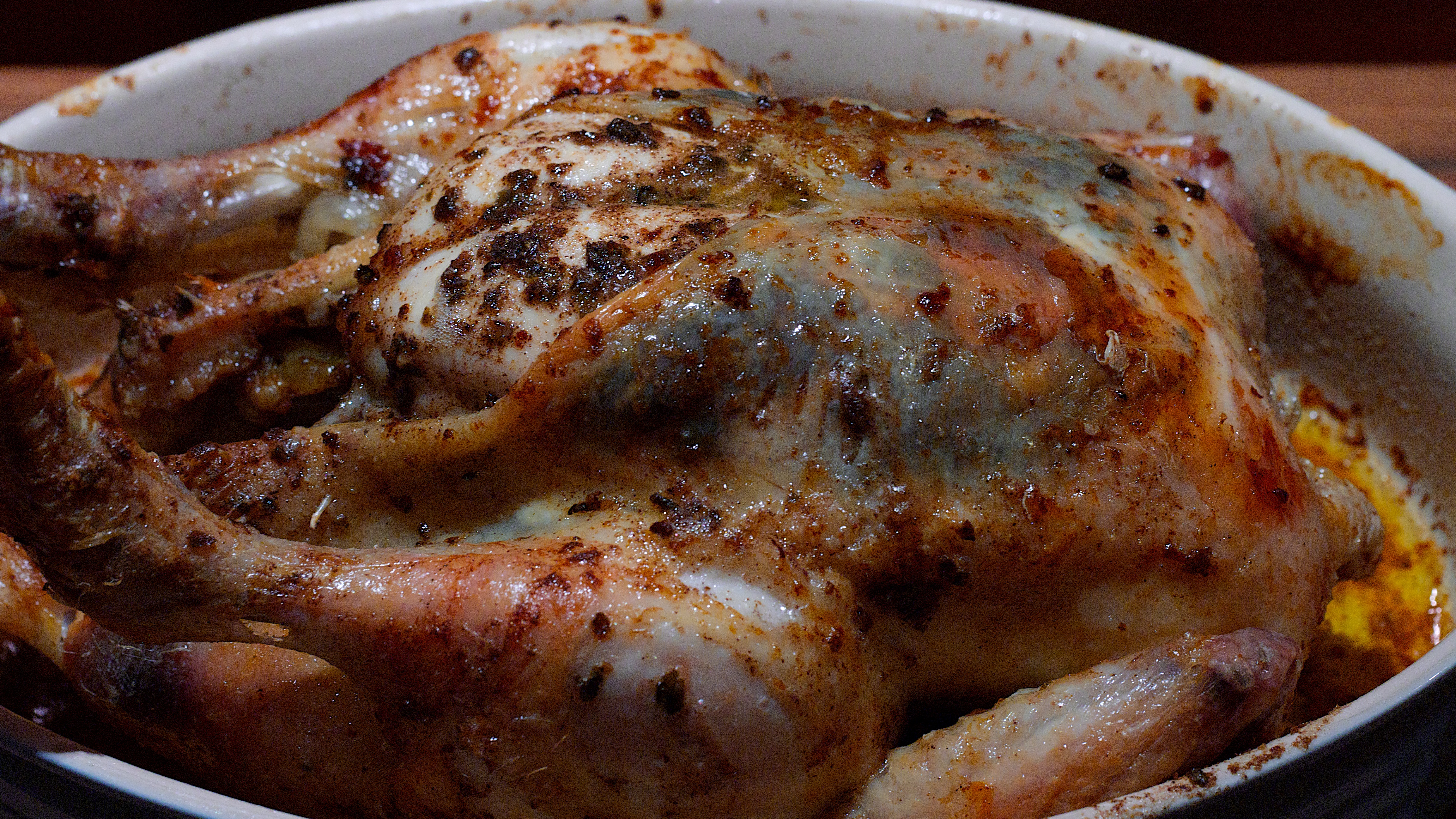
Roast Chicken with a green peppercorn and cinnamon butter

With Julie not being a massive fan of cinnamon, we were a bit hesitant about trying this recipe, but fear not –  the green pepper and cinnamon butter is fabulous and a great way to jazz up roast chicken. The spice and pepper adds depth and personality but does not dominate in the slightest, rather allowing the succulent chicken to shine. If you’re really not convinced by cinnamon you can replace it with ground coriander, cumin or ginger.

Wine Suggestion: We drank an highly unusual white, Foradori’s Manzoni Bianco, and were blown away by both the delicious taste of the wine and the good match with the chicken. The Manzoni grape is a rare and unusual hybrid of Riesling and Pinot Bianco grown in the North East of Italy. There has been an obvious attention to detail in the vineyards and winery with a very complex yellow fruit flavour with layers of spice, flowers, smoke and an exotic hint of incense. This may sound heavy and cloying but the wine is fresh as a daisy and refreshing.

Chicken Baked with Green Pepper & Cinnamon Butter – to serve 4

  • 1 chicken
  • a few bay leaves
  • 2 tsp green peppercorns
  • a small sliver of garlic
  • ½ tsp ground cinnamon
  • 45g soft butter
  • salt
  • lemon quarters and watercress, to serve

To make the butter:

Crush the green peppercorns with the garlic and cinnamon in a pestle and mortar. Thoroughly combine the spice paste with the butter, then add 1 tsp of salt.

Lift the skin of the chicken and rub with salt and then some spiced butter. Slash the drumsticks and thick part of the legs before spreading with the butter. Save a little bit of butter and put it inside the chicken. If you have time you can leave the chicken for a couple of hours before cooking.

Preheat the oven to 180°C/Gas 4.

Put the chicken and bay leaves into a shallow baking dish into which it fits neatly. Cook, uncovered, on the middle shelf, allowing 20 minutes on each side. Continue to cook breast upwards until the juices run clear and the skin is golden and crisp.

Serve with the lemon quarters, watercress and the buttery juices.

(Original recipe from At Elizabeth David’s Table: Her very best everyday recipes, Penguin, 2010.)

Read Full Post »

Ouefs en cocotte

A simple but indulgent weekend breakfast. Perfect for using up any leftover cream from the night before.

Ouefs en cocotte 

  • butter
  • one egg per person
  • one tbsp of cream per person

You need small oven-proof china dishes.

Pre-heat the oven to 190°C/Gas 5.

Get your eggs ready by breaking into separate mugs.

Put a lump of butter into each dish. Place in the oven and remove as soon as the butter has melted.

Slide an egg into each dish.

Pour a tablespoon of cream over each egg, avoiding the yolk, and return to the oven.

You need to watch these carefully but they are likely to take about 4-5 minutes. You want to remove them while you still have a runny yoke. If you practice these a few times you will get to know the perfect timings for your oven.

Serve with buttered toast soldiers.

(Original recipe from At Elizabeth David’s Table: Her very best everyday recipes, Penguin, 2010.)

Read Full Post »

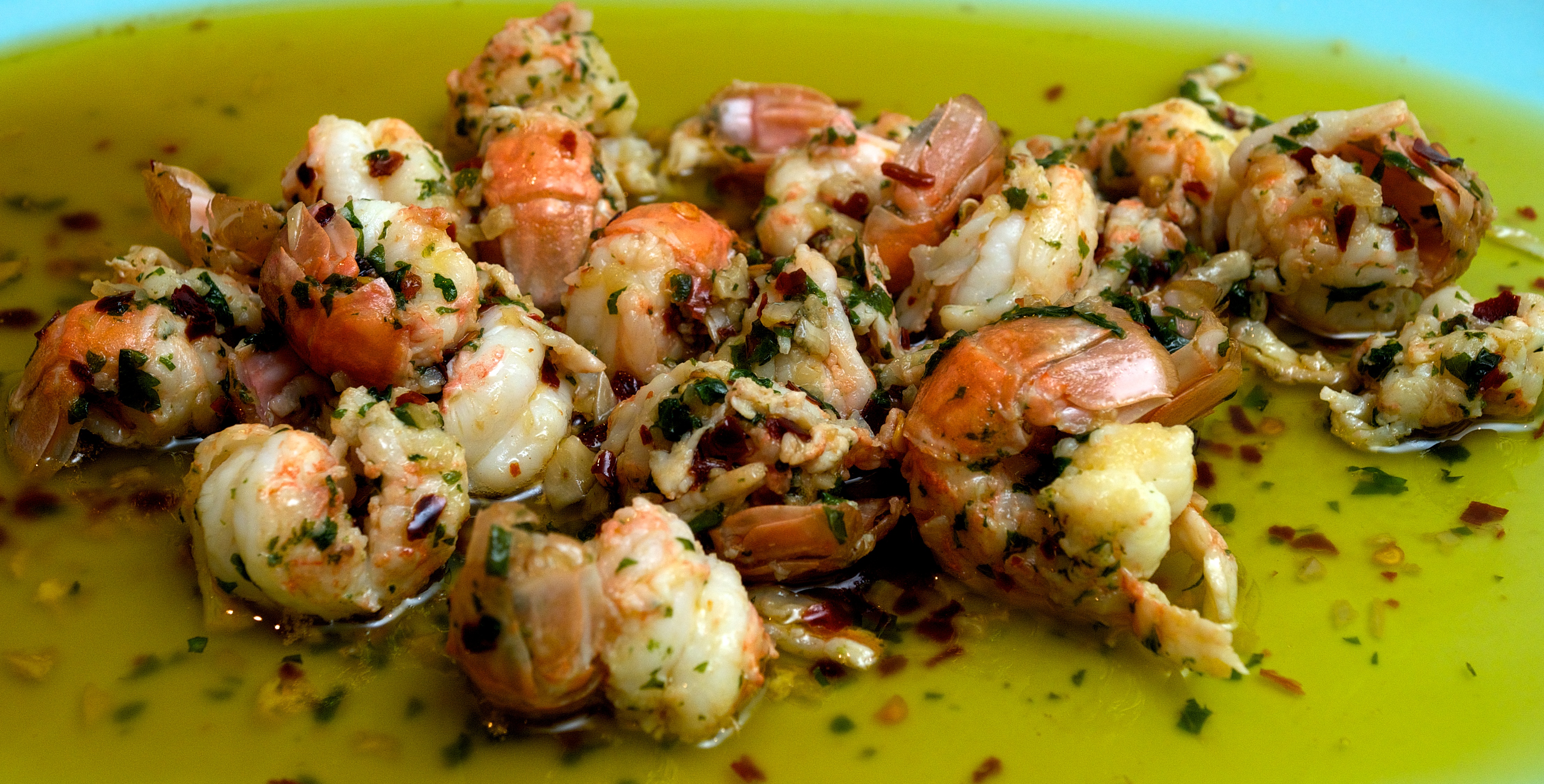
Gambas al ajillo

This is the same dish as Prawns Pil-Pil which you get in restaurants all over Spain. Ordinary food but absolutely delicious. Don’t forget some crusty bread to mop up the oil.

Wine Suggestion: This is great with a Manzanilla sherry, like the La Gitana by Hidalgo we had with it. The dry and savoury character of the wine makes every component sing and has a great ability to both entice hunger and also sate the palate.

Gambas al ajillo – to serve 4 as a starter 

  • 750g unpeeled prawns
  • 8 garlic cloves
  • 5g flat-leaf parsley leaves
  • 300ml olive oil
  • 2 tsp crushed dried chilli flakes

Peel the prawns but leave the last tail segment in place.

Sprinkle the garlic and parsley with ½ tsp of salt and chop together to form a course mixture.

Pour the oil into a large, deep frying pan over a low heat. When hot, at the chilli flakes and garlic and parsley mixture and cook gently for a few minute or until sizzling and smelling delicious.

Turn the heat up a touch before adding prawns and cooking for a few minutes or until just cooked through. Season with a bit more salt to taste.

(Original recipe from Rick Stein’s Spain, BBC Books, 2011.)

Read Full Post »

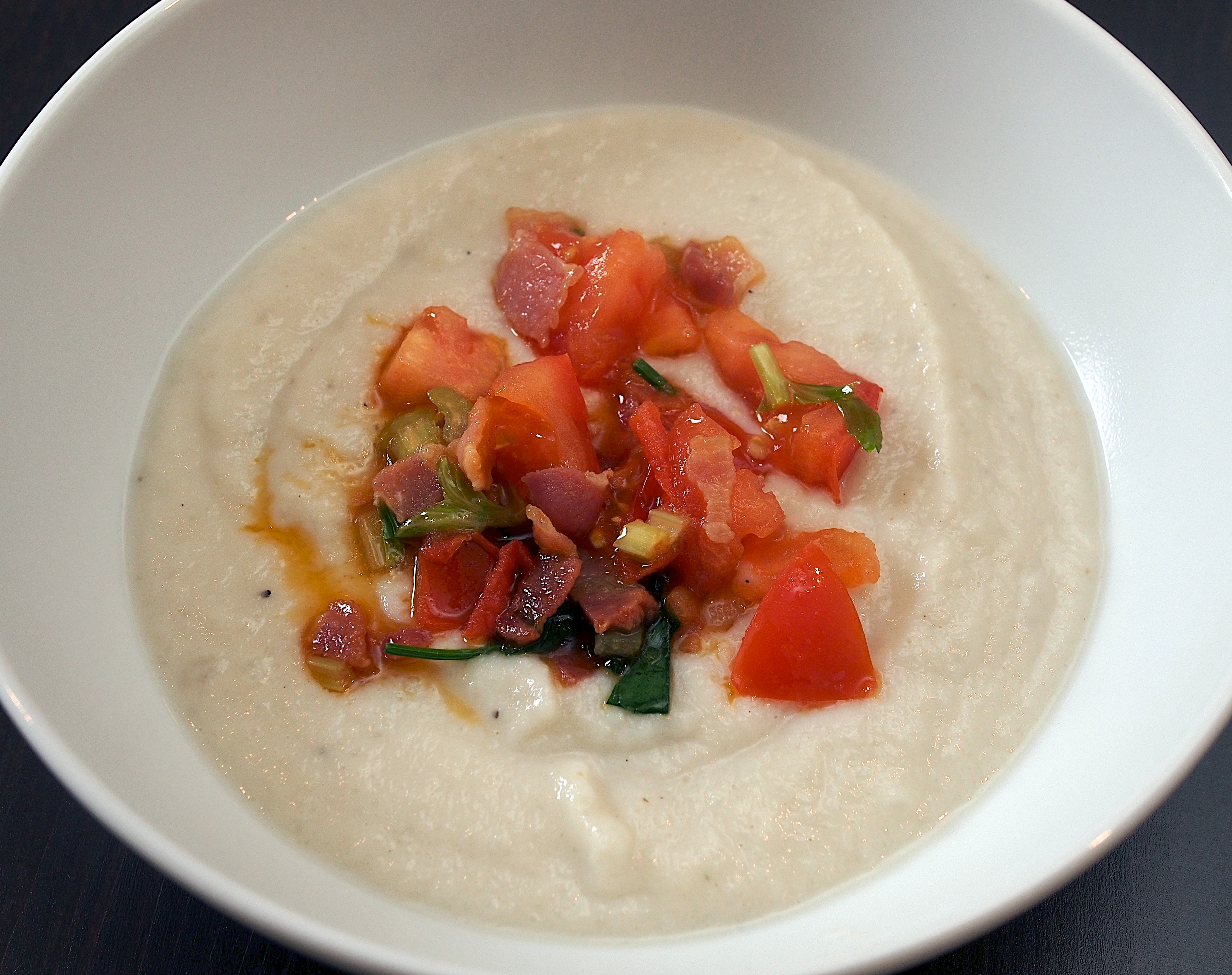
Jerusalem Artichoke soup

This is so refined in flavour and texture with the creamy and elegant soup working perfectly with the crunchy topping of celery, pancetta, garlic and fresh tomato. Highly recommended!

We’re a bit late with the recipe as Jerusalem artichoke season finishes in March but they’ll be back again at the end of the year and they’re probably still around somewhere in the world.

Jerusalem Artichoke Soup – to serve 4

  • 1kg Jerusalem artichokes
  • 1.8 litres of salted water
  • 300ml milk
  • 2 tbsp olive oil
  • 2 tomatoes, chopped
  • 1 clove of garlic, peeled
  • small piece of celery, chopped
  • a little parsley, chopped
  • 2 tbsp chopped ham or bacon or pancetta

Peel and chop the Jerusalem artichokes into even sized chunks. Simmer in the water until tender, then drain and purée with a stick blender.

Heat up the artichokes and gradually add the milk.

Heat the olive oil in a small frying pan and fry the tomatoes, garlic, celery, parsley and bacon for just a few minutes, then pour into the soup (along with the oil).

(Original recipe from At Elizabeth David’s Table: Her very best everyday recipes, Penguin, 2010.)

Read Full Post »

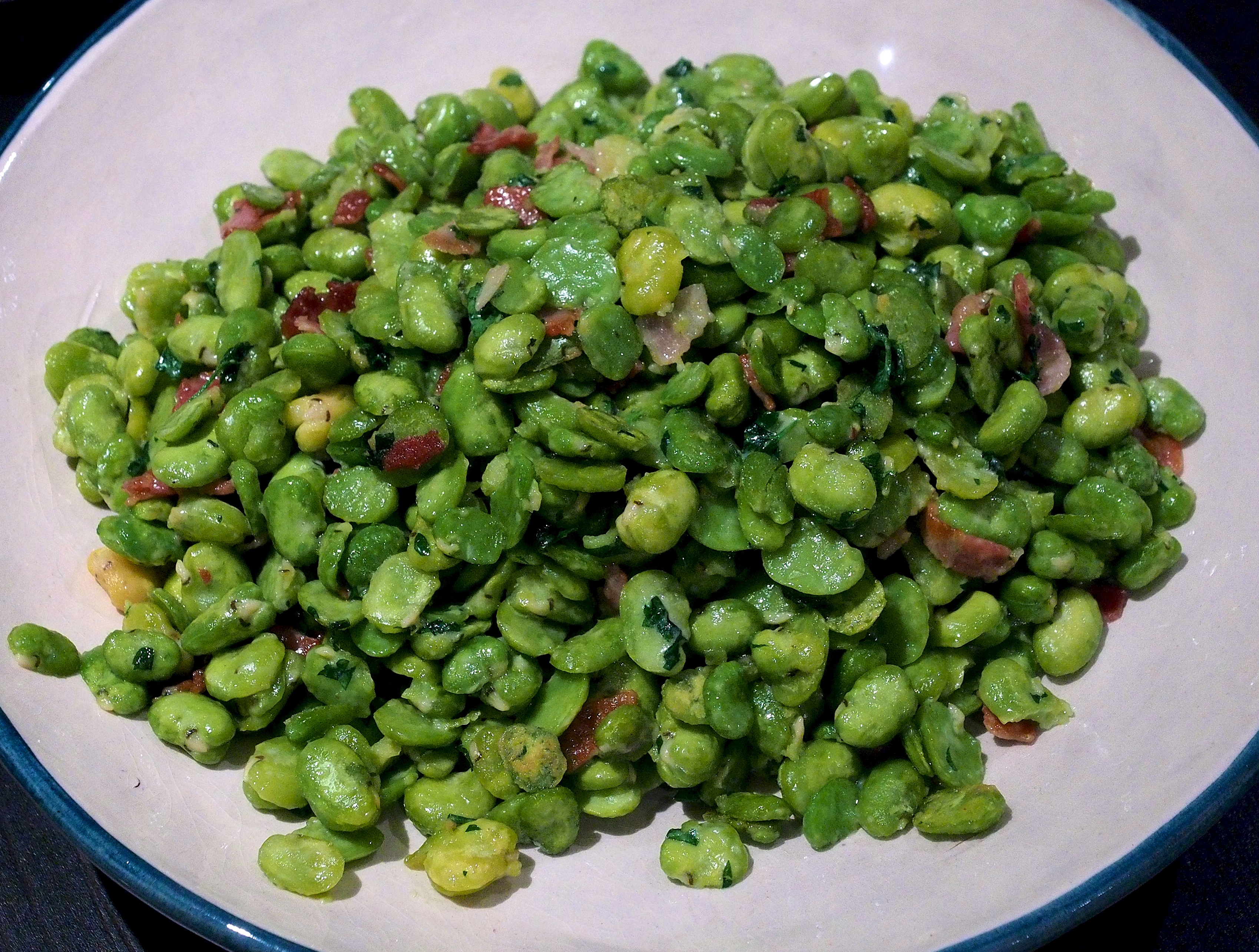
Broad Bean and Bacon

Spring has definitely sprung in Ireland but we’re not picking beans just yet. This recipe works just as well with the frozen variety.

Broad Beans with Bacon – serves 6

  • 60g diced bacon (or ham)
  • butter
  • 1kg cooked broad beans
  • 2-3 tbsp light béchamel sauce (make a batch and you can freeze the remainder)
  • cream
  • chopped parsley

Cook the bacon in a little butter.

Add the cooked beans, the béchamel sauce, cream and a little chopped parsley. Simmer together for 5 minutes.

(Original recipe from At Elizabeth David’s Table: Her very best everyday recipes, Penguin, 2010.)

Read Full Post »

Celeriac purée

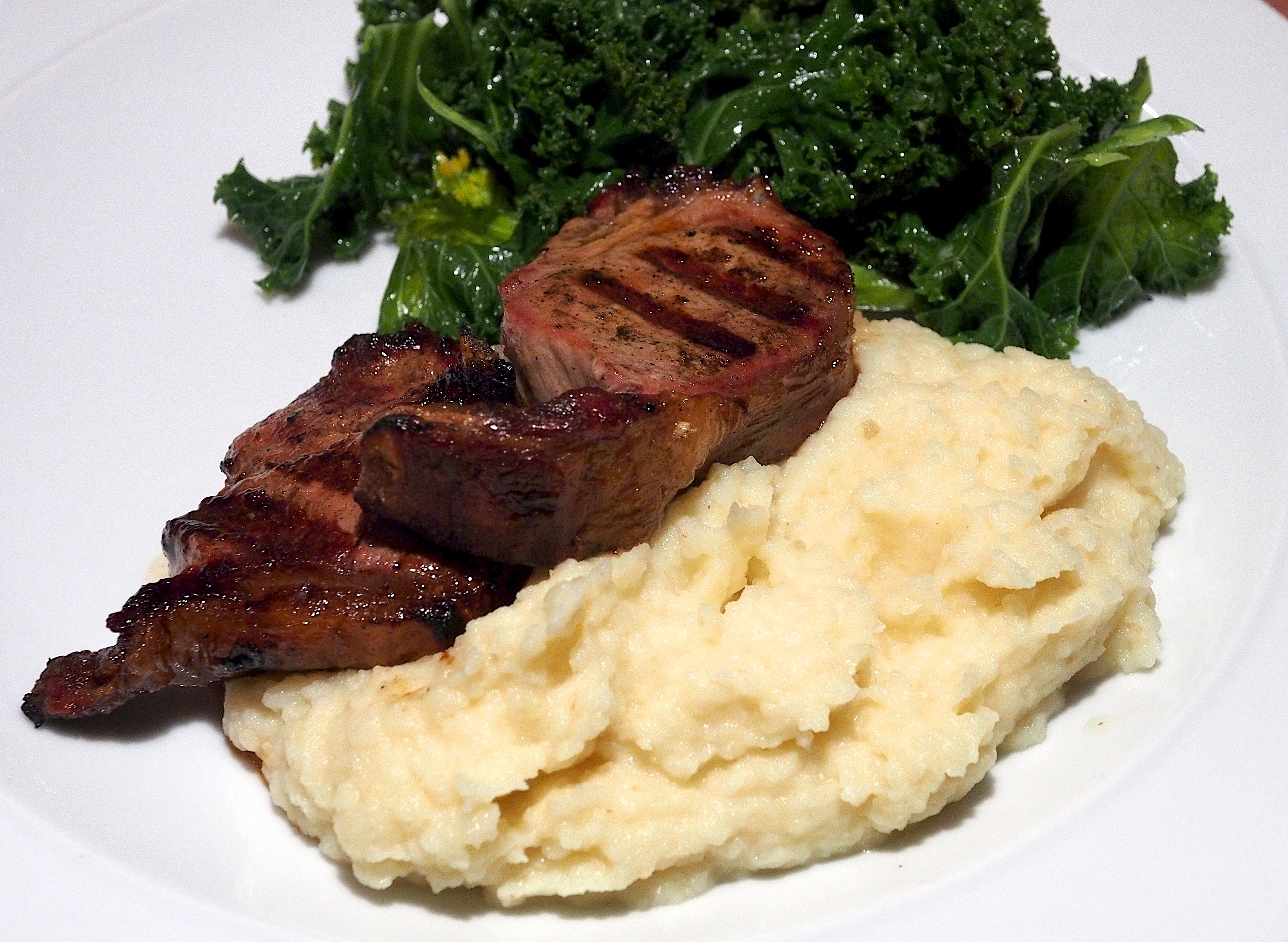
We’re still waiting on spring veg to arrive in Ireland but we’re comforting ourselves with the old root veggies. We love the earthiness that celeriac brings to lamb cutlets and kale or lighter dishes like seared scallops.

Wine Suggestion: You could try a New World Pinot from a cooler climate, like New Zealand, balancing not too much weight with a joyful fruit and freshness that works with the lamb and creamy celeriac.

Celeriac purée – to serve 4

  • 1 lemon
  • 350g celeriac
  • 150g floury potatoes
  • 50ml double cream or crème fraîche
  • 25-50ml milk
  • 15g butter
  • salt and freshly ground white pepper

Peel and cut the celeriac into 5 cm chunks. Submerge in cold water acidulated with some juice from the lemon.

Peel and cut the potatoes into chunks the same size as the celeriac and put into a small saucepan. Cover with salted water, bring to the boil, then simmer for about 15 minutes, or until tender.

Drain the celeriac chunks and put in a separate saucepan, cover with salted water, add a little lemon juice and bring to the boil. Reduce the heat and simmer until tender – it will take longer than the potato.

When the vegetables are soft, drain them well and allow to steam-dry in colanders for a few minutes. Mash the potato using a potato ricer or push it through a sieve. Mash the celeriac either with a potato ricer or by blending in a food processor. Combine both vegetables in a clean saucepan.

Put the pan over a gentle heat and stir in the cream and milk. Stir in the butter, season well with salt and pepper and serve.

(Original recipe from Leith’s How To Cook by Claire McDonald and Jenny Stringer, Quadrille, 2013.)


Read Full Post »

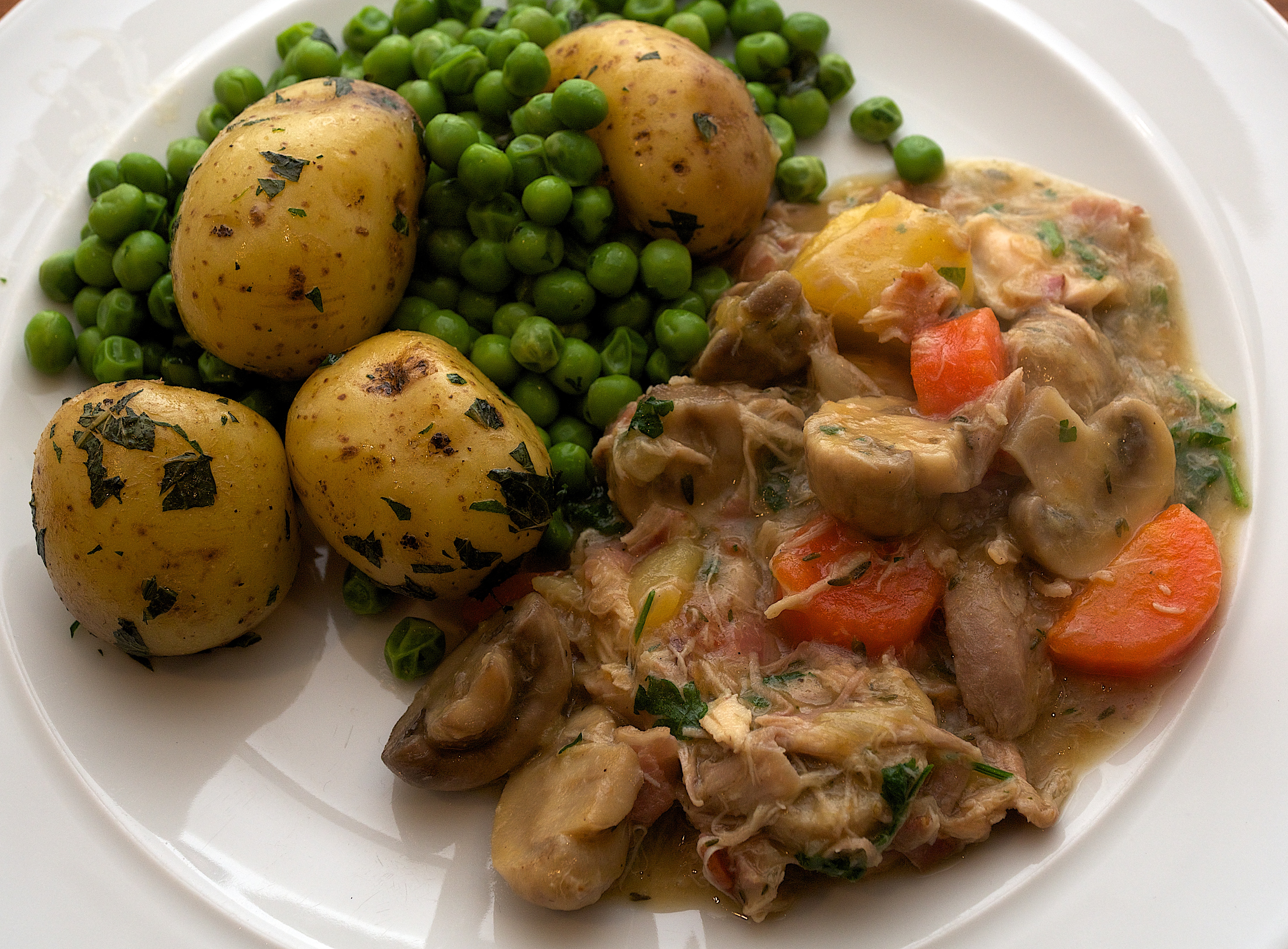
Humble Chicken Stew

This is a great way to use up leftover roast chicken – including the carcass. Too often we guiltily put the bones in the bin.

Wine Suggestion: Our natural instinct when cooking chicken is to plump for a Chardonnay as it goes so well, but instead we drank a delightful German Pinot Noir from Villa Wolf, which is made by Ernie Loosen. He’s managed to get a real charm and ripeness in the aroma that tempts you to think this comes from a warmer country, with even a few hints of new World. It, however, is true to it’s roots and had a rounded earthiness and real charm along with an easiness and gentle weight that didn’t overwhelm the chicken; plus the earthy spice complemented the “humble” nature of this dish too.

Chicken Stew – to serve 4

  • 300g leftover roast chicken
  • 1 chicken carcass
  • 4 rashers smoked streaky bacon, finely sliced
  • 2 onions, chopped
  • 3 large carrots, chopped
  • 2 potatoes, chopped
  • a few sprigs of fresh thyme
  • 2 fresh bay leaves
  • 200g button mushrooms, halved
  • 1 heaped tbsp plain flour

Place the chicken carcass in a large pan and bash with a rolling pin to break it up. Cover with 1 litre of water, bring to the boil and simmer for at least half an hour, skimming off any scum.

Meanwhile, heat a lug of olive oil in a casserole over a medium heat and add the bacon. Cook for a few minutes before adding the onions, carrots and potatoes along with the thyme and bay leaves. Cook for 10 minutes.

Stir in the mushrooms, chicken and flour.

Pour the stock through a sieve straight into the pan (add a bit of water if necessary). Simmer for 4o minutes and season to taste before serving.

(Original recipe from Save with Jamie, Penguin Books Ltd, 2013.)


Read Full Post »

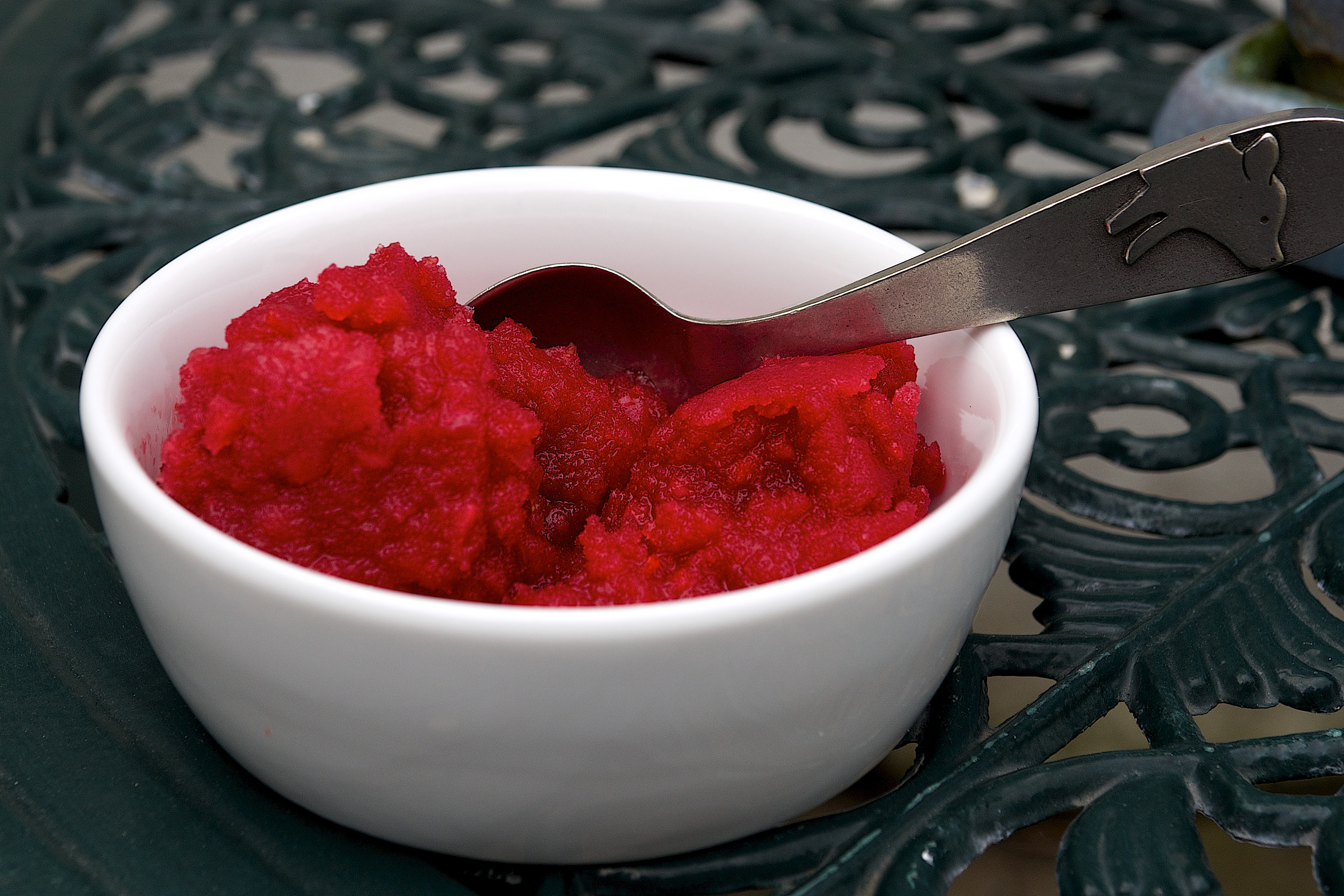
Blood Orange Sorbet

This amazing red sorbet is completely natural and is made from oranges with blood-coloured flesh. Blood oranges are a winter treat available from December to March. You need 20 for this recipe so look out for a good price later in the season. The sorbet is best served on the same day as it is made.

Blood Orange Sorbet – to serve 6

  • 20 blood oranges
  • caster sugar
  • 2 lemons

Juice 19 of the oranges and measure the volume of liquid. Use half that volume of caster sugar.

Cut the whole lemons and remaining orange into quarters and remove the pips. Place in a food processor with the sugar and pulse to a liquid. Add the orange juice and pulse once or twice to combine.

Pour into an ice-cream machine and churn until frozen (or freeze in a container).

(Original recipe from The River Cafe Cookbook by Rose Gray and Ruth Rogers, Ebury Press, 1995.)

Read Full Post »

Banana Bread

The perfect solution for  the black bananas in your fruit bowl – the blacker the better in fact!

Banana Bread 

  • 100g softened butter
  • 175g caster sugar
  • 2 large eggs
  • 2 ripe bananas, mashed
  • 225g self-raising flour
  • 1 level tsp baking powder
  • 2 tbsp milk

Pre-heat the oven to 180ºC/Fan 160ºC/Gas 4. Lightly grease a 2lb loaf tin and line the base and sides with baking parchment.

Measure the ingredients into a mixing bowl and beat for about 2 minutes or until well blended. Spoon into the prepared tin and level the surface.

Bake for about 1 hour or until well risen and golden brown. Leave to cool for a few minutes in the tin before turning out and cooling on a wire rack.

(Original recipe from Mary Berry’s Baking Bible, BBC Books, 2009.)

Read Full Post »

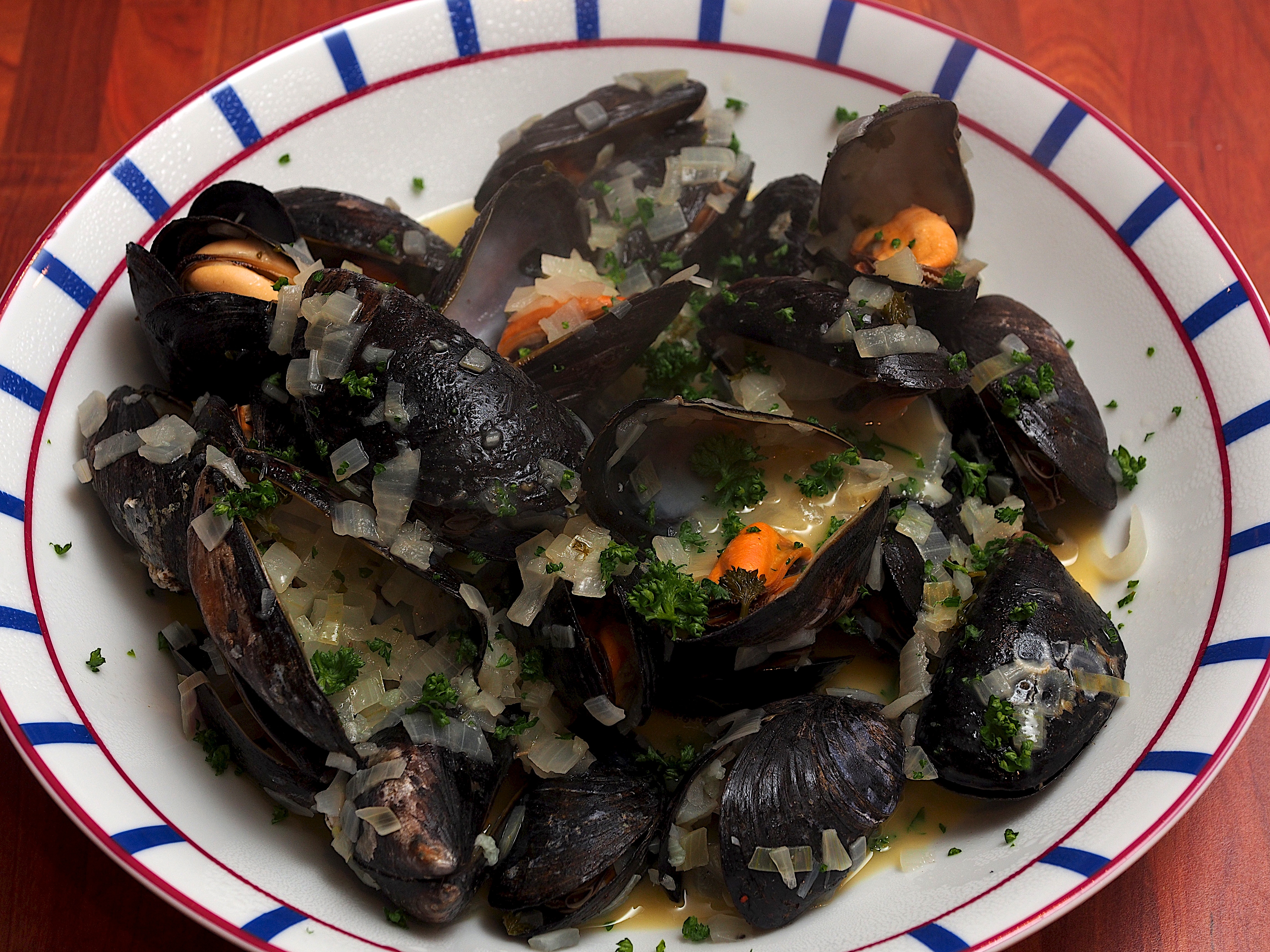
Moules Marinière

We love this Normandy classic and have been known to make Moules Marinières as an impromptu supper served with some skinny fries or crusty bread. No other dish is as reminiscent of holidays in France and mussels are also very cheap. What could be better? 

Wine Suggestion: You can’t go wrong with a good old Muscadet here. Just the thing to complement the dish and shouldn’t blow the budget. Unfortunately Muscadet has had a few good quality but low quantity vintages so it may be a bit more scarce than usual. 

Moules Marinière – to serve 4

  • 2kg mussels
  • 1 onion, finely chopped
  • 2 shallots, finely chopped
  • 2 garlic cloves, crushed
  • a small handful of parsley, roughly chopped
  •  50g butter, chilled
  • 150ml water
  • 150ml dry white wine

Melt half the butter in a large saucepan, add the onion and shallots and sweat for about 10 minutes or until soft. Add the garlic and cook for 1 minute, then add the water, wine and half the parsley and simmer for 5-10 minute. 

Add the mussels, cover the pan quickly with a tight lid and cook over a high heat for 5 minutes, giving the pan a good shake occasionally. Check if the mussels are open, if most of them are still closed, cover and cook for another minute or two, or until opened. 

Drain the mussels in a colander over a bowl to catch the liquid and discard any that haven’t opened. Cover the mussels with a pan lid to keep them warm. Pour the mussel liquid back into the pan and boil until it has a strong concentrated flavour. Reduce the heat. 

Cut up the remaining butter into small pieces and whisk into the sauce, piece by piece. Taste and season. 

Transfer the mussels to a serving bowl, pour over the sauce and sprinkle with the remaining parsley. 

(Original recipe from Leiths: How to Cook, Quadrille, 2013.)

Read Full Post »

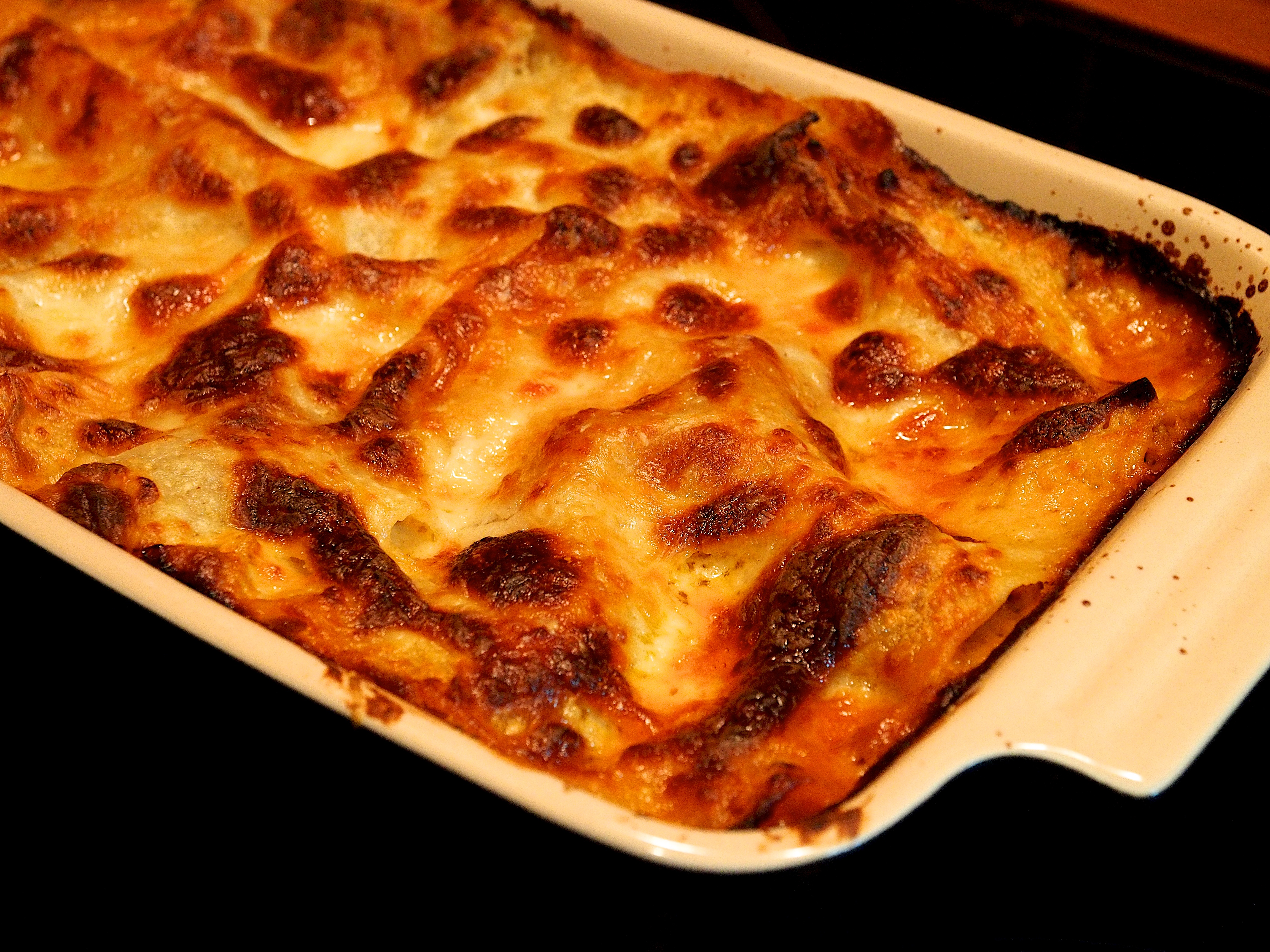
This recipe comes in two parts, with the first an easy to make a Bolognese Ragù which tastes good but is not really exciting or flavour-packed like we like. When created into a lasagne, however, it really sings with a perfect balance of flavour.

The recipe takes a while, but is actually quite easy, especially if you make the ragù the day before. We made two lasagne this time which served eight people over two days amply. Alternately, make a big tray of it for a larger crowd.

Ragù – serves 6-8

  • 3 tbsp olive oil
  • 1 large onion, finely diced
  • 3 cloves of garlic, crushed
  • 3 sticks of celery, finely diced
  • 1 leek, finely diced
  • 1 kg minced beef/pork (or half and half)
  • 1 bay leaf
  • 2 x 400g tins chopped tomatoes
  • 2 tbsp tomato purée
  • 200ml white or red wine
  • 2-3 tbsp sugar

Preheat the oven to 150ºC/300°F/Gas mark 2.

Put a large ovenproof casserole on a medium heat and heat the olive oil. Tip in the onion, garlic, celery and leek. Season with salt and pepper and cook for 8-10 minutes or until softened. Turn the heat to high, add the meat and stir to break up, cooking until there are no longer any pink bits.

Add the bay leaf with the chopped tomatoes, tomato purée, wine and sugar, and bring to the boil. Cover with a lid and cook for about 1 hour in the oven. Season to taste.

Lasagne – serves 6-8

  • 1 quantity of cooked ragù
  • 12-16 sheets of pre-cooked dried lasagne
  • 100g Cheddar cheese, grated
  • 50g Parmesan, grated

FOR THE CHEESE SAUCE 

  • 70g butter
  • 70g plain flour
  • 1 litre milk
  • 200g Cheddar cheese, grated
  • 1 tsp Dijon mustard

Preheat the oven to 180°C/350°F/Gas mark 4.

First make the cheese sauce. Melt the butter in a saucepan over a medium heat, then whisk in the flour and cook, stirring often, for 1 minute. Gradually pour in the milk and bring to the boil, whisking continuously until the sauce is thickened. Remove from the heat and whisk in the cheese and mustard, seasoning with salt and pepper, then set aside.

Put a thin layer of ragù in the bottom of an ovenproof dish (20 x 30cm), cover with a layer of the cheese sauce, then add lasagne sheets to cover, in a single layer. Repeat this process, finishing with a layer of pasta topped with cheese sauce only.

Sprinkle over both cheeses and bake in the oven for 45-50 minutes or until golden brown and bubbling.

(Original recipe from Rachel’s Everyday Kitchen by Rachel Allen, HarperCollins, 2013.)

Read Full Post »
We gave each other a food mixer for Christmas and hence have baked more cakes in the last month than we’ve made in all our years of blogging. This one can be mixed up really quickly and can be made wheat-free for our coeliac friends with no adverse affect. We made this example with wheat; the wheat-free version which substitutes nuts (ground almonds) for the flour is  more squidgy and dessert-like.

Chocolate Olive Oil Cake 

  • 150ml olive oil (not extra virgin), plus extra for greasing
  • 50g good quality cocoa powder
  • 125ml boiling water
  • 2tsp vanilla extract
  • 125g plain flour (OR 150g ground almonds)
  • ½ tsp bicarbonate of soda
  • a pinch of salt
  • 200g caster sugar
  • 3 large eggs

Preheat the oven to 170ºC/Gas 3/325ºF.

Grease a 22 or 23cm springform tin with a little olive oil and line the base with baking parchment.

Sift the cocoa powder into a bowl and whisk in the boiling water to give a smooth paste. Whisk in the vanilla extract and set aside to cool a little.

In another bowl, combine the flour (or ground almonds) with the bicarbonate of soda and a pinch of salt.

Put the sugar, olive oil and eggs into the bowl of a freestanding mixer with the paddle attachment (or use whatever bowl and whisk you have) and beat vigorously for about 3 minutes until you have a pale yellow and thickened cream.

Turn down the speed a little and add the cocoa mixture. When this is mixed in, add the flour (or ground almond) mixture.

Scrape down and stir a little with a spatula, then pour into the prepared tin. Bake for 40-45 minutes or until the sides are set and the very centre still looks slightly damp. A skewer inserted into the cake should come out mostly clean.

Cool on a wire rack, still in the tin, for 10 minutes before easing the sides gently away with a metal spatula and springing out of the tin. Leave to cool completely and serve with cream and berries or eat while still warm with ice-cream.

(Original recipe from Nigella.com)

Read Full Post »

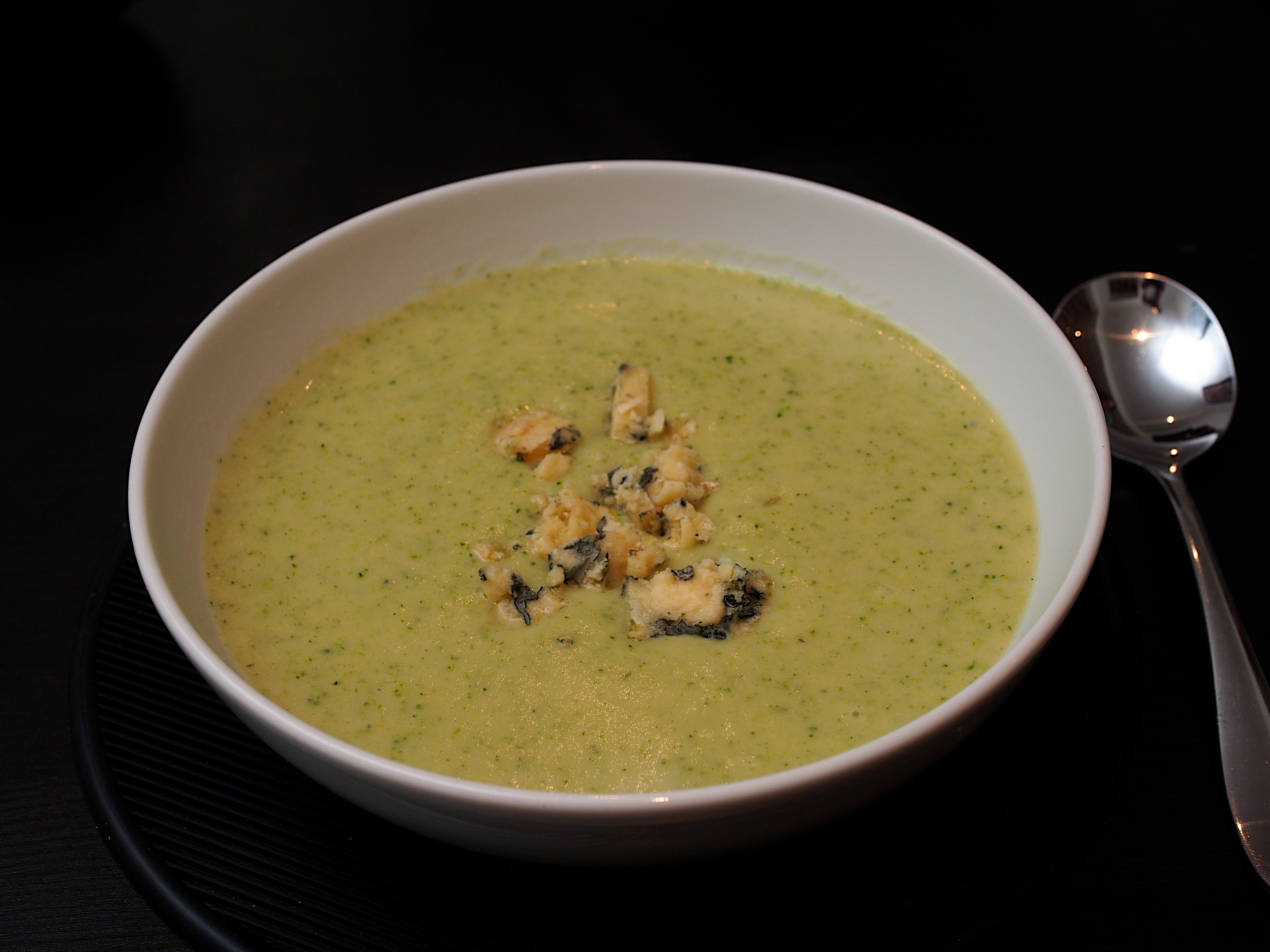
We love cheese after dinner but it seems a bit indulgent during the week and therefore we inevitably end up with chunks of cheese lurking in the back of the fridge. We try our best not to waste any food but something as expensive and delicious as cheese (particularly the cheese pantry stuff as opposed to the supermarket plastic-wrapped kind) is even more of a travesty to not use. That’s when recipes like this one are perfect for a mid-week treat without having to indulge in a two-course evening meal.

Broccoli & Stilton Soup – to serve 4

  • 2 tbsp flavourless oil
  • 1 onion, finely chopped
  • 1 stick of celery, sliced
  • 1 leek, sliced
  • 1 medium potato, diced
  • a knob of butter
  • 1 litre of good chicken or vegetable stock
  • 1 head of broccoli, roughly chopped (including stalks)
  • 140g Stilton (or other blue cheese), crumbled

Heat the oil in a large saucepan and cook the onions until soft but not coloured. Add a splash of water if they start to catch.

Add the celery, leek, potato and butter. Stir until the butter melts, then cover with a lid and sweat for 5 minutes.

Pour in stock and add any chunks of broccoli stalk. Cook for 10-15 minutes or until the vegetables are soft.

Add the remaining broccoli and cook for another 5 minutes. Whizz until smooth, then stir in the stilton. Season with black pepper (you are unlikely to need salt) and serve.

(Original recipe from BBC Good Food)

Read Full Post »

« Newer Posts - Older Posts »