Feeds:
Posts
Comments

Archive for the ‘Food’ Category

We have just moved into yet another new house but this time it is ‘our’ new house as opposed to another rental. The result has been lots of painters, plumbers, builders etc. and very little cooking. We’ve now got the most important room in the house (the kitchen!) sorted and are very glad to be eating proper food again.

This was the last thing we cooked in our flat before packing up the saucepans. We had a generous donation of an enormous courgette (not quite a marrow but a marrow would work just as well in the recipe) from a friend of Julie’s Mum. Very tasty and there and should still be a few enormous courgettes kicking about in allotments and veg patches for you to get your hands on.

Wine Suggestion: Look out for some of the better cru Beaujolais at a good wine shop. They’re completely underrated and overlooked (due to the scourge of “Beaujolais Nouveau”) and quite delicious. We drank a Regnie from Domaine Rochette which has that delightful balance of light and easy fruit as well as a seriousness, structure and verve. Yum.

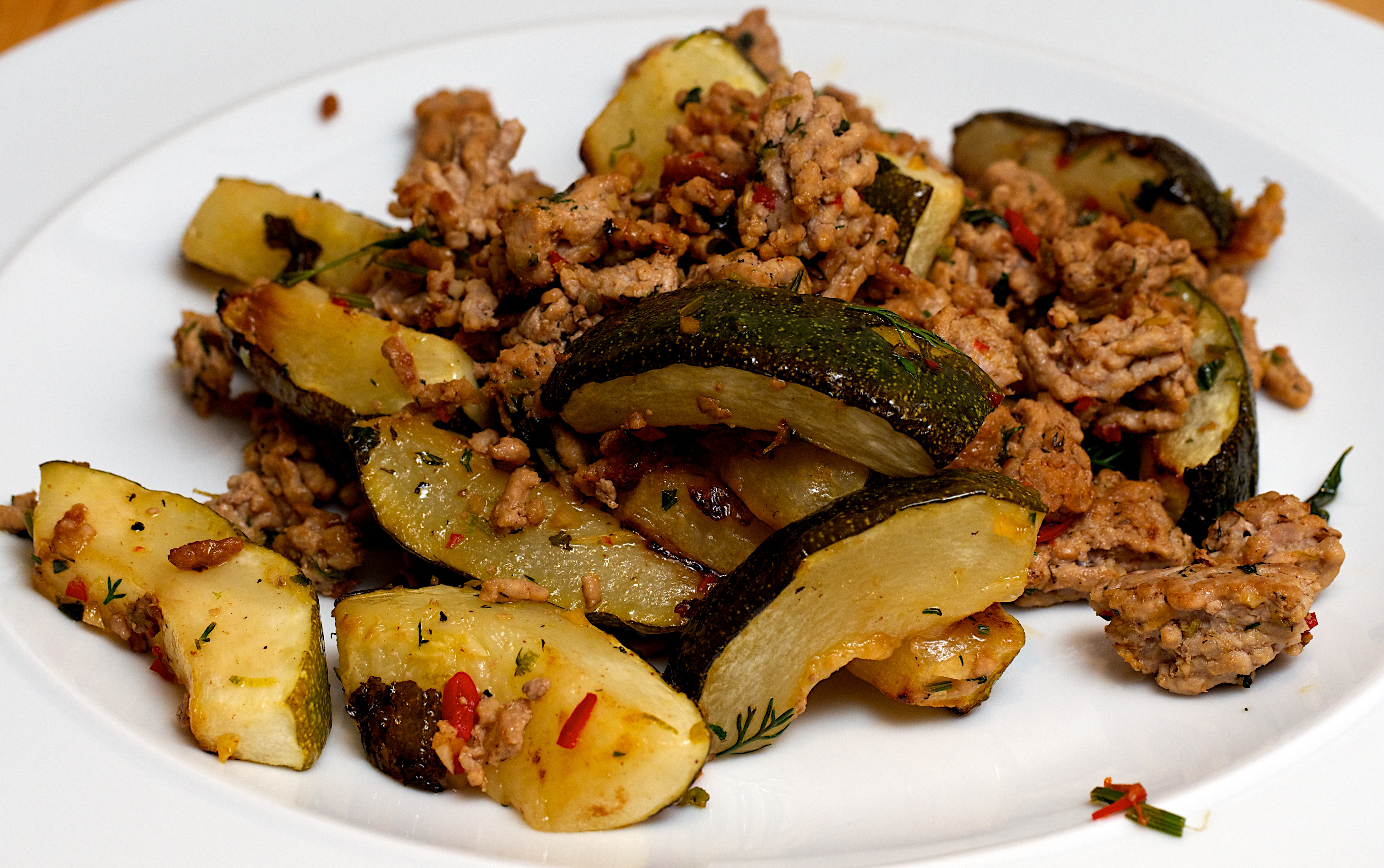
Baked Courgette & Minced Pork – to serve 2

  • 750g large courgettes
  • 2 cloves garlic, crushed
  • a handful of mint leaves
  • olive oil
  • juice of half a lemon

FOR THE PORK: 

  • a small handful of dill, roughly chopped
  • a small bunch of parsley, roughly chopped
  • 2 cloves of garlic, chopped
  • 2 small, hot, red chillies, finely chopped
  • 450g minced pork
  • grated zest and juice of a lime

Preheat the oven to 180°C/Gas 4.

Halve the courgettes and scoop out the seedy bits. Cut into thick chunks and toss in a roasting tin with the crushed garlic, mint, plenty of olive oil and the lemon juice. Bake for  about 45 minutes or until tender.

Heat a couple of tablespoons of olive oil in a shallow pan until smoking hot, then add the meat. Leave to sear on one side without stirring, turning or breaking up. When the bottom has crisped up, turn over and brown the other side. Add the dill, parsley, garlic and chilli and let the mixture cook over a high heat until everything is hot and golden. Season generously with salt and pepper, then stir in the lime juice and zest.

Serve with the baked courgette.

(Original recipe from Nigel Slater’s Tender: Volume 1, Fourth Estate, 2009.)

Read Full Post »

We made this with some leftover chorizo that had been cluttering the fridge for a while. It works really well before dinner with some toasted bread but equally as part of a Tapas selection, or starter with olives etc.  Multiply the quantities depending on how much sausage you have. You can also make individual portions in smaller jars. Leave this in the fridge for at least a week before serving and it will mellow and subtly take on the flavours of the herbs and oil, so make sure the olive oil is decent and herbs are fresh.

Herb-marinated Sausage 

  • 1 cured sausage e.g. chorizo
  • 1 garlic clove
  • 10 juniper berries
  • 2 thyme sprigs
  • 1 bay leaf
  • a small sprig of fresh rosemary
  • 300-600ml olive oil
  • toasted bread, to serve

Slice the sausage and remove the skin. Put the sausage slices in a clean jar with the garlic, juniper berries, thyme, bay leaf and rosemary. Add enough olive oil to cover, close the lid and leave in the fridge for at least a week.

Serve with toasted bread.

(Original recipe from Stéphane Reynaud’s Pork & Sons, Phaidon, 2005.)

Read Full Post »

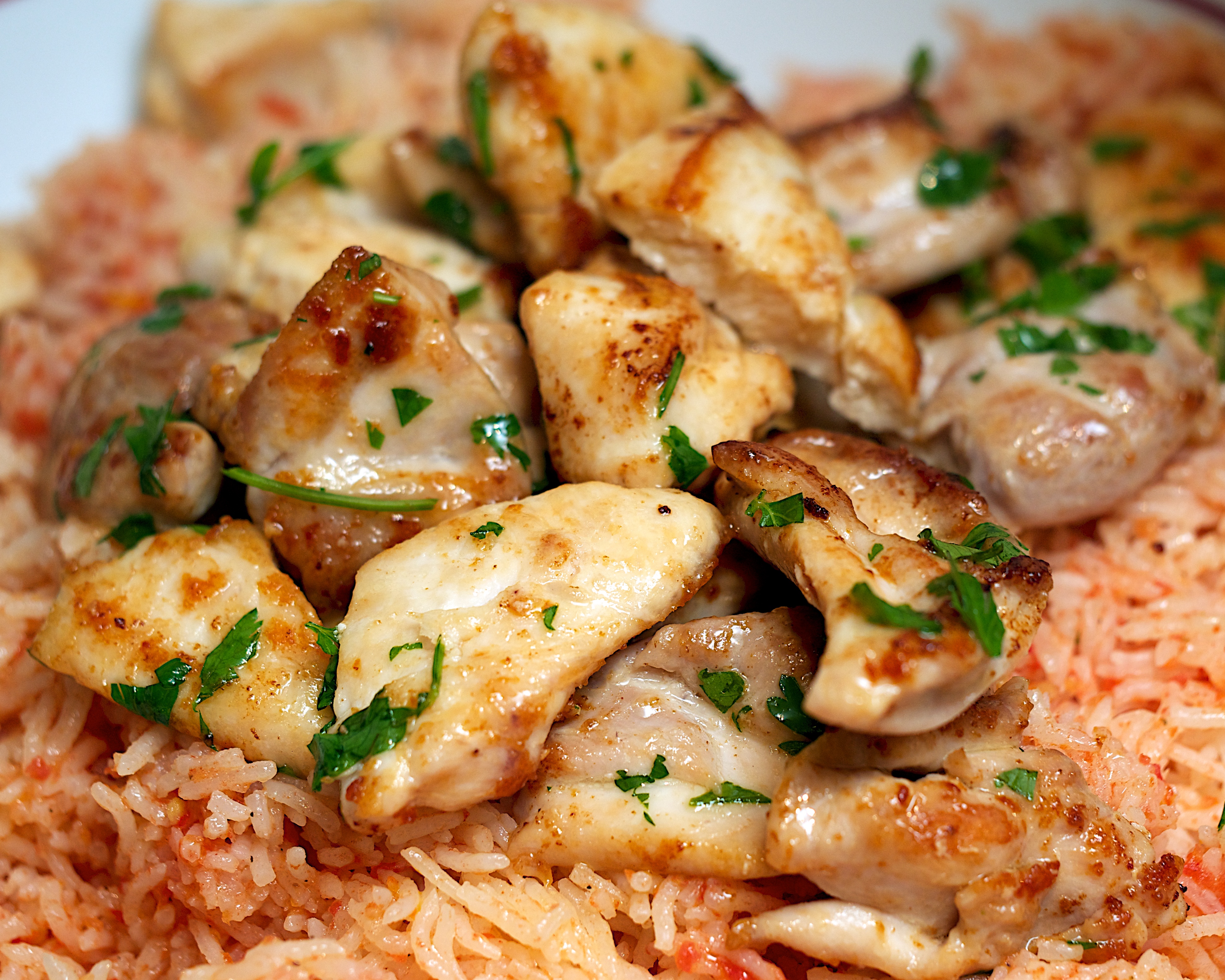
This dish was divine.  The moist chicken pieces perfectly match the pilaf with the whole combination epitomising Turkish cuisine – sitting comfortably on the European / Middle East divide. Try to find the sumac as it gives the dish an authentic sharp lemony tang.

Wine Suggestion: Look for a good quality Albariño or Godello from Spain that has seen a small amount of oak for structure. These will provide a good balance of citrus/zestiness, medium body and tangy minerality to complement the chicken and sumac.

Sautéed Chicken with Tomato Pilfaf – to serve 4

  • 4 chicken fillets, breast or thigh, cut into cubes
  • 1 tbsp sunflower oil
  • 35g butter
  • 2 tbsp chopped parsley
  • lemon quarters or sumac to garnish

FOR THE TOMATO PILAF 

  • 300g basmati rice
  • 500g ripe tomatoes, peeled
  • 1 chicken stock cube
  • 2 tsp sugar
  • 75g butter, cut into small cubes

Make the pilaf first. Pour cold water over the rice and leave to soak in a bowl for a few minutes, then strain and rinse under cold water.

Quarter the tomatoes, remove the core, then liquefy in a food processor. Add enough water to the tomato juice to make it up to 650ml. Pour into a pan, add the crumbled stock cube, the sugar and some salt and pepper and bring to the boil.

Add the rice and stir well. Simmer, covered, over a low heat, for 18-20 minutes or until the rice is tender and the liquid has been absorbed. Don’t be tempted to stir it during this time but you can add a bit more water if it looks dry. Fold in the butter. Taste and adjust the seasoning.

While the rice is cooking, heat the oil and butter in a frying pan and sauté the chicken for 6-8 minutes or until lightly browned, turning once. Sprinkle the chicken with the parsley and serve with lemon quarters or sprinkle with sumac, along with the rice.

(Original recipe from Claudia Roden’s Arabesque, Penguin 2005.)

Read Full Post »

This is such a clever idea, especially if you don’t have one of those fancy things for cooking fish on the barbecue. The fish doesn’t stick to the grill but you still get all the smoky barbecue flavours plus a  delicious spike of citrus. The idea has us thinking of other combinations and we loved the caramelisation that happened to the oranges which gives the dish an extra dimension.

Wine Suggestion: This cries out for a Spanish white, like Albarino or Godello, where the best examples balance a depth of texture with a lightness of being. We drank a Dominio de Tares Godello from Bierzo which was amazing on its own and then with the fish. Perfectly matched.

Barbecue Sea Bass & Citrus Salad – serves 4

  • 2-3 large oranges
  • zest of 1 lemon (keep the juice for the salad)
  • 1 tbsp olive oil
  • 4 x 300g whole sea bass, scaled, gutted and slashed down each side (or 8 fillets)

FOR THE SALAD: 

  • 2 oranges, segmented
  • juice of 1 lemon
  • 4 tbsp olive oil
  • 2 bags watercress
  • handful small capers
  • handful pitted green olives, roughly chopped

Finely grate the zest of the 1 of the oranges and add to the lemon zest. Mix with the olive oil, then drizzle over the fish and season.

Cut the rest of the oranges into slices, about ½ cm thick. Arrange the orange slices over the barbecue grill, close together so you can lay the fish on top. Barbecue the fish for 5-8 minutes on each side, or until the flesh flakes easily.

To make the salad: Put the orange segments into a large bowl, with the squeezed juice from the rest of the oranges and the lemon juice. Season and stir in the olive oil. Toss the watercress in the orange dressing with the capers and the olives.

Serve the fish with the salad.

(Original recipe from BBC Good Food)

Read Full Post »

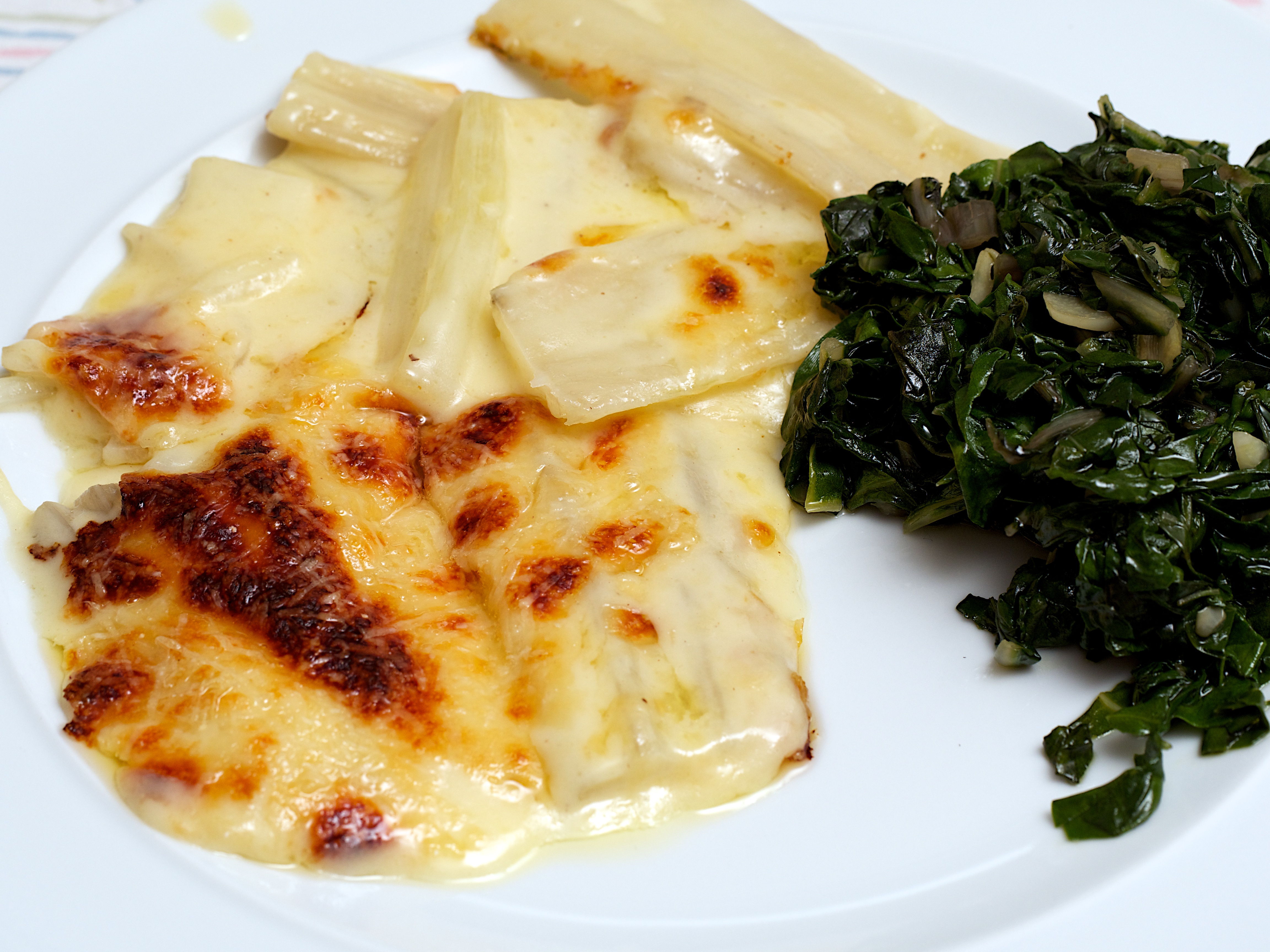
Who would have thought that something so delicious could be made from chard? The stalky bits, that you might have been tempted to throw away, are the stars of the show!

Chard leaves with wild garlic & olive oil – to serve 2

  • leaves cut from a 500g bunch of chard (save the stalks for the recipe below)
  • 150g wild garlic, remove any thick stalks (if it’s not wild garlic time you can substitute a clove of garlic instead)
  • 2 tbsp olive oil
  • salt and pepper

Slice the chard and wild garlic into wide ribbons. Heat the olive oil in a large frying pan and add the leaves and seasoning. Gently fry until beginning to wilt and then stew for 15-20 minutes or until tender. Serve hot.

Chard gratin – to serve 2 

  • 30g butter
  • 20g plain flour
  • 225ml milk
  • 30g Gruyère cheese, grated
  • 40g Parmesan, grated
  • salt, freshly ground white pepper and nutmeg
  • chard stalks from a 500g bunch

Preheat the oven to 200ºC/Gas 6.

Make a mornay sauce by melting the butter in a saucepan and stirring in the flour. Cook gently for a few minutes, then pour in the milk and whisk. Put the pan over a low heat and stir continuously until the sauce starts to thicken (don’t worry if goes lumpy just keep stirring and the lumps will eventually dissolve).

Add the Gruyère, 25g of the Parmesan and the seasonings. Simmer very gently, stirring now and then, for about 15-20 minutes.

Meanwhile, peel the chard stalks with a veg peeler and cut into 8-10cm lengths. Steam or boil for about 20 minutes, or until tender, then remove and lay on a clean tea towel to dry.

Lightly butter a gratin dish and lay the chard stalks in it. Pour over the sauce and sprinkle with the rest of the Parmesan. Bake for about 20 minutes , or until golden and bubbling.

Serve with the chard leaves.

(Original recipe from Simon Hopkinson’s The Vegetarian Option, Quadrille, 2009.)

Read Full Post »

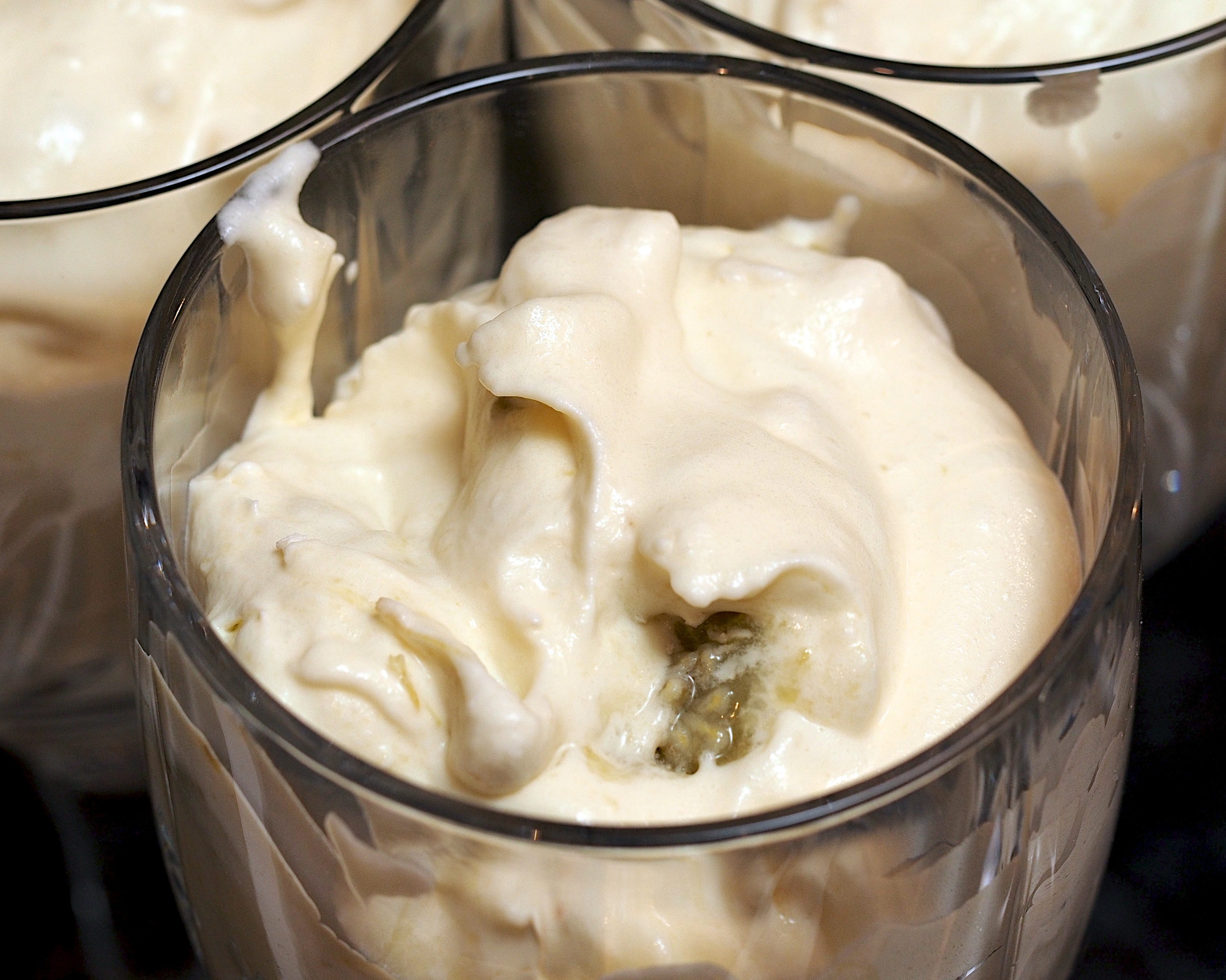
For the past few weeks we have been walking past a basket of perfect looking gooseberries at our grocer and saying we need to make something with these. A version of the classic Eton Mess the tart gooseberries balance the sweetness to make this light and sunny, just like the weather.

Gooseberry & Elderflower Mess – serves 6

  • 300g gooseberries, tops pinched off
  • 50g golden caster sugar, plus 2 tbsp
  • 2 tbsp elderflower cordial
  • 600ml whipping cream
  • about 100g of meringue nests, roughly crumbled

Put the gooseberries, 2 tbsp water, and 25g of sugar in a small saucepan. Cook gently until the gooseberries start to soften and break down. Taste and add as much of the remaining 25g as you need, then cool.

Put the 2tbsp sugar, the cordial and the cream into a large bowl and whisk until soft peaks form, then cover and chill.

Just before serving, roughly mix the gooseberry mixture, the cream and the meringues together and spoon into serving glasses or bowls.

(Original recipe from BBC Good Food)

Read Full Post »

This salad is a twist on the classic  tomatoes with basil. The creamy dressing works surprisingly well and gives the salad a cool and luxurious feel.

Tomato Salad with a Basil Cream Dressing – serves 2

  • 1½ tbsp white wine vinegar
  • 2 tbsp warm water
  • 75ml whipping cream
  • 50ml extra virgin olive oil, plus some extra
  • pinch of sugar
  • 7-8 basil leaves, torn or chopped
  • 4 ripe, medium tomatoes, cored and sliced

In a mixing bowl, whisk the wine vinegar, water and some salt and pepper.

Whisk in the cream, olive oil and sugar ,then stir in the basil.

Arrange the tomatoes on a large plate, very lightly season and spoon over the dressing. Serve with an extra drizzle of olive oil.

(Original recipe from Simon Hopkinson’s The Vegetarian Option, Quadrille 2009.)

Read Full Post »

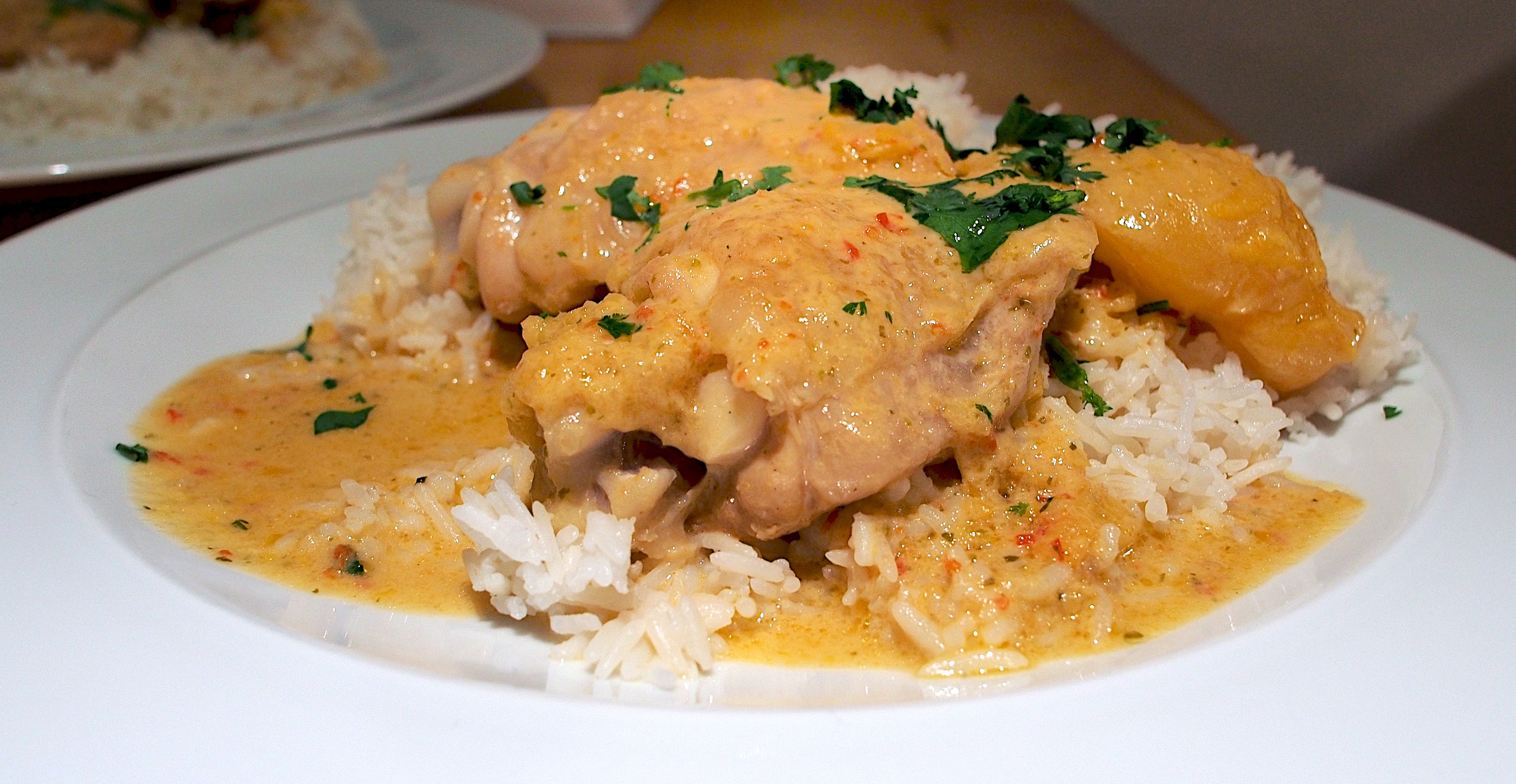
This is creamy, salty and tangy with little jewels of soft juicy apricots. Definitely the best cookers of the soft summer fruits.

You will have too much spice paste but it will keep (covered with a film of oil) in the fridge for a week.

Wine Suggestion:  A Pinot Gris will give you hints of sweetness to complement the heat from the chillies and enough weight to balance the rich coconut milk. It will also be slightly aromatic to match the lime and coriander on the nose.

Chicken with apricots and coconut milk – to serve 4

  • 3 short stalks lemongrass
  • 50g ginger
  • 2 small hot red chillies
  • 2 cloves garlic, peeled
  • a bunch of coriander
  • 2 limes, zested and juiced
  • 1 tbsp groundnut oil, plus extra for the paste
  • 200g tomatoes, roughly chopped
  • 1 tbsp fish sauce
  • 2 tbsp dark soy sauce
  • 8 chicken thighs
  • 8 apricots, halved and stoned
  • 400ml tin coconut milk

Peel the outer leaves of the lemongrass and discard. Cut into short lengths and put into a food processor. Peel the ginger, slice into thin pieces and add to the lemongrass. Chop the chillies and add to the ginger with the garlic and roughly chopped stems and half the leaves of the coriander. Add the lime zest, then chop everything to a coarse paste, adding a little oil. Add the tomatoes, fish sauce and soy sauce and continue to blitz.

Warm the oil in a deep pan over a high-ish heat and brown the chicken pieces lightly. Lift the chicken out and pour away most of the oil, leaving about a tablespoon.

Add half the spice paste and fry over a low to moderate heat for a couple of minutes or until fragrant, then return the chicken to the pan. Pour in the coconut milk and leave to simmer gently over a low heat for 10 minutes.

Add the apricots and cook for another 10 minutes or until soft.

Check that the chicken is cooked, then add the lime juice and the remaining coriander, roughly chopped. Season to taste with salt and serve with rice.

(Original recipe from Nigel Slater’s The Kitchen Diaries II, Fourth Estate, 2012.)

Read Full Post »

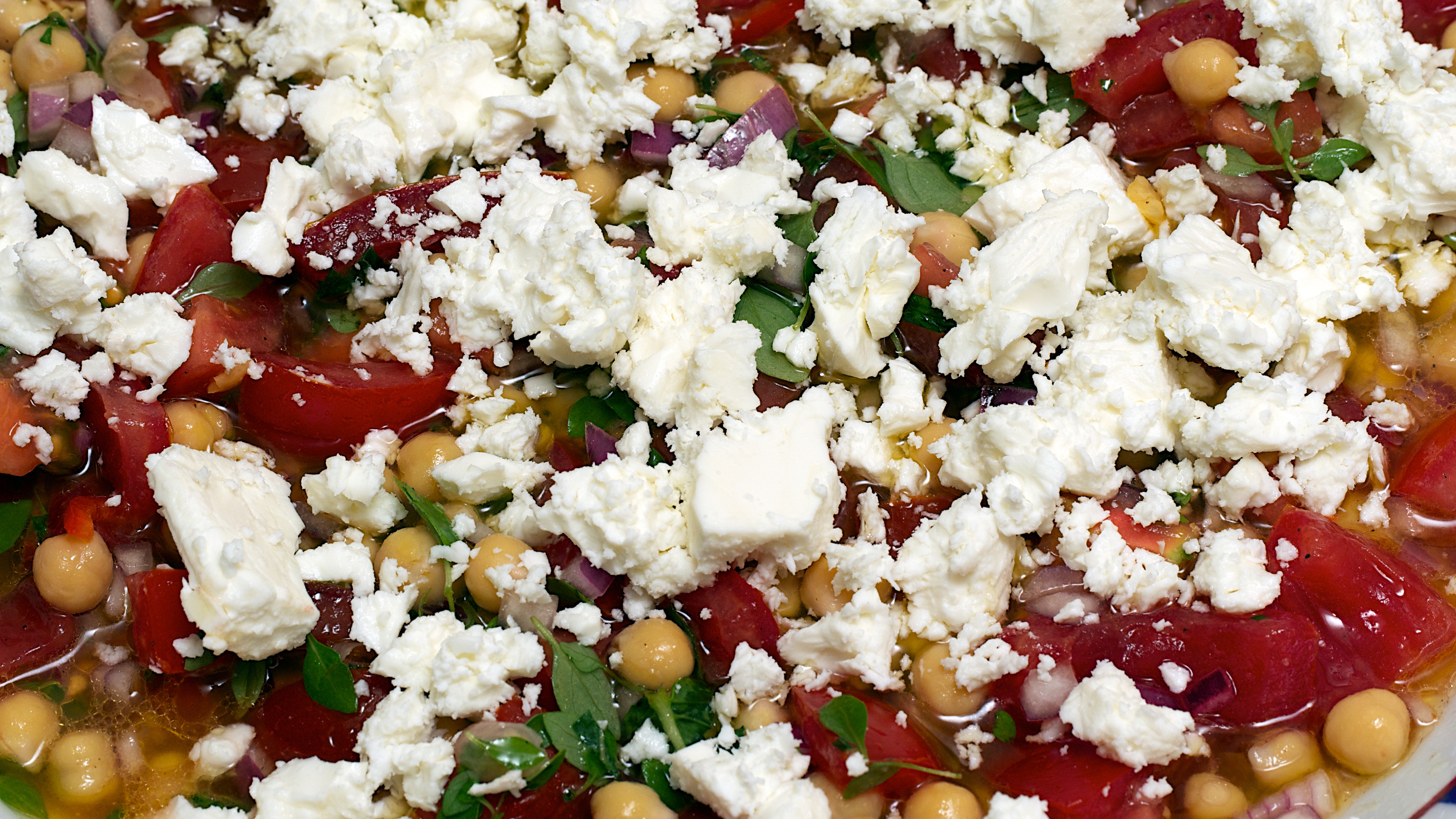
We’ve eaten this as a side salad, and on it’s own with crusty bread –  a summery meal in its own right! As always the quality of the tomatoes will really make this dish sing.

You should assemble most of this dish a bit in advance to allow the flavours to develop, then add the herbs and feta cheese just before serving.

Wine Suggestion: Try to find a youthful Italian red that echo’s the sunshine of this dish. We drank a Dolcetto d’Alba from Pira Luigi that had a joy and vitality, but reds from the Marche, Abruzzo and other central Italian regions should be a delight too. If you’re pushing the boat out go for a Rosso di Montalcino.

Summer Chickpea Salad – to serve 4

  • 1 small red onion, finely sliced
  • 1-2 small red chillies, deseeded and finely sliced
  • 2 handfuls of ripe tomatoes, roughly chopped
  • 2 lemons
  • extra virgin olive oil
  • 1 x 410g tin of chickpeas, drained
  • a handful of fresh mint, chopped
  • a handful of  basil, finely torn
  • 200g feta cheese

Mix the tomatoes (including any juice) with the onion and chillies in a large bowl. Dress with the juice of 1½ lemons and lots of good olive oil. Season to taste.

Heat the chickpeas in a pan, then add almost all of them to the bowl. Mush up the remaining chickpeas before adding them as well. Allow to marinate for a while at room temperature.

Add the herbs and check the seasoning just before serving – you can add a bit more lemon juice if necessary. Put the salad in a serving dish and crumble the feta cheese over the top.

(Original recipe from Jamie’s Dinners by Jamie Oliver, Penguin Books, 2004.)

Read Full Post »

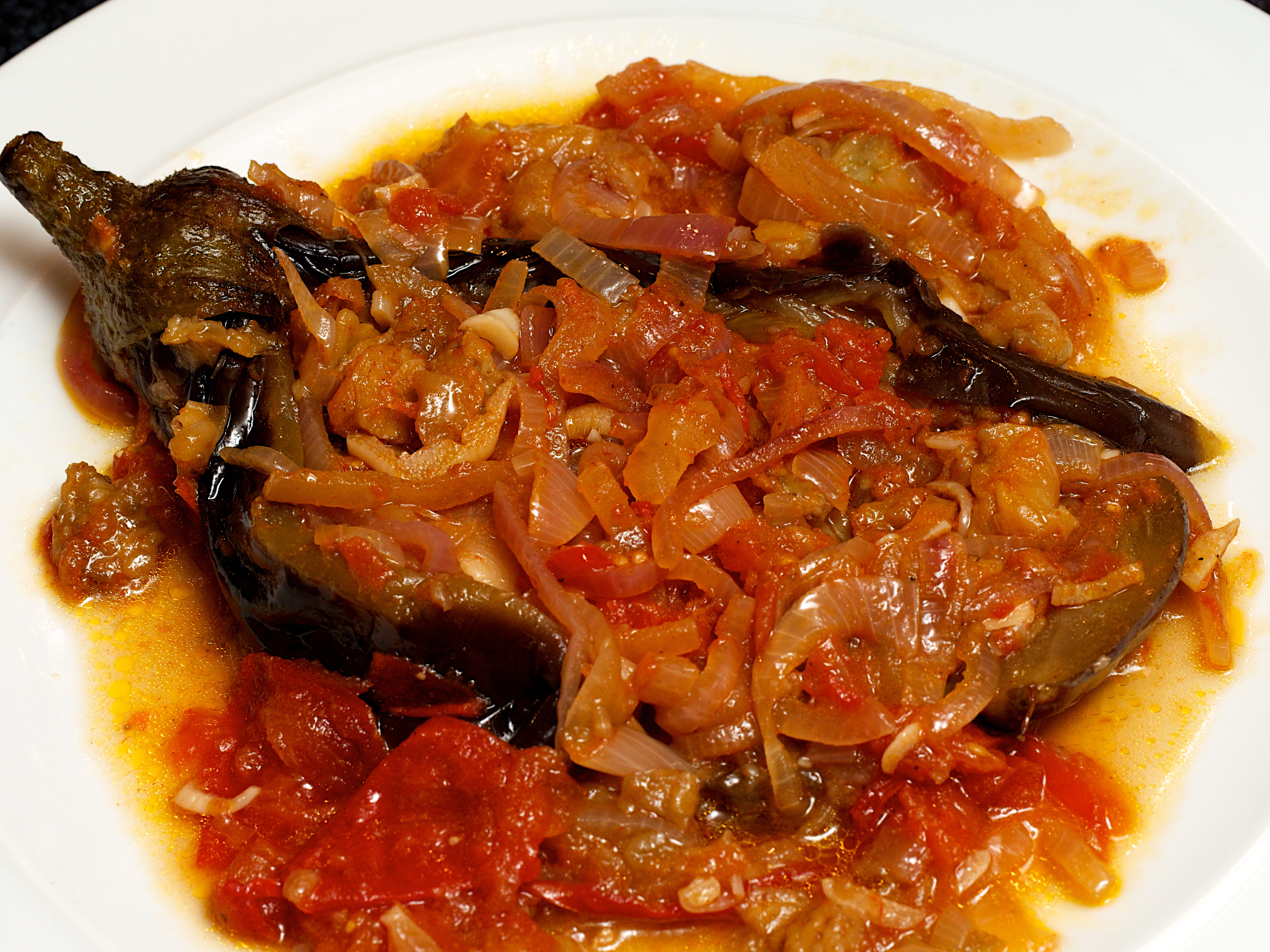
This is not the most attractive dish in the world and we definitely didn’t do the best job of cutting the aubergines. It nonetheless tasted delicious and we’re sure to do it again.

Wine Suggestion: We’d recommend finding a juicy red from Spain. Look out for well made wines from the smaller and lesser known areas as these offer great value; this dish doesn’t need a refined and suave wine, some rusticity is good. We tried  a juicy and smooth Tempranillo called Biberius from the Ribera del Duero and thoroughly enjoyed it!

‘Swooning Imam’ Stuffed Aubergines – serves 2

  • 2 large aubergines
  • 4-6 garlic cloves, finely sliced
  • 2 red onions, finely sliced
  • 3-4 tomatoes, finely sliced
  • 1 tsp paprika
  • 1 tsp brown sugar
  • 1 tbsp lemon juice
  • about 5 tbsp extra virgin olive oil
  • fresh mint, shredded

Leave the stem on the aubergines, score the skin and peel it away in thick stripes. Cut down the length of each one (without cutting completely in half) and scoop out the seedy bits. Chop these and set aside. Sprinkle the cavities with salt, and leave to drain on kitchen paper for half an hour, then wipe dry.

Heat a good splash of oil in a frying pan. Add the aubergines and fry for about 7 minutes, until lightly browned and softened. Remove from the pan and leave to drain.

Add some more oil to the pan and fry the onions, garlic and with the reserved seedy bits of the aubergine. After about 5 minutes, add the tomatoes, paprika, sugar and lemon juice, stir well and season.

Put the aubergines into a deep frying pan with a lid. Stuff the cavities with the onion mixture and drizzle the rest over the top. Add the rest of the olive oil and 100ml cold water, then put on the heat. Bring to the boil, then turn the heat to low, cover and leave to cook for about 45 minutes or until completely tender.

Serve warm or at room temperature with the mint sprinkled over the top and serve with crusty bread.

(Original recipe from Veggiestan: a vegetable lover’s tour of the middle east by Sally Butcher (Pavillon) and published in The Guardian.)

Read Full Post »

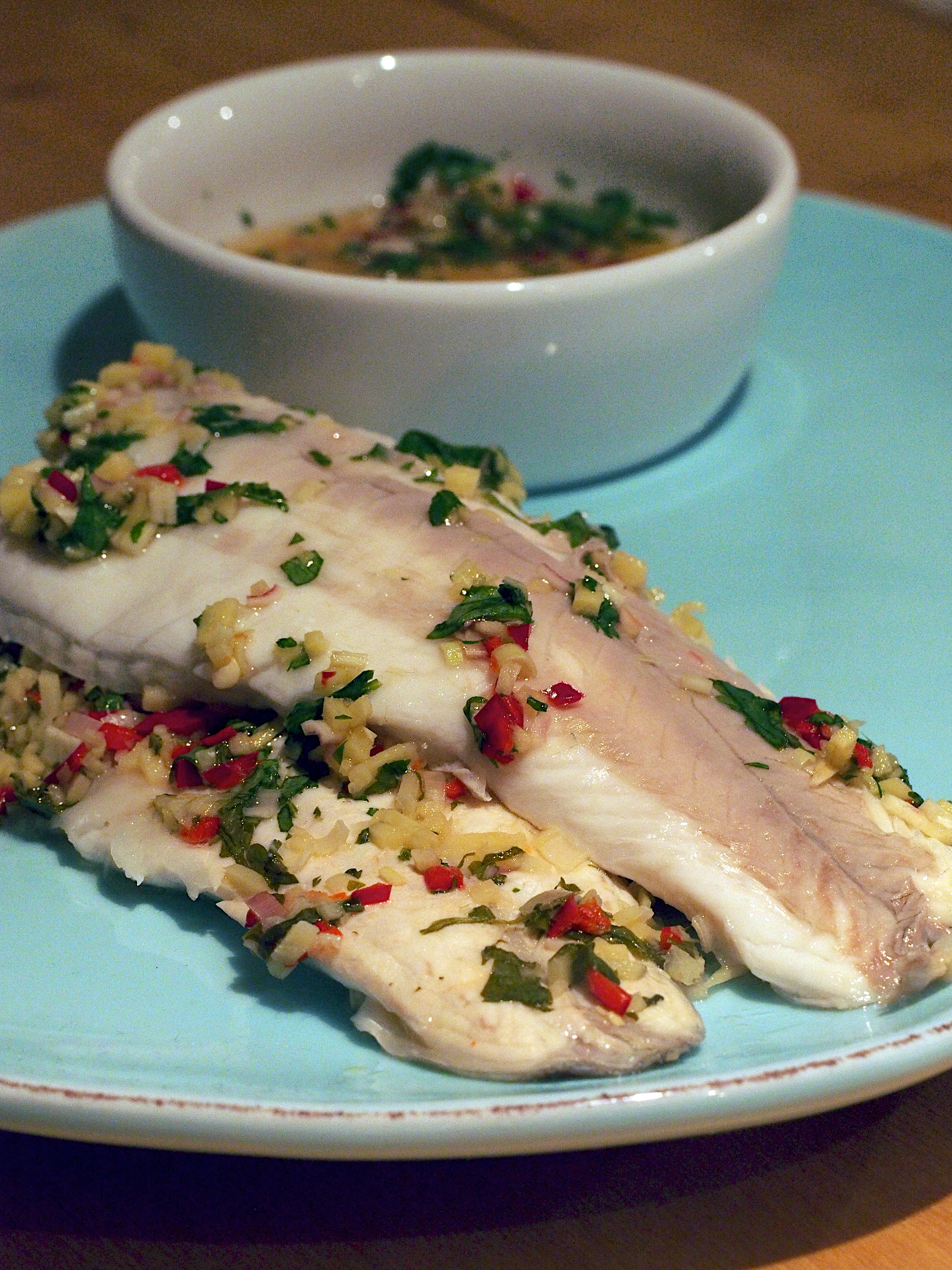
This is a really simple fish dish that was a delight to eat; it tastes delicious and is also very healthy. Trout or snapper would also work well if you prefer. The skin was left behind in the tinfoil when we went to serve it which was fine by us (it’s crispy skin or no skin as far as we’re concerned).

Wine Suggestion: this dish begs for a charming Riesling from Germany – look out for ones that are a drier style but without the weight of a Grosses Gewachs (great growth). If you can find one of the estate QbA’s from Helmut Dönnhoff in the Nähe or Johannes Leitz from the Rhinegau you can’t go wrong.

Thai Baked Fish – to serve 4

  • 4 seabass fillets, about 200g each
  • 1 stalk lemongrass, finely chopped
  • small knob ginger, peeled and finely chopped
  • 1 red chilli, seeded and finely chopped
  • 1 garlic clove, finely chopped
  • 1 tbsp fish sauce
  • juice of 2 limes
  • 1 tsp golden caster sugar
  • handful coriander, roughly chopped

Heat the oven to 200C/fan 180C/gas 6.

Take 2 large sheets of tinfoil. Place one fish fillet, skin-side down, in the centre of each sheet.

Make a sauce using the remaining ingredients. Spoon half the sauce of the fillets on the tinfoil and set the rest aside.

Sandwich the other 2 fish fillets on top, skin-side up, then tightly seal the foil to create 2 pouches. Bake in the oven for 12-15 minutes (depending how big your fish are). Serve with the rest of the sauce.

(Original recipe by Gizzi Erskine for BBC Good Food Magazine, June 2005).)

Read Full Post »

This is one of our favourite pasta sauces. Bucatini (long spaghetti-like tubes) is traditionally used but penne works well too and tends to be easier to find at the shops. Makes a great Friday night supper with a matching glass of something equally red and Italian.

The recipe below makes 6 little portions that you might serve as a first course. You will need to adjust accordingly if you’re serving it as a main meal – we half the quantities below to serve the two of us.

Wine Suggestion: An Italian Sangiovese is the obvious match which complements the acidity in this tomato-based sauce. We drank a Rocca delle Macie Chianti; an excellent match.

Penne all’ Amatriciana – serves 6 

  • 250g pancetta, cut into matchsticks
  • 2 tbsp olive oil
  • 2 dried chillies, crumbled
  • 2 red onions, peeled and finely chopped
  • 150ml red wine
  • 2 x 400g tins peeled plum tomatoes, drained if very liquid (look for Italian brands)
  • 2 tbsp rosemary
  • 250g penne
  • 100g Parmesan, grated
  • A handful of fresh oregano (don’t panic if you don’t have this)

Put the pancetta, oil and chillies into a large saucepan, heat and fry until the pancetta becomes crisp.

Add the onions and rosemary and keep frying until they have also turned light brown and crisp.

Add the red wine and let it reduce before adding the tomatoes, then season with the oregano and some black pepper.

Bring to the boil, lower the heat and simmer for at least 45 minutes, until thick and almost dry. Check for seasoning.

Cook the penne in a generous amount of boiling salted water, then drain. Add to the sauce, mix and serve with Parmesan.

(Original recipe from The River Café Cookbook by Ruth Rogers and Rose Gray, Ebury Press, 1995.)

Read Full Post »

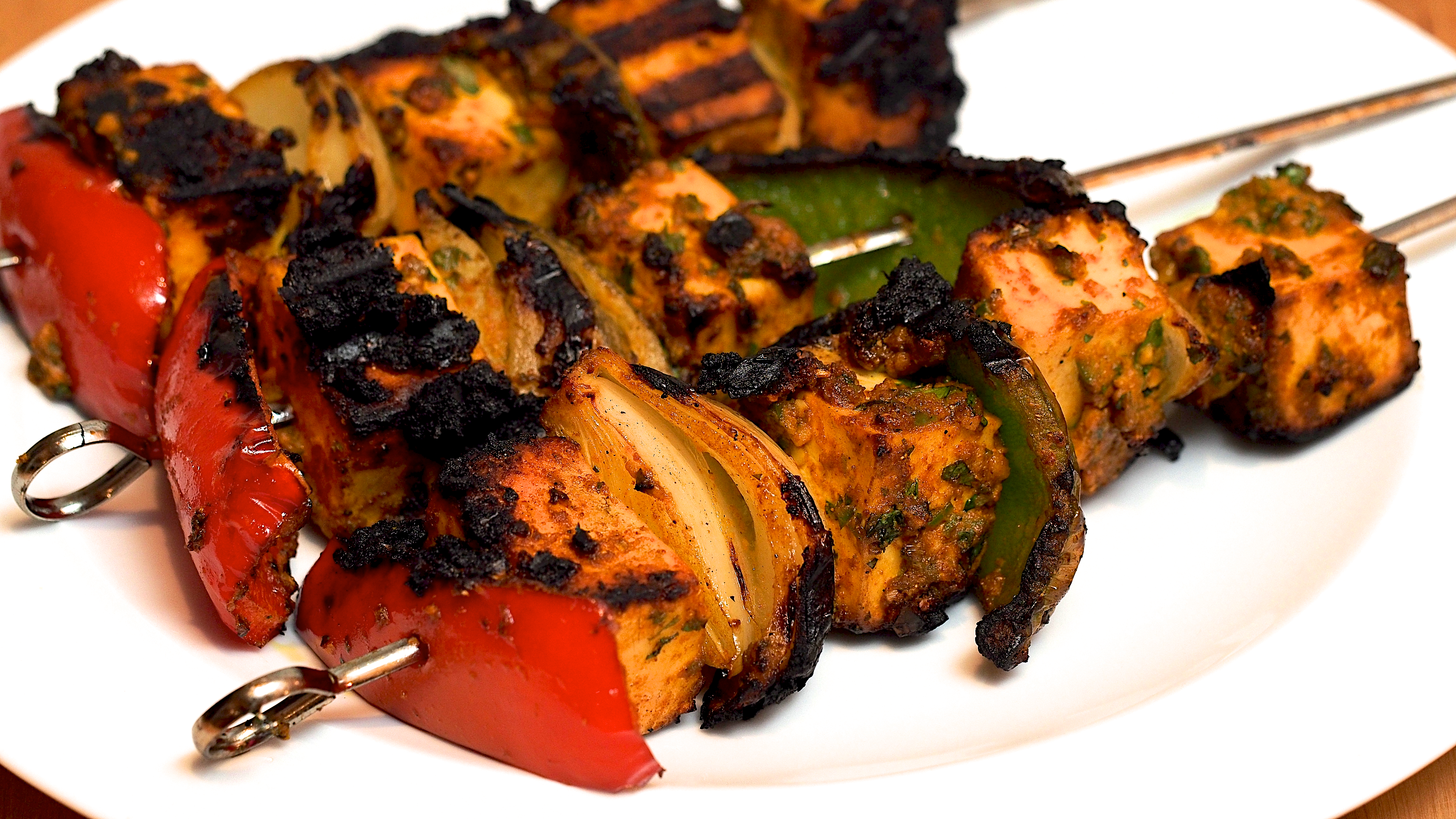
We recently acquired a recipe book called Prashad: Indian Vegetarian Cooking (thanks Mum). You might remember Prashad as Gordon Ramsay’s best restaurant runner-up on TV a couple of years ago. This is the first recipe we tried from the book and is guaranteed to make your veggie friends happy at your next summer barbecue. Vegetarians often get a bum deal at barbecues, palmed off with a few peppers and onions skewered on a stick. These should right all your past wrong-doings.

Paneer is an Indian unsalted white cheese with a crumbly texture and mild taste that  goes really well with strong flavours and marinades. You can buy it in supermarkets as well as specialist Asian shops.

These are very easy to make but you need to marinade the night before!

Drinks Suggestion: We enjoyed this with both a lager and a citrus-laden Blonde Ale; fresh and summery.

Paneer Tikka – makes 6 skewers 

  • 2 x 250 blocks of paneer cheese
  • 1 medium red pepper,cut into 6 chunky pieces
  • 1 medium green pepper, cut into 6 chunky pieces
  • 1 medium onion, cut into 6 wedges
  • 2 lemons, quartered to serve

MARINADE: 

  • 2-3 green chillies, seeds left in
  • 4-8 garlic cloves
  • 2 handfuls of fresh coriander, chopped fine
  • 2 tsp ground coriander
  • 2 tsp garam masala 
  • 1½ tsp salt
  • 1 tsp trumeric
  • 2 tbsp plain live yogurt
  • 100ml sunflower oil

Finely chop the chillies and garlic then tip into a large bowl and add the other marinade ingredients.

Cut each block of cheese into 9 equal-sized cubes and add to the marinade along with the pepper and onion pieces. Stir to coat, then cover and leave in the fridge overnight.

Thread 6 skewers with 3 pieces of cheese seperated by pieces of pepper and onion. Cook the skewers over a hot barbecue for 20 minutes, until slightly charred, turning every 4-5 minutes.

Serve with the lemon quarters, a green salad and some cucumber and yogurt dip.

(Original recipe from Kaushy Patel’s Prashad: Indian Vegetarian Cooking, Saltyard Books 2012.)

Read Full Post »

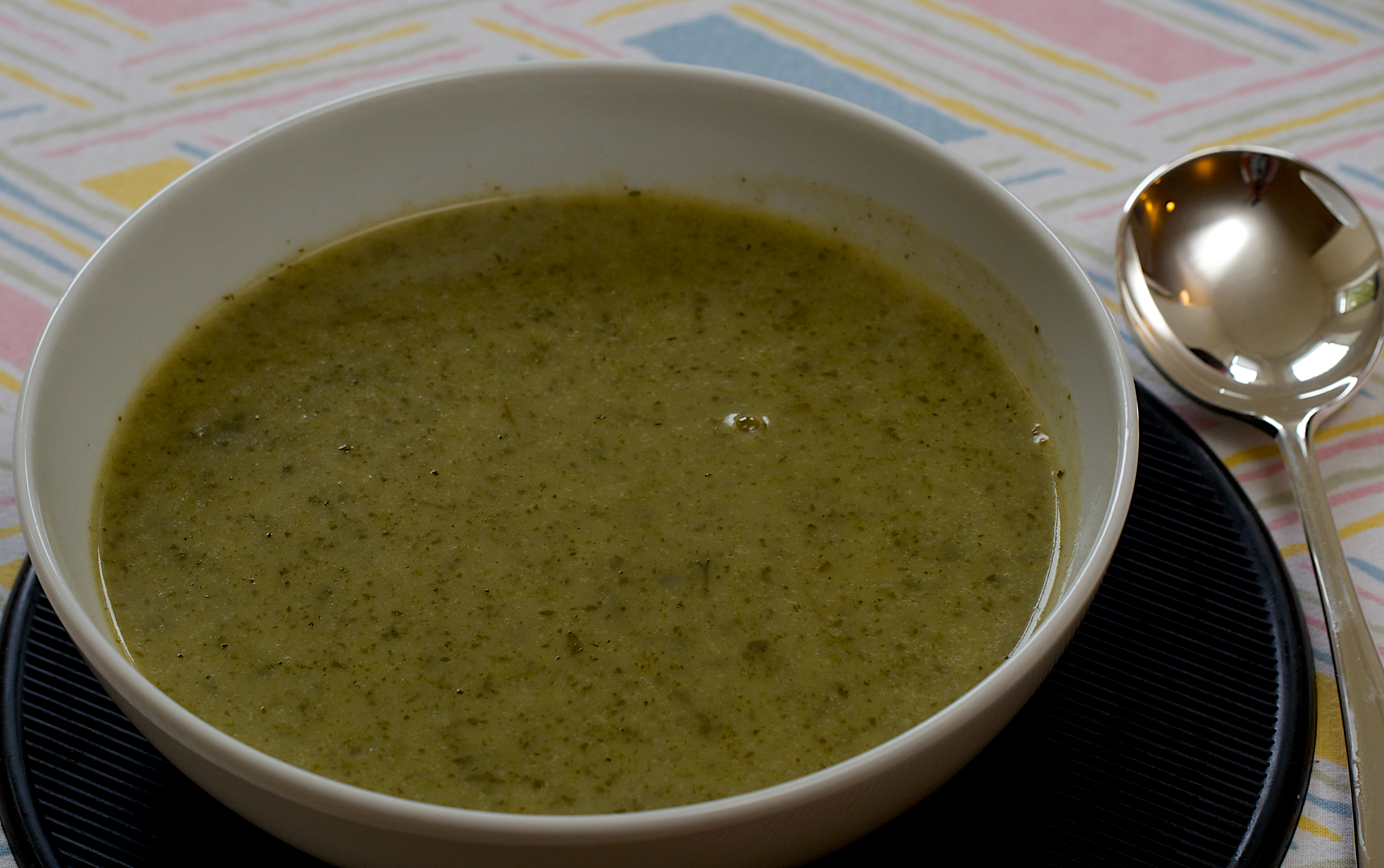
This is a real gardeners’ delight as chervil grows well, but doesn’t travel well, so its best cooked soon after picking. We love the hint of aniseed it brings to the flavours and have to thank Rai and Linda for their allotment which allowed us to make this soup!

Chervil & Potato Soup – to serve 4

  • 50g butter
  • 1 onion, finely chopped
  • 450g fresh chervil (or you can use other soft herbs like parsley, sorrel or marjoram)
  • 1 large floury potato, peeled, diced and rinsed
  • 1.1 litres boiling vegetable stock

Melt the butter and soften the onion without browning.

Stir in the herbs, a generous pinch of salt and some pepper, cover and sweat for a few minutes.

Add the potato and 275ml of the boiling stock. Cover and simmer for 5 minutes, then add the rest of the liquid. Continue to simmer until the potato is soft enough for you to mash into the soup. Taste for seasoning and serve.

(Original recipe from Lindsey Bareham’s A Celebration of Soup, Penguin Books, 1993.)

Read Full Post »

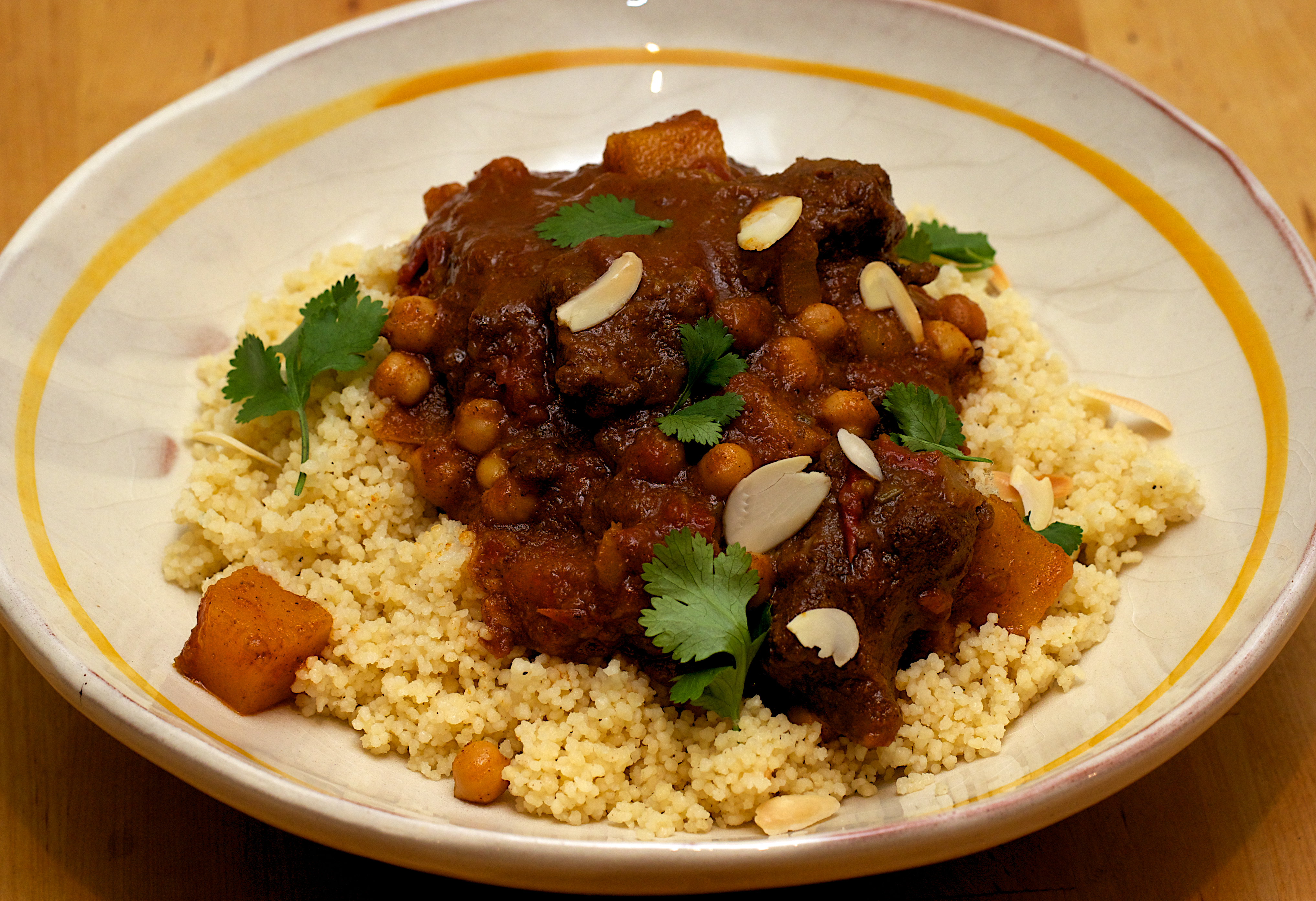
Beef Tagine

The quintessential Moroccan dish, which you don’t actually need a funny shaped pot for. We cooked this back in April when it looked like Spring, and the prospect of lighter dishes, was never going to arrive. Serve with lots of couscous (or bread if you want to be more authentic).

Beef Tagine – serves 4-6

  • 600g stewing beef
  • 1 onion, finely chopped
  • small bunch of coriander
  • 1 tin of chopped tomatoes
  • 1 tin of chickpeas
  • 800ml vegetable stock
  • 1 small squash
  • 100g prunes, stoned and roughly chopped
  • 2 tbsp flaked almonds, toasted

FOR THE SPICE RUB: 

  • sea salt and black pepper
  • 1 tbsp ras el hanout spice mix
  • 1 tbsp ground cumin
  • 1 tbsp ground cinnamon
  • 1 tbsp ground ginger
  • 1 tbsp sweet paprika

Mix the spice rub ingredients together in a small bowl. Put the beef into a large bowl, massage it with the spice rub, then cover and leave in the fridge overnight (or for as long as you have).

Heat some olive oil in a heavy-based casserole and fry the meat over a medium heat for 5 minutes. Add the onion and coriander stalks and fry for another 5 minutes. Add the chickpeas and tomatoes, then pour in 400ml of stock and stir. Bring to the boil, cover and reduce to a simmer for 1½ hours.

Add the squash, prunes and remaining stock and continue to cook for another 1½ hours. You might need to add a splash of water if it starts to dry.

If the tagine looks to runny you can simmer for 5-10 minutes with the lid off to thicken. Taste and season with salt if needed. Serve scattered with the coriander leaves and toasted almonds.

Wine Suggestion: A youthful and vibrant red Rioja would do the trick here: find either a joven or crianza with lots of primary fruit. Our pick was the Paco Garcia Seis 2012 – vibrant and youthful with juicy dark fruit and an attractive inkiness. The tannins were perfectly ripe and complimented the beef and the juicy fruit and spice in the wine worked with the spices in the dish. Yum

(Original recipe from Jamie Does by Jamie Oliver, Penguin Books Ltd., 2010.)

Read Full Post »

We’re always on the lookout for low-calorie dishes for weeknights (so we can afford to redress the balance at the weekend!) This one was tasty and helpfully used up some of the bits and pieces we had in the fridge.

Coconut, noodle & vegetable soup – to serve 4

  • 1-2 tbsp Thai curry paste (use whatever colour you’ve got)
  • 1 tsp groundnut (or other flavourless oil)
  • 700ml vegetable stock
  • 300ml reduced-fat coconut milk
  • 200g thick-rice noodles
  • 200g chestnut mushrooms, sliced
  • 140g sugar snap peas, halved
  • 100g beansprouts
  • 1½ tbsp Thai fish sauce
  • juice of 1 lime
  • 3 scallions shredded
  • some mint and coriander leaves to serve (if you have some)

Put a large pot over a medium heat. Cook the curry paste in the oil for a minute until it starts to release its aroma. Add the stock and coconut milk and bring to the boil. Reduce the heat to a simmer and stir in the noodles. Simmer for 7 minutes, then stir in the mushrooms and sugar snaps. Cook for another 3 minutes, then add the beansprouts, fish sauce and lime juice. Take the pan off the heat.

Serve in bowls with some scallions, mint and coriander.

(Original recipe from BBC Good Food)

Read Full Post »

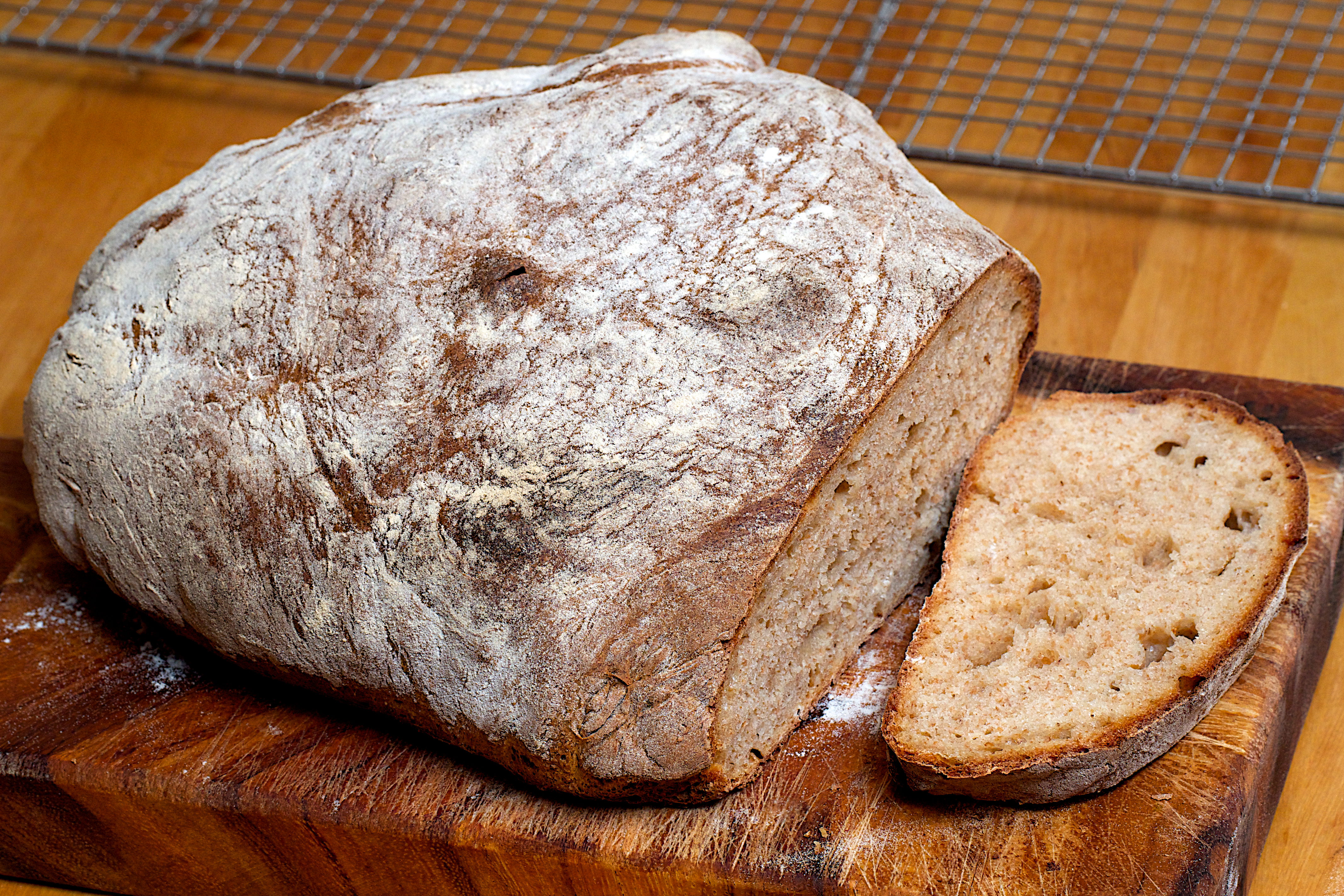
Spelt & Cider Bread

We’ve done this recipe a few times and it works a treat. The texture and flavour balance makes it feel very professional. It keeps well too.

Spelt & Cider Bread  – makes one medium-sized loaf

  • 250g wholemeal spelt flour
  • 250g strong white bread flour
  • 1 heaped tsp sea salt
  • 150ml full-cream milk
  • 1 tsp honey
  • 35g fresh yeast (we used 2 sachets of dried yeast)
  • 250ml dry cider

Warm a large mixing bowl.

Weight the flours into the warmed bowl and stir in the salt.

Warm the milk in a small saucepan until hot, but not boiling (you should be able to test it with your finger). Dissolve the honey in the milk.

Cream the yeast with a teaspoon in a small bowl and slowly pour in the warm milk and honey. When it is smooth, pour onto the flours along with the cider and mix well with your hands. When the dough has formed a rough ball, tip out onto a lightly oiled or floured surface. Knead gently for one minute.

Lightly flour the bowl you mixed the dough in and put the kneaded dough in it. Cover with a clean, warm cloth and leave in a warm, draught-free place for an hour.

Remove the dough and knead gently for a minute. Return to the bowl, cover and return to the warm place for another 25-30 minutes, or until risen again.

Set the oven to 240ºC/Gas 9.

Knead the dough again, this time forming it into a ball, then put it onto a floured baking tray and dust generously with flour. Cover with a cloth and keep warm for another 15-20 minutes.

Bake the dough in the oven for 25 minutes. When it looks brown and crispy, remove it from the oven, turn upside down and tap the bottom. If it is cooked it will sound hollow. Cool on a wire rack.

(Original recipe from Nigel Slater’s The Kitchen Diaries II, Fourth Estate, 2012.)

Read Full Post »

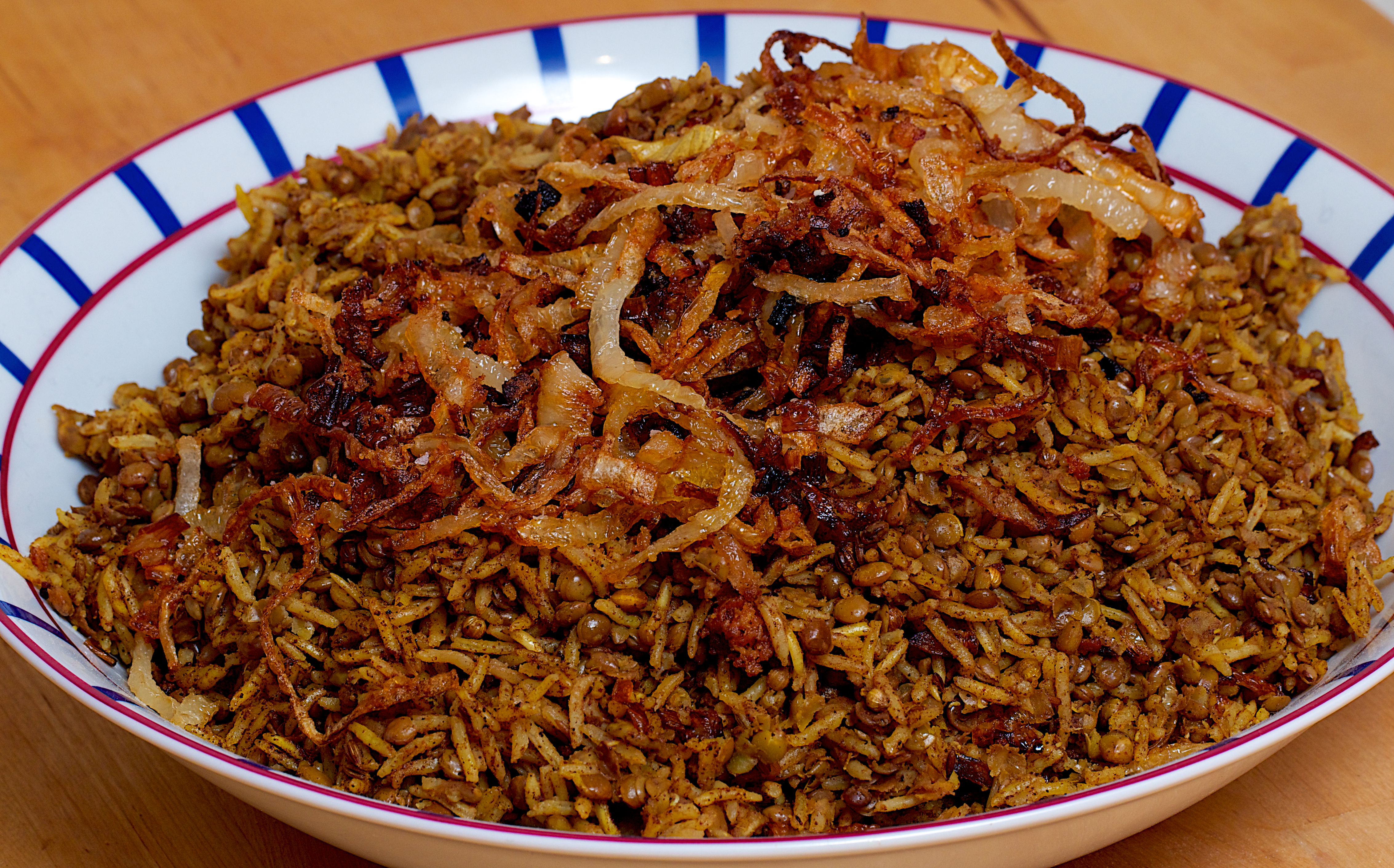
We challenge you to stop once you’ve started eating this! Serve as a main dish with some Greek yoghurt or yoghurt with cucumber. Leftovers are good served at room temperature.

Mejadra – to serve 6

  • 250g green or brown lentils
  • 4 medium onions
  • 3 tbsp plain flour
  • 250ml sunflower oil
  • 2 tsp cumin seeds
  • 1½ tbsp coriander seeds
  • 200g basmati rice
  • 2 tbsp olive oil
  • ½ tsp ground turmeric
  • 1½ tsp ground allspice
  • 1 ½ tsp ground cinnamon
  • 1 tsp sugar
  • 350ml water

Put the lentils in small saucepan, cover generously with water, bring to the boil and cook for 12-15 minutes or until they are soft but still have some bite, then drain.

Thinly slice the onions and put on a large flat plate. Sprinkle with flour and 1 tsp salt and toss with your hands. Heat 250ml sunflower oil in a medium heavy-based saucepan over a high heat. The oil is ready when a small piece of onion sizzles vigorously. Reduce the heat to medium-high and add a third of the onion. Fry for 5-7 minutes, stirring now and then, until golden-brown and crispy. Use a slotted spoon and transfer to a colander lined with kitchen paper and sprinkle over a little more salt. Repeat with the next two batches (add a bit more oil if necessary).

Discard the oil and wipe the saucepan clean. Add the cumin and coriander seeds and put over a medium heat and toast the seeds for a minute or two. Add the rice, olive oil, turmeric, allspice, cinnamon, sugar, ½ tsp salt and lots of black pepper. Stir until the rice is coated with oil, then add the cooked lentils and the water. Bring to the boil, cover and simmer on a very low heat for 15 minutes.

Remove from the heat, remove the lid and quickly cover with a clean tea towel. Seal tightly with the lid and leave for 10 minutes.

Add half the fried onion and gently fork through. Pile up in a shallow serving bowl and top with the rest of the onion.

Wine Suggestion: This dish deserves a light red without too much aggressive tannins, weight or alcohol. A youthful Syrah from a lesser appellation in the Rhone would work, like St Joseph or Crozes-Hermitage. Alternately, try a youthful local red from the Golan Heights or Lebanon where the spiciness and warmth will also compliment the flavours.

(Original recipe from Jerusalem by Yotam Ottolenghi and Sami Tamimi, Ebury Press, 2012)

Read Full Post »

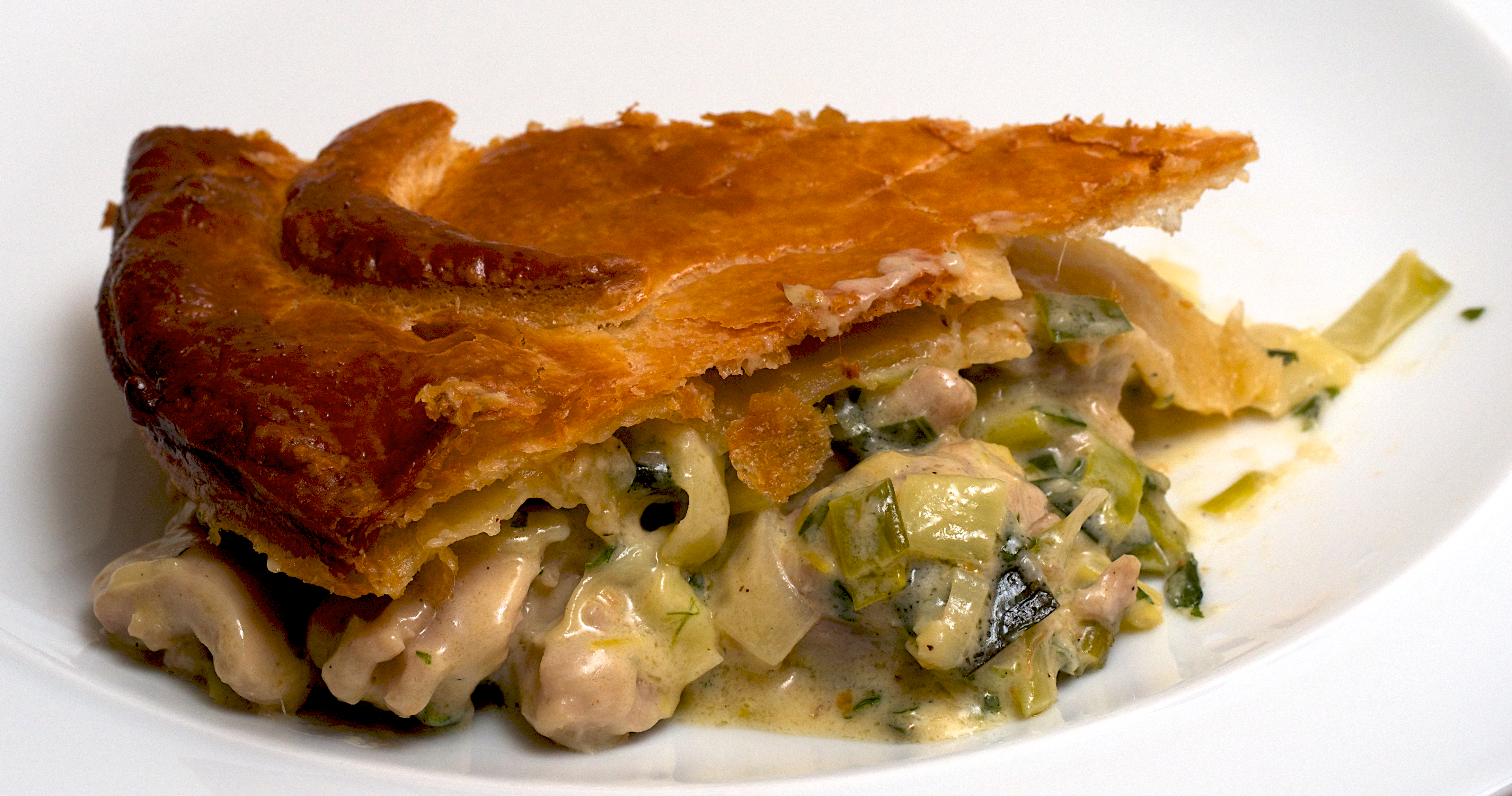
Delicious chicken pie. Prepare the filling ahead, then add the pastry and bake to feed a crowd.

Chicken & Leek Pie – serves 6-8

  • 1.2kg boneless, skinless chicken thighs
  • 2 tbsp plain flour, seasoned
  • 2 large leeks, quartered lengthwise and sliced
  • 150g unsalted butter
  • large handful of chopped parsley
  • 170ml milk
  • 250ml cream
  • 1 egg, beaten
  • puff pastry or mashed potato

Chop each chicken thigh into about 12 pieces and toss with the flour. Melt half the butter in a large frying pan and sauté the leeks for about 10 minutes or until softened. Tip into a bowl and set aside.

Melt half the remaining butter in the same pan and sauté half the chicken pieces until golden and barely cooked. Add to the bowl with the leeks. Repeat with the rest of the butter and chicken.

Mix the chicken and leeks together along with the parsley. Return half of the mixture to the pan, add half the milk and half the cream and bubble for 5 minutes. Transfer to a clean bowl and repeat with the rest of the chicken, cream and milk. Combine the batches, check the seasoning and cool.

Preheat the oven to 200ºC.

Put the chicken filling into a 1.5 litre pie dish and cover with the puff pastry or mashed potato. Brush with the beaten egg and bake for 25-30 minutes or until golden.

Wine Suggestion: We are big fans of good Bordeaux white wine and this dish works well with the balance of flavours of oaked Semillon and Sauvignon Blanc. The toasty buttery character complements the flavours and the clean and fresh texture balances any richness of the dish. Look out for some of the smaller Chateau that are up and coming like Chateau Bouscaut; the 2010 worked a treat here.

(Original recipe from The Cook’s Companion by Stephanie Alexander, Lantern, 1996.)

Read Full Post »

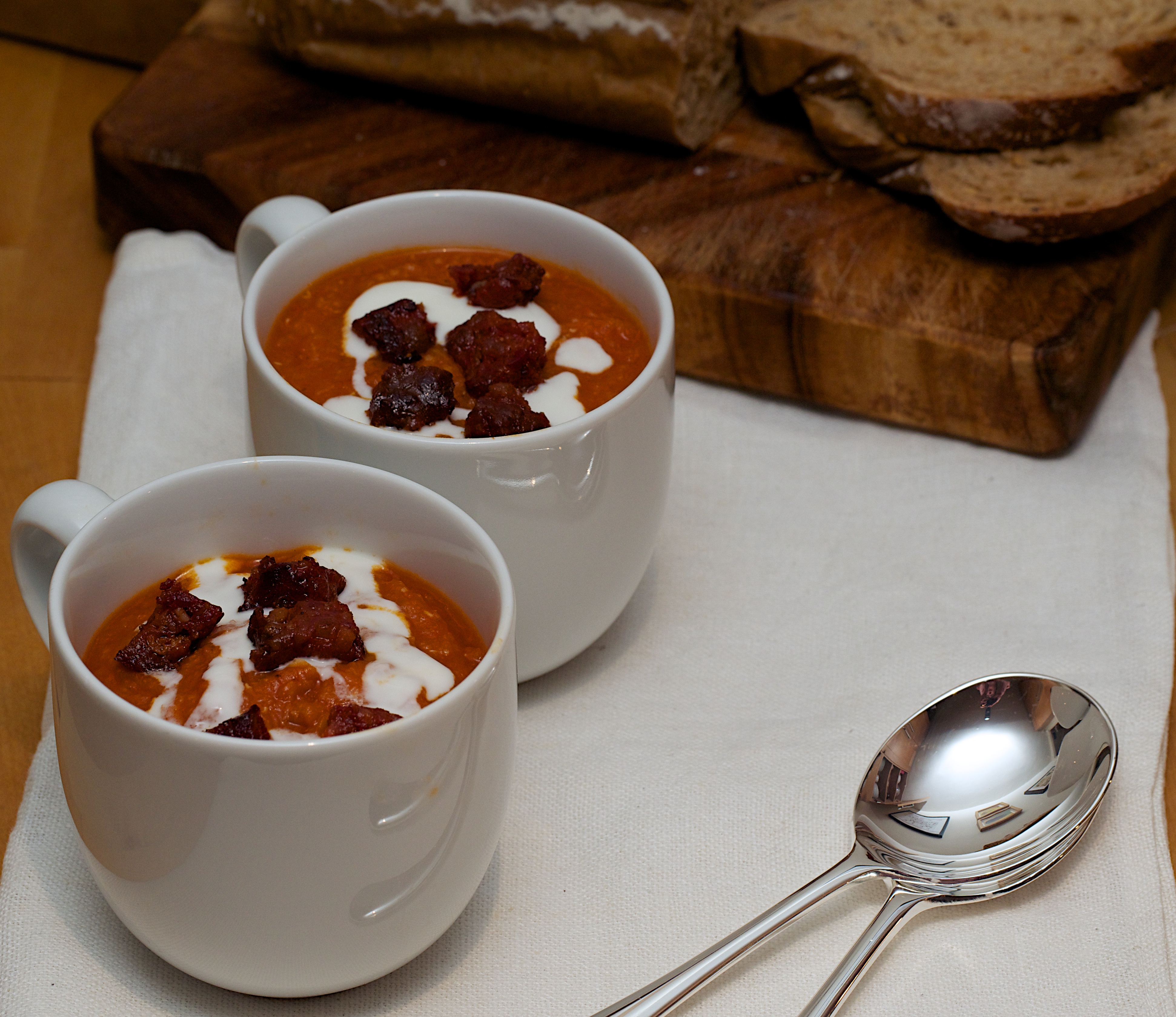
Surprisingly light and healthy despite the big, rich flavours.

Red Lentil & Chorizo Soup – to serve 6

  • 1 tbsp olive oil
  • 200g cooking chorizo, peeled and diced
  • 1 large onion, chopped
  • 2 carrots, chopped
  • pinch of cumin seeds
  • 3 garlic cloves, chopped
  • 1 tsp smoked paprika, plus extra for sprinkling
  • pinch of golden caster sugar
  • small splash red wine vinegar
  • 250g red lentils
  • 2 x 400g cans chopped tomato
  • 850ml chicken stock
  • plain yogurt, to serve

Heat the oil in a large saucepan. Add the chorizo and cook until crispy and the oil has run. Remove with a slotted spoon and set aside but leave the oil in the pan. Fry the onion, carrot and cumin seeds for about 10 minutes, then add the garlic and cook for another minute. Sprinkle in the the paprika and sugar, cook for a minute then add the vinegar. Simmer briefly, then add the lentils and pour over the tomatoes and chicken stock.

Stir well, then simmer for 30 minutes or until the lentils are soft. Blitz in a blender but you don’t want it completely smooth.

Serve drizzled with the yogurt, a little extra olive oil if you like, and a sprinkle of paprika.

(Original recipe from BBC Good Food)

Read Full Post »

« Newer Posts - Older Posts »