Feeds:
Posts
Comments

Archive for the ‘Food’ Category

A really quick and tasty dish from Nigel Slater to add a bit of excitement to a pack of chicken thighs.

Five-spice Chicken and Pea Shoot Salad – to serve 2

For the salad: 

  • A few handfuls of young salad leaves

For the chicken: 

  • 40g fresh ginger, finely grated
  • 1 small red chilli, finely sliced
  • 2 tsp Chinese five-spice powder
  • 2 cloves garlic
  • 2 tbsp groundnut or other flavourless oil
  • 400g diced raw chicken meat (we used thighs)
  • ½ tsp caster sugar
  • juice of a lime

Stir the ginger, chilli and 5-spice powder together in a large bowl. Crush in the garlic, pour in the oil, and mix well. Add the chicken and toss together.

Heat a wok to very hot. Add the chicken and dressing and fry over a high heat for 6-7 minutes or until cooked through (put a lid on to ensure the chicken cooks through). Add the sugar, stir-fry for another minute, then add the lime juice and a generous amount of salt.

Add the salad leaves to the wok, and toss for a few seconds, or until starting to wilt, then tip everything out onto plates.

Nigel suggests scattering with sprouting seeds or cress before serving (we didn’t have any).

Wine Suggestion: To balance the 5-spice but not overwhelm the flavours, we’d suggest a New World Pinot Noir from a good area, like California or Oregon. You’ll get lots of juicy fruit and a wine that’s not too heavy for this light dish.

(Original recipe from Nigel Slater’s The Kitchen Diaries II, Fourth Estate, 2012.)
Read Full Post »

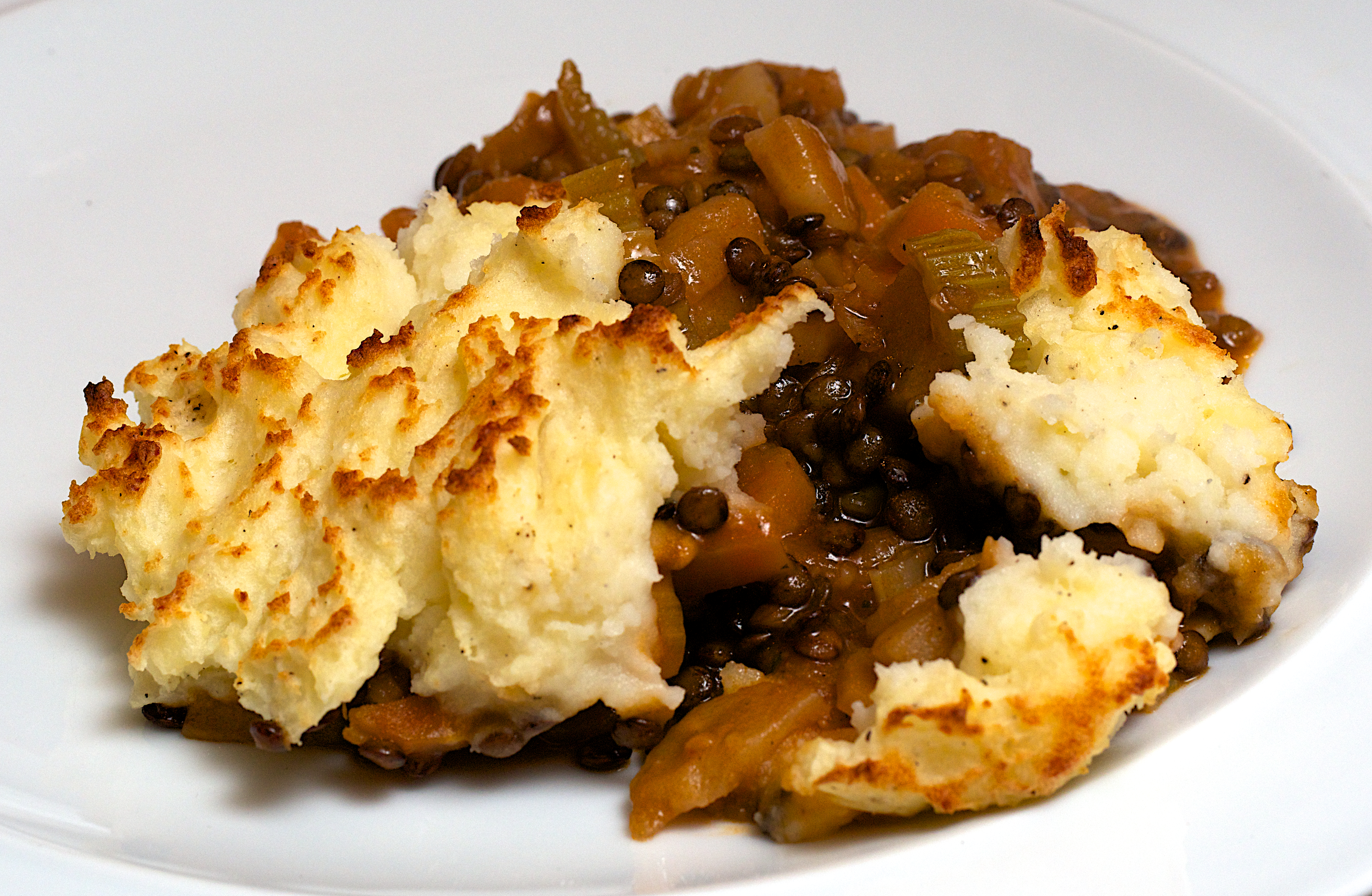
This recipe is rich with a natural gravy and very flavoursome and filling. Despite this it is very low in calories so perfect if you’re watching your weight or for a midweek dinner. We ate this over two nights (instead of three) as we were both a little greedy, and also because it was so moreish.

Gardener’s Pie – to serve 6

  • 1 tbsp sunflower oil
  • 2 shallots, chopped
  • 3 celery sticks, trimmed & chopped
  • 2 large carrots, peeled & diced
  • 2 large parsnips, peeled & diced
  • 2 garlic cloves, thinly sliced
  • 150g puy lentils, rinsed & drained
  • 1 litre hot vegetable stock
  • 2 tbsp tomato purée
  • 1 bay leaf
  • 500g floury potatoes, like Maris Piper, peeled & cut into small chunks
  • 15g butter
  • 2 tsp plain flour

Heat the sunflower oil in a deep, large frying pan over a medium heat and fry the shallots, celery, carrots & parsnip for 8-12 minutes and until brown. Add the garlic and cook for a further minute.

Stir in the lentils, stock, tomato purée and bay leaf and bring to the boil. Reduce to a simmer and cook for 25 minutes and until tender.

Put the potatoes into a pot and cover with cold water. Bring to the boil and cook for about 10 minutes and until tender. Drain and add the butter and some seasoning. Mash until smooth. Add a little extra butter if you’d like for a bit more richness.

Heat the grill.

Sprinkle flour over the simmered lentil mix and stir in. Cook for another 2 minutes until thickened. Spoon into a warmed, heatproof pie dish.

Top with the mashed potato and grill for 5 minutes , until golden. You’ll need to keep an eye on this as the time needed will depend on the griller.

Serve with: try a Beaujolais Cru, like a Régnié, which will have a both lightness and depth, plus a bit of earthiness to match the lentils. Beaujolais is never too heavy, and the Cru’s add depth and personality that is harder to find in a basic wine.

(Original recipe from BBC Good Food)

Read Full Post »

Another on a light theme: in calories again not flavour.

Cauliflower & Potato Curry – to serve 4

  • 2 tbsp vegetable oil
  • 1 large onion, chopped
  • large piece ginger, grated
  • 3 garlic cloves, finely chopped
  • ½ tsp turmeric
  • 1 tsp ground cumin
  • 1 tsp curry powder
  • tin chopped tomatoes, drained
  • ½ tsp sugar
  • 1 cauliflower, cut into florets
  • 2 potatoes, cut into chunks
  • 1 green chilli, halved lengthways
  • squeeze of lemon juice
  • handful coriander, roughly chopped, to serve
  • natural yogurt to serve

Heat the oil in a saucepan and cook the onion for about 10 minutes or until soft. Add the ginger, garlic, turmeric, cumin, and curry powder and cook for a further minute. Stir in the tomatoes and sugar. Add the cauliflower, potatoes, and split chilli along with some salt and pepper. Cover and cook gently for about half an hour or more, stirring occasionally until the vegetables are tender. You can add a drop of water if you need to but this is a dry curry.

When the vegetables are soft, add a squeeze of lemon juice and scatter with coriander. Serve with natural yogurt.

(Original recipe from BBC Good Food)

Read Full Post »

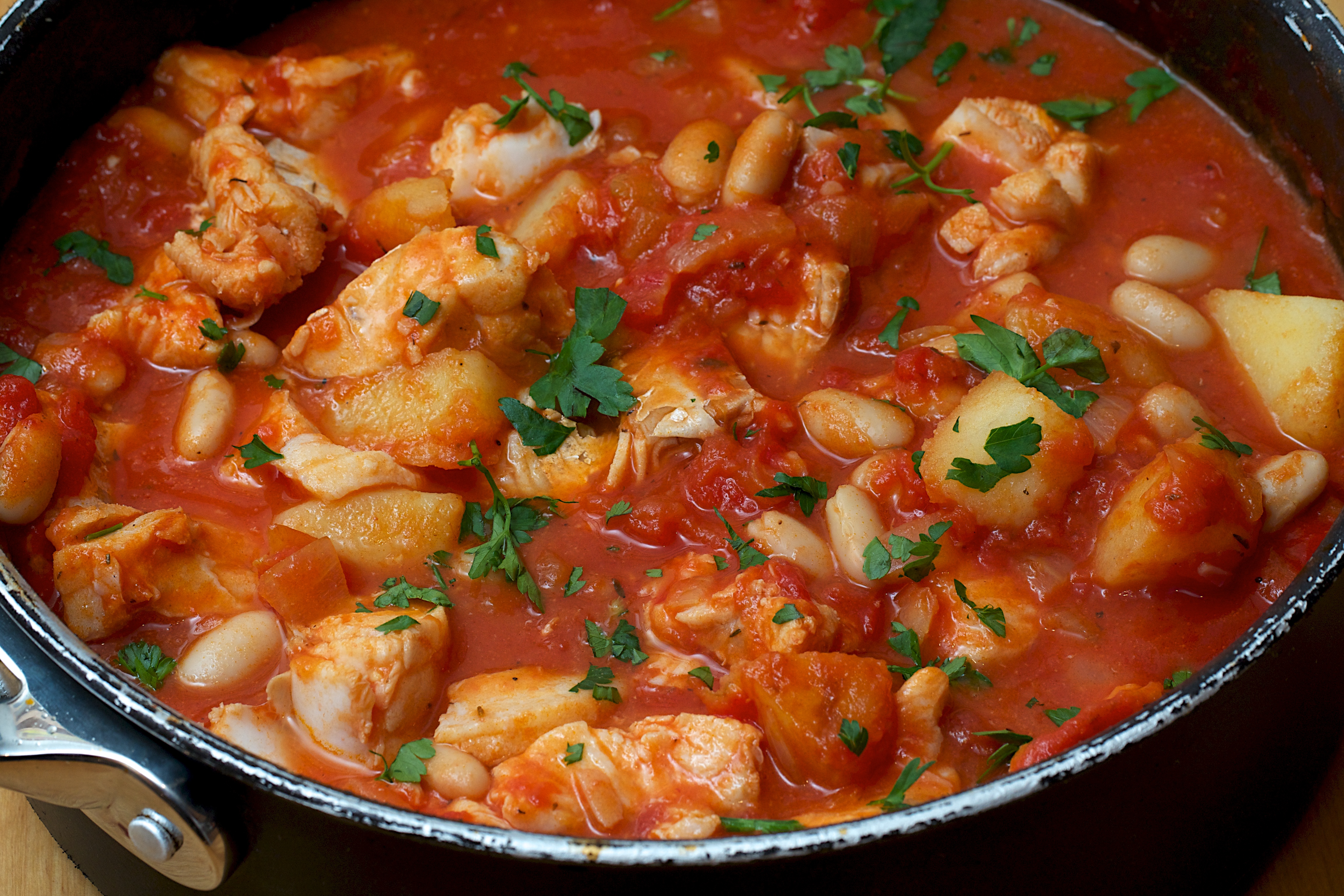
Super-healthy mid-week meal that also fills you up.

Fish Chowder – to serve 4

  • 2 tbsp olive oil
  • 1 large potato, peeled and cut into big chunks
  • 1 medium onion, chopped
  • 1 fat garlic clove, finely chopped
  • 2 x 400 tins chopped tomatoes
  • 2 tbsp tomato purée
  • ½ tsp dried thyme
  • splash of soy sauce
  • 410g tin cannellini beans, drained and rinsed
  • 500g plump white fish fillets, in big chunks
  • a handful of parsley, chopped

Heat the oil in a large frying pan. Dry the potatoes in kitchen paper and tip into the hot oil. Cook them covered over a medium to high heat for 5 minutes, stirring occasionally, until the potatoes are golden. Add the onion and garlic and cook for another few minutes on a fairly high heat until the onion has browned.

Stir in the tomatoes, the tomato purée, thyme and soy sauce, and let it bubble for couple of minutes. Stir in the beans and some seasoning, then sit the fish on top, pushing it down into the sauce. Don’t stir it though or the fish will break up. Cover and simmer for 4 minutes, or until the fish is cooked. Serve sprinkled with the parsley.

Wine Suggestion: Try an Albariño from Rías Baixus in Spain which should have plenty of acidity and flavour. This is a very trendy wine at the moment, and subsequently not cheap, but they are interesting wines and usually worth the bit extra.

(Original recipe from BBC Good Food)

Read Full Post »

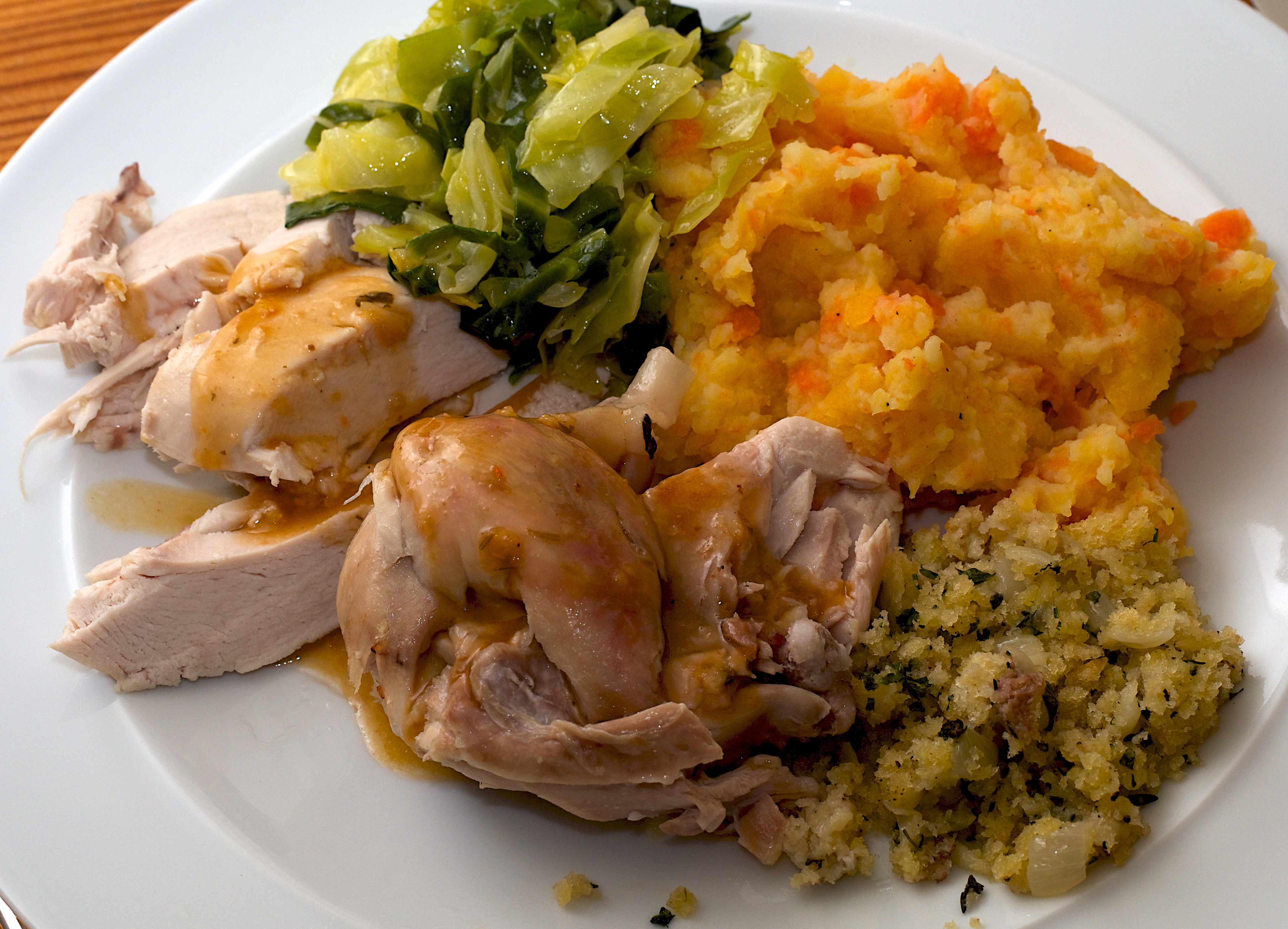
This roast chicken was inspired by Darina Allen, who had a new method for keeping the Chicken skin moist – using butter soaked muslin. It works excellently so we’re converts to this technique!

Traditional Roast Chicken with Stuffing and Gravy – to serve 4

  • 1 chicken
  • chicken stock

FOR THE STUFFING: 

  • 45g butter
  • 75g chopped onion
  • 75-100g soft white breadcrumbs
  • 2 tbsp finely chopped fresh herbs (we used parsley and thyme)
  • a little soft butter

Preheat the oven to 180ºC/350°F/gas 4.

Make the stuffing: sweat the onions gently in the butter until soft, then take off the heat and stir in the breadcrumbs, herbs and some seasoning. Leave to cool.

Season the inside of the chicken, then half-fill with the cold stuffing. Put the rest of the stuffing into the neck end.

Weight the chicken and calculate the cooking time (15 minutes per 450g and 15 minutes over).

Melt 4 tsp butter and soak a large piece of muslin in the melted butter, cover the chicken completely with the muslin and roast for the calculated time. You can take the muslin off for the last 10 minutes if you want the skin really brown.

Check that the juices are running clear when pierced with a skewer, then leave to rest.

To make the gravy: spoon off any surplus fat from the roasting tin. De-glaze the pan juices with the stock and use a whisk to to stir and scrape the caramelised bits from the bottom of the tin. Boil it up well, season and thicken if you like (we like it runny).

Serve with greens and mash.

Wine Suggestion: Oaked white wines go well with roast chicken with Chardonnay being the obvious pick. We were a little extravagant and had a superb Chardonnay / Auxerrois blend from Zind-Humbrecht in Alsace. It’s a Vin de Table as Chardonnay is not an authorised grape for the region and as the wine is all about texture, minerality and structure , pushing the boundaries a lot, you could argue it is controversial on tasting as well; we thought it superb and thought provoking. As it opened up in the glass over the meal it worked better and better, matching flavours, complimenting them and adding nuances. The wine: Zind Z010 (obviously 2010 vintage, but Vin de Table wines are not allowed to say anything about vintage or region on the label).

Read Full Post »

This was really elegant and luxurious and the fennel and parsnip combination was unexpectedly delicious.

Fennel & Parsnip Soup – to serve 8

  • 50g butter
  • 175g onion, diced
  • 450g parsnips, peeled and diced
  • 450g fennel bulb, finely diced, keep the fronds to garnish
  • 1.2 litres chicken or vegetable stock
  • 125ml milk
  • 125ml cream

Melt the butter in a large pot, add the onion, parsnips and fennel and stir well to coat. Season with salt and pepper. Cover with a circle of baking paper and and the saucepan lid. Cook on a gentle heat for 10-15 minutes or until soft but not coloured.

Heat the stock and add, simmering for about 20 minutes or until the vegetables are completely tender. Add the milk and cream.

Blend until smooth and taste for seasoning. Serve sprinkled with the reserved fennel fronds.

(Original recipe from Darina Allen’s Ballymaloe Cookery Course, Kyle Cathie Limited, 2001.)

Read Full Post »

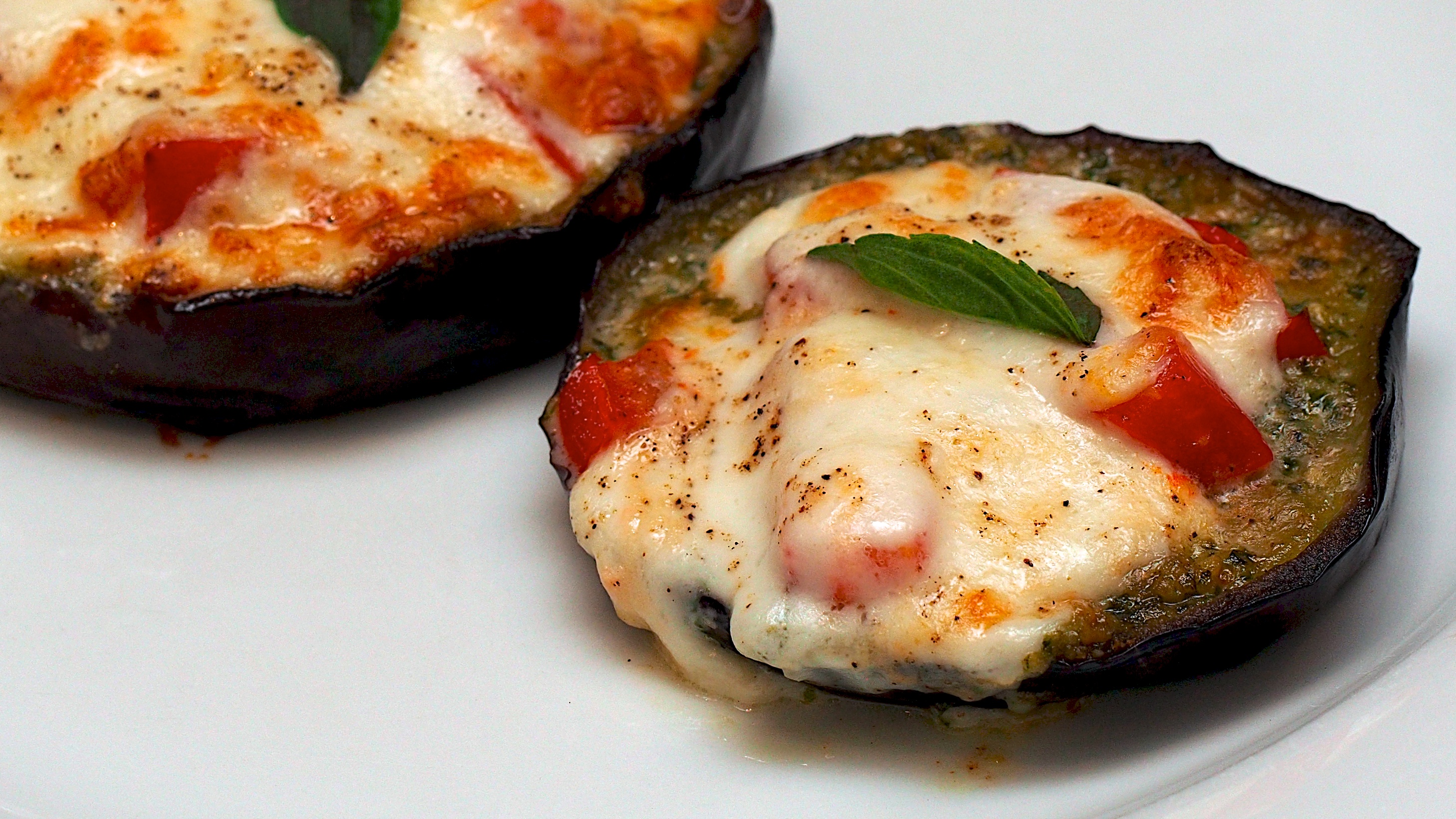
Capturing the summer season with fresh basil Pesto and aubergines. Serve with a simple green salad for a great starter.

Aubergine and Pesto Medallions – to serve 4

  • 1 vine-ripened tomato, cut into 5mm-thick slices and finely diced
  • 85ml olive oil
  • 1 aubergine (about 400g), cut into 8 x 1.5 cm thick slices
  • 2 tbsp Pesto
  • 16 small bocconcini, halved or a large ball of mozzarella, diced
  • 2 tbsp grated Parmesan
  • 8 small basil leaves

Preheat the oven to 220°C.

Put the diced tomato on a paper towel-lined plate.

Heat 2 tbsp of the oil in a large frying pan over a medium heat and add the aubergine slices. Cook for 5 minutes; don’t worry if the oil disappears. Turn the slices over and add the rest of the oil if you need it. Cook for another 5 minutes, and drain on a plate covered with paper towel. Blot the top of the aubergines with more paper towel to absorb any excess oil.

Line a baking tray with baking paper and transfer the aubergine slices onto it. Divide the pesto between the slices and spread. Spoon some of the diced tomato onto each slice (you might have a bit too much).

Arrange the mozzarella on top of the tomato. Sprinkle with Parmesan, season with salt and black pepper, then bake in the oven for 10 minutes.

Drain again on paper towel to absorb any excess oil. Garnish with basil leaves and serve.

Wine Suggestion: You could go for either a light red with a bit of acidity, such as an Italian Barbera, or a textural white, like a good Vermentino.

(Original Recipe from Stephanie Alexander’s Kitchen Garden Companion, Lantern, 2009.)


Read Full Post »

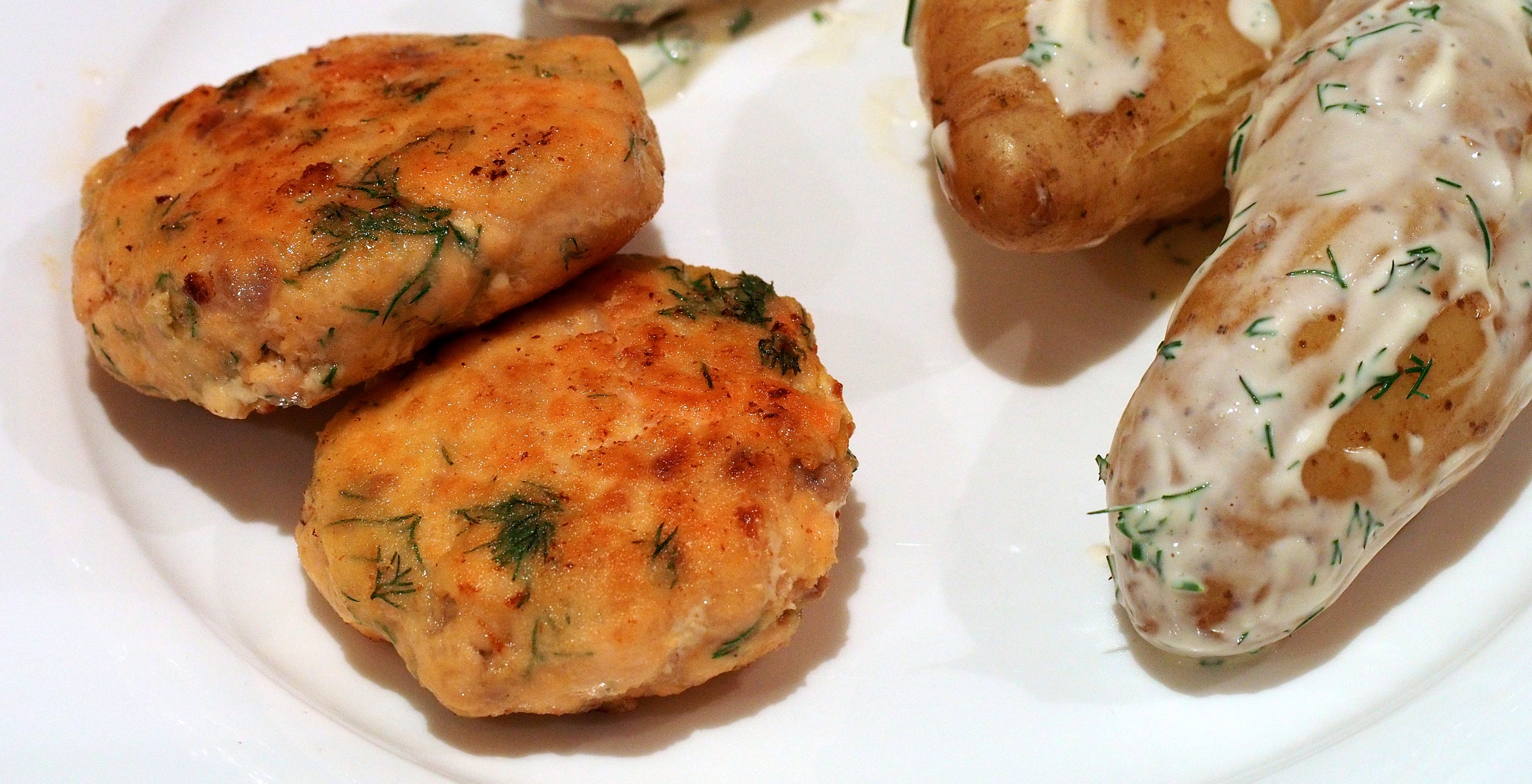
We made this when we visited Australia earlier this year from a great cookbook by Stephanie Alexander, her Kitchen Garden Companion. They go great with some new potatoes tossed with sour cream and dill for a main course.

Salmon Fishcakes with Dill – makes 8 or 24 little ones

  • 300g salmon fillet, cut into bite-size pieces
  • 2 tbsp double cream
  • 30g breadcrumbs (roughly 1 thick slice of bread)
  • 30g marinated goat’s cheese
  • 1 egg yolk
  • 4 tbsp chopped dill
  • ½ tsp sea salt
  • 2 tbsp plain flour
  • 20g butter
  • 2 tbsp olive oil

Pour the cream over the breadcrumbs and leave to soak for 5 minutes.

Pulse the salmon, cream-soaked crumbs and goat’s cheese in a food processor until combined, but not reduced to a paste. Scrape the mixture into a mixing bowl and mix in egg yolk and dill, then season with the salt and some pepper. Cover with cling film and chill for 30 minutes.

Wet your hands and divide the mixture into 8 large or 24 bite-sized fishcakes. Roll the fishcakes in the flour.

Heat butter and oil in a large non-stick frying pan over medium heat and fry the fishcakes for 2-3 minutes per side or until golden brown. Be careful not to overcook as they are better if they stay a bit moist.

Wine Suggestion: Try to find a top-quality Australian Verdelho, with a few years of age on it. It should have mellowed and developed a honey character alongside the fresh acidity and white floral character.

(Original Recipe from Stephanie Alexander’s Kitchen Garden Companion, Lantern, 2009.)


Read Full Post »

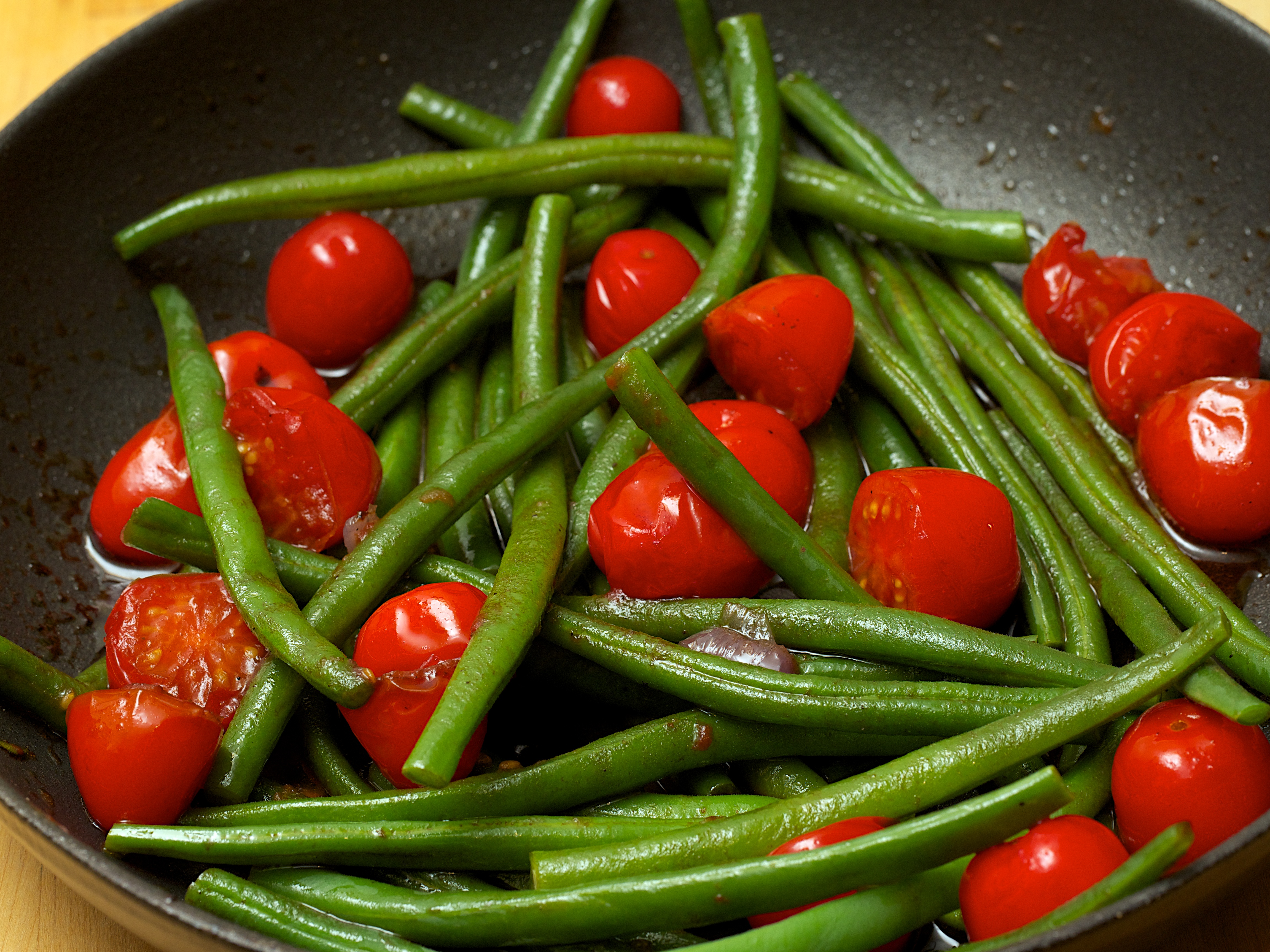
A colourful spring side dish that goes really nicely with roast lamb. You can cook the beans in advance and just warm through with the tomatoes and balsamic when you’re ready to serve.

Tomato & Balsamic Green Beans – serves 6-8 as a side dish

  • 650g green beans 
  • 1 tbsp olive oil
  • 200g cherry tomatoes, halved
  • 1 tbsp balsamic vinegar

Trim the beans and cook in boiling salted water for 6-8 minutes, or until just tender. Drain and cool under running cold water. Store in the fridge until needed.

Heat the oil in a pan, then add the tomatoes and fry gently for 2-3 minutes, or until slightly softened. Season well, then splash in the balsamic vinegar. Warm through, then tip the beans into the pan. Stir well, then cover and warm through for a few minutes.

Read Full Post »

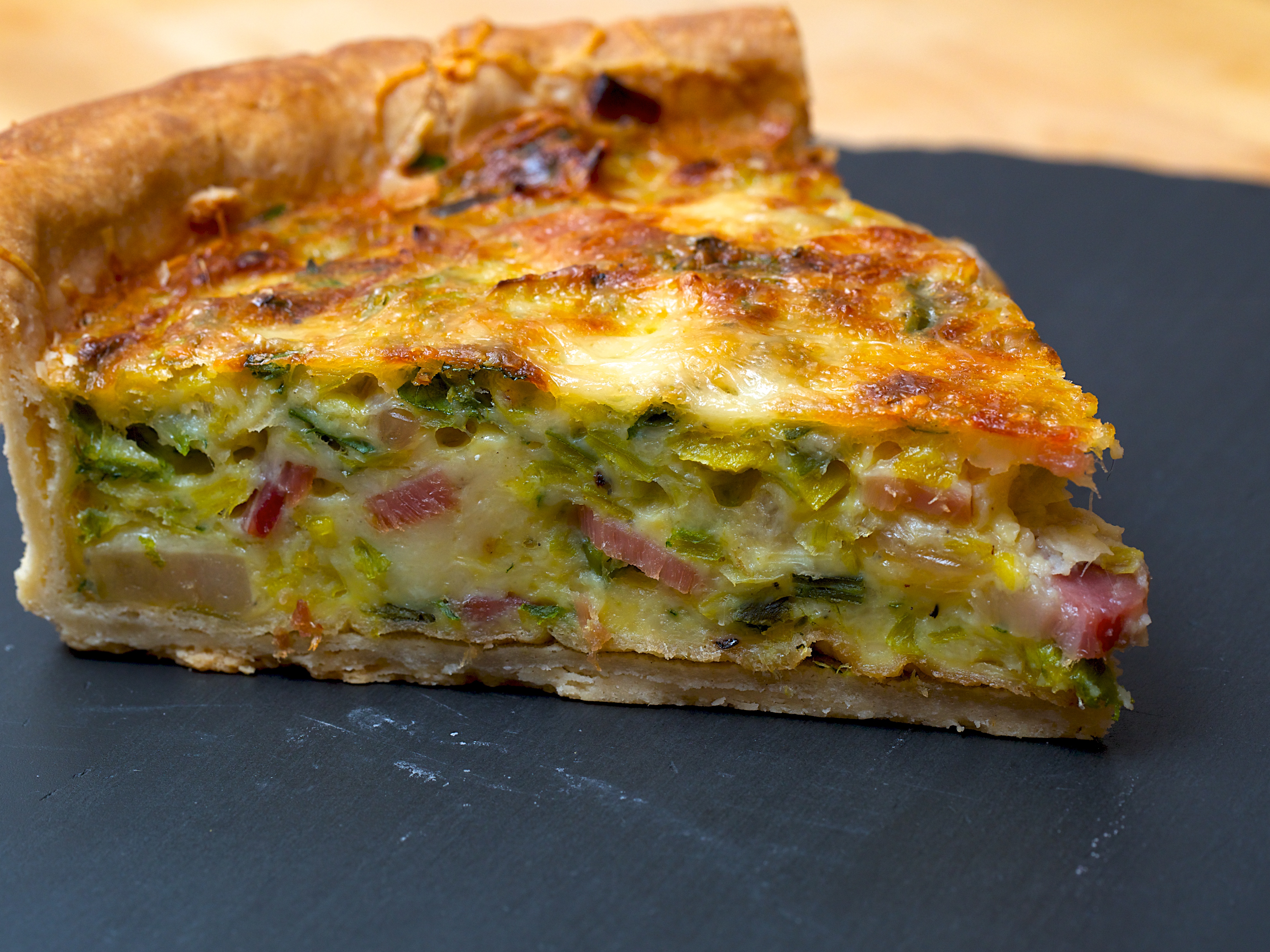
Leek & Pancetta Quiche – serves 4-6

  • 200g pancetta lardons
  • olive oil
  • 2 leeks, trimmed and finely chopped
  • 4 eggs
  • 4 tbsp double cream
  • 100g Gruyère cheese, finely grated
  • 2 tbsp chopped flat leaf parsley

FOR THE PASTRY:

  • 200g plain flour, plus a bit extra
  • pinch of salt
  • 100g butter, at room temperature, cubed

First make the pastry by sifting the flour and salt into a large bowl. Then using your fingertips, rub the butter into the flour, lifting the mixture up and dropping it back into the bowl. Keep doing this until the mixture looks like fine breadcrumbs, then mix in 2-3 tbsp of cold water. Bring the mixture together and knead lightly on a floured surface until you have a smooth ball of pastry. Wrap the pastry in cling film and chill for at least 20 minutes.

Preheat the oven to 200ºC/Gas 6.

Oil a 25cm loose-bottomed tart tin.

Roll the pastry out onto a floured work surface until about 3mm thick. Line the oiled tin with the pastry and leave some hanging over the edges, then prick the base with a fork. Chill for another 10 minutes.

Line the chilled pastry case with greaseproof paper and fill with baking beans or uncooked rice. Blind bake for 10-15 minutes. Remove the beans and paper and bake for another 5-8 minutes or until golden. Trim off the excess pastry with a sharp knife.

Meanwhile, fry the pancetta in a large frying pan over a medium heat for a few minutes until coloured and almost crispy. Add the leek and sauté for 3-4 minutes until soft and cooked through. Drain to remove any excess oil.

Mix the eggs and cream together in a bowl and season with salt and pepper. Add three-quarters of the grated cheese, stir in the leek mixture and add the parsley. Pour the mixture into the cooked pastry case, sprinkle the top with the leftover cheese and cook for 15-20 minutes or until golden and set.

Allow the quiche to cool for a bit before serving.

Wine Suggestion: We tried a lovely Bott-Geyl Pinot d’Alsace which worked superbly. A great combination of Pinot Blanc 35%, Pinot Auxerrois 35%, Pinot Gris 15% and Pinot Noir 15% (vinified as white wine). Rich and complex but with the freshness  and texture to balance the quiche perfectly.

(Original recipe from Gordon Ramsay’s Ultimate Cookery Course, Hodder & Stoughton, 2012.)

Read Full Post »

We made this with red onions as we had no Spanish onions to hand which worked well; if you have the Spanish onions it works even better!

New potatoes Lyonnaise – to serve 6 as a side dish

  • 50g unsalted butter
  • 4 tbsp olive oil
  • 3 large Spanish onions, sliced
  • 2 garlic cloves, sliced
  • 1 tbsp thyme leaves
  • 1kg large new potatoes, halved

Heat the butter in a large pan until foaming. Add 2 tbsp of the olive oil and the onions and cook on a fairly low heat until soft and golden, about 30 minutes. When the onions have softened, stir in the garlic and thyme and set aside.

Heat the oven to 200C/180 fan/gas 6. Bring a large pan of salted water to the boil, add the potatoes and boil for 5 minutes, then drain well.

Mix the potatoes with the rest of the oil and some seasoning in a large roasting tin. Roast for 30 minutes, tossing halfway, until golden. Stir in the onion mixture and roast for a further 10 minutes.

(Original recipe from BBC Good Food)

Read Full Post »

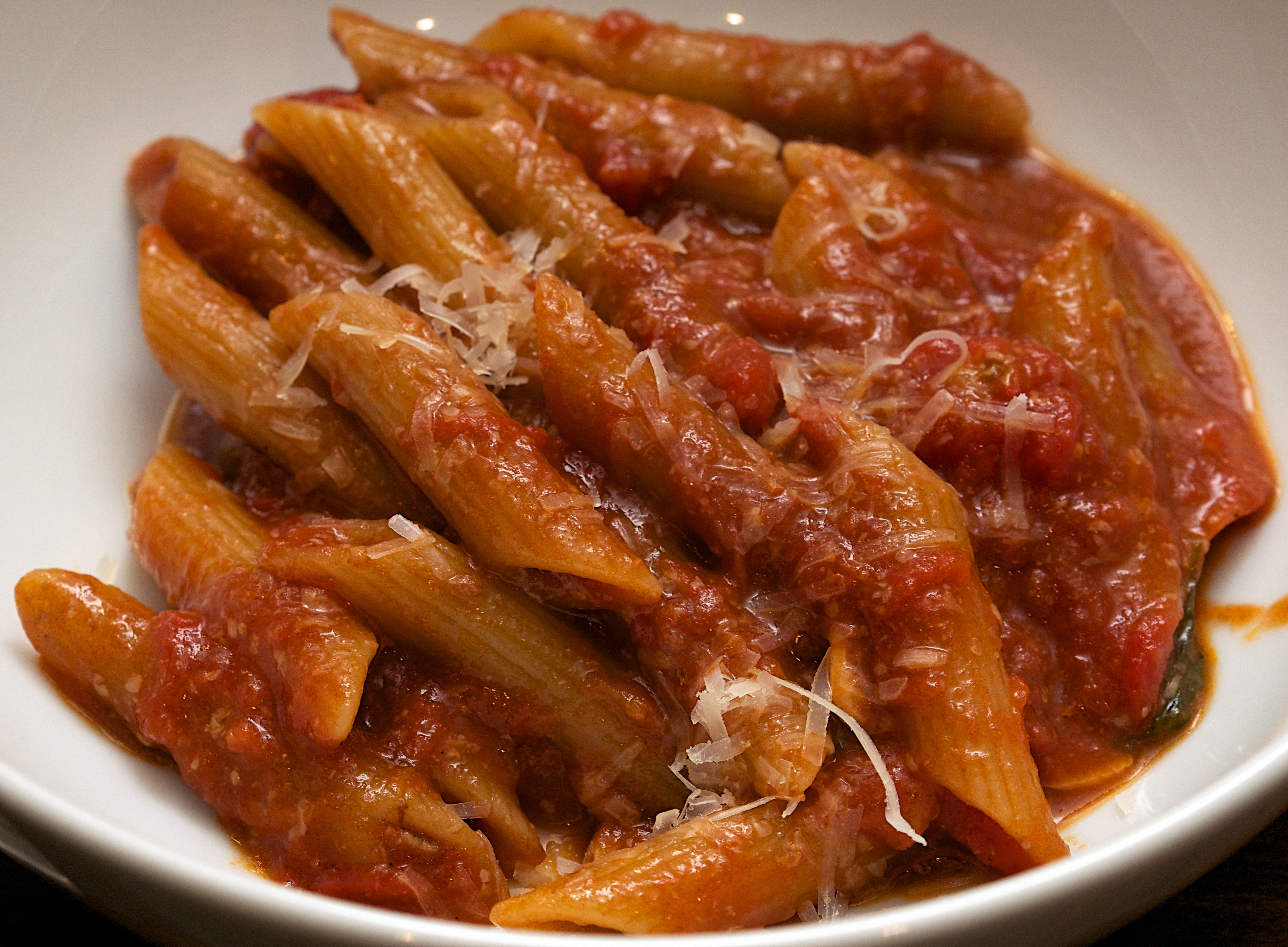
This is a really good first-course pasta which has a richness of flavour without being heavy. Use a good quality, aged balsamic vinegar (if you don’t you might need to use a bit extra).

Penne with Tomato & Balsamic Vinegar – to serve 6

  • 2 tbsp olive oil
  • 2 garlic cloves, peeled and sliced finely
  • a handful of fresh basil
  • 2 x 400g tins of peeled plum tomatoes (Italian brands are usually the best quality)
  • 250g penne rigate
  • 75g butter, cut into pieces
  • 4 tbsp aged balsamic vinegar
  • 120g Pecorino cheese, grated

Heat the oil in a large pan and gently fry the garlic until light brown. Add a few basil leaves and then the tomatoes. Stir and cook gently for 30-40 minutes or until the sauce is reduced and thick. Season with salt and pepper and add the rest of the basil.

Cook the penne in lots of salted boiling water , drain thoroughly and return to the saucepan with the butter. When this has melted, add the balsamic vinegar and toss over a gentle heat for a few seconds until the penne are brown. Throw in a handful of the Pecorino, then stir in the tomato sauce. Serve with more Pecorino.

Wine Suggestion: Pairing a wine with this dish is not as straight forward as it may seem as you need a wine to balance the rich flavours, acidic tomatoes and sweet and sour vinegar. One option is something from the Marche with a combination of Montepulciano and Sangiovese. Alternately look for a very good Valpolicella or Ripasso, but make sure it is one with a bit of freshness, tannins and elegance.  Another option, which we tried to good effect, is Barbera where the fresh acidity and softer tannins complemented the dish excellently.

(Original recipe from the River Café by Ruth Rogers & Rose Gray, Ebury House, 1995.)

Read Full Post »

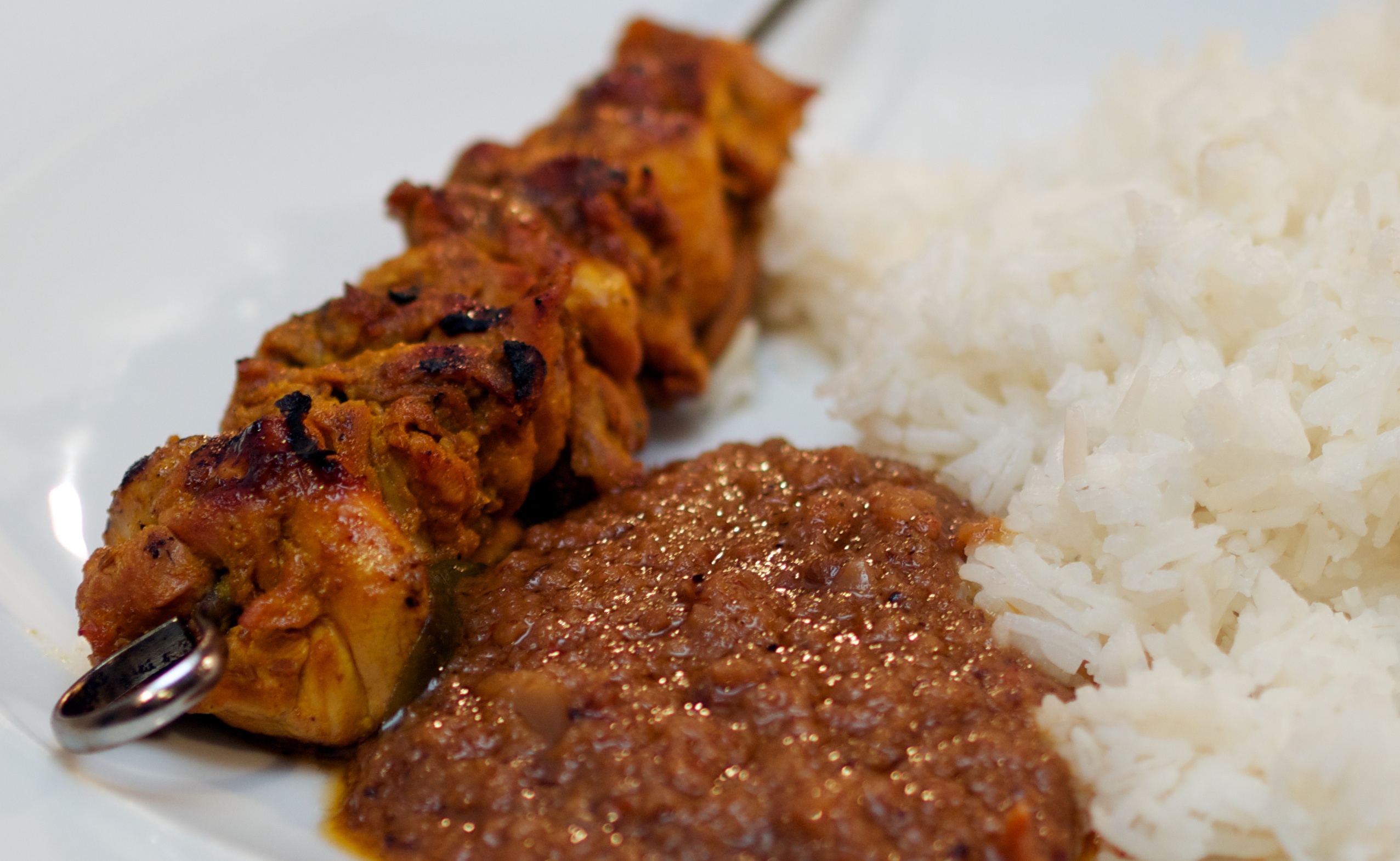
This chicken marinade is great for the barbecue as it really tenderises the meat. You should serve these satay skewers with some peanut sauce. The sauce in the picture is our friend Thaiba’s satay sauce that she kindly sent home with us in a takeaway box last time we were over. This is a secret family recipe, but we are very glad she makes it for us!

Barbecue Satay Skewers – to serve 8

  • 450g chicken meat, skinned and boned
  • 2 tsp ground turmeric
  • ½ tsp garam masala
  • 1 tsp freshly ground cumin
  • 1 tsp salt
  • 1 tbsp brown sugar
  • juice of 1 lemon

Mix all the ingredients (except the chicken) together in a large bowl. Cut the chicken into cubes and add to the bowl. Marinate overnight.

Thread the meat onto skewers and cook on a hot barbecue.

Serve with peanut sauce and rice.

Wine Suggestion: balance the bold flavours and richness with a bold Greco di Tufo from southern Italy. We love the minerality and freshness combined with the body and weight of a good example. We drank one made by Vesevo recently which was very good but look out for Mastroberardino, who helped save the appellation and grape.

(Original recipe from Darina Allen’s Ballymaloe Cookery Course, Kyle Cathie Limied, 2001.)

Read Full Post »

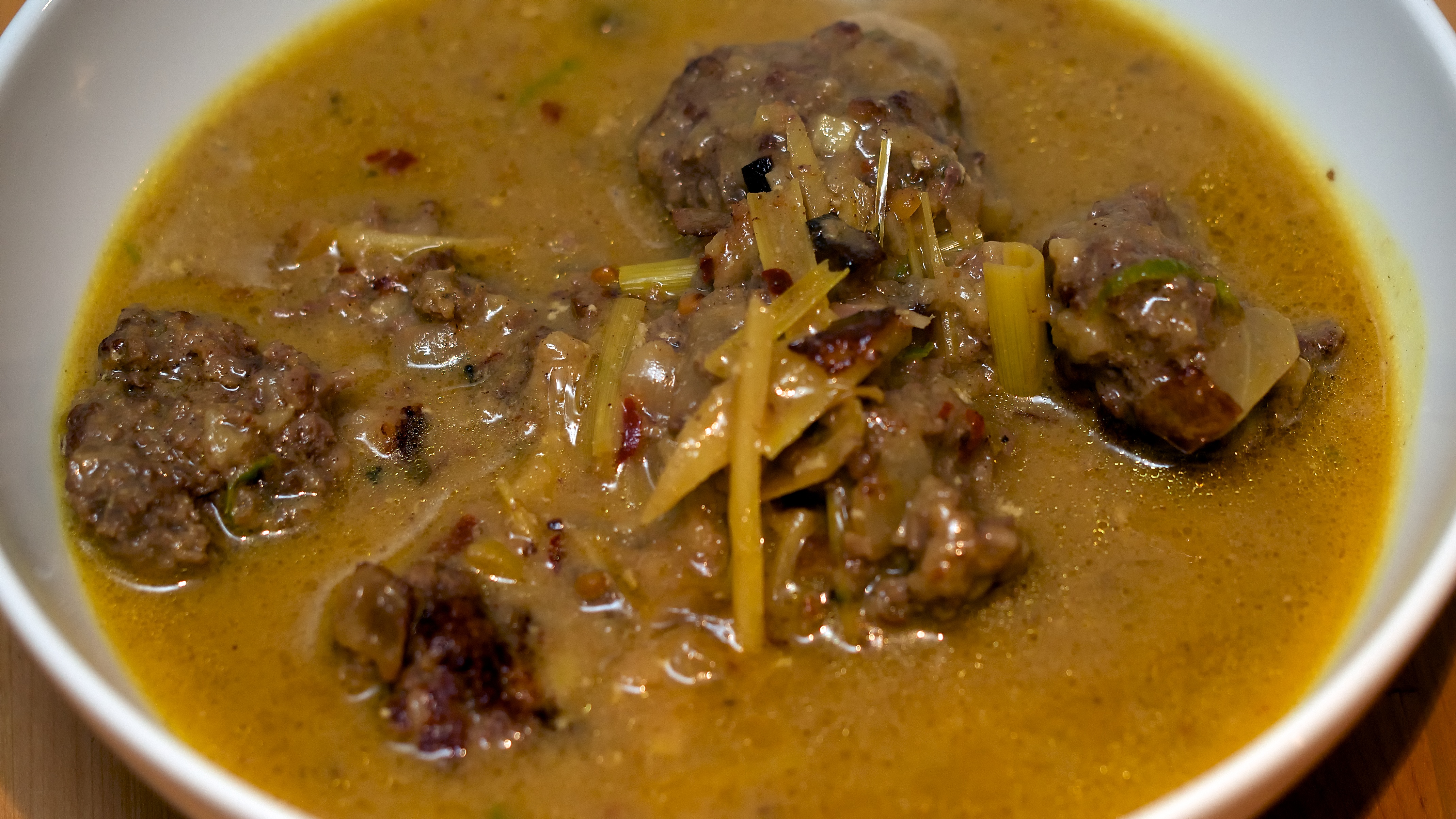
These meatballs are melt in the mouth. Don’t make them too big (no bigger than golf ball size) or they will dry out.

Meatballs in Fragrant Coconut Broth – serves 2-3

  • 2tsp coriander seeds
  • 4 cardamom pods, lightly crushed
  • 1 tsp ground turmeric
  • ½ tsp ground cinnamon
  • 1 tsp dried chilli flakes
  • 2 lemongrass stalks, trimmed, bashed and cut in half
  • 5cm piece of fresh root ginger, peeled and sliced
  • 400ml chicken stock
  • 1 x 400ml tin coconut  milk
  • zest and juice of 1 lime

FOR THE MEATBALLS: 

  • 1 small onion, peeled and finely sliced
  • 2 garlic cloves, peeled and finely sliced
  • olive oil
  • 1 tsp dried chilli flakes
  • 500g minced beef
  • 75g fresh breadcrumbs
  • 3-4 tbsp milk

First make the meatballs. Sauté the onion and garlic and some seasoning in a hot frying pan in a little oil for about 5 minutes or until soft and lightly coloured, adding the chilli flakes after a couple of minutes. Put the mince in a large bowl and season. Put the breadcrumbs in a separate bowl and moisten with the milk. Add seasoning, then stir the breadcrumbs and onion mixture into the mince and combine well. With wet hands, shape the mince mixture into golf-size balls. Transfer to a lightly greased plate or tray and chill for 30 minutes until firm.

Brown the meatballs in a clean oiled pan for 4-5 minutes, turning until brown on all sides.

Add the coriander seeds, cardamom, turmeric, cinnamon, chilli flakes, lemongrass and ginger. Heat through, stirring, until aromatic, then add the stock and coconut milk and bring to a gentle simmer. Taste and adjust the seasoning as necessary. Simmer for 8-12 minutes until the sauce has a good flavour and has thickened and the meatballs are cooked through.

Add the lime zest and juice and serve hot.

Wine Suggestion: this is a rich and bold dish and requires a fuller bodied white wine with texture and savouriness. We would suggest a good Grand Cru Pinot Gris from Alsace (a drier version) or a Condrieu from the Northern Rhone. The wines would ideally have a couple of years development in the bottle to enable the overt fruitiness to mature and the savoury flavours to come to the fore.

(Original recipe from Gordon Ramsey’s Ultimate Cookery Course, Hodder & Stoughton, 2012.)

Read Full Post »

We used a leg from a hogget (one year old lamb) as this has greater flavour. If you use a young “Spring” lamb this will be juicier and cook quicker but is more delicate in flavour.

Agnello Marinato alla Griglia – to serve 6

  • 1 leg of spring lamb, about 2.25kg in weight, boned and butterflied
  • 5 garlic cloves, peeled and crushed
  • 2 tbsp rosemary leaves, chopped
  • coarsely ground pepper
  • 2 tbsp lemon juice
  • 3 tbsp olive oil
  • 1 tbsp sea salt

Mix the crushed garlic, rosemary and a good pinch of pepper in a bowl, and rub into the cut side of the meat. Put in a shallow dish and pour over the lemon juice and olive oil. Turn the meat over a few times until completely coated, then cover. Leave to marinate at room temperature overnight (or at least 4 hours), turning occasionally.

Preheat the grill or barbecue to very high. Remove the meat from the marinate and pat dry. Season with salt. Carefully place the meat on the grill and seal on both sides. Lower the heat and keep cooking until done to your liking, turning once. Allow a minimum of 8 minutes per side but it could take up to 45 minutes in total depending on the age and size of the lamb as well as the barbecue temperature.

Wine Suggestion: We think that good Bordeaux works well with this and proceeded to try a couple of different Chateau to test this theory. The first was a birthday present of Chateau Mission Haut Brion from the Graves where the pencilly and inky character complemented the lamb. A very fine wine indeed and a real treat. We then followed by a Chateau d’Angludet from Margaux which was more mellow and feminine to round out the end of the meal. A treat altogether.

(Original recipe from The River Café Cookbook by Ruth Rogers and Rose Gray, Ebury Press, 1995.)

Read Full Post »

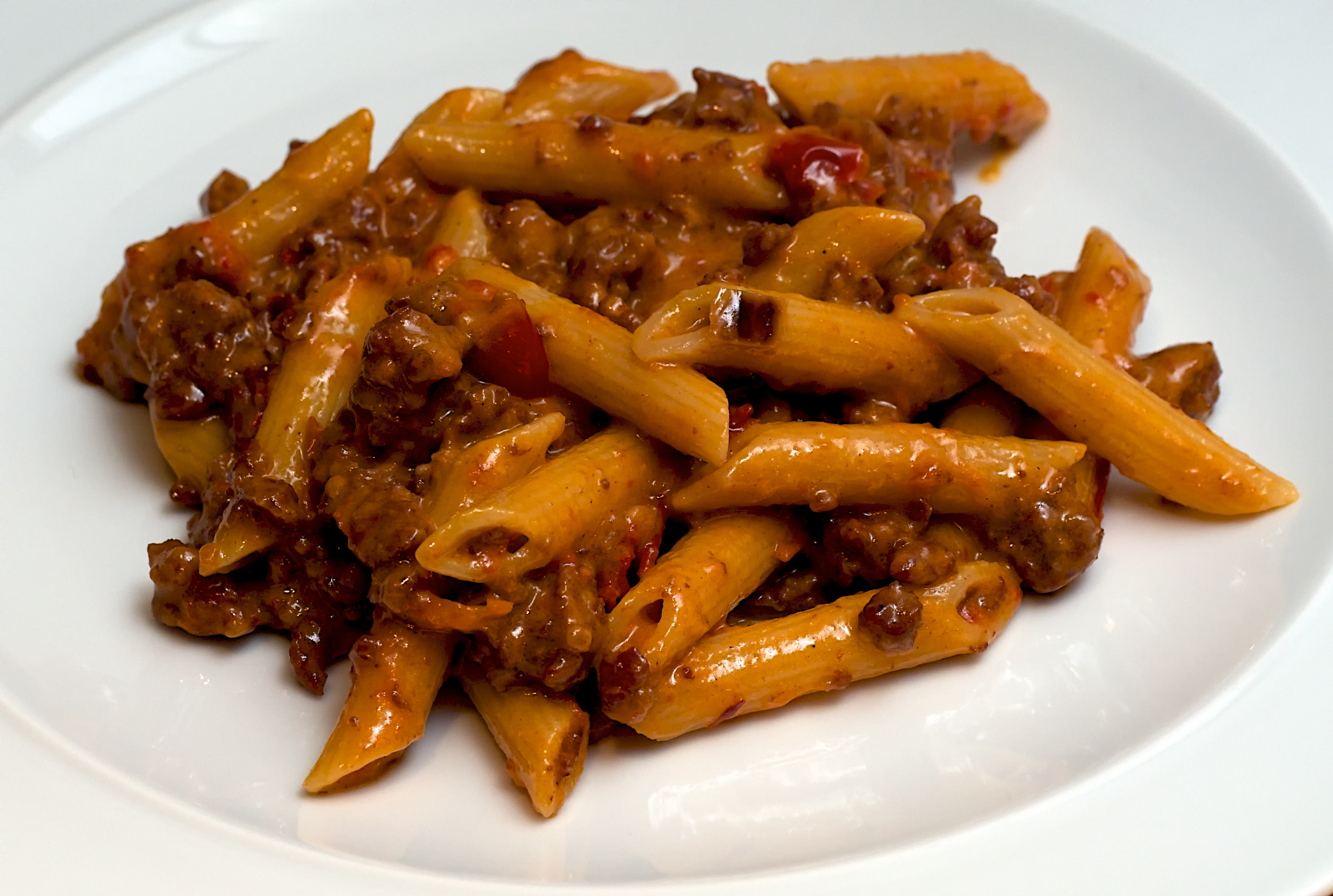
Really rich, this dish packs a punch of flavour so it’s perfect for a small starter.

Penne con Sugo di Salsiccie – serves 6-8 as a starter

  • 2 tbsp olive oil
  • 8 Italian spiced, fresh pork sausages, meat removed from skins and crumbled
  • 2 small red onions, chopped
  • 2 garlic cloves, finely chopped
  • 2 small dried chillies, crumbled (or you could use chilli flakes)
  • 2 bay leaves
  • 1/3 bottle red wine (preferably something Italian, like a Chianti)
  • 2 x 400g tins peeled plum tomatoes, drained
  • ½ nutmeg, freshly grated
  • 120g Parmesan, freshly grated
  • 150ml double cream
  • 250g penne rigate

Heat the oil in a large pan and fry the sausagemeat, stirring and breaking it up, until the juice from the meat has evaporated and the fat has started to run.

Add the onion, garlic, chilli and bay leaves and cook gently for about 30 minutes or until the onions are brown.

Pour in the wine, increase the heat and cook until it has evaporated.

Add the tomatoes, lower the heat, and simmer gently until you have a thick sauce, about 45-60 minutes. Season with nutmeg, salt and pepper, then add the Parmesan and cream.

Cook the penne in lots of salted water, drain well, and add to the sauce.

Wine Suggestion: We drank a delightful Langhe Nebbiolo from the Produttori del Barbaresco which went well. We’d suggest finding a red wine with a bit of acidity to cut through the richness, good tannins to counteract the protein richness, and yet not too much weight. Nebbiolo or Sangiovese …

(Original recipe from The River Café Cookbook by Ruth Rogers and Rose Gray, Ebury Press, 1995.)

Read Full Post »

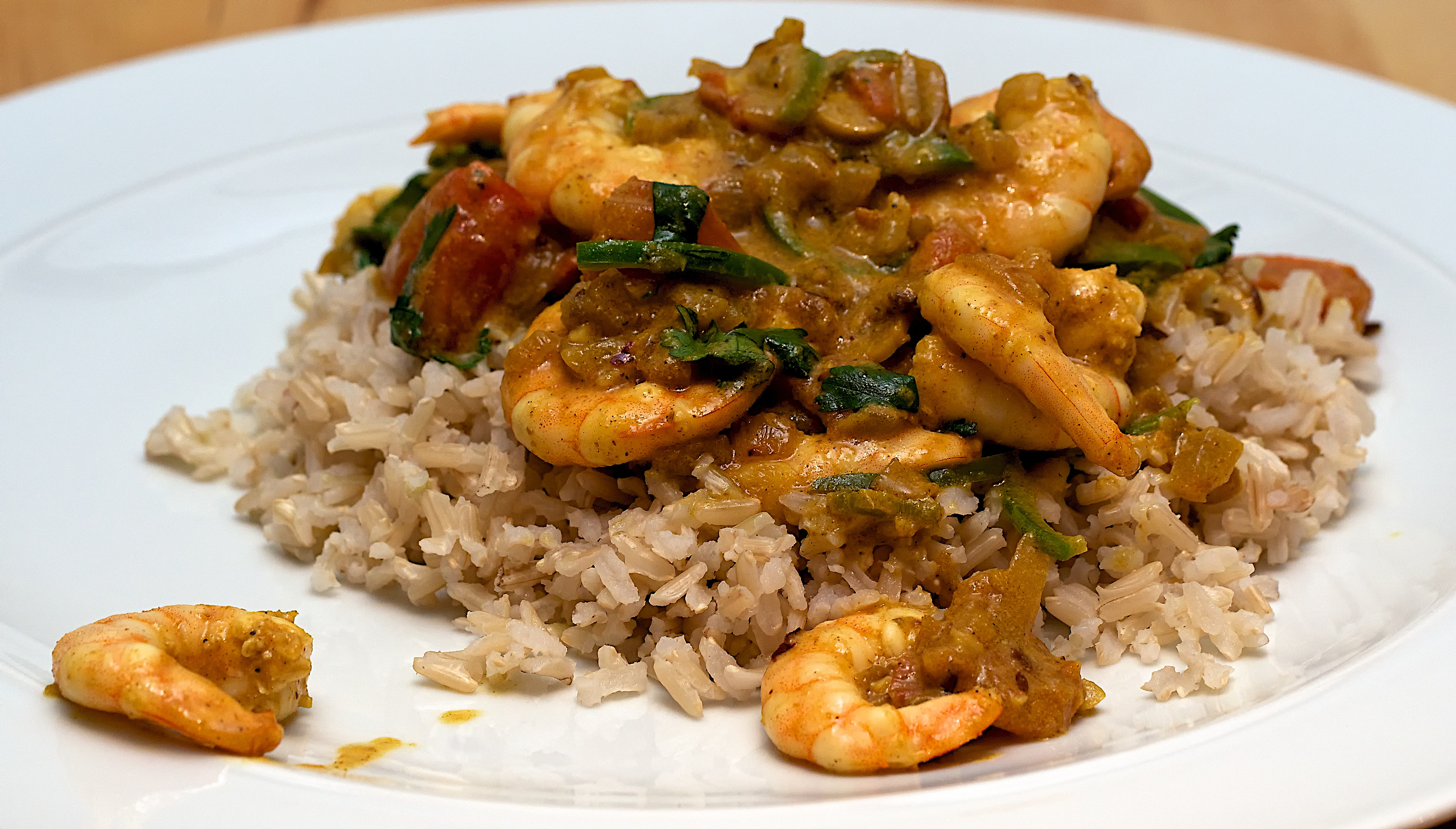
This is a simple curry but you need to marinate the prawns overnight in the fridge. The flavour builds up as the spices are gradually added and the sauce becomes really tasty. Serve with some plain basmati rice for a healthy dinner.

Hot Punjabi king prawn curry – to serve 4 

FOR THE MARINADE:

  • 600g raw king prawns, peeled and de-veined
  • 6 tbsp full-fat natural yogurt
  • 2 hot green chillies, finely sliced

FOR THE CURRY: 

  • 4 tbsp olive or sunflower oil
  • ½ tsp cumin seeds
  • 2 medium onions, finely chopped
  • 1 tbsp finely chopped or crushed garlic
  • 1 tsp turmeric
  • 2-3 hot green chillies, finely sliced
  • 2 tsp garam masala
  • 2 medium tomatoes, roughly chopped
  • ½ tsp chilli flakes
  • 4 tsp finely chopped coriander leaves

Rinse and drain the prawns. Pat them dry and put into a ceramic bowl. Add the yogurt, chillies and ½ tsp salt. Mix well, cover and leave overnight in the fridge.

When ready to cook the curry, pour the oil into a wok, and put on a medium heat.

Spoon in the cumin seeds and brown for 10 seconds then add the onions and sauté for about 10 minutes, or until or until brown all over.

Add the garlic, reduce the heat to low, and fry for 2 minutes.

Mix in the turmeric and stir for 1 minute.

Add the green chillies, increase the heat to medium and stir for 1 minute.

Mix in 1½ tsp of the garam masalsa ands stir for 1 minute.

Add ¼ tsp salt, the tomatoes and chilli flakes and cook for 2 minutes.

Add 125ml of boiling water and stir to make a thick sauce. Simmer for 3 minutes, then add ¼ tsp salt.

Stir in the prawns and marinade and cook over a medium heat until just opaque and cooked through.

Sprinkle the rest of the garam masala over the top and stir. Fold in the chopped coriander to serve.

(Original recipe by Madhur Jaffrey in BBC Good Food Magazine, March 2013.)

Read Full Post »

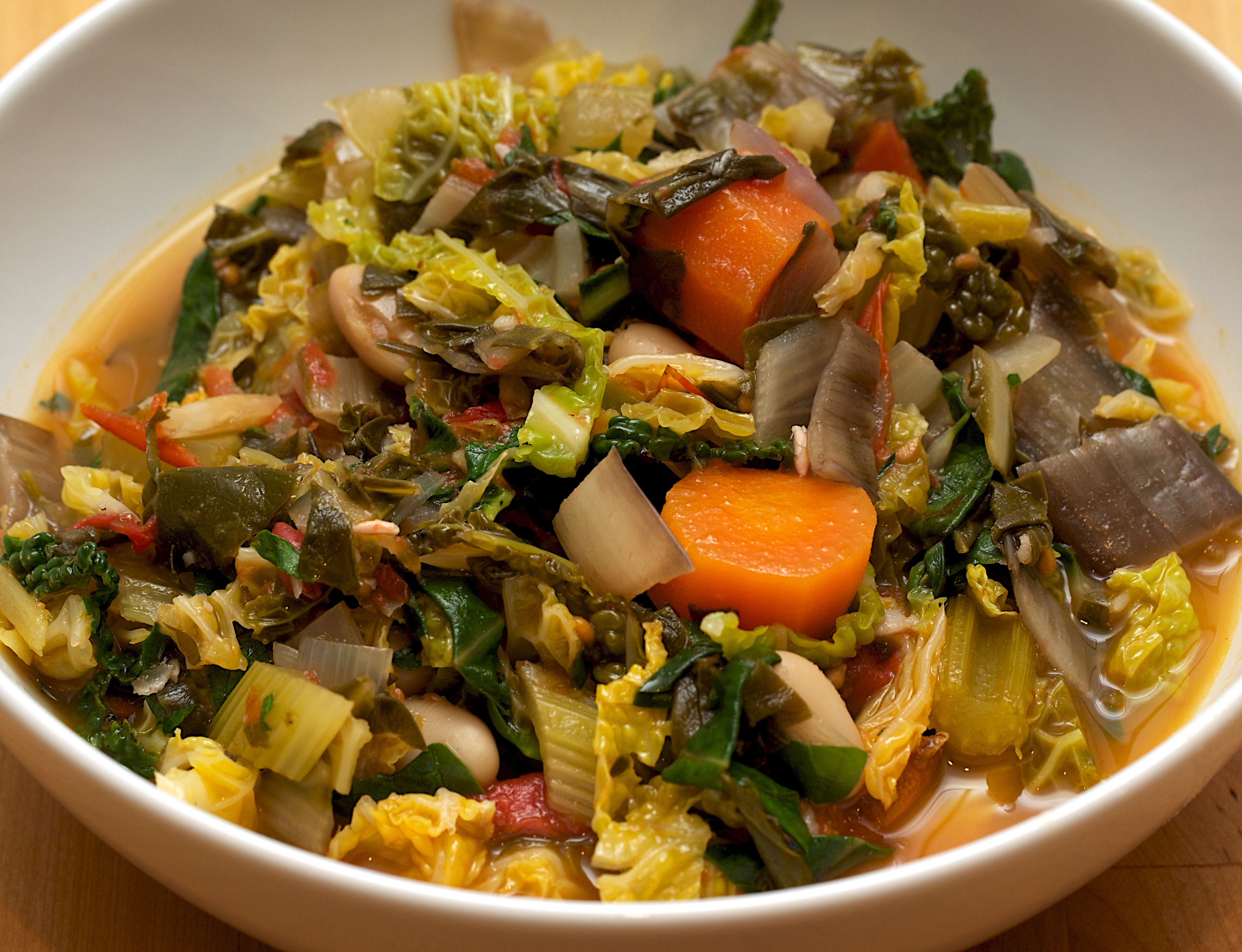
A very filling dish that hits the mark on these icy evenings. Oh spring where are you?

Minestrone Invernale – serves many!

  • 2 tbsp olive oil
  • 2 carrots, roughly chopped
  • 1-2 red onions, peeled and roughly chopped
  • 1 head celery, roughly chopped
  • 1 head garlic, cloves peeled
  • 1kg Swiss chard, leaves shredded and stalks roughly chopped
  • 1 handful parsley, finely chopped
  • 1 x 400g tin peeled plum tomatoes, drained of most of their juices, roughly chopped
  • 1 kg cavolo nero, stalks removed, leaves shredded (or use Savoy cabbage)
  • 1 x 400g tin cannellini beans
  • 500ml chicken stock or water
  • a few sprigs of wintery herbs like thyme or sage, chopped
  • Parmesan, for grating over
  • extra virgin olive oil, for drizzling

Heat the 2 tbsp olive oil in a very big saucepan and slowly fry the carrot, onion and celery until soft and dark. This will take ages. Add the garlic, chard stalks and half the parsley, and keep cooking, stirring so it doesn’t stick. Add the tomatoes and cook for another 10 minutes or until they have reduced.

Add half the Swiss chard leaves and half the cavelo nero, ¾ of the beans, and the boiling chicken stock or water. Bring to the boil, then reduce the heat and simmer for 30 minutes. You can add a bit more stock if needed but the whole point is that the soup should be really thick.

Add the remaining Swiss chard and cavolo nero and blanch briefly so they are cooked but stay green and crisp. Season with plenty of salt and pepper.

Purée the rest of the cannellini beans coarsely in a blender, with a bit of liquid from the soup. Add to the soup. Stir in the herbs and serve hot with Parmesan and some extra virgin olive oil.

Tastes great re-heated over the next few days.

Wine Suggestion: This is a very rustic, country dish and would suit a similar wine with some earthy character. We suggest a Barbera or something Tuscan.

(Original recipe from The River Café Cookbook by Ruth Rogers and Rose Gray, Ebury Press, 1995.)

Read Full Post »

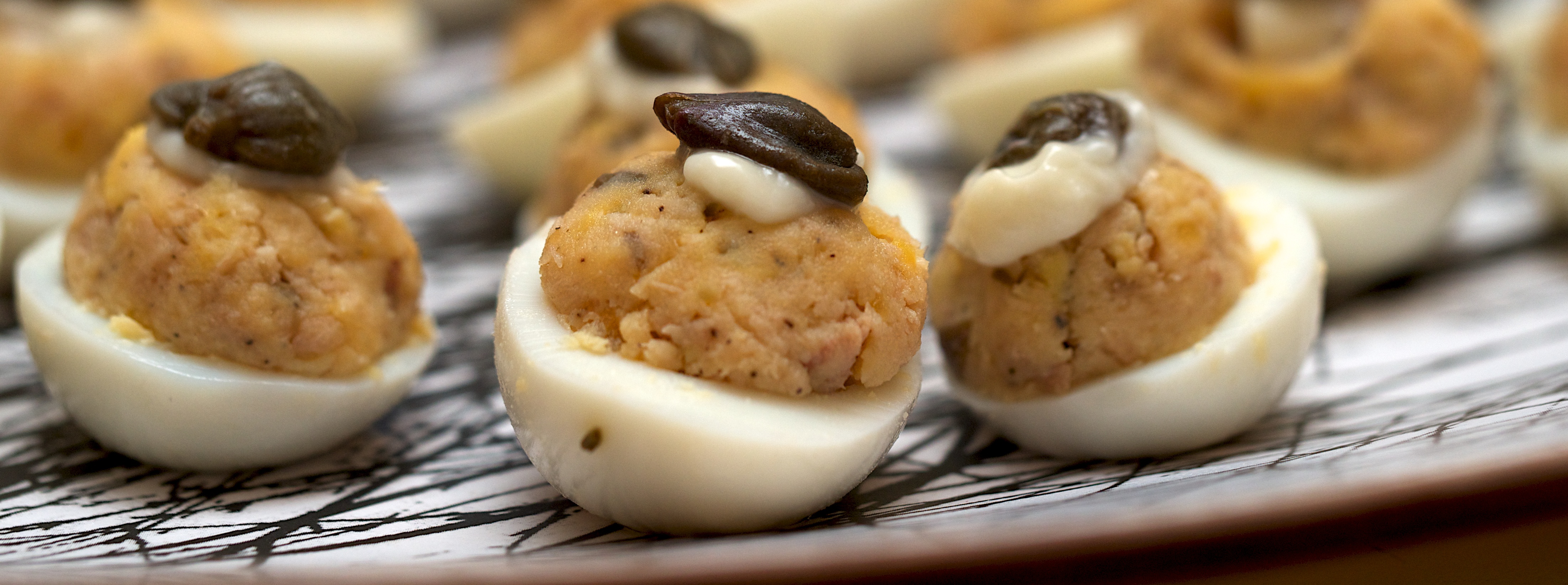
These little stuffed quail’s eggs are very cute but also very time consuming. It also helps if you have little fingers!

Uoava di Quaglie Ripiene – to serve 4 as an antipasti

  • 12 quail’s eggs
  • 80g good quality tuna in olive oil, drained and finely chopped (we use Ortiz)
  • 2 tsp salted capers, soaked in water for 10 minutes, drained and finely chopped, plus 24 extra to garnish.
  • 1½ tbsp mayonnaise

Put the eggs in a small pot of water, bring to the boil and cook for 2 minutes. Drain the eggs and put into a bowl of cold water to cool down before peeling. (The eggs are fiddly to peel but it’s a bit easier if you peel them while they are still in the water).

Cut the eggs in half lengthways. Carefully remove the yolks and arrange the egg whites on a serving plate. Put the yolks in a bowl with the tuna, capers and 1 tbsp of mayonnaise then mix together. Season with a little salt and some pepper.

Use your hands to roll the mixture into little balls, about 1tsp at a time. Carefully put the little balls into the cavities of the half eggs.

Spoon a tiny bit of mayonnaise on top of each half egg and garnish with a whole caper.

You could drizzle a bit of olive oil and add a twist of black pepper to finish.

Wine Suggestion: These are the kind of thing you can set out for people to nibble at when they’re having an aperitif. A good DOCG Prosecco would be nice.

Read Full Post »

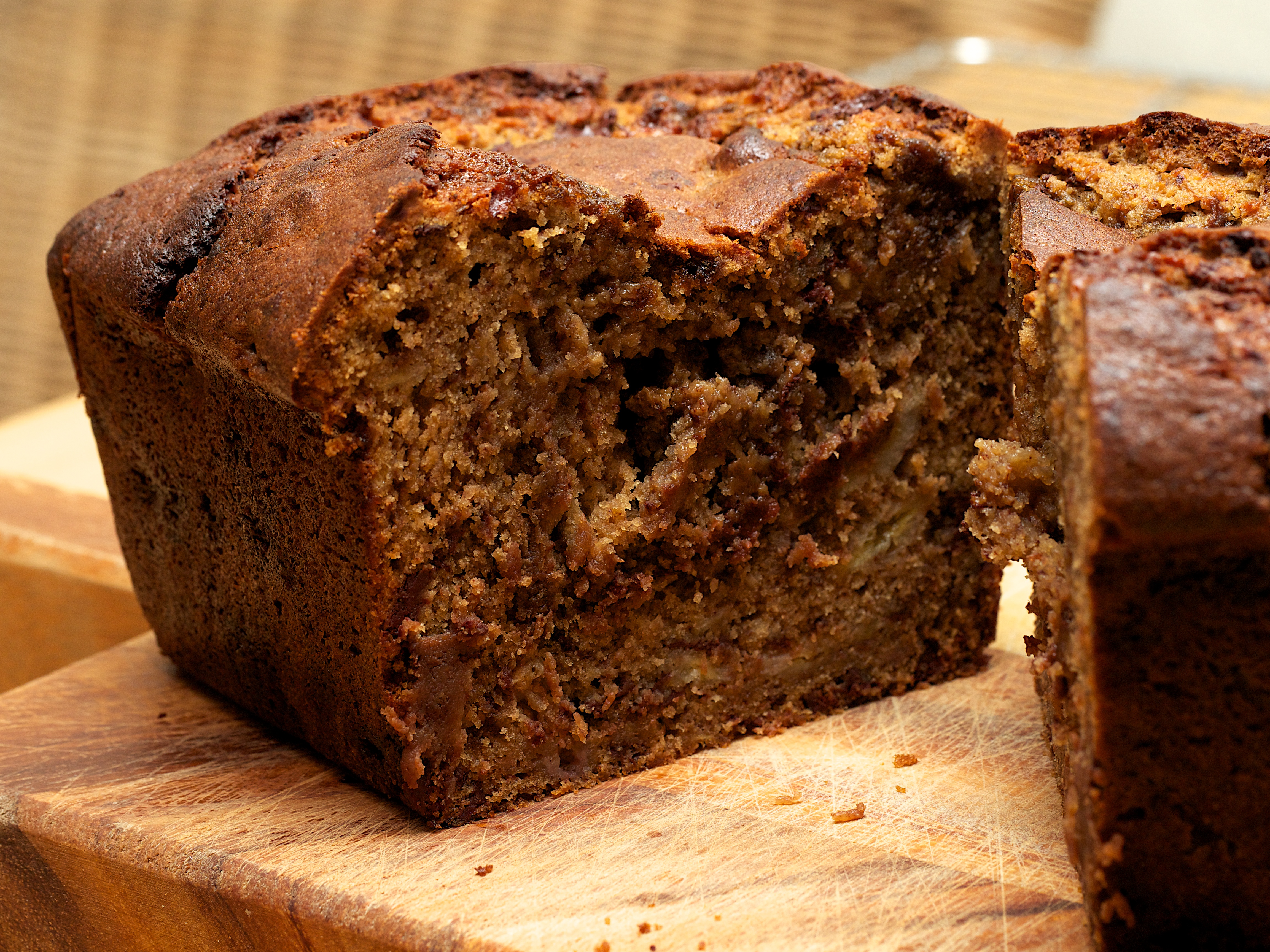
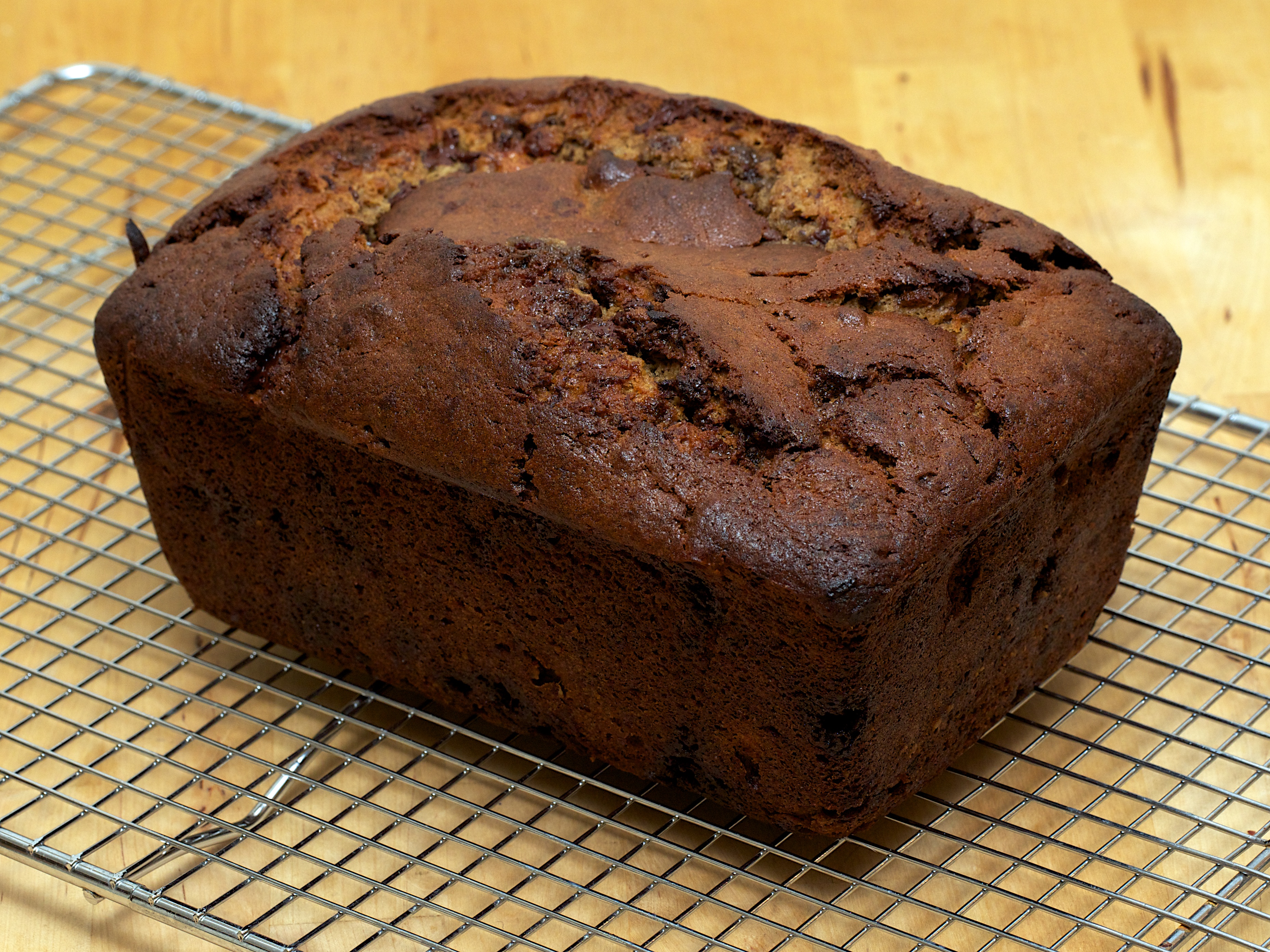
A very easy and delicious cake that’s perfect for using the bananas that have gone black in the fruit bowl. It’s even worth letting them go black for! We made this twice in a week and are tempted to make it again soon.

Chocolate and Banana Cake 

  • 250g plain flour
  • 2 tsp baking powder
  • 125g softened butter
  • 235g muscovado sugar
  • 400g (peeled weight) very ripe bananas
  • 1 tsp vanilla extract
  • 2 eggs
  • 100g dark chocolate

You need a non-stick loaf tin approx. 24cm x 12cm x 7cm deep, lined with baking paper.

Preheat the oven to 180ºC/Gas 4.

Sift the flour and baking powder together.

Use an electric mixer to cream the butter and sugar together until light, fluffy and pale coffee coloured.

Put the bananas in a bowl and mash with a fork, lumps are ok as you don’t want a purée. Stir in the vanilla extract.

Beat the eggs lightly with a fork then beat them into the butter and sugar mixture. If it threatens to curdle add a spoonful of flour.

Chop the chocolate into small pieces and fold them and the bananas into the butter and sugar mixture. Gently fold in the flour and baking powder.

Scrape the mixture into the baking tin and bake for about 50 minutes. Check that it is cooked by inserting a metal skewer into the centre. If it is moist but clean then the cake is ready. If there is any sign of wet cake mixture on the skewer, return the cake to the oven for a few more minutes. Cover the surface with foil if it starts getting too dark.

Leave the cake to settle in the tin for about 15 minutes, then loosen sides with a palette knife and carefully lift the cake out. Leave to cool for a bit longer before peeling off the paper. Serve cool.

(Original recipe from Nigel Slater’s Kitchen Diaries II, Fourth Estate, 2012.)

Read Full Post »

« Newer Posts - Older Posts »