Feeds:
Posts
Comments

Archive for the ‘Spanish’ Category

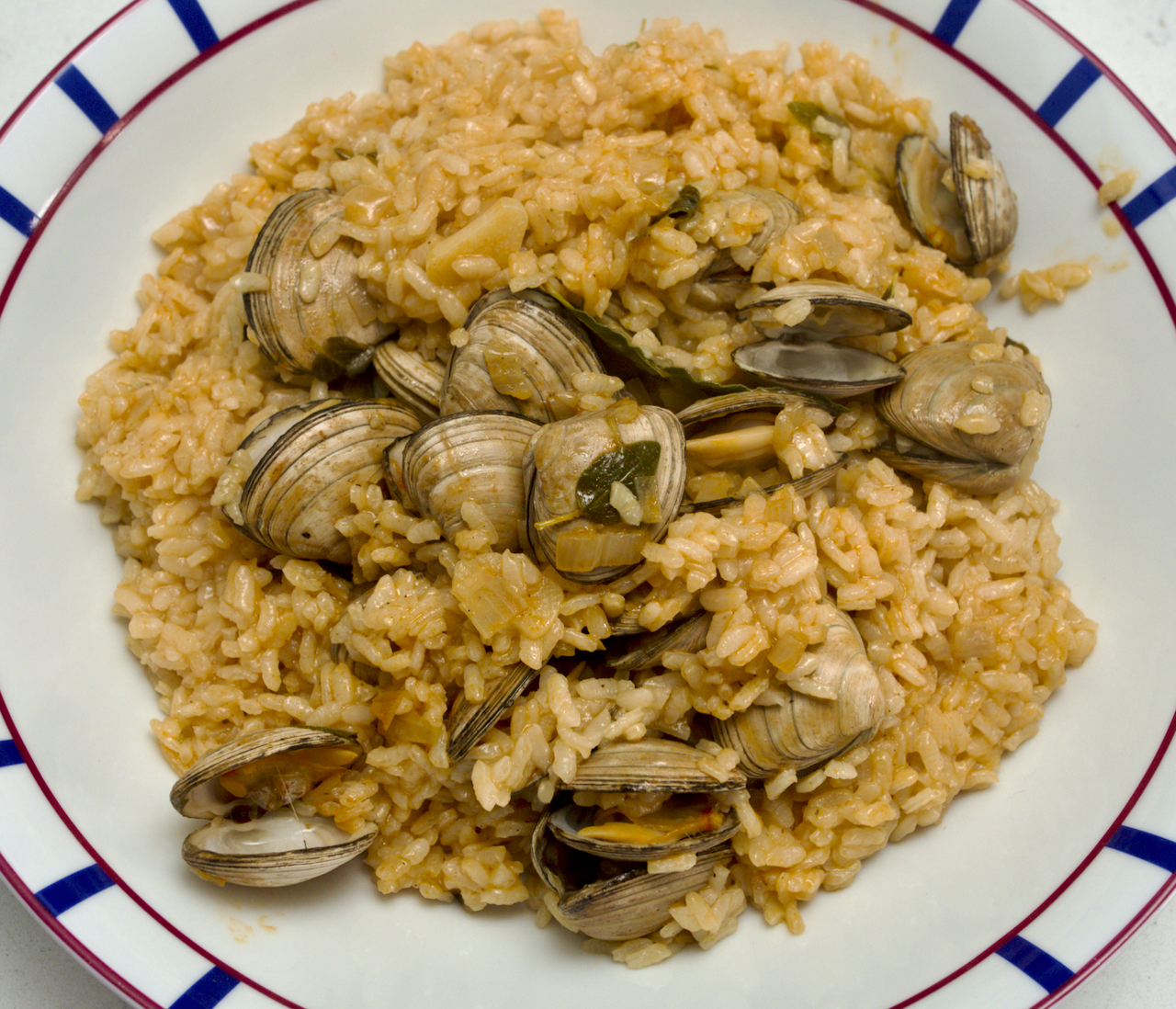
A summery seafood dish with deliciously sweet Irish clams.

Wine Suggestion: A Spanish dish with rice and clams … we just had to open an Albariño! Perrenially reliable, but especially good the last few years is Bodegas Castro Martin; vibrant, salty, and with a great balance of depth, weight and flavour.

Spanish rice and clams – serves 4

  • 2 tbsp olive oil
  • 1 banana shallot, finely chopped
  • 2 garlic cloves, finely sliced
  • 1 bay leaf
  • 2 tsp tomato purée
  • 300g Bomba rice or other short-grain rice
  • 750ml fresh fish stock
  • a handful of marjoram leaves
  • 500g clams, cleaned

Heat the oil in a shallow casserole or paella pan over a low heat. Add the shallot and cook for 5 minutes to soften. Add the garlic, bay and tomato purée and cook for a further minute.

Stir in the rice and increase the heat to medium-high. Toast the rice for a minute before adding the fish stock, marjoram and plenty of seasoning. Stir and cover, then reduce the heat to low and simmer for 12 minutes until the rice is almost cooked and still soupy.

Add the clams, cover and cook for another 4 minute until the clams have opened (chuck any that stay closed), then serve.

(Original recipe from The Spanish Home Kitchen by José Pizarro, Hardie Grant, 2022.)

Read Full Post »

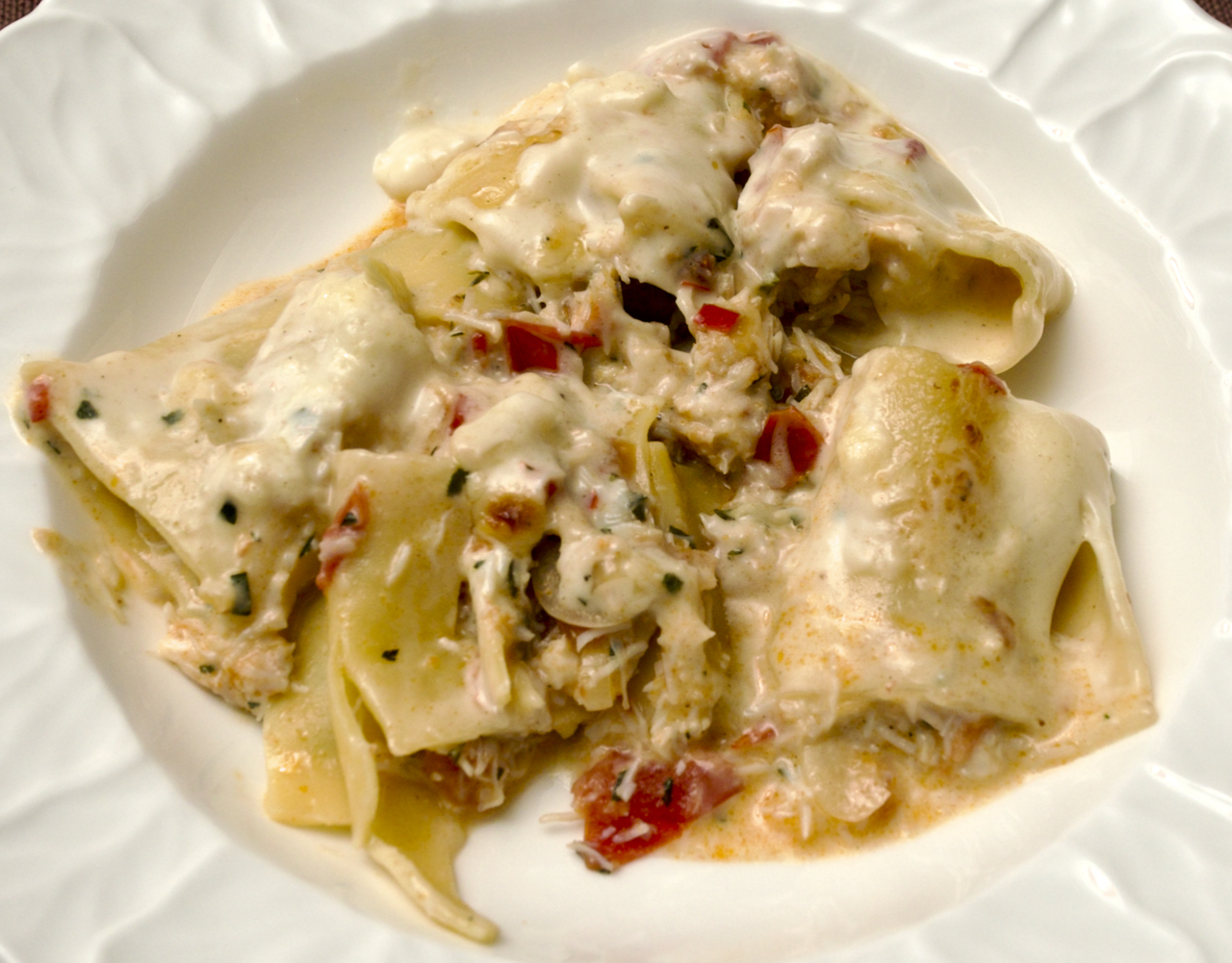
A beautiful Spanish pasta dish made with fantastic Lambay crab. The crab is a bit pricy but it’s worth it for this luxurious dish. Our fishmonger fortunately sells both prepared brown and white crab meat and also shellfish stock which makes this a tad easier.

Wine Suggestion: The richness of this dish demands a fuller-richer white and while this means that Chardonnay was our original thought, we wanted to keep it Spanish given the origin of the dish. Initially we thought a good white Rioja, like the Urbina Blanco Crianza (currently 2016 and 9 years old) which would have been excellent. Instead we stepped sideways and opened the Dominio de Tares Cepas Viejas Godello, an old-vine gem that is fermented in cask and aged on it’s lees to give richness and depth over a lemon, grapefruit and apple fruit flavours, a creamy texture and refined fresh structure.

Crab Canelones – serves 6

  • 45ml olive oil
  • 45g plain flour
  • 500ml fresh shellfish stock (or you could use chicken stock)
  • 300ml double cream
  • a good grating of nutmeg
  • 80g finely grated Manchego, plus extra for the top

FOR THE FILLING:

  • 60ml olive oil
  • 1 small shallot, finely chopped
  • 2 red chillies, finely chopped
  • 3 garlic cloves, finely sliced
  • 50g brown crab meat
  • 500g ripe tomatoes, diced
  • 150ml shellfish stock (or chicken stock)
  • 500g white crab meat
  • 15g tarragon, finely chopped
  • 250g dried cannelloni tubes

Make the bechamel first. Heat the oil in a saucepan over a medium heat. Stir in the flour and cook for a minute, then gradually add the stock, stirring continuously, until you have a smooth, thick sauce. Add the cream, nutmeg and cheese and season, then set aside.

Heat the olive oil for the filling in a separate saucepan over a very low heat. Add the shallot, chillies and garlic and cook over a very low heat for 15 minutes.

Increase the heat to medium high and add the brown crab meat and fry for 1 minute, then add the tomatoes and the stock. Season and cook for 15 minutes, then take off the heat and stir in the white crab meat and chopped tarragon.

Blanch the pasta tubes in boiling water for 3 minutes, then gently drain and cool under cold running water.

Fill each pasta tube with the crab mixture and fit them snugly into an ovenproof dish, then pour over the bechamel. Scatter over a little more grated cheese, then bake for about 30 minutes or until golden and bubbling. Serve with a green salad.

(Original recipe from The Spanish Home Kitchen by José Pizarro, Hardie Grant, 2022.)

Read Full Post »

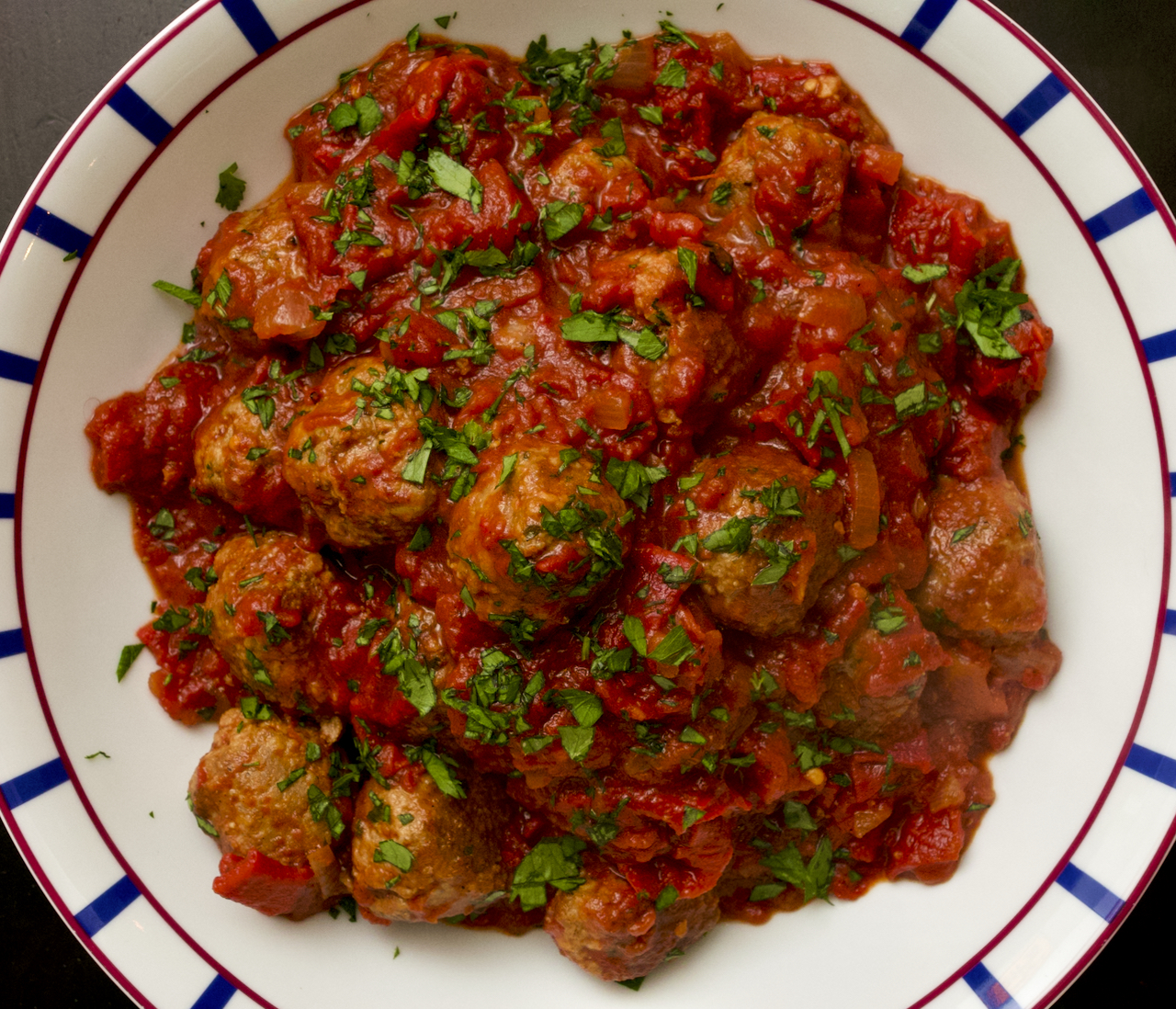
Delicious lamb meatballs with oloroso sherry and piquillo peppers – you need to buy the expensive ones by El Navarrico. Comforting, quick and easy to make. Serve as a sharing dish with crusty bread.

Wine Suggestion: Kimera“, which we picked up in Pamplona earlier this year is a gem made by Luis Moya Tortosa. Old vine Garnatxa which has both depth, refinement and an effortless weight. We once thought Grenache tended to be heavy and alcoholic, but have been proved so wrong as we’ve explored more of this grape the past few years.

Lamb albondigas – serves 4

  • 500g lamb mince
  • 30g fresh white breadcrumbs
  • 2 cloves of garlic, peeled and crushed
  • 1 tsp sweet smoked pimentón de la vera
  • 3 tbsp finely chopped flat-leaf parsley
  • 1 tbsp finely chopped fresh oregano
  • finely grated zest of 1 lemon
  • 1 egg,
  • 1 tbsp olive oil
  • 1 onion, peeled and finely chopped
  • 150ml oloroso sherry
  • 2 x 400g tins chopped tomatoes
  • 2 tsp sherry vinegar
  • 1 x 240g jar piquillo peppers, drained and sliced
  • crusty bread, to serve

Put the lamb mince, breadcrumbs, garlic, pimentón, a third of the parsley, the oregano, lemon zest and egg in a large bowl. Season well, mix with your hands to combine, then shape into 20 small meatballs.

Put the oil into a large frying pan over a medium-high heat, then fry the meatballs, turning often, for about 5 mintues or until browned all over. Transfer to a plate with a slotted spoon.

Add the onion to the pan and cook for 10 minutes, until softened, then add the sherry and bubble until reduced by half. Add the tomatoes, season generously and leave to bubble for 10 minutes. Stir in the vinegar, then return the meatballs to the pan along with the peppers and leave to cook for 15 minutes, stirring occasionally, until the sauce has thickened.

Scatter over the rest of the chopped parsley and serve with the crusty bread.

(Original recipe by José Pizzaro in The Guardian).

Read Full Post »

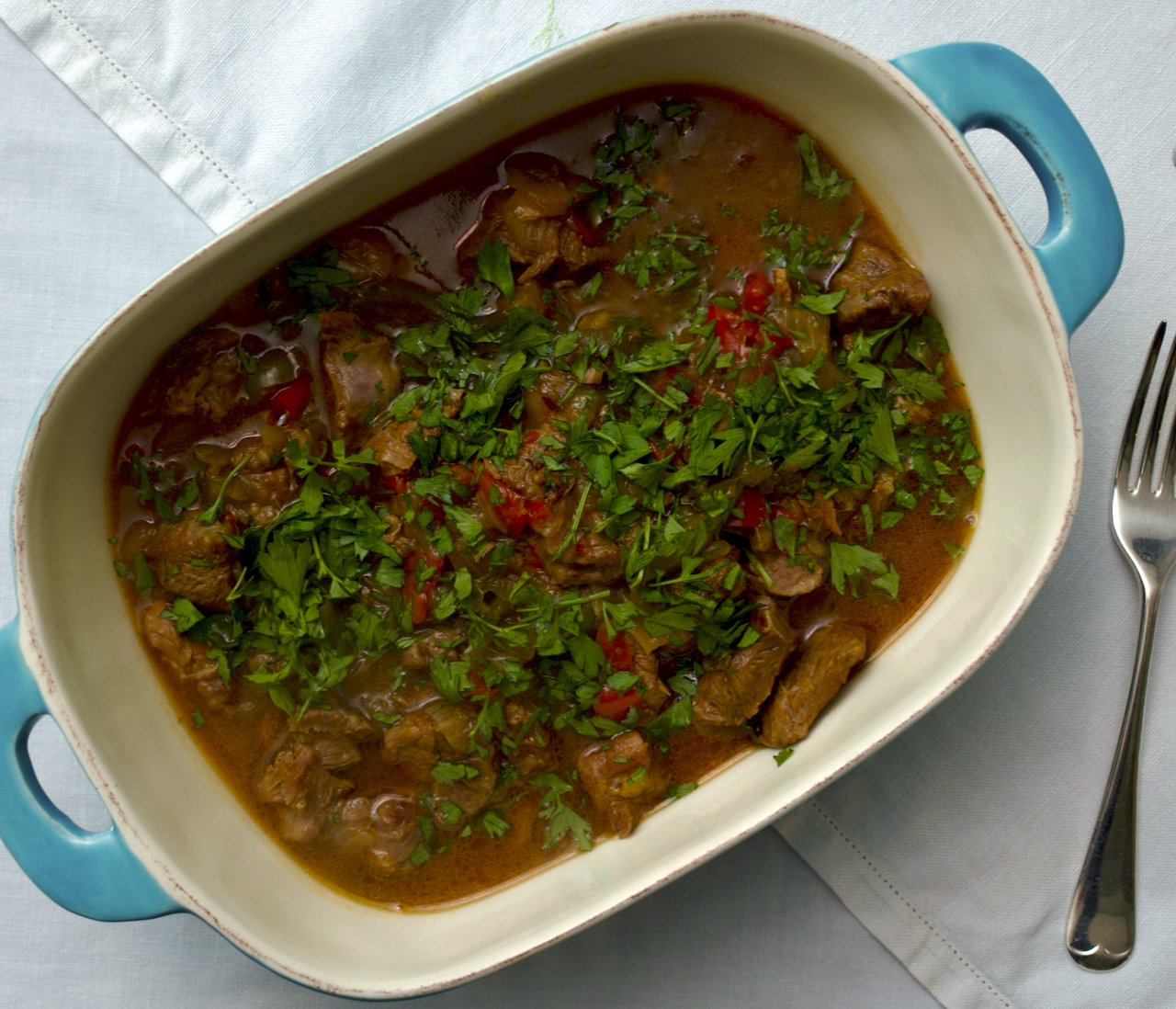
This is delicious and goes perfectly with a bowl of warm couscous. It’s better to ask for the meat in one piece so you can cut it into big chunks yourself – the pre-cubed stuff is usually cut too small and will disappear into the sauce.

Wine Suggestion: If you’d like to keep to the theme a good, dry Oloroso sherry works well, but if you’d rather a red like we did tonight, something from a warm vineyard region may hit the mark … just make sure it’s balanced and not too hot from alcohol. Our choice was a treasured bottle brought from OZ many years ago of Hanging Rock’s Heathcote Shiraz. Dense and textured in youth this opens up and retains a freshness and layered velvetiness over many years of cellar aging too.

Spanish lamb with sherry – serves 4

  • 1kg lamb shoulder, trimmed of excess fat, then cubed
  • 1½ tbsp olive oil
  • 1 large onion, roughly chopped
  • 1 red pepper, deseeded and sliced
  • 1 yellow pepper, deseeded and sliced
  • 1 green pepper, deseeded and sliced
  • 2 cloves of garlic, finely grated
  • ½ tsp paprika
  • 250ml medium sherry
  • 250ml lamb stock
  • generous pinch of saffron threads
  • 1 tbsp sherry vinegar
  • 1½ tbsp honey
  • 1 tbsp finely chopped parsley
  • couscous, to serve

Heat 1 tbsp of the olive oil in a large casserole and brown the lamb in batches, then set aside.

Add the ½ tbsp of oil to the casserole, then add the onions and peppers and cook until the onions are golden and the peppers have softened. Add the garlic and paprika and stir for a minutes, then add the sherry and bring to a simmer.

Return the lamb to the casserole, along with the stock, saffron, sherry vinegar and honey. Season and bring to just under the boil. Turn the heat down, cover the pan with a lid and cook very gently for 1½ hours, stirring occasionally.

Remove the lid from the casserole and continue to cook for another 30 minutes to reduce the liquid to a gravy-like consistency and the lamb should be very tender.

Serve with some warm couscous.

(Original recipe by Diana Henry in BBC Good Food Magazine, October, 2017.)

Read Full Post »

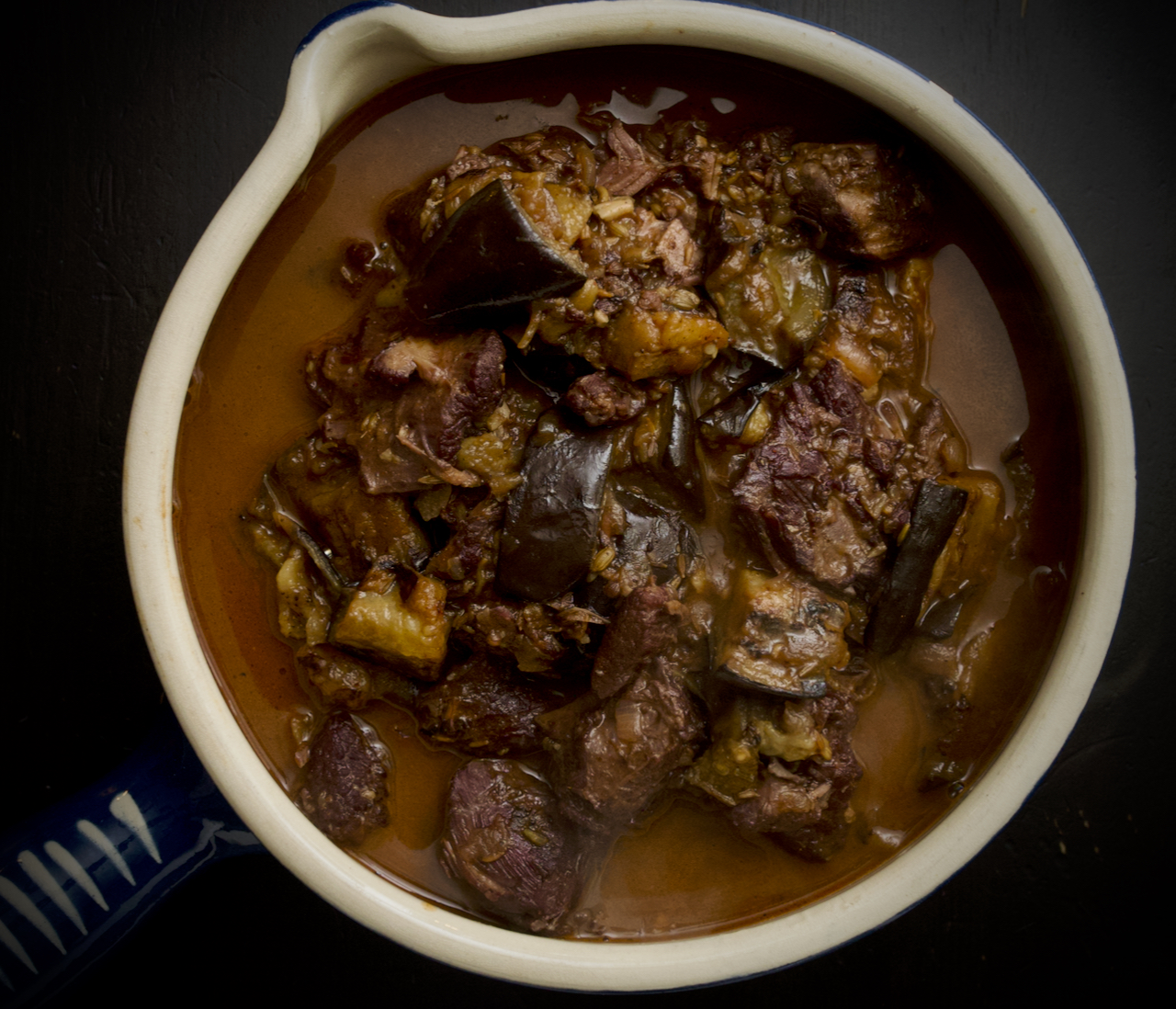
We buy the most amazing goat from a farm in Northern Ireland where they raise the kid goats not being used for milk. We think it’s such a delicious meat and so underused. After picking up a shoulder from the farm we just had to try this Spanish stew by José Pizarro and were rewarded amply.

Wine Suggestion: If you can find some, we’d suggest trying a Douro red with this dish. They’re full of flavour and usually not shy on tannins; this dish need both body and tannin to match. Pushing the boat out a bit, but as we had company and it was a weekend we opened something special, Wine & Soul’s Pintas Character red. Made from an old-vine field blend of 30 different indigenous grapes this has bags of personality, style, depth and character (excuse the pun!).

Braised goat with aubergines – serves 6

  • 5 tbsp olive oil
  • 1.5kg goat shoulder, diced into 5cm chunks
  • 1 large onion, finely sliced
  • 2 tsp cumin seeds
  • 1 tsp coriander seeds
  • 2 cloves
  • 1 heaped tsp fennel seeds
  • 2 tsp sweet smoked paprika
  • 1 garlic bulb, halved horizontally
  • 1 tbsp tomato purée
  • 450ml red wine
  • 500ml fresh chicken stock
  • 2 aubergines, cut into 3cm cubes
  • boiled potatoes or crusty bread to serve

Heat 2 tbsp of the oil in a deep casserole dish over a medium-high heat. Season the goat meat , then add to the hot pan in batches and sear until well-browned. Set aside.

Add another tbsp of oil to the pan and gently fry the onion for 10 minutes until very soft. Add the spices and garlic and cook for a couple of minutes.

Return the meat to the pan and add the tomato purée and red wine. Let it bubble up for a few minutes, then add the stock. Cover and bring to the boil, then turn the heat down low and cook gently for 2½ -3 hours.

Heat 2 tbsp of oil in a large frying pan and brown the aubergine all over. Season, then add to the goat and continue cooking for another 30 minutes. The meat should now be very tender and almost falling apart.

Serve with boiled potatoes or crusty bread.

(Original recipe from The Spanish Home Kitchen by José Pizarro, Hardie Grant Books, 2022.)

Read Full Post »

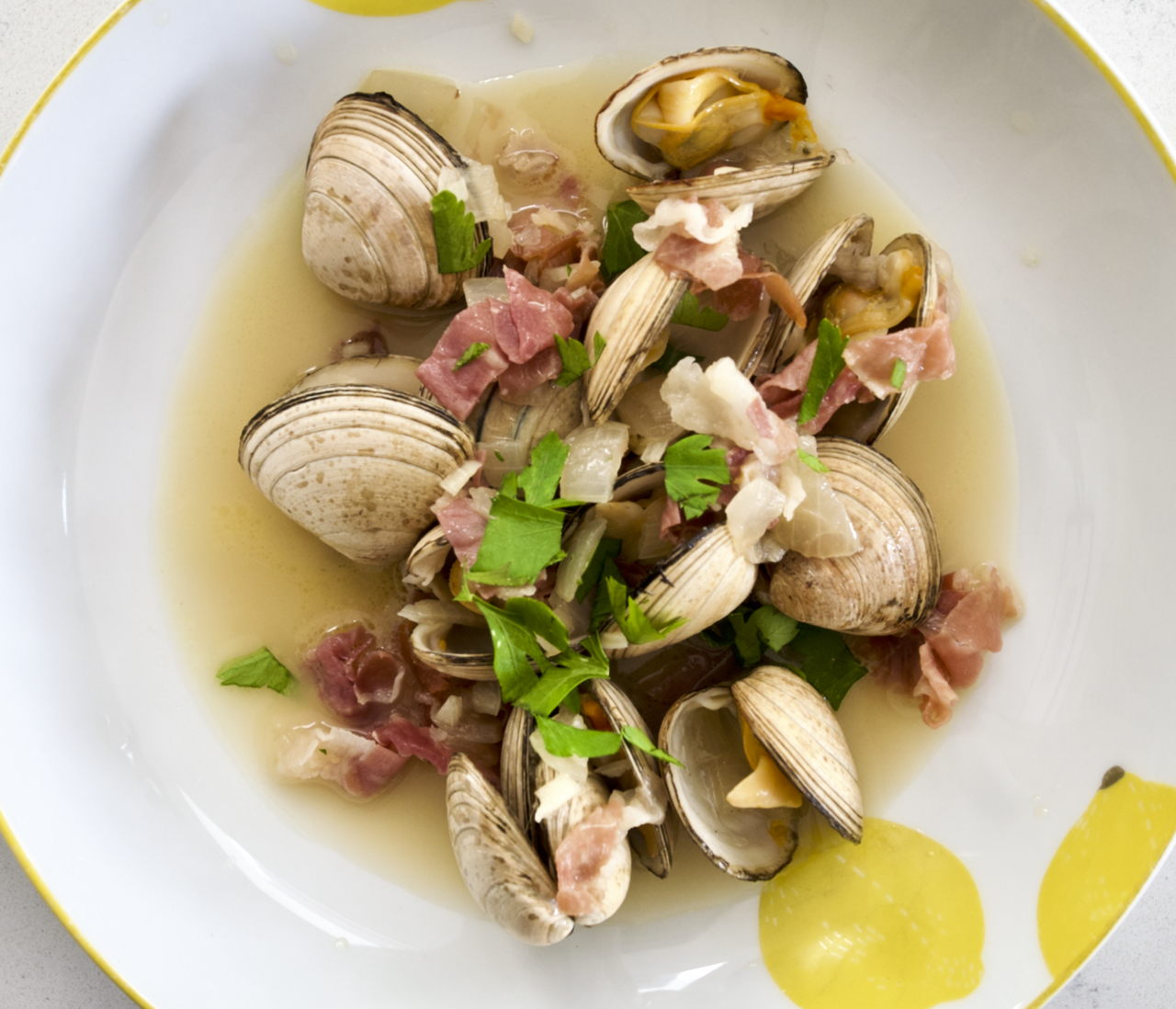
We sometimes find clams hard to find, but can’t resist them when we do. Here they’re cooked with dry sherry and salty serrano ham – a super combination.

Wine Suggestion: we were tempted to have a glass of the Fino sherry with this and weren’t disappointed. Fino and it’s alter ego Manzanilla have a purity and focus that suit this dish while retaining that classic umami saltiness that the clams and serrano also bring. A taste of the Altantic coast in southern Spain.

Clams with fino sherry and serrano ham – serves 4 as a light dish

  • 1 tbsp olive oil
  • ½  onion, very finely chopped
  • 500g clams, rinsed well and discard any open ones that won’t close when sharply tapped
  • 50g serrano ham
  • 2 cloves of garlic, finely chopped
  • 100ml fino sherry
  • a handful of flatleaf parsley, roughly chopped

Heat the oil in a medium pan with a lid and cook the onion for about 5 minutes to soften. Add the ham and garlic and cook for another minute.

Add the clams to the pan with the sherry and bring to the boil, cover and cook for 4-5 minutes or until the clams have opened (chuck any that don’t open). Serve immediately with the parsley.

(Original recipe from BBC Good Food)

Read Full Post »

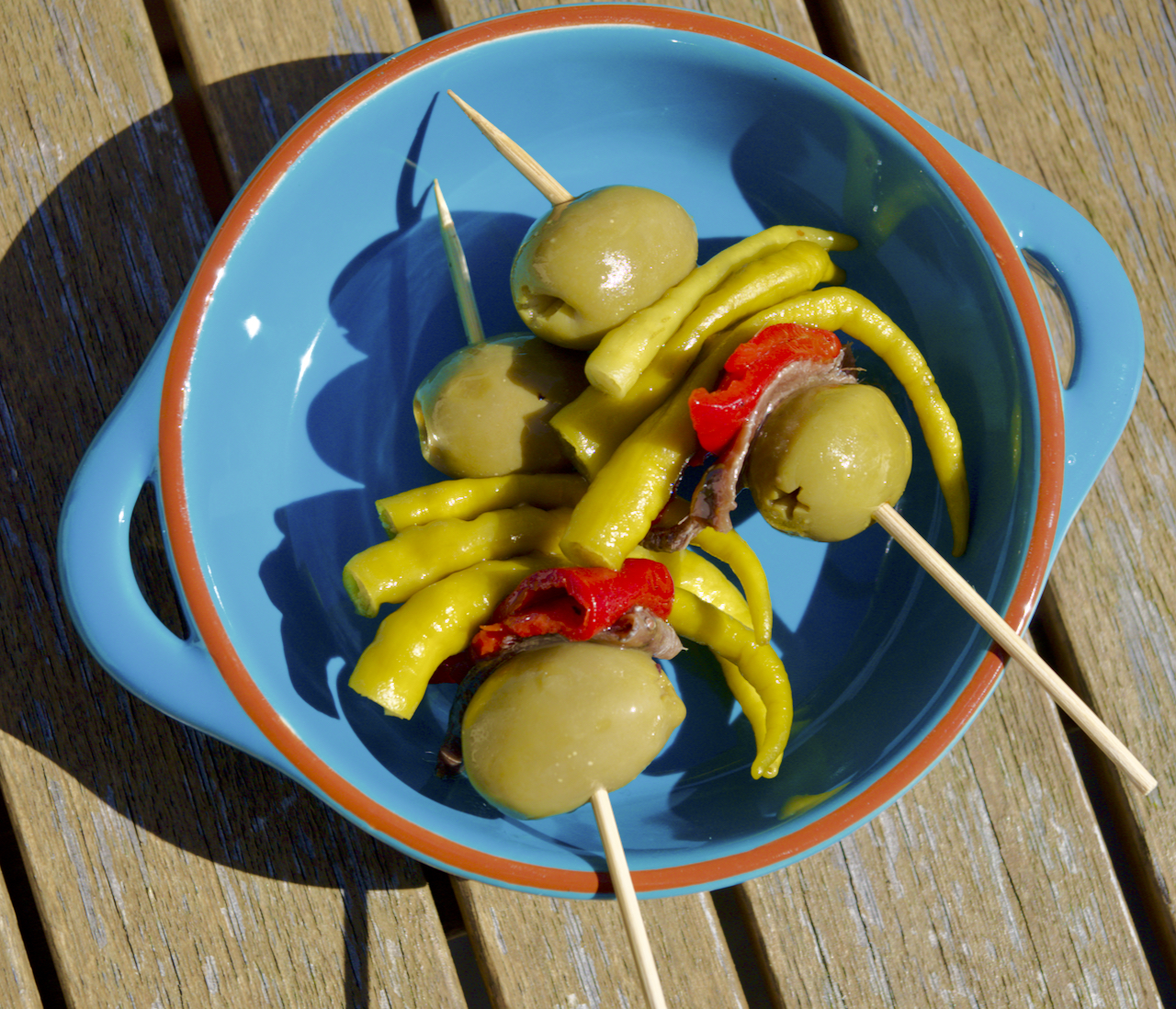
They serve these in all the tapas bars in San Sebastian and all you need to make them at home are top quality ingredients.

Wine Suggestion: Drinking Txakoli made from Hondarrabi Zuri, the local grape and wine for the Basque region, is our suggestion if you can get it. A favourite is the Bodegas Katxina Txakoli which is light, dry and slightly effervescent. It makes us think of fun times and holdays!

Gildasmake as many as you need to serve as a starter

Thread big green olives, top quality anchovies (semi-preserved from the fridge if possible), roasted peppers (we like the Navaricco brand) and guindillas. Serve with crusty bread.

Read Full Post »

A main course salad with warm elements cooked over charcoal and a delicious dressing. Like everything it tastes best eaten outside.

Wine Suggestion: A current favourite is Bodega Jesus Romero’s Rubus, a Garnacha-Tempranillo blend from the mountain slopes in Aragon, Spain, that despite it’s depth of flavour has a real energy and vibrancy.

Steak, piquillo pepper and asparagus salad – serves 4

  • 2 ribeye steaks (about 500g in total)
  • 1 tbsp olive oil
  • 16 asparagus spears
  • 2 baby gem lettuces, leaves seperated
  • 100g roasted piquillo peppers, sliced – good quality Spanish brands like El Navarrico will make a difference here
  • 2 tbsp capers
  • 30g flaked almonds, toasted

FOR THE DRESSING:

  • 1 clove of garlic, grated
  • 2-3 sprigs of marjoram or oregano, leaves picked
  • 2 tbsp PX sherry vinegar
  • 3-4 tbsp extra virgin olive oil

Take the steaks out of the fridge about an hour before you want to cook them.

Get your barbecue hot and ready to cook on – if you don’t want to barbecue you can cook the asparagus and steak on a griddle pan.

Season the steaks and rub all over with oil.

Sear the steaks for a few minutes on each side on a hot barbecue, then set aside to rest.

Toss the asparagus spears in oil and cook on the barbecue until charred. Tip into a serving bowl.

Add the lettuce leaves, piquillo peppers and capers to the bowl with the asparagus.

Combine all of the dressing ingredients and season well.

Slice the steaks and arrange on top of the salad, then drizzle all over with the dressing and scatter over the toasted almonds.

(Original recipe from The Spanish Home Kitchen by José Pizarro, Hardie Grant Books, 2022.)

Read Full Post »

All cooked in one pot and very tasty.

Wine Suggestion: It was a rare, for this year, sunny and warm day in Dublin that coincided with us making this dish so we straight away opened a Chateau Léoube Rosé from Provence that we had chilling for this moment (for far too long!). A properly dry Rosé with gentle red fruits and a long, fresh and savoury finish.

Pork and chorizo paella – serves 4

  • 2 tbsp rapeseed oil
  • 1 onion, finely sliced
  • 1 clove of garlic, finely sliced
  • 2 large vine tomatoes, grated (throw away the skin)
  • 1 red pepper, finely sliced
  • 225g Iberico pork steaks (we used Irish pork butt though Dunnes sometimes has Iberico pork steaks)
  • 100g fresh chorizo, tear off the casing and crumble roughly or cut into small chunks
  • 1 tbsp tomato purée
  • 250g paella rice
  • a good pinch of saffron, soaked in a little just-boiled water
  • 1 tsp smoked paprika
  • ½ tsp fresh thyme leaves
  • 600ml hot chicken stock
  • 1 x 290g jar of grilled artichokes in olive oil, drained and quartered
  • 1 tbsp chopped flat-leaf parsley
  • 1 lemon, cut into wedges

Heat the oven to 180C/350F/Gas 4.

Put the oil into a large shallow casserole dish with a lid (if you don’t have one of these use a roasting tin and use a double layer of tinfoil to cover). Add the onion, garlic, grated tomatoes, red pepper, pork chorizo and tomato purée. Stir gently to combine, then roast, uncovered, for 20 minutes.

Stir in the rice, saffron, paprika and thyme, then pour in the stock and season generously. Stir gently to combine. Arrange the artichokes on the top.

Turn the oven down to 160C/325F/Gas3.

Cover the casserole with a tight lid or a double thickness of foil. Bake for an hour or until the stock has been absobed and the paella is starting to catch at the edges.

Serve with the parsley and lemon wedges scattered over the top.

(Original recipe from More Midweek Meals by Neven Maguire, Gill Books, 2022.)

Read Full Post »

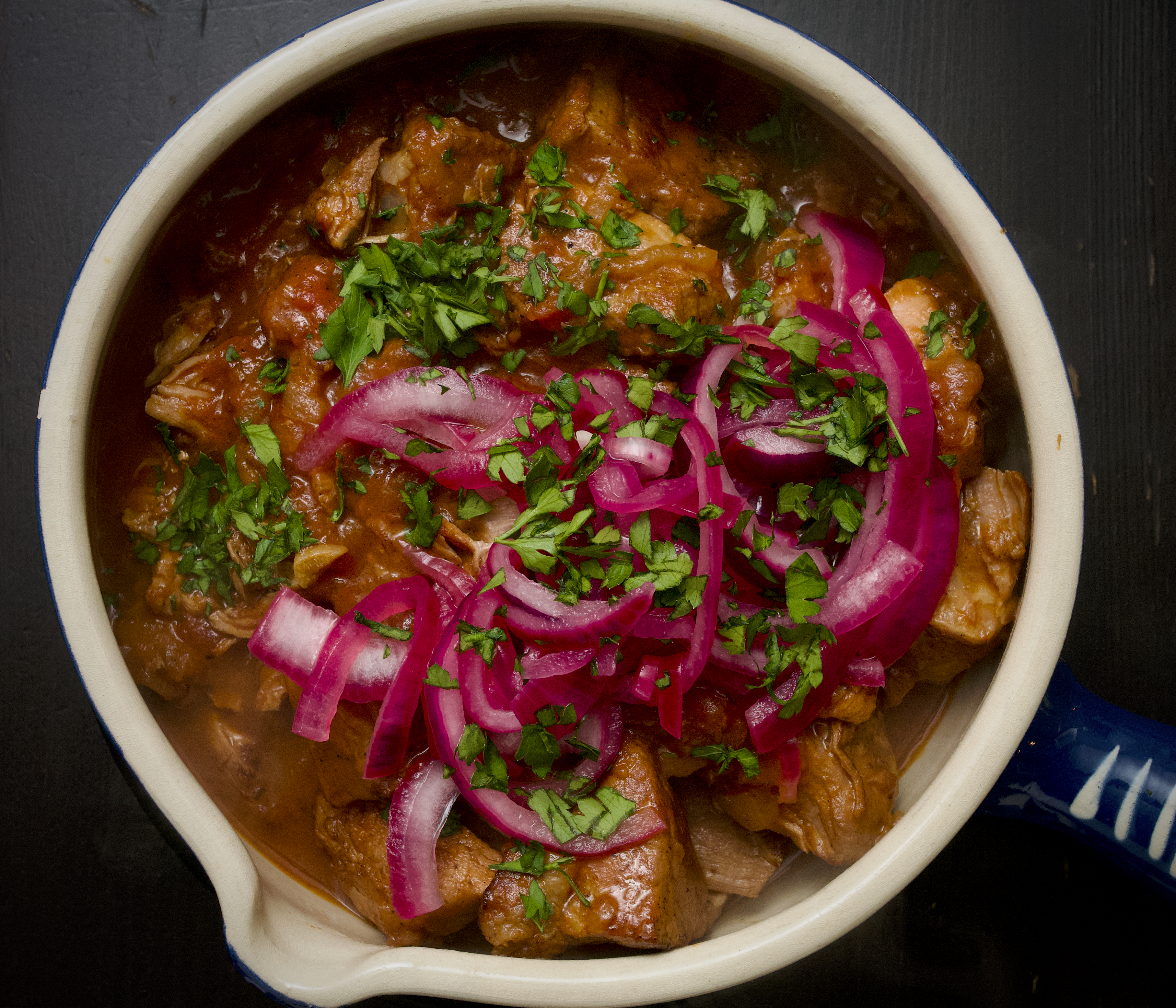
This is an Iberico pork dish inspired by José Pizarro. We did not have any Iberico and substituted Tamworth free-range pork from our butchers instead. This is not quite the same but the dish was still lovely, but of course use Iberico if you can find it.

Wine Suggestion: A dish that begs for a Spanish Garnacha.

Pork shoulder in tomato & sherry sauce with lemony couscous – serves 6

  • 2 tbsp olive oil
  • 1.5kg shoulder of pork (or Iberico pork), cut into 5cm chunks
  • 2 red onions, finely sliced
  • 3 cloves of garlic, finely sliced
  • 2 tsp coriander seeds, lightly crushed
  • 1 tbsp tomato purée
  • 150ml oloroso sherry
  • 1 x 400g tin chopped tomatoes
  • 400ml chicken stock

FOR THE COUSCOUS:

  • 1 red onion, finely sliced
  • juice of 1 lemon
  • 250g couscous
  • 3 tbsp extra virgin olive oil
  • 450ml chicken stock
  • a large handful of flat-leaf parsley, chopped, plus extra to serve
  • 2 preserved lemons, skin finely sliced and pulp discarded
  • ½ cucumber, peeled, deseeded and finely diced
  • 30g toasted flaked almonds

Heat the oven to 160C/140C fan/gas 3.

Season the pork with salt and pepper, then heat the olive oil in a large casserole and fry the pork in batches until well browned on all sides.

Reduce the heat to medium-low, then add the onions to the dish and fry gently for 10 minutes, then add the garlic and coriander seeds and fry for another 5 minutes.

Add the tomato purée and sherry and bubble for 1 minute, then return the pork to the pan and add the tomatoes and stock. Season and bring to a simmer, then cover and transfer to the oven. Cook for 2½-3 hours or until the meat is really tender.

Meanwhile, prepare the couscous. Put the onion into a heatproof bowl, then pour over boiling water from the kettle and leave to sit for 30 seconds. Drain and cool under running water. Tip the onion back into the bowl and squeeze over the lemon juice and season with salt. Set aside.

Put the couscous into a flat dish and stir in the olive oil and a good pinch of salt, then pour over the chicken stock. Stir and cover with clingfilm, then leave to steam for 10 minutes. Remove the cover and fluff the couscous up with a fork. Add the rest of the ingredients and stir to combine.

Serve the pork with the couscous, the pickled onion and its juices, and some extra parsley.

(Original recipe from The Spanish Home Kitchen by José Pizarro, Hardie Grant, 2022.)

Read Full Post »

This recipe is from The Spanish Home Kitchen by José Pizarro who cooks from the heart. It takes a little while to cook but is so simple and delicious. It would also be easy to cook when camping if that matters to you. As José says, this is the comfort dish that his mother would cook … need we say more.

Wine Suggestion: Spanish inspired, but off the beaten track is a Garnacha Blanco from Terra Alta (quite possibly one of the best places in the world for Garnacha of both colours alongside Chateauneuf du Pape … although quite different in style). If you can stretch to an old vine expression like this you’re in for a treat. For us tonight an easier, fresher style with Edetària’s “via Terra” which is charming with layers of fresh stone fruit, nuttiness and salinity. It tastes both of the earth, sunshine and fresh cooling breezes.

Hake with slow-cooked onions and tomato salsa – serves 4

  • 100ml olive oil
  • 3 large onions, finelly sliced
  • 1 bay leaf
  • 150ml white wine
  • 150ml vegetable stock
  • 4 hake fillets (200-250g each)
  • a handful of basil leaves

FOR THE TOMATO SALSA:

  • 500g ripe tomatoes, finely chopped
  • ½ small red onion, finely chopped
  • 2 tbsp capers, chopped
  • 3 tbsp extra virgin olive oil

Heat the oil in a deep sauté pan with a lid. Add the onions and season well with salt and black pepper, then cook over a medium heat for 10 minutes. Cover with the lid and cook for half an hour until really soft but not coloured.

Meanwhile, mix all of the salsa ingredients together in a bowl, then season well and set aside to mingle.

Add the wines to the onions and bubble for a minute before adding the stock. Simmer, uncovered for 10-12 minutes then seaon the hake fillets and nestle them into the onions. Reduce the heat to medium-low, cover with the lid and leave to cook for 10 minutes. Turn the heat off and rest for 2-3 minutes.

Spoon the salasa over the fish and onions, then scatter the basil over before serving.

(Original recipe from The Spanish Home Kitchen by José Pizarro, Hardie Grant Books, 2022.)

Read Full Post »

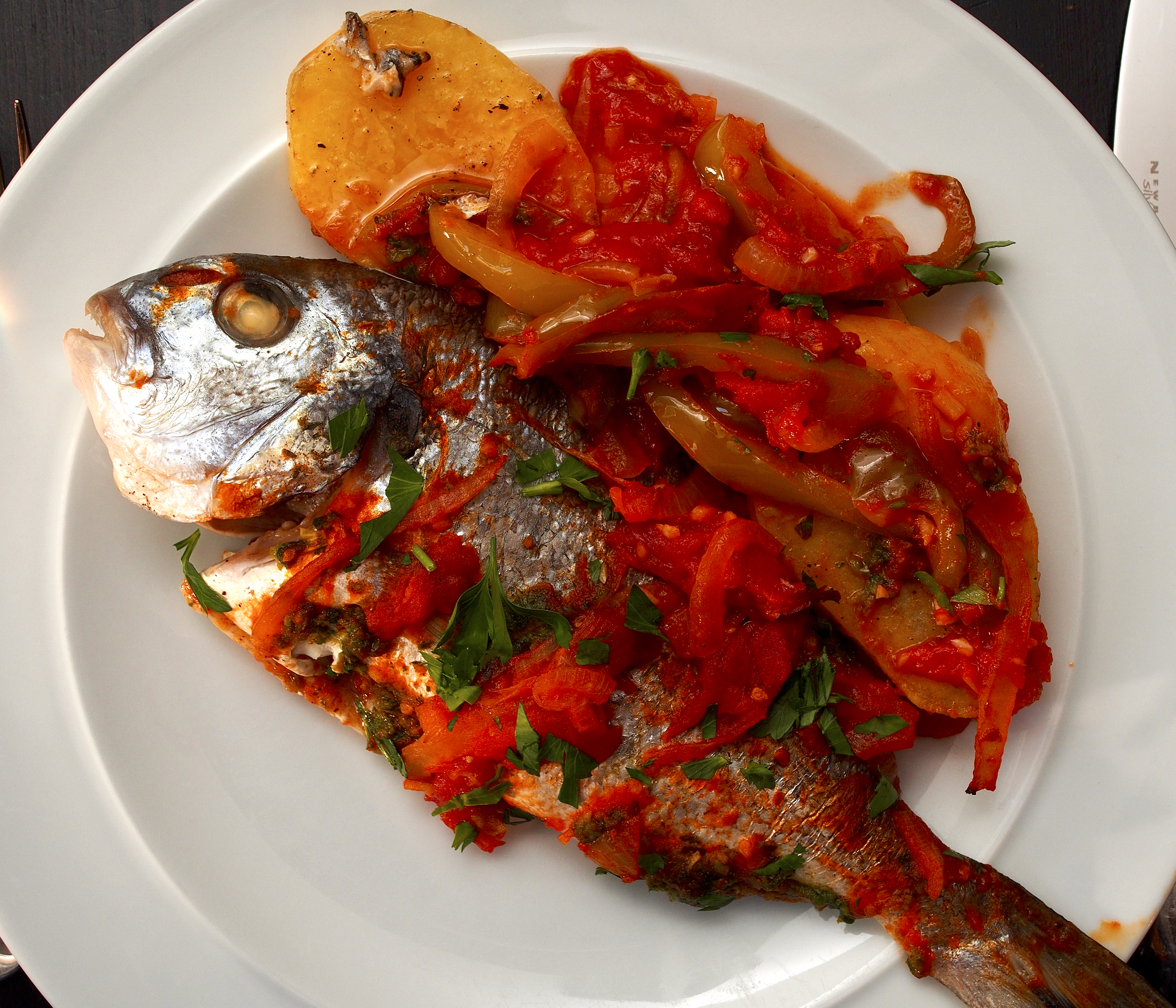
It’s the first night of our holidays and we felt like eating something to remind us of the beach!

Wine Suggestion: Dominio de Tares La Sonrisa Godello, or something similar with a chalky, Chablis-esk minerally finish; unoaked, vibrant and dry.

Baked sea bream – serves 2

  • 5 tbsp olive oil
  • 1 large onion, sliced
  • 1 garlic clove, chopped
  • 1 large green pepper, sliced
  • 400g tin tomatoes
  • 1 bay leaf
  • 3 large waxy potatoes, peeled
  • 2 x 400g whole sea bream, scaled and gutted
  • juice of ½ lemon
  • 6 black peppercorns
  • 60ml dry sherry
  • a small handful of flatleaf parsley leaves, chopped

FOR THE PICADA:

  • a small handful of flatleaf parsley leaves, chopped
  • 2 large garlic cloves, roughly chopped
  • ½ tsp sea salt

Warm 2 tbsp of olive oil in a large frying pan. Add the onions, garlic and pepper and cook for 10-15 minutes or until soft. Add the tomatoes, bay leaf and a splash of water, then cover and cook gently for 20 minutes.

Meanwhile, heat the oven to 180C/Fan 160C. Slice the potatoes, not too thin and not too thick so they hold together but cook through. Spread them over the base of a roasting dish that can easily accomodate the fish. Drizzle over 2 tbsp of olive oil and season with salt and pepper. Toss together then bake for 20 minutes.

To make the picada, put the parsley, garlic and salt into a pestle and mortar and grind to a paste, then set aside.

Season the fish with salt and pepper and put on top of the cooked potatoes. Spread the picada over the fish. Add the lemon juice and a couple of tbsp of water, then pour the tomato sauce over everything. Drizzle over the last tbsp of olive oil, add the peppercorns and sherry, then bake for 20-25 minutes. Scatter with the chopped parsley to serve.

(Original recipe from Rick Stein at Home, BBC Books, 2021.)

Read Full Post »

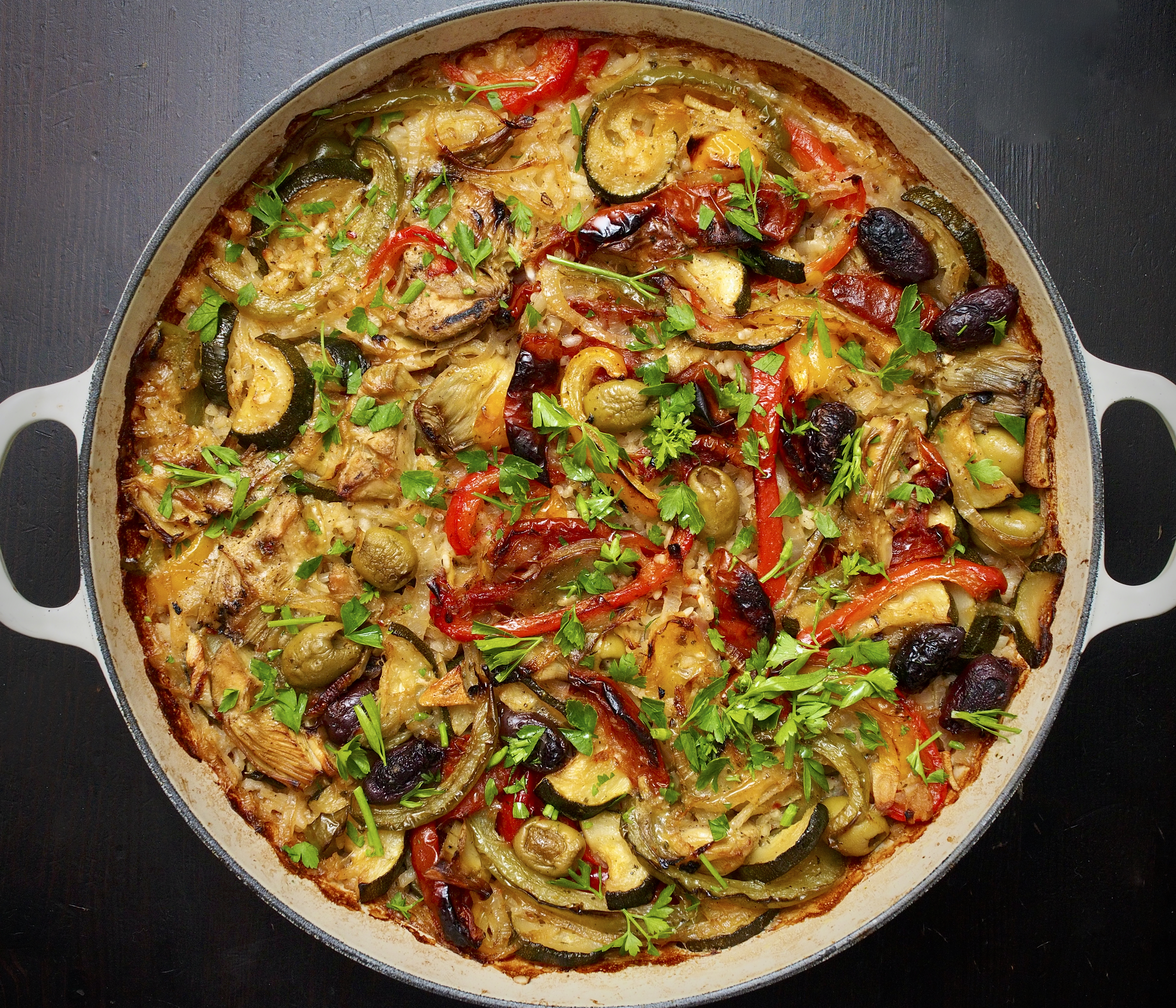
This is a great dish for using up bits of leftover veg and antipasti things. Keep the base of onions, garlic, rice and veg stock but after that you can use up whatever you’ve got – we’ve given what we used below as an example.

Wine Suggestion: This Spanish inspired dish encouraged us to have a glass of a Spanish Garnacha Blanca, the Edetària via Terra Blanca which we find unprepossessing and charming, plus with the right textures and flavours to match this paella. We dare say their equivalent via Terra Tinto (Garnacha Negra) would also be a good match too if you fancied a glass of red instead.

Baked veggie paella – serves 4

  • 2 tbsp olive oil
  • 2 onions, thinly sliced
  • half a red pepper, sliced
  • half a yellow pepper, sliced
  • half a green pepper, sliced
  • 1 courgette, halved lengthways and sliced
  • 2 cloves of garlic, thinly sliced
  • 1 tbsp sundried tomato purée
  • 300g bomba paella rice
  • 850ml vegetable stock
  • 100g chargrilled artichokes in olive oil, halved if big
  • 75g mixed olives
  • 75g Sunblush tomatoes
  • a small bunch of flat-leaf parsley, chopped
  • lemon wedges, to serve

Heat the oven to 200C/180C fan/gas 6.

Heat the olive oil in a shallow casserole and cook the onions, peppers and courgettes with some salt for about 10 minutes or until softened and starting to caramelise.

Add the garlic and cook for another minute, then add the tomato purée and rice and stir until the grains are coated.

Add the stock, artichokes, olives and Sunblush tomatoes, then season and mix well. Bring to a simmer, then cover and cook in the oven for 45 minutes or until the rice is cooked.

Scatter over the parsley and serve with lemon wedges for squeezing over.

Read Full Post »

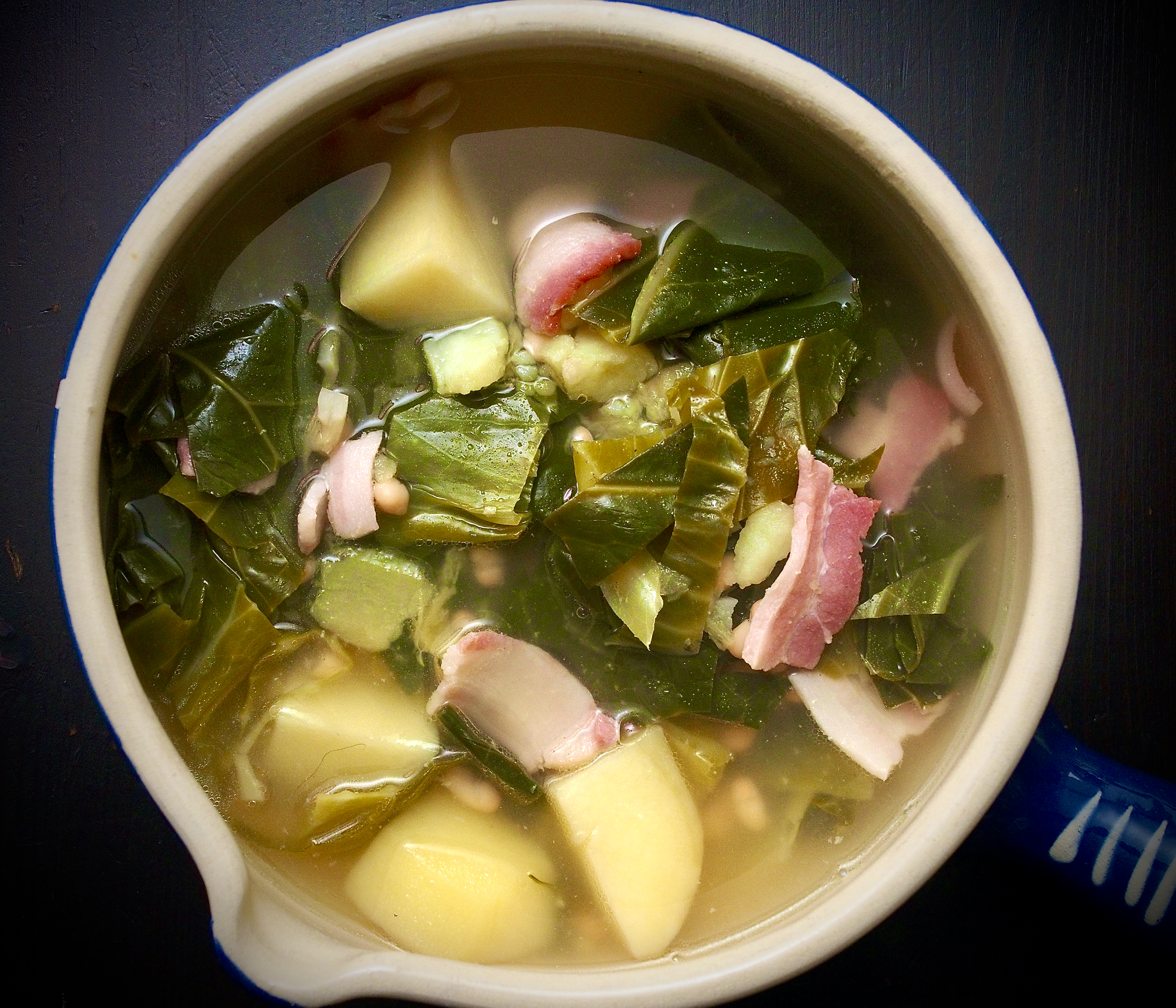
A traditional Galician broth from Claudia Roden’s superb book on Spanish food. Make it after you boil a ham as you will have lots of ham stock to use.

Caldo Gallego – Potato, cabbage & bean soup – serves 6

  • 2 litres ham stock (you can also use chicken stock)
  • 150g smoked streaky bacon rashers, cut into pieces
  • 400g potatoes, peeled and cut into 2cm cubes
  • 250g green cabbage leaves (pointed cabbage or spring greens), cut into thick strips
  • 1 x 400g tin haricot beans, drained

Put the stock into a large saucepan with the bacon, potatoes and cabbage leaves. Bring to the boil,then season. Cover and simmer gently for 30 minutes.

Add the beans and warm through for 5 minutes, then serve.

(Original recipe from The Food of Spain by Claudia Roden, Michael Joseph, 2012.)

Read Full Post »

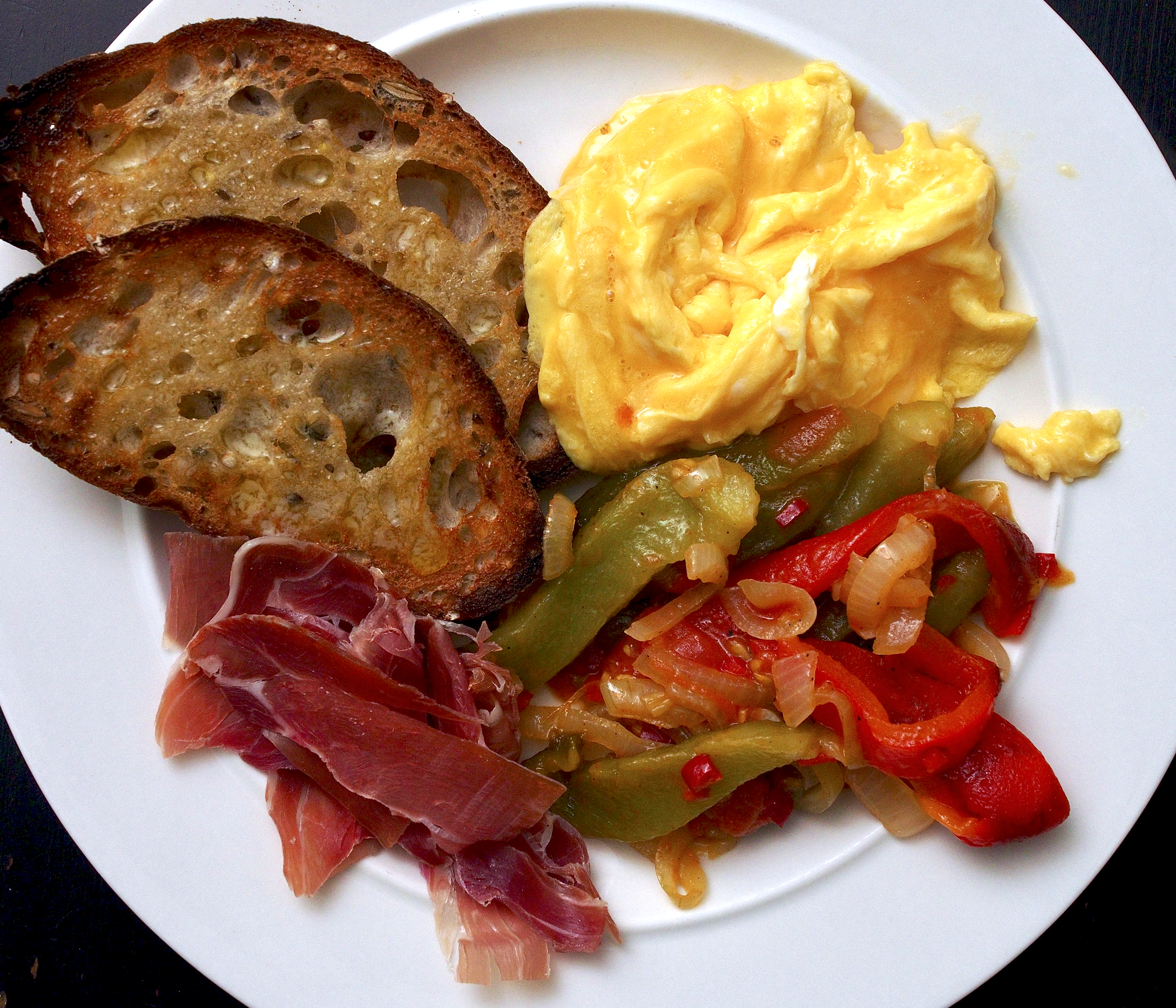
A Spanish-inspired breakfast or brunch dish. The serrano ham is good on the side but not essential.

Piperada vasca – serves 2

  • 1 red pepper
  • 1 green pepper
  • 1 large onion, sliced
  • 2 tbsp olive oil
  • 2 cloves of garlic, sliced
  • 1 small red chilli, deseeded and chopped
  • 3 medium tomatoes, peeled and chopped
  • ½ tsp sugar
  • a knob of butter
  • 3-4 large eggs, lightly beaten and seasoned
  • slices of serrano ham
  • toasted bread, to serve

Grill the peppers until blackened all over, then place in a bowl and cover with cling film. When the peppers have cooled, peel and deseed them, then cut into strips.

Heat the oil in a large frying pan, then fry the onion, until soft and golden. Add the garlic and chilli and stir, then add the tomatoes. Add the sugar and season, then cook for 10 minutes or until the liquid has evaporated and the tomatoes have collapsed. Add the roasted peppers.

When almost ready to serve, melt the butter in a small frying pan and gently scramble the eggs. You’re looking for a creamy texture.

Serve the piperada with the eggs, ham and some toast on the side.

(Original recipe from The Food of Spain by Claudia Roden, Michael Joseph, 2012.)

Read Full Post »

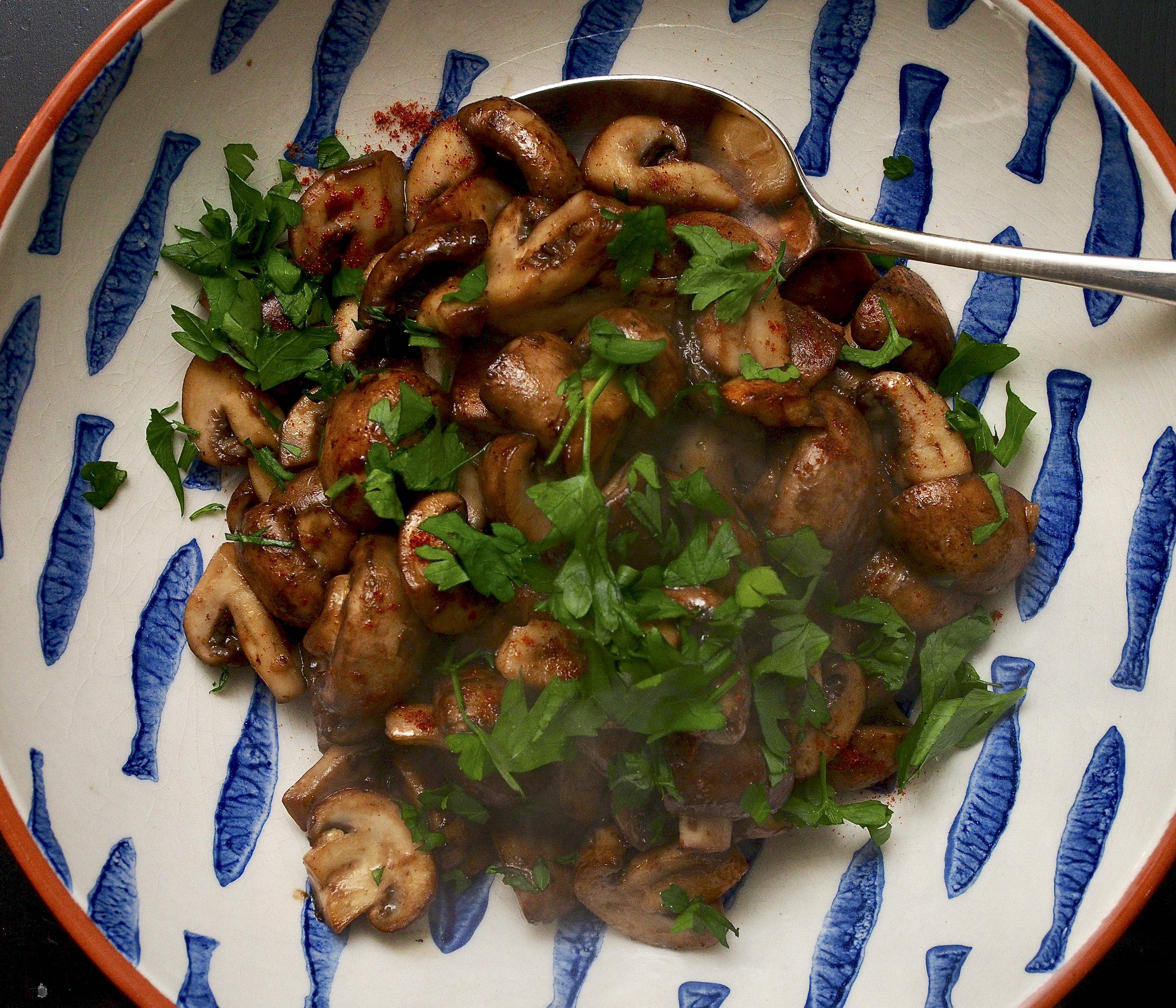
Try these to wet your appetite with a glass of sherry and some crusty bread.

Wine Suggestion: It only makes sense to drink a sherry with this dish with our suggestion being for either a good Fino or Amontillado. Fortunately our friends brought over Tio Pepe’s Fino En Rama. A savoury, minerally wine with grilled almond and iodine characters alongside some delightful lemon and apple fruitiness plus a good dollop of yeasty flor overtones.

Mushrooms with garlic & sherry vinegar – serves 4

  • 2 tbsp olive oil
  • 4 cloves of garlic, finely sliced
  • 500g mushrooms, halve or quarter big ones
  • 2 tbsp sherry vinegar
  • a pinch of hot paprika
  • a small bunch of flatleaf parsley, chopped

Heat the oil in a large frying pan. Add the garlic and fry for 1 minutes, stirring, then add the mushrooms and cook over a high heat until just browned. If they give out liquid, keep cooking until it’s all gone.

Season well with salt and pepper, then add the sherry vinegar. Allow to sizzle until almost evaporated.

Serve the mushrooms with a drizzle of olive oil, a sprinkle of hot paprika and the chopped parsley.

(Original recipe from The Hairy Bikers’ Mediterranean Adventure by Si King & Dave Myers, Seven Dials, 2017.)

Read Full Post »

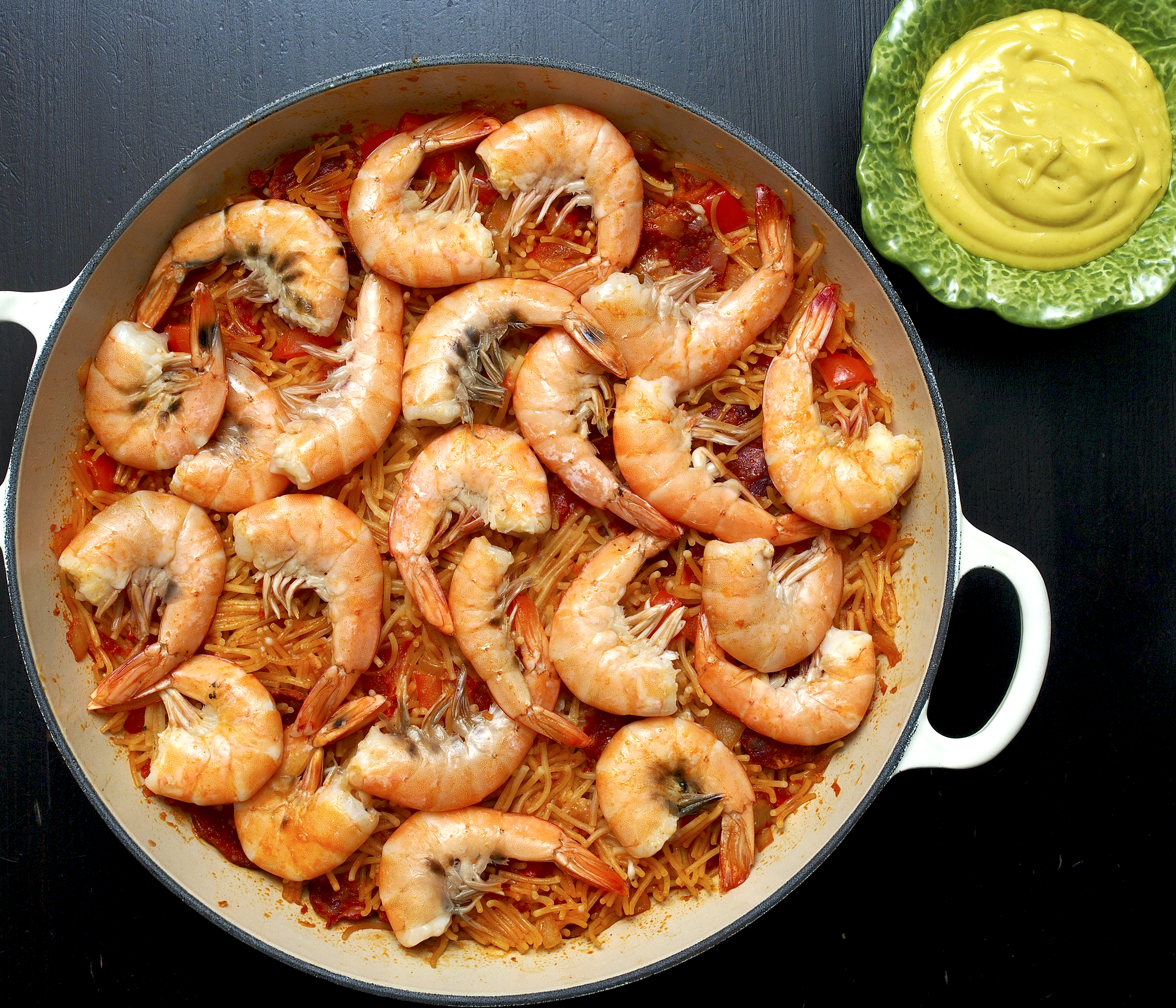
We’ve tried this Spanish pasta dish before, but with limited success, however this version was a triumph. We had the proper fideos noodles this time which we think might have helped. As we can’t go on holidays at the moment we thought we’d cook holiday dishes instead. Serve with some aïoli.

Wine Suggestion: this dish cries out for a fresh Garnacha like the Edetaria via Terra which is from Terra Alta DO in the south of Catalonia. Inland, at some altitude and on specific soils this area produces some of the best wines from this grape anywhere with a freshness and weightlessness from lovely ripe grapes.

Prawn fideua – serves 4

  • olive oil
  • 1 onion, finely chopped
  • 1 red pepper, finely chopped
  • 100g chorizo, thinly sliced
  • 3 cloves of garlic, finely chopped
  • 1 tsp sweet paprika
  • a pinch of saffron strands
  • 1 tsp salt
  • 400g tin of plum tomatoes, lift the tomatoes out of the juice with a spoon and discard the juice left in the tin
  • 350g fideos noodles
  • 600ml freshly boiled water
  • 400g whole shell-on prawns
  • lemon wedges, to serve

Cover the base of a paella or sauté pan with olive oil, then warm over a medium heat. Add the onion, pepper, chorizo and garlic and cook for about 10 minutes or until the onions and peppers are soft.

Add the paprika, saffron and salt and stir over the heat for a minute, then add the tomatoes – squeezing them with your hands as you add them to the pan to break them up. Cook for 2 minutes to thicken.

Add the fideos noodles and stir to coat well, then add the boiled water. Cover and cook for 5 minutes, then spread the prawns over the surface and cook uncovered for another 5 minutes, or until the water has evaporated and a crust is forming on the bottom of the pan. The prawns will turn pink when cooked, you can turn them over to help them along.

Remove from the heat and rest for 5 minutes before serving with lemon wedges and aïoli.

(Original recipe from New Kitchen Basics by Claire Thomson, Quadrille, 2019.)

Read Full Post »

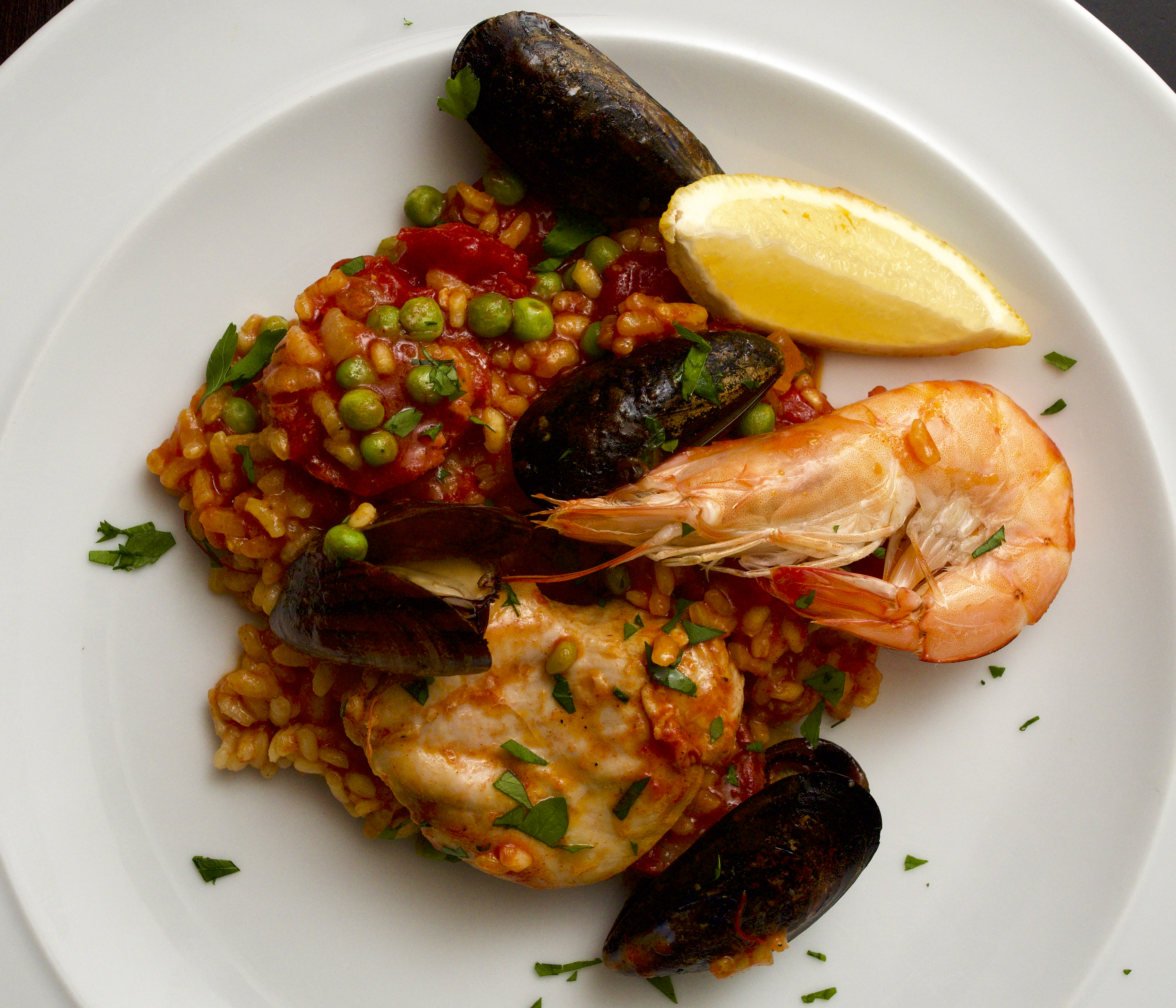
Paella Mixta

This is not an authentic paella recipe but we guarantee it will remind you of days in the sun. It’s made in the oven from start to finish and all you have to do is add the ingredients in the correct order.

Wine Suggestion: Spanish influenced wine it has to be. If it’s baking hot try a dry, Garnacha Rosé, though for us tonight it had to be red as it was cool and wet. The choice was a little left-field as it was from Teruel, an old, abandoned wine region (caused by the de-population of country areas during their civil war) being rehabilitated by a couple of young winemakers making their own way. The Bodegas Jesus Romero Quercus is garnacha, tempranillo, syrah and a little cabernet franc planted in poor, stony soils with excellent drainage and elevation near Valencia. We are really impressed each time we taste this, and a good match for the dish too!

Paella Mixta – serves 4

  • 400g tin chopped tomatoes
  • 600ml chicken stock
  • 1 heaped tsp smoked paprika
  • 2 pinches of saffron
  • 1 onion, chopped
  • 3 garlic cloves, crushed
  • 4 tbsp olive oil
  • 300g paella rice
  • 4 chicken thigh fillets, trimmed and cut in half
  • 200g chorizo, sliced
  • 85g frozen peas
  • 150g raw king prawns
  • 250g mussels, cleaned and throw away those that won’t close when tapped
  • lemon wedges, to serve
  • a small handful of chopped flat-leaf parsley, to serve

Heat the oven to 220C/200C fan/gas 7.

Put the onion and garlic into the base of a large, shallow, ovenproof pan. Drizzle with the olive oil, then toss to coat. Put into the oven and cook for 15-20 minutes or until the onion has started to brown. Keep an eye on it so it doesn’t overdo.

Meanwhile, put the tin of tomatoes, the chicken stock, the smoked paprika and saffron into a saucepan and heat until piping hot.

Remove the onions from the oven and stir in the rice, chicken, chorizo and hot stock mixture. Season and return to the oven for 20 minutes (uncovered).

Gently stir through the peas and arrange the mussels and prawns on the top. The mussel hinges should be facing downwards. Arrange the lemon wedges around the edge and return to the oven for 5-10 minutes or until the mussels have opened and everything else is cooked. Throw away any mussels that haven’t opened. Scatter over the parsley and serve. Finger bowls and napkins essential!

(Original recipe from BBC Good Food)


Read Full Post »

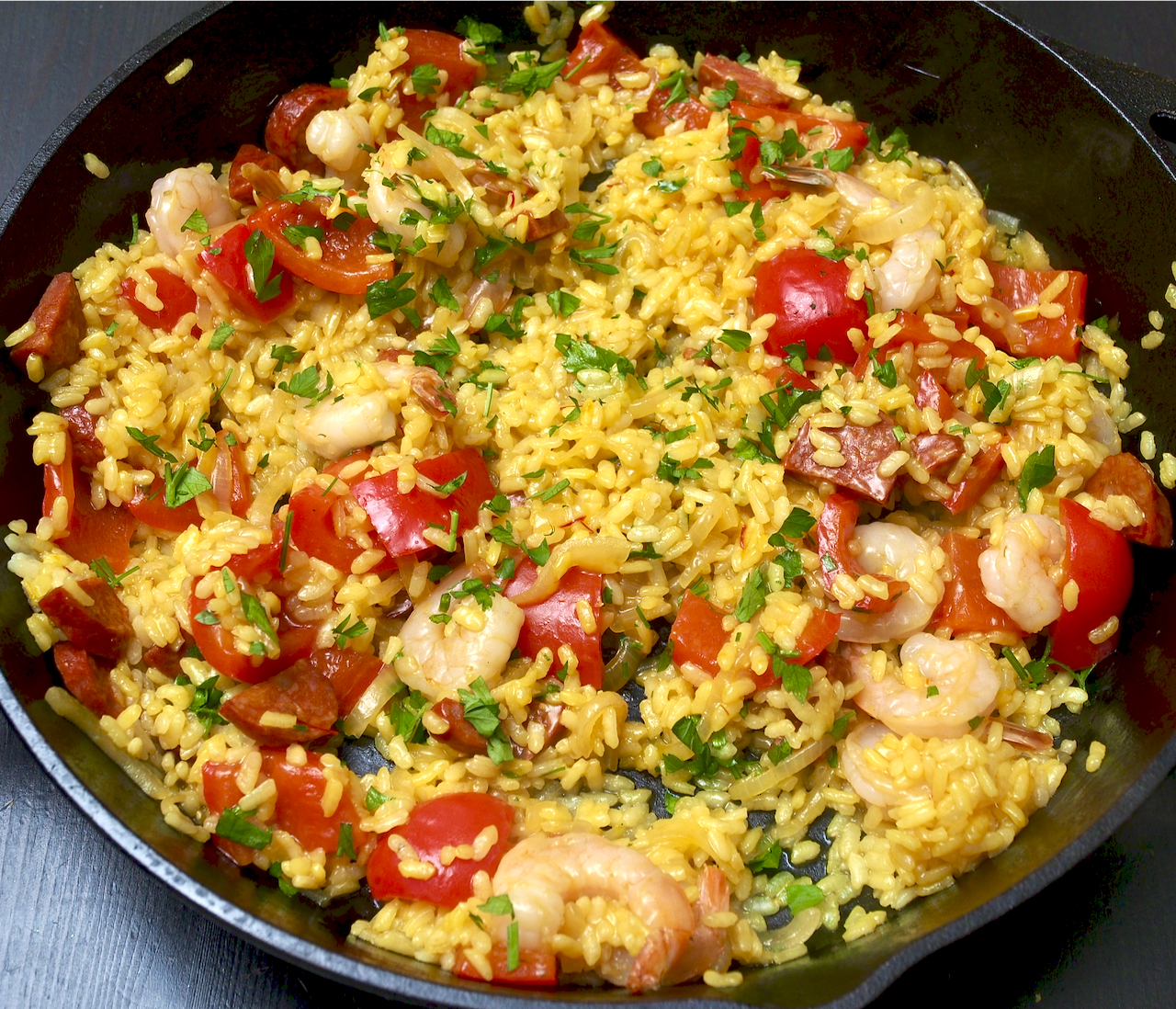
Spanish Rice with Prawns & Chorizo

A lovely weeknight treat for two and the only thing we had to buy was a pepper as the rest of the ingredients were in our cupboard or fridge-freezer. Quick and easy, and it tastes like a dish you’d have on holiday.

Wine Suggestion: A Spanish white like Albariño or a young Tempranillo. Tonight it was the latter and Finca Antigua from La Mancha in Spain with classic warm spices and hints of vanilla that embrace the peppers and prawns.

Spanish rice with prawns & chorizo – serves 2

  • 1 onion, sliced
  • 1 red pepper, cut into chunks
  • olive oil
  • 100g chorizo, chopped into smallish chunks
  • 150g paella rice
  • a pinch of saffron
  • 400ml hot chicken stock
  • 125g cooked prawns
  • 1 lemon, halved
  • a small bunch of parsley, chopped

Heat 2 tbsp of olive oil in a wide, shallow pan and cook the onion and pepper until softened. Add the chorizo and cook for another few minutes or until the oil is released.

Stir in the rice and stir to coat in the oils. Stir the saffron into the stock then stir into the pan.

Cover the pan with a lid and cook for 15 minutes or until the rice is tender and the stock absorbed. Stir in the prawns until heated through, then squeeze some lemon juice over and stir in the parsley.

(Original recipe by Janine Ratcliffe in Olive Magazine, May 2010.)

Read Full Post »

Spanish rice with pork & spinach

Another great one-pot dish by Diana Henry – one our absolute favourite food writers (we might have said that already). Don’t be tempted to stir the rice, it’s not a risotto.

Wine Suggestion: this dish goes with juicy Spanish reds with a good option being the Finca Antigua Syrah from La Mancha. While not a traditional grape variety for Spain, Syrah is increasingly seen and seems to take on a local twist which we find works really well; creamy with warm spices.

Spanish rice with pork and spinach – serves 6

  • 350g pork fillet, halved lengthways and sliced
  • 7 tbsp olive oil
  • 100 chorizo, skin removed and cut into chunks
  • 300g bacon, cut into meaty chunks (you might have to order a piece of bacon from your butcher)
  • 2 large onions, roughly chopped
  • 2 red peppers, sliced
  • 4 garlic cloves, finely chopped
  • 2 tsp smoked paprika
  • ¼ tsp dried chilli flakes
  • 300g paella rice
  • 1.2 litres hot chicken stock
  • 650g spinach
  • 1 lemon

Season the pork. Heat 3 tbsp of the olive oil in a large frying pan and quickly brown the pork until cooked through, then set aside.

Reduce the heat and add another 3 tbsp of the oil and the chorizo and bacon. Sauté for a couple of minutes, then add the onions and peppers and cook over a medium-low heat for 20 minutes or until soft. Add the garlic, paprika and chilli and cook for another couple of minutes, then add the rice. Stir the rice into the juices (this is the only time you will stir it), then add the stock and season. Bring to the boil, then reduce to a simmer and cook for 15 minutes or until there is only a little liquid left and the rice almost tender.

Meanwhile, wilt the spinach in the last tbsp of oil and season. Scatter the spinach over the rice and tuck in the pork pieces. Check for seasoning, then reduce the heat to its lowest, cover and leave for 5 minutes. Squeeze lemon juice over the top and serve.

Original recipe from Food from Plenty by Diana Henry, Mitchell Beazley, 2010.)

Read Full Post »

Older Posts »