This is delicious with a load of warm flatbreads for scooping up the baba ghanoush. To burn the aubergines place them directly onto gas rings turned up high, scorch for about 20 minutes, turning once. You will need to open all of the doors and windows but it is definitely worth it!
Wine Suggestion: A Spanish red was called for, but to be a little contrary we went to Roussillon: Roc des Anges’ Segna de Cor. A Grenache, Carignan and Syrah blend from the “young” vines of this estate which average only 40 years of age … they have some wonderful old vines in this part of the world and Marjorie Gallet has some of the best parcels scattered across the incredible landscape that is Catalan France. Exceptionally refined and smooth, with layers of spices, warm fruits and a core of salty stones and smokey earth. For an entry level wine this is truly exciting. Also a good match for the smokey aubergines, earthy lentils and tart pomegranate.
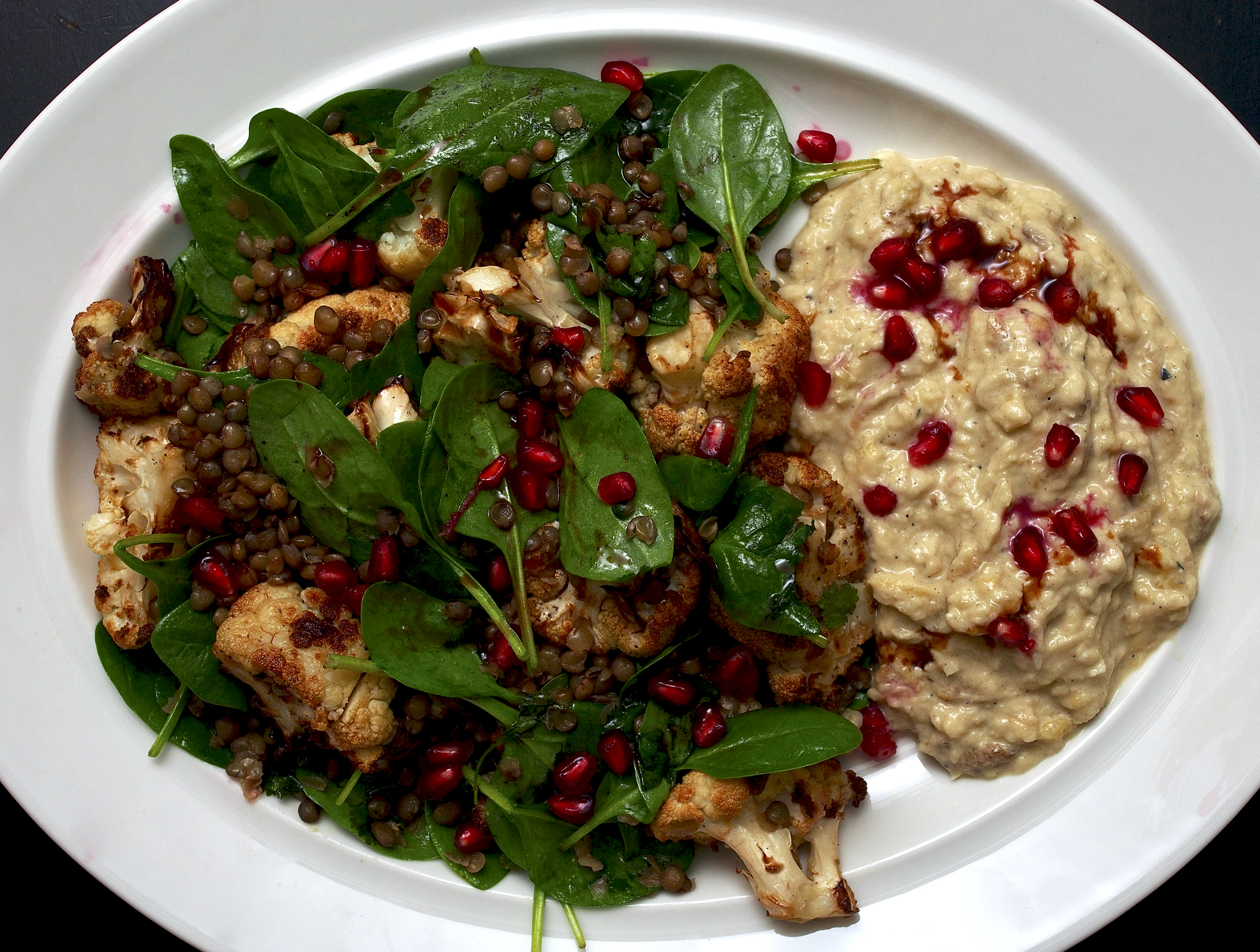
Smoky baba ganoush with roasted cauliflower, lentils & pomegranate – serves 4 to 6
1 cauliflower, cut into florets
2-3 tbsp extra virgin olive oil
300g Puy lentils (or similar lentils)
2 large handfuls of spinach leaves
a small handful of coriander leaves
½ a lemon, juiced
1 pomegranate, seeds extracted
pomegranate mollasses
FOR THE BABA GANOUSH:
4 large aubergines
4 tbsp tahini paste
2 cloves of garlic, finely chopped
1 lemon, juiced
2 tbsp Greek yoghurt
5 tbsp extra virgin olive oil
Preheat the oven to 200C.
Coat the cauliflower in olive oil and season well with salt and pepper. Spread over a baking tray and roast for 25-30 minutes.
To make the baba ganoush, put the aubergines directly over a gas flame on high, for about 20 minutes, turning once. When cool enough to handle, peel off the blackened skin and place the flesh into a large bowl. Break the aubergine flesh up with a fork, leaving it a bit chunky, then add the tahini, garlic, lemon juice, yoghurt and olive oil. Mix with a fork until well combined and season well with salt and pepper.
Bring a large pot of water to the boil and cook the lentils for 20-25 minutes until just tender, then drain.
Combine the roasted cauliflower, lentils, baby spinach, coriander, a drizzle of olive oil and a good squeeze of lemon juice and season well with salt and pepper. Serve with plenty of baba gaanoush on the side, scatter over the pomegranate seeds and drizzle with a few drops of the pomegranate molasses.
(Original recipe from Community by Hetty McKinnon, A Plum Book, 2014.)
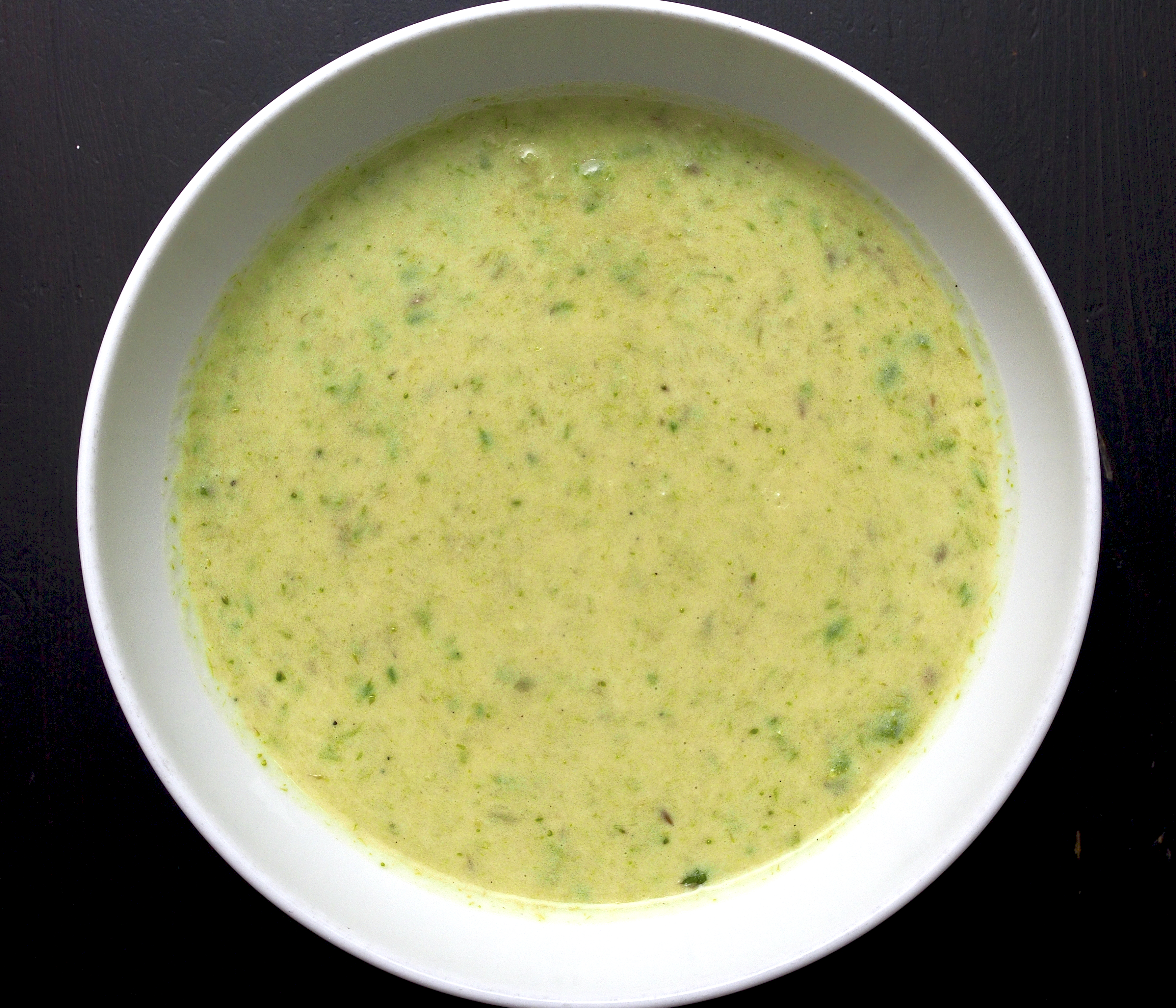
It just wouldn’t be spring without asparagus soup would it? Though the weather is far from spring-like in Dublin. This is from Roast Chicken and Other Stories by Simon Hopkinson, though I suspect Simon may not approve of our half-whizzed texture. You can of course whizz until smooth and pass through a fine sieve if you’re equally fussy.
Asparagus soup – serves 4
100g butter
4 small leeks, white parts only, trimmed and chopped
750ml water
1 potato, peeled and chopped
450g fresh asparagus, snap off the woody ends and peel the thicker ends a little
250ml double cream
Melt the butter in a large saucepan, then sweat the leeks until soft.
Add the water and potato, season with salt and pepper, and cook for 15 minutes.
Chop the asparagus and add to the soup, then boil rapidly for 5 minutes.
Whizz the soup in a blender or food processor, then pass through a fine sieve (or if you’re lazy like us you can just roughly whizz with a stick blender).
(Original recipe from Roast Chicken and Other Stories by Simon Hopkinson, Ebury Press, 1994.)
This is simplicity itself but tastes just like the season.
Wine Suggestion: Pick a good, top-notch, dry Sauvignon Blanc to match this dish like the André Dezat Sancerre which is flinty, grassy-fresh and has great concentration and power despite being super balanced and effortless.
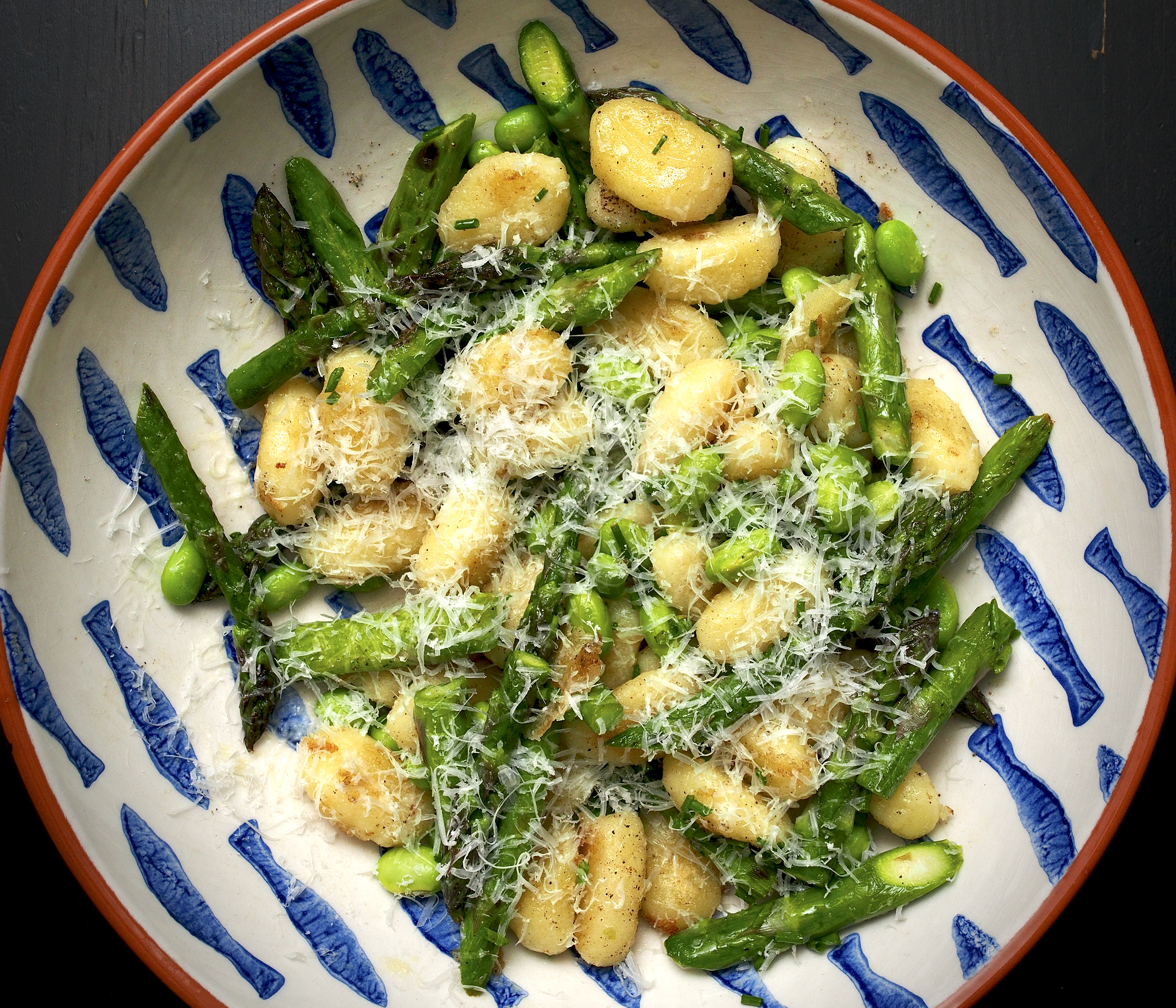
Gnocchi with asparagus, edamame & Parmesan – serves 4
500g pack of gnocchi
good extra virgin olive oil
500g asparagus, snap off the woody part of the stems, then cut into 5cm pieces
150g frozen edamame beans
1 tbsp chopped chives
1 lemon, for squeezing over at the end
60g Parmesan, grated
Bring a large pot of salty water to the boil, then add the gnocchi and cook according the pack instructions. It’s done when if floats to the top. Drain and refresh under cold running water.
Heat a large fraying pan over a medium-high heat, then drizzle with oil, and when hot, add the asparagus with a pinch of sea salt. Fry for a few minutes or until the pieces are starting to char but are still crisp. Remove from the pan and put into a warmed dish.
Add the frozen edamame beans to pan with a splash of water and a pinch of sea salt. Cook for 2 minutes, then scoop ot and add to the asparagus.
Drizzle some more oil into the pan and warm over a medium-high heat, then add the gnocchi. Fry until golden and crispy. Don’t be tempted to turn them too quickly or they will stick. Remove from the pan and into a large dish.
Combine the gnocchi with the asparagus, edamame, and chives. Squeeze over some lemon juice to taste and drizzle with olive oil, then season with sea salt and black pepper. Scatter over the Parmesan to serve.
(Original recipe from Family by Hetty McKinnon, Prestel, 2019)
We tend to be a bit suspicious of salads that claim to be a main course but we promise you won’t be hungry after this one.
Wine Suggestion: Naturally when eating asparagus we gravitate to Grüner Veltliner, but for this dish we felt drawn to Souther France and opened the Ch Vignelaure, La Source Blanc from Provence. Made mostly from Vermentino with a touch of Semillon and Sauvignon Blanc. Fresh and summery with citrus fruits and a gently herbal twist; full of energy and vitality.
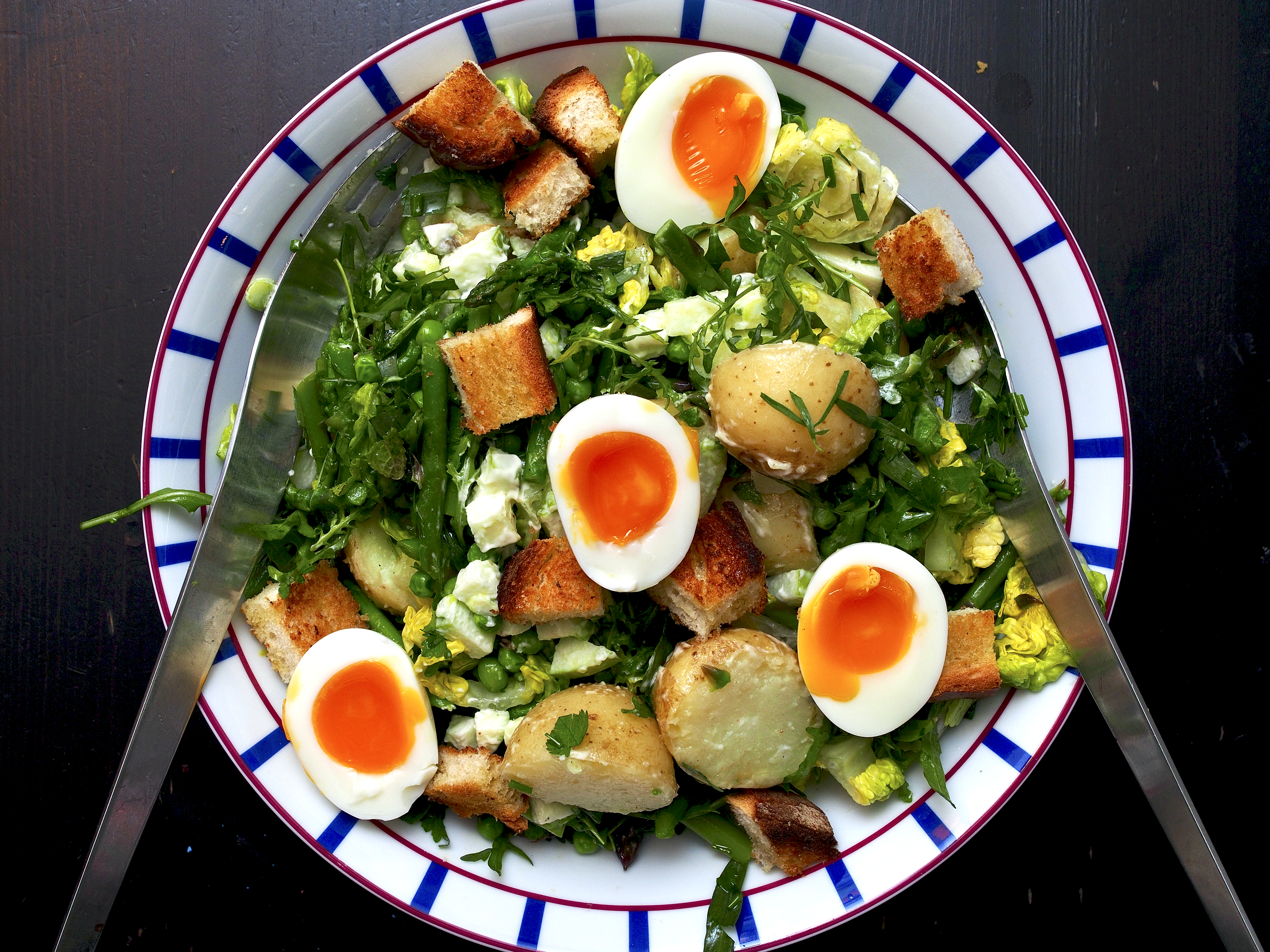
Spring Salad – serves 4 as a main
300g baby new potatoes, half any biggish ones
1 spring of mint
2 eggs
200g asparagus, woody ends snapped off and saved
50g frozen peas
4 tbsp mayonnaise
1 green apple, cored and finely chopped (we used a Granny Smith)
3 scallions, finely sliced
1 tsp capers, drained
2 tbsp olive oil
1 tbsp white wine vinegar
1 Little Gem lettuce, leaves washed and dried, heart split in two
a few handfuls of soft herbs e.g. tarragon, parsley, mint, chives
FOR THE GARLIC CROUTONS:
2 slices of sourdough or white baguette
a drizzle of olive oil
3 cloves of garlic
Heat the oven to 200C/180C fan/gas 6.
Drizzle the bread with some oil and season, then roast in the oven for 12-15 minutes, turning halfway through. They should be crispy and golden.
Once baked, rub the bread with the raw garlic and cut into croutons.
Bring a pan of water to the boil. Add the potatoes, mint sprig and 1 tsp salt, then simmer for 15 minutes or until the potatoes are tender, no firmness should remain. Drain and discard the mint.
Meanwhile, bring another pan of water to the boil and add the eggs. Cook for 6 minutes and 30 seconds for firm whites and runny yolks, then drain under cold running water to cool and peel.
Bring another pan of salty water to the boil. Chop the asparagus spears into three and boil for 3-4 minutes or until just tender. Remove with a slotted spoon, then bring the water back to the boil and ad a pinch of sugar. Add the peas and cook for 2-3 minutes or until tender. Drain.
Toss the potatoes with 2 tbsp of the mayonnaise, apple, scallions and capers. Whisk the olive oil and white wine vinegar together, season, then dress the lettuce and soft herbs, the asparagus and peas. Spread the rest of the mayonnaise across a serving plat, top with the postates and dressed salad, halve the eggs and add more mayonnaise if you like. Garnish with the croutons and extra herbs.
This couldn’t be easier and it’s perfect for a Friday night. We used the curry paste from this recipe but you can use a good quality shop-bought version either. Serve with sticky rice and salad.
Wine Suggestion: we often turn to aromatic wines for Thai food and for this dish was no different as we chose the Korrell Slice of Paradise Riesling. A dry Riesling from the Nahe in Germany this is the youthful cuvée from the more regal Paradies vineyard Martin Korrell makes. Standing up to the earthy and rich peanuts and cutting through the rich coconut milk this is always a joy to drink, let alone pair with food. Light and refreshing, and yet powerful enough to work with meat and complex flavours – we love the versatility this lends.
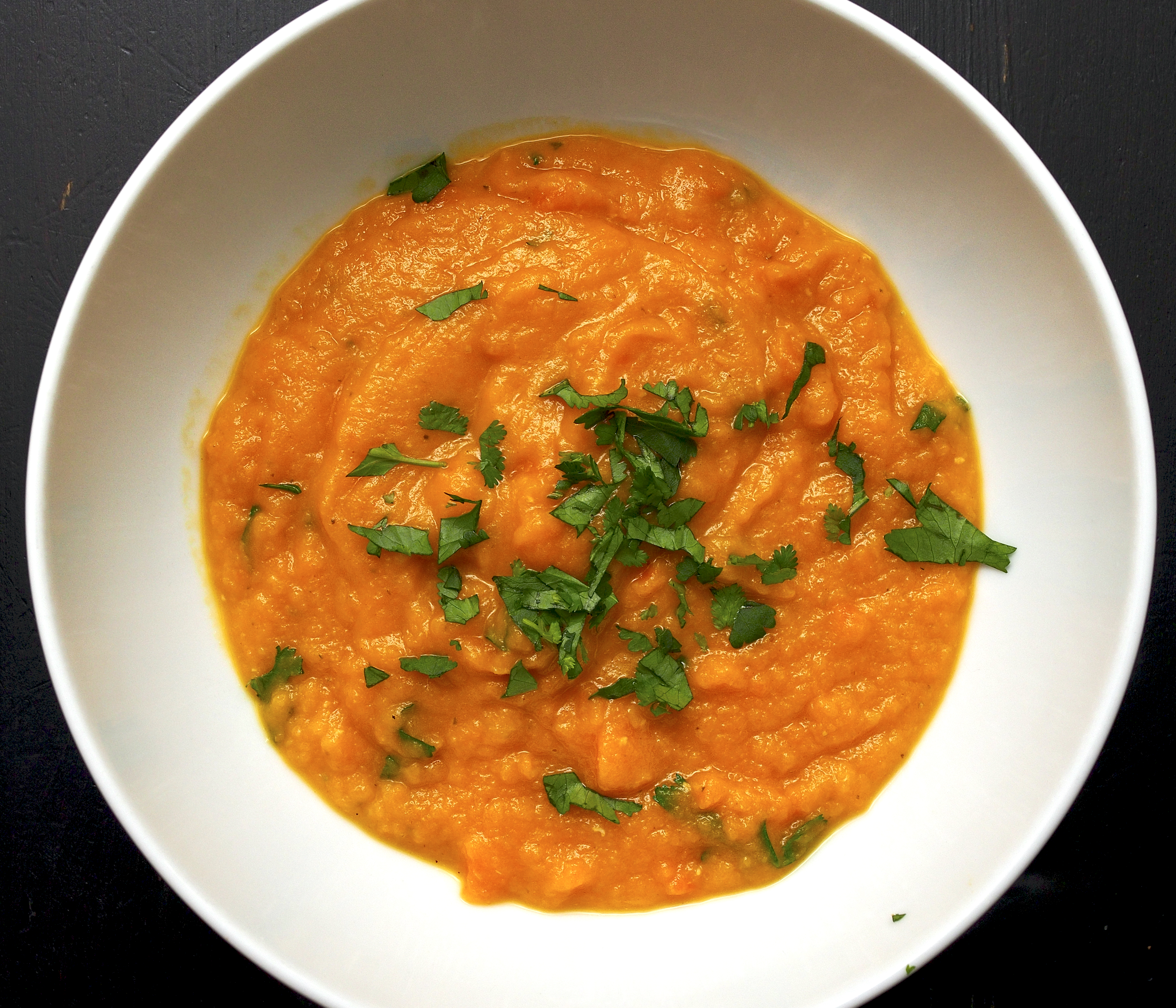
This is one of those recipes that we spotted in the paper and realised we had all the ingredients. It’s yummy – perfect for mid-week lunches.
Spiced carrot soup – serves 4
1 medium onion, roughly chopped
2 tbsp olive oil
1 clove of garlic, thinly sliced
½ tsp ground cumin
1 tsp ground coriander
a large pinch of chilli flakes
750g carrots, peeled and roughly chopped
1 litre hot vegetable stock
100g red lentils
2 bay leaves
fresh mint and parsley, to serve
Warm the olive oil in a deep saucepan over a medium heat, then add the onion. Cook for a couple of minutes, then add the garlic and continue cooking for 5-7 minutes, stirring occasionally, until soft but not coloured.
Add the cumin, ground coriander and chilli flakes, then add the carrots and cook for another 5 minutes.
Add the hot stock to the saucepan, then add the lentils, a little salt and the bay leaves.
Bring to the boil, then lower the heat and simmer, partially covered with a lid, for 25-30 minutes or until the carrots and lentils are soft.
Whizz the soup in a blender or with a stick blender until you have a thick purée.
Season to taste and garnish with the fresh herbs.
(Original recipe by Nigel Slater in The Guardian, 25 Apr 2021)
You should try this the next time you have some leftover roast chicken. In fact, it’s even worth cooking some chicken specially. Great for lunch with some fresh bread and butter.
Chopped Chicken Salad – serves 4 (generously)
2 cooked chicken breasts, diced (or just use some leftover roast chicken which is what we did)
3 celery sticks, diced
4 scallions, sliced into rounds
½ cucumber, deseeded and diced
100g radishes, thinly sliced
200g cherry tomatoes, halved
2 tarragon sprigs, leaves finely chopped
2 thyme springs, leaves only
1 heart of romaine lettuce or Little Gem lettuce, finely chopped
50g watercress, stems finely chopped and leaves left whole
50g rocket, roughly chopped
50g Parmesan, finely grated
FOR THE DRESSING:
4 tbsp olive oil
1 tsp Dijon mustard
½ tsp runny honey
1 garlic clove, crushed
You need to start with a very large bowl, big enough to toss all of the salad ingredients together in.
Make the salad dressing in the bowl by whisking all of the ingredients together with some salt and black pepper.
Add the chicken to the dressing in the bowl and toss to coat. Fold in the chopped celery, scallions, cucumber, radishes and cherry tomatoes, then the herbs. Stir it all together and season with salt and black pepper.
When you are ready to serve, add the lettuce, watercress, rocket and Parmesan to the bowl. Toss everything together and serve as it is or tip out onto a large serving dish.
(Original recipe from The Hairy Bikers’ One Pot Wonders by Si King & Dave Myers, Seven Dials, 2019.)
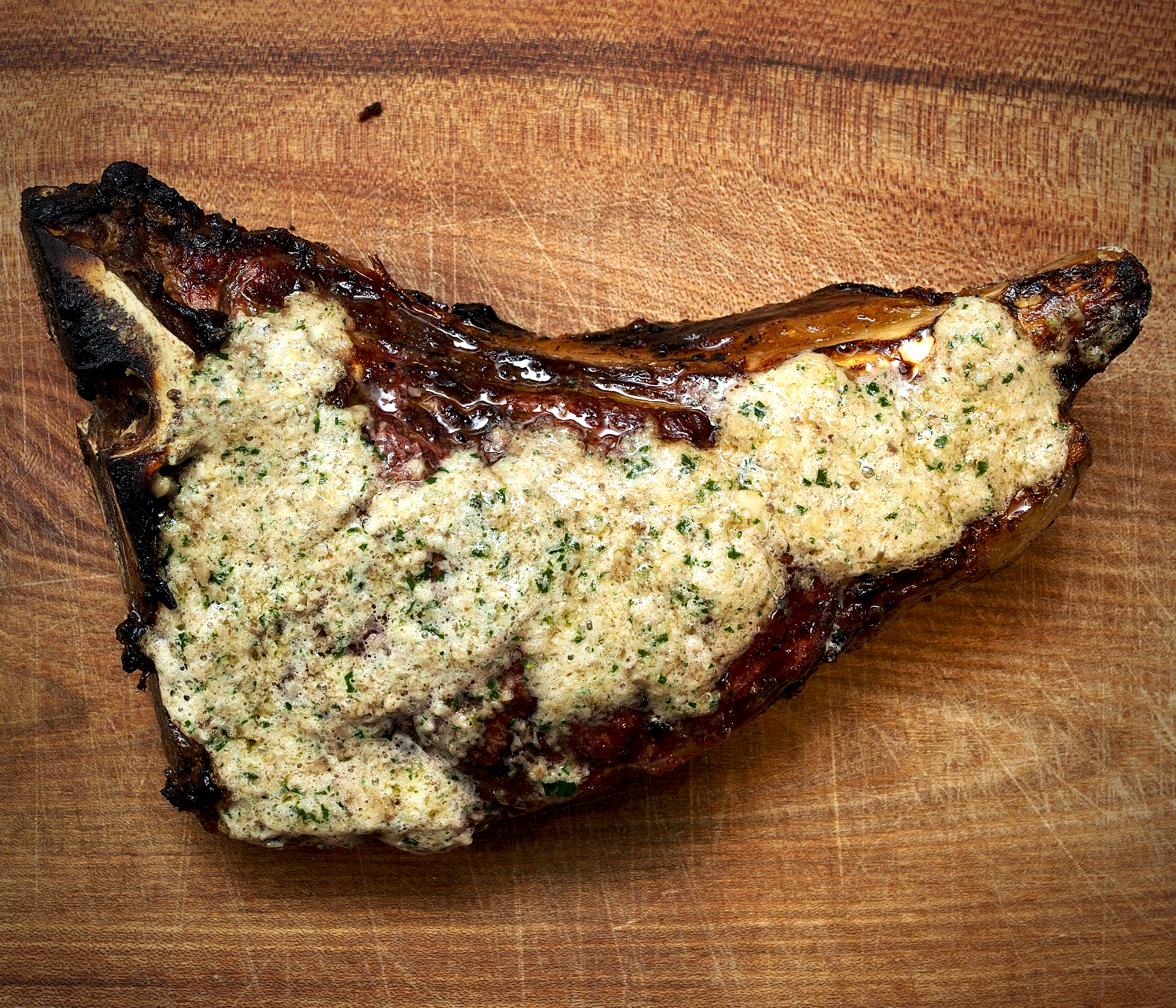
For our wedding anniversary this year we barbecued a whole rib of beef on the bone: consider it a super-rib eye steak. With the bone attached this is much harder to do completely on the barbecue (but not impossible). There is also an easier way if you finish the steak in the oven, which helps to to control the doneness while still getting the lovely barbecue char and flavours.
Wine Suggestion: Given the occasion we opened a bottle of Domaine de Chevalier Rouge 2009 from Pessac Leognan. A great vintage with fleshy fruit that at 12 years of age was singing very expressively. Super elegant and refined fruits, perfumed with that slight pencil edge that characterises the appellation and silky tannins that were both powerful and gentle in equal measure. Definitely powerful enough to stand next to the robust steak and then elevate the sum to another level. Well worth cellaring.
Rib of beef with wild mushroom butter – serves 2
1 tbsp olive oil
50g mixed wild mushrooms, roughly chopped
1 shallot, finely diced
1 clove of garlic, crushed
1 tbsp Madeira
1 tbsp cream
1 tsp chopped flat-leaf parsley
½ tsp chopped thyme
1 tsp white truffle oil (optional)
100g butter, diced and softened
1 rib of beef on the bone
First, make the butter. Heat the olive oil in a frying pan and add the mushrooms with the shallots and garlic. Cook gently for 5 minutes or until cooked through but not coloured.
Add the Madeira, cream and herbs to the pan and cook for 3 minutes or until the liquid has evaporated. Season to taste and stir in the truffle oil if using. Leave to cool completely.
Put the butter and cooled mushroom mixture into a food processor and purée until smooth. Scrape out onto a piece of non-stick baking paper, then roll into a cylinder, twisting the ends to secure. Chill for at least 2 hours, until hardened.
Pre-heat the oven to 200C/400F.
Take your steak out of the fridge for at least 30 minutes to come up to room temperature. Season at this stage too.
Cook over the direct heat on your barbecue for 8-10 minutes, turning to make sure all sides are well browned with a little charring.
Place the barbecued steak onto a preheated ovenproof pan, and put it in the oven for 15-20 minutes and until done to your liking.
We used a meat thermometer to judge doneness and removed the steak at 55C. While we like our steaks on the rare side we find that medium-rare to medium works best when cooking a rib on the bone. This ensures all the juicy fats are rendered properly. If you’d like it a little rarer cook to 52C. Remember that the steak keeps on cooking while resting too.
When your steak is cooked to your liking, remove it from the oven and sit it on a rack set over a tray. Cut the butter into slices and arrange on top of the steak. Set aside to rest for 15-20 minutes before carving the steak from the bone and slicing. Serve with the buttery mushrooms spooned over.
(Original recipe from Neven Maguire’s Complete Family Cookbook, Gill Books, 2016.)
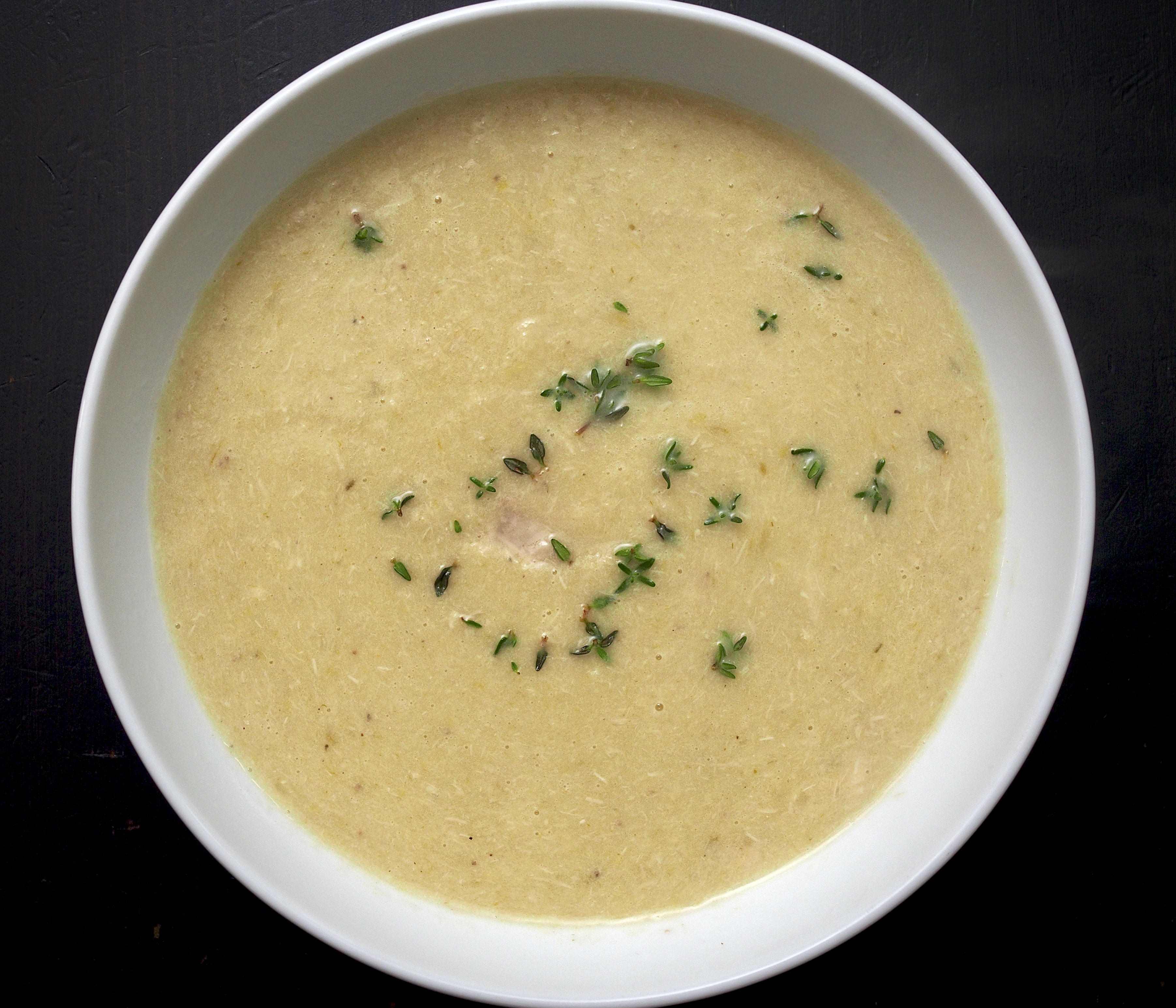
This isn’t a whole lot different from the chicken soup you get in a tin, though definitely not as salty. It also makes heaps and you can freeze it.
Creamy chicken soup – serves 8
1kg chicken thighs with skin removed but bones in
300ml dry white wine
2 large onions, cut into large wedges
4 celery sticks, quartered into short lengths
2 sprigs of thyme, plus some extra to sprinkle over at the end if you like
2 bay leaves
½ tsp ground white pepper (or black if you prefer)
40g plain flour
300ml double cream
Put the chicken thighs into a very large, heavy-based pan and fry until coloured on all sides. If you keep the heat low they should cook in their own fat but we find it easier to add a little bit of oil to get them started.
Add the wine, then turn up the heat and boil rapidly to evaporate the alcohol. When it has bubbled for a few minutes, add the veg, herbs, 1 tsp salt and the white pepper. Pour in 2 litres of boiling water, then cover and simmer for 45 minutes or until the chicken and veg are tender. Remove the bay leaves and thyme sprigs and discard them, then leave to cool for about 30 minutes.
Take the chicken out of the soup with a slotted spoon, then strip the meat from the bones. Reserve 140g of the chicken but add the rest back into the soup pot. Blitz the soup with a stick blender or in a food processor until very smooth, then return to the pan.
Blend the flour and cream together with a couple of ladles of the soup, then stir this mixture into the rest of the soup and heat, stirring all the time, until thickened and hot. You shouldn’t get any lumps if you keep stirring but if you do just give it another blitz. Chop the reserved chicken and stir into the soup. Check the seasoning, you might need more salt, then serve with some thyme leaves over the top if you like.
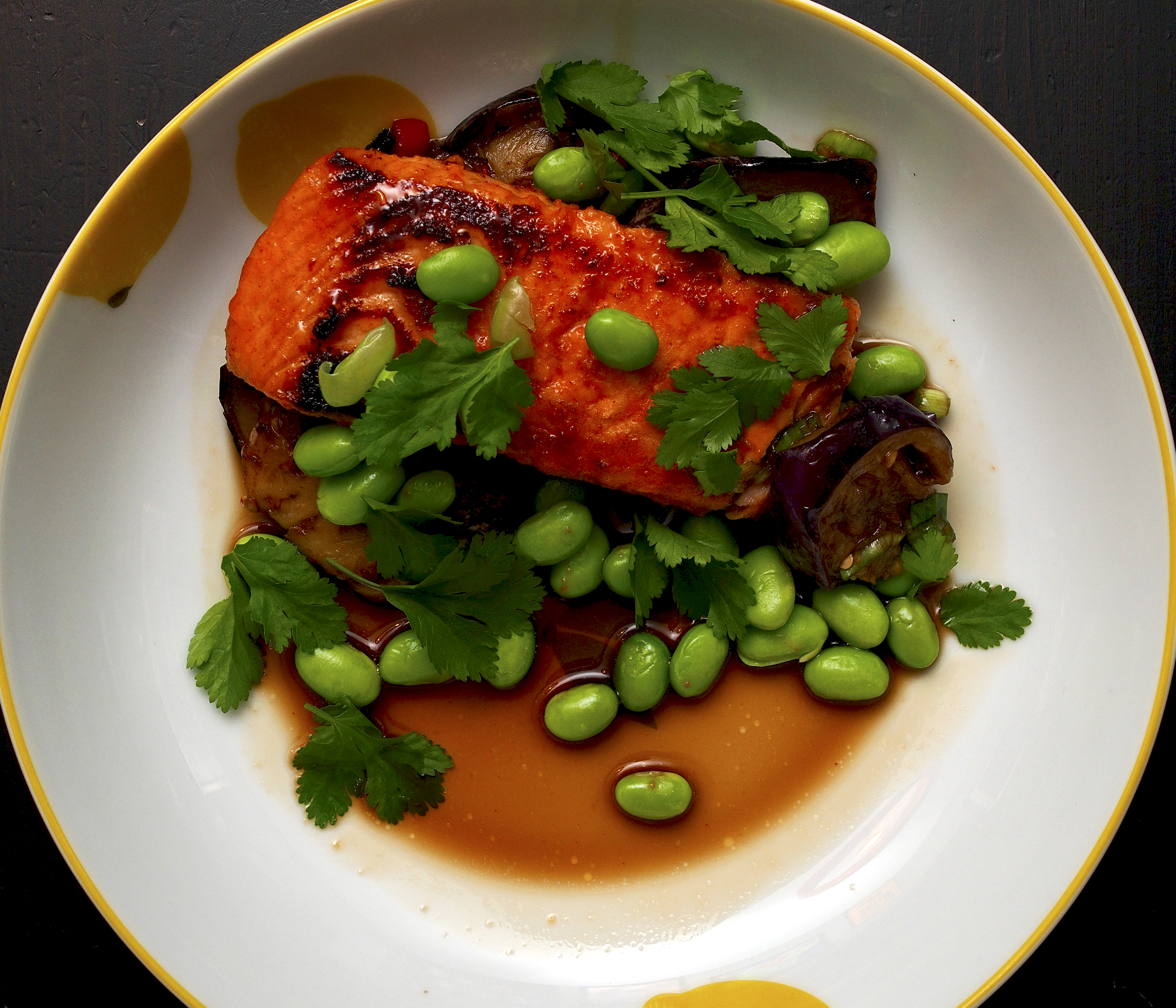
This dish was inspired by the prettiest striped baby aubergines in our local grocers. The recipe is from a new book of ours, Australian Food by Bill Granger. We all loved this dish, jam-packed with Asian flavours and truly delicious. You need to marinade the salmon the day before. Serve with rice.
Wine Suggestion: A friend had given us a bottle of Albert Pic Chablis which we found a surprising match for this dish as we’d thought the aromatics, chilli and spices might fight the wine, but no! A relatively rich and full-flavoured Chablis, the dryness inherent in the wine just accentuating and complimenting the umami savouriness through the dish. We like surprises.
Chilli miso salmon with hot & sour aubergine – serves 4
4 tbsp sugar
4 tbsp mirin
2 tbsp sake
6 tbsp white miso paste
2 tbsp gochujang paste
4 x 250g pieces skinless salmon fillet
100g frozen edamame beans
a small handful of pea shoots (if you can find them, don’t worry if not)
a handful of coriander leaves
lime wedges, to serve
FOR THE HOT & SOUR AUBERGINE:
125ml light flavoured oil, for frying
4 baby aubergines, thickly sliced
100ml tamari soy sauce (if you don’t have this use dark soy instead)
100ml mirin
50ml rice vinegar
1 tbsp runny honey
1 small chilli, finely sliced
4cm piece fresh ginger, peeled and sliced into matchsticks
2 scallions, finely sliced
You need to marinade the salmon fillets the day before. Make the marinade by mixing the sugar, mirin and sake together in a small pan and bring to the boil. Reduce the heat and simmer for 2-3 minutes, stirring until the sugar has dissolved. Take off the heat and whisk in the miso, then stir in the gochujang paste and leave to cool.
Put the salmon into a dish, cover with the marinade, then cover and leave overnight in the fridge.
To make the hot & sour aubergine, heat the oil in a large frying pan over a medium heat. Shallow-fry the aubergine in batches, turning after 1 minute, until golden and tender. Drain on kitchen paper.
To make the dressing for the aubergine, whisk together the tamari, mirin, rice vinegar and honey in a large bowl. Whisk in the chilli, ginger and scallions. Add the cooked aubergine and toss gently to coat. Set aside.
Cook the edamame beans according to the instructions on the pack, then drain.
Lift the salmon pieces out of the marinade. Heat a large frying pan over a medium-high heat and cook the salmon for 6-8 minutes, turning once.
Serve the aubergine and salmon with the edamame, pea shoots and coriander sprinkled over and with lime wedges on the side.
(Original recipe from Australian Food by Bill Granger, Murdoch Books, 2020.)
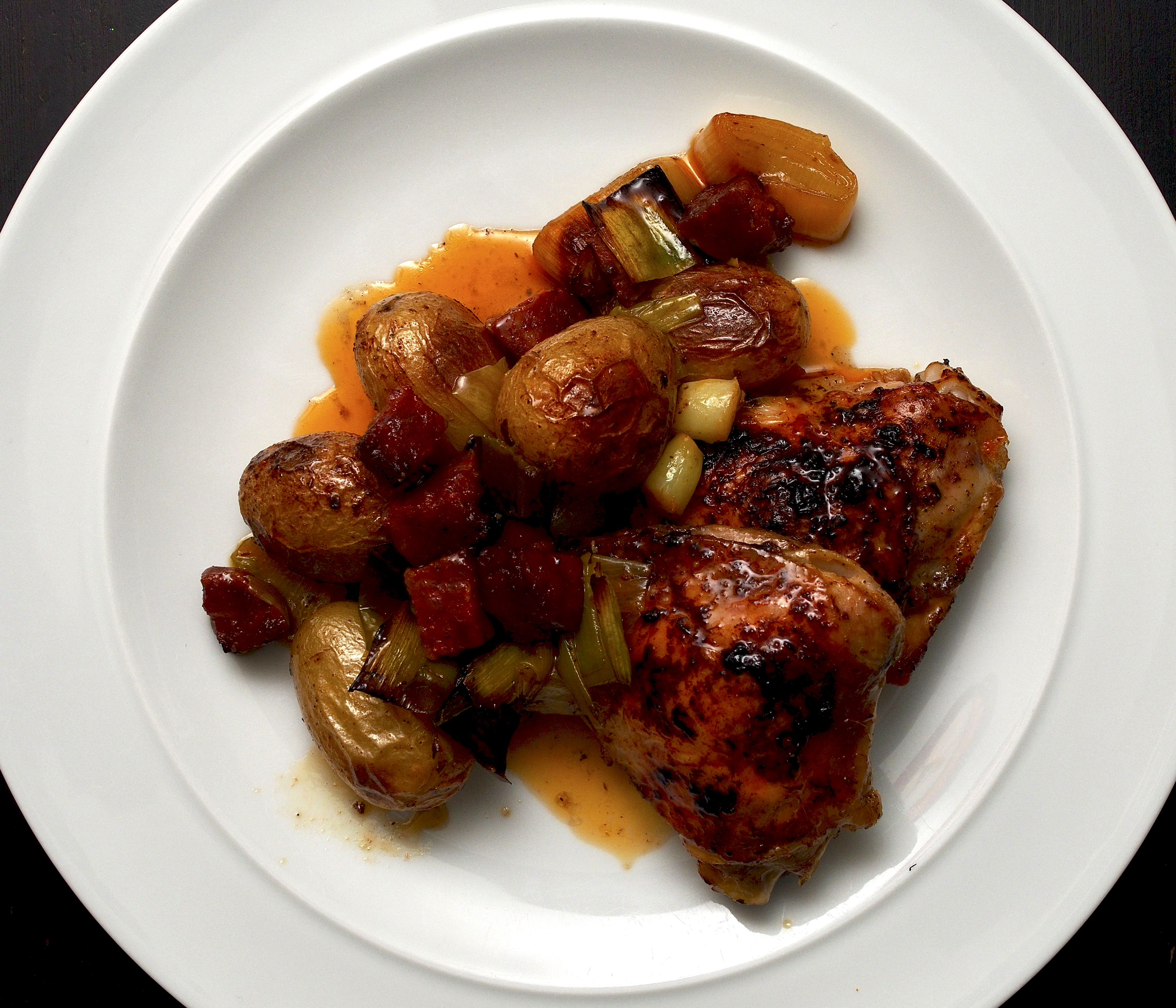
This is the ultimate weekday dinner as it cooks in one roasting tray, and with excellent results. We made it as we had left-over chorizo and potatoes from the previous weekend and some chipotle paste in the fridge.
Wine Suggestion: The robust flavours of smoky chipotle and the chorizo beg for a Spanish red like the Cantos de Valpiedra from Rioja. Smooth and elegant, but with a deep aromatic core of dark fruits and layered spices, and a long, refined finish.
Put the chicken thighs into a large baking tray, then brush with the chipotle paste and season with some salt and pepper.
Spread the leeks and potatoes between the chicken. Drizzle the veg with a little bit of oil and toss but don’t be tempted to add too much as there will be plenty of fat released from the chicken and chorizo as they cook.
Roast for 30 minutes, tossing the veg halfway through.
Add the chorizo, then season the veg and roast for another 20 minutes until the potatoes are browned and the chicken cooked through.
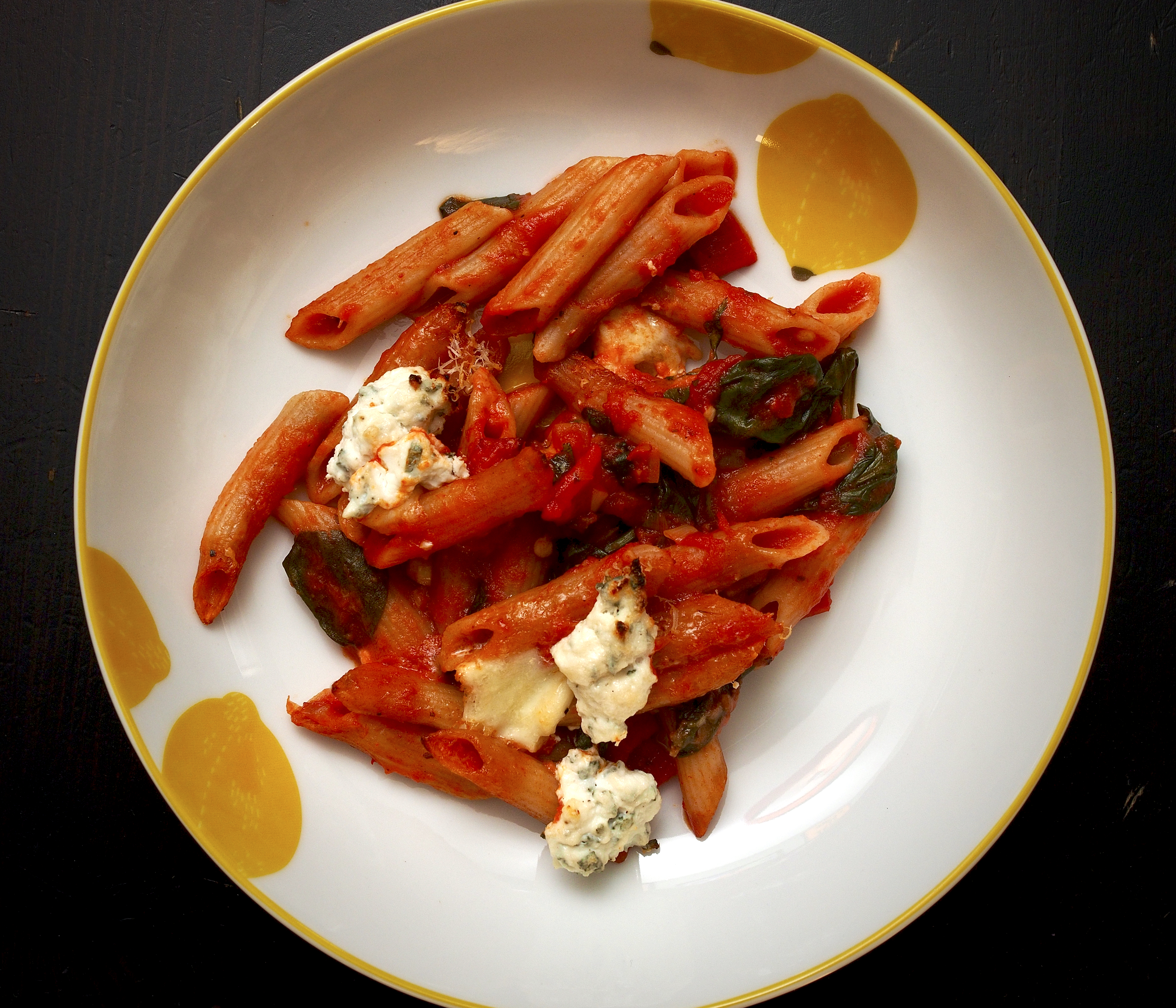
This is much lighter than your average pasta bake and therefore perfect for midweek. It’s packed full of flavour and you can freeze the leftovers too. Serve with a salad.
Wine Suggestion: Perfect with an easy, mid-weight red like the Umani Ronchi Rosso Conero Serrano, a joyful blend of Montepulciano and Sangiovese. Food friendly and also easy sipping on its own.
Spinach & Ricotta Pasta Bake – serves 6
400g wholewheat penne pasta
1 tbsp olive oil
1 onion, finely chopped
6 cloves of garlic, finely chopped
1 tsp sweet smoked paprika
250g roasted peppers from a jar, diced
700g jar passata
400g tin chopped tomatoes
1 tsp dried oregano
100ml water
200g ricotta cheese
a small handful of sage leaves, finely chopped
150g baby spinach
a handful of basil leaves, roughly chopped
125g mozzarella ball, diced
15g Parmesan, finely grated
Preheat the oven to 220C/Fan 200C/Gas 7.
Bring a large pan of salty water to the boil and cook the pasta for the shortest time indicated on the pack, then drain and run under cold water until completely cooled. Drain and set aside.
Meanwhile, heat a tablespoon of olive oil in another large saucepan, then cook the onion for about 5 minutes or until softened. Then add the garlic and continue cooking for another 2 minutes. Stir in the paprika and cook for a further minute.
Add the roasted peppers, passata, tomatoes and oregano. Pour the 100ml of water into the passata jar, give it a shake, then add this too. Bring to a gentle simmer and cook for about 10 minutes.
Meanwhile, mix the ricotta and chopped sage together and season with salt and black pepper.
Stir the spinach and basil into the tomato sauce until wilted, then season the sauce with salt and black pepper. Add the pasta and stir to coat in the sauce, then tip it all into a large roasting tray or lasagne dish.
Scatter over the mozzarella, dot with the ricotta mixture and sprinkle with the Parmesan. Bake on a high shelf in the oven for 20-25 minutes.
(Original recipe from Lose Weight & Get Fit by Tom Kerridge, BLOOMSBURY ABSOLUTE, 2018.)
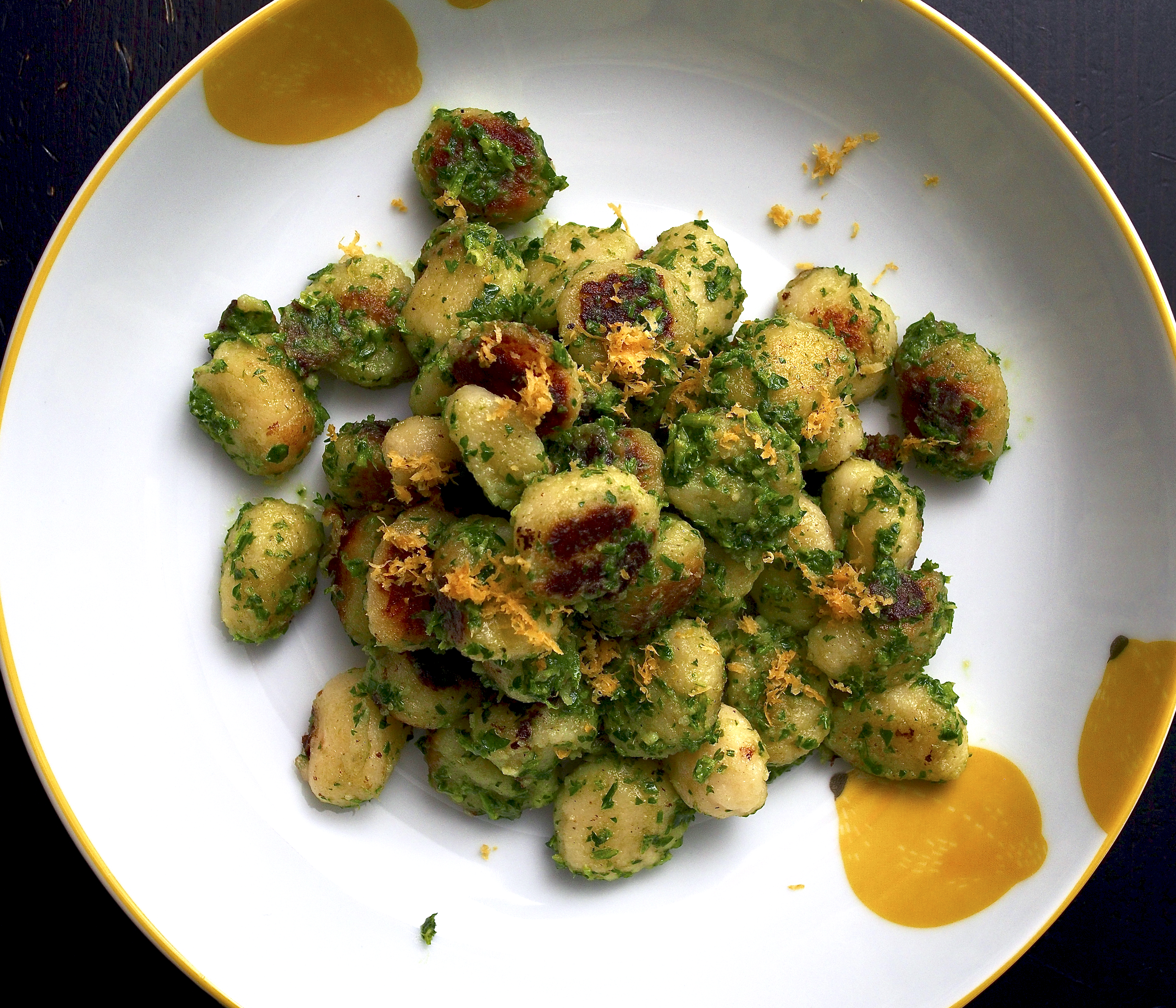
Try this for a tasty weeknight dish, particularly if you have lots of herbs in the garden. We loved the anchovies in this but you can easily give it a go without. With gnocchi the trick is to definitely fry it at the end as this gives you both a crispy outside and a pillowy-soft centre.
Wine Suggestion: This needs a characterful white with a bit of acidity. Domaine Gueguen’s old-vine Aligote was our choice, but a good Gavi or top-notch Vermentino would work too.
Gnocchi with herb sauce – serves 2
1 tbsp capers
4 anchovies (optional)
1 clove of garlic
1 lemon, juiced and zest of half
50g herbs – we used parsley, chives & basil
4 tbsp olive oil
500g gnocchi
Blitz the capers, anchovies, garlic, lemon juice and herbs with 3 tbsp of the olive oil to make a sauce. Season and set aside.
Cook the gnocchi in salty water according to the pack – it takes hardly any time at all and don’t be tempted to leave it in longer, really as soon as it floats to the top it’s done. Drain the gnocchi, then heat the last tbsp of olive oil in a large non-stick frying pan over a high heat.
Fry the gnocchi for about 3 minute or until crispy on the outside and piping hot. Drain on kitchen paper, then tip into a bowl and toss with the sauce. Divide between warm bowls and top with lemon zest and lots of black pepper.
(Original recipe by Elena Silcock in BBC Good Food Magazine, April 2018.)
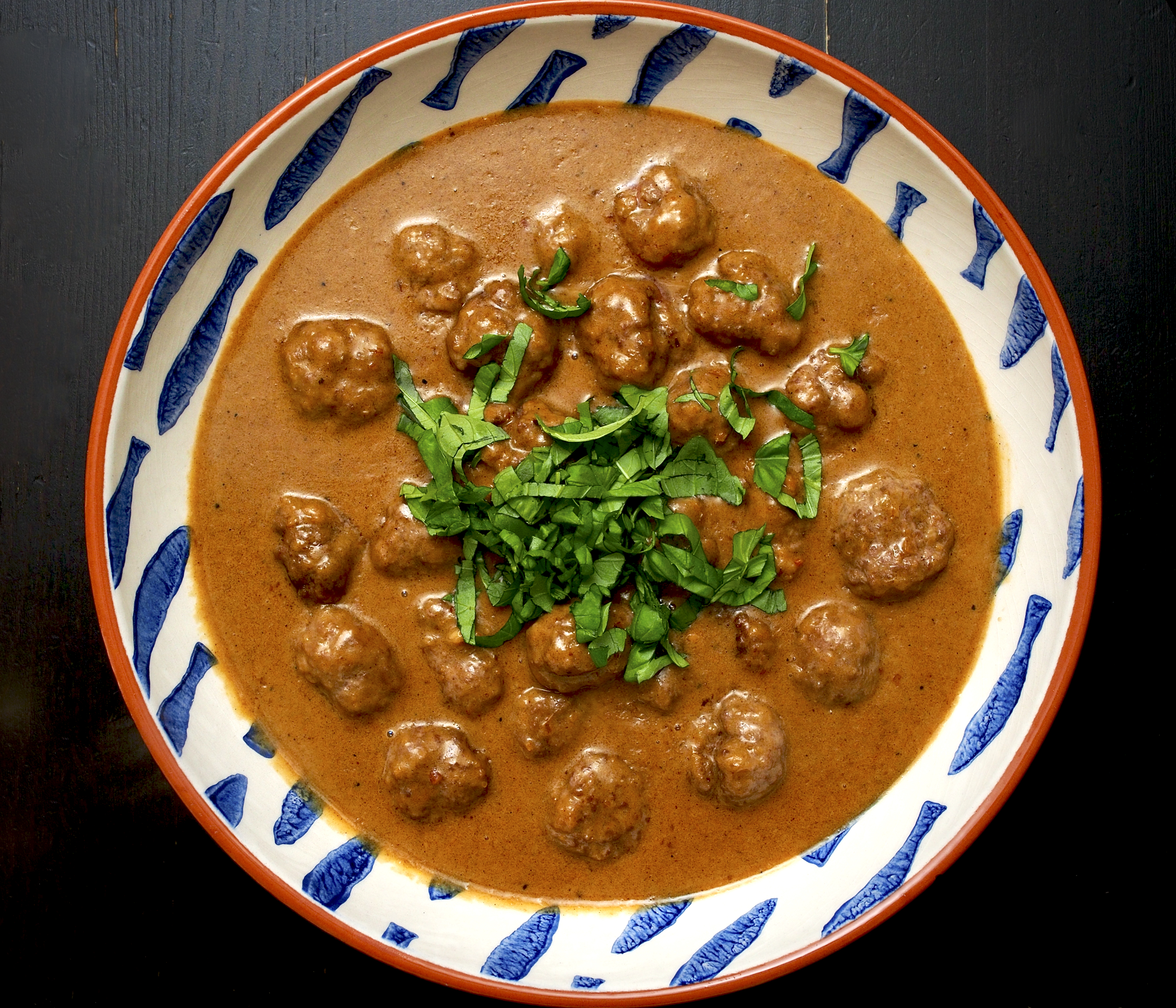
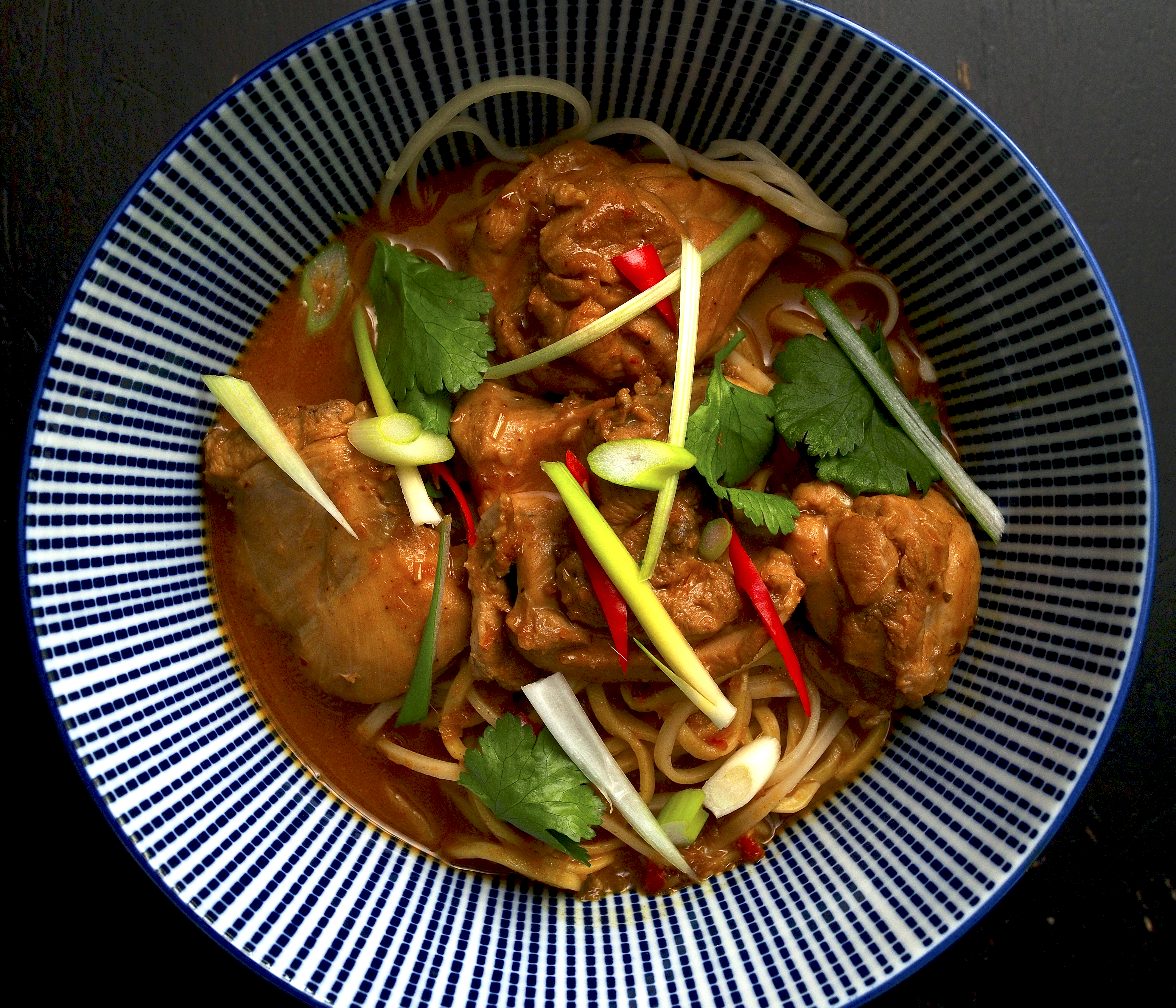
These curried noodles have a sourness that we particularly like and the whole dish is power-charged with flavour.
Leave the chicken thighs whole, or cut them in half if they’re big, they’ll stay nice and tender. The curry paste also makes much more that you need but will keep in the fridge for a month, or longer in the freezer. You can of course just buy a paste either.
Wine Suggestion: Despite all the powerful flavours in this dish there is a wine match that works superbly – Dry Tokaji, particularly if the wine is a blend of Furmint and Hárslevelu. Ch. Dereszla Tokaij Dry was at hand, and despite the title is actually off-dry. The Furmint being crisp and creamy with hints of mango and the Hárslevelu, which translates as lime-leaf, bringing a complimentary aromatic lime and peach character. These grapes on their own also work really well with the food so don’t worry if you find a wine with just one of these varietals.
Chiang Mai curried noodles – serves 4
1 tbsp vegetable oil
75g red curry paste (you can use a bought one, or make the recipe below)
2 tsp mild curry powder
50ml tamarind purée (we make this up using a block of tamarind – put 30g in a small bowl then pour over a little boiling water. Mash with a fork then push through a sieve. You will be left with the seeds which you can discard)
1 tbsp palm sugar or soft brown sugar
400ml tin coconut milk
100ml chicken stock
2 tbsp fish sauce
1 tbsp soy sauce
juice of 2 limes
700g boneless skinless chicken thighs (cut them in half if they’re huge but otherwise leave whole)
300g egg noodles
coriander leaves, shredded scallions and chopped red chillies to garnish
FOR THE PASTE:
2 Mexican dried chillies e.g. ancho/pasilla/gaujilo
4 lemongrass stalks, inner part only, finely chopped
75g small shallots
5 cloves of garlic
20g ginger, chopped
½ tsp ground turmeric
1 tbsp fish sauce
2 Thai red chillies, seeded
1 tbsp coriander root or stems
2 tsp ground coriander
1 tsp ground cumin
TO MAKE THE PASTE:
Remove the stems and seeds from the dried chillies, cover with boiling water and leave to soak for 15 minutes until very soft, then drain.
Put the soaked chillies into the small bowl of a food processor with all the remaining ingredients and 90ml water. Blend for a few minutes until very fine – you can add a little more water if needed. Scrape into a sterilised jar and keep in the fridge for up to a month or freeze.
TO MAKE THE CURRY:
Heat the vegetable oil in a large saucepan. Add the curry paste and fry for 5 minutes. Add the curry powder, tamarind and sugar. When the sugar has melted, add the coconut milk, stock, fish sauce, soy and lime juice. Bring to a gentle simmer and add the chicken pieces. Simmer for 20 minutes or until the chicken is tender.
Meanwhile, boil the noodles for about 4 minutes or until al dente. Drain the noodles and divide between deep bowls. Ladle the curry over the noodles and top with the coriander, scallions and some chopped red chilli.
(Original recipe from My Asian Kitchen by Jennifer Joyce, Murdoch Books, 2018.)
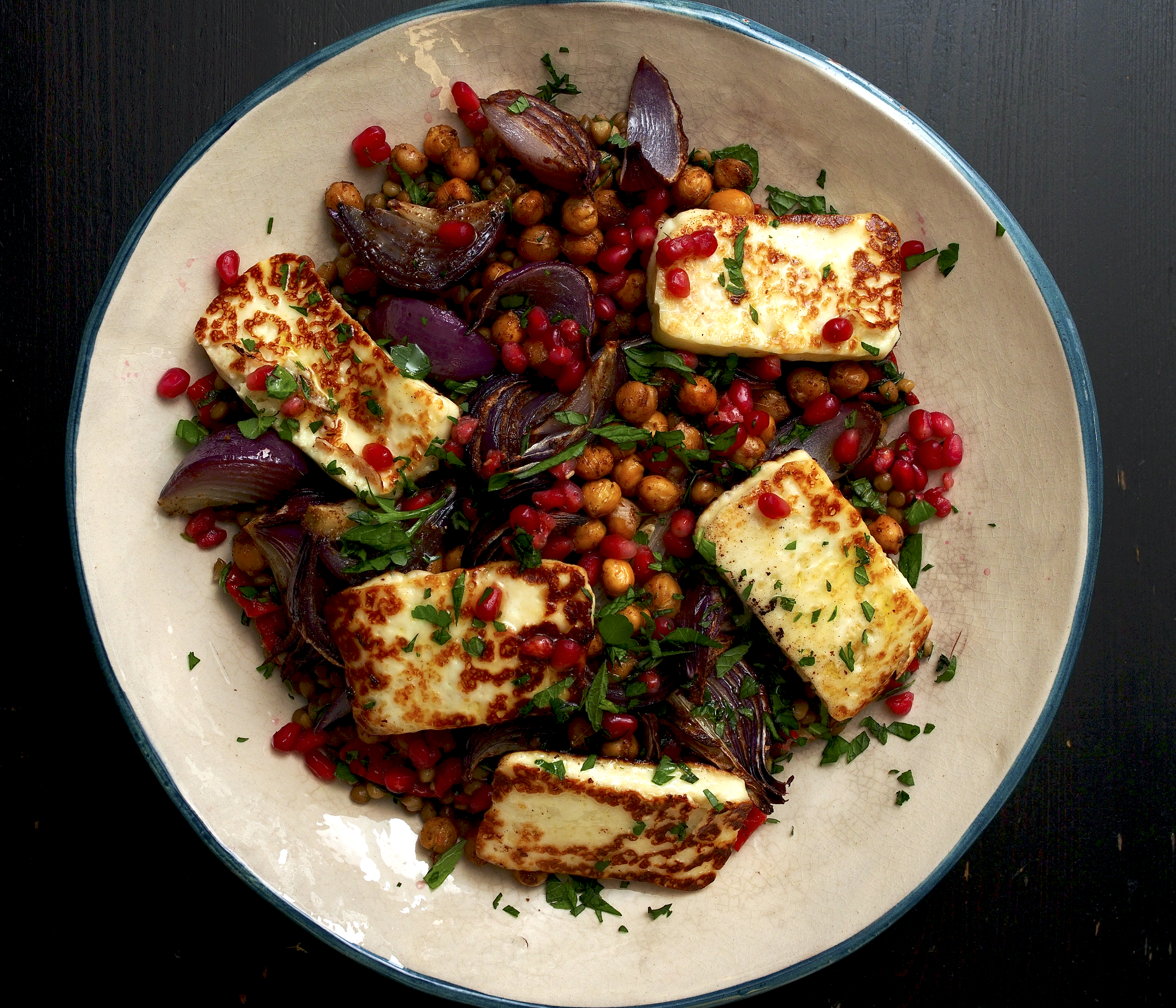
This is so simple for mid-week and the colours are just fab! Healthy too and generous portions.
Roast onion, chickpea & halloumi salad – serves 2
2 red onions, peeled and each cut into 8 wedges
400g tin chickpeas, drained and rinsed
2 tsp ras el hanout
extra virgin olive oil
250g cooked Puy lentils – we used a tin but you can of course cook them yourself or buy one of those pouches
100g roasted red peppers, cut into strips
a large handful of mint leaves, finely chopped
a large handful of flat-leaf parsley, finely chopped
2 tsp pomegranate molasses
250g packet of halloumi, sliced
2 tbsp pomegranate seeds
Preheat the oven to 220C/200C fan/Gas 7.
Line a baking tray with baking paper. Spread the onion wedges and chickpeas over the tray, then sprinkle with the ras el hanout and some salt and rub gently to coat, then drizzle with oil. Cook in the oven for 20-25 minutes or until the chickpeas or golden and crunchy.
Meanwhile, mix the lentils, roast peppers, mint and half the chopped parsley in a bowl. Drizzle over 1 tbsp of oil and the pomegranate molasses and season well with salt and pepper. Mix well and divide between serving plates.
Heat a large non-stick frying pan over a medium-high heat. When hot, add a little oil, then fry the halloumi slices for a couple of minutes on each side or until golden brown.
Spoon the onions and chickpeas over the lentils, then top with the halloumi and scatter over the pomegranate seeds and parsley to serve.
(Original recipe from Lose Weight & Get Fit by Tom Kerridge, Bloomsbury Absolute, 2019.)
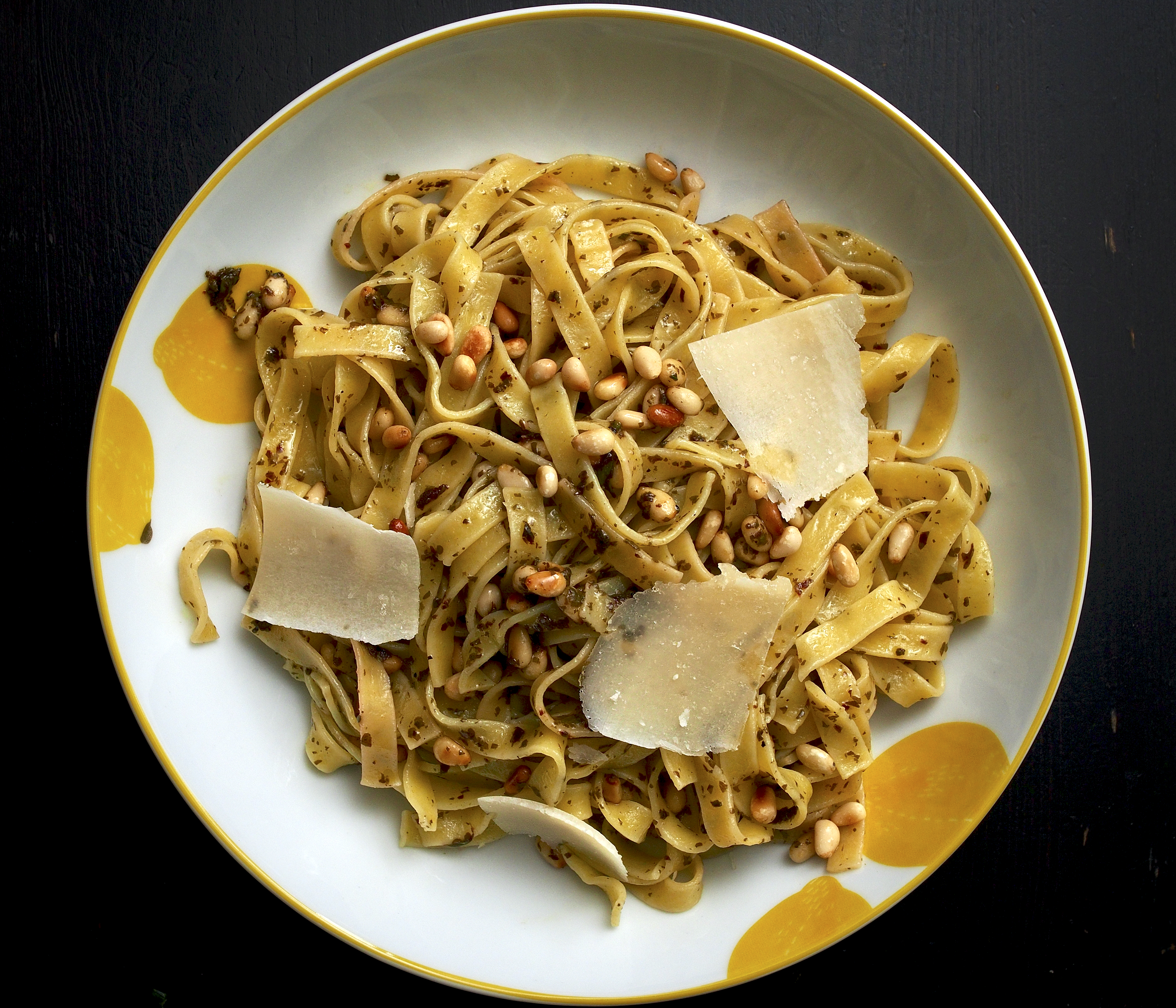
Given it’s sharp-sour character it can sometimes be tricky to think of what to do with sorrel – so this is a quick and easy recipe for sorrel butter. Delicious with pasta or on fish or chicken. You can make the butter and stash it in the freezer if you happen to have some leftover sorrel from another dish.
Wine Suggestion: This works really well with the Gulfi Valcanzjria. A blend of Chardonnay and Carricante from the slopes of Mt Etna, this fresh and Spring-like as well as having the stuffing to work with the sharp/sour sorrel.
Tagliatelle with sorrel butter & pine nuts – serves 4
2 large handfuls of sorrel leaves, remove the stalks and roughly chop
100g butter, softened
½ a lemon, juiced
300g tagliatelle or pappardelle pasta
75g toasted pine nuts, to serve
Parmesan, shaved or grated to serve
Tip the sorrel into a food processor with the butter and lemon juice, then whizz to a paste. Season with salt and pepper.
Scrape the butter out onto a piece of cling film then roll into a log and chill in the fridge. It will be fine there for a few days or you can freeze for a month.
Cook the pasta in very salty water until al dente.
Meanwhile, melt the sorrel butter in a large frying pan. Use tongs to transfer the cooked pasta from the cooking water into the frying pan with the butter. Toss the pasta in the butter, then add most of the pine nuts and mix well.
Divide the buttery pasta and pine nuts between warm bowls and scatter with Parmesan and extra pine nuts to serve.
We don’t make a roast dinner every week but we do like one occasionally, especially in the brighter months when you can lighten them up a bit with some spring veg. Ask your butcher to score the pork skin for you, then leave it uncovered in the fridge overnight to dry out the skin, which will help with the crispy crackling.
Wine suggestion: Quite often we have an oaky white with roast pork but tonight we had a notion for red and a 6 year old Olga Raffault Chinon Les Pucasses which was just hitting it’s stride and will be drinking nicely for another 10 years we think. Deep , complex and brooding and yet the limestone soils give it an immediate freshness and vivacity.
Roast pork belly with herbs & new potatoes – serves 4
3-4 tsp fennel seeds
1.5kg thick end of pork belly, bone in, skin completely dry (see above)
300g new potatoes
a few sprigs of mint, leaves picked and finely chopped, stalks reserved
a knob of butter
2 tbsp extra virgin olive oil
a small bunch of parsley, leaves picked and finely chopped
a small bunch of chives, finely chopped
2 handfuls of peas or broad bean tops if available (we didn’t have these but we served with some double podded broad beans instead)
juice of ½ lemon
Heat the oven to 220C/425F/Gas 7.
Toast the fennel seeds in a small pan until fragrant, then tip into a pestle and mortar and coarsely grind. Score the skin and fat (but not the flesh) of the pork with a sharp knife if your butcher hasn’t done this for you already.
Put the pork into a roasting tray and rub allover with the crushed fennel seeds and some salt.
Put the pork into the oven for 30 minutes to crisp up the skin, then reduce the heat to 160C/315F/Gas 2-3. Add half a glass of water to the tray and roast for a further 2 hours, until crispy and tender. You will need to keep checking the water and ensuring that the pan doesn’t dry out.
While the pork is roasting, halve the potatoes if they’re big and put into a saucepan with the mint stalks. Cover with salty water and simmer until just tender, then drain and return to the pan, discarding the mint stalks. Add the butter and 1 tbsp of the olive oil, season with salt and pepper, then set aside.
Remove the cooked pork from the oven and allow to rest for 15-20 minutes. Add the chopped herbs to the potatoes and stir gently to coat, then spoon onto a warm platter. Slice the pork and arrange on the platter with the potatoes, then skim the fat from the juices in the roasting tin and spoon the juices over the pork and potatoes,.
If you have pea or bean tops, put them into a bowl and dress with the 1 tbsp of olive oil and the lemon juice, and season with salt and pepper. Scatter these over the pork and serve. (We dressed our broad beans with some olive oil and lemon and served these alongside instead).
(Original recipe from Gather by Gill Meller, Quadrille, 2016.)
Who says you can’t have broccoli for breakfast? It’s purple sprouting broccoli season and we can’t resist buying when we see it. Also good on a slice of toasted sourdough.
Crispy PSB with poached eggs – serves 2
300g purple sprouting broccoli
1 tbsp soy sauce
1 tsp honey
1 tbsp vegetable oil
1 tbsp sesame seeds
poached eggs, to serve
Heat the grill to high.
Meanwhile, steam the broccoli until tender, about 5 minutes, then dry well with kitchen paper.
Put the soy sauce, honey and vegetable oil in a bowl and whisk to combine.
Put the broccoli into a roasting tin, pour over the marinade and toss gently, then sprinkle over the sesame seeds. Put the tin under the grill for 5-8 minutes or until the broccoli is crispy.
Divide the broccoli between warm plates and top with a poached egg. Serve with some toast if you like.
(Original recipe by Rosie Birkett in BBC Good Food Magazine, April 2019.)
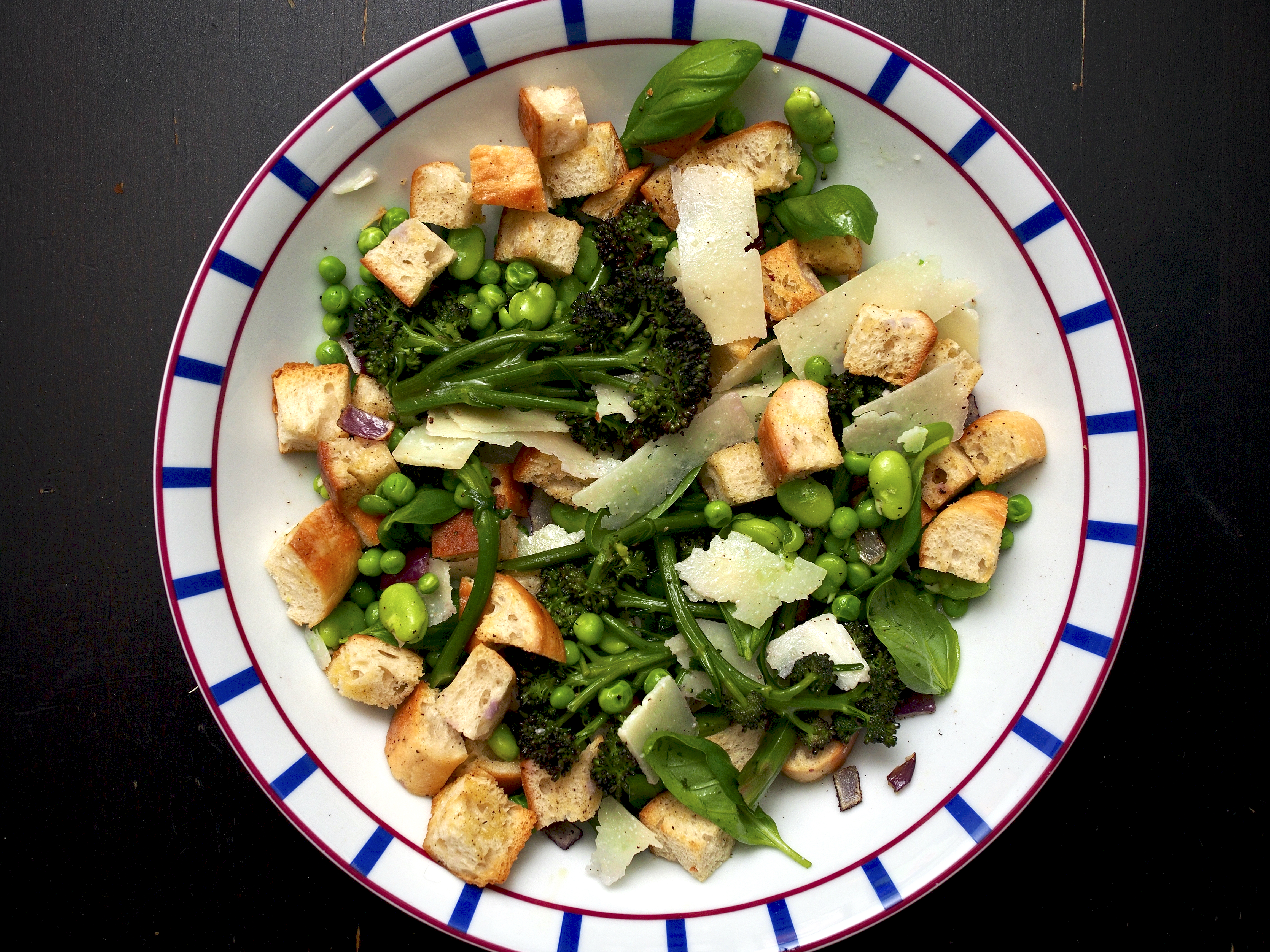
We’re getting very impatient for spring veg. Ideally this would be made with locally grown asparagus and freshly podded peas and broad beans. In reality we had to settle for purple sprouting broccoli and frozen peas and beans. Still a delicious spring dish. This makes enough to serve 6 for lunch or a generous side dish. Cook the veg at the last minute if you can as it nice served slightly warm.
Spring Panzanella – serves 6
350g ciabatta, torn into bite-size chunks
1 shallot, chopped
3 tbsp olive oil,
300g fresh pea or frozen peas
300g fresh broad beans (podded weight) or use frozen broad beans
400g asparagus, trimmed (we used purple sprouting broccoli)
leaves from a large bunch of basil
1 clove of garlic, crushed
35ml extra virgin olive oil
3 tbsp balsamic vinegar (ideally white balsamic)
75g Pecorino or Parmesan, shaved
Preheat the oven to 180C/350F/Gas 4.
Toss the bread in a roasting tin with the shallot, seasoning and oil. Bake for about 15 minutes, or until golden and crunchy.
Cook the peas and broad beans in salted boiling water in separate pans, then drain. Slip the skins from the broad beans.
Meanwhile, cook the asparagus in salted water for 3-4 minute or until tender. Drain in a sieve and refresh briefly under cold water, just long enough to stop cooking but not cool down completely.
Put the crunchy bread into a large, shallow bowl. Add the asparagus, peas, broad beans, basil & garlic. Season well. Pour on the extra virgin olive oil and balsamic vinegar and add the cheese. Toss gently and serve.
(Original recipe from Food from Plenty by Diana Henry, Mitchell Beazley, 2012.)
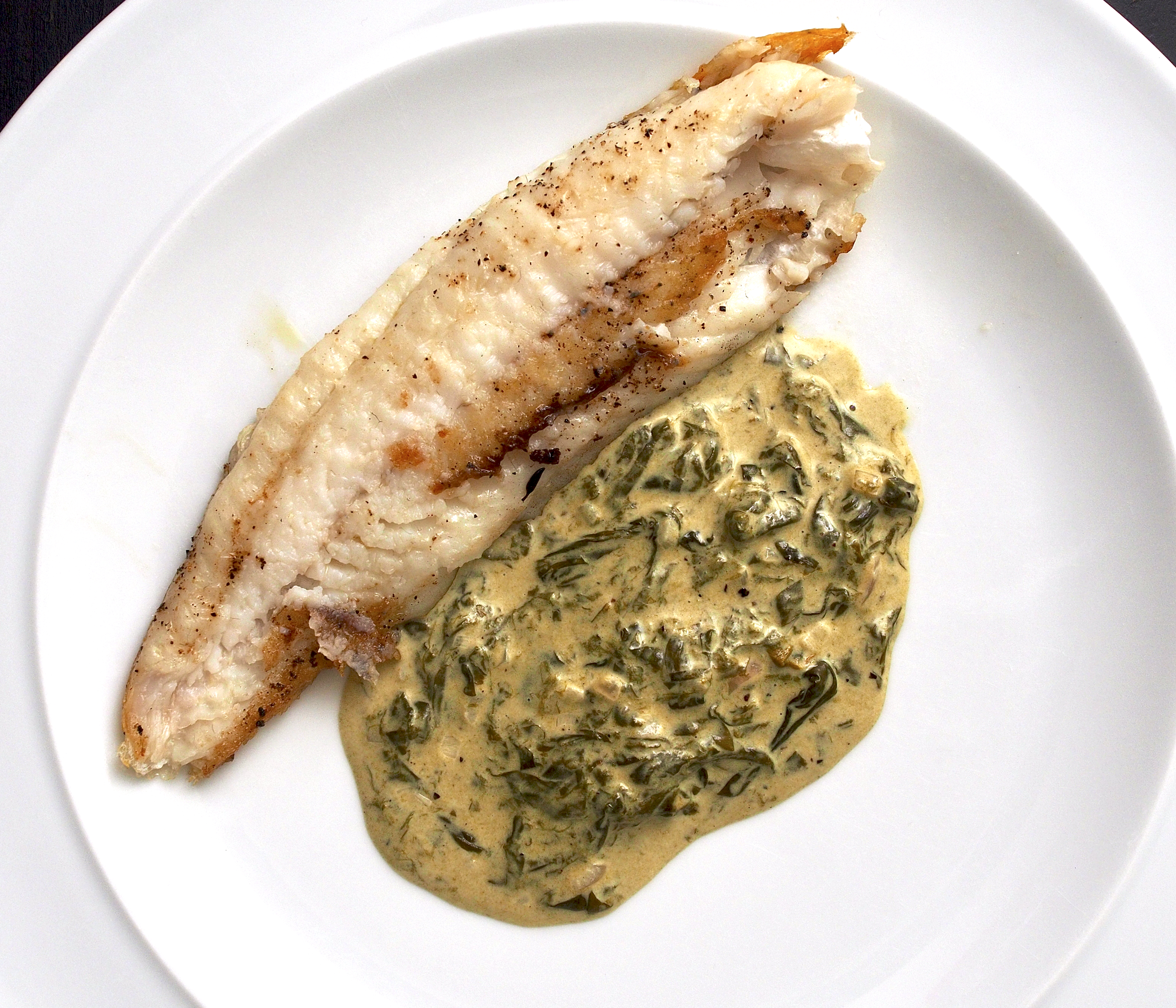
We don’t cook with sorrel very often, perhaps once or twice a year when we see it and grab a bag. It has an unusual sour and citrussy flavour that always reminds us of holidays in France. Sorrel sauce is an excellent match for fish and goes particularly well with brill as expertly suggested by Gill Meller. A few crispy potatoes on the side would be a good addition.
Wine Suggestion: This goes great with a dry Chenin Blanc, like one of our favourites the Chateau du Hureau Argile which always has great depth of flavour alongside a crisp zestiness and dry texture, bound together with a lemony, citrus zing – very complimentary to the sorrel and able to match the rich cream and fish.
Brill with sorrel sauce – serves 4
4 brill fillets (120-150g each), skin on
1 tbsp olive oil
4 bay leaves
2-4 thyme sprigs
2 garlic cloves, skin on and bashed
a small knob of butter
FOR THE SAUCE:
a large knob of butter
1 shallot, very finely diced
100ml fish stock if you have it though water will be fine
a large bunch of sorrel (about 150g), stalks removed and cut into rough ribbons
150ml double cream
Make the sauce first. Melt the butter in a small saucepan, then add the chopped shallot and cook until soft but not coloured. Pour in the stock/water and simmer until the liquid has almost evaporated.
Add the sorrel leaves and stir a few times until wilted. Add the cream, stir, and bring the sauce to a simmer. Cook for a couple of minutes to thicken it slightly. Season with salt and pepper, then cover with a lid and set aside.
Season the fish all over. Heat the oil with the bay leaves, thyme and garlic, in a large non-stick frying pan on a medium-high heat. Put the brill into the hot pan, skin-side down and cook for 5-6 minutes, until the fish is cooked at least three-quarters of the way up its edge. Turn the fish with a spatula and cook for a minute more on the other side, then add a small knob of butter and remove from the heat. Rest for a minute as the butter belts.
Serve the brill with the sauce on the side.
(Original recipe from Gather by Gill Meller, Quadrille, 2017.)




 Jono & Jules do food & wine