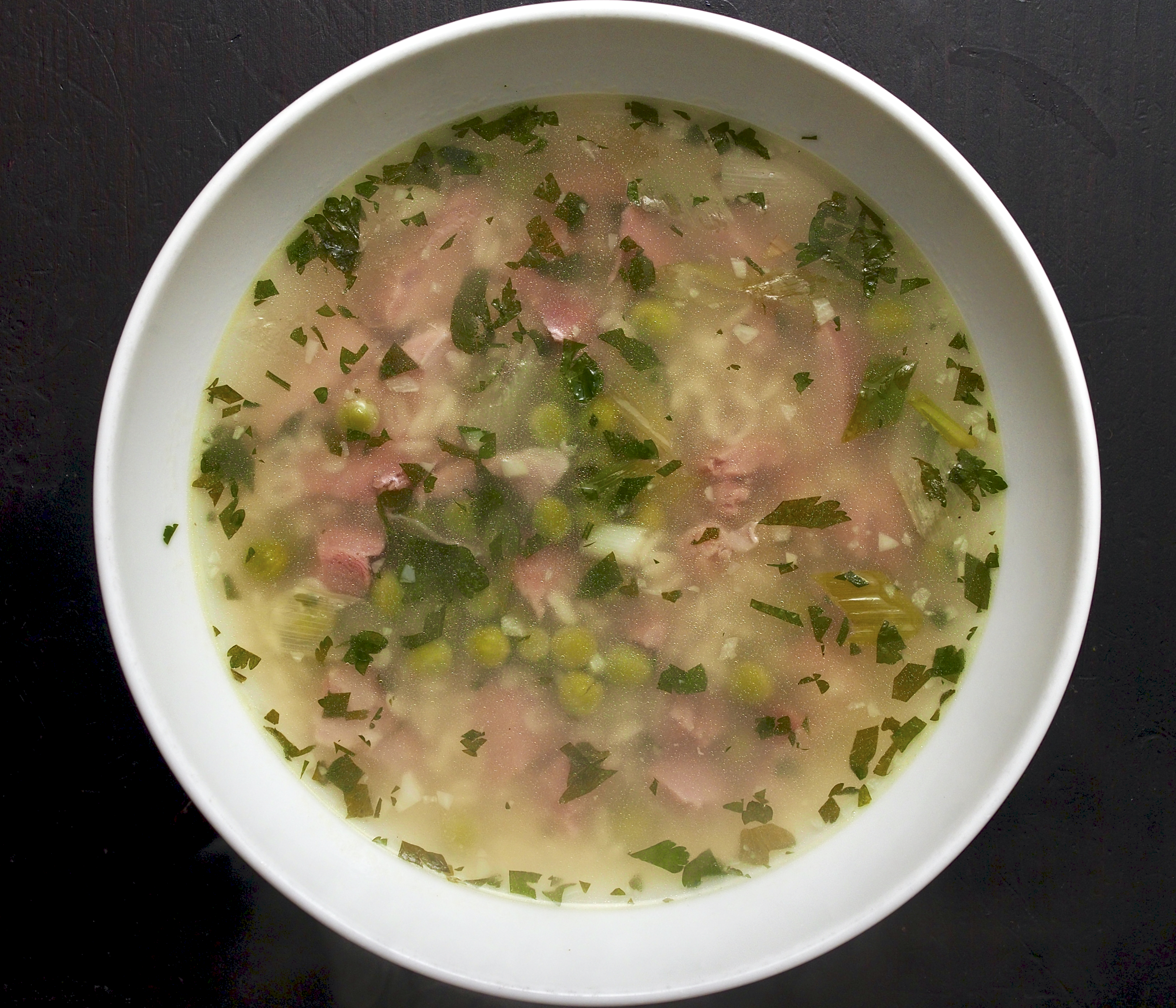
This is nice soup for Spring. It’s filling and definitely tastes better by the second or third day. Ham hocks are still cheap, despite becoming a bit trendy, and they make a great stock.
Ham hock, pea & scallion soup – serves 6
800g uncooked ham hock
2 bay leaves, scrunched
8 peppercorns
200g frozen peas (or fresh if you have them)
100g small pasta shapes, cooked as per timings on the pack
a knob of unsalted butter
1 bunch of scallions, trimmed and finely sliced
3 cloves of garlic, finely chopped
a small bunch of flat-leaf parsley, leaves picked and finely chopped
juice of ½ lemon (optional)
Put the ham into a large, deep saucepan and cover with enough cold water to just cover, then bring to the boil. Drain, then refill the pan with fresh water, adding the bay and peppercorns. Bring the pan up to the boil again, skim off any froth, then reduce the heat and simmer for about an hour, or until the ham is tender the whole way through when pierced with a skewer.
Remove the ham from the liquid and set aside. Add the peas to the stock and cook for a minute until tender (5 minutes if using fresh peas). Add the cooked pasta and leave on the heat.
While the peas are cooking, heat the butter in a small pan over a medium heat and fry the scallions and garlic for about 5 minutes, until soft. Add to the stock along with the parsley.
Shred the cooked ham from the bone, removing any skin and excess fat, then add to the soup. Season generously with salt and pepper and add a spritz of lemon juice if you like.
(Original recipe from Home Cookery Year by Claire Thompson, Quadrille, 2020.)
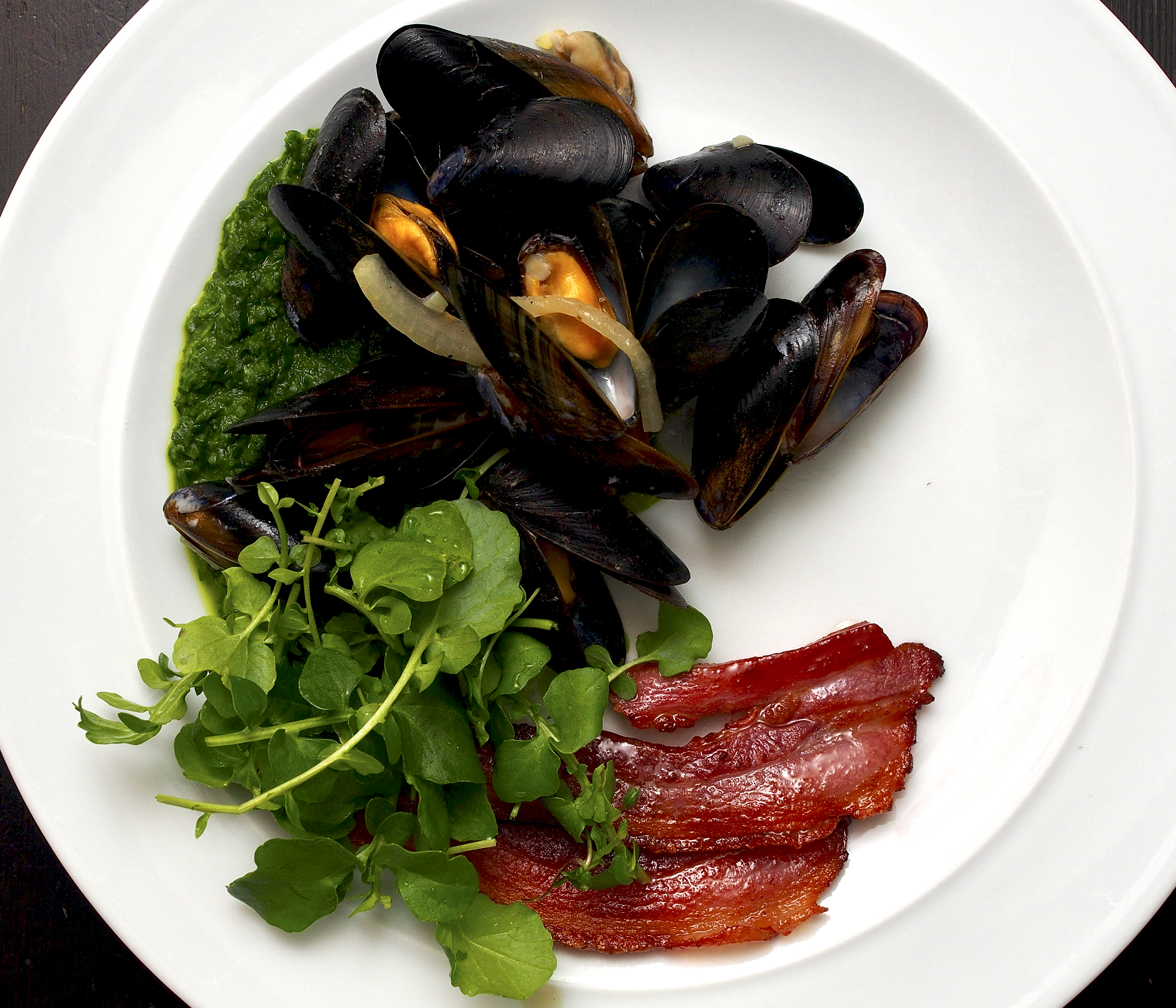
We loved this mussel dish from Gill Meller’s book, Gather. Mussels, watercress and bacon are a truly fabulous combination, but not one we’d thought of before. Our farm shop had landcress rather than watercress available so that’s what we used, but it’s very similar, just not grown in running water. Cleaning mussels is a job I love and hate in equal measure, same with cleaning mushrooms.
Wine Suggestion: A new find – the Quinta de Chocapalha Arinto from near Lisbon in Portugal; zesty citrus and hints of saltiness. So fresh and tasting of days at beachside restaurants eating mussels, helpful when travel is restricted.
Mussels with watercress and bacon – serves 2
2-4 rashers streaky bacon
a small knob of butter
½ a small onion, sliced
1 clove of garlic, peeled and sliced
1kg mussels, cleaned
150g watercress, plus extra to serve
Heat a splash of olive oil in a frying pan, then cook the bacon for 6-8 minutes, or until crispy. Keep warm.
Put a knob of butter and a spoon of bacon fat from the pan into a large sauce pan. Heat until bubbling, then add the onions and garlic and season with a little salt and pepper. Cook for a few minutes or until the onion is soft but not coloured, then add the mussels with 2 tbsp of water. Bring to the boil, then cover the pan with a lid and shake gently. Cook the mussels for a couple of minutes or until the shells are just open. Throw away any that don’t open.
Use a slotted spoon to remove the mussels from the pan into a warm bowl, leave the onion and cooking liquor behind on the heat. Cover the mussels with a tea towel and put somewhere warm. You need to work quickly now to make the sauce while the mussels stay warm.
Put the watercress into the pan and cook for a minute or two until wilted, then tip into a food processor and purée until smooth. This should be quite thick so if it’s too liquid, put it back into the pan and boil off the excess liquid over a high heat.
Put a generous spoon of purée on each plate with the mussels, crispy bacon and a little fresh watercress.
(Original recipe from Gather by Gill Meller, Quadrille, 2017.)
This is a bit like sweet chilli sauce, but nicer and not as sickly sweet. It’s great with chicken, in a sandwich or drizzled over some rice.
Hot Pepper Jam – makes 8 small jars
8 red peppers
4 scotch bonnet chillies
1kg jam sugar
700ml cider vinegar
Put a few saucers in the freezer to test the jam later.
Heat the oven to 150C/fan 130C/Gas 2.
Wash 8 small jars (about 230ml each) in hot soapy water. Rinse well then put in the oven for 20 minutes, until completely dry. This will sterilise them.
Remove the seeds, stalk and white membranes from the peppers and chillies and roughly chop.
Put in a food processor and pulse until finely chopped (careful not to blitz to a puree). Heat the sugar and vinegar gently in a pan until the sugar dissolves. Add the pepper mix and boil for 15 minutes. Drop a spoon onto a frozen plate, wait for 30 seconds then run your finger through it. If it wrinkles you have setting point, if not cook for another 5 minutes and test again.
Pour the jam into the sterilised jars and leave to cool before adding the lids.
(Original recipe by Janine Ratcliffe & Anna Glover in Olive Magazine, October 2016.)
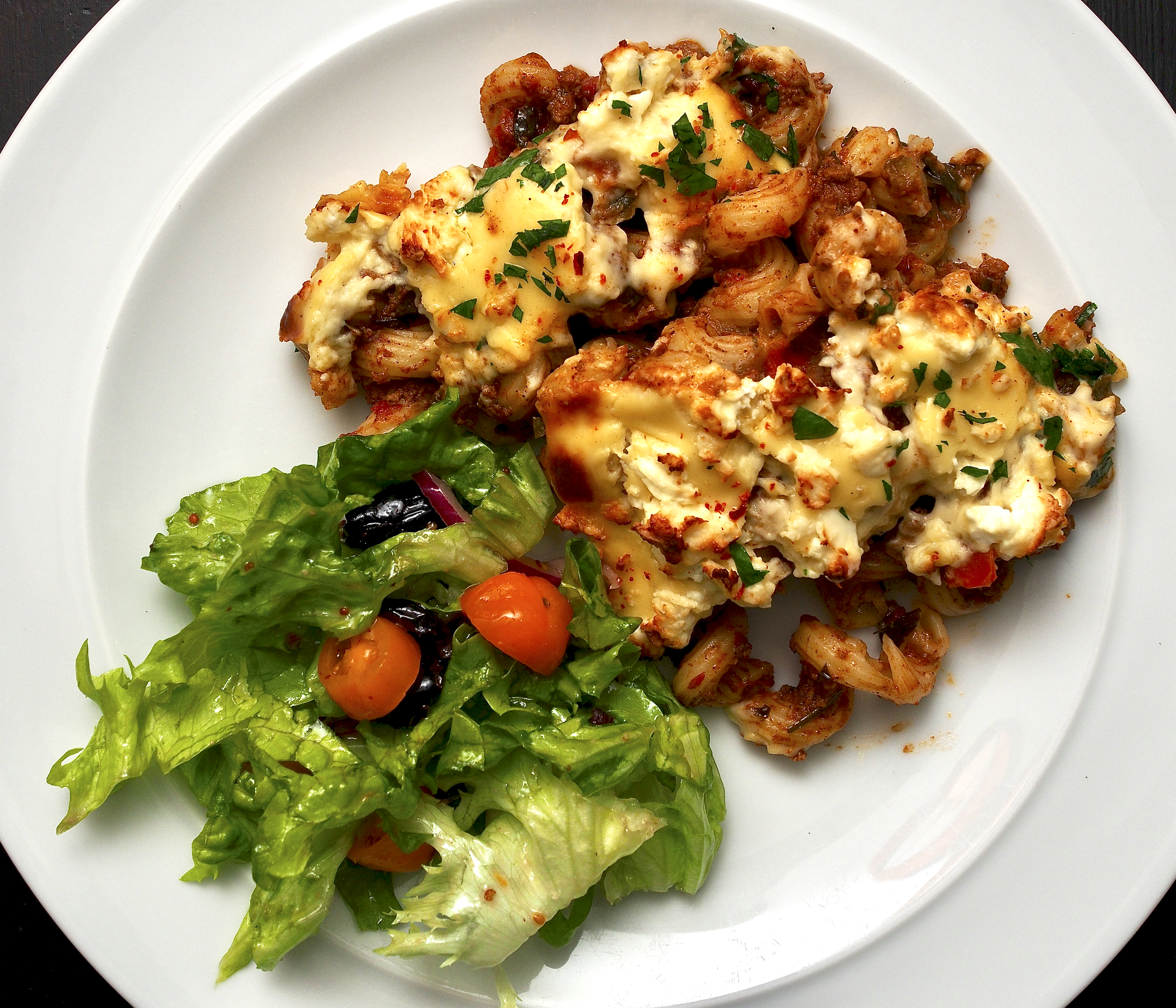
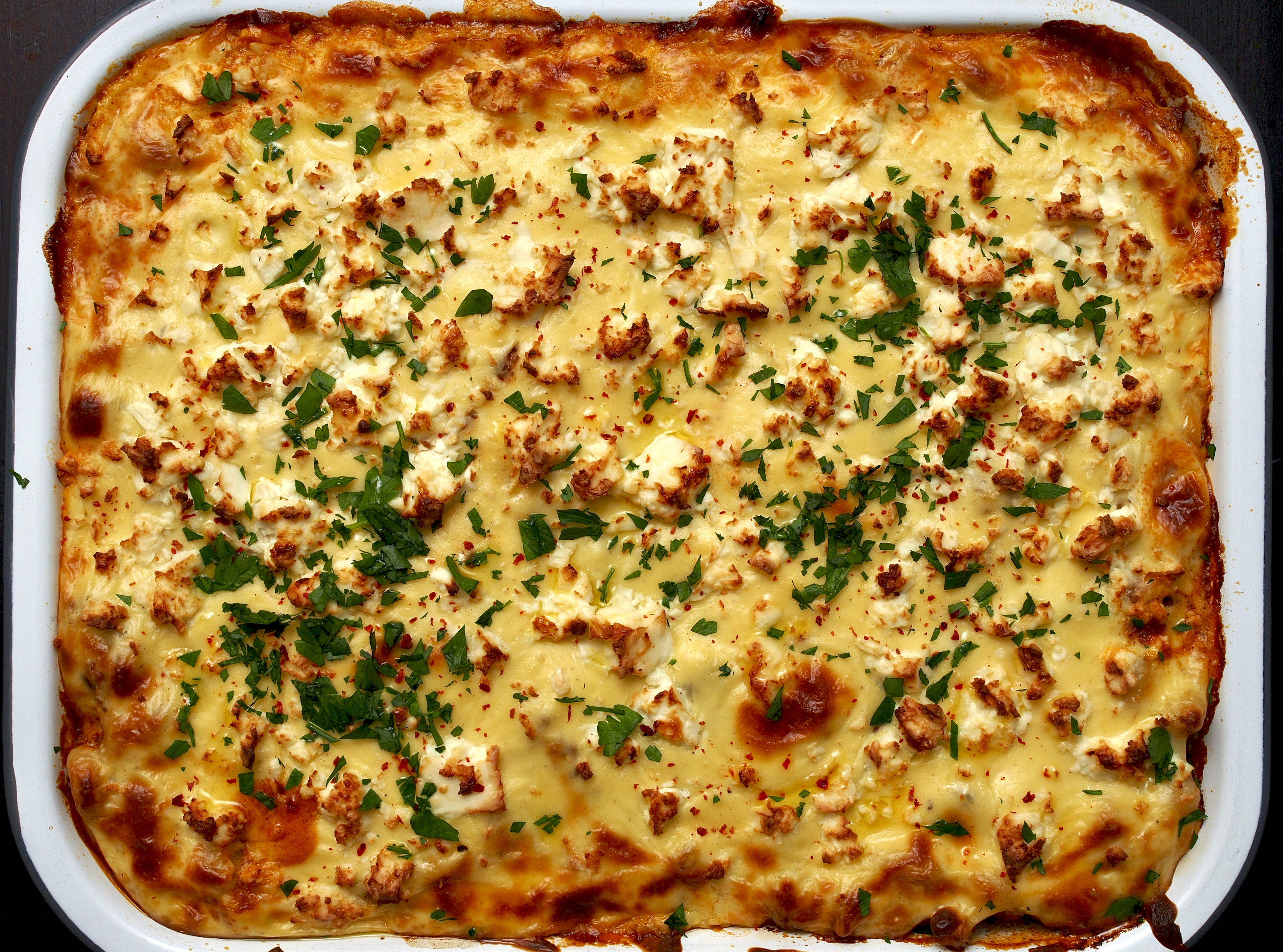
This pasta bake from the Falastin book would make a great party dish. We’re still a good way off holding a party in terms of restrictions but we’re very happy to have heaps of leftovers. It’s full of warm spices and the feta on the top makes it a bit different from the more familiar pasta bakes. If you make the ragu the day before it’s pretty straightforward to assemble and bake when you need it. If you do this, warm the ragu slowly first before adding the pasta.
Wine Suggestion: this goes great with a warmly, spiced southern French or Spanish red. Our choice tonight is a rarity, a wine from the Southern part of Aragon near the provincial city of Teruel. An ancient inland region of Spain that was de-populated during the civil war and is being rejuvinated by some young winemakers replanting the vineyard terraces of their grandparents. The Jesus Romero Rubus is a Garnacha Tempranillo organically grown and made without intervention, but with a lot of love and care to avoid any bacterial issues. Joyful red and black fruits, warm spices and refined tannins.
Spicy pasta bake – serves 6 generously
FOR THE RAGU:
1 onion, roughly chopped
3 celery sticks, roughly chopped
2 green peppers, roughly chopped
25g unsalted butter
2 tbsp olive oil
5 cloves of garlic, crushed
1 tbsp tomato purée
2 tbsp oregano leaves, finely chopped
1 tbsp ground cumin
1 tbsp ground cinnamon
2 tsp ground allspice
1¼ tsp chilli flakes
2 bay leaves
500g beef mince (not too lean, about 20% fat if possible)
1 x 400g tin chopped tomatoes
5-6 plum tomatoes, coarsely grate and discard the skins – if you have a mouli you could use this
2 red peppers, cut into rough 3cm dice
1 tsp caster sugar
20g parsley, roughly chopped, plus a bit extra to serve
FOR THE BÉCHAMEL:
45g unsalted butter
60g plain flour
500ml full cream milk
a pinch of ground nutmeg
130g Greek-style yoghurt
2 egg yolks
OTHER INGREDIENTS:
350g macaroni pasta or similar
180g feta, roughly crumbled
¾ tsp Aleppo chilli flakes, to serve
First make the bolognese. Put the onion, celery and green peppers into a food processor and pulse briefly, until finely chopped.
Put the butter and oil into a large, heavy saucepan and put over a medium-high heat. Add the onion mixture and cook for 7 minutes, stirring, until softened. Add the garlic, tomato purée, oregano, spices and bay leaves and cook for a minute.
Add the beef mince and cook for a few minutes, breaking it up with a wooden spoon and cooking until no pink bits remain.
Add the tinned and fresh tomatoes, red peppers, sugar, 100ml of water, 2¼ tsp of salt and plenty of black pepper. Bring to a simmer, then cover the pan, reduce the heat to medium-low and leave to simmer very gently for 2½ hours, stirring roughly every 30 minutes, until the sauce is thick and rich. We took the lid off for the last half an hour as our ragu was very liquid. Discard the bay leaves, stir in the parsley and set aside until needed.
To make the béchamel, put the butter into a medium saucepan and place on a medium-high heat. When the butter has melted, stir or whisk in the flour and cook for a minute or two. Gradually pour in the milk, whisking or stirring continuously. Reduce the heat to medium, add the nutmeg and 1 tsp of salt, and cook for another 5 minutes, stirring all the time. Remove from the heat and set aside for 10 minutes, then stir in the yoghurt and egg yolks until mixed in.
Heat the oven to 200C fan.
Bring a large pan of salty water to the boil and cook the pasta until al dente (use the minimum time on the pack). Reserve 3 tbsp of the cooking water, then drain the pasta and add to the ragu with the reserved cooking water. Mix well then pour into a large baking dish (about 30 x 22cm and 8cm deep).
Pour the béchamel over the top and spread out evenly. Sprinkle over the feta and bake for 25 minutes, or until golden and bubbling.
Leave to cool for 10 minutes before serving. Sprinkle with some extra parsley, the aleppo chilli and an extra drizzle of olive oil.
(Original recipe from Falastin by Sami Tamimi and Tara Wigley, Ebury Press, 2020.)
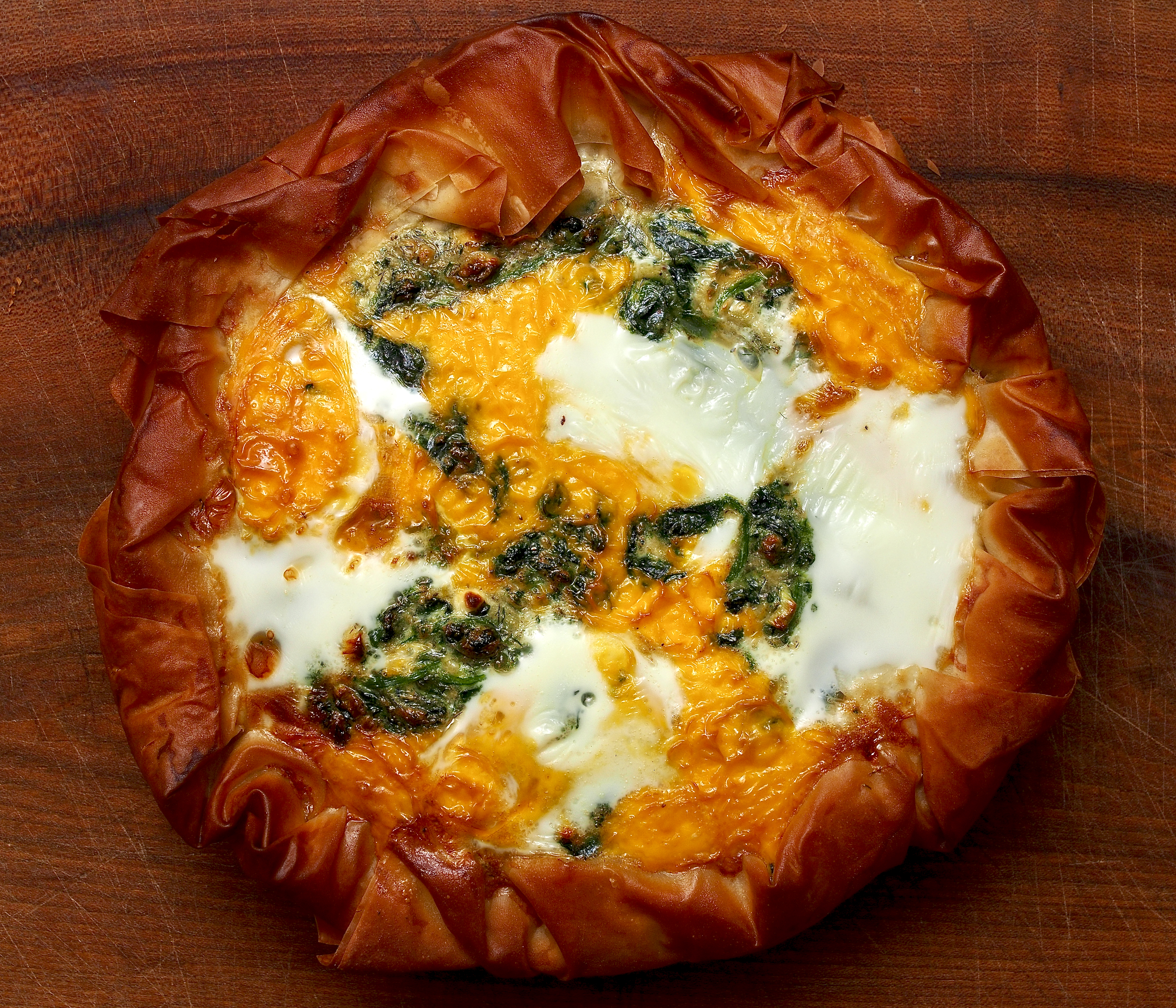
We loved this deep-filled veggie pie and it looks so bright with the broken eggs on the top. Excellent for lunch or dinner or to pack up for a picnic. Leftovers are good too. Use a 23cm round baking tin. Serve with a salad.
Wine Suggestion: Pick a white you’d be happy having on a picnic; something with a bit of body and dry, minerality. For us it was an old vine Bourgogne Aligote from Domaine Gueguen in Chablis. Full and round with apricot and apple flavours and a saline, chalky twist at the end. Tasting this we wonder why Aligote isn’t more popular as it is delicious.
Spinach, egg and filo pie – serves 8
70g butter
1 small packet of filo pastry
FOR THE FILLING:
50g butter
500g spinach
1 small bunch of dill, chopped
3-4 scallions, chopped
a few sprigs of thyme, leaves picked and chopped (about 2 tsp)
2 tsp dried mint
1 tsp salt
½ tsp freshly ground black pepper
½ tsp ground nutmeg
160g cup yoghurt
50g plain flour
8 eggs
50g finely grated pecorino
50g feta
Melt the 50g portion of butter for the filling in a large saucepan. Add the spinach and cover, then cook for a few minutes until wilted. Drain in a colander to drain off the excess liquid. Transfer to a large bowl and add the dill, scallions, thyme, dried mint, salt, pepper and nutmeg and mix well. Add the yoghurt, flour, 4 of the eggs, the pecorino and feta, and mix well to combine.
Heat the oven to 200C/180C fan/gas 6.
Melt the 70g portion of butter for the pastry and take the filo sheets out of the packet. Brush the first sheet with the melted butter and lay another sheet on top. Lift these 2 sheets into the round baking tin, allowing a little overhang. Repeat this process and put another layer in the tin, slightly overlapping the first. Continue this way until the tin is fully lined with pastry, with pastry over hanging on all sides. You will probably need about 4 double sheets.
Fill the pastry lined tin with the spinach mixture, then fold the filo overhang to cover the edges of the filling but don’t cover the whole surface. Scrunch the pastry to form a crunchy rim and brush with a little more butter. Place in the oven for 10 minutes.
Carefully remove the tin from the oven and crack the remaining 4 eggs over the surface. Aim to have an egg yolk in each quarter and for the egg white to be evenly distributed. Use the tip of a sharp knife to swirl the yolk into the filling but don’t push it in too much. Put the pie back in the oven and bake for another 20 minutes or until the spinach mixture and eggs are set and the pastry crispy.
(Original recipe from Honey & Co. At Home by Sarit Packer & Itamar Srulovich, Pavilion, 2018.)
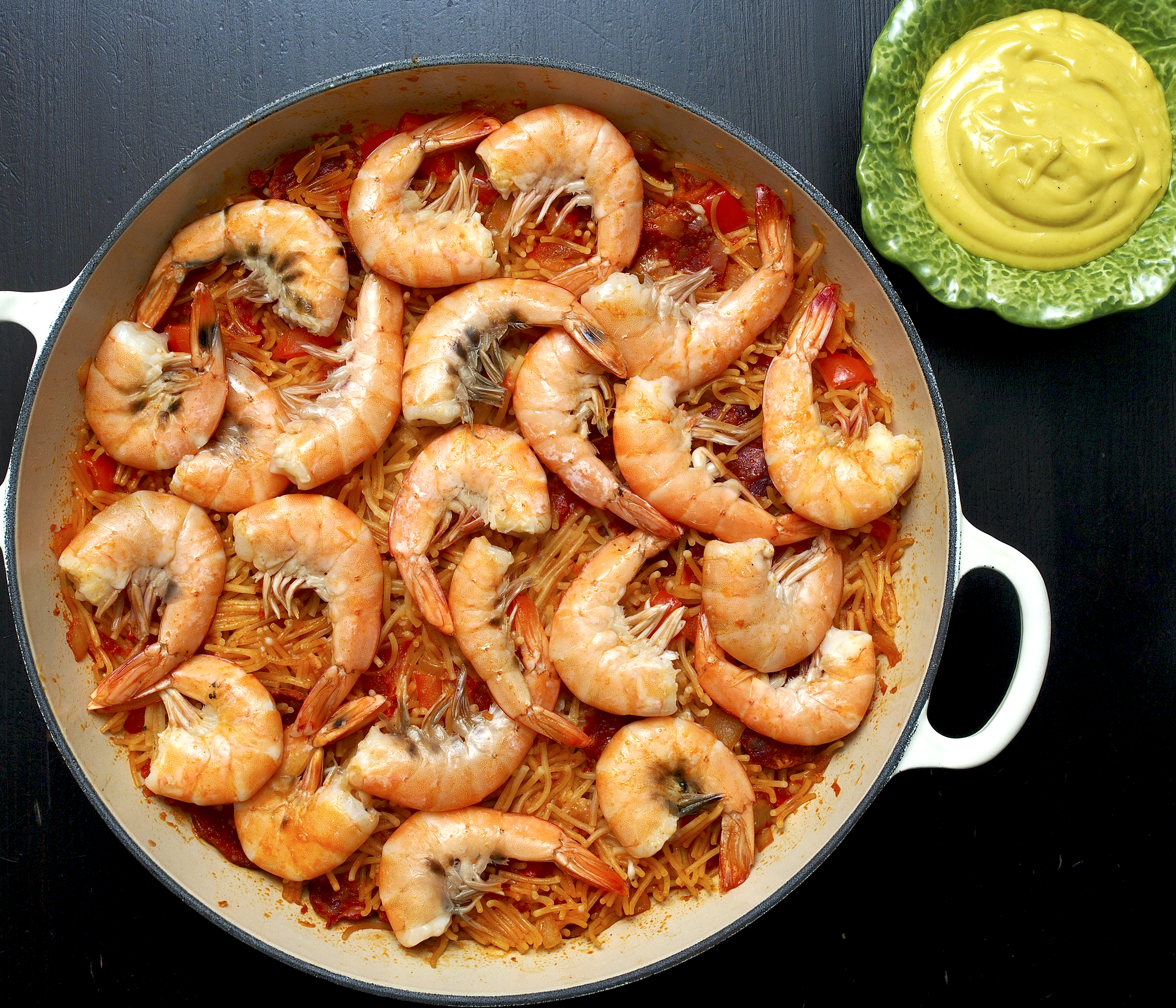
We’ve tried this Spanish pasta dish before, but with limited success, however this version was a triumph. We had the proper fideos noodles this time which we think might have helped. As we can’t go on holidays at the moment we thought we’d cook holiday dishes instead. Serve with some aïoli.
Wine Suggestion: this dish cries out for a fresh Garnacha like the Edetaria via Terra which is from Terra Alta DO in the south of Catalonia. Inland, at some altitude and on specific soils this area produces some of the best wines from this grape anywhere with a freshness and weightlessness from lovely ripe grapes.
Prawn fideua – serves 4
olive oil
1 onion, finely chopped
1 red pepper, finely chopped
100g chorizo, thinly sliced
3 cloves of garlic, finely chopped
1 tsp sweet paprika
a pinch of saffron strands
1 tsp salt
400g tin of plum tomatoes, lift the tomatoes out of the juice with a spoon and discard the juice left in the tin
350g fideos noodles
600ml freshly boiled water
400g whole shell-on prawns
lemon wedges, to serve
Cover the base of a paella or sauté pan with olive oil, then warm over a medium heat. Add the onion, pepper, chorizo and garlic and cook for about 10 minutes or until the onions and peppers are soft.
Add the paprika, saffron and salt and stir over the heat for a minute, then add the tomatoes – squeezing them with your hands as you add them to the pan to break them up. Cook for 2 minutes to thicken.
Add the fideos noodles and stir to coat well, then add the boiled water. Cover and cook for 5 minutes, then spread the prawns over the surface and cook uncovered for another 5 minutes, or until the water has evaporated and a crust is forming on the bottom of the pan. The prawns will turn pink when cooked, you can turn them over to help them along.
Remove from the heat and rest for 5 minutes before serving with lemon wedges and aïoli.
(Original recipe from New Kitchen Basics by Claire Thomson, Quadrille, 2019.)
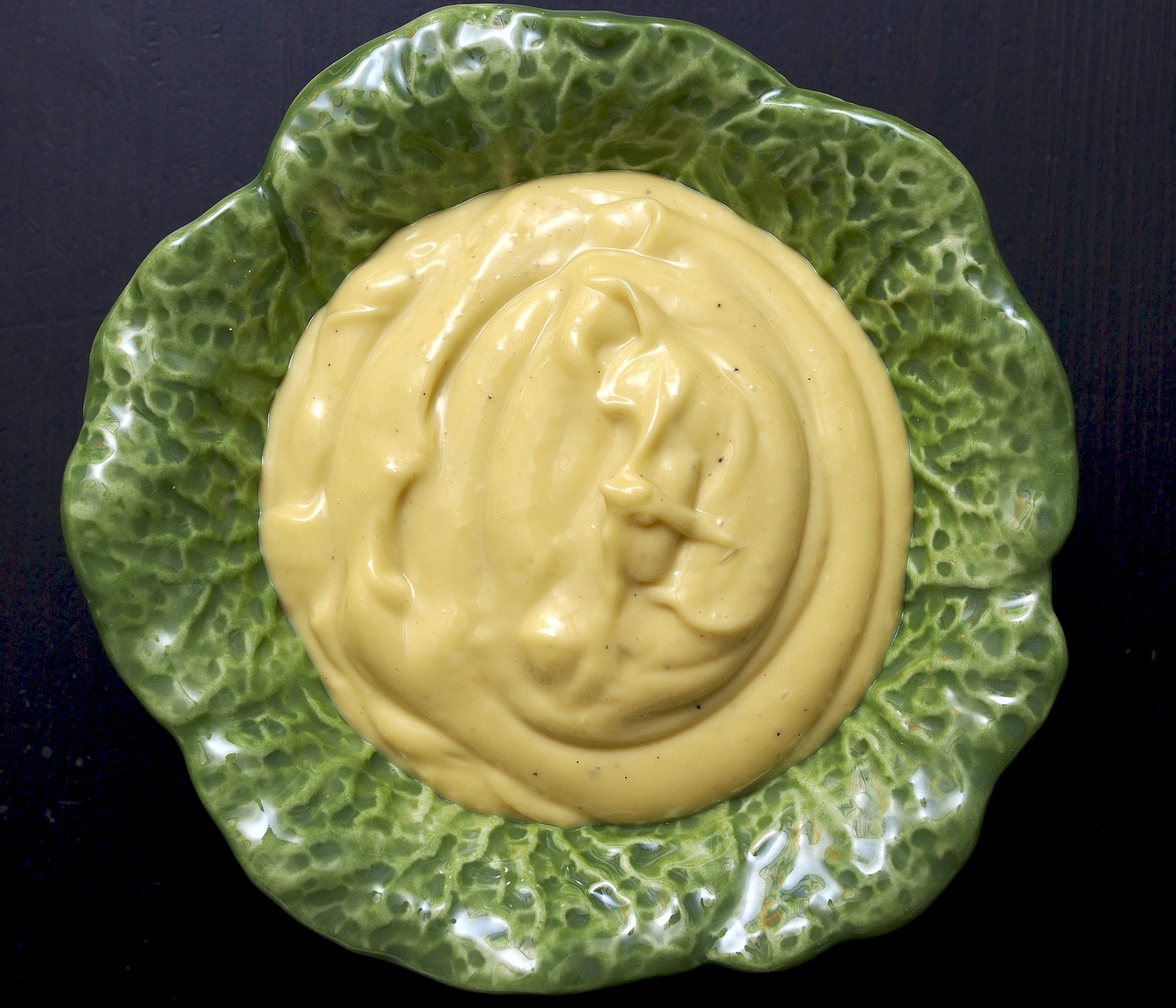
This is easier to make than you think, particularly if you have a food processor to hand, though a whisk and a bowl will also work. So much nicer freshly made than any bought version and good with fish dishes or a roast chicken.
If you go a fraction too fast pouring in the oil, it is easy for it to de-emulsify and go to liquid again as we did with this one. Do not dispair as it’s also easy to save – just pour the split mix into a jug and start again with 10ml water in the food processor, slowly adding the split mix and then the remaining oil. It all, miraculously comes back together again!
Aïoli – serves 4 to 6
2 egg yolks
1 clove of garlic, crushed
2 tsp Dijon mustard
1 tsp red wine vinegar
a big pinch of salt
200ml groundnut oil or sunflower oil
50ml good olive oil
Put the egg yolks, garlic, mustard, vinegar and salt in a food processor and blitz for 20 seconds. Keep the motor running while you add the groundnut oil/sunflower oil. You need to add slowly in a very thin drizzle, and then finish with the olive oil.
You should get a nice thick mayonnaise and if it all goes wrong, follow the instructions in the introduction. If it’s a bit too thick at any point, you can add a splash of cold water to thin it, then continue adding the oil. Season with salt and pepper to taste.
(Original recipe from Home Cookery Year by Claire Thompson, Quadrille, 2020.)
We served this as a side with a barbecue but it would also make a nice dinner for 2.
Couscous & chickpeas in ras el hanut spice – serves 4 as a side or 2 as a main
½ a small onion, finely chopped
3 cloves of garlic, finely sliced
1 tbsp olive oil
1 tsp salt
1 tbsp ras el hanut spice mix
100g cooked chickpeas (from a tin)
1 tomato, diced
60g couscous
180ml boiling water
15-20g coriander, chopped
Heat the oil in a pan, then fry the onion and garlic over a medium heat until softened and starting to colour. Add the salt and ras el hanut and mix for about 20 seconds. Add the chickpeas and diced tomato and cook for another minute. Stir in the couscous and boiling water, bring to the boil, then turn off the heat and cover.
Leave the couscous aside for 10 minutes to absorb the liquid, then remove the lid and use a fork to separate the grains and mix in the chopped coriander. Serve warm or at room temperature.
(Original recipe from Honey & Co. Food from the Middle East, Saltyard Books, 2014.)
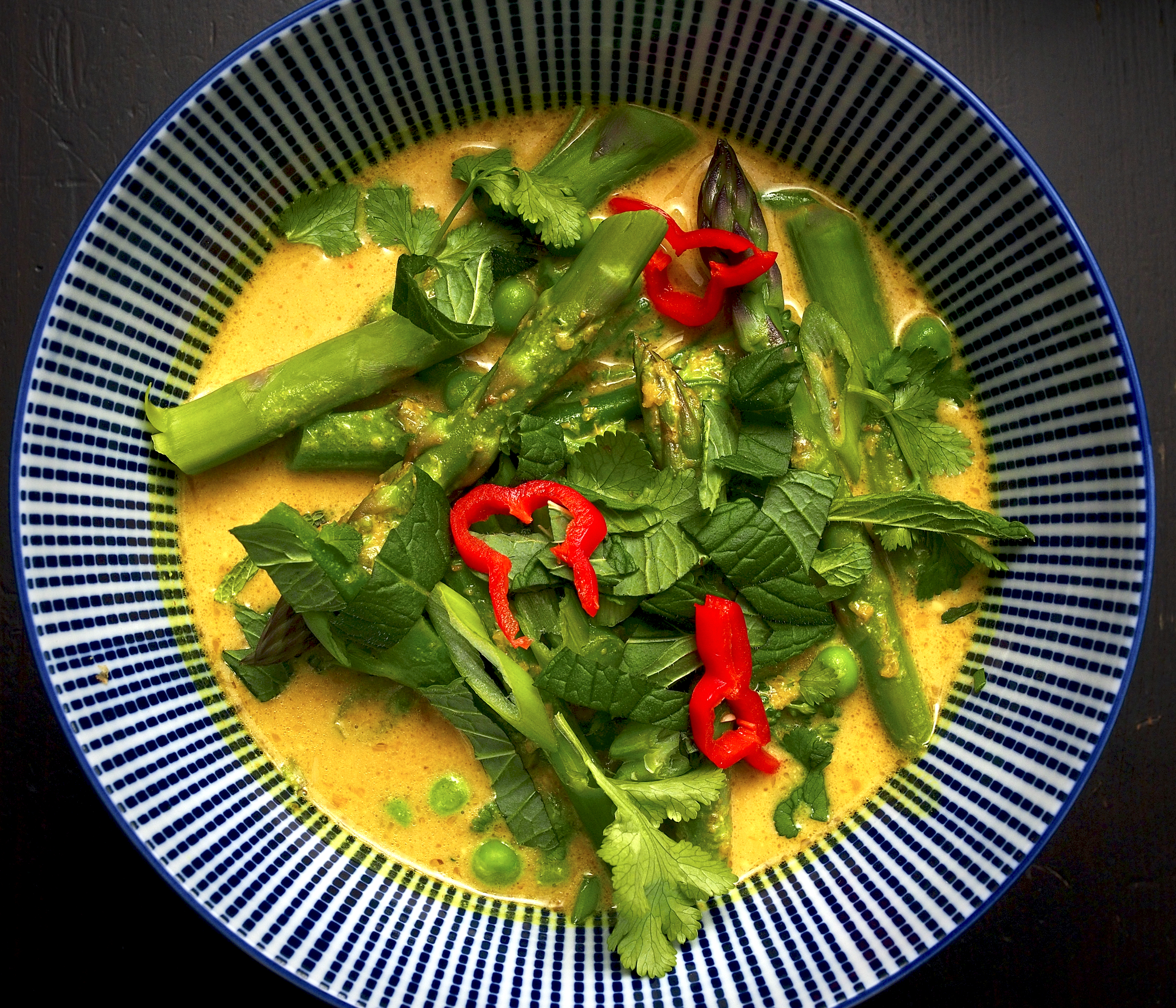
Don’t wear a white shirt when eating this as lots of slurping is needed. A dish full of herbs, spring veg and a fresh spicy sauce, perfect on a cool Spring evening.
Wine Suggestion: This dish demands a good, dry Riesling like the superlative ones made by Martin & Britta Korrell in the Nahe, Germany. For tonight the “Slice of Paradise” Riesling, a less philosophical, more playful baby brother of their signature Paradies vineyard wine, but none the less for this; a taste of Spring in the glass too.
Laksa with Spring Vegetables & Rice Noodles – serves 4
30g tamarind paste with seeds (it comes in a block)
1-2 red chillies, roughly chopped
2 garlic cloves, roughly chopped
1 tbsp grated ginger or galangal
½ a bunch of scallions, sliced, keep the white parts and the green parts separate
a small bunch of coriander, leaves and stalks separated
2 lemongrass stalks, roughly chopped
2 tsp ground turmeric
1 tsp ground cumin
2 tbsp sunflower oil
500ml chicken or vegetable stock
1 x 400ml tin of coconut milk
400g mixed spring vegetables e.g. PSB, peas, green beans, mangetout, asparagus, spinach, radishes or baby carrots
200g dried rice noodles, cooked according to the instructions on the pack
2 tbsp fish sauce, or more if you like
1 tsp caster sugar
a small bunch of mint, leaves picked and roughly chopped, to serve
Bring a pan of salty water to the boil.
Meanwhile, put the tamarind into a small bowl and cover with boiling water from the kettle. Mash well with a fork to get a purée then push the tamarind through a sieve. Discard the seeds that are left behind.
Blend the chillies, garlic, ginger, white parts of the scallions, coriander stalks and lemongrass with the turmeric and cumin to make a thick paste. The small bowl of the food processor is good for this, you might need to add a little water to help it come together.
To make the broth, fry the spicy paste in the sunflower oil for 2 to 3 minutes over a medium heat, until it starts to stick to the pan. Add the tamarind purée, stock and coconut milk and bring to the boil.
Meanwhile, boil the vegetables in the pan of salty water until just tender – 3 minutes should do it, then drain and divide between 4 deep bowls along with the prepared noodles.
Add the fish sauce and sugar to the sauce, taste and add more if needed. Pour the hot broth over the noodles and veg and garnish with the mint, coriander leaves and green scallions. You can add a bit of sliced chilli too if you like.
(Original recipe from Home Cookery Year by Claire Thomson, Quadrille, 2020.)
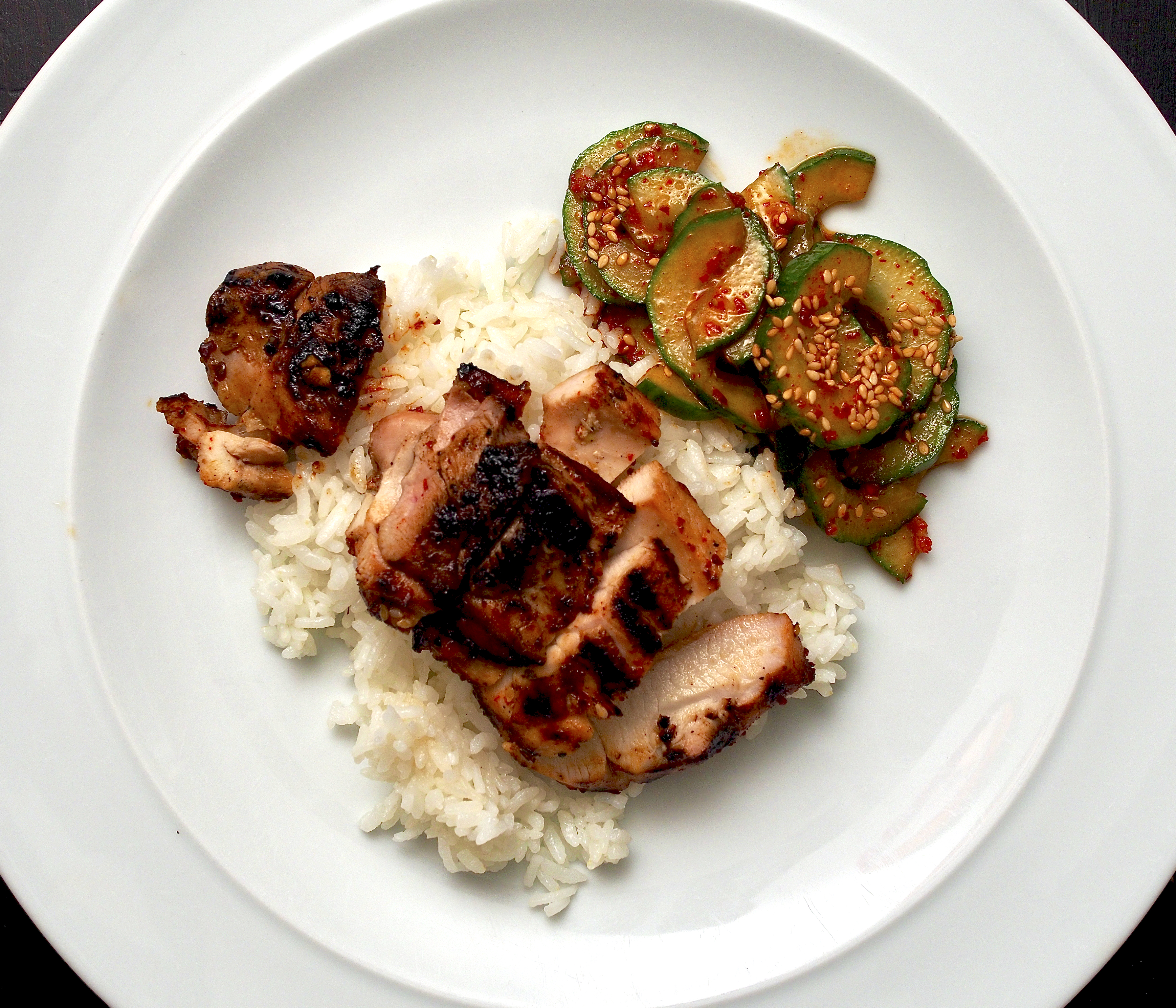
We served this with sticky rice and some quick cucumber kimchi but it would also work perfectly as a starter. If you want to serve to start a meal, just slice the chicken thighs when they’re cooked and serve in lettuce leaves with some kimchi.
Wine Suggestion: this goes great with lighter red wines with high acidity but lower tannins. A youthful Chianti with lower extraction, like the Rocca delle Macie Chianti Vernaiolo which was our choice tonight. Made for youthful consumption as opposed to some of their more serious Chianti Classico’s this was a delight.
Korean Spice-Rubbed Chicken for the BBQ – serves 4
4 large boneless, skinless chicken thigh fillets (if they are tiny just get some extra)
2 tsp light brown sugar
2 tsp gochugaru (Korean chilli powder)
1 tsp sea salt
1 tsp freshly ground black pepper
½ tsp sesame seeds
1 tbsp sunflower oil
FOR THE MARINADE:
60ml sunflower oil
2 tbsp soy sauce
1 tbsp rice vinegar
2 garlic cloves, finely chopped
Make the marinade by whisking the ingredients together in a large bowl.
Add the chicken to the marinade and set aside for at least 30 minutes.
Combine the brown sugar, gochugaru, salt, pepper and sesame seeds in a bowl. Drain the chicken well and pat dry with paper towels, then rub the dry spice mix evenly over the chicken.
Heat a barbecue and cook the chicken for about 4 minutes on each side, or until cooked through. If you don’t want to barbecue you can heat the sunflower oil in a frying pan and cook them on the hob.
Rest in a warm place for 5 minutes before serving.
(Original recipe from Neil Perry’s Good Cooking, Murdoch Books, 2016)
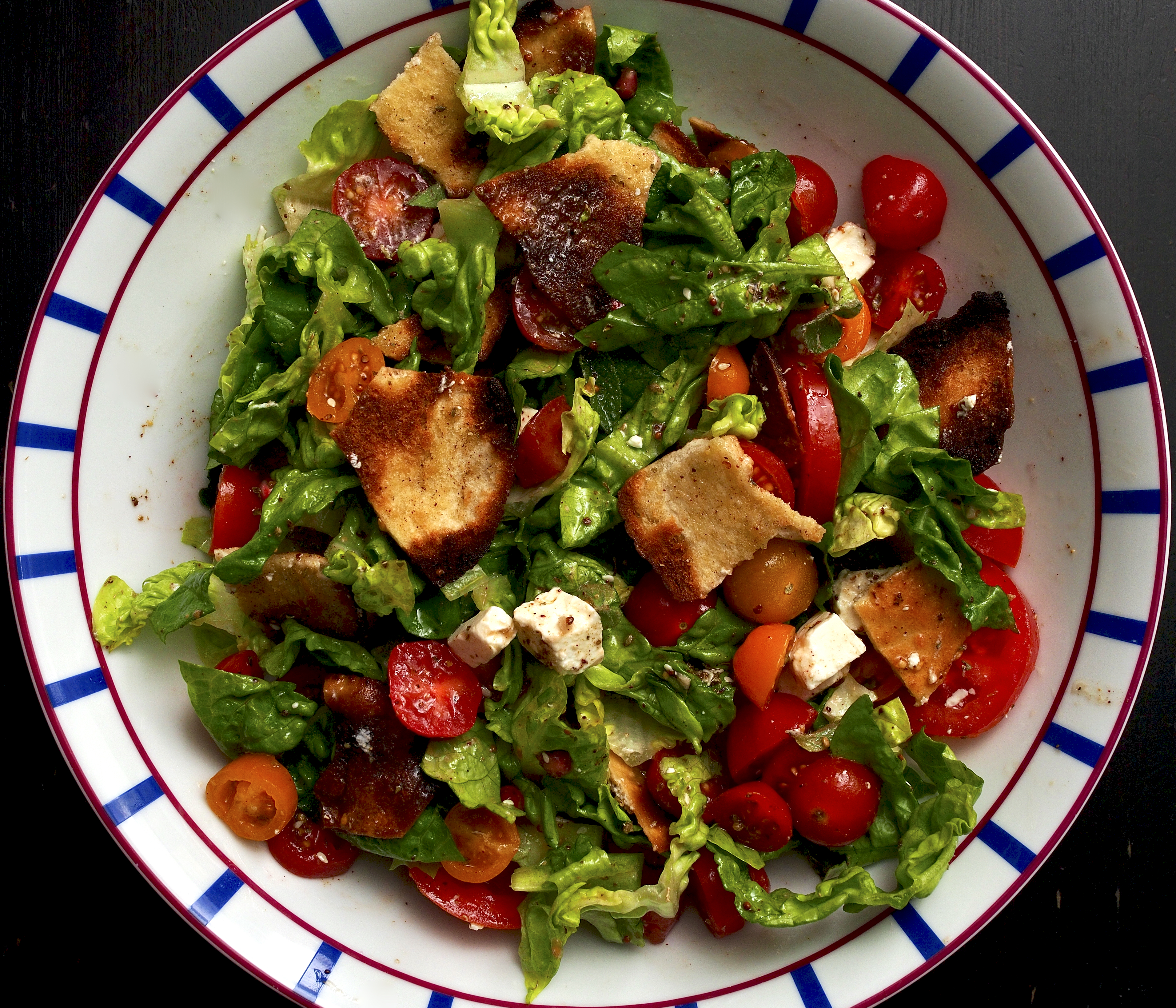
We know it’s a bit early for tomatoes, but this salad tastes good even with the blandest of specimens, so you’re good to go. A great side dish for a barbecue. You can get everything prepped up to an hour in advance but don’t toss it all together until ready to serve.
Tomato & za’atar fatoush – serves 4
1 pitta, cut in half to make two thin round pieces
olive oil
1 head of Little Gem lettuce
250g mixed tomatoes
150g feta
2 springs of fresh oregano, leaves picked
2 tsp za’atar
2 heaped tbsp fresh pomegranate seeds
FOR THE DRESSING:
1 clove of garlic
2 tbsp good olive oil
1 tbsp red wine vinegar
¼ tsp sea salt
a pinch of black pepper
Peel the garlic and bash with a knife to flatten. Mix it with the other dressing ingredients and allow to infuse for an hour at room temperature. Discard the garlic clove before mixing the dressing with the salad.
Brush the pitta bread with a little olive oil and toast until lightly golden and crispy. Break into bite-sized pieces.
Separate the lettuce leaves and cut into large strips.
Cut the tomatoes in different ways – slice some, chop into chunks and just half the little ones. You want them bite-sized rather than finely chopped.
Break the feta into chunks.
When ready to serve put the pitta pieces, lettuce, tomatoes, feta, oregano and za’atar into a large bowl. Pour over the dressing and gently mix everything together. Serve on a large platter with the pomegranate seeds sprinkled over.
(Original recipe from Honey & Co. Food from the Middle East by Sarit Packer & Itamar Srulovich.)
We cooked this fantastic recipe for Easter, avoiding the temptation of Spring lamb which is ridiculously expensive at present. Plus we think lamb is tastier later in the season when they are a bit older. This is the sort of recipe that Jono would choose, but I decide it looks too fiddly and we opt for something else. Something this weekend made me relent and give this a go … probably the prospect of a long weekend and nothing much to do!
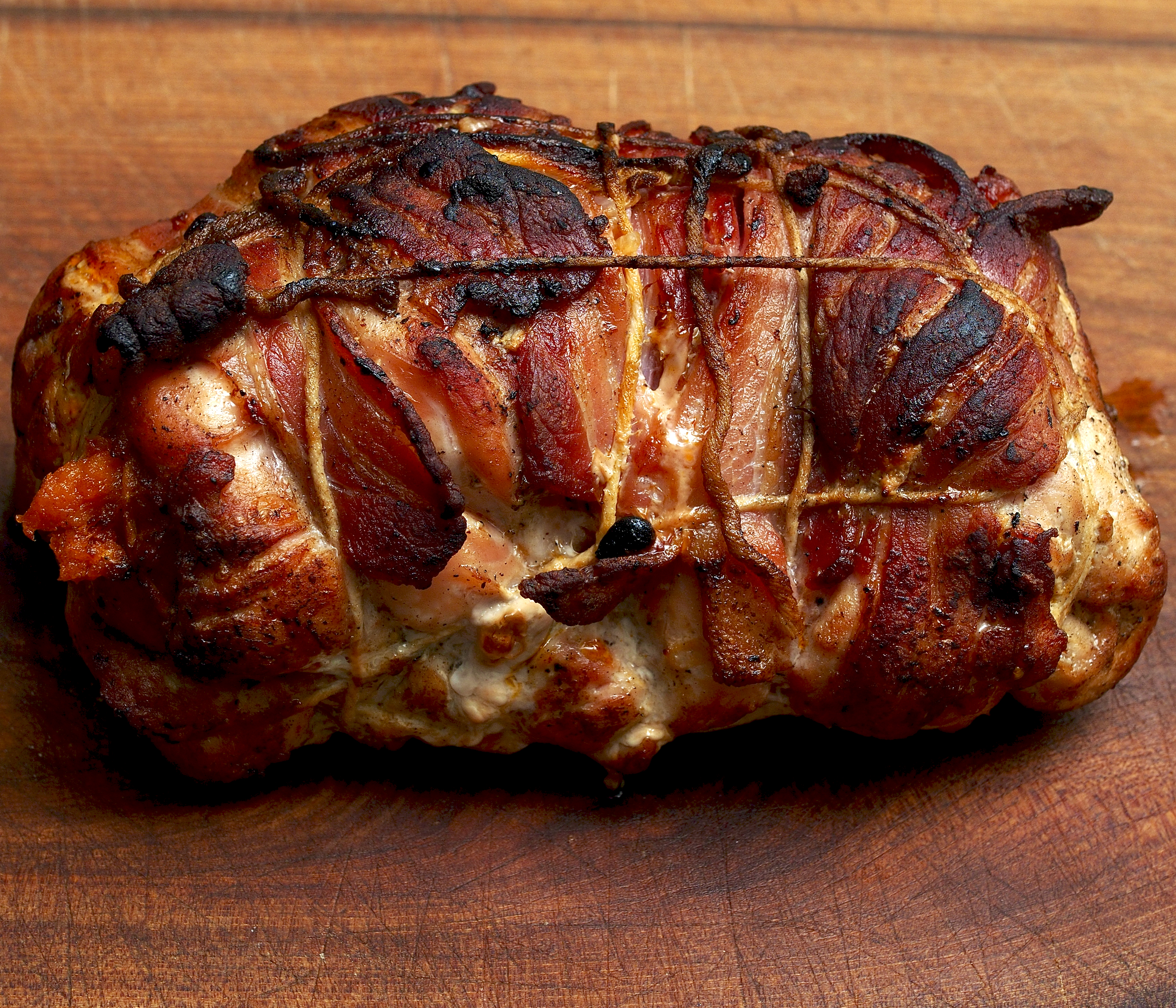
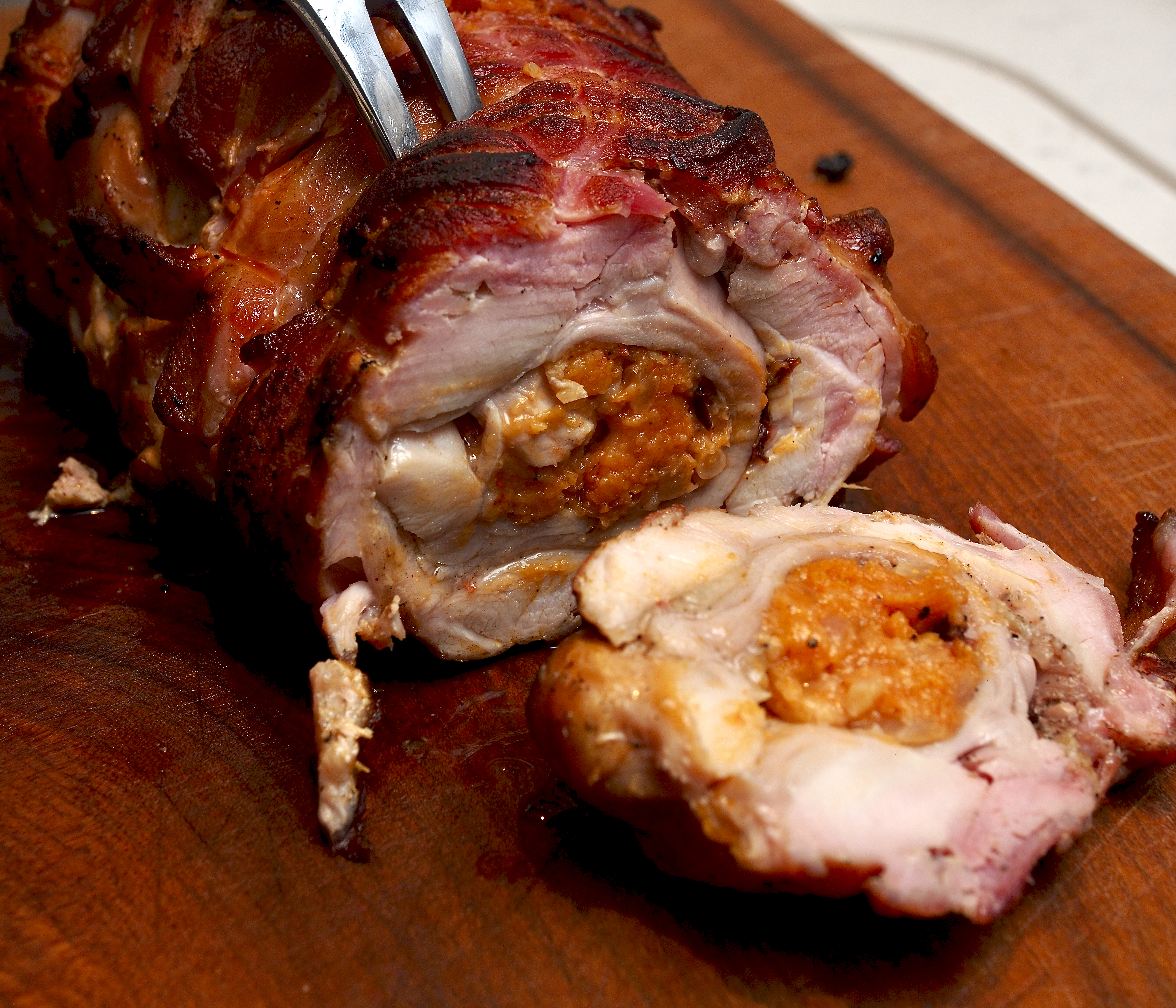
Make friends with your butcher and ask them to debone the rabbit for you. The stuffing and rolling seems a bit tricky when you’re doing it and ours looked far from pretty but if you tie it tightly with string, wrap in some cling film and leave in the fridge for an hour, it will all stay together nicely and looks great when you cut it out. Be brave.
Wine Suggestion: Good with a Chianti Classico from a better producer and, if possible, a little age for some of the tertiary bottle development characters to emerge. For us we had a bottle of the Tenuta Sant’Alfonso, a single vineyard wine made by Rocca delle Macie from our cellar.
Stuffed rabbit – serves 4 to 6
1kg deboned rabbit (about 1.2kg unboned)
1 small red onion, finely diced
1 tomato, chopped
3 tbsp olive oil, plus a bit extra
1 tbsp tomato purée
30g pine nuts
30g currants or sultanas
200ml white wine
about 100g soft breadcrumbs
10-12 slices streaky bacon or pancetta
Spread the deboned rabbit out over a work surface. Rub with olive oil and season with salt and pepper.
Heat the olive oil in a frying pan, add the onion and cook until soft, then add the tomatoes and fry for 2 minutes. Add the tomato purée, pine nuts and currants and cook for another minute. Add 100ml white wine and bubble until most of it has disappeared. Start adding the breadcrumbs, a handful at a time, until you have a stuffing that is neither too wet or too dry. It should clump in your hands and stay together but not feel too sticky. Season.
Make a pile of the stuffing, shaping with your hands, about 7cm from the less fat end of the rabbit. You need to leave a generous margin near the edges so the stuffing doesn’t squeeze out. Roll the rabbit into a fat log shape, tucking in the sides as you go. Wrap the joint in the bacon or pancetta and tie firmly widthways and lengthways with kitchen string. You can set it aside in the fridge for a while now if you need, we found this useful to firm it up a bit.
Preheat the oven to 200C/180C/Gas 6.
Heat some more oil in a frying pan, then brown the rabbit on all sides. Transfer to a deepish roasting tin, not too much bigger than the rabbit. Add rest of the wine to the frying pan, scraping the meaty bits on the pan with a wooden spoon, then pour this over the rabbit. Roast for 45 minutes until nice and golden on the outside. Allow to rest for 20 minutes before serving in thick slices.
(Original recipe from Two Kitchens: Family Recipes from Sicily and Rome by Rachel Roddy, Headline Home, 2017.)
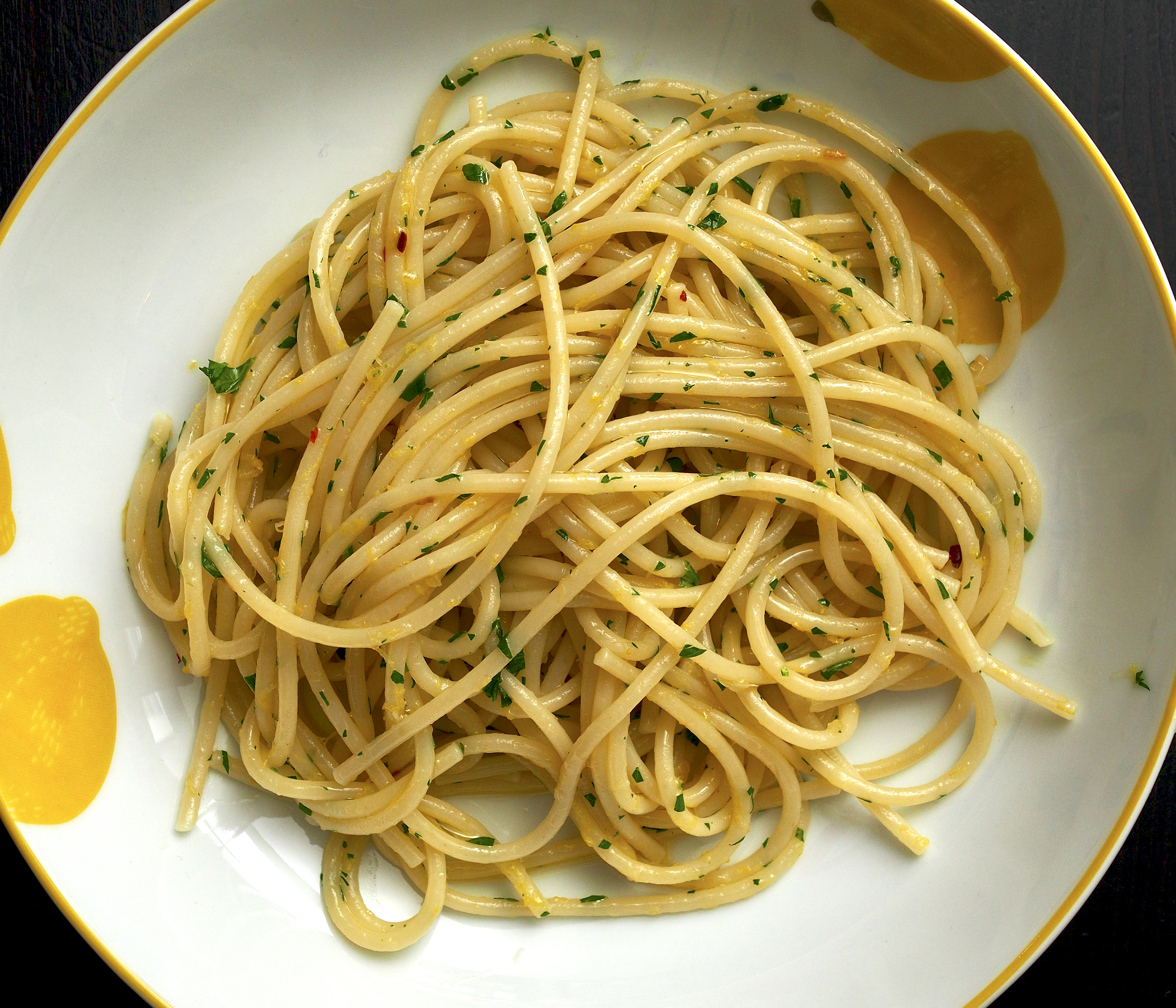
Rachel Roddy is a great inspiration for us in the kitchen. Her recipes are so simple but just right. This spaghetti dish has no pepper or cheese and doesn’t need them, it’s delicious as it is and a treat at any time of year.
Wine Suggestion: We were inspired by the bright Spring day and this dish to open the Spiaggia Marche Bianco. A youthful Verdicchio from the Sartarelli family who live and breathe Verdicchio. Joyful and charming; everything we were hoping for.
Spaghetti aglio, olio al limone – serves 4
2 large unwaxed lemons, zest grated
a large handful of flat-leaf parsley, very finely chopped
500g spaghetti
1-2 garlic cloves, very finely chopped
1 small dried chilli or a pinch of dried chilli flakes
6 tbsp of olive oil
Mix the lemon zest and chopped parsley together and set aside.
Bring a large pan of water to the boil, add lots of salt, then stir in the spaghetti and cook until al dente.
Meanwhile, very gently warm the olive oil in a large frying pan with the chopped garlic and chilli. You want it to be fragrant but be very careful not to burn it.
Use tongs to lift the spaghetti out of the water and into the frying pan, you want a little of the residual cooking water. Stir the spaghetti to coat in the oil, then add the lemon zest and parsley and a pinch of salt. You can also add a squeeze of lemon juice if you like, we usually don’t feel it needs it. Divide between warm pasta bowls.
(Original recipe from Two Kitchens: Family Recipes from Sicily and Rome by Rachel Roddy, Headline Home, 2017.)
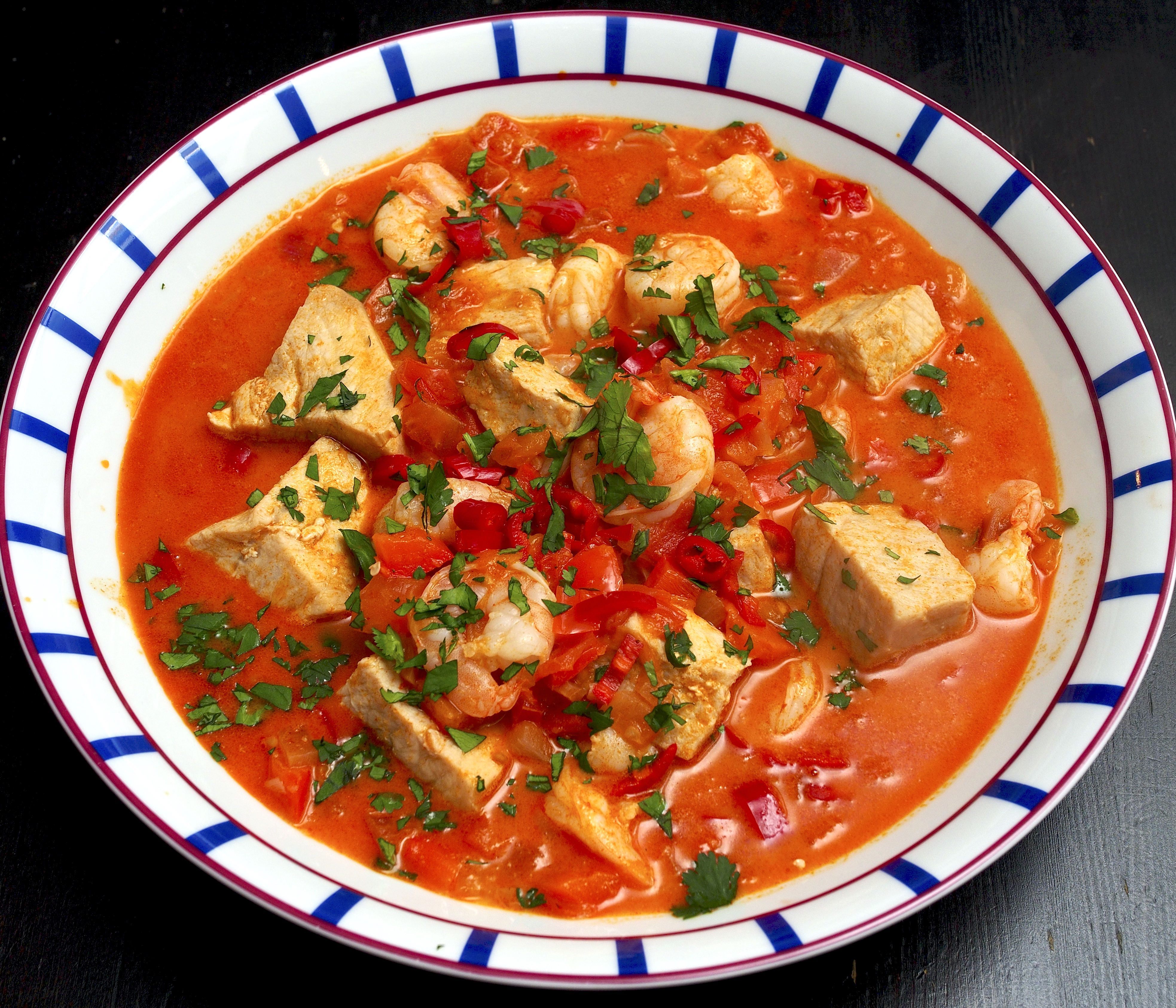
We loved this creamy coconut fish stew from Equador. We went for big chunks of swordfish and prawns but you can substitute other types of fish, like tuna or pollock. Serve with rice.
Wine Suggestion: try to find a light, earthy red with low tannins for this dish, and not too much acidity like a Gamay, riper Pinot Noir or a light Grenache. Tonight’s choice was Domaine Bellier’s Cheverny rouge, a Pinot Noir-Gamay blend from the warm 2018 vintage in the Loire. An under-rated wine region and a good accompaniment to the fish, spices and flavours of this dish.
Encocado – serves 4
2 tbsp olive oil
1 red onion, finely chopped
1 red pepper, finely chopped
3 clove of garlic, finely chopped
2 tsp paprika
1 tsp ground cumin
1 tsp ground coriander
4 tomatoes, finely chopped
1 tbsp tomato purée
400ml tin coconut milk
1 lime, juiced
½ orange, juiced
600g skinless boneless fish cut into 5 cm pieces (you can use snapper, prawns, tuna, swordfish or pollock – we used swordfish and prawns).
a thumb-sized piece of ginger
a small handful of coriander leaves, finely chopped
1 red chilli, finely sliced
Heat the oil in a large pan over a medium heat.
Cook the onion and pepper for 7 to 8 minutes or until soft and golden, then add the garlic and cook for 30 seconds.
Add the spices and some salt, mix well, then add the tomatoes, tomato purée and 100ml of water. Mix well and cook for about 5 minutes or until the tomatoes start to break down.
Add the coconut milk, lime juice and orange juice, then bring to the boil. Reduce the heat to low and simmer for 10 minutes.
Add the fish and stir, then grate in the ginger. Cover and cook gently for 10-12 minutes or until the fish is cooked through. If you are using prawns they won’t take so long to cook so just add them for the last couple of minutes. Scatter over the coriander and chilli to serve.
(Original recipe by John Gregory-Smith in Olive Magazine, April 2018.)
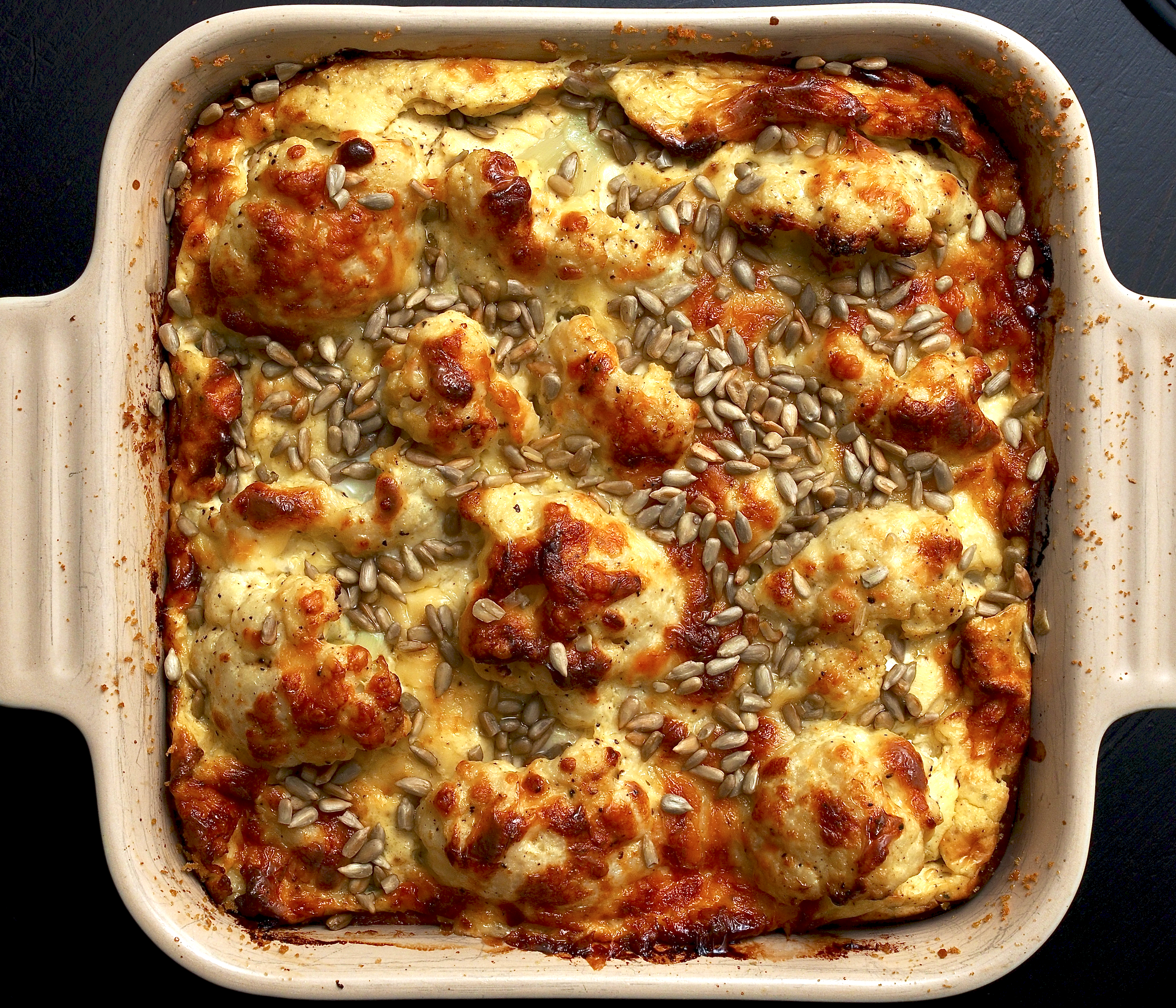
The first thing to mention, is that this is not like the cauliflower in cheese sauce that we all know and love, but no less because of that. This dish is more set, more ‘eggy’ and has a distinctive tang from the soured cream. It also reheats particularly well, regular cauliflower cheese tends to split. So the verdict is that you should definitely give this a go – we served as a side with a dish of minty peas and lettuce and some baked ham. It could definitely work as a main either with a green salad or green veg.
Cauliflower gratin with soured cream – serves 4
a knob of butter, for greasing the dish
50g breadcrumbs
1 large cauliflower, about 1kg when the leaves have been removed, cut into medium-sized florets
350ml soured cream
125g Cheddar cheese, grated
2 eggs, beaten
1 tsp ground nutmeg
3 tsp mustard
2 tsp salt
1½ tsp black pepper
50g sunflower seeds
Pre-heat the oven to 200C/400F/Gas 6.
Grease a ceramic baking dish with butter, then sprinkle with the breadcrumbs.
Bring a large pan of water to the boil and cook the florets for about 6 minutes, or until just tender. Drain, then steam dry in the warm pot for a few minutes and drain again on some kitchen paper to make sure no water remains.
Combine the soured cream, 100g of the cheese and eggs with the nutmeg, mustard and seasoning in a large bowl.
Put the drained cauliflower into the prepared dish, then pour over the soured cream mixture. Sprinkle with the rest of the cheese and bake in the oven for 25-30 minutes, covering with foil if it starts to brown too quickly.
Serve with the sunflower seeds scattered over the top.
(Original recipe from Carpathia: Food from the Heart of Romania by Irina Georgescu, Frances Lincoln Publishing, 2020.)
We like the occasional Hot Cross Bun … warm with a wedge of butter on it, but often find the shop-bought ones too sweet. This version, however, has all the flavour and texture but eases up on the sugar. Best eaten on the day you make them as they lose a bit of freshness that toasting will fix. Not a problem though as we suspect the warm buns will tempt even the most jaded HCB eaters out there. It’s a pretty easy recipe too, though Jono reckons he’ll get the crosses better next time.
Hot Cross Buns, makes 12 buns
450g strong white flour
1 tsp salt
1 tsp ground mixed spice
1 tsp ground cinnamon
½ tsp grated nutmeg
20g fresh yeast, or 7g fast-action dried yeast
50g caster sugar
50g butter, melted and cooled
150ml tepid milk
5 tbsp tepid water
1 large egg, beaten
75g currants
50g chopped mixed peel
For the cross:
50g plain flour
25g soft butter
To Glaze:
2 tbsp granulated sugar
2 tbsp water
Measure the flour, salt, spices, sugar and dried yeast (if using), into a large bowl and stir to mix and then make a well in the centre.
If using fresh yeast, mix this with the milk and water until combined. Pour the butter, the beaten egg, milk and water into the well followed by the currants and mixed peel. Mix to a soft dough.
Turn out onto a lightly floured work surface and knead for 10 minutes until smooth and elastic. Transfer to an oiled bowl and cover with oiled clingfilm. Keep in a warm room and leave to rise for 1.5 hours and until it has doubled in size.
Lightly grease 2 baking trays.
When the dough has risen turn out onto a lightly floured work surface again and knead for 2-3 minutes. Divide into 12 equal pieces and shape into round buns.
Make a cross in the top of each bun with a knife then place on the prepared baking trays and cover with oiled clingfilm. Leave to rise again in a warm place for 30 minutes. Pre-heat an oven to 220C/200C fan.
While the buns are rising make the pastry for the crosses by mixing the flour and butter with a little water and roll out. Cut into thin strips and place into the cuts on the top of the buns.
Bake the buns for about 15 minutes until brown and hollow sounding when the base is tapped.
While the buns are baking make the glaze by dissolving the sugar in the water over a gentle heat. As soon as the buns come out of the oven brush them all over with the glaze.
It may be hard to resist, so don’t … cut one open and spread with butter before eating.
(Original recipe from Mary Berry’s Baking Bible, BBC Books, 2009.)
The flavours in this little Middle Eastern pie are stunning. You can make the filling up to a couple of days ahead and keep it in the fridge, the problem with this is trying to resist eating it. If your filo pastry is frozen you should defrost it in the fridge overnight, defrosting in haste causes the sheets to stick together. You can also re-freeze any sheets that you don’t use. Sarit and Itamar suggest serving with a rocket and orange salad dressed with lemon juice and olive oil. We had a green salad which worked fine too.
Wine Suggestion: we chose the Manciat-Poncet Pouilly Vinzelles which is a classic Chardonnay with good weight and a delightful balance of perfectly ripe fruit, vibrant freshness and judiciously handled oak. Aromatically broad and rich to counter the rich chicken flavours and natural minerality giving it all lift and vitality.
Chicken pastilla – serves 4-6
6 chicken thighs (about 800g)
2 tsp salt
1 tsp black pepper
100g pitted dates
3 onions (about 300g), sliced thinly
1 cinnamon stick
1 dried chilli
2 tbsp ras el hanout
240ml water
1 packet of filo pastry (250g-270g)
60g melted butter
Heat the oven to 200C/180C fan/gas 6.
Put a large frying pan over a medium heat. Put the chicken thighs into the pan, skin-side down, then season with 1 tsp of the salt and the pepper. After about 10-15 minutes the skin should be crisp and nicely coloured. Turn the thighs over and cook on the other side for about 5 minutes, then transfer to an oven-proof pan that can fit them all in one layer. Add the dates.
Add the sliced onions to the fat in the frying pan and add another tsp of salt. Cook until soft and starting to turn golden, then add the cinnamon stick, dried chilli and ras el hanout. Mix well together and cook for 30 seconds, then add the water and bring to the boil. Once boiling, pour over the chicken thighs, then cover the pan and put in the centre of the oven for 1 hour.
Check that the chicken is cooked, it should just fall off the bone. If not, return to the oven for another 10-15 minutes. Set the chicken aside until cool enough to handle.
Pour the contents of the pan into a sieve over a bowl, keep the cooking liquid. Pull the chicken from the bones and discard the skin, bones and any gristly bits. Remove the chilli and cinnamon stick. Mix the chicken with the cooked dates and onions, then add just enough of the liquid to bind it all together. You can prepare this part up to 2 days in advance and keep in the fridge until needed. Keep the extra liquid too and serve as a sauce on the side.
Preheat the oven to 200C/180 fan/gas 6.
Open the filo pastry packet and lay it out on a surface.
Carefully peel off the first sheet and brush with the melted butter, then fold into four and set aside (this will form the base of the pastilla).
Peel of the next sheet and butter it, then cover with another sheet and set aside. Repeat with two more sheets, so you have two sheets of double thickness.
Place one doubled sheet lengthways on the table, put the folded square in the centre of it, then lay the other doubled sheet on top at 90° to the first sheet, so you have a cross shape that is thickest in the middle.
Carefully lift the pastry and place in a 22-24cm ovenproof frying pan letting the sides hang over the edge. Fill with the chicken mixture and fold the corners over to cover it. It looks nice if its a bit crumpled so no need to be to neat about it. Brush the top of the pie with the rest of the melted butter and put into the centre of the oven for 15 minutes. Turn the pan around so it all crisps evenly, then cook for another 10-15 minutes until crisp and golden.
Meanwhile, heat the cooking liquid in a small pan.
Serve immediately with a jug of the sauce to pour over and a salad on the side.
(Original recipe from Honey & Co. by Sarit Packer & Itamar Srulovich, Saltyard Books, 2014.)
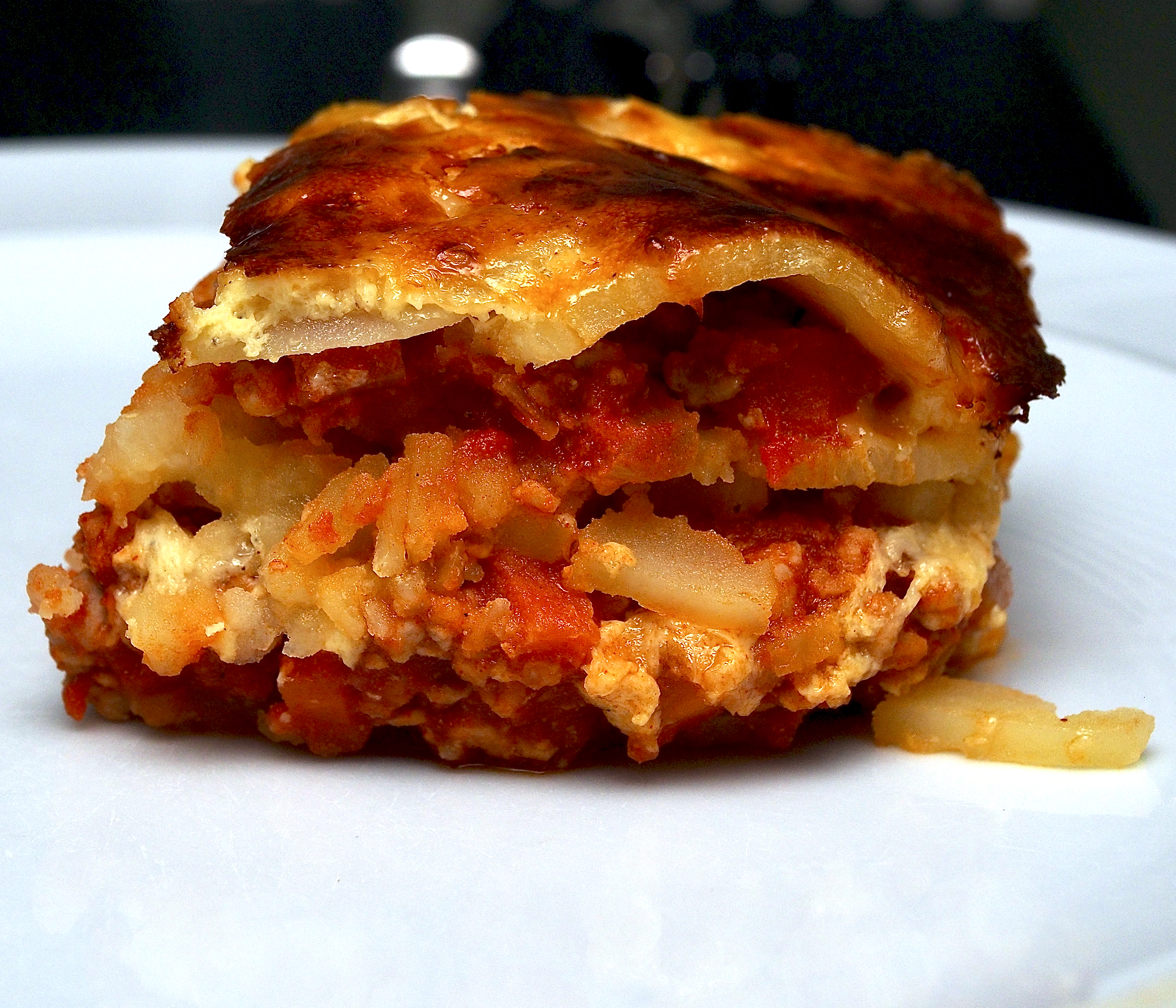
This is a Romanian version of moussaka and much easier than the Greek version we usually make. The aubergines are replaced with layers of potatoes and the cheese sauce is a mixture of yoghurt, cheese and egg yolks. Makes a great family meal with a salad on the side.
Wine Suggestion: This suits a light, earthy red and a recent find, the Jeunes Vignes de Xinomavro by Thymiopoulos was yet again a delight.
Musaca de cartofi – serves 6
FOR THE FILLING:
1 tbsp vegetable or sunflower oil
2 onions, finely diced
1 carrot, finely diced
500g pork mince (or you can use a mixture of pork and beef mince)
1 tbsp sweet paprika
1 x 400g tin chopped tomatoes
300ml passata
4 medium potatoes, waxy ones work best
15g butter
FOR THE CHEESE SAUCE:
100g Cheddar cheese, grated
150g natural yoghurt
2 egg yolks
Heat the oil in a large frying pan over a medium heat. Add the onions and carrot and sauté for 6-7 minutes. Add the pork mince, paprika, tomatoes and passata, then cook for 25 minutes, until reduced and thickened. Give it a stir now and then as it cooks.
Meanwhile, peel the potatoes and slice into thin discs (a mandoline works best for this job). Bring a large pot of water to the boil, add some salt, then blanch the potatoes for about 5 minutes or until just softened. Drain and set aside.
To make the cheese sauce, mix the cheese with the yoghurt and egg yolks.
Preheat the oven to 180C/Gas4.
Grease a 6-person lasagne dish with a little of the butter and arrange a layer of potatoes over the bottom, they can overlap slightly. Dot with a little butter and season with salt and pepper. Spread half of the meat filling on top, then cover with another layer of potatoes, dot with butter and season, then spread the rest of the filling on top. Finish with a layer of potatoes and top with the cheese sauce.
Bake for 30-35 minutes until nicely browned on top.
(Original recipe from Carpathia: Food from the heart of Romania by Irina Georgescu, Frances Lincoln Publishing, 2020.)
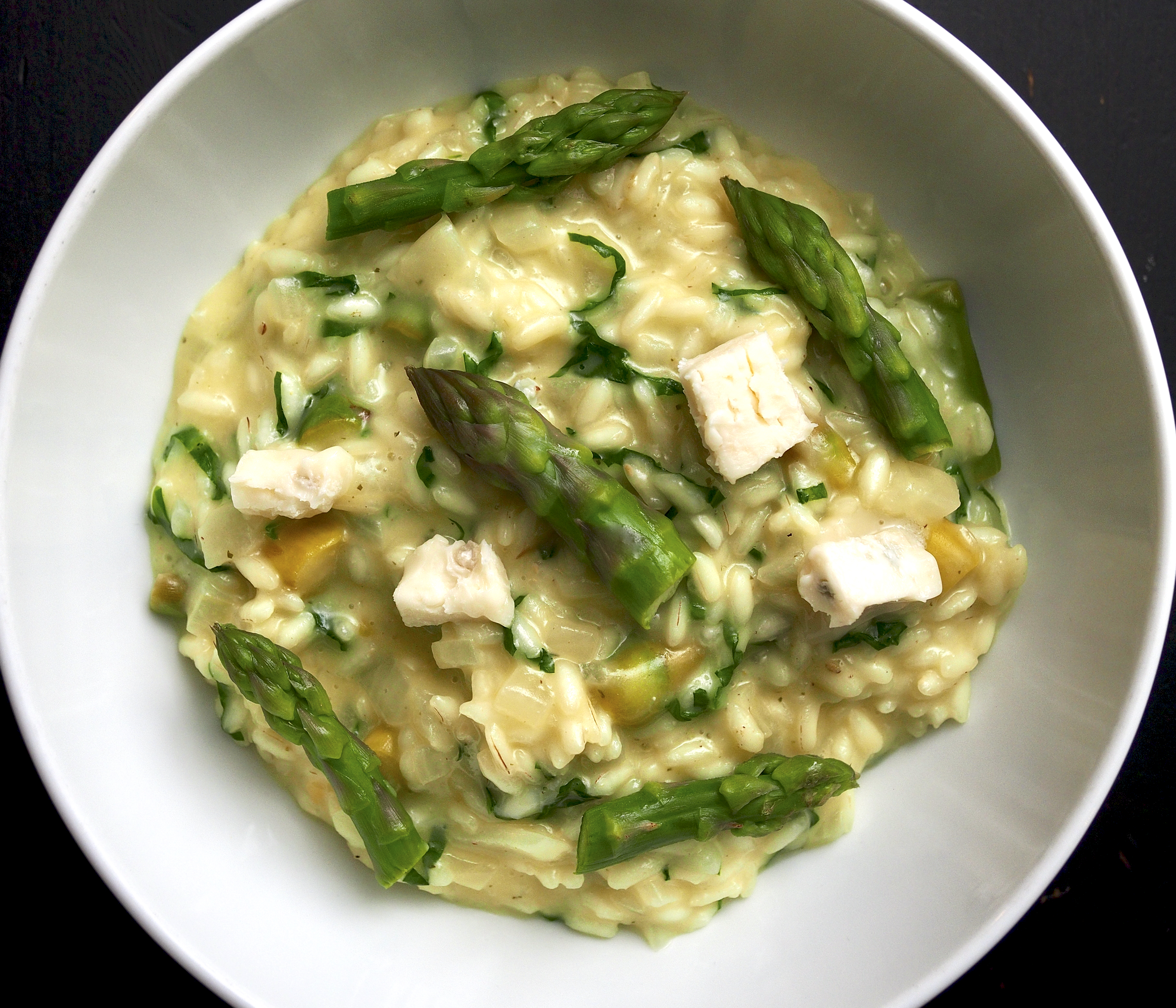
Daffodils, warmer weather (occasionally … ), longer days, and spring vegetables arriving in the shops. Things are definitely looking up, at least in our kitchen if nowhere else.
Wine Suggestion: The asparagus cried out for the Höpler Grüner Veltliner lurking in the fridge waiting for spring to arrive. GV is one of the few varieties to work with asparagus and this dish isn’t shy of their flavours so a good match. Crisp pear and zesty lemon flavours overlay the hints of characteristic white pepper umami savouriness; this is so clean and vibrant it shouts the beginning of the season.
a bunch of asparagus, snap off and discard the woody ends
1.5 litres of vegetable stock
40g butter and 25g of cold diced butter
1 small onion, finely chopped
250g superfino carnaroli rice
60ml dry white wine
40g Parmesan, grated
60g Gorgonzola
a small handful of wild garlic leaves, finely chopped
Remove the tips from the asparagus and chop the stems into 3cm pieces.
Blanch the tips in a pan of salty boiling water for 2 minutes, then drain and set aside.
Bring the stock the boil, then turn down and keep it at a bare simmer.
Melt 40g butter in a heavy-based pan, add the onion and asparagus stalks, then cook gently until the onion is soft and translucent, but not coloured.
Turn the heat up a little and add the rice. Stir for a couple of minutes until warm and coated with the butter and onion.
Add the wine and allow it to bubble up and almost disappear, then start adding the stock a ladle at a time. Keep stirring and only add more stock when the previous ladleful has been absorbed. Start tasting the rice after about 15 minutes, you want it to be soft but still with a little bite in the centre.
Remove the pan from the heat and beat in the cold butter, Parmesan, 20g of the Gorgonzola and the wild garlic. Season to taste, then ladle into warm bowls and garnish with the asparagus tips and the rest of the Gorgonzola.
(Original recipe from Made at Home by Giorgio Locatelli, 4th Estate, 2017.)
This is a Romanian dish called Pilaf cu pui ciuperci. We haven’t knowingly cooked any Romanian dishes until now, but we recently purchased Carpathia: Food from the Heart of Romania by Irina Georgescu. This is a beautiful book and we’re looking forward to cooking many more dishes. While Irina suggests blitzing the veg in the food processor, we chopped them by hand. Either way you want them nice and fine but not blitzed to a pulp. Serve with salad.
Wine Suggestion: Unfortunately we didn’t have a Romanian wine to hand but we can attest it works well with one of our favourite wines: the Ch du Hureau Saumur-Champigny “Tuffe”. Elegance, style and grace, but also very grounded and earthy and what we love about Cabernet Franc from the Loire.
Oven-baked pearl barley pilaf with chicken and mushrooms – serves 4-6
3 tbsp vegetable or sunflower oil
1.5kg chicken pieces, we used thighs and drumsticks but you can joint a whole chicken
2 onions, sliced
300g pearl barley
¼ celeriac, finely diced
2-3 celery sticks, finely diced
1 carrot, finely diced
1 red pepper, finely diced
1 x 400g tin chopped tomatoes
200g chestnut mushrooms, quartered
600ml chicken stock
2 tsp salt
5g black pepper
25g butter, roughly chopped
a bunch of parsley, roughly chopped
We found it easier to fry the chicken in a large, heavy frying pan and then to transfer to a large roasting tin. Irina suggests frying and baking in a large deep casserole dish, but we didn’t have one big enough. A roasting tin covered with two layers of foil worked well.
Heat the oil in a large heavy frying pan or casserole dish, over a medium heat. Brown the chicken pieces on all sides – it’s easiest to do this in batches. Transfer the browned chicken to a plate and set aside.
Add the onions to the pan and cook for 10 minutes, then add the pearl barley and stir to coat the grains in the oil, cook for another few minutes.
Preheat the oven to 180C.
Add the chopped vegetables to the pan with the tomatoes, mushrooms, stock and seasoning and gently combine. You might need to transfer to a large roasting tin at this point. You need to be generous with the salt. Arrange the chicken pieces on top and cover the dish with a layer of foil and a lid or if using a roasting tin you can cover with a double layer of foil.
Bake for 40 minutes, then remove the lid and foil and cook for another 10 minutes. Check the vegetables are tender and that the chicken is cooked through, then remove from the oven. Dot the top of the dish with the butter and sprinkle with parsley.
(Original recipe from Carpathia: Food from the Heart of Romania by Irina Georgescu, Frances Lincoln Publishing, 2020.)






 Jono & Jules do food & wine