6 April 2015 by jonoandjules

Moong dal
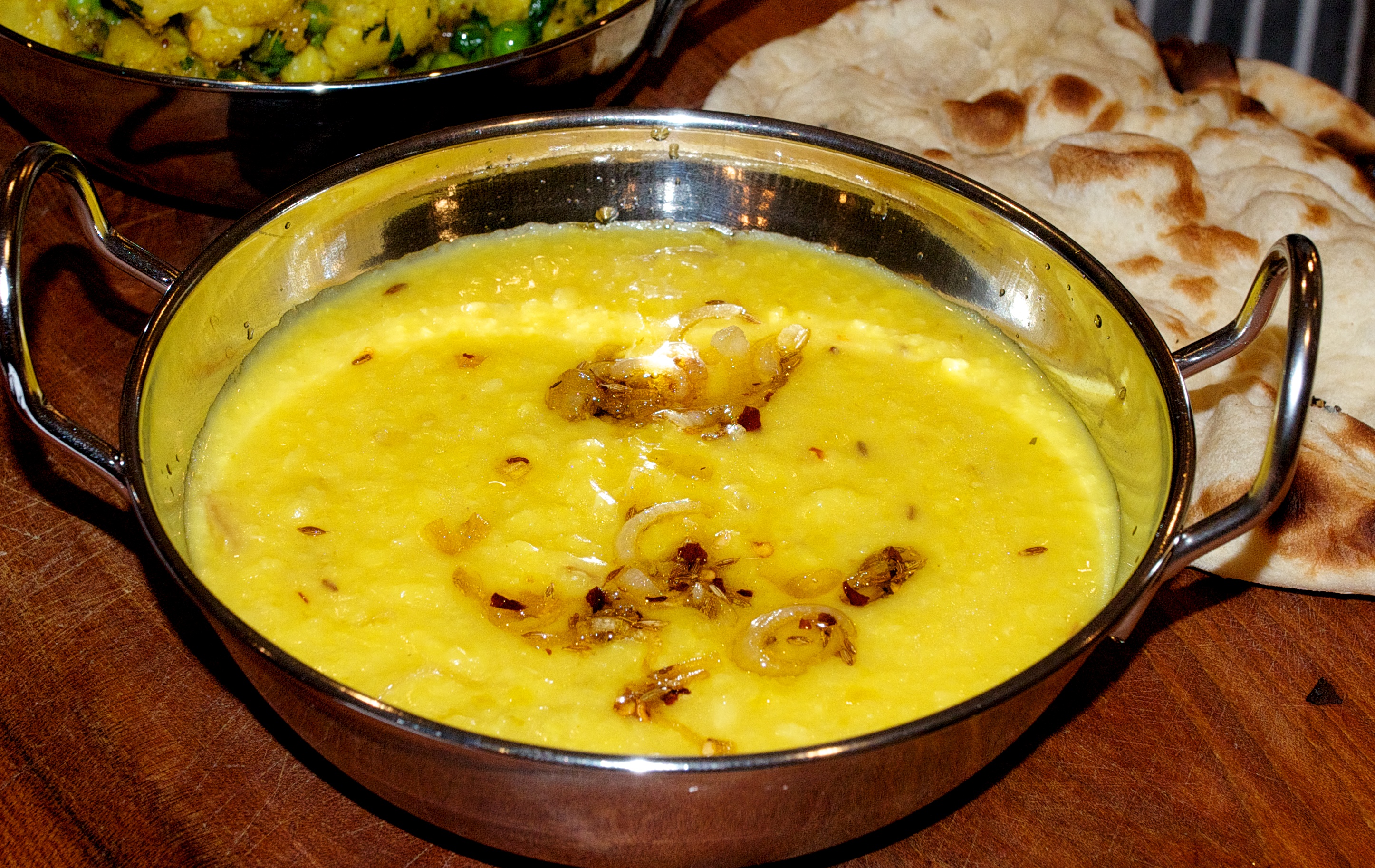
This is Madhur Jaffrey’s “everyday moong dal”, the one she serves regularly to her family and friends alike. It is quite a wet style which we really liked. Serve alongside your favourite curry; it was particularly good with the pea & cauliflower one below.
Moong dal – serves 4-6
- 200g moong dal (skinned and split mung beans), washed and drained
- ¼ tsp ground turmeric
- ¾ tsp salt
- 2 tbsp olive oil or ghee
- 1/8 tsp ground asafoetida
- ½ tsp whole cumin seeds
- 1-2 whole hot, dried red chillies (we used 1 tsp dried chilli flakes)
- 1 medium shallot, peeled and cut into fine slivers
Put the moong dal in a medium saucepan, add 800ml water and bring to the boil.
Skim off the white froth and stir in the turmeric.
Cover partially, reduce to a gentle simmer and cook for 45 minutes. Stir in the salt, then turn off the heat.
Heat the oil in a small frying pan over a medium-high heat, then quickly add the asafoetida, cumin seeds and chillies in that order. As soon as the chillies start to darken (a few seconds), quickly pour the contents of the pan over the cooked dal. Stir to mix through.
(Original recipe from Madhur Jaffrey’s Curry Easy, Ebury Press, 2010.)
Posted in Food, Indian, Side dish, Vegetarian | Tagged Cooking, Dahl, Dal, Food, Indian, Madhur Jaffrey, Moong dal, Recipe | 2 Comments »
6 April 2015 by jonoandjules
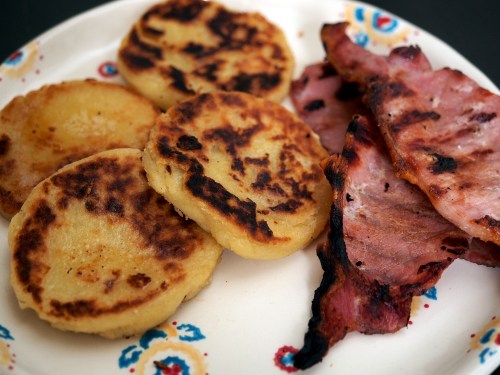
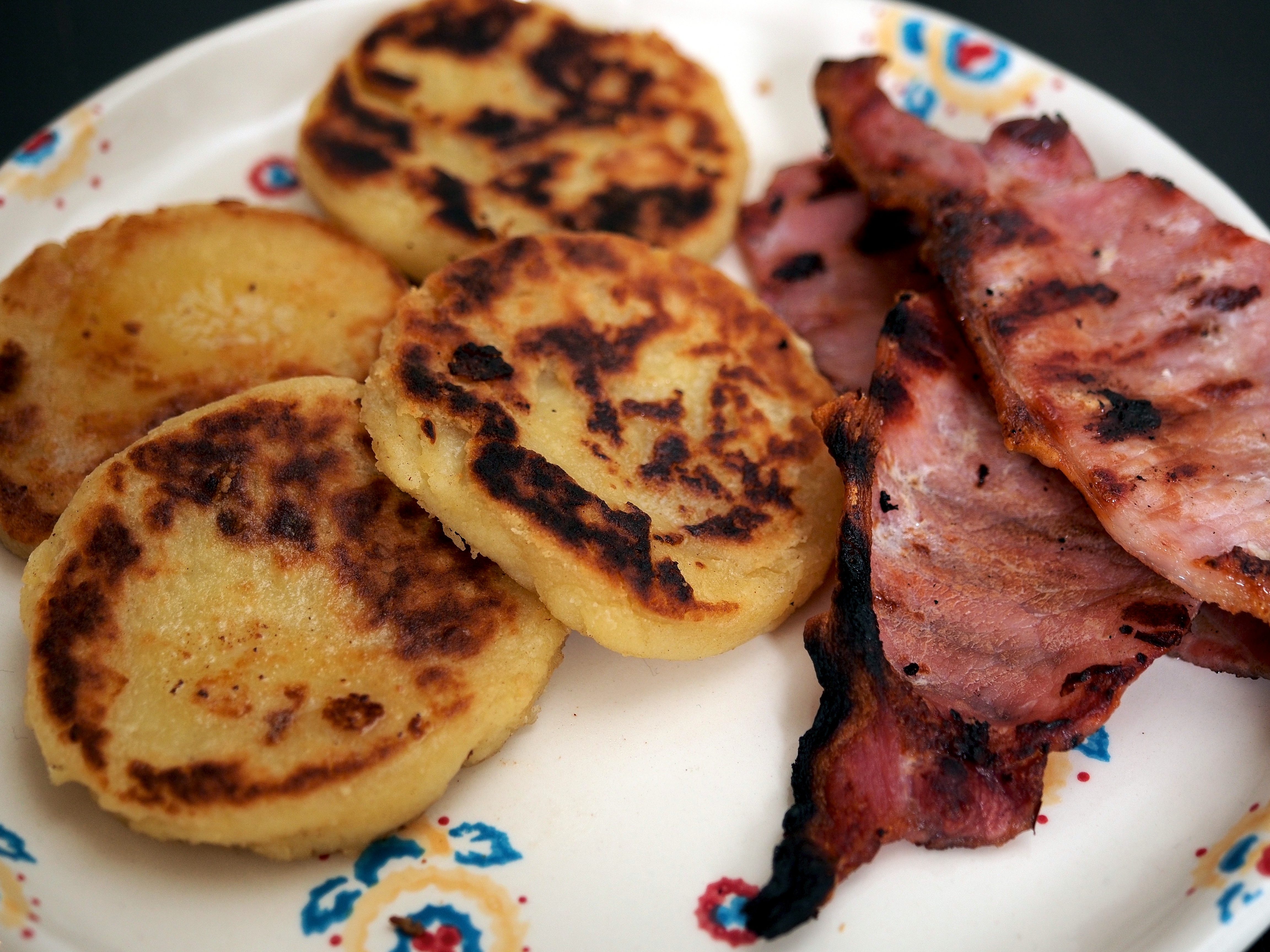
Potato cakes
We sorely miss potato farls which you can buy in every bakery in Belfast and are so delicious with bacon for breakfast or brunch. It was a delight to find such a good and easy recipe. You have to make these with hot potato so it’s fine to use leftover mash but make sure you re-heat it.
Potato cakes
- 450g potatoes, steamed and put through a mouli-légumes or potato ricer
- 110-140g flour sieved with a tsp of sea salt
- 45g unsalted butter
Work the ingredients together with your fingers, then roll out the dough lightly into thin circles with a very well floured rolling pin. Cut with a scone cutter into circles and fry in a little butter until browned.
Serve hot with more butter and some crispy bacon.
(Original recipe from Tamasin’s Kitchen Bible by Tamasin Day-Lewis, Weidenfeld & Nicolson, 2005.)
Posted in Food, Vegetarian | Tagged Breakfast, Burnch, Cooking, Food, Irish, Potato, Potato farls, Potato cakes, Recipe | 2 Comments »
23 March 2015 by jonoandjules
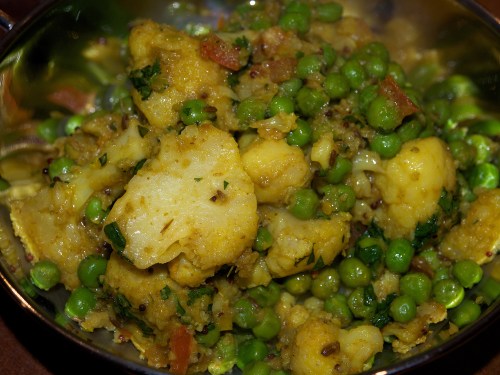
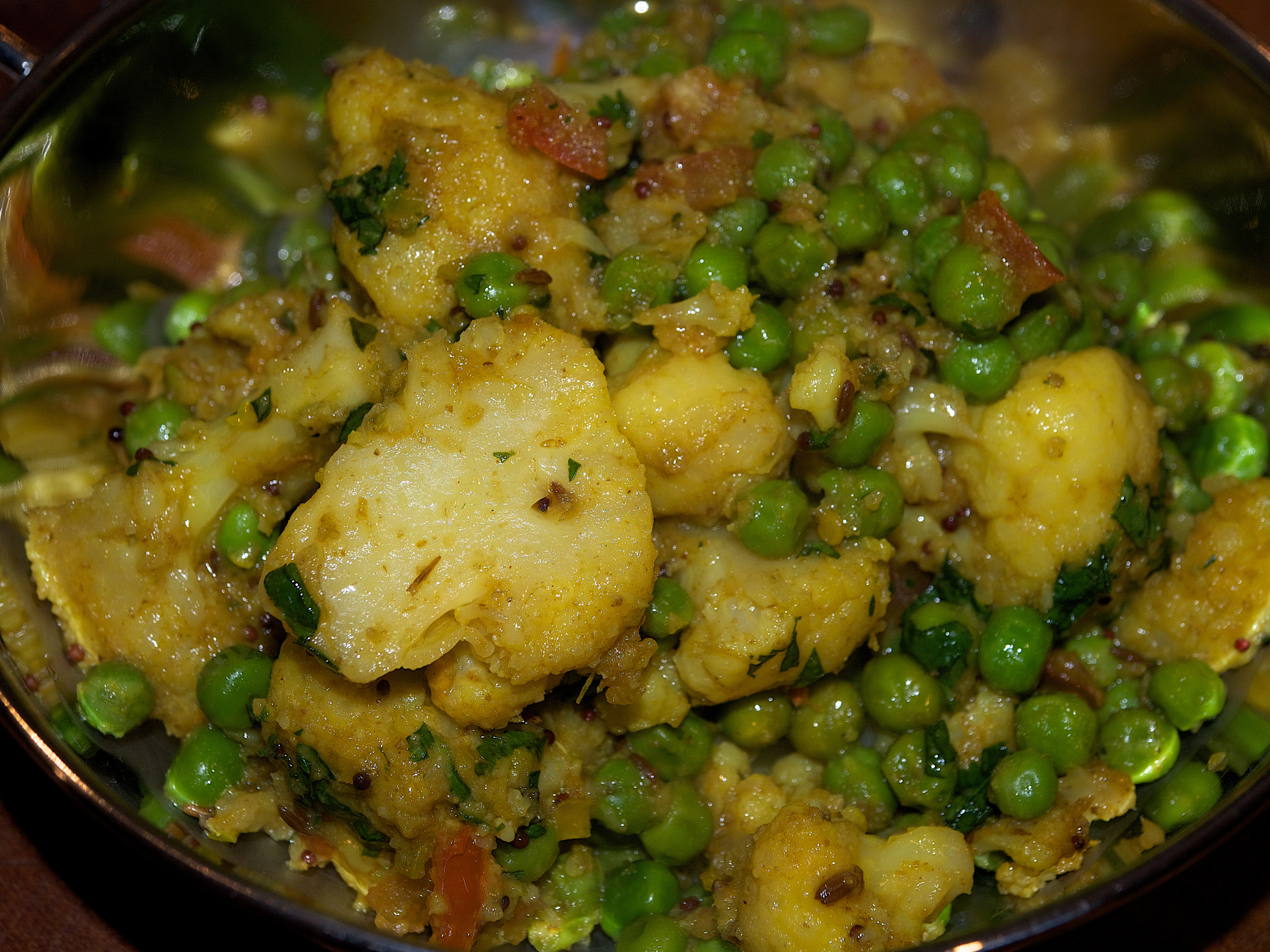
We got the Indian vegetarian cookbook, Prashad, some time ago but haven’t used it much, something that needs to be remedied as the recipes are delicious. The balance of spices has a real depth but be careful with the asafetida as it can easily overwhelm the dish. We served this with a home-made dhal and naan breads from the Indian takeaway.
Pea & Cauliflower Curry – serves 4
- 100ml sunflower oil
- 1 tsp cumin seeds
- 1 tsp brown mustard seeds
- ½ tsp asafetida
- 1 medium cauliflower, cut into small pieces
- 1 tsp turmeric
- 1 tbsp ground coriander
- 1½ tsp salt
- 1 tsp sugar
- 400g frozen petits pois
- 1 medium tomato, finely chopped
- 1 large handful of fresh coriander, roughly chopped
- 3-6 fresh green chillies, seeds in
- 5cm root ginger, peeled and roughly chopped
Crush the chillies and ginger together with a pinch of salt in a pestle and mortar (or a blender) to make a fine masala paste.
Heat the oil in a large heavy-based frying pan over a medium heat, then add the cumin and mustard seeds. When the seeds start to pop, turn the heat to low and stir in the asafetida.
Add the cauliflower, then turn the heat back to medium and stir in the masala paste, turmeric, ground coriander, salt and sugar. Cover and leave to cook for 8-10 minutes, stirring every few minutes. Stir in the peas and tomato, cover the pan again and cook for another 3-5 minutes. Remove from the heat and sprinkle with the chopped coriander, then leave to rest, covered, for 5 minutes before serving.
(Original recipe from Prashad: Indian Vegetarian Cooking by Kaushy Patel, Saltyard Books, 2012.)
Posted in Food, Indian, Vegetarian | Tagged Cauliflower, Cooking, Curry, Food, Indian, Prashad, Recipe, Vegetarian | Leave a Comment »
16 March 2015 by jonoandjules
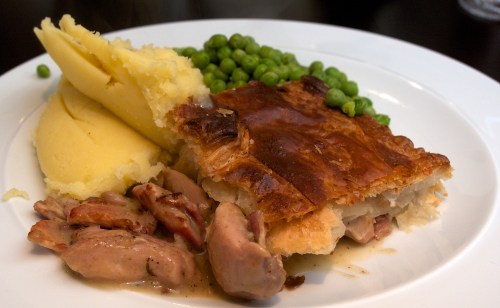
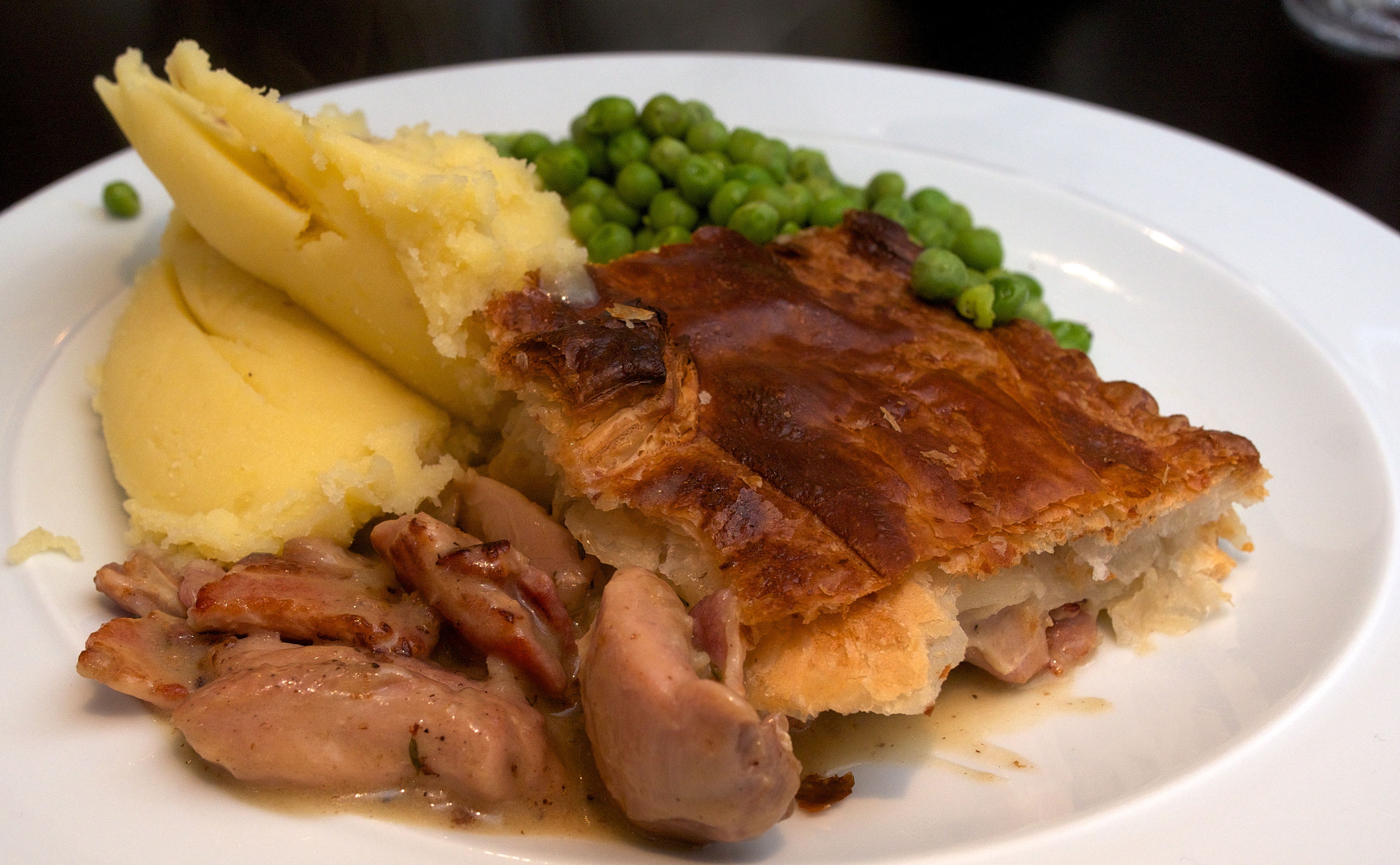
Chicken & Mushroom Pie
This is a lovely pie for a frosty day. Serve with lots of mashed potato and peas.
Wine Suggestion: this dish needs a white wine with a medium body as there is some subtlety at play with the flavours and weight. Classically we’d pair a sensitively oaked chardonnay with an earthiness and minerality so a better Maçon or Côte Chalonnais would be great. To step outside the box though look to a Vin Jaune from the Jura which adds a layer of nutty, yeasty characters, a lovely freshness of acidity and a rustic earthiness. Don’t go too sophisticated as this is a wholesome, honest pie.
Chicken & Mushroom Pie – serves 4-6
- 1 tbsp vegetable oil
- 8 skinless boneless chicken thighs
- 8 rashers streaky bacon, cut into large pieces
- 1 onion, sliced
- 250g baby button mushrooms
- handful thyme sprigs
- 2 tbsp plain flour
- 400ml chicken stock
- 200ml milk
- 500g pack puff pastry
- 1 egg, beaten
Heat the oil in a large, non-stick frying pan.
Season the chicken and fry in batches until golden brown.
Remove the chicken from the pan and add the bacon. Fry for about 5 minutes or until crisp.
Add the onions, mushrooms and thyme, then fry on a high heat for about 3 minutes or until the onions start to colour.
Add the flour to the pan and cook, stirring, for 1 minute.
Take the pan off the heat and gradually whisk in the stock, followed by the milk, then return the chicken to the pan. Bring to the boil and simmer for 30 minutes.
Spoon the filling into a large pie or baking dish (approx. 20 x 30 cm) with a lip and leave to cool.
Heat the oven to 220C/fan 200C/gas 7.
Roll the pastry out onto a floured surface. Cut a long strip as wide as the rim of the dish and, using a little of the egg, fix to the edge of the pie dish. Brush with egg, then lift the rest of the pastry onto the pie. Press the edges together with your fingers and trim with a sharp knife. Brush lightly with egg to glaze and bake for 30 minutes or until risen and golden brown.
Serve with mashed potatoes and peas.
(Original recipe from BBC Good Food)
Posted in Chicken, Food | Tagged Chardonnay, Chicken pie, Cooking, Food, Jura, Mushrooms, Pie, Recipe, Vin Jaune, Wine suggestion | 1 Comment »
9 March 2015 by jonoandjules
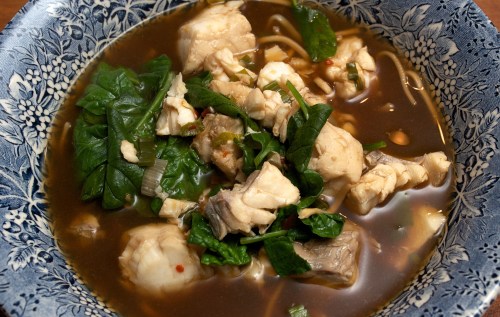
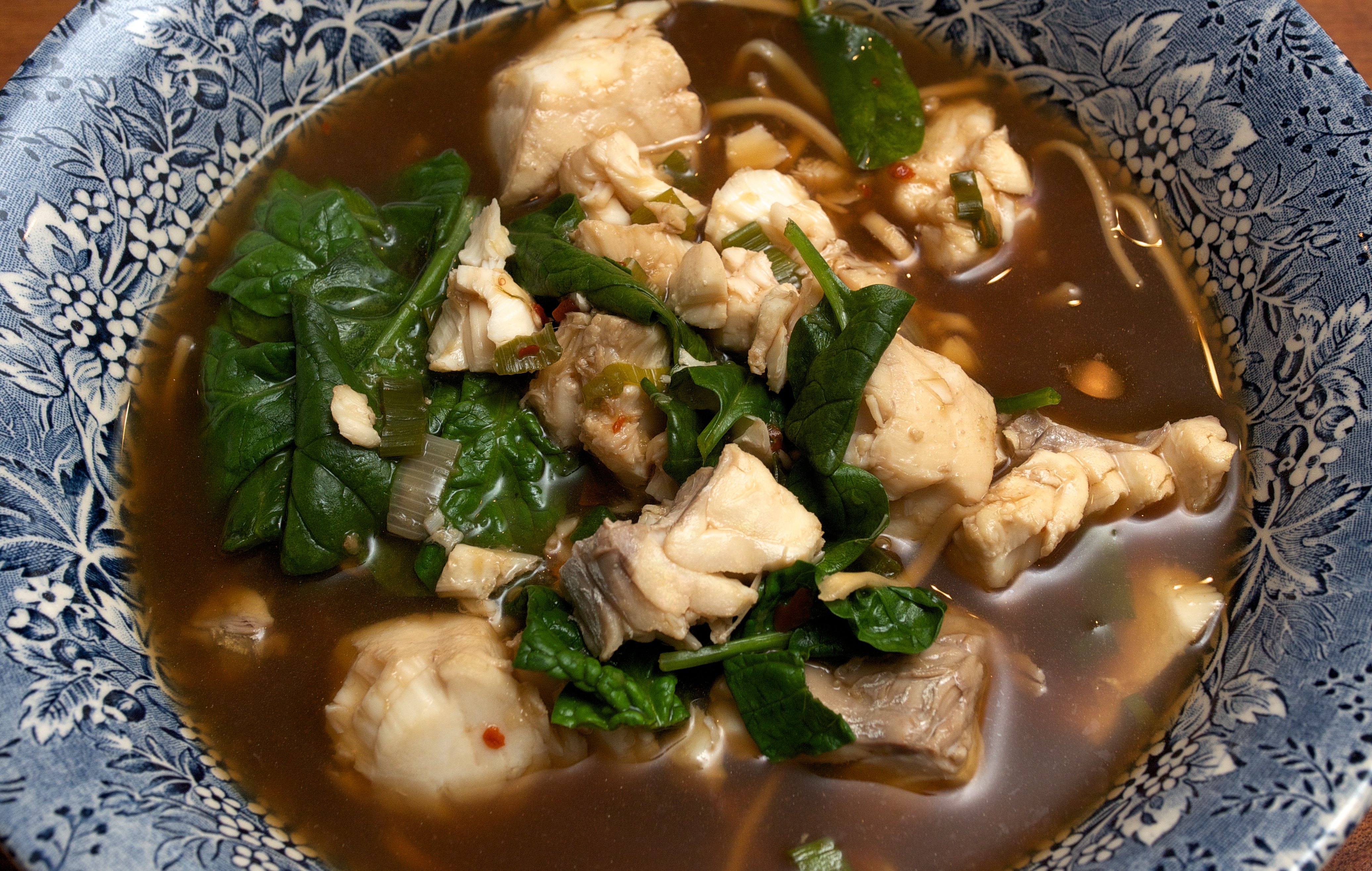
Hot & sour fish soup
This is a quick and very low-calorie but very tasty soup. Buy some really fresh fish – we used hake. Hot & Sour Fish Soup – Serves 2
- 2tbsp grated ginger
- 1 dried red chilli (or use a small tsp of chilli flakes)
- 2 scallions, thinly sliced
- 1 stem lemongrass, lightly bashed
- 700ml chicken or fish stock
- 3 tbsp soy sauce
- 2 tbsp rice vinegar
- 400g skinless white fish fillets, cut into big chunks
- 2 handfuls baby spinach
- 2 tsp fish sauce
- cooked noodles
Put the ginger, chilli, scallions, lemongrass and stock in a saucepan and bring to a simmer. Cook for 5 minutes, then add the soy sauce, vinegar and fish, and simmer for a couple of minutes. Stir in the spinach and season with the fish sauce. Adjust the vinegar and soy sauce to your own taste. Put the cooked noodles into soup bowls, discard the lemongrass and dried chilli from the soup, then pour over the noodles and serve. (Original recipe by Lulu Grimes and Janine Ratcliffe in BBC Olive February 2015.)
Posted in Asian, Fish, Food | Tagged 5:2, Asian, Cooking, Easy, fast diet, Fish, fish soup, Food, Hot, Recipe, Soup, Sour | 3 Comments »
2 March 2015 by jonoandjules
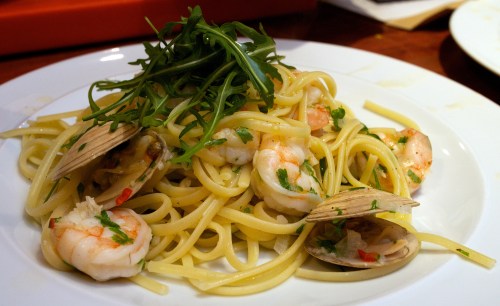
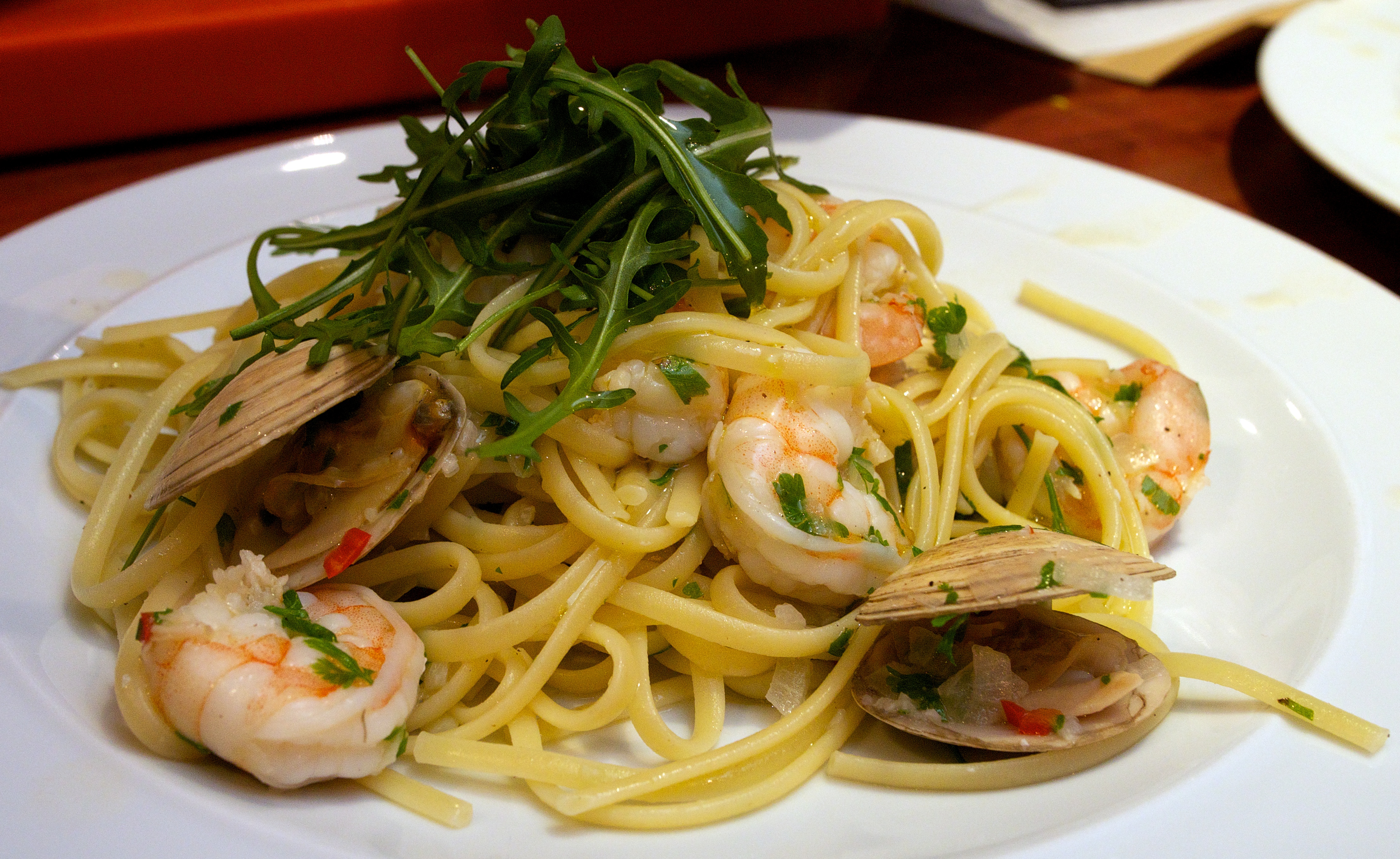
Prawn & clam linguine
We recently got a new cookbook by Lorraine Pascale and have been impressed by the recipes so far. This one we made for Valentines Day, just the two of us with a bottle of vintage Champagne from the cellar. A very nice evening.
Linguine with prawns, clams, garlic & chilli – serves 4
- 350g dried linguine
- 3tbsp extra virgin olive oil
- 2 large banana shallots, finely diced
- 3 garlic cloves, very finely chopped
- 2 red chillies, finely chopped
- 400g raw peeled tiger prawns, de-veined
- 400g clams, washed (soak in cold water for an hour to get rid of any sand then discard any that stay open when sharply tapped)
- 150-200ml white wine
- 3 tbsp roughly chopped parsley
- 70g rocket
- 1 small lemon, cut into wedges
Cook the pasta according to the packet until al dente.
Meanwhile, heat the oil in a large saucepan, with a tight-fitting lid, over a medium heat. Add the shallots and sweat for about 10 minutes or until softened. Add the garlic and chilli and cook for another couple of minutes.
Add the prawns and cook for 1 minutes, stirring. Then add the clams and white wine, bring to the boil and cover with the lid. Cook for 4-5 minutes or until all the clam shells have opened (discard any that don’t) and the prawns have turned pink.
Drain the pasta well and tip onto the cooked shellfish and toss together. Add the chopped parsley and season.
Pile into bowls, drizzle with your best extra-virgin olive oil, scatter with rocket and serve with a lemon wedge.
(Original recipe from How to be a Better Cook by Lorraine Pascale, HarperCollins, 2014.)
Posted in Food, Pasta, Prawns, Shellfish | Tagged Clams, Cooking, Food, Linguine, Lorraine Pascale, Pasta, prawns, Recipe, Shellfish | 5 Comments »
23 February 2015 by jonoandjules
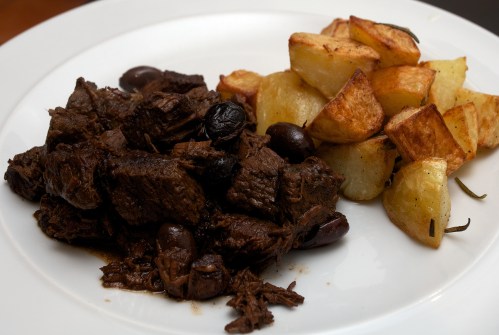
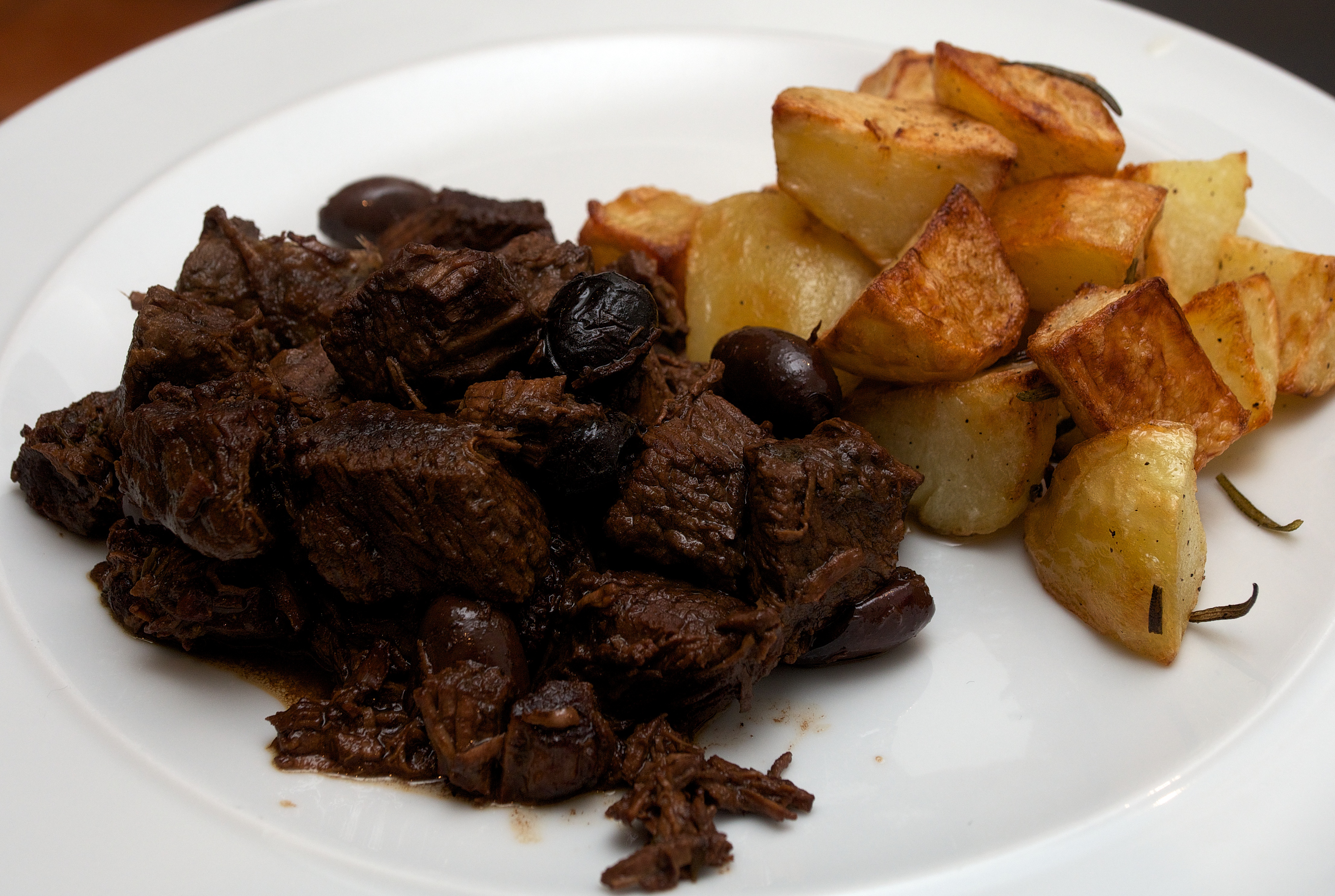
Bœuf à la Gardiane
Another classic from Elizabeth David, this stew originates in the Gard region of France and is very simple but full of flavour. Elizabeth suggests serving it with rice (a la Camargue) but it also worked well with roast potatoes and rosemary. There won’t be a lot of sauce as it is almost all absorbed by the meat as it cooks but this part of the charm; intensely flavoured, tender beef.
Wine suggestion: This dish would go well with any of the local red wines of the Gard and surrounding southern-French regions (Rhone, Languedoc, etc). Any combination of Grenache, Carignan, Cinsault, Mourvedre and Syrah will work, particularly if they come from older, lower yielding vines and a sensitive hand in the winery. We drank a VdP La Clape from Domaine de Boède, Le Pavillon which is a great value combination of Cinsault and Syrah and which stood up to the flavours and adding it’s own character.
Bœuf à la gardiane – serves 4-5
- 1kg top rump of beef, cut into small neat cubes approximately 2.5cm square
- butter and olive oil
- 4 tbsp brandy
- 1 large glass of full-bodied red wine
- bouquet garni of thyme, parsley, a little strip of orange peel and a whole garlic clove crushed with the back of a knife but left whole (tie together with thread)
- 175g stoned black olives
Heat the butter and oil in a heavy based casserole dish and brown the beef in batches.
Warm the brandy in a soup ladle, pour over the meat, then carefully set alight. Shake the pan carefully until the flames go out.
Add the red wine and bubble for 30 seconds before seasoning with a little salt and pepper. Add the bouquet garni, turn the heat down as low as possible and cover the pan with at least two layers of greaseproof paper or foil and the lid.
Cook as gently as possible for about 3½ hours. Ten minutes before the end, remove the bouquet garni and add the olives.
Season to taste and serve.
(Original recipe from At Elizabeth David’s Table: Her very best everyday recipes, compiled by Jill Norman, Penguin, 2010.)
Posted in Beef, Food | Tagged Beef, Black Olives, Boeuf a la gardiane, Cooking, Easy, Elizabeth David, Food, French, Recipe, red wine, Stew | Leave a Comment »
16 February 2015 by jonoandjules
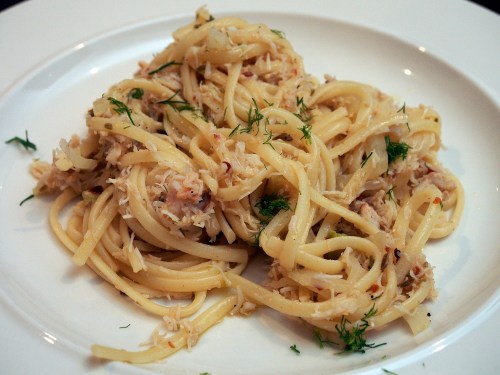
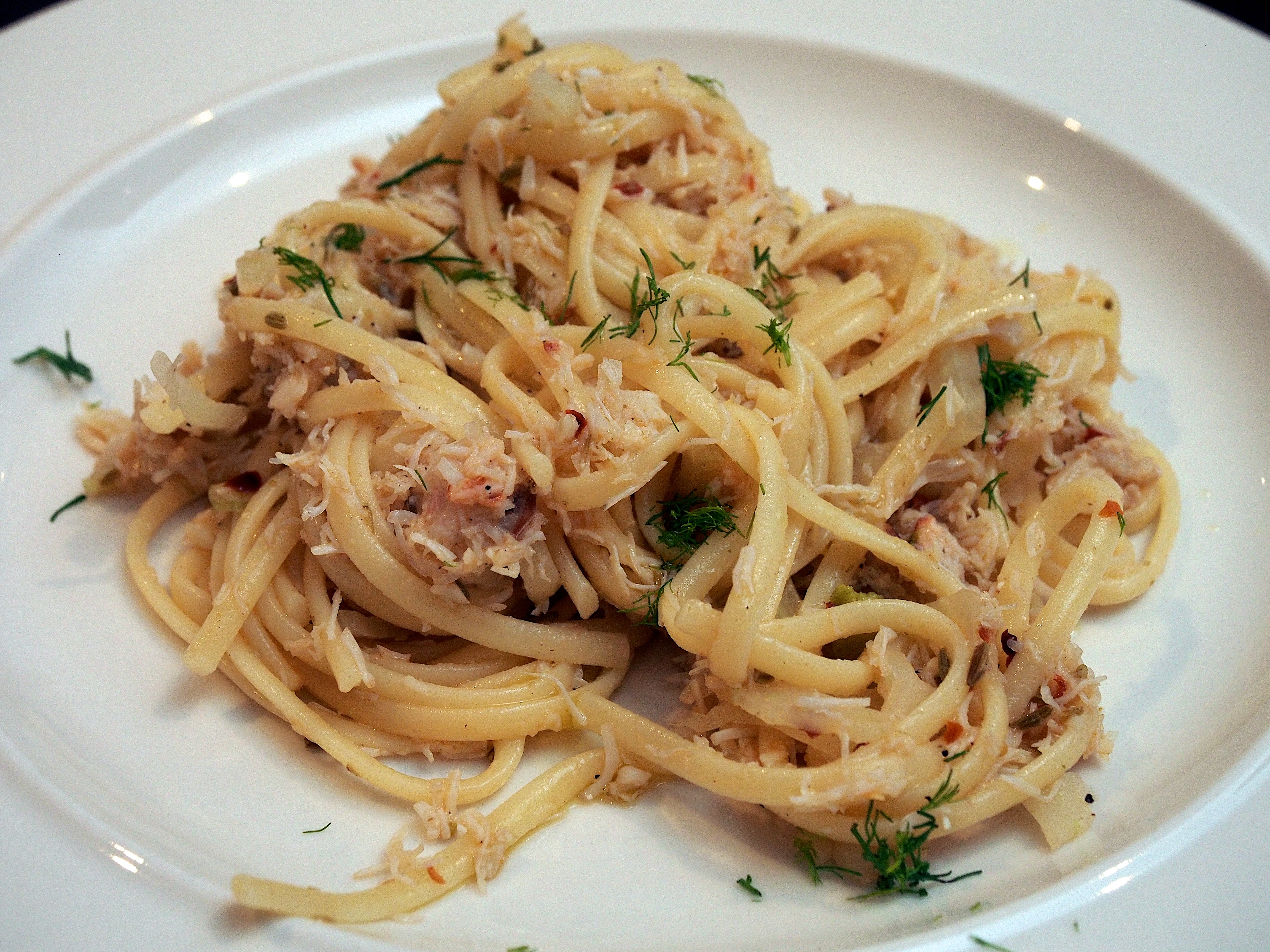
Crab with fennel & chilli is a winning combination. Another perfect pasta dish by Ruth & Rose of the River Café.
Wine Suggestion: We find a great match for crab is a top quality Garganega and we highly recommend the Pra Soave “Staforte” which is made from low-yielding, 100% Garganega, old vines. Utterly pure and delicious.
Crab linguine – serves 4
- 1 fennel bulb
- 1 garlic clove, finely chopped
- 1 tbsp fennel seeds, crushed
- 2 dried hot chillies, crumbled
- 1 lemon, grate the zest and squeeze out the juice
- extra virgin olive oil
- 400g crabmeat
- 320g linguine
Remove the tough outer part and stem from the fennel. Slice the bulb across the grain very finely (use a mandolin if you have one). Reserve the green tops.
Heat 2 tbsp oil in a heavy-based pan, add the garlic, fennel seeds, and chilli and cook to soften. Add the crab, lemon zest, and juice, then season. Stir just to heat the crab through.
Cook the linguine in boiling water for 5 minutes, then add the fennel slices and cook together until al dente. Reserve a little of the cooking water when you drain the pasta.
Add the drained pasta to the crab mixture and toss together until well combined. You can add a little of the reserved cooking water at this stage to loosen if necessary.
Serve with your best olive oil.
(Original recipe from Italian Two Easy by Rose Gray & Ruth Rogers, Clarkson Potter, 2006.)
Posted in Food, Pasta, Shellfish | Tagged Cooking, Crab, Fennel, Food, Linguine, Recipe, River Café, Wine suggestion | Leave a Comment »
14 February 2015 by jonoandjules
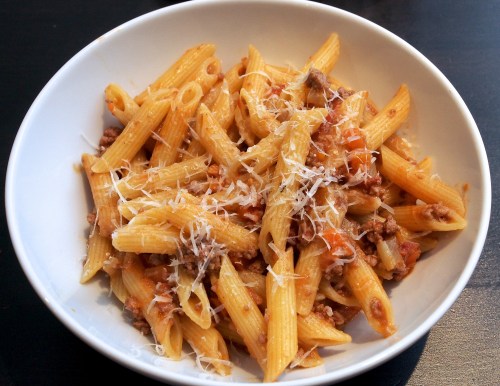
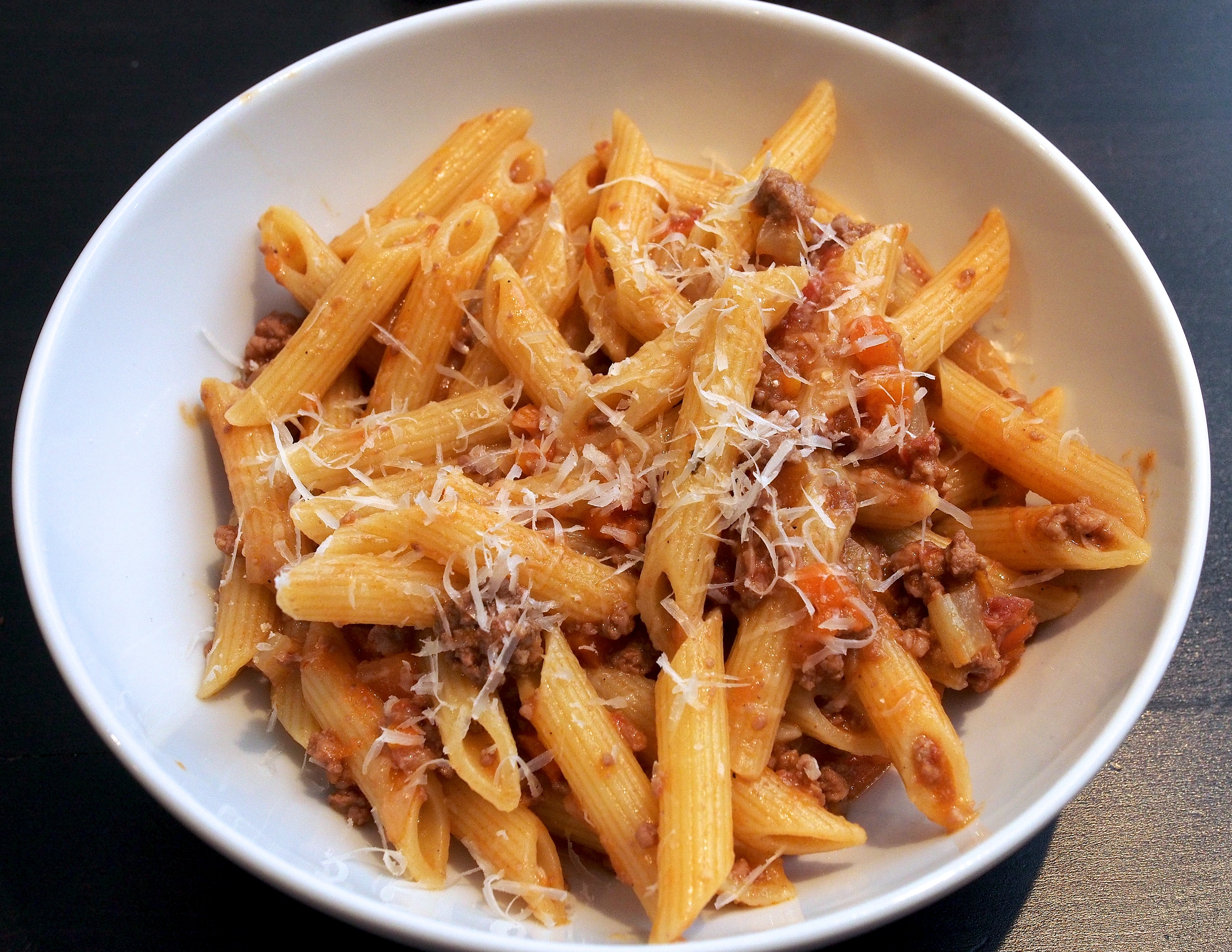
Bolognese
This is our go-to recipe when we want a Bolognese ragú to go with pasta like penne (as opposed to in a lasagne). We’ve done many variations over the years and even though this isn’t entirely traditional it’s ease and relative speed, alongside a great flavour, mean that we make this more often than any other.
Pasta Bolognese – serves 6
- 1 onion, finely chopped
- 2 carrots, finely chopped
- 2 celery sticks, finely chopped
- 100g pancetta, finely chopped
- 1 tbsp olive oil
- 1 tbsp butter
- 3 garlic cloves, crushed
- 250g beef mince
- 250g pork mince
- 1 sprig of fresh thyme
- 100ml red wine
- 1 x 400g tin chopped tomatoes
- 1 tbsp tomato puree
- 250ml chicken stock
- 250ml milk
- salt and black pepper
- 400g dried pasta
- Grated Parmesan to serve
Cook the onion, carrot, celery and pancetta in the oil and butter in a heavy-based saucepan over a medium heat for about 10 minutes or until soft. Add the garlic and cook for another minute before turning up the heat and adding the mince and thyme.
Brown the meat for a few minutes until it loses its raw appearance, then add the wine. Stir and reduce for a few minutes.
Add the other ingredients and season well. Bring to the boil, then simmer for an hour.
Cook the pasta according to the pack and toss with the hot sauce and parmesan.
(Original recipe by Jane Baxter in The Guardian, 31st May 2014.)
Posted in Beef, Food, Pasta, Pork | Tagged Beef mince, Bolognese, Cooking, Food, Mince, Pasta, Pasta Bolognese, Pork mince, Recipe | 3 Comments »
9 February 2015 by jonoandjules

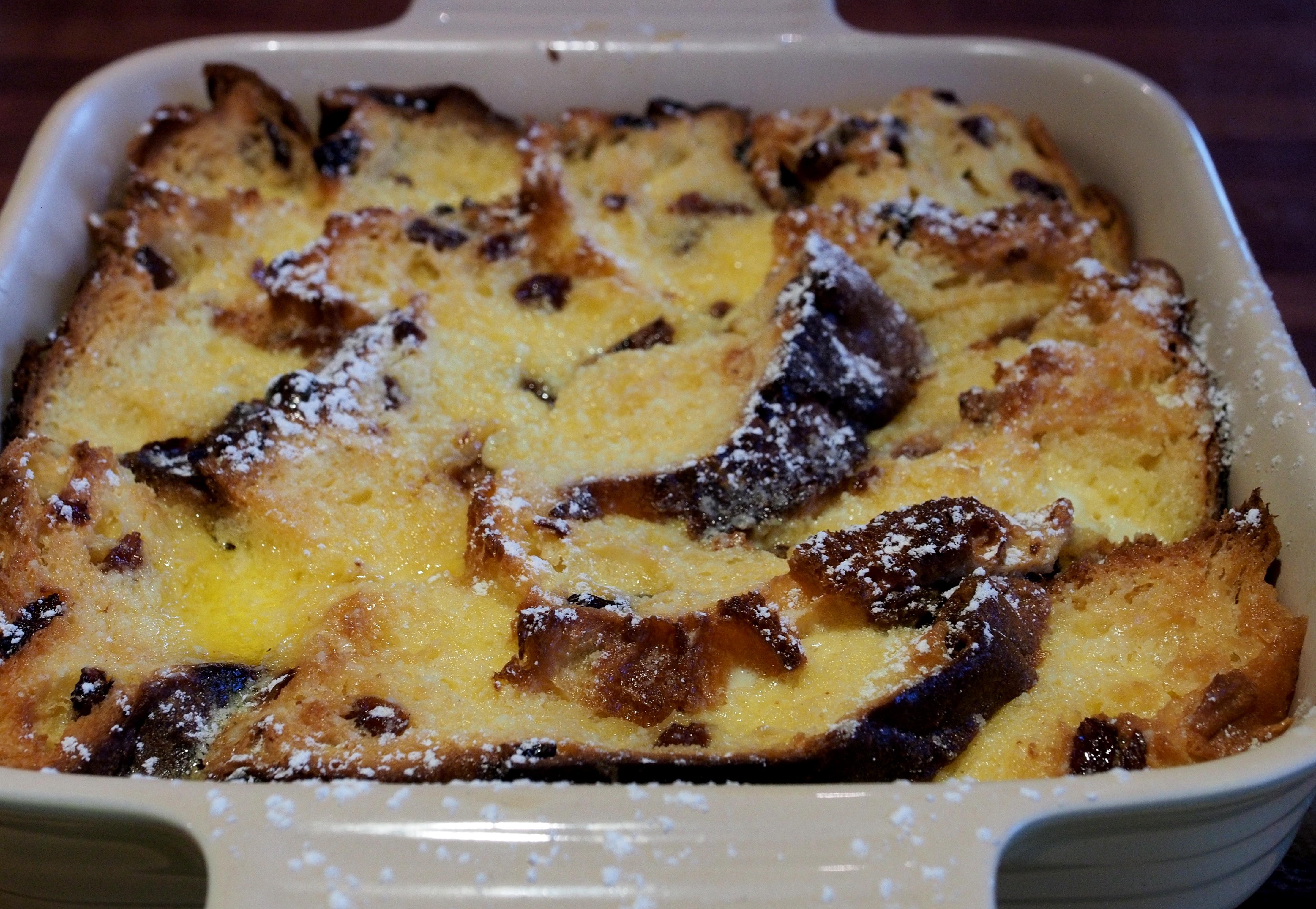
Panetone bread and butter pudding
This would probably have been more useful a few weeks ago when you still had some panettone leftover from Christmas. Much fancier than the standard version!
Panettone Bread & Butter Pudding – serves 4
- 50g butter, softened
- 250g panettone
- 2 eggs
- 142ml double cream
- 225ml milk
- 1 tsp vanilla extract
- 2 tbsp caster sugar
- icing sugar, to serve
- lightly whipped cream, to serve
Preheat the oven to 160C/gas 4/fan 140C.
Grease an 850ml baking dish with a little butter.
Cut the panettone into wedges and butter the slices lightly with the remaining butter. Cut the slices in half and arrange in the dish with the buttered side up.
Whisk together the eggs, cream, milk, vanilla extract and sugar and pour evenly over the panettone.
Put the dish in a roasting tin and pour hot water around to a depth of about 2.5cm.
Bake for 35 minutes or until just set and browned on top. Dust with icing sugar and serve with whipped cream.
(Original recipe from BBC Good Food)
Posted in Dessert, Food | Tagged Bread & Butter Pudding, Budding, Cooking, Dessert, Food, Panettone, Panettone Bread & Butter Pudding, Recipe | Leave a Comment »
2 February 2015 by jonoandjules
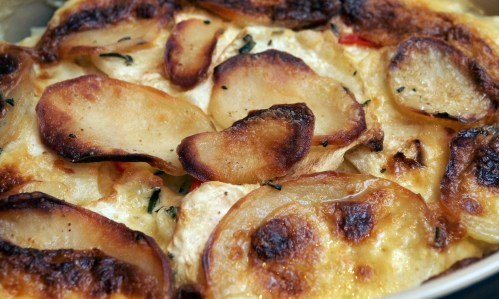
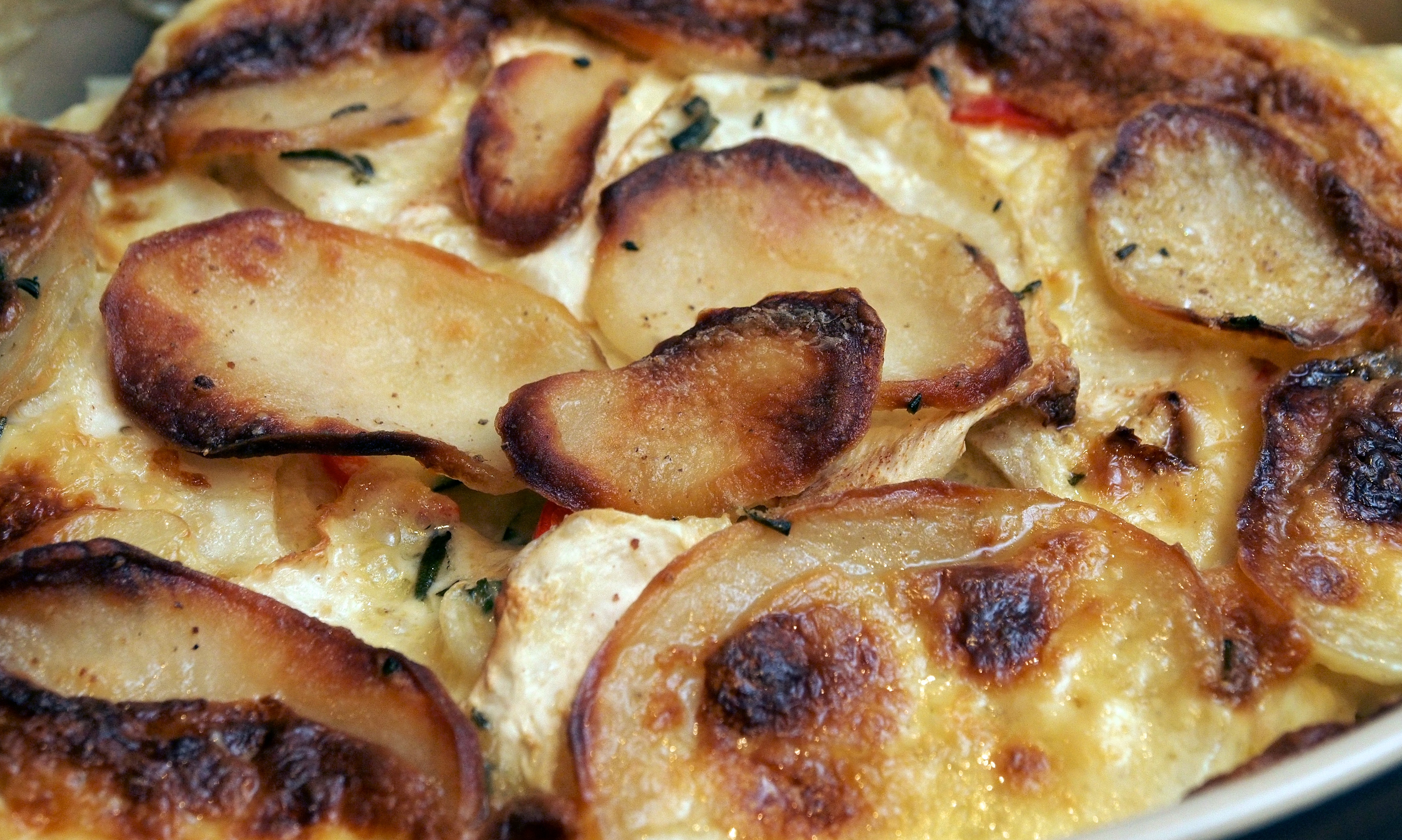
This takes a dish we all love and gives it something special. As celeriac is in season, and very cheap at the moment, we’ve made this a lot recently and thoroughly enjoyed it each time. We haven’t tried it with the optional bacon yet but it tastes great without it.
Celeriac, potato & rosemary gratin – serves 4-6
- 6 rashers bacon, chopped (optional)
- 420ml double cream
- 350ml milk
- 2 garlic cloves, sliced
- 1 tbsp rosemary, finely chopped
- 1 red chilli, deseeded and sliced
- 1 tbsp Dijon mustard
- 1 celeriac (about 500g) peeled, quartered and thinly sliced
- 500g potatoes, peeled and very thinly sliced (use a mandolin if you have one)
Heat oven to 180C/160C fan/gas 4.
If you are using the bacon, grill it until cooked and lightly browned, then set aside.
Bring cream, milk, garlic, rosemary, chilli and mustard to the boil in a medium saucepan, then turn off.
Pour a little of the cream mixture into the bottom of a gratin dish. Arrange a layer of celeriac, scatter with bacon and season. Pour over a bit more cream and repeat the process, alternating layers of potato and celeriac, finishing with a potato layer. Cover with the rest of the cream mixture, then bake for 1 hr-1hr 15 mins or until golden and tender to the point of a knife. Leave to rest for 5 minutes before serving.
(Original recipe from BBC Good Food)
Posted in Food, Side dish | Tagged Bacon, Celeriac, Chilli, Cooking, Food, Gratin, gratin dish, Potato, Recipe, side dish | 4 Comments »
26 January 2015 by jonoandjules

Roasted brussel sprouts with shallots
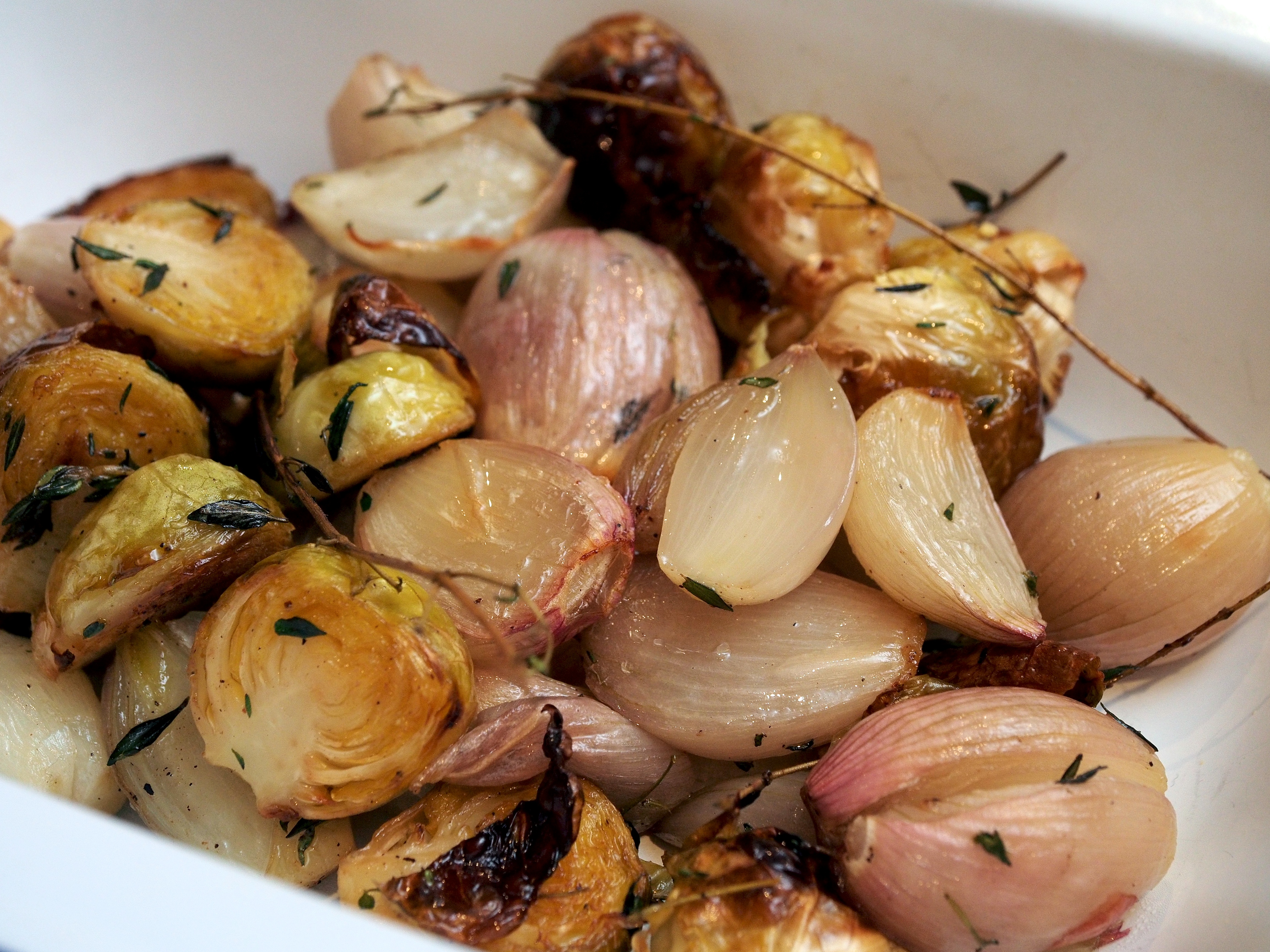
This is one of the many Brussel Sprout recipes that celebrate this much maligned veg. We think that in the right dish and cooked properly they are fab and roasting them with shallots brings out great flavours. A good autumn/winter side dish for roasted or barbecued meats.
Roasted Brussels sprouts with shallots – serves 4
- 400g Brussels sprouts, trimmed and halved
- 350g shallots, peeled and halved
- 3 tbsp rapeseed oil
- several sprigs of thyme
- a squeeze of lemon juice
Preheat the oven to 190C/Gas Mark 5.
Put the Brussels sprouts and shallots into a large roasting dish, drizzle with the oil, season with salt and pepper and toss to coat, then tuck in the thyme sprigs.
Roast for approximately 35 minutes, giving the tray a shake half way through, until everything is crispy and caramelised.
Serve with a squeeze of lemon juice.
(Original recipe from River Cottage Veg Everyday by Hugh Fearnley-Whittingstall, Bloomsbury, 2011.)
Posted in Food, Side dish, Vegetarian | Tagged Brussels sprouts, Cooking, Food, Recipe, Roasted veg, Shallots, side dish | 5 Comments »
24 January 2015 by jonoandjules

Chianti Beef
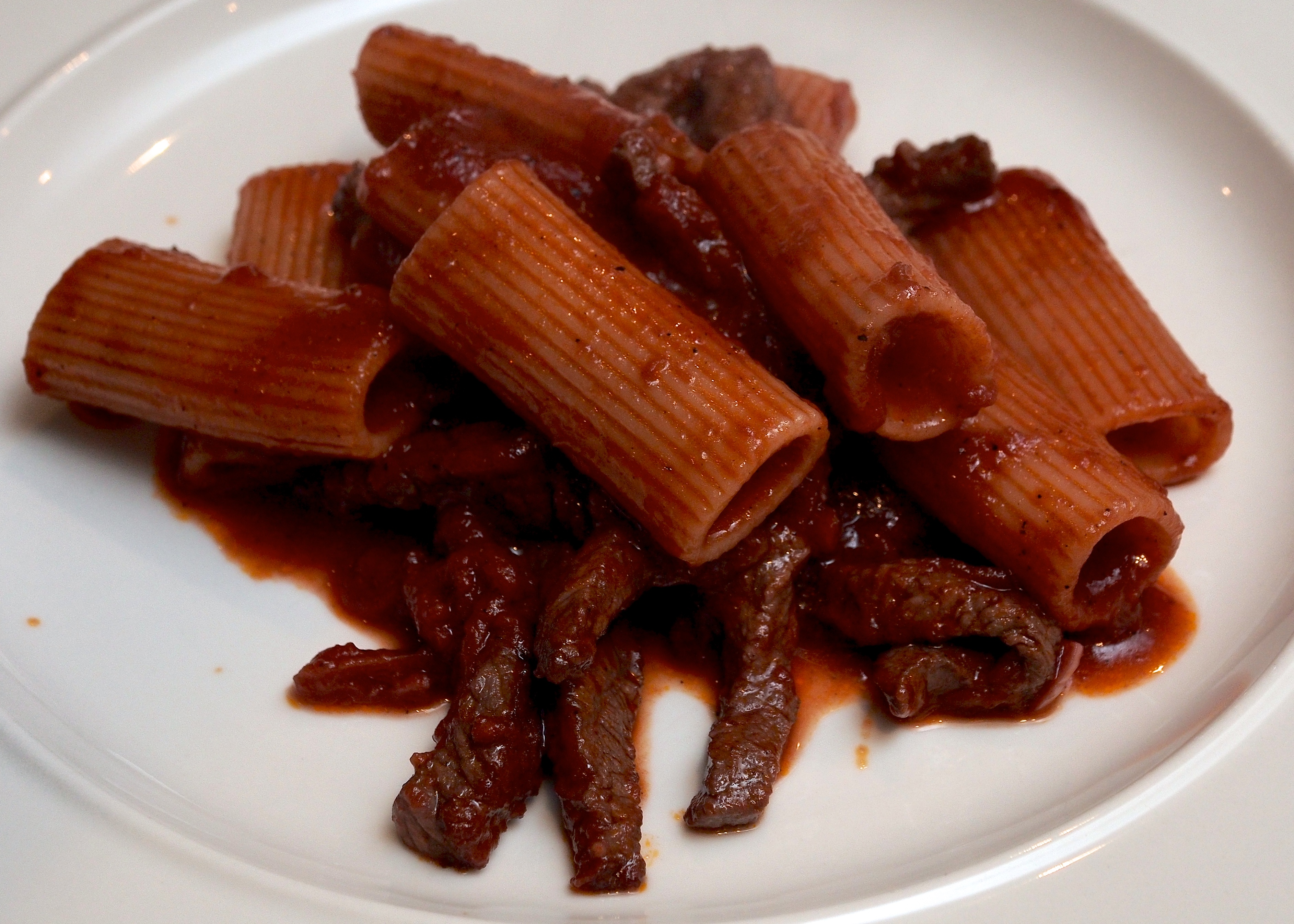
The technique used to cook the meat is quite clever as the amount of beef is small and is only quickly, flash fried which keeps the juiciness, adds the caramelisation flavours and gives great depth to the whole dish. It’s an expensive cut but the quantity required is so small that it won’t break the bank. It’s hard to believe a dish with so much flavour takes such a short time to prepare.
Wine Suggestion: we drank one of our favourite Tuscan wines: the Selvapiana Chianti Rufina which is refined and elegant and complements the beef fillet and provides a foil to the rustic black pepper background in this dish.
Rigatoni, tomato, beef and red wine – serves 4
- 320g rigatoni
- 200g beef fillet
- 4 garlic cloves, sliced
- 50g Parmesan, grated
- 100g unsalted butter
- 600g top quality tinned tomatoes
- 350ml Chianti wine
- 1tbsp ground black pepper
- 3tbsp extra virgin olive oil
Trim the beef fillet and cut across into 5mm slices. Cut the slices into 1cm strips.
Heat the butter in a thick-bottomed pan, add the garlic and fry gently until brown. Add the tomatoes and season. Cook over a high heat for 5 minutes, stirring to break up the tomatoes, then add half the red wine. Continue to cook on quite a high heat, adding more wine as the sauce reduces. Cook for 15 minutes in total, using up all the wine, then stir in the pepper.
Heat the olive oil in a frying pan until very hot. Add the beef pieces and fry very briefly, just to brown each piece on both sides. Stir the beef into the sauce with any juices from the pan.
Cook the rigatoni in boiling salted until al dente. Drain and add to the sauce.
Serve with the Parmesan.
(Original recipe from Italian Two Easy: Simple Recipes from the London River Cafe by Rose Gray and Ruth Rogers, Random House, 2006.)
Posted in Beef, Food, Italian, Pasta | Tagged Beef, beef fillet, black pepper, Chiani, Chianti Beef, Chianti wine, Cooking, Food, Italian, Pasta, Recipe, red wine, Rigatoni, River Café, Selvapiana Chianti Rufina | Leave a Comment »
19 January 2015 by jonoandjules
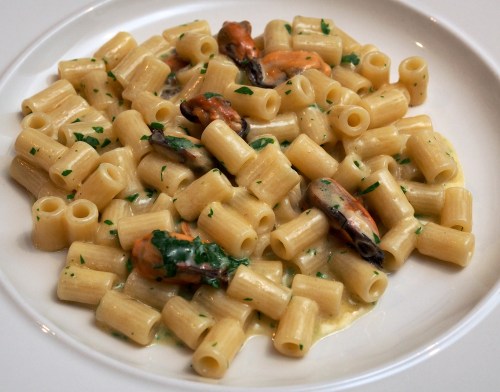
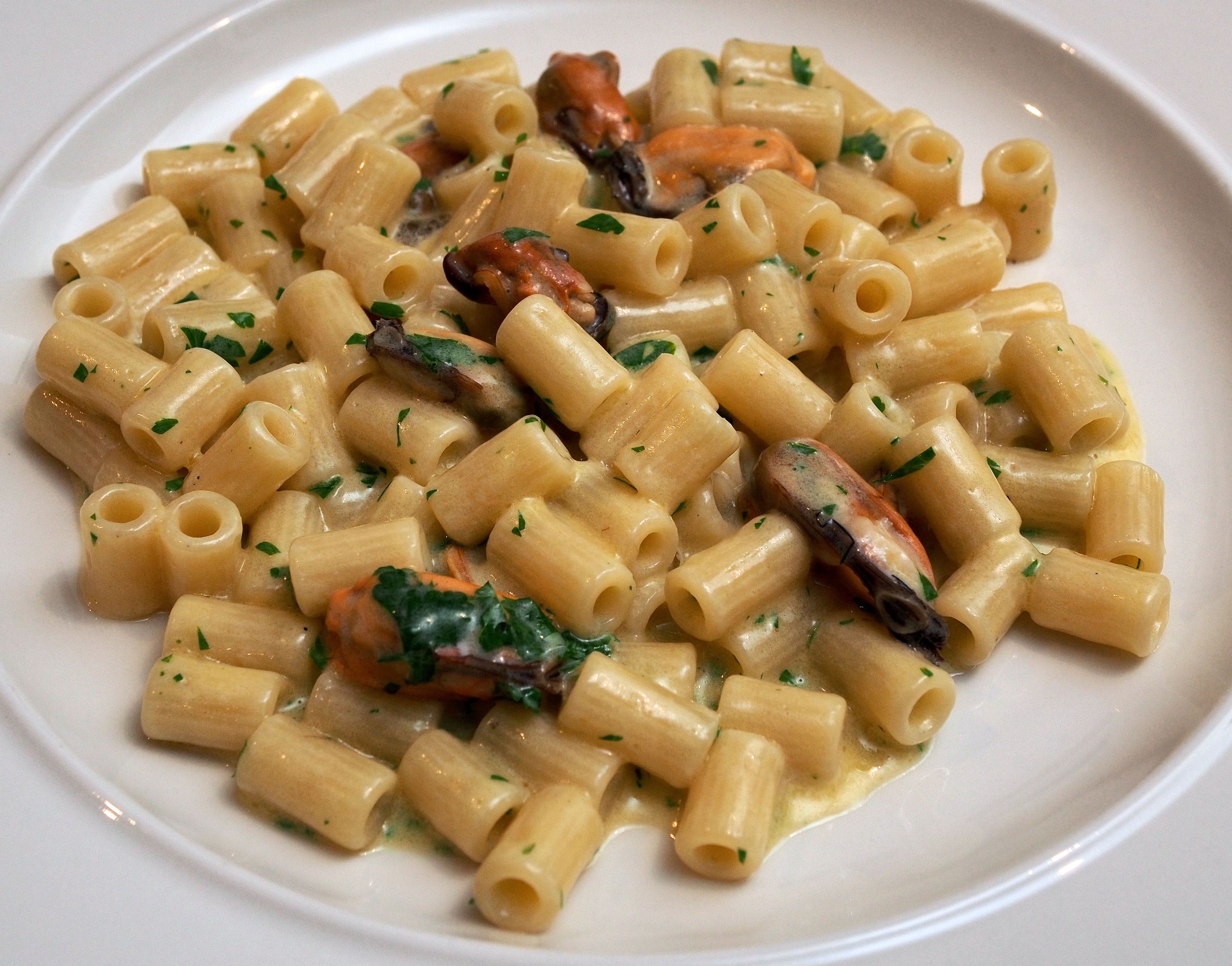
Ditaloni, mussels & white wine
A scrumptious and deliciously rich pasta dish that works perfectly as a starter.
Wine Suggestion: A textured white works best here; old-world minerality rather than bright fruit-forward styles. The Casal di Serra Verdicchio from Umani Ronchi in the Marche (central Italy) combines stonefruit flavours, hints of wild-flowers on the nose and a crisp yellow apple finish and goes with the richness and depth of the pasta.
Ditaloni, mussels & white wine – serves 4
- 1kg small mussels, scrubbed
- 2 garlic cloves, finely chopped
- 4 tbsp flat-leaf parsley leaves, finely chopped
- 200g unsalted butter
- 1 tbsp extra virgin oil
- 125ml white wine
- 165ml double cream
- 300g ditaloni (or similar) pasta
Heat half the butter with the oil, then add the garlic and mussels. Pour in the wine; season, then cover and cook over a high heat until the mussels have opened. Drain the mussels and reserve the cooking liquid. Remove the mussels from the shells; discard the shells and any mussels that haven’t opened.
Heat the rest of the butter in a pan and add the mussel juices and the cream. Cook gently to reduce to a rich and creamy sauce. Then add the mussels and parsley.
Cook the pasta according to the packet instructions, then drain and add to the sauce. Toss together over a low heat, and serve.
(Original recipe from Italian Two Easy by Rose Gray and Ruth Rogers, Clarkson Potter, 2006.)
Posted in Food, Italian, Pasta, Shellfish | Tagged Cooking, Ditaloni, Food, Mussels, Pasta, Recipe, River Café, white wine, Wine suggestion | 5 Comments »
14 January 2015 by jonoandjules
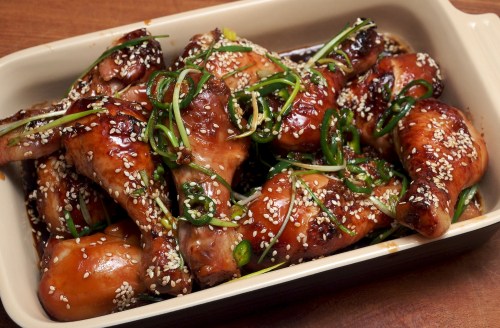
We love Tom Kerridge’s food but find his recipes can require a lot of work. Not so with these sticky drumsticks but you will need to find some malt extract to go in the marinade. We got ours in a good deli but health food shops should also stock it. We’re confident you’ll like the drumsticks enough to make them again and use it up.
Beer Suggestion: to complement the malt extract it makes sense to try a malty beer and we suggest searching out one of the many craft beers in your area. Our pick this time was the Five Lamps Dublin Lager which is a pilsner style but with a malty kick.
Sticky drumsticks – serves 4
- 12 chicken drumsticks
- 2 garlic cloves, grated
- 3cm piece of ginger, peeled and grated
- 2 tbsp sesame oil
- 3 tbsp sesame seeds, toasted lightly in a dry frying pan
- 1 bunch scallions, trimmed and finely sliced
- 1 green chilli, finely sliced (seeds left in)
For the marinade:
- 160g runny honey
- 160ml dark soy sauce
- 300ml chicken stock
- 120g malt extract
Pour the honey for the marinade into a small stainless steal pan and warm on a medium-high heat. Continue to cook until it starts to turn a deep shade of amber (easier to spot if you have a pot with a light coloured interior), then pour in the soy sauce and chicken stock to stop it cooking further. Bring the mixture to the boil and whisk in the malt extract. Take off the heat and allow to cool.
Put the drumsticks in a bowl and pour over the marinade. Mix in the garlic and ginger, cover the bowl with cling film and leave to marinate in the fridge for 2 hours at least or overnight if you can.
Preheat the oven to 170C/Gas 3.
Put the drumsticks in a roasting tin with their marinade. Cook for 45-50 minutes, basting a few times, until the chicken is cooked through and the meat comes off the bone easily. The drumsticks should be glossy and sticky.
Remove the tray from the oven and immediately drizzle with the sesame oil and toss in the sesame seeds. Throw in the scallions and the chilli. Roll the drumsticks around in the dish to make sure they are evenly coated.
Serve hot or cold.
(Original recipe from Tom Kerridge’s Best Ever Dishes, Absolute Press, 2014.)
Posted in Chicken, Food, Party Food | Tagged Chicken, Cooking, Craft Beer, Drumsticks, Five Lamps Dublin Lager, Food, Malt, Malt Extract, Marinade, Party Food, Recipe, sesame seeds, Sticky, Tom Kerridge | 2 Comments »
11 January 2015 by jonoandjules
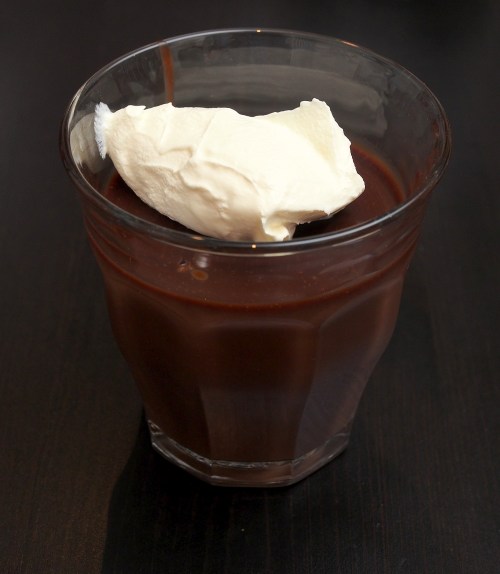
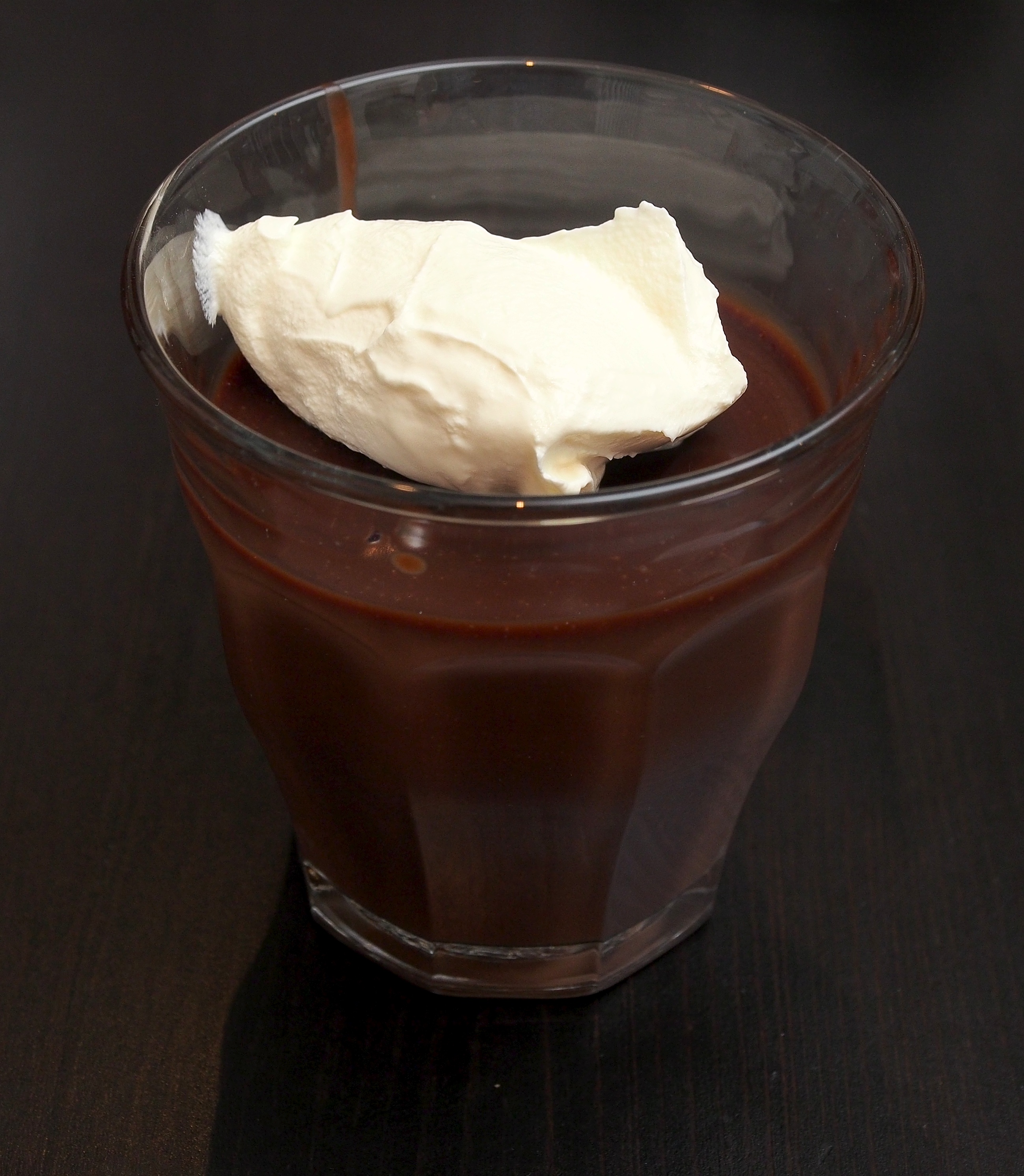
Petit pots au chocolat
We find Rick Stein exceptionally reliable and when we needed a dessert for entertaining thought we’d give his recipe a go. Unsurprisingly they worked a treat and the result was a silkly, rich, and indulgent pot of chocolate to finish a meal with friends.
Wine Suggestion: Chocolate is notoriously difficult to pair with wine so we’d probably skip the wine altogether and go for a liqueur to complement this dish – Grand Marnier, Cointreau, Whiskey… choose your poison.
Petit pots au chocolate – makes 6
- 225g plain chocolate, minimum 60% coco solids
- 15g soft butter
- 4 egg yolks
- 150ml double cream
- 150ml full-cream milk
- 50g caster sugar
- 6 tsp crème fraîche and a little cocoa powder, to decorate
Break the chocolate into a heatproof bowl and melt over a pan of just-simmering water. Remove and stir until smooth, then stir in the softened butter and egg yolks.
Put the cream, milk and sugar into a small pan, bring to the boil and then stir into the chocolate.
Pour the mix into six 100ml receptacles (we used small glasses but you could also use espresso cups or ramekins) and leave somewhere cold to set, but don’t refrigerate.
Decorate the pots with a little quenelle of crème fraîche and dust with cocoa powder to serve.
(Original recipe from Rick Stein’s French Odyssey, BBC Books, 2005)
Posted in Dessert, Food | Tagged Chocolate, Cooking, Dessert, Food, Recipe | 4 Comments »
9 January 2015 by jonoandjules
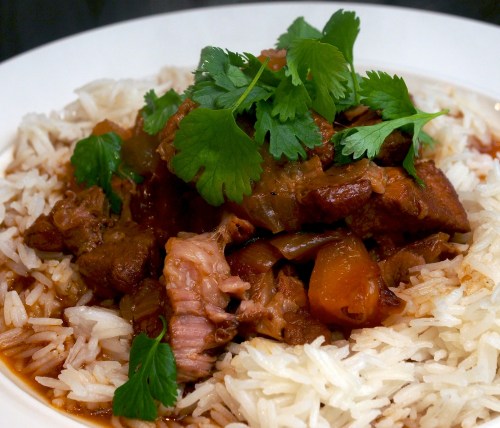
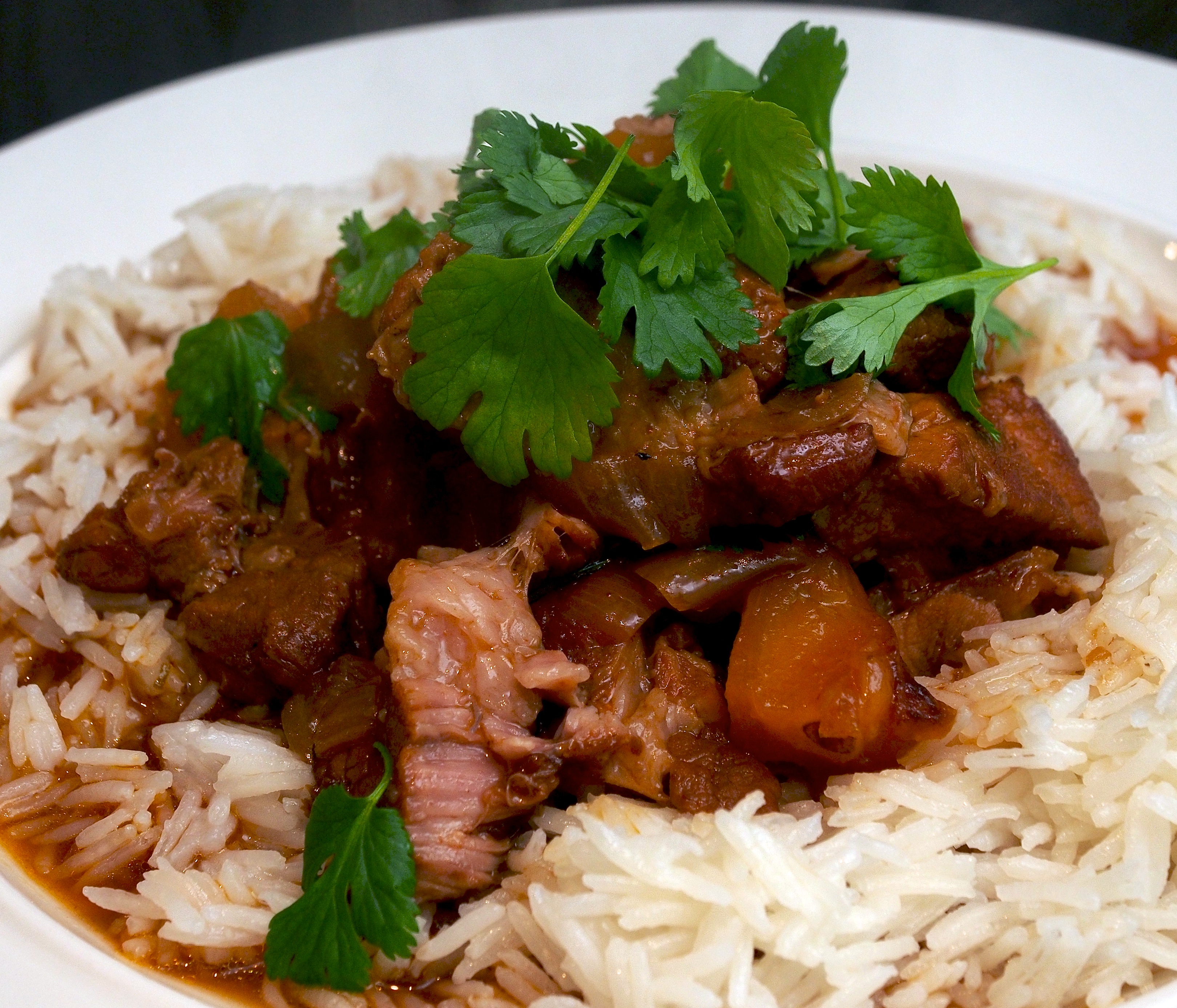
Pork & Pineapple
A classic sweet and sour combination but with a few modern twists. The pork ends up meltingly tender and there is no ketchup required!
Wine Suggestion: This was a hard match given the spices, sweetness and sourness which really fights the components of many wines but the solution is a good, dry Riesling which will cut through the fat, complement the spices and balance the sweetness of pineapple. The aromatics in Riesling also add new layers of flavour to the meal. We drank a superb Dönnhoff QbA dry Riesling (their entry level dry wine) which just hit the mark in terms of weight, poise and flavour.
Sticky Pork & Pineapple – serves 8
- 1 tbsp vegetable oil
- 1½ kg pork shoulder steaks, each cut into 4 thick strips
- 3 onions, roughly chopped
- 4 garlic cloves, finely sliced
- small bunch coriander, stalks finely chopped and leaves reserved
- 3 Thai red chillies, 2 sliced, 1 left whole and pricked
- 3 star anise
- 100g dark soft brown sugar
- 2 tbsp tomato puree
- 2 tbsp fish sauce
- 600ml chicken stock
- 350g fresh pineapple, cut into chunks
Heat oven to 160C/140C fan/gas 3.
Heat the oil in a large flameproof casserole. Season the pork and brown in batches for about 5 minutes or until golden. Set aside.
Stir the onions into the remaining fat, then cover and allow to soften for 5 minutes.
Add the garlic, coriander stalks, chillies and star anise to the dish, sizzle for 1 minute, stirring often, then mix in the sugar and tomato puree. When they have melted, return the pork and any juices to the dish and add the fish sauce and stock. Tuck the pineapple chunks in.
Bring to a simmer, then cover the pot but leave a small gap for steam to escape, and put in the oven for 2 hours. When there is 30 minutes to go, skim some of the fat off the top and return to the oven.
If you want to thicken the sauce a bit you can remove the pork to a warm dish and simmer the sauce on the hob until slightly thickened. Leave to cool for 5 minutes, then season to taste and pour over the pork.
Garnish with the coriander leaves and serve with rice.
(Original recipe from BBC Good Food)
Posted in Asian, Food, Pork | Tagged Chillies, Cooking, Food, Pineapple, Pork, Pork shoulder, Recipe, Sweet and Sour | Leave a Comment »
5 January 2015 by jonoandjules

From the geniuses at River Café is this deeply delicious and flavoursome pasta which keeps on reprising itself on our menus. We love that the ingredients list is simple and short and yet the dish is packed full of flavour and style. Don’t shy away from the generous quantity of butter – it’s what gives the dish its richness.
We’ve given a separate recipe for the tomato sauce. You will have too much for this recipe but it’s good served as it is with some tagliatelle and freezes well.
Wine suggestion: earthy, medium bodied red wines work well with this and we returned to an old favourite, the very smooth Selvapiana Chianti Rufina which is pure elegance in a glass. Really fine and supple tannins make this sing with a freshness that adds depth to the food.
Penne, tomato and dried porcini – serves 4
- 320g penne
- 40g dried porcini
- 2 garlic cloves, finely sliced
- 1 tbsp flat-leaf parsley leaves, chopped
- 50g Parmesan, grated
- 5 tbsp tomato sauce (see below)
- 100g unsalted butter
- extra virgin olive oil
Soak the porcini in 200ml boiling water for 10 minutes.
Drain the porcini, straining the liquid through muslin or a paper towel, reserving the water. Rinse the porcini and chop coarsely.
In a thick-bottomed saucepan, melt the butter and add the garlic. Add the porcini and fry until soft. Add a little of the porcini liquid and simmer until absorbed. Stir in the parsley. Add the tomato sauce and season.
Cook the penne in plenty of boiling salted water until al dente. Drain and stir into the pasta sauce.
Drizzle with olive oil and serve with the Parmesan
Tomato sauce – serves 4
- 2 garlic cloves, sliced
- 1 tbsp olive oil
- 2 x 400g tinned tomatoes
Heat the oil in a thick-bottomed pan and fry the garlic until soft but not coloured. Add the tomatoes and season. Cook over a medium heat for 20-30 minutes or, until the sauce is very thick and the oil comes to the top.
(Original recipes from Italian Two Easy: Simple Recipes from the London River Cafe by Rose Gray and Ruth Rogers, Random House, 2006.)
Posted in Food, Italian, Pasta, Vegetarian | Tagged Cooking, Food, Italian, Pasta, pasta sauce, Porcini, Recipe, River Café, Tomato Sauce | 2 Comments »
2 January 2015 by jonoandjules
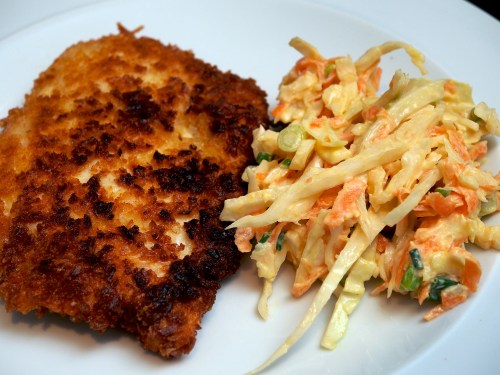
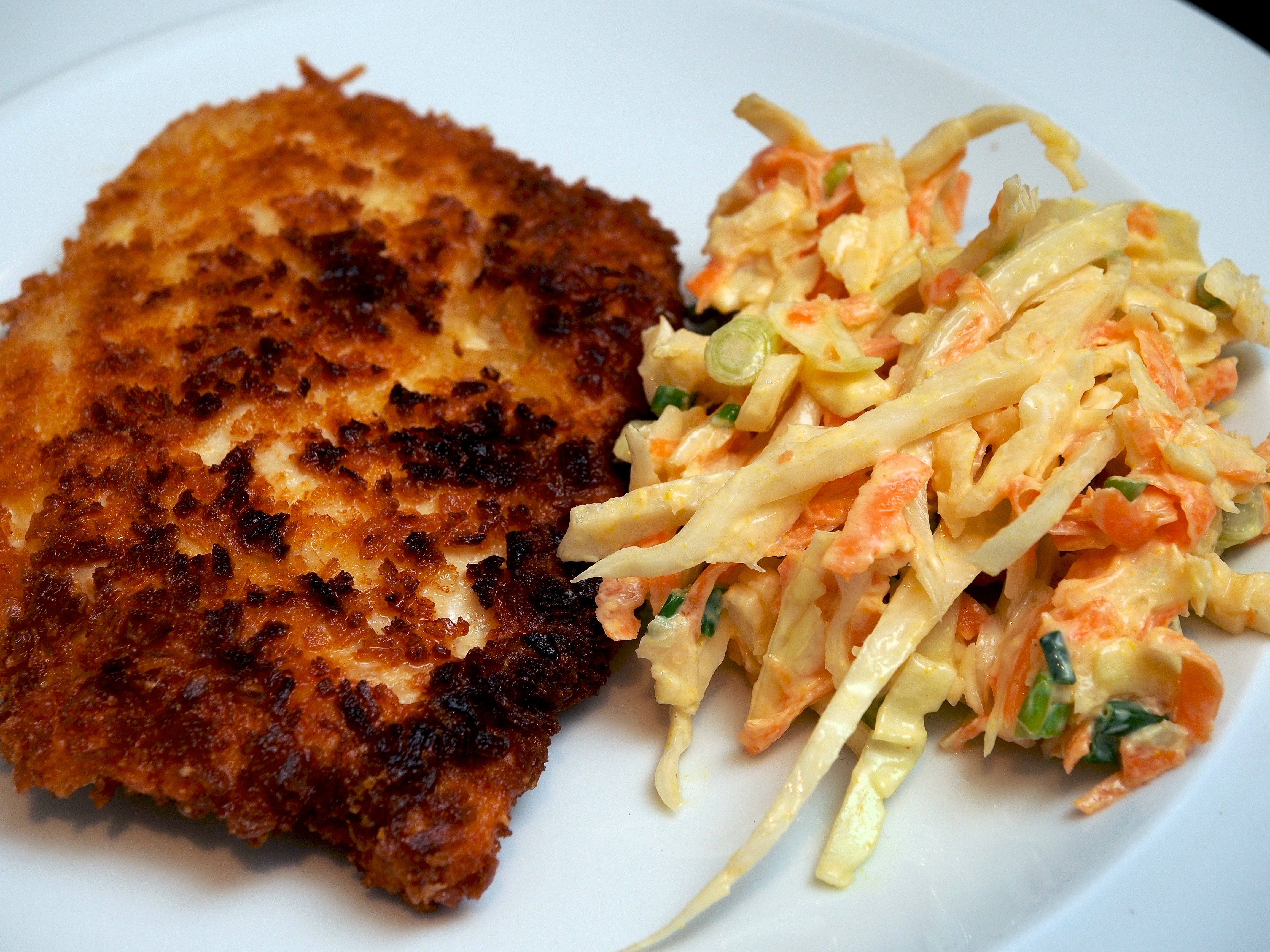
Chicken Schnitzel with an apple slaw
Wine Suggestion: Whatever you happen to have in the fridge will do nicely.
We liked the apple coleslaw which made this simple schnitzel dish really fresh and tasty. Great mid-week meal.
Chicken schnitzel with apple coleslaw – serves 4
- 4 small chicken breasts
- 3tbsp grated Parmesan
- 100g flour
- 1 large egg, beaten
- 75g dried breadcrumbs – we always use panko
- 75ml vegetable oil
FOR THE COLESLAW:
- 300g white cabbage, shredded
- 1 large carrot, peeled and grated
- 6 scallions, sliced diagonally
- 1 red-skinned apple, grated
- 150g pot natural yogurt
- juice half lemon
- 2 tsp English mustard
Mix all the coleslaw ingredients together in a large bowl and season.
Put the chicken fillets between two pieces of cling film and bash with a rolling pin until they are an even thickness of about 2-3mm.
Put the flour on a plate and season, then put the egg on another plate. Coat the chicken in the flour first, shake of the excess, then coat with the egg.
Mix together the Parmesan and breadcrumbs in a shallow dish. Dip the chicken in the mixture until completely coated in crumbs. You can put the schnitzel in the fridge now until you’re ready to cook them.
Heat the oil in a large frying pan over a fairly high heat and cook the schnitzels two at a time. Cook for 2-3 minutes on each side or until completely golden, then drain on kitchen paper. Keep warm in a warm oven while you cook the rest.
Serve with the coleslaw.
(Original recipe from BBC Good Food)
Posted in Chicken, Food | Tagged Apple, apple slaw, Chicken, Chicken Schnitzel, Coleslaw, Cooking, Food, Recipe, Schnitzel | Leave a Comment »
29 December 2014 by jonoandjules
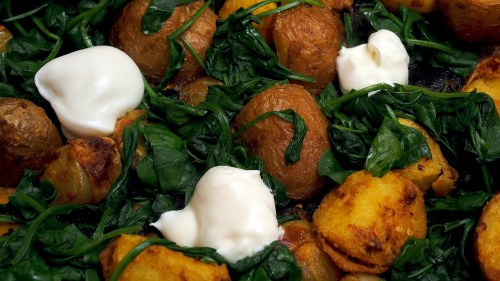
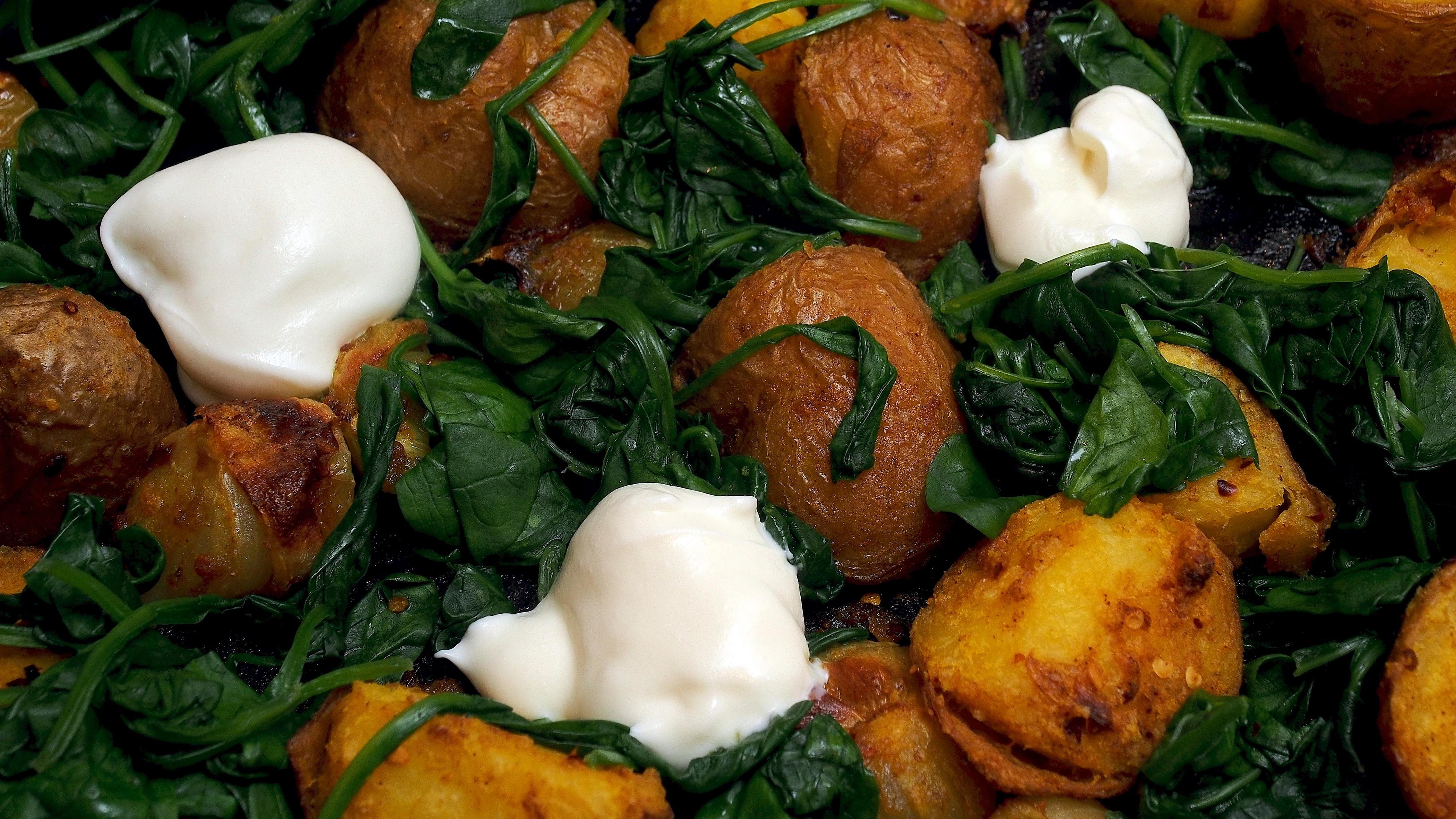
Spiced Potatoes with Spinach
This is a great Friday or week-night dish which you can easily eat on it’s own, preferably in front of the TV!
Potatoes with Spices & Spinach – serves 3
- 800g large floury potatoes, cut into large pieces
- 5 banana shallots, peeled and halved lengthways
- 1/2 tsp cayenne pepper
- 1 tsp dried chilli flakes
- 1 tsp of crushed garlic
- 1 tsp ground cumin
- 1 tsp turmeric
- 2 tsps sea salt flakes
- 4 tbsp groundnut oil
- a couple of large handfuls spinach
- plain yoghurt
- fresh coriander
Preheat the oven to 200°C/Gas 6.
Cook the potatoes in plenty of salted boiling water for about 15 minutes or until almost tender.
Drain the potatoes and put them in a bowl. Add the shallots and toss with the cayenne, chilli flakes, garlic, cumin and turmeric. Add the salt and oil, then tip into a roasting tin and bake for about 30 minutes or until crisp.
Wash the spinach leaves and put into a pan over a moderate heat, cover with a lid and leave for a couple of minutes to wilt.
Toss the spinach with the potatoes and garnish with a little yoghurt and coriander.
(Original recipe from Eat by Nigel Slater, Fourth Estate, 2013.)
Posted in Food, Vegetarian | Tagged Cooking, Food, Potatoes, Recipe, Spiced Potatoes, Spicy, Spinach | Leave a Comment »
« Newer Posts - Older Posts »



 Jono & Jules do food & wine