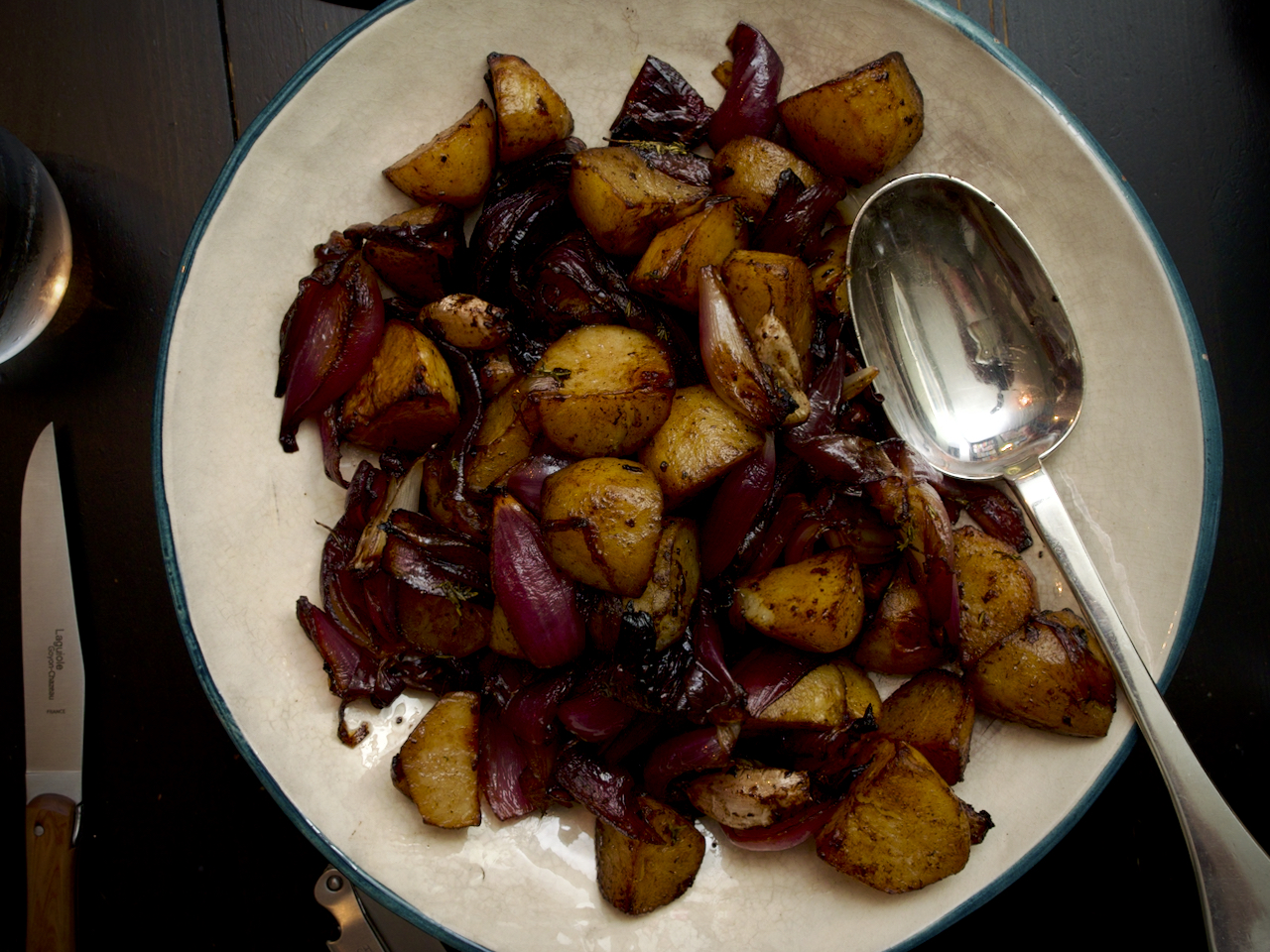
We’ve been trying to change up our potatoes and especially liked these balsamic and red onion roasties by Theo Randall.
Balsamic-roasted potatoes with red onion – serves as a side
800g potatoes, peeled and cut into 3cm pieces
6 cloves of garlic, unpeeled
75g unsalted butter
100ml balsamic vinegar
1 tbsp thyme leaves
1 tbsp olive oil
Heat the oven to 200C.
Put the potatoes into a large pan, cover with water, and add 1 tsp of salt. Place over a high heat and bring to the boil, then add the garlic cloves and boil for 2 minutes. Drain the potatoes and garlic and leave to cool to room temperature.
Heat a large non-stick frying pan on a medium heat. Reduce the heat to low and add the butter and onions. Cook for 10 minutes on a low heat or until the onions have softened. Add the balsamic vinegar and thyme, then increase the heat and cook for 2-3 minutes, or until syrupy. Transfer this mixture to a large bowl, add the potatoes and garlic and season with salt and pepper. Mix well.
Coat the base of large roasting tin with oil and tip the potatoe mixture in. Bake for about 30 minutes, giving the tin a shake halfway through, until nicely caramelized.
Toss the potatoes in the tin before transfering to a serving dish.
(Original recipe from The Italian Deli Cookbook by Theo Randall, Quadrille, 2021.)
Tonnato is one of our favourite sauces and it works amazingly well with soft-boiled eggs and jacket potatoes. We take this back; Tonnato is Jules’ absolute favourite sauce … so we just had to try this dish!
You can make the sauce earlier in the day and leave it in the fridge.
Wine Suggestion: taking us back to our honeymoon when we stayed at the winery is Felsina’s “I Sistri” Chardonnay and a good match indeed with the nutty, toasty character really complementing the fresh capers, rich egg and velvety sauce.
Jacket Potatoes with Tonnato Sauce – serves 4
4 large baking potatoes
olive oil
4 large eggs, soft-boiled (cook in already boiling water for 6½ minutes, then run under cold water) and peeled
FOR THE TONNATO SAUCE:
2 large egg yolks
3 tbsp lemon juice
25g parsley, roughly chopped
120g good quality tinned tuna in oil, we like Ortiz or Shines
20g baby capers (or chop larger ones)
2 anchovy fillets in oil, rinsed and patted dry
1 garlic clove, crushed
180ml olive oil
Heat the oven to 220C fan.
Rub the jacket potatoes with a little olive oil and sprinkle with flaky sea salt. Put them on a tray and bake for 20 minutes, then reduce the oven temperature to 200C fan and cook for another hour.
Meanwhile, make the sauce. Put the egg yolks in the bowl of a food processor with the lemon juice, 20g of the parsley, the tuna, half the capers, the anchovies and the garlic. Blitz to a rough paste, then scrape down the sides with a spatula. Now keep the machine running while you slowly trickle in the olive oil in a steady stream, the consistency should be like thin mayonnaise. Put this in the fridge until you’re ready to eat.
When ready to serve, slice the potatoes down the middle and sprinkle inside with a little salt (we also add some butter but you don’t have to). Spoon the sauce over the potatoes and top with a halved egg. Sprinkle over the rest of the capers and parsley, then serve.
(Original recipe from Ottolenghi Simple by Yotam Ottolenghi, Tara Wigley and Esme Howarth, Ebury Press, 2018.)
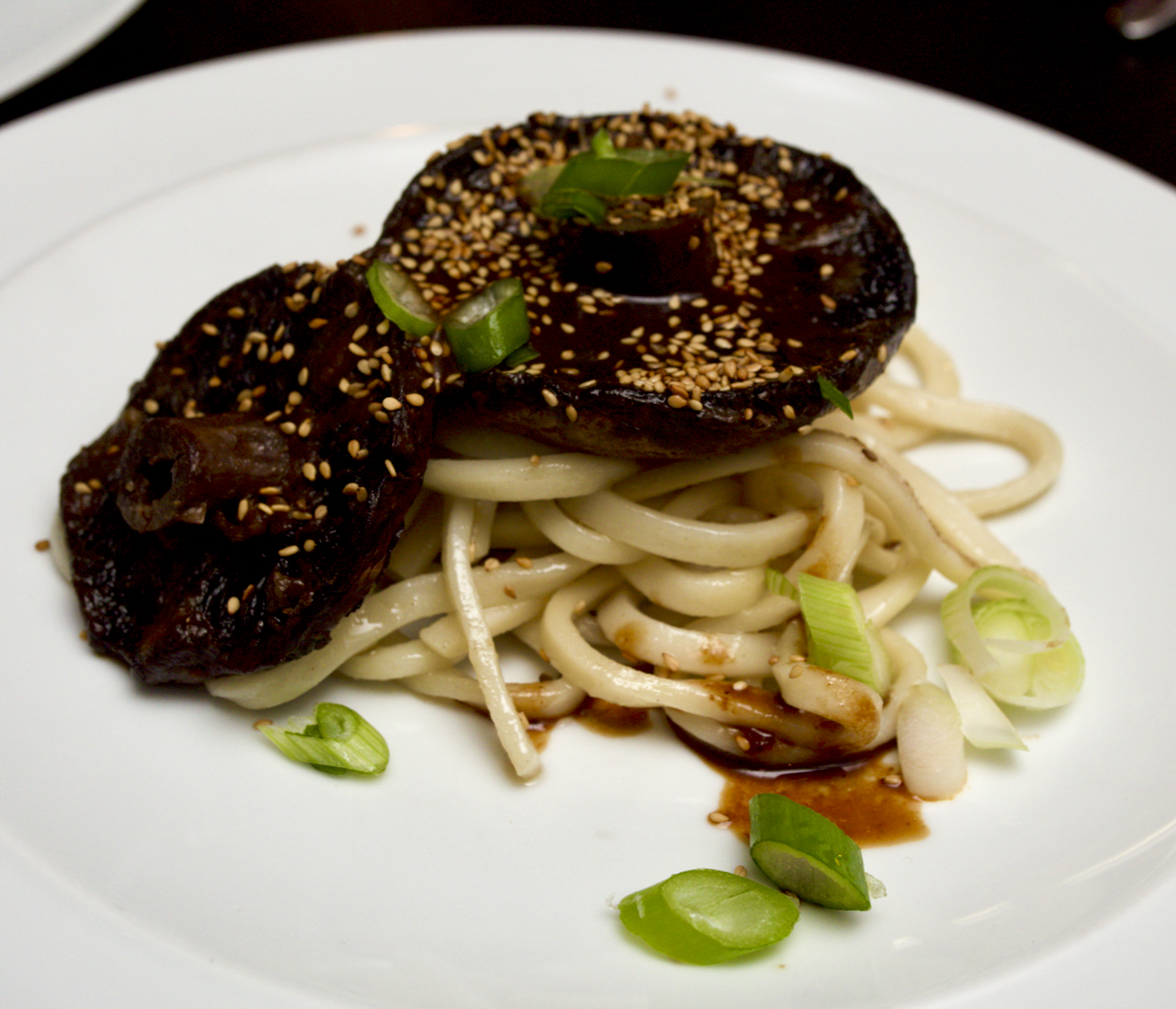
A great weeknight veggie dish with big flavours and minimal effort. While it doen’t look like much the udon noodles provide a wonderful counter-balance to the rich, salty, umami packed mushrooms, soy and sesame.
Wine Suggestion: This was a tough one to match and while we would have loved to try a Pinot based Champagne, like Laurent Lequart’s Blanc de Meunier, it was a weeknight and thought this was a bit much. However an excellent value northern Rhône, the Domaine Gerin La Champine Syrah, came to the rescue with an earthy, leathery character full of complementary pepper and pure fruit flavours.
Miso mushrooms with udon noodles – serves 4
3 tbsp miso paste
3 tbsp mirin
3 tbsp soy sauce
2 cloves of garlic, crushed
1 tbsp sesame oil
4 large portobello mushrooms
450g straight-to-wok udon noodles
1 tbsp toasted sesame seeds
4 scallions, finely sliced
Heat the oven to 180C.
Place the mushrooms on a large sheet of tin foil on a baking tray. Scrunch up the sides to create a sort of bag.
Mix the miso, mirin, soy, garlic and half the sesame oil together until smooth. Pour over the mushrooms and turn them over to coat in the mixture. Scrunch the tin foil to close the packet and bake for 30 minutes.
Just before the mushrooms are ready, get your wok on and heat the remaining splash of sesame oil. Toss the udon noodles in the wok until hot, then divide between 4 bowls. Spoon over the mushrooms and sauce and serve sprinkled with sesame seeds and scallions.
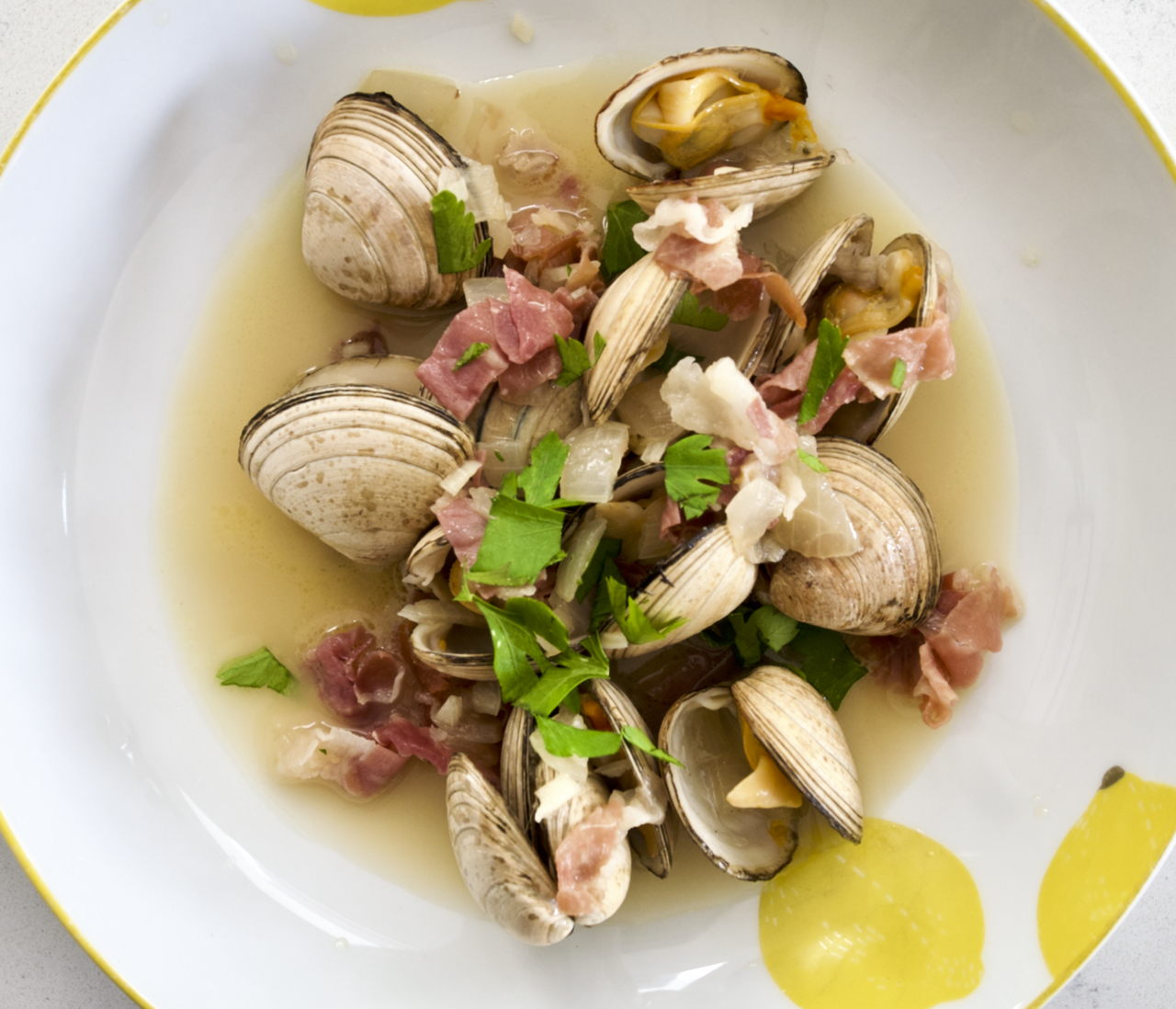
We sometimes find clams hard to find, but can’t resist them when we do. Here they’re cooked with dry sherry and salty serrano ham – a super combination.
Wine Suggestion: we were tempted to have a glass of the Fino sherry with this and weren’t disappointed. Fino and it’s alter ego Manzanilla have a purity and focus that suit this dish while retaining that classic umami saltiness that the clams and serrano also bring. A taste of the Altantic coast in southern Spain.
Clams with fino sherry and serrano ham – serves 4 as a light dish
1 tbsp olive oil
½ onion, very finely chopped
500g clams, rinsed well and discard any open ones that won’t close when sharply tapped
50g serrano ham
2 cloves of garlic, finely chopped
100ml fino sherry
a handful of flatleaf parsley, roughly chopped
Heat the oil in a medium pan with a lid and cook the onion for about 5 minutes to soften. Add the ham and garlic and cook for another minute.
Add the clams to the pan with the sherry and bring to the boil, cover and cook for 4-5 minutes or until the clams have opened (chuck any that don’t open). Serve immediately with the parsley.
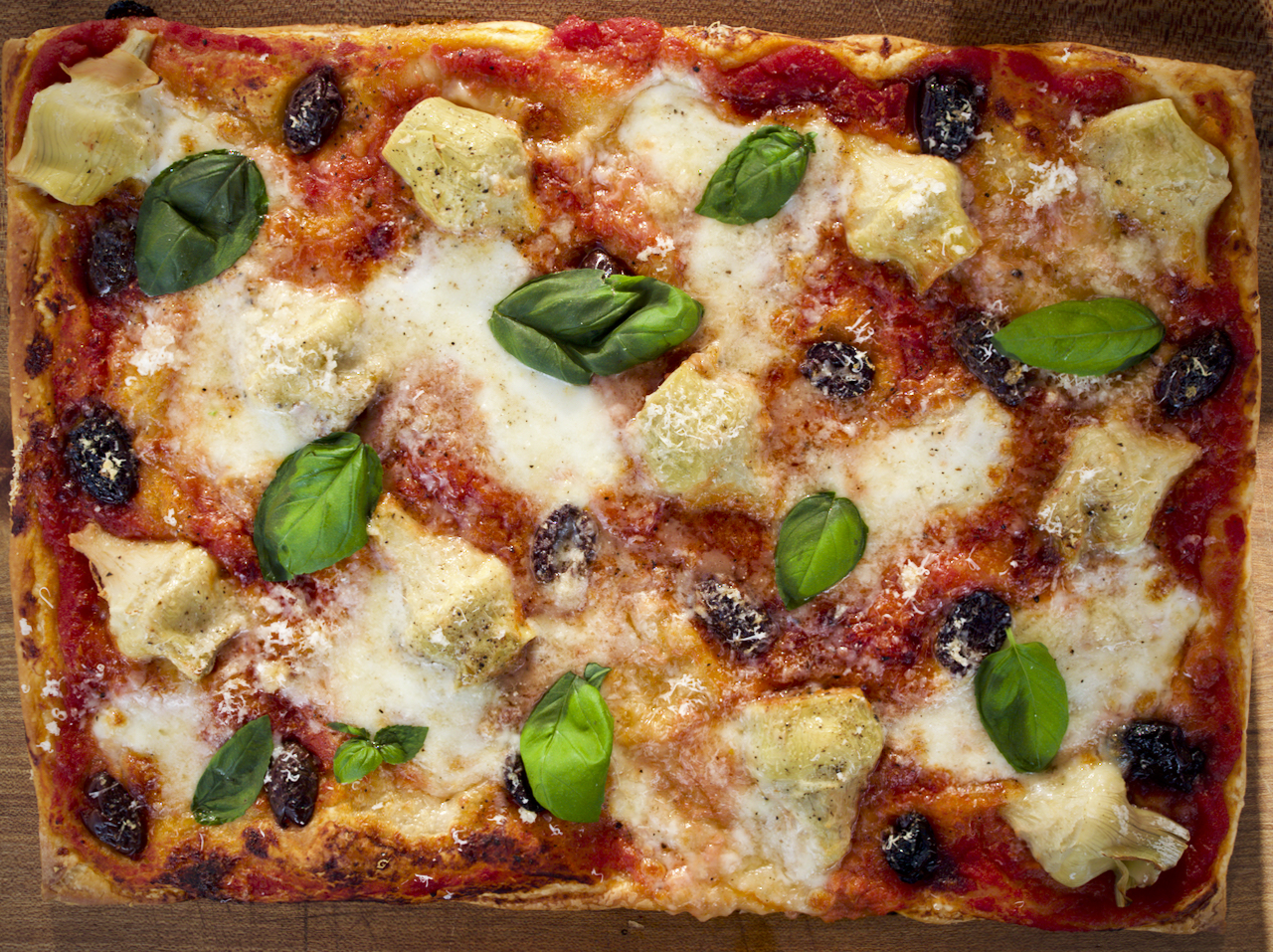
We love a good pizza … but there are times we just can’t be bothered lighting our little pizza oven and getting it up and running … or the weather defeats us! This is essentially pizza toppings on pastry and makes a great substitute. Plus we got to use the jar of artichokes we’d lugged from Spain last holiday.
Wine suggestion: a wine we’d also brought home from our holiday, Luis Moya Tortosa’s Kimera, an old-vine Grenache from Navarra. Minerally, vibrant and expressive.
Tomato, mozzarella, black olive & artichoke tart – serves 4
2 x 320g ready-rolled puff pastry sheets
300g tomato sauce (you can make your own or use a good brand)
2 x 125-150g mozzarella balls, sliced
a handful of pitted black olives, halved
8 to 10 artichoke hearts from a jar, halved
60g Parmesan, finely grated
a handful of basil leaves
Heat the oven to 230C/Fan 210C.
Unroll the puff pastry sheeets onto a couple of baking trays and prick them all over with a fork.
Spread the tomato sauce over the pastry, then top with the mozzarella, olives and artichokes. Add half the grated Parmesan and season with salt and pepper.
Bake for 15-18 minutes, then sprinkle with the basil leaves and the rest of the Parmesan and serve immediately. It’s as easy as that!
(Original recipe from Rick Stein’s Simple Suppers, Ebury Publishing, 2023.)
You really don’t need a recipe for this but a bit of inspiration for something stress-free can sometimes be helpful.
Wine Suggestion: a classic, oaked Chardonnay, like Chateau de Beauregard’s Pouilly Fuissé. Both mineral and fresh, and with a roundness and textured from the light oak use and time on lees. A great wine to accompany food, but never over-power it.
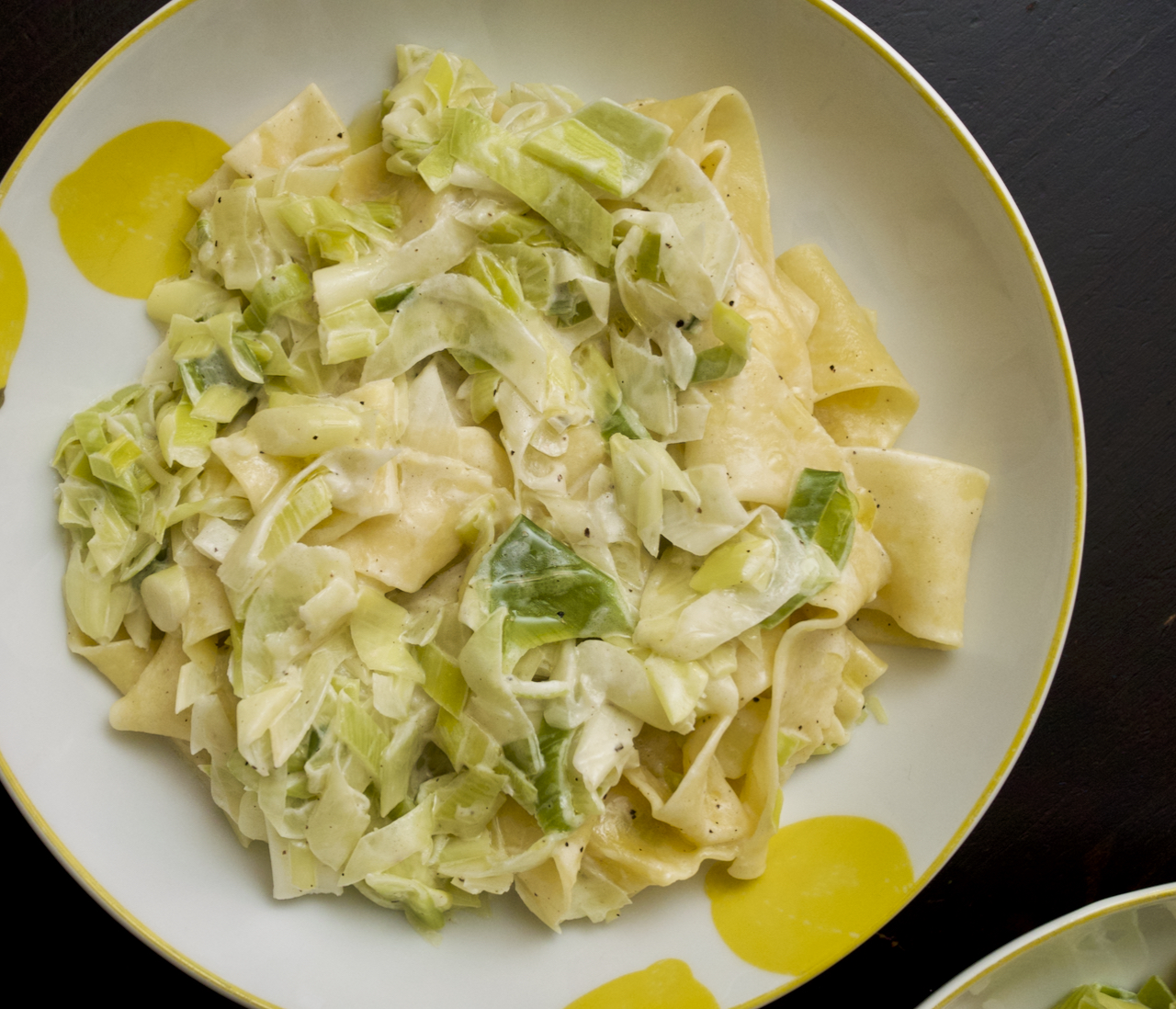
Pappardelle with sweet leeks and mascarpone – serves 4
1 small knob of butter
1 tbsp olive oil
4 medium-sized leeks, trimmed, washed and sliced at an angle
1 clove of garlic, finely chopped
200g mascarpone
400g fresh pappardelle
a handful of grated Parmesan
Warm the butter and olive oil in a large heavy-based pan, add the leeks and garlic, then cover and leave to sweat over a gentle heat. It’s difficult to give timings as it really depends on the leeks but keep cooking until they are meltingly soft but not at all coloured. Add the mascarpone and allow it to melt to make a thick sauce, then season with salt and black pepper.
Meanwhile, cook the pasta in lots of salty boiling water until al dente. Scoop the pasta straight from the pot into the leeks and stir to coat the pasta, you will probably need a few splashes of cooking water to loosen the sauce and make it cling to the pasta.
Serve in warm bowls with plenty of grated Parmesan.
(Original recipe from The Naked Chef by Jamie Oliver, Michael Joseph, 1999.)
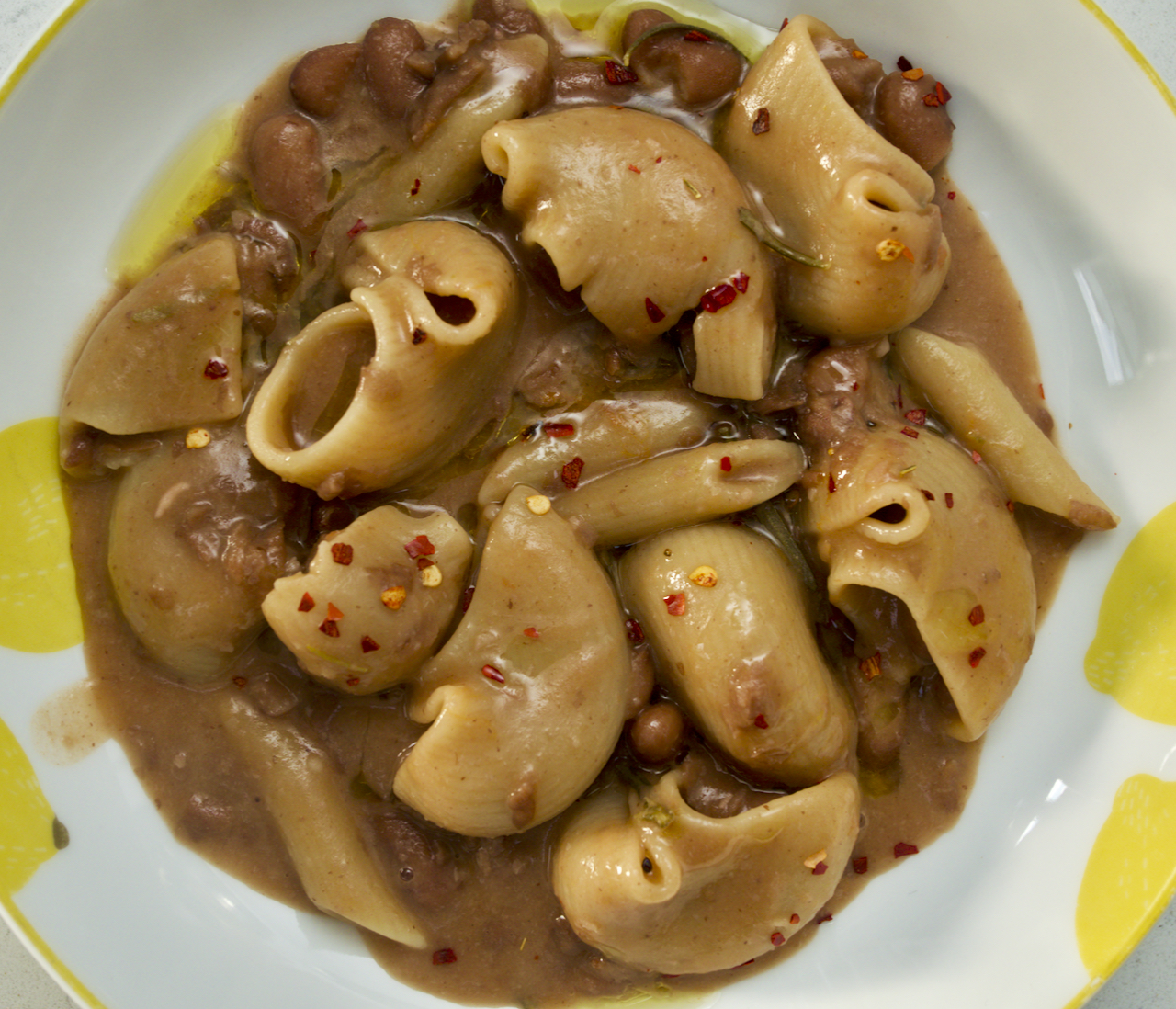
We picked up some pretty dried borlotti beans when travelling earlier this year and this rustic pasta dish was the perfect dish for them.
Wine Suggestion: There’s an honesty and an earthiness to this dish that we can’t ignore, and just love. To be sympathetic we chose La Pruina’s Salice Salentino, a blend of Negroamaro and Malvasia Negra from Puglia. Gentle layers of spice, equally soft and intense, surrounding a mid-weight core of earthy plums and wild red fruits.
Pasta e fagioli – serves 4
250g dried borlotti beans
5 tbsp extra virgin olive oil
2 cloves of garlic, peeled and lightly crushed
a big sprig of fresh rosemary
200g fresh tomatoes, peeld and crushed
220g conchiglie, or other tubular pasta (we used a mix of packet ends)
olive oil, red chilli flakes and grated pecorino cheese, to serve
Soak the beans overnight, then drain and cover with enough cold water to cover them by at least 10cm. Bring to the boil, then turn down to a simmer and cook until tender, usually about an hour and a half. Leave to cool in the cooking liquid.
Meanwhile, gently warm the olive oil in a large deep sauté pan, then add the garlic and rosemary and gently fry until they smell good. Discard the garlic and add the tomatoes to the pan. Turn the heat up a little and cook for about 10 minutes or until looking saucey. Add the cooked beans and a couple of ladlefuls of their cooking liquid, then leave to bubble for 10 to 15 minutes. Season with salt.
Add another couple of ladlefuls of liquid and then add the pasta and continue cooking, stirring regularly, until the pasta is tender. You might need a bit more liquid. Serve in warm bowls with some olive oil, chilli flakes and grated pecorino cheese.
(Original recipe from An A-Z of Pasta by Rachel Roddy, Penguin:Fig Tree, 2021.)
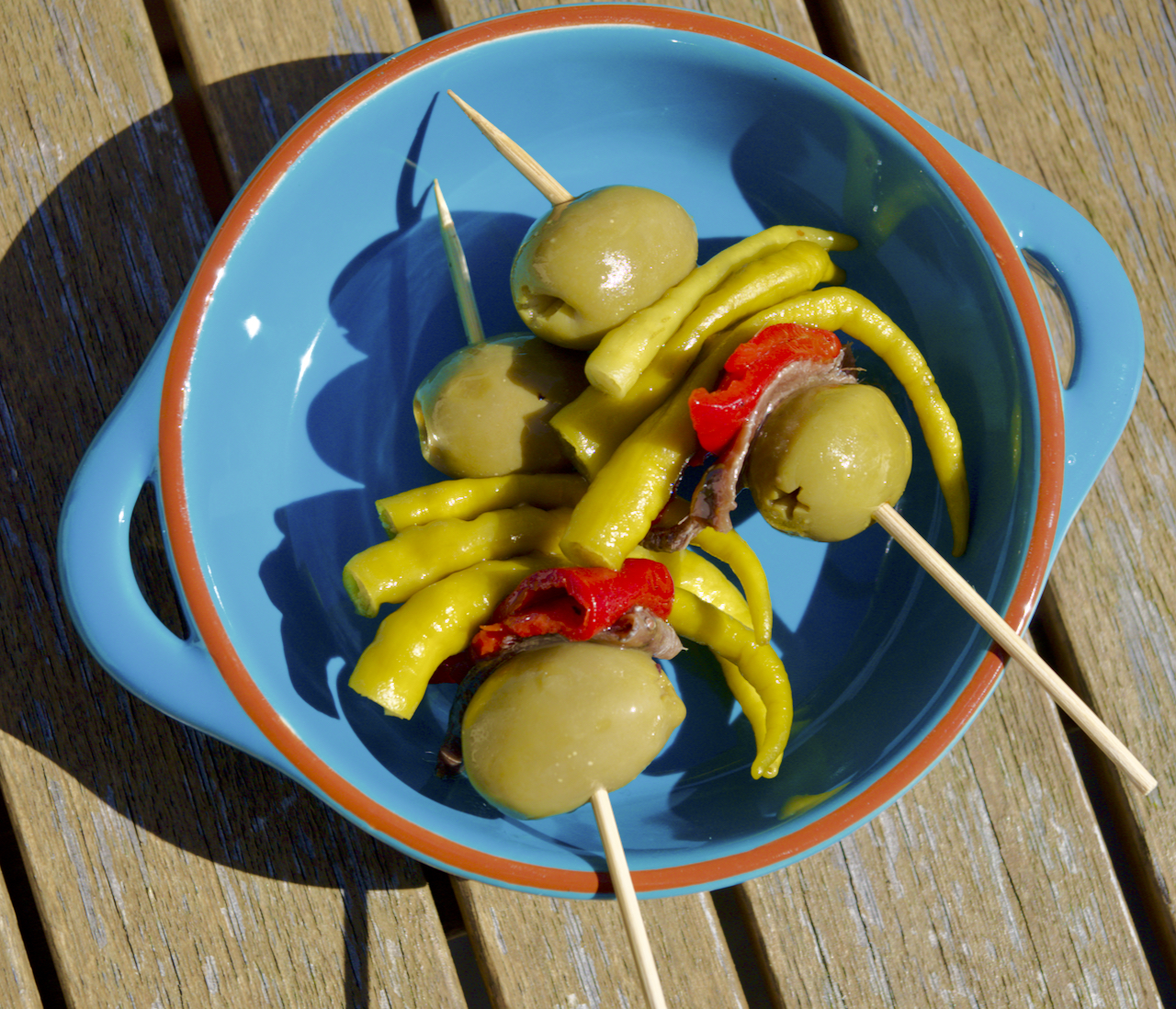
They serve these in all the tapas bars in San Sebastian and all you need to make them at home are top quality ingredients.
Wine Suggestion: Drinking Txakoli made from Hondarrabi Zuri, the local grape and wine for the Basque region, is our suggestion if you can get it. A favourite is the Bodegas Katxina Txakoli which is light, dry and slightly effervescent. It makes us think of fun times and holdays!
Gildas – make as many as you need to serve as a starter
Thread big green olives, top quality anchovies (semi-preserved from the fridge if possible), roasted peppers (we like the Navaricco brand) and guindillas. Serve with crusty bread.
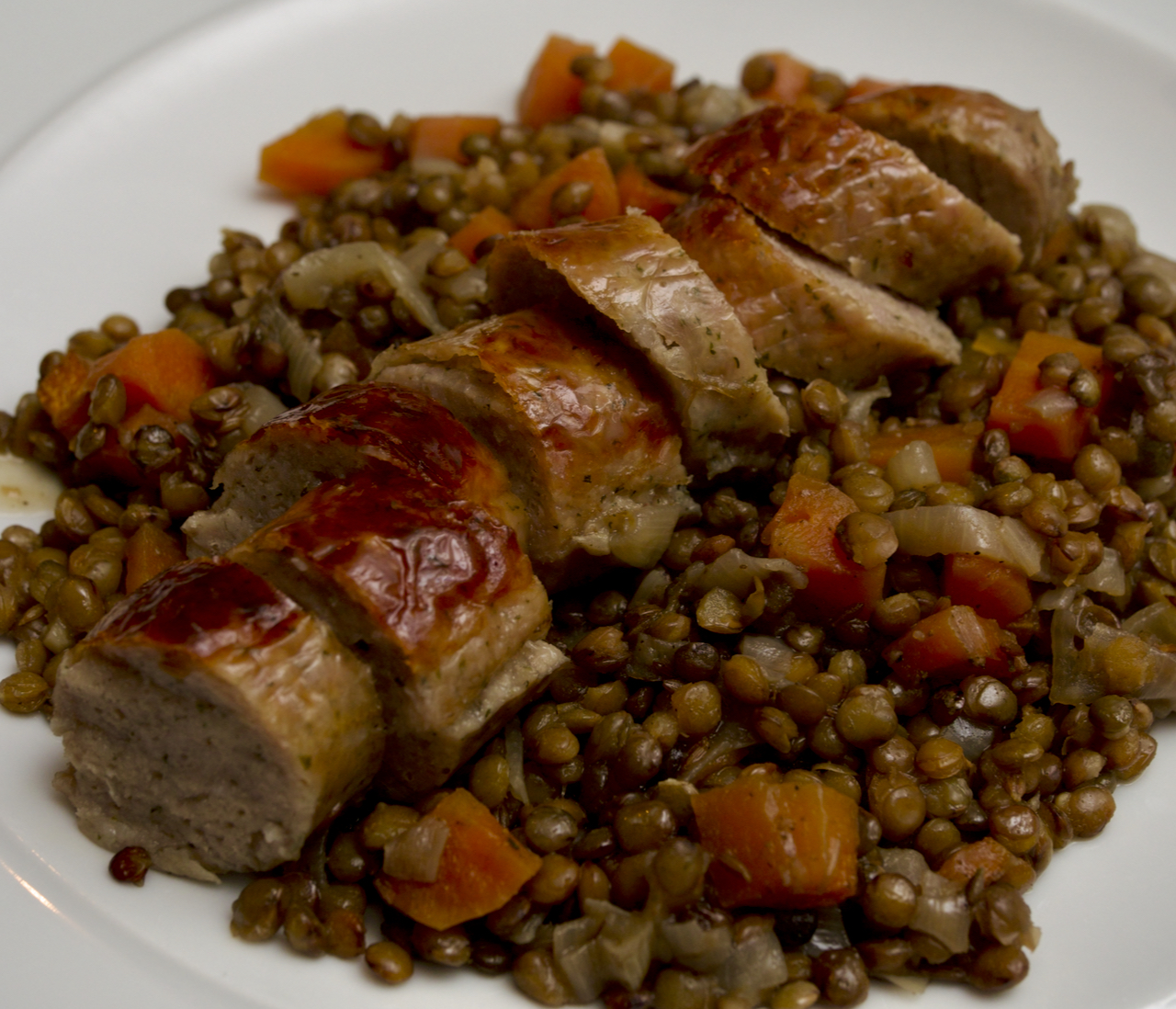
A nice dish for spring/summer in Ireland when many days still feel like the depths of winter! Are you all addicted to the recipetineats website yet? You soon will be.
Wine Suggestion: Still on our Grenache kick we opened a bottle we bought in Pamplona earlier this year, the Viña Zorzal Crianza from Navarra which has a lovely red fruited earthiness and gentle spice along with a fresh elegance. Perfect.
Baked sausages & lentils – serves 4
3 tbsp olive oil
4 shallots, finely sliced
3 cloves of garlic, crushed
1 tbsp cumin seeds
375ml of green or brown lentils
4 small carrots, peeled, quartered and diced
1 tsp cooking salt
¾ tsp black pepper
750ml chicken stock
8 x top-quality pork sausages
Heat the oven to 200C/180C fan.
Use a large metal roasting tin. Fold a sheet of baking parchment, large enough to cover the pan, in half and cut 4 slits to let out steam.
Put the roasting tin directly onto the hob and heat the olive oil over a medium-high heat. Add the shallots and garlic and sauté for a few minutes or until soft. Add the cumin seeds and stir for another minute.
Add the lentils, carrot, salt, pepper and stock, then bring to a simmer.
Gently place the sausages on top but don’t press them down into the lentils. Cover with the baking paper and gently press down so it sticks to the stock.
Bake for 25 minutes on the middle shelf, then remove the baking parchment and bake for another 20 minutes to brown the sausages.
Remove the pan from the oven and leave to rest for 5 minutes, then serve.
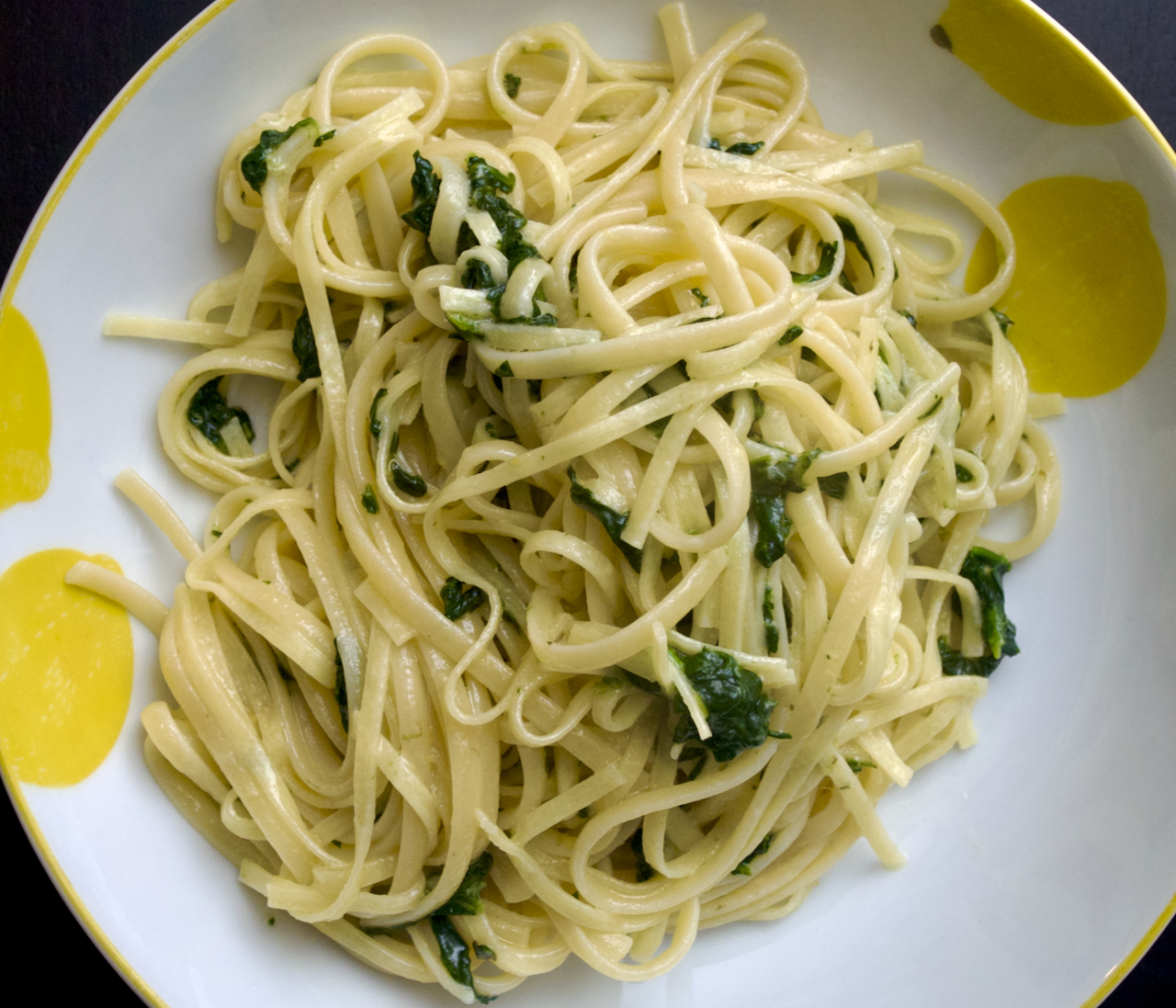
We make an easy pasta dish about once a week and it’s one of the best days of the week.
Wine Suggestion: we think this goes great with Ribolla Gialla, a grape native to the north-east of Italy and Slovenia that can be made in a few styles. We prefer the ones that feature joyful primary fruits with a hint of nutty minerality like the one made by Perusini in Friuli. Light bodied and fruity-floral we think the best are super attractive and we’re surprised we don’t see more around.
Lemon & Spinach Linguine – serves 2
100g spinach, remove any thick stalks but don’t be too fussy
1 large lemon, zested
250g linguine
1 large clove of garlic
50g butter
2 tbsp olive oil
40g Parmesan, grated
Get a bowl of iced water ready.
Wash the spinach, then put the wet leaves into a shallow pan over a medium-high heat, cover tightly and cook for 3-4 minutes. Remove the lid and turn the spinach over with a wooden spoon, then cover again and cook for 2 minutes.
Use tongs to lift the spinach and drop it into the iced water. As soon as it is cold, squeeze out as much water as possible, then roughly chop.
Cook the linguine in lots of very salty water for whatever time the packet says.
Lightly crush the garlic with the flat side of a knife, without peeling it.
Warm the butter, squashed garlic, and olive oil in a shallow pan over a medium heat for a few minutes, then remove and discard the garlic clove. Add the lemon zest and spinach to the pan.
Drain the pasta and toss in the warm butter. Squeeze some lemon juice over and sprinkle with Parmesan.
Oh so very good and with superb flavours! A proper hefty burger with a fabulous butter for basting – none of that mushy stuff that veggie burgers are often made of.
5g mushroom powder or dried porcini mushrooms, ground to a powder
½ tsp dried chilli flakes
2 large garlic cloves, finely grated
finely grated zest of ½ lemon
TO SERVE:
4 brioche burger buns, split
4 tbsp sweet chilli sauce or hot chilli sauce
4 tbsp mayonnaise
4 handfuls of rocket
Get your barbecue on and ready for cooking.
Cut the halloumi blocks in half horizontally to creat 4 flat pieces of halloumi.
To make the butter, put all the ingredients into a bowl and mix to combine, seasoning with salt (not too much) and pepper.
Brush the mushrooms on one side with the butter and put them onto a medium-hot barbecue, buttered side down. Brush plenty of butter on the other side. After a few minutes turn the mushrooms over and add the halloumi to the barbecue. Brush the halloumi with the butter too. Keep brushing the mushrooms and halloumi with the butter as they cook.
When the mushrooms and halloumi are almost done, toast the burger buns on the barbecue. Brush any remaining butter onto the toasted buns.
To assemble, put a mushroom on each burger bun base. Top with a piece of halloumi and add a spoon of sweet or hot chilli sauce. Pile a handful of rocket on top, then spread some mayonnaise on the bun lids and sandwich together.
(Original recipe from Tom Kerridge’s Outdoor Cooking, Bloomsbury Absolute, 2021.)
A main course salad with warm elements cooked over charcoal and a delicious dressing. Like everything it tastes best eaten outside.
Wine Suggestion: A current favourite is Bodega Jesus Romero’s Rubus, a Garnacha-Tempranillo blend from the mountain slopes in Aragon, Spain, that despite it’s depth of flavour has a real energy and vibrancy.
Steak, piquillo pepper and asparagus salad – serves 4
2 ribeye steaks (about 500g in total)
1 tbsp olive oil
16 asparagus spears
2 baby gem lettuces, leaves seperated
100g roasted piquillo peppers, sliced – good quality Spanish brands like El Navarrico will make a difference here
2 tbsp capers
30g flaked almonds, toasted
FOR THE DRESSING:
1 clove of garlic, grated
2-3 sprigs of marjoram or oregano, leaves picked
2 tbsp PX sherry vinegar
3-4 tbsp extra virgin olive oil
Take the steaks out of the fridge about an hour before you want to cook them.
Get your barbecue hot and ready to cook on – if you don’t want to barbecue you can cook the asparagus and steak on a griddle pan.
Season the steaks and rub all over with oil.
Sear the steaks for a few minutes on each side on a hot barbecue, then set aside to rest.
Toss the asparagus spears in oil and cook on the barbecue until charred. Tip into a serving bowl.
Add the lettuce leaves, piquillo peppers and capers to the bowl with the asparagus.
Combine all of the dressing ingredients and season well.
Slice the steaks and arrange on top of the salad, then drizzle all over with the dressing and scatter over the toasted almonds.
(Original recipe from The Spanish Home Kitchen by José Pizarro, Hardie Grant Books, 2022.)
We make a lot of spring risottos and we think this one might be the best. We miss Russell Norman.
Wine Suggestion: Verdicchio all the way with this, and from a winery obsessed with this grape: Sartarelli. Their Miletta is a little bit special coming from a select vineyard and treated with extra care. It’s almost a contradiction in taste by being both full bodied, round and textured as well as elegant, flinty and ethereal. Hawthorn and almond flavours with apricots and a creamy nuttiness, plus a salty freshness tying it all together.
Asparagus & saffron risotto – serves 4
1 litre vegetable stock (we used Marigold Swiss Bouillon)
3 tbsp extra virgin olive oil
1 large white onion, very finely diced
320g Carnaroli rice
200ml dry vermouth
12 spears of asparagus, woody stems snapped off, sliced lengthways, then cut into 2 cm pieces
1 scant tsp saffron
80g unsalted butter
80g grated Parmesan, plus some extra for the table if you like
Heat the vegetable stock in a large pan on the back of the hob and keep hot.
Pour the extra virgin olive oil into a large, heavy-based saucepan and put over a low-medium heat. Add the onion and cook slowly for 10 minutes, making sure it doesn’t brown.
Add the rice and stir to make sure every grain is coated, then add a large pinch of flaky sea salt. When the mixture looks dry, add the vermouth. Keep stirring until the vermouth has been absorbed, then add a ladle of hot stock and stir again.
Over the next 20 minutes continue to add a little more stock every time the risotto has absorbed the previous ladleful. After 10 minutes, stir in the asparagus and saffron, then continue gradually adding the stock.
Test the rice after 20 minutes, it should not be too firm. When it’s done, turn up the heat, add the butter and stir until it has melted. Take the pan off the heat and allow to rest for a minute, then gently stir in the Parmesan. Serve on warm plates with extra Parmesan and black pepper.
(Origianl recipe from Brutto by Russell Norman, Ebury Press, 2023.)
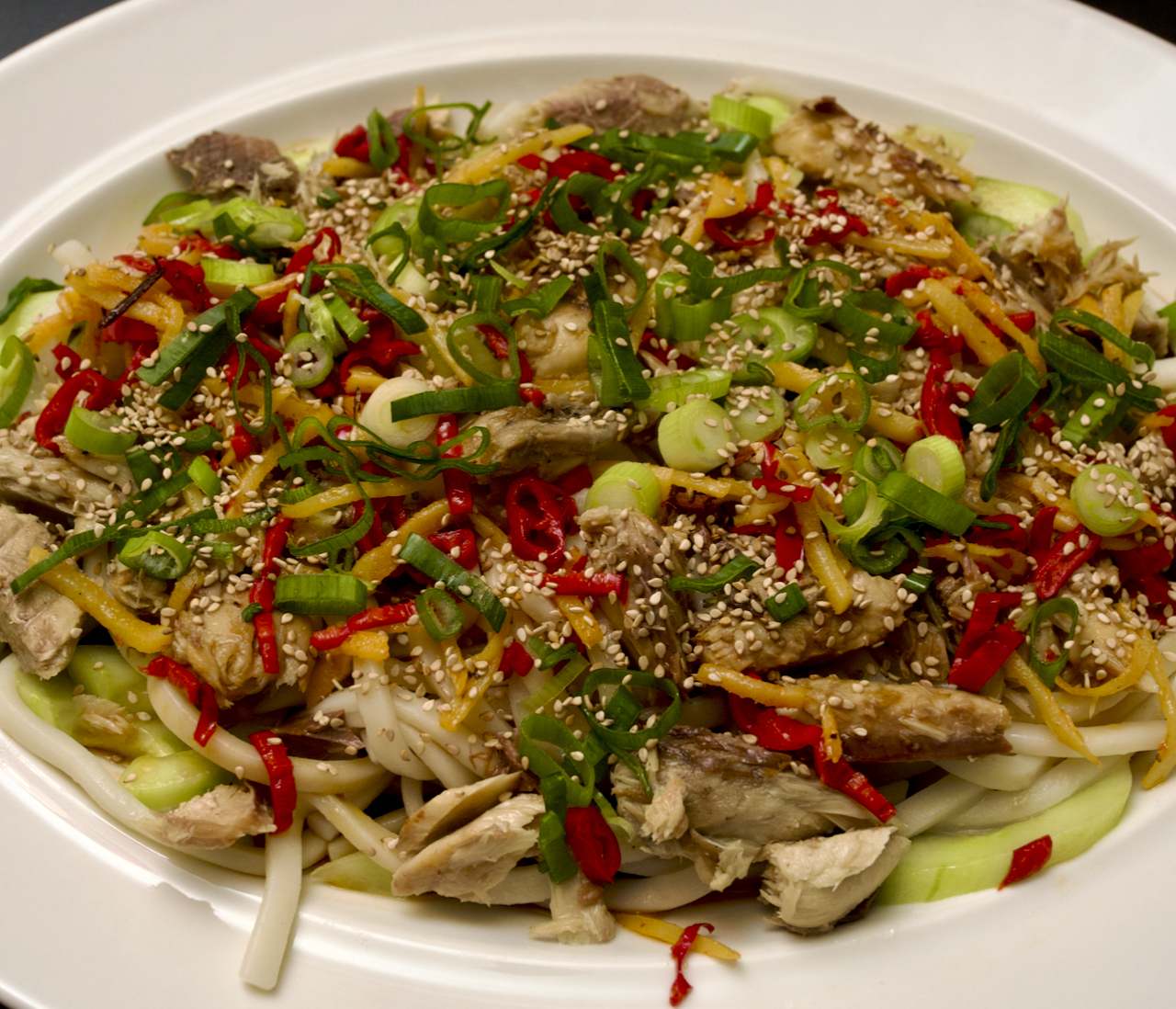
Amazing flavours in this super quick and easy dish. We’re loving pretty much every recipe that Ixta Belfrage has a hand in.
Wine Suggestion: A really hard one to match we thought, but we pulled out Dr Loosen’s Graacher Dry Riesling … a wine he has “declassified” from Grosses Gewächse (Great Growth) as the vines are only 15-20 years old … not old enough for Ernie Loosen! A wine of both elegance and power, with a crispness that balances any oilyness of the mackeral, and joyful fruit to match chillies, limes, soy and star anise.
Mackerel udon – serves 2
1 medium cucumber, peeled, halved and seeds scooped out with a teaspoon
2 x 115g tins of mackerel in olive oil, drained and flaked into chunky pieces
2 scallions, thinly sliced
2 tsp black or white (or both) sesame seeds, toasted
FOR THE DRESSING:
5 tbsp mild olive oil or sunflower oil
40g ginger, peeled and julienned
2 large mild red chillies, finely sliced into rounds (discard the seeds)
2 whole star anise
1 cinnamon stick, bashed with the side of a knife
2 tbsp soy sauce
1½ tbsp maple syrup
¾ tsp toasted sesame oil
Cut the cucumber into half-centimetre diagonal slices. Put the cucumber in a bowl and mix with the flaked salt and lime juice. Set aside to pickle while you make the rest.
Put the udon noodles in a large bowl and, cover with boiling water, then drain well and set aside.
Put a heatproof sieve over a heatproof bowl and set aside.
Put the oil for the dressing into a medium saucepan over a medium heat and allow to get hot. Add the ginger, chillies, star anise and cinnamon and fry gently, stirring often, until the ginger is crisp and golden – about 5 minutes but watch carefully. Drain through the sieve and keep both the oil and the crispy aromatics.
Transfer 3 tbsp of the aromatic oil to a separate bowl along with the soy sauce, maple syrup and sesame oil.
Drain the cucumbers and toss with the warm noodles. Transfer them to a platter and top with the mackerel. Spoon over the dressing, followed by the crispy aromatics, scallions and sesame seeds. Serve with lime wedges on the side.
(Original recipe from Mezcla by Ixta Belfrage, Ebury Press, 2022.)
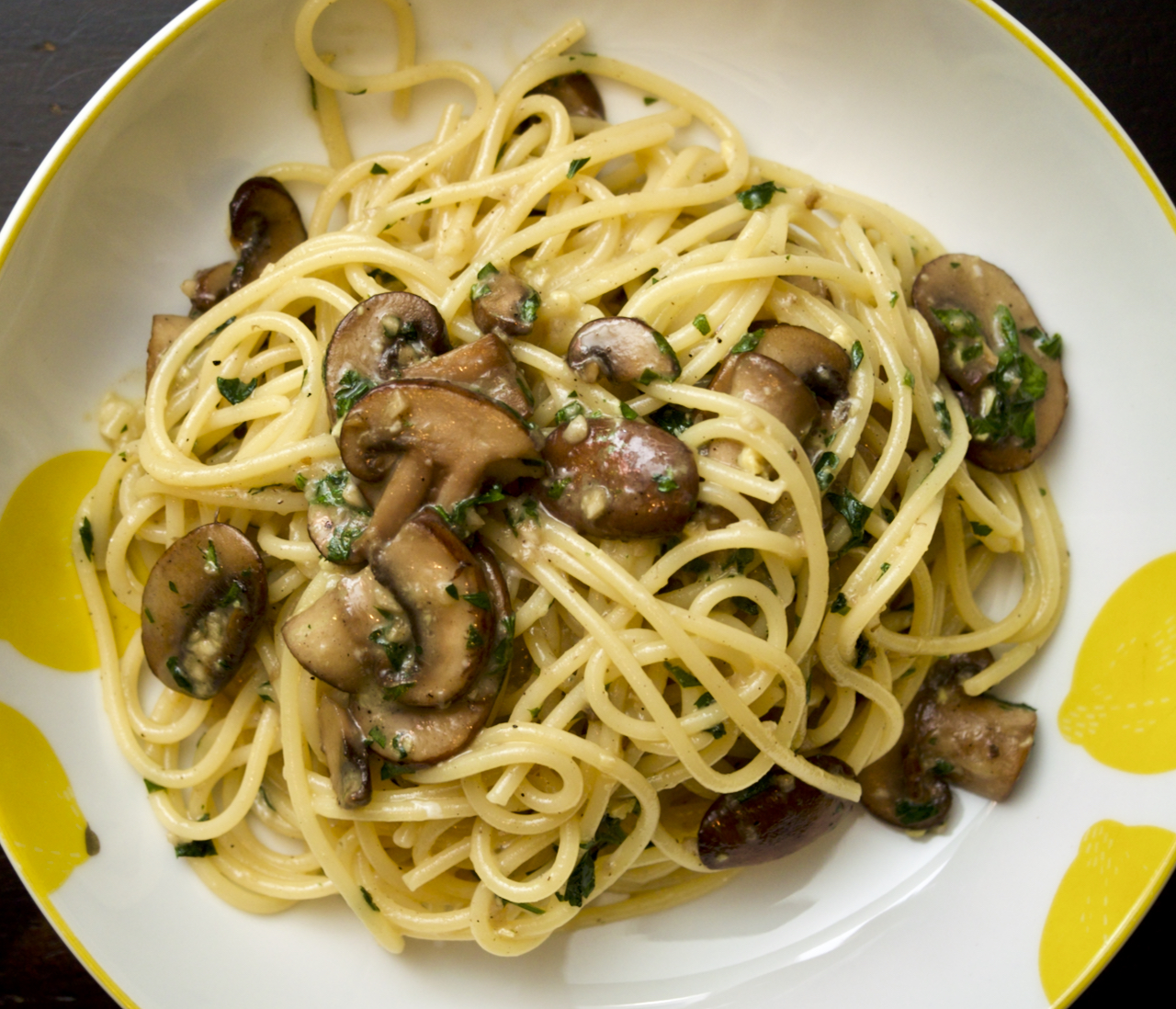
A great weeknight pasta dish with mushrooms instead of the traditional pancetta.
Wine Suggestion: this works really well with fuller-bodied dry whites, like a good Chardonnay. Tonight the Domaine de la Rochette Mont Sard Mâcon-Bussières was full of joyful apple and citrus fruits with layers of gentle smoky and creamy oak.
Mushroom Carbonara – serves 2
200g spaghetti
2 tbsp extra virgin olive oil
150g chestnut mushrooms, sliced
2 cloves of garlic, finely chopped
a handful of flatleaf parsley, chopped
2 eggs, beaten
40g Pecorino cheese, finely grated
Bring a large pan of water to the boil, add plenty of salt and cook the spaghetti according to the timings on the pack.
Heat a large, deep frying pan over a medium-high heat, add the oil and mushrooms and fry until lightly golden. Add the garlic and parsley and cook for a few seconds, then remove the pan from the heat.
Drain the spaghetti, then tip into the frying pan with the mushrooms. Add the beaten eggs and two-thirds of the cheese and toss well.
Season to taste with salt and plenty of black pepper and serve in warm bowls with the extra cheese.
(Original recipe from Rick Stein’s Simple Suppers, Penguin: Random House, 2023.)
This must be the easiest and cheapest of fish soups but that does not make it any less delicious! Particularly good after a walk out in the cold. And no it’s not made from “skinks” for all the Aussies out there who may be confused … it’s a classic Scottish soup made from smoked fish!
Wine Suggestion: We would highly recommend pairing this with a peaty whisky like Lagavulin. If this doesn’t rock your boat, or you don’t have a bottle to hand then a dry, aromatic and elegant white, like the Sybille Kuntz Riesling Kabinett makes the whole meal feel refined and very sophisticated too.
Cullen skink – serves 4
50g buttter
1 onion, finely chopped
1.2 litres full fat milk
750g floury potatoes
450g smoked haddock fillet
2 tbsp chopped parsley, plus extra to garnish
Melt the butter in a large saucepan, then add the onion and cook gently for 7-8 minutes.
Add the milk and bring to the boil, then add the potatoes and simmer for 20 minutes until very soft.
Add the smoked haddock and simmer for 3-4 minutes or until cooked and easy to flake. Gently remove the haddock with a slotted spoon onto a plate. Leave until cook enough to handle.
Meanwhile, use your wooden spoon to squash some of the potatoes against the side of the pan to thicken the soup slightly.
When the fish is cool enough to handle, break it into chunky flakes, discarding any skin and bones. Tip the fish into the soup, then add the parsley. Serve in warm soup bowls with a little more parsley.
(Original recipe from Rick Stein’s Simple Supper, BBC Books, 2023.)
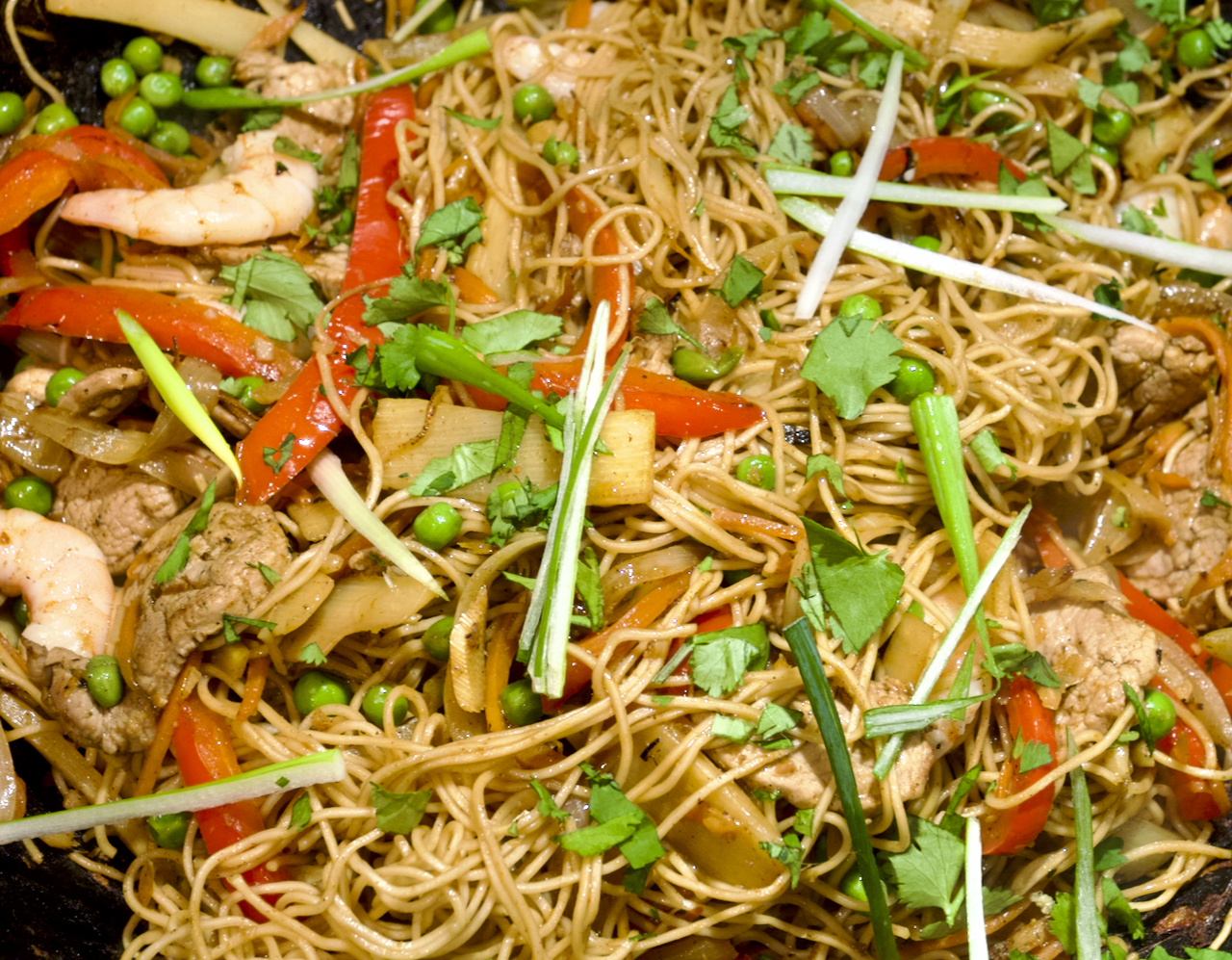
Made to satisfy our daughter’s constant craving for noodles … and much bettter than the packets she tries to make us buy. We recommend you prep everything before you start cooking.
Wine Suggestion: we think dry Pinot Gris is great with loads Asian foods and this is no different. From Nelson in NZ, Neudorf’s Tiritiri Pinot Gris is a charmer. Great fruit and lovely texture with gentle spices mean this combination is a winner.
Singapore Noodles – serves 4
200g fine egg noodles or rice noodles
2 tbsp veg oil
1 onion, sliced into thin wedges
1 carrot, cut into fine matchsticks (use a mandonline if you have one)
1 red pepper, thinly sliced
2 cloves of garlic, finely chopped
10g fresh root ginger, finely chopped
200g pork fillet, finely sliced
225g tin bamboo shoots, drained
100g frozen peas, defrosted
1 tsp Chinese 5-spice powder
2 tsp mild curry powder
2 tbsl light soy sauce
1 tbsp rice wine
1 tbsp rice wine vinegar
140g cooked shelled prawns
To garnish:
1 tsp sesame oil
2 scallions, finely shredded
1 green or red chilli, finely sliced
chopped fresh coriander
soy sauce, to serve
Cover the noodles with freshly boiled water and leave to stand for a minute, then drain and set aside.
Heat the oil in a large work. Add the onion, carrot and red pepper and stir-fry over a high heat until they’re starting to brown. Add the garlic, ginger and pork and continue to stir-fry until the pork is coloured on all sides. Tip in the bamboo shoots, peas, spices, soy sauce, rice wine and rice wine vinegar, then add the noodles and stir to combine (chopsticks are good for separating the noodles). Leave to cook for a couple of minutes until hot, then stir in the prawns and allow to heat through. Serve with the sesame oil, scallions, chilli and coriander over the top. We like ours with extra soy sauce.
(Original recipe from The Hairy Bikers’ One Pot Wonders by Si King & Dave Myers, Seven Dials, 2019.)
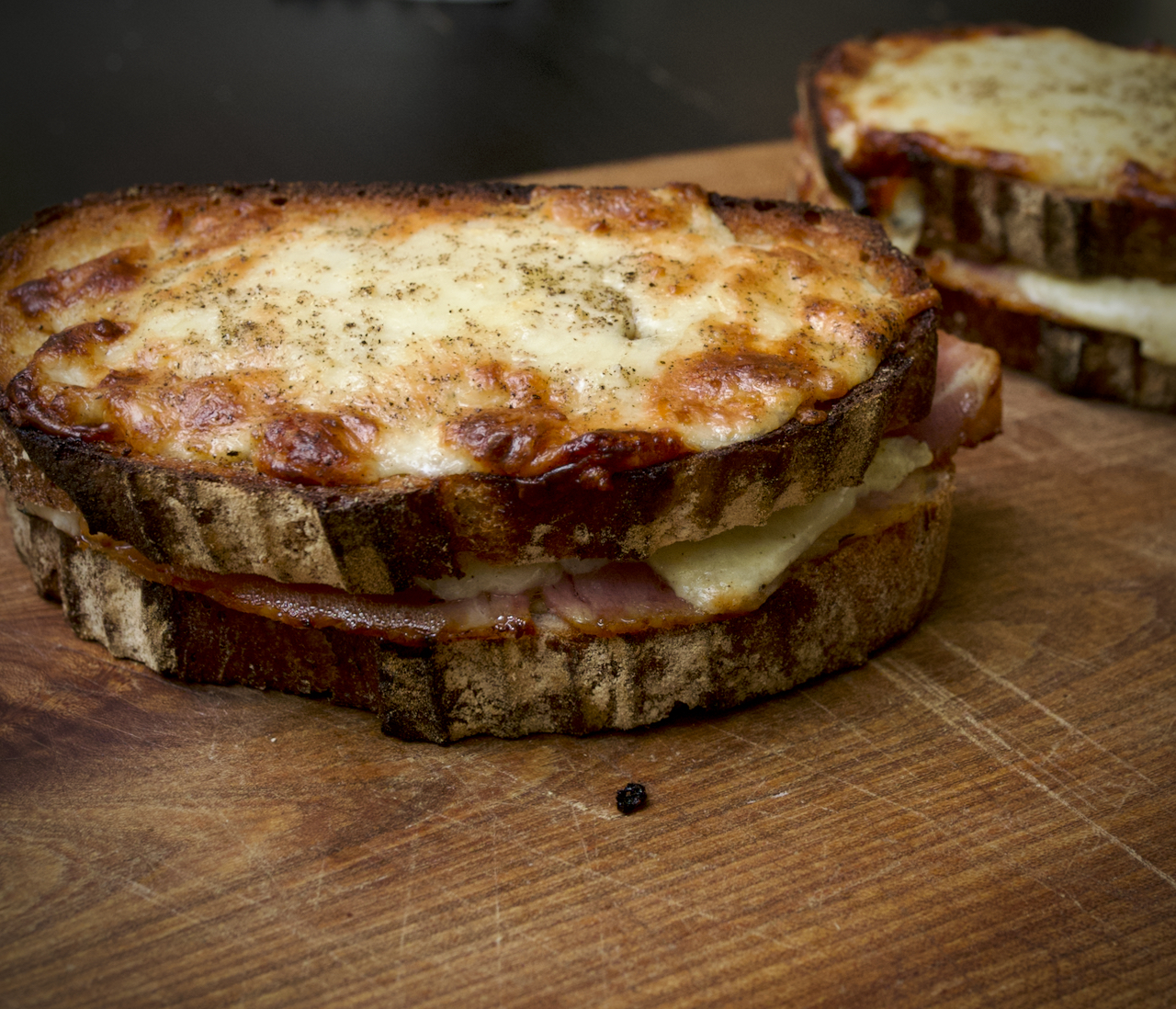
Just like the real thing but without the béchamel sauce – surprisingly good!
Cheat’s croque monsieur – serves 2
4 tbsp crème fraîche
100g Gruyère, grated
a little freshly grated nutmeg
soft butter
4 slices of sourdough bread
2 tsp Dijon mustard
2 thick slices of ham
green salad, to serve
Heat the oven to 220C/Fan 200C.
Mix the crème fraîche with the grated cheese, then season with nutmeg, salt and pepper.
Butter the slices of bread on one side, then place on a baking tray, buttered-side up. Toast under a hot grill until golden.
Spread the untoasted side of two of the slices with mustard and top with the ham and half the cheese mixture. Put the other piece of toast on top, toasted side-up, and spread over the rest of the cheese mixture. Season with black pepper.
Put the tray into the oven and bake for 10-12 minutes or until golden and bubbling. Serve with a green salad.
(Original recipe from Rick Stein’s Simple Suppers, BBC Books, 2023.)
We can’t get enough of roasted cauliflower and it’s at it’s best in this recipe with caramelised onions and smothered in tahini dressing.
Wine Suggestion: We’re mad for Loire Cabernet Franc and found a new vigneron on our last trip to Saumur: Domaine Théo Blet. We picked up his Saumur Rouge “les Fabureaux” and were completely charmed. Plus it went delightfully with this dish, complementing the spices and earthy tahini.
Cauliflower ‘shawarma’ – serves 2 as a main or more as a side or starter
1 medium cauliflower, leaves attached
2 tbsp olive oil
3 tbsp baharat spice mix
1 tsp sea salt
FOR THE CARAMELISED ONIONS:
2 large onions, peeled and sliced
1 tbsp olive oil
½ tsp salt
1 tsp sugar
FOR THE TAHINI DRESSING:
1 lemon
125g tahini paste
a pinch of salt
100-130ml water
FOR THE GARNISH:
2 tbsp roasted pine nuts
1 tsp sumac
pittas or crispy pitta shards, to serve
Preheat the oven to 200C/180C Fan/Gas mark 6.
Put the whole cauliflower, including the leaves, into an ovenproof saucepan that it fits in snugly. Fill the pan with enough water to just cover the stem and leaves. Drizzle the oil all over the florets and sprinkle with the baharat spice mix and sea salt – it will seem like a lot but go with it. Put the pan into the oven and roast for 1-1½ hours. It is ready when you can easily insert a small knife right down the stem.
Meanwhile, put the onions in a frying pan with the oil and salt and fry over a low heat until soft and golden. Add the sugar and cook until the onions are caramelised and brown, then remove from the heat.
Mix the tahini paste in a small bowl with the juice of half the lemon and the salt. Add 100ml water and mix well. Keep stirring and gradually adding water until the paste has a loose creamy texture.
Lift the cooked cauliflower out of the water and cut into thick slices, including the stems and leaves. Divide between plates, then squeeze over the other half of the lemon and top with the caramelised onions and tahini paste. Garnish with pine nuts and sumac and serve with warm pittas or crispy flatbread.
(Original recipe from Honey & Co. Food from the Middle East by Sarit Packer & Itamar Srulovich, Saltyard Books, 2014.)






 Jono & Jules do food & wine