Make this when you want something warm, healthy and with minimum fuss. Exactly what you need after a long day. Ready in less than an hour and the perfect weeknight dinner.
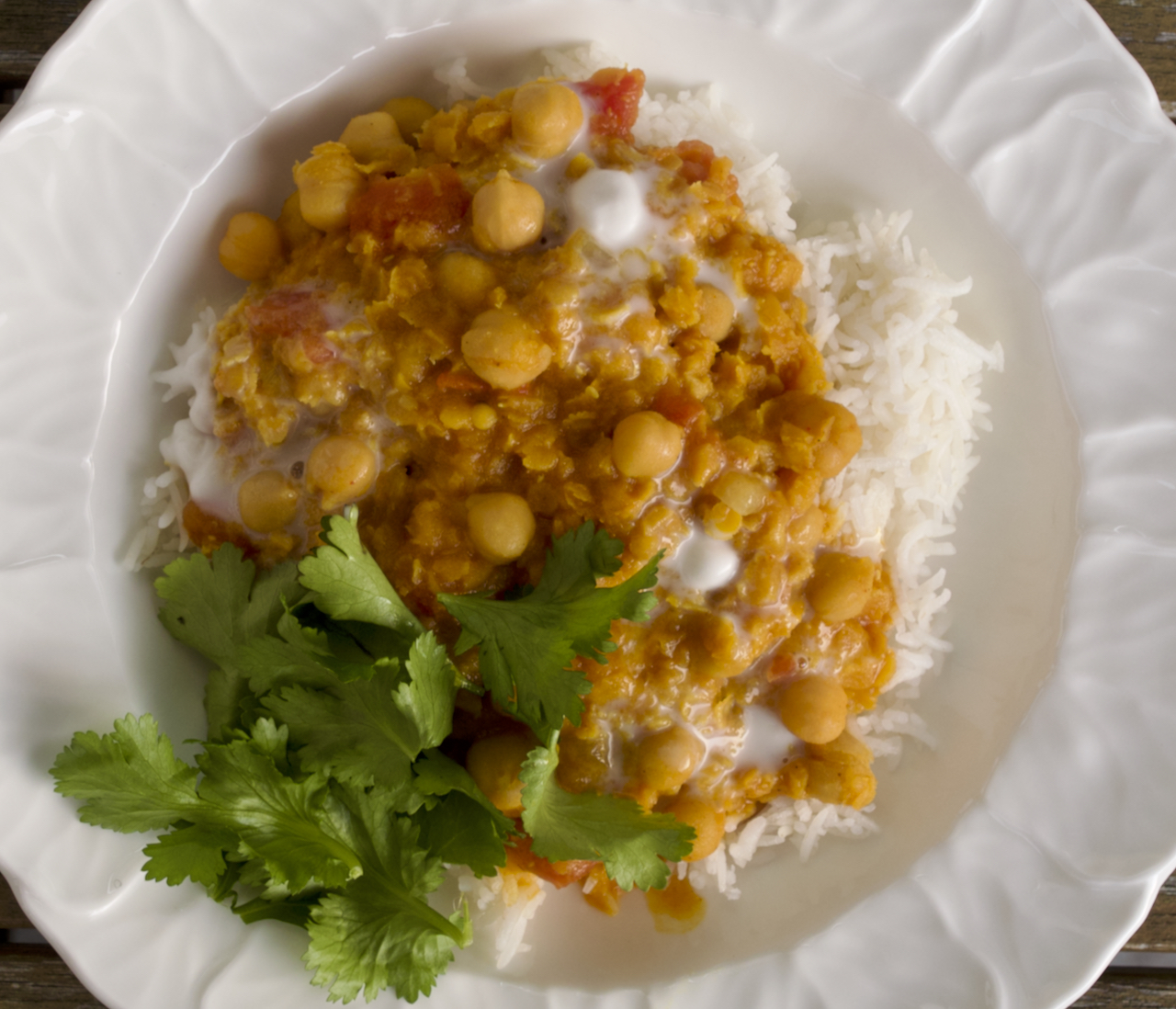
Lentils & Chickpeas with Coconut – serves 8 (freeze leftovers for another day)
400ml tin of coconut milk
2 tbsp ghee or coconut oil
3 cloves of garlic, crushed
1 onion, finely chopped
½ tsp cayenne pepper
½ tsp ground ginger
1 tsp ground turmeric
1 tsp curry powder
1 tsp ground cumin
1½ tsp salt
2 tsp ground coriander
400g tin chopped tomatoes
200g dried split lentils
400g tin chickpeas
a pinch of chilli flakes, to serve
coriander leaves, to serve
steamed basmati rice, to serve
Measure 60ml of the coconut milk and set aside for drizzling over at the end.
Melt the ghee or coconut oil in a large saucepan over a medium-high heat. Add the garlic and onion and cook for a few minutes, then add the spices and stir for 1 minute.
Add the tomatoes, the remaining coconut milk, 750ml of water, lentils and chickpeas. Bring to a simmer, then reduce the heat and simmer gently for 15 minutes, uncovered, sitrring occasionally. The lentils should be soft and creamy.
Serve over steamed rice with a drizzle of the coconut milk, a pinch of chilli flakes and some fresh coriander.
(Original recipe from RecipeTin Eats Tonight by Nagi Maehashi, Pan Macmillan, 2024.)
We tend to cook outside when the weather allows but don’t always feel like meat. There are lots of good veggie recipes for the barbecue about now and we particuarly like this one. You won’t miss the burnt sausages.
Wine Suggestion: It was a warm, summer evening so wanted to choose a chilled wine to accompany our dinner. Fortunately this goes great with rosé so we chose the Flying Solo from Domaine Gayda which is just as good as many wines from Provence; dry, textural, easy-drinking but with good weight, plus summery red fruit flavours.
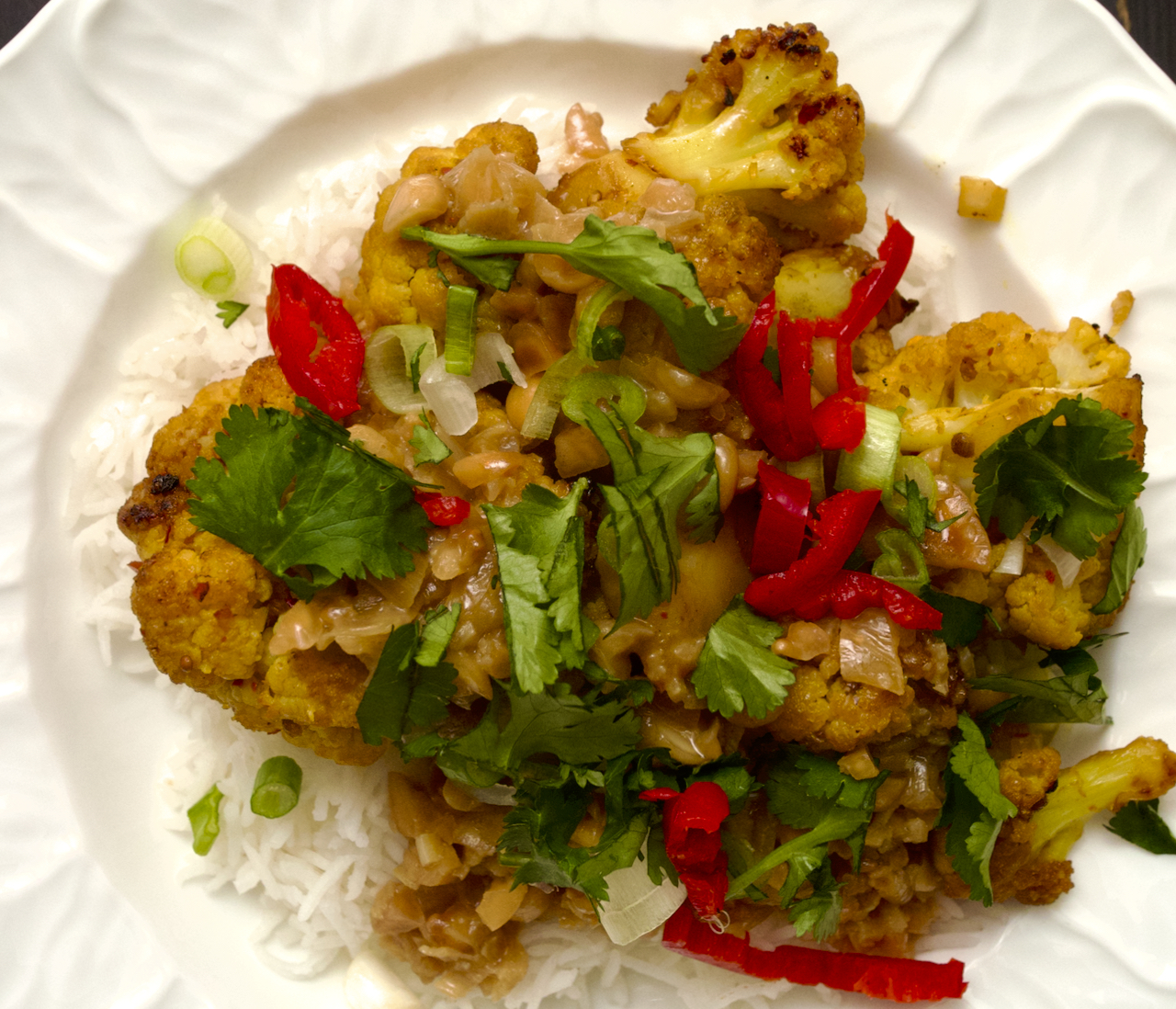
BBQ Cauliflower with Satay Sauce – serves 4 to 6
1 medium cauliflower, broken into florets
FOR THE MARINADE:
1 tbsp coriander seeds
1 tsp chilli flakes
1 tsp ground turmeric
1 banana shallot, finely chopped
⅓ of a 400ml tin coconut milk (use the rest for the sauce)
2 tbsp soy sauce
2 tsp soft brown sugar
2 cloves of garlic, finely chopped
FOR THE SATAY SAUCE:
1 tbsp vegetable oil
2 banana shallots, finely chopped
2 cloves of garlic, finely chopped
2.5cm ginger, grated
1 lemongrass stalk, finely chopped
⅔ of a 400ml tin coconut milk
125g salted peanuts, roughly crushed
2 tbsp soy sauce
TO SERVE:
steamed rice
coriander, roughly chopped
scallions, roughly chopped
red chillies, roughly chopped
Make the marinade first. Put the coriander seeds in a small frying pan and toast over a medium heat for a couple of minutes. Roughly grind in a pestle and mortar, then transfer to a bowl. Add the chilli flakes, turmeric, shallot, coconut milk, soy sauce, brown sugar and garlic. Season with salt and pepper and stir well.
Bring a large pan of water to the pan and add some salt. Blanch the caulilfower for 5 minutes until starting to soften, then drain well and add to the marinade. Stir gently to coat, then set aside for 2 hours.
Next, make the satay sauce. Heat the oil in a small pan over a low heat. Add the shallots and cook gently for 15 minutes, until golden. Add the garlic, ginger and lemongrass and fry for another 5 minutes. Add the rest of the coconut milk, the peanuts and the soy sauce. Simmer for 5 minutes or until thickened, then keep warm while you cook the caulilfower.
When you are ready to cook you need to get your barbecue ready for direct grilling.
Thread the cauliflower onto skewers, reserving any leftover marinade. Put the skewers onto the hot barbecue, cover with the lid and cook for 2-3 minutes, then baste with the leftover marinade and turn them over. Keep cooking and basting for about 10 minutes or until the cauliflower is tender.
Serve the cauliflower over rice and scatter over the coriander, scallions and chillies. Serve the satay sauce on the side.
(Original recipe from Foolproof BBQ by Genevieve Taylor, Quadrille, 2021.)
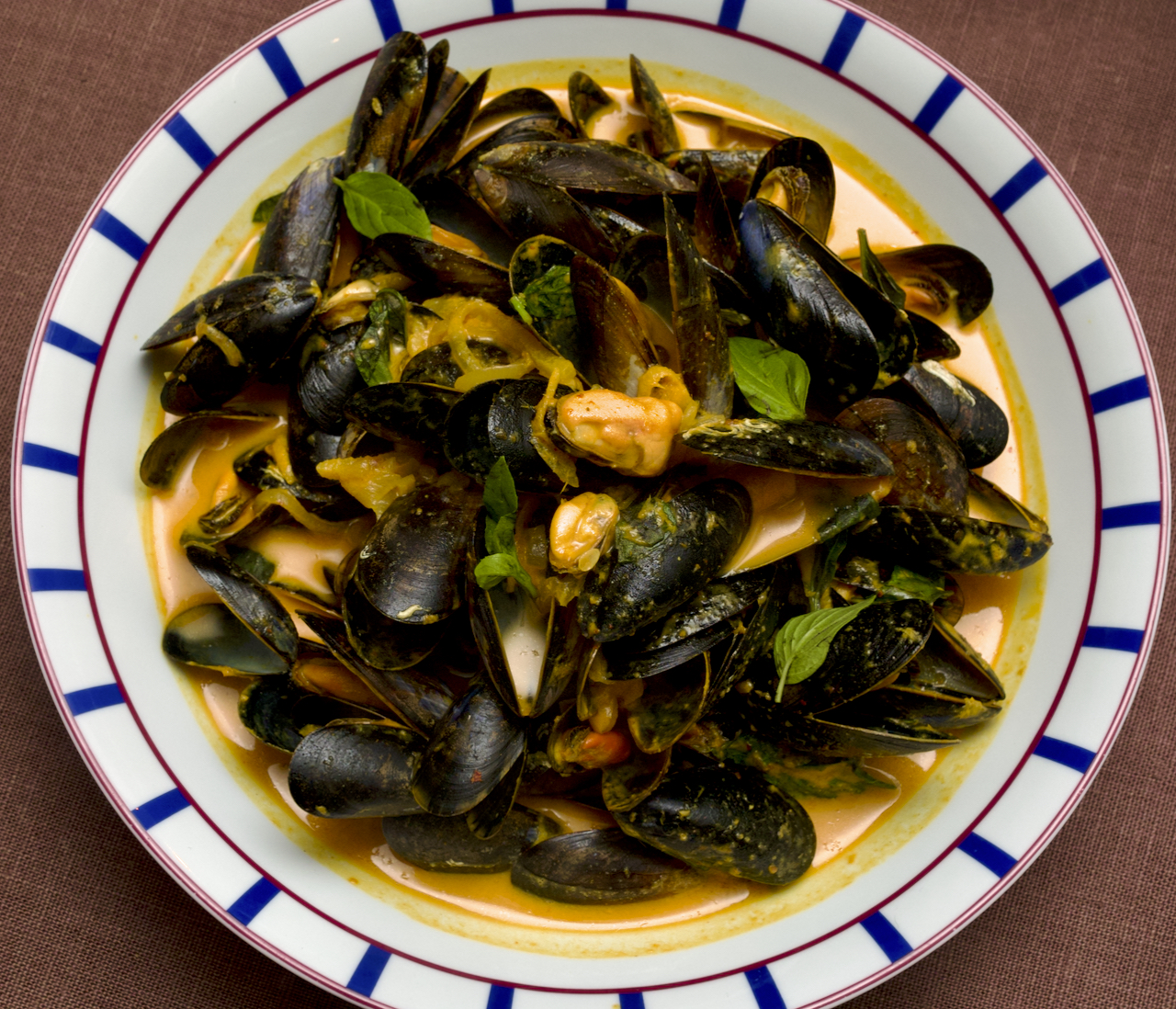
Mussels are a regular Friday night treat for us and this sauce with Thai spices and coconut milk is really delicious. As ever, you will need lots of crusty bread.
Wine Suggestion: We really like matching Thai curries with Riesling, especially if there’s a touch of residual sugar. Unusually for the Clare Valley (which is typically bone dry) Pikes Hills & Valleys Riesling has about 9 grams of residual sugar which makes this fruity, rather than sweet. We had a bottle a few years old which accentuated the lime and lifted aromas and made a wonderful match.
Thai spiced mussels – serves 2
1 tbsp coconut oil
1 onion, peeled and finely sliced
20g ginger, peeled and cut into matchsticks
1 tsp ground turmeric
1 tsp ground coriander
2 tbsp red Thai curry paste
1 tbsp tomato puree
400ml tin coconut milk
1 tsp brown sugar
1 kg mussels, cleaned and debearded (chuck any that don’t close after a sharp tap)
1 lime, juiced
a handful of Thai basil leaves
crusty bread, to serve
Heat the coconut oil in a large casserole or heavy saucepan over a medium heat. Add the onions and ginger and cook gently for 10 minutes. Add the turmeric and coriander and cook for another minute, then add the curry paste and tomato puree and cook for a minute more.
Add the coconut milk and brown sugar, bring to the boil, then turn the heat down to simmer and cook for 5 minutes.
Add the cleaned mussels, then turn up the heat, cover with a lid and cook for 5 minutes or until all the mussels have opened (chuck any that don’t open).
Stir the mussels through the sauce, then add the lime juice and tear in the Thai basil leaves. Serve with lots of crusty bread.
(Original recipe by Georgina Hayden in The Guardian, 11 Feb 2025)
Peanut butter makes the best sauces, and here it makes a very simple dish taste delicious.
Wine Suggestion: Think of peanuts as legumes (which they technically are) and matching with wine gets a bit easier. With the gentle heat of the curry a touch of fruitiness doesn’t go astray either. Something like the Pinot Gris from Forrest Estate in Marlborough which combines a wonderful array of citrus and apple freshness, textured minerality plus a rich and exotic peach, pear and honeysuckle roundness.
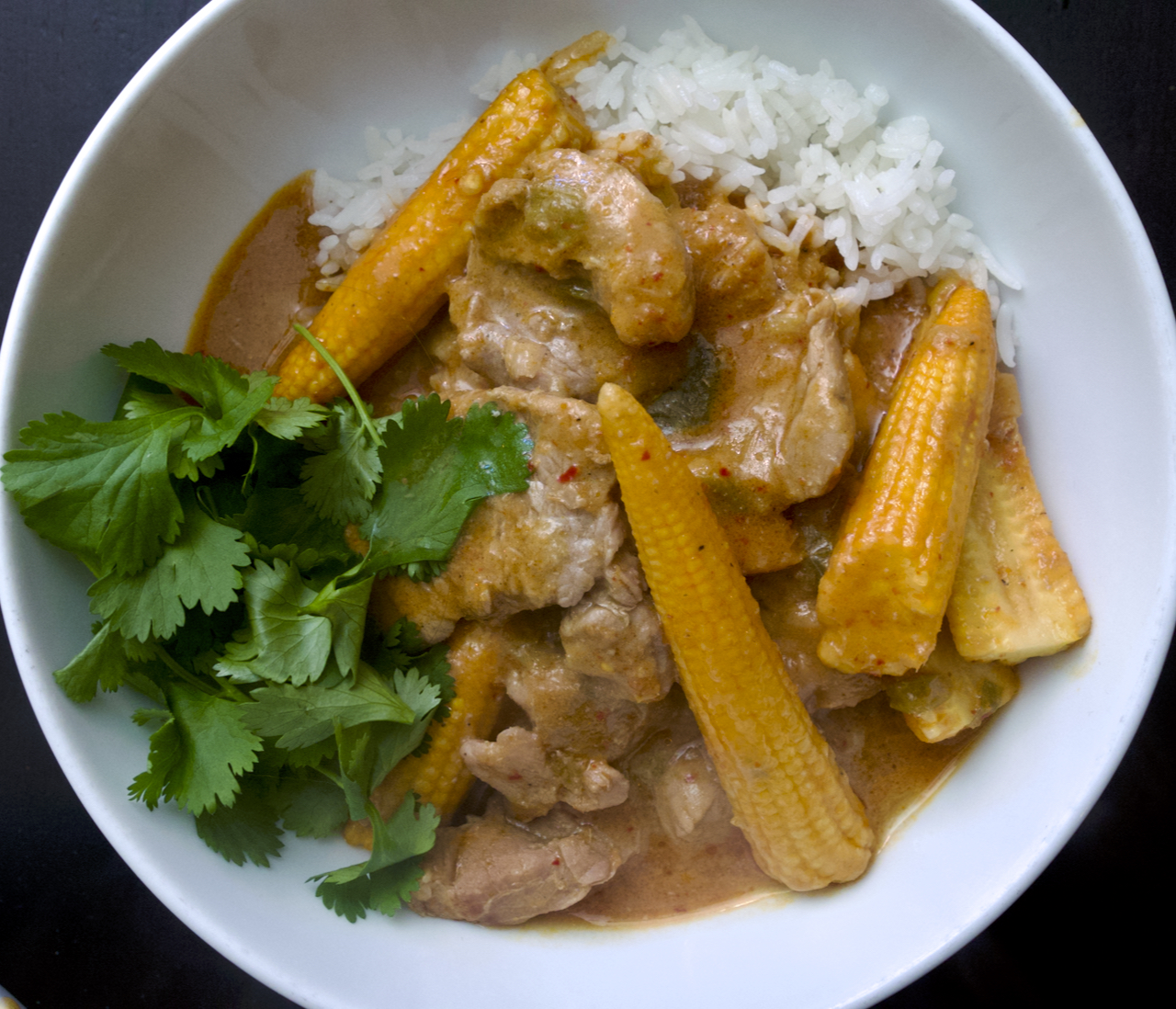
Thai Pork & Peanut Curry – serves 4
1 tbsp vegetable oil
a bunch of scallions, sliced
a small bunch of coriander, stalks finely chopped and leaves picked
1 large pork fillet (tenderloin), sliced
4 tbsp Thai red curry paste
4 tbsp smooth peanut butter
1 tbsp soft brown sugar
1 tbsp soy sauce
400ml tin coconut milk
200g pack of baby corn
juice of 1 lime
steamed jasmine rice, to serve
Heat the vegetable oil in a large saucepan, then add the scallions and coriander stalks and cook for 1 minute. Add the pork slices and cook for 5 minutes until sealed and starting to brown.
Stir in the curry paste and peanut butter and mix well, then add the sugar, soy and coconut milk, plus ½ can of water. Mix well, then cover and leave to simmer for 15 minutes, stirring occasionally.
Remove the lid, add the baby corn and increase the heat. Bubble for a few minutes or until the corn is cooked and the sauce has thickened slightlly. Stir in the lime juice and check the seasoning. Serve with the coriander leaves and steamed jasmine rice.
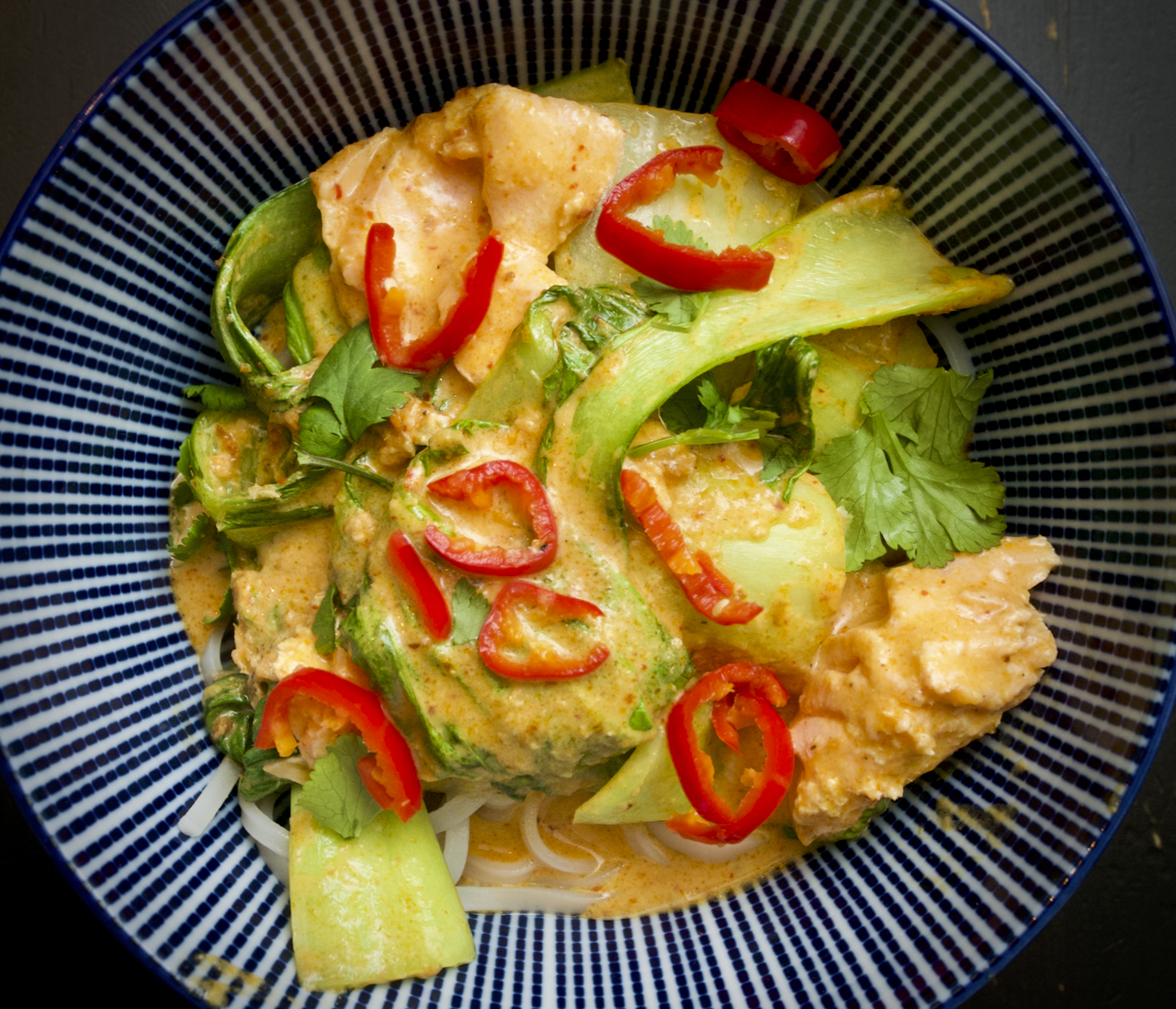
This is a quick curry but it still tastes delicious and simple enough to throw together after work.
Thai red salmon curry – serves 2
100g dried rice noodles
350g skinless salmon fillets, cut lengthways into 4 thin pieces
1½ tbsp vegetable oil
3 tbsp Thai red curry paste
1½ tsp finely grated garlic
1 tsp finely grated ginger
125ml chicken stock
400ml tin coconut milk
2 tsp fish sauce
1 tsp white sugar
4 baby bok choy, leaves separated
1-2 tbsp lime juice, plus wedges for serving
fresh coriander leaves, to serve
red bird’s eye chilli, finely sliced, to serve
Soak the noodles in boiling water according to the pack instructions, then drain and divide between two bowls.
Season the salmon, then heat the oil in a large non-stick frying pan over a high heat. Cook the salmon for a minute on each side, then transfer to a plate. It doesn’t need to be cooked through yet, just lightly golden on the surface.
Add the curry paste, garlic and ginger to the pan. Cook, stirring continuously, for a minute, then add the chicken stock and simmer rapidly for a minute, stirring to scrape any sticky bits from the bottom of the pan. Add the coconut milk, fish sauce and sugar, then simmer rapidly for 2 minutes.
Return the salmon to the pan and push the bok choy in around it. Simmer for 2 minutes, pushing the bok choy into the liquid as it wilts. Once the salmon flakes easily, remove the pan from the heat.
Pour the lime juice over the fish and serve over the noodles. Sprinkle with the coriander and fresh chilli before serving with extra lime wedges.
(Original recipe from Recipetin Eats Tonight by Nagi Maehashi, Pan Macmillan, 2024.)
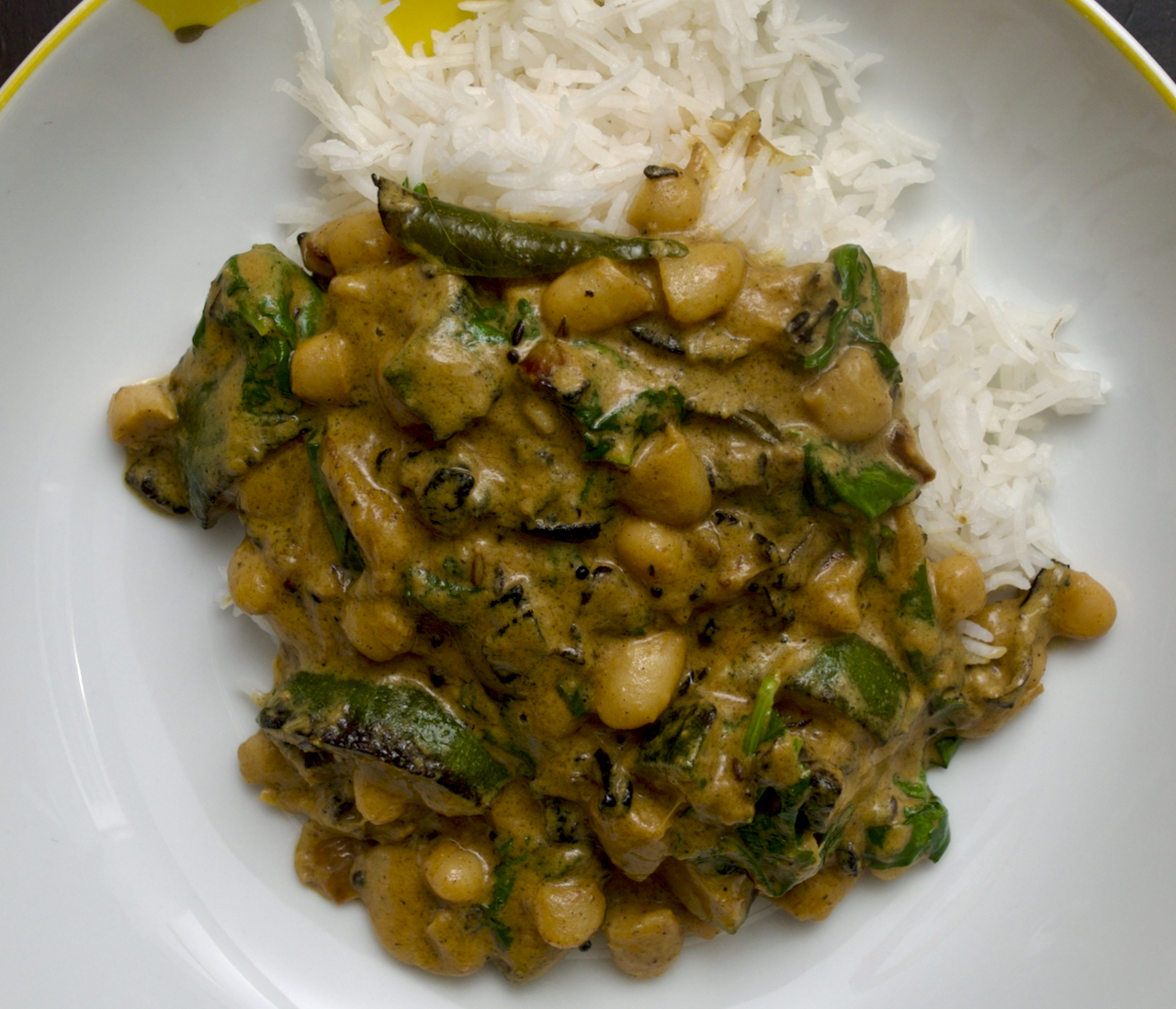
This vegan curry caught our eye on The Guardian website and we’re glad we tried it. Courgettes are in-season and if you like beans and pulses like we do then this is a great combination. We’ll definitely do this one again.
Drink suggestion: we had this with a glass of Asahi Super Dry Lager which we find works better with more foods than other brands. We know it’s not as trendy as craft beer, but it’s a good recipe and has a good ability to work with food.
Courgette & white bean curry – serves 4
5 tbsp rapeseed oil
20 fresh or frozen curry leaves
2 tsp cumin seeds
1 tbsp black mustard seeds
1 onion, peeled and finely chopped
4 cloves of garlic, peeled and very finely sliced
2 green finger chillies, sliced lenthways
500g courgettes, halved lengthways and cut into short pieces
1 tsp ground turmeric
1½ tsp fine sea salt
¼ tsp coarsely ground black pepper
2 x 400g tins coconut milk
2 x 400g tins cannellini beans
40g fresh coriander, leaves and stems sliced
juice of ½ lemon
steamed basmati rice, to serve
Put the oil in a large sauté pan over a high heat. When very hot, add the curry leaves, cumin seeds and mustard seeds and stir. Next, add the onion, garlic, chillies and courgettes and cook for a couple of minutes. Add the turmeric, salt and pepper, and continue cooking for another 4 minutes.
Add the coconut milk and beans, and cook, still on a fast boil, for another 5 minutes, or until the courgettes are tender. Stir in the coriander, then add the lemon juice a tsp at a time until it tastes right.
Serve with basmati rice.
(Original recipe by Meera Sodha in The Guardian, 30th May 2024.)
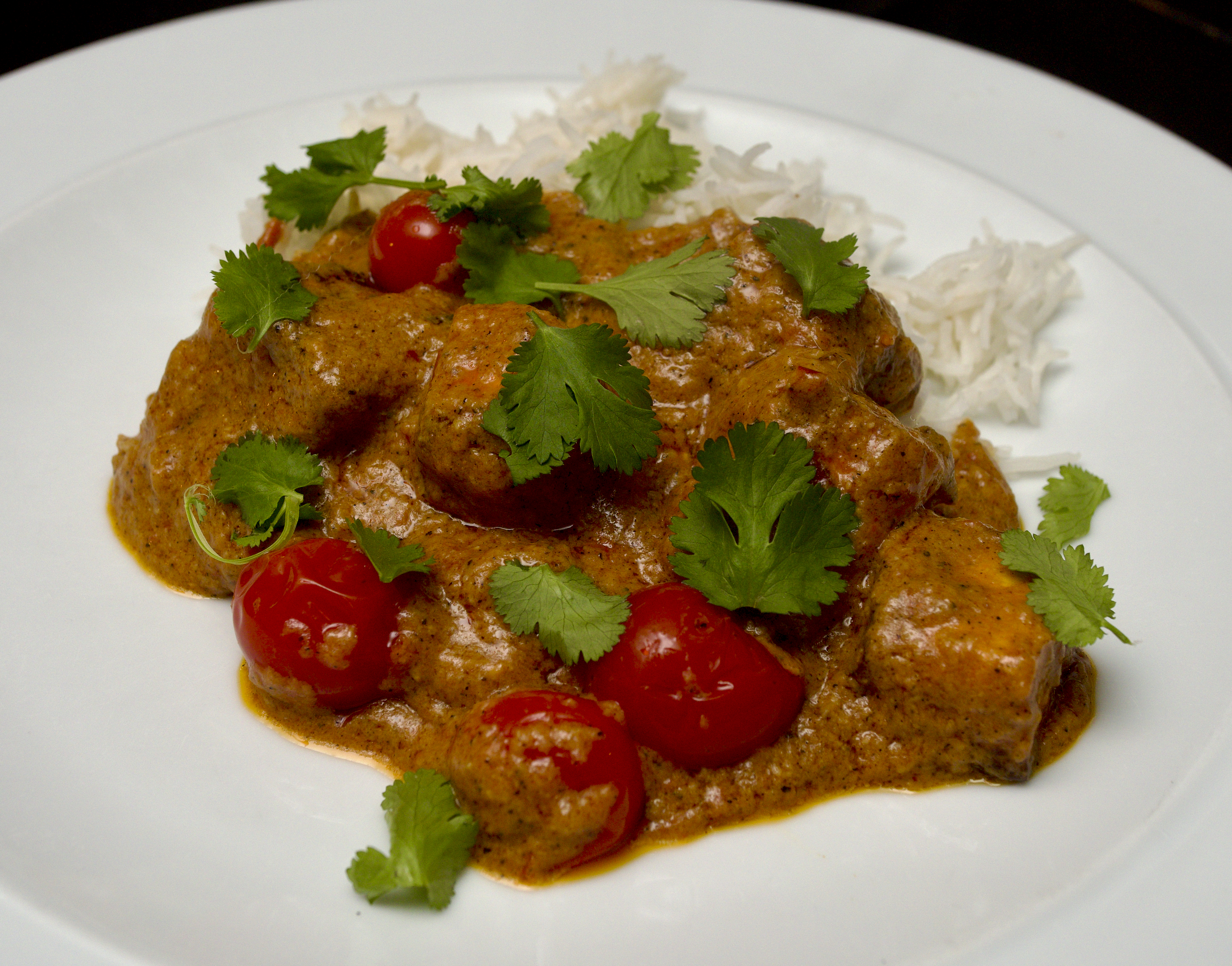
A easy peasy curry for weeknights. Serve with steamed basmati.
Black pepper paneer and cashew curry – serves 4
2 tbsp sunflower oil
2 x 225g packs of paneer, cut into 3cm cubes
2 tbsp finely grated ginger
2 tbsp finely grated garlic
1 tbsp freshly ground black pepper
3 tbsp madras curry paste (we use Patak’s)
1 x 400ml tin coconut milk
1 x 400g tin cherry tomatoes
4 tbsp cashew butter (if you don’t have this you can whizz cashews a food processor to make it)
1 lime, juiced
coriander leaves, to serve
Heat the oil in a large frying pan over a medium-high heat and cook the paneer for 5-6 minutes, until golden on all sides.
Turn the heat down ot medium-low and add the garlic, ginger and black pepper, then cook for 1 minutes before adding the curry paste and cooking for another minute.
Add the coconut milk, tomatoes and cashew butter, then season and simmer for 20 minutes until thickened. Season again add the lime juice.
Scatter coriander leaves over and serve with steamed rice.
(Original recipe by Adam Bush in Olive Magazine, March 2022.)
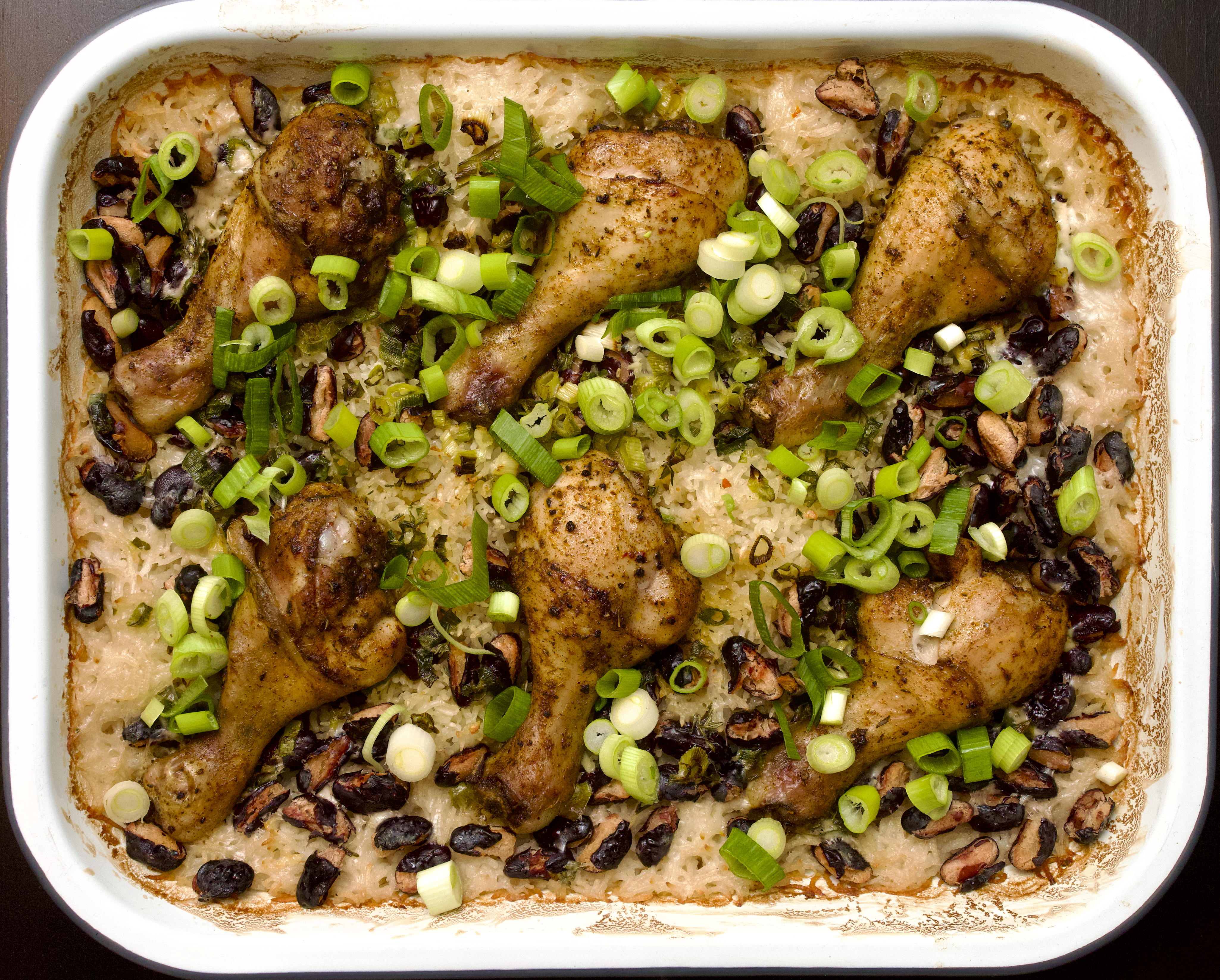
This is all cooked in the oven in one tray and it’s super tasty.
Wine Suggestion: This works really well with Viognier, especially if it has a bit more depth than some entry level ones. We would have loved to open a Condrieu, but in the absence of that it was Jean-Michel Gerin’s Le Champine Viognier from the slopes near the more famed appellation. So well balanced with a purity of stone fruit flavours and a hint of nuttiness that lends itself to this food pairing.
Roast chicken with coconut rice and beans – serves 4
8 chicken drumsticks
2 tbsp rapeseed oil
1 tbsp jerk seasoning
25g butter
275g basmati rice, rinsed
1 x 400ml tin of coconut milk
350ml hot chicken stock
a bunch of scallions, thinly sliced
1 x 400g tin of kidney beans, drained and rinsed
2 cloves of garlic, finely chopped
1 tsp fresh thyme leaves
Preheat the oven to 200C/gas mark 6.
Rub the chicken drumsticks with the oil and jerk seasoning.
Generously grease a large roasting tin with the butter.
Add the rice, then pour in the cococnut milk and chicken stock.
Scatter over half the scallions, then the kidney beans, garlic and thyme and stir gently.
Arrange the drumsticks on top, then cover with foil and bake for 30 minutes.
Remove the foil and roast for another 15 minutes or until the drumsticks are golden brown and cooked through.
Garnish with the rest of the scallions and serve.
(Original recipe from More Midweek Meals by Neven Maguire, Gill Books, 2022.)
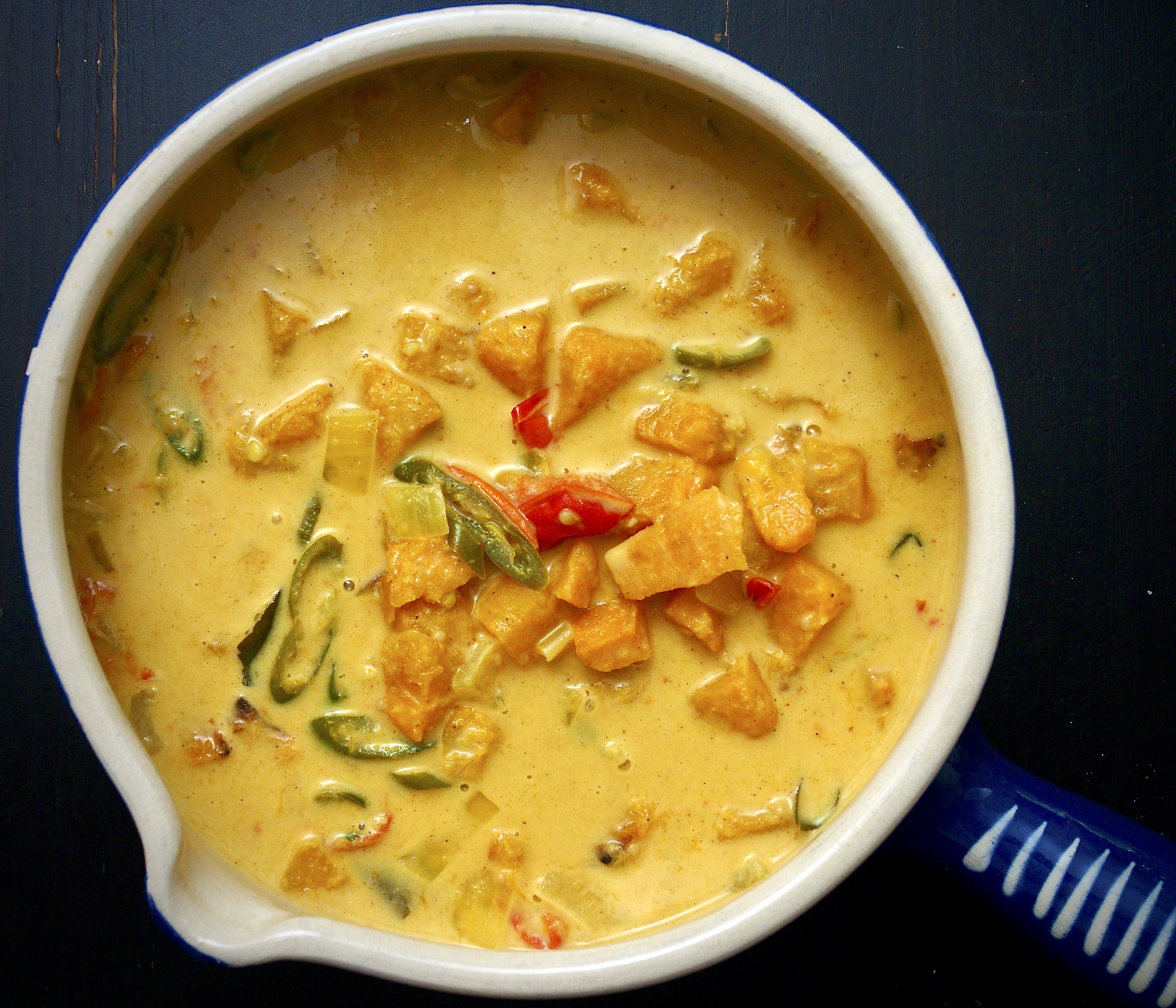
We were very pleased to find a late season crown prince pumpkin at our farm shop last week, which is our favourite variety. You could easily use a butternut squash instead if pumpkin is not available. This is a mild and creamy curry from Sri Lanka.
This is not an attempt at veganuary, we love to eat vegetables just as much as meat and fish. After the excess of Christmas we find a variety of dishes very welcome.
Wine Suggestion: Look to complement the rich, creaminess with a richer, creamy white, like an oaky Chardonnay, or similar. We went a bit left field with an older bottle or Jean-Michel Gerin’s le Champine Viognier which had in our cellar. With a heady apricot, pineapple and mango exoticism and a rich, very textural palate it was an unexpected treat.
Vegan pumpkin & coconut curry – serves 4
1kg pumpkin or butternut squash, peel, deseed and cut into 1 ½ cm cubes (you want about 900g of cubed pumpkin)
2 tsp curry powder, not too hot
1½ tbsp rapeseed oil
fine sea salt
1 onion, finely diced
5 long green chillies, finely sliced, we took the seeds out but you can leave them in if you want more heat
12-15 curry leaves
¾ tsp ground turmeric
½ tsp fenugreek seeds
5 garlic cloves, peeled and crushed
150g cherry tomatoes
1 x 10cm cinnamon stick, snapped in two
2 x 400ml tins coconut milk
juice of 1 lime
rice, to serve
Heat the oven to 200C/180C fan/Gas 6.
Line a baking tray with baking parchment.
Put the pumpkin pieces into a large bowl with the curry powder, rapeseed oil and ¾ tsp of fine sea salt, then toss together to coat. Tip the pumpkin out onto the lined tray and spread it out evenly. Bake in the oven for 35 minutes, then set aside to cool.
Meanwhile, put the onion, chillies, curry leaves, turmeric, fenugreek, garlic, cherry tomatoes, cinnamon stick and 1½ tsp of salt into a saucepan with 200ml of cold water. Bring to the boil over a medium-high heat and cook for about 12 minutes or until the onions and tomatoes are soft and the liquid almost evaporated.
Add the coconut milk and roasted pumpkin, then bring back to a gentle simmer, then remove from the heat and add the lime juice. Taste and add more lime or salt if needed.
(Original recipe by Meera Sodha in The Guardian, 1st January 2022.)
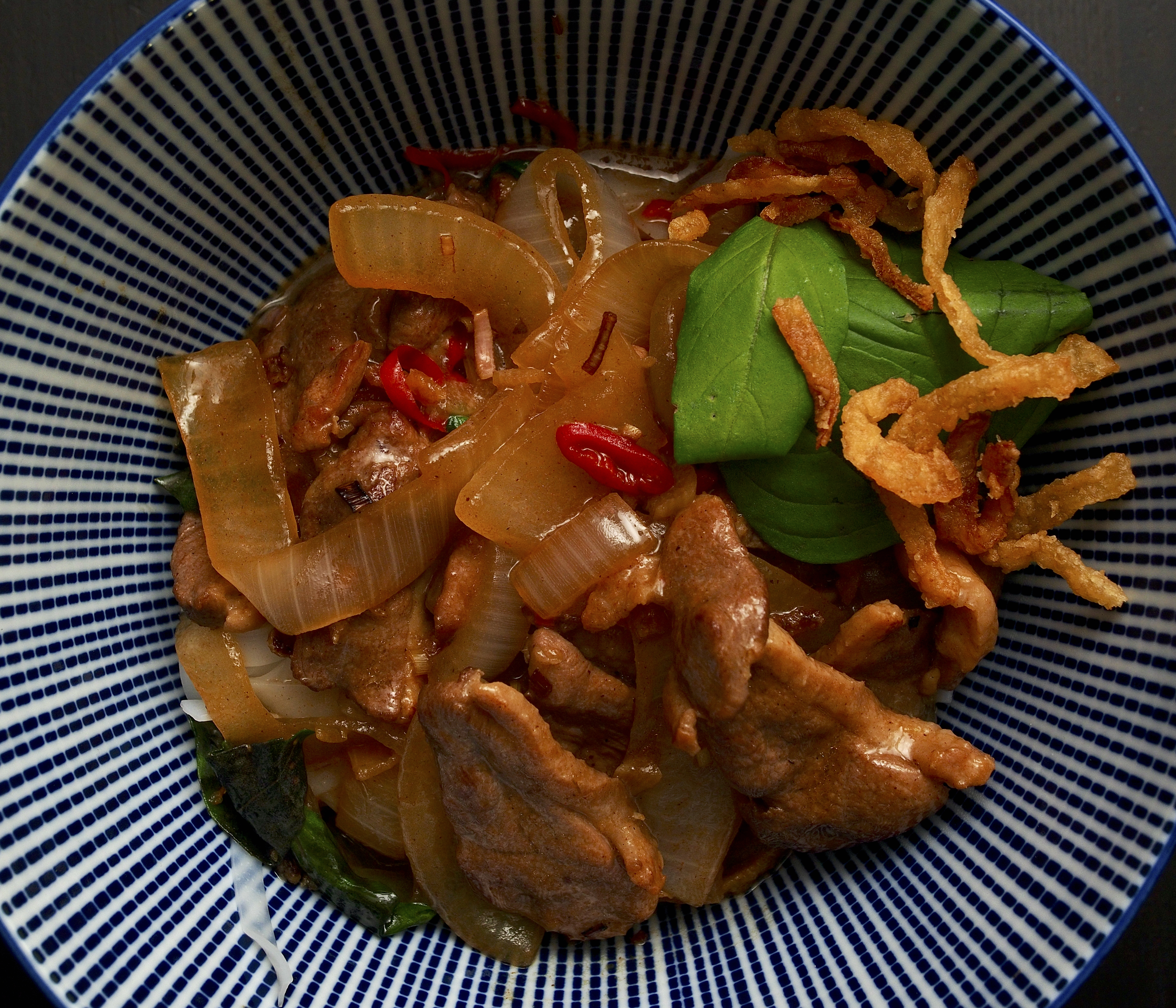
Thai basil can be hard to come by for us but they sometimes have it in our local farm shop which inspired us to cook this delicious duck dish by Neil Perry.
Wine Suggestion: A dry, but fruit forward Pinot Gris was our first thought, but tried the Domaine Bott-Geyl’s Pinot d’Aslace Points Cardinaux, which was to hand, and were delighted with it’s playful nature and depth to match the dish. A blend of all the Pinot grapes, including Pinot Noir this has a vibrant freshness and focus as well as roundness and layers of texture; altogether a good food wine.
1 stem of lemongrass, pale part only, thinly sliced
1 long red chilli, thinly sliced on the diagonal
80ml vegetable oil
1 large white onion, halved and thickly sliced
320ml coconut milk
2 tbsp fish sauce
1 tbsp oyster sauce
1 tbsp tamarind paste
1 tbsp caster sugar
20g crispy fried shallots (shop bought)
a large handful of Thai basil leaves
200g dried rice vermicelli or other rice noodles, cooked and drained (to serve)
Put the duck onto a board, skin side down, and cut into 5mm slices. Put the duck slices into a bowl and add the garlic, lemongrass and chilli. Mix well with your hands.
Heat 60ml of vegetable oil in a wok until smoking. Stir-fry the duck in batches for 1-2 minutes or until golden and cooked through. Transfer to a plate and set aside.
Add more oil if needed, then add the onion and stir-fry for 1-2 minutes or until light golden. Return the duck to the wok, then pour in the coconut milk and bring to thte boil. Turn down the heat and simmer for 2 minutes. Add the fish sauce, oyster sauce, tamarind paste, sugar and sea salt. Simmer for another few minutes, then check the seasoning.
Garnish with fried shallots and Thai basil and serve over noodles.
(Original recipe from Neil Perry’s Good Cooking, Murdoch Books, 2016.)
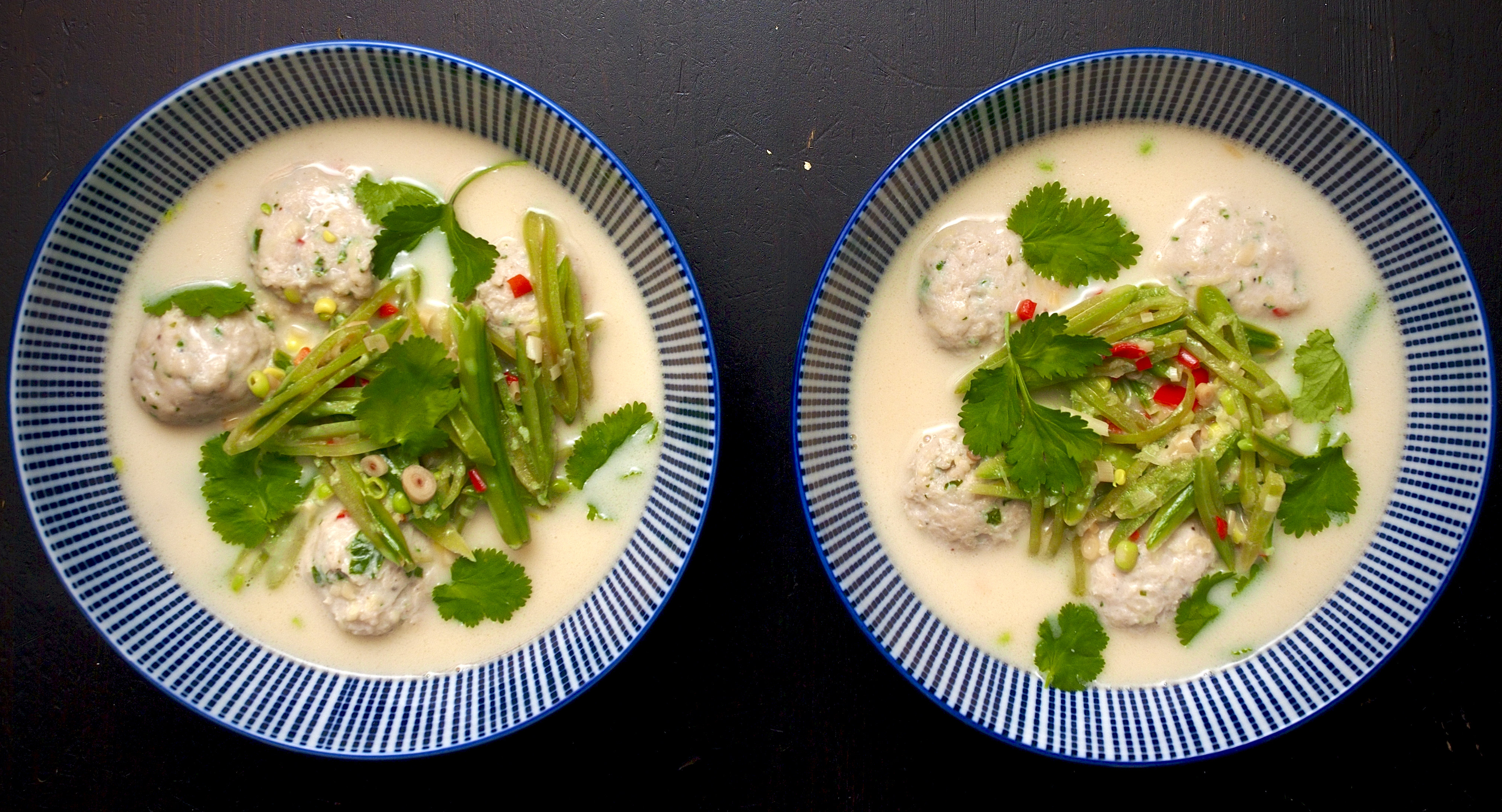
Kids activities are back on which means we spend a few weeknights dropping off and picking up rather than cooking. So we’re on the hunt for more dishes like this, minutes to make but healthy and delicious; flavoursome and light at the same time.
Wine Suggestion: This dish partners really well with a fruity, youthful and dry Riesling.
Chicken meatball tom kha gai – serves 2
4 chicken sausages (we bought ours in M&S)
1 tbsp finely grated ginger
1 tbsp chopped coriander, plus some whole leaves to serve
1 red chilli, finely chopped
50g flat rice noodles
400ml tin coconut milk (you could use half-fat if you like)
300ml chicken stock
1 lemongrass stalk, discard the woody outer leaves and finely chop the inside
50g mangetout, finely sliced
1 lime, juiced
1 tsp brown sugar
1 tbsp fish sauce
Remove the skin from the chicken sausages and put the insides into a bowl. Add 1 tsp of the ginger, the chopped coriander and half the chilli. Mix well and form into 10 small meatballs – wet hands help with this.
Cook the noodles according the packet, then drain and rinse with cold water.
Bring the coconut milk and stock to a simmer in a large saucepan, then add the rest of the ginger and chilli with the lemongrass and simmer for 3 minutes.
Add the chicken meatballs and simmer for 3 minutes, then add the mangetout and cook for another 2 minutes.
Gently stir in the lime, sugar and fish sauce, divide the noodles between 2 warm bowls, then ladle over the hot soup and meatballs, finish with the coriander leaves.
(Original recipe by Janine Ratcliffe in Olive Magazine, May 2018.)
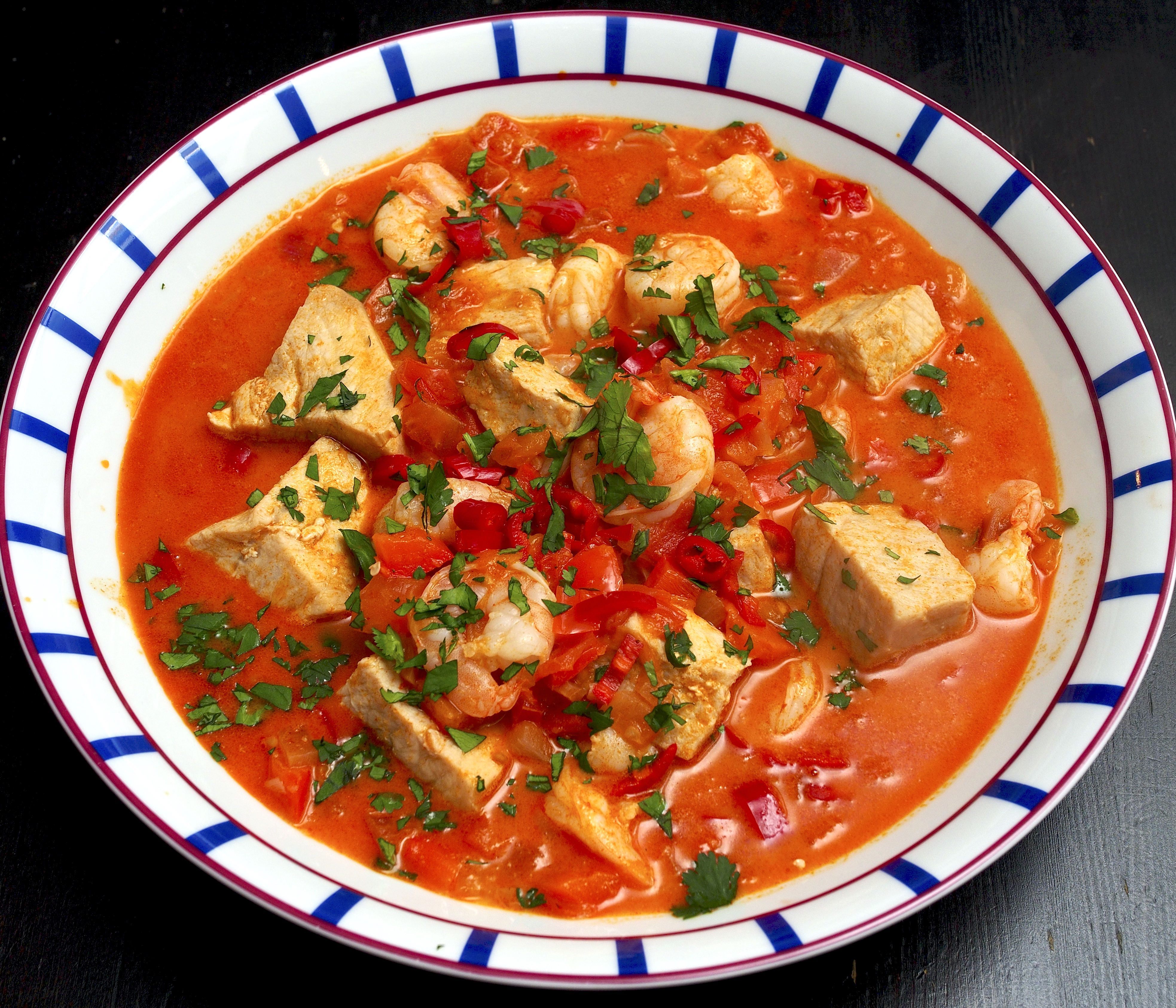
We loved this creamy coconut fish stew from Equador. We went for big chunks of swordfish and prawns but you can substitute other types of fish, like tuna or pollock. Serve with rice.
Wine Suggestion: try to find a light, earthy red with low tannins for this dish, and not too much acidity like a Gamay, riper Pinot Noir or a light Grenache. Tonight’s choice was Domaine Bellier’s Cheverny rouge, a Pinot Noir-Gamay blend from the warm 2018 vintage in the Loire. An under-rated wine region and a good accompaniment to the fish, spices and flavours of this dish.
Encocado – serves 4
2 tbsp olive oil
1 red onion, finely chopped
1 red pepper, finely chopped
3 clove of garlic, finely chopped
2 tsp paprika
1 tsp ground cumin
1 tsp ground coriander
4 tomatoes, finely chopped
1 tbsp tomato purée
400ml tin coconut milk
1 lime, juiced
½ orange, juiced
600g skinless boneless fish cut into 5 cm pieces (you can use snapper, prawns, tuna, swordfish or pollock – we used swordfish and prawns).
a thumb-sized piece of ginger
a small handful of coriander leaves, finely chopped
1 red chilli, finely sliced
Heat the oil in a large pan over a medium heat.
Cook the onion and pepper for 7 to 8 minutes or until soft and golden, then add the garlic and cook for 30 seconds.
Add the spices and some salt, mix well, then add the tomatoes, tomato purée and 100ml of water. Mix well and cook for about 5 minutes or until the tomatoes start to break down.
Add the coconut milk, lime juice and orange juice, then bring to the boil. Reduce the heat to low and simmer for 10 minutes.
Add the fish and stir, then grate in the ginger. Cover and cook gently for 10-12 minutes or until the fish is cooked through. If you are using prawns they won’t take so long to cook so just add them for the last couple of minutes. Scatter over the coriander and chilli to serve.
(Original recipe by John Gregory-Smith in Olive Magazine, April 2018.)
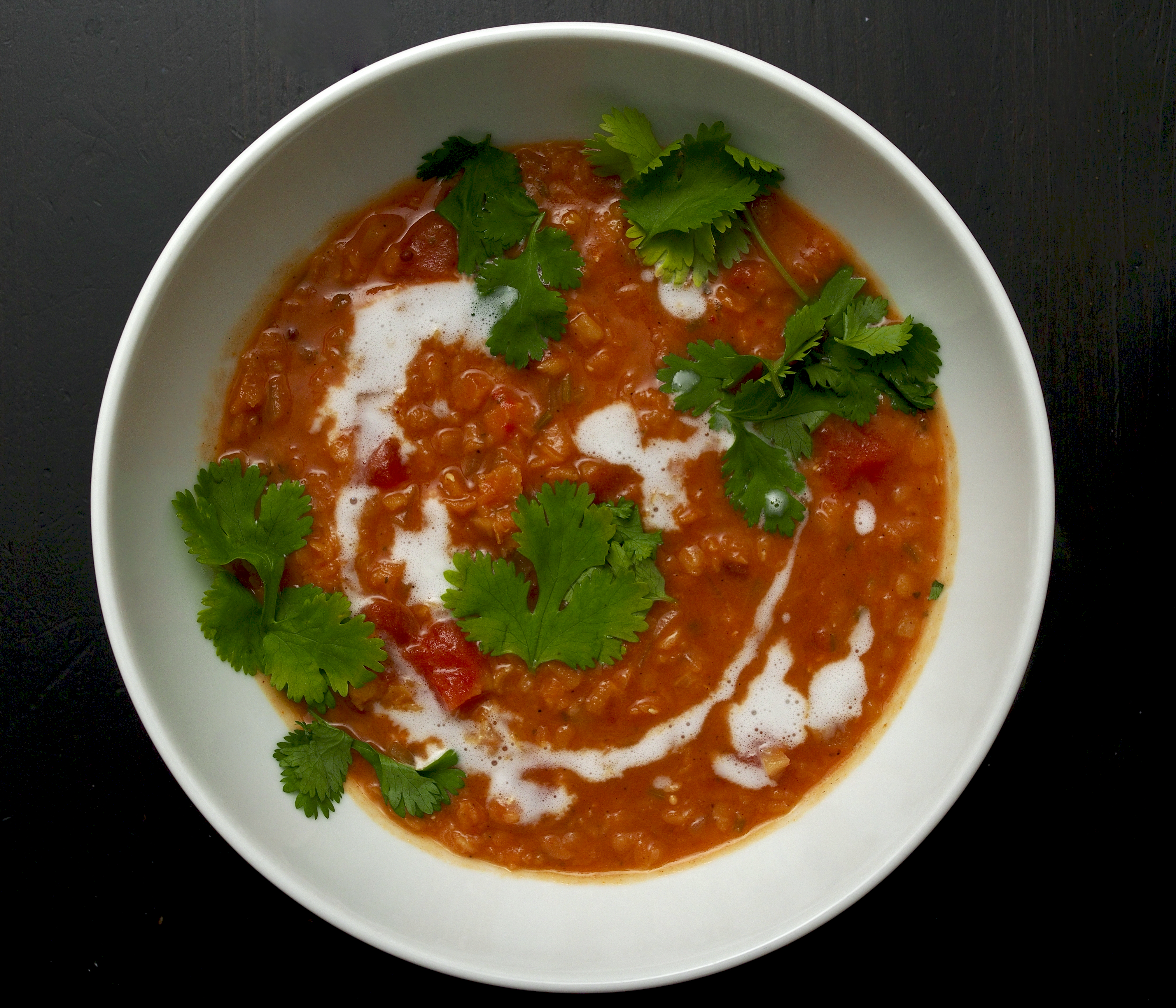
This soup uses all store cupboard ingredients. You do need fresh coriander but we regularly have an almost full bag of this in the fridge and are happy to have this soup idea to use it up. We make soup almost every week in the winter months and this is definitely one of our favourites. The recipe is from Ottolenghi Simple where they suggest leaving it rough, which we did, but you can blend until smooth if you prefer.
Curried lentil, tomato & coconut soup – serves 4
2 tbsp coconut oil or sunflower oil
1 onion, finely chopped
1 tbsp medium curry powder
¼ tsp chilli flakes
2 garlic cloves, crushed
4 cm piece of ginger, peeled and finely chopped
150g red lentils, rinsed and drained
1 x 400g tin of chopped tomatoes
25g coriander stalks, roughly chopped, plus 5g picked leaves to garnish
1 x 400ml tin of coconut milk
Put the oil into a large saucepan and put over a medium-high heat. Add the onion and fry for 8 minutes, stirring often, until soft and caramelised.
Add the curry powder, chilli flakes, garlic and ginger and keep frying for another 2 minutes, stirring all the time.
Add the lentils, stir through for a minute, then add the tomatoes, coriander stalks, 600ml of water, 1 tsp of salt and a lots of black pepper.
Pour the coconut milk into a large bowl and whisk gently until smooth. Set aside 4 tbsp to garnish the bowls, then add the coconut milk to the soup. Bring to the boil, then reduce the heat to medium and simmer gently for 25 minutes, until the lentils are soft abut still holding their shape. Add a bit more water – 100-150ml – if the soup is too thick.
Divide the soup between warm bowls and garnish with a drizzle of coconut milk and some coriander leaves.
(Original recipe from Ottolenghi Simple by Yotam Ottolenghi, Tara Wigley and Esme Howarth, Ebury Press, 2018.)

 Jono & Jules do food & wine