Feeds:
Posts
Comments

Posts Tagged ‘Dill’

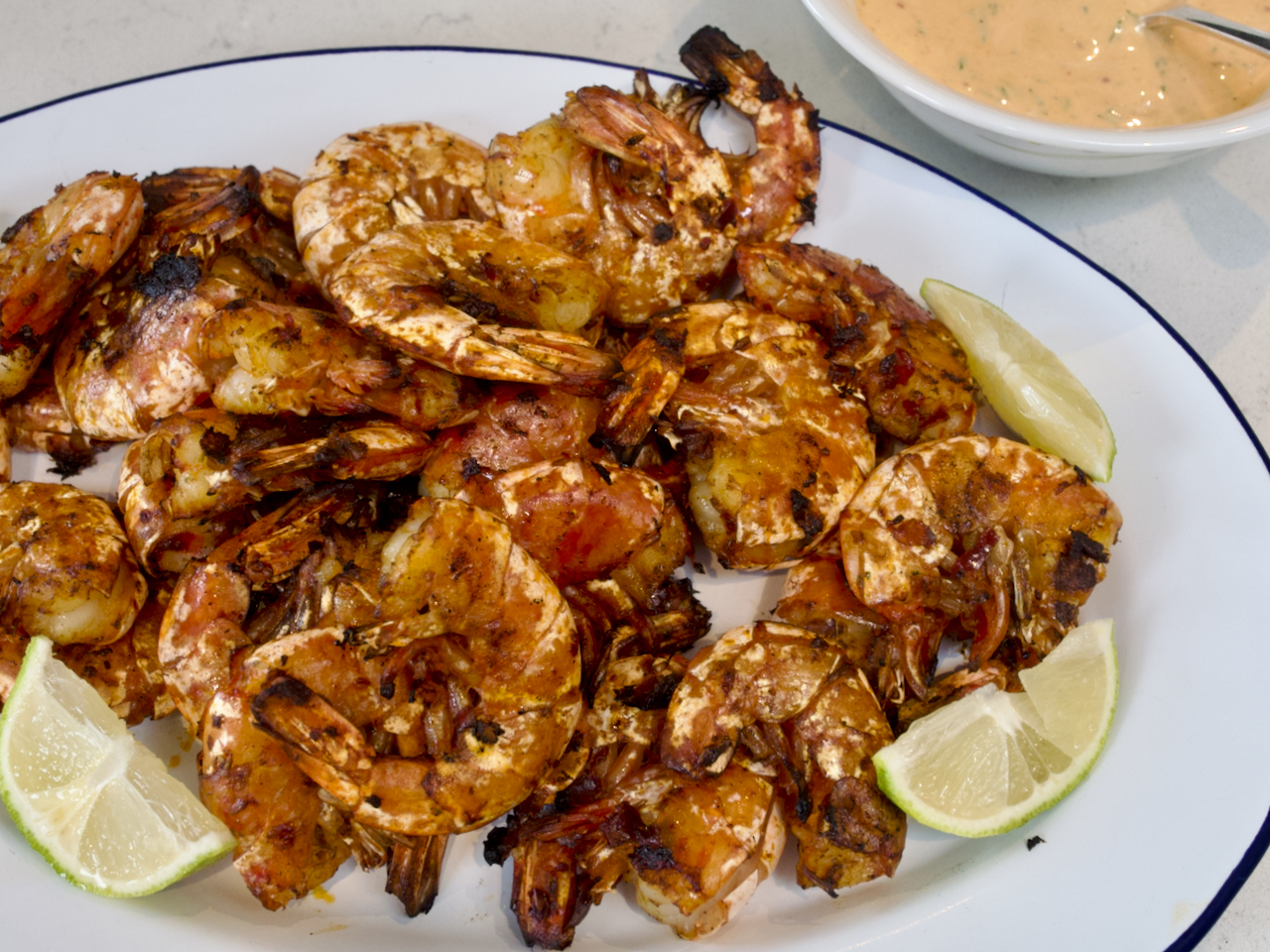
We couldn’t get enough of these smoky, juicy barbecued prawns — a real highlight from one of the many clever ideas in Tom Kerridge’s excellent new barbecue book (which we highly recommend). This recipe is quick, full of flavour, and seriously satisfying.

We’ve thrown in a little tip to make peeling the prawns less of a faff — but if you can find shell-on, deveined prawns, with that handy slit down the back, you’re golden.

Wine Suggestion: A fun starter deserves a wine to match — enter the Umani Ronchi Centovie Rosato. Fresh, dry, and deliciously savoury, the kind of rosé that knows how to keep up with smoky prawns and spicy harissa.

Barbecued prawns with harissa mayonnaise – serves 6

  • 1kg raw prawns in shells (we buy frozen prawns which already have the heads removed and are slit down the back for easy peeling when cooked)
  • 2 tsp cumin seeds, lightly crushed
  • 2 tbsp rose harissa paste
  • 2 tbsp extra virgin olive oil
  • finely grated zest of 2 limes
  • lime wedges, to serve

FOR THE HARISSA MAYONNAISE:

  • 150g mayonnaise
  • 2 tsp rose harissa paste
  • juice of 1 lime
  • 1 tbsp finely chopped dill

Get your barbecue ready for direct cooking.

Twist the heads off the prawns if needed. Then use a pair of scissors to make a shallow cut along the belly of each prawn, leaving the tail shell intact. This will make them easier to peel.

Put the prawns into a large bowl and add the crushed cumin, harissa paste, extra virgin olive oil and lime zest. Season with salt and pepper and mix well. Set aside for 30 minutes.

Meanwhile, mix the mayonnaise ingredients together and season with salt and pepper. Spoon into a serving bowl and set aside.

Place the prawns in a single layer on a very hot part of the barbecue and cook for 2-3 minutes on each side. You want them to be lightly charred.

Transfer the prawns to a serving platter with the bowl of harissa mayonnaise and serve lime wedges alongside.

(Original recipe from The BBQ Book by Tom Kerridge, Bloomsbury:Absolute, 2025.)
Read Full Post »

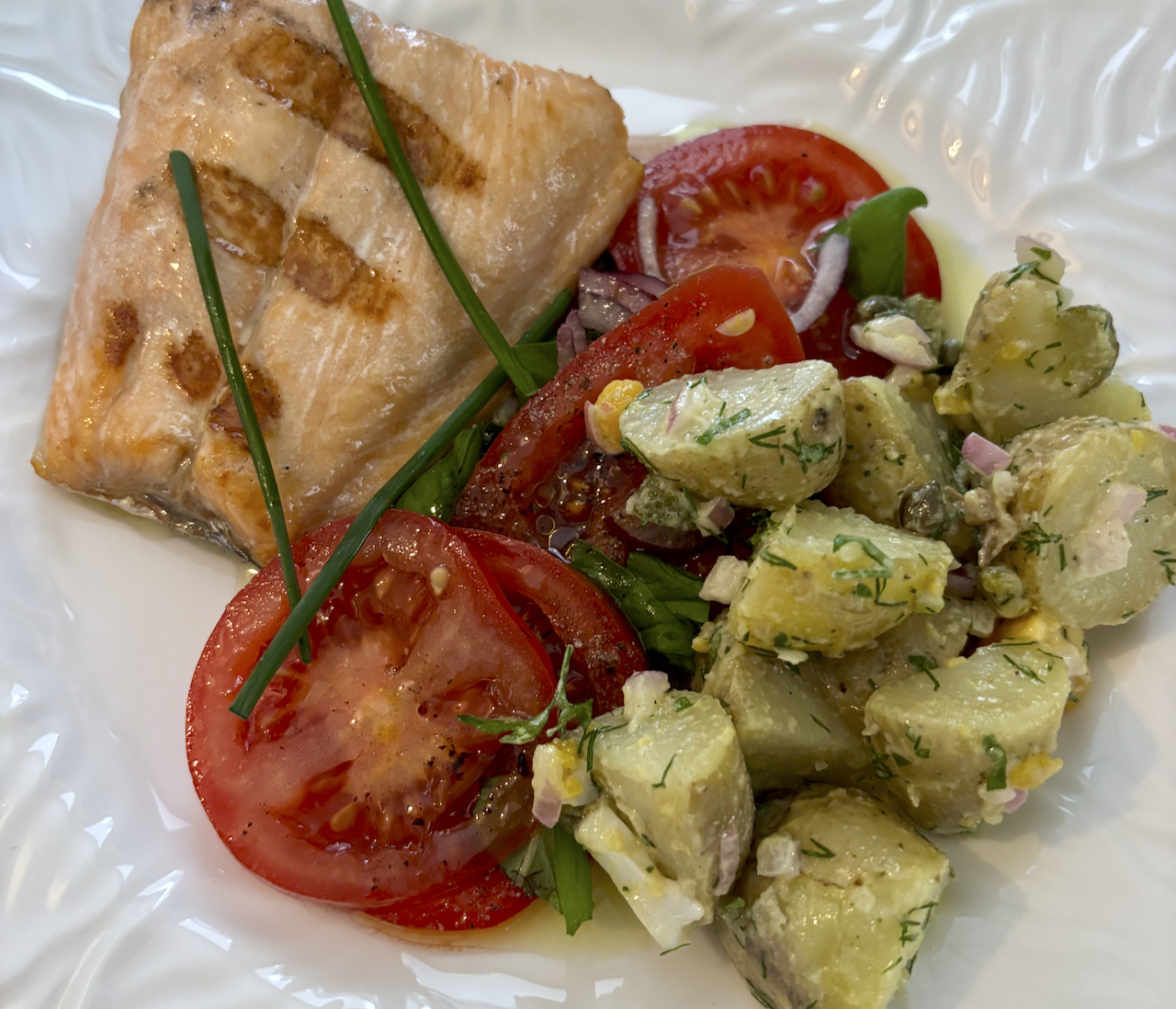
Quite a lot going on here but all very straightforward and not too time-consuming. We highly recommend this potato salad – piquant and not to mayonaisy.

Wine Suggestion: We’ve always enjoyed albariño but have really got into it in a big way recently by exploring the Spanish, Portuguese and new areas in the world making this great grape that pairs with fish and seafood. Tonight a little off-piste the Newton Johnson Albariño from Hermanus in South Africa … which has similar granitic soils to Spain. Sunshine, Antarctic breezes and a southern African hint make this unique but recognisable and delicious with the salmon, capers etc.

Smoked salmon on the barbecue with tomato salad and potato salad – serves 4

  • 4 lightly smoked salmon fillets (we bought ours in M&S)

FOR THE CHIVE DRESSING:

  • a small bunch of chives
  • 1 small shallot, finely chopped
  • 90ml (6 tbsp) of extra virgin olive oil
  • 1 tbsp white wine vinegar
  • ½ tsp salt

FOR THE TOMATO SALAD:

  • 6 tomatoes, finely sliced
  • 1 smal red onion, finely sliced
  • a pinch of caster sugar
  • 1 tbsp extra virgin olive oil
  • 1 tsp sherry vinegar
  • a handful of basil, torn

FOR THE POTATO SALAD:

  • 1 kg new potatoes – we used Jersey Royals
  • 2 banana shallots, finely chopped
  • 2 eggs, hard-boiled, peeled and chopped
  • 2 tbsp capers
  • a handful of cornichons, finely chopped
  • 4 tbsp olive oil
  • 1 tbsp sherry vinegar
  • 2 tbsp mayonnaise
  • a small handful of parsley and dill, chopped

Start by boiling the potatoes for the salad in salty water until tender, then drain and set aside to cool.

Get your barbeuce on to heat up.

When the potatoes have cooled, cut them into halves or quarters and mix with the rest of the potato salad ingredients. Set aside until ready to serve.

For the chive dressing, set aside 4 chives for a garnish and finely slice the rest. Mix them with the shallot, olive oil, vinegar and salt.

For the tomato salad, arrange the sliced tomatoes on a serving plattter and scatter over the red onion. Season well with salt, pepper and sugar, then dress with the oil and vinegar and garnish with the basil.

Brush the fish with a little oil and cook over a hot barbecue for a couple of minutes on each side.

Spoon some chive dressing on each plate and top with the cooked salmon. Garnish with the remaining chives and serve with the tomato and potato salad.

(Original recipe from Rick Stein’s Food Stories, BBC Books, 2024.)

Read Full Post »

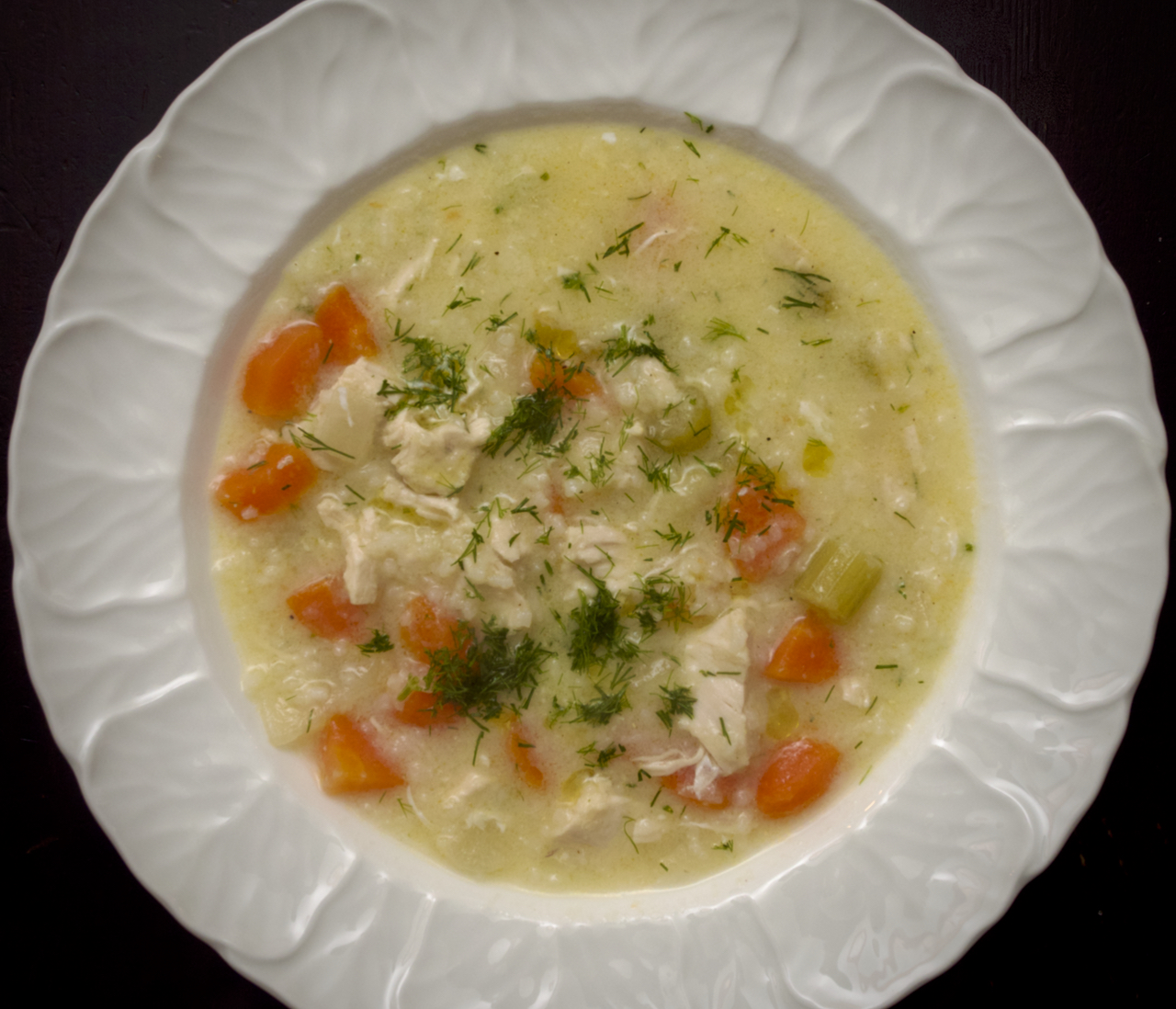
A Greek chicken and rice soup with egg and lemon. Tastes delicious and can only be good for you.

Avgolemono – serves 4 to 6

  • 125g extra virgin olive oil
  • 2 medium white onions, diced into 1cm pieces
  • 2 medium carrots, diced into 1cm pieces
  • 2 ribs of celery, diced into 1cm pieces
  • 3 large cloves of garlic, peeled and finely sliced
  • 3 bay leaves
  • 500g skinless chicken breasts
  • 125g rice
  • 2 large eggs
  • 75g lemon juice
  • 3 tbsp dill, chopped

Heat the oil in a large pot, then add the onions, carrots, celery, garlic, bay leaves and a pinch of salt. Cook gently for about 30 minutes or until soft.

Meanwhile, put the chicken in a single layer in a large pan and cover with 2 litres of water. Add 2 tsp of fine sea salt, then bring to a simmer with the lid on. As soon as the water simmers, turn the heat right down and cook for 5 minutes, then turn the heat off and leave until cool enough to handle.

Remove the chicken and reserve the cooking liquid. Chop the chicken into 1cm pieces.

Add the rice, chicken and chicken cooking waterto the cooked vegetables and bring up to a gentle simmer. Cook for 30 minutes or until the rice is tender.

Whisk the eggs and lemon juice together, then add a couple of ladlefuls of the hot soup to this mix, whisking constantly, before adding the mixture to the soup in a thin stream, stirring all the time.

Bring the soup back to a simmer and leave for another 5 to 10 minutes, stirring constantly until thickened slightly. Remove the bay leaves and check the seasoning. Stir in half the dill, then take off the heat and leave to rest for 10 minutes.

Seve in warm bowls with the rest of the dill, some more black pepper and a drizzle of good olive oil.

(Original recipe by Nick Bramham in FT Magazine, 1/2 March 2025.)

Read Full Post »

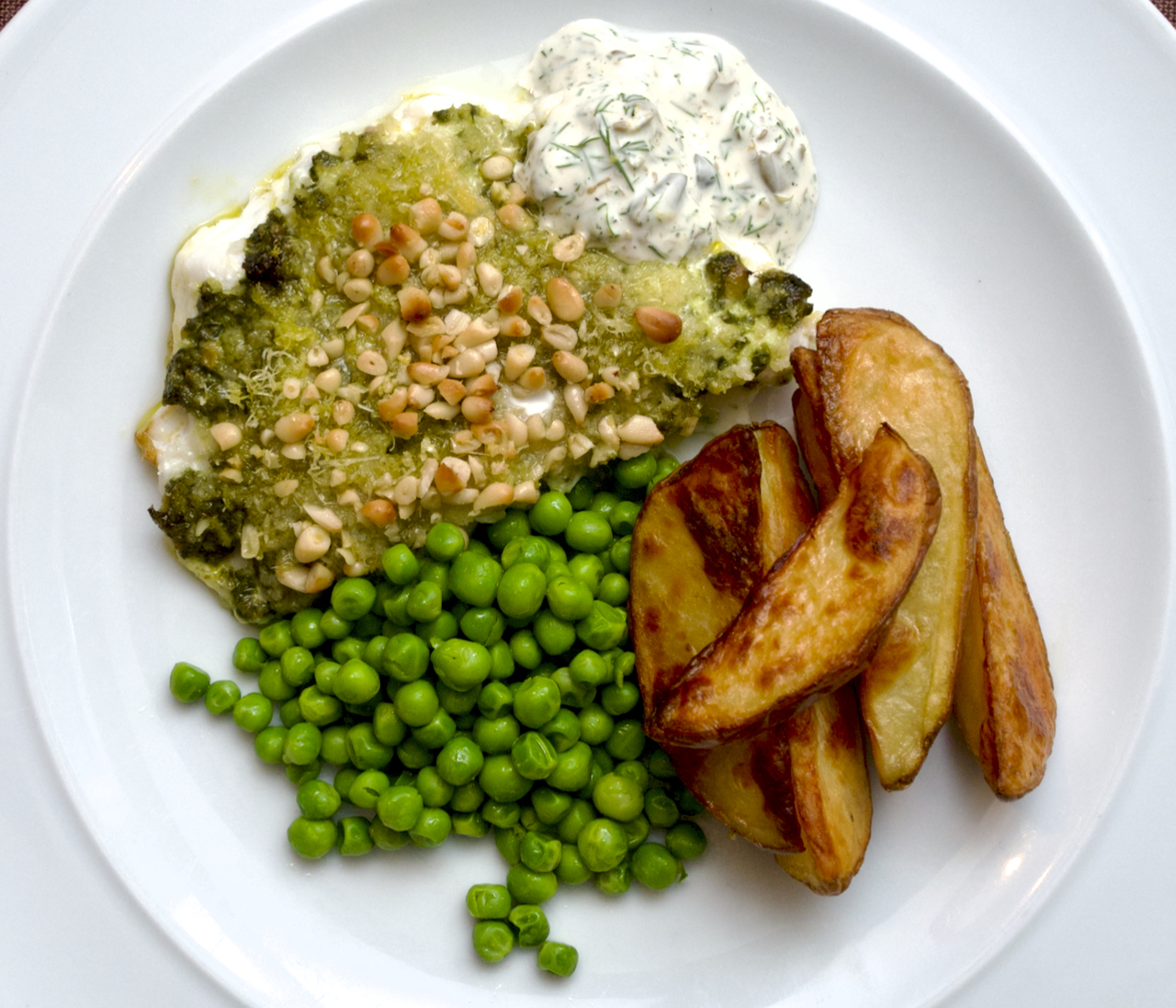
A week night fish dish that was a hit with everyone in our family, and that’s saying something. Peas are obligatory as the side.

Wine Suggestion: this works excellently with a zesty, citrus flavoured white like the Pico Maccario Gavi di Gavi from Piedmont in Italy.

Hake with Panko & Pesto – serves 4

  • 1kg floury potatoes, cut into wedges
  • 2 tbsp olive oil, plus a little extra
  • 4 pieces of hake (or another firm white fish), skin and bones removed
  • 2 tbsp pesto
  • 2 tbsp panko breadcrumbs
  • 2 tbsp finely grated Parmesan
  • 1 tbsp chopped pine nuts
  • 1 tbsp capers, finely chopped
  • 1 tbsp dill, chopped
  • 3 tbsp mayonnaise
  • ¼ lemon, zested and juiced

Heat the oven to 220C/200C fan.

Put the wedges onto a baking tray and drizzle over 1 tbsp of olive oil. Season with salt and pepper, then toss to coat in the oil. Bake for 50-55 minutes, turning halfway, until crispy and golden.

Oil another baking sheet and add the fish pieces. Spread the pesto over the fish pieces and sprinkle over the panko breadcrumbs. Drizzle with a tbsp of olive oil, then sprinkle over the Parmesan and chopped pine nuts. Place in the oven for the final 10-12 minutes of cooking time. The top should be golden and the fish should flake easily.

Mix the capers, dill, mayonnaise, lemon zest and juice with some black pepper in a small bowl. Serve the fish with the wedges, peas and dip.

(Original recipe from BBC Good Food)

Read Full Post »

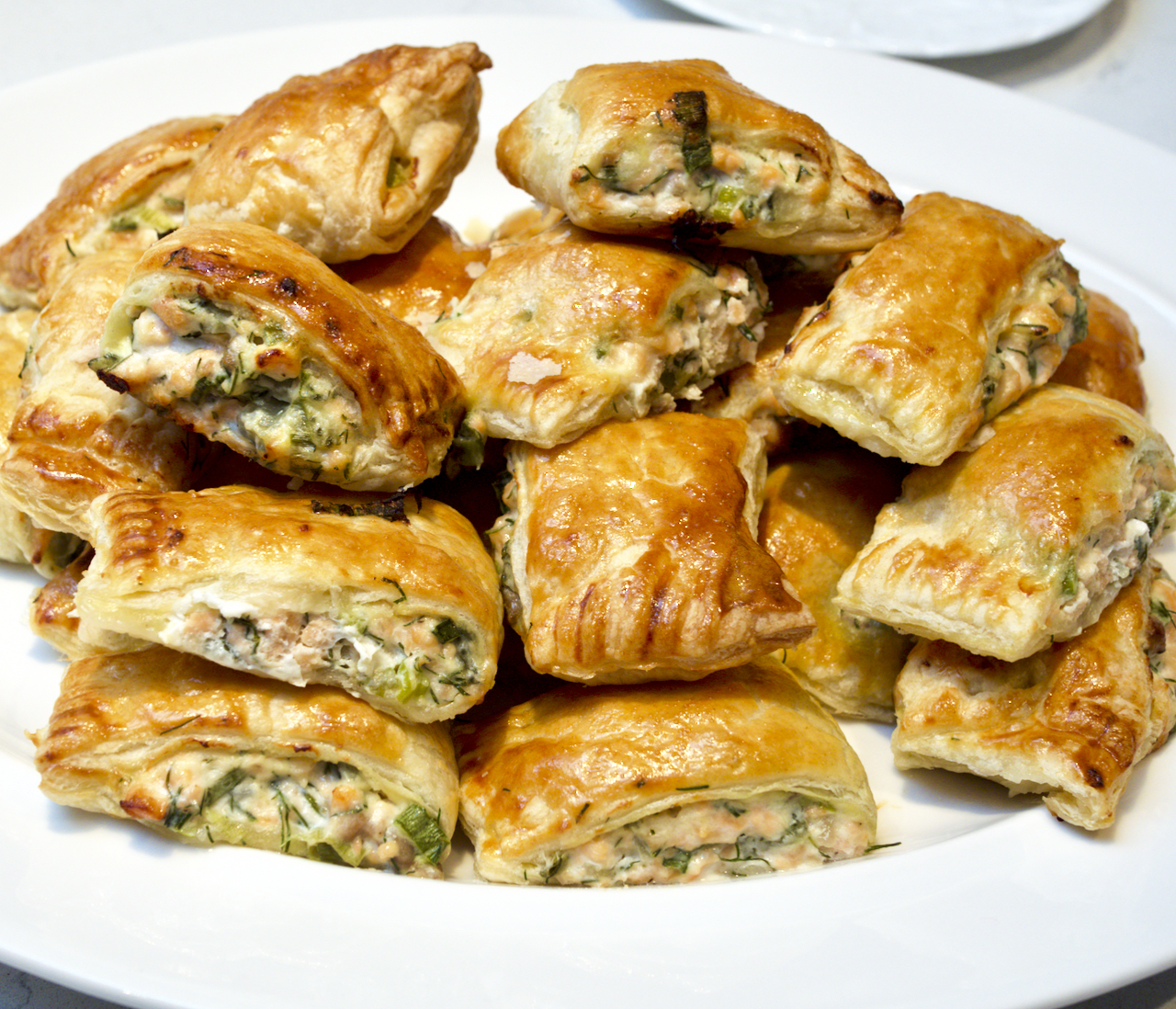
These are great with drinks and much lighter than actual sausage rolls. You can also freeze them uncooked and then cook from frozen for a handy standby.

Wine Suggestion: Bubbles of course … we’re particularly fond of the Domaine de la Taille aux Loups Triple Zero, so named as it uses no chaptilisation, no liquer de tirage and no dosage. As unfettered and refined a Pet Nat you can find anywhere and very special for it.

Little salmon sausage rolls – makes 24

  • 1 x 320g sheet all-butter puff pastry
  • 1 egg beaten

FOR THE FILLING:

  • 200g skinless salmon fillet, finely chopped
  • 115g smoked salmon, finely chopped
  • 125g full-fat cream cheese
  • 25g Parmesan, finely grated
  • small bunch of dill, finely chopped
  • 6 scallions, finely chopped
  • juice of ½ lemon
  • 75g dill pickle from a jar, finely chopped

Heat the oven to 200C/180C Fan/Gas 6.

Preheat a large baking tray.

Put all the filling ingredients into a large bowl, season with salt and pepper and mix well.

Roll the puff pastry sheet out on a lightly floured surface to make a rectangle 30 x 40 cm. Brush with the beaten egg, then divide vertically into 3 even-sized pieces.

Divide the filling into 3 and make a mound down each piece of pastry. Lift and fold the pastry over and seal by pressing down with the back of a fork.

Cut each section into 8 and brush the tops with the beaten egg.

Line the hot baking tray with non-stick baking paper and place the rolls on top. Bake for 18-20 minutes or until golden brown.

(Original recipe from Mary’s Foolproof Dinners by Mary Berry, BBC Books, 2024.)

Read Full Post »

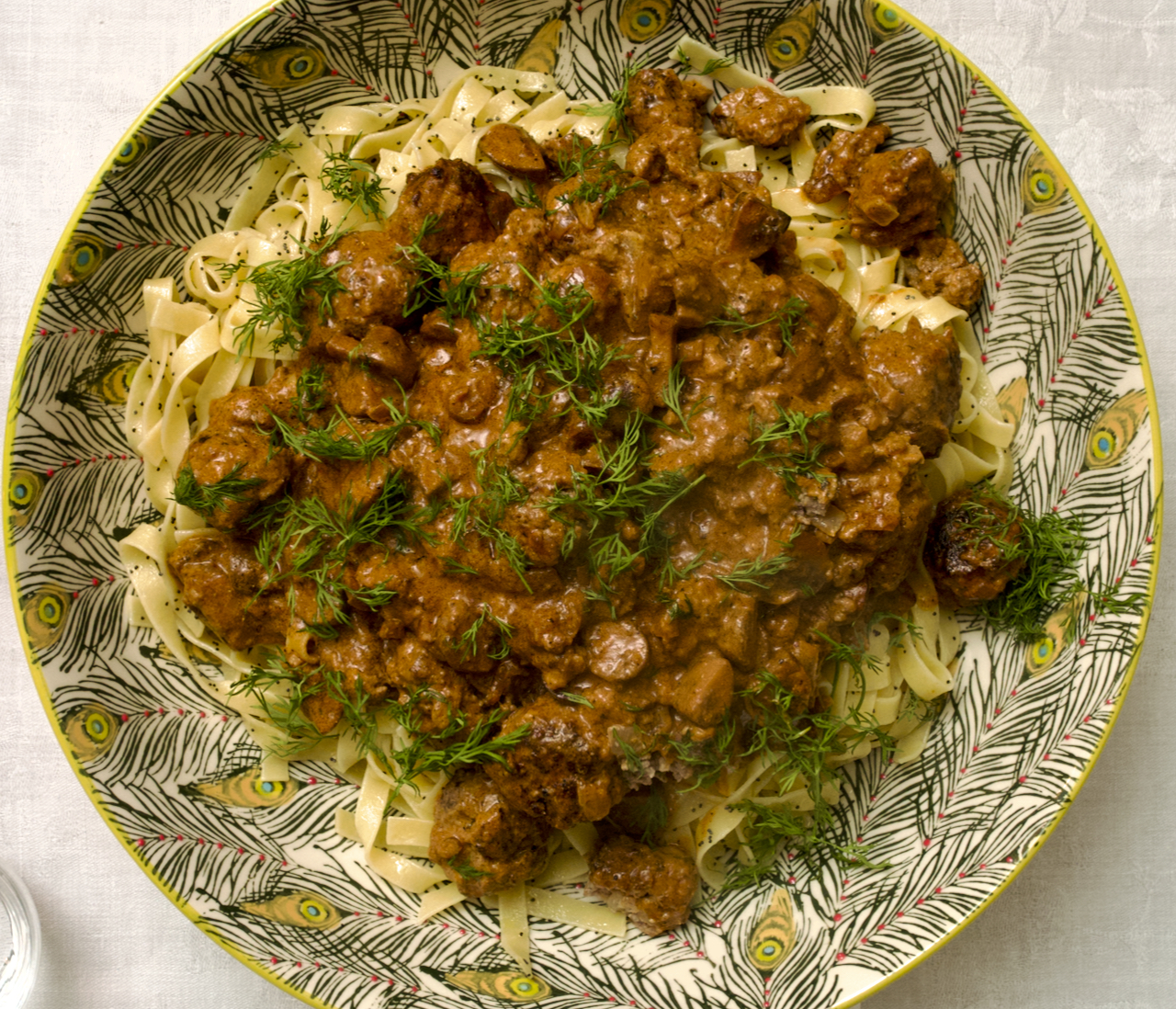
This is nice twist on a retro dish. Delicious!

Wine suggestion: this almost demands an oaked white and given the time of year we thought Patrick Javillier’s Bourgogne Cuvée des Forgets, from the vineyards near Meursault would match with equal amounts of richness, buttery toastiness and a fresh, minerally core. Sometimes nothing can beat a good, deftly handled, oaked Chardonnay.

Meatball Stroganoff – serves 6

  • 500g dried tagliatelle
  • 50g unsalted butter
  • 2 tsp poppy seeds

FOR THE MEATBALLS:

  • 70g slightly stale bread, crusts removed and roughly torn
  • 100ml milk
  • 1 tbsp olive oil
  • 1 onion, finely chopped
  • 2 cloves of garlic, crushed
  • 500g beef mince
  • 2 tsp Dijon mustard
  • 1 egg
  • 5g dill, chopped
  • 1 tsp finely grated lemon zest
  • 60ml olive oil, for frying the meatballs

FOR THE SAUCE:

  • 3 banana shallots, thinly sliced
  • 3 garlic cloves, crushed
  • 50g unsalted butter
  • 400g small chestnut mushrooms, quartered
  • 3 tbsp cognac
  • 1½ tsp hot smoked paprika
  • 1½ tbsp tomato purée
  • 1 tbsp Dijon mustard
  • 1 tbsp Worcestershire sauce
  • 650ml beef stock
  • 150g sour cream

TO SERVE:

  • dill pickles, roughly chopped
  • a handful of dill, roughly chopped

Put the bread in the milk in a large bowl and set aside to soak for about 5 minutes.

Put the oil in a frying pan and place over a medium heat. Add the onion and cook for 8-10 minutes, stirring occasionally, until soft. Add the garlic and cook for a minute, then scrape into a bowl. Allow the onions to cool a little, then add them to the bowl with the soaked bread, along with the remaining meatball ingredients, apart from the oil for frying the meatballs. Season with 1 tsp of salt and some black pepper. Mix together well with your hands, then make 26 meatballs (they should be about 30g each). Cover and keep the mixture in the fridge until ready to cook.

Put 2 tbsp of the oil into a large sauté pan and place over a medium-high heat. When the oil is hot, add half the meatballs and cook for 8 minutes, until nicely browned and just cooked, shake the pan gently to turn them. Transfer to a plate and cook the rest of the meatballs in another 2 tbsp of oil. Set aside.

In the same pan that you fried the meatballs, add the shallots and cook for 5-7 minutes, stirring occasionally, until starting to caramelise. Add the garlic, cook for a minute, then scrape into a bowl.

Add half the butter to the pan, then add half the mushrooms, ¼ tsp of salt and cook for 6 minutes, until well browned and there is no liquid. Tip into the bowl with the shallots and repeat with the remaining mushrooms and butter, adding another ¼ tsp of salt.

Tip the mushrooms and shallots back into the pan and bring to a simmer. Add the cognac and let it bubble for a few seconds, then add the paprika, tomato purée, mustard, Worcestershire sauce and beef stock. Bring to the boil, then simmer for 15 minutes or until reduced by a third. Add the sour cream, meatballs, ½ tsp of salt and some pepper and simmer for 5 minutes.

Meanwhile, cook the pasta in lots of salty water, then drain and return to the pot, then add the butter and poppy seeds. Toss gently to melt the butter, then divide between six bowl and spoon the meatballs sauce on top. Garnish with chopped pickles and dill.

(Original recipe from Ottolenghi Comfort by Yotam Ottolenghi, Helen Goh, Verena Lochmuller & Tara Wigley, Ebury Press, 2024. )

Read Full Post »

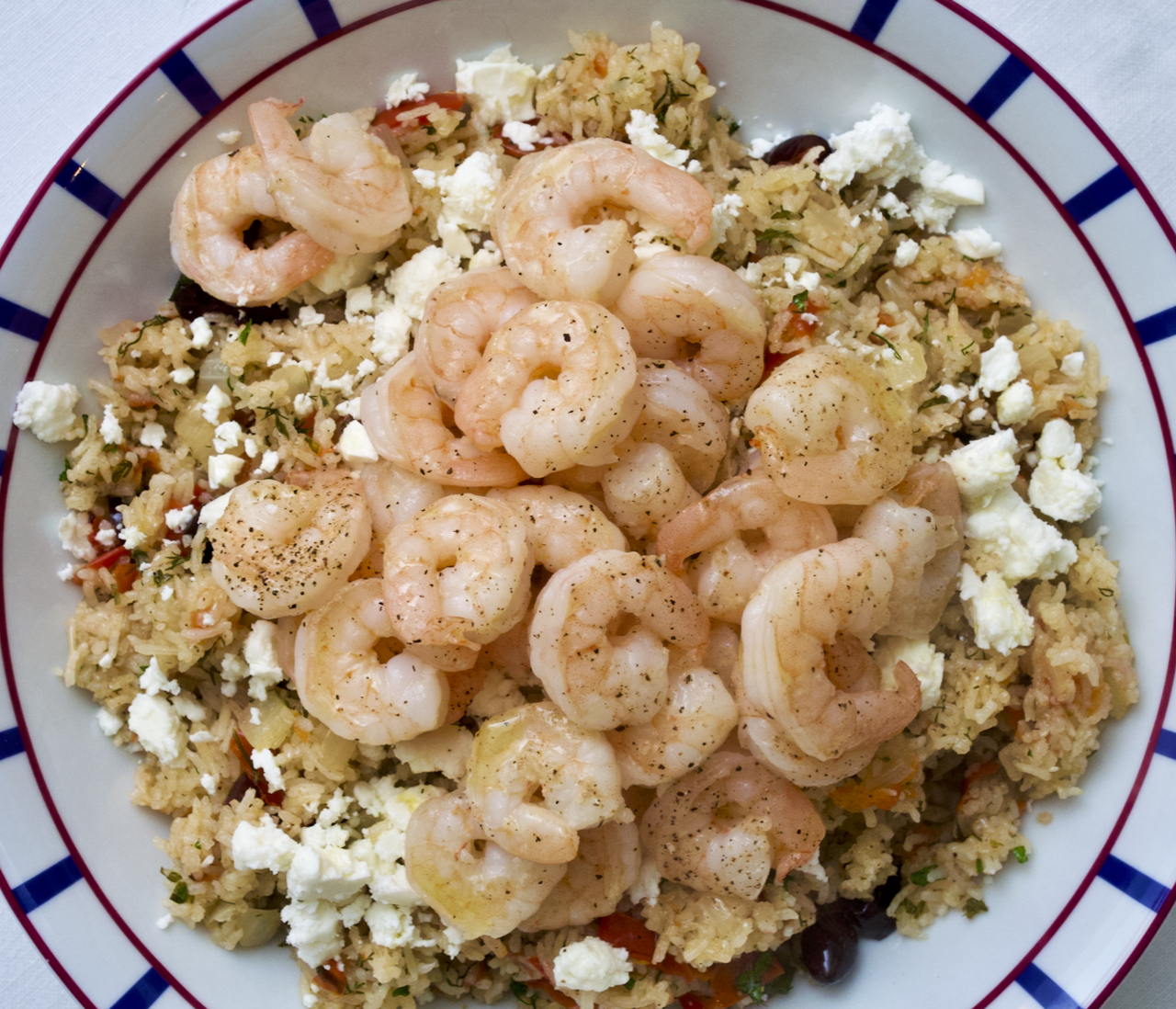
Prawns actually pair very well with feta, which is always a bit suprising to us. It’s nice to have a lighter dish amongst all the winter soups and stews.

Wine Suggestion: we think this suits a white grown somehwere around the Mediterranean, like tonight’s choice of the Hatzidakis Santorini Cuvée 15, a wonderfully fresh and complex Assyrtiko with honeysuckle and herbs on the nose followed by a textured, almost salty palate.

Prawn & feta pilaf – serves 4

  • 225g basmati rice
  • 15g unsalted butter
  • 2 tbsp olive oil, plus a bit extra to
  • 1 onion, finely chopped
  • 1 clove of garlic, crushed
  • 275g tomatoes, deseeded and roughly chopped
  • a big bunch of dill, chopped
  • a big bunch of flat leaf parsley, leaves chopped
  • a handful of mint leaves, chopped
  • 400ml fish stock or light chicken stock
  • 350g raw prawns, shelled and deveined
  • juice of ½ lemon, plus lemon wedges to serve
  • 55g black kalamata olives, pitted and roughly chopped
  • 75g feta cheese, crumbled

Rince the rice in a sieve under cold running water until the water runs clear. Leave to soak for an hour if you have the time, then rinse again.

Heat the butter and 2 tbsp of olive oil in a saucepan and cook the onion until it starts to soften. Add the garlic and tomatoes and continue to cook, stirring now and then, until the onion is cooked and the tomatoes have softened. Stir in the rice and half the herbs, season well, then pour in the stock and bring to the boil. Boil hard until the rice starts to look pitted, with little holes in the service and it seems like the liquid has disapeared.

Wrap a clean tea towel around the lid of the pan and cover the pan. Reduce the heat to low and leave to cook for 20 minutes.

When the rice is almost ready, dry the prawns on kitchen paper and quickly sauté in a little olive oil over a high heat. Squeeze over the lemon juice and season with black pepper and salt.

When the rice is cooked, fork through the olives, remaining herbs and lemon juice with a good glug of your best extra virgin olive oil. Transfer to a serving platter, then scatter over the feta and mound the prawns on top. Drizzle again with olive oil and serve with lemon wedges.

(Original recipe from Crazy Water, Pickled Lemons by Diana Henry, Aster*, 2024.)

Read Full Post »

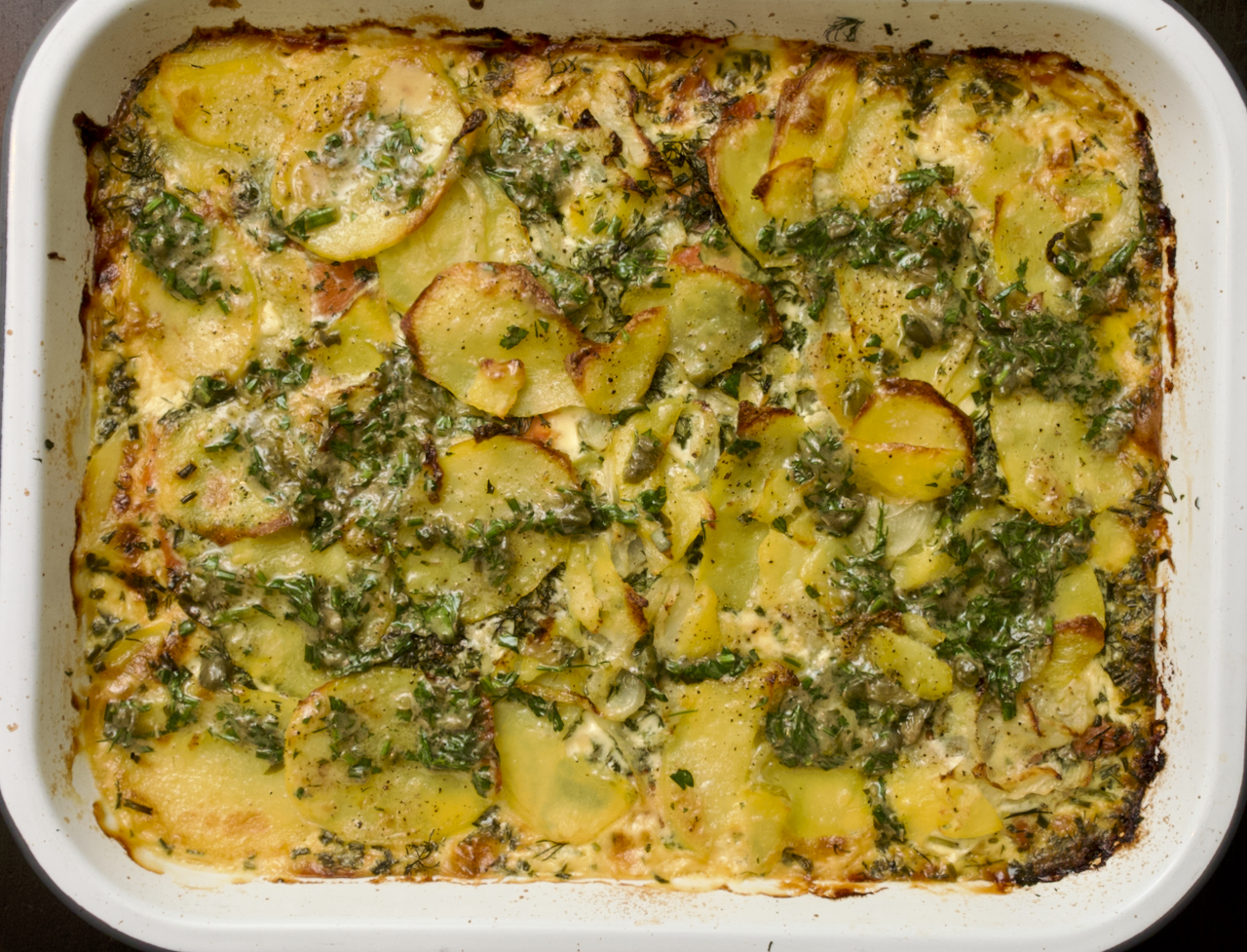
Such a lovely recipe, and you can of course use smoked salmon. We like smoked trout from Goatsbridge which is a local supplier. Recipe inspiration from the new Ottolenghi book – Comfort. You must have a green salad and a glass of white wine to serve. If you have a mandolin it will cut the potatoes and fennel just right.

Wine Suggestion: We served an oddity/one-off from Chateau Hureau from Saumur in the Loire. They grew a low quantity of Chenin Blanc grapes in 2022 due to frost so decided to make a Blanc de Noirs from Cabernet Franc for a bit of fun. Only available at cellar door it’s both crisp and fresh, but significantly has bags of texture which this dish needs. Look for whites with a touch of skin contact, or aged on lees as a substitute.

Potato, fennel & smoked trout bake – serves 4

  • 200ml milk
  • 425ml double cream
  • 2 anchovies, finely chopped
  • 3 cloves of garlic, lightly smashed with skin on
  • 1 lemon, skin finely shaved into strips
  • 2 tsp fennel seeds, finely ground
  • 850g Yukon gold or red potatoes, peeled and sliced into ½ cm thick slices
  • 1-2 large fennel bulbs, thinly sliced
  • 4 egg yolks
  • 10g dill fronds, roughly chopped
  • 20g chives, finely chopped
  • 20g parsley leaves, finely chopped
  • 1½ tbsp unsalted butter, softened
  • 200g smoked trout (or smoked salmon) slices, roughly torn

for the lemon butter sauce:

  • 2 tbsp lemon juice
  • 2 tsp capers, roughly chopped
  • 40g unsalted butter, fridge cold and roughly chopped

Heat the oven to 170C fan.

Put the milk, cream, anchovies, garlic, lemon strips and ground fennel into a small saucepan. Place over a low heat and warm for 10 minutes, making sure it never comes to the boil. Give it a stir now and then and press on the solids to get plenty of flavour out of them. Remove from the heat.

Put the potato and fennel slices into a saucepan and cover with cold, salted water. Bring to the boil and cook for 6-7 minutes or until just tender. Drain and set aside.

Whisk the egg yolks with ¾ tsp of salt and a good grind of pepper in a large bowl. Strain the infused milk into the eggs, pressing on the solids against the sieve. Whisk to combine.

Combine all the herbs in bowl. Measure out 2 tbsp and reserve for the butter sauce.

Grease an ovenproof dish with ½ tbsp of the butter. Spoon a third of the potato and fennel over the base and grind over some pepper. Sprinkle over half the herbs and lay half the smoked trout over the top. Repeat with half the remaining potatoes and fennel, season with pepper, then add all the remanining trout and the rest of the herbs. Arrange a final layer of potato and fennel on top and carefully pour over the egg mixture. Grind over some more pepper and dot over the remaining butter. Bake for 45 minutes or until set and just golden. Remove from the oven and rest for 10 minutes.

Meanwhile make the lemon butter sauce. Put the lemon juice into a small saucepan on a medium-high heat and bring to a bubble. Allow to bubble for 1 minute, then add the capers and butter, a few pieces at a time. Whisk until smooth and creamy, then remove from the heat and stir in the reserved herbs and some more pepper. Spoon over the dish and serve warm with a green salad.

(Original recipe from Ottolenghi Comfort by Yotam Ottolenghi, Helen Goh, Verena Lochmuller & Tara Wigley, Ebury Press, 2024.)

Read Full Post »

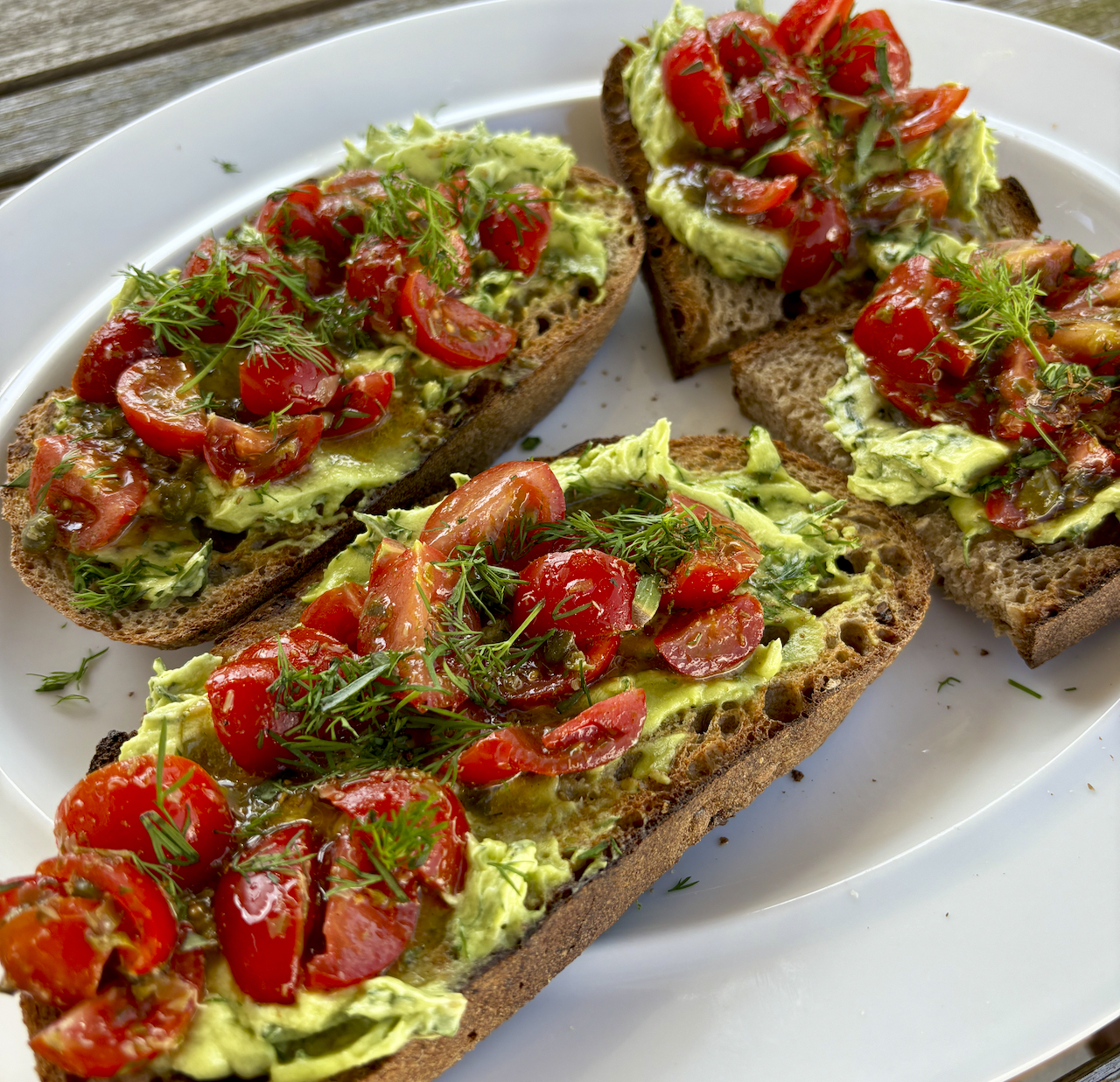
So much more than avocado on toast. A delicious recipe from Ottolenghi Simple.

Avocado butter on toast with tomato salsa – serves 4

  • 2-3 ripe avocados, you want about 250g of scooped out avocado
  • 60g unsalted butter, softened and cut into cubes
  • 3 limes, you need 1½ tbsp finely grated lime zest and 1½ tbsp lime juice
  • 10g tarragon leaves, roughly chopped
  • 10g dill, roughly chopped
  • 200g cherry tomatoes, quartered
  • 2 tsp capers, finely chopped
  • 2 tbsp olive oil
  • 4 slices of sourdough
  • 1 small garlic clove, halved
  • ¼ tsp cumin seeds, toasted and crushed

Put the avocado flesh, butter, half the lime zest, half the lime juice and ½ tsp salt into a blender or small bowl of a food processor. Whizz until smooth, then transfer to a bowl along with two-thirds of the herbs. Fold the herbs through then put into the fridge for 10 minutes.

Mix the tomatoes, capers, remaining lime zest & juice and the olive oil with plenty of black pepper. Set aside.

Toast the bread and rub one side with the garlic. Leave the bread to cool slightly then spread each slice with avocado butter and top with the tomato salsa. Sprinkle over the remaining herbs and the crushed cumin.

(Original recipe from Ottolenghi Simple by Yotam Ottolenghi, Tara Wrigley & Esme Howarth, Ebury Press, 2018.)

Read Full Post »

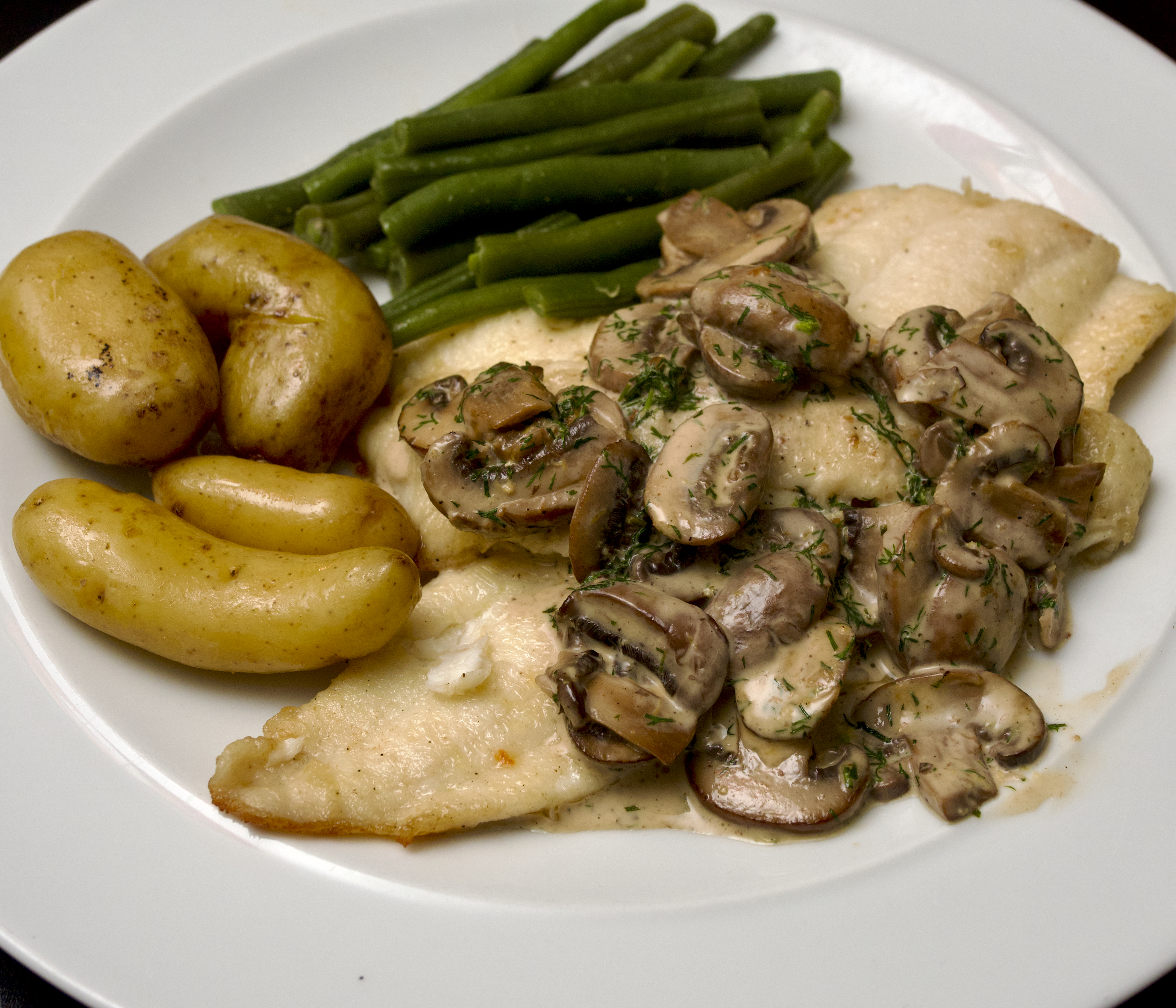
We are still a bit apprehensive when cooking fish and shy away from the simple methods that require last minute cooking. We shouldn’t do this as they tend to be the dishes that show the fish at its best. We managed to conquer this one anyhow.

Wine Suggestion: Served with Domaine Rochette Morgon Régnié Cuvée des Braves, a red fruited Beaujolais from this sensitive and thoughtful family making wine in a Cru that is often overlooked. I say… expand your horizons beyond Morgon and Fleurie! Rich, powerful, and aromatically exquisite.

Plaice with Creamy Mushroom Sauce – serves 4

  • 8 skinless, single plaice fillets (or 4 double fillets which you need to half lengthways)
  • 45g plain flour
  • 2 tbsp olive oil
  • 15g butter

FOR THE SAUCE:

  • 20g butter
  • 200g small chestnut mushrooms, thinly sliced
  • 1 clove of garlic, crushed
  • 120ml dry white wine
  • 170ml double cream
  • finely grated zest of 1 lemon
  • juice of ½ a lemon
  • 2 tbsp chopped dill

Pat the fish dry with kitchen paper. Sprinkle the flour onto a plate and season well with salt and pepper. Coat both sides of the fish fillets in the flour.

Heat 1 tbsp of the oil with the butter in a large non-stick frying pan over a medium-high heat. Add 4 of the fish fillets and fry for 1½ minutes-2 minutes or until golden. Gently turn and fry for another 1½-2 minutes on the other side. Careful not to let the butter brown. Transfer the fillets to a serving platter, cover with foil and keep warm while you cook the rest.

To make the sauce, melt the butter in the same frying pan. Add the mushrooms and fry over a medium-high heat for a few minutes, then add the garlic and fry for another minute or so. Pour in the wine, stir and bring to the boil. Simmer for a couple of minutes, then pour in the cream. Simmer, stirring, until the sauce thickens.

Stir in the lemon zest and juice, season with salt and pepper and add the dill. Spoon the sauce over and around the fish and serve with a few extra dill sprigs if you like.

(Original recipe from Mary Berry Cooks the Perfect, Penguin Random House Group, 2014.)

Read Full Post »

The sauce here is fairly spicy but well-tempered by the fishcakes and lots of white rice and some yoghurt if you like. The depth of flavour and balance is superb. You can cook the sauce and prep the kofta mixture in advance.

Wine Suggestion: this works with Grenache – Tempranillo blends, especially if they’re fruit forward and low/no oak like Jesus Romero’s Rubus from rural Aragon. We love this as it’s real hands-off winemaking at it’s best, capturing the essence and energy of the fruit in the vineyard.

Fish koftas in chilli and tomato sauce – serves 4

FOR THE KOFTAS:

  • 500g firm white fish without skin and bones, we used hake
  • 4 scallions, finely sliced
  • 10g dill, roughly choped, plus extra picked fronds to serve
  • 1 green chilli, deseeded and finely chopped
  • 1½ tsp finely grated lemon zest
  • 1 egg, beaten
  • 30g panko breadcrumbs
  • 3 tbsp olive oil

FOR THE TOMATO SAUCE:

  • 15g dried ancho chillies, stems removed
  • 2 tsp caraway seeds, toasted and roughly crushed
  • 1 tbsp cumin seeds, toasted and roughly crushed
  • 6 cloves of garlic, peeled
  • 1 onion, roughly chopped
  • 60m olive oil
  • 1 green chilli, halved and seeds removed
  • 1 tbsp tomato purée
  • 3-4 plum tomatoes, roughly grated and skins discarded
  • 300ml chicken stock or vegetable stock
  • 2 tsp caster sugar
  • 25g fresh coriander, roughly chopped

Make the sauce first. Put the dried chillies into a bowl and cover with lots of boiling water. Leave to soak for 20 minutes, then drain and discard the liquid and the seeds. Roughly chop the chillies and put them into a food processor with two-thirds of the caraway and cumin seeds, the garlic, the onion and 2 tbsp of the oil. Whizz until you have a coarse paste.

Heat 2 tbsp olive oil in a large sauté pan, then add the chilli paste, green chilli and tomato purée. Cook for 7 minutes, stirring frequently, until soft and fragrant. Add the tomatoes, stock, 200ml water, sugar, half the coriander, 1¼ tsp of salt and a good grind of pepper and bring to the boil. Lower the heat and simmer for 15 minutes, then keep warm until needed (or cool and re-heat later).

Meanwhile, make the koftas. Finely chop the fish into ½-1cm pieces. Put them into a large bowl with the scallions, dill, chilli, lemon zest, egg, panko, the rest of the coriander, the remaining caraway and cumin, 1 tsp of salt and plenty of black pepper and mix well to combine. Form into 12 round fish cakes, pressing to compact them so they don’t fall apart.

Heat 1½ tbsp of oil in a large frying pan over a medium-high heat. Add half the koftas and cook for 2½ minutes on each side, or until golden. Transfer to a plate, then repeat with the rest of the koftas.

Bring the sauce to a simmer. Add the koftas, then turn the heat to medium low and cook for 10 minutes. Leave to sit for 5 minutes, then serve with the extra dill.

(Original recipe from Ottolenghi Test Kitchen, Shelf Love by Noor Murad & Yotam Ottolenghi, Ebury Press, 2021.)

Read Full Post »

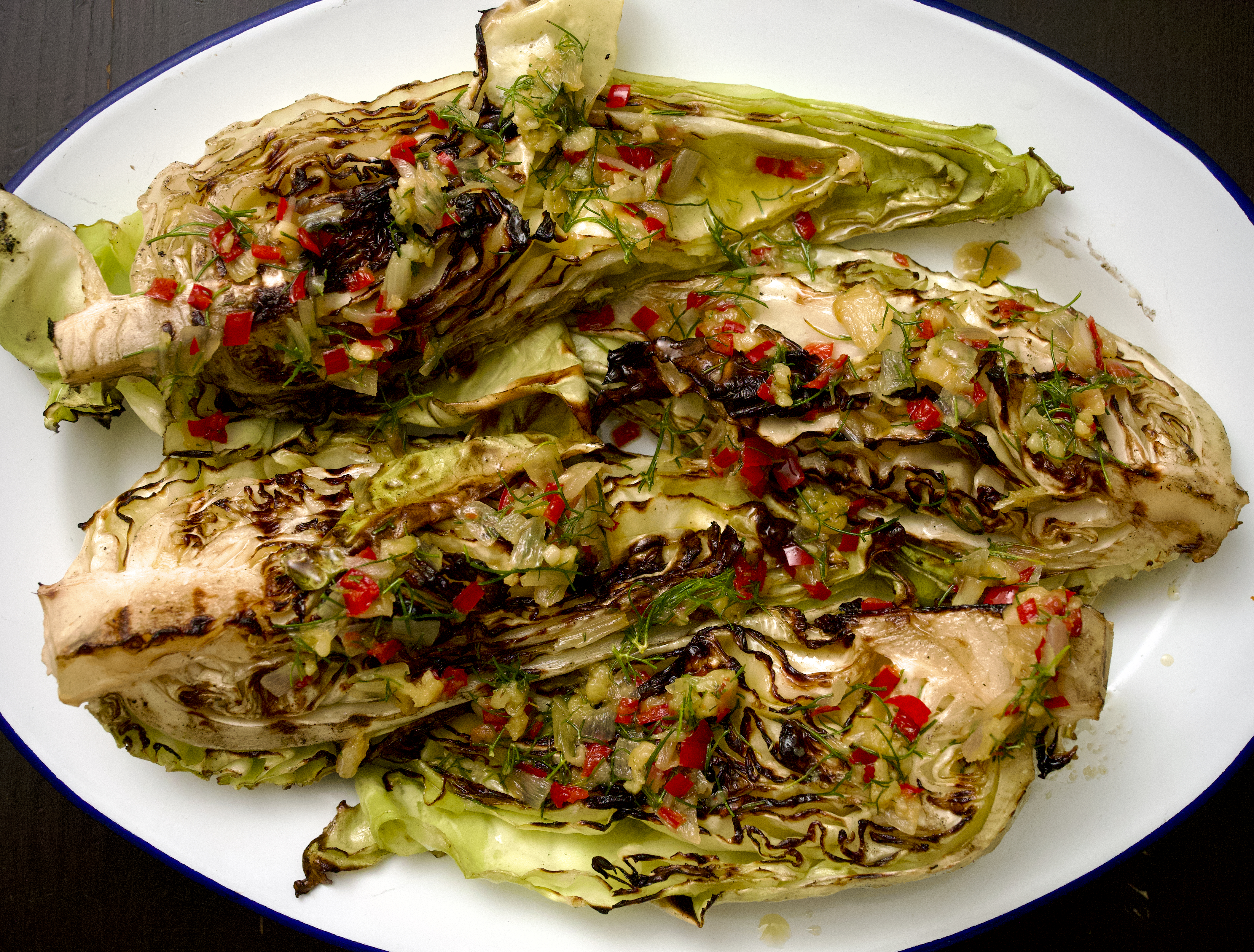
Typing this recipe to the sound of lashing rain and howling wind but better weather is coming and you might be inspired to barbecue a cabbage. You will be very glad you did.

Barbecued cabbage with chilli and garlic butter – serves 2 as a side

  • 1 pointed/hispi cabbage, cut into 4 wedges
  • 2 tbsp olive oil

FOR THE DRESSING:

  • 1 long shallot, peeled and finely chopped
  • 1 red chilli, halved, desseded and finely sliced
  • 3 cloves of garlic, peeled and crushed
  • 50g butter
  • ½ tsp flaky sea salt
  • a small bunch of dill, fronds roughly chopped

Brush the cut surfaces of the cabbage wedges with the olive oil, then set them cut-side down on a very hot barbecue to char for about 4 minutes. Turn to char the other cut surface for 4 minutes, then set the wedges on the rounded sides for a final 4 minutes. Remove to a platter and sprinkle with flaky sea salt.

Meanwhile, combine the shallots, chilli and garlic with the butter and put over a low heat to melt the butter and lightly cook the vegetables. Cook for about 12-14 minutes or until the shallots are soft and translucent. Remove from the heat and mix in the salt and chopped dill. Pour the butter dressing over the warm cabbage and serve.

(Original recipe from Chasing Smoke: Cooking Over Fire Around the Levant by Sarit Packer and Itamar Srulovich, Pavilion, 2021.)

Read Full Post »

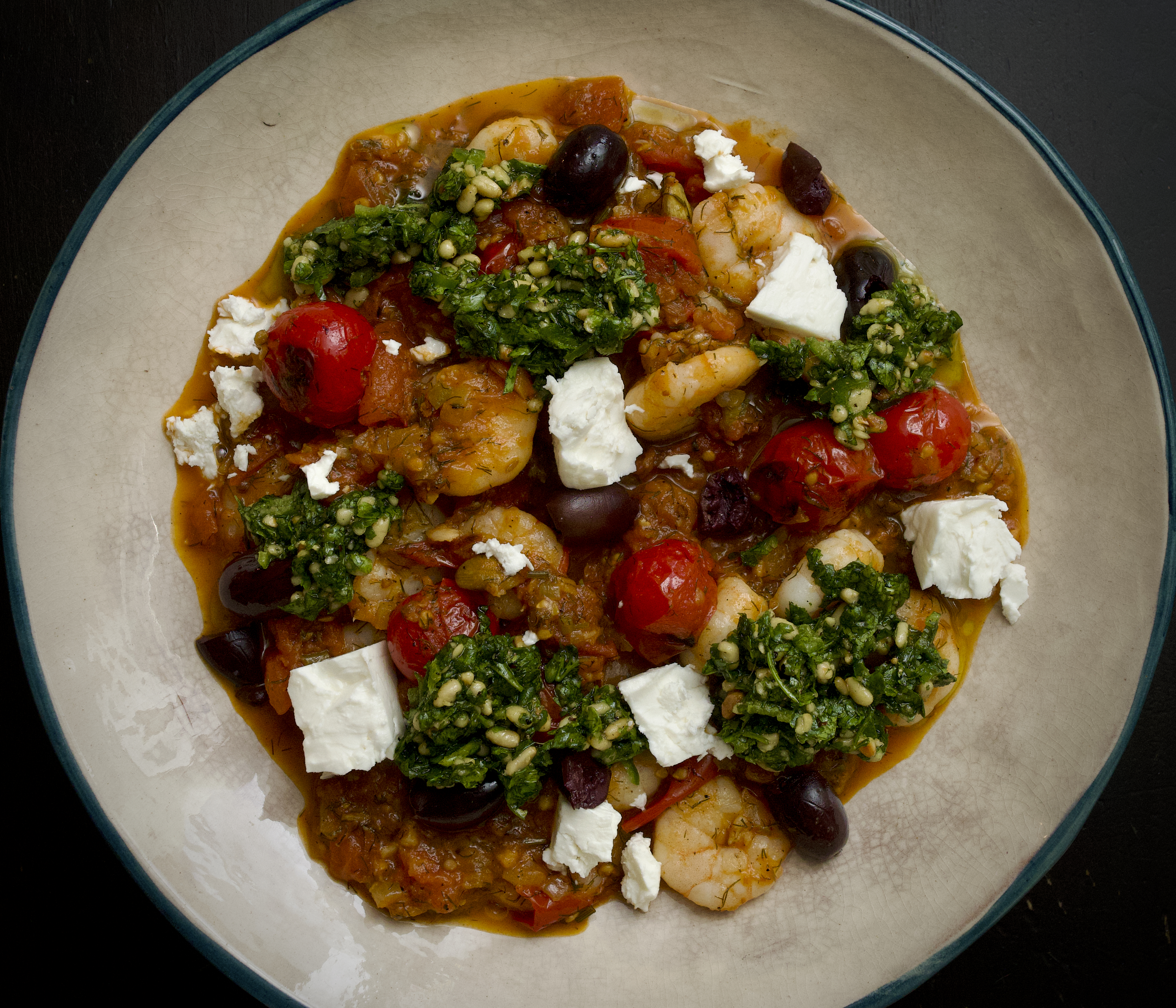
A dish from Falastin, it’s packed with flavour and we recommend adding the optional black olives and feta cheese. A green salad and some crusty bread is also a good choice. The tomato sauce and coriander sauce can both be made in advance, just char your cherry tomatoes and fry the prawns at the end.

Wine Suggestion: Despite this being a seafood dish we think a Southern French red is the way to go with this. Tonight something quite special: Roc des Anges Unic which is a super expressive Grenache with a thrilling tension and energy.

Prawn and tomato stew with coriander pesto – serves 4

  • 250g cherry tomatoes
  • 60ml olive oil
  • 1 large onion, finely chopped
  • 4 cloves of garlic, crushed
  • 2cm piece of ginger, peeled and finely grated
  • 1 green chilli, finely chopped
  • 2 tsp coriander seeds, lightly crushed in a pestle and mortar
  • 1½ cumin seeds, lightly crushed in a pestle and mortar
  • 8 cardamom pods, lightly bashed in a pestle and mortar
  • 20g dill, finely chopped
  • 2 tsp tomato purée
  • 6 plum tomatoes, roughly chopped
  • 600g peeled raw king prawns
  • a handful of black kalamata olives (optional)
  • 100g feta cheese, crumbled into chunky pieces (optional)

FOR THE CORIANDER PESTO:

  • 30g coriander, roughly chopped
  • 1 green chilli, finely chopped
  • 50g pine nuts, lightly toasted
  • 1 lemon, finely grate the zest to get 1½ tsp, then cut into wedges to serve
  • 80ml olive oil

Toss the cherry tomatoes with 1 tsp of oil. Heat a large sauté pan over a high heat, then add the cherry tomatoes and cook for about 5 minutes, shaking the pan occasionally, until charred and blistered. Remove from the pan and set aside.

Wipe the pan out, then add 2 tbsp of olive oil and place over a medium-high heat. Add the onion and cook for 8 minutes, stirring now and then, until softened and lightly browned. Add the garlic, ginger, chilli, spices, dill and tomato purée, then cook for another 2 minutes until fragrant. Add the plum tomatoes and 300ml of water, 1½ tsp salt and plenty of black pepper. Bring to a simmer, then lower the heat and simmer for 25 minutes or until thickened and the tomatoes have broken down.

Meanwhile, make the coriander pesto. Put the coriander, pine nuts and chilli into a food processor and pulse a few times, just until the pine nuts are roughly crumbled. Transfer to a bowl and stir in the olive oil, lemon zest, ¼ tsp of salt and some black pepper. Stir to combine and set aside.

Dry the prawns well then mix in bowl with ¼ tsp of salt, 1 tbsp of oil and plenty of black pepper.

Put 2 tsp of oil into a large frying pan and place on a high heat. When the pan is hot, add the prawns in batches and fry for a minute on each side, until cooked and browned.

Stir the cooked prawns and the charred tomatoes into the tomato sauce and cook over a medium heat for another 3 minutes, to heat through. Transfer the prawns and tomatoes to a serving dish, drizzle over some of the coriander pesto and sprinkle over the olives and crumbled feta.

(Original recipe from Falastin by Sami Tamimi and Tara Wrigley, Ebury Press, 2020.)

Read Full Post »

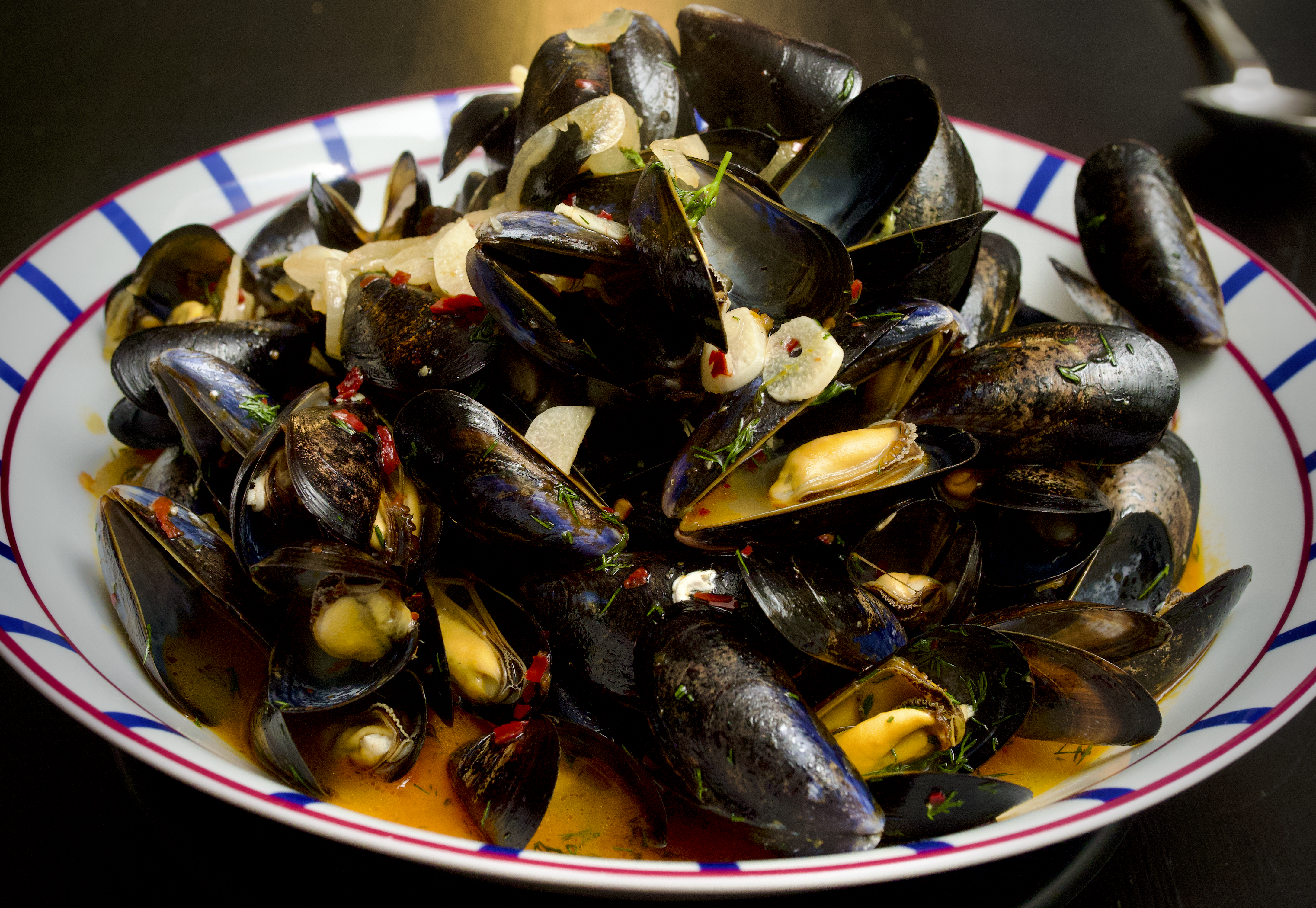
There’s no better holiday dish than a big bowl of mussels. Serve with crusty bread to mop up all the juice.

Wine Suggestion: A fruity, fresh and vibrant white is what we wanted here so we opened the Katxina Txakoli from the Basque country. We know it might be harder to find something made from Hondarribi Zuri but this grape is a great accompaniment to the local tapas, shellfish and pimenton.

Harissa Mussels – serves 2 to 4

  • olive oil, for frying
  • 50g salted butter
  • 1 large onion, halved and sliced
  • 6 cloves of garlic, thinly sliced
  • 2 heaped tsp rose harissa
  • 1 kg mussels, scrubbed and beards removed
  • 300ml white wine
  • 1 heaped tsp clear honey
  • ½  tbsp sea salt flakes
  • about 15g dill, fronds finely chopped

Heat a large saucepan over a high heat.

Add enough olive oil to cover the base of the pan, then add the butter and onion and cook until just starting to colour. Add the garlic and cook for a minute, keep stirring so it doesn’t burn.

Add the mussels to the pan and stir in the harissa to coat the mussels. Add the wine, honey and salt and mix well. Cover the pan with a lid and allow the mussels to cook until all the shells have opened – about 4 minutes.

Remove the lid, stir the mussels and mix in the chopped dill.

Serve in a large warm bowl.

(Original recipe from Sirocco by Sabrina Ghayour, Mitchell Beazley, 2016.)

Read Full Post »

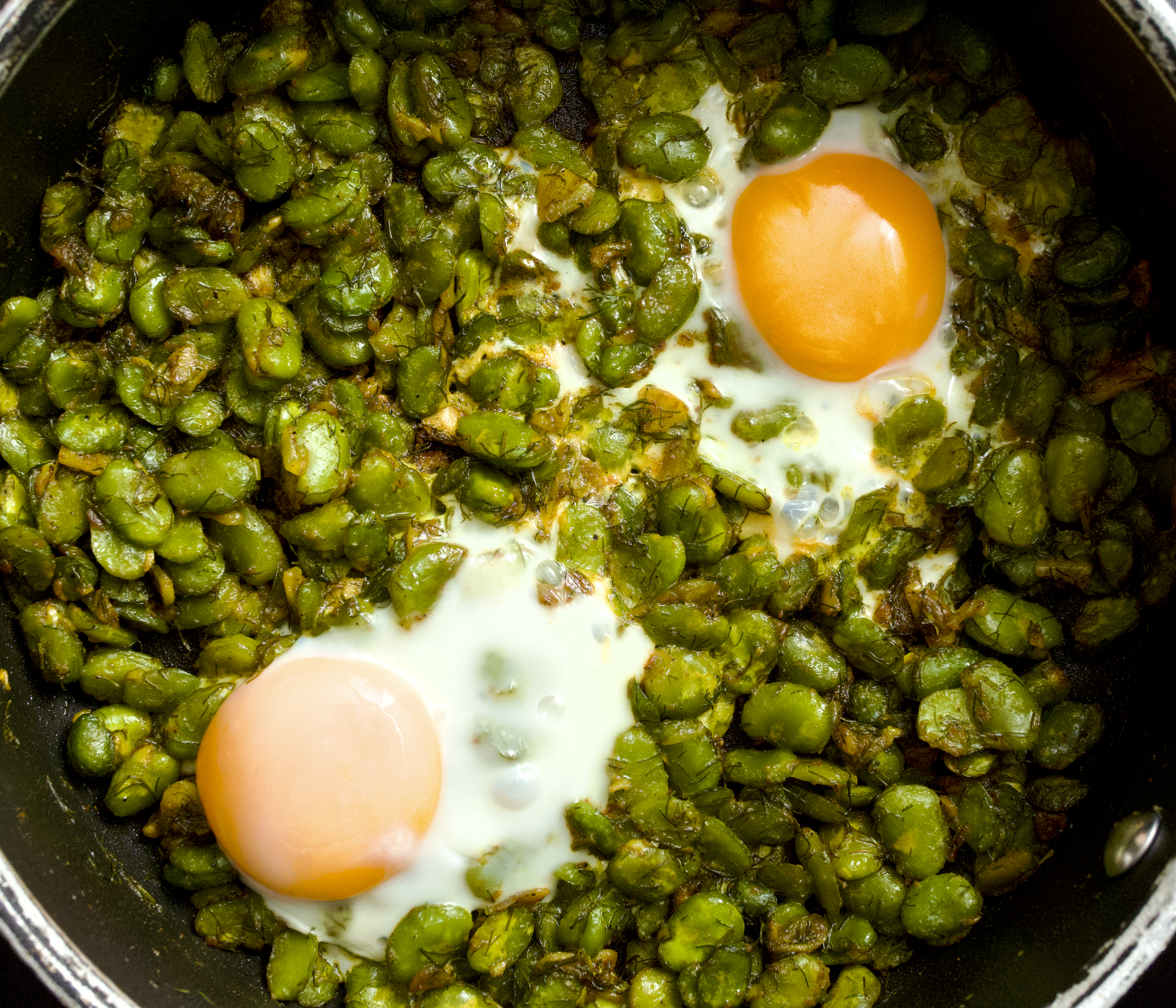
Jono picked this Iranian dish for his Father’s Day breakfast. It’s delicious! Serve with naan bread, tortillas or toast.

Broad beans with garlic, dill & eggs – serves 4

  • olive oil
  • 1 bulb of garlic, cloves bashed and thinly sliced
  • 1kg podded frozen broad beans, skins removed (blanch for a couple of minutes and the skins will pop off easily)
  • 3 tsp turmeric
  • generous tsp crushed sea salt
  • freshly ground black pepper
  • 60g dill, stalks and leaves finely chopped
  • 25g butter
  • 4 large free-range eggs

Heat a large deep frying pan over a low-medium heat, add a generous drizzle of olive oil and sweat the garlic until it softens. Add the broad beans and increase the heat to medium, then add the turmeric, sea salt and some black pepper and stir well. After 5 minutes, mix in the chopped dill and cook for another 8 minutes.

Add the butter to the pan and let it melt into the beans. Crack the eggs on to the surface of the beans and allow to cook using the heat from the beans – about 15 minutes. The beans will be a dull green by the end of the cooking time. Serve with your bread of choice.

(Original recipe from Persiana by Sabrina Ghayour, Mitchell Beazley, 2014.)

Read Full Post »

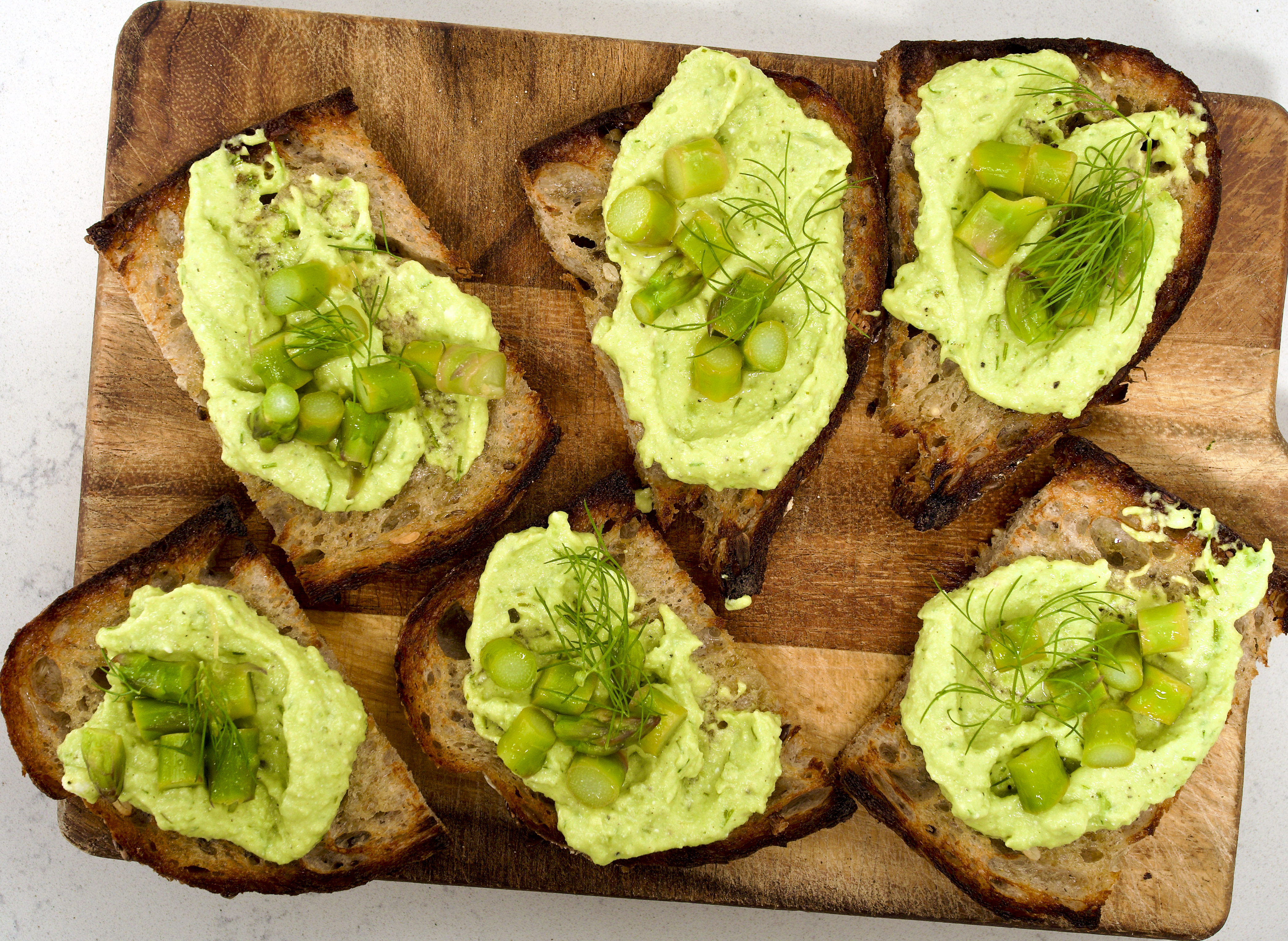
Look at the colour of these! A perfect starter or snack before the spring veg disappears.

Broad bean crostini with asparagus & dill – serves 4

  • 160g broad beans
  • 4 tbsp extra virgin olive oil
  • 50g feta cheese, crumbled
  • 1 tsp honey
  • juice of half a lemon
  • a large handful of dill fronds
  • 4 slices of sourdough
  • 1 clove of garlic, halved
  • 4 blanched asparagus spears

Bring a large pot of salted water to the boil and cook the broad beans for 5-6 minutes or until tender. Drain and tip them into a bowl of ice-cold water, then pop the beans out of their pods and transfer to a food processor.

Add the olive oil, feta, honey, lemon juice and dill to the food processor, then season with black pepper and whizz to a purée.

Meanwhile, brush the bread with some olive oil and toast or griddle until golden, then rub with the cut side of the garlic clove.

Finely chop the asparagus spears and toss with a little olive oil and lemon juice.

Spread the broad bean purée over the toast and top with the asparagus and some extra dill.

(Original recipe from BBC Good Food)

Read Full Post »

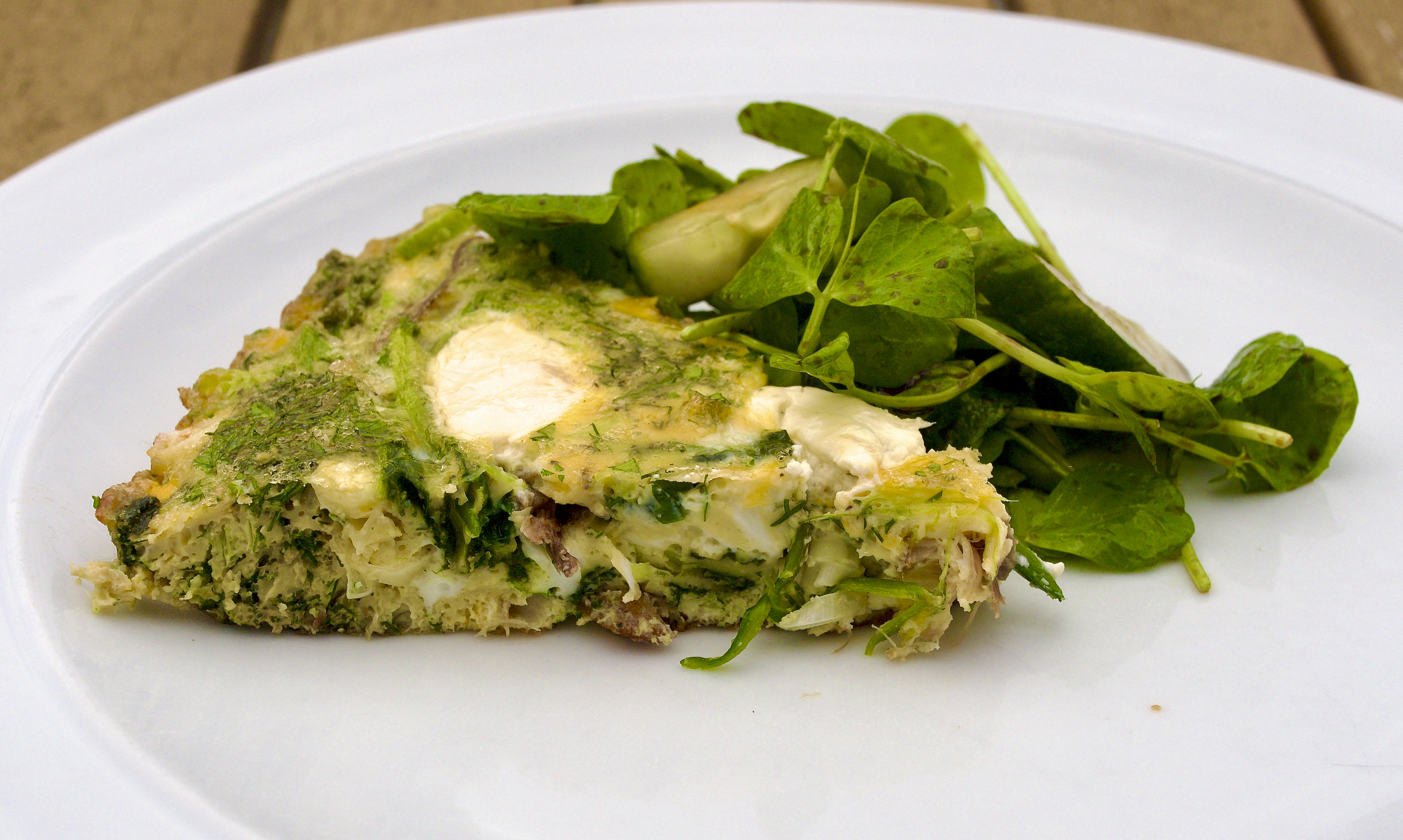
For no particular reason we’ve started cooking frittatas at last … why did no-one tell us how simple they are to make? We particularly enjoyed this one with mackerel and dotted with horseradish cream. Serve with a green salad.

Smoked mackerel and spinach frittata – serves 6

  • 60g butter
  • 50g baby spinach, washed and drained but still damp
  • 220g smoked mackerel
  • 3 scallions, trimmed and finely chopped
  • 4 tbsp chopped flat-leaf parsley
  • 3 tbsp chopped dill
  • 8 eggs, lightly beaten
  • 3 tbsp crème fraîche
  • 1 tsp horseradish sauce

Preheat the oven to 190C/170C/Gas 5.

Melt 20g of the butter in a heavy non-stick frying pan, about 25-30cm diameter, over a medium heat. Stir in the spinach, then cover with a lid and leave for a minute or two until wilted. Tip into a colander and leave to cool. Wipe the pan out with kitchen paper.

Put the cooled spinach into a bowl. Break the mackerel into pieces, discarding any skin and bones, and add to the bowl with the spinach. Add the scallions and herbs, then pour in the eggs and stir until will combined. Season with salt and pepper.

Melt the rest of the butter in the wiped-out pan and place back over a medium heat. Swirl the pan so the base is coated in butter, then tip in the frittata mixutre and smooth out. Let the eggs cook gently for about 5 minutes.

Meanwhile, whisk the crème fraîche and horseradish together, then dot over the top of the frittata. Put the pan in to the oven and cook for about 12 minutes or until set and golden on top.

Remove from the oven and allow to cool for 10 minutes before cutting. It will be delicious eaten warm or cold.

(Original recipe from Notes from a Small Kitchen Island by Debora Robertson, Michael Joseph, 2022.)

Read Full Post »

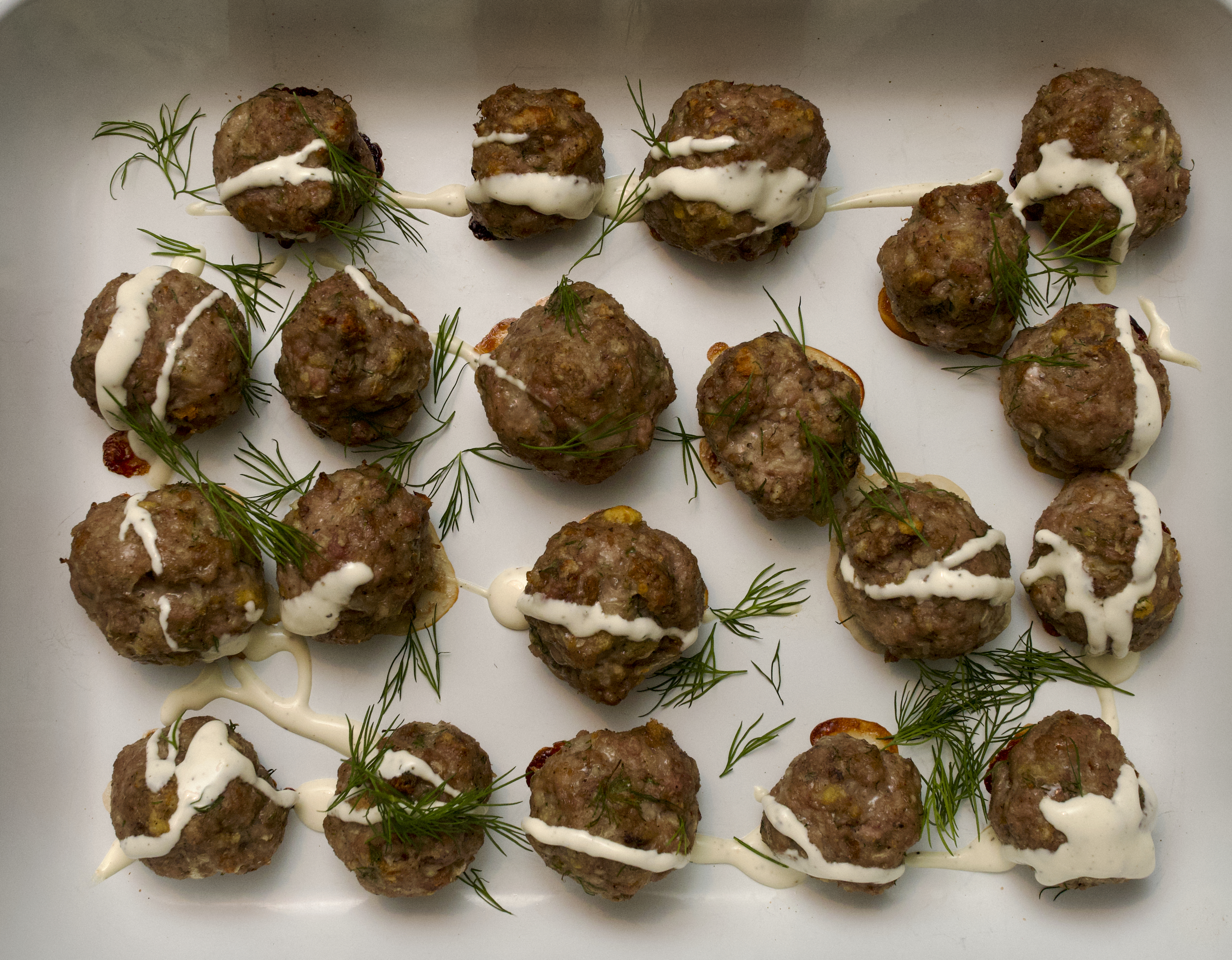
Inspired by an extra cucumber in the veg drawer. A lovely meal for mid-week with crusty bread.

Wine Suggestion: Wines from the hills in South Western France are very underrated, especially when made by insightful provocative winemakers. The Domaine Coustarret Jurançon Sec is 100% Gros Manseng and has a great balance between a sappy, salty backbone overlayed with orange zest and fresh stonefruit flavours. Well worth seeking out.

Scandi baked meatballs with pickled cucumber salad – serves 4

  • 400g pork mince
  • 1 egg yolk
  • ½ tsp allspice
  • 100g breadcrumbs
  • 1 small onion, grated
  • a handful of dill, finely chopped, plus extra to serve
  • 1 tsp freshly ground white pepper
  • 4 tbsp sour cream, seasoned
  • crusty bread, to serve

FOR THE PICKLED CUCUMBER SALAD:

  • 2 tbsp white wine vinegar
  • 1 tbsp caster sugar
  • ½ cucumber, peeled and cut into half moons
  • 1 tsp yellow mustard seeds
  • a handful of parsley, chopped

Heat the oven to 200C/180C fan/gas 6.

Start with the pickled cucumber salad. Put the vinegar and sugar into a small saucepan and heat until the sugar has dissolved, then set aside to cool. Put the cucumber into a bowl, then pour over the cooled vinegar and add the mustard seeds. Stir and set aside.

Put the pork mince, egg yolk, allspice, breadcrumbs, grated onion, dill and white pepper, into a bowl. Season well, then mix with your hands until well combined. Form into 20 meatballs and set them into a large baking dish.

Put the meatballs into the hot oven for 20 minutes or until golden and cooked through. Drizzle with the sour cream and scatter over the reserved dill. Serve with the cucumber salad and crusty bread.

(Original recipe by Janine Ratcliffe in Olive Magazine, April 2017.)

Read Full Post »

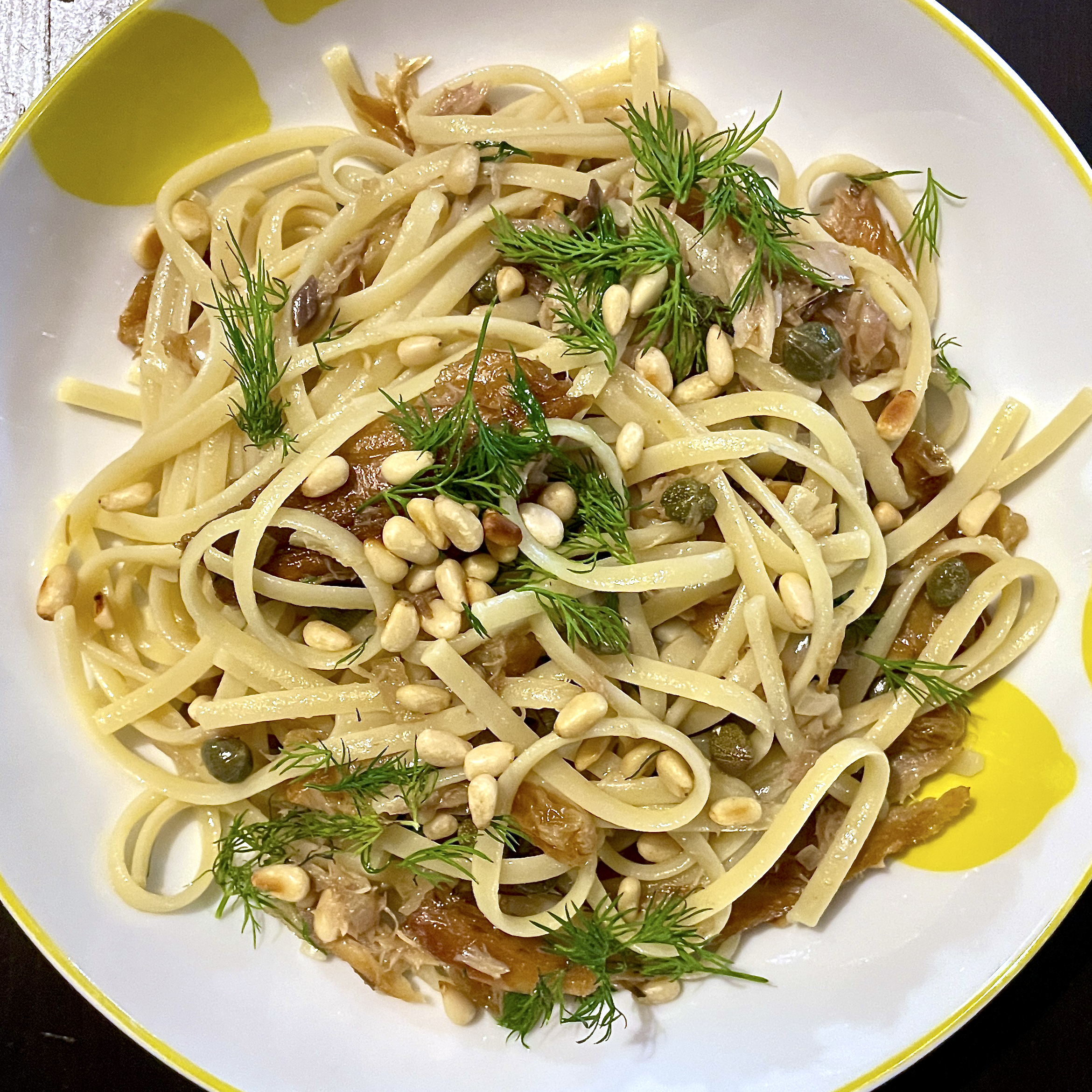
A Nigella creation that is in no way authentic and makes no apologies. Anything with mackerel goes in this house.

Wine Suggestion: Quite an exceptional wine was chosen to match with this: Sartarelli’s Balciana. From a low-yielding vineyard Verdicchio in the Marche, this is hand harvested picking only the grapes of utmost ripeness at the very end of the season. This means the picking team goes out many times picking individual grapes and bunches that meet the required levels of ripeness. It makes quite an extraordinary dry wine that has a richness of almost a sweet wine, alongside textured layers of savoury nuttiness and salty minerality. Named best white wine in Italy many times, and we understand why. We chose this as the combinations of sweet, savoury, fresh and sour flavours in the dish need a wine with substance and depth.

Pasta with mackerel, Marsala and pine nuts – serves 2

  • 50g golden sultanas
  • 200g linguine
  • 2 tbsp olive oil
  • 1 long shallot, finely chopped
  • 60ml Marsala
  • 2 smoked makerel fillets, skinned and flaked
  • 2 tbsp drained capers
  • a few drops of red wine vinegar
  • a handful of dill, torn into fronds
  • 25g toasted pine nuts

Bring a large pan of water to the boil for the pasta. Put the sultanas into a small bowl and cover with hot water from a boiled kettle.

Add lots of salt to the boiling water, then cook the linguine until al dente.

Warm the olive oil in a frying pan and cook the shallot for a couple of minutes until softened.

Add the Marsala and let it bubble, then add the mackerel, sultanas (squeeze the water out of them with your hands first), the capers and a few drops of vinegar. Remove from the heat once the mackerel is warm. There should be barely any liquid left.

Reserve a cupful of pasta cooking water before draining. Return the pasta to the pan, then tip in the mackerel, half the dill and half the pine nuts and a tbsp of pasta water. Toss gently to combine, then taste and add another few drops of vinegar if you like.

Divide between warm bowls and finish with the remaining dill and pine nuts.

(Original recipe from Nigellissima, Chatto & Windus, 2012.)

Read Full Post »

We’re clearing out in January, rather then dieting. This recipe used up the last of a side of smoked salmon and its simplicity is perfect.

Wine Suggestion: We think Verdicchio is under-rated as a grape and for food combinations like this where you have a creaminess, combined with some Omega fatty acids and citrus zest it is the business. Tonight our choice was Sartarelli’s Tralivio which balances fruit weight with an almost saline minerality.

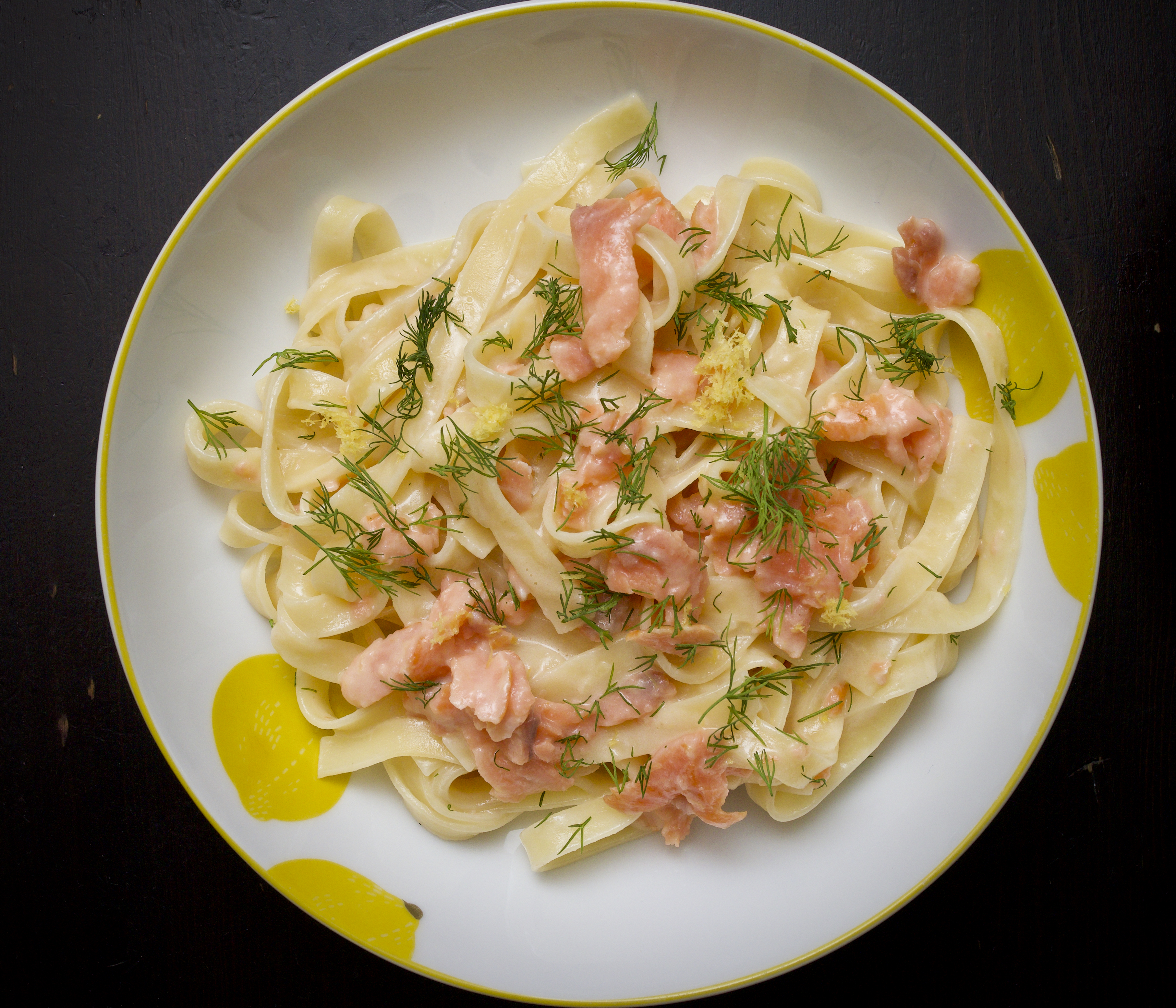
Tagliatelle with Salmon and Mascarpone – serves 4

  • 400g tagliatelle
  • 200g smoked salmon, snipped with scissors into short strips
  • 125g mascarpone
  • 20g soft butter
  • zest of 1 lemon, plus more to garnish
  • a few sprigs of dill, snipped

Cook the tagliatelle in lots of very salty water until al dente.

Meanwhile, tip the salmon strips into a large warm serving bowl along with the mascarpone, butter and lemon zest. Add a ladleful of the pasta cooking water to loosen it all to a cream, then taste and add salt if needed.

Drain the pasta, reserving some water, then tip into the bowl with the sauce and toss gently, adding more cooking water if needed. Serve sprinkled with the dill and some more lemon zest.

(Original recipe from An A-Z of Pasta by Rachel Roddy, Penguin: Fig Tree, 2021.)

Read Full Post »

Older Posts »