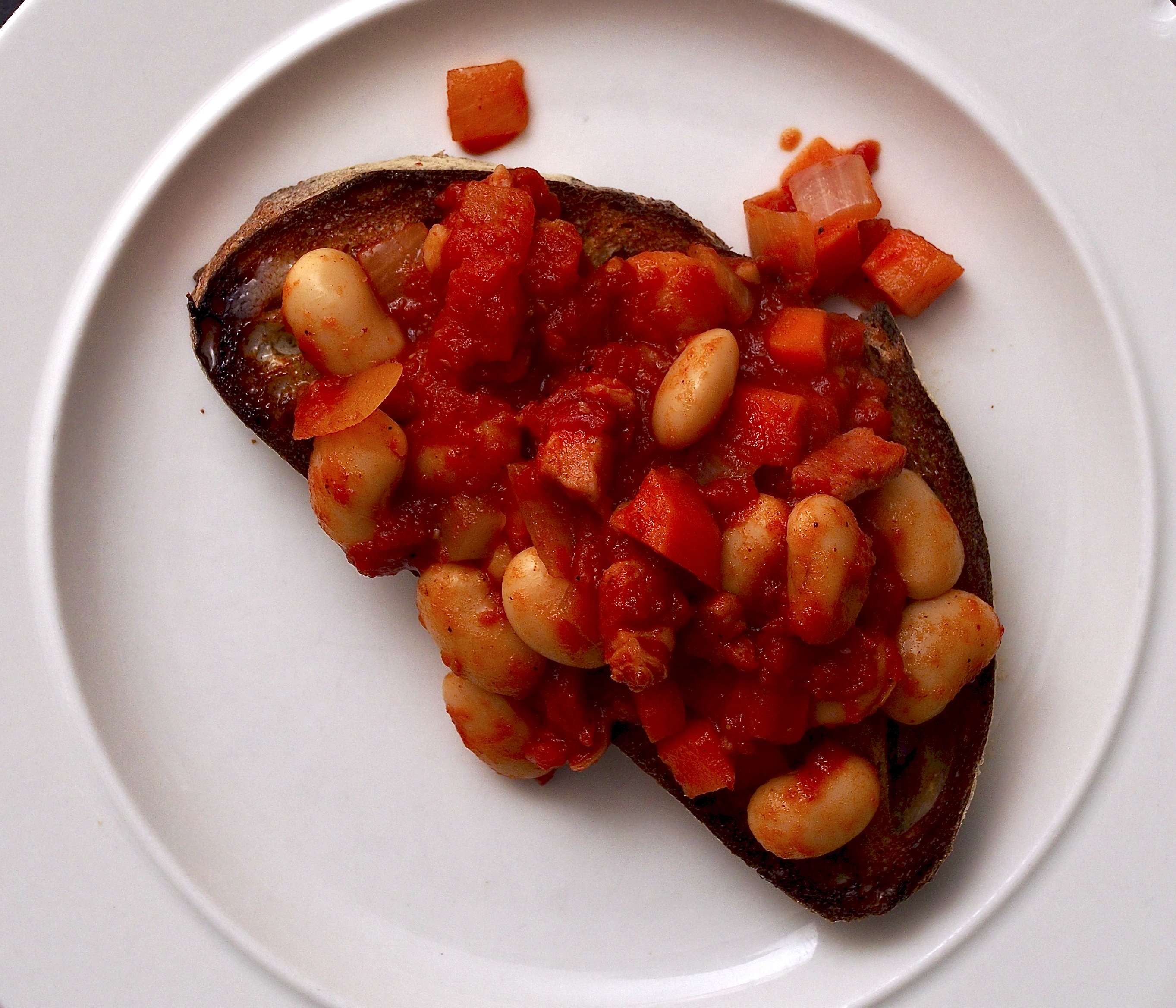
Much more filling than the tinned variety but unlike a number of other baked bean recipes, you don’t have to start with dried beans. This is quick and still pretty handy for lunch.
Beans on toast – serves 4 to 6
200g bacon lardons or pancetta cubes
1 onion, roughly chopped
olive oil
1 stick of celery, finely chopped
2 carrots, finely chopped
2 x 400g tins of beans e.g. pinto, haricot or butter beans, drained and rinsed
1 tsp black treacle
sourdough toast, to serve
Fry the bacon in a deep pan over a medium heat until golden, then add the onion. You can add a splash of olive oil if you need it.
Add the carrots and celery and cook for 5 minutes, until softened.
Add the tomatoes and simmer for 10 minutes. Next add the beans and simmer for another 10 minutes. Add the treacle and season with salt and black pepper.
Serve with toasted sourdough.
(Original recipe from The Kitchen Diaries II by Nigel Slater, Fourth Estate, 2012.)
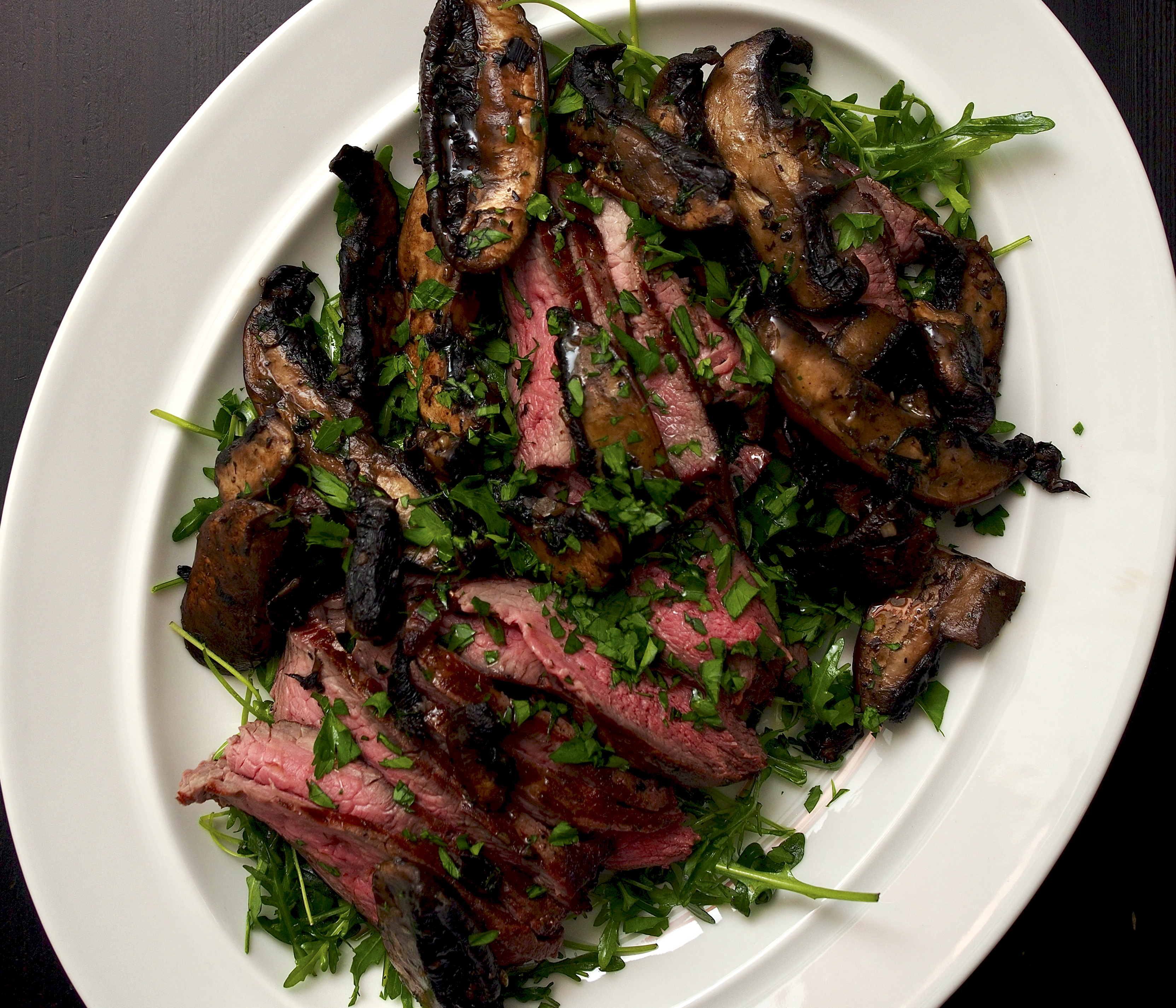
For many years we didn’t buy Polpo by Russell Norman. It has a fancy binding and was always wrapped in plastic in the bookshop, so there was no way to have a flick. We can’t remember now what made us take the plunge, but we’re so glad we did. We’ve cooked many of the recipes and recently took this book off the shelf again and cooked a few more, finishing with this steak dish. You probably don’t need Italian roast potatoes with rosemary as a side but we couldn’t resist.
Wine Suggestion: A kind birthday gift from our friends Nicola and Dave was a wine we knew nothing about, the Iuli Umberta and opening it to try with this dish was a revelation. From the Monferrato hills east of Turin, this Barbera is so full of energy and layered with subtle flavours and gentle spice; so easy and refreshing.
Flank steak with portobello mushrooms – serves 4
800g flank steak, about 5cm thick
4 handfuls of rocket leaves
8 large Portobello mushrooms, sliced
2 cloves of garlic, very finely chopped
1 small handful of flat parsley leaves, chopped
Season the meat with plenty of salt and pepper.
We cooked ours on a hot barbecue but if you prefer you can oil a griddle pan and heat until hot, then grill the steak on both sides. 10-12 minutes in total should give you a medium-cooked steak. Leave it to rest in a warm place for 15 minutes.
Meanwhile, dress the rocket leaves in some good olive oil and season with salt and pepper. Divide the rocket between the serving plates or you can put it onto one large platter.
Heat 2 tbsp of olive oil in a large frying pan with the garlic and most of the parsley. Add the mushrooms and fry until soft and glossy, then set aside. We like to season these a little too.
When the meat has rested, sliced it thinly. Lay the steak on top of the rocket, then scatter with the mushrooms and serve with a drizzle of good olive oil and the rest of the parsley.
(Original recipe from Polpo by Russell Norman, Bloomsbury, 2012.)
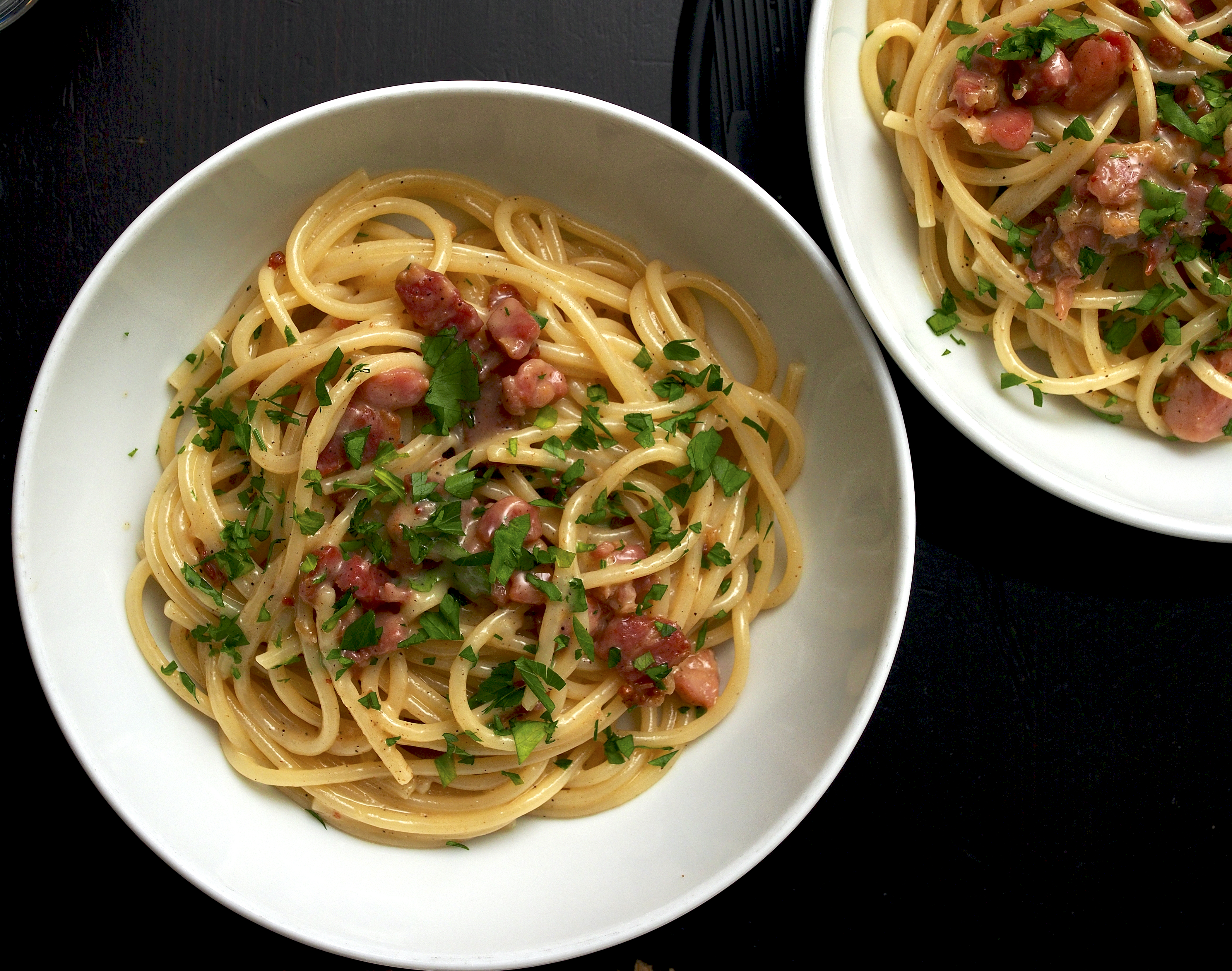
Somewhere along the line we forgot about spaghetti carbonara, but remembered it again last night. This really is a store-cupboard dish. We’re never without pasta, eggs or Parmesan and more often than not there’s a half packet of pancetta or bacon lardons in the fridge needing used. Thursday night might turn into carbonara night!
Wine Suggestion: An open bottle of Edetaria via Terra red, made from Garnache Tinta grown in Terra Alta south of Barcelona was a joyful accompaniment. Fresh with refined spices and tannins; a gourmand wine. We don’t know whether it was the night or the wine but we had the chats all night after this food and wine.
Spaghetti Carbonara – serves 2 – though you can of course double to serve 4
200g spaghetti
1 tbsp olive oil
100g pancetta cubes or bacon lardons
1 clove of garlic, crushed
25ml vermouth or white wine
1 large egg
50g grated pecorino or Parmesan
1 tbsp chopped flat-leaf parsley
Cook the spaghetti in lots of very salty water according to the timings on the pack.
Meanwhile, heat the olive oil in a large frying pan and fry the pancetta over a medium heat until crispy. Add the garlic and cook gently for a couple of minutes before the vermouth or white wine and bubble until well reduced. Remove from the heat and set aside.
Put the egg into a large bowl and beat it with a fork. Add a little salt and plenty of black pepper, then add the cheese and stir to combine.
Drain the pasta in a colander and immediately transfer to the bowl with the egg and cheese, don’t be too fussy when you’re draining as a little of the pasta cooking water will help make a silky sauce. Stir together until the spaghetti is coated in a glossy sauce, then add the pancetta and stir again.
Serve in warmed bowls and sprinkle with the parsley.
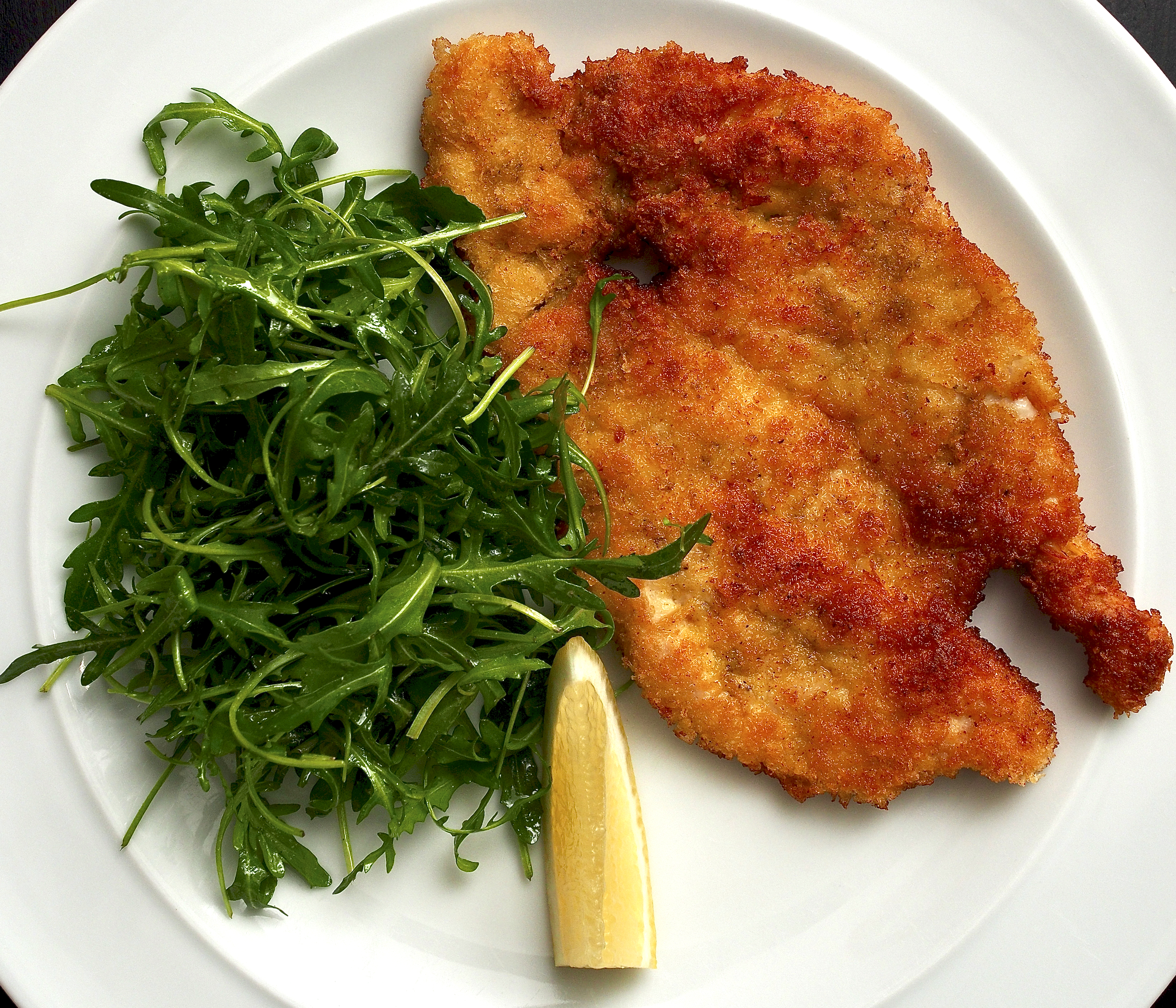
This handy Italian chicken dish is great for a Friday night and kids love it! Serve with a green salad, lemon wedges and mayonnaise. If you have eggs leftover you can pop them in the fridge to scramble the next morning.
Wine Suggestion: keep it simple with an easy, dry white of your choice: Chardonnay, Verdicchio, Chenin … or tonights choice the Flying Solo Grenache Blanc – Viognier blend from Domaine Gayda. Easy, friendly citrus and apple flavours with hints of heather and a slight nuttiness, finishing clean and dry.
Chicken Cotoletta – serves 4
2 chicken breasts, sliced lengthways with your knife parallel to the board to give 4 thin fillets (your butcher will do this for you if you ask)
juice of ½ lemon
1 handful of Italian 00 flour
3 medium free-range eggs, lightly beaten
about 300g panko breadcrumbs
Put each piece of chicken between sheets of clingfilm, then beat them gently with a rolling pin until nice and thin. Season and sprinkle with the lemon juice.
Get 3 plates out and put the flour on one, the eggs on the next, and finally the breadcrumbs. Dip the chicken into the flour, shaking off any excess, then gently into the egg and finally into the breadcrumbs.
Heat a large frying pan with plenty of olive oil and fry the chicken until golden and crispy, a couple of minutes on each side. You can do this in batches if easier.
(Original recipe from Polpo by Russell Norman, Bloomsbury, 2012.)
Sometimes all you want is a plate of greens. Here they are with a Japanese-style sauce and some sticky rice and sesame seeds.
Wine Suggestion: We find this combination of flavours in the sauce work well with Riesling, especially if it’s the lighter styles with a touch of fruit. This could be a German Kabinett with lower alcohol, residual sugar and refreshing acidity, or one of the dry Clare Valley cuvées that leave a hint of sugar in making them very approachable in youth like Pike’s Hills & Valleys.
Greens with Sticky Sesame Rice – serves 2
1 tbsp caster sugar
140g sushi rice
1 tbsp sesame seeds, toasted
1 tsp sesame oil
1 tbsp sunflower oil
350g purple sprouting broccoli or other long-stemmed broccoli
6 scallions, halved lengthways
FOR THE SAUCE:
2 tbsp brown miso paste
1 tbsp mirin
1 tbsp rice wine vinegar
1 tbsp soft brown sugar
2 tsp finely grated ginger
1 red chilli, deseeded and diced
Stir the sauce ingredients together with 1 tbsp water, then set aside.
Bring a large pan of water to the boil with the caster sugar and ½ tsp salt. Add the rice and boil for about 15 minutes (or whatever time it suggests on the pack) until just cooked. Drain well, return to the pan and sprinkle over the toasted sesame seeds and sesame oil. Cover and keep warm.
Heat the sunflower oil in a wok until smoking hot. Add the broccoli and stir-fry for a few minutes until almost tender, add a splash of water now and then to create a bit of steam. Add the scallions and stir-fry for 30 seconds, then stir in the sauce and cook for another minute or two, stirring constantly.
Divide the rice between 2 plates and top with the stir-fry.
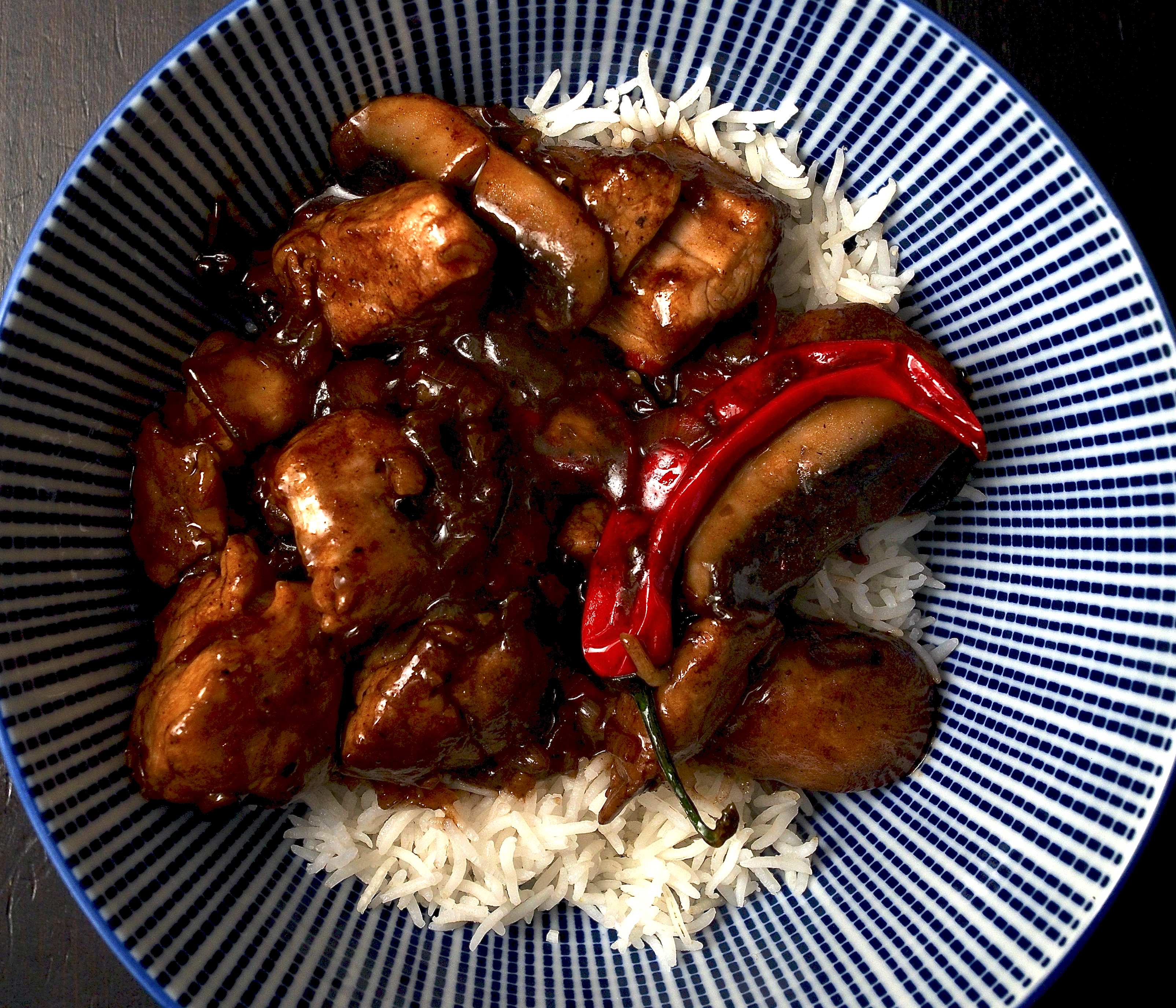
Every now and again we take one of Nigel Slater’s Kitchen Diaries off the shelf for a bit of inspiration, and this is what we chose from the February chapter. We like Nigel’s recipes as they’re tasty but rarely require too much shopping. We served this with rice, a few greens on the side would be nice too.
Wine Suggestion: A dry, or just off-dry Alsace Pinot Gris or similar. Tonight Zind Humbrecht’s Pinot Gris Roche Calcaire from the Clos Windsbuhl has all the texture and layers of fruit we were looking for and more; superb.
Pork with garlic & oyster sauce – serves 2
5 tbsp of flavourless oil, we use groundnut oil
350g pork fillet, cubed
3-4 garlic cloves, finely chopped
2 shallots, finely sliced
4 small hot red chillies, two chopped finely with the seeds left in and two left whole
150g mushrooms, roughly sliced
3 heaped tbsp oyster sauce
3 tbsp Shaoxing wine
Heat your wok until very hot.
Add 2 tbsp of the oil and when it starts to smoke, add half the meat. Toss, until browned then remove to a plate and brown the rest.
Add the remaining oil to the wok and heat until smoking hot, then add the garlic, shallots and chillies. Toss for a minute or two until starting to colour. Add the mushrooms and continue to fry until they are soft and starting to colour, then return the meat to the pan. When the meat is hot, stir in the oyster sauce and Shaoxing wine and bring to the boil.
Allow the sauce to simmer and reduce for a couple of minutes, then serve.
(Original recipe from The Kitchen Diaries II by Nigel Slater, Fourth Estate, 2012.)
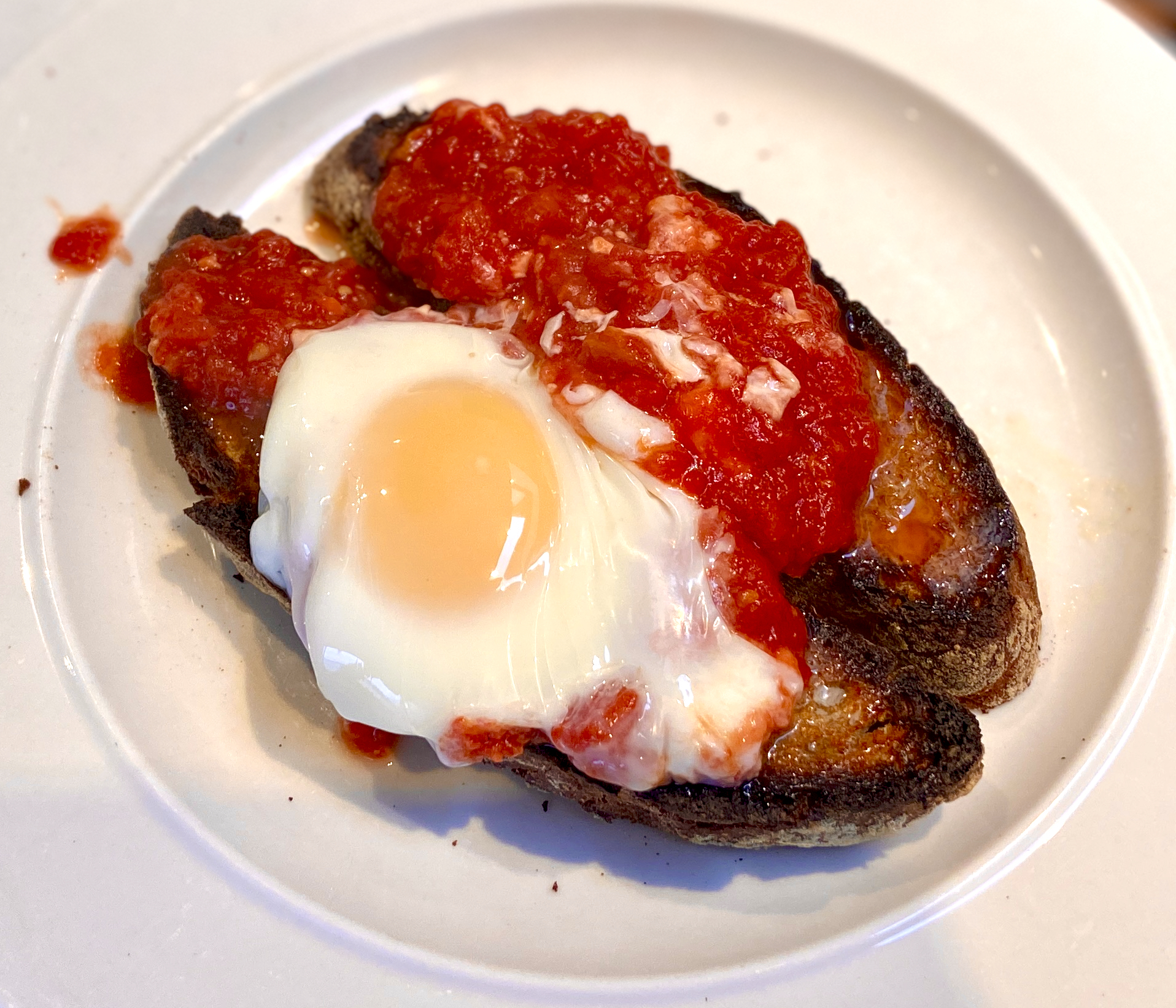
This makes a delicious veggie breakfast with toast or with bread and a salad for lunch. It is so simple but you need to use top quality tinned tomatoes as they are the star of the show.
Baked eggs with tomatoes – serves 4
500g tinned tomatoes, drained, seeded and chopped
3 tbsp olive oil
8 fresh eggs
Preheat the oven to 220C/425F/Gas 7.
Put the tomatoes into a saucepan with 2 tbsp of water and a couple of pinches of salt. Cover and simmer slowly for 30 minutes, give it a stir occasionally.
Pour the olive oil into an ovenproof dish, then pour the tomatoes on top.
Break the eggs into the dish on top of the sauce and season with black pepper. Bake for 5 minutes or until the whites are just set and the yolks still runny.
(Original recipe from Southern Italian Cooking by Valentina Harris, Pavilion Books Limited, 1993.)
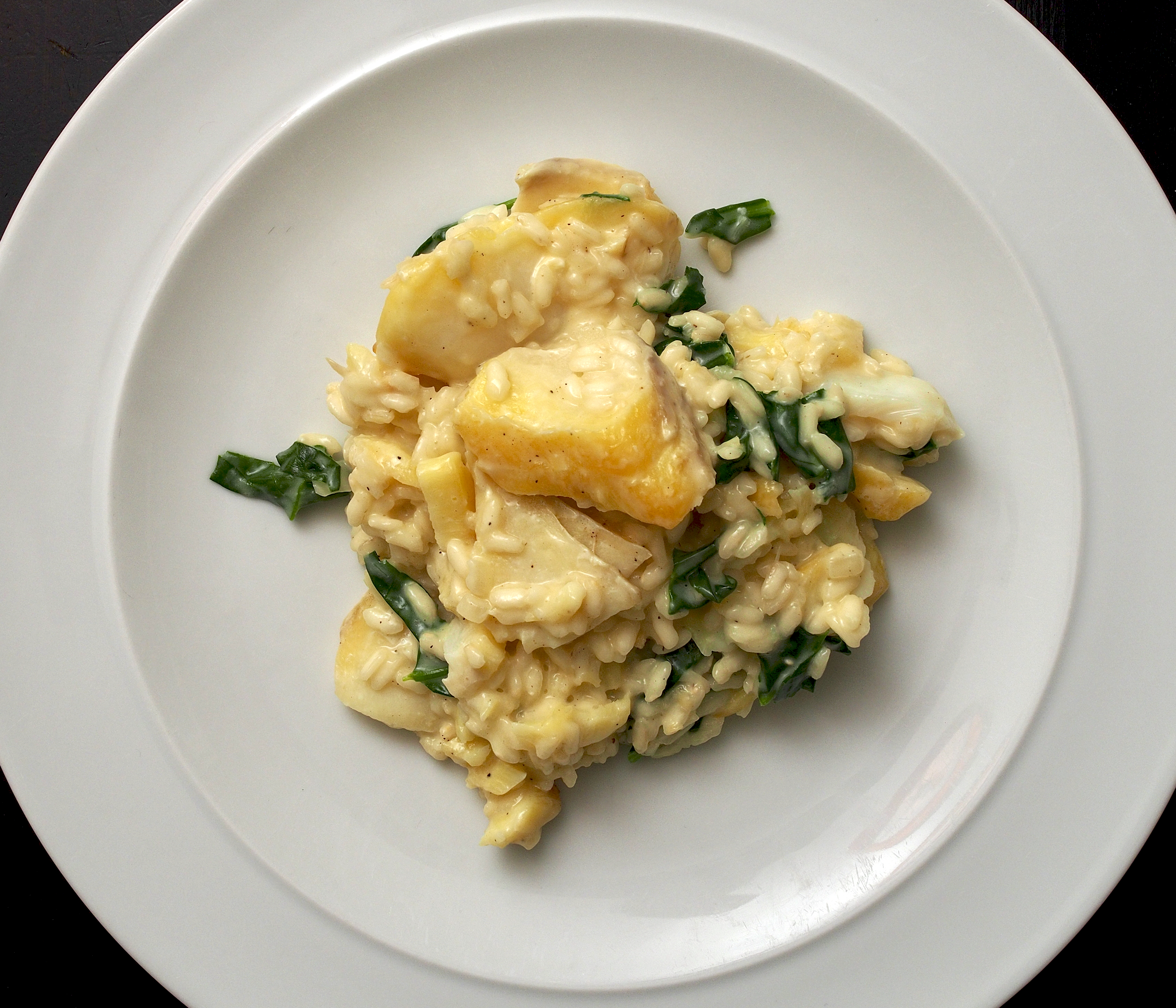
This is a little different given the use of the milky poaching liquor which makes this creamy and rich. Not that we partake in the cheese and fish rule anyhow, but cheese was genuinely not required.
Wine Suggestion: Choose a white with a higher acidity to match the creamy stock and a bit of body as this is quite rich. We chose an alpine/cool-climate Chardonnay from Cantina Colterenzio from north-eastern Italy in the foothills of the Alps. Melon and apple fruit flavours with hints of buttery toast; refined and characterful.
Smoked Cod & Spinach Risotto – serves 2-3
450ml full fat milk
400g smoked cod or haddock
2 bay leaves
6 black peppercorns
450ml hot stock
a small onion
50g butter
250g risotto rice
a glass of white wine
2 handfuls of spinach leaves, washed and torn into small pieces
Pour the milk into a saucepan large enough to take the fish in a single layer. Put the fish into the milk and add the bay leaves and peppercorns, then bring to the boil. When the milk starts to foam, lower the heat and simmer for 10 minutes. Remove the pan from the heat and set aside with the fish left in the milk to infuse.
Heat the stock in a saucepan until gently simmering.
Peel and finely chop the onion, then fry gently in the butter in a heavy-based pan. When the onion is soft, but not coloured, add the rice and stir to coat.
Pour in the wine and allow to evaporate, then start adding the stock, a ladleful at a time. Keep stirring continually until each ladle of stock has been absorbed, then add some more. Keep the heat low to medium. When the stock is finished, start adding the poaching liquid from the fish (discard the peppercorns and bay leaves). Start tasting when almost all the milk has been absorbed. The rice should be soft but still have a little bite and it should take about 20 minutes.
Stir the spinach into the rice. Break the fish into big pieces and gently fold into the rice, trying not to break them up too much. Check for seasoning before serving.
(Original recipe from The Kitchen Diaries II by Nigel Slater, Fourth Estate, 2012.)
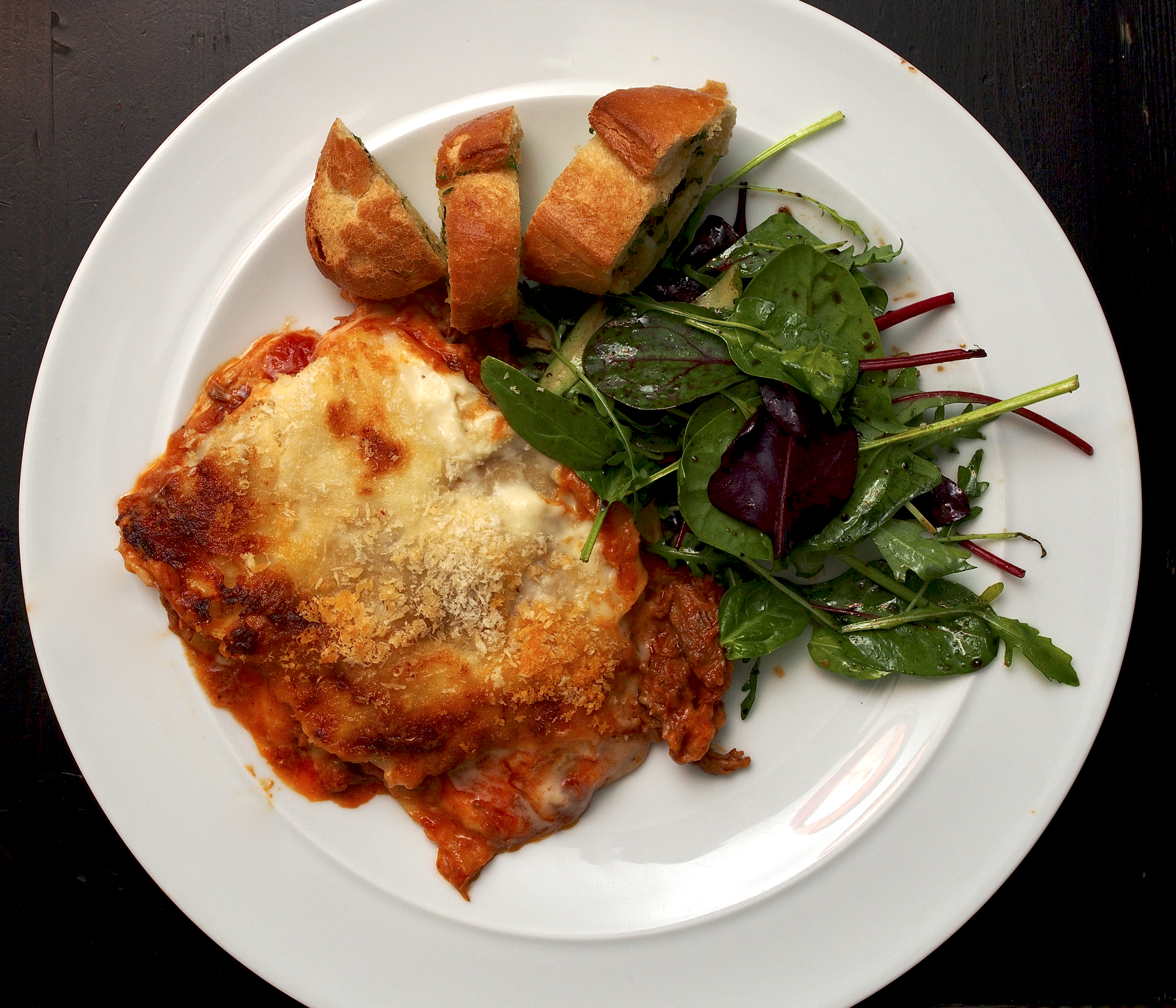
Who knew this was a thing? The ragu is made from whole lamb neck fillets which are cooked in a low oven for many hours and then shredded into the sauce. The result is absolutely delicious and much less laborious than our traditional version. You can make the lamb layer well in advance and keep it in the fridge or freezer until needed.
Wine Suggestion: to match the rich lamb and cheese we opened a Ramos Pinto Duas Quintas from the Douro. We’d kept this a few years from release and the layers of gentle spices had grown, the tannins softened to a back note, and the fruit had somehow got richer without adding any weight. A beautiful wine and an equitable accompaniment to a dish like this.
Braised lamb lasagne – serves 4
1 tbsp olive oil
lamb neck fillets, about 400g in total
1 clove of garlic
1 sprig of rosemary
500g carton passata
500ml full-fat milk
50g unsalted butter
50g plain flour
70g Parmesan, grated
6 lasagne sheets
2 mozzarella balls, torn into thin strips
2 tbsp panko breadcrumbs
dressed salad and garlic bread to serve
Heat the oven to 130C/110C fan/gas 1.
Heat the oil in a heavy-based casserole, season the lamb generously, then fry until well browned all over, about 5 minutes. Add the garlic and rosemary and cook for another minute, then pour over the passata. Rinse out the carton with a splash of water and add this too. Season again, then cover tightly with foil, followed by the lid. Cook in the oven for at least 3½ or up to 4 hours by which time is should be very easy to shred. Leave it to cool a bit, then use a couple of forks to shred the lamb into the sauce.
Heat the milk in a saucepan until just simmering. Melt the butter in another saucepan, then stir in the flour to form a paste. Gradually whisk in the hot milk until you have a smooth glossy sauce. Stir in half the Parmesan and season.
Meanwhile, soak the lasagne sheets in just-boiled water to soften, then drain.
Heat the oven to 180C/160C fan/gas 4.
Spread a thin layer of lamb sauce on the bottom of a small lasagne dish (it should fit two lasagne sheets without overlapping). Top with two lasagne sheets, then cover with a third of the béchamel and a third of the mozzarella. Add half of the remaining lamb sauce, then top this with 2 lasagne sheets and another third of the béchamel and mozzarella. Repeat once more, then sprinkle over the rest of the Parmesan and the panko breadcrumbs.
Bake for 35 minutes, then turn the oven up to 190C/170C fan/gas 5. Bake for another 10 minutes to brown the top, then leave to rest for 10 minutes before serving.
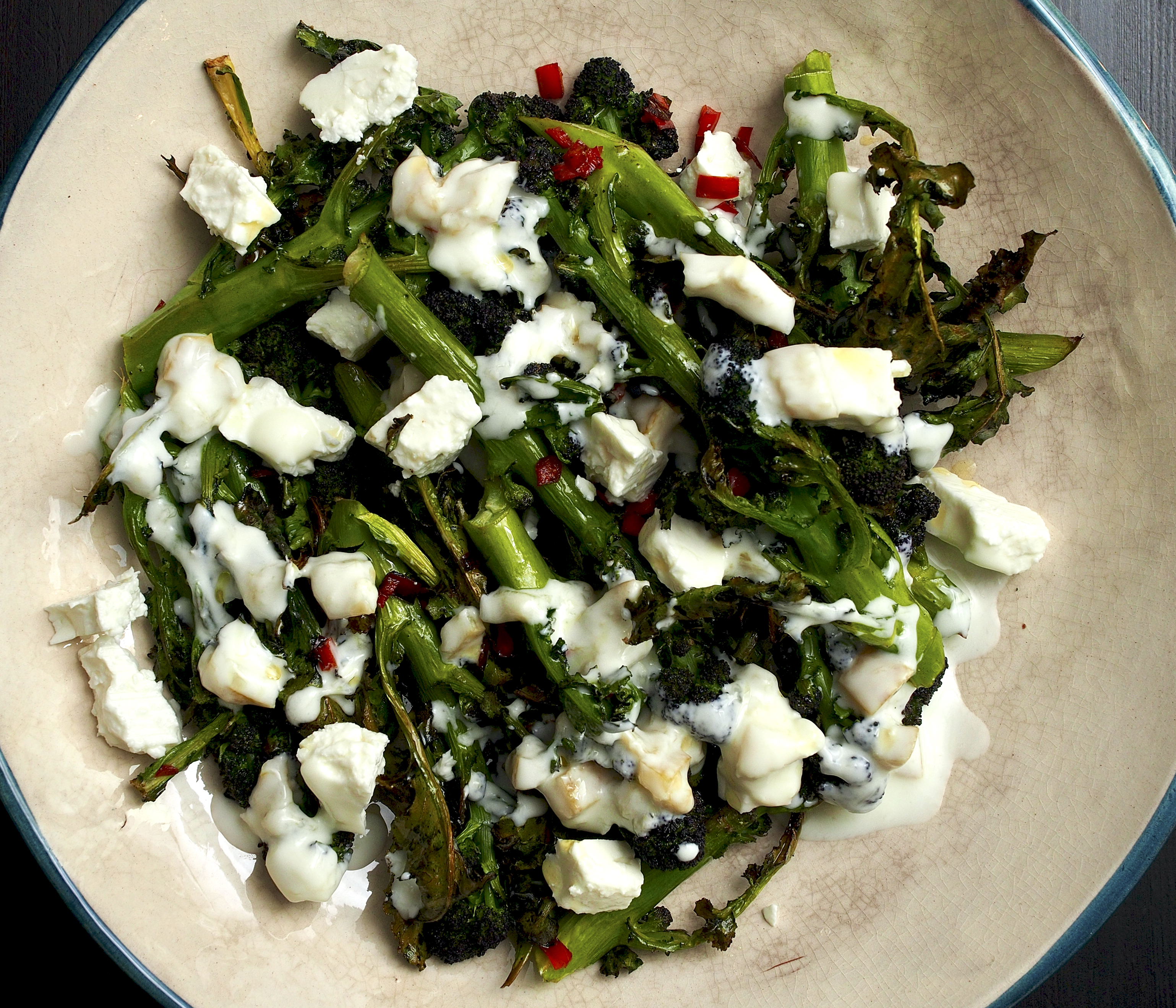
PSB is our veg saviour early in the year when winter is lingering and spring still seems too far away. We loved this roasted version with a tangy lemon dressing.
Roasted PSB with feta & preserved lemons – serves 4 to 6 as a side
500g purple sprouting broccoli
2 tbsp olive oil
1 red chilli, chopped
1 preserved lemon, flesh and rind chopped, plus 1 tbsp juice from the jar
80g yoghurt
1 garlic cloves, grated
30g feta
Heat the oven to 200C/180C fan/gas 6.
Put the PSB into large roasting tin, add the olive oil and red chilli, season with salt and pepper, then toss with your hands.
Roast for 15 minutes, turning halfway, until tender and starting to char.
Meanwhile stir the preserved lemon, juice and garlic into the yoghurt.
Crumble the feta over the roasted broccoli and drizzle with yoghurt dressing and your best olive oil.
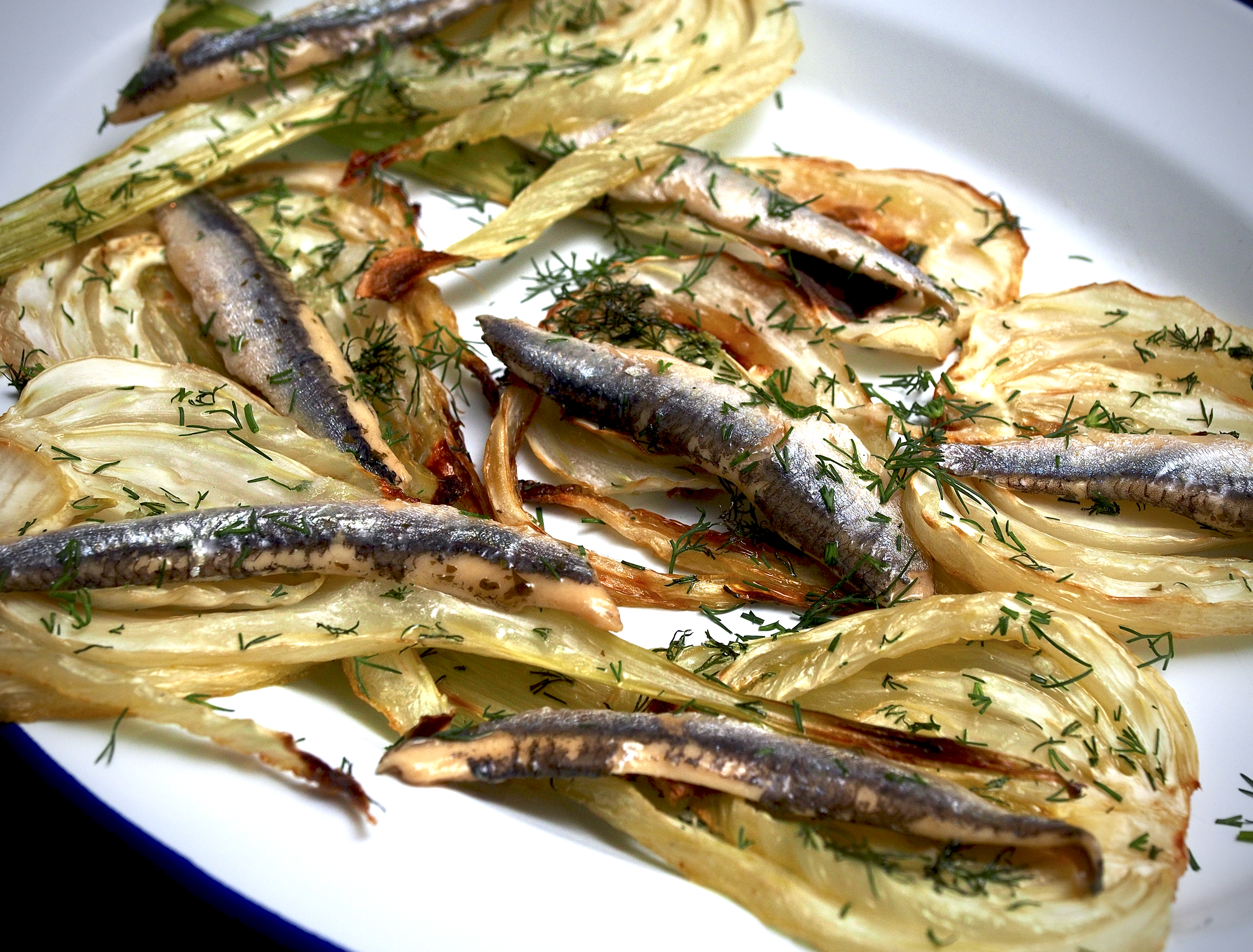
A proper Venetian cichéti or wine bar snack. If you haven’t grilled fennel before we strongly suggest that you do, it becomes all caramelised and the flavour is much stronger. Here two strong flavours come together to great effect. Serve as a nibble with drinks.
Wine Suggestion: we didn’t have have any dry Venetian whites to hand but from further south in the Marches we had a bottle of Sartarelli’s Verdicchio Classico. Crisp, with hints of bitter, green almonds and pure peach and apple flavours and a saline twist that seemed to echo the anchovies. We were almost sitting in a bacaro overlooking a canal.
Grilled fennel with White Anchovies
1 small fennel bulb, sliced through the root into medium-thin pieces about 5mm thick
extra virgin olive oil
flaky sea salt
a handful of roughly chopped dill
10 white anchovy fillets
Preheat the grill to medium.
Put the fennel slices onto a baking tray, drizzle with oil and sprinkle with salt. Add half the dill and toss to coat, then put the baking tray under the grill for 10-15 minutes, turning once, or until starting to brown and caramelise at the edges. Remove and set aside to cool slightly.
Spread the fennel over a platter and place an anchovy fillet on each slice, then scatter over the rest of the dill and serve.
(Original recipe from Polpo by Russell Norman, Bloomsbury Publishing, 2012.)
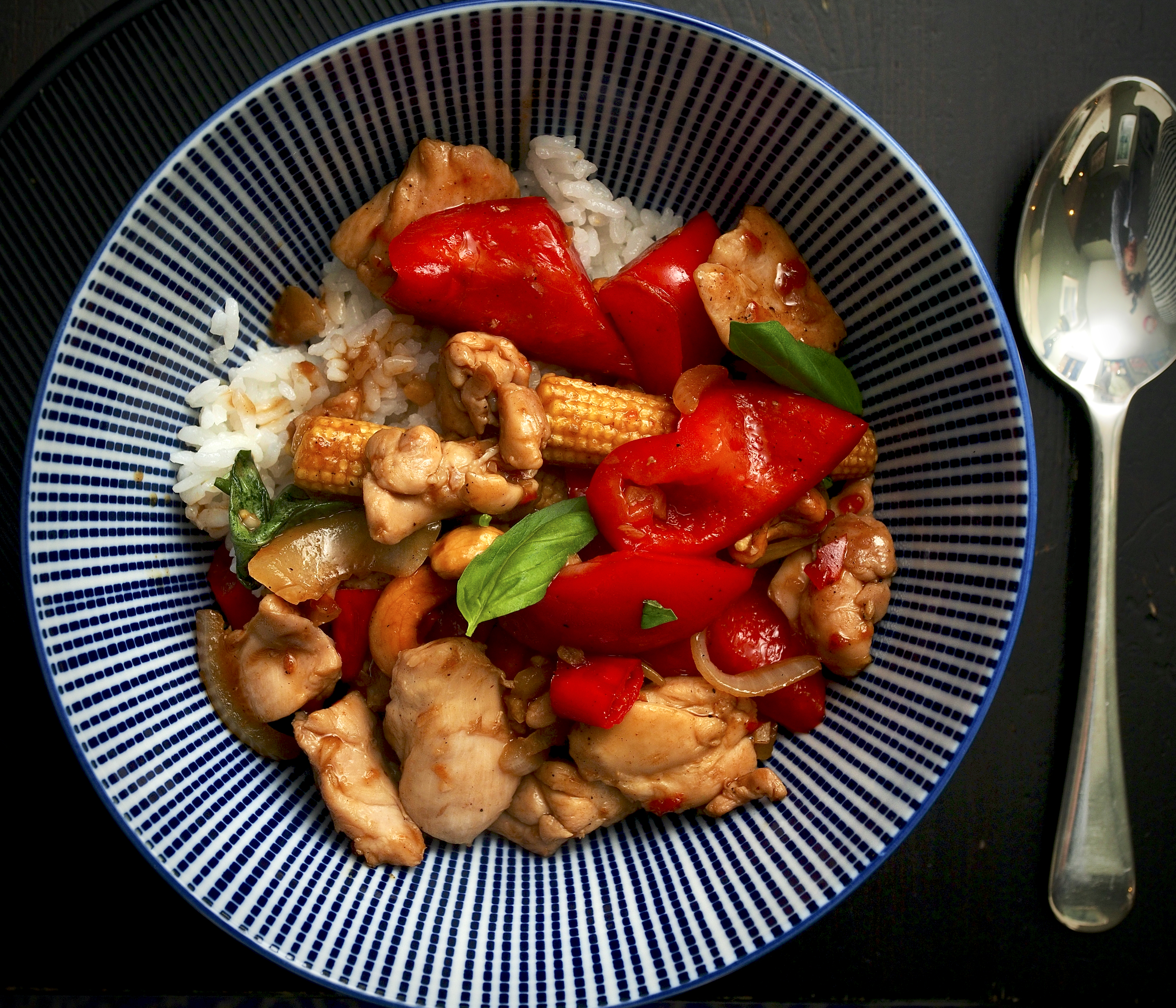
This is so simple and definitely better than a take away. While we’re not massive fans of baby corn it provides a crunch and texture that would be missing from the dish if not there. Made for Jono’s birthday on a Monday after a weekend of extensive birthday cooking; great flavours and quick for a work day celebration.
Wine Suggestion: We’d opened a Dermot Sugrue Cuvée Dr Brendan O’Regan, a profound, complex and rewarding English Sparkling for Jono’s birthday and had a leftover glass with this dish. We discovered Dermot’s wines a few years ago and have loved them ever since and it was a super match, standing up to the Asian flavours exceptionally well. We know this particlar wine may be hard to find but look for a good crisp sparkling that has been left on lees for a while or a good Champagne – sparkling should be so much more than a celebratory glass and they make great food matches.
500g boneless skinless chicken thighs, cut into small bite-size pieces
4 cloves of garlic, finely chopped
2 red chillies, thickly sliced
2 red peppers, cut into thick pieces
1 onion, halved and sliced
50g roasted cashews
Thai basil or regular basil and steamed rice, to serve
FOR THE CHILLI SAUCE:
2 tbsp Thai chilli paste/jam (nam prik)
1 tbsp fish sauce
2 tbsp light soy sauce
juice of 1 lime
4 tbsp oyster sauce
Make the chilli sauce by mixing all of the ingredients together in a small bowl, then set aside.
Blanch the baby corn in a pot of boiling water for 2 minutes, then drain and refresh under cold water and drain again.
Heat a large wok until hot and add ½ tbsp vegetable oil. Brown the chicken in batches. If you leave them for 2-3 minutes on one side initially they will get a nice colour, then stir-fry for another minute or until golden on all sides. Transfer to a bowl.
Heat another ½ tbsp oil of oil in the wok over a medium heat, then add the garlic and chilli and stir-fry for a minute. Add the peppers, onions, cashews and baby corn and heat for 1 minute. Pour in the chilli sauce and add the chicken. Stir-fry until heated through and the sauce has thickened.
Serve with steamed rice and basil sprinkled over.
(Original recipe from My Asian Kitchen by Jennifer Joyce, Murdoch Books, 2018.)
This is good family-friendly stuff. Easy to put together and nothing too challenging for junior palates.
Wine Suggestion: An alpine Chardonnay took our fancy tonight so we opened Cantina Colternezio’s Altkirch Chardonnay from the Südtirol – Alto Adige. With a lovely purity and precision this is both thirst quenching and comforting.
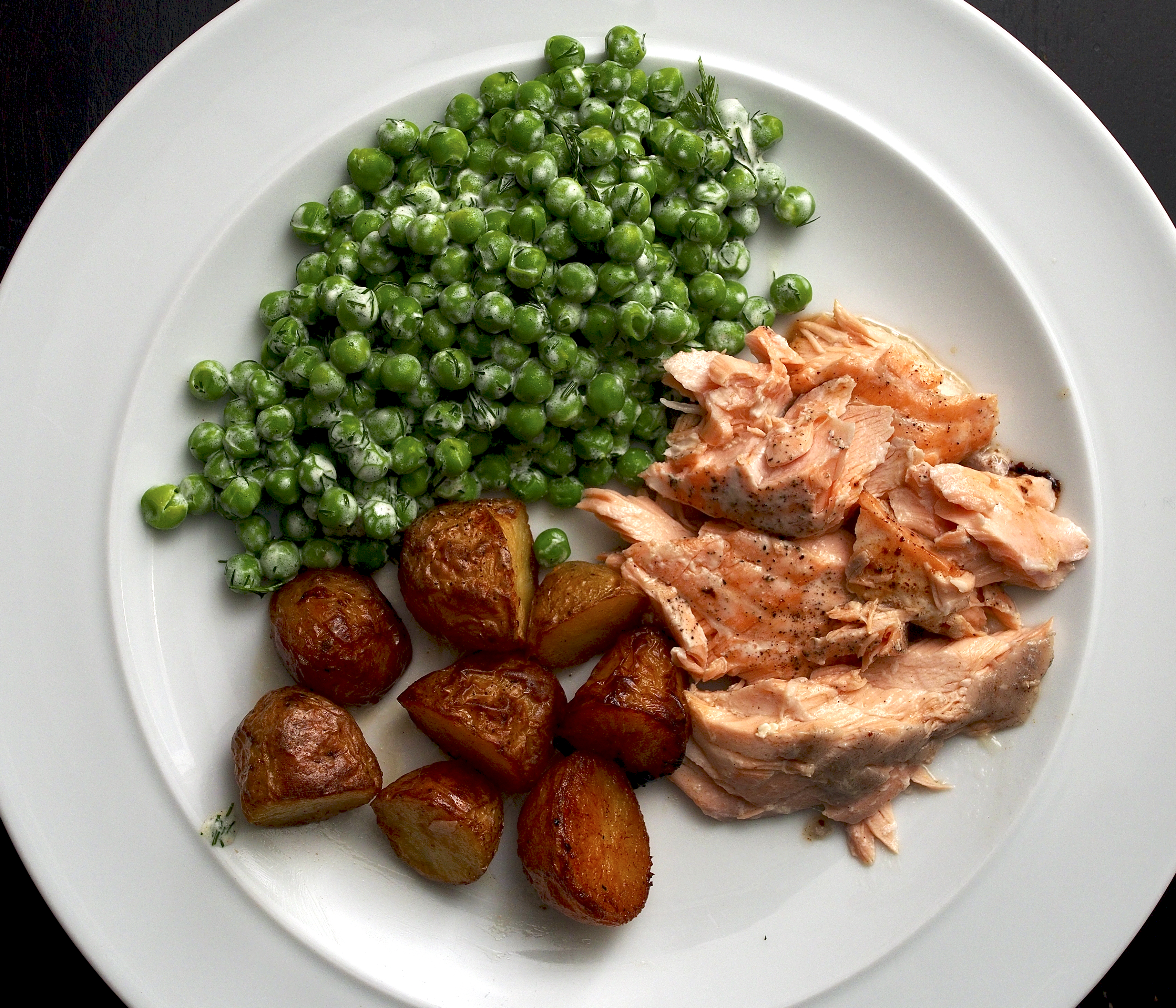
Roast salmon & potatoes with herby peas – serves 2 adults and 2 kids
500g baby potatoes, halved
1 tbsp olive oil
2 tbsp butter
500g single piece of skinless salmon fillet (try and get the middle, chunky bit from a side of salmon if you can)
2 lemons, halved
250g frozen peas
2 tbsp crème fraîche
1 tbsp chopped dill or mint
Heat the oven to 200C/180C/gas 6.
Boil the potatoes for about 10 minutes or until just tender, then drain and leave to steam-dry in the pot.
Toss the potatoes with the oil and butter, then tip onto a baking tray and roast for 20 minutes.
Push the potatoes aside and add the salmon to the tray, add the lemon halves and season everything with salt and black pepper. Roast for 15 minutes or until cooked through.
Simmer the peas for a couple of minutes, then drain and tip into a warmed bowl. Add the crème fraîche and herbs.
Flake the salmon into chunks and serve with the potatoes and peas.
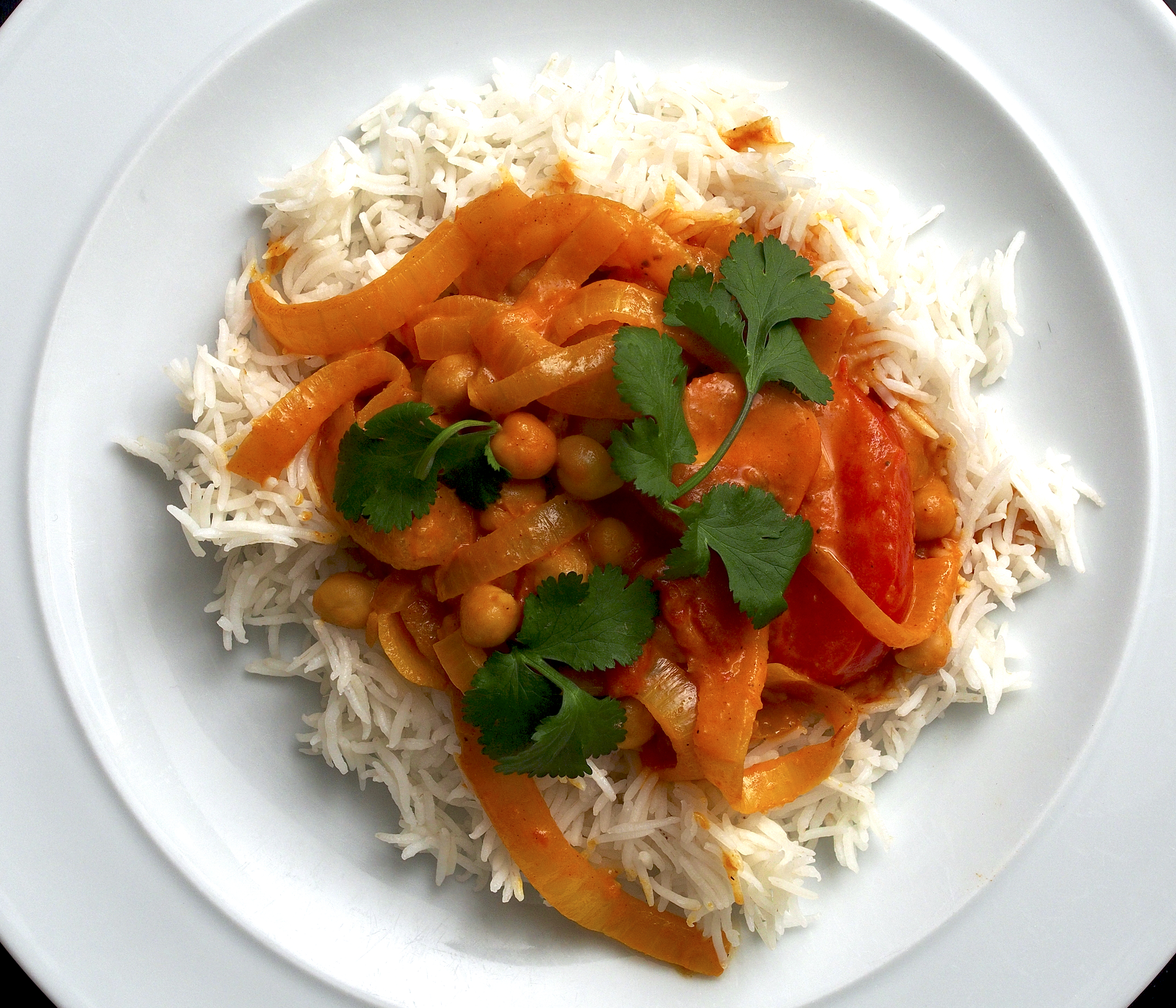
A few tins and some spices and you’re pretty much sorted for this tasty weeknight curry. We served this with rice the first night, and chips the second. We also know it’s not tomato season at present but the fresh tomatoes are really more for texture than flavour here.
Tomato & chickpea curry – serves 4
1 tbsp olive oil
2 onions, finely sliced
2 cloves of garlic, crushed
1 tsp garam masala
1 tsp turmeric
1 tsp ground coriander
1 x 400g tin plum tomatoes
1 x 400ml tin coconut milk
1 x 400g tin chickpeas, drained and rinsed
2 large tomatoes, quartered
a small bunch of coriander, roughly chopped
Heat the oil in a large pan and cook the onions for about 10 minutes or until softened.
Add the garlic and spices and keep cooking for another minute or two.
Add the tin of tomatoes, breaking them up with a spoon, then simmer for 10 minutes.
Add the coconut milk and season generously. Bring to the boil and simmer for a further 10-15 minutes or until thickened.
Add the chickpeas and fresh tomatoes and allow to warm through. Serve with some steamed rice and the coriander scattered over.
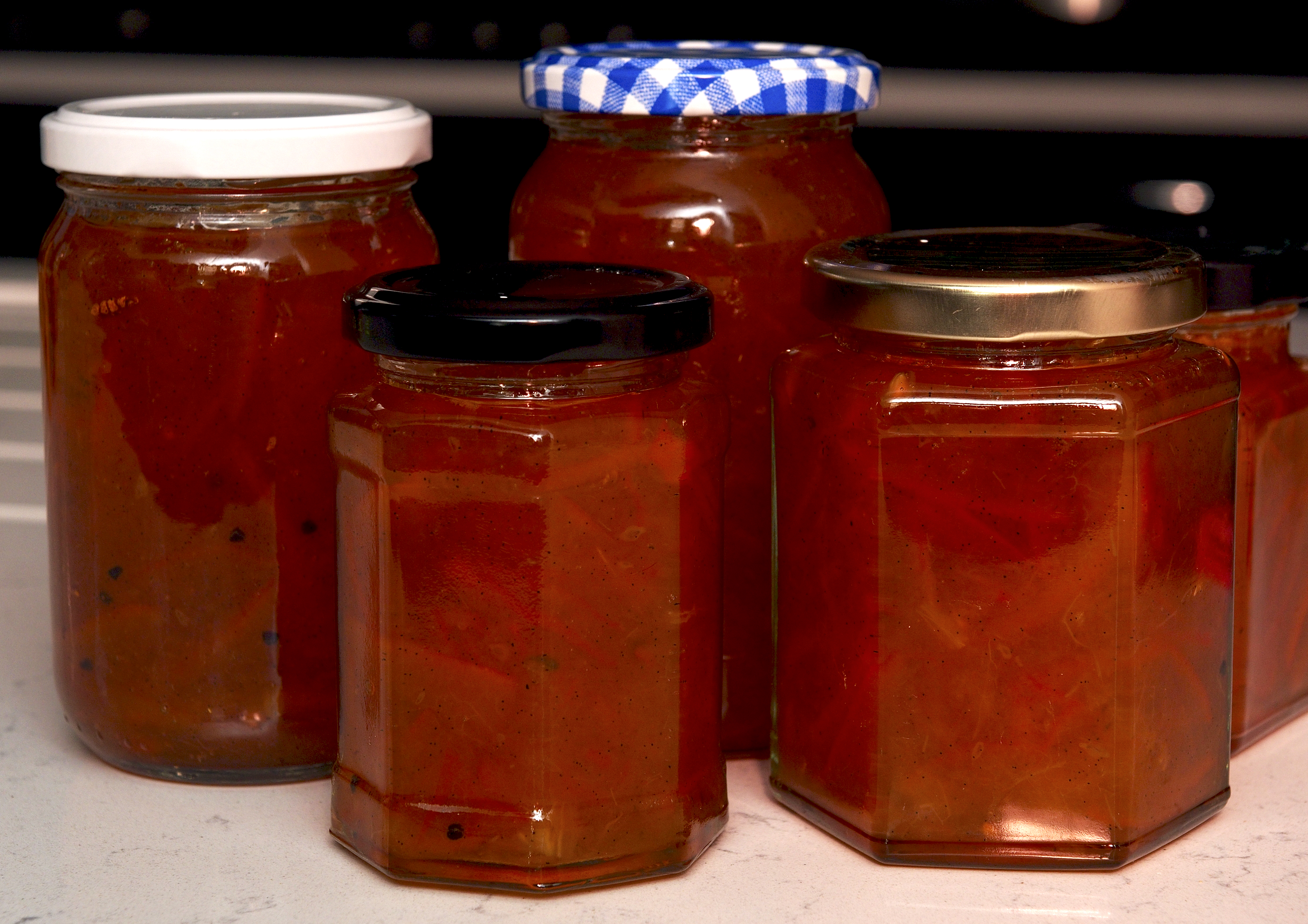
Quite unusual in flavour and a slightly different method. The bitter Seville oranges make a good contrast to the sweet spice and are balanced by a slightly reduced sugar ratio.
Seville orange, vanilla & cardamom marmalade – makes about 5 jars
1.2kg Seville oranges (approx 8)
10 cardamom pods, seeded
1 vanilla pod, split
1 lemon, juiced
850g preserving sugar
Halve one of the oranges and finely slice, removing pips as you go, then put into a large saucepan. Peel and finely chop the flesh of the remaining oranges (reserve the skin from three) and carefully remove and discard any pips. Add the chopped flesh and juice to the pan.
Trim any excess pith from the reserved orange skin, then finely chop into thin strips. Add this to the pan with the cardamom seeds and 400ml water. Also add the vanilla seeds and throw in the empty pod.
Boil for 10 mins until the skins are softening, then add the lemon juice and sugar, stirring constantly. Once the sugar has dissolved, simmer on low for 30-35 mins. Turn up the heat and boil to set for about 10-15 mins. The boiling point of jam is 105C but if you don’t have a jam thermometer, try the ‘wrinkle test’ and spoon some marmalade onto a freezer-cold saucer and leave for a minute. If it wrinkles when you poke it and has a fine skin on top, it’s ready. Pour the marmalade into sterilized jars, and store for up to a year.
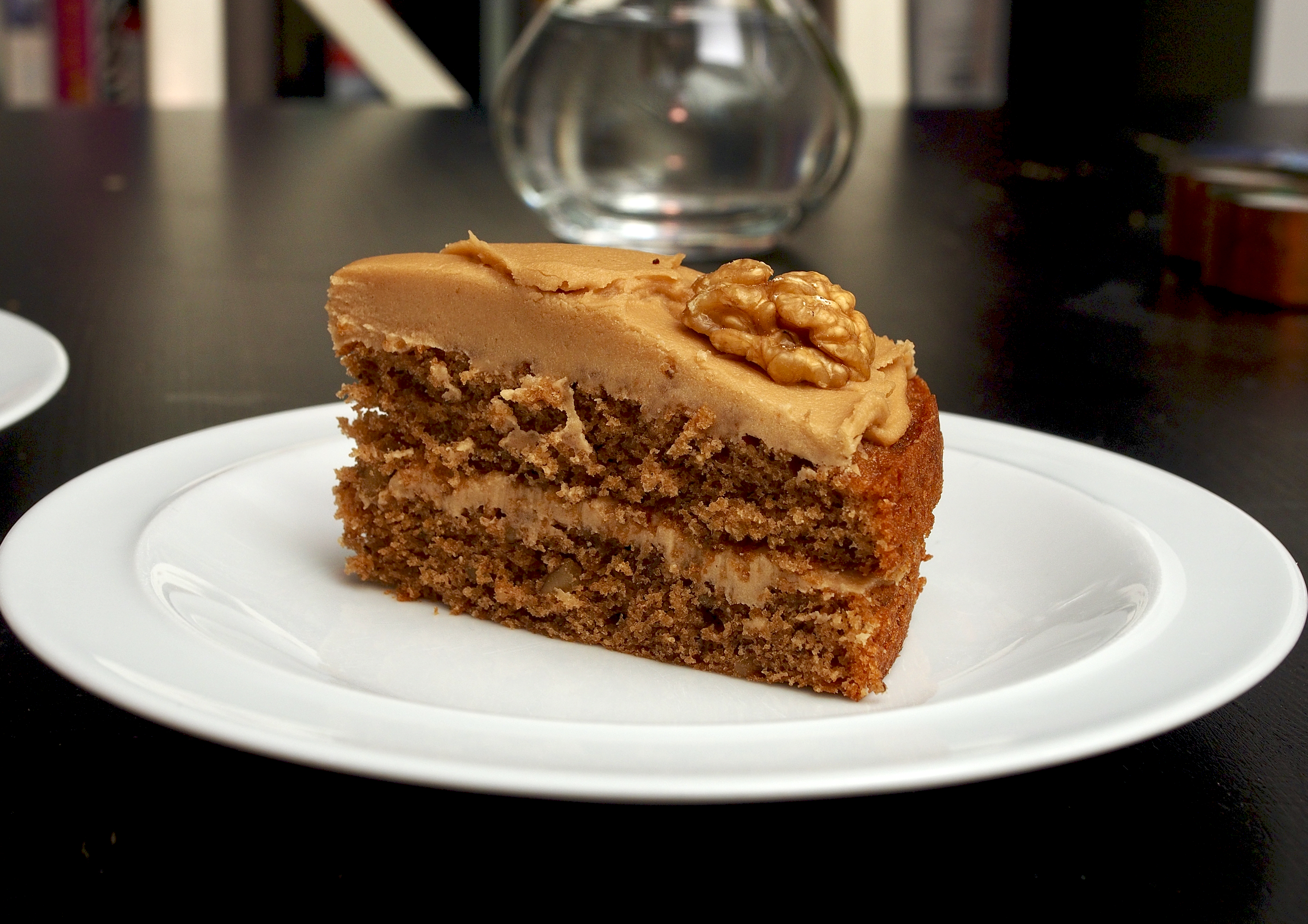
We don’t do much baking but we’ve managed more than usual with all of these lockdowns. This old-fashioned coffee and walnut cake is a favourite of Jules’ and was really straightforward to make – even for us baking novices.
Coffee & Walnut Cake
100g softened butter
100g caster sugar
2 large eggs
100g self-raising flour
1 level tsp baking powder
50g chopped walnuts
1 tbsp coffee extract (or 2 tsp instant coffee granules mixed with 1 tbsp hot water. Use a bit more in the cake mix than in the icing)
FOR THE ICING:
75g softened butter
225g sifted icing sugar
2 tsp milk
2 tsp coffee extract
8 walnut halves, to decorate
Heat the oven to 160C/Gas 4.
Grease two 18cm sandwich tins and line the base of each with baking paper.
Put all the cake ingredients into a bowl and beat until well blended and smooth.
Divide the cake mix between the sandwich tins and level the surface. Bake for 20-25 minutes or until well risen and the top springs back when pressed lightly with a finger. Leave to cool in the tins for a few minutes, then turn out, peel off the paper and finish cooling on a wire rack.
To make the icing, beat the butter, sifted icing sugar, milk and coffee essence in a bowl until smooth.
When the cakes are completely cold sandwich them together with half the icing and use the rest for the top. Decorate with the walnuts.
(Original recipe from Mary Berry’s Baking Bible, BBC Books, 2009.)
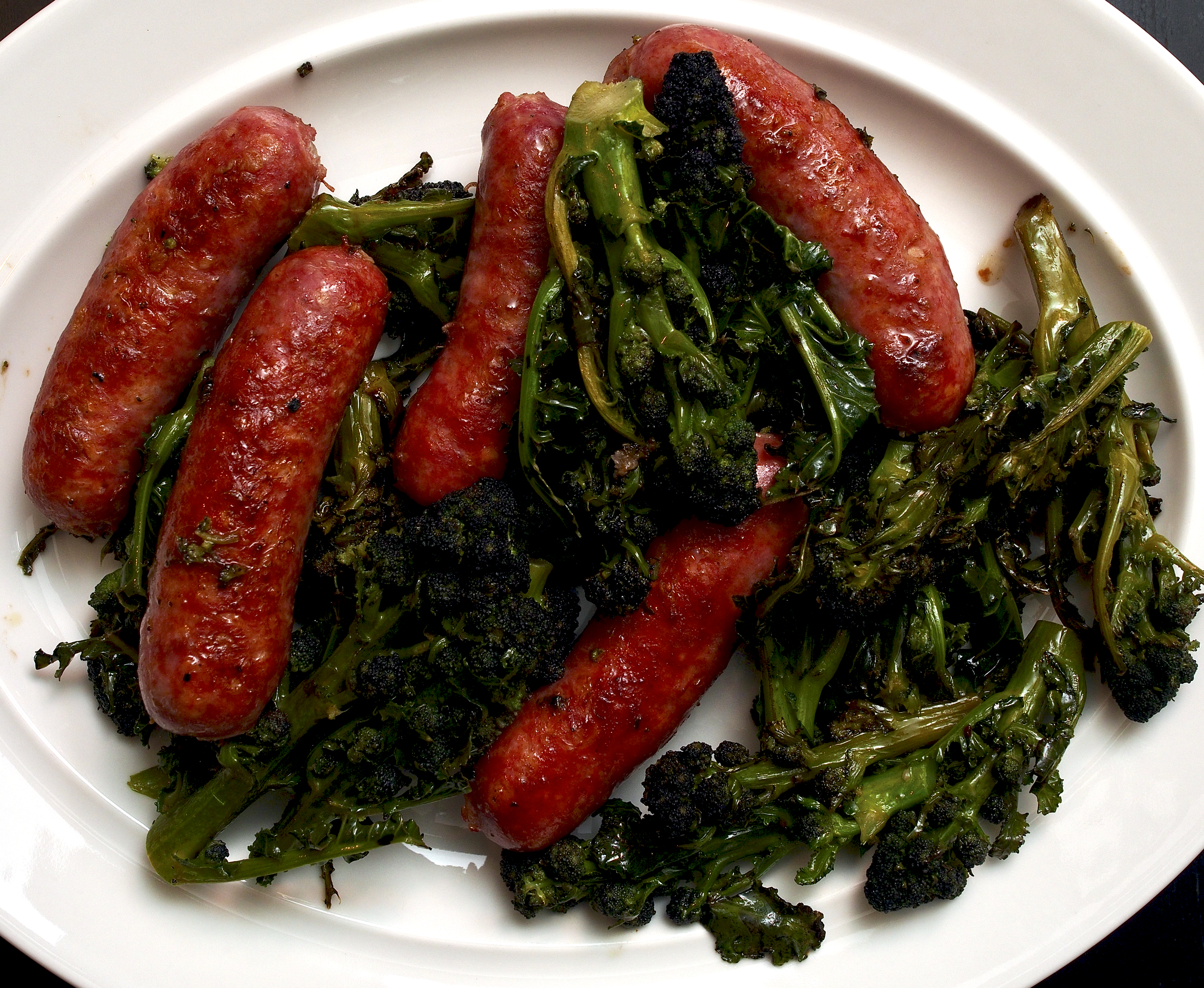
A recipe from Southern Italian Cooking by Valentina Harris. There is no better vehicle to showcase purple sprouting broccoli, which is in season right now. You need top quality ingredients as they will shine in this simple dish. The sausages were Italian with fennel and the PSB our friends at McNally Family Farm.
Wine Suggestion: There’s a certain honest rusticity to this dish which we think suits Nebbiolo or similar, but not the heady heights of Barolo, look for a lesser known area. We went for the lesser known Freisa grape, also from Piedmont. A bottle of the Olim Bauda Freisa and it tasted of roses and raspberry’s with a decent whack of smooth, honest tannins; satisfying and generous alongside the food.
Salsicce con Broccoletti – serves 4
1 tbsp lard (we used a mix of olive oil and butter)
2 cloves of garlic, crushed
1 dried red chilli pepper
500g Italian sausages (you need top quality Italian sausages which have a much coarser texture than regular butchers sausages)
750g purple sprouting broccoli, rinsed and trimmed
A large shallow casserole dish works well for this. Melt the lard and fry the garlic and chilli pepper over a gentle heat for 5 minutes. Add the sausages and brown all over (you might want to do this in a frying pan so you don’t burn the garlic, if you do, make sure that the tip all the oil that comes out of the sausages back into the pan).
Once browned all over, turn the heat down and cook the sausages gently for 5 minutes. Add the broccoli and season with a little salt. Stir everything to coat in the fat.
Cover the pan and simmer for 20 minutes, a splash of water will help steam the broccoli and stop the dish drying out.
(Original recipe from Southern Italian Cooking by Valentina Harris, Pavilion Books Limited, 1993.)
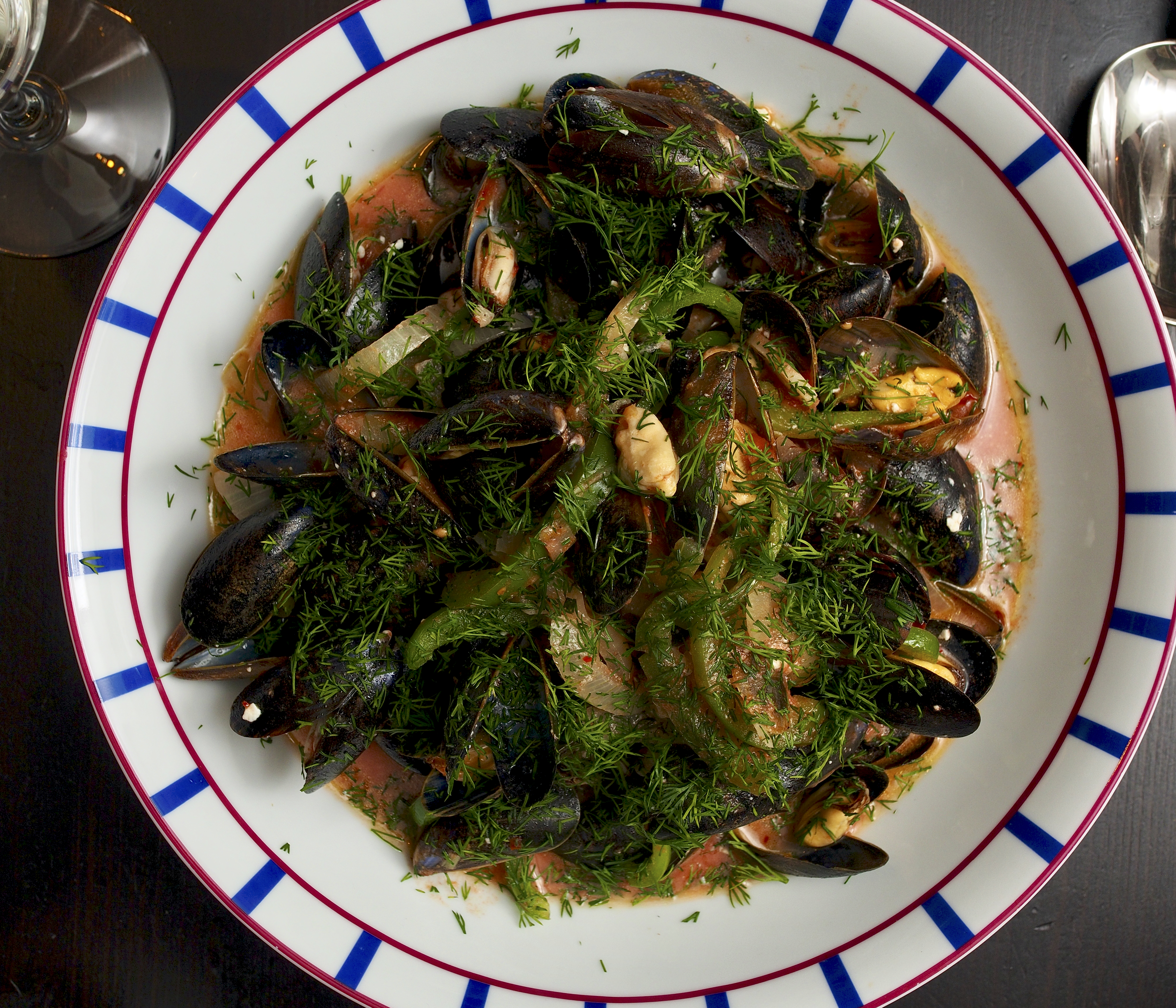
Mussels with green pepper, Pernod, tomatoes, feta and dill. This is an Albanian recipe that we found in Venice to Istanbul by Rick Stein. We don’t agree with the seafood and cheese rule anyway and this dish proves that it can work. Serve with crusty bread.
Wine Suggestion: Match with a white with a bit of body, but no oak. We chose an underrated Sylvaner by Sipp Mack in Alsace which was fresh with stone fruits and a racy minerality in the glass
Butrint Mussels – serves 2
3 tbsp olive oil
1 small onion, sliced
1 clove of garlic, sliced
1 small green pepper, sliced
30ml of ouzo/Pastis (we used Pernod)
600g mussels, scrubbed
150ml passata
75g feta cheese
½ tsp chilli flakes
½ tsp salt
a small handful of dill, chopped
Heat the oil in a large pan over a medium heat and sweat the onion, garlic and green pepper for 5 minutes.
Add the Pernod and the mussels, then cover with a lid and cook for about 5 minutes or until the mussels are starting to open.
Add the passata and feta and season with the chilli flakes, salt and some black pepper. Heat through for a minute or two, then serve scattered with the dill.
(Original recipe from Venice to Istanbul by Rick Stein, BBC Books, 2015.)
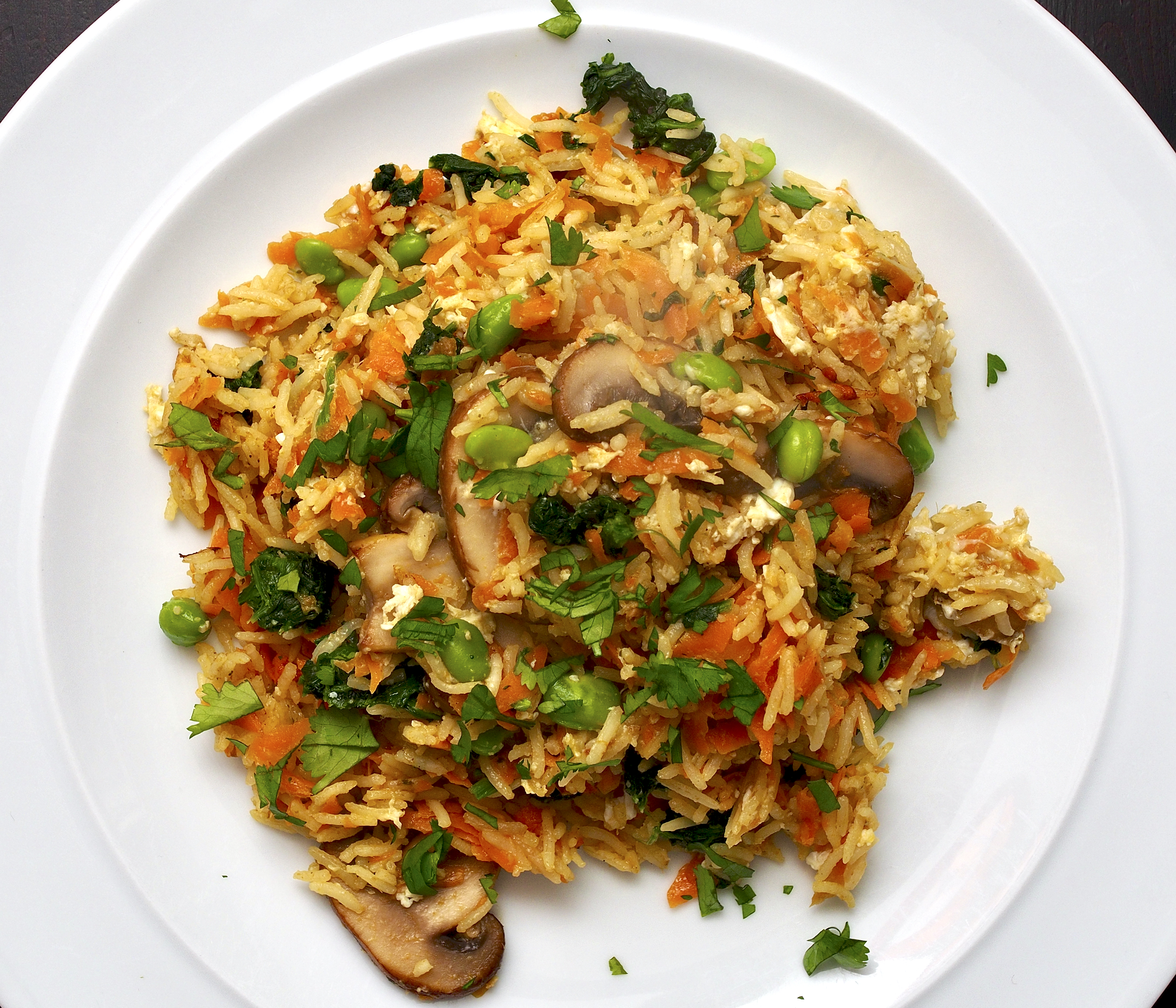
We love recipes like this; perfect for using up bits and pieces and super tasty.
Wine Suggestion: There’s a vibrancy to this food and we matched it with Ventenac’s “Dissidents” le Paria, a fresh-fruited, minerally grenache. Lovely light spices, a stony core of texture and bright plums and cherry flavours.
Green Spiced Rice – serves 2-3
150g frozen broad beans
400ml vegetable stock
2 tbsp Thai green curry paste
200g basmati rice
a slice of butter
a few sliced mushrooms
a large carrot, coarsely grated
3 eggs, lightly beaten
a handful of coriander, roughly chopped
a few handfuls of spinach
Cook the broad beans in boiling water for 2 minutes, then drain and pop them out of the skins.
Wilt the spinach is a saucepan, then leave to cool. Squeeze out any excess liquid if necessary and chop.
Pour the vegetable stock into a saucepan, then add the curry paste and the rice. Bring to the boil, then cover and simmer for 10 minutes or until almost tender and most of the liquid absorbed.
Melt the butter in a large frying pan, then fry the mushrooms until lightly coloured. Add the rice and carrot to the pan with the broad beans. Stir until the rice is moist but no longer wet, then add the eggs and season. Keep cooking, stirring now and then to break up the egg, until it is lightly cooked. Fold through the chopped spinach and coriander, then serve.
(Original recipe from Eat by Nigel Slater, Fourth Estate, 2013.)
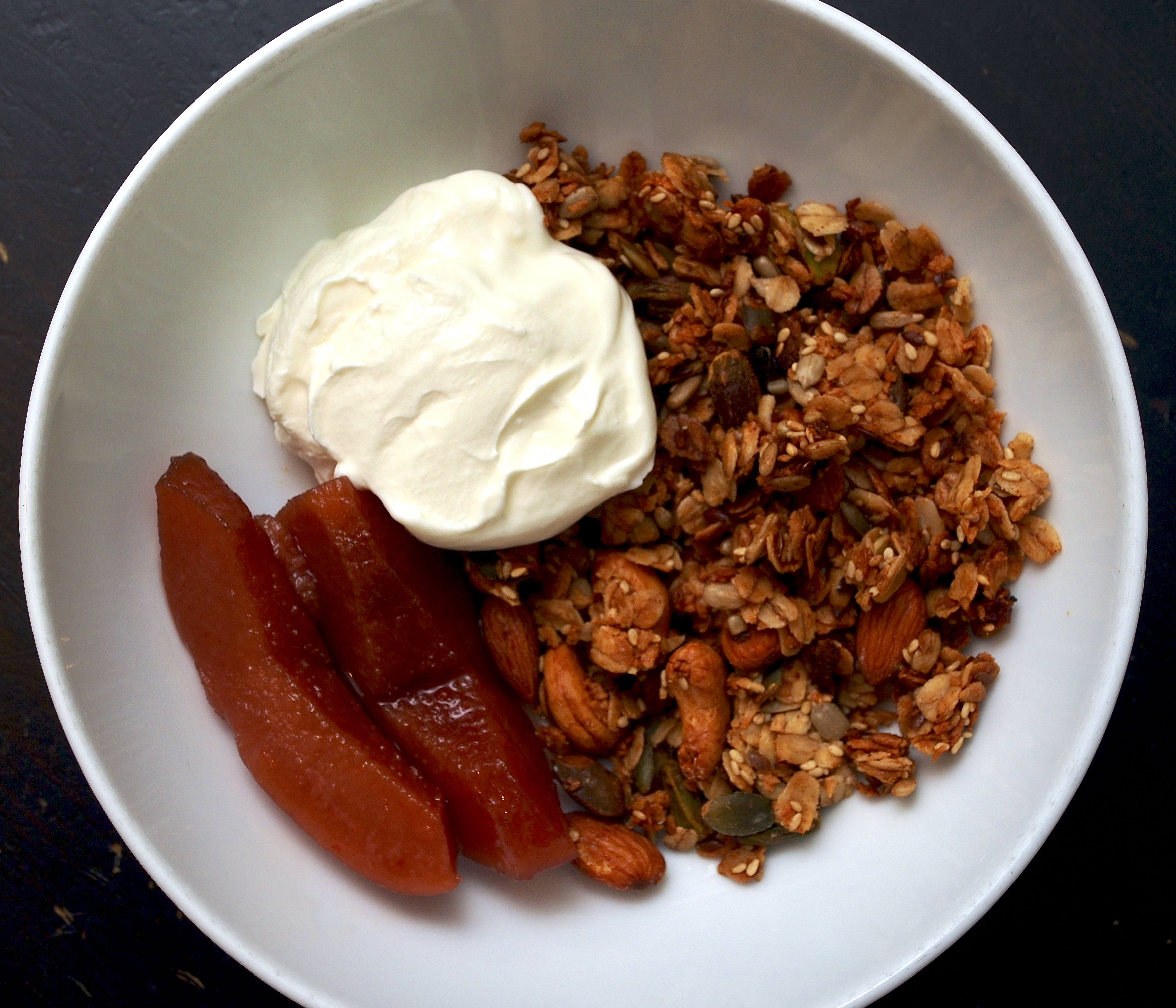
This granola from Dishoom has only a hint of sweetness and is much more nutty with hints of butter and spice so it makes a great foil to any fresh or poached fruit (here with Nigella’s pomegranate-poached quinces). It’s also great with just some creamy yoghurt, we loved it. The kitchen smells incredible as it toasts!
Dishoom Granola – makes 10-12 portions
200g rolled oats
100g almonds
80g cashew nuts
75g pistachio nuts
45g desiccated coconut
70g sunflower seeds
70g pumpkin seeds
20g sesame seeds
100g acacia honey
100g unsalted butter
1 tsp ground cinnamon
Heat the oven to 210C/190C fan/Gas 6-7.
Line two large baking trays with baking parchment.
Mix the oats, nuts, desiccated coconut and seeds together in a big bowl.
Put the honey, butter and ground cinnamon into a small saucepan and heat gently until the butter is just melted. Pour over the dry ingredients in the bowl and mix well.
Divide the mixture between the baking trays and spread evenly, just a wooden spoon to pat it down. Put one tray in the oven and bake for 10 minutes. Remove the tray from the oven and mix well, then press it down again. Bake for another 5 minutes, then remove from the oven and allow to cool completely before you stir or move it. Repeat with the other tray.
Store in an airtight container and use within a month.
(Original recipe from Dishoom by Shamil Thakrar, Kavi Thakrar & Naved Nasir, Bloomsbury Publishing, 2019.)


 Jono & Jules do food & wine