Feeds:
Posts
Comments

Posts Tagged ‘Food’

You will need a wide heavy-based casserole dish for this as you ideally want the cabbage rolls in one layer. Make sure you season every component generously as you go. If you follow the suggestion of putting just 50g of the filling in each cabbage leaf (as you should or they will be impossible to roll), you will have too much. You can either stuff a few extra leaves or put the stuffing in the freezer for another day, which is what we did. This is a traditional Ukranian dish from Mamushka by Olia Hercules. The barberries are optional and we couldn’t find them so made the dish without, still delicious!

Wine Suggestion: We couldn’t pass up a hearty red for this dish, and a new favourite, the Parker Coonawarra Shiraz; full bodied and yet elegant and effortless with that characteristic eucalyptus twist, well recommended.

Stuffed Cabbage Leaves – serves 4 to 6

  • 2 tbsp sunflower oil
  • 1 large onion, finely diced
  • 1 carrot, peeled and grated
  • 1 tsp caster sugar
  • 1 tbsp tomato purée
  • 1 fresh bay leaf
  • 400g tin chopped tomatoes
  • 400ml water
  • 1 Savoy cabbage, 12 leaves separated, cut out the thicker part of the spine with a sharp knife or scissors
  • 250g beef mince
  • 250g pork mince
  • 160g white long-grain rice, parboiled for 5 minutes and drained
  • 40g barberries (optional)
  • a small bunch of dill, chopped, to serve
  • 100ml sour cream, to serve

Heat the sunflower oil in a large heavy-based casserole dish. Add half the chopped onion and all of the grated carrot and cook over a medium heat for 5-10 minutes until soft. Add the sugar and tomato purée and cook for 1 minute. Add the bay leaf, tomatoes and water, then season well with salt and pepper. You can turn it off at this point while you prepare the cabbage leaves but bring it back up to a simmer when you’re ready to add the cabbage to the dish.

Blanch the cabbage leaves in lots of boiling salty water for 2 minutes, then refresh in cold water and drain well on kitchen paper. It’s easier to do this in a few batches.

Mix the beef mince, pork mince, parboiled rice, barberries (if using), plenty of salt and pepper and the rest of the onion together in a bowl. Put 50g of the filling on each cabbage leaf and fold up into a parcel.

Lay the parcels on top of the sauce with the folded side facing down. You want them to fit quite snugly so they don’t unravel. Cover and cook over a low heat for about 45 minutes or until cooked through. You can leave the lid off at the end to reduce the sauce a bit if you like.

Serve with chopped dill and sour cream.

(Original recipe from Mamushka by Olia Hercules, Mitchell Beazley, 2015.)
Read Full Post »

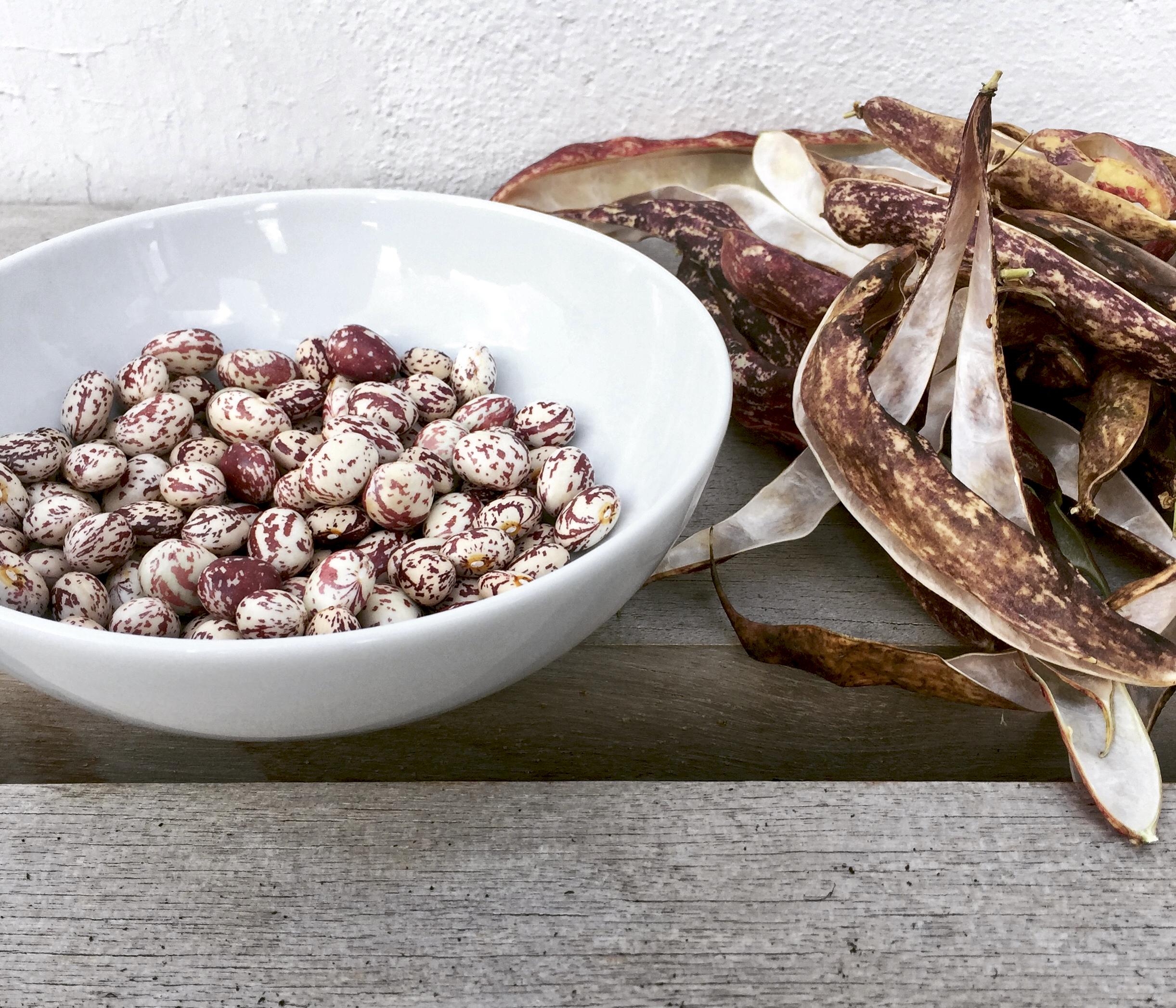
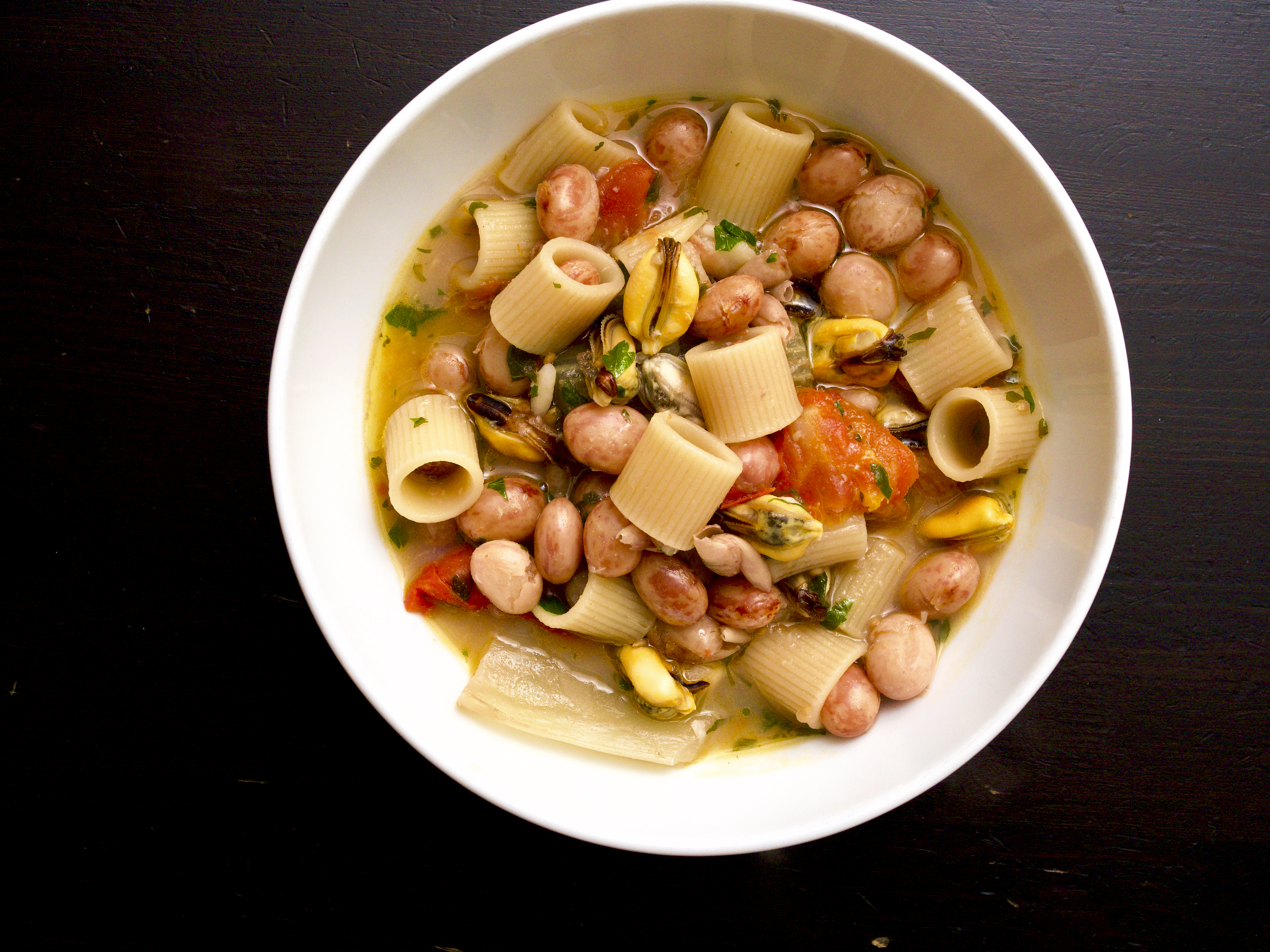
We grew borlotti beans in our little city garden this year. We didn’t get a huge crop but satisfying nonetheless. As we had a load of things going on when we picked these, we froze them for a couple of weeks until we were ready. It made this lovely pasta and bean dish by Joe Trivelli and it felt a bit like late summer again for a moment.

Wine Suggestion: A crisp, dry White or Rosé would be our first choice with a seafood pasta like this. As it’s full flavoured we avoided a lighter style and went for Graziano Pra’s Soave “Otto”, vibrantly full of crisp apples and pears, impressive length and a nutty, saline finish

Pasta with Beans & Mussels – serves 4

  • 1kg mussels
  • 300g fresh borlotti beans
  • 5 cloves of garlic
  • 1 celery stick, peeled and cut into pieces
  • 1 ripe tomato, halved
  • 75ml dry white wine
  • a small bunch of parsley, chopped
  • 1 dried chilli
  • 2 anchovy fillets
  • 200g tubetti pasta

Put the beans into a large pan with 4 of the garlic cloves, the celery and tomato. Cover with 6cm of water and a splash of olive oil, then bring to the boil. Simmer until cooked, about 40 minutes.

Meanwhile, heat a large pan until hot, then add the mussels with a tablespoon of oil and the wine. Cover and keep over a hight heat, shaking, until the mussels have just opened. then drain into a colander over a bowl to catch the juice. Don’t be tempted to cook them for any longer. Pick the mussels from the shells.

When the beans are cooked, chop the last clove of garlic. Heat 2 tbsp of olive oil in a large saucepan, then add the garlic, most of the parsley and the chilli and fry for  a minute before adding the anchovies. As soon as they have melted, pour over the mussel juice (leave any grit behind) and bring to the boil. Add the borlotti beans with their liquid and the pasta.

Cook until the pasta is al dente, stirring often so the pasta doesn’t stick. You can add more hot water if you need. When the pasta is cooked, turn off the heat, add the rest of the parsley, the mussels and seasoning. Cover and leave to sit off the heat for 5 minutes before serving.

(Original recipe from The Modern Italian Cook by Joe Trivelli, Seven Dials, 2018.)

Read Full Post »

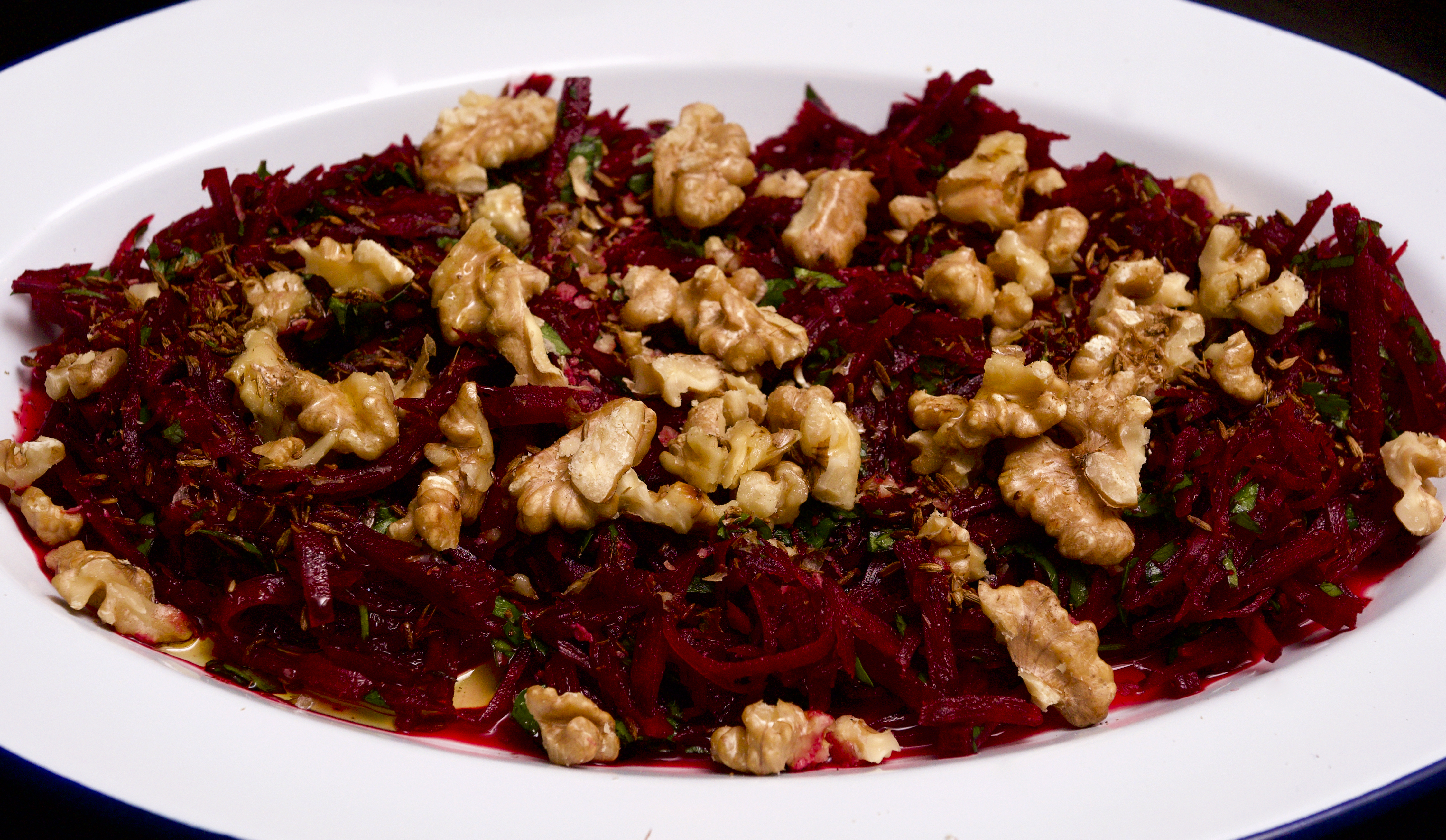
A nice salad using raw beetroot. It tastes really fresh and good for you. 

Beetroot with walnuts and cumin – serves 4

  • 75g walnuts
  • 1 tsp cumin seeds
  • about 400g beetroot
  • a handful of parsley, chopped
  • juice of 1 small orange
  • a squeeze of lemon juice
  • 2 tbsp rapeseed oil

Heat a dry frying pan over a medium heat and gently toast the walnuts for a few minutes, until toasted and starting to colour. Remove from the pan and add the cumin seeds. Toast these for 1-2 minutes, until fragrant, then tip onto a plate. 

Peel the beetroot and grate it coarsely into a bowl. Add the parsley, orange juice and a squeeze of lemon juice, 1 tbsp rapeseed oil and salt and pepper. Mix and season again to taste. Leave for 20 minutes or so to marinate and soften. 

Spread the beetroot over a serving dish. Bash the toasted walnuts roughly and scatter over the beetroot. Bash the toasted cumin seeds too, then scatter over the salad. 

Finish with another drizzle of oil. 

(Original recipe from River Cottage Veg Everyday! by Hugh Fearnley-Whittingstall, Bloomsbury, 2011.)

Read Full Post »

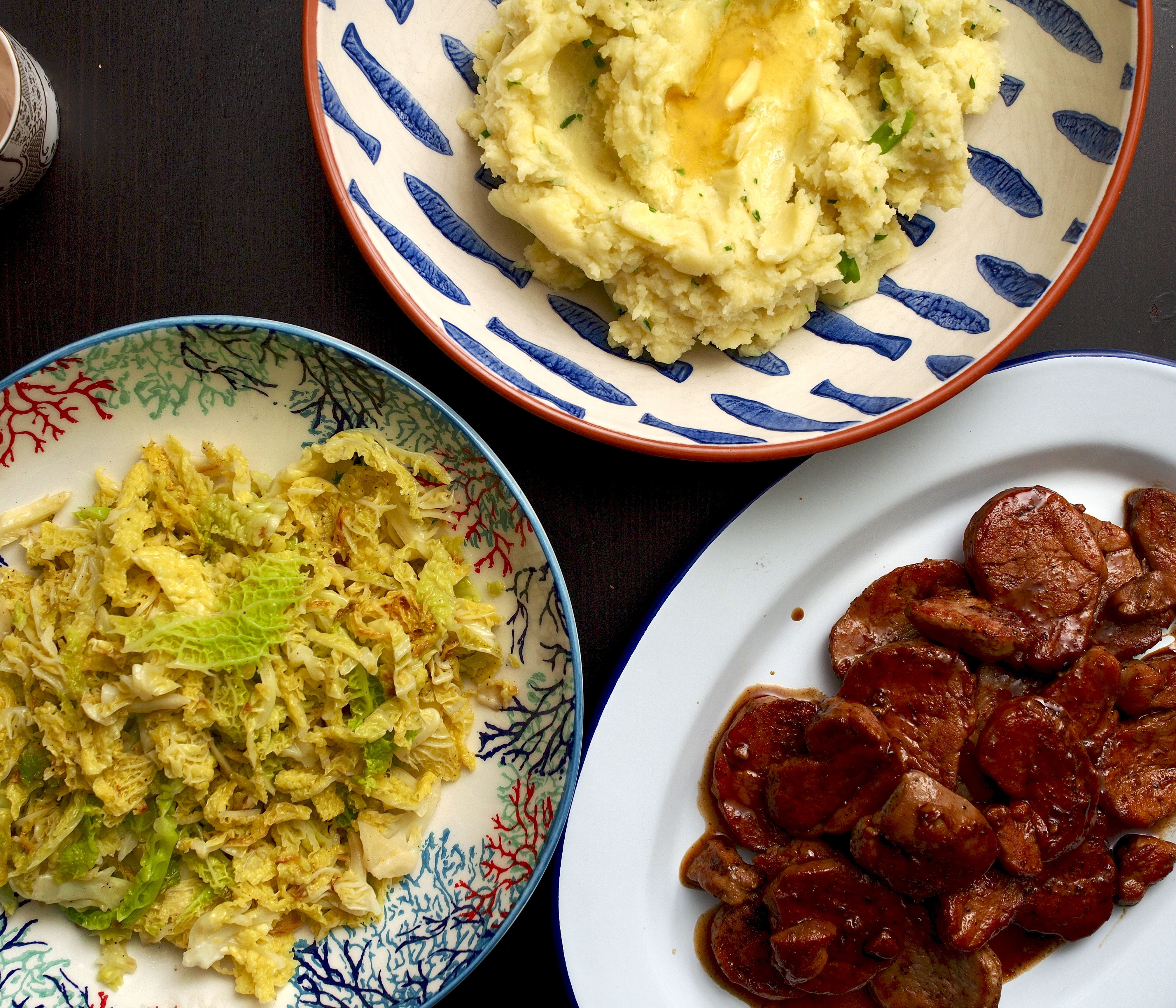
We don’t often cook dishes more than once but we always make a note on the recipe, telling us when we cooked it and what we thought of it. The last time we cooked this, or Jules did, was on the 16th August 2005. She thought it was very good then, and we both thought it was very good this time round too. We served with champ and sautéed cabbage.

Wine Suggestion: Despite Marsala hailing from Sicily we quite like a nice red Côtes du Rhône or similar with this dish. If you’re fortunate to find Domaine Jamet’s version made with 100% Syrah then snap up a bottle and then make this.

Sautéed pork medallions with Marsala – serves 4

  • 2 pork fillets, about 1kg in total
  • 4 tbsp sunflower oil
  • 150ml sweet Marsala

Cut the pork into medallions, about 1cm thick. Season with salt and pepper.

Heat the sunflower oil in a large frying pan, add the pork and sauté quickly over a high heat to brown on both sides. We find it’s much easier to do this in a few batches.

Return all the pork to the pan, add another bit of seasoning, then pour in the Marsala. Cook for a few minutes, or until the meat is cooked through and the liquid slightly reduced. Keep an eye on it as it the sauce will reduce quickly.

(Original recipe from Foolproof Mediterranean Cookery by Claudia Roden, BBC Worldwide Ltd, 2003.)

Read Full Post »

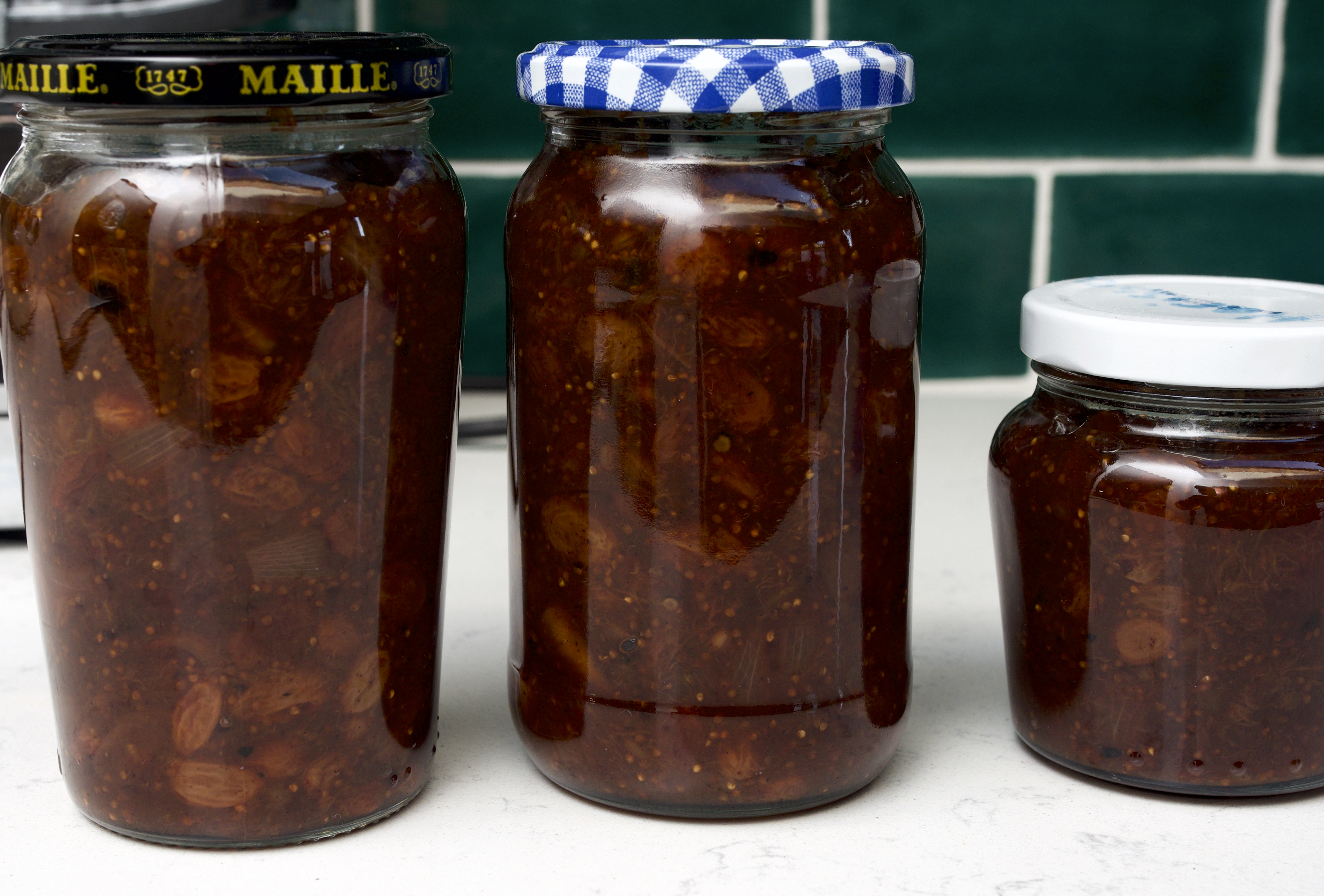
This is Nigel Slater’s dark and sticky fruit chutney from Kitchen Diaries II. The chutney is nice with cheese or cold cuts. Figs are expensive but they don’t keep for long so you often find them reduced to clear in shops. 

A dark and stick fruit chutney – makes a few jars

  • 250g soft brown sugar
  • 8 large figs, about 1kg, roughly chopped and stalks removed
  • 150ml malt vinegar
  • 150ml cider vinegar
  • 250g chopped onions
  • 250g sultanas
  • 1 tsp salt
  • 1 tsp allspice
  • half a tsp black peppercorns, cracked
  • 1 tsp coriander seeds

Warm the sugar in a bowl in a low oven. 

Put the chopped figs into a large, stainless steel or enamelled saucepan. Add the vinegars, onions, sultanas, salt, allspice, cracked peppercorns and coriander seeds, then bring to the boil. Simmer for 30 minutes, until the onions and fruit are soft. 

Stir in the sugar. Bring slowly to the boil, then turn the heat down and allow to bubble very gently. Cook for 10-15 minutes, stirring now and then to prevent it sticking, until thick and jam consistency. Bottle while hot and seal. 

(Original recipe from The Kitchen Diaries II by Nigel Slater, Fourth Estate, 2012.)

Read Full Post »

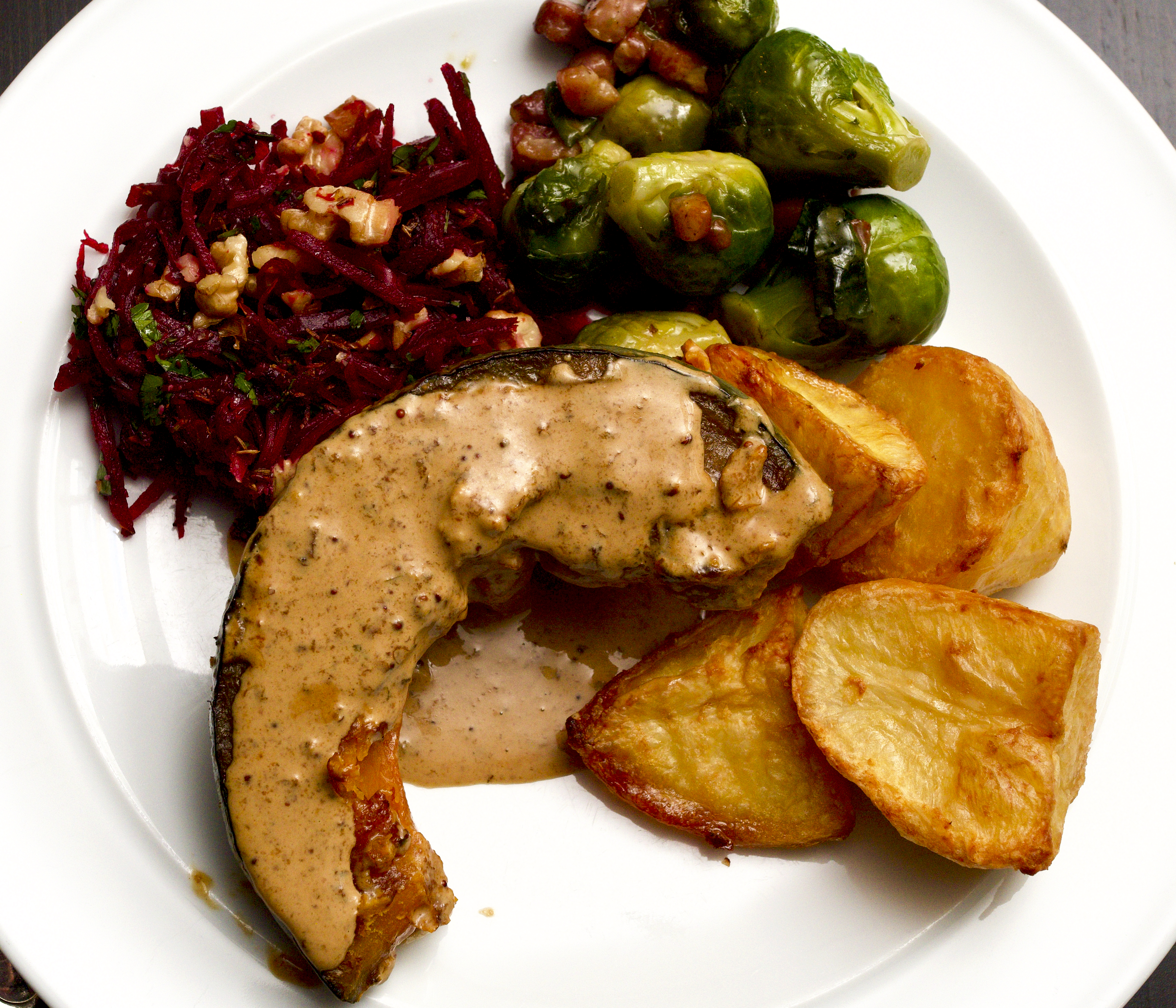
Sometimes on Sundays we do a sort of a roast dinner but without the roast. It usually consists of a few different vegetable dishes, something green and something creamy, and roast potatoes are essential. We really loved this recipe by Nigel Slater as it gives the pumpkin a super soft, almost fudgy texture, and the creamy sauce is delicious.

Wine Suggestion: This meal goes great with richer reds or whites. Jerome Coursodon’s Etincelle Blanc, a blend of Roussanne and Viognier from the St Joseph vineyards in the Northern Rhone, was super expressive and had a wonderful balance of being rich and powerful while at the same time being crisp and taught.

Pumpkin with mustard & cream – serves 4

  • 2kg of pumpkin, leave the skin on – our favourite variety is Crown Prince
  • 4 tbsp olive oil
  • 1 litre of hot chicken or vegetable stock
  • 200ml double cream
  • 1 tbsp grainy mustard
  • 1 tbsp Dijon mustard

Heat the oven to 200C/180 fan/Gas 6.

Cut the pumpkin in half and cut the halves into large wedges. Scoop out the seeds.

Heat the olive oil in a large, deep, roasting tin over a medium heat. Lightly brown the pumpkin on the cut sides.

Pour the hot stock over the over the pumpkin, then cover with tin foil and seal tightly. Bake for 45 minutes, then remove the foil, turn the pumpkin wedges and baste well with the stock. Return to the oven and cook for another 45 minutes.

Lift the pumpkin from the stock and keep warm. Put the tin with the stock over a high heat and let it reduce to about 200ml. Pour in the cream, stir in the mustards and season. Spoon the sauce over the pumpkin wedges to serve.

(Original recipe from Greenfeast by Nigel Slater, 4th Estate, 2019.)

Read Full Post »

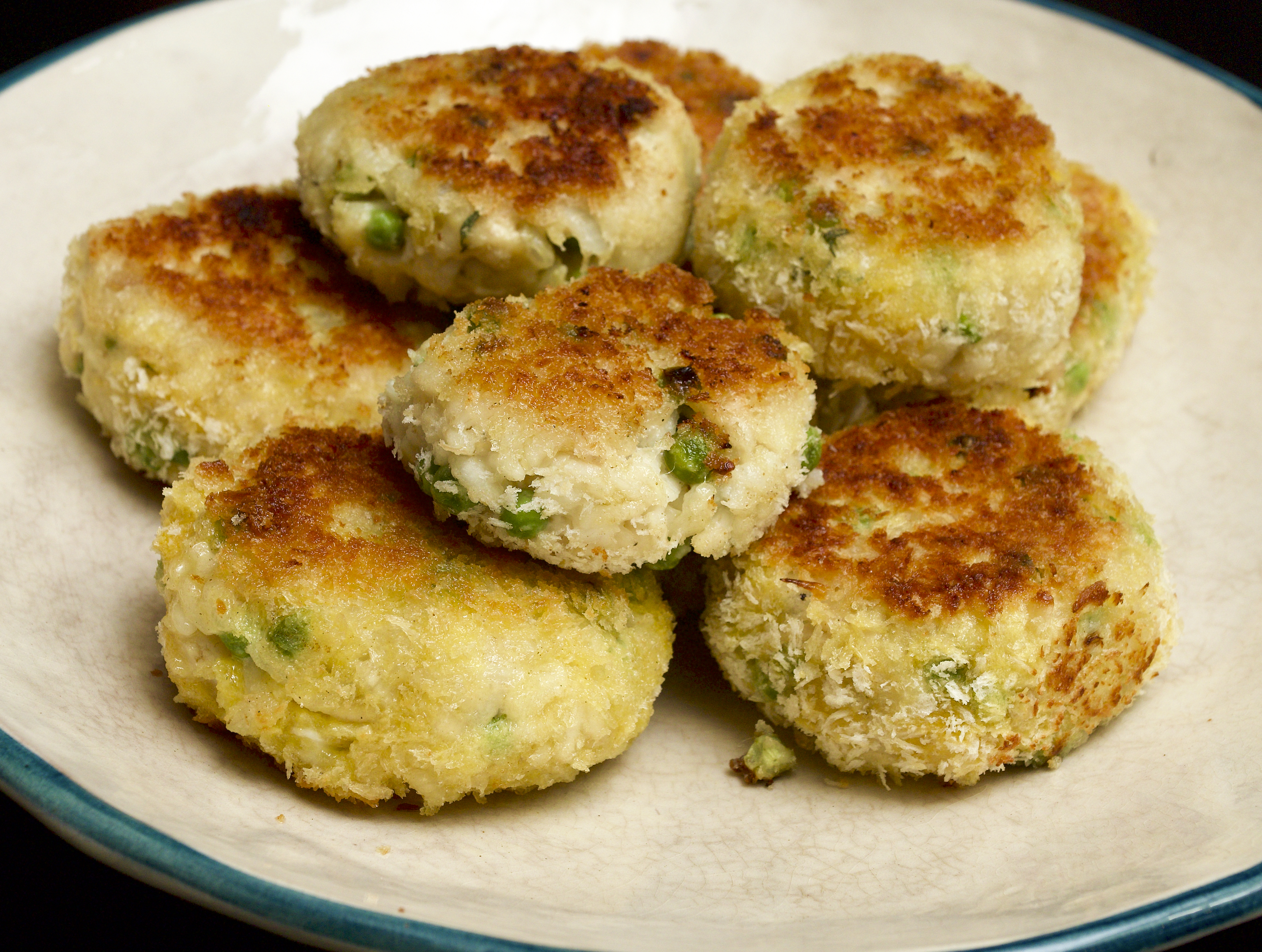
A handy idea to have up your sleeve when you’ve got leftover Risotto. This is not a recipe as such, but an easy method for cooking leftover risotto which tends to go a bit thick and claggy. 

Chill the leftover risotto in the fridge. 

Divide the leftover risotto into equal sized portions and form into cakes. 

Dip each risotto cake in some seasoned flour, brushing off any excess. Then dip into beaten eggs and finally into panko breadcrumbs. 

Fry the risotto cakes in a good bit of olive oil for about 5 minutes on each side or until golden brown and hot in the centre. 


Read Full Post »

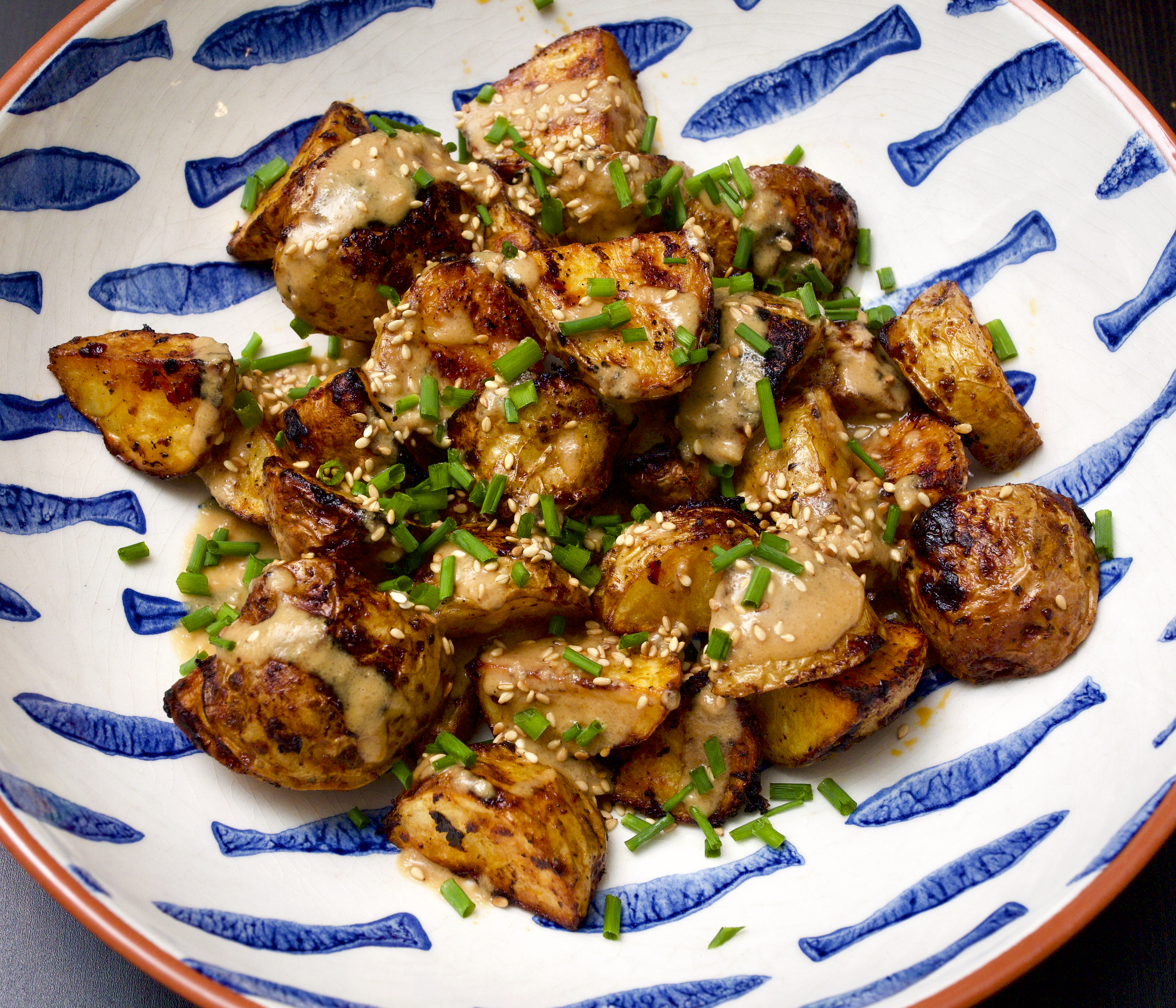
We made this the day that Ottolenghi Flavour arrived in the post as we had all the ingredients and were feeling enthusiastic! We haven’t tried too many dishes since then but we will. Just when we think we’ve tasted pretty much every flavour combination Yotam and his pals remind us that we haven’t, not by a long way!

We can’t remember now what we served this with but think it’s safe to say you could eat a bowlful on their own!

Spicy roast potatoes with tahini and soy – serves 4 as a side

  • 900g roasting potatoes, leave the skin on and cut into 3cm cubes
  • 50g rose harissa 
  • 1 garlic clove, crushed 
  • 3 tbsp olive oil
  • 1½ tbsp chives, finely chopped
  • 1½ tbsp black and/or white sesame seed, toasted

FOR THE DRESSING: 

  • 60g tahini (stir well before using)
  • 2 tbsp soy sauce
  • 1½ tbsp mirin (or maple syrup)
  • 1½ tbsp rice vinegar

Preheat the oven to 240°C fan. 

In a large bowl, mix the potatoes, rose harissa, garlic and olive oil together with ¾ tsp of salt and plenty of black pepper. Transfer the mixture to a parchment-lined baking tray and spread out, then cover tightly with foil and roast for 15 minutes. 

Remove the foil, reduce the heat to 200°C and roast for another 25 minutes, uncovered, stirring halfway, until the potatoes are cooked and browned. 

Meanwhile, whisk all of the ingredients for the dressing together with 1 tbsp of water until smooth. 

Transfer the potatoes to a shallow serving bowl and drizzle over the dressing. Garnish with the chives and sesame seeds. 

(Original recipe from Ottolenghi Flavour by Yotam Ottolenghi and Ixta Belfrage, Ebury Press, 2020)

Read Full Post »

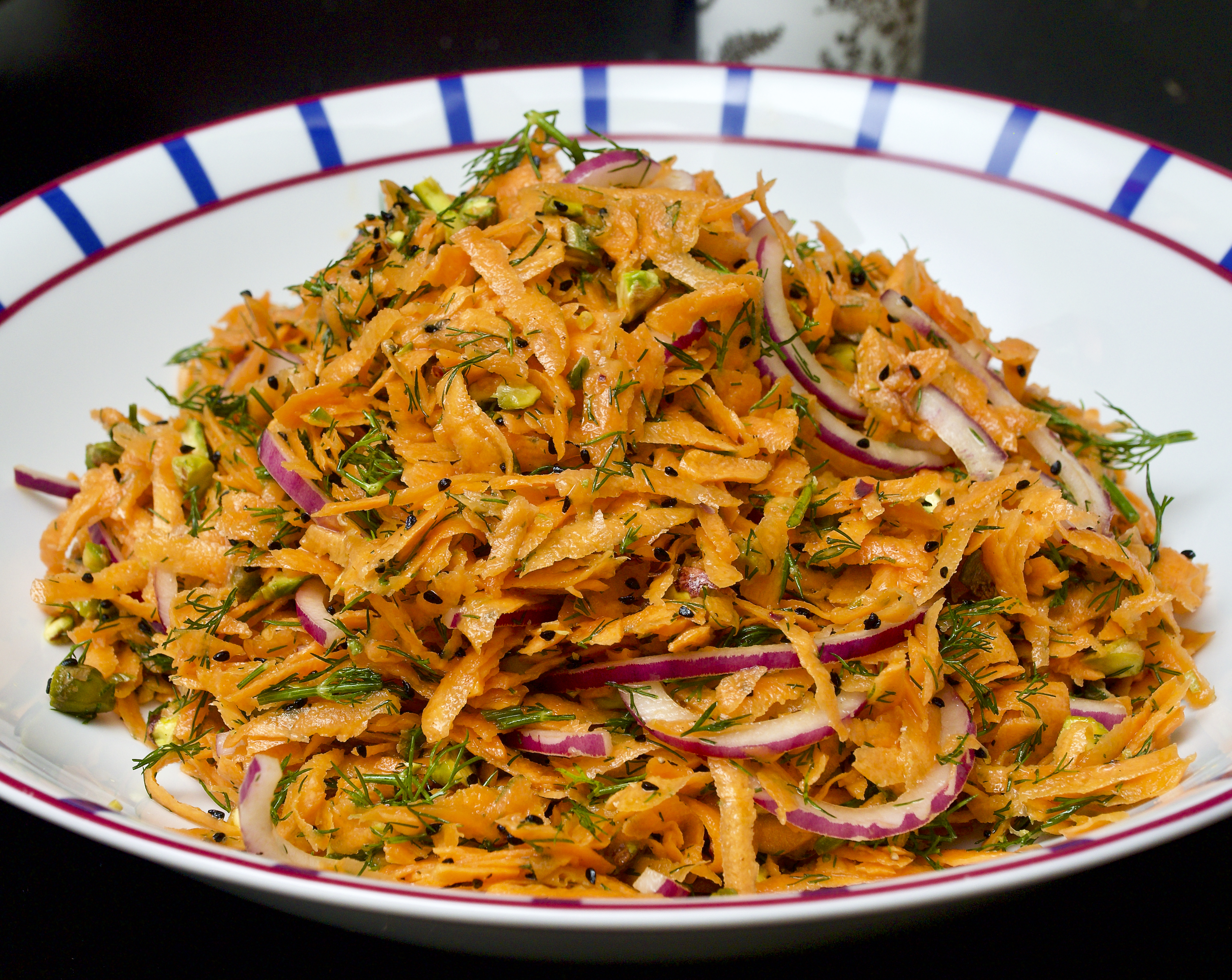
This is a good side dish to serve with richer dishes. It’s light and zingy which is just what’s needed sometimes. Another great combination of flavours suggested by Sabrina Ghayour. 

Carrot, pistachio & dill salad with lime & honey dressing – serves 4 to 6

  • 500g carrots, coarsely grated
  • ½ a small red onion, thinly sliced
  • 75g pistachio nuts, roughly chopped
  • about 30g of dill, finely chopped
  • 2 tsp nigella seeds

FOR THE DRESSING: 

  • 2 tbsp olive oil
  • finely grated zest and juice of 1 lime
  • 1 generous tbsp of runny honey

Mix all the dressing ingredients together and season well with sea salt and black pepper.

Put the other ingredients into a large bowl. Add the dressing when you’re ready to serve and toss gently to coat. Check the seasoning and serve. 

(Original recipe from Simply by Sabrina Ghayour, Mitchell Beazley, 2020.)

Read Full Post »

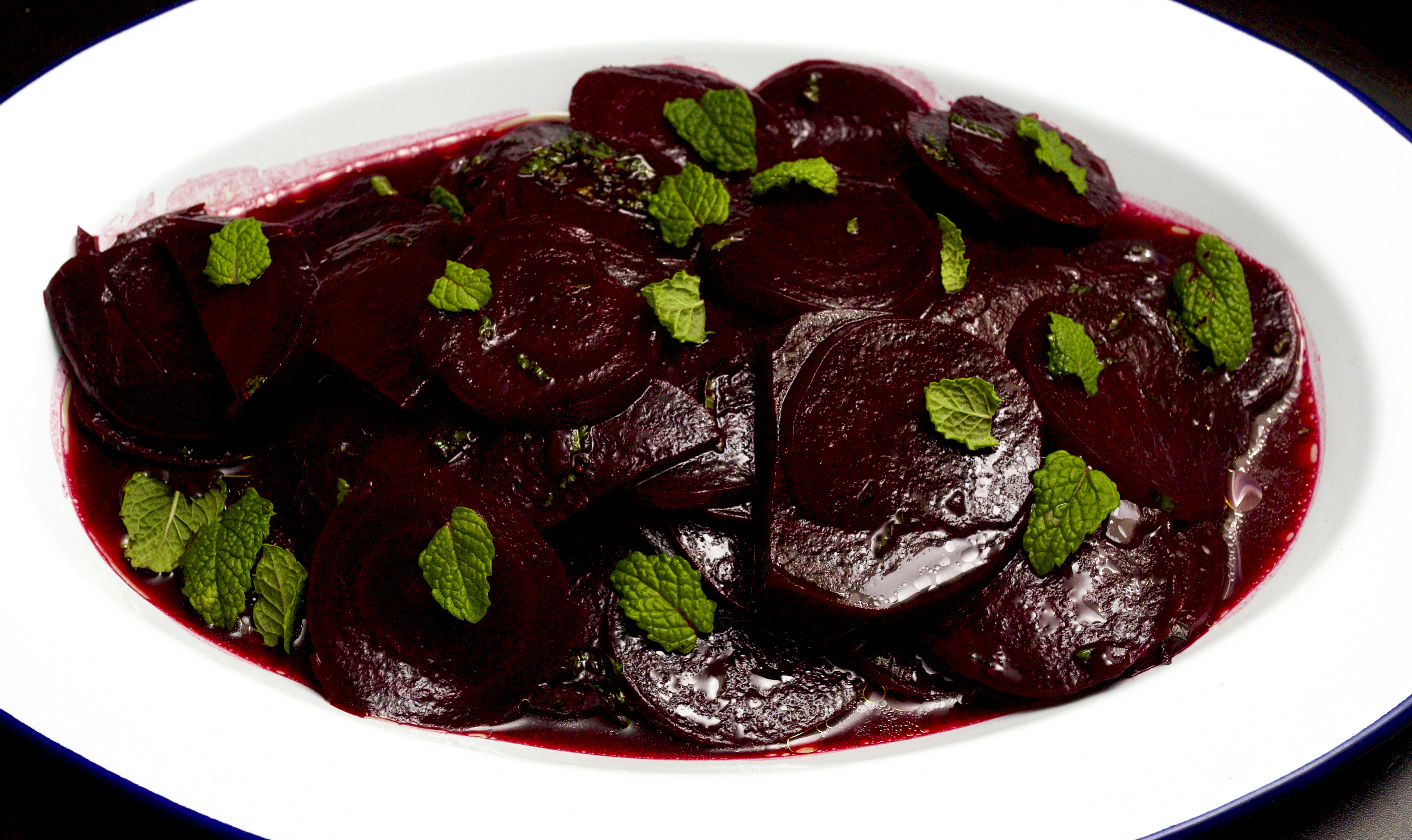
You need cooked beetroots for this. You can of course buy them pre-cooked in vac packs but they’re much nicer when you cook them fresh. Just give them a good scrub, dry with paper and wrap in tin foil. Roast for about an hour (or as long as it takes) at 200ºC. Let them cool before making the salad. We served this with roast chicken and the next day with a ham salad. Make this up at least an hour in advance to allow the flavours to mingle.

Beetroot & mint salad – serves 4 to 6

  • 4 tsp caster sugar
  • 4 tbsp balsamic vinegar
  • juice of 2 lemons
  • 4 tbsp extra virgin olive oil
  • 12 cooked beetroots, finely sliced into rounds
  • a small bunch of mint leaves

Whisk the sugar, vinegar, lemon juice, olive oil and a pinch of salt in a small bowl.

Put the sliced beetroot into a bowl. Roughly chop half the mint leaves, and add to the beetroots before pouring over the  dressing. Leave in the fridge for an hour or so.

To serve, drain off some of the marinade, arrange the slices on a platter and scatter over the rest of the mint.

(Original recipe from Skye McAlpine’s A Table for Friends: The Art of Cooking for Two or Twenty, Bloomsbury, 2020.)

Read Full Post »

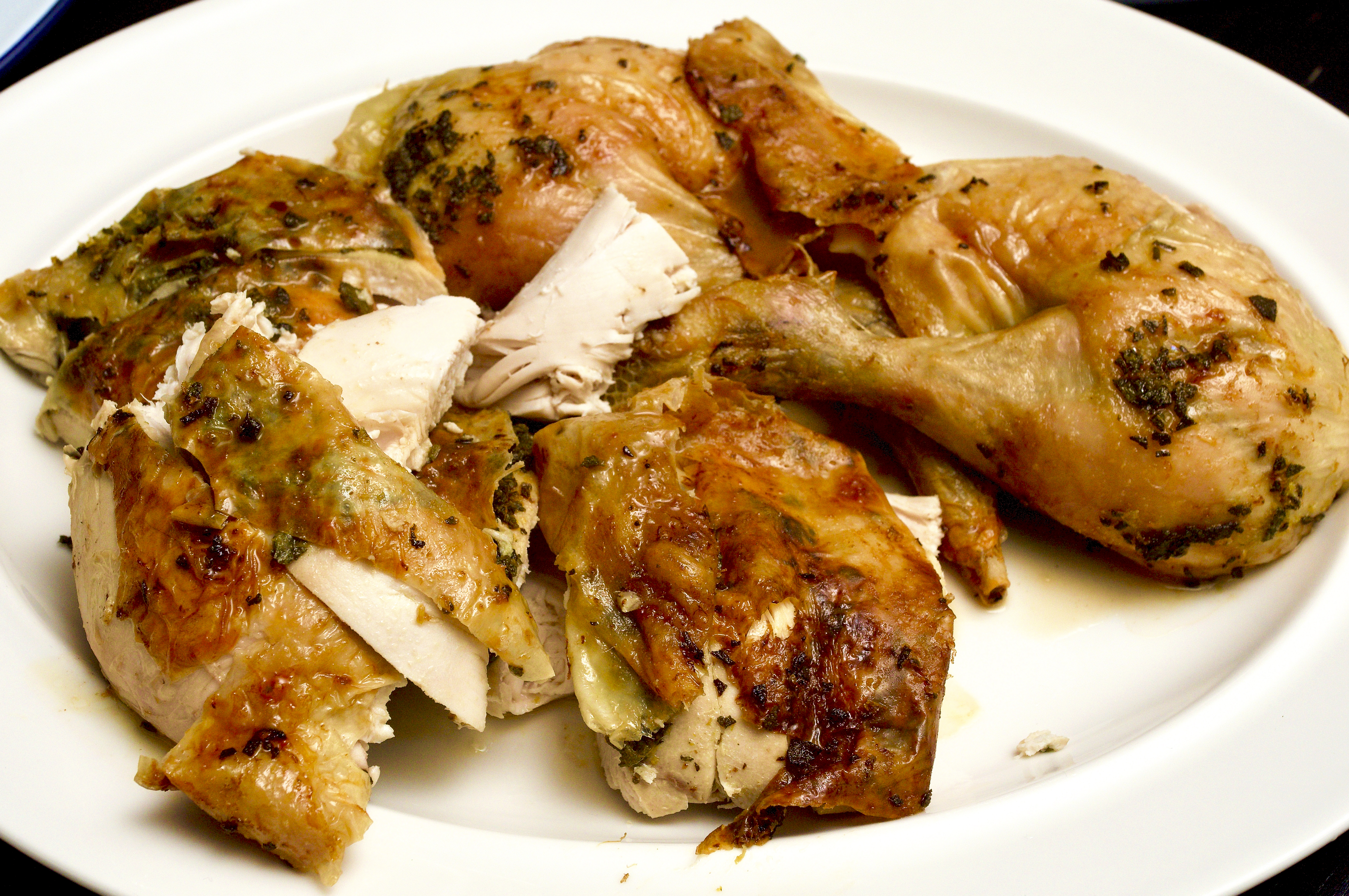
We recently bought Skye McAlpine’s book, A Table for Friends, which has lovely menus for each season. We’re well and truly into Autumn now and the farm shop is full of potatoes, pumpkins and beetroots. Tonight we made Skye’s suggested autumn menu of buttery lemon roast chicken, beetroot & mint salad, butter & sage roast pumpkin and roast potatoes. A perfect combination of dishes and all can be prepped in advance. Unfortunately we were minus the friends but hopefully those days will be back again before too long. 

We ignore all timings for roast chicken these days and stick to Diana Henry’s failsafe instructions to roast for 20 minutes at 190C for each 500g plus an extra 10 minutes. 

Wine Suggestion: Quite often with roast chicken we lean towards oaked Chardonnay as it’s such a classic match but tonight we remembered that another great match is good red Bordeaux from the Left Bank, so Cabernet Sauvignon dominant, and also with a little age, but not too much. We continued our lockdown habit of dipping into the cellar once a week and pulled out a Domaine de Chevalier red from 2010. It still has years, if not a couple of decades of life ahead of it but at 10 years old it still has a spriteliness of youth while all components have come together harmoniously into a smooth, elegant wine.

Buttery Lemon Roast Chicken – serves 4

  • a large bunch of sage
  • 1 lemon, finely zested
  • 50g butter, softened
  • 1 tsp sea salt flakes
  • 1 free-range chicken

You can prep the chicken early in the day and keep in the fridge but make sure you take it out an hour or two before you want to put it into the oven so it’s at room temperature.

Heat the oven to 190C.

Finely chop half the sage and mash in a bowl with the butter, lemon zest and salt.

Put the chicken into a roasting tray. Cut the lemon in half and squeeze some of the juice into the cavity, then stuff the halves into the chicken with the remaining sage.

Gently lift the skin over the breast and smear a quarter of the butter mixture under the skin over each breast. You should be able to push the butter quite far down with your fingers, but careful not tear the skin. Rub the rest of the butter over the chicken and sprinkle with some extra salt.

Roast the chicken according to the timings given above. When cooked the legs should feel loose and the juice should run clear when you pierce a thick bit with a sharp knife.

Leave to rest for 10 minutes before carving and served with some of the juices spooned over.

(Original recipe from A Table for Friends: The Art of Cooking for Two or Twenty by Skye McAlpine, Bloomsbury, 2020.)

Read Full Post »

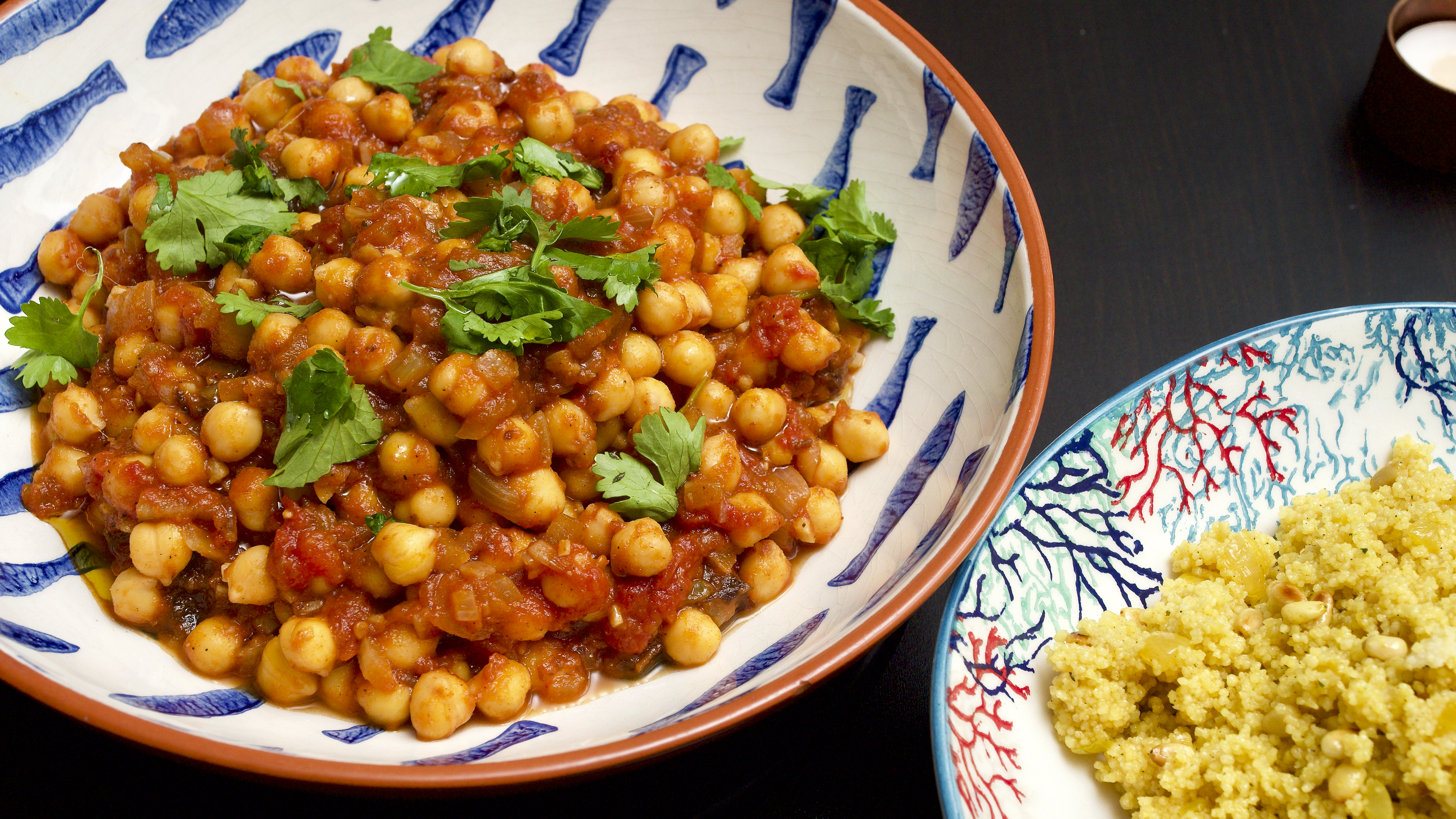
We made this by accident having planned to do a different tagine from a magazine, only to realised that it required a slow-cooker, so this was a last-minute substitute. It is really and truly delicious, so you must try making this dish at some stage. You can serve with plain couscous but it’s particularly good with this. If chickpeas don’t float your boat as a main course for Sunday lunch both dishes would be excellent with some roast lamb. 

Wine Suggestion: this is great with a juicy, brambly Grenache, or a blend with this in it. We had the joyful Les Dissidents “le Paria” made by Domaine Ventenac from 100% Grenache and made without sulphur; fresh, juicy and minerally.

Tomato, date & chickpea tagine – serves 4

  • 2 tbsp olive olive oil or unsalted butter
  • 1 large onion, finely chopped
  • 1 x 400g tin plum tomatoes
  • 120g pitted dates, halved
  • 4 cloves of garlic, finely chopped
  • a small bunch of coriander, leaves roughly chopped and stalks reserved
  • 1 tsp ground cumin
  • 1 tsp ground coriander
  • 1 tsp ground ginger
  • ½ tsp ground cinnamon or 1 cinnamon stick
  • 2 strips of lemon zest and the juice of ½ a lemon
  • 2 x 400g tins of chickpeas, drained and rinsed

FOR THE SEASONED YOGHURT

  • 200g natural yoghurt
  • juice of ½ a lemon

Heat the oil or butter in a frying pan over a medium heat, then add the onion and fry for 8-10 minutes, until soft. 

Whizz half the tomatoes with half of the dates, then add the rest of the tomatoes to the mixture and set aside. 

Add the garlic, coriander stalks and all of the spices to the cooked onions, stir and cook for 1 minute. Add the tomato mixture, the lemon zest and 100ml of water, season well with salt and pepper, then cook for 10 minutes or until rich and thickened. 

Meanwhile, make the seasoned yoghurt. Mix the yoghurt with the lemon juice and a good pinch of salt in a bowl, then set aside. 

Stir the chickpeas and the rest of the dates into the tomato mixture and cook for 5 minutes to heat through. Add the lemon juice and check the seasoning. Discard the pieces of lemon zest, then remove the dish from the heat. 

Stir in the coriander leaves and serve with some seasoned yoghurt and golden couscous

(Original recipe from New Kitchen Basics by Claire Thompson, Quadrille, 2019.)

Read Full Post »

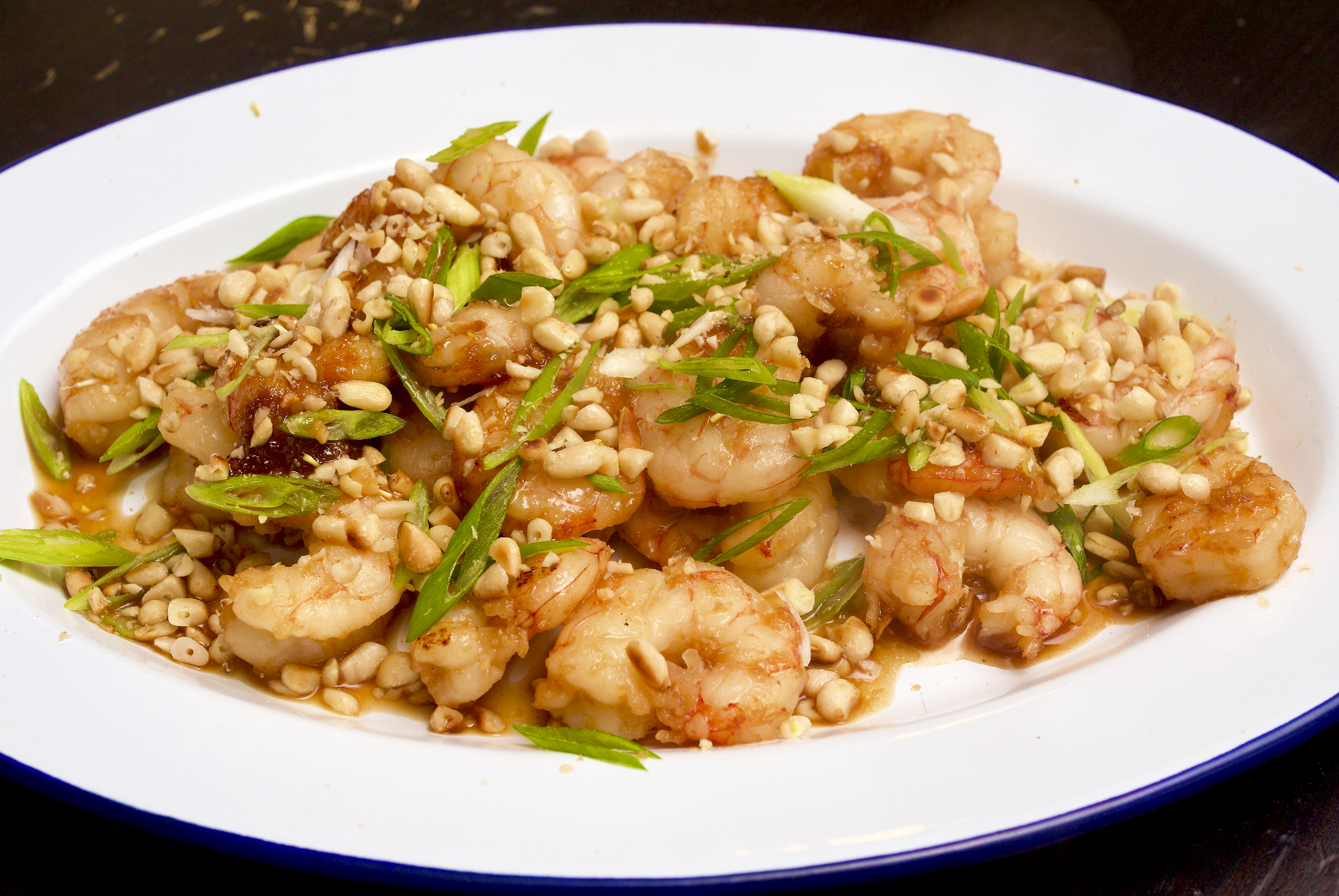
We’ve done this Korean dish before, but it’s worth revisiting because its so easy and delicious. It’s a nice starter to throw together for guests as they arrive, presuming you’re allowed to have guests. For now we have that on hold but it makes an event for the two of us.

Aperitif Suggestion: A good dry Oloroso sherry, or a Manzanilla sherry with a bit of age, we had La Gitana’s single vineyard Pasada Pastrana.

Pan-Fried King Prawns – serves 2 but easily doubled

  • 1 garlic clove, crushed
  • 1/2 cm piece of ginger, peeled & finely grated
  • 2 tsp soy sauce
  • 2 tsp roasted sesame oil
  • 1 tsp honey
  • 1 tsp vegetable oil
  • 150g king prawns, shelled
  • 1 scallion, thinly sliced
  • 2 tsp roasted pine nuts, roughly chopped

Make the sauce by combining the garlic, ginger, soy sauce, sesame oil and honey in a bowl.

Heat the vegetable oil in a wok, or pan, over a high heat. When very hot add the prawns and cook for a minute. Turn over and add the sauce. Fry for a further minute or until cooked through. Use your instinct here this depends on the size of your prawns and the heat of your pan. Don’t let them overcook!

Remove and pile onto a plate, sprinkle over the scallions and pine nuts, then serve. 

(Original recipe from Our Korean Kitchen by Jordan Bourke & Rejina Pyo, Weidenfeld & Nicolson, 2015.)

Read Full Post »

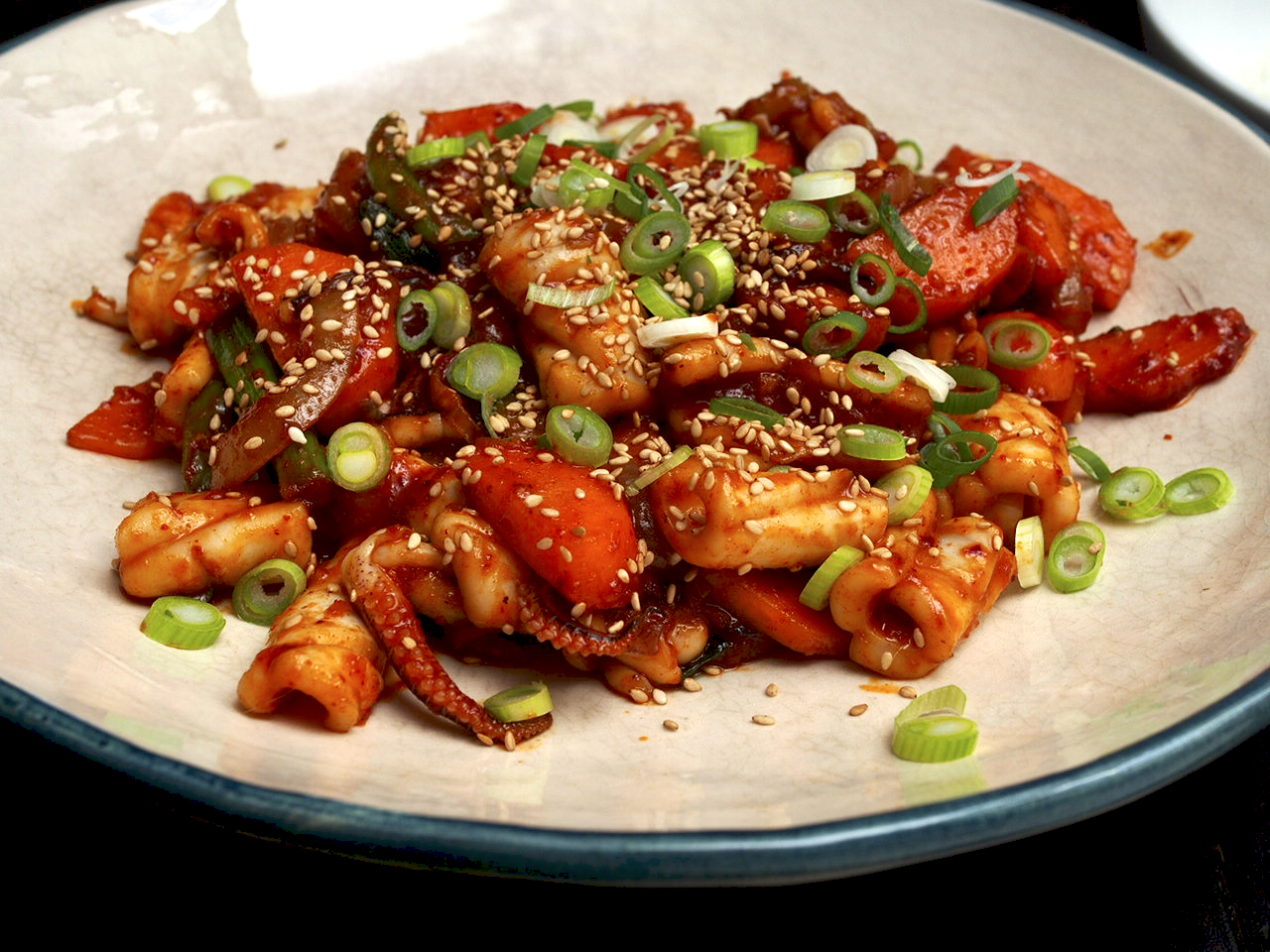
You can serve this with other dishes or just on its own with some sticky rice. It is perfect for a Friday night feast and much quicker than Deliveroo. Squid is so cheap and although almost everyone loves calamari they don’t seem to cook with squid much. I find it’s quite a satisfying thing to prepare too, but that might just be me.

Wine Suggestion: We opened a really nice bottle of Pearce Road Semillon 2016 from Kilikanoon in the Clare Valley. Delicious wine which we quickly abandoned for a beer as this dish is spicy! Do try the Semillon though maybe with some cheese or something a bit less fiery.

Stir-fried Spicy Squid – serves 2-3

  • 500g squid, cleaned
  • 2 tbsp vegetable oil
  • 1 large carrot, halved lengthways and sliced
  • 1 onions, thinly sliced
  • 1 green chilli (optional), thinly sliced
  • 3 scallions (cut 2 of them into 3cm lengths and finely slice 1 to sprinkle over at the end)
  • 2 tsp roasted sesame seed oil
  • 1 tsp roasted sesame seeds

FOR THE SAUCE:

  • 2 tbsp gochujang chilli paste
  • 1 tbsp gochugaru red pepper powder
  • 1 tbsp mirin
  • 2 tsp soy sauce
  • 1 tbsp honey
  • 4 garlic cloves, crushed
  • 2½ cm piece of ginger, finely grated

Make the sauce first by combining all of the ingredients in a bowl.

Slice the body of the squid open so it lies flat. Score the inside in a criss cross pattern with a sharp knife but make sure you don’t cut through. Cut the squid into 5cm pieces, any shape will do. Cut the tentacles into similar size pieces.

Put the vegetable oil into a wok (or a large frying pan) and put over a high heat. When the oil is hot, add the carrot and onion and stir-fry for 3 minutes, tossing the whole time until starting to soften.

Add the squid, chilli, scallions and sauce, then stir-fry for another 2-3 minutes or until the squid has turned opaque. Remove the pan from the heat and stir in the sesame oil. Sprinkle the toasted sesame seeds and sliced scallions over the top to garnish.

Serve with sticky rice.

(Original recipe from Our Korean Kitchen by Jordan Bourke & Rejina Pyo, Weidenfeld & Nicolson, 2015.)

Read Full Post »

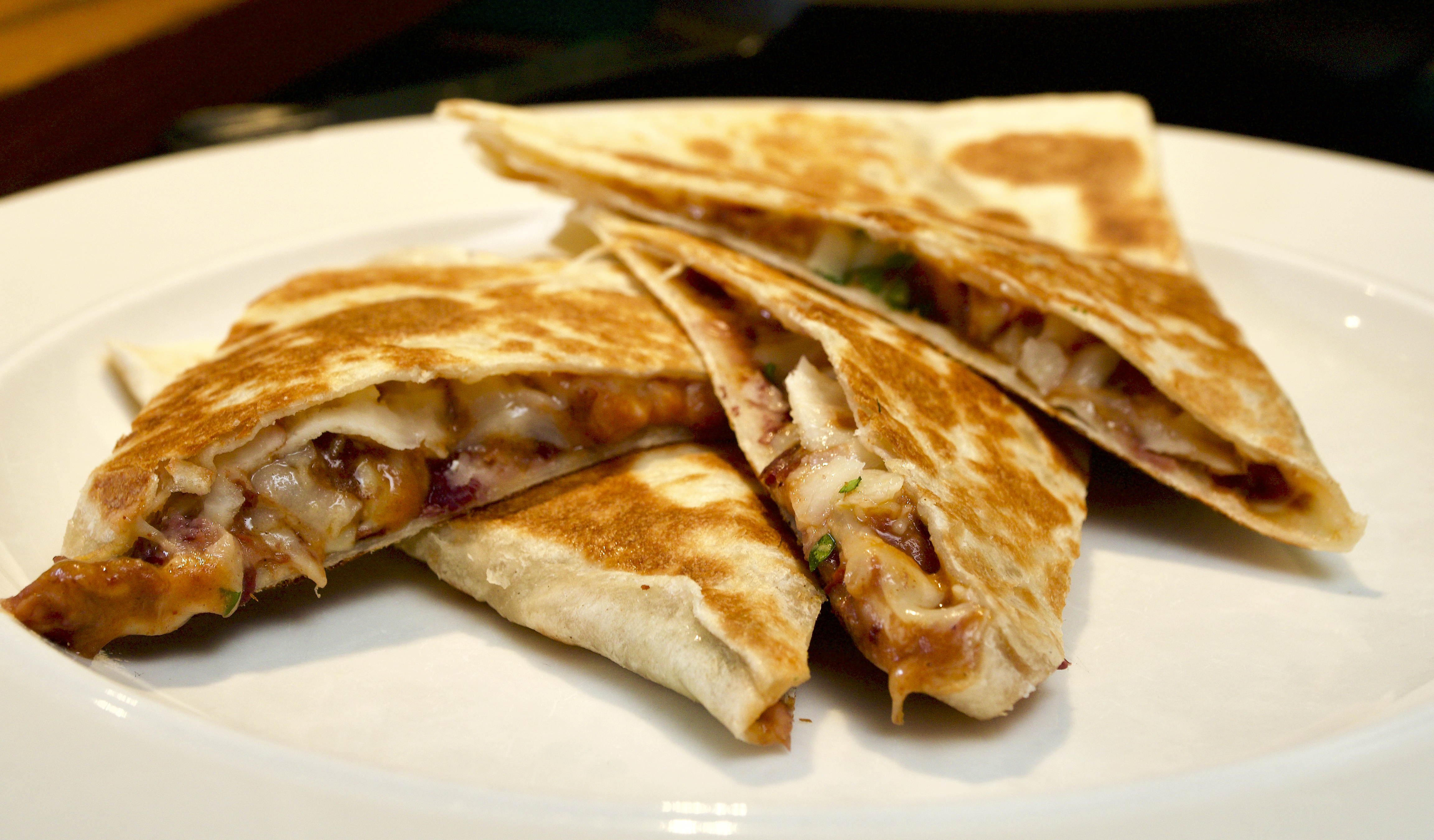
Working from home definitely improves the lunch offerings. These quesadillas will fill you up and they’re super tasty too. Make up the filling in advance and it won’t take long to put them together on your lunch break. 

Quesadillas, with beans, chipotle, cheese & coriander – serves 4

  • 2 x 400g tins mixed beans
  • 3 tbsp chipotle sauce
  • a small pack of coriander, chopped
  • 140g cheddar cheese
  • 4 large tortillas

Drain the beans but reserve 2 tbsp of the liquid from the tins. 

Put the beans into a bowl with the reserved liquid, the chipotle sauce, coriander and half the cheese. Mash well with a fork or potato masher. 

Lay out the tortillas and cover half with the bean mixture. Top with the remaining cheese, then fold the tortilla over to make a semicircle. 

Heat a griddle pan or heavy frying pan, then cook the tortillas for a couple of minutes on each side, or until golden and starting to char. Cut into wedges to serve. 

(Original recipe by Sarah Buenfeld in BBC Good Food Magazine, October 2013.)

Read Full Post »

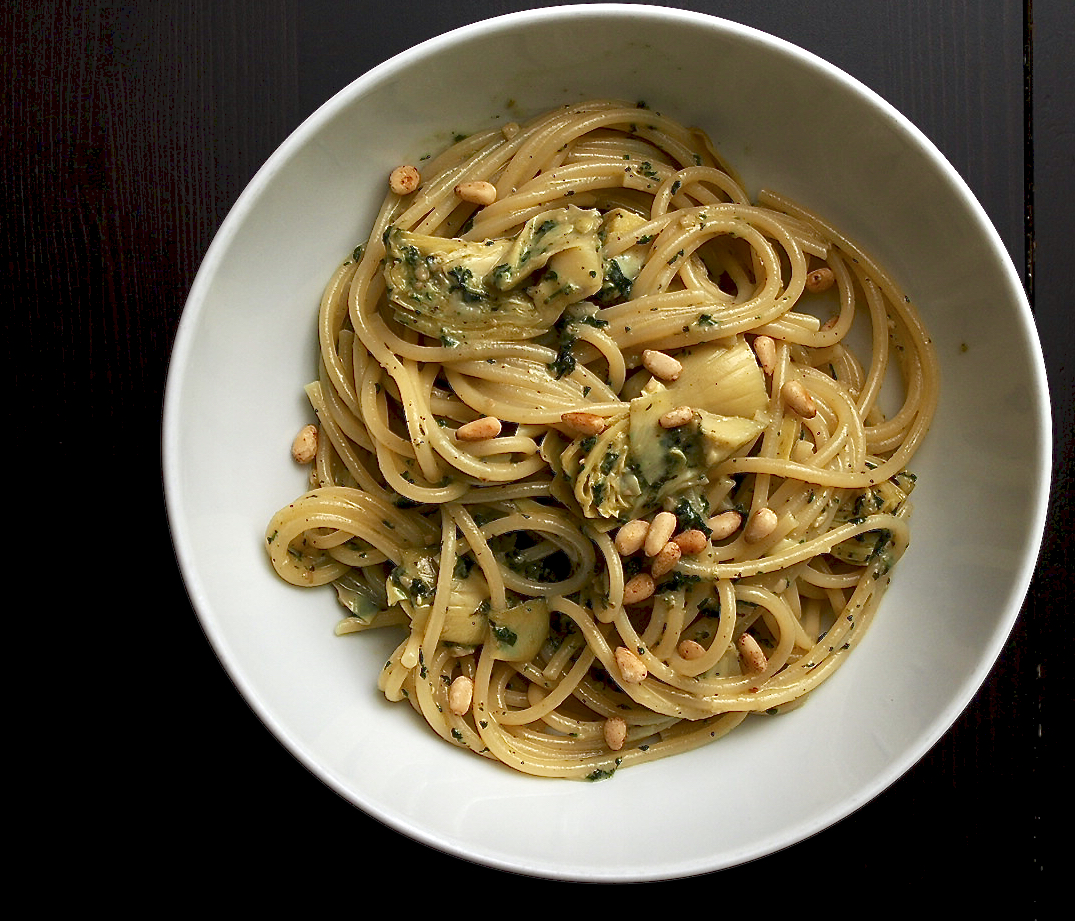
We occasionally go to Lidl, when they have those country promotions on, for the white anchovies in the fridge section. Last time it was a Spanish promotion and we also grabbed a tin of artichokes which we used tonight for a mid-week pasta dish with spaghetti and pesto.

The pesto we used was an oregano version that we made in the summer and stashed in the freezer. Very happy diners!

Wine Suggestion: Artichokes are hard to match as they make most grape varieties taste metallic. However, Grüner Veltliner with its higher umami savouriness, really works. We opened a bottle of Höpler’s GV grown in Burgenland which is better known for it’s reds and sweet wines and goes to show how a great site always wins. Their GV vineyard reliably produces delightful wines and the current vintage is a gem; vibrant and fresh with hints of white pepper, pears and lemony citrus zest.

Spaghetti with artichokes & pesto – serves 4

  • 350g spaghetti
  • 2 eggs
  • 2 tbsp milk
  • 4 tbsp green pesto
  • 50g Parmesan, grated, plus extra to serve
  • 390g tin artichokes, drained, quartered and dried
  • 50g pine nuts

Toast the pine nuts in a dry frying pan until golden brown, then set aside.

Cook the spaghetti in lots of boiling salty water according to the time given on the pack.

Meanwhile, gently mix the eggs, milk, pesto, Parmesan, and artichokes, together in a bowl, then season.

Drain the cooked spaghetti in a colander and return to the hot saucepan. Immediately add the egg and pesto mixture and stir gently until it forms a silky sauce.

Stir in the toasted pine nuts and serve in warm bowls with some extra Parmesan and a drizzle of your best olive oil if you like.

(Original recipe from BBC Good Food)

Read Full Post »

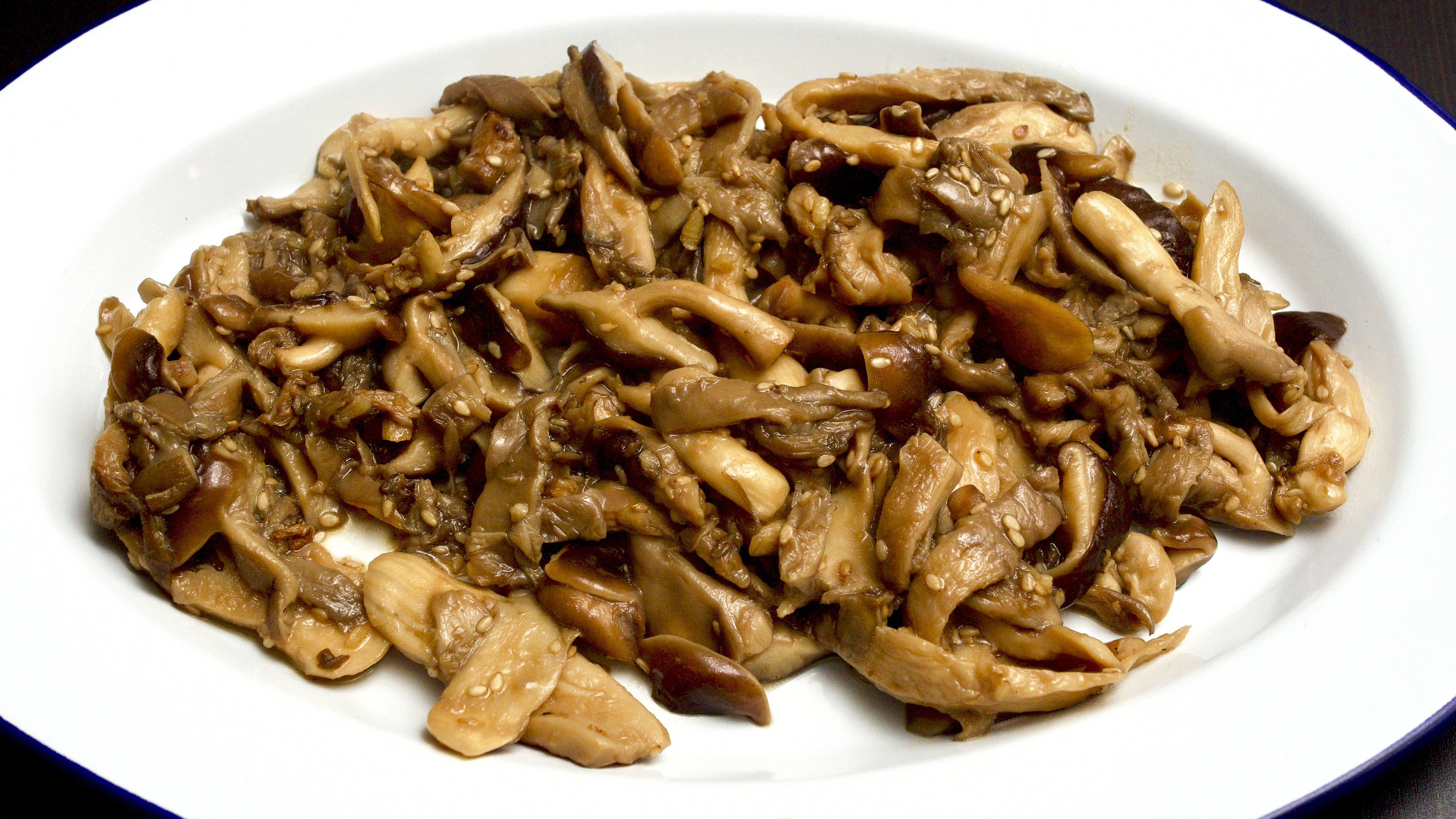
We’re having a little Korean-inspired moment in the kitchen. So many of the dishes are super simple and really tasty. We had these soy-seasoned mushrooms with a glass of sherry for a starter but they’re a side dish really. A few ingredients that were made for each other and brought together quickly and easily!

Wine Suggestion: An umami-rich dish like this thrives with sherry and the La Gitana Manzanilla with it’s seaside freshness and bone-dry texture did not disappoint. Easy to see this dish in a tapas bar in Cadiz, despite the Korean origins.

Soy-seasoned mushrooms – bo-seot namool – serves 4 as a side dish or nibble with drinks

  • 1½ tbsp vegetable oil
  • 250g wild mushrooms (we used a mixture of baby shitake and oyster mushrooms), sliced into ½ cm strips
  • 2 tsp soy sauce
  • 2 garlic cloves, crushed
  • 2 tsp roasted sesame seed oil
  • 1 tsp toasted sesame seeds

Heat the oil in a wide pan over a high heat.

Add the mushrooms to the hot pan and stir-fry for 30 seconds, then add the soy sauce and garlic. Stir-fry for another minute.

Add the sesame oil and keep going for another minute, keep it moving so the garlic doesn’t burn.

Transfer to a bowl and mix in the toasted sesame seeds, then leave to cool a bit so the flavours come together. You can serve warm or cold.

(Original recipe from My Korean Kitchen by Jordan Bourke & Rejina Pyo, Weidenfeld & Nicolson, 2015.)

Read Full Post »

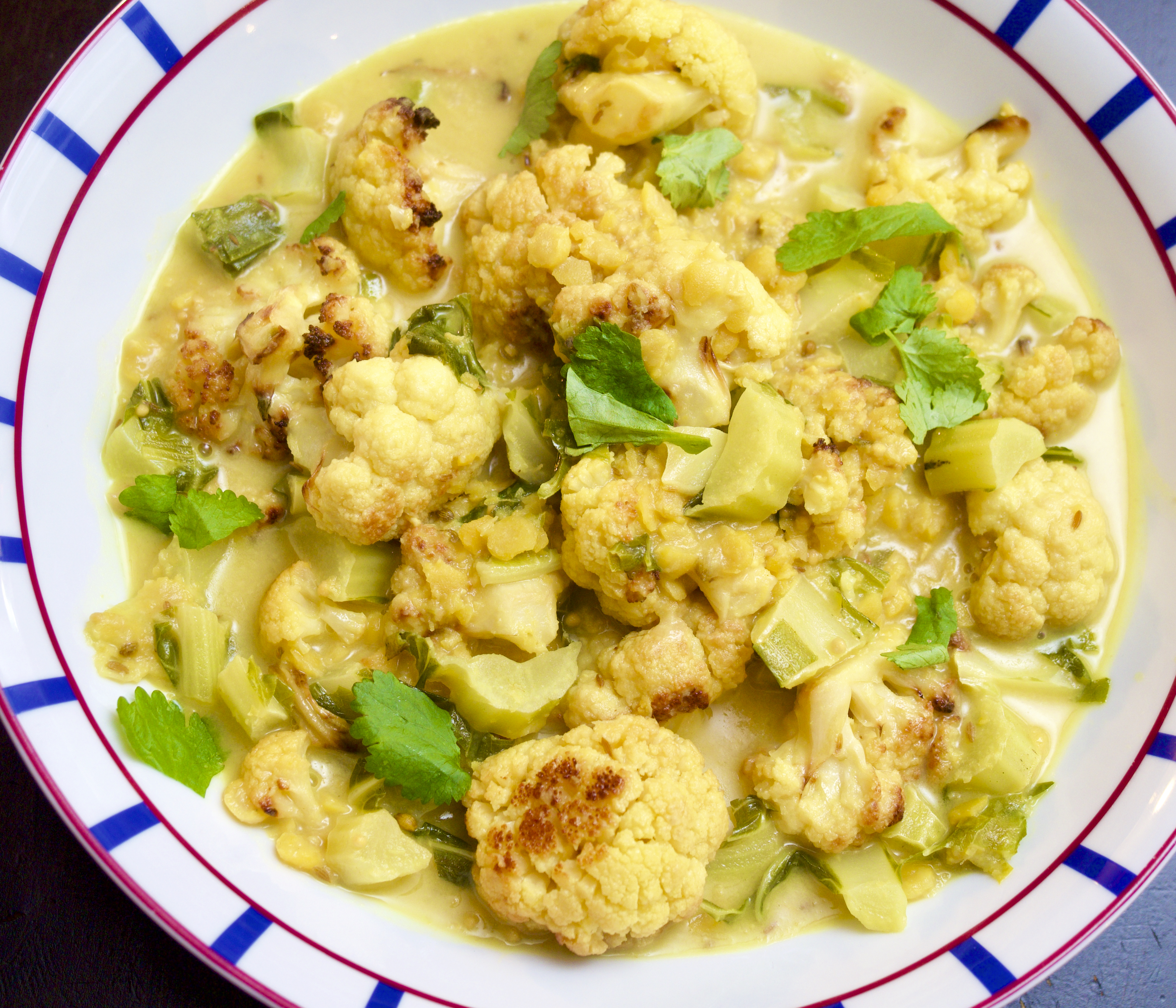
We’ve been looking for recipes that use fresh turmeric but you can also use ground turmeric for this dish. This cauliflower curry is really nice and also uses the cauliflower leaves, genius! Serve with rice. 

Wine Suggestion: This dish cries out for a white from warmer or sunnier climates where there are hints of tropical fruits in the flavours. Tonight’s choice was the superlative Kilikanoon Pierce Road Semillon; an oak aged semillon from the Clare Valley. Rich and layered with buttery, toasty hints of the barrel fermentation carried through with a wonderful, lemony, citrus backbone of acidity. Youthful but poised and balanced.

Cauliflower and yellow split pea curry – serves 4

  • 1 large cauliflower, with leaves, cut the cauliflower into bite-sized pieces and the cut the leaves across the spine into 1cm-thick strips
  • 2 tbsp vegetable oil
  • 180g yellow split peas, rinsed
  • 1 x 400ml tin coconut milk

FOR THE CURRY BASE:

  • 6 cardamom pods, crushed
  • 2 cinnamon sticks
  • 1 tsp cumin seeds
  • 1 tsp coriander seeds
  • 1 tsp mustard seeds
  • 2 tbsp vegetable oil
  • 1 onion, finely diced
  • 3 cloves of garlic, finely grated
  • 4cm piece of ginger, peeled and finely grated
  • 4cm piece of fresh turmeric, peeled and finely grated (or you can use 1 tbsp ground turmeric)
  • 1 green chilli, finely diced
  • 2 bay leaves
  • a bunch of coriander, chop the stalks finely and the leaves roughly

Preheat the oven to 220C/200C/gas 7.

Toss the cauliflower pieces in the vegetable oil and season generously with salt. Place in a roasting tray and roast for 30-35 minutes or until deep golden. Toss them halfway through. 

Meanwhile, put the crushed cardamom pods, cinnamon sticks, cumin, coriander and mustard seeds in a medium saucepan. Put over a medium heat and toast until fragrant. Add the vegetable oil, then the rest of curry base ingredients, including the coriander stalks but not the leaves. Season well with salt and cook for 5 minutes.

Add the split peas and 700ml warm water. Stir, then cover and simmer over a low heat for 40 minutes, stirring often and adding a little more water if needed. Add the coconut milk and cook for another 5 minutes. 

Add the cauliflower and the cauliflower leaves, then cover and cook for a few minutes until the leaves have wilted. Remove from the heat and garnish with the chopped coriander. 

Serve with rice and anything else you like with you curry. 

(Original recipe from Marcus Everyday by Marcus Wareing, HarperCollinsPublishers, 2019.)

Read Full Post »

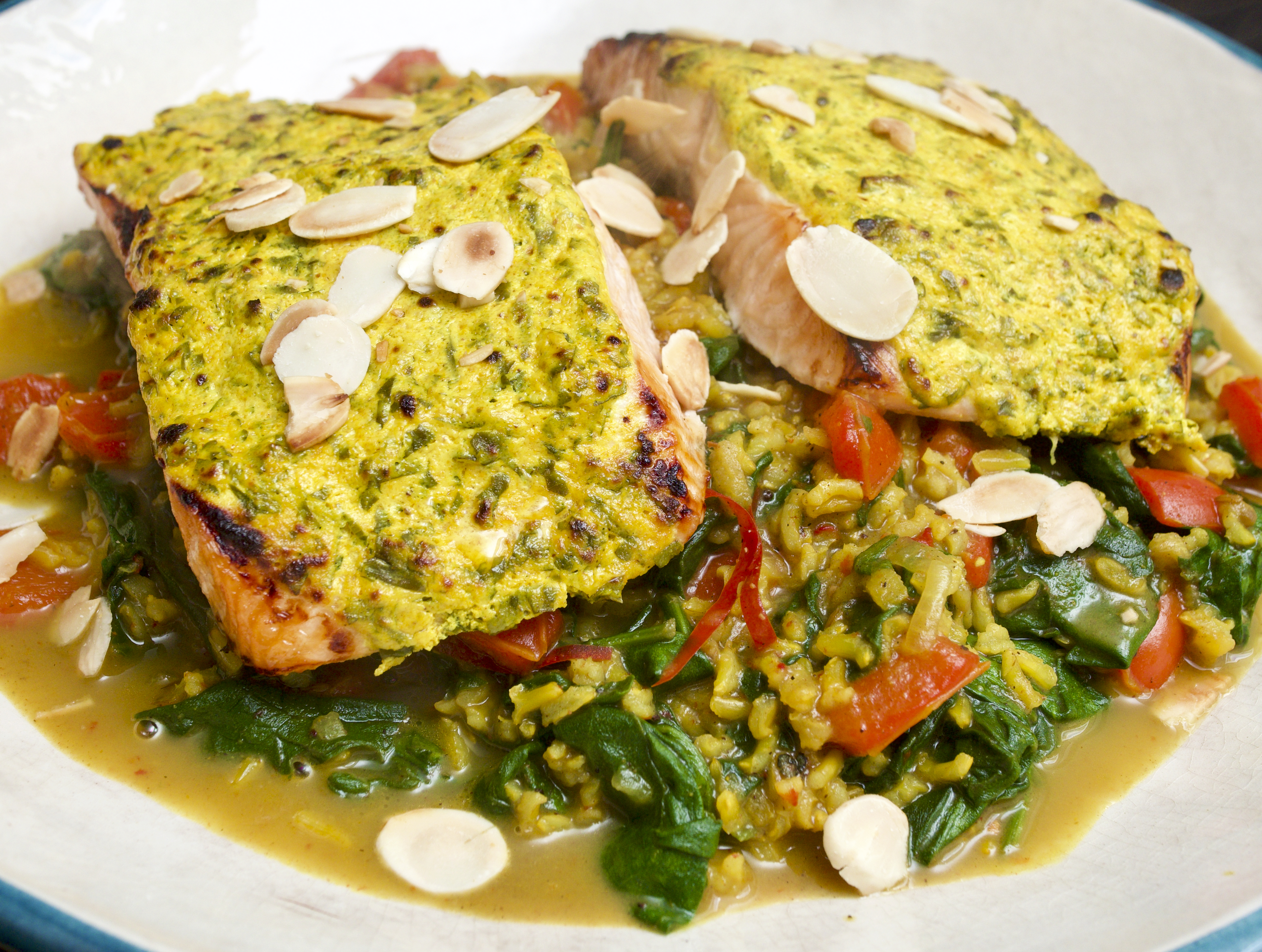
This is full of warm spices, healthy and very satisfying. A great meal for mid-week.

Wine Suggestion: This goes beautifully with elegant Grenache, like Roc des Anges’ Unic from Roussillon in the south of France; quite ethereal and fresh, particularly given the warm sourthern France location. Almost like a warmly spiced Burgundy. If you can’t find something like this then a lightly oaked Chardonnay comes a good second best.

Spinach rice with spiced salmon – serves 2

  • 2 tsp rapeseed oil
  • 1 large onion, sliced
  • a thumb-sized piece of ginger, finely chopped
  • ½ tsp cumin seeds
  • ½ tsp ground cinnamon
  • 6-8 cardamom pods, seeds crushed
  • 1 tsp ground turmeric
  • 1 tsp ground coriander
  • 1 red chilli, deseeded and sliced
  • 1 clove of garlic, finely chopped
  • 1 large red pepper, roughly chopped
  • 70g brown basmati rice
  • 375ml vegetable stock, made with 2 tsp of bouillon powder
  • 160g baby spinach, roughly chopped

FOR THE SALMON:

  • ½ turmeric
  • ½ ground coriander
  • 3 tbsp natural yoghurt
  • 1 tbsp finely chopped coriander (or mint)
  • 2 skinless salmon fillets
  • 1 tbsp toasted almonds

Heat the oil in a large frying pan, then fry the onion and ginger for 5 minutes or until soft. Stir in the spices and cook for 30 seconds, then add the chilli, garlic, pepper and rice. Stir briefly, then pour in the stock. Cover and simmer for 35 minutes or until the rice is tender and the stock absorbed. If there’s liquid left simmer without the lid for a few minutes to let it evaporate. Add the spinach, cover and cook for 3 minutes, or until wilted.

Meanwhile, line a baking sheet with foil and heat the grill.

Mix yoghurt with the turmeric, ground coriander and fresh coriander. Spread this mixture over the salmon and transfer to the foil-covered sheet. Grill for 8-10 minutes or until the fish flakes easily. Top the rice with the salmon fillets and scatter over the almonds to serve.

(Original recipe from BBC Good Food)

Read Full Post »

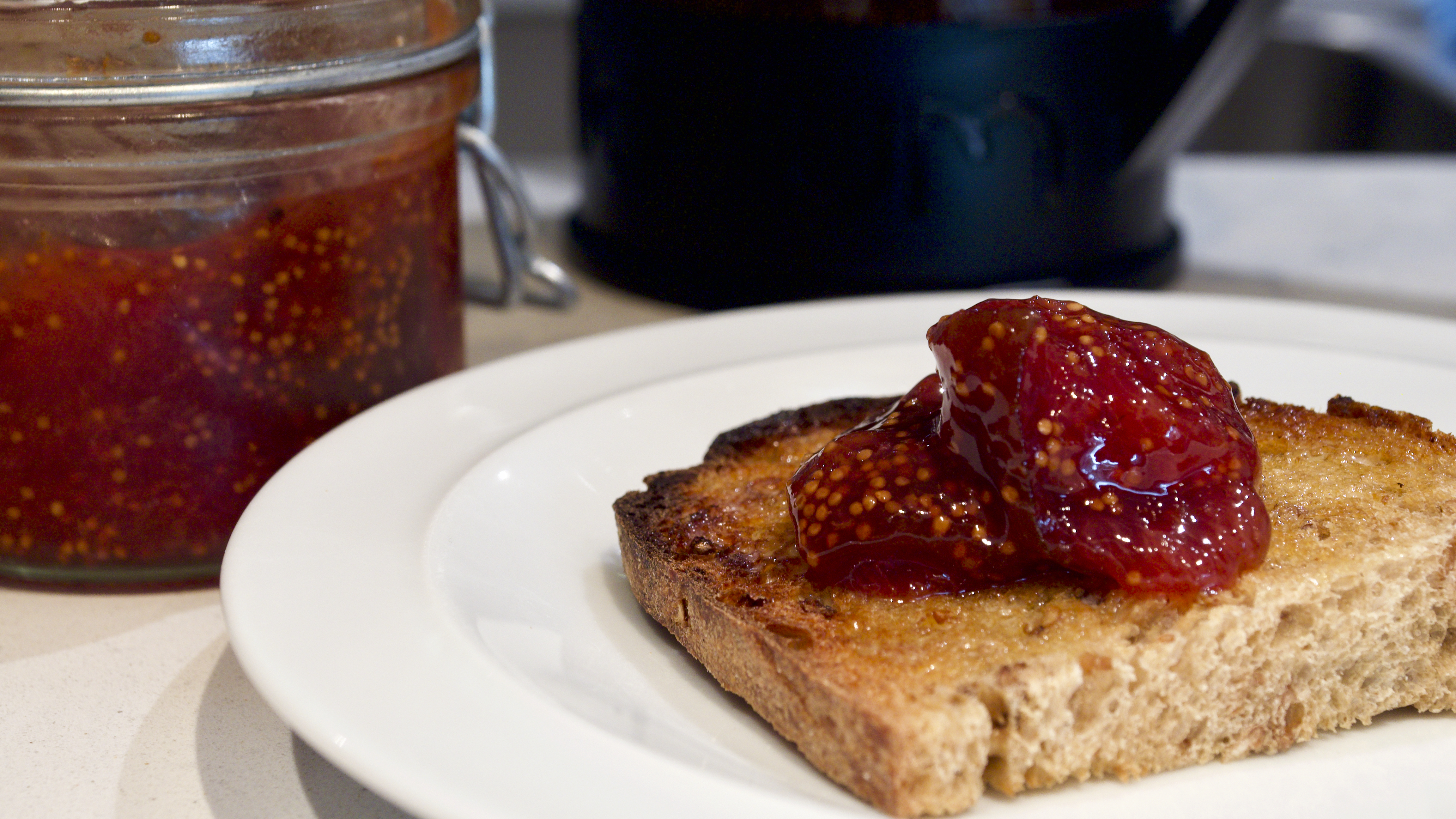
Jono acquired five trays of figs from one of his customers, much to the approbation of Jules who said he had to find something to do with them! This fig jam used most of them and there was a smaller batch of rather good chutney. A good call too, as we’ve had repeat requests for jam from friends who’ve been given a jar. It is easily scalable, so while the recipe is for 1kg of figs, we used 4kg to make just over 5kg of jam.

Jono now believes he is allowed to get loads of figs when there is a glut again next year.

Fig Jam – makes roughly 1.3kg of jam

  • 1kg figs, remove the stalks at the top and roughly chop
  • 2 fig leaves, cleaned (we took two from a neighbour’s garden – with permission)
  • 500g jam sugar (with pectin)

Put the ingredients into a large saucepan and stir well to combine. Put the pan over a low heat and let the sugar dissolve, then increase the heat slightly and bring to a gentle simmer. 

When the liquid starts to be released from the figs, turn the heat up a little again and stir often to stop the jam sticking to the bottom of the pan. Simmer rapidly until the jam reaches 105°C (You will need a jam thermometer to check this. If you don’t have one the other option is to put a few saucers in the freezer. To check if the jam is ready, put a tiny spoonful onto the cold plate and see if it runs. If it doesn’t, it’s ready. If it does try again using another cold plate in a few minutes). 

Remove the fig leaves and pour the jam into sterilised jars. Cover immediately with the lids. The jam will now keep for up to a year, but it’s highly unlikely to last that long!

(Original recipe from Marcus Everyday by Marcus Wareing, HarperCollins Publishing, 2019.)


Read Full Post »

« Newer Posts - Older Posts »