Feeds:
Posts
Comments

Posts Tagged ‘Garlic’

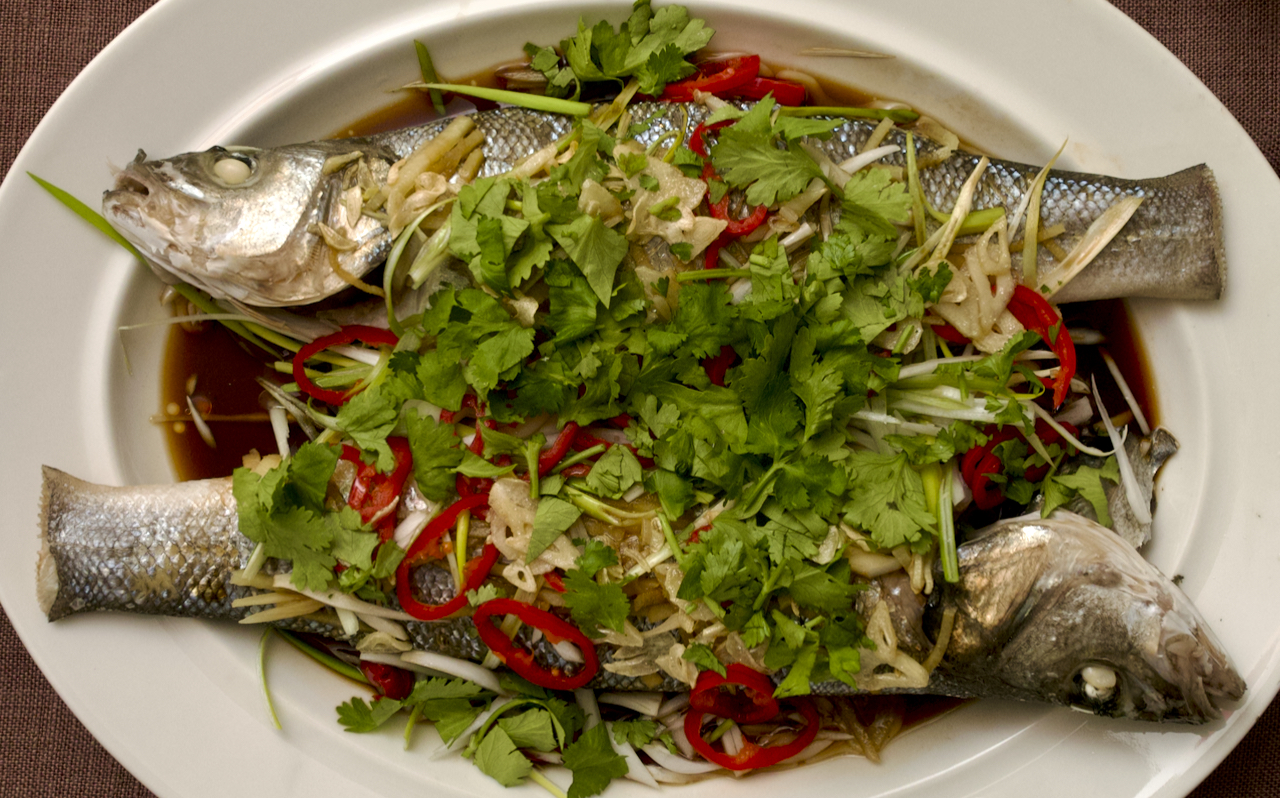
We are beyond excited by our subscription seafood box from Urban Monger. This is what we did with two whole sea bass that arrived on our doorstep amongst various other delicious things. Serve with steamed rice and tenderstem broccoli.

Wine Suggestion: We love classic wines that are slightly atypical, but showing a new direction in wine. Tonight we wanted a crisp, fresh and dry white so opened a Sybille Kuntz Kabinett Riesling from the Mosel in Germany. A wine like this from the Mosel would have typically had residual sugar but Sybille makes all her wines completely dry, it’s a roaring success and such a thrill to drink with this delicate, and flavoursome dish. A celebration of flavour all round.

Steamed Sea Bass with Garlic, Ginger and Scallions – serves 2-3

  • 2 x 350g whole sea bass, scaled, cleaned and gutted
  • 15g root ginger, cut into fine matchsticks
  • 4-5 scallions, trimmed and thinly sliced
  • 1 red chilli, finely sliced
  • 2 tbsp dark soy sauce
  • 2 tbsp sesame oil
  • 4 cloves of garlic, finely sliced
  • a handful of coriander, roughly chopped

Put the fish in a fish kettle and sprinkle over the ginger (if you don’t have a fish kettle you could use a steamer or a rack in a roasting tin). Add 2cm of water. Use a couple of balls of tin foil to lift the rack up above the water level. Cover with the lid (or foil) and steam for about 10 minute or until cooked through. It’s easiest to use a thermometer and the fish should be 60C.

Lift the fish onto a warm serving dish and scatter over the scallions and chilli, then cover to keep warm.

Spoon about 5 tbsp of the cooking juices into a small pan, add the soy sauce and bring to the boil. Pour this over the fish. Heat the sesame oil in the same pan, then add the garlic and fry for a few seconds, then pour over the fish. Sprinkle with the coriander and serve.

(Original recipe from Rick Stein’s Simple Suppers, BBC Books, 2023.)

Read Full Post »

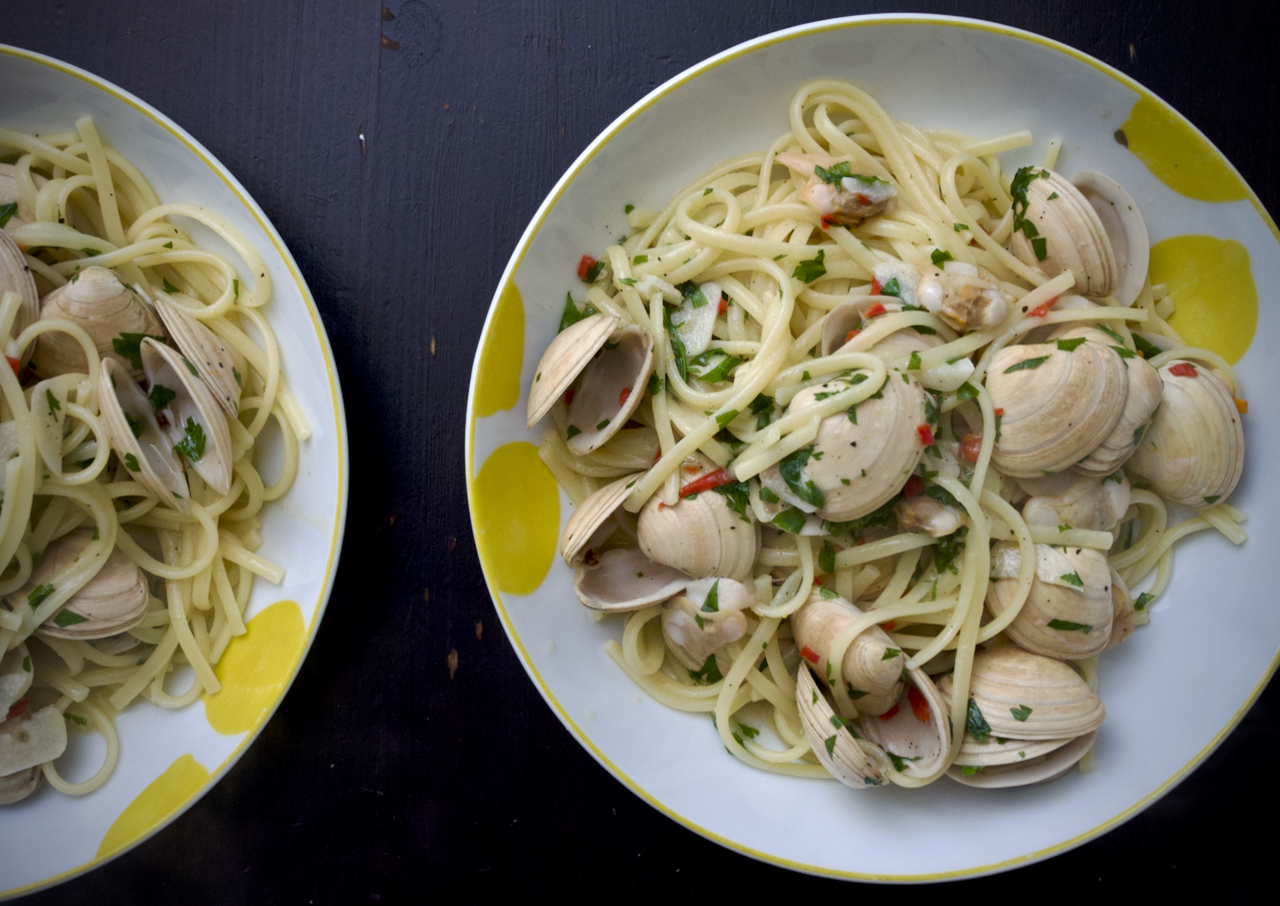
Linguine vongole – possibly the most perfect pasta dish. Lots of garlic and fresh salty clams – delicious!

Wine suggestion: working well with this dish is the under-rated grape from the south of Italy: Fiano. We’d highly recommend seeking it out as it has the beguiling fresh, almost crisp stonefruit character and some sort of citrus twist depending on where it comes from. While most is grown in Campagnia and the south of Italy it’s now being found successfully in Argentina and Australia, like Pikes “Luccio” from the Clare Valley … where the citrus twist is lime and delicious at that.

Linguine Vongole – serves 4

  • 1kg fresh clams
  • 400g linguine
  • 4 tbsp olive oil
  • 6 cloves of garlic, sliced very thinly
  • 1 large red chilli, finely chopped
  • 100ml white wine
  • 30g unsalted butter
  • 20g flatleaf parsley, finely chopped
  • 1 large lemon

Put the clams in a sinkful of water with a decent handful of salt, then discard any that don’t close.

Bring a large pan of salty water to the boil and cook the pasta according to the timings on the pack.

Meanwhile, put the olive oil, garlic and chilli into another large pan, then turn on the heat and allow them to cook gently for a few minutes but without taking on any colour. When it smells really good, add the wine and cover the pan. Turn the heat up high and when the wine is steaming, add the clams. Clamp the lid back on and give the pan a shake, then leave for a few minutes.

Reserve a large mug of the pasta water, then drain the pasta and add it to the pot of cooked clams. Add a good splash of pasta water, the butter and parsley. Mix and toss well to make a sauce that coats the pasta. Squeeze in the juice from half the lemon and grate in some lemon zest. Mix again, then season if needed. Serve with a drizzle of your best olive oil.

(Original recipe from The Farm Table by Julius Roberts, Ebury Press, 2023.)

Read Full Post »

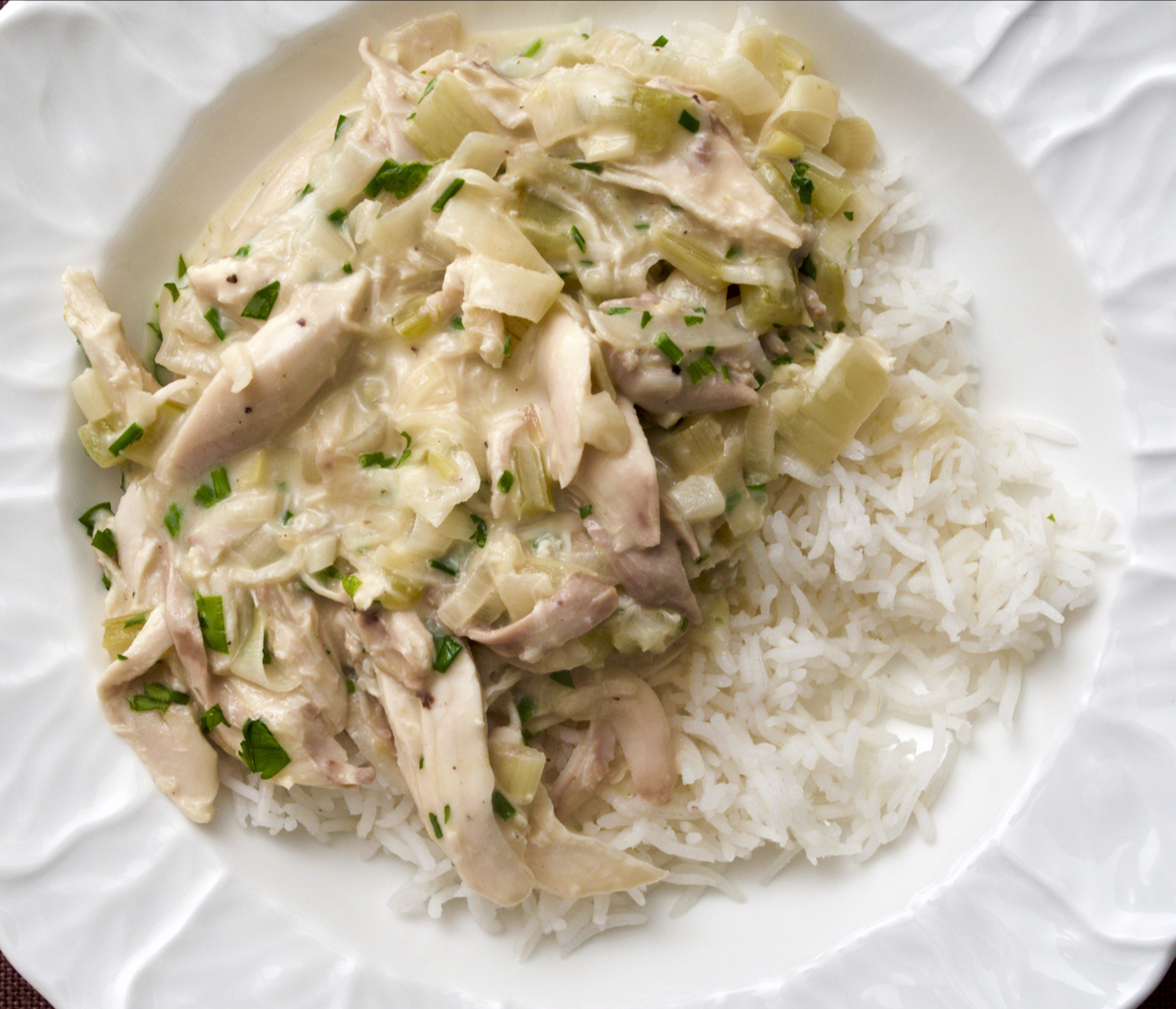
So simple and yet so lovely. The bit that takes time can be done earlier in the day and it’s fairly easy to finish off later. Serve with rice or whatever you fancy.

Wine Suggestion: We like how the stonefruit characters, mixed with slightly lower acidity from a southern Rhône white goes with the gentle and elegant nature of this dish. The Grapillon d’Or Vacqueyras white is a good example and it’s fleshy character and minerally/nutty textures are just perfect.

Chicken Fricassee – serves 6 to 8

  • 2kg whole chicken

FOR THE POACHING LIQUID:

  • 750ml chicken stock
  • 2 banana shallots, sliced
  • 2 celery sticks, sliced
  • 8 tsp black peppercorns
  • ½ lemon
  • a large bulb of garlic, cut in half horizontallly

FOR THE SAUCE:

  • a large knob of butter
  • 500g banana shallots, thinly sliced
  • 3 sticks celery, finely diced
  • 200ml double cream
  • 3 tbsp chopped chives
  • 3 tbsp chopped flatleaf parsley

Put the whole chicken into a large, deep saucepan. Add all of the poaching liquid ingredients and bring to the boil. Cover and simmer very gently for 1 hour, or until the chicken is cooked. Remove from the heat and allow to cool in the liquid.

When the chicken is cold, take the chicken out and remove the meat from the carcass – discard the bones and skin. Tear the meat into large pieces and set aside. Strain the poaching liquid through a sieve into a large jug. Squeeze the garlic from the skin into a small bowl and mash with a fork. Discard the poaching veg, lemon and peppercorns.

To make the sauce, melt the butter in a large frying pan over a medium heat. Add the shallots and celery and cook for about 10 minutes or until soft. Add the mashed garlic and fry for 10 seconds, then pour in the vermouth and boil to reduce by half. Add 600ml of the poaching liquid, bring to the boil and boil hard for 3 minutes.

Add 2 tbsp of the remaining poaching liquid to the cornflour and stir until smooth. Add this to the pan and cook until the sauce has thickened. Add the cream and cooked chicken and gently reheat until hot. Add the fresh herbs and season well with salt and black pepper.

(Original recipe from Mary’s Foolproof Dinners, BBC Books, 2024.)

Read Full Post »

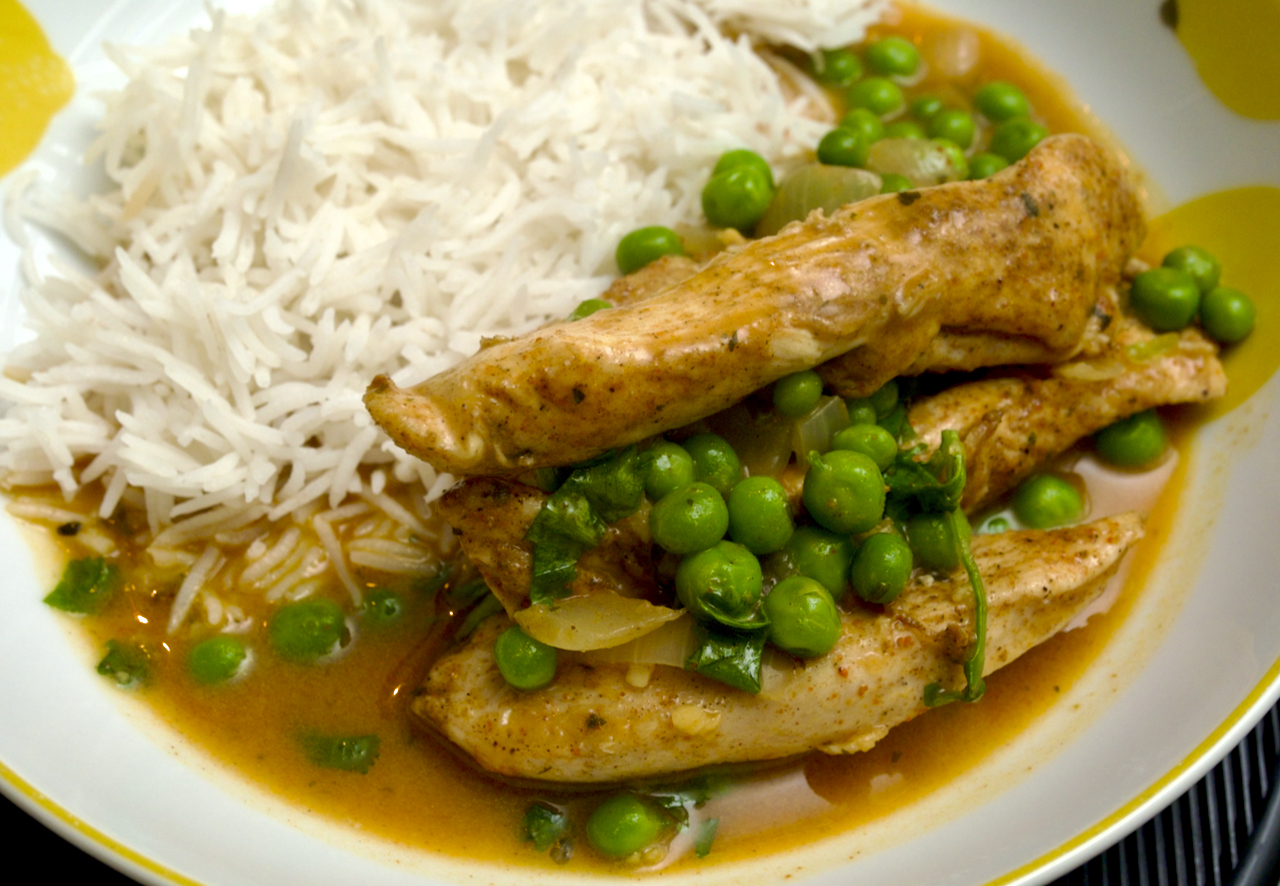
This is a very tasty curry despite the short list of ingredients. Even though it’s simple, it’s perfect for a weeknight and not too spicy for children or other sensitive palates.

Wine Suggestion: We usually find most Pinot Grigio’s a bit nondescript for our tastes, but have been exploring and enjoying a number from Trentino and Friuli recently and think they go quite well with mild curries like this. Zuani make their Sodevo Pinot Grigio in a fairly standard way, though from well tended and lower yielding vineyards. The big difference is both the soils, and keeping it on the fine lees after fermentation. Look out for this last step and you should find a wine that stands out amongst the sea of ordinary Piont Grigios.

Easiest ever chicken curry – serves 4

  • 2  tbsp vegetable oil
  • 2 cloves of garlic, crushed
  • 2 tsp finely grated ginger
  • 1 small onion, finely chopped
  • 500g chicken breasts, cut into strips
  • 2½  tbsp curry powder, plus an extra 2 tsp
  • 1 x 400ml full fat coconut milk
  • 375ml chicken stock
  • ½  tsp salt
  • 200ml frozen peas
  • a large handful of coriander, chopped

Sprinkle the chicken with the 2 extra tsp of curry powder and some salt and pepper.

Heat a splash of oil in a large, deep frying pan, the remove and set aside.

Add the rest of the vegetable oil to the pan and cook the garlic, ginger and onion over a medium-high heat for a few minutes. Add the 2½  tbsp curry powder and continue to cook for another 2 minutes.

Add the coconut milk and chicken stock to the pan, then simmer rapidly for about 20 minutes or until reduced and thickened. Add the chicken back in towards the end to cook it through.

Add the peas and salt to the curry and cook for 2 minutes, season again to taste and sprinkle over the coriander.

Serve with steamed basmati rice.

(Original recipe from RecipeTinEats)

Read Full Post »

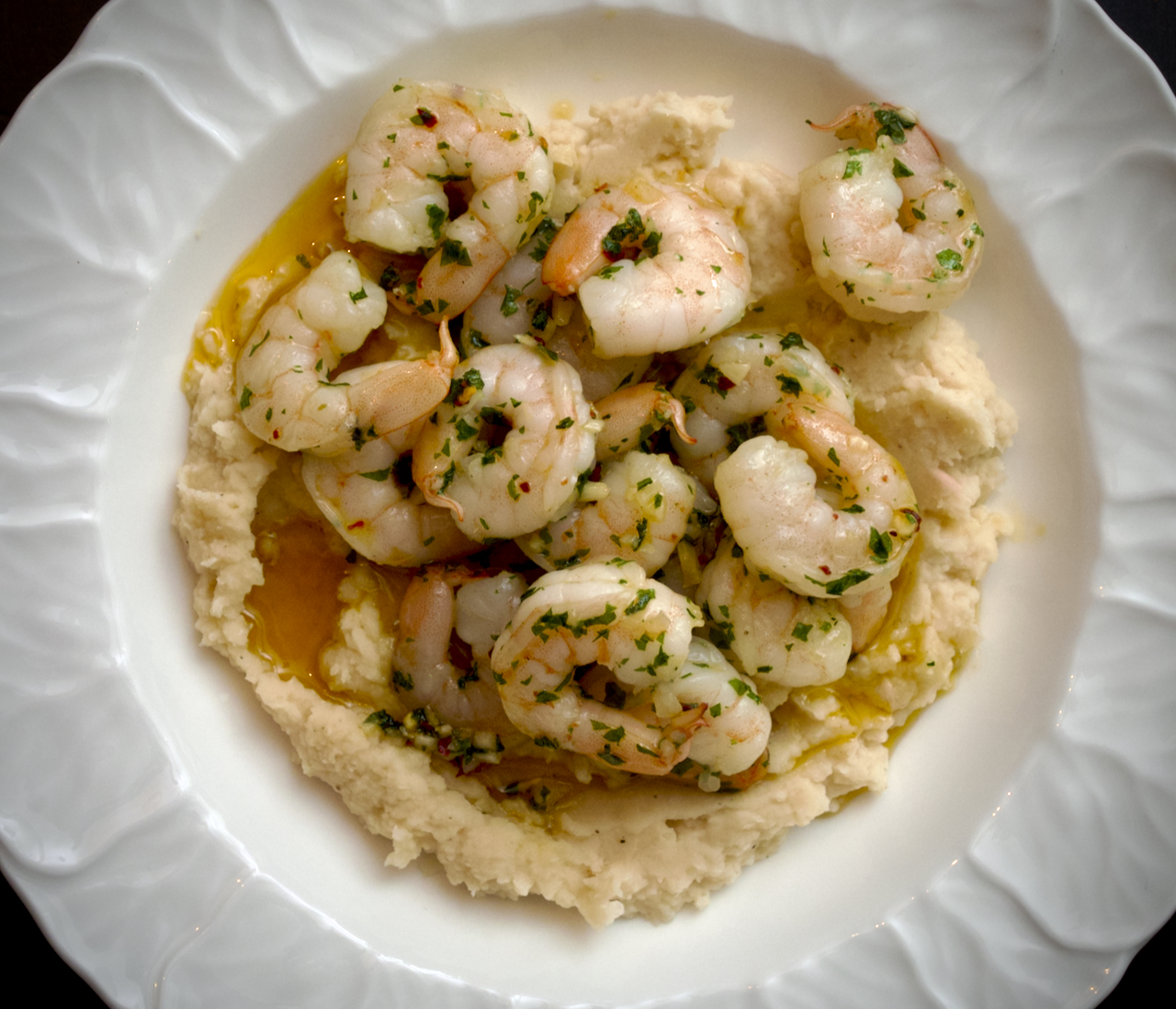
This recipe comes from Rick Stein’s Simple Suppers and it is indeed a simple and easy recipe. Ready in minutes and deeply satisfying!

Wine Suggestion: the creamy beans need a buttery Chardonnay, and likewise this works with the prawns too. Pick you own style, or whatever is at hand. For us we were lucky to have Au Bon Climat’s Santa Barbara County Chardonnay which is Californian sunshine in a glass tempered by the cooling breezes and fogs of this part of the world. Full and deep, but fleet of foot and minerally fresh.

Garlic & chilli prawns on puréed butter beans – serves 2

FOR THE BUTTER BEAN PURÉE:

  • 1 tbsp olive oil
  • 1 clove of garlic, chopped
  • 400g tin of butter beans, drained
  • juice of ½ lemon

FOR THE PRAWNS:

  • 2 cloves of garlic, peeled
  • a handful of flatleaf parsley
  • 50ml olive oil
  • ¼ tsp chilli flakes
  • 225g peeled raw prawns

Heat the oil for the butterbeans in a pan and add the garlic. Cook for a minute, then add the butter beans and cook for 3-4 minutes or until warmed through. Add the lemon juice and a couple of tablespoons of water, then whizz in a blender or food processor. Return to the pan and keep warm, you might need to add a little more water if it’s too thick.

Chop the garlic and parsley for the prawns together to get a coarse paste. Pour the oil into a frying pan and when hot, add the chilli flakes and garlic mixture. Cook over a gently heat for a minute until sizzling, then increase the heat a little, add the prawns and stir-fry for a few minutes or until pink and cooked through.

Divide the purée between two warm bowls and spoon the prawns and garlicky oil over the top.

(Original recipe from Rick Stein’s Simple Suppers, BBC Books, 2023.)

Read Full Post »

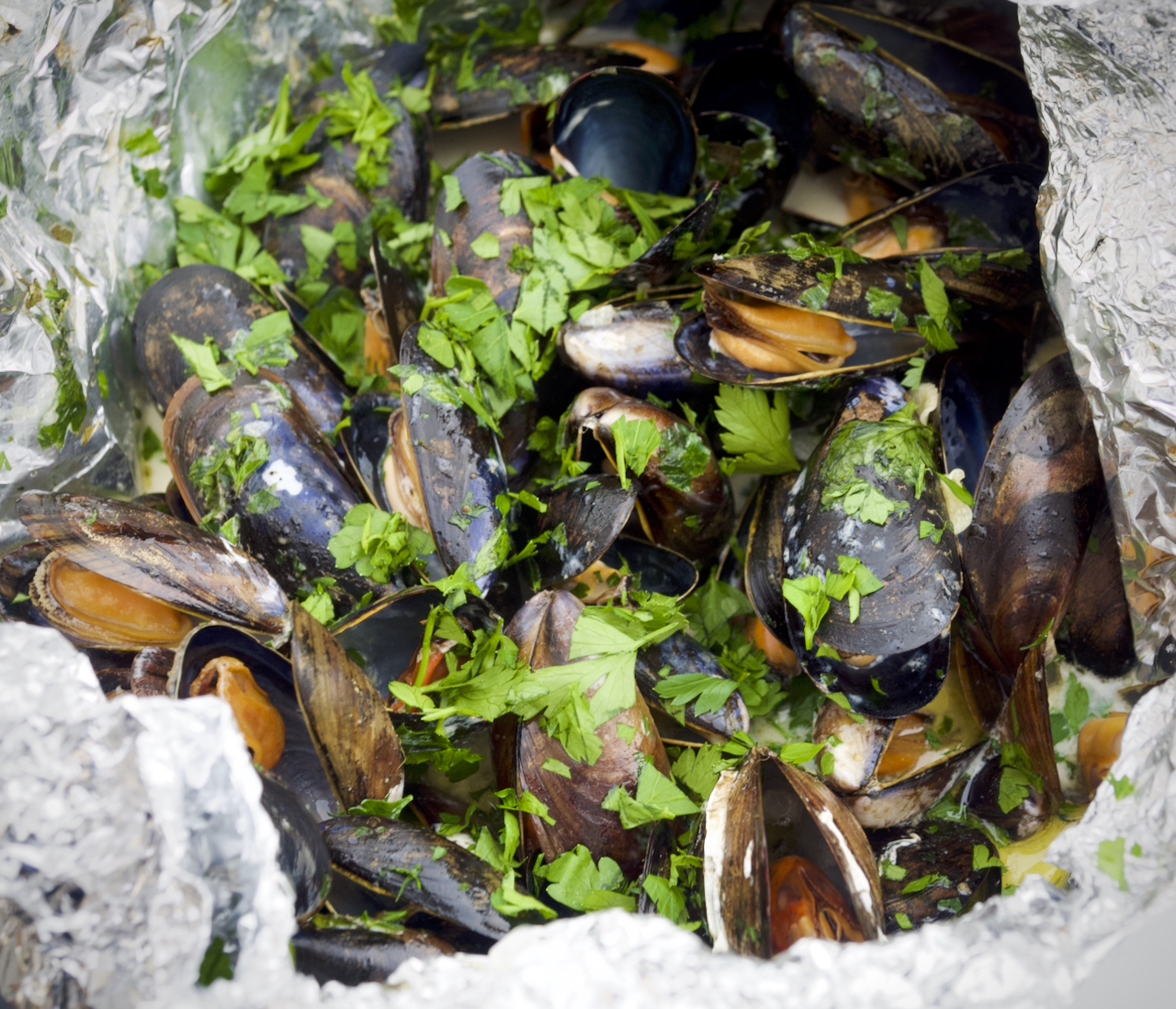
We’ll cook anything on the barbecue and these mussels come highly recommended! Serve in the foil package with plenty of crusty bread.

Wine Suggestion: Muscadet all the way, but given you get a little more with the smokey barbecue flavours coming through we’d suggest one with a bit more oomph like Jérémy Huchet’s Clos les Montys which is grown on a very particular blue-green bedrock giving the wine depth and substance.

Mussels on the barbecue – serves 2

  • 50g softened butter
  • 2 cloves of garlic, finely sliced
  • 2 shallots, finely sliced
  • 1 kg mussels
  • 1 small pack parsley, roughly chopped
  • 125ml white wine
  • 100ml double cream
  • crusty bread, to serve

Mix the butter and garlic with a big pinch of salt.

Heat the barbecue until the coals are white. Lay a sheet of tin foil, about 60cm long on the work surface, then put another sheet the same size on to, then add a third sheet about 30cm long acorss the middle to form a cross shape. Spread the shallots in the middle of the foil, pile the mussels on top, dot the garlic butter all over, then scatter over half the parsley. Season, then fold the foil in at the sides to create a bowl.

Pour the wine into the foil bowl and then seal it securely by scrunching the foil together at the top. If you need an extra sheet of foil to encase the whole parcel at this stage then do so.

Carefully place the parcel on the barbecue coals and cook for 10 minutes. Carefully open the parcel and check the mussels have opened. Pour in the cream, then cover the barbecue with a lid to cook for a few more minutes.

Sprinkle with the remaining parsley and serve with crusty bread.

(Original recipe from BBC Good Food)

Read Full Post »

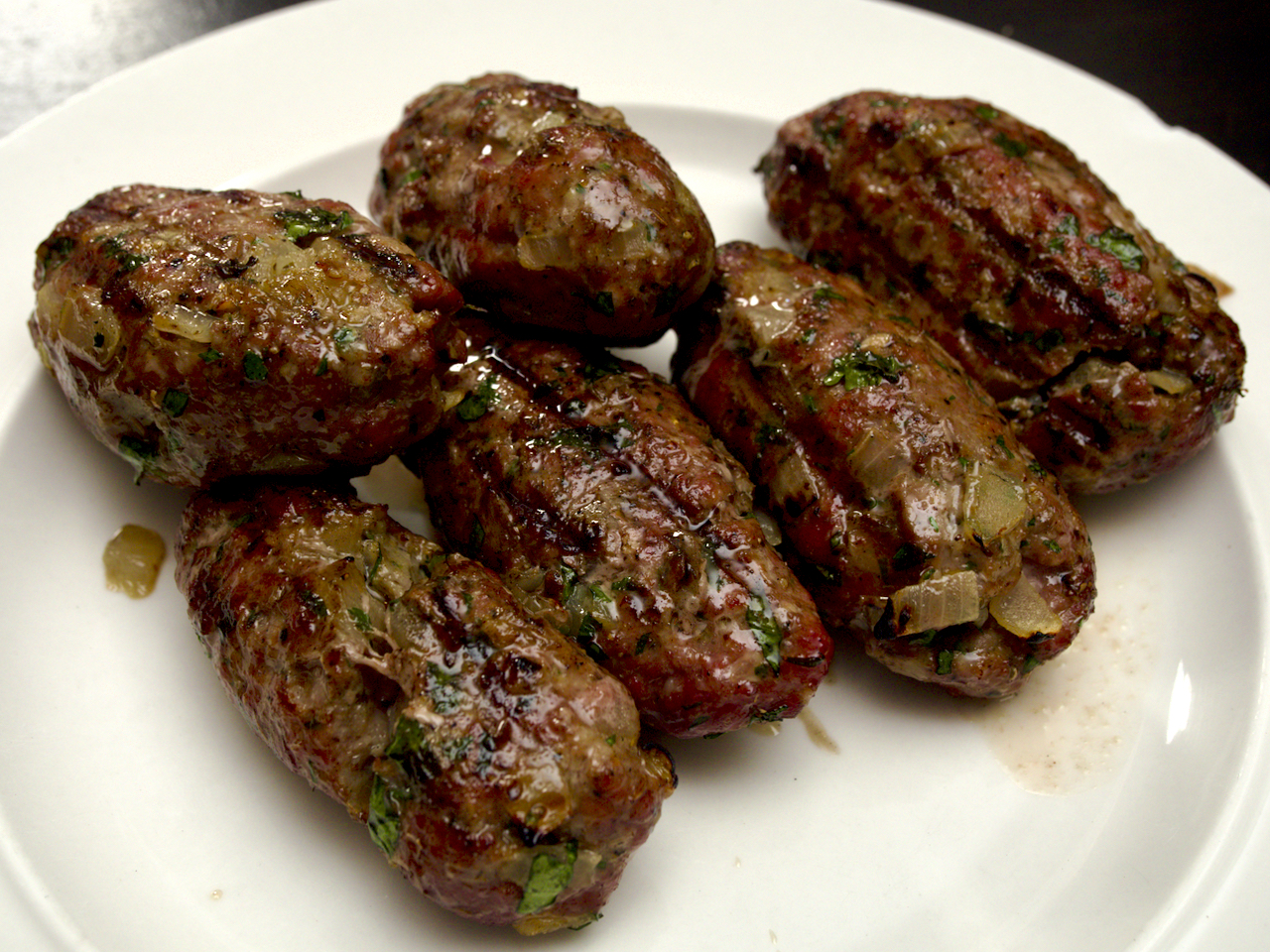
It’s been a funny year for the barbecue, lots of bad weather and then when it turns nice it’s often not in the forecast. Surely, we are due some nice back to school weather and you’ll have the opportunity to cook these tasty koftas.

Wine Suggestion: From an incredibly awarded, but always under the radar Clare Valley winery is Kilikanoon’s Killermans Run GSM. We’re always amazed at the amount of depth and finesse this wine has. With a full-body, but complete balance, this finishes superbly long and weightless. Bravo!

Lamb koftas – serves 4

  • a little vegetable oil
  • 1 onion, chopped
  • 1 tsp cumin seeds, toasted
  • 1 tsp coriander seeds
  • 2 tsp cracked black pepper
  • 2 tsp salt
  • 800g lamb belly, minced
  • 4 cloves of garlic, finely grated
  • 1 tsp ras el hanout
  • 1 tsp ready-made mint sauce
  • finely grated zest of 1 lemon
  • 2 tbsp chopped parsley
  • 1 tbsp chopped coriander
  • lemon wedges and coriander leaves, to serve

Heat the oil in a frying pan on the hob and fry the onion over a medium heat for 8-10 minutes or until soft. Remove the onion from the heat and leave to cool.

Meanwhile, grind the spices and salt together using a pestle and mortar until you have a fine powder.

Put the lamb into a big bowl with the cool onion, garlic, ground spice mix, ras el hanout, mint sauce, lemon zest and herbs. Mix well with your hands.

Divide the mixture into 8 and roll each piece into a sausage-shaped kofta. Lay the koftas on a lined tray and chill in the fridge for an hour to firm them up.

Meanwhile, get your barbecue fired up and ready to cook on.

Place the koftas on the edges of the barbecue so they are over a medium heat – if you put them over the direct flame you might create a blaze when the fat drips off. Cook for about 8 minutes, turning regularly.

When the koftas are cooked, serve them on a platter with some lemon wedges and coriander leaves.

(Original recipe from Tom Kerridge: Outdoor Cooking, Bloomsbury Absolute, 2021.)

Read Full Post »

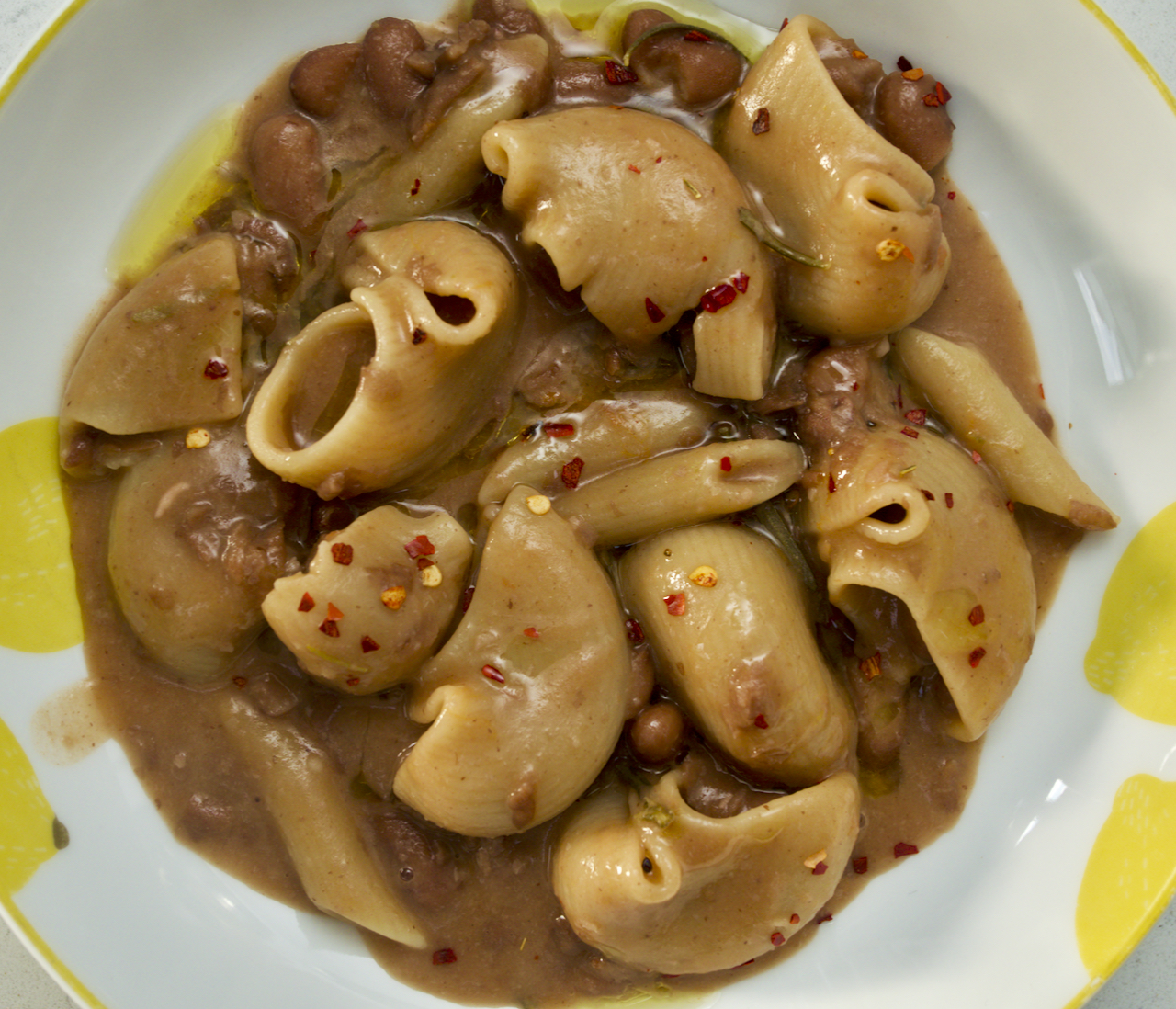
We picked up some pretty dried borlotti beans when travelling earlier this year and this rustic pasta dish was the perfect dish for them.

Wine Suggestion: There’s an honesty and an earthiness to this dish that we can’t ignore, and just love. To be sympathetic we chose La Pruina’s Salice Salentino, a blend of Negroamaro and Malvasia Negra from Puglia. Gentle layers of spice, equally soft and intense, surrounding a mid-weight core of earthy plums and wild red fruits.

Pasta e fagioli – serves 4

  • 250g dried borlotti beans
  • 5 tbsp extra virgin olive oil
  • 2 cloves of garlic, peeled and lightly crushed
  • a big sprig of fresh rosemary
  • 200g fresh tomatoes, peeld and crushed
  • 220g conchiglie, or other tubular pasta (we used a mix of packet ends)
  • olive oil, red chilli flakes and grated pecorino cheese, to serve

Soak the beans overnight, then drain and cover with enough cold water to cover them by at least 10cm. Bring to the boil, then turn down to a simmer and cook until tender, usually about an hour and a half. Leave to cool in the cooking liquid.

Meanwhile, gently warm the olive oil in a large deep sauté pan, then add the garlic and rosemary and gently fry until they smell good. Discard the garlic and add the tomatoes to the pan. Turn the heat up a little and cook for about 10 minutes or until looking saucey. Add the cooked beans and a couple of ladlefuls of their cooking liquid, then leave to bubble for 10 to 15 minutes. Season with salt.

Add another couple of ladlefuls of liquid and then add the pasta and continue cooking, stirring regularly, until the pasta is tender. You might need a bit more liquid. Serve in warm bowls with some olive oil, chilli flakes and grated pecorino cheese.

(Original recipe from An A-Z of Pasta by Rachel Roddy, Penguin:Fig Tree, 2021.)

Read Full Post »

This is almost like a biryani but with gentle Iranian spices and it makes a great centre piece. You can serve with yoghurt if you like and we missed a side of greens or salad.

Wine Suggestion: This suits a rich and broad white like Domaine Manciat-Poncet’s Pouilly-Vinzelles. With a lovely mix of stonefruit flavours and grapefruit this has a zip as well as the breadth that compliments the prawns as opposed to fighting or overwhelming them.

Spicy prawn rice – serves 6

  • 500g basmati rice
  • 6 fat cloves of garlic
  • 7cm piece of fresh ginger, peeled and finely grated
  • 1 tsp ground ginger
  • 2 tsp ground cumin
  • 1 heaped tsp ground fenugreek leaves
  • ½ tsp ground cinnamon
  • ½ tsp dried chilli flakes
  • 600g large peeled prawns
  • 60g butter

Bring a large pot of water to the boil and add a big handful of crumbled sea salt. Boil the rice for 6-8 minutes or until the grains are bright white and slightly elongated. They should be just starting to soften.

Drain the rice and rinse under cold water for a couple of minutes, until cool.

Line the bottom of the rice pot with some nonstick baking paper and set aside.

Put a large frying pan over a medium heat. Drizzle in a generous amount of olive oil (or vegetable oil) and fry the garlic for 30 seconds, then add the grated ginger, ground ginger, cumin, fenugreek and chilli flakes, and stir. Add the prawns and cook for under a minute, or until just starting to turn pink, then remove the pan from the heat and season generously with salt and pepper.

Put the paper-lined pot back over the heat and pour in a generous drizzle of olive oil and the butter. Sprinkle in some sea salt, then scatter in enough rice to cover the base of the pan.

Layer the prawn mixture and rice into the pan, finishing with a thin layer of rice. Use the long handle of a wooden spoon to poke about 5 holes into the rice, right down to the base of the pan.

Wrap the lid of the pan in a tea towel, then cover the pan and cook over the lowest temperature for about 40 mintues.

Check the rice is cooked, then remove it from the pan. If you’re brave you can place a platter over the pan and flip the rice out onto it. Scrape out any crispy tahdig (the crispy rice on the base) from the bottom of the pan and serve on top of the rice.

(Original recipe from Persiana by Sabrina Ghayour, Mitchelle Beazley, 2014.)

Read Full Post »

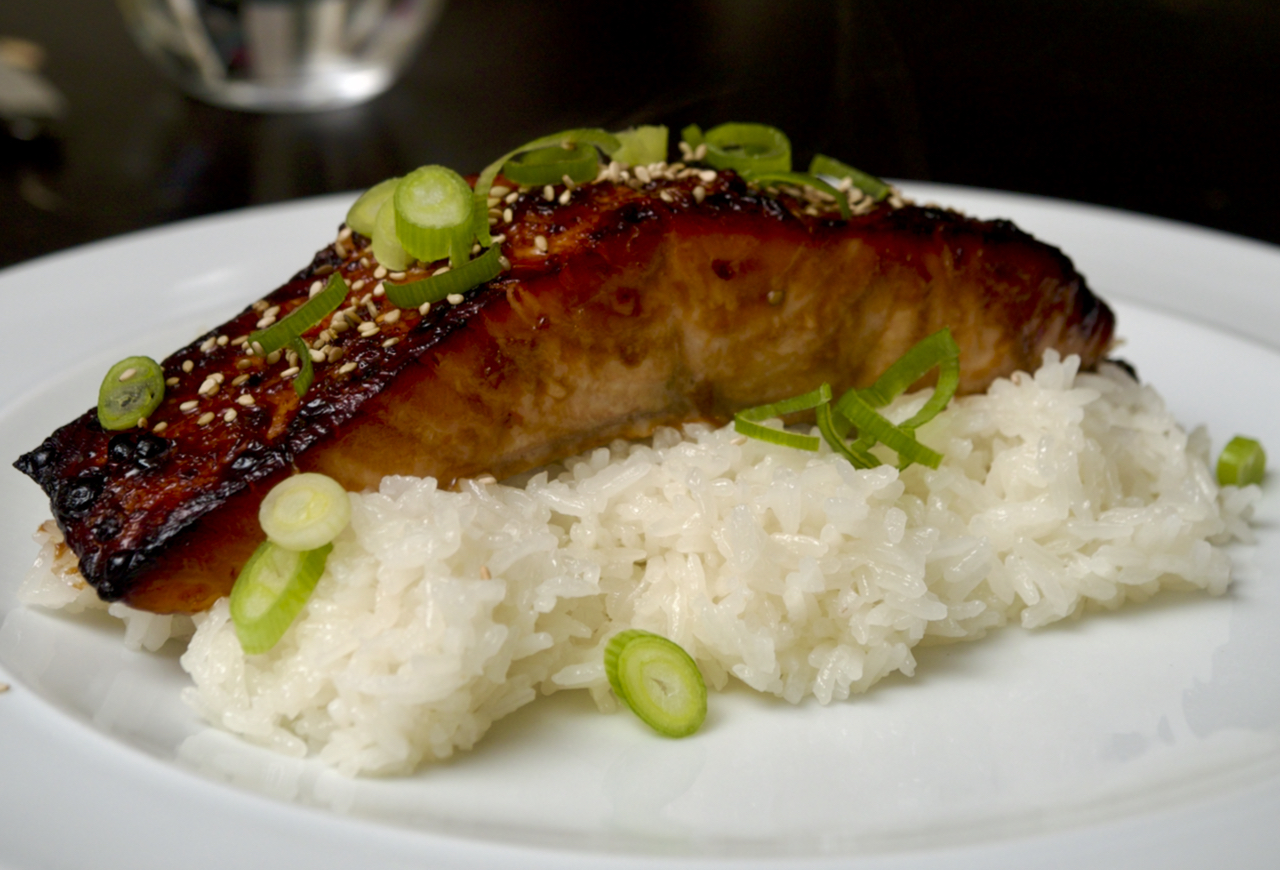
You need to marinade the salmon for 30 minutes or up to 24 hours ahead. After that, it’s dinner in 15 minutes. We served with with some sticky rice and dressed Asian greens.

Wine Suggestion: This works with a good Pinot Gris, like Neudorf’s Tiritiri. An underestimated grape, given the oceans of bland Pinot Grigio sold, but in the right hands … the riper, richer and more textural French styled Pinot Gris is a joy. Neudorf’s version is all about mouth feel: depth, viscosity, and richness while staying deliciously clean and deceptively moreish. And the back-bone is a fresh, salty-stoney texture keeping it all clean and vibrant.

Sticky glazed salmon – serves 2-3

  • 2-3 salmon fillets
  • rapeseed oil spray

FOR THE MARINADE:

  • 1 tsp finely grated ginger
  • 1 garlic clove, finely grated
  • 1 tbsp soy sauce
  • 2 tbsp oyster sauce
  • 2 tbsp sweet chilli sauce

TO SERVE

  • sesame seeds
  • 1 scallion, finely sliced

Mix all of the marinade ingredients together in a shallow dish, then add the salmon and turn to coat.

When you are ready to cook, heat the grill to high. Line a grill tray with tin foil and place the salmon fillets on top, skin-side down. Brush with the marinade but don’t pour if over as any on the tin foil will burn, discard any extra.

Put the salmon under the grill, about 15-20 cm away from the heat. Cook for 7 minutes, then remove and spray with the rapeseed oil. Put back under the grill for another 1-3 minutes or until nicely caramelised.

Allow the salmon to rest for 5 minutes before serving with the scallions and sesame seeds scattered over.

(Original recipe from Recipetin Eats Dinner by Nagi Maehashi, Pan MacMillan, 2022.)

Read Full Post »

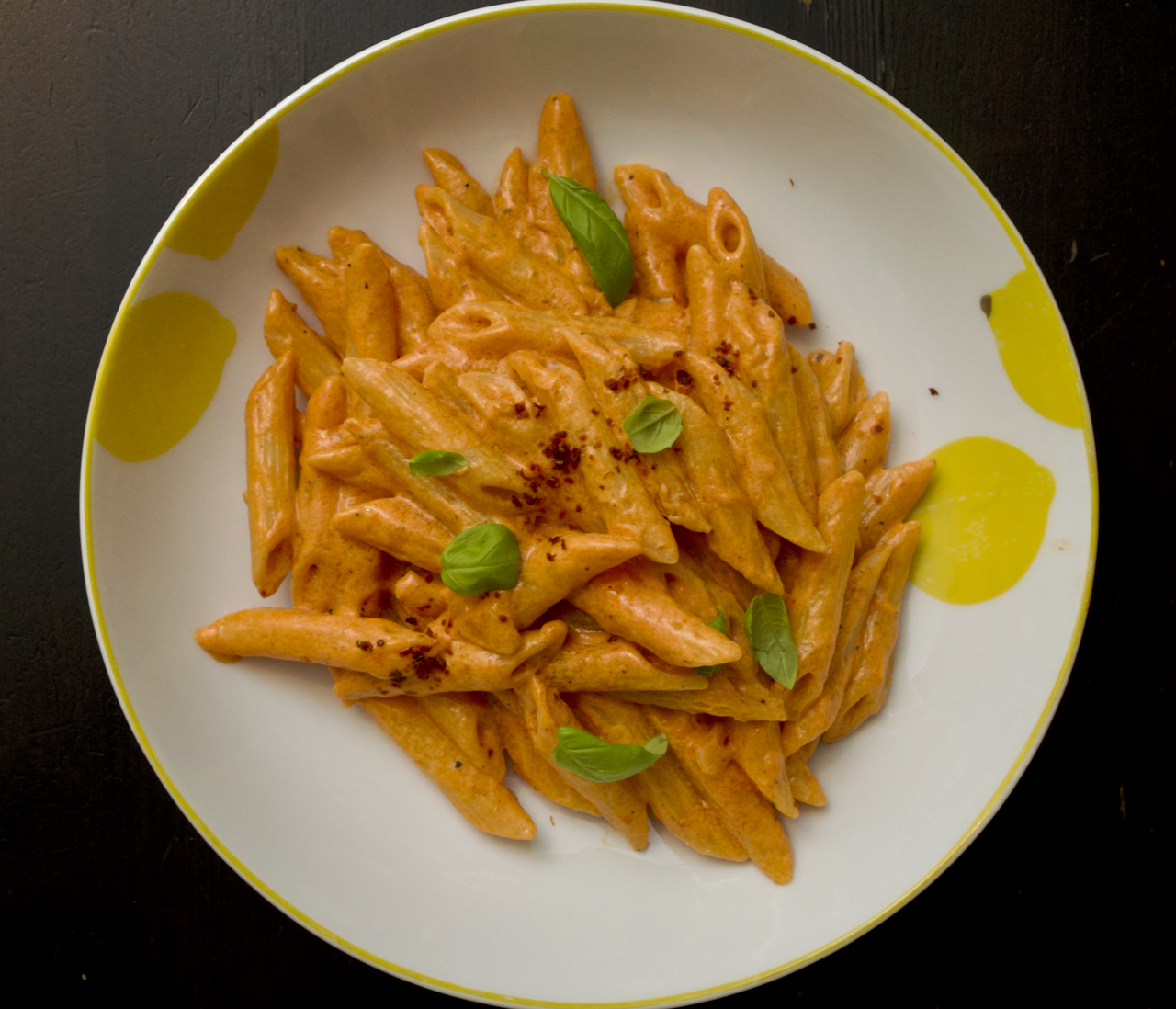
An easy pasta dish from Persiana Everyday by Sabrina Ghayour. Ready in 10 minutes and perfect for midweek.

Wine Suggestion: A crisp and fresh Sartarelli Verdicchio dei Castelli di Jesi Classico which lifts the dish and adds an extra roundness and depth. Easy white peach flavours but with that classic green almond twist at the end that bring both wine and food together.

Penne with spicy tomato & mascarpone sauce – serves 2

  • 200g penne pasta
  • 2 tbsp olive oil
  • 4 big garlic cloves, thinly sliced
  • 2 tbsp tomato purée
  • 150g mascarpone cheese
  • 1 tsp pul biber chilli flakes
  • 2 handfuls of Greek basil – we used some regular basil

Cook the pasta in plenty of salty water according to the timings on the pack.

Meanwhile, warm a frying pan over a medium heat, and add the olive oil. Add the garlic and cook gently until soft and translucent.

Add the tomato purée, mascarpone and most of the chilli flakes, then stir until you have a smooth sauce.

When the pasta is cooked, scoop it out with a slotted spoon and straight into the frying pan with the sauce. Season well with plenty of salt and black pepper. You might need to add a bit more pasta water to loosen to a creamy sauce.

Serve in warm bowls with a sprinkle of pul biber and the basil leaves.

(Original recipe from Persiana Everyday by Sabrina Ghayour, Aster*, 2022.)

Read Full Post »

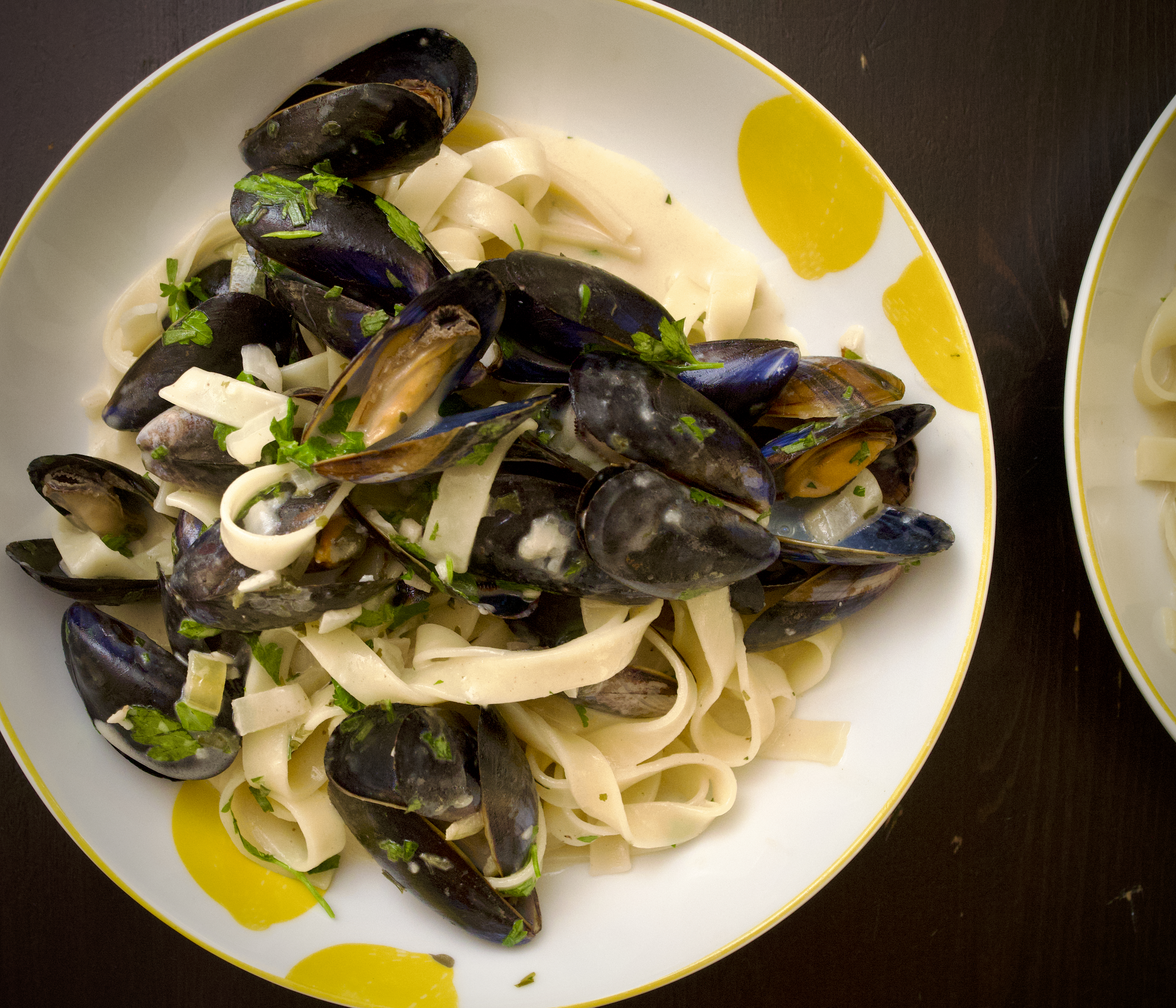
This is made with packets of mussels in garlic butter sauce which you can easily pick up in the supermarket on your way home – no need to make it in time for the fish shop and no fiddly prep. You might want a bit of crusty bread to mop up the sauce.

Wine Suggestion: We couldn’t go past a good Muscadet and with ever greater choices out there we’d recommend you explore beyond some of the classic cuvées being offered. Jérémie Huchet’s Clos les Montys is an unique terroir with some very old vines. Not within the Sévre et Maine appelation this could easily be overlooked, but you get something special in the glass: aromas of lemon, jasmine, and pears with hints of a fresh herb. Juicy, well-balanced and elegant, it finishes very long and refreshing.

Tagliatelle with mussels & crème fraîche – serves 4 (easily halved)

  • 300g dried tagliatelle
  • 1 large onion, finely chopped
  • 2 tbsp olive oil
  • 150ml dry white wine
  • 200ml crème fraîche
  • 2 x 450g packs mussels in garlic sauce (we used Carr & Sons from Dunnes)
  • a good handful of flat leaf parsley, roughly chopped
  • 2 tbsp chopped tarragon

Heat the olive oil in a deep frying pan, then add the onion and cook gently for about 10 minutes until softened and starting to colour. Pour in the wine, turn up the heat and bubble until it has almost evaporated.

Meanwhile, bring a large pan of salty water to the boil and cook the pasta according to the timings on the pack.

Add the crème fraîche to the onions and bring to the boil, then tip in the mussels and cook for about 5 minutes until piping hot and open (chuck any that don’t open away). Drain the pasta and return to the pan and tip in the mussel mixture. Stir in the herbs and serve with some crusty bread if you like.

(Original recipe from BBC Good Food)

Read Full Post »

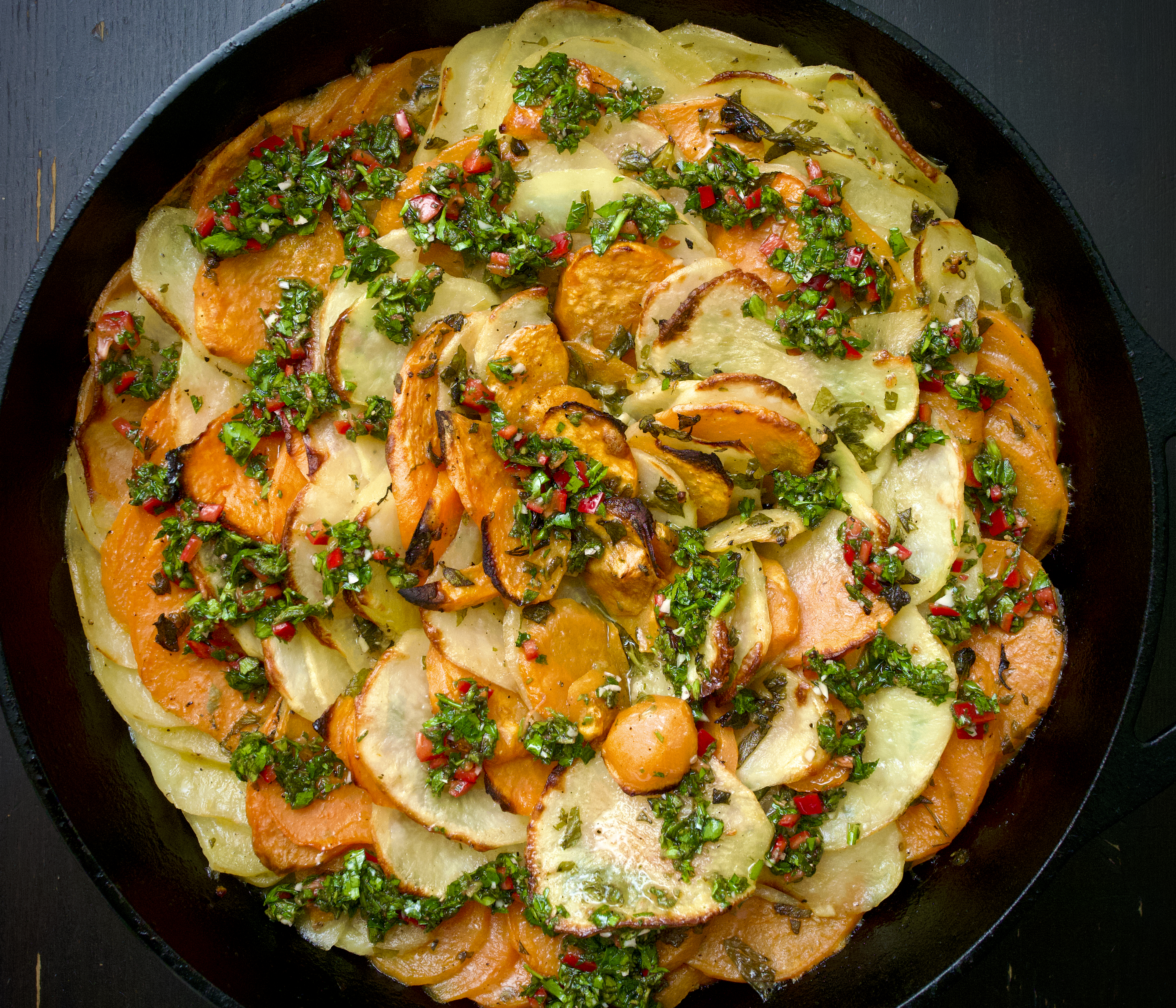
Such a tasty side dish! We served with a roast chicken but it will go with pretty much anything.

Potatoes with chimichurri – serves 6 as a side dish

  • 800g waxy potatoes
  • 600g sweet potatoes
  • 5g oregano leaves, roughly chopped
  • 5g parsley, roughly chopped
  • 4 garlic cloves, peeled and crushed
  • 5 tbsp olive oil, plus extra for greasing the pan
  • 250ml chicken stock or vegetable stock

FOR THE CHIMICHURRI:

  • 10g parsley, finely chopped
  • 5g oregano leaves, finely chopped
  • 1 garlic clove, peeled and finely chopped
  • 1 mild red chilli, finely chopped (seeds in or out as you wish)
  • 2 tbsp red wine vinegar
  • 4 tbsp olive oil

Heat the oven to 180C fan.

Peel the potaotes, then slice the waxy sort using a mandolin. Use a sharp knife to slice the sweet potatoes finely – they should be slightly thicker than the regular potatoes.

Put both sorts of potatoes into a large bowl and add the garlic, herbs, 3 tbsp of the oil, 1½ tsp salt and plenty of black pepper. Toss gently with your hands to combine but make sure you don’t break the potatoes.

Lightly grease a large ovenproof cast-iron frying pan or a round baking dish – about 23cm in diameter. Start at the edge and arrange the potatoes in overlapping circles until you reach the middle. Pour the stock over the top. Lightly grease a piece of foil and cover the dish tightly with it. Bake in the oven for 35 minutes.

Remove the pan from the oven and turn the heat up to 220C. Remove the foil from the pan and drizzle over the last 2 tbsp of olive oil. Return to the oven for 20 minutes, or until nicely browned. Remove from the oven and leave to cool slightly, for about 15 minutes.

Meanwhile, make the chimichurri sauce. Put all of the ingredients into a bowl with ¼ tsp of salt and plenty of black pepper. Mix well to combine.

When you’re ready to serve, spoon the chimichurri over the top of the potatoes.

(Original recipe from Ottolenghi Test Kitchen: Extra Good Things by Noor Murad & Yotam Ottolenghi, Ebury Press, 2022.)

Read Full Post »

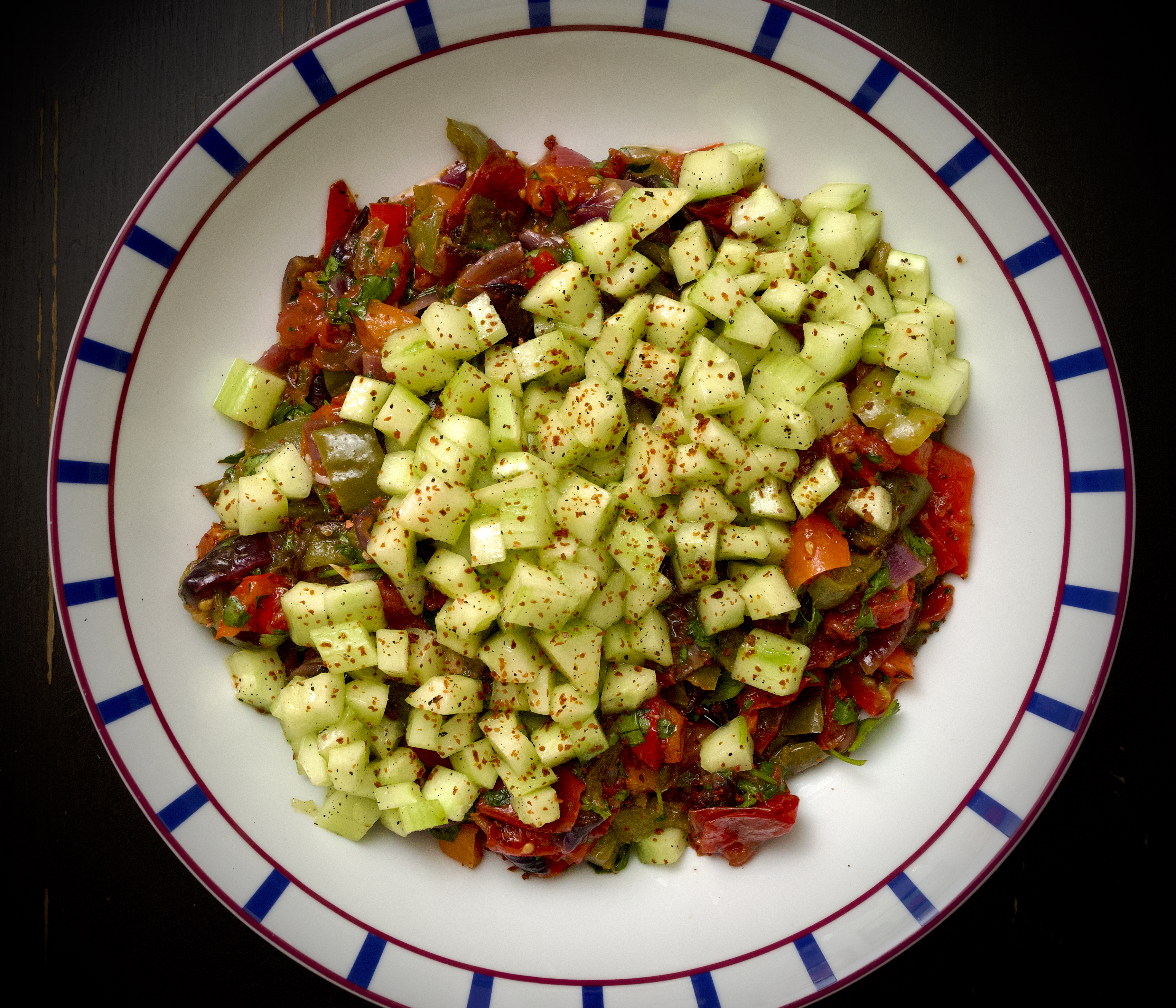
You can prep this salad in advance and serve warm or at room temperature. Jam-packed with flavour and a great side dish for a barbecue or roast meat.

Roasted pepper salad with cucumber and herbs – serves 4 as a side dish

  • 4 green peppers (600g), cut into 4cm pieces
  • 2 red peppers (300g), cut into 4cm pieces
  • 4 vine tomatoes (400g), quartered
  • 2 small red onions (200g), roughly cut into 3cm pieces
  • 1 green chilli, stem removed and left whole
  • 6 large cloves of garlic, peeled
  • 6 tbsp olive oil
  • 1½ tbsp lemon juice
  • 10g parsley, roughly chopped
  • 10g coriander, roughly chopped
  • 1 cucumber, peeled, deseeded and cut into 1cm cubes
  • ¾ tsp Urfa chilli flakes

Heat the oven to 230C fan.

Put the peppers, tomatoes, red onion, chilli and garlic into a large bowl. Add 4 tbsp olive oil, ¾ tsp of salt and plenty of black pepper. Toss well to combine.

Line to large baking sheets with baking parchment. Spread the vegetables out over the trays and roast for about 30 minutes, stirring once or twice, until softened and charred.

When cool enough to handle, roughly chop the vegetables and transfer to a bowl with the lemon juice, herbs and ½ tsp salt and plenty of black pepper.

In a separate bowl, toss the cucumber with 2 tbsp of oil, ¼ tsp of salt and plenty of black pepper.

Spread the roasted pepper mixture out over a platter. Spoon over the cucumber and sprinkle with the chilli.

(Original recipe from Ottolenghi Test Kitchen: Shelf Love, Ebury Press, 2021.)

Read Full Post »

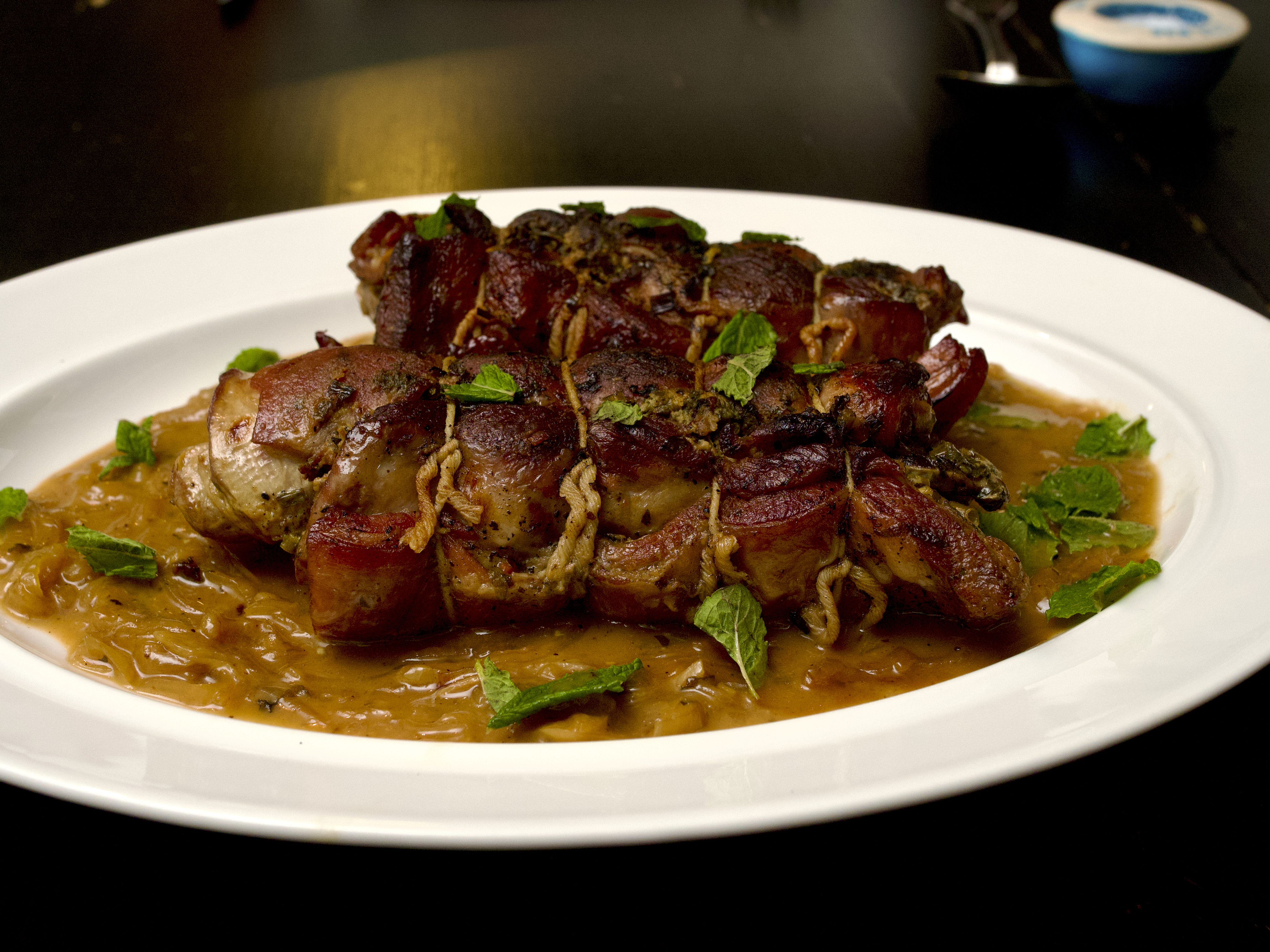
Lamb breast is a favourite cut for slow-cooking. It is melt in the mouth by the time it’s done and the onion gravy with this dish makes itself. We served with boiled new potatoes, steamed asparagus and roasted carrots on a cool and rainy Spring evening. It has taken us a while to post this as we thought we missed the seasonal boat but actually the weather in Ireland has been so bad that this would be perfect right now!

Wine Suggestion: This dish suits a good Cabernet Sauvignon and without spending the earth (and you can) the bargain of the moment is Parker Coonawarra Estate’s Cool Climate Cab. It hits the spot so well. Genuinely fresh because of Coonawarra’s proximity to the cold Antarctic winds hitting the coast, which combines with the Terra Rossa Soils, this wine has power and poise in equal measure. Freshness to cut through little bit of fattiness and poise to carry through the whole meal.

Herb-stuffed lamb breast with onion gravy – serves 4

  • 800g lamb breast (we had to get two small ones which worked perfectly too)
  • 2 tbsp Dijon mustard
  • a handful of flat-leaf parsley, finely chopped
  • a handful of chives, finely chopped
  • a handful of mint, finely chopped, plus extra to serve
  • 1 tbsp vegetable oil
  • 2 onions, finely sliced
  • 4 cloves of garlic, finely sliced
  • 250ml white wine
  • 250ml chicken stock

Heat the oven to 170C/fan 150C/gas 3.

Season the lamb all over, then lay it out flat on a large board, with the flesh side facing upwards. Brush all over with the mustard, then sprinkle over the herbs. Roll up tightly lengthways and tie with pieces of kitchen string to hold it together.

Heat the oil in a large casserole and brown the lamb all over until golden brown. Remove the lamb to a plate, then tip the onions and garlic into the casserole, and cook for 10 mintues until starting to soften. Pour in the white wine and chicken stock, then return the lamb, cover with a lid and cook in the oven for 3 hours.

Lift the lamb onto a warm plate, cover tightly with foil and leave to rest for 20 minutes. Skim any excess fat of the gravy and keep warm, you can add a splash of warm water if looks too thick. Slice the lamb and serve with the onion gravy and some chopped mint.

(Original recipe by Janinie Ratcliffe and Adam Bush in Olive Magazine, May 2019.)

Read Full Post »

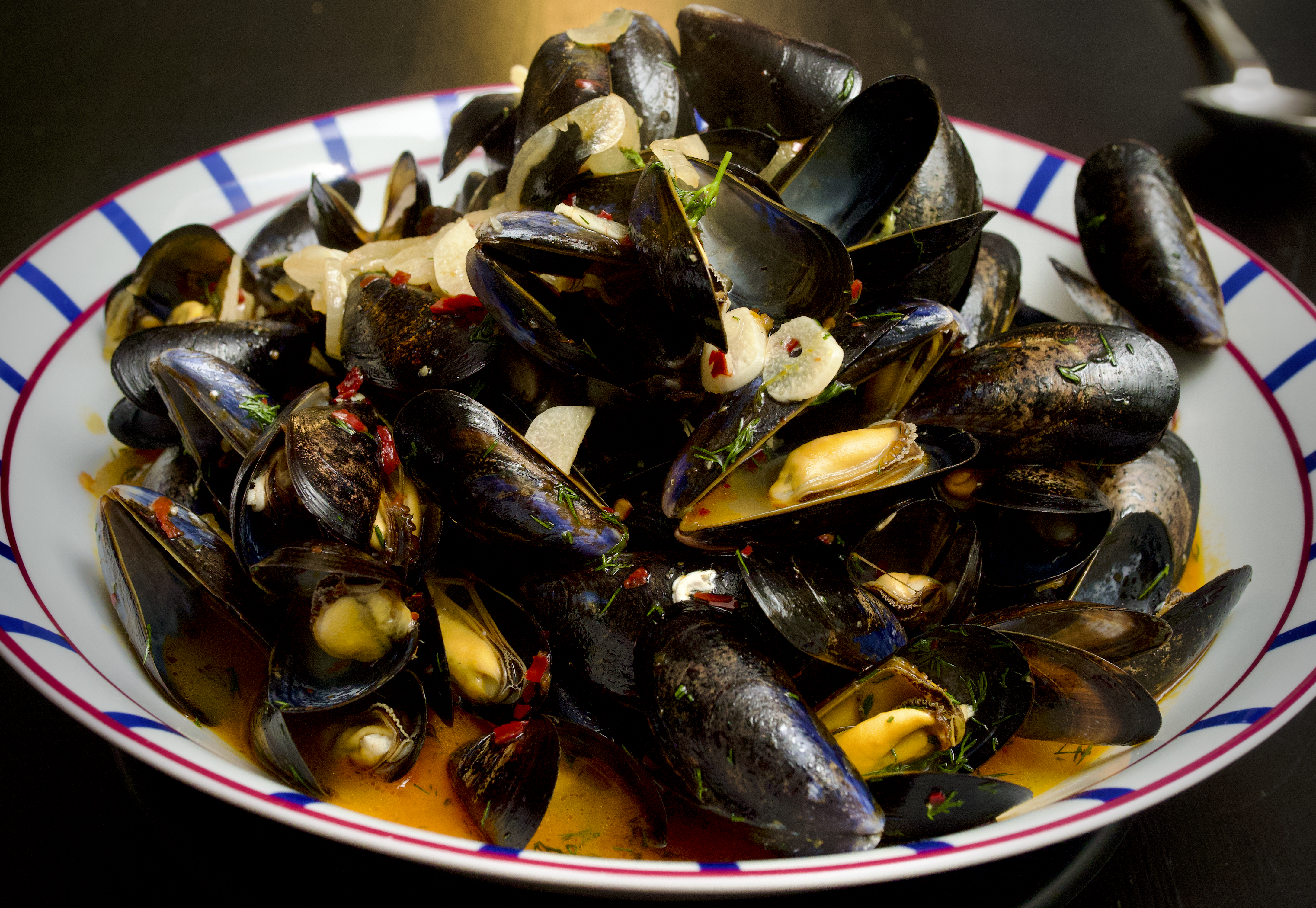
There’s no better holiday dish than a big bowl of mussels. Serve with crusty bread to mop up all the juice.

Wine Suggestion: A fruity, fresh and vibrant white is what we wanted here so we opened the Katxina Txakoli from the Basque country. We know it might be harder to find something made from Hondarribi Zuri but this grape is a great accompaniment to the local tapas, shellfish and pimenton.

Harissa Mussels – serves 2 to 4

  • olive oil, for frying
  • 50g salted butter
  • 1 large onion, halved and sliced
  • 6 cloves of garlic, thinly sliced
  • 2 heaped tsp rose harissa
  • 1 kg mussels, scrubbed and beards removed
  • 300ml white wine
  • 1 heaped tsp clear honey
  • ½  tbsp sea salt flakes
  • about 15g dill, fronds finely chopped

Heat a large saucepan over a high heat.

Add enough olive oil to cover the base of the pan, then add the butter and onion and cook until just starting to colour. Add the garlic and cook for a minute, keep stirring so it doesn’t burn.

Add the mussels to the pan and stir in the harissa to coat the mussels. Add the wine, honey and salt and mix well. Cover the pan with a lid and allow the mussels to cook until all the shells have opened – about 4 minutes.

Remove the lid, stir the mussels and mix in the chopped dill.

Serve in a large warm bowl.

(Original recipe from Sirocco by Sabrina Ghayour, Mitchell Beazley, 2016.)

Read Full Post »

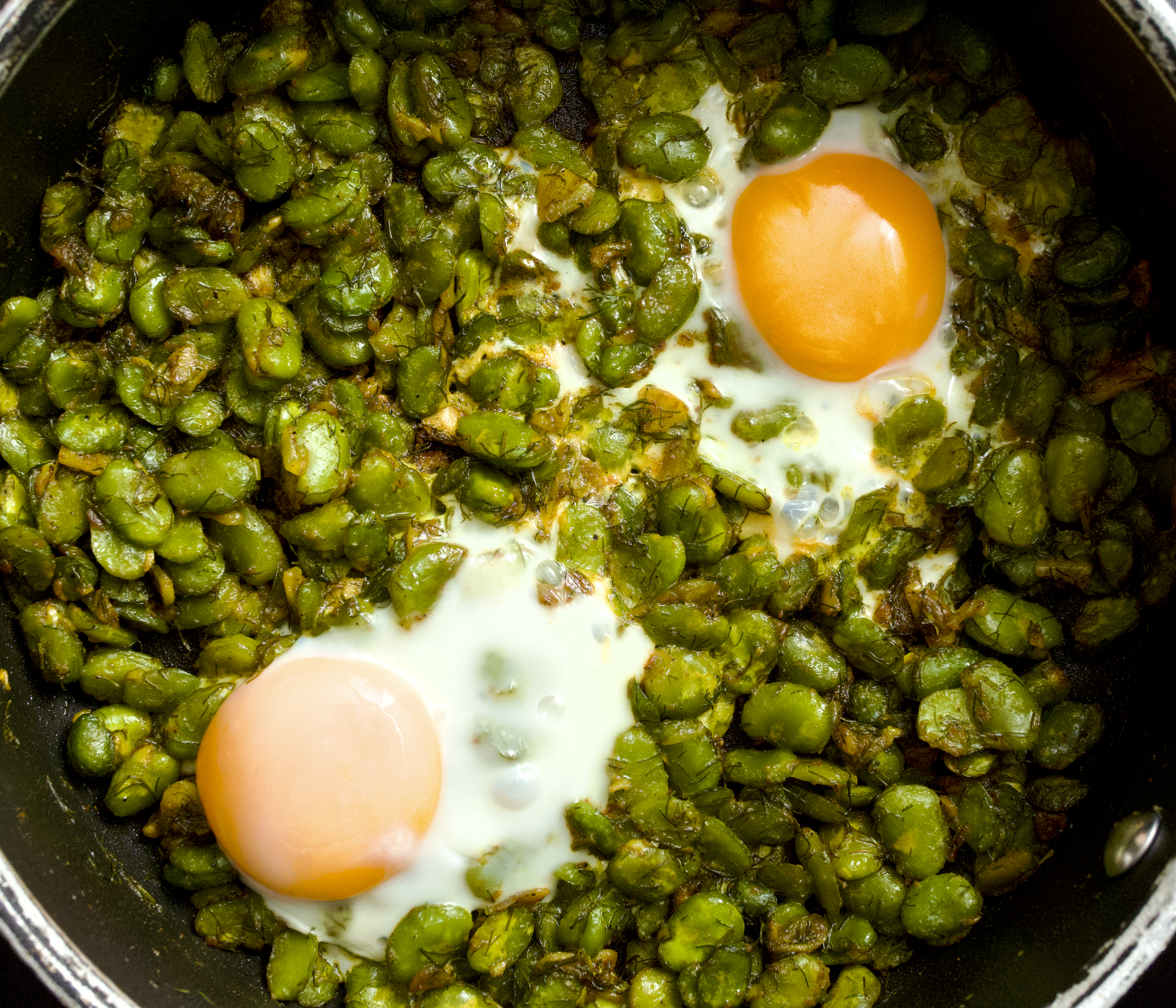
Jono picked this Iranian dish for his Father’s Day breakfast. It’s delicious! Serve with naan bread, tortillas or toast.

Broad beans with garlic, dill & eggs – serves 4

  • olive oil
  • 1 bulb of garlic, cloves bashed and thinly sliced
  • 1kg podded frozen broad beans, skins removed (blanch for a couple of minutes and the skins will pop off easily)
  • 3 tsp turmeric
  • generous tsp crushed sea salt
  • freshly ground black pepper
  • 60g dill, stalks and leaves finely chopped
  • 25g butter
  • 4 large free-range eggs

Heat a large deep frying pan over a low-medium heat, add a generous drizzle of olive oil and sweat the garlic until it softens. Add the broad beans and increase the heat to medium, then add the turmeric, sea salt and some black pepper and stir well. After 5 minutes, mix in the chopped dill and cook for another 8 minutes.

Add the butter to the pan and let it melt into the beans. Crack the eggs on to the surface of the beans and allow to cook using the heat from the beans – about 15 minutes. The beans will be a dull green by the end of the cooking time. Serve with your bread of choice.

(Original recipe from Persiana by Sabrina Ghayour, Mitchell Beazley, 2014.)

Read Full Post »

Finally, we got to sit in the garden for half an hour with the sunshine on our faces after many months of grey or wet days. This recipe is from camper van cooking – a book we rely on when camping, and also to get us in the mood for summer.

Wine Suggestion: We think this is fab with a good old Grenache, something like Edetària’s via Edetana red, which is a blend of two Garnacha varietals: Fina and Peluda. Grown in a very special location for Garnacha of all varieties, both red and white; Terra Alta in Spain. A wine that has a rich depth and yet is elegant and refined with freshness alongside the lush berry and balsamic flavours.

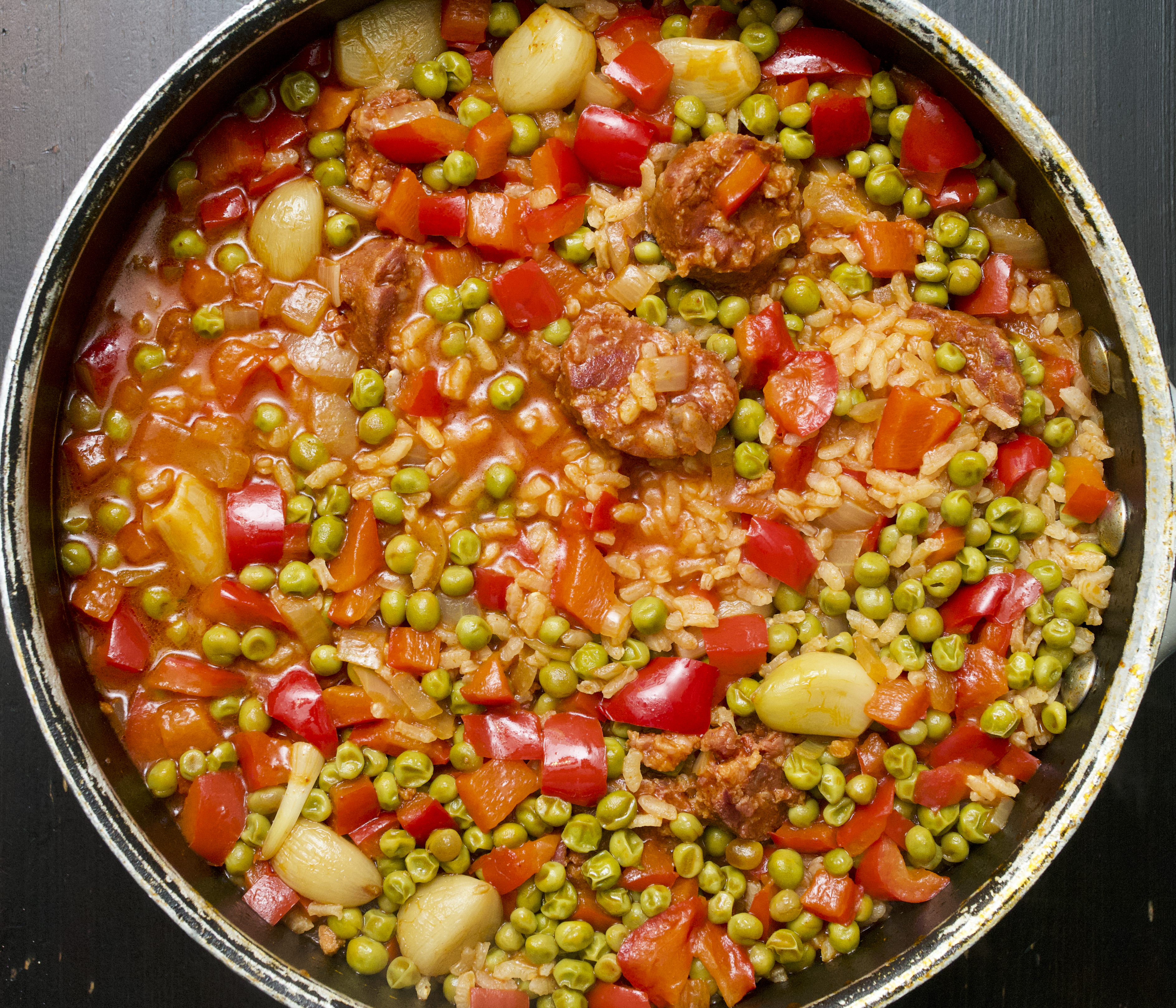
Baked rice with chorizo and peas – serves 4

  • 2 tbsp good olive oil
  • 2 fat chorizo sausages, thickly sliced
  • 1 large onion, finely chopped
  • 1 red pepper, finely chopped
  • 10 garlic cloves, peeled and left whole
  • 2 tsp paprika (use whatever sort you like or have)
  • 200g tomato passata
  • 1 tbsp tomato purée
  • 1 litre chicken stock
  • 360g paella rice
  • 150g frozen peas
  • lemon wedges, to serve

Heat the oil in a large, deep frying pan. Fry the chorizo for a couple of minutes or until some oil has been realised and it is starting to brown. Add the onion, peppers, garlic and some salt, then cook gently for about 10 minutes or until soft.

Stir in the paprika, passata and tomato purée and cook for 5-10 minutes or until rich and thick.

Add the stock, then bring to the boil, season again with salt, then add the rice and stir. Scatter over the peas and cover. Cook for 18-20 minutes or until the rice is tender and most of the liquid has been absorbed.

Remove from the heat and rest with the lid on for at least 10 minutes, then serve in bowl with lemon wedges to squeeze over.

(Original recipe from Camper Van Cooking by Claire Thompson & Matt Williamson, Hardie Grant: Quadrille, 2021.)

Read Full Post »

A easy peasy curry for weeknights. Serve with steamed basmati.

Black pepper paneer and cashew curry – serves 4

  • 2 tbsp sunflower oil
  • 2 x 225g packs of paneer, cut into 3cm cubes
  • 2 tbsp finely grated ginger
  • 2 tbsp finely grated garlic
  • 1 tbsp freshly ground black pepper
  • 3 tbsp madras curry paste (we use Patak’s)
  • 1 x 400ml tin coconut milk
  • 1 x 400g tin cherry tomatoes
  • 4 tbsp cashew butter (if you don’t have this you can whizz cashews a food processor to make it)
  • 1 lime, juiced
  • coriander leaves, to serve

Heat the oil in a large frying pan over a medium-high heat and cook the paneer for 5-6 minutes, until golden on all sides.

Turn the heat down ot medium-low and add the garlic, ginger and black pepper, then cook for 1 minutes before adding the curry paste and cooking for another minute.

Add the coconut milk, tomatoes and cashew butter, then season and simmer for 20 minutes until thickened. Season again add the lime juice.

Scatter coriander leaves over and serve with steamed rice.

(Original recipe by Adam Bush in Olive Magazine, March 2022.)

Read Full Post »

A Diana Henry recipe inspired by but not quite the same as the Dominican dish. This is perfect for a weeknight despite the long list of ingredients. Most will be in your cupboard and it’s really easy to put together. Lovely bright colours and flavours. This works on it’s own or with some crusty bread or rice.

Wine Suggestion: despite the inclination to go for a richer white, we felt in the mood for a red instead so chose Domaine Gayda’s Cepage Grenache. A brambly, dark red fruited wine with a juicy core and gentle, ripe tannins. We served it slightly cool to great effect and it made a delightful counterpoint to the chipotles (ours were very hot!).

Guisado de Pollo – serves 6

  • 2 tbsp olive oil
  • 800g boneless, skinless chicken thighs
  • 75g pumpkin, peeled and cut into 2.5cm chunks
  • 400g waxy potatoes, cut into 1cm chunks – you can peel them if you like, we didn’t bother
  • 1 onion, roughly chopped
  • 1 red pepper, chopped
  • 6 cloves of garlic, finely grated
  • 4 tsp ground cumin
  • a small tin of pineapple in natural juice, drained and cut into small chunks
  • 400g tin plum tomatoes
  • 1 tsp soft dark brown sugar
  • 2 tinned chipotles in adobo sauce, finely chopped, or 3 tbsp chipotle paste (reduce if your chipotles are very hot)
  • 3 sprigs of thyme
  • 500ml chicken stock
  • 1 jalapeño chilli, halved lengthways and deseeded
  • 2 tbsp capers, rinsed
  • juice of 1 lime
  • a small bunch of coriander, chopped, to serve

Season the chicken well with salt and pepper. Heat 1 tbsp of the oil in a large casserole and fry the chicken in batches until browned on both sides. It doesn’t need to be cooked through at this stage. Remove to a plate and set aside.

Add the chopped pumpkin and potato to the pan and cook for about 5 minutes or until starting to colour. Remove and set aside.

Add the onion and pepper to the pan and cook until soft and golden, about 8 minutes. Add the garlic cand cumin and cook for another 2 minutes.

Stir in the pineapple, tomatoes, sugar, chipotles, thyme, chicken stock. Season and bring slowly to a simmer.

Cut the chicken into thick strips, then add to the casserole along with any juices from the plate. Add the potatoes, pumpkin and the jalapeño. Stir gently then leave to simmer for 25 minutes without a lid. Give it a stir now and again. It’s ready when the vegetables are soft and the sauce thickened.

Add the capers and lime juice and season to taste. Stir in the coriander and serve.

(Original recipe from A Bird in the Hand by Diana Henry, Mitchell Beazley, 2015.)

Read Full Post »

Older Posts »