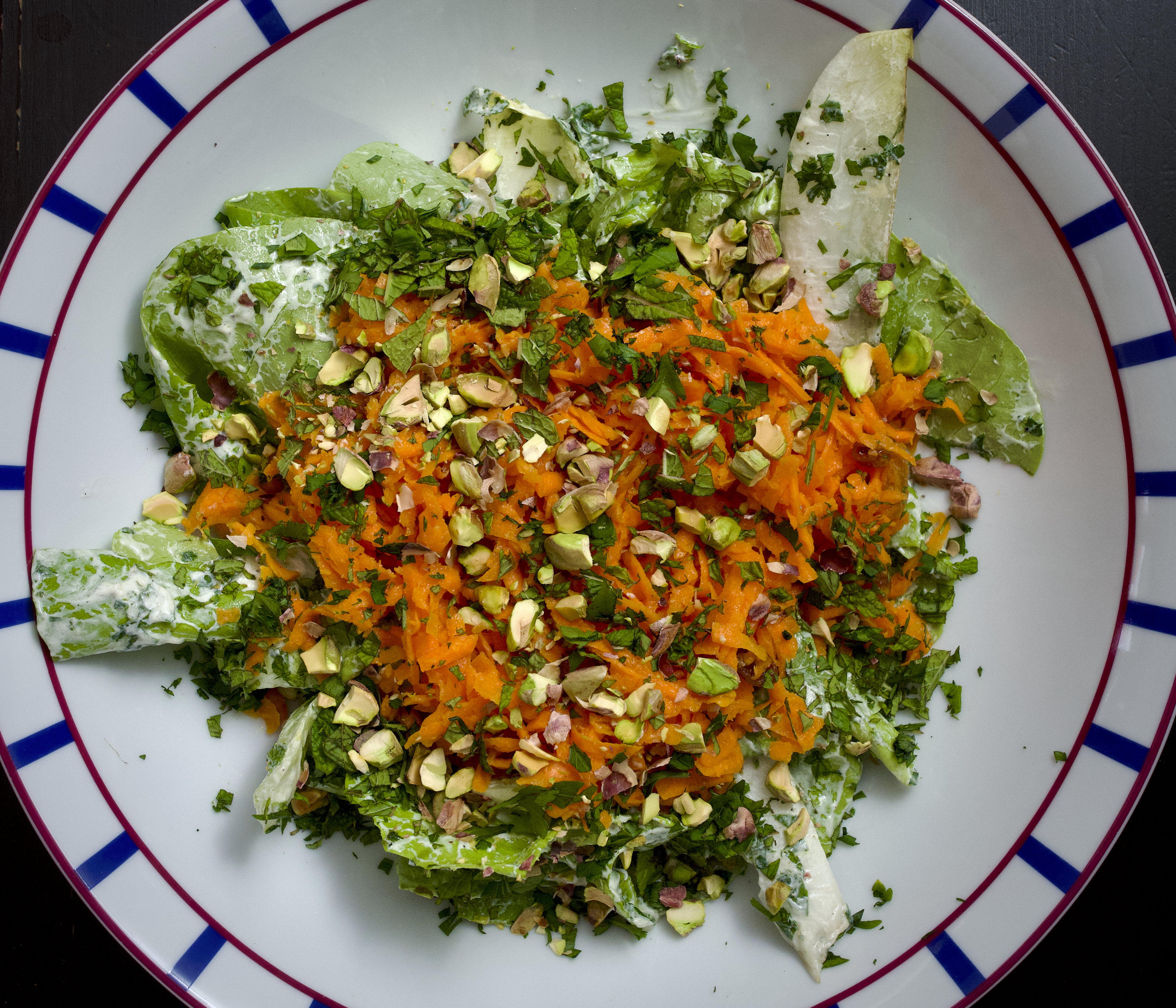
We spotted this salad idea in the Guardian so ate it outside with a barbecue … perfect!
Green salad with carrots and pistachios – serves 4
4 carrots, grated
1 tsp Dijon mustard
20g sultanas
5 tsp white wine vinegar
60ml olive oil
1 small clove of garlic, crushed
100g plain yoghurt
½ tsp caster sugar
10g mint leaves, finely chopped
20g parsley leaves, finely chopped
1 baby gem lettuce, leaves separated and halved lengthways
1 white chicory, leaves separated and halved lengthways
1 butterhead lettuce, leaves separated and large ones halved lengthways
30g pistachios, toasted and lightly crushed
Mix the grated carrots with the mustard, sultanas, 4 tsp of white wine vinegar, 1 tbsp of olive oil and ½ tsp of salt in a small bowl, then leave to marinate for at least 30 minutes.
Meanwhile, make the dressing in a large bowl by mixing 1 tsp white wine vinegar with 3 tbsp of the olive oil, the garlic, yoghurt, sugar, ¼ tsp of salt and plenty of black pepper.
Combine the chopped mint and parsley in a bowl.
Put the salad leaves and half the chopped herbs into the bowl with the dressing, then toss gently to coat.
Arrange the leaves on a shallot serving platter or bowl and scatter the marinated carrot on top. Serve with the rest of herbs and the pistachios sprinkled over.
(Original recipe by Yotam Ottolenghi in the Guardian.)
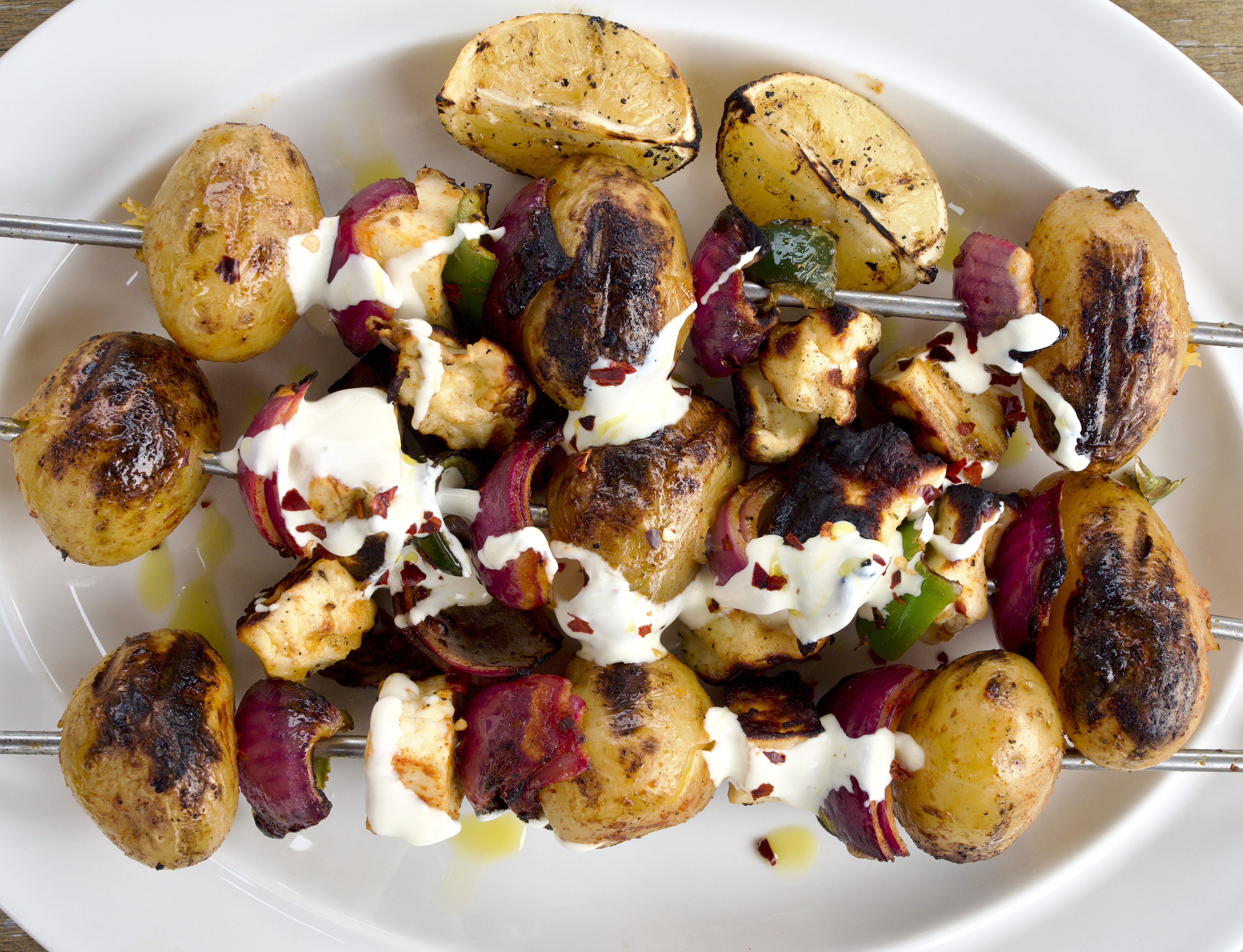
Sometimes it’s nice to cook the sides on the barbecue too. These skewers are tasty and could even be a main course with some salad.
Barbecue halloumi, potato and jalapeños with sour cream – serves 4
1 x 225g packet of halloumi cheese, cut into 3cm pieces
500g baby new potatoes, boiled until tender
2 jalapeño chillies (or other green chillies), cut into pieces and seeds discarded
1 large red onion, cut into pieces
3 tbsp olive oil, plus more to serve
1 tsp paprika
1 lemon, quartered
150g sour cream
chilli flakes, to serve
Put the halloumi, cooked potatoes, jalapeños and onion into a large bowl. Add the olive oil, paprika and juice from 2 of the lemon quarters. Season with salt and member and toss gently with your hands.
Thread everything onto metal skewers and cook on the barbecue for 5-10 minute, turning, until golden and lightly charred.
Grill the extra lemon quarters on the barbecue while the skewers are cooking.
Season the sour cream with a good pinch of salt.
Transfer the skewers to a platter and drizzle with the sour cream. Trickle over some olive oil and the juice from the barbecued lemons, then sprinkle with a few chilli flakes.
(Original recipe from Camper Van Cooking by Claire Thompson, Quadrille, 2021.)
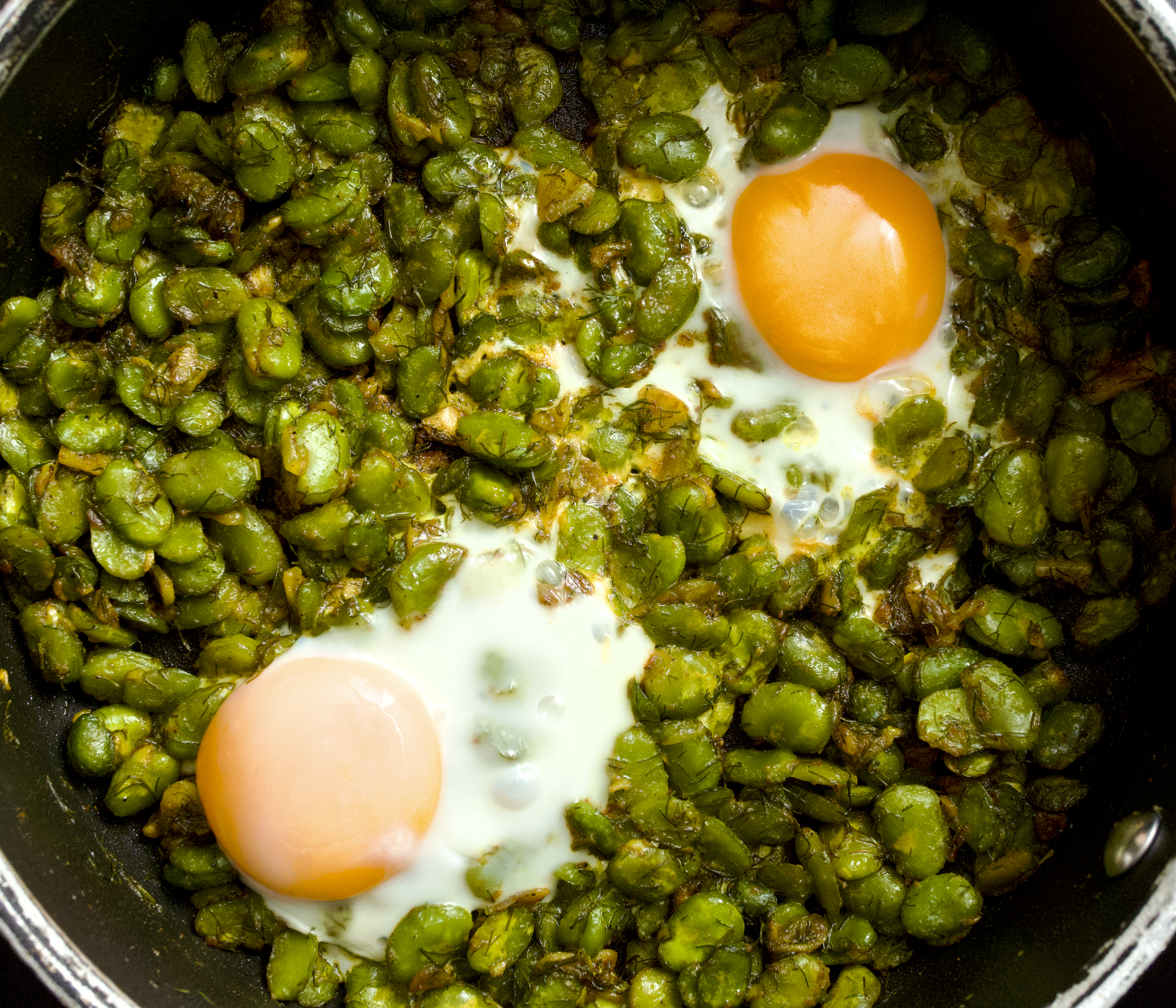
Jono picked this Iranian dish for his Father’s Day breakfast. It’s delicious! Serve with naan bread, tortillas or toast.
Broad beans with garlic, dill & eggs – serves 4
olive oil
1 bulb of garlic, cloves bashed and thinly sliced
1kg podded frozen broad beans, skins removed (blanch for a couple of minutes and the skins will pop off easily)
3 tsp turmeric
generous tsp crushed sea salt
freshly ground black pepper
60g dill, stalks and leaves finely chopped
25g butter
4 large free-range eggs
Heat a large deep frying pan over a low-medium heat, add a generous drizzle of olive oil and sweat the garlic until it softens. Add the broad beans and increase the heat to medium, then add the turmeric, sea salt and some black pepper and stir well. After 5 minutes, mix in the chopped dill and cook for another 8 minutes.
Add the butter to the pan and let it melt into the beans. Crack the eggs on to the surface of the beans and allow to cook using the heat from the beans – about 15 minutes. The beans will be a dull green by the end of the cooking time. Serve with your bread of choice.
(Original recipe from Persiana by Sabrina Ghayour, Mitchell Beazley, 2014.)
After such a long, cool and wet Spring we are finally having sunny weather in Ireland and so we’re cooking anything over fire … on sticks … and lots of salads. Long may it last!
Wine Suggestion: If you’re having this as a starter we’d highly recommend a good, dry Oloroso like the Bodegas Hidalgo Oloroso Faraon which is nutty, smokey, round and honeyed on the nose, but with an enveloping roundness and richness on the palet, despite being bone dry. Very savoury and great with food.
Pork and Asparagus Kebabs – serves 4
500g pork fillet, cut across the grain into ½ cm thick slices
1 clove of garlic, finely chopped
1-2 tsp smoked paprika
3 tbsp olive oil
250g asparagus, woody ends snapped off and cut into thirds (don’t buy the very skinny stuff for this as it will be difficult to thread onto the skewers)
1 bunch of scallions, sliced into thirds
Put the pork into a large bowl, then add the garlic, smoked paprika, olive oil and sherry vinegar, then stir well to coat. Cover and put into the fridge for an hour or two, then stir in the asparagus and scallions to coat in the marinade.
Thread pieces of pork, aspargus and scallion onto skewers.
Prepare your barbecue for direct cooking, then place the skewers directly over the heat and cook for about 10 minutes, turning a couple of times to ensure they brown and cook through.
(Original recipe from Foolproof BBQ by Genevieve Taylor, Hardie Grant: Quadrille, 2021.)
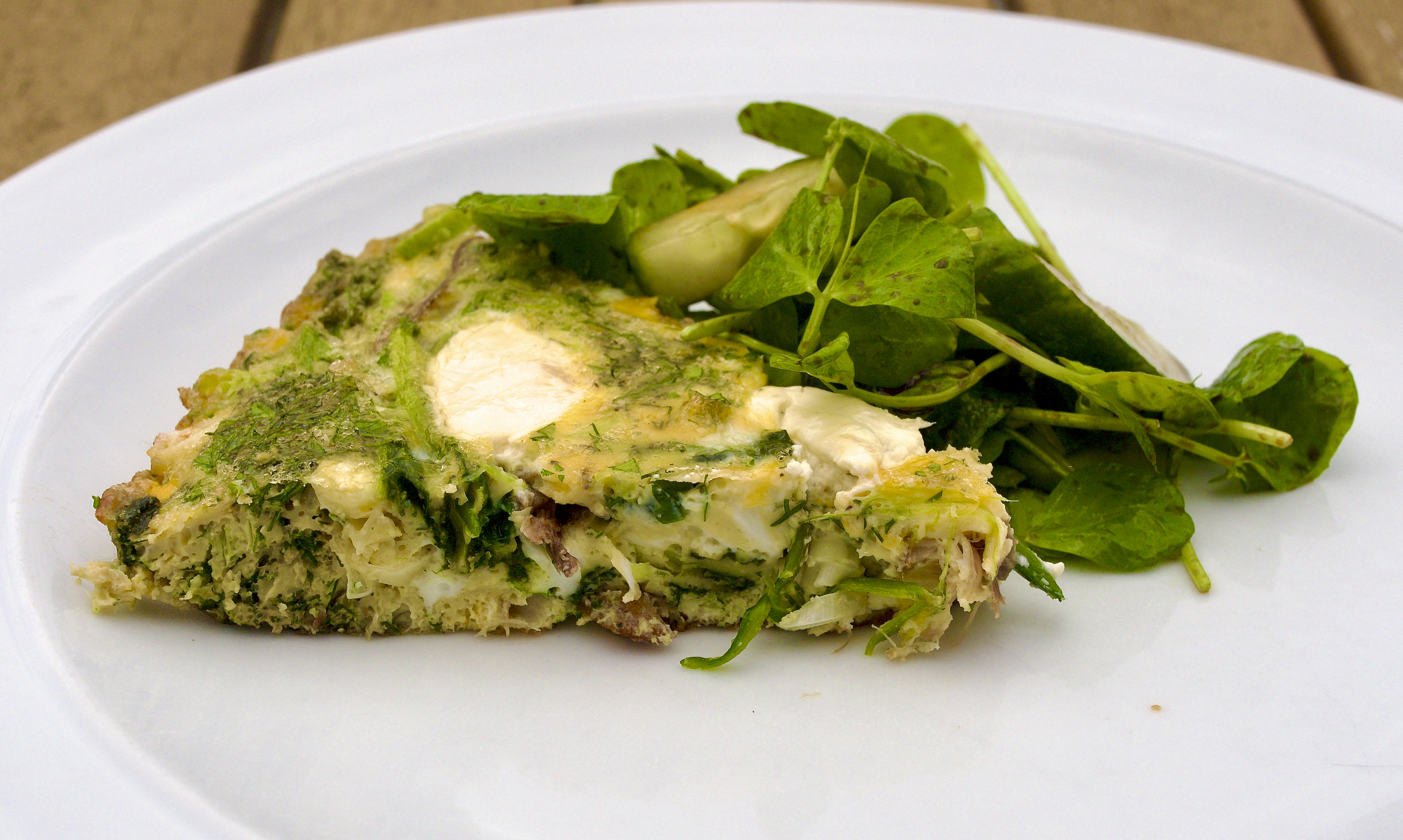
For no particular reason we’ve started cooking frittatas at last … why did no-one tell us how simple they are to make? We particularly enjoyed this one with mackerel and dotted with horseradish cream. Serve with a green salad.
Smoked mackerel and spinach frittata – serves 6
60g butter
50g baby spinach, washed and drained but still damp
220g smoked mackerel
3 scallions, trimmed and finely chopped
4 tbsp chopped flat-leaf parsley
3 tbsp chopped dill
8 eggs, lightly beaten
3 tbsp crème fraîche
1 tsp horseradish sauce
Preheat the oven to 190C/170C/Gas 5.
Melt 20g of the butter in a heavy non-stick frying pan, about 25-30cm diameter, over a medium heat. Stir in the spinach, then cover with a lid and leave for a minute or two until wilted. Tip into a colander and leave to cool. Wipe the pan out with kitchen paper.
Put the cooled spinach into a bowl. Break the mackerel into pieces, discarding any skin and bones, and add to the bowl with the spinach. Add the scallions and herbs, then pour in the eggs and stir until will combined. Season with salt and pepper.
Melt the rest of the butter in the wiped-out pan and place back over a medium heat. Swirl the pan so the base is coated in butter, then tip in the frittata mixutre and smooth out. Let the eggs cook gently for about 5 minutes.
Meanwhile, whisk the crème fraîche and horseradish together, then dot over the top of the frittata. Put the pan in to the oven and cook for about 12 minutes or until set and golden on top.
Remove from the oven and allow to cool for 10 minutes before cutting. It will be delicious eaten warm or cold.
(Original recipe from Notes from a Small Kitchen Island by Debora Robertson, Michael Joseph, 2022.)
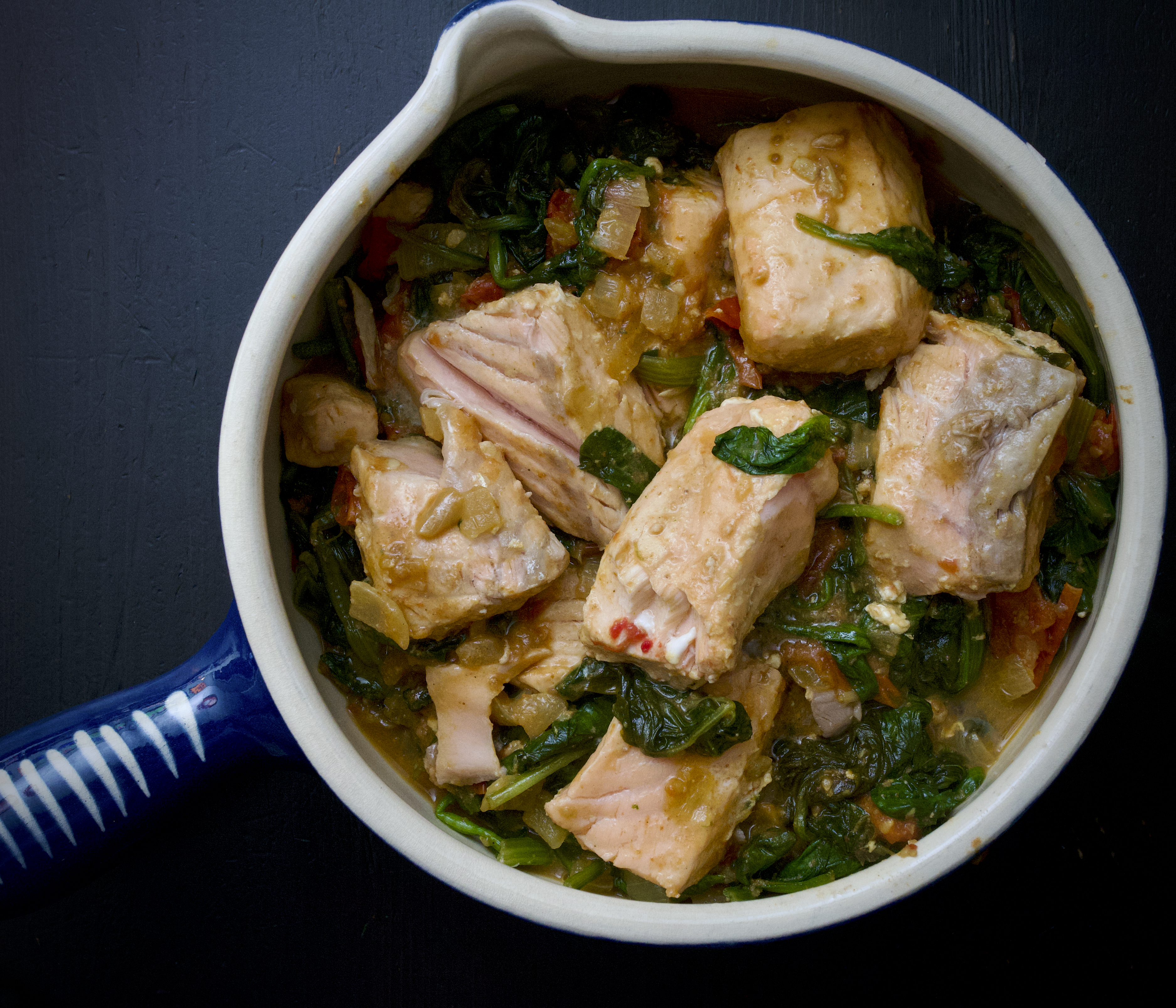
A lovely light curry from Made in India by Meera Sodha. It’s quick to make and perfect for a friday night. We served with rice.
Wine Suggestion: As this dish is quite light we think grenache based rosé is the way to go here with Chateau Pesquié Terrasses Rosé being our choice tonight. The delicate red fruits complementing the salmon really well and the open, softer nature of the grape taking on the spiciness and rounding it out.
Salmon and Spinach Curry – serves 4
2 tbsp rapeseed oil
1 cinnamon stick
6 whole peppercorns
2 cloves
1 large onion, chopped
½ tsp brown sugar
250g ripe tomatoes, roughly chopped
4cm piece of ginger, peelend and finely grated
4 clove of garlic, crushed
1 fresh green chilli, finely chopped
¼ tsp garam masala
1 tsp ground cumin
1½ ground coriander
¼ tsp ground turmeric
½ tsp chilli powder
1¼ tsp salt
500g spinach leaves
400g skinless salmon fillets
Heat the oil in a large deep pan with a lid. Add the cinnamon stick, peppercorns and cloves and fry for a minute or two until fragrant.
Stir in onion and brown sugar, then cook for 10-12 minutes until golden and caramelized. Stir in the tomatoes, then cover with a lid and leave to cook for about 5 minutes, or until the tomatoes start to soften.
Add the ginger, garlic, and green chilli, then stir in the garam masala, cumin, coriander, turmeric, chilli powder and salt. Cook the mixture, stirring so it doesn’t stick, for about 8 minutes. It will start to look like a paste. Add the spinach, turn the heat down and cover with the lid until wilted.
Cut the salmon into very big chunks (about 6cm x 6cm) and add them to the pan. Coat in the tomato and spinach sauce but be careful not to break them up. Cover with the lid for 5-7 minutes, or until the fish is cooked through.
Remove the cinnamon stick, check the seasoning and serve with rice.
(Original recipe from Made in India by Meera Sodha, Penguin:Fig Tree, 2014.)
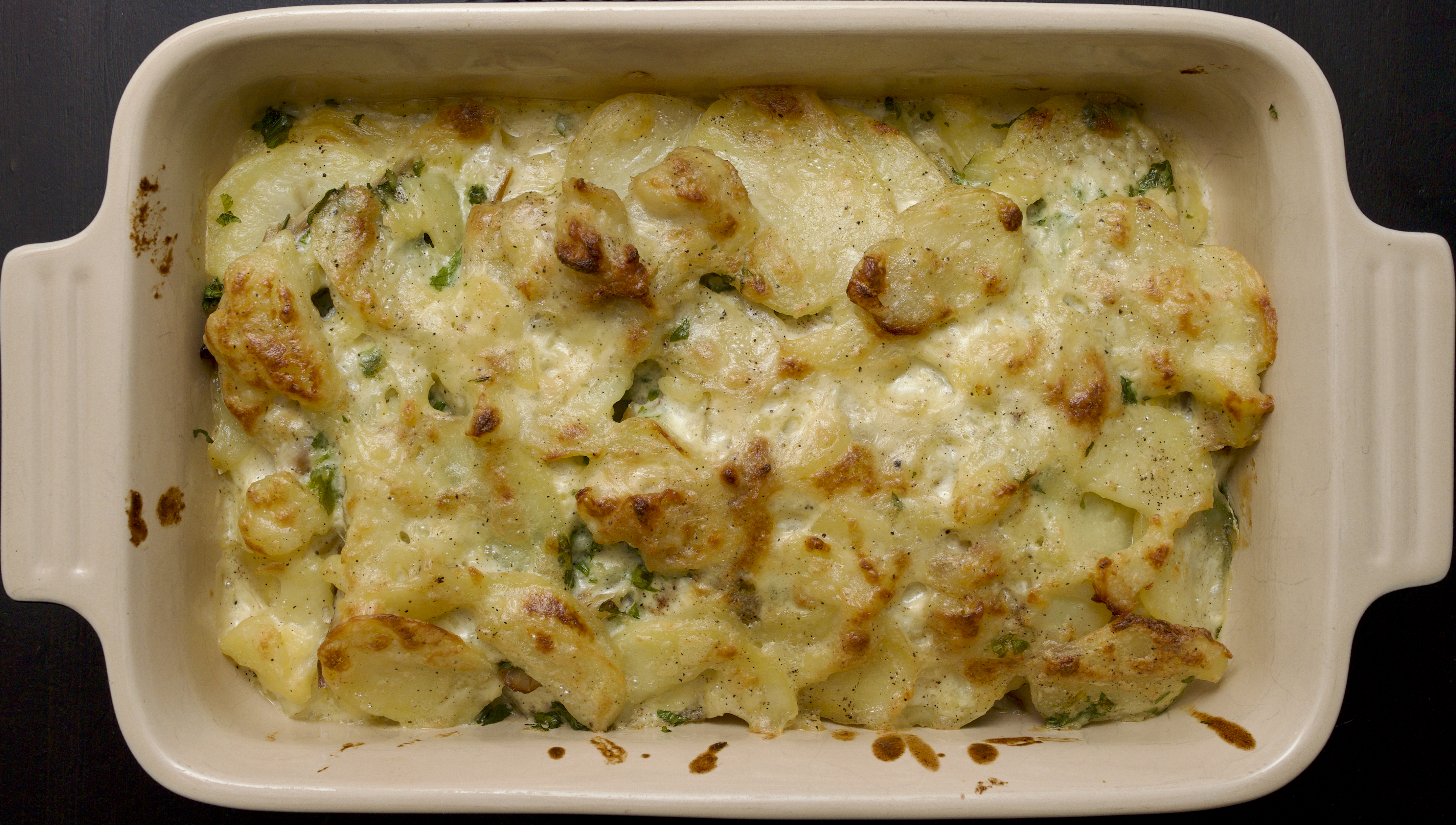
Who doesn’t love a dauphinoise? This one is extra special with some smoked mackerel and is a meal in itself with some green salad on the side.
Wine Suggestion: Chardonnay is not commonly found in the Loire, but there are gems to be found, especially around the appellation of Cheverny where it is brilliantly blended with Sauvignon Blanc. Tonight an outlier from Touraine, Domaine Bellevue’s IGP Chardonnay. Classic crisp red apple flavours with layers of tropical and citrus notes; good body but without any flabby weight. Perfect for fish and dairy combination
Smoked mackerel dauphinoise – serves 4
900g potatoes
250ml milk
250ml double cream
a small clove of garlic, crushed
freshly grated nutmeg
225g smoked mackerel, skin and bones removed and flaked into chunky pieces
a small handful of chopped flat-leaf parsley
Heat the oven to 200C/400F/Gas 6.
Peel the potatoes and slice very thinly, a mandoline is the best job for this but watch your fingers. Dry the potatoes slices with a clean cloth, then spread out and season with salt and black pepper, mixing with your hands.
Pour the milk into a saucepan, add the potatoes and bring to the boil. Cover, then reduce the heat and simmer gently for 10 minutes.
Add the cream, garlic and a generous grating of nutmeg and continue simmering for another 20 minutes. Stir occasionally to prevent the potatoes sticking to the pan. As soon as the potatoes are cooked, remove them with a slotted spoon and put a layer into a large ovenproof dish. Sprinkle over the mackerel and parsley, then cover with the rest of the potatoes. Pour the creamy liquid over the top. Put some water into the base of a large roasting tin and set the potato dish into the tin, the water should come about half-way up the sides. Bake the dish in the oven for 10 to 20 minutes or until the top is golden and bubbling.
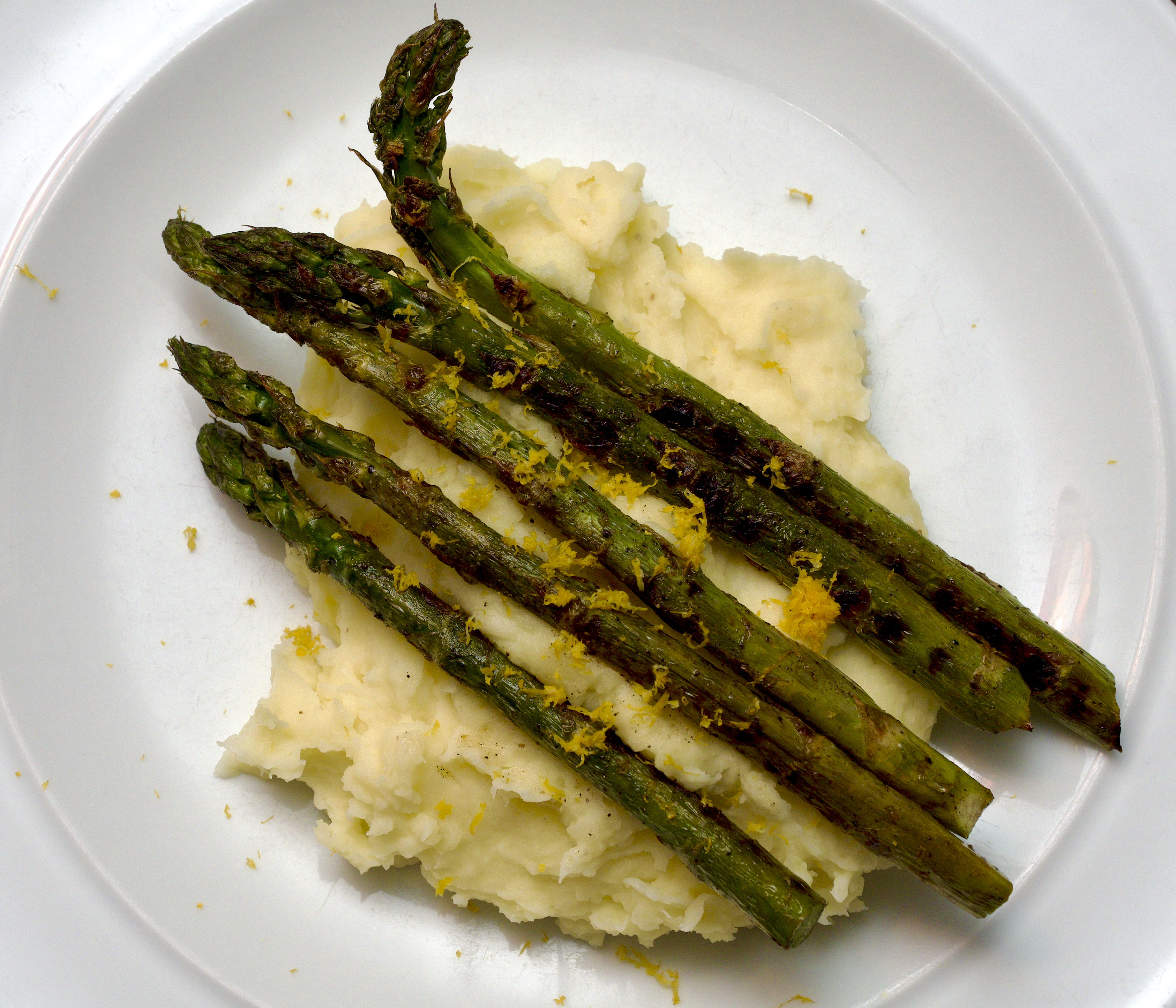
When asparagus arrives we have it with everything and if there’s nothing else with buttery mash.
Wine Suggestion: We know asparagus can clash with many wine grapes, but we enjoyed this with a glass of the Rustenberg Chardonnay, because it just goes so well with the buttery mash.
Asparagus & mash – serves 2
850g potatoes, a good variety for mashing, peeled and cut into even-sized pieces
300ml full cream milk
1 lemon, juiced, plus 1tsp grated zest
lots of butter
250g asparagus
Cook the potatoes in boiling salty water for about 20 minutes or until tender, then drain.
Warm the milk in a small saucepan, then set aside.
Put the potatoes into a food mixer with a flat paddle beater. Slowly beat the potatoes, adding the warm milk and lemon juice, until you have a smooth mash, then beat in plenty of butter.
Brush the asparagus with olive oil, then cook for 3-4 minutes on a griddle pan, turning to colour on all sides.
Taste the mash and season with white pepper and salt if needed. Divide the mash between two plates, top with the asparagus and scatter over the lemon zest.
(Original recipe from A Cook’s Book by Nigel Slater, 4th Estate, 2021.)
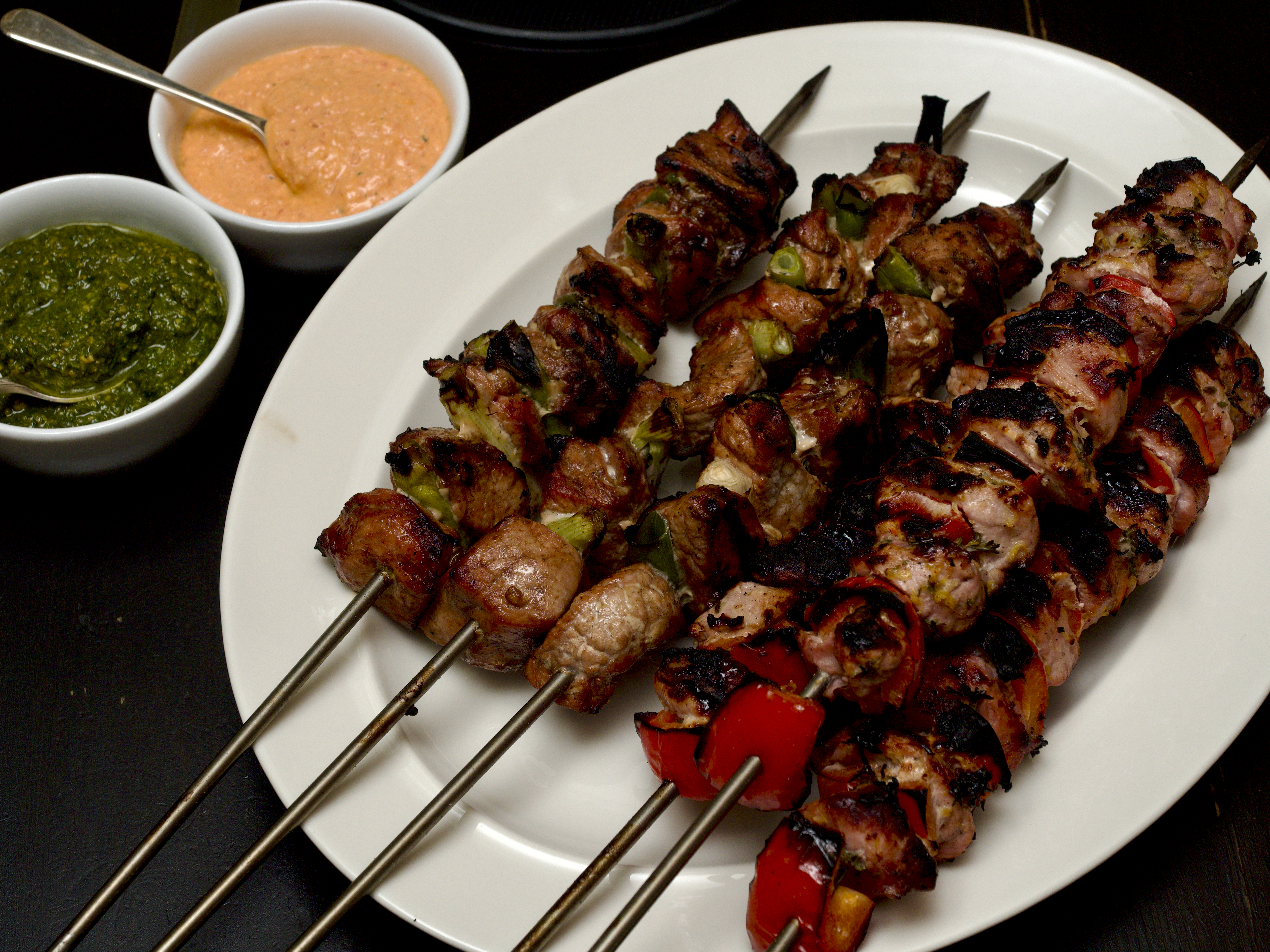
Two kebabs for the barbecue with their respective sauces. We couldn’t decide which one to do, so we halved each recipe and made both. A meat probe is great for checking that barbecued meat is cooked – you are looking for 63C for medium or 71C for well done. You can buy a good-quality pesto if you don’t want to make your own.
Lemony pork kebabs with feta & pepper sauce, makes 6-8 kebabs
zest and juice of 2 lemons
4 tbsp olive oil
2 cloves of garlic, crushed
a handful of thyme sprigs, roughly chopped
1.2kg pork leg, diced
2 red peppers, diced
FOR THE FETA AND RED PEPPER SAUCE:
2 red peppers
200g feta
½-1 tsp chilli flakes
3 tbsp olive oil
Mix the lemon zest and juice, olive oil, garlic and thyme together. Sesaon with salt and pepper, then add the pork and stir well. Cover and refrigerate for 12-24 hours.
When ready to cook get a barbecue ready for both direct and indirect cooking.
Put the whole peppers for the sauce directly over the fire and char the skins all over until blackened. Transfer to a bowl and cover with cling film, then leave for a few minutes or until cool enough to handle. Rub off the skin and discard the stems and seeds. Put the pepper flesh into a food processor with the feta, chilli flakes and olive oil, season, then blend to a purée. Transfer into a bowl and set aside.
Thread the pork and pepper pieces onto skewers. Set onto the barbecue, slightly away from the fire so they cook over a medium heat for 15-20 minutes.
Serve with the feta and red pepper sauce.
Balsamic pork kebabs with pesto dressing, makes 8 kebabs
4 tbsp balsamic vinegar
3 tbsp olive oil
1 tbsp brown sugar
3 cloves of garlic, crushed
1 tsp smoked paprika
1.2kg pork leg, diced
a bunch of scallions, cut into 4cm lengths
FOR THE PESTO (or use good-quality shop-bought pesto)
50g pine nuts, toasted
30g basil, leaves and stems, roughly torn
40g Parmesan, grated
6 tbsp olive oil
juice of ½ lemon
1 clove of garlic, crushed
Mix the balsamic, olive oil, brown sugar, garlic and smoked paprika together in a bowl. Season with salt and pepper, then stir in the pork pieces. Cover and put into the fridge for 12-24 hours.
To make the pesto, tip the pine nuts, basil, Parmesan, olive oil, lemon juice, garlic and a little salt into a food processor and blend to a purée. Scrape the pesto into a bowl and set aside.
When ready to cook get the barbecue prepped for direct and indirect cooking.
Thread the pork and scallions on to skewers. Set onto the barbecue, slightly away from the fire so they cook over a medium heat for 15-20 minutes.
Serve with the pesto on the side.
(Original recipes from Seared by Genevieve Taylor, Hardie Grant: Quadrille, 2022).
A great starter dish from Persiana Everyday by Sabrina Ghayour. The sun came out so we could sit outside for a relaxed Saturday lunch, and this takes very little time to put together which was perfect.
Wine Suggestion: The much under-rated varietal, Chenin Blanc is our pick. A dry version like Adi Badenhorst’s Secateurs and it’s stonefruit and apple flavours over a flinty core stands up to the baked halloumi and bacon with aplomb.
Halloumi, bacon, date & apple salad – serves 4as a starter
250g block of halloumi
8 smoked streaky bacon rashers
4 large Medjool dates, pitted and halved
FOR THE SALAD:
2 tbsp olive oil
1 tbsp red wine vinegar
1 tbsp clear honey
1 tsp ground cinnamon
1 tsp water
a small bag of mixed salad leaves
1 apple, cored and sliced
Preheat the oven to 240C.
Line a large baking tray with baking paper.
Cut the block of halloumi in half lengthways, then cut each half into 4 rectangular fingers.
Lay a piece of bacon on a board, put a piece of halloumi at the end and top with half a date, then roll up tightly to form a neat bundle. Repeat to make 8 rolls.
Roast the halloumi in the oven for 10-12 minutes or until the bacon is very crispy.
Meanwhile, put the olive oil, red wine vinegar, honey, cinnimon and water into a small bowl and whisk to combine. Spread the salad leaves over a platter, drizzle with the dressing and scatter over the apple slices.
Put the hot halloumi and bacon rolls on top of the salad leaves and serve.
(Original recipe from Persian Everyday by Sabrina Ghayour, Aster, 2022.)
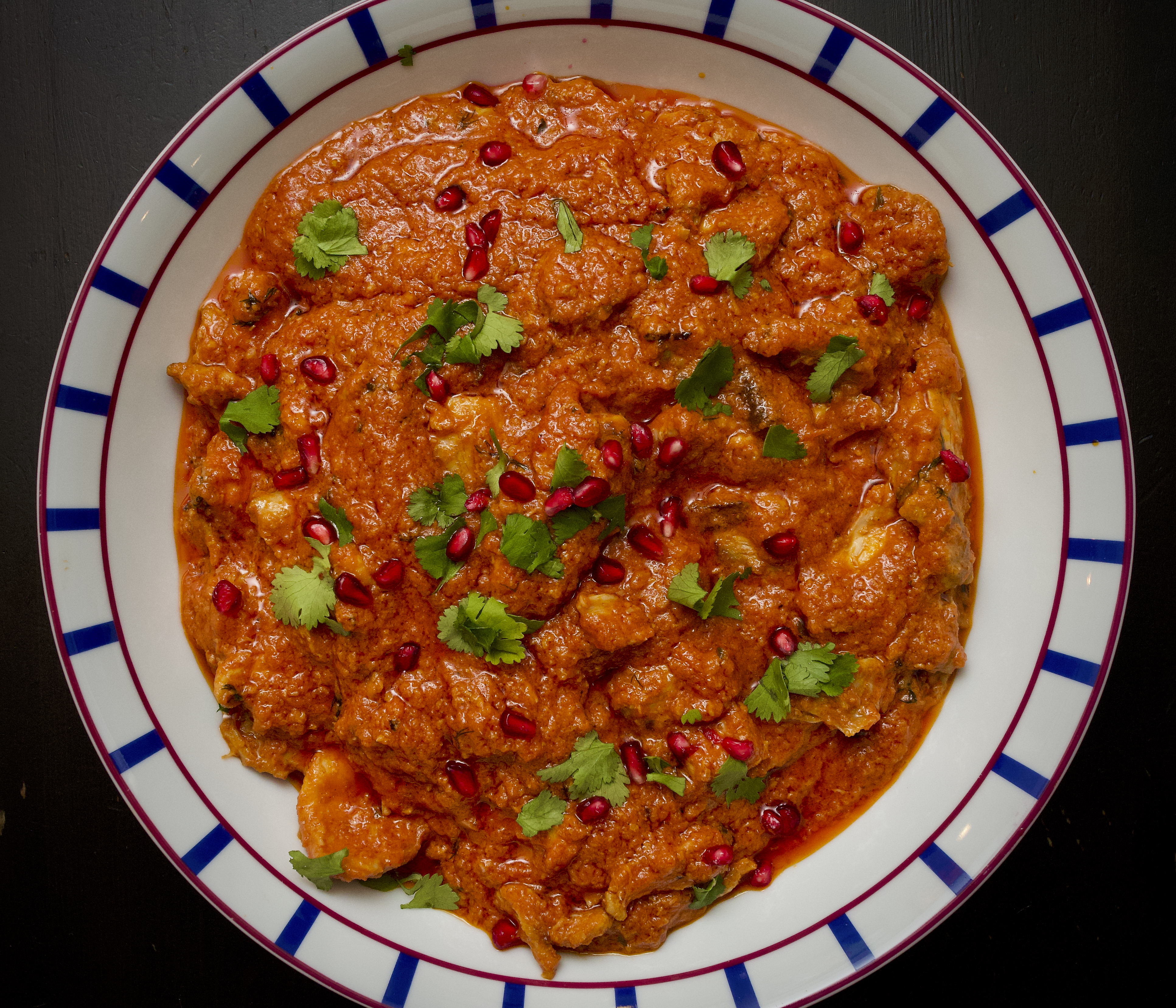
This is Dishoom’s Chicken Ruby and it’s by far the best recipe for butter chicken that we’ve made. There’s definitely quite a bit to do but you can marinate the chicken and make the sauce in advance, so the last bit is very easy. Serve with rice.
Butter chicken – serves 4
700g skinless, boneless chicken thighs
20g unsalted butter, melted
50ml double cream
FOR THE MARINADE:
10g fresh ginger, chopped
20g garlic, chopped
5g fine sea salt
1 tsp deggi mirch chilli powder
1½ tsp ground cumin
½ tsp garam masala
2 tsp lime juice
2 tsp veg oil
75g full-fat Greek yoghurt
FOR THE MAKHANI SAUCE:
35g garlic
175ml vegetable oil
20g fresh ginger
2 x tins chopped tomatoes
2 bay leaves
6 green cardamom pods
2 black cardamom pods
2 cinnamon sticks
2 tsp fine sea salt
1½ tsp deggi mirch chilli powder
30g butter
1 tsp garam masala
20g granulated sugar
1 tbsp runny honey
1 tsp ground cumin
1 tsp dried fenugreek leaves, crumbled
½ tsp dill fronds
80ml double cream
TO GARNISH:
coriander leaves, chopped
1 tbsp pomegranate seeds
You need to marinate the chicken for 6-24 hours. To make the marinade, whizz the ingredients together in a blender to a smooth paste, then transfer to a bowl.
Cut the chicken into 4cm pieces, add to the marinade and stir to coat. Cover and marinate in the fridge.
Next make the makhani sauce.
Finely chop 15g of the garlic. Warm a large saucepan over a medium-high heat and add the oil. Add the chopped garlic and fry until light golden brown and slightly crispy, about 7-8 minutes. Remove with a slotted spoon and drain on kitchen paper.
Finely grate the rest of the garlic and the ginger.
Blitz the tomatoes in a blender until smooth.
Put the saucepan with the garlicky oil back over a medium-high heat and add the bay leaves, all of the cardamom pods and the cinnamon sticks. Let them crackle for a minute, stirring.
Turn down the heat and add the garlic and ginger paste. Cook for 5 minutes, allowing it to brown, but not burn.
Add the tomatoes, salt and chilli powder and bring to a fast simmer, then cook until reduced by half, stirring regularly – about 30 minutes.
Add the butter and simmer for another 5 minutes.
Add the garam masala, sugar, honey, cumin, crispy garlic, dried fenugreek and fresh dill and cook for another 15 minutes.
If you are using the sauce straight away, add the cream and simmer gently for 5 minutes. If not, allow to cool and chill in the fridge until needed. Add the cream when you reheat the sauce.
To assemble / finish:
When you’re ready for the curry, heat the grill to medium-high. Place the marinated chicken on a rack in the grill pan, then brush with the melted butter and grill for 8-10 minutes or until cooked and nicely charred.
Warm a large saucepan over a medium-low heat. Add the makhani sauce, cream and grilled chicken and simmer gently for 10 minutes.
Serve the curry garnished with the chopped coriander and pomegranate seeds with steamed rice on the side.
(Original recipe from Dishoom by Shamil Thakrar, Kavi Thakrar & Naved Nasir, Bloomsbury, 2019.)
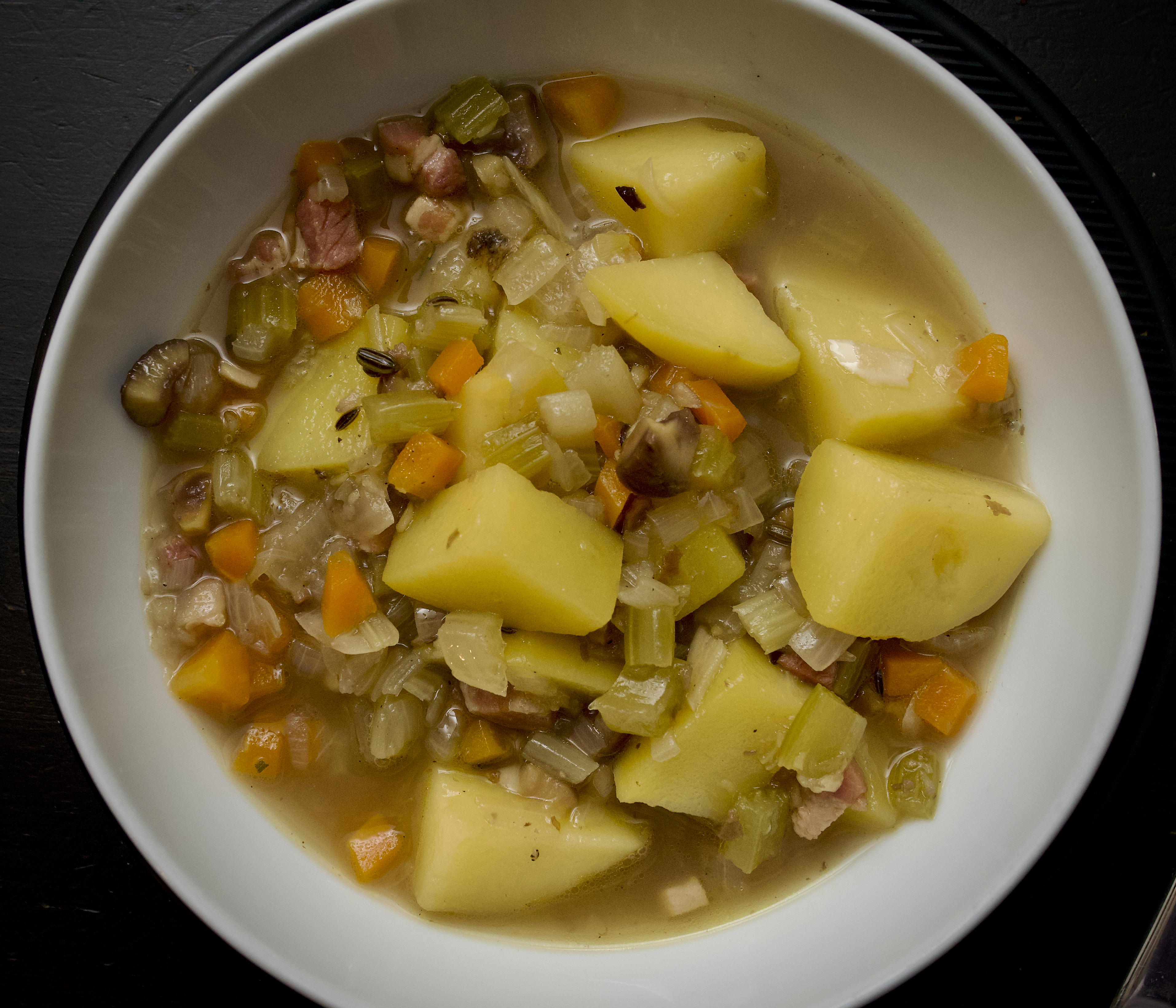
We have a reputation for using things up, and hence were donated a friends’ leftover chestnuts from Christmas: they thought we would probably use them. No probably about it … here they are in the loveliest Provençal soup recipe by Alex Jackson.
Wine Suggestion: And if you feel inspired then try a La Clef du Recit Menetou-Salon to accompany this dish. A Sauvignon Blanc from the Loire, the soils and aspect give this wine an extra super depth and richness, while maintaining the purity and clarity of expression to make it an excellent match.
2 fat cloves of garlic, peeled, green middle removed and finely sliced lengthways
1 tsp fennel seeds
½ tsp picked rosemary leaves (no more)
a few dried ceps, soaked in boiling water and roughly chopped (reserve the soaking water)
100g cooked chestnuts, broken in half
500g waxy potatoes, peeled and cut into 1.5 cm chunks
1 litre homemade chicken stock or water
best extra virgin olive oil, to serve
grated Parmesan, to serve
Heat the olive oil in a large heavy saucepan, then add the pancetta and cook over a gentle heat until well browned but not crispy. Add the onion, celery, carrot, garlic and fennel seeds. Add a good pinch of salt and fry slowly for at least 30 minutes, stirring now and then, until soft and sweet.
Finely chop the rosemary, then add to the pan and allow to cook for another couple of minutes. Add the chopped porcini and cook for a few minutes before adding the chestnuts and potatoes. Pour in the liquid from the mushrooms, then add stock until the vegetables are just covered by about an inch of liquid (you can add more as it cooks if you need). Bring to the boil, then simmer for about 30 minutes or until the potatoes are soft. Mash the chestnuts against the edge of the pan to mush them up a bit. The soup should have some liquid but otherwise be quite thick.
Season with salt and pepper to taste, then serve in warm bowls with Parmesan and olive oil drizzled over the top.
(Original recipe from Sardine by Alex Jackson, Pavilion, 2019.)
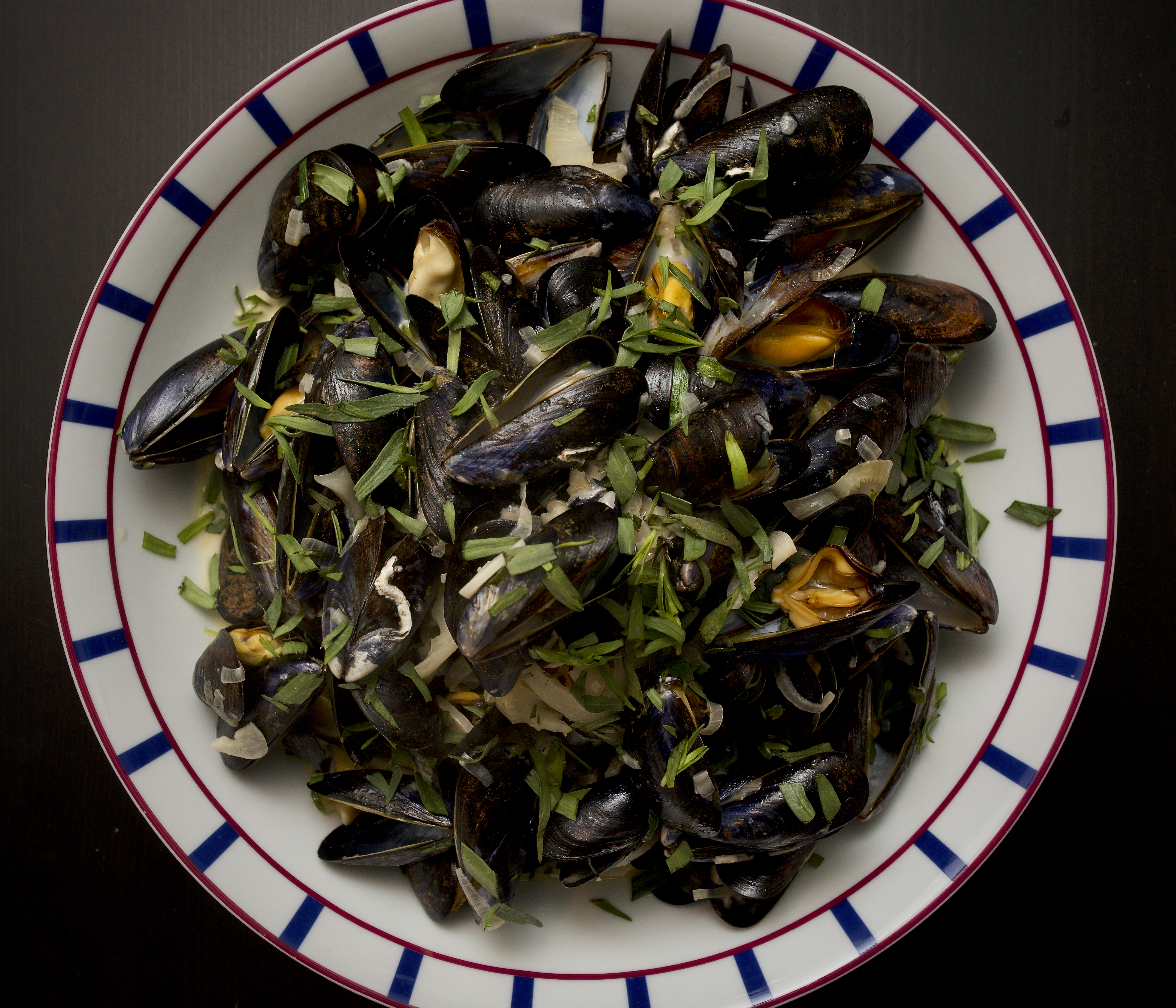
Mussels are cheap and plentiful and they’re one of the few food items that haven’t increased in price. We should all be eating this fabulous local resource. This recipe is just delicious.
Wine Suggestion: We served this with one of those under-the radar wines the La Clef du Recit Menetou Salon. While Anthony Girard from this domain makes a fab Sancerre, we are continually delighted by his other appelations: Menetou Salon which we think has more body, and is a tad more Chablis like, despite it being Loire Sauvignon Blanc; and his Quincy which is elegant and perfumed.
Mussels with fennel & tarragon – serves 2
2 tbsp olive oil
2 long shallots, finely sliced
1 small fennel bulb (or half a big one), finely sliced
3 cloves of garlic, finely sliced
100ml dry white wine
1kg mussels, cleaned and debearded
75ml double cream
a handful of tarragon leaves, roughly chopped
crusty bread, to serve
Heat the olive oil in a large heavy casserole over a medium-high heat. Add the shallots, fennel and a good pinch of salt. Cook for about 10 minutes, until starting to caramelise. Add the garlic and cook for another minute.
Tip the mussels into the pot and stir well, then pour in the white wine and season well with salt and pepper. Bring to the boil, then clamp on the lid and cook for 3-4 minutes, shaking occasionally, until the shells have opened. Stir in the cream, then scatter over the tarragon.
Serve in warm bowls with crusty bread.
(Original recipe by Adam Bush in Olive Magazine, January 2022.)
If there are children around there’s nearly always a half-used tub of pesto. Too expensive to go to waste, and a good reason we’re always on the lookout for anything other than pesto pasta. This dish is a bit of summer in winter.
Wine Suggestion: Choose a fun and fresh red, preferably with a moderate alcohol. Fortunately we had a red blend from the Sebestyén family in the Szekszárd region of south-eastern Hungary. Their Szekszárdi Cuvée is a delightful blend of Kékfrankos, Merlot and Cabernet Franc; youthful, fresh and characterful.
Chicken with mozzarella, Parma ham and roast pesto potatoes, serves 4
125g ball of mozzarella cheese (not buffalo), sliced
4 chicken breasts
24 basil leaves
4 slices of Parma ham
24 cherry tomatoes
2 tbsp olive oil
450g baby potatoes
3 tbsp pesto
2 tbsp thick balsamic vinegar
Heat the oven to 190C/Gas 5.
Grease a baking sheet.
Season the mozzarella slices with salt and pepper.
Slice a small pocket in each chicken breast (we asked our butcher to do this) and fill with a slice of mozzarella and 6 basil leaves. Wrap each piece of chicken in a slice of Parma ham and set onto the greased baking sheet. Scatter the tomatoes around the chicken.
Drizzle everything with the olive oil and season with salt and pepper, then roast for 20 minutes or until the chicken is cooked through.
Meanwhile, boil the potatoes until cooked through, about 20 minutes, then drain and toss with the pesto.
Put the chicken, potatoes and tomatoes onto warm plates and drizzle the tomatoes with the thick balsmic vinegar.
(Original recipe from Herbs by Judith Hann, Watkins Media Ltd, 2017.)
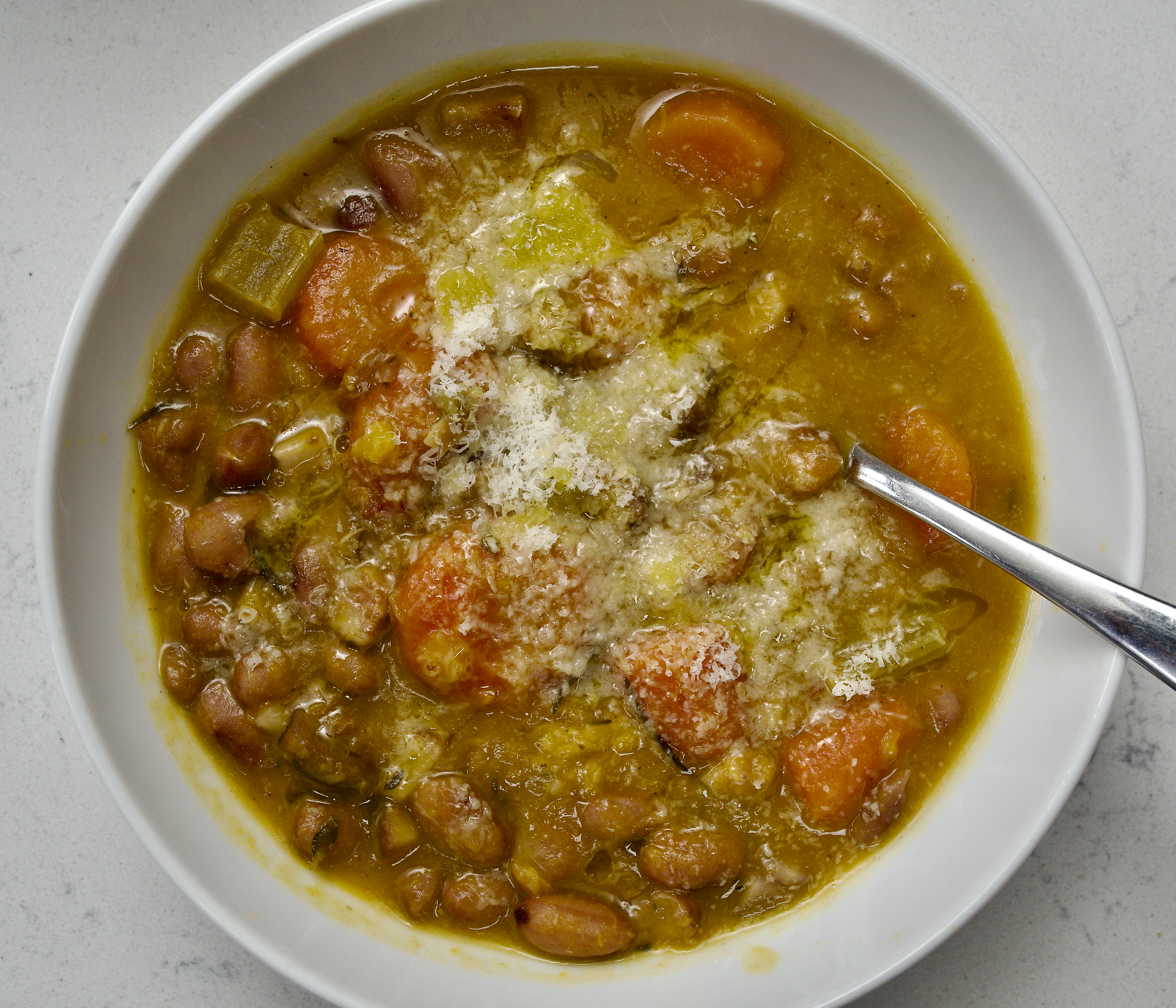
This is a delicious soup recipe from Cooking by Jeremy Lee. Make it on a cold day when you don’t have very much else to do, it takes an age but tastes amazing. You need to soak the beans the night before.
Chestnut, bacon, bean and pumpkin soup – serves 6
2 small onions
3 sticks of celery
3 large carrots
1 smoked ham hock or diced smoked pancetta
4 tbsp olive oil
a small stick of rosemary
a small handful of thyme
4 bay leaves
4 cloves of garlic, peeled
a big pinch of dried chilli flakes
250g dried borlotti beans, soaked overnight in lots of cold water
1 small pumpkin or a wedge of pumkin, roughly 1kg
250g vac-packed chesnuts
Parmesan and good extra virgin olive oil, to serve
Peel and cut the onions, celery and carrot into chunky pieces. If using a smoked ham hock cut it into small cubes.
Warm the olive oil in a wide, heavy saucepan and add the pork, herbs, garlic, chilli flakes and vegetables. Stir well, cover with a lid and cook over a gentle heat, stirring occaionally, for roughly 1½ – 2 hours. If your ring is hot they may take a bit less time than this to become soft and caramelised. The idea is to cook them as slowly as possible until you achieve this then proceed with the recipe.
Drain the beans and rinse under cold water until it runs clear. Put the beans into a saucepan with lots of cold water and bring the boil over a high heat. Drain well and lightly rinse, then tip them on to the vegetables and cover with 4-5cm of water. Bring to the boil, then lower to a simmer and cook for at least an hour or until the beans are tender. Don’t be tempted to stir the soup while the beans are cooking, you want them to hold together.
Heat the oven to 180C and roast the pumpkin whole for 40 minutes to 1 hour or until soft and fudgy. Remove from the oven and leave to cool, then remove the seeds and skin. Purée the cooked pumpkin and add to the cooked beans.
Chop the chestnuts coarsely and add them to the soup, then gently reheat. Take care when stirring to keep the beans as intact as possible. Season well with salt and black pepper.
Serve in warm bowls with lots of grated Parmesan cheese and drizzled with your best olive oil.
(Original recipe from Cooking by Jeremy Lee, 4th Estate, 2022.)
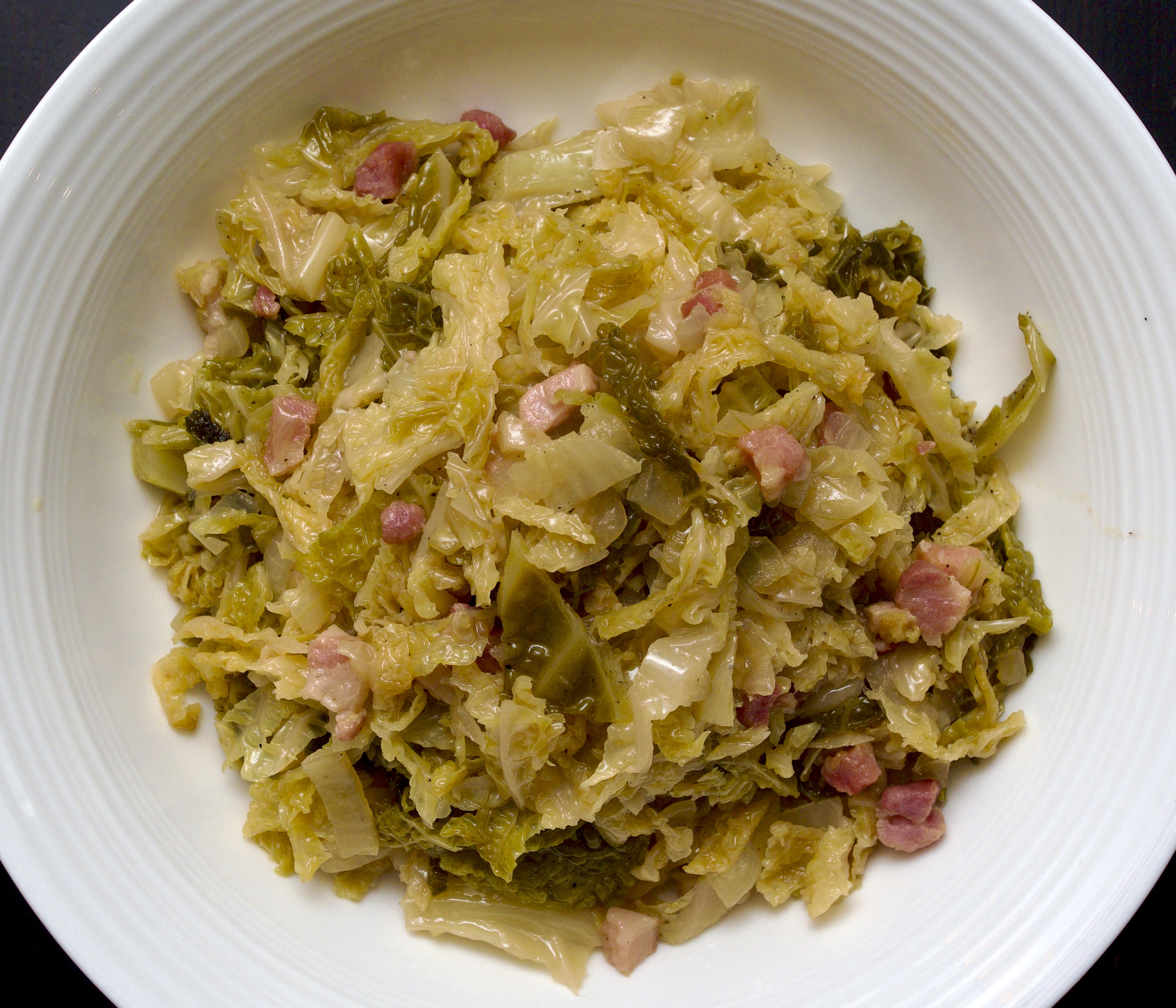
Don’t judge this just by the look as it just looks like well cooked cabbage … and it is … but we’re addicted. Lifted to another level by the vinegar, this is our new favourite side.
Stewed Cabbage – serves 4
3 tbsp extra virgin olive oil
1 large onion, finely chopped
60g pancetta, chopped (optional)
1 small Savoy cabbage or half of a large one (about 600g)
2 heaped tbsp salted butter
1 tbsp white wine vinegar
Put the oil, onion and pancetta (if using) into a large saucepan over a medium-low heat. Add some salt if you are not using pancetta. Cook gently, without browning, for about 15 minutes until soft.
Slice the cabbage into wedges and remove the tough core. Shred the leaves finely and rinse in a colander. Add the wet cabbage to the pan, then the butter, and stir for a few minutes until the butter melts. Stir through the vinegar and cover with a lid. Reduce the heat to low and leave to cook for 60 to 80 minutes, stirring occasionlly, until completely soft and wilted. Add a splash of water if it looks dry at any point.
Season to taste with salt and serve.
(Original recipe from Stagioni by Olivia Cavalli, Pavillon, 2022.)
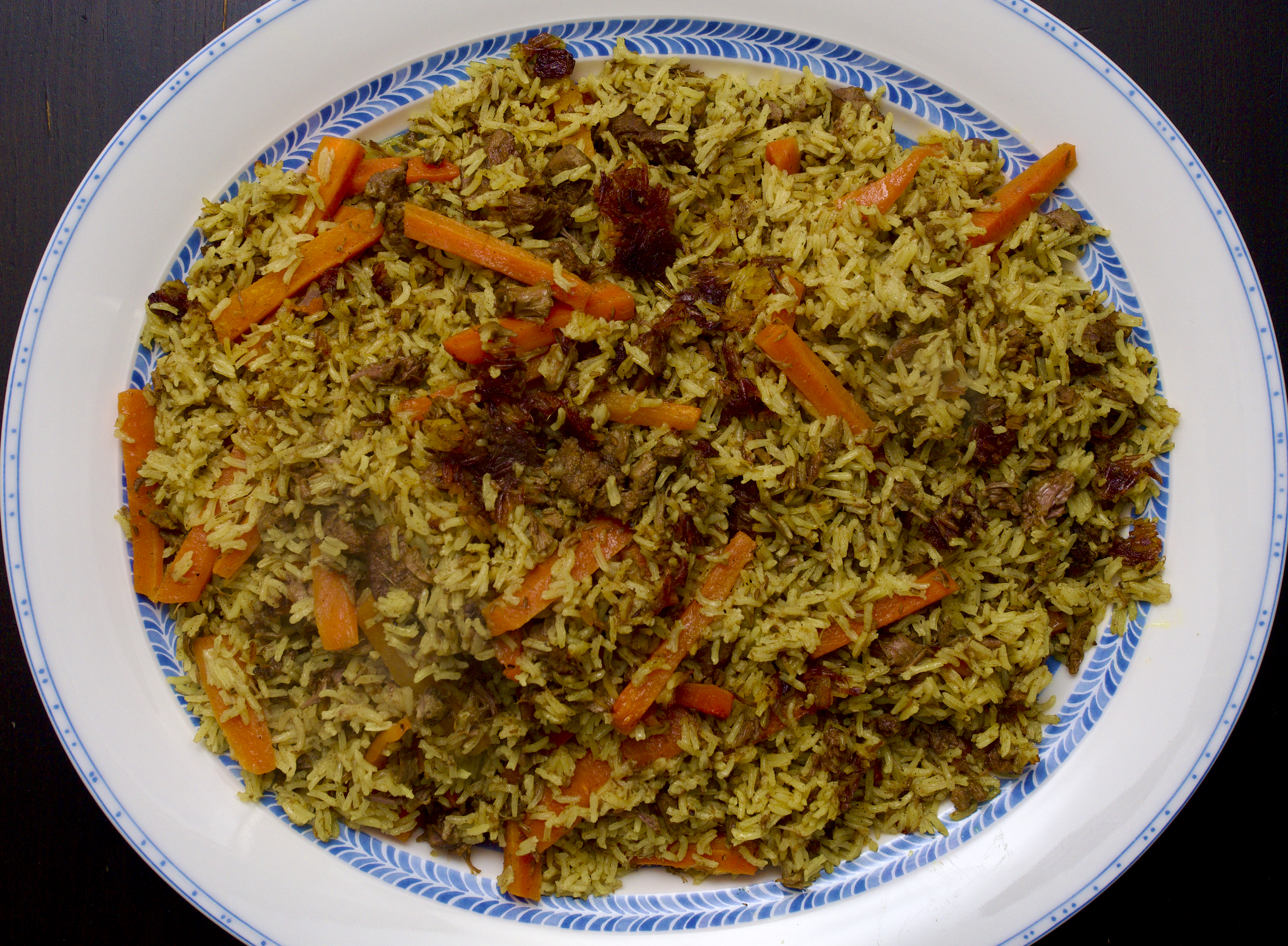
This dish takes hours and it’s kind of hard to know if it’s all going to plan. We kept the faith and had delicious fluffy rice with tender lamb and carrots and a delicious crust on the buttom. Serve with some Greek yoghurt and pickles.
Wine Suggestion: This works well with an earthier red, either lighter and gentle, or an older richer style with a few years in the bottle. If you can fine Domaine Bargylus from Syria then you are in for a treat. The current vintage we have is 2014 (in 2022) and has beautiful rich core with layers of tertiary, warm spices.
Lamb, carrot & cumin rice – serves 6
vegetable oil for frying
1 large onion, thinly sliced
700g lamb neck fillet, sliced 1cm thick
2 tbsp cumin seeds
3 tsp ground cinnamon
2 tsp turmeric
1 tsp ground ginger
1 tsp ground cumin
1 tsp cayenne pepper
3 large carrots, peeled and cut into batons
500g basmati rice
Heat a large saucepan over a medium heat and pour in enough oil to cover the base. Sauté the onion until starting to brown at the edges. Stir in the sliced lamb, then add the cumin seeds and other dried spices. Stir to coat the meat in the mixture. Pour in enough boiling water to just cover the meat, then cover with a lid, reduce the heat to low and cook for 2 hours. Remove the lid and cook for another 30 minutes or until cooking. You will need to stir occasionally and add a little more water if needed to stop the meat sticking. Remove from the heat, stir in the carrots and set aside.
Heat a large saucepan over a high heat, fill with boiling water and add lots of salt. Add the rice and parboil for 6 minutes. Empty the rice into a sieve and wash it with cold water until rinsed of starch and cold. Drain well and leave to stand for 10 minutes. Tip into a large bowl.
Rinse and dry the rice pan. Scrunch a large piece of baking paper into a ball, then open it out and use to line the sides and base of the clean pan. Drizzle in enough vegetable oil to generously coat the base of the pan and season the oil with salt.
Add the meat and carrot mixture to the rice, season generously with about 1 tbsp of sea salt flakes and black pepper, then fold together to combine. Gently pile the mixture into the lined pan in a mountain shape. Use the handle of a wooden spoon to to stab a series of holes that go right down to the base of the pan. Wrap the lid in a tea towel, then cover the pan and cook over the lowest possible temperature if using gas and medium-low for electric, for 45-60 minutes. If you have a diffuser for your gas hob you should use it and double the cooking time.
(Original recipe from Sirocco by Sabrina Ghayour, Mitchell Beazley, 2016.)
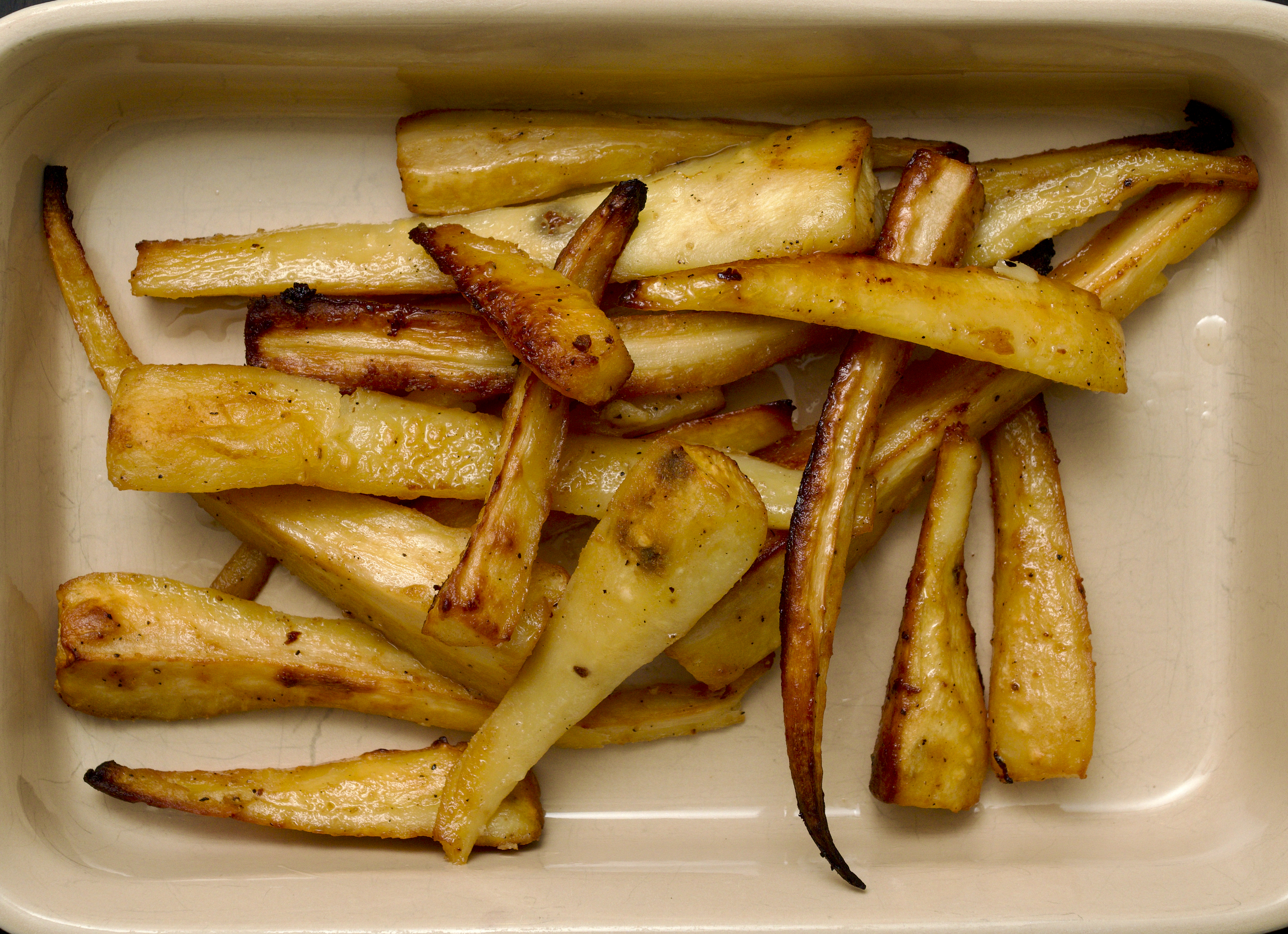
It seems to be miso-roasted everything at the minute, which is ok with us. Here it is with some parsnips.
Miso parsnips – serves 6
4 tbsp olive oil
800g parsnips, peeled and quartered
60g white miso
1 tbsp maple syrup
Heat your oven to 200C/180C fan/Gas 6.
Put the oil into a deep roasting tin and stick it in the oven to heat up.
Bring a pan of salty water to the boil and boil the parsnips for 4-5 mintues, then drain and leave to steam dry in the warm pot for about 10 minutes.
Tip the parsnips into a bowl, pour over the miso and maple syrup, and season well. Stir to coat the parsnips in the mixture.
Remove the hot oil from the oven and tip in the parsnips, basting in the hot oil before roasting for 20 minutes. Baste again with the juices in the tin and return to the oven for another 10 to 20 minutes, until golden.
Wine Suggestion: We think this dish goes really well with a good Pinot Gris, like the Neudorf Moutere we were tempted to open. Dry, but full of fruit, and dusty, warm spices.
Shahi gobi saalan – serves 6
7 tbsp vegetable oil
1 large bay leaf
2.5cm piece of cassia bark
2 green cardamom pods
1 clove
5 onions, thinly sliced
2 tbsp garlic paste
2 tbsp ginger paste
2 tsp ground coriander,
1 tsp chilli powder
2 tsp salt
½ tsp sugar
250ml water
750g cauliflower florets, cut into 5 cm pieces
1-2 x 400ml tins coconut milk
6 tbsp ground almonds
a handful of toasted flaked almonds to garnish
Heat the oil in a large heavy saucepan over a medium-high heat. Add the bay leaf, cassia bark, cardamom pods and clove. As soon as the clove starts to puff up, add the onions and cook, stirring, until starting to caramelise.
Add the garlic and ginger and cook for 1 minute, then add the coriander and chilli powder and cook, stirring, for another minute to cook out the spices. Add a splash of water if it starts to stick. Add the salt and sugar, then pour in the water. Bring to the boil, then reduce to a slow boil, then cover and simmer until the oil comes to the side of the pan.
Add the cauliflower and stir to coat in the onion mixture. Bring to the boil, then reduce the heat slightly, cover and cook for about 5 minutes or until the cauliflower is just cooked. Taste and add more salt or sugar to taste.
Add 1.5 tins of coconut milk and the ground almonds and cook, uncovered, for a few minutes. You want a thick and creamy gravy so only add the rest of the coconut milk if needed. Sprinkle the flaked almonds over to serve.
(Original recipe from Ammu by Asma Khan, Ebury Press, 2022.)
A Diana Henry recipe inspired by but not quite the same as the Dominican dish. This is perfect for a weeknight despite the long list of ingredients. Most will be in your cupboard and it’s really easy to put together. Lovely bright colours and flavours. This works on it’s own or with some crusty bread or rice.
Wine Suggestion: despite the inclination to go for a richer white, we felt in the mood for a red instead so chose Domaine Gayda’s Cepage Grenache. A brambly, dark red fruited wine with a juicy core and gentle, ripe tannins. We served it slightly cool to great effect and it made a delightful counterpoint to the chipotles (ours were very hot!).
Guisado de Pollo – serves 6
2 tbsp olive oil
800g boneless, skinless chicken thighs
75g pumpkin, peeled and cut into 2.5cm chunks
400g waxy potatoes, cut into 1cm chunks – you can peel them if you like, we didn’t bother
1 onion, roughly chopped
1 red pepper, chopped
6 cloves of garlic, finely grated
4 tsp ground cumin
a small tin of pineapple in natural juice, drained and cut into small chunks
400g tin plum tomatoes
1 tsp soft dark brown sugar
2 tinned chipotles in adobo sauce, finely chopped, or 3 tbsp chipotle paste (reduce if your chipotles are very hot)
3 sprigs of thyme
500ml chicken stock
1 jalapeño chilli, halved lengthways and deseeded
2 tbsp capers, rinsed
juice of 1 lime
a small bunch of coriander, chopped, to serve
Season the chicken well with salt and pepper. Heat 1 tbsp of the oil in a large casserole and fry the chicken in batches until browned on both sides. It doesn’t need to be cooked through at this stage. Remove to a plate and set aside.
Add the chopped pumpkin and potato to the pan and cook for about 5 minutes or until starting to colour. Remove and set aside.
Add the onion and pepper to the pan and cook until soft and golden, about 8 minutes. Add the garlic cand cumin and cook for another 2 minutes.
Stir in the pineapple, tomatoes, sugar, chipotles, thyme, chicken stock. Season and bring slowly to a simmer.
Cut the chicken into thick strips, then add to the casserole along with any juices from the plate. Add the potatoes, pumpkin and the jalapeño. Stir gently then leave to simmer for 25 minutes without a lid. Give it a stir now and again. It’s ready when the vegetables are soft and the sauce thickened.
Add the capers and lime juice and season to taste. Stir in the coriander and serve.
(Original recipe from A Bird in the Hand by Diana Henry, Mitchell Beazley, 2015.)





 Jono & Jules do food & wine