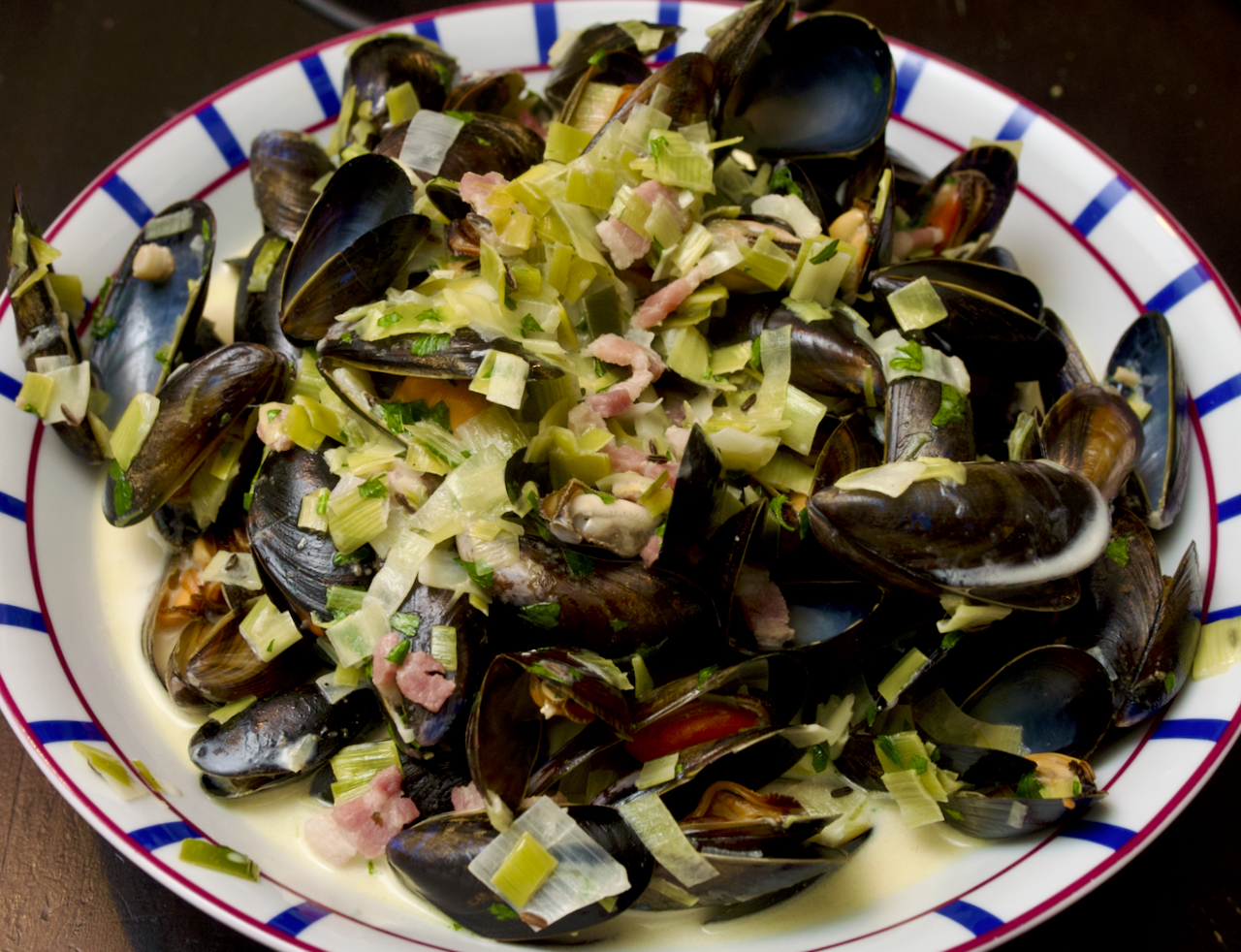
Mussels are our favourite Friday night treat and they taste amazing with this creamy leek and cider sauce. You will need a top quality baguette on the side.
Wine suggestion: we’re just loving Domaine de la Chauviniere’s Muscadet Sevre et Maine sur lie at the moment and think that Jeremie Huchet just has his vineyards in such balance that he delivers delicious wines year after year. Minerally, salty, fresh and with a rounded appley fruit that just works (or of course you could just buy some extra cider).
Mussels with leeks, bacon & cider – serves 2 to 3
200g smoked streaky bacon
1 tbsp olive oil
3 cloves of garlic, thinly sliced
1 tsp fennel seeds
400g leeks, finely chopped
1kg mussels, cleaned
a large glass of dry cider
150ml double cream
a handful of finely chopped flat-leaf parsley
baguette, to serve
Warm a little olive oil in a large saucepan and fry the bacon until the fat renders, then add the garlic and fennel seeds and cook gently for a few minutes. Add the leeks and season well with salt, then let the leeks cook until they are very soft and tender but not taking on any colour. Add a splash of water if they start to catch.
Turn the heat up and add the cider to the leeks to create plenty of steam. Add the mussels and cover with a lid. After two minutes, shake the pan well or give the mussels a toss with a spoon, then cook for another minute or two – they are ready as soon as all the shells are open (chuck any that don’t open).
Pour in the cream, add the parsley and season with lots of black pepper and a little more salt, though taste first. Give everything a final toss, then serve in big bowls with baguette and a glass of cold white wine or cider.
(Original recipe from The Farm Table by Julius Roberts, Ebury Press, 2023.)
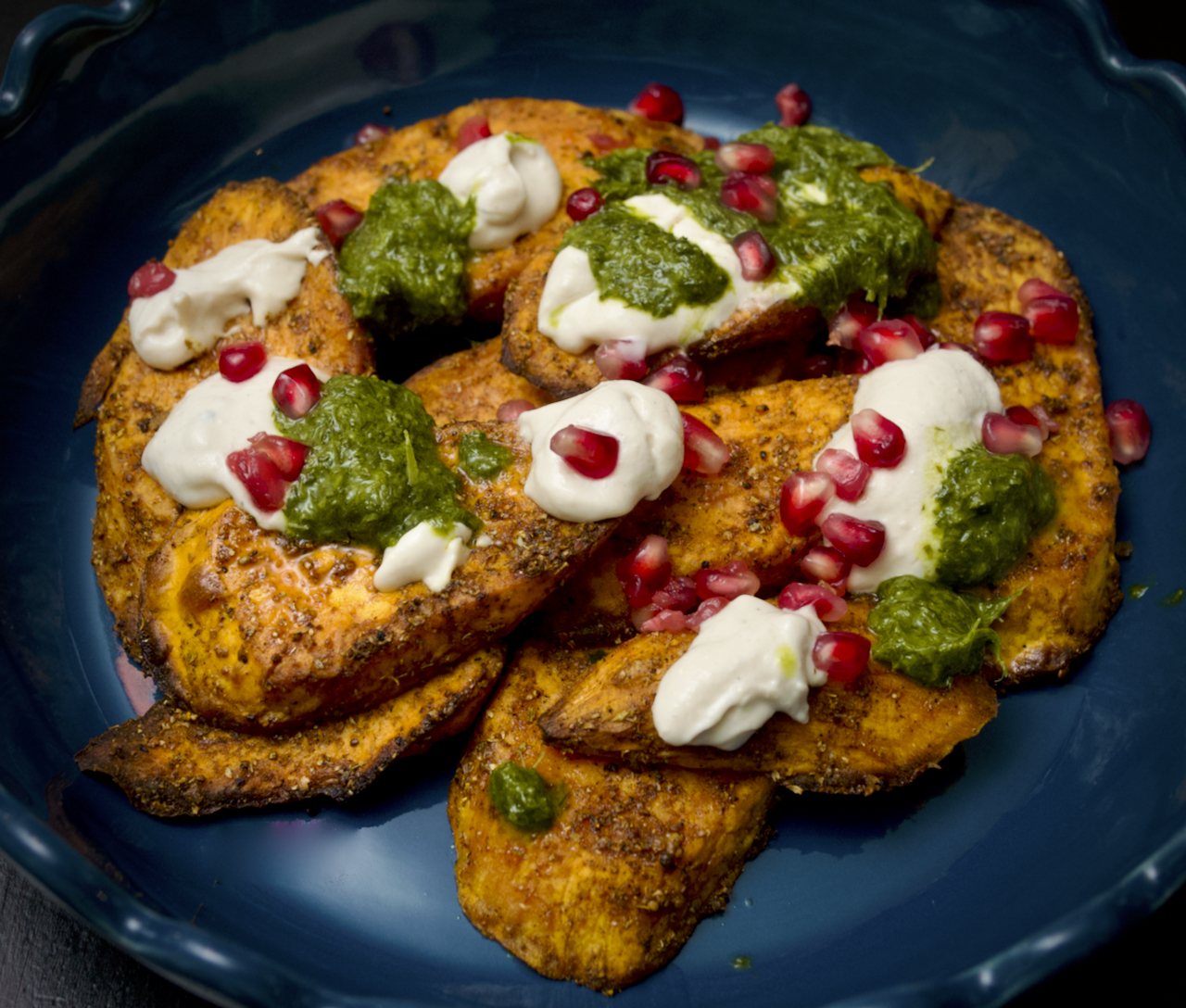
This is such a good side dish. We served it with roast lamb this time, but it would easily complement so many other dishes and can see us doing it alongside some grilled halloumi next time – highly recommended.
Sweet potatoes with tahini yoghurt & herb oil – serves 4 to 6
4 sweet potatoes, peeled and cut into 1.5cm slices
4 tbsp olive oil
2 heaped tbsp ras el hanout
2 tbsp pine nuts
a good handful of pomegranate seeds
FOR THE HERB OIL:
15g flat leaf parsley
15g dill
15g coriander
juice of ½ lemon
3-4 tbsp olive oil
FOR THE TAHINI YOGHURT:
6 tbsp Greek-style yoghurt
4 tbsp tahini
Preheat the oven to 220C, Gas Mark 7 and line a large tray with baking paper.
Put the sweet potato slices onto the tray. Drizzzle over the olive oil, sprinkle with the ras el hanout and add plenty of salt, then use your hands to coat the sweet potatoes in the mixture. Spread out in a single layer and roast for 30 minutes or until cooked through.
Meanwhile, make a herb oil by putting the herbs, lemon juice, olive oil (enough to allow the mixture to spin) and seasoning in a blender and whizz until smooth.
Mix the yoghurt with the tahini and season with salt and pepper.
Transfer the cooked sweet potatoes to a platter and pour over the tahini yoghurt followed by the herb oil, then scatter over the pine nuts and pomegrante seeds.
(Original recipe from Flavour by Sabrina Ghayour, Aster*, 2023.)
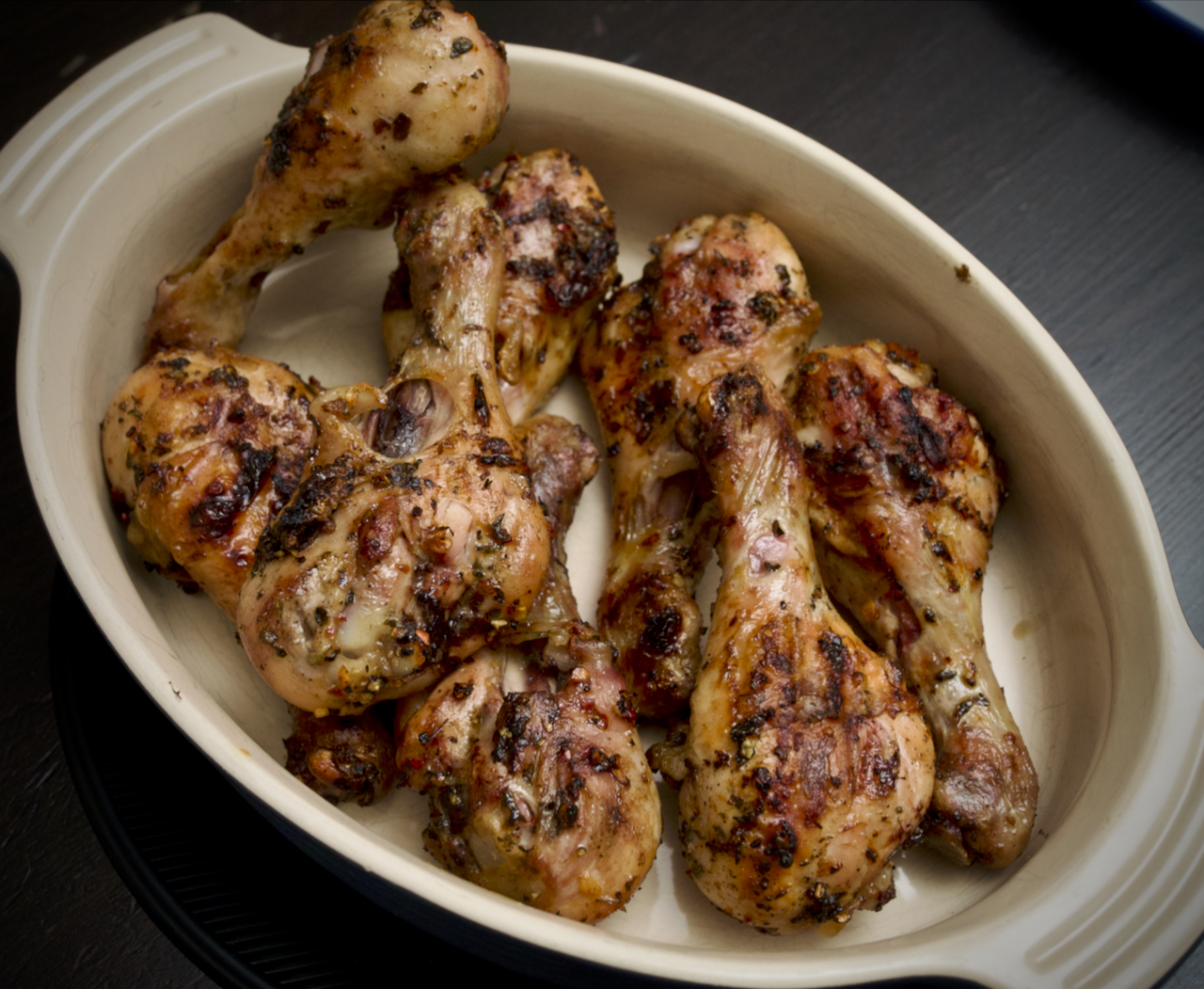
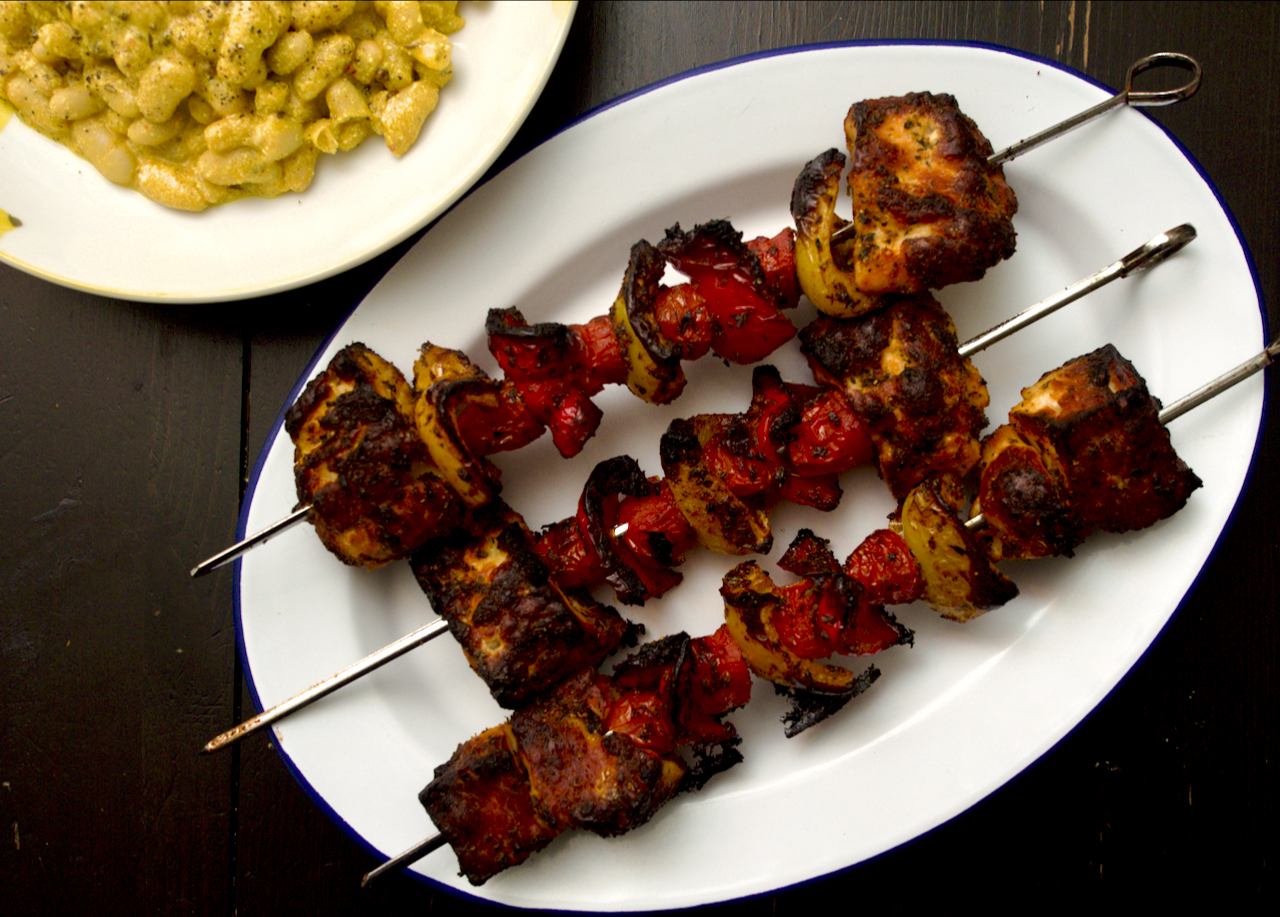
Who doesnt love a chicken drumstick? These ones have a delicious Spanish inspired marinade. Serve with some alioli if you like.
Wine suggestion: when choosing wines to go with dishes we often start with the idea that the origin of the dish lends itself to similar wines, in this case Spain. So on this note we went for Edetària’s via Edetana Red which is a joyful and deep expression of Garnacha Fina and Garnatxa Peluda, two very closely related varieties of Grenache. It has both a purity and freshness alongside an earthiness and rounded, velvety spices; medium bodied so it didn’t overwhelm the chicken and worked alongside the marinade. An interesting aside, the very rare Garnatxa Peluda found only in Terra Alta is also called “Hairy Grenache” as the leaves are velvety.
BBQ Drumsticks – serves 4
8 chicken drumsticks
lemon wedges, to serve
For the marinade:
50ml olive oil
4 cloves of garlic, crushed
4 bay leaves
1 tsp dried oregano
1 tsp chilli flakes
1 tsp black peppercorns, lightly crushed
100ml fino sherry
salt
Mix all the marinade ingredients together and add plenty of salt.
Add the drumsticks and rub the marinade in with your hands. Cover and leave in the fridge overnight or for at least 3 hours.
Remove the chicken from the fridge an hour before you want to cook it. Brush the marinade off the chicken and reserve it for later.
Prep your barbecue to allow for indirect and direct cooking. Put the chicken pieces over the indirect heat to start and cover with a lid. Allow to cook for 30 minutes, turning regularly.
Move the chicken onto the direct heat and cook for another 15-20 minutes until cooked through and nicely charred. Baste often with the reserved marinade.
Serve with the lemon wedges and some alioli if you like.
(Original recipe from The Hairy Bikers’ Mediterranean Adventure by Si King & Dave Myers, Seven Dials, 2017.)
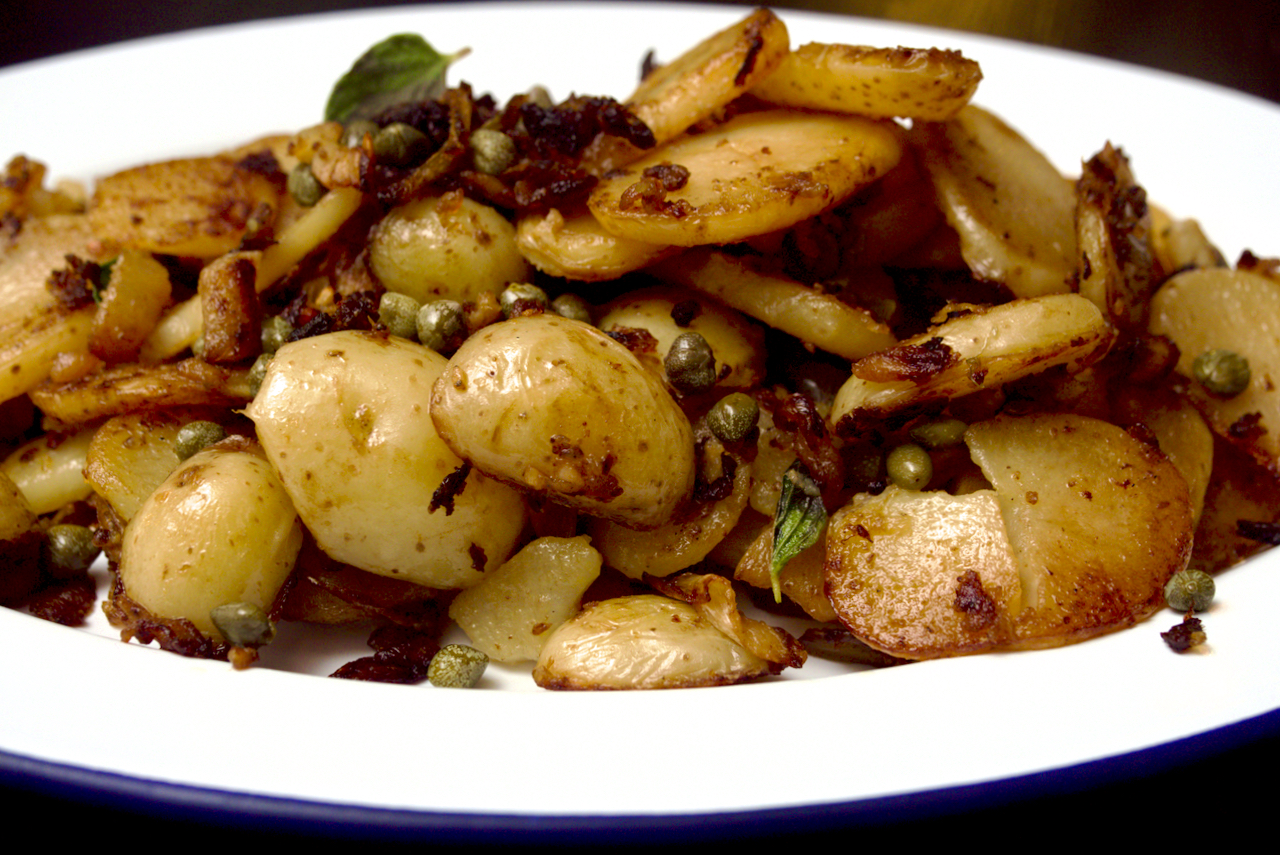
A tasty side dish to get us out our potato rut of baby roast or dauphinoise. These went spectacularly well with roast chicken.
Patatas a lo pobre – serves 4
600g waxy potatoes e.g. Charlottes
1 bulb of fennel, cut into quarters lengthways and shred into 5mm slices
75ml olive oil
2 cloves of garlic, finely chopped
2 tbsp sherry vinegar
2 tbsp capers, rinsed
a few sprigs of fresh oregano
Slice the potatoes into 5mm rounds.
Heat the olive oil in a large, heavy-based pan and add the potatoes and fennel. Cook over a medium heat until the potatoes are tender and starting to brown about 10-15 minutes. Keep tossing gently so it all cooks evenly.
When the potatoes are almost ready, add the garlic and sherry vinegar. Keep cooking for another 5 to 10 minutes or until the liquid has been absorbed and the potatoes are completely soft. Stir in the capers and oregano leaves and season with salt and pepper.
(Original recipe from The Hairy Bikerrs Mediterranean Adventure, Si King & Dave Myers, Seven Dials, 2017.)
Jeez this sauce is good. A stunning recipe from Mezcla by Ixta Belfrage. There are a good few steps in the recipe, but prep everything first and you will be fine.
Wine Suggestion: Don’t push the boat out for a wine match as the gutsy flavours just need an easy, well made, rounded Chardonnay. Go anymore complex and the subtlety will be lost. For us tonight Domaine Gayda’s Sphere Chardonnay which see’s wonderful sunshine in the Languedoc, but maintains it’s freshness as the vineyards are on the foothills of the Pyrenees and juducious and light use of oak barrels to bring it together.
Duck with pepper sauce and green salsa – serves 2
2 skin-on duck breasts
1 lime, cut into wedges, to serve
FOR THE MARINADE:
2 tbsp soy sauce
1¼ tbsp Worcestershire sauce
½ tbsp maple syrup
⅛ tsp fine salt
FOR THE SALSA:
2 scallions, very finely chopped
5g chives, very finely chopped
5g fresh ginger, peeled and very finely chopped
½ jalapeño, very finely chopped
3 tbsp olive oil
1 tsp lime juice
⅛ tsp fine salt
FOR THE SAUCE:
1 tbsp unsalted butter
1½ tbsp olive oil
1 banana shallot, very finely chopped
1 clove of garlic, very finely chopped
⅛ tsp fine salt
½ tsp freshly ground black pepper
2 tsp green peppercorns, roughly crushed (the pickled green peppercorns are best for this)
½ tsp chipotle chilli flakes
1¼ tsp ground cumin
2 tbsp water
130g cream
Get a dish that will fit both duck breasts in a single layer. Mix the marinade ingredients together, then arrange the duck in the marinade, skin side up – try your best not to get any marinade on the skin. Marinate for a minimum of 2 hours at room temperature, or ideally, overnight in the fridge. Don’t cover the container either way, as you want the skin to dry out. Bring to room temperature for 2 hours before cooking.
Prep the salsa by mixing all the ingredients together, then set aside.
Take the duck out of the marinade and transfer to a tray lined with a clean cloth, flesh side down, so the flesh dries out. Blot the skin with kitchen paper to make sure it’s as dry as possible. Rub some salt and pepper into the skin. Reserve the marinade.
Put the duck breasts into a cold, non-stick frying pan, skin-side down and spaced apart. Put the pan over a low heat and gently fry, pressing down on the duck, for about 10 minutes or until the skin is crisp and deep brown (keep going longer to achieve this if you need). Spoon away the duck fat that renders in the pan (keep for roasties another day). Transfer the duck breasts to a plate, skin side up, then increase the pan heat to high.
When the pan is very hot, return the breasts to the pan, flesh side down. Move breasts around for about 3 minutes to get them coloured evenly. Transfer the duck to a plate and rest, uncovered, for a full 12 minutes.
Either wash out the pan and allow it to cool or start with another non-stick frying pan. Add the butter, oil, shallots, garlic and salt to the cold frying-pan. Put over a medium-low heat and fry gently for 6-7 minutes, stirring, until the onion is soft and golden. Add the black pepper, pepercorns, chipotle chilli flakes, and cumin and cook for another minute.
Pour the reserved marinade and the 2 tbsp water into the pan, turn the heat to hight and allow to bubble for 1½ minutes. Turn the heat down low and stir in the cream and cook for 1 minute to warm through.
Pour the sauce onto a plattter, then slice the duck and arrange it on top. Finish with the green salsa and serve with the lime wedges.
(Original recipe from Mexcla by Ixta Belfrage, Ebury Press, 2022.)
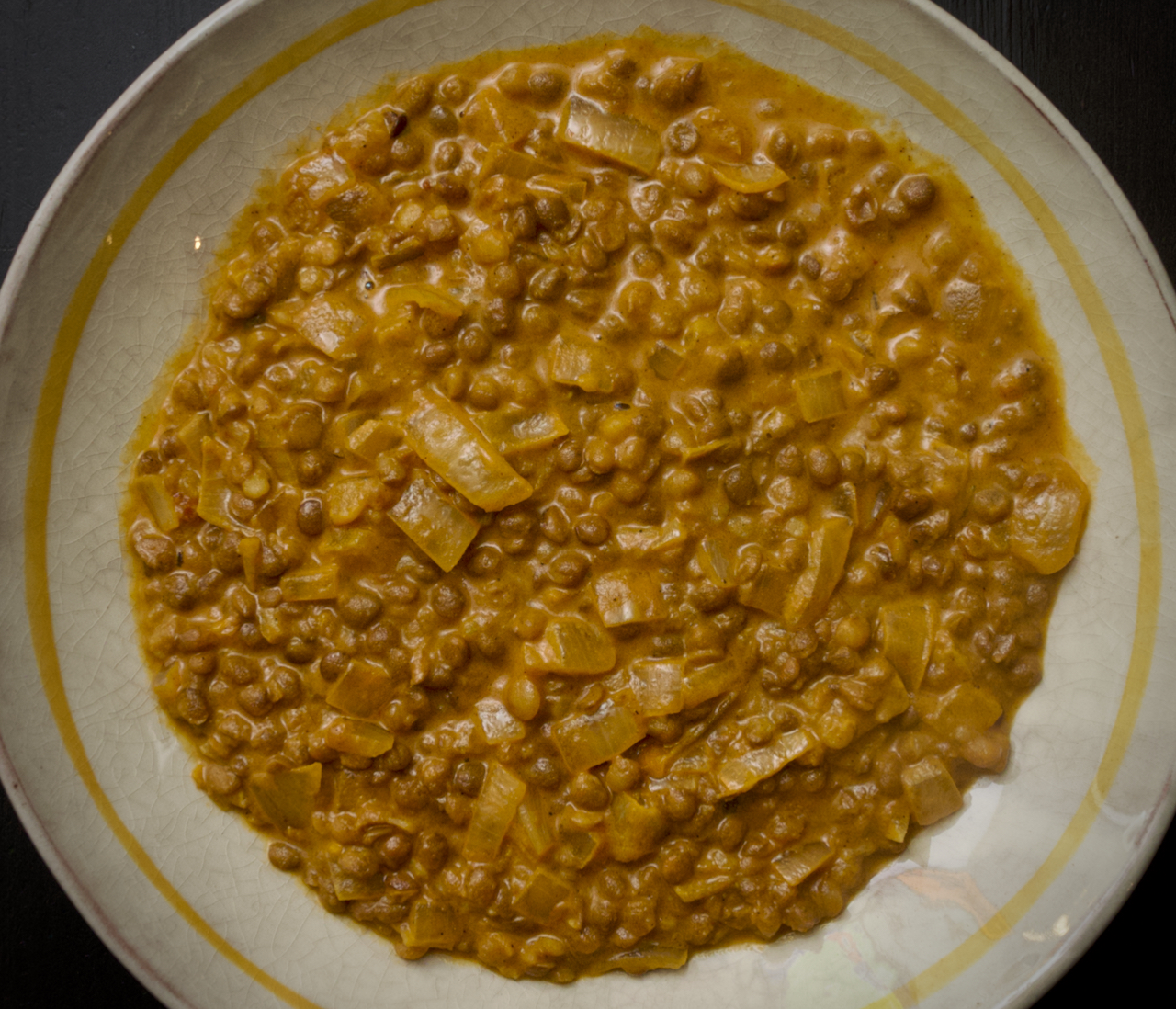
We love dhal and this cheat’s version is delicious! It’s similar to a dhal makhani but a fraction of the effort to make. We will never be without 2 tins of lentils again! Serve with rice or naan of course.
Wine Suggestion: a regular grenache, Domaine Ventenac’s “les Dissidents” Paria because it has an effortless freshness and gentle plummy, warm spices of a juicy core of red fruit.
Cheat’s Dhal – serves 4 to 6
2-3 tbsp vegetable oil
1 large onion, finely chopped
1 tsp ground cumin
1 tsp ground turmeric
1 tsp ground coriander
½ tsp ground cinnamon
½ tsp chilli flakes
3 tbsp tomato purée
2 x 400g tins green lentils, drained
50g butter
150ml double cream
300ml boiling water
Heat a large heavy saucepan over a medium-high heat. Add the vegetable oil and the onion and stir-fry until softened and starting to brown at the edges.
Stir in the spices until the onions are coated, then add the tomato purée and cook for 2 minutes. Stir in the lentils, then the butter and stir until melted. Pour in the cream and season generously, then pour in the water and stir again.
Reduce the heat and simmer gently for 30 minutes, stirring occasionally, until thick and creamy. Season to taste and serve.
(Original recipe from Persiana Everyday by Sabrina Ghayour, Aster, 2022.)
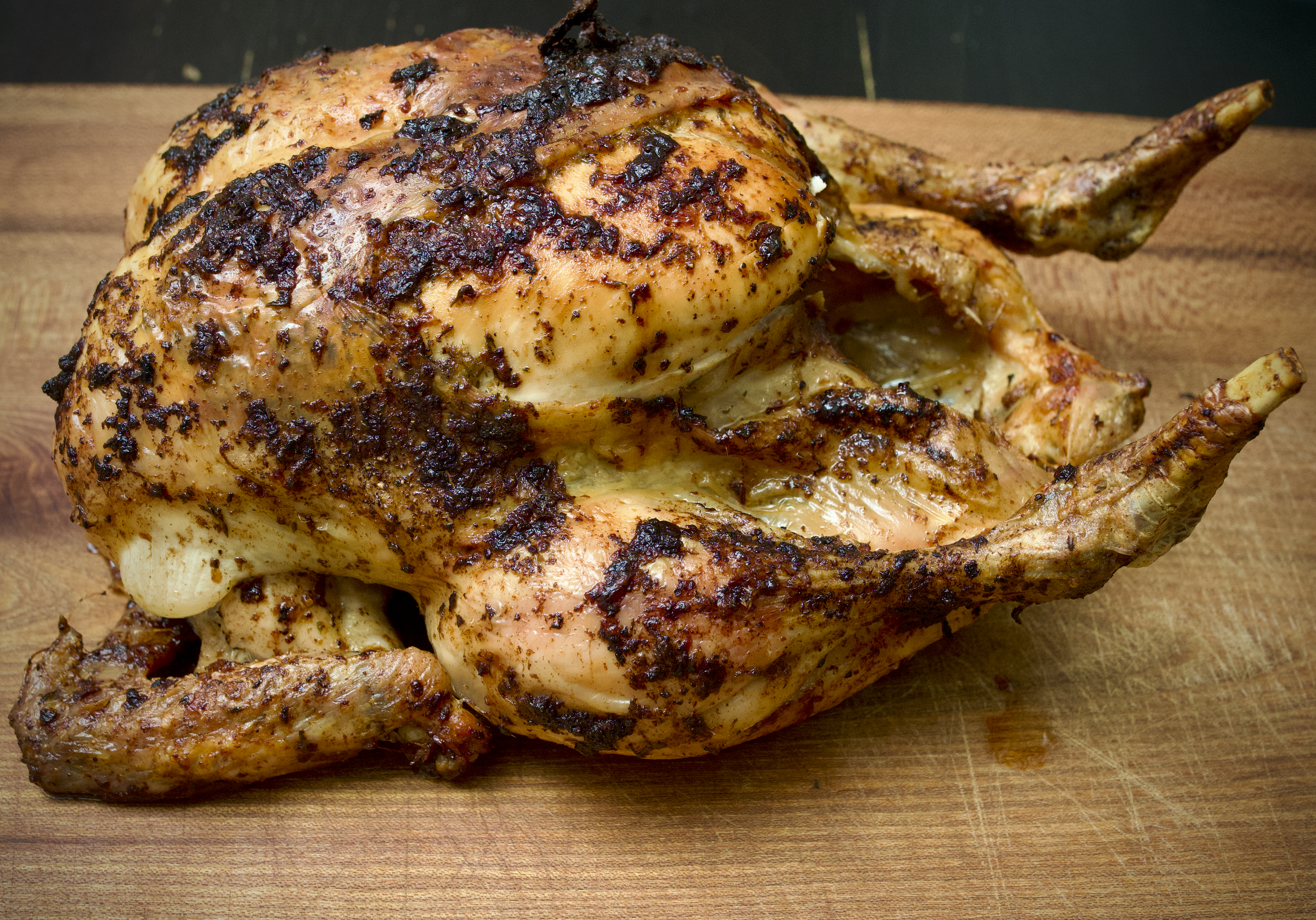
It’s the classic roast chicken but this time with fresh and preserved lemon. Yummy!
Wine Suggestion: We have a bit of a thing for dry Loire Chenin Blanc and were fortunate to visit Jacky Blot from Domaine de la Taille aux Loups earlier this year. Although he passed away not long after our visit, being able to taste the results of his work in a glass really keeps his memory alive. We opened a bottle of his Vin de France “Clos de la Bretonniere” with this dinner and were transported back to the tasting room and the couple of hours we spent with Jacky. A vibrantly dry Vouvray with tension and tautness in abundance and layers of minerally fruit, it paired beautifully with the roast chicken. Salut Jacky!
Roast chicken with preserved lemon – serves 4
70g butter, softened
3 tbsp thyme leaves
3 cloves of garlic, crushed
1 small preserved lemon, pips discarded and flesh and skin roughly chopped
1 lemon, zest finely grated, plus 1½ tbsp of juice
1 whole chicken
Heat the oven to 190C fan.
Put the butter, thyme, garlic, preserved lemon, lemon zest, ¼ tsp of salt and plenty of black pepper in a food proessor and blitz to combine.
Loosen the chicken skin over the breasts (careful not to tear it) and spread most of the butter mixture underneath. Spread the rest over the legs.
Put the chicken into a roasting tin and drizzle with the lemon juice and sprinkle over ½ tsp of salt and plenty of black pepper.
Roast the chicken for 20 minutes per 500g plus an extra 10 minutes, until the skin is golden brown and the juices run clear. Baste every 20 minutes as it cooks.
Remove from the oven and leave to rest for 10 minutes before serving.
(Original recipe from Ottolenghi Simple by Yotam Ottolenghi, Tara Wigley and Esme Howarth, Ebury Press, 2018.)
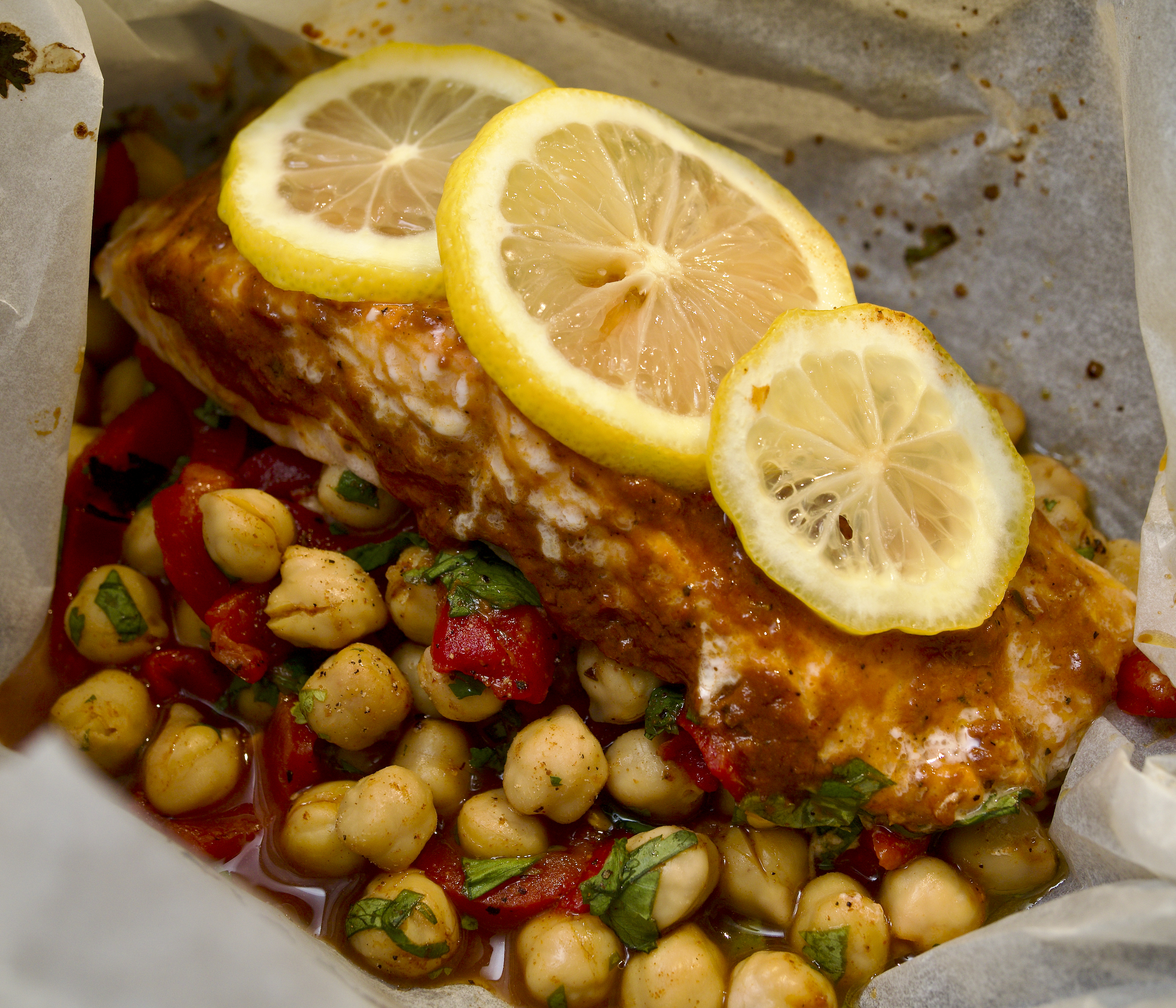
This is very much a weeknight dish but it’s suprisingly good. Baking in a bag means very few dishes to wash which always helps. Serve with a green salad.
Wine Suggestion: try to find a good Vermentino with a medium body, not the richer ones with higher alcohol like you sometimes find from Sardinia and similar. A favoured one at the moment is Domaine Ventenac’s “les Dissidents” Cassandre from Cabardes in southern France.
Baked salmon with harissa and chickpeas – serves 2
1 unwaxed lemon
1 x 400g tin chickpeas, drained and rinsed
1 tsp smoked paprika
1 tsp clear honey
3 tsp harissa paste
150g roasted red peppers from a jar, sliced
15g coriander, roughly chopped
2 salmon fillets, skinned
1 tsp olive oil
Heat the oven to 190C/170C fan/gas 5.
Tear off 2 large sheets of baking paper.
Halve the lemon and cut one half into thin slices.
Toss the drained chickpeas with the smoked paprika, honey, 1 tsp of the harissa paste, the peppers, most of the coriander and seasoning, then divide this between the two sheets of paper.
Season the salmon and spread each piece with 1 tsp of harissa, then place on top of the chickpeas and drizzle with the olive oil. Place the lemon slices on top, then fold over the edges to seal the parcels.
Put the parcels onto a baking tray and bake for 15 minutes or until the salmon is cooked. Open the parcels and scatter over the rest of the coriander, then serve with some salad on the side.
(Original recipe by Tom Mitchell-Dawson in Sainsbury’s Magazine, September 2023.)
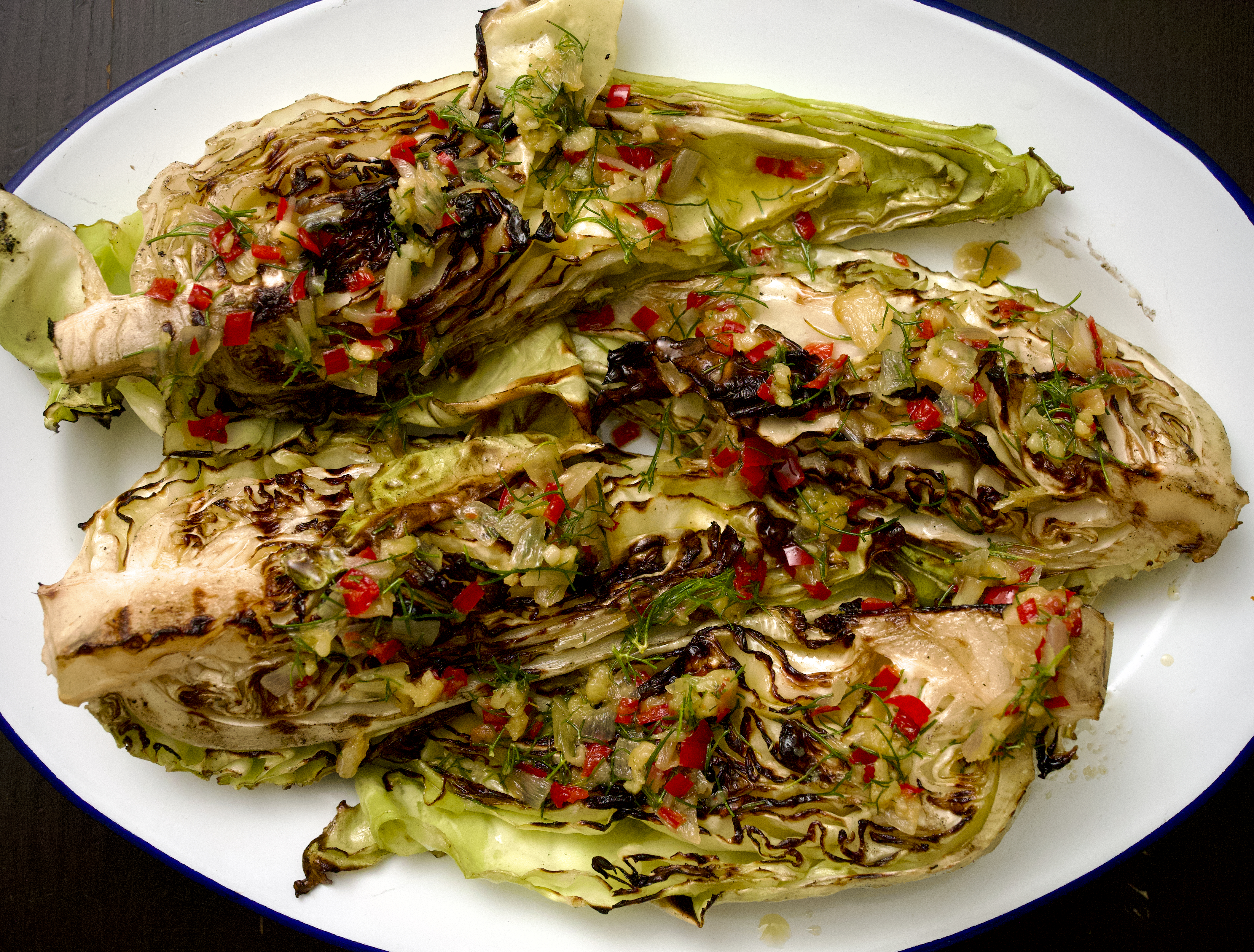
Typing this recipe to the sound of lashing rain and howling wind but better weather is coming and you might be inspired to barbecue a cabbage. You will be very glad you did.
Barbecued cabbage with chilli and garlic butter – serves 2 as a side
1 pointed/hispi cabbage, cut into 4 wedges
2 tbsp olive oil
FOR THE DRESSING:
1 long shallot, peeled and finely chopped
1 red chilli, halved, desseded and finely sliced
3 cloves of garlic, peeled and crushed
50g butter
½ tsp flaky sea salt
a small bunch of dill, fronds roughly chopped
Brush the cut surfaces of the cabbage wedges with the olive oil, then set them cut-side down on a very hot barbecue to char for about 4 minutes. Turn to char the other cut surface for 4 minutes, then set the wedges on the rounded sides for a final 4 minutes. Remove to a platter and sprinkle with flaky sea salt.
Meanwhile, combine the shallots, chilli and garlic with the butter and put over a low heat to melt the butter and lightly cook the vegetables. Cook for about 12-14 minutes or until the shallots are soft and translucent. Remove from the heat and mix in the salt and chopped dill. Pour the butter dressing over the warm cabbage and serve.
(Original recipe from Chasing Smoke: Cooking Over Fire Around the Levant by Sarit Packer and Itamar Srulovich, Pavilion, 2021.)
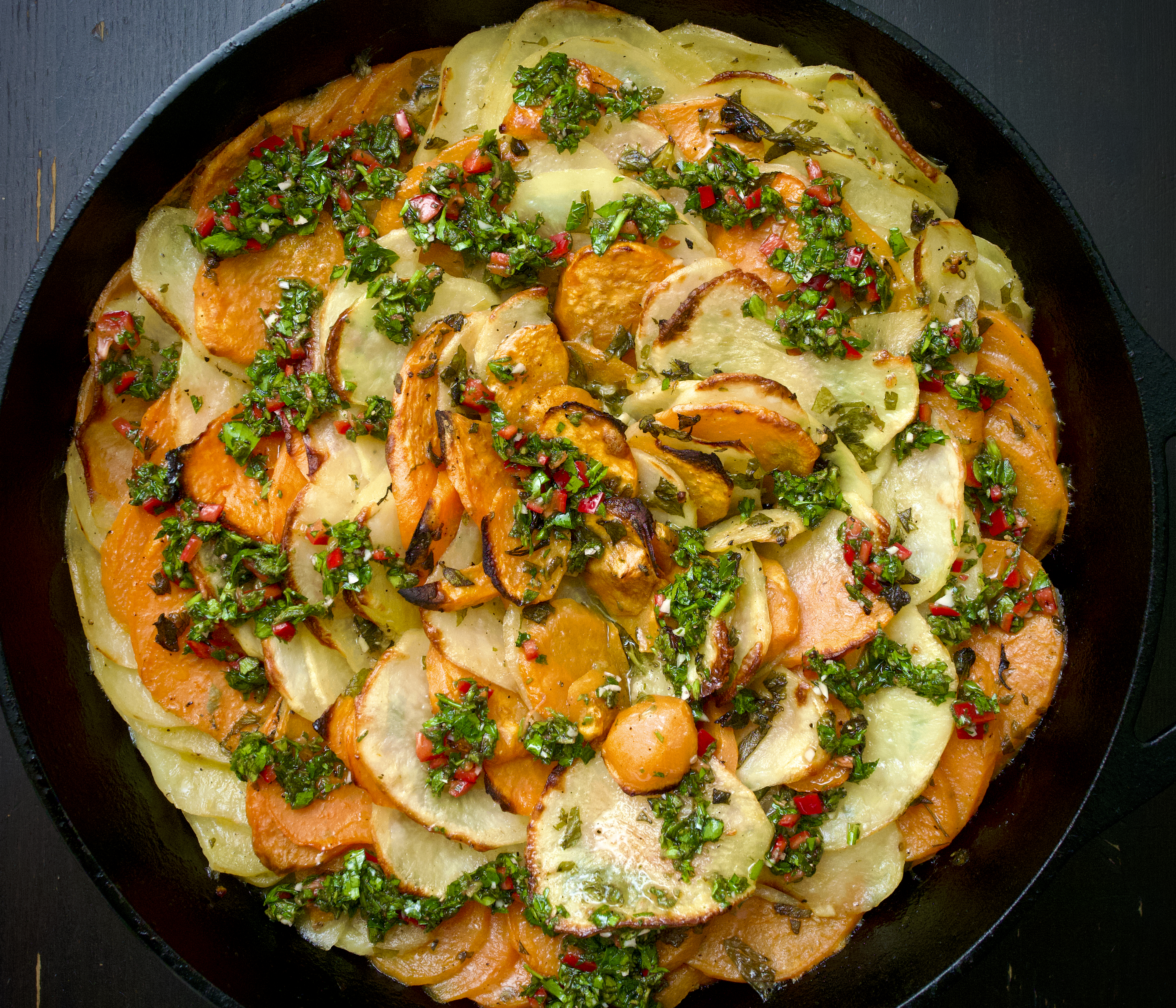
Such a tasty side dish! We served with a roast chicken but it will go with pretty much anything.
Potatoes with chimichurri – serves 6 as a side dish
800g waxy potatoes
600g sweet potatoes
5g oregano leaves, roughly chopped
5g parsley, roughly chopped
4 garlic cloves, peeled and crushed
5 tbsp olive oil, plus extra for greasing the pan
250ml chicken stock or vegetable stock
FOR THE CHIMICHURRI:
10g parsley, finely chopped
5g oregano leaves, finely chopped
1 garlic clove, peeled and finely chopped
1 mild red chilli, finely chopped (seeds in or out as you wish)
2 tbsp red wine vinegar
4 tbsp olive oil
Heat the oven to 180C fan.
Peel the potaotes, then slice the waxy sort using a mandolin. Use a sharp knife to slice the sweet potatoes finely – they should be slightly thicker than the regular potatoes.
Put both sorts of potatoes into a large bowl and add the garlic, herbs, 3 tbsp of the oil, 1½ tsp salt and plenty of black pepper. Toss gently with your hands to combine but make sure you don’t break the potatoes.
Lightly grease a large ovenproof cast-iron frying pan or a round baking dish – about 23cm in diameter. Start at the edge and arrange the potatoes in overlapping circles until you reach the middle. Pour the stock over the top. Lightly grease a piece of foil and cover the dish tightly with it. Bake in the oven for 35 minutes.
Remove the pan from the oven and turn the heat up to 220C. Remove the foil from the pan and drizzle over the last 2 tbsp of olive oil. Return to the oven for 20 minutes, or until nicely browned. Remove from the oven and leave to cool slightly, for about 15 minutes.
Meanwhile, make the chimichurri sauce. Put all of the ingredients into a bowl with ¼ tsp of salt and plenty of black pepper. Mix well to combine.
When you’re ready to serve, spoon the chimichurri over the top of the potatoes.
(Original recipe from Ottolenghi Test Kitchen: Extra Good Things by Noor Murad & Yotam Ottolenghi, Ebury Press, 2022.)
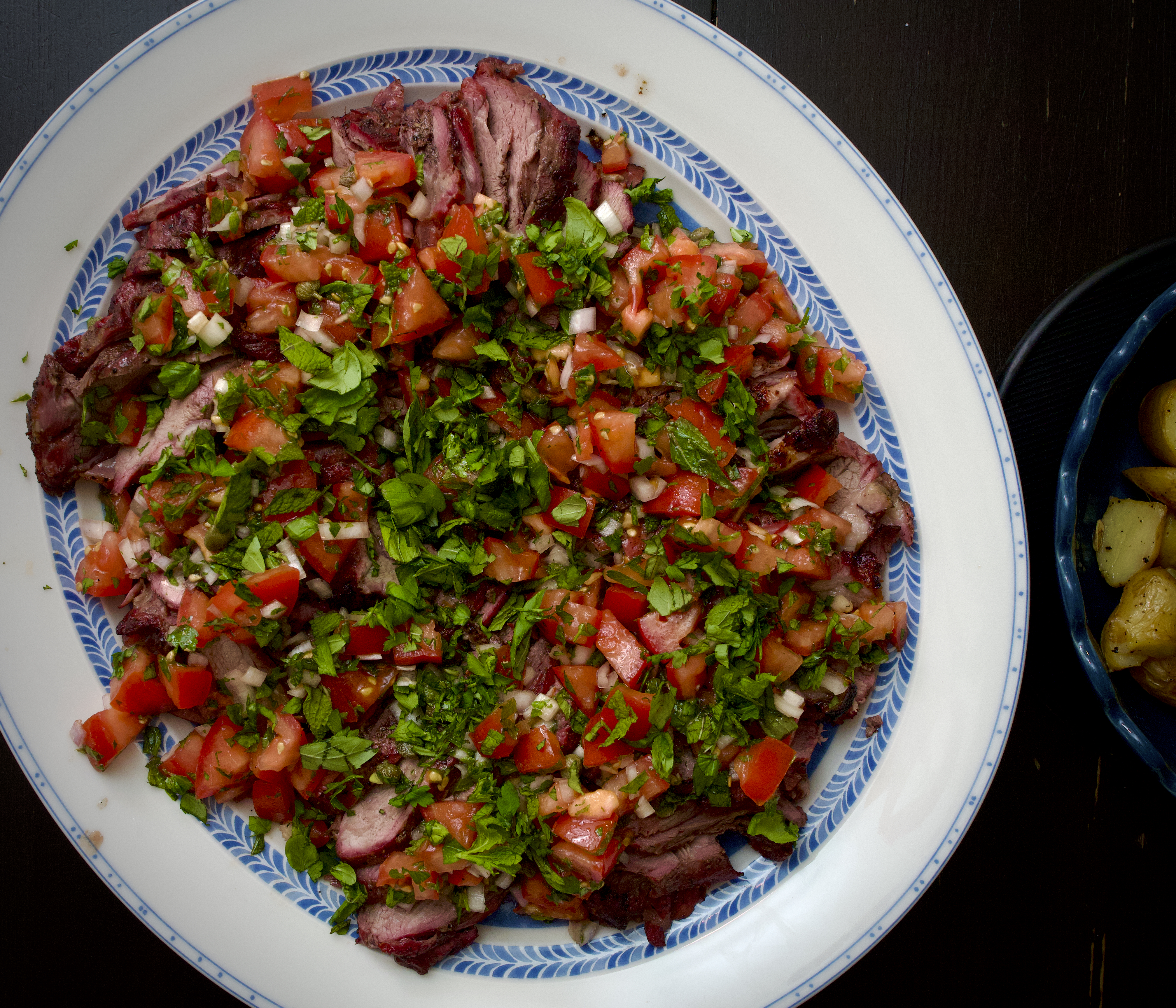
It’s last chance saloon if you want to cook this dish before both the tomatoes and weather turn rubbish. The marinade is added after you cook the lamb.
Wine Suggestion: We think barbecued lamb goes really nicely with Cabernet Franc, so a good excuse to open a bottle of our favourite wine: Chateau du Hureau’s Saumur-Champigny “Tuffe”.
Barbecue Lamb with Tomato & Capers – serves 6
1.5kg butterflied leg of lamb
FOR THE MARINADE:
3 tomatoes, diced
2 large shallots, finely chopped
1 tbsp capers, rinsed
a small bunch of parsley, chopped
a small bunch of mint, chopped
a small bunch of basil, chopped
1 lemon, juiced
2 tbsp olive oil
Mix the ingredients for the marinade together, keeping a small handful of herbs aside to garnish at the end.
Get your barbecue going and wait until the flames have died down. Move the coals to the sides and put a drip-tray in the middle, then BBQ the lamb for 20 minutes on each side.
When the lamb is cooked to your liking, set it on a platter and spoon over the marinade. Cover loosely with foil and leave to rest for 20 minutes. Slice and serve with the marinade and the rest of the herbs.
(Original recipe by Adam Bush & Janine Ratcliffe, Olive Magazine, August 2017.)
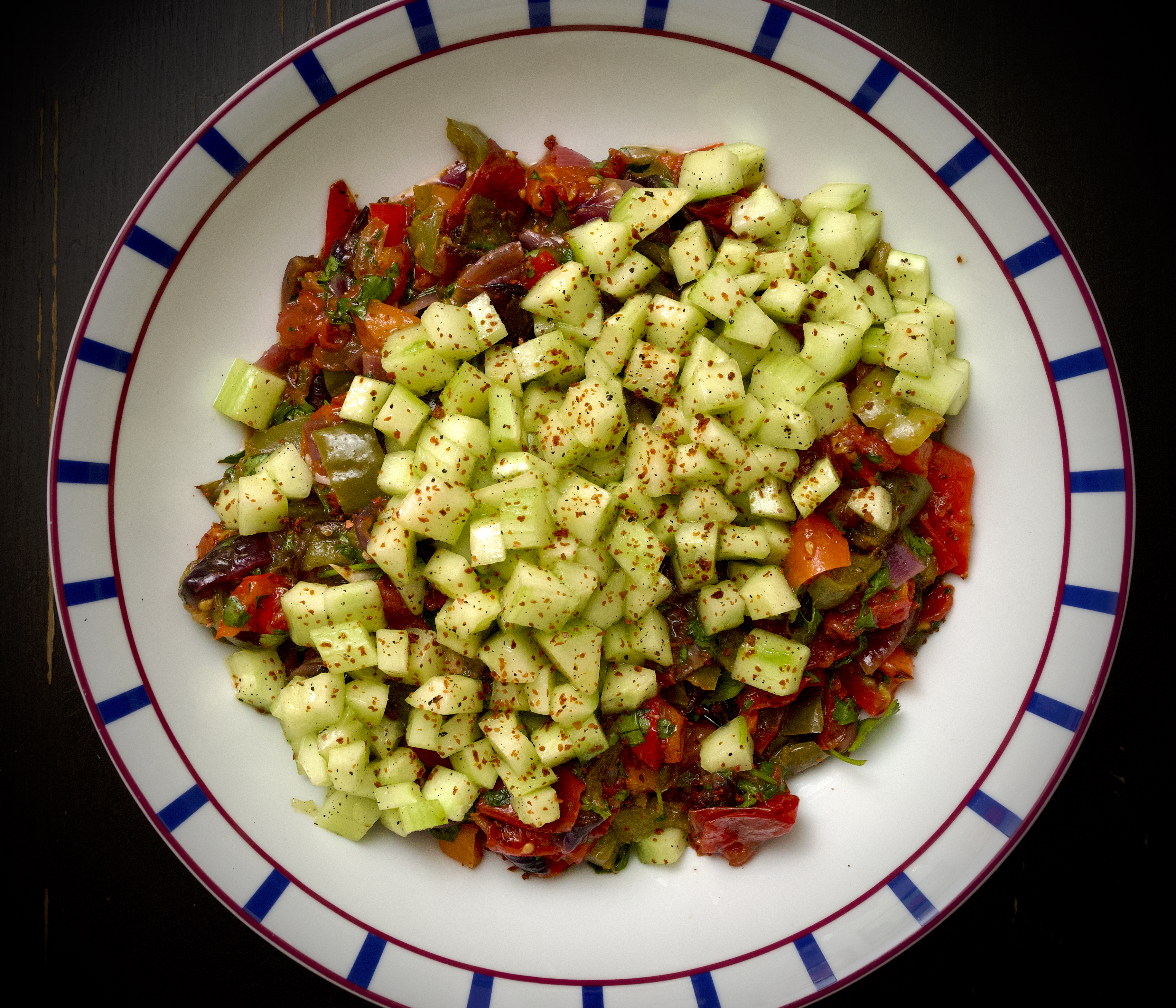
You can prep this salad in advance and serve warm or at room temperature. Jam-packed with flavour and a great side dish for a barbecue or roast meat.
Roasted pepper salad with cucumber and herbs – serves 4 as a side dish
4 green peppers (600g), cut into 4cm pieces
2 red peppers (300g), cut into 4cm pieces
4 vine tomatoes (400g), quartered
2 small red onions (200g), roughly cut into 3cm pieces
1 green chilli, stem removed and left whole
6 large cloves of garlic, peeled
6 tbsp olive oil
1½ tbsp lemon juice
10g parsley, roughly chopped
10g coriander, roughly chopped
1 cucumber, peeled, deseeded and cut into 1cm cubes
¾ tsp Urfa chilli flakes
Heat the oven to 230C fan.
Put the peppers, tomatoes, red onion, chilli and garlic into a large bowl. Add 4 tbsp olive oil, ¾ tsp of salt and plenty of black pepper. Toss well to combine.
Line to large baking sheets with baking parchment. Spread the vegetables out over the trays and roast for about 30 minutes, stirring once or twice, until softened and charred.
When cool enough to handle, roughly chop the vegetables and transfer to a bowl with the lemon juice, herbs and ½ tsp salt and plenty of black pepper.
In a separate bowl, toss the cucumber with 2 tbsp of oil, ¼ tsp of salt and plenty of black pepper.
Spread the roasted pepper mixture out over a platter. Spoon over the cucumber and sprinkle with the chilli.
(Original recipe from Ottolenghi Test Kitchen: Shelf Love, Ebury Press, 2021.)
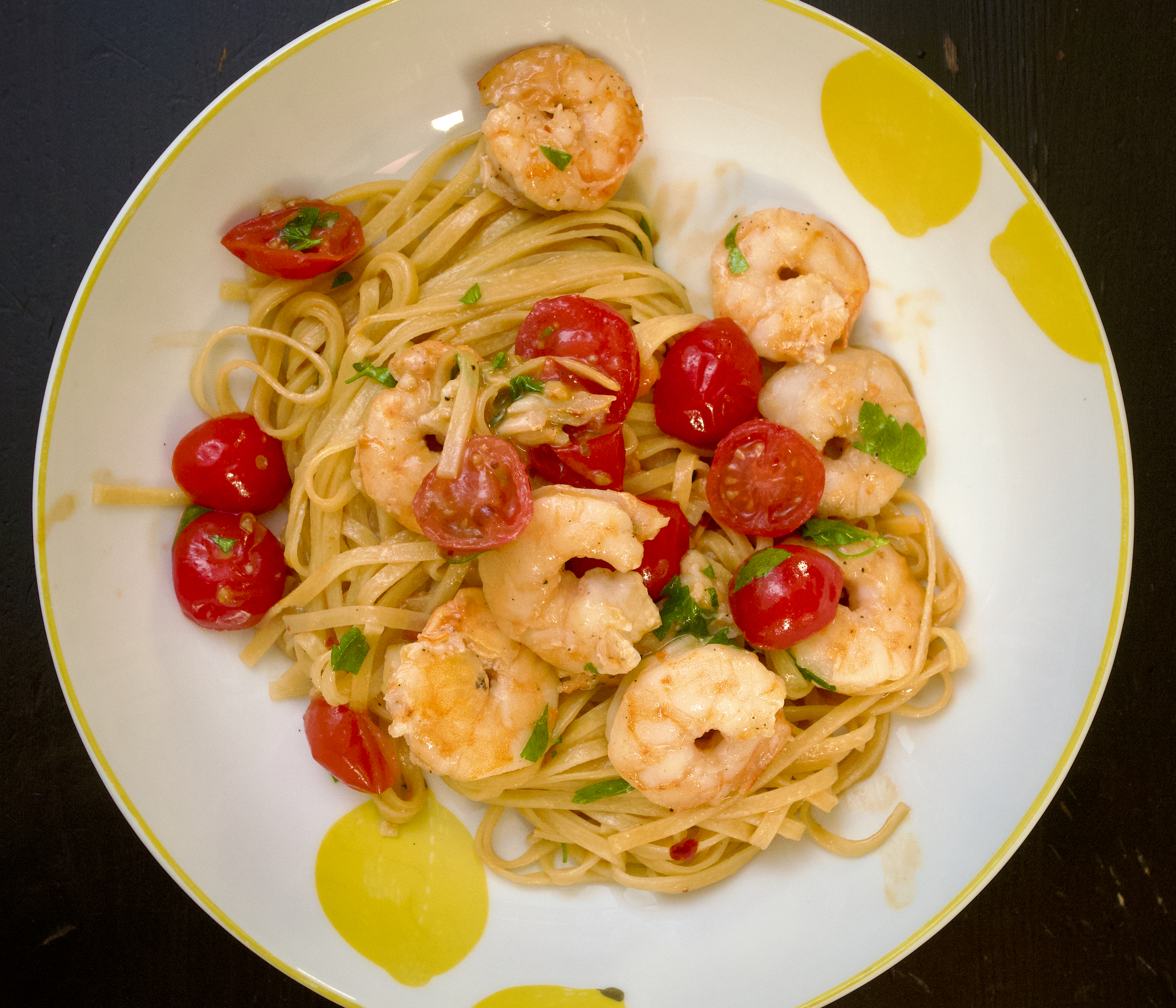
This is not your average prawn linguine and you do need to make a shellfish stock BUT we did this on a Tuesday night after work so you can too!! The photo really doesn’t do justice to how deep and complex the flavours are.
Wine Suggestion: A southern Italian white like Michele Biancardi’s Solo Fiano from Puglia where it has perfume and stone fruits bursting from the glass. A rich and round palate counter-balanced with a fresh, textural acidity completes the wine; like warm sunshine in a glass tempered by fresh breezes off the Adriatic Sea.
Prawn linguine – serves 2
350g whole prawns, you need to peel and devein them yourself and keep the shells and the heads
160g linguine
2 tbsp extra virgin olive oil
1 large clove of garlic, crushed
¼ tsp dried chilli flakes
8 cherry tomatoes, halved
1 tbsp roughly chopped parsley
FOR THE PRAWN STOCK:
1 tbsp extra virgin olive oil
1 clove of garlic, roughly chopped
1 shallot, roughly chopped
2 tinned anchovies
1 bay leaf
shells and heads from the peeled prawns (see above)
125ml white wine
375ml chicken stock
You need to start with the stock. Heat the oil in a medium saucepan over a medium-high heat and cook the garlic, shallot, anchovies and bay leaf for a few minutes, mashing the anchovies up as you go. Add the prawn heads and shells and cook, stirring, for 4 minutes.
Add the wine and turn the heat up high and simmer for a couple of minutes or until almost evaporated. Add the stock and ½ tsp salt, bring to the boil, then simmer gently for 25 minutes. Crush the prawn heads with a potato masher a couple of times as the stock simmers. Strain the stock through a fine sieve into a jug, pressing down hard on the shells to extract all the flavour. Throw away the solids and hang on to the delicious stock.
Toss the now peeled prawns with salt and black pepper. Heat 1 tbsp of the olive oil in a large, non-stick frying pan over a medium heat. Cook the prawns for about 1 minute on each side, or until opaque, then transfer to a plate.
Heat another tbsp of oil in the same frying pan and cook the garlic and chilli flakes for 15 seconds or until the garlic is just golden. Add the prawn stock and turn the heat up high. Simmer rapidly, stirring to scrape any tasty bits from the bottom of the pan, until the liquid has reduced to about 125ml. Turn off the heat and leave aside while you cook the pasta.
Bring a large pot of salty water to the boil and cook the linguine for 1 minute less than the timing suggested on the pack. When the pasta is almost cooked put the shellfish stock back over a high heat. Transfer the pasta directly from the pot of water to the stock with some tongs, it will bring some pasta cooking liquid with it. Add the cherry tomatoes and toss for a couple of minutes with two wooden spoons until the sauce coats the pasta and no longer sits in a puddle at the bottom of the pan. If it starts to clag add a little more pasta water.
Toss the prawns and parsley through the pasta and divide between two bowls.
(Original recipe from Recipetin Eats Dinner by Nagi Maehashi, Pan Macmillan, 2022.)
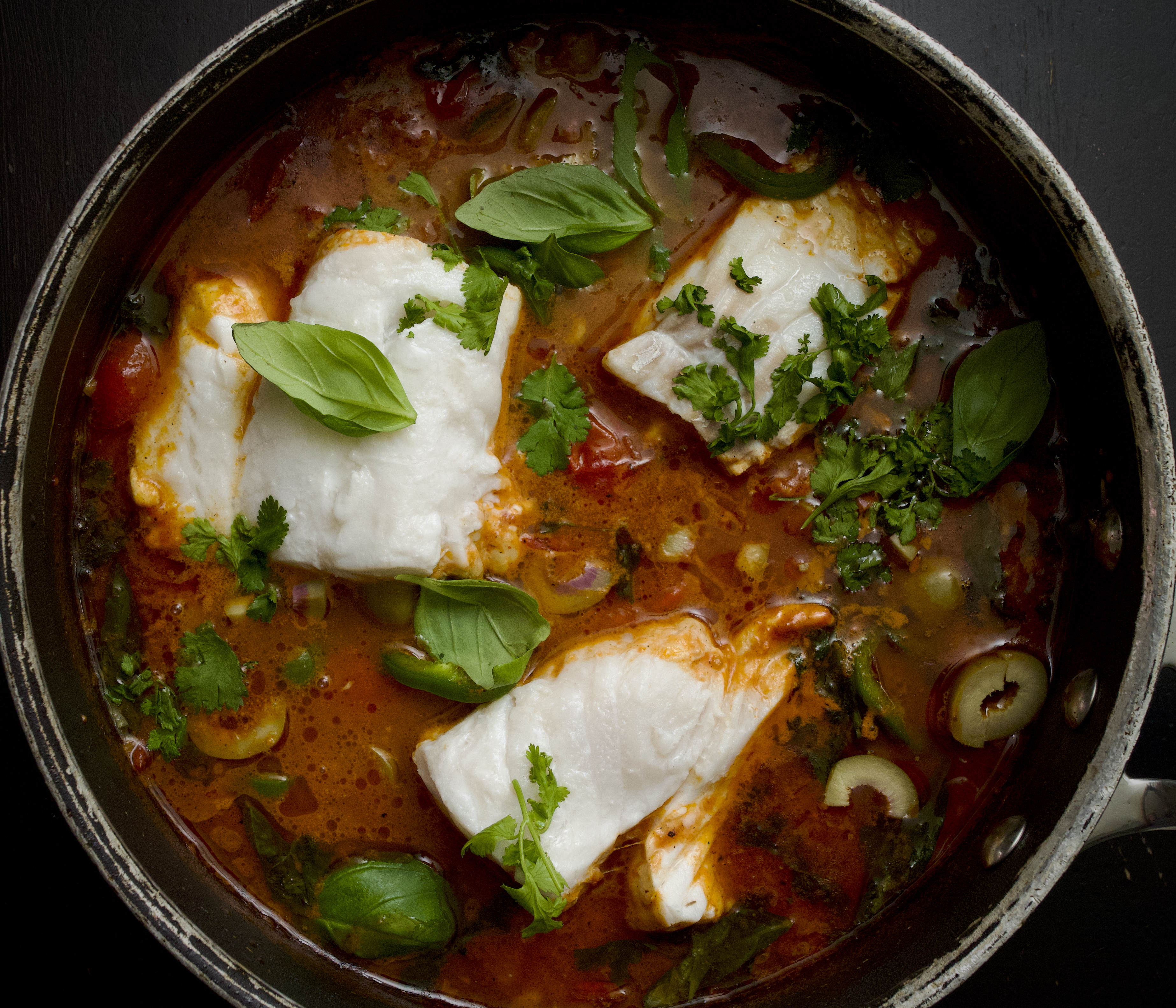
There is nothing difficult about this dish but despite the ease of cooking this tastes sophisticated and has bags of flavour. Inspiration from Mezcla by Ixta Belfrage, a book jam-packed with delicious things! Serve with some grilled sourdough.
Wine Suggestion: A good Sangiovese is our suggestion and we particularly enjoyed the Morisfarms Mandriolo from the Maremma on the Tuscan coast. With crushed raspberry flavours layered over a smooth dark berry core and aromas of violets this cut through any richness and gave it all a lift, adding an extra dimension to the meal. Just what we wanted with this complex and sophisticated meal.
Poached fish and charred tomatoes – serves 4
4 x 100g white fish fillets e.g. cod or hake, skin and bones removed
1 tbsp lime juice
1 tsp fine salt
FOR THE AÏOLI:
3 egg yolks
¼ tsp fine salt
½ a small clove of garlic, crushed
¼ tsp sweet paprika
pinch of saffron
50g light olive oil
FOR THE BROTH:
250g cherry tomatoes
1 Scotch bonnet chilli, whole
½ tsp fine salt
5 tbsp olive oil
3 cloves of garlic, very finely chopped
½ tsp paprika
1 tbsp tomato purée
5g fresh coriander
5g fresh basil
350g water
15g unsalted butter
1 jalapeño or green chilli, thinly sliced
70g pitted green olives, roughly chopped
1 lime, cut into wedges, to serve
grilled sourdough, to serve
Place the fish in a dish with the lime juice and fine salt. Mix to coat, then aside while you prep everything else.
Make the aïoli by putting the egg yolks, salt, garlic, paprika, some black pepper and saffron into a medium bowl and whisk until smooth. Add half the oil and whisk hard for 30 seconds or until the mixture starts to thicken. Add the rest of the oil and whisk hard again for about a minute, then stir in the vinegar. You should end up with loose mayonnasie consistency.
Heat a large sauté pan over a high heat until smoking hot. Add the tomatoes and Scotch bonnet and cook for about 6 minutes, give the pan a shake now and then to get a bit of char on the tomatoes.
Remove from the heat and add the salt, oil, garlic, paprika, tomato purée, half the coriander and half the basil. Mix well then return to the heat and stir-fry for a couple of minutes. Add the water and butter and bring to a simmer. Simmer gently for 5 minutes, squeezing most of the tomatoes into the broth.
Lay the fish fillets into the broth, then cover with a lid and cook for a few minutes, or until just cooked through. Remove from the heat and leave covered for 2 minutes.
Throw away the Scotch bonnet and top the dish with the green chilli, olives and remaining herbs. Serve with the aïoli spooned on top and with lime wedges and grilled bread on the side.
(Original recipe from Mezcla by Ixta Belfrage, Ebury Press, 2022.)
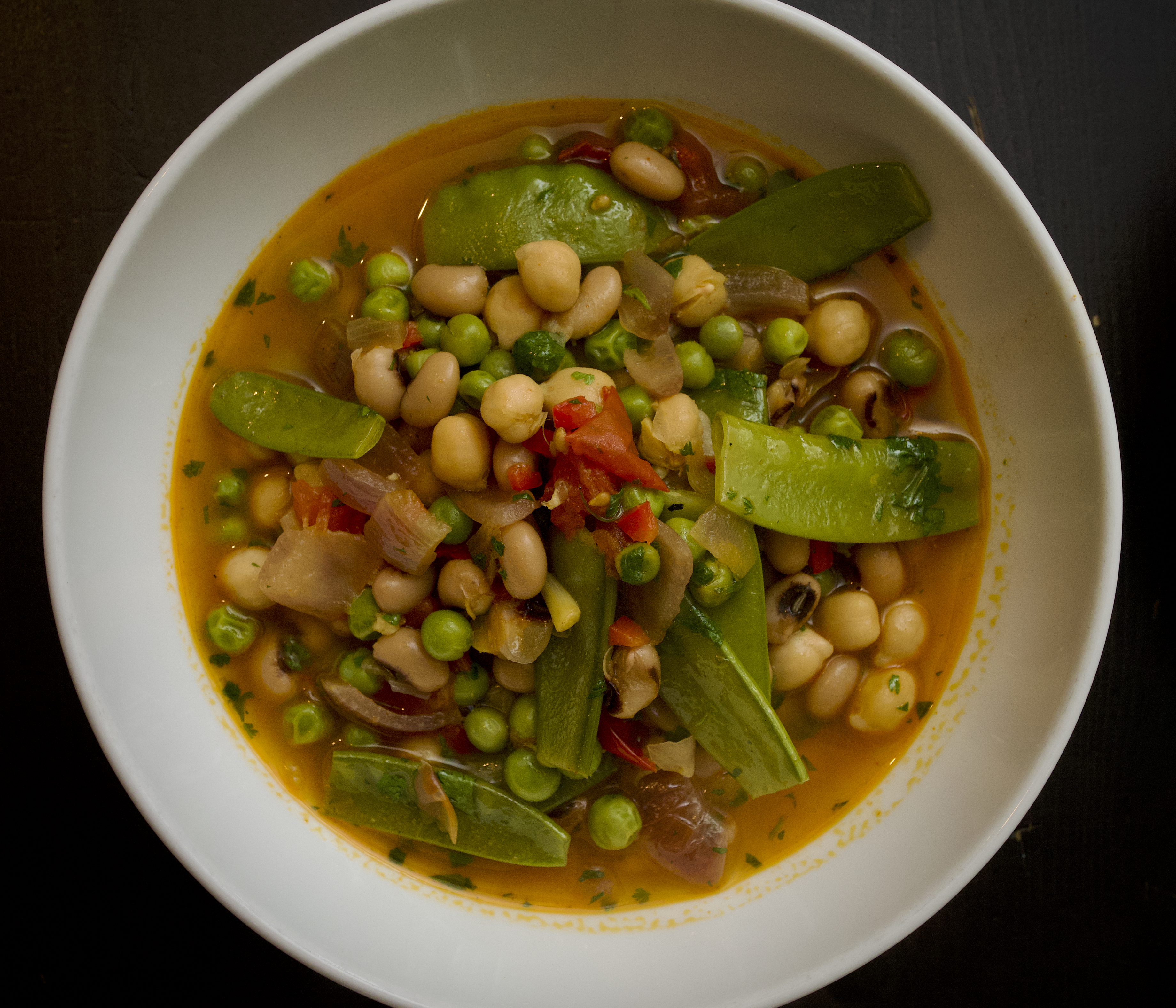
Our favourite vegetarian cookbook at the moment is East by Meera Sodha. This is an Indian main course dish but it’s like a soup and works well as both a mid-week dinner, and in a flask for lunch the next day. Also vegan and gluten-free if this is useful information for you. Serve with crusty bread.
Black-eyed bean and chickpea usal – serves 4
4 tbsp rapeseed oil
2 red onions, chopped
2 long green chillies, very finely chopped
4 cloves of garlic, crushed
2 large vine tomatoes, chopped
1¾ tsp salt
1 tsp Kashmiri chilli powder
1 tsp garam masala
1 tsp ground cumin
½ tsp ground turmeric
1 x 400g tin of black-eyed beans, drained
250g frozen peas, defrosted
1 x 400g tin of chickpeas, drained
200g mangetout
1 tbsp lemon juice
a handful of coriander leaves, finely chopped
Heat the oil in a saucepan over a high heat. Add the onion and chillies and cook for about 10 minutes, then add the garlic and cook for a minute more.
Add the tomatoes and cook for about 5 minutes or until they have broken down, then add the salt and spices and stiry-fry for another minute.
Stir in the black-eyed beans, peas, chickpeas and mangetout and continue cooking for 5 minutes.
Add the lemon juice and coriander, then taste and season with more salt if needed.
(Original recipe from East by Meera Sodha, Penguin, 2019.)
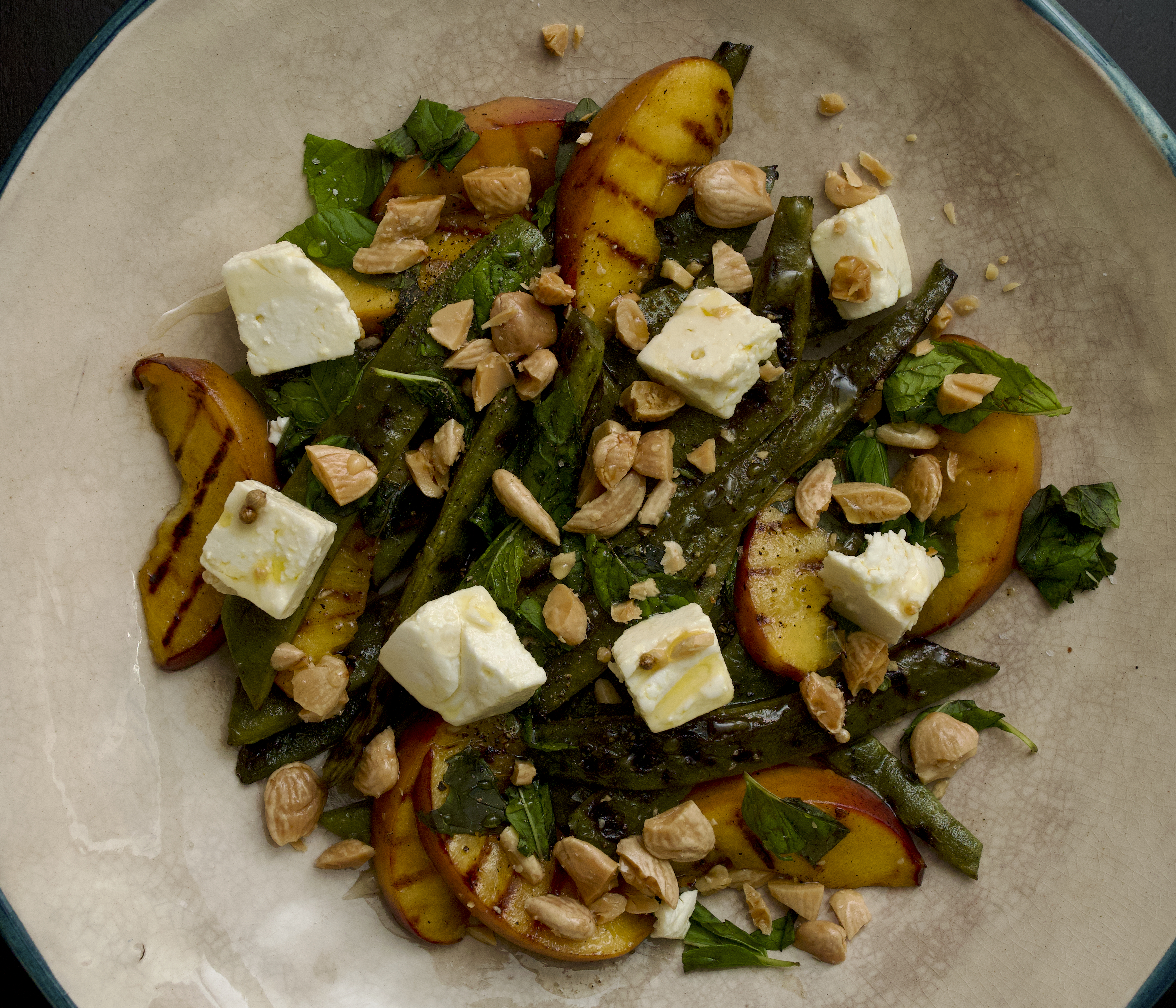
Inspired by a gift of some runner beans from a friend’s allotment, plus we just had to buy the fresh peaches we stare at everytime we walk past the veg shop. Once cooked it looks less vibrant than the flavours suggest – an excellent way to cook both the beans and peaches and a great combo. Delicious with some barbecued pork chops.
Barbecued peaches and runner beans – serves 4
400g runner beans, peel both sides with a vegetable peeler to remove the stringy bits, then trim both ends and halve widthways at an angle
3 tbsp olive oil
2 ripe but firm peaches, cut into ½ cm thick slices
5g mint leaves, roughly torn
¾ tbsp lemon juice
80g creamy goat’s cheese, we used marinated St Tola, broken into 4cm pieces
20g ready-roasted and salted almonds, roughly chopped
¾ tbsp runny honey
Toss the beans with 2 tbsp of the olive oil and ½ tsp of flaky salt. Cook the beans on a hot barbecue (ideally on a griddle pan so you don’t lose any through the bars) for 3-4 minutes on each side or until you get good grill marks and they are almost cooked through. Transfer to a bowl and cover with a plate. You can leave them now for 5 to 10 minutes, depending on how soft you like them, they will be more crunch at the shorter time but we like them soft.
Drizzle 1 tbsp of oil over the peach slices and toss to coat. Grill for 1-2 minutes on each side, until you get nice grill marks.
Toss the beans and peaches together in the bowl with the mint, then transfer to a serving dish. Sprinkle over the lemon juice and some flaky salt and black pepper. Scatter over the the goat’s cheese and almonds and finish with a drizzle of honey.
(Original recipe from Ottolenghi Flavour by Yotam Ottolenghi and Ixta Belfrage, Ebury Press, 2020.)
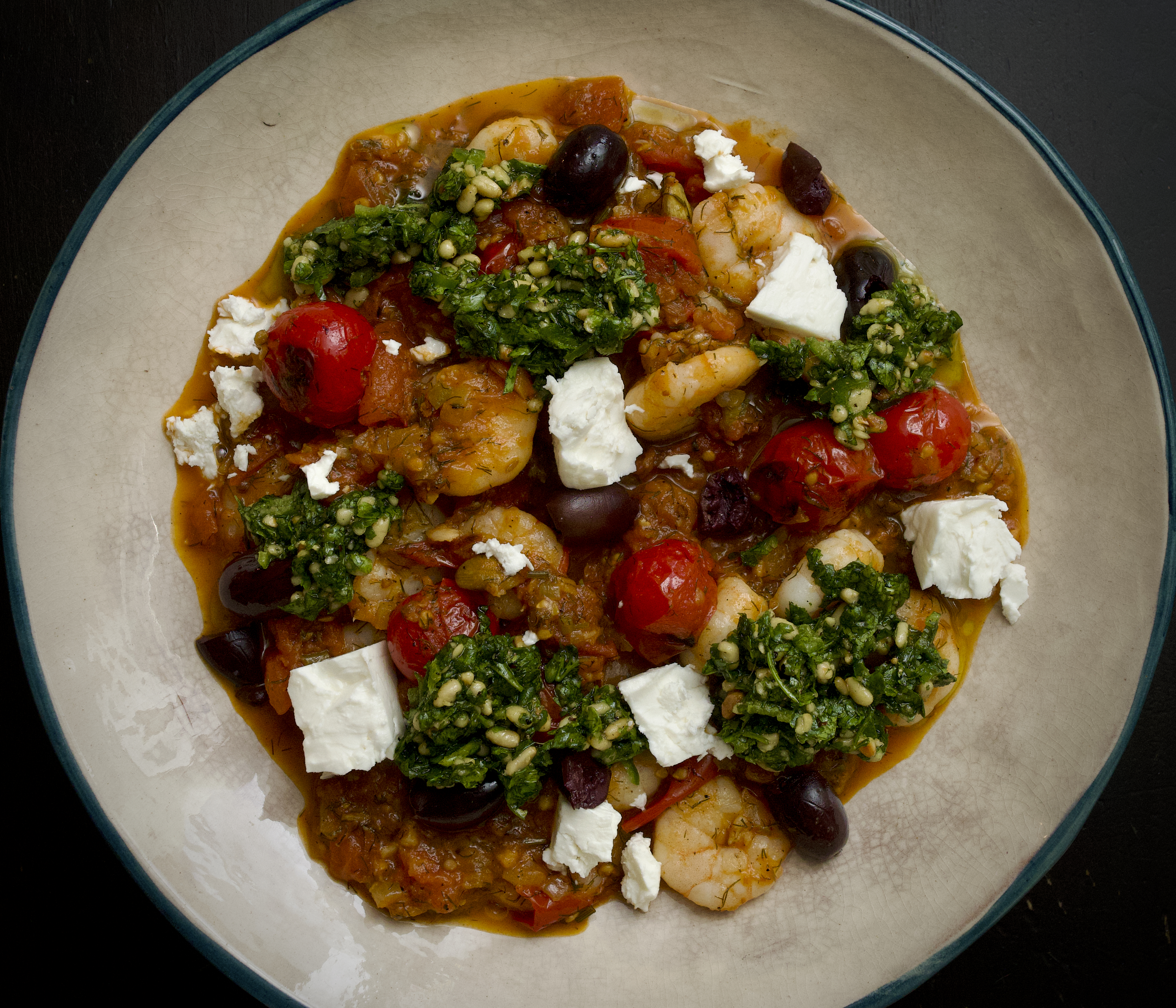
A dish from Falastin, it’s packed with flavour and we recommend adding the optional black olives and feta cheese. A green salad and some crusty bread is also a good choice. The tomato sauce and coriander sauce can both be made in advance, just char your cherry tomatoes and fry the prawns at the end.
Wine Suggestion: Despite this being a seafood dish we think a Southern French red is the way to go with this. Tonight something quite special: Roc des Anges Unic which is a super expressive Grenache with a thrilling tension and energy.
Prawn and tomato stew with coriander pesto – serves 4
250g cherry tomatoes
60ml olive oil
1 large onion, finely chopped
4 cloves of garlic, crushed
2cm piece of ginger, peeled and finely grated
1 green chilli, finely chopped
2 tsp coriander seeds, lightly crushed in a pestle and mortar
1½ cumin seeds, lightly crushed in a pestle and mortar
8 cardamom pods, lightly bashed in a pestle and mortar
20g dill, finely chopped
2 tsp tomato purée
6 plum tomatoes, roughly chopped
600g peeled raw king prawns
a handful of black kalamata olives (optional)
100g feta cheese, crumbled into chunky pieces (optional)
FOR THE CORIANDER PESTO:
30g coriander, roughly chopped
1 green chilli, finely chopped
50g pine nuts, lightly toasted
1 lemon, finely grate the zest to get 1½ tsp, then cut into wedges to serve
80ml olive oil
Toss the cherry tomatoes with 1 tsp of oil. Heat a large sauté pan over a high heat, then add the cherry tomatoes and cook for about 5 minutes, shaking the pan occasionally, until charred and blistered. Remove from the pan and set aside.
Wipe the pan out, then add 2 tbsp of olive oil and place over a medium-high heat. Add the onion and cook for 8 minutes, stirring now and then, until softened and lightly browned. Add the garlic, ginger, chilli, spices, dill and tomato purée, then cook for another 2 minutes until fragrant. Add the plum tomatoes and 300ml of water, 1½ tsp salt and plenty of black pepper. Bring to a simmer, then lower the heat and simmer for 25 minutes or until thickened and the tomatoes have broken down.
Meanwhile, make the coriander pesto. Put the coriander, pine nuts and chilli into a food processor and pulse a few times, just until the pine nuts are roughly crumbled. Transfer to a bowl and stir in the olive oil, lemon zest, ¼ tsp of salt and some black pepper. Stir to combine and set aside.
Dry the prawns well then mix in bowl with ¼ tsp of salt, 1 tbsp of oil and plenty of black pepper.
Put 2 tsp of oil into a large frying pan and place on a high heat. When the pan is hot, add the prawns in batches and fry for a minute on each side, until cooked and browned.
Stir the cooked prawns and the charred tomatoes into the tomato sauce and cook over a medium heat for another 3 minutes, to heat through. Transfer the prawns and tomatoes to a serving dish, drizzle over some of the coriander pesto and sprinkle over the olives and crumbled feta.
(Original recipe from Falastin by Sami Tamimi and Tara Wrigley, Ebury Press, 2020.)
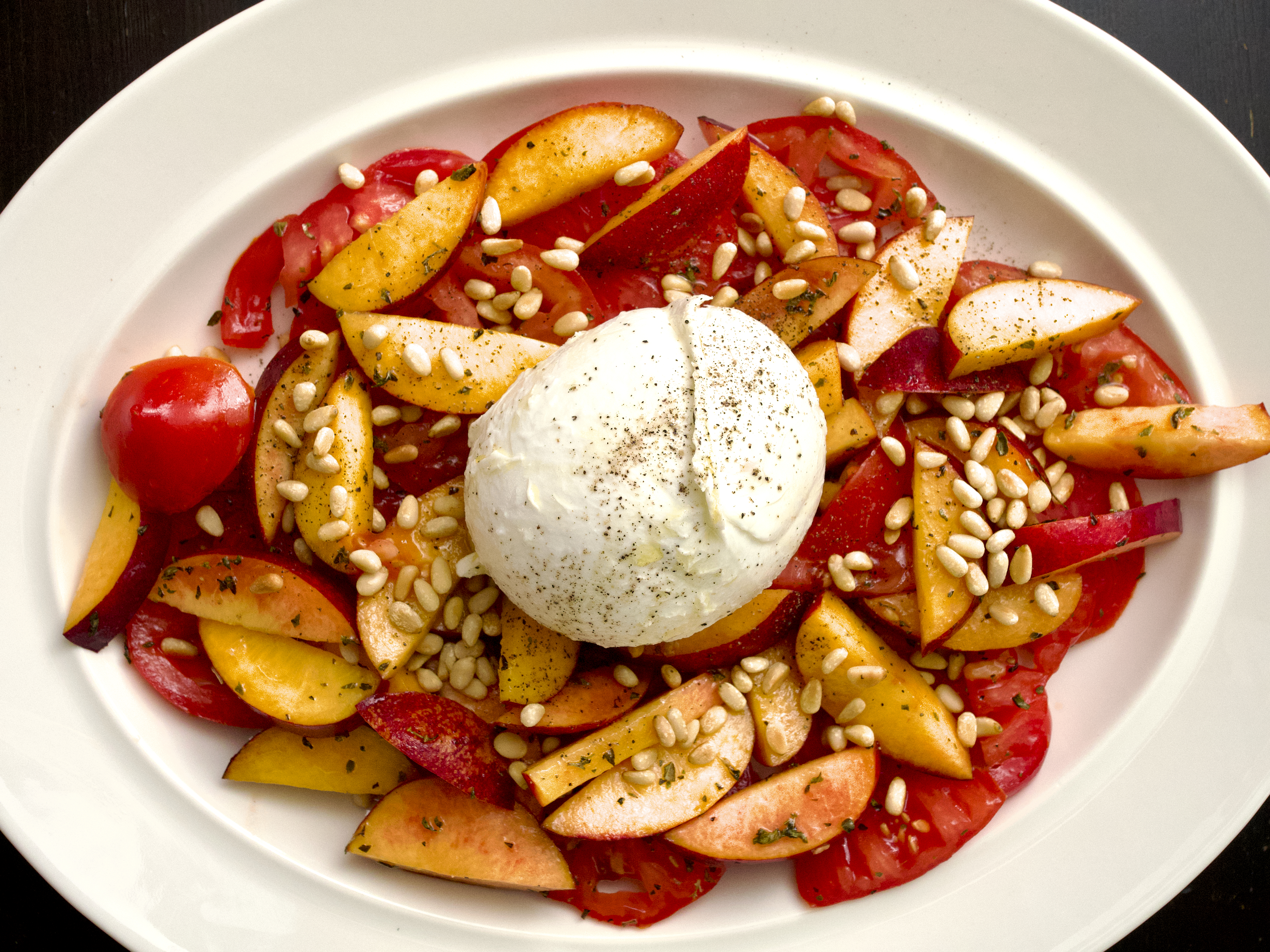
Fresh and summery and an opportunity to eat more peaches. There was a burrata shortage the day we made this and so we had to substitute mozzarella.
Mozzarella, tomato & peach salad – serves 4
400g large ripe tomatoes, ideally heirloom and/or beefsteak
400g ripe peaches or nectarines
extra virgin olive oil
a splash of white wine vinegar
1 tsp dried oregano, plus extra to serve
1 large ball of burrata (or buffalo mozzarella)
a small handfull of pine nuts, toasted
Slice the tomatoes into rounds, removing the cores.
Stone and slice the peaches into wedges. Put the tomatoes and peaches into a mixing bowl with the some olive oil, white wine vinegar and the dried oregano and toss to coat. Season with salt to taste.
Arrange the tomatoes and peaches on a platter and put the burrata in the middle. Drizzle with more olive oil and sprinkle with a little dried oregano. Season with flaky sea salt and black pepper. Scatter over the toasted pine nuts and serve.
(Original recipe from Stagioni by Olivia Cavalli, Pavillon, 2022.)
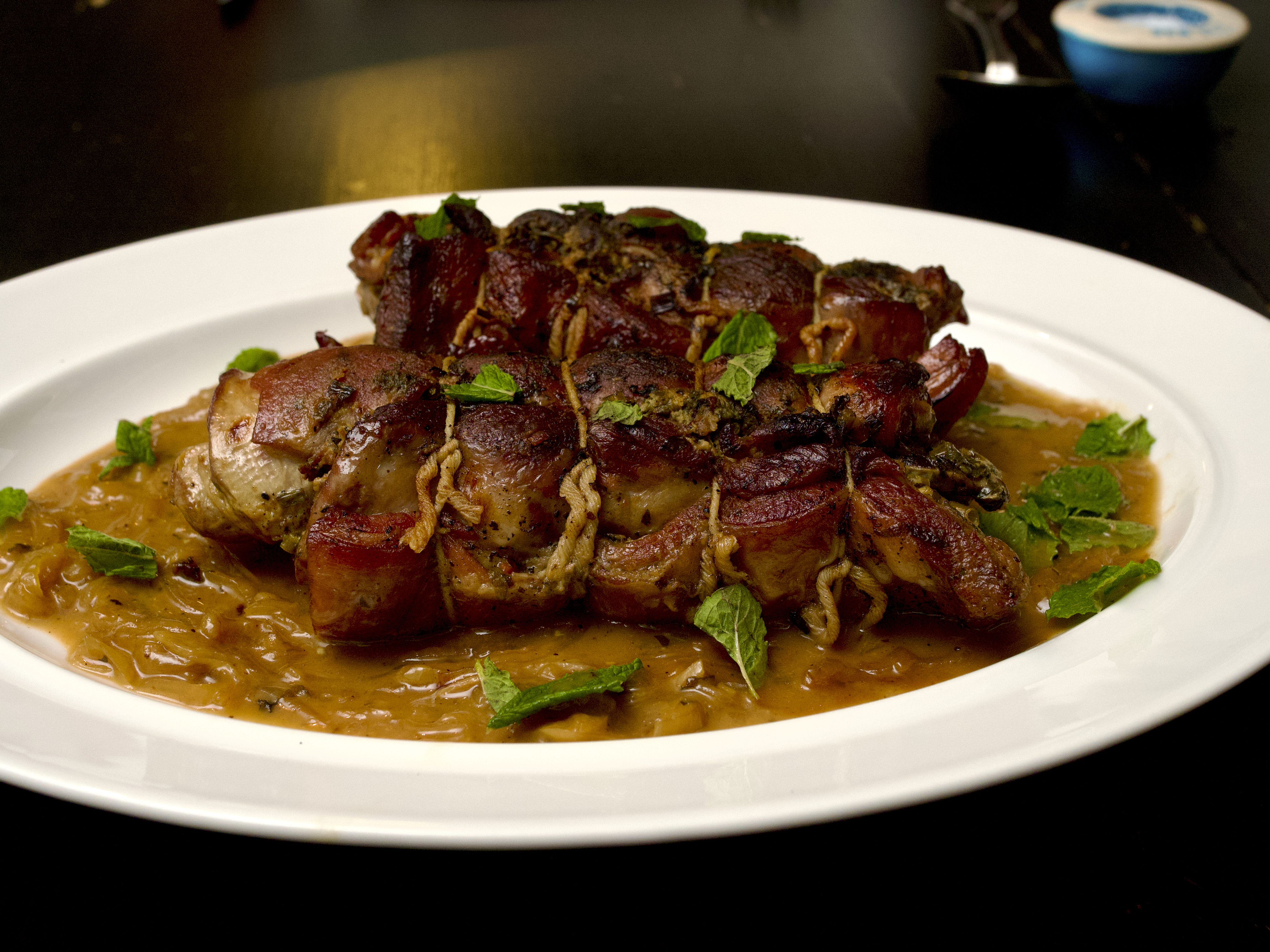
Lamb breast is a favourite cut for slow-cooking. It is melt in the mouth by the time it’s done and the onion gravy with this dish makes itself. We served with boiled new potatoes, steamed asparagus and roasted carrots on a cool and rainy Spring evening. It has taken us a while to post this as we thought we missed the seasonal boat but actually the weather in Ireland has been so bad that this would be perfect right now!
Wine Suggestion: This dish suits a good Cabernet Sauvignon and without spending the earth (and you can) the bargain of the moment is Parker Coonawarra Estate’s Cool Climate Cab. It hits the spot so well. Genuinely fresh because of Coonawarra’s proximity to the cold Antarctic winds hitting the coast, which combines with the Terra Rossa Soils, this wine has power and poise in equal measure. Freshness to cut through little bit of fattiness and poise to carry through the whole meal.
Herb-stuffed lamb breast with onion gravy – serves 4
800g lamb breast (we had to get two small ones which worked perfectly too)
2 tbsp Dijon mustard
a handful of flat-leaf parsley, finely chopped
a handful of chives, finely chopped
a handful of mint, finely chopped, plus extra to serve
1 tbsp vegetable oil
2 onions, finely sliced
4 cloves of garlic, finely sliced
250ml white wine
250ml chicken stock
Heat the oven to 170C/fan 150C/gas 3.
Season the lamb all over, then lay it out flat on a large board, with the flesh side facing upwards. Brush all over with the mustard, then sprinkle over the herbs. Roll up tightly lengthways and tie with pieces of kitchen string to hold it together.
Heat the oil in a large casserole and brown the lamb all over until golden brown. Remove the lamb to a plate, then tip the onions and garlic into the casserole, and cook for 10 mintues until starting to soften. Pour in the white wine and chicken stock, then return the lamb, cover with a lid and cook in the oven for 3 hours.
Lift the lamb onto a warm plate, cover tightly with foil and leave to rest for 20 minutes. Skim any excess fat of the gravy and keep warm, you can add a splash of warm water if looks too thick. Slice the lamb and serve with the onion gravy and some chopped mint.
(Original recipe by Janinie Ratcliffe and Adam Bush in Olive Magazine, May 2019.)


 Jono & Jules do food & wine