Feeds:
Posts
Comments

Posts Tagged ‘Italian’

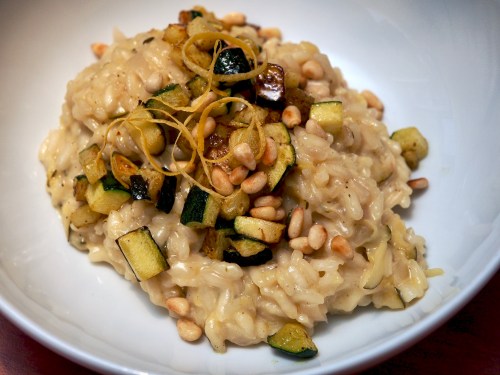
Courgette RisottoWe loved this simple risotto with toasted pine nuts and little pieces of fried courgette. Definitely special enough to serve to friends for dinner.

Wine Suggestion: this risotto demands a waxy, nutty white and what better than an excellent Soave made by Graziano Pra. His Soave Classico “Otto” is fresh and a delight with jasmine and hawthorn aromas, but if you can step up to the “Monte Grande” cuvée then you get extra depth and greater layers of almonds and nuts that complement the pine nuts perfectly.

Courgette Risotto – serves 3-4

  • 50g butter, plus a bit extra to finish
  • 1 small onion, finely chopped
  • 250g courgettes, 140g coarsely grated, dice the rest
  • 175g risotto rice
  • 1 lemon, zest and juice
  • 1.2 litres of veg stock (or chicken stock) kept hot over a low heat
  • 25g parmesan, grated
  • 2 heaped tbsp mascarpone
  • 1 heaped tbsp toasted pine nuts

Melt the butter in a heavy frying pan then gently fry the onions until softened. Stir in the grated courgettes and the rice, then increase the heat and stir for 1-2 minutes.

Add the lemon juice and a ladleful of the hot stock. Stir continuously over a medium-high heat. Keep stirring until the liquid is almost absorbed, then add another ladleful of stock. Continue like this for until the rice is just tender and has a creamy texture, about 20-30 minutes. Stir in the Parmesan, mascarpone and some salt and black pepper, then cover with a lid and set aside for 5 minutes while you fry rest of the courgettes.

Heat the rest of the butter with a splash of oil in a small frying pan. Add the diced courgettes and fry over a high heat for 2-3 minutes until golden & softened. Divide the risotto between plates, then scatter with the diced courgettes and any buttery juice from the pan, the pine nuts & a few pinches of lemon zest.

(Original recipe from BBC Good Food)
Read Full Post »

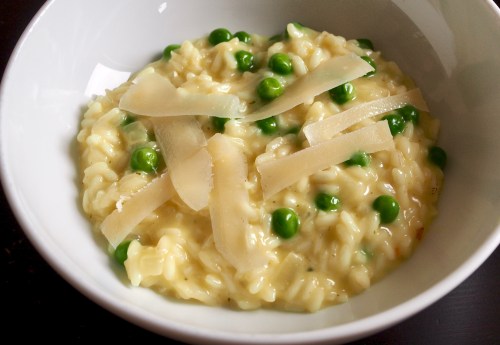
Lemony pea risotto

A standby, reliable dish; something we make for weekend lunches that is simple, tasty and comforting. We’re always surprised at how good it is!

Wine Suggestion: a fresh, zesty white is our usual choice. Vermentino from  Tuscany like the Poggio ai Ginepri IGP Bianco works a treat, or a crisp Sauvignon Blanc or a Chablis would be great too.

Pea & Parmesan risotto – serves 4

  • 1.2 litres chicken stock/veg stock
  • 100g unsalted butter
  • 2 medium onions, finely chopped
  • 1 garlic clove, crushed
  • 225g arborio rice
  • 100g frozen peas
  • 50g Parmesan cheese, finely grated

Put the stock into a saucepan and bring to the boil, then keep over a low heat.

Melt the butter in a sauté pan, and the onion and garlic, then cook for 5 minutes. Add the rice and stir over a low heat until translucent and starting to soften. Increase the heat to medium and begin adding the hot stock, a ladle at a time. Keep adding ladles of stock when the one before has been completely absorbed by the rice.

Continue like this for about 15-20 minutes or until the rice is al dente.

Tip the frozen peas into the risotto and stir. Keep stirring for about 3 minutes or until the peas have defrosted and the rice is bubbling. Finally, stir in the Parmesan and serve immediately with a few shards of Parmesan over the top.

(Original recipe by Tana Ramsey in BBC Good Food Magazine, July, 2007.)

Read Full Post »

Asparagus & Prosciutto soup

Another favourite from the River Café where the prosciutto gives a big addition to the flavour. Serve with a few asparagus tips and top quality olive oil on top. Delicious!

Wine suggestion: Sauvignon Blanc with bags of  flavour. Something like the Dog Point from New Zealand or the Dezat Sancerre from the Loire will work great. Going slightly off-piste we love the Domaine Bellier Cheverny Blanc which combines 85% Sauvignon Blanc with Chardonnay in a un-sung appellation from the Loire, a really good food wine.

Asparagus & prosciutto soup – serves 4

  • 500g asparagus
  • 140g prosciutto slices, sliced into thin ribbons
  • 1 red onion, chopped
  • 2 medium potatoes, peeled and cut into 2cm cubes
  • 140g spinach
  • Marigold Swiss bouillon powder dissolved with 750ml of boiling water
  • 2 tbsp flat-leaf parsley leaves, chopped
  • extra virgin olive oil

Snap the woody ends off the asparagus and cut the remaining stalks into short lengths. Keep the tips to one side.

Heat 2 tbsp of oil in a heavy-based pan, add the onion and soften for 5 minutes, then add the prosciutto, potatoes, parsley and asparagus stalks. Season with pepper (hold off on the salt until the end as the ham is salty) and cook for 5 minutes, stirring, then add the bouillon and simmer until the potatoes and asparagus are tender – about 15 minutes. Add the spinach and most of the asparagus tips and cook for a another few minutes. Remove from the heat and blend to a rough purée.

Heat 3 tbsp of olive oil and fry the reserved tips for a few seconds. Serve the soup with the asparagus and oil drizzled over each bowl.

(Original recipe from Italian Two Easy by Rose Gray & Ruth Rogers, Clarkson Potter, 2006.)


Read Full Post »

Radicchio & Gorgonzola pasta

In some ways this is an opportunistic dish because we don’t always see Radicchio in our grocer’s shop. We love the creamy, salty, bitter flavours  which come together with the rich creamy sauce. We like serving it with a bit of Parmesan too, but it’s not necessary.

Wine suggestion: The Rocca delle Macie’s Vermentino from the Maremma was our choice and the crisp, almost sappiness, helped to cut through the richness and complement the bitterness of the radicchio. If we’d had one we would have loved to have tried a good, dry Lambrusco from near Bologna. We could be wrong but think this might work too.

Pasta with Radicchio & Gorgonzola – serves 4

  • 1 onion, diced
  • 1 radiccio, shredded
  • 50ml white wine
  • 4 tbsp cream
  • 75g gorgonzola
  • 300g pasta

Cook the pasta in a large pan of boiling salted water according to the timings on the packet.

Heat 1 tbsp of olive oil and fry the onion until softened, then add the radicchio and continue to cook until wilted.

Add the white wine and season. Pour in the cream, melt in the gorgonzola and mix through the cooked pasta.

(Original recipe from BBC Olive Magazine, April, 2014.)

Read Full Post »

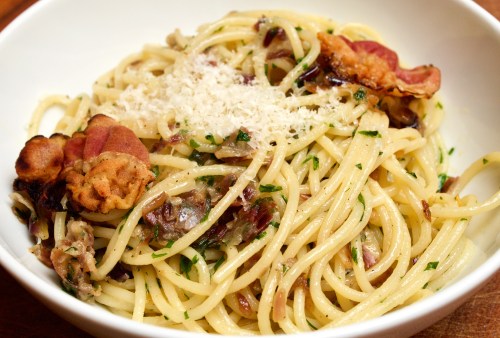
Spaghetti with parsley, pancetta & parmigiano

We’re never surprised at how reliable the cookbooks from River Cafe are as in general they celebrate fabulous ingredients with simple cooking methods; our favourite way to cook too. This is a rich dish and works best served in small portions as a starter.

Wine Suggestion: The richness and parmesan cry out for higher acidity in the wine. We combined this idea with the almost bacon-ny yeasty and almondy autolysis of a sparkling Trento DOC, the Ferrari Perlé Nero Riserva. Body, richness, nuttiness and freshness; a great combo with the pasta.

When choosing between Italian sparkling wines we find the Trento DOC area has a bit more body and richness than the creamier and refined Franciacorta. This is not to say that top producers like Ferrari don’t have refinement, they do in spades, but that there is a lightness and elegance to be found in Franciacorta. Too light for this dish. Both areas produce some stunning wines.

Spaghetti with parsley, pancetta & parmesan – serves 6

  • 8 tbsp finely chopped flat-leaf parsley
  • 3 medium red onions, finely chopped
  • 200g pancetta, finely sliced, then cut into 5mm pieces plus an extra Rose 6 thin slices (one each)
  • 400g spaghetti
  • 150g butter
  • 2 garlic cloves, peeled and finely chopped
  • 1 dried red chilli or a good pinch of dried chilli flakes
  • olive oil
  • 120g Parmesan, grated

Gently heat the butter in a heavy-based saucepan. Add the onion and cook gently for 15-20 minutes, then add the pancetta and garlic. Turn down the heat, stir and continue to cook for a further 10 minutes. You can turn up a bit again at the end if you want the pancetta to crisp up.  Season well with salt, pepper and the dried chilli. Stir in the parsley.

Heat a small frying pan, brush with oil, and fry the slices of pancetta to crisp them. Drain on paper towels.

Cook the spaghetti in a large saucepan of boiling salted water until al dente. Drain, but scoop out a few tablespoons of the cooking water first. Throw the spaghetti into the warm parsley mixture and toss, adding a little of the pasta water to help the sauce coat the pasta.

Serve with lots of Parmesan and a slice of pancetta on each bowl.

(Original recipe from River Cafe Green by Rose Gray & Ruth Rogers, Martin Gray, 2000.)


Read Full Post »

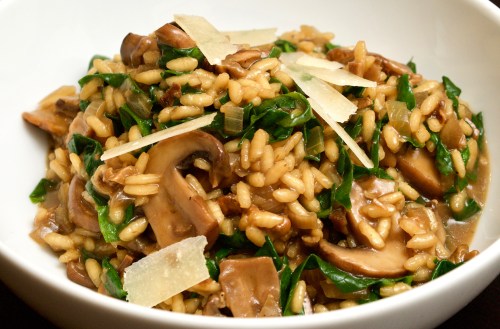
Porcini & spinach risottoWe love a good risotto and this simple one doesn’t disappoint. Perfect cold weather comfort food.
Wine Suggestion: as this is a richer flavoured mushroom dish our first choice would be to head to a Nebbiolo, especially a good Barolo. With the addition of the spinach which has a fresh, iron bitterness we would swing back to a full-bodied white and go for a good Alsace Pinot Gris. The depth of flavour of this dish can balance a really intense Pinot Gris like one from Zind- Humbrecht, which sometimes can be edgy and a bit much for many foods. This one can handle it so push the boat out for flavour and enjoy.

As we had this as a weeknight treat, however, we found that a more humbleVilla Wolf Pinot Gris from the Pfalz also worked.

Porcini & spinach risotto – serves 2

  • 25g dried porcini mushrooms
  • 50g butter
  • 1 small onion, finely chopped
  • 1 garlic clove, crushed
  • 200g chestnut mushrooms, sliced
  • 150g risotto rice
  • a glass of white wine
  • 750ml veg stock, simmering (we use Marigold Swiss Bouillon powder)
  • 100g spinach, washed & chopped
  • parmesan shavings

Soak the porcini mushrooms in a cup of boiling water for 10 minutes. Strain the liquid through a sieve to remove any gritty bits and keep for later. Roughly chop the porcini.

Heat the butter in a wide shallow pan and cook the onion and garlic until softened. Add the chestnut mushrooms and cook for 5 minutes, then add the porcini and risotto rice and stir until coated.

Pour in the wine and bubble until it has been absorbed by the rice. Gradually add the stock and porcini soaking liquid, stirring until the rice is al dente (you may not need all of the stock). Stir through the spinach until just wilted and serve sprinkled with shavings of parmesan.

(Original recipe by Janine Ratcliffe in BBC Olive Magazine, February 2009.)

Read Full Post »

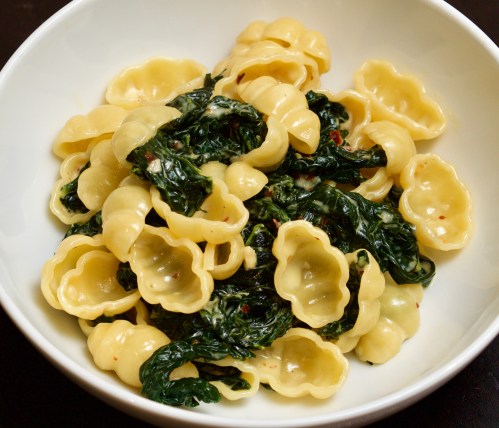
Conchiglie al Cavolo Nero

We’ve made this a couple times recently as  Cavolo Nero is around and we keep on being drawn to it. Especially as we’re starting to tire of root veg and looking forward to all the treats that will come with Spring.

The dish is  creamy and cheesy, with load of garlic and iron rich Cavolo Nero. Fairly rich for a main course in our opinion but absolutely perfect served in small starter portions.

If it suits you can blanch and dry the Cavolo nero and make the garlic puree in advance which leaves very little to do to get the dish on the table.

Wine suggestion: An old favourite came to the rescue here in the form of the Sartarelli Verdicchio dei Castelli di Jesi Classico Superiore “Tralivio” which has a great weight but also a freshness and vibrant texture. The flavour of the food isn’t shy, so make sure whatever you choose has enough body to cope.

Conchiglie al Cavolo Nero – serves 6 as a starter

  • 900g Cavolo Nero
  • 300ml double cream
  • 7 garlic cloves, peeled
  • 3 tbsp extra virgin olive oil
  • 2-3 dried chillies, crumbled or 2 tsp chilli flakes (adjust to your heat preference)
  • 150g Parmesan, freshly grated
  • 250g conchiglie or other shell-shaped pasta

Remove the central stalk from the Cavelo Nero leaves and cut each one into 3 or 4 pieces. Blanch the leaves in boiling salted water for 3 minutes by which time they should be tender and bright green. Drain and dry in a clean tea towel.

Put the double cream and 5 of the whole garlic cloves into a pan and simmer until the garlic is soft, about 15 minutes. Purée in a blender.

In a separate pan, heat the olive oil and fry the remaining 2 garlic cloves, cut into thin slices, and the chilli. When the garlic has coloured, add the blanched Cavolo Nero, stir & season. Pour in the cream and garlic purée, bring to the boil, and cook for 5 minutes until the Cavolo Nero is coated and the sauce has thickened. Add the Parmesan.

Meanwhile, cook the pasta in plenty of boiling salted water, then drain well before mixing well with the sauce.

(Original recipe from The River Cafe Cookbook by Rose Gray & Ruth Rogers, Ebury Press, 1995.)

Read Full Post »

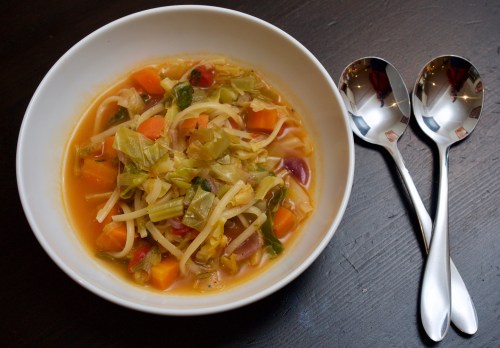
Minestrone

This minestrone soup is from Jamie Oliver’s very first cookbook, back when his recipes were from the heart, had a simplicity and weren’t designed to be chucked together in 15 minutes. If you bake a ham be sure to reserve the water that you cook the ham in before baking, it makes a great ham stock for soups like this one.

Minestrone Soup – serves 6

  • 2 tins of chopped tomatoes
  • 3 carrots, peeled and diced into 1 cm cubes
  • 2 leeks, remove the outer leaves and dice into 1 cm cubes
  • 5 sticks of celery, remove the stringy bits with a vegetable peeler and dice into 1 cm cubes
  • 2 red onions, peeled and diced into 1 cm cubes
  • 1 cabbage, roughly chopped
  • 1 tbsp olive oil
  • 2 cloves of garlic, finely sliced
  • 1 heaped tbsp of chopped rosemary
  • 850ml gammon/ham stock (or chicken or vegetable stock)
  • 3 handfuls of basil
  • 170g spaghetti
  • Parmesan cheese, grated

Put the olive oil into a warmed heavy-based pan and sweat the carrots, leeks, celery, onion, garlic and rosemary over a medium heat until just tender – around 15 minutes. Add the tomatoes and cook for 1-2 minutes. Add the stock, bring to the boil and simmer for 15 minutes, skimming off any froth that comes to the top. Add the cabbage, cover the pan and simmer for 10 minutes, then rip in the basil leaves and add the pasta. Simmer for a further 5 minutes. Taste and season.

Serve garnished with the grated Parmesan and a slug of good olive oil.

(Original recipe from The Naked Chef by Jamie Oliver, Michael Joseph, 1999.)

Read Full Post »

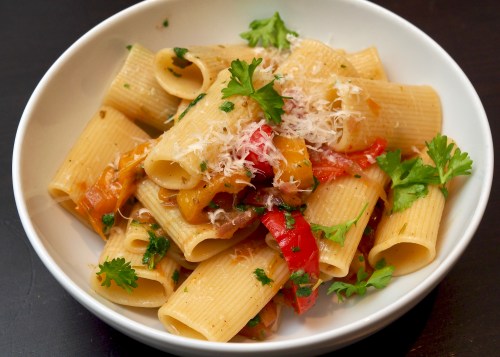
Rigatoni Peperonata

A simple midweek pasta supper for using up those multi-pack peppers. It reminds us of summer and Italy.

Wine suggestion: a great match with Cabernet Franc. The bell pepper, inky and pencil shaving character really compliments the flavours in this simple dish. A favourite of our is the Ch du Hureau from Saumur. Their “Tuffe” a youthful Cab Franc is a gem that regularly makes its way onto our wine rack. If you want to stick with Italian a 100% Sangiovese would make an excellent choice too.

Pasta Peronata – serves 4 (easily halved)

  • 2 red peppers, sliced
  • 2 yellow peppers,  sliced
  • 2 red onions, finely sliced
  • 2 cloves garlic, grated or crushed
  • 2 handfuls fresh flat-leaf parsley, leaves finely chopped and stalks reserved
  • 2 tbsp balsamic vinegar
  • 2 handfuls grated Parmesan cheese
  • 2 heaped tablespoons mascarpone cheese or crème fraîche (optional – we don’t usually add this unless we have some already)
  • 500g rigatoni or penne pasta

Put the peppers into a large frying pan over a medium heat with a little olive oil and a pinch of salt and pepper. Cover with a lid, and cook gently for about 15 minutes until softened. Add the onion and cook for a further 20 minutes. Then add the garlic and parsley stalks and cook, stirring, for about 3 minutes. Season to taste. Add the vinegar, then add a handful of the grated Parmesan and the mascarpone or crème fraîche if you are using it and turn the heat down to minimum while you cook the pasta.

Cook the pasta according to the instructions on the pack. Reserve a little of the cooking water before draining. Toss the peppers, pasta & chopped parsley in a large warm bowl. Add a bit of the reserved pasta water and a splash of good olive oil to coat the pasta. Serve with the rest of the Parmesan.

(Original recipe by Jamie Oliver).

Read Full Post »

Walnut Pesto

We first tasted walnut pesto in Florence a few years ago but it has taken us a while to get around to making it ourselves. This works equally well for a casual dinner or in smaller portions as a starter and it tastes really special. You can make this with fresh walnuts which you buy whole and shell yourself but it also works well with shelled walnuts, provided you make sure they are fresh (we buy our walnuts from Lidl which come in a sealed foil bag). You can keep the pesto in the fridge for up to a week and it freezes well too.

Wine Suggestion: we like to drink dry white wines that have texture and a certain crunchiness with walnuts, which aren’t always easy to match. Italian whites come to mind first and the nutty ones work very well, like Verdicchio, but it has been dry (sec) Jurançon that has proved a stellar match, like Cauhapé’s Chants des Vignes. A wine with a vibrancy of fruit, a fresh acidity like a crunchy green and red apple mix, some white flowers in the aromas and a texture on the palate that carries through with a long length and food friendly finish.

Pasta with creamy walnut pesto – serves 4 (with some pesto left over)

  • 400g orecchiette pasta
  • 175g walnut halves/pieces
  • 1 clove of garlic
  • handful fresh basil, roughly torn
  • 100g Parmesan, freshly grated, plus extra to serve
  • 50g butter
  • 4 tbsp extra virgin olive oil
  • 50ml double cream

Cook the pasta for the recommended time on the packet.

Meanwhile, put the walnuts and garlic in a food processor and whizz until finely chopped. Add the basil, cheese, butter and oil and pulse for a few more times, then season.

Pour the cream into a pan and warm through. Add two-thirds of the pesto, then gently heat to loosen it.

Take 2 tbsp of water out of the pasta pan before draining, then mix the pasta and the water into the sauce. Serve immediately with some extra Parmesan and a few basil leaves.

The leftover pesto will keep in the fridge for a week or the freezer for a month.

(Original recipe by Ursula Ferringo in BBC Good Food Magazine, April 2009.)


Read Full Post »

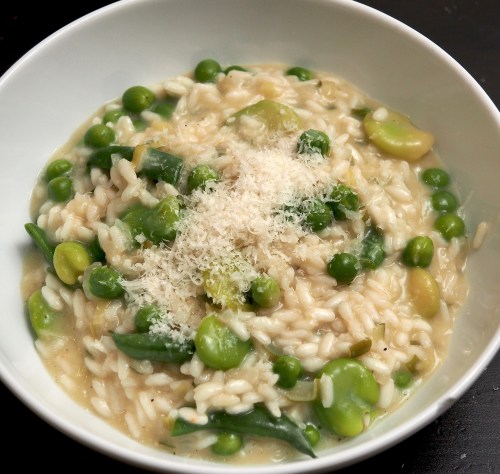
Summer risotto

On a balmy summer evening we podded local broad beans and picked some french beans from the vines in our back yard. We used a stock made from a previously roasted chicken which was subsequently used to poach chicken fillets for a Coronation Chicken. The only thing out of place were the frozen peas, but we think unless you pick the pods fresh and eat them almost immediately, frozen is often best. This is based on a risotto primavera or Spring risotto which usually contains asparagus.

Wine Suggestion: a fresh, summery Godello caught our eye. The La Sonrisa de Tares from Bierzo had enough weight to balance the starchy creaminess and depth of the Parmesan while a lovely textural freshness and summery zing made the beans and peas sing with all their fresh flavours.

Summer Risotto – serves 4

  • 200g shelled broad beans (you will need about 800g of broad beans in their pods to get this quantity or you can use frozen broad beans, defrosted)
  • 2 large shallots, finely chopped
  • 4 scallions, trimmed and finely chopped
  • 1 small garlic clove, finely chopped
  • 250g green beans, trimmed and cut into short lengths
  • 1.5 litres home-made chicken stock (you might not need it all)
  • 1 tbsp olive oil
  • 80g butter
  • 350g Carnaroli or other risotto rice
  • 100ml dry white wine
  • 140g frozen peas
  • 100g Parmesan, finely grated

Start by double podding the broad beans so you are left with bright green beans. To do this just blanch them in boiling water for 2 minutes, then drain and squeeze to remove the papery skin. If you’re using frozen beans you might be able to remove the skins when defrosted without having to blanch first.

Put the stock into a large pot and bring to a simmer.

Heat the oil and 40g butter in a wide heavy pan with a lid. Cook the shallot, scallions & garlic for a few minutes until soft and transparent but don’t let them brown. Add the rice and keep stirring for a few minutes until the rice is hot and starting to sizzle, then pour in the wine. Continue to stir until the wine has evaporated.

Now start gradually adding the stock, a ladleful at a time. Only add another ladleful when the previous one has been absorbed by the rice. Continue stirring and adding the stock for 14 minutes, then add the broad beans and peas with some salt and black pepper. Meanwhile, cook the green beans in the simmering stock for 6 minutes or until soft, then add these to the rice too. Continue stirring and adding stock until the risotto has a creamy texture and the rice is soft but retains a little bite.

Remove the pan from the heat and add half the parmesan, the rest of the butter and one last splash of stock to retain the moisture. Put the lid on the pan and leave to rest for a few minutes off the heat. Serve with the rest of the Parmesan sprinkled over the top.

Read Full Post »

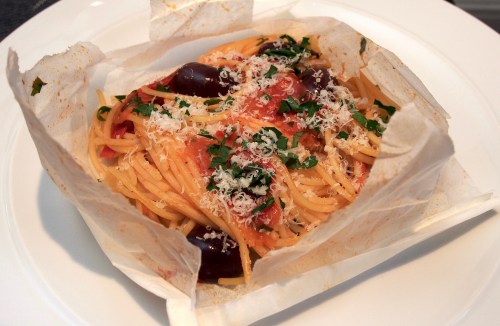
Spaghetti al cartoccio

This starter portion of pasta is perfect for entertaining as it can be prepared up to 6 hours in advance and finished off in the oven when required. We had this as a second course after broad bean bruschetta and followed by barbecued balsamic beef and then home-made ice cream and summer berry compote for dessert.

Wine Suggestion: lovely with a slightly chilled red, and naturally, given the inspiration from the food we’d suggest Italian. A light, lively, youthful and fruity Sangiovese hits the spot in the form of a Rocca delle Macie Chianti Vernaiolo given 30-40 minutes in the fridge before serving; chilled but not ice cold. The fresh acidity works perfectly with the fresh tomatoes and olives and the combination speaks to us of summer.

Pasta al Cartoccio – serves 4

  • 2 tbsp olive oil
  • 1 large clove of garlic, peeled and left whole
  • 450g ripe fresh tomatoes, chopped
  • 1 red chilli, seeded and chopped
  • 280g dried spaghetti
  • 100g large black olives
  • a handful of flat-leaf parsley, chopped
  • grated Parmesan cheese, to serve

Cut 4 pieces of parchment paper, about 30x20cm.

Heat the oil in a saucepan over a medium heat, add the garlic and sauté for a couple of minutes. Remove the garlic, then add the tomatoes and chilli and season well. Simmer for 20 minutes, stirring now and then.

Meanwhile, preheat the oven to 200C/Gas 6/fan oven 180C.

Cook the spaghetti in salted water for half the time given on the pack, then drain well.

Add the olives and half the parsley to the tomato sauce and stir in the pasta. Taste and season to taste.

Divide the spaghetti between the pieces of paper, piling it into the middle of each. Scrunch the edges of each parcel  to seal tightly. Put the parcels in a roasting tin and bake for 7 minutes after which time the spaghetti should be al dente.

Remove the tin from the oven and transfer each parcel to a warm plate. Let everyone open their own parcels and sprinkle the spaghetti with the remaining parsley and some parmesan.

(Original recipe by Ursula Ferrigno in BBC Good Food, August 2001.)

Read Full Post »

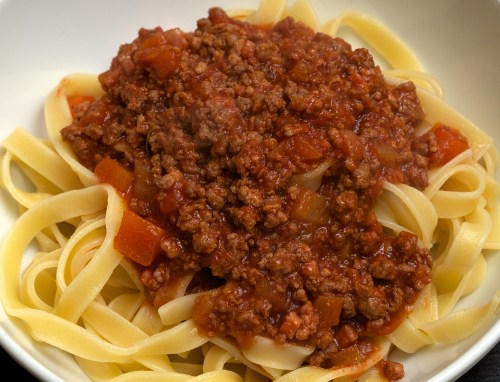
Rick Stein’s Venetian Bolognese Ragú

We ♥ Pasta!

Wine Suggestion: We often advise to serve food with wine from the same region as they tend to naturally complement each other. This is never more the case than with Italian reds and tomato-based sauces. Italian red wines, such as Sangiovese, are high in acidity and are a perfect match for acidic tomato sauce; so find a good Sangiovese as you’ll need one for this recipe anyway – and it would be plain wrong not to drink the rest.

Ragù Bolognese – serves 6-8 

  • 1 celery stick, finely chopped
  • 2 carrots, finely chopped
  • 1 medium onion, finely chopped
  • 60ml olive oil
  • 300g beef mince
  • 300g pork mince
  • 100g lean smoked bacon, finely chopped
  • 1 tsp salt
  • 15 turns black pepper
  • 100ml Sangiovese wine
  • 60ml water
  • 500ml passata
  • 2 tbsp tomato puree
  • 1 sprig rosemary
  • cooked tagliatelle & freshly grated Parmesan to serve

In a heavy-based saucepan, fry the celery, carrots and onion in the olive oil for about 10 minutes.

Add the beef, pork and bacon and brown. Season with the salt and pepper, then add the wine, water, passata, tomato puree and rosemary. Cook, covered, over a low heat for about 2 hours.

Serve with the cooked pasta and freshly grated Parmesan.

(Original recipe from Rick Stein’s Venice to Istanbul, Penguin, 2015.)

Read Full Post »

OLYMPUS DIGITAL CAMERA

A classic recipe that we always find full of flavour and very satisfying. A good veggie dish for a cold night.

Spinach & ricotta cannelloni – serves 4

  • 60g butter, plus a bit extra
  • 300g spinach
  • 2 garlic cloves, finely chopped
  • 425g ricotta cheese, drained
  • ½ tsp grated nutmeg
  • 16 dried cannelloni tubes
  • 45g plain flour
  • 450ml whole milk
  • 40g Grana Padano cheese (or use Parmesan)

Preheat the oven to 180C/350F/Gas 4.

Grease a medium-sized, shallow, oven-proof dish with a little butter.

Bring a large pan, containing 1cm depth of water, to the boil, add the spinach, and stir until wilted. Drain and press out the excess water, then chop.

Melt 15g of the butter in a medium pan and sauté the garlic for a couple of minutes. Stir in the spinach and season well. Take off the heat and stir in the ricotta cheese and nutmeg. Fill the cannelloni with the spinach mixture and arrange the tubes in a single layer in your buttered dish (use both ends of a teaspoon to help fill the tubes).

Meanwhile, melt the remaining 45g of butter in a large pan. Whisk in the flour over a low heat and cook for a couple of minutes. Remove the pan from the heat and gradually whisk in the milk. Return to the heat and cook, stirring, until thickened.

Reduce the heat to low and continue to cook for another 5 minutes, stirring occasionally. Season the sauce generously with salt and pepper and pour over the filled cannelloni tubed. Sprinkle the cheese over the top, place on a baking tray and bake for 30 minutes.

(Original recipe from Family Kitchen Cookbook by Caroline Bretherton, DK, 2013.)

Read Full Post »

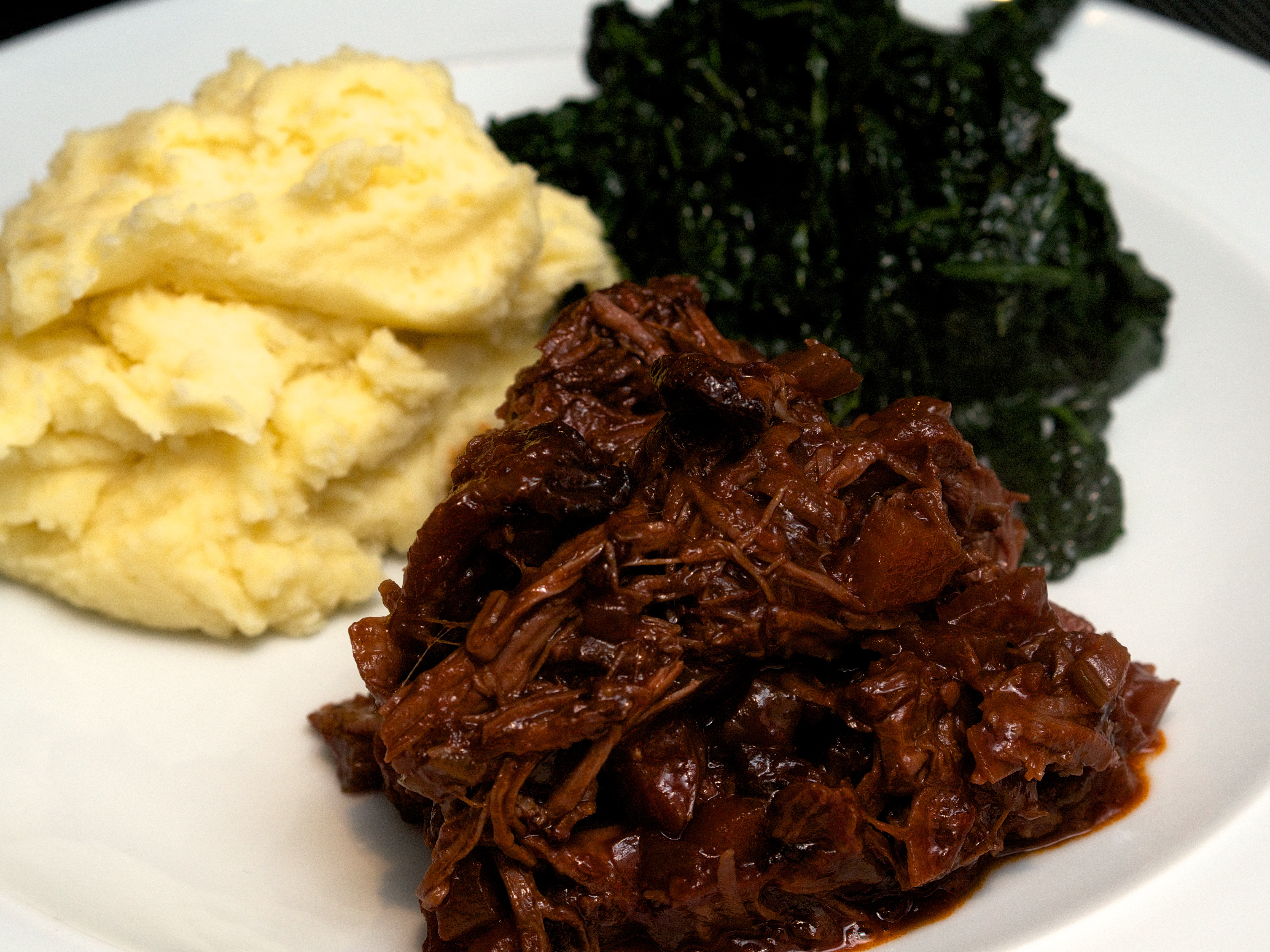
Beef shin braised in Chianti

Take a shin of beef and braise it for hours in a bottle of Chianti until it can be carved with a spoon … what’s not to like!

Wine Suggestion: the obvious choice is Chianti but given the richness and depth in the food make sure it is one with a bit of depth; younger, or more basic Chianti is just too light. We tried one by Tenuta Sant’Alfonso which comes from a specific vineyard with clay-rich soils which was opulent and fuller structured. It had licorice, dark cherry and mocha flavours which was a great match.

Tuscan slow-cooked shin of beef with Chianti – serves 6

  • 1kg beef shin, off the bone
  • olive oil
  • 2 large onions, finely chopped
  • 3 sticks celery, finely chopped
  • 1 carrot, finely sliced
  • 6 fat garlic cloves, finely chopped
  • 750ml Chianti or other robust red wine
  • 4 tbsp tomato purée
  • 4 bay leaves
  • 150ml beef stock

Heat the oven to 180C/fan 160C/gas 4.

Season the meat, then brown in a large casserole with a little olive oil.

Remove the meat and cook the onions, celery, carrot and garlic until softened, adding a bit more oil if needed.

Pour in the wine and bring to the boil before adding the tomato purée, bay leaves & beef stock.

Return the beef to the pan and bring to a simmer.

Cover with a lid and cook in the oven for 4 hours or until the meat falls apart.

When ready, pull the meat into chunks and stir through the sauces.

Serve with mash or fresh pappardelle pasta.

(Original recipe from BBC Olive Magazine, September 2015.)

Read Full Post »

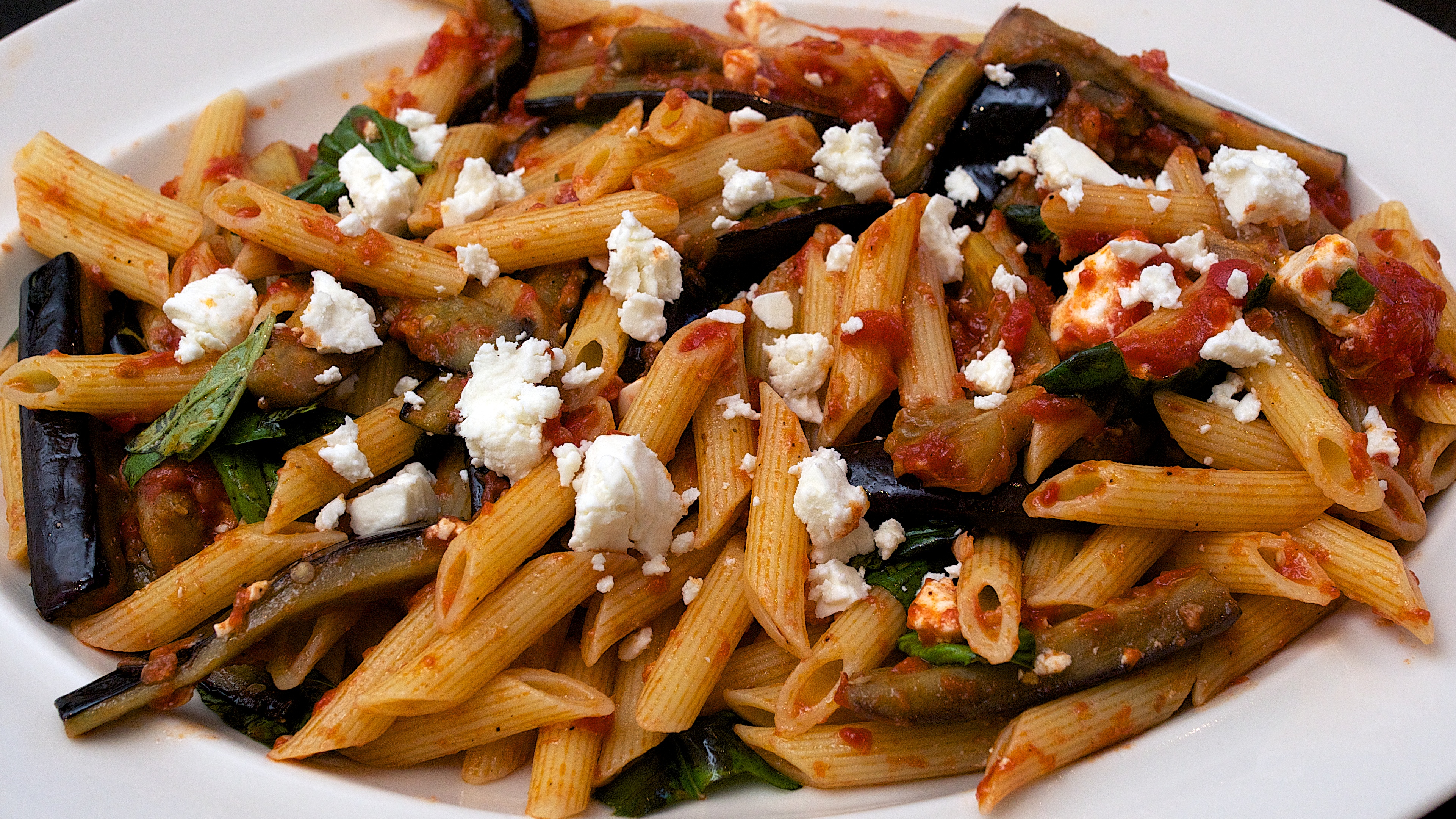
Penne alla norma

We love Rick Stein’s recipes as everything seems to come from true inspiration and has been tested in a real world kitchen so it all works. This recipe is no exception and delivers in flavour and balance perfectly.

Pasta alla Norma is traditionally made with spaghetti but worked just as well penne pasta as a substitute.

Wine Suggestions: Aubergine tends to work with Southern Italian reds really well, but we had an unexpected burst of sunshine so opened a Provençal rosé, Chateau Vignelaure La Source, which is an old favourite. It worked a treat and  will definitely try it again with other aubergine dishes.

Pasta alla Norma – Pasta with Aubergines, Tomatoes, Chilli & Cheese – serves 4

  • 500g aubergines (2 large ones)
  • 500g well-flavoured tomatoes or top quality tinned plum tomatoes, drained (Italian brands are best)
  • 6 tbsp extra virgin olive oil
  • 400g dried spaghetti
  • 4 garlic cloves, crushed
  • ¼ tsp crushed dried chillies
  • A large handful of fresh basil leaves, torn into small pieces
  • 100g finely grated ricotta salata or crumbled feta cheese

Trim the aubergines and cut into two across the middle, then cut each piece lengthways into chip-sized sticks. Toss with 1 tsp of salt and set in a colander over a bowl to drain for 30-40 minutes.

Meanwhile, if using fresh tomatoes, squeeze them over the sink to get rid of most of the juice and seeds. Roughly chop the tomatoes and set aside.

Bring a large pan of water to the boil (about 4.5 litres) and season generously with salt (about 8 teaspoons).

Pat the aubergines dry with kitchen paper to remove the salt and any liquid. Heat 4 tbsp of the frying pan, add half the aubergines and fry until lightly golden. Lift onto a plate lined with kitchen paper  and leave to drain while you fry the next batch. After removing the second batch of aubergine, leave the oil in the frying pan to cool.

Put the spaghetti into the boiling water and cook according to the packet or until al dente. 

Before the pasta is ready, add the remaining oil and the garlic to the cooled frying pan and return to the heat. When the garlic begins to sizzle gently, add the crushed chillies and the tomatoes and cook over a high heat for a few minutes or until they have broken down into a sauce. Season well and stir in the aubergines.

Drain the pasta and add to the sauce with the torn basil and half the cheese, then toss well. Divide between warm bowls and serve sprinkled with the remaining cheese.

(Original recipe from Rick Stein’s Mediterranean Escapes, BBC Books, 2007.)

Read Full Post »

River Café tomato sauce


We have two tomato sauces in our repertoire that we rely on; both are delicious but have a slightly different character. This is the one we have adopted from the River Café in London which is quicker (though we wouldn’t describe it as quick exactly) and incorporates a rich onion base. We keep a stack of takeaway tubs full of tomato sauce in the freezer for whenever pizza, pasta, or any other tomato-flavoured dish calls. Top quality tinned tomatoes are essential and we find the Italian brands are best.

Sugo di Pomodoro a Fuoco Lento or Slow-Cooked Tomato Sauce

  • 2 x 800g tins plum tomatoes, drained of their juices
  • 3 tbsp olive oil
  • 4 medium red onions, peeled and sliced very thinly
  • 2 garlic cloves, peeled and cut into slivers

Heat the oil in a large saucepan, then add the onions. Reduce the heat and cook until very soft, at least 40 minutes. Add the garlic about 5 minutes before the end.

Add the tomatoes and stir to break up. Season with salt and pepper and cook slowly for at least 90 minutes, giving it a stir every now and again. The oil will eventually come to the surface and the sauce will be dark red and very thick with no remaining juice.

(Original recipe from The River Cafe Cookbook by Rose Gray and Ruth Rogers, Ebury Press, 1995.)

Read Full Post »

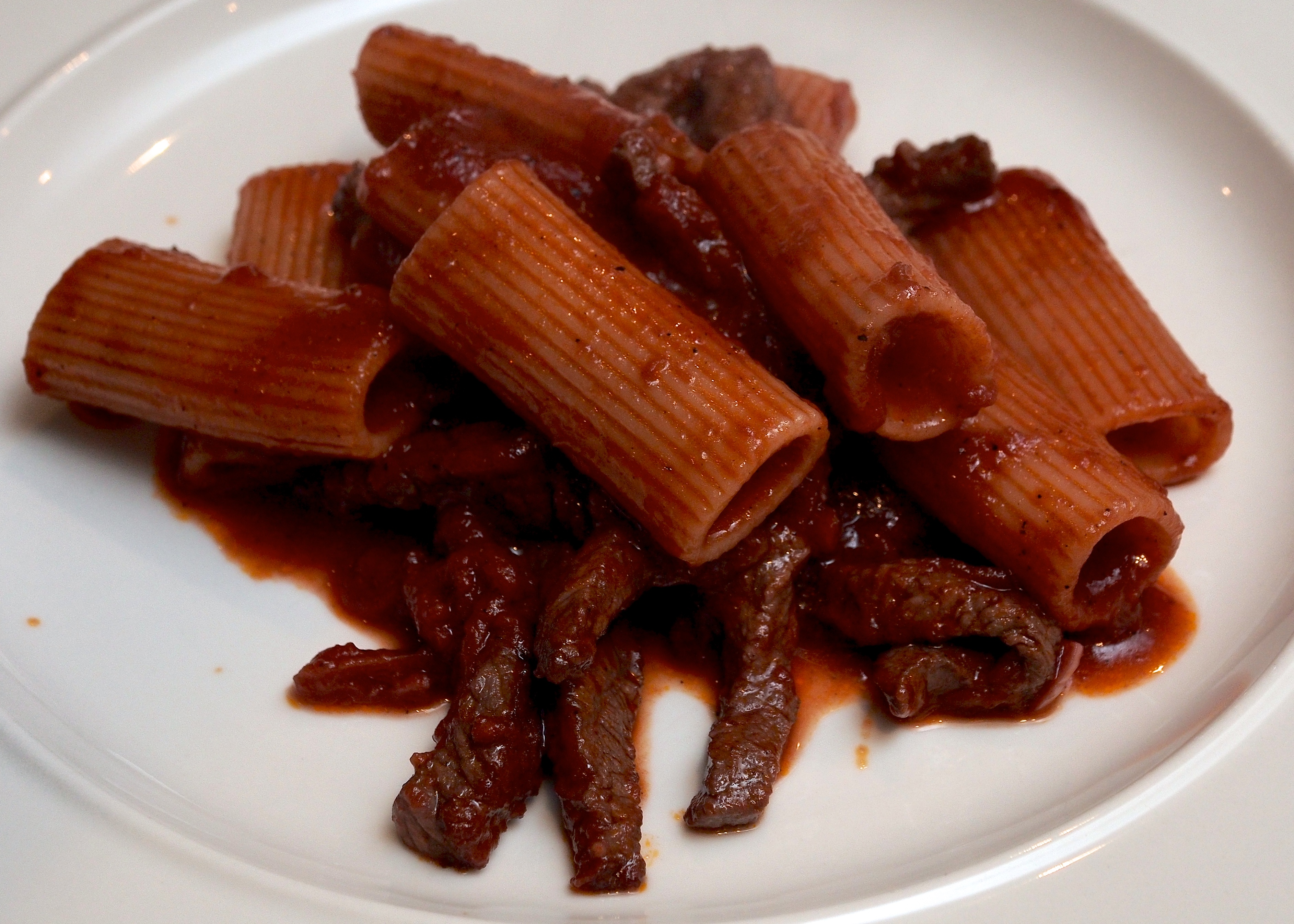
Chianti Beef


The technique used to cook the meat is quite clever as the amount of beef is small and is only quickly, flash fried which keeps the juiciness, adds the caramelisation flavours and gives great depth to the whole dish. It’s an expensive cut but the quantity required is so small that it won’t break the bank. It’s hard to believe a dish with so much flavour takes such a short time to prepare.

Wine Suggestion: we drank one of our favourite Tuscan wines: the Selvapiana Chianti Rufina which is refined and elegant and complements the beef fillet and provides a foil to the rustic black pepper background in this dish.

Rigatoni, tomato, beef and red wine – serves 4

  • 320g rigatoni
  • 200g beef fillet
  • 4 garlic cloves, sliced
  • 50g Parmesan, grated
  • 100g unsalted butter
  • 600g top quality tinned tomatoes
  • 350ml Chianti wine
  • 1tbsp ground black pepper
  • 3tbsp extra virgin olive oil

Trim the beef fillet and cut across into 5mm slices. Cut the slices into 1cm strips.

Heat the butter in a thick-bottomed pan, add the garlic and fry gently until brown. Add the tomatoes and season. Cook over a high heat for 5 minutes, stirring to break up the tomatoes, then add half the red wine. Continue to cook on quite a high heat, adding more wine as the sauce reduces. Cook for 15 minutes in total, using up all the wine, then stir in the pepper.

Heat the olive oil in a frying pan until very hot. Add the beef pieces and fry very briefly, just to brown each piece on both sides. Stir the beef into the sauce with any juices from the pan.

Cook the rigatoni in boiling salted until al dente. Drain and add to the sauce.

Serve with the Parmesan.

(Original recipe from Italian Two Easy: Simple Recipes from the London River Cafe by Rose Gray and Ruth Rogers, Random House, 2006.)

Read Full Post »

OLYMPUS DIGITAL CAMERA

From the geniuses at River Café is this deeply delicious and flavoursome pasta which keeps on reprising itself on our menus. We love that the ingredients list is simple and short and yet the dish is packed full of flavour and style. Don’t shy away from the generous quantity of butter – it’s what gives the dish its richness.

We’ve given a separate recipe for the tomato sauce. You will have too much for this recipe but it’s good served as it is with some tagliatelle and freezes well.

Wine suggestion: earthy, medium bodied red wines work well with this and we returned to an old favourite, the very smooth Selvapiana Chianti Rufina which is pure elegance in a glass. Really fine and supple tannins make this sing with a freshness that adds depth to the food.

Penne, tomato and dried porcini – serves 4 

  • 320g penne
  • 40g dried porcini
  • 2 garlic cloves, finely sliced
  • 1 tbsp flat-leaf parsley leaves, chopped
  • 50g Parmesan, grated
  • 5 tbsp tomato sauce (see below)
  • 100g unsalted butter
  • extra virgin olive oil

Soak the porcini in 200ml boiling water for 10 minutes.

Drain the porcini, straining the liquid through muslin or a paper towel, reserving the water. Rinse the porcini and chop coarsely.

In a thick-bottomed saucepan, melt the butter and add the garlic. Add the porcini and fry until soft. Add a little of the porcini liquid and simmer until absorbed. Stir in the parsley. Add the tomato sauce and season.

Cook the penne in plenty of boiling salted water until al dente. Drain and stir into the pasta sauce.

Drizzle with olive oil and serve with the Parmesan

Tomato sauce – serves 4

  • 2 garlic cloves, sliced
  • 1 tbsp olive oil
  • 2 x 400g tinned tomatoes

Heat the oil in a thick-bottomed pan and fry the garlic until soft but not coloured. Add the tomatoes and season. Cook over a medium heat for 20-30 minutes or, until the sauce is very thick and the oil comes to the top.

(Original recipes from Italian Two Easy: Simple Recipes from the London River Cafe by Rose Gray and Ruth Rogers, Random House, 2006.)

Read Full Post »

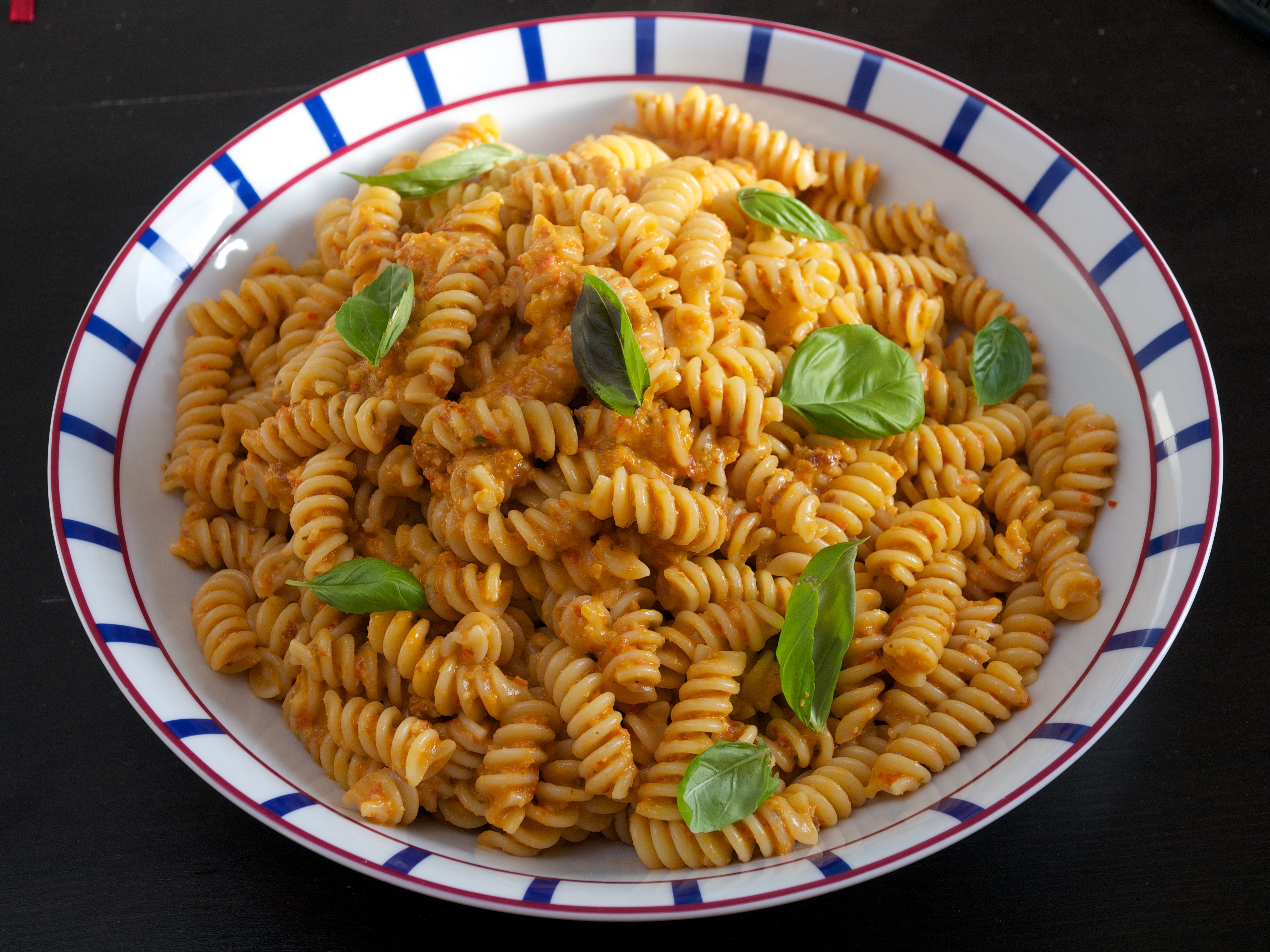
Sicilian fusilli with tomato, garlic & almond

We love the combination of anchovies and almonds in this pasta sauce – a Sicilian-style pesto. It also reinforces our desire to go to Sicily.

Wine Suggestion: A fresh and dry Italian white is a must for this dish with numerous choices working well. If you can find one match it with a white from the slopes of Mt Etna which will be minerally and savoury, or if not a dry Vermentino from the Tuscan coast. We drink a glass of the Morisfarms Vermentino which was both minerally and nutty with fresh citrus flavours. Morisfarms add 10% Viognier to this wine which gives it an added exotic lift and roundness to the wine. With the complex savoury notes of the dish the savoury and nutty wine worked a treat.

Sicilian pasta with tomatoes, garlic & almonds – serves 6

  • 500g fusilli lunghi (long spiral pasta) or other pasta – we used regular fusilli
  • 250g cherry tomatoes
  • 6 anchovy fillets
  • 25g golden sultanas
  • 2 cloves garlic, peeled
  • 2 x 15ml tbsp capers, drained
  • 50g blanched almonds
  • 60ml extra-virgin olive oil
  • leaves from a small bunch of basil (about 20g) to serve

Cook the pasta in plenty of boiling salted water according to the pack instructions.

Make the sauce as the pasta cooks by putting all the ingredients, except the basil, into a processor and blitzing until you have a textured sauce.

Drain the pasta, reserving a mugful of the cooking water and add 2 tbsp of the water to the processor as you pulse the sauce.

Tip the drained pasta into a warmed serving bowl. Pour over the sauce and toss to coat – add a bit more pasta cooking water if needed and scatter with basil leaves.

(Original recipe from Nigellissima by Nigella Lawson, Chattos & Windus, 2012.)

Read Full Post »

« Newer Posts - Older Posts »