Feeds:
Posts
Comments

Posts Tagged ‘Italian’

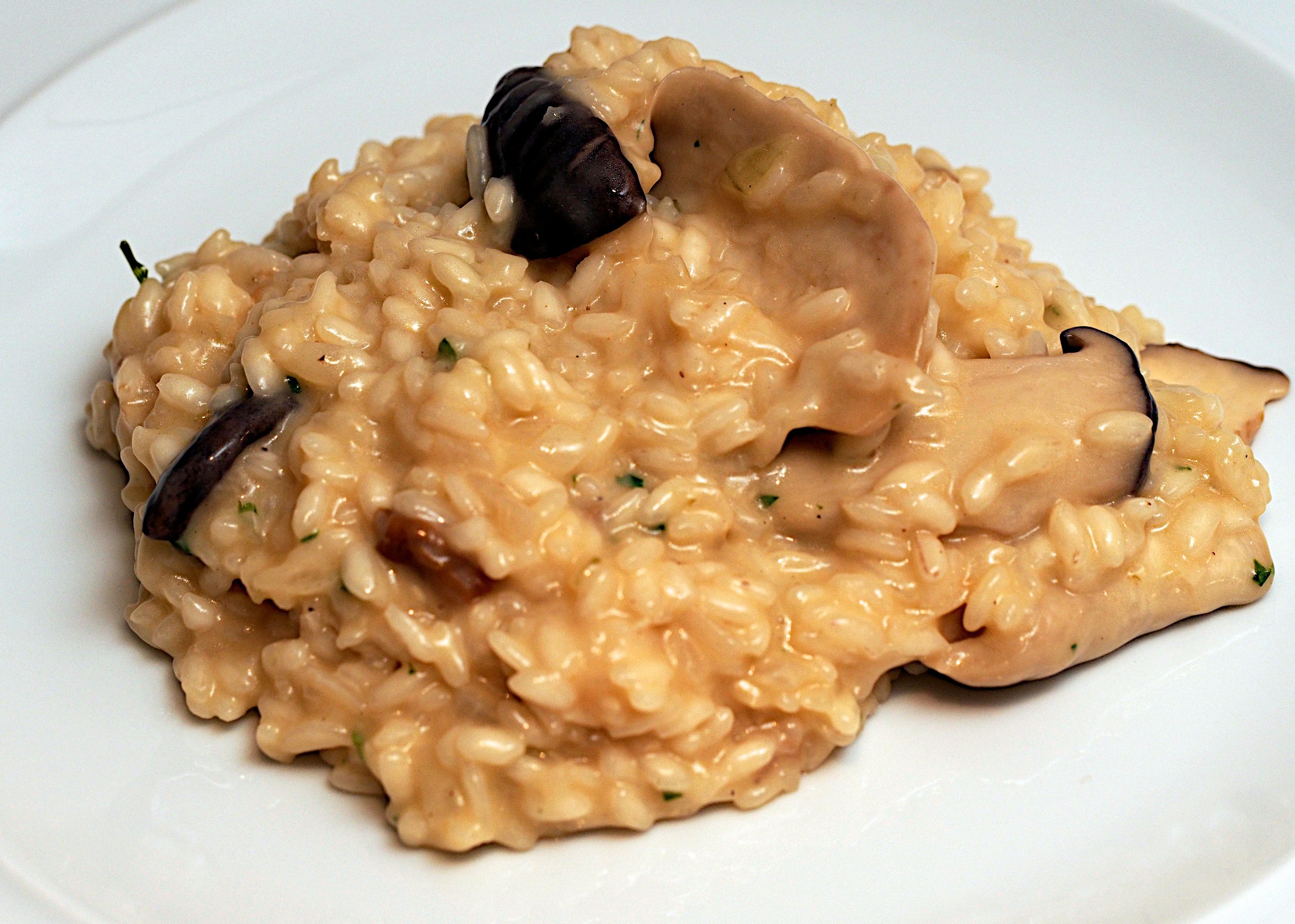
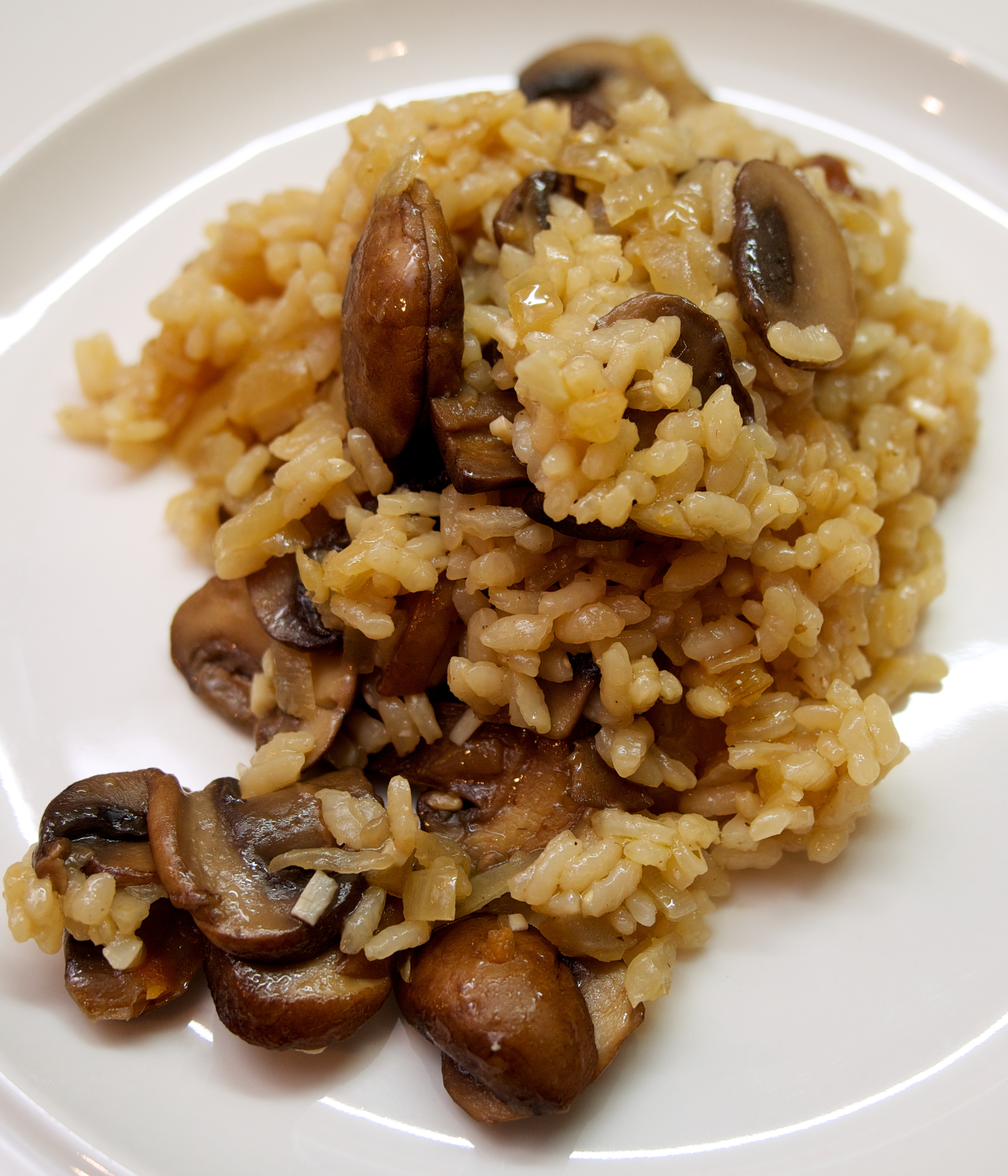
Mushroom risotto


A classic recipe from one of our reliable sources of inspiration; Leith’s.

Not terribly seasonal so you might like to keep this for the Autumn when the mushroom selection is better.

Mushroom Risotto – serves 4

  • 1 onion, finely diced
  • 150g unsalted butter
  • 100g Parmesan cheese, grated (plus more to serve)
  • 300g risotto rice (Arborio, Carnaroli or Vialone Nano)
  • 15-20g dried wild mushrooms
  • 400g mixed wild mushrooms
  • 150ml dry white wine
  • 1.5-2 litres chicken or vegetable stock

Add the dried wild mushrooms to the stock, bring to a simmer, then remove from the heat and leave to infuse for 10-15 minutes. Strain the stock and return to the pan. Bring  back to a gentle simmer, then reduce the heat to as low as possible.

Meanwhile, sauté the soaked mushrooms with the mixed wild mushrooms in 50g of the butter over a medium-high heat for 3-4 minutes or until browned and any excess water has gone. Set aside and keep warm.

Melt another 50g of the butter in a large, shallow saucepan, add the onion and sweat over a low heat until completely soft but not coloured (about 10 minutes).

Add the rice to the pan and fry gently, stirring until coated in the butter. Add the wine and bring to the boil, then reduce the heat and cook, stirring, until the wine has been absorbed.

Start adding the stock, a ladleful at a time, stirring all the time, and making sure each ladleful is absorbed before adding the next. Keep going until the rice is just cooked, about 25 minutes. If you run out of stock use a little boiling water. Make sure the risotto is quite fluid at this stage as it will thicken on standing and you are aiming for a loose, almost sloppy texture.

Take the pan off the heat and stir in the last 50g of butter, the grated Parmesan and the sautéed mushrooms. Season to taste and allow to stand, covered, for 5 minutes before serving with extra Parmesan.

(Original recipe from Leith’s How to Cook, Quadrille, 2013.)


Read Full Post »

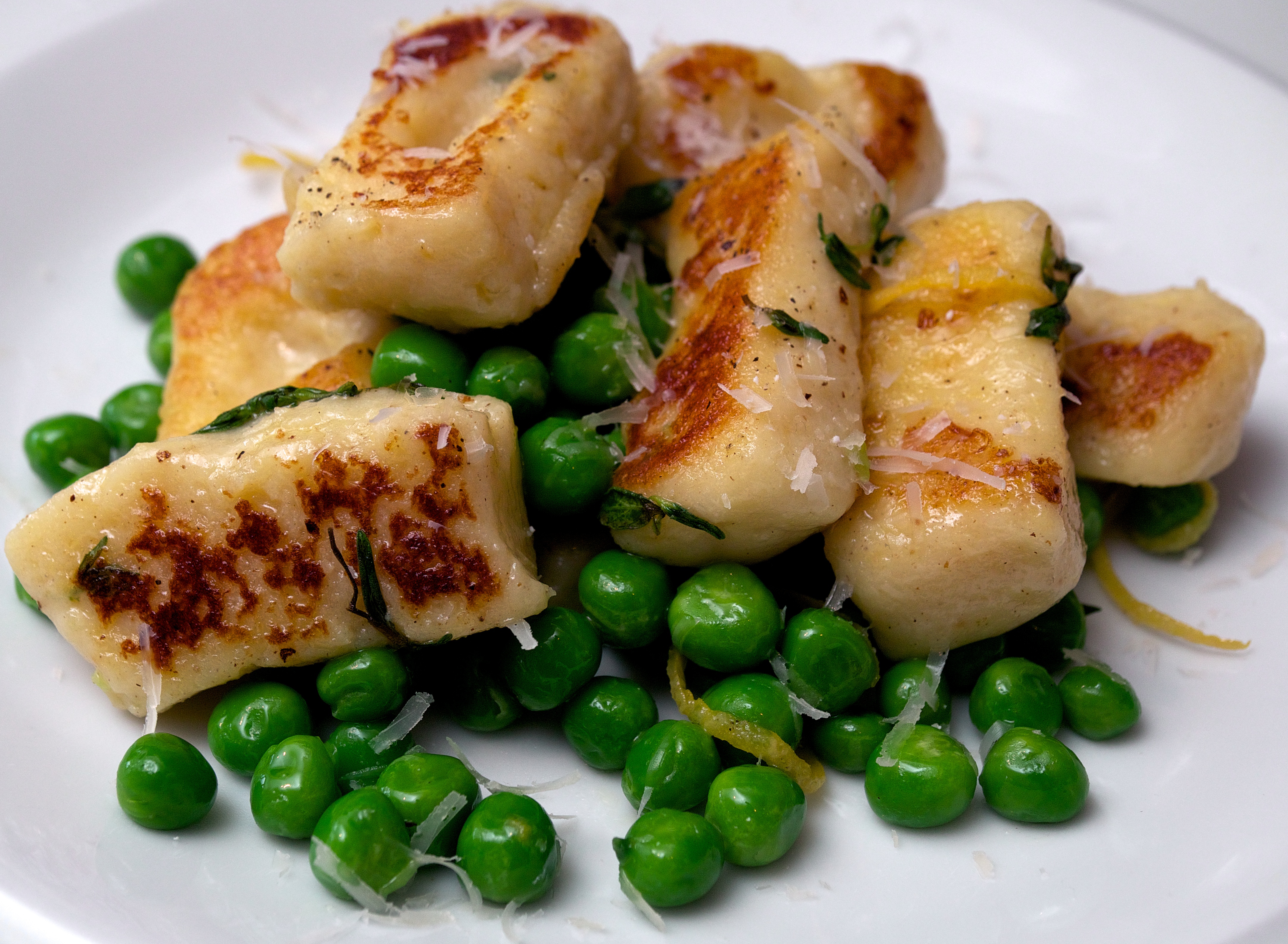
Gnocchi with peas

Gnocchi – where have you been all our lives? So much easier than we anticipated!

Wine suggestion: We tried a delicious Langhe Nebbiolo by Luigi Pira from Piedmont in Italy which had a great balance between light weight, depth of flavour, dancing acidity and a characterful earthiness. Gnocchi is refined and elegant but also earthy and rustic and the food-wine combo matched really well.

Gnocchi – serves 4

  • 2 large floury potatoes
  • 50g ricotta cheese
  • 90g plain flour
  • 1 egg, beaten
  • 1 thyme sprig, leaves only
  • sea salt and freshly ground white pepper
  • Grated Parmesan – to serve

For the Sauce: 

  • olive oil
  • black pepper
  • 150g frozen peas, defrosted
  • butter
  • 1 thyme sprig, leaves only
  • zest of 1 lemon

Preheat the oven to 200°C/Gas 6.

Bake the potatoes for 1-1¼ hours until tender. While the potatoes are still warm, remove the flesh from the skin and mash until smooth (use a potato ricer if you have one).

Mix in the ricotta, a pinch of salt and white pepper and the flour. Make a well in the middle, add the beaten egg and start to combine the mixture with floured hands. Work in the thyme leaves and continue until you have a smooth dough but don’t overwork or it will become too dense .

Cut the dough in half and shape each piece into a long cigar shape about 1.5 cm thick. Use the back of a floured table knife to cut each length into 2cm pieces to make ‘pillows’ of gnocchi.

Gently press each gnocchi in the middle with a floured finger.

Bring a large pan of water to the boil. Add the gnocchi, tilting the pan from side to side briefly to stop them sticking together, them simmer for just 1½-2 minutes or until they start to float.

Drain the gnocchi and leave to steam dry for a couple of minutes.

Meanwhile, heat a frying pan over a medium heat and add a bit of olive oil. Add the gnocchi to the hot pan with a pinch of salt and black pepper and sauté for a minute or two on each side until coloured.

Add the peas to the pan with a knob of butter and the thyme leaves. Toss to heat through, then add the lemon zest. Serve with the grated Parmesan.

(Original recipe from Gordon Ramsay’s Ultimate Cookery Course, Hodder & Stoughton, 2012.)

Read Full Post »

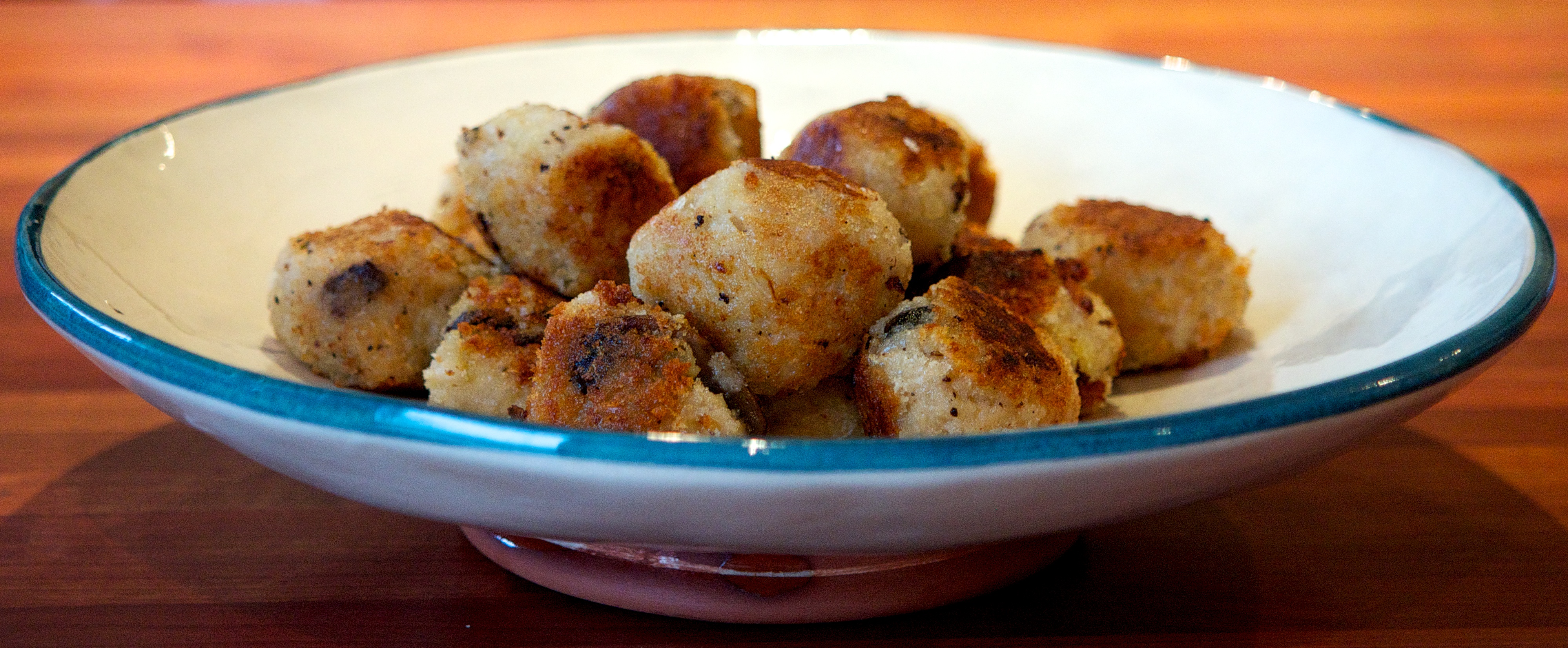
Mushroom Arancini

These little arancini or  risotto balls are the perfect solution for leftover risotto which tends to turn a bit claggy. We made ours from leftover mushroom risotto but you can use any flavour. The joy of arancini is the crisp exterior and melting centre; easy and moreish.

Easy Arancini – serves 3-4

  • 350g leftover risotto
  • 25g Parmesan cheese, finely grated
  • 50g breadcrumbs
  • 4-6 tbsp olive oil

Put the risotto into a bowl and stir in the Parmesan. Spread the breadcrumbs out on a flat plate.

Use your hands to roll the risotto into ping-pong-sized balls, then roll in the breadcrumbs to coat, and put on a baking tray.Chill the risotto balls in the fridge for at least half an hour.

Put a large frying pan on a high heat and add 2 tbsp of the oil. Wait for the oil to get hot before adding a few arancini. Fry for about 4 minutes, turning now and then, until golden brown all over.

Drain the cooked arancini on a serving plate lined with kitchen paper, then repeat to cook the rest, adding more oil as needed.

(Original recipe from Rachel Allen’s Everyday Kitchen, HarperCollins, 2013.)

Read Full Post »

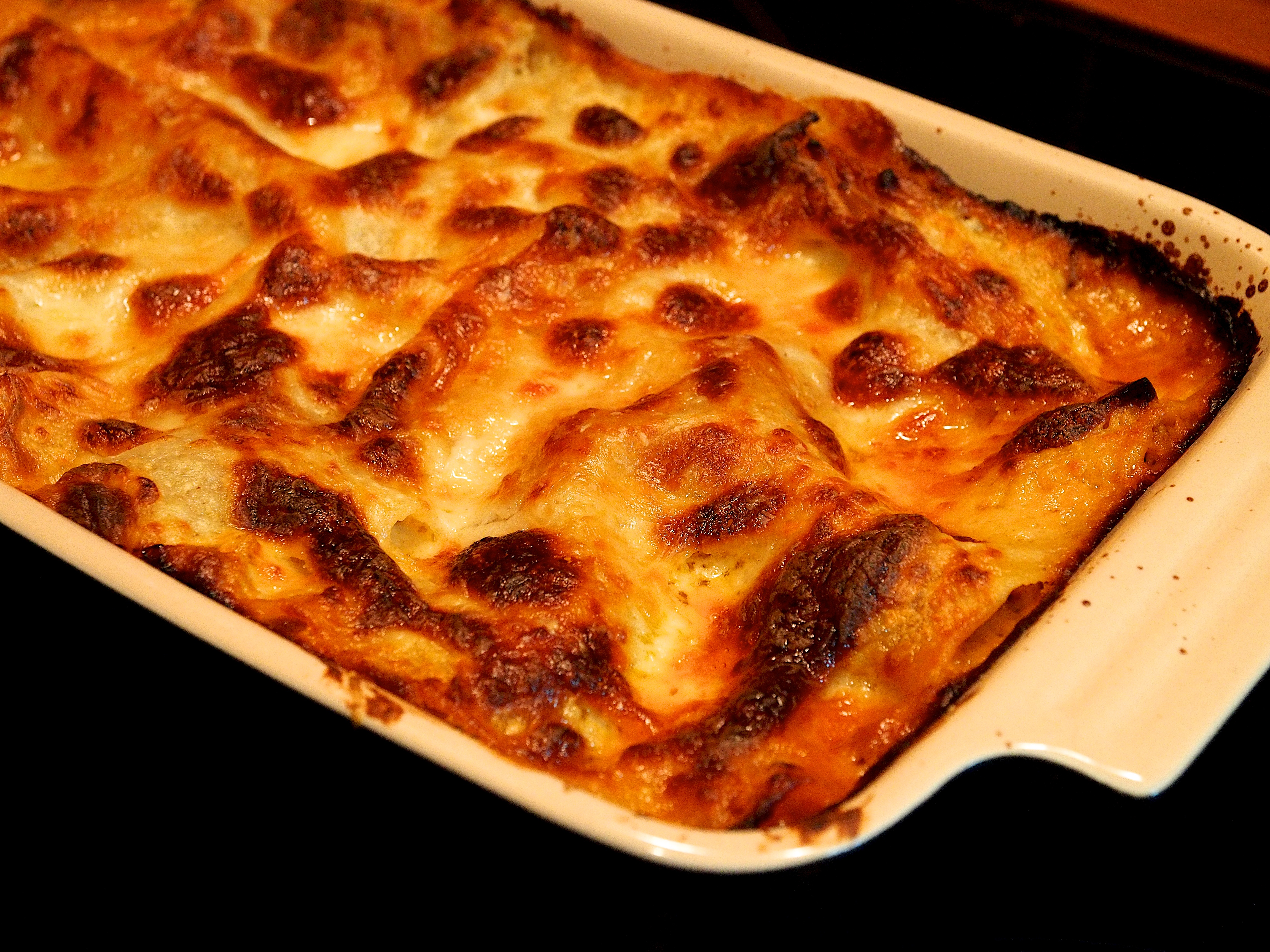
This recipe comes in two parts, with the first an easy to make a Bolognese Ragù which tastes good but is not really exciting or flavour-packed like we like. When created into a lasagne, however, it really sings with a perfect balance of flavour.

The recipe takes a while, but is actually quite easy, especially if you make the ragù the day before. We made two lasagne this time which served eight people over two days amply. Alternately, make a big tray of it for a larger crowd.

Ragù – serves 6-8

  • 3 tbsp olive oil
  • 1 large onion, finely diced
  • 3 cloves of garlic, crushed
  • 3 sticks of celery, finely diced
  • 1 leek, finely diced
  • 1 kg minced beef/pork (or half and half)
  • 1 bay leaf
  • 2 x 400g tins chopped tomatoes
  • 2 tbsp tomato purée
  • 200ml white or red wine
  • 2-3 tbsp sugar

Preheat the oven to 150ºC/300°F/Gas mark 2.

Put a large ovenproof casserole on a medium heat and heat the olive oil. Tip in the onion, garlic, celery and leek. Season with salt and pepper and cook for 8-10 minutes or until softened. Turn the heat to high, add the meat and stir to break up, cooking until there are no longer any pink bits.

Add the bay leaf with the chopped tomatoes, tomato purée, wine and sugar, and bring to the boil. Cover with a lid and cook for about 1 hour in the oven. Season to taste.

Lasagne – serves 6-8

  • 1 quantity of cooked ragù
  • 12-16 sheets of pre-cooked dried lasagne
  • 100g Cheddar cheese, grated
  • 50g Parmesan, grated

FOR THE CHEESE SAUCE 

  • 70g butter
  • 70g plain flour
  • 1 litre milk
  • 200g Cheddar cheese, grated
  • 1 tsp Dijon mustard

Preheat the oven to 180°C/350°F/Gas mark 4.

First make the cheese sauce. Melt the butter in a saucepan over a medium heat, then whisk in the flour and cook, stirring often, for 1 minute. Gradually pour in the milk and bring to the boil, whisking continuously until the sauce is thickened. Remove from the heat and whisk in the cheese and mustard, seasoning with salt and pepper, then set aside.

Put a thin layer of ragù in the bottom of an ovenproof dish (20 x 30cm), cover with a layer of the cheese sauce, then add lasagne sheets to cover, in a single layer. Repeat this process, finishing with a layer of pasta topped with cheese sauce only.

Sprinkle over both cheeses and bake in the oven for 45-50 minutes or until golden brown and bubbling.

(Original recipe from Rachel’s Everyday Kitchen by Rachel Allen, HarperCollins, 2013.)

Read Full Post »

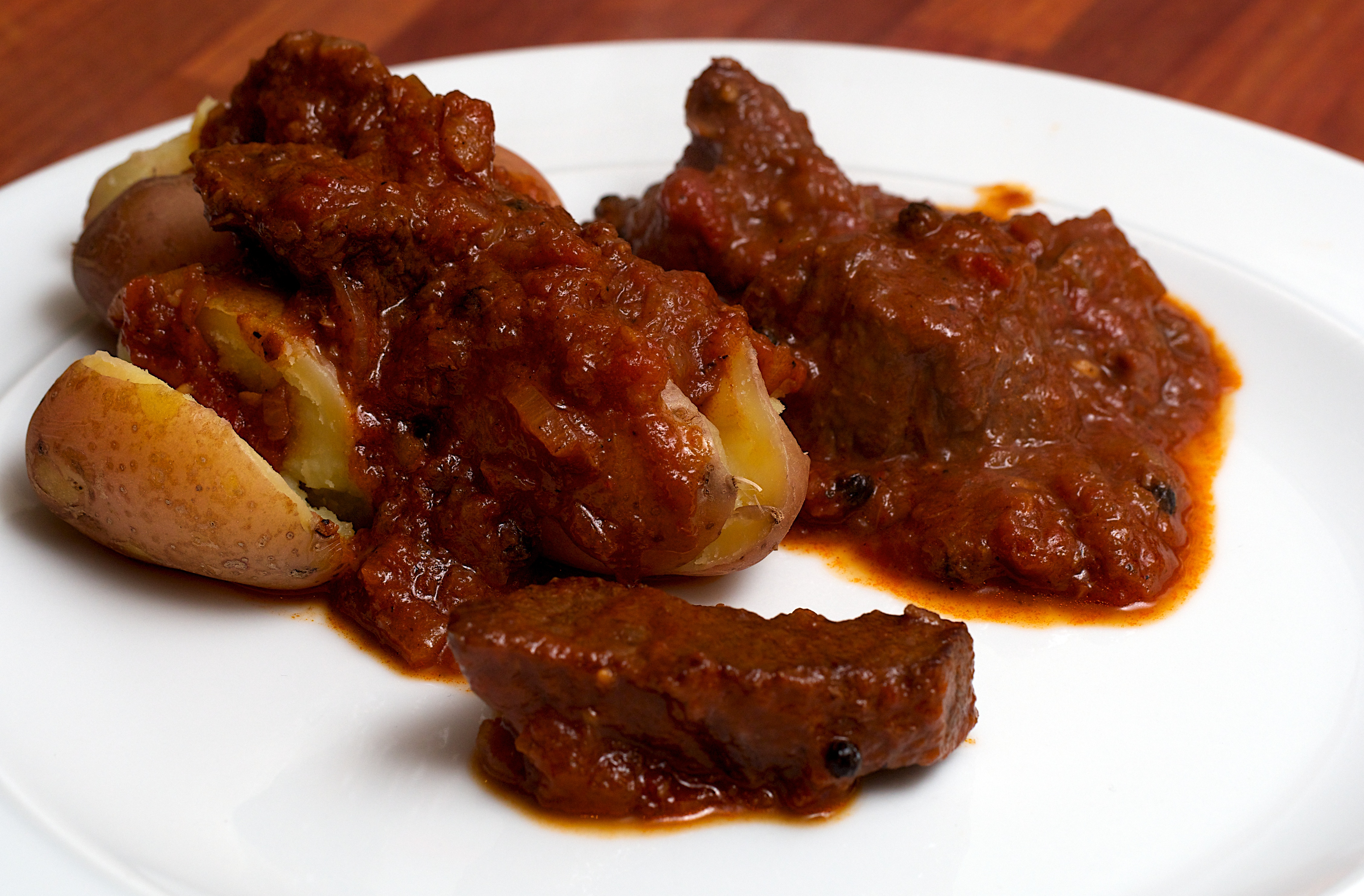
An easy version of Peposo which works a treat and reheats perfectly. The peppercorns are very much the star of the show rather than the seasoning.

Wine Suggestion:  Regional foods are generally complemented by the wines of the same region so go for a good Tuscan wine that will be able to stand up to this rich stew. We had a Morisfarms Mandriolo from the Maremma.

Hunter’s Stew – to serve 4-6

  • 4 tbsp olive oil
  • 1kg stewing steak, in big chunks
  • 3 onions, sliced
  • 4 garlic cloves, crushed
  • 2 tbsp black peppercorns
  • 2 tsp ground black pepper
  • 2 bay leaves
  • 250ml red wine
  • 1 x 400g tin tomatoes
  • 1 whole tube of tomato purée

In a large saucepan, with a tight fitting lid, heat the olive oil and brown the beef well.

Season with plenty of salt, then add the onions, garlic, and peppercorns and cook for another 5-10 minutes, or until the onions are soft and reduced.

Add the remaining ingredients, cover with a lid and cook very gently for about 2 hours, stirring regularly.

Check the seasoning after 90 minutes and add a bit of water if necessary. If it is too liquid you can remove the lid for the last 20-30 minutes.

Allow to cool slightly before serving with potatoes or polenta.

(Original recipe by Domini Kemp in THE IRISH TIMES Magazine, September 21, 2013.)

Read Full Post »

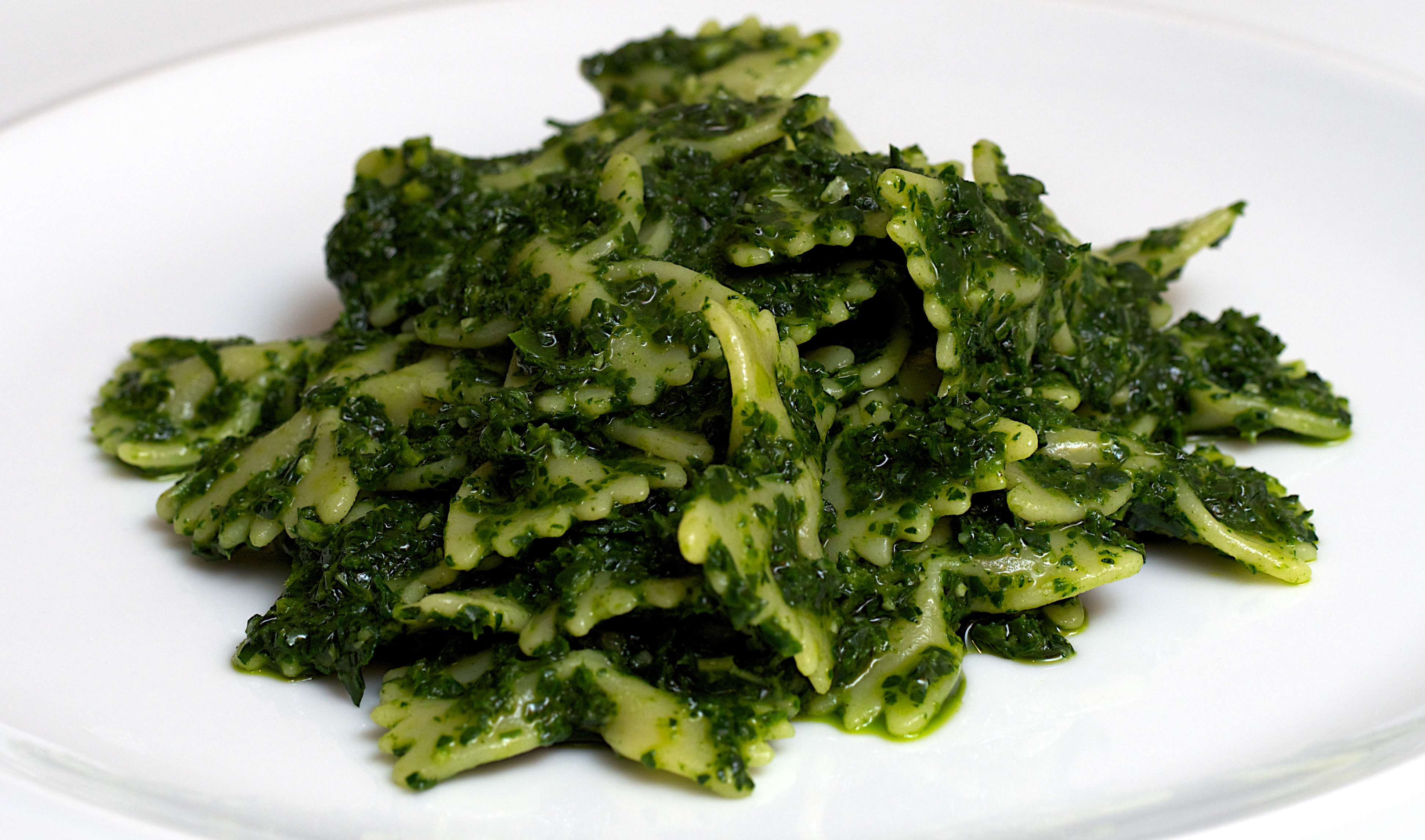
This works really well as a starter portion for 6 people. Make sure you use top quality fresh extra virgin olive oil from the most recent vintage. We buy fresh olive oil made by the Tuscan wineries Capezzana and Selvepiana. They’re not cheap but they taste fabulous when only the best olive oil will do.

Wine Suggestion: The iron rich Cavolo Nero requires something minerally and iron rich too, but you need to avoid wines with too much weight. We’d suggest trying the Gulfi Cerasuolo di Vittoria, a red from Sicily that is a blend of Frappatto and Nero d’Avola which combines an earthiness and power with a joyful fruit and fresh acidity giving the wine personality and depth without excess weight.

Farfalle al Cavolo Nero con Olio Nuovo – serves 6

  • 1.1kg cavolo nero leaves
  • sea salt and black pepper
  • 4 garlic cloves, peeled
  • 250ml extra virgin olive oil (see comment above)
  • 250g farfalle
  • Parmesan

Remove the stalks from the cavolo nero but keep the leaves whole. Blanch the leaves in a generous amount of boiling salted water along with 2 of the garlic cloves for just a few minutes. Put the blanched garlic and cavolo nero in a food processor and pulse to a coarse purée. In the last few seconds, pour in around 75ml of the oil to make a fairly liquid purée.

Crush the rest of the garlic with 1 tsp sea salt and stir into the purée with another 75ml of oil. Season to taste.

Cook the the farfalle in plenty of salted water, then drain. Add the pasta to the purée and stir until evenly coated. Pour in the remaining olive oil and serve with some grated Parmesan.

(Original recipe from The River Café by Rose Gray and Ruth Rogers, Ebury Press, 1995.)

Read Full Post »

This is one of our favourite pasta sauces. Bucatini (long spaghetti-like tubes) is traditionally used but penne works well too and tends to be easier to find at the shops. Makes a great Friday night supper with a matching glass of something equally red and Italian.

The recipe below makes 6 little portions that you might serve as a first course. You will need to adjust accordingly if you’re serving it as a main meal – we half the quantities below to serve the two of us.

Wine Suggestion: An Italian Sangiovese is the obvious match which complements the acidity in this tomato-based sauce. We drank a Rocca delle Macie Chianti; an excellent match.

Penne all’ Amatriciana – serves 6 

  • 250g pancetta, cut into matchsticks
  • 2 tbsp olive oil
  • 2 dried chillies, crumbled
  • 2 red onions, peeled and finely chopped
  • 150ml red wine
  • 2 x 400g tins peeled plum tomatoes, drained if very liquid (look for Italian brands)
  • 2 tbsp rosemary
  • 250g penne
  • 100g Parmesan, grated
  • A handful of fresh oregano (don’t panic if you don’t have this)

Put the pancetta, oil and chillies into a large saucepan, heat and fry until the pancetta becomes crisp.

Add the onions and rosemary and keep frying until they have also turned light brown and crisp.

Add the red wine and let it reduce before adding the tomatoes, then season with the oregano and some black pepper.

Bring to the boil, lower the heat and simmer for at least 45 minutes, until thick and almost dry. Check for seasoning.

Cook the penne in a generous amount of boiling salted water, then drain. Add to the sauce, mix and serve with Parmesan.

(Original recipe from The River Café Cookbook by Ruth Rogers and Rose Gray, Ebury Press, 1995.)

Read Full Post »

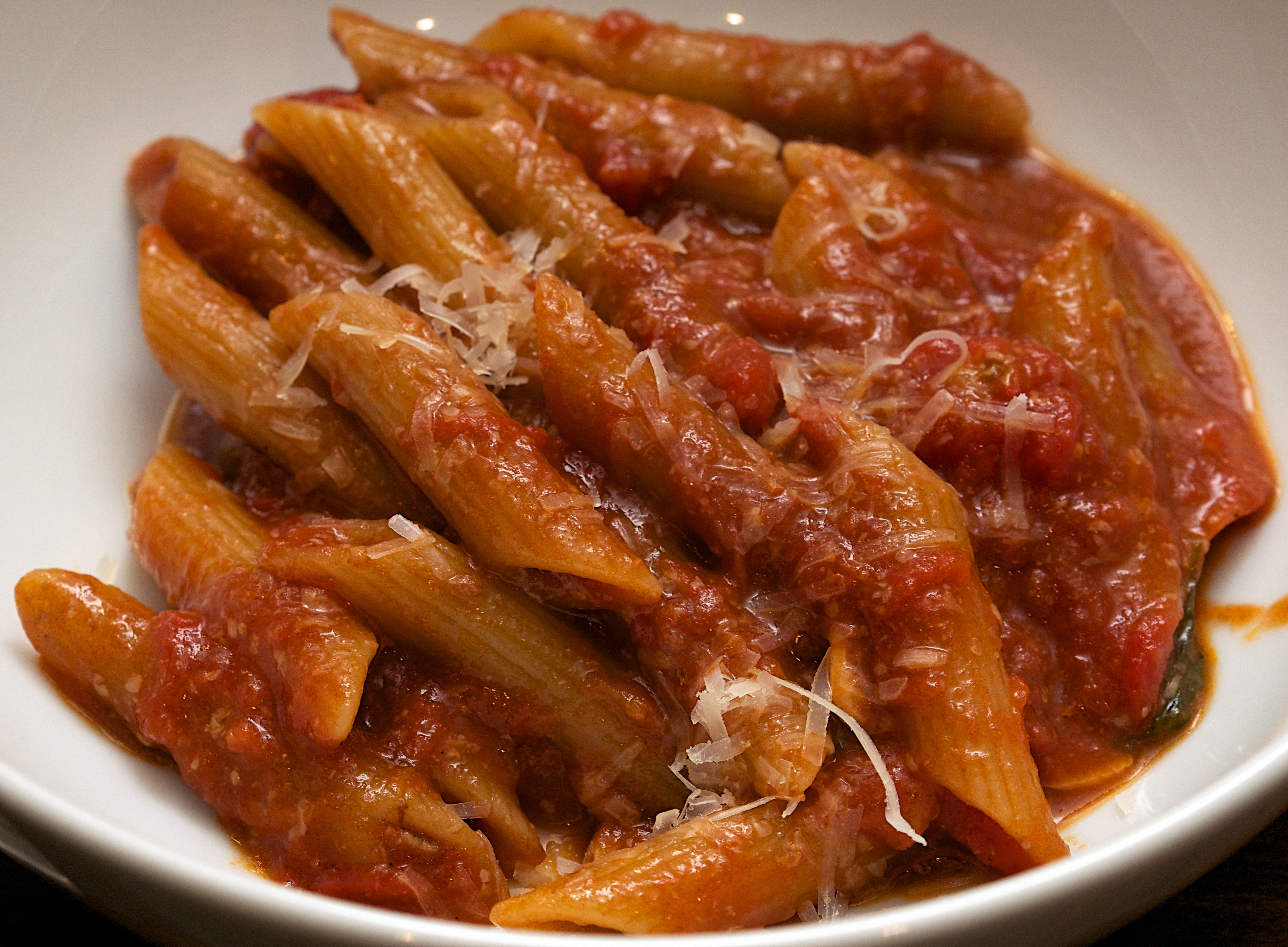
This is a really good first-course pasta which has a richness of flavour without being heavy. Use a good quality, aged balsamic vinegar (if you don’t you might need to use a bit extra).

Penne with Tomato & Balsamic Vinegar – to serve 6

  • 2 tbsp olive oil
  • 2 garlic cloves, peeled and sliced finely
  • a handful of fresh basil
  • 2 x 400g tins of peeled plum tomatoes (Italian brands are usually the best quality)
  • 250g penne rigate
  • 75g butter, cut into pieces
  • 4 tbsp aged balsamic vinegar
  • 120g Pecorino cheese, grated

Heat the oil in a large pan and gently fry the garlic until light brown. Add a few basil leaves and then the tomatoes. Stir and cook gently for 30-40 minutes or until the sauce is reduced and thick. Season with salt and pepper and add the rest of the basil.

Cook the penne in lots of salted boiling water , drain thoroughly and return to the saucepan with the butter. When this has melted, add the balsamic vinegar and toss over a gentle heat for a few seconds until the penne are brown. Throw in a handful of the Pecorino, then stir in the tomato sauce. Serve with more Pecorino.

Wine Suggestion: Pairing a wine with this dish is not as straight forward as it may seem as you need a wine to balance the rich flavours, acidic tomatoes and sweet and sour vinegar. One option is something from the Marche with a combination of Montepulciano and Sangiovese. Alternately look for a very good Valpolicella or Ripasso, but make sure it is one with a bit of freshness, tannins and elegance.  Another option, which we tried to good effect, is Barbera where the fresh acidity and softer tannins complemented the dish excellently.

(Original recipe from the River Café by Ruth Rogers & Rose Gray, Ebury House, 1995.)

Read Full Post »

We used a leg from a hogget (one year old lamb) as this has greater flavour. If you use a young “Spring” lamb this will be juicier and cook quicker but is more delicate in flavour.

Agnello Marinato alla Griglia – to serve 6

  • 1 leg of spring lamb, about 2.25kg in weight, boned and butterflied
  • 5 garlic cloves, peeled and crushed
  • 2 tbsp rosemary leaves, chopped
  • coarsely ground pepper
  • 2 tbsp lemon juice
  • 3 tbsp olive oil
  • 1 tbsp sea salt

Mix the crushed garlic, rosemary and a good pinch of pepper in a bowl, and rub into the cut side of the meat. Put in a shallow dish and pour over the lemon juice and olive oil. Turn the meat over a few times until completely coated, then cover. Leave to marinate at room temperature overnight (or at least 4 hours), turning occasionally.

Preheat the grill or barbecue to very high. Remove the meat from the marinate and pat dry. Season with salt. Carefully place the meat on the grill and seal on both sides. Lower the heat and keep cooking until done to your liking, turning once. Allow a minimum of 8 minutes per side but it could take up to 45 minutes in total depending on the age and size of the lamb as well as the barbecue temperature.

Wine Suggestion: We think that good Bordeaux works well with this and proceeded to try a couple of different Chateau to test this theory. The first was a birthday present of Chateau Mission Haut Brion from the Graves where the pencilly and inky character complemented the lamb. A very fine wine indeed and a real treat. We then followed by a Chateau d’Angludet from Margaux which was more mellow and feminine to round out the end of the meal. A treat altogether.

(Original recipe from The River Café Cookbook by Ruth Rogers and Rose Gray, Ebury Press, 1995.)

Read Full Post »

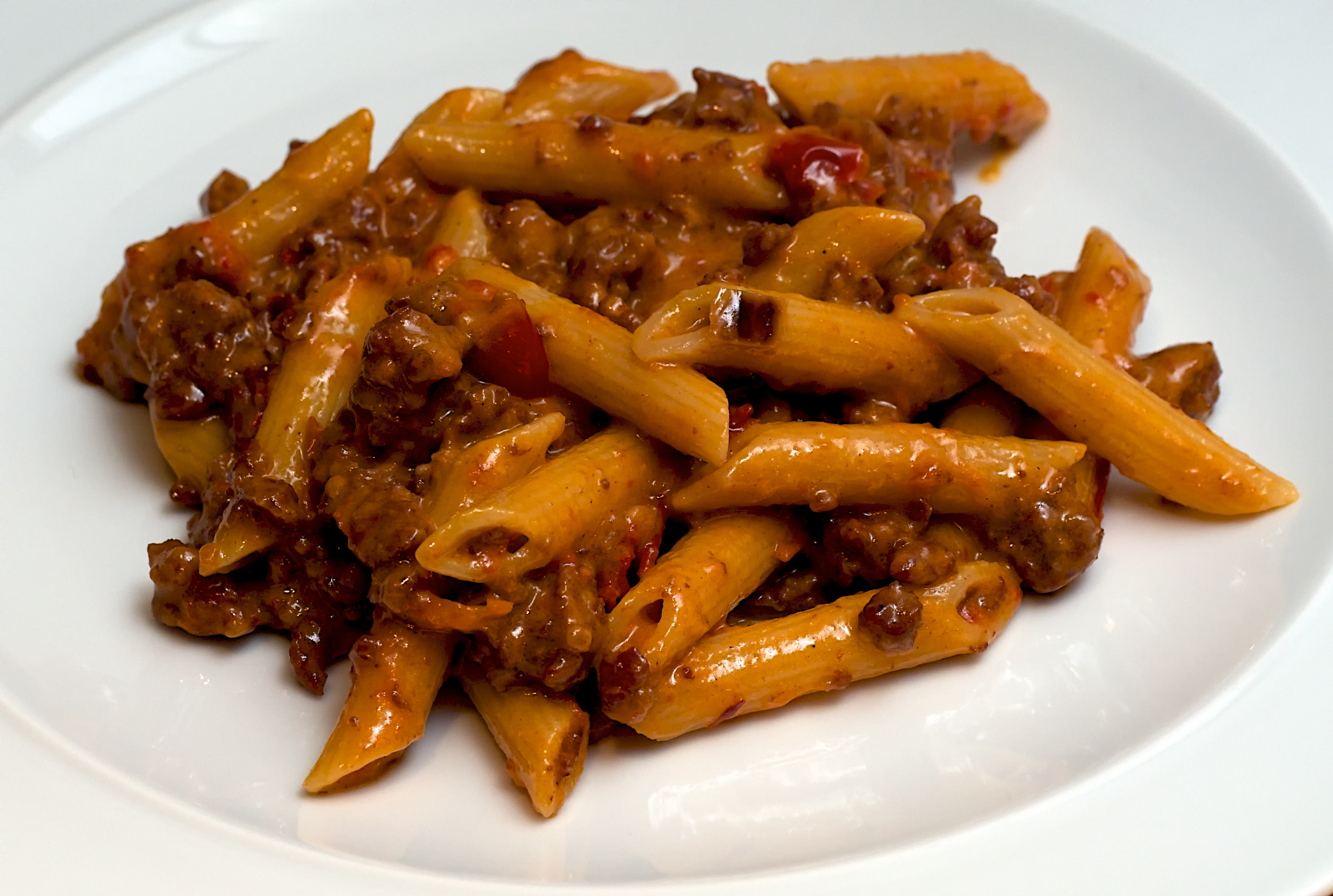
Really rich, this dish packs a punch of flavour so it’s perfect for a small starter.

Penne con Sugo di Salsiccie – serves 6-8 as a starter

  • 2 tbsp olive oil
  • 8 Italian spiced, fresh pork sausages, meat removed from skins and crumbled
  • 2 small red onions, chopped
  • 2 garlic cloves, finely chopped
  • 2 small dried chillies, crumbled (or you could use chilli flakes)
  • 2 bay leaves
  • 1/3 bottle red wine (preferably something Italian, like a Chianti)
  • 2 x 400g tins peeled plum tomatoes, drained
  • ½ nutmeg, freshly grated
  • 120g Parmesan, freshly grated
  • 150ml double cream
  • 250g penne rigate

Heat the oil in a large pan and fry the sausagemeat, stirring and breaking it up, until the juice from the meat has evaporated and the fat has started to run.

Add the onion, garlic, chilli and bay leaves and cook gently for about 30 minutes or until the onions are brown.

Pour in the wine, increase the heat and cook until it has evaporated.

Add the tomatoes, lower the heat, and simmer gently until you have a thick sauce, about 45-60 minutes. Season with nutmeg, salt and pepper, then add the Parmesan and cream.

Cook the penne in lots of salted water, drain well, and add to the sauce.

Wine Suggestion: We drank a delightful Langhe Nebbiolo from the Produttori del Barbaresco which went well. We’d suggest finding a red wine with a bit of acidity to cut through the richness, good tannins to counteract the protein richness, and yet not too much weight. Nebbiolo or Sangiovese …

(Original recipe from The River Café Cookbook by Ruth Rogers and Rose Gray, Ebury Press, 1995.)

Read Full Post »

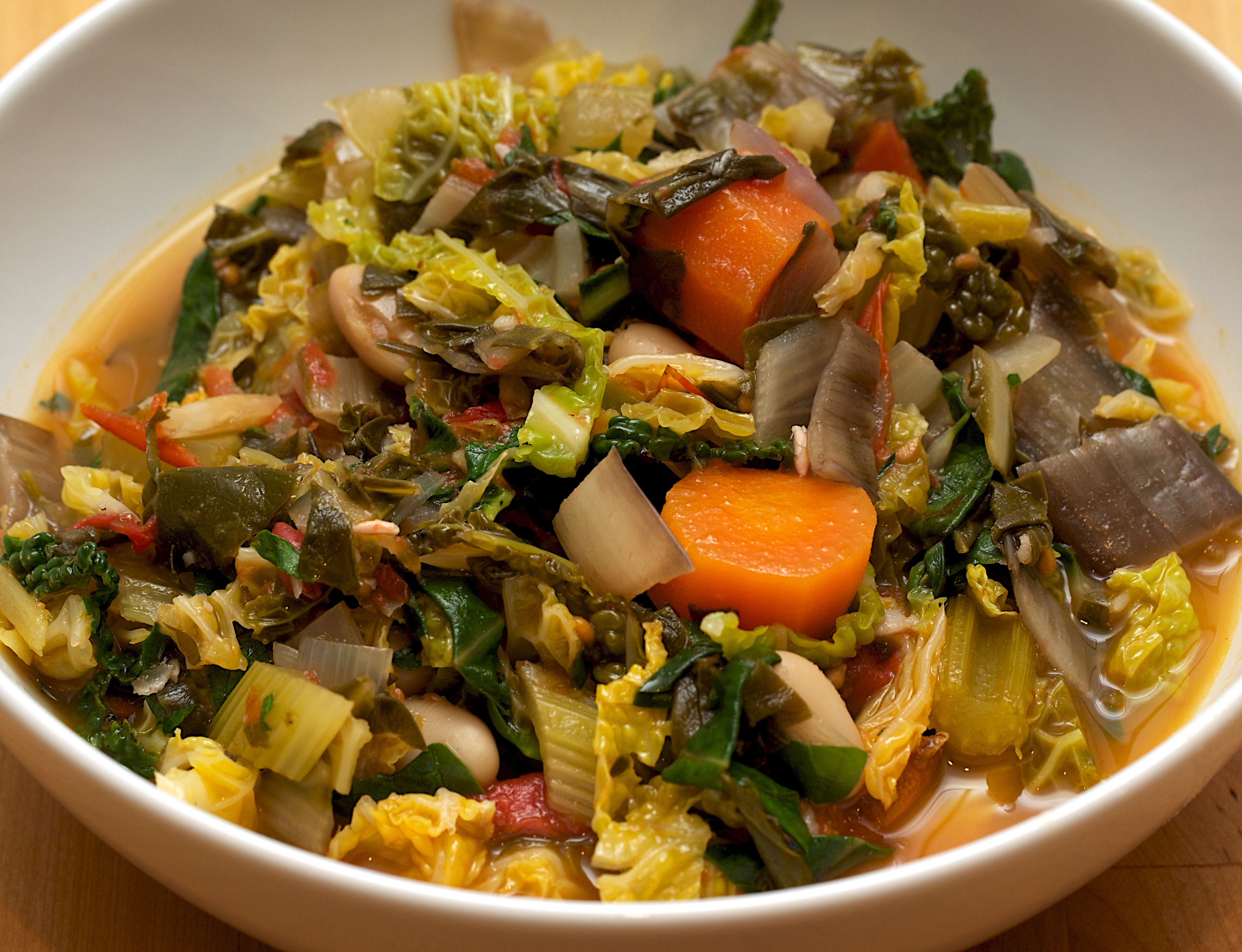
A very filling dish that hits the mark on these icy evenings. Oh spring where are you?

Minestrone Invernale – serves many!

  • 2 tbsp olive oil
  • 2 carrots, roughly chopped
  • 1-2 red onions, peeled and roughly chopped
  • 1 head celery, roughly chopped
  • 1 head garlic, cloves peeled
  • 1kg Swiss chard, leaves shredded and stalks roughly chopped
  • 1 handful parsley, finely chopped
  • 1 x 400g tin peeled plum tomatoes, drained of most of their juices, roughly chopped
  • 1 kg cavolo nero, stalks removed, leaves shredded (or use Savoy cabbage)
  • 1 x 400g tin cannellini beans
  • 500ml chicken stock or water
  • a few sprigs of wintery herbs like thyme or sage, chopped
  • Parmesan, for grating over
  • extra virgin olive oil, for drizzling

Heat the 2 tbsp olive oil in a very big saucepan and slowly fry the carrot, onion and celery until soft and dark. This will take ages. Add the garlic, chard stalks and half the parsley, and keep cooking, stirring so it doesn’t stick. Add the tomatoes and cook for another 10 minutes or until they have reduced.

Add half the Swiss chard leaves and half the cavelo nero, ¾ of the beans, and the boiling chicken stock or water. Bring to the boil, then reduce the heat and simmer for 30 minutes. You can add a bit more stock if needed but the whole point is that the soup should be really thick.

Add the remaining Swiss chard and cavolo nero and blanch briefly so they are cooked but stay green and crisp. Season with plenty of salt and pepper.

Purée the rest of the cannellini beans coarsely in a blender, with a bit of liquid from the soup. Add to the soup. Stir in the herbs and serve hot with Parmesan and some extra virgin olive oil.

Tastes great re-heated over the next few days.

Wine Suggestion: This is a very rustic, country dish and would suit a similar wine with some earthy character. We suggest a Barbera or something Tuscan.

(Original recipe from The River Café Cookbook by Ruth Rogers and Rose Gray, Ebury Press, 1995.)

Read Full Post »

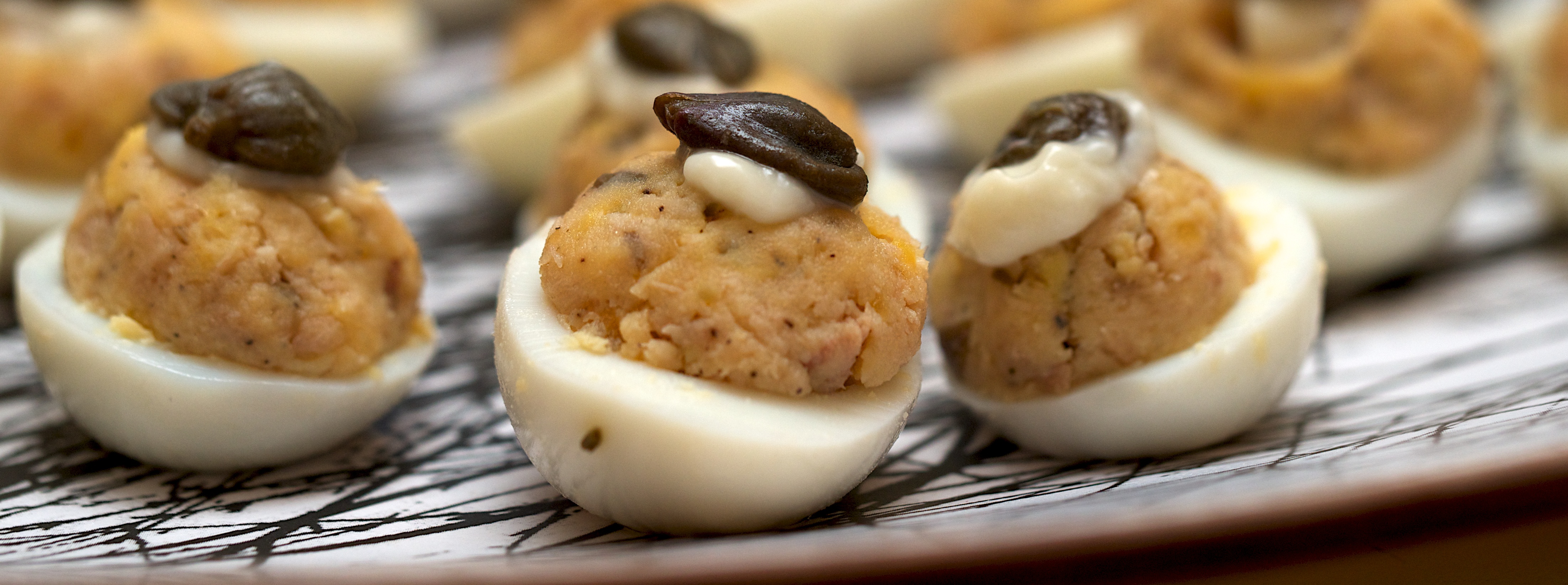
These little stuffed quail’s eggs are very cute but also very time consuming. It also helps if you have little fingers!

Uoava di Quaglie Ripiene – to serve 4 as an antipasti

  • 12 quail’s eggs
  • 80g good quality tuna in olive oil, drained and finely chopped (we use Ortiz)
  • 2 tsp salted capers, soaked in water for 10 minutes, drained and finely chopped, plus 24 extra to garnish.
  • 1½ tbsp mayonnaise

Put the eggs in a small pot of water, bring to the boil and cook for 2 minutes. Drain the eggs and put into a bowl of cold water to cool down before peeling. (The eggs are fiddly to peel but it’s a bit easier if you peel them while they are still in the water).

Cut the eggs in half lengthways. Carefully remove the yolks and arrange the egg whites on a serving plate. Put the yolks in a bowl with the tuna, capers and 1 tbsp of mayonnaise then mix together. Season with a little salt and some pepper.

Use your hands to roll the mixture into little balls, about 1tsp at a time. Carefully put the little balls into the cavities of the half eggs.

Spoon a tiny bit of mayonnaise on top of each half egg and garnish with a whole caper.

You could drizzle a bit of olive oil and add a twist of black pepper to finish.

Wine Suggestion: These are the kind of thing you can set out for people to nibble at when they’re having an aperitif. A good DOCG Prosecco would be nice.

Read Full Post »

Cooked on an afternoon off and then shared with friends … perfect. This takes some time, particularly as you need to roast the duck first, but it is worth it.

Slow-roasted Duck Ragú – serves 4 to 6

  • 1 Duck, try to get a Gressingham or at least free-range for extra flavour
  • 2 oranges, 1 quartered – the other zested & juiced
  • 6 slices Pancetta, diced
  • 1 red onion, diced
  • 2 carrots, peeled & chopped
  • 2 sticks celery, diced
  • 6 sprigs rosemary, leaves picked and chopped
  • 1 stick cinnamon
  • 4 cloves garlic, finely sliced
  • 2 x 400g tins plum tomatoes
  • 1/2 bottle fruity red wine, we used a Chianti
  • 500ml Chicken Stock
  • a handful of sultanas
  • a handful of pinenuts
  • 600g Rigatoni, or other large tubular pasta
  • 2 knobs butter
  • large handful Parmesan, grated
  • small bunch parsley, chopped
  • red wine vinegar

Preheat the oven to 180 C. Rub duck all over with olive oil and season generously with salt and pepper.

Push the orange quarters inside the cavity and place the duck breast-side down in a roasting tray. Cook for 2 hours, turning it every 30 minutes until the skin goes thin and crispy and the meat is tender and fragrant with the oranges.

Remove the duck from the tray and pour the fat into a jar, making sure you avoid the meat juice the fat is floating upon. This fat can be used to roast potatoes another day.

Leave the duck to cool slightly then pull all the meat from the bones and shred it.

Pour a tablespoon of olive oil into a large pot and fry the pancetta on a medium heat until lightly golden. Add the onion, carrots, celery, rosemary, garlic and cinnamon and fry gently for 10 minutes until soft.

Add the tomatoes and red wine and simmer slowly for 25 minutes.

Add the duck meat and some chicken stock (if the sauce is a little dry) and simmer for another 30 minutes.

Remove the cinnamon stick, taste for seasoning and throw in the sultanas and pinenuts.

Cook the pasta according to instructions. Reserve some cooking water, then drain in colander and add to the sauce.

Remove from the heat and stir in the butter, Parmesan, parsley, orange zest and juice plus a good splash of vinegar.

Check for seasoning again and loosen with the reserved cooking water if necessary. Serve and enjoy!

Wine suggestion: A perfect match for a deep and profound Brunello di Montalcino or your favourite Tuscan red. Alternately look out for a good Bandol or Mourvedre based wine where the earthiness will also compliment the duck and pasta.

(Original recipe from Cook by Jamie Oliver, Penguin Books, 2009.)

Read Full Post »

Wholesome and earthy, obviously don’t try this if you don’t like liver. We do and it was delicious.

Pappardelle with Chicken Liver Ragù – to serve 2 as a main or 4 as a starter

  • 200g dried pappardelle 
  • Freshly grated Parmesan, to serve

FOR THE RAGU: 

  • 200g chicken livers
  • 4 tbsp extra virgin olive oil
  • ½ small onion, chopped
  • 1 celery stalk, chopped
  • 1 garlic clove, chopped
  • 150ml dry Marsala
  • 100ml white wine
  • 1 tbsp chopped rosemary
  • 2 tbsp chopped flat-leaf parsley
  • 40g butter

Heat a wide frying pan over a high heat until super hot and smoking. Toss the chicken livers in a bowl with 1 tbsp of the oil and some salt and pepper, then pour into the hot pan in a single layer. Fry for a couple of minutes without moving, until well browned on one side. Turn and fry the second side for 2 minutes, then transfer to a plate to cool. When cool enough to handle, chop the livers finely, reserving any juices.

Fry the onion, celery and garlic in the rest of the oil with salt and pepper in a small saucepan over a lowish heat. When very soft (about 10 minutes), add the chopped liver and its juices and fry for a couple of minutes until heated through. Add the Marsala and wine and cook at a very gentle simmer until the sauce is very thick (almost like a pâté) with a little oil risen to the surface, at least an hour. Add about 100ml of water during the cooking if it starts to dry out. Stir in the rosemary and remove from the heat.

Cook the pasta according to the pack and re-heat the sauce in a wide frying pan. Add a splash of water to the sauce if you need to thin it slightly (the liquid part should be creamy). Drain the pasta and add to the sauce with the parsley and butter. Cook together for a few minutes or until the butter has melted and the pasta is well coated in the sauce. Serve with the Parmesan.

Wine Suggestion: Chicken livers have a really strong and rich flavour which should pair well with a good quality Rioja with a little age, such as one of  La Rioja Alta Gran Reservas.

(Original recipe from Bocca Cookbook by Jacob Kennedy, Bloomsbury, 2011.)

Read Full Post »

Ceps are not cheap but they are worth every penny in our opinion. If you can’t get ceps, or you are not feeling extravagant, you can use other fresh wild mushrooms. This is a very rich and luxurious dish.

Cep Risotto – to serve 4

  • about 8 pieces of dried porcini (ceps), roughly chopped
  • 250g fresh porcini, wiped clean (don’t wash them)
  • 75g butter
  • 2 garlic cloves, finely chopped
  • 150ml dry white wine
  • 2.5 litres good chicken or vegetable stock
  • 1 onion, chopped super fine
  • 400g vialone nano rice
  • 2 tbsp chopped parsley
  • 75g cold butter, cut into small dice
  • 100g finely grated Parmesan

Soak the dried porcini in a bowl of water for a couple of hours or until soft. Lift the porcini out of the water and squeeze to get rid of extra moisture.

Slice the fresh porcini lengthways.

Heat 20g of the butter in a sauté pan over a low heat, add the garlic and cook until soft but not coloured. Add the fresh porcini slices with 2 tbsp of the wine and toss around for a minute over a low heat, you want the mushrooms to stew rather than fry. Season, cover with a lid and set aside.

Bring the stock to the boil, then turn down to a simmer.

Melt the first 75g of  butter in a heavy-based pan and add the chopped onion. Cook gently until soft but not coloured (about 5 minutes).

Add the dried porcini, then the rice and stir to coat the grains in the butter. Make sure the grains are warm before adding the rest of the wine. Let the wine evaporate completely so the onion and rice are dry.

Start to gradually add the stock, a ladle at a time, stirring the rice all the time. Wait until each addition of stock has almost evaporated before adding any more. Keep cooking like this for about 15 minutes, adding the stock and stirring continually as above. Taste and keep cooking until the grains are soft, but still have a little bite.

Turn the heat down and add the fresh porcini and the parsley. Allow the risotto to rest for a minute, then vigorously beat in the 75g cold diced butter with a wooden spoon and then the Parmesan. Season to taste and serve.

Wine Suggestion: Something with a bit of what wine geeks call sous bois (forest floor) or in other words some earthy or mushroomy flavours. Pinot Noir is a classic match and an oaked Chardonnay similarly, but given the Italian inspiration this would also pair beautifully with an elegant and developed Barolo or an aged Brunello di Montalcino.

(Original recipe from Georgio Locatelli’s Made in Italy Food & Stories, Fourth Estate, 2006.)

Read Full Post »

Ragu alla Bolognese

We love Anna Del Conte’s Gastronomy of Italy which is where we found this excellent Bolognese sauce.

Ragù alla Bolognese – to serve 4

  • 50g unsalted butter
  • 2 tbsp olive oil
  • 100g unsmoked pancetta, finely chopped
  • 1 small onion, very finely chopped
  • 1 small carrot, very finely chopped
  • 1 small celery stalk, very finely chopped
  • 350g lean braising steak, minced
  • 5 tbsp red wine
  • 1½ tbsp tomato purée
  • 100ml hot meat stock
  • 5 tbsp milk

Heat the butter and olive oil with the pancetta in a deep, heavy-based saucepan. Fry gently for a few minutes and then add the chopped vegetables. Keep frying over a medium heat until the vegetables are soft.

Add the mince and cook until it is sealed, breaking any lumps up with a spoon. Pour over the red wine and boil briskly for a few minutes until the liquid has almost evaporated.

Dilute the tomato paste with the stock and add to the pan. Season well and cook for 5 minutes, stirring often. Meanwhile, bring the milk to simmering point in a small pan.

Pour the milk over the meat and stir well. Cook, uncovered, over the lowest heat for at least 2 hours. You don’t want the ragù to boil, but just break a few bubbles on the surface. Stir now and then as it cooks and adjust the seasoning at the end. Serve with tagliatelle.

Wine Suggestion: You need something red with high acidity. Try something Sangiovese-based from Italy and you won’t go far wrong.

(Original recipe from Anna Del Conté’s Gastronomy of Italy, Pavillon, 2001.)

Read Full Post »

This pasta dish has really strong and delicious flavours. We don’t recommend trying it on your non-anchovy loving friends.

Ditaline rigati con acciughe e pomodori secchi – to serve 4

  • 6 anchovies in oil
  • 120g dried breadcrumbs*
  • 4 tbsp olive oil
  • 1 tsp garlic oil**
  • 12 sun-dried tomatoes in oil, drained and chopped
  • 120 ml white wine
  • a pinch of dried chilli flakes
  • 400g ditalini rigate 
  • 1 tbsp parsley and garlic ***
  • 60g pecorino cheese, grated

Drain the anchovies, and cut 3 of the fillets into long strips.

Toast the breadcrumbs in a dry pan over a medium heat, until they are a good dark golden brown but be careful that they don’t burn.

Heat the olive oil and garlic oil in a large pan over a medium heat, add the 3 whole anchovy fillets and cook very gently, stirring, for a minute, to break them up and melt them a bit. Stir in the tomatoes, then add the wine and bubble up so it evaporates. Add the chilli flakes.

Bring a large pan of water to the boil, add plenty of salt, and put in the pasta. Cook for about a minute less than the advice on the pack, so that it is al dente. Drain, reserving some of the cooking water, add to the anchovy and tomato sauce and toss together, adding a spoon of the cooking water if needed to loosen. Add the parsley and garlic and toss again. Serve sprinkled with the toasted breadcrumbs, the cheese, and the strips of anchovy.

* You need to use good quality bread to make good breadcrumbs (so stay clear of the sliced white stuff). Cut the crusts off your stale bread, cut it into slices, put it on a baking tray and bake at 80ºC for an hour. When the bread has dried out, grate it (or use a food processor if you prefer) to make breadcrumbs. Keep in a sealed jar until you need them.

** To make garlic oil: mix 2 finely chopped garlic cloves with 50ml olive oil and leave for a day in the fridge before using. It will keep in the fridge for up to 3 days.

*** Use 1 garlic clove and about 4 handfuls of flat-leaf parsley. Crush the garlic with the flat of a kitchen knife to make a paste. Put the parsley on top and chop it finely.

Wine Suggestion: Try a textural southern white like Greco di Tufo or a Grillo from Sicily.

(Original recipe from Georgio Locatelli’s Made in Sicily, Fourth Estate, 2011.)

Read Full Post »

A side dish from Lazio that celebrates the unique and delicious Romanesco Cauliflower. We never cease to be amazed at the shape of these and the flavour is delicious and enhanced by the simple additions.

Romanesco and Parmesan – to serve 4

  • large head of Romanesco broccoli
  • 6-8 tbsp extra virgin olive oil
  • 2 tbsp chopped flat-leaf parsley
  • a few shavings of Parmesan or Pecorino Romano

You should cook the Romanesco in really salty water which will season it as it cooks and preserve the delicate flavour.

Snap off any large or bruised leaves from the outside of the broccoli, but leave any small ones attached. Trim off the end of the stem, to where the leaves start. Cut a cross in the base of the stem.

Boil the whole broccoli head until completely tender, about 12 minutes. Lift it out of the water and let it steam dry for a few minutes, then put it in a large dish, break into florets, and douse with olive oil.

Season with pepper (you shouldn’t need salt if you’ve used enough salt in the cooking water), scatter with parsley and cheese, and serve.

(Original recipe from Jacob Kenedy’s Bocca Cookbook, Bloomsbury, 2011.)

Read Full Post »

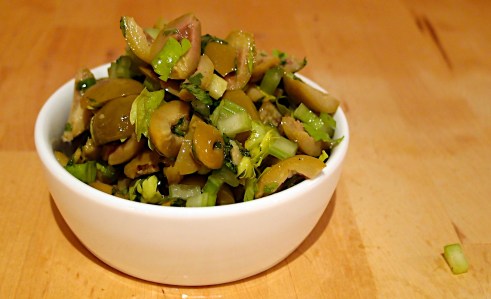
Green Olive Salad

We can’t encourage you enough to try this salad. The list of ingredients is not instantly inspiring but the result is fabulous!

You will have far too much dressing left over but it will keep in the fridge for up to 6 months and can be used on any salad (it will separate but just give it a good shake each time before serving).

Crushed olive salad – Insalata di olive verdi schiacciate – to serve 4-6

  • 450g good quality green olives in brine
  • 6 celery stalks, with leaves, all finely chopped
  • the leaves from 10-12 stalks of mint, finely chopped
  • 40ml dressing (see below)
  • sea salt and freshly ground black pepper

FOR THE DRESSING (makes approx. 375ml): 

  • ½ tsp sea salt
  • 3 tbsp red wine vinegar
  • 2 tbsp white wine vinegar
  • 300ml extra virgin olive oil

First make the dressing:

Put the salt into a bowl, then add the vinegars and leave aside for a minute or two to allow the salt to dissolve. Whisk in the olive oil and 2 tbsp of water until it emulsifies. Pour into a clean bottle and keep in the fridge (it should last for about 6 months); it will separate but just give the bottle a good shake before serving.

Drain the olives and pat dry with kitchen paper. Cut the flesh away from the stone (try slicing 3-4 times from end to end then carefully cutting away each segment). Put the olive pieces into a bowl and add the celery, celery leaves, and mint. Toss with 40ml of the dressing, season and serve.

(Original recipe from Georgio Locatelli’s Made In Sicily, Fourth Estate, 2011.)

Read Full Post »

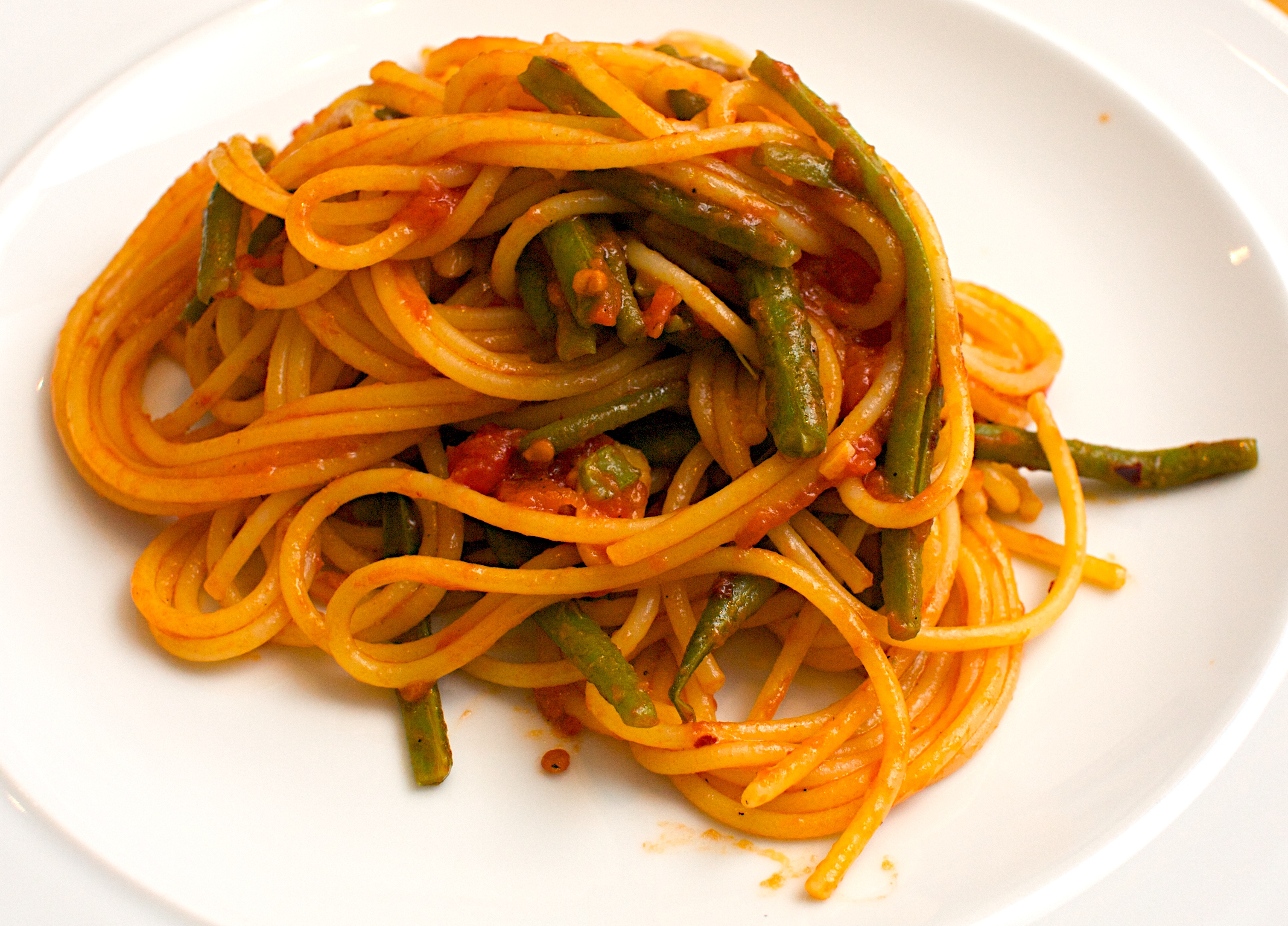
Really simple and delicious. Works best with really fine green beans.

Spaghetti with tomato sauce & green beans – to serve 4

  • 2 garlic cloves
  • 1/2 tsp chilli flakes
  • 50g Parmesan
  • 1 tbsp extra virgin olive oil
  • 400g tin of really good quality tomatoes (Italian brands are usually good)
  • 100g fine green beans
  • 300g spaghetti

Finely slice the garlic and grate the Parmesan.

Heat a thick-bottomed saucepan. Add the olive oil, then the garlic and cook until soft but not brown. Add the tomatoes, season, and add the chilli flakes. Cook over a medium heat for 20 minutes.

Trim the beans, then cook in boiling salted water until very tender. Drain well and add to the tomato sauce.

Cook the spaghetti in boiling salted water until al dente. Drain and stir the pasta into the tomato and green bean sauce. Season and toss with a bit of olive oil.

Serve with the Parmesan.

Wine Suggestion: Nothing too big and heavy required here, try a dry rosé from Bordeaux.

(Original recipe from Rose Gray and Ruth Rogers’ River Cafe: Italian Two Easy, Clarkson Potter, 2006.)

Read Full Post »

« Newer Posts - Older Posts »