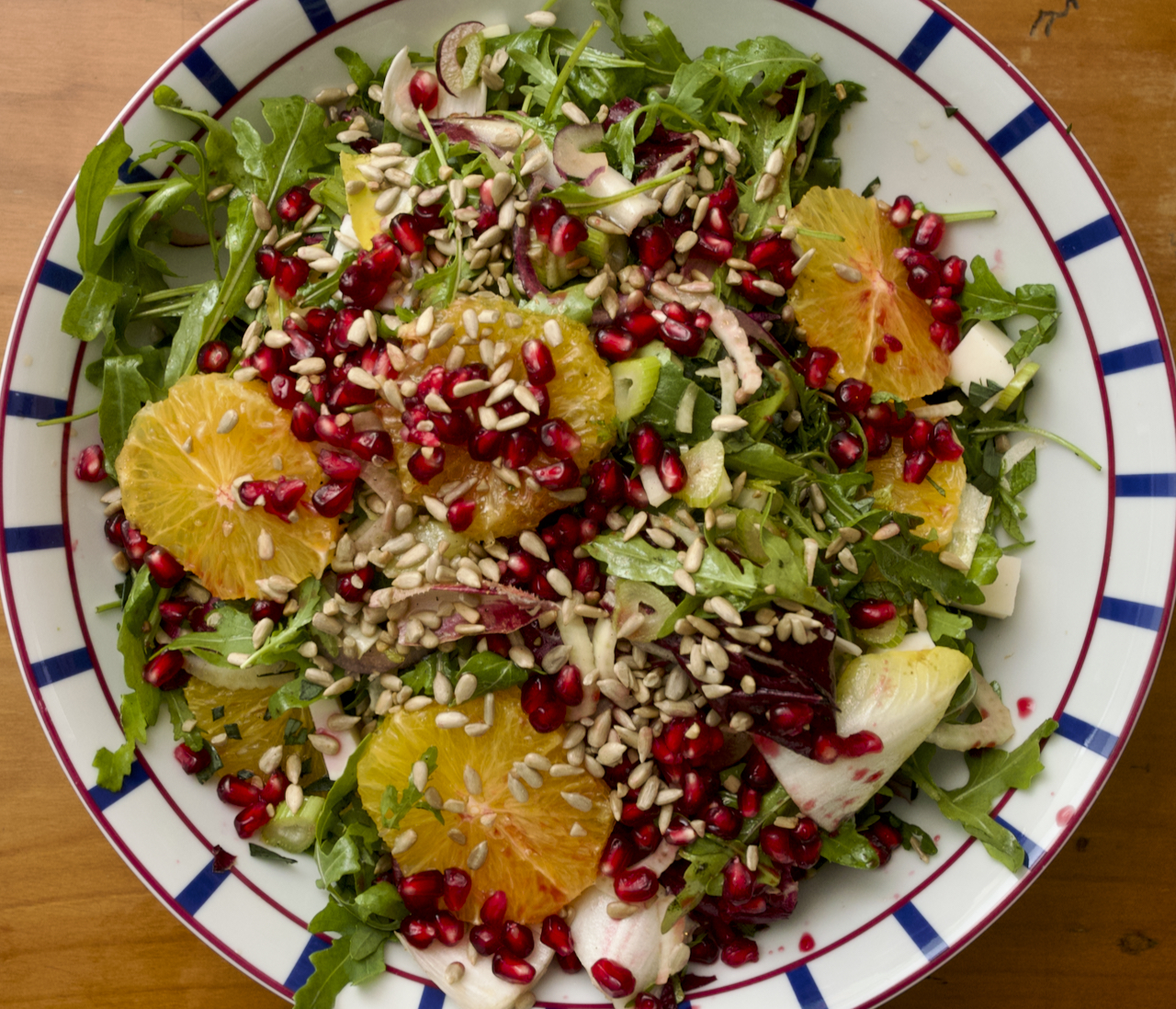
This stunning salad is a riot of colour, texture, and flavours. From Boustany by Sami Tamimi, this is not your average side salad. We served it alongside pan-fried duck breasts.
Bitter leaves with orange and fennel – serves 4 to 6
4 blood oranges (or regular oranges)
4 tbsp lemon juice
2 tbsp orange juice
75ml olive oil
1 tbsp pomegranate molasses
2 tsp orange blossom water
100g radicchio leaves
100g white or red endive
½ small red onion, very thinly sliced
1 small fennel bulb, very thinly sliced
120g rocket
5g fresh tarragon leaves
70g hard goat’s cheese, broken into chunks
3 tbsp pomegranate seeds
25g sunflower seeds, toasted
Remove the skin and white pith from the oranges (use a sharp knife), then slice the oranges into ½ cm slices.
Make the dressing by putting the lemon juice, orange juice, olive oil, pomegranate molasses and orange blossom water into a small bowl. Add ½ tsp of salt and plenty of black pepper, then whisk well and set aside.
Separate the radicchio and endive into leaves and tear into large pieces, then add to a mixing bowl. Add the onion, fennel and rocket. Pour over about a quarter of the dressing, add a pinch of salt and some black pepper and toss well.
Layer the leaves, oranges, goat’s cheese and herbs onto a large platter or salad bowl. Finish with a few pieces of orange, some chunks of cheese and spoon over the dressing. Scatter the pomegranate and sunflower seeds over, then serve.
(Original recipe from Boustany by Sami Tamimi, Ebury Press, 2025.)
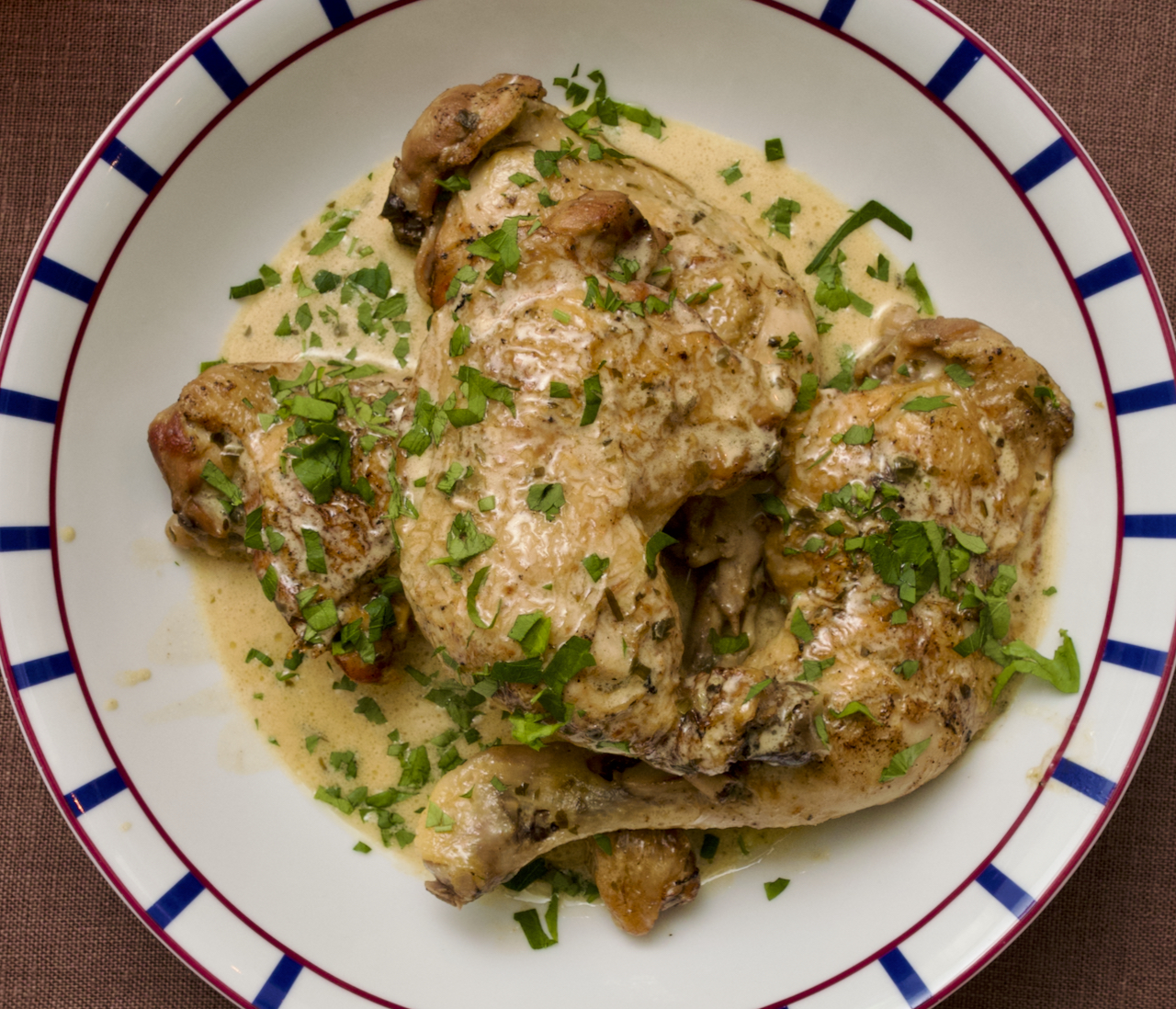
While rummaging through a relative’s bookshelf, we stumbled upon an old cookbook called Cooking with Katie Stewart and took a few recipes along on a recent trip to France — and we’re so glad we did. With some cuisses de poulet from a local butcher and the basic equipment in a holiday kitchen, we cooked a simple tarragon chicken that was so delicious, we made it again as soon as we got home. Proof that sometimes the best recipes are the ones you nearly overlook.
Wine Suggestion: Go classic and open a Chardonnay with a bit of oak — I dare you. It works so well with the tarragon and chicken. Tonight, we went with an old favourite: the Neudorf Tiritiri Chardonnay. Done.
Tarragon Chicken – serves 6
4 tsp dried tarragon
2 tbsp lemon juice
6 chicken joints (we used legs)
50g butter
300ml hot chicken stock
300ml double cream
a handful of flatleaf parsley, roughly chopped
Put the dried tarragon into a small bowl and pour over the lemon juice, then leave to soak for 30 minutes.
Season the chicken with salt and black pepper.
Melt the butter in a large saucepan, then add the chicken pieces and slowly brown them on all sides (this may be easier in two batches). When the chicken is browned all over, about 15 minutes, put all of the chicken into the pan.
Season the chicken again and pour over the tarragon and lemon juice mixture, then add the hot stock and cream. Cover with a lid and simmer gently for about 45 minutes or until the chicken is really tender.
Lift the chicken on to a serving plate and pour over the sauce (you can strain it if you have a sieve). Sprinkle with the chopped parsley and serve.
(Original recipe from Cooking with Katie Steward, Hamlyn, 1974).
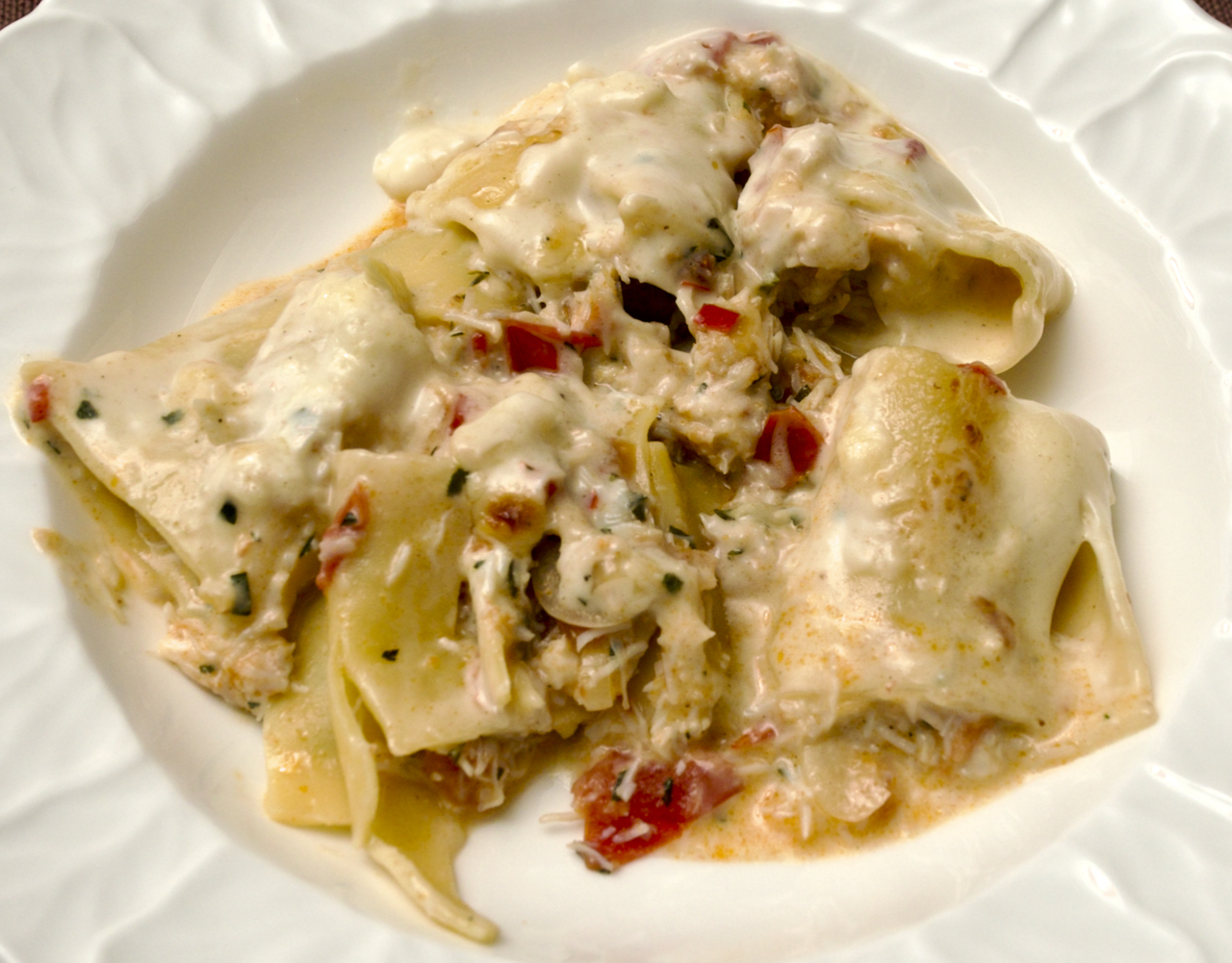
A beautiful Spanish pasta dish made with fantastic Lambay crab. The crab is a bit pricy but it’s worth it for this luxurious dish. Our fishmonger fortunately sells both prepared brown and white crab meat and also shellfish stock which makes this a tad easier.
Wine Suggestion: The richness of this dish demands a fuller-richer white and while this means that Chardonnay was our original thought, we wanted to keep it Spanish given the origin of the dish. Initially we thought a good white Rioja, like the Urbina Blanco Crianza (currently 2016 and 9 years old) which would have been excellent. Instead we stepped sideways and opened the Dominio de Tares Cepas Viejas Godello, an old-vine gem that is fermented in cask and aged on it’s lees to give richness and depth over a lemon, grapefruit and apple fruit flavours, a creamy texture and refined fresh structure.
Crab Canelones – serves 6
45ml olive oil
45g plain flour
500ml fresh shellfish stock (or you could use chicken stock)
300ml double cream
a good grating of nutmeg
80g finely grated Manchego, plus extra for the top
FOR THE FILLING:
60ml olive oil
1 small shallot, finely chopped
2 red chillies, finely chopped
3 garlic cloves, finely sliced
50g brown crab meat
500g ripe tomatoes, diced
150ml shellfish stock (or chicken stock)
500g white crab meat
15g tarragon, finely chopped
250g dried cannelloni tubes
Make the bechamel first. Heat the oil in a saucepan over a medium heat. Stir in the flour and cook for a minute, then gradually add the stock, stirring continuously, until you have a smooth, thick sauce. Add the cream, nutmeg and cheese and season, then set aside.
Heat the olive oil for the filling in a separate saucepan over a very low heat. Add the shallot, chillies and garlic and cook over a very low heat for 15 minutes.
Increase the heat to medium high and add the brown crab meat and fry for 1 minute, then add the tomatoes and the stock. Season and cook for 15 minutes, then take off the heat and stir in the white crab meat and chopped tarragon.
Blanch the pasta tubes in boiling water for 3 minutes, then gently drain and cool under cold running water.
Fill each pasta tube with the crab mixture and fit them snugly into an ovenproof dish, then pour over the bechamel. Scatter over a little more grated cheese, then bake for about 30 minutes or until golden and bubbling. Serve with a green salad.
(Original recipe from The Spanish Home Kitchen by José Pizarro, Hardie Grant, 2022.)
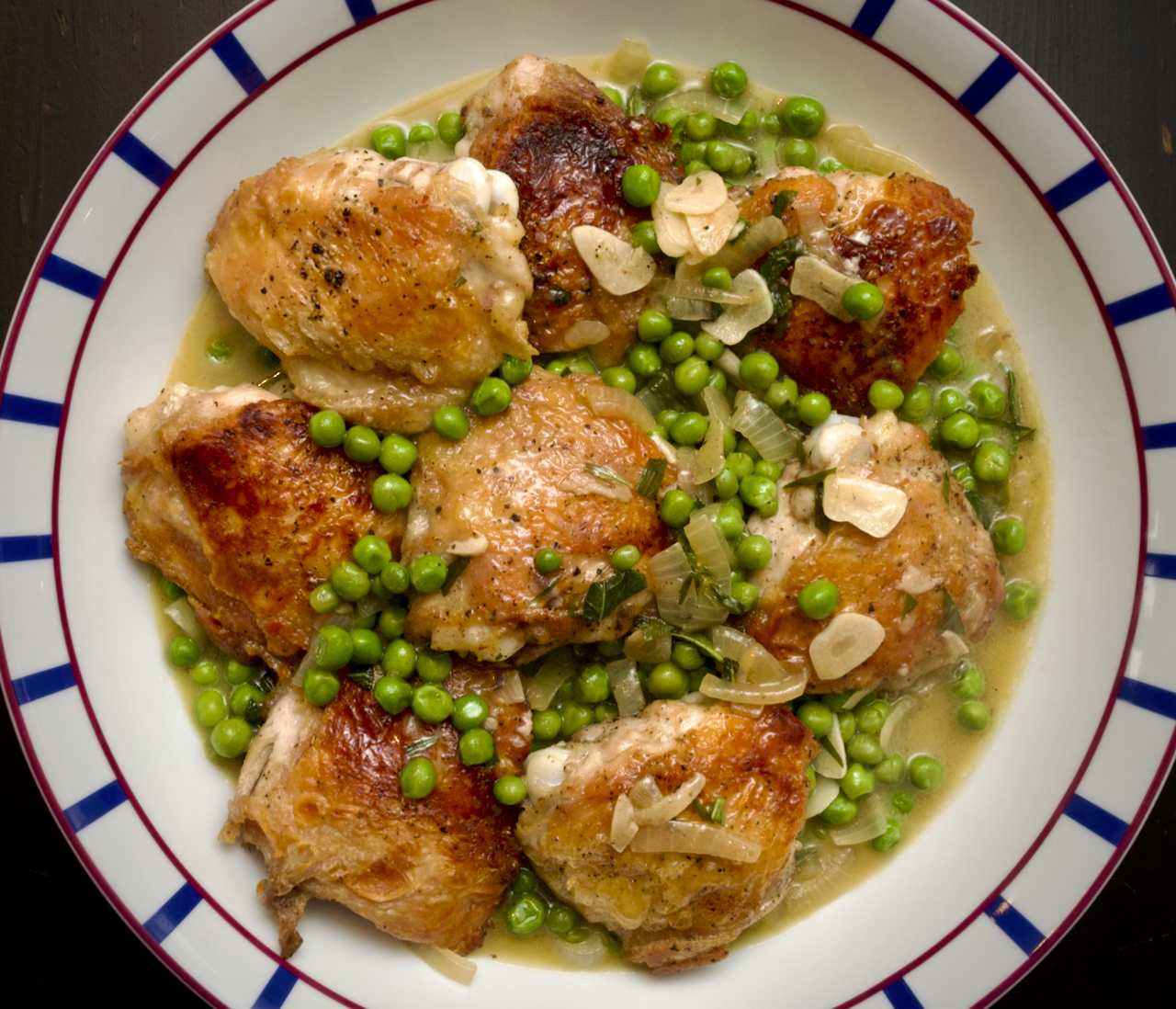
With the erratic weather we’re not doing nearly as much outdoor cooking as we’d usually at this time of year. To keep up our spirits this indoor dish was light and summery. Serve with some new potatoes.
Wine Suggestion: A fun and inexpensive Verdicchio from Umani Ronchi, their Villa Bianchi, which despite it being light and easy going shows the class that the whole range they make has. Summery fun in a glass.
Crispy chicken thighs with peas and herbs – serves 4
8 chicken thighs
2 tbsp olive oil
2 shallots, halved and sliced
3 garlic cloves, thinly sliced
400ml chicken stock
300g frozen peas (or freshly podded if possible)
3 sprigs of tarragon, leaves picked and roughly chopped
2 springs of mint, leaves picked and roughly chopped
30g cold butter, cut into cubes
Heat the oven to 200C/180C fan/Gas 6.
Trickle the olive oil over the chicken thighs and season both side with salt and pepper. Heat a large non-stick sauté pan over a medium heat, then place the thighs skin-side down in the pan and leave to cook for 15- 20 minutes or until the skin is crispy and golden brown.
Transfer the thighs, skin-side up, to an oven tray and bake in the oven for a further 15-20 minutes.
Meanwhile, put the sauté pan back over a medium heat. When it’s hot add the shallots and cook for 3-4 minutes to soften. Add the garlic and cook for another couple of minutes.
Pour the stock into the pan and scrape all the sticky bits from the bottom of the pan with a wooden spoon. Bring the stock to a simmer and cook reduce by half. Add the peas and herbs and cook for a few minutes until the peas are tender. Add the cold butter and stir until amalgamated into the sauce.
Remove the chicken from the oven and add the thighs to the pan with the peas, pouring over any juices on the tray. Stir and season with salt and pepper, then serve.
(Original recipe from Tom Kerridge Cooks Britain, Bloomsbury, 2024.)
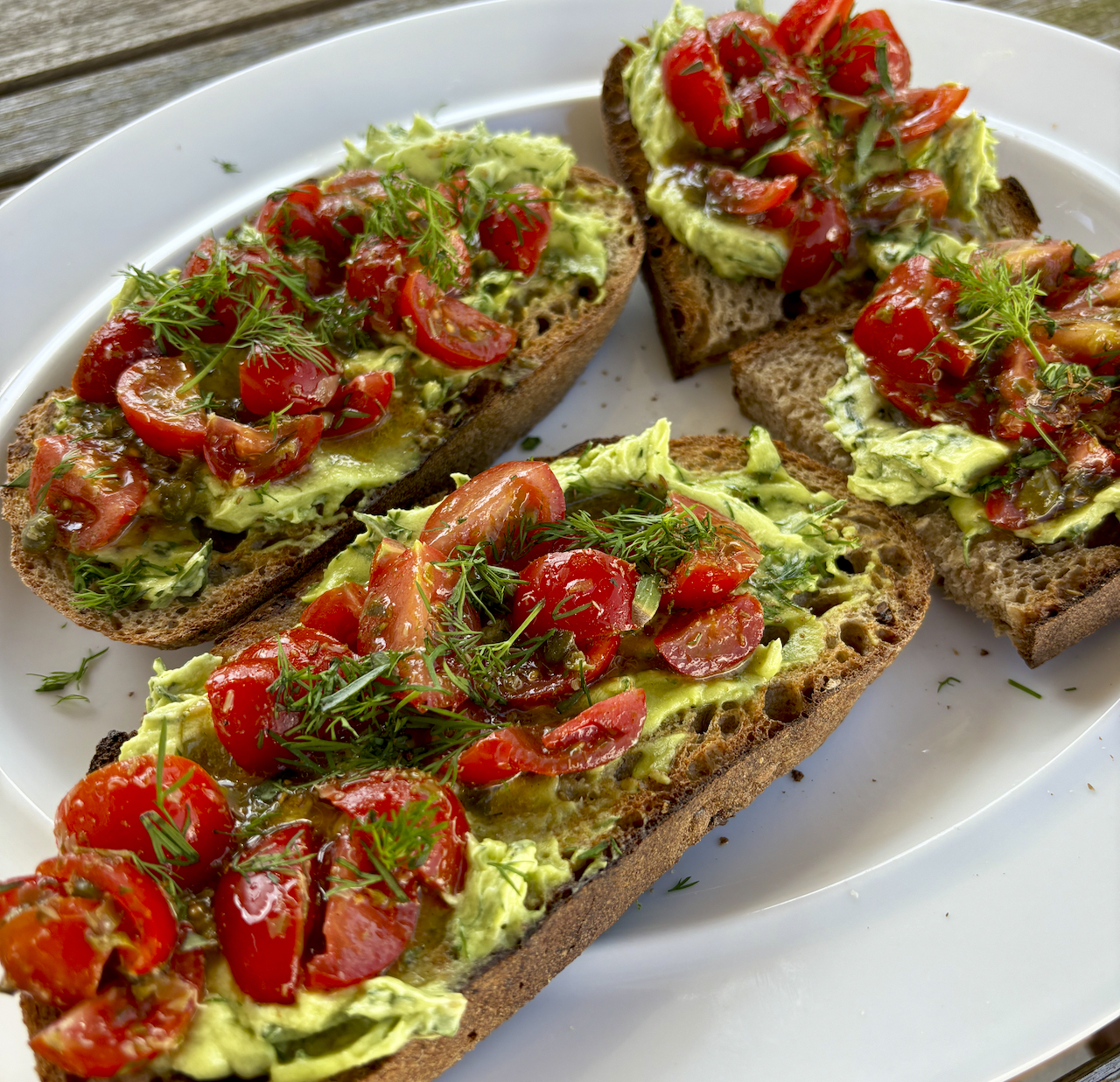
So much more than avocado on toast. A delicious recipe from Ottolenghi Simple.
Avocado butter on toast with tomato salsa – serves 4
2-3 ripe avocados, you want about 250g of scooped out avocado
60g unsalted butter, softened and cut into cubes
3 limes, you need 1½ tbsp finely grated lime zest and 1½ tbsp lime juice
10g tarragon leaves, roughly chopped
10g dill, roughly chopped
200g cherry tomatoes, quartered
2 tsp capers, finely chopped
2 tbsp olive oil
4 slices of sourdough
1 small garlic clove, halved
¼ tsp cumin seeds, toasted and crushed
Put the avocado flesh, butter, half the lime zest, half the lime juice and ½ tsp salt into a blender or small bowl of a food processor. Whizz until smooth, then transfer to a bowl along with two-thirds of the herbs. Fold the herbs through then put into the fridge for 10 minutes.
Mix the tomatoes, capers, remaining lime zest & juice and the olive oil with plenty of black pepper. Set aside.
Toast the bread and rub one side with the garlic. Leave the bread to cool slightly then spread each slice with avocado butter and top with the tomato salsa. Sprinkle over the remaining herbs and the crushed cumin.
(Original recipe from Ottolenghi Simple by Yotam Ottolenghi, Tara Wrigley & Esme Howarth, Ebury Press, 2018.)
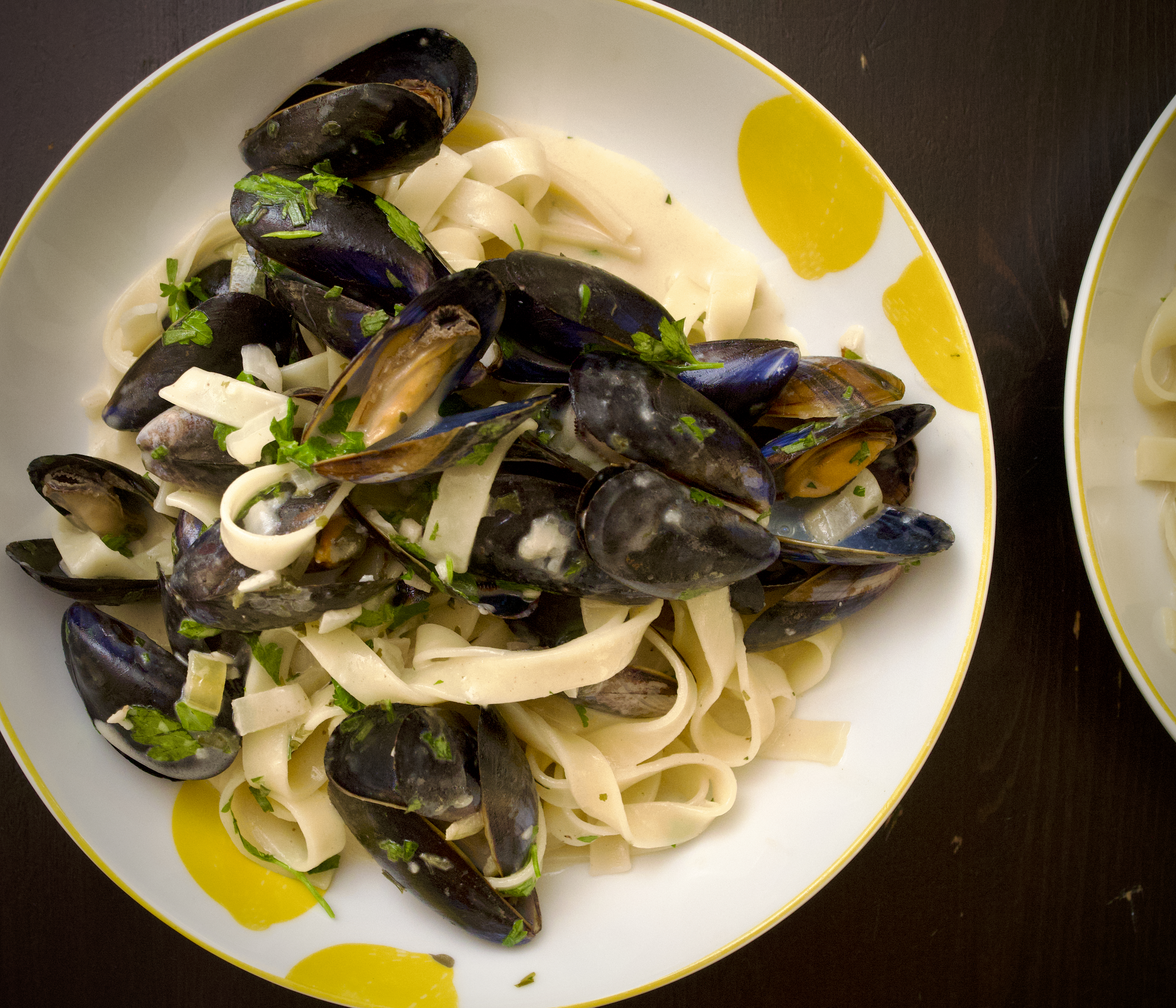
This is made with packets of mussels in garlic butter sauce which you can easily pick up in the supermarket on your way home – no need to make it in time for the fish shop and no fiddly prep. You might want a bit of crusty bread to mop up the sauce.
Wine Suggestion: We couldn’t go past a good Muscadet and with ever greater choices out there we’d recommend you explore beyond some of the classic cuvées being offered. Jérémie Huchet’s Clos les Montys is an unique terroir with some very old vines. Not within the Sévre et Maine appelation this could easily be overlooked, but you get something special in the glass: aromas of lemon, jasmine, and pears with hints of a fresh herb. Juicy, well-balanced and elegant, it finishes very long and refreshing.
Tagliatelle with mussels & crème fraîche – serves 4(easily halved)
300g dried tagliatelle
1 large onion, finely chopped
2 tbsp olive oil
150ml dry white wine
200ml crème fraîche
2 x 450g packs mussels in garlic sauce (we used Carr & Sons from Dunnes)
a good handful of flat leaf parsley, roughly chopped
2 tbsp chopped tarragon
Heat the olive oil in a deep frying pan, then add the onion and cook gently for about 10 minutes until softened and starting to colour. Pour in the wine, turn up the heat and bubble until it has almost evaporated.
Meanwhile, bring a large pan of salty water to the boil and cook the pasta according to the timings on the pack.
Add the crème fraîche to the onions and bring to the boil, then tip in the mussels and cook for about 5 minutes until piping hot and open (chuck any that don’t open away). Drain the pasta and return to the pan and tip in the mussel mixture. Stir in the herbs and serve with some crusty bread if you like.
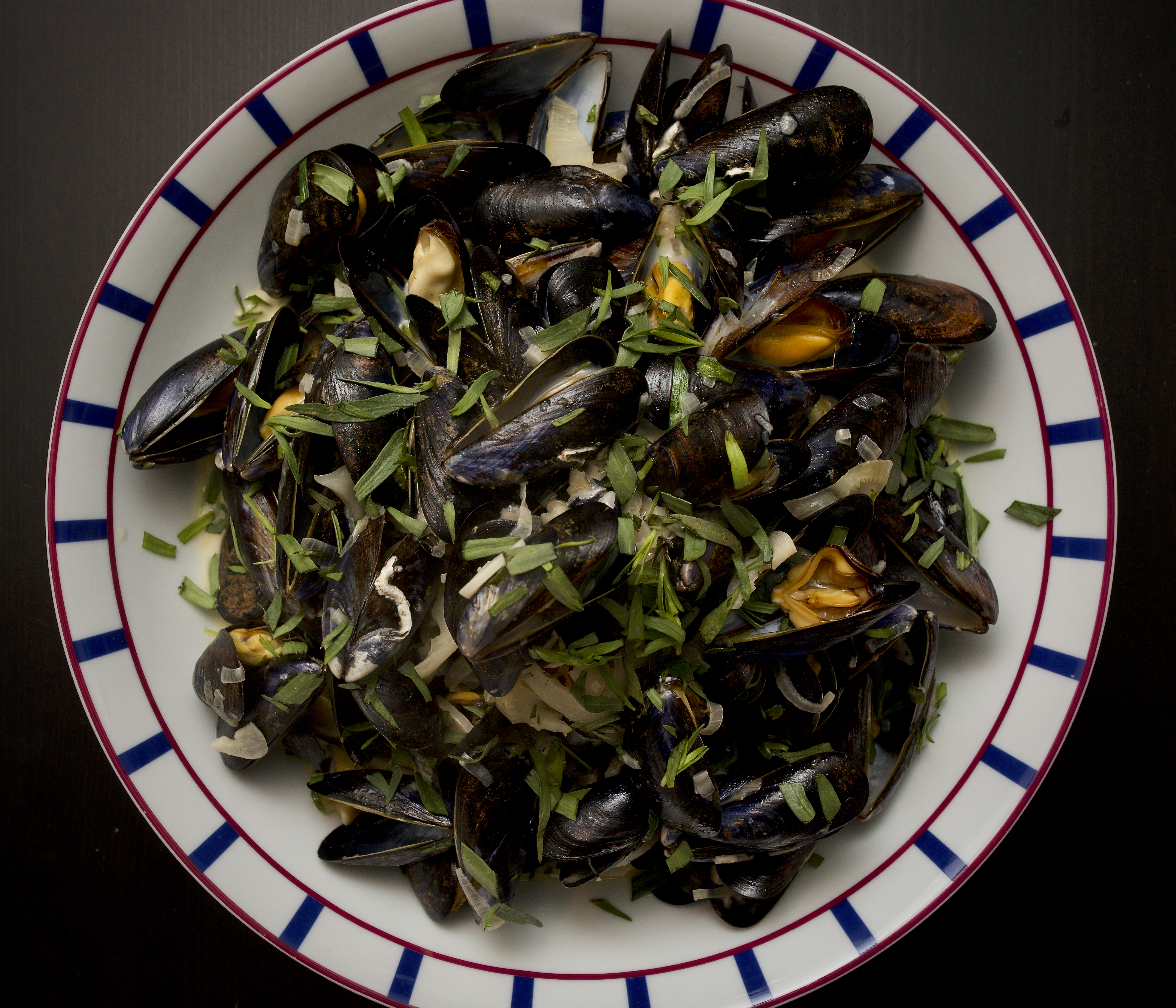
Mussels are cheap and plentiful and they’re one of the few food items that haven’t increased in price. We should all be eating this fabulous local resource. This recipe is just delicious.
Wine Suggestion: We served this with one of those under-the radar wines the La Clef du Recit Menetou Salon. While Anthony Girard from this domain makes a fab Sancerre, we are continually delighted by his other appelations: Menetou Salon which we think has more body, and is a tad more Chablis like, despite it being Loire Sauvignon Blanc; and his Quincy which is elegant and perfumed.
Mussels with fennel & tarragon – serves 2
2 tbsp olive oil
2 long shallots, finely sliced
1 small fennel bulb (or half a big one), finely sliced
3 cloves of garlic, finely sliced
100ml dry white wine
1kg mussels, cleaned and debearded
75ml double cream
a handful of tarragon leaves, roughly chopped
crusty bread, to serve
Heat the olive oil in a large heavy casserole over a medium-high heat. Add the shallots, fennel and a good pinch of salt. Cook for about 10 minutes, until starting to caramelise. Add the garlic and cook for another minute.
Tip the mussels into the pot and stir well, then pour in the white wine and season well with salt and pepper. Bring to the boil, then clamp on the lid and cook for 3-4 minutes, shaking occasionally, until the shells have opened. Stir in the cream, then scatter over the tarragon.
Serve in warm bowls with crusty bread.
(Original recipe by Adam Bush in Olive Magazine, January 2022.)
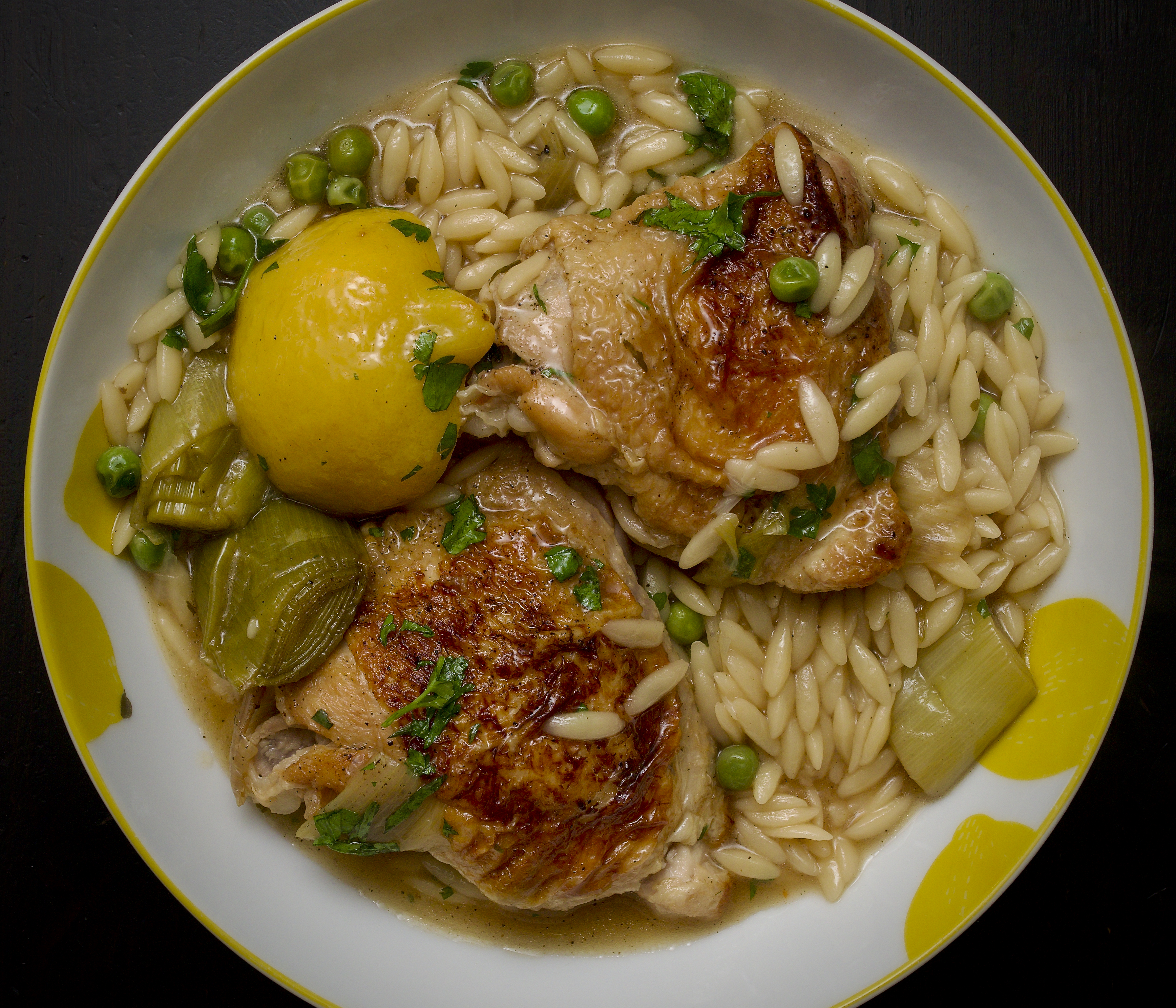
This is a nice soupy-stew sort of thing. Perfect for cold nights but still with nice fresh flavours.
Wine Suggestion: We went a bit left-field for this dish and look for an aged white Rioja where you get the roundness and poise of an oaked chardonnay but with a slightly softer acidity. Graceful in age the Urbina Rioja Bianco Crianza 2014 was both youthful with melon and citrus fruits, and with a layer of aged, tertiary fennel, aniseed and peach. A joy to know this is the current release from an under the radar winery.
Chicken with leeks & orzo – serves 3
3 tbsp olive oil
6 large chicken thighs
250g leeks, cut into short lengths, wash well to get rid of any grit and pat dry with kitchen paper.
1 litre chicken stock
half a lemon, cut into 2 fat wedges
6 black peppercorns
200g orzo
150g frozen peas
a small handful of parsley, roughly chopped
a small handful of tarragon, roughly chopped
Preheat the oven to 200C.
Heat the oil in a large, deep casserole dish. Fry the chicken thighs until well-browned on both sides, then remove and set aside.
Add the leeks to the chicken fat in the pan and cook over a medium-low heat, with the lid on, for 5 minutes, you want them softened but not browned.
Add the stock and stir with a wooden spoon until it comes to the boil, then add half the lemon, peppercorns and 1 tsp of salt. Scatter in the orzo and boil for 3 minutes. Return the chicken to the pan, then cover and bake for 35 minutes.
Add the peas, then return to the oven for another 5 minutes. Add the tarragon and parsley and serve in warm bowls.
(Original recipe from A Cook’s Book by Nigel Slater, 4th Estate, 2021)
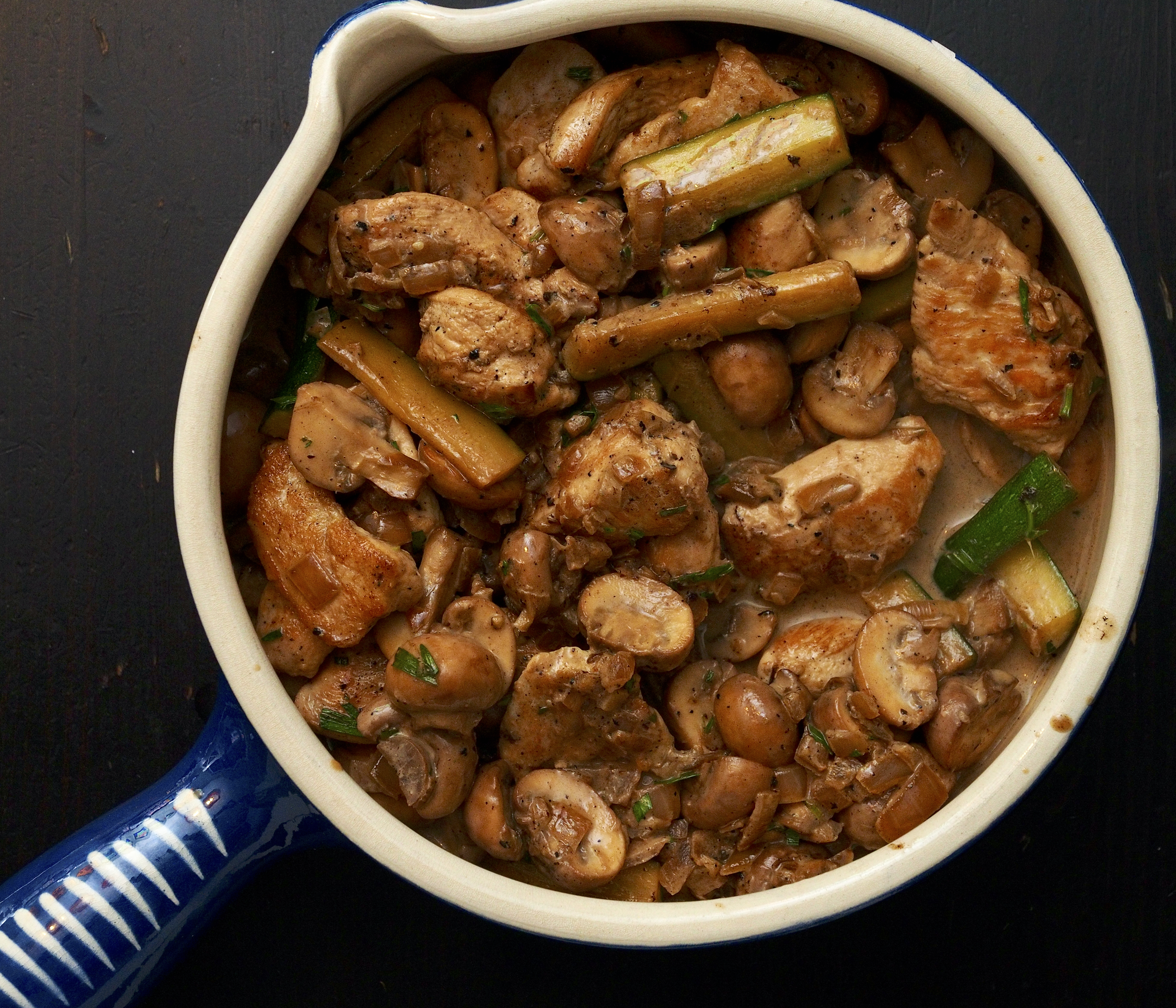
It’s courgettes from now on in our house as we have them growing in our little garden and can hardly eat them fast enough. This dish is simple but really delicious – highly recommended. Serve with rice or potatoes.
Wine Suggestion: we’re quite fond of the wines of Hungary and think they’re unfairly overlooked, especially the reds which combine an earthy spice, quite often with a real sophistication and elegance. A new find is Csaba and Csilla Sebestyén’s Sekszárd Cuvée, a blend of Kékfrankos, Merlot and Cabernet Franc. The latter two grapes have found a new spiritual home in the south of Hungary and the first a local grape with bags of character.
Chicken and courgettes with creamy mushroom and tarragon sauce – serves 6
1 tbsp olive oil
5 small chicken breasts, cut into strips
1 large onion, finely chopped
2 medium courgettes, cut into thick batons
350g button mushrooms, quartered
2 large garlic cloves, finely grated
200ml dry white wine
200ml double cream
juice of ½ lemon
1 heaped tbsp freshly chopped tarragon
Season the chicken with salt and black pepper. Heat the oil in a deep frying pan, then fry the chicken in batches until well-browned on all sides, then remove from the pan and set aside. You may need to add a bit more oil.
Add the onion and cook over a high heat for a few minutes until nicely coloured, then cover the pan with a lid and leave the onions to cook on a low heat for about 15 minutes or until soft. Turn the heat up again and add the courgettes, mushrooms and garlic and fry for a few minutes until softened. Scoop the veg out of the pan and set aside with the chicken.
Add the wine to the pan and boil over a high heat until reduced to about 4 tbsp. Stir in the cream and simmer again for a few minutes until the sauce thickens. Stir in the lemon juice and season with salt and pepper. Return the chicken and vegetables to the pan for a couple of minutes to heat through. Stir through the chopped tarragon and serve.
(Original recipe from Mary Berry Cooks Up a Feast with Lucy Young, DK: Penguin Random House, 2019.)
Pork ribeyes are a bit of revelation for us but they’re excellent on the barbecue and also good value. You cook them low and slow first, then a fast sear at the end. This will give you tender meat with a good browned crust on the outside. You will need a meat thermometer – they’re not expensive and an essential piece of equipment for cooking outside. You also want to start this the day ahead so you can season the meat the whole way through.
Wine Suggestion: We were treated to a gem from the cellar of our friends David & Joyce. The Domaine Tempier Bandol 2006 was at it’s absolute peak. Fresh as a daisy with velvety layers of plums and sloes and a deep, earthy bass note with touches of leather, tobacco and gentle spices. The forceful tannins from the Mourvèdre tamed by time into a silky texture allowing the fruit to emerge.
Sprinkle the pork steaks all over with the salt and place on a rack over a tray. Leave uncovered in the fridge for 24 hours (or for as long as you’ve got).
When ready to cook you need to set up the barbecue for both direct and indirect heating. This means piling up the charcoal on just one side. You can then put the meat on the opposite side (without charcoal underneath) and cover with the lid to cook indirect – this will cook the meat slowly. When you want to finish over a high heat, you transfer the meat to the other side.
Put the dried mushrooms into a bowl and pour over enough boiling water to just cover. Leave to soak until soft, then finely chop the mushrooms and return to the soaking liquid. Set aside.
Put the pork steaks on the opposite side to the charcoal and allow them to cook gently for 30-40 minutes. You want the internal temperature to reach 50C.
Meanwhile, make the sauce. Heat the oil and butter in a heavy-based frying pan and add the fresh mushrooms. Fry until soft, then add the garlic and fry for a few minutes. Add the wine and the dried mushrooms along with their soaking liquid. Allow to bubble until the liquid is almost completely reduced, then add the cream, tarragon and seasoning. Allow to heat through, then cover with a lid and set aside.
Remove the steaks to a plate and, if you need to, add a bit more charcoal to the barbecue to get it super hot again. Then sear the steaks over a really high heat, with the lid off, turning them every 30 seconds until really well browned. Keep cooking like this on the internal temperature ahas reached 63C for medium or 71C for well done.
Warm the sauce a little if you need, then serve the steaks with the sauce poured over. Potatoes and green veg are good on the side.
(Original recipe from Seared by Genevieve Taylor, Quadrille, 2022.)
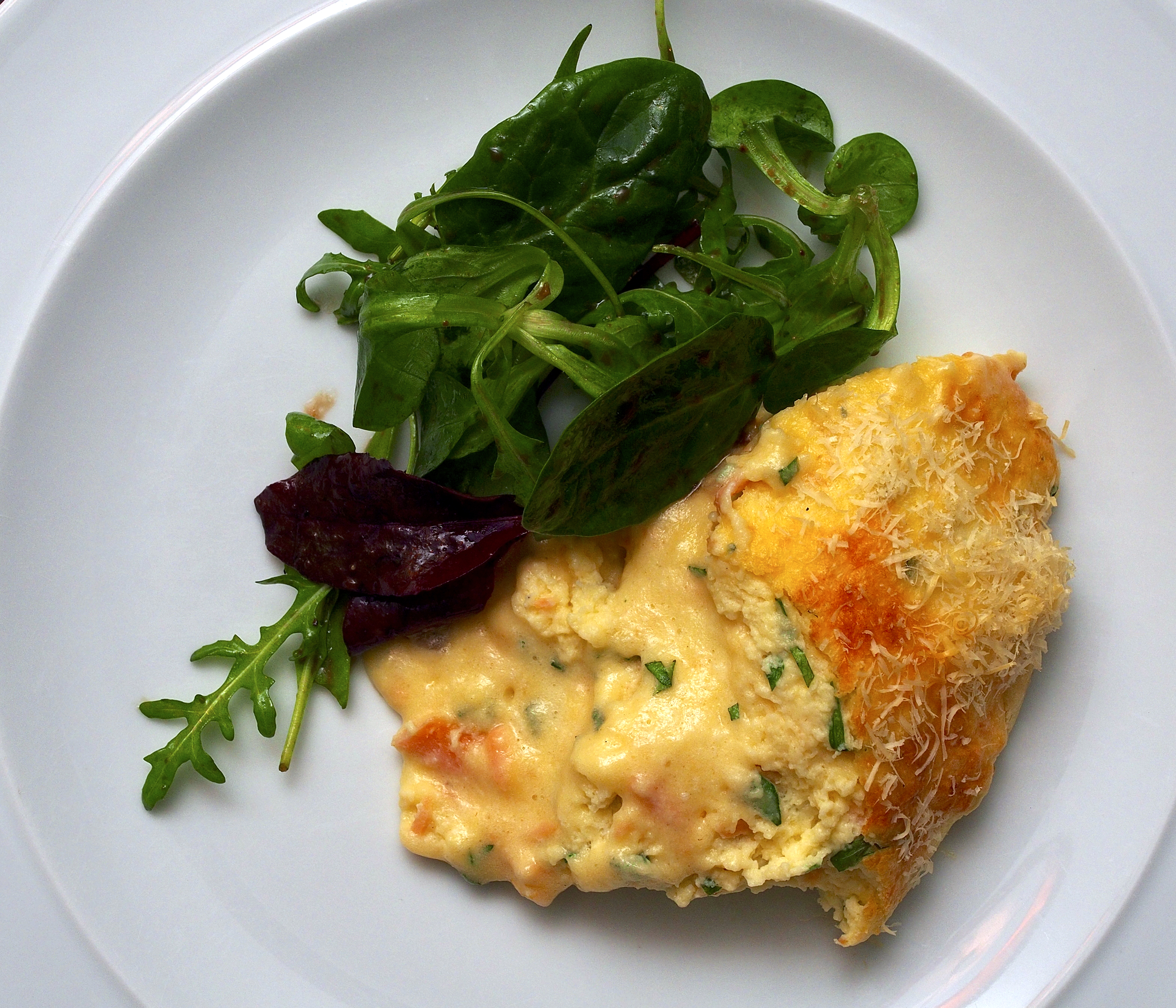
This has to be the perfect post-Christmas dish; great for using up the cheeseboard leftovers and all that smoked fish you though you would eat. Our daughter was so enamoured of this that she has been demanding it ever since. Serve with a green salad and some crusty bread.
Wine Suggestion: Find yourself a Chardonnay made on the lees, but not necessarily in oak. This will preserve a freshness and mid-weight while giving a yeasty, buttery character. A good producer from the Maçon, like Manciat-Poncet, would be ideal and that’s what we had.
Smoked Salmon Soufflé – Serves 3
20g freshly grated Parmesan, plus an extra 1 tbsp
1 small onion, peeled
100g smoked salmon or smoked trout, finely chopped
300ml full fat milk
1 bay leaf
50g butter
55g plain flour
4 large eggs, separated
2 tbsp chopped tarragon
You will need a soufflé dish or baking dish, approximately 18-20cm.
Lightly grease the inside of the dish with butter, then dust with the 2 tbsp of grated Parmesan.
Preheat the oven to 200C/Gas 6.
Put the milk into a small saucepan with the onion and bay leaf. Bring to the boil, then remove from the heat and leave to sit for a few minutes. Remove the onion and bay leaf and discard.
Melt the butter in a heavy saucepan, then stir in the flour and cook, stirring, for a few minutes. Then pour in the warm milk and stir vigorously until you have a smooth, thick sauce. Continue to cook for another couple of minutes, then remove from the heat.
Lightly beat the the egg yolks with a fork, then stir them into the sauce with 20g of Parmesan, the chopped fish and the tarragon.
Beat the egg whites until stiff with a whisk in a large bowl. Fold the egg whites into the sauce, then spoon into the buttered dish. Smooth the top if needed, then sprinkle over the remaining Parmesan. Put the dish onto a baking sheet and bake for 20-25 minutes. The crust should be pale brown and the centre slightly soft, it should still have a little wobble when you give it a shake.
Serve immediately with dressed salad leaves and crusty bread. You need to eat it all up as this dish will not keep.
(Original recipe by Nigel Slater in The Guardian, Tuesday, 28 December 2021.)
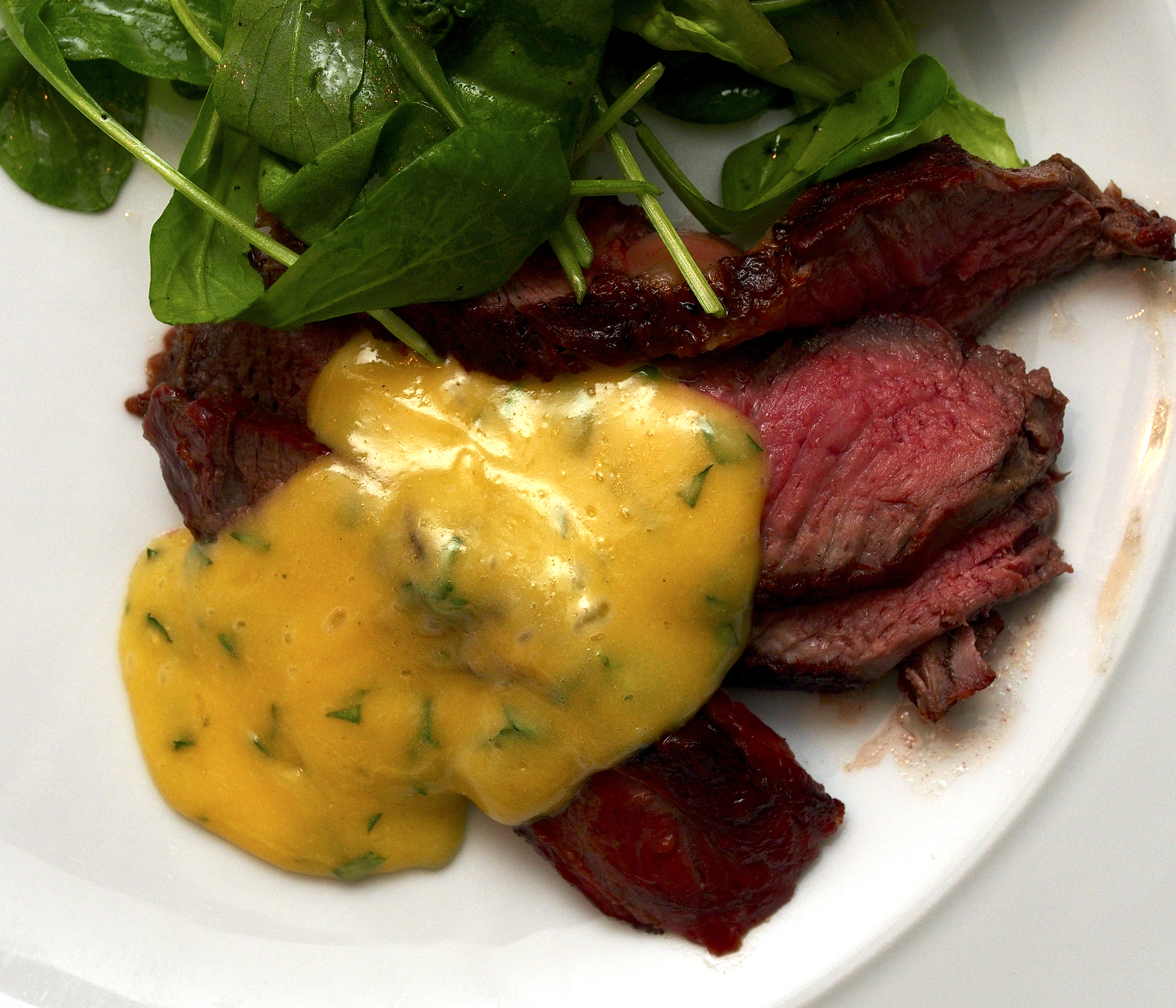
Sometimes we get a notion for steak and chips, so pull out the barbecue and crank up the oven. Béarnaise sauce is the perfect companion, not particularly hard, it just needs a little attention and you must never let it get too hot.
Wine suggestion: Another Greek classic, the Thymiopoulos Naoussa Xinomavro which plays a nice balance of being effortless and ethereal alongside a deep core of powerful, elegant tannins.
Béarnaise Sauce
1 small shallot, finely chopped
3 tbsp tarragon vinegar
6 black peppercorns
3-4 bushy tarragon sprigs
2 egg yolks
½ tsp Dijon mustard
150g butter, cut into small dice
Heat the vinegar, tarragon, peppercorns and shallot in a small pan. Bring to the boil and reduce until there is about 1 tbsp left, then strain and set aside.
Put a bowl over a pan of just-simmering water and make sure it isn’t touching the water. Add the egg yolks and mustard, then whisk in the reduced vinegar. Slowly add the butter, a cube at a time, whisking each time until smooth. You can turn the heat off about half way through. We like to stir-through a little chopped tarragon at the end but it’s up to yourself. Keep warm over a pan of warm water while you cook your steak.
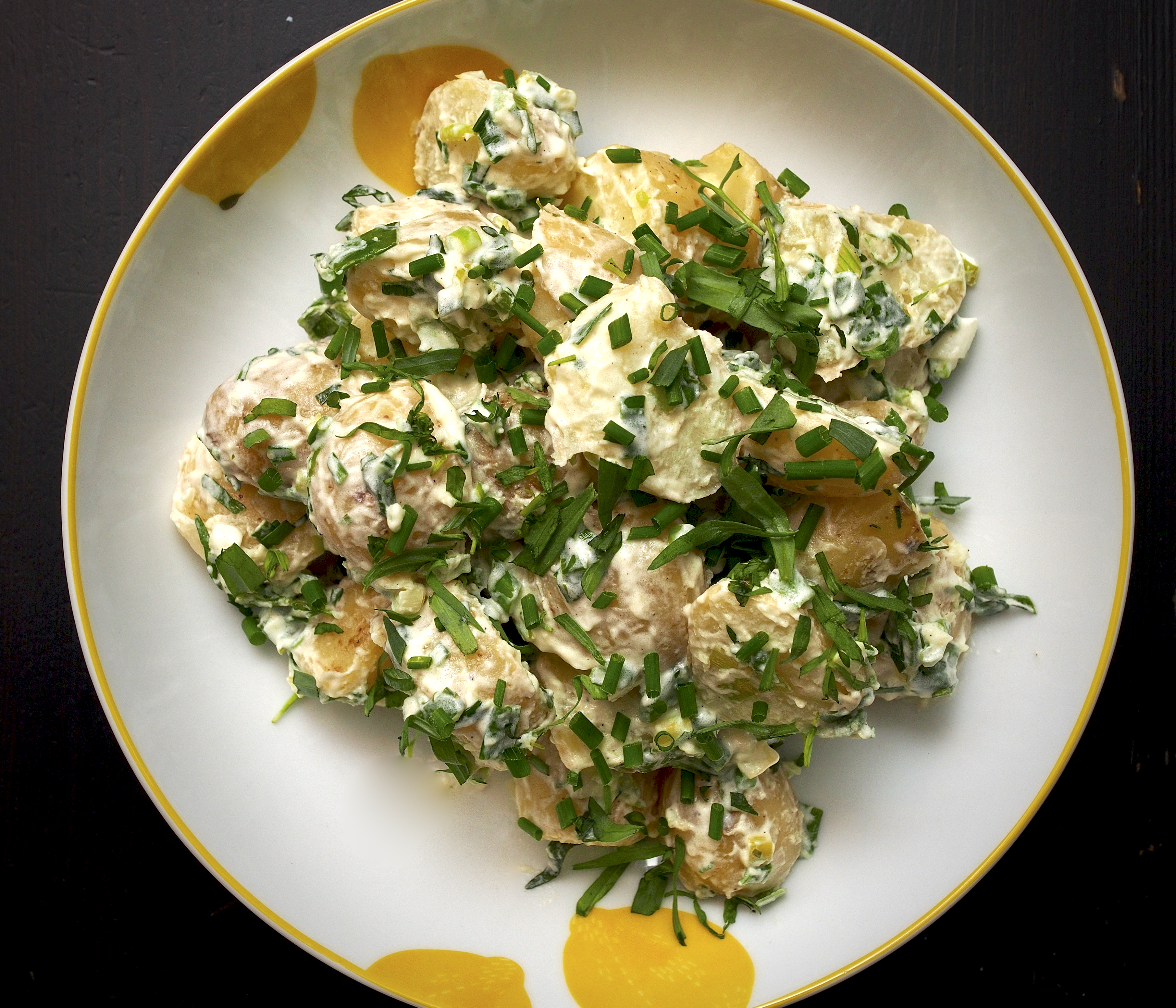
Cut the potatoes into small chunks. Bring a large pan of salty water to the boil, add the poatoes, and simmer for 10 minutes or until just cooked. Drain well in a colander, then transfer to a large bowl.
Meanwhile, mix the mayonnaise, yoghurt, crème fraîche, mustard and milk together, then stir through the onions and most of the chives and tarragon. Season with salt and pepper.
Spoon the dressing over the potatoes while still warm and toss gently to coat. Transfer to a serving bowl and scatter over the reminaing herbs. Serve at room temperature.
(Original recipe by Angela Nilsen in BBC Good Food Magazine, September 2012.)
You should try this the next time you have some leftover roast chicken. In fact, it’s even worth cooking some chicken specially. Great for lunch with some fresh bread and butter.
Chopped Chicken Salad – serves 4 (generously)
2 cooked chicken breasts, diced (or just use some leftover roast chicken which is what we did)
3 celery sticks, diced
4 scallions, sliced into rounds
½ cucumber, deseeded and diced
100g radishes, thinly sliced
200g cherry tomatoes, halved
2 tarragon sprigs, leaves finely chopped
2 thyme springs, leaves only
1 heart of romaine lettuce or Little Gem lettuce, finely chopped
50g watercress, stems finely chopped and leaves left whole
50g rocket, roughly chopped
50g Parmesan, finely grated
FOR THE DRESSING:
4 tbsp olive oil
1 tsp Dijon mustard
½ tsp runny honey
1 garlic clove, crushed
You need to start with a very large bowl, big enough to toss all of the salad ingredients together in.
Make the salad dressing in the bowl by whisking all of the ingredients together with some salt and black pepper.
Add the chicken to the dressing in the bowl and toss to coat. Fold in the chopped celery, scallions, cucumber, radishes and cherry tomatoes, then the herbs. Stir it all together and season with salt and black pepper.
When you are ready to serve, add the lettuce, watercress, rocket and Parmesan to the bowl. Toss everything together and serve as it is or tip out onto a large serving dish.
(Original recipe from The Hairy Bikers’ One Pot Wonders by Si King & Dave Myers, Seven Dials, 2019.)
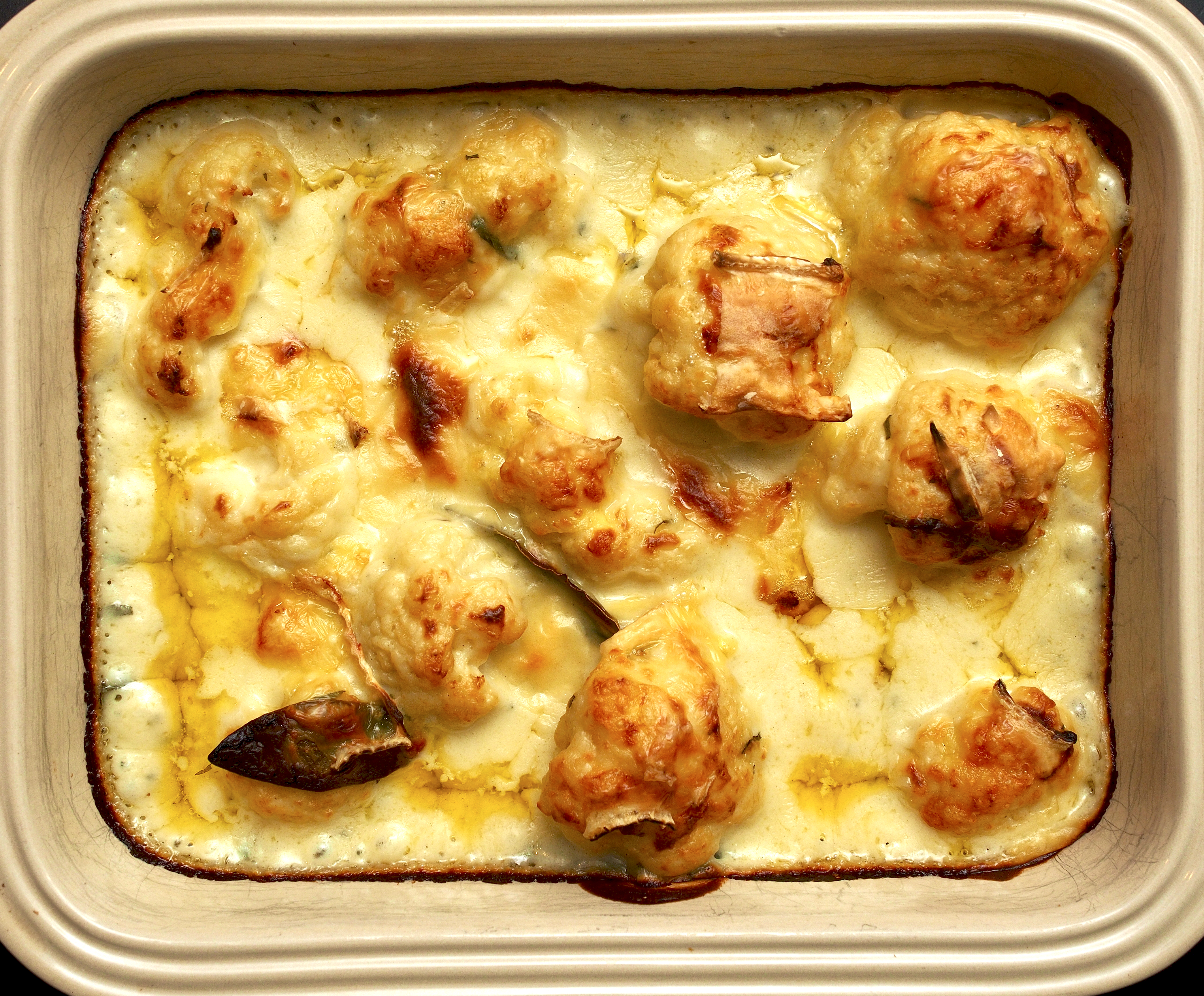
With a few days left before the New Year… when we, like many others are happy to change pace for a bit. For us that means lots of exercise, early nights and healthier food to eat. We don’t go on a diet but after all the excess of Christmas it’s just what we’re craving. All of this means that we have just a few days to get through all the delicious cheese in the fridge. Feel free to play around with the cheeses, we used Cooleeney from Tipperary, but Taleggio or Brie would work too.
5g tarragon, leaves picked, half chopped, half left whole
1 cauliflower, broken into florets
Heat the oven to 220C/200Cfan/gas 7.
Melt the butter in a heavy-based pan, then stir in the flour to make a paste. Cook for a few minutes, then gradually add the milk, stirring the whole time, until you have a smooth sauce. Season.
Add the bay leaf, cheddar, Parmesan, half the taleggio and the whole tarragon leaves. Heat gently, stirring continuously, for 6 to 8 minutes or until the cheeses have melted and the sauce thickened. Remove from the heat and leave to infuse.
Cook the cauliflower in a steamer for 8 to 10 minutes or until just tender. Put the cauliflower into a baking dish. Add the chopped tarragon to the sauce and pour over the cauliflower.
Dot with the remaining taleggio and bake for 20-25 minutes until golden.
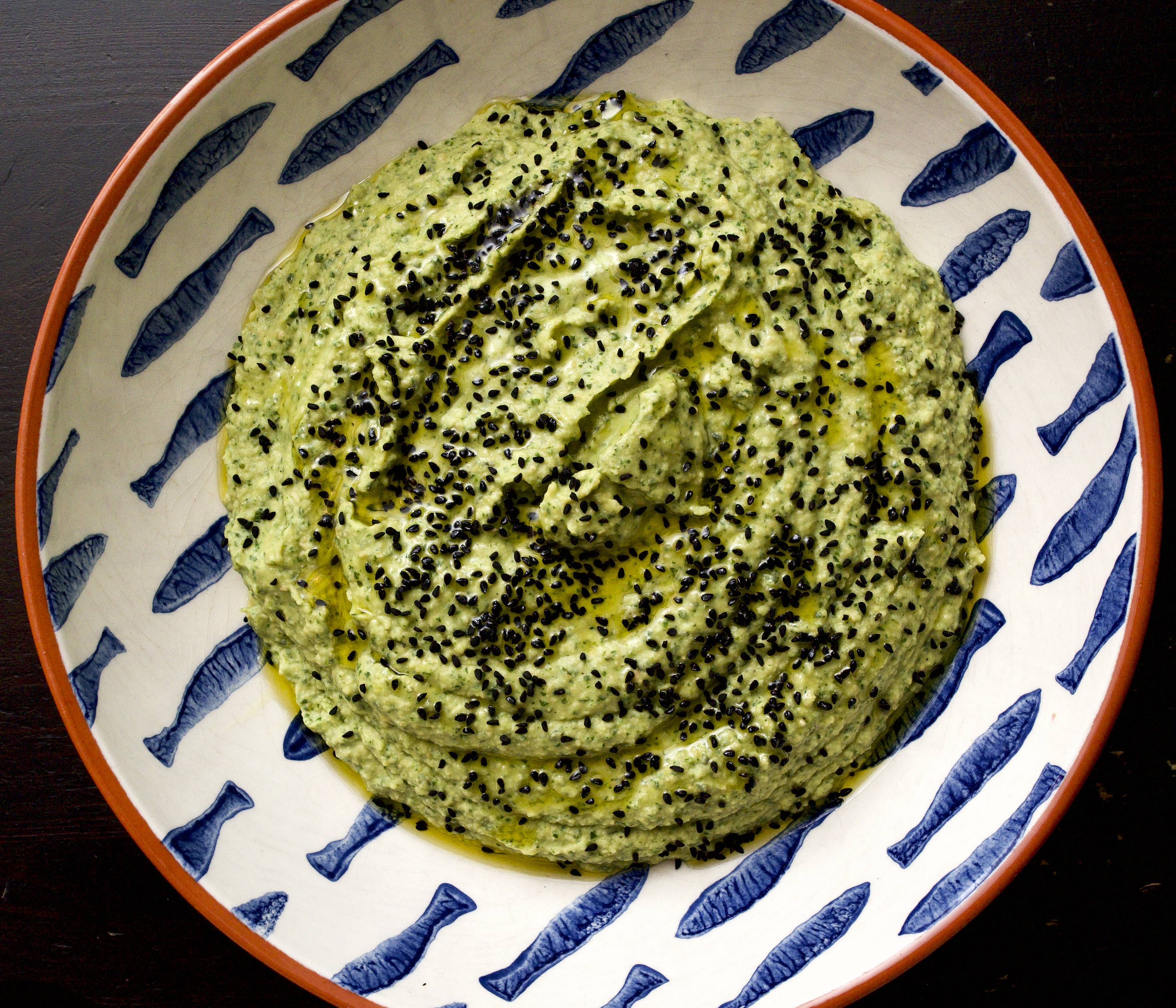
Really fresh and tasty. A lovely recipe from Simply by Sabrina Ghayour (our new favourite thing!). We served with toasted pittas. Leftovers great for lunch the next day.
Green hummus – serves 6 to 8
2 x 400g tins chickpeas, drained and reserve ¾ of the brine from 1 of the tins
juice of ½ a lemon, you might need a bit more
2 garlic cloves, peeled and crushed
30g of flat leaf parsley, roughly chopped
30g of fresh coriander, roughly chopped
15g of tarragon, leaves picked, roughly chopped
2 tbsp tahini
1 tsp nigella seeds
warm pitta bread, to serve
Put the chickpeas, reserved brine, lemon juice, garlic, parsley, coriander, tarragon, tahini, some sea salt and black pepper, in a food processor and whizz until smooth.
Taste and adjust the seasoning, you might like to add more lemon juice. Serve in a bowl garnished with the nigella seeds and with some of your best olive oil drizzled over.
(Original recipe from Simply by Sabrina Ghayour, Mitchell Beazley, 2020.)
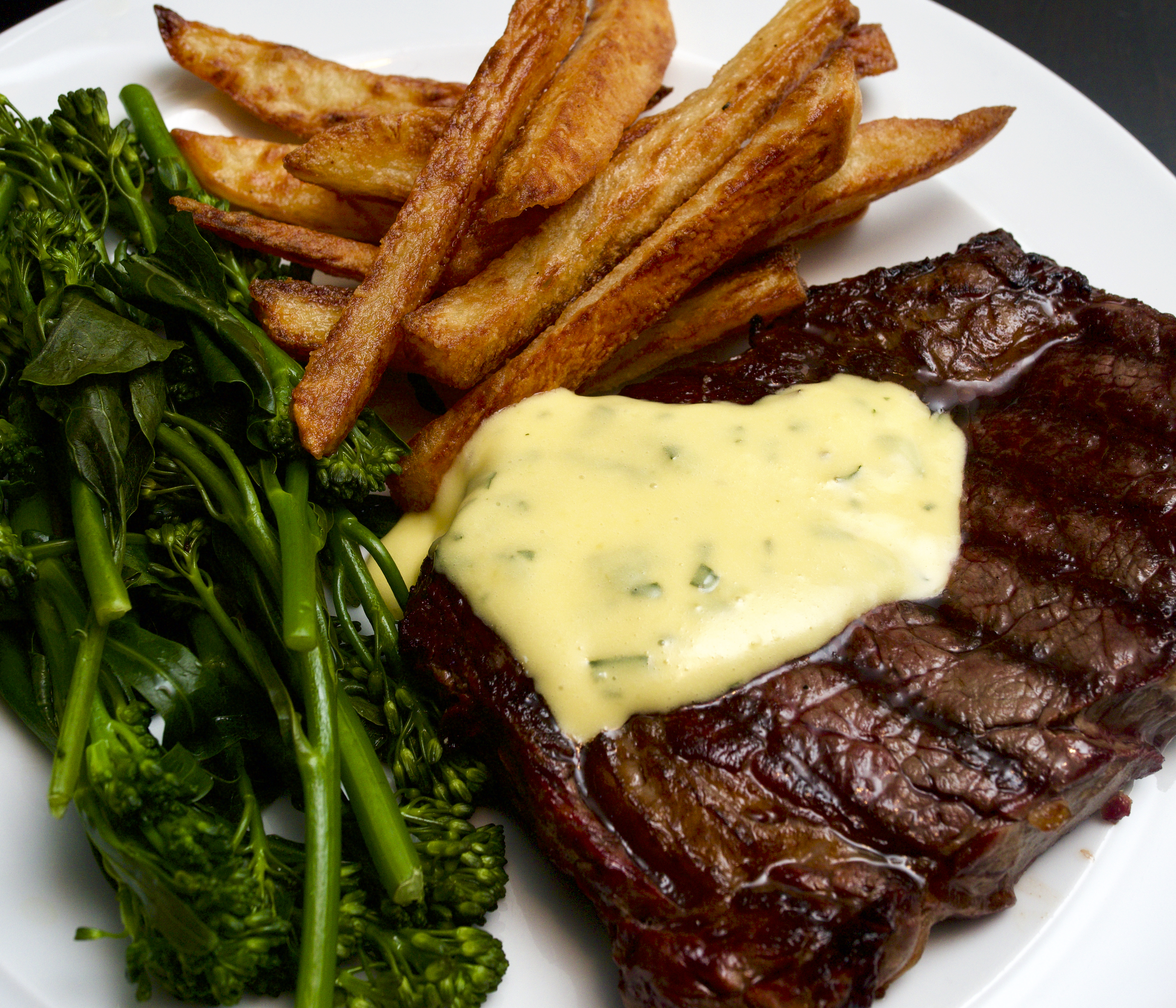
We rarely do the classic sauces, sometimes they look a bit intimidating. This Béarnaise is easily made and tastes superb, perfect for when only steak & chips will do. It will keep warm in the bowl while you cook your steaks.
Wine suggestion: Béarnaise is a slightly piquant sauce, so you have to make sure the wine you choose isn’t too acidic. Our choice was the Ridge Lytton Estate Petite Sirah. This is full bodied and richly plum flavoured with peppery tannins and very high levels of anthocyanins (colour and anti-oxidants). Crucially though it has only a medium acidity and so doesn’t fight the sauce. A rare enough grape, but in expert hands, wonderful indeed.
Béarnaise Sauce – serves 2
50ml white wine vinegar
½ tsp black peppercorns
1 small shallot, finely chopped
a large sprig of tarragon, bruised
3 egg yolks
200g unsalted butter, diced and softened
a squeeze of lemon juice
3 tbsp tarragon leaves, finely chopped
freshly ground white pepper
sea salt
Put the vinegar, black peppercorns, shallot and whole tarragon sprig into a small saucepan with 50ml of water, then bring to the boil. Simmer until reduced to about 2 tablespoons, then strain and reserve the liquid.
Put a heatproof bowl over a pan of just simmering water, making sure the bottom of the bowl is not in contact with the water.
Put the egg yolks, a cube of butter and a pinch of salt into the bowl. Whisk together, then add half the reserved liquid. Keep whisking until the mixture comes together and starts to thicken, then gradually add all of the butter, one cube at a time. Make sure that the mixture has emulsified (and not separated!) before you add any more butter each time. If it becomes too thick you can add teaspoons of warm water to thin it.
When all the butter has been added, remove the bowl from over the pan. Add a squeeze of lemon and stir in the chopped tarragon. Taste for seasoning and add more lemon juice, salt, white pepper, or more of the reduced liquid if needed. Leave the sauce in the warm bowl (off the heat) and it will keep warm for about 30 minutes but keep stirring occasionally.
(Original recipe from The Hairy Bikers’ Meat Feasts by Si King & Dave Myers, Weidenfeld & Nicholson, 2015.)
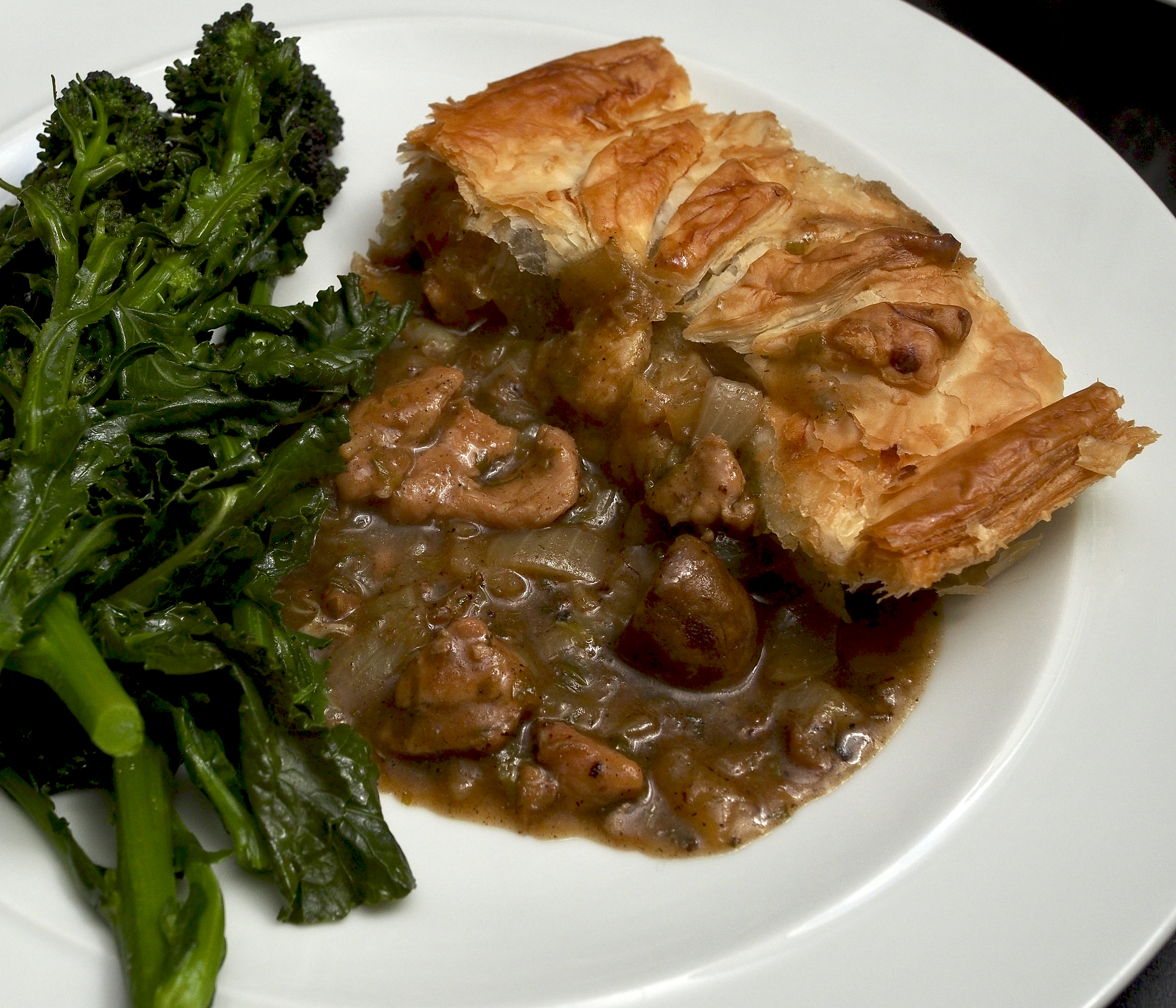
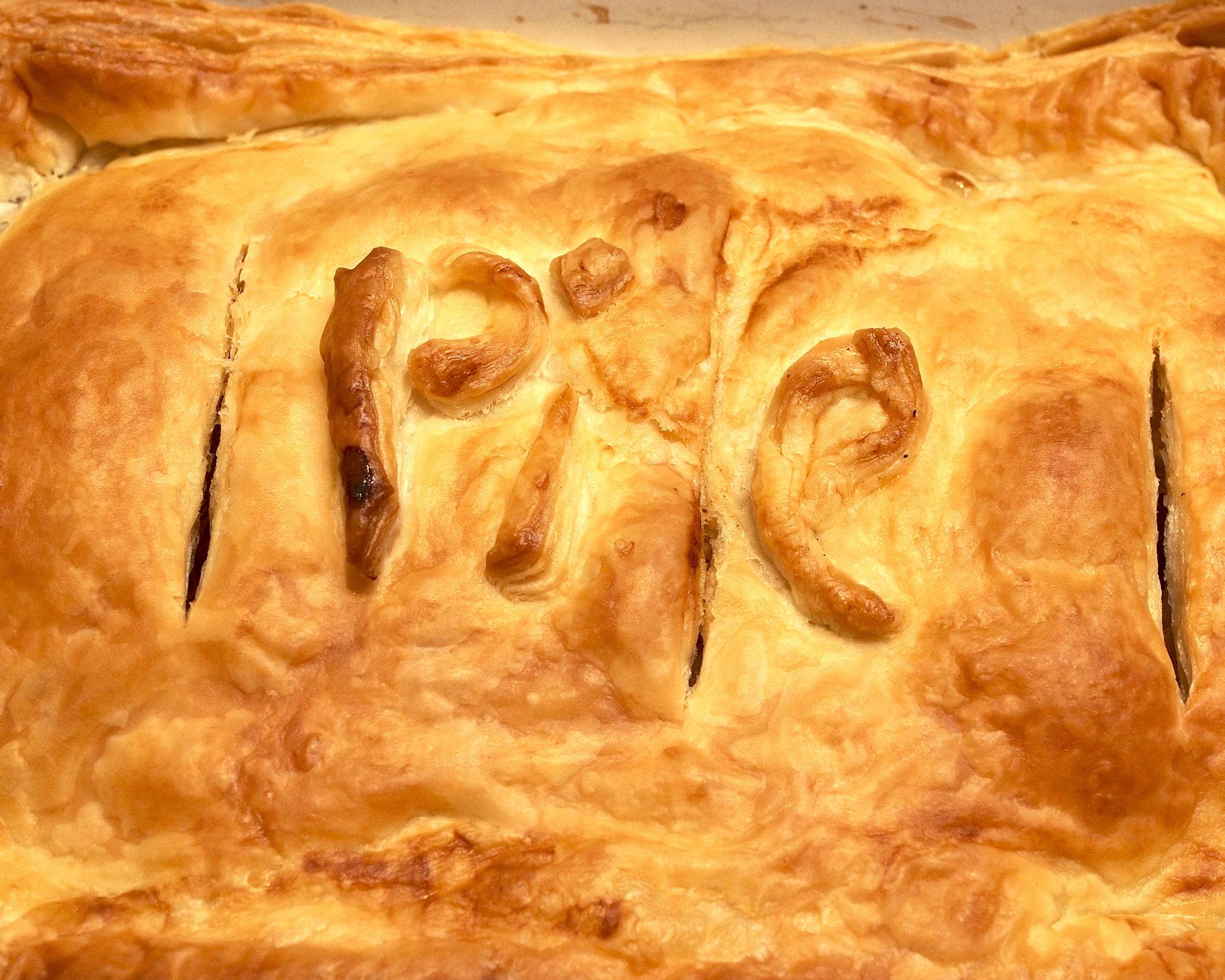
Our chicken pies usually have some kind of cream in them but we really liked this gravy version. Try and use chicken thighs instead of breasts if you can get them, but no matter. I think we can all be forgiven for using dried herbs rather than fresh at the minute too. Though our local grocer surprisingly had some tarragon. We divided this into two dishes and baked each one fresh over two nights – reheated pastry never works out so well.
Wine Suggestion: Pinot Noir makes a nice match for this dish, be it classic Burgundy or New World. As always with this grape, make sure it is fresh and vibrant – the rich, juicy and high alcohol versions with lower acidity just don’t cut it with food. Tonight we had a cheaper “Little Yering” from the Yarra Valley found in the bargain bin of a local. While it didn’t blow us away it was delightful with the food
Chicken, mushroom & tarragon pie – serves 4
2 onions, roughly chopped
400g diced chicken (we used thighs but breasts fine too)
100g mushrooms, quartered
3 tbsp plain flour
330ml white beer
300ml chicken stock or veg stock
4 tbsp of chopped tarragon leaves
a ready-rolled all-butter puff pastry sheet (all-butter not essential)
Preheat the oven to 180C/Gas 4.
Heat a splash of oil in a large frying pan and brown the chicken. Remove it from the pan and add the onions and mushrooms. Cook these for about 5 minutes or until softened and browned.
Add 3 tbsp of flour to the mushroom mixture and keep cooking for about 5 minutes, then add the beer and stock. Bring to the boil while scraping the bottom of the pan with a wooden spoon to get all the sticky bits.
Lower the heat, then add the tarragon, some seasoning, and return the chicken to the pan. Simmer for 10 minutes until thickened, then tip into a baking dish and leave to cool.
Cut the pastry sheet to fit the dish and lay gently onto the sauce. Cut a few slits in the top and make a decoration with the pastry cuttings.
Bake for 30 minutes or until browned.
(Original recipe from Eat: The Little Book of Fast Food by Nigel Slater, Fourth Estate, 2013.)
We’re all about creamy sauces, gratins and roasts at this time of the year. This is a great Friday night pasta dish by Nigel Slater with all the roast chicken flavour but quick to put together.
Wine suggestion: this really needs a full bodied white wine with texture. We naturally fall towards Chardonnay when thinking this, but the Languedoc one we had in the fridge we knew was easy drinking but not able to stand up to the food despite it being fuller bodied. Luckily we also had Vouvray made by Vincent and Tania Carême from our holidays earlier this year, and despite it being “tendre” or off-dry, it was a delight and an excellent match. The key was the texture even with the residual sugars left in the wine.
Roast chicken pasta – serves 4 generously
4 sprigs of rosemary, leaves stripped
8 black peppercorns
4 tbsp olive oil
1 kg chicken thighs
300g fusilli or trofie pasta
7g tarragon, leaves stripped and chopped
10g parsley, leaves stripped and chopped
zest of 1 lemon, grated
75g pine nuts, toasted
500ml double cream
Preheat the oven to 200°C/Gas 6.
Bash the rosemary, peppercorns and a tsp of sea salt in a pestle and mortar until you have a coarse powder, then blend in the olive oil.
Put the chicken thighs in a roasting tin, then pour over the rosemary mixture and rub to coat all over. Put into the oven and roast for 35 to 40 minutes. Remove from the oven and leave to rest for 10 minutes.
Cook the pasta in plenty of salty water according to the timings on the pack.
Remove the chicken from the bones, keeping it in large chunks if you can and catching any meaty juices.
Mix the tarragon, parsley, lemon and toasted pine nuts together.
Put the roasting tin over a medium heat, add the cream to the tin and stir to scrape all the crusty bits off the tin. When the cream starts to bubble, add the cooked pasta and chicken. Season with black pepper.
Serve the pasta in bowls with the pine nut and herb mixture scattered over the top.
(Original recipe by Nigel Slater in The Guardian, Sunday 1st December 2019)
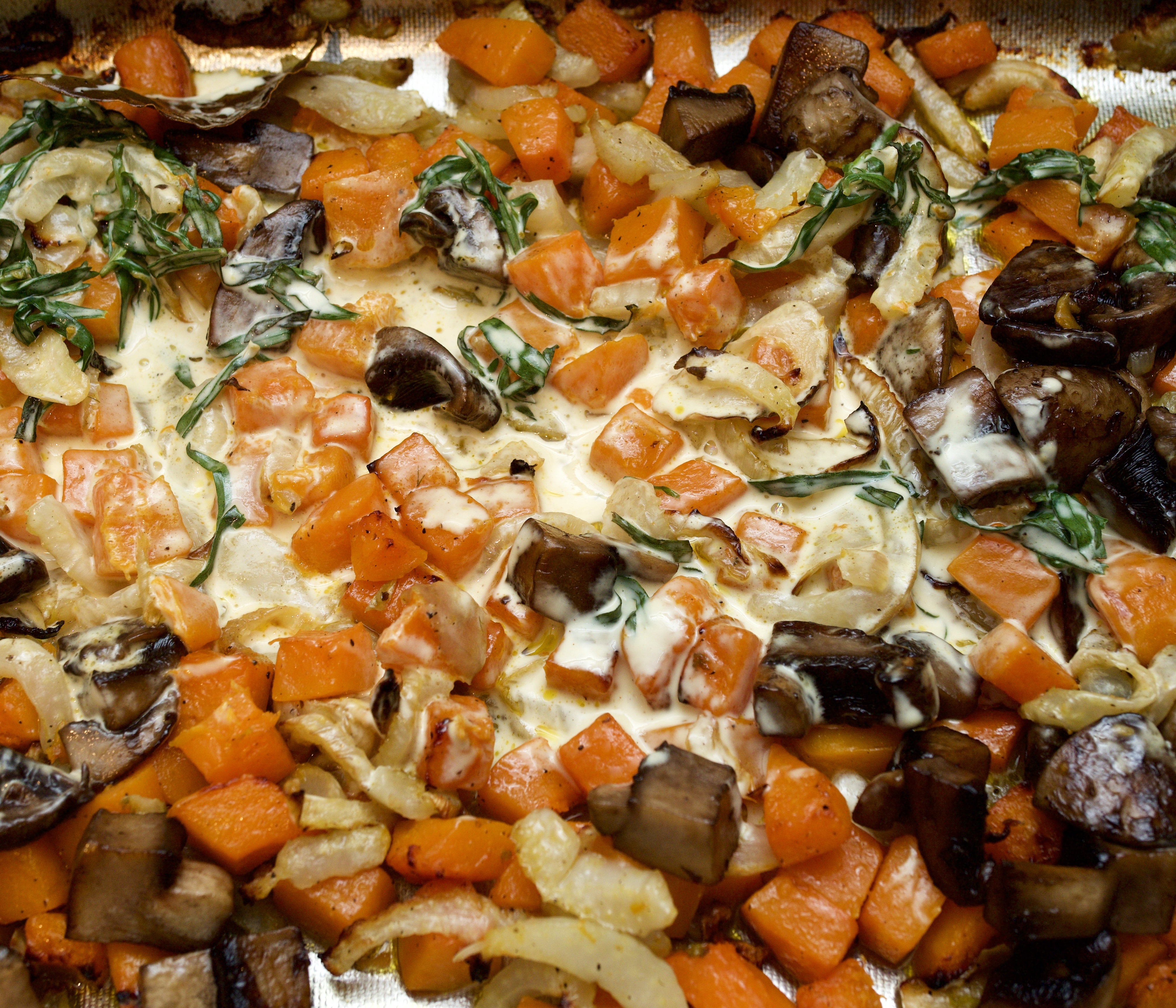
Such a beautiful autumnal side dish. We served this with some grilled pork but it would be nice with roasts or with some potatoes and greens if meat’s not your thing.
Roast pumpkin and fennel with mushrooms – serves 6
2 fennel bulbs, cut into thin slices
1 small pumpkin/squash, peeled and diced
1 clove of garlic, crushed
1 bay leaf
300g portobello or field mushrooms, diced into big chunks
butter
a few sprigs of tarragon
100ml double cream
1 tsp Dijon
Heat the oven to 200C/Fan 180C/Gas 6.
Toss the fennel and pumpkin/squash with the garlic, bay leaf and some olive oil and plenty of seasoning. Roast for 20-30 minutes or until completely tender.
Meanwhile, fry the mushrooms in butter until any liquid they have released has evaporated.
To serve, heat the cream in a small pot, then stir in the mustard and tarragon. Spoon the squash and fennel mixture onto a platter, toss through the mushrooms, then drizzle with the creamy sauce.
(Original recipe by Matt Tebbutt in BBC Olive Magazine, December 2010.)




 Jono & Jules do food & wine