Feeds:
Posts
Comments

Posts Tagged ‘Wine suggestion’

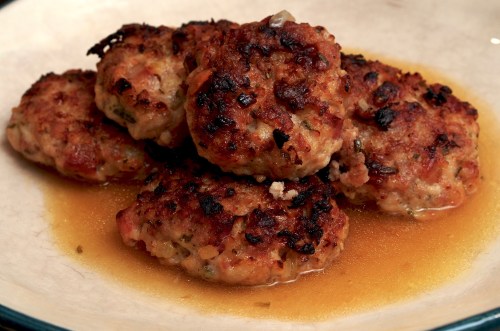
Chicken patties with rosemary & pancetta

Try these delicious chicken patties by Nigel Slater. Some of our favourite dishes are those where a sticky caramelised crust forms in the pan. Nigel suggests some lemon wedges and a spinach salad to serve.

Wine Suggestion: a 100% Grenache red actually is the business with this dish. While we see Grenache in quite a lot of blends when on it’s own it has a lovely spice, and if not too alcoholic and jammy (it ripens to high levels if untamed) a wonderful lightness of touch with soft, velvety tannins. If you’re exceptionally lucky an old (15-20yo) Chateau Rayas would be a treat. We drank, instead, the delightful l’O du Joncier Cotes du Rhone made by Marine Roussel in Lirac; a biodynamic, wild yeast treat that both treads lightly on the earth and tastes great.

Chicken patties with rosemary & pancetta – serves 2-3

  • 1 medium onion, peeled and finely chopped
  • 2 cloves of garlic, peeled and finely chopped
  • a thick slice of butter
  • 100g cubed pancetta
  • leaves from 3 sprigs of rosemary, finely chopped
  • 450g chicken mince (if you have a mincer buy some chicken thighs and mince your own)
  • groundnut oil for frying
  • 250ml chicken stock

Warm the butter over a medium heat in a large frying pan. Add the onions and cook until softened and golden. Stir in the pancetta and rosemary and cook for a few minutes or until coloured. Empty the contents of the pan into a large bowl and allow to cool a bit.

Add the chicken mince to the onion mixture, season generously with pepper and a little salt, and mix well (your hands are the best tool for this). Shape the mixture into six little burgers and set aside for about 30 minutes to rest.

Preheat the oven to 190ºC/Gas 5.

Wipe the onion pan clean with a piece of kitchen towel and put back on the heat until hot. Add a small amount of oil and brown the patties for about 3 minutes on each side, then transfer to an ovenproof dish. Pour the stock into the dish and bake for 25-30 minutes or until the patties are sizzling and the stock bubbling. Serve with some of the hot stock spooned over.

(Original recipe from The Kitchen Diaries by Nigel Slater, Fourth Estate, 2005.)


Read Full Post »

Pizza baked potato

The vast majority of our weeknight dinners are based on whatever happens to be left in the fridge after the weekend.  It turns out that leftover pizza toppings taste pretty good on top of a baked potato too. Also suitable for those who don’t eat pizza dough.

Wine Suggestion: If you happen to have something open already, that will do nicely.

Pizza Jacket Potatoes – serves 4

  • 4 large baking potatoes
  • 1 tbsp olive oil
  • ½ red onion, finely chopped
  • 1 garlic clove, crushed
  • 60g sliced pepperoni, torn (the thin sliced stuff from a packet will do fine)
  • 400g tin chopped tomatoes
  • small handful of basil leaves, shredded
  • 100g grated mozzarella/cheddar cheese

Heat oven to 200ºC/180ºC fan/gas 6.

Prick the potatoes all over with a fork. Bake directly on the oven shelf for 1-1½ hrs, or until soft.

Meanwhile, heat the oil in a small pan and sauté the onion for 5 mins to soften. Stir in the garlic and pepperoni, and cook for a minute or two,  then add the chopped tomatoes. Bring to the boil, then simmer for 5 mins. Season and stir in half the basil. Spoon over the split potatoes and top each one with a good handful of cheese and the rest of the basil.

(Original recipe from BBC Good Food.)

Read Full Post »

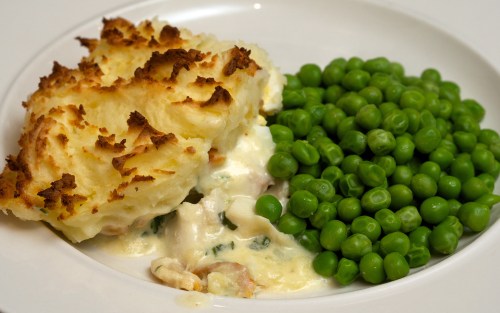
Haddock Pie

We are mad about fish pie and this one is particularly good. Yet another excuse to never through away our old food magazines!

Wine Suggestion: you need a fresh, vibrant white with a medium to full body; try to avoid heavily oaked and super-rich wines though. A good choice would be Chenin Blanc and the choice here is getting better each day. We’ve tried well made but simple ones from both the Loire and South Africa to good effect as well as some more complex ones like Adi Badenhorst’s Secateurs from Swartland and some Savennieres too.

Haddock Pie – serves 6

  • 1 small onion, thickly sliced
  • 2 cloves
  • 1 fresh bay leaf
  • 600ml creamy milk
  • 300ml double cream
  • 450g haddock fillet with skin
  • 200g undyed smoked haddock fillet
  • 4 eggs, plus 1 extra egg yolk
  • 100g cooked peeled prawns
  • 100g butter
  • 40g plain flour
  • 5tbsp chopped flatleaf parsley
  • pinch freshly grated nutmeg
  • 1.25kg floury potatoes, such as Maris Pipers, peeled and cut into chunks

Stud a couple of the onion slices with the cloves and put into a large pan with the bay leaf, 450ml of the milk, the cream, haddock and smoked haddock. Bring to the boil and simmer for 8-10 minutes. Lift out the fish and strain the cooking liquor into a jug.

Wait for the fish to cool and meanwhile hard boil the whole eggs for 8 minutes, then drain, cover with cold water and leave to cool.

When the fish has cooled a bit, break it into  large flakes, discarding the skin and any bones. Sprinkle the flakes of fish over the base of a shallow 1.7 litre ovenproof dish. Scatter the prawns over the top. Shell the eggs and cut into chunky slices. Arrange these over the fish and prawns.

Melt 50g of the butter in a saucepan, stir in the flour and cook for a minute. Remove the pan from the heat and gradually add the reserved fish cooking liquor. Return to the heat and slowly bring to the boil, stirring constantly. Lower the heat and simmer gently for 10 minutes.

Take the sauce off the heat, stir in the parsley and season with nutmeg, salt and white pepper. Pour the sauce over the fish and leave to cool.

Preheat the oven to 200C/Gas 6/Fan 180C.

Cook the potatoes in boiling salted water for 12-15 minutes, or until tender. Drain, mash well and beat in the egg yolk and remaining butter. Season with salt and white pepper and beat in enough of the remaining milk to make a smooth mash that’s easy to spread.

Spoon the mashed potato over the filling and mark the surface with a fork. Bake for 40-45 minutes until piping hot and golden brown.

(Original recipe by Rick Stein in BBC Good Food Magazine, June 2001.)

Read Full Post »

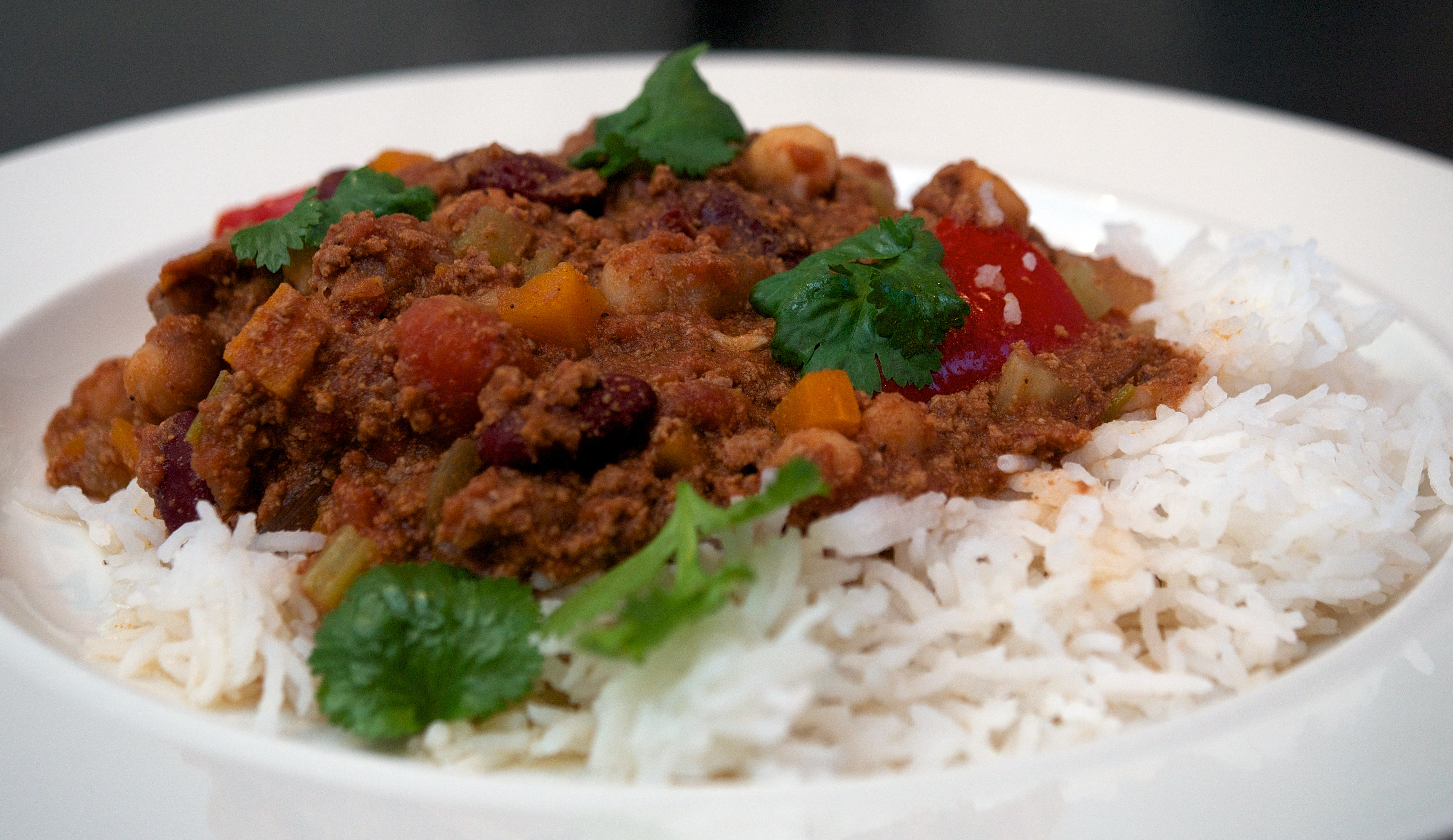
Chilli with Chickpeas

We’ve tried loads of recipe for Chilli Con Carne. This is a good hearty version and we loved the addition of chickpeas and plenty of spice. Perfect for a cold night!

Wine Suggestion: Go juicy, red and with a bit of spice; youthful Cotes du Rhone would work, but so would other Grenache based wines such as a Spanish Garnacha. Alternately think Primitivo or Zinfandel but make sure the wine you choose isn’t too big as extra tannins might fight the spice in the Chilli; juicy is best here with depth and personality. Our choice was a Lirac from Domaine Joncier – their “le Gourmand”, which had juicy plum flavours, hints of mocha, a touch of rosemary and warm velvety spices.

Chilli Con Carne – serves 6

  • 2 medium onions, finely chopped
  • 2 cloves of garlic, finely chopped
  • 2 medium carrots, finely chopped
  • 2 sticks of celery, finely chopped
  • 2 red peppers, deseeded and roughly chopped
  • olive oil
  • 1 heaped tsp of chilli powder
  • 1 heaped tsp of ground cumin
  • 1 heaped tsp of ground cinnamon
  • 1 x 400g tin of chickpeas, drained
  • 1 x 400g tin of red kidney beans, drained
  • 2 x 400g tins of chopped tomatoes
  • 500g minced beef
  • small bunch of coriander, leaves picked and stalks chopped
  • 2 tbsp balsamic vinegar
  • rice or baked potatoes to serve
  • natural yoghurt and/or guacamole to serve
  • lime wedges to serve

Heat about 1 tbsp of the olive oil in a large casserole and add the onions, garlic, carrots, celery and red peppers.

Add the chilli powder, cumin and cinnamon and season well with salt and pepper.

Cook, stirring regularly, for about 7 minute or until the vegetables are softened and lightly coloured.

Add the chickpeas, kidney beans and tinned tomatoes.

Next add the mince, breaking it up with a wooden spoon.

Fill one of the empty tomato tins with water and add this to the pan too along with the chopped coriander stalks, the balsamic vinegar and some more salt and pepper.

Bring to the boil and turn the heat down to a simmer and cook, partially covered, for 1 hour and 15 minutes, stirring occasionally. Then, take the lid off and cook for a further 15 minutes. Add a splash of water at any stage if it starts to dry out.

Serve with rice or a baked potato and some yoghurt or guacamole and lime wedges.

(Original recipe from Jamie’s Ministry of Food by Jamie Oliver, Michael Joseph, 2008.)

Read Full Post »

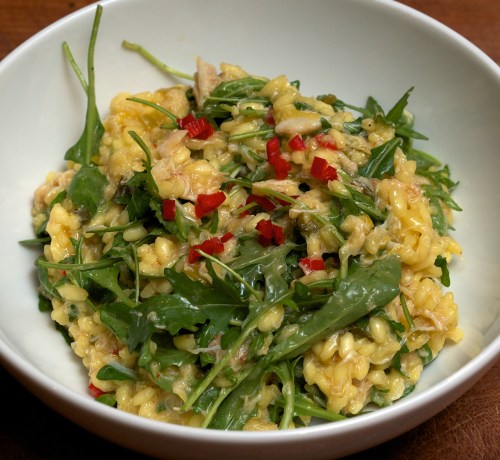
Crab & Chilli Risotto

We’d been eyeing this recipe up for a while and when we stumbled across some really good crab meat we had our excuse to make it. It was luxurious and delicious as we expected.

Wine suggestion: Go for a rich white like an oaked Chardonnay, which will also have a good freshness and texture to balance the rich risotto. Our choice was the Rustenberg Chardonnay from Stellenbosch in South Africa which never lets us down.

Crab & chilli risotto  – serves 2

  • 1 litre light chicken stock
  • ¼ tsp saffron threads
  • 2 garlic cloves, bashed
  • 2 tbsp olive oil
  • 4 scallions, finely sliced
  • 1 fresh red chilli, de-seeded and finely chopped
  • 200g risotto rice
  • 75ml dry white wine or vermouth
  • 100g brown crabmeat
  • 100g white crabmeat
  • zest and juice of ½ a lemon, plus wedges to serve
  • 50g rocket

Heat up the stock, add the saffron threads and keep hot over a low heat.

Heat the oil in a heavy-based pan (which you have a lid for) and add the bashed garlic cloves. Leave to sizzle for a couple of minutes, then remove and discard the garlic. Add the scallions and most of the red chilli and cook over a medium-low heat, stirring, for about a minute.

Turn up the heat and stir in the rice so that the grains become coated in the oil.

Add the white wine/vermouth and let it bubble up until it has been absorbed. Add a ladleful of stock and cook, stirring, until it has been absorbed.

Turn the heat down and continue to stir and add ladlefuls of stock, allowing each one to be absorbed before adding another. After about 18 minutes the stock should have all been absorbed and the rice should be al dente.

Remove the pan from the heat and add the crab and the lemon zest and juice, then season. Add the rocket, cover with the lid, and let stand for a minute.

Serve the risotto with the remaining chilli over the top and a squeeze of lemon.

(Original recipe from Nigellissima by Nigella Lawson, Chatto & Windus, 2012.)

Read Full Post »

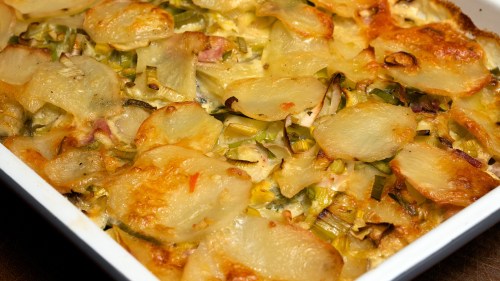
Potato & Leek Gratin

Seasonal comfort food for dark nights and lashing rain. This gratin would work as a side for roast lamb or chicken, or like we did, add a little ham make it a weekday meal.

Potato & Leek Gratin – serves 4

  • 125ml chicken or vegetable stock
  • carton double cream
  • 150ml milk
  • 1 clove of garlic, crushed
  • 1 bay leaf
  • a knob of butter
  • 800g potato, peeled and thinly sliced (use a mandolin if you have one)
  • 2 leeks, washed and thinly sliced
  • 175g good quality sliced ham, chopped (optional)
  • 85g cheddar, grated

Pour the stock, cream and milk into a small saucepan with the garlic and bay leaf and bring to the boil. Remove from the heat and leave to infuse.

Preheat the oven to 180C/Gas 4/. Butter a 2 litre gratin dish well. Mix the potatoes, leeks and ham together and put into the gratin dish in an even layer. Pour over the creamy stock and tuck in the bay leaf. Season and sprinkle the cheese over the top.

Loosely cover with foil, set on a baking tray and bake for 30 minutes. Test the potatoes with a knife – they should be just beginning to soften. Remove the foil and bake for another 35-45 minutes, spooning some of the stock mixture over every now and again until the potatoes are tender. Cool for 15 minutes or so before serving.

(Original recipe from BBC Good Food)

Wine suggestion: We had a bottle of Reyneke Organic Syrah from South Africa opened to try as they’ve been getting great press lately, and we love how they integrate their workers into the whole process, genuinely giving back and involving the community. We thought it might have been too big and rich for the gratin but they complimented each other really well.

Reyneke Organic Syrah

Read Full Post »

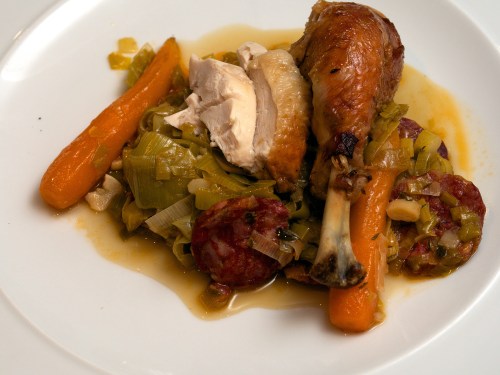
Pot-roast Chicken with Chorizo, Leek and Cider

A great array of flavours and super-moist roast chicken. Chorizo cooked in cider is often served as a tapa in Spain and it’s delicious!

Wine Suggestion: A Spanish cider would be of course be great with this or failing that a good quality dry cider from somewhere else. If you feel like wine we’d recommend a really smooth Rioja.

Pot-roasted Chicken with Chorizo, Leeks & Cider – serves 4

  • 1 x 1.75kg chicken
  • 2 tbsp olive oil
  • 2 cooking chorizo sausages, sliced
  • 50g butter
  • 700g leeks, washed and sliced
  • 4 garlic cloves, thinly sliced
  • 300g baby carrots, trimmed and peeled
  • Leaves from 2 large sprigs of thyme
  • 2 fresh bay leaves
  • 200ml dry cider

Preheat the oven to 160C/Gas 3.

Season the cavity and outside of the chicken with salt and black pepper.

Heat the oil in a large flameproof casserole dish and brown the chicken on all sides until golden, then set aside.

Lower the heat and add the chorizo, butter, leeks, garlic, carrots, thyme and bay leaves. Cover and cook gently until the leeks have softened.

Place the chicken on top of the vegetables in the casserole dish, pour over the cider, then cover and cook in the oven for 1 hour. Remove the lid from the casserole dish and turn the oven up to 200C/Gas 6. Continue to cook for another 20 minutes or until the chicken skin is browned.

Remove the chicken from the casserole and onto a carving board, cover with foil. Skim the excess fat from the surface of the vegetable juices, then place over a medium heat and simmer vigorously for 5 minutes to reduce. Season to taste with more salt if needed.

To carve the chicken, remove the legs and cut each one in half at the joint. Carve the breast in slices. Use a slotted spoon to put the chorizo and vegetables onto the centre of the plates and place the chicken on top. Spoon the cooking juices over to serve.

(Original recipe from Rick Stein’s Spain, BBC Books, 2011.)

Read Full Post »

Spanakopita

The classic spinach & feta combination never gets tired. These savoury Greek pastries are delicious and very easy to make. We worked out a production line (thanks Tricia & Orla) and had them assembled in no time! Great as a starter or snack with drinks. Perfect entertaining food.

Wine Suggestion: If you can find an Assyrtiko,  a crisp and delicious Greek white, then you’ve got a great match. Unfortunately it can be hard to find good Greek wines so stick to the Mediterranean and search for a Fiano or Greco di Tufo from Italy. Failing this we’ve had crisp Touraine Sauvignon Blancs with this as well to great effect.

Spanakopita (Spinch, mint & feta pastries) – makes 18-20

  • 500g spinach
  • 1 tbsp olive oil
  • ½ small onion, finely chopped
  • 2 scallions, trimmed and finely chopped
  • 100g Greek feta cheese
  • 1 large egg
  • 1 tbsp finely grated Greek kefalotiri cheese or Parmesan
  • a pinch of finely grated nutmeg
  • 2 tbsp chopped mint
  • 250-275g pack of filo pastry (about 6 sheets)
  • 100g butter, melted

Wash and dry the spinach (remove the stalks if they look tough). Finely shred the leaves.

Heat the oil in a large pan, add the onion and cook gently until soft but not browned. Gradually add the spinach, a handful at a time, until it has all wilted. Tip into a colander and drain, pressing out the liquid with a wooden spoon, then return to the pan with the scallions and cook for 1 minute. Leave to cool.

Crumble the feta into a large bowl and roughly mash with a fork – you can leave it a bit chunky. Mix in the eggs, Parmesan, the spinach mixture, nutmeg, mint and season with salt and pepper.

Preheat the oven to 180C/Gas Mark 4.

Unroll the sheets of filo and cut the stack lengthways into strips about 7.5cm wide. Brush the top layer with melted butter. Put a heaped teaspoonful of the filling in the centre of one strip, at the end closest to you, and fold one bottom corner of the pastry diagonally over the filling, so that the corner touches the opposite side to make a triangle. Then fold over the filled triangular corner, and keep folding it along the whole strip in a triangular parcel. Repeat to make all the spanakopita.

Brush the undersides of each parcel with more butter and place on a lightly buttered baking tray. Brush the tops with butter and bake for 25 minutes or until crisp and golden brown.

These are best served straight from the oven while the pastry is still crispy but they are also good at room temperature.

(Original recipe from Rick Stein’s Mediterranean Escapes, BBC Books, 2007.)

Read Full Post »

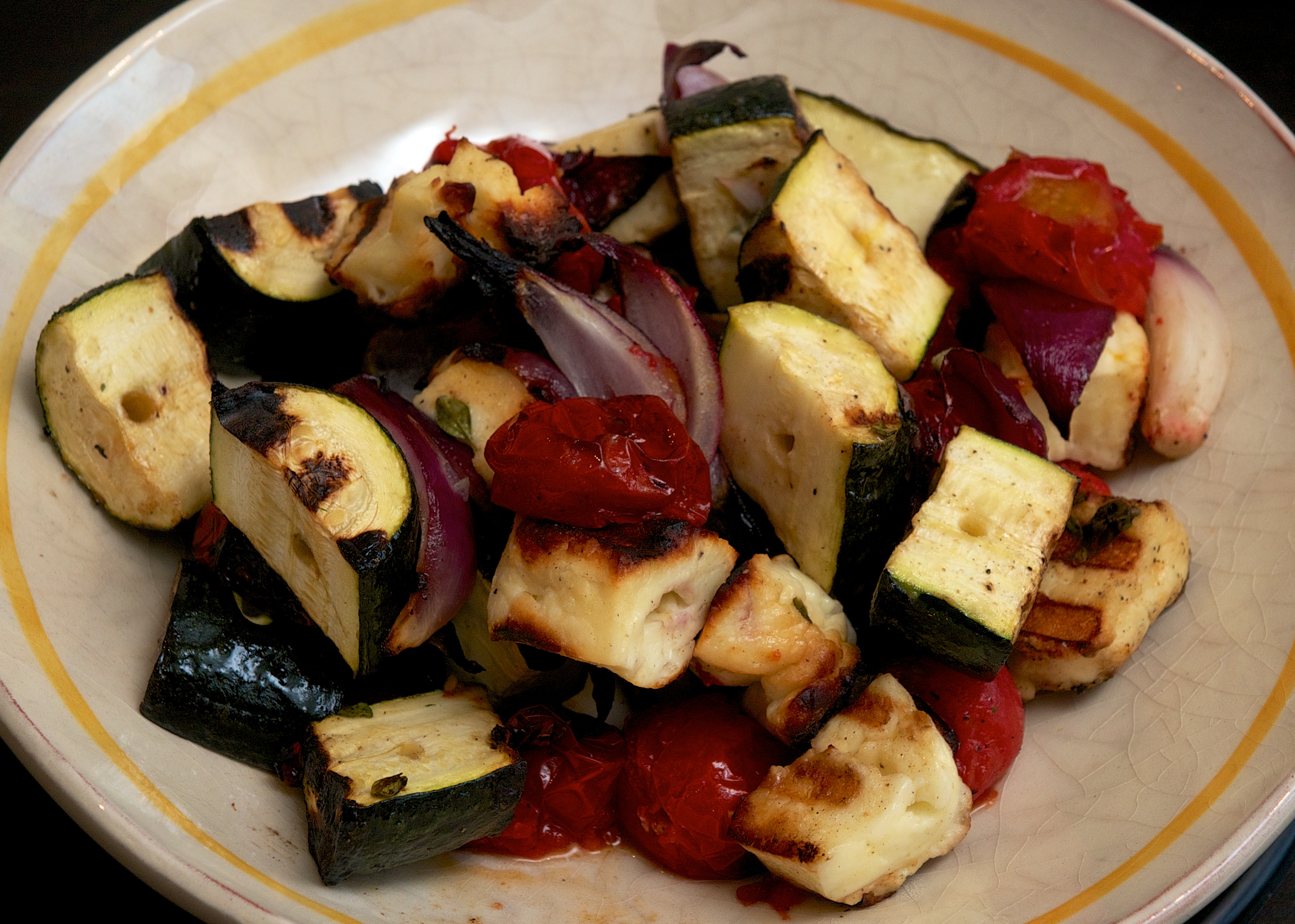
Haloumi kebabs

Here’s a nice veggie kebab recipe for the barbecue. The cheese makes these a bit more substantial than just lots of grilled veg. Serve with some nice salads and pitta bread. The kebabs and baste can be prepped in advance.

Wine Suggestion: A nice fresh white with good texture works well with this, so try a crisper grape grown in a warmer region. We went for a Fiano from Puglia in the south of Italy made by Michele Biancardi. It was thirst quenching and pure with a peachy stonefruit flavour and a citrus twist followed by a touch of honey and hints of warm middle-eastern spices. A great balance to the slightly salty cheese, zesty lemon, herbs and mustard.

Halloumi Kebabs with Thyme Lemon Baste – serves 4

  • 2 medium courgettes, halved lengthways and thickly sliced
  • 1 large red onion, cut into wedges and separated into pieces
  • 250g halloumi cheese, cut into 16 chunks
  • 16 cherry tomatoes
  • 1 tbsp olive oil
  • 2 tbsp lemon juice
  • 2 tsp fresh thyme or lemon thyme leaves
  • 1 tsp Dijon mustard

Thread the halloumi, cherry tomatoes, courgettes and onion onto 8 skewers (if using wooden skewers you need to soak them in water for about 20 minutes first).

To make the baste mix together the olive oil, lemon juice, thyme, mustard and some seasoning.

Put the kebabs onto a preheated barbecue. Give the baste a good stir and then brush the kebabs with it. Cook the kebabs for about 5 minutes or until the cheese has turned golden and the vegetables are just tender.

(Original recipe from BBC Good Food)


Read Full Post »

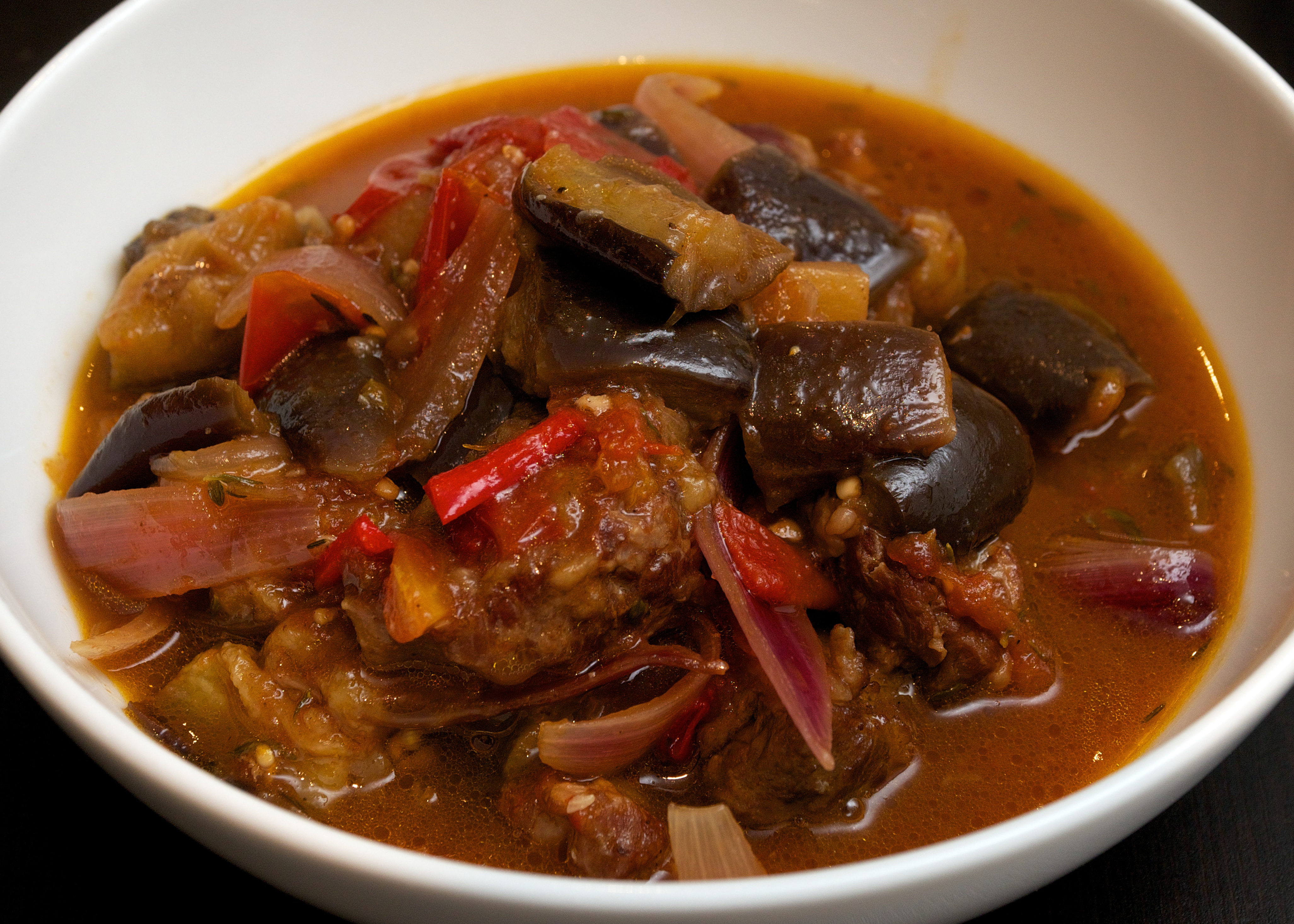
Aubergine & Lamb Stew

This is not the best looking dish but who cares when it tastes this good. To quote Itamar Srulovich (of Honey & Co. and the author of this recipe):

“Do not cook it to impress. Cook it for the ones you love the most, or just for you; it is that good.”

We concur Itamar!!

Wine Suggestion: Try a Mediterranean-style wine, a Primitivo or something similarly juicy from the south of Italy. We paired this with a lovely organic wine by Michele Biancardi, his Uno Piu Uno which is a cracking blend of Primitive and Nero di Troia. Only 12.5% abv but juicy and delicious so it didn’t overwhelm the lamb and aubergine and had enough depth to compliment it perfectly.

Patlican – Lamb & aubergine stew – serves 2

  • 450g lamb neck, cut into large dice
  • ½ tsp salt
  • ½ tsp freshly ground black pepper
  • 1 tbsp olive oil
  • 1 aubergine, cut into large cubes (about 350g)
  • 1 large tomato, cut into large cubes
  • 1 small red onion, peeled and cut into wedges
  • 6 whole cloves of garlic, peeled
  • ½ small red chilli, thinly sliced
  • 3 sprigs of fresh thyme
  • 150ml water
  • 1 tbsp pomegranate molasses

Season the lamb cubes with the salt and pepper.

Heat a large pan over a medium-high heat, add the oil and the diced lamb, and sear the meat all over. When the meat has browned (about 5-6 minutes), add the aubergine, tomato, onion & garlic. Cover and leave to steam for 5 minutes, then remove the lid and stir in the chilli and thyme. Reduce the heat to low and cook slowly for about 15 minutes, then pour in the water and pomegranate molasses.

Keep cooking on a low heat for 50-60 minutes or until the veg have broken down and the meat is soft enough to tear with a fork.

Serve with bread so you waste no sauce!

(Original recipe from Honey & Co.: Food From the Middle East by Sarit Packer & Itamar Srulovich, Saltyard Books, 2014.)

Read Full Post »

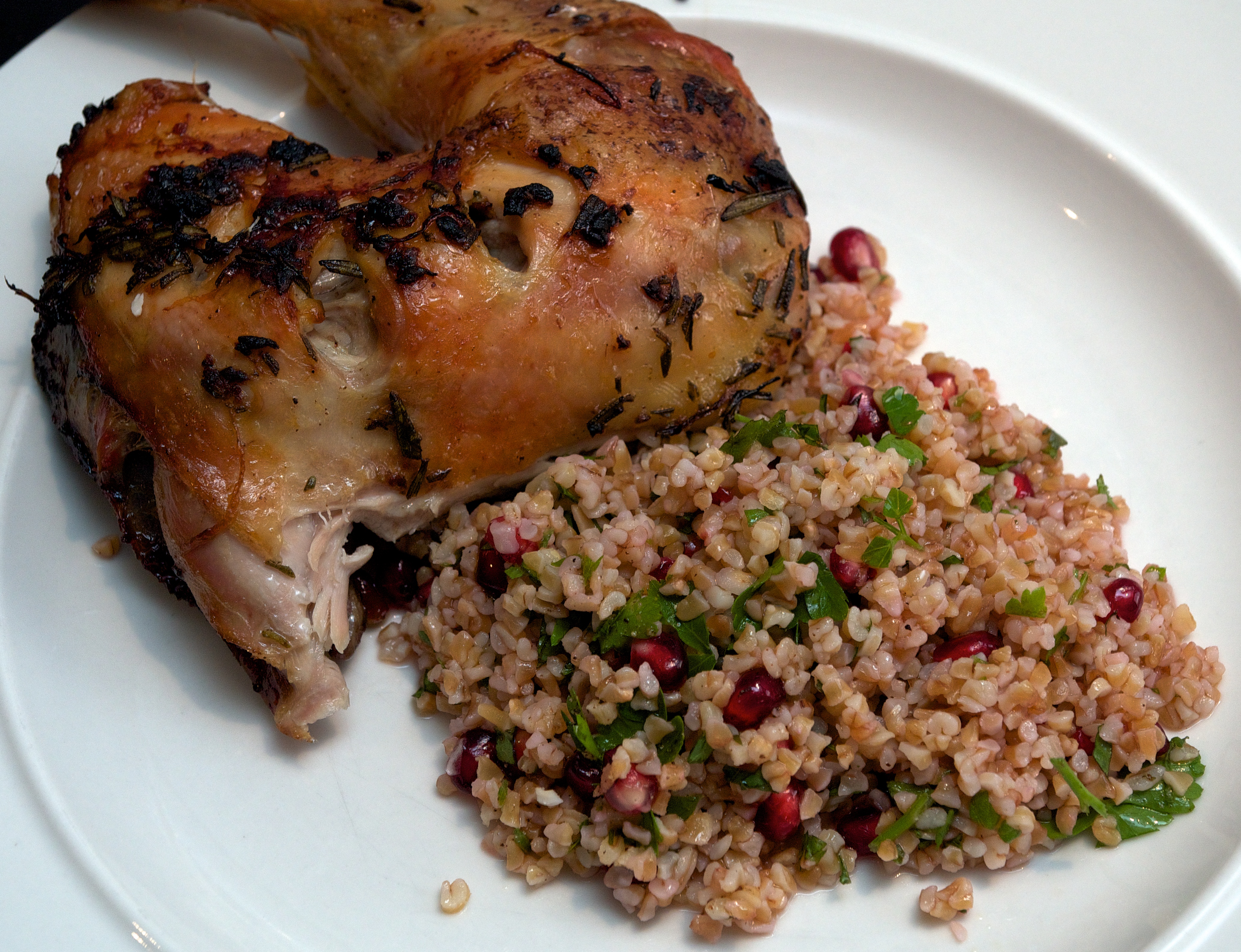
Rosemary & garlic spatchcock chicken with bulgur wheat salad

This tastes just as good as a cold chicken and bulgur salad the following day – great for lunchboxes!

Wine Suggestion: we drank a delicious Fiano made in Puglia by Michele Biancardi. It had delightful layers of fruit, texture from spice and minerality and a dancing freshness that worked well with the roasted chicken and still allowed the freshness of the salad to shine through. We suspect the depth and personality of this wine is helped by the biodynamic viticulture as it just had “something” extra without being weighty and forceful. If you can’t find this one do look out for Fiano, an interesting Italian white that you might not have tried.

Rosemary and Garlic Spatchcock Chicken with Bulgur Wheat Salad – serves 4 

  • 1 x 1.5kg chicken

FOR THE MARINADE:

  • 50ml olive oil
  • 1 lemon, juiced and zest finely grated
  • 4 cloves of garlic, peeled and crushed
  • 2 tbsp chopped rosemary leaves

FOR THE SALAD:

  • 200g bulgur wheat
  • 1 lemon , juiced and zest finely grated
  • seeds and juice of 1 pomegranate
  • 1 tbsp chopped mint
  • 1 tbsp chopped parsley
  • 50ml olive oil

To spatchcock the chicken you need to first remove the backbone by cutting through the chicken on both side of the bone (use poultry shears if you have them or really sharp scissors). Remove the backbone and open the chicken out, then put the chicken, breast side up, onto a worktop and use your palms to flatten it. Make a few slashes in the legs with a sharp knife.

Make the marinade by mixing all of the ingredients in a bowl and seasoning well with sea salt and black pepper.

Put the chicken into a wide, shallow dish, pour over the marinade and rub in well with your hands. Cover with cling film and chill for at least 2 hours.

Preheat the oven to 220C/425F/Gas 7.

Put the chicken into a roasting tin along with all the marinade and bake for about 1 hour or until cooked through (the juices need to be totally clear when pierced with a skewer and the legs should feel loose).

Meanwhile, cover the bulgur wheat with boiling water and leave to soak for 10-15 minutes or until just soft, then drain.

Mix the lemon juice and zest with the pomegranate seeds and juice, herbs and olive oil. Stir in the bulgur and season well with sea salt and black pepper.

When the chicken is cooked, cover with foil and leave to rest in the tin and leave in the switched off oven for a few minutes, then carve in to pieces and serve with the salad.

(Original recipe from Rachel Allen’s Rachel’s Everyday Kitchen, HarperCollins, 2013.)

Read Full Post »

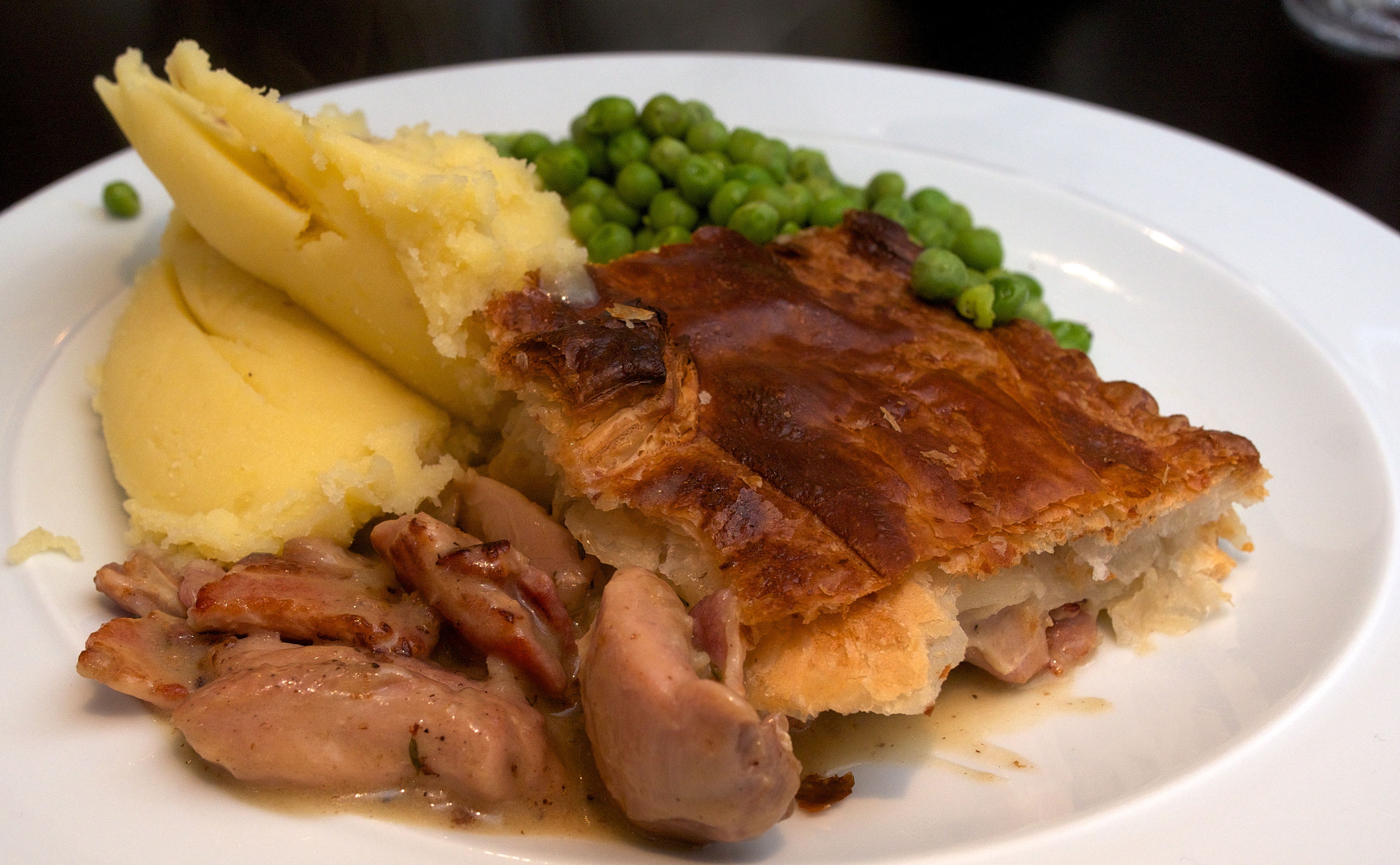
Chicken & Mushroom Pie

This is a lovely pie for a frosty day. Serve with lots of mashed potato and peas.

Wine Suggestion: this dish needs a white wine with a medium body as there is some subtlety at play with the flavours and weight. Classically we’d pair a sensitively oaked chardonnay with an earthiness and minerality so a better Maçon or Côte Chalonnais would be great. To step outside the box though look to a Vin Jaune from the Jura which adds a layer of nutty, yeasty characters, a lovely freshness of acidity and a rustic earthiness. Don’t go too sophisticated as this is a wholesome, honest pie.

Chicken & Mushroom Pie – serves 4-6

  • 1 tbsp vegetable oil
  • 8 skinless boneless chicken thighs
  • 8 rashers streaky bacon, cut into large pieces
  • 1 onion, sliced
  • 250g baby button mushrooms
  • handful thyme sprigs
  • 2 tbsp plain flour
  • 400ml chicken stock
  • 200ml milk
  • 500g pack puff pastry
  • 1 egg, beaten

Heat the oil in a large, non-stick frying pan.

Season the chicken and fry in batches until golden brown.

Remove the chicken from the pan and add the bacon. Fry for about 5 minutes or until crisp.

Add the onions, mushrooms and thyme, then fry on a high heat for about 3 minutes or until the onions start to colour.

Add the flour to the pan and cook, stirring, for 1 minute.

Take the pan off the heat and gradually whisk in the stock, followed by the milk, then return the chicken to the pan. Bring to the boil and simmer for 30 minutes.

Spoon the filling into a large pie or baking dish (approx. 20 x 30 cm) with a lip and leave to cool.

Heat the oven to 220C/fan 200C/gas 7.

Roll the pastry out onto a floured surface. Cut a long strip as wide as the rim of the dish and, using a little of the egg, fix to the edge of the pie dish. Brush with egg, then lift the rest of the pastry onto the pie. Press the edges together with your fingers and  trim with a sharp knife. Brush lightly with egg to glaze and bake for 30 minutes or until risen and golden brown.

Serve with mashed potatoes and peas.

(Original recipe from BBC Good Food)

Read Full Post »

OLYMPUS DIGITAL CAMERA

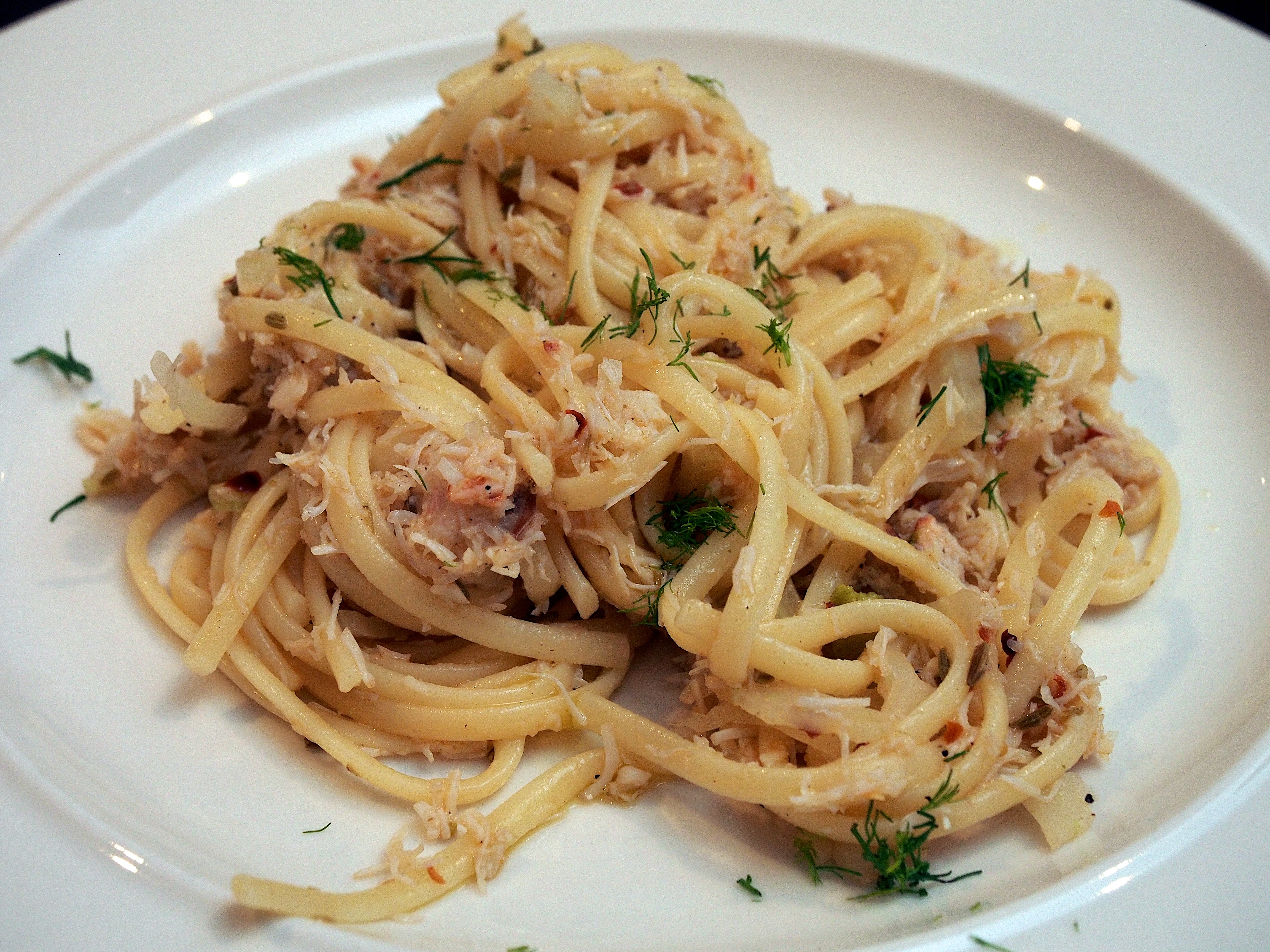
Crab with fennel & chilli is a winning combination. Another perfect pasta dish by Ruth & Rose of the River Café.

Wine Suggestion: We find a great match for crab is a top quality Garganega and we highly recommend the Pra Soave “Staforte” which is made from low-yielding, 100% Garganega, old vines. Utterly pure and delicious.

Crab linguine – serves 4

  • 1 fennel bulb
  • 1 garlic clove, finely chopped
  • 1 tbsp fennel seeds, crushed
  • 2 dried hot chillies, crumbled
  • 1 lemon, grate the zest and squeeze out the juice
  • extra virgin olive oil
  • 400g crabmeat
  • 320g linguine

Remove the tough outer part and stem from the fennel. Slice the bulb across the grain very finely (use a mandolin if you have one). Reserve the green tops.

Heat 2 tbsp oil in a heavy-based pan, add the garlic, fennel seeds, and chilli and cook to soften. Add the crab, lemon zest, and juice, then season. Stir just to heat the crab through.

Cook the linguine in boiling water for 5 minutes, then add the fennel slices and cook together until al dente. Reserve a little of the cooking water when you drain the pasta.

Add the drained pasta to the crab mixture and toss together until well combined. You can add a little of the reserved cooking water at this stage to loosen if necessary.

Serve with your best olive oil.

(Original recipe from Italian Two Easy by Rose Gray & Ruth Rogers, Clarkson Potter, 2006.)

Read Full Post »

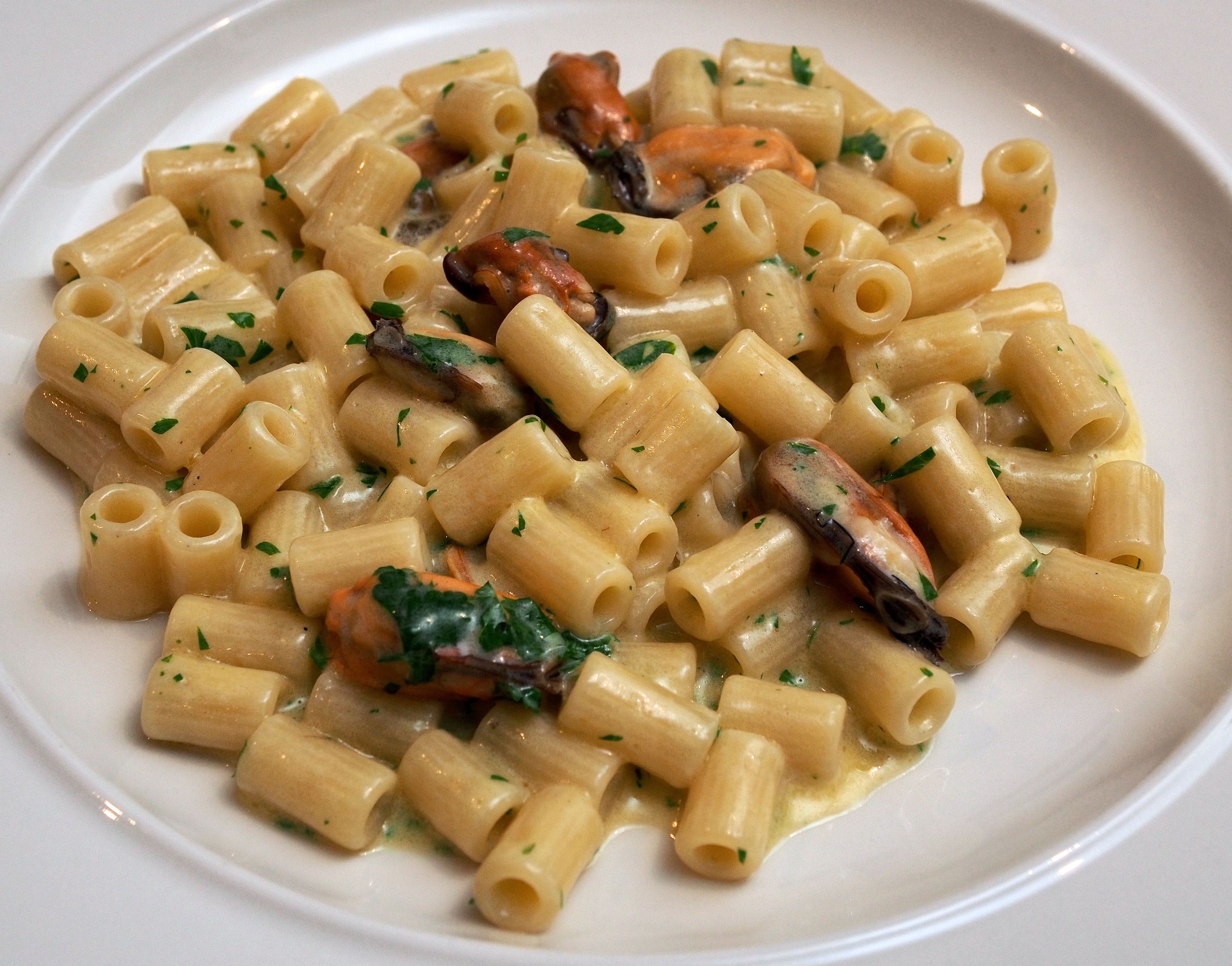
Ditaloni, mussels & white wine

A scrumptious and deliciously rich pasta dish that works perfectly as a starter.

Wine Suggestion: A textured white works best here; old-world minerality rather than bright fruit-forward styles. The Casal di Serra Verdicchio from Umani Ronchi in the Marche (central Italy) combines stonefruit flavours, hints of wild-flowers on the nose and a crisp yellow apple finish and goes with the richness and depth of the pasta.

Ditaloni, mussels & white wine – serves 4

  • 1kg small mussels, scrubbed
  • 2 garlic cloves, finely chopped
  • 4 tbsp flat-leaf parsley leaves, finely chopped
  • 200g unsalted butter
  • 1 tbsp extra virgin oil
  • 125ml white wine
  • 165ml double cream
  • 300g ditaloni (or similar) pasta

Heat half the butter with the oil, then add the garlic and mussels. Pour in the wine; season, then cover and cook over a high heat until the mussels have opened. Drain the mussels and reserve the cooking liquid. Remove the mussels from the shells; discard the shells and any mussels that haven’t opened.

Heat the rest of the butter in a pan and add the mussel juices and the cream. Cook gently to reduce to a rich and creamy sauce. Then add the mussels and parsley.

Cook the pasta according to the packet instructions, then drain and add to the sauce. Toss together over a low heat, and serve.

(Original recipe from Italian Two Easy by Rose Gray and Ruth Rogers, Clarkson Potter, 2006.)

Read Full Post »

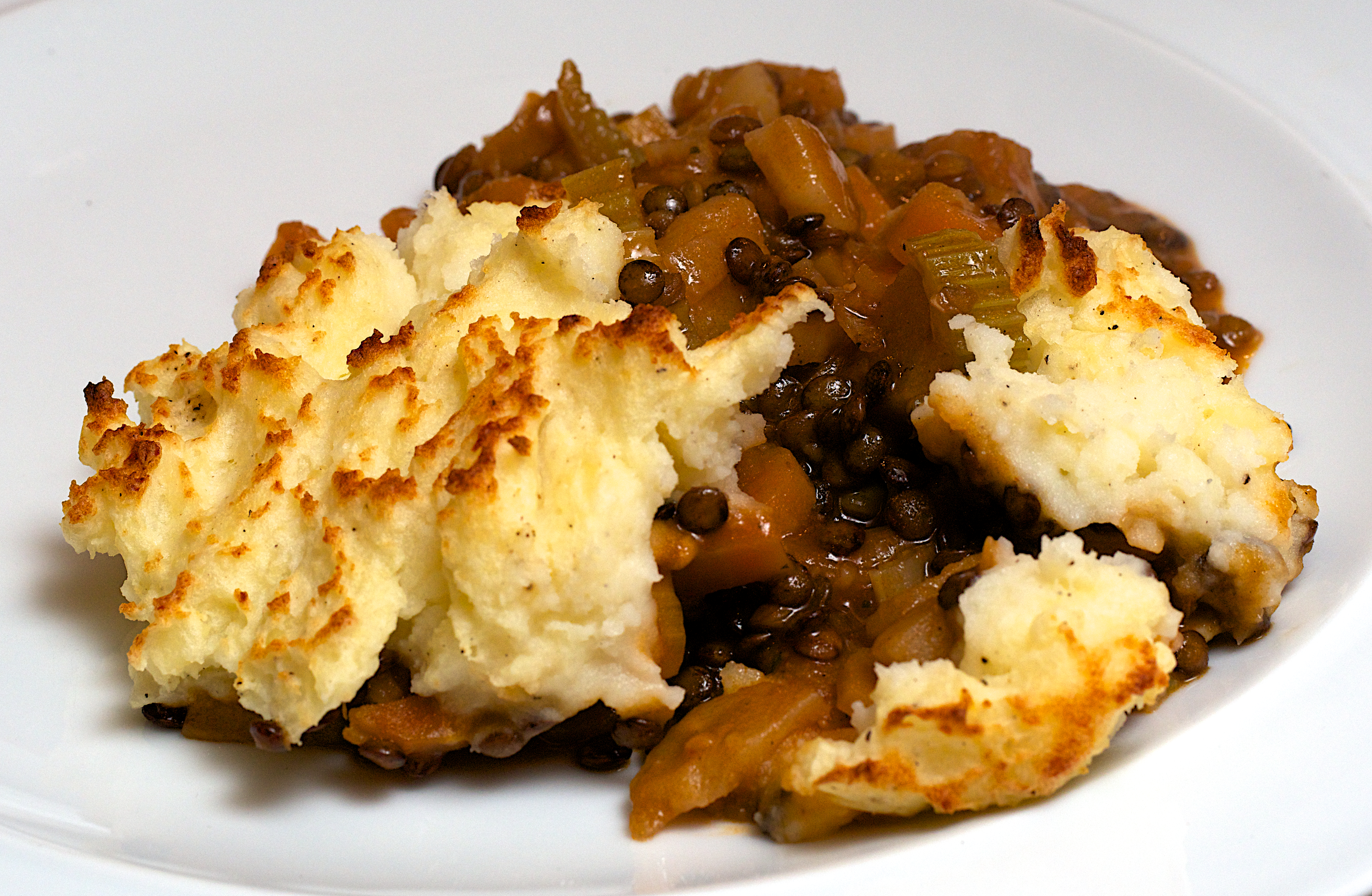
This recipe is rich with a natural gravy and very flavoursome and filling. Despite this it is very low in calories so perfect if you’re watching your weight or for a midweek dinner. We ate this over two nights (instead of three) as we were both a little greedy, and also because it was so moreish.

Gardener’s Pie – to serve 6

  • 1 tbsp sunflower oil
  • 2 shallots, chopped
  • 3 celery sticks, trimmed & chopped
  • 2 large carrots, peeled & diced
  • 2 large parsnips, peeled & diced
  • 2 garlic cloves, thinly sliced
  • 150g puy lentils, rinsed & drained
  • 1 litre hot vegetable stock
  • 2 tbsp tomato purée
  • 1 bay leaf
  • 500g floury potatoes, like Maris Piper, peeled & cut into small chunks
  • 15g butter
  • 2 tsp plain flour

Heat the sunflower oil in a deep, large frying pan over a medium heat and fry the shallots, celery, carrots & parsnip for 8-12 minutes and until brown. Add the garlic and cook for a further minute.

Stir in the lentils, stock, tomato purée and bay leaf and bring to the boil. Reduce to a simmer and cook for 25 minutes and until tender.

Put the potatoes into a pot and cover with cold water. Bring to the boil and cook for about 10 minutes and until tender. Drain and add the butter and some seasoning. Mash until smooth. Add a little extra butter if you’d like for a bit more richness.

Heat the grill.

Sprinkle flour over the simmered lentil mix and stir in. Cook for another 2 minutes until thickened. Spoon into a warmed, heatproof pie dish.

Top with the mashed potato and grill for 5 minutes , until golden. You’ll need to keep an eye on this as the time needed will depend on the griller.

Serve with: try a Beaujolais Cru, like a Régnié, which will have a both lightness and depth, plus a bit of earthiness to match the lentils. Beaujolais is never too heavy, and the Cru’s add depth and personality that is harder to find in a basic wine.

(Original recipe from BBC Good Food)

Read Full Post »

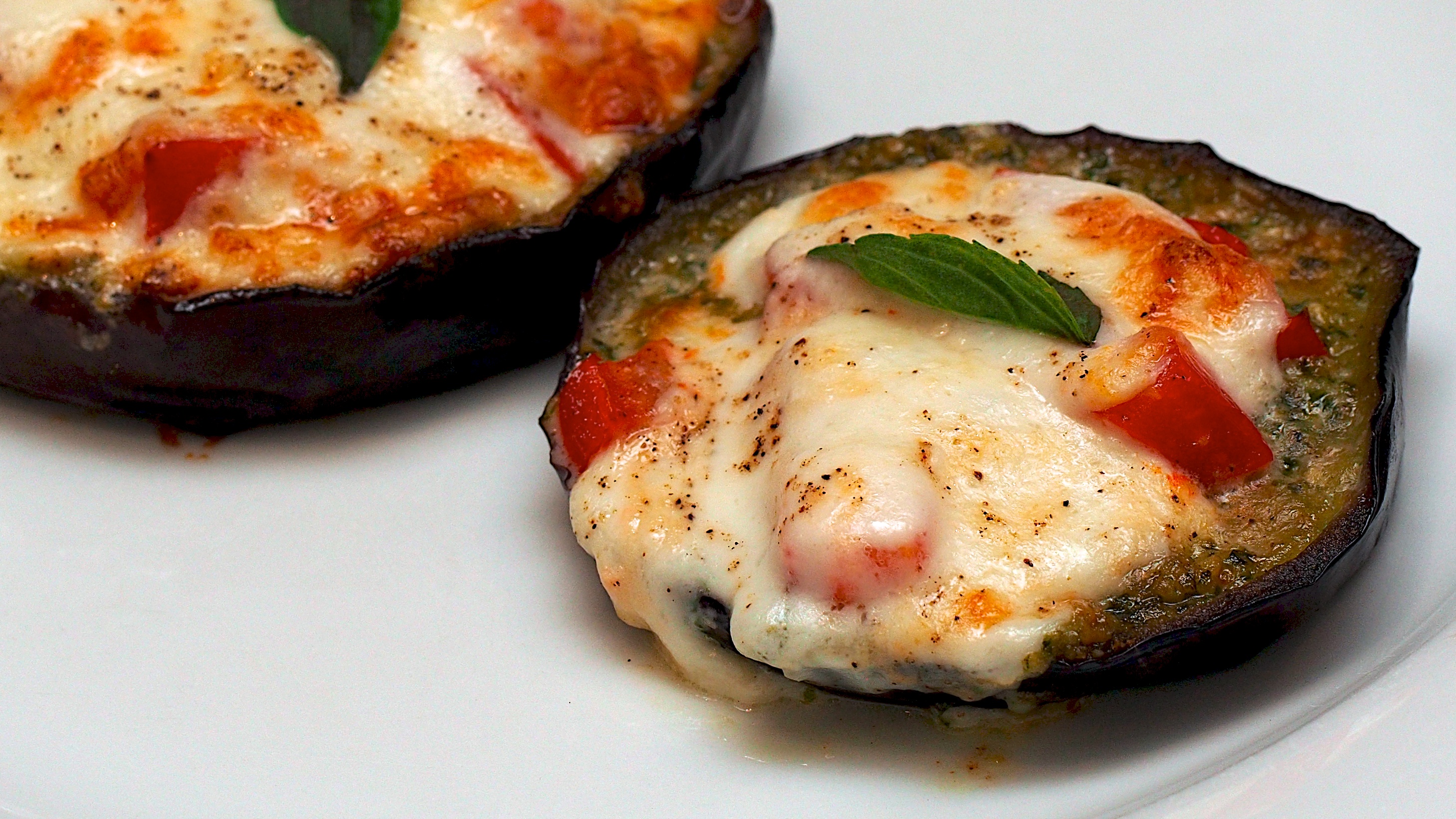
Capturing the summer season with fresh basil Pesto and aubergines. Serve with a simple green salad for a great starter.

Aubergine and Pesto Medallions – to serve 4

  • 1 vine-ripened tomato, cut into 5mm-thick slices and finely diced
  • 85ml olive oil
  • 1 aubergine (about 400g), cut into 8 x 1.5 cm thick slices
  • 2 tbsp Pesto
  • 16 small bocconcini, halved or a large ball of mozzarella, diced
  • 2 tbsp grated Parmesan
  • 8 small basil leaves

Preheat the oven to 220°C.

Put the diced tomato on a paper towel-lined plate.

Heat 2 tbsp of the oil in a large frying pan over a medium heat and add the aubergine slices. Cook for 5 minutes; don’t worry if the oil disappears. Turn the slices over and add the rest of the oil if you need it. Cook for another 5 minutes, and drain on a plate covered with paper towel. Blot the top of the aubergines with more paper towel to absorb any excess oil.

Line a baking tray with baking paper and transfer the aubergine slices onto it. Divide the pesto between the slices and spread. Spoon some of the diced tomato onto each slice (you might have a bit too much).

Arrange the mozzarella on top of the tomato. Sprinkle with Parmesan, season with salt and black pepper, then bake in the oven for 10 minutes.

Drain again on paper towel to absorb any excess oil. Garnish with basil leaves and serve.

Wine Suggestion: You could go for either a light red with a bit of acidity, such as an Italian Barbera, or a textural white, like a good Vermentino.

(Original Recipe from Stephanie Alexander’s Kitchen Garden Companion, Lantern, 2009.)


Read Full Post »

Cooked on an afternoon off and then shared with friends … perfect. This takes some time, particularly as you need to roast the duck first, but it is worth it.

Slow-roasted Duck Ragú – serves 4 to 6

  • 1 Duck, try to get a Gressingham or at least free-range for extra flavour
  • 2 oranges, 1 quartered – the other zested & juiced
  • 6 slices Pancetta, diced
  • 1 red onion, diced
  • 2 carrots, peeled & chopped
  • 2 sticks celery, diced
  • 6 sprigs rosemary, leaves picked and chopped
  • 1 stick cinnamon
  • 4 cloves garlic, finely sliced
  • 2 x 400g tins plum tomatoes
  • 1/2 bottle fruity red wine, we used a Chianti
  • 500ml Chicken Stock
  • a handful of sultanas
  • a handful of pinenuts
  • 600g Rigatoni, or other large tubular pasta
  • 2 knobs butter
  • large handful Parmesan, grated
  • small bunch parsley, chopped
  • red wine vinegar

Preheat the oven to 180 C. Rub duck all over with olive oil and season generously with salt and pepper.

Push the orange quarters inside the cavity and place the duck breast-side down in a roasting tray. Cook for 2 hours, turning it every 30 minutes until the skin goes thin and crispy and the meat is tender and fragrant with the oranges.

Remove the duck from the tray and pour the fat into a jar, making sure you avoid the meat juice the fat is floating upon. This fat can be used to roast potatoes another day.

Leave the duck to cool slightly then pull all the meat from the bones and shred it.

Pour a tablespoon of olive oil into a large pot and fry the pancetta on a medium heat until lightly golden. Add the onion, carrots, celery, rosemary, garlic and cinnamon and fry gently for 10 minutes until soft.

Add the tomatoes and red wine and simmer slowly for 25 minutes.

Add the duck meat and some chicken stock (if the sauce is a little dry) and simmer for another 30 minutes.

Remove the cinnamon stick, taste for seasoning and throw in the sultanas and pinenuts.

Cook the pasta according to instructions. Reserve some cooking water, then drain in colander and add to the sauce.

Remove from the heat and stir in the butter, Parmesan, parsley, orange zest and juice plus a good splash of vinegar.

Check for seasoning again and loosen with the reserved cooking water if necessary. Serve and enjoy!

Wine suggestion: A perfect match for a deep and profound Brunello di Montalcino or your favourite Tuscan red. Alternately look out for a good Bandol or Mourvedre based wine where the earthiness will also compliment the duck and pasta.

(Original recipe from Cook by Jamie Oliver, Penguin Books, 2009.)

Read Full Post »

This is a fabulous recipe for left-over roast chicken and it’s even worth roasting a bird especially (though we cheated with a shop-bought rotisserie one). You can make a decent chicken stock by pouring water over the carcass and simmering it with a carrot, bay leaf and onion for half an hour.

Creamy Roast Chicken Risotto – to serve 2

  • 1 medium onion, peeled and finely chopped
  • 50g butter
  • small bunch of thyme leaves
  • 250g arborio rice
  • 1 litre hot chicken stock
  • 350g leftover roast chicken, torn into bite-size chunks
  • 100g crème fraîche
  • a handful of chopped parsley
  • Parmesan, grated

Melt the butter in a heavy, shallow pan and cook the onion gently until soft but not coloured. Stir in the thyme leaves and the rice and stir until the rice is glistening. Add a little of the hot stock and bring slowly to the boil. Turn the heat down and gradually add the stock, a ladleful at a time, stirring. Stir in the roast chicken as you add the last ladleful of stock.

After about 20 minutes the rice should be tender but with a little bite to it. Stir in the crème fraîche and parsley, then some seasoning. Leave to rest for 5 minutes before serving with a little Parmesan grated over.

Wine Suggestion: A glass of Vintage Champagne if you’re feeling extravagant or  a good Maconnais white, like Pouilly-Fuisse or possibly even something from Roussillon like a Limoux… the choices are endless but don’t go too dry you need a bit of fruitiness here to help with the richness of the dish and a bit of body too otherwise the wine will be overwhelmed.

(Original recipe from Nigel Slater’s Real Food, Fourth Estate, 1998.)

Read Full Post »

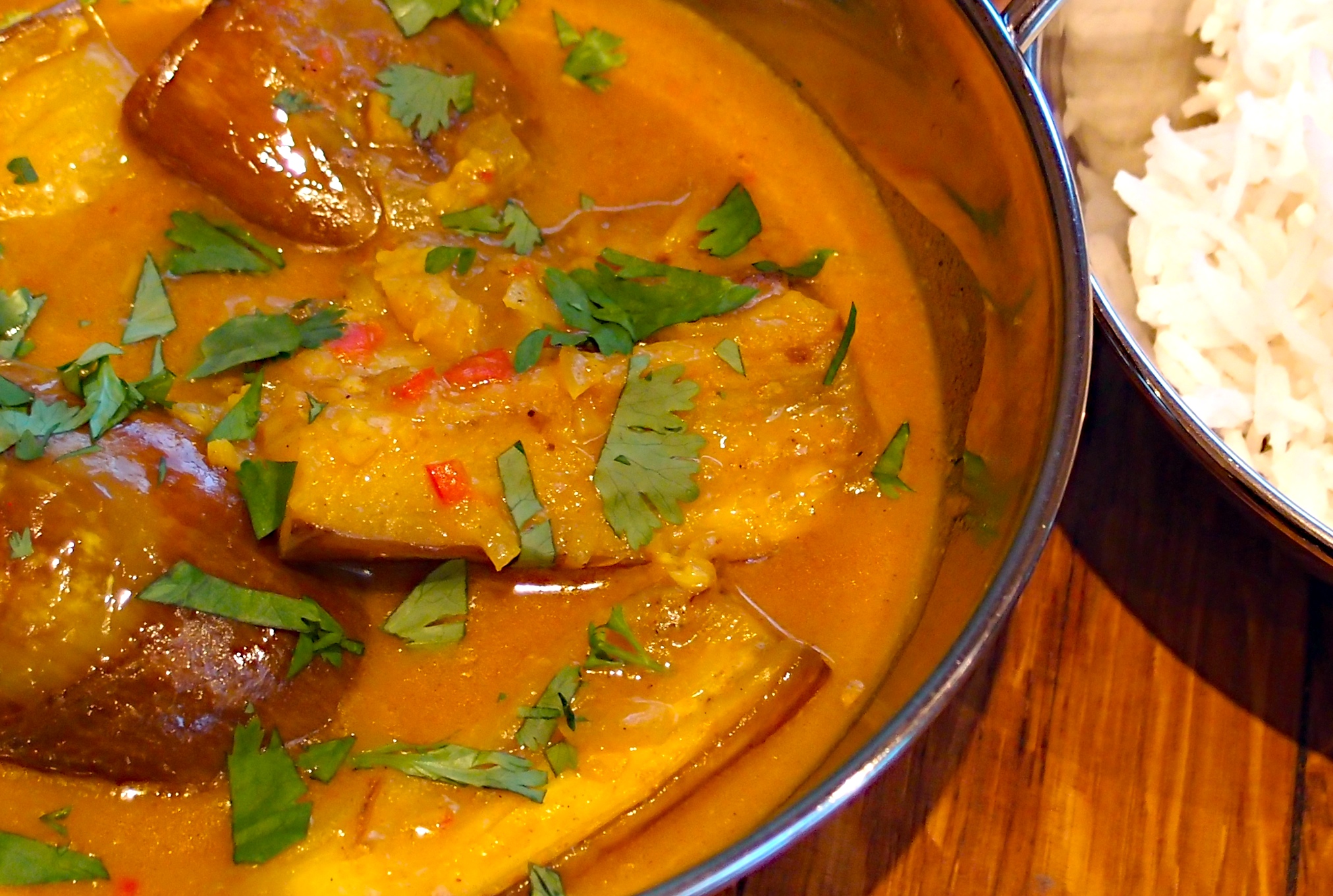
This is a really straightforward curry and we are glad to say it didn’t disappoint. The aubergine melts in the mouth and the spices are lovely and fresh as well as warming and comforting. Also takes no time at all to make.

Aubergine Curry with Lemongrass & Coconut Milk – serves 4

  • 3 large chillies, deseeded and chopped
  • 6 garlic cloves, roughly chopped
  • knob of fresh ginger, peeled and chopped
  • 2 lemongrass stalks, peeled and chopped
  • 2 tbsn ground turmeric
  • 1 tsp chilli powder
  • 2-3 aubergine (approx 600g) quartered lengthways then halved
  • 1 tbsp olive oil
  • 1 tbsp sugar
  • 6 shallots, finely chopped
  • 1 tbsp Fish Sauce (nam pla)
  • 400ml can coconut milk
  • 400ml vegetable stock
  • small bunch coriander, roughly chopped

Pulse  to a coarse paste chillies, garlic, ginger and lemongrass in a food processor. Set aside

Mix the turmeric and chilli powder together and rub it all over the aubergine wedges. Don’t worry if it look like a lot of spices – it works!

Heat olive oil in frying pan and brown aubergine in batches, setting the aubergine aside when done. Add the paste, sugar and shallots to pan and cook for a few minutes until the shallots and garlic soften.

Return aubergine to pan. Add fish sauce, coconut milk and stock, mix well and bring to the boil. Reduce heat and cook gently for about 15 minutes and until aubergine is tender but not mushy. Season and sprinkle coriander on top.

Serve hot with steamed rice.

Drink with: a aged Clare Valley riesling (at least 5 or six years old) or a fruity young Mosel Riesling.

Read Full Post »

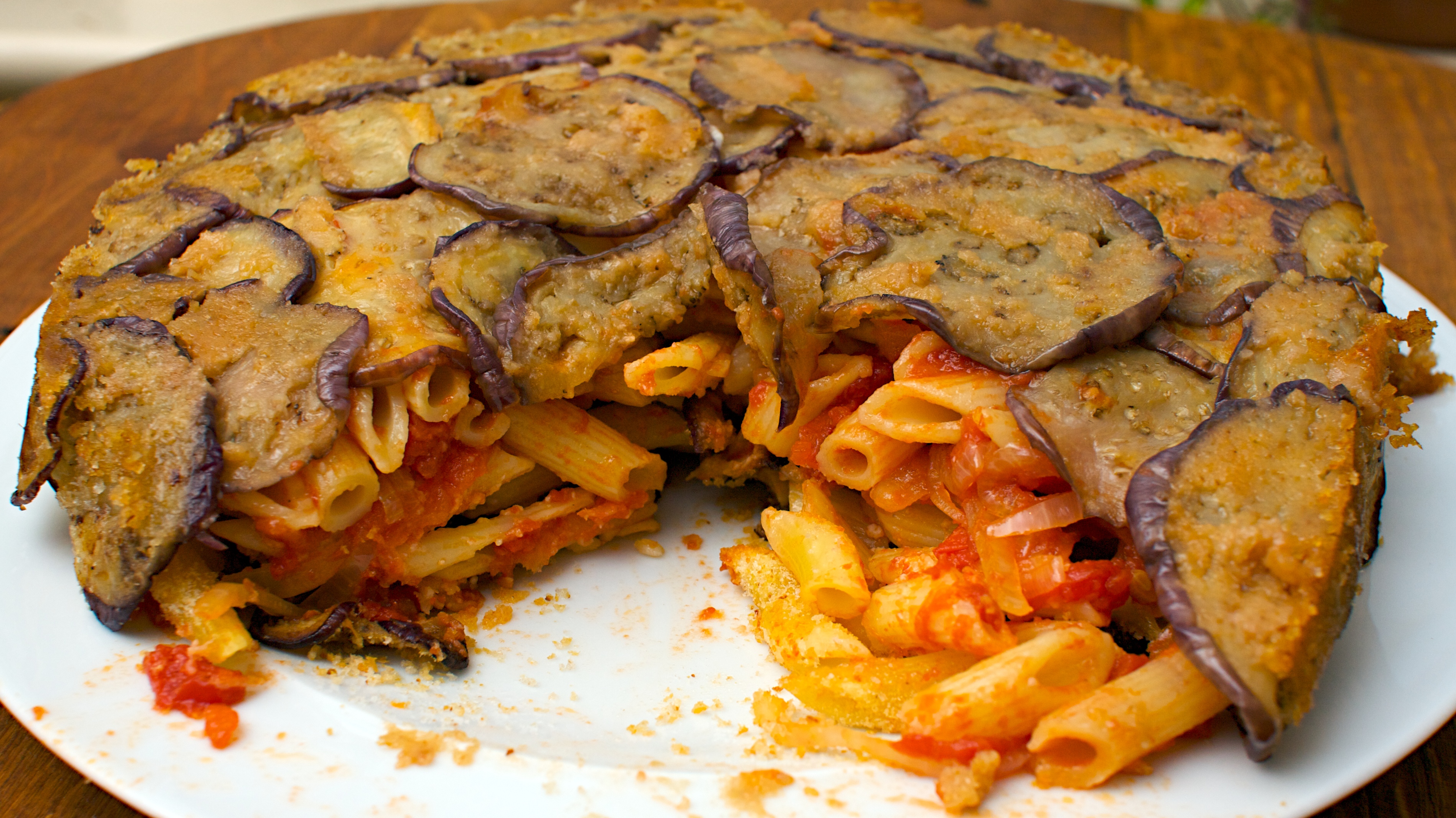
One of those memorable dishes that combines flavours and textures to capture the Sicilian sun and bring it to a grey and wet Dublin summer evening; magic.

Timballo di Maccheroni (Baked Pasta with Aubergine) – serves 6

  • 3 Aubergine, see if you can get the round, pale violet ones for authenticity
  • sea salt
  • 2 tablespoons unsalted butter
  • 5 tablespoons breadcrumbs
  • 1 medium onion, thinly sliced
  • 1 garlic clove, crushed
  • 1 x 400g tin of chopped tomatoes
  • 400g rigatoni, or penne rigate
  • 60g caciocavallo, or pecorino cheese, grated

Thinly slice the Aubergine, sprinkle with salt and leave to drain in a colander for at least 2 hours. Squeeze lightly to get rid of excess liquid.

Preheat oven to 180C / 350F / Gas 4.

Grease a round cake tin with the unsalted butter; we used one that was 23cm wide and 3.5cm deep. put in 2 tablespoons of breadcrumbs and shake and turn the dish so that that they stick to the butter and line the dish.

Heat about 6mm of olive oil in a deep frying pan and sauté the aubergine slices in batches until lightly coloured. Lift out and drain on kitchen paper. Using about three quarters of the aubergine cover the base and sides of the breadcrumbed tin. Make sure that you overlap the slices so that there are no gaps.

Heat a tablespoon of olive oil in a pan and cook the onion and garlic over a medium heat until soft, but not coloured. Add the tin of tomatoes and season with salt. Cover with a lid and simmer over a low heat for 10 minutes.

While this is cooking bring a pan of water to the boil, salt well and cook the pasta for 3 minutes less than the packet instructions, so that it is still al dente. Reserve some cooking water and then drain the pasta.

Spoon a layer of the pasta into the aubergine lined tin followed by tomato sauce, a layer of the aubergine and a layer of grated cheese. Repeat with the remaining pasta, tomato sauce, and a final layer of aubergine. Finish with the remaining breadcrumbs to form a coating on the top. Bake in the preheated oven for about 25 minutes and until golden.

Let stand for about 10 minutes. This will allow the dish to firm up.

Put a plate over the top of the tin and holding both the plate and dish firmly, turn both over together so that the Timballo turns out onto the plate. Serve in wedges.

Serve with: a southern Italian red like Nero d’Avola or Negroamaro, both of which have a satisfying earthiness but aren’t too heavy for the flavours in this dish.

NB. if you’d like to make your own breadcrumbs, which is both easy and satisfying, then remove the crusts from stale bread, slice and put it on a baking tray in an oven at 80C for an hour to dry out. Either grate and sieve the dried bread (which gives a more random and authentic look) or blitz in a blender.

(Original recipe from Georgio Locatelli: Made in Sicily, Fourth Estate, 2011.)

Read Full Post »

« Newer Posts - Older Posts »