Feeds:
Posts
Comments

Archive for February, 2019

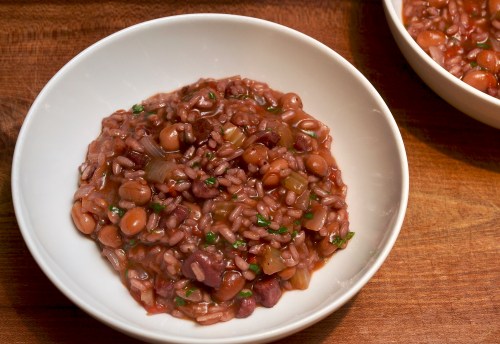
Panissa Rice

Panissa is a risotto with some extras added to make it more substantial. This one from Jamie Cooks Italy has red wine, tomatoes, salami and borlotti beans.

Wine Suggestion: The Barbera we used was a very good match, as was the Balto Mencia from Bierzo, Spain; both medium bodied and earthy in character. If neither of these are to hand look for something fresh and balanced … not too heavy or high in alcohol which would overwhelm the flavours.

Panissa Rice – serves 4

  • 50g piece of smoked pancetta, cut into 1cm chunks
  • 50g salami, cut into 1cm chunks
  • 2 onions, chopped into 1cm chunks
  • 2 celery sticks, chopped into 1cm chunks
  • 1 litre quality meat stock
  • 30g bunch of fresh rosemary
  • 300g Arborio risotto rice
  • 250ml Barbera d’Asti red wine
  • 400g tin of plum tomatoes
  • 400g tin of borlotti beans, drained and rinsed
  • 4 sprigs of flat-leaf parsley, finely chopped

Put the pancetta and salami into a cold casserole and place over a medium-high heat until the fat renders. Add the onions and celery and cook for 10 minutes, or until soft.

In a separate pan simmer the stock and rosemary.

Stir the rice into the veg and toast for 2 minutes, then pour in the wine and cook until it has evaporated. Add the tomatoes scrunching with your hands to break them up. Add the stock a ladleful at a time, letting each one disappear before adding more. Stir constantly and keep adding stock for 20 minutes or until the rice is cooked but still has a little bite. Stir the borlotti beans in with the last ladle of stock. The panissa is done when your spoon can stand up in the middle. Taste and season with salt and black pepper and stir in the parsley.

(Original recipe from Jamie Cooks Italy by Jamie Italy, Michael Joseph, 2018.)
Read Full Post »

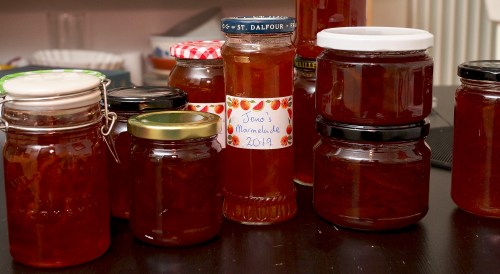
Jono's Seville Orange Marmelade

There is a batch of this made in our kitchen every year and this year there were two batches (we bought too many oranges). There are lots of fancy marmalade recipes but we find the classic version the best. This also requires a large preserving pan. If you think your pan may be too small then the recipe can easily be halved.

Jono’s Seville Orange Marmalade

  • 1.3kg Seville orange marmalade
  • 2 lemons, juice only
  • 2.6kg preserving or granulated sugar

Put the whole oranges and lemon juice in a large preserving pan and cover with 2 litres of water (if the water doesn’t cover the fruit you need to try a smaller pan). Use a heat-proof plate to keep the oranges submerged as they tend to bob to the surface; we use a second, smaller pot lid. Bring to the boil, cover and simmer very gently for about 2 hours or until the peel can be pierced easily with a fork.

We find we have to weight down the saucepan lid with heat-proof items to keep the lid pressed down and the oranges submerged; a small mortar and an iron teapot usually get drafted for this role.

Warm the sugar in a very low oven. Pour the cooking water from the oranges into a jug and tip the oranges into a bowl. Return the cooking liquid to the pan. When the oranges are cool enough to handle, cut them in half and scoop out all the pips and pith and add to the orange liquid in the pan. Bring this to the boil and continue to boil for 6 minutes, then strain the liquid through a sieve into a bowl and press the pulp through with a wooden spoon.

Pour this liquid into a large preserving pan. Cut the peel into fine shreds and add to the liquid in the preserving pan with the warmed sugar. Gently stir over a low heat for about 10 minutes until the sugar has completely dissolved. This is very important as undissolved grains effects the outcome. Bring to the boil and bubble rapidly for 15-25 minutes or until setting point is reached. A jam thermometer is useful here, but you can also test the set by checking if the marmelade wrinkles when put onto a cold plate

Remove the pan from the heat and skim any scum from the surface. The remaining excess scum can be dissolved by dropping a small knob of butter on to the surface and stirring gently. Leave the marmalade to stand in the pan for 20 minutes, then pot into sterilised jars.

(Original recipe from BBC Good Food)

Read Full Post »

Syrian Spiced Fish

This Syrian fish dish is bursting with delicious herbs and spices. We loved it! Really great with spinach & sumac and spicy potatoes. One of the best meals we’ve had in ages!

Wine Suggestion: Our choice tonight was the Rustenberg Five Soldiers Chardonnay which had power and complexity but also elegance and a beautiful, supple balance so it finished light and persistent. An excellent wine well worth seeking out and a great match for this dish.

Spiced Fish (Samaka Harra) – serves 2

  • 6 garlic cloves, chopped
  • 2 red chillies, finely chopped
  • ½ tsp ground cumin
  • 40g walnuts chopped
  • 2 tbsp olive oil, plus extra
  • 2 whole fish e.g. sea bream or snapper (we used bass)
  • a bunch of fresh coriander, roughly chopped, including stems
  • 1 lemon, plus ½ a lemon, sliced

Heat the oven to 180C/350F/Gas 4.

Mix the garlic, chillies, cumin, walnuts and 2 tbsp of olive oil, salt and pepper.

Stuff the fish with the mixture, keeping 2 tbsp aside for later, then add a handful of coriander, saving some to garnish.

Squeeze the lemon over both fish, then drizzle with olive oil and season with salt and pepper. Marinate in the fridge for a good half hour.

Put the fish into a large oven tray with the reserved stuffing sprinkled over the top and some lemon slices, then bake for 30 minutes.

(Original recipe from Syria: Recipes from Home by Itab Azzam and Dina Mousawi, Trapeze, 2017.)

Read Full Post »

Spinach with Sumac

This simple Syrian side dish has fantastic flavour. We ate it with some spiced fish but it would complement many things. Also great on its own with some plain yoghurt and flatbreads.

Spinach with Sumac (Spanekh wa Sumac) – serves 4

  • 1 small red onion, finely diced
  • oil, for frying
  • 350g baby spinach
  • 1 tbsp sumac
  • a squeeze of lemon

Fry the onion over a very low heat for 20-30 minutes or until softened and almost caramelised. Add the spinach and cook until wilted. Remove from the heat, sprinkle with the sumac, lemon juice, salt and pepper.

(Original recipe from Syria: Recipes from Home by Itab Azzam & Dina Mousawi, Trapeze 2017.)

Read Full Post »

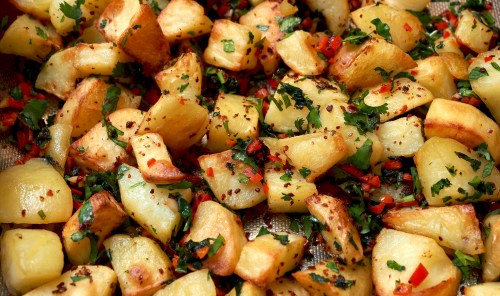
Spicy Syrian Potatoes

These spicy Syrian potatoes are really delicious and we’re going to be cooking them with lots of dishes. A great alternative to roast potatoes.

Spicy Syrian Potatoes (Batata Harra) – serves 4

  • 4 potatoes, peeled and cut into 1-2 cm cubes
  • olive oil, for roasting
  • 3 garlic cloves, finely chopped
  • 2 chillies, deseeded and finely chopped
  • a bunch of coriander, chopped
  • 1 tbsp Aleppo pepper

Heat the oven to 200C/400F/Gas 6.

Roast the potatoes with olive oil and salt for about 30 minutes or until nicely browned.

Meanwhile, quickly fry the garlic, chillies and half the coriander. When the potatoes are ready, mix the fried ingredients with the potatoes, ground Aleppo pepper and the rest of the coriander.

(Original recipe from Syria: Recipes from Home by Itab Azzam and Dina Mousawi, Trapeze, 2017.)

Read Full Post »

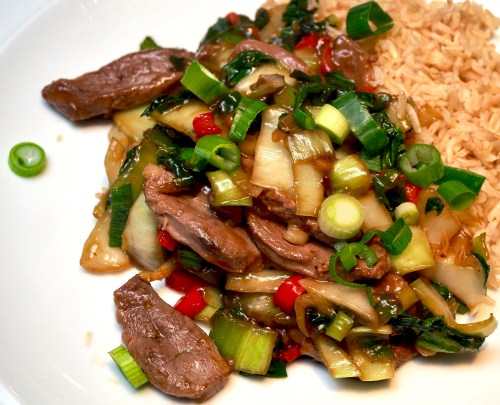
Duck Stir-Fry with Ginger & Greens

It’s not often you find a duck dish that is light and healthy. It pains us too to pull off and discard that duck skin but somedays it just has to be done. Can’t recommend this highly enough for a good food day. We served with some brown basmati.

Duck stir-fry with ginger and greens – serves 4

  • groundnut oil
  • 2 skinless duck breasts, cut into thin strips
  • 1 tbsp finely chopped ginger
  • 1 red chilli, sliced
  • 6 scallions, sliced
  • 500g pak choi, sliced
  • 1 tsp soy sauce
  • 1 tbsp honey
  • 2 tbsp oyster sauce
  • 1 tsp cornflour

Heat a wok until smoking hot, then add 2 tsp of oil. Add the duck and stir-fry for 2 minutes before removing with a slotted spoon. Add another teaspoon of oil and tip in the ginger, chilli, almost all the scallions and the pak choi. Cook until the pak choi is just wilted.

Add the soy, honey and oyster sauce to the wok and put the duck back in – bubble for a minute. Mix the cornflour with 2 tsp cold water and stir until smooth, add to the wok and cook until the sauce thickens and looks glossy. Garnish with the leftover scallions to serve.

(Original recipe by Jemma Morphet in Olive Magazine, February 2011.)


Read Full Post »

Valentines baked potatoes with caviar

This was our Valentine’s dinner and very special it was too!

Wine Suggestion: it’s any excuse for bubbly in our house and it makes a natural pair for this dish too. Our choice was the Domaine de la Paleine Cremant de Loire, a blend of Chardonnay and Chenin Blanc that celebrated the saltiness of the caviar and went seamlessly with the creamy potatoes.

Baked potatoes with crème fraîche and trout caviar – serves 4

  • 4 small baking potatoes
  • 1 ½ tbsp rapeseed or olive oil
  • sea salt flakes
  • 2 tbsp chopped flat-leaf parsley
  • 200ml crème fraîche
  • 40g trout caviar

Heat the oven to 200C/Fan 180C/Gas 6.

Drizzle the potatoes with ½ tbsp of the oil and a good pinch of salt and toss well. Put onto a baking tray and bake for 45 minutes.

When the potatoes are cool enough to handle, cut them in half lengthways and scoop the flesh out into a bowl, careful not to damage the shells. Mash the potatoes, then stir in the parsley, 120ml of the crème fraîche and seasoning. Brush the potato skins with the remaining oil, then spoon the potato mixture back into them.

Bake for 15 minutes or until heated through and crispy on the outside. Spoon the remaining crème fraîche on top, followed by a spoon of caviar and some black pepper.

(Original recipe by Clodagh McKenna in Olive Magazine, February 2019.)

Read Full Post »

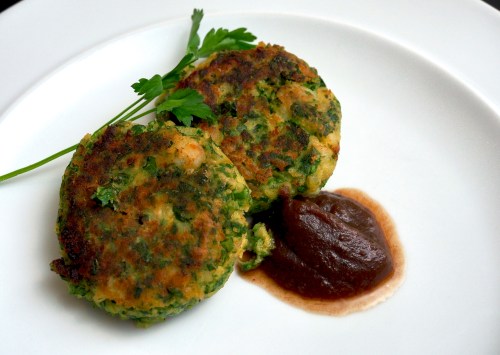
Bandari fishcakes

These Persian fishcakes are full of herbs and make a delicious starter or light lunch. They can be made up in advance and cooked when you need them.

Wine Suggestion: the only option here is a youthful, light, off-dry Riesling where the aromatics, herbs, date and tamarind all play with each other. Tonight we drank the Dr Loosen Estate Riesling, his entry level wine made with his own fruit in the Mosel and it was an excellent match. Along with the Mosel we’d recommend the fruity styles (Kabinett & Spätlese) from other German regions such as the Nahe and Rheingau. Further afield the Aussie Rieslings tend to be too dry for a dish like this but there are some excellent NZ examples, Forrest Estate and Felton Rd spring to mind.

Bandari fishcakes with a tamarind and date sauce (Kuku-ye mahi) – serves 4

  • 300g potatoes, peeled and roughly diced
  • 200g white fish fillets e.g. cod/haddock
  • ¼ tsp cumin seeds
  • 50g coriander, finely chopped
  • 25g parsley, finely chopped – plus extra to garnish
  • 1 tsp dried fenugreek leaf (menthi)
  • 2 garlic cloves, crushed
  • a pinch of cayenne pepper
  • ¼ tsp turmeric
  • zest of ½ lemon
  • 1 medium egg
  • plain flour, for dusting
  • 3 tbsp sunflower or olive oil

FOR THE TAMARIND & DATE SAUCE:

  • 50g tamarind pulp soaked in 100ml just boiled water for 10 minutes
  • 75g Iranian or Medjool dates, pitted and roughly chopped
  • 1 tbsp light brown sugar
  • a pinch of cayenne pepper
  • a pinch of cinnamon
  • 150ml hot water

Put the potatoes into a large pan and cover with cold water. Add a generous pinch of salt and bring to the boil, then simmer until tender. Drain, mash the potatoes, and put into a large mixing bowl.

Add the fish to the potatoes. Dry fry the cumin seeds in a small frying pan for a minute or until fragrant. Grind the seeds with a pestle and mortar, then add to the bowl along with the fresh herbs, fenugreek leaf, garlic, cayenne, turmeric, lemon zest, egg, 1¼ tsp of salt and ¼ tsp of pepper.

Mix well with your hands, then shape into eight round patties. Dust with a little flour and place on a plate, cover with cling film and chill.

To make the sauce, put the tamarind and its soaking liquid, the dates, brown sugar, cayenne, cinnamon and a pinch of salt in a small saucepan. Add the hot water and cook for 10 minutes over a low heat until the dates are very soft.

Take the sauce off the heat and sieve into a bowl, use the back of a spoon to rub as much through as possible.

To finish the fishcakes, heat the oil in a frying pan and cook the cakes on a medium-high heat for 6-8 minutes, turning every few minutes, until golden brown and crusted. Garnish with parsley and serve with the sauce.

(Original recipe from The Saffron Tales by Yasmin Khan, Bloomsbury, 2016.)

Read Full Post »

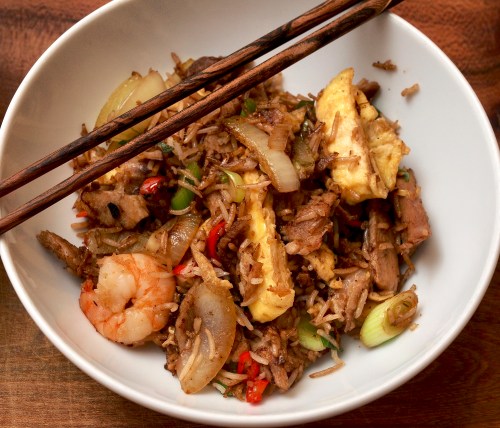
Nasi Goreng

This is just the dish for leftover roast pork. We freeze the right quantity and enjoy it a week or too later after a busy day – it’s really quick to throw together.

Wine Suggestion: there’s a vibrant immediacy to this dish and likewise we chose a Marlborough Sauvignon Blanc, in this case the Doctors’ SB from Forrest Estate; dry, full flavoured and ripe but only 9.5% abv.

John Forrest pioneered this technique and it’s a brilliant addition to the wine world so we can drink lower alcohol levels and yet keep the same ripeness and flavour profiles.

Nasi goreng – serves 4

  • 2 tbsp groundnut oil
  • 1 onion, halved and sliced 1cm thick
  • 3 garlic cloves, finely sliced
  • 2 red chillies, halved, deseeded and sliced
  • 300g leftover cooked pork, chop into little chunks
  • 400g cooked rice
  • 4 scallions, sliced on the diagonal
  • 3 eggs, beaten
  • 100g cooked, shelled prawns
  • 4 tbsp dark soy sauce

Heat 1½ tbsp of the oil in a large frying pan or wok. Add the onion and cook over a medium heat until soft, golden and starting to tinge. Add the garlic, chillies and pork and cook for a couple of minutes – let the pork colour a bit. Add the rice and spring onions – toss lightly and cook until heated through.

Meanwhile, quickly heat ½ tbsp of the oil in a nonstick frying pan and add the eggs. Cook as you would an omelette and when cooked cut into ribbons with a sharp knife.

Add the egg, prawns, soy sauce, salt and pepper to the rice and keep cooking for another 2 minutes to heat everything through, then serve.

(Original recipe from Food from Plenty by Diana Henry, Mitchelle Beazley, 2012.)

Read Full Post »

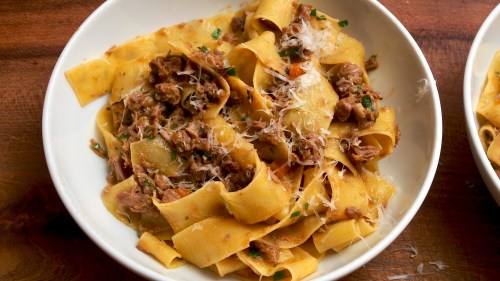
Lamb Ragoût

Lamb ragoût with fresh pasta

This lamb ragoût really reminds of holidays in Italy. Really simple but with a great concentrated flavour. No doubt it would be fab with some freshly made pappardelle, but dried was all we could muster on this occasion.

Wine Suggestion: While a red is often the first thought when matching a Ragoût, an oaked white would also work just as well with this dish. The Zuani Riserva from Collio in north eastern Italy would be a good choice. Delicately toasty with vanilla and touch of tropical fruit and some creamy, ripe stone-fruits. Broad and rich, creamy, thick fruit texture, peach and yellow plum with a long and gently spicy finish.

However if you feel like red, like Jules did tonight, then an elegant Sangiovese makes a good option and the Selvapiana Bucerchiale Chianti Rufina is a favourite of ours. Always superb.

Lamb Ragoût – serves 4 to 6

  • 3 tbsp olive oil
  • 2 onions, finely diced
  • 2 celery stalks, finely diced
  • 1 carrot, finely diced
  • 3 garlic cloves, chopped
  • 2 fresh or dried bay leaves
  • 1 thyme sprig
  • 1kg lamb shoulder, cut into small dice
  • 1 tbsp tomato purée
  • 125ml white wine
  • 500ml lamb stock
  • fresh or dried pappardelle pasta
  • chopped flat-leaf parsley, to serve
  • grated Parmesan, to serve

Heat the oil in a large casserole dish, add the onions, celery and carrot and sweat until translucent. Add the garlic, baby leaves and thyme. Add the lamb and season well with salt and pepper, sweat, then add the tomato purée.

Cook for a few minutes, then deglaze with the wine. Add the lamb stock and simmer for 3 hours, covered, until reduced – add more stock or water if it becomes too dry.

Cook the pasta until al dente. Drain and stir into the ragoût with the parsley and Parmesan.

(Original recipe from The Skills by Monica Galetti, Quadrille, 2016.)

Read Full Post »

Fesenjoon

We love this Persian dish, so rich and full of unusual but intriguing flavours. We’ve tried to make it before with limited success but this version by Yasmin Khan was much more like the dish we remembered. Serve with steamed basmati rice and salad.

Chicken with Walnuts & Pomegranates – Fesenjoon – serves 4

  • 250g walnuts (fresh is best)
  • 1.2 litres of cold water
  • 100ml pomegranate molasses
  • 1 tbsp tomato purée
  • ¼ tsp ground cinnamon
  • 2 tbsp sugar
  • 2 tsp sea salt
  • 1 tsp black pepper
  • 800g skinless chicken thighs, on the bone
  • a handful of pomegranate seeds to garnish

Grind the walnuts in a food processor until extremely fine – they will eventually turn into a smooth paste. Transfer the ground nuts into a large casserole pot with a litre of water and mix well. Bring to the boil and cook over a high heat for 5 minutes, then reduce the heat and simmer for 1 hour, partially covered. Stir occasionally to make sure the walnuts don’t stick.

Stir in the remaining 200ml of water and simmer for another hour with the lid on. Add more cold water if the sauce starts to look dry – in the end it should have a thick, porridge-like consistency.

By the end of the time the sauce should have thickened and darkened in colour. Add the pomegranate molasses, tomato purée, cinnamon, sugar, salt and pepper and stir well. Add the chicken, put the lid back on the pot and cook over a low heat for 45 minutes, until the chicken is cooked and the sauce is dark and glossy.

Taste the sauce and season, you might like to add more sugar or pomegranate molasses to adjust the sweet/sour balance. Cook for a final 10 minutes with the lid off so the sauce thickens around the meat. Serve over rice and sprinkled with the pomegranate seeds.

(Original recipe from The Saffron Tales by Yasmin Khan, Bloomsbury, 2016.)


Read Full Post »

Caponata Spaghetti

A really healthy mid-week pasta dish but with heaps of flavour. Don’t be tempted to use  more oil than specified, as you really don’t miss it in this dish.

Caponata Spaghetti – serves 4

  • 2 aubergines, cut into 3cm cubes
  • 4 tsp vegetable oil
  • ½ red onion, sliced
  • 2 sticks of celery, sliced
  • 2 cloves of garlic, sliced
  • 1 tsp dried oregano
  • 400g tin chopped tomatoes
  • a small handful of raisins
  • 1 tsp capers
  • a handful of kalamata olives, pitted and chopped
  • 2 tbsp red wine vinegar
  • 300g wholewheat spaghetti
  • a small bunch of parsley, chopped

Heat the oven to 220C/fan 200C/gas 7.

Toss the aubergine with 2tsp of oil and a little seasoning and tip into a large non-stick baking tray. Roast for 20 minutes or until charred and soft.

Meanwhile, heat the rest of the oil in a large pan and cook the red onion and celery with a large pinch of salt for 10 minutes or until softening and caramelised a little. Add the garlic and oregano, and cook for a minute before adding the tomatoes and 100ml water. Tip in the roasted aubergine and simmer for 15 minutes.

Add the raisins, capers, olives and red wine vinegar, and season. Keep on a low heat while you cook the pasta.

Cook the pasta according to the time on the pack, then drain, reserving a mug of the water. Tip the pasta into the caponata with the parsley, add a splash of water to loosen if needed. Stir well and serve.

(Original recipe by Adam Bush in Olive Magazine, February 2019)

Read Full Post »

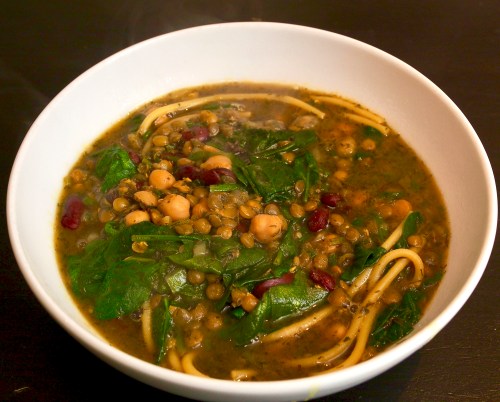
Aash-e reshte

This soup, from Yasmin Khan’s Saffron Tales, is delicious and also very filling – perfect for lunch on a cold day and a lesson in how to use dried herbs.

Aash-e reshte – serves 4 to 6

  • 3 tbsp sunflower oil
  • 1 medium onion, finely chopped
  • 4 garlic cloves, crushed
  • 1 x 400g tin of chickpeas, drained and rinsed
  • 1 x 400g tin of red kidney beans, drained and rinsed
  • 150g green lentils, rinsed
  • ½ tbsp turmeric
  • 2 tbsp dried dill
  • 1 tbsp dried mint
  • 1 tbsp dried coriander
  • 1 tbsp dried fenugreek leaves (methi)
  • 500ml water
  • 1 litre good chicken stock or veg stock
  • 100g spaghetti, broken in half
  • 200g spinach, roughly chopped
  • 25g bunch chives, finely chopped
  • juice of ½ lemon
  • 1 ½ tbsp soy sauce
  • 3 tbsp extra-virgin olive oil
  • 1 tsp sea salt
  • 1 tsp black pepper

For the toppings:

  • 1 medium onion, finely sliced into half-moons
  • 2 tbsp flour
  • ½ tsp sea salt
  • 3 tbsp sunflower oil
  • 200g Greek yoghurt
  • 1 tbsp dried mint

Heat the sunflower oil in a large heavy-based pan with a lid. Add the onion and fry over a low heat for 10-15 minutes. When softened, add the garlic and fry for another 2 minutes.

Add the chickpeas, beans, lentils, turmeric, dried herbs and water. Stir, cover with a lid, and leave to simmer over a low heat for 40 minutes. Stir occasionally and add another cup of water if it shows signs of sticking.

Add the stock and spaghetti to the pan. Bring to the boil and simmer for 10 minutes.

Meanwhile, prepare the fried onion topping. Dust the sliced onion with the flour and salt. Heat the oil in a frying pan until sizzling, then add the onion and fry over a medium heat for 6 to 8 minutes or until golden brown and crispy. Drain on some kitchen paper and sprinkle with a little more salt.

Add the spinach, chives, lemon juice, soy sauce, olive oil, salt and pepper to the soup. Leave to simmer for another 10 minutes, then taste and adjust the seasoning if needed.

Serve with a spoonful of yoghurt, the crispy onions and a sprinkling of dried mint.

(Original recipe from The Saffron Tales by Yasmin Khan, Bloomsbury, 2016.)

Read Full Post »

Turmeric Broth

We try and cook healthy mid-week, with some weeks being more successful than others. That said, we rarely eat anything particularly unhealthy, so we don’t beat ourselves up too much. This dish is low fat and low calorie – but it tastes really full-flavoured and restorative, almost medicinal, and you can’t help but feel better for eating it.

Turmeric broth with chicken & ginger dumplings – serves 4

  • 50g ginger sliced
  • 1.5 litres light chicken stock
  • 3 scallions, green parts and white parts separated
  • 2 star anise
  • 2-3 tsp ground turmeric
  • 200g baby leaf greens, chopped – we used pak choi
  • 300g cooked egg noodles
  • 1 red chilli, finely chopped

FOR THE DUMPLINGS:

  • 500g chicken mince or turkey mince
  • 1 tbsp finely grated ginger
  • ½ red chilli, seeded and finely chopped
  • a handful of coriander, finely chopped
  • sesame oil
  • 1 tbsp cornflour
  • 1 egg white
  • white pepper

Put the sliced ginger, chicken stock, scallion greens, star anise and turmeric in a large pot. Bring to a simmer and cook with a lid on for 20 minutes.

Meanwhile, finely chop the scallion whites and put into a bowl with the mince, grated ginger, chilli, coriander, 1 tsp of sesame oil, the cornflour and egg white. Season with salt and white pepper then mix well and roll into balls.

Strain the broth and return to the pot. Add the chicken dumplings and simmer for 8-10 minutes or until cooked through. Add the greens and noodles for the last 2 minutes. Finish with the chilli and a drizzle of sesame oil.

(Original recipe by Janine Ratcliffe in Olive Magazine, January 2017.)

Read Full Post »

Dill potatoes

We’re always banging on about food waste but can honestly say that at least half the recipes we try, are chosen solely on the basis that they use an ingredient left over from another dish. This is precisely how we came to try this potato dish from Caroline Eden & Eleanor Ford’s beautiful book, Samarkand. Dill is one of the herbs we find most difficult to use up and it’s also one we haven’t had a lot of success growing ourselves. Never again will we shy away from recipes using fresh dill, instead we will look forward to melting potatoes with dill the following day.

Melting Potatoes with Dill – serves 4

  • 50g butter
  • 2 tbsp olive oil
  • 2 onions, sliced
  • 500g waxy potatoes, unpeeled and cut into 1cm slices
  • 3 garlic cloves, finely sliced
  • 1 tsp cracked black peppercorns
  • a small handful of dill fronds, chopped

Heat the butter and oil in a large frying pan and cook the onions very slowly until soft and golden. Add the potato slices and garlic and stir into the buttery onions. Season well with salt and cover with a lid.

Cook the potatoes over a very low heat, stirring occasionally, for about 45 minutes. Stir through the peppercorns and a handful of fresh dill before serving.

(Original recipe from Samarkand by Caroline Eden & Eleanor Ford, Kyle Books, 2016.)

Read Full Post »