Feeds:
Posts
Comments

Archive for May, 2019

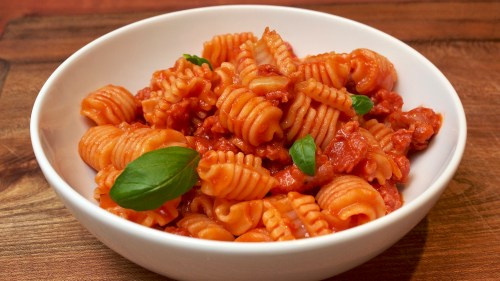
Radiatori with Sausage & Saffron

We’re getting a new kitchen and currently trying to clear the cupboards of as many ingredients as possible to save us having to pack them away. I don’t know why we bought a bag of radiatori pasta, maybe we just liked the look of it, but a quick flick of the books turned up the perfect recipe. Do find Italian sausages if you can (we used luganega but you can often find good pork and fennel ones too) as they’re a lot denser than our traditional sausages. Gone are the days when we used to beg Italian restaurants to sell us some!

Wine suggestion: the saffron gives this dish a refinement and character a little different to some other Italian / pasta recipes and we think that the newly classic wines of the Tuscan coast, specifically Bolgheri and northern Maremma suit the dish really well. For sheer value we’d open a bottle Argentiera’s Poggio ai Ginepri which is Cabernet Sauvignon led. However, if you can stretch further then the Cabernet Franc led wines of Biserno, like their il Pino would make this dish feel like a proper event – as all Friday night dishes should be!

Radiatori with Sausage & Saffron – serves 4 to 6

  • 3 tbsp olive oil
  • a large onion, roughly chopped
  • 500g Italian sausages, remove the skins and break up the meat with your hands
  • ¼ tsp of saffron threads
  • 600ml passata
  • 500g radiatori pasta
  • basil & grated pecorino (to serve)

Warm the oil in a heavy casserole. Add the onion with a pinch of sea salt and cook over a medium-low heat for about 10 minutes or until softened.

Turn the heat up, then add the sausagemeat, keep breaking it up with your spoon if needed, and stir until it loses its raw appearance, then add the saffron and passata. Bring to a bubble and turn the heat down low and simmer gently for 40 minutes.

Place a lid on the casserole and turn off the heat, then cook the pasta in lots of boiling, salty water for the time on the packet. Reserve a few ladlefuls of pasta water before you drain it.

Tip the pasta into the sauce and toss together, adding a bit of pasta water to help it come together if needed. Serve sprinkled with basil and pecorino.

(Original  recipe from At My Table by Nigella Lawson, Chatto & Windus, 2017.)
Read Full Post »


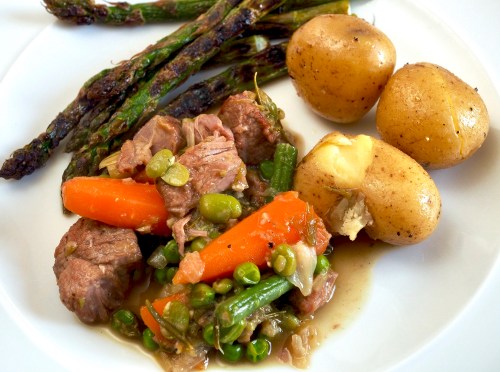
Braised Lamb with Spring VegetablesA great dish for when you want to eat spring food but it’s chilly outside. Leftovers taste great the next day too. Serve with new potatoes.
Wine Suggestion: This works superbly with Syrah and if you’d like to taste something different then the Insolgio del Cinghiale from Tenuta Biserno which is a Syrah, Cabernet Franc blend from the Maremma in Italy is well worth finding. A wine that shows a new side to Syrah and that Italy also has some superb sites for this grape, especially in a blend.

Braised lamb with spring vegetables – serves 4

  • 2 tbsp plain flour
  • 600g lamb neck fillet, trimmed of excess fat and cut into 3cm pieces
  • 2 tbsp olive oil
  • 6 baby leeks, sliced
  • 4 shallots, halved
  • 2 garlic cloves, finely sliced
  • 700ml lamb stock or chicken stock
  • 1 bay leaf
  • 2 sprigs of rosemary
  • finely grated zest of 1 lemon
  • 150g Chantenay carrots, halved lengthways if large
  • 100g fine green beans, halved
  • 150g fresh or frozen peas
  • 150g fresh or frozen broad beans
  • new potatoes, to serve

Put the flour into a large freezer bag and season well with salt and pepper. Add the lamb pieces to the bag and shake to coat in the flour. Tip the lamb out into a sieve to get rid of excess flour.

Heat 1 tbsp of the oil in a flameproof casserole over a medium heat. Brown the meat in batches, then remove with a slotted spoon onto some kitchen paper.

Add the remaining tablespoon of oil to the casserole and add the leeks, shallots, and garlic. Cook over a medium heat for a few minutes.

Return the meat to the casserole and add the stock, bay leaf, rosemary, and lemon zest. Season well and bring to a simmer, skim off any scum, then cover and simmer gently for 1½ hours.

Add the carrots, return to the boil, then simmer gently, uncovered, for 10 minutes to reduce the sauce. Add the green bean, peas, and baby broad beans. Return to the boil and simmer for another 10 minutes, or until the vegetables are just tender and the sauce has thickened slightly.

Remove the rosemary and bay leaf and serve with new potatoes.

(Original recipe from Family Kitchen Cookbook by Caroline Bretherton, DK, 2013.)

Read Full Post »

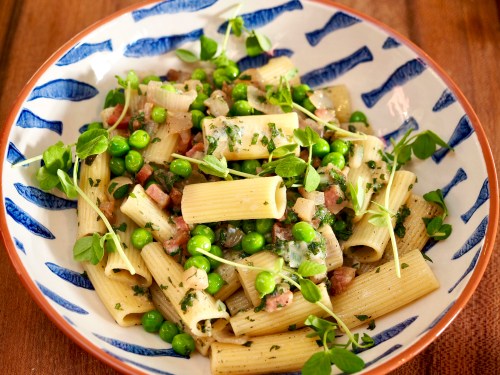
Pasta with Fresh Peas, Guanciale, Mint & Pecorino

We hardly ever buy fresh peas in the pods as they rarely taste as good as frozen peas (must be Birdseye!), frozen the minute they are picked and therefore guaranteed fresh. Of course if you can pick your own that’s a different matter. We took a chance on some peas in their pods in our local veg shop to make this, but if you’re fortunate to be growing them yourself you have no such worries. The pea shoots are a really nice addition if you can find them.

Wine Suggestion: Our choice tonight is a Gavi di Gavi made by Pico Maccario in the Piedmont and the lemony edge to the wine added a nice extra dimension.

Pasta with fresh peas, guanciale, mint & pecorino – serves 2

  • 350g fresh peas, in their pods
  • 80g piece of guanciale (cured pig’s cheek) or smoked pancetta, finely diced
  • 150g dried rigatoni or similar
  • 2 shallots, peeled and roughly chopped
  • ½ a lemon
  • 15g of fresh mint, leaves stripped and finely chopped
  • 30g pecorino cheese, finely grated,  plus extra to serve
  • peas shoots, to serve (optional)

Pod the peas and put the pods in a pot of boiling salted water for 5 minutes, then scoop the pods out and discard (don’t discard the water).

Meanwhile, tip the guanciale into a large cold non-stick frying pan and put over a medium heat to render the fat, tossing often.

Cook the pasta in the pea pod flavoured water according to the timings on the pack.

Add the shallots to the guanciale pan and cook for 5 minutes or until lightly golden. Add the peas and a good splash of water, then finely grate in the lemon zest. Cover and cook gently for 5 minutes, tossing occasionally.

Drain the pasta but reserve a mugful of the cooking water. Tip the pasta into the frying pan, then remove from the heat and toss well. Stir in the mint and pecorino, shaking the pan. Loosen with a little pasta water if needed, then season and serve with extra pecorino, a drizzle of good olive oil, a squeeze of lemon and a few pea shoots.

(Original recipe from Jamie Cooks Italy by Jamie Oliver, Michael Joseph, 2018.)


Read Full Post »

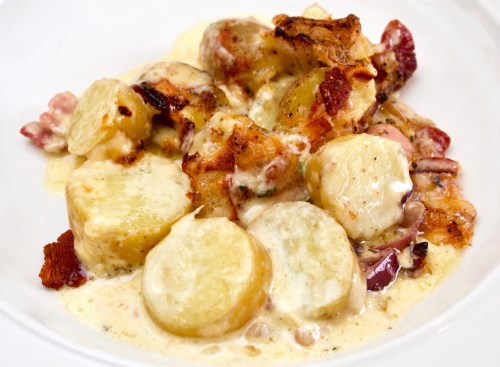
Friday Night Tartiflette

Reblochon season begins in May so it’s time to indulge in a Tartiflette. If you want to try a sophisticated version then we recommend the Chicken Tartiflette we posted this time last year but it does take a bit of time and effort. This one is much quicker and almost as tasty.

Wine Suggestion: We’d suggest an oaked Chardonnay that has a good balance between fruit and texture, but not too tropical or oily. We quite often go for the Rustenberg from Stellenbosch, or one of the Javillier Bourgogne Blancs as we have good access to these and they over-deliver in quality, but there are many other options you could choose.

Tartiflette – serves 4

  • 500g new potatoes, sliced into 1cm thick slices
  • 200g rindless streaky bacon, cut into 2 cm cubes
  • 1 tbsp olive oil
  • 1 red onion, finely sliced
  • 1 clove of garlic, crushed
  • 100g cheddar or gruyere, grated
  • a couple of sprigs of thyme, leaves removed and chopped
  • 200ml cream
  • 200g Reblochon cheese, sliced into thin wedges

Preheat the oven to 220C.

Cook the potato slices in boiling salted water until tender – start checking after 10 minutes, then drain.

Heat the olive oil in a frying pan and fry the bacon bits until light brown and crispy. Remove with a slotted spoon and set aside.

Cook the onion in the bacon fat for a few minutes until softened then add the garlic and cook for another minute.

Spread the cooked potatoes over the bottom of a baking dish. Scatter over the onion and garlic, then the cheddar cheese, thyme and bacon. Pour over the cream, season, and top with the slices of Reblochon.

Bake in the hot oven for 15-20 minute or until browned and bubbling.

Serve with a green salad.


Read Full Post »

dong po rou

Fuscia Dunlop is a true master when it comes to cooking authentic Chinese dishes. This is the first recipe we’ve tried from her gorgeous book, Land of Fish & Rice. The dish is simple to cook and you don’t need too many ingredients. Do buy a decent bottle of Shaoxing Wine, rather than the widely available stuff to cook with. You need a wine of drinking quality for this – we found one very easily in our local Asia market. We served with steamed rice and stir-fried broad beans with spring onion. The pork is very rich so only a small amount per person is needed. Start the dish the day before and you will be able to remove the layer of fat that forms on the top when chilled.

Wine Suggestion: Excellent with grenache. Tonight it was grenache dominant blends from Chateau Pesquié, in the coolest part of the Ventoux but equally as good with a Clare Valley, or similar.

Dongpo Pork – serves 4 with rice

  • 1 x 12cm wide strip of unscored, skin-on, boneless belly pork (about 1kg or 1.3kg with the bone-in)
  • 2 scallions
  • 30g ginger, skin on
  • 4 tbsp caster sugar
  • 5½ tbsp light soy sauce
  • ½ tbsp dark soy sauce
  • 250ml good Shaoxing wine (aged for 5-10 years)

Preheat the oven to 110°C/Fan 90ºC/Gas ¼.

Bring a large pan of water to the boil, add the pork and cook for about 5 minutes. Drain well and rinse under a cold tap, then place, skin-side up, on a chopping board and cut into 5cm squares. Keep any trimmings.

Crush the scallions and ginger with a rolling pin and put into the pan. Add the pork trimmings and arrange the pork chunks, skin-side down, on top. Add the sugar, soy sauces and Shaoxing wine, then bring to the boil. Boil rapidly for 1-2 minutes, then cover and cook gently for 2½ hours in the oven (alternatively cook on a very low hob). Check occasionally and add some hot water if it looks dry.

Remove and discard the ginger and scallions, then leave the pork to cool in the pan and chill overnight. The next day, scrape off the fat form the surface, then reheat, turning the pork skin-side up as soon as the juices have loosened. The sauce should be dark and slightly syrupy, if necessary remove the pork form the pan and fast-boil the sauce to reduce it, then return the pork to the pan. Serve with plain rice.

(Original recipe from Land of Fish & Rice by Fuchsia Dunlop, Bloomsbury, 2016.)

Read Full Post »

cong hua can dou

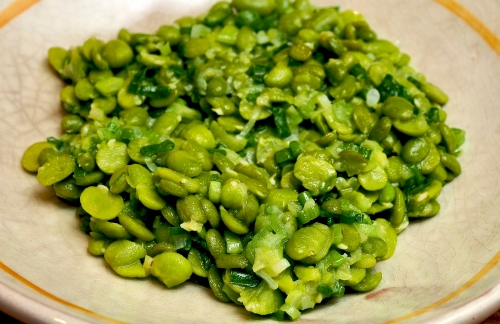
This is a Chinese method for cooking broad beans which is really straightforward and super tasty. If you want to double pod your beans, just blanch for a minute first and the skins will easily pop off. We served this alongside Dongpo pork but it would go equally well alongside a lot of meat dishes.

Stir-fried broad beans with spring onion – serves 3-4

  • 1kg young broad beans in pods or 350g shelled (we used frozen broad beans, defrosted or blanched to remove skins)
  • 1 tbsp cooking oil
  • 2 tbsp thinly sliced scallions, white part only
  • ¾ tsp caster sugar
  • 4 tbsp thinly sliced scallions, green parts only

Heat the oil in a wok over a high heat. Add the scallion whites and stir-fry briefly until fragrant. Add the beans and stir-fry briefly until fragrant. Add the beans and toss in the oil. Add 150ml of water, the sugar, season with salt and bring to the boil. Cover and simmer over a medium heat for a few minutes, until tender – careful they don’t boil dry.

Remove the lid and increase the heat a bit to reduce the liquid. When only a couple of tablespoons of liquid are left, add the scallion greens and stir until fragrant, then serve.

(Original recipe from Land of Fish & Rice by Fuchsia Dunlop, Bloomsbury, 2016.)

Read Full Post »

Chickpea, Paneer, Spinach, & Preserved Lemon Stew

We loved this stew from Sabrina Ghayour’s new veggie book – Bazaar. Full on flavours with tonnes of lemon and dried herbs. Serve with some rice or naan bread on the side.

Wine Suggestion: This works really well with southern Italian whites like a zesty Greco di Tufo with a textural, herbal edge that compliments this superbly, but we can also see a Greek Assyrtiko being equally as good.

Chickpea, paneer, spinach, & preserved lemon stew – serves 4 to 6

  • vegetable oil
  • 2 onions, finely sliced
  • 1 heaped tsp turmeric
  • 2 tbsp dried mint
  • a large garlic bulb, cloves peeled
  • 500g baby spinach
  • 400g tin chickpeas
  • 250ml boiling water
  • 6-8 preserved lemons, halved
  • 225g paneer, cut into 12 cubes
  • Maldon sea salt flakes and freshly ground pepper

Heat a splash of vegetable oil in a large saucepan, then add the onion and cook for 6-8 minutes over a medium heat, or until softened. Add the turmeric and mint and cook for a minute, then add the garlic cloves. Continue to cook for a few minutes to soften the garlic a bit, then stir in the spinach. Cover the pan and cook for a few minutes, or until the spinach has wilted.

Season the pan generously with salt and pepper, then add the chickpeas and boiling water. Reduce the heat to low, partially cover the pan with a lid and simmer for 20 minutes, until the sauce has thickened a bit and doesn’t look too watery.

Adjust the seasoning to taste and stir in the preserved lemons and paneer. Cook for 15 minutes, then serve with naan bread or rice.

(Original recipe from Bazaar by Sabrina Ghayour, Mitchell Beazley, 2019.)

Read Full Post »

Devilled BBQ Chicken

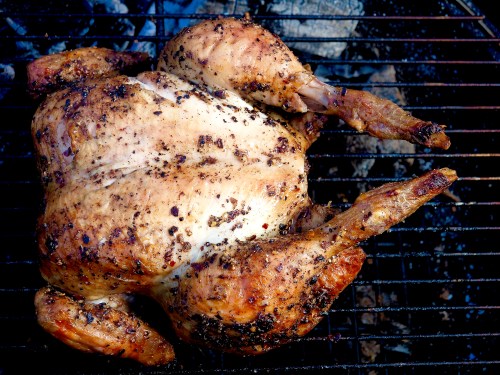
Spatchcocking chicken is a great way to cook chicken on the barbecue. This works best over indirect heat – using a charcoal barbecue you need to push the hot coals to the sides rather than directly underneath the chicken. It’s all too easy to undercook chicken on a barbecue so we recommend using a meat thermometer if you have one – the chicken should get to at least 57-60C in the centre of the breasts.  Serve with salad and chips or jacket potatoes.

Wine Suggestion: We’d suggest a juicy, lighter bodied red for this dish and a youthful Beaujolais cru came to hand, the Rochette Morgon Cote du Py which had both depth and joyfully youthful freshness; a good balance to the peppery warmth and BBQ charring.

Devilled Grilled Chicken – serves 4

  • 1 x 1.5kg free-range chicken
  • 1 tbsp black peppercorns
  • 1 tsp crushed dried chillies
  • 175ml olive oil
  • juice of ½ a lemon
  • 2 garlic cloves, crushed
  • lemon wedges, to serve

Ask your butcher to spatchcock the chicken for you or alternatively put it onto a chopping board, bread-side down, and cut along either side of the backbone with kitchen scissors. Open the chicken, turn it over and press down hard on the breastbone so it lies flat.

Coarsely crush the peppercorns in a mortar and pestle. Add the chilli flakes and crush a little more.

For the marinade, mix the olive oil with the lemon juice, garlic and ½ tsp of salt. Put the chicken into a shallow dish or tray and pour over half the marinade. Turn the chicken over a couple of times to coat it and finish with the skin-side up. Sprinkle with three-quarters fo the pepper and chilli mixture, then cover with clingfilm and leave to marinate for at least 1 hour.

Light your barbecue about 40 minutes before you want to start cooking and rearrange the coals for indirect cooking (see introduction).

Mix the remaining pepper and chilli mixture into the reserved marinade and use this to baste the chicken as it cooks.

Remove the chicken from the marinade and season on both sides with sea salt. Discard the marinade left in the dish.

Put the chicken carcass-side down onto the barbecue and cook for 15-20 minutes, basting with a little of the leftover marinade occasionally. Turn the chicken over and cook for another 15-20 minutes and continue to baste. Keep working like this until the chicken is cooked through and the skin is crispy (ideally use a meat thermometer and test the breast until it reaches 57-60C). It will. probably take 15 minutes per 450g plus 20 minutes, but this is really dependant on the BBQ on the day

Heat through the remaining basting mixture and pour off the excess oil.

Carve the chicken into pieces and serve with the basting mixture and lemon wedges.

(Original recipe from Rick Stein’s Mediterranean Escapes, BBC Books, 2007.)


Read Full Post »

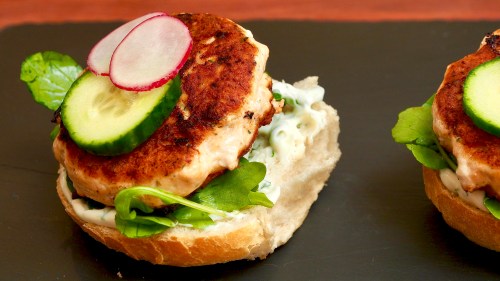
Salmon & horseradish burgers

These are great for a Friday night supper or weekend lunch. Really light & tasty.

Wine Suggestion: Chateau Pesquié make a lovely, fresh Chardonnay in the Ventoux. It helps that it’s the coolest part of the southern Rhône as it tastes lovely and fresh like a good Maçon Chardonnay. Refreshing, unoaked and easy; perfect for a Friday after a long week at work.

Salmon & horseradish burgers – serves 4

  • 4 skinless salmon fillets (about 500g)
  • 1 tbsp creamed horseradish
  • zest of 1 lemon & 2 tsp juice
  • small handful of dill, chopped
  • 1 tbsp vegetable oil
  • 4 tbsp mayonnaise
  • 4 crusty rolls, split
  • 85g watercress
  • 25g cucumber, sliced
  • 4 radishes, thinly sliced

Put the salmon, horseradish, lemon zest and half the dill in a food processor, season and whizz to a fine paste.

Shape the mixture into 4 burgers. Heat the oil in a large frying pan and cook the burgers for 4 minutes on each side or until golden.

Meanwhile, mix the rest of the dill with the mayonnaise and spread some onto the base of the rolls. Toss the watercress with the lemon juice and put a handful on top of each roll base. Top with a burger and garnish with slices of cucumber and radish.

(Original recipe from BBC Good Food)

Read Full Post »

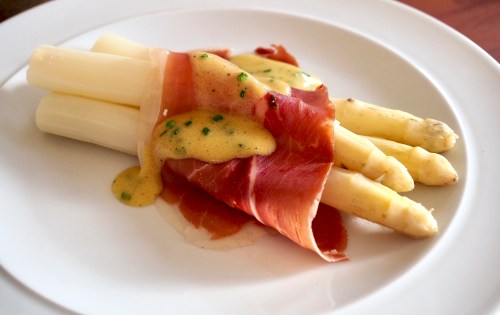
White aspargus with serrano ham and chive dressing

We adore this stuff. A piece of salty ham and mustardy dressing are all that’s needed for a delicious starter or light lunch.

Wine Suggestion: given the ham and mustard dressing we chose a bottle of Dönnhoff Liestenberg Riesling Kabinett which was superb. It had a vibrancy and freshness to match the salty fatiness of the ham and the tangy dressing.

White asparagus with serrano ham and chive dressing – serves 4

  • 16 fat white asparagus spears
  • 4 slices serrano ham

FOR THE DRESSING:

  • 1 tbsp lemon juice
  • 2 tbsp Dijon mustard
  • 1 tsp clear honey
  • 3 tbsp walnut or hazelnut oil
  • 1 tbsp snipped chives

Trim the asparagus and peel the stems with a potato peeler. Boil in salted water for 12-15 mins until the spears are tender, then drain well.

Whisk together the lemon juice, mustard and honey with some salt and pepper. Whisk in the oil, then stir in the chives just before serving.

Divide the warm or cold asparagus between 4 plates. Lay the ham on top and drizzle over the dressing.

(Original recipe from BBC Good Food)


Read Full Post »

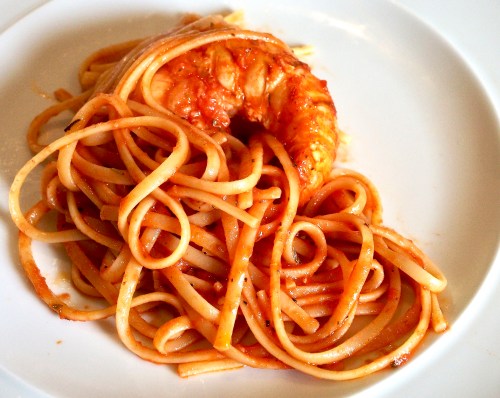
Lobster & Pasta

This is inspired by a Rick Stein recipe in his Mediterranean Escapes book called Lobster & Pasta Chez Jen Jen from Corsica. We cooked this on a weeknight and cheated a bit with the lobster by using frozen lobster tails. We thought you could use raw prawns to good effect too.

Wine Suggestion: We made this on a celebratory evening so pushed the boat out with the wine and had the best English Sparkling we’ve tasted to date: the Dermot Sugrue “The Trouble with Dreams” from Sussex. It had a driving purity and vibrancy that makes it feel alive. For years we often compared English sparkling to Champagne without recognising it to have a unique character and with this wine we fully realised this.

Lobster & Spaghetti – serves 2

  • 2 x frozen lobster tails
  • 200g spaghetti
  • 100ml extra virgin olive oil
  • a garlic clove, finely chopped
  • ¼ tsp curry powder
  • 20ml Cognac
  • 50ml dry white wine
  • 200ml passata
  • 1 tsp dried herbes de Provence
  • salt and cayenne pepper

Defrost the lobster tails by putting them into a deep bowl of cold water and leaving for 30 minutes. You’ll know they are defrosted when they feel a bit flexible.

Bring a large pan of water to the boil and gently lower in the lobster tails. Cook for 3½ minutes, then scoop out with a spoon. Leave to cool slightly, then slice into the soft side to check that the meat is white and therefore cooked through. If it looks grey you need to return to the water again until cooked.

Carefully cut down the soft side of the lobster tails and remove flesh from the shell in one piece, it should come away very easily.

Cook the spaghetti in a large pan of very salty water according to the timings on the pack.

Meanwhile, heat the olive oil in a large frying pan with the curry powder and garlic. When the garlic starts to sizzle, add the lobster, flesh-side down. Pour over the Cognac and flambé to burn off the alcohol. Add the white wine, passata, and herbes de Provence, then cover and simmer for 5 minutes or until the lobster is heated through.

Drain the spaghetti. Lift the lobster tails out of the pan and onto warm plates. Season the sauce to taste with salt and cayenne pepper, add the spaghetti and toss well with the sauce. Spoon alongside the lobster and serve.

(Original recipe from Rick Stein’s Mediterranean Escapes, BBC Books, 2007.)

Read Full Post »

Wild Garlic Mash

Wild garlic has a short season in April and most years we make all kinds of things with it. This April we only managed some mashed potato – but very delicious mashed potato it was!

Wild Garlic Mash- serves 2 generously

  • 700g floury potatoes
  • 25-50g butter
  • 25g wild garlic, roughly chopped
  • 100ml double cream

Peel the potatoes and cut into same-sized chunks. Boil until completely tender.

Dry the potatoes off in the hot pan, then mash until smooth.

Meanwhile, melt a generous slab of butter in a small frying pan. Add the wild garlic and cook for a minute or two until softened. Pour the melted butter and wild garlic into the mashed potatoes.

Pour the cream into the same frying pan and bring to a bubble, then pour into the potatoes. Season well with salt and freshly ground white pepper, then beat the mash with a wooden spoon until smooth and fluffy.


Read Full Post »