Feeds:
Posts
Comments

Archive for the ‘Fish’ Category

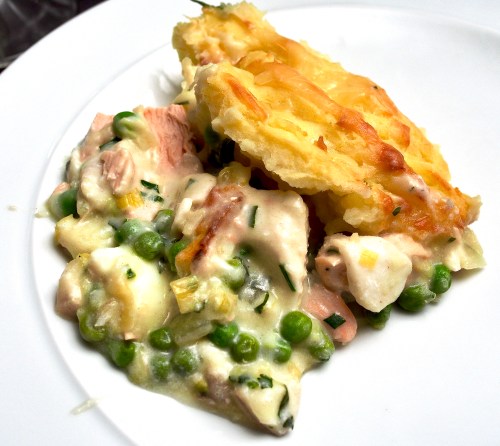
Fish Pie

Fish Pie

This is an excellent fish pie recipe by Marcus Waring. It makes a generous portion so great for feeding a crowd or you can divide it between two dishes and freeze some for later.

Wine Suggestion: A full-bodied Chardonnay is our choice for rich fish pies. Tonight it was Domaine Labet’s “en Billat” an ancient vine, jurassic soiled classic we are fortunate to have a few bottles of from holidays last year. Think of a majestic white Burgundy with altitude, and a concentration that 100 + year old vines can achieve.

Fish Pie – serves 6, generously

  • 1kg fish fillets (a mix of salmon & cod/haddock), skinned
  • 600-800ml whole milk
  • 2 bay leaves
  • 75g butter
  • 1 small onion, diced
  • 1 leek, white part only, sliced
  • 50g plain flour
  • 100ml white wine or white vermouth if you have it
  • 2 tbsp crème fraîche
  • 150g frozen peas, defrosted
  • 300g raw tiger prawns, shelled
  • 2 tbsp chopped flat-leaf parsley
  • 3 hard-boiled eggs, peeled and cut into chunky pieces
  • 2 tbsp capers, rinsed

FOR THE TOPPING:

  • 1.2kg potatoes, cut into chunks
  • 50g butter
  • splash of milk
  • 100g grated Cheddar cheese

Remove any bones from the fish with tweezers, then put into a large pan and pour in enough milk to cover. Add the bay leaves and some salt and pepper. Gently bring to the boil over a medium heat, then simmer for 5 minutes or until just cooked. Remove from the heat.

Melt a third of the butter in a large saucepan. Add the leeks and onion and cook gently until softened. Remove the leeks and onions from the pan and set aside. Melt the rest of the butter in the same pan and when it bubbles stir in the flour and cook for about 30 seconds, then add the wine or vermouth and stir to form a thick paste. Tip the leeks and onions back into the pan.

Strain the milk from the fish fillets into a measuring jug. Gradually add about 600ml of the milk to the leek mixture, stirring until the sauce bubbles and coats the back of a spoon. Stir in the crème fraîche and season again.

Flake the fish into chunky pieces and gently fold through the sauce along with the peas, prawns and parsley.

Spoon the mixture into a large ovenproof dish. Scatter the eggs and capers evenly over the top.

Preheat the oven to 200C/180fan/gas 6.

To make the topping, put the potatoes into a large saucepan, cover with water,  add a generous pinch of salt, and bring to the boil. Simmer for 15-20 minutes or until cooked through. Drain the potatoes and mash with the butter and enough milk to make a spreadable mash. Season.

Spread the potato over the fish and sprinkle with the grated cheese.

Bake for 20-30 minutes or until the top is golden and the sauce is bubbling.

(Original recipe from Marcus At Home by Marcus Wareing, HarperCollinsPublishers, 2016.)

Read Full Post »

Smoked Haddock & Hollandaise Bake with Dill & Caper Fried Potatoes

We love hollandaise but very rarely make it. This is going to change now we know how to do this cheat’s version. It can be adapted very easily for Béarnaise sauce for steak by adding some fresh tarragon. It’s a revelation!

Wine Suggestion: matching milder haddock and the creamy hollandaise requires a delicate touch and we’d suggest a white with a touch of oak, but not too much. The easiest choice is a Chardonnay which we duly went for; a Château de Beauregard Saint-Véran. Medium bodied, this is made partially in stainless steel and the other half in oak and has a lovely apple, citrus and brioche flavour and a mineral freshness to balance.

Smoked haddock & hollandaise bake with dill & caper fried potatoes – serves 2

  • 150g baby spinach
  • 2 x 140g smoked haddock fillets (boycott the artificially dyed orange stuff)

FOR THE SAUCE:

  • 2 egg yolks
  • 1 tsp cornflour
  • 100ml double cream, plus a bit extra in case you need to rescue the hollandaise
  • 2 tsp white wine vinegar

FOR THE POTATOES:

  • 500g floury potatoes, peeled and chopped into 3cm chunks
  • knob of butter
  • 1 tbsp rapeseed oil, plus a bit extra
  • 2 shallots, peeled and finely sliced
  • 1 tbsp capers, drained
  • small handful of dill, leaves picked
  • 1 lemon, zested, then cut into wedges to serve

Put the potatoes into a pot and cover with cold water. Bring to the boil, then season with salt, cover with a lid, and simmer for 7-8 minutes or until tender but not falling apart. Drain and leave in the pot to steam dry.

Meanwhile, heat the oil and butter in a frying pan. Add the shallots and fry for 5 minutes or until soft. Add the potatoes and fry for 15 minutes or until crusty and browned.

To make the hollandaise you need to put the egg yolks into a bowl and whisk in the cornflour until smooth. Add the cream and the vinegar, and season well. Pour the sauce into a small saucepan and cook over a very low heat, whisking continuously, until it resembles a hollandaise sauce (like thin custard). If the sauce looks like it’s going to split or it’s getting too hot, just add another splash of cream and keep whisking. Check the seasoning and add a bit more salt or vinegar if needed.

Heat the grill to medium-high.

Heat a splash of oil in an ovenproof frying pan. Add the spinach and stir until just wilted, season with salt and black pepper. Turn the heat off and spread the spinach across the base of the frying pan. Lay the haddock fillets on top of the spinach, then pour over the hollandaise sauce. Put the pan under the grill for about 10 minutes or until the fish is cooked (it should flake easily) and the sauce is browned.

Toss the capers, dill and lemon zest over the cooked potatoes. Serve the potatoes with the fish and put the lemon wedges on the plates to squeeze over.

(Original recipe from BBC Good Food)

Read Full Post »

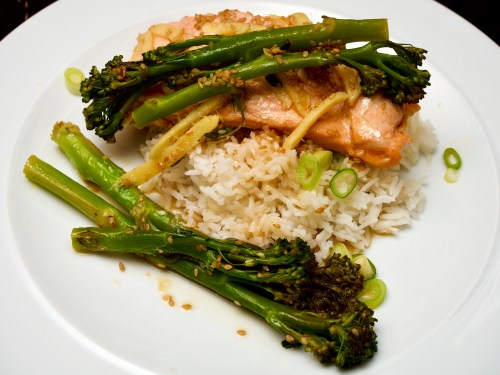
Baked salmon parcels with ginger, soy, honey, toasted sesame seeds & broccoli

We love a simple salmon recipe and this one, by Neven Maguire, is particularly handy as it’s all cooked in a tidy parcel in the oven. Serve with steamed rice with a some scallions sprinkled over.

Wine suggestion: delicious with a good, dry Riesling like Weingut Korrell’s Slice of Paradise from the Nahe in Germany which has a delicate dance of fruit, aromatics and a wonderful core of bright acidity and texture.

Soy and honey salmon parcels with tenderstem broccoli – serves 4

  • 2 tbsp toasted sesame seeds (just toast them gently in a dry frying pan)
  • 2 tbsp light soy sauce
  • 2 tbsp clear honey
  • juice of a lime
  • 1 garlic clove, crushed
  • rapeseed oil, for brushing
  • 4 x 100g salmon fillets, skin and bones removed
  • 250g tenderstem broccoli, trimmed
  • 2.5cm piece of ginger, peeled and cut into matchsticks
  • steamed basmati rice, to serve
  • finely chopped scallions, to serve

Preheat the oven to 200C/400F/Gas 6.

Whisk the sesame seeds, soy sauce, honey, lime juice and garlic together in a bowl, then set aside.

Cut out 4 squares of tin foil about 50cm square. Brush the foil with oil and put a piece of salmon in the middle of each one.

Blanch the broccoli for a minute, then drain and refresh in iced water.

Sprinkle the ginger over the salmon, then divide the broccoli between each parcel. Spoon over the soy sauce mixture and drizzle each piece of fish with about ½ tsp of oil. Fold the edges of the foil together to seal and place them on a baking tray.

Cook the parcels in the oven for 10 minutes or until the salmon is just cooked. You can leave it for a bit longer if you prefer your salmon well done but we wouldn’t recommend it.

Serve the parcels with a large bowl of rice sprinkled with the scallions.

(Original recipe from Neven Maguire’s Complete Family Cookbook, Gill Books, 2016.)

Read Full Post »

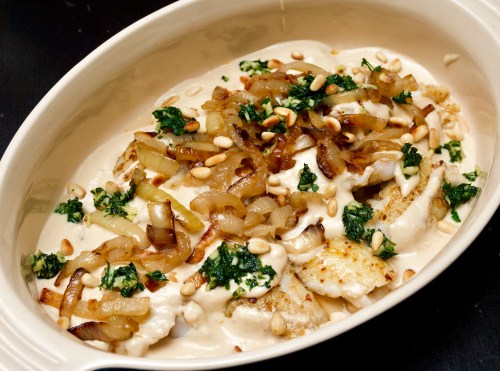
Fish in Tahini (Samak bi Tahina)

There is a recipe for fish in tahini sauce in almost every Middle Eastern cookbook, and for good reason. The caramelised onions really complement the slightly sour tahini sauce. Serve with rice and salad.

Wine Suggestion: Not having had tahini with fish before we weren’t sure what to open, so went with our classic standby for seafood – Muscadet. The Domaine de la Chauviniere worked a treat and we would highly recommend this as a match.

Fish in Tahini (Samak bi Tahina) – serves 2

For the fish:

  • ½ tsp ground cumin
  • ¼ tsp ground Aleppo pepper
  • ½ tsp salt
  • 1 tsp olive oil
  • 2 fillets of white fish

For the sauce:

  • 80ml tahini
  • 50ml lemon juice
  • 1 garlic clove, crushed
  • salt, to taste
  • 80ml water

For the topping:

  • 2 medium onions, sliced
  • 1 garlic clove, chopped
  • a handful of coriander, chopped
  • vegetable oil, for frying
  • a handful of toasted pine nuts

Mix the spices and oil and rub over the fish, then leave to marinate in the fridge for half an hour.

Caramelise the onions by frying them over a very low heat until soft and browned – about half an hour.

Make the tahini sauce by mixing the tahini, lemon juice, garlic, salt and water in a pan. Don’t worry if it curdles just keep stirring vigorously until it becomes smooth. Warm the sauce over a very low heat.

Heat a splash of oil in a large frying pan and fry the marinated fish for a few minutes on each side, then remove from the heat and place in a warm dish.

Fry the garlic and coriander in a pan with a little oil for a minute.

Pour the warm tahini sauce over the fish, then sprinkle over the onions, followed by the coriander, garlic and pine nuts. Serve with bulgar wheat or rice and a salad or vegetables if you like.

(Original recipe from Syria: Recipes from Home by Itab Azzam and Dina Mousawi, Trapeze, 2017.)

Read Full Post »


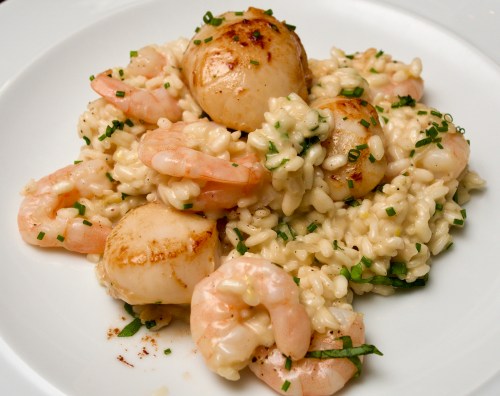
Scallop & prawn risotto

We brought in the new decade with this fabulous scallop and prawn risotto. Couldn’t be simpler to make but tastes really special. Scallops aren’t cheap but you only need a few for this and they are totally worth it.

Wine Suggestion: A special occasion with a special person requires a special wine. Made by the brilliant Dermot Sugrue, his Cuvée Dr Brendan O’Regan is multilayered, multidimensional and complex. To be honest this is the best English Sparkling we’ve tasted and it has a great roundness and weight alongside it’s natural freshness which allowed us to start with seaside, fresh oysters and then segue to a much richer risotto without breaking a sweat.

Scallop & Prawn Risotto – serves 4

  • 100g butter, plus a bit extra
  • 2 shallots, finely chopped
  • 450g risotto rice
  • 750ml-1 litre, hot fish or light chicken stock
  • 350-400g raw peeled prawns
  • 1 lemon, zested and juiced
  • 3 tbsp mascarpone
  • 12 scallops, orange roe and side muscles removed
  • a bunch of chives, finely chopped
  • a small bunch of basil, chopped

Melt the butter in a large heavy-based pan and gently cook the shallot until soft but not coloured. Add the rice and stir until the grains are coated in butter.

Gradually add the hot stock, stirring all the time, until the rice is just tender – about 20 minutes. Add the prawns when the rice is cooked but al dente, then season and add the lemon zest and juice. Turn the prawns until they have turned pink all over, then add the mascarpone and gently fold in.

Allow the risotto to rest for 5 minutes while you fry the scallops for a minute on each side in a knob of butter in a frying pan. Add these to the risotto and sprinkle with the herbs.

(Original recipe by Lulu Grimes in Olive Magazine, December 2015.)

Read Full Post »

Carrot & Ginger mash with pan fried codSo, this is a full-on diet dish, but the carrot and ginger mash is spectacular and we couldn’t recommend it highly enough for nights when you need some restraint. We are a greedy household and require restraint on a regular basis – no wine for us tonight!
Carrot & Ginger Mash with Pan-fried Cod – serves 2

  • 2 large carrots (about 300g), thickly sliced
  • 1 garlic clove, peeled
  • 15g fresh root ginger, peeled
  • 15g butter
  • ½ tbsp fresh lemon juice
  • 2 thick, skinless cod fillets
  • 1 tbsp olive oil
  • dried chilli flakes

Put the carrots, garlic & ginger in a medium saucepan and cover with water. Bring to the boil then simmer for 15 minutes or until soft.

Take the pan off the heat, reserve a ladle of the cooking water, then drain. Return the carrot mixture to the pan and add 3 tbsp of the reserved cooking water, the butter, and the lemon juice. Whizz the carrots to a purée with a stick blender, adding a bit more of the water if needed. Season with salt and black pepper.

Season the cod with sea salt and black pepper. Heat the oil in a non-stick frying pan over a medium heat. Fry the cod for about 4 minutes, then turn, sprinkle with a few chilli flakes, and cook on the other side for 3 to 5 minutes, depending on how thick they are.

Spoon the purée onto warm plates and serve with the fish on top and plenty of green veg.

(Original recipe from The Fast 800 Recipe Book by Dr Claire Bailey & Justine Pattison, Short Books, 2019.)


Read Full Post »

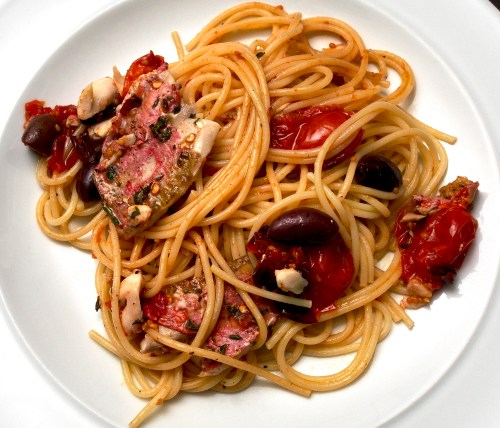
Fish in Spicy Tomato Sauce with Capers and Olives

It seems like so long since we’ve cooked fresh fish, but tonight was the night. We’ve had Rachel Roddy’s book (Two Kitchens: Family Recipes from Sicily and Rome) for ages now but this has been its first outing (for reasons that we won’t bore you with here). This dish was everything we hoped for – quick for a Friday night but absolutely packed with all the flavours that this family loves. We served with couscous but rice or bread are also suggested. Well done Rachel!

Wine Suggestion: we were seduced by the Sicilian white, the Gulfi Carjcanti, a blend of Carricante and the ancient Albanello. Lively and herbal alongside a salty sapiness in the flavour making this a great wine to pair with seafood, let alone the olives, capers and tomatoes in this dish.

Fish in spicy tomato sauce with capers and olives (Pesce all ghiotta) – serves 4

  • 1 onion, finely diced
  • 2 celery sticks, remove the strings and finely dice
  • 100ml extra-virgin olive oil
  • 500g fresh tomatoes, or tinned plum tomatoes drained of the juice
  • 1 tsp sugar (optional but sometimes good if using tinned tomatoes)
  • a pinch of red chilli flakes
  • 50g salted capers, rinsed
  • 60g olives – we used a mixture of green and black
  • 4 fish fillets (cod, bream or hake – we used hake), about 120g each
  • 1 heaped tbsp of chopped flat-leaf parsley

Take your fish out of the fridge and season it with a little salt.

Gently fry the onions in a deep frying pan, large enough to fit the hake fillets in a single layer later, until soft and translucent.

Add the celery and cook for a few minutes, then add the tomatoes and chilli and simmer gently for 10 minutes.

Add the capers and olives and simmer for another couple of minutes.

Take the pan off the heat, make a space in the sauce and arrange the fish fillets, skin-side down, in a single layer, then spoon over some of the sauce. Put the pan back over a low heat and simmer very gently, spooning more sauce over occasionally, until the fish is cooked through – watch carefully as it shouldn’t take too long. Sprinkle with the parsley and serve.

(Original recipe from ‘Two Kitchens – Family Recipes from Sicily and Rome’ by Rachel Roddy, HEADLINE HOME, 2017)


Read Full Post »

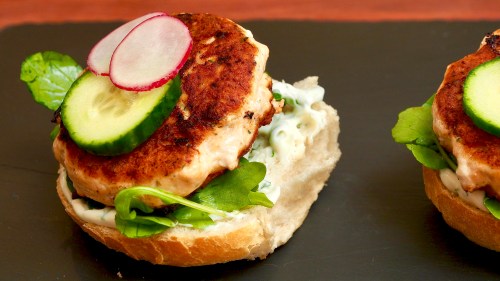
Salmon & horseradish burgers

These are great for a Friday night supper or weekend lunch. Really light & tasty.

Wine Suggestion: Chateau Pesquié make a lovely, fresh Chardonnay in the Ventoux. It helps that it’s the coolest part of the southern Rhône as it tastes lovely and fresh like a good Maçon Chardonnay. Refreshing, unoaked and easy; perfect for a Friday after a long week at work.

Salmon & horseradish burgers – serves 4

  • 4 skinless salmon fillets (about 500g)
  • 1 tbsp creamed horseradish
  • zest of 1 lemon & 2 tsp juice
  • small handful of dill, chopped
  • 1 tbsp vegetable oil
  • 4 tbsp mayonnaise
  • 4 crusty rolls, split
  • 85g watercress
  • 25g cucumber, sliced
  • 4 radishes, thinly sliced

Put the salmon, horseradish, lemon zest and half the dill in a food processor, season and whizz to a fine paste.

Shape the mixture into 4 burgers. Heat the oil in a large frying pan and cook the burgers for 4 minutes on each side or until golden.

Meanwhile, mix the rest of the dill with the mayonnaise and spread some onto the base of the rolls. Toss the watercress with the lemon juice and put a handful on top of each roll base. Top with a burger and garnish with slices of cucumber and radish.

(Original recipe from BBC Good Food)

Read Full Post »

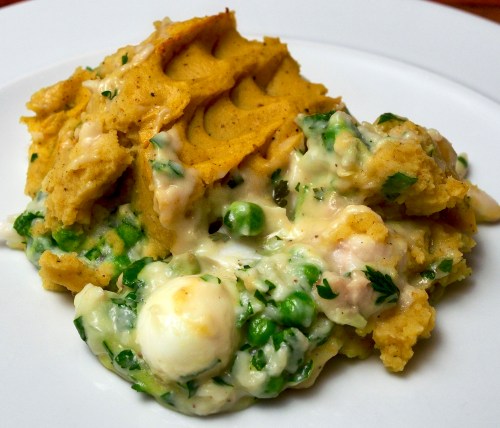
Kedgeree Fish Pie

This spicy fish pie makes a nice change from the traditional version. There’s a few processes but it can all be assembled ahead of time and baked when needed.

Wine Suggestion: Open a white with a bit of backbone and depth but not too much acidity; a Chardonnay or similar is our suggestion. Tonight we opened Domaine Rochette’s Beaujolais Blanc, a Chardonnay  from an area more famously known for its reds.

Kedgeree Fish Pie – serves 6

  • 12 quail’s eggs
  • 400g tin light coconut milk
  • 400ml whole milk
  • ½ small pack coriander, leaves chopped, stalks left whole
  • ½ small pack parsley, leaves chopped, stalks left whole
  • 350g skinless smoked haddock fillet, cut into 2-3cm cubes
  • 350g white fish e.g. cod or haddock, cut into 2-3cm cubes
  • 85g butter
  • 1 large onion, finely chopped
  • 85g plain flour
  • zest and juice of 1 lemon
  • 200g fresh or frozen peas

FOR THE MASH

  • 1.4kg floury potatoes, cut into large chunks
  • 2 tsp turmeric
  • 25g butter
  • 2 tbsp mild curry powder
  • 300ml milk

Bring a large pot of water to the boil and add the potatoes and turmeric. Simmer until tender, then drain well and dry over a low heat. Meanwhile, melt the butter for the mash in a small pan. Add the curry powder and cook for a couple of minutes. Stir in the milk and warm through. Mash the potatoes until smooth, then stir in the curried milk. Season well and set aside.

Bring a medium pan of water to the boil. Add the quail’s eggs and boil for 3 minutes, then plunge into a bowl of cold water to cool quickly, then peel carefully.

Mix the coconut milk and whole milk in a frying pan with the coriander stalks and parsley stalks. Heat until just coming to a simmer, then add the fish, cover and cook gently for 5-8 minutes or until just cooked. Remove the fish onto a plate and strain the milk into a jug.

Melt the butter in a large frying pan, add the onion and fry gently until soft. Stir in the flour for 2 minutes, then gradually stir in reserved milk to make a smooth sauce. Bring to the boil and simmer for 5 minutes, stirring continuously until thickened. Turn off the heat and stir in the lemon zest and juice, peas and chopped herbs with some seasoning.

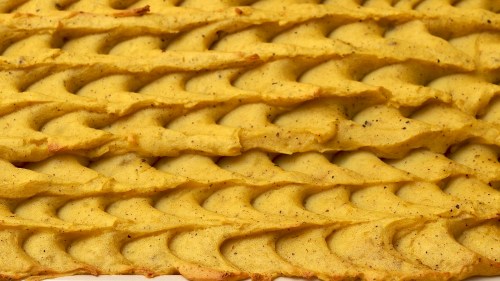
Put the fish and quail’s eggs back into the pan, then tip into an ovenproof dish. Spoon the mash on top. Cover with cling film and chill until ready to cook.

Heat the oven to 200C/180C fan/gas 6 and bake for 30-35 minutes or until golden on top and bubbling underneath.

(Original recipe from BBC Good Food)

Kedgeree Fish Pie topping

Read Full Post »

Confit Salmon with Citrus & Herb Salad

Alison Roman is often featured in the New York Times and her recipes have a huge following – check out #alisonroman on Instagram. Jono was gifted a copy of her fabulous cookbook, Dining In, and it has now been released in the UK. We suggest you order a copy and in the meantime try her excellent method for cooking salmon. You’ll find the salmon almost impossible to overcook and it ends up meltingly tender.

Wine Suggestion: We think that a fresh white works best and we’d suggest either a Verdicchio or a white Bordeaux made from Semillon & Sauvignon blanc both of which have fresh acidity and texture but won’t overwhelm the melt in the mouth flavours.

Slow Salmon with Citrus & Herb Salad – serves 4 to 6

  • 700g piece of skinless salmon
  • 2 lemons, thinly sliced
  • 1 blood orange or regular orange, thinly sliced
  • 6 sprigs of thyme, rosemary, oregano or marjoram (optional)
  • 375ml olive oil
  • a large bunch of parsley, coriander, dill and tarragon, leaves picked
  • 1 tbsp lemon juice

Preheat the oven to 150C.

Season the salmon with salt and black pepper on both sides and place in a large baking dish with the lemons, oranges and herb sprigs (if using).

Drizzle the olive oil over everything and cook in the oven for 20-25 minutes or until almost cooked through.

Toss the herbs with the lemon juice and some sea salt flakes and serve with the salmon.

(Original recipe from Dining In by Alison Roman, Clarkson Potter, 2017.)

Read Full Post »

Smoked Salmon, Horseradish & Dill Crostini

Do try this. It looks like regular smoked salmon crostini but the balance of ingredients is perfect, including the rather generous portion of salmon per toast. Don’t be tempted to scrimp on either quantity or quality!

Wine Suggestion: excellent with sparkling – your choice of Crémant, Champagne, or your local version. Just make sure that it a fresh, more acidic style … Prosecco need not apply as it doesn’t have enough zing for this. Tonight the Soalheiro Espumante, a sparkling made from alvarinho in northern Portugal and wonderfully citrus, vibrant and refreshing.

Smoked salmon, horseradish & dill crostini – makes 20 crostini

  • 250g crème fraîche
  • 2 tbsp Dijon mustard
  • about 3 tbsp freshly grated horseradish
  • pinch of caster sugar (optional)
  • 1 French stick, cut into discs and lightly toasted
  • 500g thinly sliced top quality smoked salmon
  • 20 dill sprigs
  • lemon juice

Make the horseradish cream by mixing together the crème fraîche, mustard and horseradish. Season with salt and pepper and add a little sugar if it tastes tart.

Put a generous slice of salmon in each piece of toast and top with a spoonful of horseradish cream. Decorate with a sprig of dill. Add a few drops of lemon juice and some black pepper before serving.

(Original recipe from Polpo: A Venetian Cookbook (of sorts) by Russell Norman, Bloomsbury, 2012.)

Read Full Post »

Syrian Spiced Fish

This Syrian fish dish is bursting with delicious herbs and spices. We loved it! Really great with spinach & sumac and spicy potatoes. One of the best meals we’ve had in ages!

Wine Suggestion: Our choice tonight was the Rustenberg Five Soldiers Chardonnay which had power and complexity but also elegance and a beautiful, supple balance so it finished light and persistent. An excellent wine well worth seeking out and a great match for this dish.

Spiced Fish (Samaka Harra) – serves 2

  • 6 garlic cloves, chopped
  • 2 red chillies, finely chopped
  • ½ tsp ground cumin
  • 40g walnuts chopped
  • 2 tbsp olive oil, plus extra
  • 2 whole fish e.g. sea bream or snapper (we used bass)
  • a bunch of fresh coriander, roughly chopped, including stems
  • 1 lemon, plus ½ a lemon, sliced

Heat the oven to 180C/350F/Gas 4.

Mix the garlic, chillies, cumin, walnuts and 2 tbsp of olive oil, salt and pepper.

Stuff the fish with the mixture, keeping 2 tbsp aside for later, then add a handful of coriander, saving some to garnish.

Squeeze the lemon over both fish, then drizzle with olive oil and season with salt and pepper. Marinate in the fridge for a good half hour.

Put the fish into a large oven tray with the reserved stuffing sprinkled over the top and some lemon slices, then bake for 30 minutes.

(Original recipe from Syria: Recipes from Home by Itab Azzam and Dina Mousawi, Trapeze, 2017.)

Read Full Post »

Valentines baked potatoes with caviar

This was our Valentine’s dinner and very special it was too!

Wine Suggestion: it’s any excuse for bubbly in our house and it makes a natural pair for this dish too. Our choice was the Domaine de la Paleine Cremant de Loire, a blend of Chardonnay and Chenin Blanc that celebrated the saltiness of the caviar and went seamlessly with the creamy potatoes.

Baked potatoes with crème fraîche and trout caviar – serves 4

  • 4 small baking potatoes
  • 1 ½ tbsp rapeseed or olive oil
  • sea salt flakes
  • 2 tbsp chopped flat-leaf parsley
  • 200ml crème fraîche
  • 40g trout caviar

Heat the oven to 200C/Fan 180C/Gas 6.

Drizzle the potatoes with ½ tbsp of the oil and a good pinch of salt and toss well. Put onto a baking tray and bake for 45 minutes.

When the potatoes are cool enough to handle, cut them in half lengthways and scoop the flesh out into a bowl, careful not to damage the shells. Mash the potatoes, then stir in the parsley, 120ml of the crème fraîche and seasoning. Brush the potato skins with the remaining oil, then spoon the potato mixture back into them.

Bake for 15 minutes or until heated through and crispy on the outside. Spoon the remaining crème fraîche on top, followed by a spoon of caviar and some black pepper.

(Original recipe by Clodagh McKenna in Olive Magazine, February 2019.)

Read Full Post »

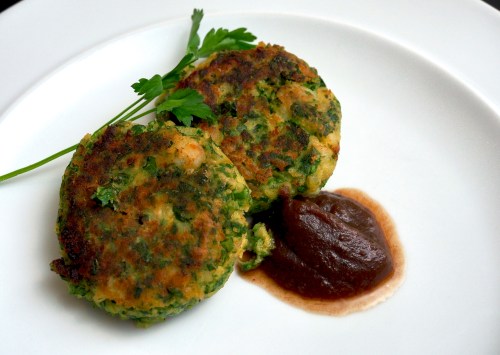
Bandari fishcakes

These Persian fishcakes are full of herbs and make a delicious starter or light lunch. They can be made up in advance and cooked when you need them.

Wine Suggestion: the only option here is a youthful, light, off-dry Riesling where the aromatics, herbs, date and tamarind all play with each other. Tonight we drank the Dr Loosen Estate Riesling, his entry level wine made with his own fruit in the Mosel and it was an excellent match. Along with the Mosel we’d recommend the fruity styles (Kabinett & Spätlese) from other German regions such as the Nahe and Rheingau. Further afield the Aussie Rieslings tend to be too dry for a dish like this but there are some excellent NZ examples, Forrest Estate and Felton Rd spring to mind.

Bandari fishcakes with a tamarind and date sauce (Kuku-ye mahi) – serves 4

  • 300g potatoes, peeled and roughly diced
  • 200g white fish fillets e.g. cod/haddock
  • ¼ tsp cumin seeds
  • 50g coriander, finely chopped
  • 25g parsley, finely chopped – plus extra to garnish
  • 1 tsp dried fenugreek leaf (menthi)
  • 2 garlic cloves, crushed
  • a pinch of cayenne pepper
  • ¼ tsp turmeric
  • zest of ½ lemon
  • 1 medium egg
  • plain flour, for dusting
  • 3 tbsp sunflower or olive oil

FOR THE TAMARIND & DATE SAUCE:

  • 50g tamarind pulp soaked in 100ml just boiled water for 10 minutes
  • 75g Iranian or Medjool dates, pitted and roughly chopped
  • 1 tbsp light brown sugar
  • a pinch of cayenne pepper
  • a pinch of cinnamon
  • 150ml hot water

Put the potatoes into a large pan and cover with cold water. Add a generous pinch of salt and bring to the boil, then simmer until tender. Drain, mash the potatoes, and put into a large mixing bowl.

Add the fish to the potatoes. Dry fry the cumin seeds in a small frying pan for a minute or until fragrant. Grind the seeds with a pestle and mortar, then add to the bowl along with the fresh herbs, fenugreek leaf, garlic, cayenne, turmeric, lemon zest, egg, 1¼ tsp of salt and ¼ tsp of pepper.

Mix well with your hands, then shape into eight round patties. Dust with a little flour and place on a plate, cover with cling film and chill.

To make the sauce, put the tamarind and its soaking liquid, the dates, brown sugar, cayenne, cinnamon and a pinch of salt in a small saucepan. Add the hot water and cook for 10 minutes over a low heat until the dates are very soft.

Take the sauce off the heat and sieve into a bowl, use the back of a spoon to rub as much through as possible.

To finish the fishcakes, heat the oil in a frying pan and cook the cakes on a medium-high heat for 6-8 minutes, turning every few minutes, until golden brown and crusted. Garnish with parsley and serve with the sauce.

(Original recipe from The Saffron Tales by Yasmin Khan, Bloomsbury, 2016.)

Read Full Post »

Smoked Mackerel Loaded Leaves

This is the kind of nibble we like before dinner. Really tasty but light so it won’t spoil your appetite. Radicchio and/or chicory leaves are preferable but if you can’t find these you can substitute Little Gem lettuce – as we did.

Wine Suggestion: Your choice of bubbles, whether it’s Prosecco, Cremant, Cava or Champagne

Smoked Mackerel Loaded Leaves – serves 4-8

  • 200g smoked mackerel fillets, skin removed and flaked
  • 4 tbsp crème fraîche
  • juice and zest of ½ lemon
  • small bunch of chives, snipped
  • small handful of dill, chopped
  • 1 small radicchio, separated into leaves
  • 1-2 chicory heads separated into leaves

Gently mix the mackerel with the crème fraîche, lemon juice, half the herbs and some pepper. Chill until ready to serve.

Spoon generous amounts of the mackerel mixture into each leaf and arrange on a plates or a platter. Sprinkle over the remaining herbs and the lemon zest.

(Original recipe from BBC Good Food)

Read Full Post »

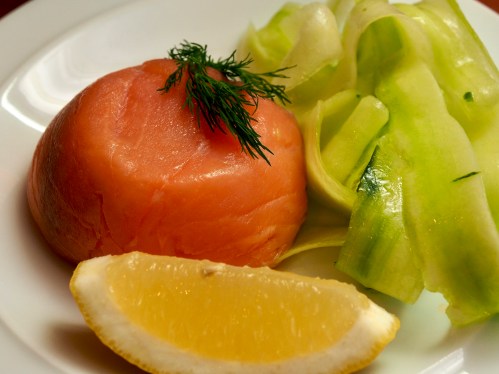
Smoked salmon & crab timbales with cucumber parpadelle

This luxurious starter of smoked salmon timbales filled with creamy crab can be made up to a day ahead. You do need to find big slices of smoked salmon as you need to completely line the moulds to stop the filling leaking out.

Wine Suggestion: as befits the occasion these go great with bubbly. We love good Champagne, but have recently been sampling various Cremants from around France and enjoying the variation and character each brings. With this we served the Manciat Poncet Cremant de Bourgogne which our friend brought along to dinner.

Smoked salmon timbales with cucumber pappardelle – serves 8

  • 12 large slices of smoked salmon
  • 225g full-fat soft cheese
  • 100-150ml sour cream
  • 100g white crab meat
  • 2 tsp chopped fresh dill, plus some sprigs to garnish
  • lemon wedges, to garnish

FOR THE CUCUMBER PAPPARDELLE:

  • 1 tbsp caster sugar
  • finely grated zest and juice of 1 lemon
  • 150ml olive oil
  • a few black peppercorns
  • 1-2 tsp white wine vinegar
  • 1 large cucumber peeled

Line eight 100ml ramekins with the smoked salmon making sure there are not gaps and hanging it well over the sides.

Beat the cheese to soften and mix in 100ml soured cream – loosen with a little more cream if still too firm to spoon.

Pick over the crab and remove any tiny bits of shell. Stir into the cheese with the chopped dill and season. Spoon into the moulds and fold over the overhanging salmon, then cover with cling film and chill in the fridge for 2 hours (you can do this up to a day ahead).

Make the dressing for the cucumber. Put the sugar and 3 tbsp of water int a small saucepan and bring quickly to a simmer. Add the lemon zest and juice, oil and peppercorns, then taste and add 1-2 tsp of vinegar. Season with salt. Return to the boil, then cool (this can also be made up to a day ahead).

Use a swivel peeler to shave long strips of cucumber until you get to the seeds. Discard the centre. Don’t do this any more than 30 minutes beforehand or it will go soggy.

To serve, unwrap and run a knife between the salmon and the ramekins to pop them out onto plates. Strain the dressing through a sieve, mix a few tablespoons with the cucumber and arrange next to the timbales. Garnish with lemon wedges and dill and drizzle over some more dressing.

(Original recipe by Gary Rhodes in BBC Good Food Magazine, December 2004.)

Read Full Post »

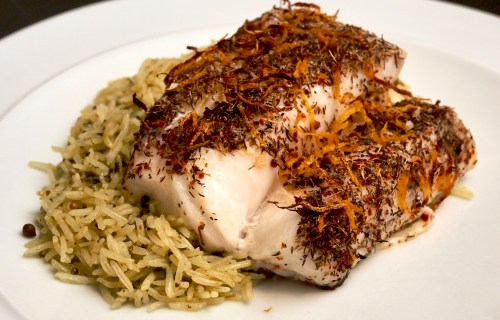
Roasted Cod with Wild Thyme & Pul Biber

Thick pieces of cod look so pretty when scattered with dried herbs and chilli flakes. Also an opportunity to use our new fish bone tweezers – interesting what excites us as we get older! This is a simple but very tasty idea from Sabrina Ghayour’s book ‘Feasts’.

We served this with some rice, greens and lemon wedges for squeezing over.

Wine Suggestion: this dish begs for a Greek Assyrtiko from the island of Santorini. A white that should always have a savoury profile, stony minerality and citrus freshness and a complimentary nature with the thyme and Aleppo pepper. If you’re fortunate to find one with “Nykteri” mentioned on it then this should be just as fresh as it is picked at night, and yet with a few months in oak fuller and deeper in flavour.

Roasted Cod Loins with Wild Thyme & Pul Biber – serves 4

  • 4 cod loins (about 200g each)
  • garlic oil
  • 4 tsp dried wild thyme
  • 2 tsp pul biber chilli flakes (Aleppo pepper)
  • finely grated zest of 2 unwaxed lemons

Preheat the oven to 220C/200C Fan/Gas 7.

Line a baking tray with baking paper.

Put the fish fillets onto the paper and coat each piece generously with garlic oil. Sprinkle over the wild thyme, pul biber, lemon zest and plenty of sea salt flakes and black pepper.

Roast for 8-12 minutes depending on how thick your fish is, or until cooked through. Serve immediately.

(Original recipe from Feasts by Sabrina Ghayour, Mitchell Beazley, 2017.)


Read Full Post »

Lemon, turmeric & black pepper salmon

We loved this spiced side of salmon from Sabrina Ghayour’s book Sirocco and its a great dish to feed a crowd. The mixture of lemon,  turmeric and black pepper smells almost medicinal in the oven but the served up on the plates the aromas and flavours are really good. Serve with a green salad or as we did here with green couscous and roasted veg with black garlic & preserved lemons and pomegranate, cucumber & pistachio yoghurt.

Wine Suggestion: A bold dish like this really needs a bold wine that cope with and complement the flavours.  A good suggestion is an Alsace Pinot Gris which has body (the good ones will have texture too) and a roundness from the pepper. A little left-field would be a Collio Bianco from north-eastern Italy. Our favourite, the Zuani, is a traditional blend of Sauvignon Blanc, Chardonnay, Friulano and Pinot Grigio; texture, freshness, richness and fruitiness.

Lemon, turmeric & black pepper salmon – serves 6

  • 1kg salmon side
  • finely grated zest of 3 unwaxed lemons
  • 1 tbsp coarse black pepper
  • 4 tbsp garlic oil
  • 2 tbsp turmeric
  • 1 heaped tsp sea salt flakes, crushed

Preheat the oven to 240C/Gas 9.

Line a large baking tray with baking paper and place the salmon on top, skin-side down.

Make a paste by mixing the lemon zest, black pepper, garlic oil and turmeric in a small bowl until smooth. Rub this mixture evenly over the salmon.

You can marinade now for an hour or up to a day ahead but don’t be tempted to salt it until going into the oven.

Season the salmon with sea salt and roast for 22 minutes.

(Original recipe from Sirocco by Sabrina Ghayour, Hatchette, 2016.)

Read Full Post »

Monkfish kebabs

We love the vitality this Yemeni spice mix (hawayej) gives to these monkfish kebabs from Jerusalem by Yotam Ottolenghi & Sami Tamimi. We cooked these on a barbecue but you could also use a ridged griddle pan. Delicious served with rice, salad and a cucumber & mint yoghurt.

Wine Suggestion: Umani Ronchi’s Ca’Sal di Serra Verdicchio was our choice tonight as it has a lovely lemony character combined with a nutty, herbal twist; a good match.

Grilled fish skewers with hawayej & parsley – serves 4 to 6

  • 1kg monkfish, cut into 2.5cm cubes
  • 50g flat-leaf parsley, finely chopped
  • 2 large garlic cloves, crushed
  • ½ tsp chilli flakes
  • 1 tbsp lemon juice
  • 2 tbsp olive oil
  • lemon wedges, to serve

HAWAYEJ SPICE MIX:

  • 1 tsp black peppercorns
  • 1 tsp coriander seeds
  • 1½ tsp cumin seeds
  • 4 whole cloves
  • ½ tsp ground cardamom
  • 1½ tsp ground turmeric

First make the spice mix by putting the peppercorns, coriander, cumin and cloves in a pestle and mortar (or spice grinder) and pound until finely ground. Stir in the ground cardamom and turmeric, then transfer to a large bowl.

Next add the fish, parsley, garlic, chilli flakes, lemon juice and 1 tsp of salt to the bowl and mix well with your hands, massaging the spices into the fish. Cover the bowl and leave to marinate in the fridge for 6-12 hours (or 1 hour at a minimum).

Thread the fish chunks onto skewers, leaving gaps between the pieces,  then heat a barbecue until hot. Gently brush the kebabs with a little olive oil and cook in batches for about 2 minutes each side, or until just cooked through.

Serve immediately with the lemon wedges.

(Original recipe from Jerusalem by Yotam Ottolenghi & Sami Tamimi, Ebury Press, 2012.)

Read Full Post »

Fish pie with leek mash

No sooner had we given up all hope and planned a hearty fish pie for dinner, than the sun finally came out. The leek mash brightens it up a bit and if served with some green peas it works not too bad for a fine weather dish – just pity the poor cook stuck in the kitchen! We fear you might be horrified when you read the list of ingredients but if the rogue ingredient turns you right off you can always leave it out. It’s also our secret weapon for a prawn cocktail so there’s usually some in our fridge, and it turns out that it tastes surprisingly good in a fish pie too.

Wine Suggestion: this works with a crisp version of Chardonnay; we chose an organic Chablis made by the Gueguen family.

Fish pie with leek mash – serves 6

  • 900g white fish fillets, in large chunks (we used cod)
  • 425ml full-fat milk
  • 100g butter
  • 50g plain flour
  • juice of ½ a small lemon
  • 3 tsp Dijon mustard
  • 1½ tbsp Heinz salad cream (optional)
  • 125ml double cream
  • 3 tbsp finely chopped dill or parsley
  • 200g cooked, peeled prawns
  • 500g leeks, sliced
  • 800g floury potatoes, in chunks

Put the fish and milk into a sauté pan. Bring to a simmer and poach for about 3 minutes. Remove the fish with a slotted spoon and set aside. Reserve the milk.

Melt 50g of the butter in a saucepan, then stir in the flour. Remove the pan from the heat and gradually add the milk, a ladleful at a time, beating with a wooden spoon after each addition. When the milk has all been added, return the pan to the heat and keep stirring as you bring it the boil. It should be very thick. Season, then add the lemon juice, mustard and salad cream. Reduce the heat and cook for 2 minutes. Add the cream and herbs and continue to simmer for another minute. Taste and adjust the seasoning – you want this well-flavoured.

Put the fish and prawns into a 2.4 litre pie dish. Stir any liquid under the fish into the sauce. Pour the sauce over the fish and mix gently, then leave to cool before refrigerating to make it easier to spoon on the mash.

Preheat the oven to 200C/400F/Gas 6.

Melt the remaining 50g of butter in a heavy saucepan and add the leeks. Turn to coat in the butter and season, then add 2 tbsp of water, cover and sweat over a low heat for about 15 minutes or until very soft. Check occasionally and add another spoon of water if needed.

Cook the potatoes in boiling salted water until tender, then drain. Return to the warm pan, cover with a clean tea towel and a lid, then place over a very low heat for a couple of minutes to dry.

Mash the potatoes until smooth, then add the leeks and their juices and season well. Spread the mash over the fish and bake for 30 minutes or until golden and bubbling.

Serve with peas – as with all pies.

(Original recipe from Food from Plenty by Diana Henry, Mitchel Beazley, 2010.)

Read Full Post »

« Newer Posts - Older Posts »