Feeds:
Posts
Comments

Archive for the ‘Fish’ Category

Big pieces of fish are particularly well suited to the large cooking space you’ve got on the barbecue. We’ve invested in a fish basket for the barbecue but when we cooked this we didn’t have one and it was tricky to turn. If you don’t have a fish basket you might find it easier to cut the side of salmon in half.

We also really like this without the cucumber yoghurt and served with some champ (mashed potatoes with scallions and loads of butter for any of you non-Irish readers).

Wine suggestion: White and fresh, but also with a full body and a good texture. Out of fashion somewhat we tried a Chablis  … a 1er Cru Montmains from Domaine Bois d’Yver that we had lying around. It was a couple of years old but the extra age added extra layers of depth to a wine that was still fresh and dynamic. If you’d prefer a red then lightly chill a young Pinot Noir for 20-30 minutes and you’ll also have a treat.

Barbecued Side of Salmon with Cucumber Yoghurt – serves 4-6

  • 1.5kg side of salmon, scaled and pinboned (order this from your fishmonger)
  • zest and juice of 1 lemon
  • large bunch of basil/fennel tops, finely chopped
  • 1 cucumber, peeled lengthwise at intervals to make stripes
  • 300ml natural yoghurt
  • 1 red chilli, deseeded and finely chopped
  • small bunch of mint/oregano, leaves picked and chopped

Brush the bars of the barbecue clean or your fish will stick (the fish basket will help with this), then light it and get it nice and hot.

Put the salmon skin-side down on a board and slash the flesh side with a sharp knife, about 1cm deep. Scatter the lemon zest and most of the fennel tops/basil over the salmon, then push into the cuts that you made with your fingers. Rub the fish lightly all over with olive oil and season well with salt and pepper.

Put the salmon on the barbecue, skin-side down. Check it after about 4 minutes by which time the skin should have got nice and crispy. Turn the fish carefully and cook on the other side for 2-3 minutes. You can carefully take the skin off the salmon at this stage and place it back on the heat to get really crispy.

Cut the cucumber in half lengthways and remove the seeds. Chop the seedless cucumber and mix with the yoghurt. Add some lemon juice, half the chopped chilli, and half the mint/oregano. Drizzle over some good olive oil and season well.

Break the salmon into portions with a fork and serve with the cucumber yoghurt, sprinkled with the remaining chilli and herbs. Drizzle with a little more olive oil and serve with a piece of the crispy skin if you like.

(Original recipe from Jamie at Home by Jamie Oliver, Michael Joseph, 2007.)

Read Full Post »

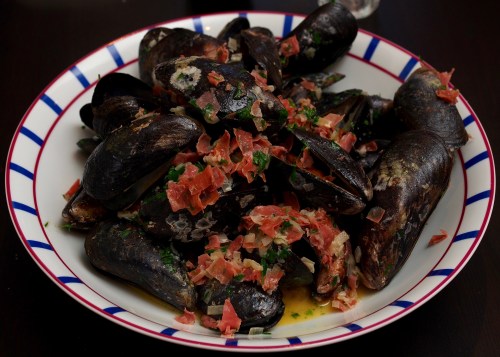
Mussels with Parma ham

Ham gives a nice salty twist to mussels so be careful when adding any additional seasoning. We have lots of herbs growing in the garden at this time of year and are always looking for excuses to use them.

Wine Suggestion: This was an harder match than expected given the combination of salty sea flavours and the richness of the ham. Given the layers of savoury flavours we complemented this with a dry Amontillado sherry, the Hidalgo “Napoleon” which has the Umami richness to match. It also has a great nuttiness that added something extra and also a very complementary hint of fresh sea air in it’s flavour.

Mussels with Bayonne ham – 3-4

  • 1.5kg mussels
  • 100ml dry white wine
  • 50g butter
  • 1 shallot
  • 75g Bayonne or prosciutto ham
  • 1 clove of garlic, grated
  • 1 handful of mixed herbs – we used parsley, tarragon & chives
  • crusty bread to serve

Scrub the mussels clean and discard any that don’t close when tapped on a hard surface.

Add 2 tbsp of the wine to a large saucepan and bring to the boil. Add the mussels, cover and cook over a high heat for 3-4 minutes or until opened. Give the pan a shake every now and then and discard any mussels that remain closed. Take off the heat and strain in a colander over a large bowl to catch the liquid. Reserve the liquid and keep the mussels warm.

In the same pan, melt the butter and cook the shallot, ham and garlic for 4-5 minutes, until softened but not browned. Add the mussel cooking liquid and the rest of the wine wine. Bring to a boil and cook until reduced by half. Add the mussels and herbs and mix well, then season with black pepper.

(Original recipe by Rick Stein)

Read Full Post »

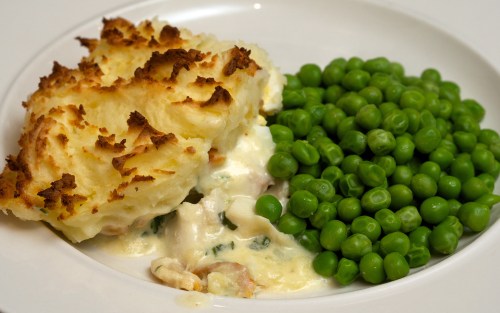
Haddock Pie

We are mad about fish pie and this one is particularly good. Yet another excuse to never through away our old food magazines!

Wine Suggestion: you need a fresh, vibrant white with a medium to full body; try to avoid heavily oaked and super-rich wines though. A good choice would be Chenin Blanc and the choice here is getting better each day. We’ve tried well made but simple ones from both the Loire and South Africa to good effect as well as some more complex ones like Adi Badenhorst’s Secateurs from Swartland and some Savennieres too.

Haddock Pie – serves 6

  • 1 small onion, thickly sliced
  • 2 cloves
  • 1 fresh bay leaf
  • 600ml creamy milk
  • 300ml double cream
  • 450g haddock fillet with skin
  • 200g undyed smoked haddock fillet
  • 4 eggs, plus 1 extra egg yolk
  • 100g cooked peeled prawns
  • 100g butter
  • 40g plain flour
  • 5tbsp chopped flatleaf parsley
  • pinch freshly grated nutmeg
  • 1.25kg floury potatoes, such as Maris Pipers, peeled and cut into chunks

Stud a couple of the onion slices with the cloves and put into a large pan with the bay leaf, 450ml of the milk, the cream, haddock and smoked haddock. Bring to the boil and simmer for 8-10 minutes. Lift out the fish and strain the cooking liquor into a jug.

Wait for the fish to cool and meanwhile hard boil the whole eggs for 8 minutes, then drain, cover with cold water and leave to cool.

When the fish has cooled a bit, break it into  large flakes, discarding the skin and any bones. Sprinkle the flakes of fish over the base of a shallow 1.7 litre ovenproof dish. Scatter the prawns over the top. Shell the eggs and cut into chunky slices. Arrange these over the fish and prawns.

Melt 50g of the butter in a saucepan, stir in the flour and cook for a minute. Remove the pan from the heat and gradually add the reserved fish cooking liquor. Return to the heat and slowly bring to the boil, stirring constantly. Lower the heat and simmer gently for 10 minutes.

Take the sauce off the heat, stir in the parsley and season with nutmeg, salt and white pepper. Pour the sauce over the fish and leave to cool.

Preheat the oven to 200C/Gas 6/Fan 180C.

Cook the potatoes in boiling salted water for 12-15 minutes, or until tender. Drain, mash well and beat in the egg yolk and remaining butter. Season with salt and white pepper and beat in enough of the remaining milk to make a smooth mash that’s easy to spread.

Spoon the mashed potato over the filling and mark the surface with a fork. Bake for 40-45 minutes until piping hot and golden brown.

(Original recipe by Rick Stein in BBC Good Food Magazine, June 2001.)

Read Full Post »

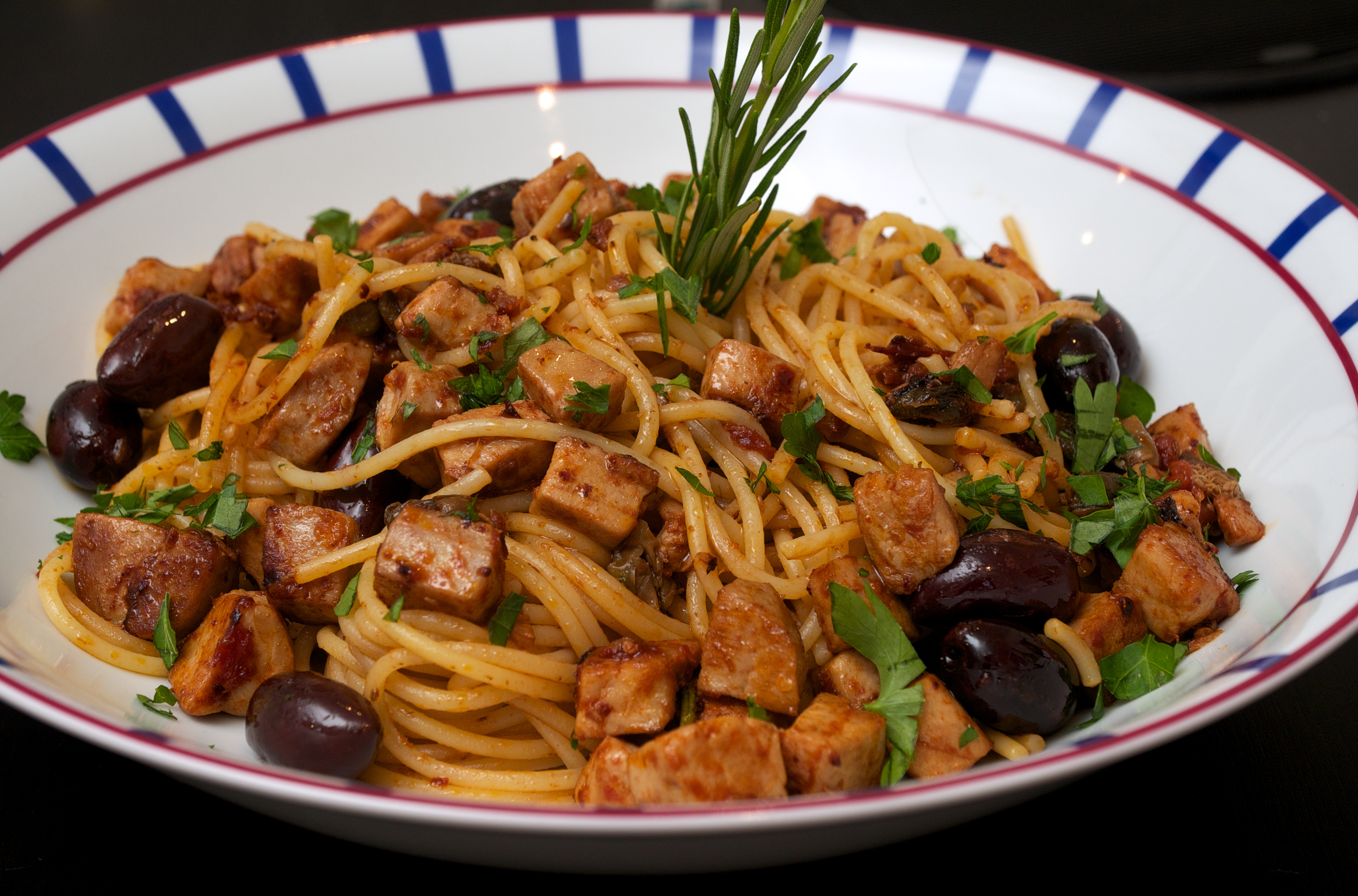
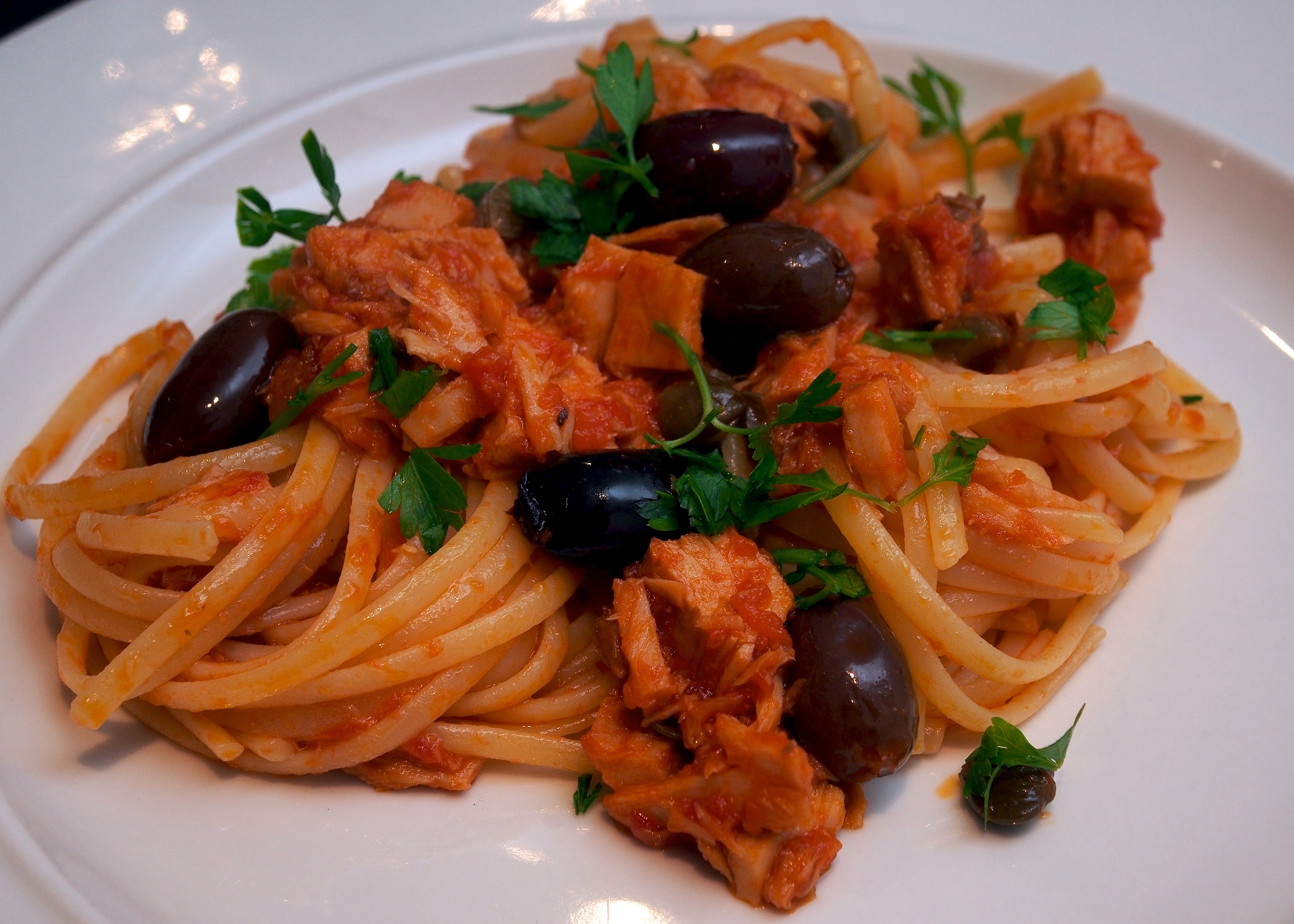
Fresh tuna spaghetti

We’ve made this recipe before using good-quality tinned tuna, which was delicious, but this time we’ve used fresh tuna and it really sings.

Wine Suggestion: Classic Italian matches for tuna depend on the region. If you are in Sicily a great match is their native Grillo grape, a textural, slightly salty and mineral wine with good body but not weighty. For this dish though we drank a Vermentino, made by Morisfarms, from the Tuscan coast. It has a great vinous texture and savoury character which combined with fresh fruit and minerality matches this Tuscan combination of tuna, tomatoes and olives.

Linguine with Fresh Tuna – serves 4-6

  • 2 tins top quality plum tomatoes (the Italian brands are good)
  • 500g fresh yellowfin tuna
  • 4 tbsp extra-virgin olive oil, plus a bit extra
  • 2 sprigs rosemary
  • a pinch of chilli flakes
  • 80ml white wine
  • 30g salted capers, soaked and drained
  • 100g pitted black olives (Gaeta or Kalamata)
  • 500g linguine
  • chopped fresh parsley to serve

Drain the tinned tomatoes and cut into strips.

Cut the tuna into 2cm cubes. Heat the oil in a pan and sauté with 1 sprig of rosemary and the chilli flakes.

Add the wine and simmer until it evaporates, then add the capers.

Add the olives and tomatoes and cook over a high heat for 15 minutes.

Cook the linguine until al dente, then drain and add to the pan of tuna sauce. Toss gently.

Sprinkle on the parsley, drizzle with some more olive oil, and garnish with the remaining rosemary.

(Original recipe from Obicà: Mozzerella Bar, Pizza e Cucina, Rizzoli, 2014.)

Read Full Post »

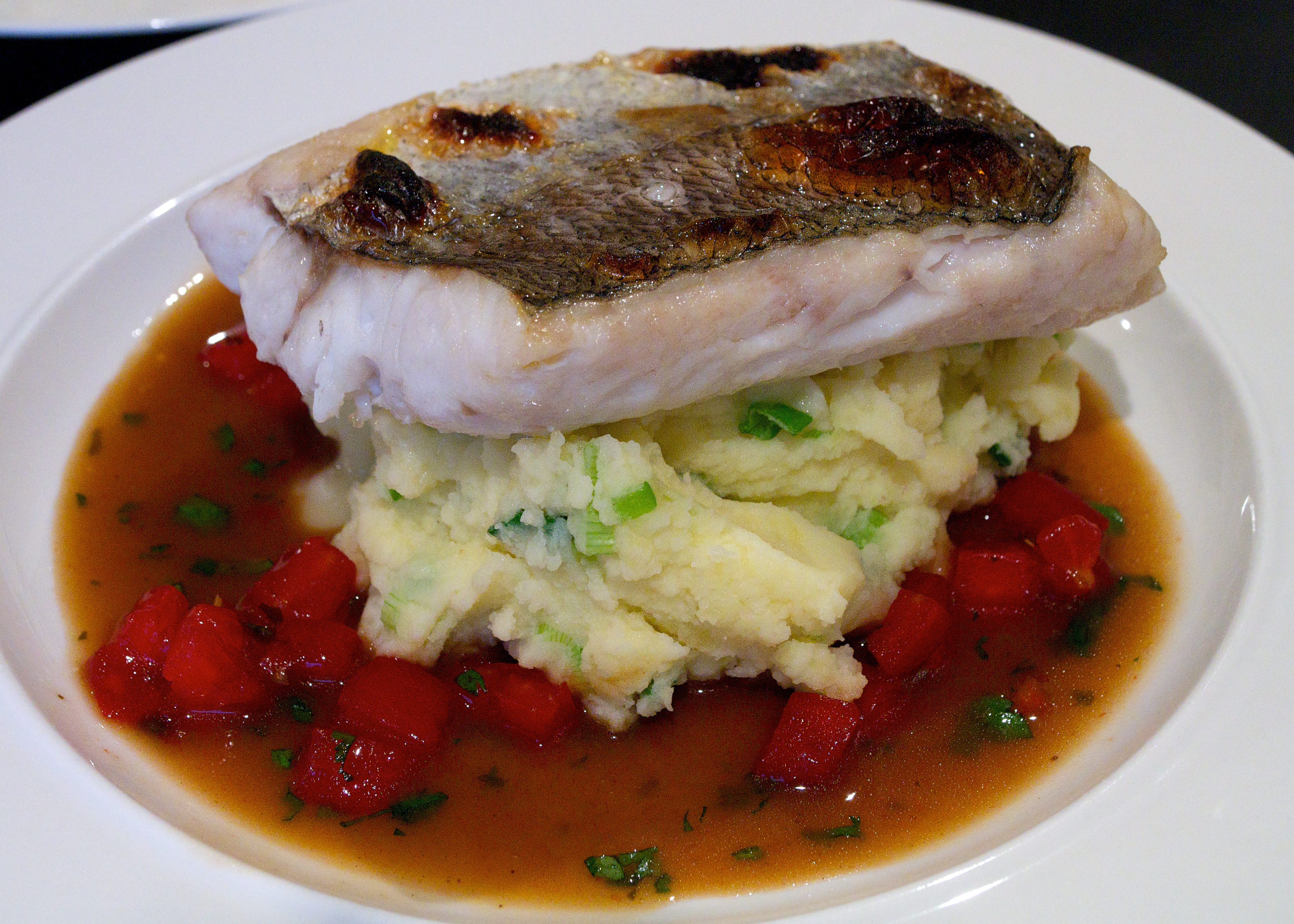
Hake and scallion mash with a soy butter sauce

The soy butter sauce here is absolutely delicious and we were perhaps a bit over-generous with it when plating up. You can do some sort of drizzly thing if you want it look a bit fancier. Either way your guests will be impressed!

Wine Suggestion: We went off-piste and served a light bodied, Loire Valley red from Saumur-Champigny, the Chateau Hureau “Tuffe” 2010. As it was a warm evening we’d chilled the bottle for 30 minutes in the fridge and it was charming and a delightful match proving that red wine can go with fish. We think the depth of flavour in the soy butter sauce helped too.

Hake on Scallion Mash with a Soy Butter Sauce – serves 4

  • 4 x 200g pieces of thick hake fillet, with skin on
  • melted butter for brushing
  • 1 tsp fine sea salt
  • sea salt flakes and coarsely crushed black pepper

FOR THE SCALLION MASH:

  • 1.25kg floury potatoes, peeled and cut into chunks
  • 50g butter
  • 1 bunch scallions, thinly sliced
  • a little milk
  • salt and freshly ground white pepper

FOR THE SOY BUTTER SAUCE:

  • 600ml chicken stock (preferably home-made)
  • 2 tbsp dark soy sauce
  • 75g unsalted butter
  • 1 tomato, skinned, seeded and diced (plunge into hot water for 1 minute to make peeling easier)
  • 1 heaped tsp chopped coriander

Lay the fish in a shallow dish with the skin-side down and sprinkle with the sea salt flakes, then set aside for 30 minutes. Rinse the salt off and dry the fish with kitchen paper. Brush the fish pieces with the melted butter and put skin-side up on a greased baking tray. Sprinkle the skin with a few sea salt flakes and some black pepper.

Cook the potatoes in boiling unsalted water for 20 minutes or until tender.

Start the sauce by putting the stock and soy sauce into another pan and boiling rapidly until reduced by half.

Preheat the grill to high and grill the hake for 8 minutes on one side only.

When the fish is almost done, add the butter to the sauce and whisk it in. Take off the heat and add the tomato and coriander.

Drain the potatoes and return to the pan, then mash until smooth. Heat the butter in another pan and toss the scallions in the hot butter briefly. Beat scallions and butter into the potato with a little bit of milk and some salt and white pepper. Spoon the scallions mash into the centre of warm plates. Rest the hake on top and spoon the sauce around the outside.

(Original recipe from Rick Stein Fish & Shellfish, Random House, 2014.)

Read Full Post »

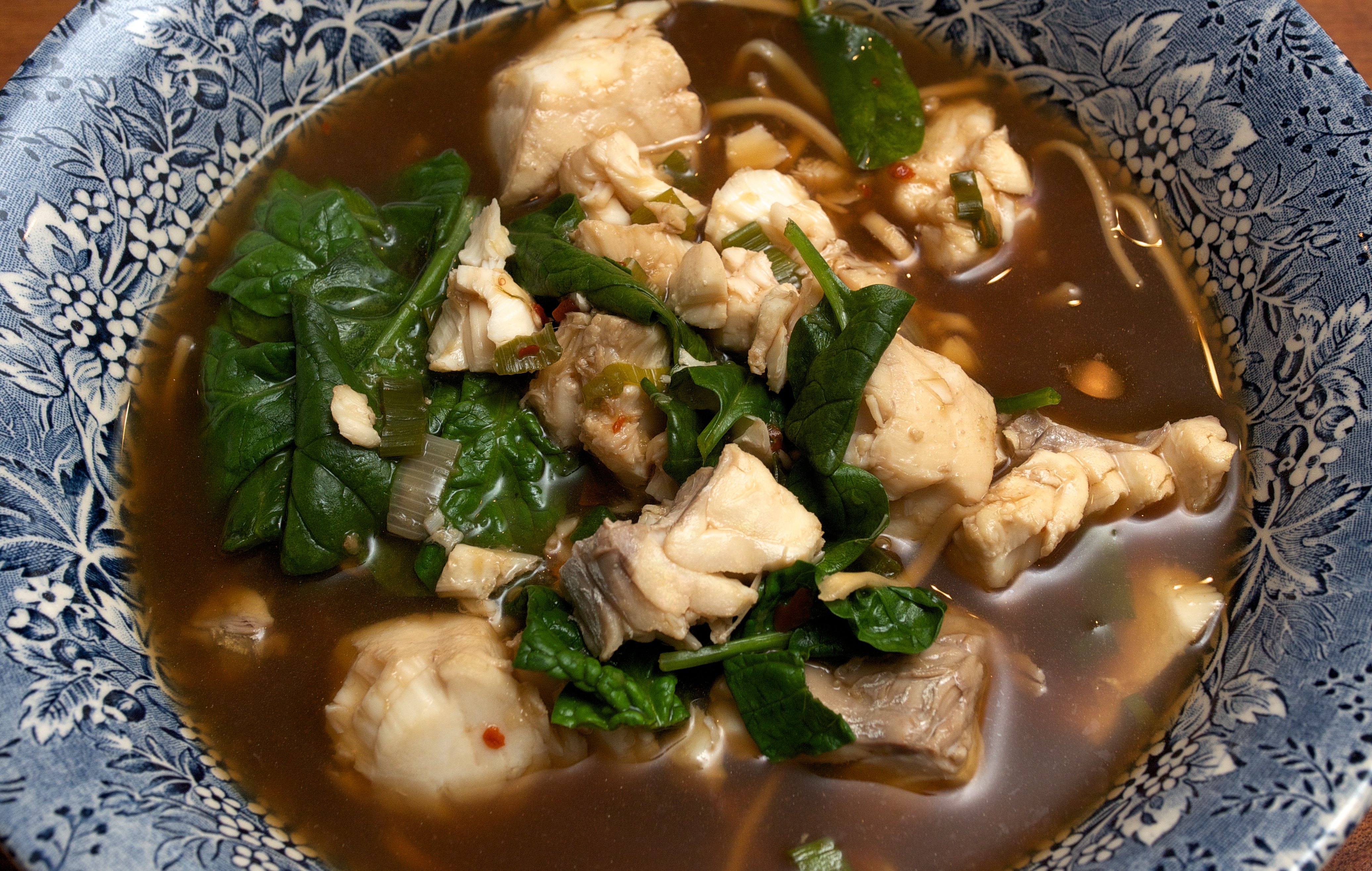
Hot & sour fish soup

This is a quick and very low-calorie but very tasty soup. Buy some really fresh fish – we used hake. Hot & Sour Fish Soup – Serves 2

  • 2tbsp grated ginger
  • 1 dried red chilli (or use a small tsp of chilli flakes)
  • 2 scallions, thinly sliced
  • 1 stem lemongrass, lightly bashed
  • 700ml chicken or fish stock
  • 3 tbsp soy sauce
  • 2 tbsp rice vinegar
  • 400g skinless white fish fillets, cut into big chunks
  • 2 handfuls baby spinach
  • 2 tsp fish sauce
  • cooked noodles

Put the ginger, chilli, scallions, lemongrass and stock in a saucepan and bring to a simmer. Cook for 5 minutes, then add the soy sauce, vinegar and fish, and simmer for a couple of minutes. Stir in the spinach and season with the fish sauce. Adjust the vinegar and soy sauce to your own taste. Put the cooked noodles into soup bowls, discard the lemongrass and dried chilli from the soup, then pour over the noodles and serve. (Original recipe by Lulu Grimes and Janine Ratcliffe in BBC Olive February 2015.)

Read Full Post »

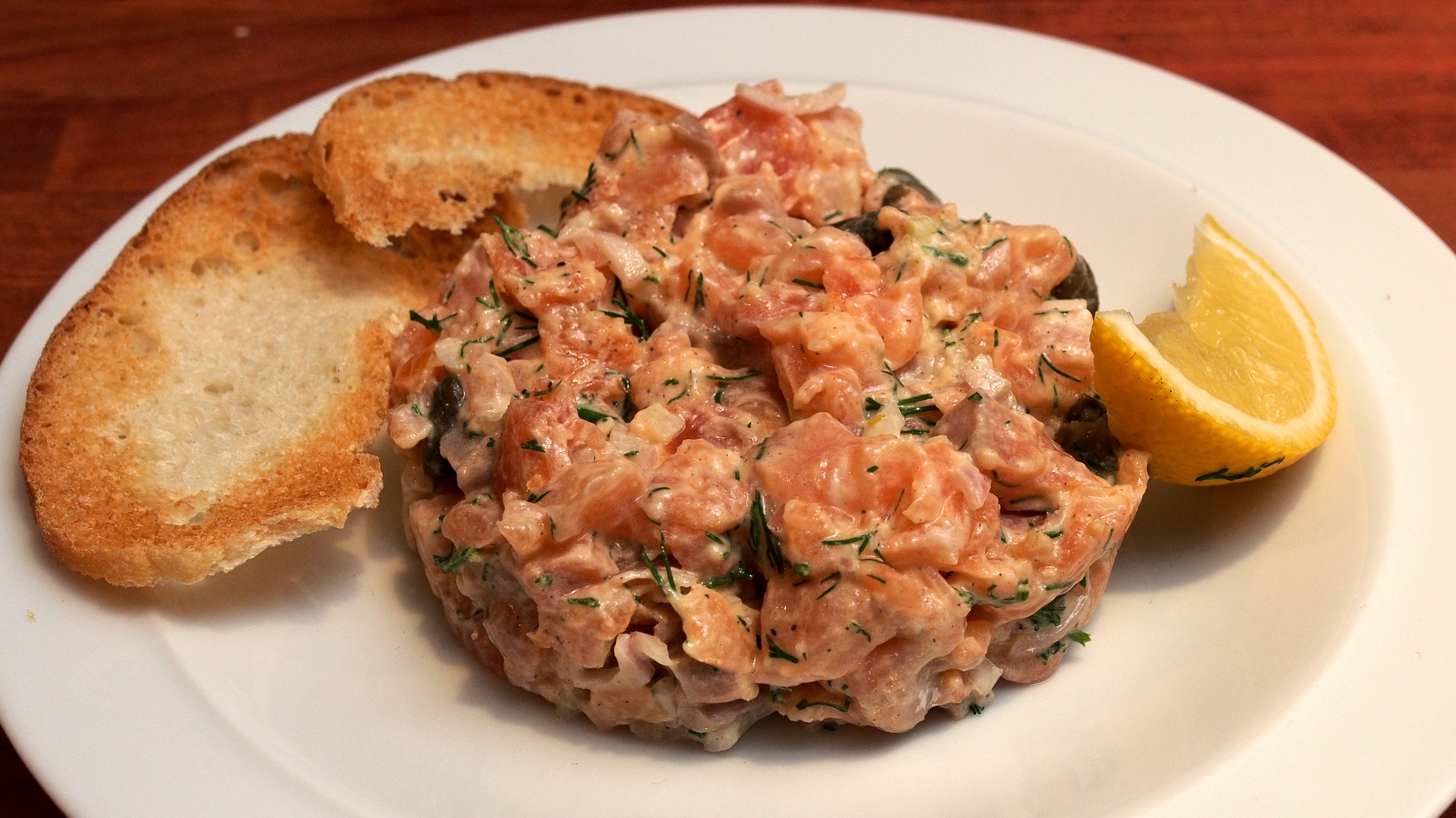
Salmon Tartare

A perfect starter for the festive season. Get the freshest and best salmon you can as it will make all the difference; ours was meltingly tender while cutting it up and we were rewarded with a melt in the mouth starter.

Wine suggestion: Try an appropriately festive and indulgent Vintage Champagne like the Billecart-Salmon Blanc de Blanc which has a richness and depth alongside a minerally freshness and great purity of fruit. Alternately if on a budget, but another classic match, would be a zippy and herbaceous Sauvignon Blanc or for a bit of a lemony twist a Verdejo from Rueda in Spain.

Smoky salmon tartare with lemon and capers – serves 6

  • 1 shallot, finely diced
  • 2 lemons, 1 juiced and 1 cut into wedges
  • 400g skinless salmon fillet
  • 200g smoked salmon
  • 2 tbsp chopped dill
  • 2 tbsp small capers
  • 1 tbsp Dijon mustard
  • 1 tbsp crème fraîche
  • olive oil
  • melba toast, to serve

Put the shallot into the lemon juice and leave to soak.

Cut the salmon into tiny cubes and finely chop the smoked salmon. Put all of the fish into a bowl, add the dill, capers, mustard, crème fraîche, 1 tbsp olive oil and the shallot and juice. Fold together gently and season with salt and black pepper.

Serve in rounds with the melba toast and a drizzle of olive oil.

(Original recipe from BBC Olive Magazine, December 2014)

Read Full Post »

Obica: Linguine with Yellowfin Tuna

A simple but delicious dish from a cool restaurant called Obicà that we found on our last trip to Florence. They insist that it’s best made with fresh tuna (and they’re probably right) but we made it with top quality tinned tuna and it worked for us.

Wine Suggestion: Classic Italian matches for tuna depend on the region. If you are in Sicily a great match is their native Grillo grape, a textural, slightly salty and mineral wine with good body but not weighty. For this dish though we drank a Vermentino, made by Morisfarms, from the Tuscan coast. It has a great vinous texture and savoury character which combined with fresh fruit and minerality matches this Tuscan combination of tuna, tomatoes and olives.

Linguine with Yellowfish Tuna – serves 4-6

  • 2 tins top quality plum tomatoes (the Italian brands are good)
  • 500g yellowfin tuna
  • 4 tbsp extra-virgin olive oil, plus a bit extra
  • 2 sprigs rosemary
  • a pinch of chilli flakes
  • 80ml white wine
  • 30g salted capers, soaked and drained
  • 100g pitted black olives (Gaeta or Kalamata)
  • 500g linguine
  • chopped fresh parsley to serve

Drain the tinned tomatoes and cut into strips.

Cut the tuna into 2cm cubes. Heat the oil in a pan and sauté with 1 sprig of rosemary and the chilli flakes.

Add the wine and simmer until it evaporates, then add the capers.

Add the olives and tomatoes and cook over a high heat for 15 minutes.

Cook the linguine until al dente, then drain and add to the pan of tuna sauce. Toss gently.

Sprinkle on the parsley, drizzle with some more olive oil, and garnish with the remaining rosemary.

(Original recipe from Obicà: Mozzerella Bar, Pizza e Cucina, Rizzoli, 2014.)

Read Full Post »

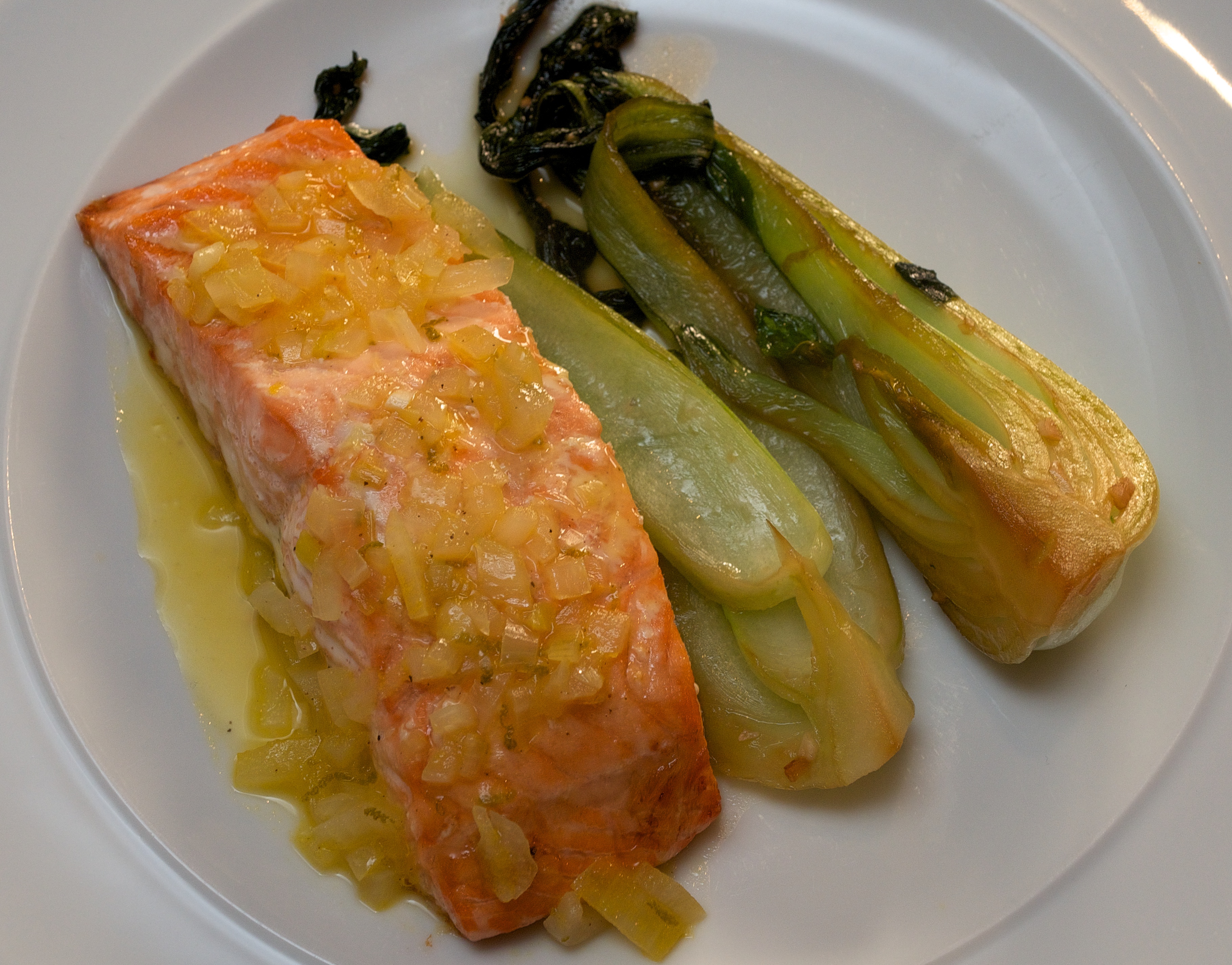
Salmon with Pak choi

Light yet tasty and full of flavour. Makes you feel healthy eating it.

Wine Suggestion: Some lighter styles of white wine can be overpowered by salmon. We went for an Italian grape variety called Pecorino which has a bit more body and a nice lemony flavour to complement the sauce.

Citrusy Salmon with Garlic Pak Choi – serves 4

  • olive oil
  • 1 onion, finely chopped
  • 4 garlic cloves, finely chopped
  • juice of 3 oranges
  • juice of 1 lime, and 2 tsp grated zest
  • 4 salmon fillets
  • 500g pak choi, stems quartered
  • 4 tsp soy sauce
  • 2 tsp honey

Heat oven to 200C/180C fan/gas 6.

Line a baking tray with kitchen foil.

Heat a little olive oil in a small pan, add the onion and one of the garlic cloves, and cook for about 5 minutes or until soft.

Add the orange and lime juice and the lime zest, then simmer gently until reduced by half. Season.

Meanwhile, put the salmon fillets on the baking tray and bake for 15-20 minutes or until just cooked trough.

Heat a splash of olive oil in another pan, add the pak choi and stir-fry for a couple of minutes. Add the remaining garlic, the soy sauce and honey, and keep cooking for another couple of minutes.

Serve the salmon with the pak choi and the sauce drizzled over.

(Original recipe from BBC Good Food Magazine, April 2014.)

Read Full Post »

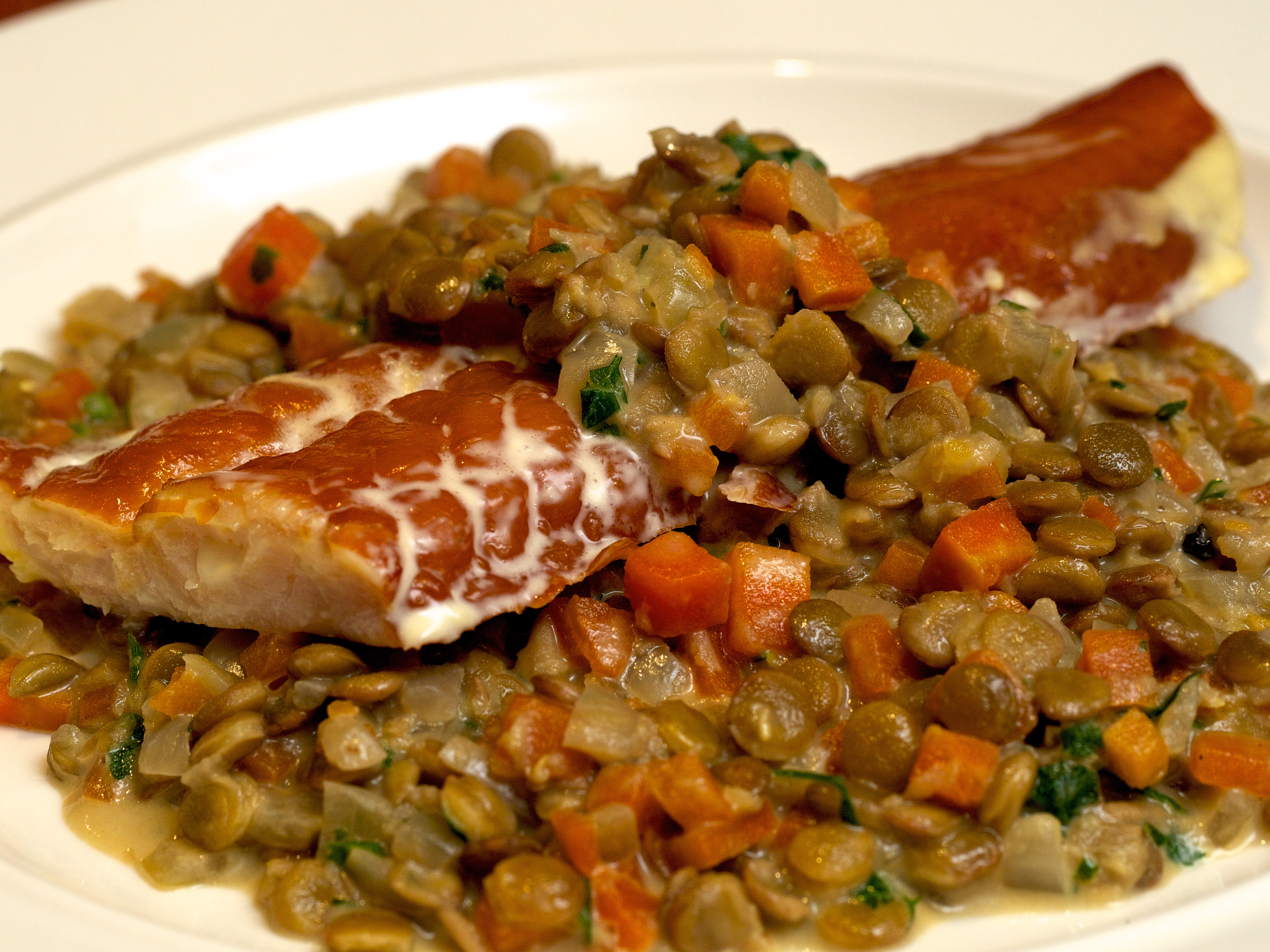
Smoked Haddock witha creamy green lentil stew

The pictures just don’t do justice with how delicious this dish tasted; highly recommended!

Wine Suggestion: Try complementing the smoky fish with an oaked white such as a New World Chardonnay.

Smoked haddock with lentils – serves 2

  • 250ml double cream
  • 350g piece of smoked haddock, skin removed
  • 6 black peppercorns
  • 3 bay leaves
  • 2 medium carrots, finely diced
  • 1 onion, finely diced
  • a thick slice of butter
  • 150g green lentils
  • 400ml vegetable stock
  • a large handful of chopped parsley

Put the cream in a shallow pan. Add the haddock, peppercorns and bay leaves. Bring to the boil, then turn off and cover with a lid.

Melt the butter in a saucepan over a moderate heat. Cook the carrot and onion in the butter for about 5 minutes, then add the lentils and vegetable stock. Bring to the boil, then turn the heat down and simmer for about 20 minutes or until the lentils are almost soft, then stir in the cream from the fish. Continue cooking until the liquid has reduced to just cover the lentils.

Add the parsley and season. Divide the lentils between two dishes and serve the haddock on top.

(Original recipe from Nigel Slater’s Eat: The little book of fast food, Fourth Estate, 2013.)


Read Full Post »

This is such a clever idea, especially if you don’t have one of those fancy things for cooking fish on the barbecue. The fish doesn’t stick to the grill but you still get all the smoky barbecue flavours plus a  delicious spike of citrus. The idea has us thinking of other combinations and we loved the caramelisation that happened to the oranges which gives the dish an extra dimension.

Wine Suggestion: This cries out for a Spanish white, like Albarino or Godello, where the best examples balance a depth of texture with a lightness of being. We drank a Dominio de Tares Godello from Bierzo which was amazing on its own and then with the fish. Perfectly matched.

Barbecue Sea Bass & Citrus Salad – serves 4

  • 2-3 large oranges
  • zest of 1 lemon (keep the juice for the salad)
  • 1 tbsp olive oil
  • 4 x 300g whole sea bass, scaled, gutted and slashed down each side (or 8 fillets)

FOR THE SALAD: 

  • 2 oranges, segmented
  • juice of 1 lemon
  • 4 tbsp olive oil
  • 2 bags watercress
  • handful small capers
  • handful pitted green olives, roughly chopped

Finely grate the zest of the 1 of the oranges and add to the lemon zest. Mix with the olive oil, then drizzle over the fish and season.

Cut the rest of the oranges into slices, about ½ cm thick. Arrange the orange slices over the barbecue grill, close together so you can lay the fish on top. Barbecue the fish for 5-8 minutes on each side, or until the flesh flakes easily.

To make the salad: Put the orange segments into a large bowl, with the squeezed juice from the rest of the oranges and the lemon juice. Season and stir in the olive oil. Toss the watercress in the orange dressing with the capers and the olives.

Serve the fish with the salad.

(Original recipe from BBC Good Food)

Read Full Post »

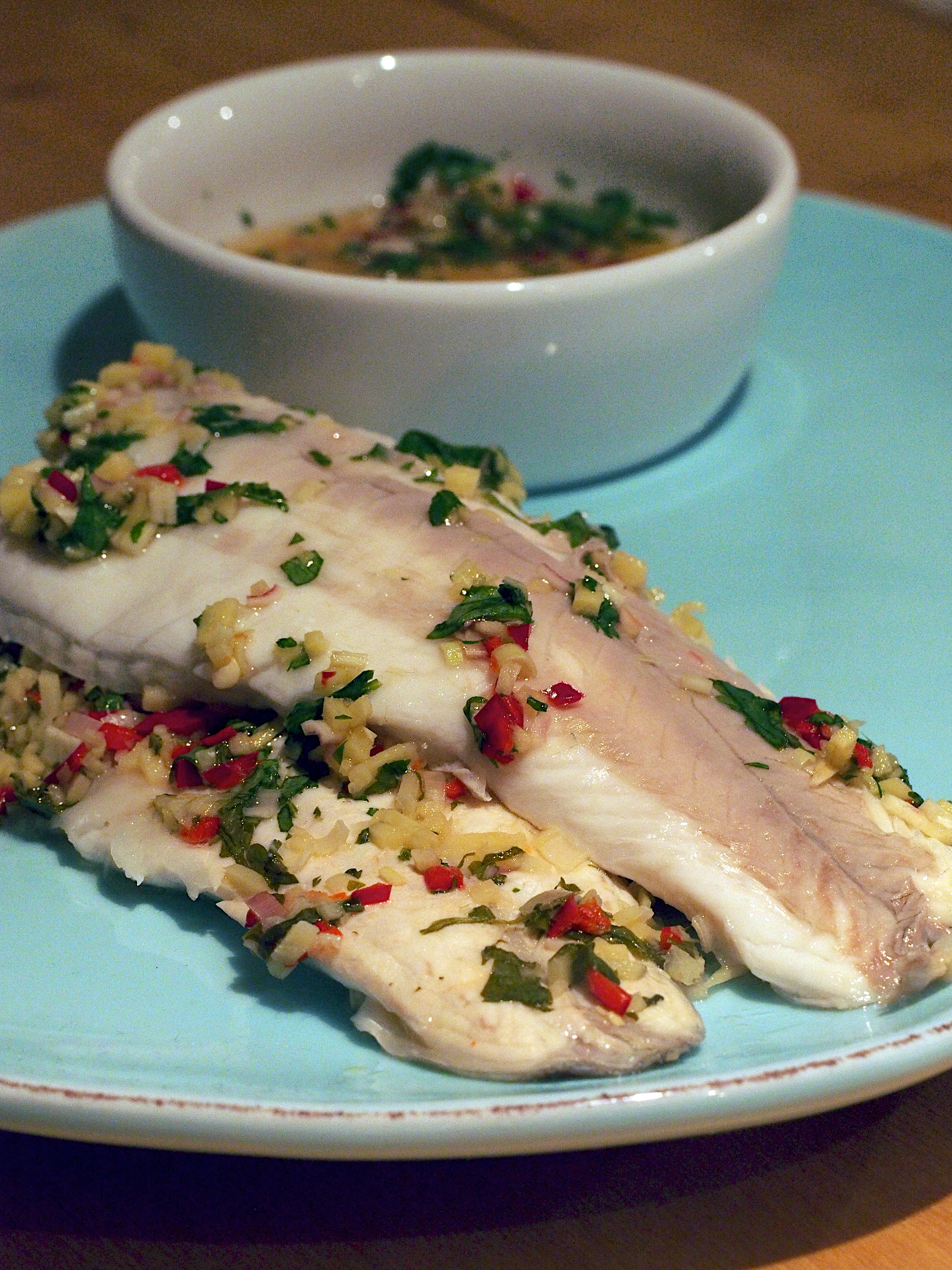
This is a really simple fish dish that was a delight to eat; it tastes delicious and is also very healthy. Trout or snapper would also work well if you prefer. The skin was left behind in the tinfoil when we went to serve it which was fine by us (it’s crispy skin or no skin as far as we’re concerned).

Wine Suggestion: this dish begs for a charming Riesling from Germany – look out for ones that are a drier style but without the weight of a Grosses Gewachs (great growth). If you can find one of the estate QbA’s from Helmut Dönnhoff in the Nähe or Johannes Leitz from the Rhinegau you can’t go wrong.

Thai Baked Fish – to serve 4

  • 4 seabass fillets, about 200g each
  • 1 stalk lemongrass, finely chopped
  • small knob ginger, peeled and finely chopped
  • 1 red chilli, seeded and finely chopped
  • 1 garlic clove, finely chopped
  • 1 tbsp fish sauce
  • juice of 2 limes
  • 1 tsp golden caster sugar
  • handful coriander, roughly chopped

Heat the oven to 200C/fan 180C/gas 6.

Take 2 large sheets of tinfoil. Place one fish fillet, skin-side down, in the centre of each sheet.

Make a sauce using the remaining ingredients. Spoon half the sauce of the fillets on the tinfoil and set the rest aside.

Sandwich the other 2 fish fillets on top, skin-side up, then tightly seal the foil to create 2 pouches. Bake in the oven for 12-15 minutes (depending how big your fish are). Serve with the rest of the sauce.

(Original recipe by Gizzi Erskine for BBC Good Food Magazine, June 2005).)

Read Full Post »

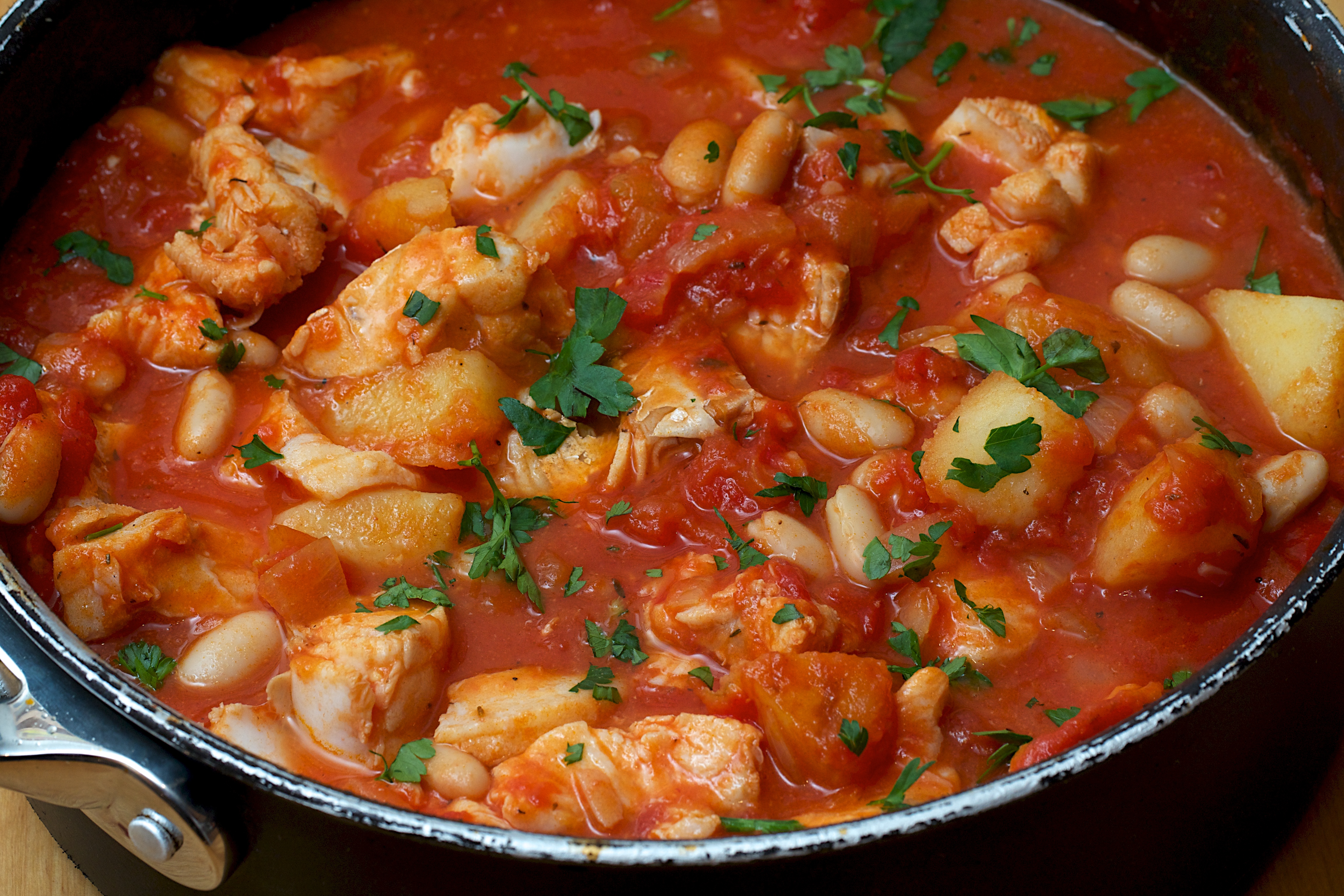
Super-healthy mid-week meal that also fills you up.

Fish Chowder – to serve 4

  • 2 tbsp olive oil
  • 1 large potato, peeled and cut into big chunks
  • 1 medium onion, chopped
  • 1 fat garlic clove, finely chopped
  • 2 x 400 tins chopped tomatoes
  • 2 tbsp tomato purée
  • ½ tsp dried thyme
  • splash of soy sauce
  • 410g tin cannellini beans, drained and rinsed
  • 500g plump white fish fillets, in big chunks
  • a handful of parsley, chopped

Heat the oil in a large frying pan. Dry the potatoes in kitchen paper and tip into the hot oil. Cook them covered over a medium to high heat for 5 minutes, stirring occasionally, until the potatoes are golden. Add the onion and garlic and cook for another few minutes on a fairly high heat until the onion has browned.

Stir in the tomatoes, the tomato purée, thyme and soy sauce, and let it bubble for couple of minutes. Stir in the beans and some seasoning, then sit the fish on top, pushing it down into the sauce. Don’t stir it though or the fish will break up. Cover and simmer for 4 minutes, or until the fish is cooked. Serve sprinkled with the parsley.

Wine Suggestion: Try an Albariño from Rías Baixus in Spain which should have plenty of acidity and flavour. This is a very trendy wine at the moment, and subsequently not cheap, but they are interesting wines and usually worth the bit extra.

(Original recipe from BBC Good Food)

Read Full Post »

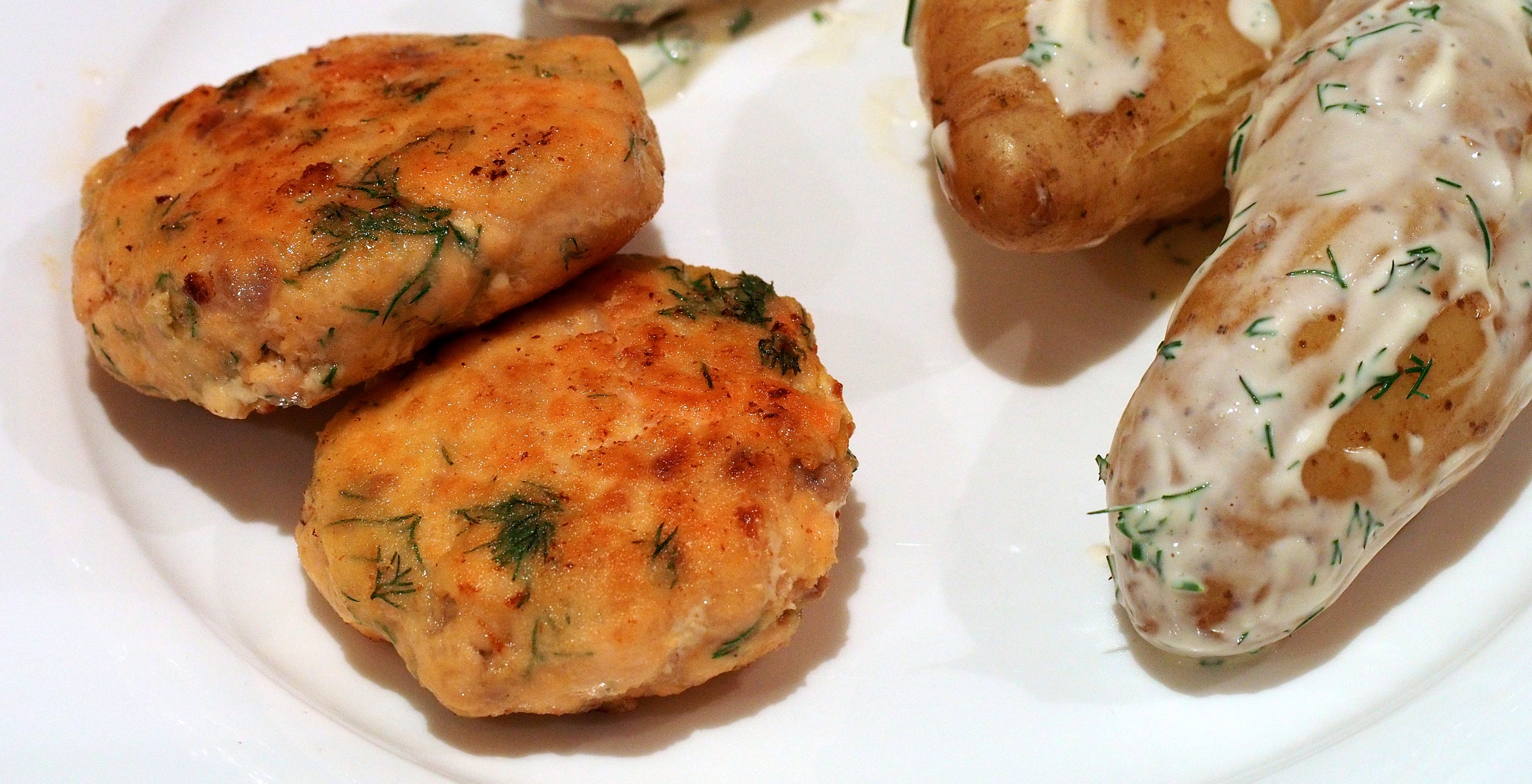
We made this when we visited Australia earlier this year from a great cookbook by Stephanie Alexander, her Kitchen Garden Companion. They go great with some new potatoes tossed with sour cream and dill for a main course.

Salmon Fishcakes with Dill – makes 8 or 24 little ones

  • 300g salmon fillet, cut into bite-size pieces
  • 2 tbsp double cream
  • 30g breadcrumbs (roughly 1 thick slice of bread)
  • 30g marinated goat’s cheese
  • 1 egg yolk
  • 4 tbsp chopped dill
  • ½ tsp sea salt
  • 2 tbsp plain flour
  • 20g butter
  • 2 tbsp olive oil

Pour the cream over the breadcrumbs and leave to soak for 5 minutes.

Pulse the salmon, cream-soaked crumbs and goat’s cheese in a food processor until combined, but not reduced to a paste. Scrape the mixture into a mixing bowl and mix in egg yolk and dill, then season with the salt and some pepper. Cover with cling film and chill for 30 minutes.

Wet your hands and divide the mixture into 8 large or 24 bite-sized fishcakes. Roll the fishcakes in the flour.

Heat butter and oil in a large non-stick frying pan over medium heat and fry the fishcakes for 2-3 minutes per side or until golden brown. Be careful not to overcook as they are better if they stay a bit moist.

Wine Suggestion: Try to find a top-quality Australian Verdelho, with a few years of age on it. It should have mellowed and developed a honey character alongside the fresh acidity and white floral character.

(Original Recipe from Stephanie Alexander’s Kitchen Garden Companion, Lantern, 2009.)


Read Full Post »

The combination of flavours and textures made this a delicious Wednesday night feast. It’s also really healthy and low in calories (305 to be exact, so you can even squeeze it in if you’re on the 5:2 diet). You could use haddock or cod but whiting is much cheaper and tastes just as good.

Zesty Whiting with Crushed Potatoes & Peas – to serve 4

  • 600g potatoes, peeled and cut into chunks – we used Nicola which gave an interesting texture but floury mashing ones would be good too
  • 140g frozen peas
  • extra virgin olive oil
  • juice and zest of ½ a lemon
  • 1 tbsp capers
  • 2 tbsp snipped chives
  • 4 fillets of chunky white fish (about 120g each)
  • 2 tbsp flour

Boil the potatoes until tender, adding the peas for the final minute of cooking. Drain and roughly crush together, adding lots of salt and pepper and about a tablespoon of the oil.

To make the dressing mix 1 tbsp of the oil with the lemon juice and zest, the capers, the chives and some seasoning.

Dust the fish in the flour, tapping off any excess, and season. Heat a small splash of oil in non-stick frying pan and fry the fish for a couple of minutes on each side, or until cooked, then add the dressing to the pan to warm through.

Serve with some steamed broccoli if you like.

Wine Suggestion: Picpoul de Pinet from the Languedoc is good value and has a nice, refreshing zesty flavour that is a great match for fish. Despite coming from a warm area, this wine maintains good acidity and minerality and is well worth seeking out.

(Original recipe from BBC Good Food)

Read Full Post »

Yet another Lebanese dish, we’ll have to move onto another theme soon! This is delicious and quite rich so probably best served as a mezze dish or shared starter, though it will feed 2 people as a main dish.

Sea Bass with Tahini and Curry Sauce – to serve 2 as a main or 4 as a starter

  • 4 sea bass fillets
  • 1 tbsp butter
  • 1 tsp sesame seeds, toasted
  • 2 tbsp chopped coriander
  • squeeze of lemon juice, to serve

FOR THE SAUCE 

  • 6 tbsp tahini
  • 1 tsp salt
  • juice of 1 lemon
  • 1 tsp hot curry powder
  • 120ml water

Preheat the oven to 180ºC/Fan 160ºC/Gas 4.

Mix all the sauce ingredients together in a bowl. Pour the sauce into an ovenproof dish and put in the oven to warm.

Cut each fillet in half, score the skin with 2 slashes, and season well.

Heat a frying pan, add the butter, and when melted, add the fish, skin side down. Cook for about 2 minutes or until the skin is crispy and golden. Turn the fillets over and cook for another minute or two until the flesh flakes easily.

Take the dish out of the oven, add the fish to the sauce, and sprinkle with sesame seeds. Put the dish back into the oven for 5 minutes.

Sprinkle with chopped coriander and a squeeze of lemon before serving.

Wine Suggestion: A full-bodied textural white, like an oaked Vermentino.

(Original recipe from The Lebanese Kitchen by Salma Hage, Phaidon, 2012.)

Read Full Post »

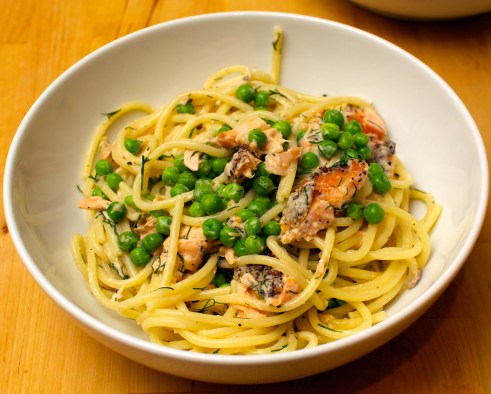
Hot Smoked Salmon Spaghetti

The Christmas parties have well and truly started at this stage and we already feel like we’ve eaten enough food to do us until the middle of January! Here’s a healthy pasta dish if you manage to get a night off and you only have to pick up a few ingredients on your way home.

Hot smoked salmon & dill spaghetti – to serve 4

  • 150g pack hot smoked salmon
  • 400g good quality spaghetti
  • 100g frozen petits pois
  • small bunch of dill
  • 3 rounded tbsp crème fraîche

Flake the salmon into bite-size chunks. Bring a large pan of generously salted water to the boil.

Cook the pasta according to the pack and throw the peas in for the last couple of minutes.

Throw away the dill stalks and roughly chop the fronds. Keep about 4 tbsp of the pasta water, then drain and return to the pan with the reserved water. Put the pan over a really low heat, then add the salmon, dill, crème fraîche, salt and loads of black pepper. Toss together and heat briefly, then serve.

Wine Suggestion: A richer Chardonnay from a cool climate (think Burgundy or the Macedon Ranges in Australia rather than the Barossa Valley) should go well with the hot smoked salmon.

(Original recipe from BBC Good Food)

Read Full Post »

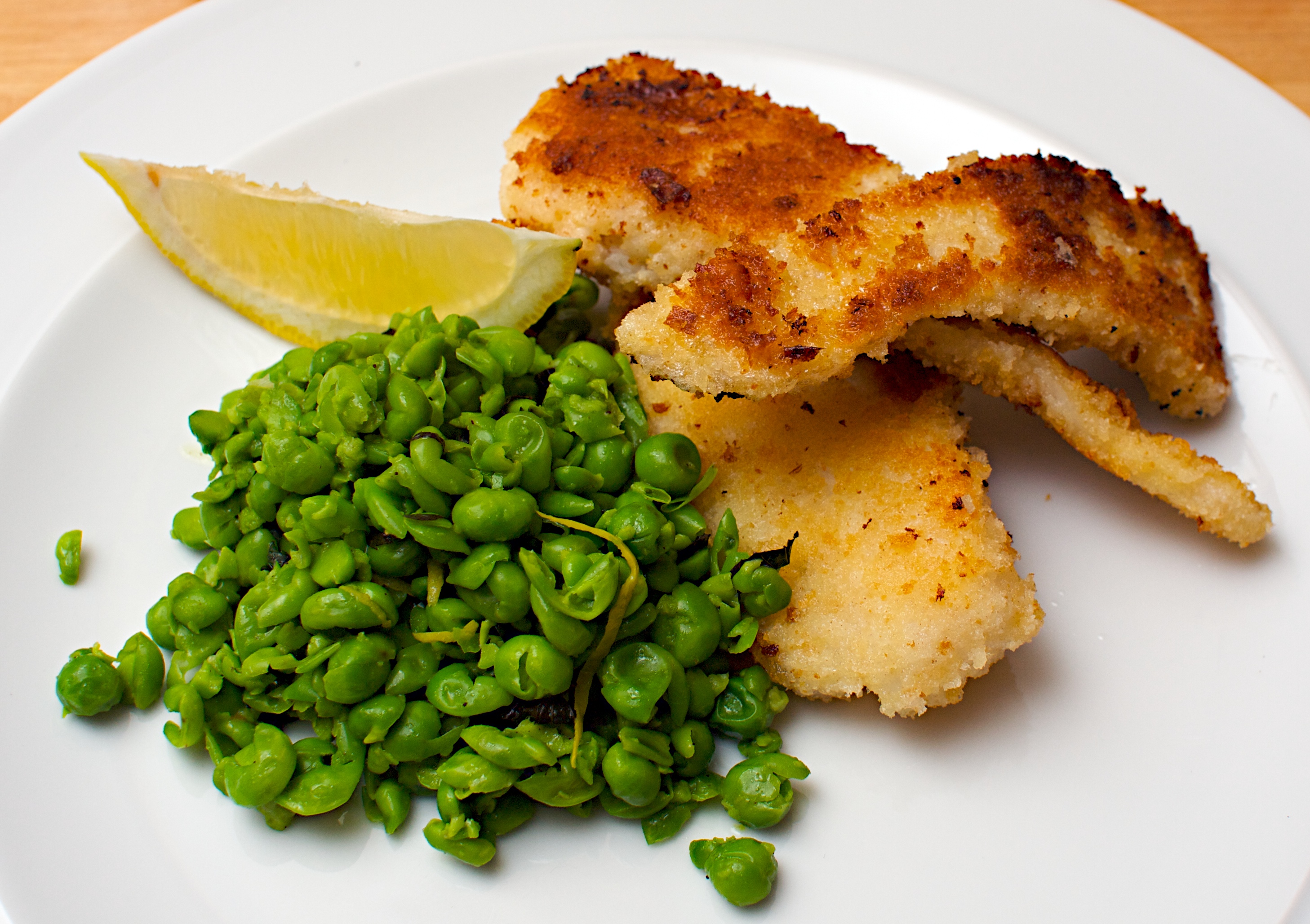
These are super-simple and a hundred times better than the frozen variety. You can use any firm, skinless, white fish – we used hake.

Home-made fish fingers with mushy peas – to serve 4

  • 600g firm, skinless white fish
  • 50g plain flour, seasoned
  • 1 large egg, lightly whisked
  • 200g fine fresh breadcrumbs
  • 2 tbsp vegetable oil
  • 400g frozen peas
  • knob of butter
  • zest 1 lemon, then cut into wedges
  • mint

Cut the fish into 12 fingers, about 3cm thick. Put the seasoned flour, egg, and breadcrumbs into three separate bowls. Dust the fish pieces in the flour first, then coat with the egg and finally a good coating of breadcrumbs. Put on a plate and chill for 15 minutes before cooking.

Heat the oil in a large frying pan. Fry the fish fingers for about 8 minutes or until golden and cooked through. Meanwhile, cook the peas in a small pan of boiling water until really tender, about 4 minutes. Drain then tip into a bowl with the butter, zest and mint and roughly mash. Season and keep warm.

Serve the fish fingers with a dollop of peas and some lemon wedges.

Wine Suggestion: Try a light Sauvignon Blanc, such as from the Touraine in France’s Loire Valley, which should be fresh and fruity with a slight grassiness.

(Original recipe from BBC Good Food)

Read Full Post »

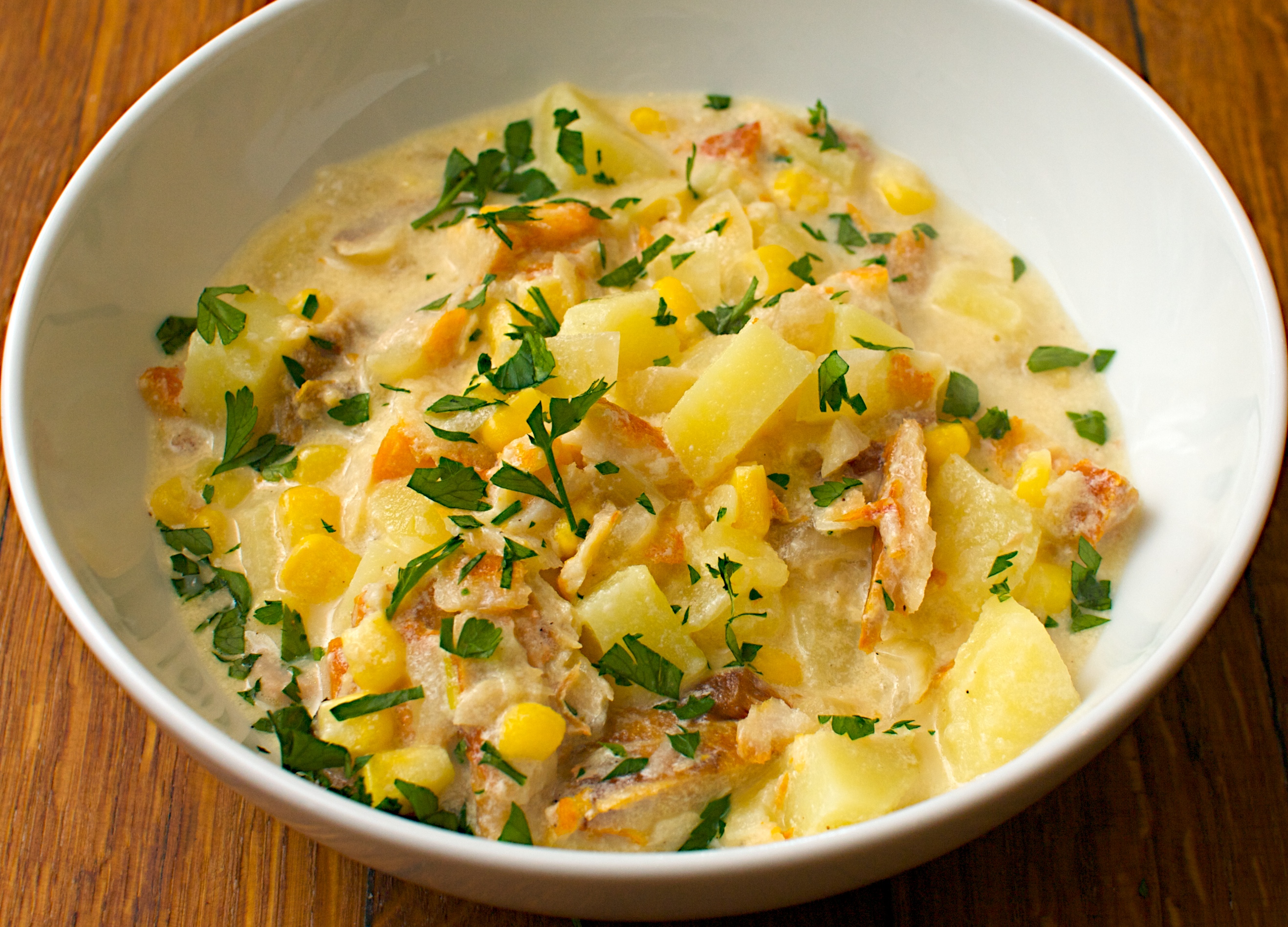
Sweetcorn season is coming to an end but there is still time to make this tasty main course soup.

Sweetcorn & Haddock Chowder – to serve 4

  • 25g butter
  • 1 onion, chopped
  • 8 slices of smoked streaky bacon, chopped
  • 3 medium potatoes, diced
  • 1 litre vegetable stock
  • 2 corn cobs, kernels sliced off
  • 500g skinless smoked haddock, cut into small chunks
  • 5 tbsp double cream
  • handful of parsley, chopped

Melt the butter in a large pot. Fry the onion and bacon for about 5 minutes or until soft. Add the potatoes and cook for another couple of minutes, then pour in the stock and simmer until the potatoes are just tender (about 8 minutes).

Add the corn kernels and smoked haddock. Cook for another few minutes before adding the cream and some black pepper. Add salt if necessary but remember the fish is pretty salty, then stir through the parsley. Serve with crusty bread.

Wine Suggestion: We’ve been having a bit of a debate about this as many white wines could be intimidated or even clash with the smoked fish. We suggest going for a white wine that’s a bit more fruity than what you might pair with an unsmoked fish. Think a Riserva level Pinot Grigio rather than a Muscadet and you should have a treat.

Read Full Post »

This is a Basque inspired dish where fresh fish is cooked really simply over hot coals. Firm fish like Monkfish, or Grouper, will not fall apart as easily so make them perfect for barbecuing. Serve with a green salad and some bread.

Barbecue Monkfish Kebabs – to serve 4

  • 1 kg monkfish fillets, cut into large chunks
  • 12 tbsp olive oil
  • 3 large garlic cloves, thinly sliced
  • 1 tsp dried chilli flakes
  • 4 tbsp white wine vinegar
  • 1 tbsp finely chopped parsley
  • 3 tbsp lemon juice

Light the barbecue and wait until it is really hot before you start cooking.

Thread the monkfish onto 4 metal skewers. Make a marinade using 6 tbsp of the olive oil, the lemon juice, 3 tbsp of the white wine vinegar and 1 tsp salt. Brush this lightly over the kebabs and barbecue until the fish is browned and cooked through. Keep brushing with the marinade as the fish cooks.

Put 6 tbsp olive oil, the garlic and chilli flakes into a small pan and heat over a high heat until the garlic turns golden (but don’t let it go brown as it will turn bitter). Take off the heat and stir in the parsley, 1 tbsp white wine vinegar and ½ tsp salt. Drizzle over the fish and serve.

Drink with: a chilled glass of Txakoli if you can find it. This Basque speciality is hard to find outside Spain but an Albarino from Galicia makes a more than satisfactory substitute.

Read Full Post »

« Newer Posts - Older Posts »