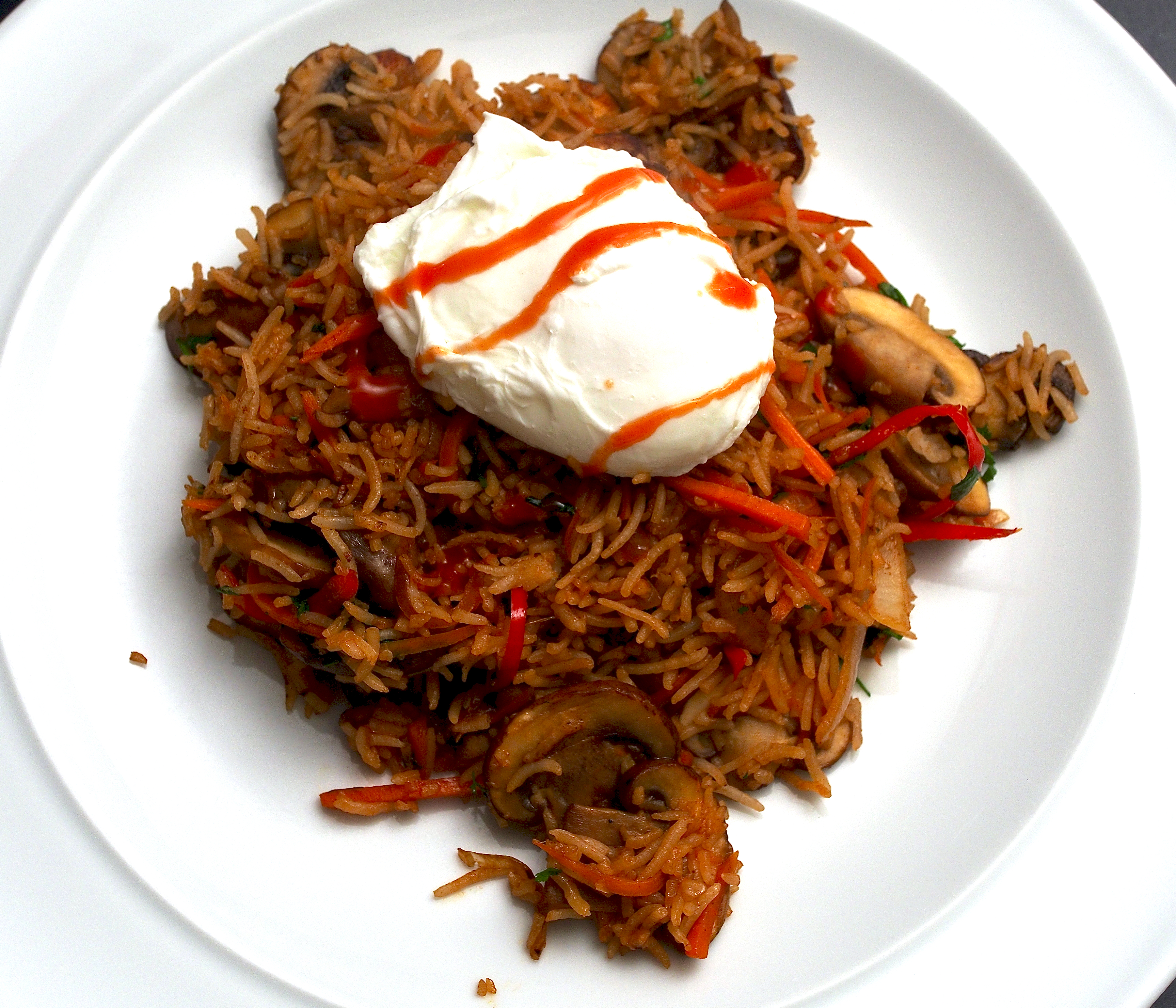
We are forever cooking too much rice and this is our favourite way to use it. It’s also an excellent recipe for using up odds and ends in the fridge.
Nasi goreng with poached eggs – serves 2
1 tbsp olive oil
2 red chillies, shredded
4 shallots or a small onion, finely sliced
1 clove of garlic, finely chopped
1 large carrot, peeled and julienned
150g chestnut mushrooms, sliced
250g pack of ready-cooked rice or leftover cooked rice
2 tsp brown sugar
1 tbsp soy sauce
2 tbsp Asian chilli sauce, plus extra to serve – we use sriracha
a handful of coriander leaves, chopped
2 eggs, poached, to serve
Heat the olive oil in a large non-stick pan or wok.
Cook the chilli, shallots, garlic, carrot and mushrooms for 3-4 minutes.
Add the rice and cook for another 2 minutes, breaking it up with a wooden spoon. Mix the brown sugar with and the chilli sauce until dissolved, then stir through the rice. Stir in the coriander.
Divide the rice between two dishes then top with a poached egg and another drizzle of chilli sauce.
(Original recipe by Janine Ratcliffe in Olive Magazine, December 2012.)
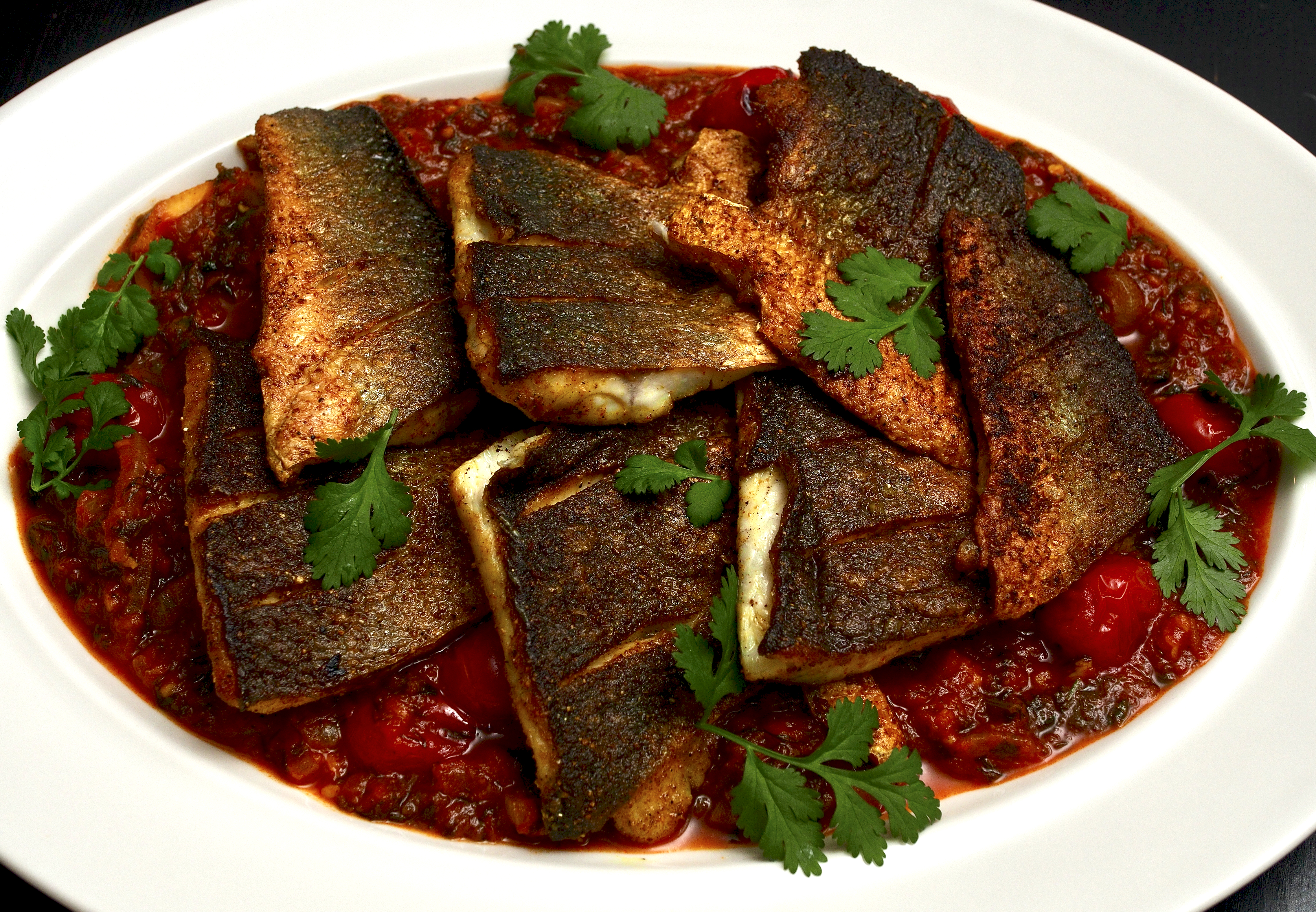
We cooked this fish from Falastin on a Saturday night for our 7 year old, who gets to sit up and have dinner with us at the weekends. Jono’s not too keen on fish skin so I warned him to make sure that Orlaith didn’t see him taking it off, or she wouldn’t eat it either. Orlaith announced very quickly that the skin was the best bit – that’s my girl! Crispy skin is the key and this cooking method delivers it to perfection. Even Jono ate the skin!
Wine Suggestion: A very left-field suggestion tonight, but with some logic: the Herdade de Portacarra Manda Chuva. This is a Blanc de Noirs – a white made from a red grape. In this case Sangiovese which is the logic; this grape works superbly with tomatoes. Interestingly this is from Setubal, in Portugal, and by making a white it makes a great match for both fish and tomatoes.
8 sea bass fillets, skin on, lightly scored and halved widthways at a slight angle
1 onion, thinly sliced
5 garlic cloves, crushed
25g piece of ginger, peeled and finely grated
1 green chilli, finely chopped, including seeds
1 tbsp tomato purée
1 x 400g tin of peeled plum tomatoes, blitzed in a food processor until smooth
1 ½ tsp caster sugar
20g dill, roughly chopped
25g coriander, roughly chopped, plus extra to garnish
400ml chicken stock
150g datterini or cherry tomatoes
½ a lemon, very thinly sliced into rounds
Combine 2 tbsp of oil, 2½ tsp of fish spice mix, 1 tsp of salt and a plenty of black pepper together in a shallow dish. Add the fish pieces, turn to coat and set aside while you make the sauce.
Put 2 tbsp of oil in a large sauté pan and place on a medium-high heat. Add the onion and cook for about 8 minutes, stirring now and then, until softened and browned. Add the garlic, ginger and chilli and cook for another couple of minutes, until fragrant. Add 1½ tsp fish spice mix and the tomato purée and cook for 30 seconds. Add the tinned tomatoes, sugar, two-thirds of the dill and coriander, the stock, 1 tsp of salt and plenty of pepper. Bring to the boil, then lower the heat to medium and cook for 20 minutes, stirring occasionally, or until the sauce is thick and rich. Keep warm on a low heat.
Toss the little tomatoes with 2 tsps of oil. Put a large frying pan on a hight heat, add the tomatoes, and cook for about 4 minutes, shaking the pan a few times, until charred all over. Add the lemon slices and cook for another 2-3 minutes, shaking the pan a few times. Add this to the tomato sauce along with the remaining herbs and keep warm until ready to serve.
Wipe the frying pan clean and put over a medium-high heat with 1½ tsp of oil. Add a quarter of the sea bass fillets, skin side down, press them gently if necessary to stop them curling. Cook for 4 minutes, or until the skin is crisp and browned, then flip the fish over in the pan. Cook for another 30 seconds, then transfer to a warm plate. Repeat until all the fish is cooked.
Divide the sauce between 4 plates and top with the sea bass. Sprinkle over some coriander leaves to serve.
(Original recipe from Falastin by Sami Tamimi and Tara Wigley, Ebury Press, 2020.)
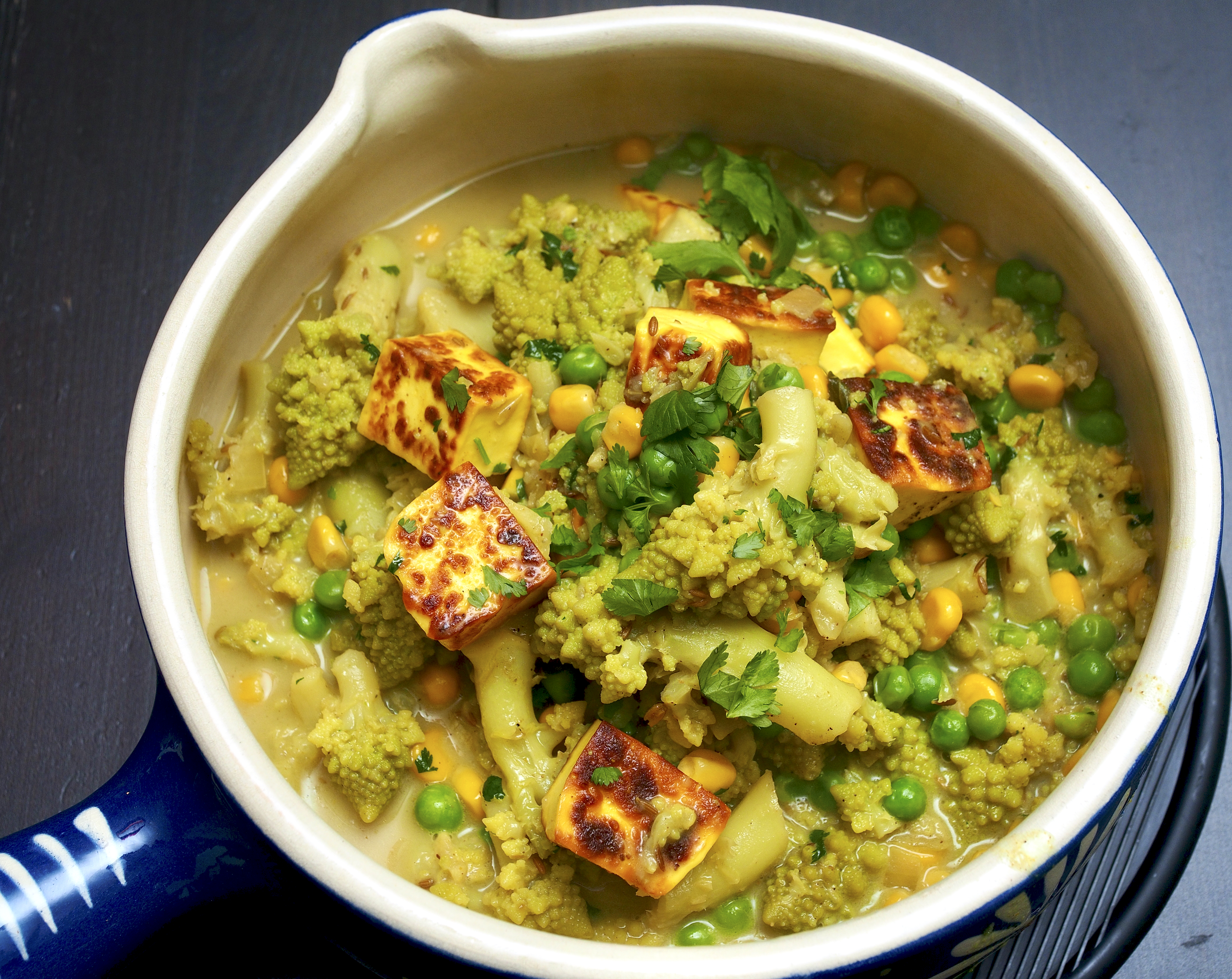
Romanesco has a short season so it’s a grab it when you can sort of vegetable. This means we usually just steam it but we came across this veggie curry recipe by Tom Kerridge and it was the perfect weeknight bowl of goodness.
Wine Suggestion: This works with lighter whites like the La Piuma Pecorino from Italy, but can see it working with so many other whites. Balanced, easy fruit, medium bodied and with enough texture, like Italian whites tend to have, except for Pinot Grigio.
Romanesco, corn and coconut curry – serves 4
2 tbsp vegetable oil
2 tsp cumin seeds
1 onion, finely chopped
4 garlic cloves, finely chopped
2 tsp ground coriander
1 tsp ground turmeric
1 tsp garam masala
500g romanesco, cut into florets
300ml vegetable stock
400ml coconut milk
350g tin sweetcorn, drained
200g frozen peas
a handful of coriander, chopped
1 long red chilli, finely sliced
cooked rice, to serve
FOR THE FRIED PANEER:
225g paneer, cut into cubes
½ tsp ground turmeric
½ tsp sea salt
1 tbsp vegetable oil
Heat the oil in a wide, deep frying pan. Add the cumin seeds and sizzle for a few seconds, then add the onion. Cook for 5 minutes, then add the garlic and cook for another 2 minutes.
Turn the heat down, then add the ground spices and stir for 1 minute, then add the romanesco and stir-fry for 1 minute. Pour in the veg stock and half the coconut milk and cook for 20 minutes.
Meanwhile, cook the paneer. Put it into a bowl and mix with the turmeric and salt. Heat the oil in a non-stick frying pan over a medium heat. Add the paneer and cook until browned, 5-8 minutes, then remove from the heat.
Add the rest of the coconut milk to the romanesco and stir in the sweetcorn, peas, fried paneer and half the coriander. Bring to a simmer and cook gently for 5 minutes. Season to taste.
Serve scattered with the chilli and the rest of the coriander.
(Original recipe from Tom Kerridge’s Fresh Start, Bloomsbury Absolute, 2018.)
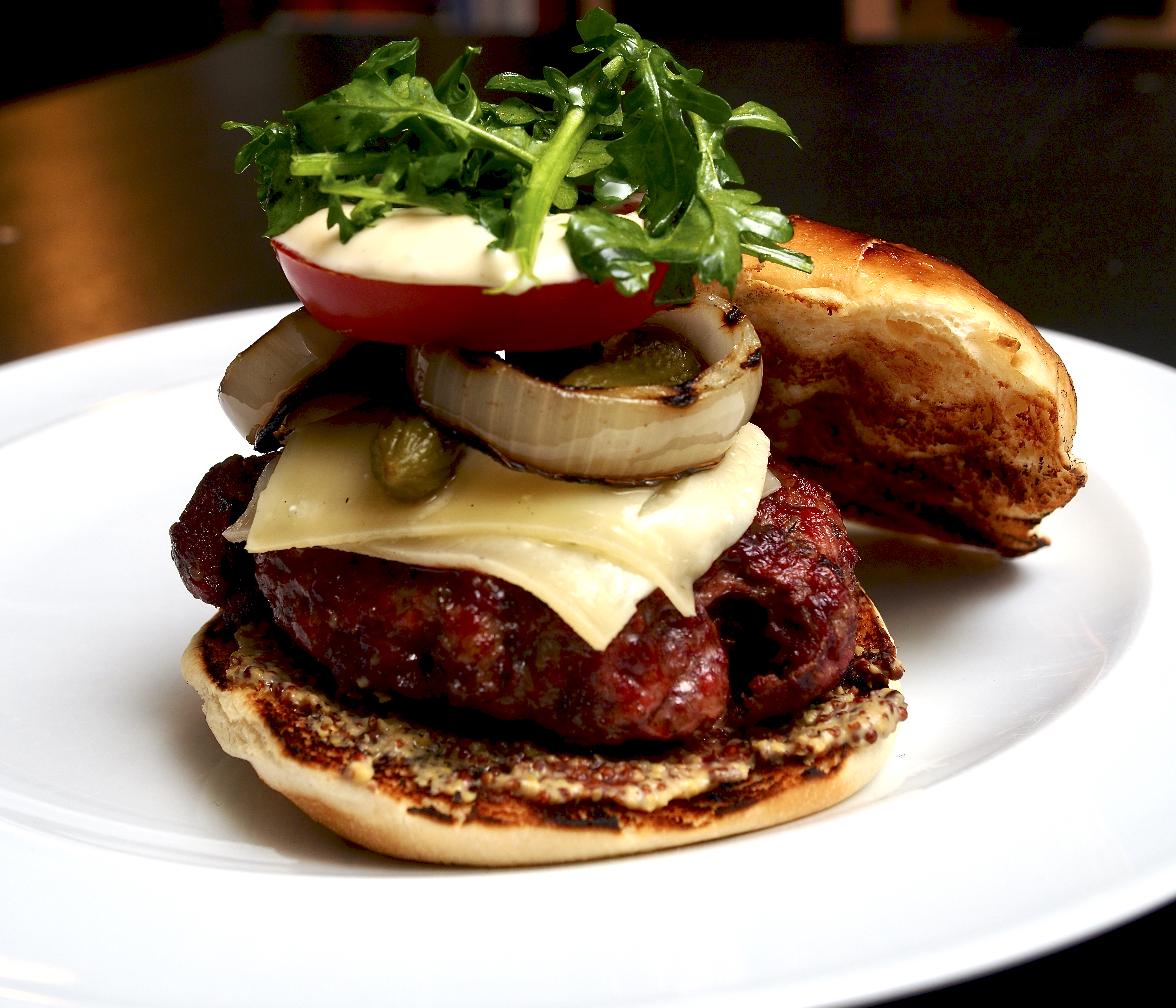
We were offered two dead wild ducks a few weeks ago, feathers and all. Our friend Niall kindly dealt with the feathers and delivered a bag of fresh duck breasts and legs to our door. Lucky us! We minced the duck meat with a bit of pork fat (you could use duck skin too if you have it) and made these burgers seasoned with Rick Stein’s pepper mix, which we’re looking forward to seasoning all sorts of things with. We bought the dried chillies in a Mexican food shop but you should be able to get them online too. Best served with fries.
Wine Suggestion: Choose a medium bodied red with refined tannins for this dish. Despite the Mexican chillies in the spice mix this is a very French inspired meal, one you might easily find on holiday there. So for this we chose our favourite, the Chateau du Hureau Saumur-Champigny “Tuffe”. Cabernet Franc from the Loire at it’s best and a good match.
Duck burgers – serves 4
800 duck meat (breast, leg or both), plus about 100-150g fat and skin if you have it, or some pork fat
½ tsp salt
1 tsp Rick’s peppermix (see below)
80g cheese e.g. Comté or Gruyère, cut into slices
4 brioche burger buns
2-3 tsp grainy mustard
a large handful of rocket
1 tsp walnut oil (or just use good olive oil)
1 small onion, finely sliced (we’re not so keen on raw onion in our burgers so we cut the onion into chunky slices, rub with some seasoning a little oil and barbecue on soft and charred)
1 dill pickle, sliced (we used cornichons)
1 large tomato, sliced
2 tbsp mustard mayonnaise (mix a little Dijon mustard into good-quality mayonnaise)
FOR THE PEPPERMIX:
1 chipotle chilli, seeds removed
1 pasilla chilli, seeds removed
2 tbsp black peppercorns
2 tbsp white peppercorns
2 tsp Szechuan peppercorns
1 tbsp salt
Make the peppermix by blitzing all of the ingredients together in a spice grinder. Store in a jar and use to season other things, it’s great on a steak.
If there is fat on the duck, pull it off and mince the meat with about 100-150g of fat and the skin (we didn’t have fat and skin so we added a bit of pork fat instead). Season the mince with the salt and 1 tsp of the peppermix. Damp your hands a bit and make four burgers. Cover and leave them in the fridge for an hour or so to firm up.
You can cook the burgers on a hot barbecue or if you prefer to cook indoors a griddle pan or non-stick frying pan over a high heat. Cook the burgers for a few minutes on each side, then add a slice of cheese to each, turn of the heat and leave to sit for a minute to let the cheese melt.
Lightly toast the buns and spread the cut surfaces with grainy mustard. Dress the rocket with a little walnut oil or good olive oil.
Serve the burgers on a bun topped with onion, cornichon/dill pickle, tomato, mustard mayonnaise and rocket. Serve with fries.
(Original recipe from Rick Stein’s Secret France, BBC Books, 2019.)
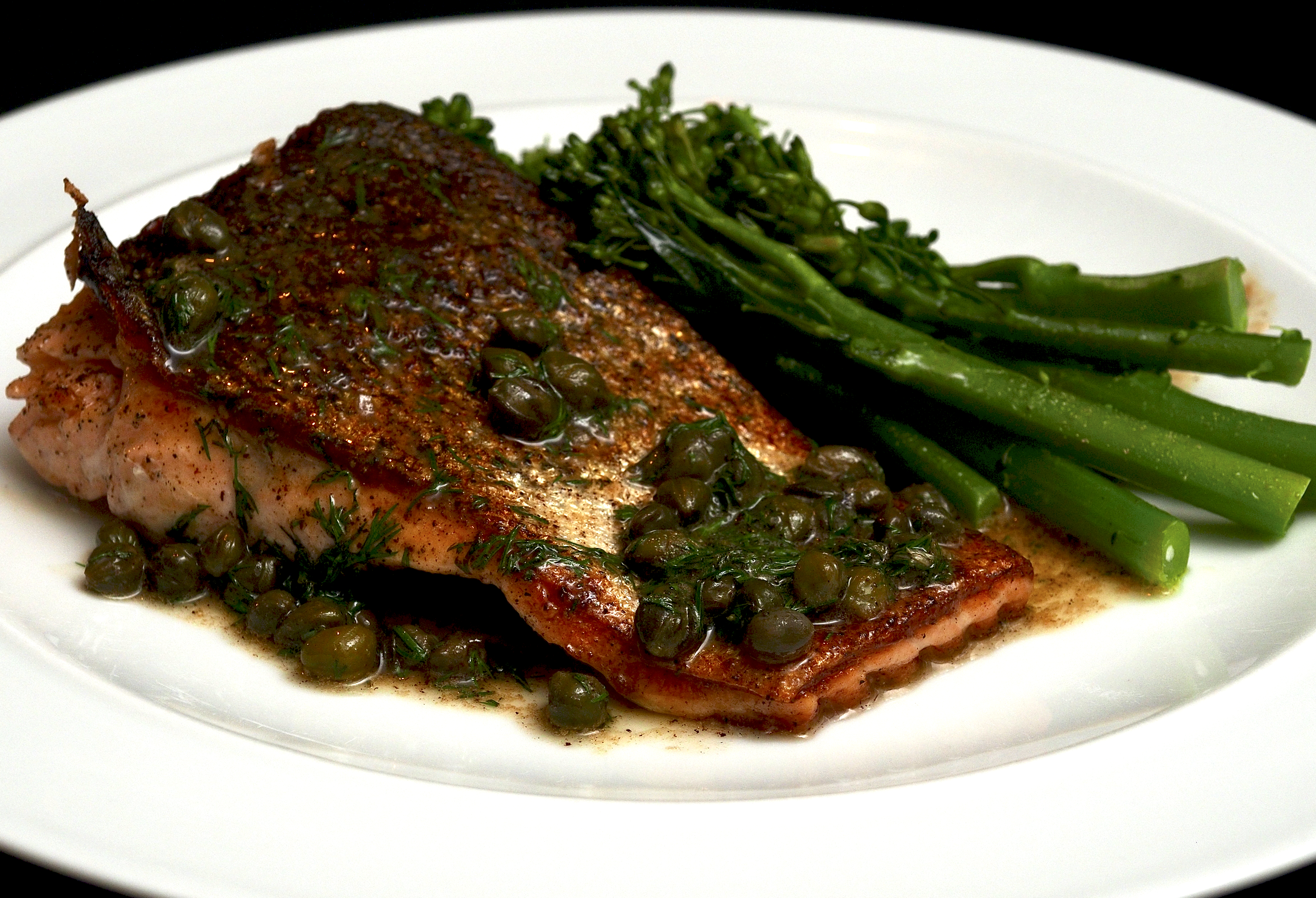
We like weeknight dishes that use fresh dill, like this one, particularly helpful as we often have leftover dill from the weekend. We never mind as we just love the lift dill can bring and hate to waste it. Don’t be tempted to turn the salmon too soon, you want nice crispy skin.
Wine Suggestion: A number of Italian whites have a good affinity to fish and capers so we chose a favourite, the Graziano Prá Soave Classico “Otto”. A DOC with a number of standout winemakers like Prá championing the local grape Garganega; green apple, hints of almond, a mid-weight and refreshing, textured finish.
Salmon with capers & dill – serves 4
50g butter, diced
4 x salmon fillets, preferably with the skin on, seasoned with salt and pepper
4 tbsp capers, drained and rinsed
2 tbsp lemon juice mixed with 6-8 tbsp water
4 tsp chopped dill
Heat a frying pan over a medium-high heat, then add a couple of knobs of butter and add the salmon fillets, skin side down. Fry for 3-4 minutes or until crispy and browned underneath, then turn over and continue to cook for a couple of minutes or until cooked through.
Add the capers, the rest of the butter and the lemon juice mixed with water, boil for 1 minute. Season to taste, then transfer the salmon onto warmed plates, stir in the chopped dill and pour over the fish to serve.
(Original recipe by Rachel Allen in BBC Good Food Magazine, November 2011.)
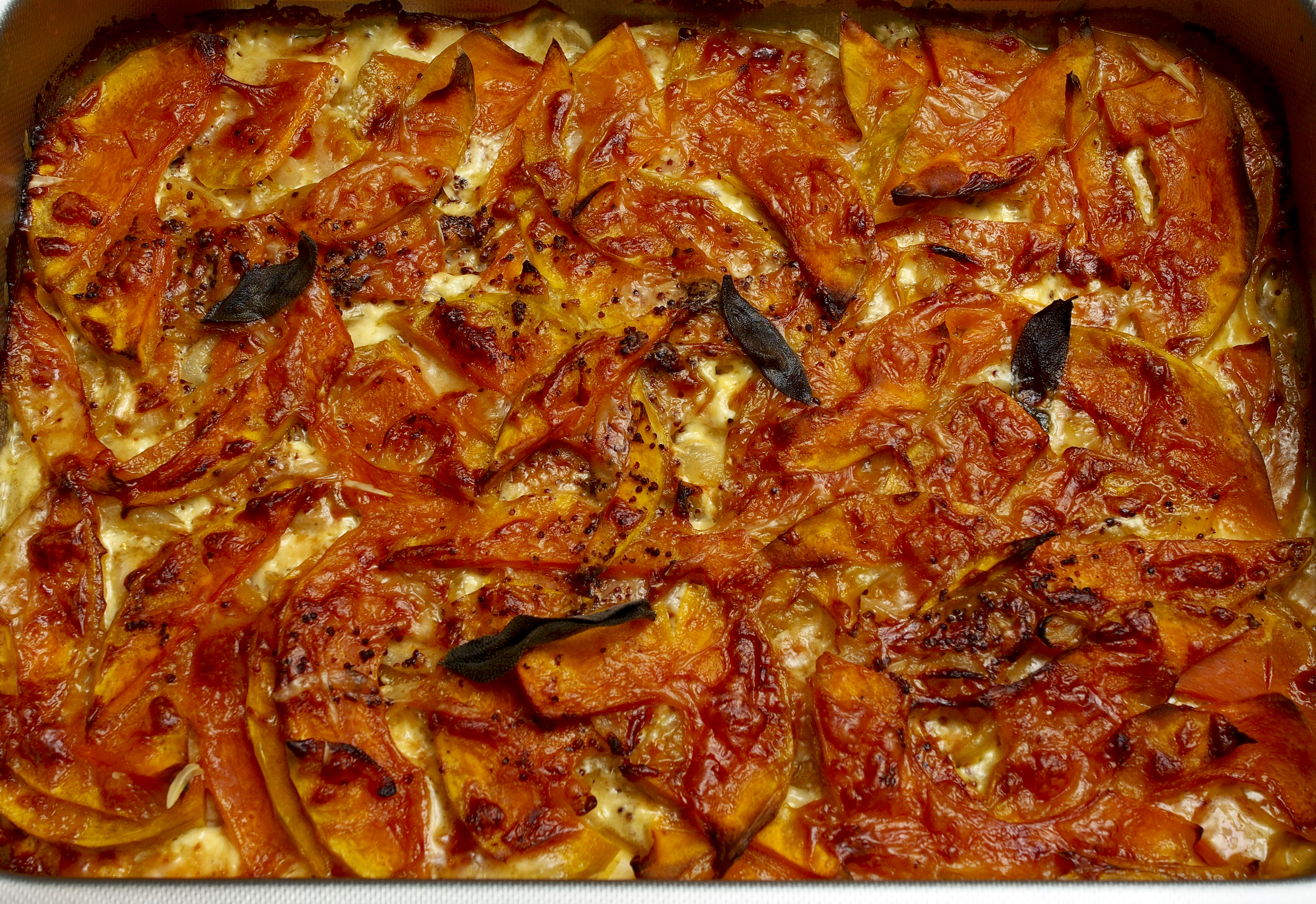
We made a vat of this last night, which is fine because it is really nice. Still, we’re looking forward to sharing dishes with other people again. Our preferred pumpkin is a Crown Prince but you can use butternut squash if that is what’s available. We served this with a cabbage dish and some roast potatoes but it would be super with sausages or chicken or any roast really.
Pumpkin, mustard & Gruyère gratin – serves 4 to 6
a small knob of butter
1 tbsp olive oil
2 onions, halved and thinly sliced
2 cloves of garlic, peeled and squashed
8 sage leaves
300ml pot double cream
200ml milk
2 tbsp wholegrain mustard
pumpkin, about 1kg prepared weight
100g Gruyère, grated
Heat the butter and oil in a large frying pan. Add the onions and cook gently for 10-15 minutes or until soft and golden.
Meanwhile, put the garlic and half the sage into a saucepan, add the cream and milk and heat gently for 5 minutes but don’t let it boil. Remove from the heat and leave to infuse for 10 minutes, then throw away the sage and garlic, stir in the mustard and add plenty of seasoning.
Heat the oven to 180C/160C fan/gas 4.
Layer the pumpkin slices, onions, most of the cheese and the cream in a very large baking dish or roasting tray, finishing with a layer of cream and some cheese scattered on top. Cover with foil and bake for 45 minutes.
Uncover and increase the heat to 200C/180C fan/gas 6. Cook for another 20-30 minutes or until golden brown and completely tender. Leave to cool for 10 minutes before serving.
This is a lovely side dish and it was hard not to eat all the roasted Romanesco before it got to the plate. Then you add garlicky tahini sauce and pomegranate seeds … delicious!
We just love the fractal patterened shape of these too. We’ve recently discovered that pomegranate seeds freeze well. Dry them well and spread them over a tray lined with paper, transfer to a bag or tub when frozen.
Roast Romanesco Cauliflower with Tahini and Pomegranates – serves 4
2 heads of Romanesco cauliflower, cut into florets
4 tbsp light olive oil
1 tsp ground cumin
1 tsp ground allspice
2 tbsp pomegranate seeds
FOR THE SAUCE:
75g tahini
4 tbsp lemon juice
1 clove of garlic, crushed
Heat the oven to 200C/180C/Gas 6.
Spread the florets out over a large baking tray. Drizzle with the olive oil and sprinkle with the cumin and allspice. Season with plenty of salt and pepper then toss well to coat.
Roast for 20-30 minutes in the hot oven until tender but firm, give them a toss half way through, then remove from the oven and leave to cool slightly.
To make the tahini sauce mix the tahini, lemon juice and garlic with 100ml of water in a bowl, until smooth and runny.
Put the tahini onto a serving platter, drizzle with the sauce and sprinkle over the pomegranate seeds.
(Original recipe from Zaitoun by Yasmin Khan, Bloomsbury, 2018.)
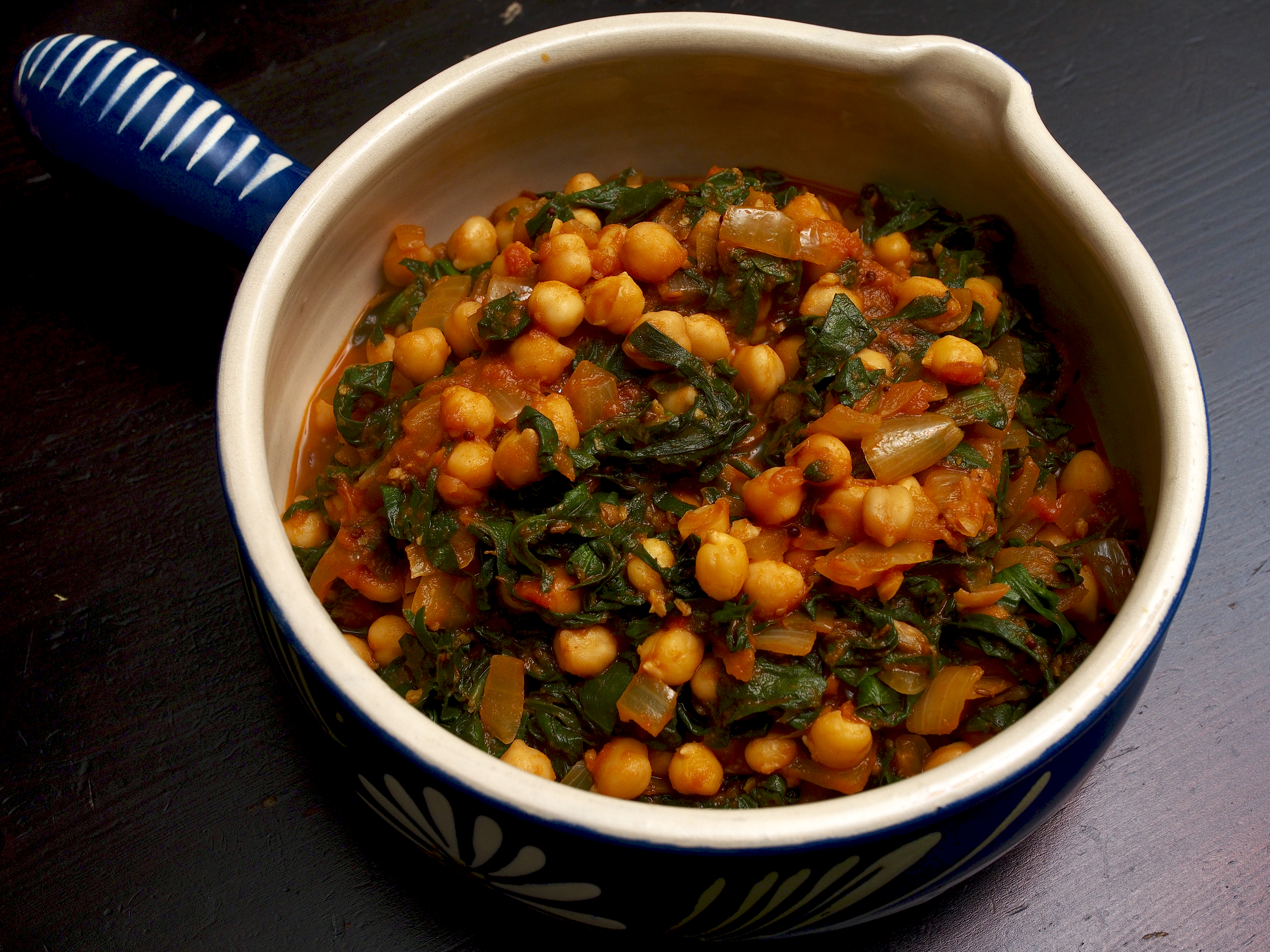
We adore spinach and dishes that are full of it, like this spinach, tomato & chickpea curry. Great served with rice or naan breads and some yoghurt. Couldn’t be easier!
Wine Suggestion: A dish like this loves medium weight Grenache based wines like Roc des Anges, l’Effet de Papillon rouge. A velvety, juicy, damson and raspberry flavoured glass with hints of spice.
Heat the oil in a large pan over a medium heat, then add the mustard seeds and cumin seeds. Stir for a minute, then add the chopped onions.
Fry for 10 to 12 minutes or until starting to caramelise, then add the garlic and ginger. Stir-fry for a few minutes, then add the tomatoes, crushing them with you hand as they go in. Fill the tin a third full with water and add to the pan.
Cook for 10 minutes or until quite dry and paste-like, then add the chickpeas. Warm through for a few minutes, then add the coriander, chilli powder, turmeric and salt. Stir well to combine, then add the spinach and stir until wilted.
Cook for about 5 minutes or until the spinach is cooked. Serve with naan bread or basmati rice and some yoghurt.
(Original recipe from Fresh India by Meeera Sodha, Fig Tree, 2016.)
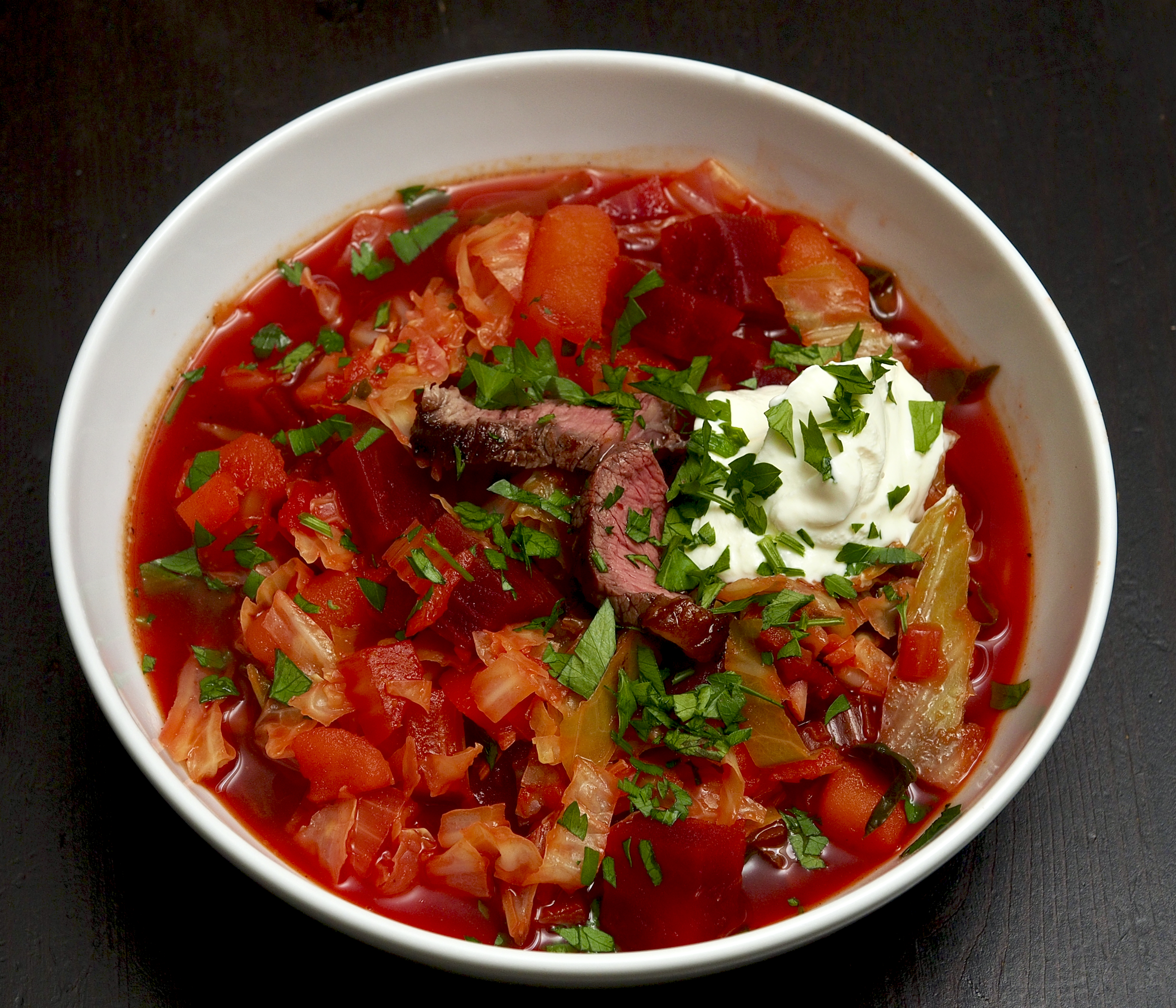
We often grate baby beetroots over salads in the summer months. In winter time they’re often a bit big and intimidating, and you have to buy them in a whole bunch. So here’s some beetroot inspiration in case you’ve got some in your veg box this week. This tastes even better the following day.
Borsht – serves 4 to 6
1 tbsp vegetable oil or 15g of butter
3 medium beetroots (about 450g unpeeled weight), peeled and diced
1 large carrot, diced
1 celery stick, diced
1 large waxy potato, diced
1 onion, finely chopped
2 cloves of garlic, finely chopped
1.5 litres beef stock
½ green cabbage, finely shredded
2 tomatoes, peeled and chopped or 2 tbsp from a tin of tomatoes
TO SERVE:
300g sirloin steak, trimmed of fat
sour cream or crème fraîche
dill (we substituted parsley but do use dill if you can)
Heat the oil or butter in a large heavy saucepan. Add the beetroot, carrot, celery, potato, onion and garlic, and sauté for a couple of minutes or until combined and coasted in fat.
Pour in the stock and season. Bring the soup almost to the boil, then cover and simmer for 15 minutes. Add the cabbage and tomatoes, put the lid back on and simmer for another 20 minutes. Season to taste.
About 10 minutes before serving, cook the steak on a hot griddle pan for a couple of minute on each side. Leave to rest for 5 minutes, then slice really thinly and add any meat juices to the soup.
Divide the steak between the bowls and ladle the soup on top. Serve with some sour cream and dill on top.
(Original recipe by The Hairy Bikers in BBC Good Food Magazine, October 2015.)
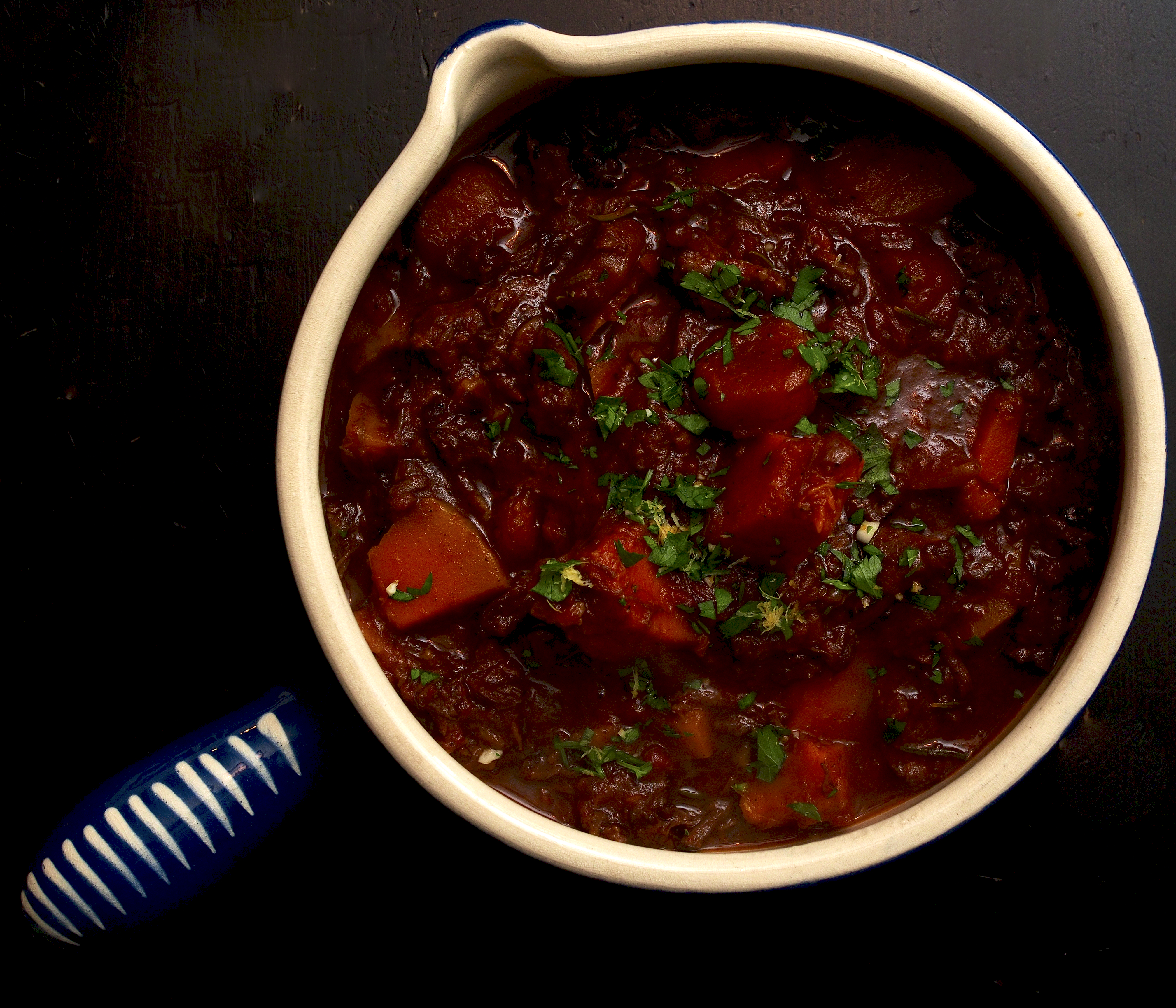
We cooked this for dinner on Halloween, you need a good eating pumpkin, like Crown Prince, rather than a carving pumpkin. The oxtail is a bit of a fiddle but it’s worth it and you can do all the fiddly bits well in advance. The result is fabulously rich and tasty.
Wine Suggestion: to cut through the richness you need a red with both a bit of acidity and tannins and a favourite of ours for this purpose is Chianti. Tonight the Pian del Ciampolo from Montevertine in the Chianti Classico region who have stepped outside the system but still use the classic grapes for the appellation. Young and joyful but with a serious backbone and a good match for the dish.
Oxtail stew with pumpkin and cinnamon – serves 6
2kg oxtail pieces
200g shallots, roughly chopped
3 large carrots, roughly chopped
2 garlic cloves, crushed
400ml red wine
2 x 400g tins chopped tomatoes
10 sprigs of thyme
5 sprigs of rosemary
zest of ½ an orange, peeled into long strips
2 bay leaves
2 cinnamon sticks
2 star anise
1 tsp ground black pepper
500g pumpkin, cut into 2.5 cm cubes (you could use butternut squash but try and get pumpkin if you can)
300ml water
FOR THE GREMOLATA
2 tbsp roughly chopped parsley
grated zest of 1 large lemon
2 cloves of garlic, crushed
Preheat the oven to 180C/Gas Mark 4.
Heat a large heavy-based pan over a high heat, it needs to be big enough to hold the whole stew later, and add 2 tbsp of olive oil. When the oil is smoking hot add some oxtail pieces and fry until well browned on all sides. You will need to do this in batches and don’t put too many in at once or they will start to stew rather than fry. Transfer the browned pieces to a colander so the excess fat can drain off.
If there is a lot of fat in the pan, tip some of it off, then add the shallots, carrots and garlic. Cook these over a medium-high heat for about 10 minutes, until golden brown.
Add the wine to the pan and scrape the base with a wooden spoon to get any crusty tasty bits off the bottom. Bring to the boil and simmer until almost evaporated, then add the tomatoes. Tie the thyme and rosemary sprigs together and add to the sauce, then add the orange zest, bay leaves, cinnamon, star anise, black pepper and some salt. Transfer the sauce to a deep baking dish or roasting tray big enough to take the oxtail in a single layer. Set the oxtail pieces on top. Put a sheet of baking parchment directly over the oxtail, then cover with a tight-fitting lid or a couple of layers of tinfoil, then bake for 2-3 hours or until the meat comes away easily from the bone.
Lift the oxtail out of the sauce and into a large bowl, then leave to cool slightly. When it’s cool enough to handle, pick all the meat from the bones and put into the heavy-based pan that you used to brown it in, discard the fatty bits and the bones. Add the sauce from the baking tray to the meat along with the pumpkin cubes and the 300ml of water. Bring to the boil, then reduce the heat and simmer for 30 minutes or until the pumpkin is soft. Season to taste.
To make the gremolata, mix the parsley, lemon zest and garlic together. Transfer the stew to a serving bowl and sprinkle the gremolata on top.
(Original recipe from Ottolenghi the Cookbook by Yotam Ottolenghi and Sami Tamimi, Ebury Press, 2008.)
You will need a wide heavy-based casserole dish for this as you ideally want the cabbage rolls in one layer. Make sure you season every component generously as you go. If you follow the suggestion of putting just 50g of the filling in each cabbage leaf (as you should or they will be impossible to roll), you will have too much. You can either stuff a few extra leaves or put the stuffing in the freezer for another day, which is what we did. This is a traditional Ukranian dish from Mamushka by Olia Hercules. The barberries are optional and we couldn’t find them so made the dish without, still delicious!
Wine Suggestion: We couldn’t pass up a hearty red for this dish, and a new favourite, the Parker Coonawarra Shiraz; full bodied and yet elegant and effortless with that characteristic eucalyptus twist, well recommended.
Stuffed Cabbage Leaves – serves 4 to 6
2 tbsp sunflower oil
1 large onion, finely diced
1 carrot, peeled and grated
1 tsp caster sugar
1 tbsp tomato purée
1 fresh bay leaf
400g tin chopped tomatoes
400ml water
1 Savoy cabbage, 12 leaves separated, cut out the thicker part of the spine with a sharp knife or scissors
250g beef mince
250g pork mince
160g white long-grain rice, parboiled for 5 minutes and drained
40g barberries (optional)
a small bunch of dill, chopped, to serve
100ml sour cream, to serve
Heat the sunflower oil in a large heavy-based casserole dish. Add half the chopped onion and all of the grated carrot and cook over a medium heat for 5-10 minutes until soft. Add the sugar and tomato purée and cook for 1 minute. Add the bay leaf, tomatoes and water, then season well with salt and pepper. You can turn it off at this point while you prepare the cabbage leaves but bring it back up to a simmer when you’re ready to add the cabbage to the dish.
Blanch the cabbage leaves in lots of boiling salty water for 2 minutes, then refresh in cold water and drain well on kitchen paper. It’s easier to do this in a few batches.
Mix the beef mince, pork mince, parboiled rice, barberries (if using), plenty of salt and pepper and the rest of the onion together in a bowl. Put 50g of the filling on each cabbage leaf and fold up into a parcel.
Lay the parcels on top of the sauce with the folded side facing down. You want them to fit quite snugly so they don’t unravel. Cover and cook over a low heat for about 45 minutes or until cooked through. You can leave the lid off at the end to reduce the sauce a bit if you like.
Serve with chopped dill and sour cream.
(Original recipe from Mamushka by Olia Hercules, Mitchell Beazley, 2015.)
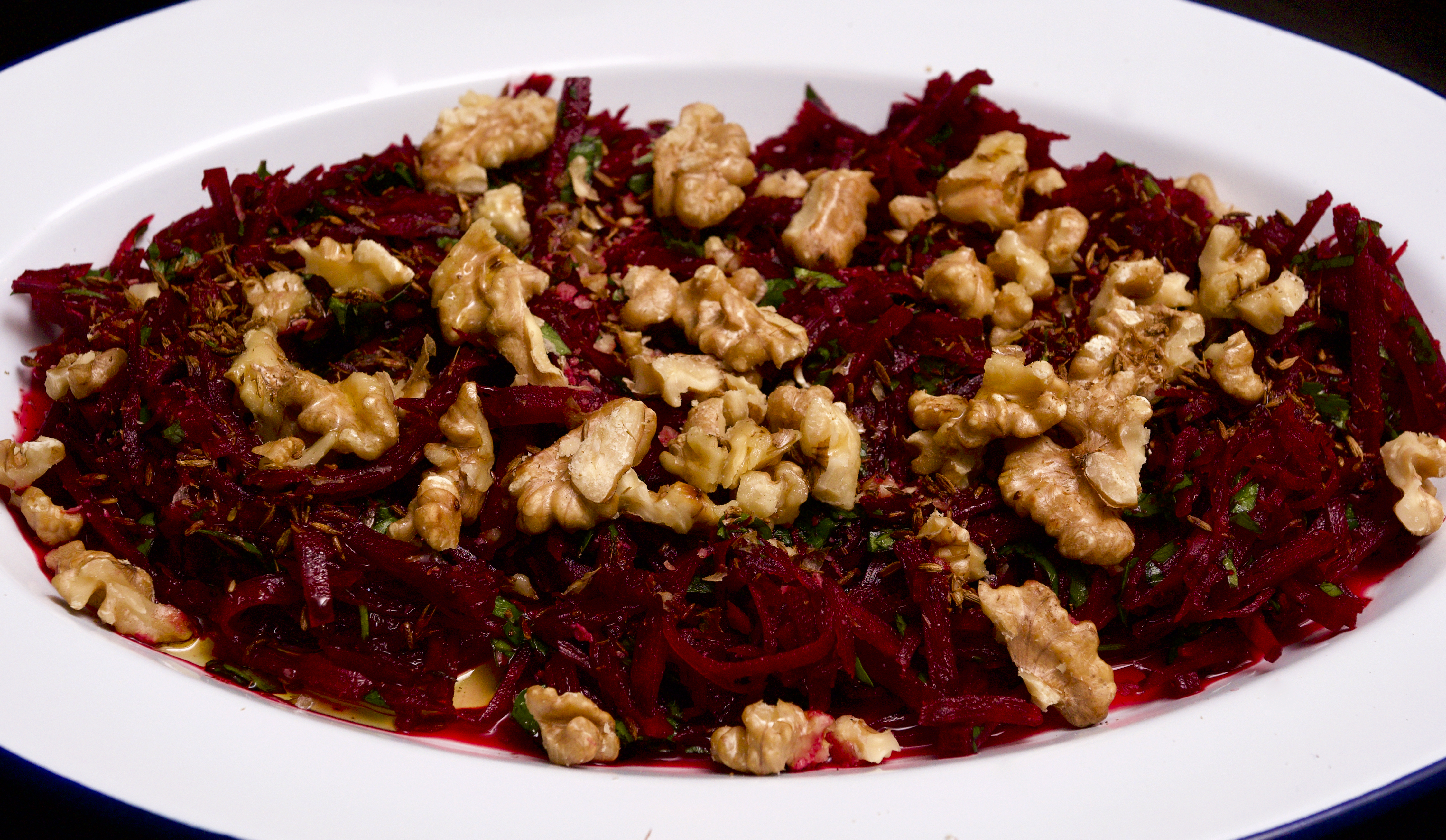
A nice salad using raw beetroot. It tastes really fresh and good for you.
Beetroot with walnuts and cumin – serves 4
75g walnuts
1 tsp cumin seeds
about 400g beetroot
a handful of parsley, chopped
juice of 1 small orange
a squeeze of lemon juice
2 tbsp rapeseed oil
Heat a dry frying pan over a medium heat and gently toast the walnuts for a few minutes, until toasted and starting to colour. Remove from the pan and add the cumin seeds. Toast these for 1-2 minutes, until fragrant, then tip onto a plate.
Peel the beetroot and grate it coarsely into a bowl. Add the parsley, orange juice and a squeeze of lemon juice, 1 tbsp rapeseed oil and salt and pepper. Mix and season again to taste. Leave for 20 minutes or so to marinate and soften.
Spread the beetroot over a serving dish. Bash the toasted walnuts roughly and scatter over the beetroot. Bash the toasted cumin seeds too, then scatter over the salad.
Finish with another drizzle of oil.
(Original recipe from River Cottage Veg Everyday! by Hugh Fearnley-Whittingstall, Bloomsbury, 2011.)
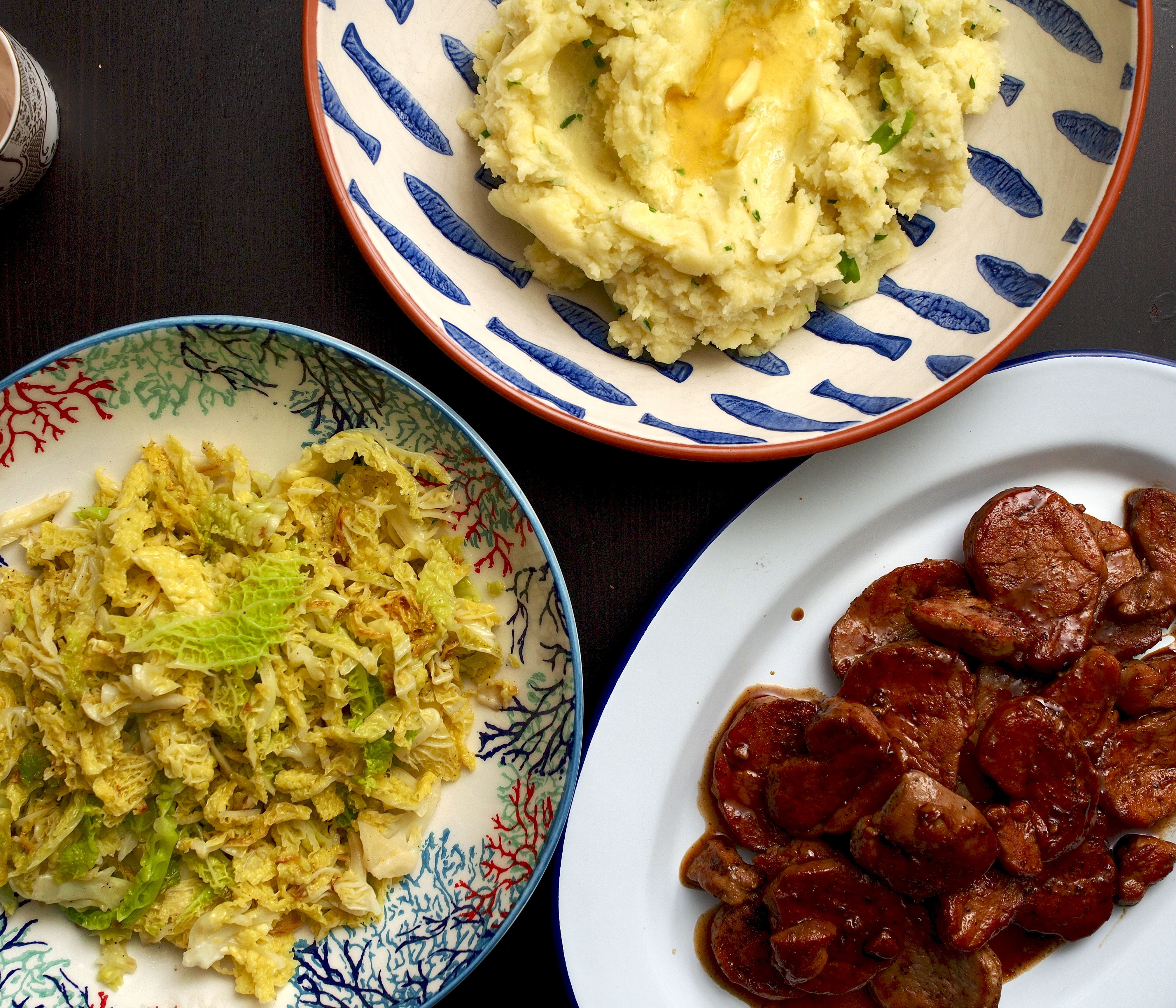
We don’t often cook dishes more than once but we always make a note on the recipe, telling us when we cooked it and what we thought of it. The last time we cooked this, or Jules did, was on the 16th August 2005. She thought it was very good then, and we both thought it was very good this time round too. We served with champ and sautéed cabbage.
Wine Suggestion: Despite Marsala hailing from Sicily we quite like a nice red Côtes du Rhône or similar with this dish. If you’re fortunate to find Domaine Jamet’s version made with 100% Syrah then snap up a bottle and then make this.
Sautéed pork medallions with Marsala – serves 4
2 pork fillets, about 1kg in total
4 tbsp sunflower oil
150ml sweet Marsala
Cut the pork into medallions, about 1cm thick. Season with salt and pepper.
Heat the sunflower oil in a large frying pan, add the pork and sauté quickly over a high heat to brown on both sides. We find it’s much easier to do this in a few batches.
Return all the pork to the pan, add another bit of seasoning, then pour in the Marsala. Cook for a few minutes, or until the meat is cooked through and the liquid slightly reduced. Keep an eye on it as it the sauce will reduce quickly.
(Original recipe from Foolproof Mediterranean Cookery by Claudia Roden, BBC Worldwide Ltd, 2003.)
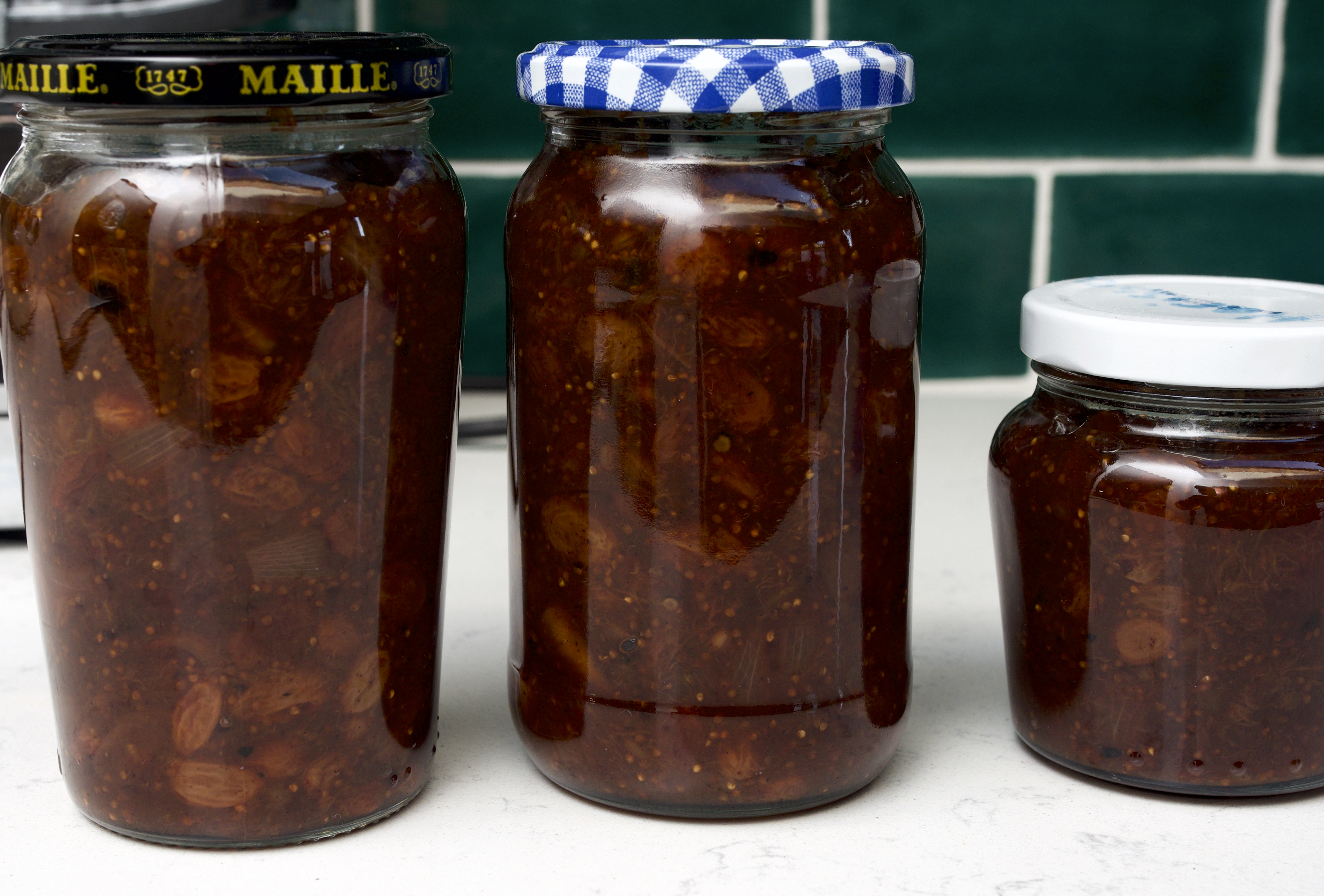
This is Nigel Slater’s dark and sticky fruit chutney from Kitchen Diaries II. The chutney is nice with cheese or cold cuts. Figs are expensive but they don’t keep for long so you often find them reduced to clear in shops.
A dark and stick fruit chutney – makes a few jars
250g soft brown sugar
8 large figs, about 1kg, roughly chopped and stalks removed
150ml malt vinegar
150ml cider vinegar
250g chopped onions
250g sultanas
1 tsp salt
1 tsp allspice
half a tsp black peppercorns, cracked
1 tsp coriander seeds
Warm the sugar in a bowl in a low oven.
Put the chopped figs into a large, stainless steel or enamelled saucepan. Add the vinegars, onions, sultanas, salt, allspice, cracked peppercorns and coriander seeds, then bring to the boil. Simmer for 30 minutes, until the onions and fruit are soft.
Stir in the sugar. Bring slowly to the boil, then turn the heat down and allow to bubble very gently. Cook for 10-15 minutes, stirring now and then to prevent it sticking, until thick and jam consistency. Bottle while hot and seal.
(Original recipe from The Kitchen Diaries II by Nigel Slater, Fourth Estate, 2012.)
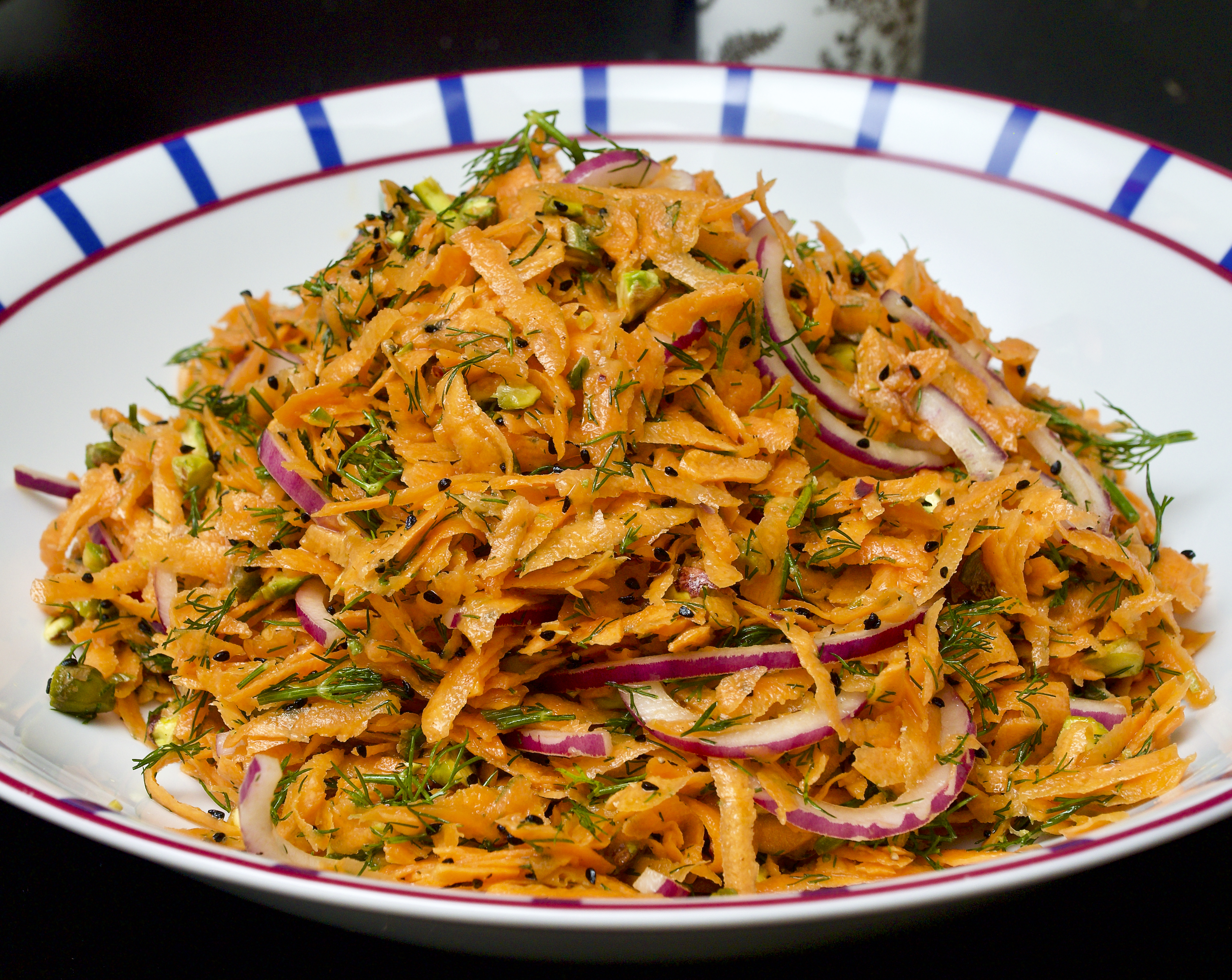
This is a good side dish to serve with richer dishes. It’s light and zingy which is just what’s needed sometimes. Another great combination of flavours suggested by Sabrina Ghayour.
Carrot, pistachio & dill salad with lime & honey dressing – serves 4 to 6
500g carrots, coarsely grated
½ a small red onion, thinly sliced
75g pistachio nuts, roughly chopped
about 30g of dill, finely chopped
2 tsp nigella seeds
FOR THE DRESSING:
2 tbsp olive oil
finely grated zest and juice of 1 lime
1 generous tbsp of runny honey
Mix all the dressing ingredients together and season well with sea salt and black pepper.
Put the other ingredients into a large bowl. Add the dressing when you’re ready to serve and toss gently to coat. Check the seasoning and serve.
(Original recipe from Simply by Sabrina Ghayour, Mitchell Beazley, 2020.)
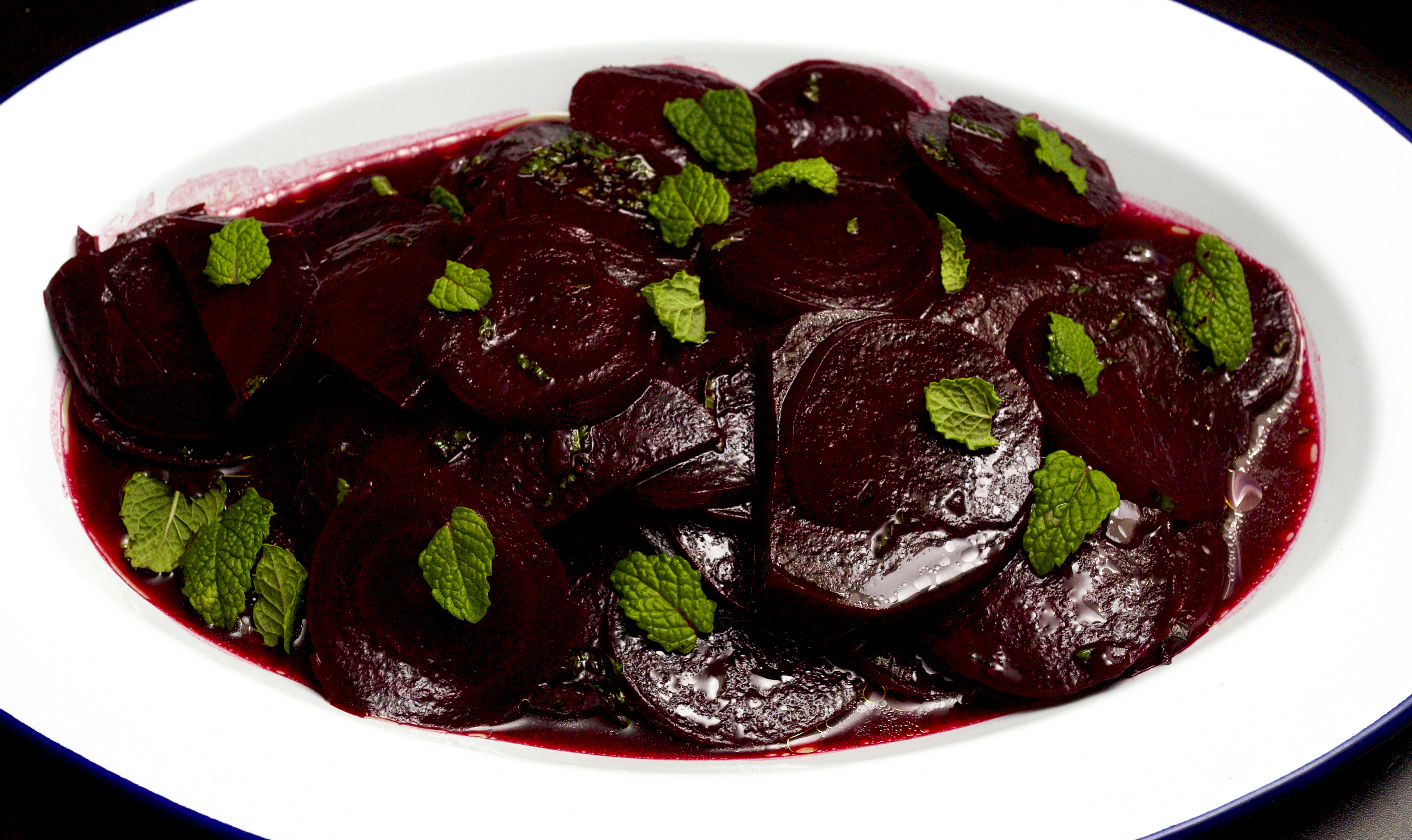
You need cooked beetroots for this. You can of course buy them pre-cooked in vac packs but they’re much nicer when you cook them fresh. Just give them a good scrub, dry with paper and wrap in tin foil. Roast for about an hour (or as long as it takes) at 200ºC. Let them cool before making the salad. We served this with roast chicken and the next day with a ham salad. Make this up at least an hour in advance to allow the flavours to mingle.
Beetroot & mint salad – serves 4 to 6
4 tsp caster sugar
4 tbsp balsamic vinegar
juice of 2 lemons
4 tbsp extra virgin olive oil
12 cooked beetroots, finely sliced into rounds
a small bunch of mint leaves
Whisk the sugar, vinegar, lemon juice, olive oil and a pinch of salt in a small bowl.
Put the sliced beetroot into a bowl. Roughly chop half the mint leaves, and add to the beetroots before pouring over the dressing. Leave in the fridge for an hour or so.
To serve, drain off some of the marinade, arrange the slices on a platter and scatter over the rest of the mint.
(Original recipe from Skye McAlpine’s A Table for Friends: The Art of Cooking for Two or Twenty, Bloomsbury, 2020.)
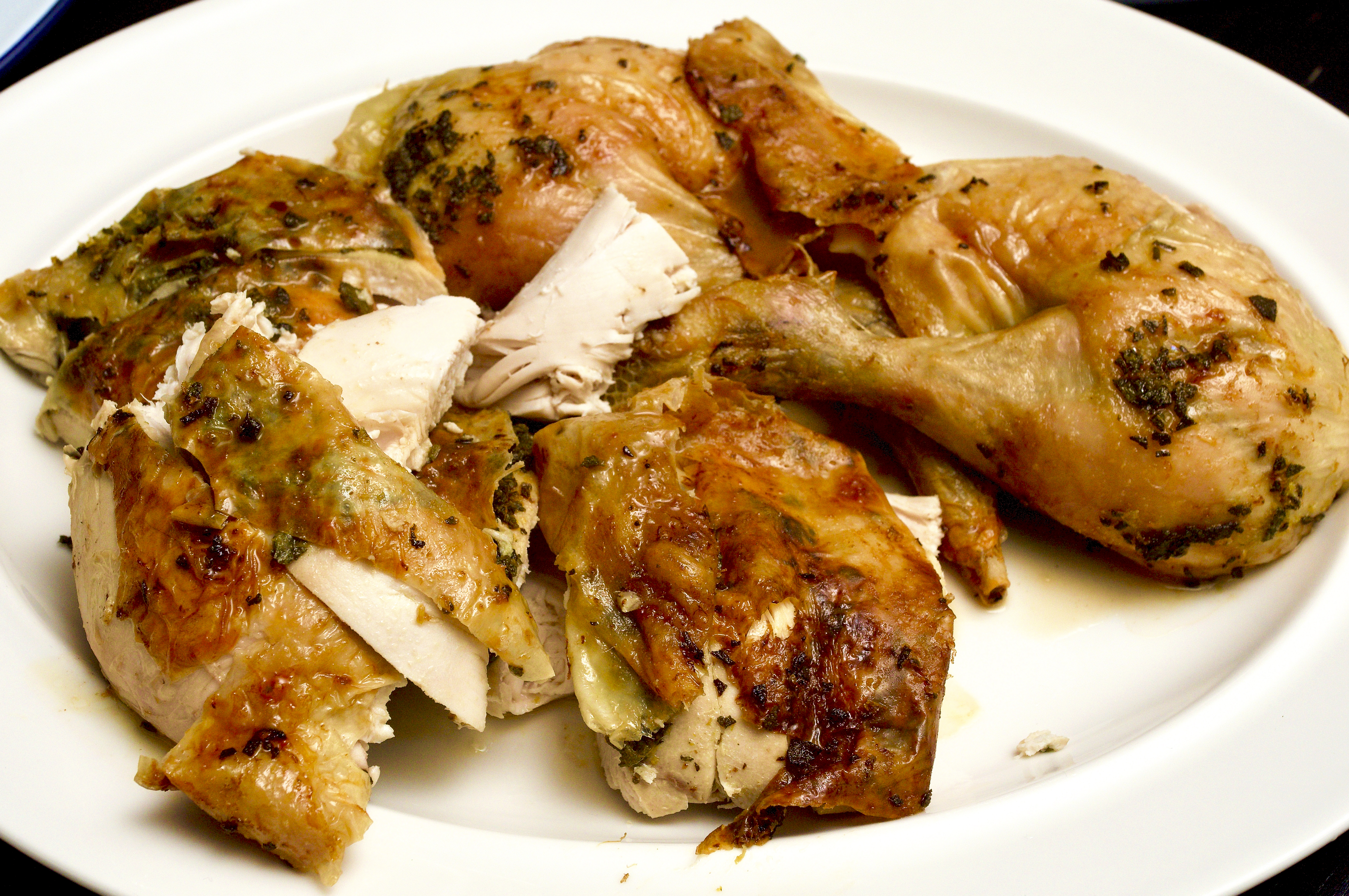
We recently bought Skye McAlpine’s book, A Table for Friends, which has lovely menus for each season. We’re well and truly into Autumn now and the farm shop is full of potatoes, pumpkins and beetroots. Tonight we made Skye’s suggested autumn menu of buttery lemon roast chicken, beetroot & mint salad, butter & sage roast pumpkin and roast potatoes. A perfect combination of dishes and all can be prepped in advance. Unfortunately we were minus the friends but hopefully those days will be back again before too long.
We ignore all timings for roast chicken these days and stick to Diana Henry’s failsafe instructions to roast for 20 minutes at 190C for each 500g plus an extra 10 minutes.
Wine Suggestion: Quite often with roast chicken we lean towards oaked Chardonnay as it’s such a classic match but tonight we remembered that another great match is good red Bordeaux from the Left Bank, so Cabernet Sauvignon dominant, and also with a little age, but not too much. We continued our lockdown habit of dipping into the cellar once a week and pulled out a Domaine de Chevalier red from 2010. It still has years, if not a couple of decades of life ahead of it but at 10 years old it still has a spriteliness of youth while all components have come together harmoniously into a smooth, elegant wine.
Buttery Lemon Roast Chicken – serves 4
a large bunch of sage
1 lemon, finely zested
50g butter, softened
1 tsp sea salt flakes
1 free-range chicken
You can prep the chicken early in the day and keep in the fridge but make sure you take it out an hour or two before you want to put it into the oven so it’s at room temperature.
Heat the oven to 190C.
Finely chop half the sage and mash in a bowl with the butter, lemon zest and salt.
Put the chicken into a roasting tray. Cut the lemon in half and squeeze some of the juice into the cavity, then stuff the halves into the chicken with the remaining sage.
Gently lift the skin over the breast and smear a quarter of the butter mixture under the skin over each breast. You should be able to push the butter quite far down with your fingers, but careful not tear the skin. Rub the rest of the butter over the chicken and sprinkle with some extra salt.
Roast the chicken according to the timings given above. When cooked the legs should feel loose and the juice should run clear when you pierce a thick bit with a sharp knife.
Leave to rest for 10 minutes before carving and served with some of the juices spooned over.
(Original recipe from A Table for Friends: The Art of Cooking for Two or Twenty by Skye McAlpine, Bloomsbury, 2020.)
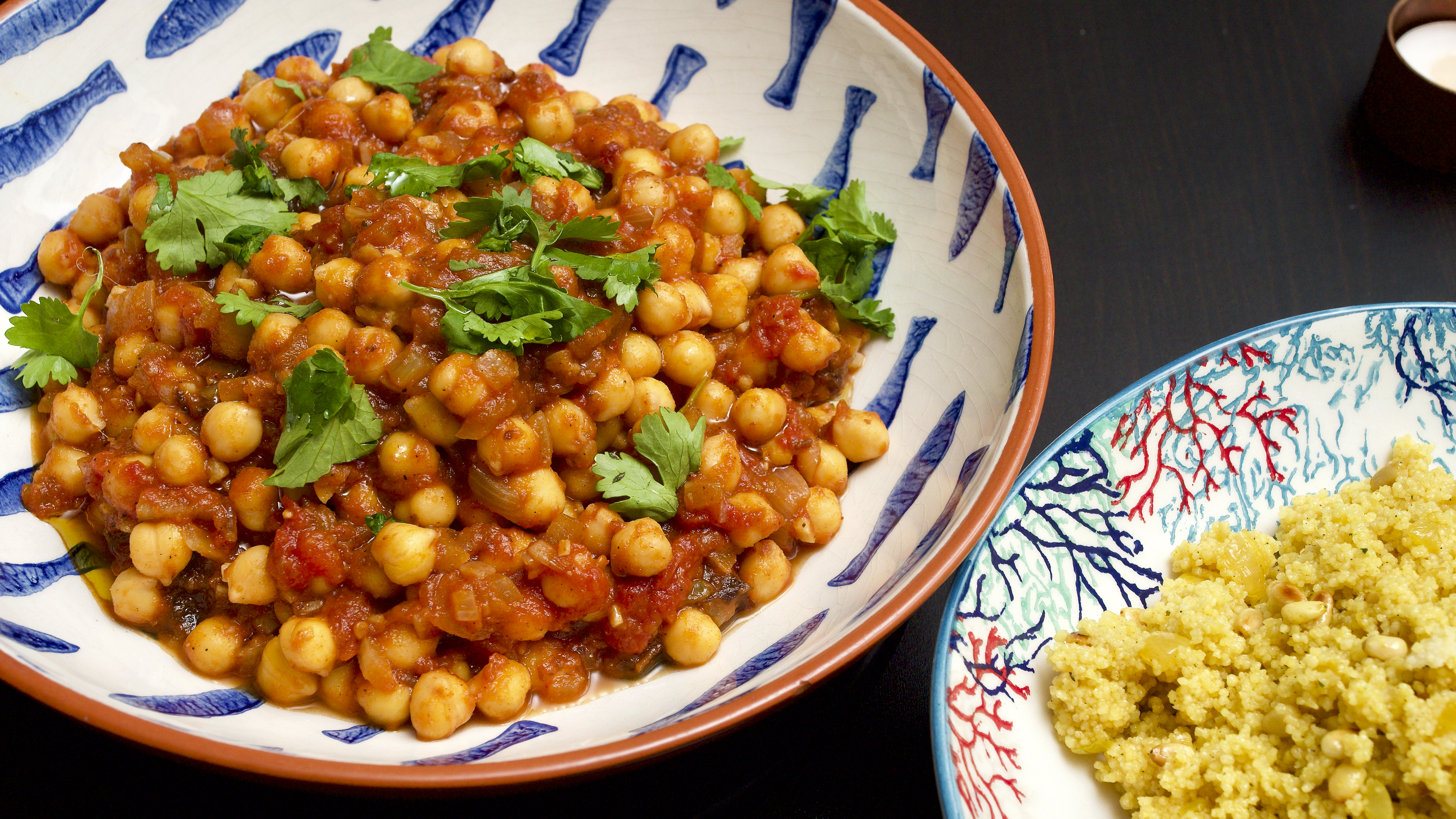
We made this by accident having planned to do a different tagine from a magazine, only to realised that it required a slow-cooker, so this was a last-minute substitute. It is really and truly delicious, so you must try making this dish at some stage. You can serve with plain couscous but it’s particularly good with this. If chickpeas don’t float your boat as a main course for Sunday lunch both dishes would be excellent with some roast lamb.
Wine Suggestion: this is great with a juicy, brambly Grenache, or a blend with this in it. We had the joyful Les Dissidents “le Paria” made by Domaine Ventenac from 100% Grenache and made without sulphur; fresh, juicy and minerally.
Tomato, date & chickpea tagine – serves 4
2 tbsp olive olive oil or unsalted butter
1 large onion, finely chopped
1 x 400g tin plum tomatoes
120g pitted dates, halved
4 cloves of garlic, finely chopped
a small bunch of coriander, leaves roughly chopped and stalks reserved
1 tsp ground cumin
1 tsp ground coriander
1 tsp ground ginger
½ tsp ground cinnamon or 1 cinnamon stick
2 strips of lemon zest and the juice of ½ a lemon
2 x 400g tins of chickpeas, drained and rinsed
FOR THE SEASONED YOGHURT
200g natural yoghurt
juice of ½ a lemon
Heat the oil or butter in a frying pan over a medium heat, then add the onion and fry for 8-10 minutes, until soft.
Whizz half the tomatoes with half of the dates, then add the rest of the tomatoes to the mixture and set aside.
Add the garlic, coriander stalks and all of the spices to the cooked onions, stir and cook for 1 minute. Add the tomato mixture, the lemon zest and 100ml of water, season well with salt and pepper, then cook for 10 minutes or until rich and thickened.
Meanwhile, make the seasoned yoghurt. Mix the yoghurt with the lemon juice and a good pinch of salt in a bowl, then set aside.
Stir the chickpeas and the rest of the dates into the tomato mixture and cook for 5 minutes to heat through. Add the lemon juice and check the seasoning. Discard the pieces of lemon zest, then remove the dish from the heat.
Stir in the coriander leaves and serve with some seasoned yoghurt and golden couscous.
(Original recipe from New Kitchen Basics by Claire Thompson, Quadrille, 2019.)
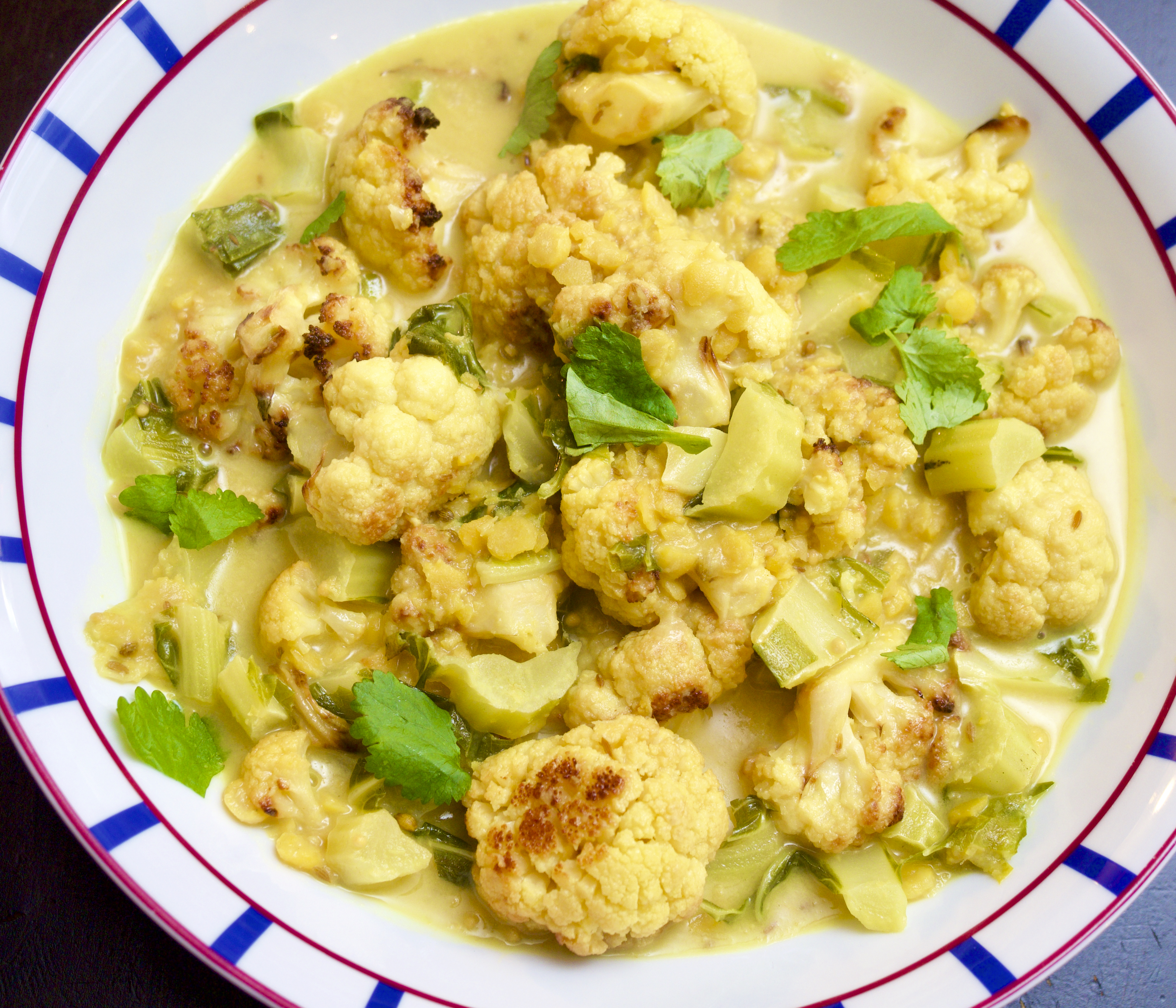
We’ve been looking for recipes that use fresh turmeric but you can also use ground turmeric for this dish. This cauliflower curry is really nice and also uses the cauliflower leaves, genius! Serve with rice.
Wine Suggestion: This dish cries out for a white from warmer or sunnier climates where there are hints of tropical fruits in the flavours. Tonight’s choice was the superlative Kilikanoon Pierce Road Semillon; an oak aged semillon from the Clare Valley. Rich and layered with buttery, toasty hints of the barrel fermentation carried through with a wonderful, lemony, citrus backbone of acidity. Youthful but poised and balanced.
Cauliflower and yellow split pea curry – serves 4
1 large cauliflower, with leaves, cut the cauliflower into bite-sized pieces and the cut the leaves across the spine into 1cm-thick strips
2 tbsp vegetable oil
180g yellow split peas, rinsed
1 x 400ml tin coconut milk
FOR THE CURRY BASE:
6 cardamom pods, crushed
2 cinnamon sticks
1 tsp cumin seeds
1 tsp coriander seeds
1 tsp mustard seeds
2 tbsp vegetable oil
1 onion, finely diced
3 cloves of garlic, finely grated
4cm piece of ginger, peeled and finely grated
4cm piece of fresh turmeric, peeled and finely grated (or you can use 1 tbsp ground turmeric)
1 green chilli, finely diced
2 bay leaves
a bunch of coriander, chop the stalks finely and the leaves roughly
Preheat the oven to 220C/200C/gas 7.
Toss the cauliflower pieces in the vegetable oil and season generously with salt. Place in a roasting tray and roast for 30-35 minutes or until deep golden. Toss them halfway through.
Meanwhile, put the crushed cardamom pods, cinnamon sticks, cumin, coriander and mustard seeds in a medium saucepan. Put over a medium heat and toast until fragrant. Add the vegetable oil, then the rest of curry base ingredients, including the coriander stalks but not the leaves. Season well with salt and cook for 5 minutes.
Add the split peas and 700ml warm water. Stir, then cover and simmer over a low heat for 40 minutes, stirring often and adding a little more water if needed. Add the coconut milk and cook for another 5 minutes.
Add the cauliflower and the cauliflower leaves, then cover and cook for a few minutes until the leaves have wilted. Remove from the heat and garnish with the chopped coriander.
Serve with rice and anything else you like with you curry.
(Original recipe from Marcus Everyday by Marcus Wareing, HarperCollinsPublishers, 2019.)
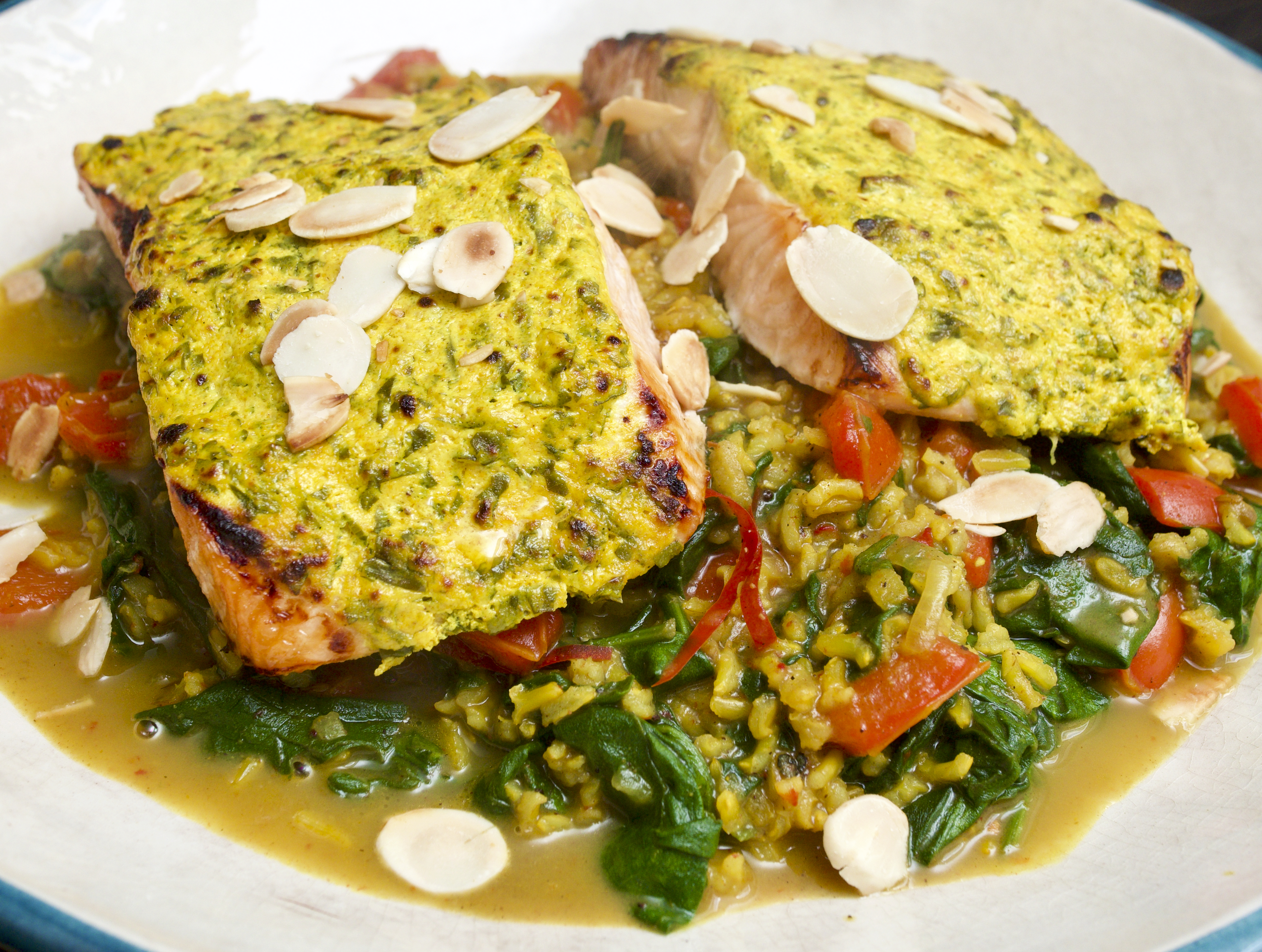
This is full of warm spices, healthy and very satisfying. A great meal for mid-week.
Wine Suggestion: This goes beautifully with elegant Grenache, like Roc des Anges’ Unic from Roussillon in the south of France; quite ethereal and fresh, particularly given the warm sourthern France location. Almost like a warmly spiced Burgundy. If you can’t find something like this then a lightly oaked Chardonnay comes a good second best.
Spinach rice with spiced salmon – serves 2
2 tsp rapeseed oil
1 large onion, sliced
a thumb-sized piece of ginger, finely chopped
½ tsp cumin seeds
½ tsp ground cinnamon
6-8 cardamom pods, seeds crushed
1 tsp ground turmeric
1 tsp ground coriander
1 red chilli, deseeded and sliced
1 clove of garlic, finely chopped
1 large red pepper, roughly chopped
70g brown basmati rice
375ml vegetable stock, made with 2 tsp of bouillon powder
160g baby spinach, roughly chopped
FOR THE SALMON:
½ turmeric
½ ground coriander
3 tbsp natural yoghurt
1 tbsp finely chopped coriander (or mint)
2 skinless salmon fillets
1 tbsp toasted almonds
Heat the oil in a large frying pan, then fry the onion and ginger for 5 minutes or until soft. Stir in the spices and cook for 30 seconds, then add the chilli, garlic, pepper and rice. Stir briefly, then pour in the stock. Cover and simmer for 35 minutes or until the rice is tender and the stock absorbed. If there’s liquid left simmer without the lid for a few minutes to let it evaporate. Add the spinach, cover and cook for 3 minutes, or until wilted.
Meanwhile, line a baking sheet with foil and heat the grill.
Mix yoghurt with the turmeric, ground coriander and fresh coriander. Spread this mixture over the salmon and transfer to the foil-covered sheet. Grill for 8-10 minutes or until the fish flakes easily. Top the rice with the salmon fillets and scatter over the almonds to serve.



 Jono & Jules do food & wine