Feeds:
Posts
Comments

Archive for the ‘Food’ Category

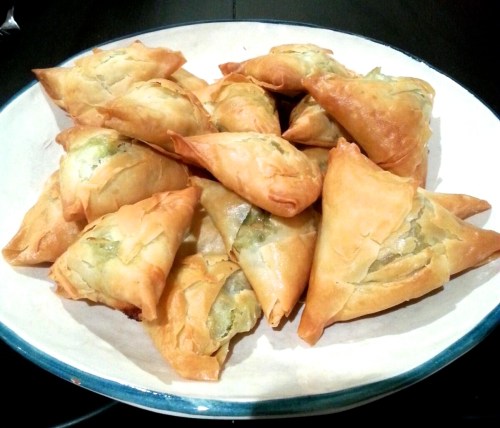
Spanakopita

The classic spinach & feta combination never gets tired. These savoury Greek pastries are delicious and very easy to make. We worked out a production line (thanks Tricia & Orla) and had them assembled in no time! Great as a starter or snack with drinks. Perfect entertaining food.

Wine Suggestion: If you can find an Assyrtiko,  a crisp and delicious Greek white, then you’ve got a great match. Unfortunately it can be hard to find good Greek wines so stick to the Mediterranean and search for a Fiano or Greco di Tufo from Italy. Failing this we’ve had crisp Touraine Sauvignon Blancs with this as well to great effect.

Spanakopita (Spinch, mint & feta pastries) – makes 18-20

  • 500g spinach
  • 1 tbsp olive oil
  • ½ small onion, finely chopped
  • 2 scallions, trimmed and finely chopped
  • 100g Greek feta cheese
  • 1 large egg
  • 1 tbsp finely grated Greek kefalotiri cheese or Parmesan
  • a pinch of finely grated nutmeg
  • 2 tbsp chopped mint
  • 250-275g pack of filo pastry (about 6 sheets)
  • 100g butter, melted

Wash and dry the spinach (remove the stalks if they look tough). Finely shred the leaves.

Heat the oil in a large pan, add the onion and cook gently until soft but not browned. Gradually add the spinach, a handful at a time, until it has all wilted. Tip into a colander and drain, pressing out the liquid with a wooden spoon, then return to the pan with the scallions and cook for 1 minute. Leave to cool.

Crumble the feta into a large bowl and roughly mash with a fork – you can leave it a bit chunky. Mix in the eggs, Parmesan, the spinach mixture, nutmeg, mint and season with salt and pepper.

Preheat the oven to 180C/Gas Mark 4.

Unroll the sheets of filo and cut the stack lengthways into strips about 7.5cm wide. Brush the top layer with melted butter. Put a heaped teaspoonful of the filling in the centre of one strip, at the end closest to you, and fold one bottom corner of the pastry diagonally over the filling, so that the corner touches the opposite side to make a triangle. Then fold over the filled triangular corner, and keep folding it along the whole strip in a triangular parcel. Repeat to make all the spanakopita.

Brush the undersides of each parcel with more butter and place on a lightly buttered baking tray. Brush the tops with butter and bake for 25 minutes or until crisp and golden brown.

These are best served straight from the oven while the pastry is still crispy but they are also good at room temperature.

(Original recipe from Rick Stein’s Mediterranean Escapes, BBC Books, 2007.)

Read Full Post »

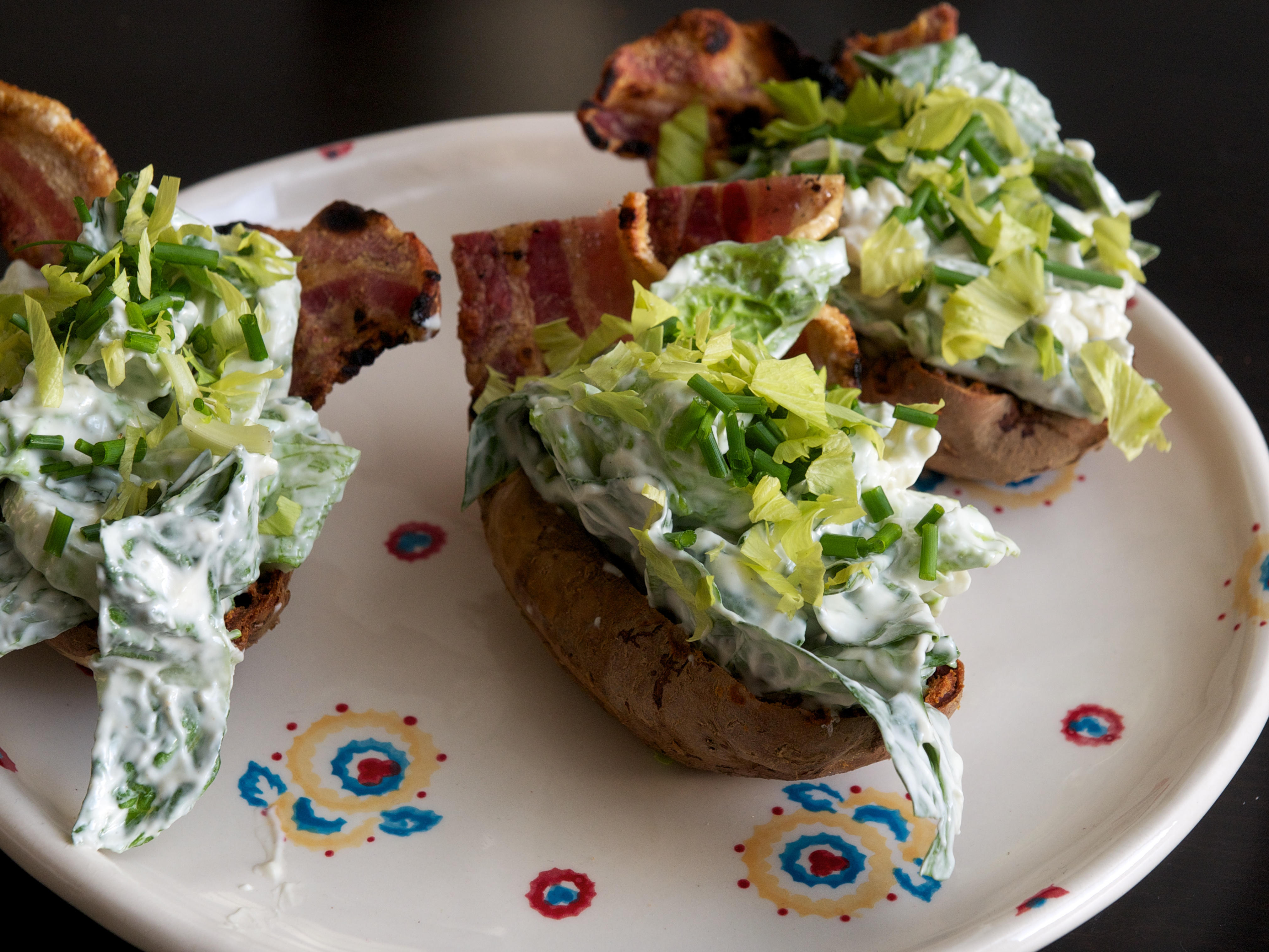
Crispy potato skins

These super tasty bacon & blue cheese stuffed potato skins work well as a starter or a side dish. Probably best not to count the calories!

Cheesy Baked Potato Skins – serves 4

  • 4 baking potatoes
  • olive oil
  • 8 rashers of thick-cut pancetta
  • 2 cos lettuces, leaves separated and roughly chopped
  • 4 celery sticks, thinly sliced
  • 2 tbsp chopped celery leaves
  • 2 tbsp chopped chives
  • smoked paprika for dusting (optional)

FOR THE CHEESY DRESSING:

  • 250g crème fraîche
  • 200g Roquefort cheese, crumbled
  • 100g mayonnaise
  • 1 tbsp Dijon mustard
  • few splashes of Tabasco sauce

Preheat the oven to 180ºC/Gas Mark 4.

Put the potatoes on a baking sheet and bake for around 1 hour 15 minutes or until soft in the middle and nice and crispy on the outside.

When the potatoes are cool enough to handle, cut them in half lengthways and scoop out the flesh but be careful not to break the skins. Keep the scooped out potato to make something else with.

Put the potato skins back onto the baking tray, drizzle with oil and put back in the oven for another 15-20 minutes or until really crisp and brown.

Meanwhile, gently fold the crème fraîche, Roquefort and mayonnaise together for the dressing. Stir in the mustard and Tabasco and season.

Cook the pancetta slices under a hot grill until crispy.

Mix the lettuce and celery together in a large bowl then add the cheesy dressing. Put the bacon rashers into the baked potato skins and spoon the cheesy stuffing over the top. Garnish each one with some of the chopped celery leaves and chives and dust with paprika.

(Original recipe from Tom Kerridge’s Best Ever Dishes, Absolute Press, 2014.)


Read Full Post »

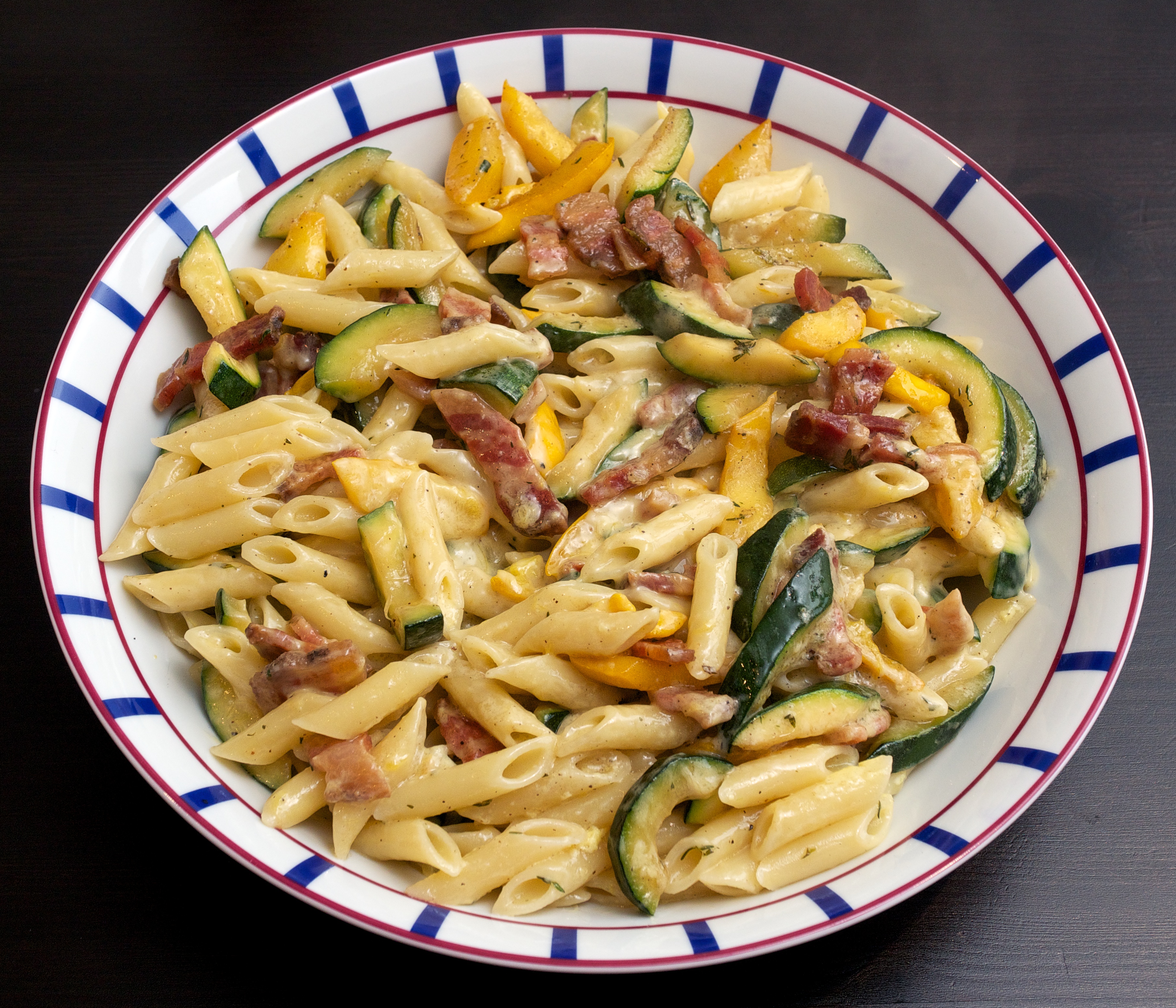
Courgette Carbonara

We are getting close to the last courgettes for the season and what a way to celebrate this humble vegetable … delicious!

Wine Suggestion: We drank an Aligote from Jean Fournier in Burgundy. Aligote is completely underrated and we don’t see it often, but this example shows why we should: fresh, rich and full of fruit but with a core of crisp acidity and earthiness that makes it sing alongside the eggy cream, add layers to the pancetta and parmesan and make the courgettes even more silky.

Courgette Carbonara – serves 6 generously

  • 6 medium green & yellow courgettes
  • 500g penne pasta
  • 4 large egg yolks
  • 100ml double cream
  • 2 big handfuls of freshly grated Parmesan cheese
  • olive oil
  • 12 thick slices of pancetta or smoked streaky bacon, cut into chunky lardons
  • small bunch of fresh thyme, leaves picked and chopped

Bring a large pan of water to the boil.

Halve and quarter the courgettes lengthways. Discard any fluffy bits from the middle and slice at an angle into similar sized shapes to the penne. If you have small courgettes you can just slice them finely.

Cook the penne according to the pack instructions.

While the pasta is cooking, put the egg yolks into a bowl and add the cream and half the Parmesan. Mix with a fork. Season lightly and set aside.

Heat a very large frying pan, add a splash of olive oil and fry the pancetta/bacon until dark brown & crispy. Add the courgette slices and a very generous grind of black pepper. Add the thyme leaves, and stir to make sure the courgettes are well coated with the bacony oil, then fry until turning lightly golden and starting to soften.

Drain the pasta and reserve the cooking water. Immediately toss the pasta into the courgette pan, then take off the heat and add a ladleful of the reserved pasta water and your creamy sauce. Stir together quickly but don’t put back on the heat.

Add the rest of the Parmesan, and a bit more cooking water if needed, to give you a silky sauce. Taste for seasoning and serve immediately.

(Original recipe from Jamie at Home by Jamie Oliver, Penguin, 2007.)

Read Full Post »

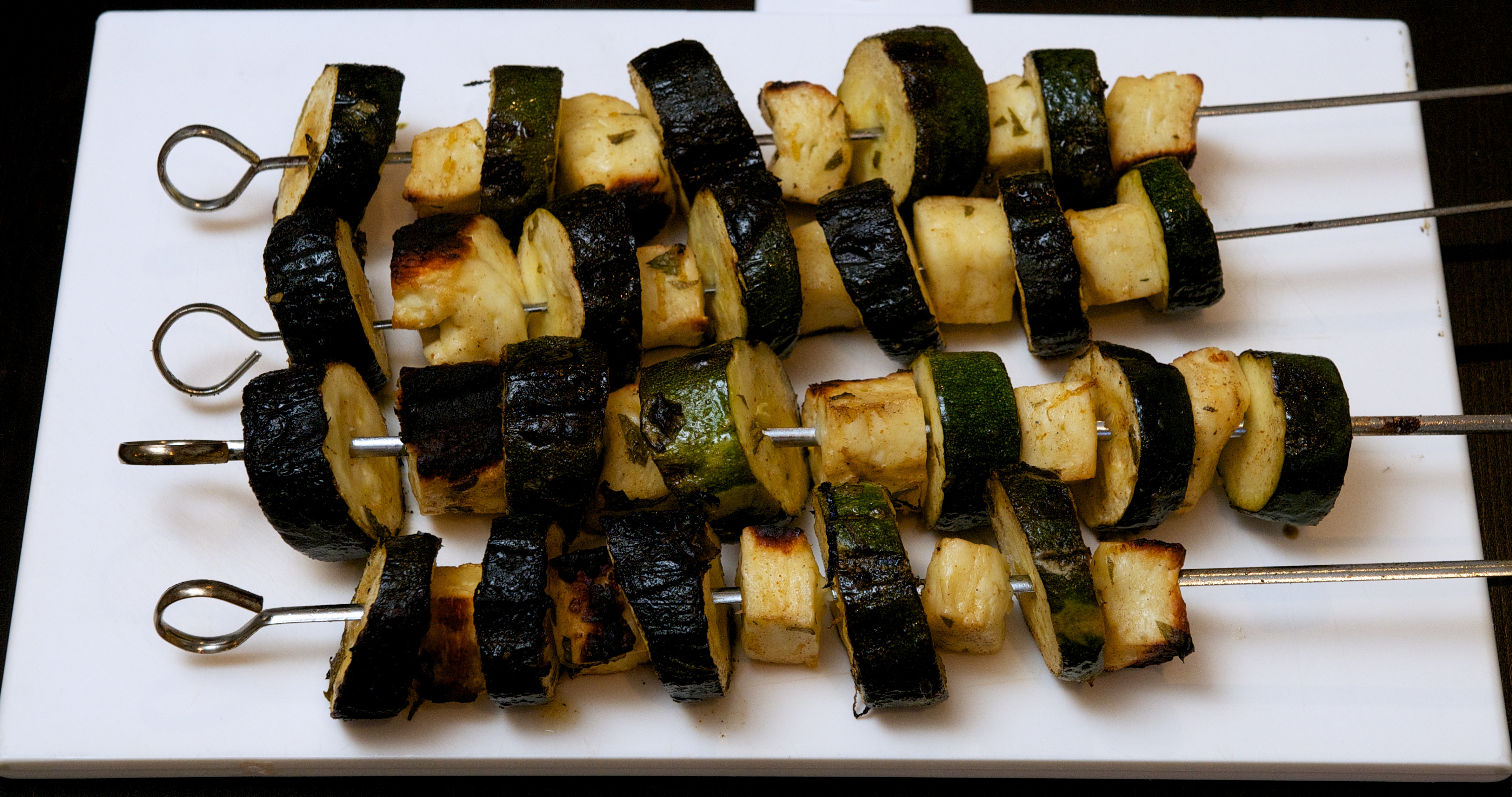
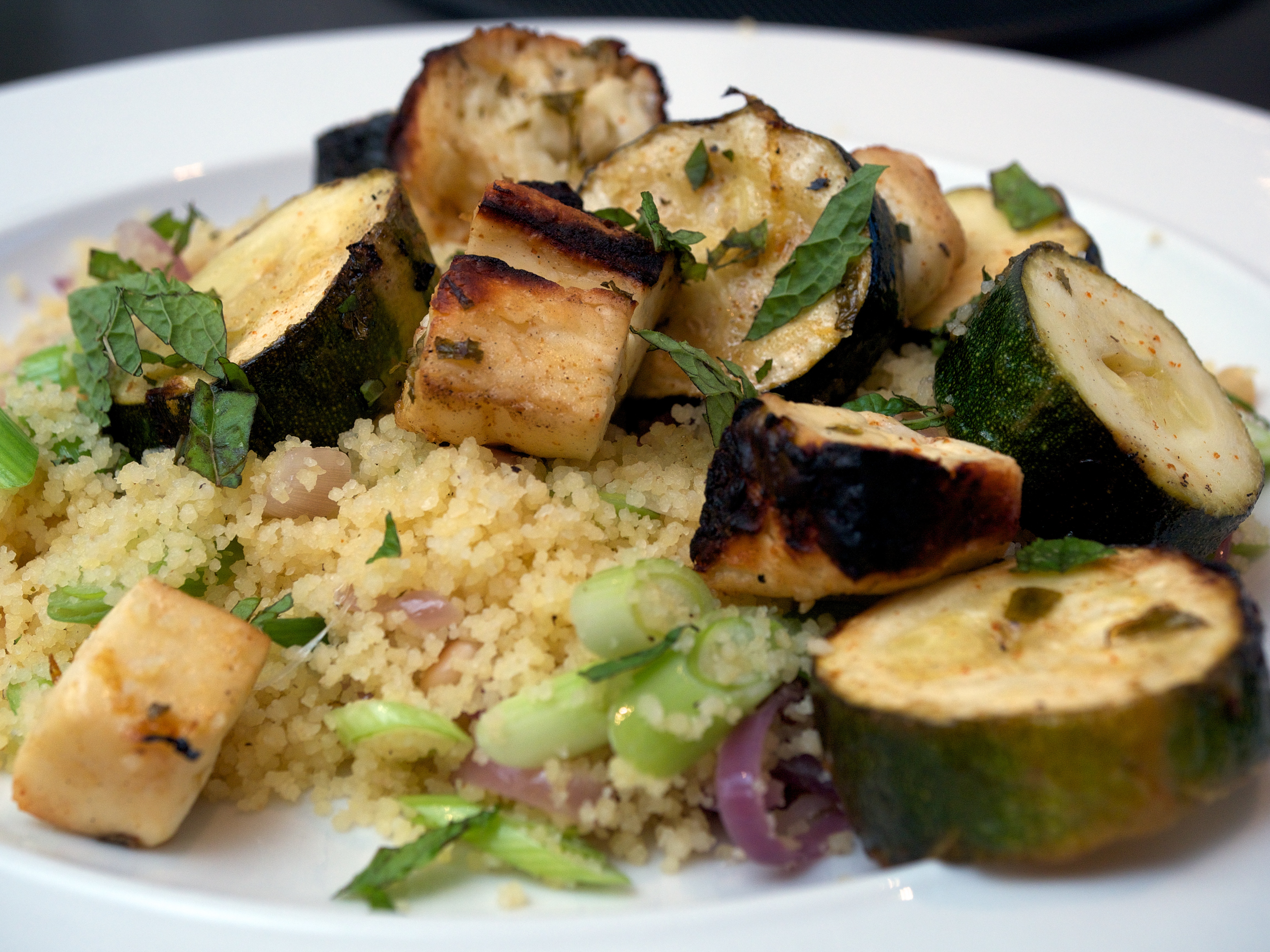
Courgette & Haloumi Kebabs

There’s still a few courgettes left in the shops and there is just enough warmth left in the air to brave one last barbecue. We had these as a main course with a couscous salad. If that’s a step too far you could treat this as a side and barbecue some bangers or burgers for Halloween.

Courgette & Halloumi Kebabs – serves 4

  • ½tsp chilli powder
  • small handful mint, chopped
  • 1 lemon, juiced and zested
  • 2 tbsp extra-virgin olive oil
  • 2 courgettes, cut into 1 cm rounds
  • 225g pack halloumi cheese, cut into large cubes

Mix the chilli, half the mint, lemon zest and juice, olive oil, courgettes and halloumi together in a bowl. Leave to marinate for 30 minutes.

Thread the marinated courgettes and halloumi cubes onto skewers (soak them first if you’re using wooden ones). Cook on a preheated barbecue for 7-8 minutes, turning and basting with any leftover marinade.

Sprinkle the rest of the mint over before serving.

(Original recipe from BBC Good Food)

Courgette & Haloumi Kebabs with couscous

Read Full Post »

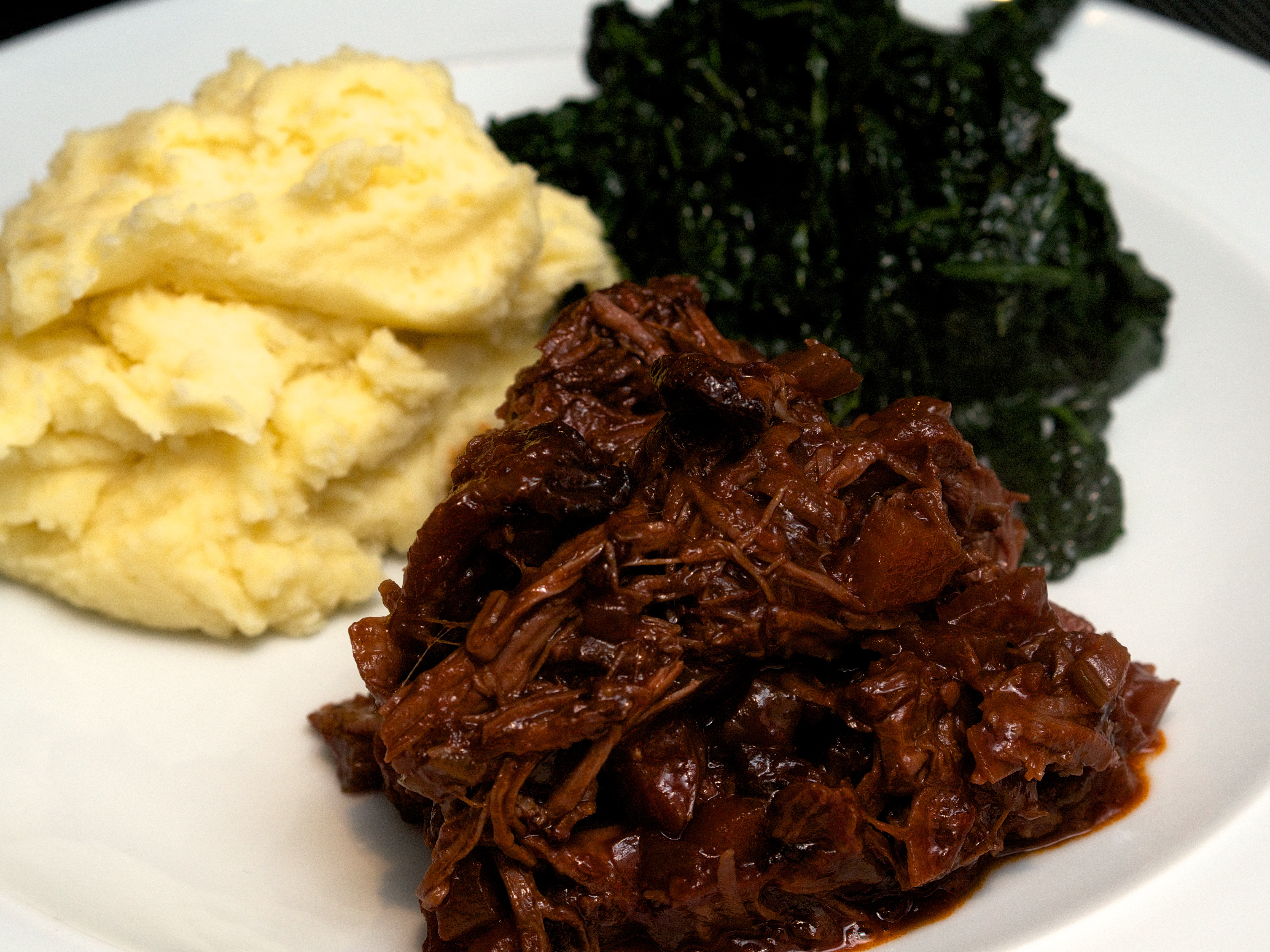
Beef shin braised in Chianti

Take a shin of beef and braise it for hours in a bottle of Chianti until it can be carved with a spoon … what’s not to like!

Wine Suggestion: the obvious choice is Chianti but given the richness and depth in the food make sure it is one with a bit of depth; younger, or more basic Chianti is just too light. We tried one by Tenuta Sant’Alfonso which comes from a specific vineyard with clay-rich soils which was opulent and fuller structured. It had licorice, dark cherry and mocha flavours which was a great match.

Tuscan slow-cooked shin of beef with Chianti – serves 6

  • 1kg beef shin, off the bone
  • olive oil
  • 2 large onions, finely chopped
  • 3 sticks celery, finely chopped
  • 1 carrot, finely sliced
  • 6 fat garlic cloves, finely chopped
  • 750ml Chianti or other robust red wine
  • 4 tbsp tomato purée
  • 4 bay leaves
  • 150ml beef stock

Heat the oven to 180C/fan 160C/gas 4.

Season the meat, then brown in a large casserole with a little olive oil.

Remove the meat and cook the onions, celery, carrot and garlic until softened, adding a bit more oil if needed.

Pour in the wine and bring to the boil before adding the tomato purée, bay leaves & beef stock.

Return the beef to the pan and bring to a simmer.

Cover with a lid and cook in the oven for 4 hours or until the meat falls apart.

When ready, pull the meat into chunks and stir through the sauces.

Serve with mash or fresh pappardelle pasta.

(Original recipe from BBC Olive Magazine, September 2015.)

Read Full Post »

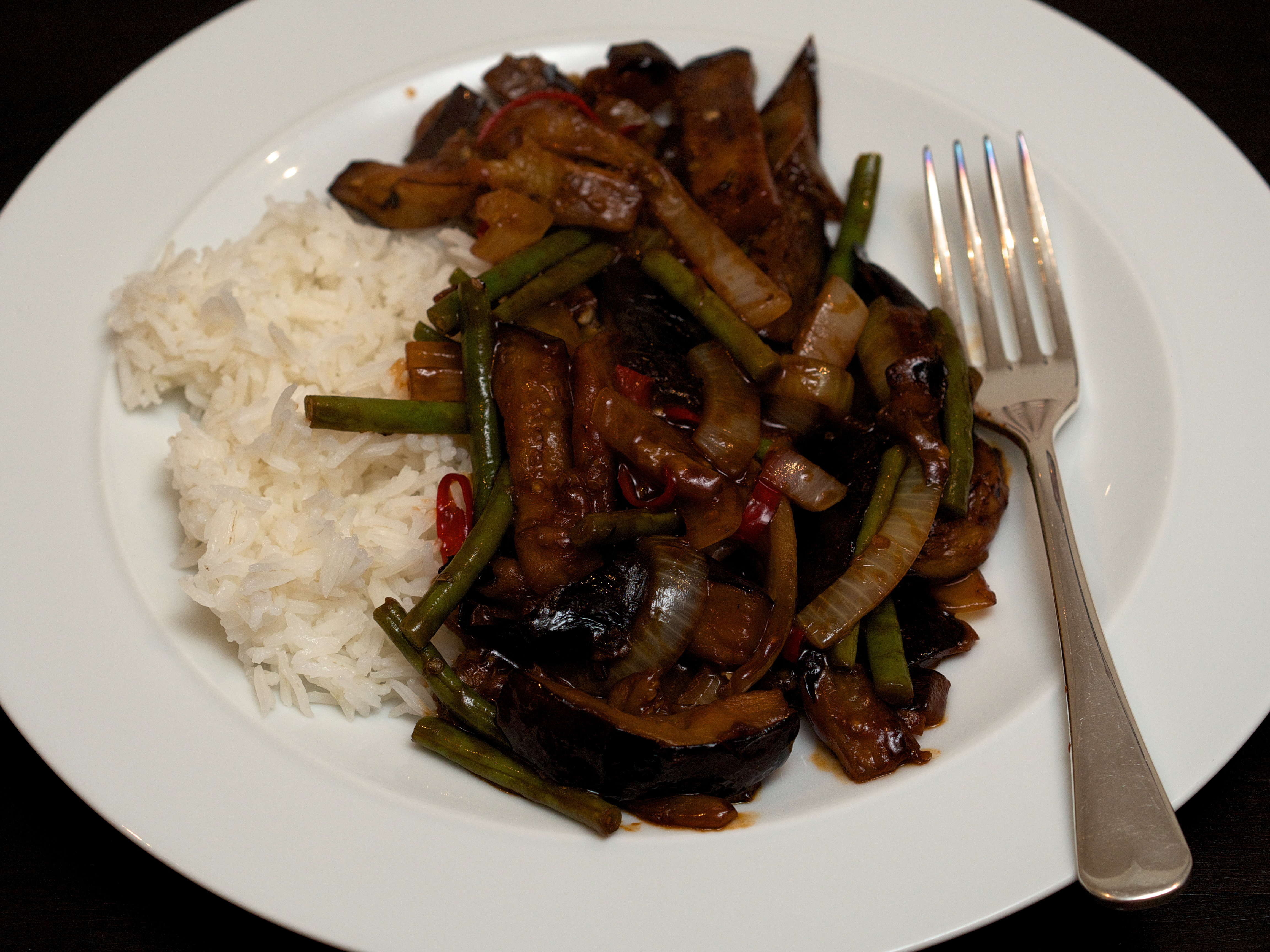
Hot & Sour Aubergine

This photo is a bit dark in colour but the flavours are vibrant and delicious and we’re now converts to soaking aubergine in brine before stir-frying to give a soft, velvety texture.

Hot & Sour Aubergine – serves 2

  • 1 large or 2 medium aubergines, cut into long batons
  • 100g green beans, halved
  • 2 tbsp vegetable oil
  • 1 large onion, thickly sliced
  • 1 red chilli, deseeded and thinly sliced

FOR THE SAUCE:

  • 2 tbsp light soy sace
  • 2 tbsp dark soy sauce
  • 1 tbsp tomato purée
  • 2 tbsp Chinese black vinegar or balsamic vinegar
  • 1 tbsp golden caster sugar
  • 1 tsp cornflour dissolved in 2 tbsp water
  • cooked rice, to serve

Put the aubergine slices into a bowl of lightly salted water and leave to soak for 30 minutes, then drain and pat dry.

Blanch the green beans in boiling water for a minute, then rinse in cold water and drain.

Combine all of the sauce ingredients in a small bowl and set aside.

Heat the oil in a large frying pan or wok over a medium-high heat, then cook the aubergine until well browned on all sides. When the aubergine is starting to take on a good colour, add the onion and chilli and continue to stir-fry for 4 minutes or until soft.

Add the sauce and green beans, cover with a lid, then turn down the heat and simmer for 2 minutes or until the aubergine is soft. Serve with rice.

(Original recipe from BBC Good Food)

Read Full Post »

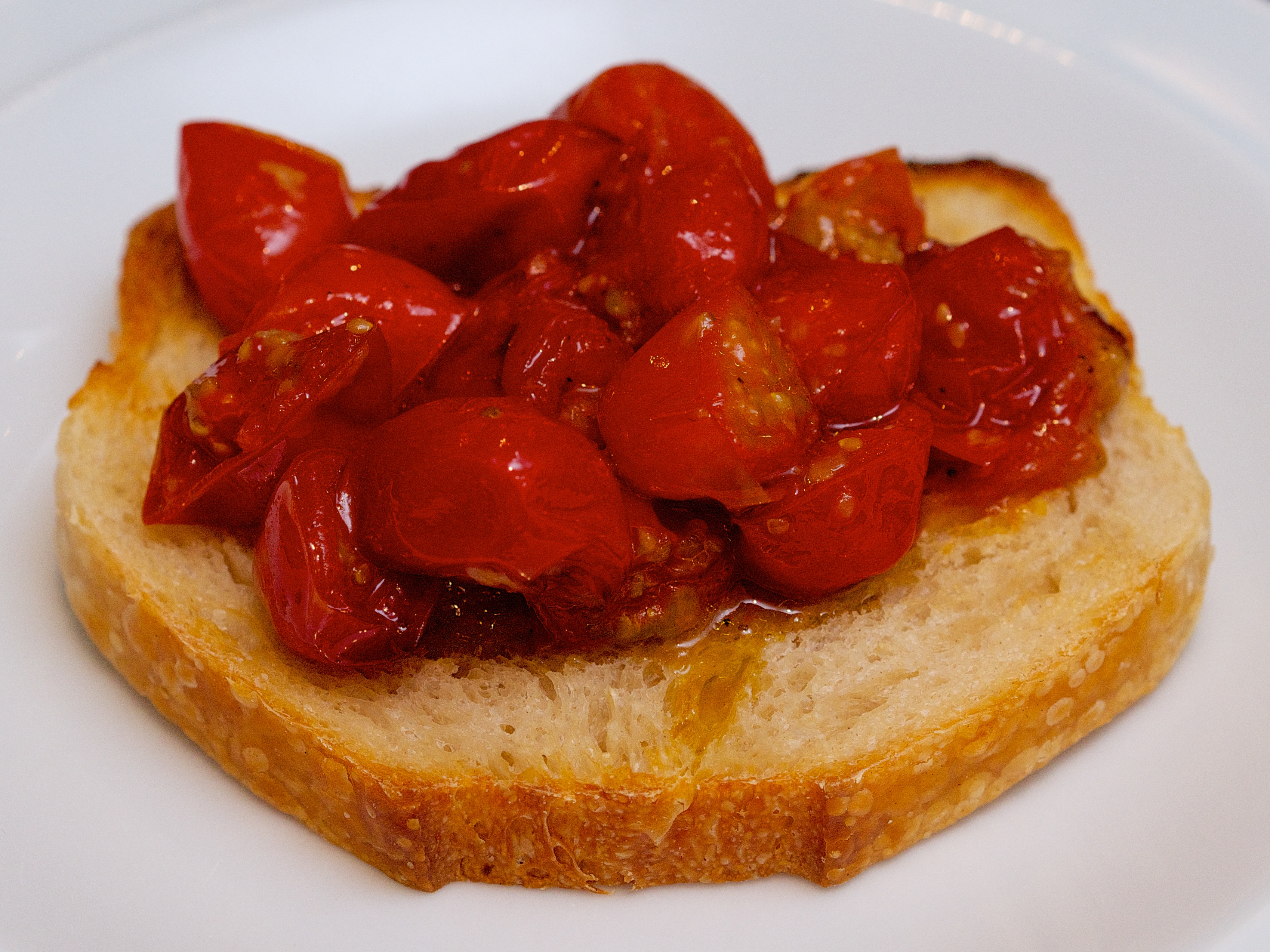
Honey-roasted cherry tomatoes

From our own tomato plants that were torturing us with green fruit to the point we were thinking we’d only make green tomato chutney this year and are now flooding us with ripe red tomatoes every day; famine or flood.

Honey Roasted Cherry Tomatoes – serves 4 as a starter

  • 500g cherry tomatoes
  • 2 garlic cloves
  • 1 tbsp clear honey
  • flaky sea salt

Preheat the oven to 190ºC/Gas Mark 5. Lightly oil a medium-sized roasting dish.

Halve the tomatoes and put them, cut side up, in the dish so they fit snugly.

Crush the garlic with a pinch of salt, then beat it with the honey, olive oil and a generous grinding of black pepper. Spoon this sticky mixture over the tomatoes, then roast for about 30 minutes or until golden and bubbling.

Serve piled on toast with a sprinkling of sea salt flakes on the top.

(Original recipe from River Cottage Veg Everyday! by Hugh Fearnley-Whittingstall, Bloomsbury, 2011.)

Read Full Post »

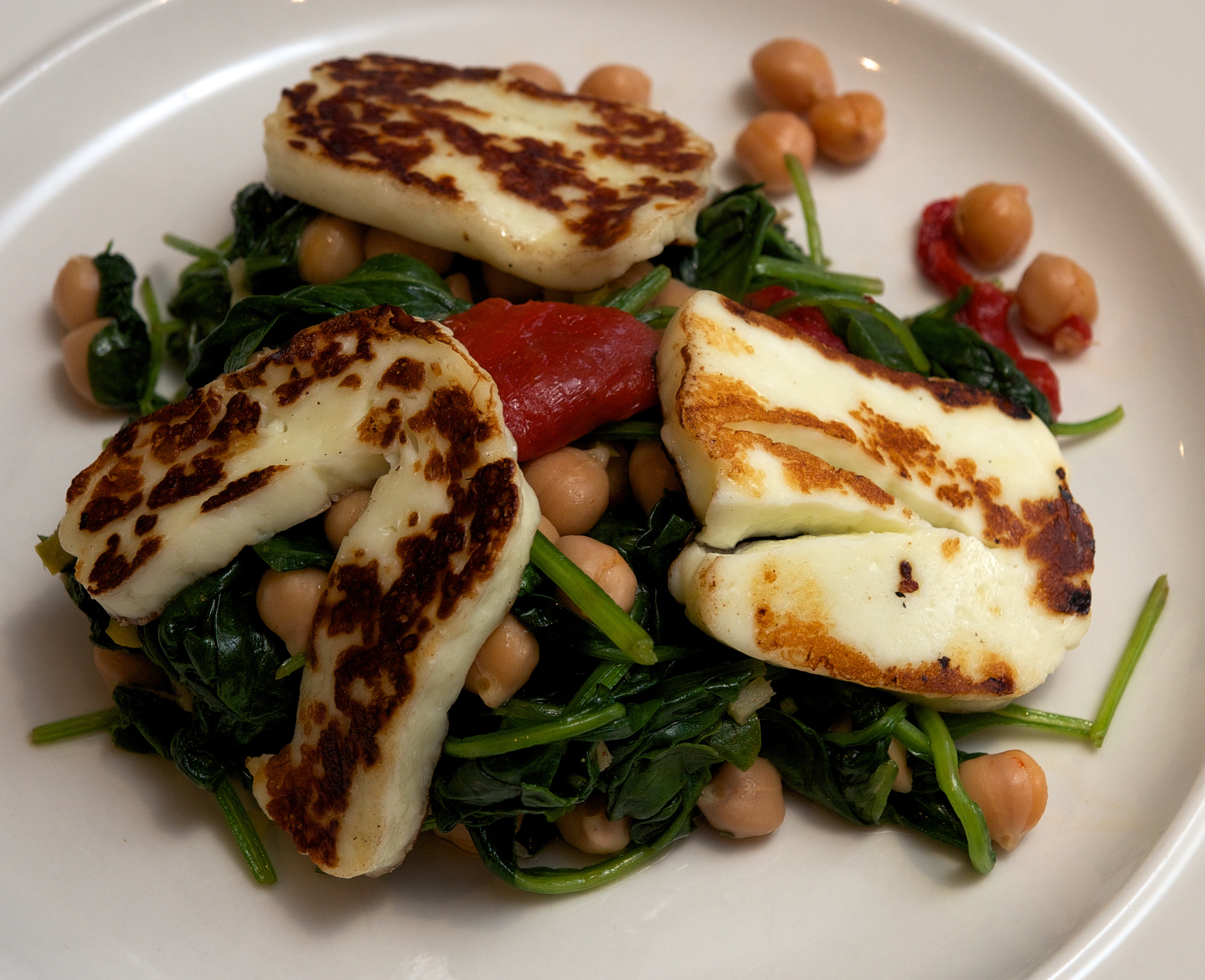
Haloumi with spiced chickpeas & spinach

This is a super simple and fresh weeknight meal for two. Halloumi cheese always feels like a bit of a treat.

Spiced Chickpeas with Halloumi – serves 2

  • 1 tbsp olive oil
  • 1 chilli, deseeded and finely chopped or ½tsp chilli powder
  • 2 tsp finely chopped fresh root ginger
  • 400g tin chickpeas, rinsed and drained
  • 200g bag baby spinach
  • 3 roasted red peppers from a jar
  • half a 250g pack of halloumi cheese, drained
  • juice of 1 lemon

Heat the oil in a pan and gently fry the chilli and ginger for 1 minute. Stir in the chickpeas, spinach and peppers, then season. Cover and cook gently for a few minutes, stirring not and then, until the spinach has wilted and the chickpeas are warmed through.

Meanwhile, heat a non-stick frying pan until very hot. Cut the halloumi into 6 slices and fry quickly for a minute or 2 on each side. Stir the lemon juice into the chickpeas and divide between 2 plates. Top with the halloumi and serve.

(Original recipe from BBC Good Food)

Read Full Post »

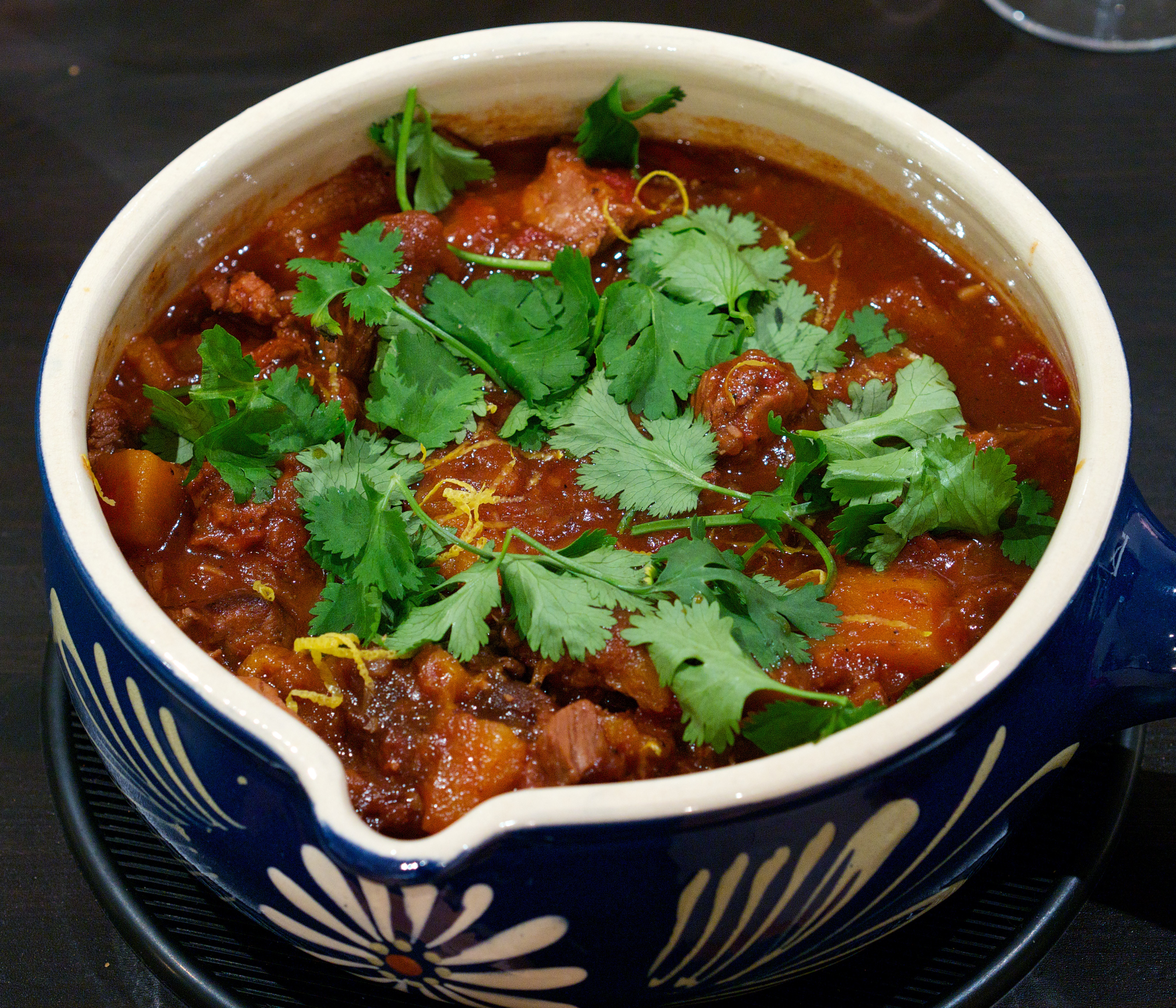
Lamb, squash and apricot tagine

This dish couldn’t be easier and the sauce is delicious. It can be made in an authentic tagine if you have one, or alternately in a large casserole dish like we used here, both work well. Serve with couscous and natural yogurt.

Wine suggestion: With all the spice and richness in this dish the best wines to match the tagine are medium to full-bodied reds with a juicier fruit like a Ribera del Duero. Our pick of the moment is the Condado de Haza Crianza  2011 which has a lovely, open and approachable nature whilst hiding a core of real depth, texture and personality. We’re sure this wine will age really well if you like but suspect most will be consumed soon after purchase; very moreish!

Lamb, squash & apricot tagine – serves 4

  • 2 tbsp oil
  • 1 large onion, finely chopped
  • 2 garlic cloves, finely chopped
  • 1 tbsp ras el hanout
  • 1 tsp ground coriander
  • 600g-800g lamb leg, diced into 2cm cubes, excess fat removed
  • 200g butternut squash
  • 200g soft dried apricots
  • 400g tin chopped tomatoes
  • 500ml lamb or beef stock
  • zest of 1 lemon
  • small bunch of coriander

Heat the oven to 200C/180C fan/gas 6.

Heat the oil in a flameproof casserole, add the onion & cook for 5 minutes until softened. Add the garlic and spices, and cook, stirring, for another couple of minutes.

Stir in the lamb, squash and apricots, then add the tomatoes and stock and season well. Bring to the boil, put the lid on and transfer to the oven.

Stir after 1 hr and return to the oven, uncovered, for another 30 minutes.

Check the seasoning and sprinkle over the lemon zest and coriander to serve.

(Original recipe from BBC Good Food)

Read Full Post »

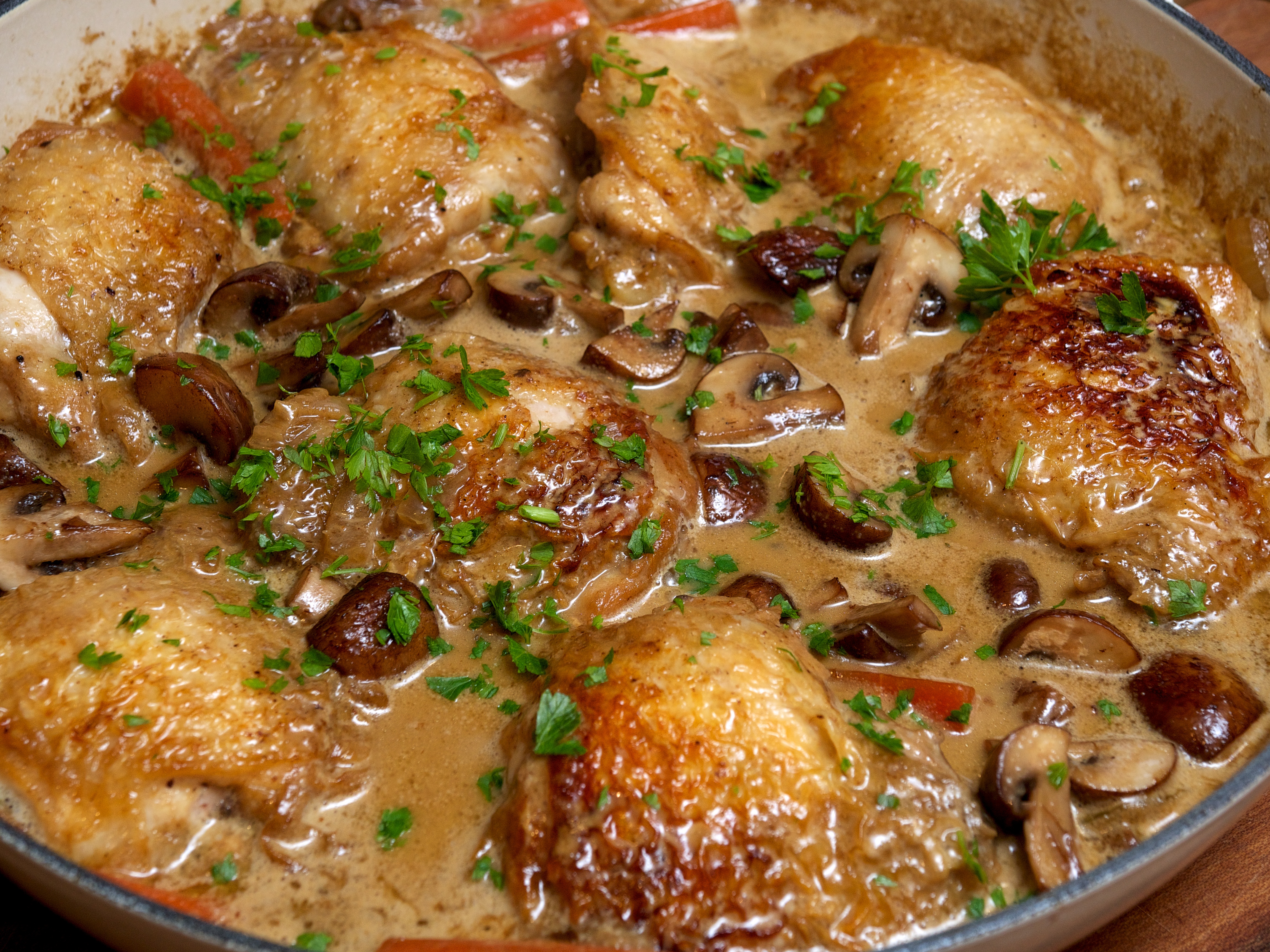
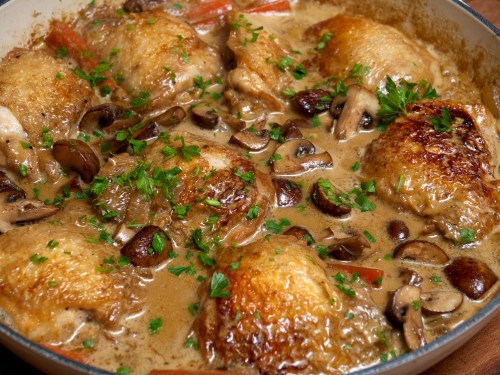
Chicken Forestiere

Our first autumnal dish of the season. We can suffer the colder weather when it means mushrooms, pumpkin, squash, game birds, mussels… we could go on!

Wine Suggestion: Rich, creamy and earthy … we picked a German Pinot Noir, the Salwey Reserve “RS”Spätburgunder 2012 which balanced perfectly with the chicken, complimented the mushrooms and had enough freshness and earthy spice for the creamy madeira sauce. We’ve become converts to German wines over the past decade and think that the best, like Salwey from Baden, provide a great alternative to Burgundian Pinot and would recommend giving them a try.

Chicken Forestière – serves 4

  • 20g dried wild mushrooms
  • 8 skin-on bone-in chicken thighs
  • 1 tbsp olive oil
  • 2 small onions, halved and sliced
  • 75ml Madeira (or dry sherry)
  • 215g carrots, peeled and cut into batons
  • 200ml chicken stock
  • 150ml double cream
  • 150g chestnut mushrooms, quartered
  • 1tbsp finely chopped flat-leaf parsley

Put the dried mushrooms in a bowl and pour over 50ml of boiling water, leave to soak for 20 minutes.

Meanwhile, season the chicken thighs and heat the oil in a large sauté pan. Brown the chicken thighs well on both sides (don’t be tempted to turn them early or the skin will tear). When the chicken is well-browned remove it from the pan and set aside. Pour off all but 1tbsp of the chicken fat from the pan into a bowl but don’t throw it away.

Heat the fat left in the pan and sauté the onions until soft and golden. Deglaze the pan with the Madeira.

Add the carrots and the stock, plus the wild mushroom and their soaking liquid. Bring to the boil, then reduce the heat to a simmer, cover and cook for 10 minutes.

Return the chicken to the pan, along with any juices, and keep it skin-side up. Cover and cook gently for 20 minutes.

Remove the lid, stir in the cream, return to a simmer again and cook for an additional 10 minutes with the lid off.

In a separate pan, heat 1 tbsp of the reserved chicken fat and sauté the mushrooms until golden brown and the liquid has evaporated. Season the mushrooms and stir into the chicken. The sauce should coat the back of a spoon at this point.

Scatter over the parsley and serve with potatoes and green veg.

(Original recipe from A Bird in the Hand by Diana Henry, Hachette, 2015.)

Read Full Post »
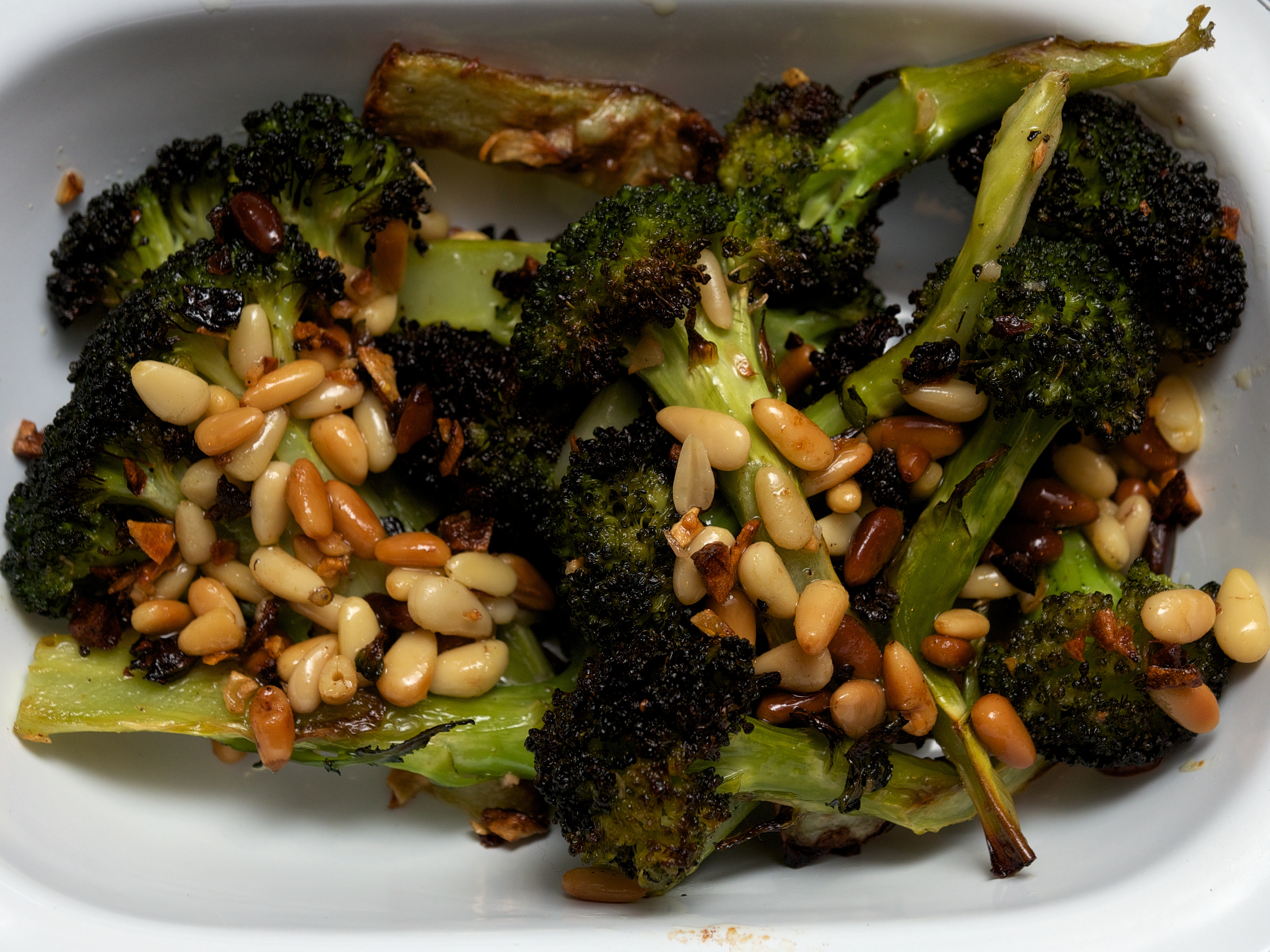
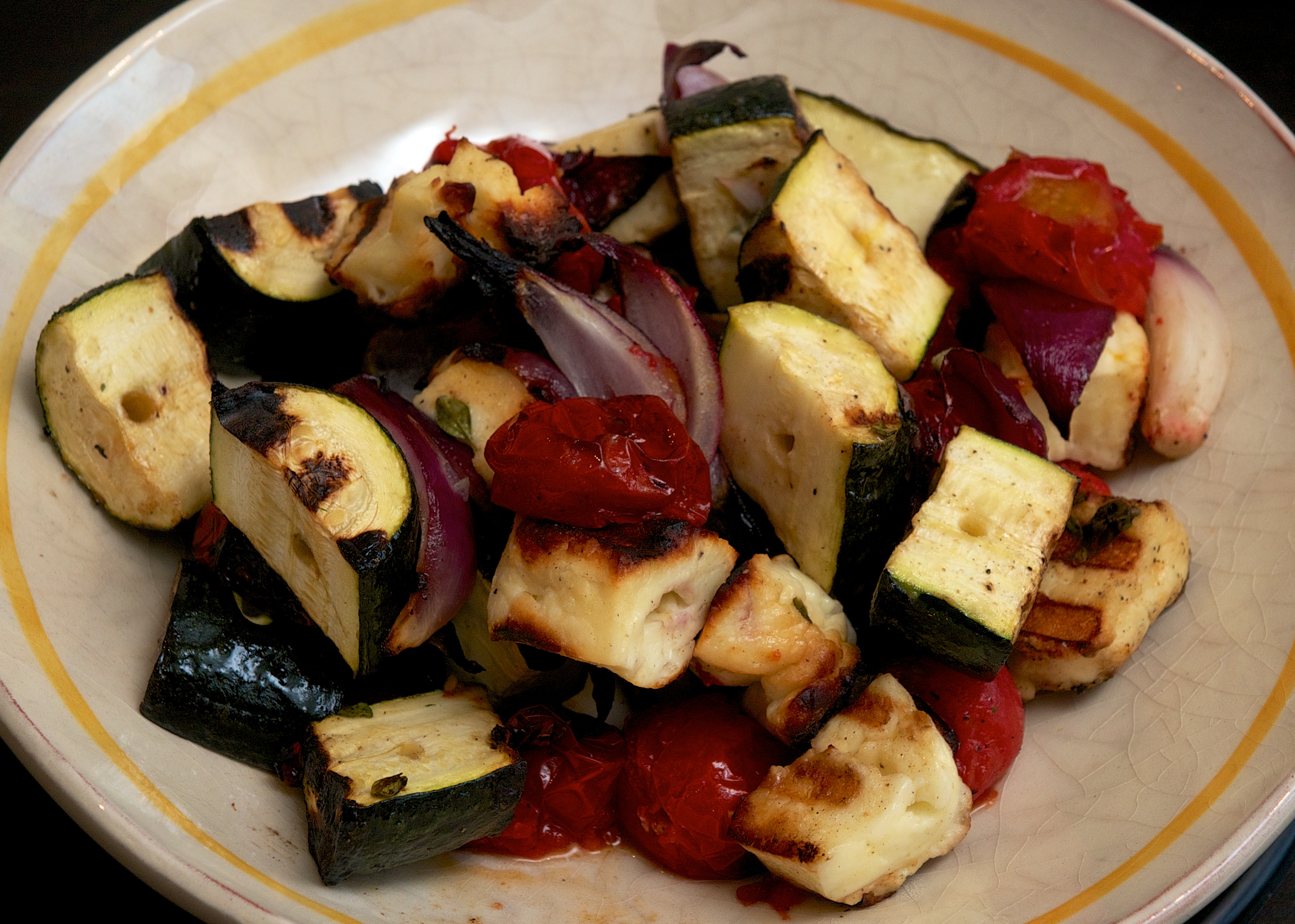
Haloumi kebabs

Here’s a nice veggie kebab recipe for the barbecue. The cheese makes these a bit more substantial than just lots of grilled veg. Serve with some nice salads and pitta bread. The kebabs and baste can be prepped in advance.

Wine Suggestion: A nice fresh white with good texture works well with this, so try a crisper grape grown in a warmer region. We went for a Fiano from Puglia in the south of Italy made by Michele Biancardi. It was thirst quenching and pure with a peachy stonefruit flavour and a citrus twist followed by a touch of honey and hints of warm middle-eastern spices. A great balance to the slightly salty cheese, zesty lemon, herbs and mustard.

Halloumi Kebabs with Thyme Lemon Baste – serves 4

  • 2 medium courgettes, halved lengthways and thickly sliced
  • 1 large red onion, cut into wedges and separated into pieces
  • 250g halloumi cheese, cut into 16 chunks
  • 16 cherry tomatoes
  • 1 tbsp olive oil
  • 2 tbsp lemon juice
  • 2 tsp fresh thyme or lemon thyme leaves
  • 1 tsp Dijon mustard

Thread the halloumi, cherry tomatoes, courgettes and onion onto 8 skewers (if using wooden skewers you need to soak them in water for about 20 minutes first).

To make the baste mix together the olive oil, lemon juice, thyme, mustard and some seasoning.

Put the kebabs onto a preheated barbecue. Give the baste a good stir and then brush the kebabs with it. Cook the kebabs for about 5 minutes or until the cheese has turned golden and the vegetables are just tender.

(Original recipe from BBC Good Food)


Read Full Post »

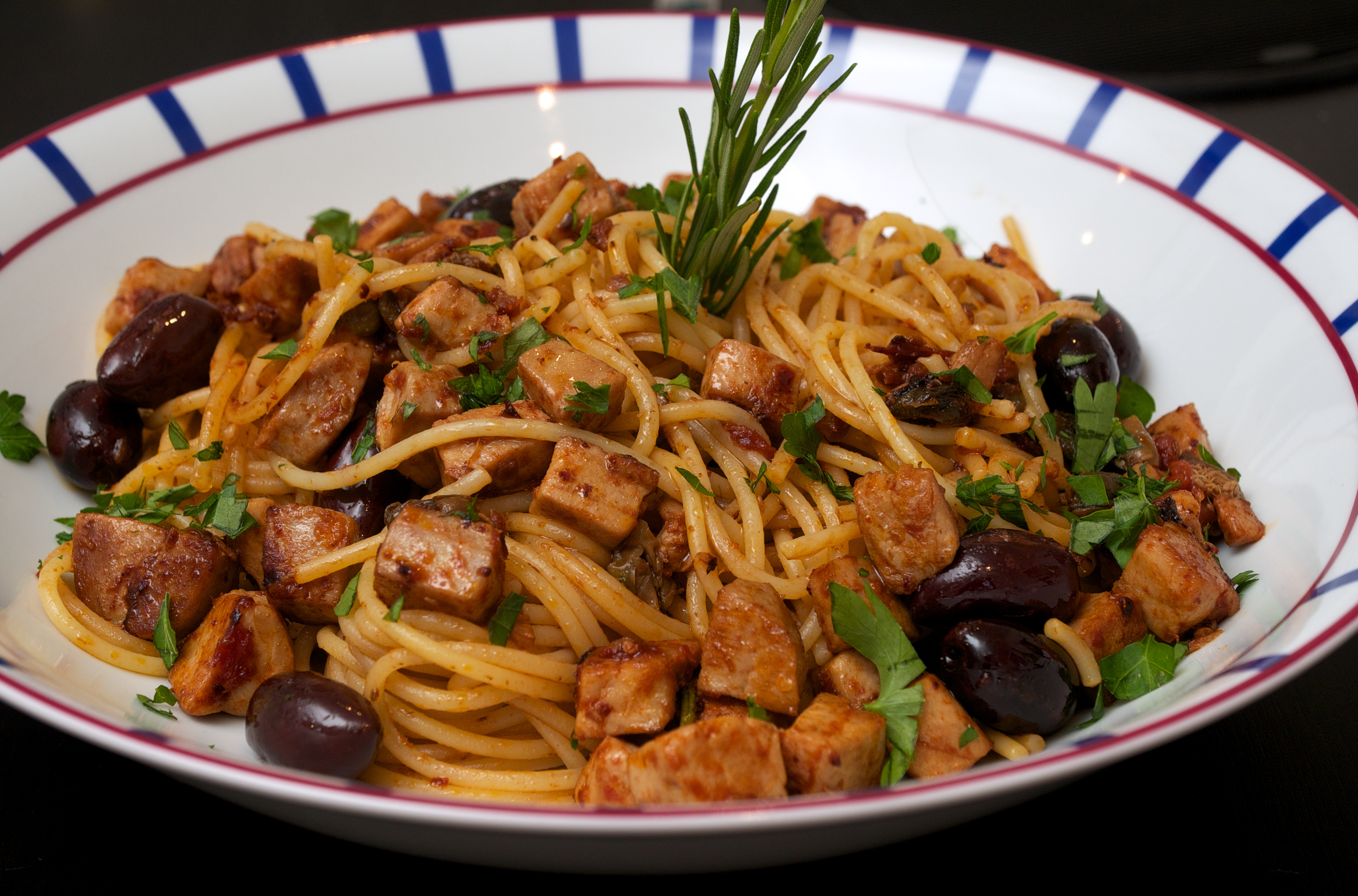
Fresh tuna spaghetti

We’ve made this recipe before using good-quality tinned tuna, which was delicious, but this time we’ve used fresh tuna and it really sings.

Wine Suggestion: Classic Italian matches for tuna depend on the region. If you are in Sicily a great match is their native Grillo grape, a textural, slightly salty and mineral wine with good body but not weighty. For this dish though we drank a Vermentino, made by Morisfarms, from the Tuscan coast. It has a great vinous texture and savoury character which combined with fresh fruit and minerality matches this Tuscan combination of tuna, tomatoes and olives.

Linguine with Fresh Tuna – serves 4-6

  • 2 tins top quality plum tomatoes (the Italian brands are good)
  • 500g fresh yellowfin tuna
  • 4 tbsp extra-virgin olive oil, plus a bit extra
  • 2 sprigs rosemary
  • a pinch of chilli flakes
  • 80ml white wine
  • 30g salted capers, soaked and drained
  • 100g pitted black olives (Gaeta or Kalamata)
  • 500g linguine
  • chopped fresh parsley to serve

Drain the tinned tomatoes and cut into strips.

Cut the tuna into 2cm cubes. Heat the oil in a pan and sauté with 1 sprig of rosemary and the chilli flakes.

Add the wine and simmer until it evaporates, then add the capers.

Add the olives and tomatoes and cook over a high heat for 15 minutes.

Cook the linguine until al dente, then drain and add to the pan of tuna sauce. Toss gently.

Sprinkle on the parsley, drizzle with some more olive oil, and garnish with the remaining rosemary.

(Original recipe from Obicà: Mozzerella Bar, Pizza e Cucina, Rizzoli, 2014.)

Read Full Post »
Stuffed Courgettes with currants

Another delicious Middle-Eastern dish from Honey & Co. This is really unusual and tastes delicious. It serves 4 as a main course but you could also serve smaller portions as a side with lamb.

Wine suggestion: perfect with a lighter, fruity red from Spain or Italy. Our choice was the Rocca delle Macie Chianti Vernaiolo which is a very youthful, easy-drinking Sangiovese with less extraction (tannins and colour) than a full-blown Chianti Classico or other Tuscan greats. By being lighter it was charming with the courgettes and the low tannins didn’t fight the spices. If you were having them as a side alongside lamb we would have stepped up to a richer Primitivo from Puglia, a Nero d’Avola from Sicily or maybe a good Lebanese red like Ch Musar or Massaya.

Medias – courgettes filled with lemon rice & currants – serves 4

  • 4 even-sized courgettes
  • 2 tbsp olive oil
  • 1 onion, peeled and finely diced
  • ½ cinnamon stick
  • salt
  • ½ tsp ground turmeric
  • ½ tsp allspice
  • pinch of cayenne pepper
  • 125g risotto rice
  • 40g dried currants
  • 2tbsp lemon juice
  • 375ml water
  • 4-5 cherry tomatoes
  • 15-20g parsley, picked and chopped
  • 1 tbsp dill

Halve the courgettes lengthways and remove the seeds with a teaspoon. Lay the scooped out halves in a  baking tray with sides that come up a bit higher than the courgettes.

Preheat the oven to 200°C/180°C fan/gas mark 6.

Heat the oil in a frying pan over a medium heat, then gently fry the onion, cinnamon stick and ½ tsp salt to soften the onion without colouring. Then mix in the turmeric, allspice and cayenne. Cook for 30 seconds before adding the risotto rice and stir to coat. Add another ½ tsp salt and the currants and pour over the lemon juice and water. Bring to the boil and allow to boil for 1 minute, then drain through a colander over a bowl to catch the liquid.

Cut the tomatoes into thin slices and stir into the rice along with the chopped parsley and dill (reserve a little parsley to garnish). Divide the rice mixture between the courgettes – don’t overfill as the rice will swell as it cooks. Pour the reserved liquid into the tray so the courgettes are half-submerged (top up with a bit of water if needed).

Put a sheet of greaseproof paper directly on top of the courgettes and cover the tin with tinfoil to entirely seal.

Cook in the centre of the oven for 30 minutes, then open and baste the courgettes with the liquid. Recover and return to the oven for another 30 minutes. Pierce the courgettes with a small knife to check they are very soft.

Baste again and sprinkle with the reserved parsley and another pinch of cayenne pepper.

Serve with a green salad and some fresh goats’ yogurt if you like.

(Original recipe from Honey & Co.: Food from the Middle East by Sarit Packer & Itamar Srulovich, Saltyard Books, 2014.)

Read Full Post »

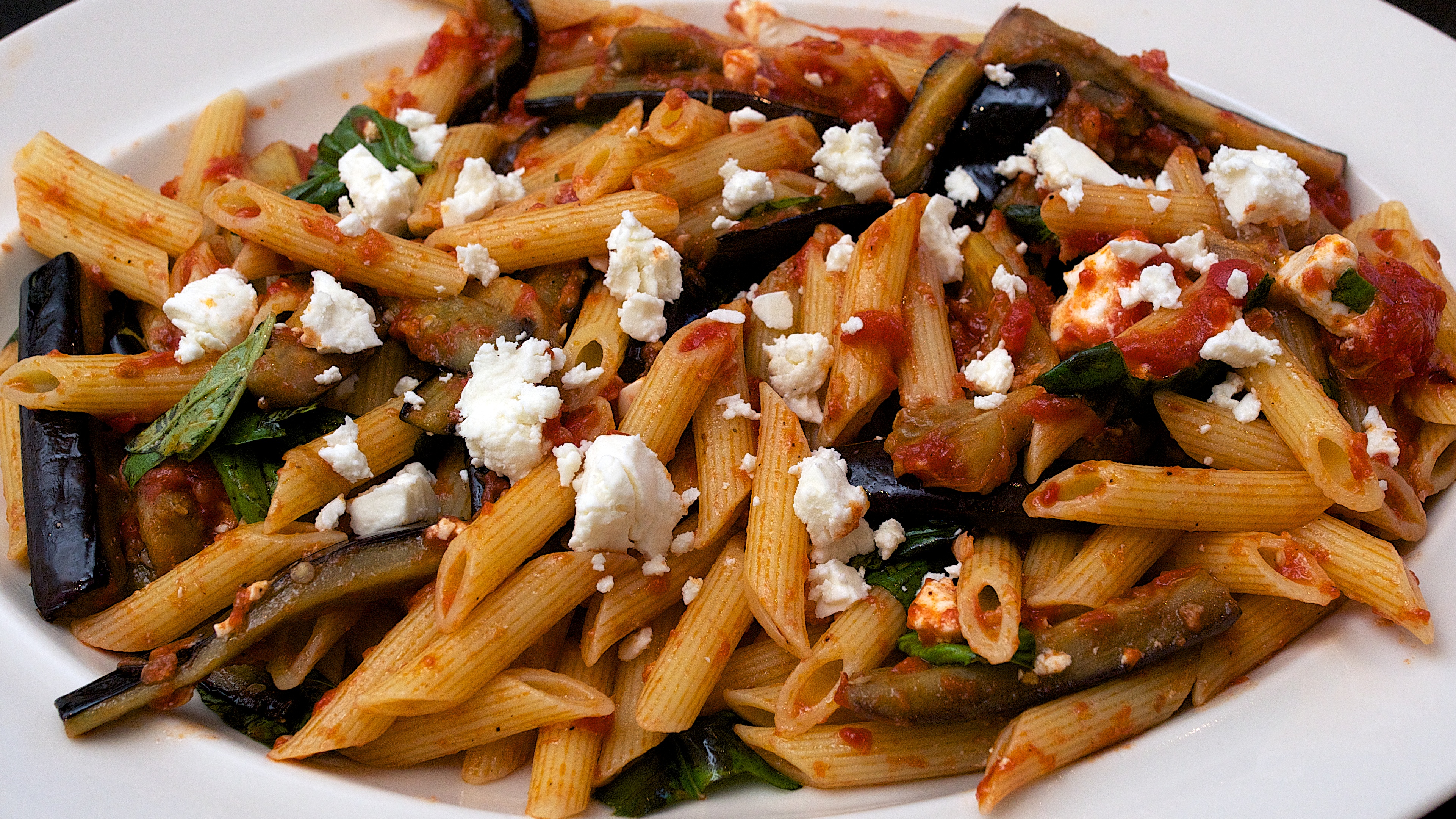
Penne alla norma

We love Rick Stein’s recipes as everything seems to come from true inspiration and has been tested in a real world kitchen so it all works. This recipe is no exception and delivers in flavour and balance perfectly.

Pasta alla Norma is traditionally made with spaghetti but worked just as well penne pasta as a substitute.

Wine Suggestions: Aubergine tends to work with Southern Italian reds really well, but we had an unexpected burst of sunshine so opened a Provençal rosé, Chateau Vignelaure La Source, which is an old favourite. It worked a treat and  will definitely try it again with other aubergine dishes.

Pasta alla Norma – Pasta with Aubergines, Tomatoes, Chilli & Cheese – serves 4

  • 500g aubergines (2 large ones)
  • 500g well-flavoured tomatoes or top quality tinned plum tomatoes, drained (Italian brands are best)
  • 6 tbsp extra virgin olive oil
  • 400g dried spaghetti
  • 4 garlic cloves, crushed
  • ¼ tsp crushed dried chillies
  • A large handful of fresh basil leaves, torn into small pieces
  • 100g finely grated ricotta salata or crumbled feta cheese

Trim the aubergines and cut into two across the middle, then cut each piece lengthways into chip-sized sticks. Toss with 1 tsp of salt and set in a colander over a bowl to drain for 30-40 minutes.

Meanwhile, if using fresh tomatoes, squeeze them over the sink to get rid of most of the juice and seeds. Roughly chop the tomatoes and set aside.

Bring a large pan of water to the boil (about 4.5 litres) and season generously with salt (about 8 teaspoons).

Pat the aubergines dry with kitchen paper to remove the salt and any liquid. Heat 4 tbsp of the frying pan, add half the aubergines and fry until lightly golden. Lift onto a plate lined with kitchen paper  and leave to drain while you fry the next batch. After removing the second batch of aubergine, leave the oil in the frying pan to cool.

Put the spaghetti into the boiling water and cook according to the packet or until al dente. 

Before the pasta is ready, add the remaining oil and the garlic to the cooled frying pan and return to the heat. When the garlic begins to sizzle gently, add the crushed chillies and the tomatoes and cook over a high heat for a few minutes or until they have broken down into a sauce. Season well and stir in the aubergines.

Drain the pasta and add to the sauce with the torn basil and half the cheese, then toss well. Divide between warm bowls and serve sprinkled with the remaining cheese.

(Original recipe from Rick Stein’s Mediterranean Escapes, BBC Books, 2007.)

Read Full Post »

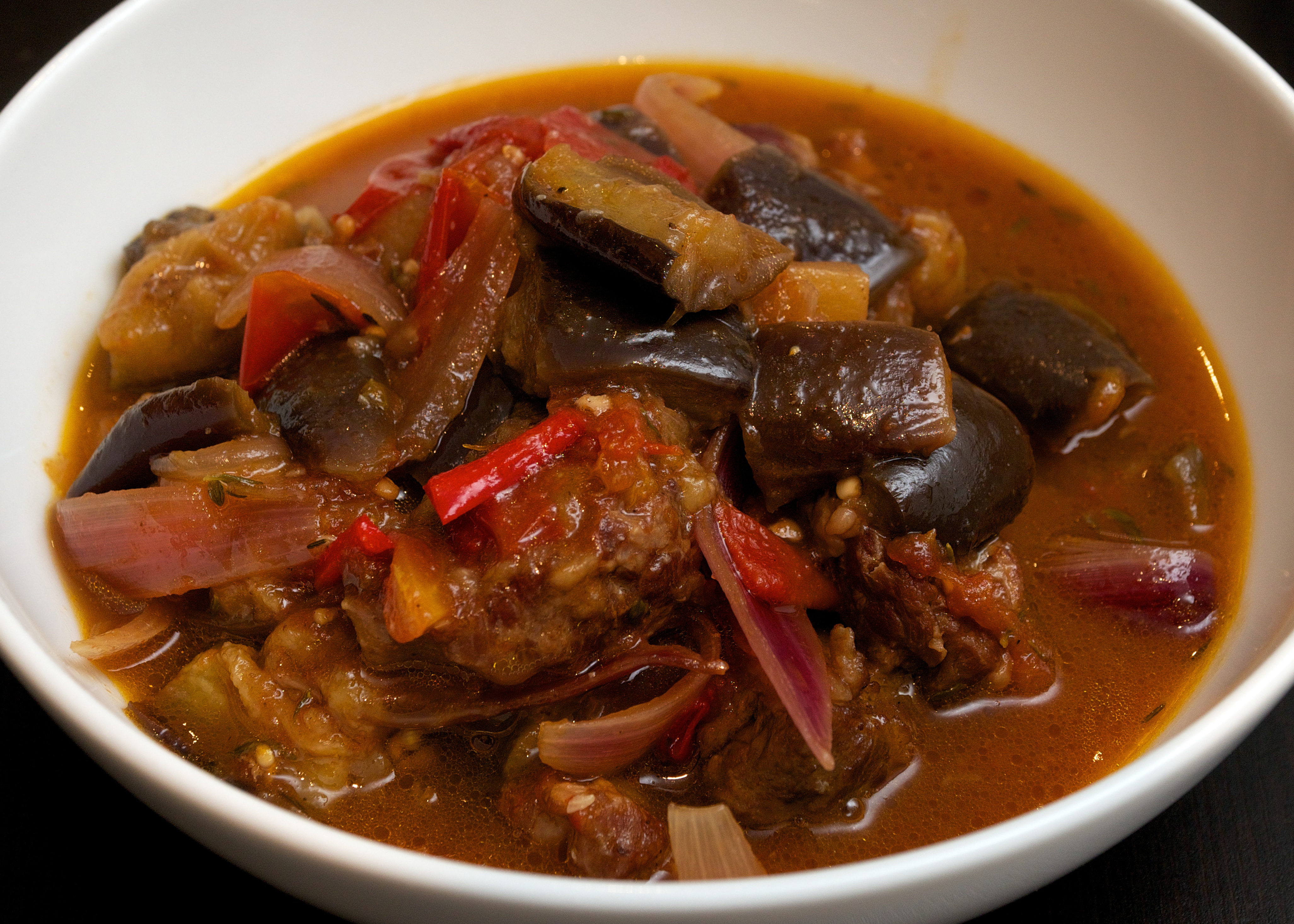
Aubergine & Lamb Stew

This is not the best looking dish but who cares when it tastes this good. To quote Itamar Srulovich (of Honey & Co. and the author of this recipe):

“Do not cook it to impress. Cook it for the ones you love the most, or just for you; it is that good.”

We concur Itamar!!

Wine Suggestion: Try a Mediterranean-style wine, a Primitivo or something similarly juicy from the south of Italy. We paired this with a lovely organic wine by Michele Biancardi, his Uno Piu Uno which is a cracking blend of Primitive and Nero di Troia. Only 12.5% abv but juicy and delicious so it didn’t overwhelm the lamb and aubergine and had enough depth to compliment it perfectly.

Patlican – Lamb & aubergine stew – serves 2

  • 450g lamb neck, cut into large dice
  • ½ tsp salt
  • ½ tsp freshly ground black pepper
  • 1 tbsp olive oil
  • 1 aubergine, cut into large cubes (about 350g)
  • 1 large tomato, cut into large cubes
  • 1 small red onion, peeled and cut into wedges
  • 6 whole cloves of garlic, peeled
  • ½ small red chilli, thinly sliced
  • 3 sprigs of fresh thyme
  • 150ml water
  • 1 tbsp pomegranate molasses

Season the lamb cubes with the salt and pepper.

Heat a large pan over a medium-high heat, add the oil and the diced lamb, and sear the meat all over. When the meat has browned (about 5-6 minutes), add the aubergine, tomato, onion & garlic. Cover and leave to steam for 5 minutes, then remove the lid and stir in the chilli and thyme. Reduce the heat to low and cook slowly for about 15 minutes, then pour in the water and pomegranate molasses.

Keep cooking on a low heat for 50-60 minutes or until the veg have broken down and the meat is soft enough to tear with a fork.

Serve with bread so you waste no sauce!

(Original recipe from Honey & Co.: Food From the Middle East by Sarit Packer & Itamar Srulovich, Saltyard Books, 2014.)

Read Full Post »

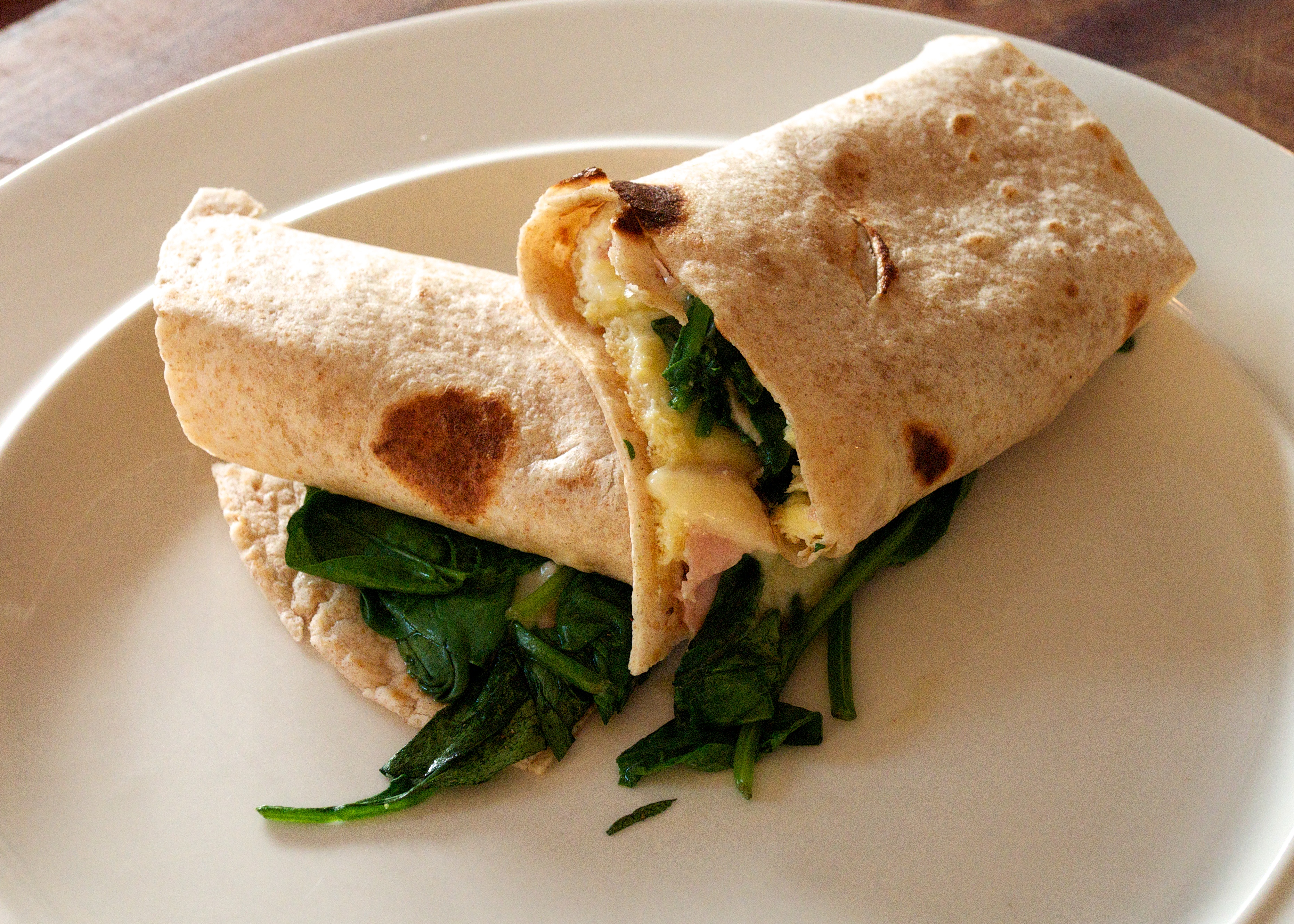
Spinach omelette chapati wrap

This dish makes a really tasty lunch and is a great use for leftover chapatis. Kids will like them too!

Spinach Omelette Chapati Wraps – serves 4

  • 1 tbsp vegetable oil
  • 4 scallions, finely chopped
  • 1 tsp garam masala
  • 4 eggs, lightly beaten
  • 50g mature cheddar, roughly grated
  • 2 thin ham slices, cut into strips
  • 100g baby spinach leaves
  • 4 chapatis

Heat a little of the oil in a non-stick 20cm frying pan. Add a quarter of the scallions and cook gently for a few minutes. Add ¼ tsp of the garam masala and cook for about 30 seconds.

Add a quarter of the beaten egg and tip the pan to cover the base – cook for 1 minute until the base is golden. Sprinkle over a quarter of the cheese, ham and spinach, cover with a lid and cook for another minute or until the spinach is just wilted and the cheese melted.

Meanwhile, heat a chapati in the microwave for 30 seconds or in a dry frying pan. Tip the omelette out on top of the warm chapati and roll up. Repeat with the rest of the ingredients to make 3 more wraps.

(Original recipe from BBC Good Food)

Read Full Post »

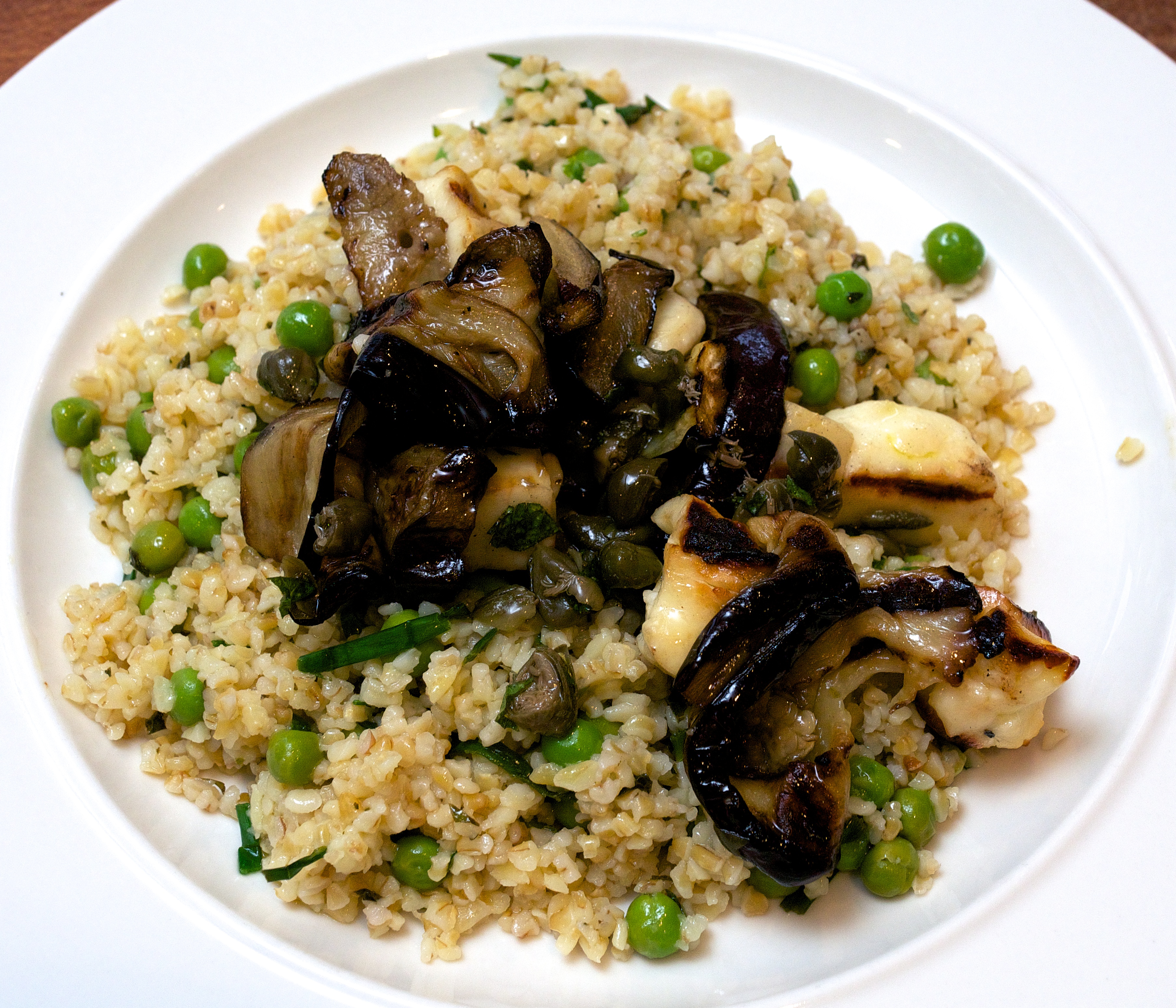
Haloumi & Aubergine Kebabs on a bulgur & pea salad

We’re much keener on nutty bulgur than quinoa that seems so popular at the moment. Bulgur makes for a much more interesting salad in our opinion and these aubergine and halloumi kebabs are a great veggie option for the barbecue. Leftovers taste nice for lunch the next day too.

Aubergine and Halloumi Kebabs with Garlic & Herb Bulgur Wheat 

  • 2 aubergines, sliced into strips
  • 200g pack of halloumi cheese, cut into cubes
  • 2 tbsp olive oil plus more for brushing
  • 1 tbsp capers, roughly chopped
  • 1 tsp chopped mint

FOR THE GARLIC & HERB BULGUR WHEAT

  • 200g bulgur wheat
  • 175g frozen peas
  • 6 tbsp garlic oil (to make garlic oil just gently simmer a couple of peeled and smashed garlic cloves in oil for about 10 minutes, then discard the garlic and let the oil cool before using)
  • juice of 1 lemon
  • handful of herbs (such as mint, parsley, chives or a mixture) roughly chopped

Brush the aubergine strips with olive oil and barbecue until softened. Thread onto skewers with the halloumi cubes.

Mix the remaining olive oil with the chopped capers and mint.

Barbecue the kebabs until the cheese is golden and drizzle over the dressing to serve.

Meanwhile, cook the bulgar wheat in boiling salted water for 15 minutes or until tender, adding the peas for the last few minutes.

Make the dressing with the oil, lemon juice and seasoning. Fold the herbs through the drained bulgur wheat and peas and gently stir in the dressing.

(Original recipe for kebabs from BBC Olive Magazine July 2014 and bulgur wheat from BBC Good Food.)

Read Full Post »

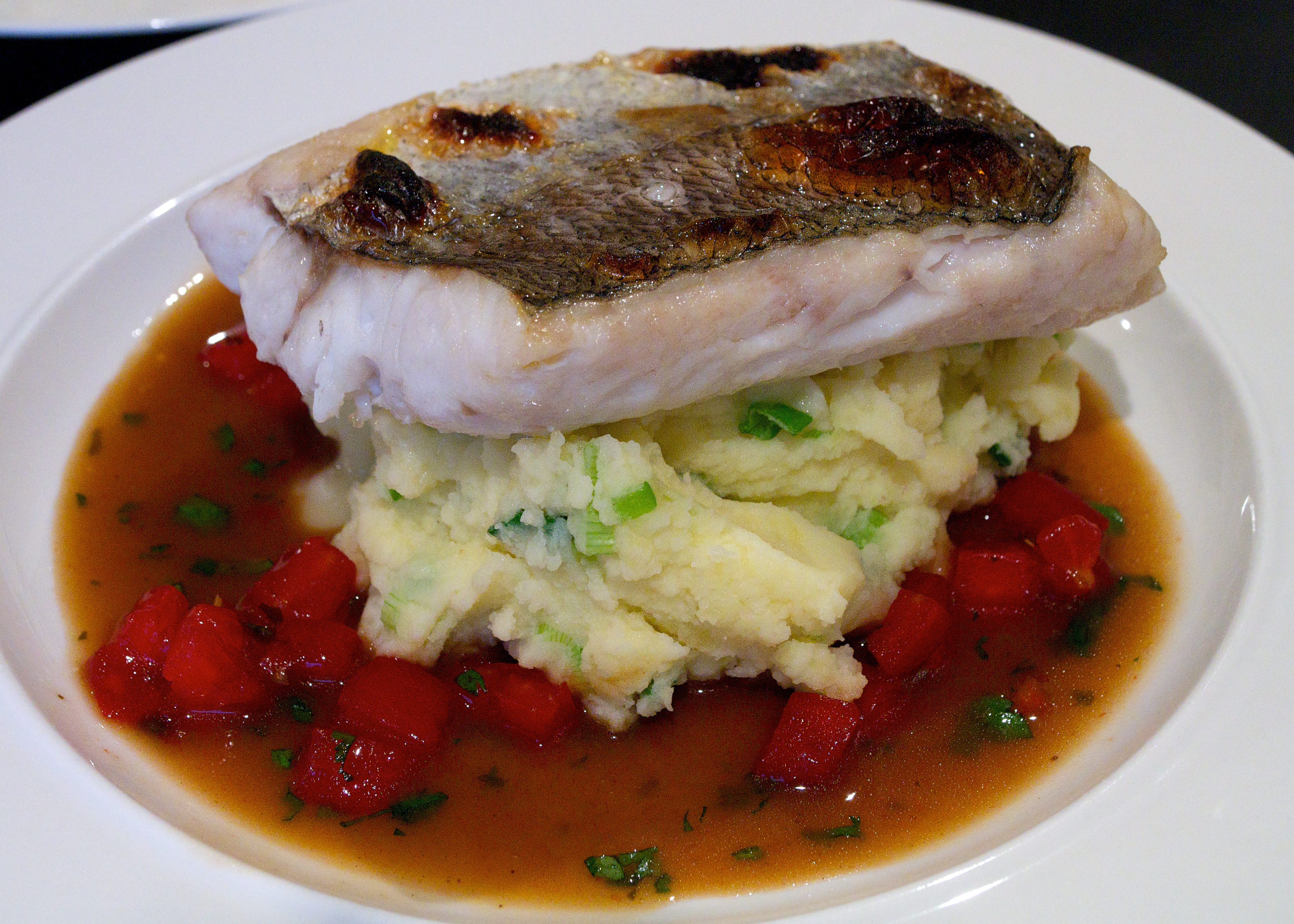
Hake and scallion mash with a soy butter sauce

The soy butter sauce here is absolutely delicious and we were perhaps a bit over-generous with it when plating up. You can do some sort of drizzly thing if you want it look a bit fancier. Either way your guests will be impressed!

Wine Suggestion: We went off-piste and served a light bodied, Loire Valley red from Saumur-Champigny, the Chateau Hureau “Tuffe” 2010. As it was a warm evening we’d chilled the bottle for 30 minutes in the fridge and it was charming and a delightful match proving that red wine can go with fish. We think the depth of flavour in the soy butter sauce helped too.

Hake on Scallion Mash with a Soy Butter Sauce – serves 4

  • 4 x 200g pieces of thick hake fillet, with skin on
  • melted butter for brushing
  • 1 tsp fine sea salt
  • sea salt flakes and coarsely crushed black pepper

FOR THE SCALLION MASH:

  • 1.25kg floury potatoes, peeled and cut into chunks
  • 50g butter
  • 1 bunch scallions, thinly sliced
  • a little milk
  • salt and freshly ground white pepper

FOR THE SOY BUTTER SAUCE:

  • 600ml chicken stock (preferably home-made)
  • 2 tbsp dark soy sauce
  • 75g unsalted butter
  • 1 tomato, skinned, seeded and diced (plunge into hot water for 1 minute to make peeling easier)
  • 1 heaped tsp chopped coriander

Lay the fish in a shallow dish with the skin-side down and sprinkle with the sea salt flakes, then set aside for 30 minutes. Rinse the salt off and dry the fish with kitchen paper. Brush the fish pieces with the melted butter and put skin-side up on a greased baking tray. Sprinkle the skin with a few sea salt flakes and some black pepper.

Cook the potatoes in boiling unsalted water for 20 minutes or until tender.

Start the sauce by putting the stock and soy sauce into another pan and boiling rapidly until reduced by half.

Preheat the grill to high and grill the hake for 8 minutes on one side only.

When the fish is almost done, add the butter to the sauce and whisk it in. Take off the heat and add the tomato and coriander.

Drain the potatoes and return to the pan, then mash until smooth. Heat the butter in another pan and toss the scallions in the hot butter briefly. Beat scallions and butter into the potato with a little bit of milk and some salt and white pepper. Spoon the scallions mash into the centre of warm plates. Rest the hake on top and spoon the sauce around the outside.

(Original recipe from Rick Stein Fish & Shellfish, Random House, 2014.)

Read Full Post »

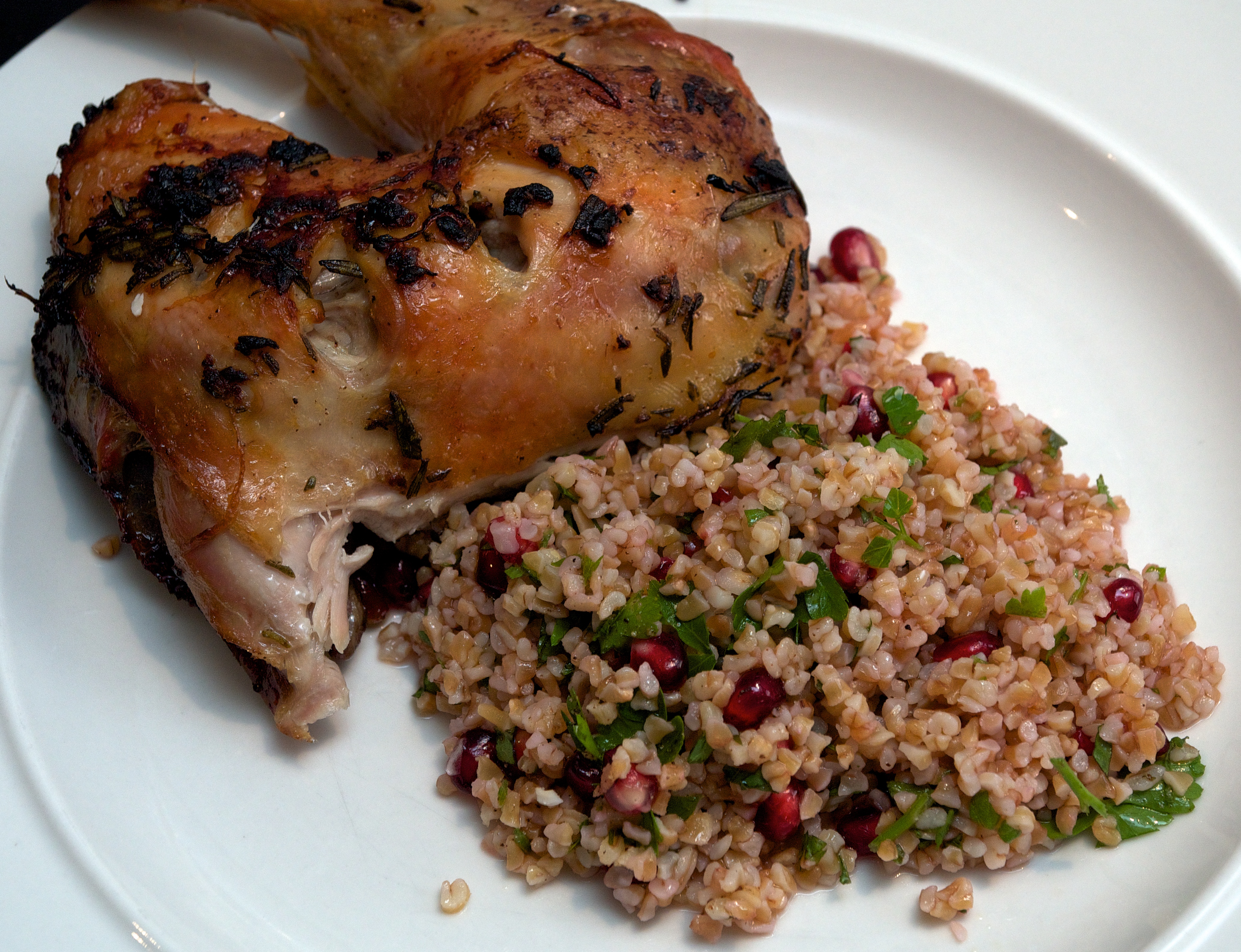
Rosemary & garlic spatchcock chicken with bulgur wheat salad

This tastes just as good as a cold chicken and bulgur salad the following day – great for lunchboxes!

Wine Suggestion: we drank a delicious Fiano made in Puglia by Michele Biancardi. It had delightful layers of fruit, texture from spice and minerality and a dancing freshness that worked well with the roasted chicken and still allowed the freshness of the salad to shine through. We suspect the depth and personality of this wine is helped by the biodynamic viticulture as it just had “something” extra without being weighty and forceful. If you can’t find this one do look out for Fiano, an interesting Italian white that you might not have tried.

Rosemary and Garlic Spatchcock Chicken with Bulgur Wheat Salad – serves 4 

  • 1 x 1.5kg chicken

FOR THE MARINADE:

  • 50ml olive oil
  • 1 lemon, juiced and zest finely grated
  • 4 cloves of garlic, peeled and crushed
  • 2 tbsp chopped rosemary leaves

FOR THE SALAD:

  • 200g bulgur wheat
  • 1 lemon , juiced and zest finely grated
  • seeds and juice of 1 pomegranate
  • 1 tbsp chopped mint
  • 1 tbsp chopped parsley
  • 50ml olive oil

To spatchcock the chicken you need to first remove the backbone by cutting through the chicken on both side of the bone (use poultry shears if you have them or really sharp scissors). Remove the backbone and open the chicken out, then put the chicken, breast side up, onto a worktop and use your palms to flatten it. Make a few slashes in the legs with a sharp knife.

Make the marinade by mixing all of the ingredients in a bowl and seasoning well with sea salt and black pepper.

Put the chicken into a wide, shallow dish, pour over the marinade and rub in well with your hands. Cover with cling film and chill for at least 2 hours.

Preheat the oven to 220C/425F/Gas 7.

Put the chicken into a roasting tin along with all the marinade and bake for about 1 hour or until cooked through (the juices need to be totally clear when pierced with a skewer and the legs should feel loose).

Meanwhile, cover the bulgur wheat with boiling water and leave to soak for 10-15 minutes or until just soft, then drain.

Mix the lemon juice and zest with the pomegranate seeds and juice, herbs and olive oil. Stir in the bulgur and season well with sea salt and black pepper.

When the chicken is cooked, cover with foil and leave to rest in the tin and leave in the switched off oven for a few minutes, then carve in to pieces and serve with the salad.

(Original recipe from Rachel Allen’s Rachel’s Everyday Kitchen, HarperCollins, 2013.)

Read Full Post »

Pasta Primavera

This was tasty. We were a bit concerned about the boiled onion at first but it gives a nice onion flavour without any fried taste which isn’t required here with the light creamy sauce. Good for a weeknight or weekend lunch.

Pasta Primavera – serves 4-6

  • 1 red pepper, halved and deseeded
  • 1 large onion, roughly chopped
  • 225g asparagus, trimmed and cut into 2.5cm lengths
  • 100g sugarsnap peas, sliced in half lengthways
  • 300g dried penne
  • 100ml double cream
  • 60g Parmesan cheese, coarsely grated
  • juice of ½ lemon
  • 25g toasted pine nuts
  • 1 tbsp torn fresh basil leaves

Put the pepper halves under a hot grill, skin side up, for around 10 minutes or until the skin is completely charred. Seal in a plastic bag and leave to cool, then peel and discard the skin. Slice the flesh into large pieces.

Cook the chopped onion in a pan of salted boiling water for 9 minutes, then add the asparagus. Cook for another minute before adding the sugarsnaps and continue to boil for another 2 minutes. Drain and rinse in cold water.

Cook the penne in a large pan of salted boiling water for the recommended time on the pack, then return to the pan with the cooled vegetables. Add the roasted pepper, cream and cheese and stir over a gentle heat to warm through. Season well with sea salt and black pepper.

Squeeze over the lemon and scatter over the pine nuts and basil to serve.

(Original recipe from Mary Berry’s Cookery Course, DK, 2013.)

Read Full Post »

« Newer Posts - Older Posts »