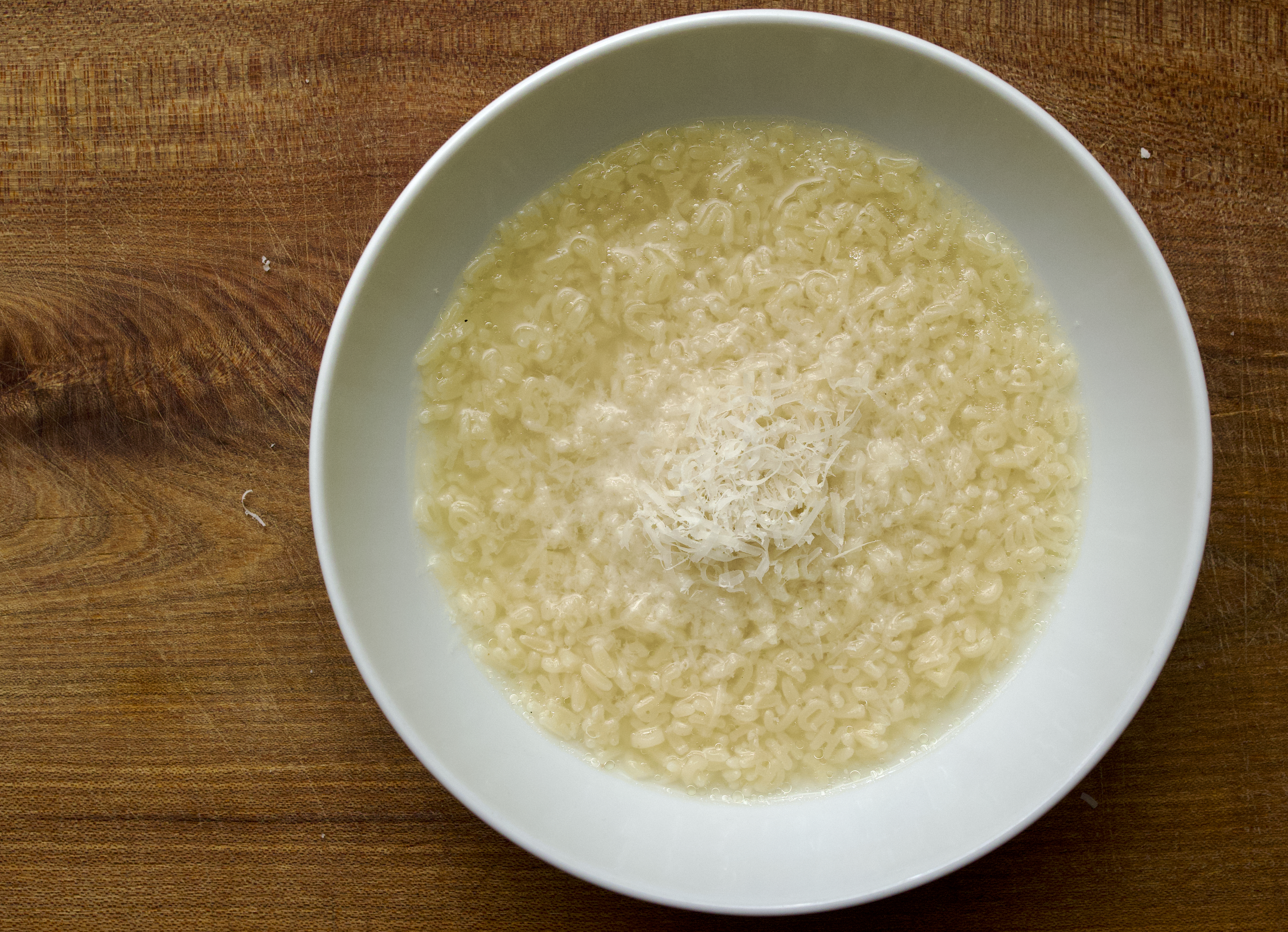
Comfort food at its best. Don’t be tempted to strain the chicken broth of fat, it adds to the flavour and don’t skimp on the salt. You can use the poached chicken meat for sandwiches, or something else.
Alpabetto in Brodo – serves 4 (the recipe makes double the quanity of broth needed and it will keep in the freezer)
800kg chicken thighs (skin on and bone-in)
1 onion, peeled and halved
1 carrot, peeled and halved
1 stick of celery, halved
1 bay leaf
a few peppercorns
200g alfabeto
grated Parmesan, to serve
Put the chicken into a large heavy pan, cover with 2.5 litres of cold water and add a large pinch of salt. Bring to the boil, then reduce the heat to low and use a slotted spoon to spoon off any scum.
Add the vegetables, bring back to the boil, then turn the heat to low, cover and simmer gently for 1 hour and 15 minutes.
Strain through a fine sieve, pressing down on the veg and chicken to extract all the flavor. You won’t need the chicken after this but you should strip the meat from the bones and keep it for something else.
Bring 1 litre of the broth to the boil, add the alfabeto and cook until al dente. Ladle into bowl and add grated Parmesan.
(Original recipe from An A-Z of Pasta by Rachel Roddy, Penguin: Fig Tree, 2021.)
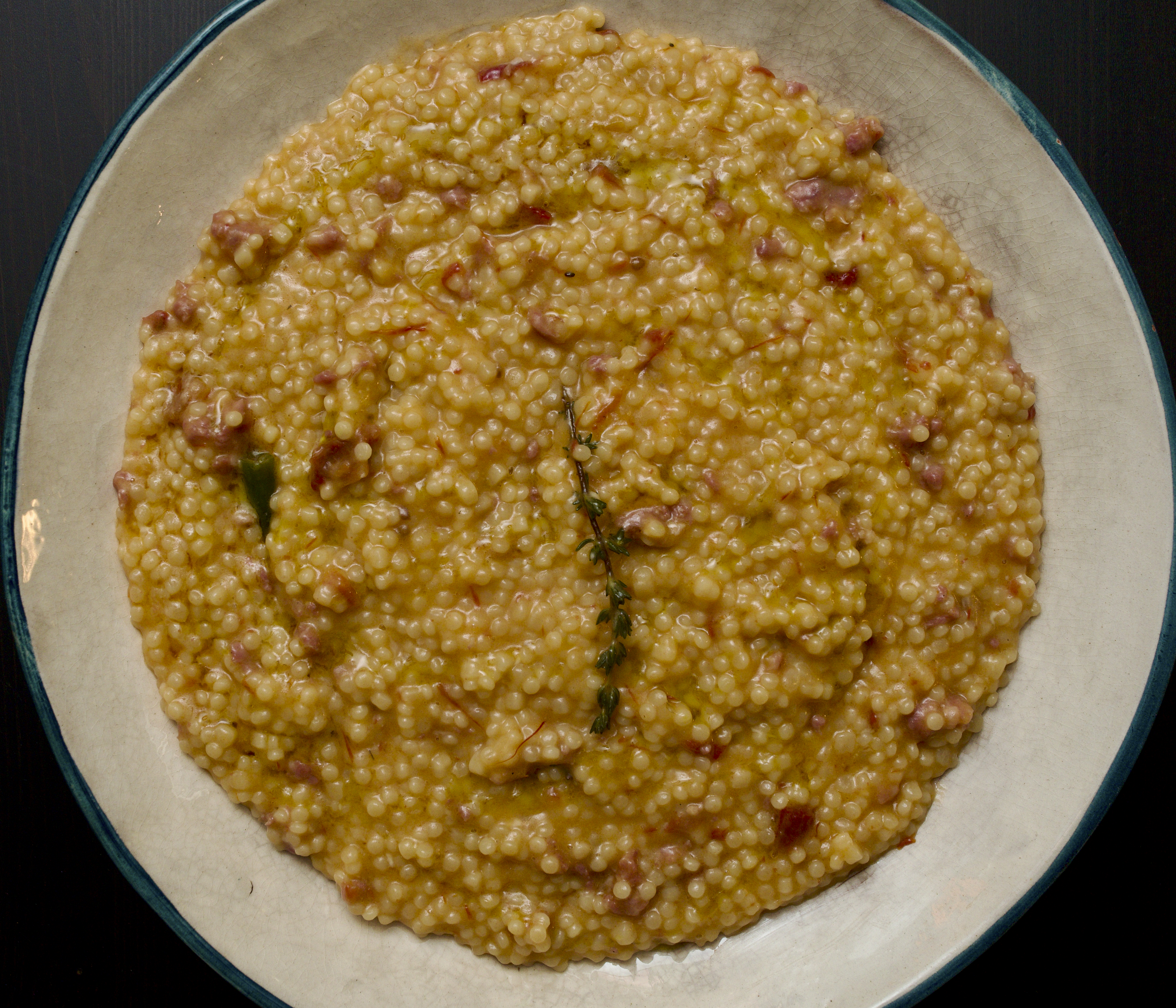
So fregula is fregola, pearl couscous, giant couscous, mograbia(h) as well as some other names, but it is essentially tiny pasta balls. We’ve cooked with it before but this time Jules bought it by accident and we had to find a recipe to use it up. Somewhat like a risotto, but the texture is a touch more unctuous. Quite a rich and flavoursome dish.
Wine Suggestion: This dish requires a powerful red with a fresh core of acidity. Taking inspiration from a Risotto Milanese pairing we opened a Pira Luigi Barolo Serralunga from 2018. Youthful and expressive aromatics of leather, violets & wild berries plus hints of tar. This flowed into an energetic and refined palate with elegant, but persistent tannins; almost lifted and light, but with a deep core of rich fruits.
Fregula with sausage and saffron – serves 4
1 clove of garlic
6 tbsp olive oil
120g sausage meat, crumbled – try to find meaty Italian sausages if you can
4 sun-dried tomatoes, chopped
2 sprigs of thyme
a small piece of chilli
1 litre stock – meat or veg – we used turkey stock
350g fregula (see note above)
a few strands of saffron
60g pecorino, grated
Put the stock into a small saucepan and bring to a simmer.
Smash the garlic clove but leave it whole, then put into a deep frying pan with 3 tbsp of the olive oil. Fry gentluy over a medium-low heat.
Add the sausage, sun-dried tomatoes, thyme and chilli, and fry, stirring, for a couple of minutes.
Add the fregula to the sausage and stir for a minute. Then start adding the stock, a ladelful at a time, the same as you would if cooking risotto. Keep both pans simmering as you keep going like this. Start tasting the fregula after 12 minutes and cook until al dente. You are looking for a loose rather than stiff consistency.
Add the saffron, pecorino and 3 tbsp of olive oil and serve.
(Original recipe from An A-Z of Pasta by Rachel Roddy, Penguin:Fig Tree, 2021.)
Who can resist a stuffed pasta shell? In this one the joy is the balance between fresh ricotta, iron-rich kale, and a rich tomato sauce.
Wine Suggestion: We’d suggest the open, accessability of a youthful Barbaresco from Piedmont, as opposed the depth and moodiness of a Barolo. We have at hand Pico Maccario’s rendition that has a sense of fun which is sometimes lost by winemakers trying to make the next best thing … and we applaud them; wine is to be drunk and enjoyed too.
Conchiglioni stuffed with kale, spinach and ricotta – serves 4
Blanch the kale in lots of salty boiling water, then remove from the pan with a slotted spoon and straight into a bowl of iced water. Repeat with the spinach but cook for just 30 seconds.
Squeeze all the water out of the spinach and kale and put into a food processor. Add the chilli and parsley, then whizz for a few seconds. Scrape out into a bowl and add the ricotta, 30g of the Parmesan, the numeg, and lemon zest. Stir well to combine, then transfer to a piping bag.
Preheat the oven to 220C/200 Fan/Gas 7.
Bring a large pan of salty water to the boil and cook the pasta for 10 minutes – it should be a little more than al dente. Drain and leave until cool enough to handle.
Pour the tomato sauce into a medium-sized baking dish.
Pipe the kale mixture into the pasta shells and settle them snugly into the tomato sauce, pushing them down a little. Tear the mozzarella over the top and sprinkle with the rest of the Parmesan.
Bake in the hot oven for 20 minutes, then serve with a green salad.
(Original recipe from Slow by Gizzi Erskine, HQ, 2018.)
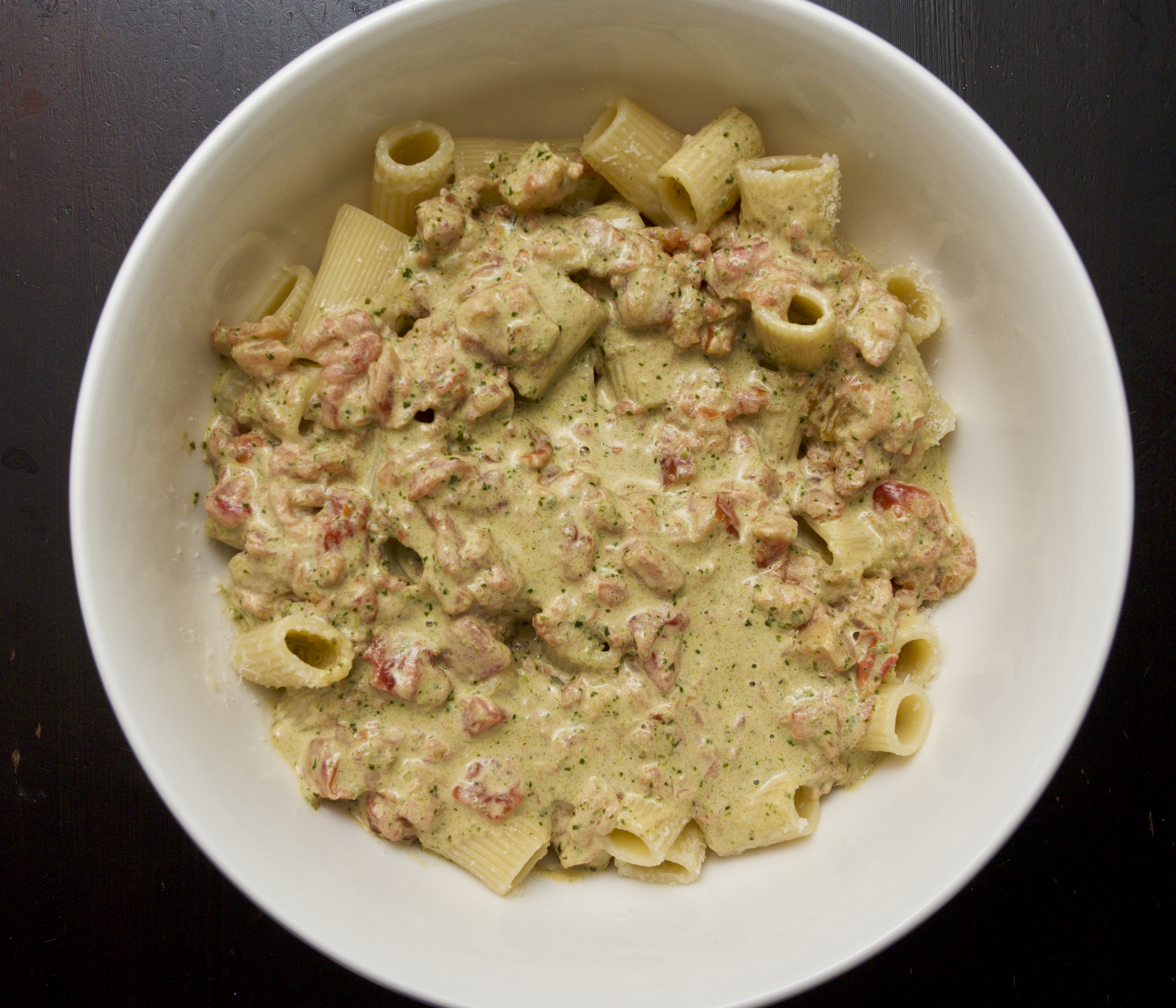
We love a pasta dish with just a few ingredients and this one is light and fresh and conveniently uses tinned tomatoes.
Wine Suggestion: Despite the cream which may suggest an oaked white, this actually works best with an unoaked, textural white instead. Something like the brilliant Dissidents Cassandre, a Vermentino from Maison Ventenac in Carbades which both lifts and expands the flavours, plus the fresh nuttiness cuts through the light cream.
Rigatoni with tomato, cream and pesto – serves 4
200ml double cream
300g tinned tomatoes, drained weight
2 tbsp pesto
350g rigatoni
40g Parmesan
Pour the cream into a saucepan, add the drained tomatoes and cook over a low heat for 10 minutes.
Remove the pan from the heat and stir in the pesto.
Meanwhile, cook the rigatoni in lots of salty water until al dente, then drain and tip it into a warm serving bowl. Sprinkle the pasta with the Parmesan, then spoon over the sauce and serve.
(Original recipe from The Silver Spoon Pasta, Phaidon, 2009.)
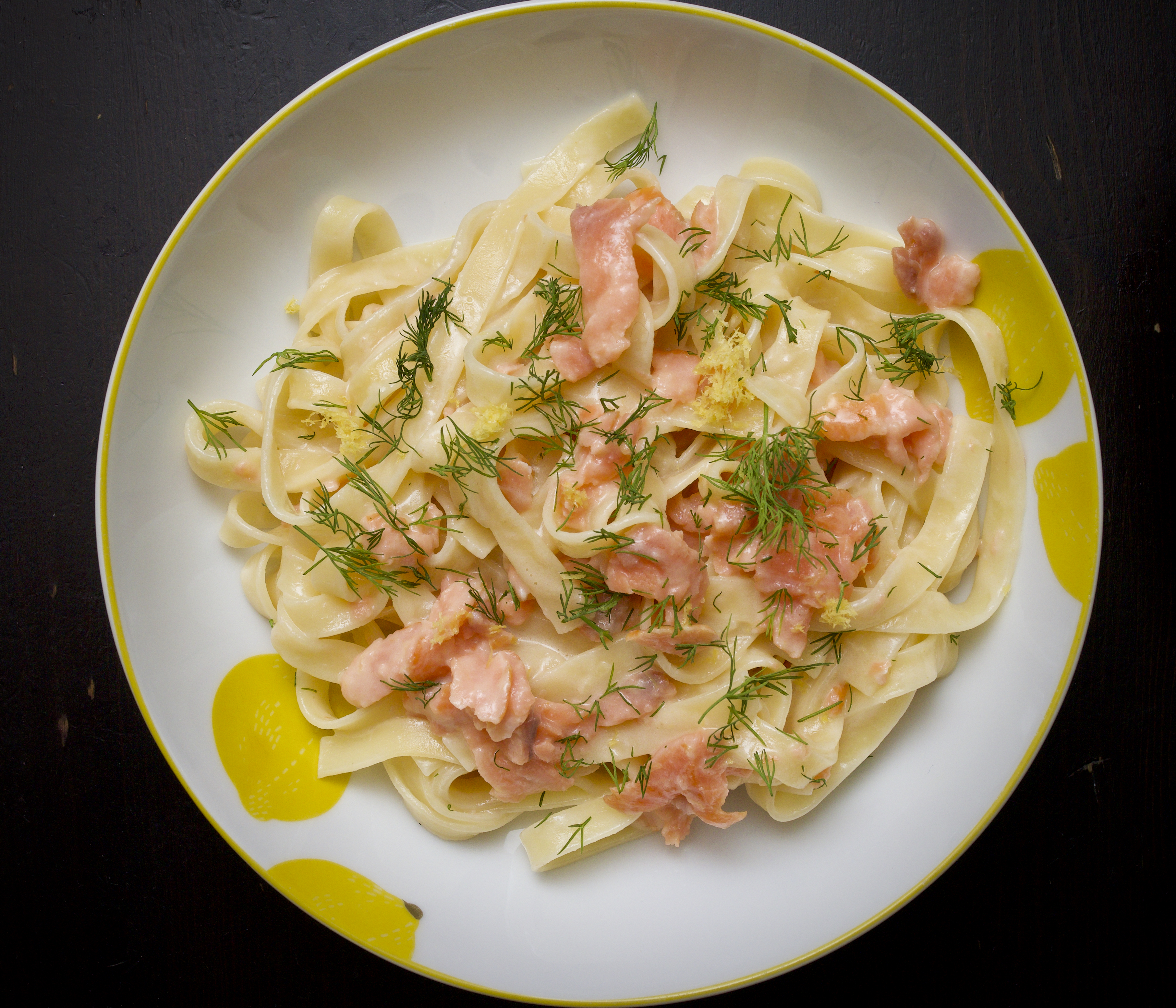
We’re clearing out in January, rather then dieting. This recipe used up the last of a side of smoked salmon and its simplicity is perfect.
Wine Suggestion: We think Verdicchio is under-rated as a grape and for food combinations like this where you have a creaminess, combined with some Omega fatty acids and citrus zest it is the business. Tonight our choice was Sartarelli’s Tralivio which balances fruit weight with an almost saline minerality.
Tagliatelle with Salmon and Mascarpone – serves 4
400g tagliatelle
200g smoked salmon, snipped with scissors into short strips
125g mascarpone
20g soft butter
zest of 1 lemon, plus more to garnish
a few sprigs of dill, snipped
Cook the tagliatelle in lots of very salty water until al dente.
Meanwhile, tip the salmon strips into a large warm serving bowl along with the mascarpone, butter and lemon zest. Add a ladleful of the pasta cooking water to loosen it all to a cream, then taste and add salt if needed.
Drain the pasta, reserving some water, then tip into the bowl with the sauce and toss gently, adding more cooking water if needed. Serve sprinkled with the dill and some more lemon zest.
(Original recipe from An A-Z of Pasta by Rachel Roddy, Penguin: Fig Tree, 2021.)
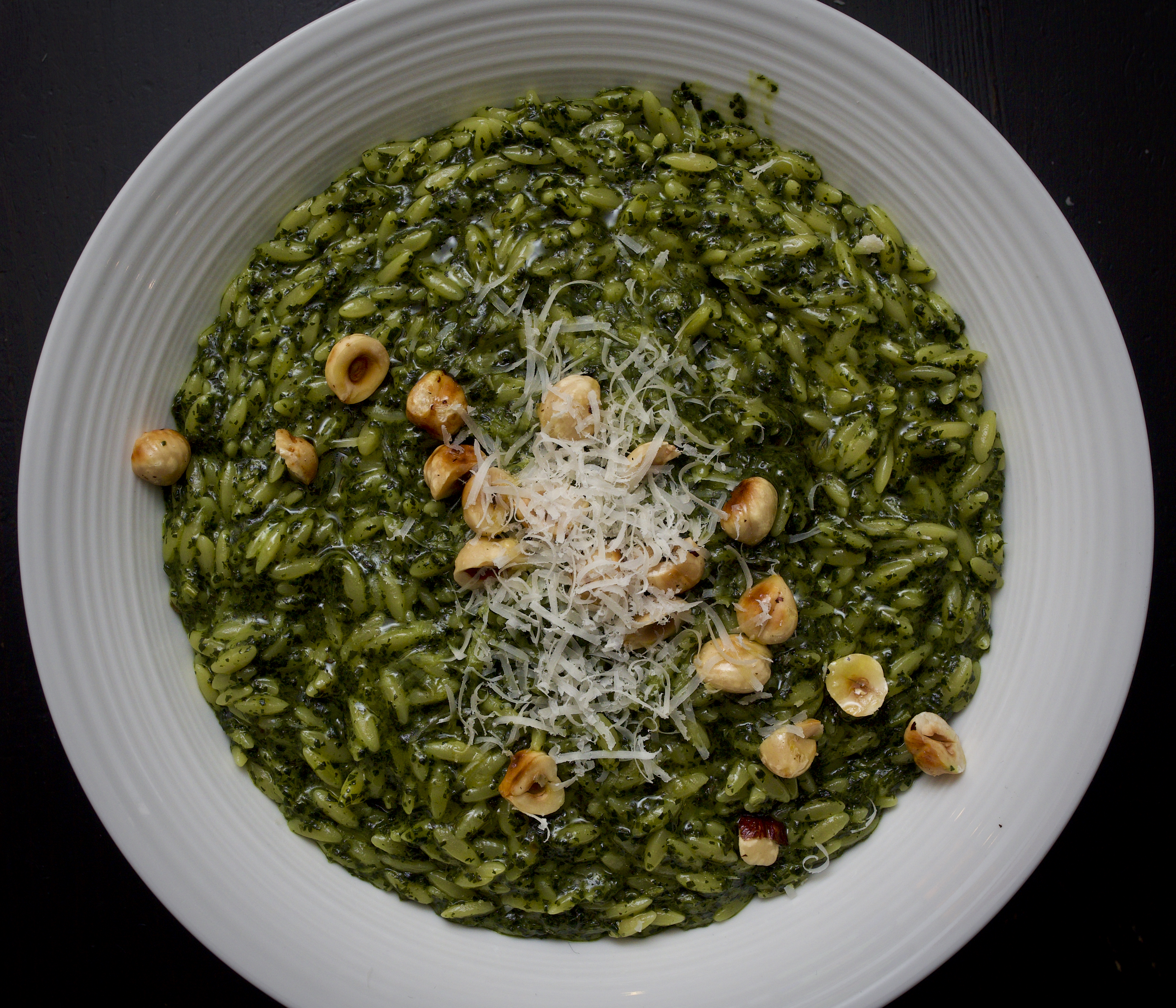
We love the colour of this dish – a delicious bowlful of goodness.
Wine Suggestion: This demands a simple, earthy red like Morisfarms Mandriolo, a Sangiovese dominant wine from the Maremma on the Tuscan coast. The Moris family have lived on their farm for over three hundred years and their gentle care and organic approach to winemaking comes from their love of the land. A thoughtful wine.
Risoni di Cavolo Nero – serves 2
handful of hazlenuts
150-200g cavolo nero
4 tbsp extra virgin olive oil, plus extra to serve
garlic
2-3 anchovies in oil
a pinch of chilli flakes
700ml home-made chicken or vegetable stock
½ lemon
240g orzo
2 tbsp mascarpone
finely grated Parmesan, to serve
Heat the oven to 150C fan.
Toast the hazelnuts in the oven for 15 minutes, then set aside.
Strip the cavolo nero leaves from the stalks, then roughly chop the leaves and rinse them in cold water. Discard the tough stalks.
Put the oil, garlic and anchovies in a pan and heat gently for a few minutes until the anchovies have melted. Add the chilli and cook for another minute, stirring. Add the cavolo nero and cook for 3-4 minutes until just wilted. Discard the garlic and transfer to a blender. Add a splash of stock and a squeeze of lemon juice, then blend to a smooth liquid.
Put the rest of the stock into the same pan and bring to the boil. Add the orzo and reduce heat to a simmer and cook for 6-7 minutes, stirring occasionally, until the stock has been absorbed by the pasta, add a splash of water if it drys up too soon. Add the green purée and cook for another 2 minutes – you are looking for a risotto-type consistency. Finely grate in the zest of ½ a lemon and stir in the mascarpone. Taste for seasoning and add more lemon juice if needed.
Serve with the toasted hazelnuts crumbled on top, some finely grated Parmesan and a good drizzle of your best olive oil.
(Original recipe from Stagioni by Olivia Cavalli, Pavillon, 2022.)
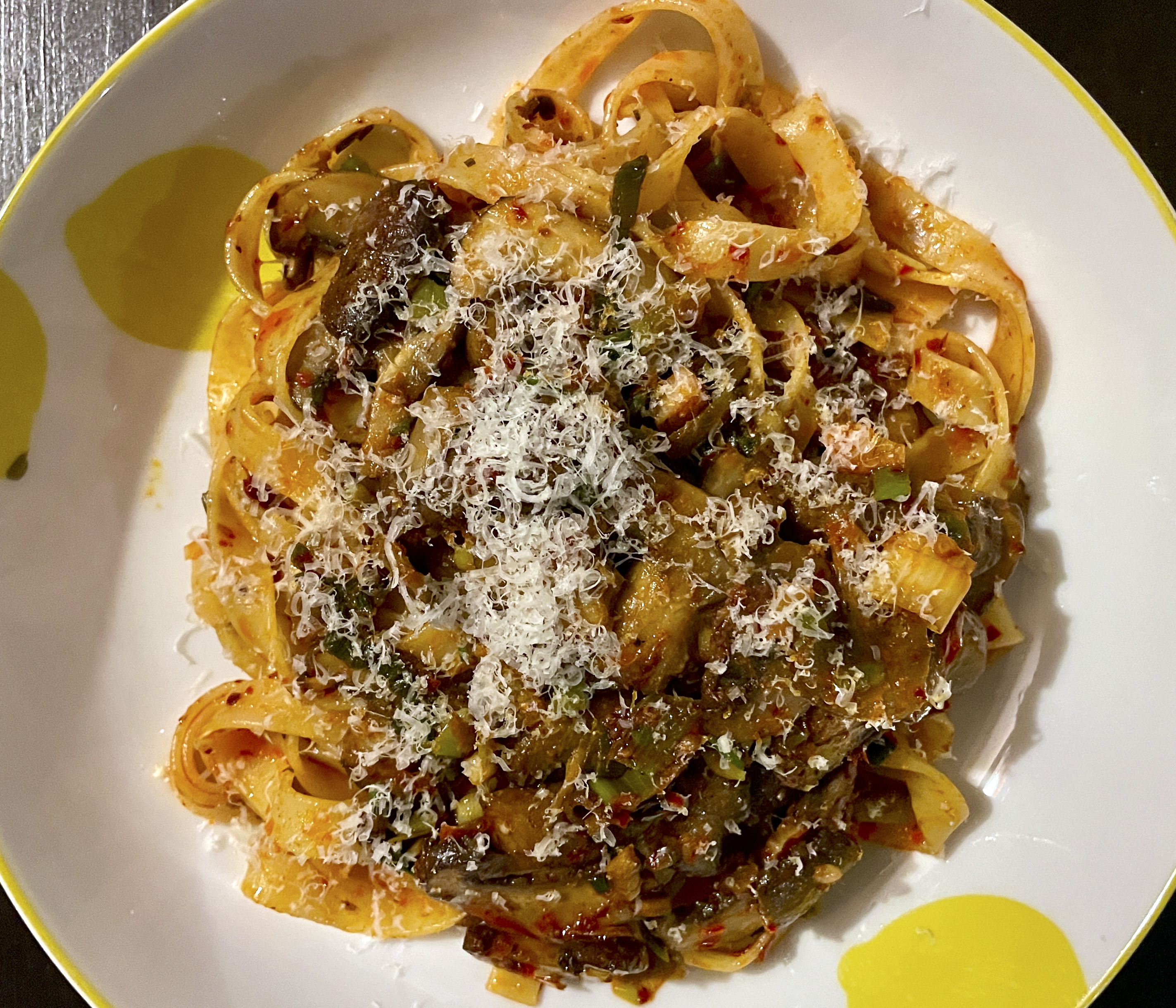
Perfect dish for nights when you’ve little energy – dinner for two in ten minutes and lots of flavour.
Wine Suggestion: A warmer climate Shiraz/Syrah is our choice as you need the juicier fruit, but nothing too jammy please. Tonight a glass of the Wolftrap Red from Boekenhoutskloof in South Africa. Mostly Shiraz but with a touch of Mourvèdre and Viognier it has the fruit to counter the harissa heat, and a balance that doesn’t overwhelm the food.
Tagliatelle with mushrooms and harissa – serves 2
150g tagliatelle
300g chestnut mushrooms
4 scallions
2 cloves of garlic
6 tbsp olive oil
3 tbsp harissa paste
grated Parmesan, to serve
Bring a large pan of very salty water to the boil, then cook the tagliatelle according to the timings on the pack.
Warm the olive oil in a large frying pan, then add the mushrooms and cook for about 5 minutes or until starting to brown. Add the garlic and cook for a minute, then add the scallions and continue to cook for a couple of minutes or until softened. Stir in the harissa paste.
Drain the pasta quickly and not too well, then tip into the pan with the mushrooms. Toss everything together, then serve in warm bowls with the Parmesan sprinkled over.
(Original recipe from A Cook’s Book by Nigel Slater, 4th Estate, 2021.)
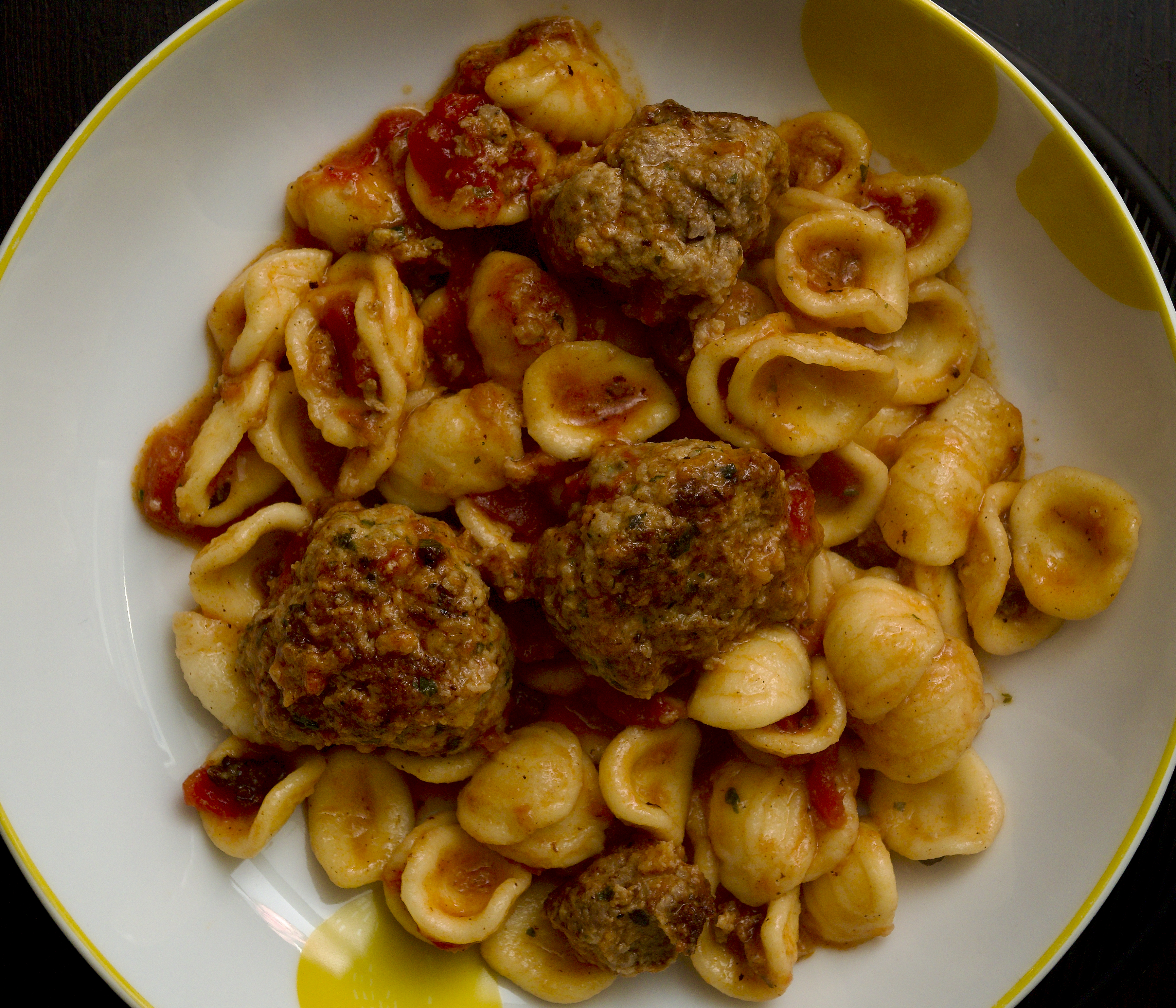
Who doesn’t love meatballs. There’s at least one person in this house who would have them every week. This recipe by Olia Hercules makes heaps to help with that problem.
Wine Suggestion: great with a simple Sangiovese with bright and slightly crunchy fruits and a good wack of tannins. Rocca delle Macie’s Chianti Vernaiolo is our standby and doesn’t hide behind oak, rather celebrates the joy of fruit. The added joy is the smooth tannins this wine brings despite the potentially awkward Sangiovese grape; they have a great feel for getting the balance right even with a bouncingly youthful cuvee.
Olia’s Meatballs – Sugo Della Mamma – makes 30 meatballs
FOR THE MEATBALLS:
60g stale sourdough bread with crusts (or dry out 80g of fresh bread chunks in the oven)
250ml hot whole milk
20g parsley, very finely chopped
400g beef mince
400g pork mince
1 small egg, lightly beaten
2 cloves of garlic, finely grated
100g Pecorino/Parmesan, finely grated, plus extra to serve
¼ nutmeg, finely grated
FOR THE SAUCE:
up to 5 tbsp olive oil
2 cloves of garlic, peeled and bruised but left whole
800g tomato passata or 2 x 400g tins chopped tomatoes
a couple of sprigs of basil
Tagliagelle, pappardelle or orecchiette, to serve
Put the bread into a bowl and pour over the hot milk. Leave for 5 mintues then press the bread down to make sure it’s all soaked. Cover and leave for 15 minutes.
Mix the mince, egg, bread and soaking milk, grated garlic, parsley, cheese and nutmeg together. Season well with 1 tbsp of sea salt and lots of black pepper. Use your hands to mix it all together really well.
Wet your hands and shape the mixture into about 30 golf-ball sixed meatballs.
Heat 3 tbsp of the olive oil for the sauce. Fry the meatballs in batches until browned on a couple of sides. Remove from the pan and set aside.
If you need more fat you can add the extra 2 tbsp of oil, then add the bruised garlic and cook for a few minutes to infuse the oil, then remove and discard.
Add the passata or tomatoes to the pan, then fill the jar or tin with 200ml water and add that with a generous pinch of salt. Cook over a medium-low heat for 15 minutes. Gently place the meatballs into the sauce and cook for 15-20 minutes at a gentle bubble. Add the basil sprigs for the last 5 minutes of cooking time.
Cook the pasta, then roughy drain so a little water remains. Return the pasta to the pot it was cooked in, ladle over the sauce and meatballs and gently stir to combine.
Serve with extra grated pecorino.
(Original recipe from Home Food by Olia Hercules, Bloomsbury, 2022.)
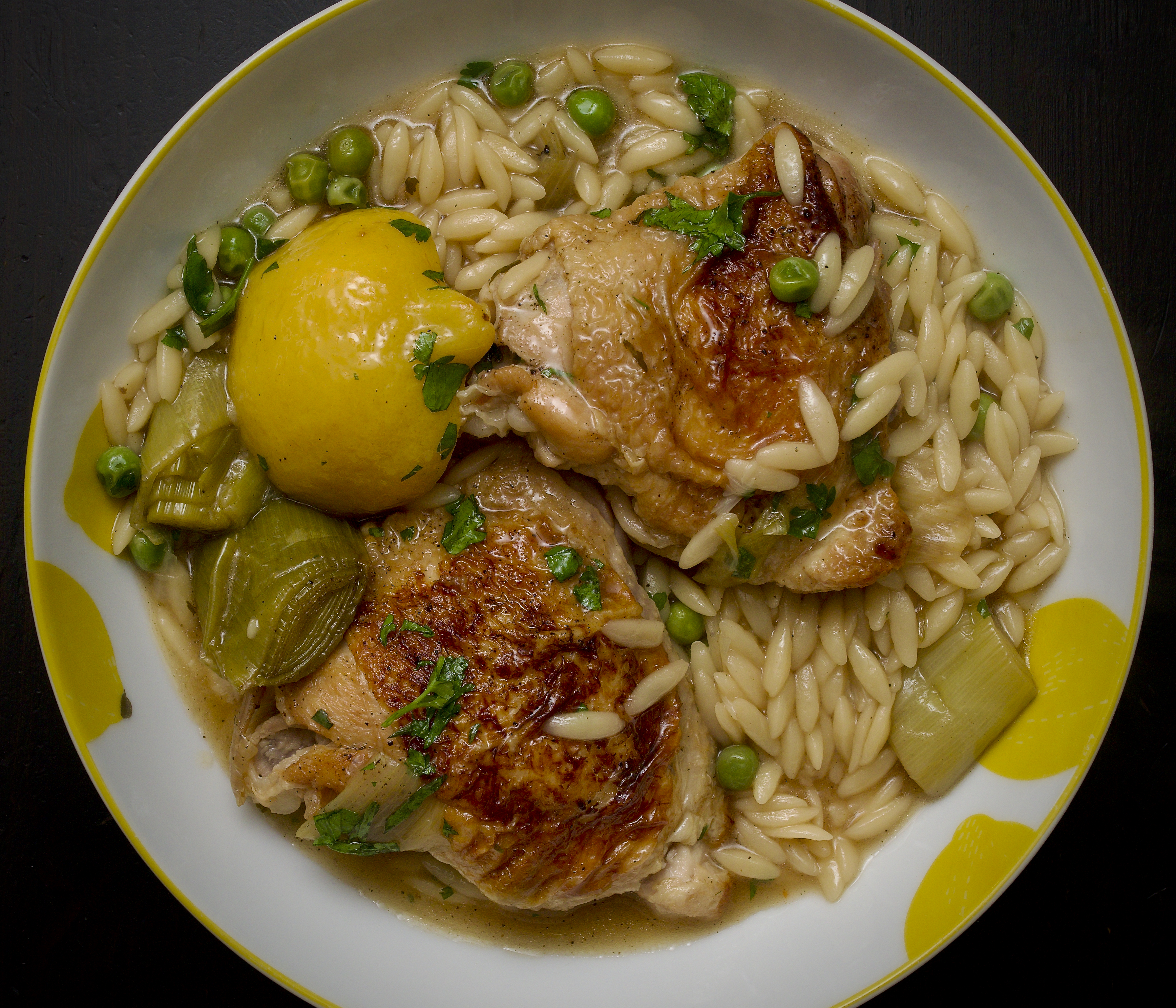
This is a nice soupy-stew sort of thing. Perfect for cold nights but still with nice fresh flavours.
Wine Suggestion: We went a bit left-field for this dish and look for an aged white Rioja where you get the roundness and poise of an oaked chardonnay but with a slightly softer acidity. Graceful in age the Urbina Rioja Bianco Crianza 2014 was both youthful with melon and citrus fruits, and with a layer of aged, tertiary fennel, aniseed and peach. A joy to know this is the current release from an under the radar winery.
Chicken with leeks & orzo – serves 3
3 tbsp olive oil
6 large chicken thighs
250g leeks, cut into short lengths, wash well to get rid of any grit and pat dry with kitchen paper.
1 litre chicken stock
half a lemon, cut into 2 fat wedges
6 black peppercorns
200g orzo
150g frozen peas
a small handful of parsley, roughly chopped
a small handful of tarragon, roughly chopped
Preheat the oven to 200C.
Heat the oil in a large, deep casserole dish. Fry the chicken thighs until well-browned on both sides, then remove and set aside.
Add the leeks to the chicken fat in the pan and cook over a medium-low heat, with the lid on, for 5 minutes, you want them softened but not browned.
Add the stock and stir with a wooden spoon until it comes to the boil, then add half the lemon, peppercorns and 1 tsp of salt. Scatter in the orzo and boil for 3 minutes. Return the chicken to the pan, then cover and bake for 35 minutes.
Add the peas, then return to the oven for another 5 minutes. Add the tarragon and parsley and serve in warm bowls.
(Original recipe from A Cook’s Book by Nigel Slater, 4th Estate, 2021)
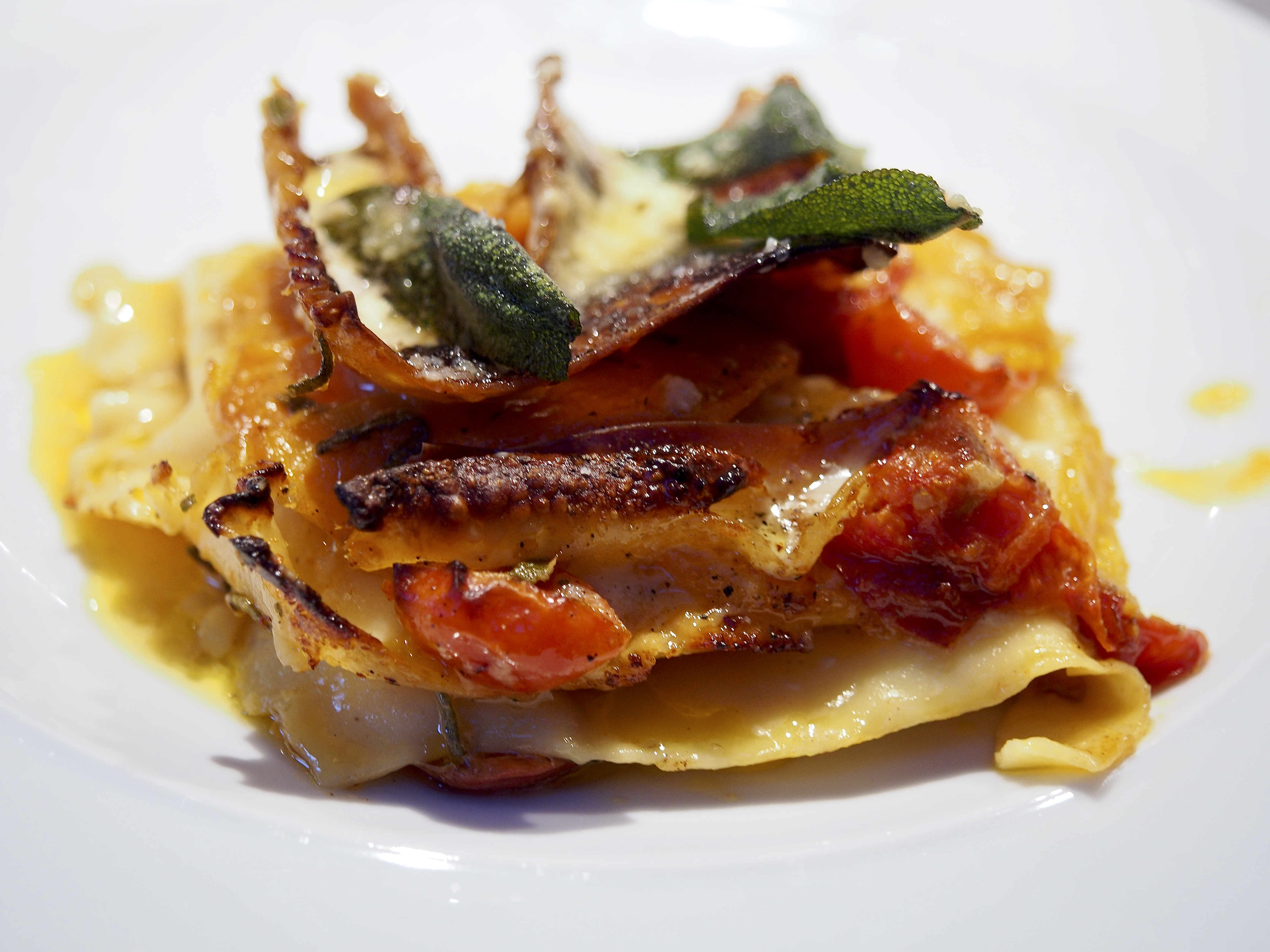
A bit like a classic lasagne but there’s no béchamel and definitely less fuss altogether. It tastes absolutely amazing too. The recipe is from Mezcla by Ixta Belfrage; a book full of delicious things.
Wine Suggestion: we grabbed the first thing in the fridge which was the Zuani Bianco Riserva, an oaked Collio from North Eastern Italy which is a blend of Friulano, Chardonnay, Sauvignon Blanc and Pinot Grigio. Stunning, with so much complexity and layered fruits, savouriness and creamy textures. An under-rated part of the world. If you can’t find something like this, look for a lightly oaked white with a fresh acidity and a nutty finish.
Squash and sage lasagne gratin – serves 4 (generously)
half a large butternut squash, peeled and seeds discarded (about 500g)
400g ripe cherry tomatoes, halved
4 cloves of garlic, finely grated
1 tbsp tomato purée
2¾ tsp fine salt
5g fresh sage leaves, roughly chopped, plus 10 extra leaves to serve
6 tbsp olive oil, plus extra to finish
220g double cream, plus extra 2 tbsp to serve
80g Parmesan, finely grated, plus extra to serve
¾ tsp freshly grated nutmeg
250g-300g dried lasagne sheets
400g chicken stock (you can use veg stock if you prefer)
Heat the oven to 220C fan/240C.
Finely slice the butternut squash into very thin half moons – a mandoline is best for this or you could use the slicing attachment on a food processor.
Mix the squash slices, tomatoes, garlic, tomato purée, fine salt, chopped sage, 4 tbsp olive oil and lots of black pepper, together in a large bowl. Your hands are best to toss it all together.
Mix the cream, Parmesan and nutmeg together in another bowl. Set 80g of this mixture aside for later.
Cover the bottom of a baking dish (approx. 28cm x 23cm) with a layer of lasagne sheets, then a layer of the squash mixture. Spoon over some of the cream mixture, then continue the layering until you have used everything. Pour the stock evenly over everything in th edish, then cover tightly with foil and bake for 50 minutes.
Remove from the oven and remove the foil. Spoon over the reserved 80g of cream mixture and return to the oven, uncovered, for 10 minutes.
Mix 2 tbsp of the oil with the 10 sage leaves in a small bowl. Spoon this over the lasagne and return to the oven for a final 5-6 minutes, or until the sage leaves look crisp and the lasagne golden-brown.
Rest for 10 minutes, then finish with the 2 tbsp of cream, a good drizzle of olive oil and plenty of extra grated Parmesan, sea salt and black pepper.
(Original recipe from Mezcla by Ixta Belfrage, Ebury Press, 2022.)
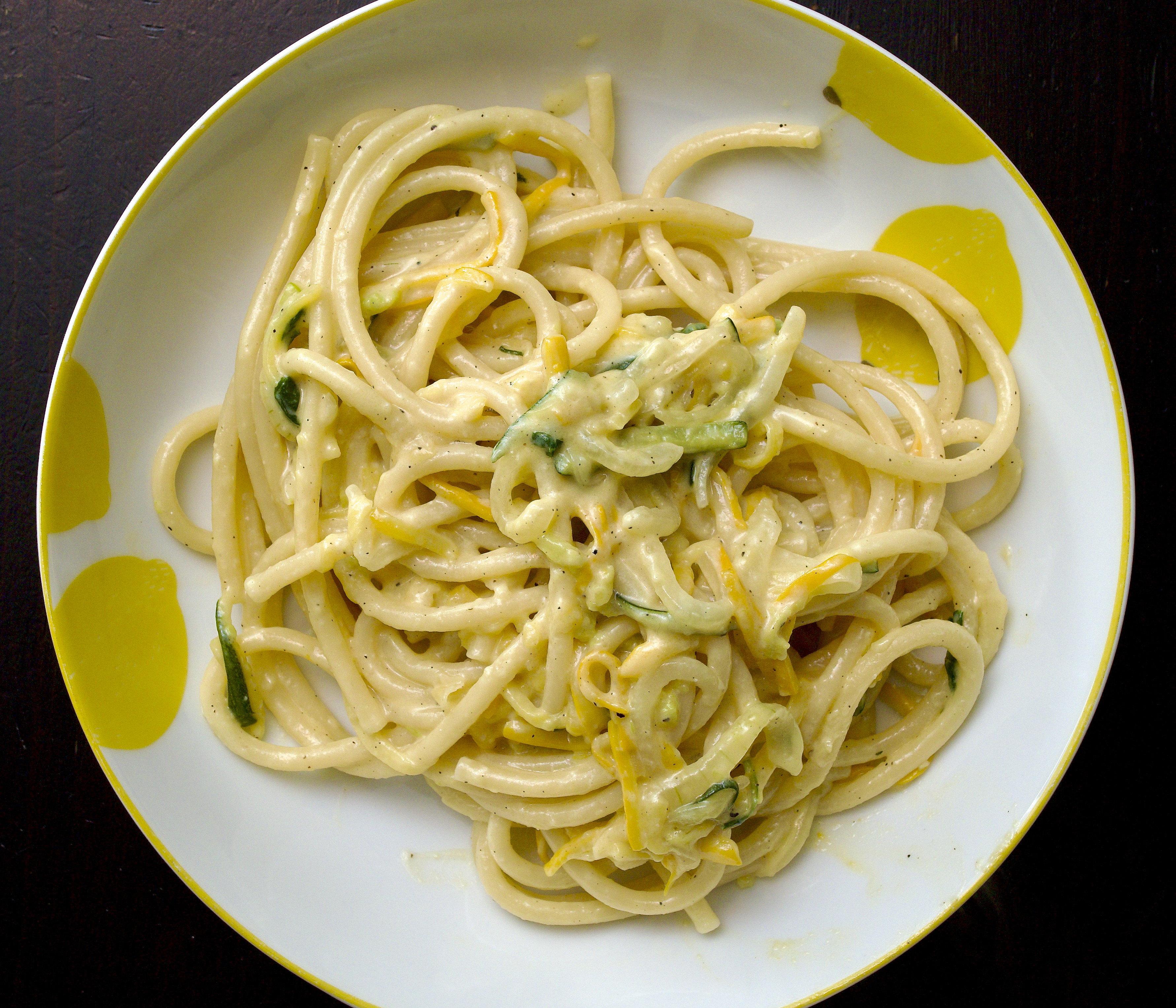
You need to cut your courgettes into very thin strips for this, as thin as the pasta. The sauce is a bit carbonara-ish, very delicious.
Wine Suggestion: Something fun and white like the El Abuelo de Piqueras, a Verdejo – Sauvignon Blanc blend from Almansa in Spain. Vibrant fruit tied together with a sense of fun and energy.
Bucatini with courgettes – serves 4 (easily halved)
5 tbsp extra virgin olive oil
1 medium onion, thinly sliced
300g courgettes, cut into 5cm long, 2mm thick strips
400g bucatini (or spaghetti, linguine or fusilli)
2 eggs, plus 2 extra egg yolks
70g Parmesan, grated
a few fresh basil leaves
Warm the olive oil in a large frying pan. Add the onion and courgettes with a pinch of salt, then cook gently for 10 minutes, turning over gently, until very soft. Remove from the heat.
Bring large pan of water to the boil, then add lots of salt. Add the pasta and cook until al dente.
Meanwhile, put the eggs, egg yolks, Parmesan, a pinch of salt and lots of black pepper into a large bowl. Whisk together to combine.
When the pasta is almost cooked, return the courgette pan to the heat to warm through the fat and courgettes and add the torn basil.
Drain the pasta and reserve some of the water. Add the pasta to the courgette pan and stir together. Remove the pan from the heat and add the egg mixture and a splash of pasta water, then stir quickly until everything is coated in a creamy sauce. Add a little more pasta water to make it silky if needed, then serve.
(Original recipe from An A-Z of Pasta by Rachel Roddy, Fig Tree, 2021.)
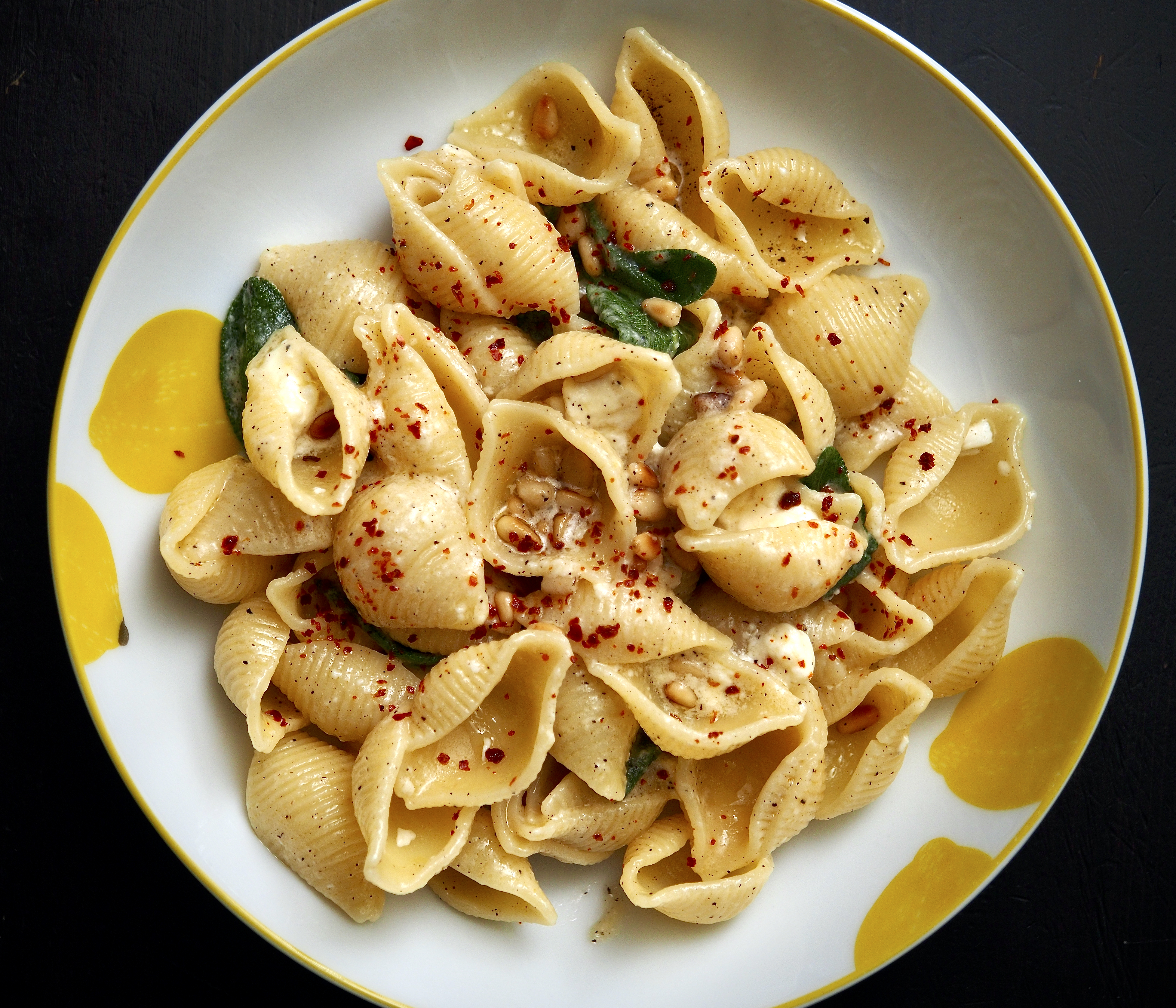
We are cooking our way through Persian Everyday by Sabrina Ghayour. We struggle like everyone to eat well on busy days but this book is perfect for just that.
Wine Suggestion: White, lemony and medium bodied. Maybe a youthful Verdicchio, or our current fave, Zuani’s Ribolla Gialla Sodevo, from Collio in North East Italy. A grape that was so higly regarded by the Romans they implemented laws to protect it from adulteration … possibly the world’s first appellation laws …we’ll need to investigate further.
Pasta with sage butter, feta & pine nuts – serves 2
200g pasta shells
75g butter
20 sage leaves
25g pine nuts
100g feta cheese
2 pinches of pul biber chilli flakes
Cook the pasta in lots of very salty water according to the timings on the packet.
When the pasta is almost cooked, put a large frying pan over a gentle heat. Add the butter and sage and allow the butter to melt gently but don’t let it sizzle much. Keep stirring so the sage flavours the butter.
Roughly drain the pasta (you want a little bit of water still on the pasta) and add to the pan with the butter and sage. Turn up the heat and season very generousy with black pepper and a little sea salt. Add the pine nuts and toss everything together, then add the feta and stir until melting and starting to coat the pasta.
Serve spinkled with extra black pepper and a pinch of pul biber.
(Original recipe from Persiana Everyday by Sabrina Ghayour, Aster, 2022.)
Easy and full of veg. Great for a weeknight, and if your kid is like ours they will eat anything with pasta and cheese!
Wine Suggestion: keep it simple with a juicy red from a warmer climate. The Cline Family Cellars have star with their Old Vine Lodi Zinfandel which has a joyful balance between vibrant and complex red and black fruit, velvety tannins and a easy drinkability.
Veggie Pasta Bake – serves 4
1 red pepper, cut into bite-size pieces
1 yellow pepper, cut into bite-size pieces
1 aubergine, finely chopped
1 courgette, finely chopped
1 red onion, sliced
3 tbsp olive oil
150g cherry tomatoes, halved
400g tin chopped tomatoes
2 cloves of garlic, crushed
a handful of roughly chopped basil
300g pasta – we used fusilli
150g mozzarella ball, drained and finely chopped (you don’t need the expensive buffalo stuff for this)
2 tbsp pesto
a handful of grated Parmesan cheese
Heat the oven to 190C/170C Fan/Gas 5.
Put the peppers, aubergine, courgettes and onion into a large roasting tin and toss in the oil. Season well with salt and pepper, then cook in the oven for 45 minutes, turning a couple of times, until the vegetables are soft and golden brown.
Add the cherry tomatoes, tinned tomatoes, garlic and basil and return to the oven for a further 10-15 minutes.
Meanwhile, cook the pasta in lots of boiling salty water. Add 4-6 tbsp of the pasta cooking water to the cooked vegetables to make it a bit more saucy.
Drain the pasta and tip into the roasting tin with the veg. Add the mozzarella and pesto and stir well to combine. Top with the Parmesan and return to the oven for a final 10 minutes to melt the cheese.
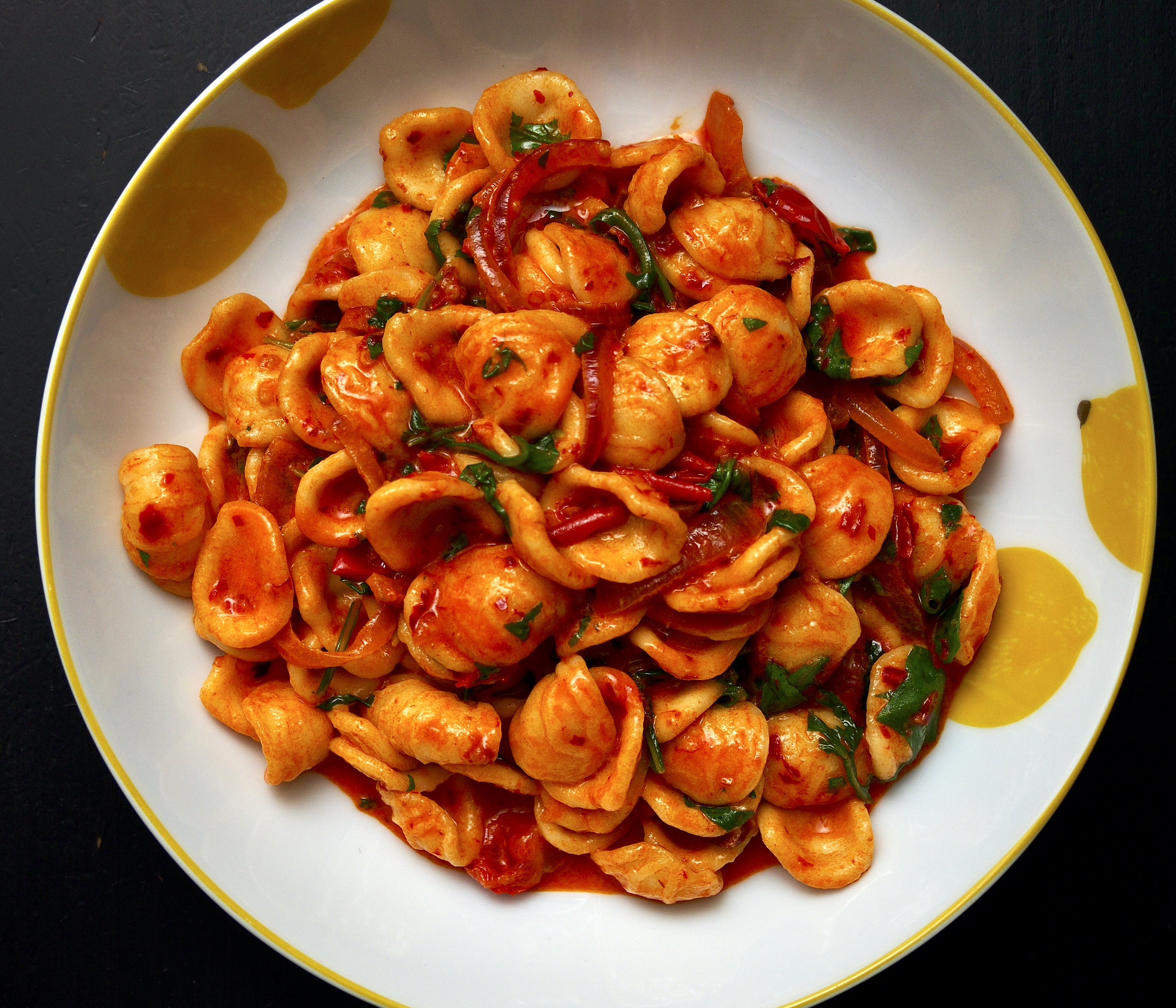
If you have a little leftover ‘nduja, then this is the dish for you!! It makes a delicous main for two, or starter for 4. Masterminded by Jacob Kenedy of Bocca di Lupo.
Wine Suggestion: This dish needs a medium bodied red fruited wine with a lick of acidity like the Morisfarms Mandriolo from the Tuscan coast. Fruit-forward cherry and raspberry flavours which come from the Sangiovese which is tied together with a touch of Cabernet and Petit Verdot.
Orecchiette with ‘nduja – serves 2 (or 4 as a starter)
200g dried orecchiette (if you can make or get fresh then go for that but dried works pretty good)
1 red onion, sliced
120g cherry tomatoes, quartered
2 tbsp extra virgin olive oil
100g ‘nduja (a bit less will be fine)
50ml white wine
80ml double cream
50g rocket, very roughtly chopped
freshly grated Pecorino Romano, to serve (we used Parmesan – sorry Jacob!)
Get your orecchiette on to boil in lots of very salty water. Start making the sauce when there’s about 10 minutes to go.
Fry the onion and tomatoes over a high heat for about 3 minutes, you want them softened and lightly browned. Add the ‘nduja, break it up and fry for 30 seconds, then add the wine and a small ladleful of water from the pasta pot. Bubble briefly, then add the cream. Taste and season with some salt.
Keep cooking the sauce until thickend and not watery, then add the drained pasta (still a bit wet) and the rocket. Cook until the rocket is wilted and the pasta is coated in the glossy sauce. Serve with grated cheese on top.
(Original recipe from Bocca Cookbook by Jacob Kennedy, Bloomsbury, 2011.)
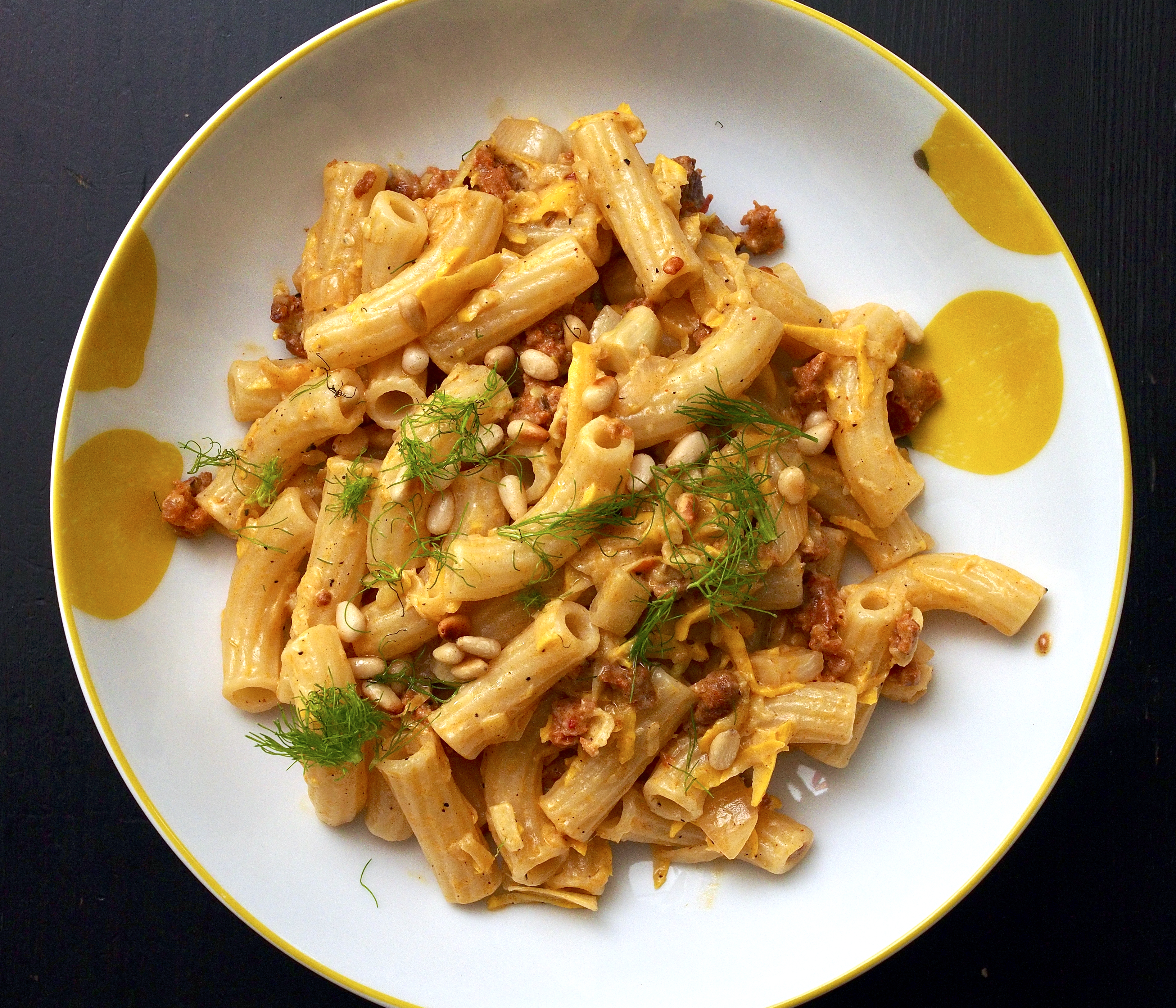
A nice pasta with unusual flavours. Use good-quality Italian sausages for this if you can find them.
Wine Suggestion: As this dish is full-flavoured we’d suggest a full flavoured white like Cline Cellars Sonoma Coast Chardonnay, which has a wonderful Californian ripeness combined with a core of fresh minerality and zing from the cooling breezes and fog coming through the Petaluma Gap each day. The subtle oak gives a lovely texture which helps matching this dish too.
Pasta with fennel, sausage and courgette – serves 4
3 good-quality pork sausages (we like Italian sausages)
1 tsp olive oil
½ small fennel bulb, trim off any green bits and chop finey, reserve any fronds to garnish
½ onion, diced
2 big cloves of garlic, finely chopped
200g rigatoni pasta
zest and juice of a lemon
100g mascarpone
1 medium-large courgete, grated
1 tbsp toasted pine nuts
grated Parmesan (to serve)
Take the skins off the sausages and crumble them into small chunks. Heat the oil in a large frying pan, then fry the sausages until browned and crispy, breaking the lumps up with a wooden spoon. Scoop out with a slotted spoon and set aside.
Add the fennel, onion and garlic to the sausage fat in the pan and cook for about 10 minutes, or until softened but not coloured. You can add a splash of water if it starts to stick.
Bring a large pan of salty water to the boil, add the pasta and cook according to the timings on the pack. Drain but reserve a mugful of the cooking water.
Return the frying pan to the heat and stir in the lemon zest, lemon juice, mascarpone, grated courgette and a splash of pasta cooking water. Bubble for 2 minutes, then stir in the cooked pasta and sausages. Season, then serve garnished with fennel fronds, pine nuts and Parmesan.
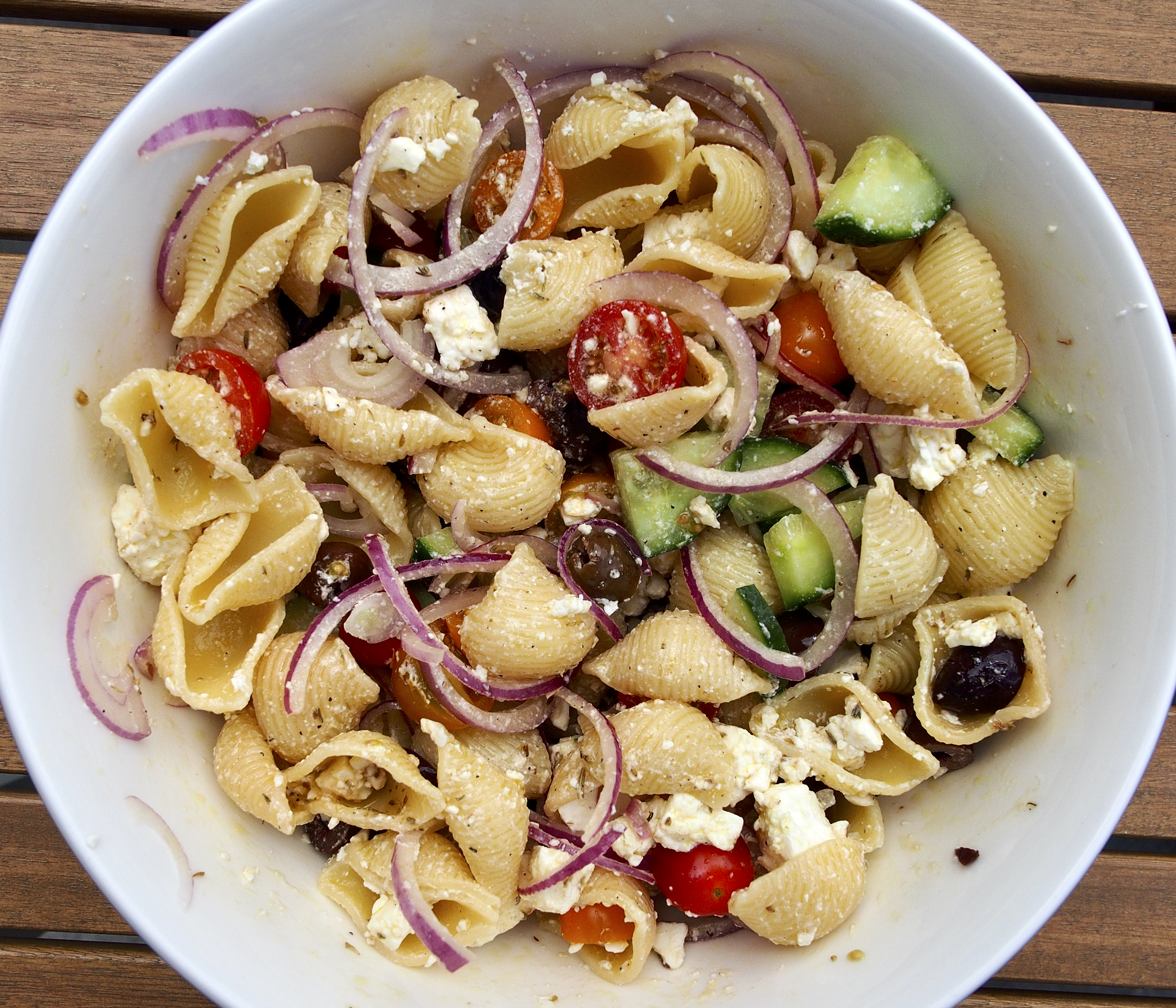
Like a Greek salad, but with pasta added in. It makes a great lunch or lunchbox and is good for using up odds and ends in the fridge.
Pasta Salad – serves 4
200g pasta – use what ever shape you have
3 tbsp extra virgin olive oil
1 tbsp red wine vinegar
1 tsp dried oregano
20 cherry tomatoes, halved
75g pitted black olives, halved
½ small cucumber, quartered lengthways then sliced
½ a red onion, thinly sliced
100g feta cheese
Cook the pasta in lots of salty boiling water according to the timings on the packet.
Meanwhile, put the olive oil, red wine vinegar, oregano and some seasoning into a mixing bowl and mix well to make a dressing.
Drain the pasta in a colandar and leave to cool for a few minutes. Tip the cooked pasta into the mixing bowl and toss to coat in the dressing.
Tip in the tomatoes, olives, cucumber and red onion, then crumble in the feta cheese. Gently mix everything together, then serve or put in the fridge for lunchboxes tomorrow.
(Original recipe by Cassie Best in BBC Good Food Magazine, July 2022.)
A delicious creamy pasta dish which is ready in minutes, and very useful when you’ve got leftover mascarpone.
Wine Suggestion: Anytime we have pasta our automatic choice is an Italian wine, and with all these summery flavours opened a bottle of Macchialupa Greco di Tufo from the hills and valleys inland from Naples. Quite full bodied for a white it nonetheless added an extra layer to the meal with it’s stonefruit and citrus flavours and nutty (almond & hazelnut) finish. Despite it’s weight it was also fresh and tasted of a warm Italian summer.
Pasta with pancetta, broad beans & mascarpone – serves 6
300g conchiglie pasta
200g frozen broad beans, blanched in boiling water and skins slipped off
200g green beans, sliced into three
140g pancetta cubes
250g tub mascarpone cheese
75g grated Parmesan
juice of 1 small lemon
a small bunch of basil leaves, torn
Cook the pasta in lots of boiling and very salty water according to the timings on the pack. Add the green beans 5 minutes before the end of the cooking time.
Meanwhile, heat a large frying pan and cook the pancetta until crispy. Stir in the mascarpone and Parmesan cheese and stir until melted.
Scoop out a cup of the pasta cooking water before draining the pasta and beans. Add the pasta, green beans and broad beans to the frying pan and add 6 tbsp of the pasta cooking water (you can add a bit more if it needs loosened further). Add the lemon juice and basil, then season with salt and pepper.
Serve with the rest of the Parmesan sprinkled over.
(Original recipe from Mary Berry Cooks up a Feast with Lucy Young, DK: Penguin Random House, 2019.)
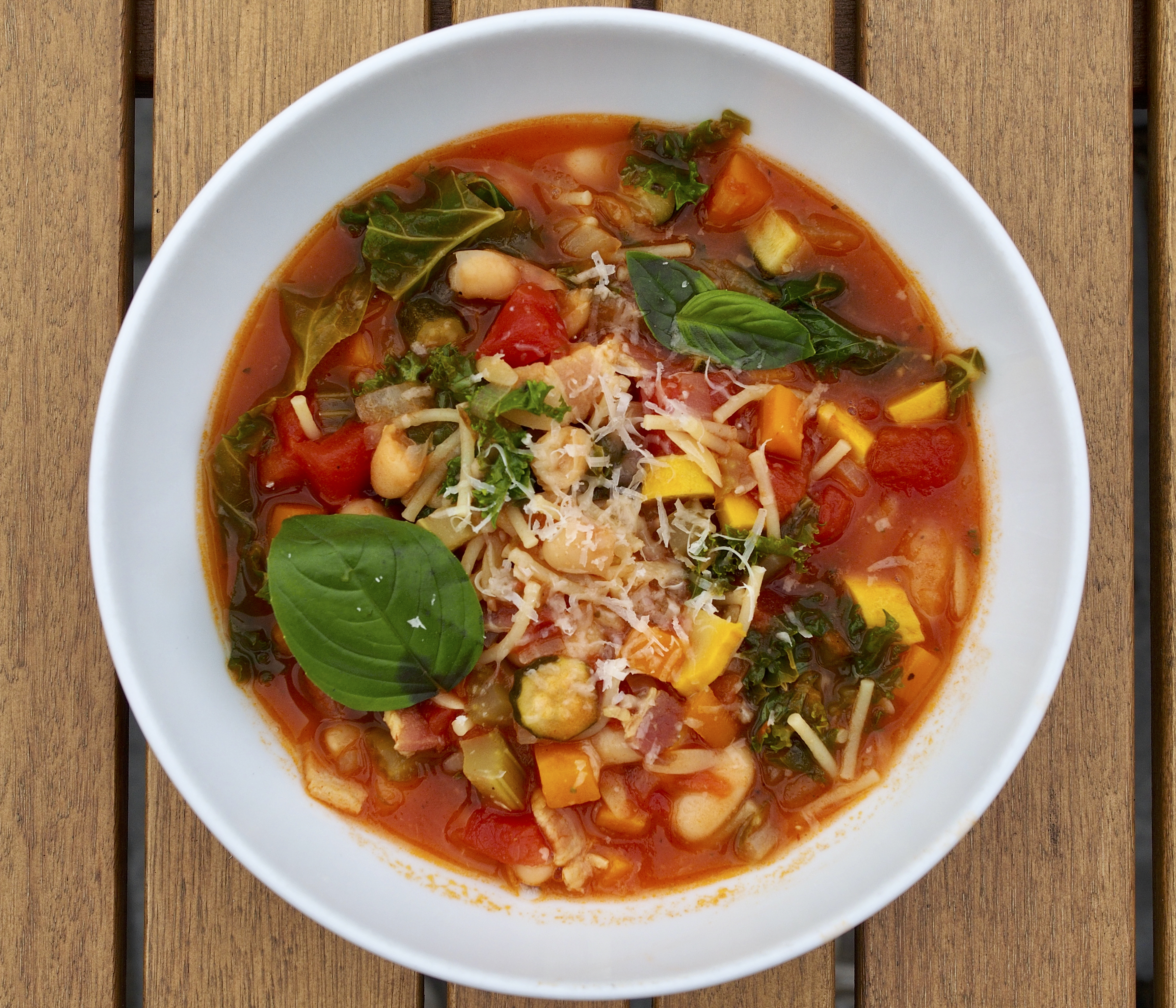
We don’t stop making soups in the summer, and in fact we often need them to use up bits and pieces. At the moment that means the courgettes that are growing faster than we can eat them. Whatever the excuse this is bursting with summery flavours and a joy to eat, especially outside on a hot summer afternoon.
Summer Minestrone Soup – serves 6
3 tbsp olive oil, plus extra for drizzling over to serve
1 onion, finely chopped
1 stick of celery, finely chopped
1 carrot, finely chopped
2 courgettes, finely chopped (use green and yellow if you have them)
70g diced smoked pancetta
1 large clove of garlic, finely grated
½ tsp dried oregano
400g tin cannellini beans
400g tin chopped tomatoes
2 tbsp tomato purée
1.2 litres vegetable stock
1 bay leaf
70g fideua pasta (or other small pasta)
100g kale, stalks removed and roughly chopped
a handful of basil leaves, to serve
finely grated Parmesan, to serve
Warm the oil in a large saucepan over a medium heat. Add the onion, celery, carrot, courgette and pancetta. Season well with salt and pepper and cook gently for about 10 minutes.
Add the garlic and oregano and cook for another minute, then add the beans, tinned tomatoes, tomato purée, vegetable stock and bay leaf. Bring to a simmer, then cook for 30 minutes.
Add the pasta and kale and cook for a final 10 minutes.
Taste for seasoning, then serve in warm bowls, with some basil and Parmesan over the top.
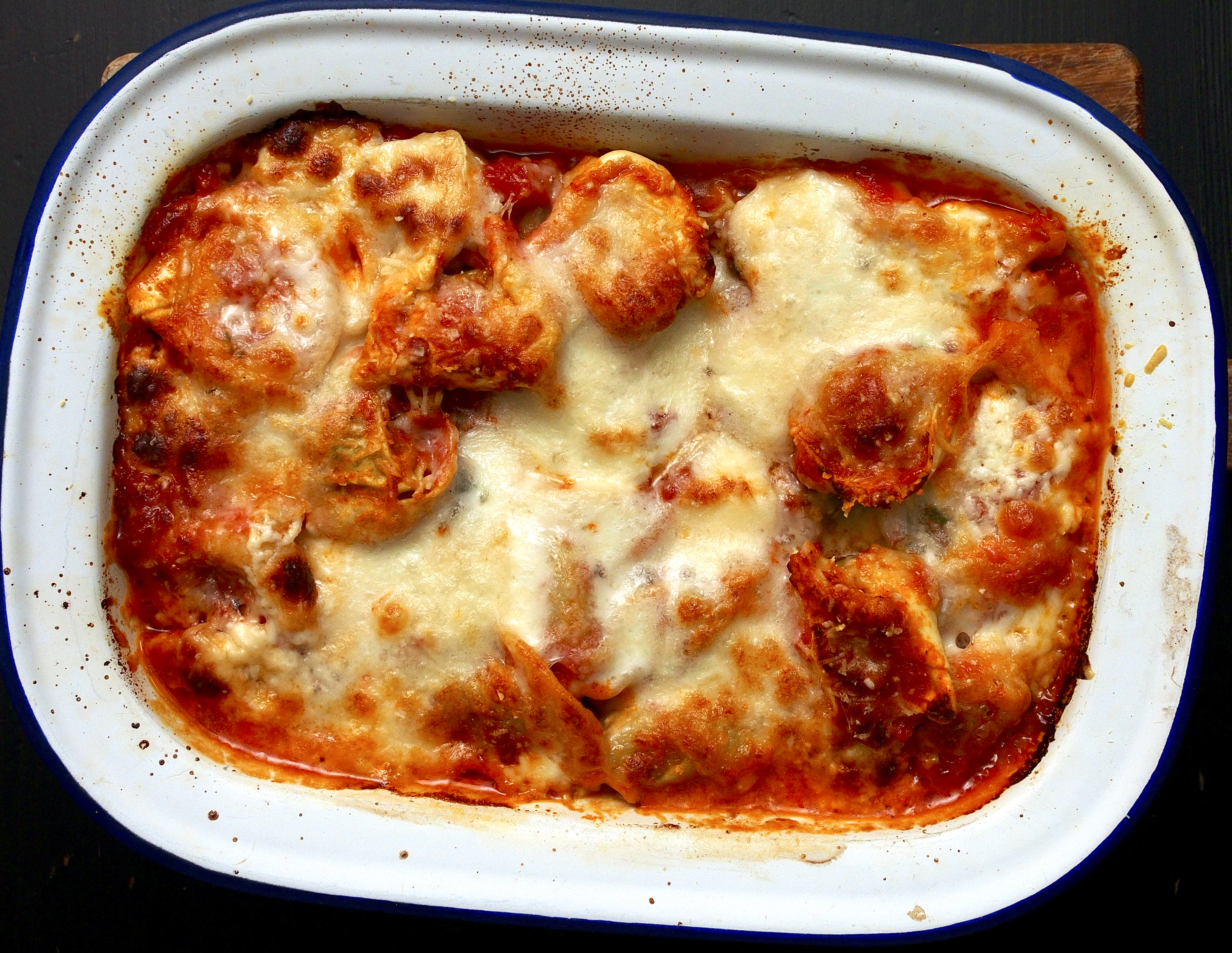
We’re never sure what to cook for other people’s children but most of them seem to like pasta bake. This one has been popular and also the recipe below which uses a packet of supermarket filled pasta. They like our home-made lasagne too but we don’t always have the energy or time for the extra effort required!
Easy Pasta Bake – serves 3 children (or even 2 adults and 1 child)
1 clove of garlic, crushed
olive oil
1 x 400g tin chopped tomatoes
a small handful of fresh basil, chopped
1 packet of filled pasta, about 250g, we tend to go for spinach and ricotta tortellini but you could do a meat filled version if you want to keep to traditional lasagne flavours
4 tbsp mascarpone
3 tbsp grated Parmesan, plus extra for over the top
½ a small ball of mozzarella, sliced
Warm 1 tbsp of olive oil in a saucepan. Add the garlic and cook gently for a couple of minutes, then tip in the tomatoes. Simmer for 10 minutes until thickened. Season with salt and pepper and stir in the basil.
Cook the pasta in boiling water for about a minute less than recommended on the pack, then drain.
Mix the mascarpone with the 3 tbsp grated Parmesan.
Heat the oven to 200C/180C fan/gas 6.
Rub a little olive oil over a small baking dish. Spoon a little bit of tomato sauce over the bottom of the dish, add about half the pasta, then spoon over half the mascarpone and Parmesan mixture.
Add another layer of tomato sauce, then the rest of the pasta. Top with the remainder of the tomato sauce and the mascarpone mix. Lay the mozzarella slices over the top and sprinkle with some more grated Parmesan. Bake for 20 minutes in the oven until golden and bubbling.
(Original recipe by Janine Ratcliffe in Olive Magazine, June 2016.)
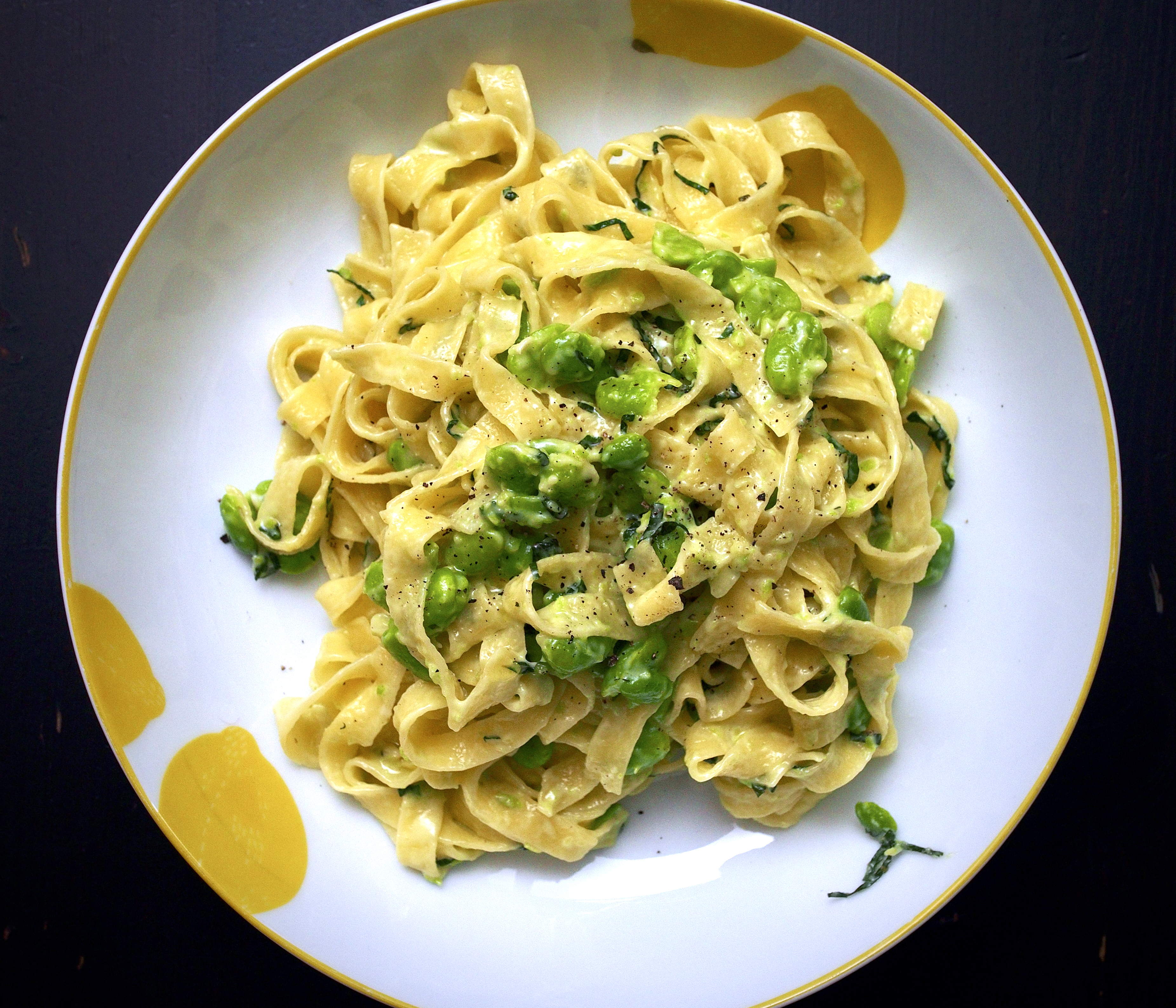
A great dish for using up the end of a tub of cream with just a few ingredients that you might well have already.
Wine Suggestion: Central Italian whites just seem to sing with this dish and the La Piuma Pecorino which is light as a feather, citrussy and floral hits the spot; and is a bargain to boot.
Tagliatelle with broad beans, cream & mint – serves 2
150g broad beans, blanched and skins slipped off
2 tbsp olive oil
1 clove of garlic, finely chopped
100ml double cream
a small handful of mint, finely chopped
75g pecorino, finely grated
200g dried tagliatelle
Get the pasta water on, then start the sauce.
Whizz half the beans in the small bowl of a food processor to get a rough purée.
Warm the 1 tbsp of the oil and the garlic in a heavy-based saucecpan for a minute or two to soften the garlic but without letting it colour.
Add the puréed broad beans, to the pan and cook for a minute, then add the double cream and the rest of the broad beans. Stir in the mint and bring to a simmer. Add half the pecorino and season to taste – careful as the cheese is quite salty.
Meanwhile, cook the pasta in lots of salty water then scoop straight out of the cooking water and into the pan with the sauce. Toss to combine and add a little more pasta cooking water if needed to make a sauce. Serve with the extra pecorino for sprinkling over the top.




 Jono & Jules do food & wine
